Record
Court opinion
1933-01-25
CourtListener (Free Law Project), reprinting the District Court opinion
Capone v. Aderhold, Warden, 2 F. Supp. 280 (N.D. Ga. 1933)
The federal court at Atlanta dismisses Capone's habeas corpus petition, which argued that his felony sentences were void under the three-year statute of limitations. Decided 25 January 1933.
- Date
- 1933-01-25
- Kind
- court-opinion
- Retrieved
- 2026-10-11
- Docket
- 2 F. Supp. 280 (N.D. Ga. 1933), No. 426
- Rights
- Opinion of a United States court. Works of the federal judiciary are in the public domain in the United States. The text read here is CourtListener's scan-derived copy of the reported opinion.
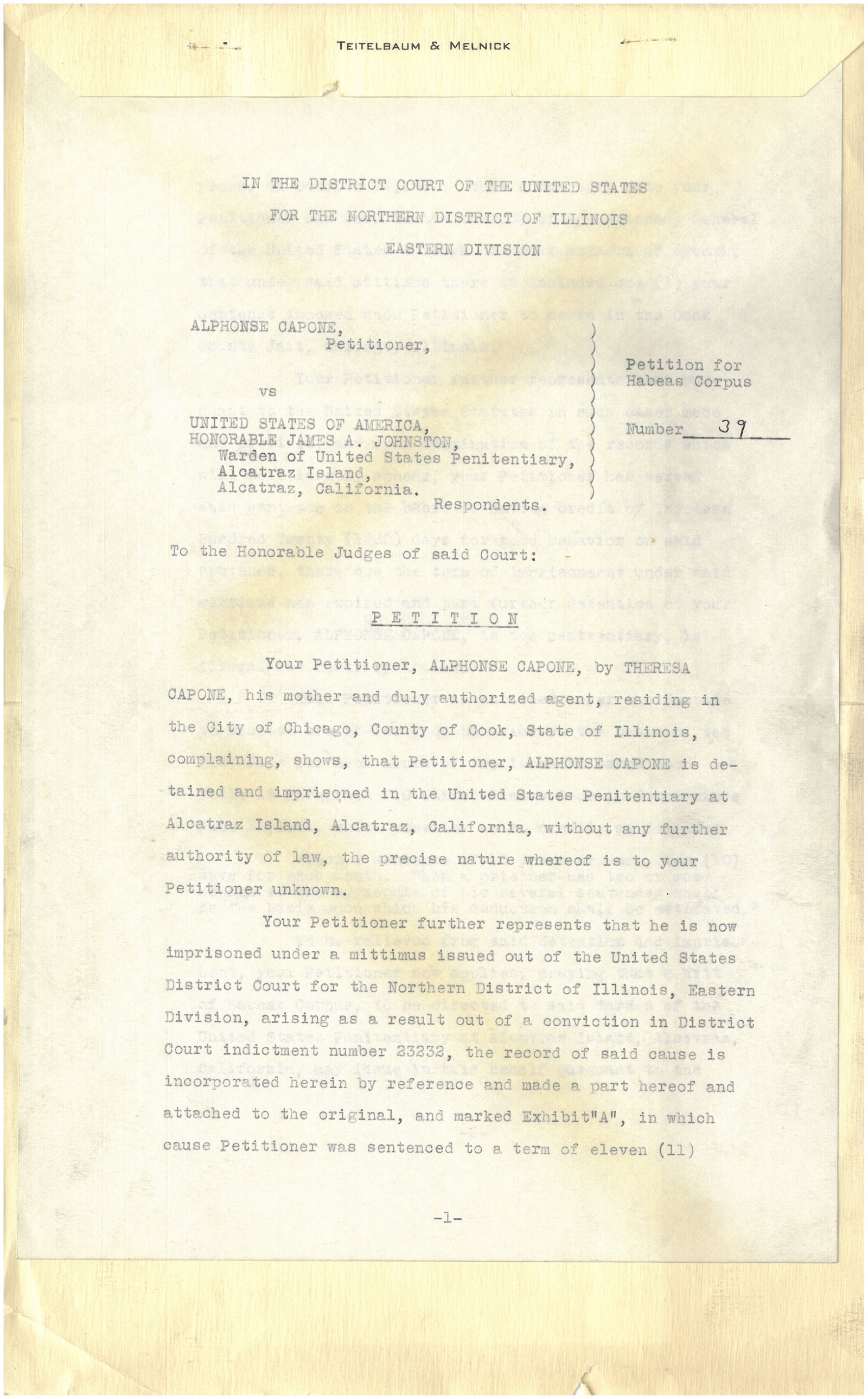
District Court, Northern District of Georgia, No. 426, decided January 25, 1933, by Judge E. Marvin Underwood. The caption reads “Capone v. Aderhold, Warden”; the petition sought Capone’s release from the U.S. Penitentiary at Atlanta. William E. Leahy and William J. Hughes, Jr., of Washington appeared for Capone; Hal Lindsay, Assistant U.S. Attorney at Atlanta, G. A. Youngquist, Assistant Attorney General, and Dwight H. Green, U.S. Attorney at Chicago, for the respondent.
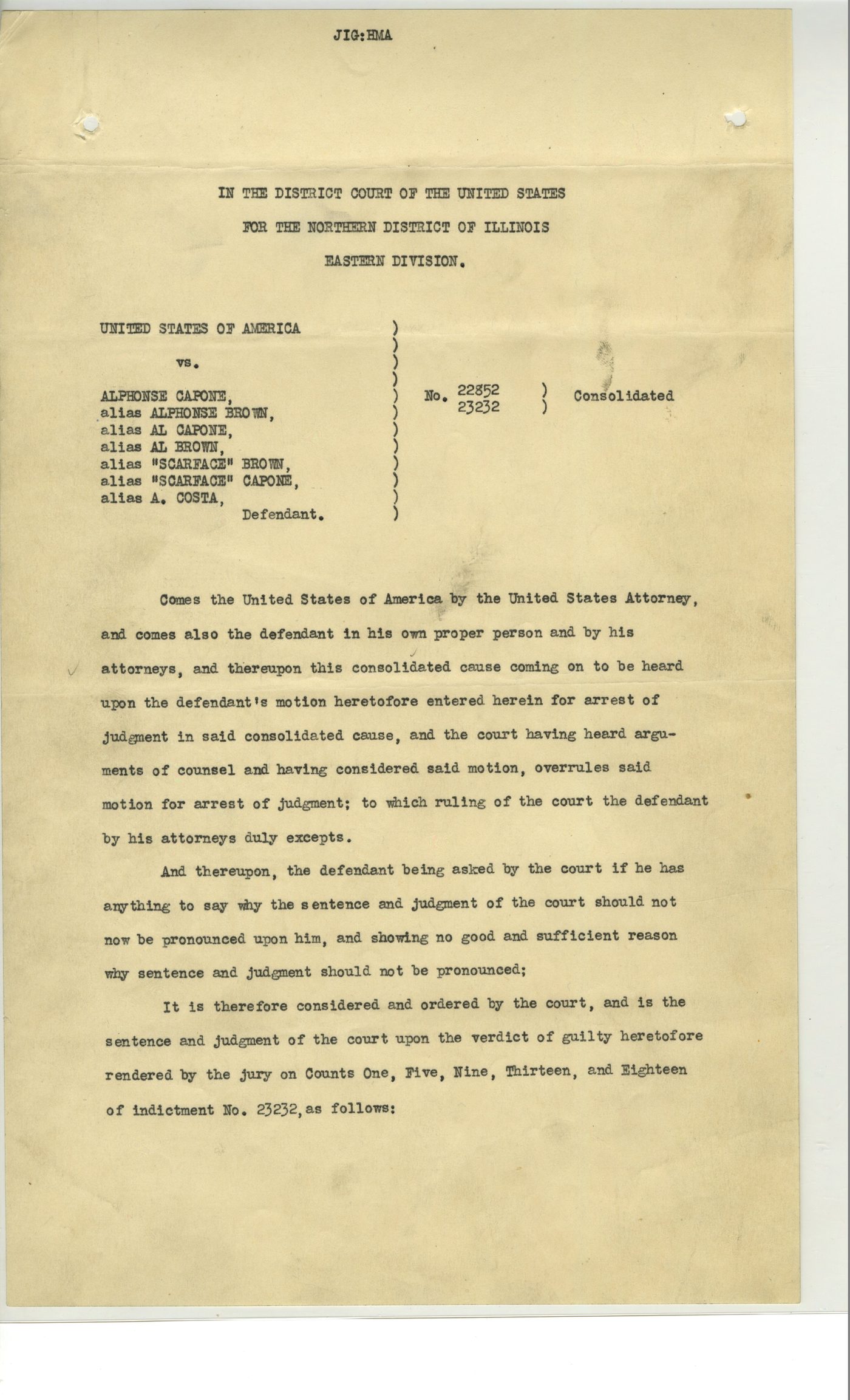
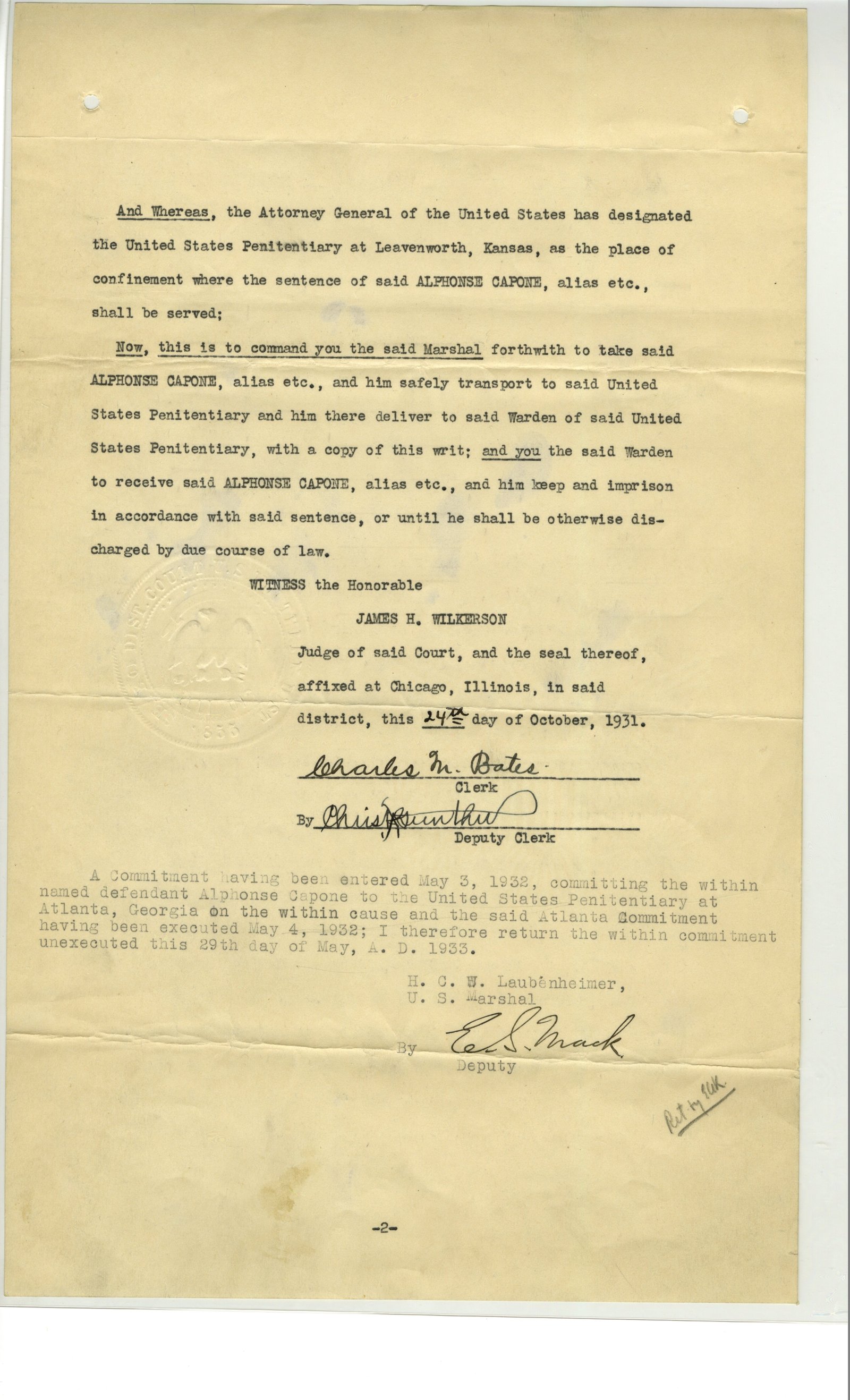
The petition attacked the sentences on felony counts 1, 5 and 9, which the opinion lists with their tax figures: $55,365.25 for 1925, $39,962.75 for 1926 and $45,557.76 for 1927. It records that on each he was sentenced to five years and a $10,000 fine, that “the sentence on count 9 was to follow the termination of imprisonment under the concurrent sentences imposed on counts 1 and 5,” and that he “was committed to the United States penitentiary at Atlanta, Ga.” He argued the three-year limitations period had run before the June 5, 1931 indictment.
The court held that the statute of limitations was a defense to be raised at trial and on appeal, not on habeas corpus, since the trial court had jurisdiction even if it ruled wrongly: “the petition in this case has been dismissed, the writ discharged, and petitioner remanded to the custody of the respondent.”
The opinion cites a Supreme Court denial of certiorari in Capone’s appeal as 284 U.S. 669; this archive has not checked that citation. The printed headnote says “Order affirmed” but gives no citation for the appellate decision. Quotations follow CourtListener’s scan-derived text, with obvious scanning errors corrected.