Each record is a document, a photograph, or an official finding aid. The prose stays inside what that document says.
agency-historyATF historical article: the Alcohol Tax Unit, Bureau of Internal Revenue, 1934-1951ATF's history of its post-Repeal predecessor says "Machine guns continued to be the weapon of choice for these criminals" and that the Alcohol Tax Unit enforced the 1934 and 1938 firearms acts, "marking the first enforcement responsibilities for firearms."agency-historyATF biography of Eliot Ness, Prohibition agentATF's biography of Eliot Ness as a "legacy ATF agent": federal service from 1926, a Bureau of Prohibition special agent in charge in Chicago in 1930, and Prohibition-era cooperation among the Prohibition Unit, the Coast Guard and Customs.agency-historyATF history timeline: the Prohibition entries, 1919-1933The Bureau of Alcohol, Tobacco, Firearms and Explosives' timeline of its legacy agencies. Its Prohibition entries cover the Volstead Act, the Prohibition Unit, the 1927 reorganization into the Bureau of Prohibition, the 1930 transfer to Justice, and the 1933 return to Treasury.agency-historyATF history timeline: the National Firearms Act, June 1934ATF's timeline entry for June 1934 says the National Firearms Act "is a direct response to gang violence" and imposed requirements on "machine guns, silencers and sawed-off shotguns." An agency retrospective, not a 1934 record.agency-historyAlcatraz (Federal Bureau of Prisons history page)The Bureau of Prisons' history page on Alcatraz names Al Capone among the well-known criminals who did time there, and says most of its prisoners were not well-known gangsters.agency-historyFederal Bureau of Prisons: Historical Information (agency overview)The Bureau of Prisons' historical overview: the Three Prisons Act of 1891, the Act of 14 May 1930 that created the Bureau, 14 facilities by the end of 1930, and USP Lewisburg opening in 1932 as the first penitentiary the Bureau built.agency-historyFederal Bureau of Prisons: Historical Information, TimelineThe Bureau of Prisons' timeline entries for the Three Prisons Act (1891), the Bureau's founding and first Director (1930), USP Lewisburg (1932), USP Alcatraz as the first maximum security prison (1934) and James V. Bennett (1937).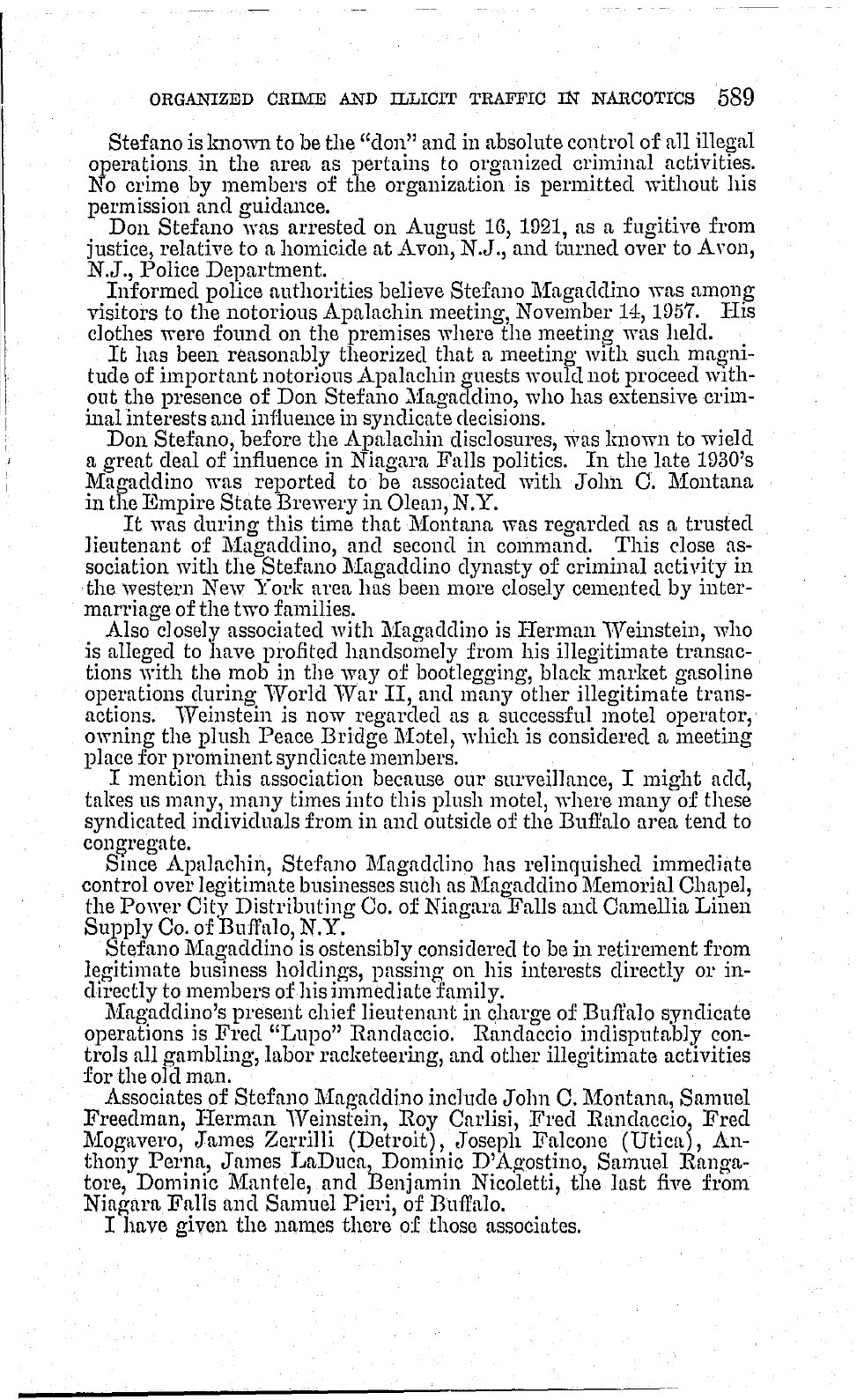 hearingTestimony of Buffalo Police Lt. Michael Amico on Stefano Magaddino and John C. Montana, October 16, 1963The head of Buffalo's Criminal Intelligence Bureau introduced the "Magaddino Empire of Organized Crime" chart (Exhibit 65), read a statement calling Stefano Magaddino the "titular head" of syndicated crime in the Buffalo-Niagara Falls and Toronto areas, and said police had found no arrest of John C. Montana before Apalachin.
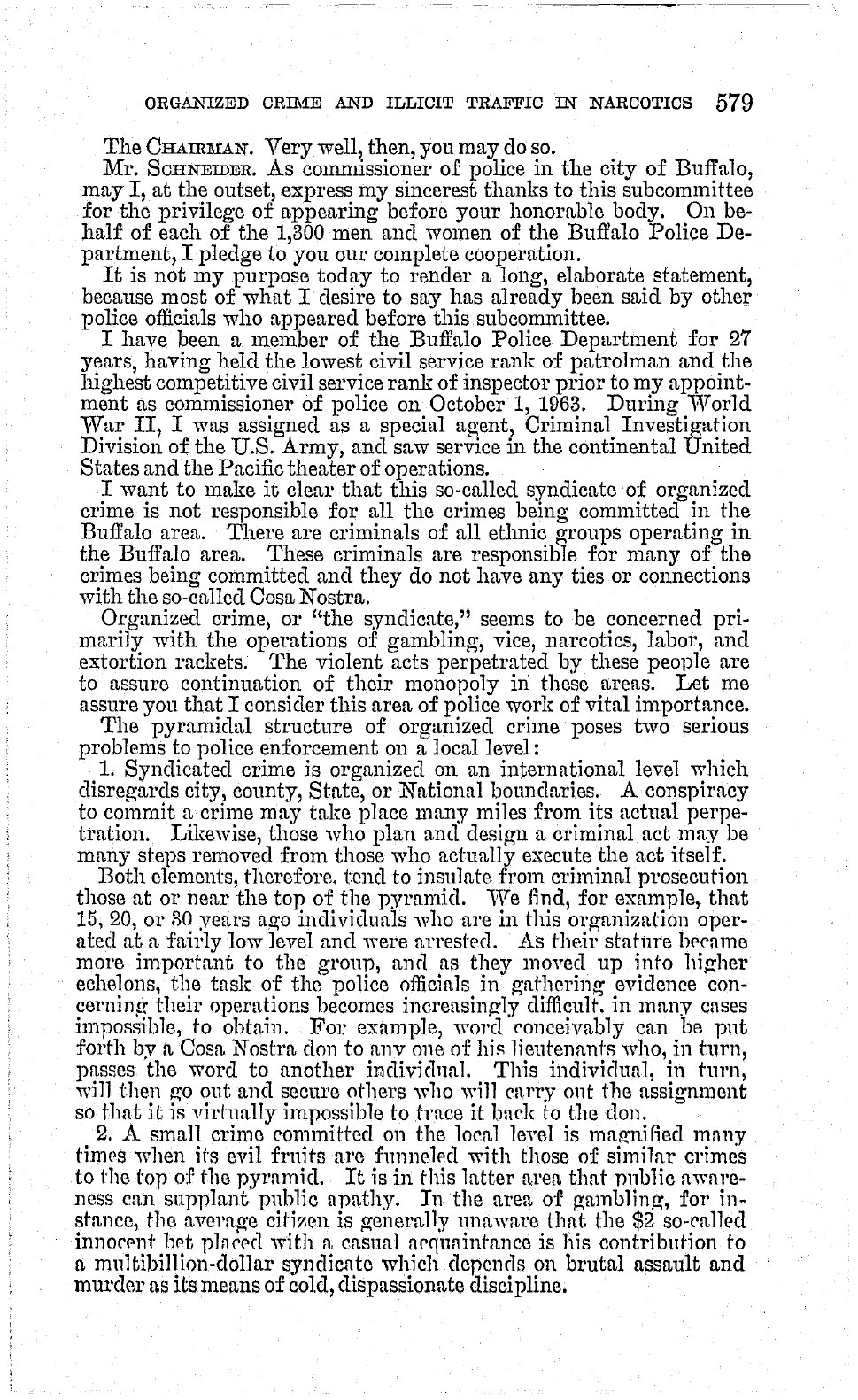 hearingStatement of Buffalo Police Commissioner William H. Schneider, October 16, 1963Buffalo's police commissioner told the Senate subcommittee that the "so-called syndicate" was not responsible for all crime in Buffalo, that police had not been able to secure evidence of a criminal conspiracy that could be presented in court, and that the Buffalo chart, Exhibit 64, was accurate to the best of the department's knowledge.hearingStatement of Deputy Superintendent Joseph Morris, Chicago Police Department, October 11, 1963A Chicago police history of the syndicate placed in the 1963 hearing record. It states that Paul Ricca led after Frank Nitti's 1943 suicide, and that Tony Accardo "became the syndicate boss in 1943."hearingChurch Committee report, p. 308: Senator Baker's additional views on the underworld and Havana gamblingIn his additional views Senator Howard H. Baker, Jr. writes that the evidence 'strongly suggests' the underworld wanted Castro gone because his actions barred its control of the Havana gambling enterprises. It is a Senator's reading, not the committee's finding.hearingChurch Committee, Final Report, Book I (S. Rept. 94-755, 1976): the Bureau of Narcotics in the CIA's drug testingPassages of the Church Committee's Book I stating that undercover officers of the Bureau of Narcotics, acting for the CIA, gave LSD to unwitting subjects, some of them "informers or members of suspect criminal elements," and that "There is some question as to the Commissioner of Narcotics' knowledge about the project."hearingChurch Committee report, p. 97: a Miami meeting in the week of 25 September 1960The report says that, per the Inspector General, the CIA's Support Chief, Maheu and Rosselli met in Miami with Giancana and Trafficante in the week of 25 September 1960; the committee says it cannot place the events precisely.
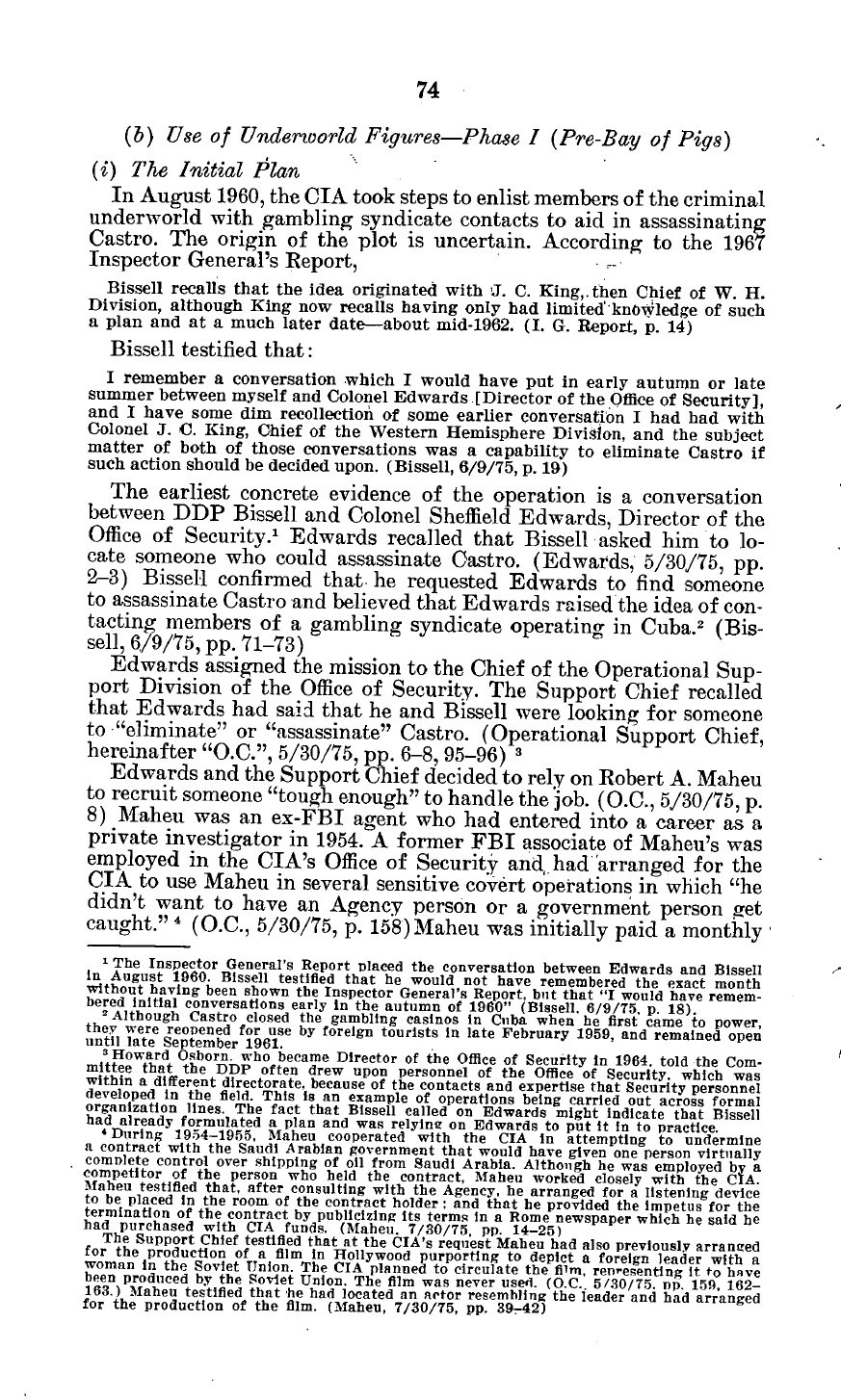 hearingChurch Committee report (S. Rep. 94-465, 1975), pp. 74-75: a 'gambling syndicate operating in Cuba' and the casinos' closing, reopening and final closingThe committee records that in August 1960 the CIA sought underworld figures 'with gambling syndicate contacts' to kill Castro, and states in a footnote that the casinos Castro closed 'were reopened for use by foreign tourists in late February 1959, and remained open until late September 1961.'hearingChurch Committee report, pp. 129-130: "a close friend of President Kennedy"The Church Committee's 1975 interim report says a close friend of President Kennedy, who had frequent contact with him from late 1960 to mid-1962, was also a close friend of John Rosselli and Sam Giancana, and that Hoover sent memoranda about it in February 1962. The report does not name the friend.hearingChurch Committee, Alleged Assassination Plots Involving Foreign Leaders, S. Rep. No. 94-465 (1975)Interim report of the Senate Select Committee to Study Governmental Operations with Respect to Intelligence Activities, November 20, 1975. It identifies the man called "Sam Gold" in the CIA's Castro operation as Sam Giancana and records his murder on June 20, 1975.hearingChurch Committee report, pp. 77 and 80-82: Trafficante, Miami and CubaPassages of Senate Report 94-465 that identify Santos Trafficante as 'the Cosa Nostra chieftain in Cuba' and record Rosselli's account of a Miami meeting at the Fountainebleau Hotel, which Maheu denied.hearingCongressional Record, House, 10 November 1941: Representative Bennett lists Browne and Bioff as "convicted this month"A House floor speech for a union-reporting bill, used here for one point only: on 10 November 1941 a member of Congress stated that George E. Browne and Bioff "were convicted this month." No court record of the 1941 verdict was opened.hearingCongressional Record, House, 28 November 1947: Representative Hoffman, "The Parole of Four Capone Gangsters"The chairman of the House Committee on Expenditures in the Executive Departments reports on his subcommittee's inquiry into the August 1947 paroles: hearings in Chicago on 25 and 26 September 1947 (508 pages of transcript) and in Washington on 7 October, paroles granted "just 37 days" after eligibility, a tax compromise, and the Atlanta warden's 1945 letter against the transfer.hearingCongressional Record, Senate, 18 August 1949: Representative Busbey's additional views to House Report No. 2441 on the "Capone gang paroles"During debate on Tom C. Clark's nomination to the Supreme Court, Senator Ferguson had printed Representative Fred E. Busbey's additional views from the Seventeenth Intermediate Report of the House Expenditures Committee. Busbey lists what the subcommittee examined, including the dismissal of a mail-fraud indictment and the reduction of tax liens on two of the men.court-opinionAiuppa v. United States, 393 F.2d 597 (10th Cir. 1968)Tenth Circuit opinion of April 25, 1968 affirming Joseph Aiuppa's jury conviction for unlawful possession and transportation of migratory birds.court-opinionAlderman v. United States, 394 U.S. 165 (1969)Supreme Court decision of March 10, 1969 on government electronic surveillance, granting rehearing in the Denver threats case after the petitioners learned that Felix Alderisio's Chicago place of business had been monitored.court-opinionBailey v. United States, 74 F.2d 451 (10th Cir. 1934)The Tenth Circuit's affirmance of Harvey J. Bailey's conviction and life sentence for conspiracy under the federal kidnaping act of 22 June 1932 in the Urschel case.court-opinionBalistrieri v. United States, 394 U.S. 985 (1969) (certiorari denied; Fortas, J., dissenting)The Supreme Court's order of April 21, 1969 denying review of Frank Peter Balistrieri's tax conviction, with a dissent by Justice Fortas, joined by Justice Douglas, listing the eavesdropping and searches the petitioner claimed and the government did not deny.court-opinionBalistrieri v. United States, 395 U.S. 710 (1969) (per curiam)The Supreme Court's per curiam of June 16, 1969 granting rehearing, vacating its earlier denial of certiorari and the Seventh Circuit's judgment in Frank Peter Balistrieri's tax case, and remanding in light of Alderman v. United States and Giordano v. United States.court-opinionBerger v. New York, 388 U.S. 41 (1967)Supreme Court decision of June 12, 1967 holding New York's permissive eavesdrop statute "too broad in its sweep" and so in violation of the Fourth and Fourteenth Amendments, reversing a conviction for conspiracy to bribe the Chairman of the State Liquor Authority.court-opinionCalicchio v. United States, 189 F. 305 (2d Cir. 1911)Second Circuit opinion of 19 June 1911 affirming the 1910 counterfeiting convictions of Giuseppe Calicchio, Giuseppe Morello, Ignatzio Lupo and five others. It holds a question about Morello's 1903 arrest in the 'Barrel Murder' improper but cured, and says: 'The arrest of Morelio for the murder proved nothing.'court-opinionCapone v. Aderhold, Warden, 2 F. Supp. 280 (N.D. Ga. 1933)The federal court at Atlanta dismisses Capone's habeas corpus petition, which argued that his felony sentences were void under the three-year statute of limitations. Decided 25 January 1933.court-opinionCapone v. United States, 56 F.2d 927 (7th Cir. 1932)The Seventh Circuit affirms Alphonse Capone's 1931 conviction on three felony counts of attempted income-tax evasion and two misdemeanor counts of failing to file returns. Decided 27 February 1932.court-opinionCerasani v. Sony Corp., 991 F. Supp. 343 (S.D.N.Y. 1998)Judge Denny Chin dismisses a libel suit over the 1997 film "Donnie Brasco." In doing so the court sets out the federal record of the 1982 trial, stating that "In 1976, FBI Agent Joseph D. Pistone assumed the identity of Donnie Brasco ... and infiltrated the Bonanno Crime Family."court-opinionColbeck v. United States, 10 F.2d 401 (7th Cir. 1925): the Staunton mail-robbery appealSeventh Circuit opinion of 8 December 1925 affirming the convictions and 25-year sentences of William P. Colbeck and eight codefendants for robbing persons in charge of the mails. It upholds the use of a convict's testimony and the instructions on alibi and reasonable doubt.court-opinionCompagna v. Hiatt, 100 F. Supp. 74 (N.D. Ga. 1951)On remand, Judge Underwood held on 18 September 1951 that the revocations of Campagna's and Gioe's paroles were "arbitrary and total nullities" and discharged both "as reinstated parolees." The findings describe the 13 August 1947 release from Leavenworth and the flight from Kansas City to Chicago.court-opinionCompagna v. Hiatt, 340 U.S. 880 (1950)The Supreme Court's per curiam of 13 November 1950: "The judgment is affirmed by an equally divided Court. Mr. Justice Clark took no part in the consideration or decision of this case."court-opinionCompagna v. Hiatt, 82 F. Supp. 295 (N.D. Ga. 1948)Judge Underwood's findings of 4 December 1948 on the habeas petitions of Louis Campagna (spelled Compagna) and Charles Gioe at the Atlanta penitentiary: sentenced 31 December 1943, paroled 13 August 1947, retaken 23 July 1948. The court held the warrants void; reconsideration was denied 20 December 1948.court-opinionCompagna v. United States, 324 U.S. 867 (1945): certiorari deniedThe Supreme Court's order of 2 April 1945 denying the petitions for certiorari in the motion-picture extortion case. "Reported below: 146 F. 2d 524."court-opinionCostello v. Immigration and Naturalization Service, 376 U.S. 120 (1964)Supreme Court decision of February 17, 1964 holding that Frank Costello could not be deported under the two-crimes provision for convictions entered while he was a naturalized citizen.court-opinionCostello v. United States, 350 U.S. 359 (1956)Supreme Court decision of March 5, 1956 affirming Frank Costello's income-tax conviction and holding that an indictment resting only on hearsay before the grand jury is valid.court-opinionCostello v. United States, 365 U.S. 265 (1961)Supreme Court decision of February 20, 1961 affirming the revocation of Frank Costello's 1925 naturalization because he had concealed that his occupation was bootlegging.court-opinionUnited States ex rel. De Lucia v. O'Donovan, 107 F. Supp. 347 (N.D. Ill. 1952)Judge Igoe's ruling of 21 August 1952 on Paul De Lucia's second habeas petition, after a new parole-violator warrant of 22 November 1950. The court found "no substantial or legal evidence to justify the charge of parole violation" and discharged him "as a reinstated parolee."court-opinionUnited States ex rel. De Lucia v. O'Donovan, 178 F.2d 876 (7th Cir. 1949)The Seventh Circuit affirmed Paul De Lucia's discharge on 8 December 1949. It dates the congressional hearings on the paroles from 25 September 1947 to 7 June 1948, and holds it "arbitrary and capricious" to issue a parole warrant without any information of a violation.court-opinionUnited States ex rel. De Lucia v. O'Donovan, 82 F. Supp. 435 (N.D. Ill. 1948)Judge Igoe's ruling of 10 November 1948 in Paul De Lucia's habeas corpus case, overruling the government's demurrer. It records the four parolees' petition of 16 June 1948, the congressional inquiry into their paroles, and the parole-violator warrant of 15 June 1948.court-opinionDe Veau v. Braisted, 363 U.S. 144 (1960)The Supreme Court upheld § 8 of the New York Waterfront Commission Act of 1953, which barred a waterfront union from collecting dues while an officer convicted of a felony remained in office.case-fileUnited States v. Basciano, No. 1:05-cr-00060 (E.D.N.Y.), docket entries for the penalty verdict, judgment and mandateOn June 1, 2011 the penalty-phase jury in Vincent Basciano's capital case returned "A SENTENCE OF LIFEIMPRISONMENT WITHOUT THE POSSIBILITY OF RELEASE" (as the docket runs the words together). Judgment followed in July 2011; the Second Circuit's mandate of April 22, 2016 affirms it.case-fileUnited States v. Basciano, No. 1:05-cr-00060 (E.D.N.Y.), docket entries for the 2011 trialMinute entries for Vincent Basciano's 2011 capital trial. Joseph Massino was called as a witness on five days in April 2011, and on May 16, 2011 the "Jury renders a guilty verdict on all three counts."case-fileUnited States v. Massino, No. 1:03-cr-00929 (E.D.N.Y.), judgment as to Joseph Massino (July 7, 2005)Docket of the second Bonanno racketeering case before Judge Nicholas G. Garaufis. The judgment ordered on July 7, 2005 imposes life imprisonment on Joseph Massino in his first case and a consecutive life term on "Count Nine (9) of the superseding indictment CR 03-929 (S-3)."court-opinionDonahue v. United States, 634 F.3d 615 (1st Cir. 2011)First Circuit opinion of February 10, 2011 reversing Federal Tort Claims Act judgments for the families of two men killed on Bulger's orders, on the ground that the suits were untimely, while calling the FBI's conduct reprehensible.court-opinionFlamingo Resort, Inc. v. United States, 485 F. Supp. 926 (D. Nev. 1980)District of Nevada opinion of February 26, 1980 in a tax refund suit by Flamingo Resort, Inc., the owner and operator of the Flamingo in 1967, describing the casino's practice of credit play. It concerns tax accounting, not organized crime.court-opinionGalatas v. United States, 80 F.2d 15 (8th Cir. 1935)The Eighth Circuit's affirmance of the conspiracy convictions of Richard Tallman Galatas, Herbert Farmer, Louis Stacci and Frank B. Mulloy, arising from the plan to free Frank Nash. It sets out Nash's escape, his capture at Hot Springs, and the walk through Union Station.court-opinionGenovese v. United States, 378 F.2d 748 (2d Cir. 1967)Second Circuit opinion of May 26, 1967 affirming the denial of Vito Genovese's 1965 motion to vacate his narcotics-conspiracy conviction. It sets out the history of the case: indictment in July 1958, conviction by a jury in April 1959.court-opinionGiancana v. Johnson, 335 F.2d 366 (7th Cir. 1964)Seventh Circuit opinion of June 30, 1964 vacating an injunction that had restricted FBI surveillance of Sam Giancana, for want of district-court jurisdiction.court-opinionGordon v. Commissioner, T.C. Memo. 1993-10 (U.S. Tax Court 1993)Tax Court memorandum opinion of January 11, 1993 about a finder's fee in Argent Corporation's acquisition of Recrion Corporation, with the court's findings that Recrion owned the Stardust and Fremont hotel-casinos and that Argent succeeded to them.court-opinionGrosso v. United States, 390 U.S. 62 (1968)Supreme Court decision of January 29, 1968, companion to Marchetti, holding that a claim of the Fifth Amendment privilege precludes a criminal conviction for failing to pay the federal excise tax on wagers.court-opinionGuzik v. United States, 54 F.2d 618 (7th Cir. 1931)Seventh Circuit opinion of December 10, 1931 affirming Guzik's conviction for willfully attempting to evade income tax for 1927 through 1929.court-opinionHamilton v. Western Union Telegraph Co., 34 F. Supp. 928 (N.D. Ohio 1940)District court decision of 9 May 1940 dissolving an injunction that had kept Western Union's leased wires running to a Youngstown race-news distributor; the affidavits it recites describe the end of the Annenberg wire organizations in Chicago.court-opinionHiatt v. Compagna, 178 F.2d 42 (5th Cir. 1949)The Fifth Circuit reversed the Atlanta court on 10 November 1949 and remanded Campagna and Gioe to the warden's custody. It records that after the 1947 paroles "Unfavorable newspaper publicity followed" and a congressional investigation; Judge Waller dissented.court-opinionH.J. Inc. v. Northwestern Bell Telephone Co., 492 U.S. 229 (1989)Supreme Court decision of June 26, 1989 holding that a RICO "pattern" requires related predicate acts that amount to or pose a threat of continued criminal activity, and that the pattern element is not limited to organized crime.court-opinionHoffa v. Saxbe, 378 F. Supp. 1221 (D.D.C. 1974)The district court rejected James R. Hoffa's suit against the condition in his 1971 commutation, which barred him from managing a labor organization until 6 March 1980. The opinion recites his entry into Lewisburg penitentiary on 7 March 1967 and his release on 23 December 1971.court-opinionHoffa v. United States, 385 U.S. 293 (1966)The Supreme Court upheld the 1964 jury-tampering convictions of James Hoffa and three others, holding that the Government's use of Edward Partin, who reported Hoffa's statements during the 1962 Nashville trial, did not violate the Fourth, Fifth or Sixth Amendments.court-opinionHornstein v. Paramount Pictures, Inc., 292 N.Y. 468 (1944)The New York Court of Appeals affirmed judgment for Paramount's officers and directors in a stockholders' suit over money paid "to labor union officials," holding that payments "coerced by threats" of a strike were not a crime under the Penal Law. Counsel's points name the payees as Bioff and Browne.court-opinionIn re Basciano, 542 F.3d 950 (2d Cir. 2008)The Second Circuit denies Vincent Basciano's petition to have Judge Garaufis recused from his capital case. Its background states that Basciano was indicted on August 14, 2003, was found guilty after trials in 2006 and 2007, and "On March 31, 2008, he was sentenced to life imprisonment."court-opinionIn re D.I. Operating Co., 240 F. Supp. 672 (D. Nev. 1965)District of Nevada opinion of March 18, 1965 holding the company that operated the Desert Inn casino, and its secretary Allard Roen, in civil contempt for not producing casino credit records under a 1961 Internal Revenue summons.court-opinionIn re Grand Jury Investigation of Sam Giancana, 352 F.2d 921 (7th Cir. 1965)Seventh Circuit opinion of October 8, 1965 affirming the June 1965 orders that held Sam Giancana in contempt for refusing to answer grand jury questions after an order to testify.court-opinionIn re President's Commission on Organized Crime Subpoena of Nicodemo Scarfo, 783 F.2d 370 (3d Cir. 1986)Third Circuit opinion of February 14, 1986 reinstating the President's Commission on Organized Crime's 1985 subpoena to Nicodemo Scarfo and holding that federal judges' service on the Commission did not violate the separation of powers.court-opinionKatz v. United States, 389 U.S. 347 (1967)Supreme Court decision of December 18, 1967 holding that FBI recording of a gambler's calls from a public telephone booth was a search and seizure under the Fourth Amendment, and that the trespass doctrine of Olmstead was no longer controlling.court-opinionKelly v. Illinois Bell Telephone Co., 325 F.2d 148 (7th Cir. 1963)Seventh Circuit decision of 6 December 1963 affirming an injunction that kept Illinois Bell and Western Union from cutting off the Illinois Sports News under the Wire Act's section 1084(d), on stipulated facts that its wires carried racing news for publications sold to the public.court-opinionKelly v. United States, 76 F.2d 847 (10th Cir. 1935)The Tenth Circuit's affirmance of Kathryn Thorne Kelly's conviction and life sentence for conspiracy to kidnap and hold Charles F. Urschel for ransom. It rejects her claim that she acted under her husband's coercion.court-opinionKolod v. United States, 371 F.2d 983 (10th Cir. 1967)Tenth Circuit opinion of February 3, 1967 affirming the convictions of Ruby Kolod, Willie Israel Alderman, and Felix Alderisio for conspiring to transmit threats in interstate commerce.court-opinionLaska v. United States, 82 F.2d 672 (10th Cir. 1936)The Tenth Circuit's affirmance of the conviction of Denver attorney Ben B. Laska for joining the Urschel conspiracy by helping conceal and pass ransom money. Its summary of the kidnaping is the clearest the court gave.court-opinionLewis v. United States, 348 U.S. 419 (1955)Supreme Court decision of 14 March 1955 holding that United States v. Kahriger controlled a challenge to the federal wagering occupational tax brought in the District of Columbia.court-opinionLimone v. United States, 497 F. Supp. 2d 143 (D. Mass. 2007)Judge Gertner's findings of July 26, 2007, after a bench trial, that the 1968 convictions for the 1965 Deegan murder rested on Joseph Barboza's perjured testimony and that the FBI was liable under the Federal Tort Claims Act.court-opinionLimone v. United States, 579 F.3d 79 (1st Cir. 2009)First Circuit opinion of August 27, 2009 affirming Federal Tort Claims Act liability and damages of over $100 million in the suits arising from the 1968 Deegan murder convictions.court-opinionHotel and Restaurant Employees and Bartenders International Union Local 54 v. Danziger, 709 F.2d 815 (3d Cir. 1983)Third Circuit opinion of June 6, 1983 on Local 54's challenge to the New Jersey Casino Control Act provisions on union officials, which describes the union's size in the Atlantic City casino hotels.court-opinionHotel and Restaurant Employees and Bartenders International Union Local 54 v. Read, 832 F.2d 263 (3d Cir. 1987)Third Circuit opinion of November 2, 1987 upholding New Jersey Casino Control Act provisions; it recounts the Commission's 1982 order removing two union officials for their association with Nicodemo Scarfo.court-opinionLupo v. Zerbst, Warden, 92 F.2d 362 (5th Cir. 1937)Fifth Circuit opinion of 19 October 1937 affirming the denial of Ignazio Lupo's habeas corpus petition after the President revoked his conditional commutation in 1936 and he was returned to the Atlanta penitentiary.court-opinionMakley v. State, 197 N.E. 339, 49 Ohio App. 359 (Ohio Ct. App. 1934)Ohio Court of Appeals opinion affirming Charles Makley's conviction for killing Allen County Sheriff Jess L. Sarber at the Lima jail on 12 October 1933, when Dillinger was freed.court-opinionMarcello v. Bonds, 349 U.S. 302 (1955)Justice Clark's opinion upholding the order to deport Carlos Marcello, 'a native of Tunis, Africa,' under the 1952 immigration act on the basis of his 1938 Marihuana Tax Act conviction, and rejecting his Administrative Procedure Act claim. Justices Black and Douglas dissented.court-opinionMarcello v. Kennedy, 312 F.2d 874 (D.C. Cir. 1962)The D.C. Circuit's opinion on Marcello's suit over his removal to Guatemala on 4 April 1961; it recites that he had re-entered the United States by June 1961 when a criminal prosecution had begun, and directs dismissal of the complaint.court-opinionMarchetti v. United States, 390 U.S. 39 (1968)Supreme Court decision of January 29, 1968 holding that a proper claim of the Fifth Amendment privilege is a complete defense to prosecution for failing to register and pay the federal occupational tax on wagering.court-opinionMarshall v. Sawyer, 365 F.2d 105 (9th Cir. 1966)Ninth Circuit opinion of August 10, 1966 affirming judgment against John Marshall, who sued Nevada officials and the Desert Inn's operator after being excluded from casinos as one of eleven men in the 1960 "black book," with a footnote giving his birth name as Marchello Caifano.court-opinionMartin v. United States, 389 F.2d 895 (5th Cir. 1968)Fifth Circuit decision of 25 January 1968 upholding the Wire Act, 18 U.S.C. § 1084, as applied to wagers telephoned from Houston to Las Vegas.court-opinionMcBride v. Western Union Tel. Co., 171 F.2d 1 (9th Cir. 1948)Ninth Circuit decision of 1 December 1948 holding that Western Union was justified, under its tariff, in refusing to restore race-track news service to the operator of Continental Press after California officers notified it that the drops were used for bookmaking.court-opinionMcBride v. Western Union Telegraph Co., 78 F. Supp. 446 (S.D. Cal. 1948)District court opinion of 28 June 1948 in a suit by Edward J. McBride, "doing business as Continental Press Service," to restore Western Union's Morse wire after the company cut it off on notice from California officers; the court restored its temporary order pending appeal.court-opinionMcDonald v. United States, 89 F.2d 128 (8th Cir. 1937)The Eighth Circuit's affirmance of the conviction of Cassius McDonald for conspiracy in the Bremer kidnaping, based on his exchange of some $92,000 of marked ransom money at Miami and Havana in September 1934. Sentence fifteen years.court-opinionMcIntyre v. United States, 367 F.3d 38 (1st Cir. 2004)First Circuit opinion of May 10, 2004 in two Federal Tort Claims Act suits against the United States arising from the FBI's handling of informants Bulger and Flemmi. It turned on when the claims accrued.court-opinionMethvin v. State, 60 P.2d 1062, 60 Okla. Crim. 1 (Okla. Crim. App. 1936)Oklahoma Court of Criminal Appeals opinion in Henry Methvin's appeal from his conviction for the 6 April 1934 killing of Cal Campbell at Commerce, Ottawa County, "while acting conjointly with Clyde Barrow and Bonnie Parker." Conviction affirmed; death sentence modified to life.court-opinionNardone v. United States, 302 U.S. 379 (1937)Supreme Court decision of December 20, 1937 holding that section 605 of the Communications Act of 1934 barred federal agents from testifying to the contents of telephone messages they had intercepted by wiretap, and reversing an alcohol-smuggling conviction.court-opinionNitto v. Commissioner, 13 T.C. 858 (1949)The Tax Court held on 30 November 1949 that the government had "established convincingly" Frank Nitto's "association with Bioff and Browne in their scheme of procuring substantial sums of money from various members of the motion picture industry," that he failed to report his share, and that fraud penalties applied.court-opinionOrena v. United States, 956 F. Supp. 1071 (E.D.N.Y. 1997)Judge Weinstein denied motions to vacate Colombo family convictions over the government's nondisclosure of Gregory Scarpa Sr.'s role as an FBI informant. The opinion finds he began giving the Bureau information in 1980, was classified "Top Echelon," and was closed on March 3, 1992 and reopened on April 8, 1992. It also summarizes Salvatore Gravano's trial testimony.court-opinionPalmer v. State, 81 S.W.2d 76, 128 Tex. Crim. 293 (Tex. Crim. App. 1934; on the merits 1935)Texas Court of Criminal Appeals opinion in Joe Palmer's appeal from his conviction for killing a guard during the 16 January 1934 break from the Eastham State Farm. The testimony it recites says Clyde Barrow, Bonnie Parker and others brought weapons to the farm.court-opinionPatriarca v. United States, 402 F.2d 314 (1st Cir. 1968)First Circuit opinion of October 14, 1968 affirming Raymond Patriarca's conviction for conspiring to travel and use the telephone in interstate commerce with intent to commit murder to further an unlawful gambling enterprise. It does not mention Las Vegas.court-opinionPendergast v. United States, 317 U.S. 412 (1943)The Supreme Court reverses the contempt convictions of Pendergast, O'Malley and McCormack on limitations grounds; its statement of facts describes Pendergast as 'a "political boss"' and the $750,000 'fee' agreed to influence the settlement of the 1930 insurance rate suits.court-opinionPeople v. Becker, 210 N.Y. 274 (1914): conviction for the Rosenthal murder reversedNew York Court of Appeals opinion of 24 February 1914 reversing police lieutenant Charles Becker's conviction for the 1912 killing of the gambler Herman Rosenthal and ordering a new trial. Filed as context for New York in 1912, not as a Black Hand record.court-opinionPeople v. Buchalter, 289 N.Y. 181 (1942)The New York Court of Appeals affirmed the murder convictions of Louis Buchalter, Emanuel Weiss and Louis Capone. In passing, the opinion refers to "one Abe Reles (now dead)."court-opinionPeople v. Goldstein, 285 N.Y. 376 (1941)The New York Court of Appeals affirmed the murder convictions of Martin Goldstein and Harry Strauss. It called the testimony of Abraham Reles, "concededly an accomplice," an important factor in the People's case and reviewed the charge on corroboration of accomplice testimony.court-opinionPeople v. Hines, 284 N.Y. 93 (1940)New York Court of Appeals opinion of 8 October 1940 affirming James J. Hines's conviction for conspiracy to conduct the lotteries known as the "numbers game" and "policy." It states that in 1931 "the notorious Dutch Schultz" and associates formed a combination to control policy enterprises. It does not mention Harlem or any Black policy operator.court-opinionPeople v. Lucas, 106 Misc. 2d 672 (N.Y. Sup. Ct. 1980)New York Supreme Court decision of 4 December 1980 on a motion by Frank Lucas, indicted for the 1974 killing of George Ford, to dismiss on the ground that the prosecution used testimony derived from his immunized cooperation. The motion as to two witnesses' testimony was denied. The court's statement of facts summarizes his federal narcotics cases.court-opinionPeople v. Luciano, 277 N.Y. 348 (1938)New York Court of Appeals decision of April 12, 1938 affirming the 1936 compulsory-prostitution convictions of Charles Luciano and five co-defendants. A state prosecution, not a federal case.court-opinionPeople v. Neumann, 148 Ill. App. 3d 362 (1986)The Illinois Appellate Court affirmed a murder conviction for a 1979 Chicago robbery-killing. It records that Frank Cullotta, imprisoned in Nevada, made an agreement with the FBI in April 1982 for witness protection and limits on his sentences, and later testified for the State under a grant of immunity.court-opinionPiquett v. United States, 81 F.2d 75 (7th Cir. 1936)The Seventh Circuit's opinion on the appeal of Louis Piquett, Dillinger's attorney, from his conviction for conspiring to harbor Homer Van Meter. The court notes he had earlier been tried and acquitted on the charge concerning Dillinger. Judgment affirmed.court-opinionCapone v. United States, 51 F.2d 609 (7th Cir. 1931): the appeal of Ralph J. CaponeThe Seventh Circuit's July 1931 decision in the income-tax appeal of Ralph J. Capone. It reverses one count and affirms the rest. It is not a ruling in Alphonse Capone's case.court-opinionRatner v. Paramount Pictures, Inc., 6 F.R.D. 618 (S.D.N.Y. 1942)A federal stockholders' suit to make Paramount's officers and directors account for "corporate funds allegedly paid by them to one Willie Bioff, to induce him not to cause a strike" was dismissed on 7 August 1942, the state-court judgment in the Hornstein actions being res judicata.court-opinionRewis v. United States, 401 U.S. 808 (1971)Supreme Court decision of 5 April 1971 holding that the Travel Act did not reach the operators of a numbers game in Yulee, Florida merely because some of their customers crossed from Georgia to bet.court-opinionRosenthal v. State of Nevada, 514 F. Supp. 907 (D. Nev. 1981)District of Nevada order of May 6, 1981 dismissing Frank Rosenthal's civil-rights suit against Nevada gaming regulators, with the court's account of his position at the Argent Corporation, his licensing denials and his work at the Stardust.court-opinionRussel v. International Alliance of Theatrical Stage Employees, 66 Cal. App. 2d 691 (1944)A California Court of Appeal opinion on a tax consultant's fee claim against the stagehands' union. It records that in July 1938 "George E. Browne, international president of appellant Alliance, accompanied by his personal representative, William Bioff" engaged him because the Treasury was investigating local unions.court-opinionRussello v. United States, 464 U.S. 16 (1983)Supreme Court decision of November 1, 1983 holding that the "interests" subject to forfeiture under the 1970 text of RICO's section 1963(a)(1) include profits and proceeds of racketeering, not only interests in an enterprise.court-opinionSacco v. Pataki, 114 F. Supp. 2d 264 (S.D.N.Y. 2000): hiring at the Javits CenterThe court granted summary judgment against former Javits Convention Center workers who said state officials' public statements about corruption at the center deprived them of a liberty interest. The opinion records that the state operating corporation took over hiring on 30 June 1995.court-opinionSagansky v. United States, 358 F.2d 195 (1st Cir. 1966)First Circuit decision of 25 March 1966 holding that a bookmaker who takes a bet over an interstate telephone call can "use" a wire facility under the Wire Act, but ordering new trials on the entrapment instructions.court-opinionSalinas v. United States, 522 U.S. 52 (1997)Supreme Court decision of December 2, 1997 holding that a defendant may be convicted of RICO conspiracy under 18 U.S.C. 1962(d) without himself committing or agreeing to commit the two predicate acts a substantive violation requires.court-opinionSawyer v. United States, 89 F.2d 139 (8th Cir. 1937)Companion case to McDonald: the Eighth Circuit's affirmance of the conviction of Harry Sawyer, charged as one of the original conspirators in the kidnaping, transport and detention of Edward George Bremer.court-opinionSedima, S.P.R.L. v. Imrex Co., 473 U.S. 479 (1985)Supreme Court decision of July 1, 1985 holding that a private civil RICO plaintiff need not show a prior criminal conviction or a separate "racketeering injury"; "RICO is to be read broadly."court-opinionShannon v. Artuz, 984 F. Supp. 807 (S.D.N.Y. 1997): habeas petition from a state murder convictionJudge Whitman Knapp's opinion of November 24, 1997 denying Kenneth Shannon's federal habeas petition against his 1989 state conviction for helping Billie Bokun in the 1985 shooting of Michael Holly.court-opinionShannon v. United States, 76 F.2d 490 (10th Cir. 1935)The Tenth Circuit's affirmance of the convictions of R. G. Shannon and Ora L. Shannon in the Urschel kidnaping. It recites how Urschel was held at the Shannon property and rejects the defense of coercion.court-opinionSouthern Bell Tel. & Tel. Co. v. Nineteen Hundred One Collins Corp., 83 So. 2d 865 (Fla. 1955)Florida Supreme Court decision of 2 November 1955 upholding the state's "anti-bookie law" on telephone and wire service, and its hotel-licence companion statute, in a case over the telephones of the Shore Club Hotel, Miami Beach.court-opinionStardust, Inc. v. Securities and Exchange Commission, 225 F.2d 255 (9th Cir. 1955)Ninth Circuit opinion of July 29, 1955 on a petition by Stardust, Inc. and Anthony Cornero Stralla to set aside an SEC order investigating stock sales from June 1954. The opinion does not place the company in Las Vegas.court-opinionState ex rel. Napolitano v. Gravano, 204 Ariz. 106 (Ct. App. 2002)The Arizona Court of Appeals upheld forfeiture of Salvatore Gravano's royalties from the book "Underboss." The opinion records his 1991 federal RICO plea, his cooperation, his five-year sentence and placement in the federal witness protection program, and his February 24, 2000 arrest in Maricopa County.court-opinionState v. Richetti, 119 S.W.2d 330, 342 Mo. 1015 (Mo. 1938)Missouri Supreme Court opinion affirming Adam Richetti's conviction and death sentence for killing Kansas City police officer Frank Hermanson in what the court calls the "Union Station Massacre" of 17 June 1933.court-opinionTaglianetti v. United States, 394 U.S. 316 (1969)Supreme Court per curiam decision of March 24, 1969 holding that a defendant overheard by unlawful FBI surveillance in Providence was entitled to his own recorded conversations and nothing more.court-opinionTelephone News System, Inc. v. Illinois Bell Telephone Co., 220 F. Supp. 621 (N.D. Ill. 1963)Three-judge district court decision of 14 August 1963 rejecting constitutional challenges to the Wire Act's cut-off provision, 18 U.S.C. § 1084(d), as applied to a Chicago telephone service that played recorded horse-racing information to callers.court-opinionTelephone News System, Inc. v. Illinois Bell Telephone Co., 376 U.S. 782 (1964)One-line per curiam order of 6 April 1964 affirming the three-judge court's decision that upheld the Wire Act's cut-off provision as applied to a Chicago racing-information telephone service.court-opinionTime, Inc. v. McLaney, 406 F.2d 565 (5th Cir. 1969): Life's 1967 article on 'Havana gamblers' in the Bahamas, and the press reports the reporter relied onThe Fifth Circuit directed summary judgment for the publisher of Life in a libel suit by Mike McLaney, holding that the record showed no actual malice. The opinion quotes 1958-59 newspaper reports on Meyer Lansky and Havana gambling as material the reporter had before him; those quotations are not findings of the court.court-opinionTropicales, S. A. v. Drinkhouse, 15 Misc. 2d 425, 183 N.Y.S.2d 679 (N.Y. Sup. Ct. 1959): a Havana casino's check enforced in New YorkA New York trial judge allowed a casino licensed by the Government of Cuba to collect a $12,000 check written for gambling credit in Havana in February 1956, holding that because the transaction took place in Cuba, 'The laws of Cuba prevail and not the laws of New York.'court-opinionUnited States ex rel. Buchalter v. Lowenthal, 108 F.2d 863 (2d Cir. 1940)Per curiam Second Circuit opinion of January 1940 denying Louis Buchalter a stay: after his federal guilty plea and fourteen-year sentence, the Attorney General consented to his trial in the New York Court of General Sessions, and the court called his appeal "wholly without merit."court-opinionUnited States v. Accardo, 298 F.2d 133 (7th Cir. 1962)Seventh Circuit opinion of January 5, 1962 reversing Anthony Joseph Accardo's 1960 conviction for false statements on income tax returns and remanding for a new trial.court-opinionUnited States v. Agueci, 310 F.2d 817 (2d Cir. 1962)Second Circuit opinion of November 8, 1962 affirming the narcotics convictions of ten defendants, Joseph Valachi among them, on a 1961 indictment charging a conspiracy to bring heroin from Italy hidden in trunks and valises collected at Pier 84 in Manhattan.court-opinionUnited States v. Alderisio, 424 F.2d 20 (10th Cir. 1970)Tenth Circuit opinion of March 31, 1970 on remand from Alderman v. United States, otherwise affirming Felix Antonio Alderisio's 1965 Denver conviction.court-opinionUnited States v. Alfano, 838 F.2d 158 (6th Cir. 1988)Sixth Circuit opinion of January 29, 1988 reversing an order that suppressed wiretap evidence in a Detroit-area prosecution, part of an investigation of alleged heroin and cocaine importation from Italy. It describes Gaetano Badalamenti as a man "whom evidence shows to be the leader of an international drug smuggling conspiracy."court-opinionUnited States v. Alo, 439 F.2d 751 (2d Cir. 1971)Second Circuit opinion of February 19, 1971 affirming Vincent Alo's conviction for obstructing an SEC investigation of the ownership of Tel-A-Sign, Inc. stock. It says nothing about Las Vegas.court-opinionUnited States v. Ambrose, 668 F.3d 943 (7th Cir. 2012)Seventh Circuit opinion of February 16, 2012 in the case of a Deputy U.S. Marshal convicted of disclosing witness-security information about a cooperating witness in the Family Secrets investigation.court-opinionUnited States v. Amuso, 21 F.3d 1251 (2d Cir. 1994)Second Circuit opinion of April 20, 1994 affirming Vittorio Amuso's racketeering and murder-related convictions. It states the indictment's allegation that he was boss of the "Luchese" family and summarizes the testimony of two former captains.court-opinionUnited States v. Angiulo, 847 F.2d 956 (1st Cir. 1988)First Circuit opinion of May 24, 1988 affirming the convictions of Jason Angiulo, John Cincotti and William Kazonis in a trial built on the FBI's 1981 surveillance at 98 Prince Street and 51 North Margin Street in Boston.court-opinionUnited States v. Angiulo, 897 F.2d 1169 (1st Cir. 1990)First Circuit opinion of March 5, 1990 affirming the RICO convictions of Gennaro, Donato and Francesco Angiulo and Samuel Granito after an eight-month trial, with an account of the Patriarca Family's Boston operations taken from the 1981 surveillance.court-opinionUnited States v. Aviles, 274 F.2d 179 (2d Cir. 1960)Second Circuit opinion of January 12, 1960 affirming most of the 1959 narcotics-conspiracy convictions of Vito Genovese, Vincent Gigante and others. It finds Genovese one of the conspiracy's "principal directing heads."court-opinionUnited States v. Balistrieri, 403 F.2d 472 (7th Cir. 1968)Seventh Circuit opinion of November 7, 1968 affirming Frank Peter Balistrieri's conviction for income-tax evasion for 1959 and 1960, after the government disclosed admittedly illegal FBI eavesdropping and the trial court found its evidence free of taint.court-opinionUnited States v. Balistrieri, 606 F.2d 216 (7th Cir. 1979)Seventh Circuit opinion of October 2, 1979 on Frank Peter Balistrieri's coram nobis motion to vacate his 1967 tax conviction, based on newly disclosed FBI surveillance of a Milwaukee restaurant in 1964. The court held that both civil and criminal rules may guide such motions and affirmed.court-opinionUnited States v. Balistrieri, 778 F.2d 1226 (7th Cir. 1985)Seventh Circuit opinion of November 20, 1985 affirming the extortion convictions of Frank, John and Joseph Balistrieri from an FBI sting in Milwaukee, in which an agent ran the Best Vending Company and was introduced to Frank Balistrieri through Benjamin Ruggiero, whom FBI agent Joseph Pistone ("Donnie Brasco") knew in New York.court-opinionUnited States v. Balistrieri, 779 F.2d 1191 (7th Cir. 1985)Seventh Circuit opinion of November 12, 1985 affirming Frank Balistrieri's Milwaukee sports-gambling convictions, with the court's account of his attempts to disqualify the trial judge. It records no Las Vegas events.court-opinionUnited States v. Barnes, 604 F.2d 121 (2d Cir. 1979)Second Circuit opinion of 23 April 1979 affirming the 1978 narcotics convictions of Leroy Barnes, "a/k/a 'Nicky'," and ten co-defendants, including Barnes's conviction for a continuing criminal enterprise. Its statement of facts describes a DEA investigation begun in November 1976 into "drug traffic in Harlem and the South Bronx."court-opinionUnited States v. Basciano, 599 F.3d 184 (2d Cir. 2010)Second Circuit opinion of March 23, 2010 on Vincent Basciano's double-jeopardy challenge to successive Bonanno family prosecutions. It calls Joseph Massino "the then-incarcerated official boss" and refers to Basciano's January 2004 assumption of the role of acting boss.court-opinionUnited States v. Basciano, 763 F. Supp. 2d 303 (E.D.N.Y. 2011)Judge Nicholas G. Garaufis rules on Vincent Basciano's pretrial motions in the capital case over the killing of Randolph Pizzolo. The opinion quotes the court's earlier finding that "Joseph Massino, the then-head of the Bonanno crime family, agreed to become a government informant and taped conversations in prison that he had with Basciano."court-opinionUnited States v. Battaglia, 394 F.2d 304 (7th Cir. 1968)Seventh Circuit opinion of January 9, 1968 affirming Hobbs Act extortion-conspiracy convictions of Salvatore Battaglia and Dave Evans, with a dissent by Judge Swygert.court-opinionUnited States v. Bellomo, 176 F.3d 580 (2d Cir. 1999)Second Circuit opinion of April 30, 1999 on the appeals of James Ida and Nicholas Frustaci from a Southern District of New York RICO trial charging the Genovese Family as the enterprise. It places one of the bookmaking operations at 171 Mulberry Street.court-opinionUnited States v. Bentvena, 319 F.2d 916 (2d Cir. 1963)Second Circuit opinion of June 13, 1963 on the retrial of a 1960 indictment charging a conspiracy to bring narcotics from Canada to New York. In its summary of the government's evidence, Carmine Galante is the operation's "chief executive"; his conviction is affirmed.court-opinionUnited States v. Bioff, 40 F. Supp. 497 (S.D.N.Y. 1941)District Judge Rifkind's ruling of 5 September 1941 overruling George E. Browne's demurrer and plea in abatement against the Anti-Racketeering Act indictment in the Bioff case.court-opinionUnited States v. Bokun, 73 F.3d 8 (2d Cir. 1995): the sentence of a Westies defendantSecond Circuit opinion of December 27, 1995 reversing a reduction of William Bokun's sentence under 28 U.S.C. § 2255 and reinstating his thirty-five-year term. Its background summarizes the Westies prosecution and the sentences imposed in 1988.court-opinionUnited States v. Bonanno, 180 F. Supp. 71 (S.D.N.Y. 1960)Judge Irving R. Kaufman's opinion of January 12, 1960 explaining his denial of the Apalachin defendants' motions to suppress evidence from the roadblock of November 14, 1957, with his account of the stops near Joseph Barbara's estate and the questioning at the Vestal station.court-opinionUnited States v. Bonanno Organized Crime Family of La Cosa Nostra, 683 F. Supp. 1411 (E.D.N.Y. 1988)Ruling of March 24, 1988 on motions to dismiss the government's civil RICO suit against the Bonanno family, its alleged officers and Teamsters Local 814. It summarizes what the amended complaint alleged about each defendant's position.court-opinionUnited States v. Bonanno Organized Crime Family of La Cosa Nostra, 879 F.2d 20 (2d Cir. 1989)Second Circuit opinion of June 23, 1989 holding that the United States may not sue for treble damages under civil RICO, in the government's suit against the Bonanno family.court-opinionUnited States v. Brooklier, 685 F.2d 1208 (9th Cir. 1982)The Ninth Circuit affirmed RICO convictions of Los Angeles defendants. It describes Aladena "Jimmy the Weasel" Fratianno, "an FBI informant," testifying to the internal organization of La Cosa Nostra, holds his accomplice testimony sufficient on the Sturman extortion charge, and upholds admission of his plea agreement.court-opinionUnited States v. Buchalter, 88 F.2d 625 (2d Cir. 1937)Second Circuit opinion of March 8, 1937 on the appeal of Louis Buchalter and Jacob Shapiro from their Sherman Act convictions in the rabbit-skin (Protective Fur Dressers) case: reversed as to Buchalter for want of substantial evidence, affirmed as to Shapiro.court-opinionUnited States v. Bufalino, 285 F.2d 408 (2d Cir. 1960)Second Circuit opinion reversing the convictions of Russell Bufalino and nineteen others for obstructing justice and perjury after the 14 November 1957 gathering at Apalachin, New York. The court says the government offered no evidence of the meeting's purpose.court-opinionUnited States v. Bulger, 816 F.3d 137 (1st Cir. 2016)First Circuit opinion of March 4, 2016 affirming James J. Bulger's racketeering conviction and life sentences after a three-month trial, and rejecting his claim that a prosecutor had given him immunity.court-opinionUnited States v. Burke, 700 F.2d 70 (2d Cir. 1983)The Second Circuit affirmed convictions in the Boston College point-shaving case. The court says the government's case "consisted principally of the testimony of Henry Hill" and three other witnesses, that Hill had been "thoroughly impeached," and that a redacted version of his immunity agreement was read to the jury.court-opinionUnited States v. Calabrese, 490 F.3d 575 (7th Cir. 2007)Seventh Circuit opinion of June 12, 2007 affirming the denial of double-jeopardy motions by Frank J. Calabrese, Sr. and James Marcello to dismiss the 2005 indictment that named the Chicago Outfit as the RICO enterprise.court-opinionUnited States v. Calandra, 414 U.S. 338 (1974)Supreme Court decision of January 8, 1974 holding that a grand jury witness may not refuse to answer questions on the ground that they rest on evidence from an unlawful search. The case began with a December 1970 federal search of John Calandra's Royal Machine & Tool Co. in Cleveland.court-opinionUnited States v. Capone, 93 F.2d 840 (7th Cir. 1937)The Seventh Circuit dismisses Capone's appeal from the refusal to vacate his 1931 county-jail sentences on counts 13 and 18. Decided 20 December 1937.court-opinionUnited States v. District Council of New York City and Vicinity of the United Brotherhood of Carpenters and Joiners of America, 778 F. Supp. 738 (S.D.N.Y. 1991)Judge Charles S. Haight, Jr. denied motions to dismiss the Government's civil RICO suit against the New York carpenters' District Council, which alleged control of the Council by members of the Genovese family through bribery and extortion.court-opinionUnited States v. Casamento, 887 F.2d 1141 (2d Cir. 1989)Second Circuit opinion of October 11, 1989 on the appeals of fifteen defendants convicted in what the court calls "The Pizza Connection Case": Indictment SS 84 Cr. 236, thirty-five defendants, tried from September 30, 1985 to March 2, 1987.court-opinionUnited States v. Castellano, 610 F. Supp. 1359 (S.D.N.Y. 1985)Judge Sofaer's pretrial ruling of June 6, 1985 in the 78-count indictment of Paul Castellano and others, which charged a "crew" engaged in car theft, murder and other crimes as a RICO enterprise.court-opinionUnited States v. Cerone, 452 F.2d 274 (7th Cir. 1971)Seventh Circuit opinion of September 15, 1971 affirming Travel Act gambling-conspiracy convictions of John P. (Jack) Cerone, Sr., Joseph Ferriola, and others.court-opinionUnited States v. Cerone, 830 F.2d 938 (8th Cir. 1987)Eighth Circuit opinion of October 8, 1987 affirming the Kansas City convictions of Aiuppa, Cerone, Lombardo, LaPietra, and Rockman for skimming the Stardust and Fremont casinos in Las Vegas.court-opinionUnited States v. Cintolo, 818 F.2d 980 (1st Cir. 1987)First Circuit opinion of May 1, 1987 affirming a Boston defense lawyer's conviction for conspiracy to obstruct justice. The case grew out of the FBI's 1981 court-authorized surveillance of an apartment at 98 Prince Street in Boston's North End.court-opinionUnited States v. Civella, 648 F.2d 1167 (8th Cir. 1981)Eighth Circuit opinion of May 13, 1981 affirming the convictions of Nicholas Civella, Peter Tamburello and John Tortora for conspiring to bribe the warden of a federal correctional center to transfer Civella's nephew.court-opinionUnited States v. Civella (Carmen J.), 666 F.2d 1122 (8th Cir. 1981)A tax appeal by Carmen J. Civella, president and principal owner of CMS, Inc., which owned a nightclub; his conviction for willful failure to file a corporate return is affirmed. The opinion records an Assistant U.S. Attorney identifying him as 'the son of Carl Civella and the cousin of Nicholas Civella.'court-opinionUnited States v. Cole, 463 F.2d 163 (2d Cir. 1972)Second Circuit opinion of June 6, 1972 in a tax case against an advertising agency and its officers, stating that illegal FBI eavesdropping in 1961-62 began as part of an investigation of Joseph Stacher, "believed to hold a high position in organized crime and to own undisclosed interests in Las Vegas gambling establishments."court-opinionUnited States v. Compagna, 146 F.2d 524 (2d Cir. 1944)Second Circuit opinion of December 20, 1944 affirming the convictions of Compagna and six others for a conspiracy to extort money from motion-picture producers and exhibitors, 1935 to 1940.court-opinionUnited States v. Connolly, 341 F.3d 16 (1st Cir. 2003)First Circuit opinion of August 14, 2003 affirming former FBI agent John J. Connolly, Jr.'s convictions for racketeering, obstruction and a false statement, and his 121-month sentence.court-opinionUnited States v. Connolly, 504 F.3d 206 (1st Cir. 2007)First Circuit opinion of October 16, 2007 affirming the denial of former FBI agent John J. Connolly, Jr.'s motion for a new trial on newly discovered evidence.court-opinionUnited States v. Coonan, 826 F.2d 1180 (2d Cir. 1987): pretrial detention of James CoonanSecond Circuit opinion of August 19, 1987 affirming an order that James Coonan be held without bail before trial, on findings of a risk of flight and a risk of harm to government witnesses.court-opinionUnited States v. Coonan, 839 F.2d 886 (2d Cir. 1988): mandamus petition during the Westies trialSecond Circuit opinion of February 11, 1988 giving its reasons for denying the Government's mandamus petition against Judge Knapp's proposed jury charge. It describes the indictment, filed September 17, 1987, against ten defendants alleged to be members of "the Westies."court-opinionUnited States v. Coonan, 938 F.2d 1553 (2d Cir. 1991): the appeal of Kevin KellySecond Circuit opinion of July 16, 1991 affirming Kevin Kelly's racketeering and related convictions. Its background recites the trial evidence about the "Westies," a group the court places in the Hell's Kitchen section of Manhattan.court-opinionUnited States v. Corallo, 413 F.2d 1306 (2d Cir. 1969)Second Circuit opinion of July 8, 1969 affirming the convictions of Antonio Corallo and others for a conspiracy to arrange a kickback on the Jerome Park Reservoir cleaning contract awarded by New York City's Water Commissioner.court-opinionUnited States v. Corrado, 227 F.3d 528 (6th Cir. 2000)Sixth Circuit opinion of August 24, 2000 in the appeals of Paul Corrado, Nove Tocco and Vito William Giacalone, three codefendants convicted of RICO conspiracy 'as alleged members of the Detroit Mafia'; it vacated two convictions pending a hearing on jury tampering and affirmed the denial of Giacalone's motion to dismiss.court-opinionUnited States v. Corrado, 227 F.3d 543 (6th Cir. 2000)Sixth Circuit opinion of September 27, 2000 on the government's appeal from a forfeiture judgment of nothing against five Detroit RICO defendants; it directed forfeiture of $1,234,700 each against Jack Tocco and Vito Giacalone, jointly and severally.court-opinionUnited States v. Corrado, 304 F.3d 593 (6th Cir. 2002)Sixth Circuit opinion of September 10, 2002 affirming the reinstatement of Paul and Anthony Corrado's convictions after the jury-tampering hearing, affirming Paul Corrado's sentence and vacating Anthony Corrado's.court-opinionUnited States v. Costello, 198 F.2d 200 (2d Cir. 1952)Second Circuit opinion of July 3, 1952 on Frank Costello's conviction for contempt of the Senate crime committee. It reversed several counts and affirmed the counts based on his leaving the March 1951 hearings.court-opinionUnited States v. Costello, 221 F.2d 668 (2d Cir. 1955)Second Circuit opinion of April 5, 1955 affirming Frank Costello's conviction for attempting to evade income taxes for 1947, 1948 and 1949, proved on a net-worth theory.court-opinionUnited States v. De Lucia, 256 F.2d 487 (7th Cir. 1958)Seventh Circuit opinion of June 18, 1958 affirming the decree that revoked Paul De Lucia's 1928 naturalization.court-opinionUnited States v. DeLuca, 137 F.3d 24 (1st Cir. 1998)First Circuit opinion of February 27, 1998 affirming the convictions of Robert P. DeLuca, Sr. and Gerard T. Ouimette for extortionate collection of credit in Rhode Island in 1994 and 1995. Its main issue was spectator screening at the trial.court-opinionUnited States v. DeLuna, 763 F.2d 897 (8th Cir. 1985)Eighth Circuit opinion of May 10, 1985 affirming the Western District of Missouri convictions of Carl DeLuna, Carl Civella, and three others for skimming money from the Tropicana Hotel and Country Club in Las Vegas and carrying it to Kansas City.court-opinionUnited States v. DiSalvo, 34 F.3d 1204 (3d Cir. 1994)Third Circuit opinion of August 31, 1994 on the RICO and extortionate-collection convictions of Anthony DiSalvo and the lawyer Robert F. Simone, with an account of the Scarfo organization drawn from recorded conversations.court-opinionUnited States v. Dorfman, 470 F.2d 246 (2d Cir. 1972)Second Circuit opinion of November 29, 1972 affirming Allen Dorfman's conviction for conspiring to accept a bribe to influence a pension plan, over a 1967 Central States Pension Fund loan to Neisco.court-opinionUnited States v. Dorfman, 690 F.2d 1217 (7th Cir. 1982)Seventh Circuit opinion of September 2, 1982 on appeals over wiretap evidence in the prosecution of Allen Dorfman and others for conspiring to bribe a United States senator, describing a fourteen-month FBI interception that produced more than 2,000 reels of recordings.court-opinionUnited States v. Eufrasio, 935 F.2d 553 (3d Cir. 1991)Third Circuit opinion of May 15, 1991 affirming the RICO, attempted-extortion and gambling convictions of three men tried before an anonymous jury, and describing the Scarfo "Family" as a Philadelphia and New Jersey subdivision of La Cosa Nostra.court-opinionUnited States v. Ferrara, 771 F. Supp. 1266 (D. Mass. 1991)District court memorandum of April 15, 1991 refusing to suppress the FBI's recording of the October 29, 1989 induction ceremony at 34 Guild Street, Medford, Massachusetts, which the court calls apparently the first such interception anywhere.court-opinionUnited States v. Five Gambling Devices, 346 U.S. 441 (1953)Supreme Court decision of 7 December 1953 affirming the dismissal of two dealer indictments and a forfeiture libel under the gambling-device act of 2 January 1951, because the Act lacked the explicitness to sustain the Government's pleadings.court-opinionUnited States v. Flemmi, 225 F.3d 78 (1st Cir. 2000)First Circuit opinion of September 11, 2000 reversing the district court's suppression order and holding that FBI agents acting on their own cannot confer use immunity on an informant.court-opinionUnited States v. Forman, 180 F.3d 766 (6th Cir. 1999)Sixth Circuit opinion of June 21, 1999 on Theodore Forman's interlocutory appeal from the denial of his motion to dismiss a new charge of converting government records; it recounts the 1,200-page IRS report from the Detroit investigation of Vito Giacalone, 'a reputed leader of the Detroit mafia', and affirms.court-opinionUnited States v. Forman, 71 F.3d 1214 (6th Cir. 1995)Sixth Circuit opinion of December 21, 1995 reversing the criminal-contempt conviction of Theodore Forman, a Justice Department tax attorney who copied a confidential report from the investigation of Vito Giacalone. The court notes that Giacalone 'has been publicly identified as a reputed leader of the Detroit mafia'.court-opinionUnited States v. Gaggi, 632 F. Supp. 1019 (S.D.N.Y. 1986)District Judge Kevin Thomas Duffy's March 10, 1986 opinion explaining why he denied mistrial motions after Paul Castellano, a defendant in the trial before him, was shot and killed with Thomas Bilotti outside Sparks Steak House on December 16, 1985.court-opinionUnited States v. Galante, 298 F.2d 72 (2d Cir. 1962)Second Circuit opinion of January 8, 1962 on the criminal-contempt sentences imposed on Carmine Galante and Anthony Mirra for their conduct during a narcotics-conspiracy trial that ended in a mistrial. Galante's appeal was dismissed as moot.court-opinionUnited States v. Gallo, 763 F.2d 1504 (6th Cir. 1985)Sixth Circuit opinion of May 29, 1985 on the Cleveland RICO, continuing-criminal-enterprise and Travel Act convictions of Joseph Gallo, Frederick and Hartmut Graewe, Kevin McTaggart and Angelo Lonardo. It affirmed all but one count and describes Lonardo as 'one of the leading directors and investors' in the enterprise.court-opinionUnited States v. Joseph Giacalone, 541 F.2d 508 (6th Cir. 1976)Sixth Circuit opinion of August 18, 1976 reversing an order that had returned a car seized under a search warrant in the FBI's investigation of James R. Hoffa's disappearance. The opinion prints the agent's affidavit: Hoffa said he was going to the Machus Red Fox restaurant to meet Anthony Giacalone and Anthony Provenzano on 30 July 1975.court-opinionUnited States v. Gigante, 166 F.3d 75 (2d Cir. 1999)Second Circuit opinion of January 22, 1999 affirming Vincent Gigante's convictions. It names the cooperating witnesses who testified against him.court-opinionUnited States v. Gigante, 39 F.3d 42 (2d Cir. 1994)Second Circuit opinion of October 24, 1994 affirming the extortion convictions and sentences of Venero Mangano, Benedetto Aloi and Dennis DeLucia in the window-replacement case.court-opinionUnited States v. Gigante, 925 F. Supp. 967 (E.D.N.Y. 1996)District Judge Nickerson's findings of May 15, 1996 on whether Vincent Gigante was feigning mental illness. It names the Triangle Social Club at 225 Sullivan Street as the club Gigante returned to at night.court-opinionUnited States v. Gigante, 982 F. Supp. 140 (E.D.N.Y. 1997)Judge Weinstein's sentencing memorandum of October 29, 1997 after Vincent Gigante's conviction. It states that the evidence showed beyond a reasonable doubt that he had been boss of the Genovese family since at least 1985.court-opinionUnited States v. Gotti, 771 F. Supp. 535 (E.D.N.Y. 1991)Judge Glasser's pretrial ruling of July 19, 1991 denying motions to suppress the recordings made under court orders at the Ravenite Social Club, 247 Mulberry Street, and related locations.court-opinionUnited States v. Hoffa, 349 F.2d 20 (6th Cir. 1965)The Sixth Circuit affirmed the Chattanooga convictions of James R. Hoffa and three others for endeavoring to influence jurors in the 1962 Test Fleet trial. Hoffa was sentenced to four years and a $5,000 fine on each of two counts, consecutively.court-opinionUnited States v. Hoffa, 367 F.2d 698 (7th Cir. 1966)The Seventh Circuit affirmed the convictions of James R. Hoffa and six others for mail and wire fraud and conspiracy to defraud the Teamsters Central States, Southeast and Southwest Areas Pension Fund.court-opinionUnited States v. International Brotherhood of Teamsters, 12 F.3d 360 (2d Cir. 1993): appointment to the Independent Review BoardThe Second Circuit affirmed the order appointing William H. Webster as the third member of the Independent Review Board created under the Teamsters Consent Decree.court-opinionUnited States v. International Brotherhood of Teamsters, 708 F. Supp. 1388 (S.D.N.Y. 1989)Judge David N. Edelstein denied the union's motions to dismiss the Government's 1988 civil RICO complaint against the Teamsters, its General Executive Board, "the Commission of La Cosa Nostra" and 26 alleged members of La Cosa Nostra, and granted default judgments against some defendants.court-opinionUnited States v. International Brotherhood of Teamsters, 725 F. Supp. 162 (S.D.N.Y. 1989): Application III of the Independent AdministratorOne of the first opinions implementing the 14 March 1989 Teamsters Consent Decree. The court upheld the court-appointed Independent Administrator's authority to hold disciplinary hearings on charges against two union officers.court-opinionUnited States v. International Brotherhood of Teamsters, 745 F. Supp. 908 (S.D.N.Y. 1990): Application XII (Senese, Talerico and Cozzo)The court upheld the Independent Administrator's decision of 12 July 1990 imposing lifetime suspensions from the Teamsters on three Chicago union officials, on charges that included knowingly associating with members of La Cosa Nostra.court-opinionUnited States v. International Brotherhood of Teamsters, 905 F.2d 610 (2d Cir. 1990)The Second Circuit affirmed orders sustaining the Independent Administrator's disciplinary authority under the Teamsters Consent Decree, and rejected the argument that a General Executive Board resolution bound the Administrator.court-opinionUnited States v. International Brotherhood of Teamsters, 931 F.2d 177 (2d Cir. 1991): the Election Rules decisionThe Second Circuit largely affirmed the order approving the court-appointed Election Officer's rules for the 1991 Teamsters election under the Consent Decree, modifying the rules on aid to candidates from non-members.court-opinionUnited States v. International Brotherhood of Teamsters, 941 F.2d 1292 (2d Cir. 1991): Senese and Talerico appealThe Second Circuit affirmed the orders upholding union disciplinary sanctions on Dominic Senese and Joseph Talerico, imposed "by reason of, among other things, their association with organized crime."court-opinionUnited States v. Indelicato, 865 F.2d 1370 (2d Cir. 1989) (en banc)The en banc Second Circuit holds that Anthony Indelicato's part in three murders committed in a single transaction could form a RICO pattern. Its account of the evidence begins: "In 1979, the boss of the Bonanno family was Carmine Galante."court-opinionUnited States v. Infelise, 835 F. Supp. 1466 (N.D. Ill. 1993)District court sentencing opinion of July 15, 1993 in the Ferriola Street Crew racketeering case, discussing Rocco Infelise's role before and after Joseph Ferriola's death in 1989.court-opinionUnited States v. Kahriger, 345 U.S. 22 (1953)Supreme Court decision of 9 March 1953 upholding the occupational tax and registration requirement that the Revenue Act of 1951 placed on persons in the business of accepting wagers.court-opinionUnited States v. Kathryn Thorne Kelly and Ora L. Shannon, 269 F.2d 448 (10th Cir. 1959)The government's appeal from a 1958 district court order vacating the 1933 convictions and life sentences of Kathryn Thorne Kelly and her mother Ora L. Shannon, after the government declined to produce FBI files. The Tenth Circuit reversed and remanded.court-opinionUnited States v. Meyer Lansky, 496 F.2d 1063 (5th Cir. 1974)The Fifth Circuit reverses a criminal contempt conviction arising from a 1971 Miami federal grand jury subpoena served on Lansky in Israel in an investigation of concealed Flamingo Hotel casino income in 1960-1967.court-opinionUnited States v. Licavoli, 725 F.2d 1040 (6th Cir. 1984)Sixth Circuit opinion of January 9, 1984 affirming the RICO convictions of James T. Licavoli and five others. Its statement of the facts the evidence established, viewed in the government's favor, describes the 1976-1977 effort to kill Danny Greene and the car bomb of 6 October 1977.court-opinionUnited States v. Licavoli, Cisternino and Carabbia, 799 F.2d 752 (6th Cir. 1986): order after James Licavoli's deathUnpublished Sixth Circuit order of July 31, 1986. Because James T. Licavoli died while his appeal was pending, the court vacates its earlier dismissal of his appeal and remands for the indictment against him to be dismissed.court-opinionUnited States v. Local 359, United Seafood Workers, 55 F.3d 64 (2d Cir. 1995): the Fulton Fish Market AdministratorAppeals arising from the 1988 Fulton Fish Market consent judgment. The Second Circuit affirmed the extensions of the court-appointed Administrator's term and fines he imposed on owners of unloading crews.court-opinionUnited States v. Local 359, United Seafood Workers, 705 F. Supp. 894 (S.D.N.Y. 1989): the Fulton Fish MarketFindings after trial in the Government's 1987 civil RICO suit over the Fulton Fish Market. The court recorded the 1988 default judgment against the defendant named in the caption as the "Genovese Organized Crime Family of La Cosa Nostra," and dismissed the claims against the union and its two remaining officers.court-opinionUnited States v. Local 560, International Brotherhood of Teamsters, 780 F.2d 267 (3d Cir. 1985)The Third Circuit affirmed the civil RICO judgment that found Teamsters Local 560 a "captive labor organization," removed its executive board and imposed a trusteeship until free elections could be held.court-opinionUnited States v. Locascio, 6 F.3d 924 (2d Cir. 1993)Second Circuit opinion of October 8, 1993 affirming the Eastern District of New York convictions of John Gotti and Frank Locascio. It says the main evidence was conversations recorded at 247 Mulberry Street, in and above the Ravenite Social Club.court-opinionUnited States v. Magaddino, 496 F.2d 455 (2d Cir. 1974)Second Circuit opinion of May 2, 1974 affirming the dismissal of a 1968 Western District of New York gambling indictment against Stefano Magaddino and others, after the government conceded illegal FBI bugging in the Buffalo area from 1961 to 1965 and declined to disclose an informant.court-opinionUnited States v. Marcello, 508 F. Supp. 586 (E.D. La. 1981) (Brilab pretrial rulings)Pretrial rulings in the Brilab prosecution of Carlos Marcello, Charles E. Roemer II, I. Irving Davidson, Vincent Marinello and Aubrey Young: motions to dismiss deferred until trial, other substantive motions denied, and rulings on suppression of recorded conversations and on disclosure of an informer.court-opinionUnited States v. Marcello, 537 F. Supp. 1364 (E.D. La. 1982) (Brilab post-trial opinion)Judge Sear's opinion denying post-trial motions after an eighteen-week trial in which Carlos Marcello and Charles E. Roemer II were found guilty of the Count One RICO conspiracy and acquitted of the other counts, and their co-defendants were acquitted of all charges.court-opinionUnited States v. Martorano, 663 F.2d 1113 (1st Cir. 1981): new-trial motions in the race-fixing caseFirst Circuit opinion of October 30, 1981 affirming the denial of new-trial motions by Howard T. Winter, James Martorano and four codefendants, based on FBI reports and grand jury testimony of the Government's chief witness, Anthony Ciulla, that had not been disclosed before trial.court-opinionUnited States v. Massino, 546 F.3d 123 (2d Cir. 2008)Second Circuit opinion of October 10, 2008 on the appeal of Bonanno defendant Patrick DeFilippo, filed under the Massino caption. It is not a ruling on Joseph Massino's own conviction.court-opinionUnited States v. Massino, 784 F.2d 153 (2d Cir. 1986)On the government's appeal, the Second Circuit reverses the suppression of 1982 wiretap tapes in the S.D.N.Y. RICO case against Joseph Massino and Salvatore Vitale, finding the government's reason for a fifteen-day sealing delay satisfactory. "They were indicted on October 4, 1984."court-opinionUnited States v. Merlino, 310 F.3d 137 (3d Cir. 2002)Third Circuit opinion of November 8, 2002 holding that "Not Proven" answers on a special verdict sheet in an earlier Philadelphia RICO trial did not bar a New Jersey murder-in-aid-of-racketeering prosecution.court-opinionUnited States v. Merlino, 349 F.3d 144 (3d Cir. 2003)Third Circuit opinion of November 12, 2003 on the appeals of seven defendants convicted in 2001 on an indictment naming the Philadelphia La Cosa Nostra family as the RICO enterprise; the jury had found the murder racketeering acts not proven.court-opinionUnited States v. Molasky, 118 F.2d 128 (7th Cir. 1941)Seventh Circuit decision of 26 February 1941 reversing the tax-evasion convictions of William Molasky, the two James Ragens and the two Kruses in the Consensus Publishing Co. case, on an indictment of 22 August 1939 that had also named Moses L. Annenberg.court-opinionUnited States v. Napolitano, 552 F. Supp. 465 (S.D.N.Y. 1982)Judge Robert W. Sweet's pretrial rulings of January to July 1982 in the RICO case against Dominick Napolitano, Benjamin Ruggiero and others, charged as members or associates of "the Bonanno Family of La Cosa Nostra." The opinion records that "Ruggiero had been told that an FBI agent, Donnie Brasco, had infiltrated his activities."court-opinionUnited States v. One Ford V-8 Sedan, 7 F. Supp. 705 (W.D. Mich. 1934)Federal forfeiture opinion over a car claimed by John Hamilton's sister at Sault Ste. Marie. It recites that Dillinger escaped from the Lake County Jail at Crown Point on 3 March 1934 in a Ford sedan stolen from the sheriff.court-opinionUnited States v. Orena, 145 F.3d 551 (2d Cir. 1998)The Second Circuit reversed a grant of new trials to three Colombo family defendants that had been based on undisclosed statements by Gregory Scarpa Sr. to the FBI. It recounts trial testimony that a truce broke down in November 1991 when members of the Orena faction attempted to kill Scarpa.court-opinionUnited States v. Panaro, 241 F.3d 1104 (9th Cir. 2001)Ninth Circuit opinion of February 28, 2001 affirming convictions tied to the extortion and killing of Herbert Blitzstein in Las Vegas in January 1997, with the court's summary of trial testimony about him.court-opinionUnited States v. Patriarca, 776 F. Supp. 593 (D. Mass. 1991)District court ruling of June 21, 1991 that the Government had not shown that Raymond J. Patriarca, charged under RICO with Travel Act predicates, should stay detained before trial; release conditions were set.court-opinionUnited States v. Patriarca, 948 F.2d 789 (1st Cir. 1991)First Circuit opinion of October 28, 1991 on the bail appeal of Raymond J. Patriarca, the son, summarizing the Government's position that he assumed leadership of the Patriarca Family after the death of his father in July 1984.court-opinionUnited States v. Pendergast; United States v. O'Malley, 28 F. Supp. 601 (W.D. Mo. 1939)Judge Otis's memorandum on the income-tax prosecutions of Thomas J. Pendergast and Robert Emmet O'Malley, describing '1908 Main Street' as 'synonymous with power' and printing the sentences imposed on Pendergast on 22 May 1939.court-opinionUnited States v. Pendergast (contempt; motions to abate and quash), 35 F. Supp. 593 (W.D. Mo. 1940)A three-judge court's ruling on motions to abate and quash an information of 13 July 1940 charging Pendergast, Robert Emmett O'Malley and A. L. McCormack with contempt arising from the insurance-rate settlement decree; the objections are overruled.court-opinionUnited States v. Pendergast (contempt judgment), 39 F. Supp. 189 (W.D. Mo. 1941)The three-judge court adjudges Pendergast, O'Malley and McCormack in contempt over the insurance-rate settlement; the Supreme Court later records two years' imprisonment for Pendergast and O'Malley and two years' probation for McCormack.court-opinionUnited States v. Persico, 164 F.3d 796 (2d Cir. 1999)The Second Circuit affirmed convictions of Theodore Persico and others in the Colombo family war case. Under "The Scarpa disclosure," it records that after trial "the Government acknowledged that for many years Scarpa had been an informant for the FBI" and that Scarpa had lied about or misrepresented his involvement in some murders.court-opinionUnited States v. Persico, 621 F. Supp. 842 (S.D.N.Y. 1985)Judge Keenan's pretrial ruling of October 2, 1985 in the Colombo family RICO case, denying motions for severance and transfer. It gives the Commission case's district docket as "United States v. Salerno, S 85 Cr. 139 (RO)."court-opinionUnited States v. Persico, 646 F. Supp. 752 (S.D.N.Y. 1986)Judge Keenan's ruling on sufficiency challenges after the 1986 Colombo family racketeering trial. On one defendant's loansharking count, the court says the jury was justified in rejecting his argument that "Arlyne Brickman, Frank Ancona and FBI surveillance agent Ronald Andachter should not be believed."court-opinionUnited States v. Persico, 832 F.2d 705 (2d Cir. 1987)Second Circuit opinion of October 27, 1987 affirming the RICO convictions of Carmine Persico and other Colombo family defendants tried in the Southern District of New York. It sets out the government's description of the family's structure.court-opinionUnited States v. Polizzi, 500 F.2d 856 (9th Cir. 1974)Ninth Circuit opinion of April 30, 1974 (modified July 18, 1974) affirming convictions for acquiring hidden interests in Vegas Frontier, Inc., which operated the Frontier Hotel in Las Vegas, in 1966 and 1967.court-opinionUnited States v. Presser, 844 F.2d 1275 (6th Cir. 1988)On a Government appeal in the prosecution of Teamsters president Jackie Presser and two others, the Sixth Circuit vacated a pretrial order to disclose "any and all impeachment evidence." The opinion recites the 1986 indictment over "ghost" employees at Local 507.court-opinionUnited States v. Provenzano, 334 F.2d 678 (3d Cir. 1964)The Third Circuit affirmed Anthony Provenzano's Hobbs Act conviction. He was indicted in 1960, as an officer of Teamsters Local 560, for extorting $17,100 from Dorn's Transportation Company between 1952 and 1959.court-opinionUnited States v. Provenzano, 620 F.2d 985 (3d Cir. 1980)The Third Circuit affirmed the RICO and RICO-conspiracy convictions of Anthony Provenzano, Thomas Andretta and Stephen Andretta in a scheme to extort "labor peace" payments from Interocean Services, an in-house trucker for Seatrain Lines.court-opinionUnited States v. Pungitore, 910 F.2d 1084 (3d Cir. 1990)Third Circuit opinion of August 1, 1990 affirming the RICO convictions of Nicodemo Scarfo and thirteen co-defendants from the 1988 Philadelphia trial, with the court's account of the family's succession from Angelo Bruno to Philip Testa to Scarfo.court-opinionUnited States v. Ragen, 314 U.S. 513 (1942)Supreme Court decision of 5 January 1942 reinstating the tax-evasion convictions of James Ragen, Sr. and Arnold and Lester Kruse in the Consensus Publishing Co. case, and describing Moses Annenberg as "the dominant figure" in several horse-race betting enterprises.court-opinionUnited States v. Rastelli, 870 F.2d 822 (2d Cir. 1989)Second Circuit opinion of March 16, 1989 affirming the convictions of Philip Rastelli, Joseph Massino and others for racketeering in the New York moving industry through Teamsters Local 814.court-opinionUnited States v. Riccobene, 709 F.2d 214 (3d Cir. 1983)Third Circuit opinion of May 20, 1983 on a RICO prosecution, built largely on FBI wiretaps at three Philadelphia locations from 1972 to 1978, of an enterprise the court says Angelo Bruno headed, with Philip Testa as underboss.court-opinionUnited States v. Roemer and Marcello, 703 F.2d 805 (5th Cir. 1983)A per curiam opinion affirming the convictions of Charles E. Roemer II and Carlos Marcello for conspiring to violate the RICO statute (Brilab), adopting the trial court's reasoning, decided 11 April 1983.court-opinionUnited States v. Ruggiero, 726 F.2d 913 (2d Cir. 1984)The Second Circuit reviewed Bonanno family RICO convictions arising from FBI agent Joseph Pistone's undercover work as "Donnie Brasco." It recounts statements made to Pistone, including Dominick Napolitano's after the May 1981 murders of three captains, and upholds their admission.court-opinionUnited States v. Ruggiero, 754 F.2d 927 (11th Cir. 1985)The Eleventh Circuit rejects Benjamin Ruggiero's and John Cerasani's double-jeopardy challenge to a 1983 Florida RICO indictment. It summarizes the 1982 New York case, in which Ruggiero was convicted of RICO conspiracy and sentenced to fifteen years, and says "Ruggiero was a member of the 'crew' captained by Napolitano."court-opinionUnited States v. Salemme, 91 F. Supp. 2d 141 (D. Mass. 1999)Judge Wolf's memorandum of September 15, 1999 setting out, after long hearings, the FBI's relationship with informants Stephen Flemmi and James Bulger, the 1981 bugging of 98 Prince Street and the 1989 Medford recording. Reversed in part in 2000.court-opinionUnited States v. Salemme, 978 F. Supp. 343 (D. Mass. 1997)Judge Wolf's memorandum of May 22, 1997, unsealed in part in June 1997, granting hearings on motions to suppress three sets of electronic surveillance, including the 1989 Medford recording, and ordering discovery on whether certain men were Government informants.court-opinionUnited States v. Salerno, 108 F.3d 730 (7th Cir. 1997)Seventh Circuit opinion of March 4, 1997 affirming Robert Salerno's conviction; it describes the Ferriola Street Crew as a unit of the Chicago Outfit led by Joseph Ferriola from 1979 to 1989.court-opinionUnited States v. Salerno, 481 U.S. 739 (1987)Supreme Court decision of May 26, 1987 upholding pretrial detention on the ground of dangerousness under the Bail Reform Act of 1984, in the case of Anthony Salerno and Vincent Cafaro.court-opinionUnited States v. Salerno, 631 F. Supp. 1364 (S.D.N.Y. 1986)District Judge Walker's April 2, 1986 order detaining Anthony Salerno and Vincent Cafaro before trial on a Genovese Family racketeering indictment. It names the two Manhattan social clubs where the government's recordings were made, the Palma Boys Social Club and the club at 2244 First Avenue.court-opinionUnited States v. Salerno, 794 F.2d 64 (2d Cir. 1986)Second Circuit opinion of July 3, 1986 holding the preventive-detention provision of the Bail Reform Act unconstitutional as applied to Anthony Salerno and Vincent Cafaro. The Supreme Court reversed it the next year.court-opinionUnited States v. Salerno, 937 F.2d 797 (2d Cir. 1991)Second Circuit opinion of June 28, 1991 on the 1987-88 Genovese family RICO trial, in which John Tronolone and Milton Rockman of Cleveland were co-defendants; the 'Teamster Case' ended in verdicts of not guilty for Salerno, Tronolone and Rockman.court-opinionUnited States v. Scarfo, 685 F.2d 842 (3d Cir. 1982)Third Circuit opinion of July 22, 1982 affirming Nicodemo Scarfo's federal conviction for possessing a firearm as a convicted felon, after a December 1979 search of his Atlantic City residence in a state murder investigation.court-opinionUnited States v. Scarfo, 711 F. Supp. 1315 (E.D. Pa. 1989)District court memorandum of April 20, 1989 on post-trial motions after the 1988 RICO trial of Nicodemo Scarfo and sixteen co-defendants, tried before an anonymous, sequestered jury in Philadelphia.court-opinionUnited States v. Scarfo, 850 F.2d 1015 (3d Cir. 1988)Third Circuit opinion of June 29, 1988 affirming Nicodemo Scarfo's Hobbs Act conspiracy and extortion conviction in the $1 million demand on the developer of the Penn's Landing project, and upholding the anonymous jury.court-opinionUnited States v. Schiro, 679 F.3d 521 (7th Cir. 2012)Seventh Circuit opinion of May 1, 2012 on the appeals of the five defendants convicted at the 2007 Family Secrets trial: Calabrese, Marcello, Lombardo, Schiro, and Doyle.court-opinionUnited States v. Scotto, 641 F.2d 47 (2d Cir. 1980)The Second Circuit affirmed the convictions of Anthony M. Scotto, president of ILA Local 1814 in Brooklyn, and Anthony Anastasio on forty-three counts, including RICO counts, for cash payments from waterfront businesses in 1975 to 1979.court-opinionUnited States v. Sinito, 723 F.2d 1250 (6th Cir. 1983)Sixth Circuit opinion of December 23, 1983 rejecting Thomas Sinito's double-jeopardy challenge to the 1982 Cleveland RICO indictment, which alleged an enterprise known as the 'Cleveland Organized Crime Family'.court-opinionUnited States v. Spilotro, 680 F.2d 612 (9th Cir. 1982)Ninth Circuit opinion of June 29, 1982 remanding for a full evidentiary hearing on a pretrial RICO restraining order over Gold Rush, Ltd., a Las Vegas jewelry store.court-opinionUnited States v. Spilotro, 786 F.2d 808 (8th Cir. 1986)Eighth Circuit opinion of February 24, 1986 on pretrial release conditions for Anthony Spilotro, Joseph Aiuppa, and John Cerone in the Kansas City casino-skimming prosecution.court-opinionUnited States v. Spilotro, 800 F.2d 959 (9th Cir. 1986)Ninth Circuit opinion of September 26, 1986 affirming suppression of evidence seized in 1978 searches, including at the Gold Rush jewelry store, because the warrants were too general, and recounting the FBI's 1977-1978 investigation of Anthony Spilotro and others.court-opinionUnited States v. Taglianetti, 274 F. Supp. 220 (D.R.I. 1967)District court opinion of October 4, 1967 on the FBI's 1962 to 1965 microphone, installed by trespass, at 168 Atwells Avenue, Providence, and whether it tainted a tax-evasion conviction.court-opinionUnited States v. Thomas, 759 F.2d 659 (8th Cir. 1985)Eighth Circuit opinion of April 11, 1985 holding that the 1983 Argent Corporation indictment did not charge the same offense as the earlier Tropicana case, with the court's account of FBI surveillance aimed at hidden interests in Las Vegas casinos.court-opinionUnited States v. Tocco, 200 F.3d 401 (6th Cir. 2000)Sixth Circuit opinion of January 5, 2000 affirming Jack W. Tocco's convictions on two RICO conspiracy counts and a Hobbs Act conspiracy count from the 1996 Detroit indictment, and vacating his sentence of twelve months and one day.court-opinionUnited States v. Tocco, 306 F.3d 279 (6th Cir. 2002)Sixth Circuit opinion of September 6, 2002 on the cross-appeals from Jack Tocco's May 2000 resentencing to thirty-four months; the court again vacated the sentence and remanded.court-opinionUnited States v. Santo Trafficante, Jr., 328 F.2d 117 (5th Cir. 1964)The Fifth Circuit reverses and orders the disqualification of a former IRS attorney from representing the Trafficantes in the government's 1962 suit to foreclose federal tax liens. It states that the suit was filed on 11 January 1962; the court finds no intentional wrongdoing.court-opinionUnited States v. Turkette, 452 U.S. 576 (1981)Supreme Court decision of June 17, 1981 holding that the RICO term "enterprise" covers both legitimate and illegitimate enterprises, so a wholly criminal association in fact can be a RICO enterprise.court-opinionUnited States v. Wexler, 6 F. Supp. 258 (S.D.N.Y. 1933)District Court opinion of July 17, 1933 denying a defendant named Wexler a bill of particulars before his income-tax trial, set for August 7, 1933. Thomas E. Dewey is listed of counsel for the United States.court-opinionUnited States v. Wexler, 79 F.2d 526 (2d Cir. 1935)Second Circuit opinion of November 4, 1935 affirming a defendant named Wexler's conviction on four income-tax counts for 1930 and 1931, in a case built on the sales of the Eureka Brewery at Paterson, New Jersey. The opinion gives no first name and no alias.court-opinionUnited States v. Williams, 737 F.2d 594 (7th Cir. 1984)Seventh Circuit opinion of June 8, 1984 affirming the convictions of Teamsters president Roy Williams, Joseph Lombardo, and others for conspiring to bribe a United States Senator.court-opinionUnited States v. Winter, 663 F.2d 1120 (1st Cir. 1981)First Circuit opinion of October 30, 1981 on a 42-count RICO prosecution of a horse-race-fixing enterprise that bribed jockeys at East Coast tracks from 1973 to 1975. Four convictions were affirmed and two reversed.court-opinionUnited States v. Zannino, 895 F.2d 1 (1st Cir. 1990)First Circuit opinion of January 10, 1990 affirming Ilario Zannino's convictions on two gambling counts and one extortionate-credit count, and his 30-year sentence, from the 1981 North End surveillance case.court-opinionUnited States v. Zizzo, 120 F.3d 1338 (7th Cir. 1997)Seventh Circuit opinion of July 29, 1997 in the Carlisi Street Crew gambling and loansharking case; it vacates Samuel Carlisi's conviction because he died while the appeals were pending and affirms the others.court-opinionVolney Davis v. United States, 226 F.2d 834 (8th Cir. 1955)The Eighth Circuit's opinion on Volney Davis's motion under 28 U.S.C. § 2255 attacking the life sentence imposed on 7 June 1935 after his guilty plea to conspiring to kidnap Edward George Bremer. The order denying relief was affirmed.court-opinionWestheimer v. Collector of Internal Revenue, 12 F. Supp. 20 (S.D.N.Y. 1935)District Court opinion of 1935 dismissing a petition over a tax levy on a bank account: it states that an income-tax assessment of $79,000 was entered "against one Flegenheimer, alias Dutch Schultz," and that the Collector levied on an account in another person's name on December 24, 1934.hearingReports of the Immigration Commission, volume 36: Immigration and Crime (Senate Document 750, 1911)The Dillingham Commission's 1911 statistical study of immigration and crime. It reports that blackmail and extortion, though few in number, form a larger share of the recorded crimes of Italians than of any other group in four of its five sets of data, and that most gainful offences were committed more by Americans than by immigrants. Its nationality categories are the commission's, flagged.
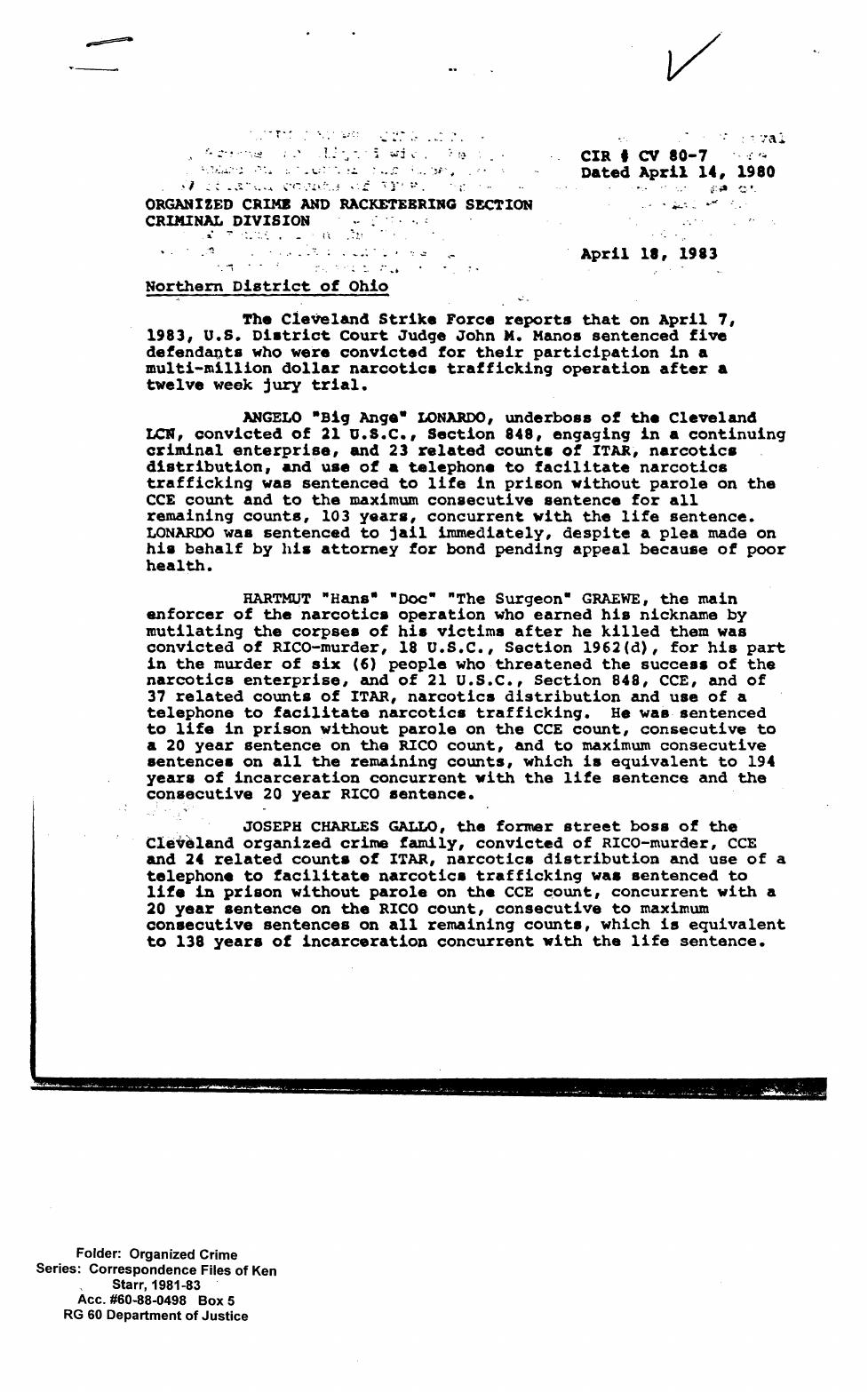 case-fileJustice Department report: Cleveland strike force sentencings of 7 April 1983An Organized Crime and Racketeering Section report of 18 April 1983 that Judge John M. Manos sentenced five Cleveland defendants after a twelve-week jury trial, among them Angelo 'Big Ange' Lonardo, 'underboss of the Cleveland LCN', to life without parole plus 103 years.press-releaseJustice Department release: 91 La Cosa Nostra defendants charged in four districts (January 20, 2011)Office of Public Affairs release announcing indictments in four federal districts against members and associates of seven La Cosa Nostra families, including all five New York families. The charges are allegations.press-releaseAdmitted New England La Cosa Nostra Leader Sentenced to 108 Months in Federal Prison (Justice Department, 2012)Press release of June 13, 2012: Edward Lato of Providence, described as an admitted capo regime in the New England La Cosa Nostra, was sentenced to 108 months for racketeering extortion conspiracies.press-releaseFormer New England Organized Crime Leader and Associate Sentenced for Racketeering and Extortion Activities (Justice Department, 2012)Press release of May 11, 2012: Luigi Manocchio, described as an admitted former boss and underboss of the New England La Cosa Nostra, was sentenced to 66 months for a racketeering and extortion conspiracy against Rhode Island businesses.
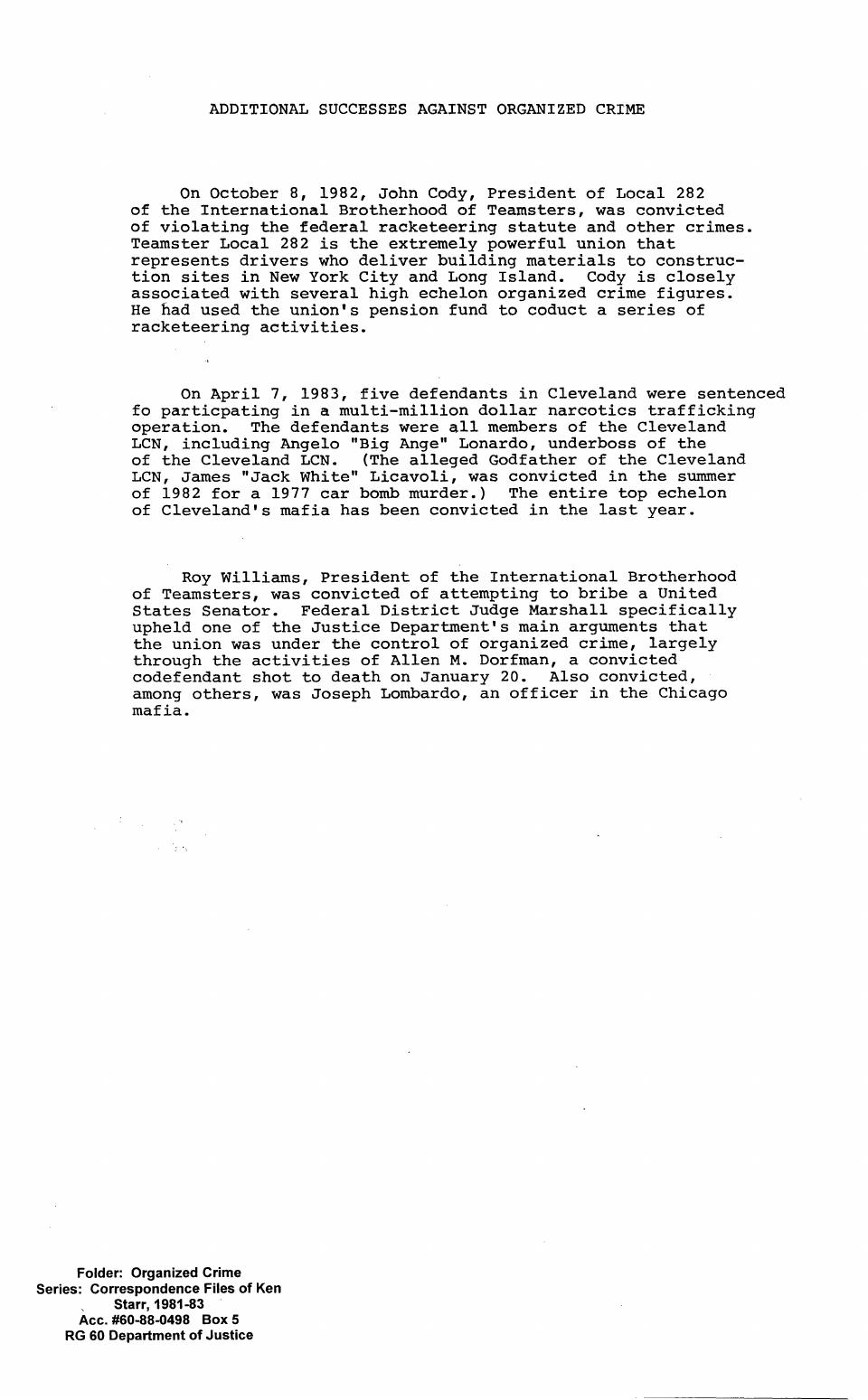 case-fileJustice Department summary of 'additional successes against organized crime', with the Cleveland convictions (June 1983)A Justice Department summary sent under a cover note of 8 June 1983 lists the April 1983 Cleveland sentencings and says that James 'Jack White' Licavoli, 'the alleged Godfather of the Cleveland LCN', 'was convicted in the summer of 1982 for a 1977 car bomb murder'.
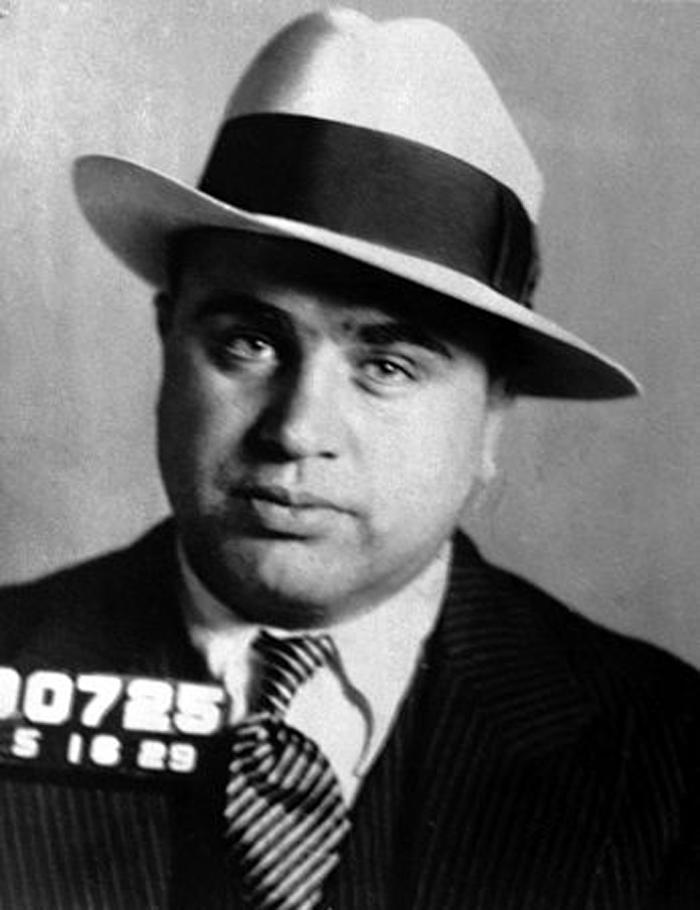 agency-historyFBI history essay, "The FBI and the American Gangster, 1924-1938"FBI history essay on the Bureau's reform under J. Edgar Hoover and the rise of organized gangs under Prohibition, including the FBI's estimate of 1,300 gangs in Chicago by the mid-1920s.
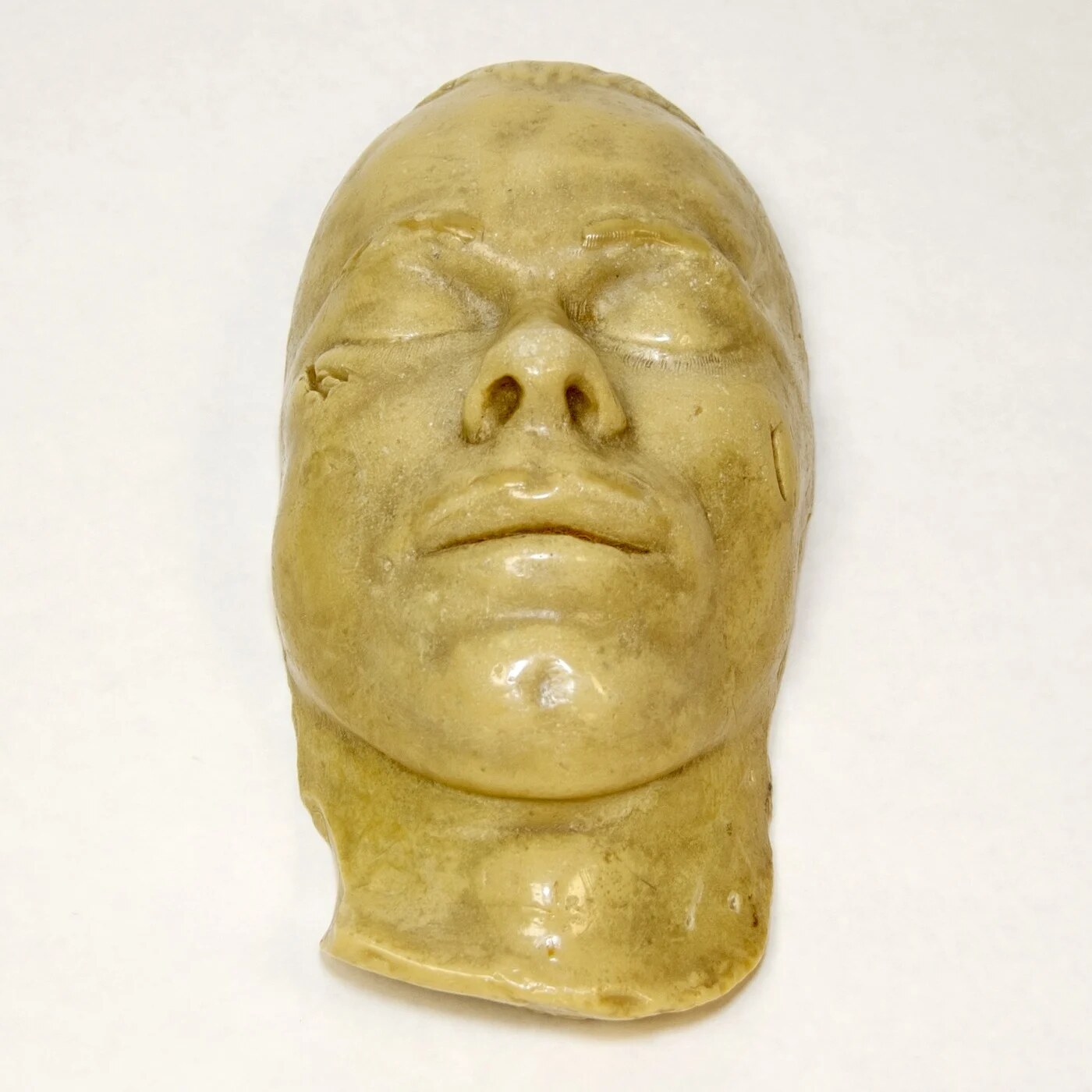 photographJohn Dillinger's death mask (FBI artifact)Plaster death mask of John Dillinger held by the FBI. The FBI says Harold May of the Reliance Dental Manufacturing Co. made it at the Cook County Morgue about twelve hours after Dillinger's death on 22 July 1934. A copy of the FBI's photograph is stored here.
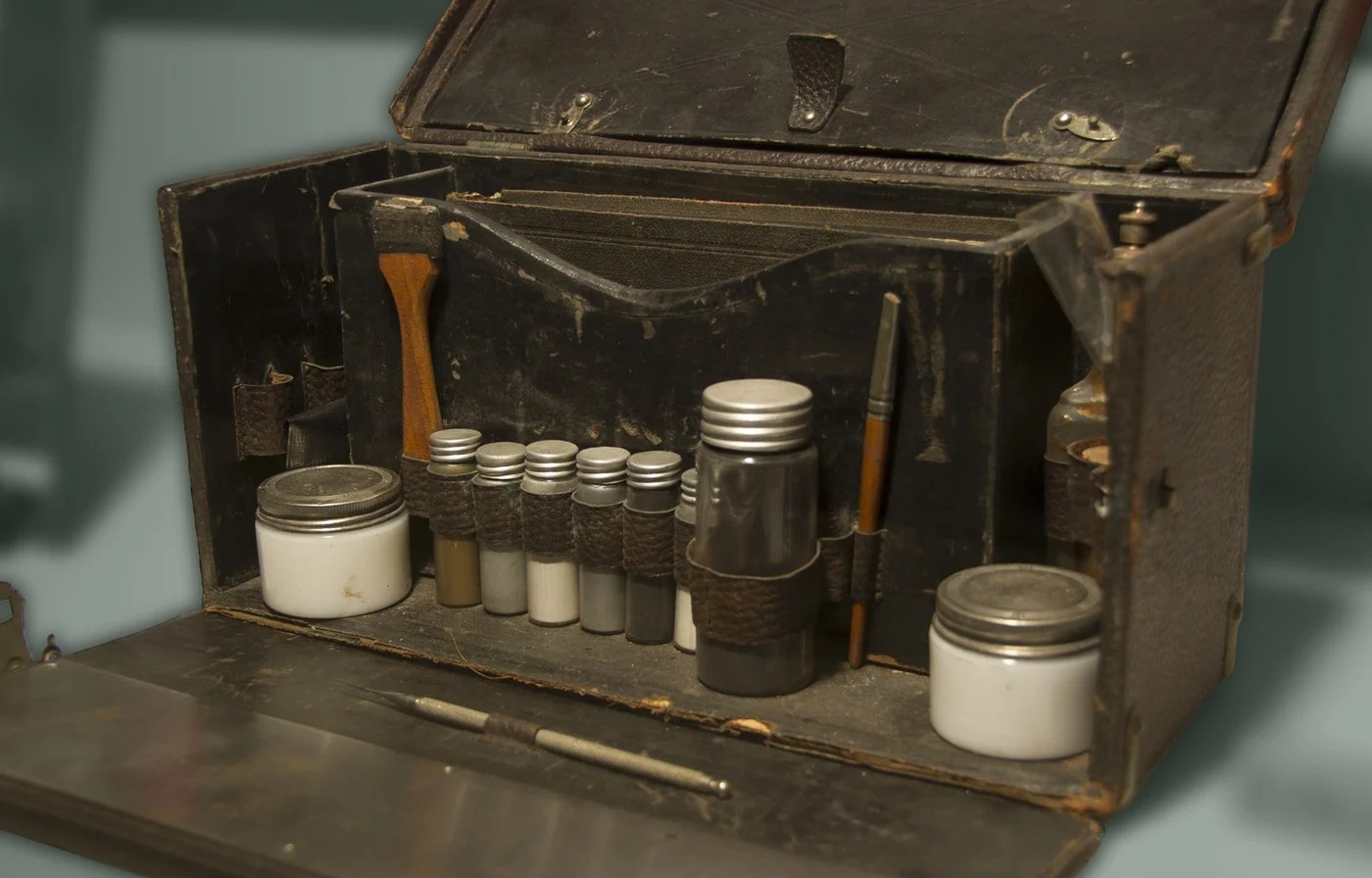 photographFingerprint kit, 1930s (FBI artifact)FBI photograph of a leather fingerprint kit the Bureau dates to the 1930s, with a magnifier, brushes, vials of powder and chemicals, a probe, a pad of paper and a drop-down metal plate for spreading ink.
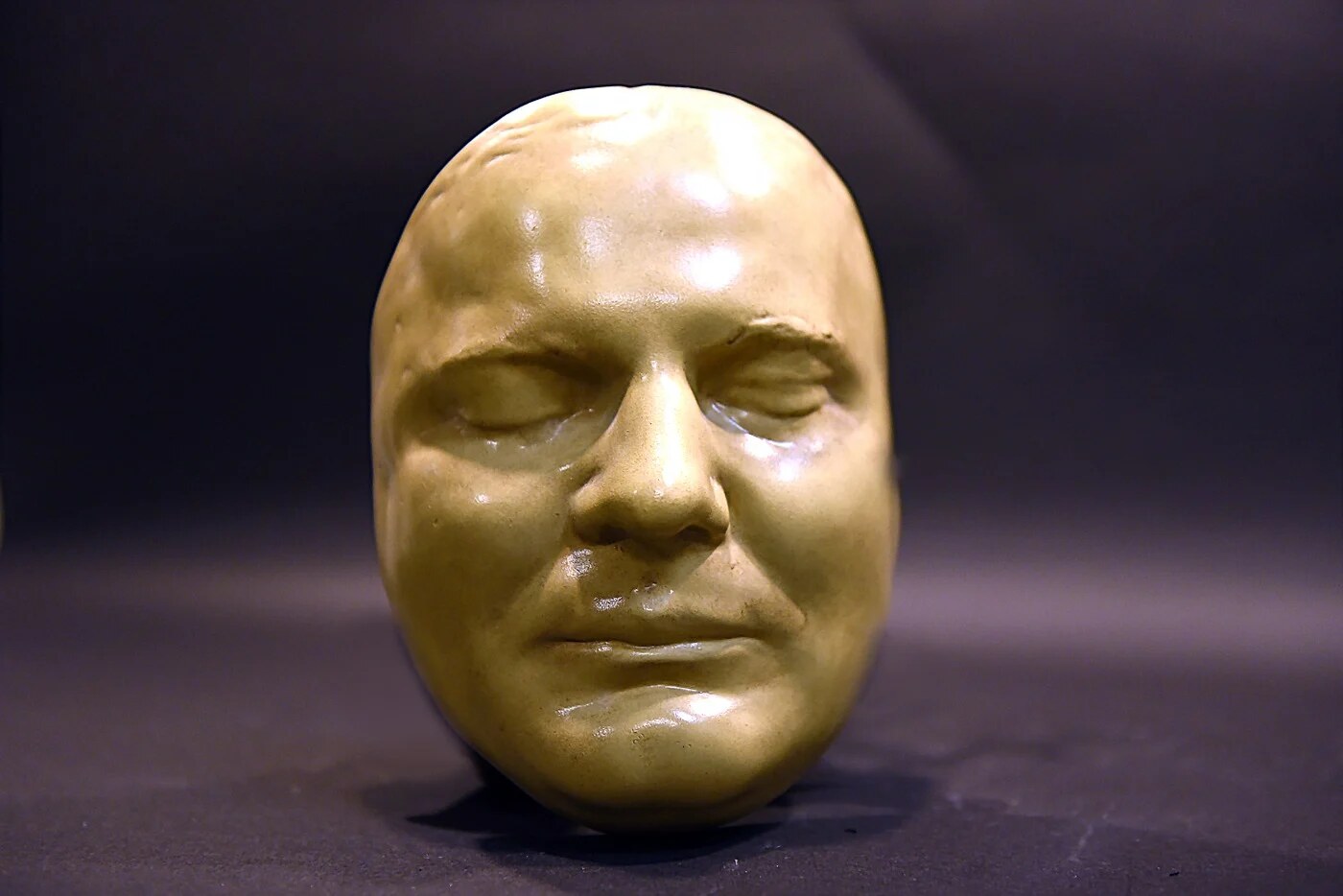 photographPretty Boy Floyd's death mask (FBI artifact)Mask of Charles Arthur Floyd's face made after his death on 22 October 1934, held by the FBI, with the Bureau's short account of the Kansas City shooting and of Floyd's death in Ohio. A copy of the FBI's photograph is stored here.
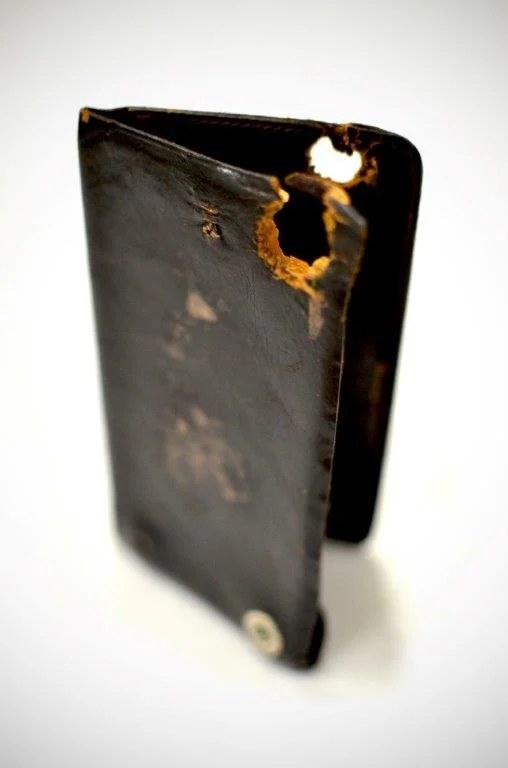 photographNotebook of Russell Gibson, Barker-Karpis gang, with a bullet hole (FBI artifact)FBI photograph of a notebook that belonged to Russell Gibson, recovered after he was fatally wounded confronting agents in Chicago on 8 January 1935. The FBI says it "bears a distinctive bullet hole."
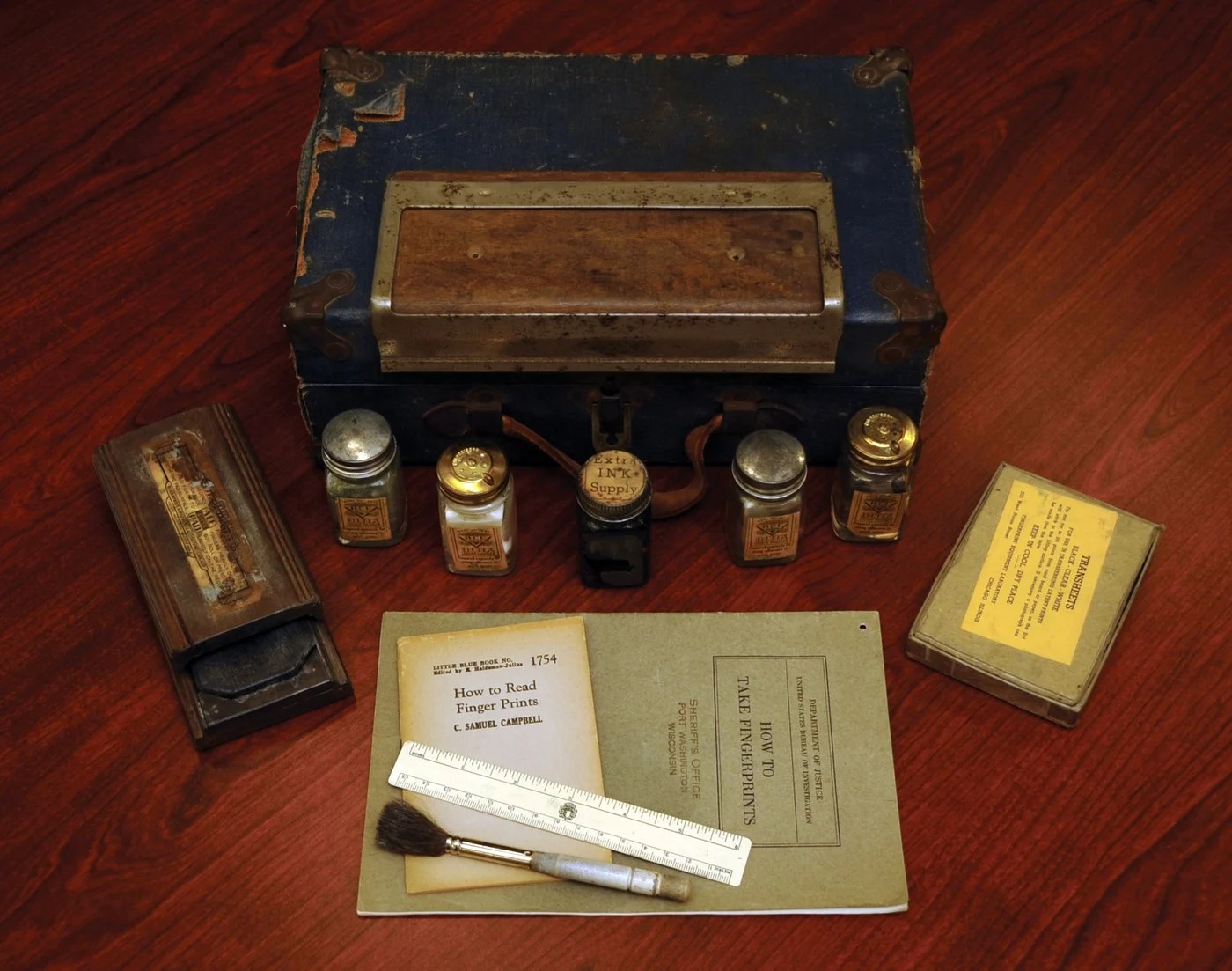 photograph"How to Take Fingerprints," Bureau of Investigation booklet, 1932 (FBI artifact)FBI photograph of the 1932 Government Printing Office booklet "How to Take Fingerprints," issued by the Bureau of Investigation for local peace officers. Hoover's foreword calls it "the fourth issue of this pamphlet."
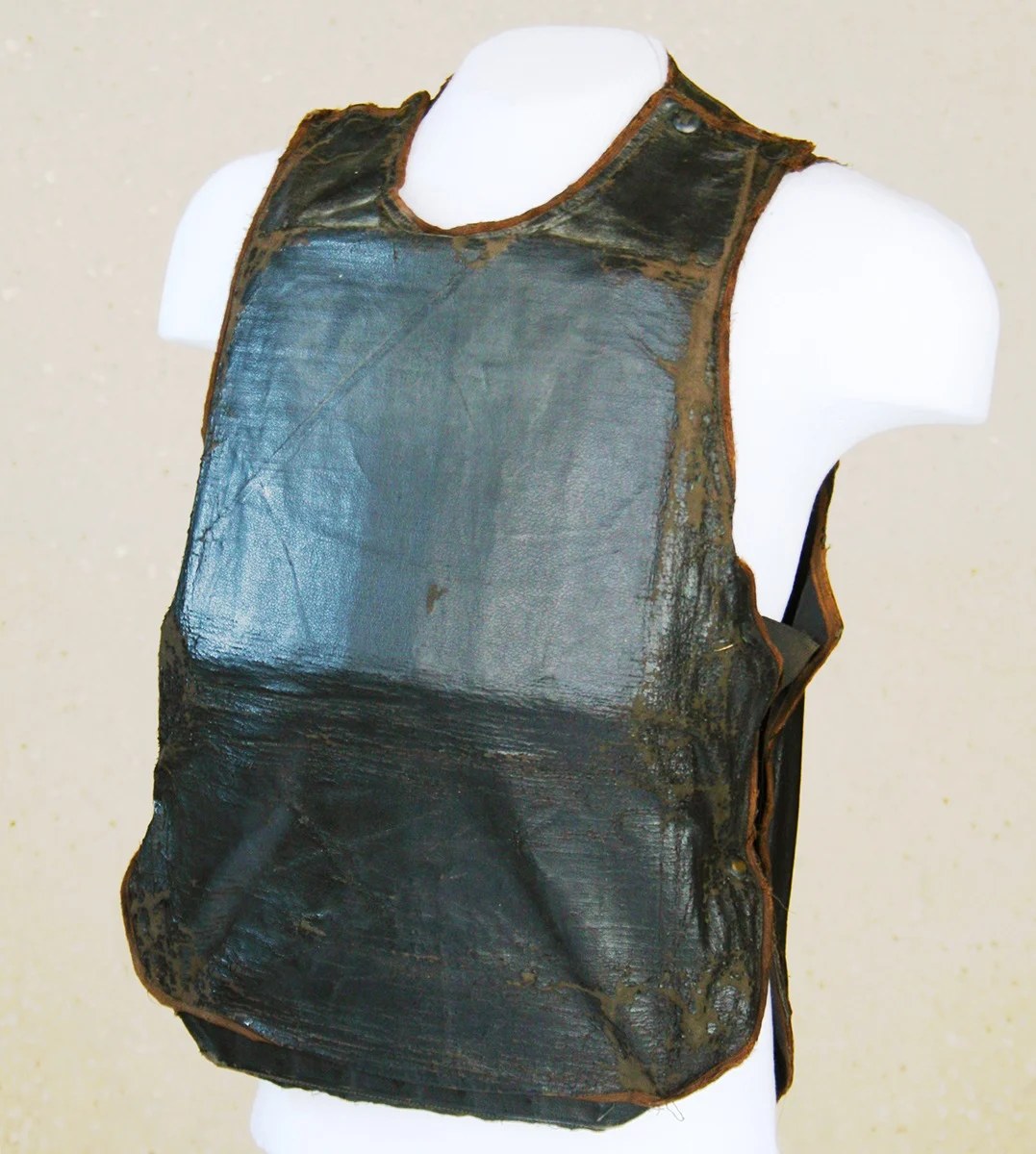 photographBody armor recovered after the Barrington, Illinois, shootout of 27 November 1934 (FBI artifact)FBI photograph of body armor the Bureau says was recovered on 27 November 1934 after a shootout in Barrington, Illinois, in which Special Agent Herman Edward Hollis and Lester Gillis ("Baby Face" Nelson) were killed.
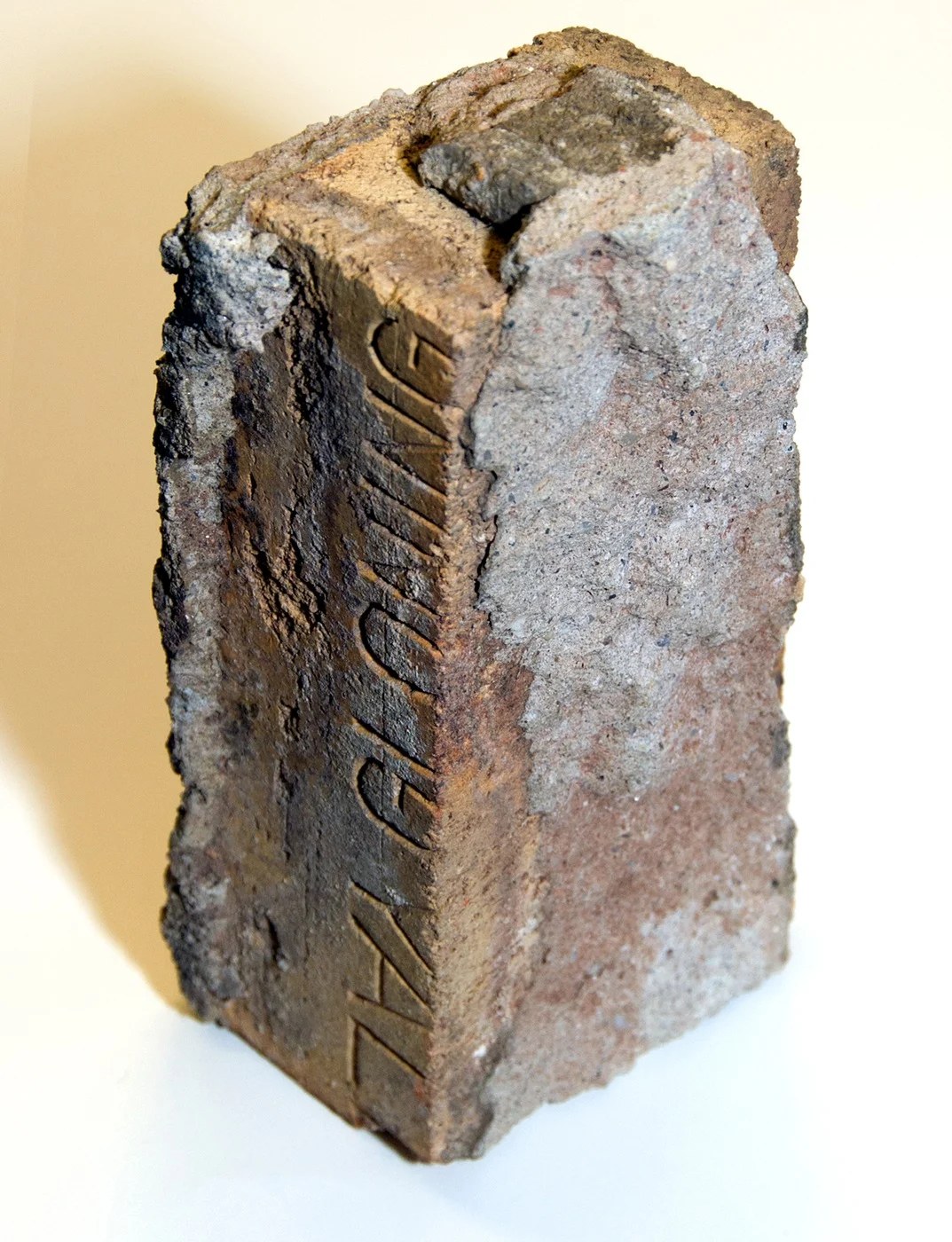 photographBrick from the Palace Chop House, Newark, New Jersey, 23 October 1935 (FBI artifact)FBI photograph of a brick salvaged from the Palace Chop House in Newark, where Arthur Flegenheimer, known as Dutch Schultz, and four associates were shot on the night of 23 October 1935.
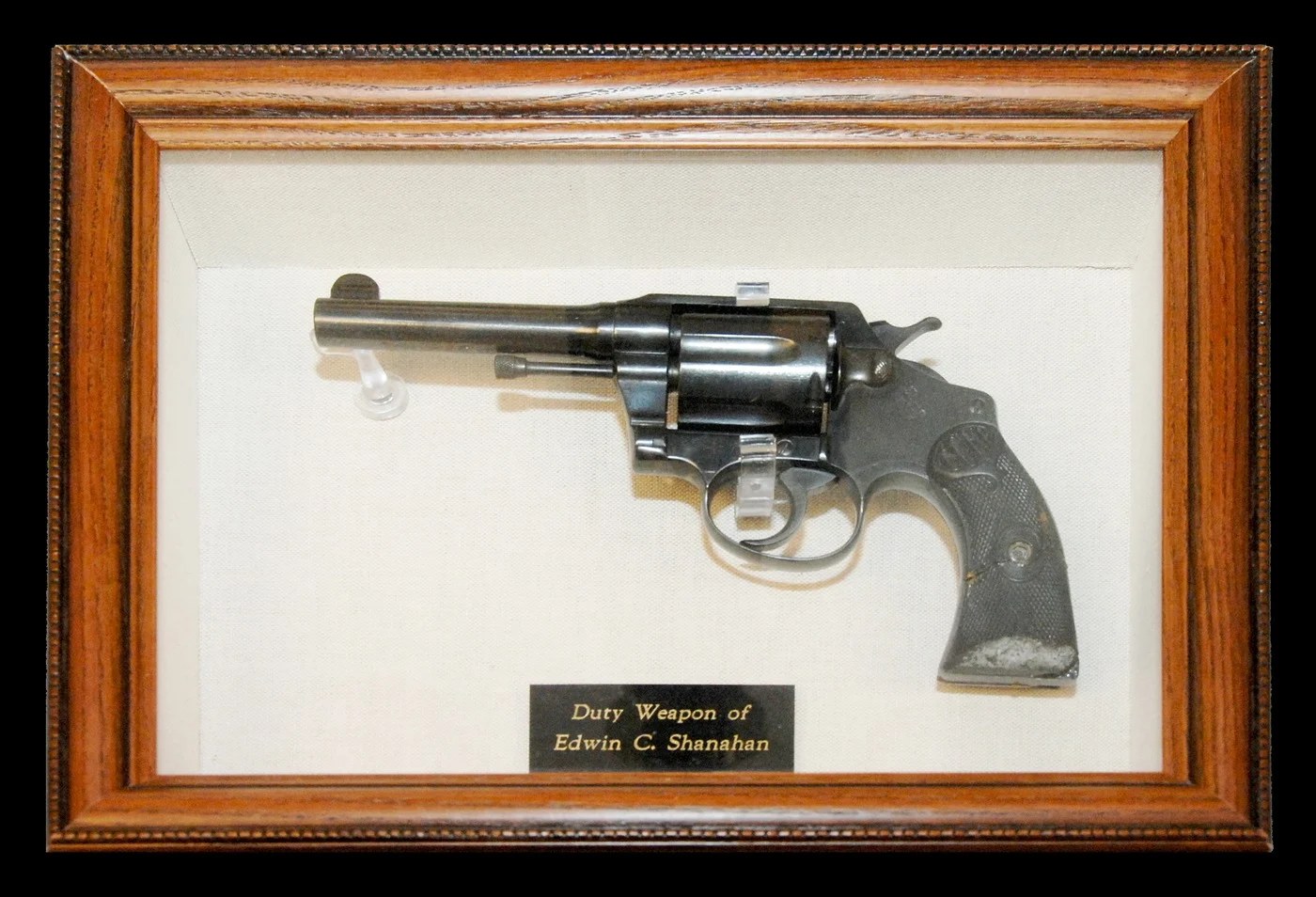 photographDuty weapon of Special Agent Edwin C. Shanahan, killed 11 October 1925 (FBI artifact)FBI photograph of the revolver of Special Agent Edwin C. Shanahan, framed with a plaque, which the FBI says is displayed at its Chicago Field Office. Shanahan was the first special agent killed in the line of duty.photographBarker hideout in Florida, with an inset of weapons recovered by agents (FBI, January 1935)Composite image on the FBI's Barker/Karpis case page: the Florida house where the FBI says Fred and Kate Barker were killed on 16 January 1935, with an inset of weapons recovered afterward. The weapons are not itemized. No copy is stored here.
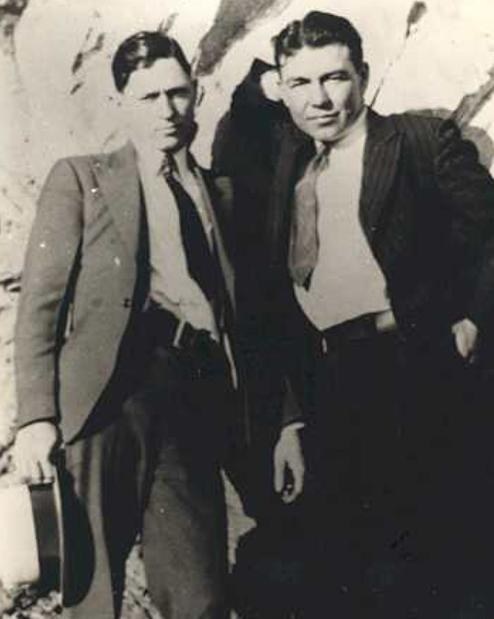 photographClyde Barrow with William D. Jones (photograph published by the FBI)Snapshot of two men in suits against a rock face, captioned on the FBI's Bonnie and Clyde page "Clyde Barrow (left) with William D. Jones, one of the Barrow gang." A copy is stored here.
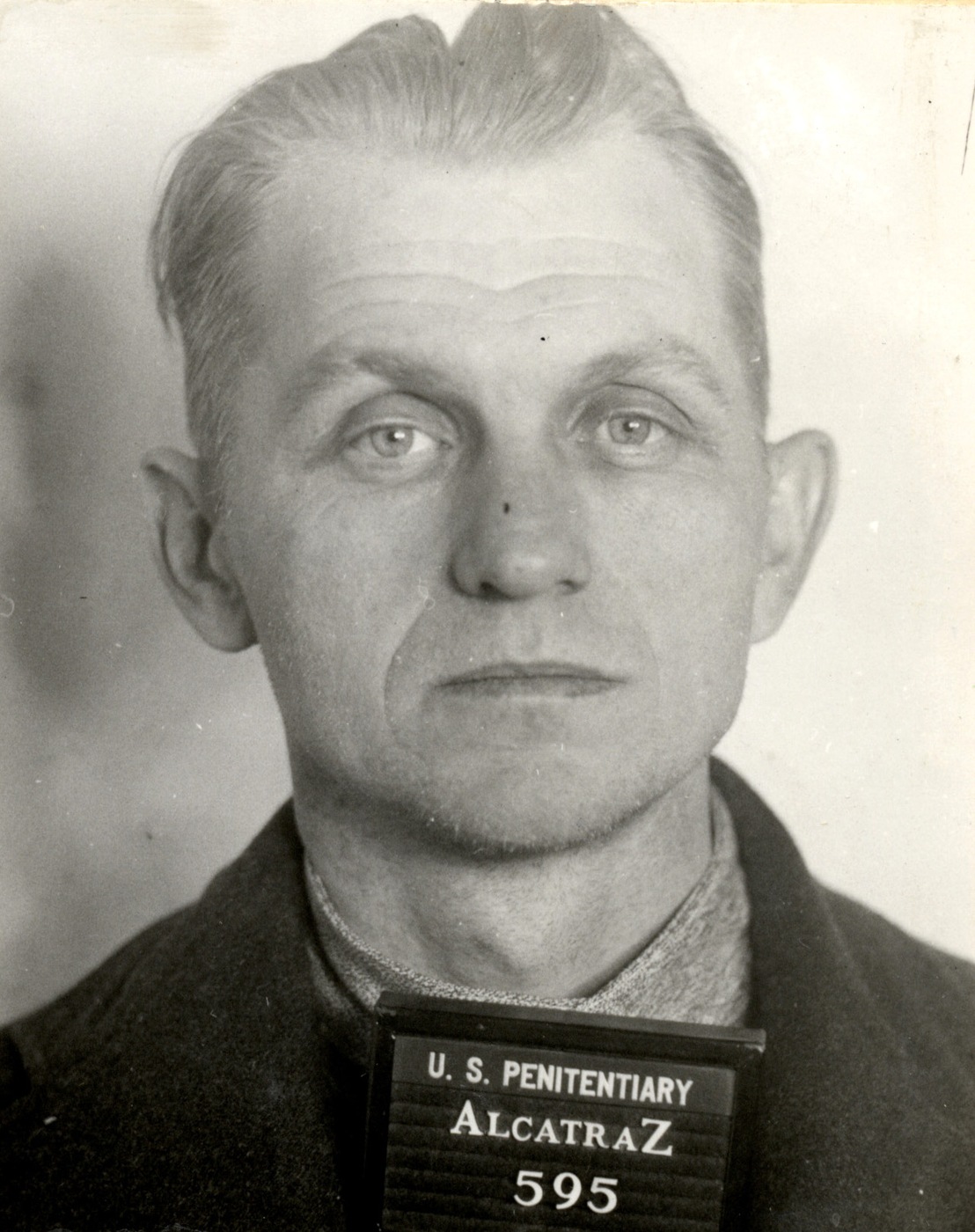 photographBasil Banghart, Alcatraz booking photograph (FBI)Alcatraz booking photograph of Basil Hugh Banghart, published by the FBI, which describes him as a member of the Roger Touhy gang. A copy is stored here.
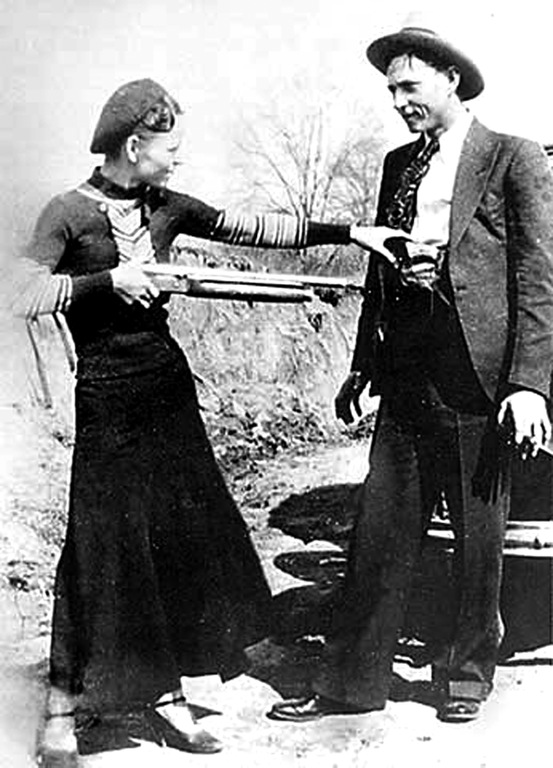 photographBonnie Parker and Clyde Barrow posed with a shotgun (photograph published by the FBI)Snapshot published by the FBI under the title "Bonnie and Clyde Horse Around With a Gun": a woman holds a shotgun toward a man in a hat. The FBI identifies them as Bonnie Parker and Clyde Barrow. A copy is stored here.
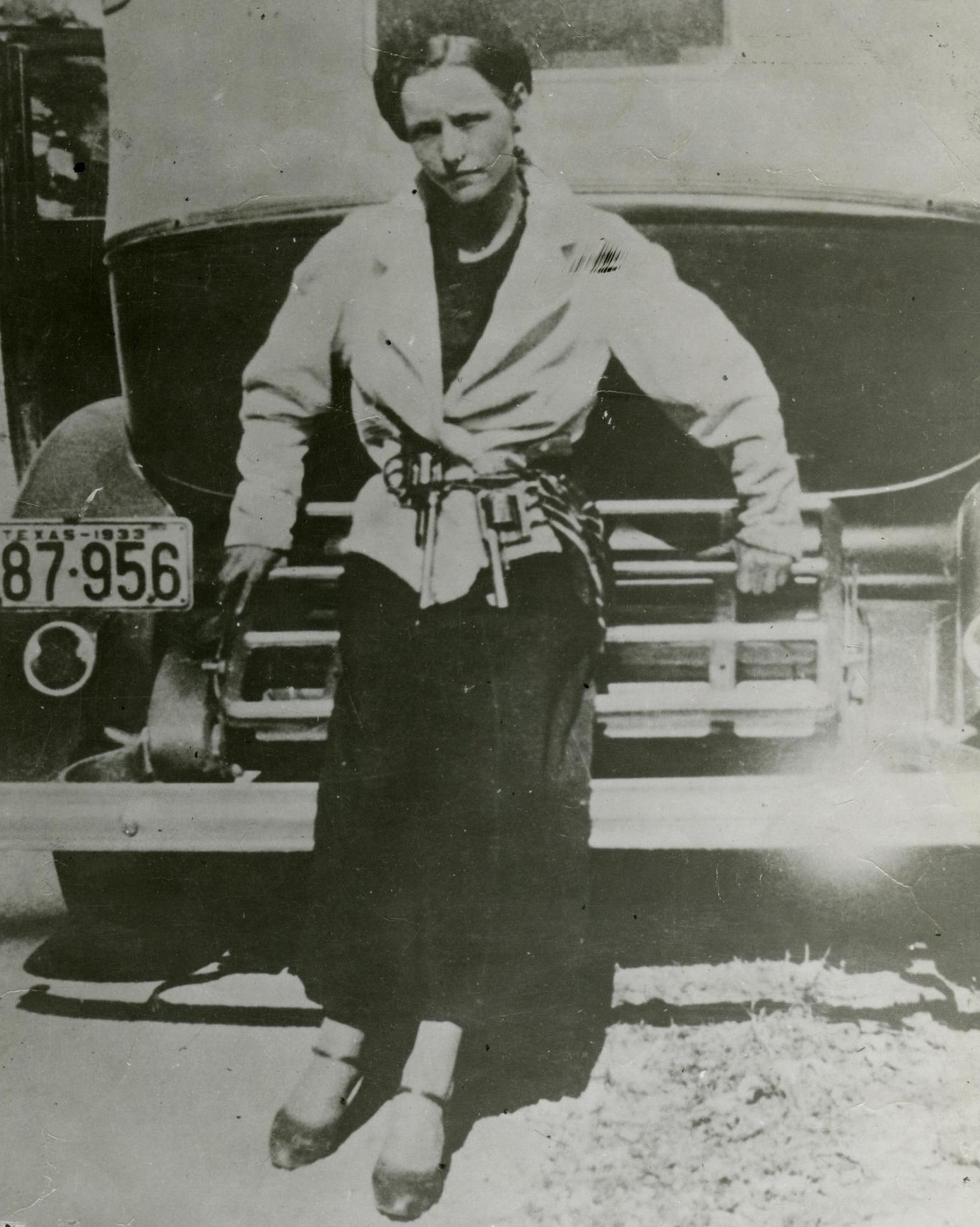 photographBonnie Parker beside a car with a 1933 Texas plate (photograph published by the FBI)Snapshot of Bonnie Parker standing against the front of a car with a 1933 Texas license plate, published on the FBI's Bonnie and Clyde page with the caption "Bonnie Parker was listed as 5'5" and 100 pounds." A copy is stored here.agency-historyFBI history article, "The Bureau and the Great Experiment" (24 January 2020)FBI history article on the Bureau of Investigation's role in Prohibition: support for the Treasury's Bureau of Internal Revenue, a 1922 Savannah conspiracy case, and a 1927 move of enforcement to the Department of Justice, as the article states it.
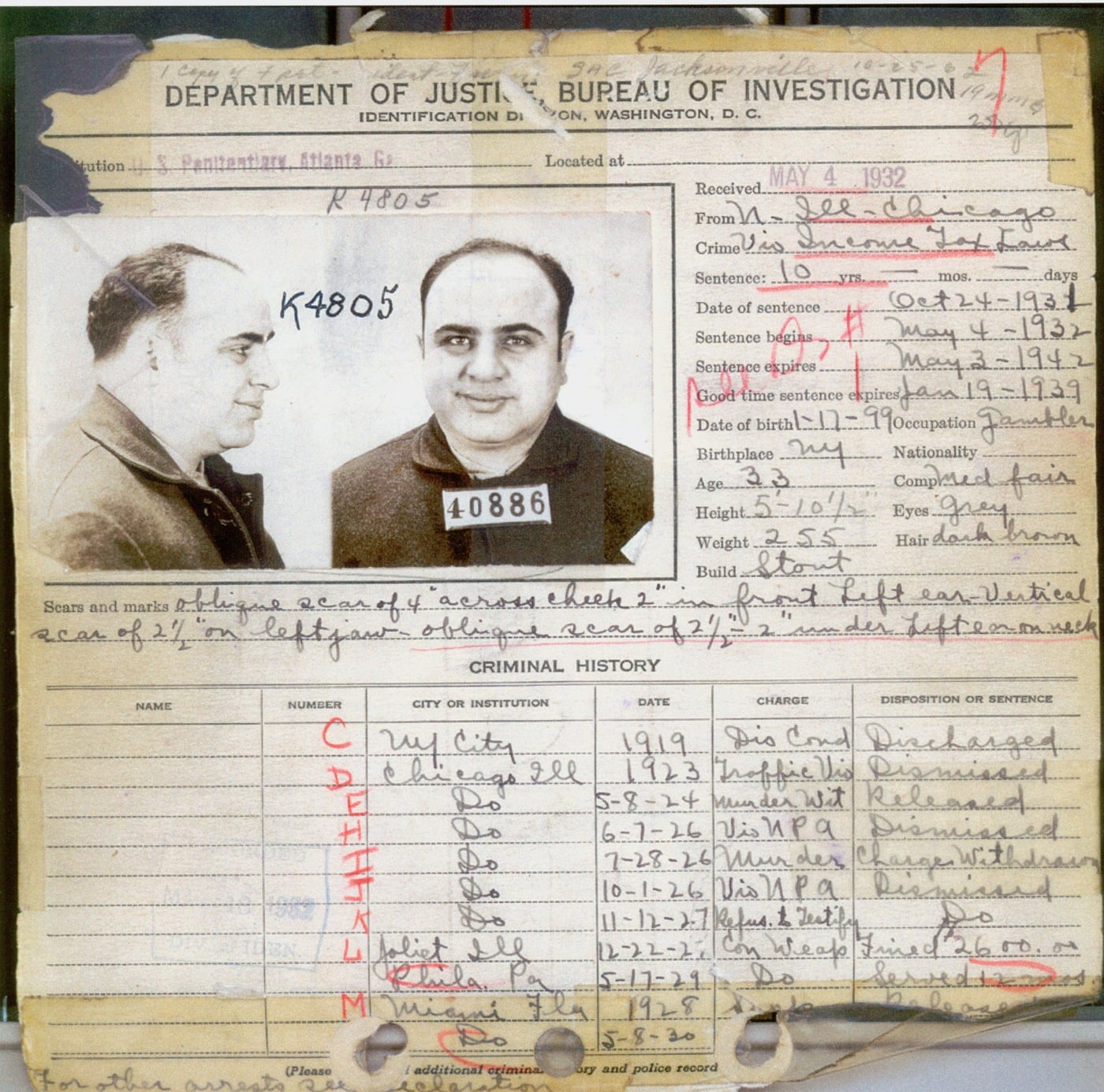 photographAl Capone arrest record dated 4 May 1932 (FBI)Arrest record published by the FBI as "Al Capone Arrest Record, 1932" and captioned as dated May 4, 1932, the day the Alcatraz warden's notebook gives as the start of his tax sentence.
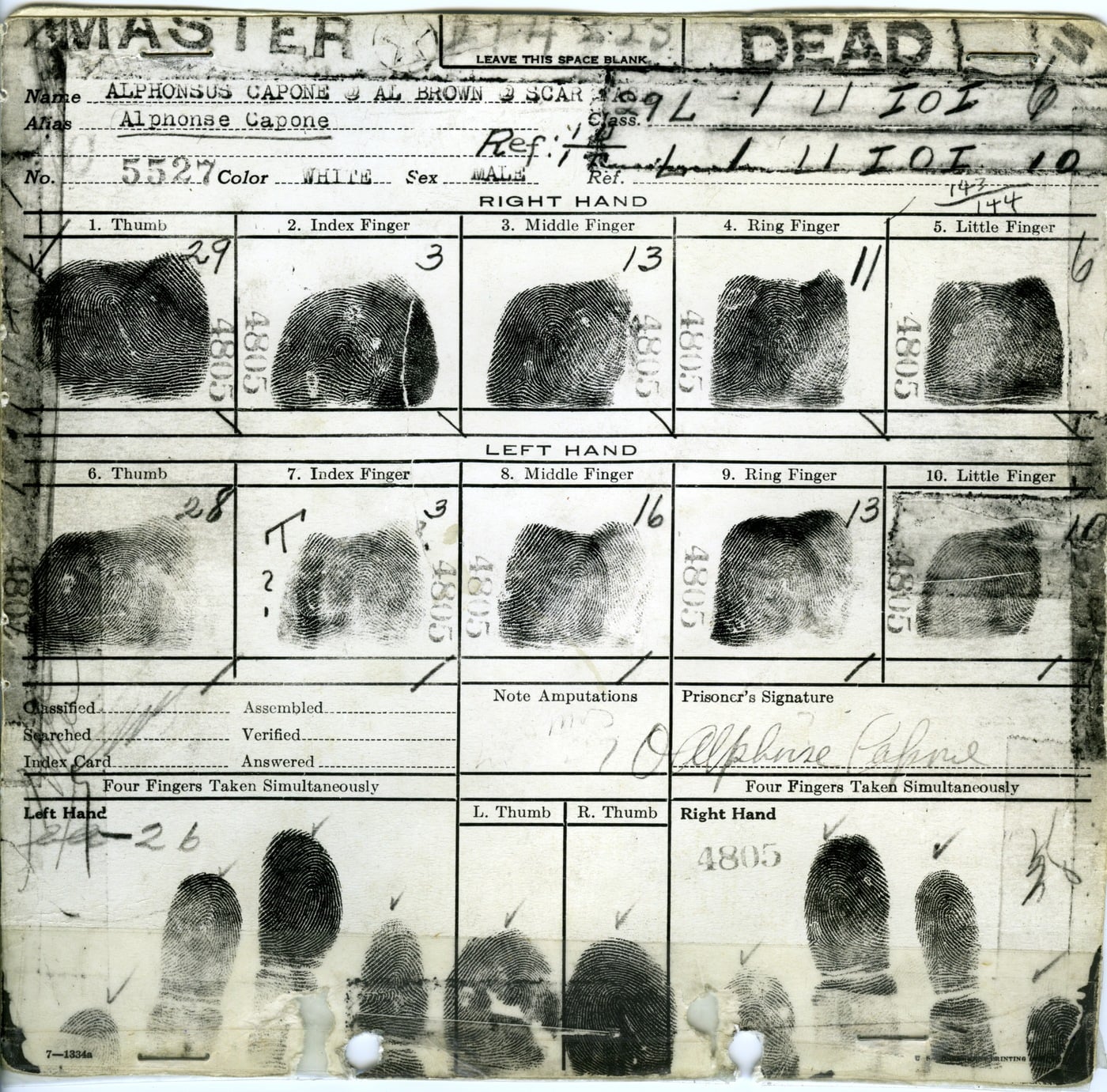 photographAl Capone's fingerprint card (FBI)Fingerprint card published by the FBI as "Al Capone's Fingerprint Card." The FBI gives no date for the card.
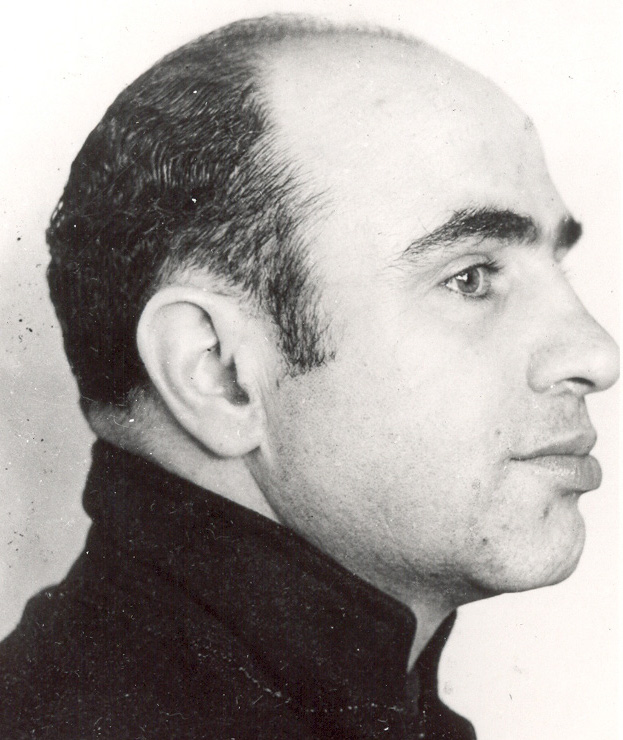 photographAl Capone mug shot, 1934 (side)Profile identification photograph published by the FBI as "Al Capone Mug Shot 1934 (Side)" and captioned as taken at Alcatraz circa 1934. A copy is stored here.
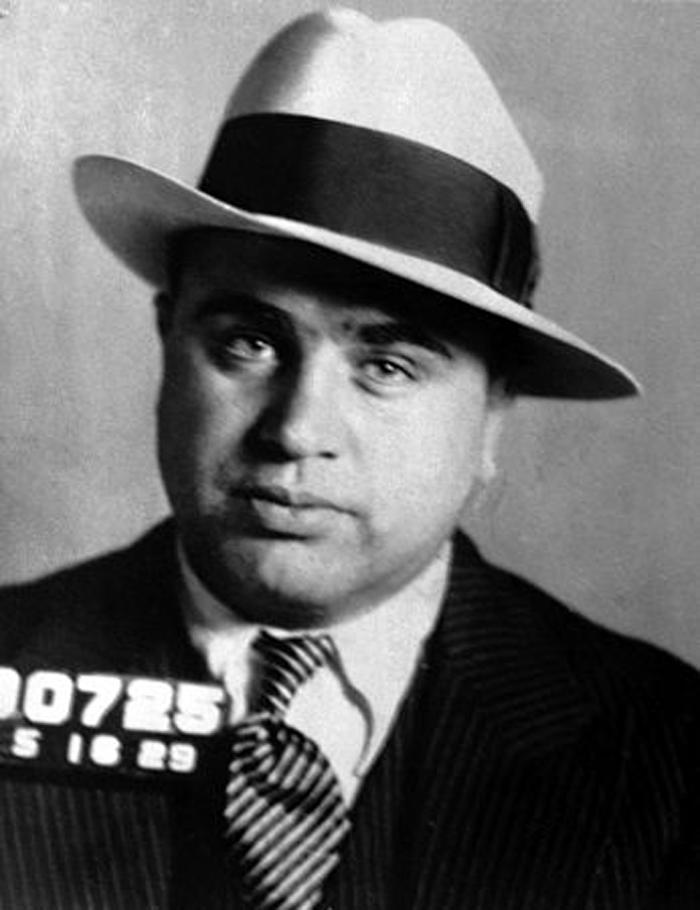 photographAl Capone mug shot captioned 16 May 1929 (FBI)Police identification photograph of Al Capone in a fedora with a numbered placard, published by the FBI and captioned "Mug shot of Al Capone on May 16, 1929." The date conflicts with other federal captions.
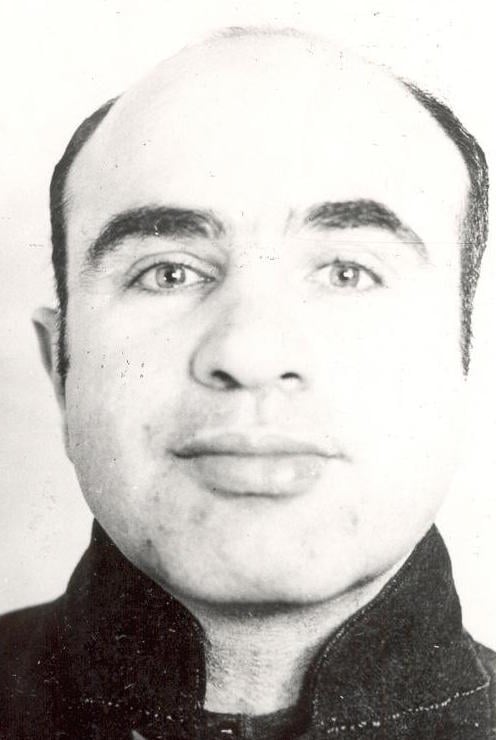 photographAl Capone mug shot, 1934 (front)Front identification photograph published by the FBI as Al Capone's 1934 mug shot. A copy is stored with this archive.
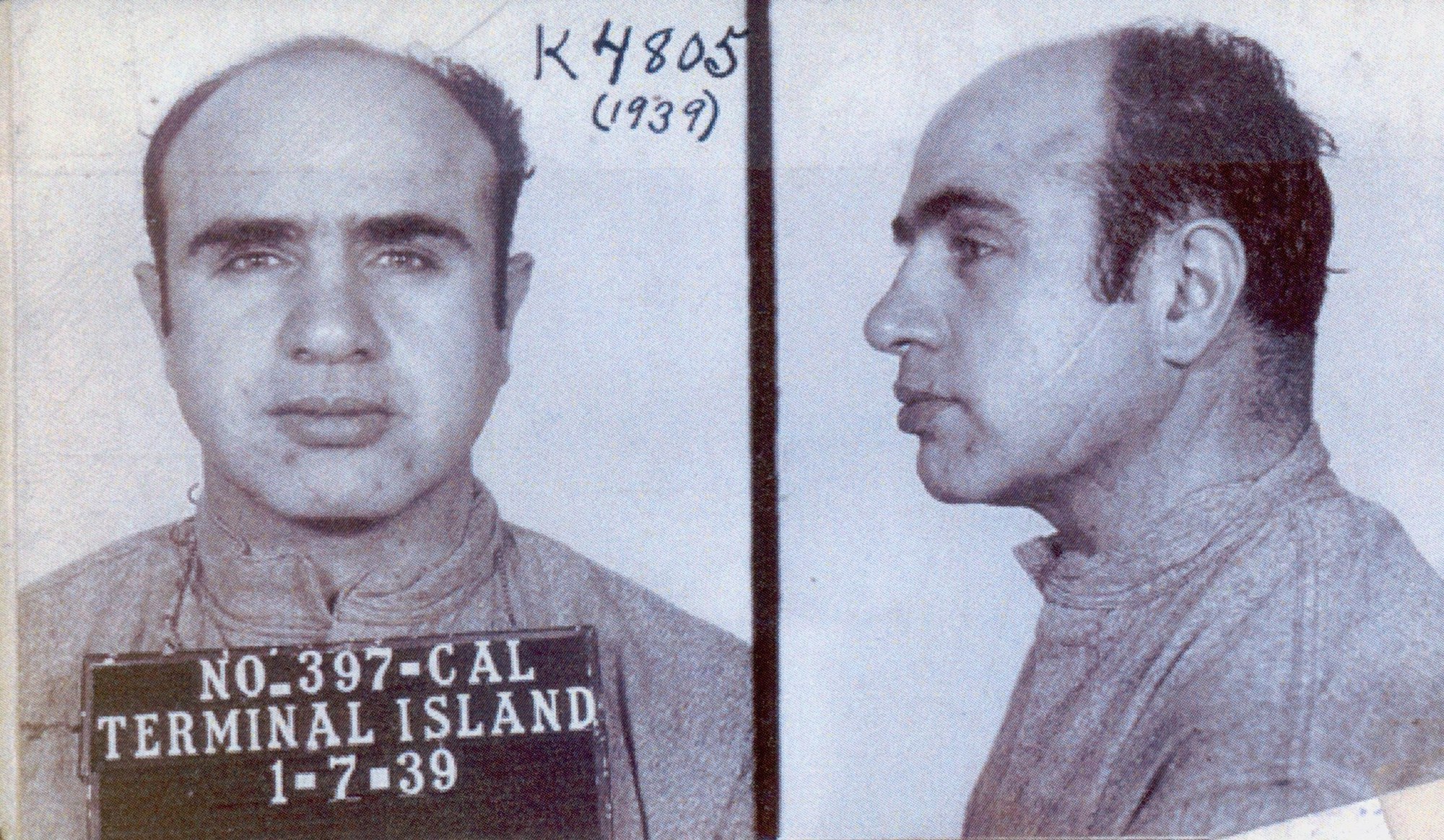 photographAl Capone mug shot, 1939 (FBI)Photograph published by the FBI as "Al Capone Mug Shot 1939." The year comes only from the entry title; the FBI does not say which institution took it.press-releaseFBI Detroit marks the 50th anniversary of Jimmy Hoffa's disappearance (31 July 2025)FBI Detroit press release of 31 July 2025: "The Hoffa investigation remains active." It names no suspect.
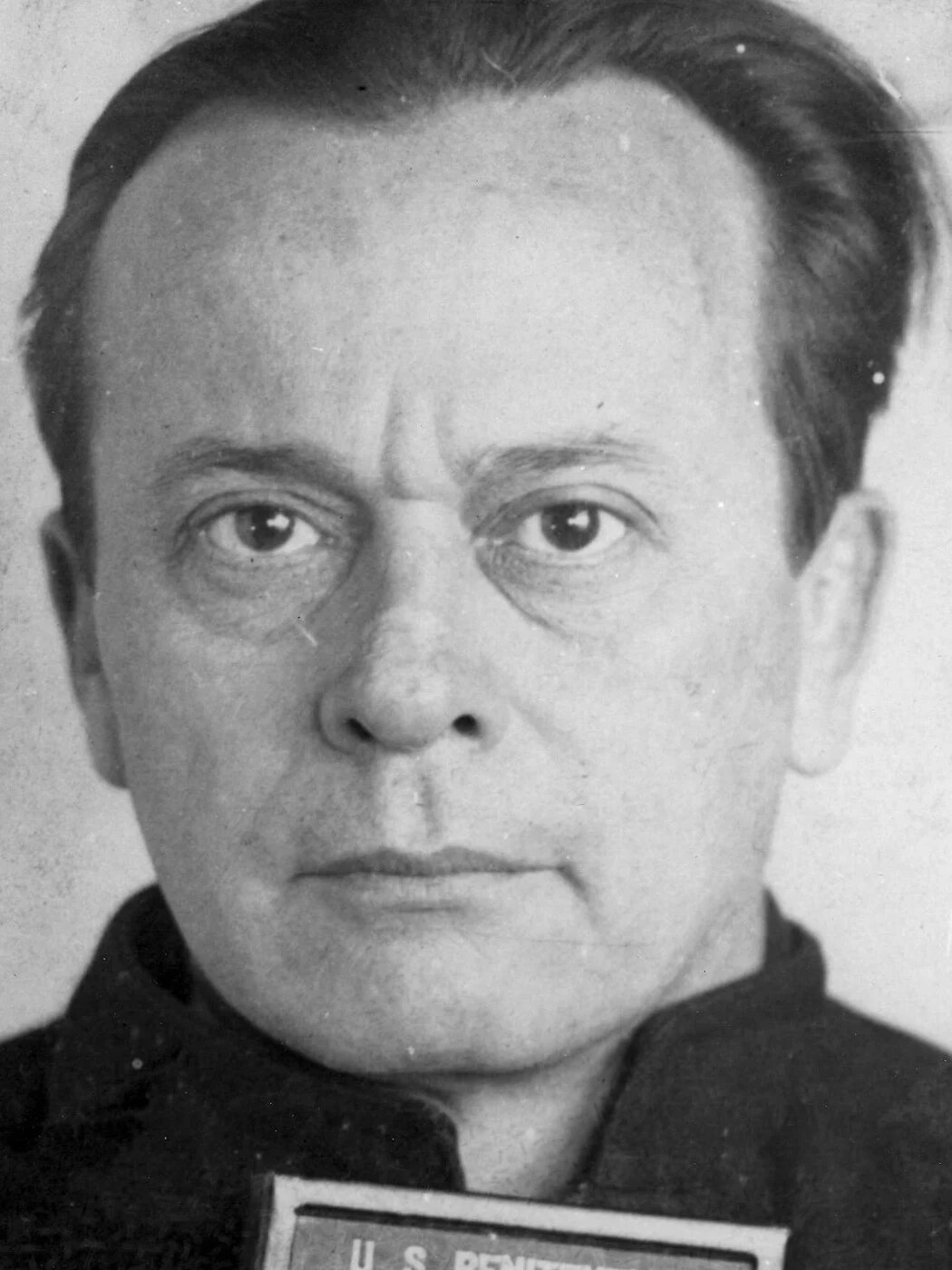 photographArthur "Doc" Barker at Alcatraz: identification photograph (FBI)Head-and-shoulders identification photograph of Arthur "Doc" Barker holding a U.S. Penitentiary placard, published by the FBI with the caption that it shows him at Alcatraz. A copy is stored here.
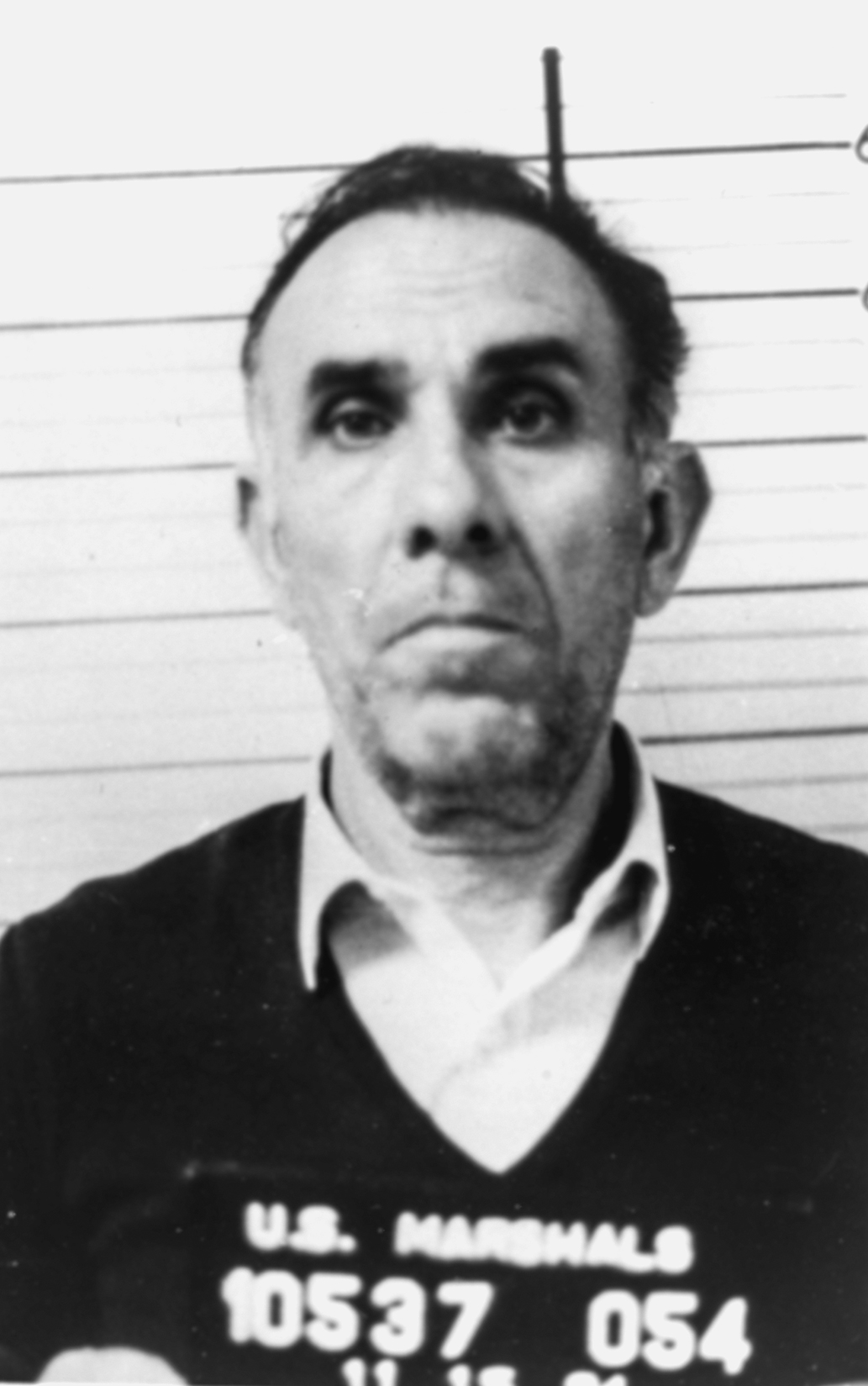 photographGaetano Badalamenti arrest photograph, 1984 (U.S. Marshals, via FBI)1984 U.S. Marshals Service arrest photograph of Gaetano Badalamenti, a defendant in the Pizza Connection case, as published by the FBI. A copy is stored here.
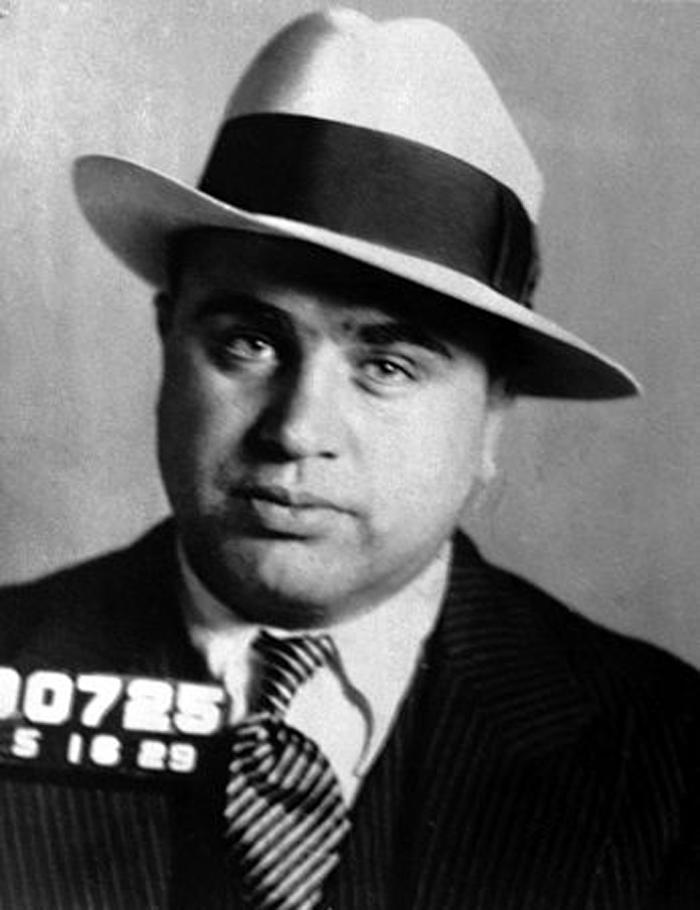 agency-historyAl Capone (FBI history page)The FBI's history essay on Capone. It states that he was released on November 16, 1939, and that he lived on Palm Island until his death due to a stroke and pneumonia on January 25, 1947.agency-historyAnd Justice for All, 1954-1971 (FBI history page)A chapter of the FBI's institutional history. It says that in 1963, "thanks in part to the FBI," Valachi became the first major Mafia turncoat to testify in public before a Senate subcommittee.agency-historyBarker/Karpis Gang: FBI history pageThe FBI's history essay on the Barker/Karpis gang: the 1933 Hamm kidnaping and the silver nitrate fingerprint method, the January 1934 Bremer kidnaping, the 16 January 1935 shooting at the Lake Weir cottage in Florida, and the 1 May 1936 arrest of Alvin Karpis in New Orleans.agency-historyBonnie and Clyde: FBI history pageThe FBI's history essay on Clyde Champion Barrow and Bonnie Parker: the stolen-car evidence that gave the Bureau jurisdiction, the 20 May 1933 federal warrant, the January 1934 Eastham prison farm break, and the ambush near Sailes, Louisiana on 23 May 1934.agency-historyFBI history: the Cleveland DivisionThe FBI's own history of its Cleveland field office mentions the 'Top Hoodlum' program and describes 'Operation Busmark', which it credits with the convictions of Angelo Lonardo, Joseph Gallo, Frederick Graewe and Kevin MacTaggart and with Lonardo's later cooperation.agency-historyFBI history, "Crime and Corruption Across America, 1972-1988"The FBI's institutional history of 1972 to 1988 names "the courageous work of undercover agents like Joe Pistone—who almost became a 'made' Mafia member while gathering invaluable intelligence as 'Donnie Brasco' for nearly six years."agency-historyFBI history: the Detroit DivisionThe FBI's own history of its Detroit field office mentions the Prohibition-era 'Purple Gang', the 1966 Canadian arrests of Anthony Joseph Giacalone and Dominic Peter Corrado, the 1975 gambling sentences of Anthony Giardano, Anthony Zerilli and Michael Pollizzi, and the 1996 GAMTAX indictment of 17 members of 'the Detroit mob'.agency-historyFBI history: weapons found at the Lincoln Court Apartments, St. Paul (Dillinger case, March 1934)The FBI's Dillinger history states what agents found at the Lincoln Court Apartments in St. Paul: a Thompson submachine gun with the stock removed, two automatic rifles, a .38 caliber Colt automatic with twenty-shot magazine clips, and two bulletproof vests.agency-historyFur Dressers Case (FBI history page)The FBI's own account of its 1932 to 1939 antitrust investigation of the Protective Fur Dressers Corporation and the Fur Dressers Factor Corporation, in which Louis Buchalter and Jacob Shapiro were named defendants, through Buchalter's surrender on August 24, 1939.agency-historyFBI history: "Joe Pistone, Undercover Agent"FBI history page on Special Agent Joseph Pistone's undercover work as "Donnie Brasco" from 1976. It says the Bonanno crew learned on July 26, 1981 that Brasco was an FBI agent and that the operation "ultimately led to more than 100 federal convictions."
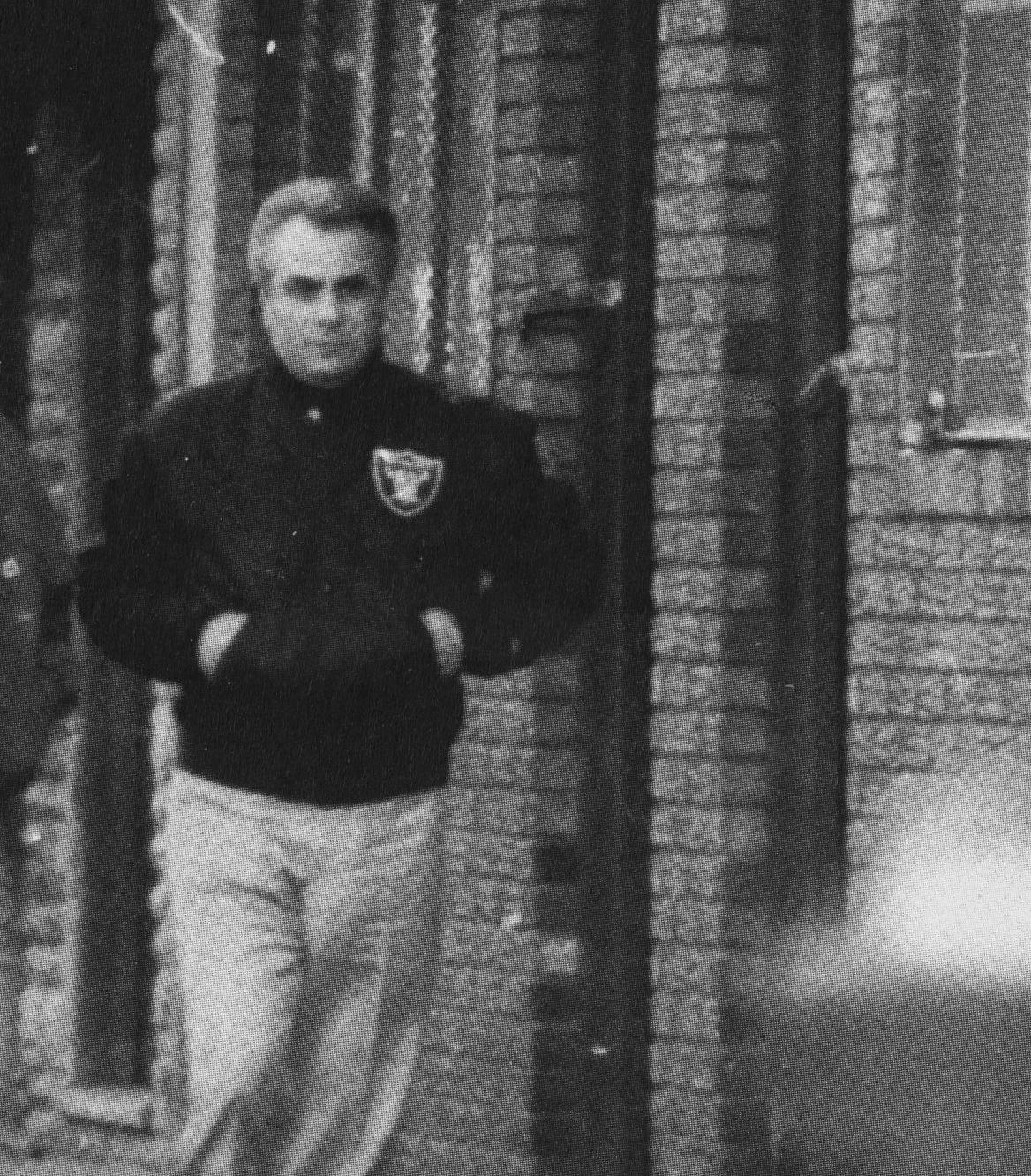 agency-historyFBI history: "John Gotti"FBI history page on John Gotti: the December 16, 1985 killing of Paul Castellano and Thomas Bilotti, Gotti's 1990 arrest, his April 2, 1992 conviction on 13 counts, and his death in prison in June 2002.agency-historyKansas City Massacre and "Pretty Boy" Floyd (FBI history page)The FBI's history essay on the June 17, 1933 shooting in front of Union Station, Kansas City, Missouri, in which four officers and their prisoner Frank Nash were killed. It places the car directly in front of the station's east entrance.agency-historyLa Cosa Nostra (FBI history page)The FBI's history essay on the Genovese family. It says that Valachi survived three attempts on his life in prison and testified before the Senate subcommittee on September 27, 1963.agency-historyLester Gillis ("Baby Face" Nelson): FBI history pageThe FBI's history essay on Lester M. Gillis, known as George "Baby Face" Nelson: the killing of Special Agent W. Carter Baum near Little Bohemia Lodge in April 1934, the November 1934 gun battle at Barrington, Illinois, and the prosecution of John Paul Chase.agency-historyGeorge "Machine Gun" Kelly: FBI history pageThe FBI's history essay on the 22 July 1933 kidnaping of Charles F. Urschel at Oklahoma City, the ransom of $200,000, the identification of the Shannon farm near Paradise, Texas, the arrest of George and Kathryn Kelly at Memphis, and the prosecutions that followed.agency-historyFBI New York field office history: Massino as a cooperatorThe FBI's history of its New York field office says that since 9/11 the office has convicted the leadership of all five families "twice over," and that "Bonanno family boss Joe Massino became the highest-ranking mobster ever to become an FBI cooperator."agency-historyFBI history: "Pizza Connection"The FBI's history page on the Pizza Connection case: the April 8, 1984 arrests in Madrid, the next day's arrests by six FBI offices, and a trial that ended in a verdict on March 2, 1987. An agency essay, not a court record.agency-historyFBI Tampa field office history: Operation COLDWATERThe FBI's history of its Tampa division says that in the late 1970s it began an undercover operation called COLDWATER, in which "New York FBI undercover agent Joe Pistone participated," and set up an undercover social club called King's Court.
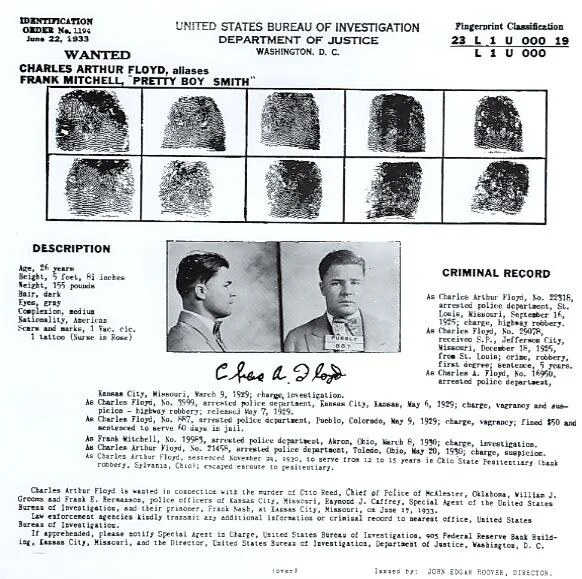 case-fileIdentification Order No. 1194: Charles Arthur Floyd (22 June 1933)Bureau of Investigation wanted notice for Charles Arthur Floyd, aliases Frank Mitchell and "Pretty Boy Smith," issued five days after the Kansas City Union Station shooting. Fingerprints, photographs, description and criminal record. A copy is stored here.
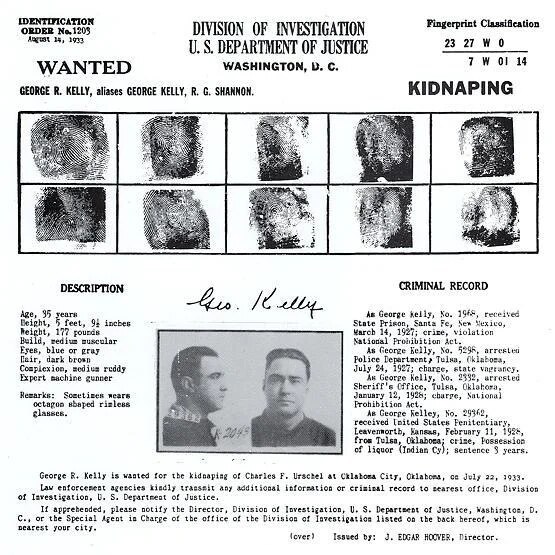 case-fileIdentification Order No. 1203: George R. Kelly, "Kidnaping" (14 August 1933)Division of Investigation wanted notice for George R. Kelly, aliases George Kelly and R. G. Shannon, wanted for the kidnaping of Charles F. Urschel at Oklahoma City on 22 July 1933. A copy is stored here.
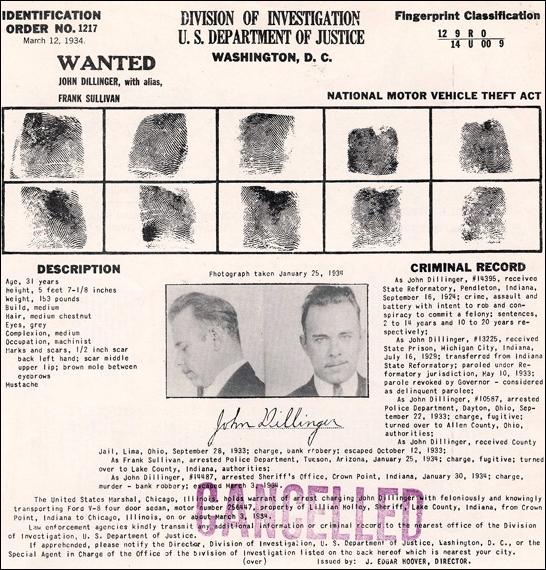 case-fileIdentification Order No. 1217: John Dillinger (12 March 1934), stamped "Cancelled"Division of Investigation wanted notice for John Dillinger, alias Frank Sullivan, under the National Motor Vehicle Theft Act, issued nine days after the Crown Point jail escape. The FBI's copy is stamped CANCELLED. A copy is stored here.
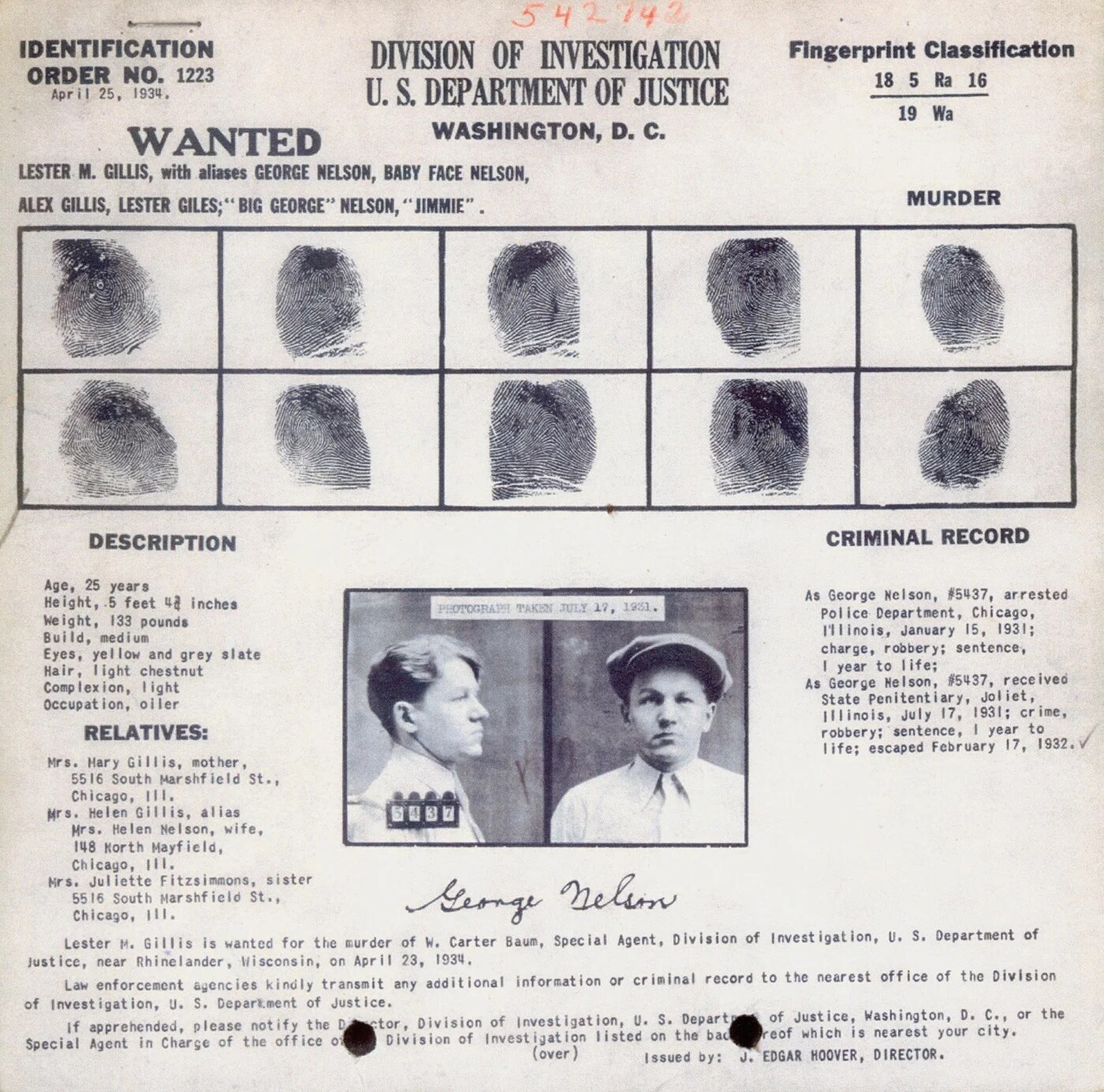 case-fileIdentification Order No. 1223: Lester M. Gillis, "Murder" (25 April 1934)Division of Investigation wanted notice for Lester M. Gillis, with the aliases George Nelson and Baby Face Nelson, wanted for the murder of Special Agent W. Carter Baum near Rhinelander, Wisconsin. A copy is stored here.
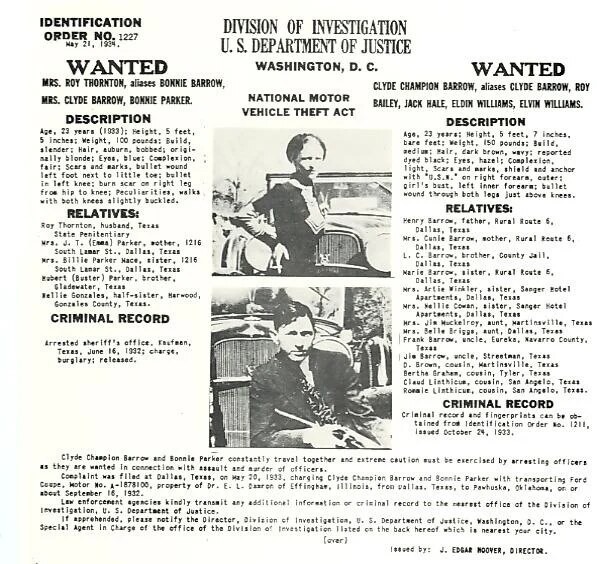 case-fileIdentification Order No. 1227: Bonnie Parker and Clyde Champion Barrow (21 May 1934)Division of Investigation wanted notice for Bonnie Parker and Clyde Champion Barrow under the National Motor Vehicle Theft Act, dated two days before both were killed near Sailes, Louisiana. A copy is stored here.photographJacob Shapiro mug shot (FBI)Mug shot of Jacob Shapiro published on the FBI's Fur Dressers Case page, captioned with his May 5, 1944 sentence of 15 years to life. The FBI serves the image; no copy is stored here.
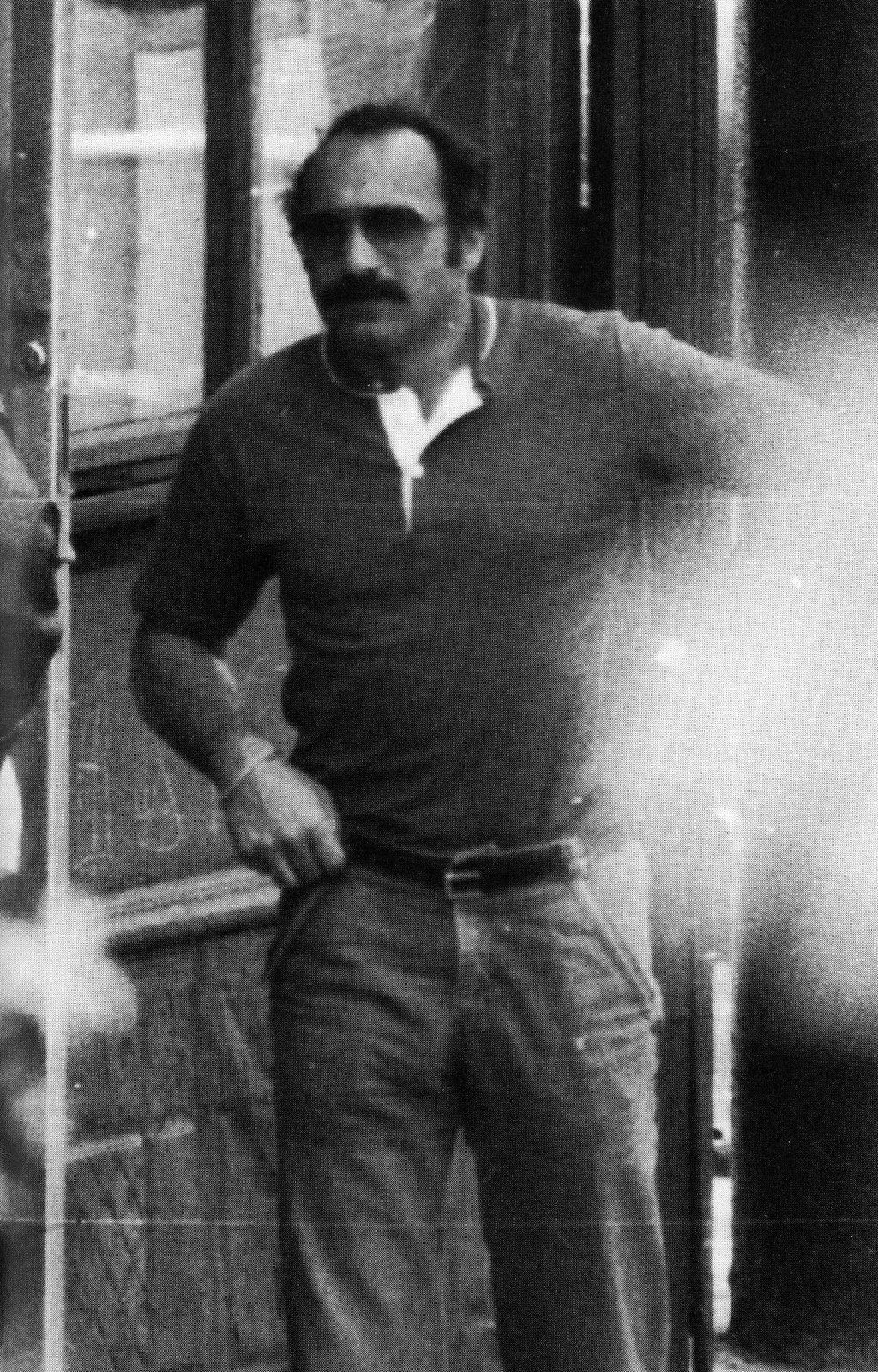 photographJoe Pistone, undercover agent (FBI)FBI photograph of Special Agent Joe Pistone, captioned "Undercover agent Joe Pistone, aka Donnie Brasco." Published on the FBI's history page on his undercover work.
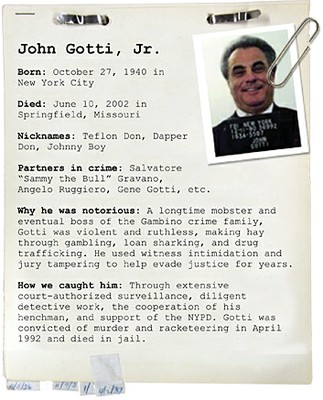 photographCriminal profile graphic: John Gotti (FBI)FBI "criminal profile" graphic for John Gotti, with a photograph and a short FBI-written summary of his case. A copy is stored here.
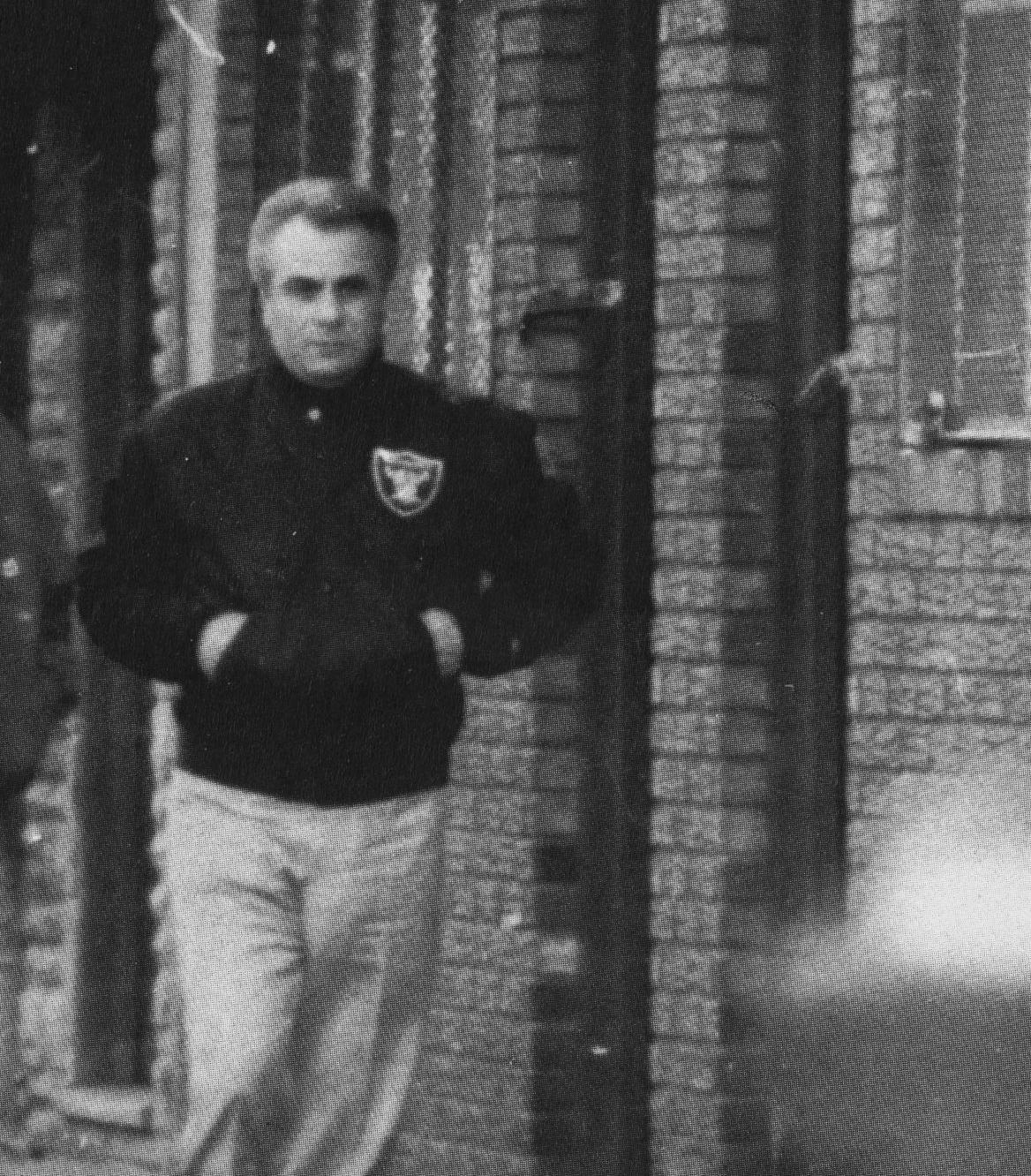 photographJohn Gotti on a New York street, 1980s (FBI surveillance photograph)FBI surveillance photograph of John Gotti walking down a street in New York City in the 1980s. A copy is stored here.
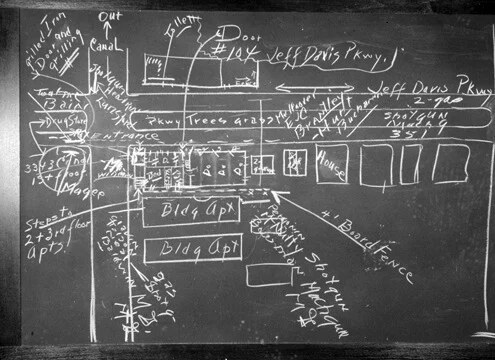 photographThe FBI's blackboard plan for the arrest of Alvin Karpis, New Orleans (1936)Photograph of a chalkboard sketch of the New Orleans block where Alvin Karpis was arrested on 1 May 1936, with Canal Street, Jefferson Davis Parkway, the apartment buildings and agents' positions. A copy is stored here.
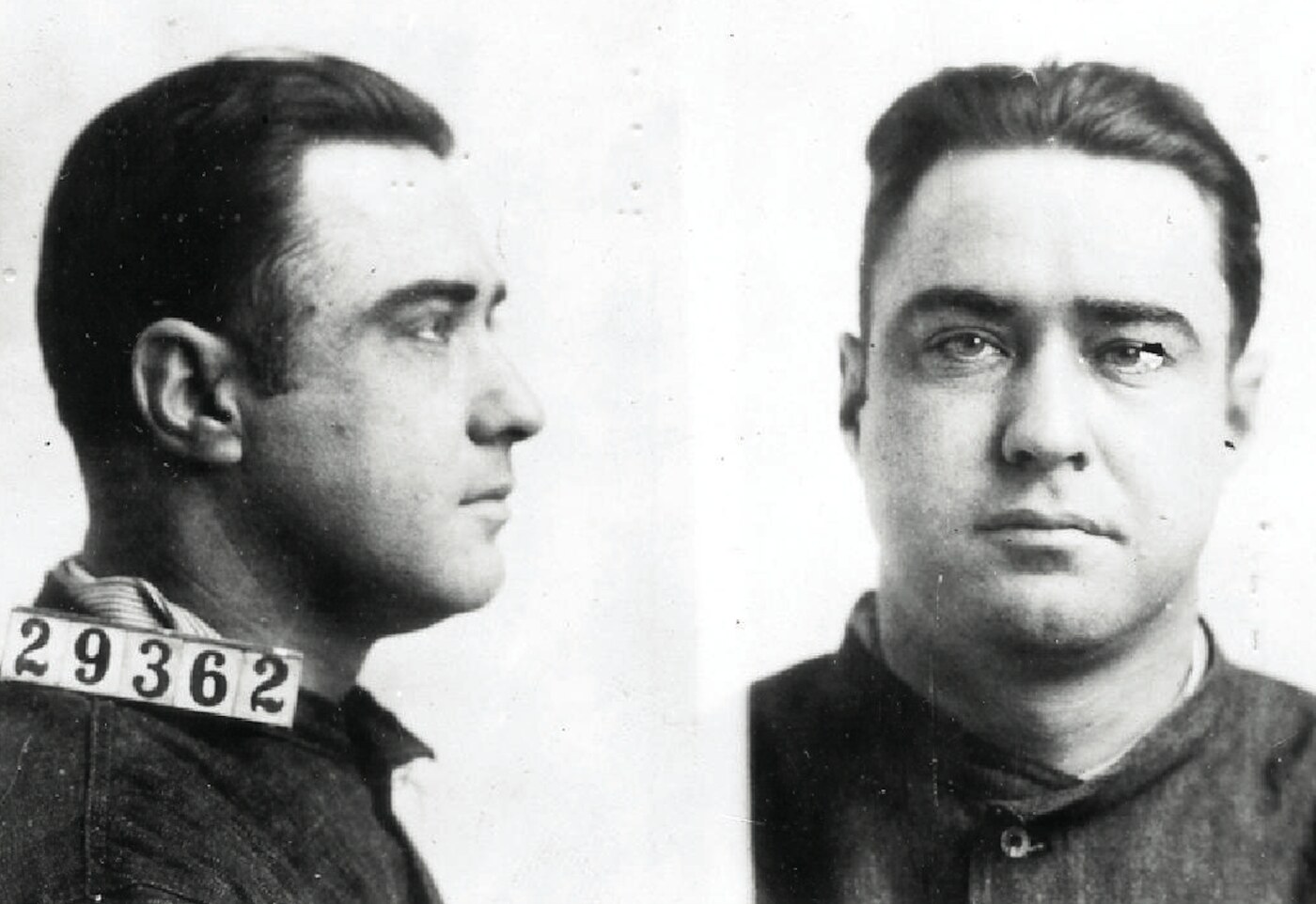 photographGeorge Kelly, Leavenworth prisoner No. 29362: profile and front photographs (FBI)Profile and front identification photographs of George Kelly holding placard No. 29362, the U.S. Penitentiary, Leavenworth number recorded for his 1928 commitment. Published by the FBI. A copy is stored here.photographLouis "Lepke" Buchalter mug shots (FBI)Mug shots of Louis "Lepke" Buchalter published on the FBI's Fur Dressers Case page, captioned with his 1939 surrender and his execution on March 4, 1944. The FBI serves the image; no copy is stored here.
 photographJoe Pistone with Dominick "Sonny Black" Napolitano, 1970s (FBI)FBI photograph of Special Agent Joe Pistone seated with Dominick Napolitano during the 1970s undercover investigation. An unidentified woman is also in the frame. A copy is stored here.photographRoger Touhy mug shot and criminal record (FBI)Mug shot of Roger Touhy with part of his criminal record, published by the FBI on its Touhy history page. The FBI serves the image; no copy is stored here.agency-historyFBI story, "Using Intel to Stop the Mob, Part 3" (March 13, 2008)The FBI's dated 2008 story on Joe Pistone. It says that on July 26, 1981 Dominick "Sonny Black" Napolitano and his associates learned that "Donnie Brasco" was an FBI agent, and that the operation "ultimately led to more than 100 federal convictions."agency-historyFBI story: "The Chicago Mafia: Down but Not Out" (2011)FBI news story of June 27, 2011 on the Chicago Outfit after the Family Secrets case, opening with the indictment of a former prison chaplain who carried messages for Frank Calabrese, Sr.
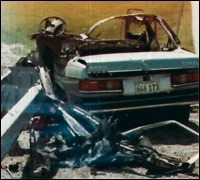 agency-historyFBI story: "Family Secrets: Of the Murderous Kind" (2007)FBI news story of October 1, 2007 on Operation Family Secrets, the Chicago Outfit case in which five defendants were found guilty on September 10, 2007.
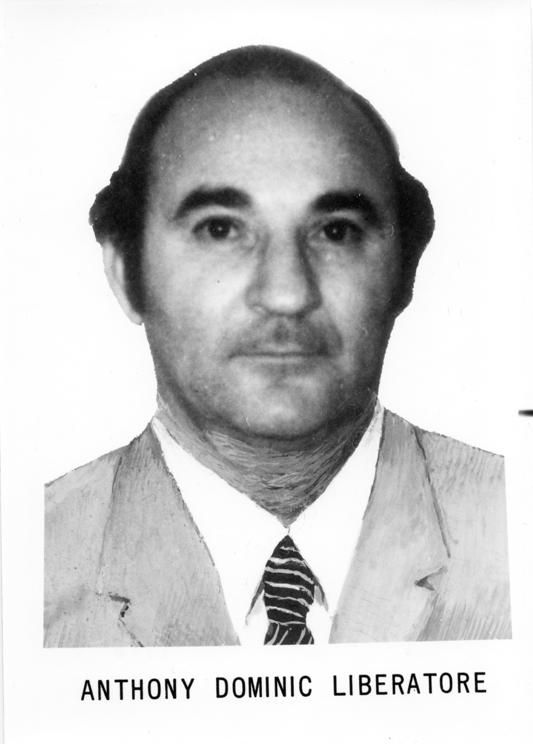 photographAnthony Dominic Liberatore, Ten Most Wanted Fugitive #362 (FBI)Photograph from the FBI's Ten Most Wanted historical pictures. The caption says he was arrested in Eastlake, Ohio, on April 1, 1979, in a house "considered 'safe' by organized crime in the area."
 photographCarmine John Persico, Ten Most Wanted Fugitive #390 (FBI)Photograph from the FBI's Ten Most Wanted historical pictures, captioned: "Due to an FBI investigation, Persico was arrested in Wantagh, New York, by FBI agents on February 15, 1985."
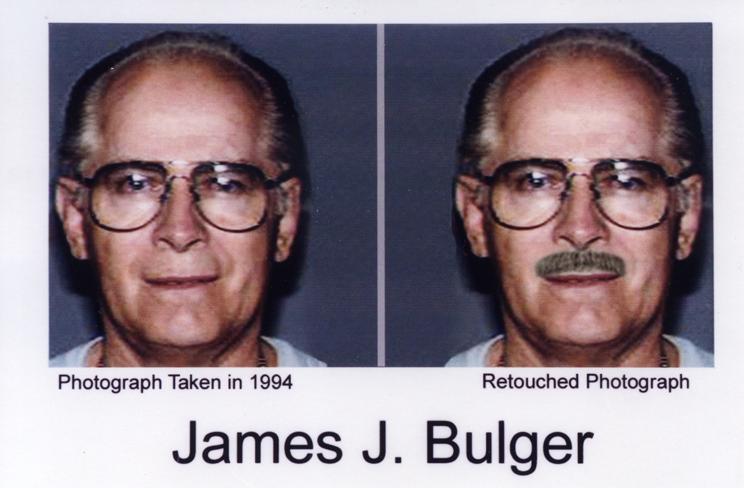 photographJames "Whitey" Bulger, Ten Most Wanted Fugitive #458 (FBI)Paired photographs from the FBI's Ten Most Wanted historical pictures: one labelled "Photograph Taken in 1994" and a retouched copy, over the name James J. Bulger.
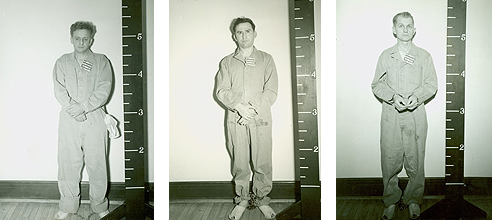 photographRoger Touhy, Edward Darlak, and Basil Banghart (FBI)FBI image of Roger Touhy, Edward Darlak and Basil Banghart, captioned with their capture on December 29, 1942. A copy is stored here.
 case-fileFBI Vault file on Alphonse CaponeThe FBI Vault's release of the Bureau file on Alphonse Gabriel Capone, in 36 parts, with the Bureau's own summary of the investigation.
 case-fileFBI Vault: Albert Anastasia, Part 01 (file 62-98011)A 21-page part of 1951–1953 serials, including a memorandum stating that Anastasia was born in Calabria, Italy, and had been reported as a racketeer on the New York waterfront. Nothing in it concerns his 1957 killing.
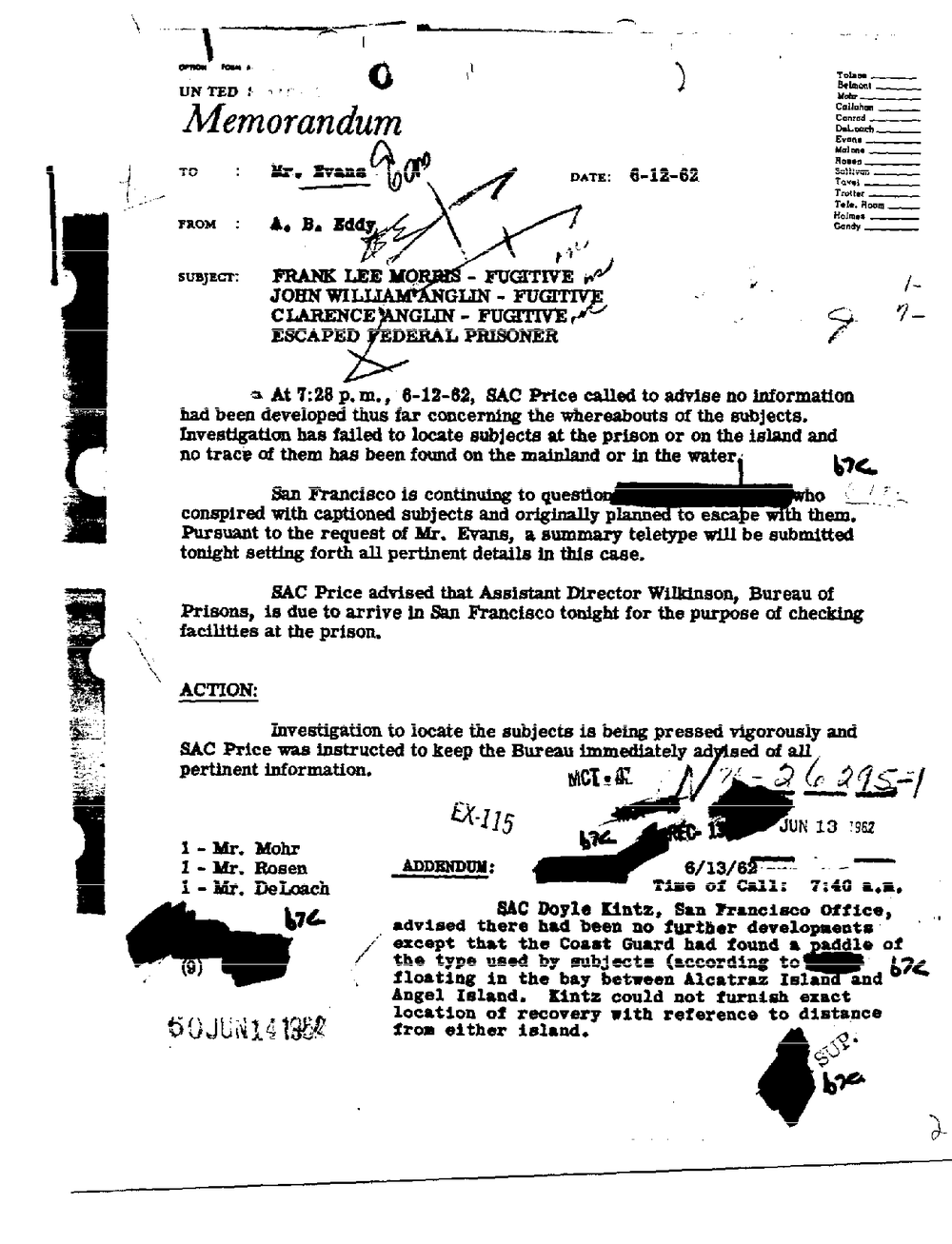 case-fileMemorandum Eddy to Evans, 12 June 1962: Frank Lee Morris, John William Anglin and Clarence Anglin, escaped federal prisoners (FBI Vault)An FBI memorandum of 12 June 1962 recording that at 7:28 p.m. no trace of Morris and the Anglin brothers had been found at the prison, on the island, on the mainland or in the water; an addendum says the Coast Guard found a paddle in the bay.
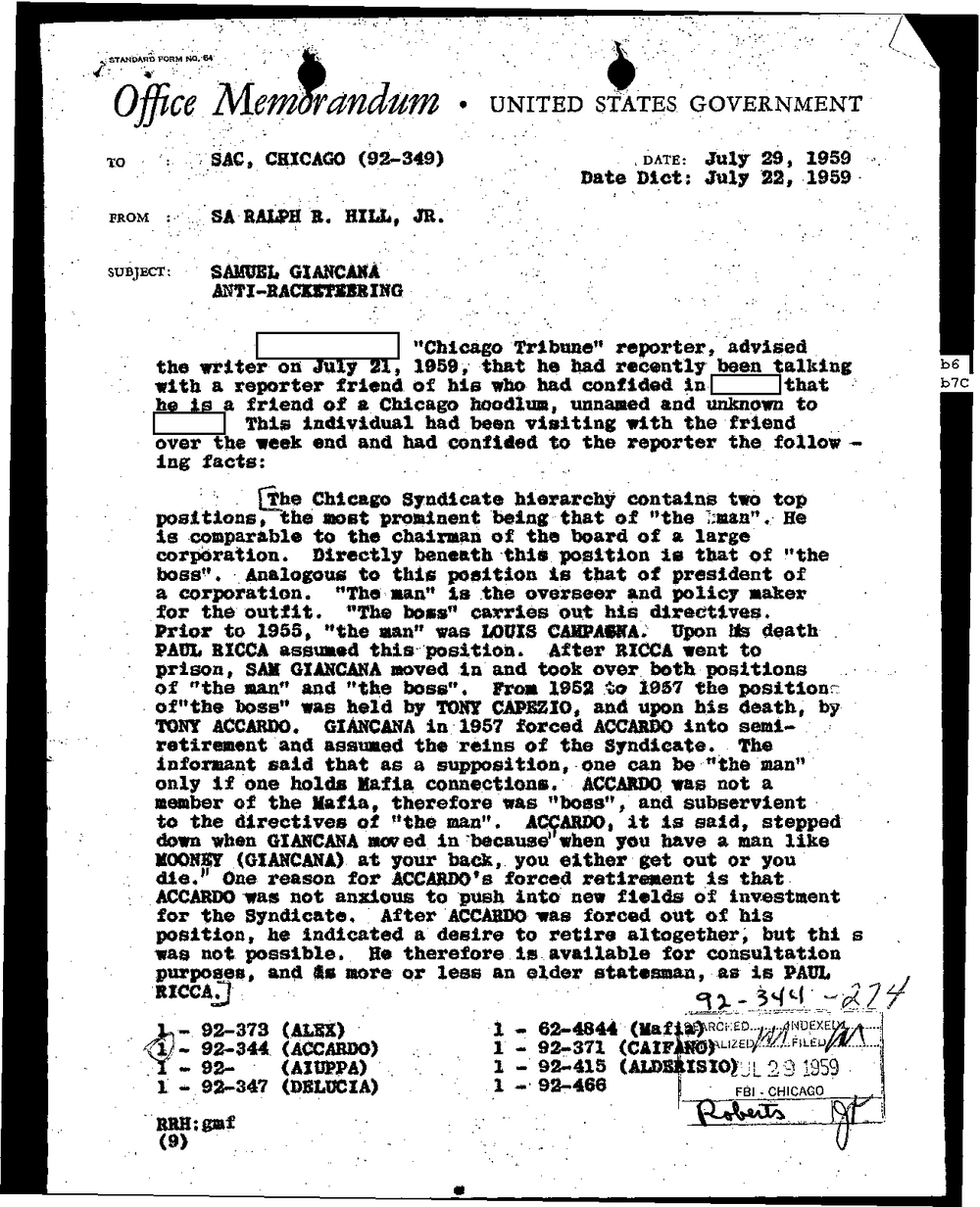 case-fileFBI Vault file on Anthony AccardoThe FBI Vault's release of the Bureau file on Anthony Accardo, in two parts, including a 1946 informant report, a 1959 Chicago memorandum relaying a source's account of the Chicago syndicate's hierarchy, and early-1970s teletypes on its leadership.case-fileFBI Vault file on Anthony GiacaloneThe FBI Vault's four-part release of the Detroit anti-racketeering file on Anthony Joseph Giacalone (Detroit file 92-228, Bureau file 92-3077), running from the opening report of January 1958 to interviews after James R. Hoffa's disappearance in July 1975.
 case-fileFBI Vault: Anthony Salerno, Part 01Part 01 of the FBI's Anthony Salerno file, covering 1956–1966 according to the Vault. The viewer's text layer for this part is almost empty, so nothing is taken from it here.
 case-fileFBI Vault file on Anthony SpilotroThe FBI Vault's release of the Bureau file on Anthony Spilotro, in two parts, including a 1993 Chicago airtel on the June 1986 murders of Anthony and Michael Spilotro.
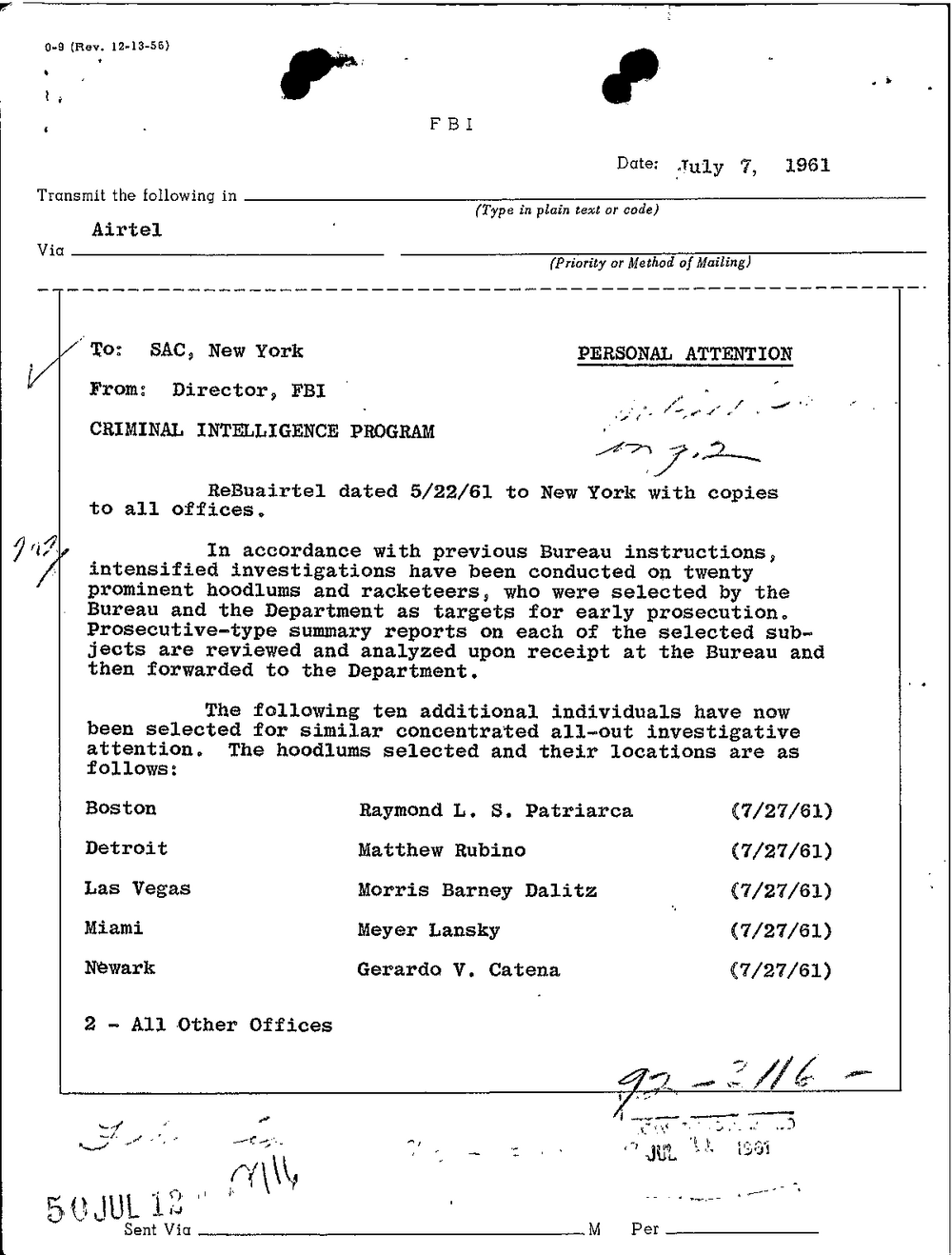 case-fileFBI Director's airtel of July 1961 listing hoodlums selected under the Criminal Intelligence ProgramAn FBI Director's airtel of July 1961, filed in the Vault's Balistrieri file, selecting ten more "hoodlums" for "concentrated all-out investigative attention," listed by city: among them Raymond L. S. Patriarca at Boston, Morris Barney Dalitz at Las Vegas, Meyer Lansky at Miami and Gerardo V. Catena at Newark.
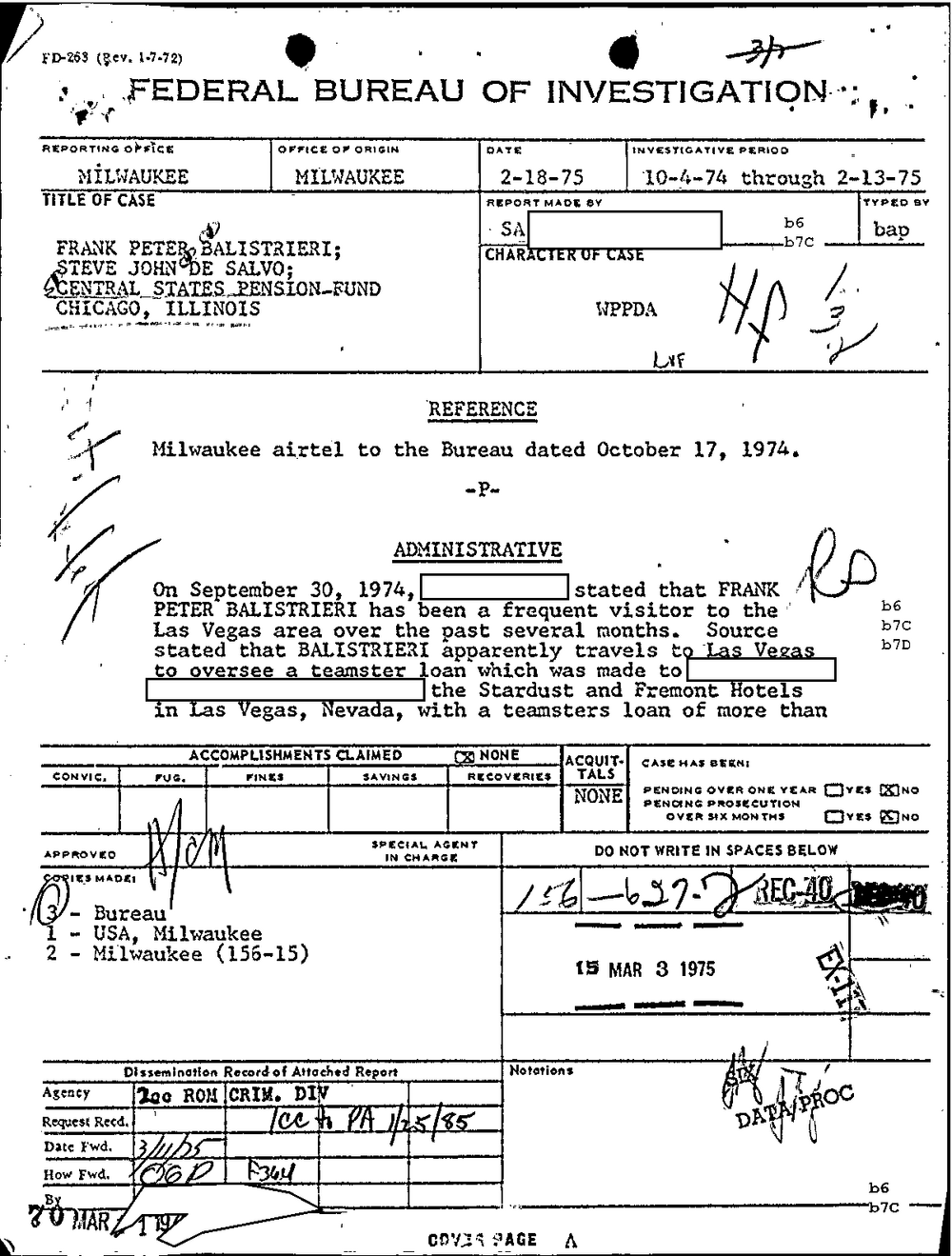 case-fileFBI Milwaukee report of 1974 to 1975 on a source's statement about Frank Balistrieri and the Stardust and Fremont loanFBI Milwaukee reports of 1974 and 1975, filed in the Vault's Balistrieri file, recording a source's statement of September 30, 1974 that Frank Balistrieri was a frequent visitor to Las Vegas, apparently to oversee a Teamsters loan made to the Stardust and Fremont hotels.
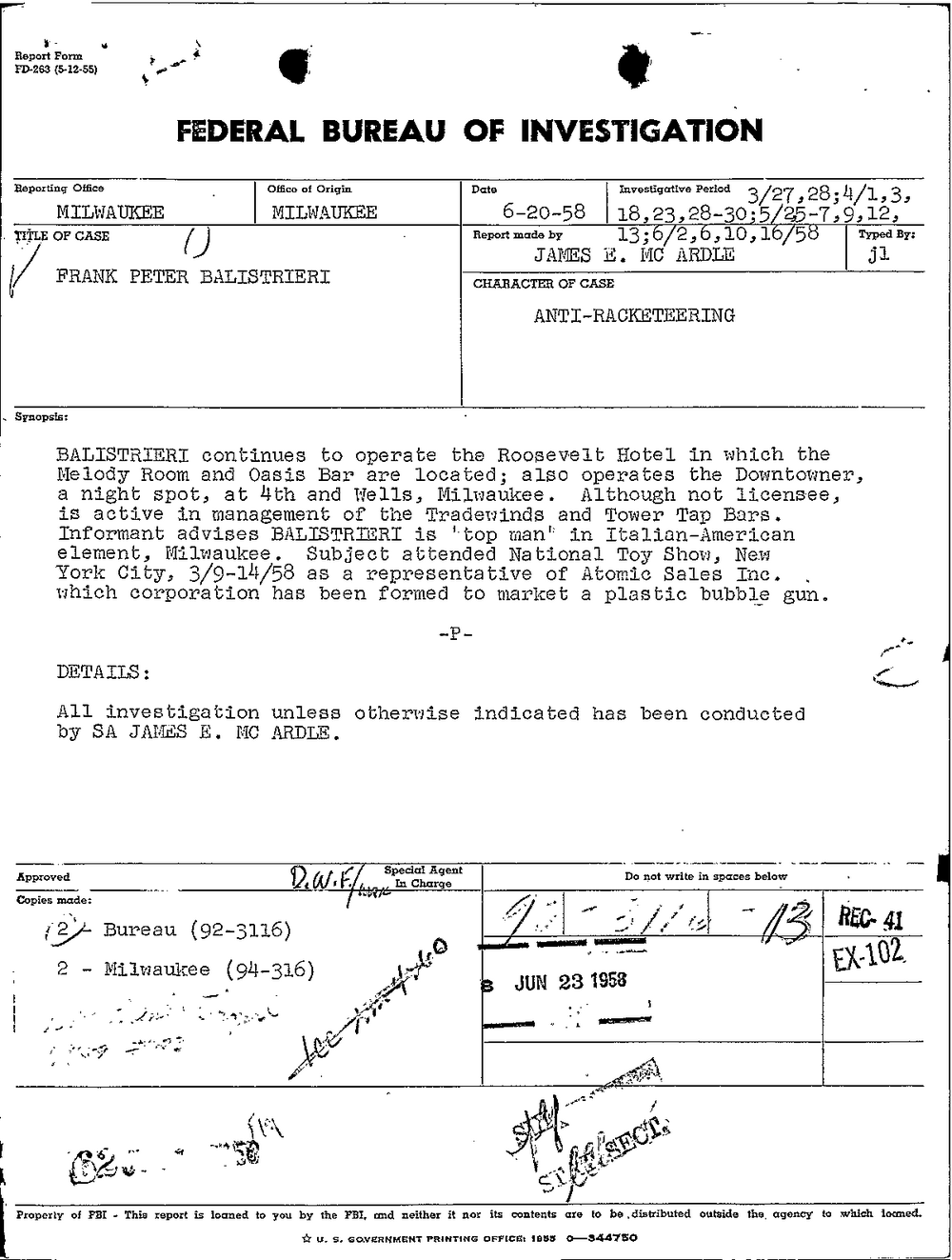 case-fileFBI Milwaukee report of June 20, 1958 on Frank Peter BalistrieriA Milwaukee field-office report filed in the Vault's Balistrieri file. Its synopsis says he "continues to operate the Roosevelt Hotel" and other Milwaukee night spots, and that an informant called him the "top man" in the city's "Italian-American element."
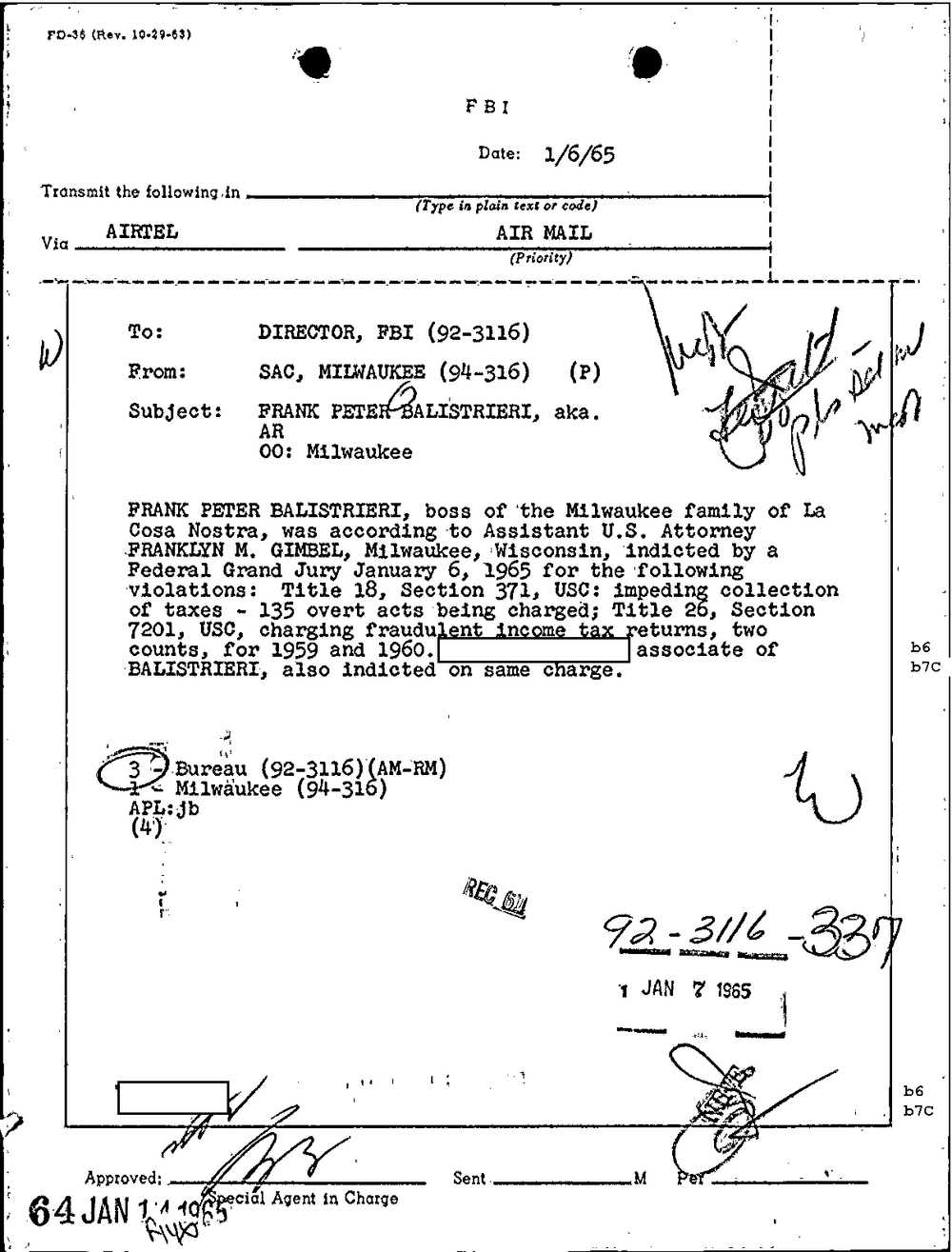 case-fileFBI Milwaukee airtel of January 6, 1965 on Frank Peter Balistrieri's tax indictmentAn airtel from the Milwaukee Special Agent in Charge to the FBI Director reporting that Frank Peter Balistrieri, "boss of the Milwaukee family of La Cosa Nostra" in the Bureau's words, was indicted that day by a federal grand jury on tax charges.
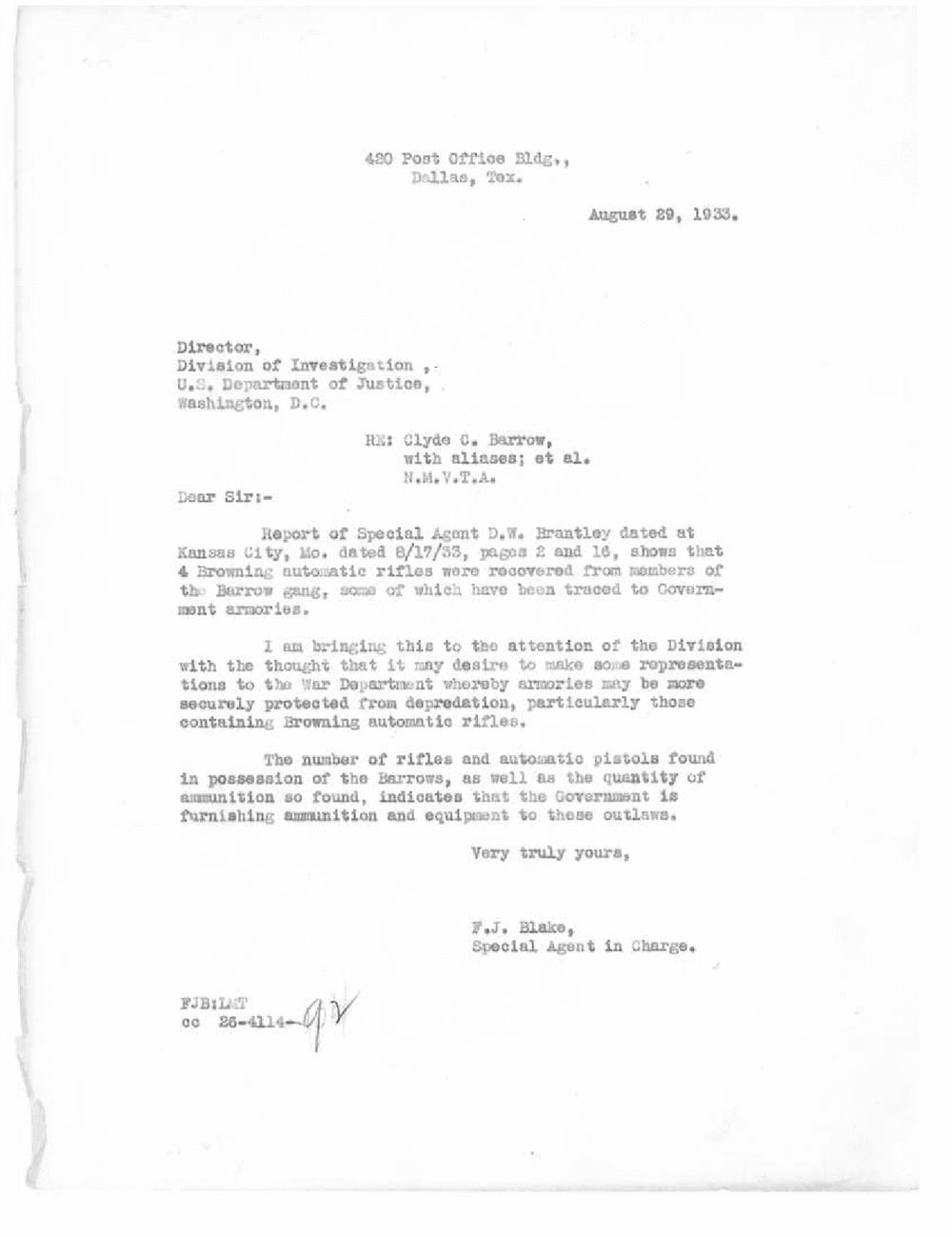 case-fileLetter from SAC F. J. Blake, Dallas, to the Director, 29 August 1933: Browning automatic rifles recovered from the Barrow gangDallas Special Agent in Charge F. J. Blake reports that four Browning automatic rifles recovered from members of the Barrow gang had in part been traced to Government armories, and suggests the Division ask the War Department to protect armories.
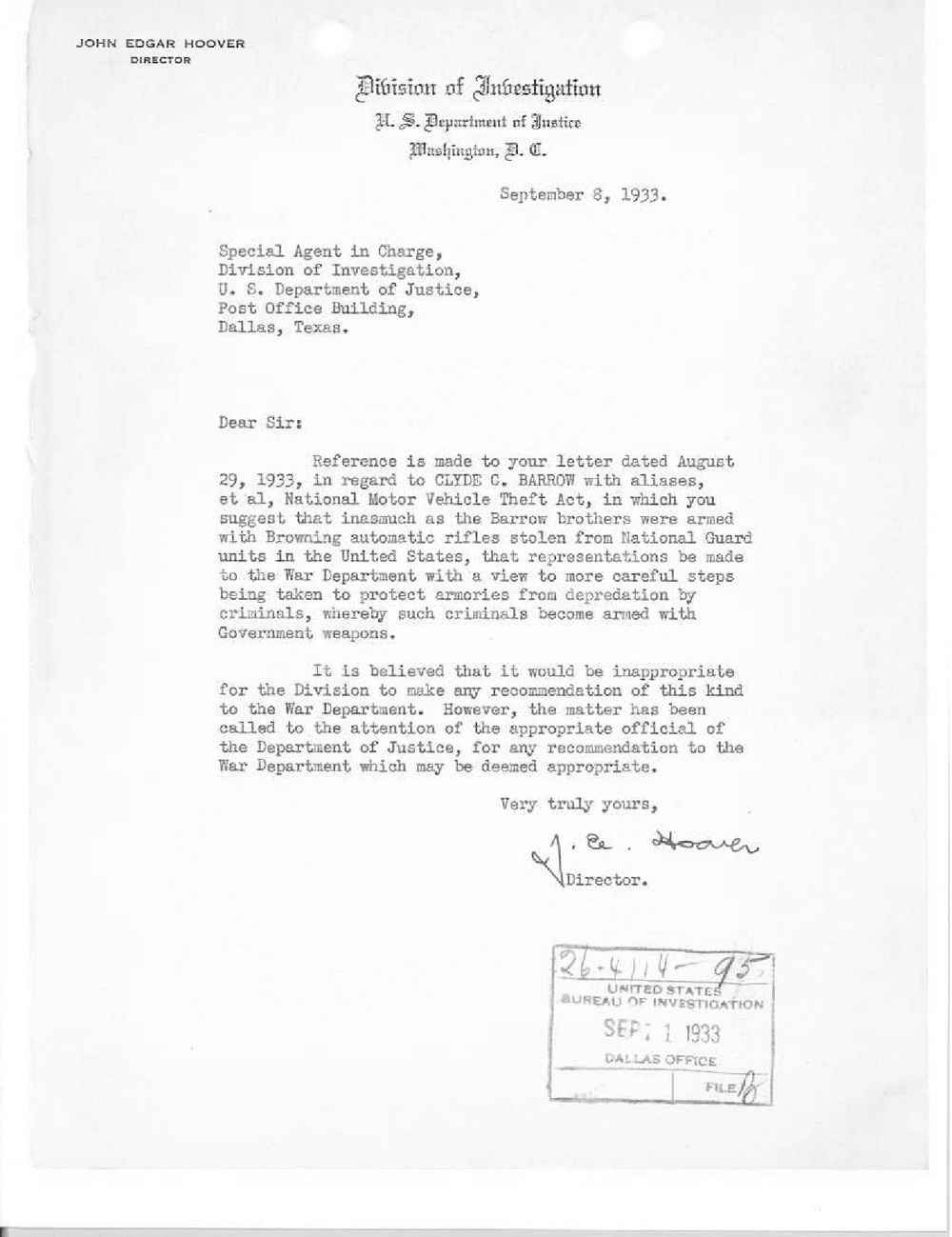 case-fileLetter from J. Edgar Hoover to SAC Dallas, 8 September 1933: no Division recommendation to the War Department on armory theftsDirector Hoover answers the Dallas letter of 29 August, restating its suggestion that, since the Barrow brothers were armed with Browning automatic rifles stolen from National Guard units, the War Department be asked to protect armories, and says it would be inappropriate for the Division itself to make that recommendation.
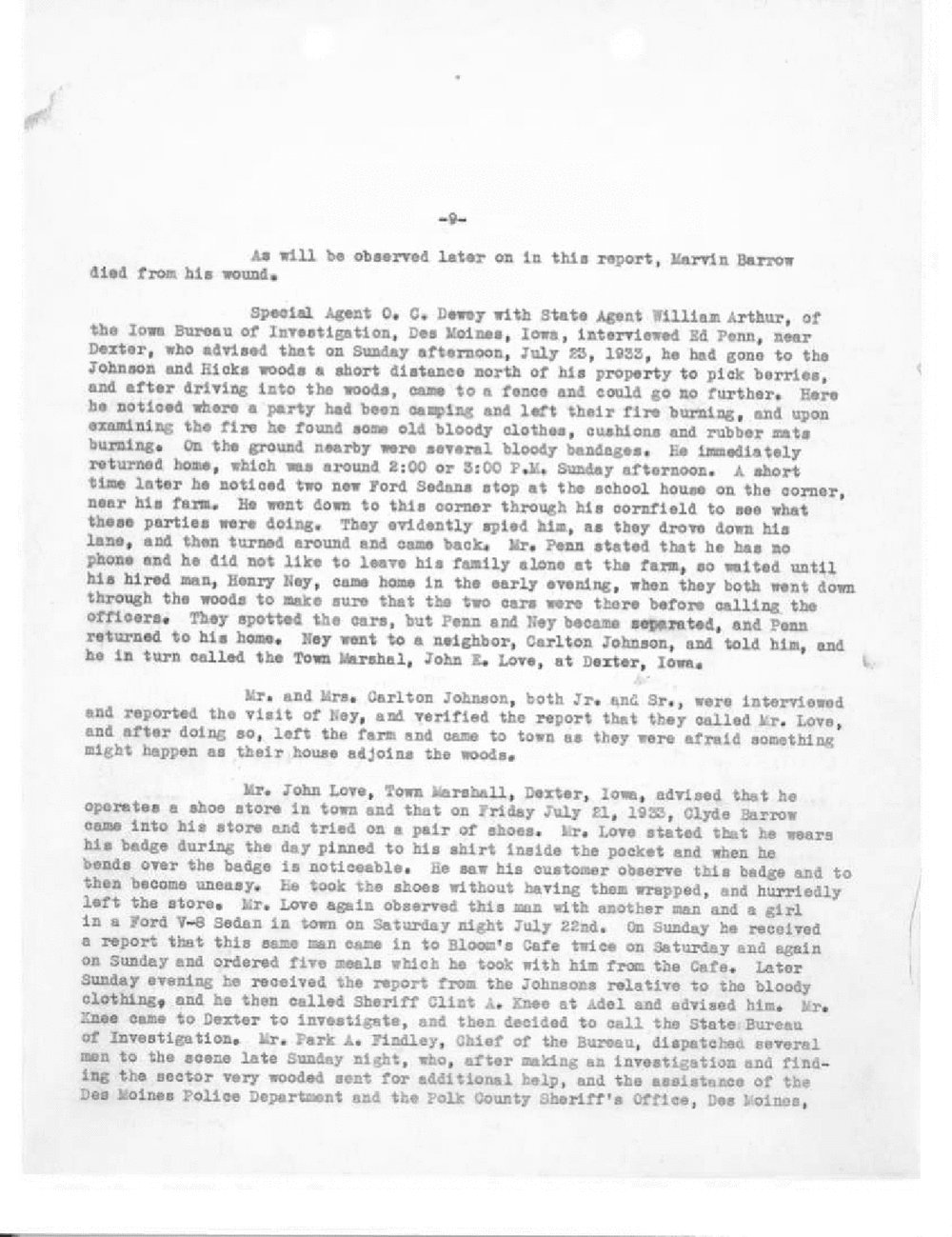 case-fileBureau report on the raid near Dexter, Iowa, 24 July 1933 (Vault, Bonnie and Clyde Part 02, pages 59 to 62)Kansas City office report in the FBI Vault's Bonnie and Clyde file: the gang's camp in woods near Dexter, Iowa, the attack "shortly after daybreak on Monday July 24, 1933," "Marvin Barrow died from his wound," and Blanche Barrow's account of the Joplin shooting. A copy of report page 9 is stored here.
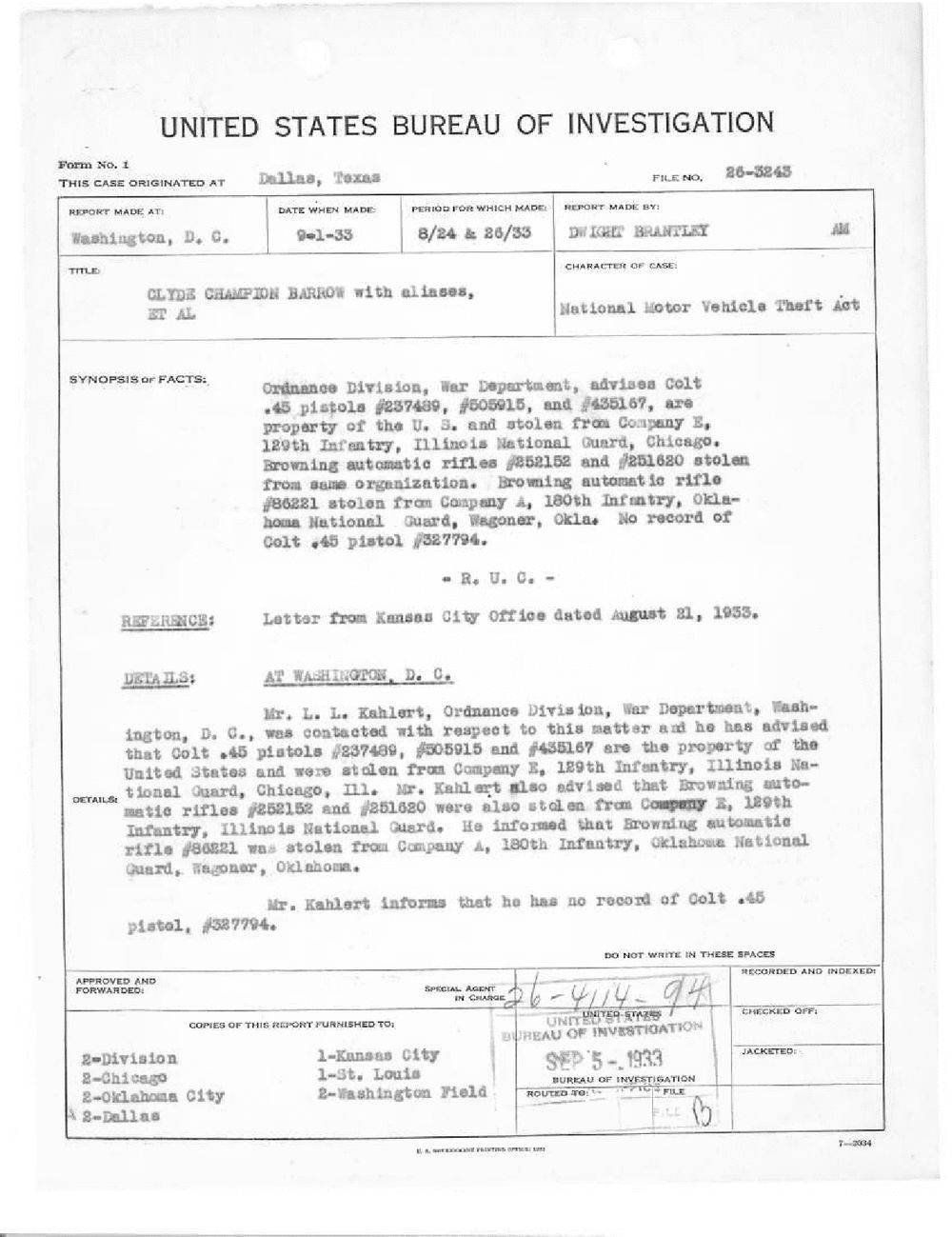 case-fileBureau of Investigation report, 1 September 1933: Ordnance Division traces Colt .45 pistols and Browning automatic rifles taken from the Barrow gangForm No. 1 report by Dwight Brantley, Washington, D.C., listing by serial number the Colt .45 pistols and Browning automatic rifles the War Department says were stolen from Illinois and Oklahoma National Guard units.
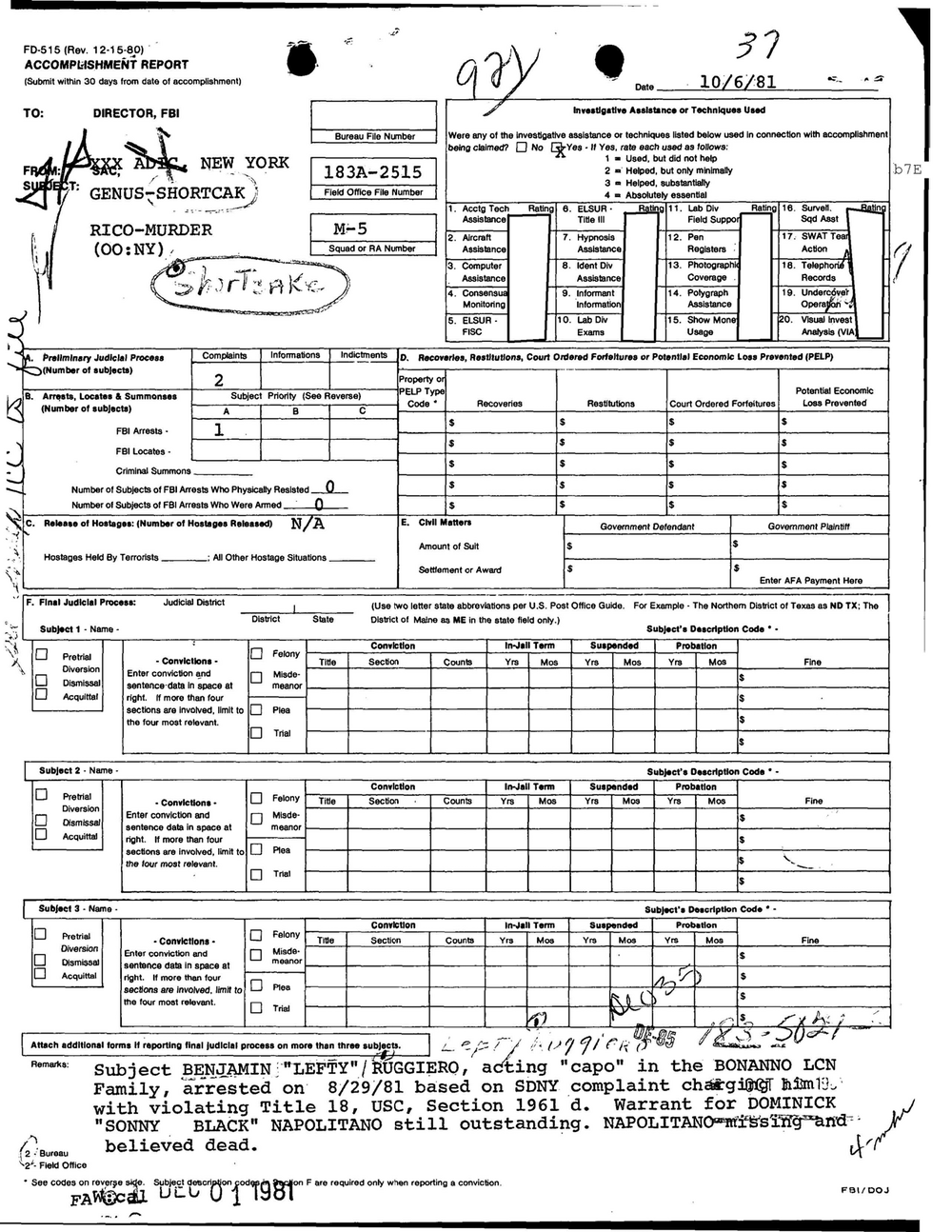 case-fileFBI Vault, Operation Donnie Brasco, Part 01, viewer p. 361 (October 6, 1981)An FBI accomplishment report of October 6, 1981 (GENUS-SHORTCAKE, RICO-MURDER) recording the arrest of Benjamin "Lefty" Ruggiero on August 29, 1981 on an S.D.N.Y. complaint. It says the warrant for Dominick "Sonny Black" Napolitano was still outstanding and that Napolitano was "missing and believed dead."
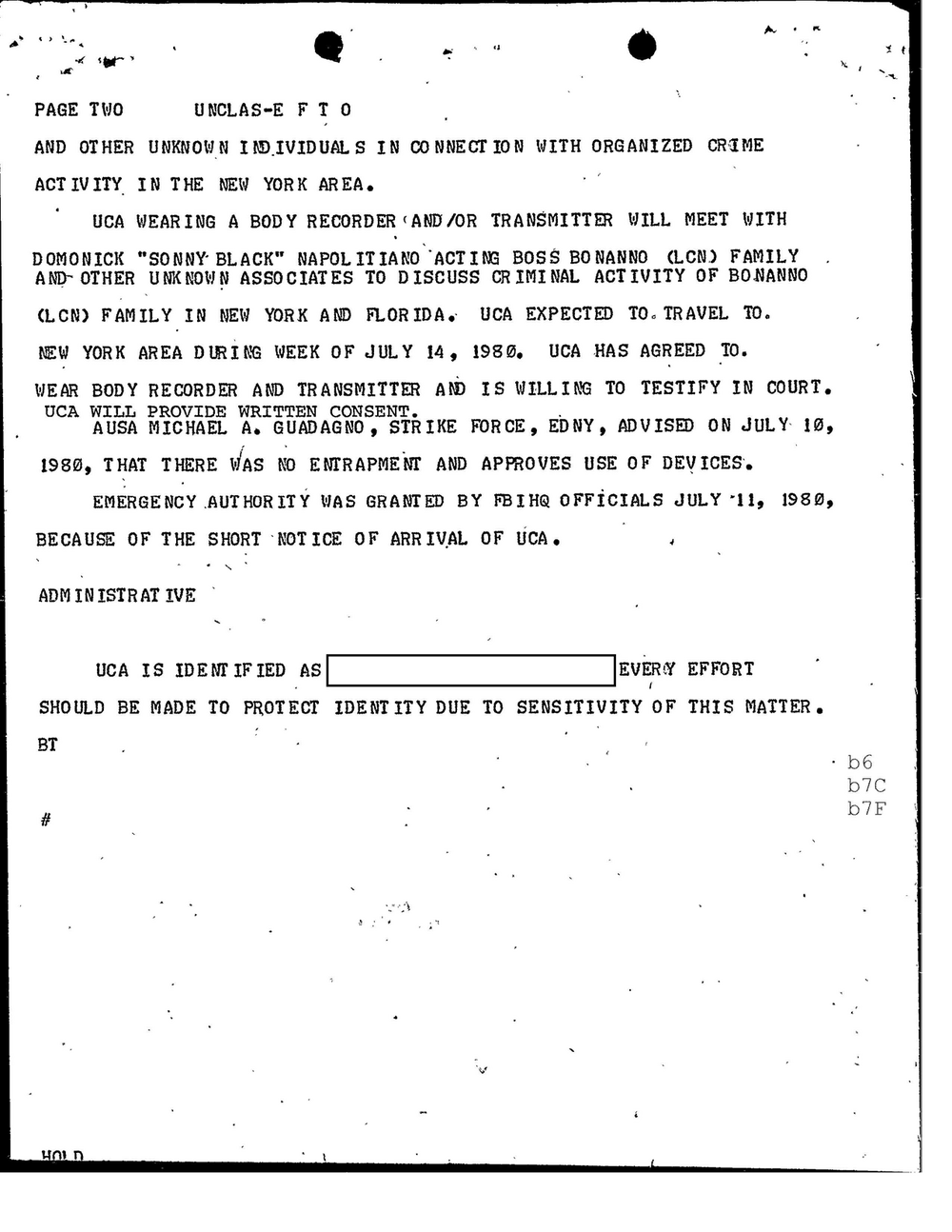 case-fileFBI Vault, Operation Donnie Brasco, Part 01, viewer pp. 11-15 (July-August 1980)Brooklyn-Queens teletypes on the undercover agent's body recorder. Page 12 says the agent would meet "Domonick 'Sonny Black' Napolitiano acting boss Bonanno (LCN) family"; page 15, in a later teletype, calls him "acting underboss." The two pages disagree, and both are shown here.
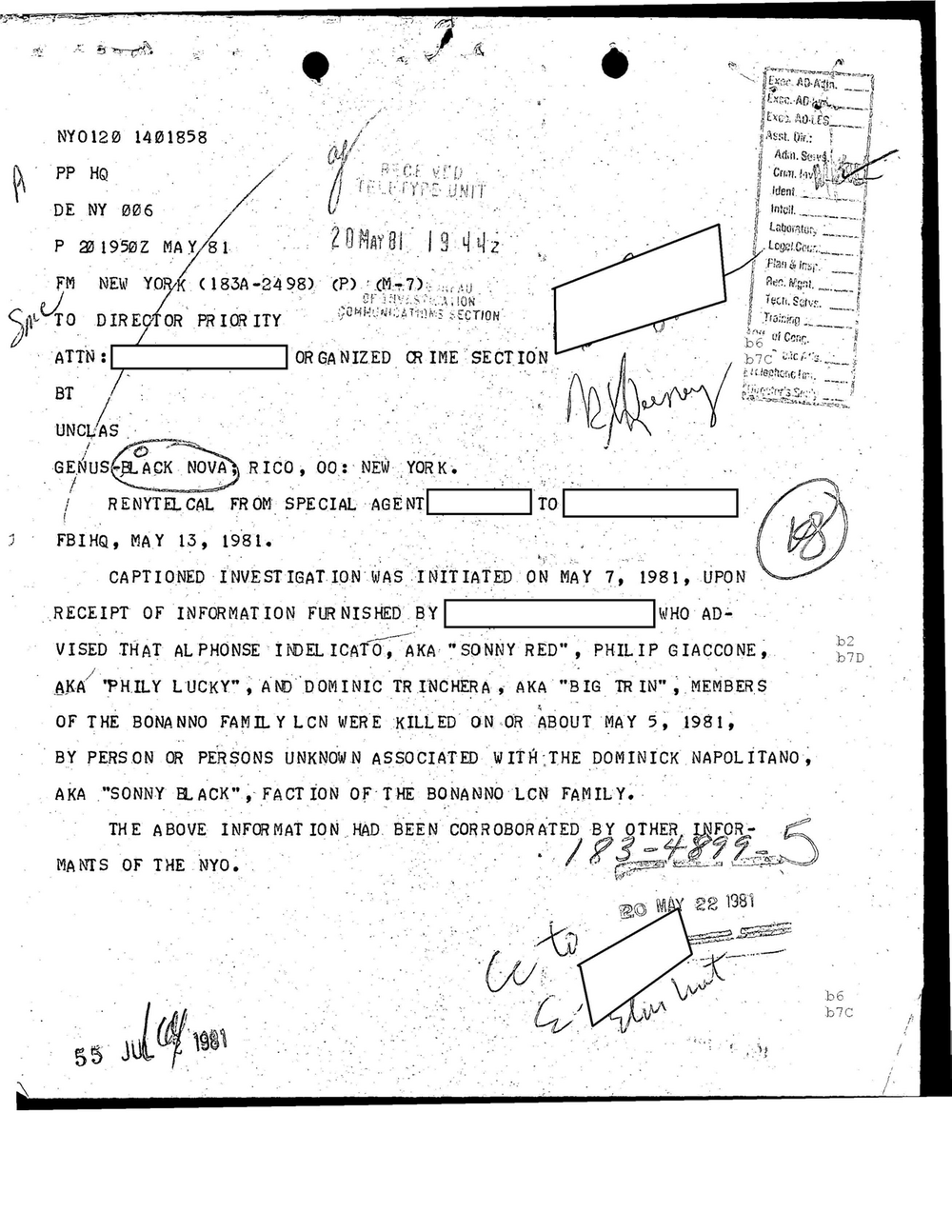 case-fileFBI Vault, Operation Donnie Brasco, Part 01, viewer pp. 133-136 (May-June 1981)New York teletypes of May and June 1981. The first reports a source's information that Alphonse Indelicato, Philip Giaccone and Dominic Trinchera were killed on or about May 5, 1981, and that Anthony "Bruno" Indelicato was hiding with a contract on his life. The second records the surveillance of Ruggiero's flight to Montreal.
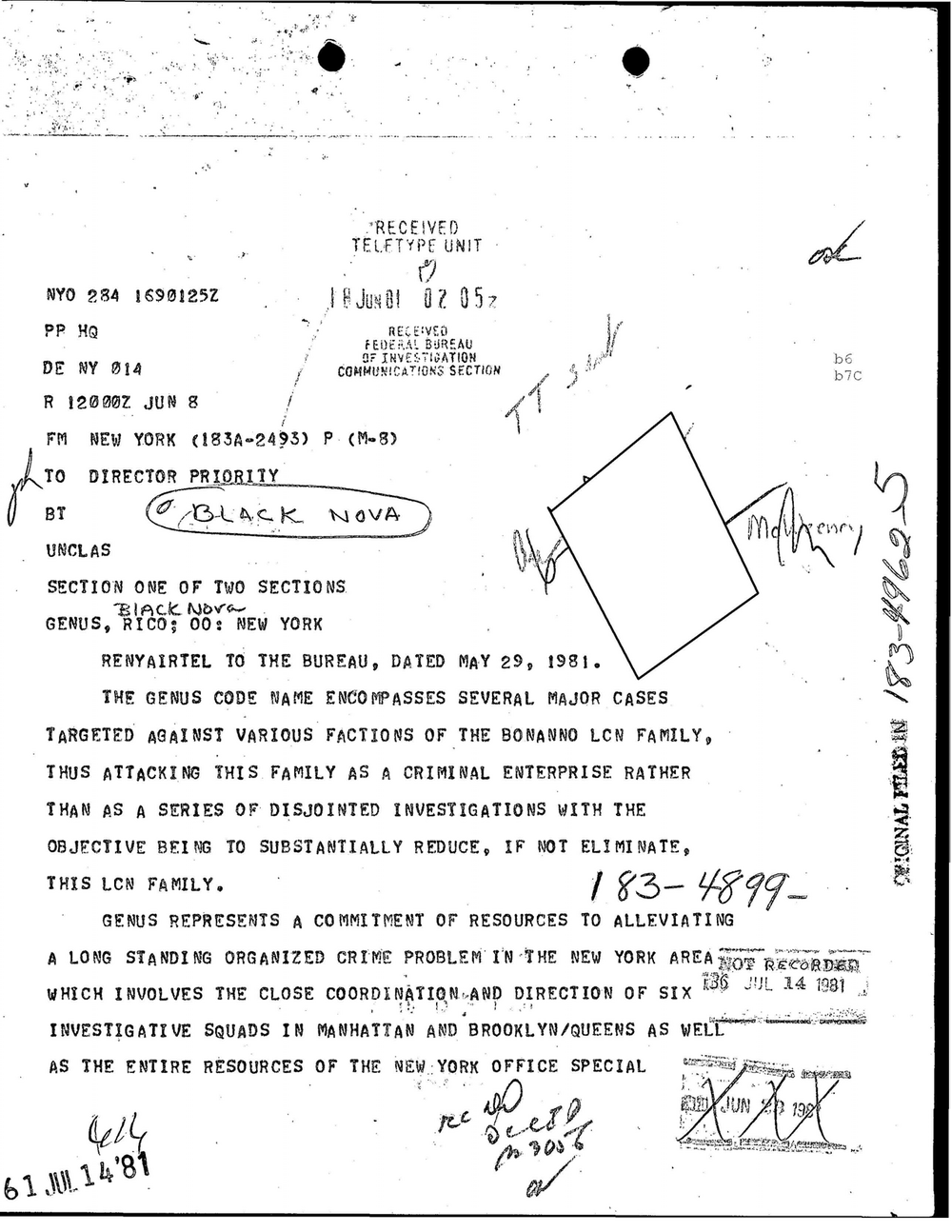 case-fileFBI Vault, Operation Donnie Brasco, Part 01, viewer pp. 148-154 (June 1981): the GENUS casesA two-section New York teletype of June 1981: "The GENUS code name encompasses several major cases targeted against various factions of the Bonanno LCN family." It lists the undercover operation, the Catalano investigation and the file opened on the May 1981 murders.
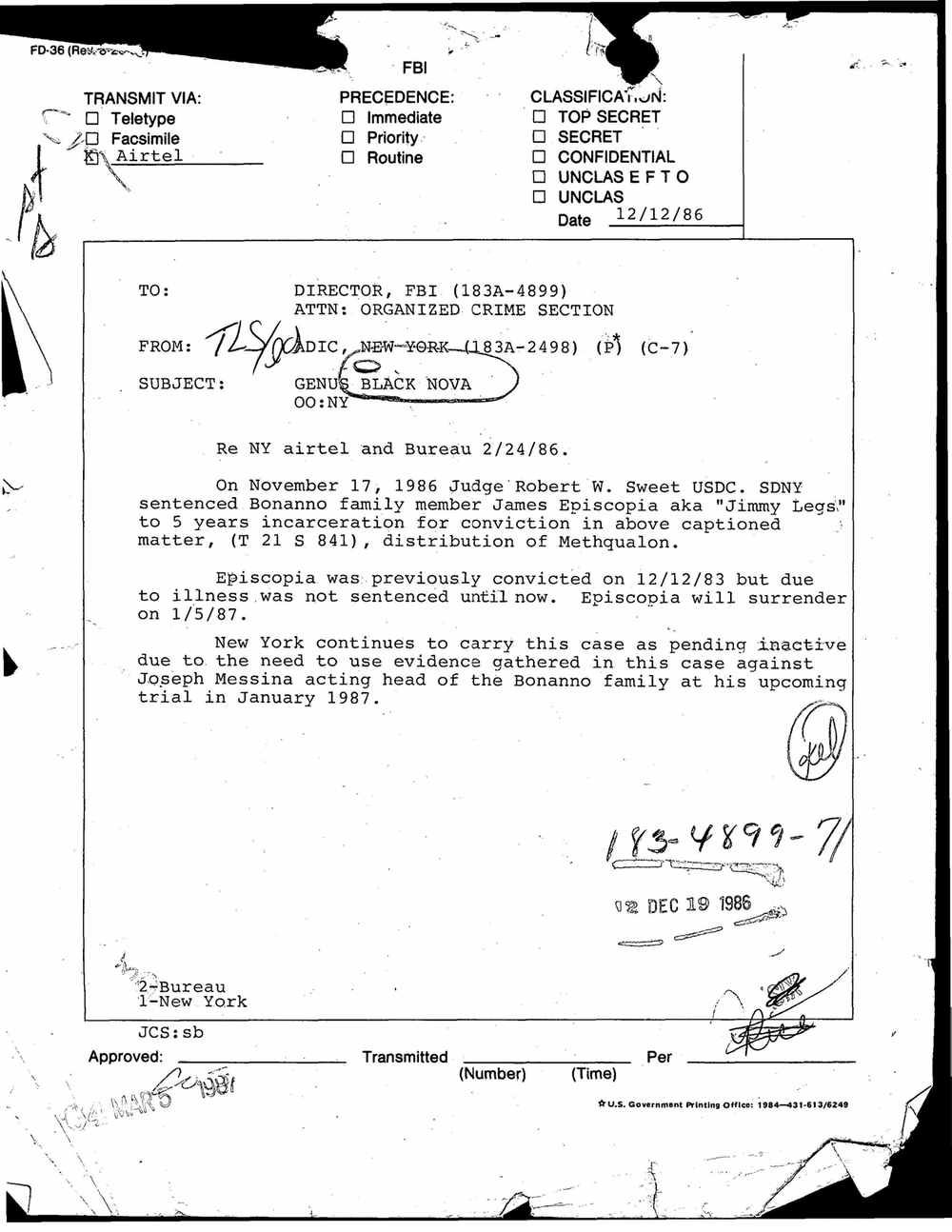 case-fileFBI Vault, Operation Donnie Brasco, Part 01, viewer pp. 288-293 (1984-1986): James EpiscopiaFBI reports on James Episcopia, a defendant in the 1982 case. They record his conviction on December 12, 1983 for methaqualone conspiracy and distribution, a sentence in November 1984, and a five-year sentence imposed by Judge Robert W. Sweet on November 17, 1986.
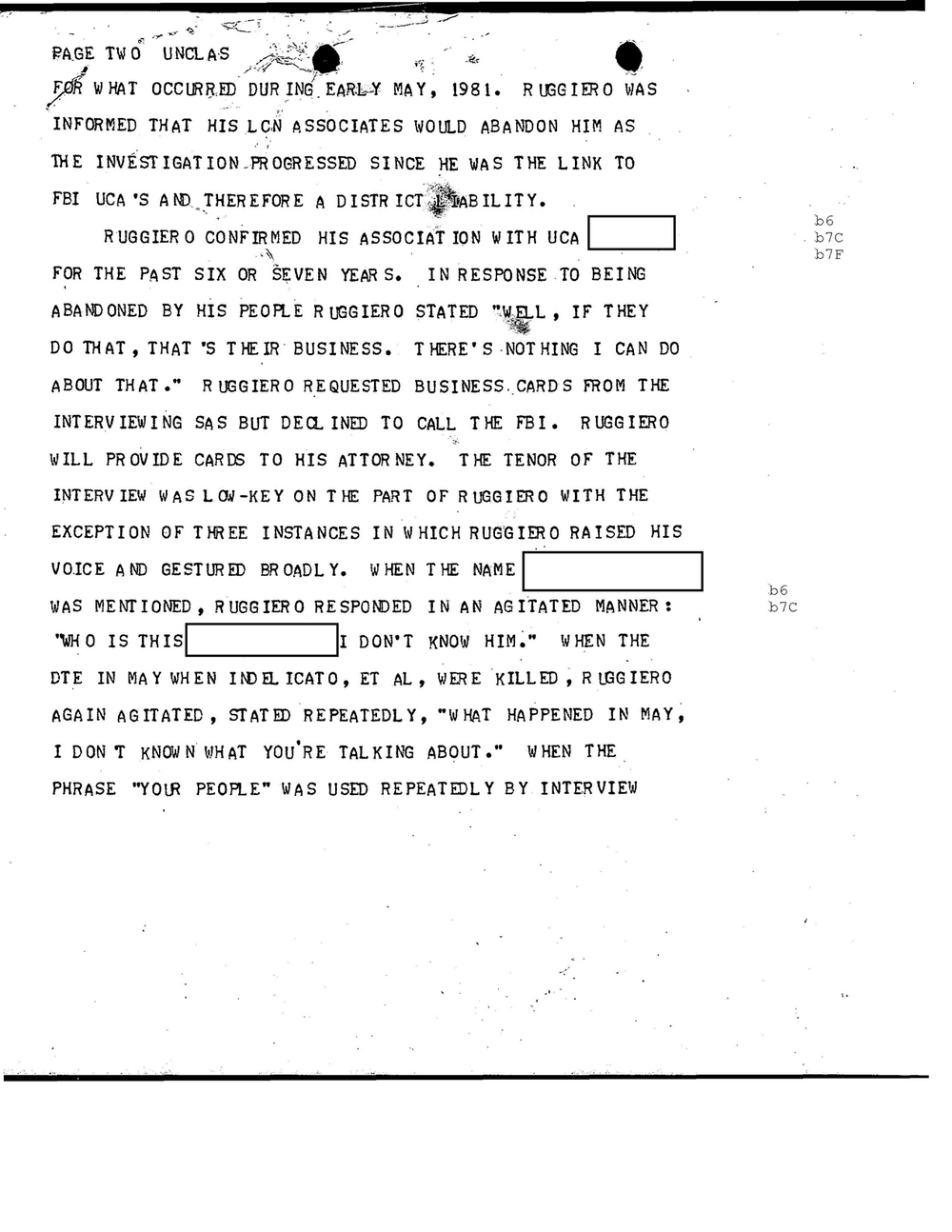 case-fileFBI Vault, Operation Donnie Brasco, Part 01, viewer pp. 325-327 (August 1981)A New York teletype reporting the FBI's interview of Benjamin Ruggiero on August 4, 1981. It says he "confirmed his association with UCA for the past six or seven years" and declined to call the FBI.
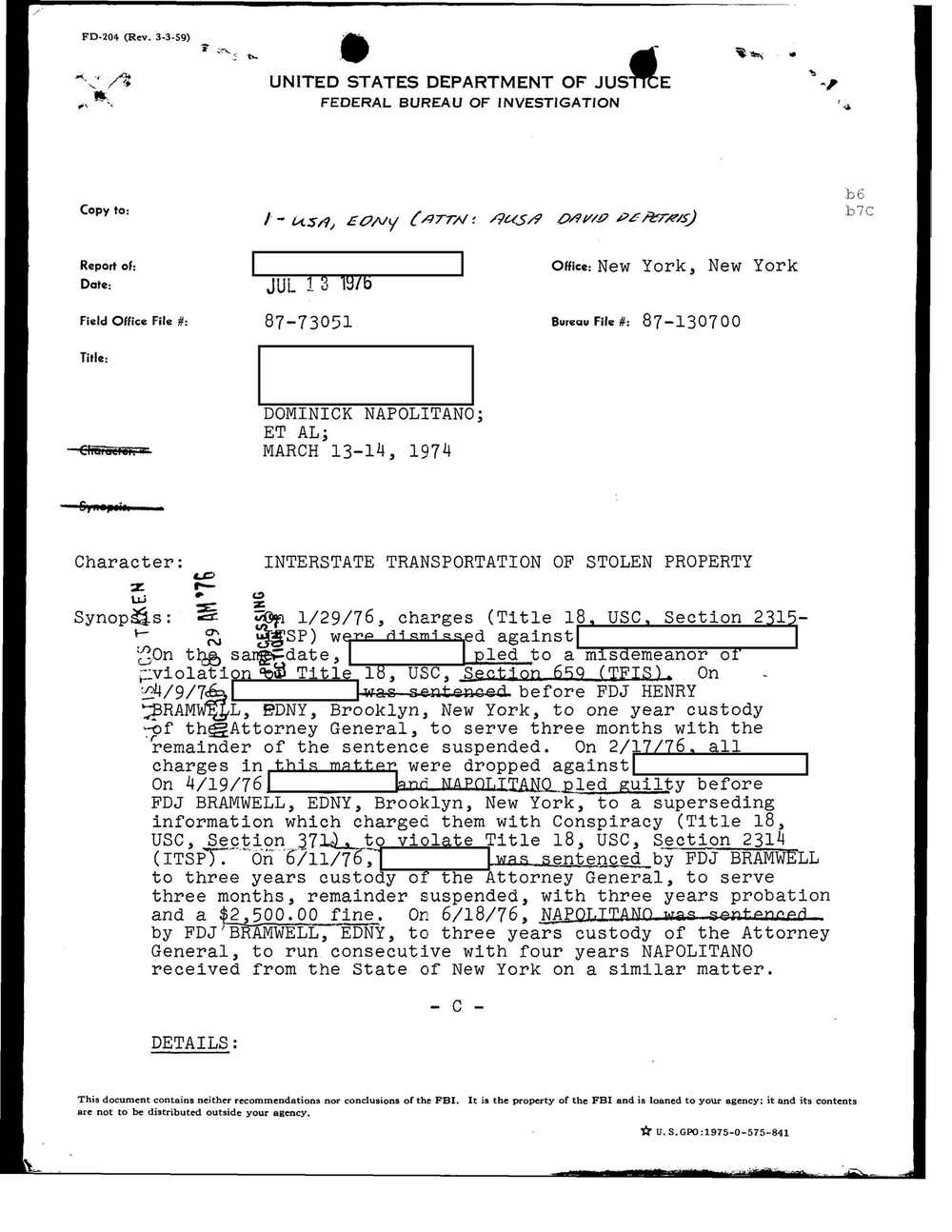 case-fileFBI Vault, Operation Donnie Brasco, Part 01, viewer pp. 401-531 (1974-1976): Napolitano and a stolen trailerAn earlier FBI file at the end of the Brasco release, on the March 1974 theft of a trailer of Lord & Taylor merchandise from Carlstadt, New Jersey. It records that Dominick Napolitano pleaded guilty in the E.D.N.Y. on April 19, 1976 and was sentenced on June 18, 1976 to three years, consecutive to a four-year New York State term.
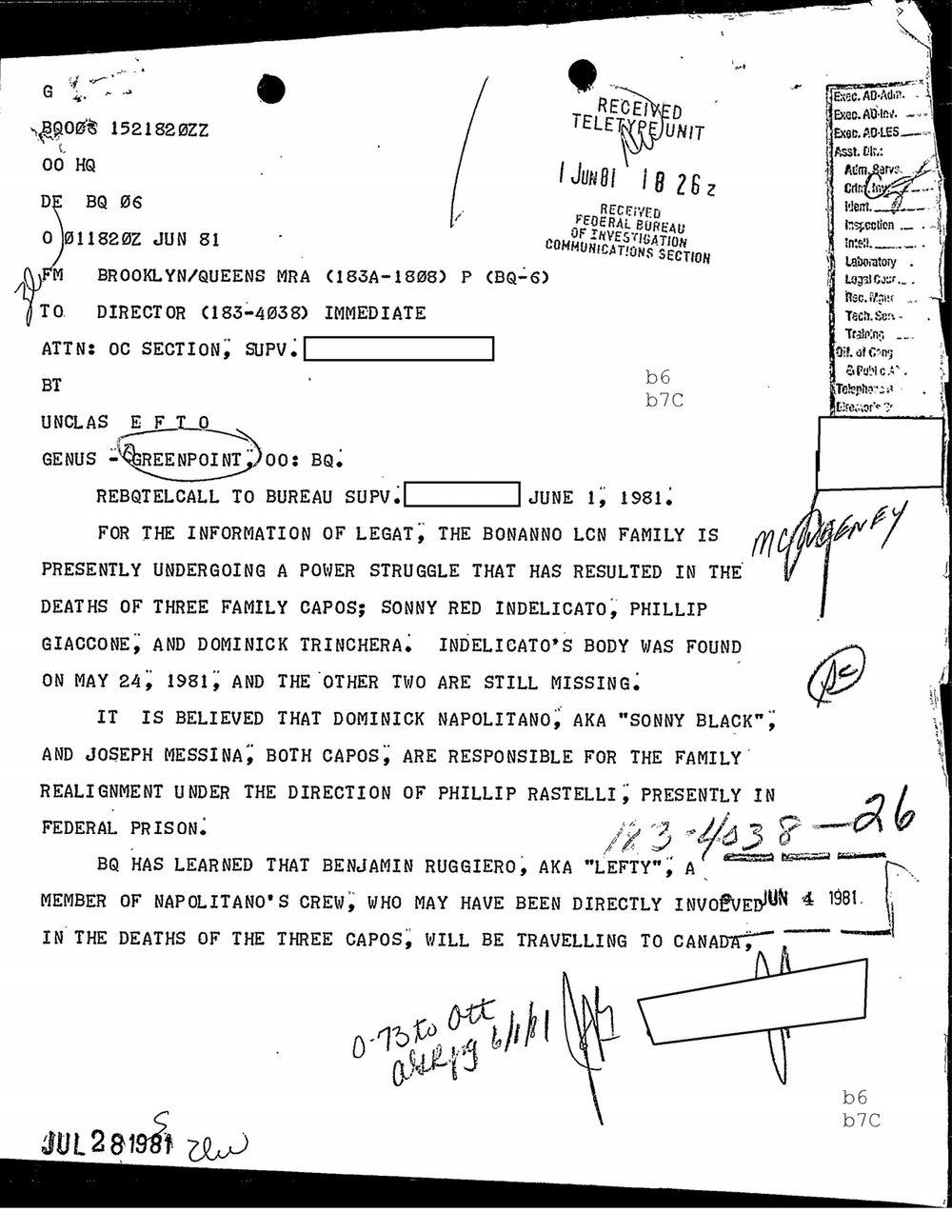 case-fileFBI Vault, Operation Donnie Brasco, Part 01, viewer pp. 97-98 (June 1, 1981)A Brooklyn-Queens teletype of June 1, 1981: "the Bonanno LCN family is presently undergoing a power struggle that has resulted in the deaths of three family capos," Sonny Red Indelicato, Phillip Giaccone and Dominick Trinchera. It says Benjamin Ruggiero would travel to Canada.
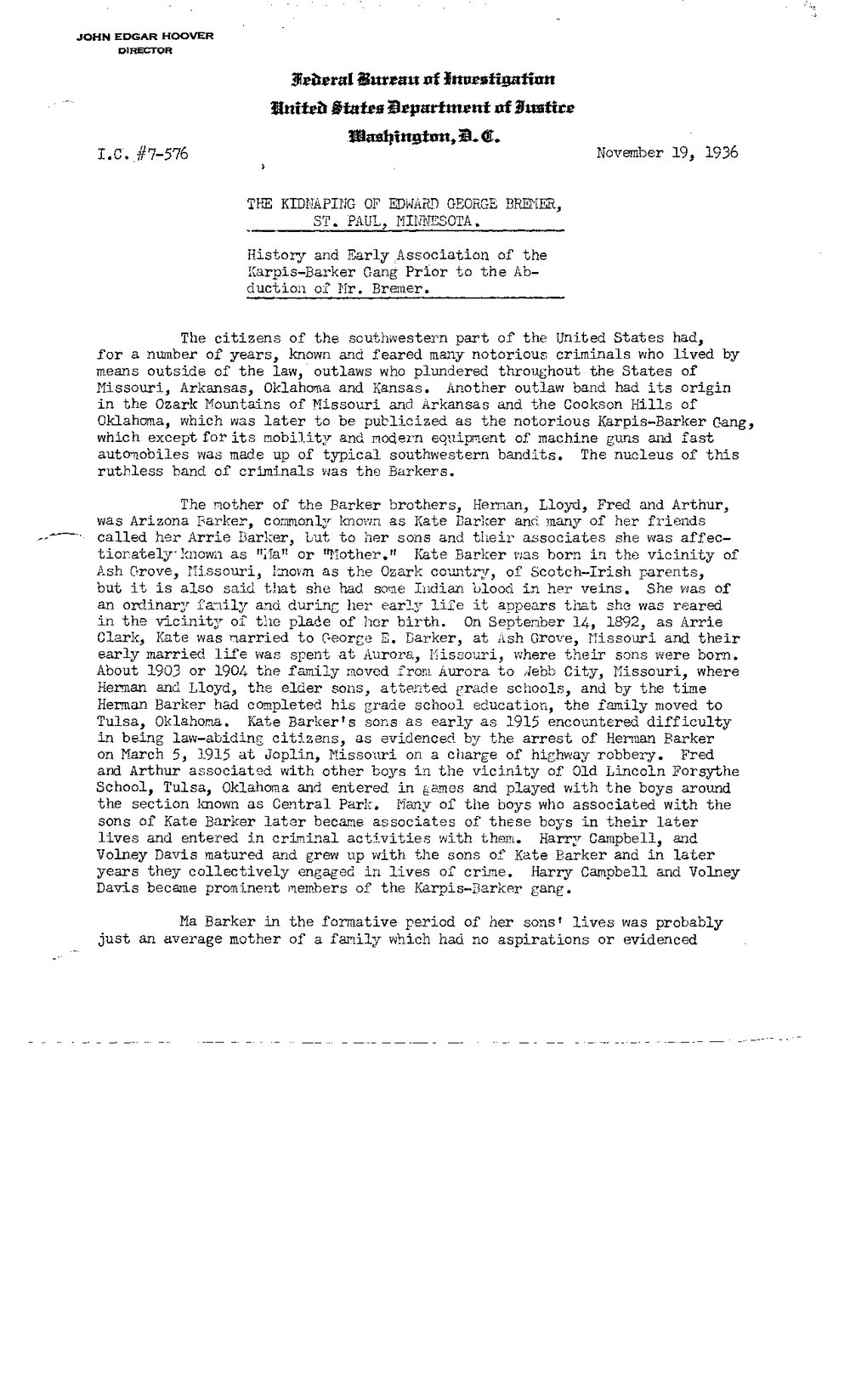 case-file"The Kidnaping of Edward George Bremer, St. Paul, Minnesota": FBI investigation summary, I.C. #7-576 (19 November 1936)A 126-page Bureau narrative of the Bremer kidnaping case: Kate Barker's background, the death of Herman Barker in 1927, the 16 January 1935 shooting at the Lake Weir cottage, and Karpis's arrest at Apartment 1, 3343 Canal Street, New Orleans on 1 May 1936. A copy of page 1 is stored here.
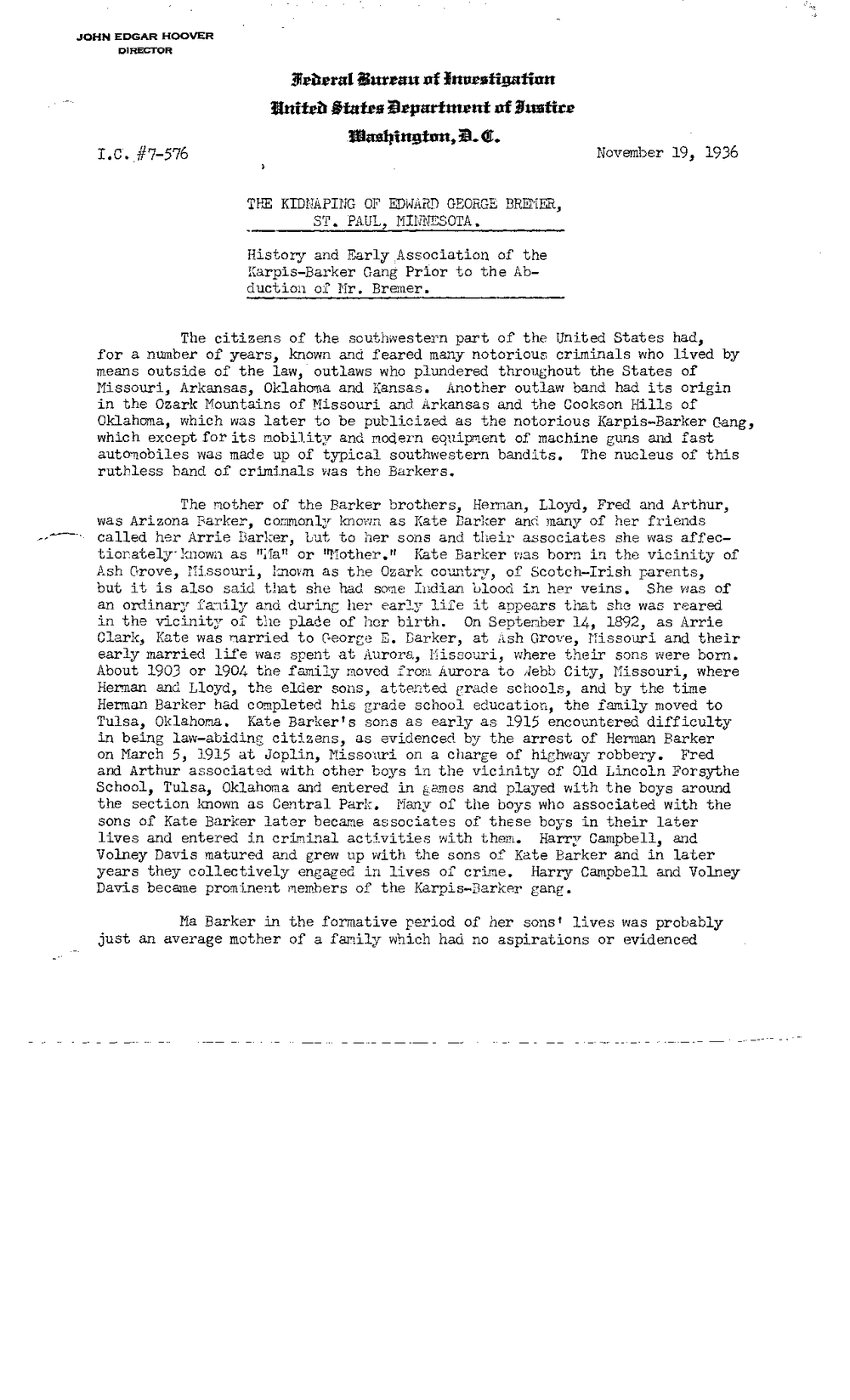 case-fileFBI summary of the Bremer kidnaping (19 November 1936), page 1: the Bureau's account of Arizona "Kate" BarkerThe opening page of the FBI's 1936 narrative history of the Karpis-Barker gang. It identifies the mother of the Barker brothers as "Arizona Barker, commonly known as Kate Barker," born near Ash Grove, Missouri, and married there in 1892 to George E. Barker.
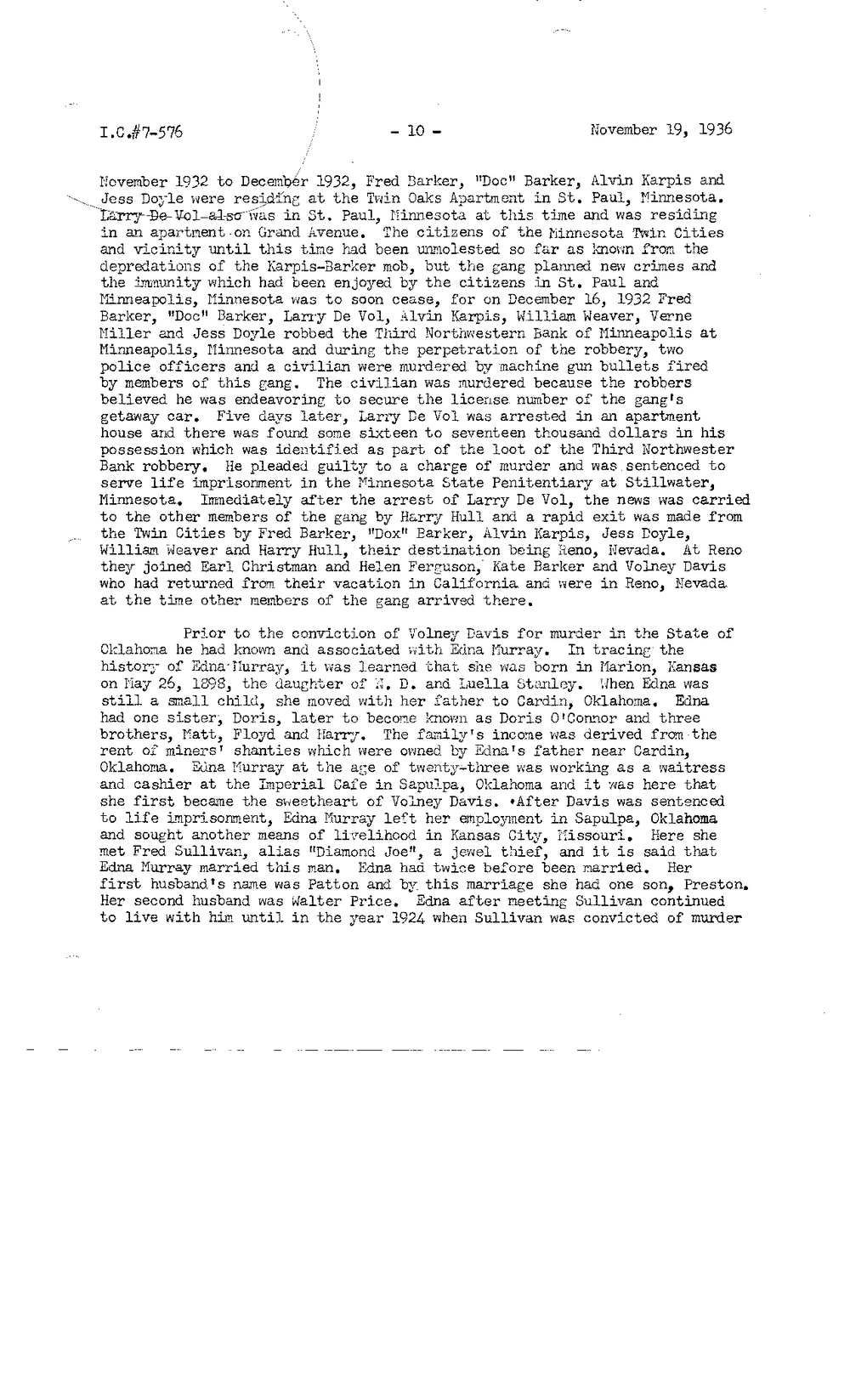 case-fileFBI summary of the Bremer kidnaping, page 10: the Bureau's history of Edna MurrayThe page of the FBI's 1936 Karpis-Barker narrative that begins its history of Edna Murray, whom it says was born at Marion, Kansas, on May 26, 1898 and was an early associate of Volney Davis.
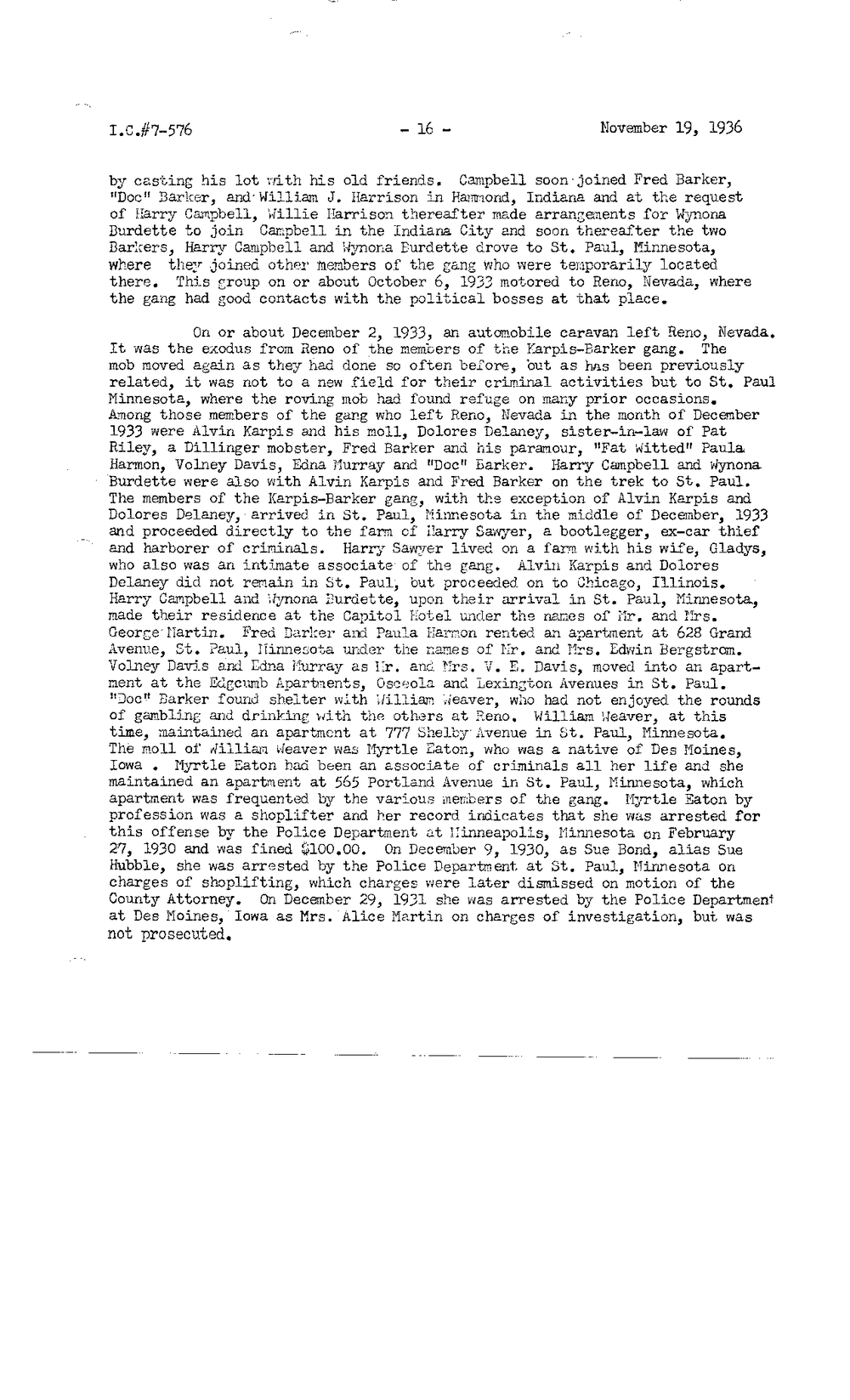 case-fileFBI summary of the Bremer kidnaping, page 16: Dolores Delaney with Alvin KarpisThe page of the FBI's 1936 Karpis-Barker narrative recording that about December 2, 1933 the gang left Reno, naming "Alvin Karpis and his moll, Dolores Delaney, sister-in-law of Pat Riley, a Dillinger mobster," who went on to Chicago.
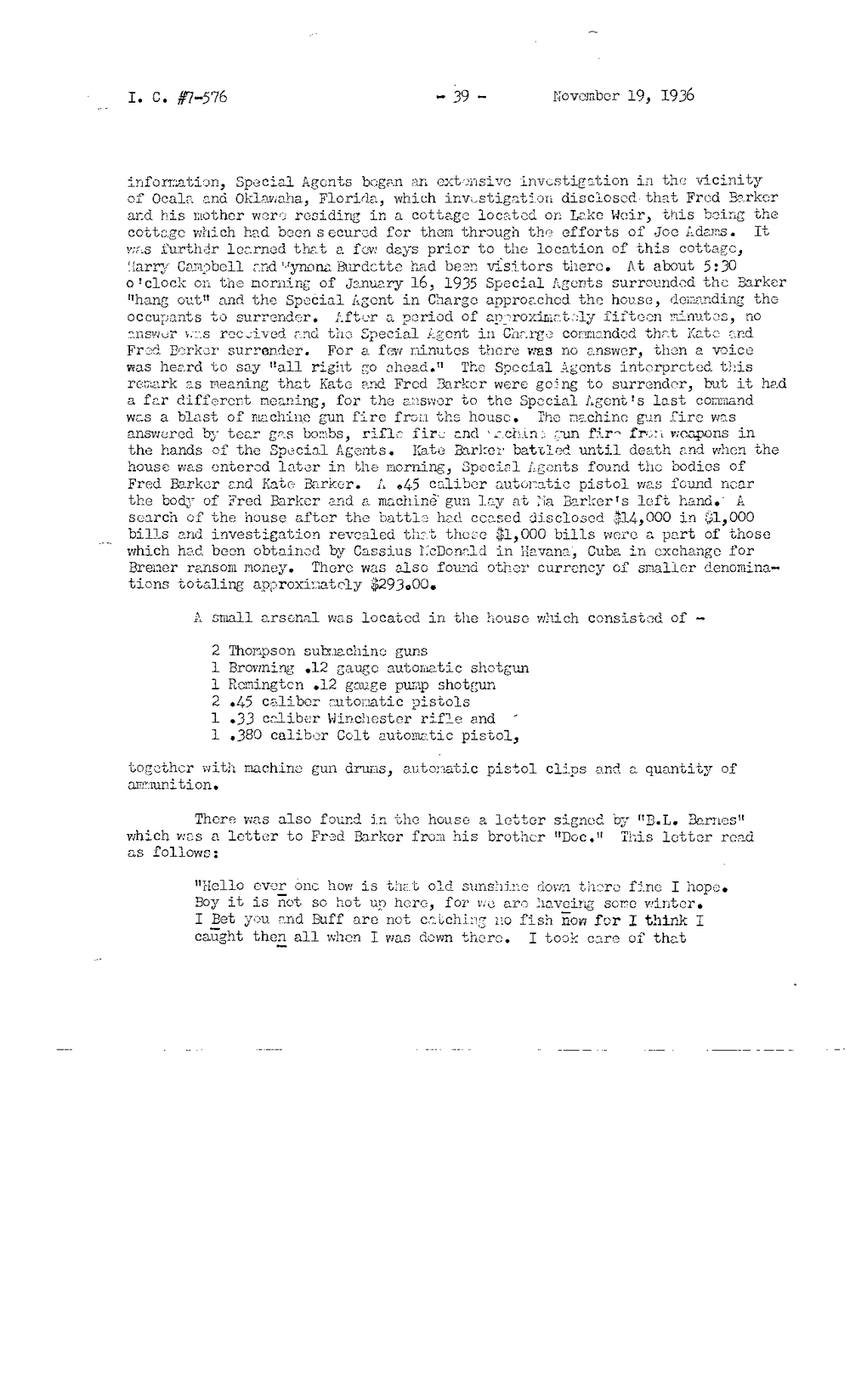 case-fileFBI summary of the Bremer kidnaping, report page 39: the 16 January 1935 raid at Lake Weir, FloridaThe Bureau's 1936 account of the raid on a cottage at Lake Weir, Florida, at about 5:30 a.m. on 16 January 1935, in which Fred Barker and Kate Barker were killed. It says "Kate Barker battled until death" and lists the weapons and money found in the house.case-fileFBI Vault, Angelo Annaloro (Angelo Bruno), Part 01: Philadelphia teletypes on the March 1980 killingPart 01 of the FBI's five-part file titled "Angelo Annaloro (Angelo Bruno)": Philadelphia teletypes from March 22, 1980 captioned "GANGMURS ANGELO BRUNO" on the shooting of March 21, 1980, and later reports. Read from the viewer's OCR.
 finding-aidFBI Vault file on Benjamin "Bugsy" Siegel (32 parts)Finding aid to the FBI Vault's 32-part file on Benjamin "Bugsy" Siegel: the 1946 Flamingo inquiry, the Bureau's crime survey, and the 1947 killing, with each part's address and a one-line description.case-fileFBI Vault, James (Whitey) Bulger, Part 01: Boston reports, 1974 to 1978First part of the FBI's released Bulger file: Boston airtels and reports of 1974 and 1975 on an extortionate-credit inquiry naming Bulger among suspected loansharks, and 1976 to 1978 reports on a race-fixing investigation. Read in part from the OCR.case-fileFBI Vault, James (Whitey) Bulger, Part 02: Boston Division reports, 1974 to 1975The second part of the FBI's Bulger file: Boston field office reports, transmittals of recorded telephone calls and arrest papers, most captioned with the federal extortionate-credit and racketeering statutes. Most names are redacted, and only the Vault OCR has been read.case-fileFBI Vault, James (Whitey) Bulger, Part 05: Boston memorandum of June 23, 1995 on the January 1995 indictmentPart 05 of the FBI's Bulger file is mostly withheld. Its readable pages include a June 23, 1995 Boston communication summarizing the indictment's allegation that the "Winter Hill Gang" and the "PATRIARCA LCN Family" conspired to control organized crime in Boston.
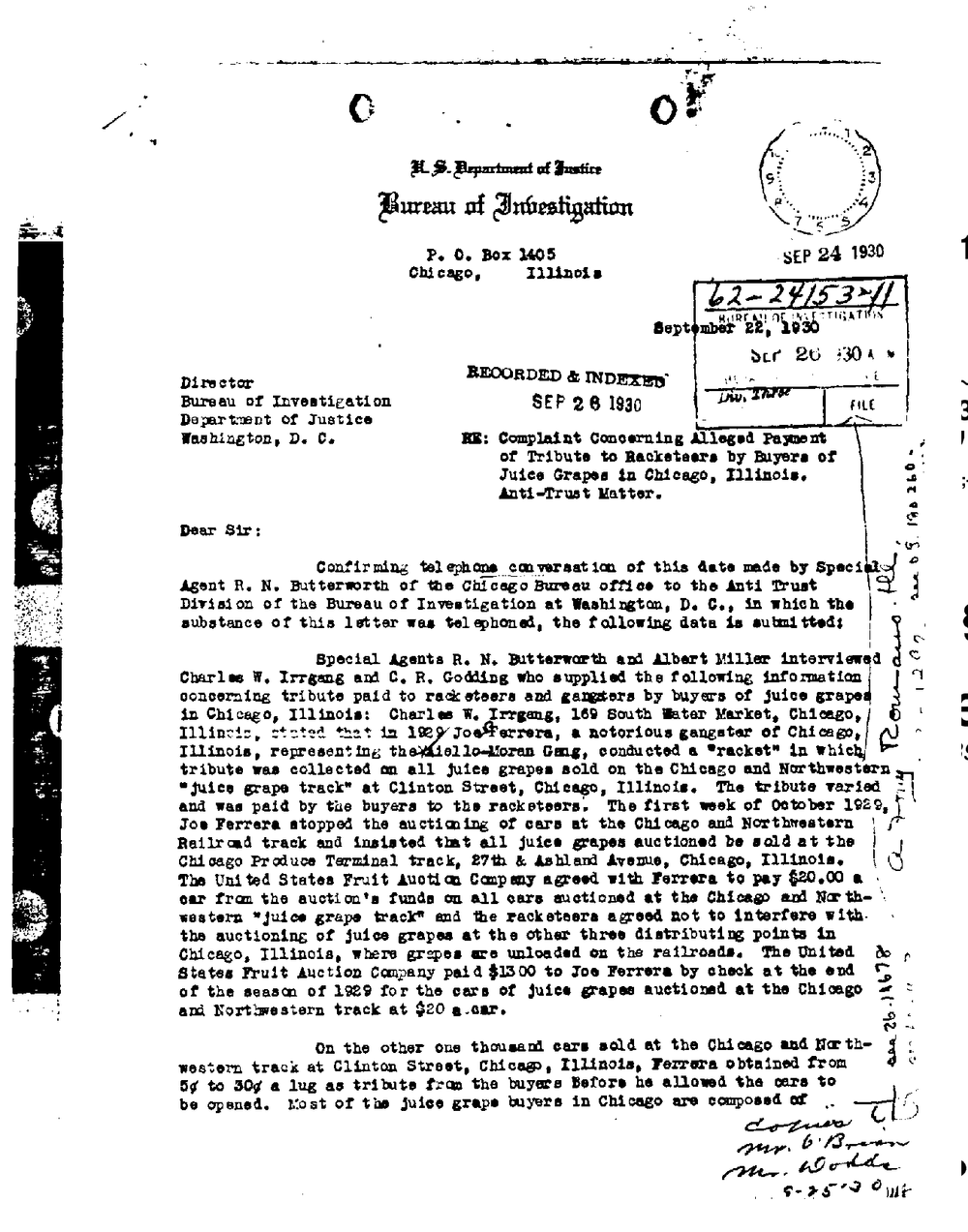 case-fileChicago report on tribute collected from juice-grape buyers (22 September 1930)A Bureau of Investigation report from Chicago records complaints that racketeers taxed every railcar of juice grapes sold at Chicago tracks: in 1929 for a gangster said to represent the Aiello-Moran gang, and in 1930, according to a witness, for a collector appointed by 'the Al Capone gang'.
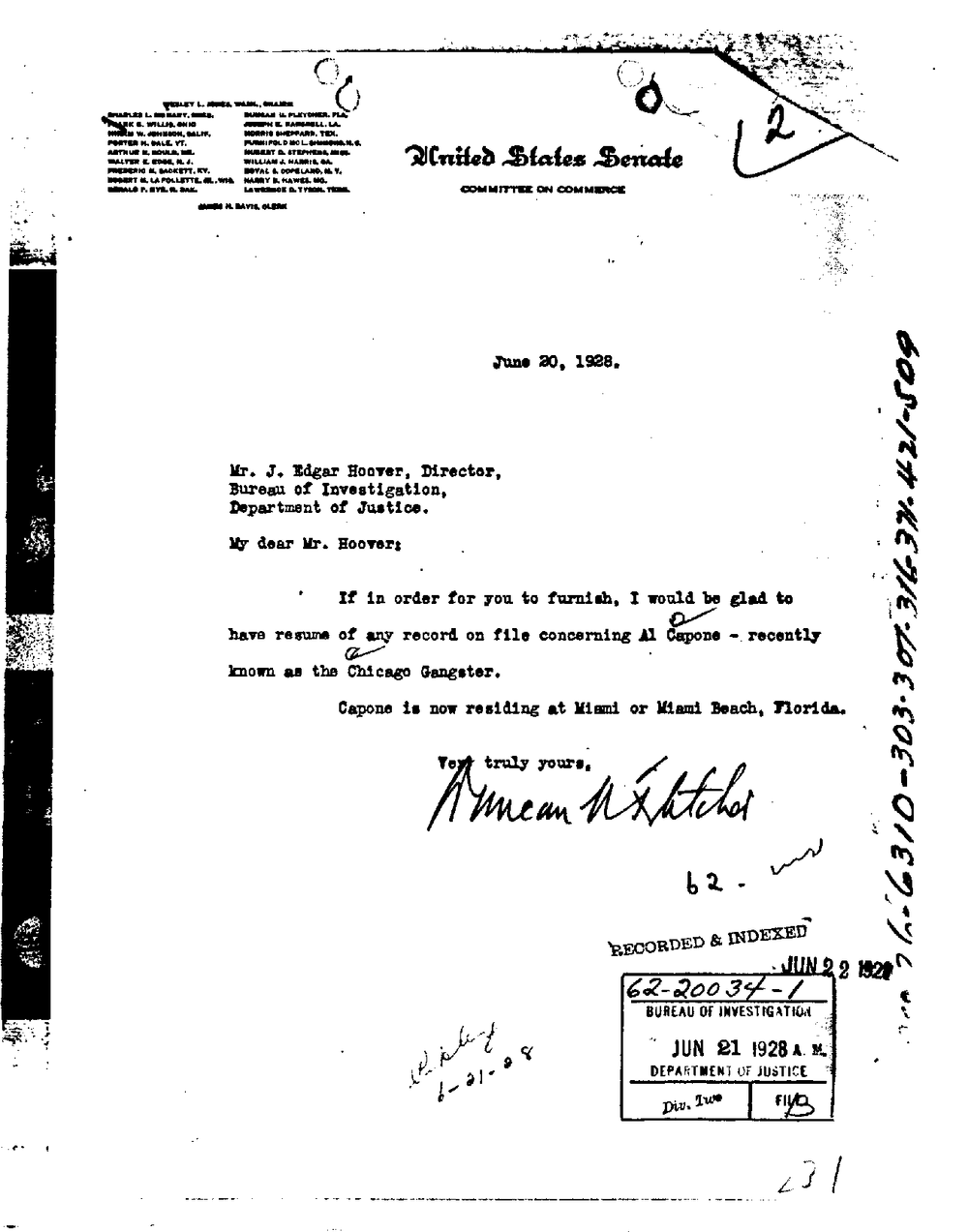 case-fileSenate committee letter asking the Bureau for its record on Al Capone (20 June 1928)The earliest dated item in the FBI's Capone file: a letter on United States Senate Committee on Commerce letterhead asking J. Edgar Hoover for a résumé of any record on 'Al Capone — recently known as the Chicago Gangster', then living at Miami or Miami Beach.
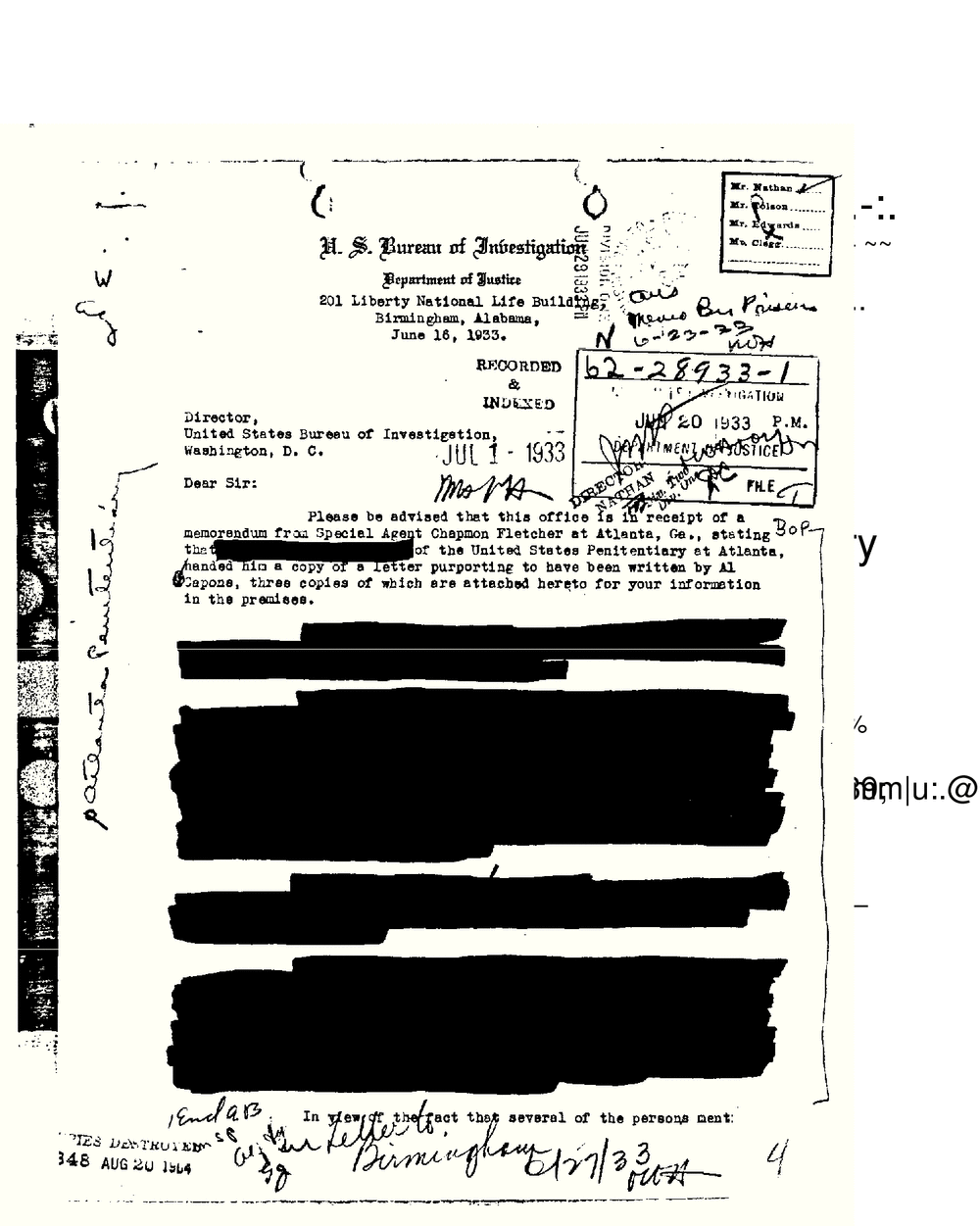 case-fileBirmingham letter opening the Atlanta contraband inquiry (16 June 1933)The first serial of Bufile 62-28933: the Bureau's Birmingham office forwards copies of a letter said to have been written by Capone in the Atlanta penitentiary and asks for instructions, opening the 1933–36 contraband inquiry.
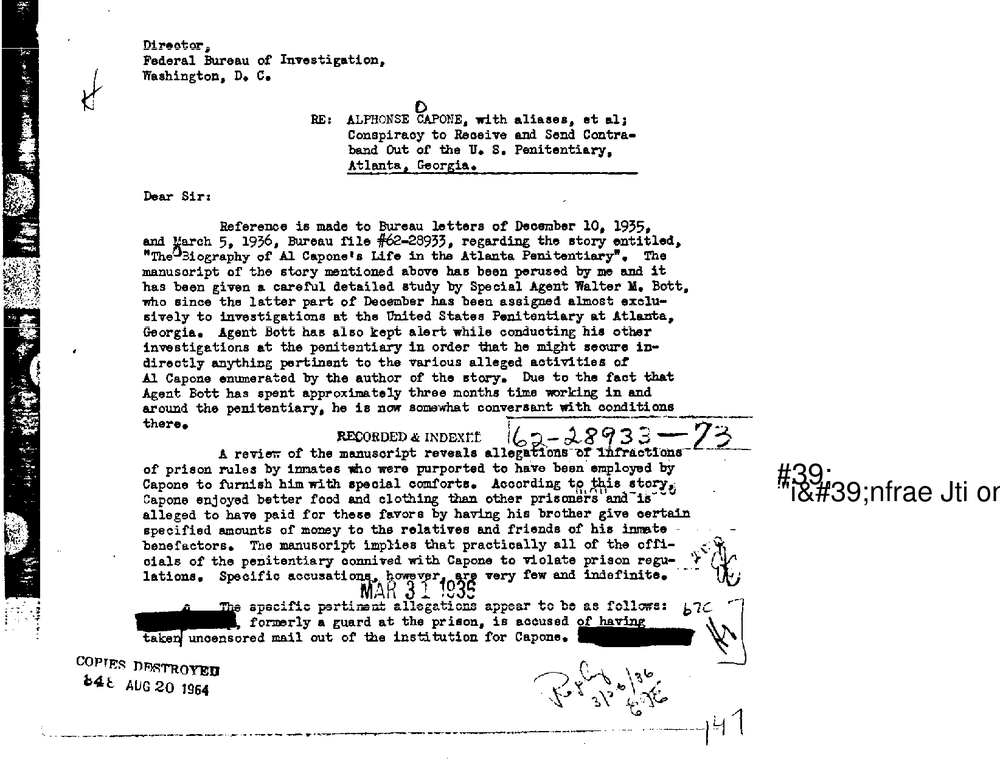 case-fileBirmingham report on the manuscript 'The Biography of Al Capone's Life in the Atlanta Penitentiary' (March 1936)After about three months' work at the Atlanta penitentiary, a Bureau agent reviewed a typed manuscript about Capone's prison life and found its specific accusations few and indefinite; the Birmingham office saw nothing in it to advance the contraband case.case-filePress clippings on the August 1934 transfer from Atlanta to Alcatraz, filed in the FBI Capone filePart 06 of the Vault file is a run of wire-service and newspaper clippings, mostly of 20–24 August 1934, on the guarded rail transfer of Capone and other Atlanta prisoners to Alcatraz. They are listed here as a pointer and are not reproduced.
 case-fileChicago Crime Commission request for Bureau records on twenty-eight Chicago gangsters (1930)Letters from the Chicago Crime Commission, filed in the FBI's Capone file under Bufile 32-15941, sending the Bureau a list of twenty-eight Chicago gangsters headed by Al Capone, and the Commission's replies after the Bureau said it needed fingerprints or police numbers.
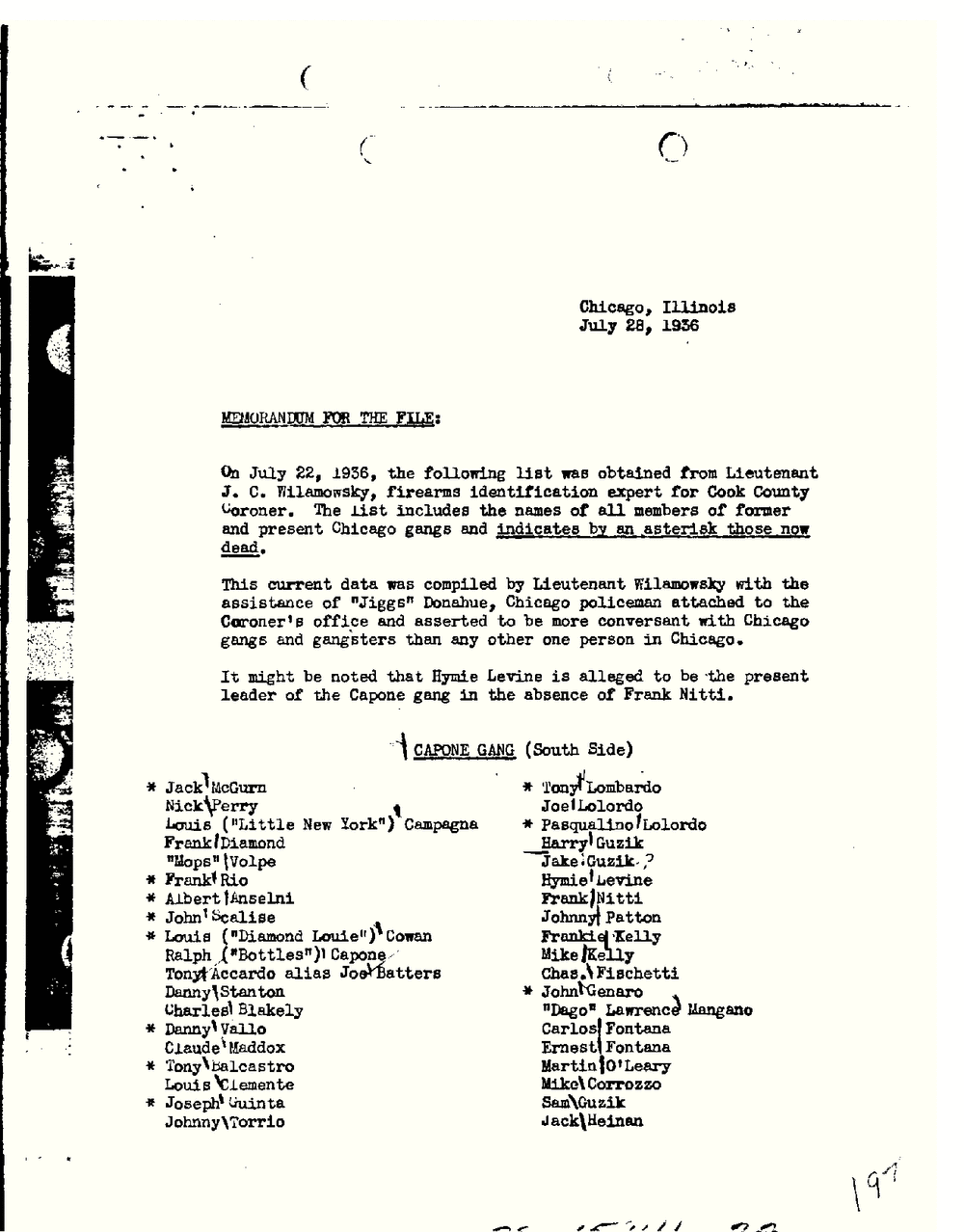 case-fileChicago memorandum listing members of former and present Chicago gangs (July 1936)A Chicago FBI memorandum for the file records a list of members of Chicago gangs by territory, 'Capone Gang (South Side)' first, obtained on 22 July 1936 from the Cook County coroner's firearms expert, with the dead marked by an asterisk.
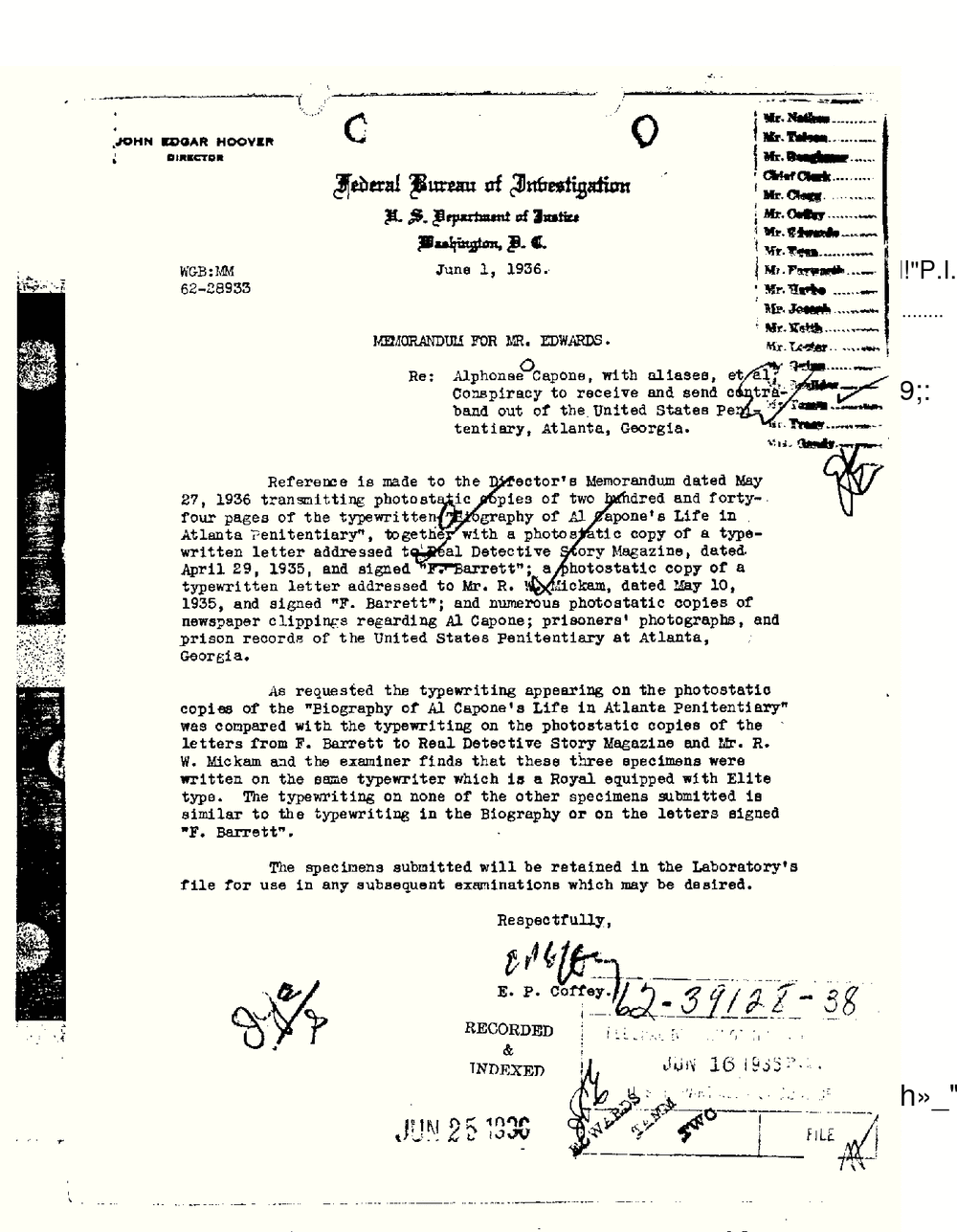 case-fileFBI Laboratory memorandum matching the Capone 'Biography' typescript to the 'F. Barrett' letters (1 June 1936)The FBI Laboratory finds that the 244-page typed 'Biography of Al Capone's Life in Atlanta Penitentiary' and two 1935 letters signed 'F. Barrett' offering it to a magazine were typed on the same Royal typewriter with Elite type.
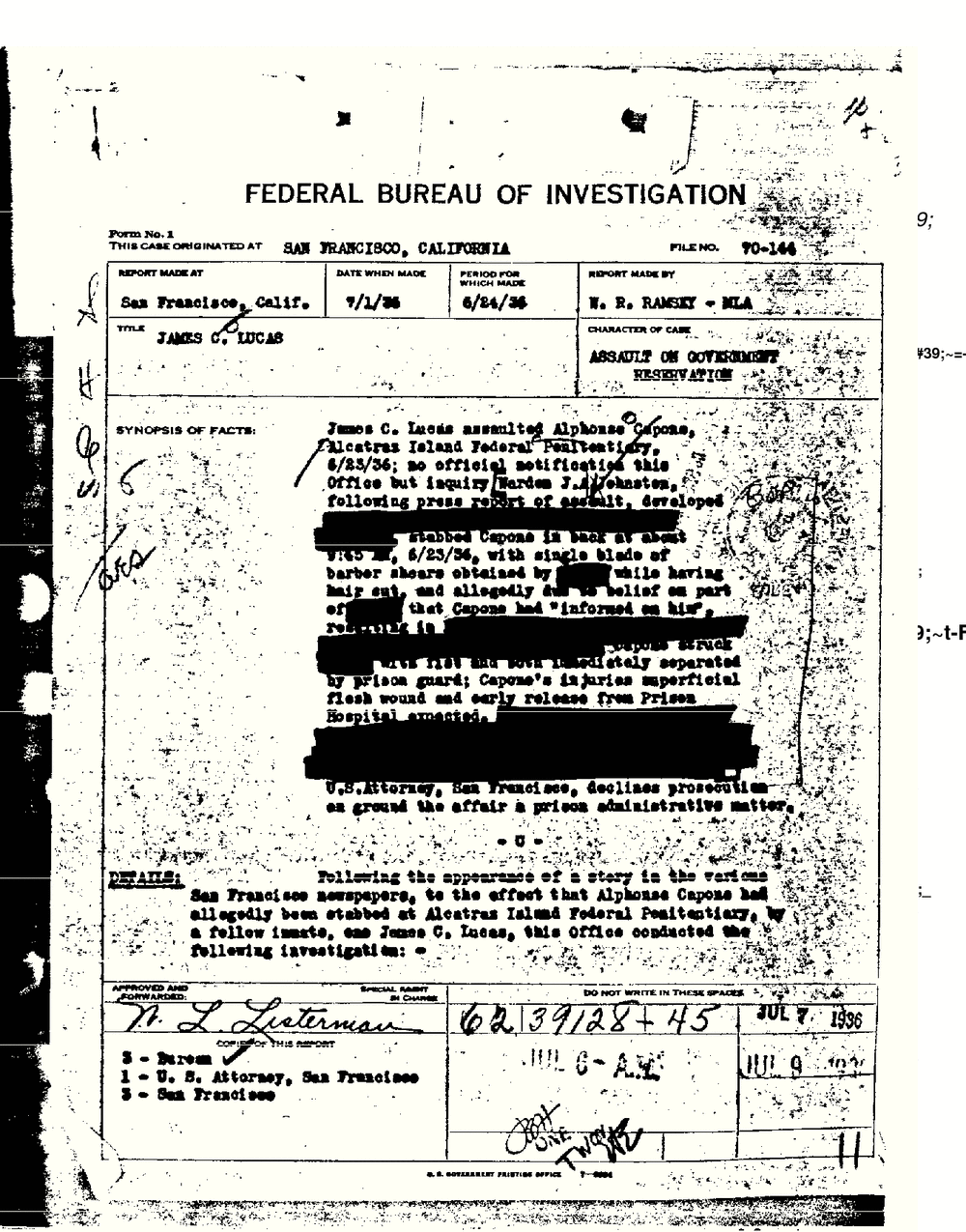 case-fileFBI report on the 23 June 1936 assault on Capone at Alcatraz (serial 62-39128-45)A San Francisco FBI report states that inmate James C. Lucas stabbed Capone in the back with a blade of barber shears at Alcatraz on 23 June 1936, that the wound was superficial, and that the U.S. Attorney declined prosecution as a prison administrative matter.
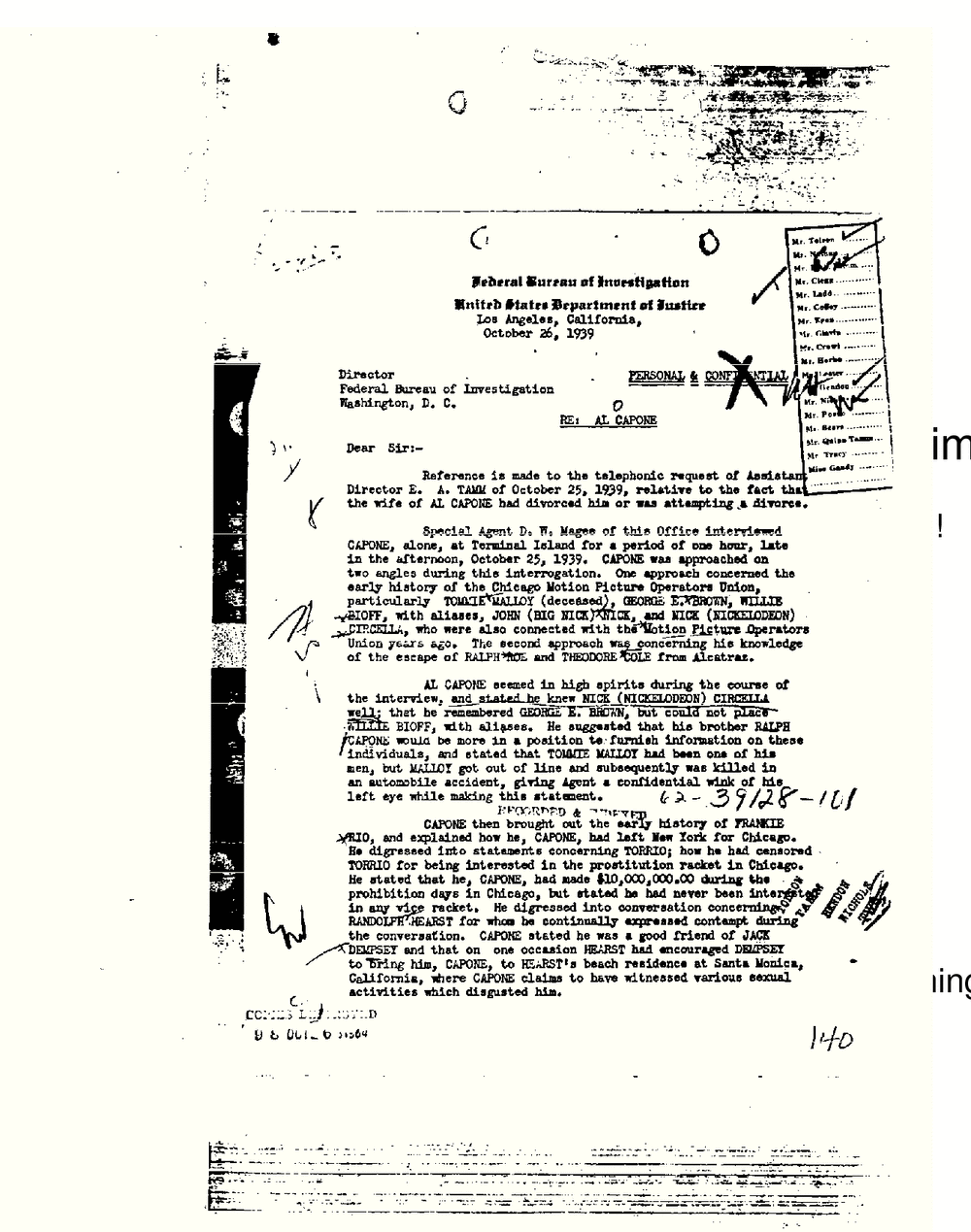 case-fileLos Angeles letter of 26 October 1939 on an agent's interview of Capone at Terminal IslandThe FBI's Los Angeles Special Agent in Charge reports an hour-long interview of Capone at Terminal Island on 25 October 1939. The agent wrote that Capone was in high spirits but kept losing the thread, which he took as a sign that Capone's mind did not function normally.
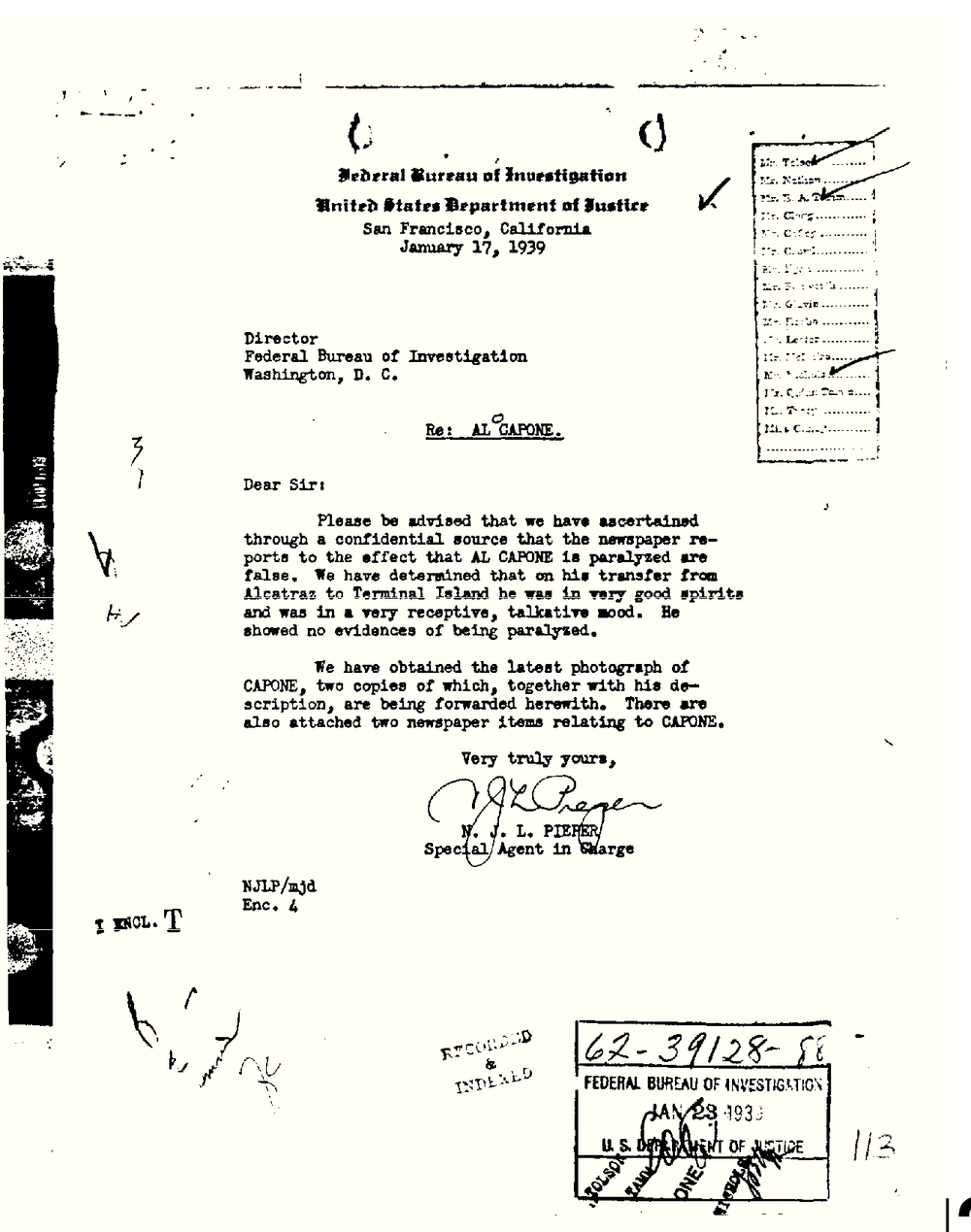 case-fileSan Francisco letter: reports that Capone is paralyzed are false; transfer to Terminal Island (17 January 1939)The FBI's San Francisco office reports from a confidential source that newspaper stories of Capone being paralyzed were false, and that on his transfer from Alcatraz to Terminal Island he was in very good spirits.
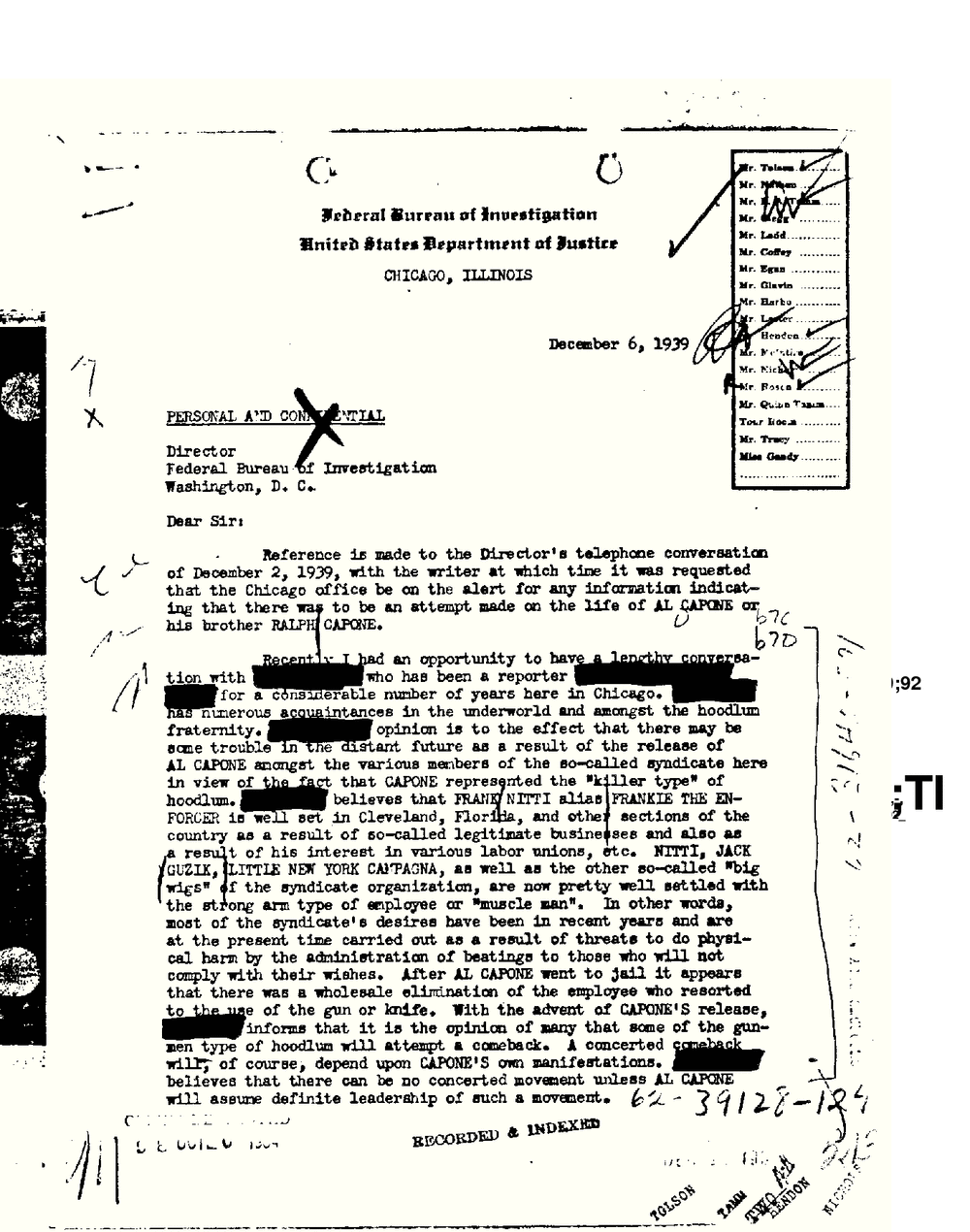 case-fileChicago letter on possible consequences of Capone's release (6 December 1939)Asked to watch for any attempt on the lives of Al or Ralph Capone, the FBI's Chicago office relays a reporter's view that the syndicate had moved from gunmen to 'muscle' methods and that no concerted comeback was likely without Capone's own leadership.
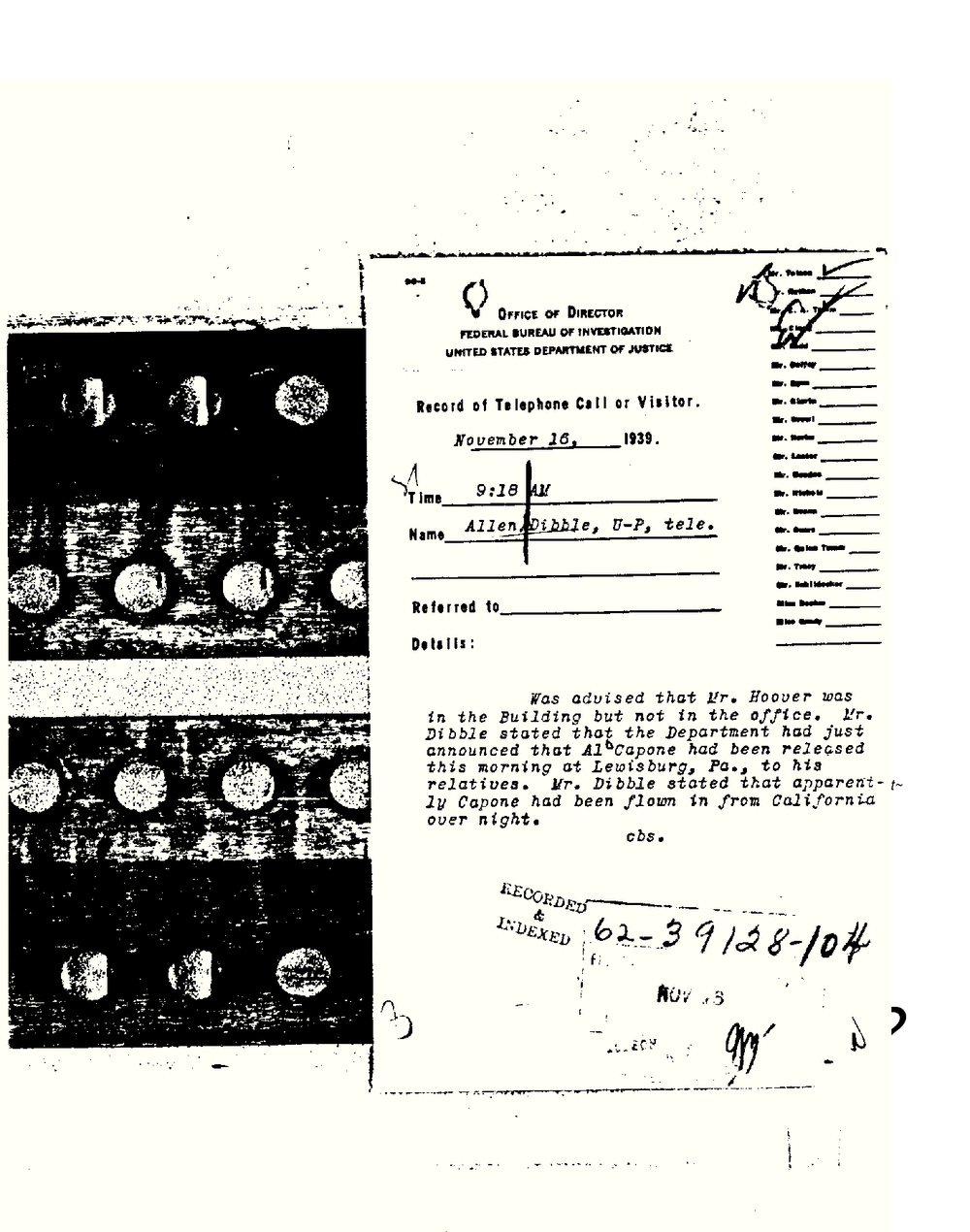 case-fileFBI record of a call reporting Capone's release at Lewisburg (16 November 1939)A telephone-call record in the Director's office: a United Press reporter says the Justice Department has just announced that Capone was released that morning at Lewisburg, Pennsylvania, to his relatives.
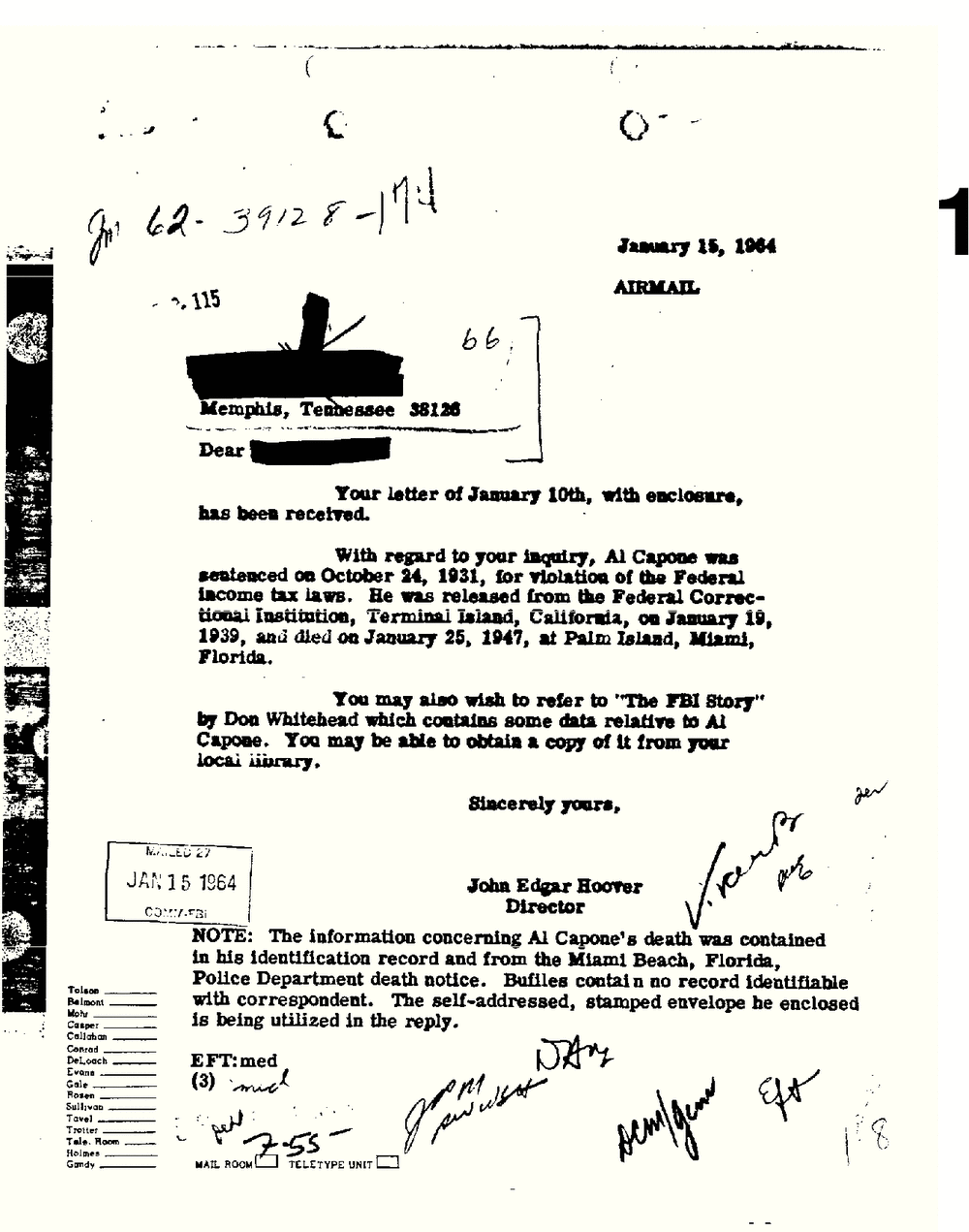 case-fileHoover reply stating that Capone died on 25 January 1947 at Palm Island, Miami (15 January 1964)A Bureau form reply to a Memphis writer gives Capone's tax sentence of 24 October 1931, a release from Terminal Island dated 19 January 1939, and his death on 25 January 1947 at Palm Island, Miami. A file note gives the sources for the death.
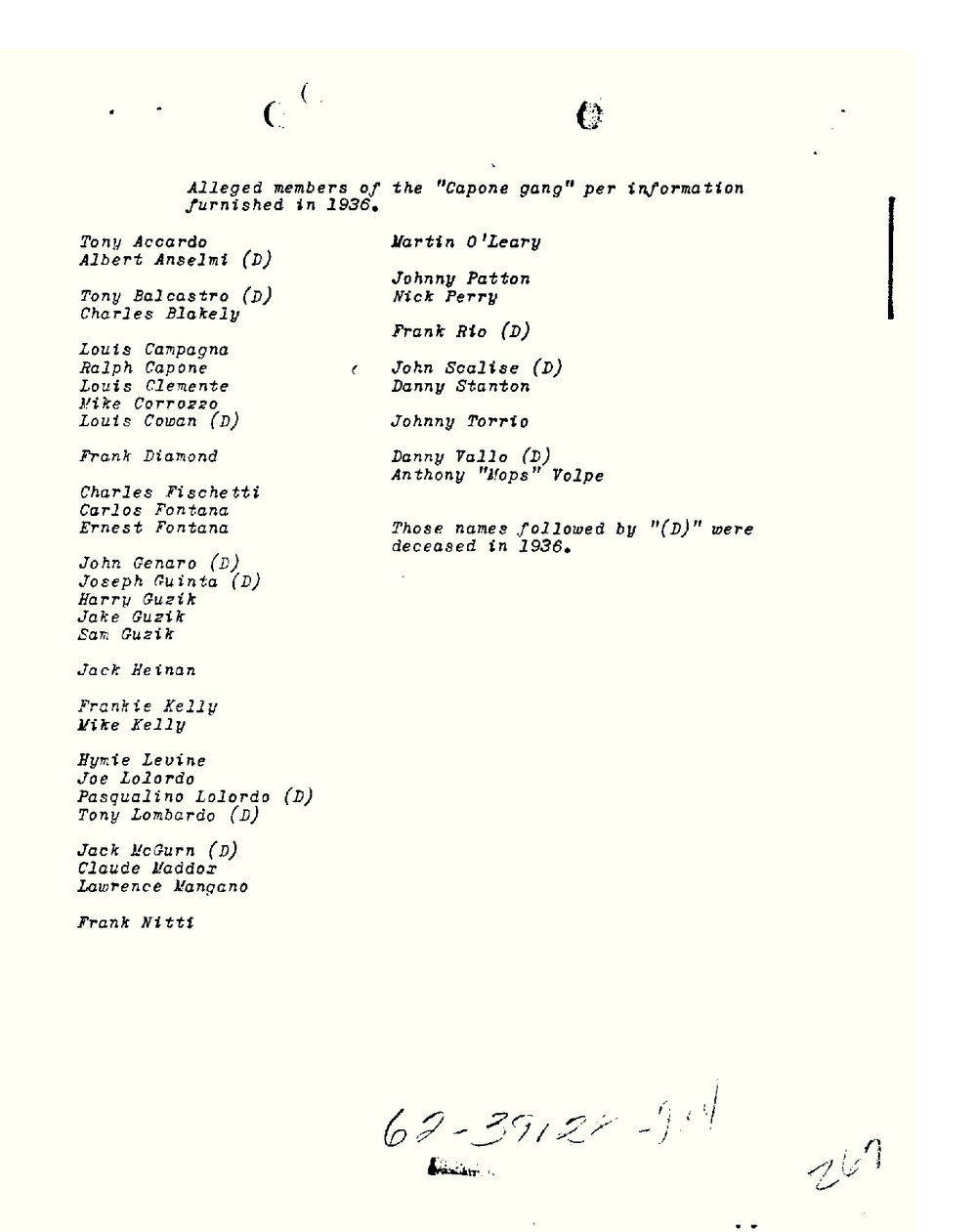 case-fileFBI reply on the 'Capone Gang' with a list of alleged members furnished in 1936 (26 August 1983)The FBI's Office of Congressional and Public Affairs answers a Pennsylvania legislative research analyst with summaries, photographs and a list of alleged members of the 'Capone gang' 'per information furnished in 1936', noting that the gang's activities were mostly outside federal jurisdiction.
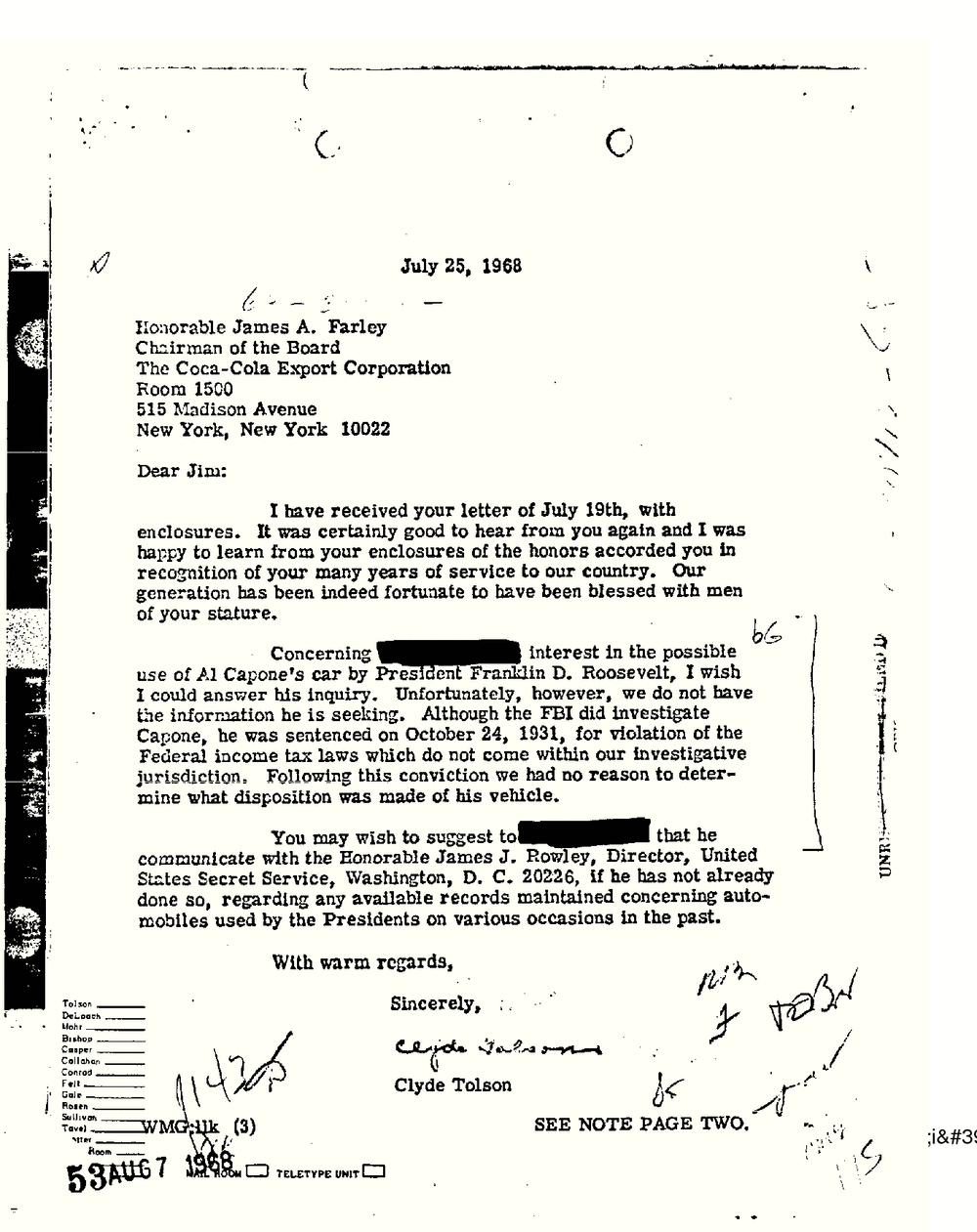 case-fileClyde Tolson's reply to James A. Farley about Capone's car and President Roosevelt (25 July 1968)FBI Associate Director Clyde Tolson tells James A. Farley that the FBI has no information on whether President Franklin D. Roosevelt used Al Capone's car, since Capone's tax conviction was outside its jurisdiction, and suggests the Secret Service.
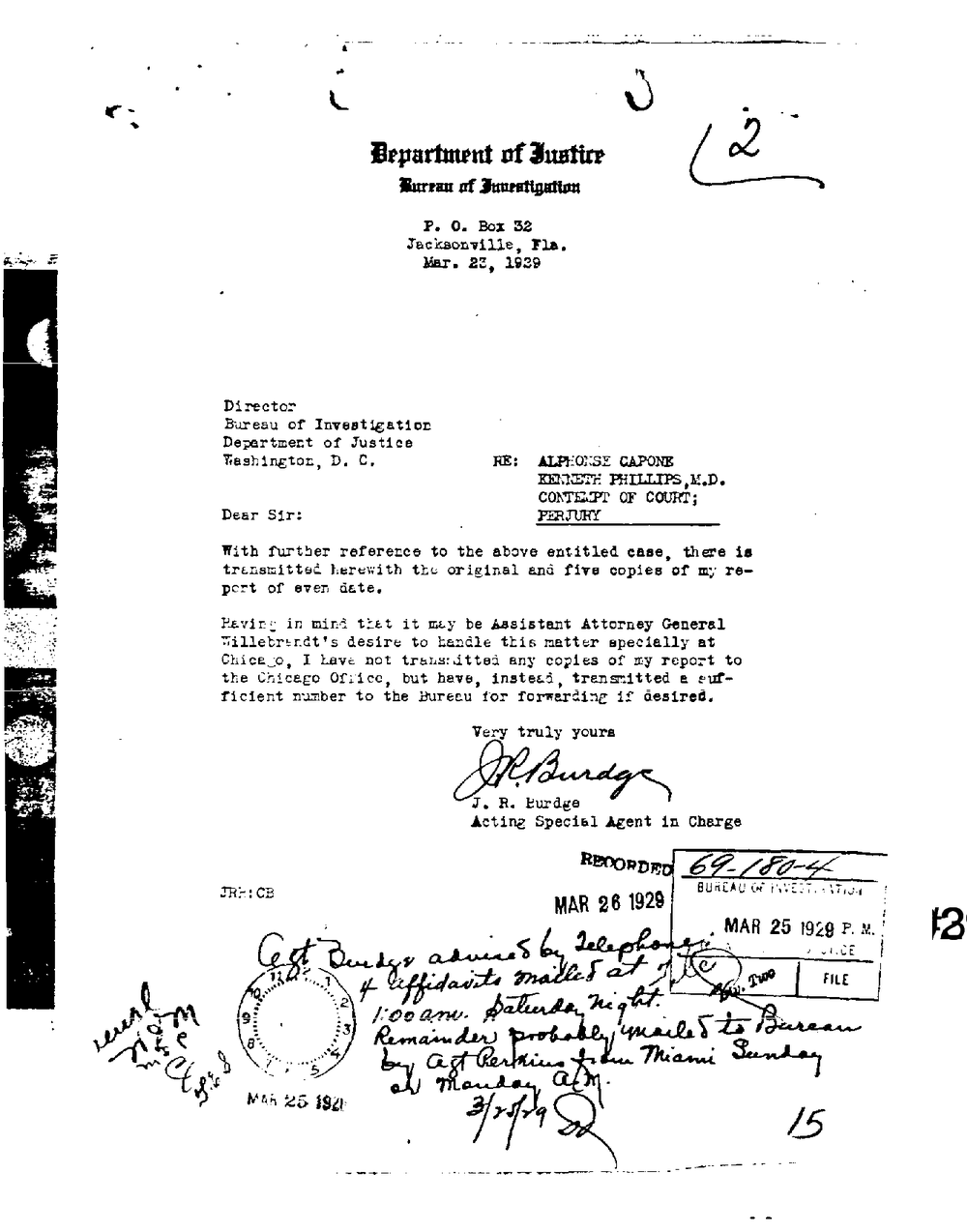 case-fileJacksonville report on Dr. Phillips's affidavit and Capone's whereabouts (23 March 1929)A Bureau of Investigation report from Jacksonville quotes the Miami doctor's affidavit that Capone had been confined to bed with broncho-pneumonia, and reports witnesses who placed him at the Hialeah race track in the same weeks.
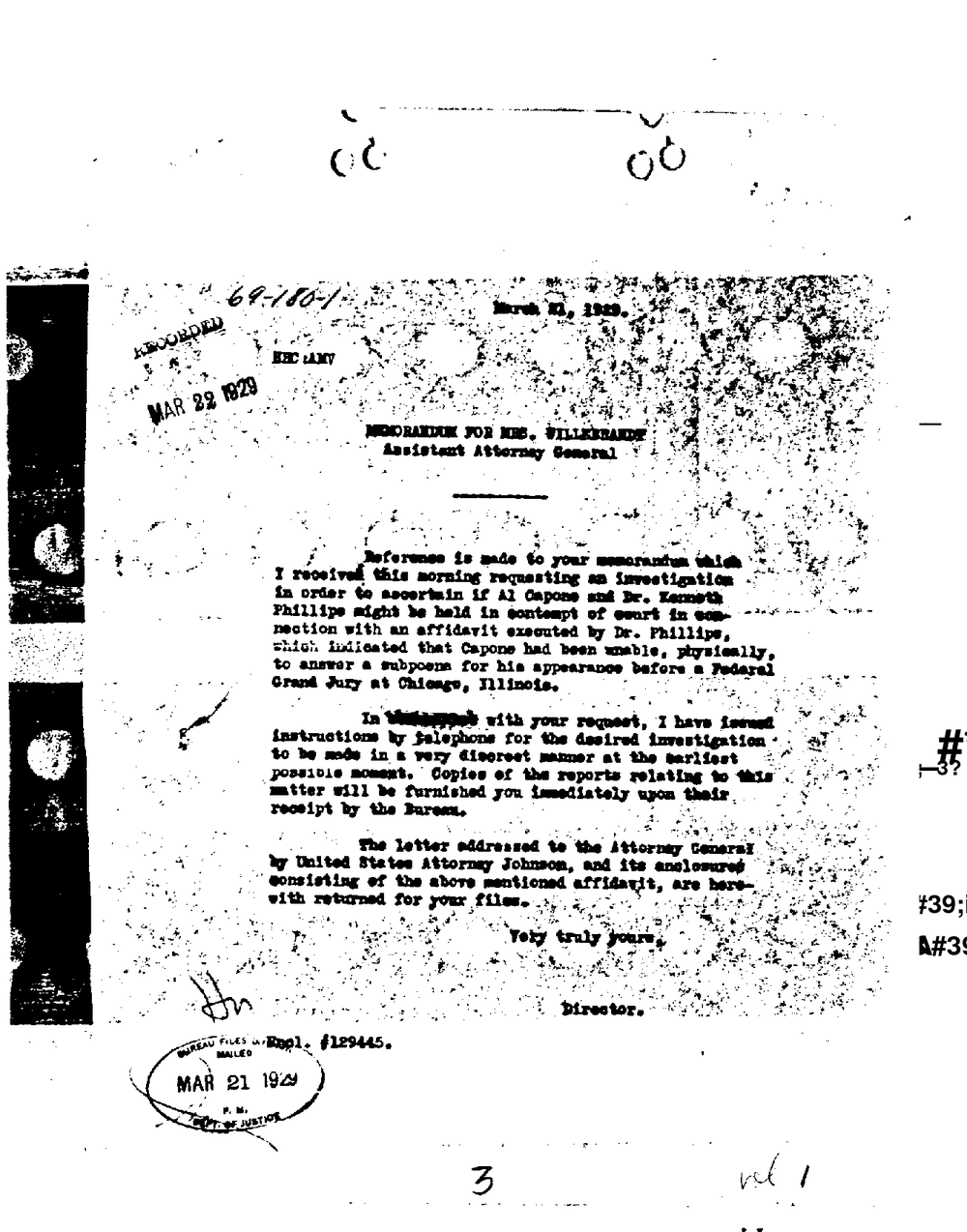 case-fileDirector's memorandum to Mrs. Willebrandt opening the Capone contempt inquiry (21 March 1929)The Bureau of Investigation's Director tells Assistant Attorney General Mabel Walker Willebrandt that he has ordered a discreet, quick inquiry into whether Al Capone and Dr. Kenneth Phillips could be held in contempt over a Miami doctor's affidavit.
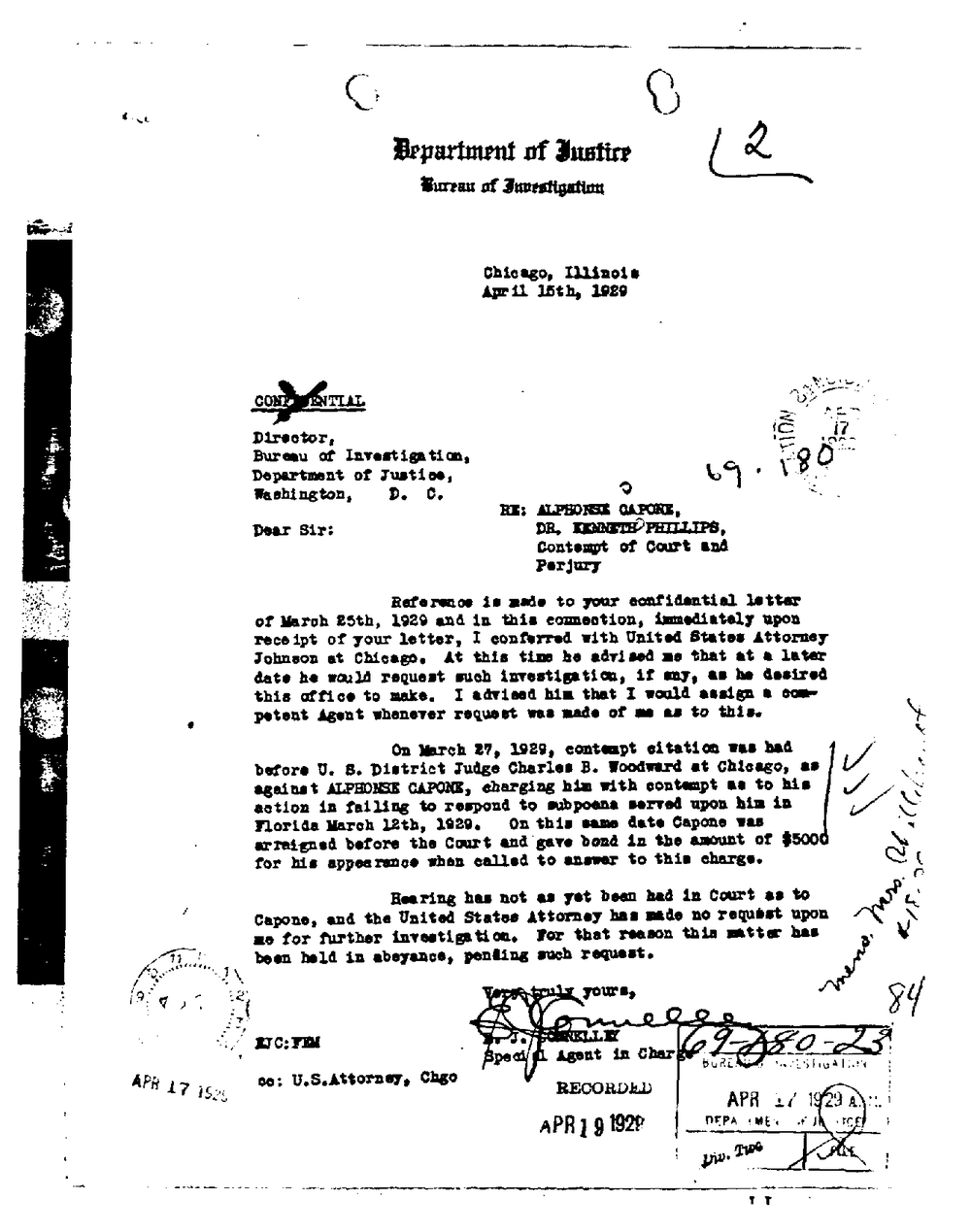 case-fileChicago letter reporting the 27 March 1929 contempt citation and $5,000 bondThe Bureau's Chicago Special Agent in Charge reports that on 27 March 1929 a contempt citation was had against Capone before a federal judge in Chicago, and that Capone was arraigned the same day and gave a $5,000 bond.
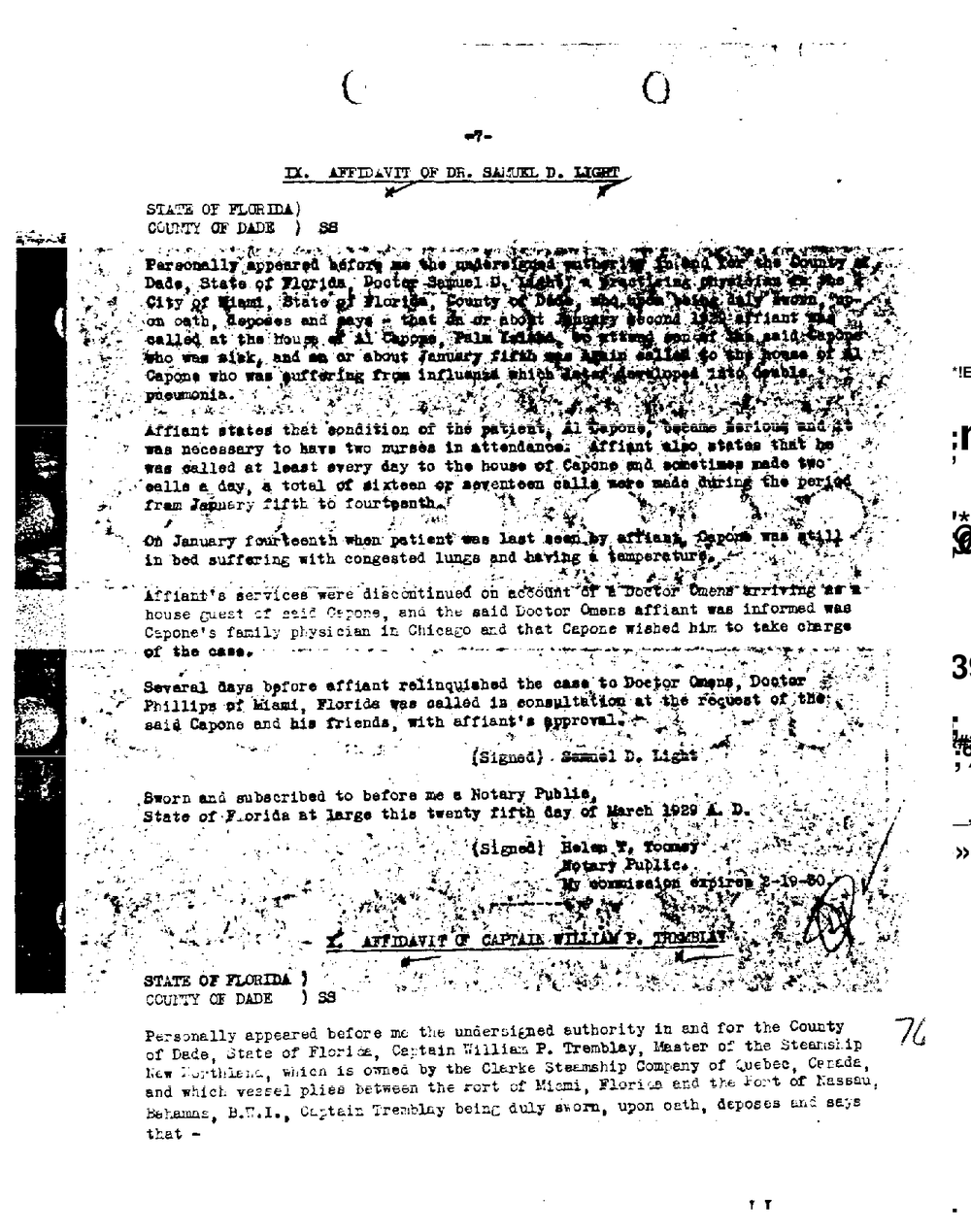 case-fileTyped copies of the Miami affidavits in the Capone contempt inquiry (March 1929)A numbered set of Dade County affidavits gathered for the 1929 contempt inquiry, including Dr. Samuel D. Light's statement that he treated Capone in early January 1929 and a statement that Capone was questioned for two hours on 14 February 1929.case-fileFBI Vault, Al Capone, Part 24: Chicago letter of March 1930 on Capone's release at PhiladelphiaA Bureau of Investigation Chicago letter to the Director, captioned for Capone's contempt case, reporting that he was released from jail at Philadelphia on March 17, 1930 after serving a sentence for carrying concealed weapons. Read from the OCR.
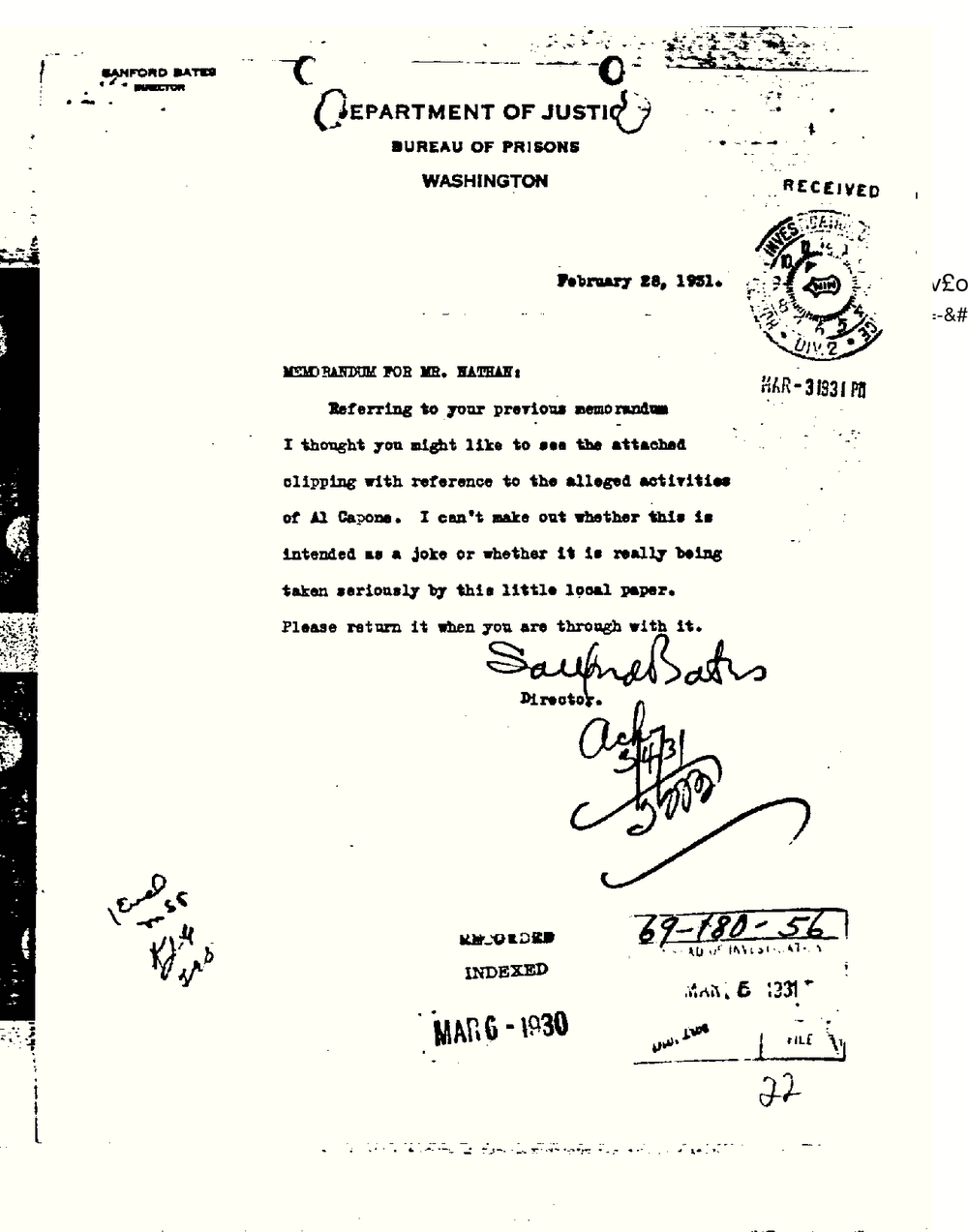 case-fileBureau of Prisons Director Bates sends a clipping on Capone to the Bureau (28 February 1931)A one-paragraph memorandum from Sanford Bates, Director of the Bureau of Prisons, passing on a newspaper clipping about Capone and asking whether a small local paper meant it as a joke.
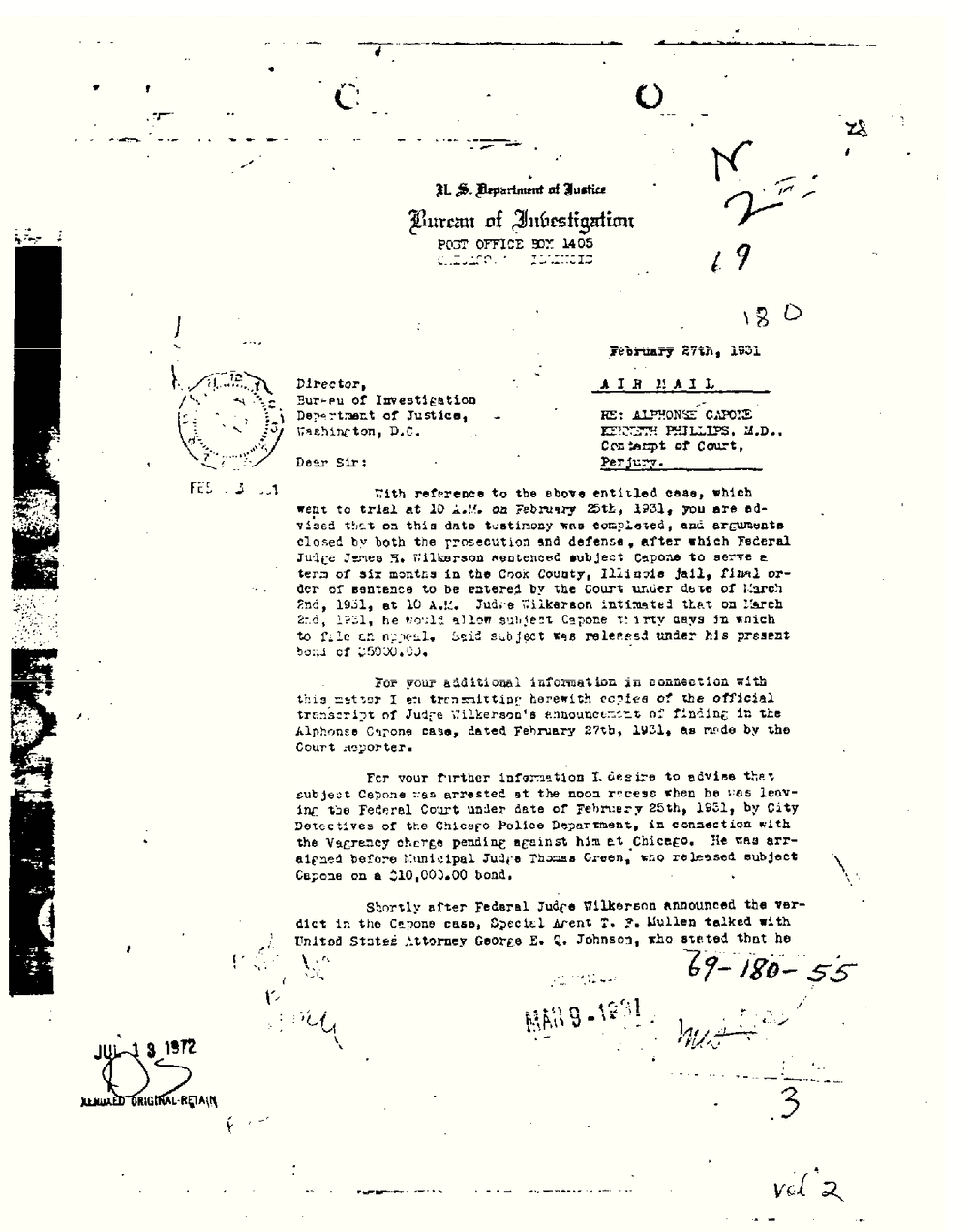 case-fileChicago letter: Capone sentenced to six months for contempt (27 February 1931)The Bureau's Chicago office reports to the Director that Judge James H. Wilkerson sentenced Capone to six months in the Cook County jail for contempt of court on 27 February 1931, and that Chicago police had arrested him on a vagrancy charge two days earlier.
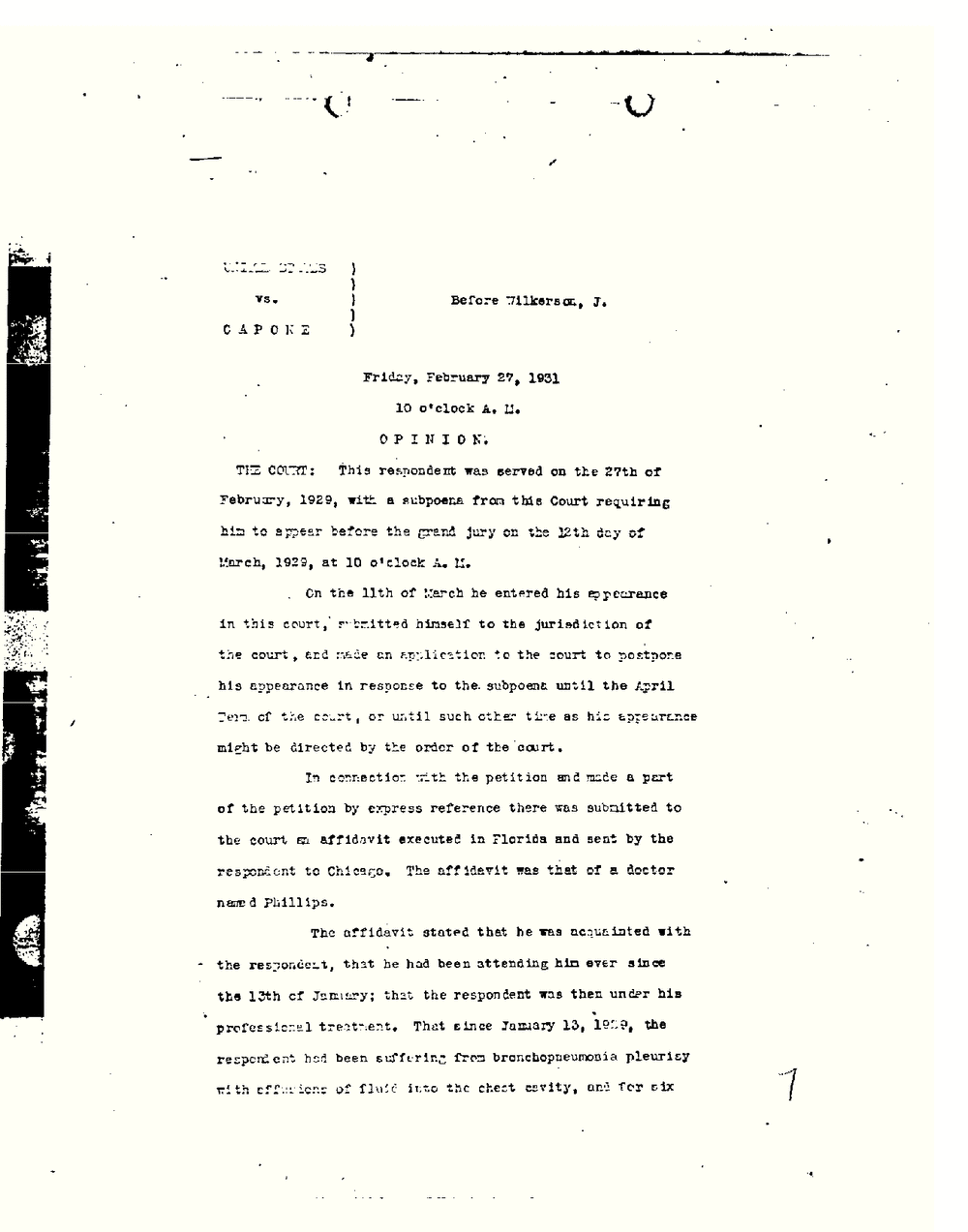 case-fileTranscript of Judge Wilkerson's finding in United States v. Capone, contempt (27 February 1931)The court reporter's transcript of Judge James H. Wilkerson's oral opinion finding Capone in contempt over the 1929 doctor's affidavit, with the sentence of six months in the Cook County jail and the colloquy on appeal and bond.
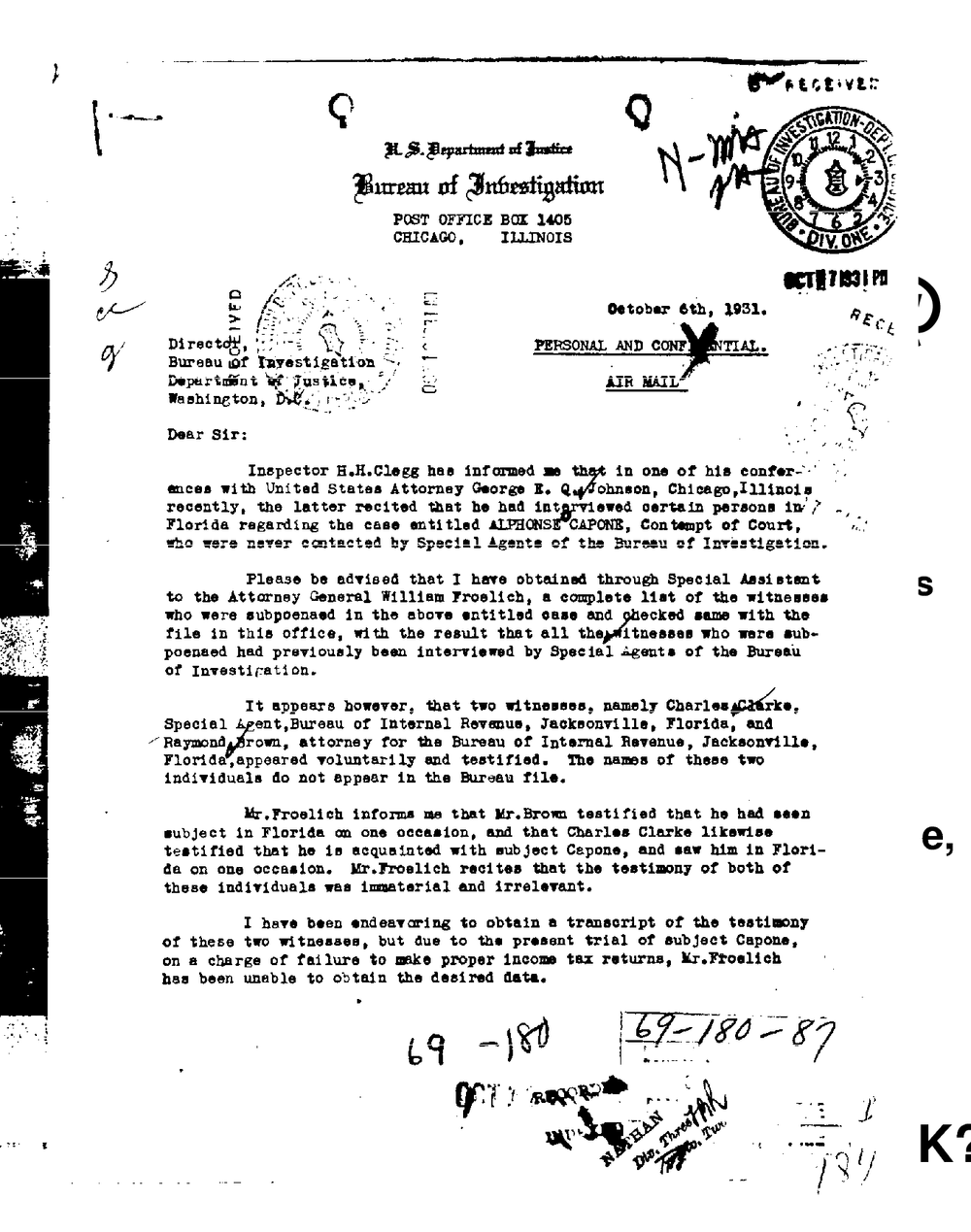 case-fileChicago letters on Florida witnesses in the contempt case, written during the tax trial (October 1931)Two letters from the Bureau's Chicago Special Agent in Charge, of 6 and 19 October 1931, checking whether the U.S. Attorney had used Florida witnesses the Bureau never interviewed; they were written while Capone was on trial for income-tax offenses.
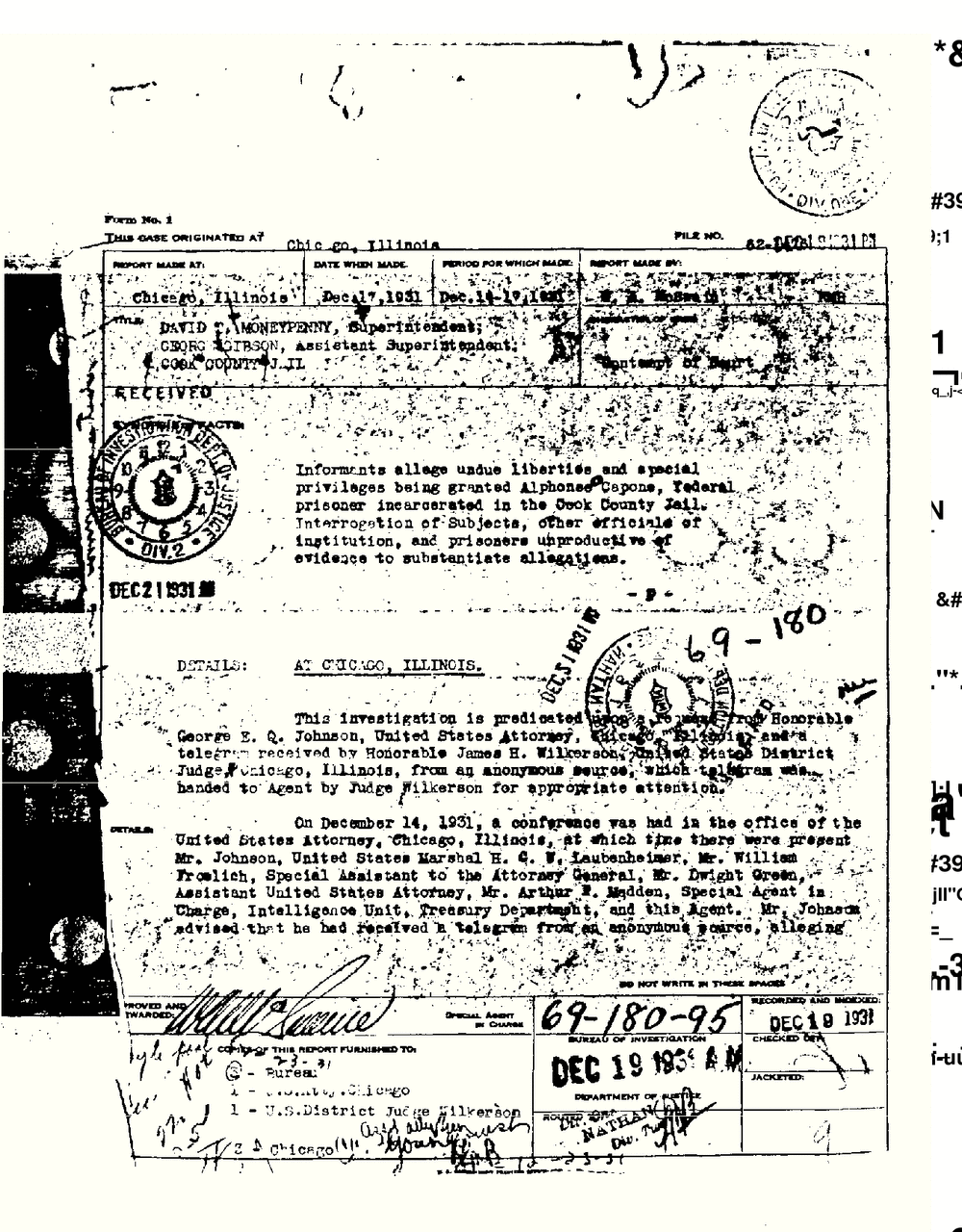 case-fileChicago report on alleged privileges for Capone in the Cook County Jail (17 December 1931)A Bureau of Investigation report on an anonymous charge that Capone was running his business from the Cook County Jail while held for the U.S. Marshal after his tax conviction; jail officials denied it and the U.S. Attorney judged further inquiry unwarranted.
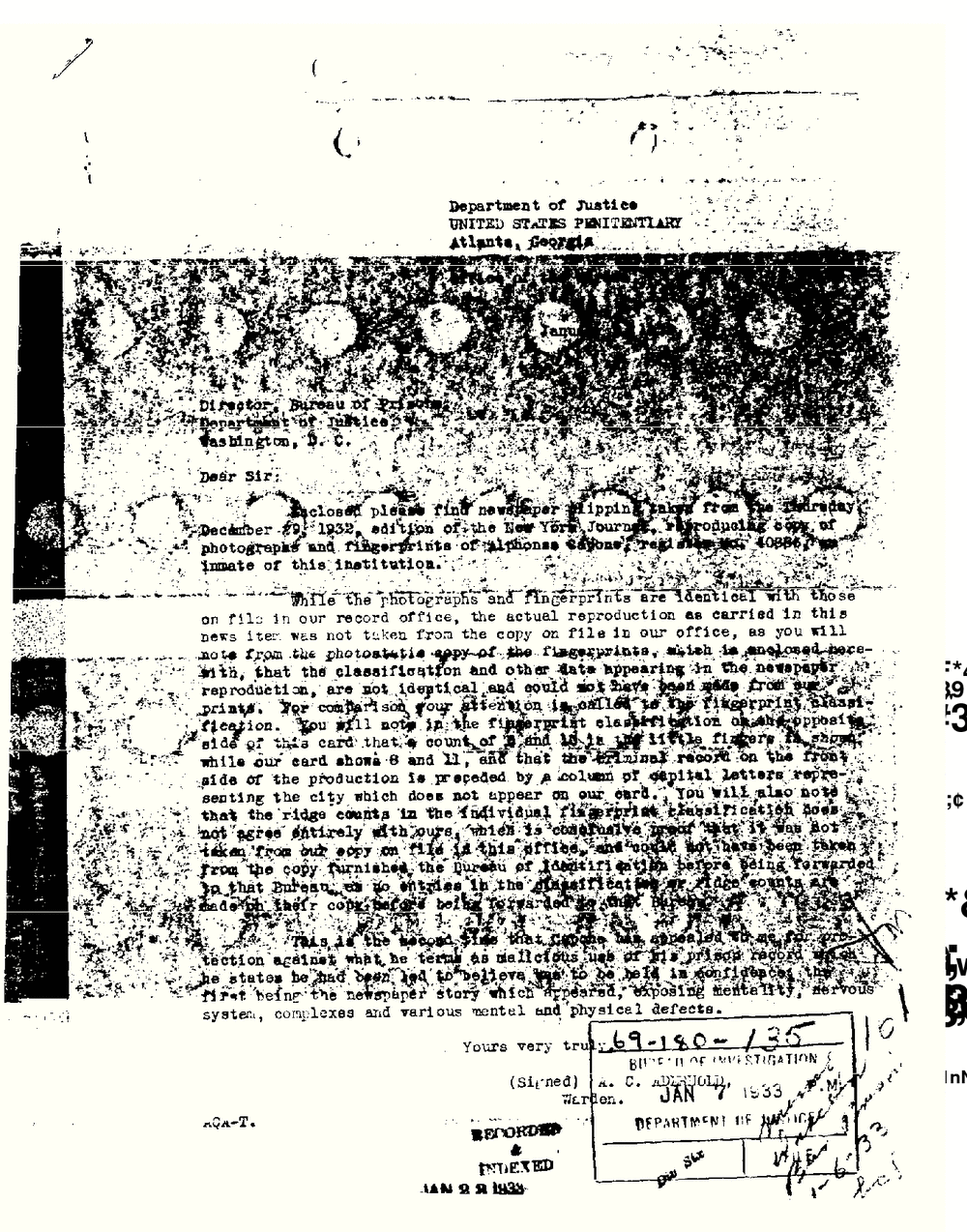 case-fileWarden Aderhold's letter on a newspaper reproduction of Capone's fingerprints (January 1933)The warden of the Atlanta penitentiary tells the Bureau of Prisons that a New York Journal reproduction of Capone's photographs and fingerprints did not come from the prison's copy, and that Capone had asked him for protection against the use of his prison record.
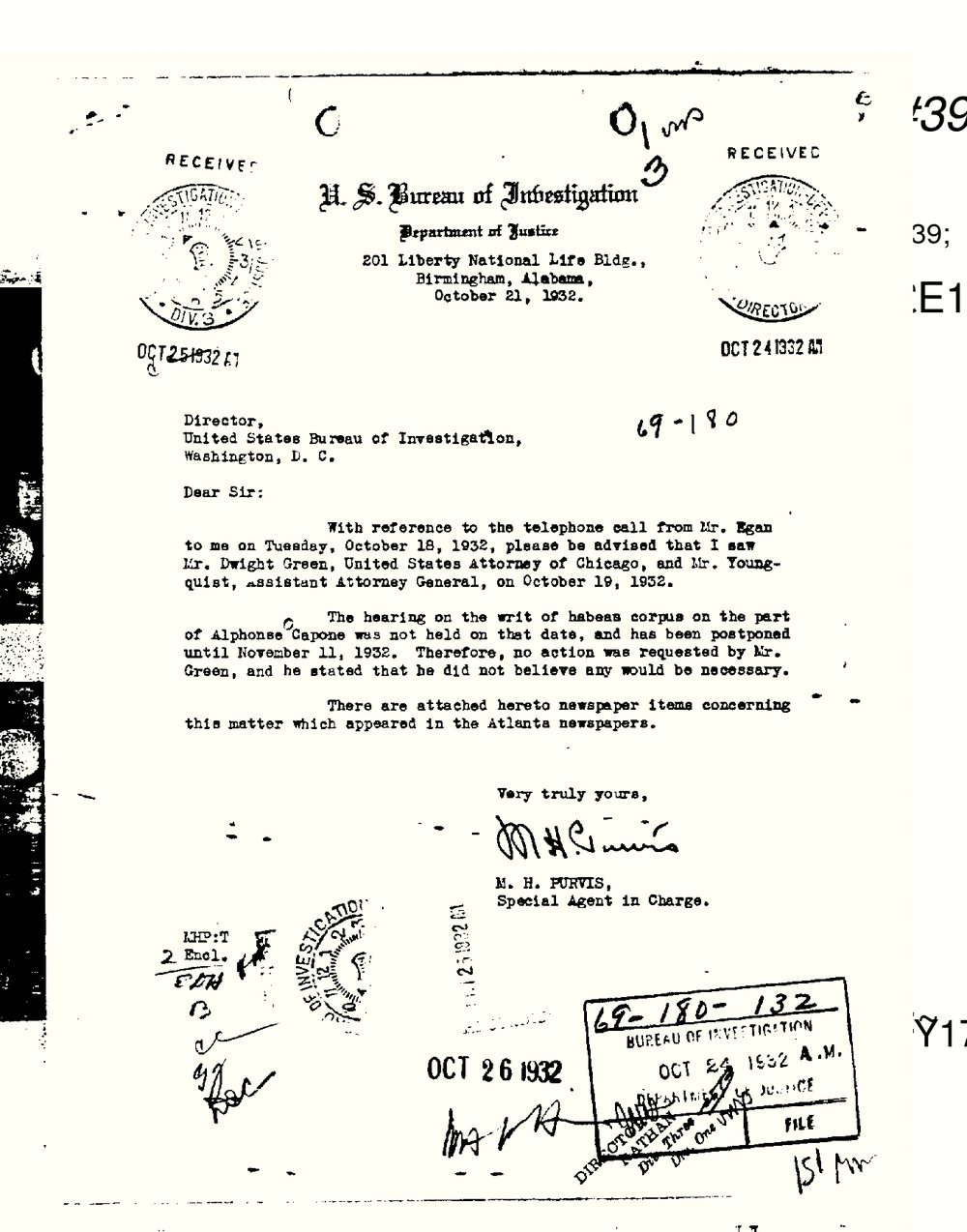 case-fileBirmingham letter on the postponed Capone habeas corpus hearing (21 October 1932)The Bureau's Birmingham Special Agent in Charge reports that the hearing on Capone's petition for a writ of habeas corpus at Atlanta was postponed to 11 November 1932 and that the U.S. Attorney at Chicago asked for no Bureau action.
 case-fileLetter to Hoover on a rumored Capone escape from Alcatraz, and Hoover's reply (September–October 1935)A Knoxville correspondent, prompted by a 'Dick Tracy' newspaper cartoon, wrote that some people in his town thought Capone might be staging a prison break from Alcatraz; Hoover thanked him for his interest.
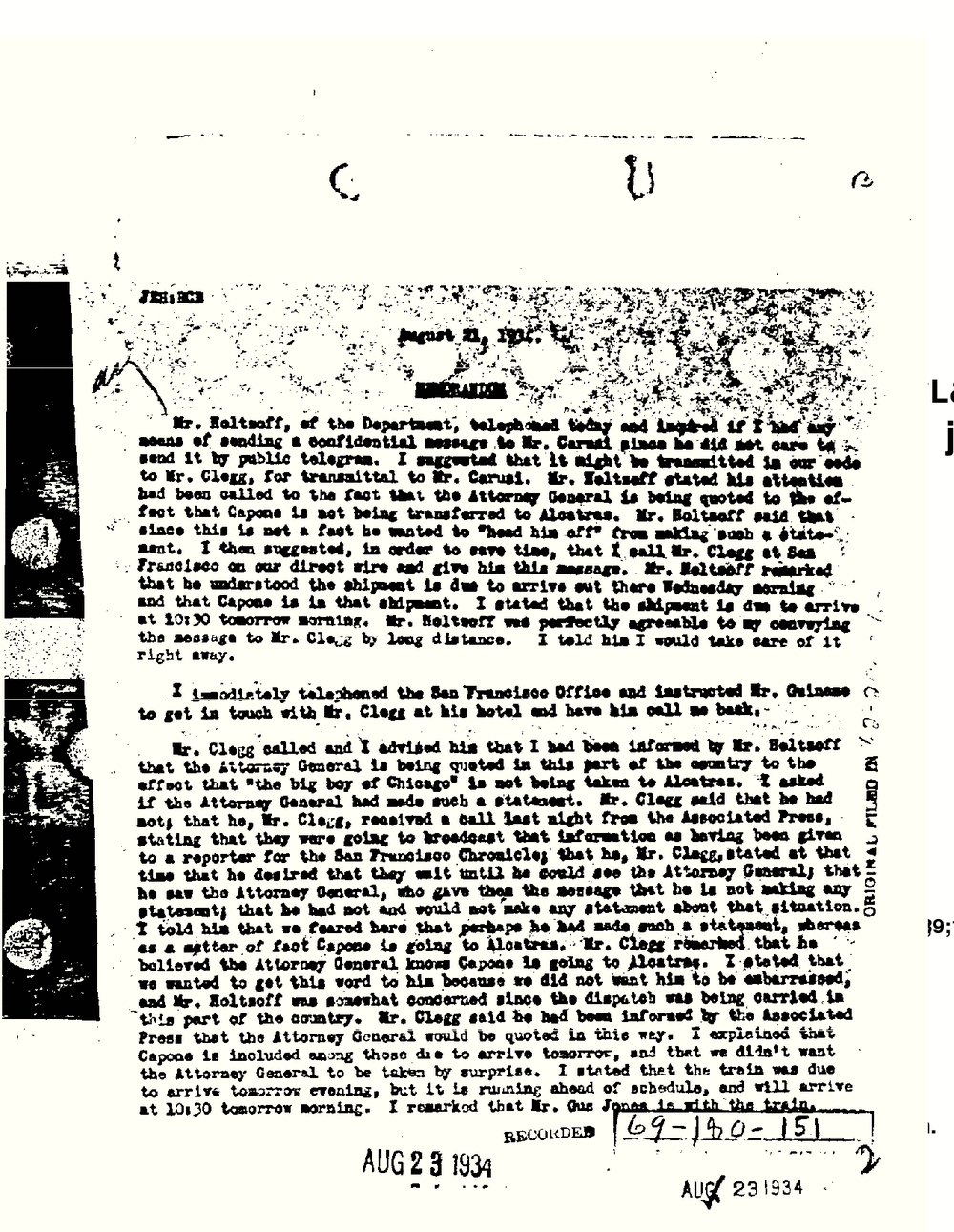 case-fileDirector's memorandum on Capone's transfer to Alcatraz (21 August 1934)Hoover records calls with a Justice Department official and Inspector Clegg in San Francisco after the Attorney General was quoted as saying Capone was not being sent to Alcatraz; the memorandum states that Capone was on the prison train due the next morning.
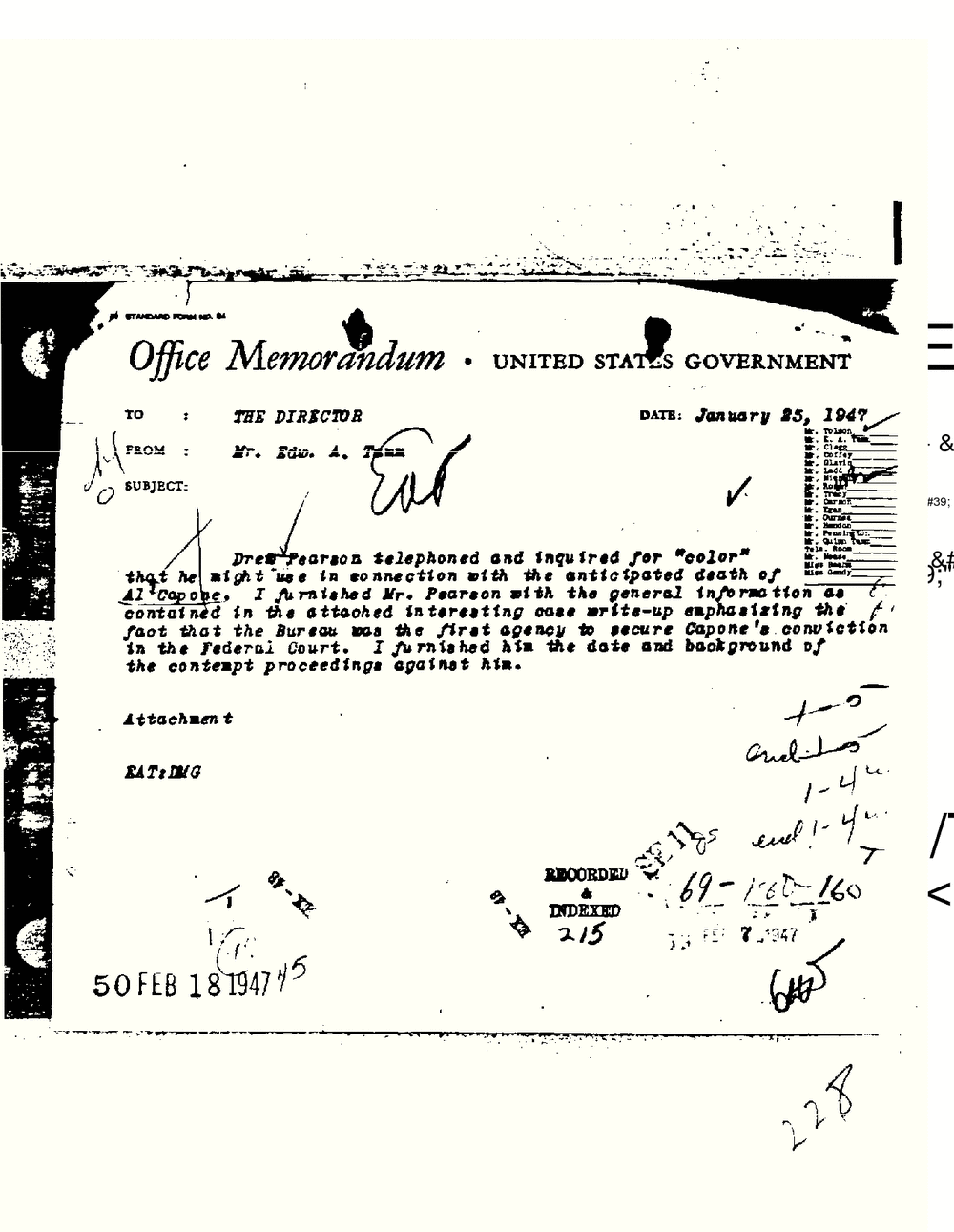 case-fileTamm memorandum on Drew Pearson's inquiry about Capone's anticipated death (25 January 1947)Edward A. Tamm tells Hoover that columnist Drew Pearson telephoned for 'color' about the anticipated death of Al Capone, and that he gave Pearson the Bureau's write-up of the 1929–31 contempt case.case-fileFBI Vault, Al Capone, Part 31: memorandum of January 6, 1933 on the Philadelphia arrest and commitment datesBureau memorandum of January 6, 1933, written while compiling an "Interesting Case" write-up on Capone, noting that the Identification Division recorded him received at the Philadelphia County Prison, Holmesburg, in May 1929 and that the Philadelphia office checked conflicting dates.
 case-fileFBI Vault: Carlo Gambino, Part 01Part 01 of 14 of the FBI's Carlo Gambino file: serials from 1958 and about 1970, many partly withheld. The OCR is poor, and nothing is taken from it here.
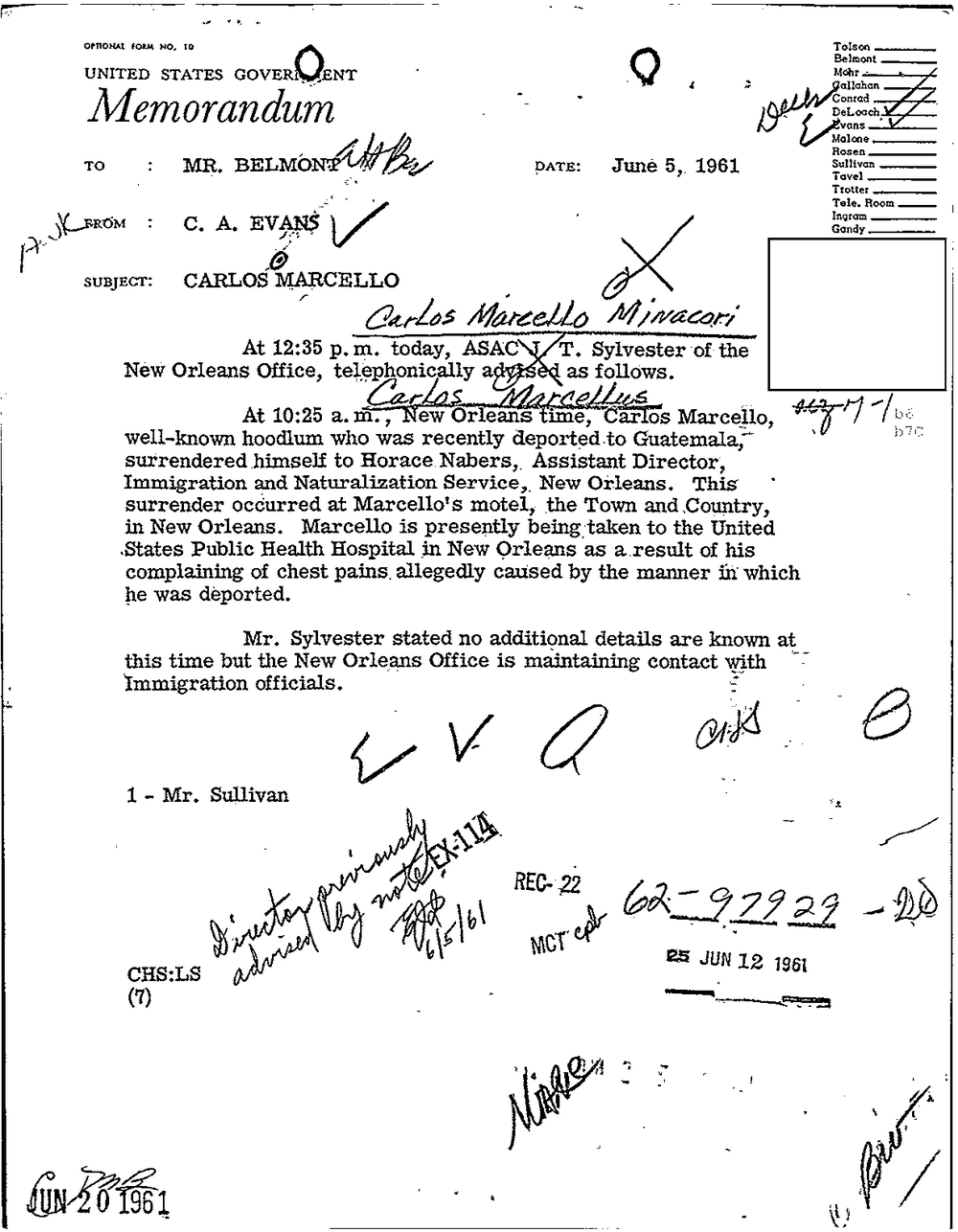 case-fileFBI Vault: Carlos Marcello, Part 01 of 03 (1955 to 1989)The first part of the FBI's released file on Carlos Marcello: a 1955 headquarters memo on Marcello v. Bonds, 1956-57 hoodlum-coverage memoranda from New Orleans, April-June 1961 memoranda on his removal to Guatemala and surrender in New Orleans, and 1989 reports from Rochester, Minnesota on his release.
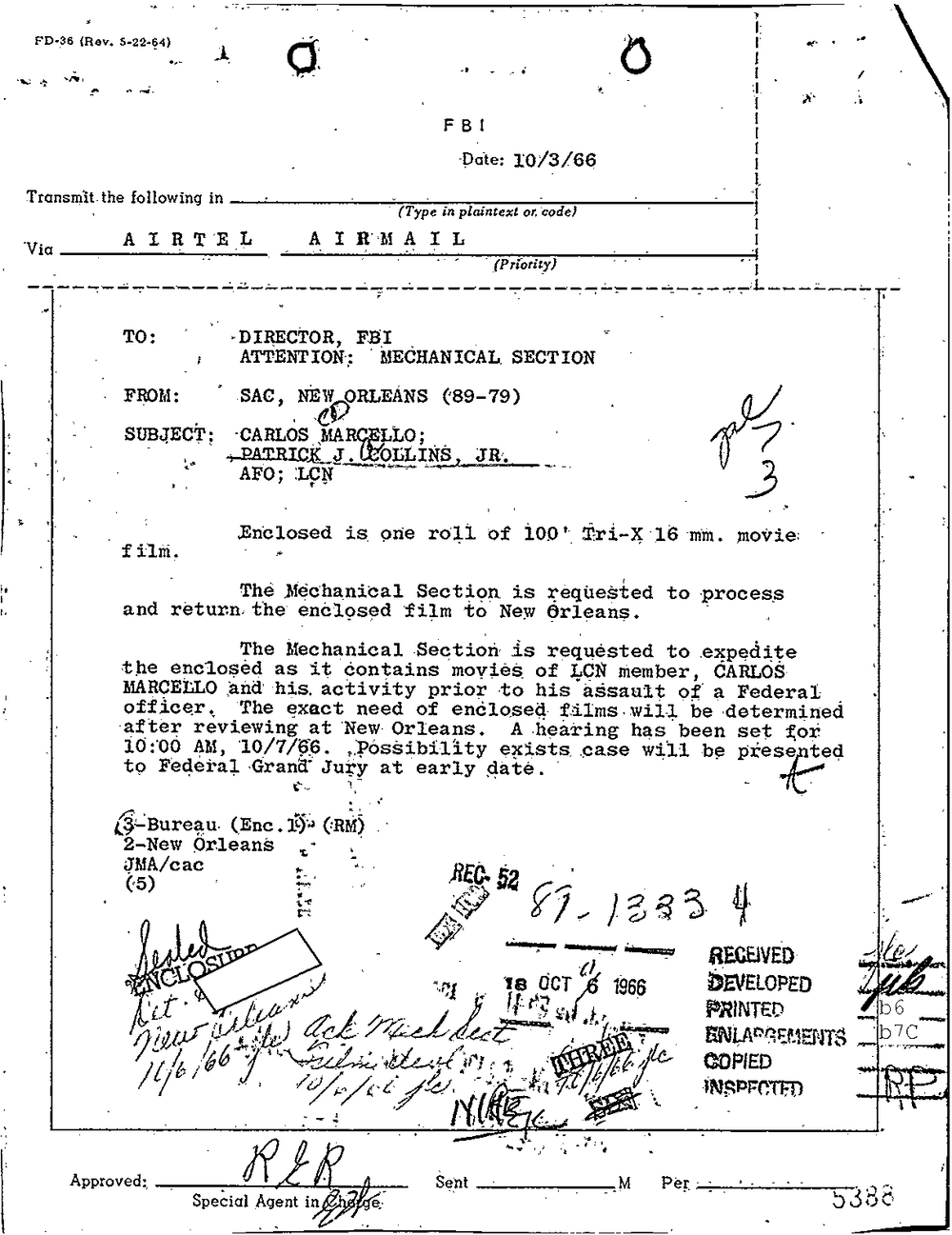 case-fileFBI Vault: Carlos Marcello, Part 02 of 03 (1966 to 1978)The second part of the FBI's released Marcello file (326 viewer pages): a New Orleans airtel of 3 October 1966 before a 7 October 1966 hearing, a report of 10 January 1967 captioned 'Assaulting a Federal Officer,' and later racketeering-investigation material including subpoenaed bank records.
 case-fileFBI Vault: Carmine Galante, Part 01 (file 92-3025)Top Hoodlum Program serials from 1956–1958, including a New York memorandum of January 24, 1958 giving Galante's birth name and a birth date of February 21, 1910.
 case-fileFBI Vault: Carmine John Persico, Jr., Part 01Serials from the 1970s to 1985, including FBI teletypes reporting what sources said about Persico, and a 1985 teletype listing the defendants in the February 25, 1985 Commission indictment with the titles the Bureau gave them.
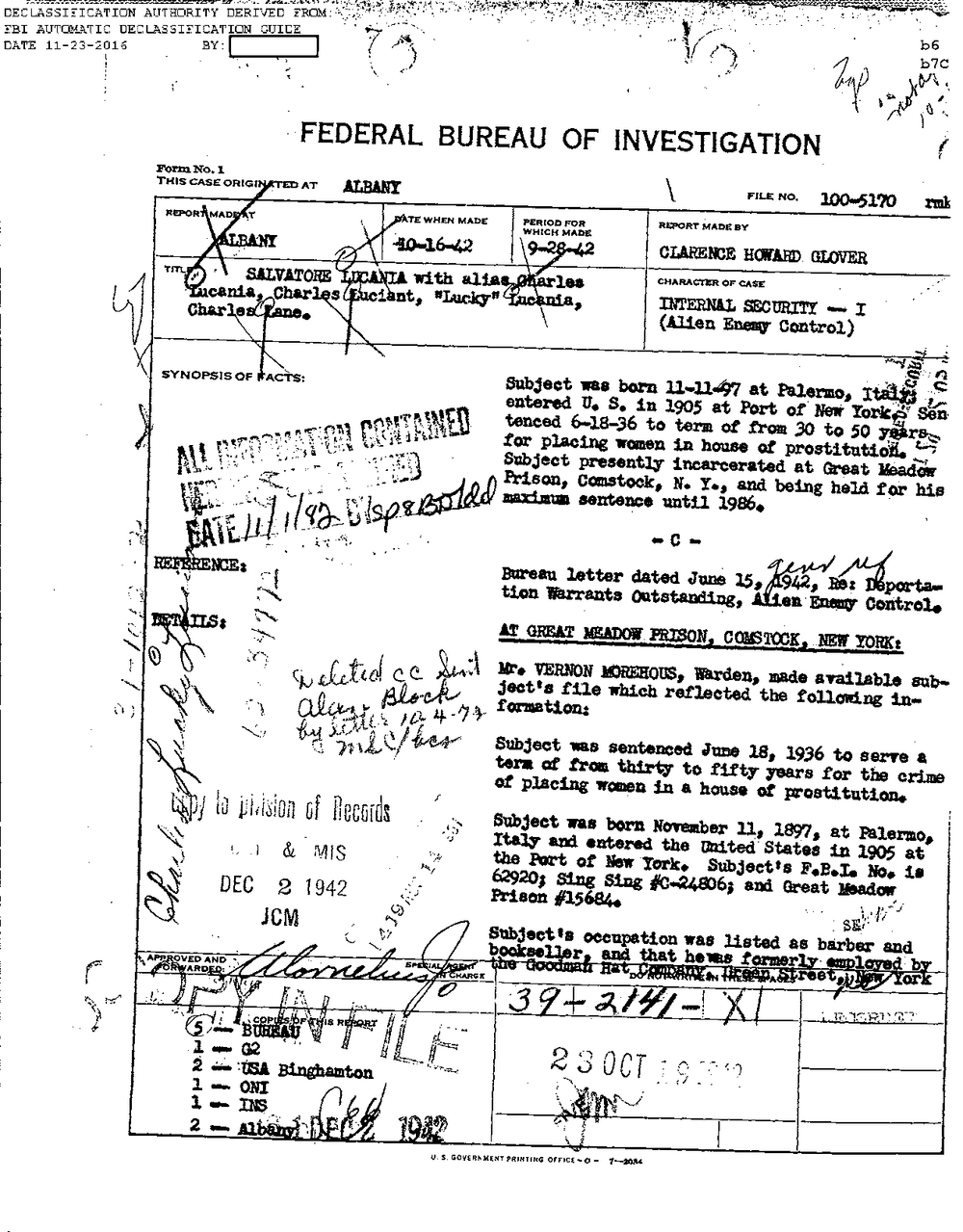 case-fileFBI Vault: Charles (Lucky) Luciano / Salvatore Lucania, Part 01Part 01 of the FBI's Luciano file: 1935 memoranda, a wartime report with his 1936 state sentence, and a 1946 group on his parole on condition of deportation, his move to Ellis Island, and his departure from Bush Terminal, Brooklyn.case-fileFBI Vault: Charles (Lucky) Luciano / Salvatore Lucania, Part 03 (Final)Final part of the FBI's Luciano file, 100 pages: a second copy of the August 1935 memorandum and the February and March 1946 correspondence on his deportation, opening with Fiorello La Guardia's letter of February 14, 1946 to the Attorney General and the Bureau's inquiry into the Ellis Island visit.
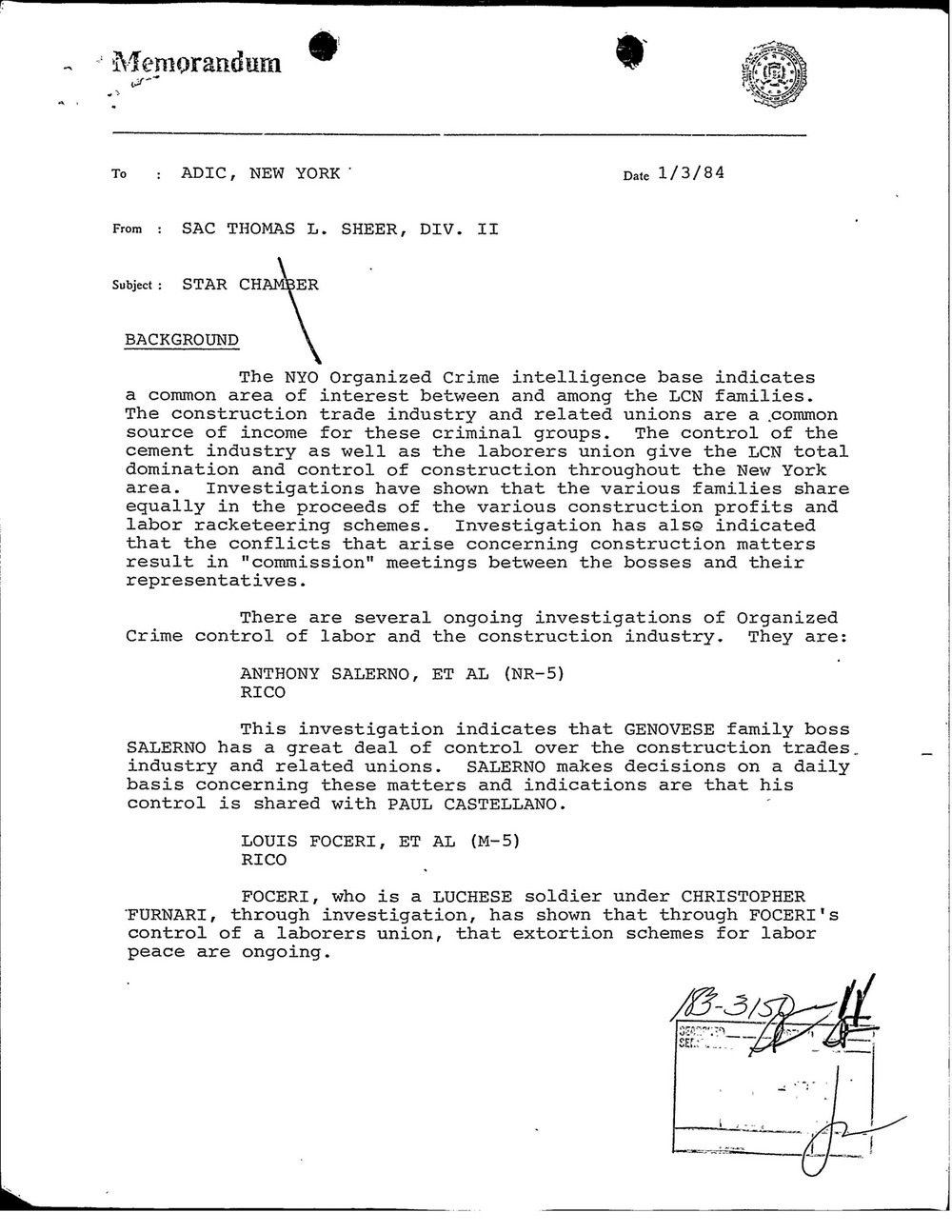 case-fileFBI Vault: Christopher Furnari (Final)Mainly 1984 New York Division serials on the STAR investigations of La Cosa Nostra control of construction, including a January 3, 1984 memorandum that names "GENOVESE family boss SALERNO" and describes an investigation of "the 'commission' as a criminal enterprise."
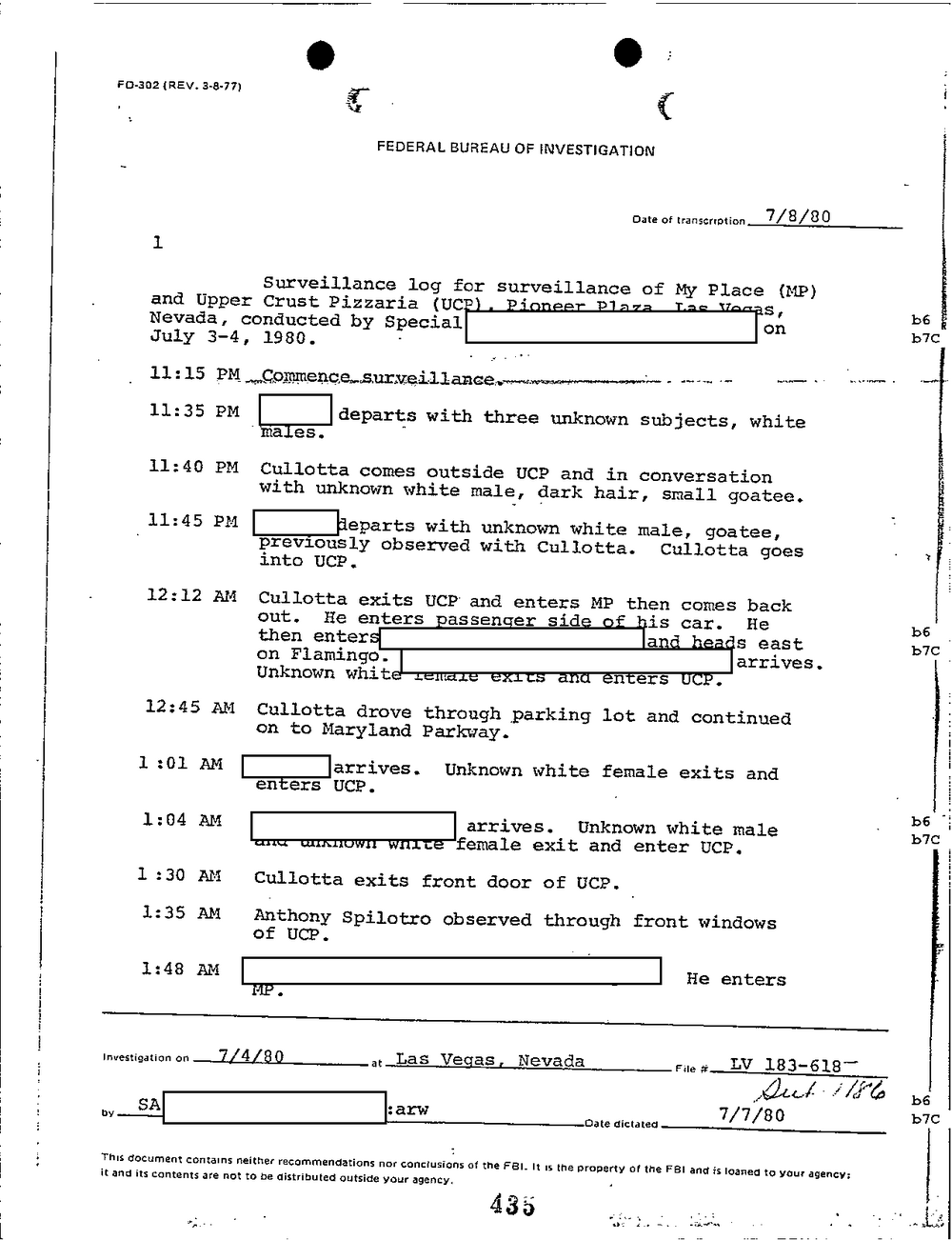 case-fileFBI Las Vegas surveillance logs on the Upper Crust Pizzaria and My Place (June to July 1980)FBI Las Vegas FD-302 surveillance logs of June and July 1980 on the My Place lounge and the Upper Crust Pizzaria at Pioneer Plaza, filed in a case captioned as a RICO murder matter, with entries recording Frank Cullotta and Anthony Spilotro.
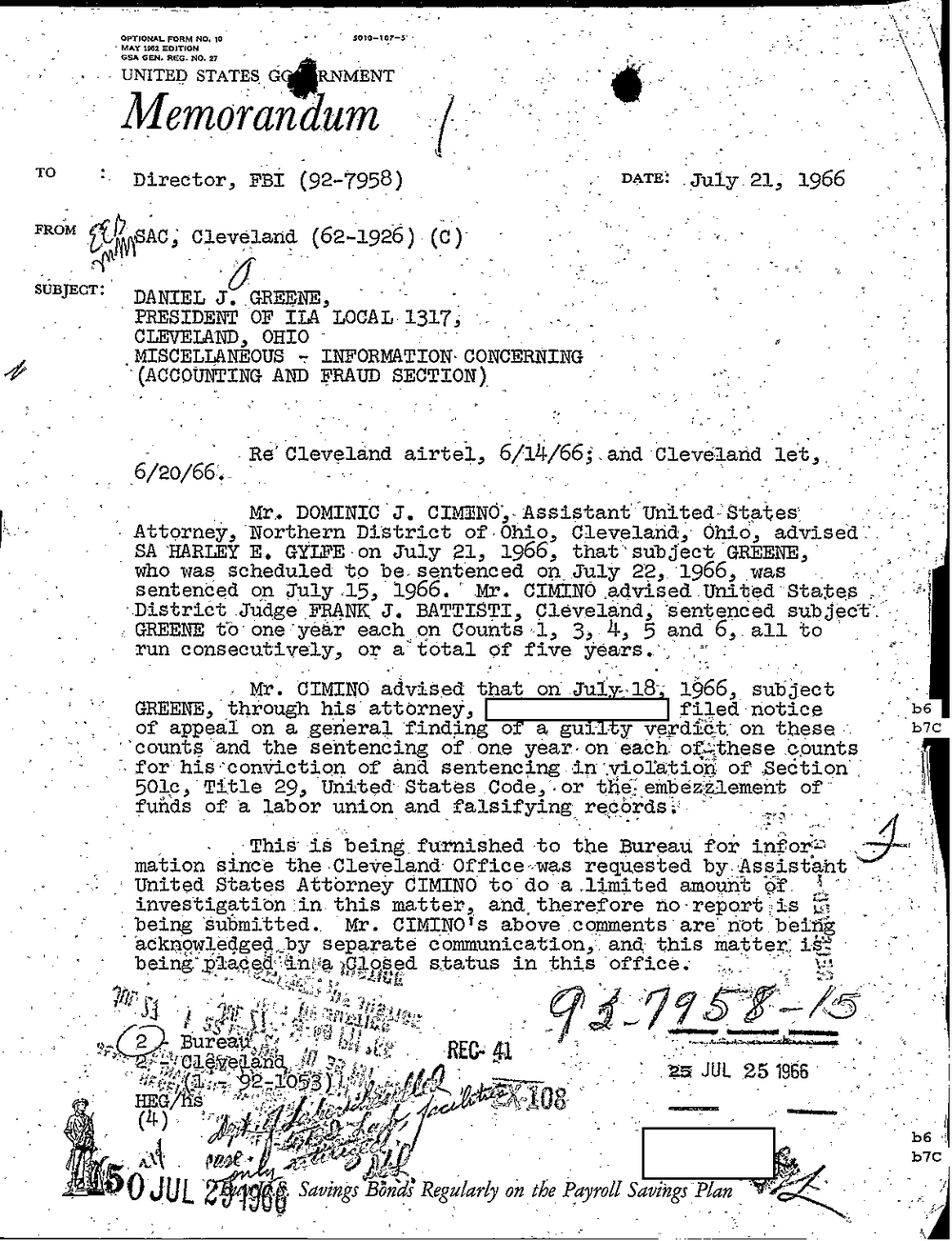 case-fileFBI Vault file on Daniel J. Greene, president of ILA Local 1317, Cleveland (1964-1966)The FBI Vault's 74-page file on Daniel J. Greene, president of Local 1317 of the International Longshoremen's Association in Cleveland: a 1964 union-funds inquiry, his indictment on 13 November 1964, and a July 1966 memorandum on his sentence.
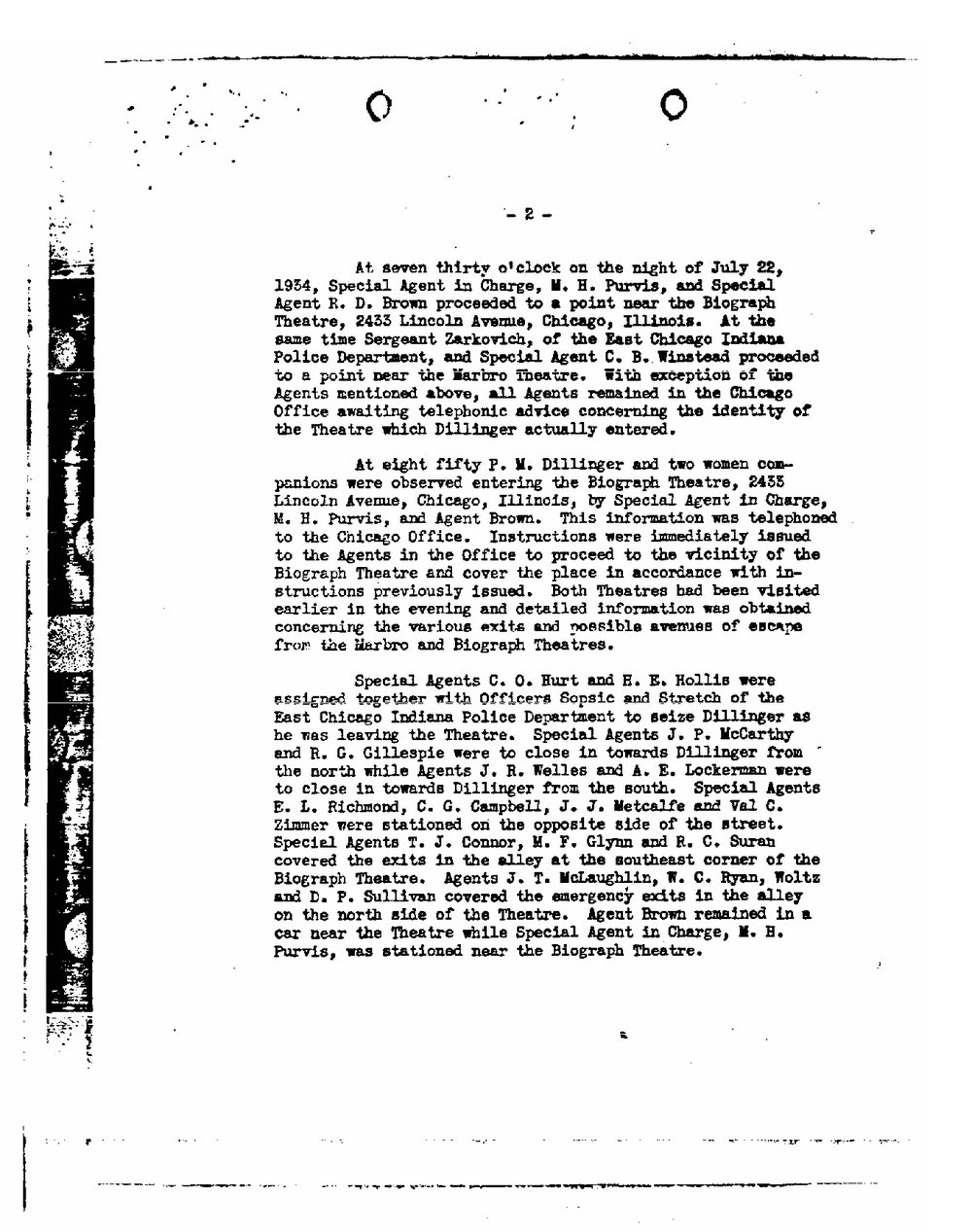 case-fileBureau account of the agents' positions at the Biograph Theatre, 22 July 1934 (Vault, Dillinger Part 01, page 29)Page 2 of a typed Bureau account in the FBI Vault's Dillinger file: Purvis and Brown near "the Biograph Theatre, 2433 Lincoln Avenue, Chicago," Dillinger seen entering at 8:50 p.m., and where each agent was posted. A copy is stored here.case-fileJohn Dillinger, Part 02 (FBI Vault): Bureau memoranda of 1934 and the memorandum of 10 August 1935 on the shootingSecond part of the FBI Vault's Dillinger file, 44 viewer pages of Bureau memoranda from July and August 1934, ending with a memorandum dated 10 August 1935 on the facts of the 22 July 1934 shooting.
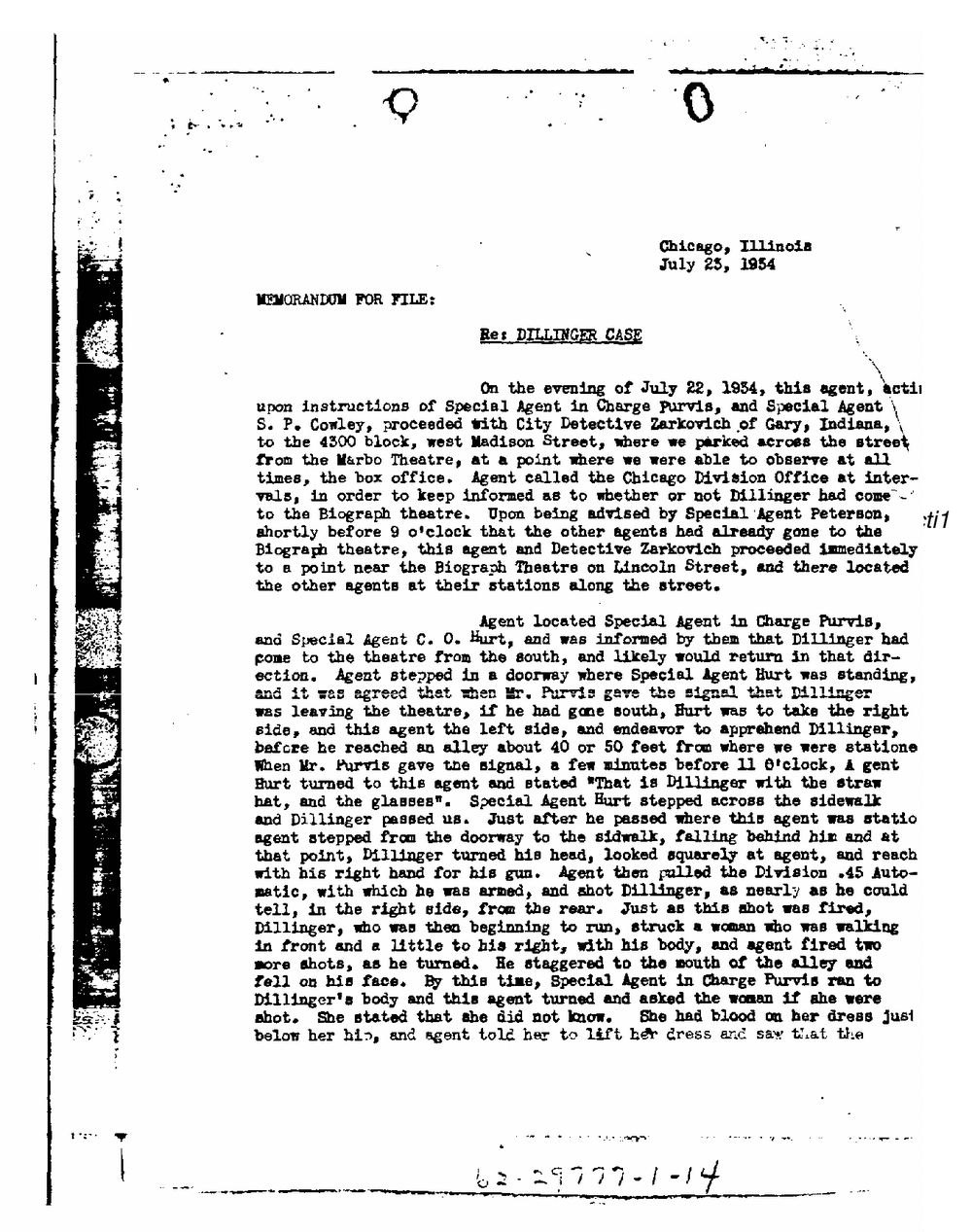 case-fileMemorandum for file by Special Agent C. B. Winstead, 25 July 1934: the weapons at the Biograph TheatreTwo-page memorandum by Special Agent C. B. Winstead on the events outside the Biograph Theatre, Chicago, on 22 July 1934. It records the weapons involved: the "Division .45 Automatic" Winstead carried and a ".380 calibre Colt Automatic" that Winstead says Purvis told him he had taken.
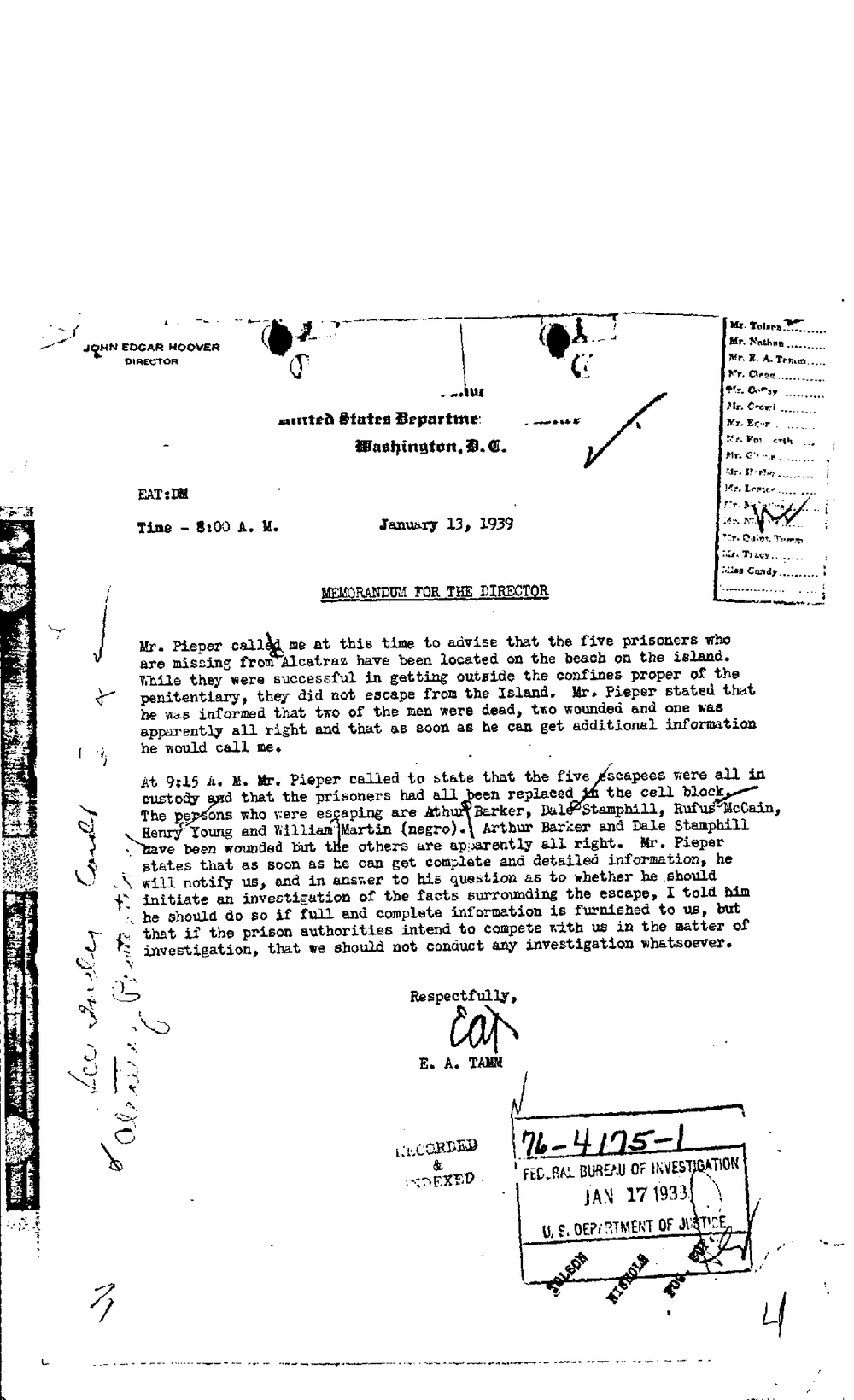 case-fileMemorandum for the Director (Tamm), 13 January 1939: five prisoners missing from Alcatraz are located on the island (FBI Vault)An FBI memorandum of 8:00 a.m. on 13 January 1939 reporting a call from Mr. Pieper that five prisoners missing from Alcatraz were found on the beach; a 9:15 addendum names Arthur Barker among them and says he and one other were wounded.
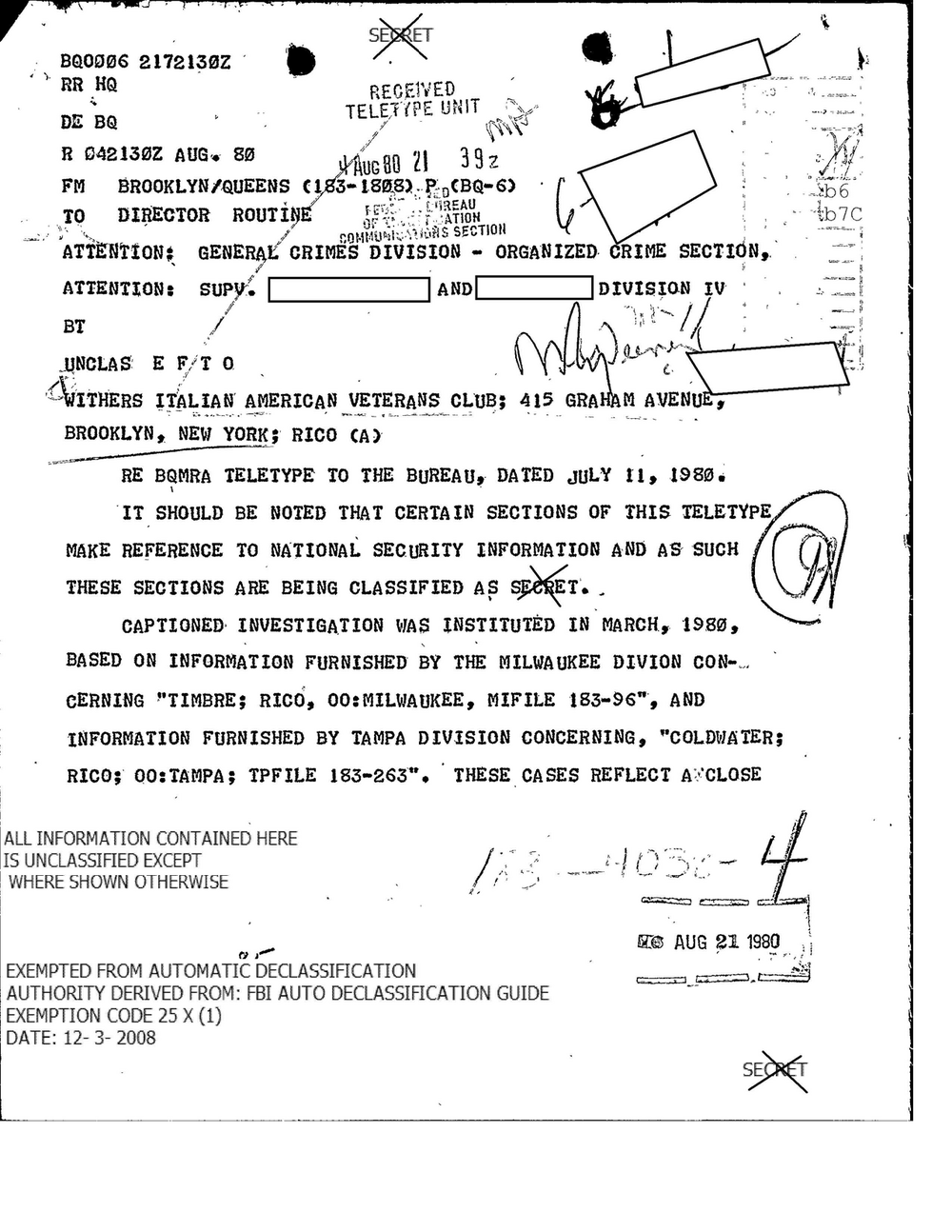 case-fileFBI Vault, Operation Donnie Brasco, Part 01 (1980-1982)Part 01 of the FBI Vault's "Operation Donnie Brasco" file: heavily redacted teletypes among the Brooklyn, Tampa, Milwaukee and headquarters offices. A teletype says the investigation "was instituted in March, 1980, based on information furnished by the Milwaukee Division" and the Tampa Division.
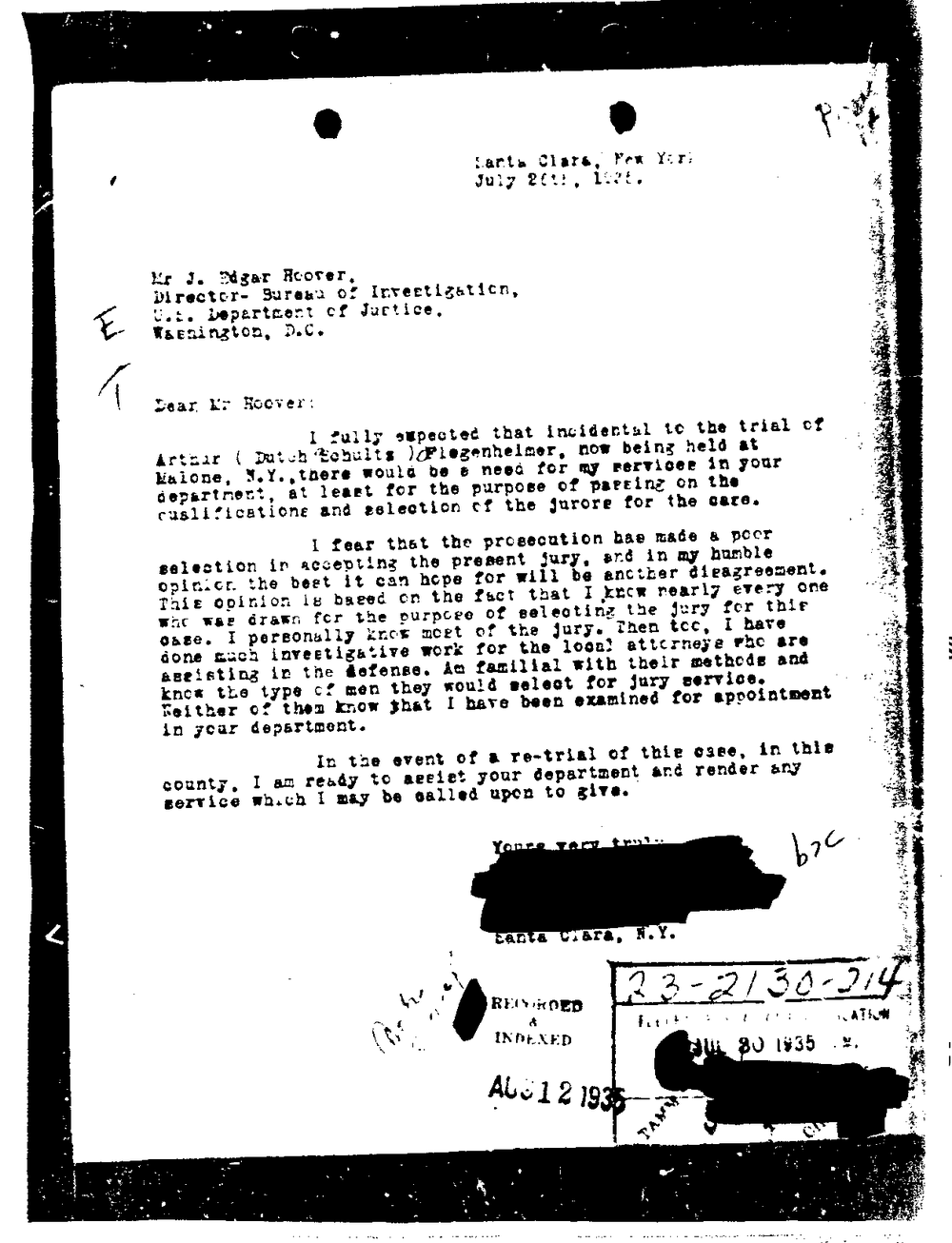 case-fileFBI Vault: Arthur Flegenheimer (Dutch Schultz), Part 01First of five parts of the FBI's file 23-2130 on Arthur Flegenheimer. The scans are poor; the clearest page is a July 1935 letter to J. Edgar Hoover about the jury at Flegenheimer's trial "now being held at Malone, N.Y." That page is stored here.
 case-fileCharles "Pretty Boy" Floyd Summary (FBI Vault, Part 01, Final)A 17-page FBI summary file on Charles Arthur Floyd: a cover, a letter to the Director setting out his criminal record from a 1925 highway-robbery arrest, and a later "case write-up" on the Kansas City Massacre. A copy of the cover is stored here.
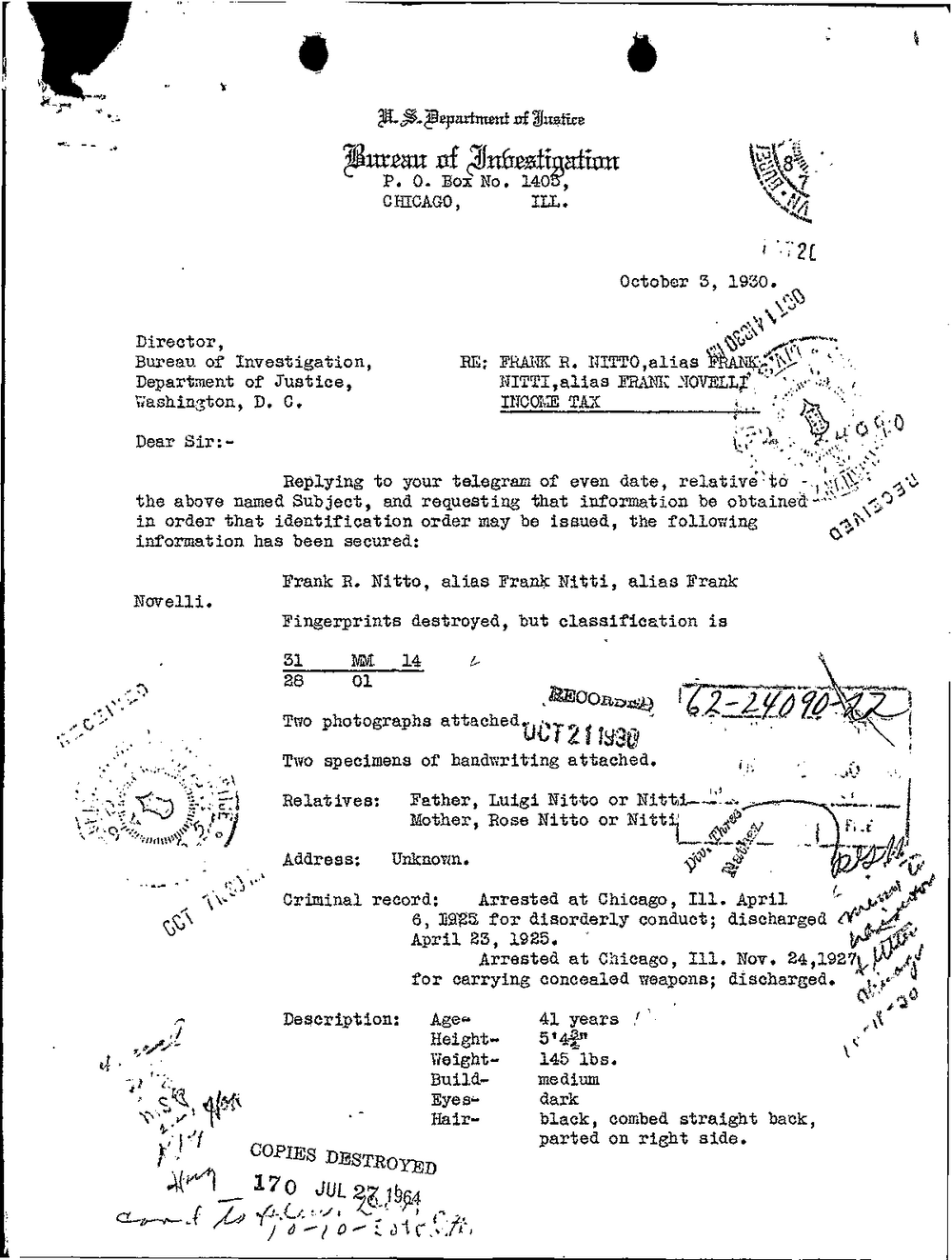 case-fileFBI Vault file on Frank NittiThe FBI Vault's release of the Bureau file on Frank Nitti, one part of 121 scanned pages, including a Bureau of Investigation Chicago letter that lists him as Frank R. Nitto and reports his March 14, 1930 tax indictment.
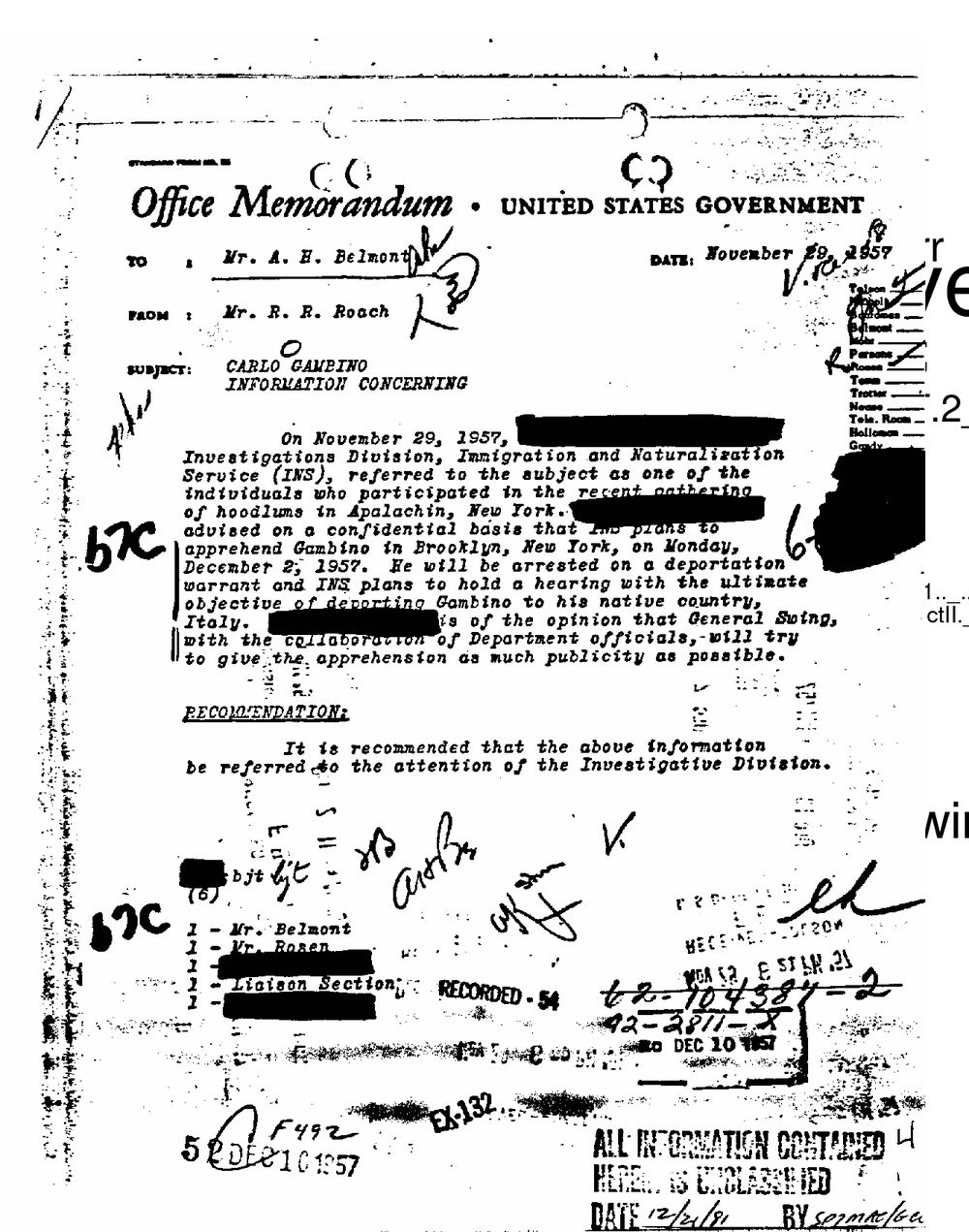 case-fileFBI memorandum of 29 November 1957: INS refers to Carlo Gambino as a participant in the Apalachin gatheringOne-page FBI memorandum reporting that the Immigration and Naturalization Service referred to Carlo Gambino as one of those who took part in the recent Apalachin gathering and planned to arrest him on a deportation warrant on 2 December 1957.
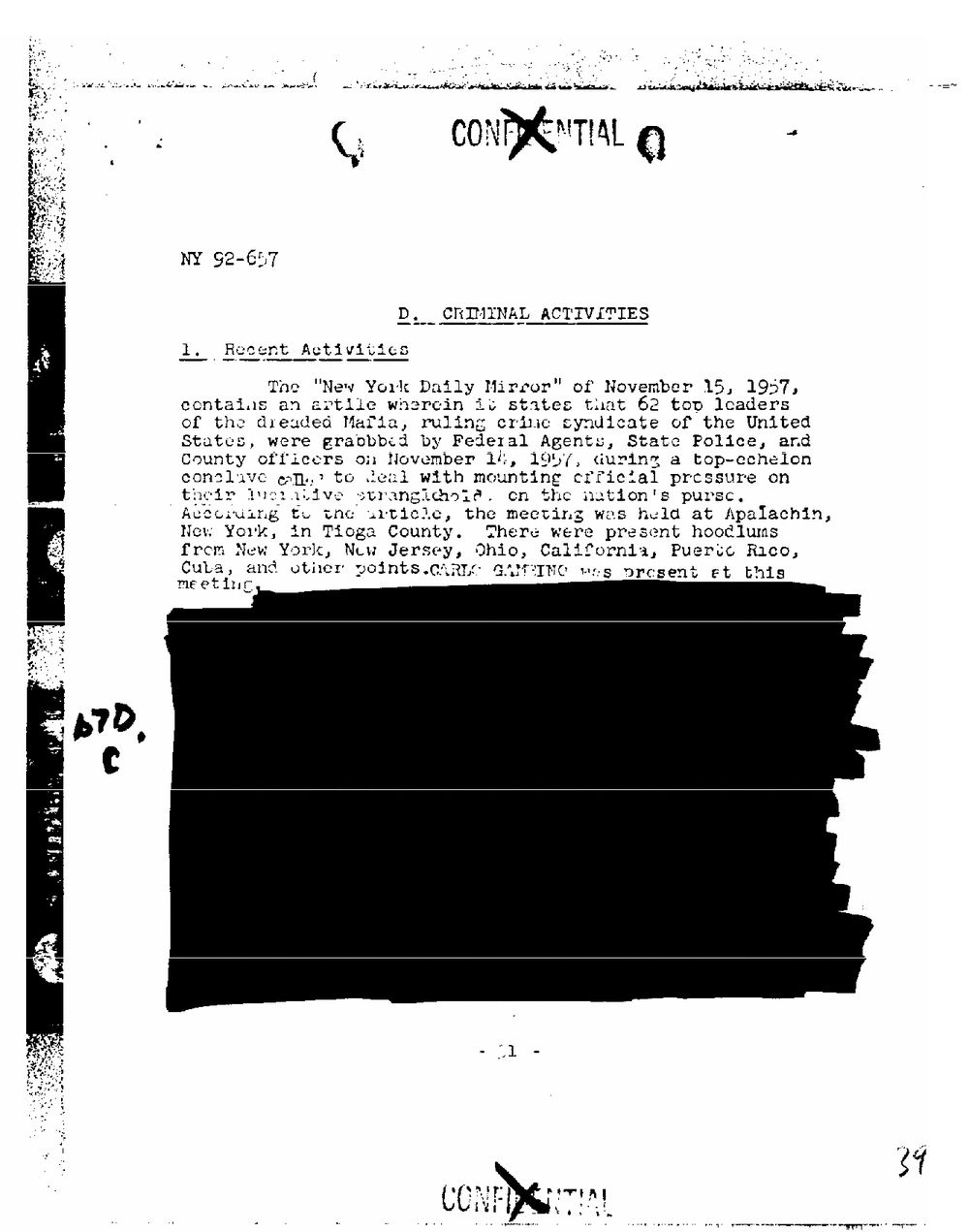 case-fileFBI New York report page (NY 92-657) quoting the New York Daily Mirror of 15 November 1957 on ApalachinPage of an FBI New York field-office report on Carlo Gambino. It relays a 15 November 1957 New York Daily Mirror article saying 62 men were "grabbed" at Apalachin on 14 November and that Gambino was present. The report's date is not on the page.
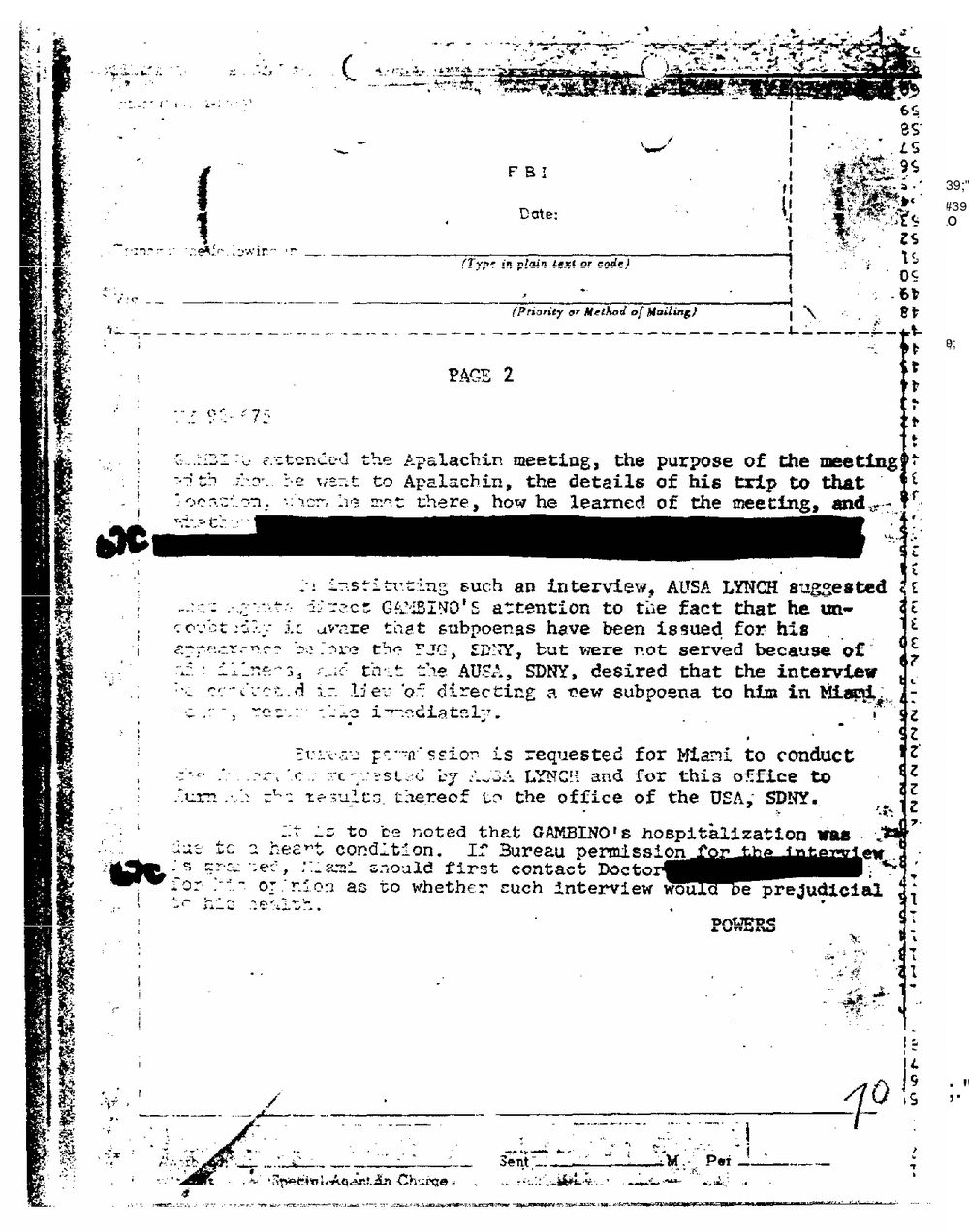 case-fileFBI teletype page: request to interview Carlo Gambino in Miami about the Apalachin meetingSecond page of an FBI message from the New York office asking Bureau permission for the Miami office to interview Gambino, at an Assistant U.S. Attorney's request, about his attendance at the Apalachin meeting. Undated on this page.
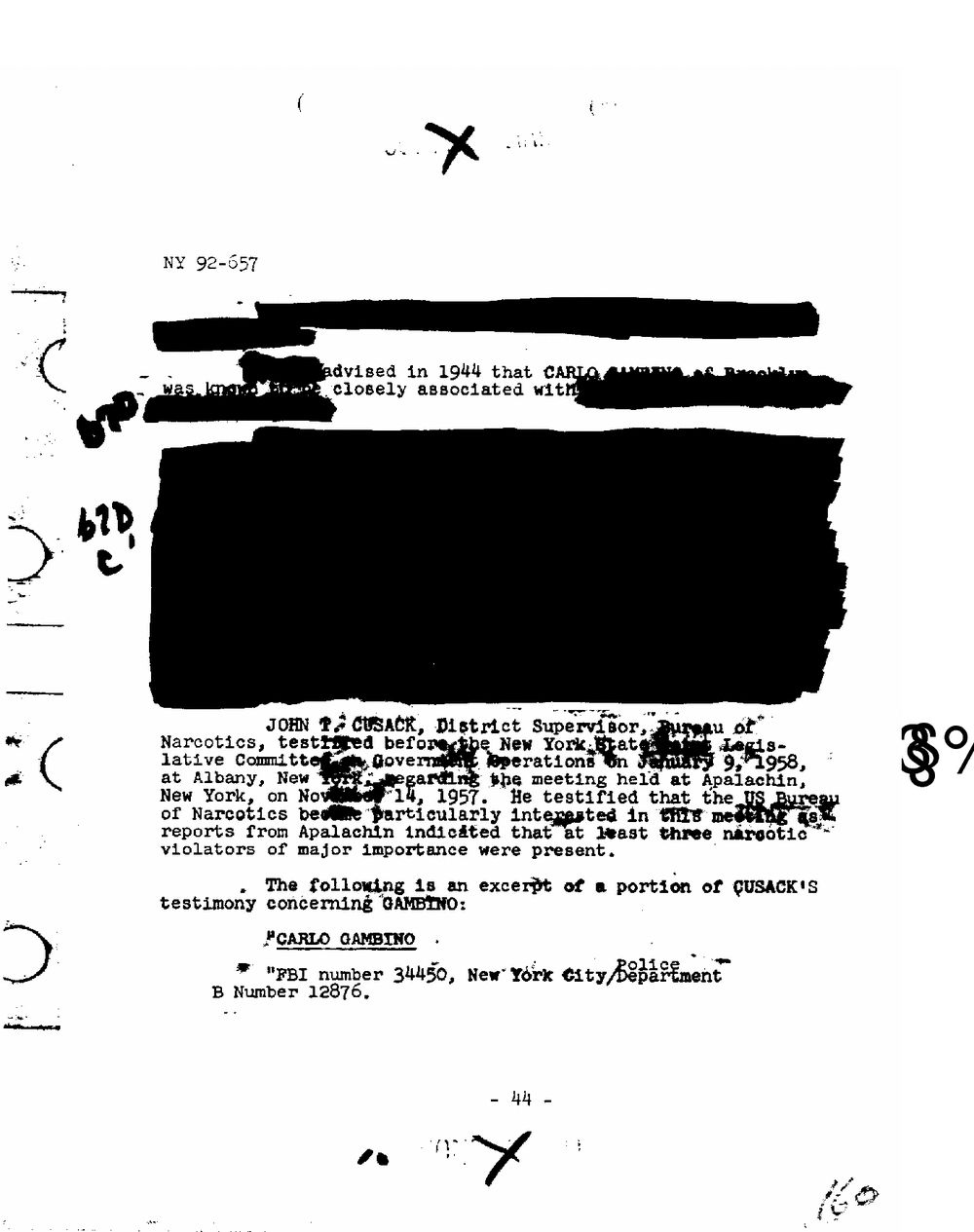 case-fileFBI New York report (NY 92-657): John T. Cusack's 9 January 1958 testimony on the Apalachin meetingReport pages quoting testimony of John T. Cusack, District Supervisor of the U.S. Bureau of Narcotics, before a New York State legislative committee at Albany on 9 January 1958 that the Bureau became interested in Apalachin because at least three major narcotics violators were reported present.
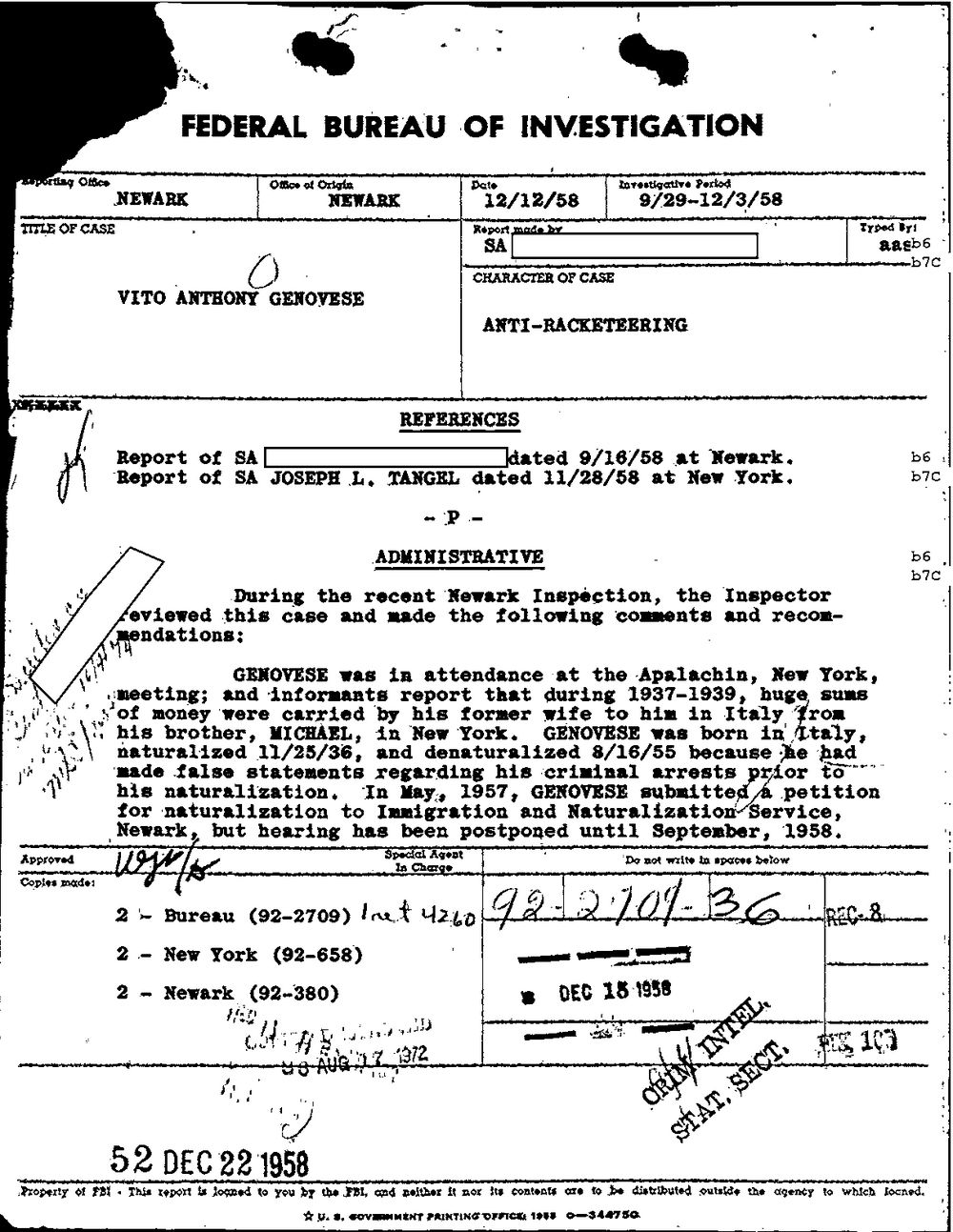 case-fileFBI Newark report, 12 December 1958: Genovese "was in attendance at the Apalachin, New York, meeting"First page of an FBI Newark field-office report (investigative period 29 September to 3 December 1958) in the Genovese anti-racketeering case. Its administrative note says Genovese was in attendance at the Apalachin meeting.
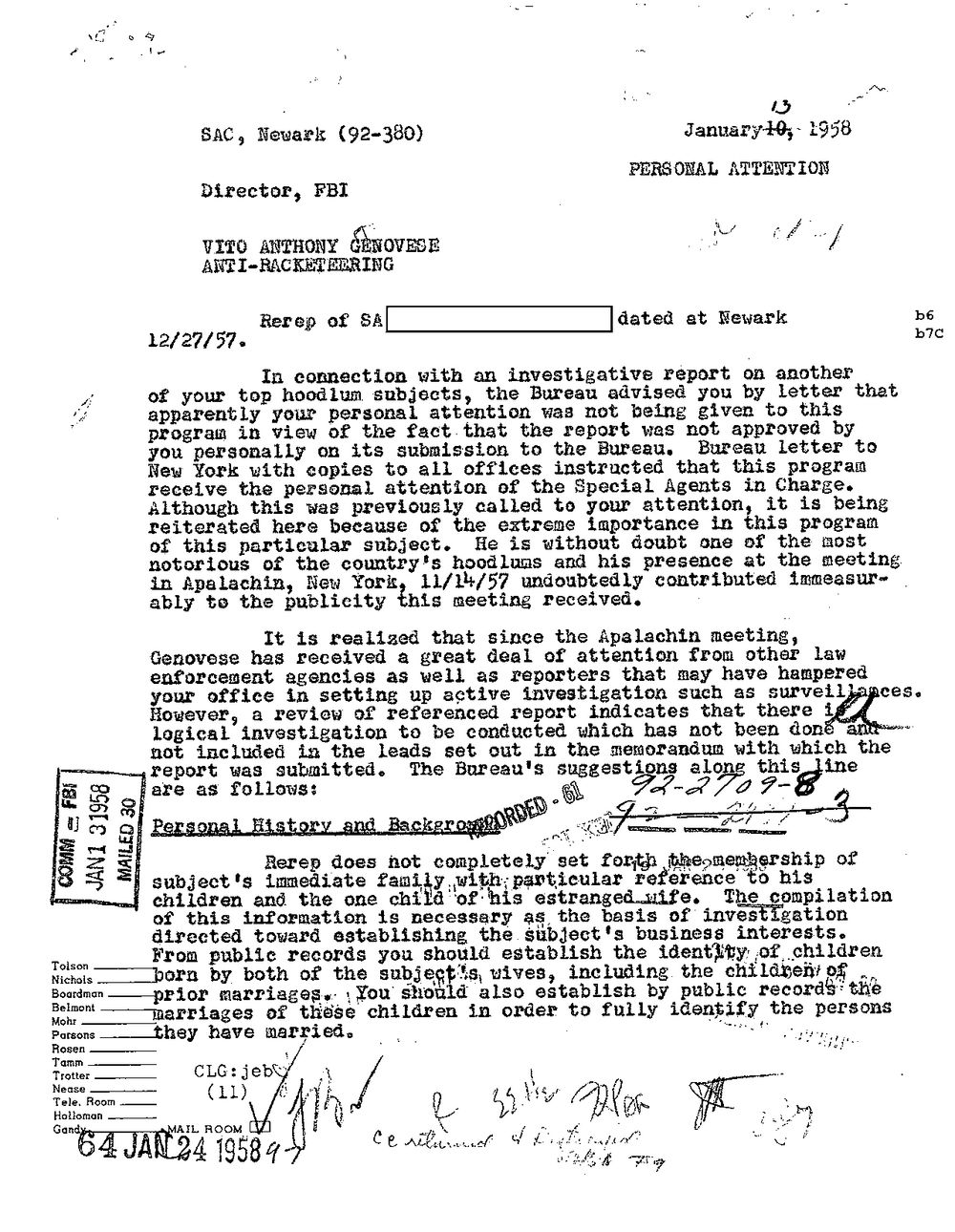 case-fileFBI letter, Director to SAC Newark, January 1958: Genovese's presence at Apalachin and the anti-racketeering investigationFBI Director's letter to the Newark office about its anti-racketeering investigation of Vito Genovese. It says his presence at Apalachin "undoubtedly contributed immeasurably to the publicity this meeting received" and lists investigative steps.
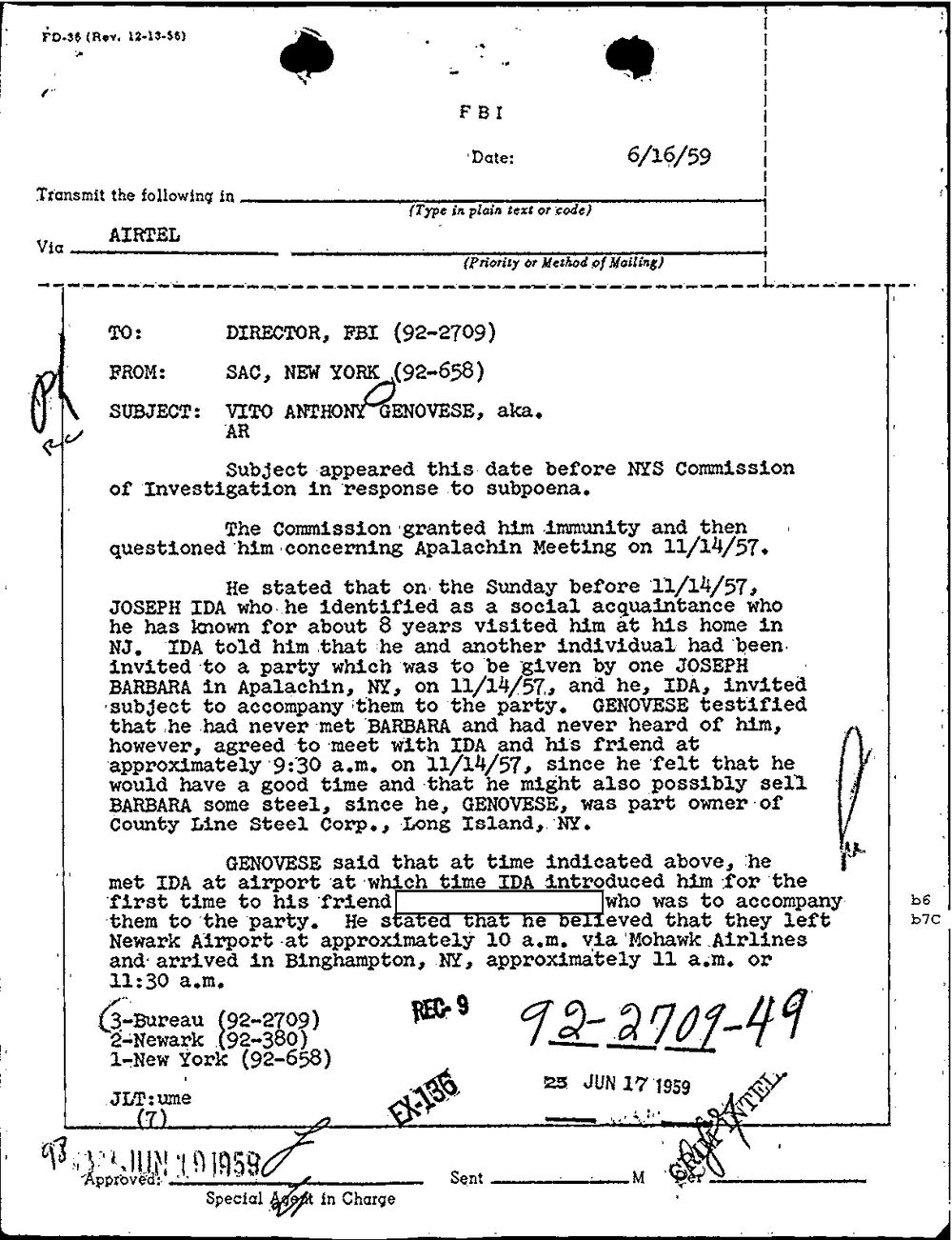 case-fileFBI airtel, 16 June 1959: Genovese before the New York State Commission of Investigation on the Apalachin meetingFBI airtel summarizing Genovese's 16 June 1959 appearance under subpoena before the New York State Commission of Investigation, which granted him immunity and questioned him about Apalachin, with the FBI's account of how he said he came to go.case-fileFBI Detroit report on Anthony Joseph Giacalone, anti-racketeering (18 January 1958)The opening report of the Detroit office's file 92-228 gives Giacalone's Detroit police number and birth date, records one conviction (bribery of a police officer, 1955), and characterizes him as active in Pete Corrado gambling interests and a 'comer' in the Detroit underworld.
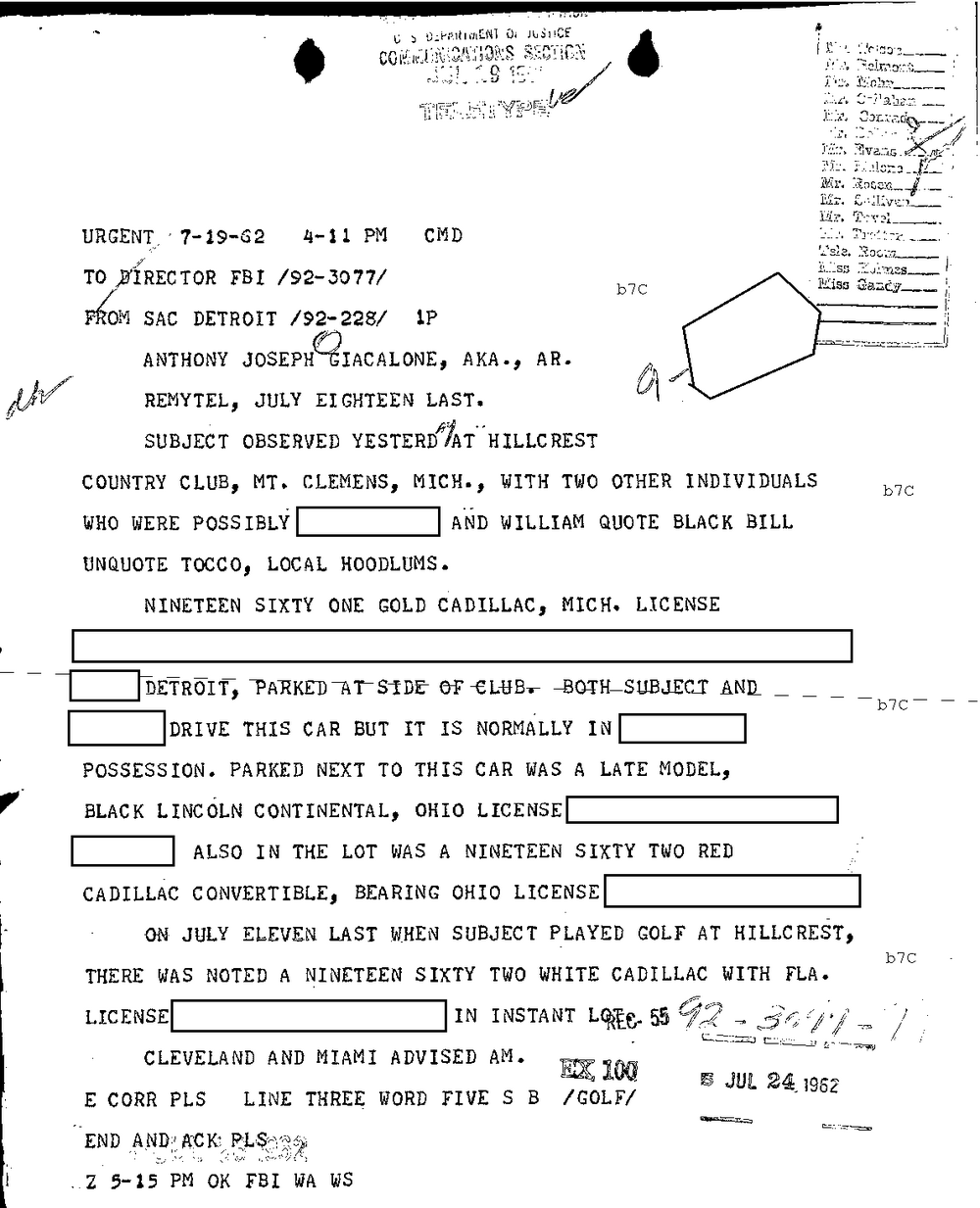 case-fileFBI Detroit teletype: Giacalone seen at the Hillcrest Country Club, Mt. Clemens (19 July 1962)An urgent teletype from the Detroit office reports that Anthony Joseph Giacalone was observed 'yesterday' at the Hillcrest Country Club, Mt. Clemens, Michigan, with a redacted person and 'William Quote Black Bill Unquote Tocco, local hoodlums'.
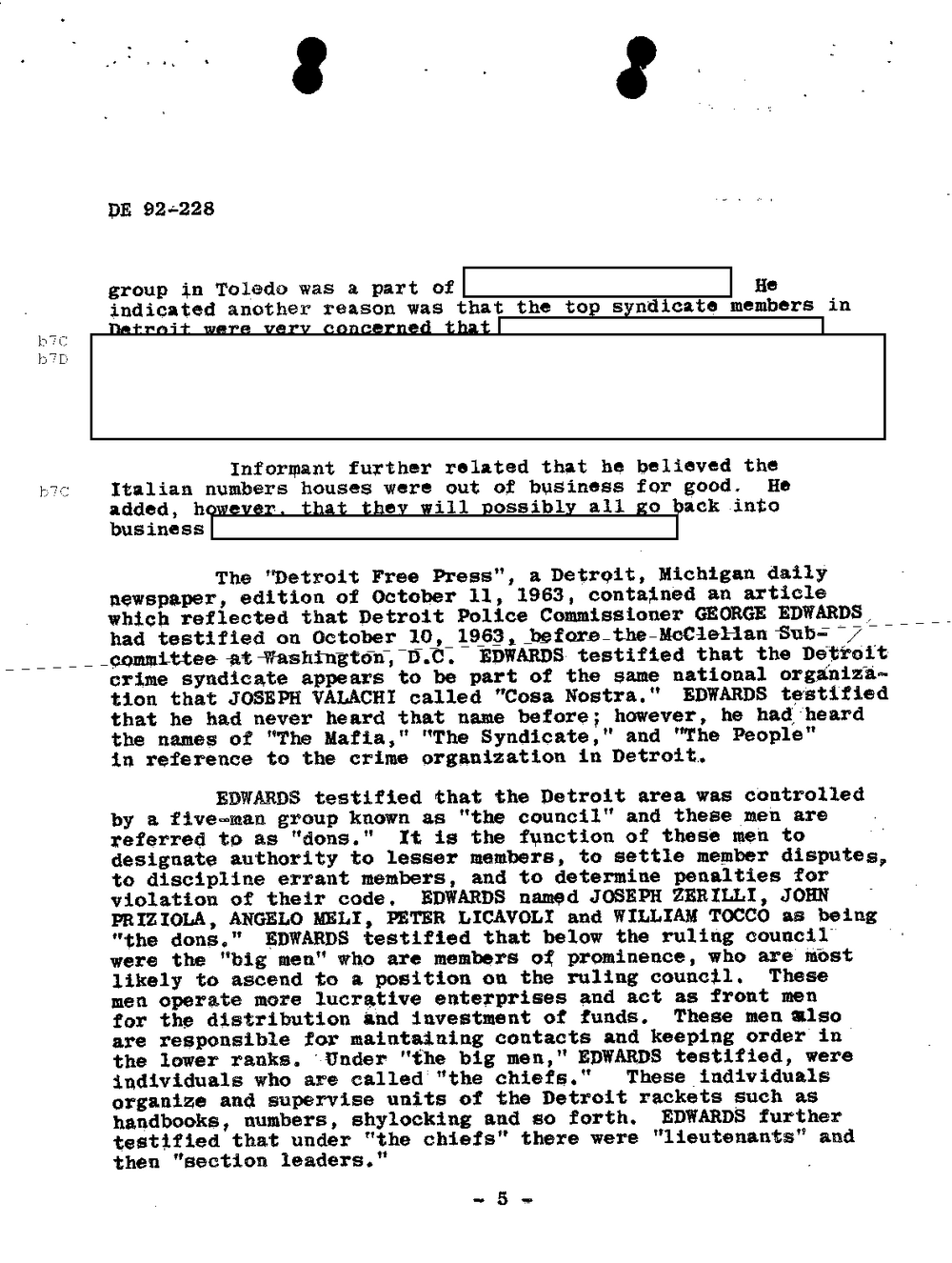 case-fileFBI Detroit report page summarizing Commissioner George Edwards's McClellan testimony (October 1963)A page of a Detroit report in the Giacalone file summarizes a Detroit Free Press article of 11 October 1963: Police Commissioner George Edwards had told the McClellan subcommittee that the Detroit area was controlled by a five-man 'council' whose members were called 'dons'.
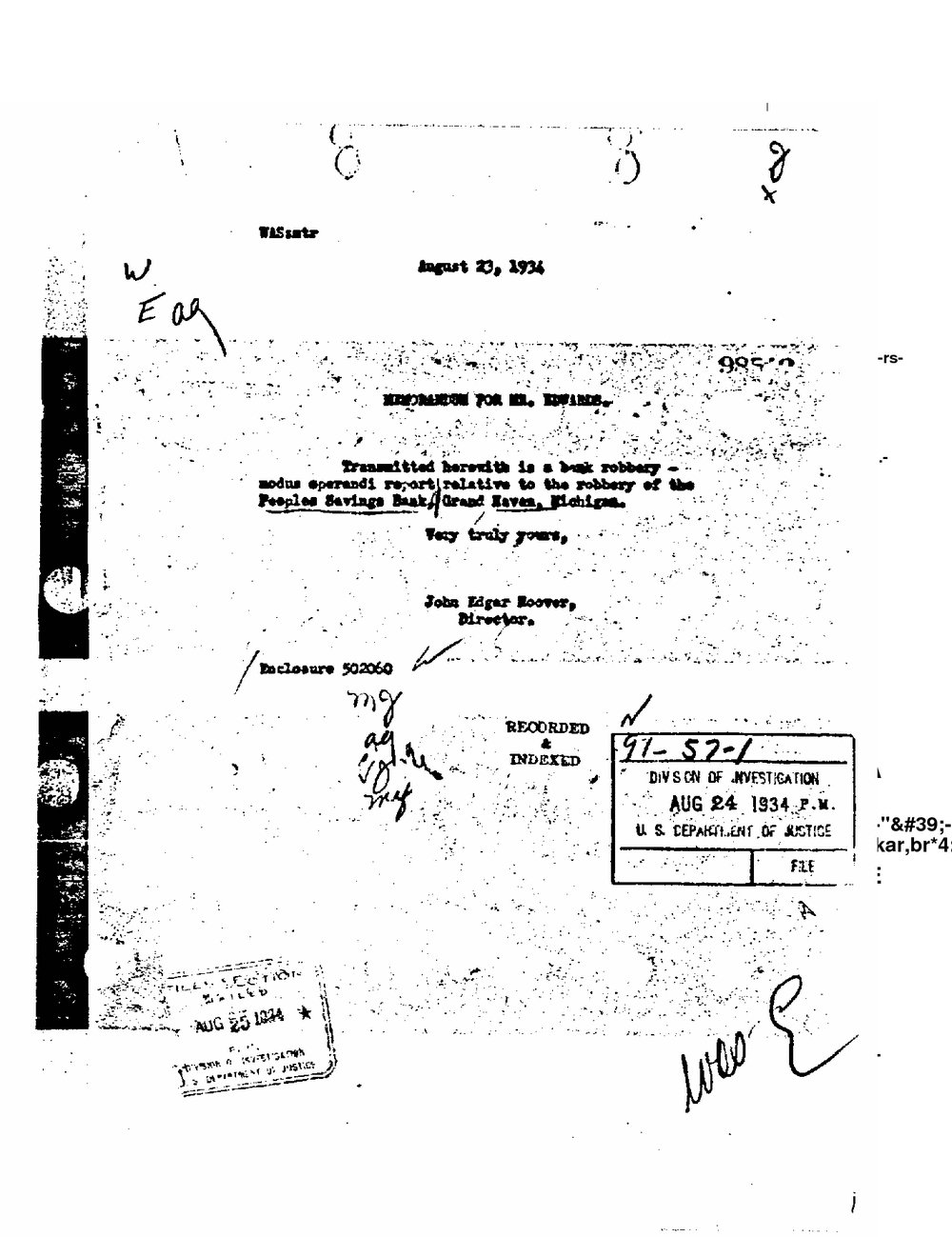 case-fileLester Joseph Gillis (Baby Face Nelson), Part 01 (FBI Vault)First of three parts of the FBI Vault's file on Lester Gillis. Page 1 is a 23 August 1934 memorandum from J. Edgar Hoover transmitting a bank robbery modus operandi report on the Peoples Savings Bank, Grand Haven, Michigan. A copy of that page is stored here.case-fileFBI Records: The Vault, "Gregory Scarpa, Sr. Part 01" (Top Echelon informant memoranda, 1961-1963)New York Division memoranda to the FBI Director under the heading "Top Echelon Criminal Informant Program." A memorandum of March 20, 1962 gives "Date designated informant 3/20/62" and describes Gregory Scarpa as a member of the Joseph Profaci group in Brooklyn.case-fileFBI memorandum to Mr. Rosen, August 1954, citing the "Louis Campagna, et al; Bribery, Parole Matter" case, Bufile 58-2000 (Vault, Jake Guzik)A headquarters memorandum on Jake Guzik quotes the Chicago office's June 1954 intelligence report on what was learned "During the investigation of Chicago file 58-194 entitled, 'Louis Campagna, was., et al; Bribery, Parole Matter, Falsely Claiming Citizenship, Perjury,' Bufile 58-2000." It shows the parole case still open in 1953–54.case-fileFBI Records: The Vault, "Henry Hill Part 01" (1970 Tampa extortion case)The released FBI file on Henry Hill. Most of the pages read are 1970 teletypes, memoranda and FD-302s in an interstate racketeering and extortionate-credit case in which a federal grand jury at Tampa indicted Hill on November 18, 1970; he was arraigned in the Eastern District of New York the next day.
 case-fileHerman Barker (Death of), FBI file 26-9961, Part 01 (Final) (FBI Vault)The FBI Vault's file titled "Herman Barker (Death of)," file 26-9961, section 1, serials 1 to 120: Bureau correspondence of 1926 and 1927, much of it from the Oklahoma City office. A copy of the cover sheet is stored here.
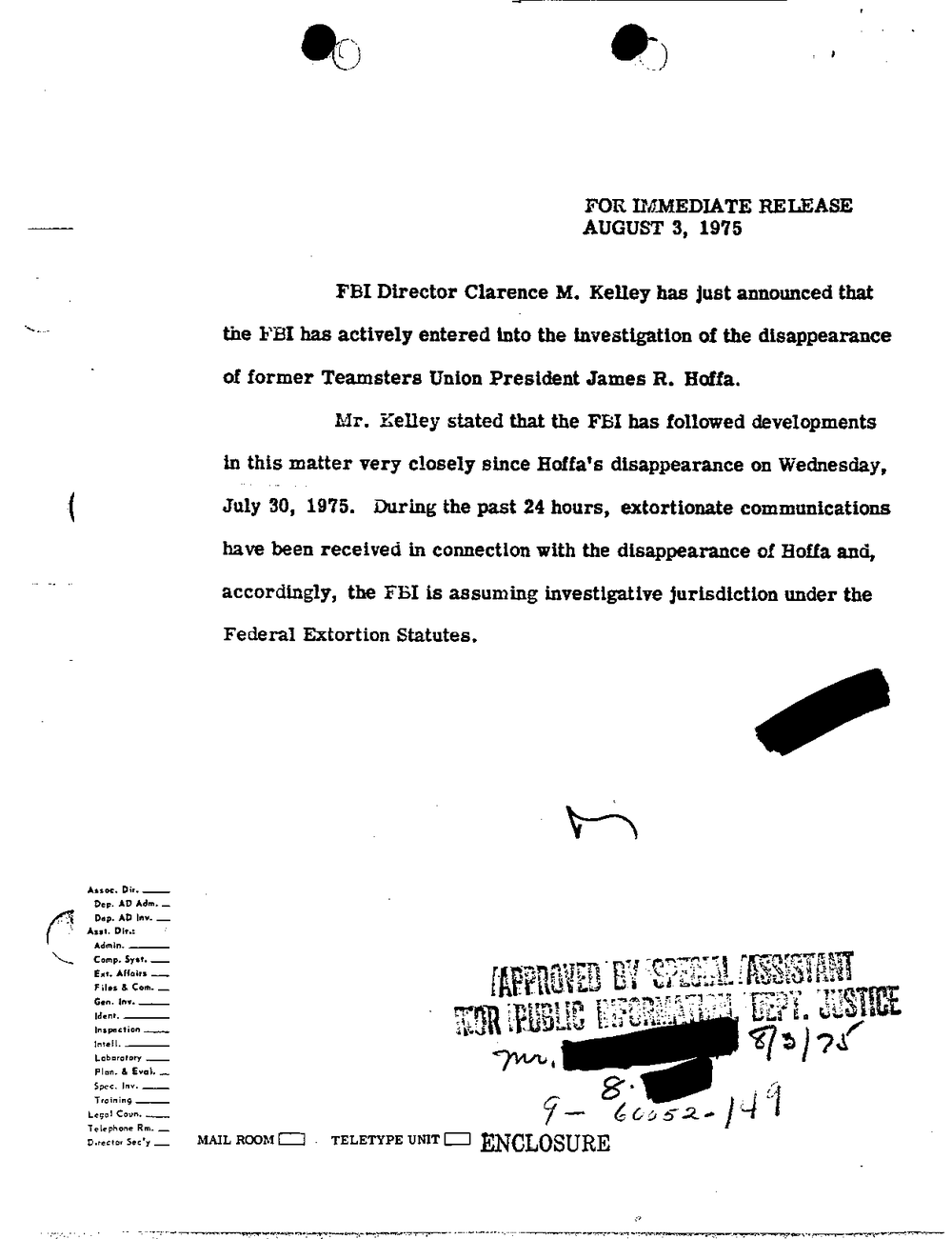 case-fileFBI Vault: Jimmy Hoffa, Part 01The first of the FBI Vault parts on the Hoffa disappearance: 168 pages, largely newspaper clippings gathered after 30 July 1975, with the FBI's press release of 3 August 1975 announcing that it was taking jurisdiction under the federal extortion statutes.case-fileFBI Vault: Jimmy Hoffa, Part 02The second Vault part on the Hoffa disappearance, 183 pages: Detroit agents' transcriptions of broadcast interviews about the case from November 1976, then teletypes and press clippings on the investigation into the 1980s.case-fileFBI Vault file on Jake GuzikThe FBI Vault's release of the Bureau file on Jake Guzik, 114 scanned pages, including a 1944 teletype, a memorandum on his aliases and career, and a 1956 report relaying newspaper accounts of his death.case-fileFBI Vault file on James LicavoliThe FBI Vault's release of the Bureau's file on James Licavoli, also called Jack White, beginning with June 1959 Detroit and Cleveland airtels and 1961 Cleveland anti-racketeering reports. Only the first 400 pages of Part 01 have been read.
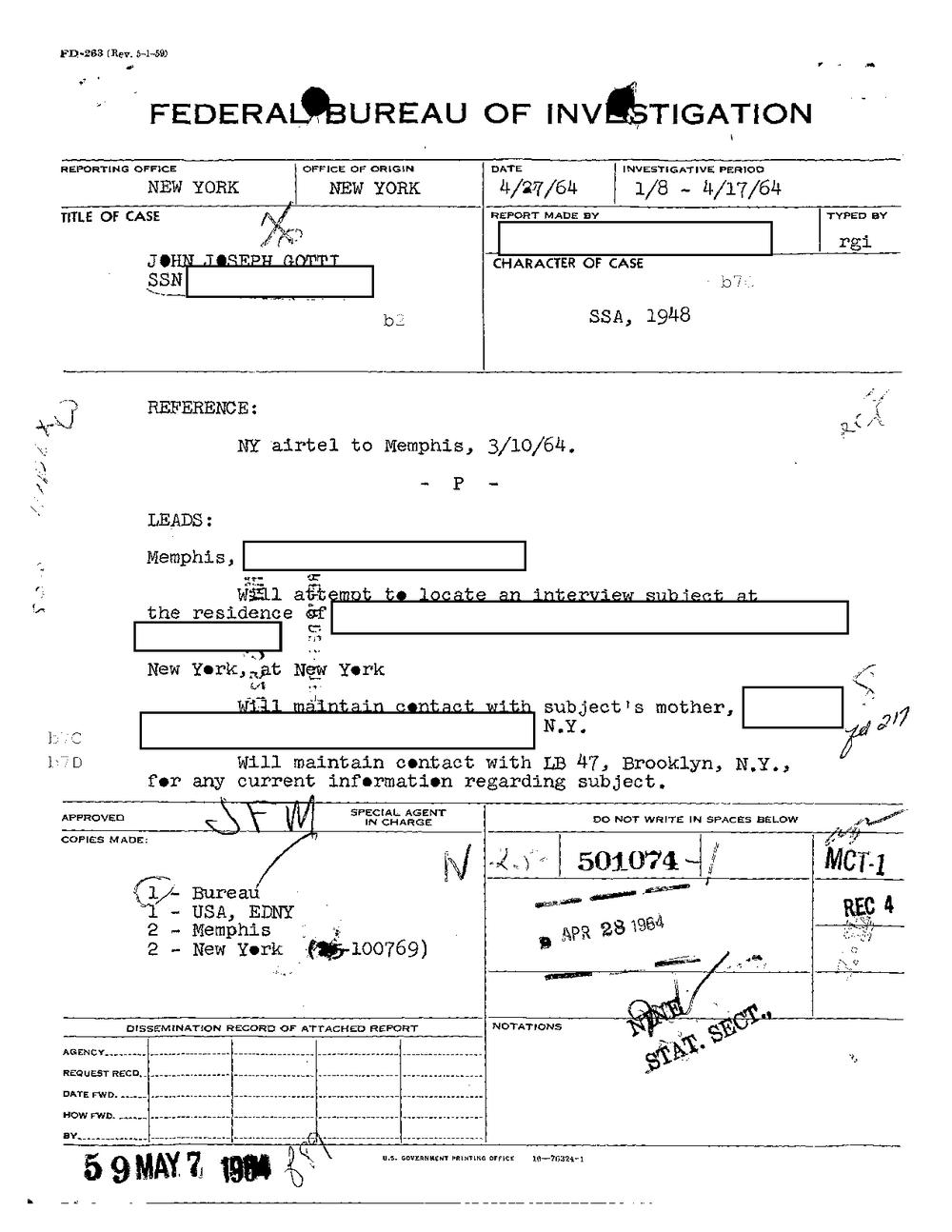 case-fileFBI Vault: John Joseph Gotti, Jr, Part 01The earliest serials in the FBI's Gotti file: a 1964 report on a Selective Service Act delinquency, stating that he was born in the Bronx, and his identification record.
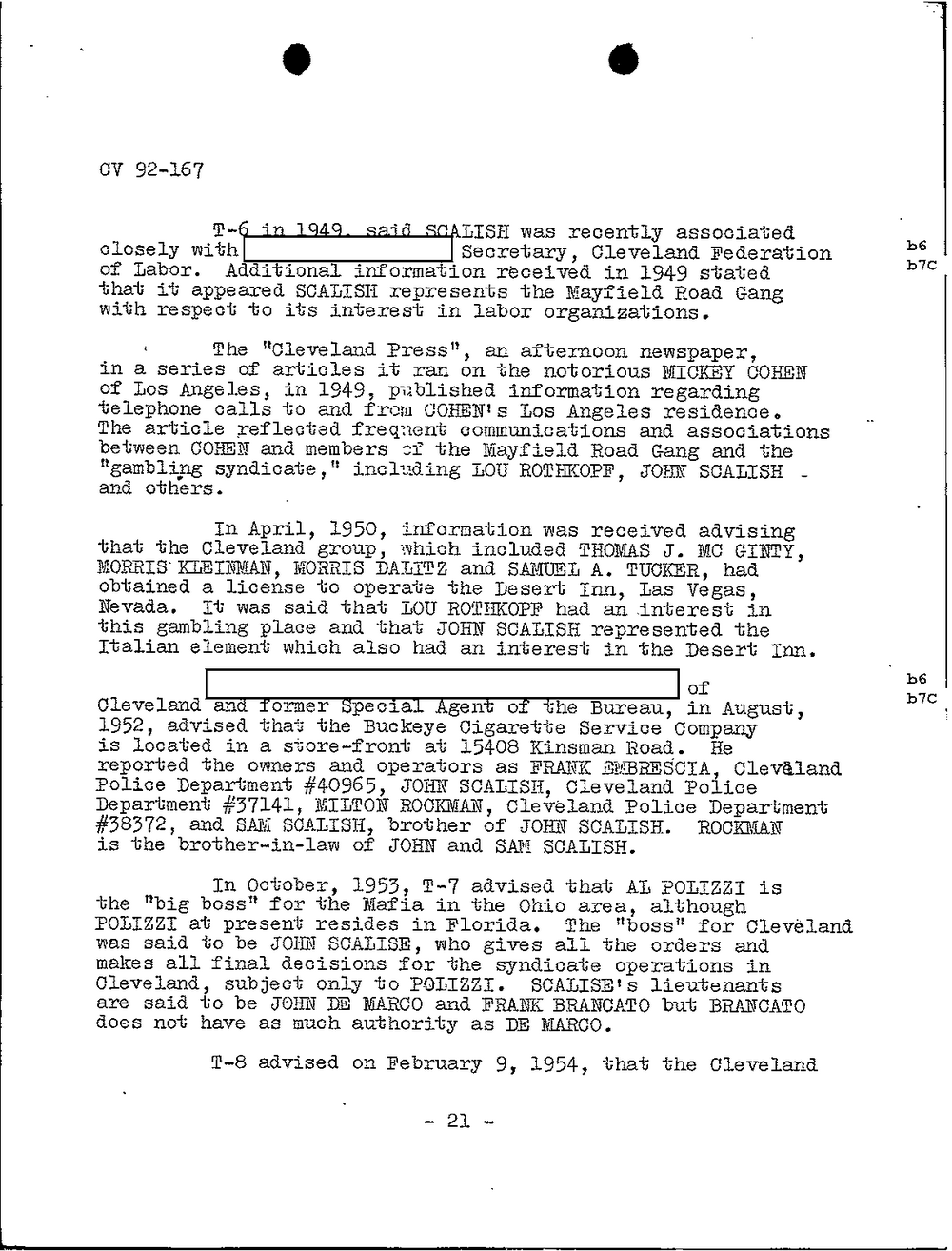 case-fileFBI Vault file on John ScalishThe FBI Vault's release of the Cleveland office file 92-167 on John T. Scalish, opened after the Bureau was told he had been at the November 1957 Apalachin meeting. Its background section collects informant reports from 1944 to 1957 about Scalish, the Desert Inn and the Cleveland 'syndicate'.
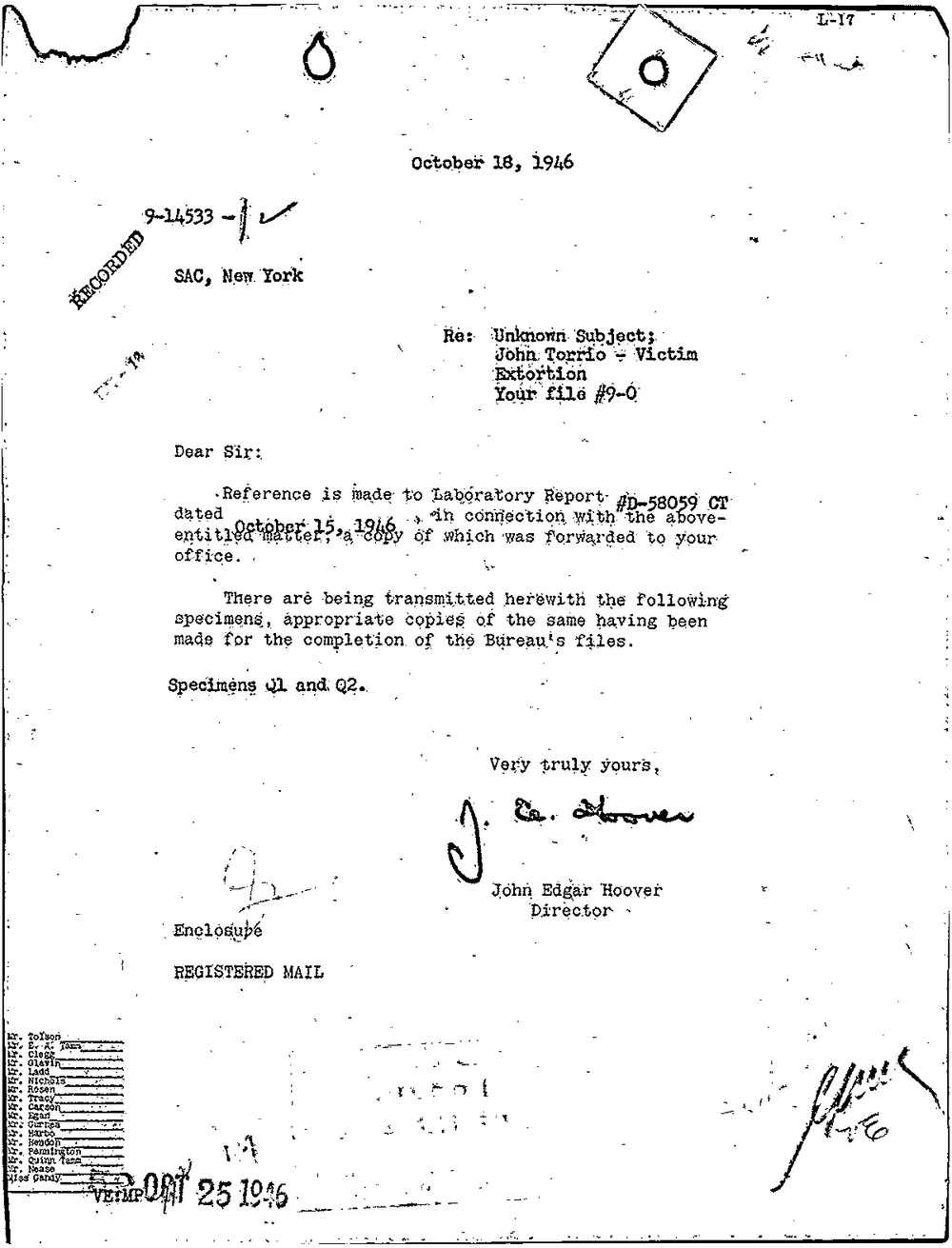 case-fileFBI Vault file on John TorrioThe FBI Vault's release of the Bureau file on John Torrio, one part of 236 scanned pages, including a 1946 extortion case in which he was the victim and a 1947 background memorandum.case-fileFBI Vault: Joseph Adonis, Part 01First of seven parts of the FBI's Joseph Adonis file: April to June 1943 New York reports and Army letters on an alleged kickback racket among workers at the Brooklyn Army Base, with a New York report captioned "Joseph Adonis, with aliases Joe Adonis and Joseph Doto." Poor scans, read by OCR.case-fileFBI Vault: Joseph Adonis, Part 02Second part of the FBI's Joseph Adonis file: a New York report of November 2, 1944 on a kickback, fraud and bribery case at the U.S. Army Base, 58th Street and First Avenue, Brooklyn, naming "Joseph Adonis, with aliases: Joe Adonis, Joseph Doto" among its subjects, and later items to 1964.
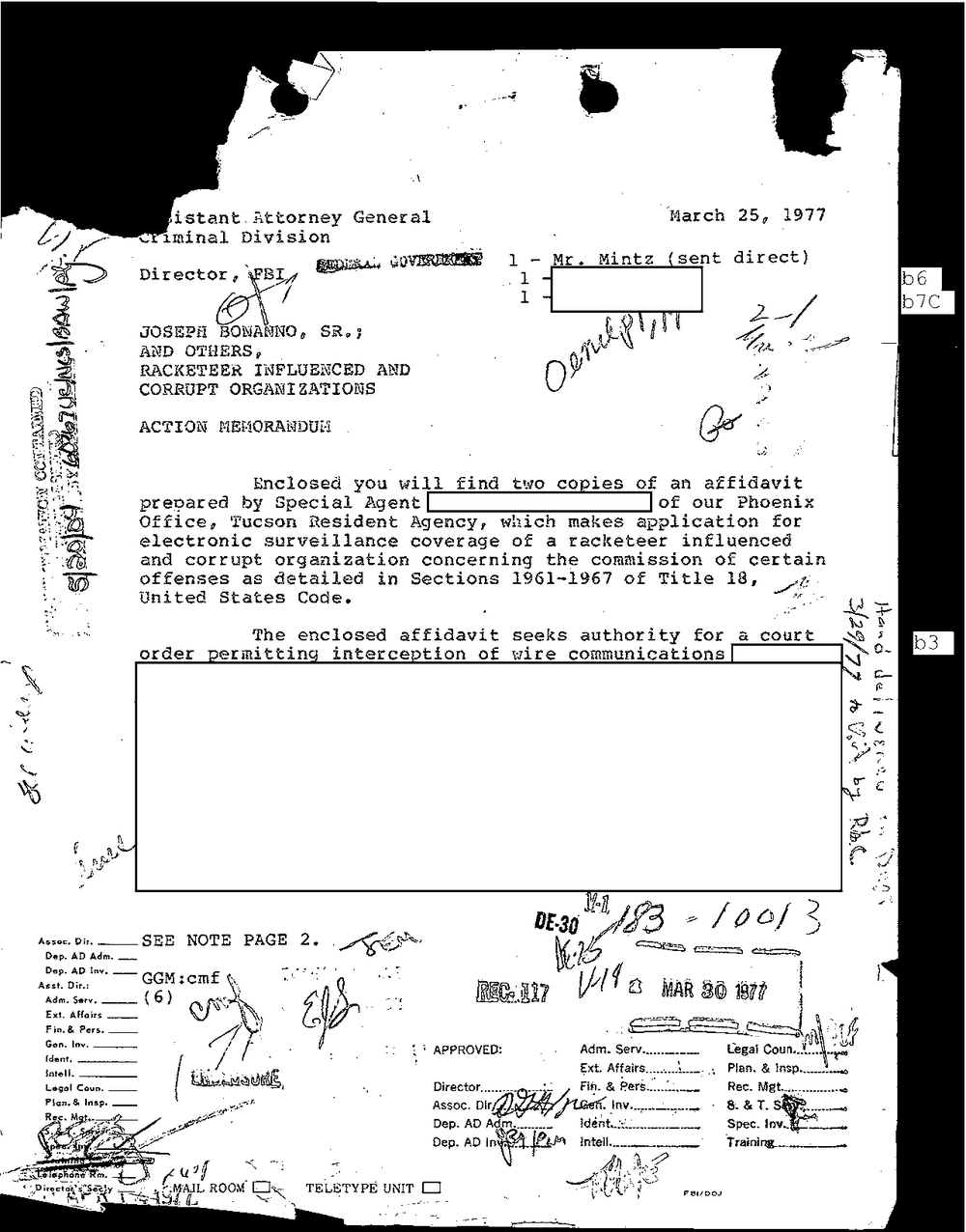 case-fileFBI Vault: Joseph Bonanno, Part 01Part 01 of the FBI's Joseph Bonanno file, largely 1979 Phoenix Division material on a RICO investigation and an application for electronic surveillance in Arizona. The deleted-page sheet lists 111 pages withheld.
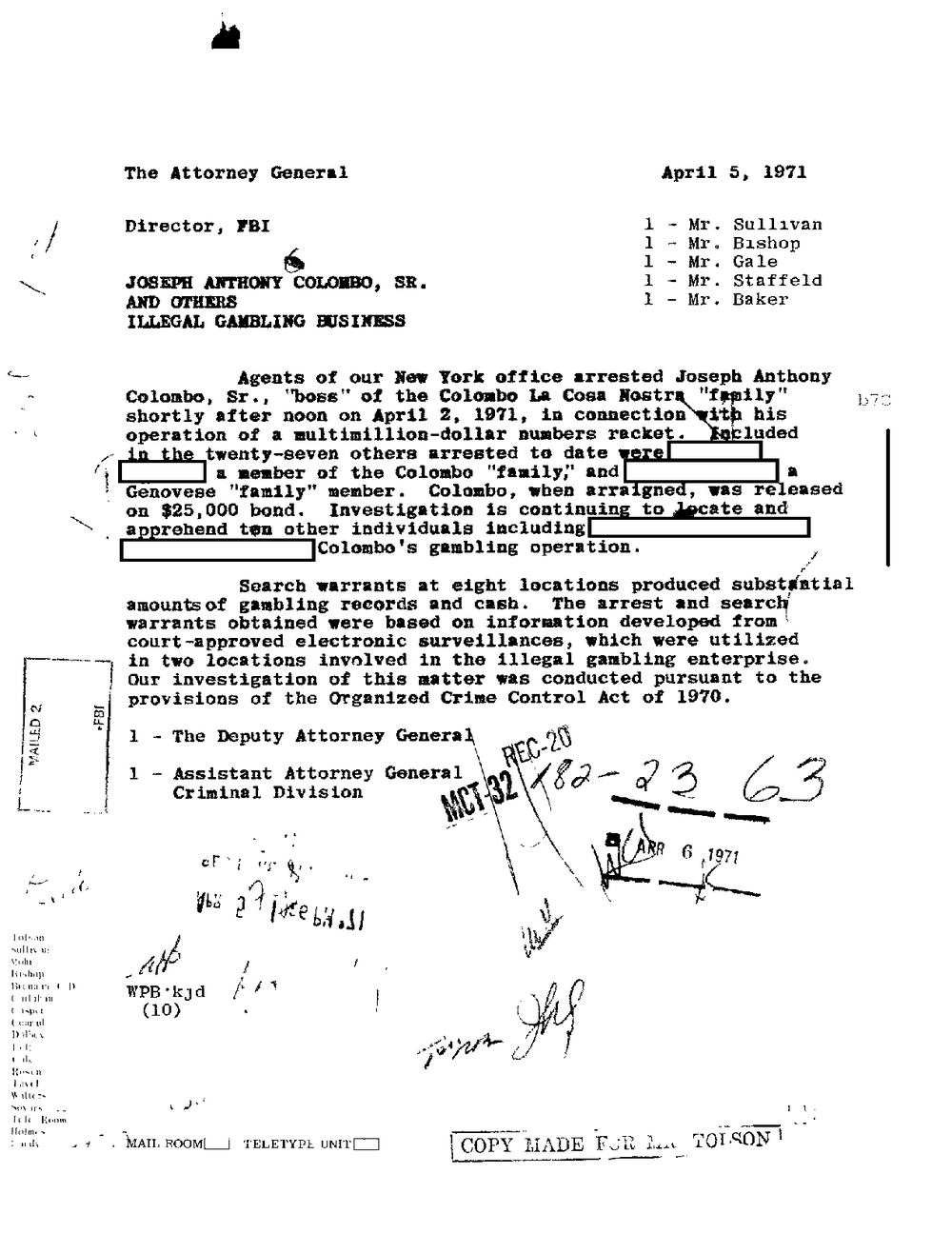 case-fileFBI Vault: Joseph Colombo, Part 01 (Final)Mostly 1970–71 serials: applications for electronic surveillance describing a Brooklyn numbers operation "under control of La Cosa Nostra boss Joseph Colombo," the April 2, 1971 arrest of Colombo on federal gambling charges, and memoranda on the Italian-American Civil Rights League.
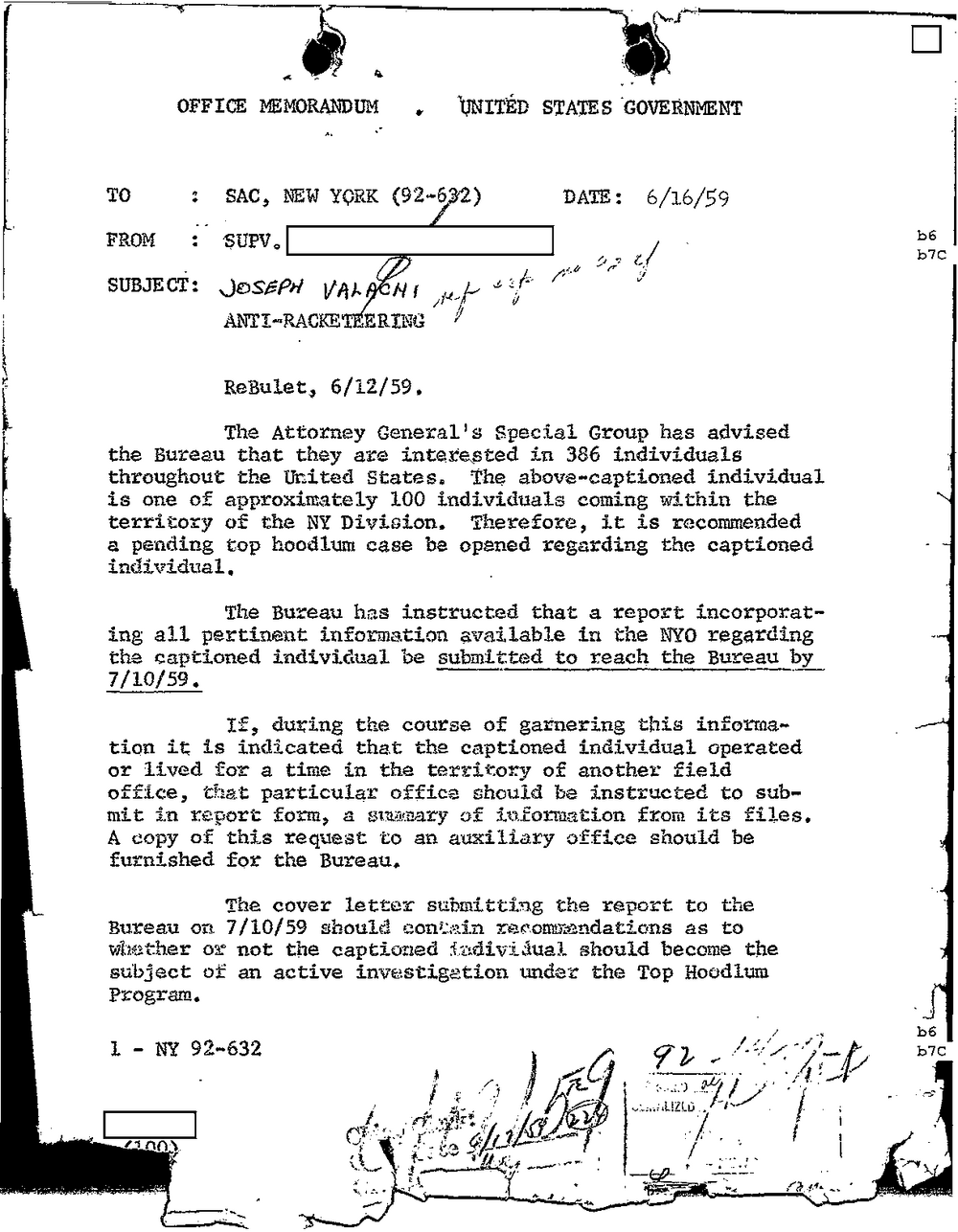 case-fileFBI Vault: "Joseph Valachi Part 01"A 108-page FBI release from the New York field office file on Valachi, from a 1959 memo opening a "top hoodlum" case to 1962 papers on the Atlanta killing and his interviews.
 finding-aidKansas City Massacre, FBI file 62-28915 (FBI Vault, 93 parts)The FBI Vault's file on the 17 June 1933 shooting at Union Station, Kansas City, file 62-28915, released in 93 parts. Section 1's cover names the subject as Charles "Pretty Boy" Floyd, Kansas City Massacre. A copy of that cover is stored here.
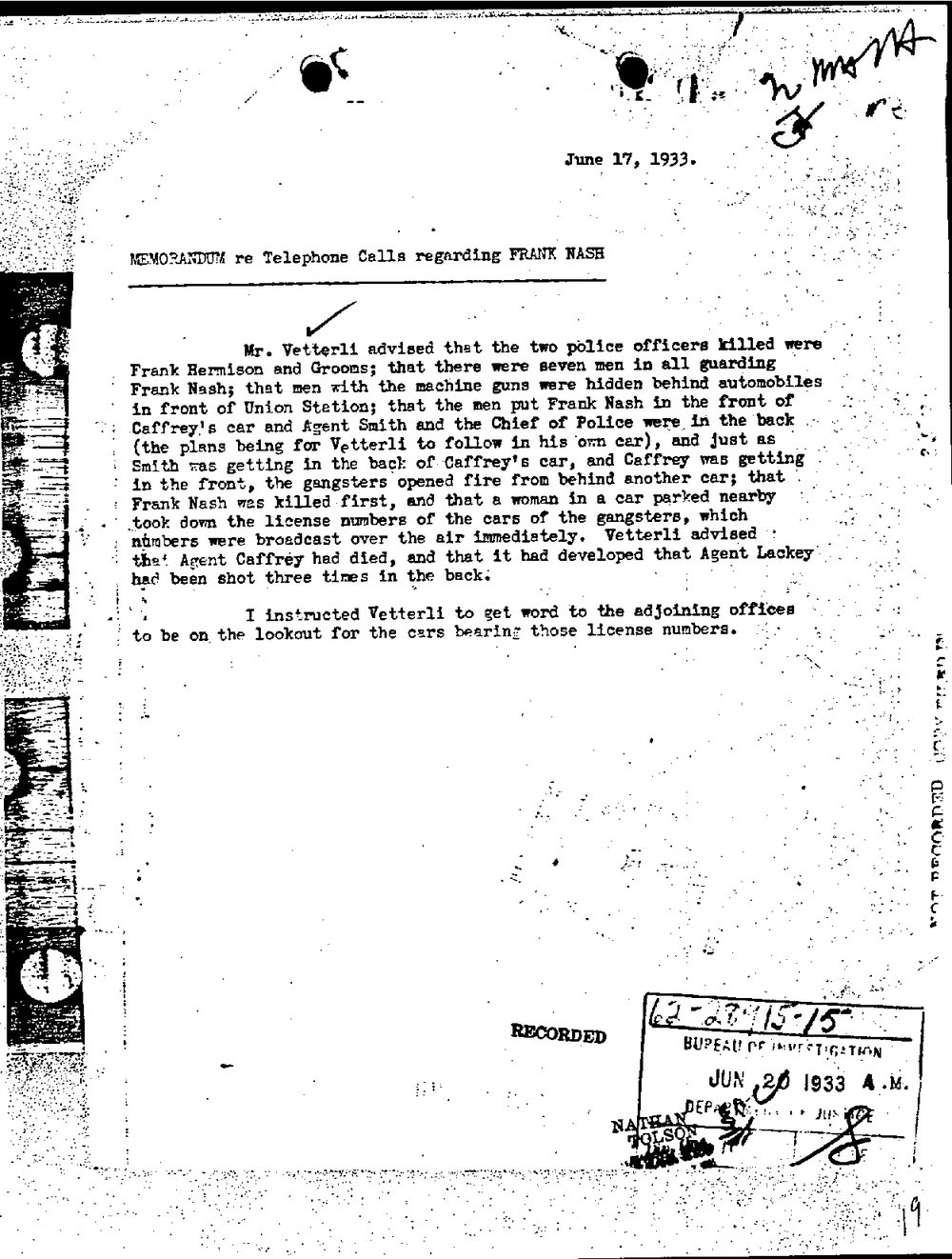 case-fileFBI Vault: Kansas City Massacre, file 62-28915, Part 01 (Section 1), June 1933The first section of the FBI's Kansas City Massacre file (97 viewer pages): telegrams, letters and memoranda of 17-19 June 1933, including a memorandum of Agent in Charge Vetterli's telephone report of the Union Station shooting.
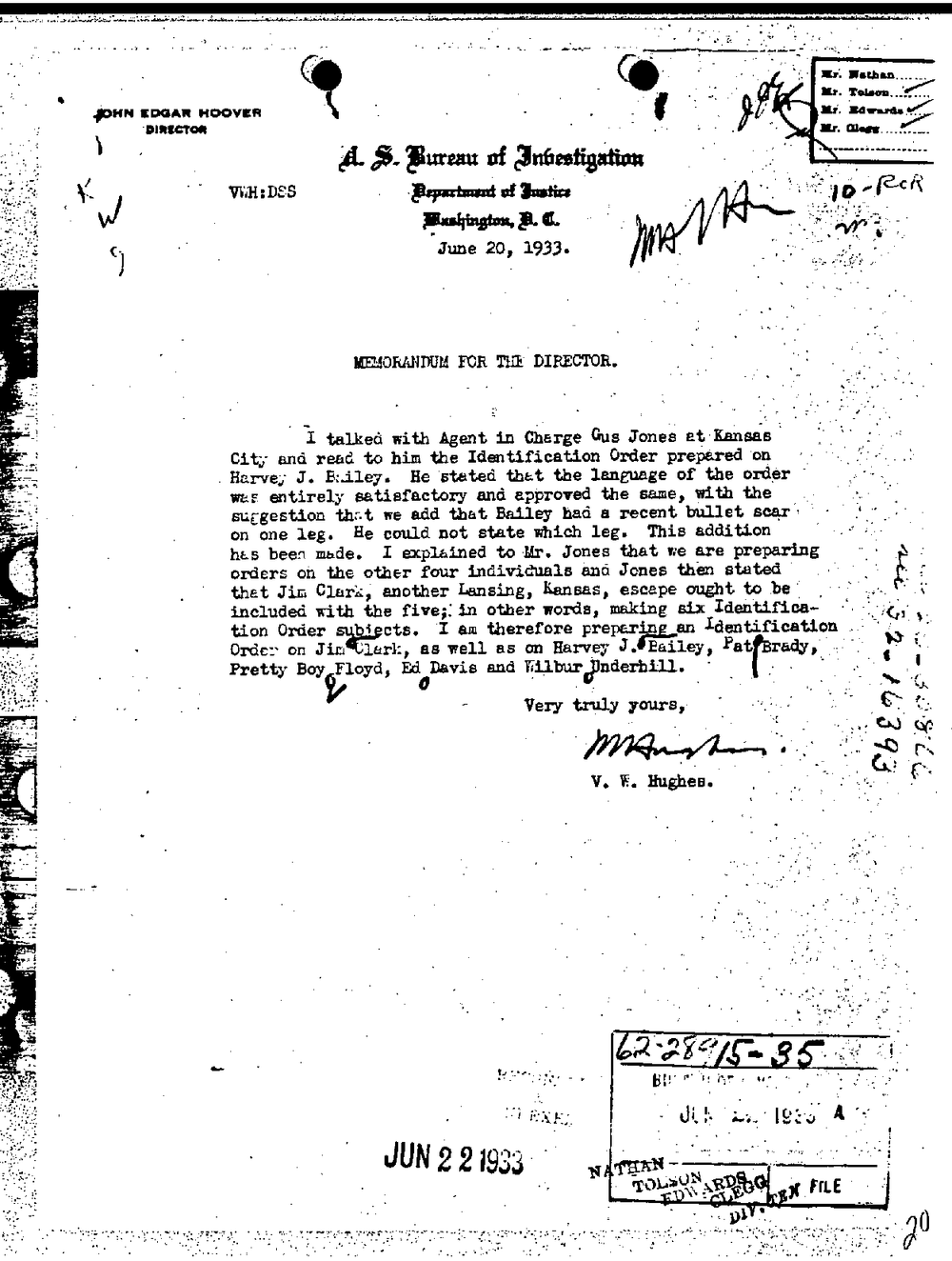 case-fileFBI Vault: Kansas City Massacre, Part 02 (June 1933)The second part (130 viewer pages) of the FBI's Kansas City Massacre file: a 20 June 1933 memorandum on identification orders that names Pretty Boy Floyd among the subjects, a 22 June memorandum on latent fingerprints resembling those of Frank Nash, and condolence correspondence.
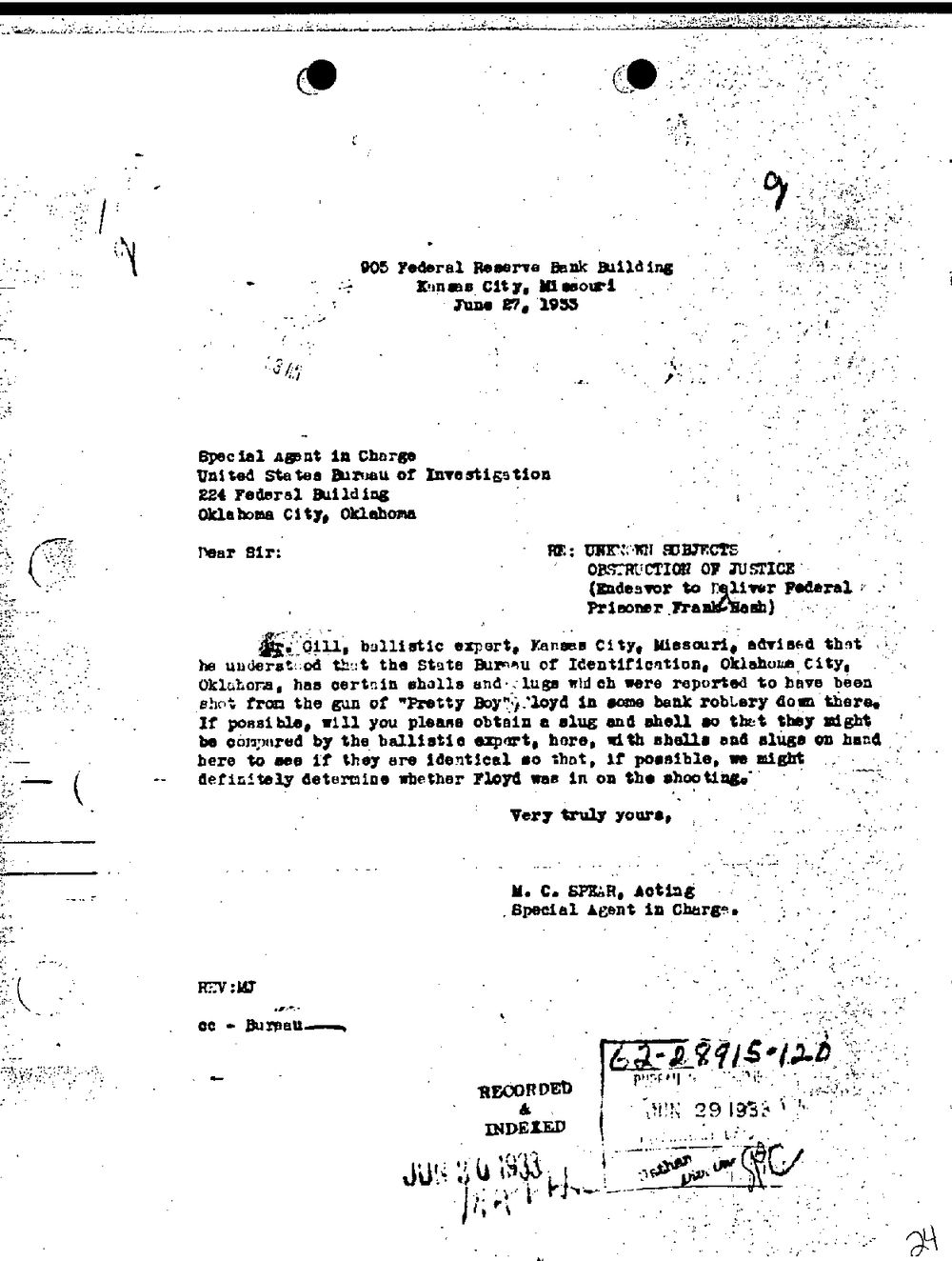 case-fileLetter from Acting SAC M. C. Spear, Kansas City, 27 June 1933, asking for a slug and shell for ballistic comparisonKansas City asks Oklahoma City for a slug and shell reportedly fired from the gun of "Pretty Boy" Floyd in a bank robbery, "so that they might be compared by the ballistic expert, here, with shells and slugs on hand here."
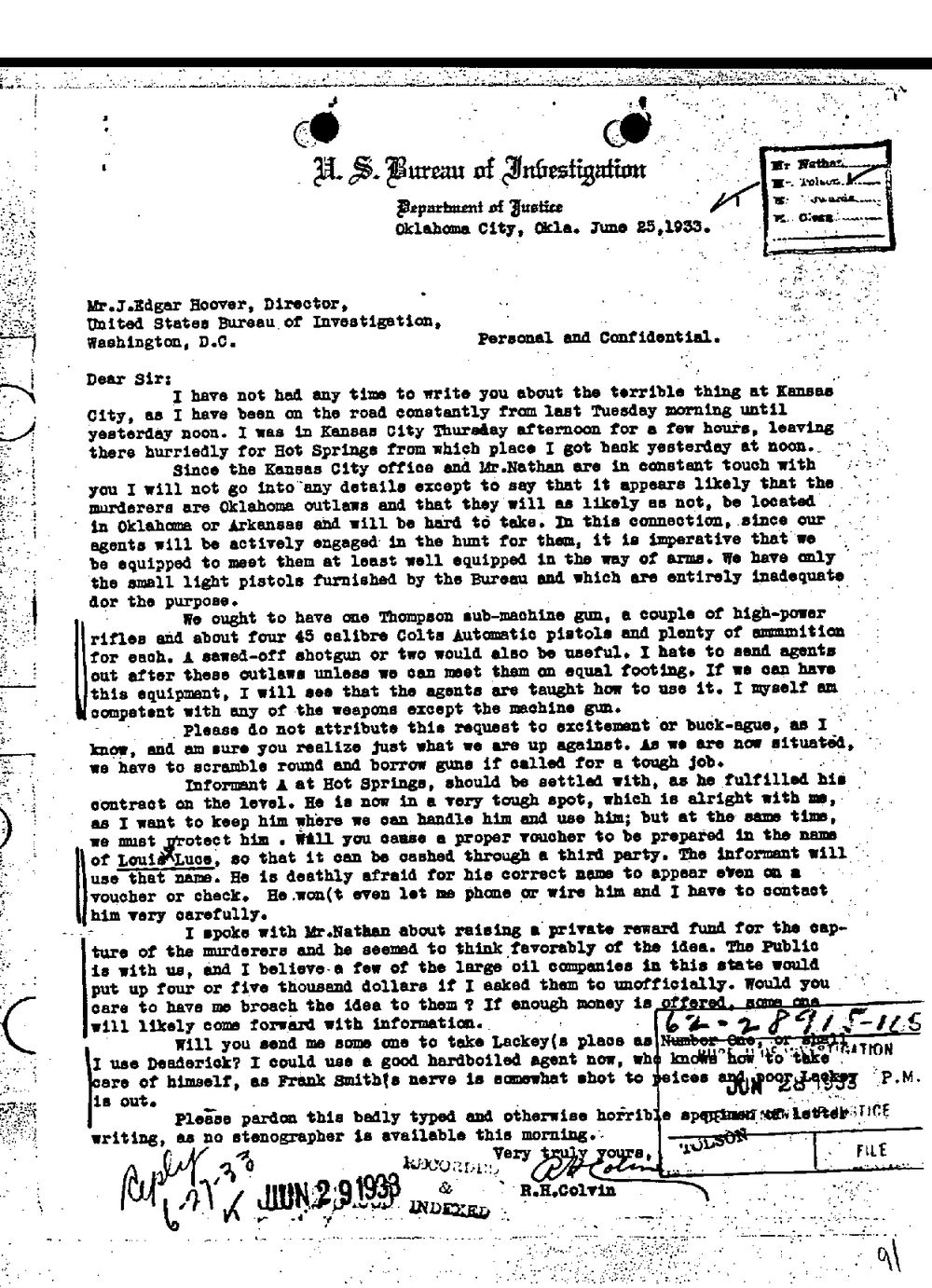 case-fileLetter from R. H. Colvin, Oklahoma City, to J. Edgar Hoover, 25 June 1933, asking for a submachine gun, rifles and pistolsEight days after the Kansas City Union Station shootings, the Oklahoma City agent in charge writes that agents have "only the small light pistols furnished by the Bureau" and asks for a Thompson submachine gun, rifles, .45 Colt automatics and ammunition.
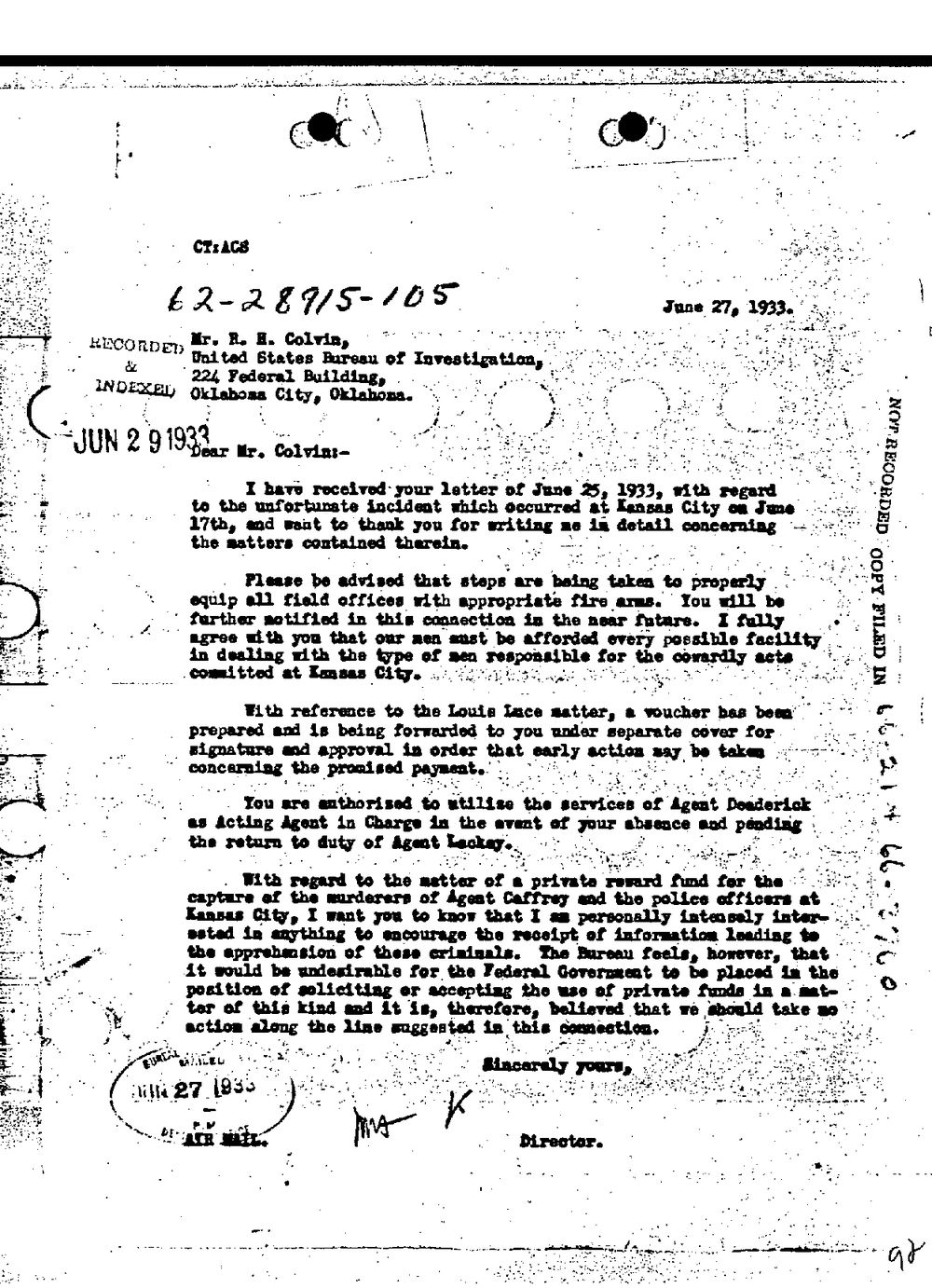 case-fileLetter from J. Edgar Hoover to R. H. Colvin, 27 June 1933: steps being taken to equip field offices with firearmsThe Director replies to the Oklahoma City request of 25 June: "steps are being taken to properly equip all field offices with appropriate fire arms." The letter also declines a proposed private reward fund.
 case-fileMachine Gun Kelly, Part 01 (FBI Vault): the first Urschel kidnaping papers, July 1933First part of the FBI Vault's Machine Gun Kelly file, 7-115: memoranda for the Director and the Attorney General of 24 to 29 July 1933 on the Urschel kidnaping. A copy of the release cover is stored here.
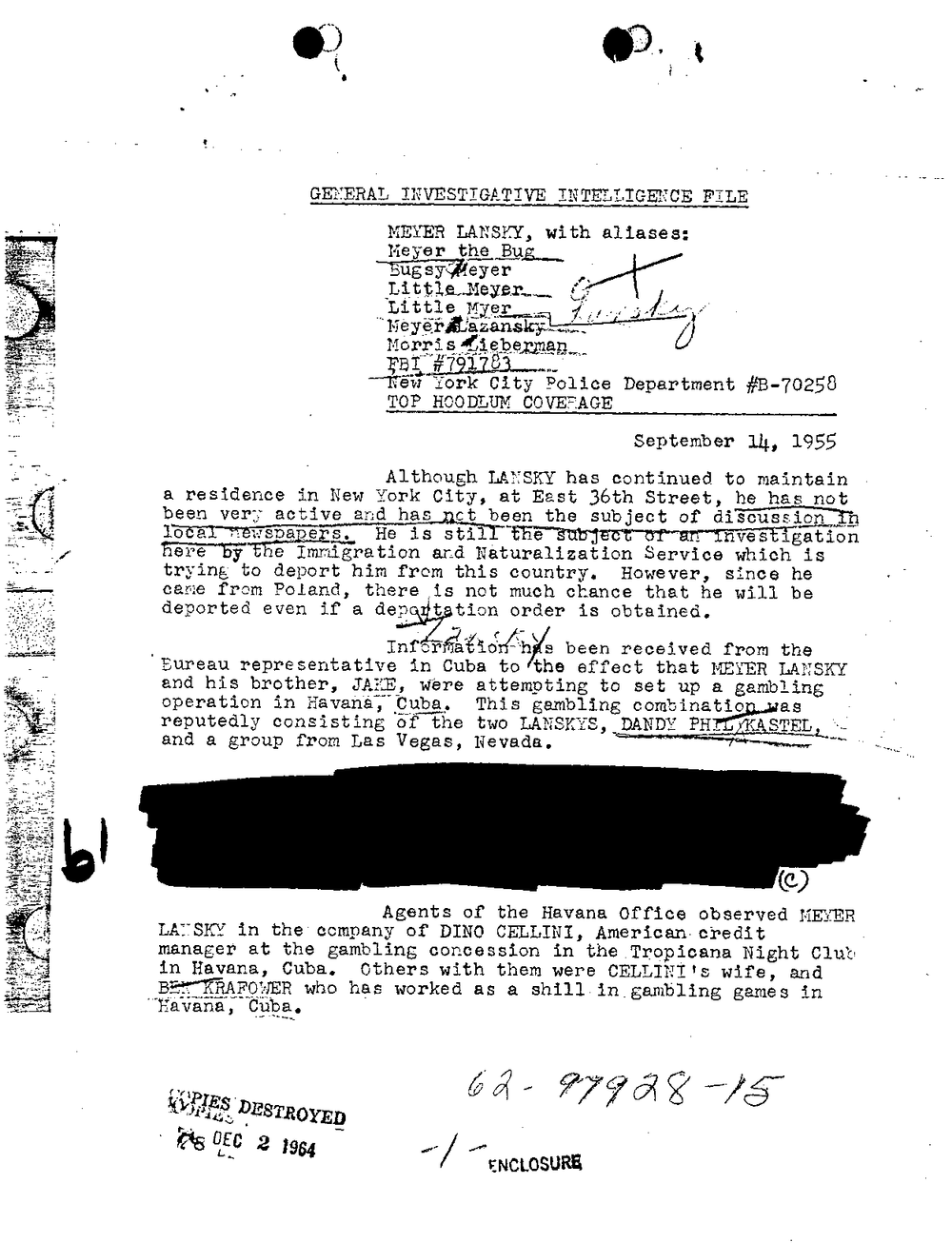 case-fileFBI 'Top Hoodlum Coverage' summary on Meyer Lansky: Havana gambling and the Tropicana Night Club (14 September 1955)An FBI intelligence summary says information from the Bureau representative in Cuba was that Meyer and Jake Lansky were trying to set up a gambling operation in Havana, and that agents saw Meyer Lansky with Dino Cellini, credit manager at the Tropicana Night Club's gambling concession. Part is redacted.
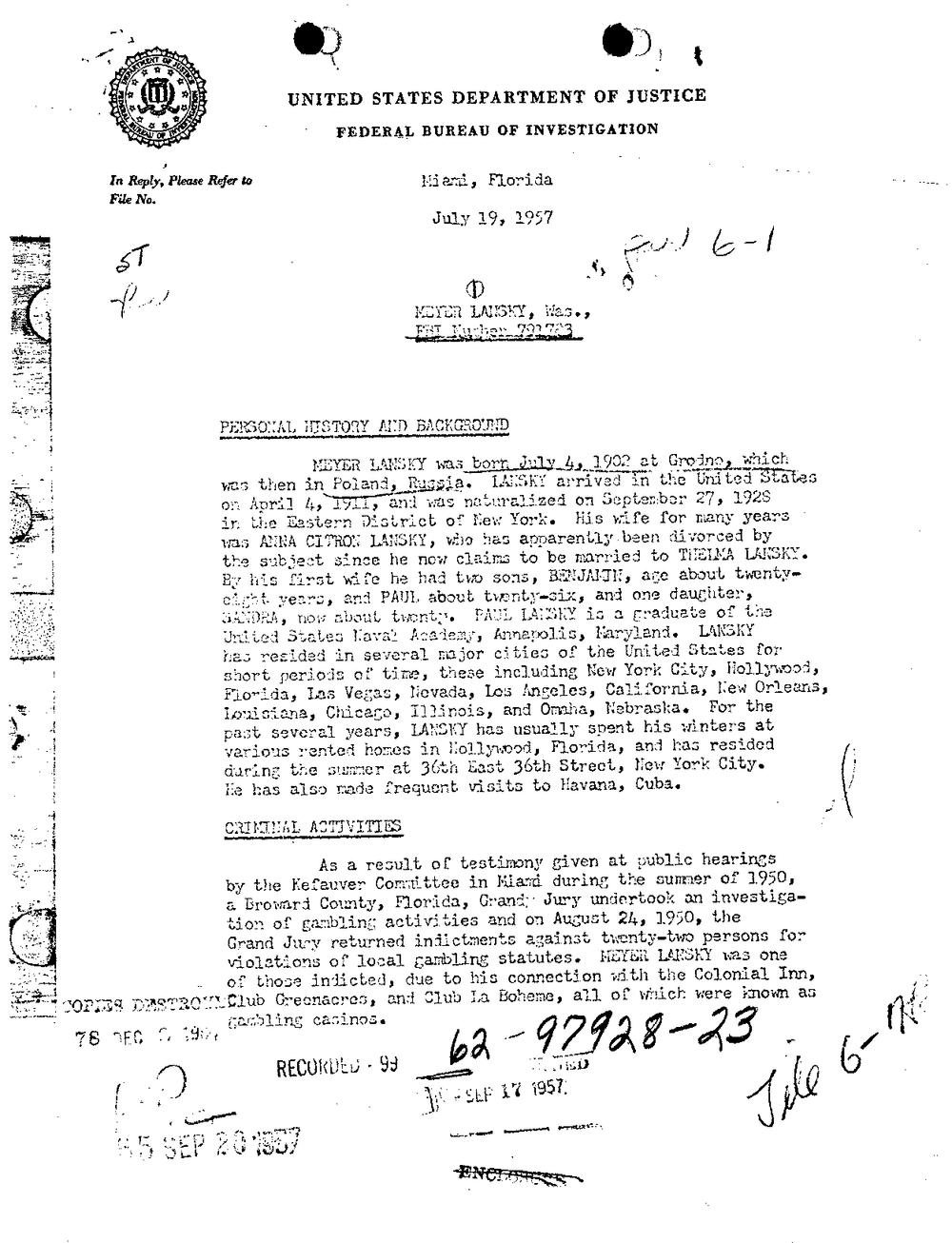 case-fileFBI Miami report on Meyer Lansky: Hollywood, Florida winters and the 1950 Broward County indictment (19 July 1957)An FBI Miami field-office report says Lansky usually wintered in rented homes at Hollywood, Florida, visited Havana often, and was one of twenty-two indicted by a Broward County grand jury on 24 August 1950 'due to his connection with' three gambling clubs.
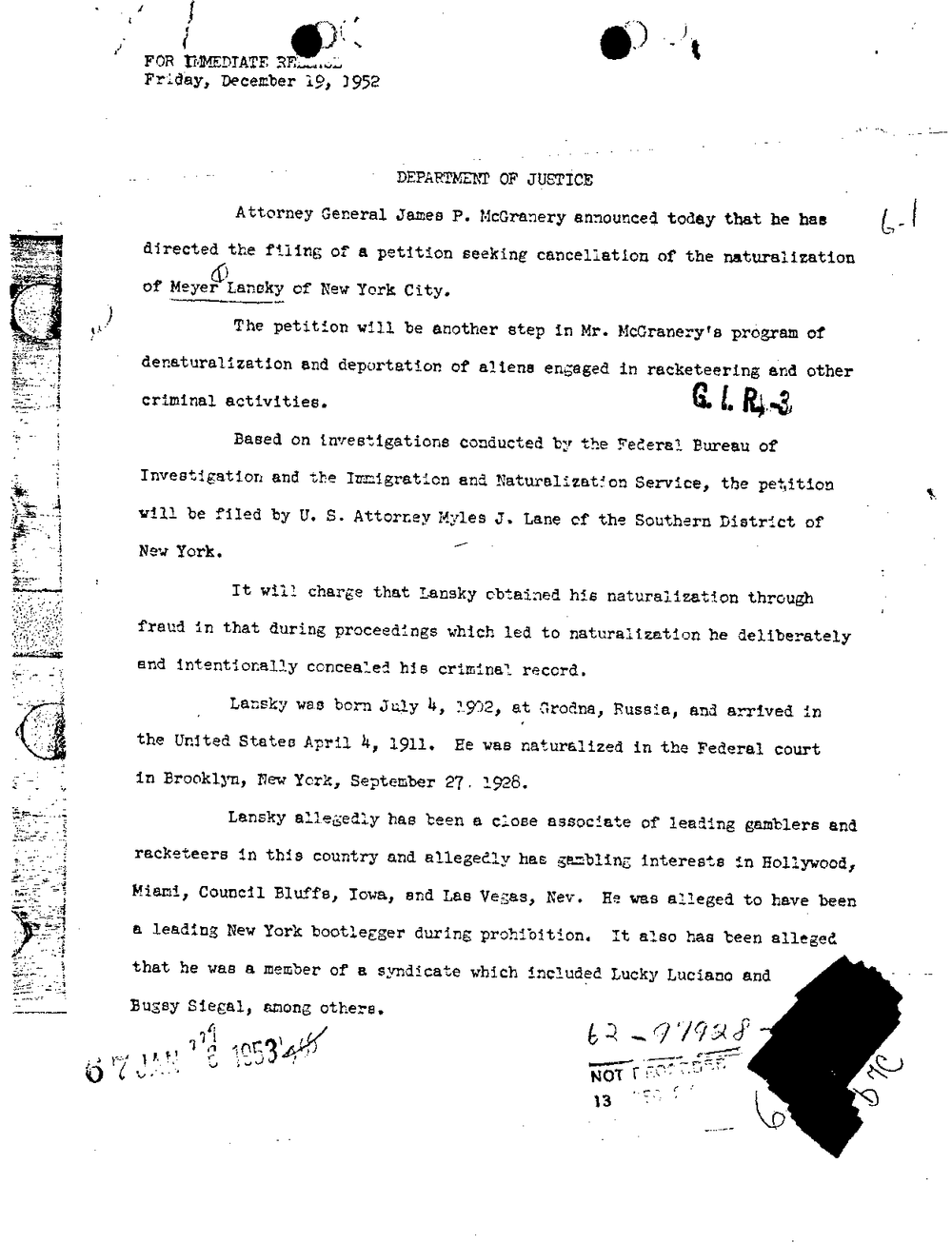 case-fileJustice Department release on the petition to cancel Meyer Lansky's naturalization (19 December 1952)A Justice Department press release of December 19, 1952, filed in the FBI Vault's Lansky file, announcing a petition to cancel Meyer Lansky's naturalization and stating that he allegedly has gambling interests in Hollywood, Miami, Council Bluffs, Iowa, and Las Vegas.
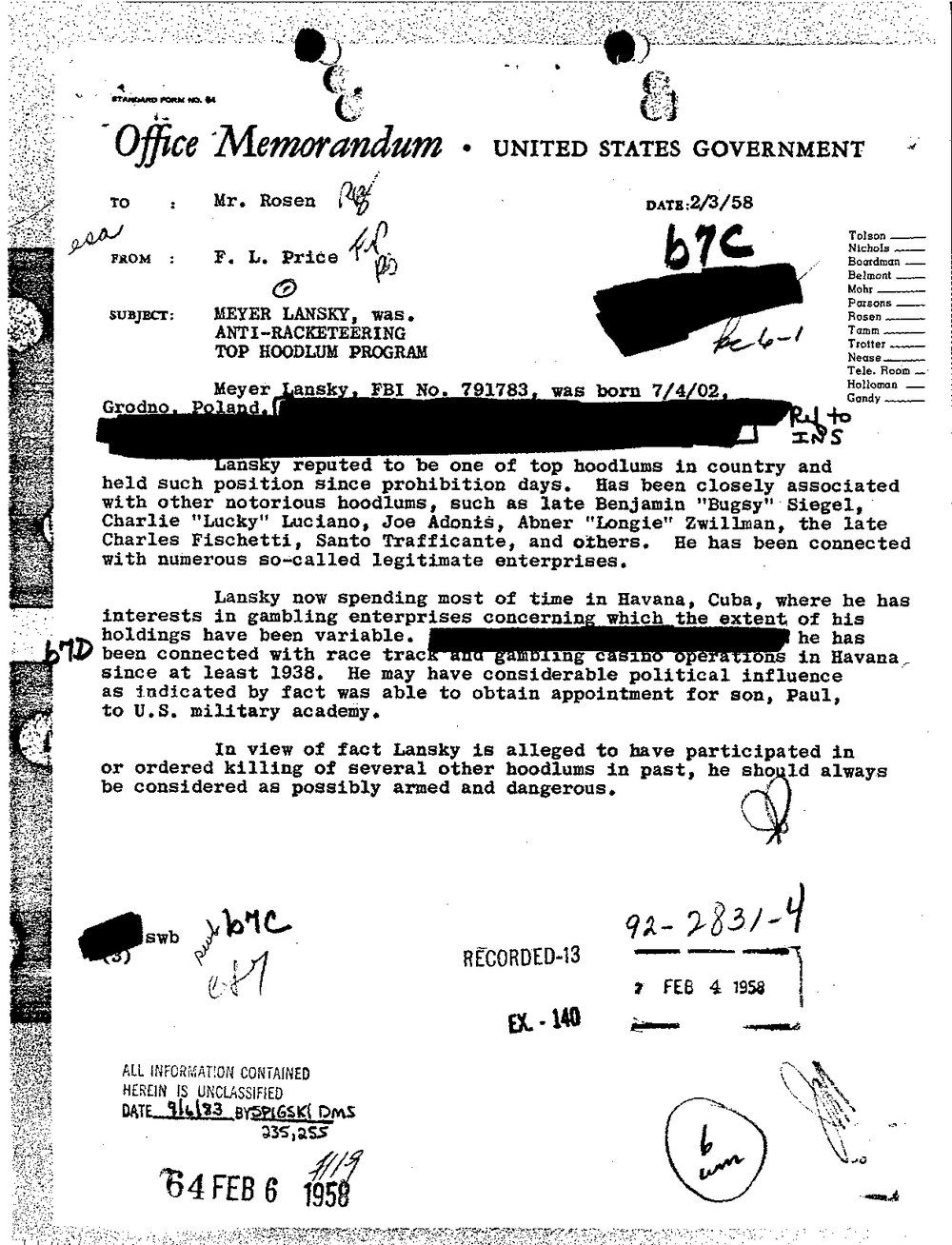 case-fileFBI memorandum, F. L. Price to Mr. Rosen, 3 February 1958, and New York report on Meyer Lansky: 'now spending most of time in Havana, Cuba, where he has interests in gambling enterprises'A headquarters memorandum on the Lansky Anti-Racketeering case states that he is 'now spending most of time in Havana, Cuba, where he has interests in gambling enterprises' of variable extent, and that he has been connected with race track and gambling casino operations in Havana 'since at least 1938.' A New York report lists his Havana hangouts.
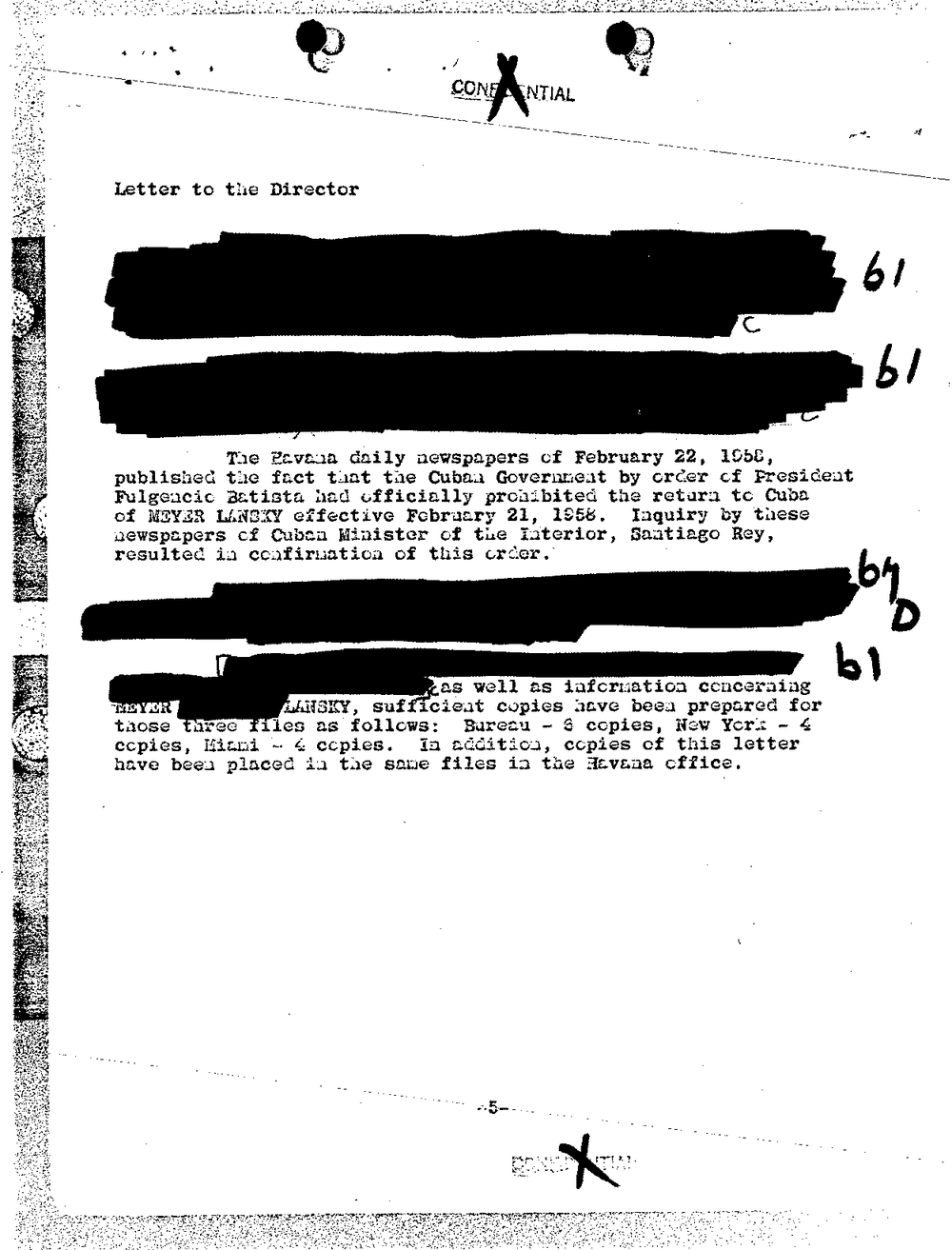 case-fileFBI Legal Attache, Havana, letter and New York report, February-April 1958: the Cuban government 'by order of President Fulgencio Batista' bars Meyer Lansky's returnThe Legal Attache in Havana reported that Havana newspapers of 22 February 1958 'published the fact that the Cuban Government by order of President Fulgencio Batista had officially prohibited the return to Cuba of MEYER LANSKY effective February 21, 1958,' and that the Minister of the Interior confirmed it.case-fileFBI Miami airtel to the Director on Meyer Lansky, February 1961: 'prior to the revolution in Cuba, LANSKY was active in legalized gambling in Cuba'Reviewing all Lansky material in its files, the Miami office reported that past investigation 'has never established concrete evidence' that he directly violated a federal statute within the FBI's primary jurisdiction, and that 'prior to the revolution in Cuba, LANSKY was active in legalized gambling in Cuba,' returning to the United States after Castro took power.
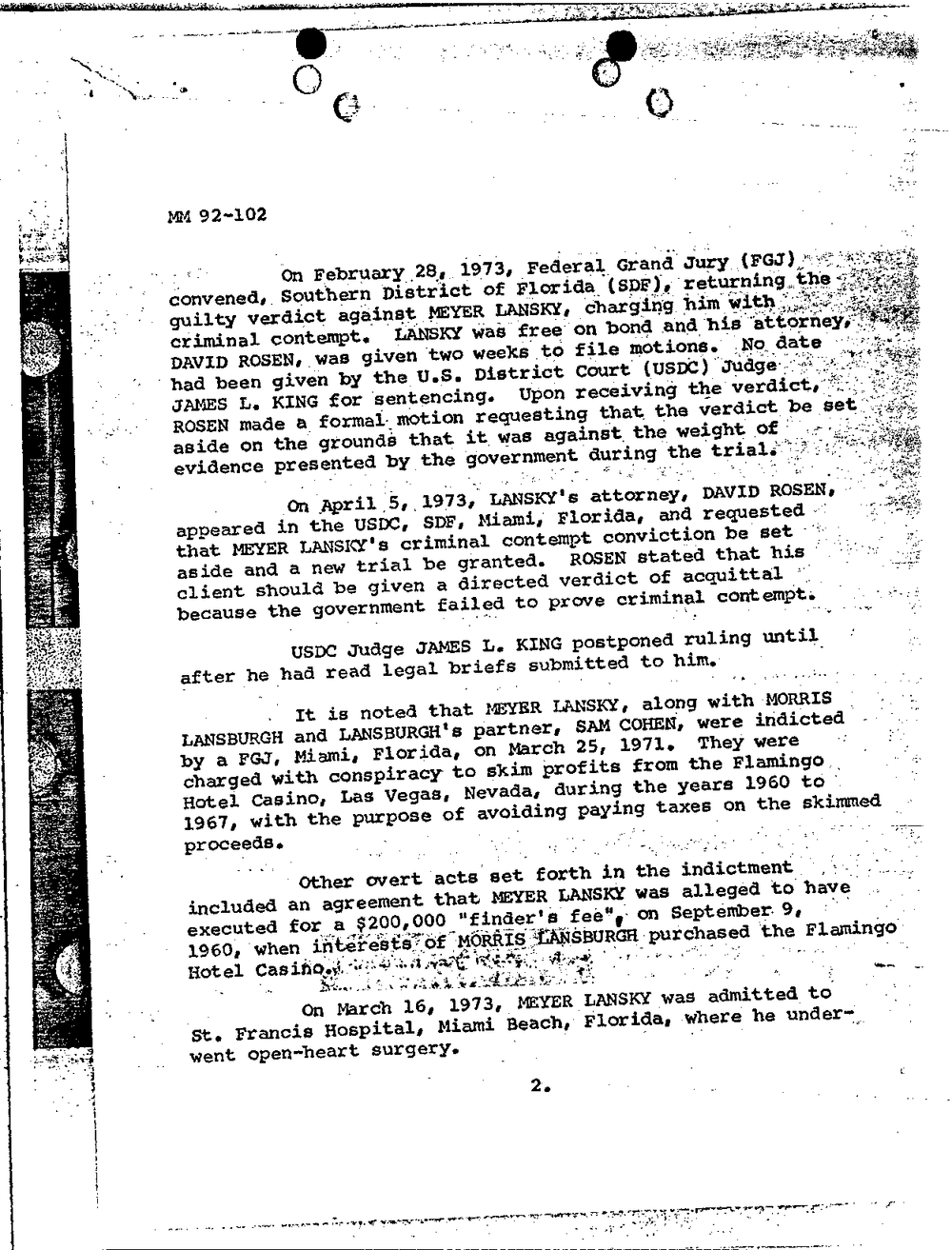 case-fileFBI Miami report on the 1971 Flamingo skimming indictment of Meyer Lansky and others (1973)Pages of an FBI Miami report of 1973 stating that Meyer Lansky, Morris Lansburgh and Sam Cohen were indicted by a Miami federal grand jury on March 25, 1971 on a charge of conspiracy to skim profits from the Flamingo Hotel Casino in Las Vegas during 1960 to 1967.case-fileFBI Vault: Louis (Lepke) Buchalter, Part 01First of four parts of the FBI's Buchalter file: a New York field report of August 1935 on the fur dressers antitrust case, a 1937 letter from the United States Attorney, the November 1937 report that names Shapiro and Buchalter as fugitives, and 1955 and 1956 Bureau summaries.case-fileFBI Vault: Louis (Lepke) Buchalter, Part 02Second part of the FBI's Buchalter file, 1937 to 1939: a New York report on his background and finances, 1939 report pages, the Bureau memorandum of July 5, 1939 on the fugitive hunt, and a Los Angeles report on a search made in August 1939.
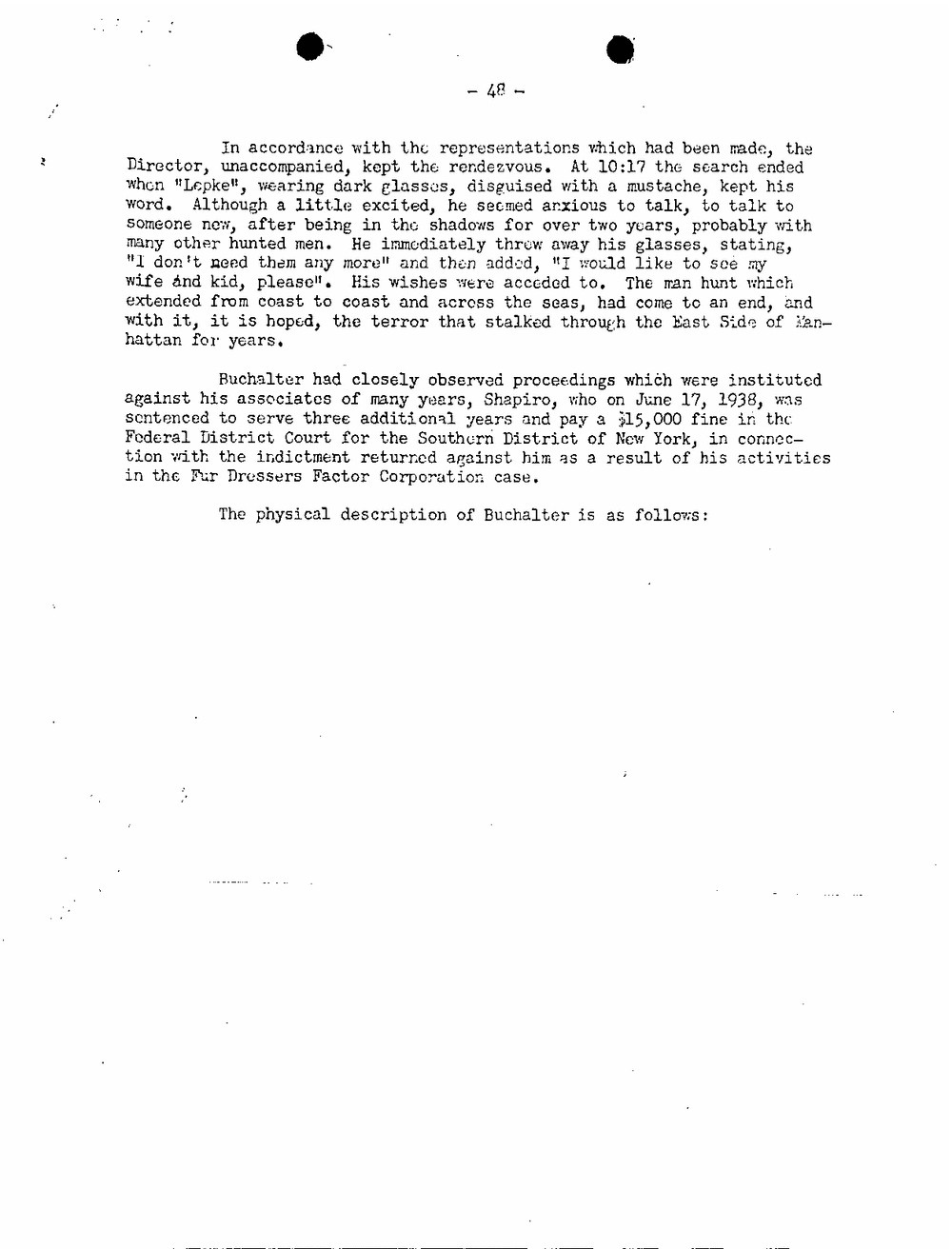 case-fileFBI Vault: Louis (Lepke) Buchalter, Part 03Third part of the FBI's Buchalter file: the Bureau's narrative "The Furdress Case" ending with his surrender on August 24, 1939, Los Angeles report pages from 1939, a 1956 memorandum, a 1966 Portland memorandum, and pasted newspaper clippings. Page 16 is stored here.case-fileFBI Vault: Louis (Lepke) Buchalter, Part 04 (Final)Final part of the FBI's Buchalter file, Sub A Section 13: mostly newspaper clippings from August 1939 that the Bureau collected on the New York racketeering grand jury, the combined reward and the search, with later clippings on Shapiro.case-fileFBI memorandum on the Buchalter and Shapiro fugitive investigation (July 5, 1939)A Bureau memorandum of July 5, 1939, in Part 02 of the Buchalter file, setting out the 1936 sentences in the fur dressers case, Buchalter's failure to appear on July 6, 1937, and the rewards offered for him from 1937 to 1939.
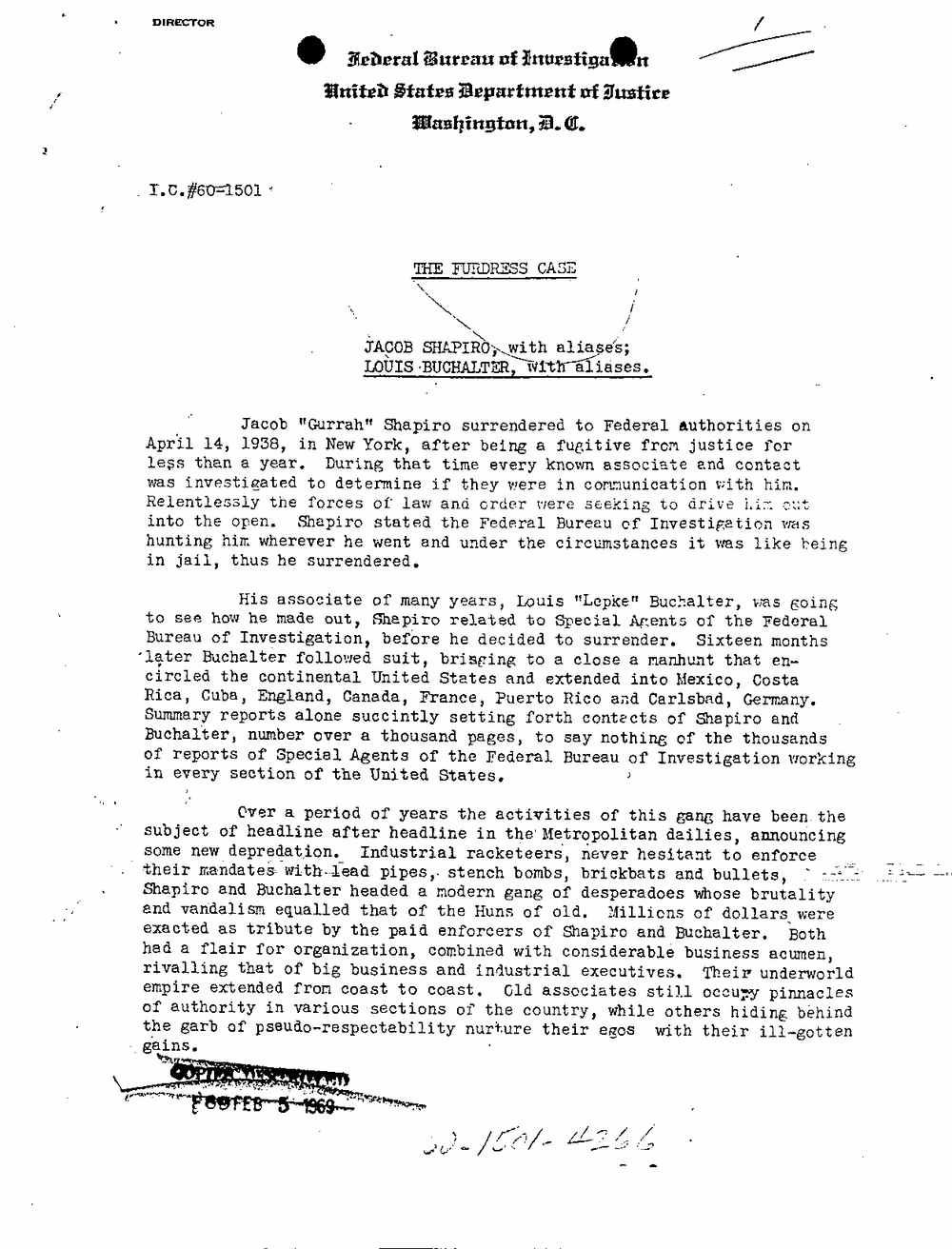 case-file"The Furdress Case": the FBI's narrative of the Shapiro and Buchalter surrenders (1939)An undated Bureau narrative, file 60-1501-4266, in Part 03 of the Buchalter file: Shapiro's surrender on April 14, 1938, the 1939 negotiations through Walter Winchell, and Buchalter's surrender to the Director at 10:17 on August 24, 1939. The first page is stored here.
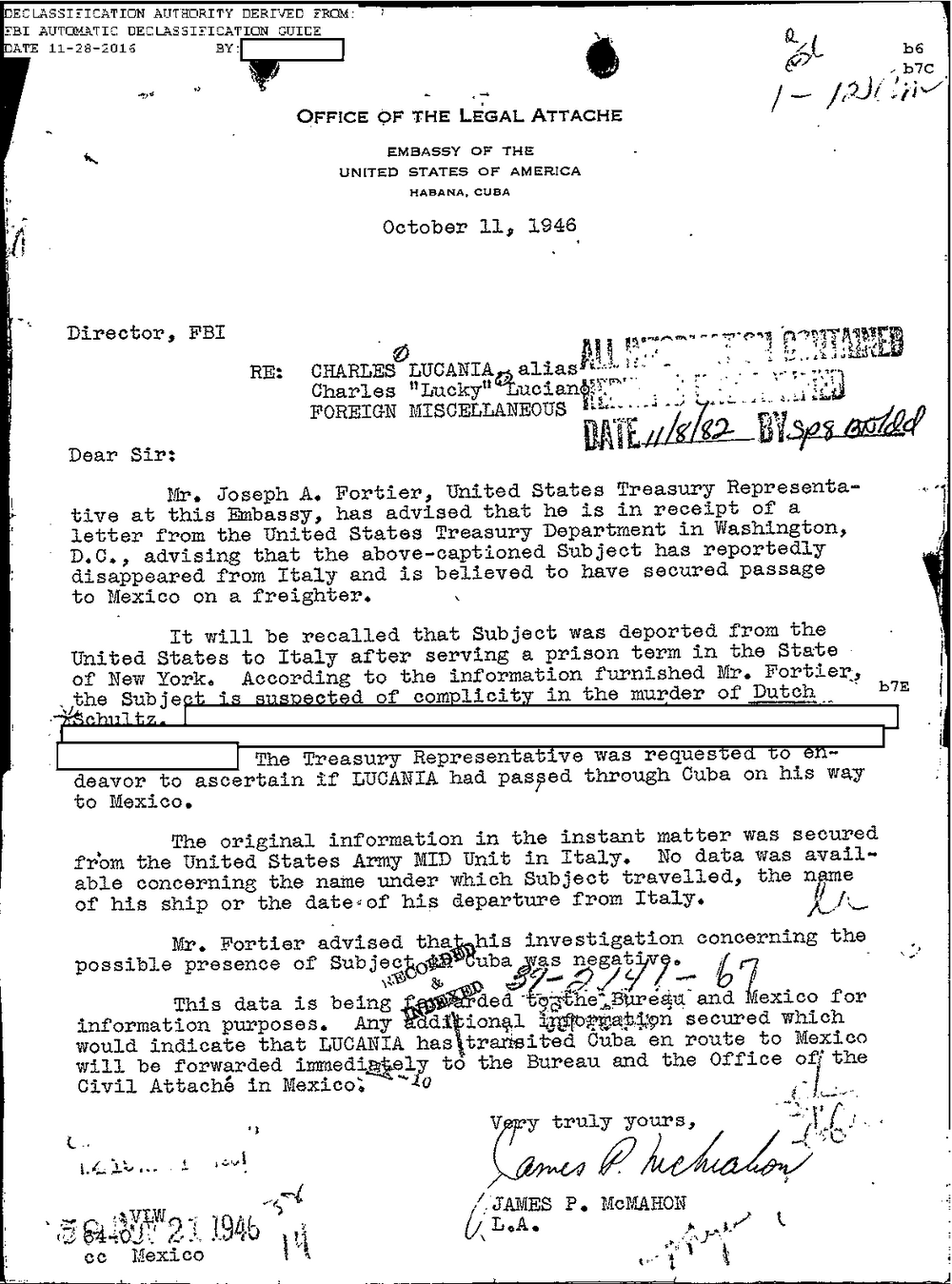 case-fileLegal Attache, Havana, to the Director, 11 October 1946: Treasury report that Luciano had left Italy, and a negative check in CubaThe FBI's Legal Attache at the embassy in Havana reports that the Treasury representative, Joseph A. Fortier, had word that Luciano 'has reportedly disappeared from Italy and is believed to have secured passage to Mexico on a freighter,' and that Fortier's check for him in Cuba was negative. It is the earliest Cuba document in the file.
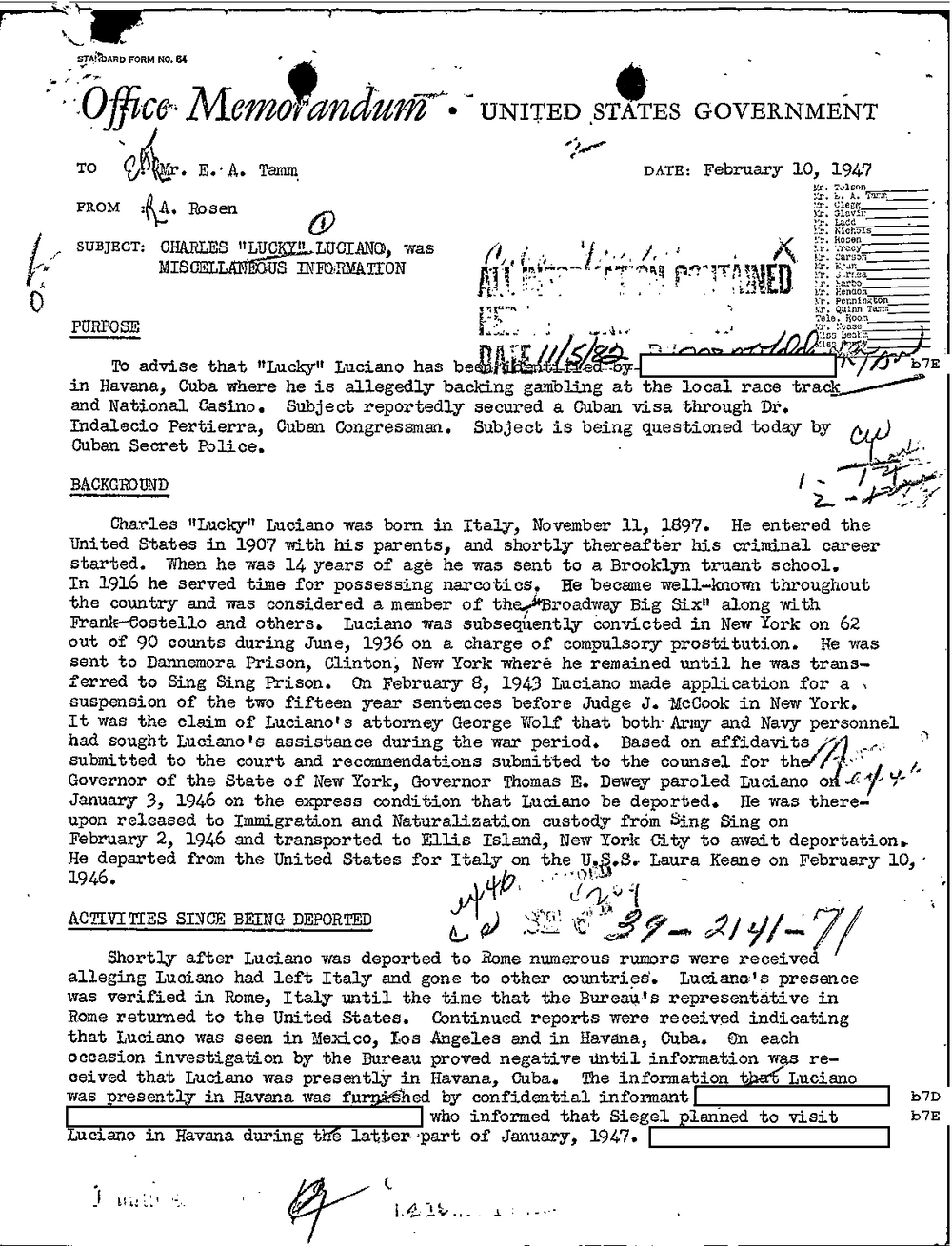 case-fileFBI memorandum, A. Rosen to E. A. Tamm, 10 February 1947: Luciano found in Havana, 'allegedly backing gambling at the local race track and National Casino'A headquarters memorandum reports that Luciano has been identified in Havana, where 'he is allegedly backing gambling at the local race track and National Casino,' that he 'reportedly secured a Cuban visa through Dr. Indalecio Pertierra, Cuban Congressman,' and that the Cuban Secret Police were questioning him that day.
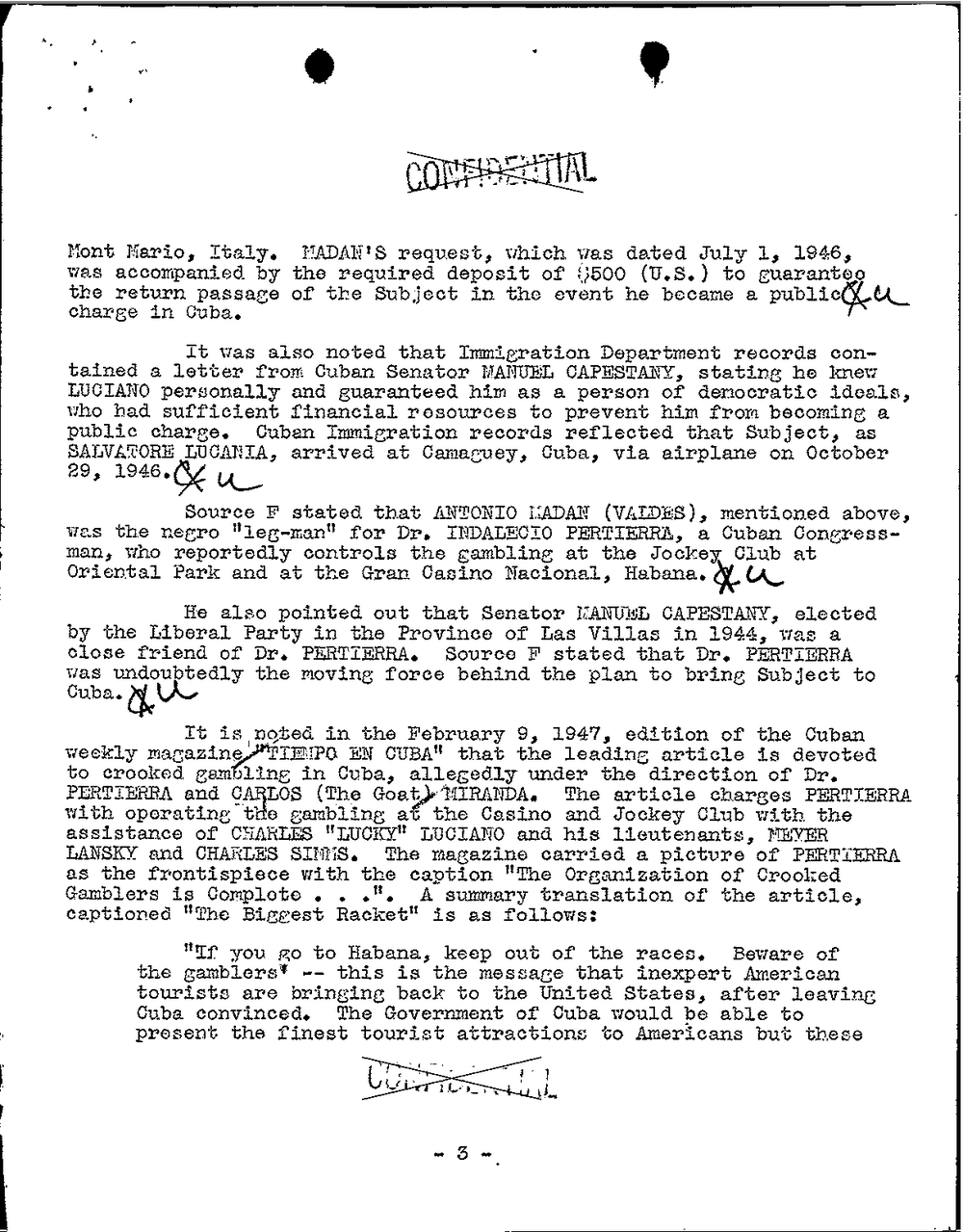 case-fileFBI report of Special Agent Leo J. Fox, Havana, 12 February 1947: Luciano's entry into Cuba, the Pertierra visa, and the gambling at the Gran Casino Nacional and Oriental ParkThe Havana office's first full report states that Luciano arrived at Camaguey by airplane on 29 October 1946 as Salvatore Lucania, that his visa was backed by a Cuban senator's letter, that Congressman Indalecio Pertierra 'reportedly controls the gambling at the Jockey Club at Oriental Park and at the Gran Casino Nacional,' and that Luciano frequented both.
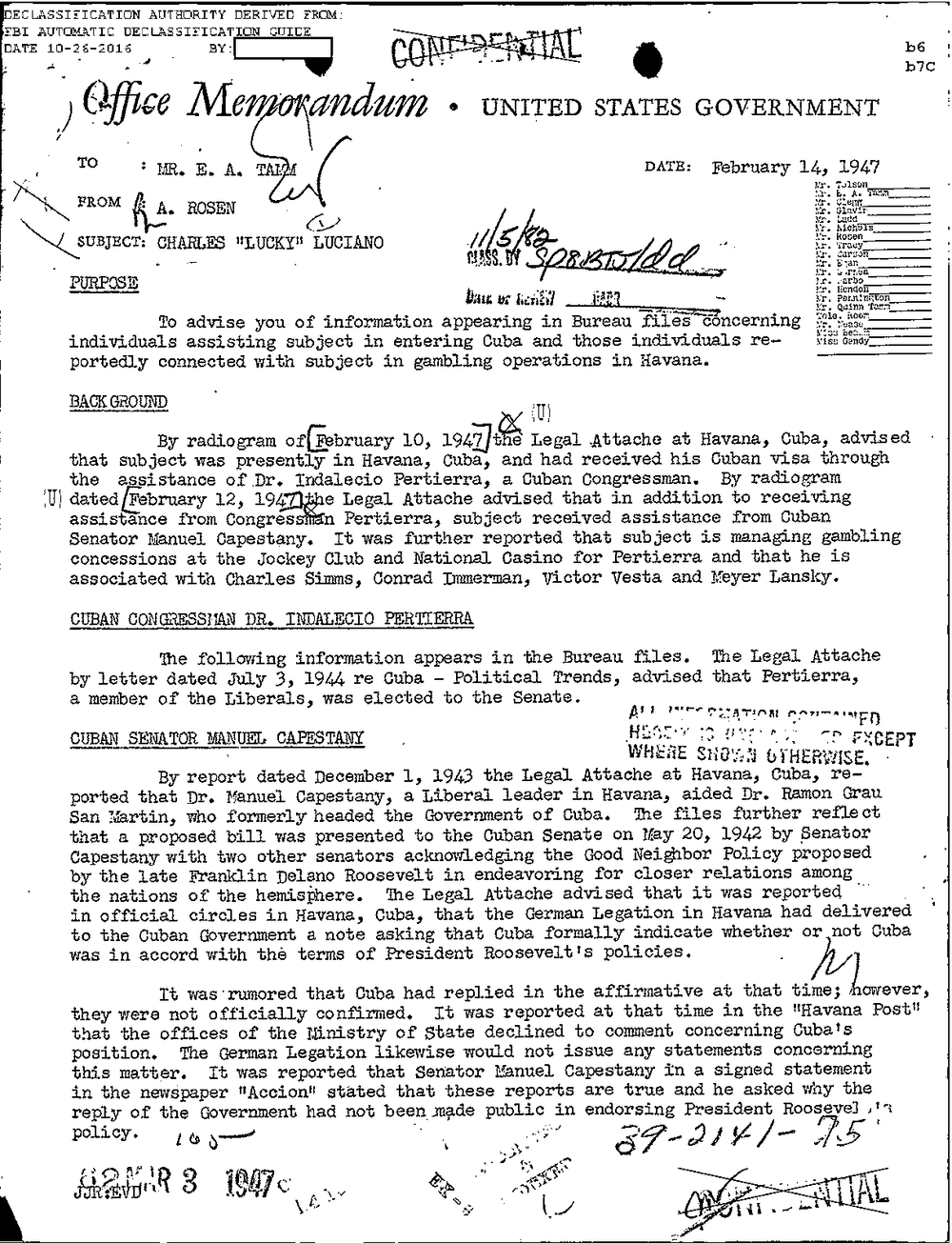 case-fileFBI memorandum, A. Rosen to E. A. Tamm, 14 February 1947: who helped Luciano enter Cuba, and his reported gambling associates in HavanaSummarizing the Legal Attache's radiograms, headquarters records that Luciano had help from Congressman Pertierra and Senator Manuel Capestany, that he 'is managing gambling concessions at the Jockey Club and National Casino for Pertierra,' and that he was associated with Charles Simms, Conrad Immerman, Victor Vesta and Meyer Lansky.
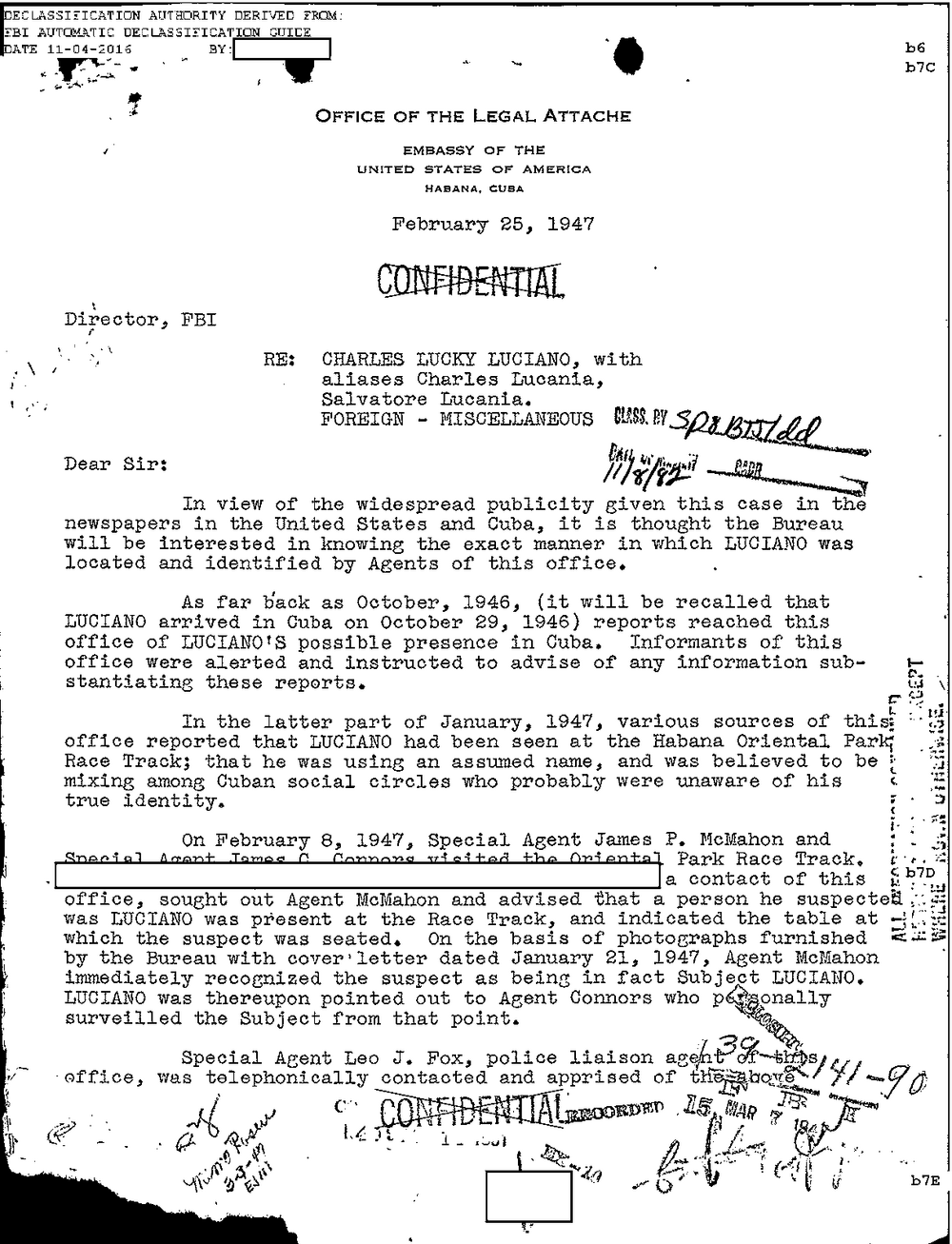 case-fileLegal Attache James P. McMahon, Havana, to the Director, 25 February 1947, with a headquarters memorandum of 3 March: how FBI agents identified Luciano at Oriental ParkWritten 'In view of the widespread publicity,' the Legal Attache's letter says informants reported Luciano at the Oriental Park race track in late January 1947, 'using an assumed name,' and that on 8 February a contact pointed him out to McMahon, who recognized him from Bureau photographs; Agent Leo J. Fox arrived with two Cuban Secret Police officers and confirmed the identification.
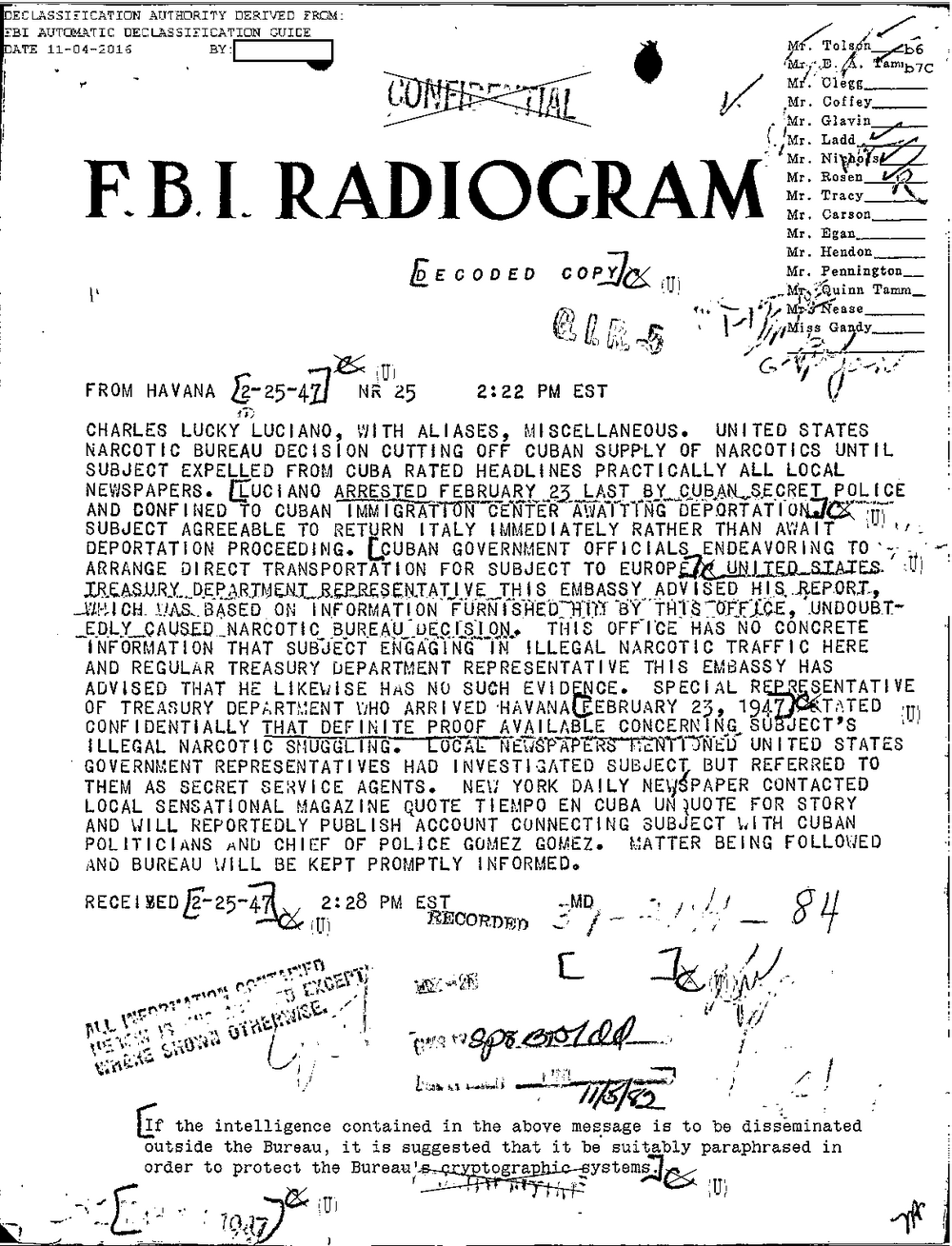 case-fileFBI radiogram from Havana, 25 February 1947: the Narcotics Bureau's decision 'cutting off Cuban supply of narcotics until subject expelled,' and Luciano's arrestA decoded radiogram reports that the United States Narcotic Bureau's decision 'cutting off Cuban supply of narcotics until subject expelled from Cuba rated headlines practically all local newspapers,' that Luciano was arrested and confined at the Cuban immigration center, and that 'THIS OFFICE HAS NO CONCRETE INFORMATION THAT SUBJECT ENGAGING IN ILLEGAL NARCOTIC TRAFFIC HERE.'
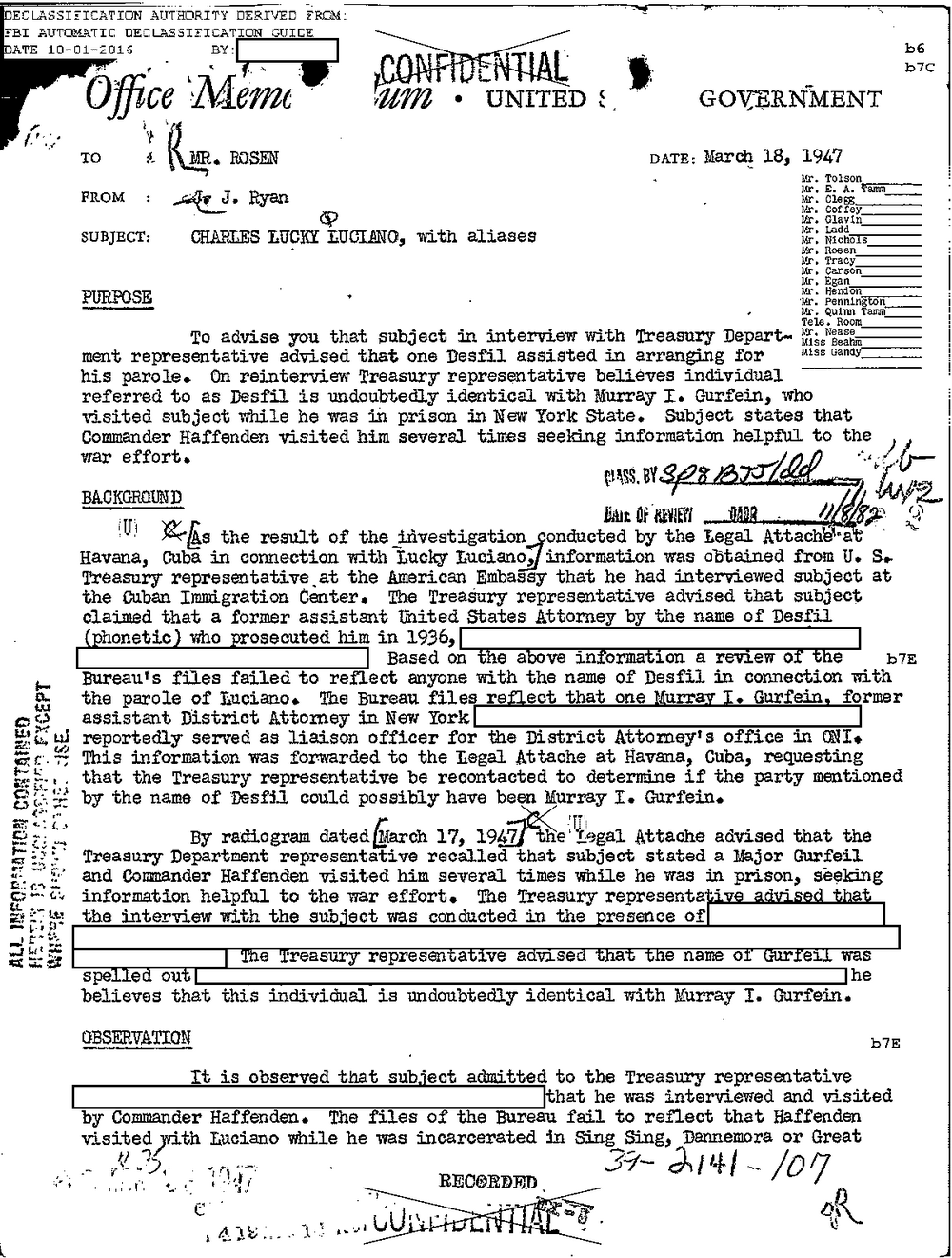 case-fileFBI memorandum, J. Ryan to Mr. Rosen, 18 March 1947: Luciano, interviewed at the Cuban Immigration Center, names 'Major Gurfeil' and Commander HaffendenHeadquarters records that the Treasury representative in Havana interviewed Luciano at the Cuban Immigration Center, where Luciano said a former prosecutor helped arrange his parole; on reinterview the representative recalled the name as 'Major Gurfeil,' believed to be Murray I. Gurfein, and said Luciano named Commander Haffenden of Naval Intelligence.
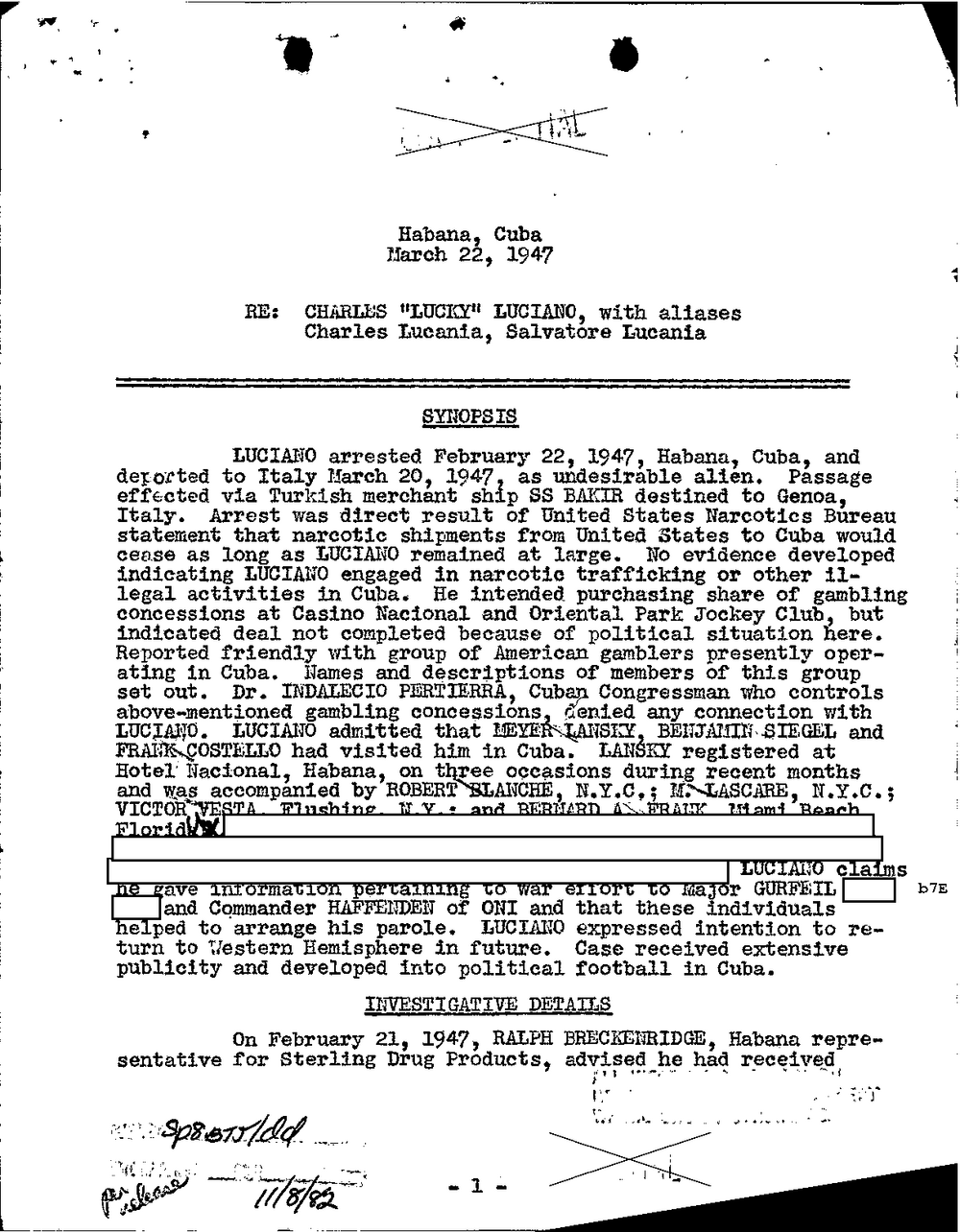 case-fileFBI report of Special Agent Leo J. Fox, Havana, 22 March 1947: Luciano's arrest and deportation, and the visits by Lansky, Siegel and CostelloThe closing report on Luciano in Cuba: arrested in Havana on 22 February 1947 and deported to Italy on 20 March 1947; 'No evidence developed indicating LUCIANO engaged in narcotic trafficking or other illegal activities in Cuba'; and 'LUCIANO admitted that MEYER LANSKY, BENJAMIN SIEGEL and FRANK COSTELLO had visited him in Cuba,' with Lansky's three Hotel Nacional registrations.
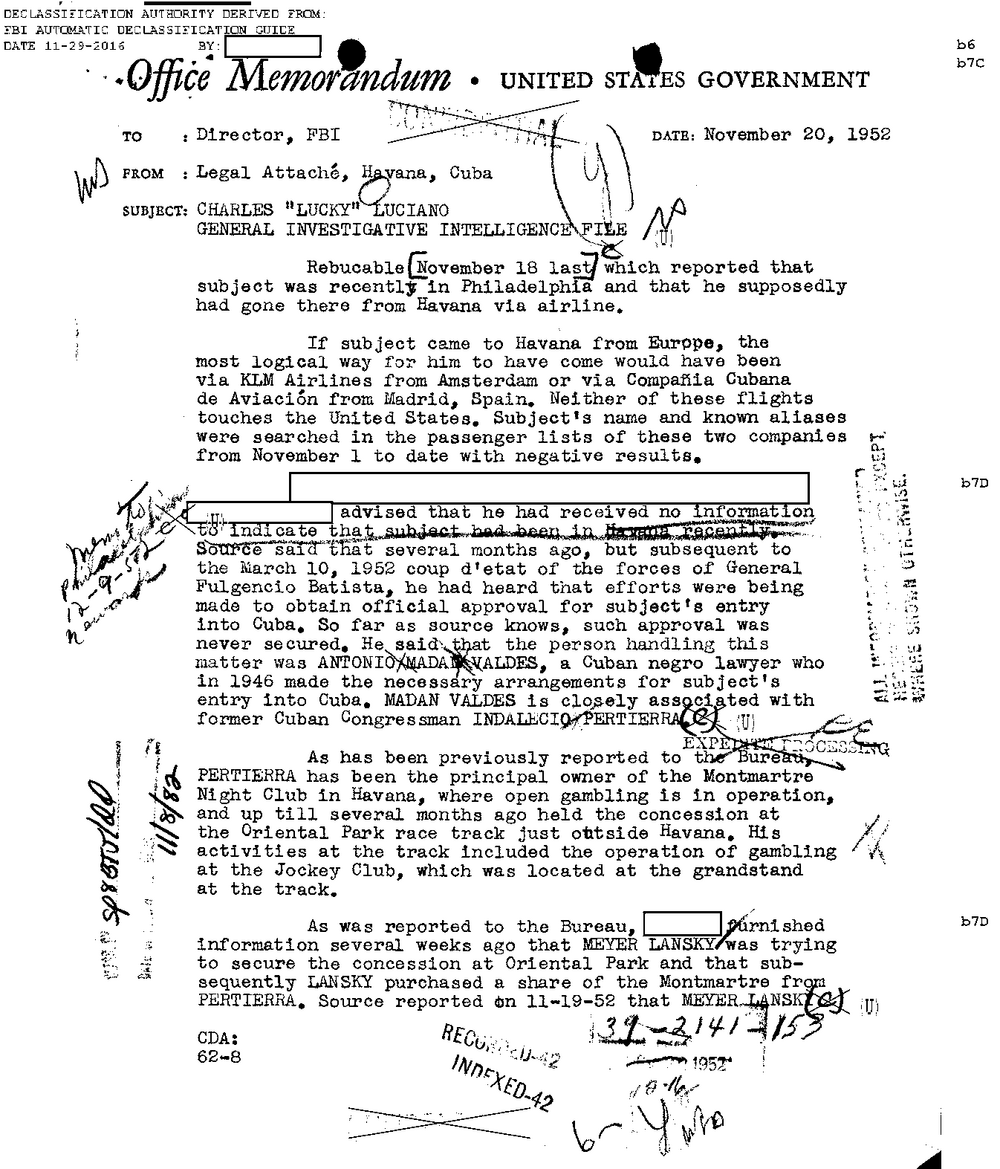 case-fileLegal Attache, Havana, to the Director, 20 November 1952: no trace of Luciano in Havana; Lansky's reported share of the Montmartre and bid for Oriental ParkAnswering a report that Luciano had flown from Havana to Philadelphia, the Havana office found nothing in airline lists. It relayed informants' reports that Meyer Lansky had bought a share of the Montmartre night club from Pertierra and was trying to secure the Oriental Park concession, with 'his brother JAKE LANSKY' in Havana 'looking after his interests.'
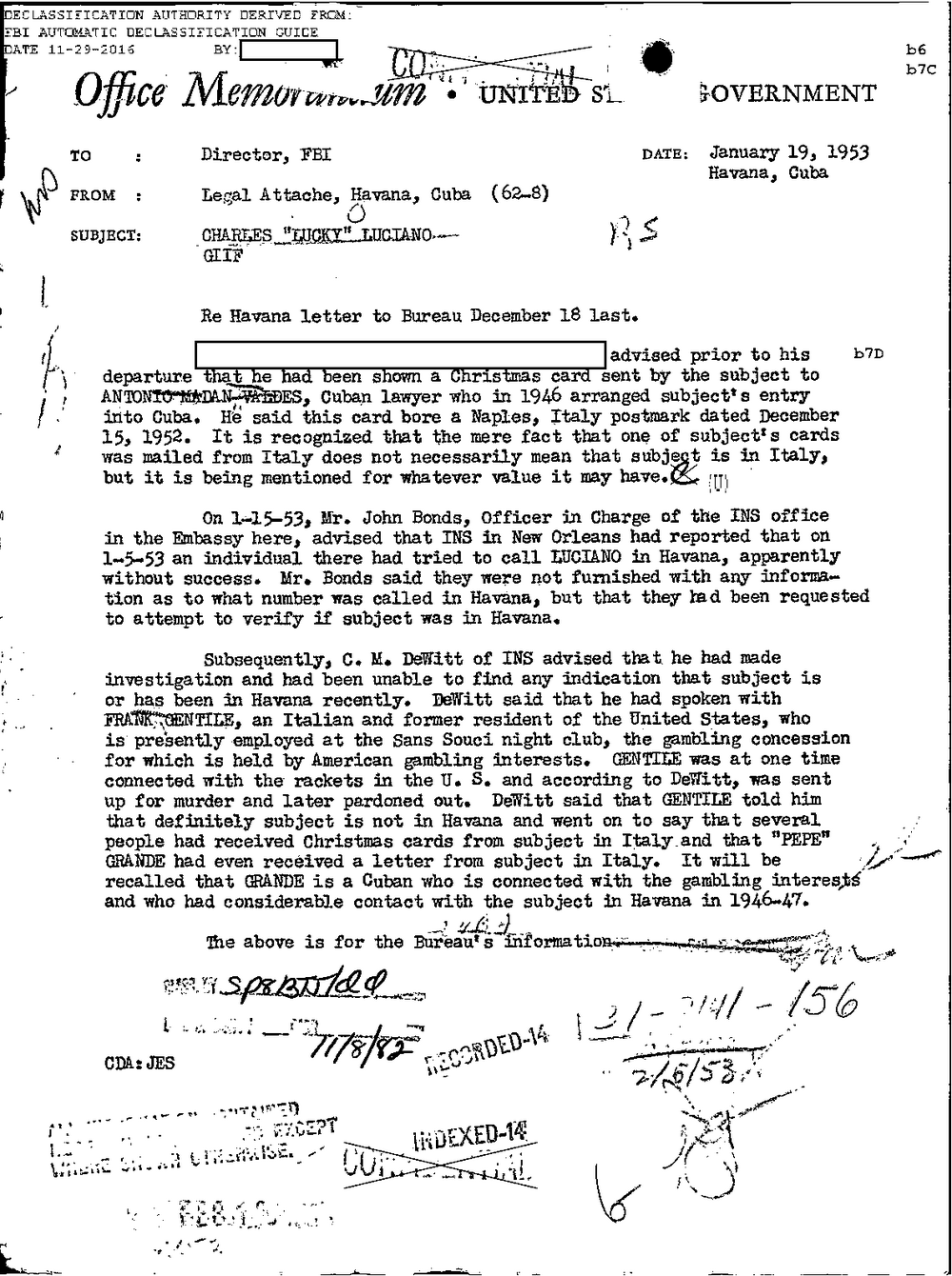 case-fileLegal Attache, Havana, to the Director, 19 January 1953: no sign of Luciano in Havana; the Sans Souci's gambling concession 'held by American gambling interests'The Havana office reports a Christmas card from Luciano postmarked Naples and an INS inquiry that found no indication he had been in Havana recently. The INS officer had spoken with a man employed at the Sans Souci night club, 'the gambling concession for which is held by American gambling interests.'case-fileFBI New York teletypes on Luciano's custody and departure (February 25 to 27, 1946)Urgent teletypes from the FBI's New York office to the Director, February 1946: Luciano's 1936 conviction, Governor Dewey's grant of parole on January 3, 1946 on condition of release to immigration custody, his removal to Ellis Island, and the immigration service's account of his boarding the SS Laura Keene on February 8, 1946.case-fileFBI memorandum on "Charles Luciana, with aliases" (August 28, 1935)A copy of a Bureau memorandum of August 28, 1935, at the start of the FBI's Luciano file: what the Bureau's files held on him, a reporter's July 1935 account of contacts in which Luciano was said to offer help finding the fugitive Karpis, and his arrest record from 1921 to 1931.
 case-fileFBI Vault: "Mafia" monograph, Part 01Part 01 of the FBI's internal monograph on the Mafia, opening with the Sicilian background of the word and the organization. The text layer is heavily garbled and the date comes from the Vault listing.
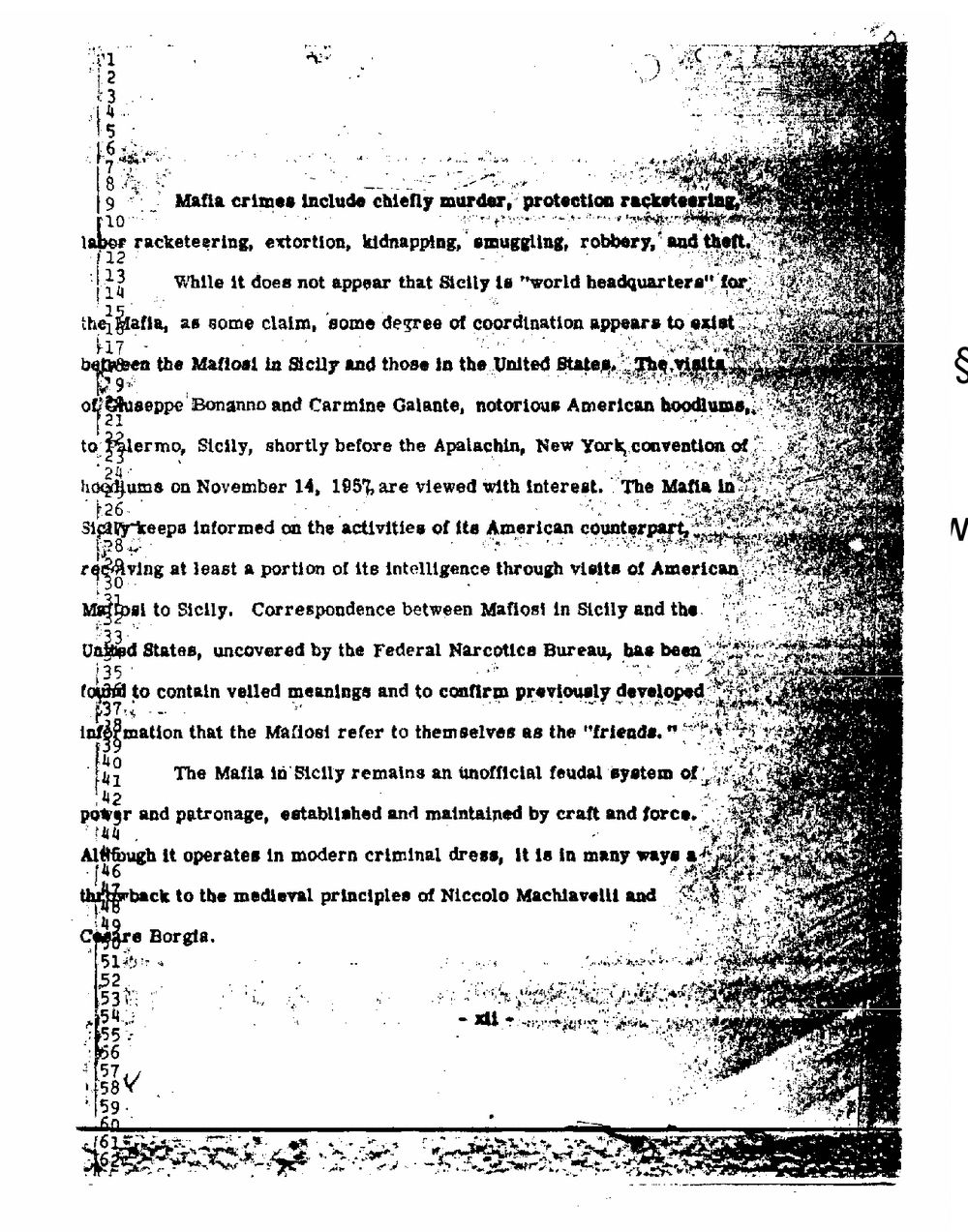 case-fileFBI "Mafia" monograph, Part 01: visits to Sicily "viewed with interest" before the Apalachin meetingSummary page of an FBI monograph on the Mafia saying that the visits of Giuseppe Bonanno and Carmine Galante to Palermo shortly before the 14 November 1957 Apalachin gathering "are viewed with interest." The monograph is undated in the pages examined.
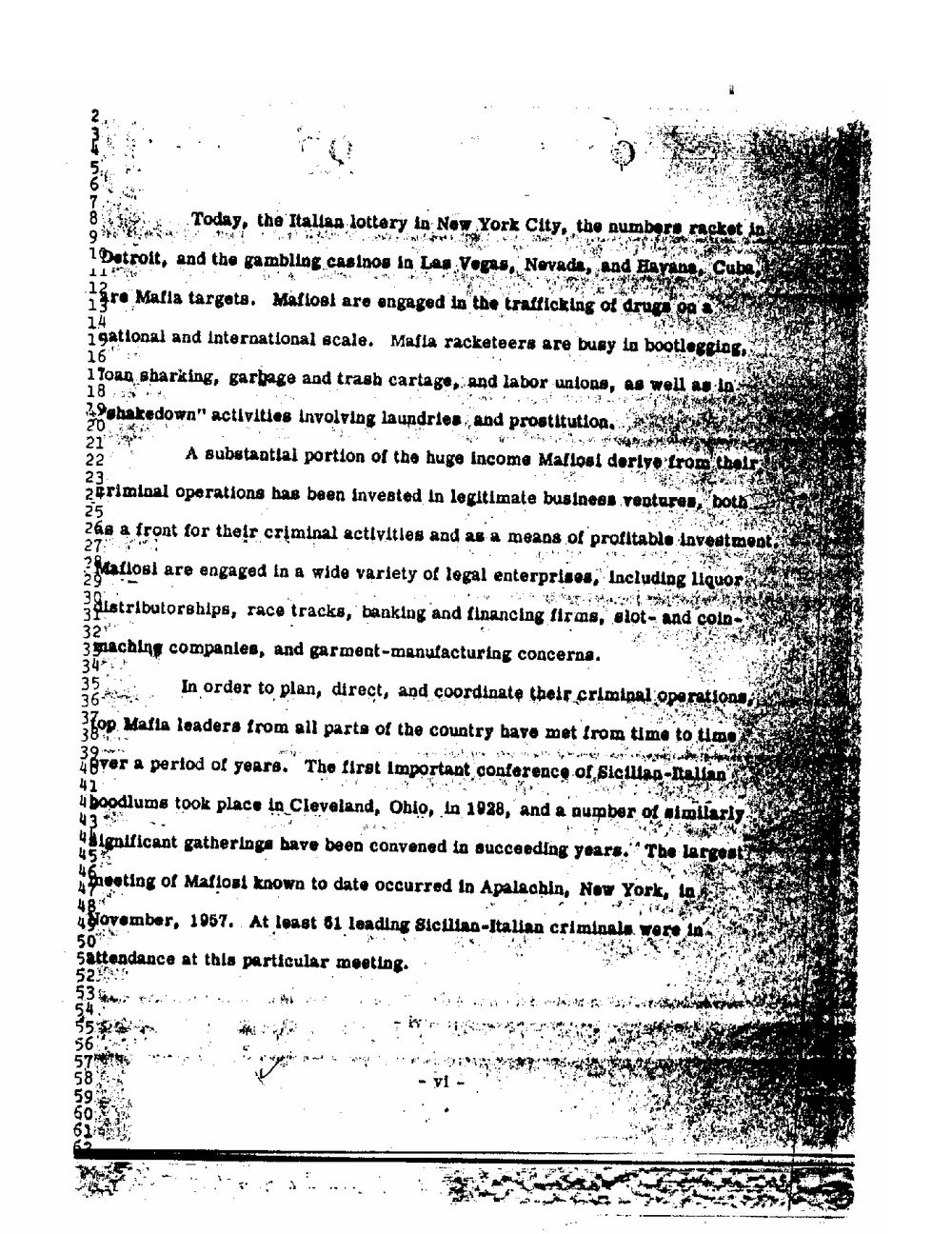 case-fileFBI "Mafia" monograph, Part 03: "The largest meeting of Mafiosi known to date," Apalachin, "at least 61"Summary page of an FBI monograph on the Mafia stating that the largest meeting known to date occurred at Apalachin in November 1957 with "at least 61" in attendance, and that the first important conference was in Cleveland in 1928. The monograph is undated in the pages examined.
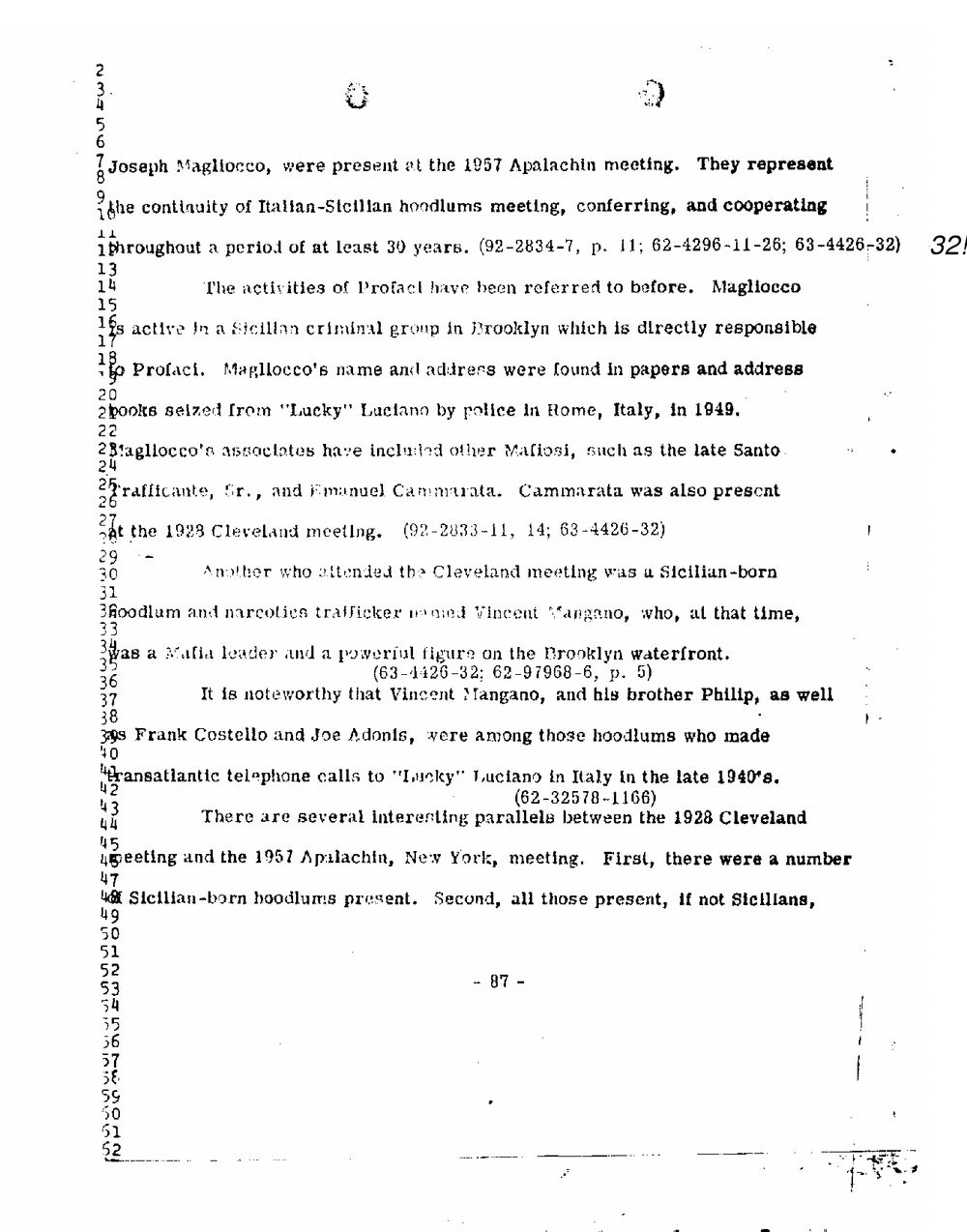 case-fileFBI "Mafia" monograph, Part 04: the 1928 Cleveland meeting and the 1957 Apalachin meeting comparedPage of an FBI monograph whose first legible line names Joseph Magliocco among those present at the 1957 Apalachin meeting (the sentence begins on the preceding page) and which begins a list of "parallels" with the 1928 Cleveland meeting. The monograph is undated in the pages examined.
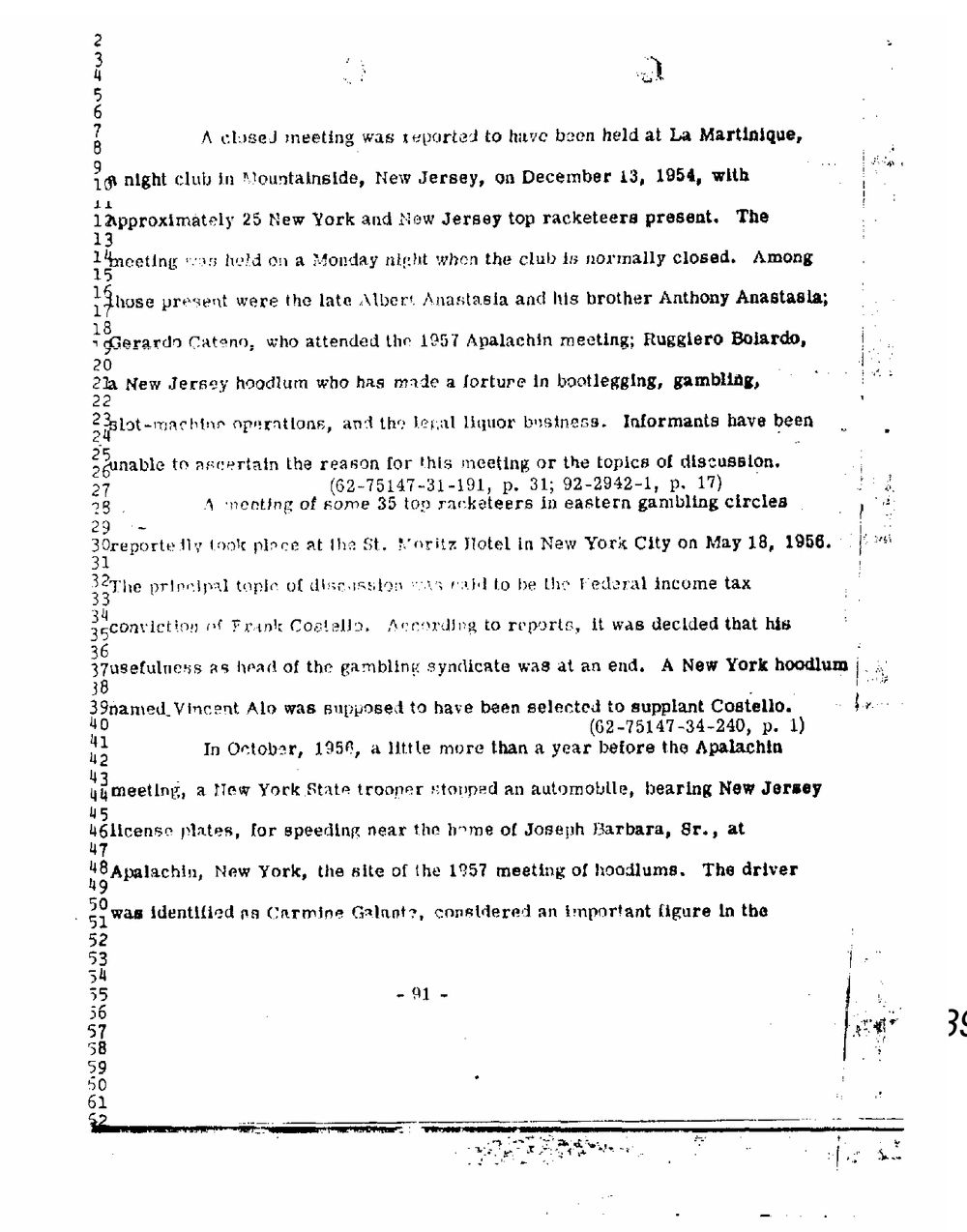 case-fileFBI "Mafia" monograph, Part 04: reported earlier meetings and the October 1956 traffic stop near Barbara's homePage of an FBI monograph listing reported closed meetings in the 1950s and stating that in October 1956 a New York State trooper stopped a car with New Jersey plates for speeding near Joseph Barbara's home, the driver being identified as Carmine Galante.
 case-fileFBI Vault: Meyer Lansky, Part 01Serials from the early 1950s, including a Justice Department release of December 19, 1952 announcing that Attorney General McGranery had directed a petition to cancel Lansky's naturalization.
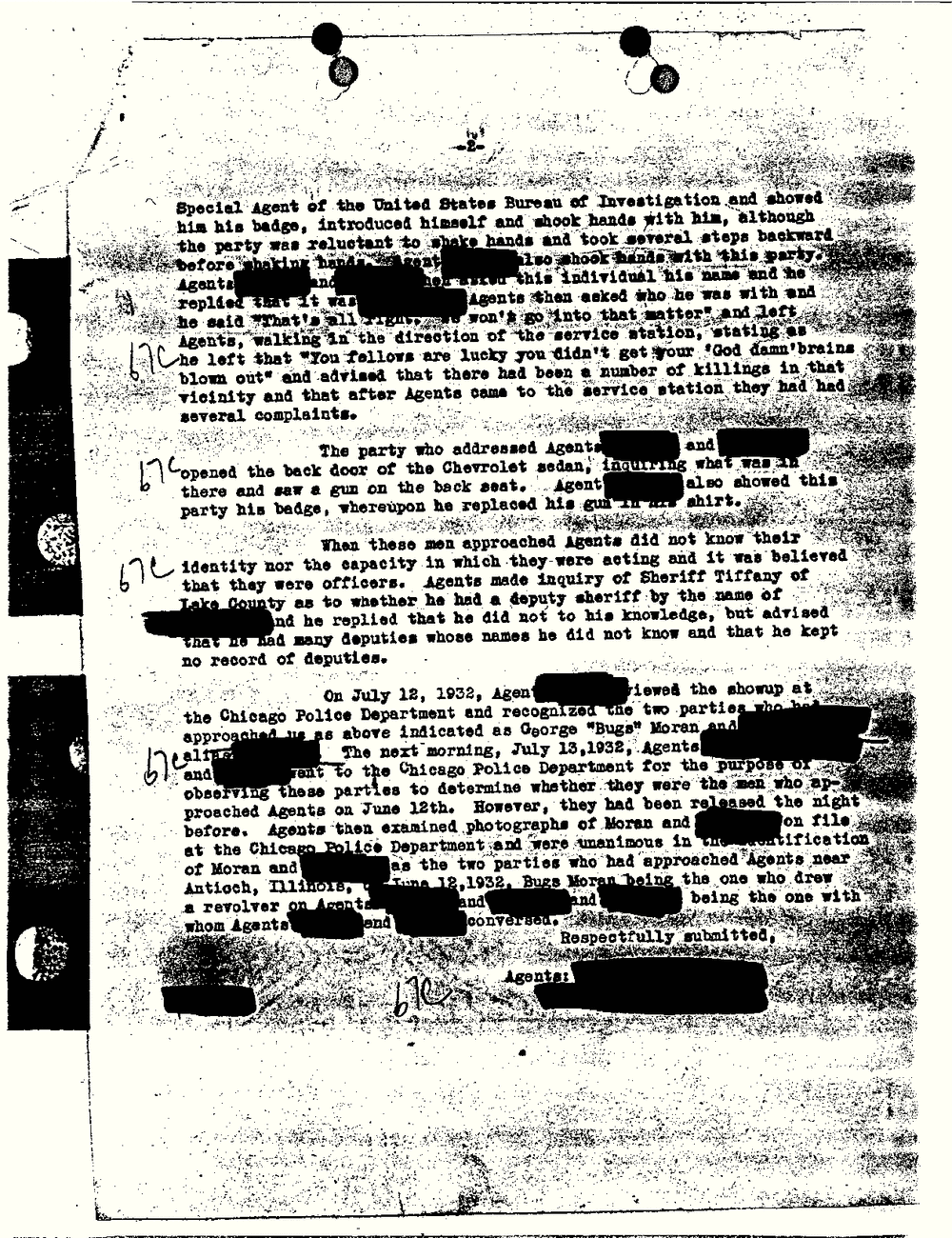 case-fileFBI Vault, George (Bugs) Moran, Part 01: Bureau of Investigation memorandum of July 19, 1932The first part of the FBI's Moran file. Its legible core is a two-page memorandum reporting that on June 12, 1932 two men approached agents near Antioch, Illinois, one of them drawing a gun, and that agents later identified the two from Chicago police photographs as George "Bugs" Moran and a second man whose name is redacted.
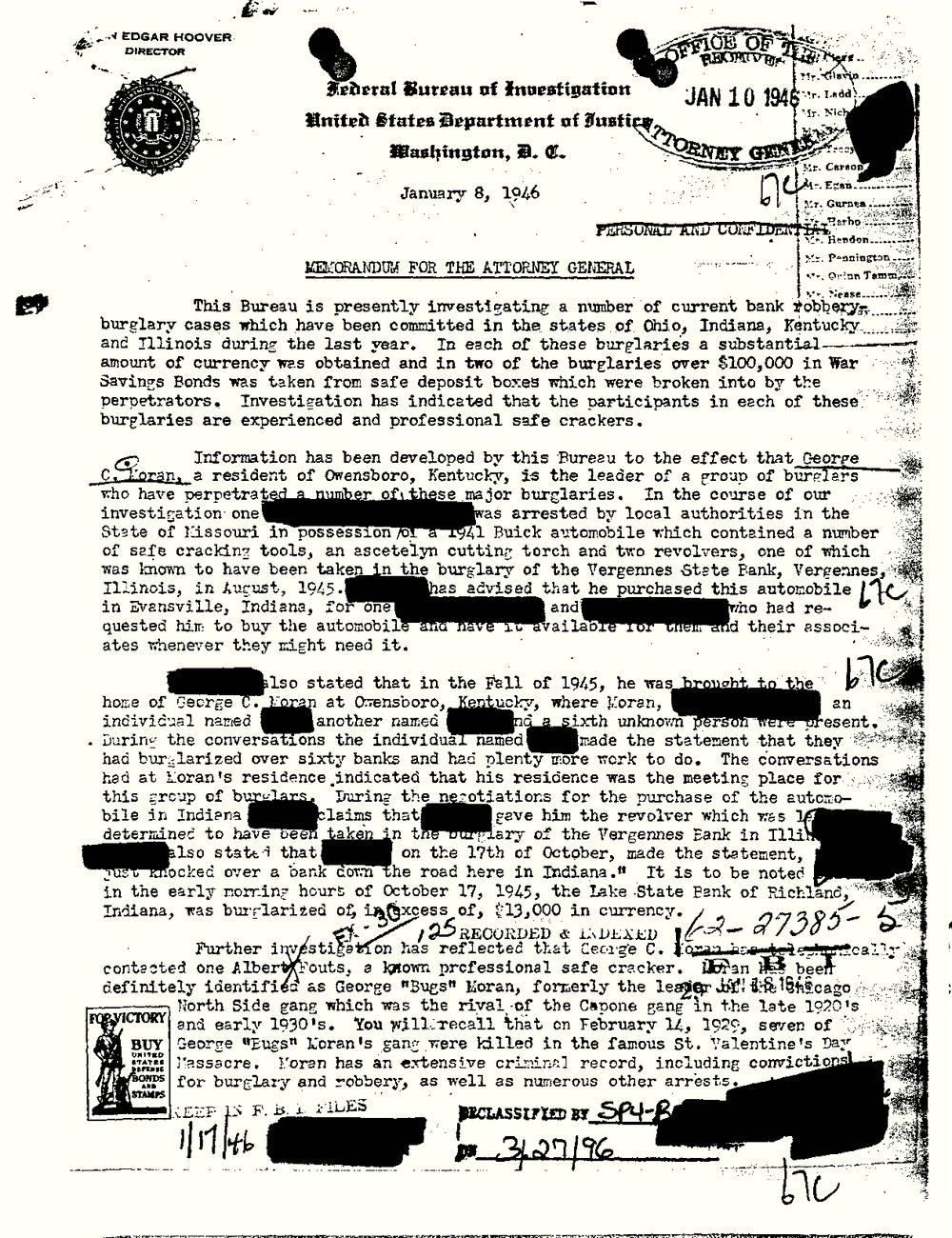 case-fileFBI Vault, George (Bugs) Moran, Part 02: memorandum for the Attorney General, January 8, 1946A two-page memorandum over J. Edgar Hoover's name telling the Attorney General that a resident of Owensboro, Kentucky named as the leader of a group of bank burglars had been "definitely identified as George "Bugs" Moran," and asking authority for a technical surveillance of his residence.
 case-fileFBI Vault, George (Bugs) Moran, Part 03 (Final): teletype, routing slips and newspaper clippings, 1950sThe last part of the FBI's Moran file: a largely illegible teletype, Bureau routing slips, and clipped newspaper articles from the 1950s. The clippings are not quoted or reproduced here.
 case-fileFBI Vault file on Murray HumphreysThe FBI Vault's release of the Bureau file on Murray Humphreys, in 25 parts. Part 01 opens with a Bureau summary of his record and activities.
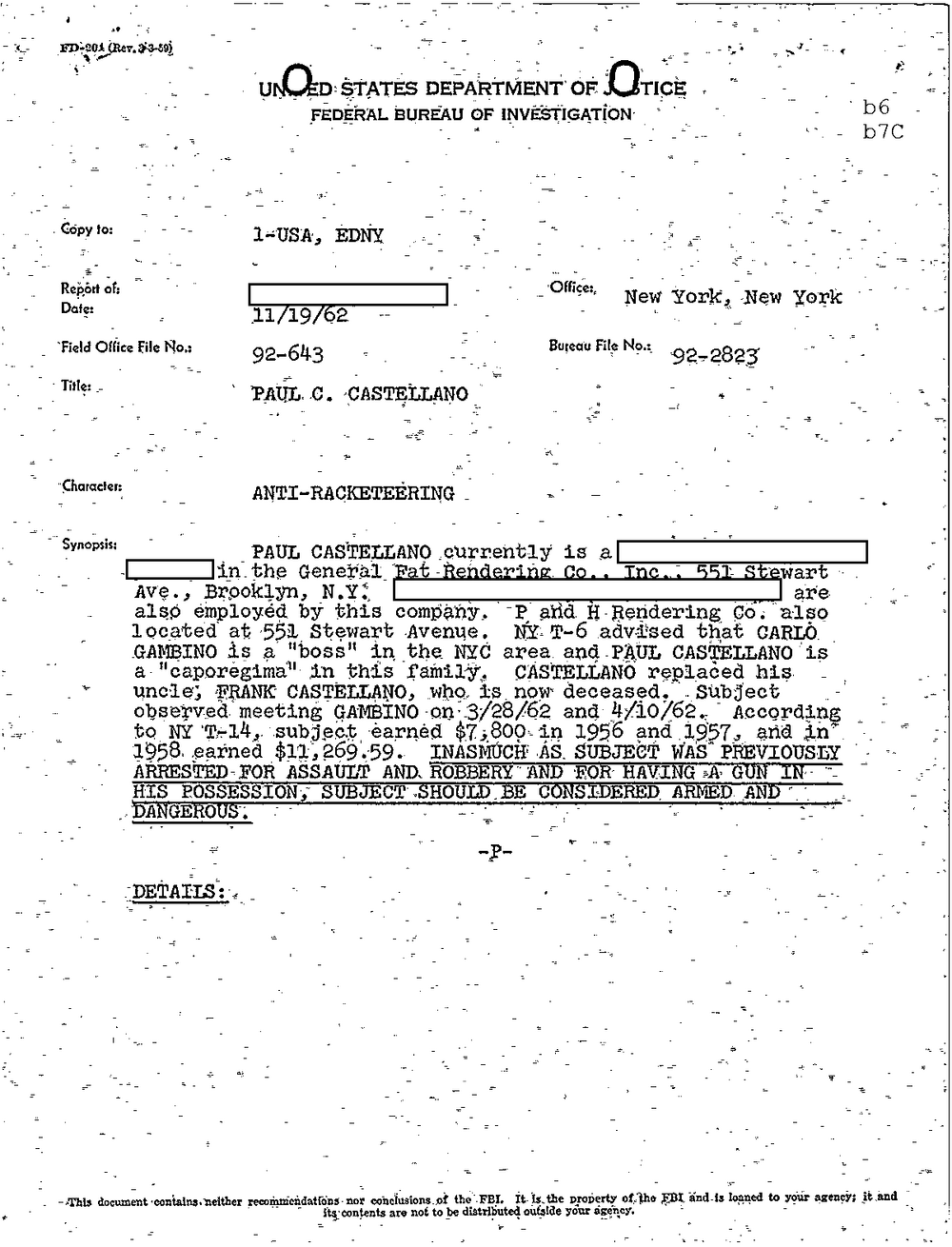 case-fileFBI Vault: Paul Castellano, Part 01Serials mainly from 1956–1962, with later items: a 1962 report relaying an informant who named Carlo Gambino a "boss" and Castellano a "caporegima," and a 1985 teletype on Thomas Eboli's position and his killing in 1972.
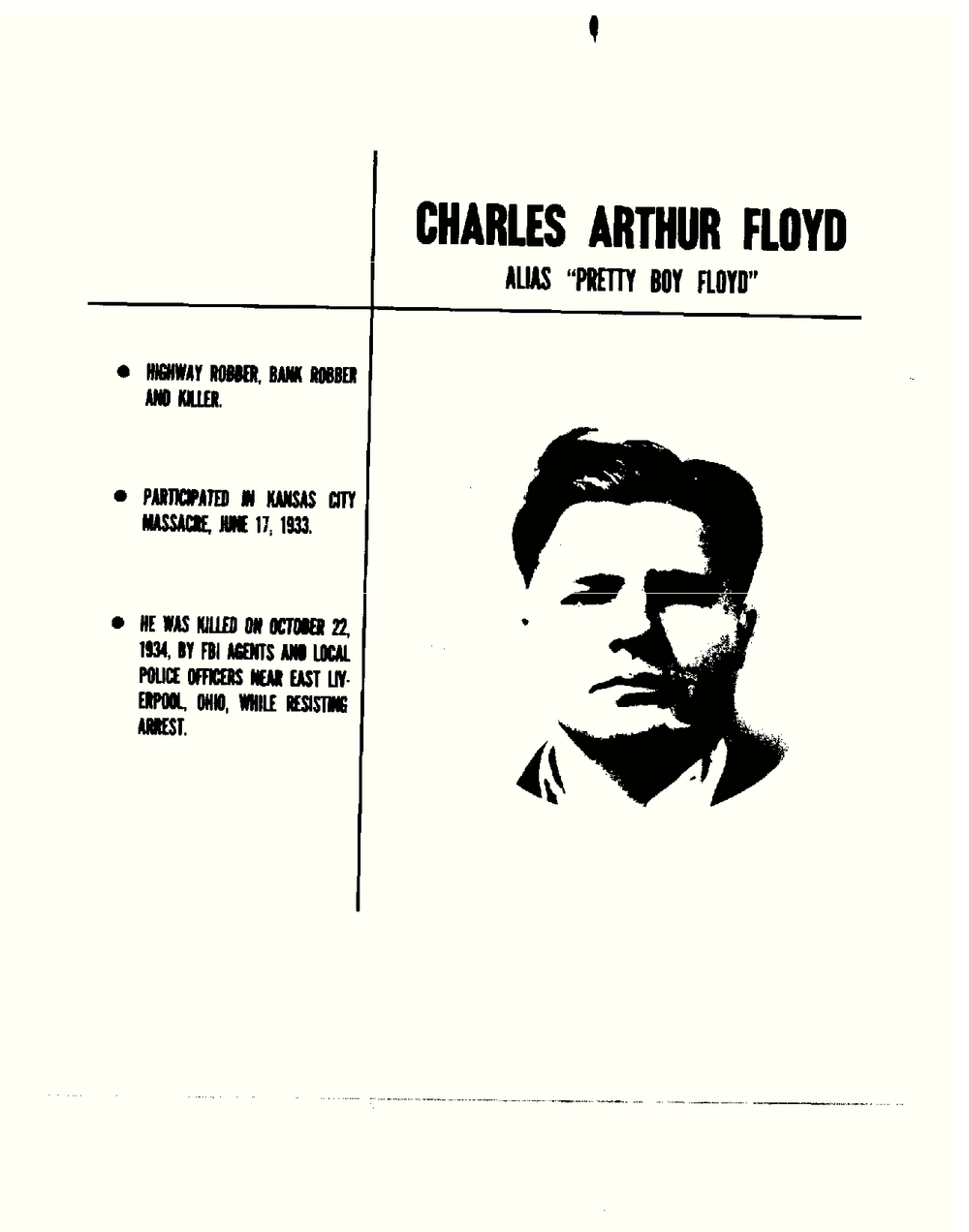 case-fileFBI Vault: Charles Arthur (Pretty Boy) Floyd, Part 01 (Final)The Vault's single part for Floyd (17 viewer pages): a placard-style page with his photograph and a caption, a criminal-record summary, and a 29 May 1940 memorandum transmitting an 'Interesting Case Write-Up concerning the Kansas City Massacre Case.'
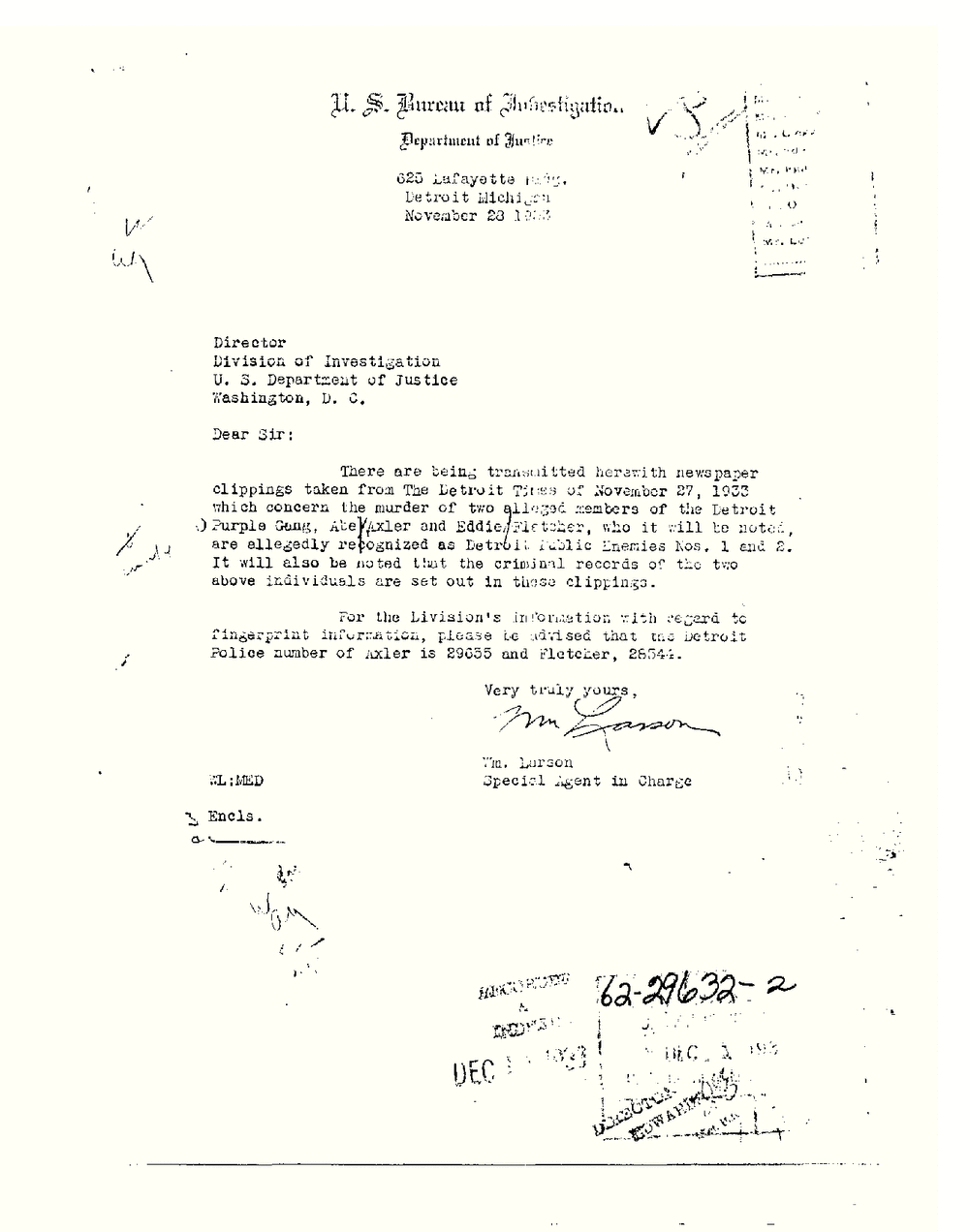 case-fileDetroit Bureau of Investigation letter on the deaths of Abe Axler and Eddie Fletcher (28 November 1933)Special Agent in Charge Wm. Larson at Detroit sends the Director Detroit Times clippings on 'the murder of two alleged members of the Detroit Purple Gang, Abe Axler and Eddie Fletcher', with their Detroit police numbers.
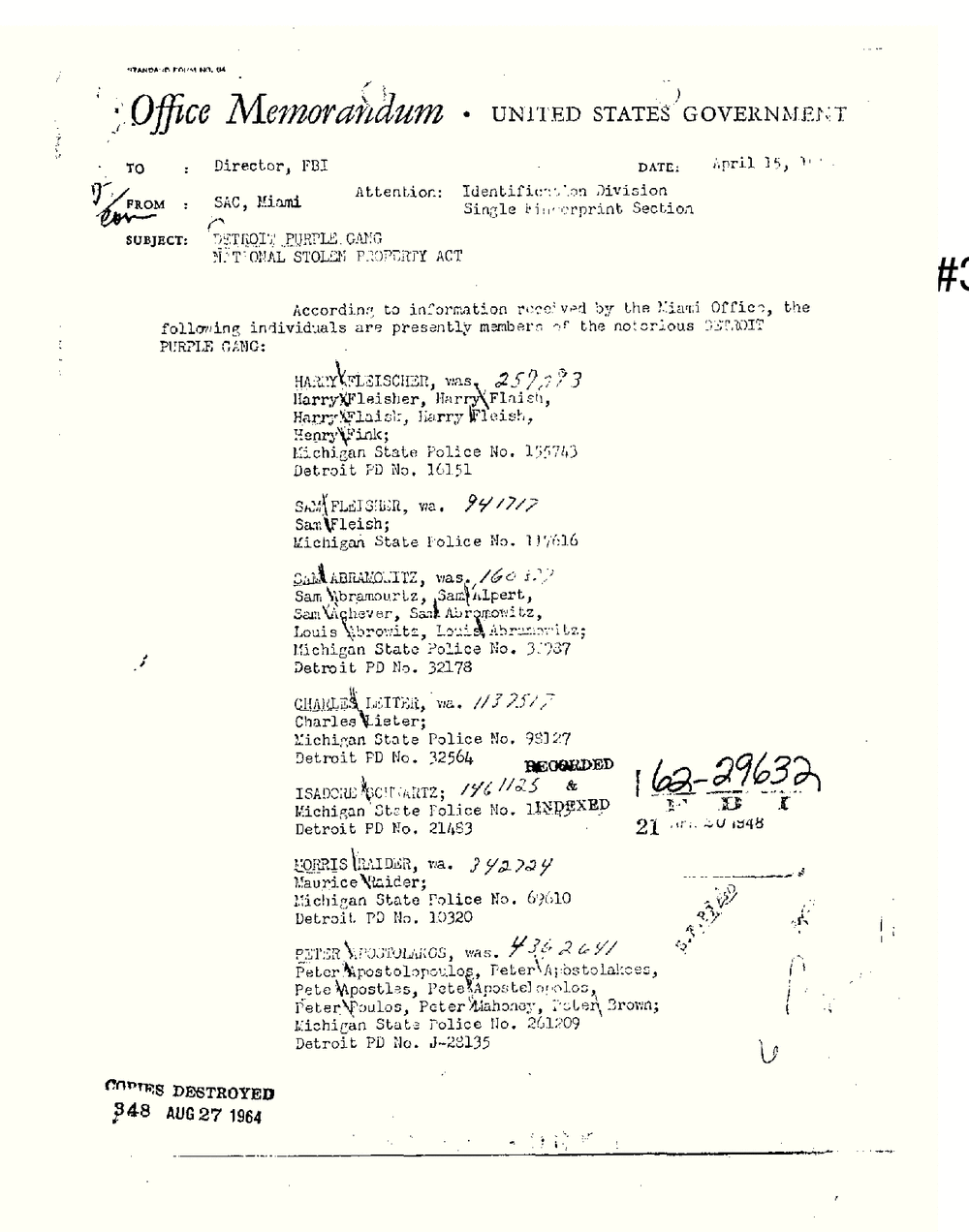 case-fileMiami office memorandum 'Detroit Purple Gang' (April 1948)An FBI office memorandum from the Special Agent in Charge at Miami to the Identification Division lists seven men, with aliases and police numbers, said 'according to information received by the Miami Office' to be 'presently members of the notorious DETROIT PURPLE GANG'.
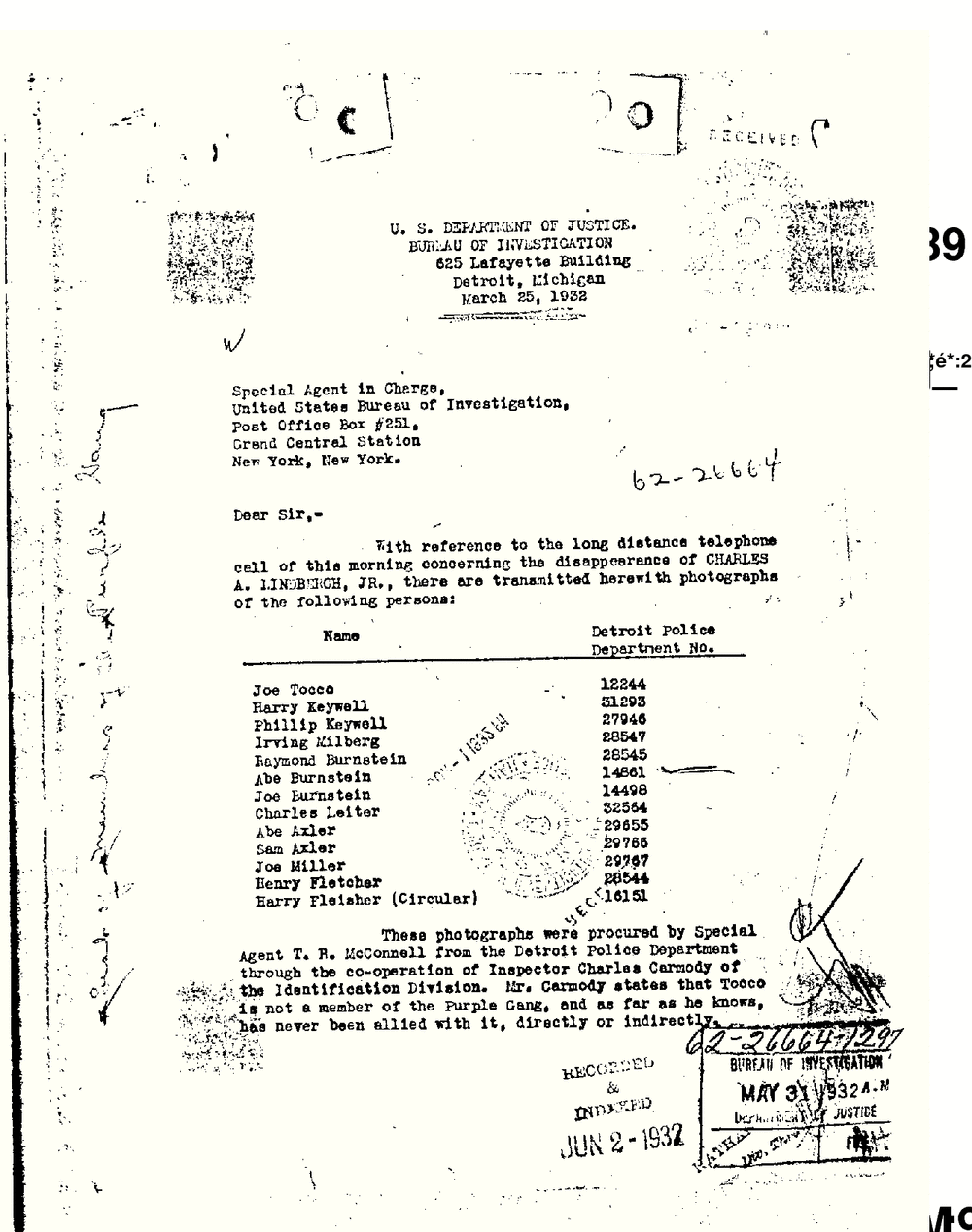 case-fileDetroit Bureau of Investigation letter sending Purple Gang photographs to New York (25 March 1932)A three-page Bureau of Investigation letter from Detroit, written during the Lindbergh kidnapping inquiry, lists thirteen Detroit police photographs and states that all the men pictured except Joe Tocco 'are known to be ring leaders of the Purple Gang'.
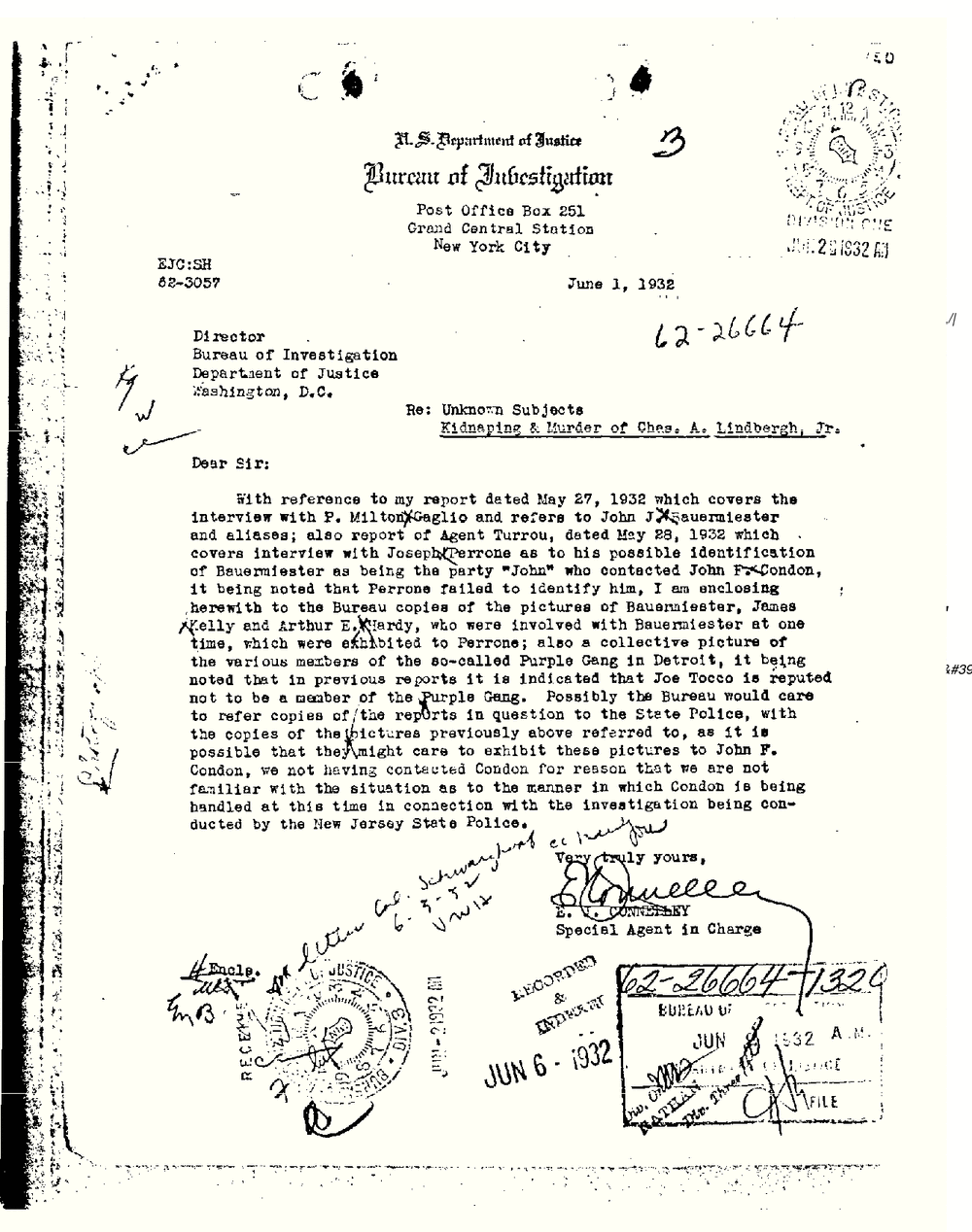 case-fileNew York Bureau of Investigation letter on the Purple Gang pictures in the Lindbergh inquiry (1 June 1932)Letter of E. J. Connelley, Special Agent in Charge at New York, enclosing for the Director 'a collective picture of the various members of the so-called Purple Gang in Detroit' and suggesting the pictures go to the New Jersey State Police.
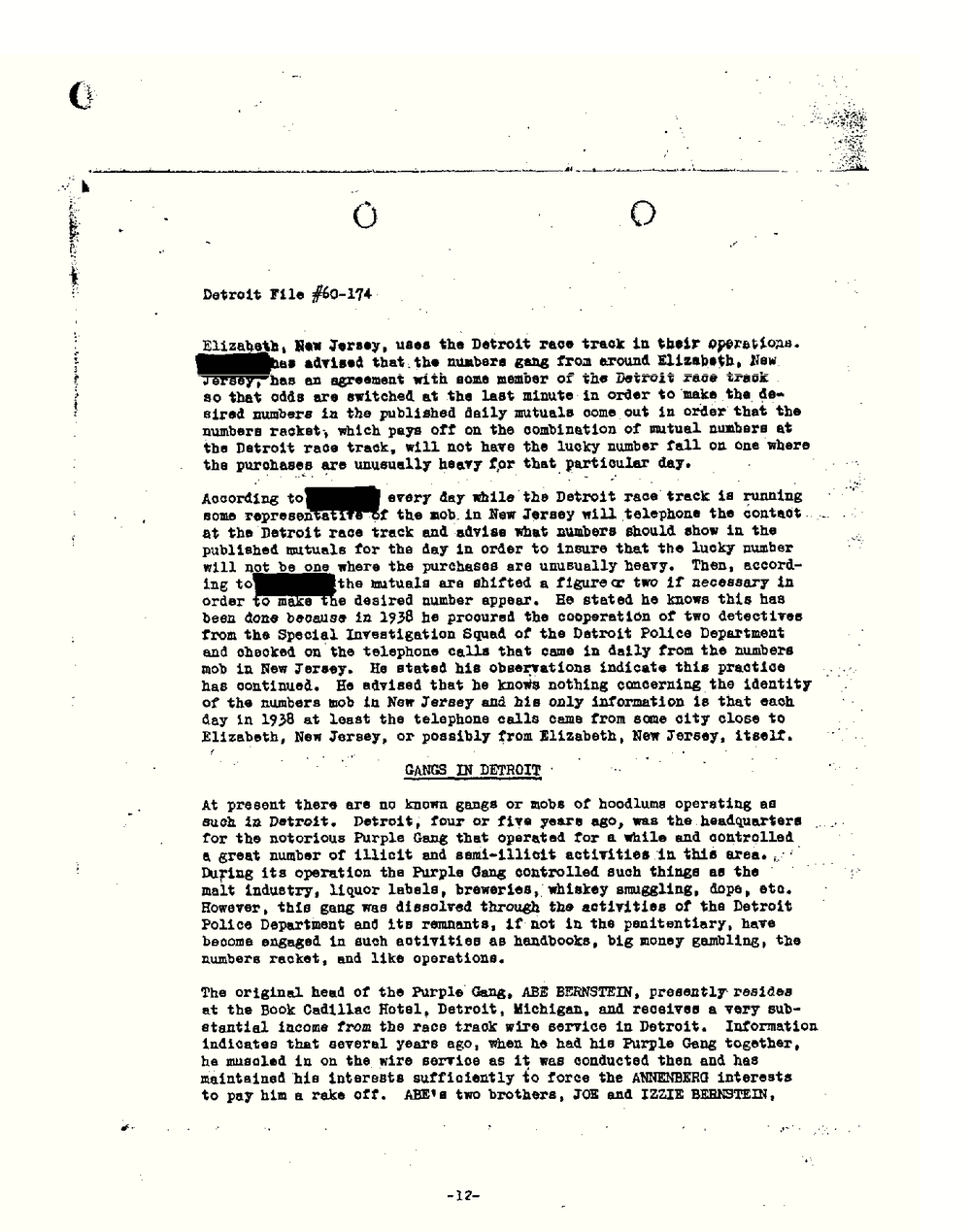 case-fileDetroit Special Agent in Charge's letter on organized crime conditions in Detroit (17 June 1939)John S. Bugas, Special Agent in Charge at Detroit, answers a Bureau request for current organized crime conditions. Under 'Gangs in Detroit' he calls Abe Bernstein 'the original head of the Purple Gang' and names his brothers Joe, Izzie and Raymond.
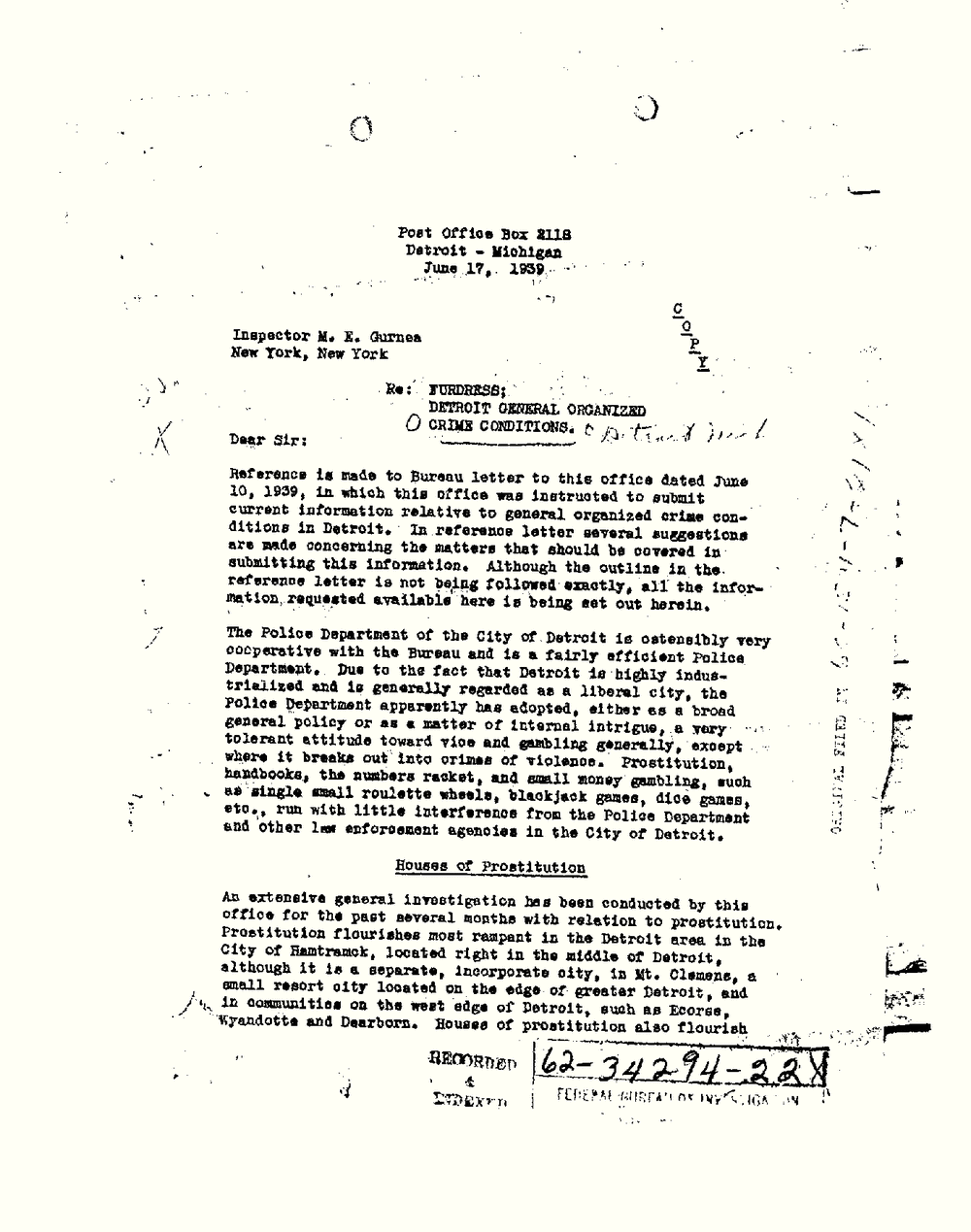 case-fileFBI Vault file on the Purple Gang (aka Sugar House Gang)The FBI Vault's four-part release of Bureau file 62-HQ-29632 on the Detroit Purple Gang: 1932 to 1959 letters and memoranda from the Detroit, New York and Miami offices, mixed with newspaper clippings the Bureau pasted into the file.
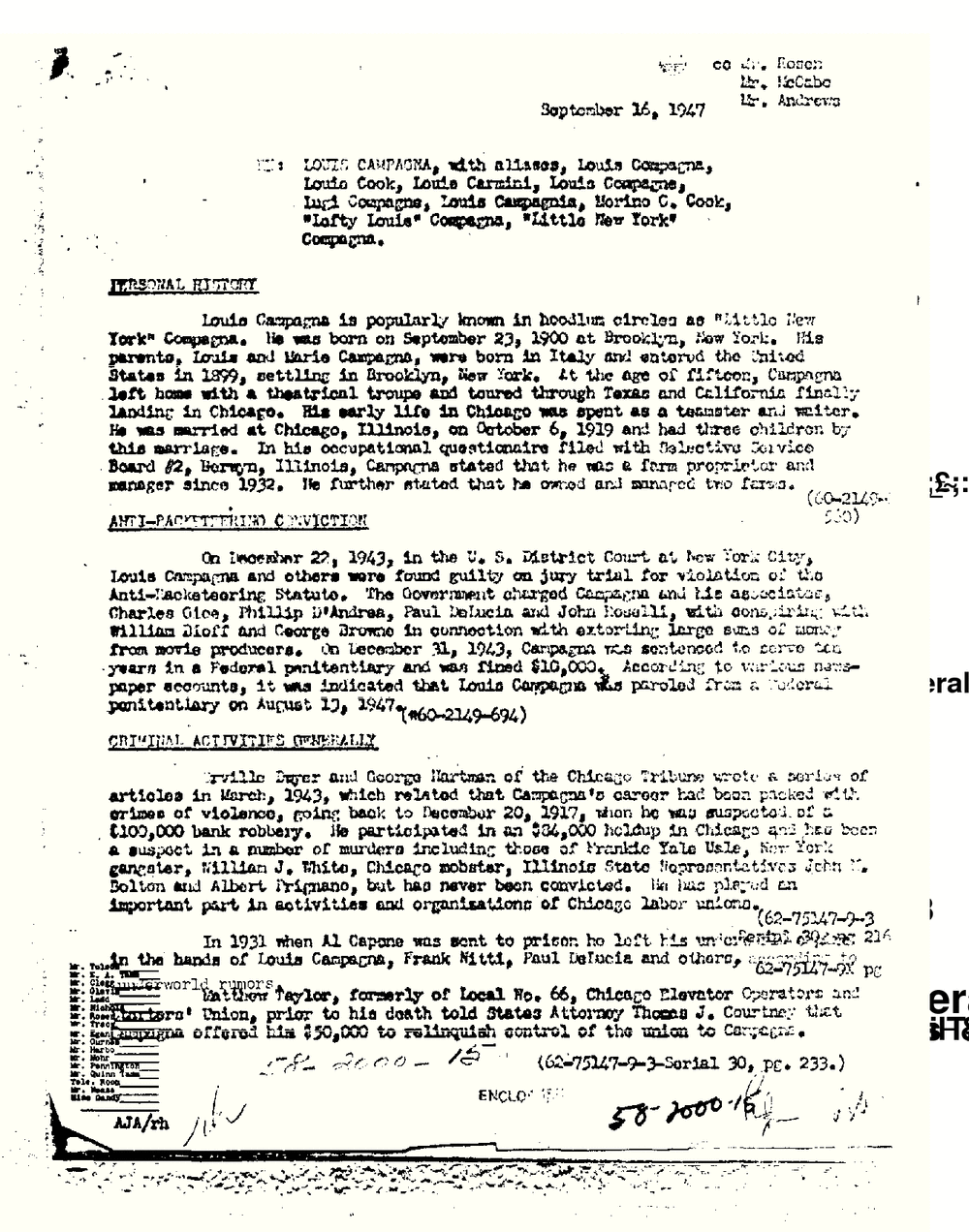 case-fileFBI memorandum of 16 September 1947 on Louis Campagna (Vault, John Roselli Part 01)One of the personal-history memoranda the FBI prepared in September 1947, after the paroles. It lists Campagna's aliases and says he and others were found guilty in New York on 22 December 1943 of violating the Anti-Racketeering Statute, and were sentenced on 31 December 1943.
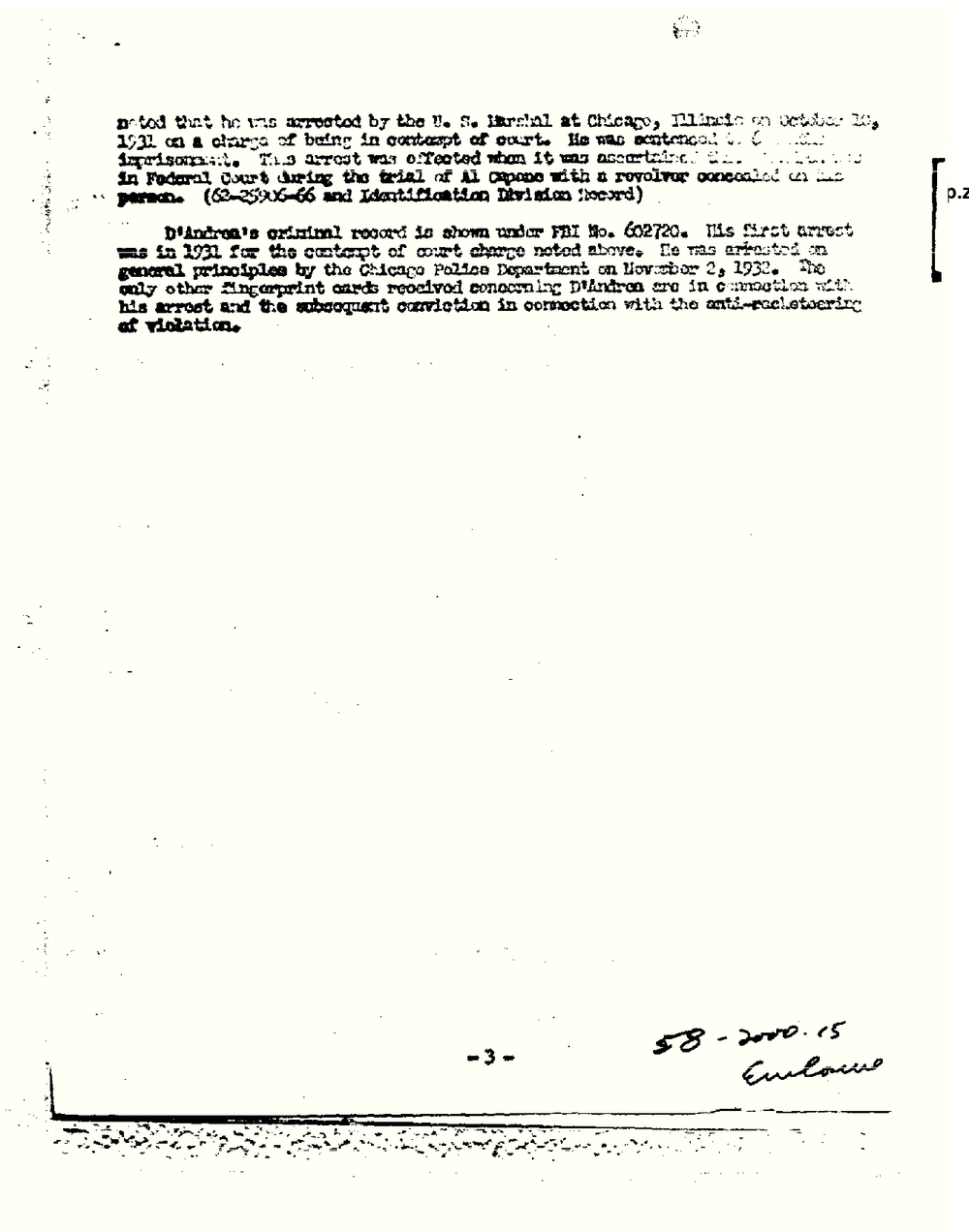 case-fileFBI memorandum of September 1947 on Phillip D'Andrea (Vault, John Roselli Part 01)The FBI's September 1947 personal-history memorandum on Phillip D'Andrea, prepared with the others on the paroled men. Its last page records his 1931 arrest by the U.S. Marshal at Chicago for contempt of court, "during the trial of Al Capone with a revolver concealed on his person."
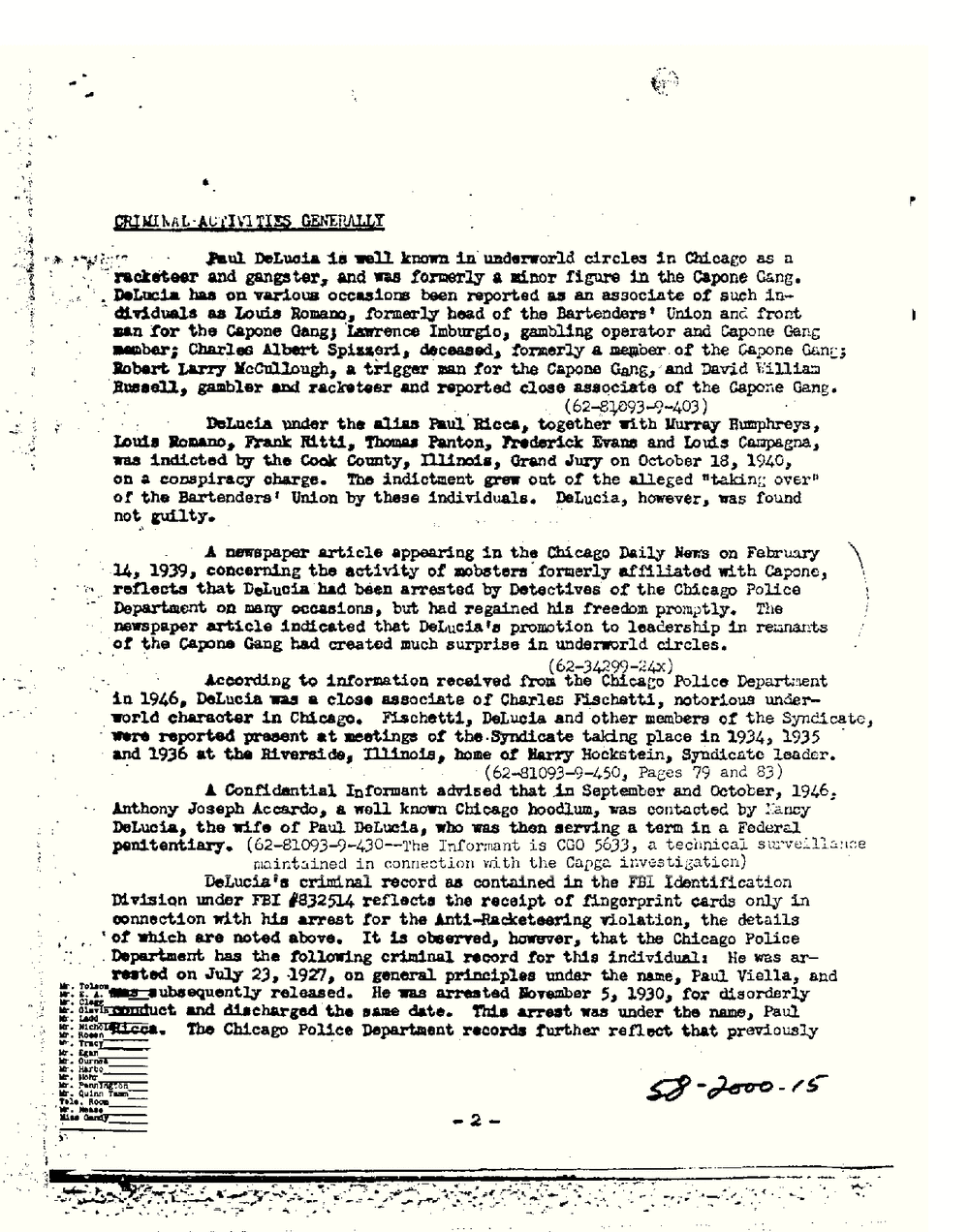 case-fileFBI memorandum of 16 September 1947 on Paul De Lucia (Vault, John Roselli Part 01)The FBI's September 1947 personal-history memorandum on Paul De Lucia, whose aliases include Paul Villa, Paul Viola and "Paul, the Waiter." It cites immigration files for his 1920 entry and 1928 naturalization at Chicago, and relays newspaper, police and informant reports that are claims, not findings.
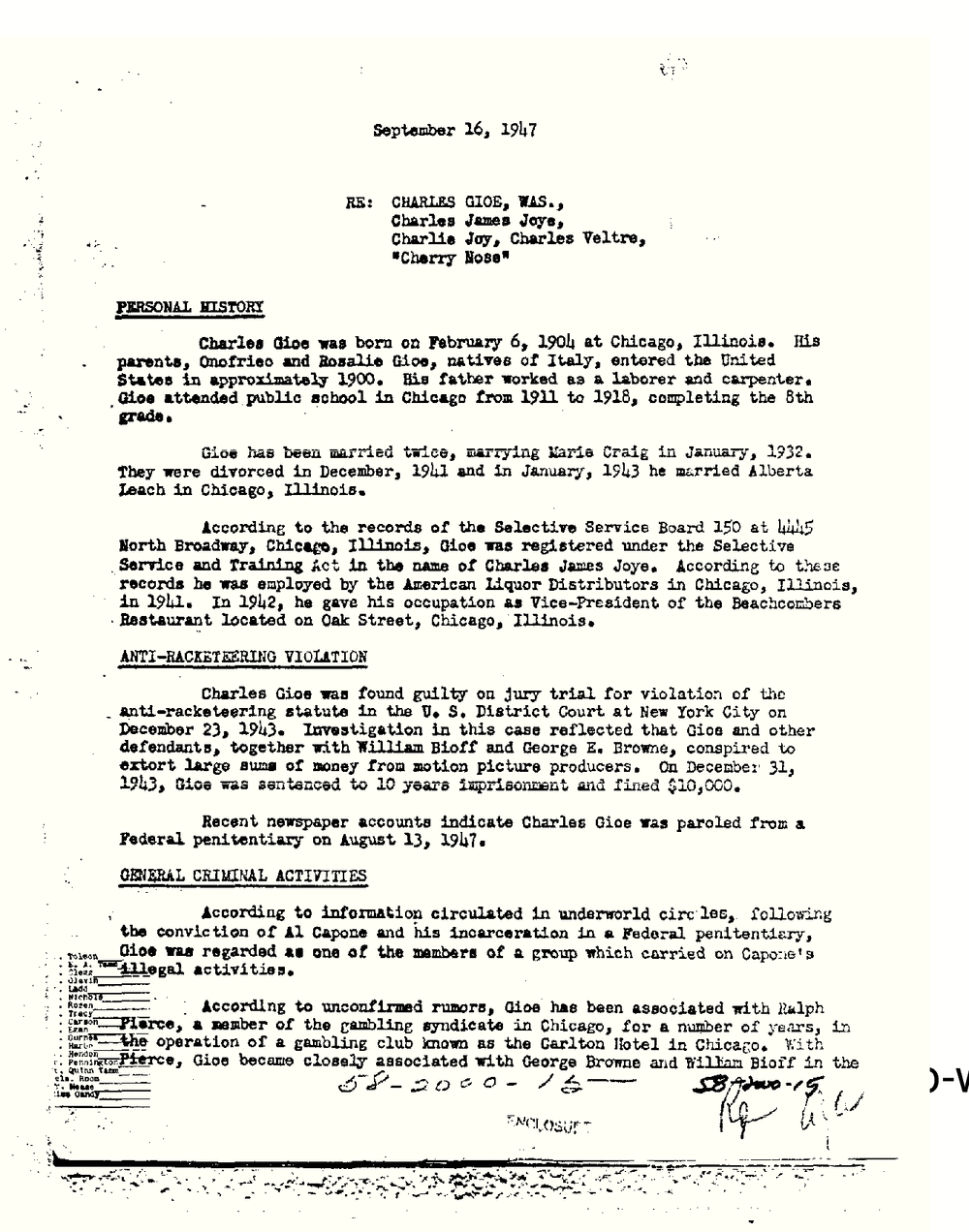 case-fileFBI memorandum of 16 September 1947 on Charles Gioe (Vault, John Roselli Part 01)The FBI's September 1947 personal-history memorandum on Charles Gioe. It says he "was found guilty on jury trial for violation of the anti-racketeering statute" in New York "on December 23, 1943," a day later than the date in the companion memoranda, and was sentenced on 31 December 1943.
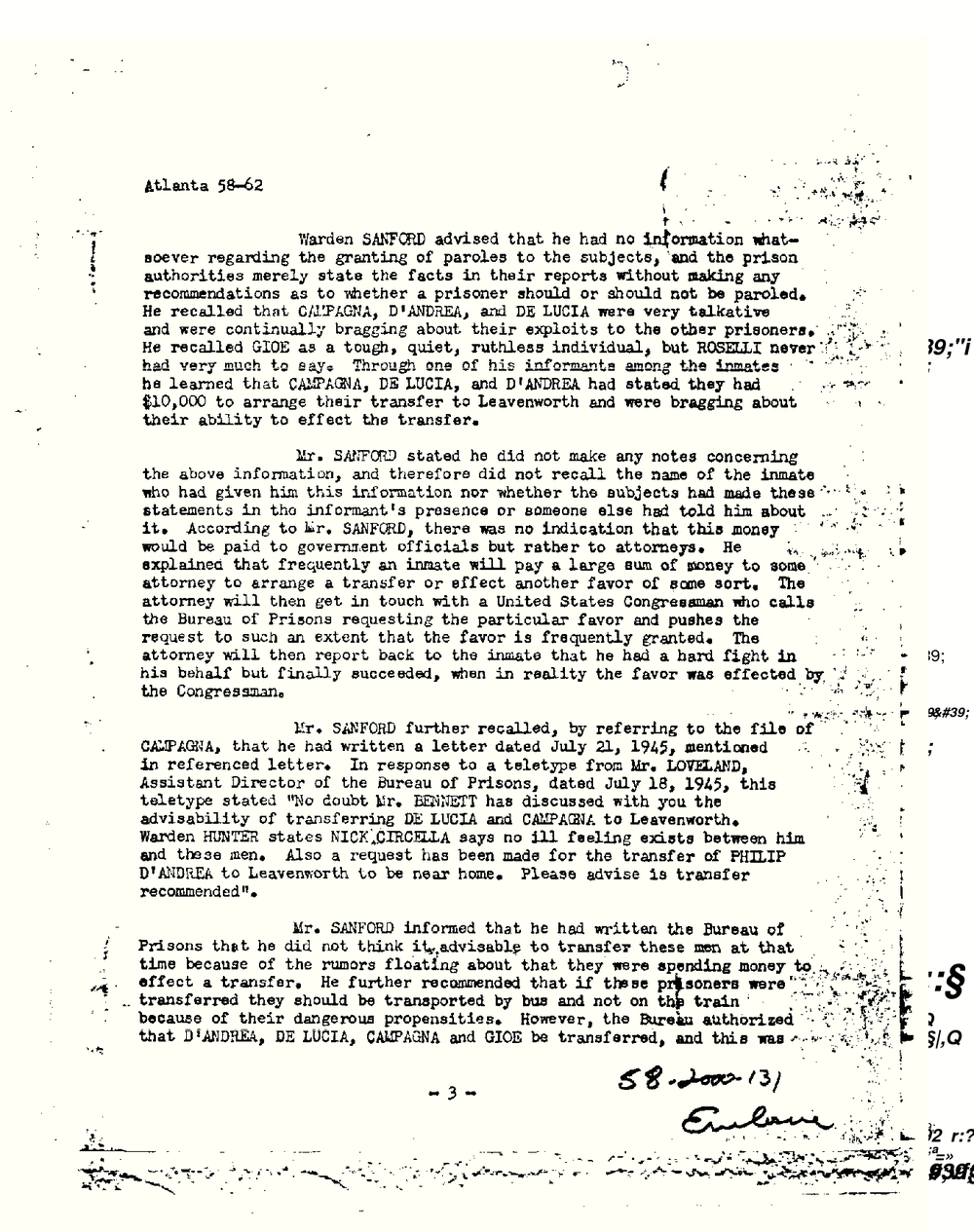 case-fileFBI Atlanta report (file Atlanta 58-62), autumn 1947: Warden Sanford on the prisoners and their 1945 transfer to Leavenworth (Vault, John Roselli Part 02)The Atlanta office's report for the 1947 parole inquiry. Warden Sanford said he made no parole recommendations, recalled an inmate informant's report that three of the men "had stated they had $10,000 to arrange their transfer", and said the transfer to Leavenworth was "done by bus on July 28, 1945."case-fileFBI Chicago reports (file 58-194), September 1947: interviews of truck-company salesmen who wrote letters for D'Andrea's parole (Vault, John Roselli Part 03)The four-page Part 03 holds Chicago interview reports of about 26 September 1947. Sales officials of the Mack Truck Company and the International Harvester Company said they had written letters urging Phillip D'Andrea's parole after dealings over trucks, and said no money, threats or pressure were used.
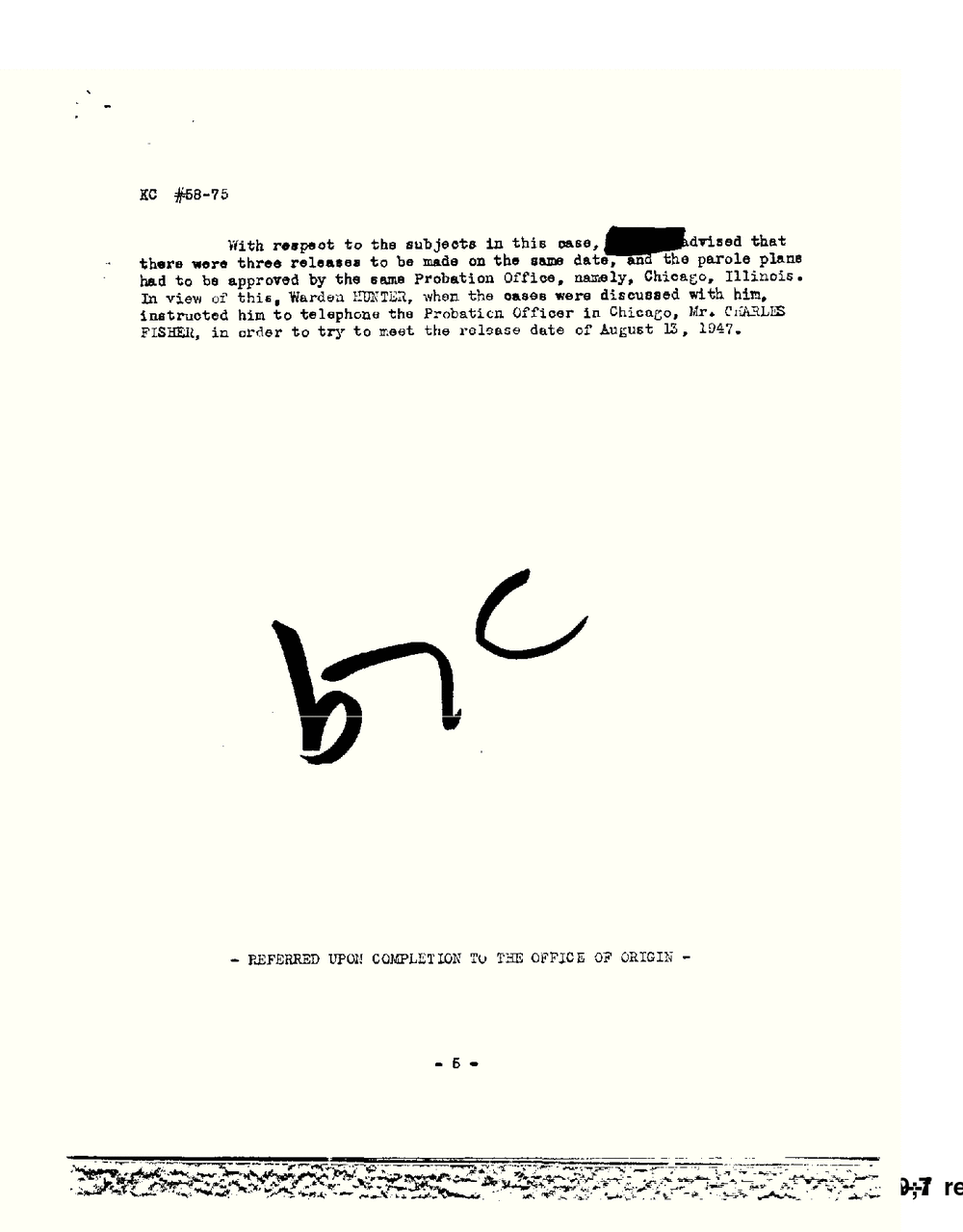 case-fileFBI Kansas City report (file KC 58-75), 1947: how the 13 August 1947 Leavenworth releases were arranged (Vault, John Roselli Part 06)A Kansas City report on Leavenworth parole procedure, written for the 1947 parole inquiry. It records that, with three releases to be approved by the Chicago probation office, the warden had the Chicago probation officer telephoned "in order to try to meet the release date of August 13, 1947."
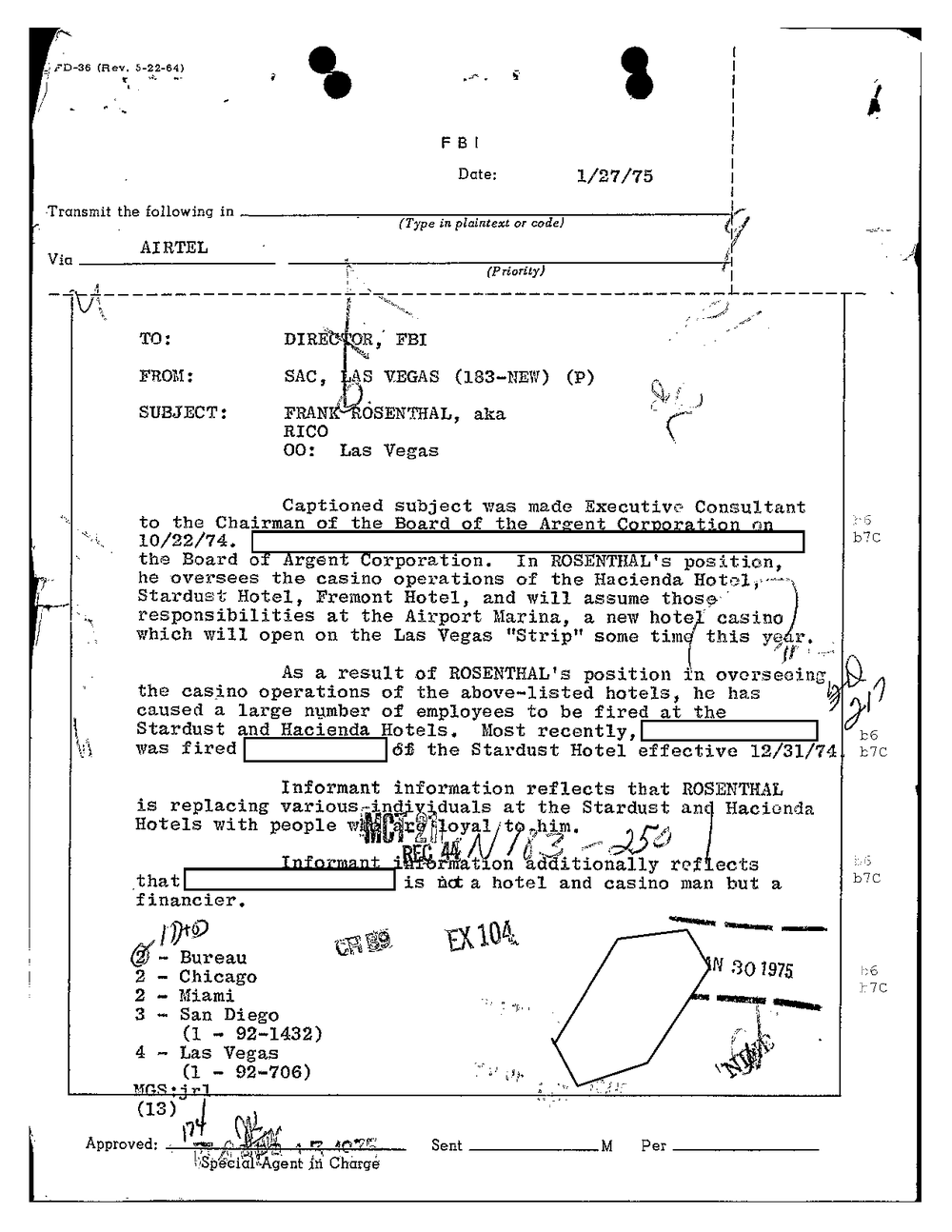 case-fileFBI Las Vegas airtel on Frank Rosenthal's position at the Argent Corporation (27 January 1975)An FBI Las Vegas airtel of January 27, 1975 stating that Frank Rosenthal was made Executive Consultant to the Chairman of the Board of the Argent Corporation on October 22, 1974 and oversaw the casino operations of the Hacienda, Stardust and Fremont hotels.
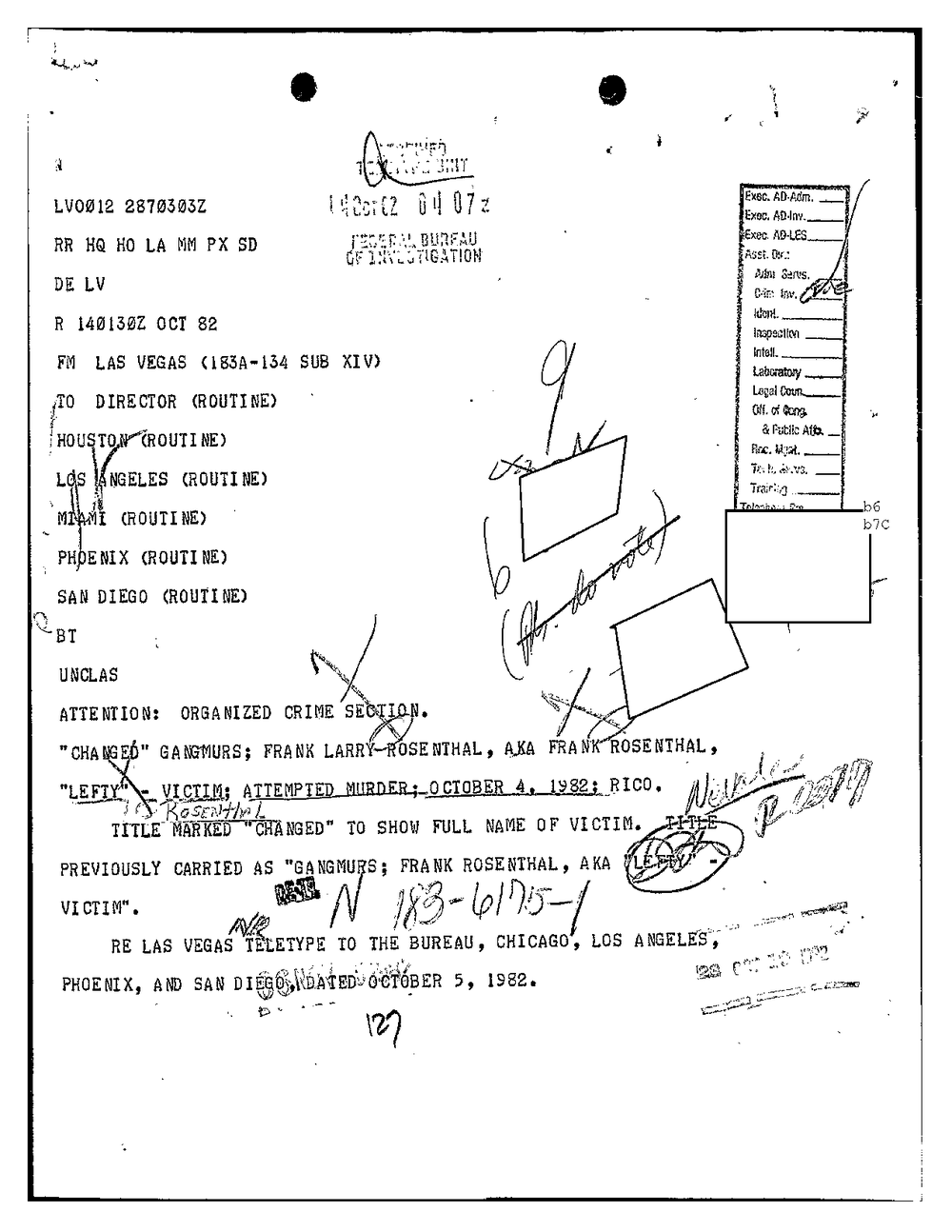 case-fileFBI Las Vegas teletype on the explosion of Frank Rosenthal's car (14 October 1982)An FBI Las Vegas teletype of October 14, 1982 on the attempted murder of Frank Rosenthal on October 4, 1982, describing a bomb that exploded in his car and calling him a close associate of Anthony Spilotro.case-fileFBI Vault, Francis Salemme, Part 01: Boston surveillance reports, 1989 to 1994First part of the FBI's released file on Francis P. Salemme: 100 pages of Boston Division FD-302 reports, most of them 1989 physical surveillance, with later reports that appear to date from 1993 and 1994. Heavily redacted; read from the viewer's OCR.case-fileFBI Vault, Francis Salemme, Part 02 (Final): surveillance reports, February to August 1989Second and final part of the FBI's released Salemme file: 96 pages, nearly all FD-302 physical-surveillance reports of 1989 from a Boston file. Read from the viewer's OCR.
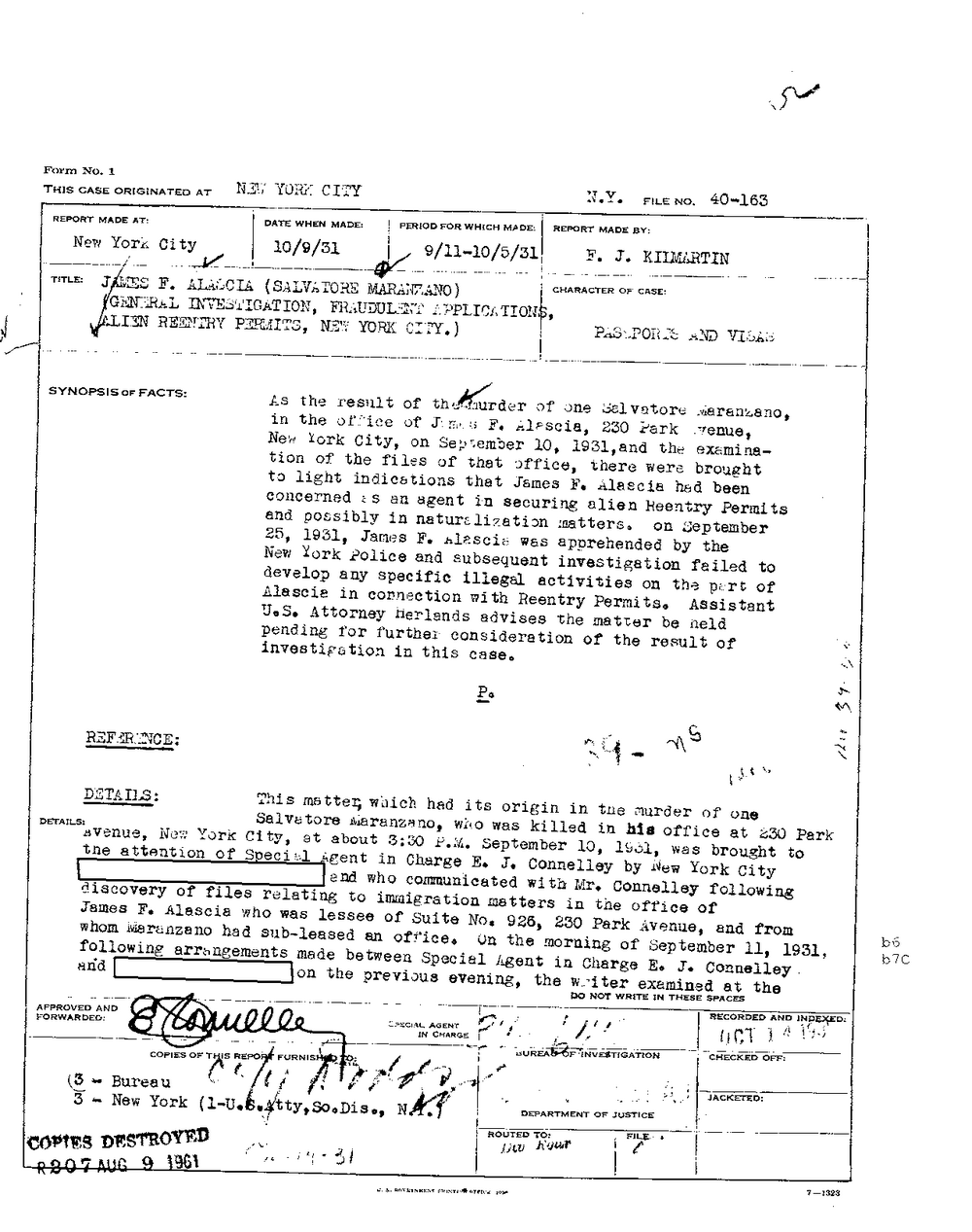 case-fileFBI Vault: Salvatore Maranzano (Final), with a 1931 Bureau of Investigation reportAn 18-page FBI file whose main serial is a Bureau of Investigation report made at New York on 10/9/31 about immigration papers found in the office suite at 230 Park Avenue where Maranzano was killed.case-fileFBI Vault, Nicodemo Scarfo, Part 01: Newark RICO case file, 1981 to 1985First part of the FBI's released Scarfo file, 252 pages, mostly 1981: a memorandum recommending a new RICO case, Newark teletypes on his firearms conviction, Atlantic City surveillance reports, and 1985 intercept logs. Read from the viewer's OCR.case-fileFBI Vault, Nicodemo Scarfo, Part 02 (Final): Newark RICO case file, 1981 to 1982Second and final part of the FBI's released Scarfo file, 323 pages: a December 1981 Justice Department memorandum on closed-circuit television authority, Newark airtels, and 1982 surveillance logs of Atlantic City and shore towns. Read from the viewer's OCR.
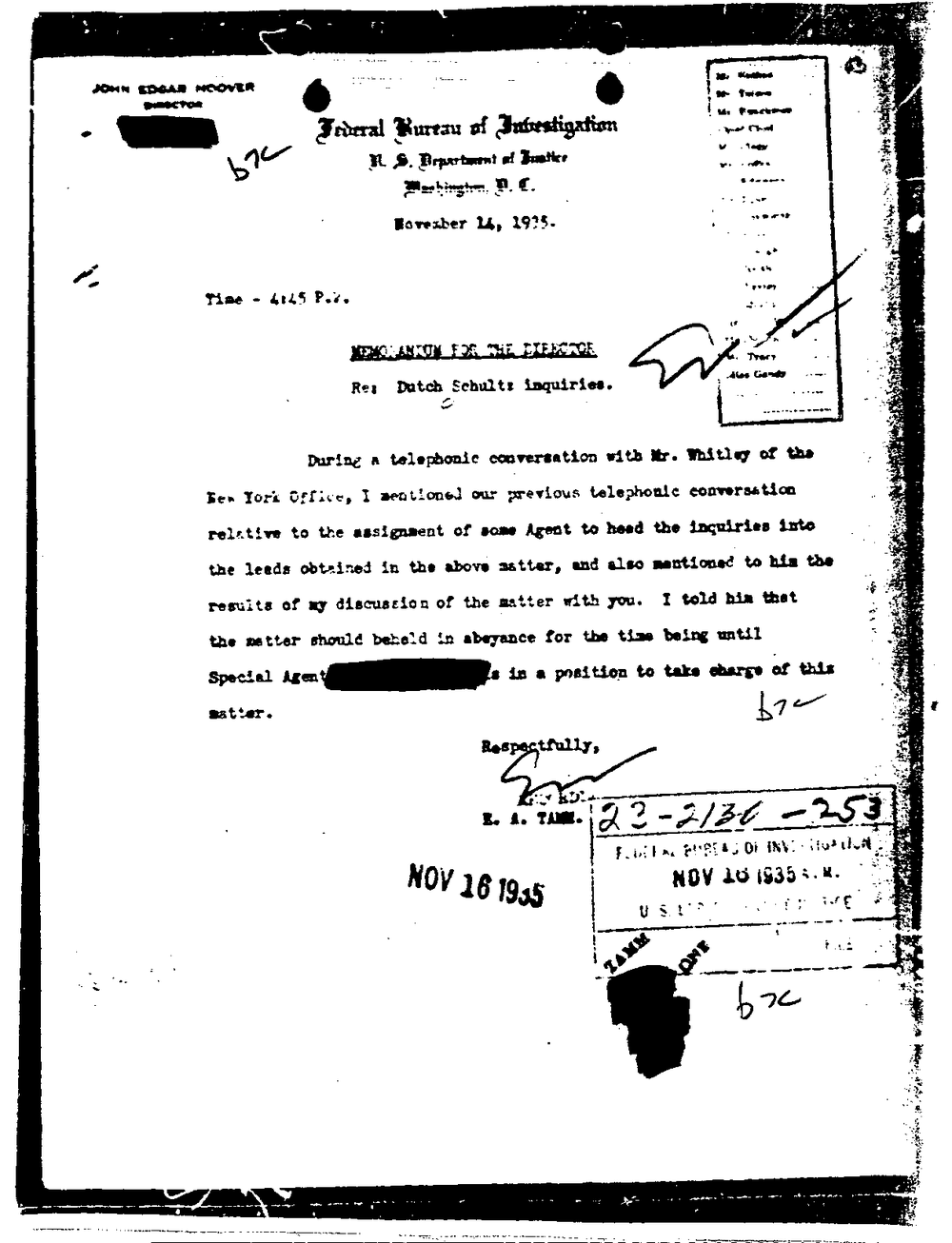 case-fileFBI memorandum for the Director: "Dutch Schultz inquiries" (November 14, 1935)A one-page memorandum of November 14, 1935, signed by E. A. Tamm, telling the New York office that inquiries into leads in the Schultz matter "should be held in abeyance" until a named agent could take charge. The page is stored here.
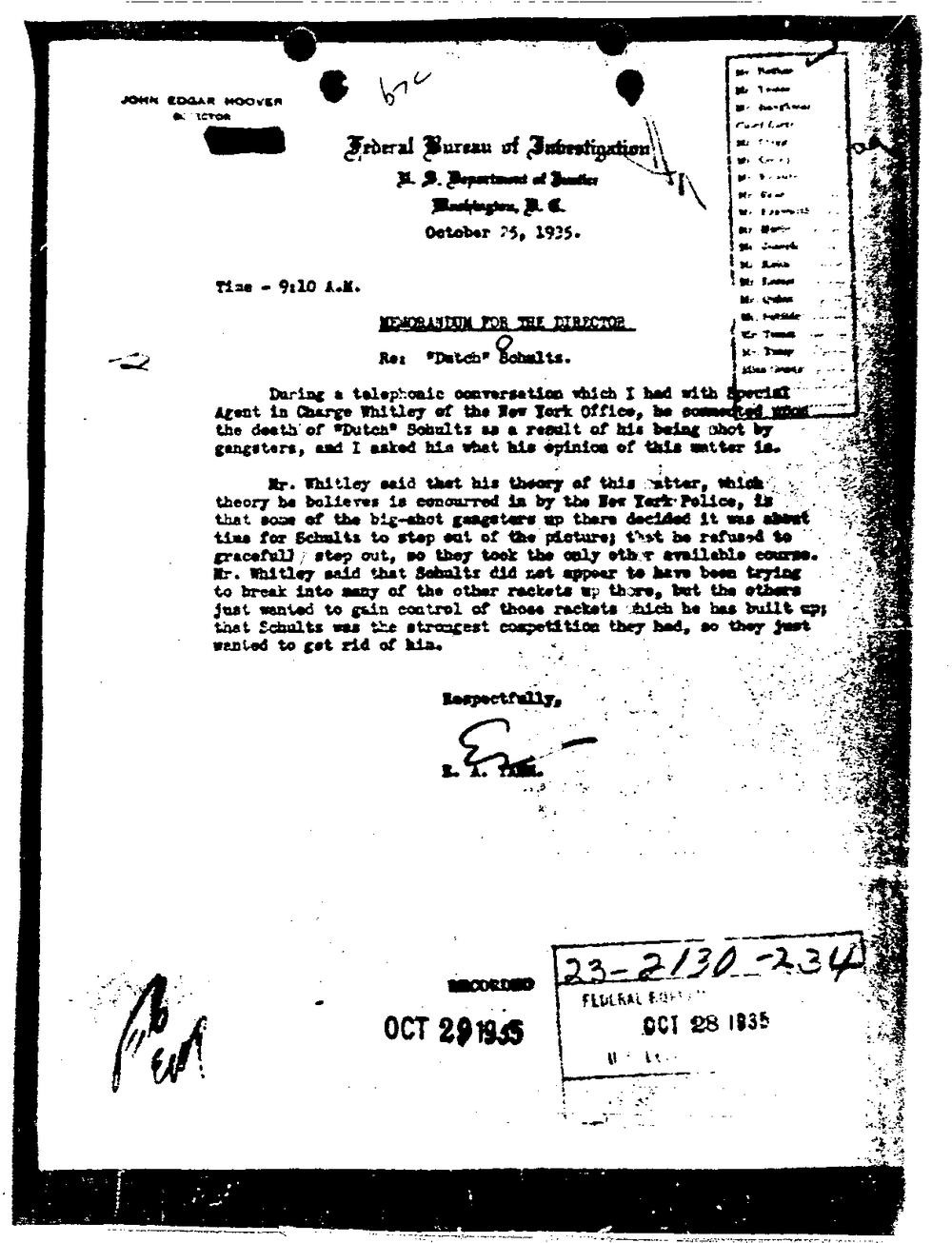 case-fileFBI memorandum for the Director: "Dutch" Schultz (October 25, 1935)A one-page memorandum of October 25, 1935, signed by E. A. Tamm, recording the New York Special Agent in Charge's theory about the shooting of Dutch Schultz. It is the Bureau's record of an opinion, and it names no suspect. The page is stored here.
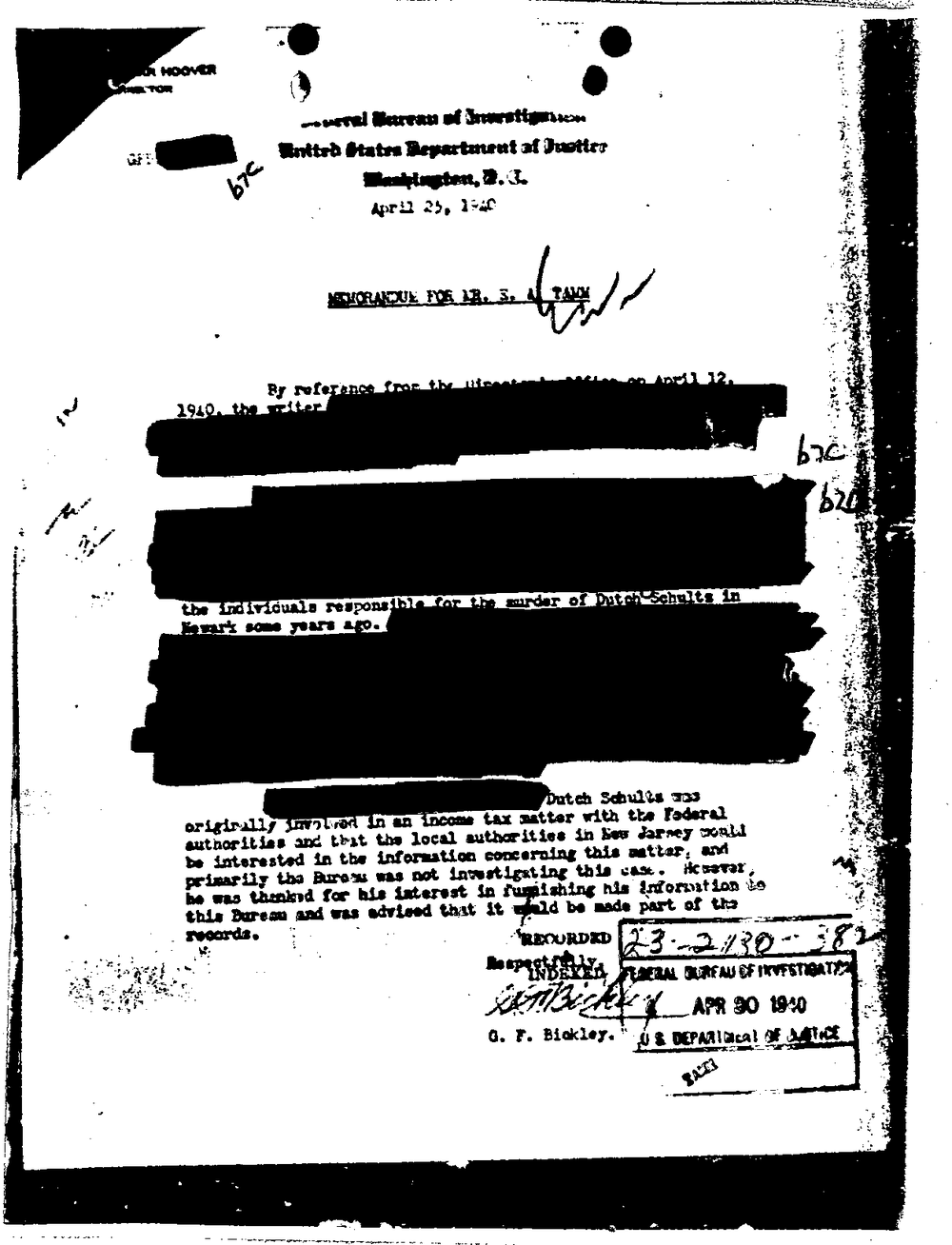 case-fileFBI memorandum: information on "the murder of Dutch Schultz in Newark" (April 25, 1940)A heavily redacted memorandum of April 25, 1940 from G. F. Bickley to E. A. Tamm recording a caller's information about the Newark killing of Dutch Schultz, and stating that "primarily the Bureau was not investigating this case." The page is stored here.
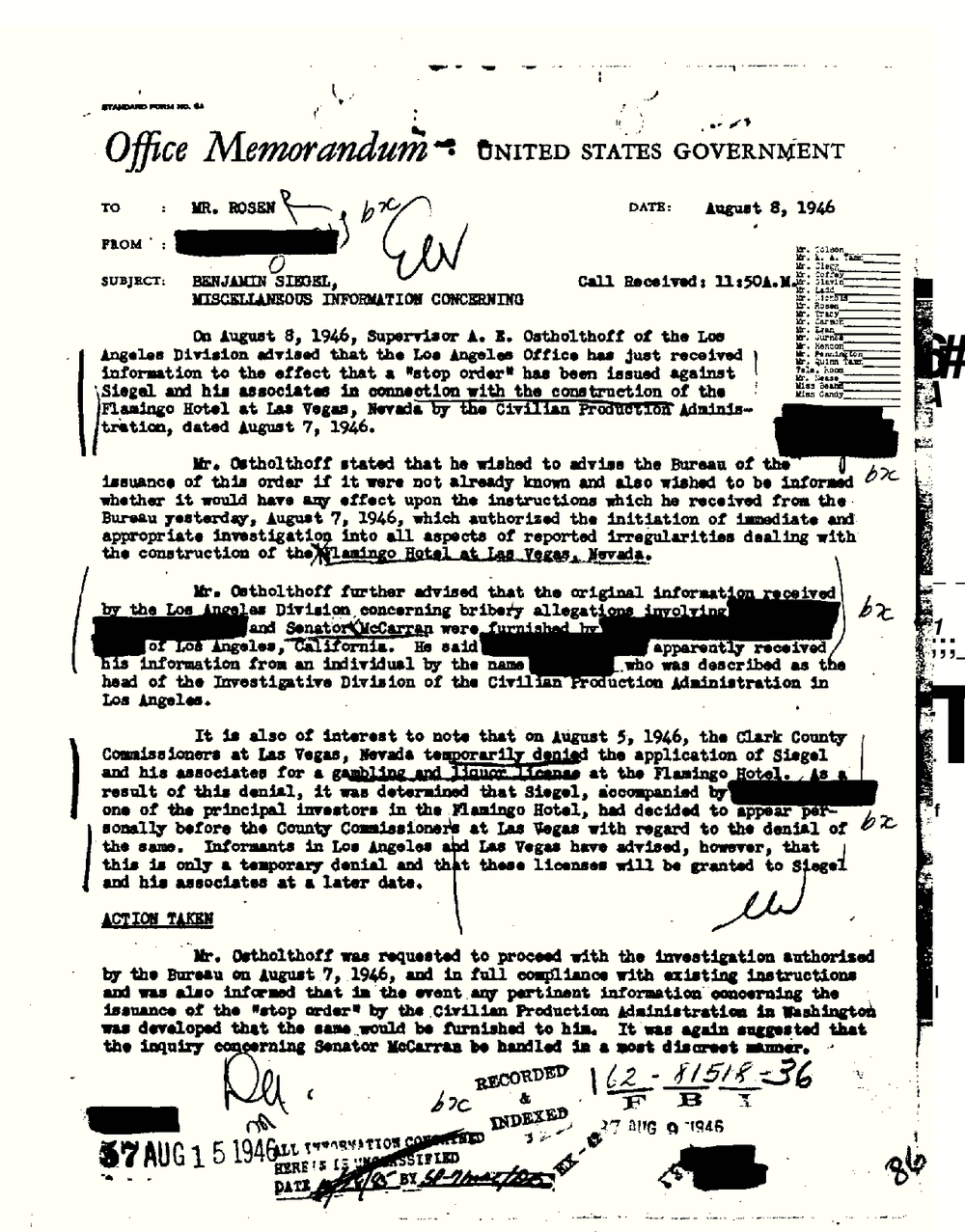 case-fileFBI memorandum on a "stop order" against Siegel over the Flamingo Hotel (8 August 1946)An FBI office memorandum of August 8, 1946 recording the Los Angeles Division's report that the Civilian Production Administration had issued a "stop order" against Benjamin Siegel and his associates over construction of the Flamingo Hotel at Las Vegas.
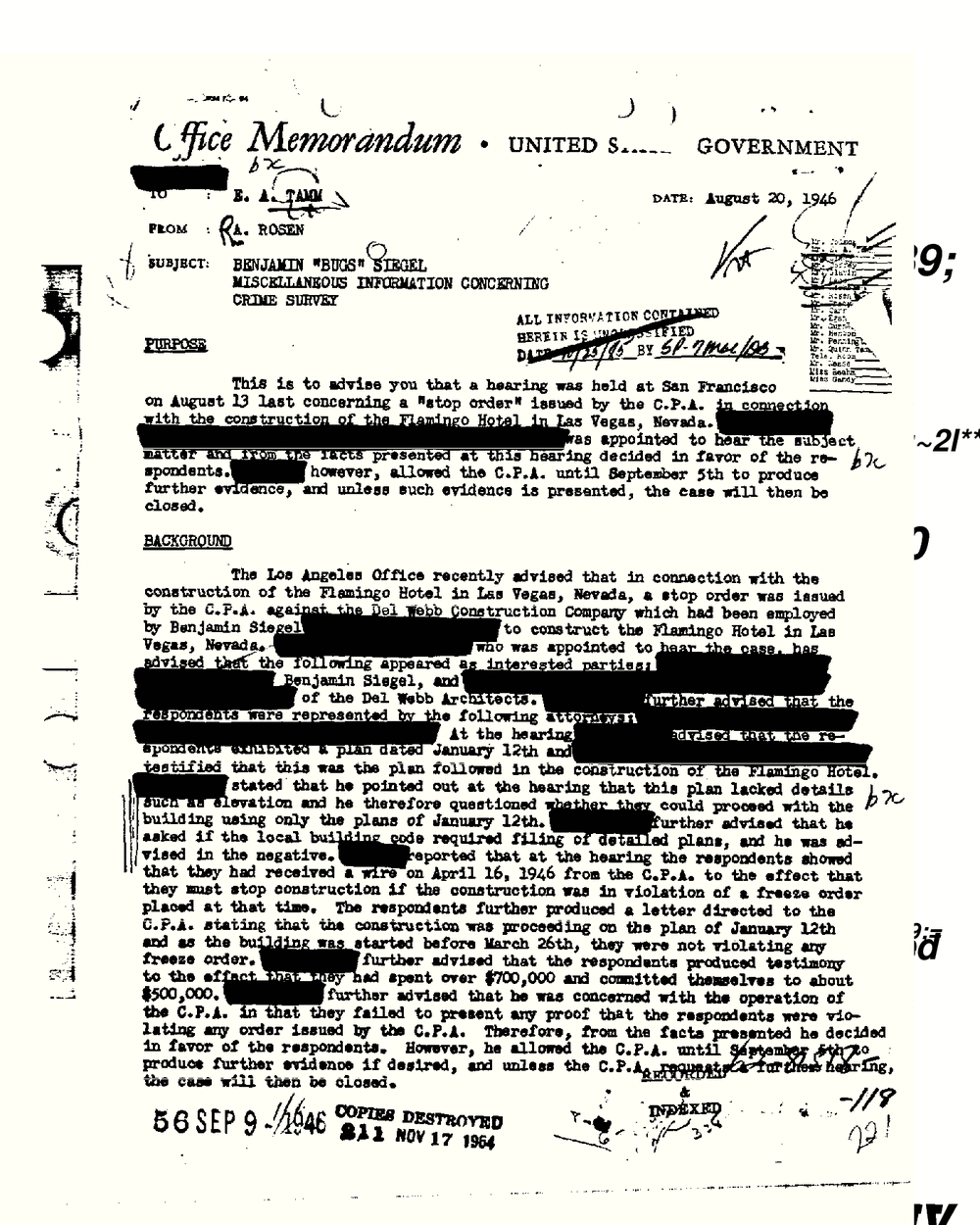 case-fileFBI memorandum on the Civilian Production Administration hearing over the Flamingo Hotel (20 August 1946)An FBI office memorandum of August 20, 1946 reporting that a hearing was held at San Francisco on August 13 on the Civilian Production Administration "stop order" over construction of the Flamingo Hotel, and that the hearing officer decided in favor of the respondents.
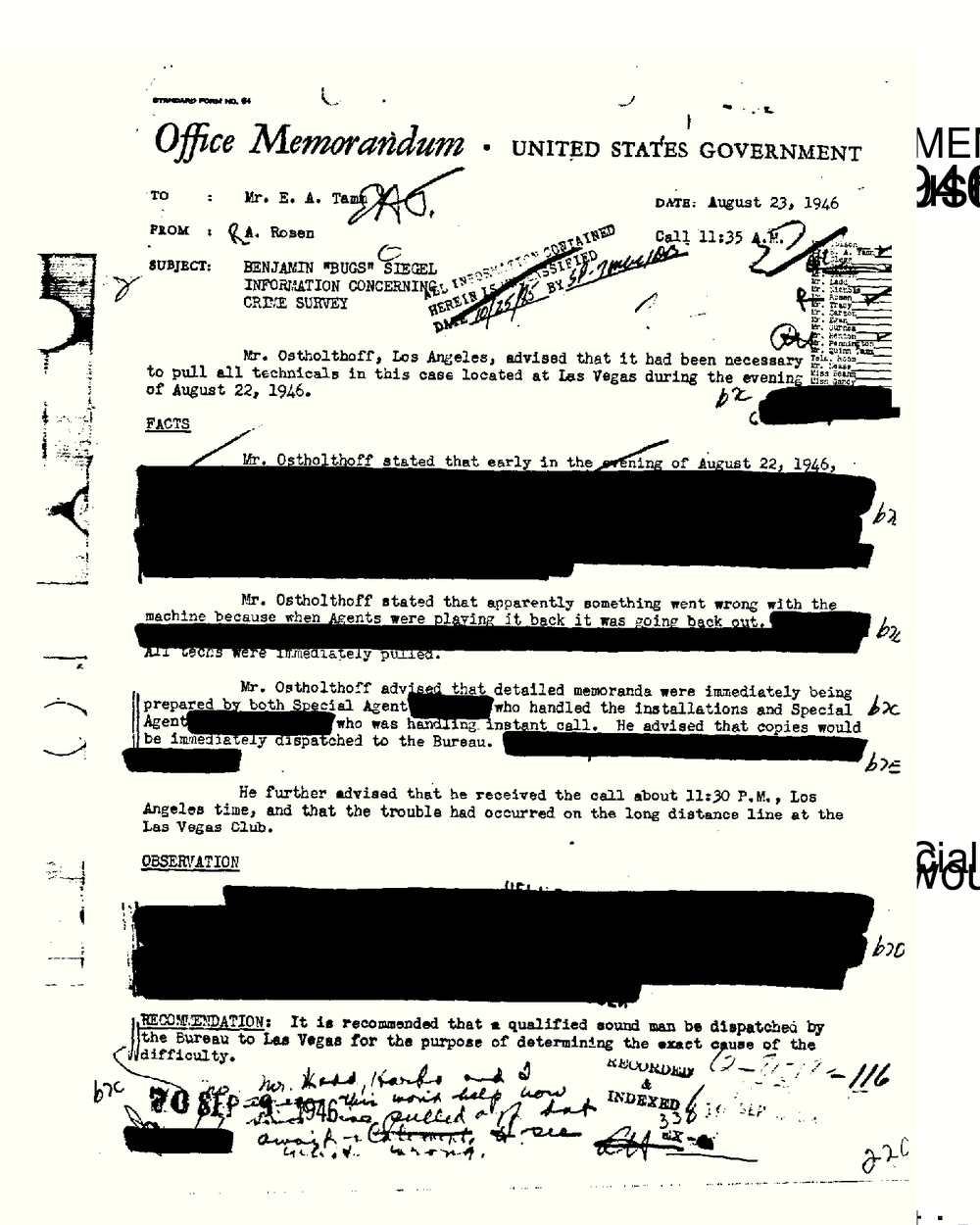 case-fileFBI memorandum on pulling the technical surveillances at Las Vegas (23 August 1946)An FBI office memorandum of August 23, 1946 recording that all "technicals" in the Siegel case at Las Vegas were pulled on the evening of August 22 after trouble on the long-distance line at the Las Vegas Club.
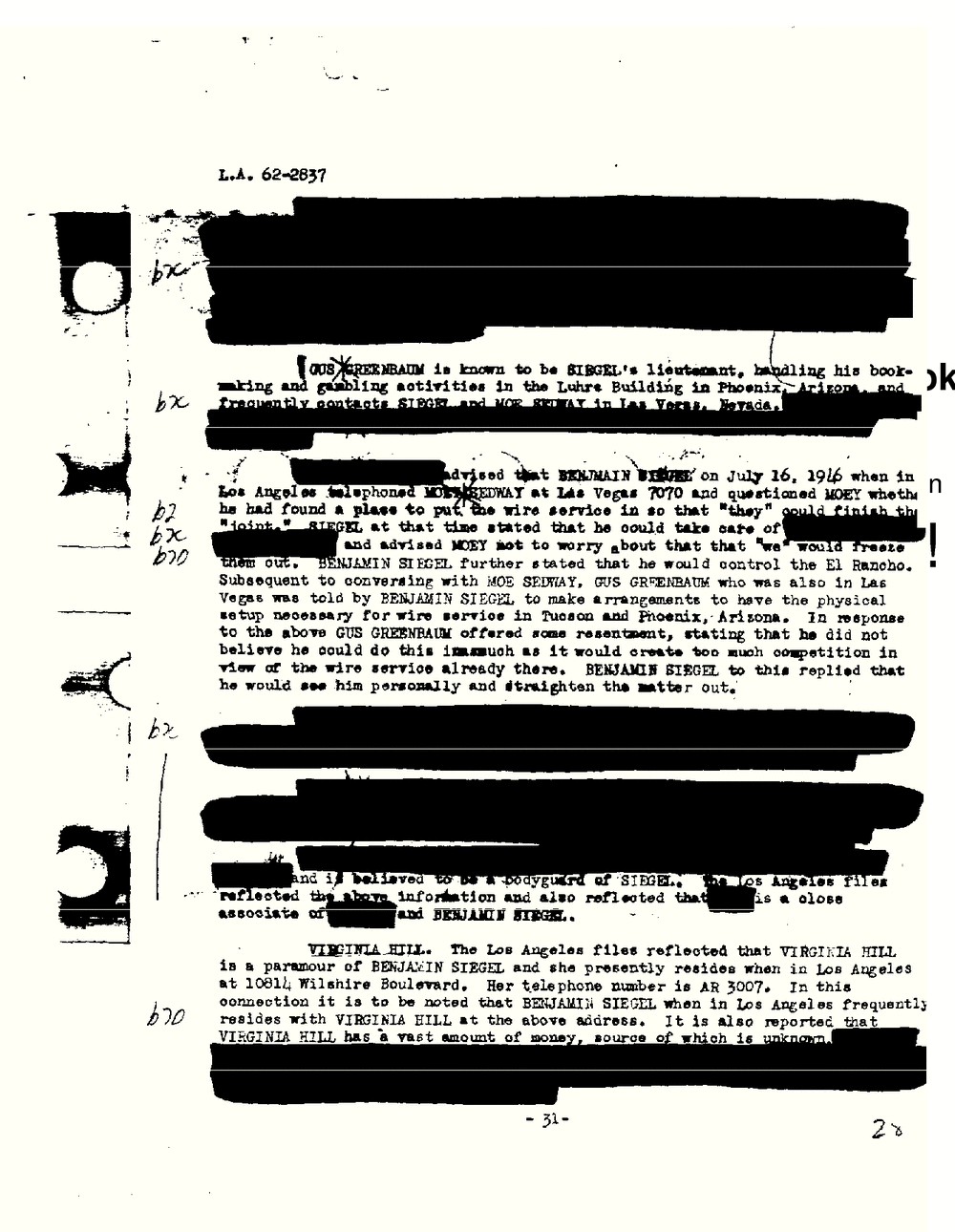 case-fileFBI Los Angeles report with informant accounts of Siegel, Sedway and Greenbaum (1946)Pages of an FBI Los Angeles report (file L.A. 62-2837) recording informant statements about Benjamin Siegel and the Las Vegas race-wire service in 1946. The statements are informant allegations recorded by the Bureau, not findings.
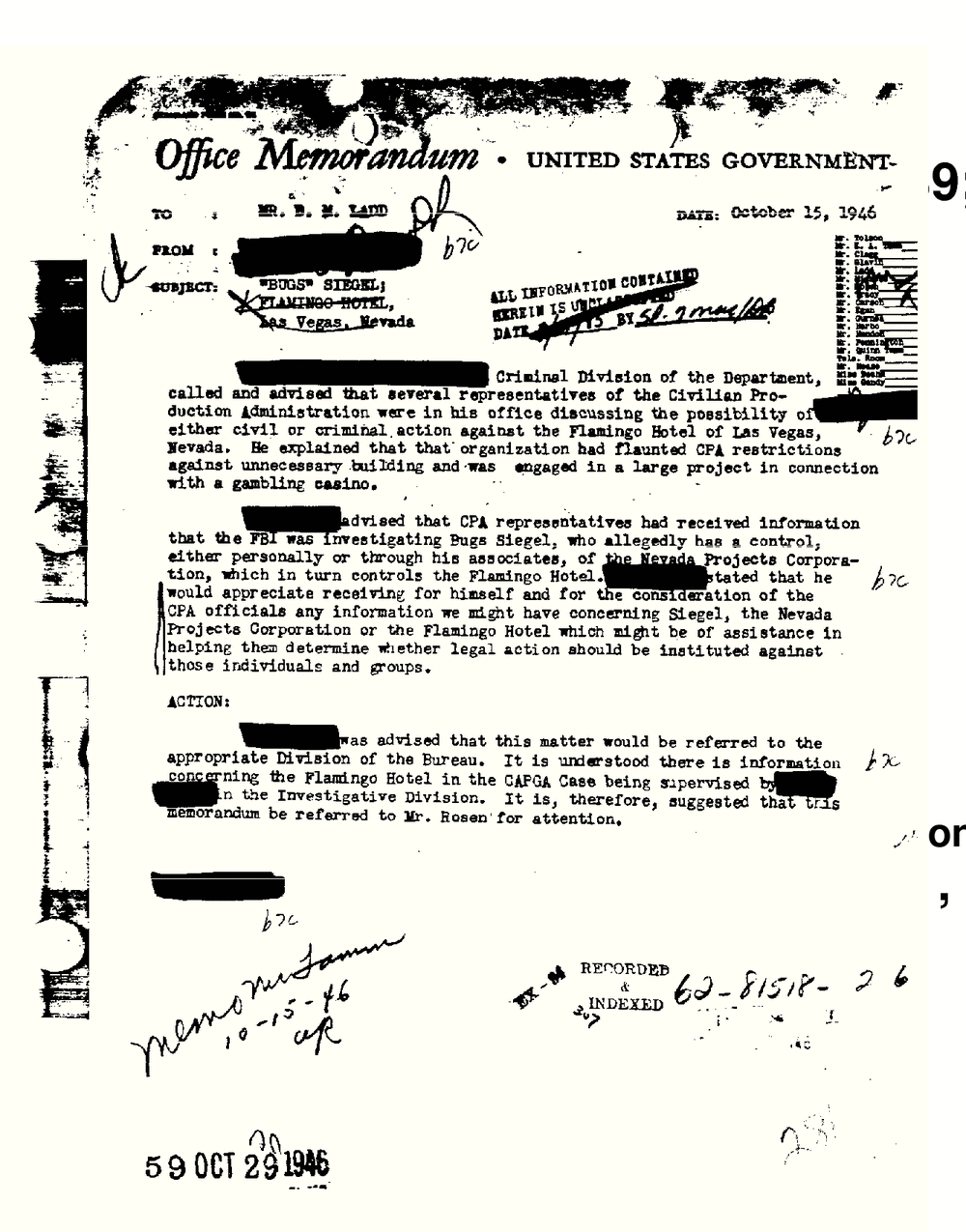 case-fileFBI memorandum on a Justice Department request about the Flamingo Hotel (15 October 1946)An FBI office memorandum of October 15, 1946 recording a call from the Justice Department's Criminal Division: Civilian Production Administration officials were weighing civil or criminal action against the Flamingo Hotel and asked for any information the FBI held.
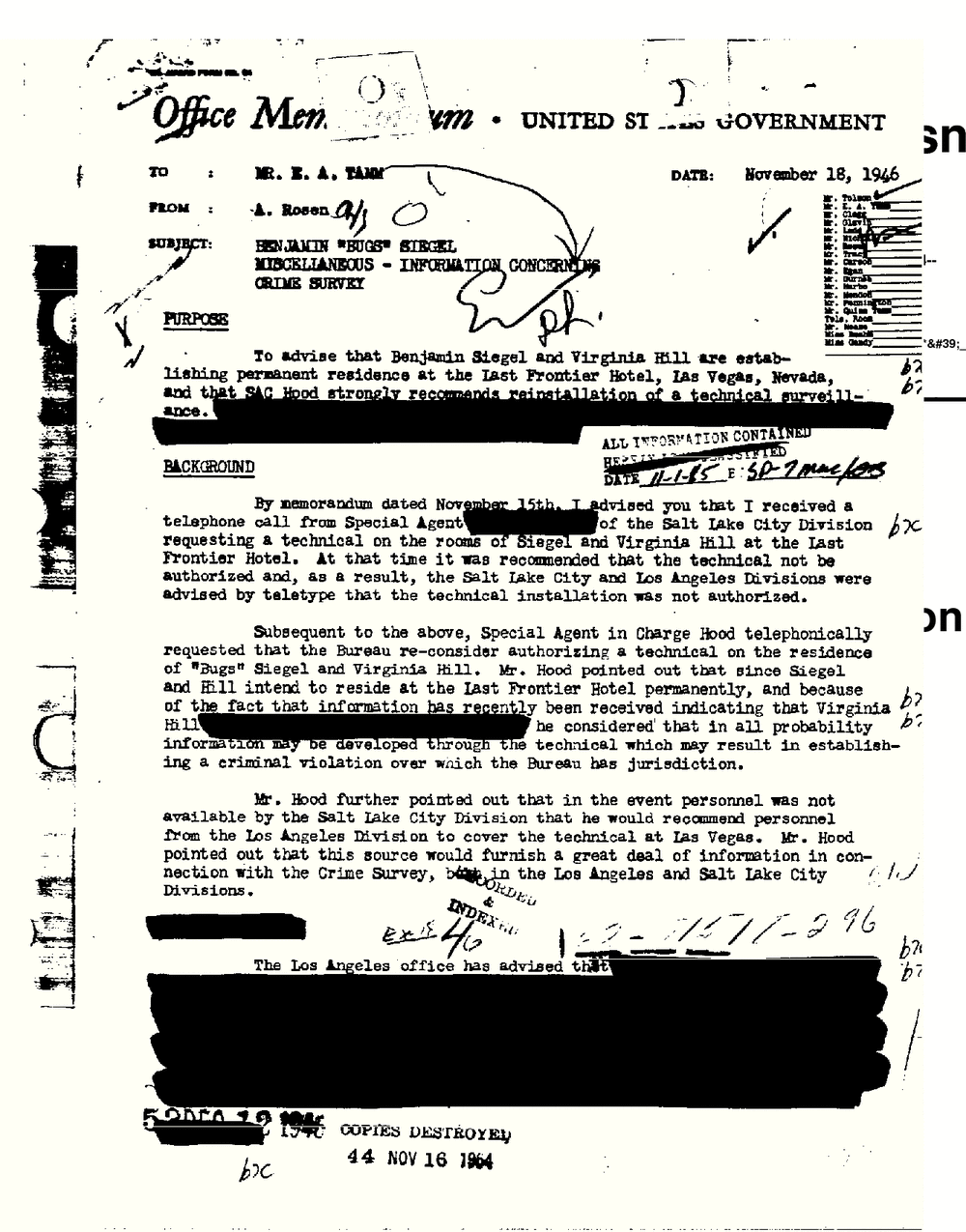 case-fileFBI memorandum recommending reinstallation of a technical surveillance on Siegel and Virginia Hill (18 November 1946)An FBI office memorandum from A. Rosen to E. A. Tamm reporting that Benjamin Siegel and Virginia Hill were establishing permanent residence at the Last Frontier Hotel, Las Vegas, and recommending that "the technical on Siegel and Virginia Hill be reinstalled."
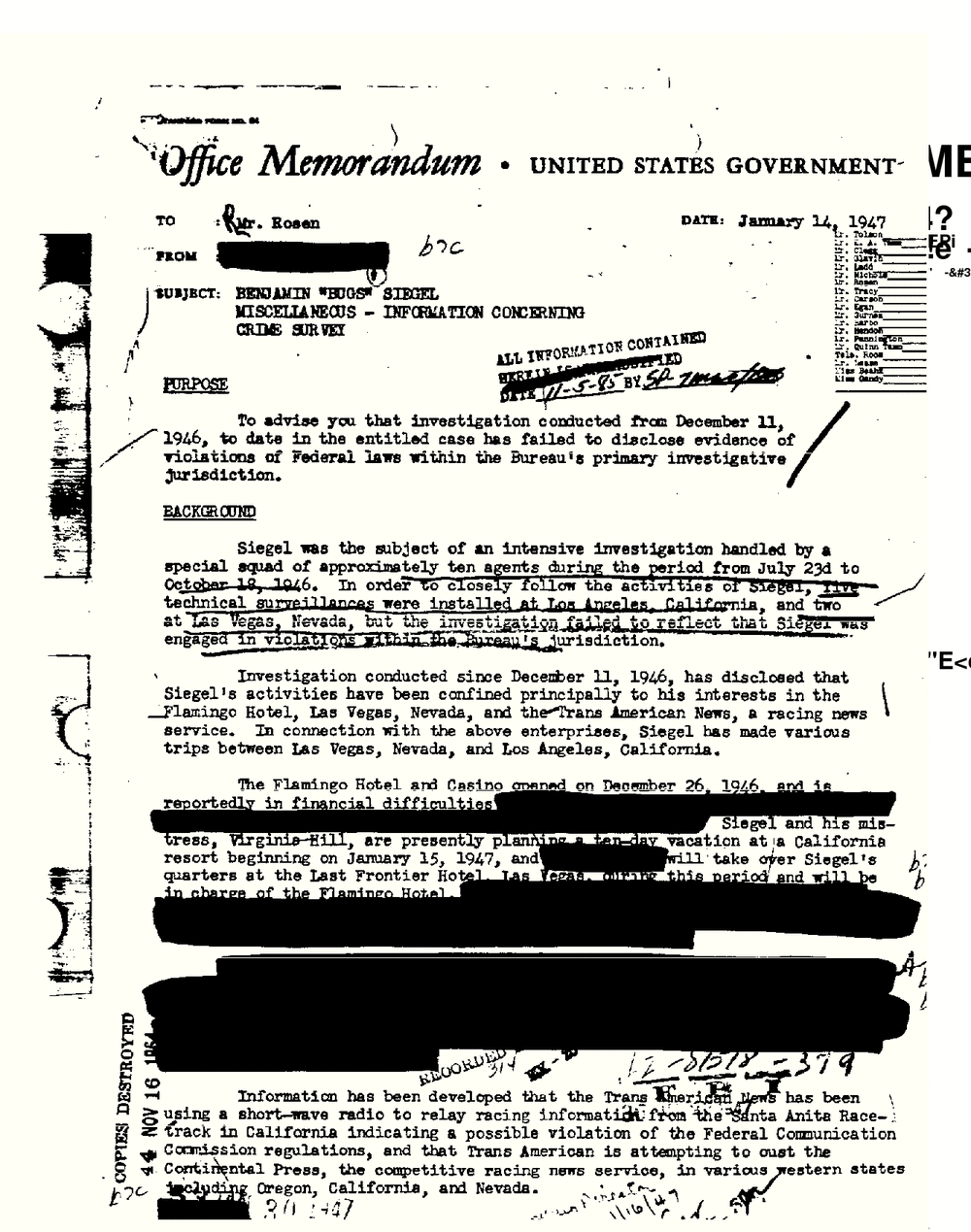 case-fileFBI summary memorandum finding no evidence of violations within the Bureau's jurisdiction (14 January 1947)An FBI office memorandum of January 14, 1947 stating that the Siegel investigation had failed to disclose violations of federal laws within the Bureau's primary jurisdiction and recommending that the investigation be discontinued, with a concurrence of January 16 from Edw. A. Tamm.
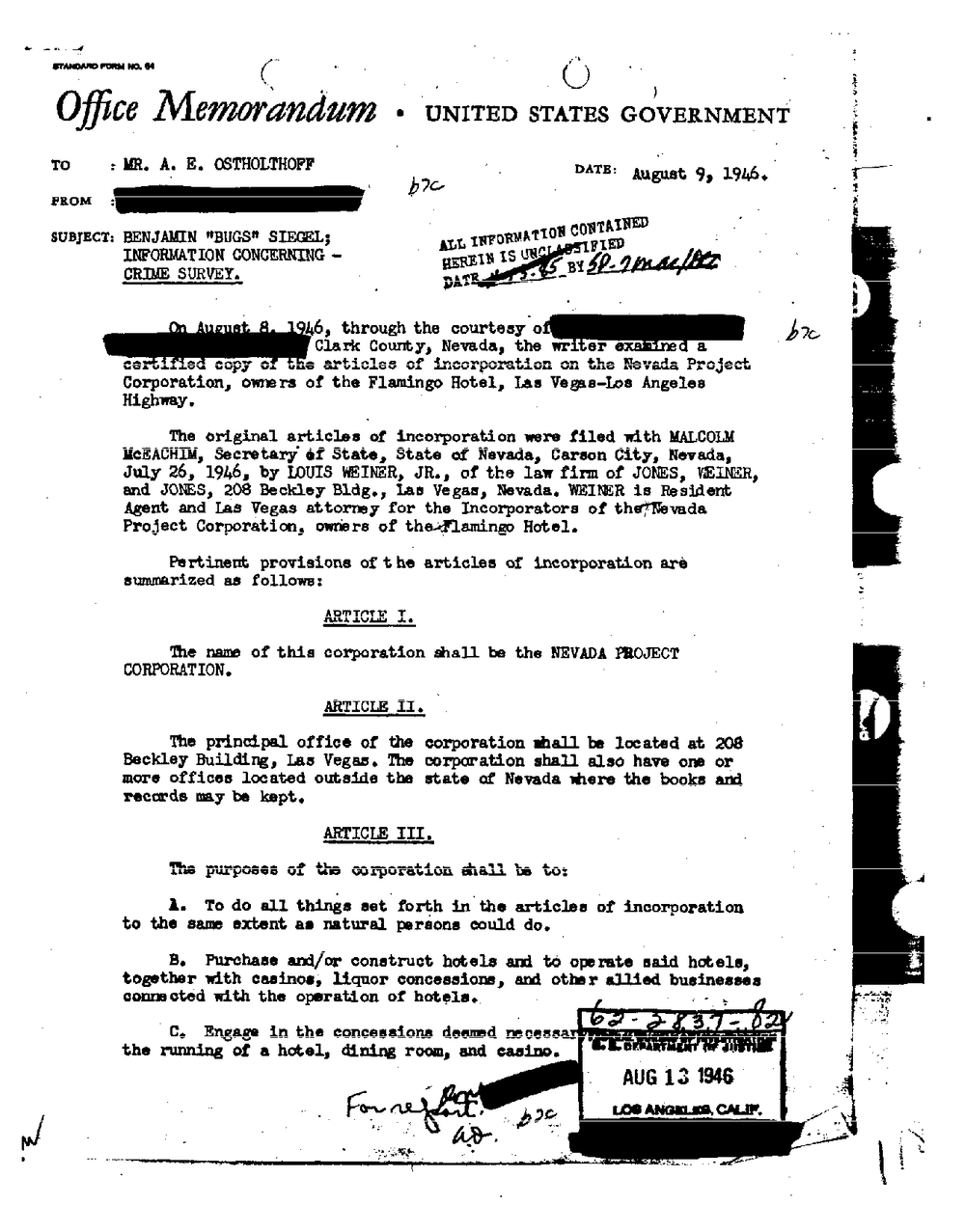 case-fileFBI memorandum summarizing the articles of incorporation of the Nevada Project Corporation (9 August 1946)An FBI office memorandum of August 9, 1946 summarizing a certified copy of the articles of incorporation of the Nevada Project Corporation, "owners of the Flamingo Hotel," filed with the Nevada Secretary of State on July 26, 1946.
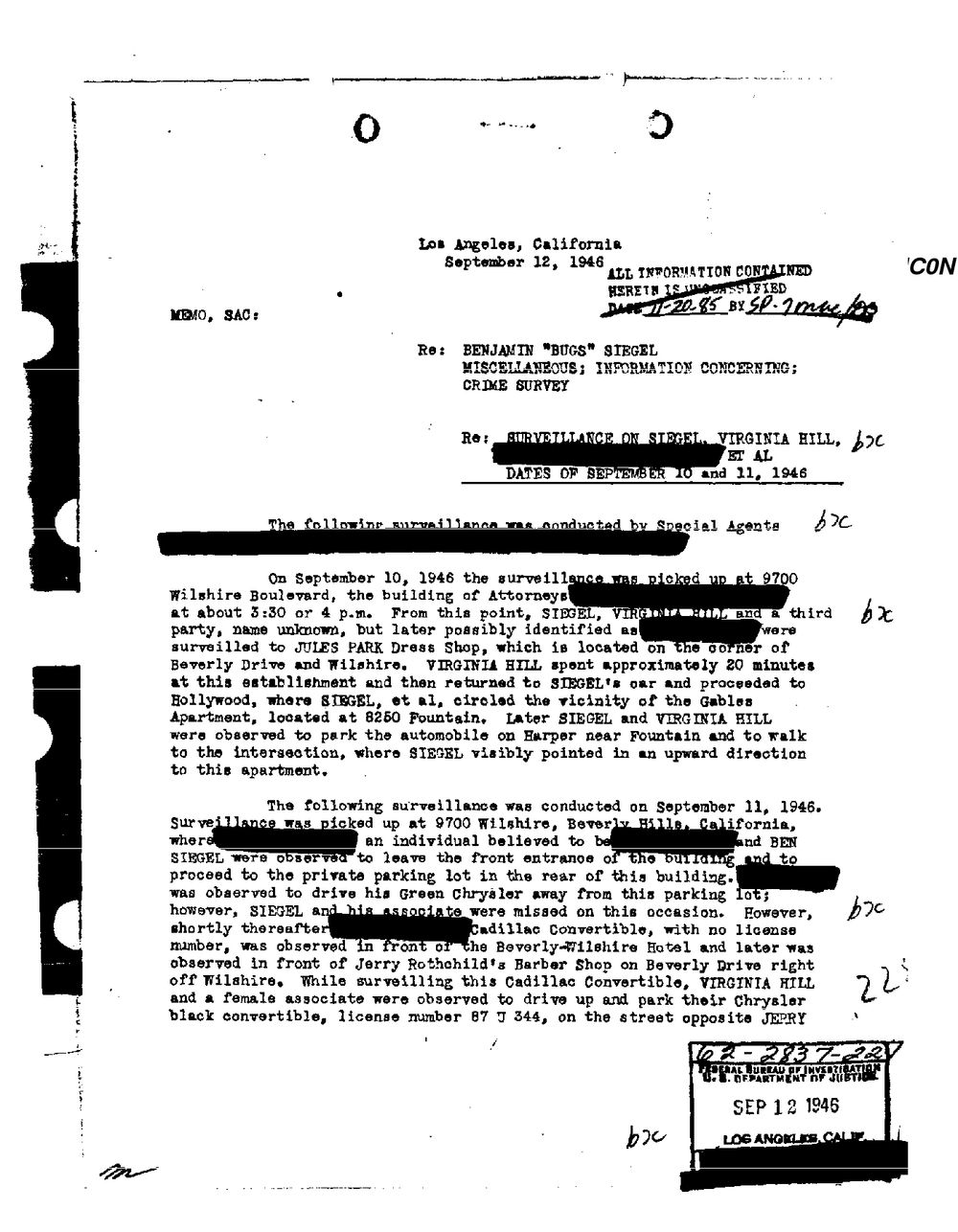 case-fileFBI Los Angeles surveillance memo on Siegel and Virginia Hill, 10-11 September 1946 (12 September 1946)A Los Angeles field-office memo to the Special Agent in Charge logging a physical surveillance of Benjamin Siegel, Virginia Hill and others on September 10 and 11, 1946, around Wilshire Boulevard and Beverly Drive.
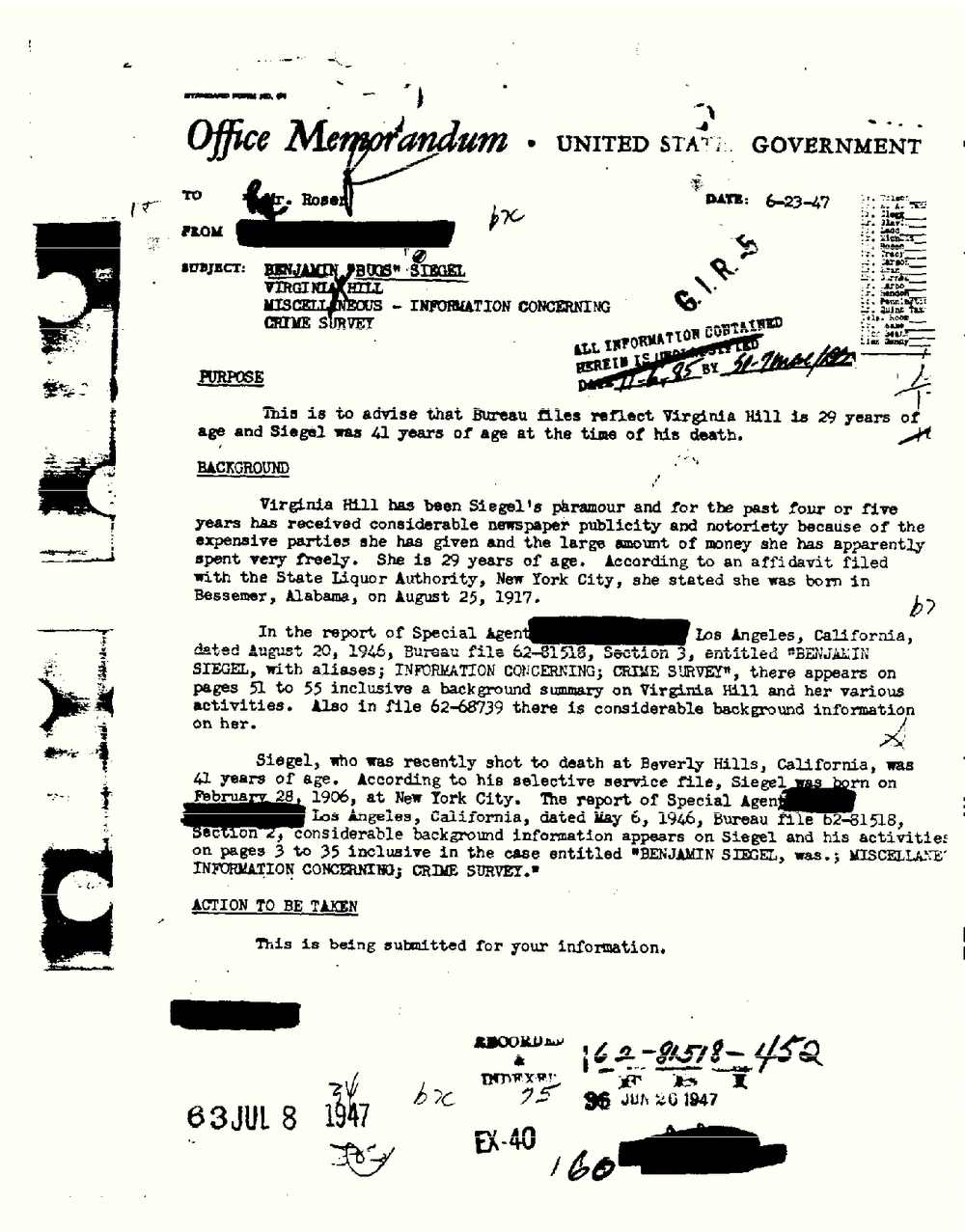 case-fileFBI memorandum on Virginia Hill's age and background after Siegel's death (23 June 1947)A one-page FBI memorandum to Mr. Rosen written three days after Benjamin Siegel was shot. It says Virginia Hill "is 29 years of age," cites an affidavit filed with the New York State Liquor Authority in which she gave her birth as Bessemer, Alabama, August 25, 1917, and calls her Siegel's "paramour."
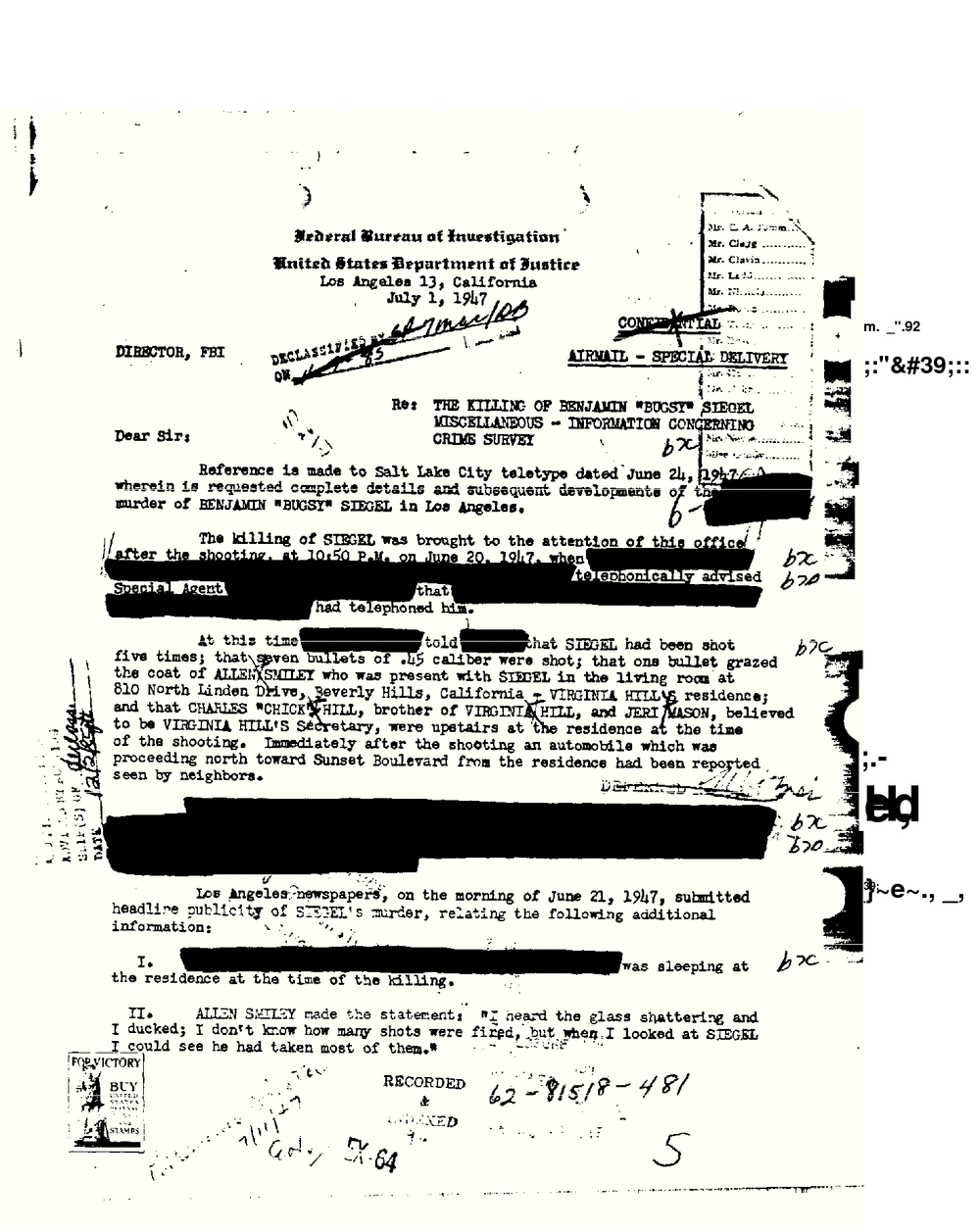 case-fileFBI Los Angeles letter to the Director on the killing of Benjamin Siegel (1 July 1947)A Los Angeles Division airmail letter of July 1, 1947 to the FBI Director summarizing what the office had learned about the shooting of Benjamin Siegel on June 20, 1947 at 810 North Linden Drive, Beverly Hills, with the press theories of motive.
 case-fileFBI Los Angeles reports of 1963 on Joseph Stacher and the Sands HotelFBI Los Angeles reports of 1963 on Joseph Stacher (Los Angeles file 92-386), including the Las Vegas Office's statement that the owner of record of 6.87 percent of the Sands Hotel "now appears to be a front for Joseph Stacher and the Gerardo Catena group."
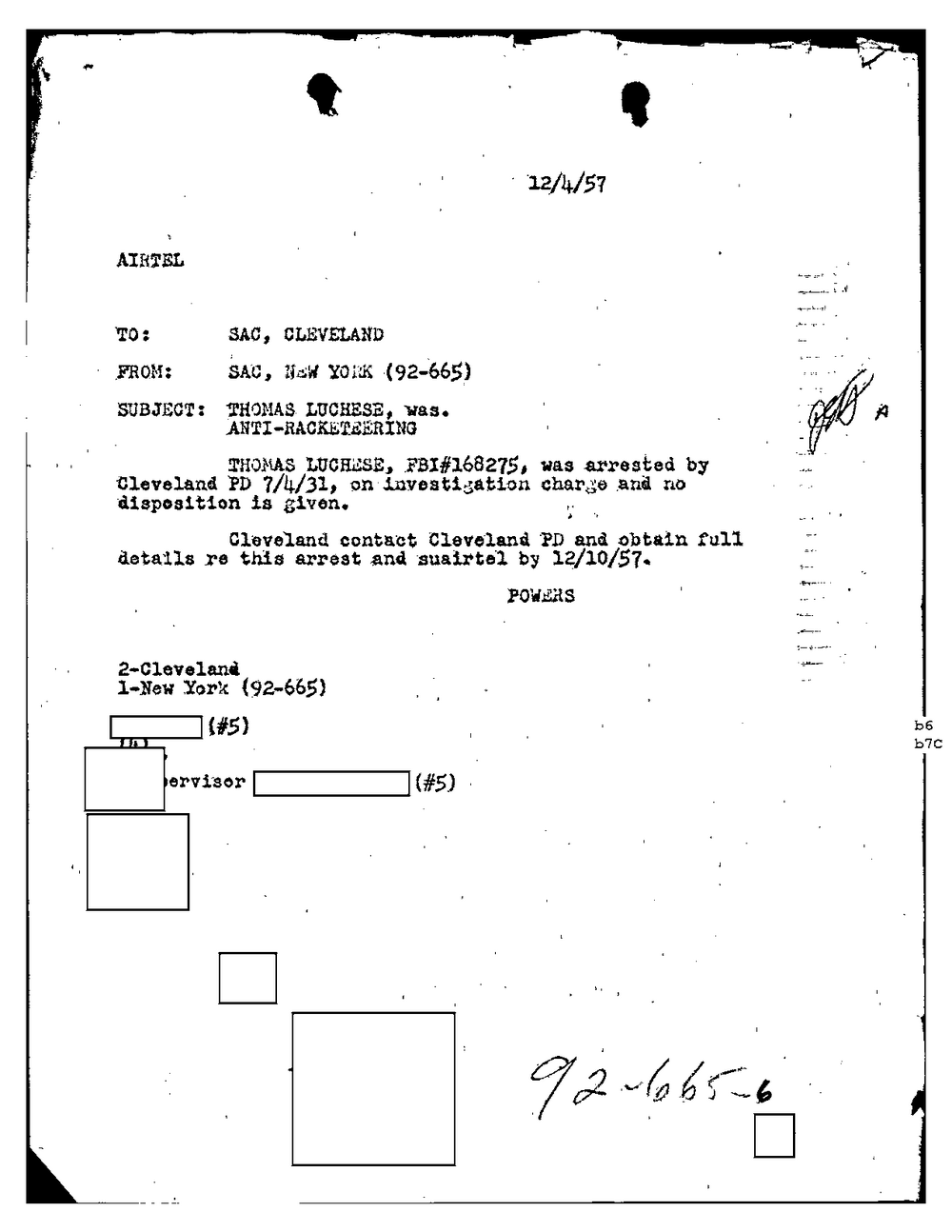 case-fileFBI Vault: Thomas Lucchese, Part 01Part 01 of the FBI's Lucchese file, 1946–1962. The deleted-page sheet lists 240 pages withheld. The readable serials concern 1940s and 1950s investigations; nothing is taken from them here.
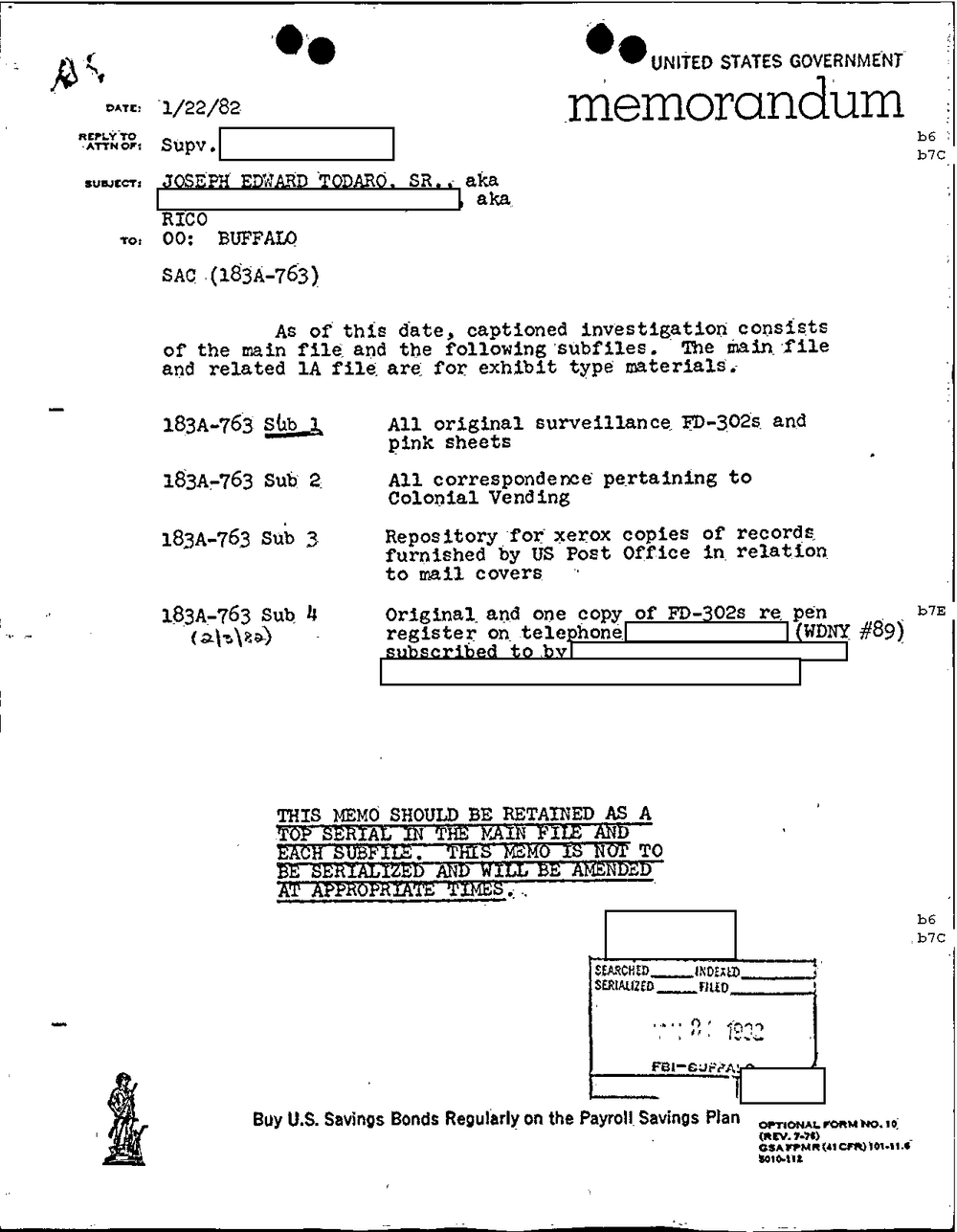 case-fileFBI Vault, Joseph Todaro, Part 01: Buffalo RICO file 183A-763 (1981-1982)Part 01 of the FBI Vault's "Joseph Todaro" file: a Buffalo field-office RICO investigation file with surveillance logs of Joseph Todaro, Sr., from September and October 1981 and a January 1982 memorandum on "OC figures" in the vending-machine business.
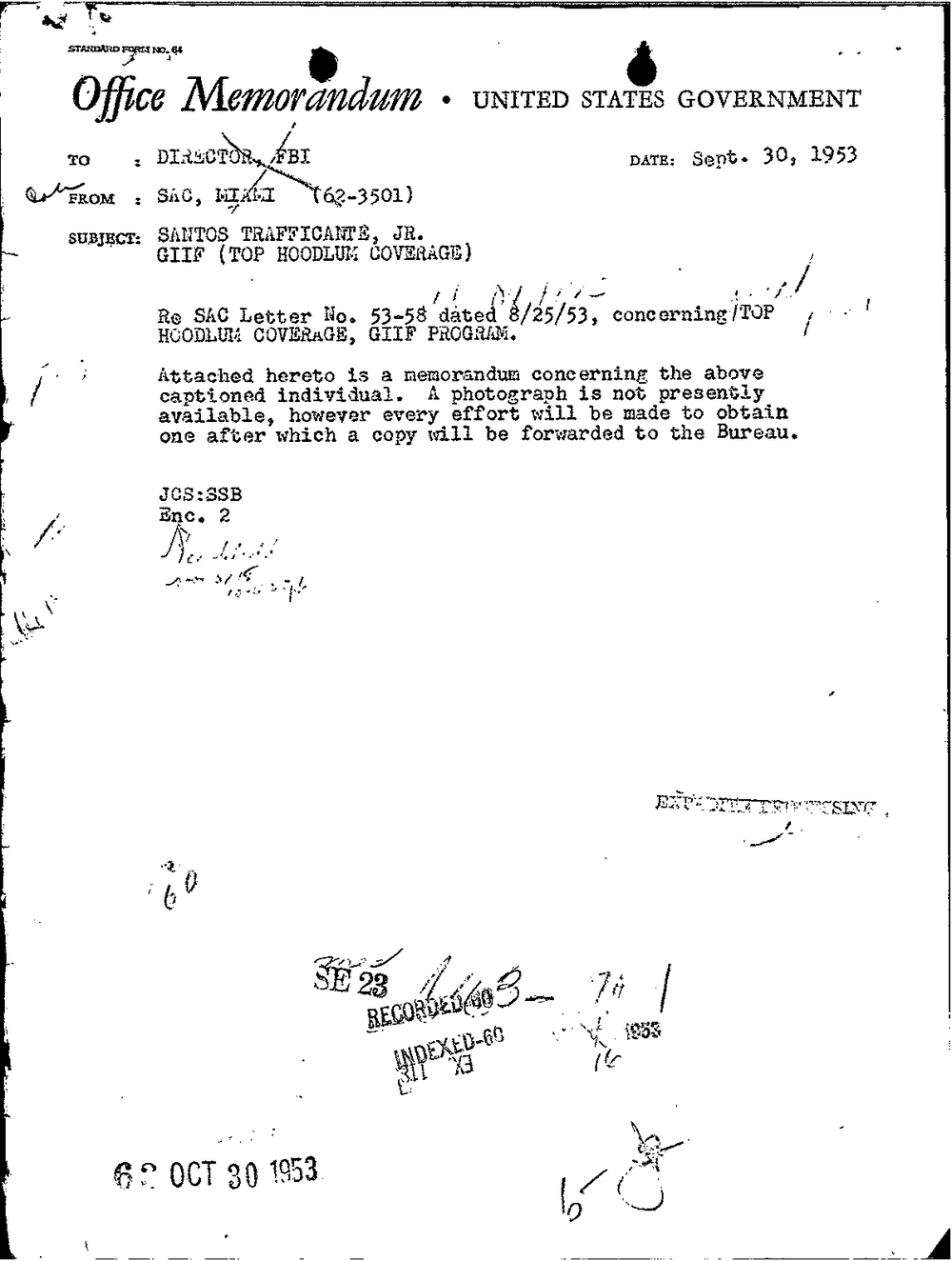 case-fileFBI Miami memorandum on Santos Trafficante, Jr.: Top Hoodlum Coverage (30 September 1953)A Miami office memorandum to the Director transmits a background memorandum on Santos Trafficante, Jr., with birth data for him and his father and informant and newspaper allegations that the family headed an 'Italian Syndicate' in Tampa.
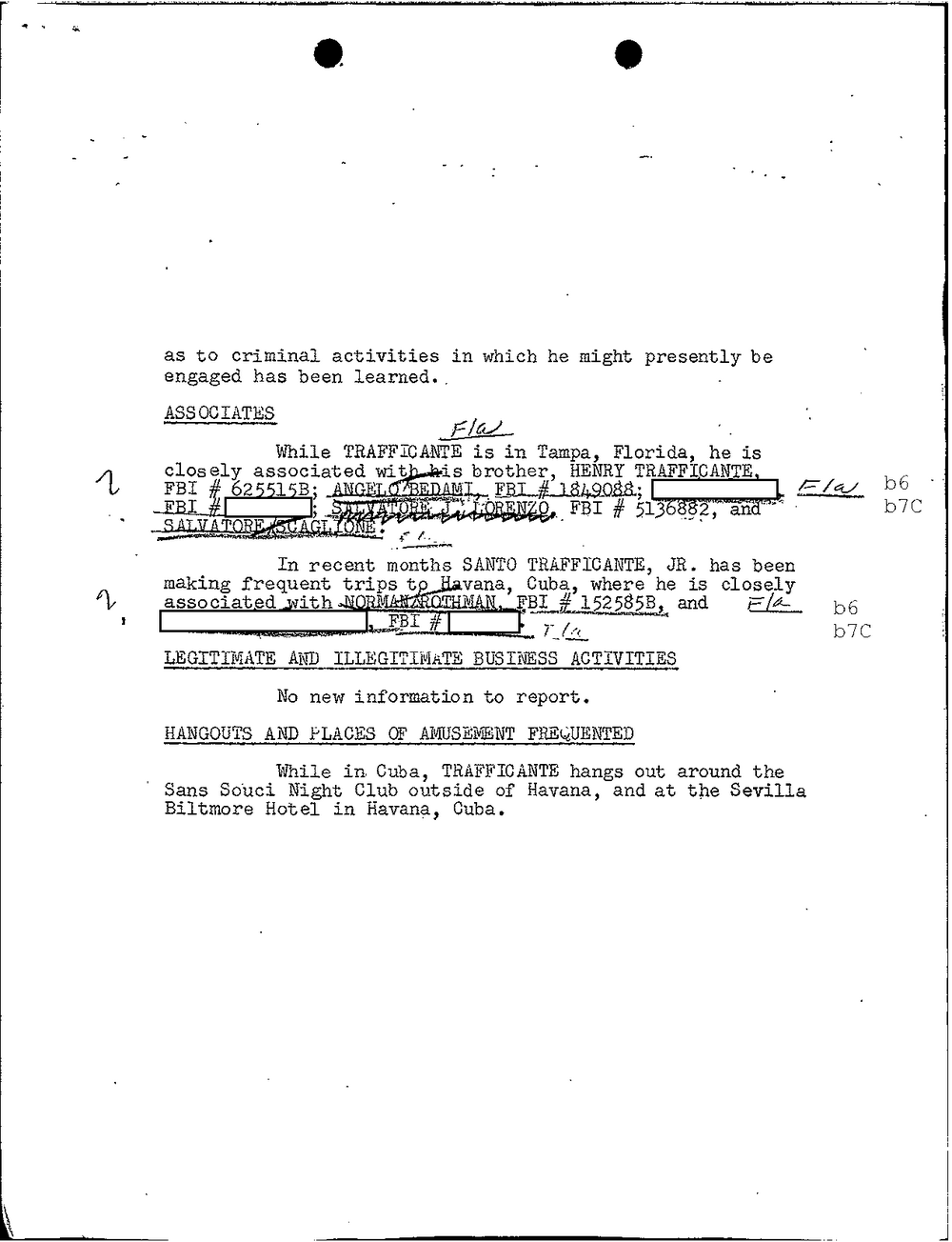 case-fileFBI Miami memorandum on Santo Trafficante, Jr., 30 September 1955: frequent trips to Havana, the Sans Souci and the Sevilla BiltmoreA semi-annual 'Top Hoodlum' memorandum states that 'In recent months SANTO TRAFFICANTE, JR. has been making frequent trips to Havana, Cuba, where he is closely associated with NORMAN ROTHMAN,' and that in Cuba he 'hangs out around the Sans Souci Night Club outside of Havana, and at the Sevilla Biltmore Hotel.'
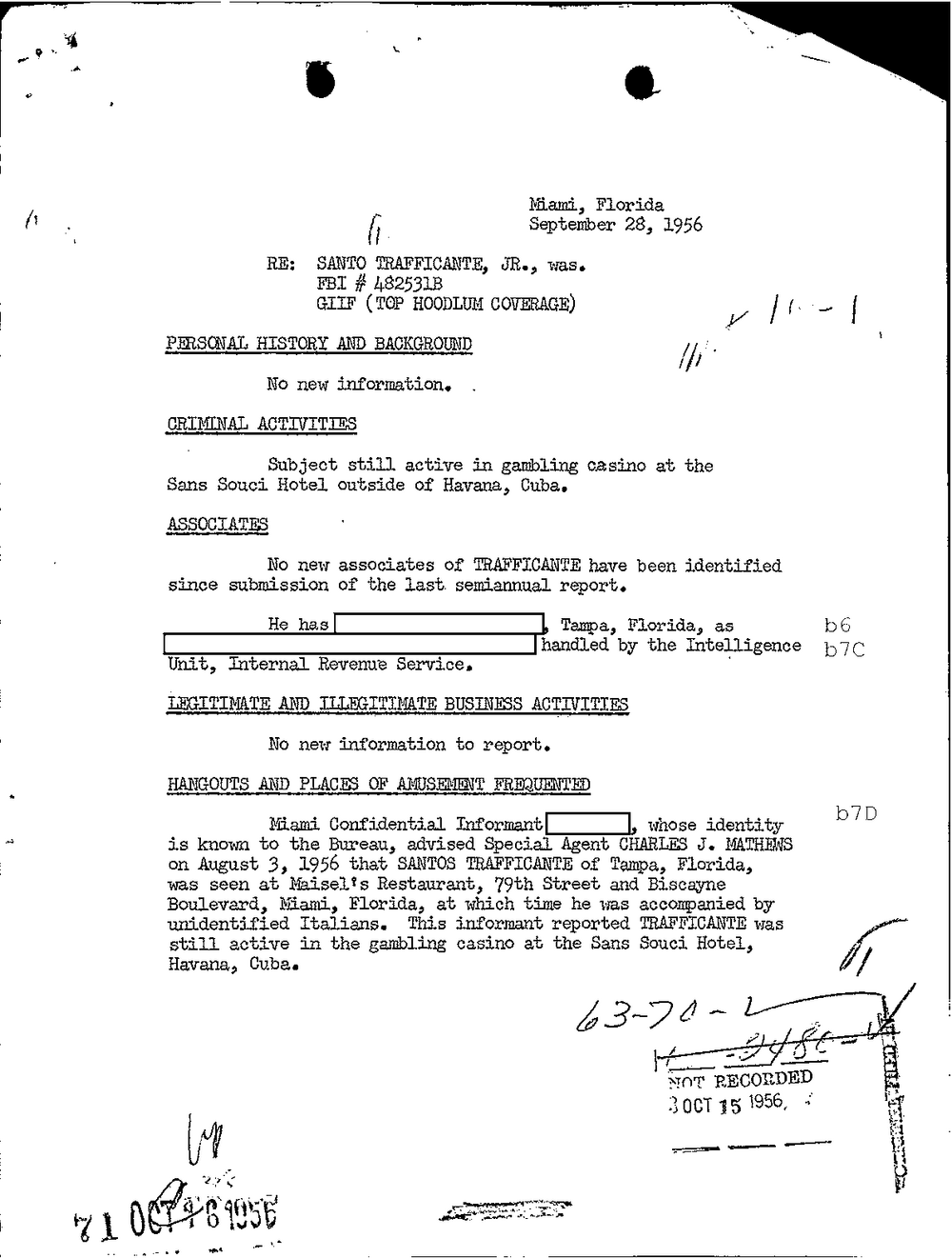 case-fileFBI Miami memorandum on Santo Trafficante, Jr., 28 September 1956: 'Subject still active in gambling casino at the Sans Souci Hotel outside of Havana, Cuba'The next semi-annual memorandum reports under criminal activities that the subject is 'still active in gambling casino at the Sans Souci Hotel outside of Havana, Cuba,' and that a Miami informant said the same on 3 August 1956.
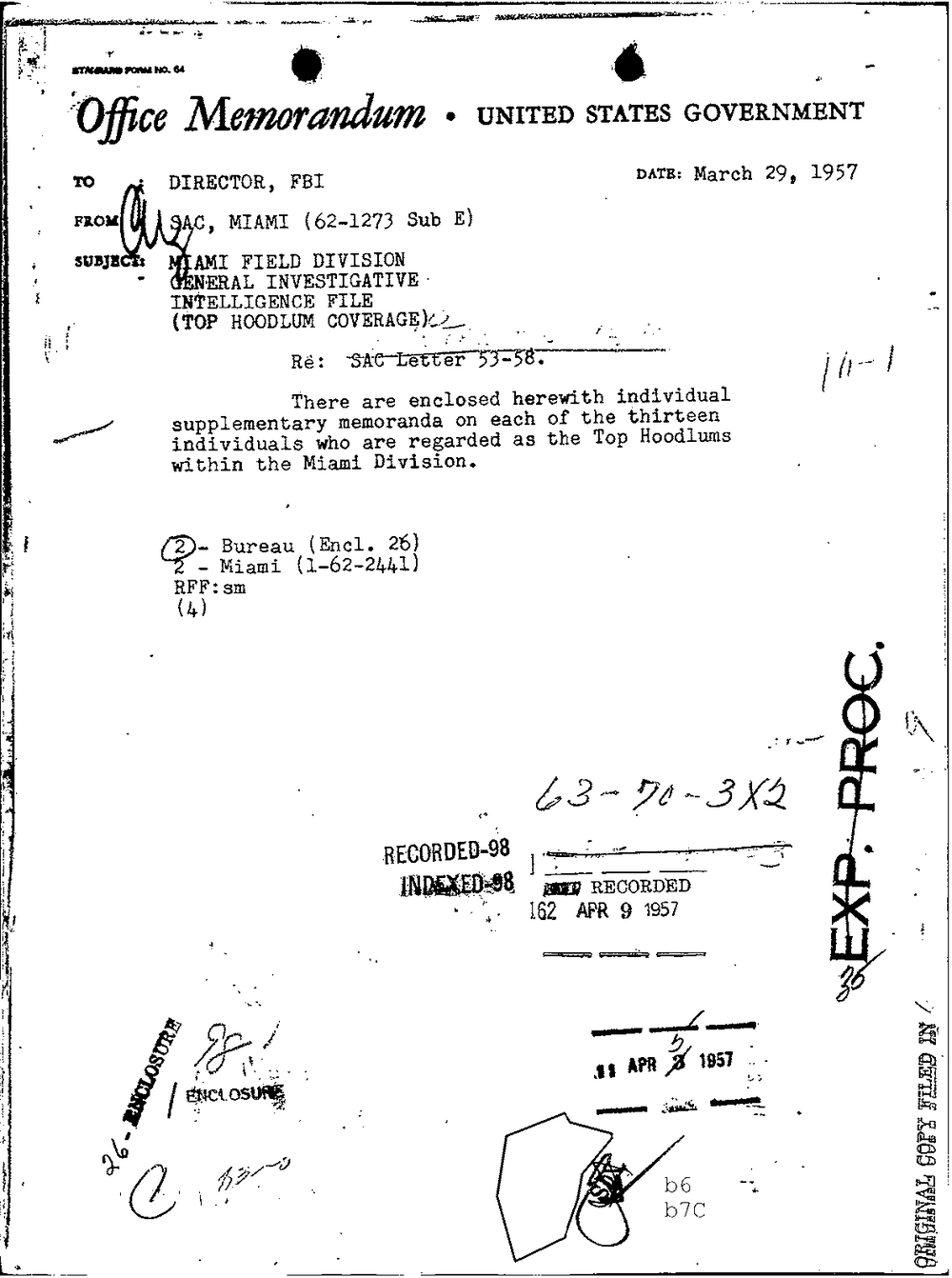 case-fileFBI Miami memorandum on Santo Trafficante, Jr.: the federal gambling-tax case and Havana's Sans Souci casino (29 March 1957)A supplementary FBI memorandum on Miami-division 'top hoodlums' reports the Trafficante brothers' gambling-tax charge and new trials, and that the Legal Attache at Havana advised on 20 December 1956 that the Sans Souci Night Club and casino was operated by Trafficante.
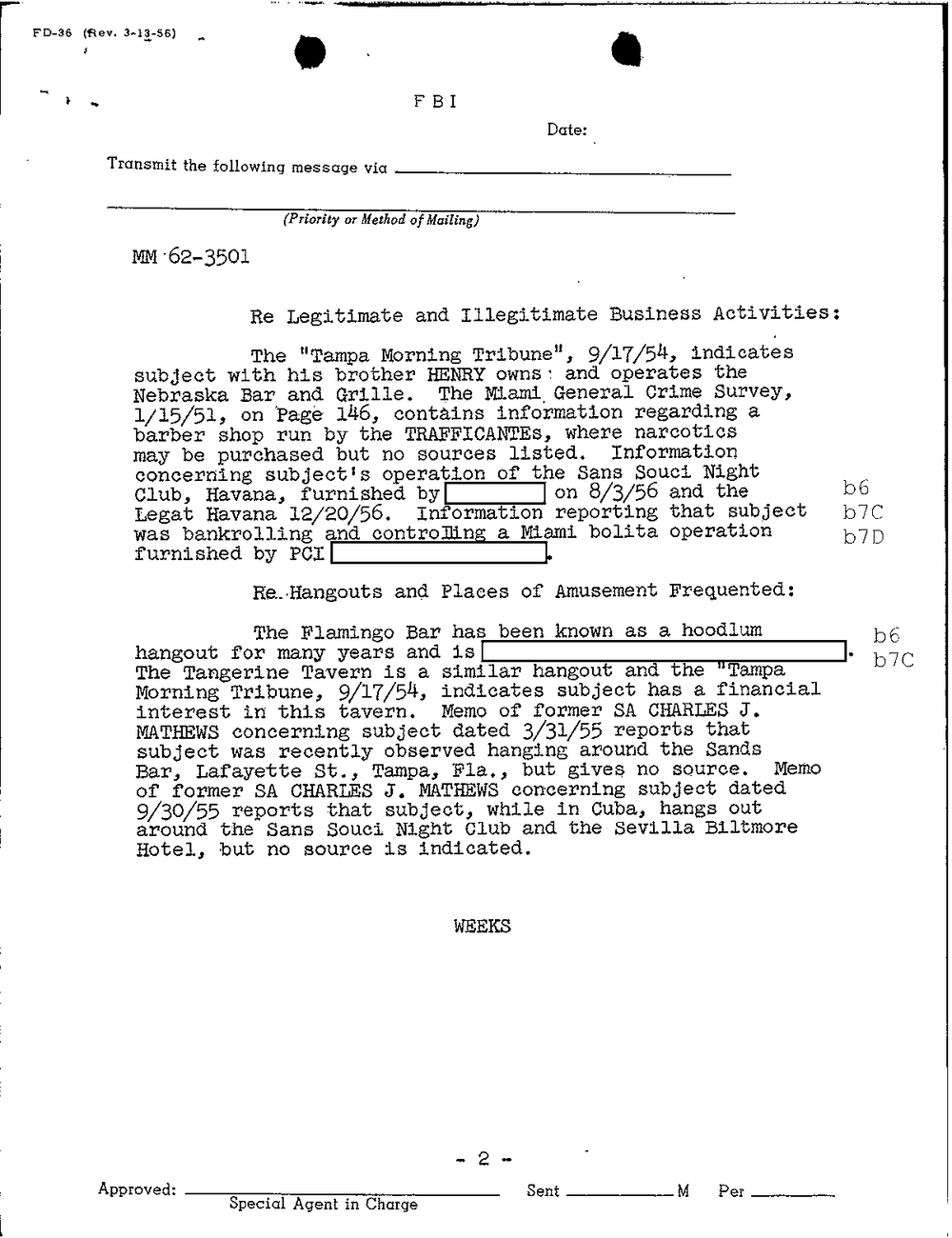 case-fileFBI summary on Santo Trafficante, Jr., and the Miami airtel of 29 July 1957 giving its sources: 'owns and operates the Sans Souci Night Club and Casino in Havana'A mid-1957 Top Hoodlum summary states that in December 1956 'information was developed that subject' owns and operates the Sans Souci Night Club and Casino in Havana; Miami's reply to headquarters names the sources for that line as information of 3 August 1956 and the Legal Attache in Havana on 20 December 1956.
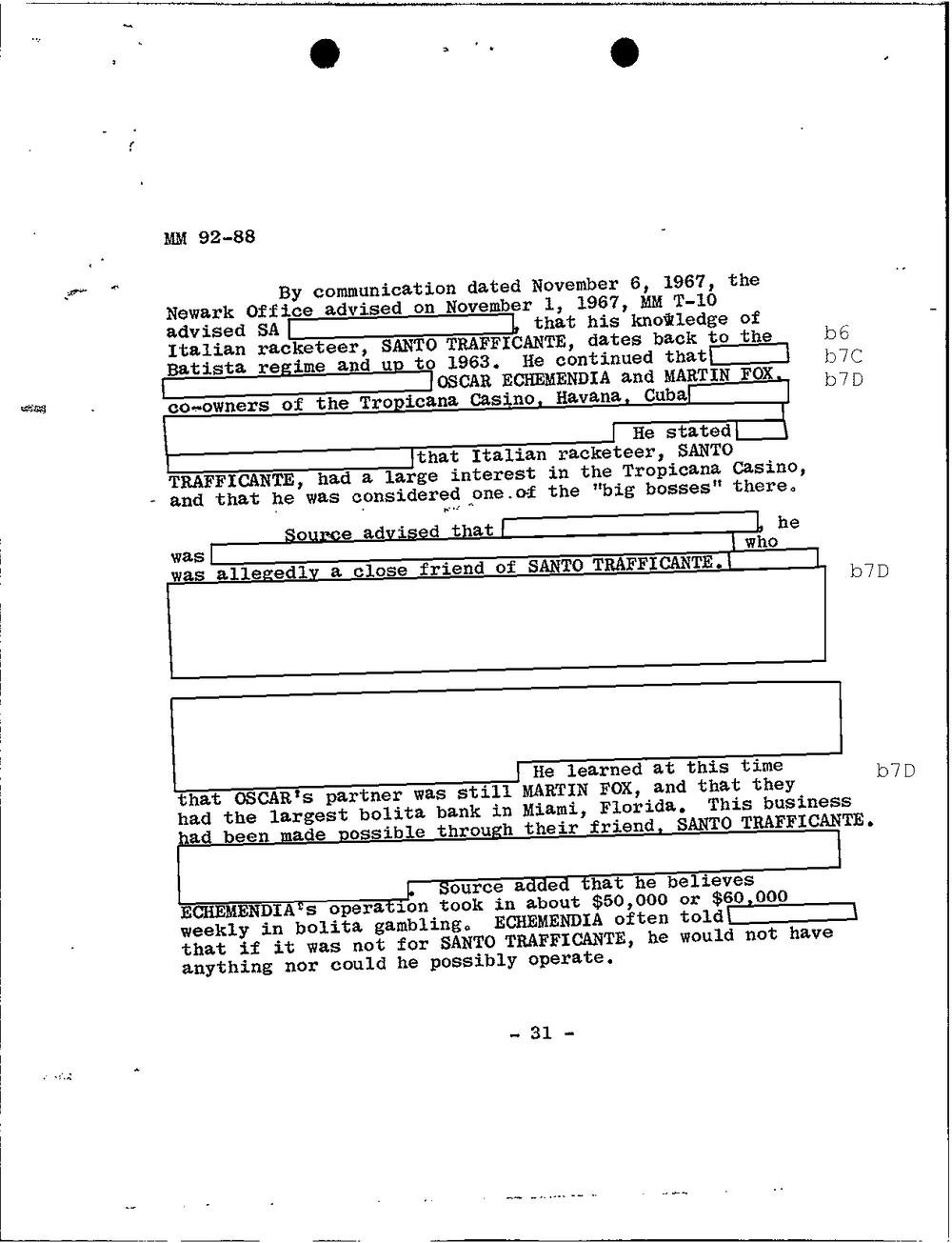 case-fileFBI Miami file 92-88, November 1967: a source's report on Trafficante and the Tropicana Casino in HavanaA paragraph in the Miami field-office file relays a November 1967 Newark Office communication in which a confidential source says Trafficante had 'a large interest in the Tropicana Casino' in Havana and was considered one of the 'big bosses' there. The source is redacted.
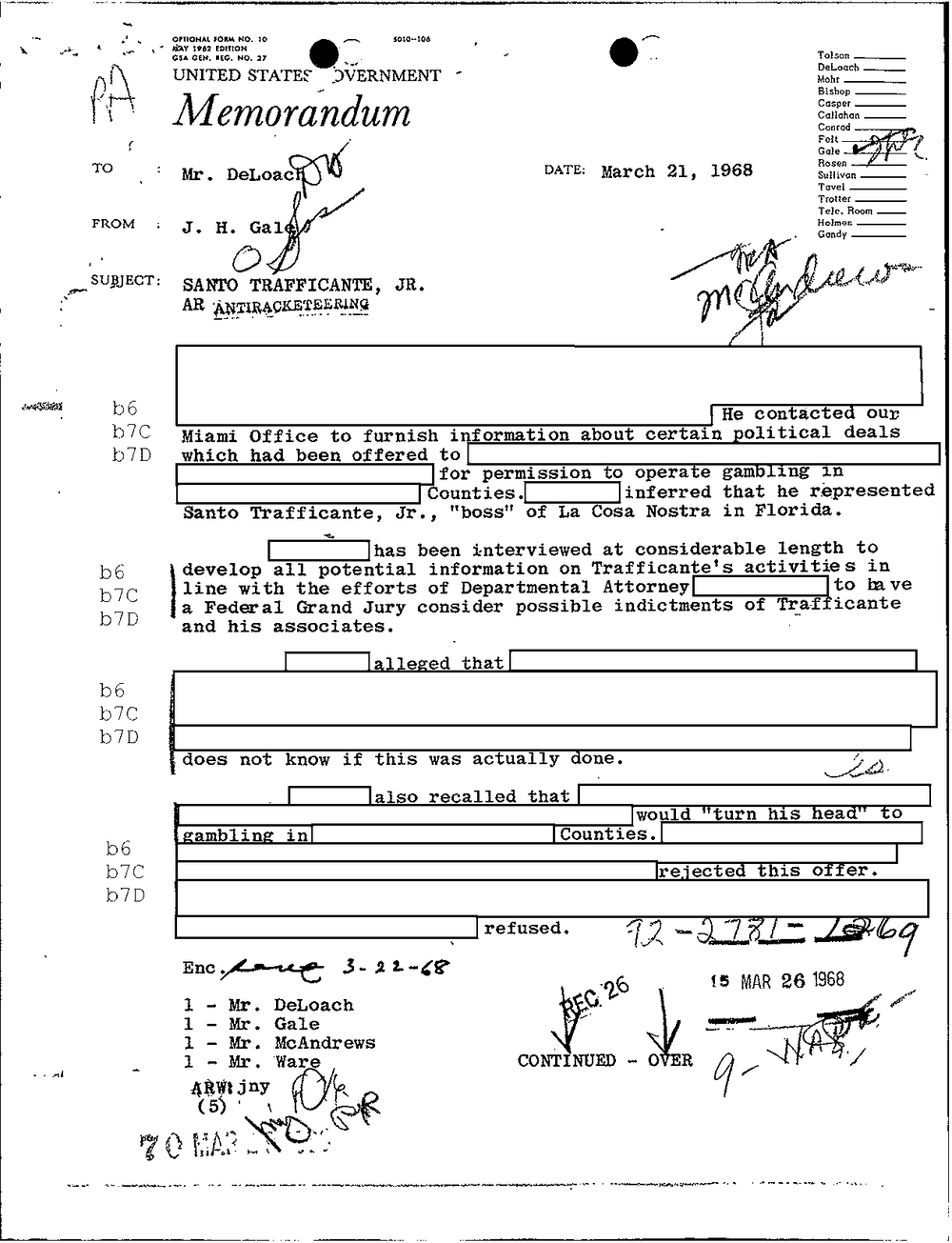 case-fileFBI memorandum, J. H. Gale to Mr. DeLoach: Santo Trafficante, Jr., called 'boss' of La Cosa Nostra in Florida (21 March 1968)A headquarters memorandum on a source's information about political arrangements said to have been offered for permission to operate gambling in Florida counties describes Santo Trafficante, Jr. as 'boss' of La Cosa Nostra in Florida and records that a Departmental Attorney was seeking a federal grand jury.
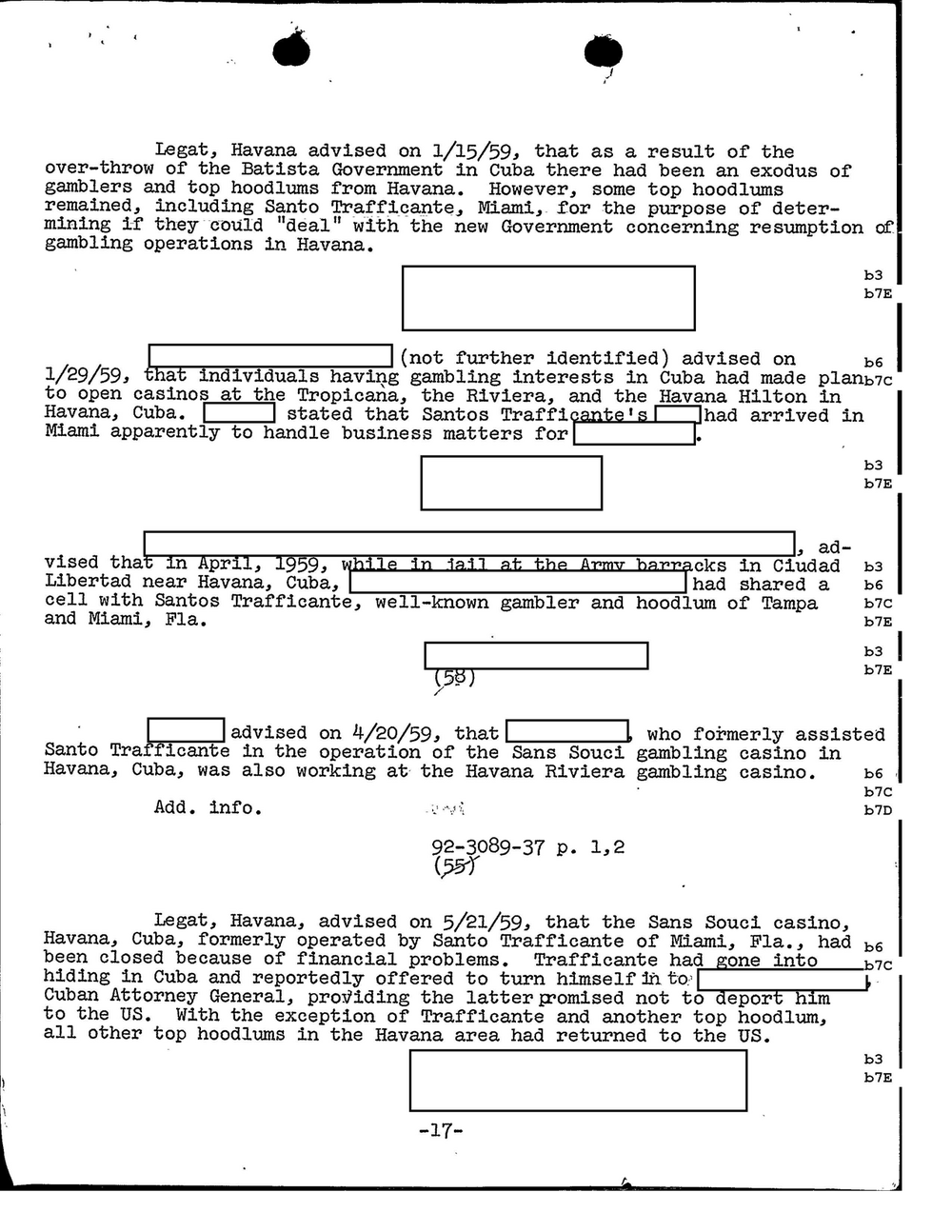 case-fileFBI Correlation Summary on Santo Trafficante, Jr. (searched 4 March 1971): the January 1959 exodus, the Sans Souci's closing, and detention at TiscorniaThe 1959 entries of the same digest: the Legal Attache reported on 15 January 1959 'an exodus of gamblers and top hoodlums from Havana,' with Trafficante among those who stayed to see if they could 'deal' with the new government; on 21 May that the Sans Souci had closed 'because of financial problems'; and later that Trafficante was confined at the immigration detention house 'Tiscornia.'
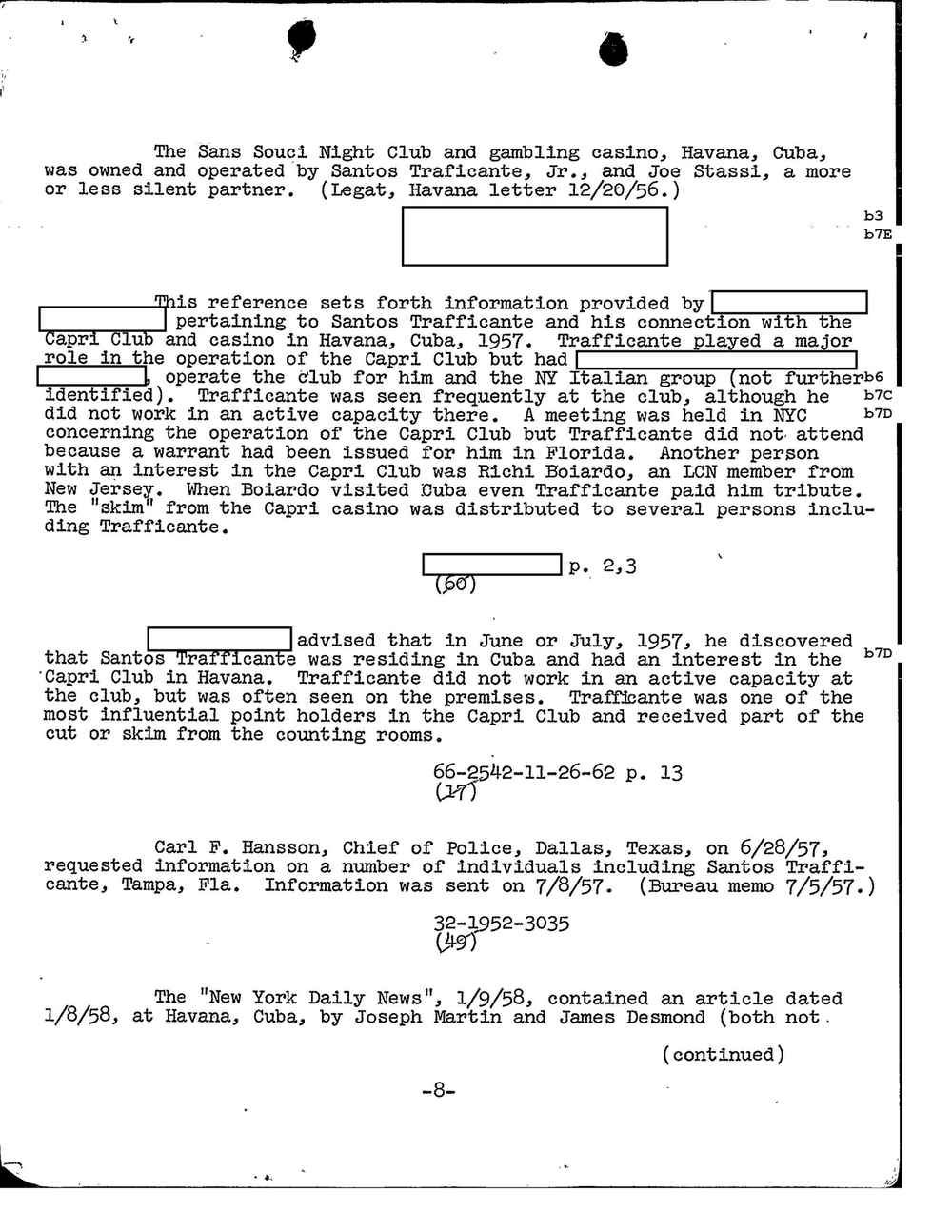 case-fileFBI Correlation Summary on Santo Trafficante, Jr. (main file 92-2781, searched 4 March 1971): Havana entries for 1955-1958A 1971 headquarters digest of Bureau references, marked 'NOT SUITABLE FOR DISSEMINATION,' records Legal Attache and informant reports placing Trafficante at the Sevilla Biltmore, the Sans Souci, the Hotel Nacional, the Capri and the Havana-Riviera, nearly all with 'reportedly,' 'allegedly' or 'appeared.'
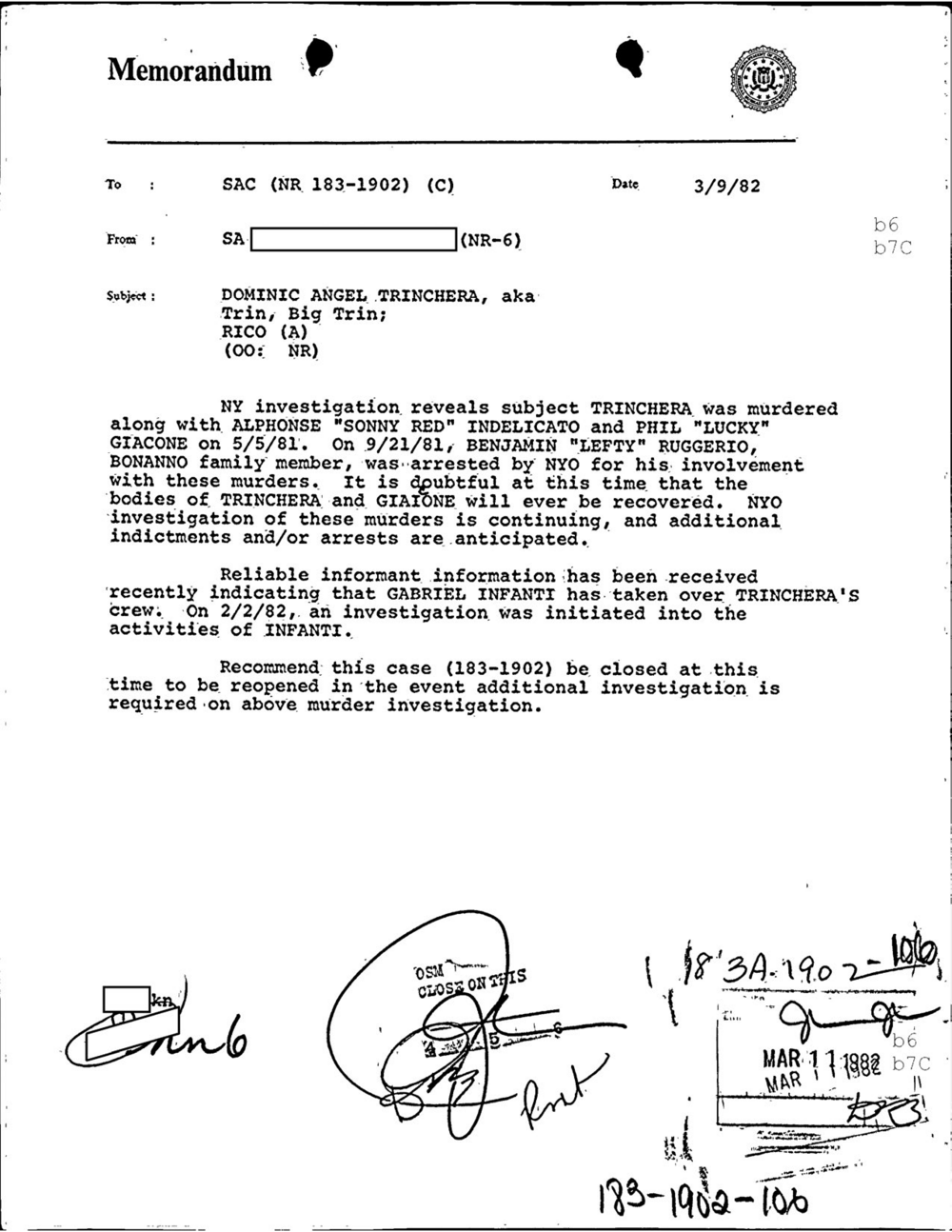 case-fileFBI Vault, Dominick Trinchera file, viewer p. 123 (March 9, 1982)A Newark memorandum recommending that the Trinchera file be closed: "NY investigation reveals subject Trinchera was murdered along with Alphonse 'Sonny Red' Indelicato and Phil 'Lucky' Giacone on 5/5/81." It doubts the two missing bodies will ever be recovered.
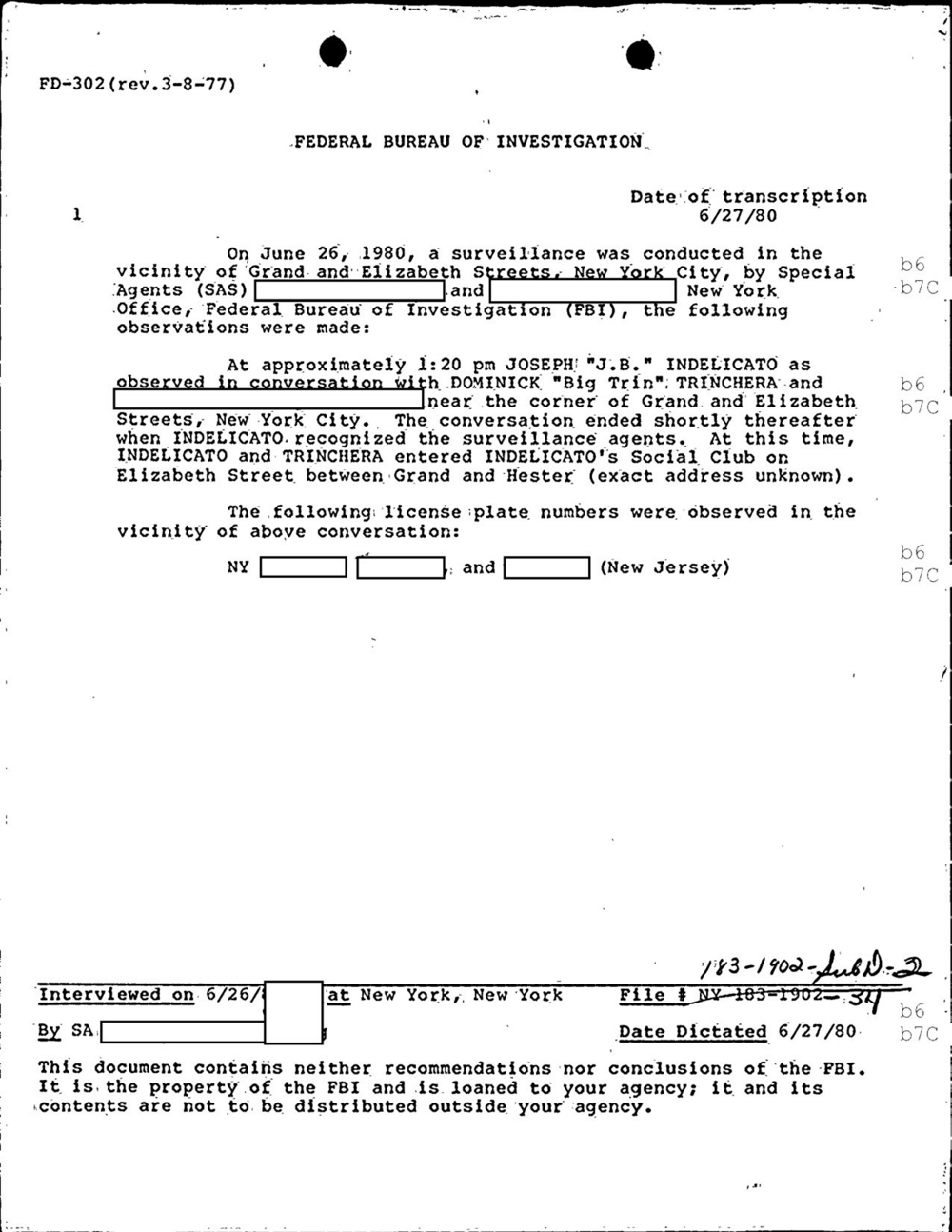 case-fileFBI Vault, Dominick Trinchera file, viewer p. 126 (June 26, 1980)An FBI report of a surveillance on June 26, 1980 at Grand and Elizabeth Streets, Manhattan. Agents saw Joseph "J.B." Indelicato talking with Dominick "Big Trin" Trinchera; the two then entered "Indelicato's Social Club on Elizabeth Street between Grand and Hester (exact address unknown)."
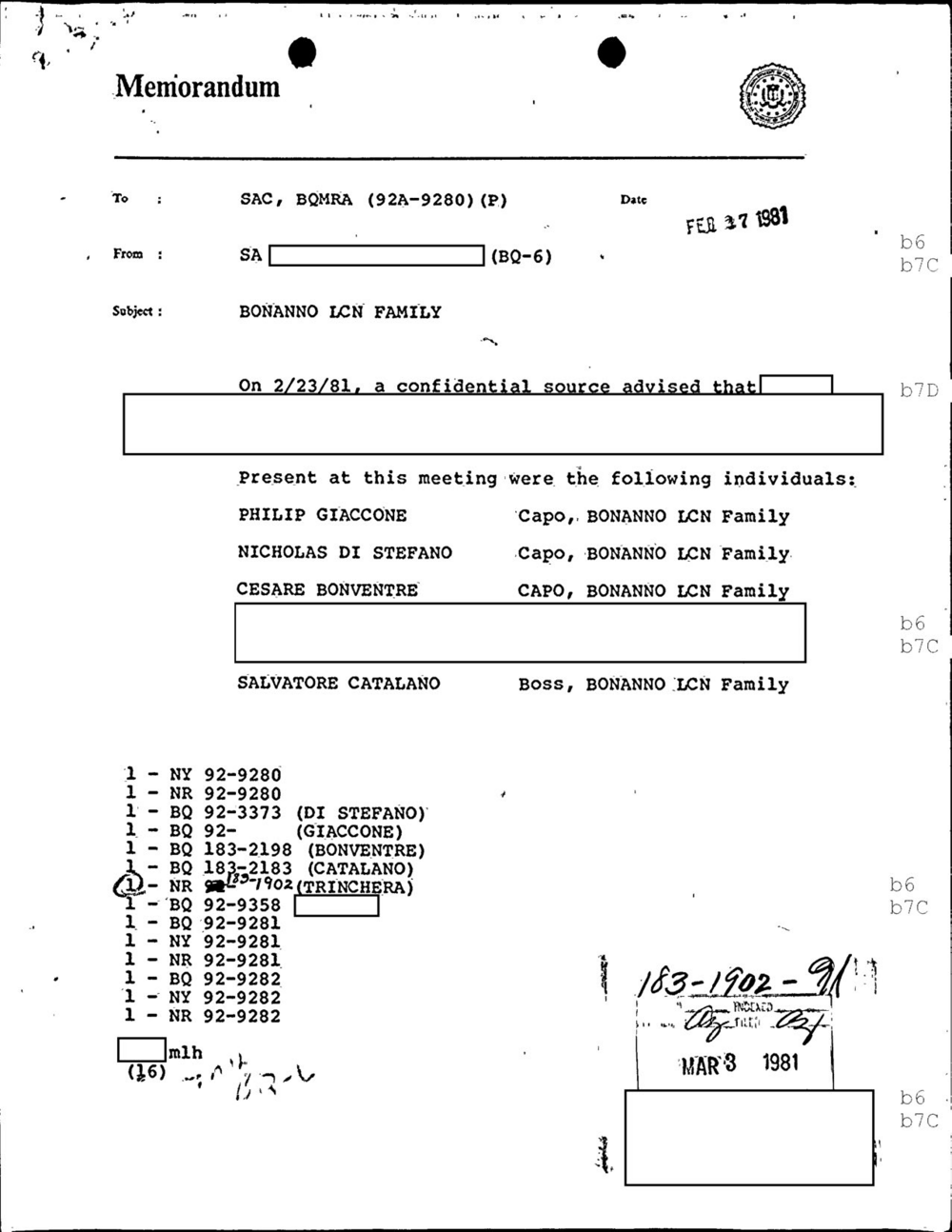 case-fileFBI Vault, Dominick Trinchera file, viewer pp. 102-103 (February 27, 1981)A Brooklyn-Queens memorandum headed "Bonanno LCN Family" reporting a confidential source's account of a meeting on February 23, 1981. It lists those present with an FBI label for each, among them Philip Giaccone and Dominick Trinchera as "Capo."
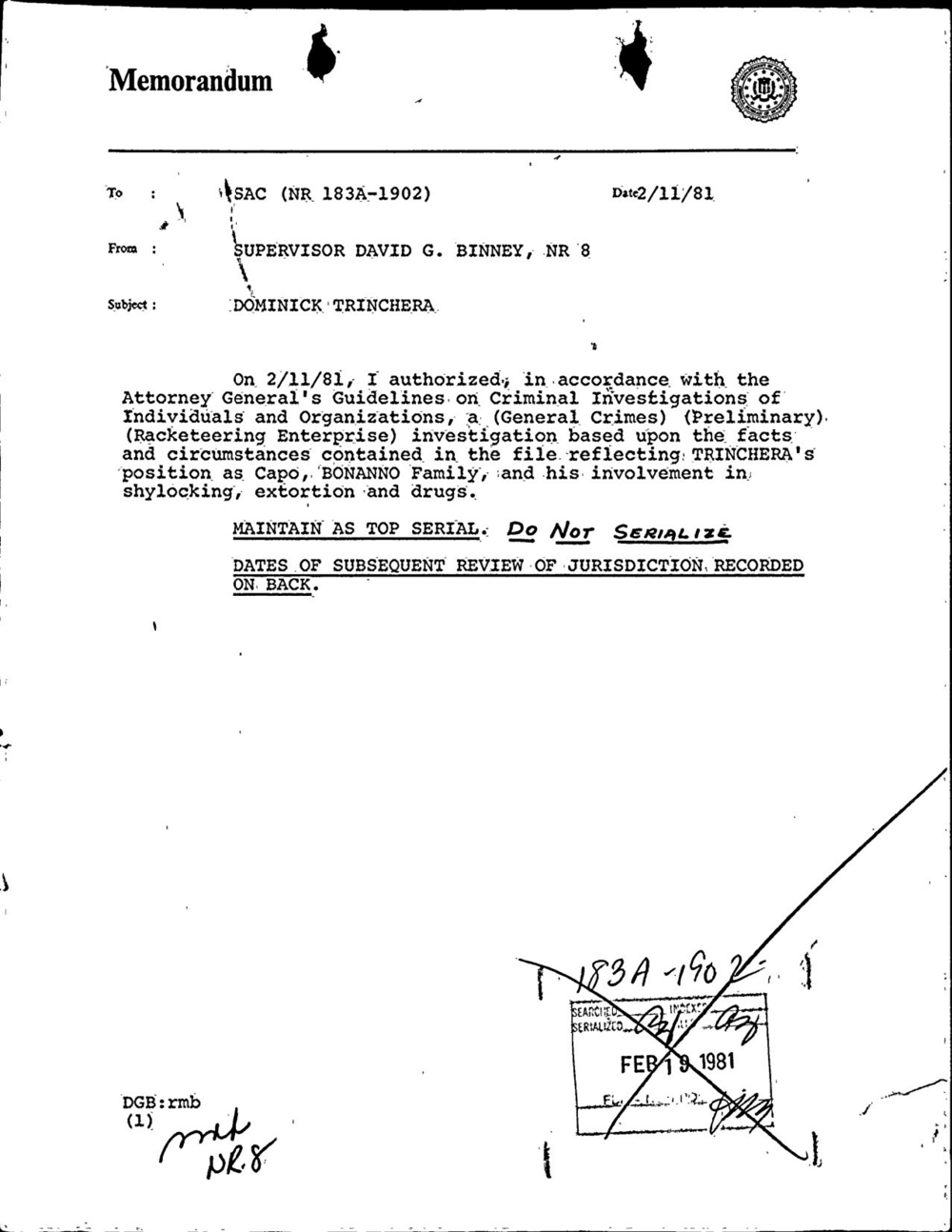 case-fileFBI Vault, Dominick Trinchera file, viewer pp. 3-6 (February 1981)A Newark memorandum of February 11, 1981 authorizing a preliminary racketeering-enterprise investigation of Dominick Trinchera, citing "Trinchera's position as Capo, Bonanno Family," and a background memorandum in which New York sources report he "has been made the Bronx, NY Bonanno Family Captain."
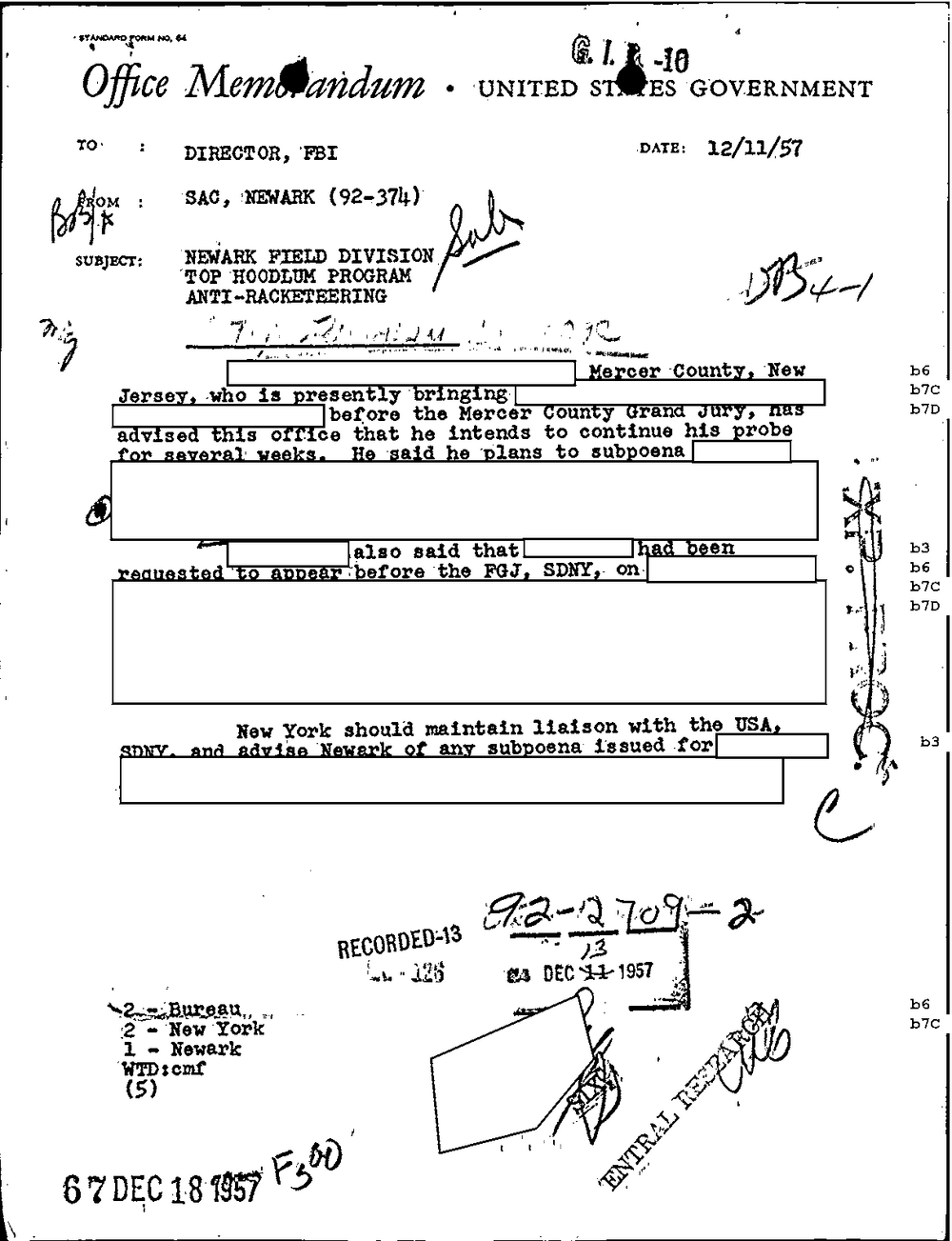 case-fileFBI Vault: Vito Genovese, Part 01Part 01 of the FBI's Genovese file, mostly 1957–1959 serials from the Top Hoodlum period. The deleted-page sheet lists 119 pages withheld. The OCR is fragmentary.
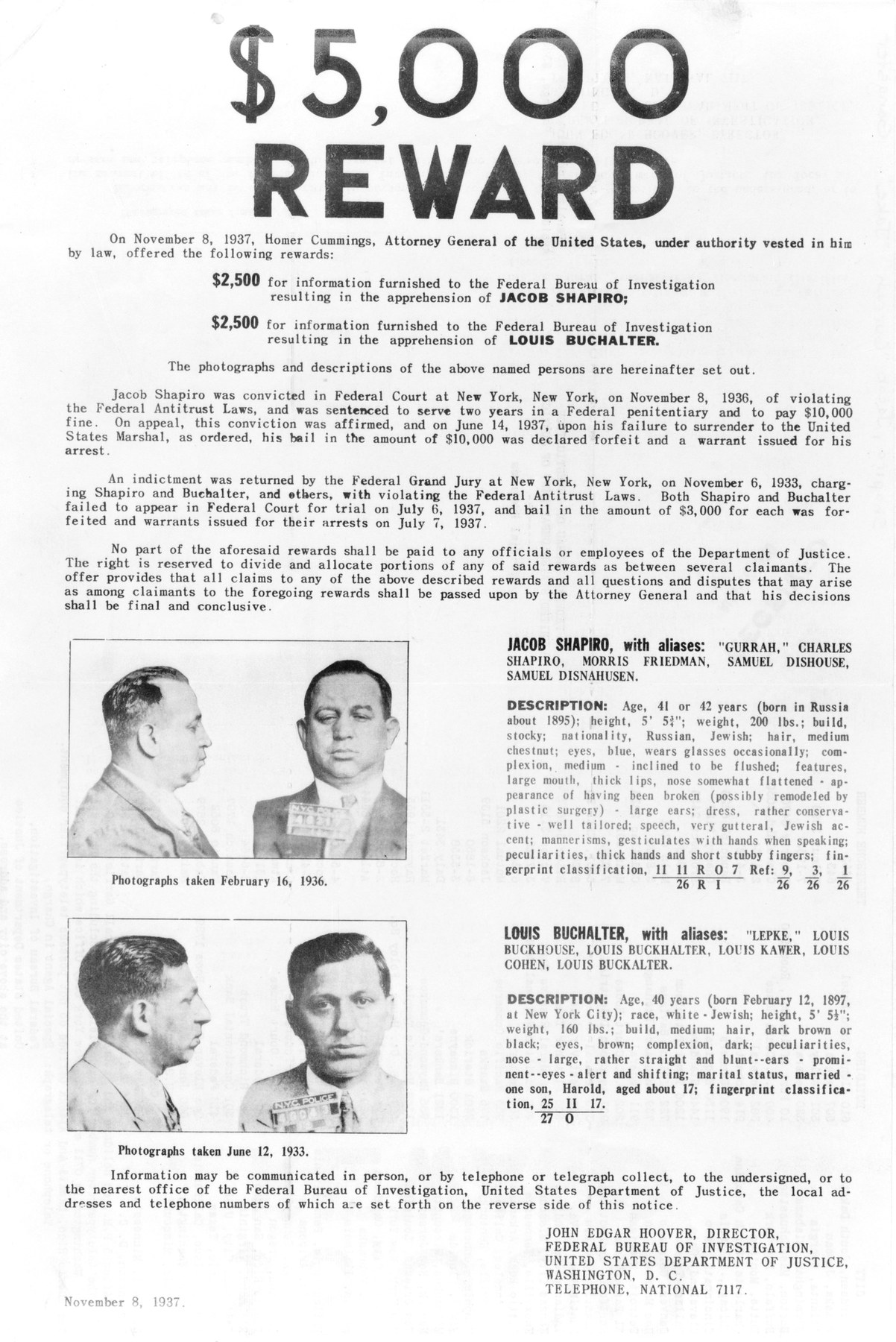 photographFBI wanted poster for Jacob Shapiro and Louis Buchalter, 8 November 1937FBI wanted poster for Jacob Shapiro and Louis Buchalter dated November 8, 1937, carrying their photographs. A copy is stored here.
 photographJames "Whitey" Bulger (FBI)FBI image of James "Whitey" Bulger from the FBI's Boston field-office history, captioned with his arrest on June 22, 2011 in Santa Monica, California. A copy is stored here.agency-historyFBI, "Italian Organized Crime – Overview" (archived www2.fbi.gov page)An older FBI web overview, still served on the www2.fbi.gov archive host. It says the murder of "faction leader Joseph Masseria brought an end to the gang warfare," that Maranzano, "the first leader of La Cosa Nostra, was murdered within six months," and that Luciano "set up the 'Commission.'" An agency narrative, not a record of the events.
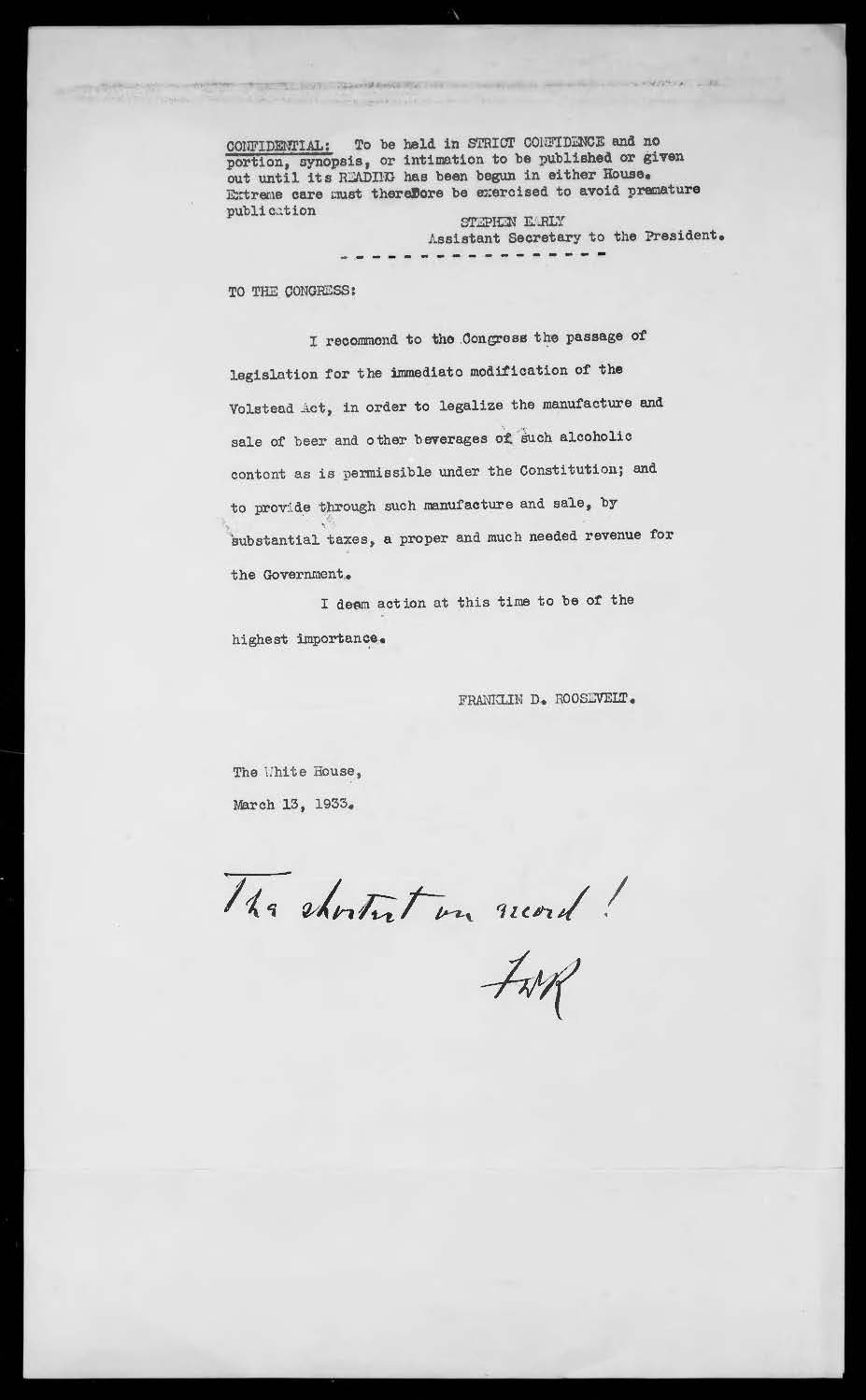 case-fileRoosevelt's message to Congress on the Volstead Act (13 March 1933)Franklin D. Roosevelt Library one-page confidential message to Congress recommending immediate modification of the Volstead Act to legalize beer and other beverages of a permissible alcoholic content and to raise revenue through taxes.
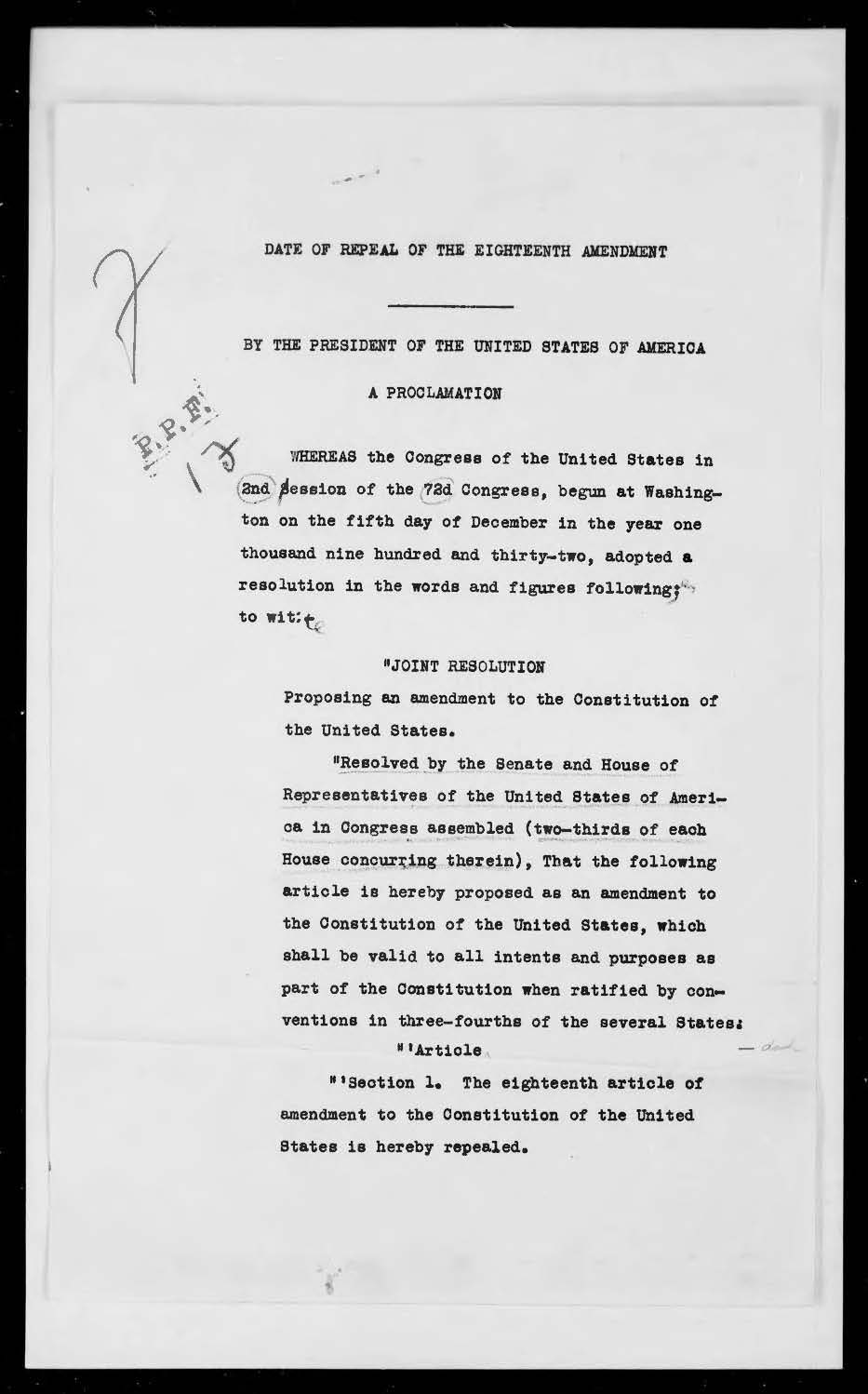 case-fileProclamation No. 2065, repeal of the Eighteenth Amendment (draft text, 5 December 1933)Franklin D. Roosevelt Library typescript draft of Proclamation 2065 (Speech File 668), headed "Date of Repeal of the Eighteenth Amendment", reciting the joint resolution proposing the amendment and its Section 1.case-fileMr. Blaine to Governor Nicholls, telegram, 21 October 1890 (FRUS 1891, Document 602)Secretary of State Blaine relays to the Louisiana governor the Italian minister's report that the New Orleans mayor had caused the arrest of innocent persons and issued proclamations tending to excite the Italian colony, and that the great body of Italians wanted the law to 'punish the murderers of the chief of police.'case-fileList of those who were registered as voters, Supervisor of Registration, Parish of Orleans, 15-16 December 1890 (FRUS 1891, Document 613)A certified abstract of voter-registration records for ten of the Italians charged in the Hennessy case, plus a separate certificate for Salvador Coscenso, sent to Washington by the U.S. Attorney. It gives each man's registration number, precinct and, where stated, naturalization or declaration of intention.case-fileList of those whose status is unknown, U.S. Attorney William Grant, New Orleans, 17 December 1890 (FRUS 1891, Document 614)U.S. Attorney William Grant's list of nine Italian-born men 'in custody, charged with the murder of Chief D. C. Hennessy' who do not appear from any record to have been naturalized, with their ages; the companion to the registered-voters list.case-fileConsul Corte to Baron Fava, telegram, New Orleans, 14 March 1891 (FRUS 1891, Document 615)A short telegram, in translation, from the Italian consul at New Orleans to the Italian minister at Washington on the day of the killings: a mob led by members of the 'committee of fifty' took the jail and killed eleven prisoners, three of them Italians and the others naturalized.case-fileMr. Blaine to Governor Nicholls, telegram, 15 March 1891 (FRUS 1891, Document 619)Secretary of State Blaine's telegram to the Louisiana governor the day after the killings: three or more of the victims were subjects of the King of Italy, the treaty guarantees their protection, and the President regrets that a question for the courts was transferred 'to the passionate judgment of a mob.'case-fileGovernor Nicholls to Mr. Blaine, telegram, New Orleans, 16 March 1891 (FRUS 1891, Document 623)Governor Nicholls's reply to Blaine's telegram of 15 March: everything is now quiet, he anticipates no further trouble, and 'the recent action was directed against particular individuals; their race or nationality was not a factor in the disturbance.'case-fileCorrespondence in relation to the killing of prisoners in New Orleans, 14 March 1891 (FRUS 1891, Documents 602-662)The chapter heading and document list for the State Department's printed correspondence with Italy about the Hennessy case and the 14 March 1891 killings, from Secretary of State Blaine's telegram of 21 October 1890 through the March 1891 exchanges.case-filePresident Harrison's annual message, 9 December 1891 (paragraphs on the March 1891 New Orleans killings)The President's message to Congress, printed at the head of the 1891 Foreign Relations volume, calls the March lynching at New Orleans of eleven men of Italian nativity 'a most deplorable and discreditable incident' and says the federal government had no power under existing law to intervene.case-fileComprehensive Drug Abuse Prevention and Control Act of 1970, Pub. L. 91-513, 84 Stat. 1236The Act of October 27, 1970 whose Title II is the Controlled Substances Act. Section 408 defines a "continuing criminal enterprise": a series of felony violations undertaken with five or more others whom the offender organizes, supervises or manages, and from which he obtains substantial income.case-fileEighteenth Amendment to the Constitution (Prohibition), as printed in H. Doc. 110-50The text of the Eighteenth Amendment, which prohibited the manufacture, sale or transportation of intoxicating liquors for beverage purposes, with the House Document's note that ratification was completed on January 16, 1919. It was repealed by the Twenty-first Amendment.case-fileTwenty-first Amendment to the Constitution (repeal of Prohibition), as printed in H. Doc. 110-50The text of the Twenty-first Amendment, which repealed the Eighteenth and barred importing liquor into a State in violation of its laws, with the House Document's note that it was declared ratified on December 5, 1933.
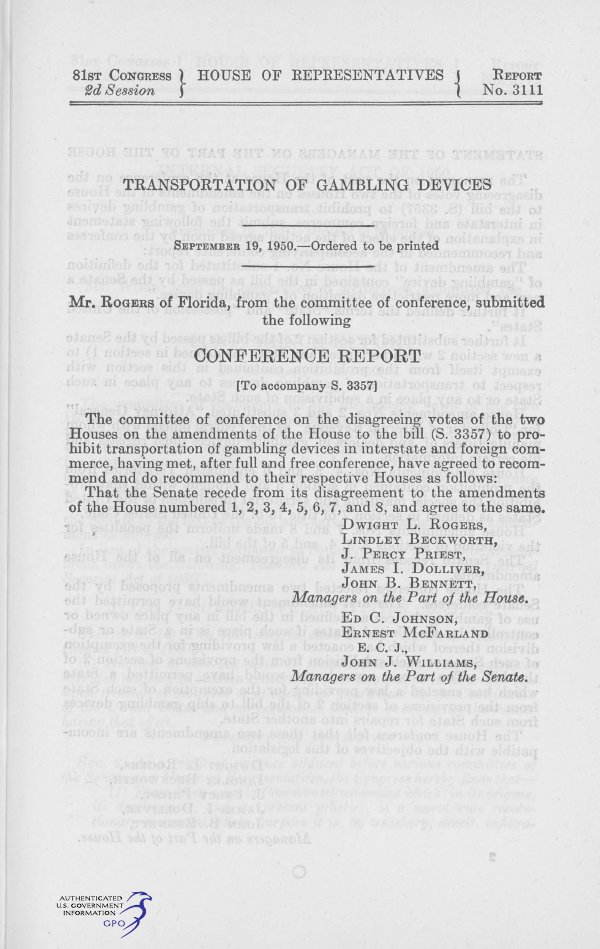 case-fileH. Rept. 81-3111, Transportation of Gambling Devices: conference report on S. 3357 (19 September 1950)The House-Senate conference report on the bill that became the Johnson Act of 2 January 1951: the Senate accepted all eight House amendments, among them a narrower definition of "gambling device" and a way for a State to exempt itself.case-fileNarcotic Control Act of 1956, Public Law 728, ch. 629, 70 Stat. 567, approved 18 July 1956The statute that set mandatory prison terms for narcotics sales and conspiracies, from five to twenty years for a first sale offense, and gave Bureau of Narcotics agents added enforcement authority.
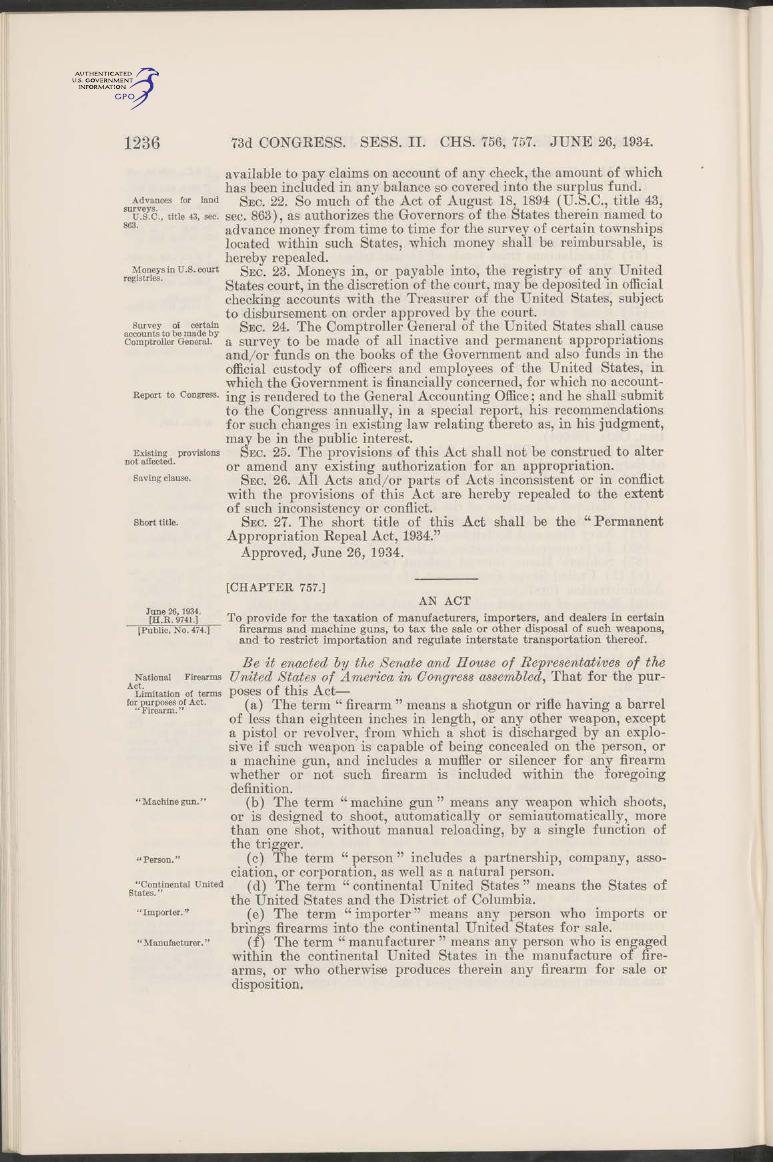 case-fileNational Firearms Act, ch. 757, 48 Stat. 1236 (Public, No. 474, 73d Congress), approved 26 June 1934The statute "to provide for the taxation of manufacturers, importers, and dealers in certain firearms and machine guns." It defines "firearm" and "machine gun," sets occupational taxes of $500, $200 and $300, and a transfer tax of $200 for each firearm.case-fileReorganization Plan No. 1 of 1968, 82 Stat. 1367The President's plan, effective April 8, 1968, that moved the functions of the Treasury Department's Bureau of Narcotics to the Attorney General, created the Bureau of Narcotics and Dangerous Drugs in the Department of Justice, and abolished the Bureau of Narcotics and the office of Commissioner of Narcotics.case-fileAct of 18 June 1934, ch. 595, 48 Stat. 1008: Division of Investigation agents empowered to make arrests and carry firearmsThe June 1934 act empowering the Director, agents and inspectors of the Division of Investigation to serve warrants, make seizures, make arrests without warrant for federal felonies in stated circumstances, and "carry firearms."case-fileAct of 18 May 1934, ch. 299, 48 Stat. 780: punishment for killing or assaulting federal officersThe first of the May 1934 federal crime laws: "An Act to provide punishment for killing or assaulting Federal officers." The National Archives ties John Paul Chase's conviction for the killing at Barrington to this act.case-file48 Stat. 781: Acts of 18 May 1934 on extortion threats (ch. 300) and amending the federal kidnaping act (ch. 301)Statutes at Large page 781: the end of chapter 299, chapter 300 making it a federal crime to send ransom or extortion threats in interstate commerce, and the start of chapter 301 amending the Act of 22 June 1932 on interstate kidnaping.case-fileAct of 18 May 1934, ch. 304, 48 Stat. 783: the federal bank robbery actThe May 1934 act making robbery of a national bank or a Federal Reserve member bank a federal crime, with higher penalties for assault, use of a dangerous weapon, and killing or kidnaping in the course of the robbery.
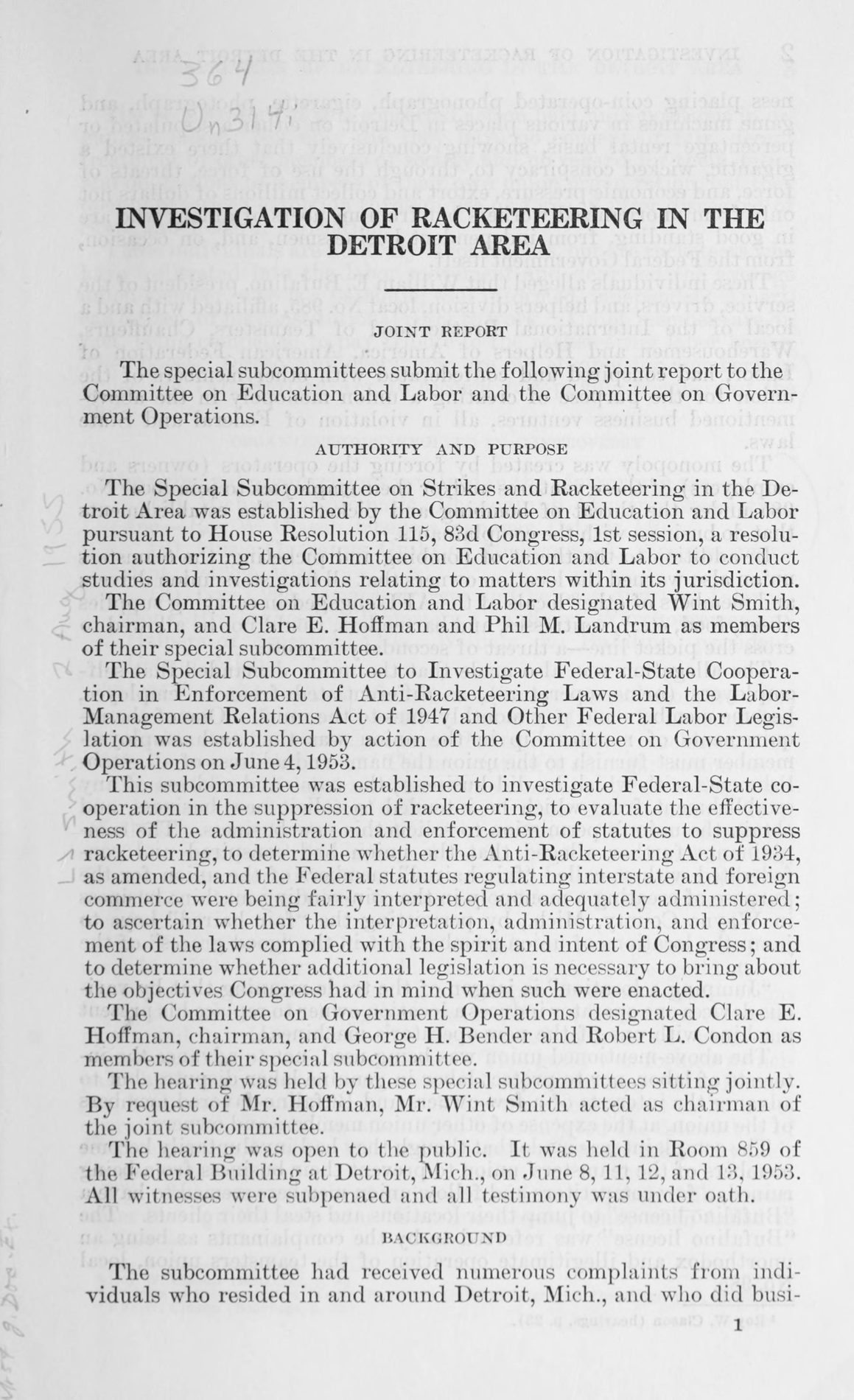 hearingInvestigation of Racketeering in the Detroit Area: House joint subcommittee report (1954)Report of two House special subcommittees on their June 1953 hearings in Detroit. It found that Teamsters Local 985 used picketing and threats to build a monopoly in jukebox and vending locations, and that James R. Hoffa refused three questions.hearingDEA/FBI Reorganization: Hearing before the House Select Committee on Narcotics Abuse and Control, 30 March 1982House hearing on the 1982 decision giving the FBI concurrent jurisdiction over drug offenses. The FBI Director and the DEA's Acting Administrator testify that the FBI will focus on drug cases involving "traditional organized crime."hearingEverything Secret Degenerates: The FBI's Use of Murderers as Informants, H. Rept. 108-414, vol. 1 (2004)Report of the House Committee on Government Reform on the FBI's use of Joseph Barboza, the Flemmi brothers and James Bulger as informants in Boston, with a long chronology. It quotes a 1967 Justice Department memorandum on the microphone at Raymond Patriarca's Providence office.hearingHouse Select Committee on Assassinations report (1979), pp. 151-152: Lewis McWillie and the Tropicana casino in HavanaThe committee reports that Jack Ruby's friend Lewis McWillie worked in Havana casinos from 1958 to 1960, names the Tropicana as 'the casino for which he worked,' and says his files indicate ties to Meyer Lansky and Santos Trafficante.hearingHouse Select Committee on Assassinations report (1979), p. 114: organized crime and 'the old Havana territory'The committee found that organized crime 'probably was active in attempts to assassinate Castro, independent of any activity it engaged in with the CIA,' and that by 1962-63 Soviet influence 'had rendered the prospect of regaining the old Havana territory less likely.'hearingHouse Select Committee on Assassinations report (1979), pp. 172-175: the committee's findings on Santos TrafficanteThe committee calls Santos Trafficante 'the La Cosa Nostra leader in Florida' and finds he had 'the motive, means, and opportunity' to assassinate President Kennedy, but concludes it is unlikely he plotted to do so.hearingHouse Select Committee on Assassinations report (1979), pp. 153-154: Trafficante detained at Trescornia, Cuba, June to August 1959The committee states that Trafficante and others controlling gambling interests in Cuba were detained on 6 June 1959 and held at Trescornia; Cuban documents show his release on 18 August 1959. He said in testimony he did not remember Jack Ruby visiting him there.case-fileRevenue agents' report in re Alphonse Capone, 7244 Prairie Avenue (8 July 1931)Confidential report of Internal Revenue Agents Hodgins, Westrich and Clagett to the Agent in Charge at Chicago, setting out the basis for the tax determined against Capone, with income and tax worksheets.case-fileSpecial Agent Frank J. Wilson's summary report on Alphonse Capone, SI-7085-F (21 December 1933)Sixty-page report by Special Agent Frank J. Wilson to the Chief of the Intelligence Unit on case SI-7085-F, the evasion of income taxes by Alphonse Capone for 1924–1929, from referral to sentence.case-fileLetter from Special Agent Frank J. Wilson to Chief Irey (27 March 1931)Status letter from Special Agent Frank J. Wilson at Chicago to the Chief of the Intelligence Unit reporting that 'the Capone investigation is going steadily ahead.'case-fileLetter from Special Agent Frank J. Wilson to the Chief, Intelligence Unit (8 April 1931)One-page report from Special Agent Frank J. Wilson on the agents' new Chicago office and a conference with the First Assistant U.S. Attorney about a possible conspiracy indictment.case-fileIntelligence Unit narrative, 1919–1936: excerpt on Al CaponeSeven-page excerpt from the Bureau of Internal Revenue Intelligence Unit's narrative history of 1919 to 1936, covering the Capone income-tax case and its aftermath.agency-historyIRS: Historical Documents relating to Alphonse (Al) Capone, ChicagoThe Internal Revenue Service's Freedom of Information Act page publishing five documents from the Intelligence Unit's investigation of Alphonse Capone, released because he never filed a tax return.agency-historyIRS Congressional Update: 100th anniversary of IRS Criminal Investigation (2019)A short IRS item saying the Intelligence Unit was created in 1919 to combat corruption in the U.S. tax system, that Elmer Irey chaired it from 1919 to 1946, and that tax violations brought down figures including Al Capone.hearingSenate Report 121: proceedings against Pete Licavoli (1951)Senate Report No. 121, 82d Congress, 1st Session, on the Kefauver Committee's contempt proceedings against Pete Licavoli, who refused to answer questions. The report accompanies S. Res. 79 and annexes excerpts of the hearing record.
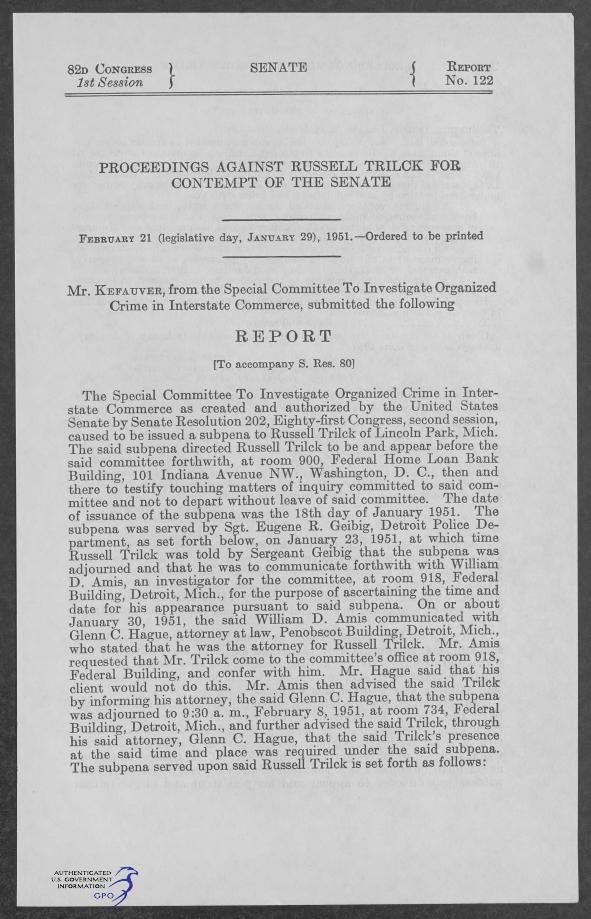 hearingSenate Report 122: proceedings against Russell Trilck (1951)Senate Report No. 122, 82d Congress, 1st Session, on the Kefauver Committee's contempt proceedings against Russell Trilck, who failed to appear. The report accompanies S. Res. 80.
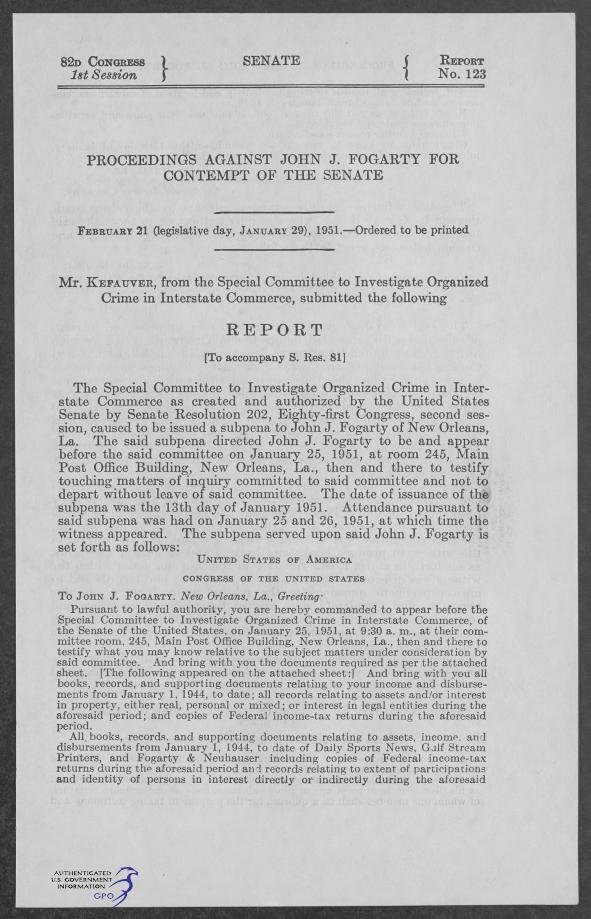 hearingSenate Report 123: proceedings against John J. Fogarty (1951)Senate Report No. 123, 82d Congress, 1st Session, on the Kefauver Committee's contempt proceedings against John J. Fogarty, who refused to answer questions and to produce records. The report accompanies S. Res. 81 and annexes excerpts of the hearing record.hearingSenate Report 125: proceedings against Anthony Marcello (1951)Senate Report No. 125, 82d Congress, 1st Session, on the Kefauver Committee's contempt proceedings against Anthony Marcello, who refused to answer questions and to produce records. The report accompanies S. Res. 83 and annexes excerpts of the hearing record.hearingSenate Report 126: proceedings against Mike Rubino (1951)Senate Report No. 126, 82d Congress, 1st Session, on the Kefauver Committee's contempt proceedings against Mike Rubino, who refused to answer questions. The report accompanies S. Res. 84 and annexes excerpts of the hearing record.hearingSenate Report 127: proceedings against Joseph A. Porretto (1951)Senate Report No. 127, 82d Congress, 1st Session, on the Kefauver Committee's contempt proceedings against Joseph A. Porretto, who refused to answer questions. The report accompanies S. Res. 85 and annexes excerpts of the hearing record.
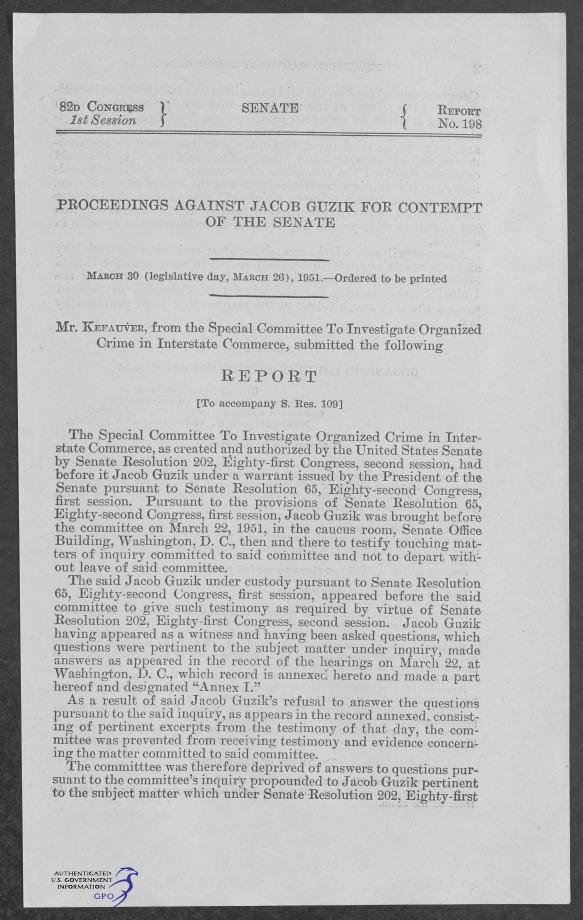 hearingSenate Report 198: proceedings against Jacob Guzik (1951)Senate Report No. 198, 82d Congress, 1st Session, on the Kefauver Committee's contempt proceedings against Jacob Guzik, who refused to answer questions. The report accompanies S. Res. 109 and annexes excerpts of the hearing record.
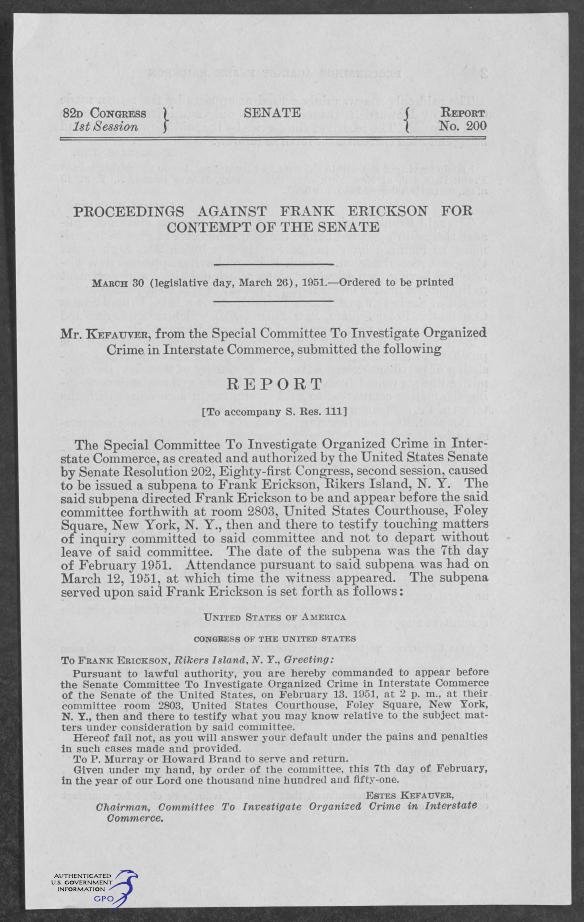 hearingSenate Report 200: proceedings against Frank Erickson (1951)Senate Report No. 200, 82d Congress, 1st Session, on the Kefauver Committee's contempt proceedings against Frank Erickson, who refused to answer questions. The report accompanies S. Res. 111 and annexes excerpts of the hearing record.hearingSenate Report 201: proceedings against Joseph Doto, alias Joe Adonis (1951)Senate Report No. 201, 82d Congress, 1st Session, on the Kefauver Committee's contempt proceedings against Joseph Doto, alias Joe Adonis, who refused to answer questions. The report accompanies S. Res. 112 and annexes excerpts of the hearing record.
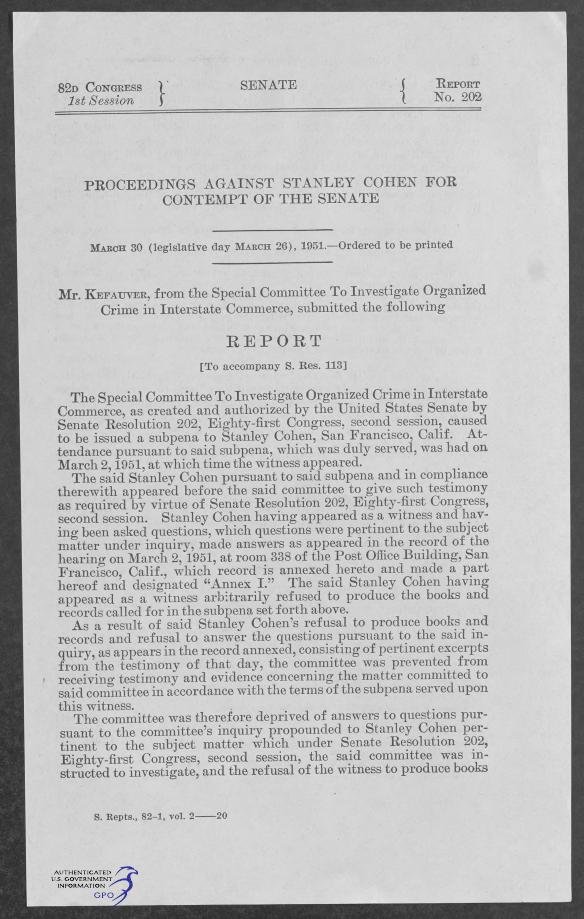 hearingSenate Report 202: proceedings against Stanley Cohen (1951)Senate Report No. 202, 82d Congress, 1st Session, on the Kefauver Committee's contempt proceedings against Stanley Cohen, who refused to answer questions and to produce books and records. The report accompanies S. Res. 113 and annexes excerpts of the hearing record.hearingSenate Report 203: proceedings against John Doyle (1951)Senate Report No. 203, 82d Congress, 1st Session, on the Kefauver Committee's contempt proceedings against John Doyle, who refused to answer questions. The report accompanies S. Res. 114 and annexes excerpts of the hearing record.hearingSenate Report 204: proceedings against George L. Bowers (1951)Senate Report No. 204, 82d Congress, 1st Session, on the Kefauver Committee's contempt proceedings against George L. Bowers, who refused to answer questions. The report accompanies S. Res. 115 and annexes excerpts of the hearing record.
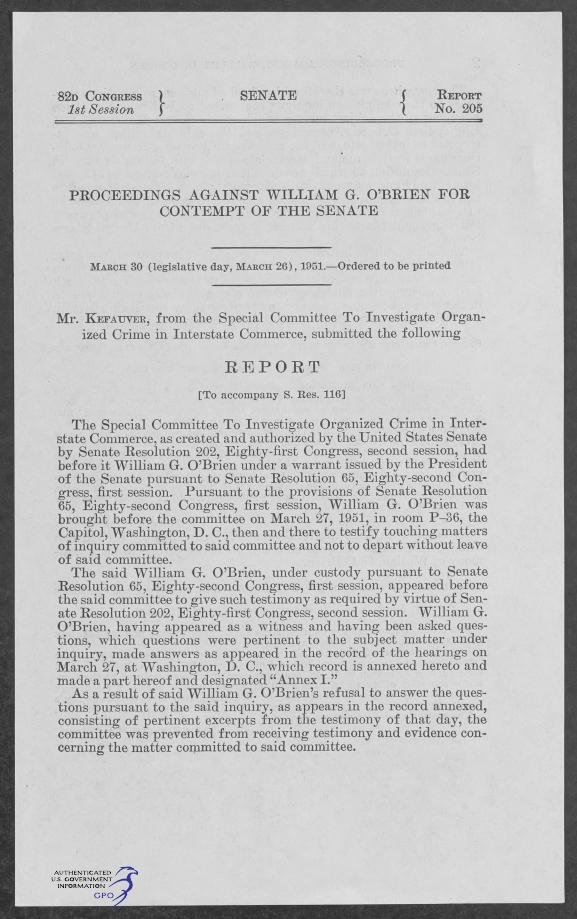 hearingSenate Report 205: proceedings against William G. O'Brien (1951)Senate Report No. 205, 82d Congress, 1st Session, on the Kefauver Committee's contempt proceedings against William G. O'Brien, who refused to answer questions. The report accompanies S. Res. 116 and annexes excerpts of the hearing record.
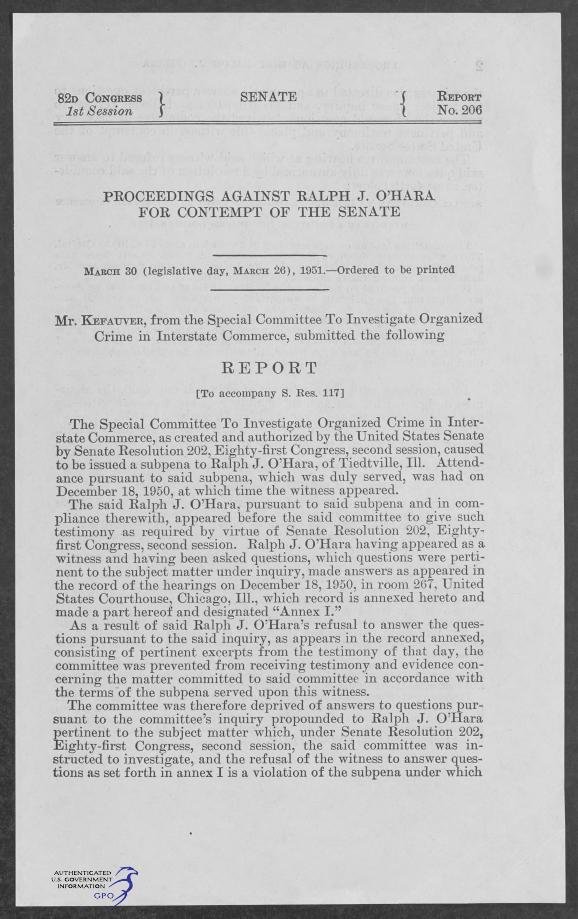 hearingSenate Report 206: proceedings against Ralph J. O'Hara (1951)Senate Report No. 206, 82d Congress, 1st Session, on the Kefauver Committee's contempt proceedings against Ralph J. O'Hara, who refused to answer questions. The report accompanies S. Res. 117 and annexes excerpts of the hearing record.
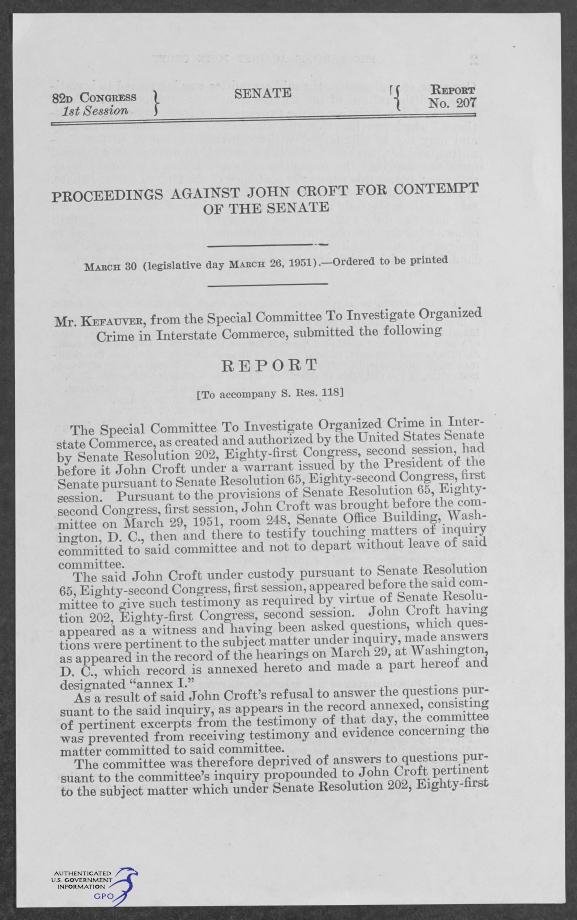 hearingSenate Report 207: proceedings against John Croft (1951)Senate Report No. 207, 82d Congress, 1st Session, on the Kefauver Committee's contempt proceedings against John Croft, who refused to answer questions. The report accompanies S. Res. 118 and annexes excerpts of the hearing record.
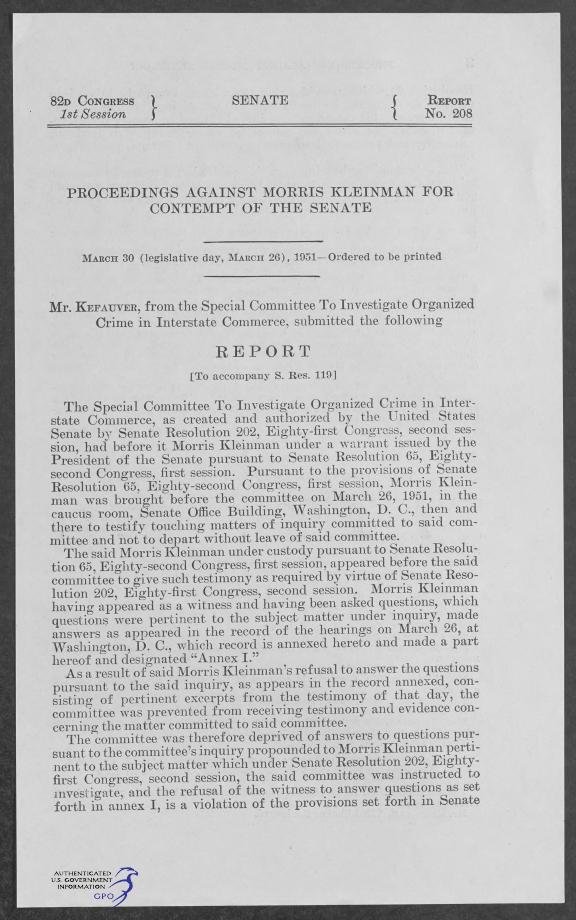 hearingSenate Report 208: proceedings against Morris Kleinman (1951)Senate Report No. 208, 82d Congress, 1st Session, on the Kefauver Committee's contempt proceedings against Morris Kleinman, who refused to answer questions. The report accompanies S. Res. 119 and annexes excerpts of the hearing record.
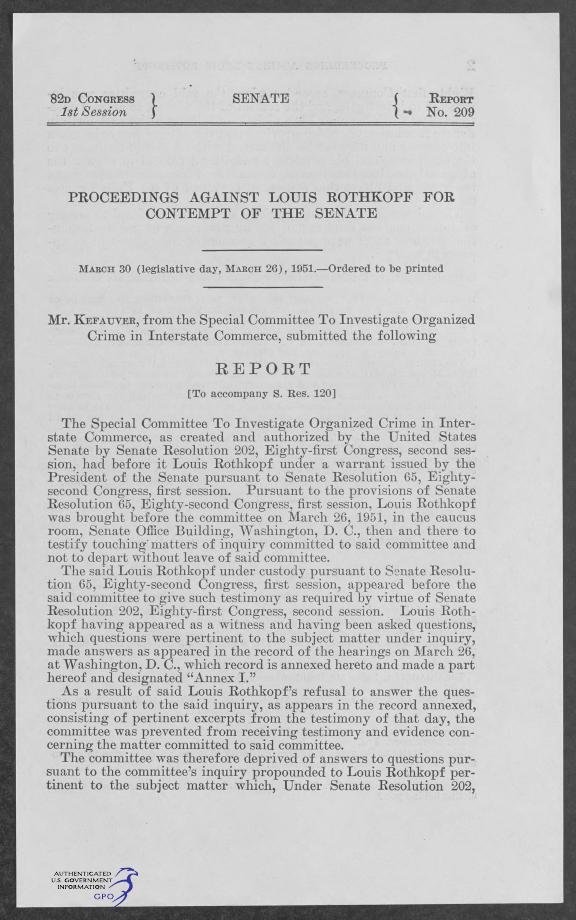 hearingSenate Report 209: proceedings against Louis Rothkopf (1951)Senate Report No. 209, 82d Congress, 1st Session, on the Kefauver Committee's contempt proceedings against Louis Rothkopf, who refused to answer questions. The report accompanies S. Res. 120 and annexes excerpts of the hearing record.hearingSenate Report 25: proceedings against Joseph Doto, alias Joe Adonis (1951)Senate Report No. 25, 82d Congress, 1st Session, on the Kefauver Committee's contempt proceedings against Joseph Doto, alias Joe Adonis, who refused to answer questions. The report accompanies S. Res. 43 and annexes excerpts of the hearing record.hearingSenate Report 26: proceedings against Anthony J. Accardo (1951)Senate Report No. 26, 82d Congress, 1st Session, on the Kefauver Committee's contempt proceedings against Anthony J. Accardo, who refused to answer questions. The report accompanies S. Res. 44 and annexes excerpts of the hearing record.hearingSenate Report 27: proceedings against James Lynch (1951)Senate Report No. 27, 82d Congress, 1st Session, on the Kefauver Committee's contempt proceedings against James Lynch, who refused to answer questions. The report accompanies S. Res. 45 and annexes excerpts of the hearing record.hearingSenate Report 28: proceedings against Arthur Longano (1951)Senate Report No. 28, 82d Congress, 1st Session, on the Kefauver Committee's contempt proceedings against Arthur Longano, who refused to answer questions. The report accompanies S. Res. 46 and annexes excerpts of the hearing record.hearingSenate Report 29: proceedings against Salvatore Moretti (1951)Senate Report No. 29, 82d Congress, 1st Session, on the Kefauver Committee's contempt proceedings against Salvatore Moretti, who refused to answer questions. The report accompanies S. Res. 47 and annexes excerpts of the hearing record.hearingSenate Report 30: proceedings against Walter M. Pechart (1951)Senate Report No. 30, 82d Congress, 1st Session, on the Kefauver Committee's contempt proceedings against Walter M. Pechart, who refused to answer questions. The report accompanies S. Res. 48 and annexes excerpts of the hearing record.hearingSenate Report 31: proceedings against Pat Manno (alias Patrick J. Manning) (1951)Senate Report No. 31, 82d Congress, 1st Session, on the Kefauver Committee's contempt proceedings against Pat Manno (alias Patrick J. Manning), who refused to answer questions. The report accompanies S. Res. 49 and annexes excerpts of the hearing record.hearingSenate Report 32: proceedings against Jack Dragna (1951)Senate Report No. 32, 82d Congress, 1st Session, on the Kefauver Committee's contempt proceedings against Jack Dragna, who refused to answer questions. The report accompanies S. Res. 50 and annexes excerpts of the hearing record.
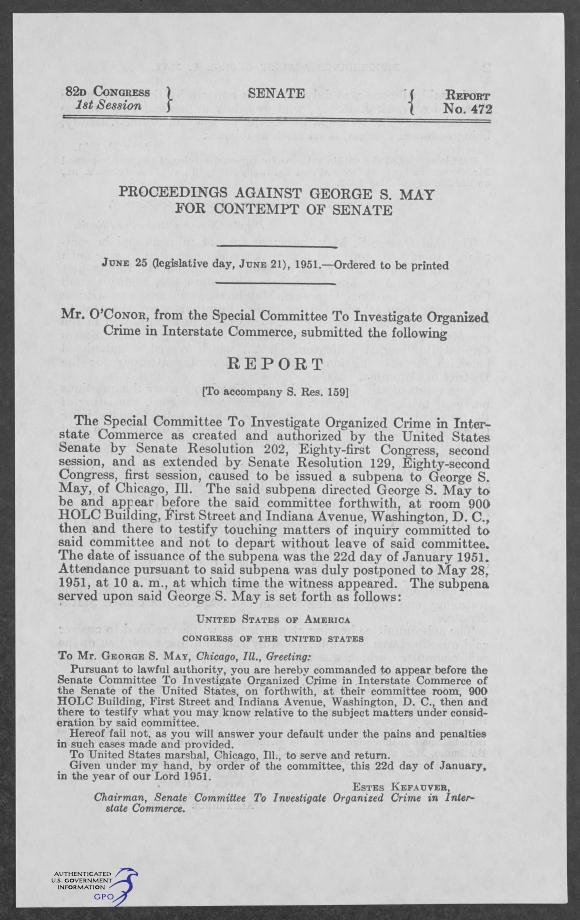 hearingSenate Report 472: proceedings against George S. May (1951)Senate Report No. 472, 82d Congress, 1st Session, on the Kefauver Committee's contempt proceedings against George S. May, who refused to answer questions. The report accompanies S. Res. 159 and annexes excerpts of the hearing record.
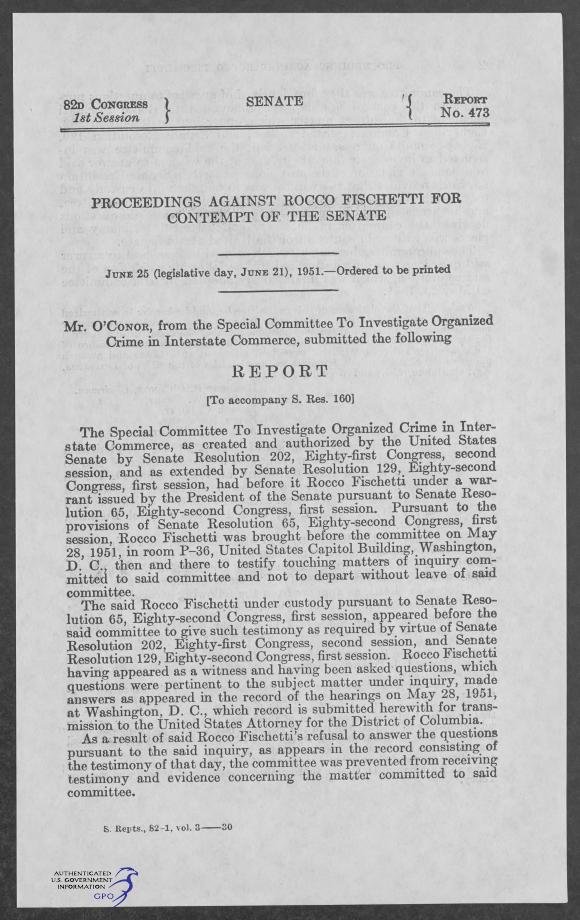 hearingSenate Report 473: proceedings against Rocco Fischetti (1951)Senate Report No. 473, 82d Congress, 1st Session, on the Kefauver Committee's contempt proceedings against Rocco Fischetti, who refused to answer questions. The report accompanies S. Res. 160 and annexes excerpts of the hearing record.
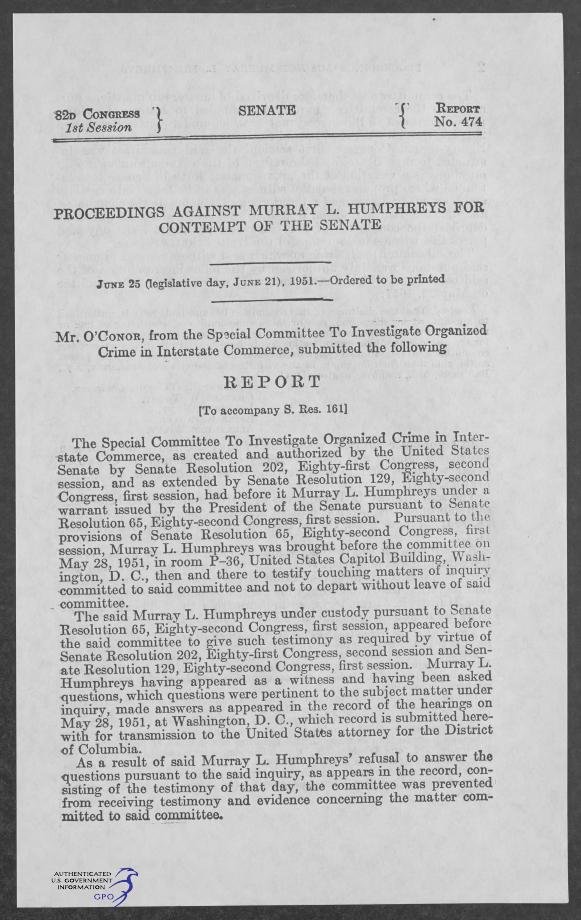 hearingSenate Report 474: proceedings against Murray L. Humphreys (1951)Senate Report No. 474, 82d Congress, 1st Session, on the Kefauver Committee's contempt proceedings against Murray L. Humphreys, who refused to answer questions. The report accompanies S. Res. 161 and annexes excerpts of the hearing record.hearingSenate Report 562: proceedings against Martin Accardo (1951)Senate Report No. 562, 82d Congress, 1st Session, on the Kefauver Committee's contempt proceedings against Martin Accardo, who refused to answer questions. The report accompanies S. Res. 180 and annexes excerpts of the hearing record.hearingSenate Report 563: proceedings against Julius Fink (1951)Senate Report No. 563, 82d Congress, 1st Session, on the Kefauver Committee's contempt proceedings against Julius Fink, who refused to answer questions. The report accompanies S. Res. 181 and annexes excerpts of the hearing record.hearingSenate Report 564: proceedings against Abraham Minker (1951)Senate Report No. 564, 82d Congress, 1st Session, on the Kefauver Committee's contempt proceedings against Abraham Minker, who refused to answer questions. The report accompanies S. Res. 182 and annexes excerpts of the hearing record.hearingSenate Report 565: proceedings against Isadore Minker (1951)Senate Report No. 565, 82d Congress, 1st Session, on the Kefauver Committee's contempt proceedings against Isadore Minker, who refused to answer questions. The report accompanies S. Res. 183 and annexes excerpts of the hearing record.hearingSenate Report 566: proceedings against Alex Fudeman (1951)Senate Report No. 566, 82d Congress, 1st Session, on the Kefauver Committee's contempt proceedings against Alex Fudeman, who refused to answer questions. The report accompanies S. Res. 184 and annexes excerpts of the hearing record.hearingSenate Report 777: proceedings against Herman Orman (1951)Senate Report No. 777, 82d Congress, 1st Session, on the Kefauver Committee's contempt proceedings against Herman Orman, who refused to answer questions. The report accompanies S. Res. 211 and annexes excerpts of the hearing record.
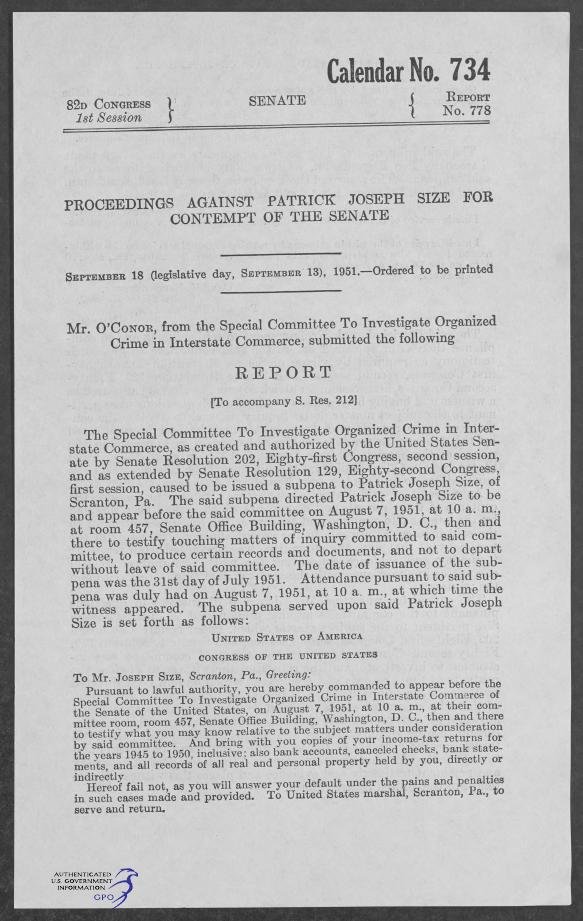 hearingSenate Report 778: proceedings against Patrick Joseph Size (1951)Senate Report No. 778, 82d Congress, 1st Session, on the Kefauver Committee's contempt proceedings against Patrick Joseph Size, who refused to answer questions. The report accompanies S. Res. 212 and annexes excerpts of the hearing record.
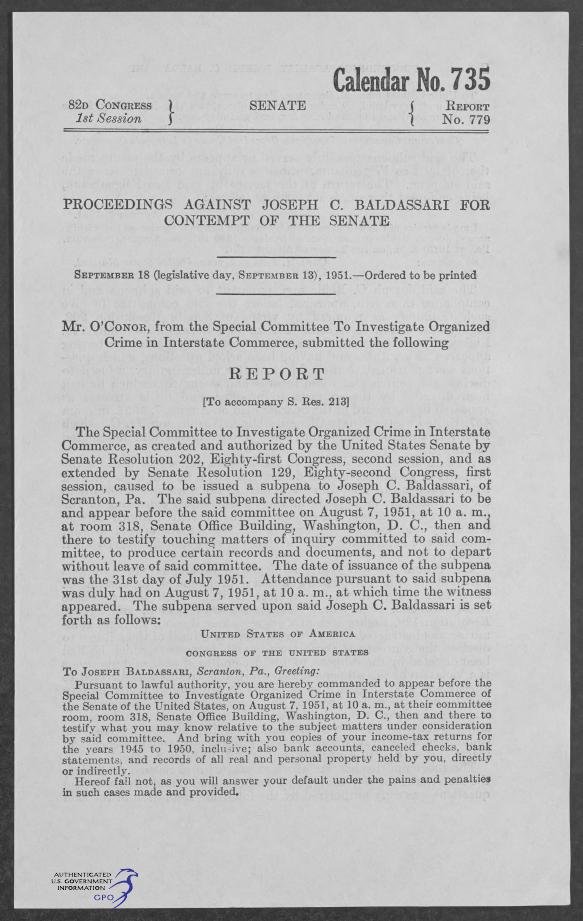 hearingSenate Report 779: proceedings against Joseph C. Baldassari (1951)Senate Report No. 779, 82d Congress, 1st Session, on the Kefauver Committee's contempt proceedings against Joseph C. Baldassari, who refused to answer questions and to produce records. The report accompanies S. Res. 213 and annexes excerpts of the hearing record.
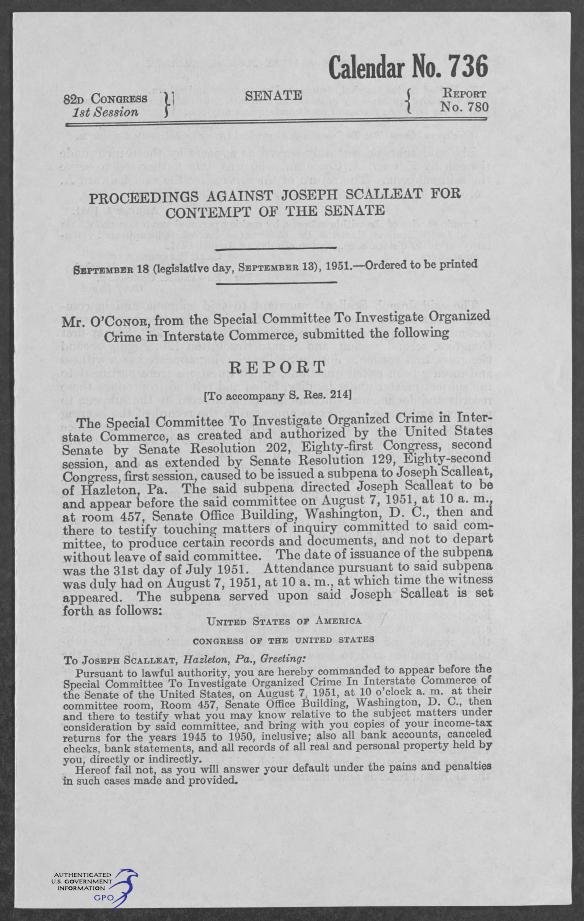 hearingSenate Report 780: proceedings against Joseph Scalleat (1951)Senate Report No. 780, 82d Congress, 1st Session, on the Kefauver Committee's contempt proceedings against Joseph Scalleat, who refused to answer questions and to produce records. The report accompanies S. Res. 214 and annexes excerpts of the hearing record.
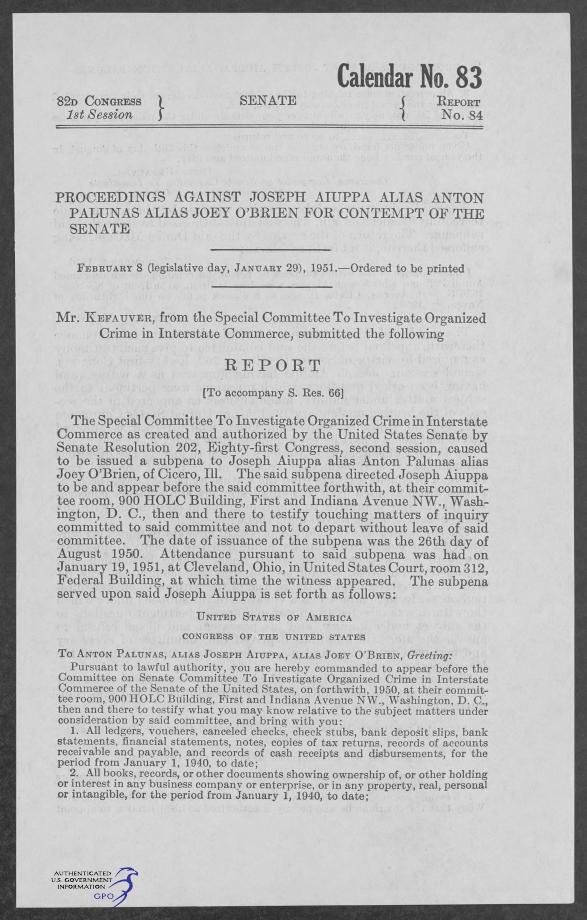 hearingSenate Report 84: proceedings against Joseph Aiuppa alias Anton Palunas alias Joey O'Brien (1951)Senate Report No. 84, 82d Congress, 1st Session, on the Kefauver Committee's contempt proceedings against Joseph Aiuppa alias Anton Palunas alias Joey O'Brien, who refused to answer questions. The report accompanies S. Res. 66 and annexes excerpts of the hearing record.hearingSenate Report 85: proceedings against Joseph DeCarlo alias "The Wolf" alias DiCarlo (1951)Senate Report No. 85, 82d Congress, 1st Session, on the Kefauver Committee's contempt proceedings against Joseph DeCarlo alias "The Wolf" alias DiCarlo, who refused to answer questions. The report accompanies S. Res. 67 and annexes excerpts of the hearing record.hearingSenate Report 86: proceedings against James Licavoli alias Jack White (1951)Senate Report No. 86, 82d Congress, 1st Session, on the Kefauver Committee's contempt proceedings against James Licavoli alias Jack White, who refused to answer questions. The report accompanies S. Res. 68 and annexes excerpts of the hearing record.
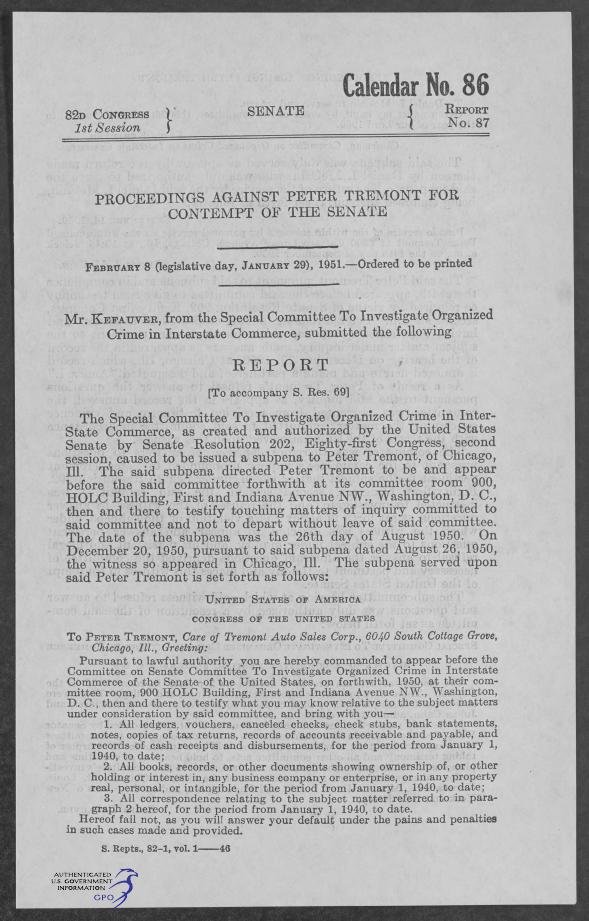 hearingSenate Report 87: proceedings against Peter Tremont (1951)Senate Report No. 87, 82d Congress, 1st Session, on the Kefauver Committee's contempt proceedings against Peter Tremont, who refused to answer questions. The report accompanies S. Res. 69 and annexes excerpts of the hearing record.hearingSenate Report 88: proceedings against David N. Kessel (1951)Senate Report No. 88, 82d Congress, 1st Session, on the Kefauver Committee's contempt proceedings against David N. Kessel, who refused to answer questions. The report accompanies S. Res. 70 and annexes excerpts of the hearing record.hearingSenate Report 199: proceedings against Frank Costello (1951)Senate Report No. 199, 82d Congress, ordering printed the Special Committee's contempt proceedings against Frank Costello after the 1951 New York hearings.
 hearingKefauver Committee hearings: index to Parts 1–12 (1951)Library of Congress Legislative Reference Service name and subject index to Parts 1 through 12 of the printed Kefauver Committee hearings.hearingSenate Report 124: proceedings against Phil Kastel (1951)Senate Report No. 124, 82d Congress, on the Kefauver Committee's contempt proceedings against Phil Kastel after its New Orleans hearings of January 25 and 26, 1951. The subpoena called for the records of the Beverly Club in Jefferson Parish, where it was served.hearingSenate Report 120: proceedings against Carlos Marcello (1951)Senate Report No. 120, 82d Congress, on the Kefauver Committee's contempt proceedings against Carlos Marcello, who refused to answer questions at its New Orleans hearing of January 25, 1951. The hearing transcript excerpt is printed as Annex I.hearingKefauver Part 1: testimony of Abe Allenberg, Miami Beach, identifying a photograph of Meyer Lansky (27 May 1950)A Miami Beach hotel operator is shown a photograph and answers 'That is Meyer Lansky' (Exhibit No. 51); he says he understood Lansky's interest was in the Colonial Inn or gambling places in Broward County. Pp. 97-98 of a testimony running pp. 89-125.hearingKefauver Part 1: testimony of Walter Clark, sheriff of Broward County, on the Lansky clubs (27 May and 15 July 1950)Senator Kefauver asks the Broward County sheriff about Jake Lansky and the Colonial Inn and Greenacres; Clark says Lansky did not get in touch with him and that he did not know of Lansky's record or partners. Pp. 128-132 and 452-455.hearingKefauver Part 1: testimony of Ben and Seymour Eisen, Hollywood, Florida, and Exhibits 7 and 8 (26 May 1950)Two accountants who worked on the books of the Club Boheme and the Greenacres Casino in Broward County produce tax returns and ledgers; counsel reads the partners' names from a 1948 return and a folder of Jake Lansky's returns is received as Exhibit 8. Pp. 4-26.hearingKefauver Part 1: testimony of Richard Ervin, Attorney General of Florida, on the 1949 wire-service law (Miami, 13 July 1950), pp. 177-189Florida's Attorney General described the 1949 law "that banned wire service to bookmakers," the cancellation of 140 Western Union drops in south Florida, and the bookmakers' switch to long-distance telephone.
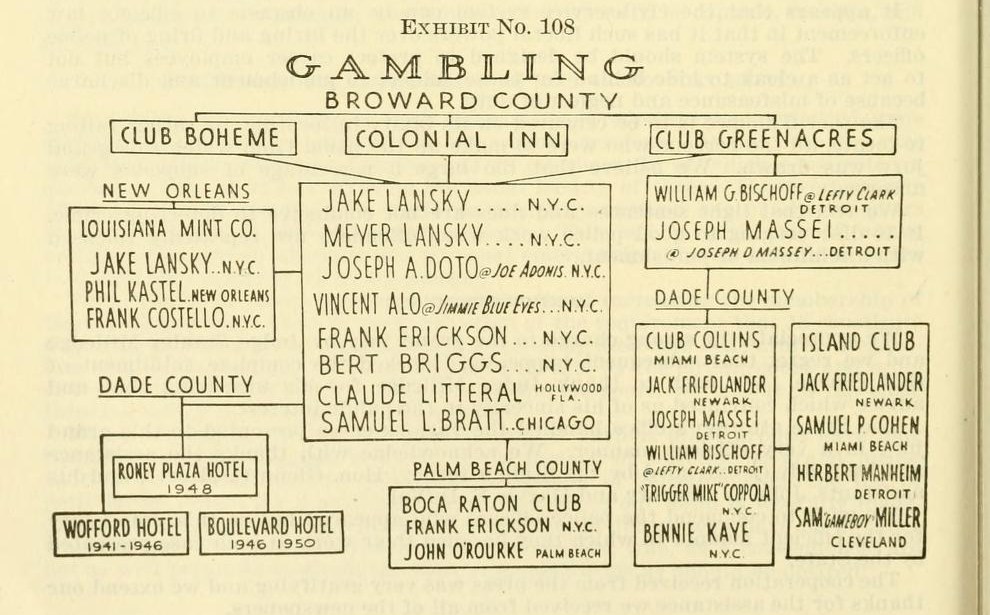 hearingKefauver Part 1, Exhibit 108: "Gambling, Broward County" chartA chart furnished by Daniel P. Sullivan of the Crime Commission of Greater Miami and received on July 13, 1950, linking the Colonial Inn, Club Greenacres and Club Boheme to named men and to Dade and Palm Beach county clubs and hotels.
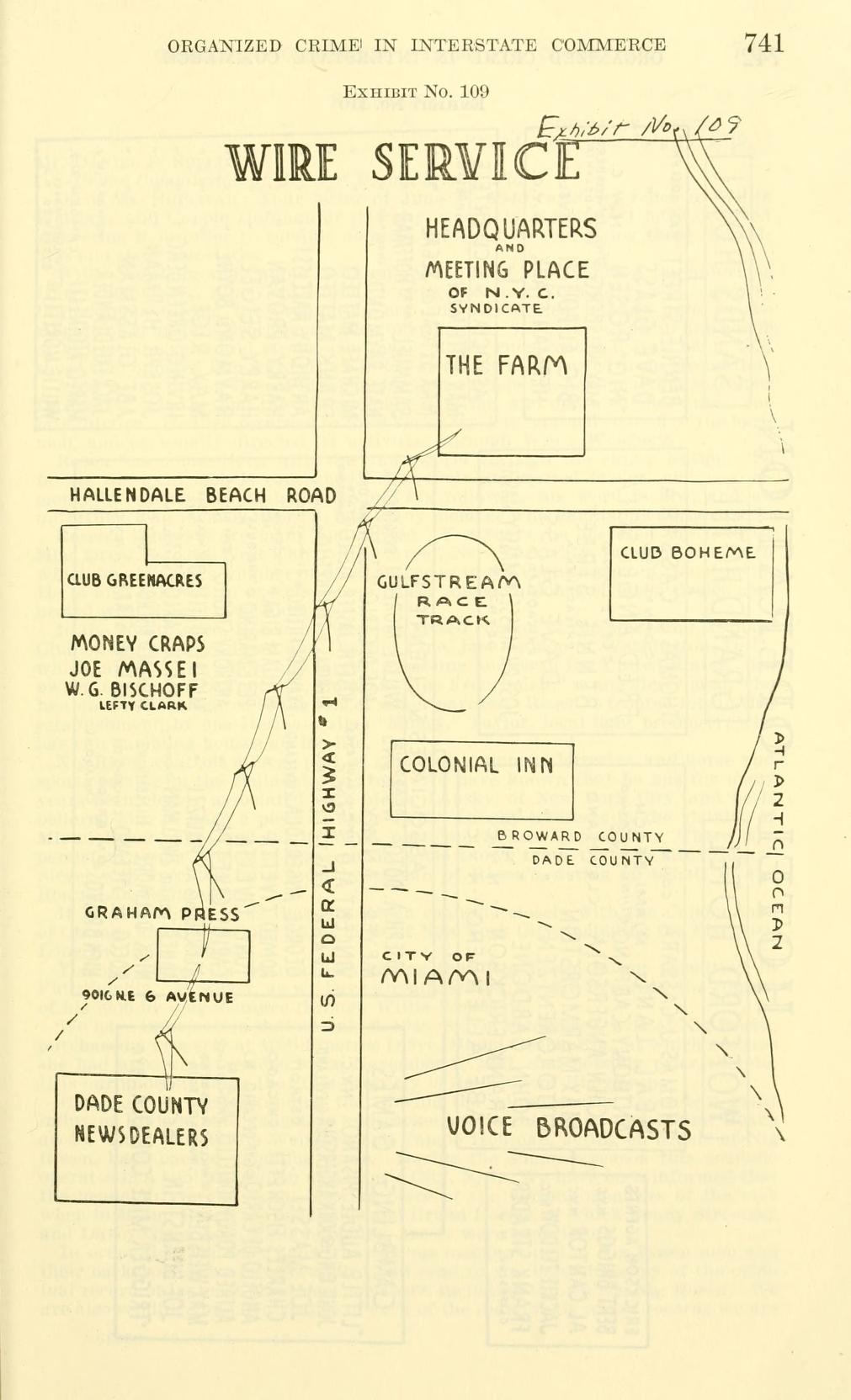 hearingKefauver Part 1, Exhibit 109: "Wire Service" sketch mapA sketch map furnished by Daniel P. Sullivan on July 13, 1950, placing "The Farm," the Gulfstream race track, the Colonial Inn, Club Greenacres and Club Boheme along U.S. Highway 1, with wire and "voice broadcast" lines into Dade County.
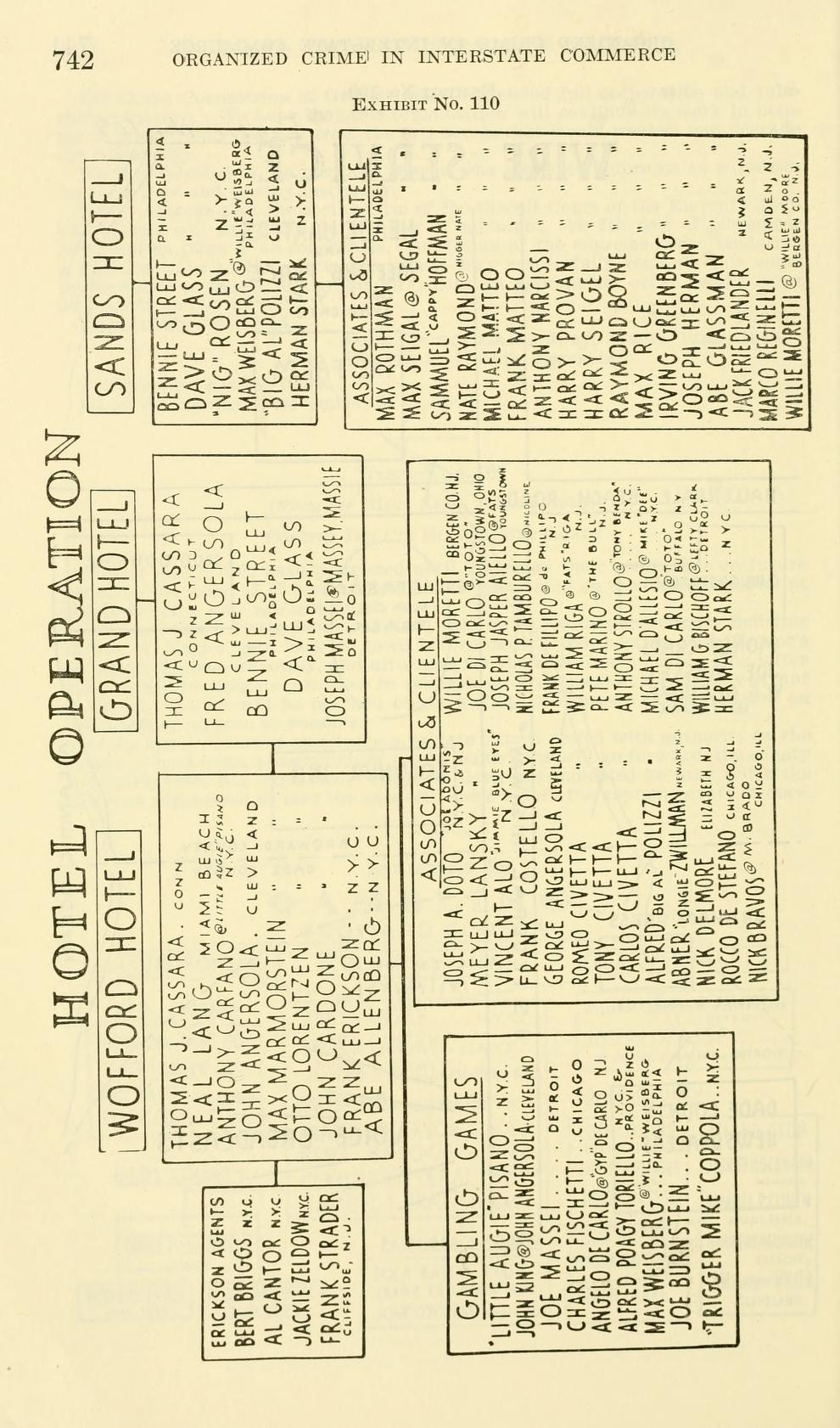 hearingKefauver Part 1, Exhibit 110: "Hotel Operation" chart (Wofford, Grand and Sands hotels)A chart furnished by Daniel P. Sullivan on July 13, 1950, listing names under the Wofford, Grand and Sands hotels in Miami Beach as operators, "associates & clientele," Erickson agents and "gambling games."
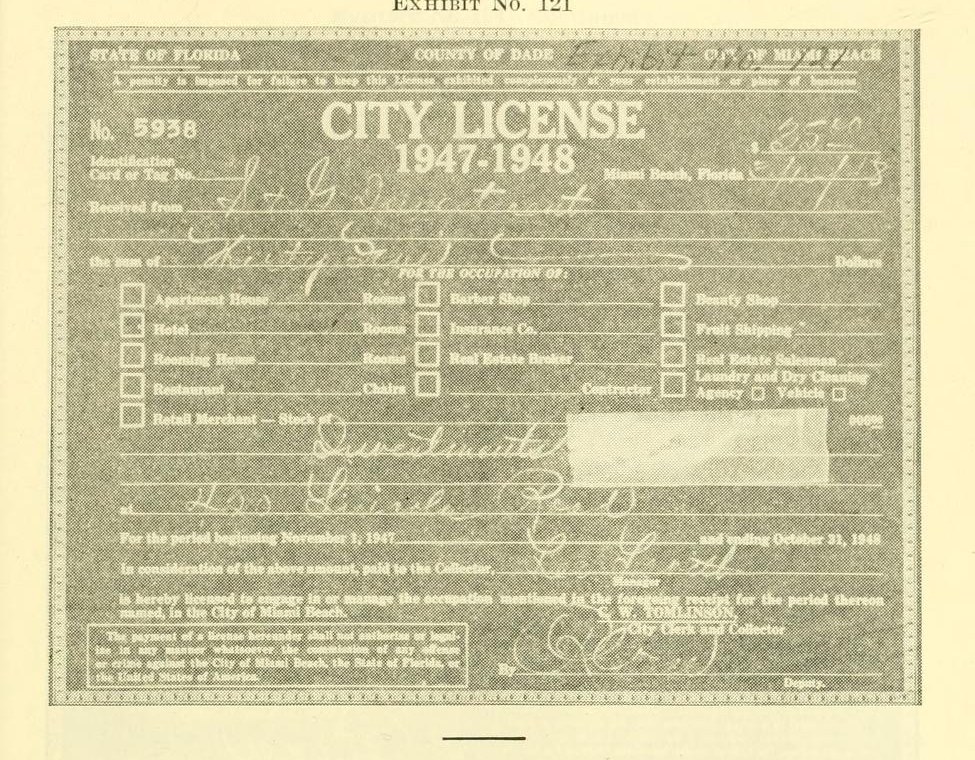 hearingKefauver Part 1, Exhibit 121: Miami Beach city license of the S. & G. Investment Co., 1947-1948A photostat of a 1947-48 City of Miami Beach license issued to the S. & G. Investment Co. for "investments," put in the record by City Councilman Melvin J. Richard on July 13, 1950.
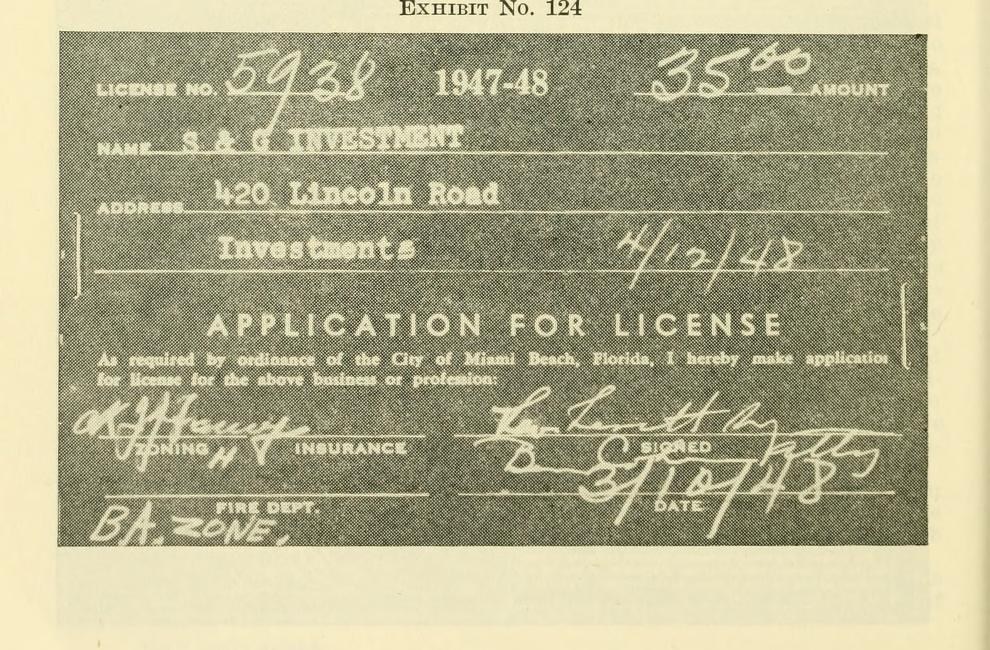 hearingKefauver Part 1, Exhibit 124: S. & G. Investment license application card, 1947-48A photostat of the card attached to the S. & G. Investment Co.'s 1947-48 Miami Beach license application, put in the record by Councilman Melvin J. Richard on July 13, 1950.hearingKefauver Part 1: testimony of Harry Russell, Miami Beach, on Chicago acquaintances and a question about Al Capone's home (22 September 1950)Counsel asks a Miami Beach resident whether he was ever in the homes of Tony Accardo, Charles Fischetti, Al Polizzi, Jack Guzik or 'Al Capone's home in Miami Beach'; he invokes the Fifth Amendment on most and says he did not know or meet Capone. Printed p. 681.hearingKefauver Part 1: testimony of Daniel P. Sullivan, Crime Commission of Greater Miami, on Broward County gambling (13 July 1950)The operating director of the Crime Commission of Greater Miami presents charts on gambling in Dade and Broward counties and Miami Beach hotels, placing the Colonial Inn, Club Greenacres and Club Boheme and naming the 'S. & G. Syndicate' as a bookmaking group. Pp. 152-174.hearingKefauver Part 10: testimony of William J. Moore, Nevada Tax Commission, on the race wire in Las Vegas (15 November 1950), pp. 2-12A member of the Nevada Tax Commission described the hearings behind Nevada's 1949 race-wire law, answered "I think so; yes" when asked whether the service came from Continental Press, and said Connie Hurley had been "the owner of the service" in Las Vegas.hearingKefauver Part 10: testimony of Mrs. Lucille W. Randolph, city clerk of Gardena, California (27 February 1951)Gardena's city clerk, appointed in 1942, produced under subpoena the city's ordinances, resolutions, minute books and license registers on licensed draw-poker clubs, and a sealed confidential file kept under city ordinance No. 241. Pp. 749-750, 759-762.hearingKefauver Part 11: Owney Madden in the testimony of Harry Stromberg and Frank Wiener (1950–1951)Pennsylvania hearings in which Harry Stromberg, indexed as alias Nig Rosen, said he saw Owney Madden at Hot Springs ("He lives there") but "never went to see" him, and a former state athletic commissioner said men including Madden pressed him to reinstate a boxer he had suspended about 1929 or 1930.hearingKefauver Part 14: testimony of Mrs. Lois Higgins, director, Crime Prevention Bureau, Chicago (26 June 1951)A Chicago policewoman of almost 14 years and director of the city's Crime Prevention Bureau presented figures on narcotics arrests in Chicago (738 in 1948, 2,230 in 1949, 4,437 in 1950) and described a specialized narcotics court created in April 1951. From p. 281.
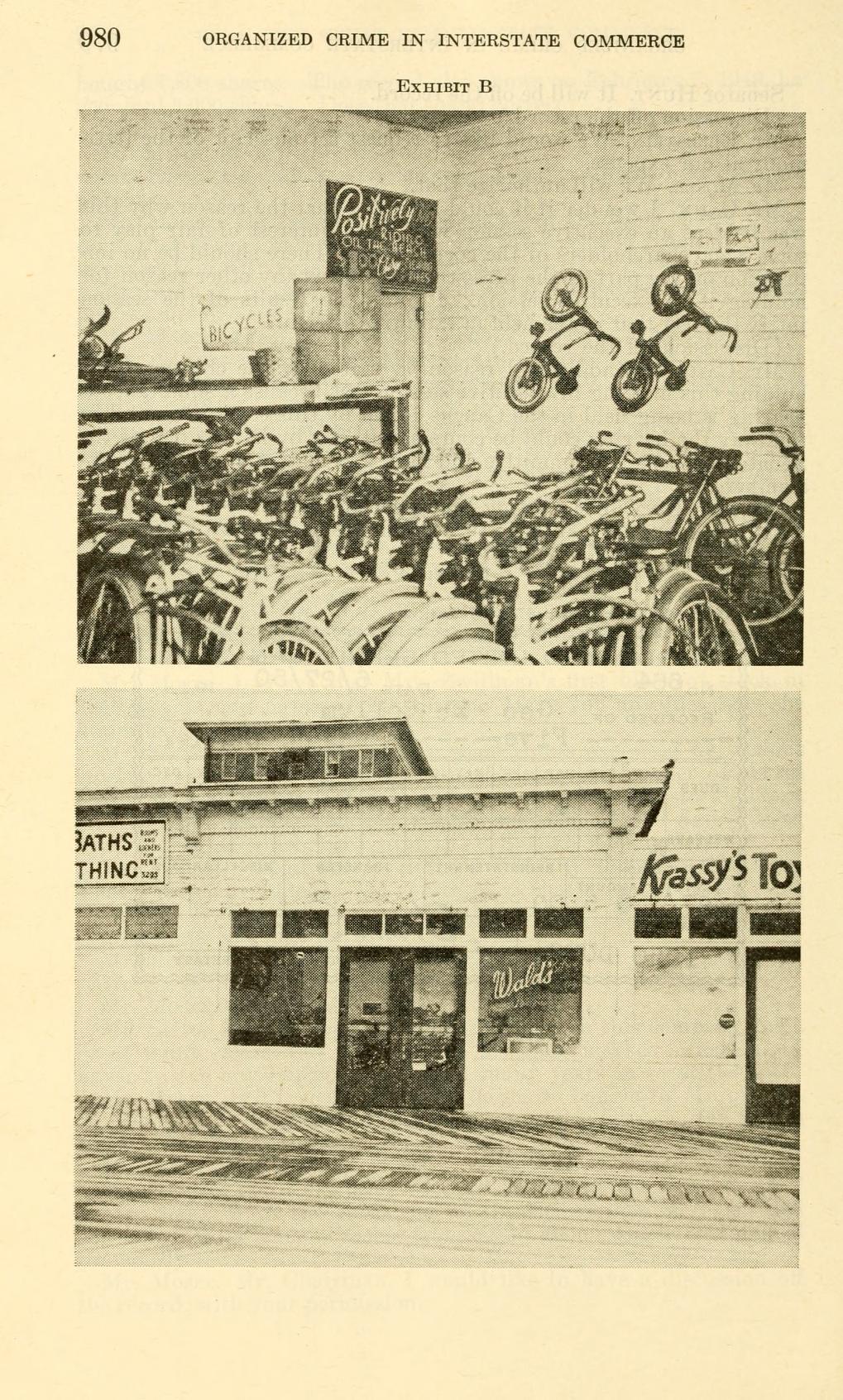 hearingKefauver Part 18, Exhibit B: photographs of a horse bookie parlor, 3203 Boardwalk, Atlantic CityTwo photographs, an interior with bicycles and a shop front on the Atlantic City boardwalk, printed in the appendix of Part 18 and described in the contents as "Photographs of horse bookie parlor, 3203 Boardwalk, Atlantic City, N. J."hearingKefauver Part 19: Western Union racing-wire drops in Reading and the "Treasury balance" wire (1951)At the committee's 1951 Pennsylvania hearings a Western Union letter identifying "two racing-wire drops or tickers in Reading" was read into the record, and Western Union's Washington superintendent described the daily wire of the Treasury balance to subscribers in eastern cities.hearingKefauver Part 1-A: testimony of M. C. Beasley, Tampa chief of police (29 December 1950)Counsel questions the police chief about police files on unsolved Tampa killings of 1936-1939 and on the attempts on the life of Charles Wall; pp. 80-89, with the main passages at pp. 84-85. Exhibit 7 holds the records he brought.hearingKefauver Part 1-A: Sheriff Hugh Culbreath, questioning on the Tampa syndicate and his written answer on Dugan (17 February 1951)Counsel puts a list of names to the Hillsborough County sheriff as a Tampa syndicate; he answers that he knows of them, took no contributions from them, and that they do not come into his office. His written answer denies the reprimand Dugan described. Pp. 376-377, 382.hearingKefauver Part 1-A: testimony of Jesse Henry Dugan, Jr., former Hillsborough County deputy sheriff (30 December 1950)A former deputy who resigned in 1948 says, secondhand, that a fellow deputy was reprimanded by the sheriff for arresting a Trafficante. He answers 'Nothing' when asked what he knows of the Mafia. Pp. 253-259.hearingKefauver Part 1-A, Exhibit 2: chart, "Organized Gambling in Tampa"A staff chart printed at page 482 of Part 1-A, headed "Organized Gambling in Tampa", listing killings and attempted killings in Tampa from 1931 to 1950 with the arrest or conviction noted against each; received in evidence at the Tampa hearing on December 29, 1950.
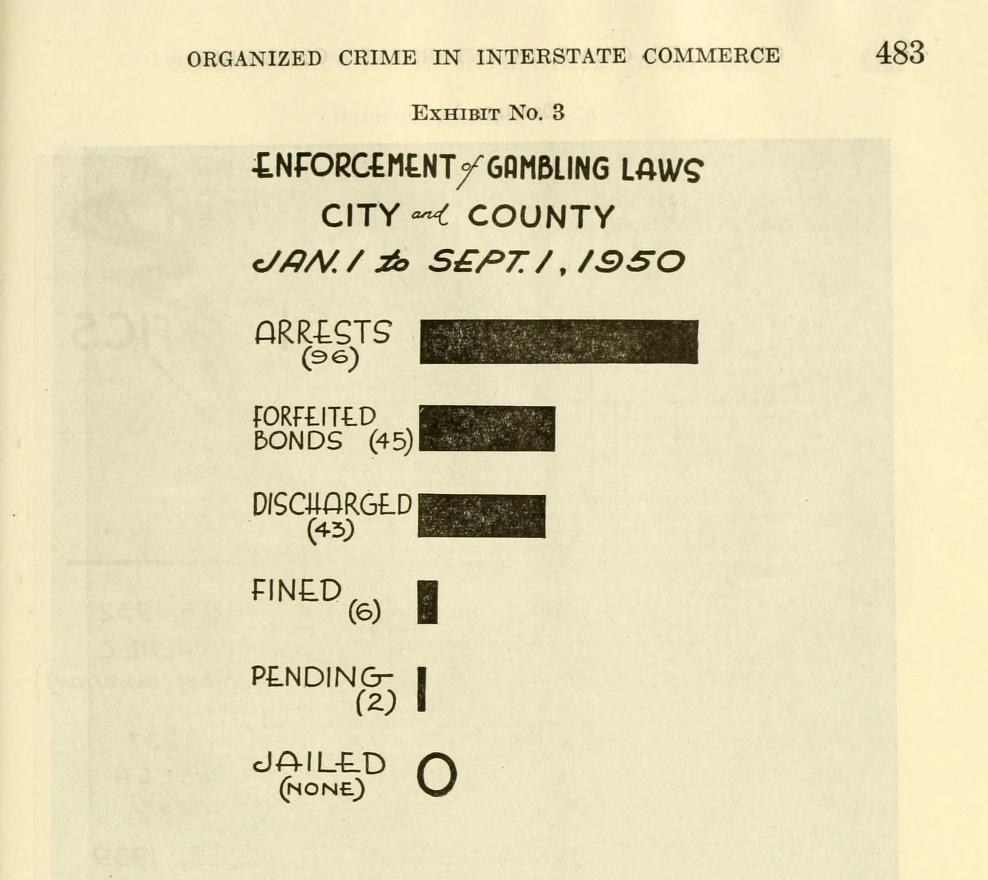 hearingKefauver Part 1-A, Exhibit 3: chart, "Enforcement of Gambling Laws, City and County"A staff bar chart printed at page 483 of Part 1-A, "Enforcement of Gambling Laws, City and County, Jan. 1 to Sept. 1, 1950": 96 arrests, 45 forfeited bonds, 43 discharged, 6 fined, 2 pending, none jailed.
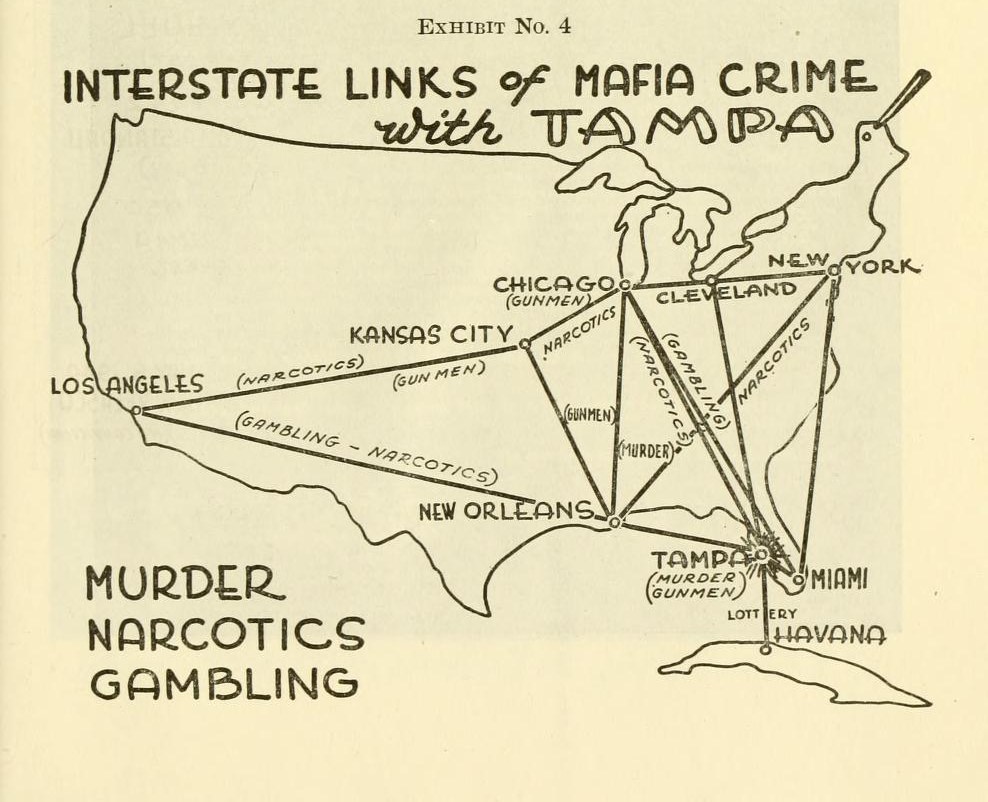 hearingKefauver Part 1-A, Exhibit 4: map, "Interstate Links of Mafia Crime with Tampa"A staff map printed at page 483 of Part 1-A, "Interstate Links of Mafia Crime with Tampa", drawing lines labelled narcotics, gambling, gunmen and murder between Tampa and Los Angeles, Kansas City, Chicago, Cleveland, New York, New Orleans, Miami and Havana.hearingKefauver Part 1-A: testimony of J. Rex Farrior, Hillsborough County state's attorney, on Charles Wall (22 February 1951)Committee counsel asks the state's attorney about the unsolved shootings at Charles Wall; Farrior says officers found no clue and gives his own characterization of Wall as 'self-confessed and public recorded head and brains of the underworld.' Pp. 413-415.hearingKefauver Part 1-A: Senator Hunt's opening statement at Tampa (29 December 1950)The opening statement of the one-member subcommittee at Tampa, pp. 49-51, giving the committee's reasons for coming to the city, including a reference to the telephone numbers of Santo Trafficante, Sr. found among Jack Dragna's effects.hearingKefauver Part 1-A: testimony of Tony Licata, Tampa (29 December 1950)A Tampa restaurant owner describes becoming a partner in a bolita operation in 1947. Counsel goes through a list of bolita bankers (Exhibit 11); asked about the two Trafficantes, Licata answers 'I don't know, father and son, I guess.' Pp. 150-164.hearingKefauver Part 1-A: testimony of Lt. Charles A. Marvin, former Tampa police officer (29 December 1950)A former Tampa patrolman repeats street talk that Santo Trafficante, Jr. would head the gambling syndicate and that Santo Trafficante, Sr. had 'supposedly or allegedly' been head of the Mafia in Tampa for twenty years. By his own account the statements are rumor. Pp. 137-150.hearingKefauver Part 1-A: testimony of Oscar Perez, Miami (30 December 1950)Jimmy Velasco's former chauffeur agrees with counsel's list of sections of the Tampa syndicate, including 'The Trafficantes in another section,' and repeats what Velasco told him, adding that he cannot vouch for it. Pp. 242-253, syndicate passage at pp. 243-244.hearingKefauver Part 1-A: testimony of Oswald C. Tracey on John Torrio's Florida real estate (29 December 1950)A St. Petersburg broker testifies that he bought a Pass-a-Grille water lot for John Torrio in 1944 and sold it for him to Hugh L. Culbreath and wife in 1945; counsel shows a deed dated 8 October 1945 (Exhibit 8). Pp. 89-95.hearingKefauver Part 1-A: testimony of Charles M. Wall, Tampa (29 December 1950)Wall, accompanied by attorney Pat Whitaker, describes his gambling background and says he left gambling in Hillsborough County in late 1939 or 1940; counsel calls him an elder statesman of Tampa gambling. Printed pages 60-71.hearingKefauver Part 2: Commissioner Anslinger on Ignazio Antinori's narcotics trips to Havana (28 June 1950, p. 91)The Commissioner of Narcotics told the committee that Ignazio Antinori of Tampa 'went to Habana, Cuba, frequently to obtain narcotics for middle western associates,' was killed in Tampa in 1940, and that the Bureau arrested his two sons and others in 1942.hearingKefauver Part 2: testimony of Wayne Coy, FCC chairman, on Continental Press and leased wires (20 June 1950), pp. 4-31The chairman of the Federal Communications Commission told the committee that "the principal disseminator of racing information used by illegal bookmakers is the Continental Press Service," described its leased Western Union circuits, and read the carriers' tariff clauses into the record.
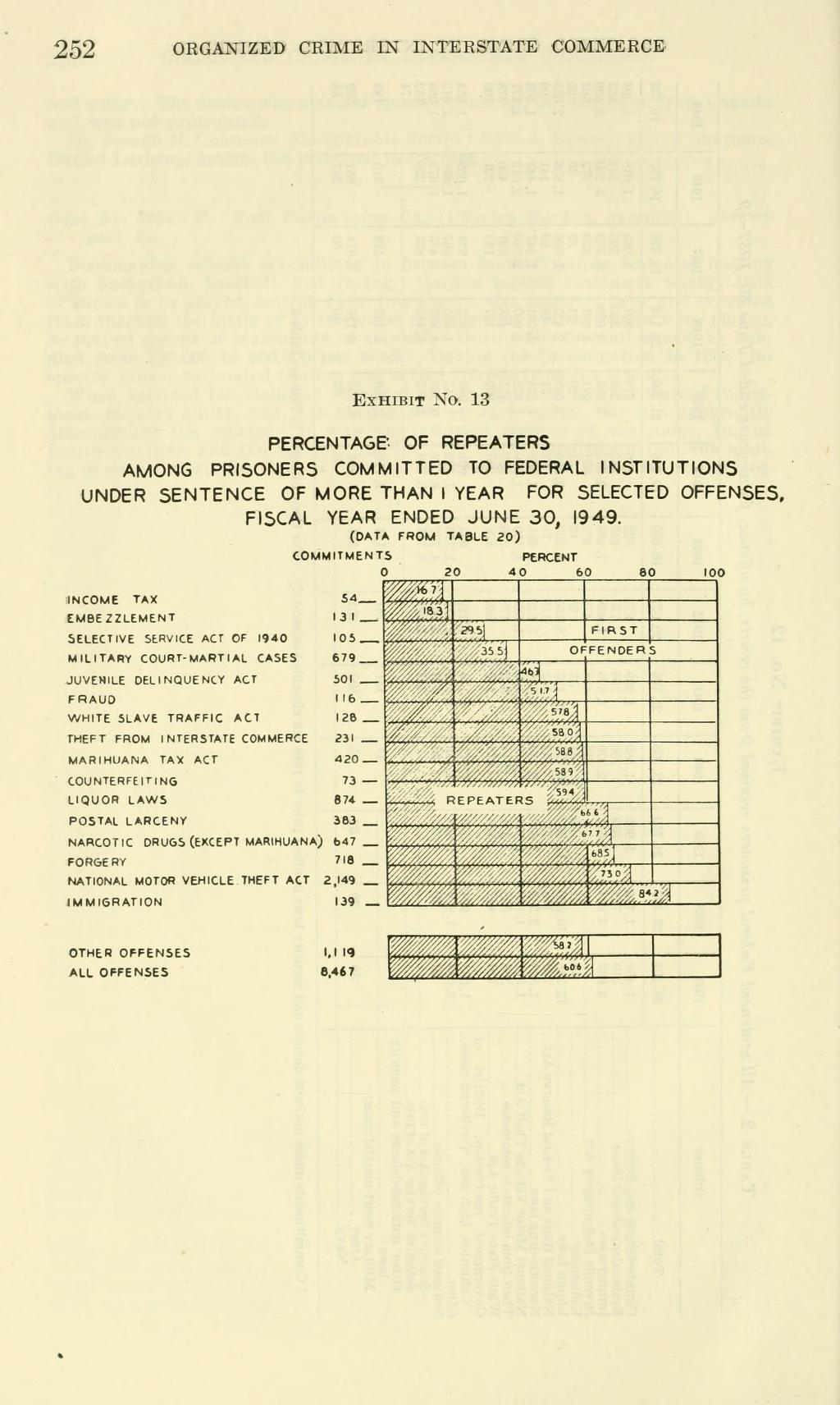 hearingKefauver Part 2, Exhibit 13: Bureau of Prisons chart, "Percentage of Repeaters," fiscal year 1949A Bureau of Prisons bar chart of the share of first offenders and repeaters among federal prisoners committed for more than a year in fiscal 1949, by offense, put in the record by Director James V. Bennett.
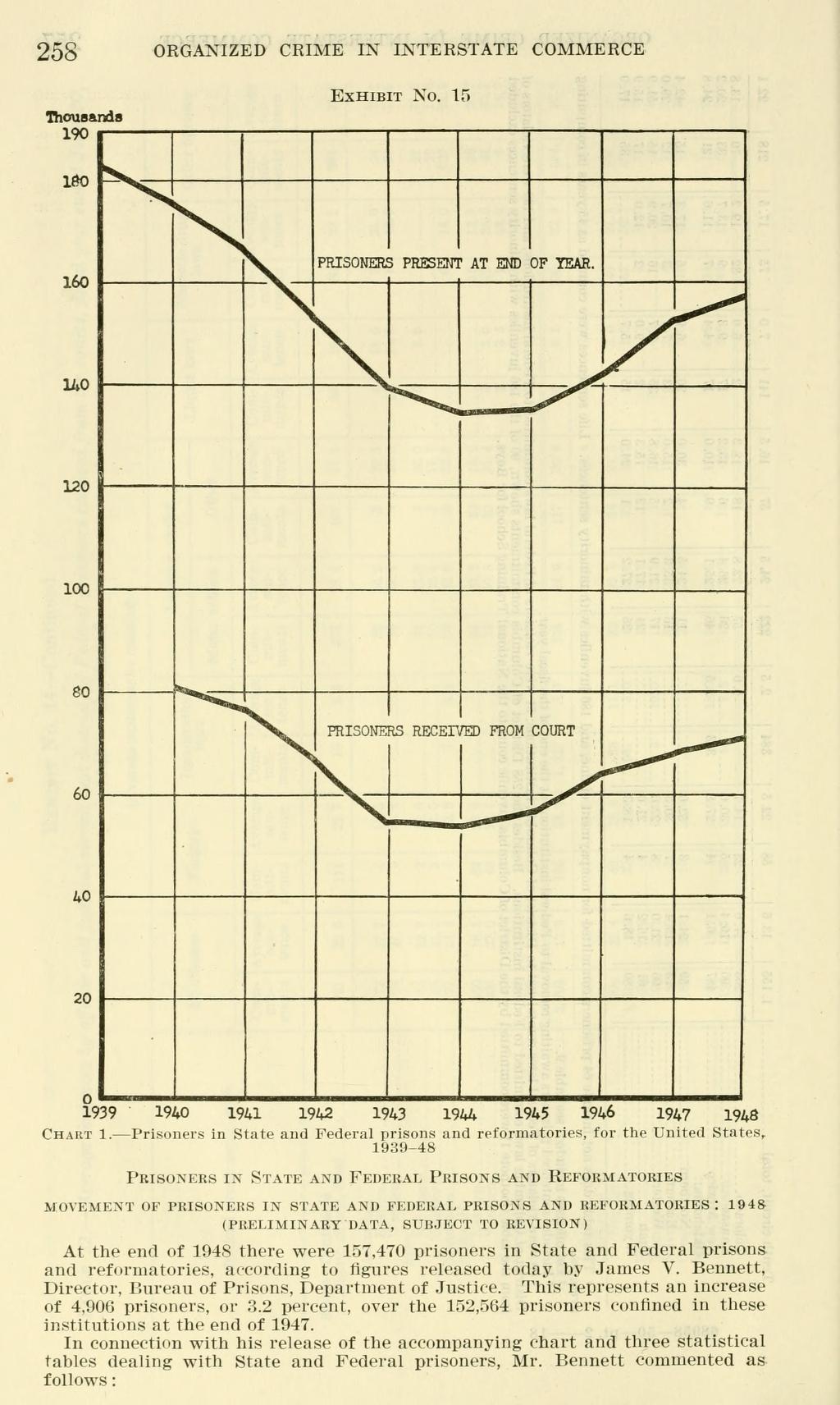 hearingKefauver Part 2, Exhibit 15: Bureau of Prisons graph of prisoners in state and federal prisons, 1939-1948A Bureau of Prisons line graph of prisoners present at year end and prisoners received from court in state and federal prisons and reformatories, 1939 to 1948, filed by Director James V. Bennett.hearingKefauver Part 2: Virgil W. Peterson's statements naming Owney Madden (1950)Three passages in the Chicago Crime Commission director's statement to the Kefauver Committee in which Owney Madden is named: among Frank Costello's associates of the 1920s and early 1930s, in a list of Costello's associations, and as someone Gaetano Ricci was "understood" to have telephoned in Hot Springs, Arkansas.hearingS. Rept. 81-1752 on Continental Press, as quoted in Kefauver Part 2, pp. 9-10 (1950)FCC chairman Wayne Coy read pages 15 and 16 of the Senate Commerce Committee's report on S. 3358 into the Kefauver record: it calls Continental the successor to the Annenberg wire service and finds that it has "a near monopoly in the transmission of racing news."hearingKefauver Part 4: testimony of Thomas B. Bash, former Jackson County sheriff (29 September 1950)The former sheriff lists the cases that confronted him, including 'the Union Station massacre,' and says juries and witnesses were intimidated; Senator Kefauver places an FBI report on Charles Gargotta (1919 to 1947; 39 charges in Missouri) in the record as Exhibit 12. Pp. 147-152.hearingKefauver Part 4: testimony of Hampton Smith Chambers, Kansas City police commissioner, on meetings with Charles Binaggio (28 September 1950)A former police commissioner describes his dismissal by the governor in May 1950 'shortly after the slaying of Binaggio and Gargotta' and two meetings with Binaggio in 1949, at one of which Binaggio raised a gambling house on Southwest Boulevard and a representative for police matters. Pp. 39-62.
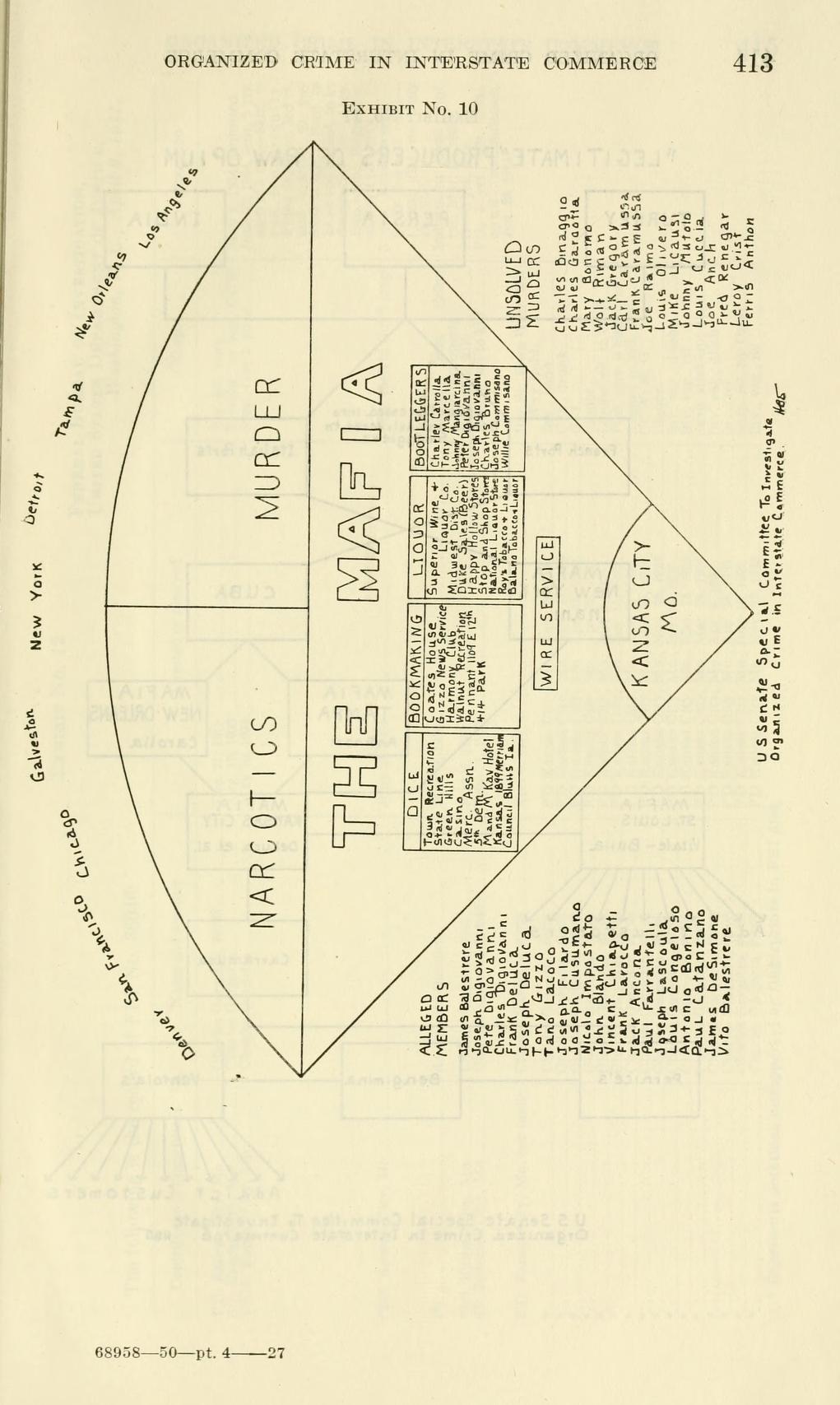 hearingKefauver Part 4, Exhibit 10: committee chart "The Mafia"A fan-shaped committee chart headed "The Mafia," with "Murder" and "Narcotics" segments, city names around its edge, and lists of "alleged members" and unsolved murders, received on September 28, 1950.
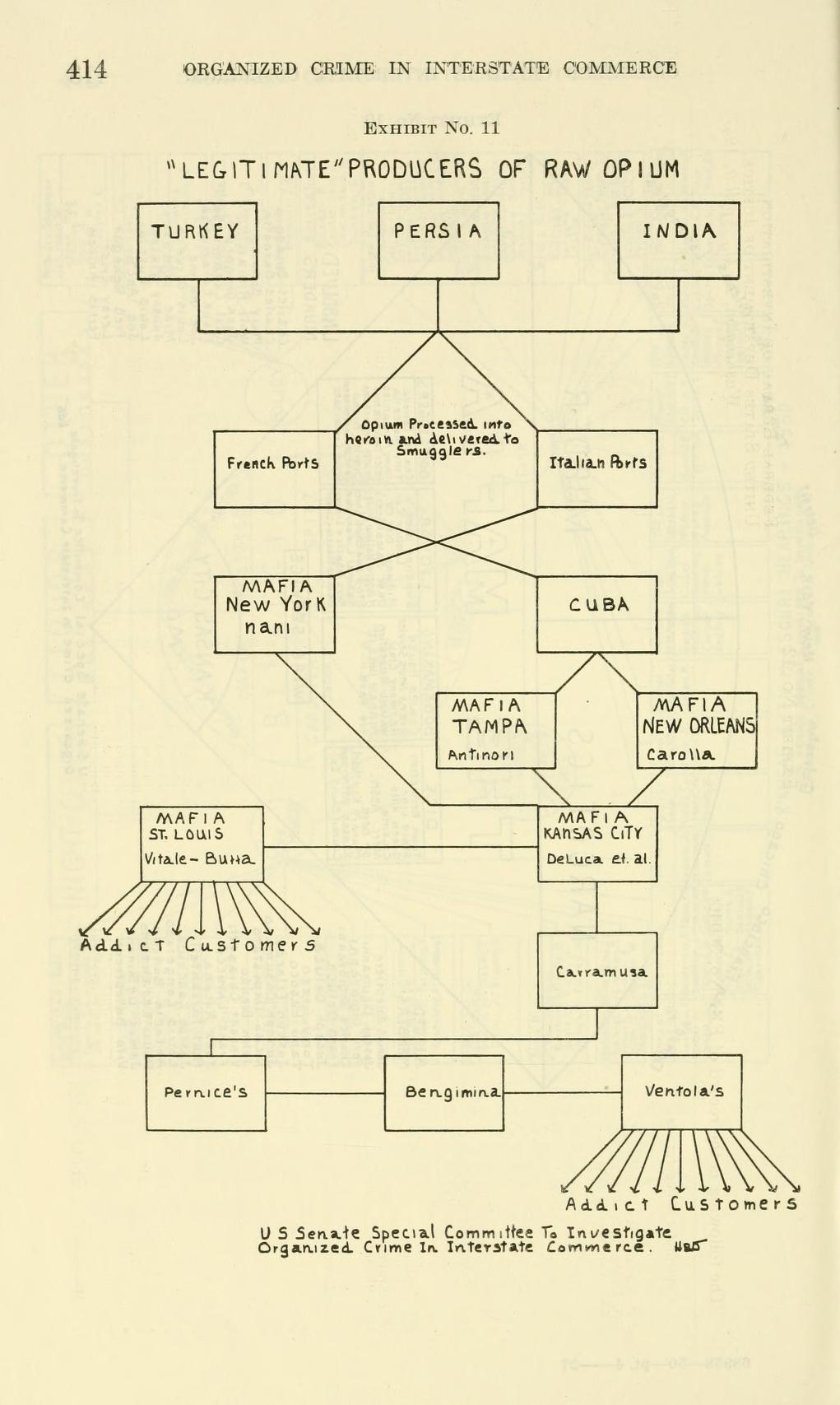 hearingKefauver Part 4, Exhibit 11: committee chart of "legitimate" producers of raw opium and smuggling routesA committee flow chart running from Turkey, Persia and India through French and Italian ports and Cuba to boxes labelled Mafia in New York, Tampa, New Orleans, St. Louis and Kansas City and on to "addict customers," received on September 28, 1950.hearingKefauver Part 4, Exhibit 20: Kansas City Police Department list of unsolved murders, 1 January 1940 to 25 September 1950A printed police list (appendix pp. 417-418) of unsolved Kansas City killings, including Louis Cuccia on 30 January 1946 near 1501 Truman Road in company with Nick Civella, and Charles Binaggio and Charles Gargotta, 'found shot to death in political club at 718 Truman Road,' dated April 5, 1950.
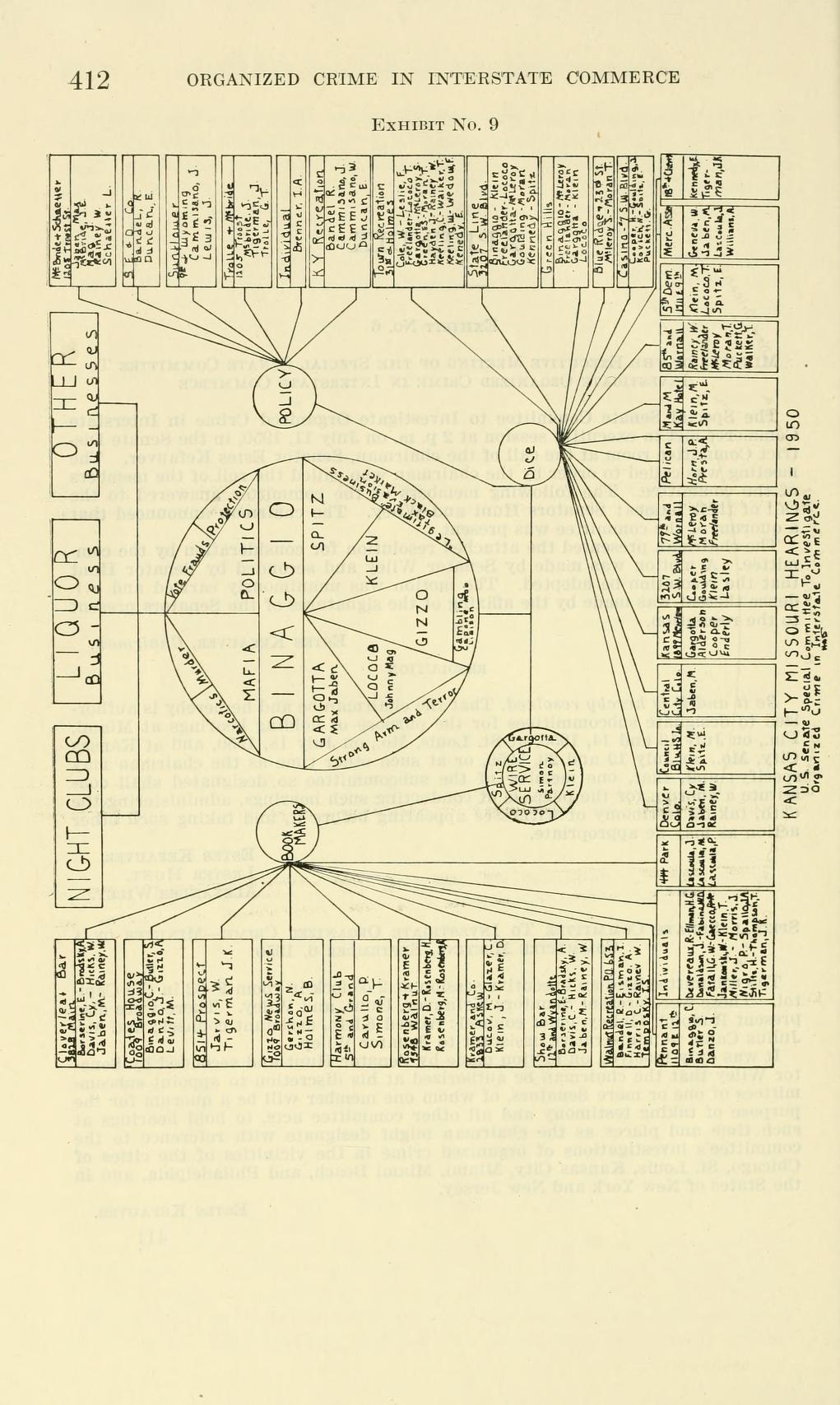 hearingKefauver Part 4, Exhibit 9: committee chart of operations in and near Kansas CityA committee chart, "Kansas City Missouri Hearings - 1950," with a wheel labelled Binaggio at its centre and spokes to policy, dice, bookmakers, the wire service, night clubs and liquor businesses, received on September 28, 1950.hearingKefauver Part 4: testimony of Claude A. Follmer, narcotics agent, on an alleged Kansas City 'Mafia society' (28 September 1950)A Treasury narcotics agent says at p. 91 that John Lazia 'was the leader or czar of the underworld for a number of years prior to his assassination,' and at p. 92 lists unsolved murders 'attributed to the Mafia by persons engaged in law-enforcement work.' Pp. 81-100.hearingKefauver Part 4: testimony of Anthony Gizzo (28 September 1950), pp. 108-139: Lazia and a North Side clubIn answer to counsel's questions, Gizzo says at p. 112 that the Glendale Sales Co. soda business 'was started by Lazia' and agrees Lazia was 'pretty well known as king in the gambling world here back in the 1920's and 1930's'; at p. 119 he says 'Lazia ran the club.'hearingKefauver Part 4A, Exhibit 50: "Gangland Murders in St. Louis and East St. Louis Areas"A committee exhibit (printed pp. 812-819) summarizing St. Louis gang history. It says the "Egan Rats" and the "Hoganites" fought for the rackets of north St. Louis in the early 1920s, that "the top echelon of the Egan gang" was later imprisoned for mail robbery, and that William P. (Dinty) Colbeck was shot dead in his car on 17 February 1943.hearingKefauver Part 4-A: testimony of Henry McKissick (20 July 1950), p. 355: the Fifteenth Street Club addressAsked for the street of the Fifteenth Street Club, McKissick answers '716 and 718 East Fifteenth Street. It is now known as Truman Road,' which connects the '718 Truman Road' political club in the police list to that address. Pp. 353-372.hearingKefauver Part 4-A: testimony of William Molasky on the Pioneer News Service and the Annenberg shares (30 September 1950), pp. 652-672A St. Louis witness testified that in 1932 a half-interest in a St. Louis race-news distributor was bought by "Annenberg, myself, Kruse, and Ragen," and that in 1940 Annenberg gave him his shares for $1.hearingKefauver Part 4-A: testimony of H. E. Vermillion, Western Union, on money orders to C. J. Rich & Co. (30 September 1950), pp. 614-630Western Union's St. Louis-area superintendent described how bettors in distant cities wired money to C. J. Rich & Co. in East St. Louis, whose manager collected the money orders up to three times a day.hearingKefauver Part 5: questions about Owney Madden to Louis Campagna and Daniel Serritella (1950–1951)Two short exchanges in the Illinois hearings. Asked whether he knew Owney Madden, Louis Campagna said "I know of him" and that he may have met him on the golf course at Hot Springs; Daniel Serritella said he did not know him.hearingKefauver Part 5: testimony of Mrs. Charlotte Campagna, Berwyn, Illinois (17 October 1950)Questioned in Chicago about who raised money to settle a federal tax claim against her husband, Louis Campagna, while he was in Leavenworth, Mrs. Campagna declined to answer, standing on her constitutional rights. Pp. 515-517.hearingKefauver Part 5: further testimony of Mrs. Charlotte Campagna (18 October 1950)Recalled the next morning, Mrs. Campagna said she had decided she did not need counsel and would cooperate, and that she did not know who had paid money toward her husband's tax settlement: "Up to this day I don't know who did it." Pp. 645-651.hearingKefauver Part 5: testimony of Edward J. McBride, owner of Continental Press (7 October 1950), pp. 437-447A 26-year-old law student testified "I own the Continental Press Service," that his uncle Tom Kelly ran it as general manager, and that he had bought it in stages from the Ragens.
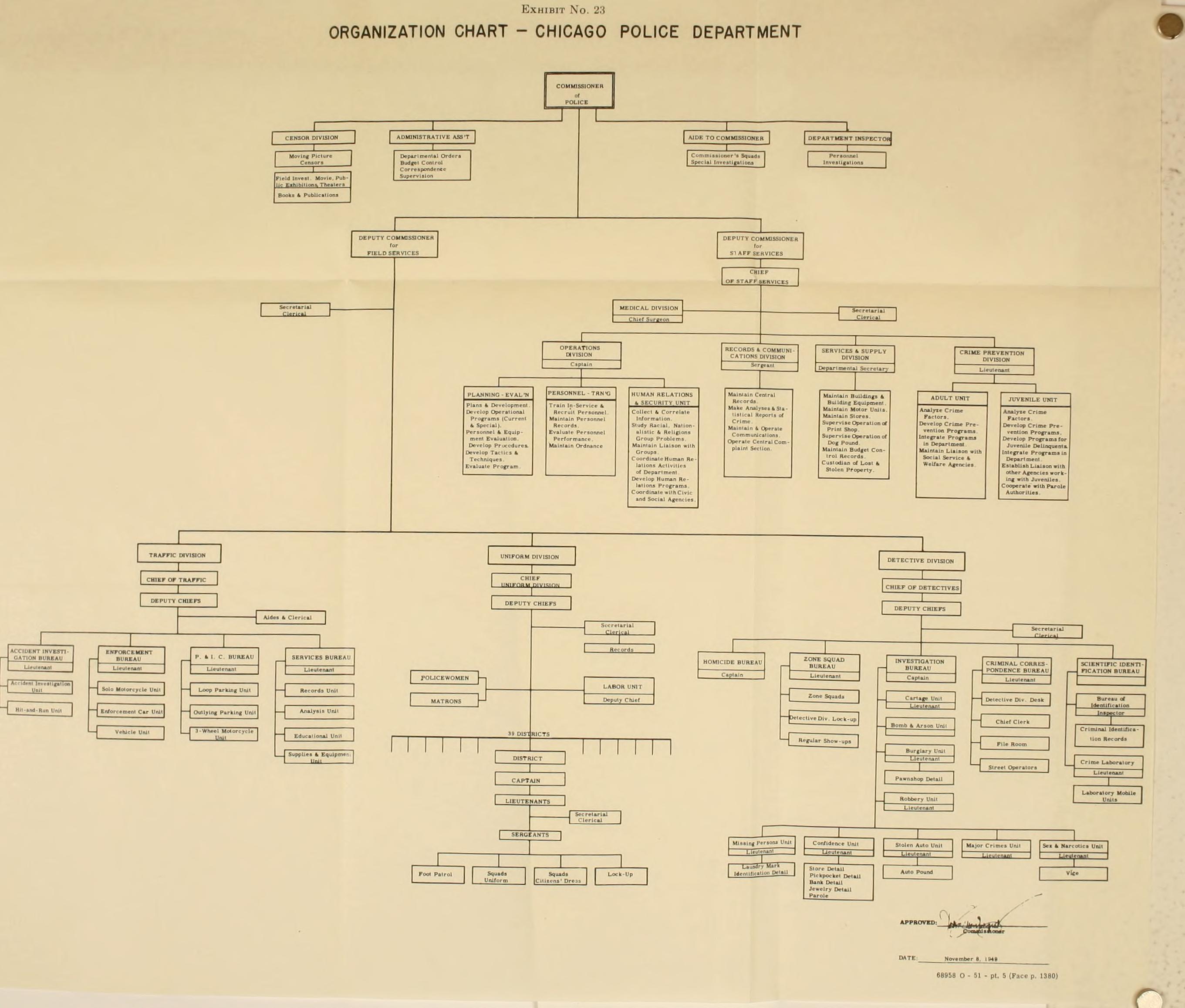 hearingKefauver Part 5, Exhibit 23: "Organization Chart - Chicago Police Department"A fold-out organization chart of the Chicago Police Department, from the commissioner through staff and field services to the districts, furnished by Commissioner Prendergast on October 5, 1950.hearingKefauver Part 5, Exhibit 40: staff summary of evidence on Continental Press, with Annex A ownership dates (December 1950)A committee staff memorandum, printed at pp. 1386-1390 of the Part 5 appendix, on how Continental was formed after Annenberg left the wire business in 1939, its distributors, the 1946-47 contest with Trans-America, and a dated list of its changes of ownership.
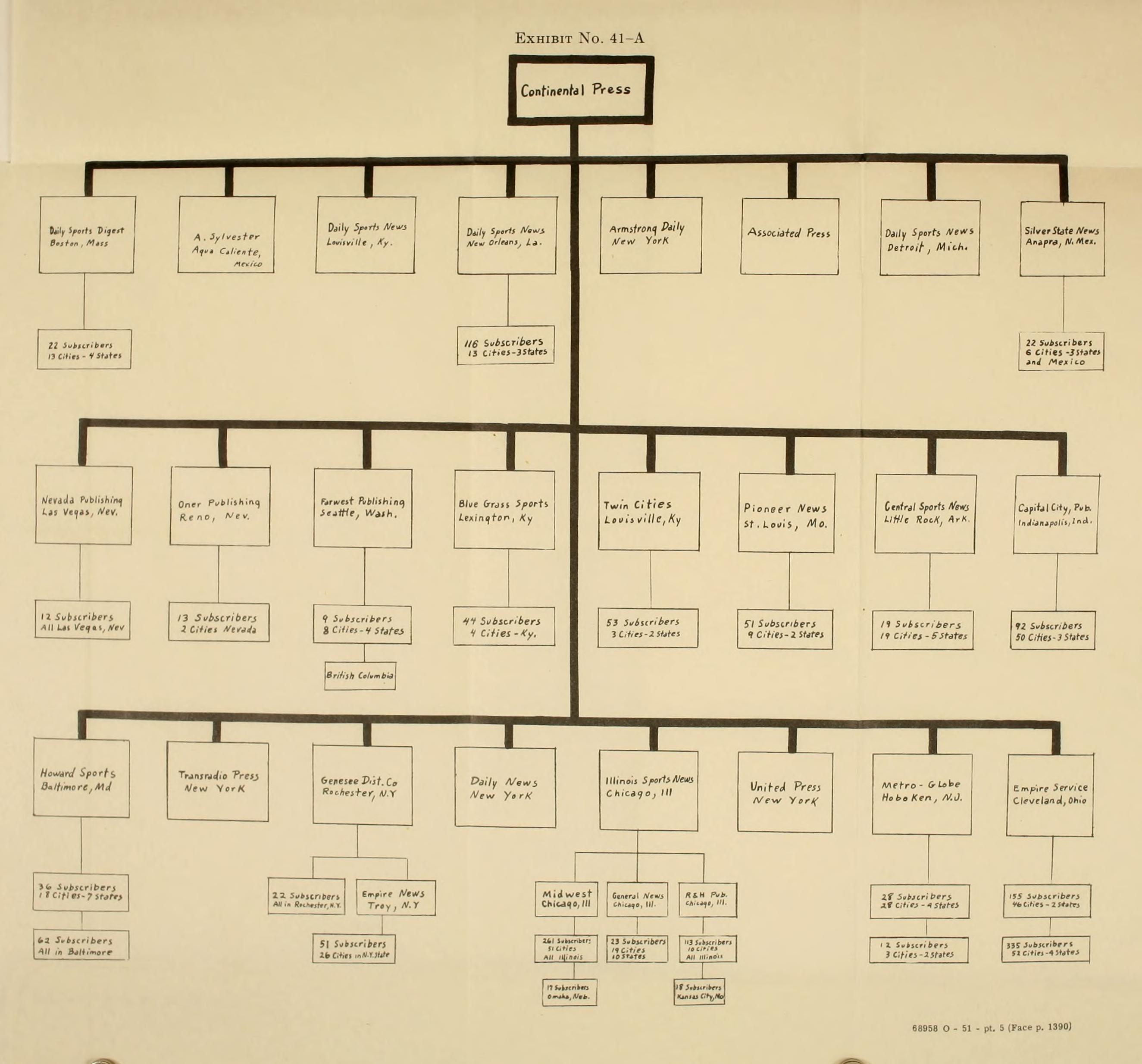 hearingKefauver Part 5, Exhibit 41-A: Continental Press wire service and its distributors, May 1950A fold-out committee chart with Continental Press at the top and its distributors below, from Boston to Las Vegas, each with a count of subscribers, offered by chief counsel Rudolph Halley on December 18, 1950.
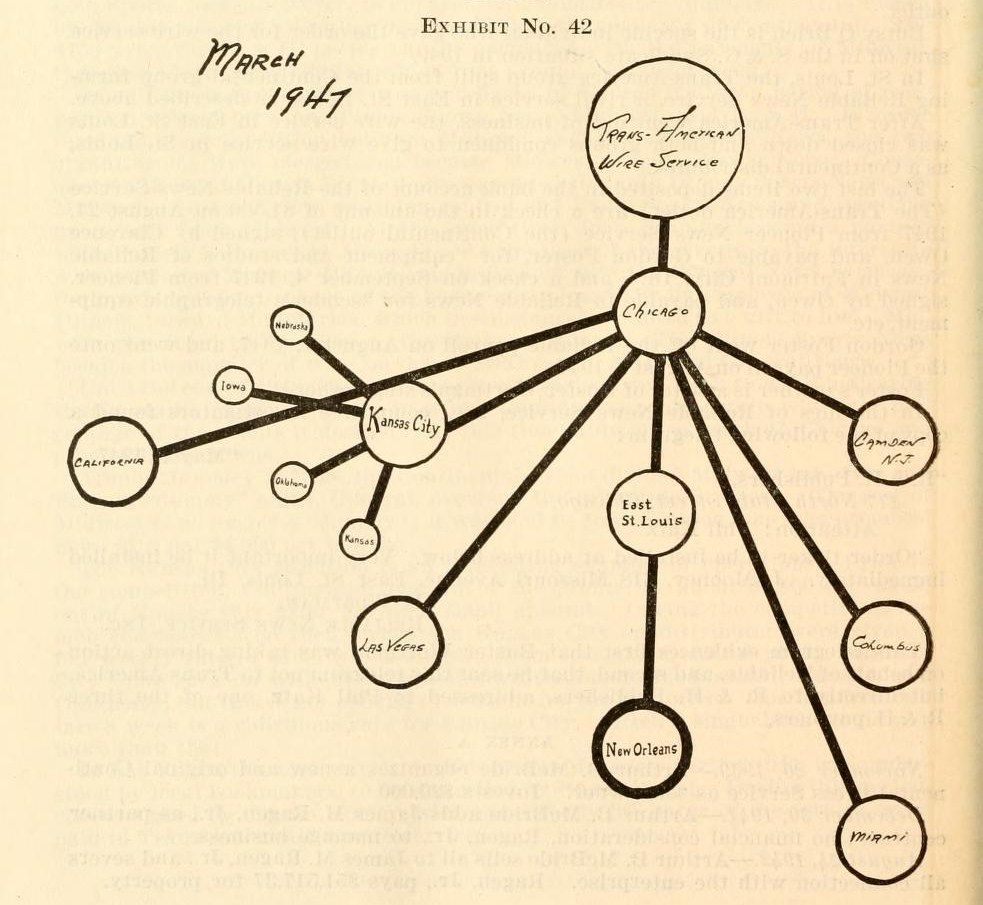 hearingKefauver Part 5, Exhibit 42: Trans-American wire service, March 1947A committee chart dated March 1947 with Trans-American Wire Service and Chicago at its hub and lines to Kansas City, East St. Louis, Las Vegas, New Orleans, Miami, Columbus, Camden and California, offered on December 18, 1950.hearingKefauver Part 5, Exhibit 43: chronology of the wire service since 1945 (December 1950)A committee table, printed at pp. 1391-1394 of the Part 5 appendix, tracking Continental, Trans-America, Midwest, Illinois Sports News and the Chicago scratch sheets from July 1945 to June 1950.
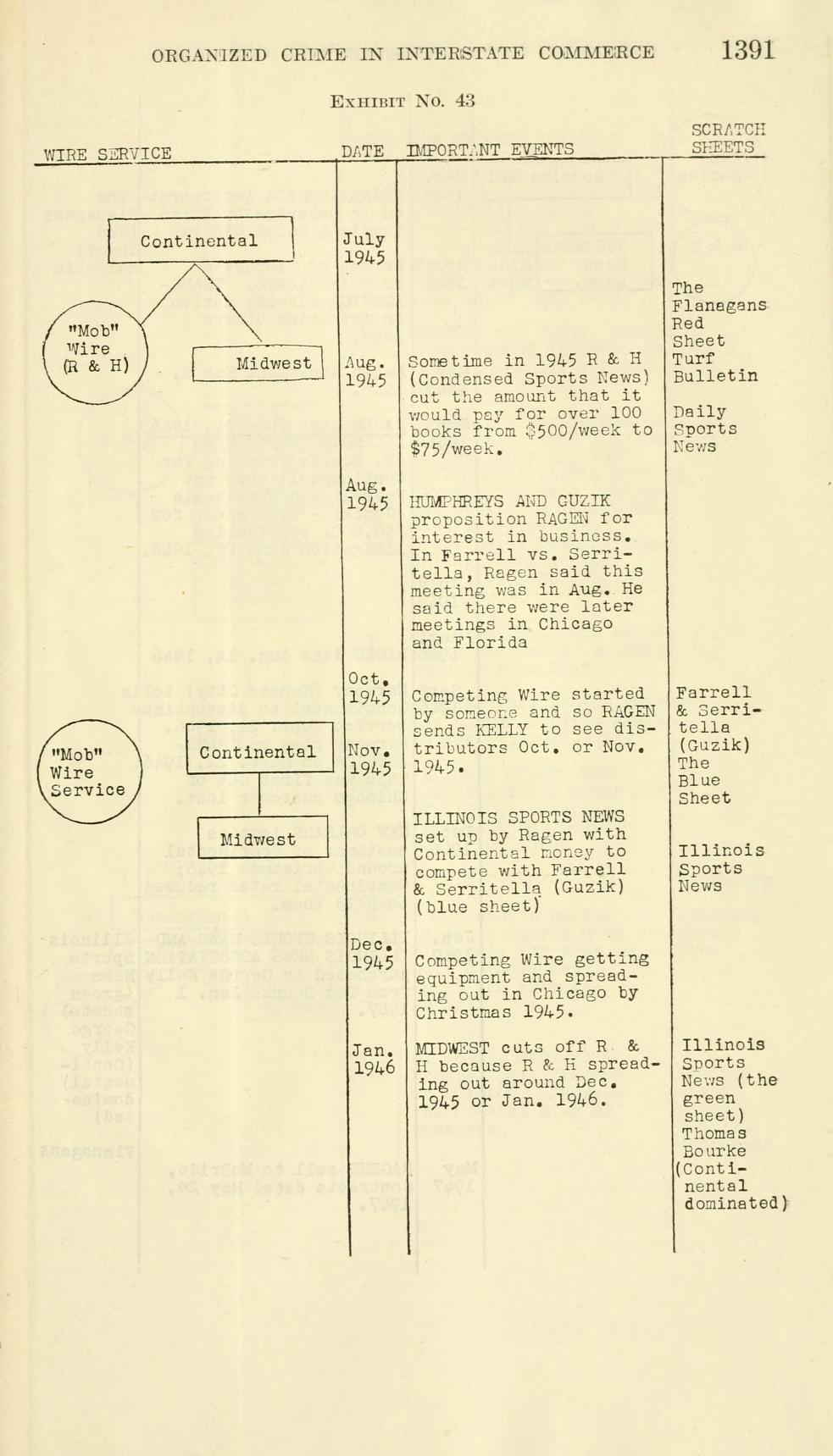 hearingKefauver Part 5, Exhibit 43: chronology of the wire service, July 1945 to January 1946A committee chronology in four columns, wire service, date, important events and scratch sheets, tracing the contest between Continental and a "Mob" wire from July 1945 to January 1946, offered on December 18, 1950.hearingKefauver Part 5, Exhibit 49: memorandum on the wire service in Las Vegas (11 December 1950)A memorandum by the committee's chief investigator summarizing 1948 Nevada Tax Commission testimony about race-book wire service at the Golden Nugget and the Frontier Club, including a Chicago meeting at which a Continental contact named Connie Hurley as its Las Vegas representative.
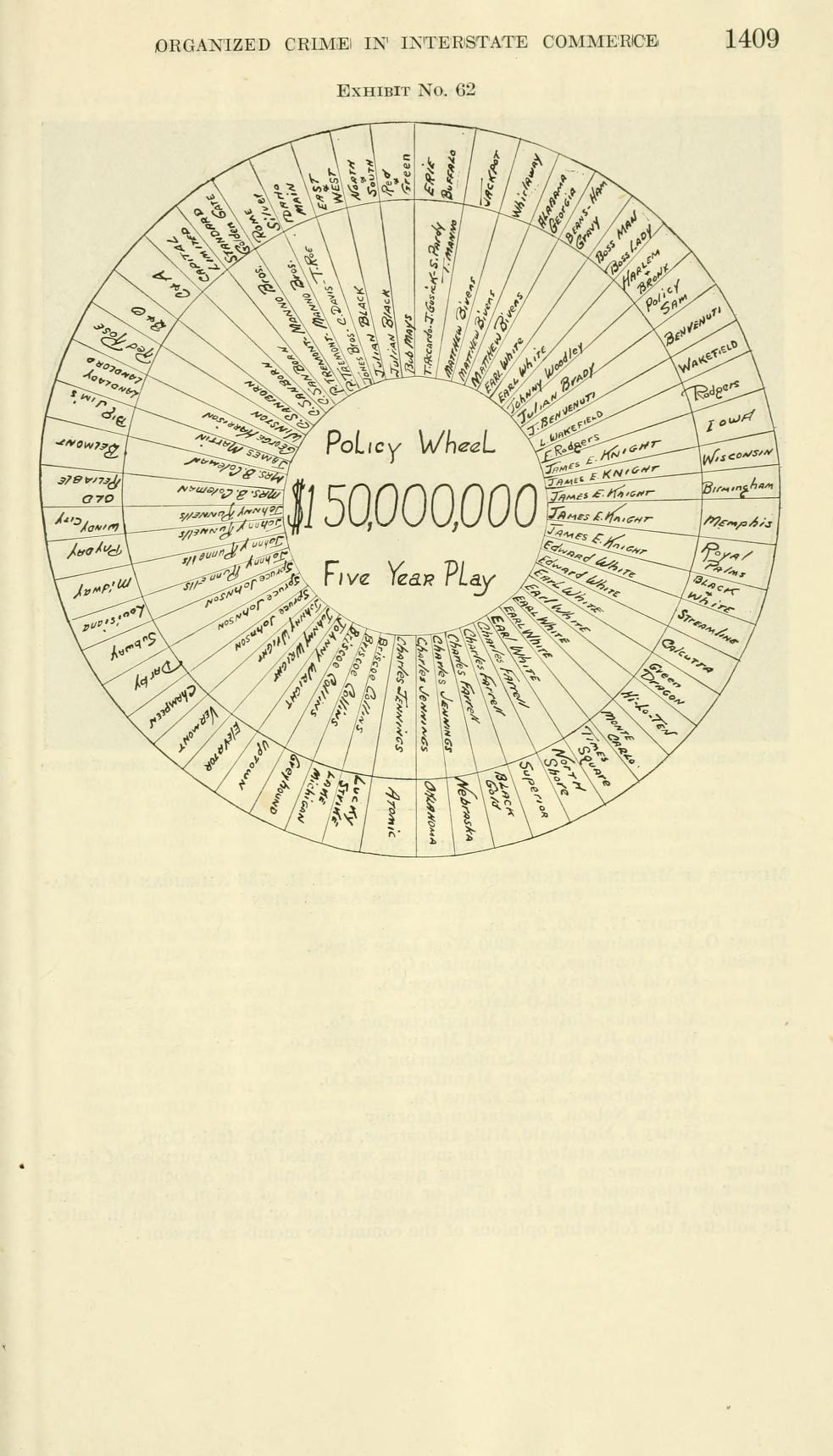 hearingKefauver Part 5, Exhibit 62: chart of the policy wheels in Chicago, 1945-1950A circular committee chart of Chicago policy wheels, with "Policy Wheel $150,000,000 Five Year Play" at its centre and the names of wheels and operators around it, offered by associate counsel H. G. Robinson on December 19, 1950.
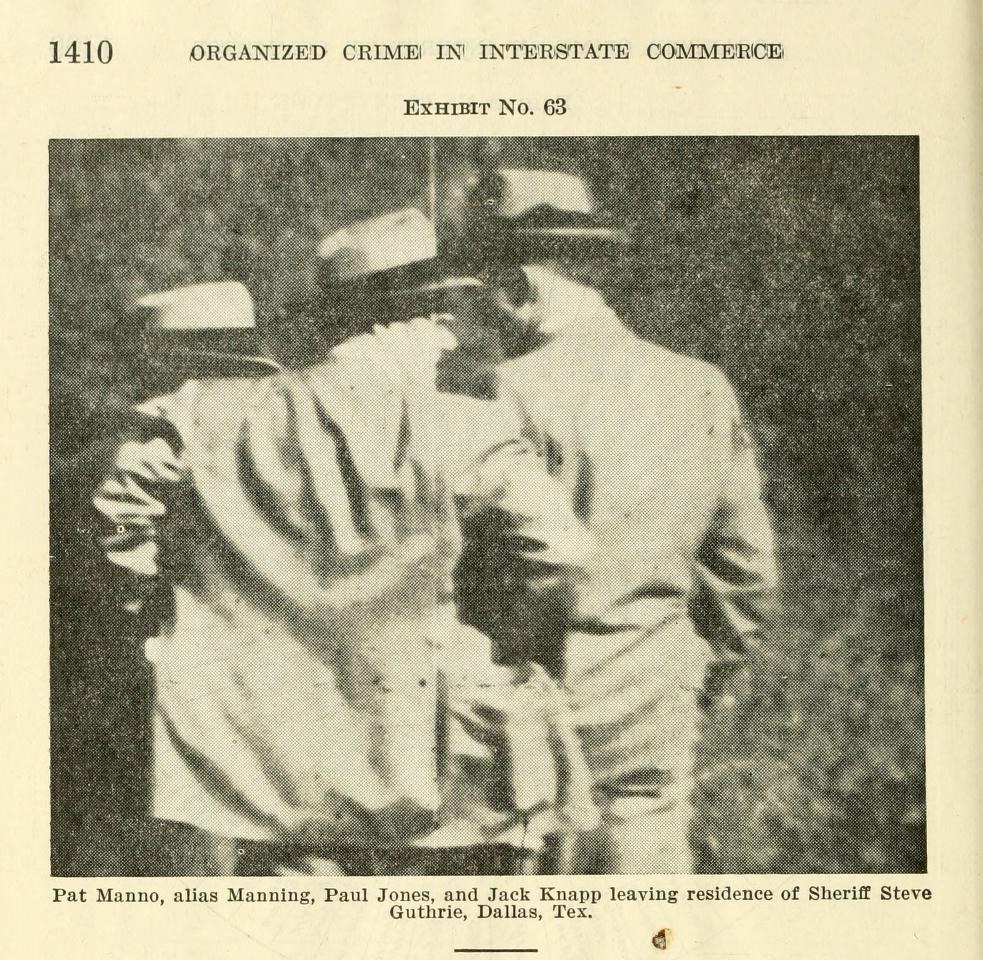 hearingKefauver Part 5, Exhibit 63: Dallas police photograph of Pat Manno, Paul Jones and Jack KnappA Dallas Department of Public Safety photograph of three men walking away from the camera, captioned as Pat Manno, alias Manning, Paul Jones and Jack Knapp leaving the residence of Sheriff Steve Guthrie, identified by Lieutenant Butler on December 19, 1950.
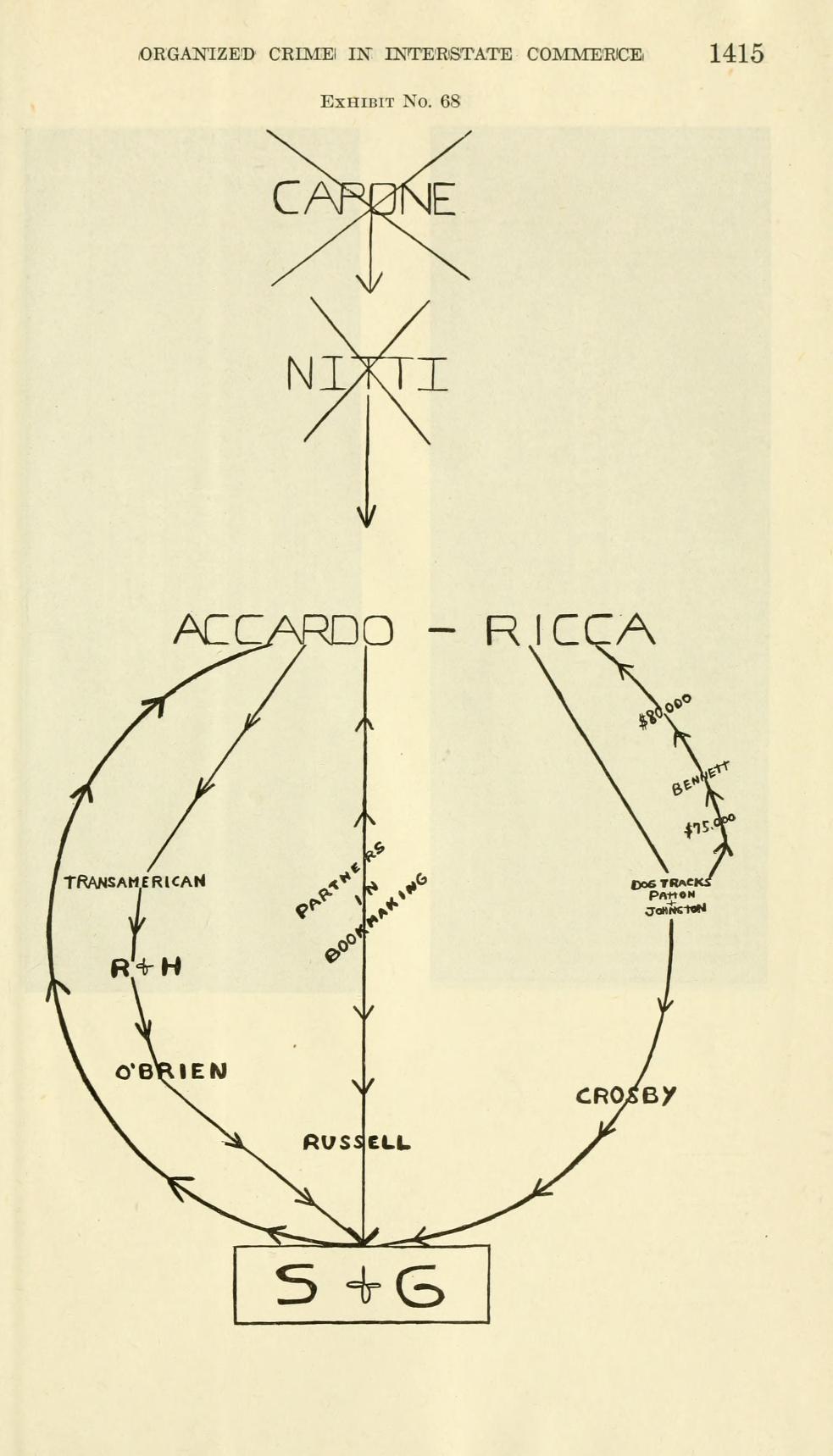 hearingKefauver Part 5, Exhibit 68: chart "showing leadership of Capone syndicate and muscling into S. & G. in Florida"A committee chart with Capone and Nitti crossed out above "Accardo - Ricca," and arrows through Transamerican, R & H, O'Brien, Russell and Crosby to a box marked "S & G," offered by Rudolph Halley during Anthony J. Accardo's testimony on January 5, 1951.
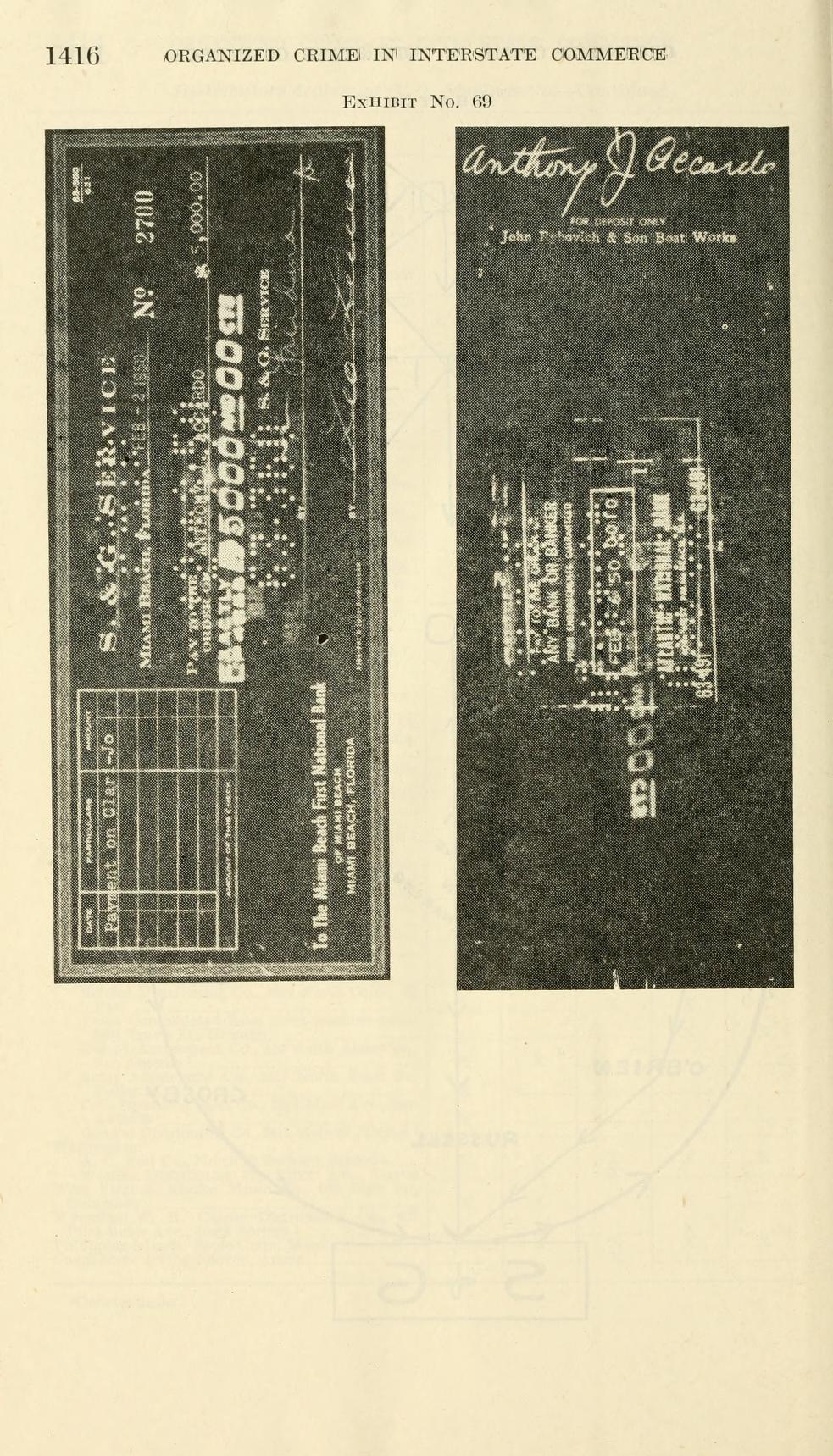 hearingKefauver Part 5, Exhibit 69: photostats of two S. & G. Service checks payable to Tony AccardoPhotostats of two $5,000 checks from the S. & G. Service, dated February 2 and February 9, 1950, and their endorsements, put to Anthony J. Accardo on January 5, 1951.hearingKefauver Part 5, Exhibits 41, 41-A, 42 and 44: wire-service charts and the witnesses the committee could not serve (December 1950)Counsel offered a map of Continental's telegraph lines, charts of the Continental and Trans-America networks, and a list of wire-service witnesses the committee had been unable to serve, among them the head of a Miami wire service.hearingKefauver Part 5: testimony of George Kelly on the Illinois Sports News scratch sheet (19 December 1950), pp. 1068-1095The owner of a Chicago scratch sheet testified that he bought Illinois Sports News in January 1947 and had earlier worked for James Ragen, "doing business as Continental Press."hearingKefauver Part 5: testimony of U.S. Attorney Otto Kerner, Jr., on the parole grand jury (5 October 1950)In executive session at Chicago, the U.S. Attorney for the Northern District of Illinois described the grand jury that heard Campagna, Gioe, De Lucia and D'Andrea on "the manner of obtaining their paroles," and Accardo's visits to Leavenworth under the name Joseph Bulger. Printed pp. 182-196.hearingKefauver Part 5: Exhibit 35, statement on slot machines and a horse book at the Seven Gables, Morris, Illinois (17 October 1950)A statement taken by an Illinois assistant attorney general after a State police raid and put to the tavern's licensee at the Chicago hearing: "We take in about $1,200 per month from seven slot machines," and the horse book "grossed in 1949 $200,000."hearingKefauver Part 5: testimony of Thomas F. Kelly, general manager of Continental Press (18 October 1950), pp. 691-699Continental's general manager told the committee how he worked for James Ragen and Moses Annenberg's news bureaus, how in 1939 Annenberg "was going to give up the news business," and how Arthur McBride took the business over with most of Annenberg's staff.hearingKefauver Part 5: wigwag testimony and Exhibits 51-52 on relaying race results from outside Garden State Park (18 December 1950)A track-crew employee of a Baltimore news service testified that his job was "To get the race results out of the race track" by signalling from a tavern roof across from the Camden, N.J., track; a staff report describes a surveillance there on 2 November 1950.
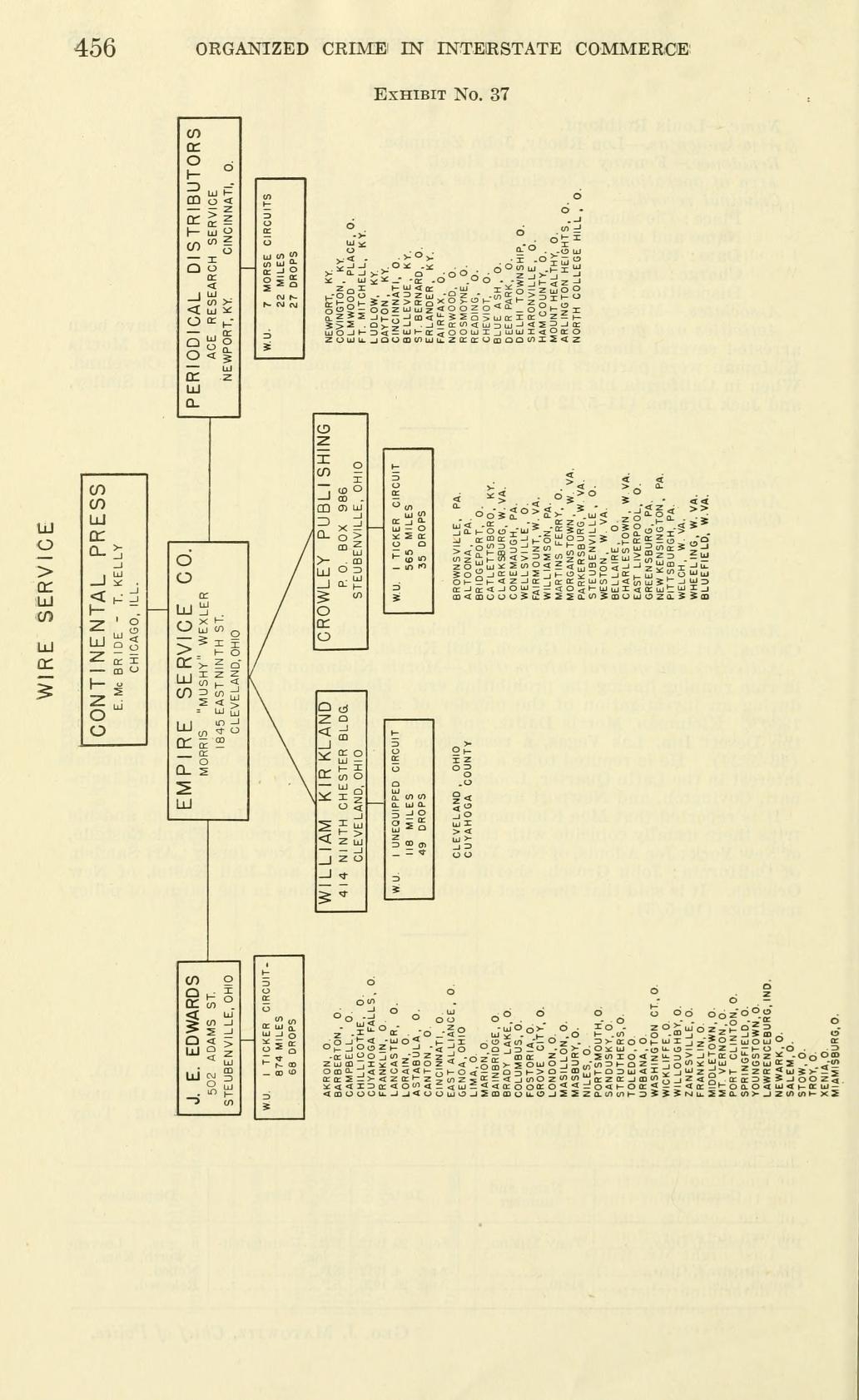 hearingKefauver Part 6, Exhibit 37: wire chart of Continental Press service to Ohio and Kentucky distributorsA committee wire chart printed sideways, from Continental Press through Empire Service Co. of Cleveland to distributors including Periodical Distributors of Newport, Ky., with Morse circuits, miles and drops, received on January 17, 1951.
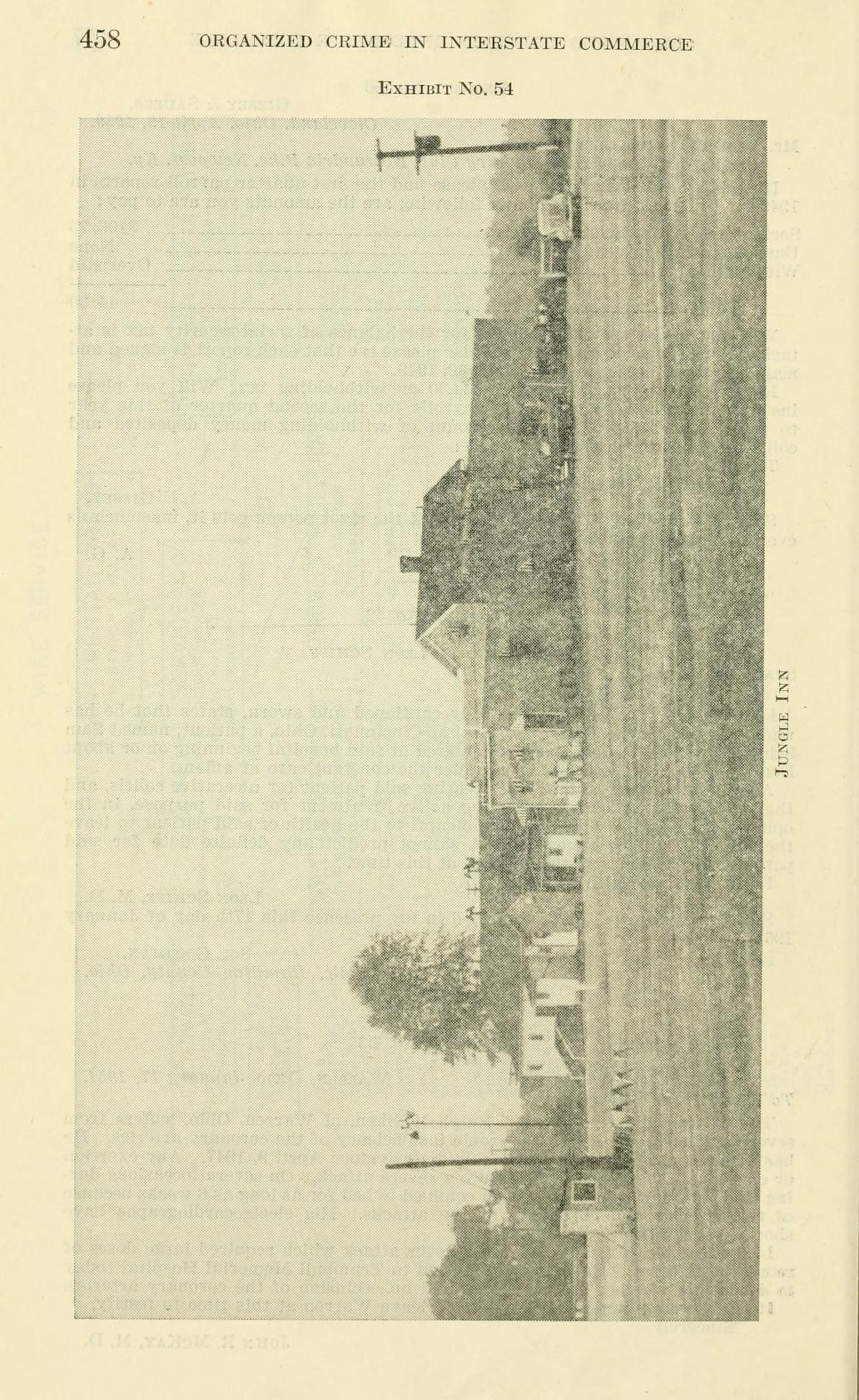 hearingKefauver Part 6, Exhibit 54: photograph of the two buildings of the Jungle InnA photograph, printed sideways, of the two buildings that made up the Jungle Inn, identified by Anthony A. Rutkowski of the Ohio Department of Liquor Control on January 18, 1951.
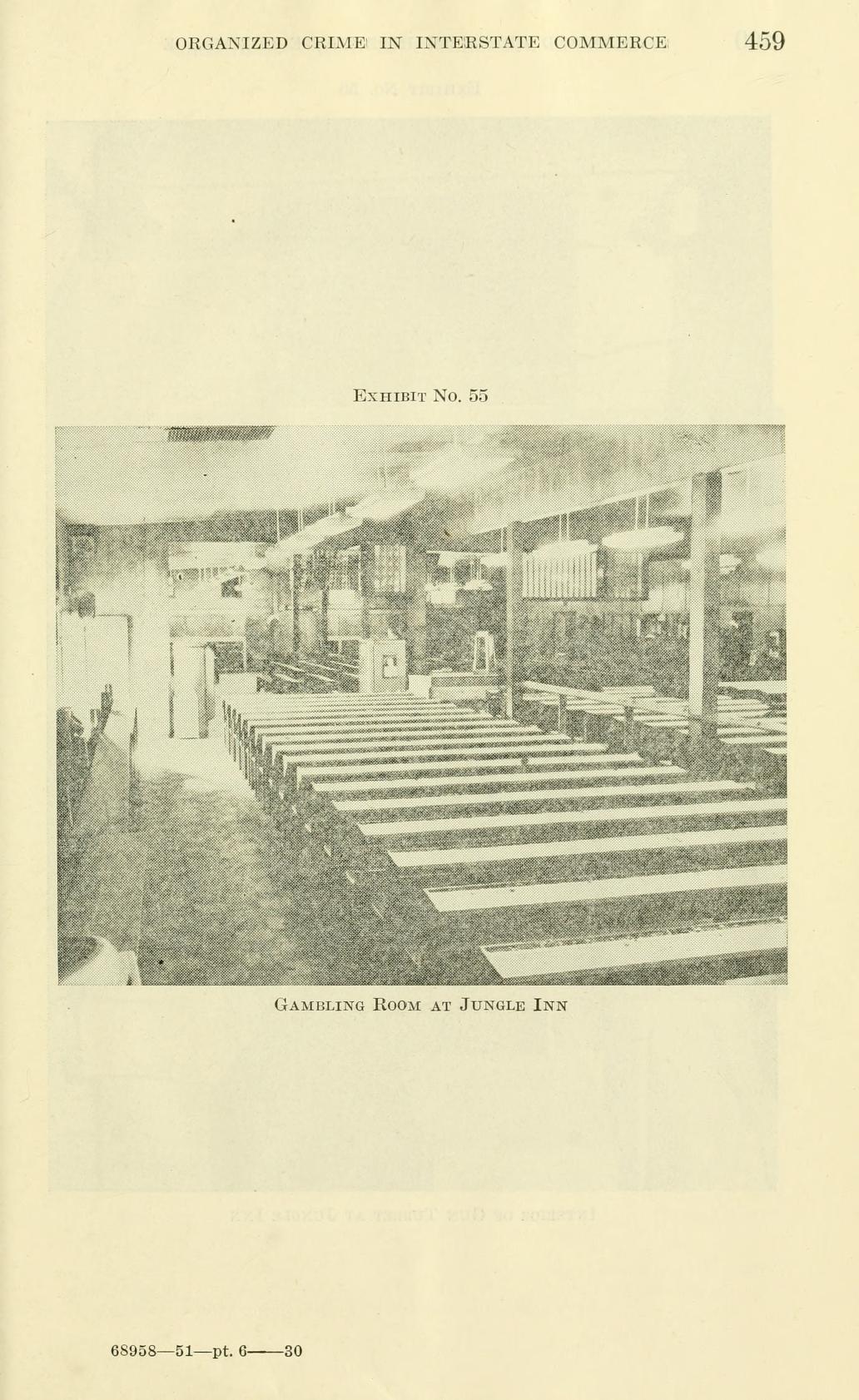 hearingKefauver Part 6, Exhibit 55: "Gambling Room at Jungle Inn"An interior photograph of rows of long tables in a large room, captioned "Gambling Room at Jungle Inn," identified by Anthony A. Rutkowski on January 18, 1951.
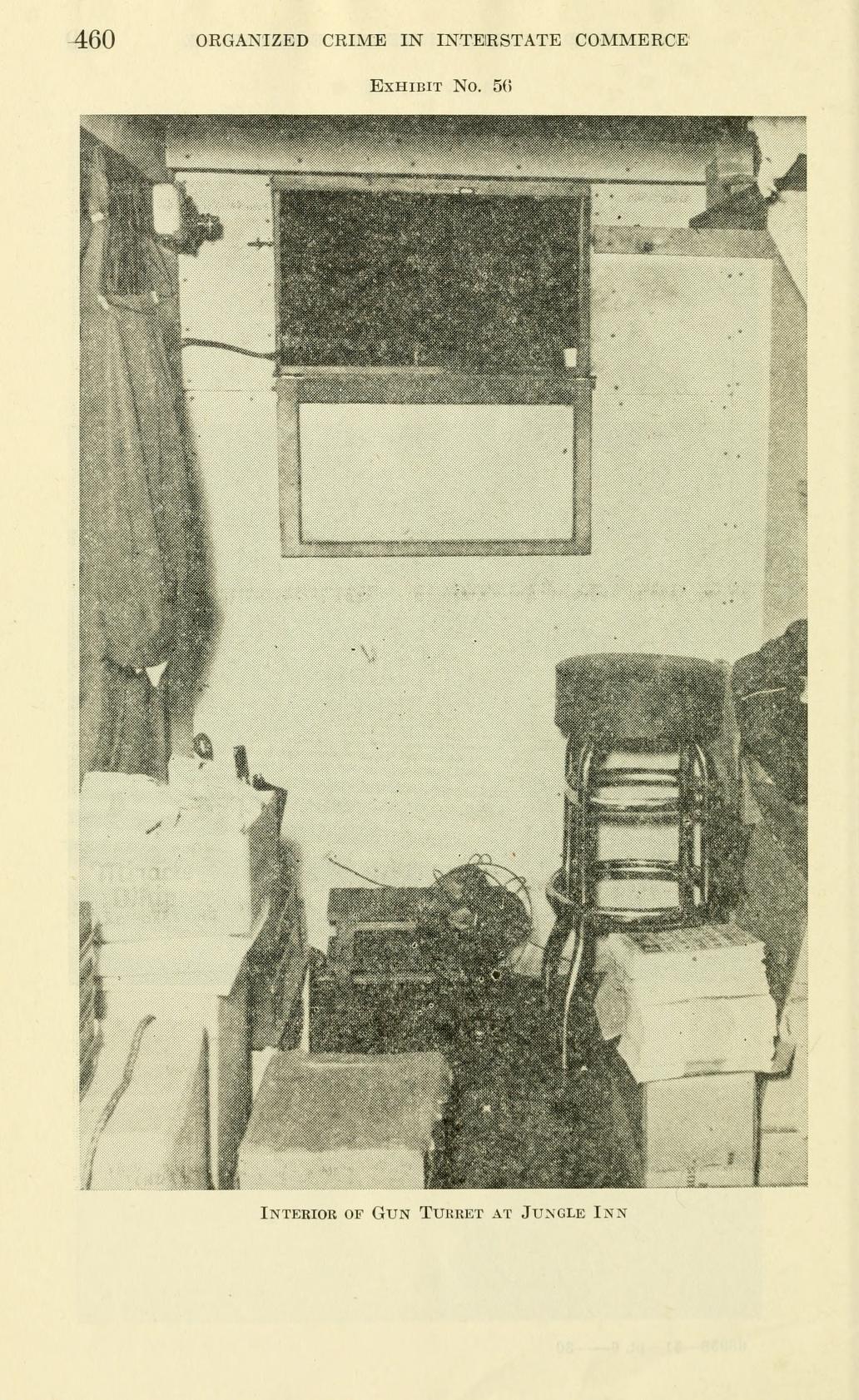 hearingKefauver Part 6, Exhibit 56: "Interior of Gun Turret at Jungle Inn"A photograph of the inside of a small room with a chair, a slot in the wall and boxes on the floor, captioned "Interior of Gun Turret at Jungle Inn," identified by Anthony A. Rutkowski on January 18, 1951.
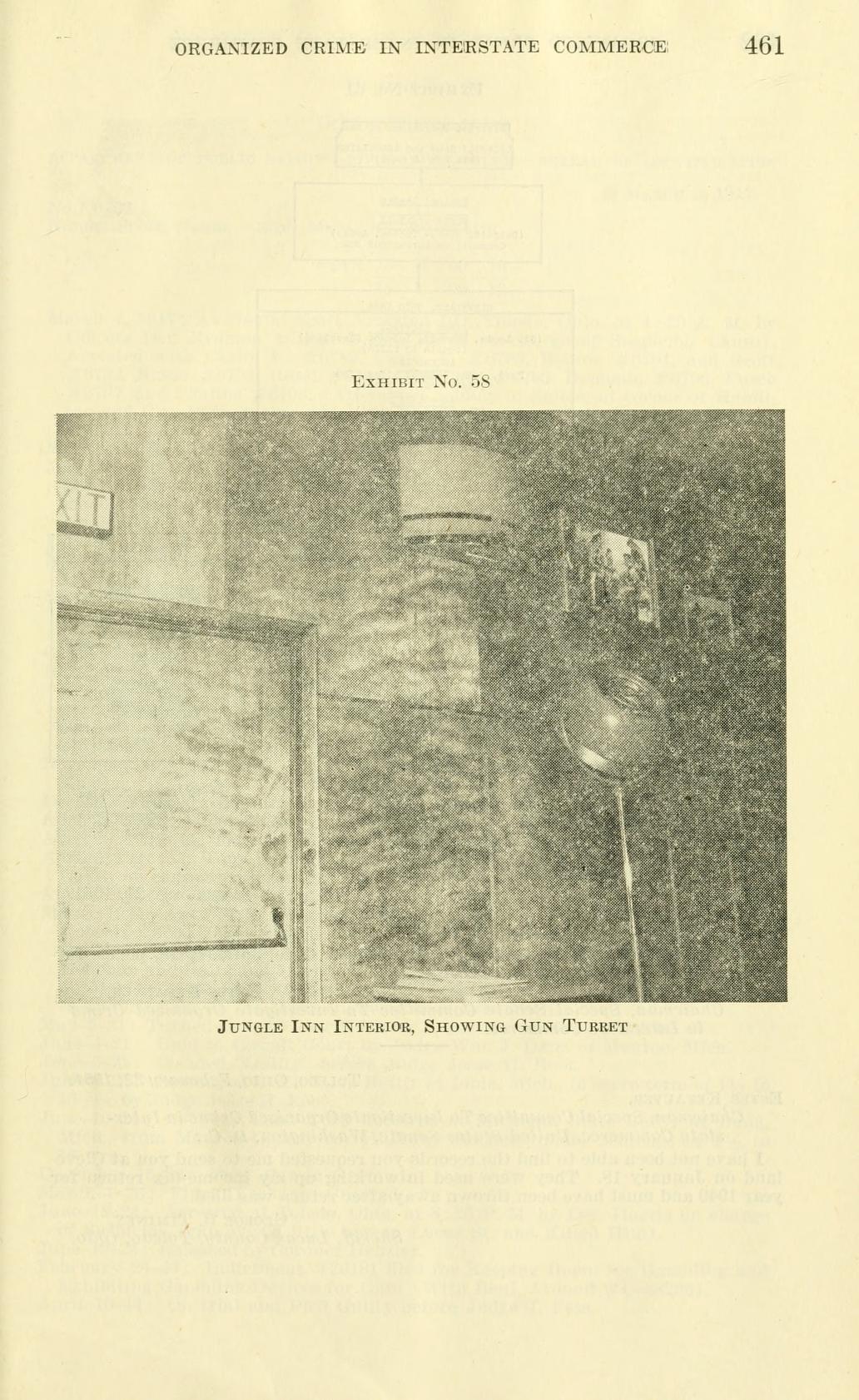 hearingKefauver Part 6, Exhibit 58: "Jungle Inn Interior, Showing Gun Turret"A photograph of the inside of the Jungle Inn showing the gun turret from within the building, identified by Anthony A. Rutkowski on January 18, 1951.
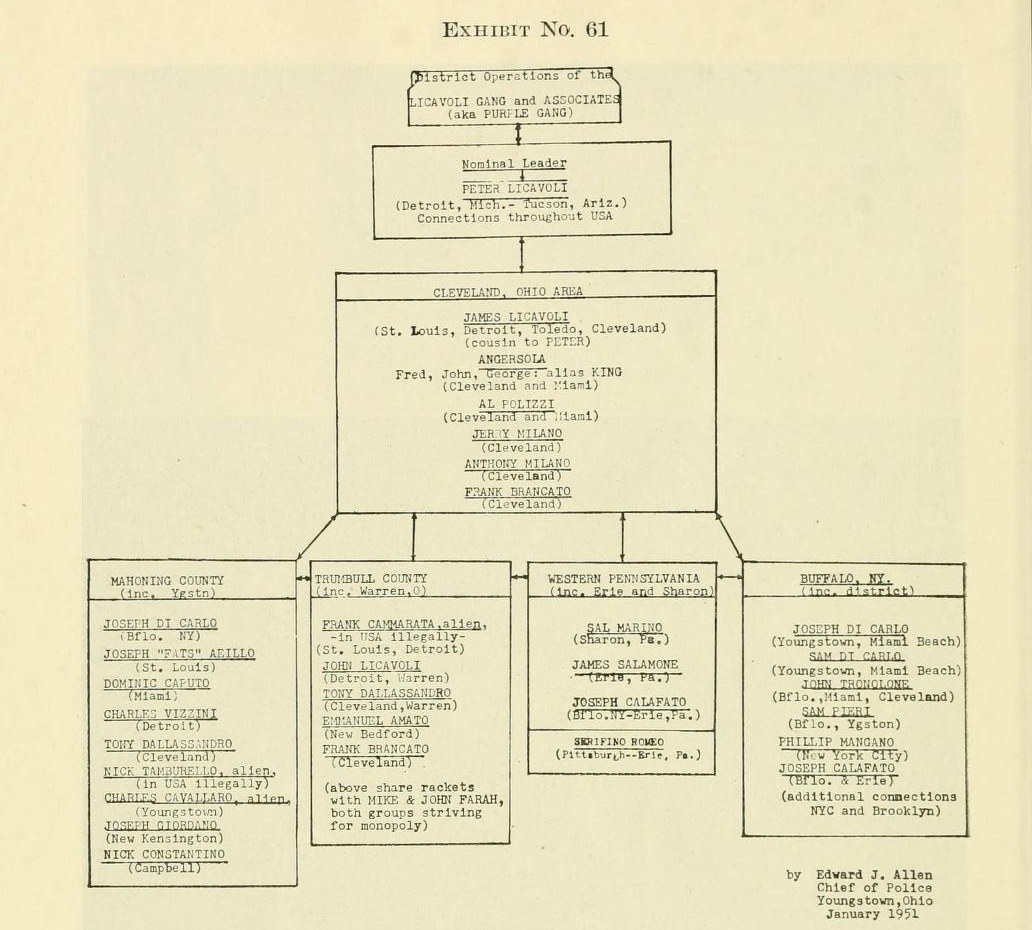 hearingKefauver Part 6, Exhibit 61: Youngstown police chart, "District Operations of the Licavoli Gang and Associates"A chart by Edward J. Allen, chief of police of Youngstown, Ohio, dated January 1951, setting out names under a "nominal leader," a Cleveland area and four districts, received with his testimony on January 18, 1951.hearingKefauver Part 7: testimony of Frank C. Bals on the custody and death of Abe Reles (14 February 1951)A retired New York police official who supervised the Murder, Inc. witnesses testified that Abe Reles began to talk in about 1940, that his information led to other witnesses, and gave his account of Reles's fall from a window of the Half Moon Hotel. Pp. 584-590; the Reles passage is on p. 587.hearingKefauver Part 7: further testimony of Frank C. Bals on the police detail guarding Abe Reles (15 March 1951)Recalled in New York, Bals said the detail guarding Reles came directly under him, that he was not present when Reles fell, that Reles was "one of the chief witnesses" in the Murder, Inc. case, and that he refused a request for records about the death and retired. Pp. 1112-1113.hearingKefauver Part 7: Gerald Catena on a trip to Havana with Willie Moretti and a dinner with Luciano (14 February 1951, pp. 650-652, 659)Catena testified that he went to Havana with Willie Moretti 'about 3 years ago,' had dinner with Luciano one night downstairs at the hotel he named as the 'Nationale,' that a man he called 'Vince,' Mangano, was there, and that Meyer Lansky was not.hearingKefauver Part 7: Frank Costello on the Louisiana Mint Co. and slot machines (New York, 13 March 1951), pp. 915-927Asked what the Louisiana Mint Co. was, Costello answered "It was a mint machine, known as a slot machine," and agreed with counsel that Governor Huey Long had asked him to go into the slot-machine business in New Orleans.hearingKefauver Part 7: Joe Adonis declines to answer questions about Luciano in Havana and the Jockey Club (12 December 1950, pp. 291-292, 302)Counsel asked Joseph Doto, called Joe Adonis, whether he ever saw Luciano in Havana, what they talked about, and whether he had a gambling business at the Jockey Club in Havana. He declined each time on the ground that the answer might tend to incriminate him.hearingKefauver Part 7: testimony of Virginia Hill Hauser (15 March 1951)Sworn testimony in New York of Mrs. Virginia Hill Hauser of Spokane, Washington. She gave her birth year as 1916, said Joe Epstein had held her money for years, said her spending came from gifts from Mexican friends she would not name, and said Benjamin Siegel gave her money and paid the down payment on a house in Florida. Pp. 1144-1170.hearingKefauver Part 7: Meyer Lansky on Havana, the race track, the 'Nationale' casino and Luciano (14 February 1951, pp. 609-614)In a New York executive session Lansky told the committee he was in business in Havana from 'the late years of 1937' with 'the race track, and a casino, Nationale,' that the operation stopped when the war broke out, and that his meetings with Luciano in Havana were 'Purely social.'hearingKefauver Part 7: Willie Moretti on visiting Luciano in Cuba with Vincent Mangano and Gerry Catena (13 December 1950, p. 338)Asked where he had seen Luciano in the last five years, William Moretti answered 'Cuba,' said he went there to see him with 'Vincent Mangano and Gerry Catena' and stayed 'About 5 or 6 days,' and said he gave Luciano no money.hearingKefauver Part 7: Henry Silver and John W. Barker on working at the Jockey Club in Havana (11 October 1950, pp. 42-43, 54-55)Two gambling-house employees from New Jersey told the committee about earlier work at the Jockey Club in Havana: Silver about 1939, after hearing 'that there were Americans running it,' and Barker around 1933, when he was in charge of the roulette wheels.hearingKefauver Part 8: testimony of Mrs. John J. (Viola) Grosch, New Orleans (26 January 1951)The former wife of the Orleans Parish criminal sheriff testified that she bought a locked box at his direction, kept it in the attic of their house, and that when she left there was $150,000 in it. Pp. 247-258.hearingKefauver Part 8: testimony of J. E. Regan, Western Union, on Continental Press terminals in New Orleans (25 January 1951), pp. 67-77Western Union's New Orleans representative testified that "there are three terminal points for Continental Press in the New Orleans area," one near the Fair Grounds that worked only during the race meet, and that the Daily Sports News's leased circuits were signed for by the Fogartys.
 hearingKefauver Committee hearings, Part 1: Florida (1950)Printed hearings of the Senate Special Committee to Investigate Organized Crime in Interstate Commerce, Part 1, Florida: sessions in Miami and Washington, May to September 1950.hearingKefauver Committee, testimony of Morris Dalitz and Samuel Tucker (28 February 1951)Testimony taken at the Federal Building, Los Angeles, on February 28, 1951 (Part 10, pp. 907-935): Morris Dalitz's account of the Desert Inn's ownership, a crime commission summary read to him, and Samuel Tucker's description of how the Cleveland group came into the project.hearingKefauver Committee, Las Vegas session (15 November 1950)The printed record of the Special Committee's Las Vegas session of November 15, 1950 (Part 10, pp. 1-104): testimony on the race-wire service, the Flamingo Hotel's ownership, the Desert Inn and Benjamin Siegel, by Nevada officials, Louis Wiener, Wilbur Clark and Moe Sedway.
 hearingKefauver Committee hearings, Part 10: Nevada-California (1950–1951)Printed hearings of the Senate Special Committee to Investigate Organized Crime in Interstate Commerce, Part 10, Nevada-California: sessions in Las Vegas, Los Angeles, San Francisco, and Washington, November 1950 to March 1951.
 hearingKefauver Committee hearings, Part 11: Pennsylvania (1950–1951)Printed hearings of the Senate Special Committee to Investigate Organized Crime in Interstate Commerce, Part 11, Pennsylvania: sessions in Philadelphia and Washington, October 1950 to February 1951.hearingTestimony of Harry J. Anslinger, Commissioner of Narcotics, 27 March 1951 (Kefauver Committee, Part 12, pp. 662–668)The Commissioner of Narcotics tells the Kefauver Committee that heroin traffic "is all interstate because it must originate abroad," that about 200 of a list of 800 hoodlums he gave the committee have narcotic records, and that his Bureau has 200 men.
 hearingKefauver Committee hearings, Part 12: Treasury, Justice, and miscellaneous witnesses (1950–1951)Printed hearings of the Senate Special Committee to Investigate Organized Crime in Interstate Commerce, Part 12, Treasury, Justice, and miscellaneous witnesses: sessions in Washington, July 1950 to March 1951.
 hearingKefauver Committee hearings, Part 13: Miscellaneous witnesses (1951)Printed hearings of the Senate Special Committee to Investigate Organized Crime in Interstate Commerce, Part 13, Miscellaneous witnesses: sessions in Washington, May to August 1951.
 hearingKefauver Committee hearings, Part 14: Narcotics (1951)Printed hearings of the Senate Special Committee to Investigate Organized Crime in Interstate Commerce, Part 14, Narcotics: sessions in Jessup, Lexington, and Washington, May to June 1951.hearingTestimony of Charles Siragusa, Bureau of Narcotics agent, 27 June 1951 (Kefauver Committee, Part 14, pp. 343–357)A Federal Bureau of Narcotics agent tells the Kefauver Committee of his spring 1951 work with the Italian police on Lucky Luciano and a heroin arrest at the Rome airport, and answers "Yes, sir" when asked whether narcotics distribution and smuggling is "the principal source of income of the Mafia."
 hearingKefauver Committee hearings, Part 15: Kentucky (1951)Printed hearings of the Senate Special Committee to Investigate Organized Crime in Interstate Commerce, Part 15, Kentucky: sessions in Washington, June to July 1951.
 hearingKefauver Committee hearings, Part 16: Florida (1951)Printed hearings of the Senate Special Committee to Investigate Organized Crime in Interstate Commerce, Part 16, Florida: sessions in Miami, June 1951.
 hearingKefauver Committee hearings, Part 17: Maryland and District of Columbia (1951)Printed hearings of the Senate Special Committee to Investigate Organized Crime in Interstate Commerce, Part 17, Maryland and District of Columbia: sessions in Washington, July to August 1951.
 hearingKefauver Committee hearings, Part 18: New York and New Jersey (1951)Printed hearings of the Senate Special Committee to Investigate Organized Crime in Interstate Commerce, Part 18, New York and New Jersey: sessions in Atlantic City, Newark, and Washington, July to August 1951.
 hearingKefauver Committee hearings, Part 19: Pennsylvania (1951)Printed hearings of the Senate Special Committee to Investigate Organized Crime in Interstate Commerce, Part 19, Pennsylvania: sessions in Washington, June to August 1951.
 hearingKefauver Committee hearings, Part 1A: Florida (1950–1951)Printed hearings of the Senate Special Committee to Investigate Organized Crime in Interstate Commerce, Part 1A, Florida: sessions in Washington and Tampa, November 1950 to February 1951.
 hearingKefauver Committee hearings, Part 2: Federal agencies and other witnesses (1950)Printed hearings of the Senate Special Committee to Investigate Organized Crime in Interstate Commerce, Part 2, Federal agencies and other witnesses: sessions in Washington, June to August 1950.
 hearingKefauver Committee hearings, Part 3: Black market operations (1950)Printed hearings of the Senate Special Committee to Investigate Organized Crime in Interstate Commerce, Part 3, Black market operations: sessions in Washington, August 1950.
 hearingKefauver Committee hearings, Part 4: Missouri (1950)Printed hearings of the Senate Special Committee to Investigate Organized Crime in Interstate Commerce, Part 4, Missouri: sessions in Washington and Kansas City, July to September 1950.
 hearingKefauver Committee hearings, Part 4A: Missouri (1950–1951)Printed hearings of the Senate Special Committee to Investigate Organized Crime in Interstate Commerce, Part 4A, Missouri: sessions in Washington, St. Louis, and Kansas City, June 1950 to February 1951.hearingKefauver Committee, Chicago: testimony of Lt. George Butler of the Dallas police (evening of 19 December 1950)A Dallas detective lieutenant read the committee his notes of 1946 conversations with a man who claimed to represent a syndicate. Among the man's claims was that "the Jones boys," policy operators in Chicago, had paid $200,000 for "the snatch." The line is third-hand hearsay.hearingKefauver Committee, Chicago: testimony of Edward P. Jones (evening of 19 December 1950)Edward P. Jones, living in Mexico City, told the committee he shared in the profits of the Maine-Idaho Club policy wheel, agreed that he had been convicted of an income-tax violation on income from the wheel, and described being kidnapped near Forty-third Street and South Parkway and held blindfolded for almost a week.hearingKefauver Committee, Part 5, Exhibits 60 to 62: the Jones brothers' and Idaho-Maine Club's earnings and the Chicago policy-wheel chartAppendix exhibits printed at pages 1407 to 1409 of Part 5: a staff table of the gross and net earnings of the Jones Bros. and the Idaho and Maine Club from 1939 to June 1950, taken from records Theodore Roe furnished; a further table; and the staff chart of Chicago policy wheels, 1945 to 1950.
 hearingKefauver Committee hearings, Part 5: Illinois (1950–1951)Printed hearings of the Senate Special Committee to Investigate Organized Crime in Interstate Commerce, Part 5, Illinois: testimony taken from September 1950 to January 1951, including Paul DeLucia, Louis Campagna, Anthony J. Accardo, and Joseph Aiuppa.hearingKefauver Committee, Chicago: testimony of Theodore Roe (18 October 1950)Theodore Roe told the committee in Chicago that his business was "Operating a policy wheel," that he had been a partner for about ten years with the Jones brothers, then living in Mexico, and that he had started working for them about twenty-two or twenty-three years earlier.hearingKefauver Committee, Chicago: Theodore Roe's second testimony (evening of 19 December 1950)Recalled in December, Roe named his partners in the Maine-Idaho-Ohio policy wheel, said the earlier owners were the Jones brothers Edward, McKissick and George, and described the kidnapping of Edward Jones, which he dated to 1946, and a ransom of $100,000 paid by George Jones.hearingKefauver Committee, Cleveland: testimony of Youngstown Police Chief Edward J. Allen (January 1951)Youngstown's police chief, Edward J. Allen, described a 1945-1948 bookmaking racket in his city, linked it to Detroit, St. Louis and Cleveland figures including Pete and James Licavoli, and introduced a chart he had drawn for the committee (exhibit 61).hearingKefauver Committee, Cleveland: testimony of Anthony Milano (19 January 1951)Anthony Milano told the committee that his brother Frank Milano was living in Mexico, that he had served about fifty-four months at Leavenworth on a counterfeiting conviction of 1911-1912, and that he ran the Brotherhood Loan Co. and the Mayfield Importing Co.; asked about the Mafia he said, 'I don't know what Mafia mean.'
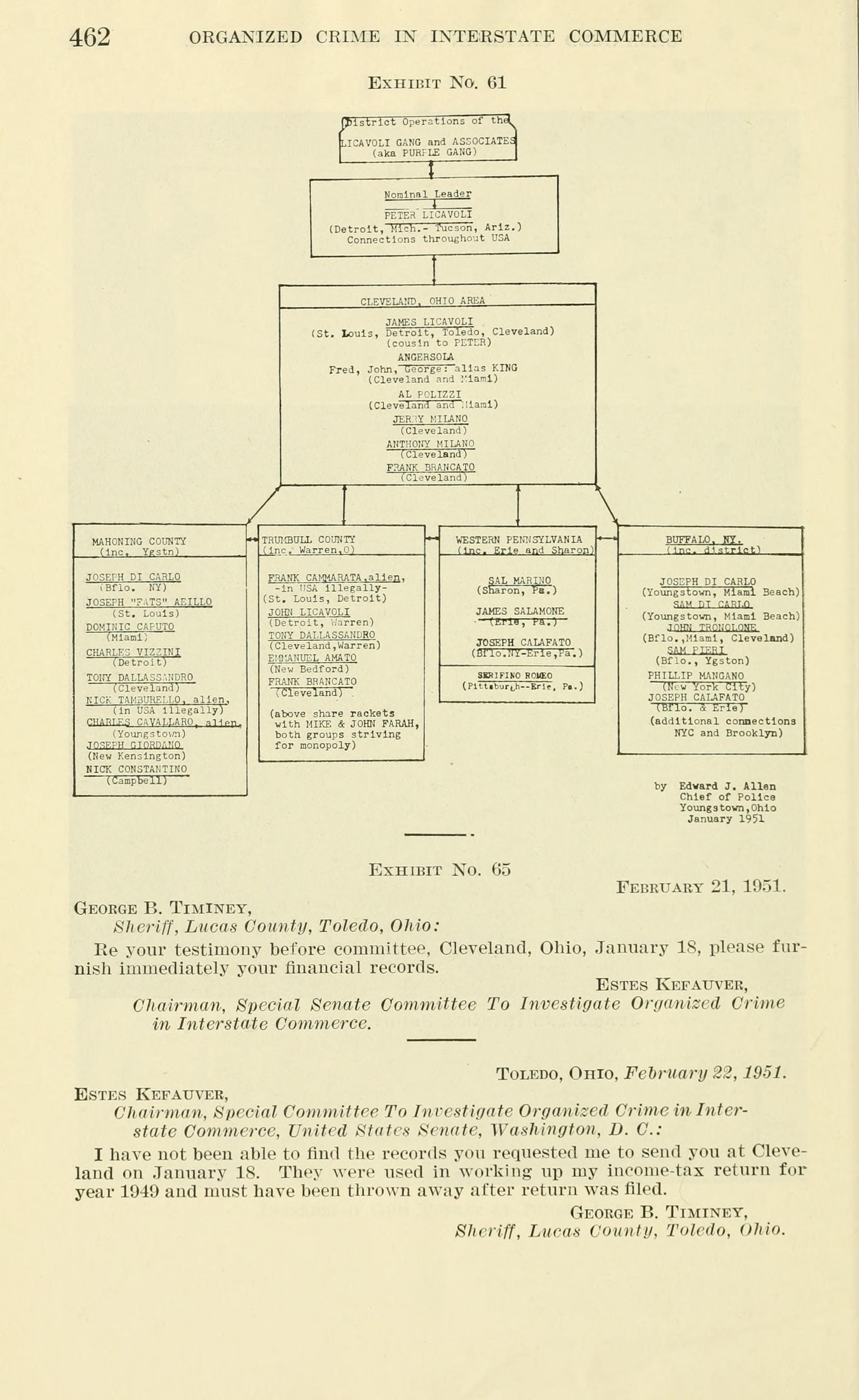 hearingKefauver Committee exhibit 61: Youngstown police chief's chart of the 'Licavoli gang and associates' (January 1951)A chart drawn by Youngstown Police Chief Edward J. Allen for the committee and printed as exhibit 61, headed 'District Operations of the Licavoli Gang and Associates (aka Purple Gang)', with Peter Licavoli as 'Nominal Leader' above a Cleveland box and four regional boxes.
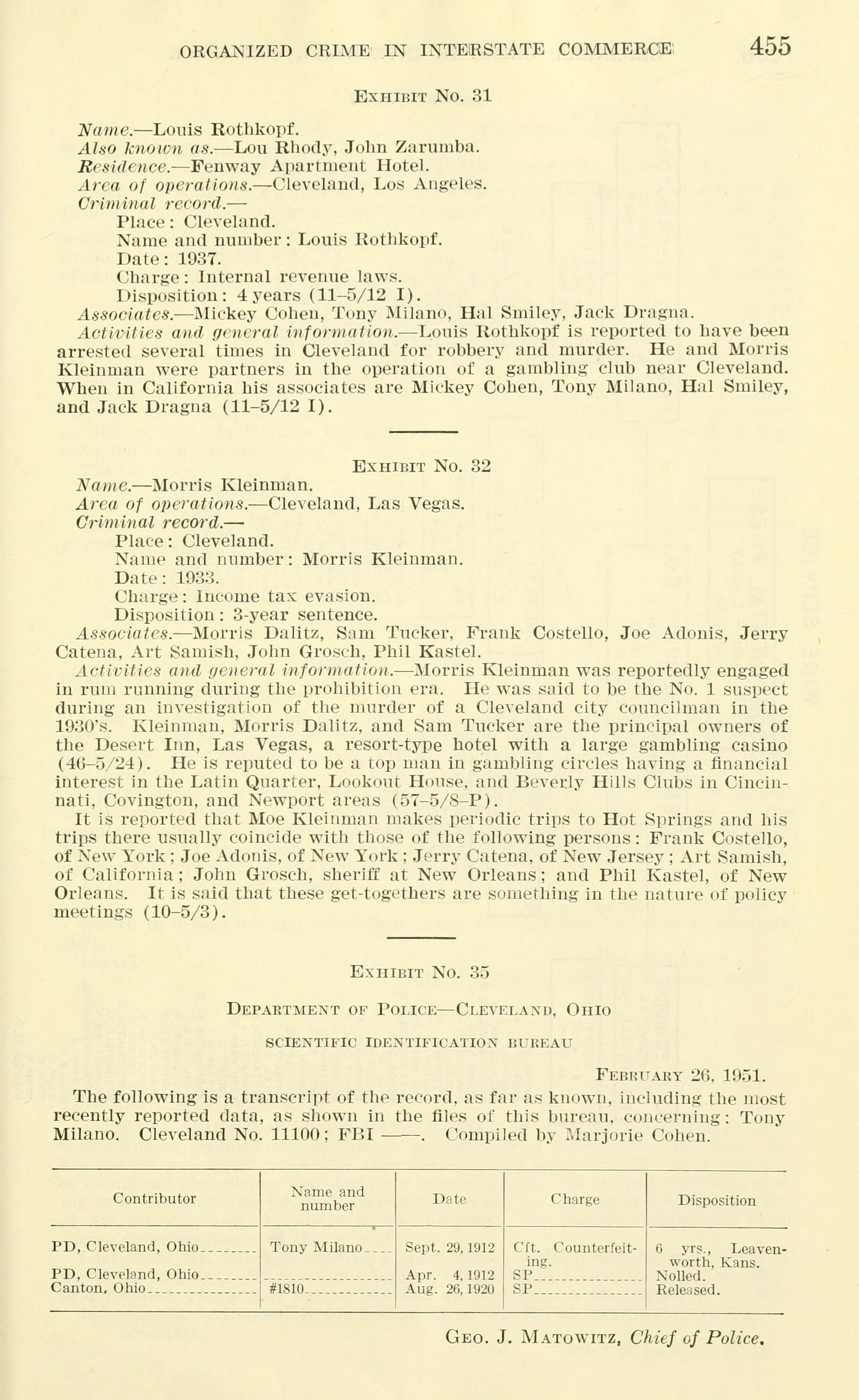 hearingKefauver Committee exhibits 31 and 32: records of Louis Rothkopf and Morris Kleinman (January 1951)Two record summaries placed in evidence during Alvin Sutton's testimony and printed on page 455: exhibit 31 for Louis Rothkopf, 'also known as Lou Rhody, John Zarumba', with a 1937 internal revenue case; exhibit 32 for Morris Kleinman, with a 1933 income tax evasion sentence.hearingKefauver Committee, Cleveland: testimony of accountant Alvin E. Giesey (January 1951)Cleveland accountant Alvin E. Giesey, whose firm prepared returns for Morris Kleinman, Moe Dalitz, Louis Rothkopf, Sam Tucker and others, testified about their joint holdings, including two-thirds of 10,000 shares of the Detroit Steel Corp.hearingKefauver Committee, Cleveland: testimony of James Licavoli (19 January 1951)James Licavoli told the committee he had been arrested 'many times', had 'copped a plea on extortion' in Toledo with a one-to-five-year term and a 1946 parole, and that Pete and Thomas Licavoli were his first cousins; he refused to answer questions about his business.hearingKefauver Committee, Cleveland: testimony of Governor Frank J. Lausche (January 1951)Ohio Governor Frank J. Lausche described the gambling clubs 'run by Cleveland men' that moved out of Cuyahoga County, among them the Mounds Club, Pettibone Club, Jungle Inn and Colony Club, and the state action he took to close them.hearingKefauver Committee, Cleveland: testimony of Max Marmorstein (January 1951)Cleveland real estate operator Max Marmorstein appeared to answer testimony given at the committee's Miami hearing about his office in the Ninth-Chester Building, and said he had lent Thomas McGinty $25,000 in 1949 for a hotel McGinty said he was building in Las Vegas.hearingKefauver Committee, Cleveland: testimony of Arthur B. McBride (January 1951)Arthur B. McBride appeared voluntarily with Washington counsel, at the committee's request, on the books and records of the Continental Press wire service; his counsel stated that he had never been engaged in any illegal business.hearingKefauver Committee, Cleveland: testimony of Thomas J. McGinty (January 1951)Thomas J. McGinty told the committee he had served six months for conspiracy under the National Prohibition Act, had been a partner in the Mounds Club, and was a partner in the Desert Inn at Las Vegas with Wilbur Clark, Moe Dalitz, Morris Kleinman and Sam Tucker.
 hearingKefauver Committee hearings, Part 6: Ohio-Kentucky (1951)Printed hearings of the Senate Special Committee to Investigate Organized Crime in Interstate Commerce, Part 6, Ohio-Kentucky: sessions in Cleveland and Washington, January to February 1951.hearingKefauver Committee: testimony of Alfred Polizzi (January and February 1951)Alfred Polizzi of Coral Gables, Florida, told the committee he ran a construction firm and had left Cleveland in 1945, declined to testify about earlier years, and denied the accusations that he belonged to the Mafia or the 'Mayfield Road gang'.hearingKefauver Committee, Cleveland: testimony of Public Safety Director Alvin G. Sutton (January 1951)Cleveland's Director of Public Safety, Alvin G. Sutton, gave the committee his account of the city's Prohibition bootleggers, naming Morris Kleinman, Lou Rothkopf, Moe Dalitz, Sam Tucker and Maxie Diamond, their move into gambling in Kentucky and Las Vegas, and the later numbers rackets.hearingKefauver Committee, New York: testimony of Chief Magistrate John M. Murtagh on the 1944 'black book' (March 1951)John M. Murtagh, Chief Magistrate of New York City and former Commissioner of Investigation, told the committee of a raid on "a little grocery store in Harlem" where a policy operator kept books, and said his later analysis of the seized book showed payments to 111 police officers, though no officer went to jail.
 hearingKefauver Committee hearings, Part 7: New York-New Jersey (1950–1951)Printed hearings of the Senate Special Committee to Investigate Organized Crime in Interstate Commerce, Part 7, New York-New Jersey: sessions in Washington and New York, July 1950 to March 1951.
 hearingKefauver Committee hearings, Part 8: Louisiana (1951)Printed hearings of the Senate Special Committee to Investigate Organized Crime in Interstate Commerce, Part 8, Louisiana: sessions in New Orleans and Washington, January to February 1951.hearingKefauver Committee, Detroit: testimony of Angelo Meli (9 February 1951)Angelo Meli told the committee he lived on rents and a farm and had been in the jukebox business until 1943; asked whether a police record read to him was correct, he answered 'It must be.'
 hearingKefauver Committee hearings, Part 9: Michigan (1951)Printed hearings of the Senate Special Committee to Investigate Organized Crime in Interstate Commerce, Part 9, Michigan: sessions in Detroit and Washington, February 1951.hearingKefauver Committee, Detroit: testimony of Peter Licavoli (8 February 1951)Peter Licavoli, born in St. Louis, declined on self-incrimination grounds to state his occupation or answer about a Detroit police record read into the hearing, and identified Sam Zerilli as his brother-in-law.hearingKefauver Committee, Detroit: Carl Renda and the 1949 dance program (8 February 1951)Questioned about the program of a November 1949 dance he presided over, Carl Renda told committee counsel that Tony Zerilli is related to Joe Zerilli, that he believed Jack Tocco is a son of 'Black Bill' Tocco, and that he did not know who Tony and Bill 'Giacolone' were.hearingKefauver Committee, Detroit: testimony of William Tocco (9 February 1951)William Tocco, with his attorney Walter Schweikart, testified at Detroit about his family, his businesses and the State Products Co., named 'Joe Zerrilli' among its partners, and answered 'Yes' when asked whether he had been a bootlegger during Prohibition.
 hearingSenate Report 1167: return of property held by the crime committee (1952)Senate Report No. 1167, 82d Congress, 2d Session, from the Committee on Interstate and Foreign Commerce, recommending that documents the dissolved Kefauver Committee had borrowed or subpoenaed be returned to their owners.
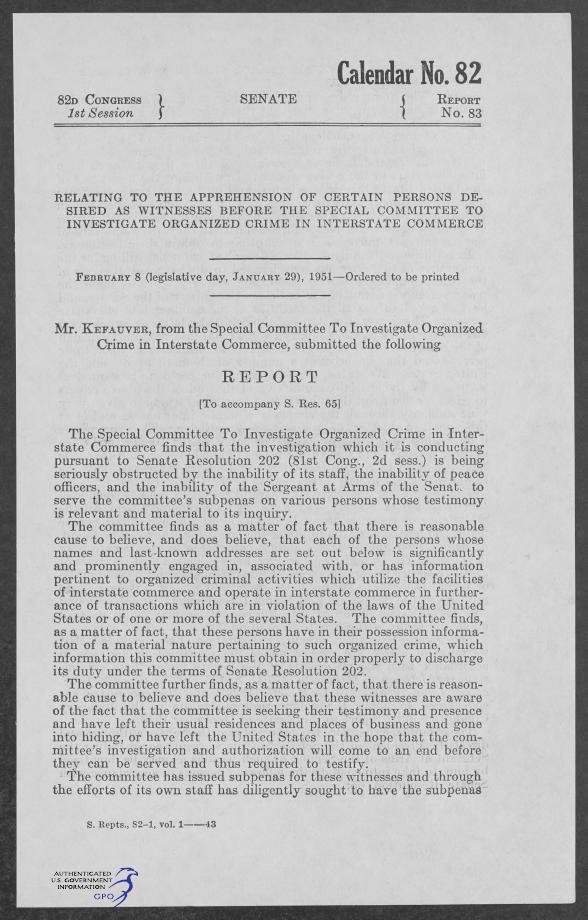 hearingSenate Report 83: warrants for witnesses the committee could not serve (1951)Senate Report No. 83, 82d Congress, in which the Kefauver Committee said it could not serve subpoenas on seventeen named witnesses and asked the Senate to direct the Sergeant at Arms to take them into custody.
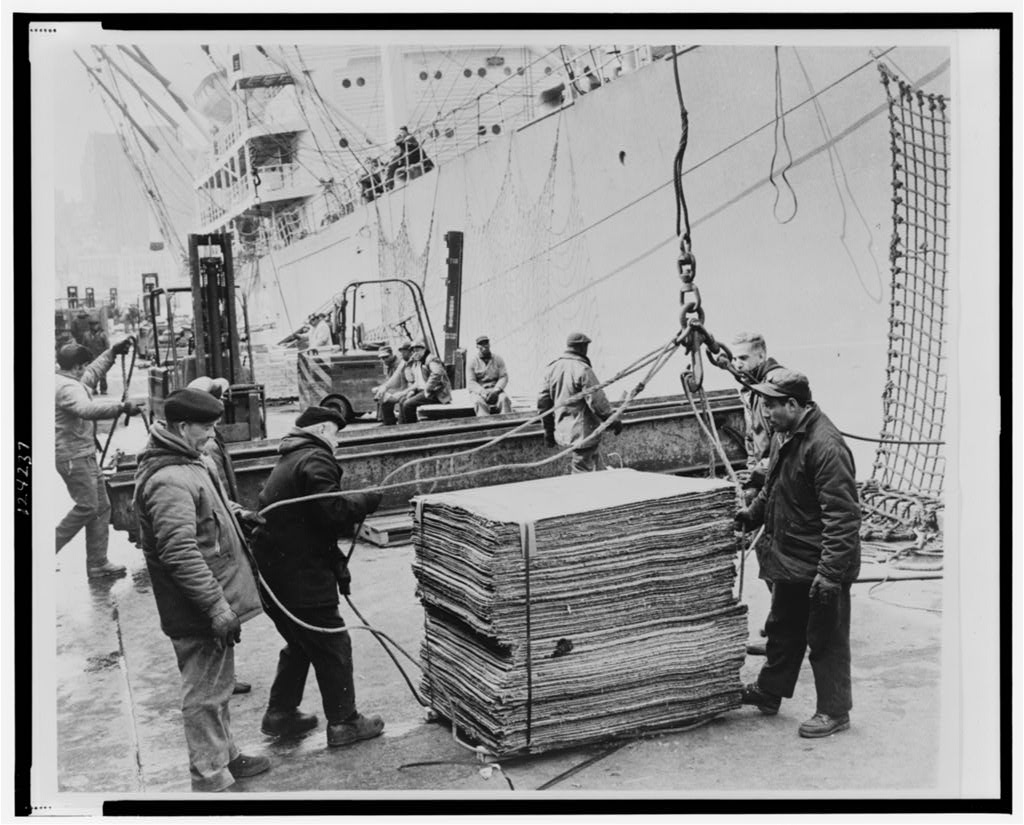 photographLongshoremen loading cargo at the Port Authority Piers, Furman Street, Brooklyn, 1967 (Library of Congress)World Journal Tribune photograph by Matthew Black in the NYWT&S collection of longshoremen loading cargo onto a ship at the Port Authority Piers on Furman Street, Brooklyn, 1967. A copy is stored here.
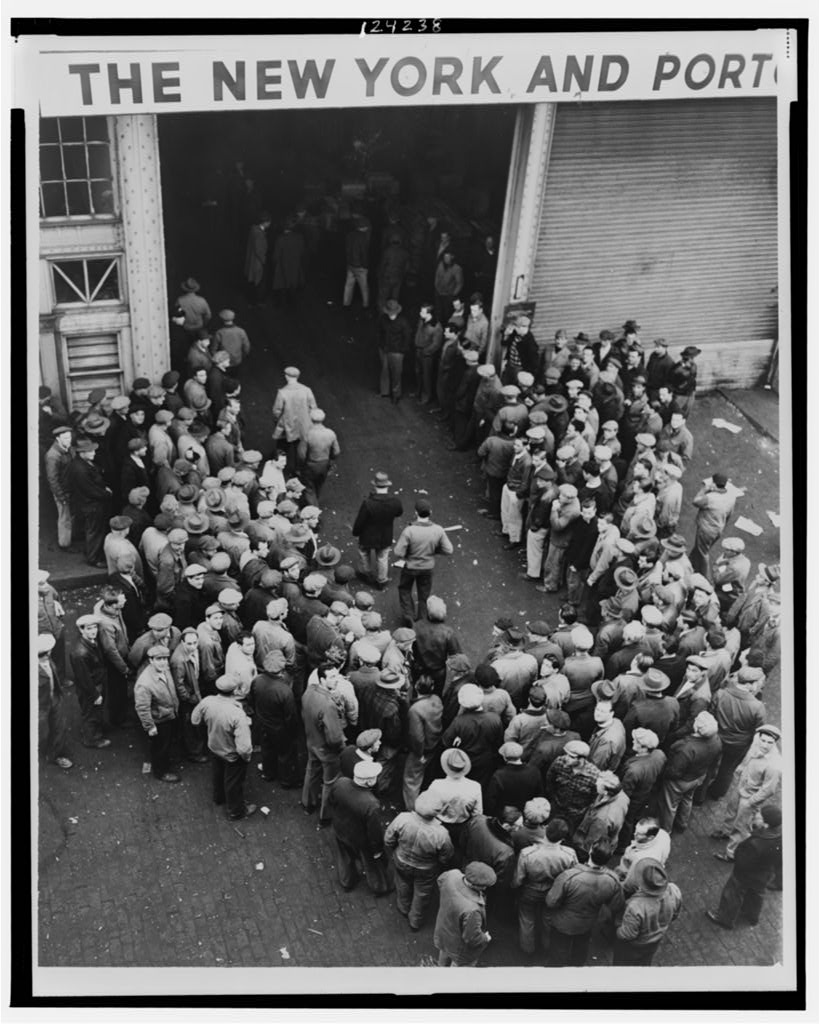 photographLongshoremen's shapeup at Pier 92, North River at 52nd Street, 1948 (Library of Congress)New York World-Telegram and the Sun staff photograph by Al Ravenna: a crowd of longshoremen at Pier 92 for the shapeup. The record names no one. A copy is stored here.
 photographLincoln C. Andrews, Emery C. Ruckner and John Philip Hill outside the Capitol (1932)Library of Congress National Photo Company photograph of three men before testifying to a Senate Judiciary subcommittee at the start of the fight to amend the Volstead law. The date, 1932, carries a question mark.
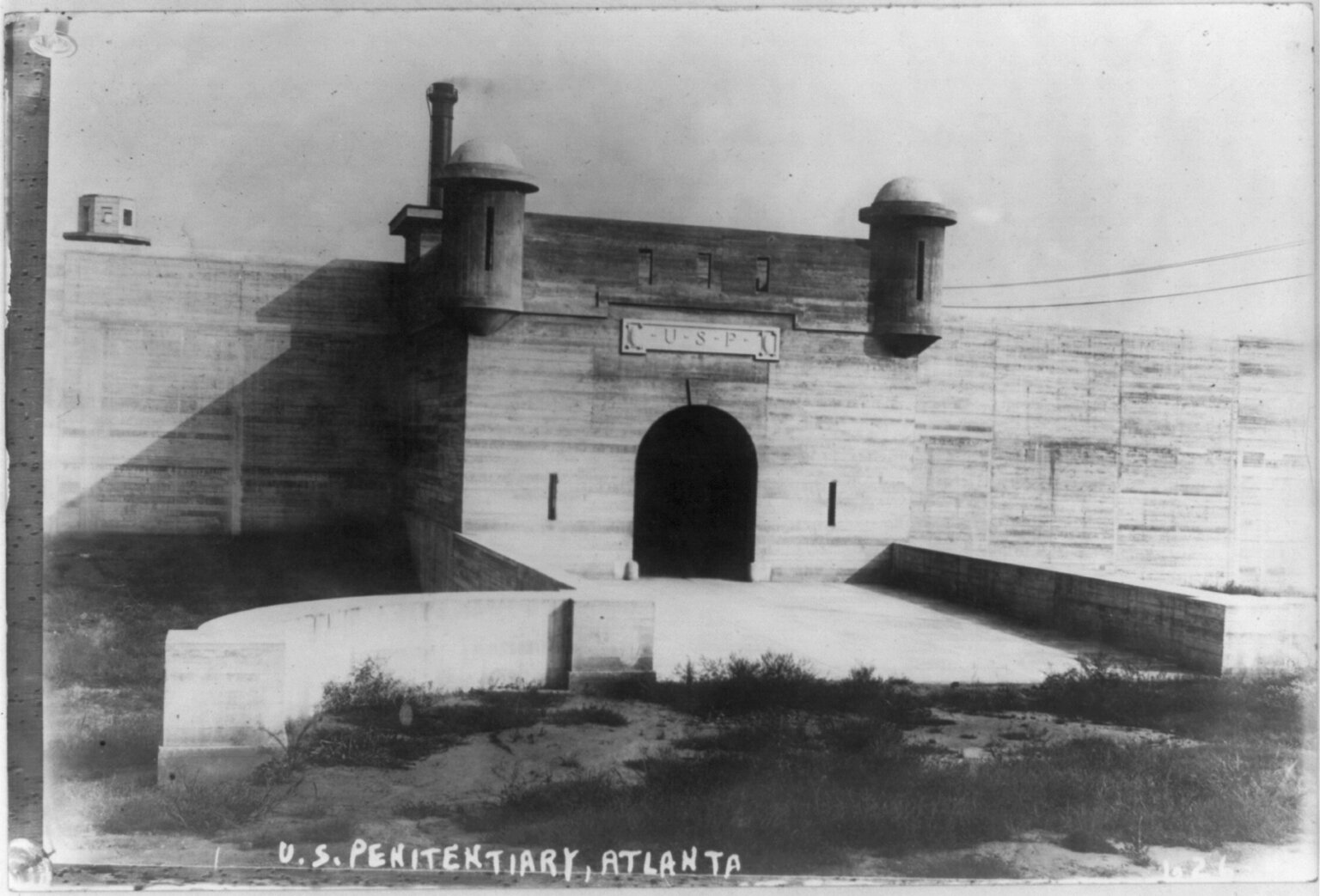 photographEntrance to the federal penitentiary, Atlanta, 1910 (Bain News Service, Library of Congress)Bain News Service photograph dated 1910 of the entrance to the federal penitentiary at Atlanta, a walled gatehouse with corner turrets. Reproduction number LC-USZ62-75939.
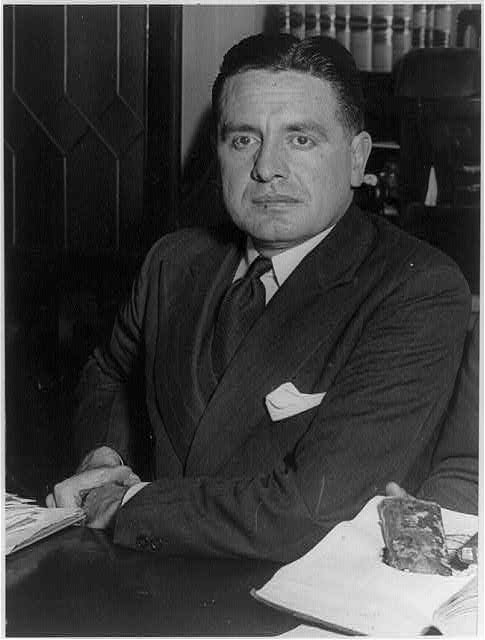 photographHarry Jacob Anslinger at his desk, 1 July 1930 (Library of Congress)Half-length photograph of Harry J. Anslinger seated behind a desk, dated by the Library of Congress to 1 July 1930 from caption-card data. A copy is stored here.
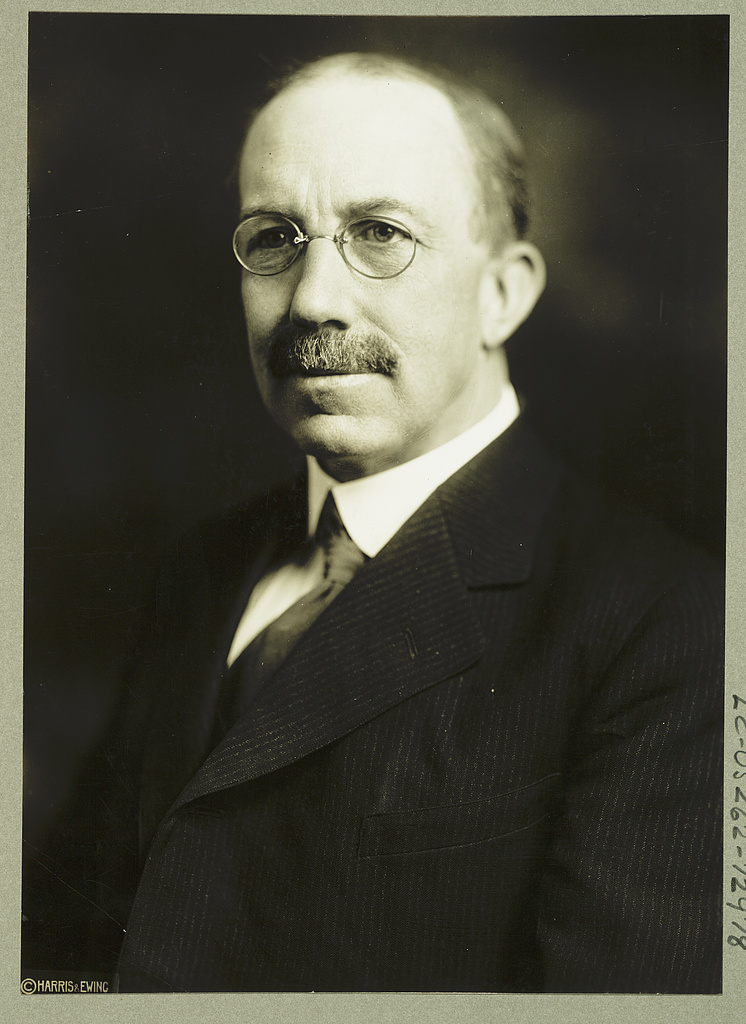 photographWayne Bidwell Wheeler, portrait (5 January 1920)Library of Congress biographical-file portrait of Wayne Bidwell Wheeler, described as an attorney and general counsel for the Anti-Saloon League. A press note on the verso says he was expected to assist "Uncle Sam's agents".
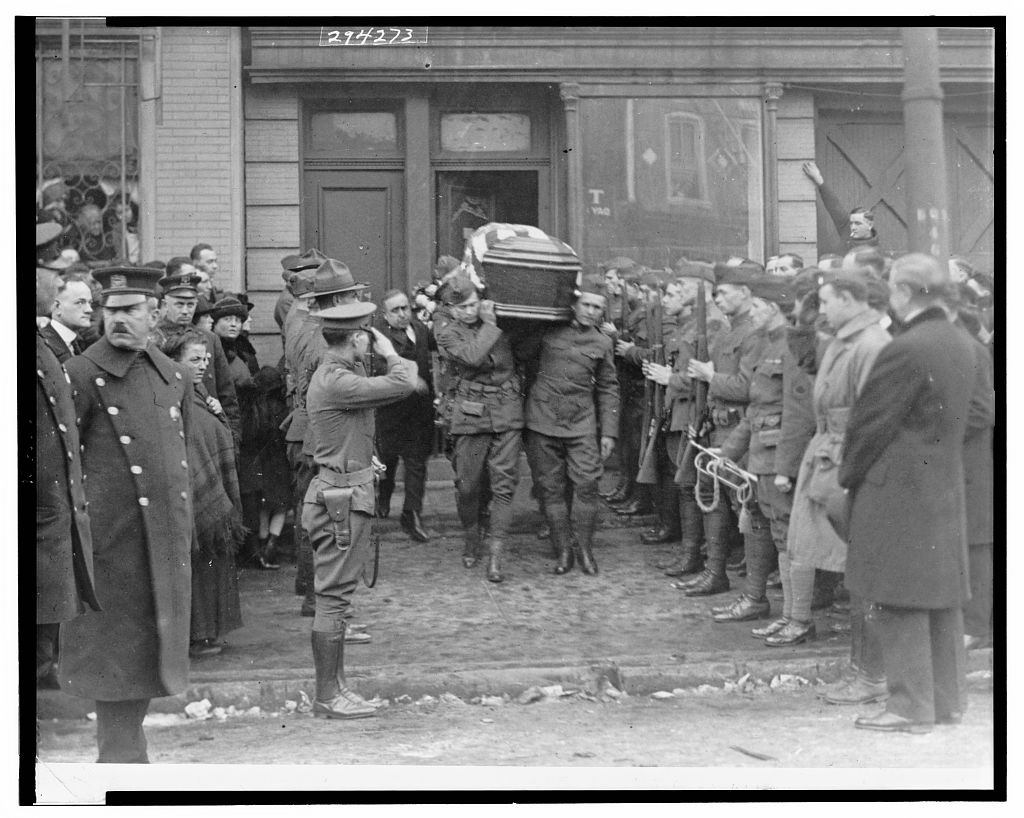 photographFuneral of "Monk" Eastman: coffin passing a guard of honor, December 1920 (Library of Congress)Underwood & Underwood photograph in the NYWT&S collection of soldiers carrying the coffin of "Monk" Eastman past an honor guard and onlookers, December 1920. A copy is stored here.
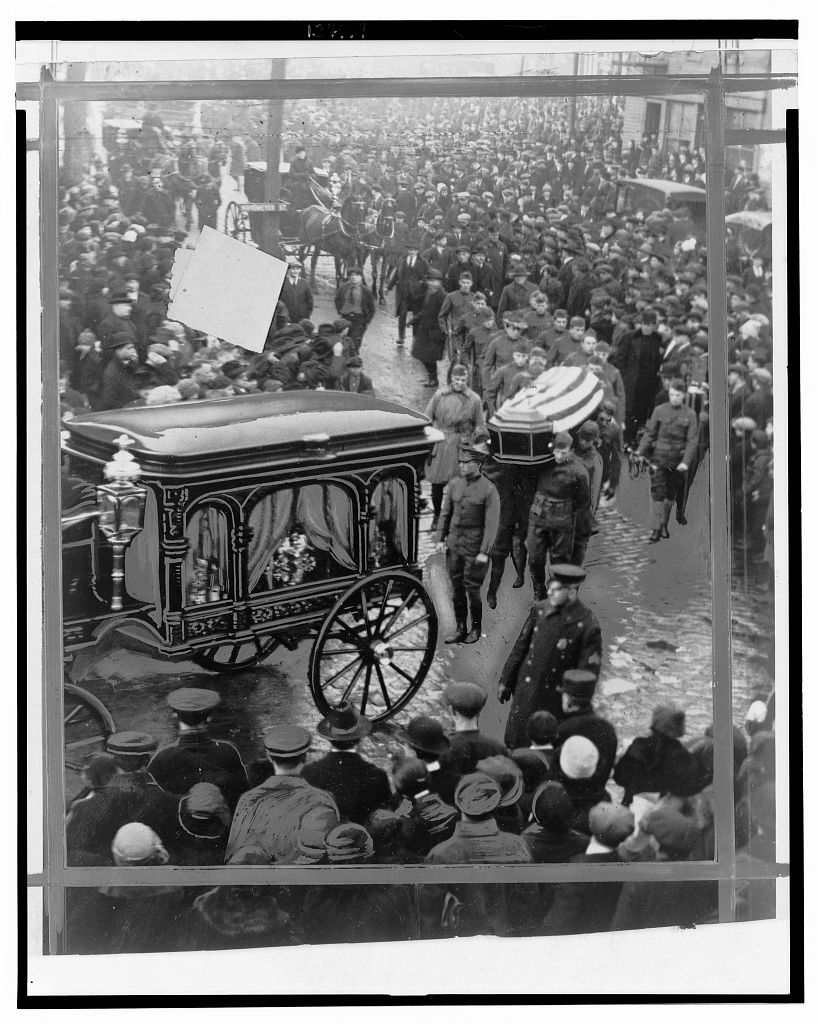 photographFuneral procession of "Monk" Eastman, December 1920 (Library of Congress)Underwood & Underwood photograph of the December 1920 funeral procession of "Monk" Eastman: soldiers carrying the coffin behind a horse-drawn hearse. The Library notes heavy retouching. A copy is stored here.
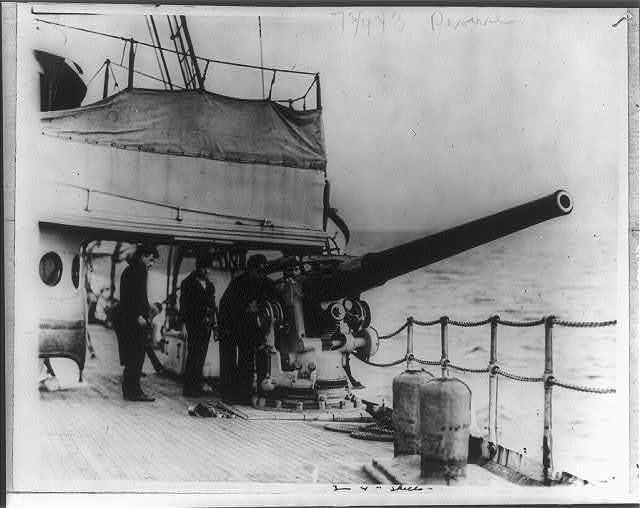 photographFour-inch cannon of the Seneca and four Coast Guardsmen (7 March 1924)Library of Congress photograph of four Coast Guardsmen beside a four-inch cannon. The Library's title calls it the cannon of the "rum runner SENECA", although other items in the series identify the Seneca as a Coast Guard cutter.
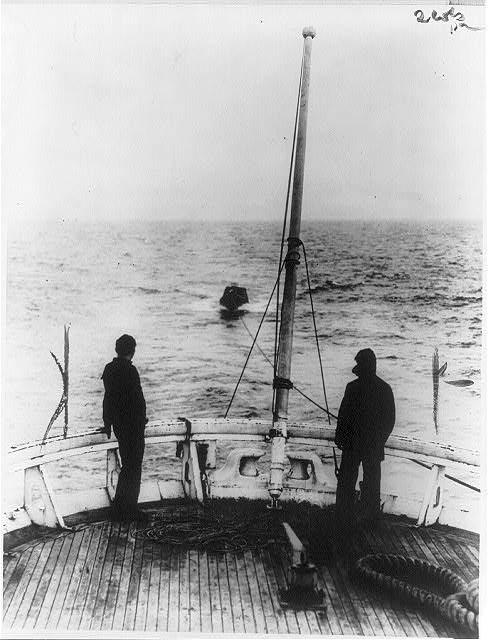 photographCoast Guard cutter Seneca with a captured rum-runner in tow (1924)Library of Congress photograph from the stern of the Coast Guard cutter Seneca during a 1924 chase and capture of a rum-runner, showing the captured vessel in tow. One of a series of Seneca photographs.
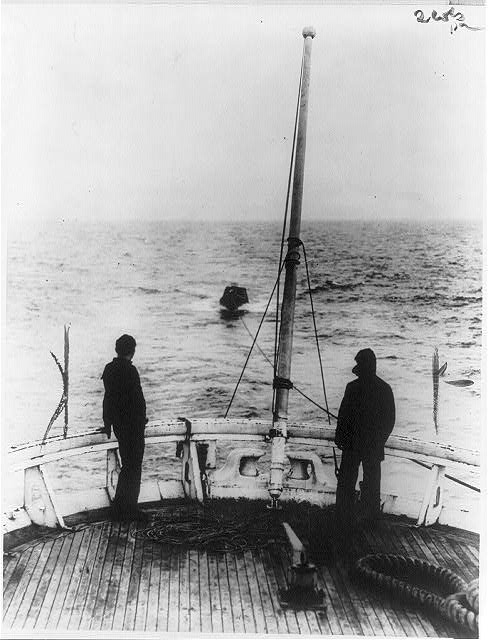 photographCoast Guard cutter Seneca with a captured rum runner in tow, 1924 (Library of Congress)Library of Congress photograph from a series on the Coast Guard cutter Seneca chasing and capturing a rum runner in 1924: view from the stern with the captured boat in tow. A copy is stored here.
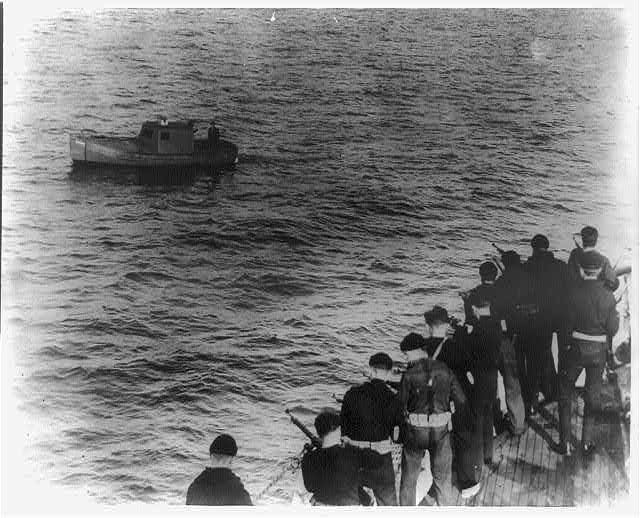 photographCoast Guard cutter Seneca: armed men aiming at a rum runner, 1924 (Library of Congress)Library of Congress photograph from the 1924 Coast Guard cutter Seneca series: armed Coast Guard men aiming at the rum runner. A copy is stored here.
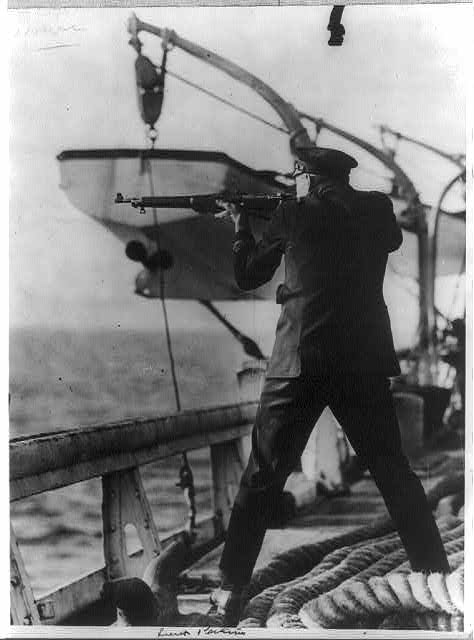 photographLt. L.W. Perkins fires at a fleeing boat from the Coast Guard cutter Seneca (1924)Library of Congress photograph from the series on the Coast Guard cutter Seneca chasing and capturing a rum-runner in 1924. The caption card identifies Lt. L.W. Perkins firing at a fleeing boat.
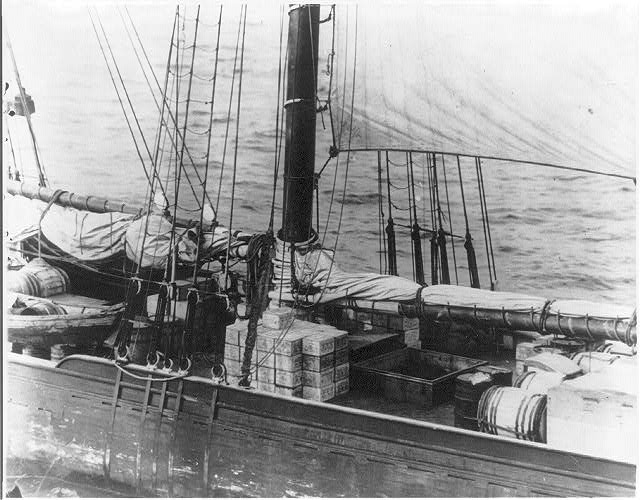 photographCoast Guard cutter Seneca: cases on the deck of a captured boat, 1924 (Library of Congress)Library of Congress photograph from the 1924 Coast Guard cutter Seneca series: view from the cutter of cases on the deck of the captured boat. A copy is stored here.
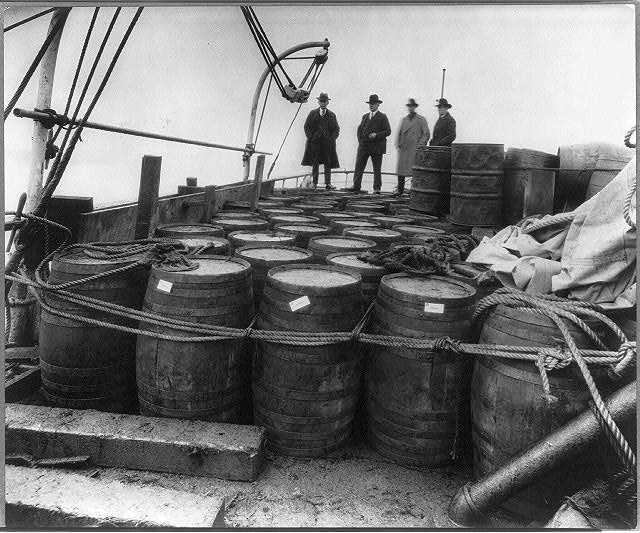 photographProhibition agents examining barrels on a boat captured by the Seneca (1924 or 1925)Library of Congress photograph from the Seneca series showing prohibition agents examining barrels on a captured boat. The title says 1924; the Library dates the print c1925.
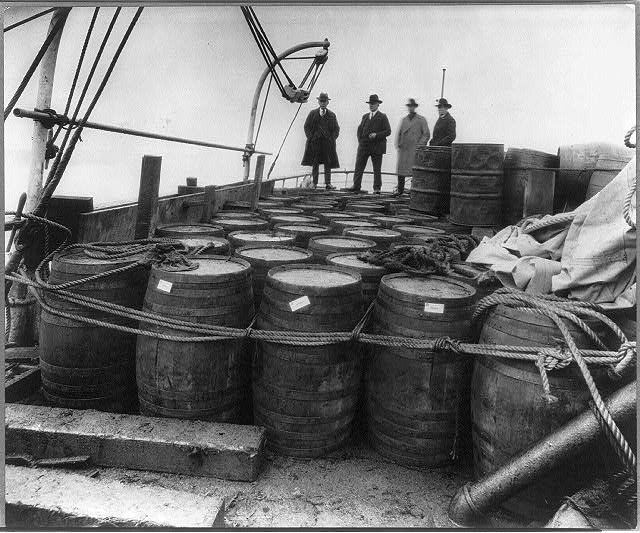 photographCoast Guard cutter Seneca: Prohibition agents examining barrels, 1924-1925 (Library of Congress)Library of Congress photograph from the Coast Guard cutter Seneca series: Prohibition agents examining barrels on the boat. The Library dates the item 1925. A copy is stored here.
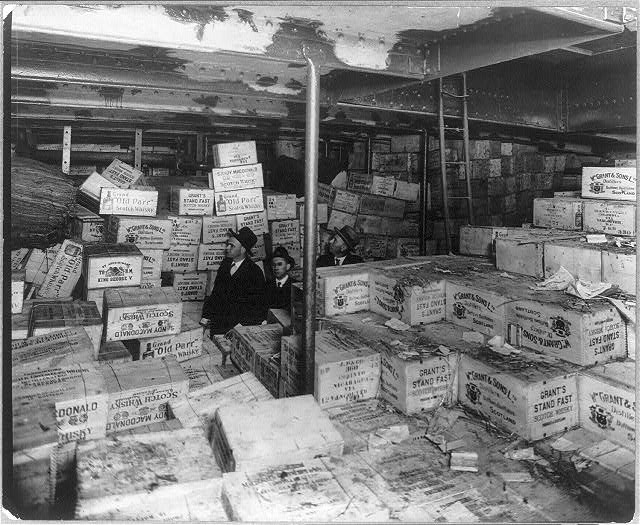 photographProhibition agents among cases of Scotch whiskey in a ship's hold (1924 or 1925)Library of Congress photograph from the Seneca series showing prohibition agents among stacked cases of Scotch whiskey in the hold of a captured ship, according to the caption card.
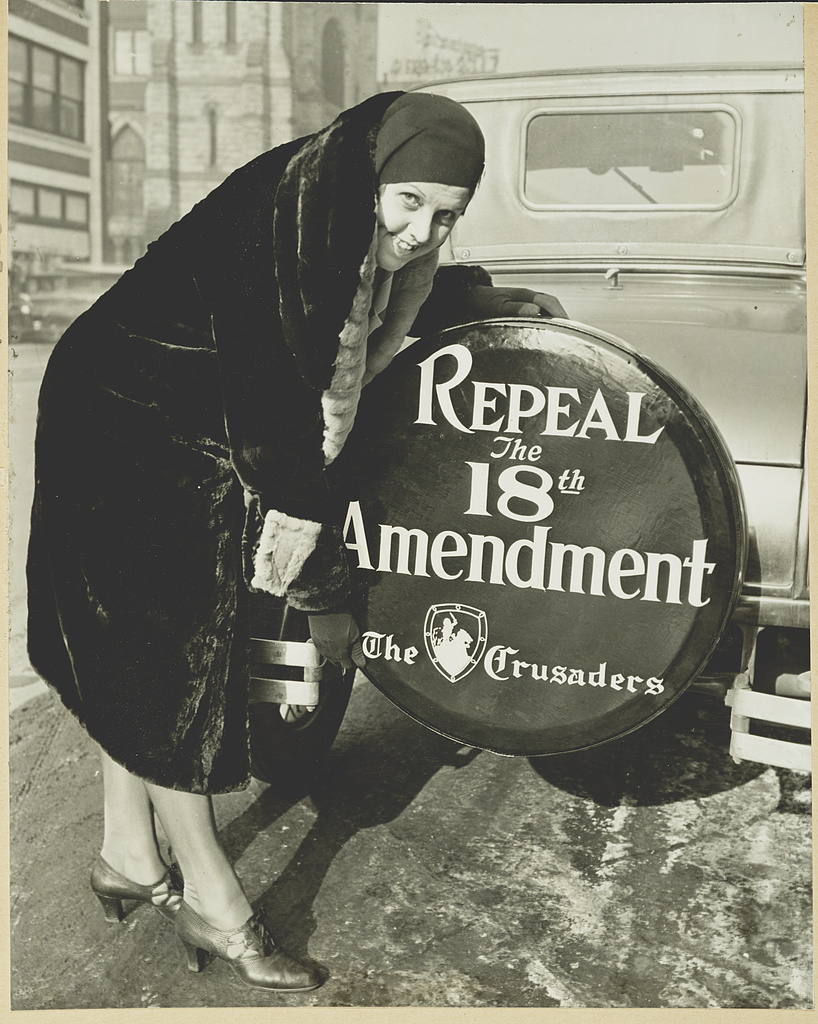 photographElizabeth Thompson of Chicago and a "Repeal the 18th Amendment" tire cover (16 December 1930)Library of Congress Underwood & Underwood photograph of Elizabeth Thompson of Chicago with a tire cover reading "Repeal the 18th Amendment". The caption calls her one of the first members of The Crusaders, an organization formed to overthrow prohibition.
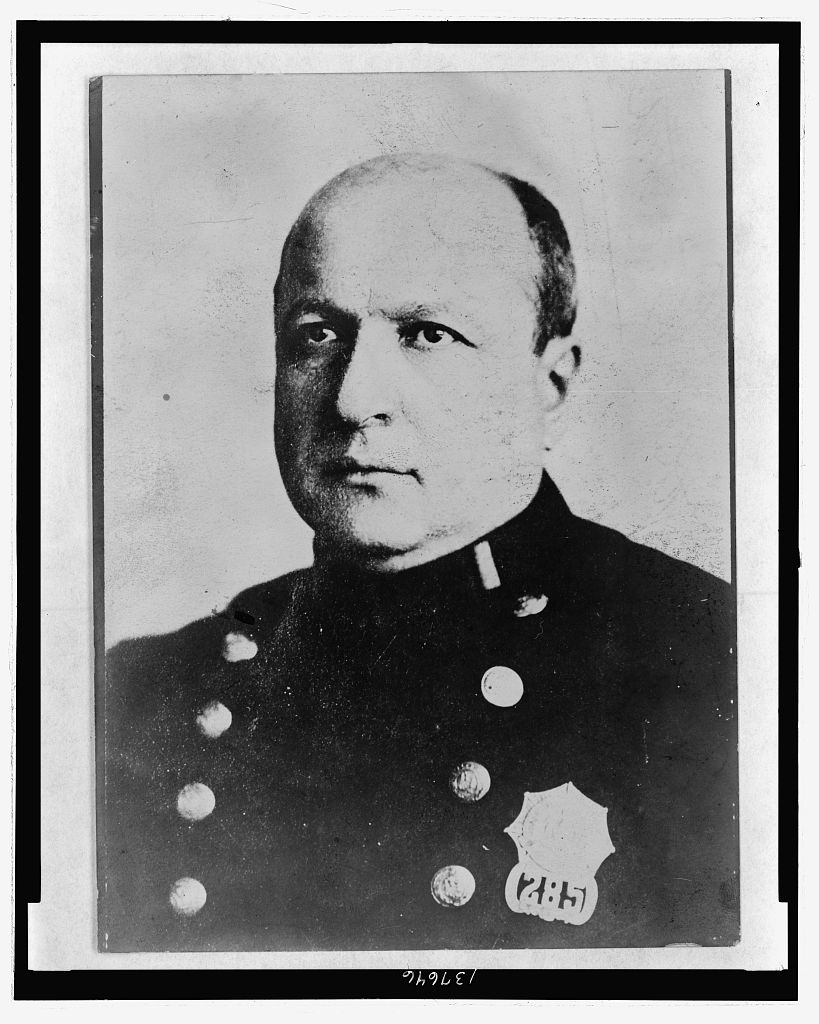 photographLt. Joseph Petrosino in police uniform (Library of Congress)Head-and-shoulders portrait of Joseph Petrosino in New York City police uniform, from the New York World-Telegram & Sun collection. The Library's record dates the item 13 March 1909, the day after he was shot in Palermo. A copy is stored here.
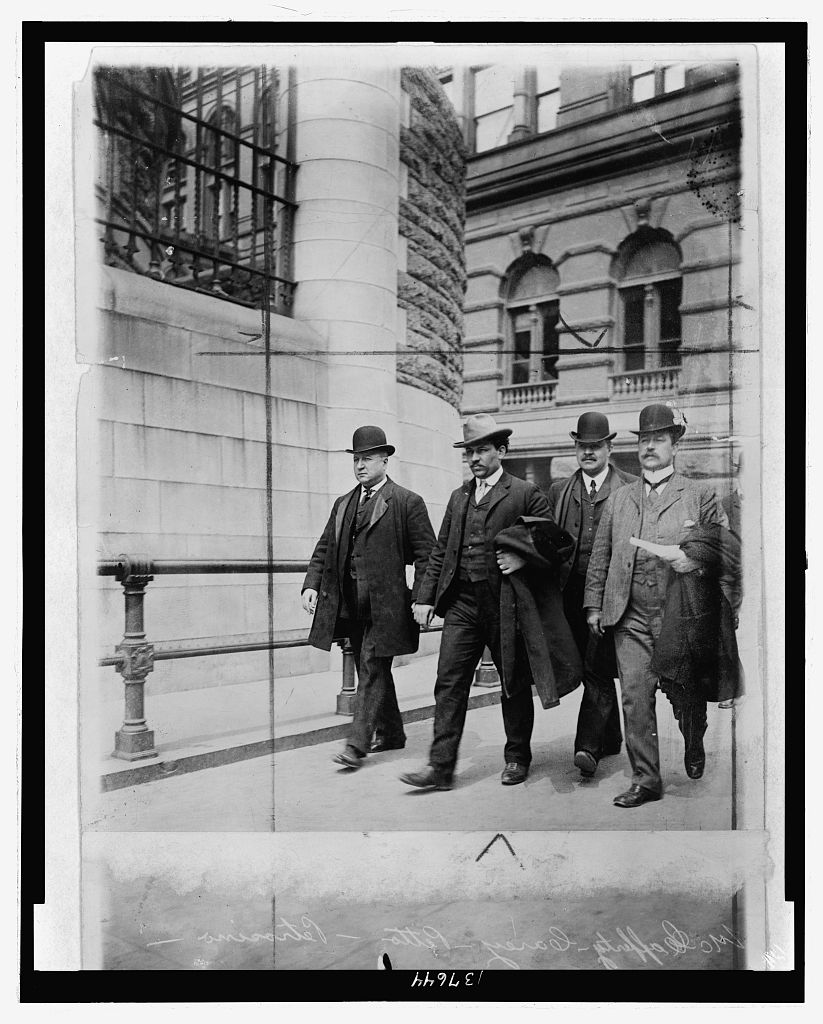 photographTomasso Petto escorted by Detective Joseph Petrosino, 1903 (Library of Congress)Photograph from the New York World-Telegram & Sun collection showing Detective Lt. Joseph Petrosino, Inspector Carey and Inspector McCafferty escorting Tomasso Petto, dated 1903. A copy is stored here.
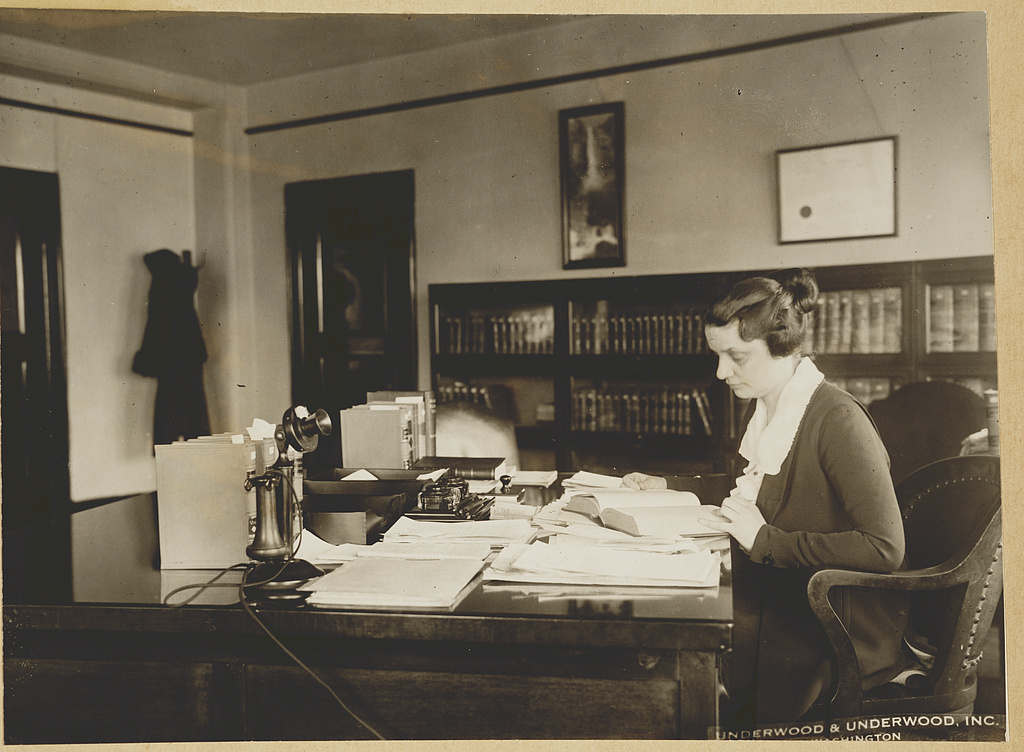 photographMabel Willebrandt, half-length portrait (1920-1940)Library of Congress biographical-file photograph of Mabel Willebrandt seated in her law office, reading at a desk covered with papers and books. The Library's title is devised and the date spans 1920-1940.
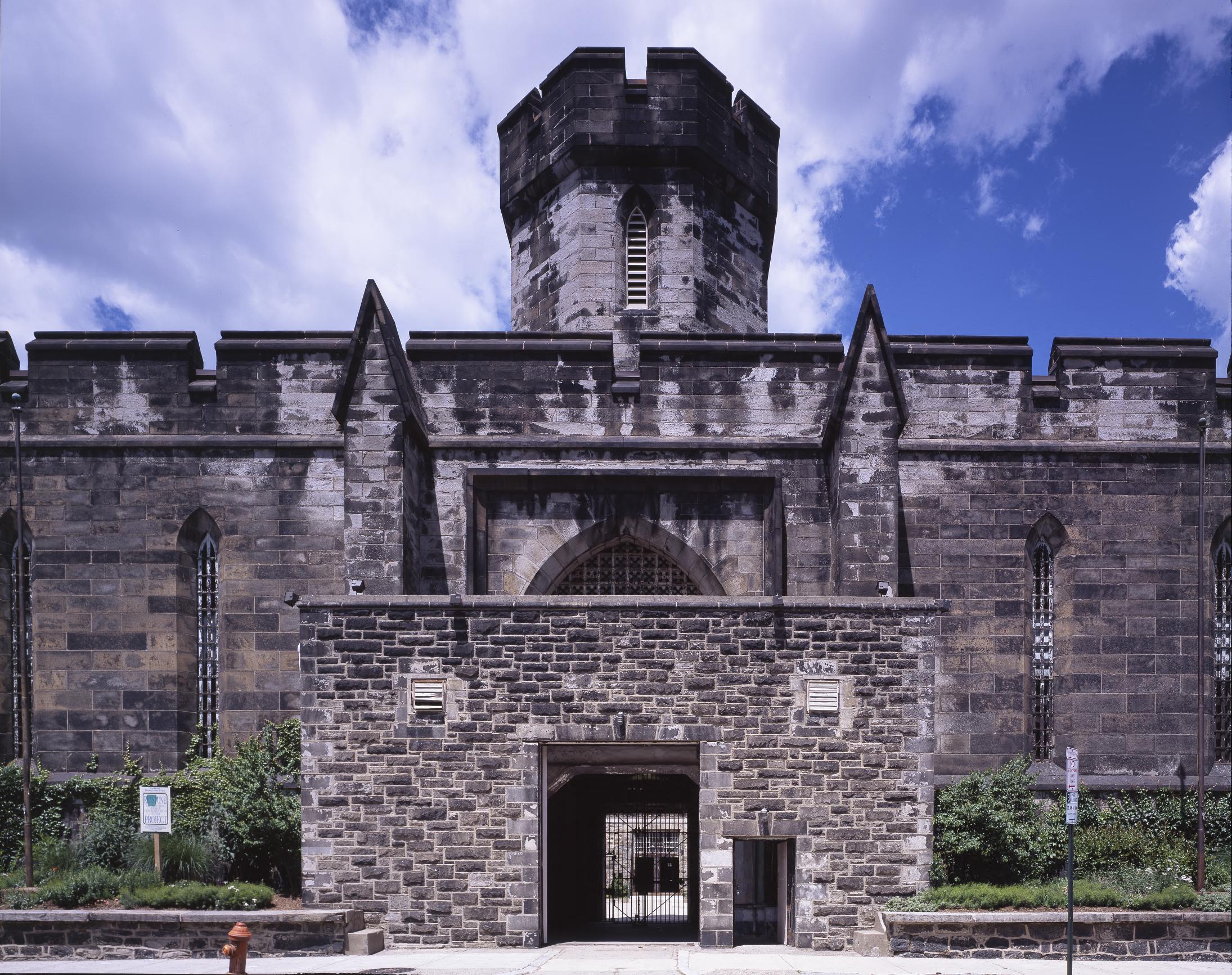 photographOld Eastern State Penitentiary, Philadelphia (Highsmith, Library of Congress)Color photograph of the gatehouse of Eastern State Penitentiary in Philadelphia by Carol M. Highsmith, dated by the Library of Congress between 1980 and 2006. A modern view of the building, not a period image.
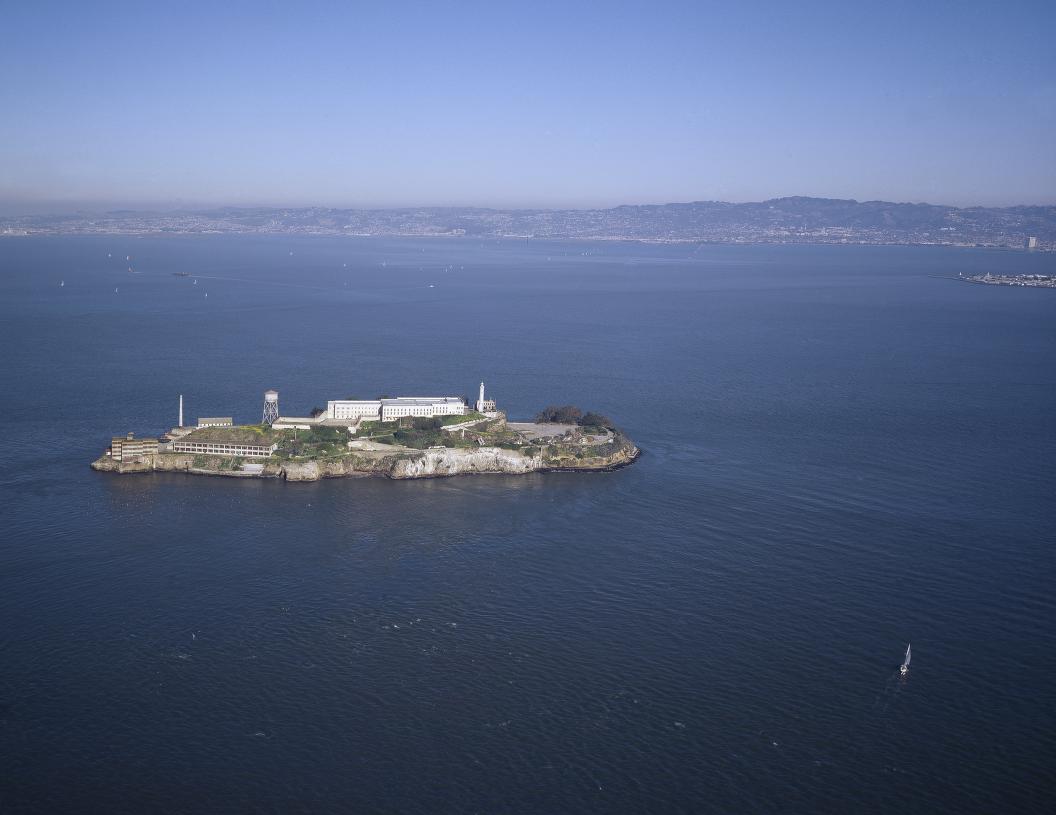 photographAerial view of Alcatraz Island, San Francisco, California (Highsmith, Library of Congress)Color aerial photograph of Alcatraz Island in San Francisco Bay with the Marin shoreline behind it, dated by the Library of Congress between 1980 and 2006. Used as a view of the island only.
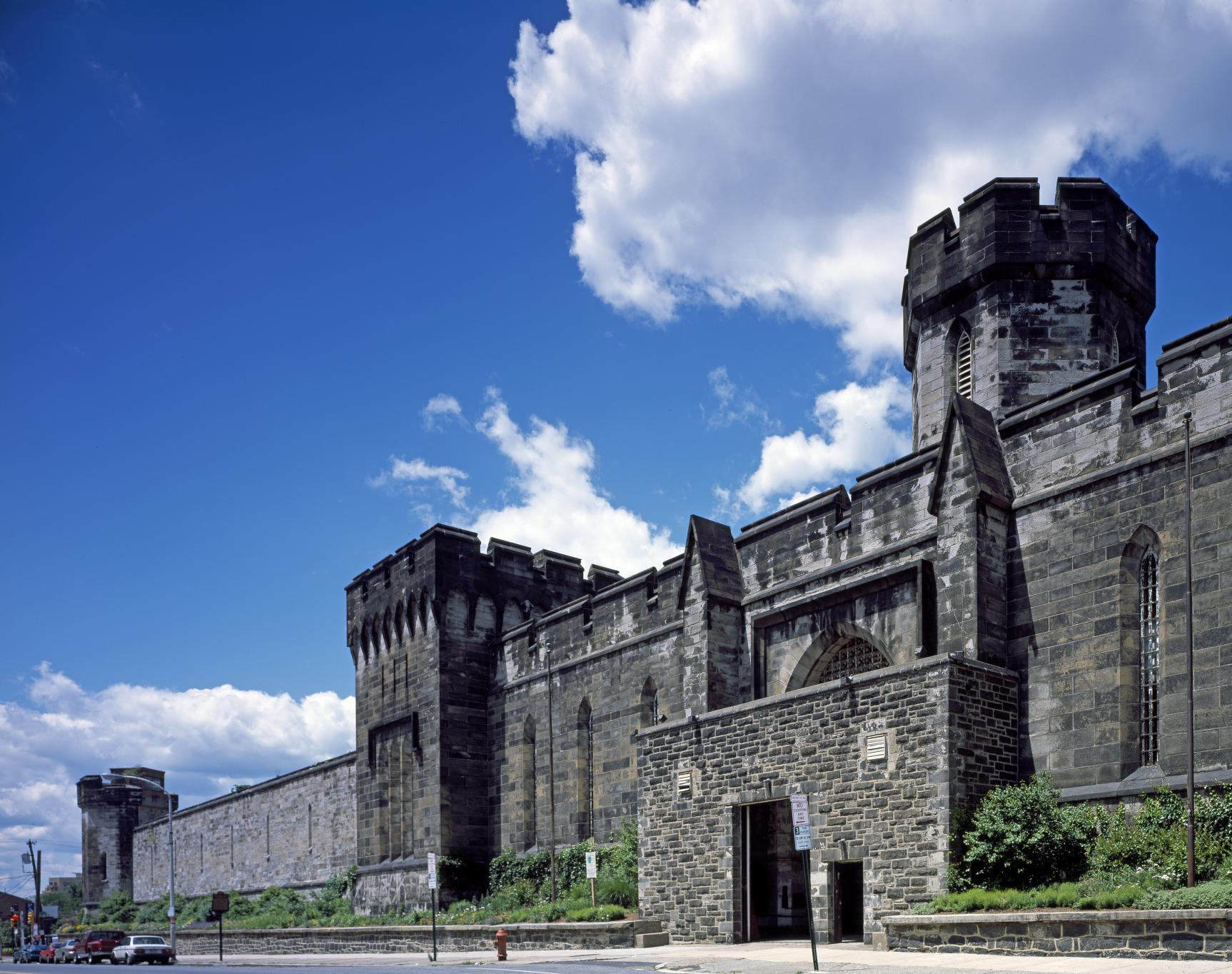 photographEastern State Penitentiary, Philadelphia (Highsmith, Library of Congress)Color photograph of the front of Eastern State Penitentiary in Philadelphia by Carol M. Highsmith, dated by the Library of Congress between 1980 and 2006. A modern view of the building where 1929 and 1930 newspapers place Al Capone.
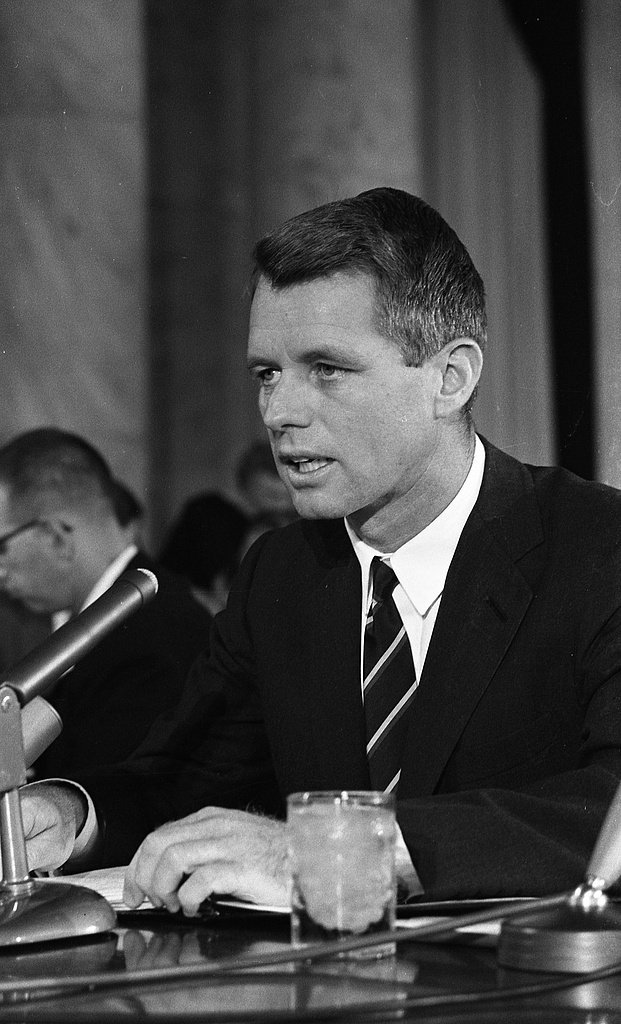 photographRobert F. Kennedy testifying, 25 September 1963 (Library of Congress)U.S. News & World Report photograph by Warren K. Leffler of Attorney General Robert F. Kennedy at the witness table on the first day of the 1963 Senate hearings on crime. A copy is stored here.
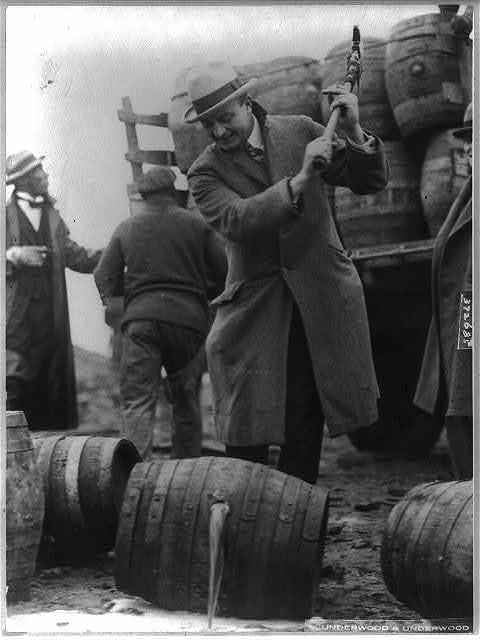 photographBarrels of beer emptied into the Schuylkill River, Philadelphia (1924)Library of Congress photograph captioned "Putting a kick in the staid old Schuylkill", showing barrels of beer emptied into the Schuylkill River. The man with the axe is identified only as probably the U.S. Marshal, with an alternate identification.
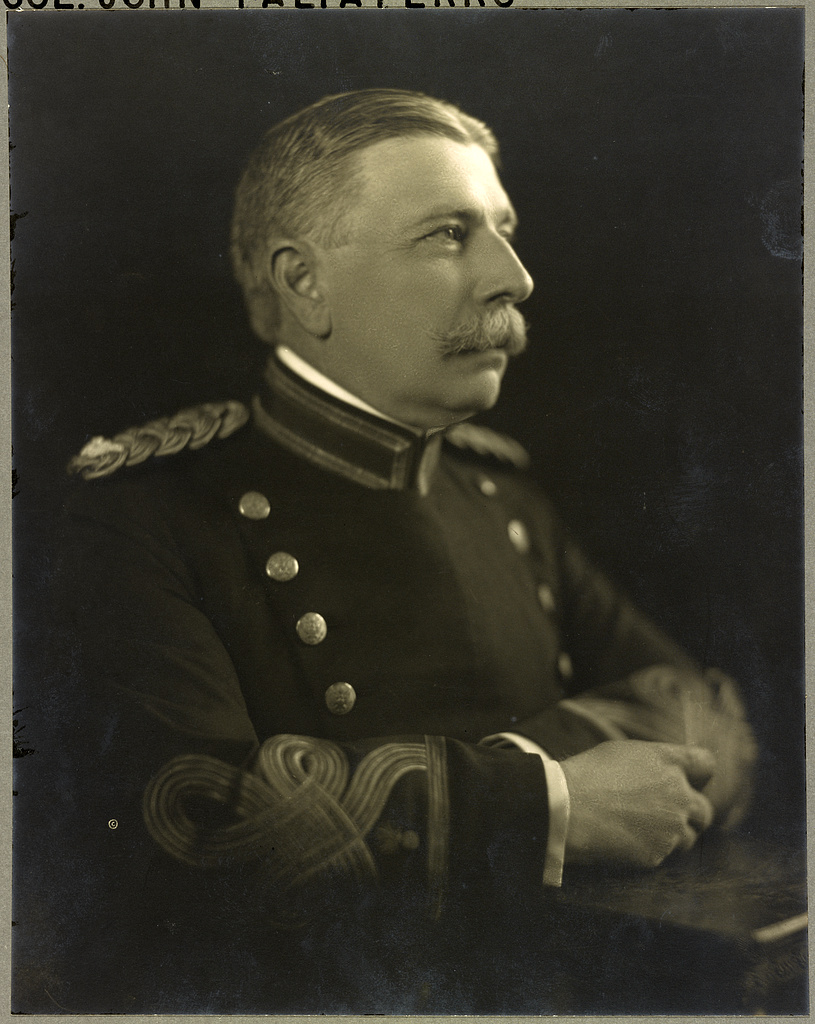 photographJohn Taliaferro Thompson, portrait, 1915 (Library of Congress)Phillips Studio portrait photograph of John Taliaferro Thompson, whom the Library's title identifies as an Army officer, founder of the Auto-Ordnance Corporation and inventor of the Thompson submachine gun.
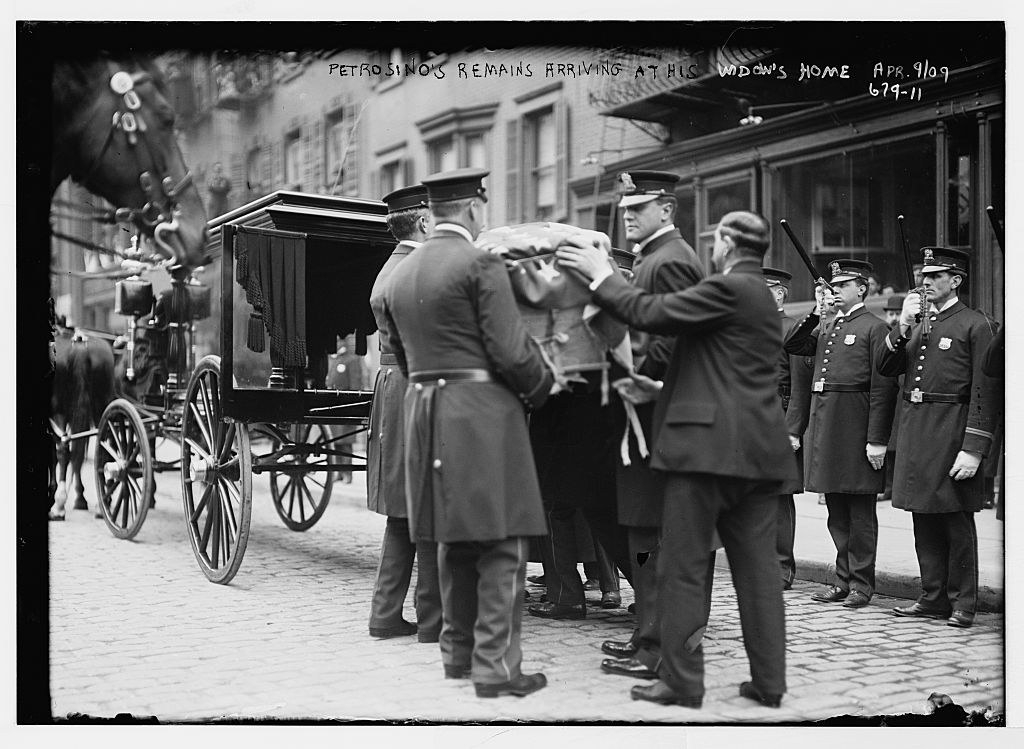 photographPetrosino's coffin arriving at his widow's home, 9 April 1909 (Bain News Service)Bain News Service photograph captioned on the negative "Petrosino's remains arriving at his widow's home Apr. 9/09": police officers lift the coffin from a hearse in a New York street. A copy is stored here.
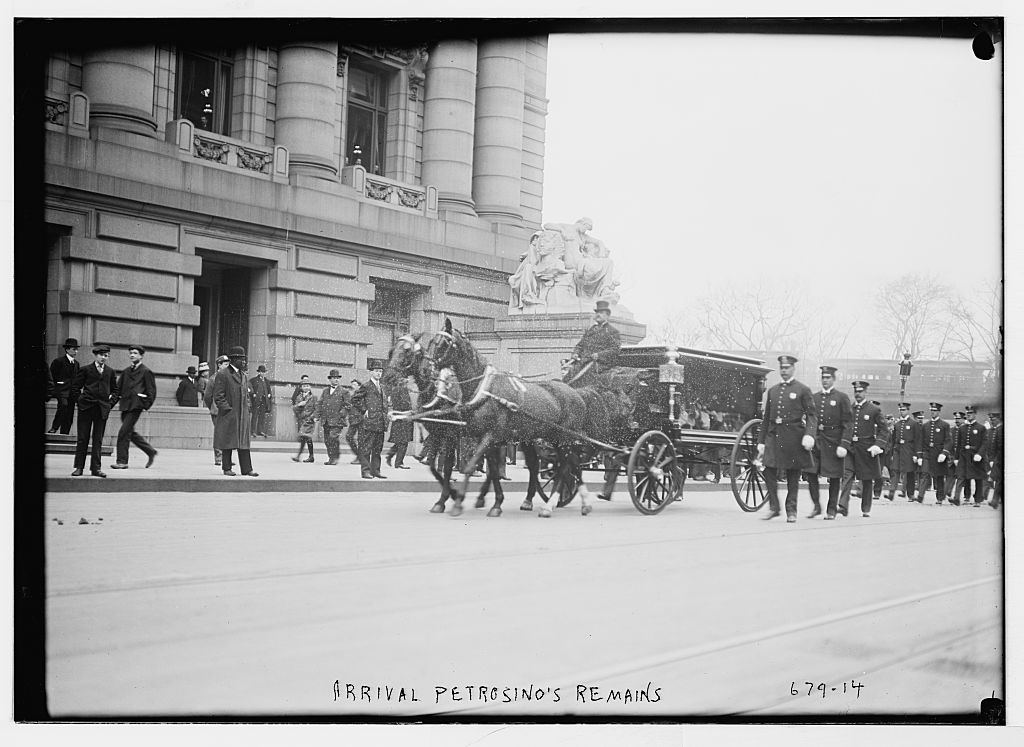 photographFuneral cortege of Petrosino, 9 April 1909 (Bain News Service)Bain News Service photograph captioned on the negative "Arrival Petrosino's remains": a horse-drawn hearse followed by a column of police officers passes a large stone building. A copy is stored here.
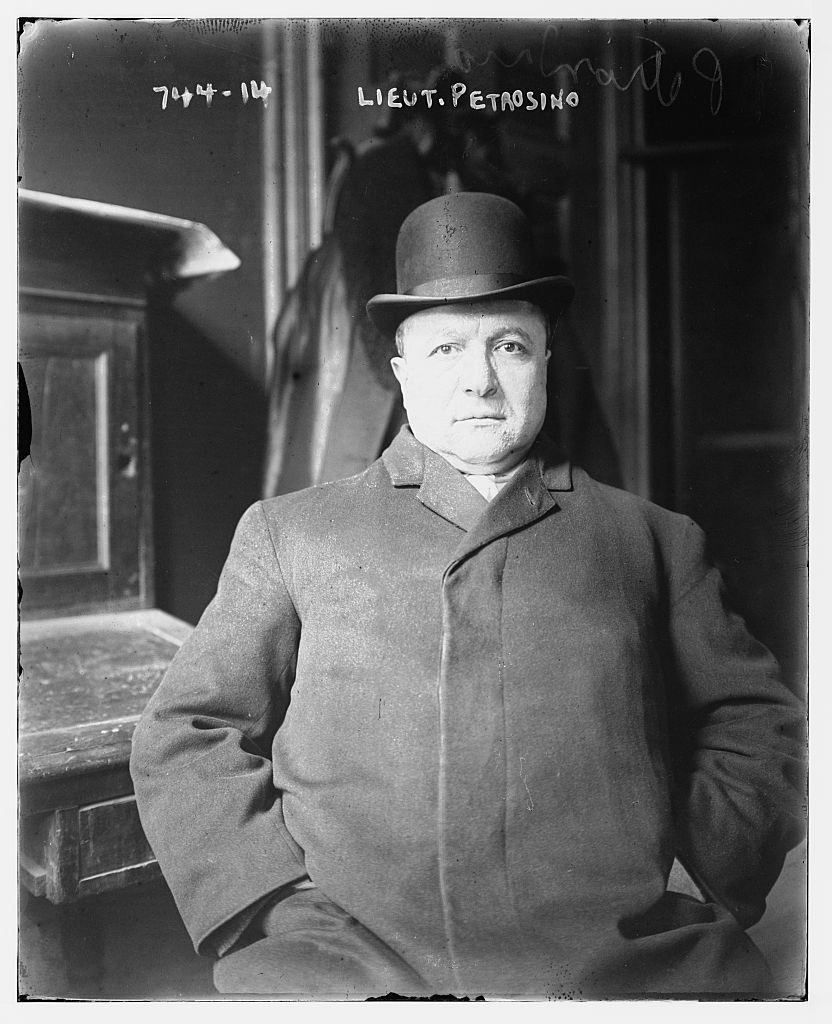 photographLieut. Petrosino (Bain News Service, undated)Undated Bain News Service portrait captioned "Lieut. Petrosino": Joseph Petrosino seated indoors in a bowler hat and overcoat. A copy is stored here.
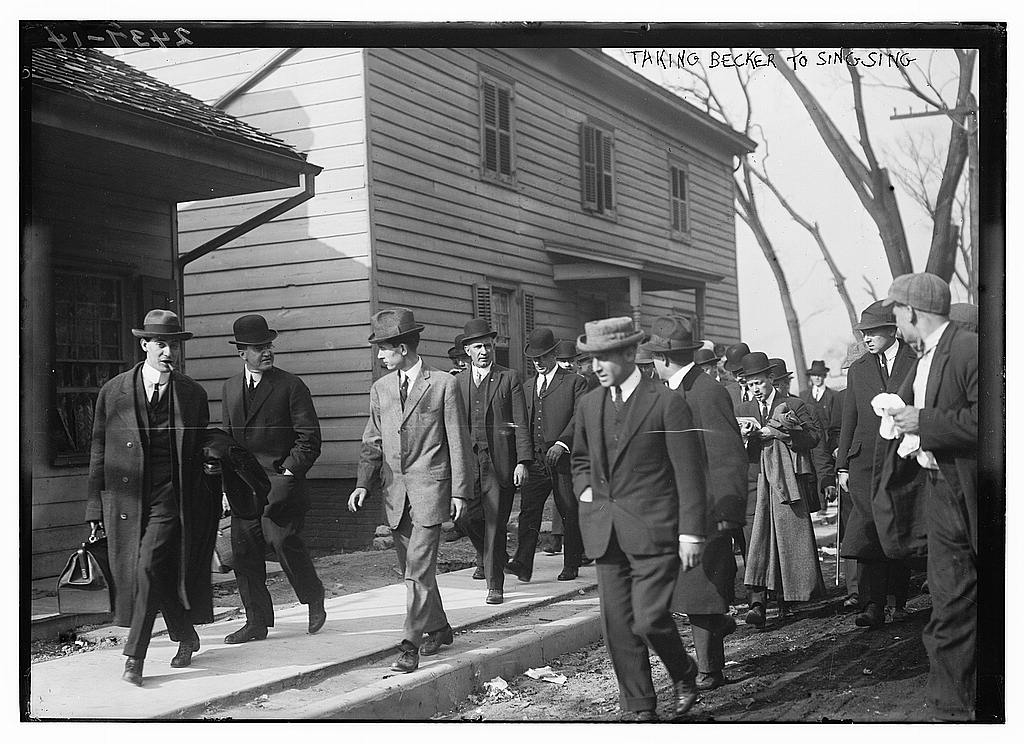 photographTaking Becker to Sing Sing, 30 October 1912 (Library of Congress)Bain News Service photograph captioned "Taking Becker to Sing Sing": former police lieutenant Charles Becker, convicted of the murder of Herman Rosenthal, on his way to prison. A copy is stored here.
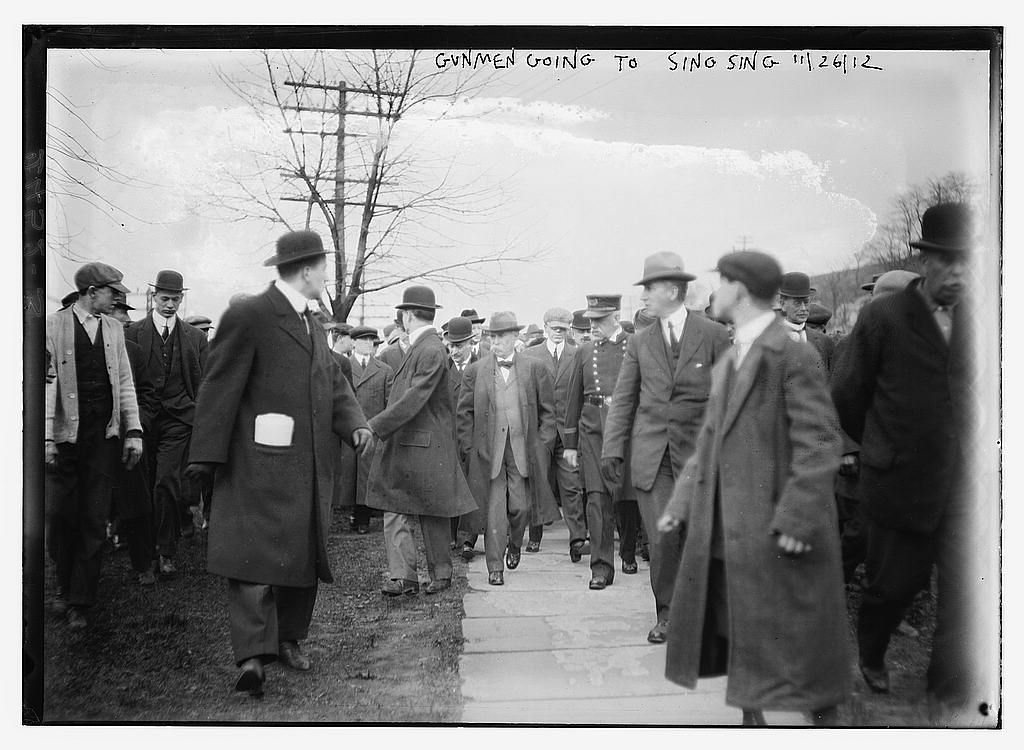 photographGunmen going to Sing Sing, 26 November 1912 (Library of Congress)Bain News Service photograph dated 26 November 1912 of the men convicted of killing Herman Rosenthal on their way to Sing Sing. The title names none of them. A copy is stored here.
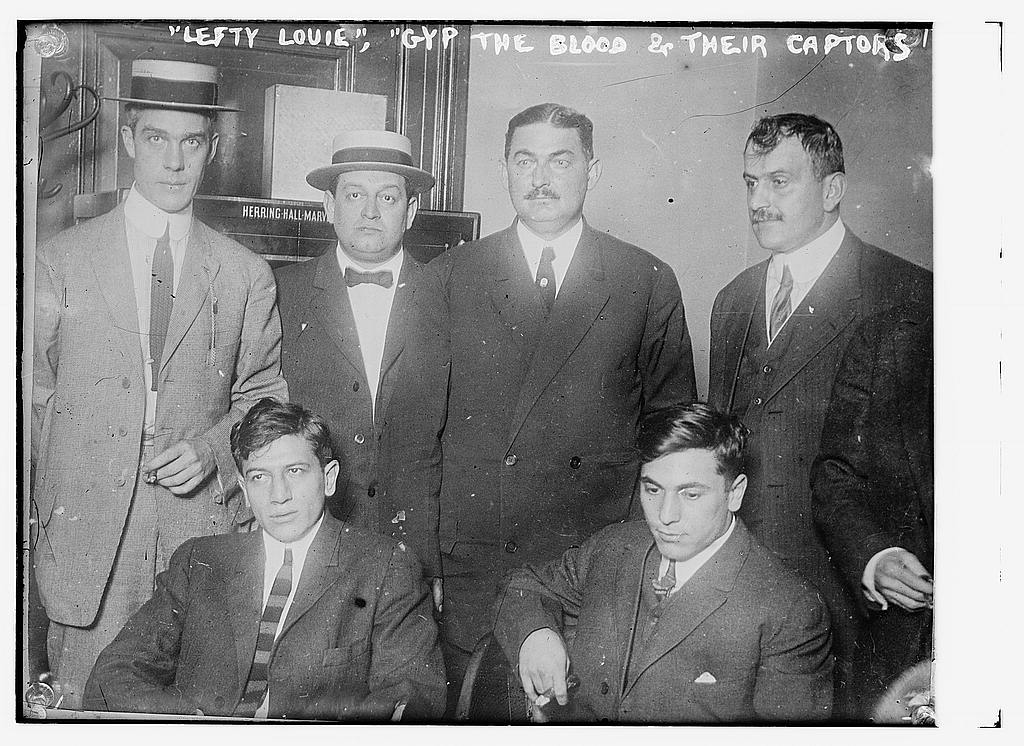 photograph"Lefty Louie" and "Gyp the Blood" with their captors, 1912 (Library of Congress)Bain News Service photograph captioned "'Lefty Louie', 'Gyp the Blood', & their captors", from the Herman Rosenthal murder case. A copy is stored here.
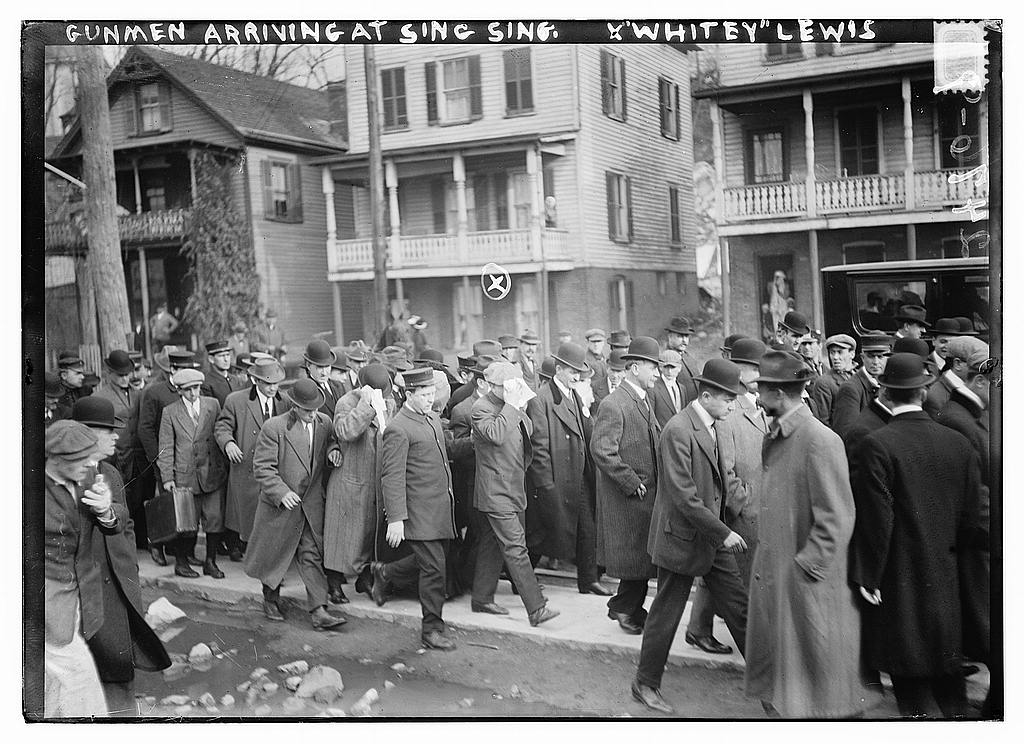 photographGunmen arriving at Sing Sing, Whitey Lewis, 1912 (Library of Congress)Bain News Service photograph captioned "Gunmen arriving at Sing Sing, Whitey Lewis": a crowd scene from the Herman Rosenthal murder case, dated November 1912. A copy is stored here.
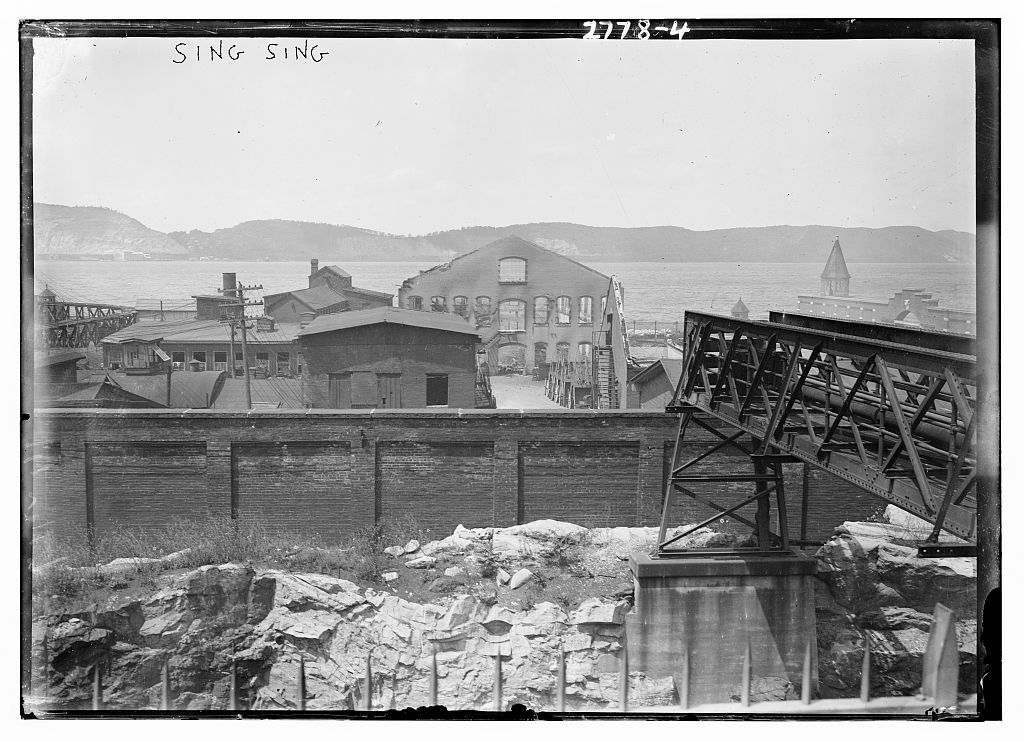 photographSing Sing prison, Bain News Service, about 1910 (Library of Congress)Bain News Service photograph of Sing Sing prison at Ossining, New York, issued between about 1910 and 1915. The record names no case. A copy is stored here.
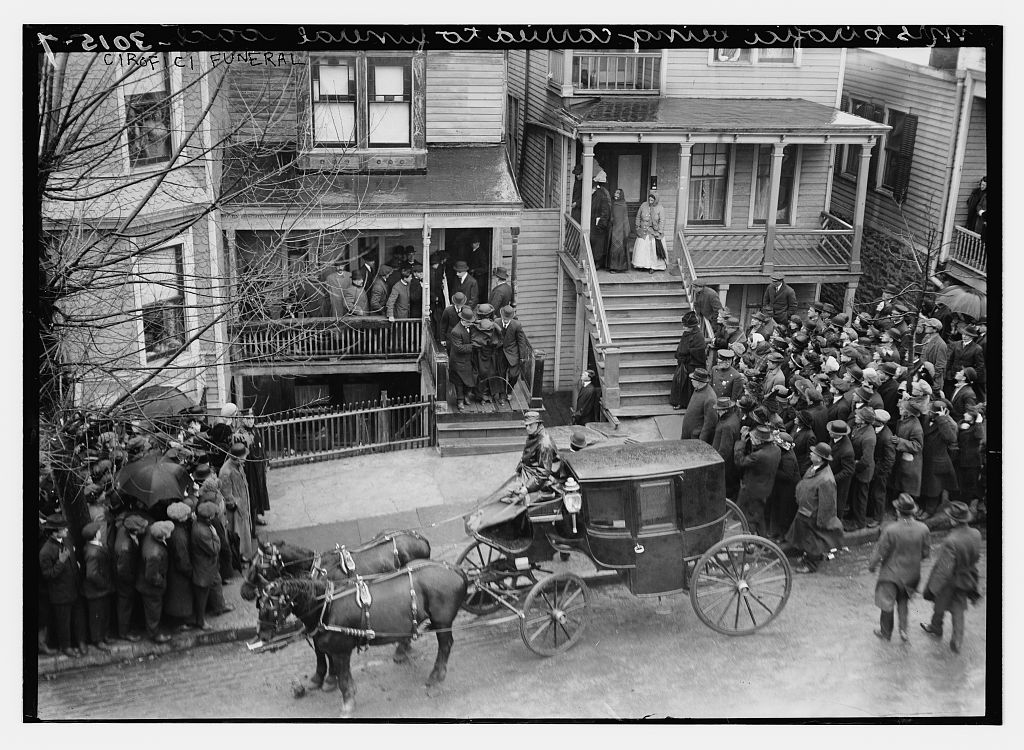 photographMrs Cirofici carried to the funeral car, April 1914 (Library of Congress)Bain News Service photograph from the April 1914 funeral of Frank "Dago Frank" Cirofici, who was executed at Sing Sing on 13 April 1914. A copy is stored here.
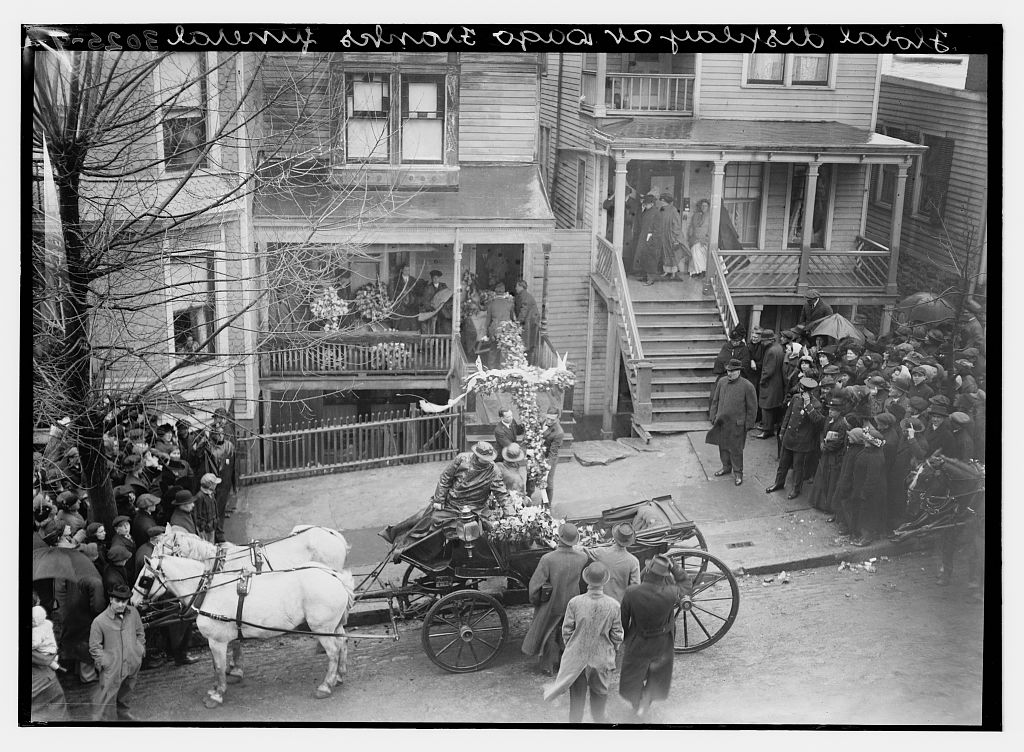 photographFloral display at Dago Frank's funeral, April 1914 (Library of Congress)Bain News Service photograph of a floral display at the April 1914 funeral of Frank "Dago Frank" Cirofici, executed at Sing Sing for the Rosenthal murder. A copy is stored here.
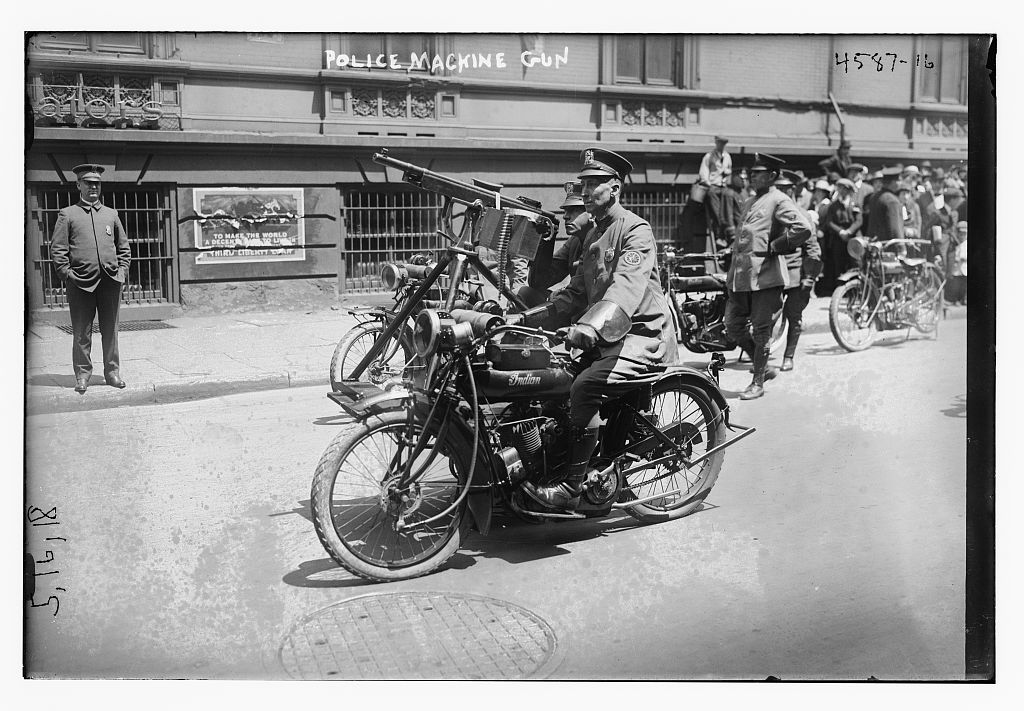 photographPolice machine gun, New York City police parade, 11 May 1918 (Library of Congress)Bain News Service glass negative of a police officer riding a motorcycle with a mounted machine gun in a New York City police parade on 11 May 1918, a record of police armament before the Prohibition era.
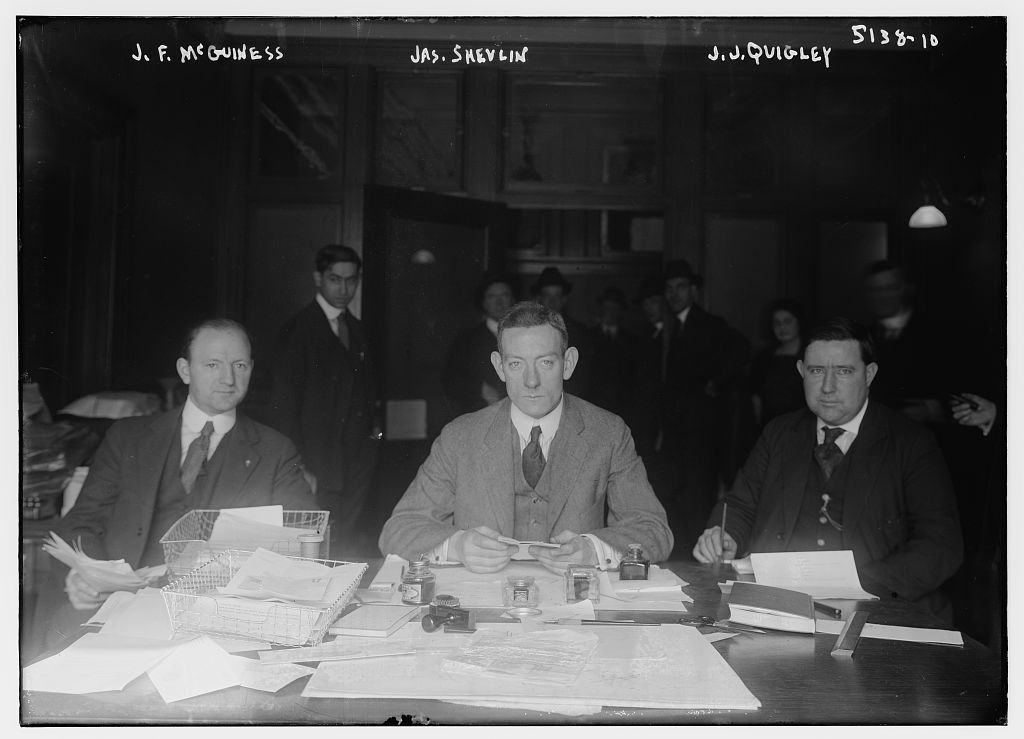 photographThree men at a table of papers, identified from a Library summary as federal prohibition agents (1919-1920)Library of Congress Bain News Service photograph of three men seated at a table of papers. The caption gives only surnames; the identifications come from the Library's summary citing Flickr Commons.
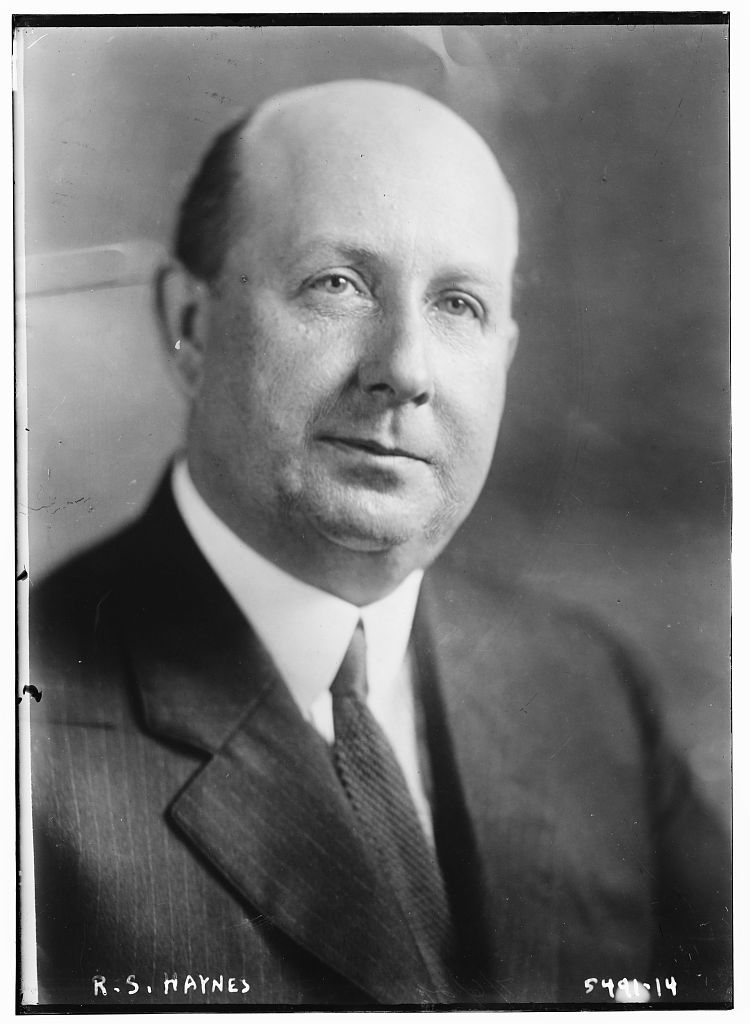 photographPortrait labeled "R.S. [i.e. A.] Haynes" (about 1920-1925)Library of Congress Bain News Service portrait labeled "R.S. [i.e. A.] Haynes". The Library's summary, citing Flickr Commons, identifies him as Roy Asa Haynes, in charge of Prohibition enforcement.
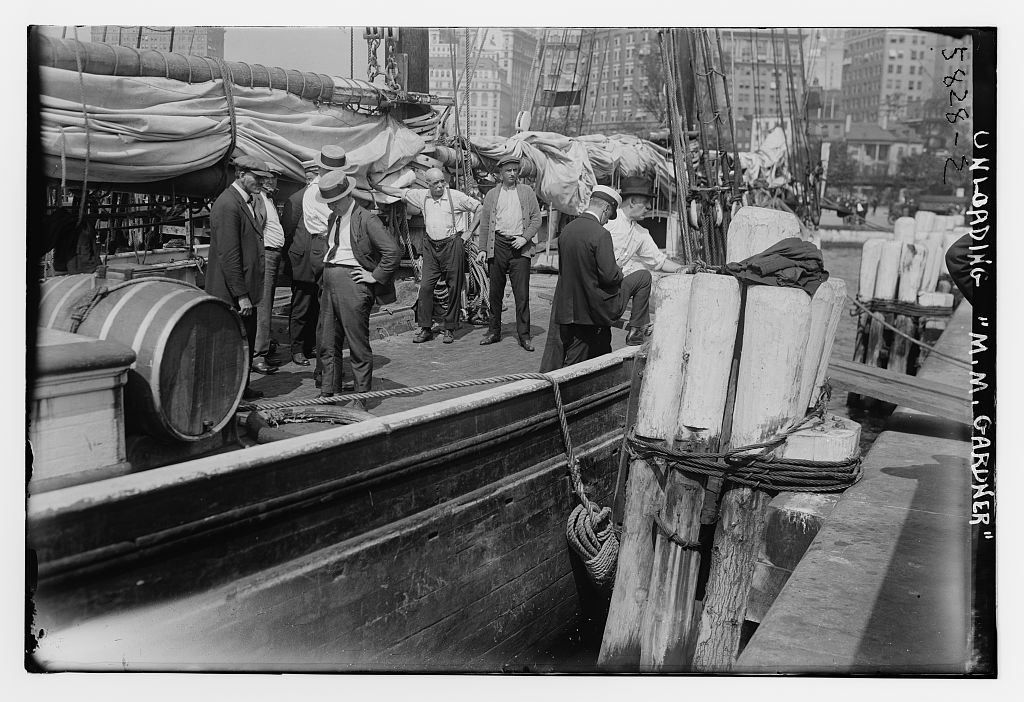 photographUnloading the boat M.M. Gardner (about 1920-1925)Library of Congress Bain News Service negative titled "Unloading M.M. GARDNER". The Library's summary, taken from Flickr Commons, says the boat was caught with bootleg alcohol and a large amount of gold off New York City.
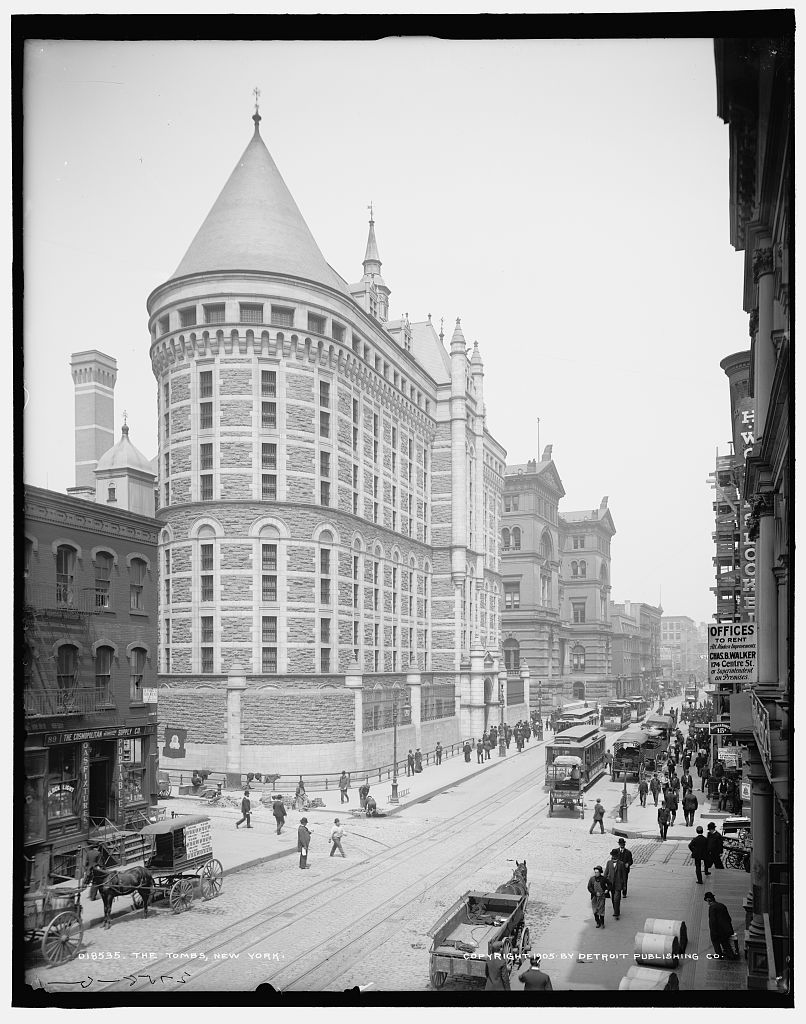 photographThe Tombs, New York, about 1905 (Library of Congress)Detroit Publishing Company photograph of the Tombs, the Manhattan detention building, with Centre Street at right. The record names no case or person. A copy is stored here.
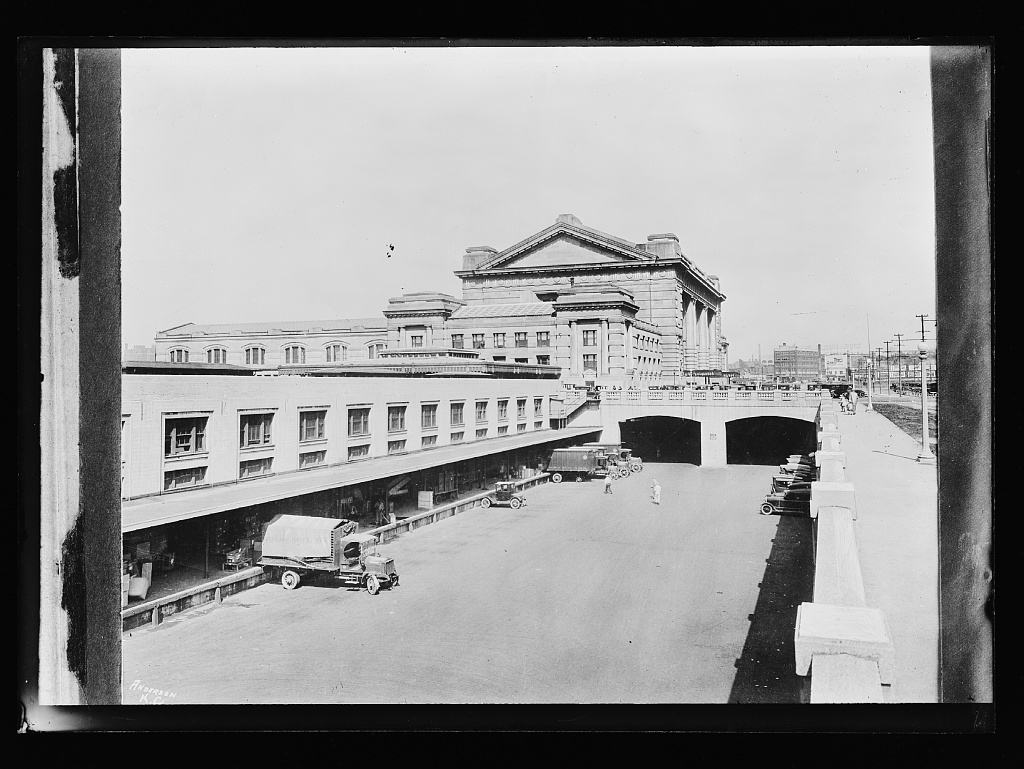 photograph[Union Station and loading dock, Kansas City, Missouri] (Detroit Publishing Company, between 1910 and 1930)A glass-negative photograph of Kansas City's Union Station and its loading dock, with an American Railway Express truck, made between 1910 and 1930. A period view of the building, not of the 1933 shooting.
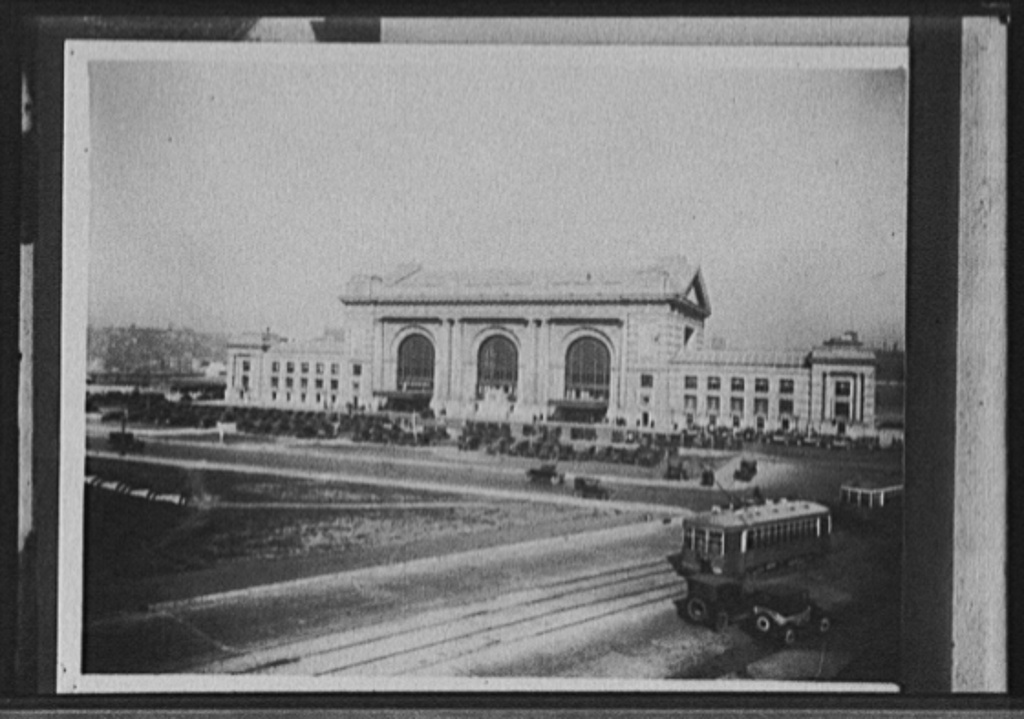 photograph[Union Station, Kansas City, Mo.] (Detroit Publishing Company, between 1910 and 1930)A glass-negative photograph of Kansas City's Union Station made between 1910 and 1930; the catalog notes it is a photograph of a photographic print.
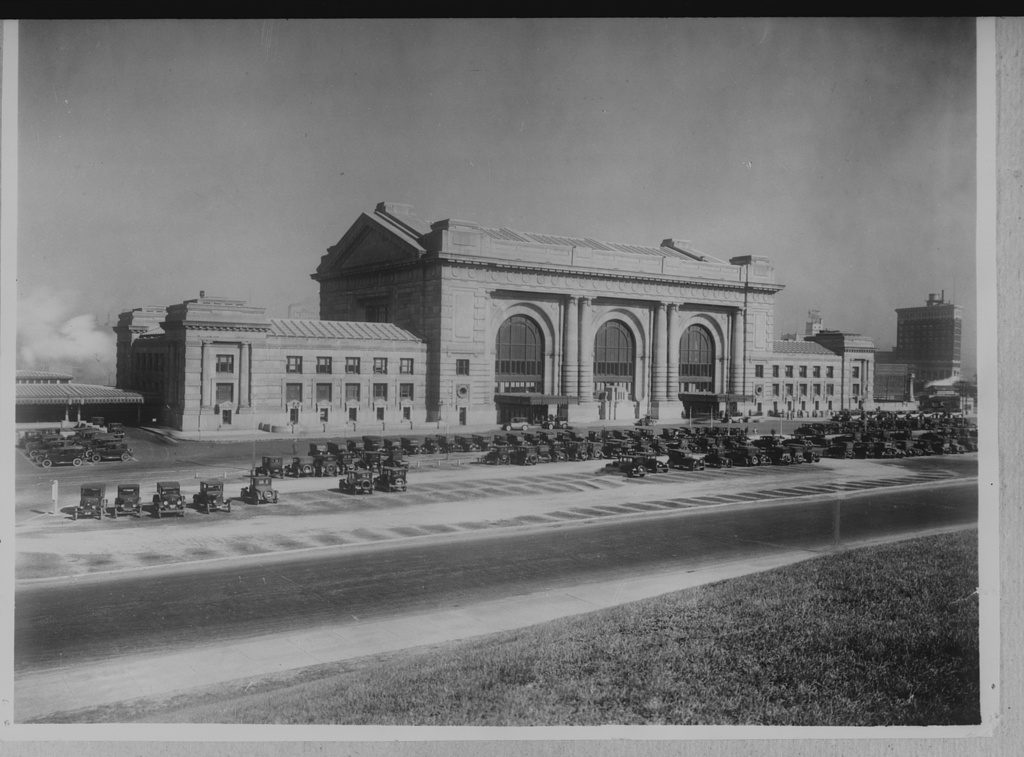 photograph[Union Station, Kansas City, Mo.] (Detroit Publishing Company, between 1910 and 1930), second viewA second glass-negative view of Kansas City's Union Station made between 1910 and 1930.
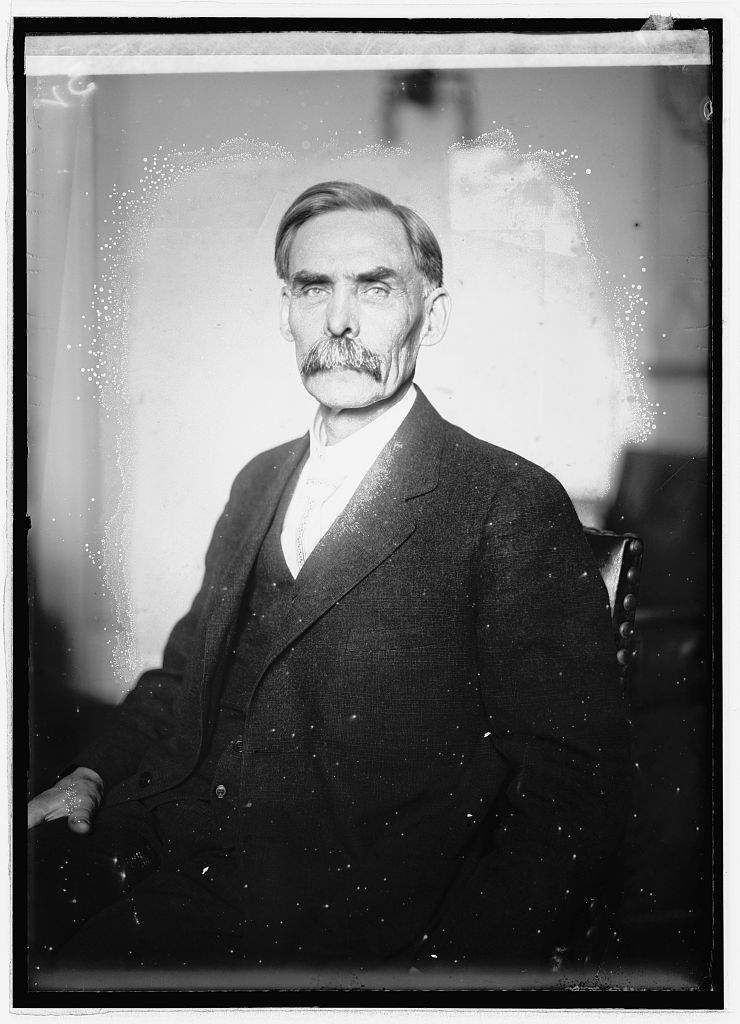 photographAndrew J. Volstead of Minnesota, portrait (1921-1922)Library of Congress National Photo Company portrait labeled "Andrew J. Volstead, Minn.", the Minnesota congressman whose name is attached to the National Prohibition Act.
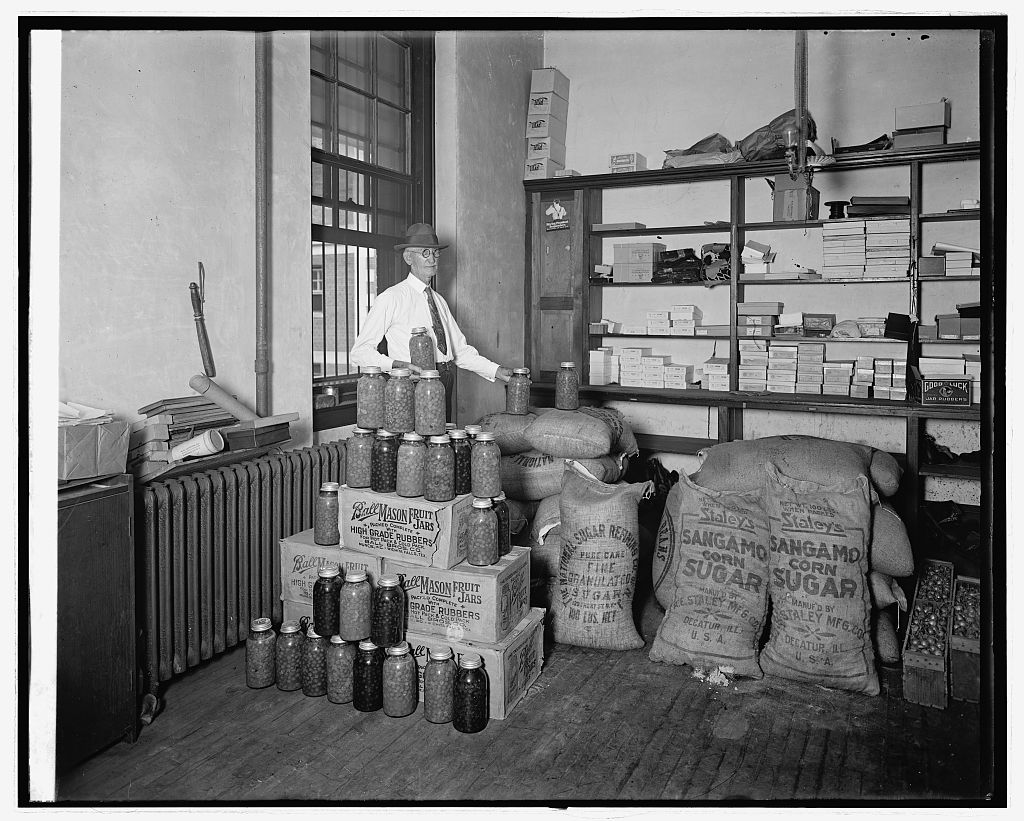 photograph"Utilization of confiscated bootleg paraphernalia," National Photo Company (Library of Congress)National Photo Company negative of a man beside jars, boxes and sacks of corn sugar in a storeroom. The title and the 1918-1928 date are unverified data from the negative. A copy is stored here.
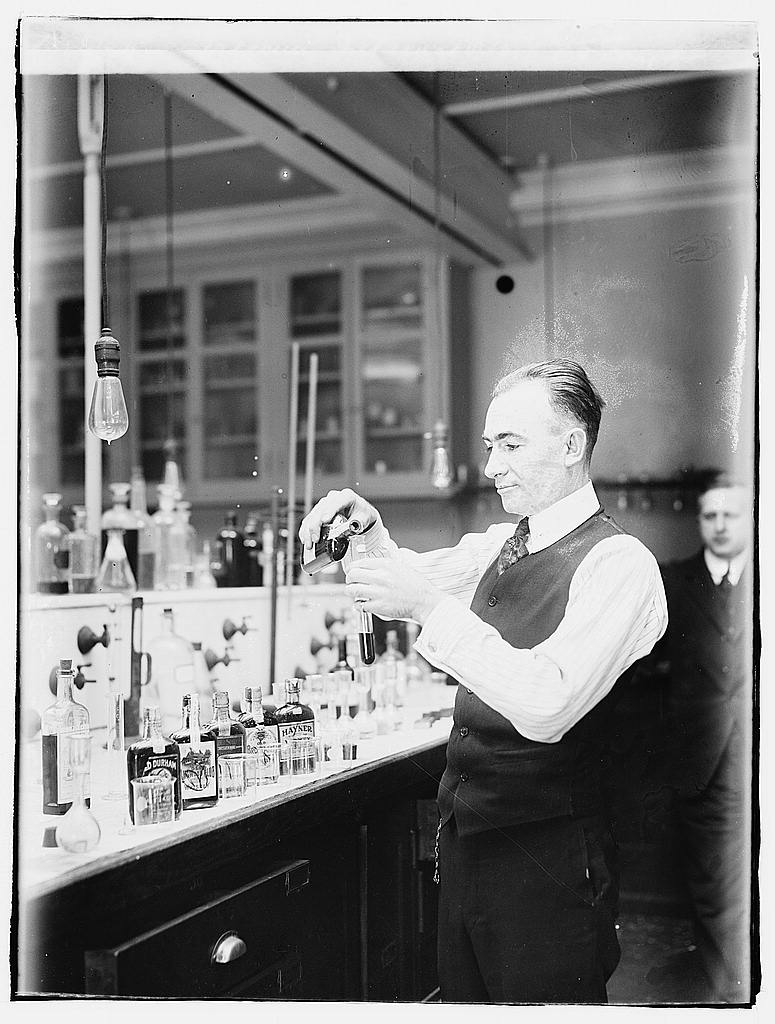 photographTreasury Internal Revenue chemist G.F. Beyer (14 January 1920)Library of Congress National Photo Company photograph of G.F. Beyer, an Internal Revenue chemist at the Treasury, with caption-list notes on two enforcement cases from the same period.
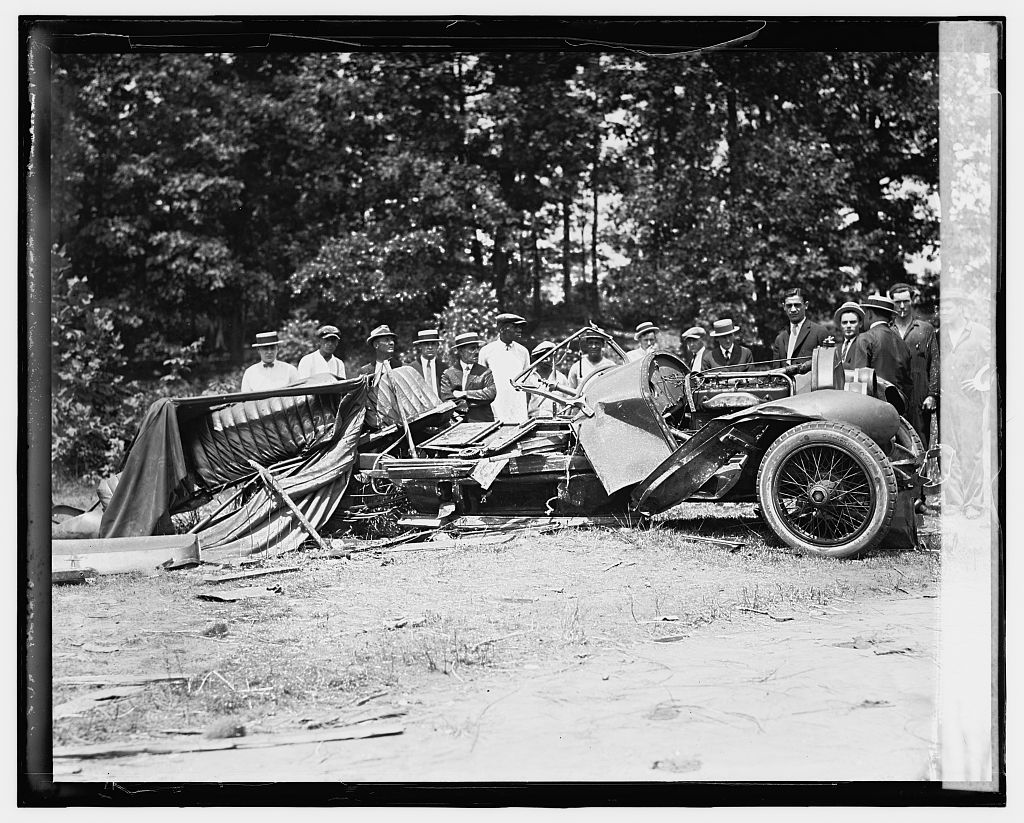 photographWreck of a Stutz car "with bootleggers" (29 July 1924)Library of Congress National Photo Company photograph of a wrecked Stutz automobile with several people standing around it. The description of the occupants as bootleggers rests on the title alone.
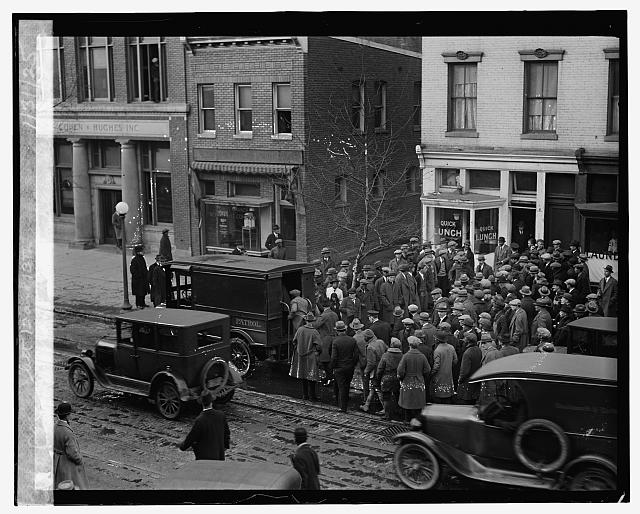 photographPolice raid on gamblers den, E Street between 12th and 13th, Washington (31 January 1925)National Photo Company glass-negative photograph of a crowd around a police patrol wagon at a raid on a gambling place on E Street, Washington, D.C., 31 January 1925.
 photograph"Hooch Hound" sniffs a flask on a Potomac pier (23 February 1922)Library of Congress National Photo Company photograph of a dog described as a "Hooch Hound", trained to detect liquor, sniffing a flask in the back pocket of a man fishing on a Potomac pier.
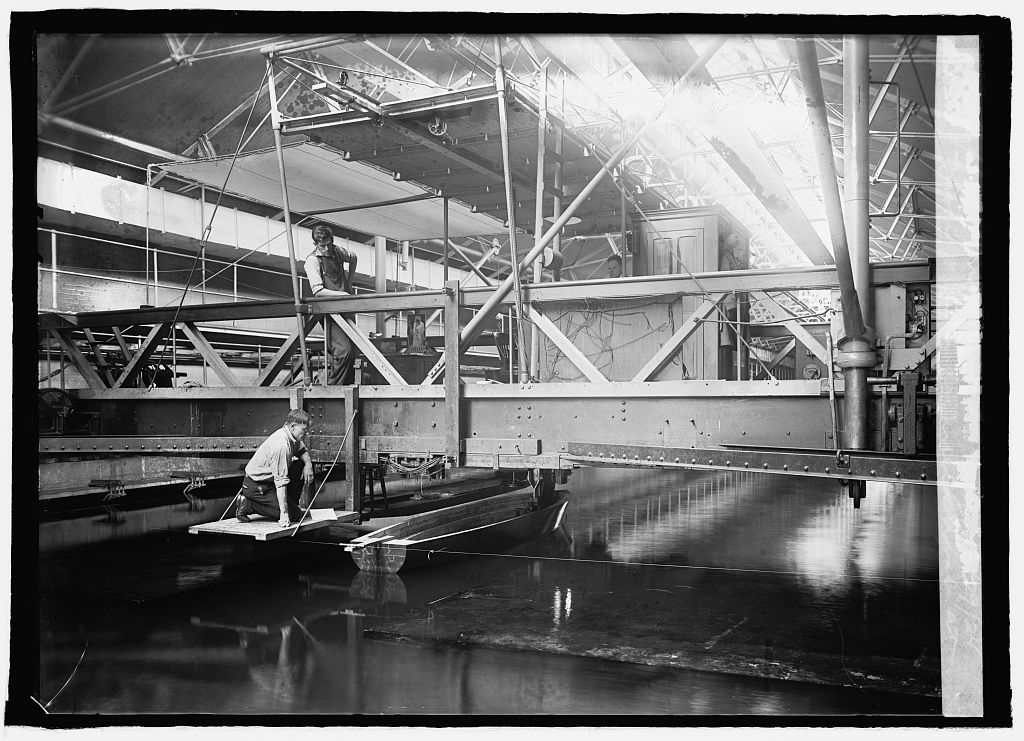 photographModel of a rum-runner chaser at the Navy Yard, Washington (29 December 1924)Library of Congress National Photo Company photograph, taken in what appears to be a test tank, of a small model boat that the title calls a model of a rum-runner chaser at the Navy Yard.
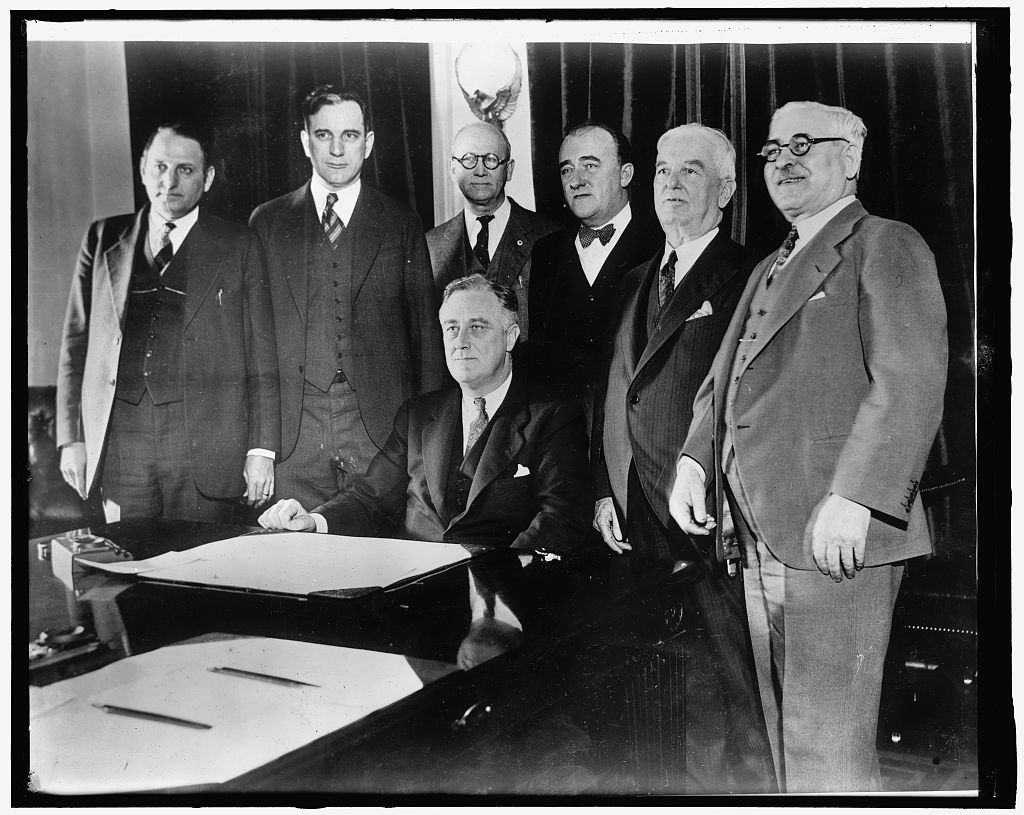 photographPresident Roosevelt signs the beer bill with members of Congress (22 March 1933)Library of Congress Harris & Ewing photograph of President Franklin D. Roosevelt at his desk in the Cabinet Room signing the 1933 beer bill, with members of Congress and a committee clerk standing around him.
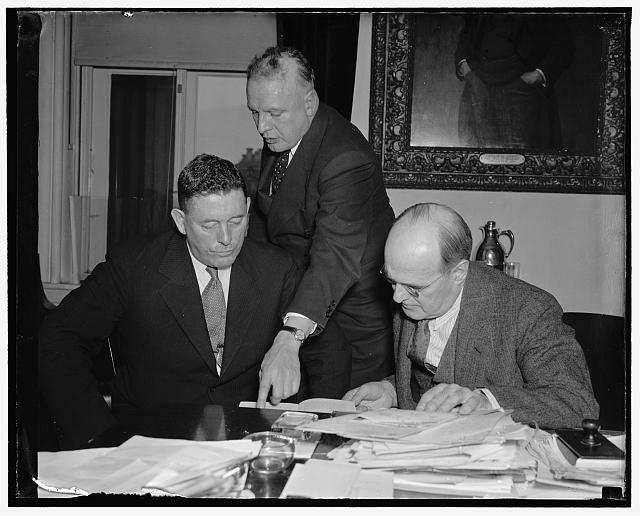 photographCanadian and U.S. narcotics officials meet on marihuana control, Washington, 24 March 1937 or 1938 (Library of Congress)Harris & Ewing photograph of Col. C.H.L. Sharman, Chief of Canadian Narcotic Control, Harry Anslinger, U.S. Commissioner of Narcotics, and Assistant Secretary of the Treasury Stephen B. Gibbons, at a meeting on cooperation in marihuana control. A copy is stored here.
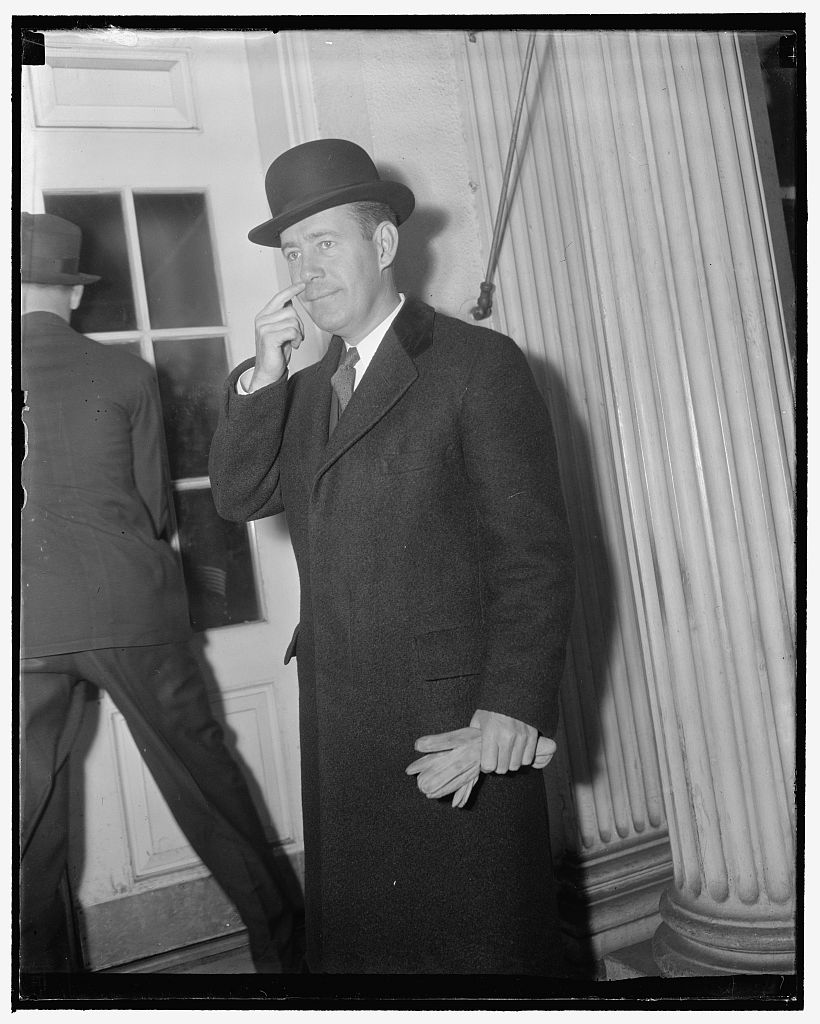 photographHerbert R. O'Conor, December 1938 (Library of Congress, Harris & Ewing)Harris & Ewing photograph of Herbert R. O'Conor, then Governor-elect of Maryland, at the White House on December 29, 1938, eleven years before the Kefauver Committee. It does not show the hearings.
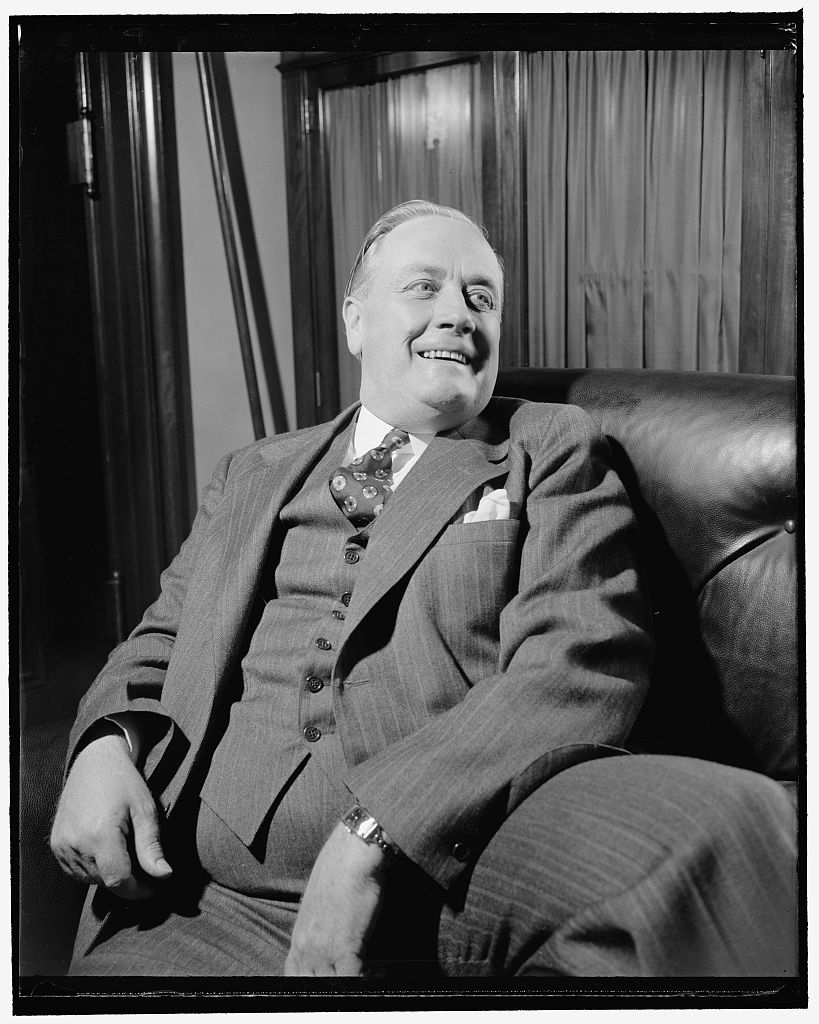 photographSenator Alexander Wiley, 1939 (Library of Congress, Harris & Ewing)Harris & Ewing photograph of Senator Alexander Wiley, April 29, 1939, eleven years before the Kefauver Committee. It does not show the hearings.
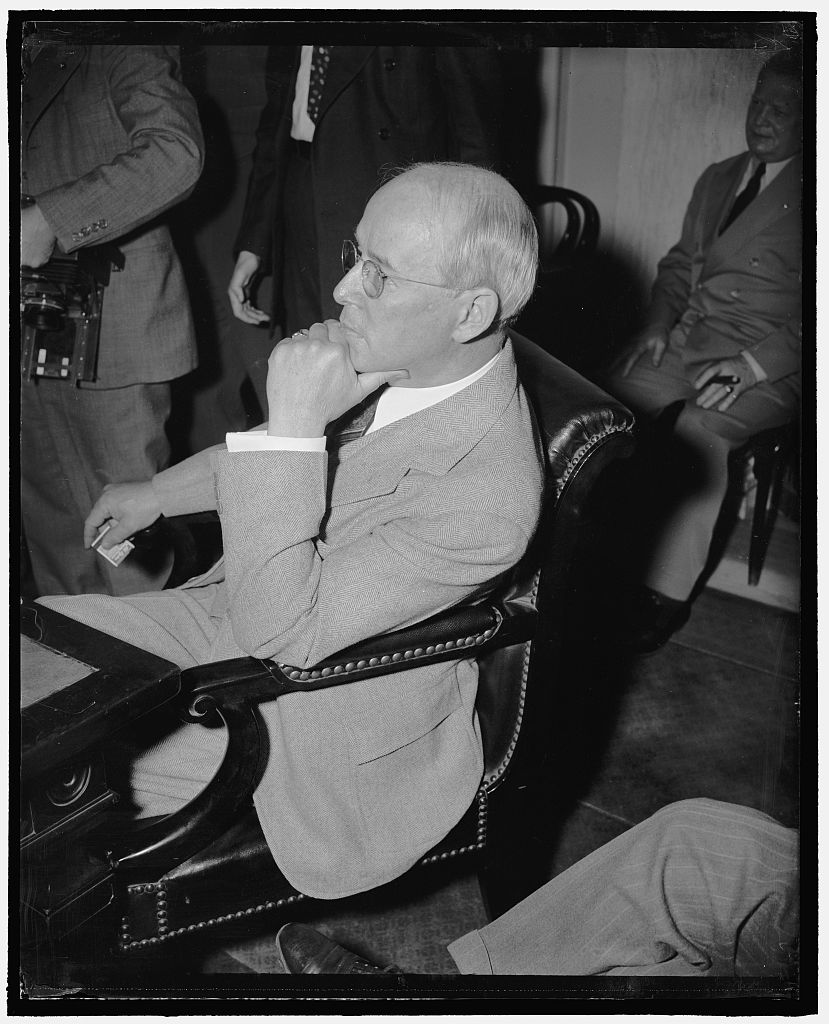 photographSenator Charles W. Tobey, 1939 (Library of Congress, Harris & Ewing)Harris & Ewing photograph of Senator Charles W. Tobey, May 25, 1939, eleven years before the Kefauver Committee. It does not show the hearings.
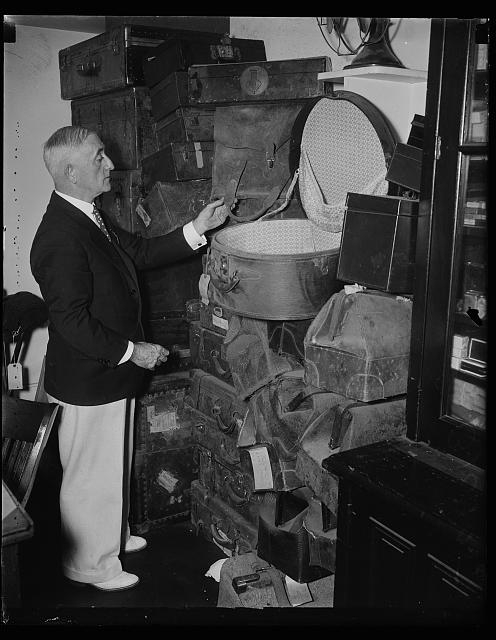 photographJohn W. McDonald, narcotic agent, August 1936 (Library of Congress)Harris & Ewing photograph captioned with the name of a federal narcotic agent, John W. McDonald, standing beside a stack of trunks and suitcases. A copy is stored here.
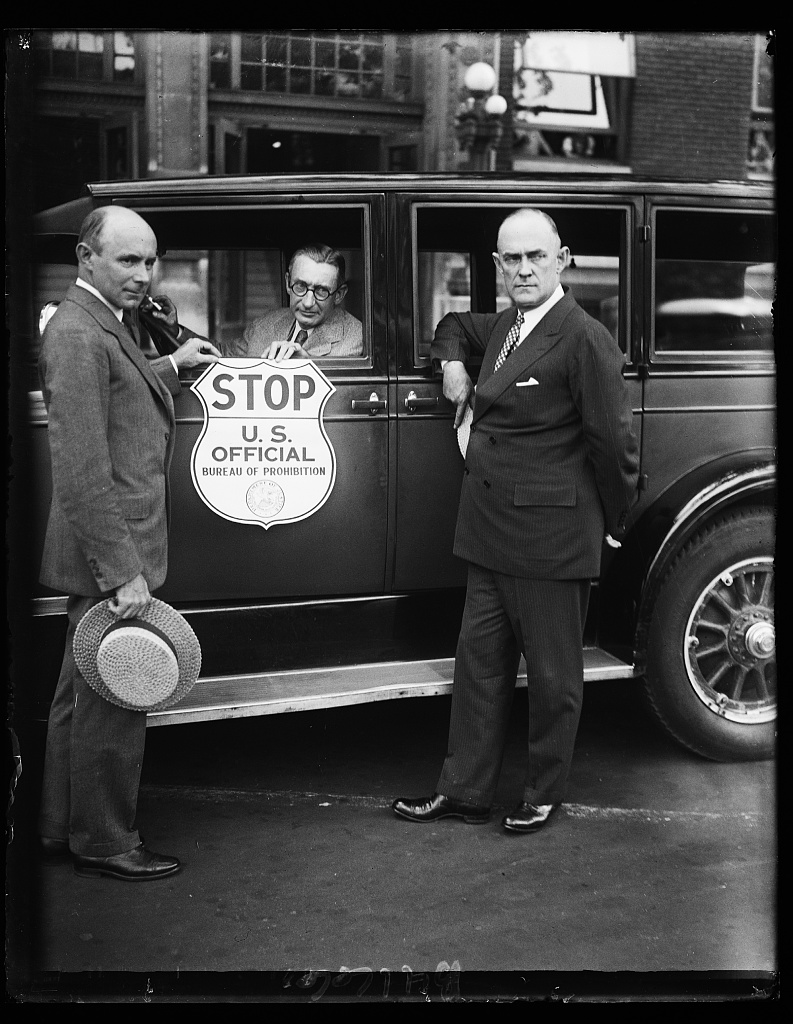 photographBureau of Prohibition insignia plate for stopping suspected automobiles (25 August 1930)Library of Congress Harris & Ewing photograph, captioned "Stop when you see this sign", of the insignia plate the Bureau of Prohibition adopted for agents stopping suspected automobiles.
 photographWomen's Organization for National Prohibition Reform, group of four women (1931)Library of Congress Harris & Ewing photograph of four seated women in sashes, titled as a group of the Women's Organization for National Prohibition Reform. The record gives no names.
 photographBishop James Cannon, Jr., at the Capitol as the Women's National Committee for Law Enforcement gathers (18 April 1932)Library of Congress Harris & Ewing photograph of Bishop James Cannon, Jr., at the Capitol as thousands of members of the Women's National Committee for Law Enforcement gathered to demand that prohibition be continued.
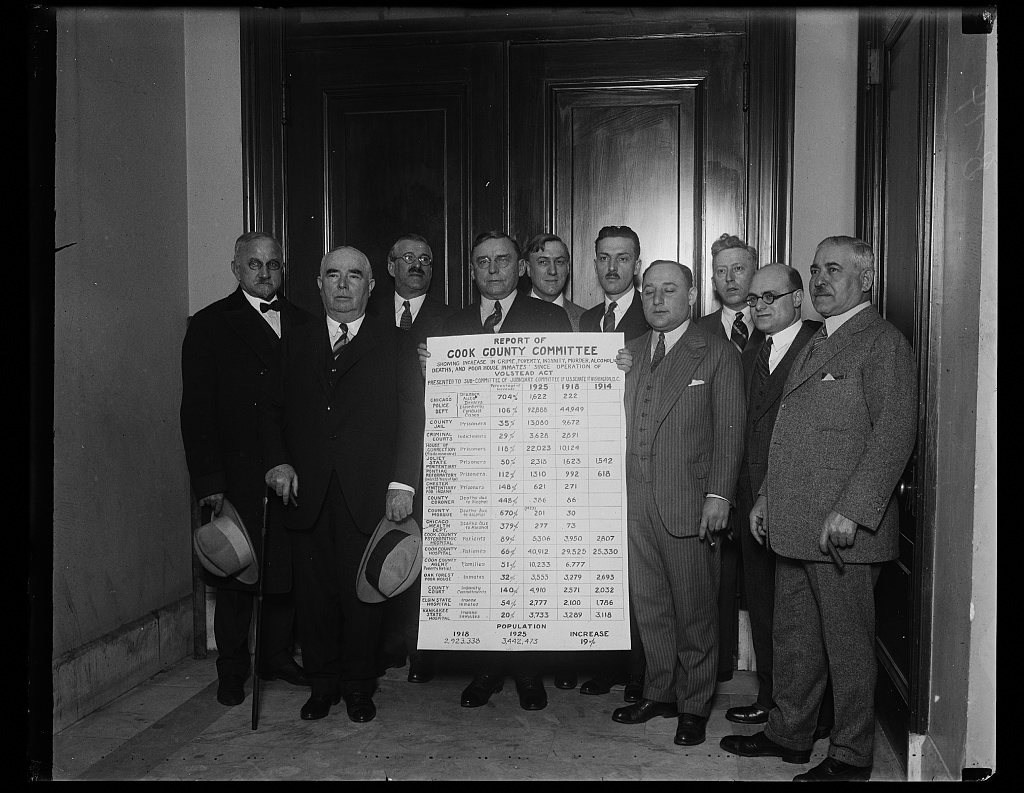 photographCook County Committee at the wet and dry hearing, Capitol, 8 April (about 1926) (Library of Congress)Harris & Ewing photograph of ten men holding a "Cook County Committee" placard, identified in the caption as Chicago wets at the Prohibition hearing at the Capitol on 8 April. A copy is stored here.
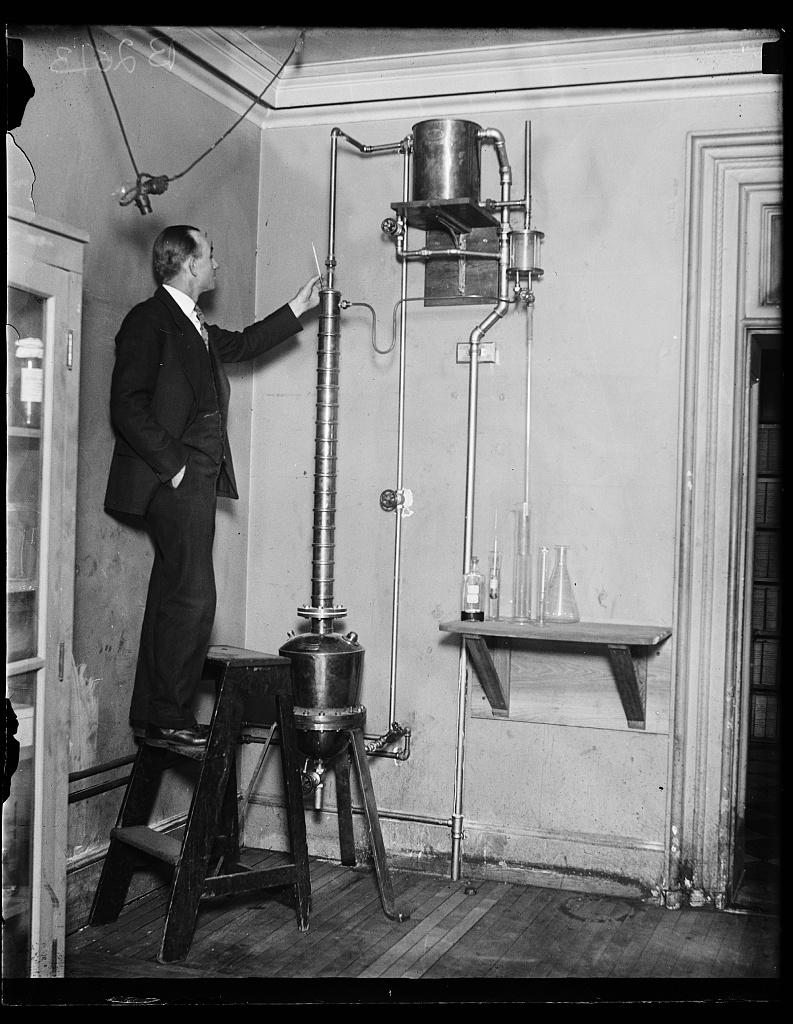 photographProhibition Bureau test still in the Treasury laboratory, Harris & Ewing (about 1927)Harris & Ewing photograph of G.F. Beyer, chief chemist of the Prohibition Unit, with a small copper still set up in the laboratory atop the Treasury building. A copy is stored here.
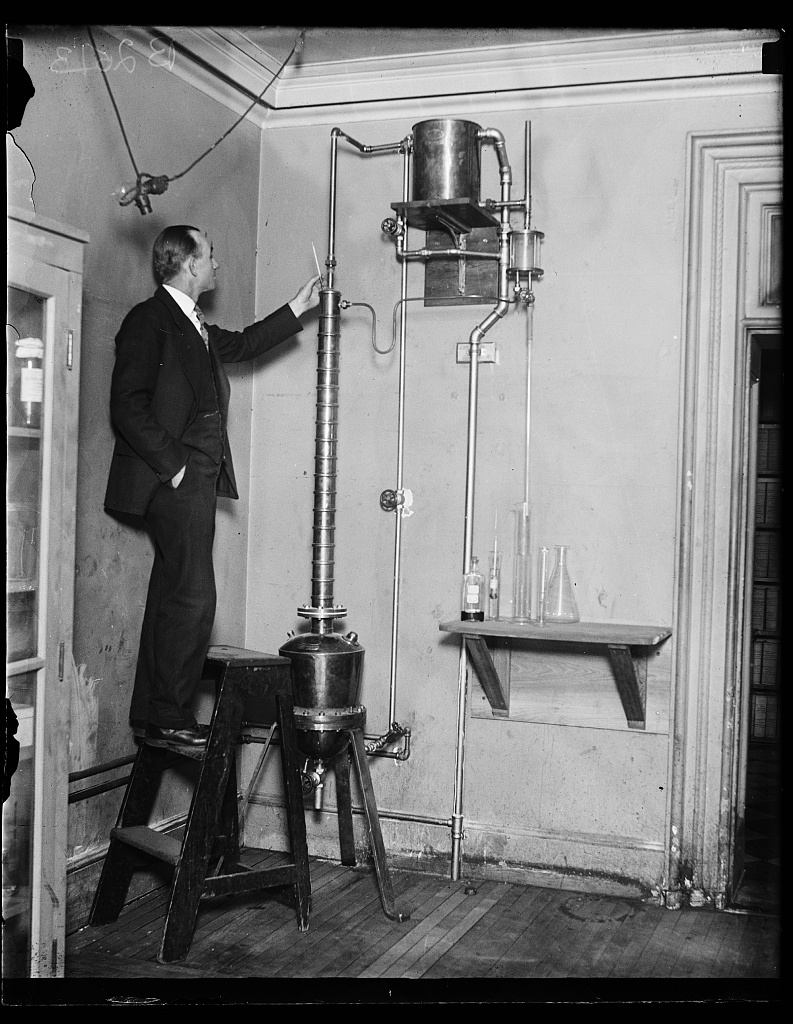 photographProhibition Bureau laboratory still atop the Treasury building (1927 or 1928)Library of Congress Harris & Ewing photograph captioned "Uncle Sam has turned distiller": the Prohibition Bureau's miniature copper still in a Treasury laboratory, used to test formulae for a non-poisonous alcohol denaturant.
 photographG.A. Youngquist sworn in to succeed Mabel Walker Willebrandt (22 November 1929)Library of Congress Harris & Ewing photograph captioned "Succeeds Miss Willebrandt": G.A. Youngquist sworn in as Assistant Attorney General, with Attorney General William D. Mitchell.
 photograph"German police dog used to trace bootleggers," Harris & Ewing, 1923 (Library of Congress)Harris & Ewing photograph of a person in an overcoat in an open field with a German police dog jumping up beside them. The title is unverified caption data. A copy is stored here.
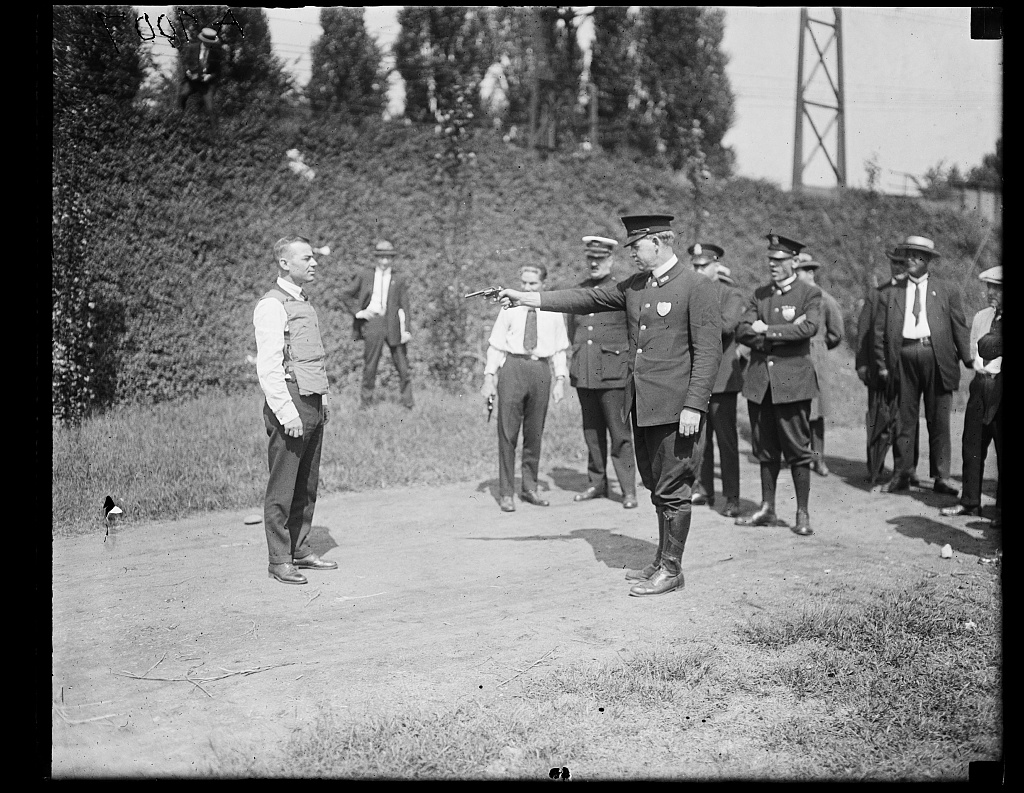 photographDemonstrator of bullet-proof vest, 1923 (Library of Congress)Harris & Ewing glass-negative photograph, dated [1923], of a man in a vest standing while a uniformed police officer aims a pistol at him, with other officers and civilians watching. A demonstration of body armor.
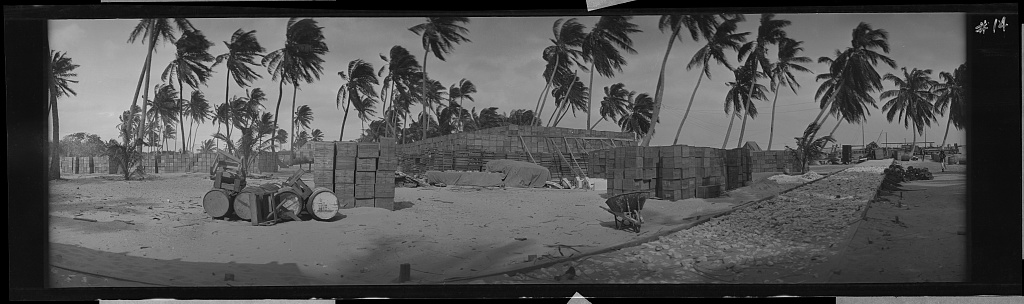 photographWhiskey cases stacked on a beach, possibly Bimini, BahamasLibrary of Congress panoramic photograph of hundreds of cases of whiskey stacked on a beach. The Library gives the place as "possibly Bimini, Bahamas" and the date as "probably during prohibition".
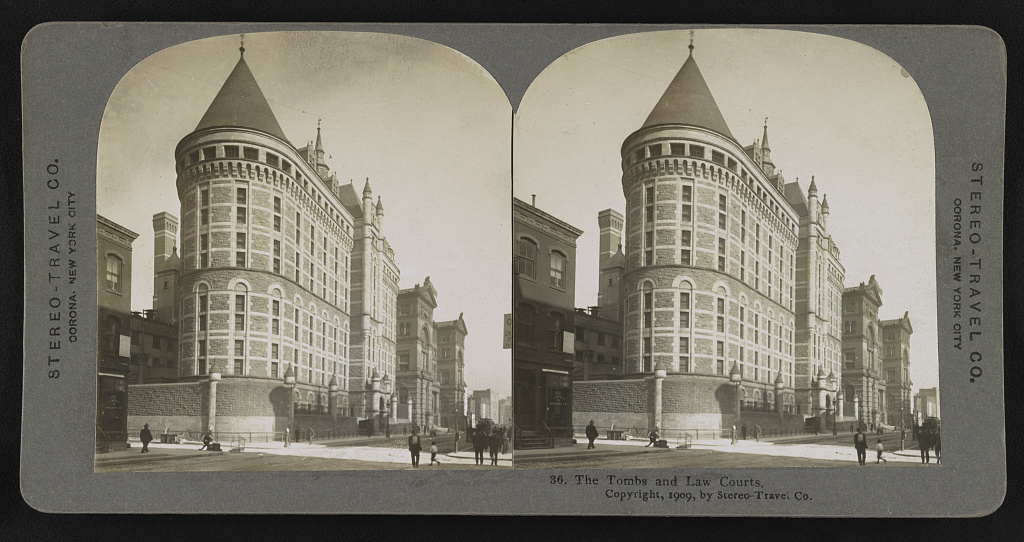 photographThe Tombs and Law Courts, New York, 1909 (Library of Congress)Stereograph of the Tombs and the Law Courts building in New York, copyright 1908 and issued 1909. The record names no case. A copy is stored here.
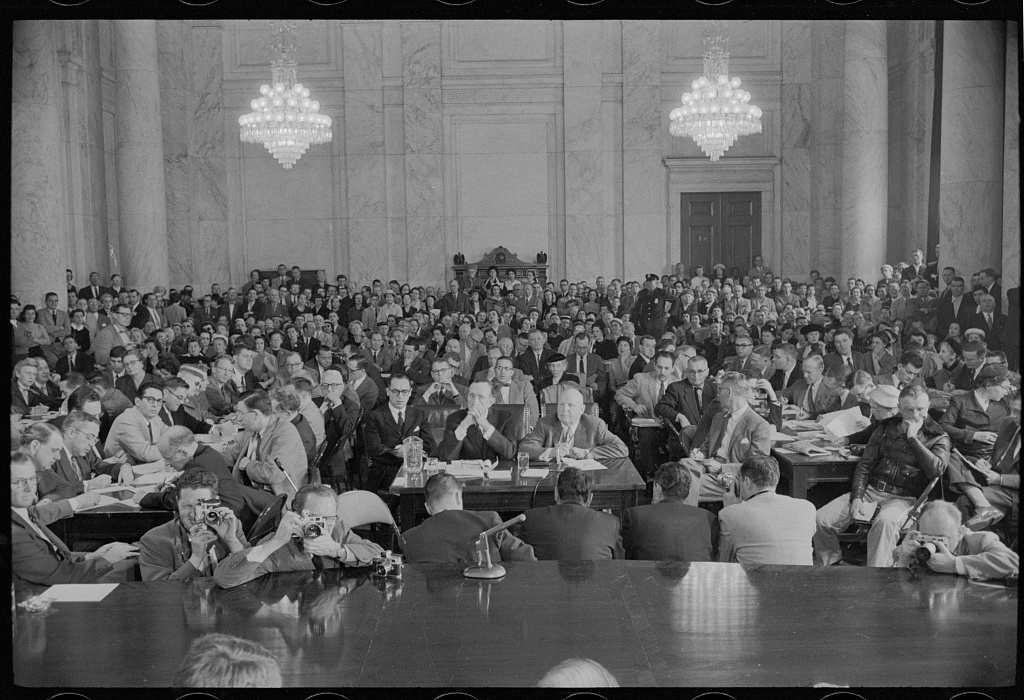 photographMcClellan Committee hearing room, 26 February 1957, wide view (Library of Congress)U.S. News & World Report photograph by Warren K. Leffler of a crowded Senate hearing room, 26 February 1957, logged "McClellan Committee investigating Teamsters Union." A copy is stored here.
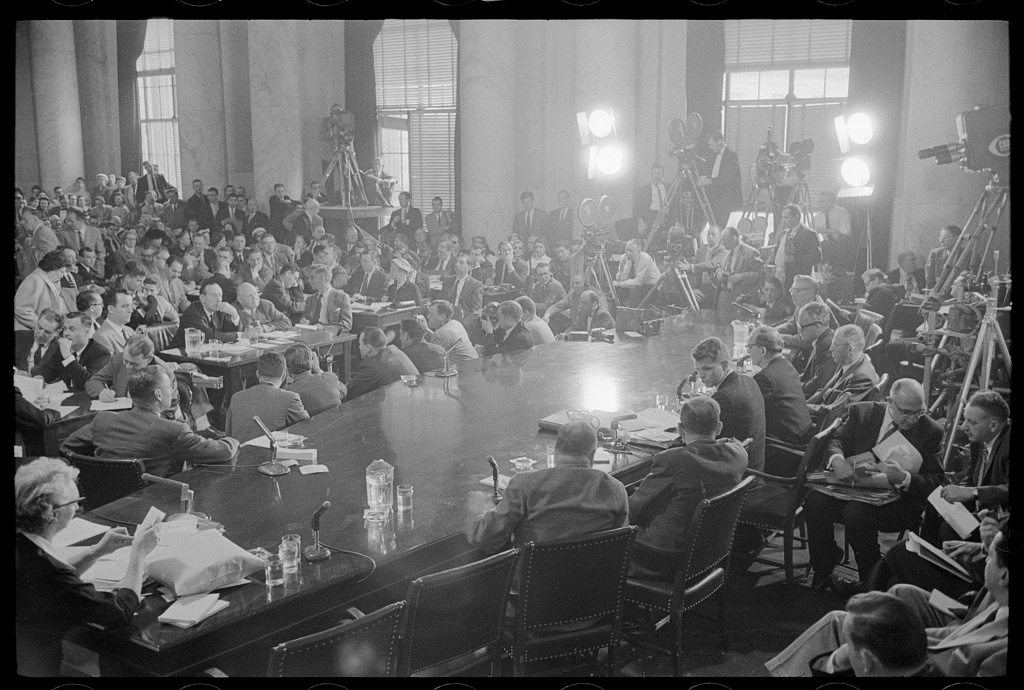 photographMcClellan Committee hearing room, 26 February 1957, view across the table (Library of Congress)U.S. News & World Report photograph by Warren K. Leffler looking across a committee table toward a packed hearing room with press lights and cameras, 26 February 1957. A copy is stored here.
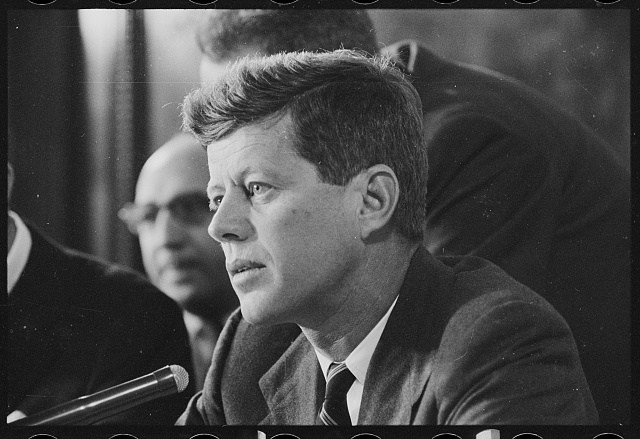 photographSenator John F. Kennedy at a McClellan Committee session on the Teamsters, 26 February 1957 (Library of Congress)Warren K. Leffler's U.S. News & World Report photograph from a session of the committee investigating the Teamsters, dated 26 February 1957 in the log book. The Library's summary says it shows Senator John F. Kennedy as a member of the committee.
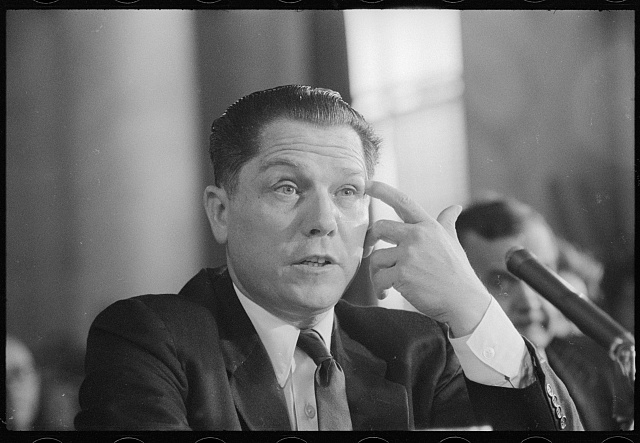 photographJames R. Hoffa at the witness table of the Senate rackets committee, 20 August 1957 (Library of Congress)Warren K. Leffler's U.S. News & World Report photograph of James R. Hoffa testifying before the McClellan Committee, dated 20 August 1957 in the log book. A copy is stored here.
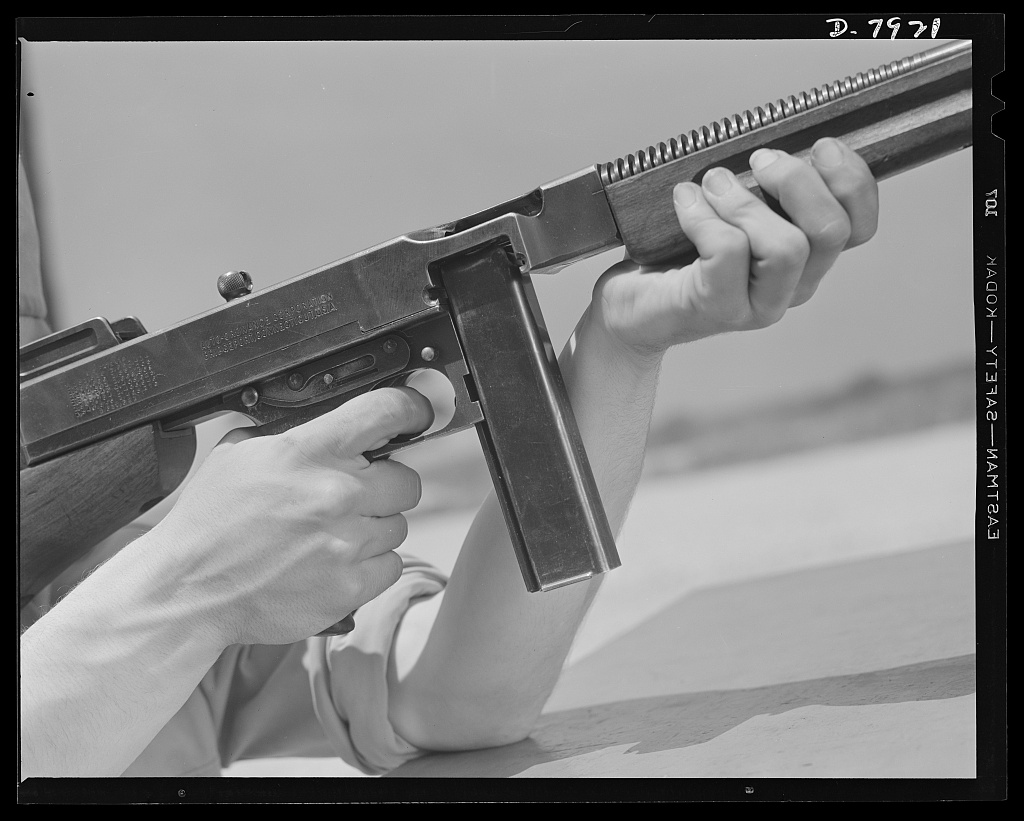 photographThe .45 caliber Thompson submachine gun at Fort Knox, June 1942 (Library of Congress, Office of War Information)Alfred T. Palmer photograph for the Office of War Information, June 1942, of the .45 caliber Thompson submachine gun at Fort Knox. Military context, eight years after the National Firearms Act; kept as a reference image of the weapon type.
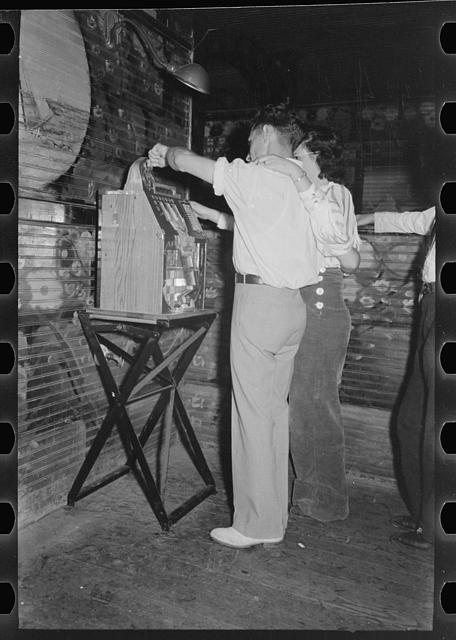 photographCouple playing slot machine, Raceland, Louisiana (1938)Farm Security Administration photograph by Russell Lee of two people at a slot machine in a barroom at Raceland, Lafourche Parish, Louisiana, in the autumn of 1938.
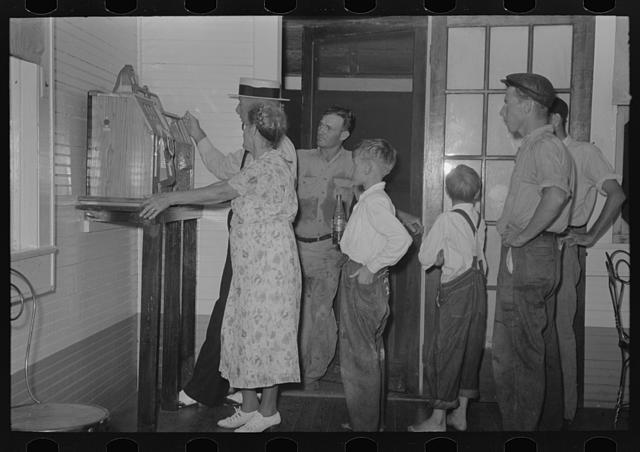 photographPeople watching slot machine being played, Pilottown, Louisiana (1938)Farm Security Administration photograph by Russell Lee of onlookers around a slot machine at Pilottown, Plaquemines Parish, Louisiana, September 1938.
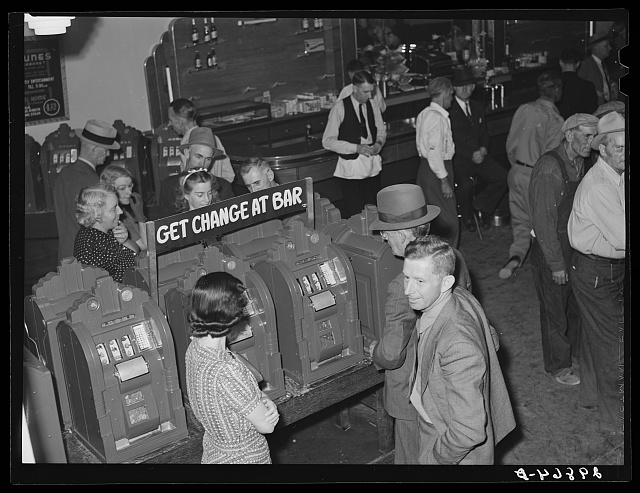 photographSlot machine players, Las Vegas, Nevada (1940)Farm Security Administration photograph by Arthur Rothstein of people at a bank of slot machines in a Las Vegas club, March 1940.
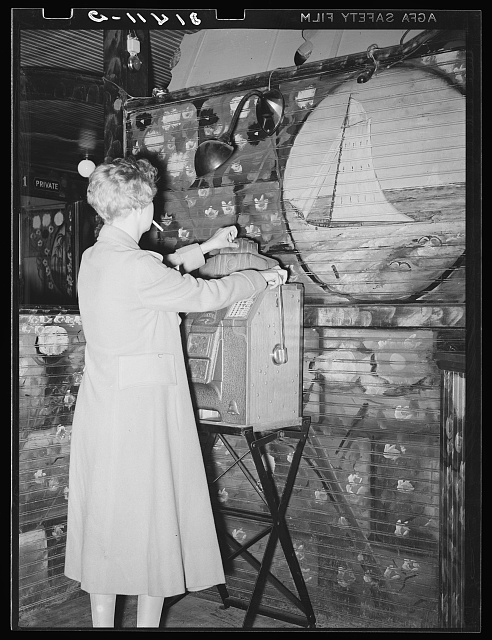 photographGirl playing slot machine in decorated barroom, Raceland, Louisiana (1938)Farm Security Administration photograph by Russell Lee, captioned as a girl playing a slot machine in a decorated barroom at Raceland, Louisiana, September 1938.
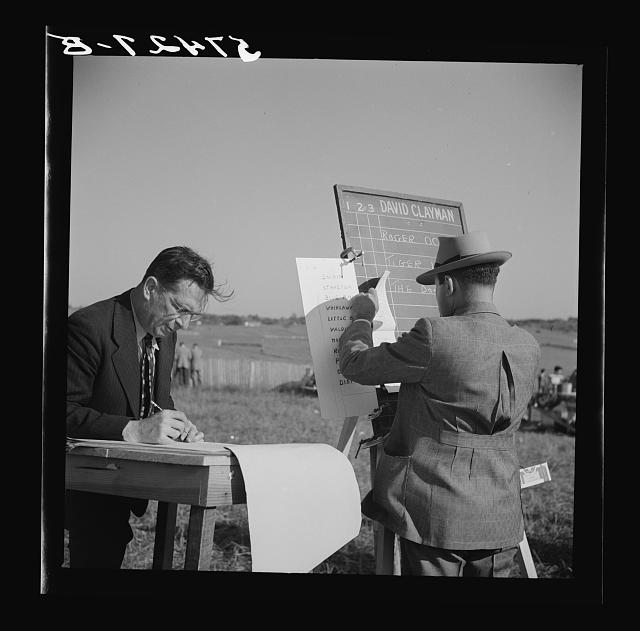 photographBookie figuring out bets for Kentucky Derby, Warrenton, Virginia (1941)Farm Security Administration photograph by Marion Post Wolcott, captioned as a bookie figuring out bets for the Kentucky Derby at Warrenton, Fauquier County, Virginia, May 1941.
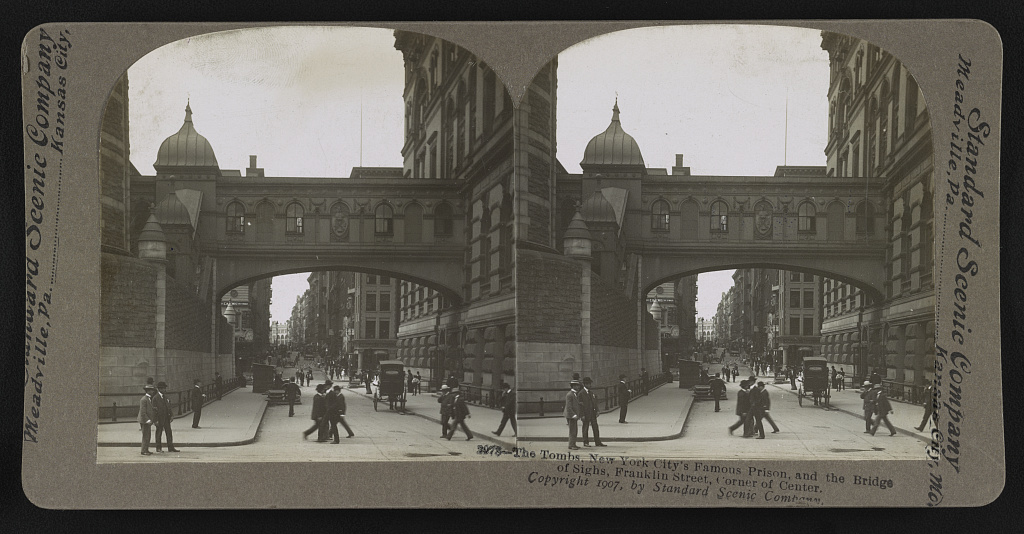 photographThe Tombs and the Bridge of Sighs, stereograph, 1907 (Library of Congress)Standard Scenic Company stereograph of the Tombs and the Bridge of Sighs on Franklin Street at Centre Street, copyright 1907. The record names no case. A copy is stored here.
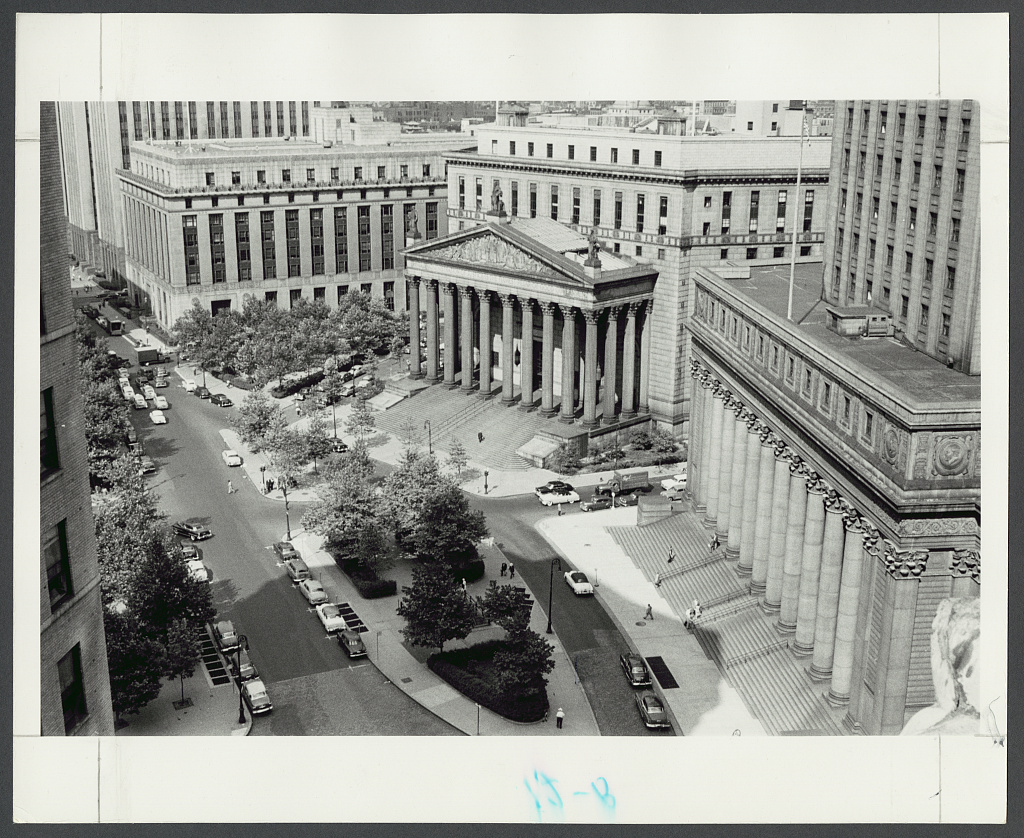 photographAerial view of the New York County Courthouse and the Foley Square Courthouse, June 1954 (Library of Congress)Angelo Rizzuto photograph in the Anthony Angel Collection: an aerial view of the New York County Courthouse and the Foley Square Courthouse, June 1954. The record names no case. A copy is stored here.
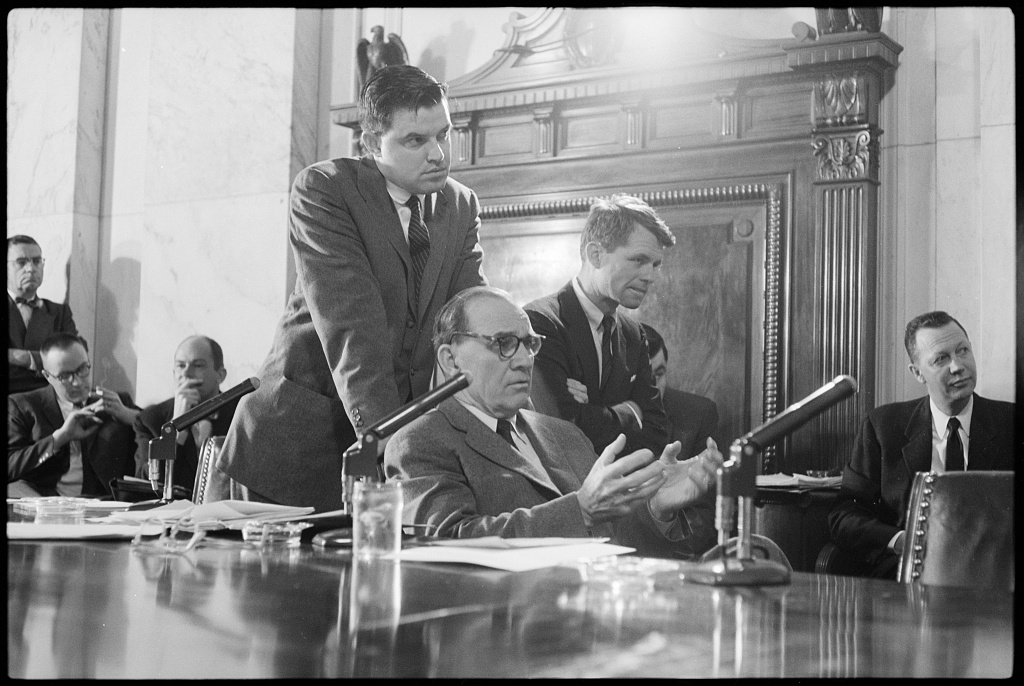 photographSenate Rackets Committee hearing on jukeboxes, 10 February 1959 (Library of Congress)U.S. News & World Report photograph by Marion S. Trikosko of senators of the Senate Rackets Committee and counsel Robert F. Kennedy at a hearing on organized crime and jukeboxes, 10 February 1959. A copy is stored here.
 photograph"Fulton Fish Market, Brooklyn Bridge": two men on a pier, Toni Frissell, October 1954 (frame 02790)Toni Frissell color photograph, titled by the Library "Fulton Fish Market, Brooklyn Bridge," that shows two men seated on a pier with a suspension bridge behind them. No market activity is visible. A copy is stored here.
 photograph"Fulton Fish Market, Brooklyn Bridge": two men on a pier, Toni Frissell, October 1954 (frame 02794)A second Toni Frissell color frame titled by the Library "Fulton Fish Market, Brooklyn Bridge," showing two men seated on a pier with the bridge behind them. No market activity is visible. A copy is stored here.
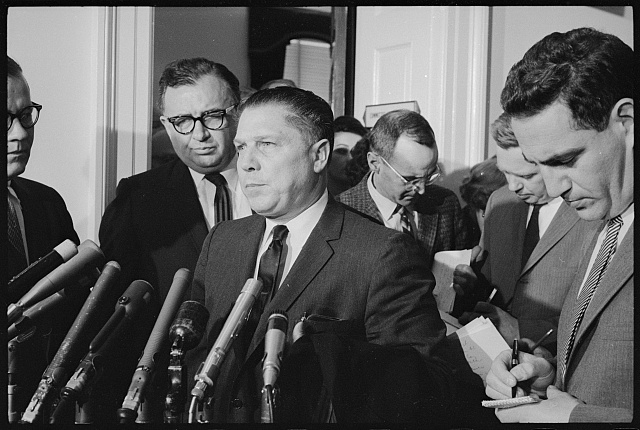 photographJimmy Hoffa speaking to reporters after a congressional hearing, 1 February 1963 (Library of Congress)Marion S. Trikosko's U.S. News & World Report photograph of Teamster president Jimmy Hoffa at a bank of microphones, interviewed by reporters after testifying at a congressional hearing on 1 February 1963. A copy is stored here.
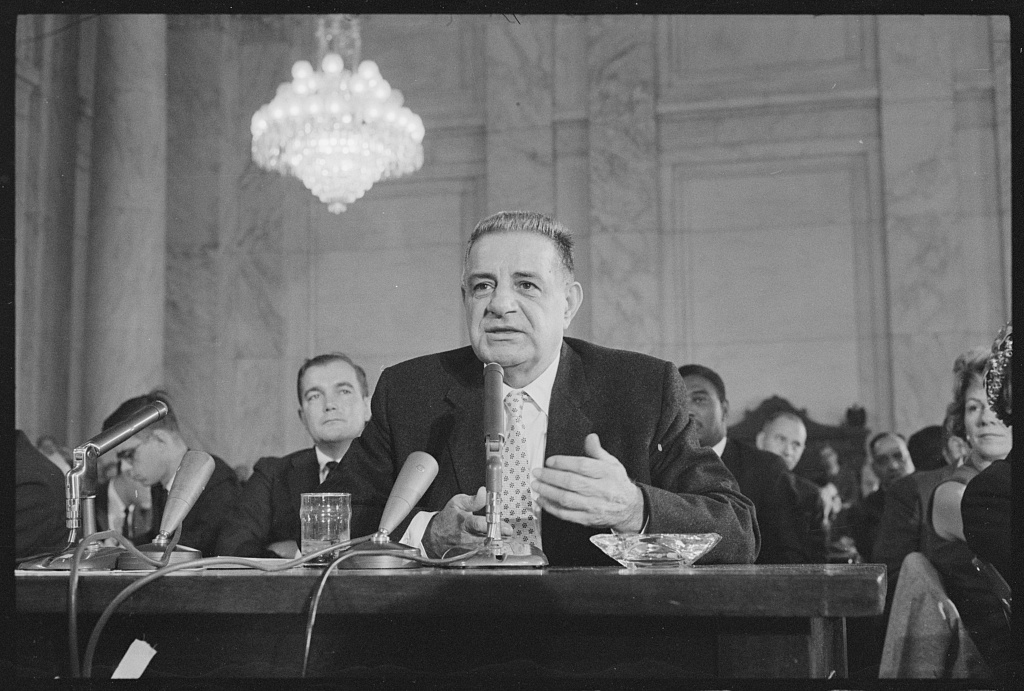 photographJoseph Valachi testifying, 27 September 1963 (Library of Congress)U.S. News & World Report photograph by Warren K. Leffler of Joseph Valachi testifying before the Senate Permanent Subcommittee on Investigations (McClellan Committee) on 27 September 1963. A copy is stored here.
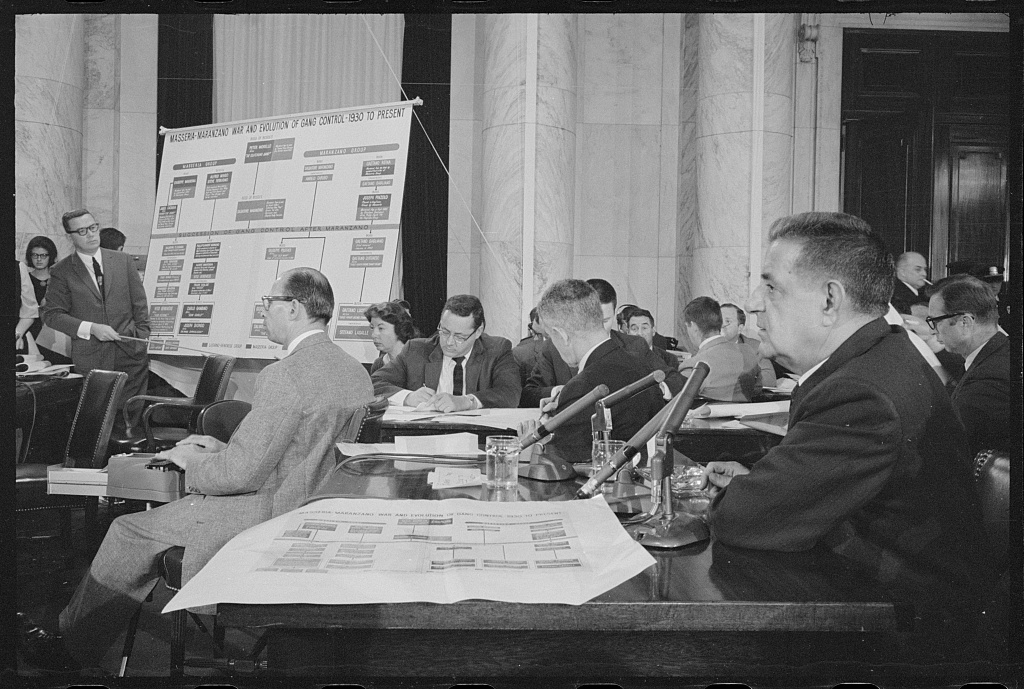 photographJoseph Valachi testifying beside a chart, 1 October 1963 (Library of Congress)U.S. News & World Report photograph by Thomas J. O'Halloran of Joseph Valachi testifying before the Senate subcommittee on 1 October 1963 while a man points to a chart. A copy is stored here.
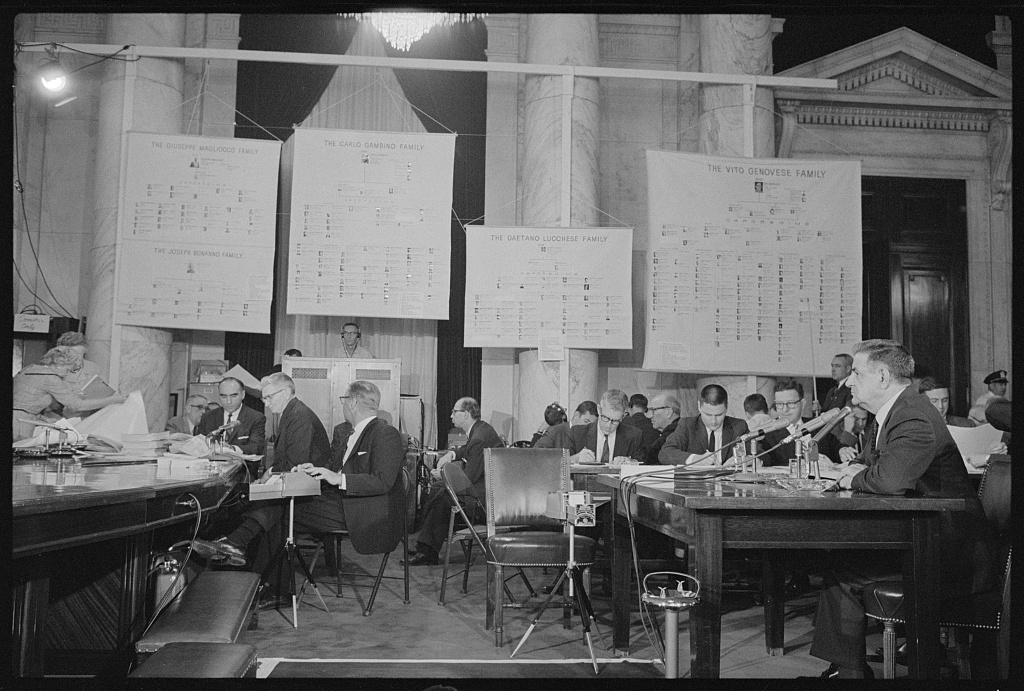 photographJoseph Valachi testifying, 8 October 1963 (Library of Congress)U.S. News & World Report photograph by Marion S. Trikosko of Joseph Valachi testifying before the Senate Permanent Subcommittee on Investigations on 8 October 1963, with organizational charts hanging in the room. A copy is stored here.
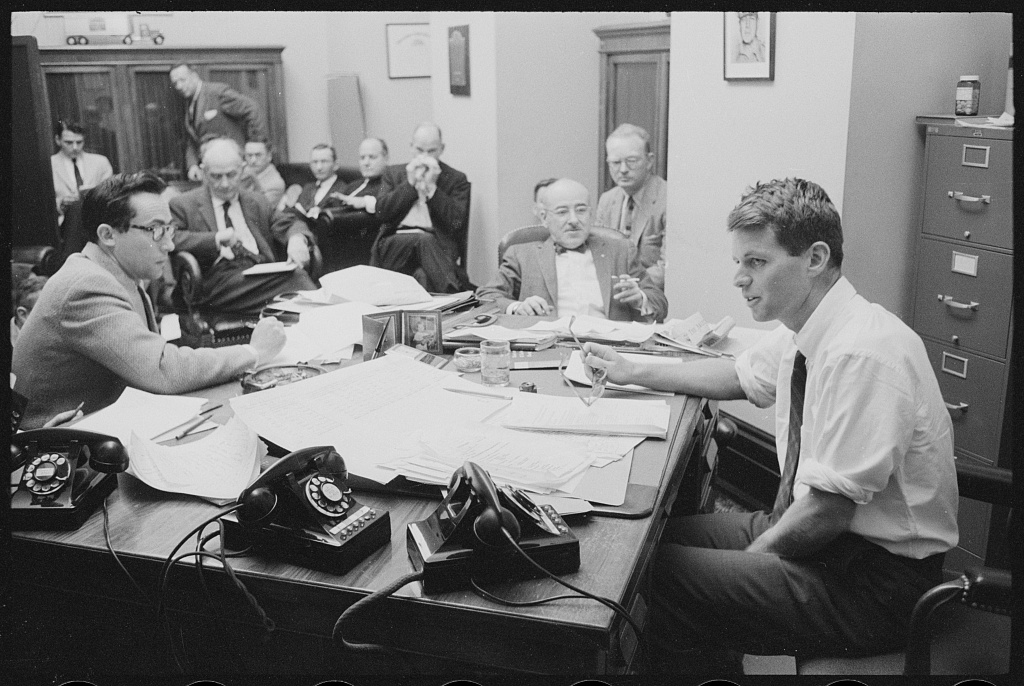 photographRobert Kennedy briefing the press for the McClellan Committee, 20 January 1958 (Library of Congress)U.S. News & World Report photograph by Warren K. Leffler of Robert Kennedy, chief counsel to the Senate McClellan Committee, briefing the press on graft in the Operating Engineers Union, 20 January 1958. A copy is stored here.
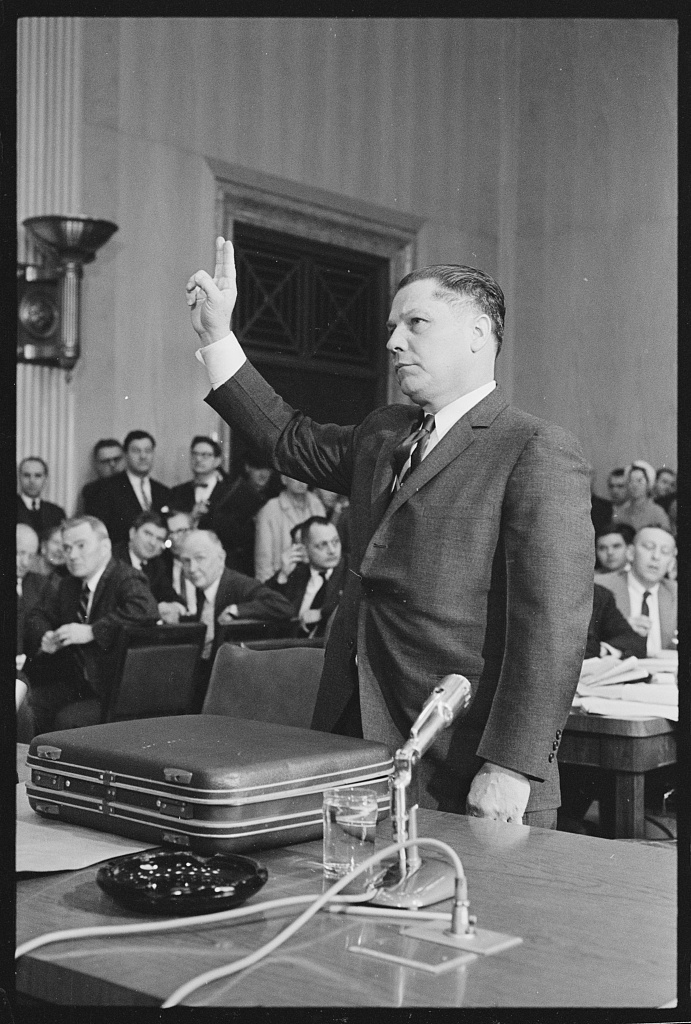 photographJimmy Hoffa before the McClellan Committee, right hand raised, 24 January 1961 (Library of Congress)U.S. News & World Report photograph by John T. Bledsoe of Teamster President James "Jimmy" Hoffa standing with his right hand raised before the Senate Select Committee on Improper Activities in Labor and Management, 24 January 1961. A copy is stored here.
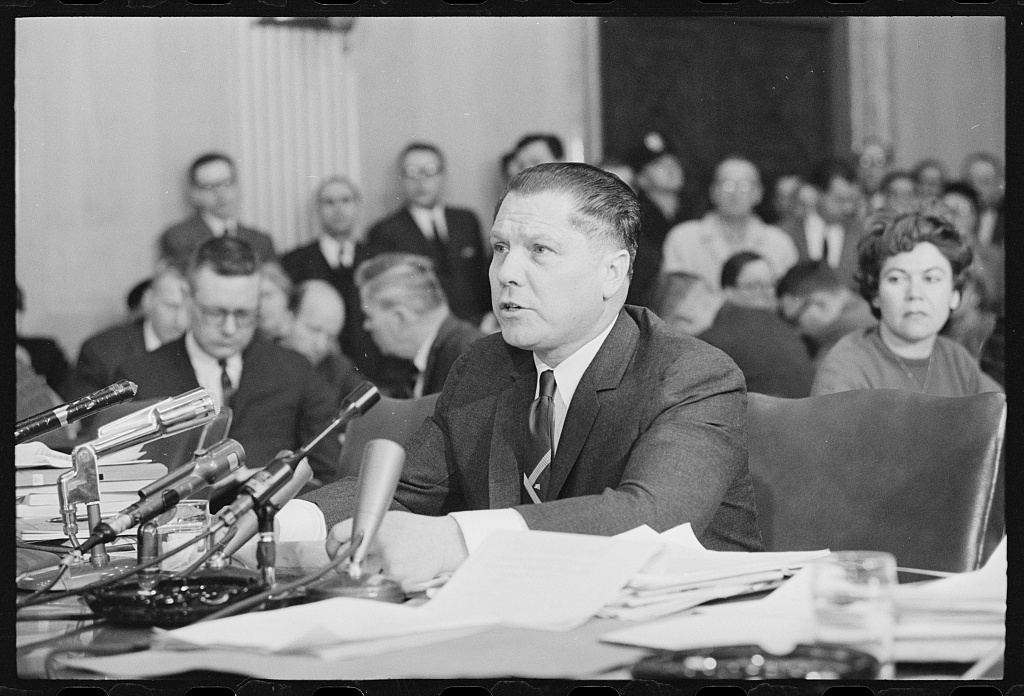 photographJimmy Hoffa testifying before the McClellan Committee, 24 January 1961 (Library of Congress)U.S. News & World Report photograph by John T. Bledsoe of Teamster President James "Jimmy" Hoffa testifying before the Senate Select Committee on Improper Activities in Labor and Management, 24 January 1961. A copy is stored here.
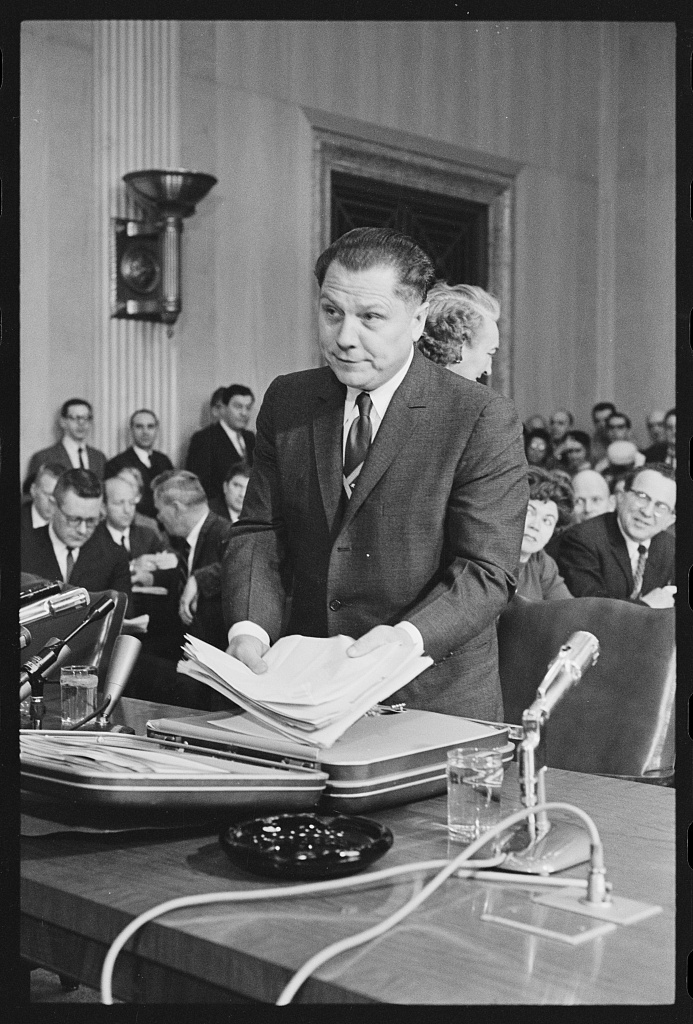 photographJames R. Hoffa holding a stack of papers before the Select Committee, 24 January 1961 (Library of Congress)U.S. News & World Report photograph by John T. Bledsoe of Teamsters president James R. Hoffa holding a stack of papers while appearing before the Select Committee, 24 January 1961. A copy is stored here.
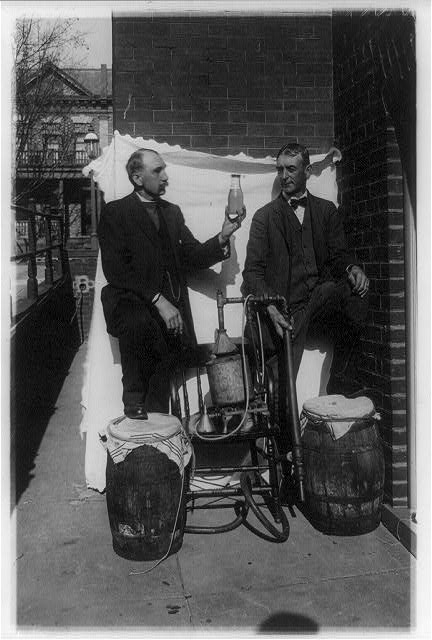 photographTwo men with a small still, one holding up a bottle of liquorLibrary of Congress National Photo Company photograph of two men outdoors with a small still, one holding up a bottle. The record gives no caption, place or date beyond a 1921-1932 range.
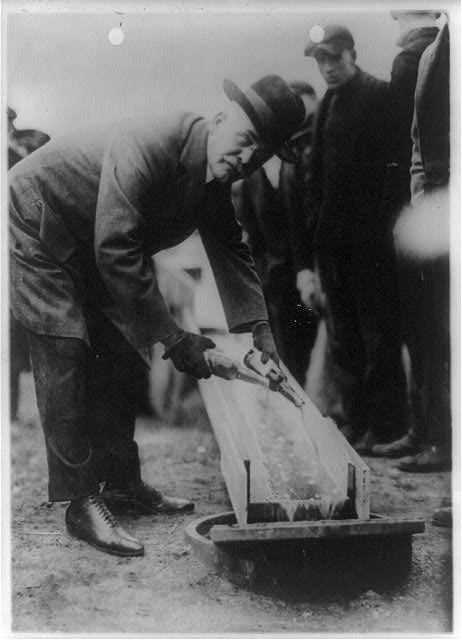 photographZion City, Illinois, destroys 80,000 pint bottles of beerLibrary of Congress National Photo Company photograph of the mayor of Zion City, Illinois, pouring out two bottles in what the title calls the destruction of 80,000 pint bottles of beer. Dated between 1921 and 1932.
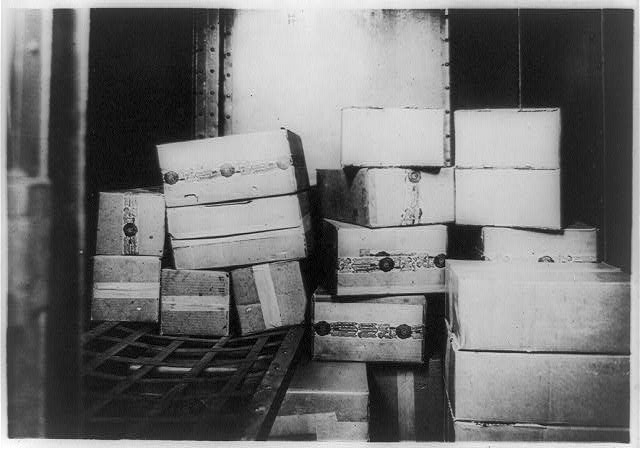 photographCases of whiskey confiscated by the Internal Revenue BureauLibrary of Congress National Photo Company photograph of stacked cases of whiskey that the title says were confiscated by the Internal Revenue Bureau. Dated by the Library between 1921 and 1932.
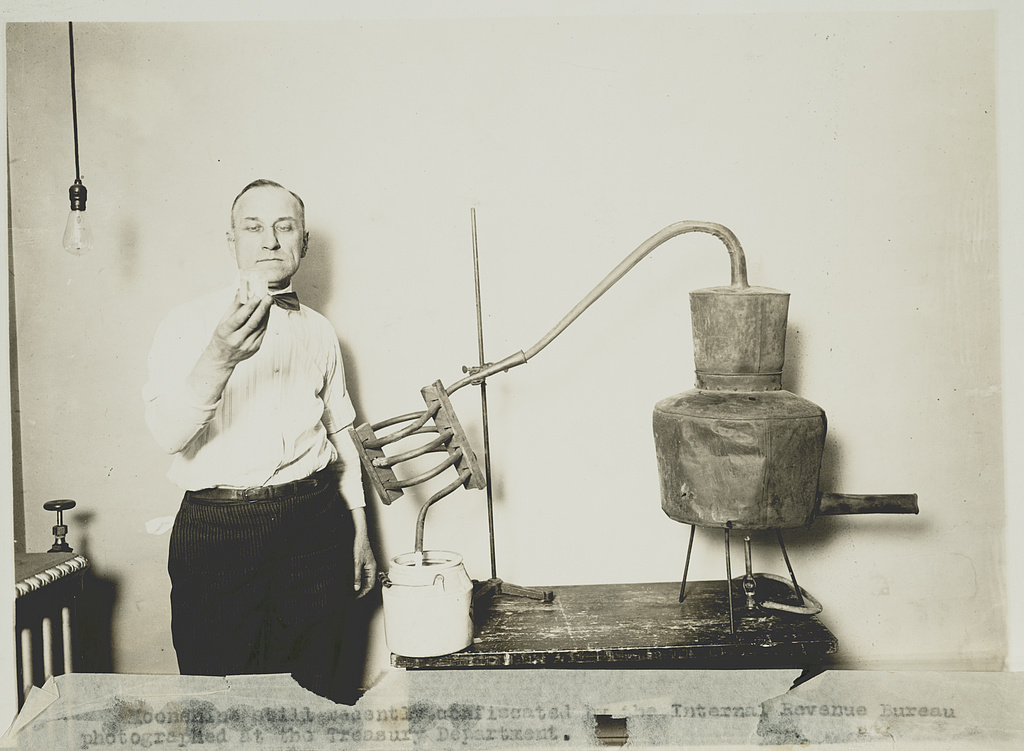 photographMoonshine still confiscated by the Internal Revenue Bureau, photographed at the Treasury Department (Library of Congress)National Photo Company photograph of a still recently confiscated by the Internal Revenue Bureau, photographed at the Treasury Department in Washington, with a man standing beside it. Prohibition-era evidence, not a weapon.
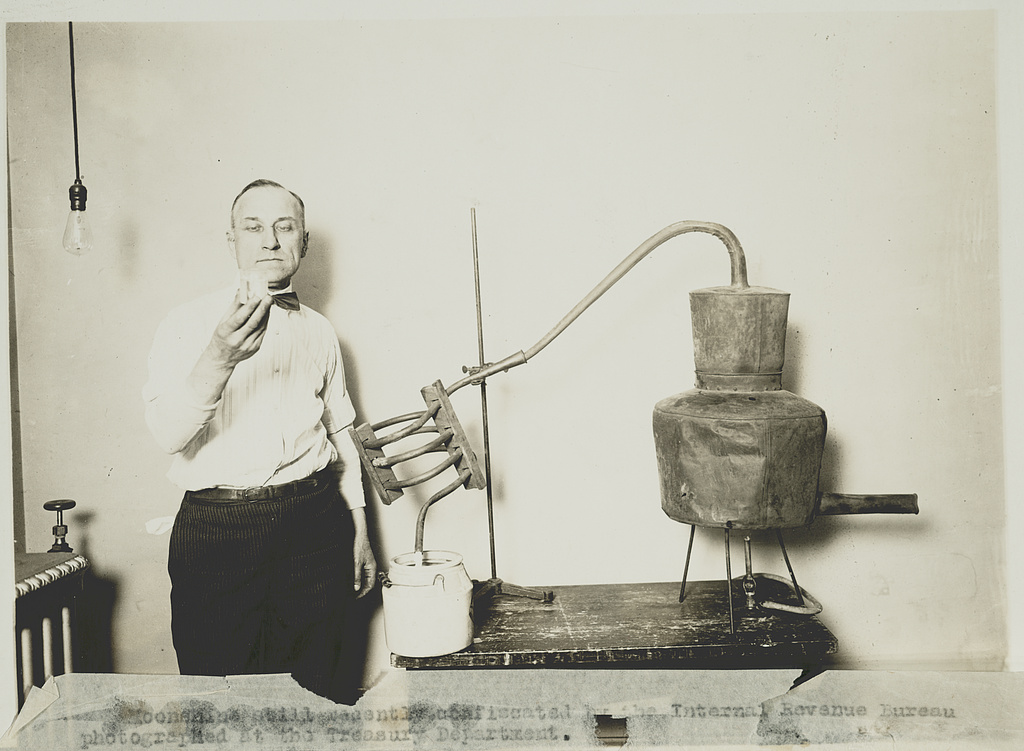 photographMoonshine still confiscated by the Internal Revenue Bureau, shown at the Treasury DepartmentLibrary of Congress National Photo Company photograph of a confiscated moonshine still displayed at the Treasury Department in Washington, with a man looking at the contents of a glass.
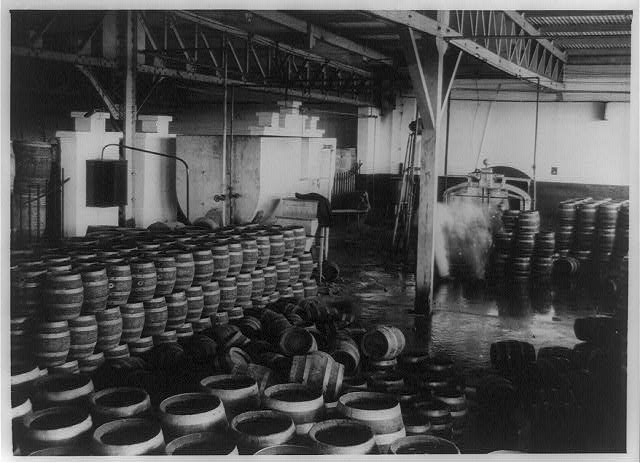 photographBarrels of liquor in a building (Library of Congress: "confiscated(?)")Library of Congress National Photo Company photograph of barrels of liquor in a building. The Library's title marks "confiscated" as uncertain, and the record gives no place or date beyond 1921-1932.
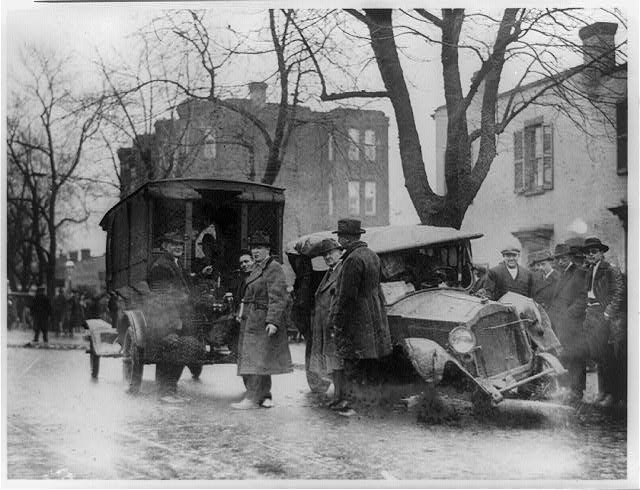 photographBootleggers' wrecked car after a chase by Capitol police, Washington (21 January 1922)Library of Congress National Photo Company photograph of a wrecked automobile and bystanders after a chase through Washington streets. The title says the bootleggers "come to grief at the hands of the Capitol police".
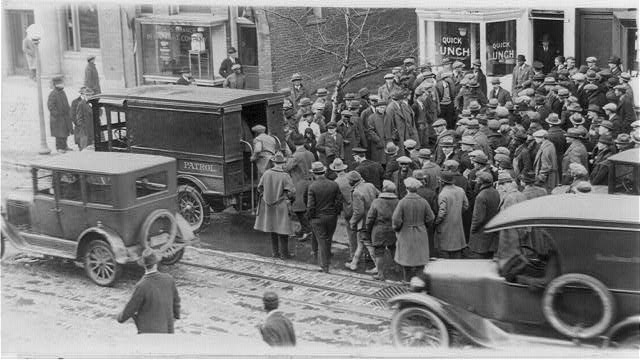 photographPolice raid a gambler's den: book makers taken from the E Street address (1925)A Library of Congress print of the January 1925 National Photo Company view of a police raid on E Street, Washington, captioned "Several loads of book makers were taken from the E. St. address by the police."
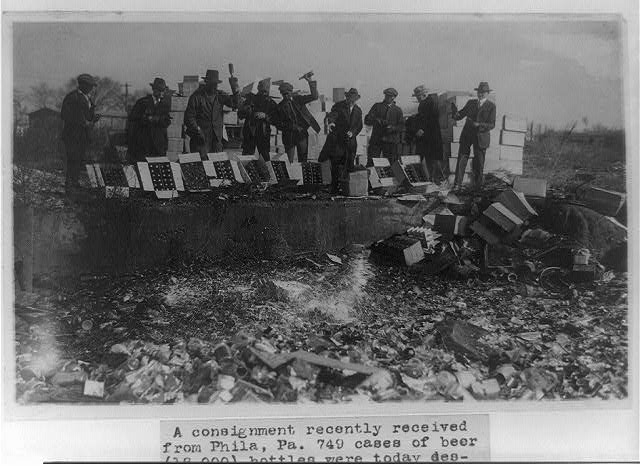 photograph749 cases of beer destroyed in the District of Columbia (20 November 1923)Library of Congress National Photo Company photograph of nine men smashing bottles at a dump. The caption says 749 cases of beer (18,000 bottles) received from Philadelphia were destroyed that day.
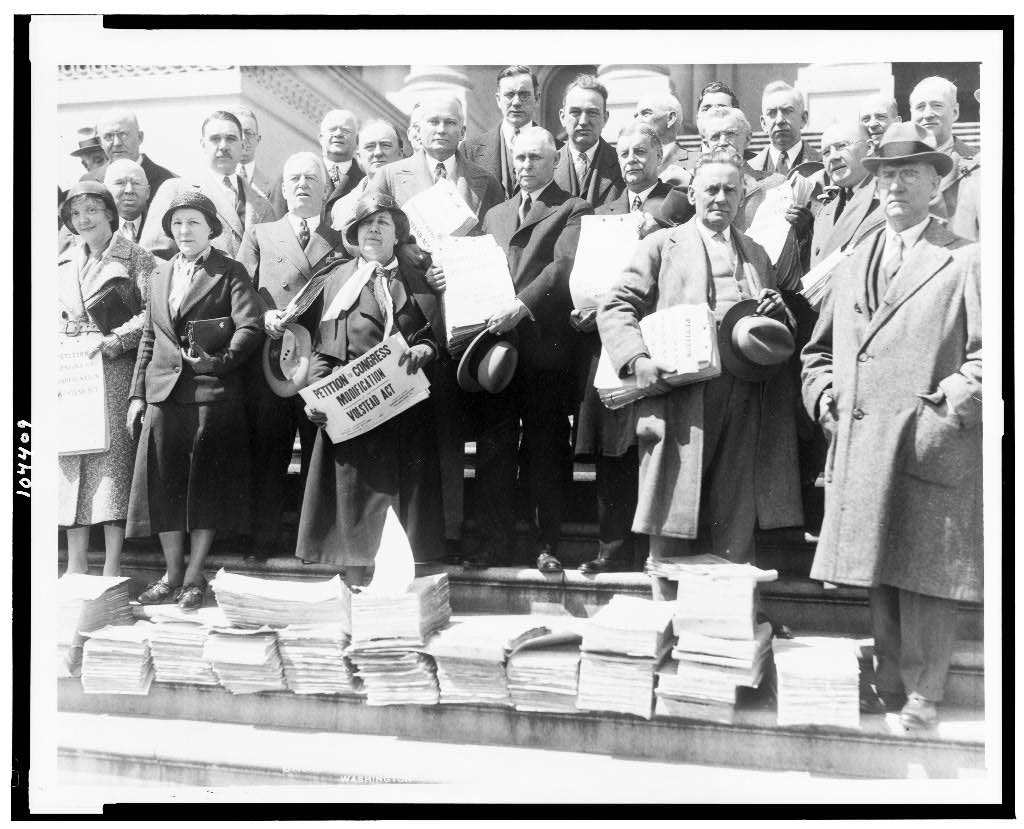 photographModification League presents a petition of more than 5,000,000 names to Congress (15 April 1932)Library of Congress Underwood & Underwood photograph of members of the Congressional Districts Modification League with a petition urging modification of the National Prohibition Law, and members of Congress who received it.
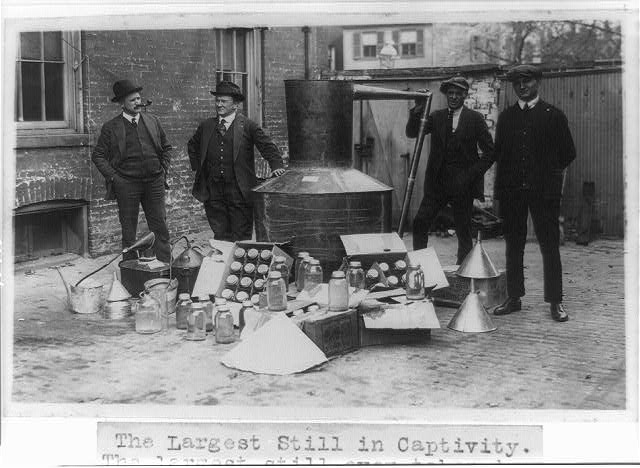 photographThe Largest Still in Captivity, Washington, 11 November 1922 (Library of Congress)National Photo Company photograph of a still and bottles of liquor, with four men named in the summary, described as the largest still ever taken in the national capital.
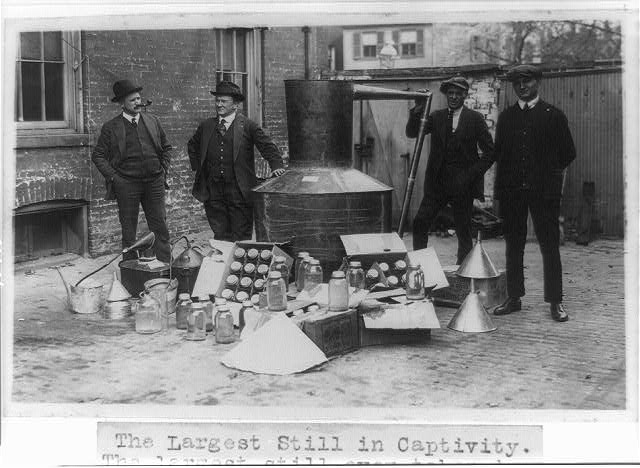 photograph"The Largest still in captivity", Washington, D.C. (11 November 1922)Library of Congress National Photo Company photograph captioned "The Largest still in captivity", showing four named men with the largest still taken in the national capital, as the record states.
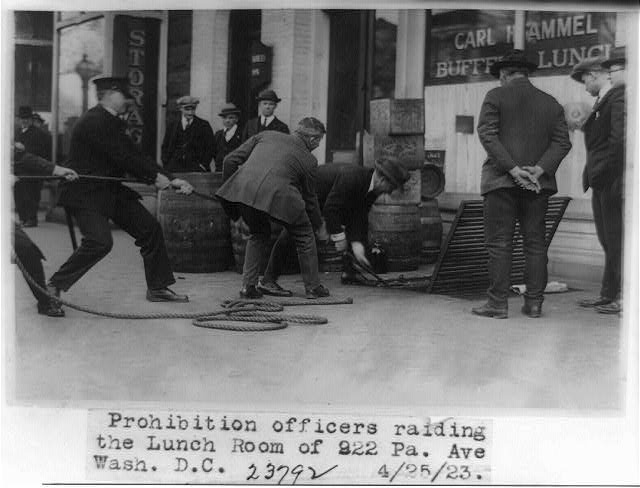 photographProhibition officers raiding a lunch room at 922 Pennsylvania Avenue, Washington (25 April 1923)Library of Congress National Photo Company photograph of prohibition officers handling barrels on the sidewalk in front of a lunch room at 922 Pennsylvania Avenue, Washington, D.C., dated from the printed caption strip.
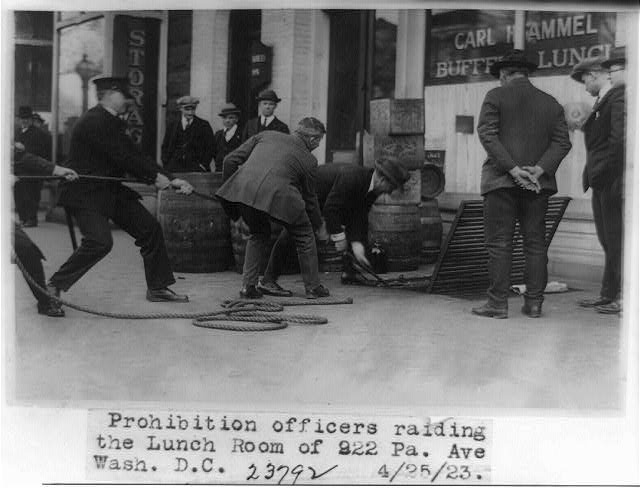 photographProhibition officers raiding a lunch room at 922 Pennsylvania Avenue, Washington, 25 April 1923 (Library of Congress)Library of Congress print of Prohibition officers raiding the lunch room at 922 Pennsylvania Avenue, Washington, D.C., on 25 April 1923. The street number is in the title. A copy is stored here.
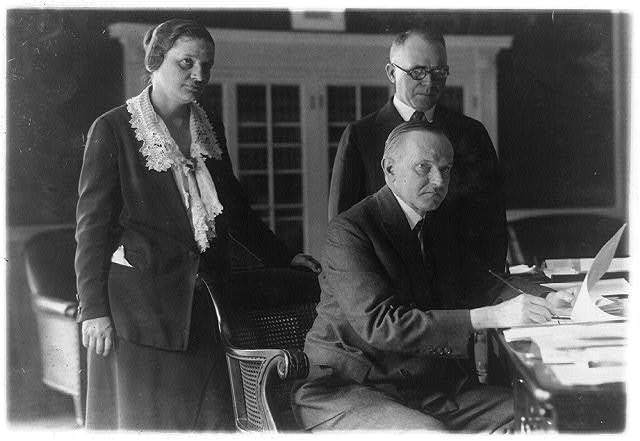 photographPresident Coolidge at his desk with Mabel Willebrandt and a congressman (7 June 1924)Library of Congress National Photo Company photograph of President Calvin Coolidge at a desk with a pen, Mabel Willebrandt and a congressman standing behind him. The record does not say what was being signed.
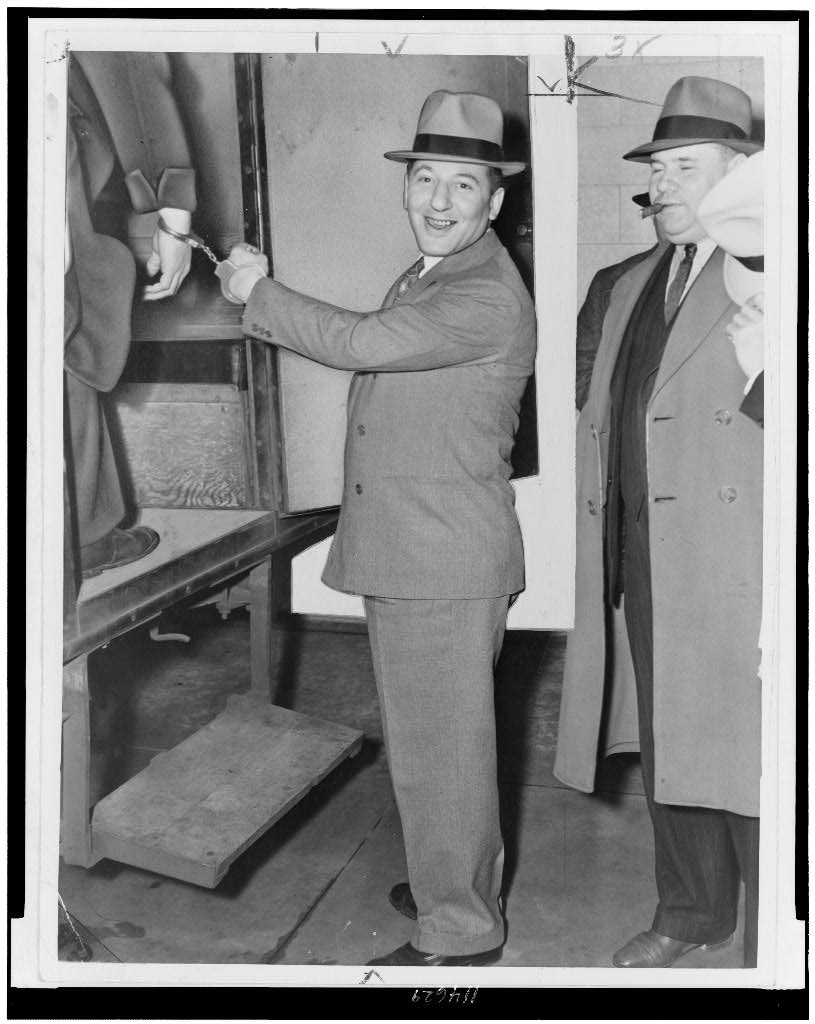 photographLouis "Lepke" Buchalter handcuffed to a guard, 1939 (Library of Congress)World-Telegram & Sun staff photograph by Al Aumuller of Louis "Lepke" Buchalter handcuffed to a guard and getting into a van, dated 1939. A copy is stored here.
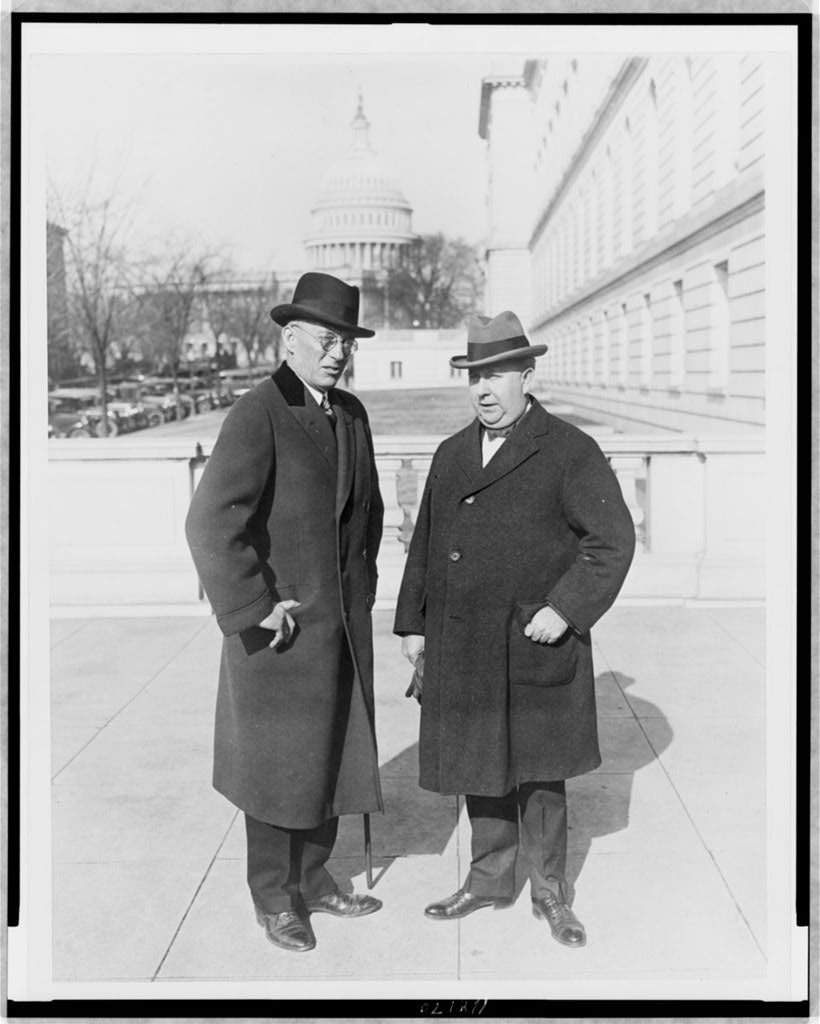 photographLincoln C. Andrews and Roy C. Haynes outside the House of Representatives (1925-1927)Library of Congress National Photo Company photograph of Assistant Secretary of the Treasury Lincoln C. Andrews and Commissioner of Prohibition Roy C. Haynes outside the House. The title says they testified before the Ways and Means Committee.
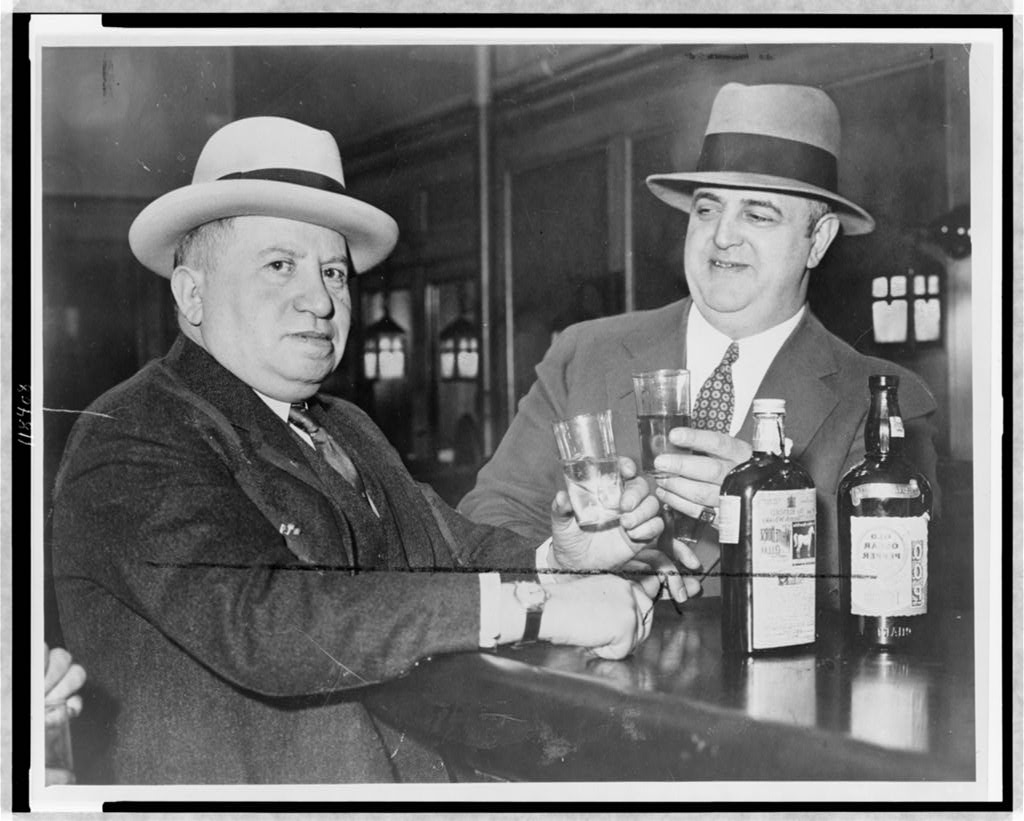 photographIzzy Einstein and Moe Smith sharing a toast in a New York bar (1935)Library of Congress World-Telegram staff photograph of Izzy Einstein and Moe Smith sharing a toast in a New York bar, dated 1935, after repeal. The record does not describe their careers.
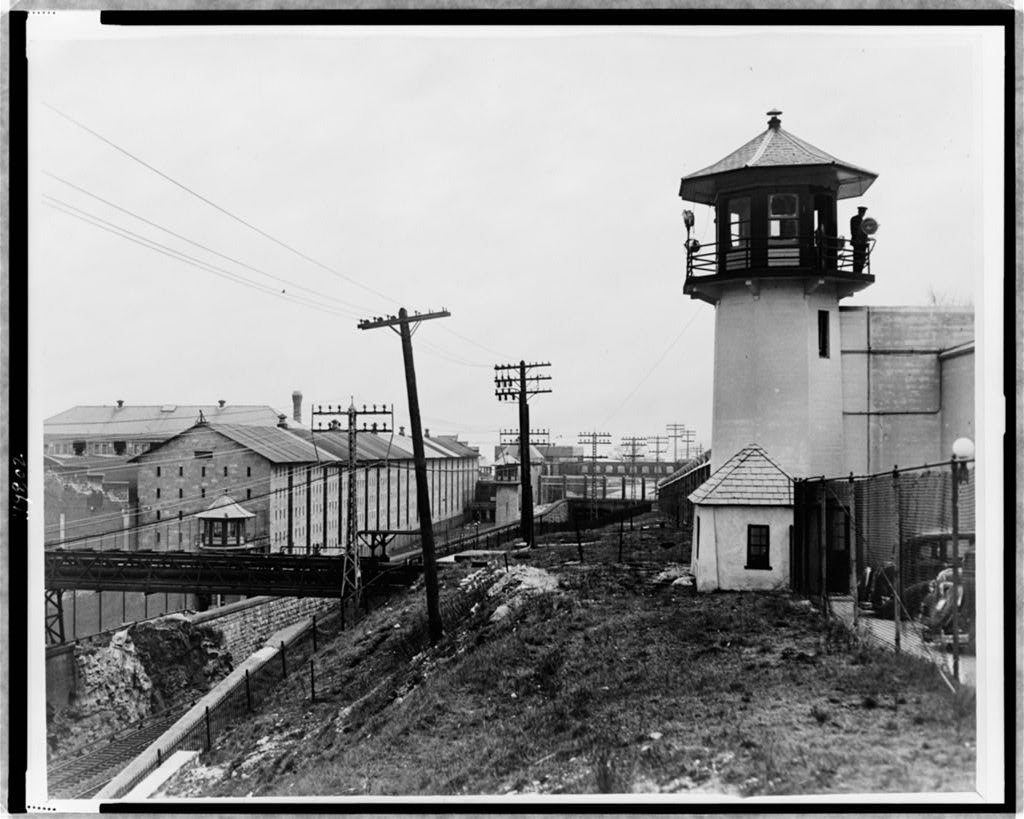 photographSing Sing old cell block and guard tower, 1938 (Library of Congress)New York World-Telegram and the Sun staff photograph by C. M. Stieglitz of Sing Sing prison, with a guard tower and the old cell block. The caption refers to Richard Whitney. A copy is stored here.
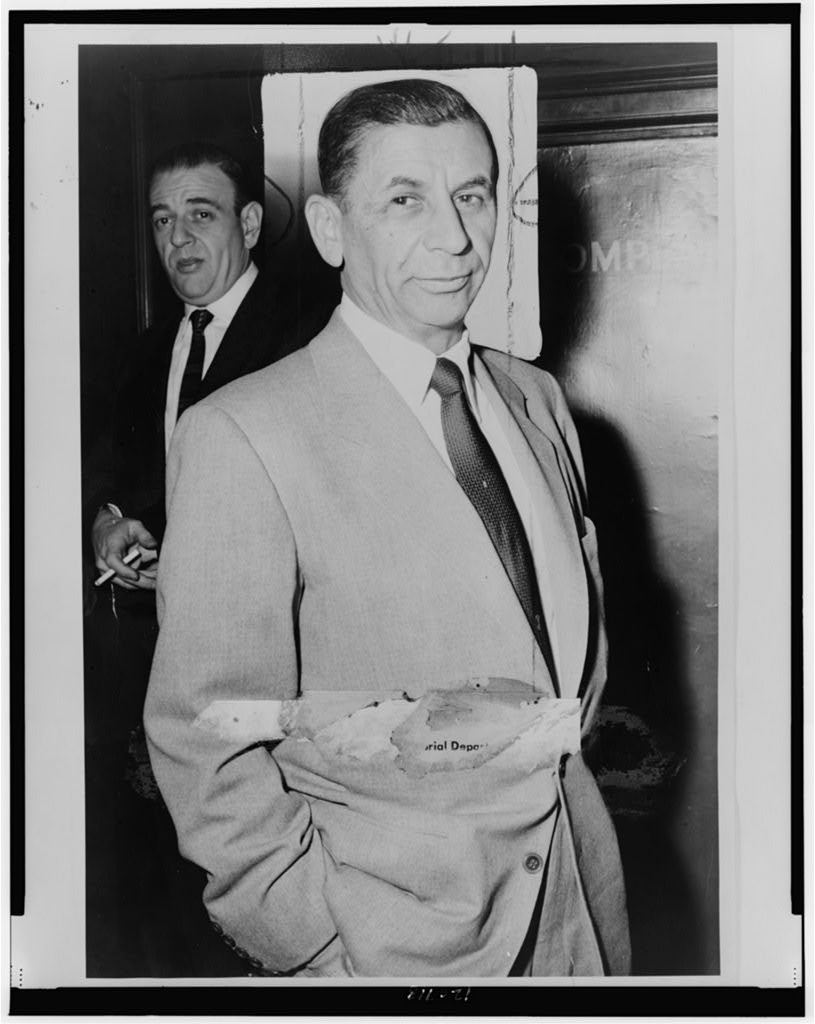 photographMeyer Lansky, 1958 (Library of Congress)New York World-Telegram & Sun staff photograph by Al Ravenna of Meyer Lansky, half-length and facing front, dated 1958 by the Library of Congress. A copy is stored here.
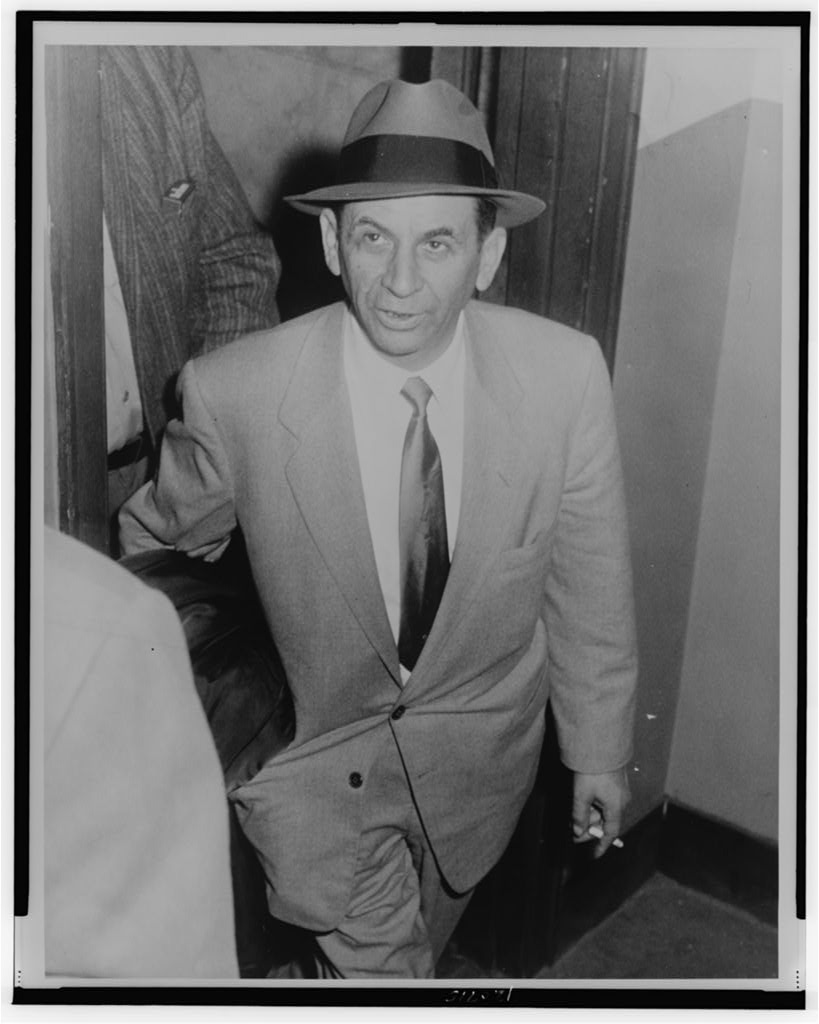 photographMeyer Lansky booked for vagrancy at the 54th Street station, 1958 (Library of Congress)World-Telegram & Sun staff photograph by Orlando Fernandez of Meyer Lansky at the 54th Street police station in New York City, captioned as his booking for vagrancy. A copy is stored here.
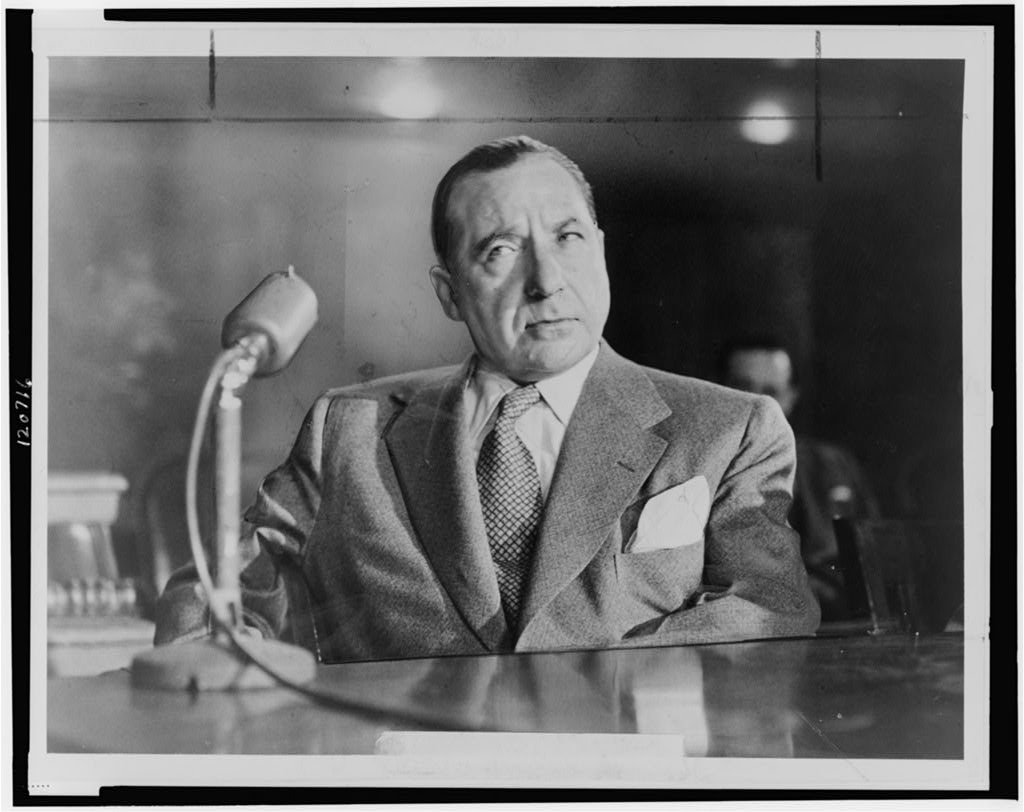 photographFrank Costello testifying before the Kefauver Committee, 1951 (Library of Congress)New York World-Telegram & Sun staff photograph by Al Aumuller of Frank Costello seated behind a microphone while testifying before the Kefauver Committee. A copy is stored here.
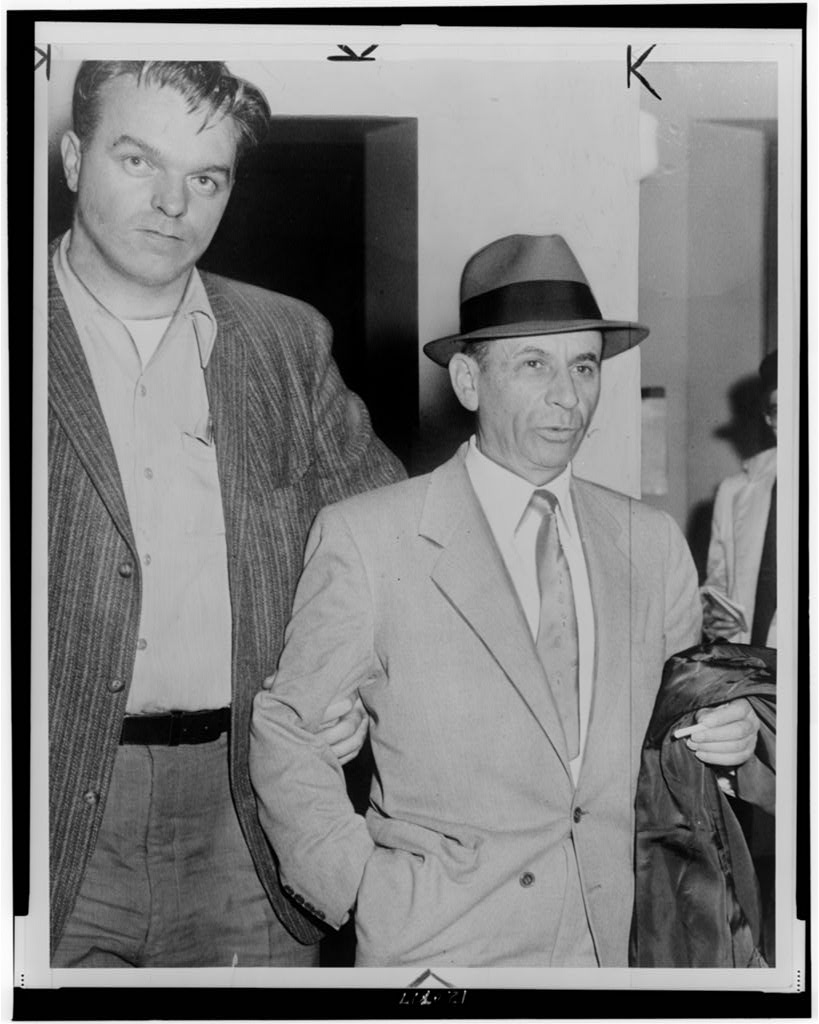 photographMeyer Lansky led by a detective for booking, 1958 (Library of Congress)World-Telegram & Sun staff photograph by Orlando Fernandez of Meyer Lansky being led by a detective for booking on a vagrancy charge at the 54th Street police station. A copy is stored here.
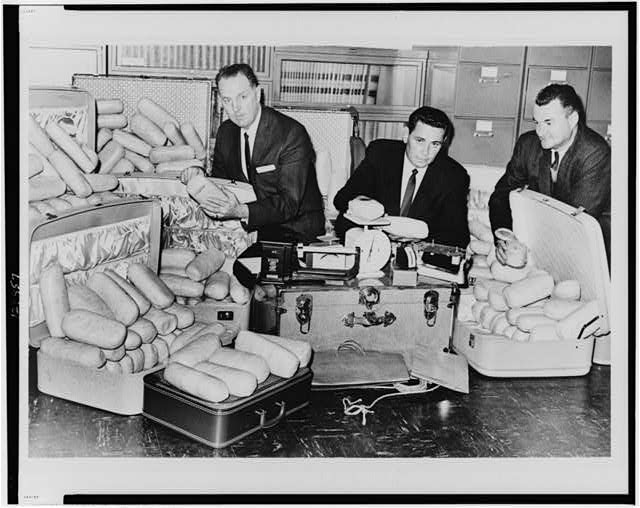 photographNarcotics agents with over 400 lbs. of marijuana, 1963 (Library of Congress)New York World-Telegram & Sun staff photograph by Ed Ford of three narcotics agents named in the caption, with packages of marijuana in open suitcases. A copy is stored here.
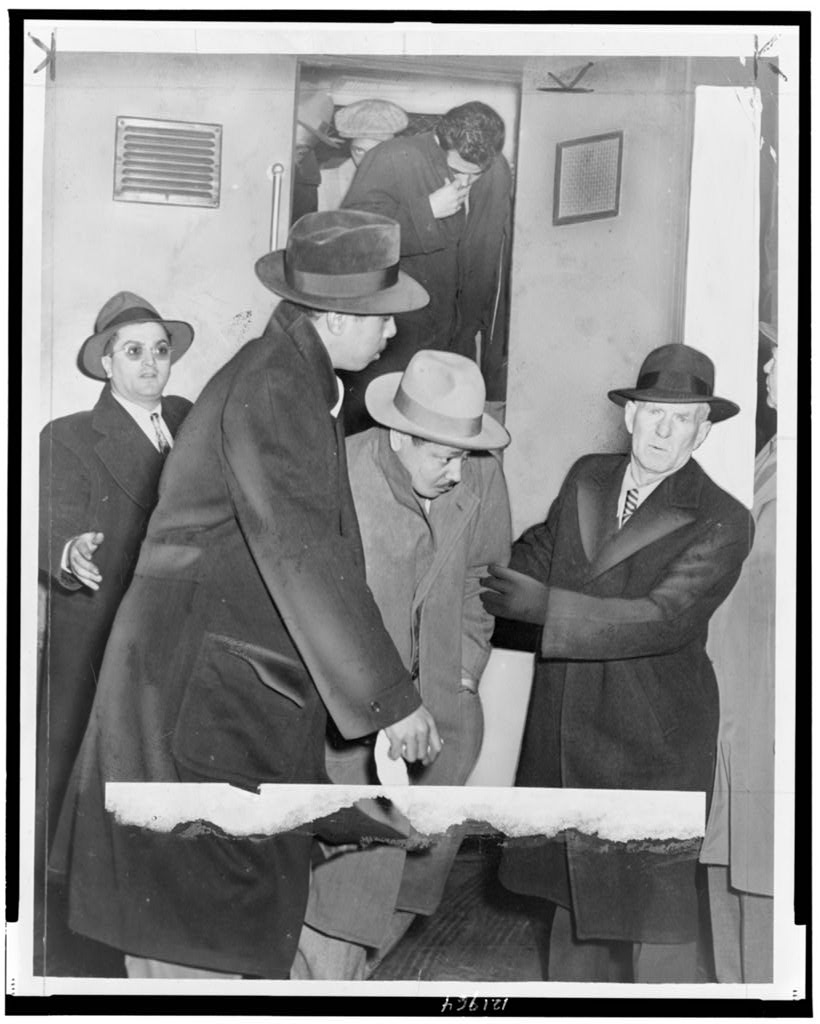 photographMen leaving a prisoners' van at the U.S. Court House, Foley Square, 1952 (Library of Congress)New York World-Telegram and the Sun staff photograph by Fred Palumbo of men caught in raids by federal agents leaving a prisoners' van at the Foley Square U.S. Court House. A copy is stored here.
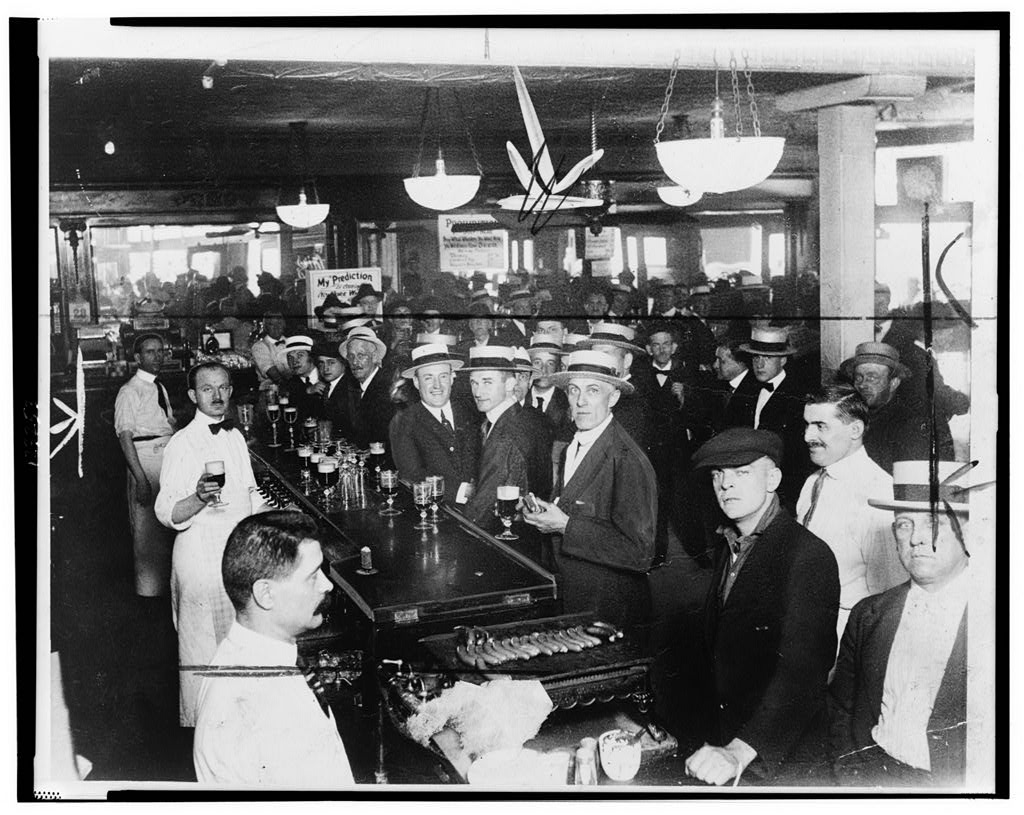 photographCrowded New York bar before midnight, 30 June 1919Library of Congress photograph of a crowded bar in New York City moments before midnight on 30 June 1919, when wartime prohibition took effect, according to the Library of Congress title.
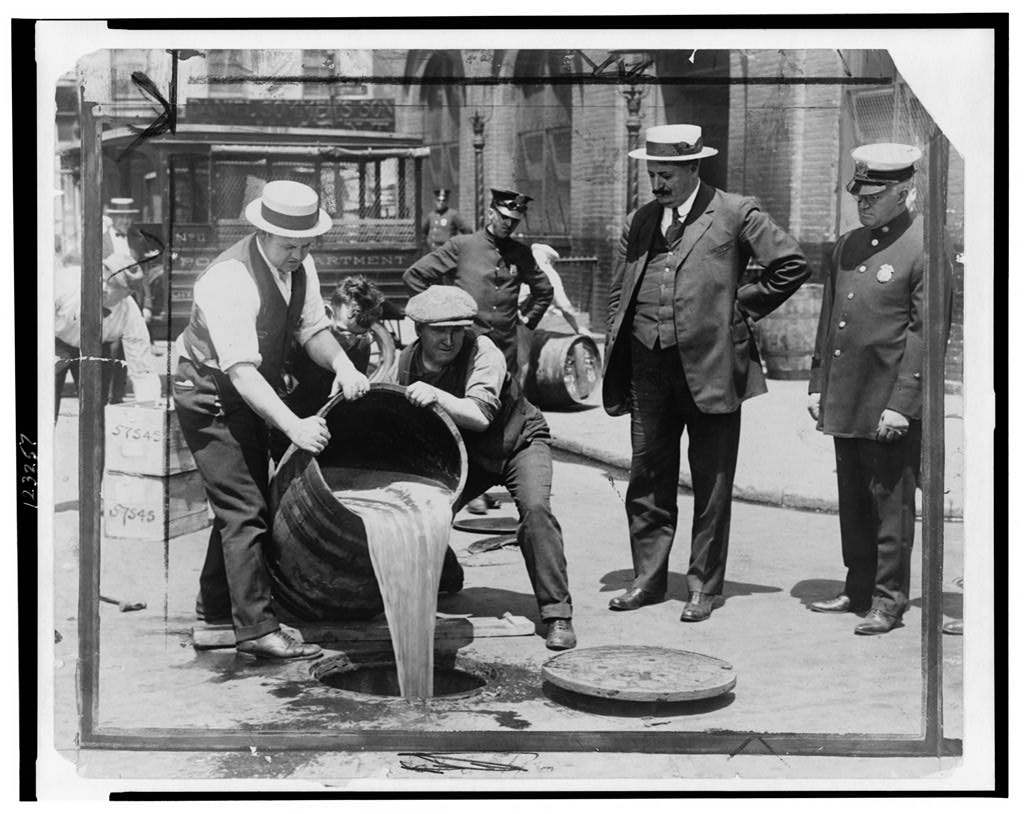 photographDeputy Police Commissioner Leach watches liquor poured into a sewer, New York (about 1921)Library of Congress photograph of New York City Deputy Police Commissioner John A. Leach watching agents pour liquor into a sewer after a raid. The Library's date, 1921, carries a question mark.
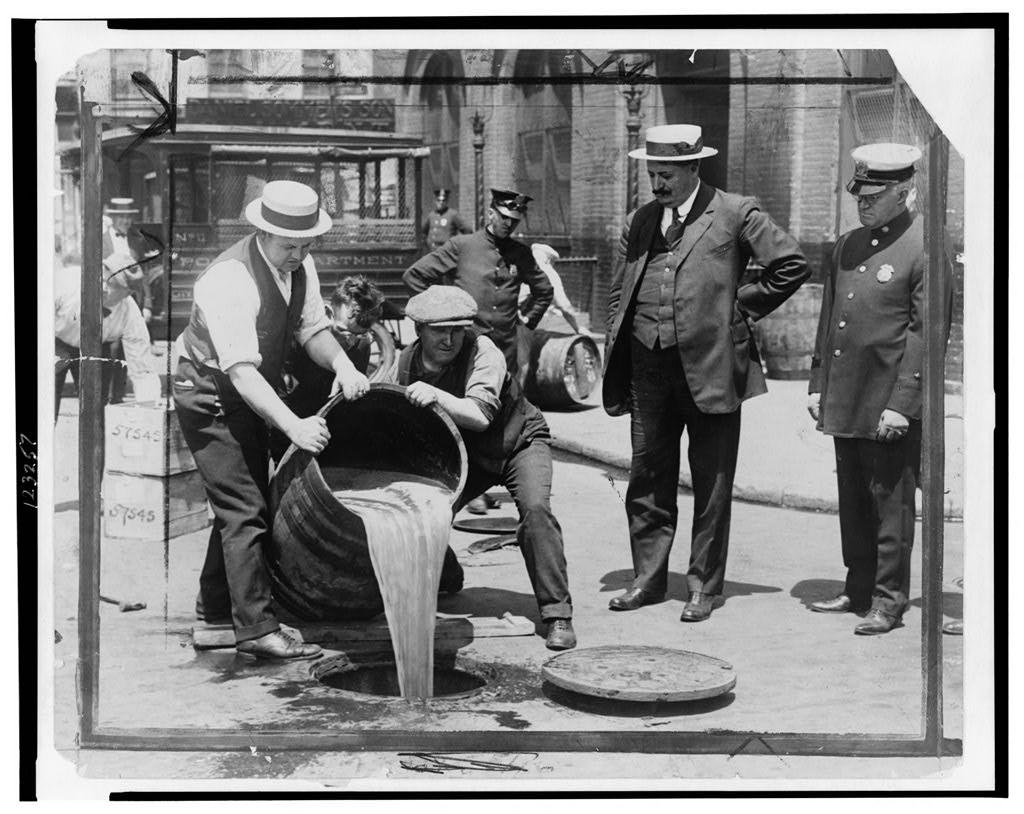 photographDeputy Police Commissioner Leach watching liquor poured into a sewer, about 1921 (Library of Congress)New York World-Telegram and the Sun print of agents pouring liquor from a barrel into a street sewer while Deputy Police Commissioner John A. Leach looks on, after a Prohibition raid. A copy is stored here.
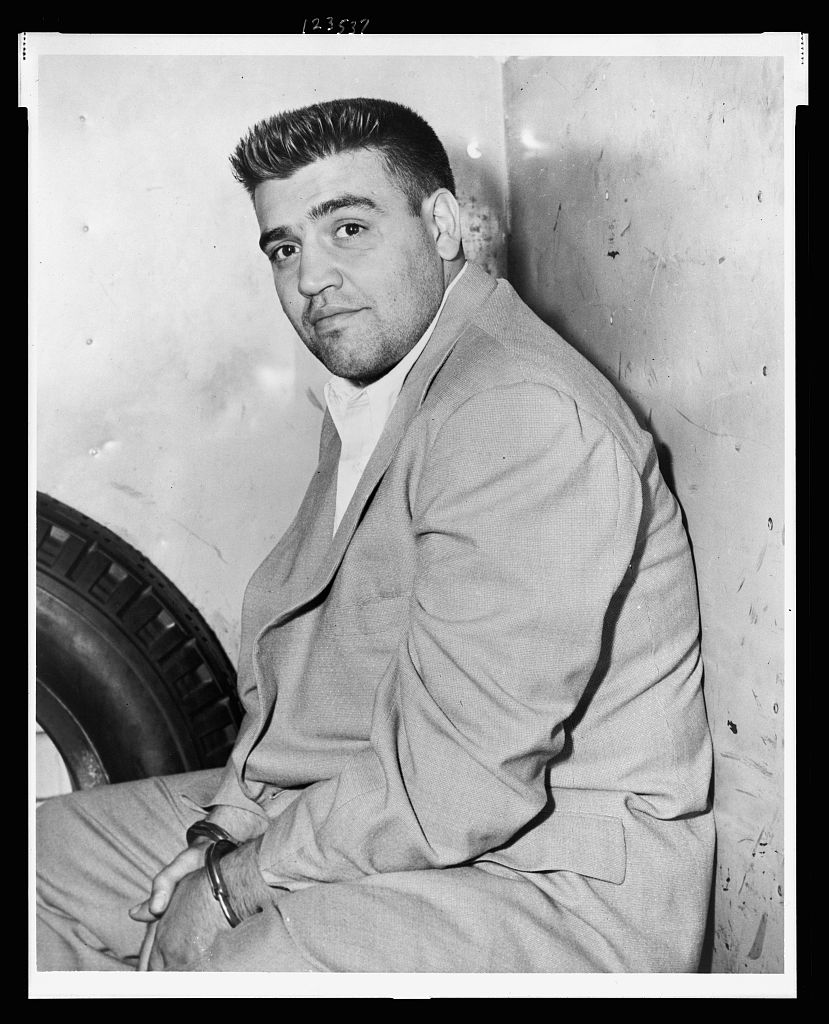 photographVincent Gigante, 1957 (Library of Congress)World-Telegram & Sun staff photograph by Phil Stanziola of Vincent Gigante, seated and facing front, filed by the newspaper's library under a "Shooting Case" heading. A copy is stored here.
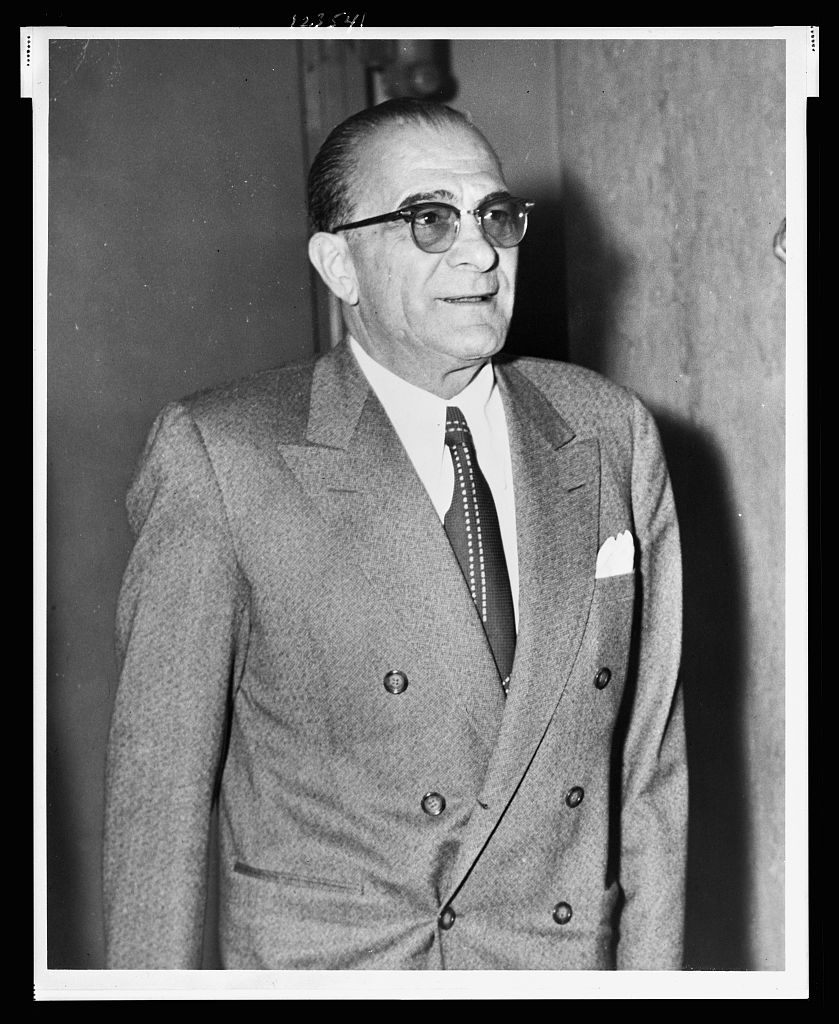 photographVito Genovese, 1959 (Library of Congress)World-Telegram & Sun staff photograph by Phil Stanziola of Vito Genovese, half-length and standing, filed by the newspaper's library under a "Crime Probe" heading. A copy is stored here.
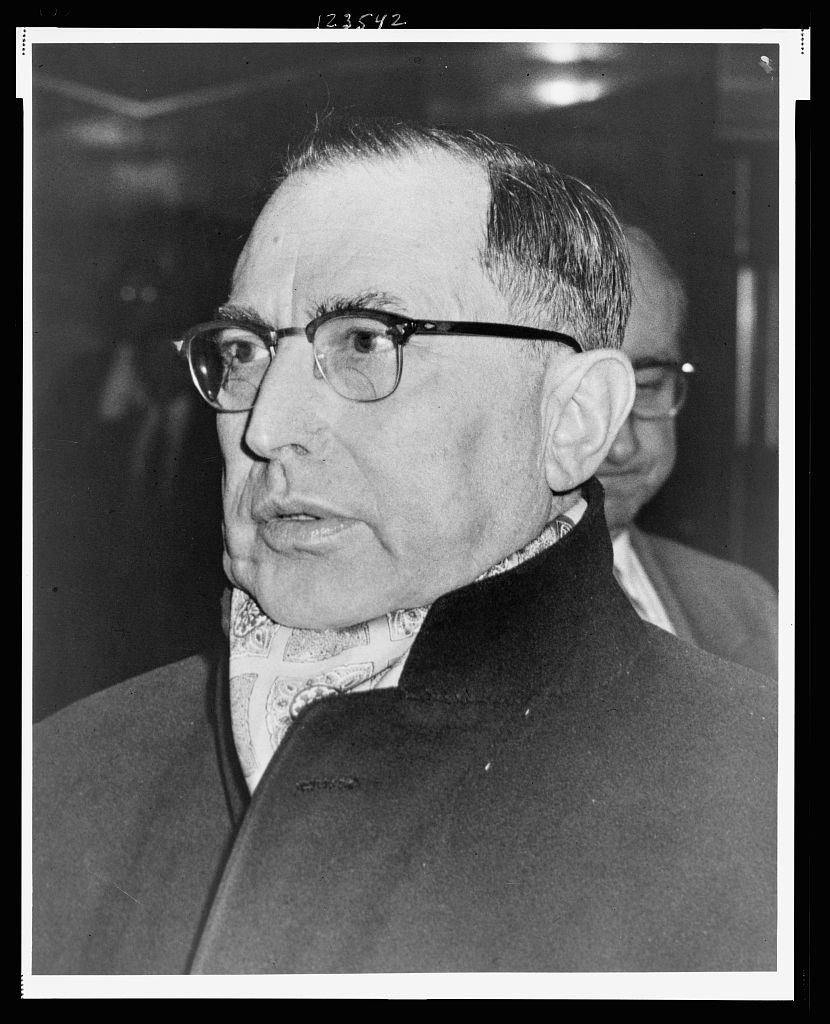 photographJoseph Profaci at a crime commission hearing, 1959 (Library of Congress)World-Telegram photograph by Walter Albertin titled "Joseph Profaci at Crime Comm. hearing": a head-and-shoulders portrait dated 1959. A copy is stored here.
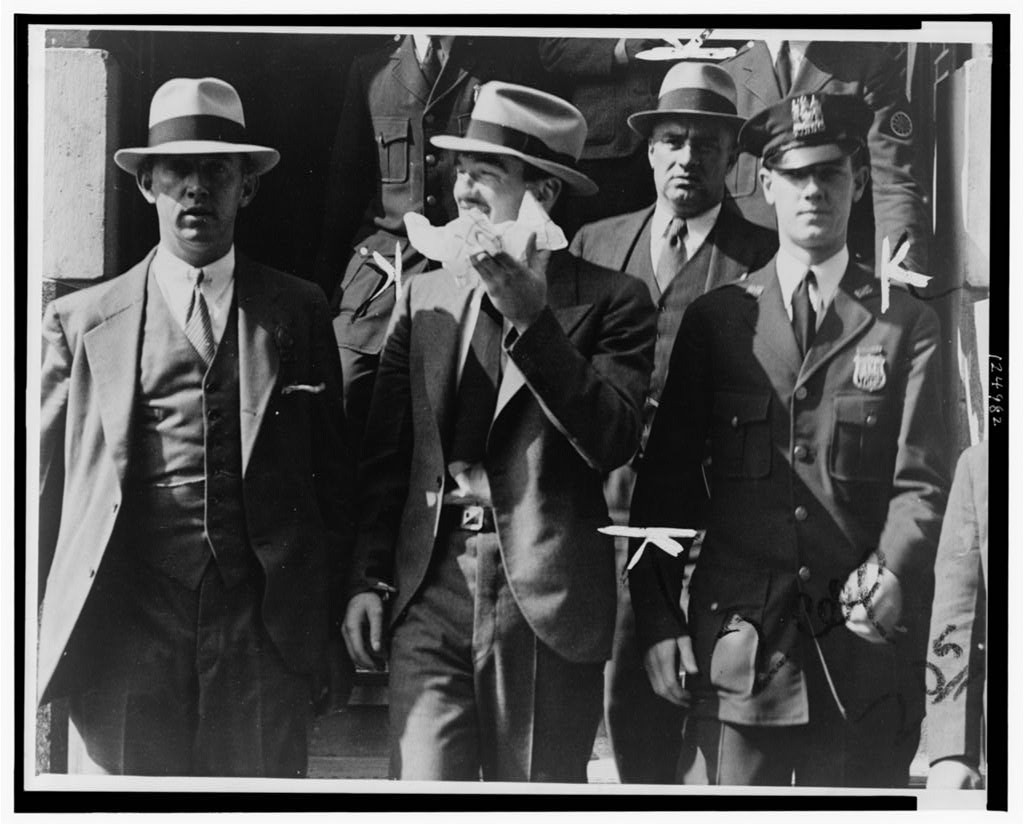 photographVincent Coll leaving homicide court, 1931 (Library of Congress)World-Telegram staff photograph of Vincent Coll leaving homicide court surrounded by police officers, dated 1931. A copy is stored here.
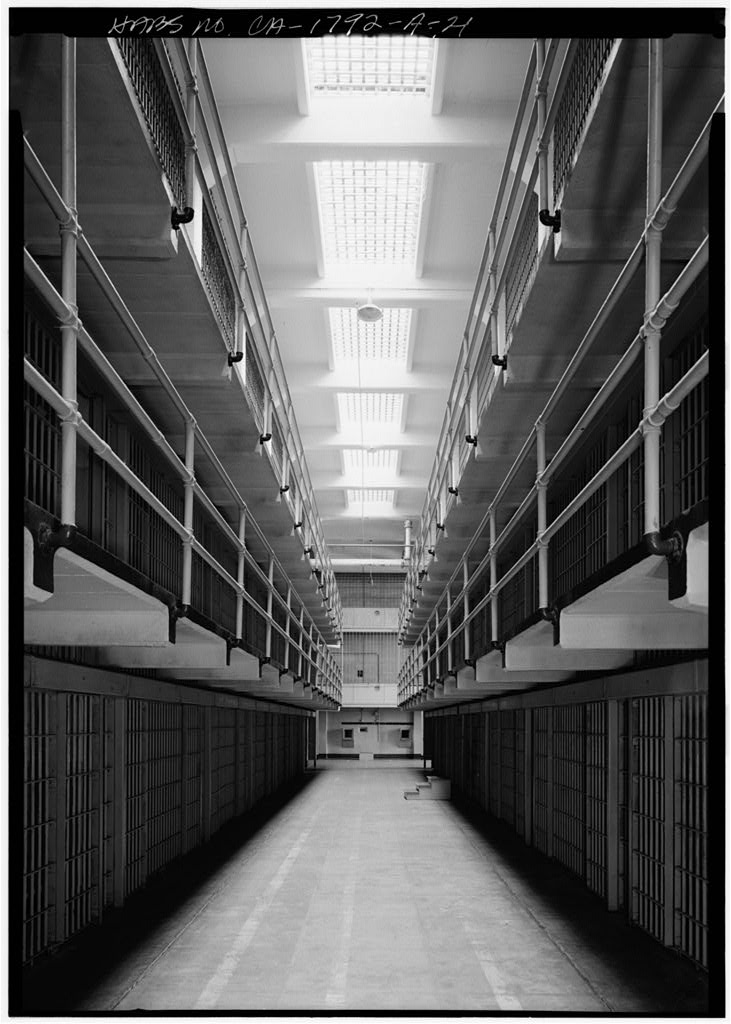 photographAlcatraz Cell House, HABS photograph no. 21: Broadway (Library of Congress)HABS photograph no. 21 of the Alcatraz Cell House, 1986: the aisle called "Broadway" between Cell Blocks C and B, looking south. The Library of Congress marks it with no known restrictions on images made by the U.S. Government.
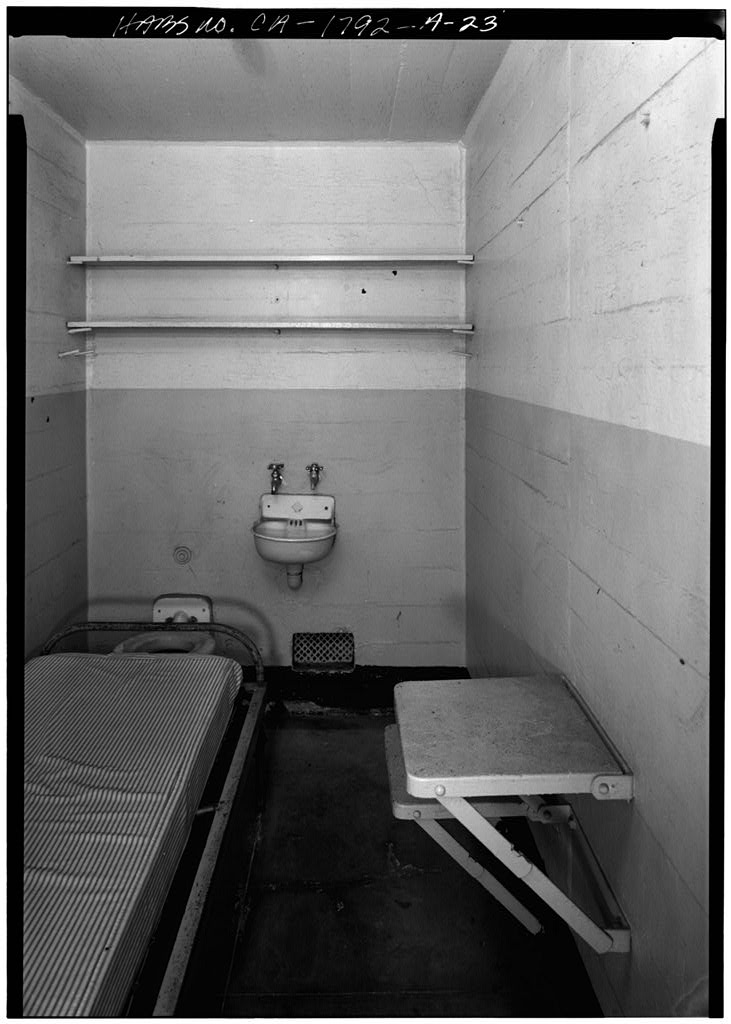 photographAlcatraz Cell House, HABS photograph no. 23: typical cell in Cell Block C (Library of Congress)HABS photograph no. 23 of the Alcatraz Cell House, 1986: a typical cell in Cell Block C. The Library of Congress marks it with no known restrictions on images made by the U.S. Government.
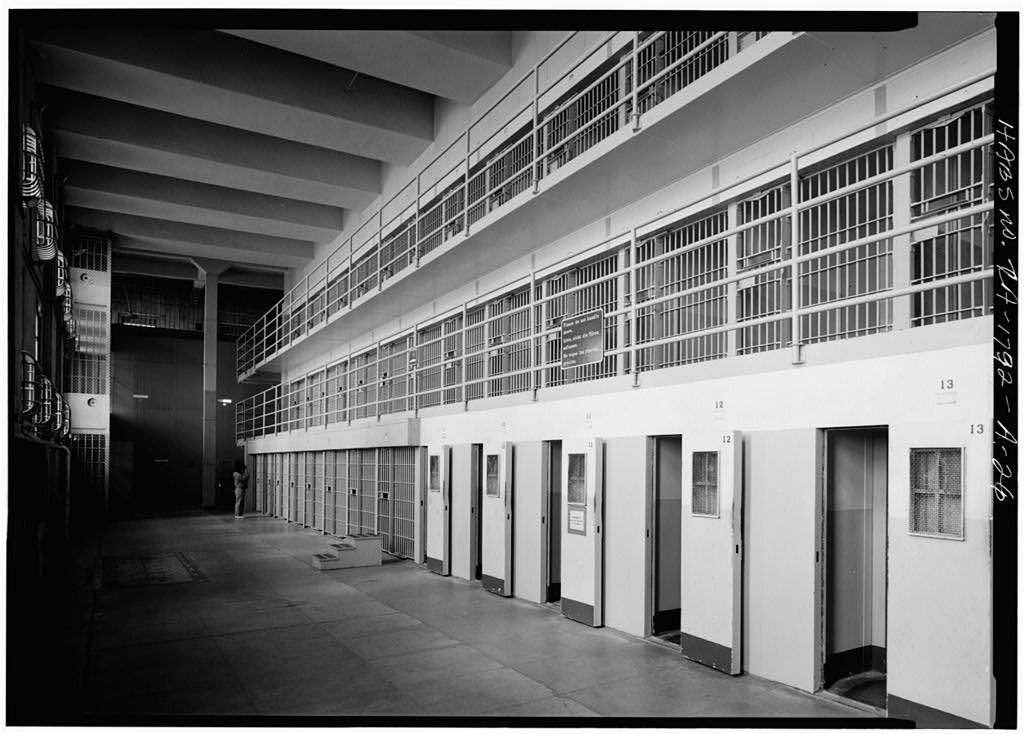 photographAlcatraz Cell House, HABS photograph no. 26: Cell Block D, isolation cells (Library of Congress)HABS photograph no. 26 of the Alcatraz Cell House, 1986: the isolation cells of Cell Block D. The Library of Congress marks it with no known restrictions on images made by the U.S. Government.finding-aidAlcatraz, Cell House, Alcatraz Island: Historic American Buildings Survey record HABS CA-1792-A (Library of Congress)The Library of Congress record for the HABS documentation of the Alcatraz Cell House: 29 photographs, 5 color transparencies, one measured drawing and 3 caption pages. It prints the island's latitude and longitude.photographUnited States Post Office and Court House, Las Vegas (HABS NV-39)Historic American Buildings Survey documentation of the Las Vegas federal post office and courthouse, whose courtroom the National Register file names as the site of the Kefauver Committee's hearing of November 15, 1950.
 hearingHearing of October 1, 1963, pp. 156–157: Valachi joins Gagliano's group and names "the Castellamarese war"Valachi testified that he was persuaded to join a group headed by Tom Gagliano that meant to "fight some big shots," and, asked about the war between Masseria and Maranzano, called it "what we call the Castellamarese war." Testimony, not a finding.
 hearingHearing of October 1, 1963, pp. 163–165: the killing of Tom Reina, the "undeclared war" and Joseph PinzoloStaff counsel LaVern Duffy named the death of Tom Reina as the first significant date of the 1930–31 war, and Valachi explained why the war was at first "undeclared" and what he was told of the killing of Joseph Pinzolo. Counsel's statements and testimony, not findings.
 hearingHearing of October 1, 1963, pp. 166–168: "All the Castellemarese were sentenced to death"; the Morello and Pinzolo killings as Valachi told themValachi testified that Masseria had condemned "all the Castellemarese" to death, that Peter Morello was killed "by the Maranzano group," and that the Maranzano and Gagliano sides then joined forces. Counsel put the dates of August 15 and September 9, 1930 from police records. Testimony, much of it hearsay.
 hearingHearing of October 1, 1963, pp. 168–174: the watch on Steve Ferrigno's apartment at Pelham Parkway and the killing of Ferrigno and Alfred MineoValachi described renting an apartment across from Steve Ferrigno's on Pelham Parkway in the Bronx, seeing Masseria at the building, and the shooting of Ferrigno and Mineo, which he said happened while he was away. He gave the place as "750 Pelham Parkway." Testimony, not a finding.
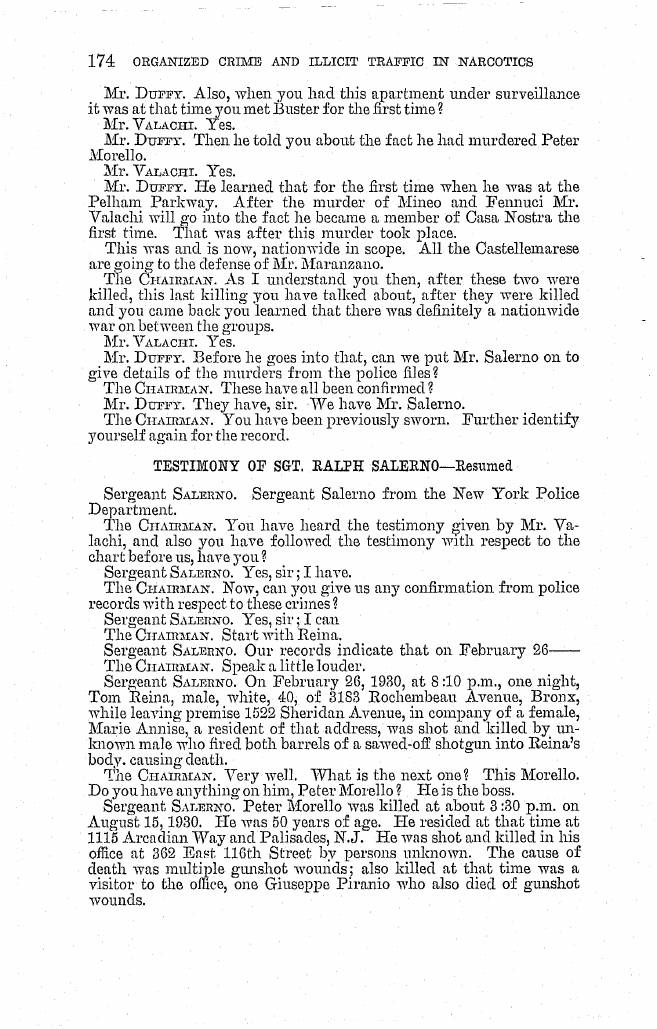 hearingHearing of October 1, 1963, pp. 174–179: Sgt. Ralph Salerno reads the police records of the 1930 killings of Reina, Morello, Pinzolo, Ferrigno and MineoA New York police sergeant read into the record the department's entries on five killings of 1930, with the time and street of each: Reina at 1522 Sheridan Avenue, Morello at 362 East 116th Street, Pinzolo in the Brokaw Building, and Ferrigno and Mineo on Pelham Parkway. Every case was still open in 1963.
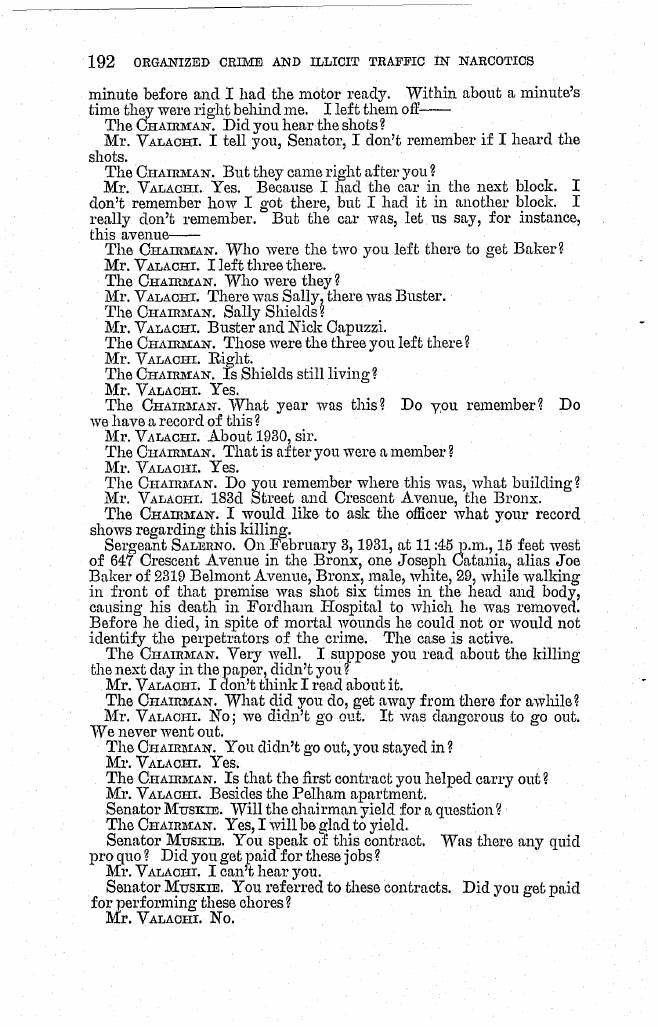 hearingHearing of October 1, 1963, pp. 188–192: the "contract" on Joseph Catania ("Joe Baker") and the police record of his killing on February 3, 1931Valachi testified that Maranzano would not make peace until Joe Baker was killed, and described the watch from an apartment in the Bronx. Sgt. Ralph Salerno read the police record: Joseph Catania, alias Joe Baker, 29, shot six times 15 feet west of 647 Crescent Avenue on February 3, 1931, died in Fordham Hospital.
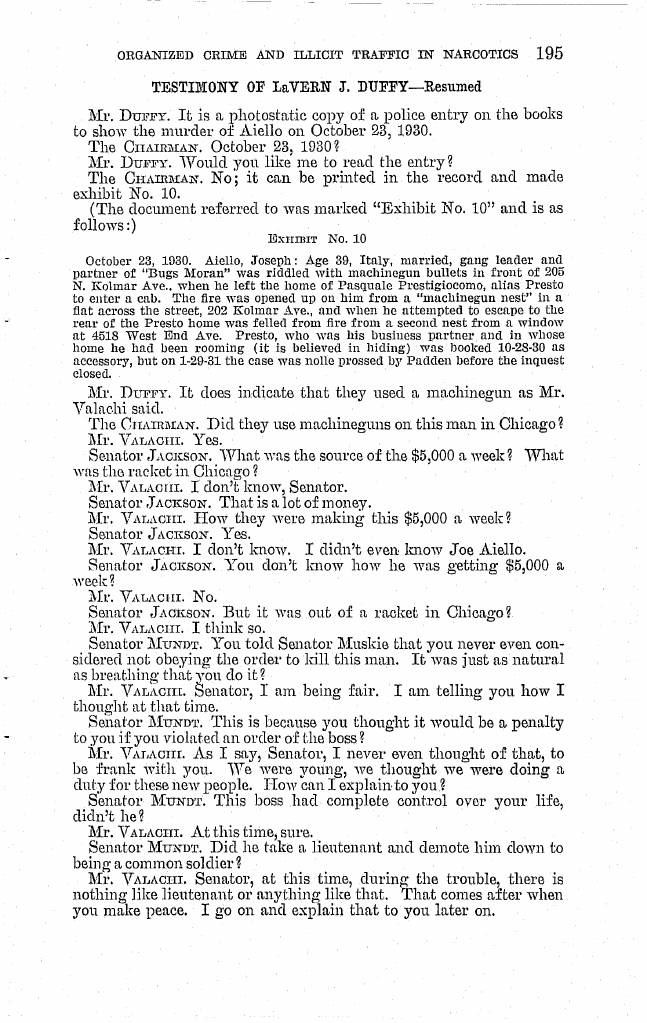 hearingHearing of October 1, 1963, pp. 193–195: how the war was paid for, and Exhibit No. 10, a Chicago police entry on the killing of Joseph Aiello, October 23, 1930Valachi testified that Tom Gagliano spent $140,000 on the war and that $5,000 a week came from Buffalo and $5,000 a week from Joe Aiello in Chicago. Exhibit No. 10, a photostat of a Chicago police entry, records that Aiello was killed by machine-gun fire in front of 205 N. Kolmar Ave. on October 23, 1930.
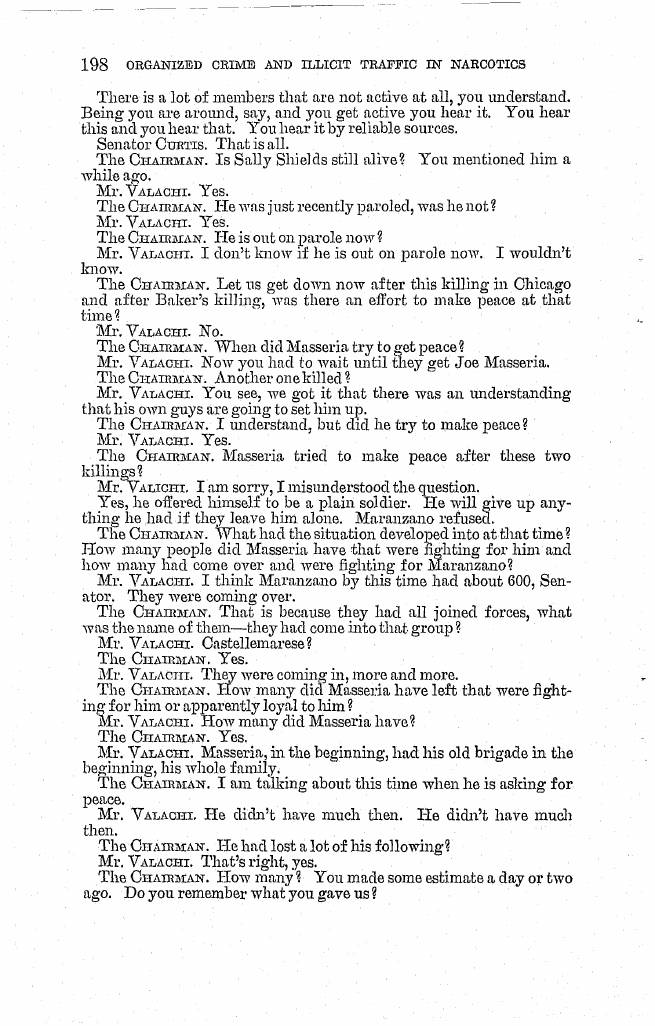 hearingHearing of October 1, 1963, pp. 198–199: Masseria's offer of peace, Maranzano's refusal, and the men Valachi said "set him up"Valachi testified that Masseria "offered himself to be a plain soldier" and that Maranzano refused, that Maranzano's side had grown to about 600, and that Masseria's own men set him up at a Coney Island restaurant. Testimony from hearsay; Valachi was not there.
 hearingHearing of October 2, 1963, pp. 207–209: Senator Mundt asks how long the "undeclared" and "declared" war lastedQuestioned by Senator Karl Mundt, Valachi said the undeclared war lasted "a couple of months" and the declared war "about 8 months, 8 or 9 months," and that members spoke of having been "away 14 months." His own figures, which he said he never checked.
 hearingHearing of October 2, 1963, pp. 210–213: Valachi's account of the killing of Joseph Masseria, and the police record of April 15, 1931 at 2715 West 15th Street, Coney IslandValachi testified from hearsay that Masseria's own men took him to a Coney Island restaurant and killed him. Sgt. Ralph Salerno read the police record: at 3:30 p.m. on April 15, 1931, "Giuseppi Massaria, alias Joe the Boss," was shot in the back and head in a restaurant at 2715 West 15th Street by unknown persons who escaped.
 hearingHearing of October 2, 1963, pp. 214–218: the "score" of the war, Maranzano's meeting on Washington Avenue ("the boss of all bosses, which is myself"), and the banquetValachi testified that the score was "we lost 1 and they lost from 40 to 60," described a meeting of 400 to 500 people in a hall on Washington Avenue in the Bronx where Maranzano declared himself "the boss of all bosses," named the bosses he recalled being designated there, and described a five-night banquet he understood raised $115,000. Testimony, not findings.
 hearingHearing of October 2, 1963, pp. 220–224: "We have to go to the mattress again," Maranzano's list, and the "Park Avenue Murder" headlineValachi testified that shortly before his death Maranzano told him "We have to go to the mattress again," gave him a list of names, and was to meet Genovese and Luciano at his office the next afternoon; Valachi was told by phone not to come, and learned of the killing from a newspaper headline, "Park Avenue Murder." Uncorroborated testimony.
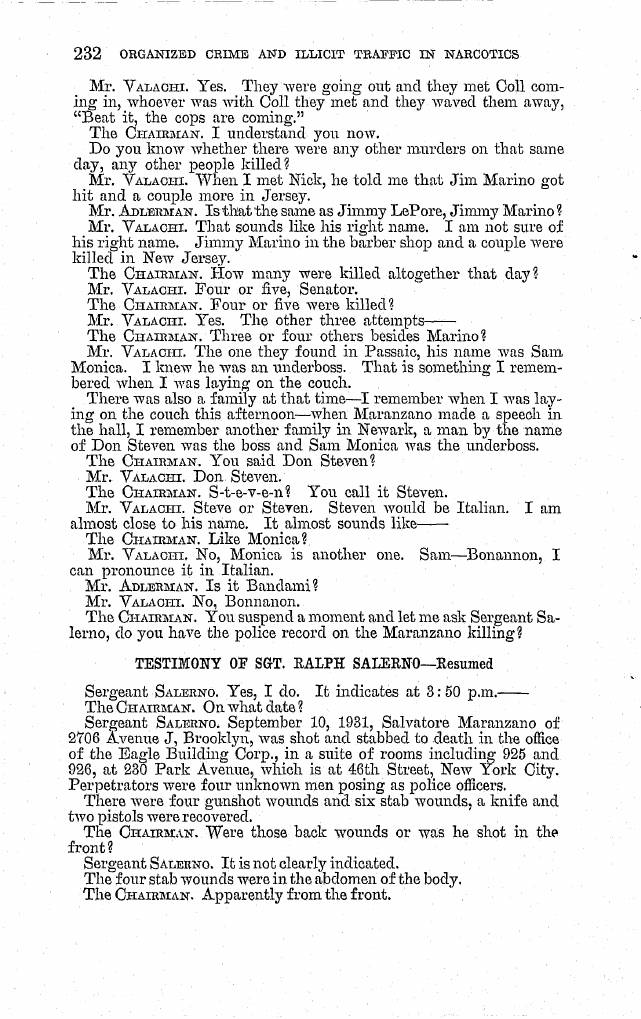 hearingHearing of October 2, 1963, pp. 227–233: Valachi's account of the killing of Salvatore Maranzano, and the police records of September 10, 1931 (Maranzano at 230 Park Avenue; James Le Pore at 2400 Arthur Avenue)Sgt. Ralph Salerno read the police record: at 3:50 p.m. on September 10, 1931, Salvatore Maranzano was shot and stabbed to death in the office of the Eagle Building Corp., rooms 925 and 926, 230 Park Avenue at 46th Street, by "four unknown men posing as police officers." The same day at 5:45 p.m. James Le Pore was shot dead at 2400 Arthur Avenue in the Bronx. Valachi gave a hearsay account of the killing.
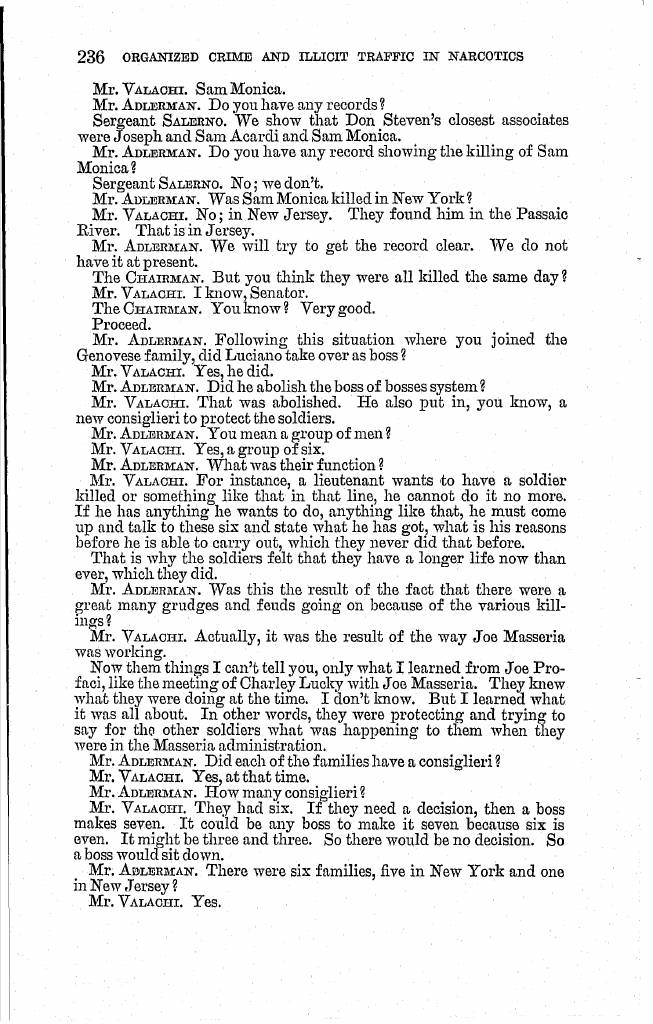 hearingHearing of October 2, 1963, pp. 236–239: the "boss of bosses" abolished, the Chicago meeting, and the membership "books" closed in about 1931Valachi testified that after Maranzano's death Luciano took over as boss, that the "boss of bosses" system "was abolished" and a group of six consiglieri was set up, that Luciano and Genovese had to justify the killing before the bosses at a meeting in Chicago, and that "the books were closed in about 1931." One witness's account, not a finding.
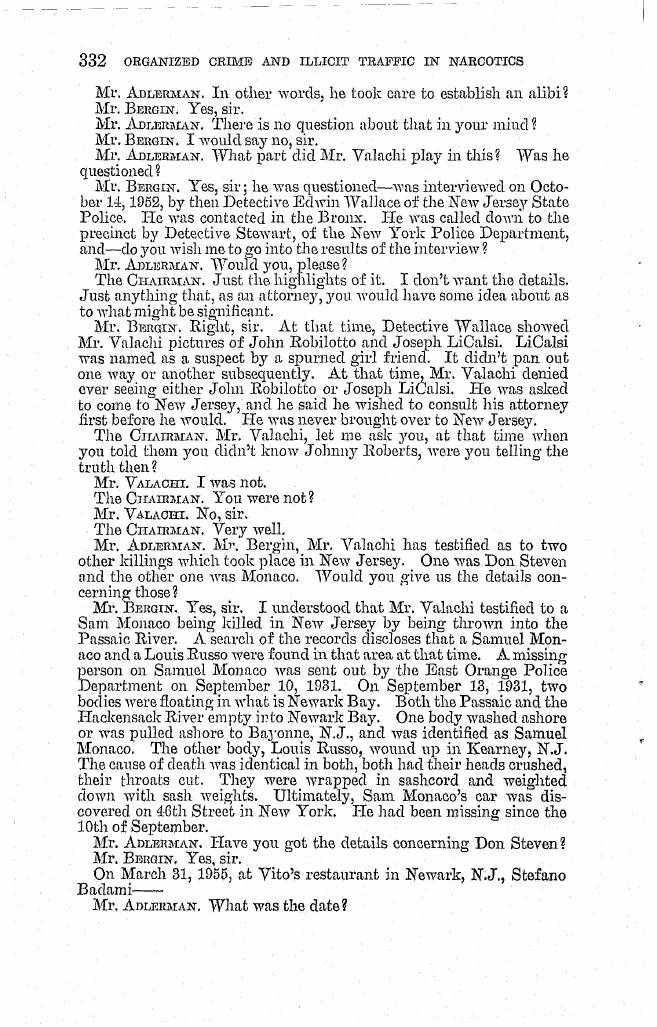 hearingHearing of October 9, 1963, pp. 332–333: New Jersey Assistant Attorney General John J. Bergin on the bodies of Samuel Monaco and Louis Russo, found September 13, 1931John J. Bergin testified from New Jersey records that Samuel Monaco was reported missing on September 10, 1931, and that on September 13 his body and that of Louis Russo were found in Newark Bay, one ashore at Bayonne and the other at Kearny, their heads crushed and throats cut. Monaco's car was found on 46th Street in New York.hearingSenate Resolution 74 (85th Congress), as stated at the first McClellan Committee hearing, Part 1 (1957)The chairman's opening statement in Part 1 of the hearings of the Select Committee on Improper Activities in the Labor or Management Field: "Senate Resolution 74, 85th Congress, agreed to January 30, 1957, established this select committee."
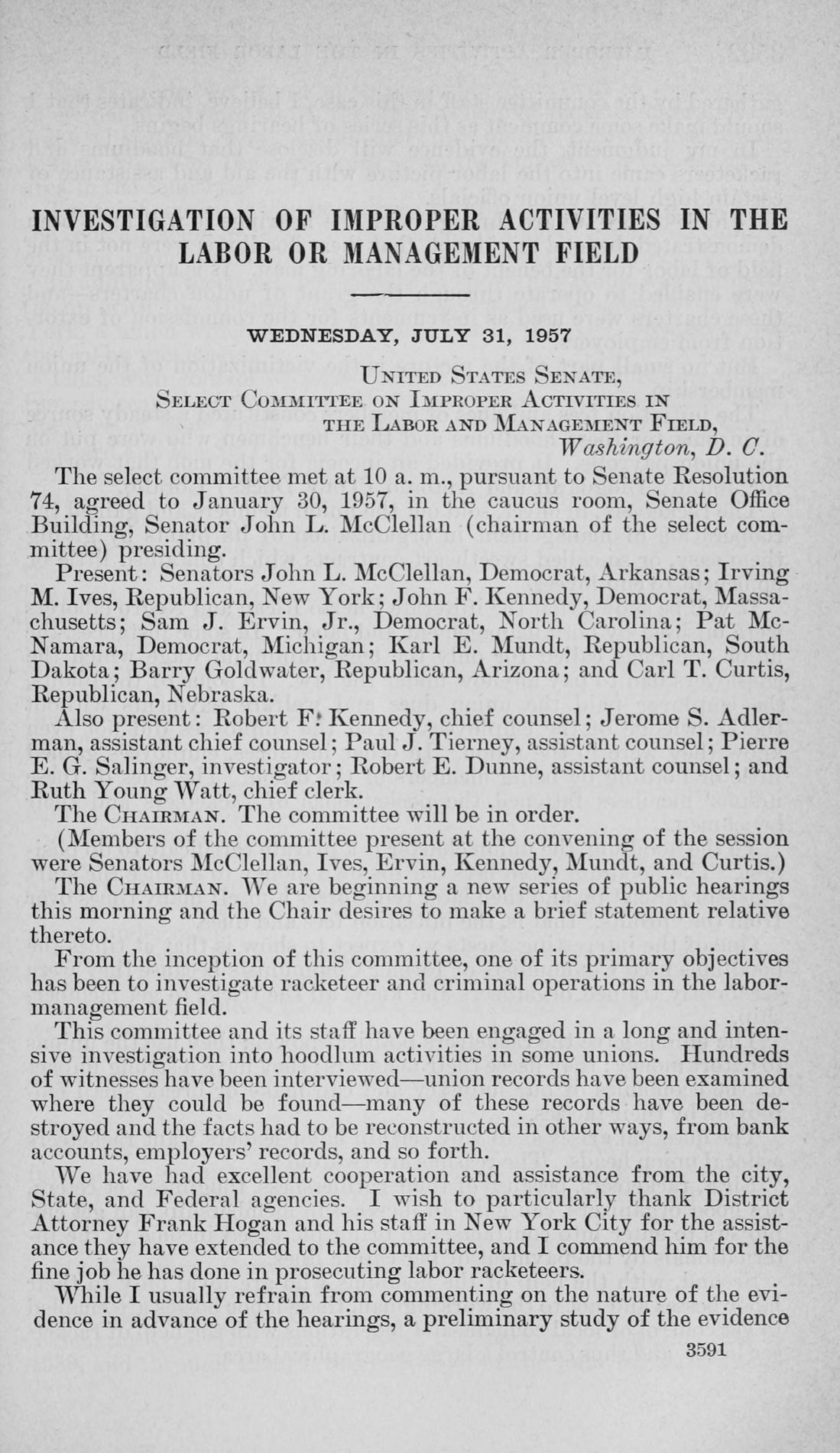 hearingMcClellan Committee hearings, Part 10: the New York series opens (31 July to 6 August 1957)The volume that opens the committee's hearings on New York locals. The chairman's opening statement says the evidence will show that "hoodlums and racketeers came into the labor picture with the aid and assistance of certain high level union officials."
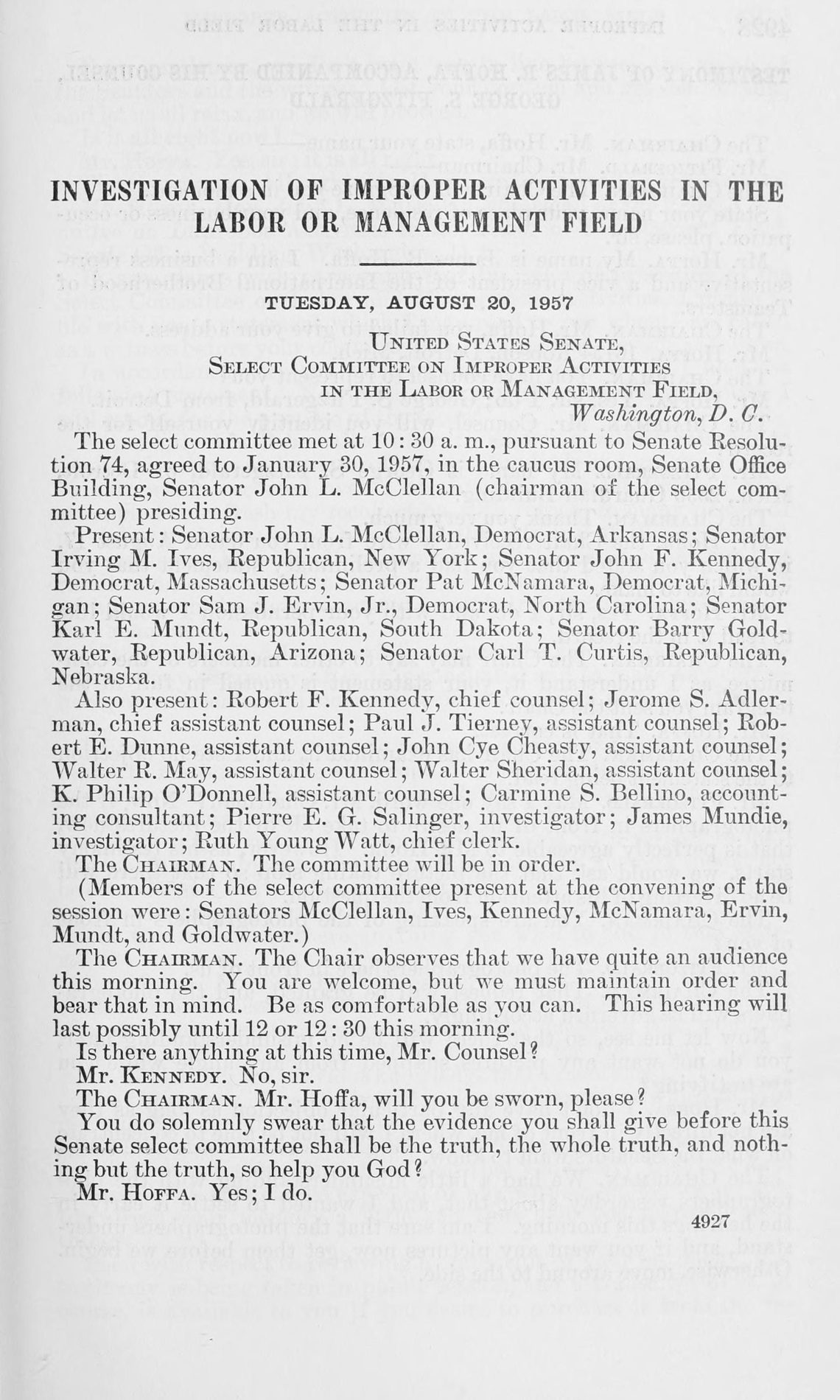 hearingMcClellan Committee hearings, Part 13: James R. Hoffa's first testimony (20 to 23 August 1957)The hearing at which James R. Hoffa first testified before the select committee. Sworn on 20 August 1957, he identified himself as "a business representative and a vice president of the International Brotherhood of Teamsters."
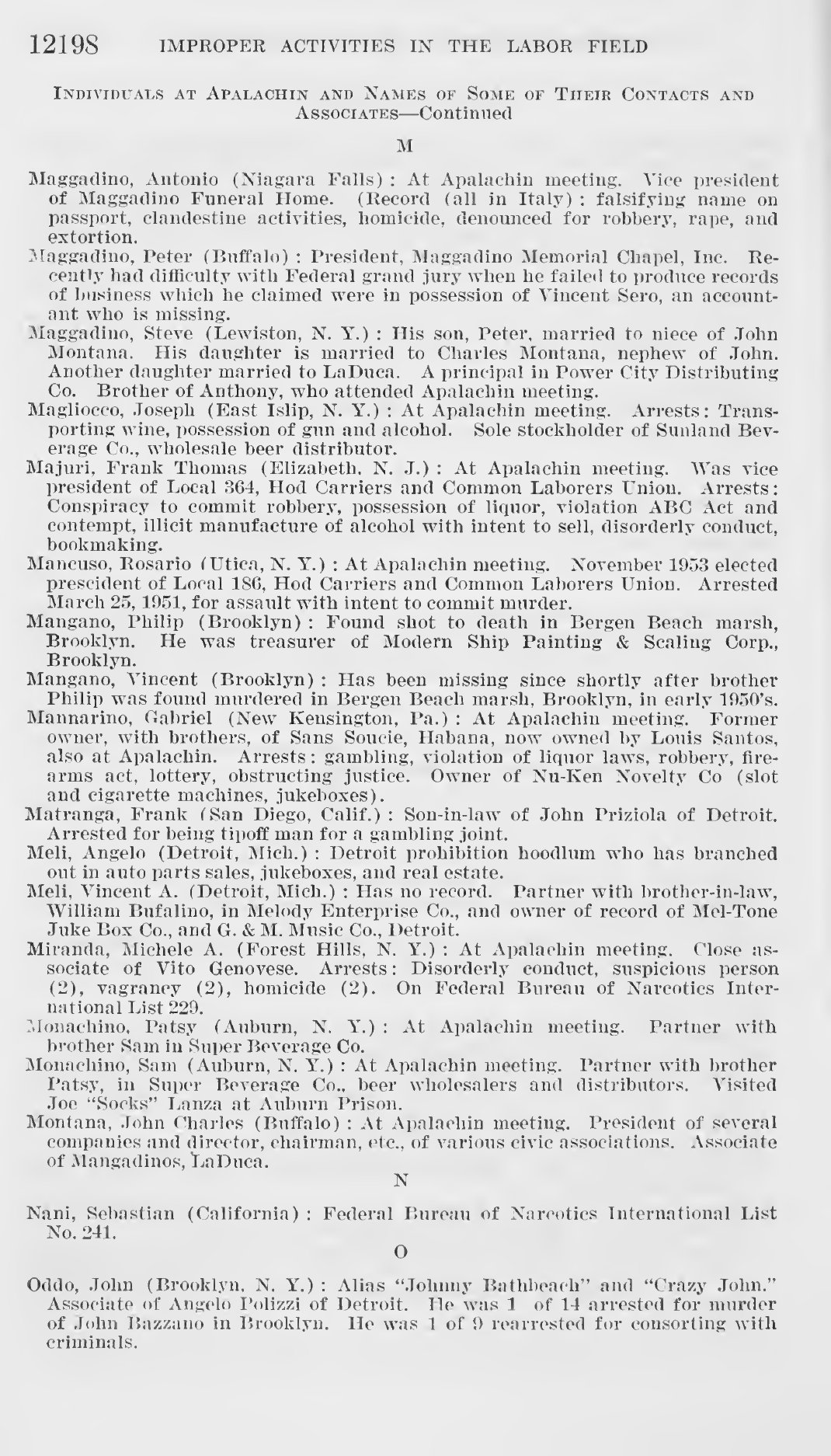 hearingMcClellan Committee staff list: "Individuals at Apalachin and Names of Some of Their Contacts and Associates" (1958)An alphabetical staff memorandum printed in Part 32 (pp. 12194-12201) giving a residence and a summary of arrests, businesses and associations for each Apalachin attendee and some contacts. The chairman admitted it "for guidance and information only" and said "It is not evidence."hearingTestimony of Sgt. Edgar D. Crosswell, N.Y. State Police, on the Apalachin raid (McClellan Committee, Part 32, pp. 12213-12216)The New York State Police sergeant who led the stop at Joseph Barbara's property describes arriving at 12:40, men running, the roadblock, and the number picked up: "Sixty-two, but that included two characters of Barbara's, so there were 60."
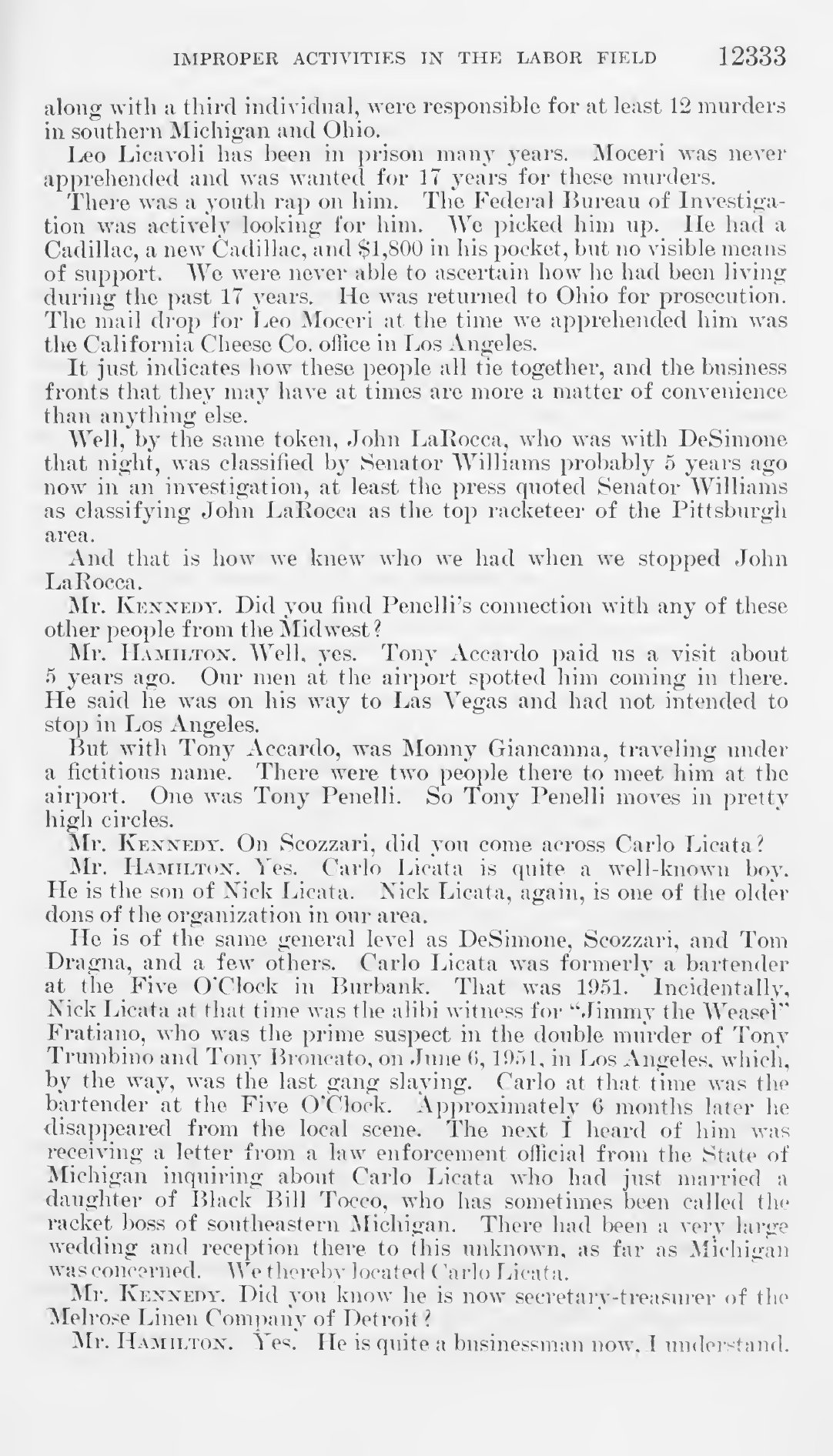 hearingTestimony of Capt. James E. Hamilton, Los Angeles Police Department, before the McClellan Committee (Part 32)The commander of the Los Angeles police intelligence division described stopping Frank DeSimone's car in 1956 and finding "John S. LaRocca, of Pittsburgh, Pa." as a passenger, and said police knew who LaRocca was only from newspaper clippings.
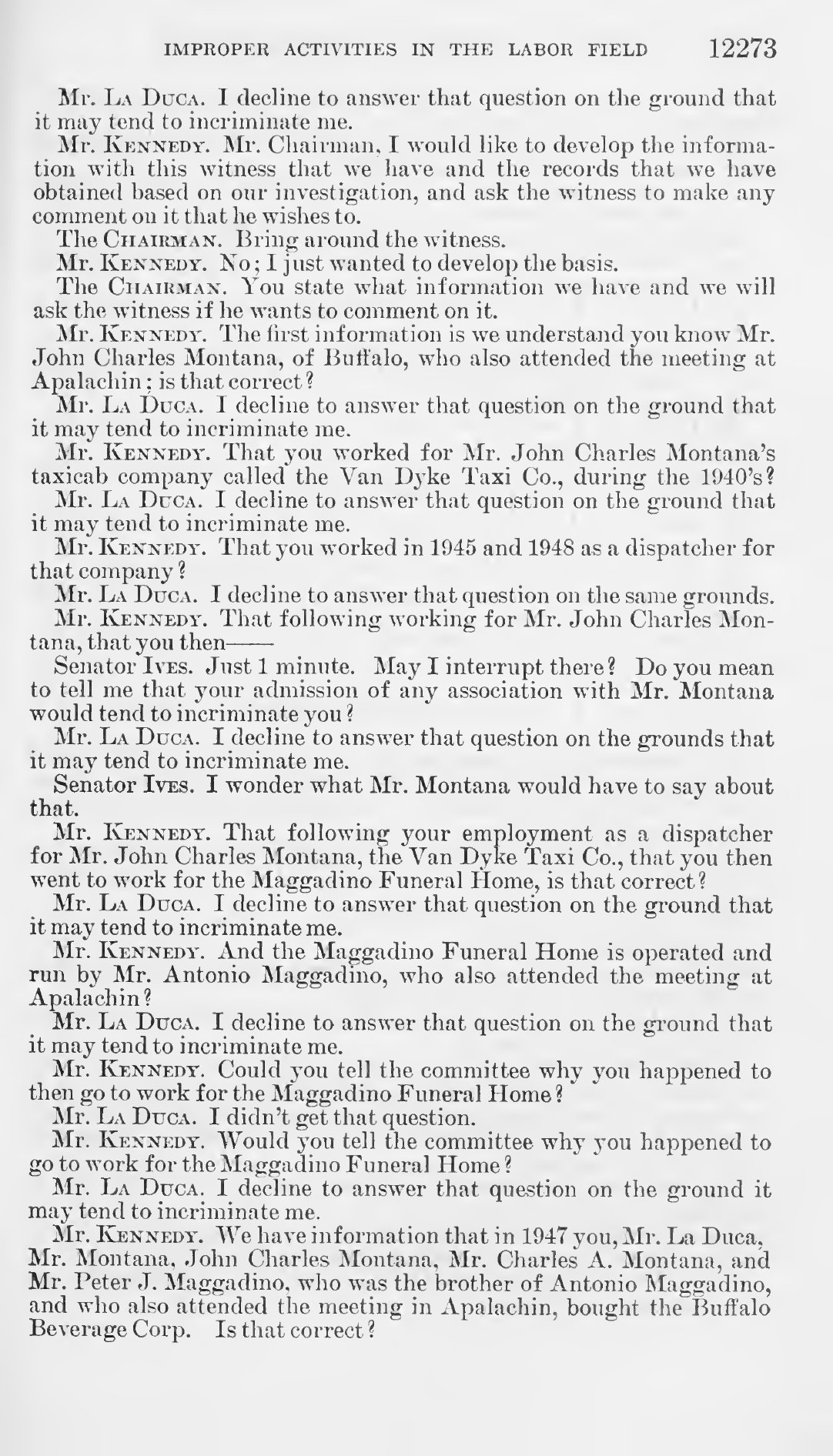 hearingTestimony of James V. La Duca before the McClellan Committee, 1958 (Part 32)James V. La Duca of Lewiston, N.Y., declined on Fifth Amendment grounds to answer whether he attended the Apalachin meeting, while Robert F. Kennedy read the staff's information on his work for John C. Montana's taxi company, the Maggadino Funeral Home and Local 66 of the Hotel and Restaurant Employees.hearingMcClellan Committee hearings, Part 32: "Mafia" (30 June-3 July 1958)Printed hearings of the Senate Select Committee on Improper Activities in the Labor or Management Field, Part 32, headed "Mafia." The chairman's opening statement starts with the gathering at Joseph Barbara's home at Apalachin; the first witness is Sgt. Edgar D. Crosswell.hearingMcClellan Committee: investigator George H. Martin on the Detroit intermarriage chart (1 July 1958)In the committee's 'Mafia' hearings, investigator George H. Martin explained a chart of intermarriages to chief counsel Robert F. Kennedy and named Detroit men he said were 'interrelated through various marriages'; the committee's printed list of Apalachin contacts adds Detroit entries.
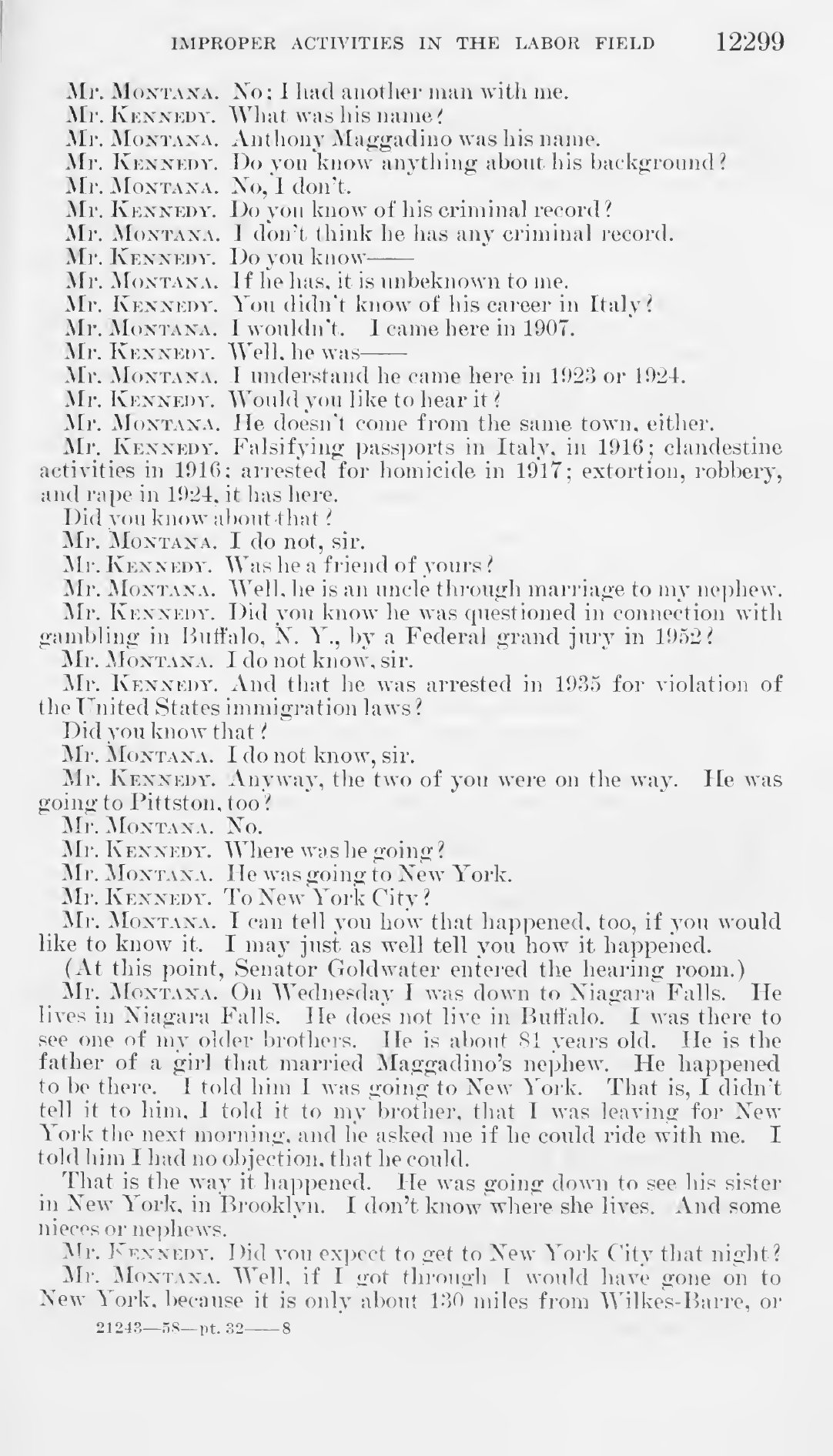 hearingTestimony of John C. Montana before the McClellan Committee, 1958 (Part 32)The president of Buffalo's Van Dyke Taxicab Co. testified under oath about his birth, his businesses and his trip of November 14, 1957, saying he drove with Anthony Maggadino, "an uncle through marriage to my nephew," and stopped at Joseph Barbara's for help with his car.
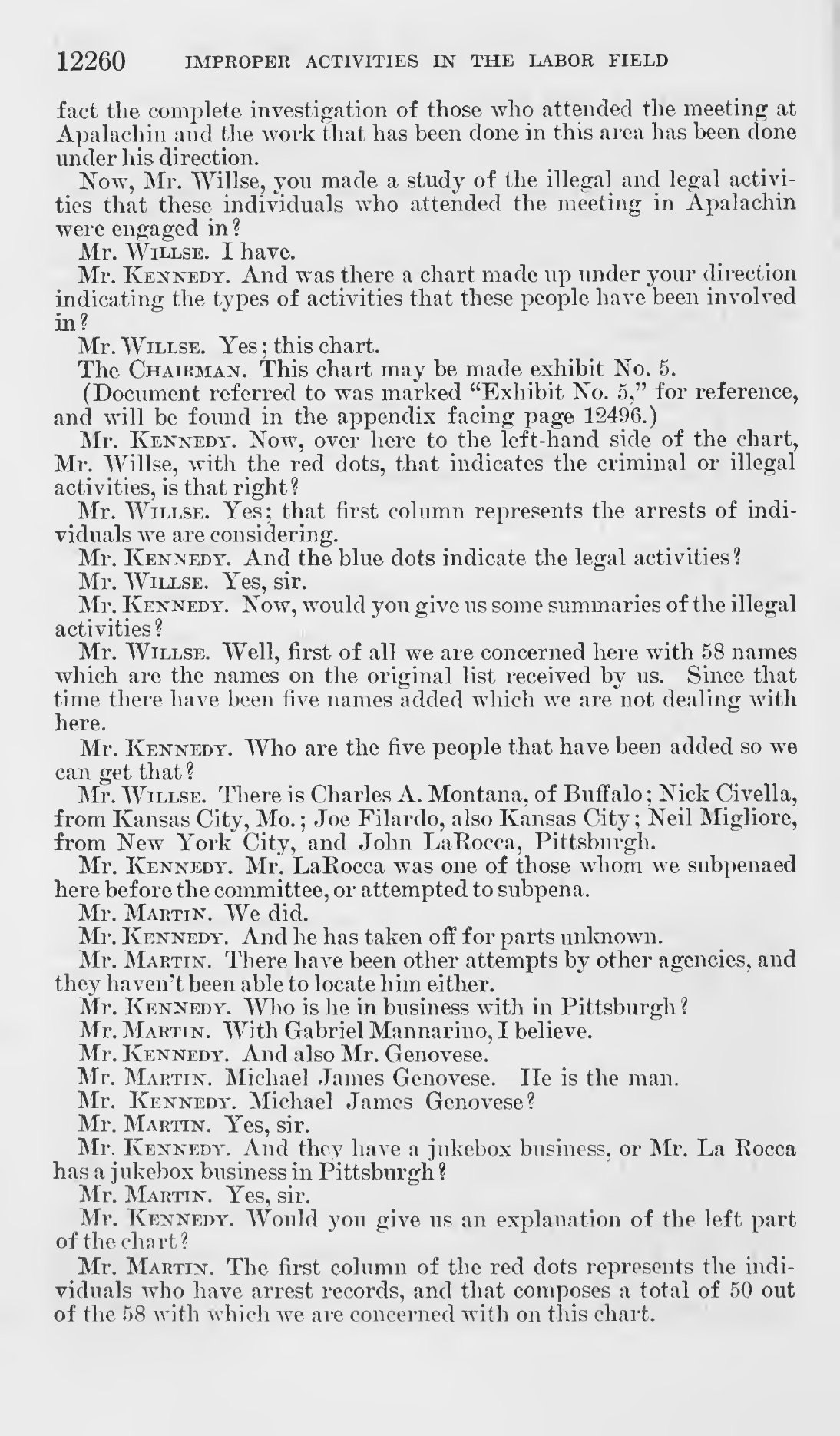 hearingTestimony of committee investigators Sherman Willse and George H. Martin on the Apalachin attendees (Part 32, p. 12260)McClellan Committee investigators described their chart of the Apalachin attendees' activities (Exhibit 5), named five men added to the original list of 58, among them "John LaRocca, Pittsburgh," and said LaRocca was in business in Pittsburgh with Gabriel Mannarino and Michael James Genovese.hearingMcClellan Committee: Vincent H. Meli on the Detroit linen and overall supply business (1 August 1958)In hearings on the linen and overall supply industry in the Detroit area, Vincent H. Meli testified about financing his Star Coverall Supply Co. with loans from his father-in-law Sam Perrone and from Anthony Tocco, and said Lafayette Motors had been owned by Jack Tocco.
 hearingMcClellan Committee hearings, Part 36: Hoffa recalled as general president (5 to 12 August 1958)The committee resumed its inquiry into the Teamsters under James R. Hoffa, by then general president. The chairman's opening statement recalls the interim report's finding that Hoffa had "alined himself with certain underworld characters."hearingMcClellan Committee: Robert P. Scott on Harry Fletcher and the 'Purple Gang' (August 1958)In the Hoffa and Teamsters hearings, witness Robert P. Scott said Jimmy Hoffa asked him to seek a retrial for Harry Fletcher, whom the newspapers 'wrote up' as head of the Purple Gang; asked whether the men sentenced were Purple Gang members, Scott answered, 'They were supposed to be.'
 hearingMcClellan Committee hearings, Part 37: Allen Dorfman and the subpoenaed records (5 November 1957)Allen Dorfman appeared under subpoena with counsel Stanford Clinton. Chief counsel Robert Kennedy and the committee's accountant described three months of difficulty obtaining the records of Dorfman's companies; Dorfman said the staff had reviewed them in his office for eleven weeks.
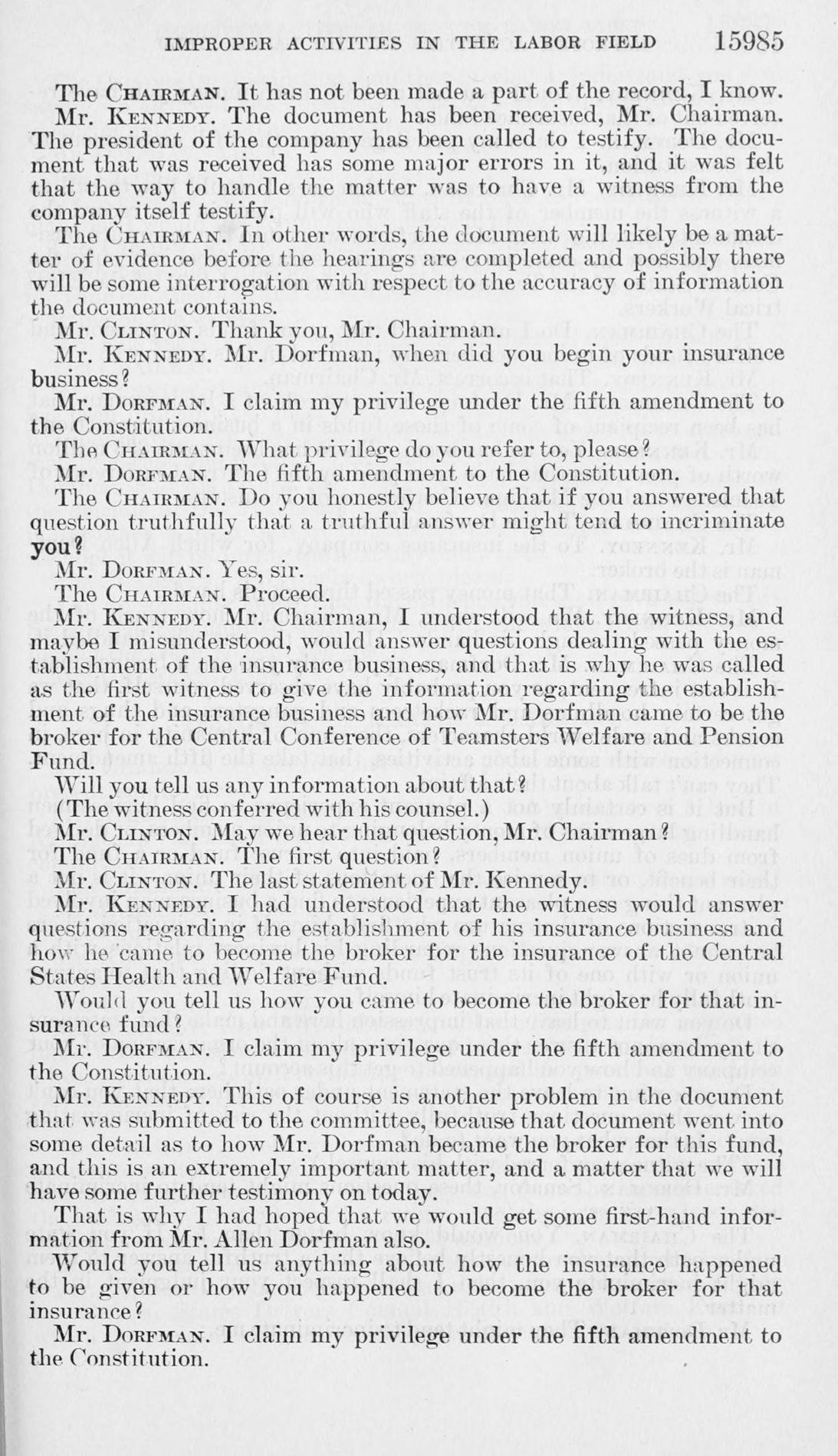 hearingMcClellan Committee hearings, Part 43: Allen Dorfman and the Central Conference of Teamsters insurance (27 January 1959)Allen Dorfman, describing himself as in the insurance business, declined under the Fifth Amendment to say when he began it. Robert Kennedy said the hearing concerned how Dorfman "came to be the broker for the Central Conference of Teamsters Welfare and Pension Fund."
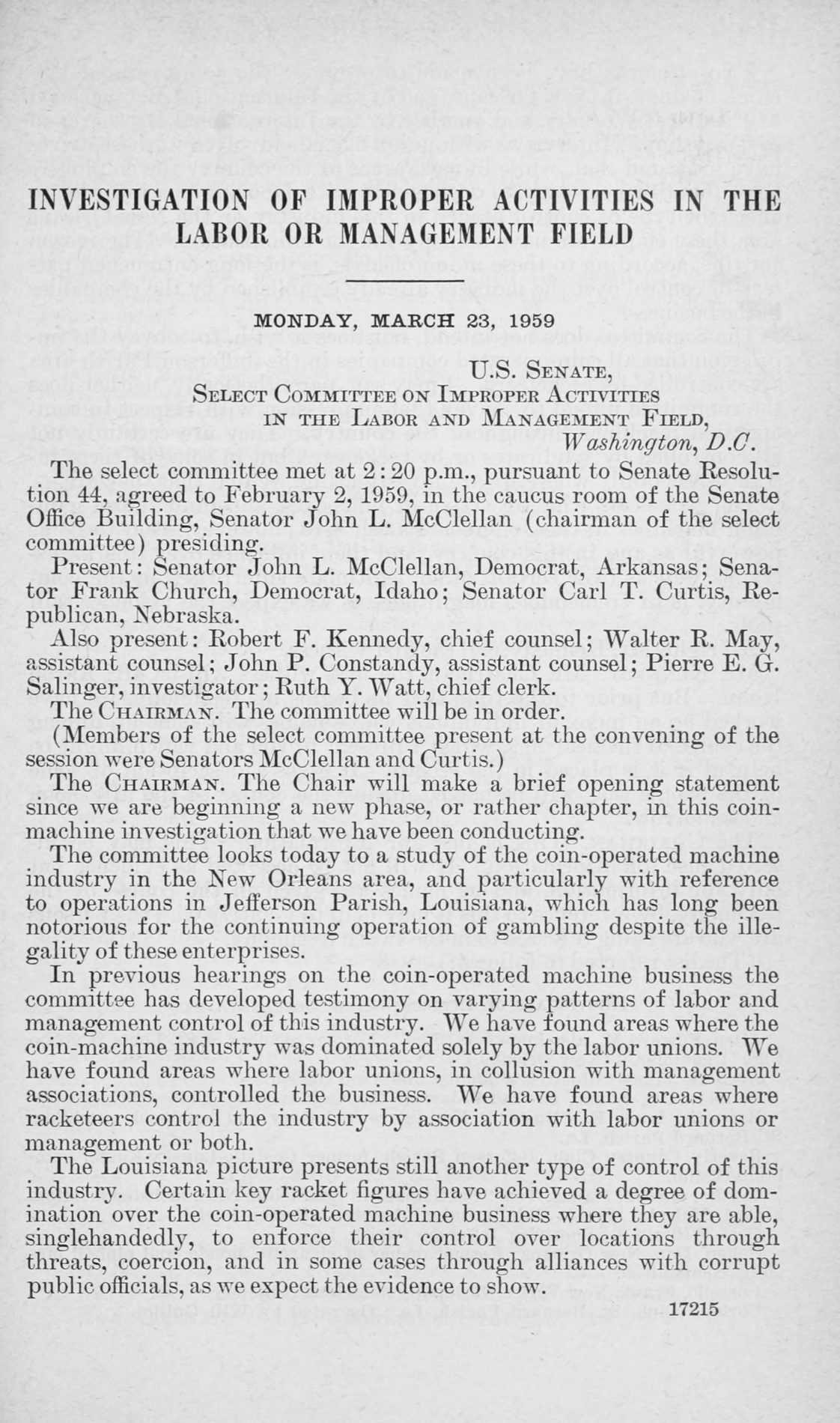 hearingMcClellan Committee hearings, Part 48: coin-operated machines in the New Orleans area (23 March to 15 April 1959)The committee's study of the coin-machine business around New Orleans, "particularly with reference to operations in Jefferson Parish." The chairman said key racket figures controlled locations "through threats, coercion, and in some cases through alliances with corrupt public officials, as we expect the evidence to show."
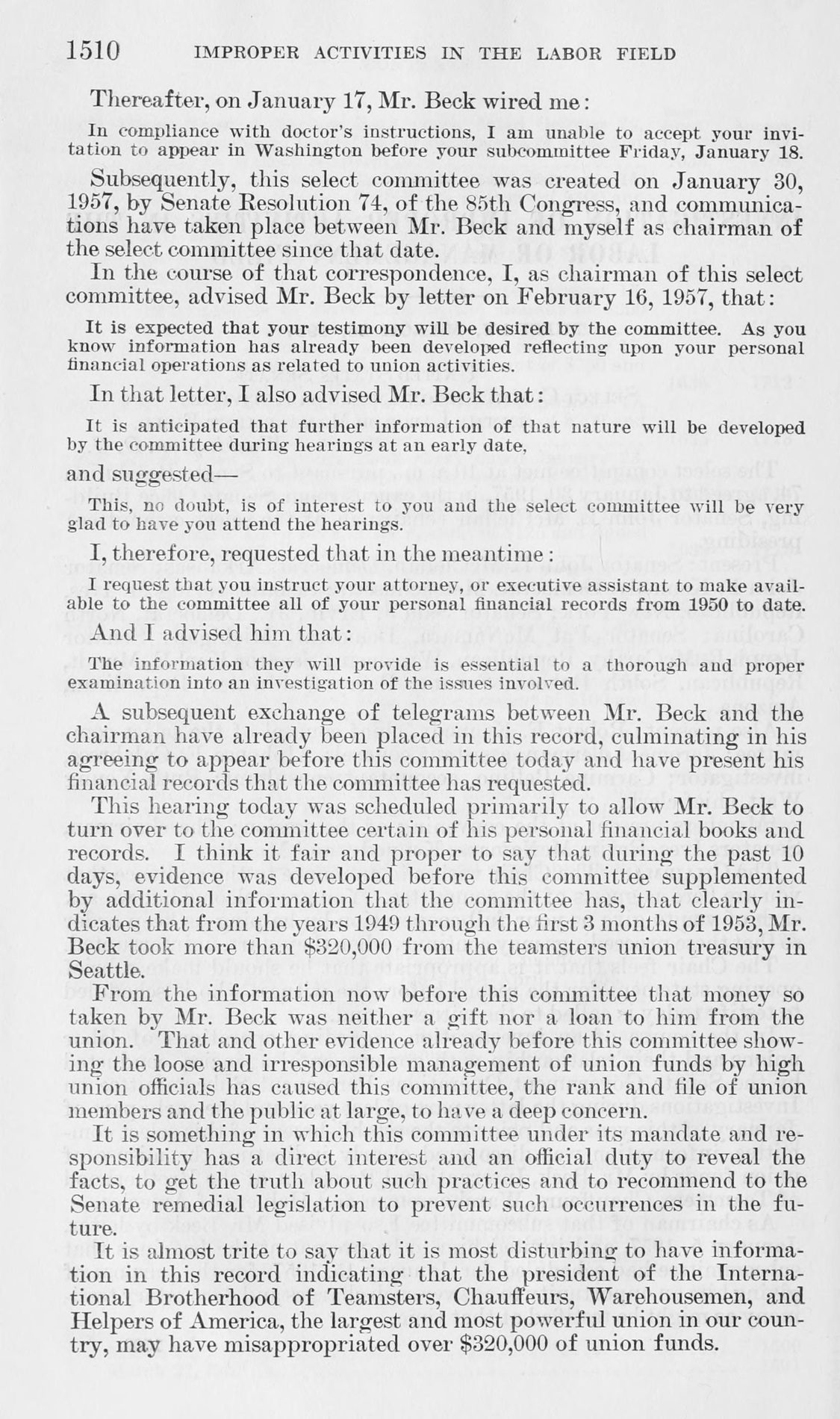 hearingMcClellan Committee hearings, Part 5: Dave Beck testifies (26 and 27 March 1957)The select committee's hearing at which Teamsters president Dave Beck, sworn, challenged the committee's jurisdiction and declined to answer questions about union money, saying a truthful answer "might tend to incriminate me."hearingMcClellan Committee hearings, Part 53 (June 1959)Printed hearings of the Senate Select Committee on Improper Activities in the Labor or Management Field, Part 53, June 1959, including Sam Giancana's appearance on June 9, 1959 and staff testimony about him and Anthony Accardo.hearingMcClellan Committee: Pierre Salinger on Anthony Zerilli, Jack Tocco and the Detroit laundry and overall industry (June 1959)While John LaRocca of Pittsburgh declined to answer, committee investigator Pierre Salinger said the committee had found 'hoodlum-dominated companies' in the Detroit laundry and overall industry, named Anthony Zerilli and Jack Tocco, and called them owners of the Melrose Linen Co. and the Hazel Park Racetrack.
 hearingMcClellan Committee hearings, Part 55: Anthony Provenzano declines to answer (July 1959)Printed hearings of 1, 6, 7, 8 and 9 July 1959. On 6 July Anthony Provenzano, with counsel, declined to state his occupation or to answer Robert Kennedy's questions about Teamsters offices and payments, saying his answer "might tend to incriminate me."
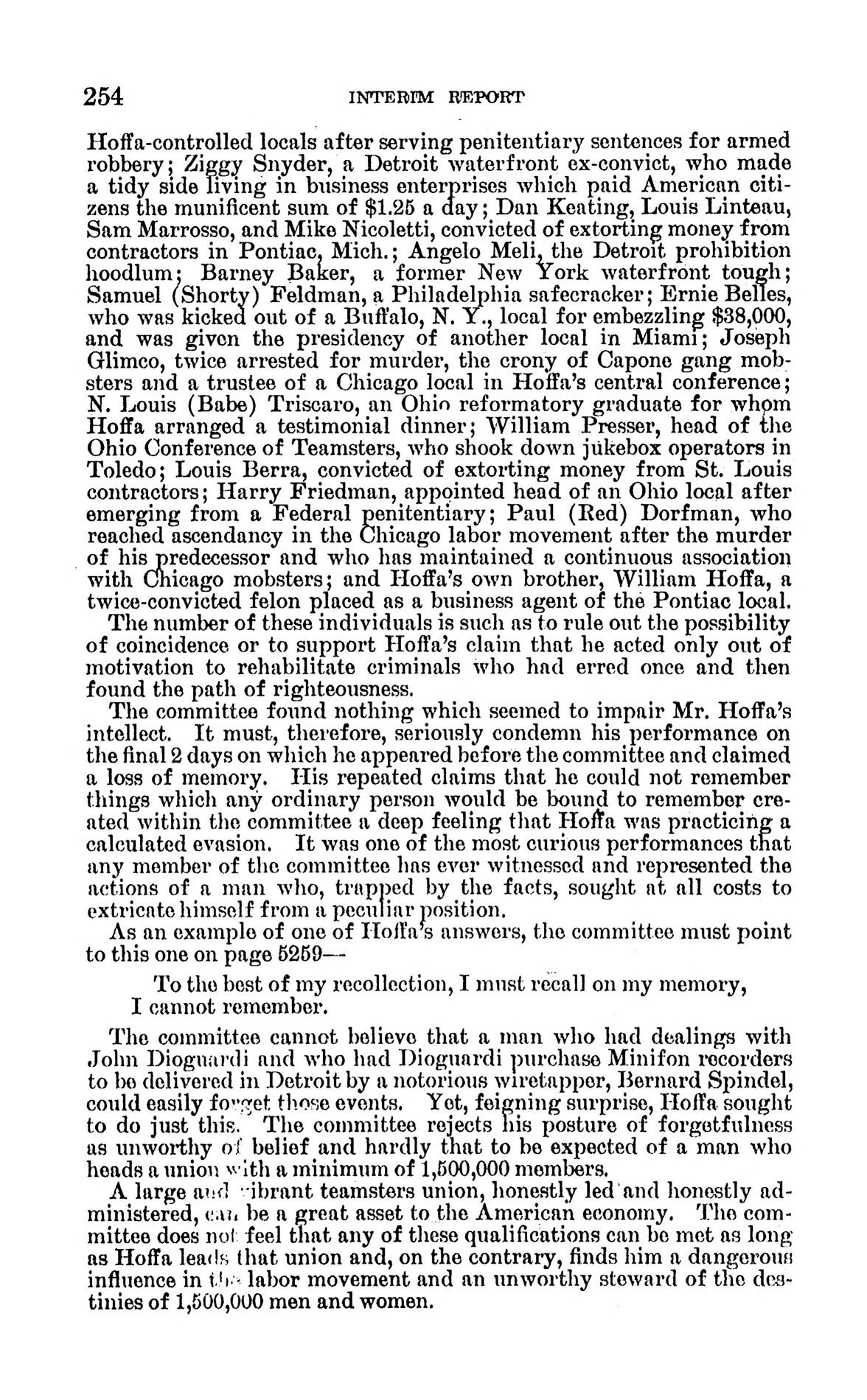 hearingInterim Report of the McClellan Committee, S. Rept. 85-1417 (March 1958)The select committee's report on its first year, ordered printed 24 March 1958. It finds that Dave Beck "took, not borrowed, more than $370,000 in union funds" and that James R. Hoffa "repeatedly betrayed the members of his own union."hearingFinal Report of the McClellan Committee, Part 3, S. Rept. 86-1139 (March 1960): the criminal syndicate, and HoffaPart 3 of the committee's final report, ordered printed 28 March 1960. It finds that "underworld infiltration of business and labor is a national problem" and restates its findings on James R. Hoffa, adding that it had found him "faithless to the members of his own union."hearingFinal Report of the McClellan Committee, Part 4, S. Rept. 86-1139 (March 1960): the coin-operated machine industryPart 4 of the committee's final report, ordered printed 31 March 1960, on jukeboxes, pinball and vending machines. It opens: "Alarming examples of criminal domination of legitimate business achieved by using corrupt unions keynoted the committee's extensive hearings."finding-aidThe United States of America v. Alphonse Capone: criminal case file, Nos. 22852 and 23232National Archives file unit for the 1931 federal income-tax prosecution of Alphonse Capone in the U.S. District Court at Chicago, case numbers 22852 and 23232. The catalog lists 226 item-level descriptions under it.
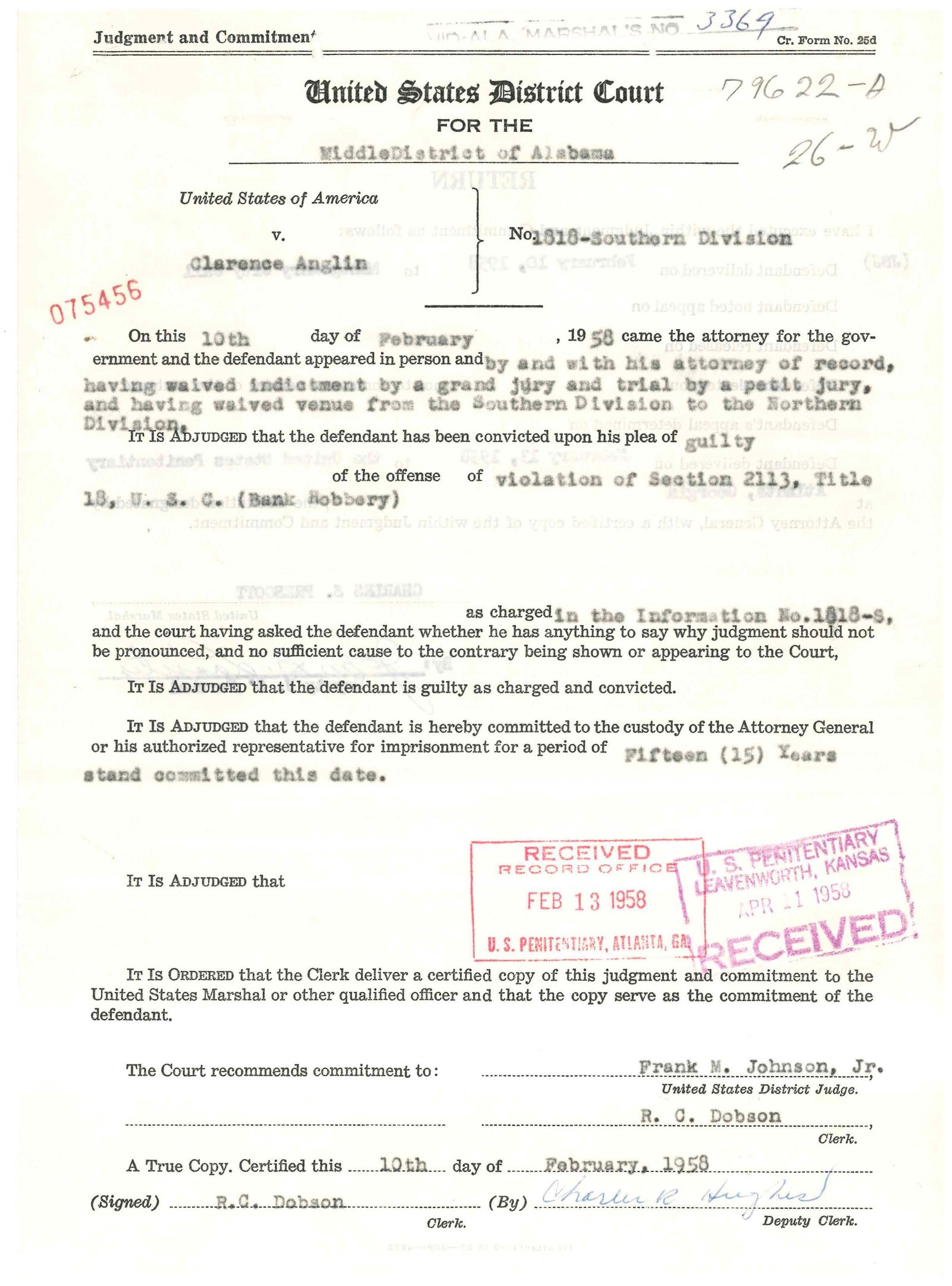 finding-aidClarence Anglin's Alcatraz inmate case file, No. 1485 (National Archives catalog entry)Catalog entry for the Alcatraz case file of register no. 1485, with 525 digitized pages. The description gives receipt on 16 January 1961 and an end date of 11 June 1962, the date of the escape; the catalog remark reads presumed dead.
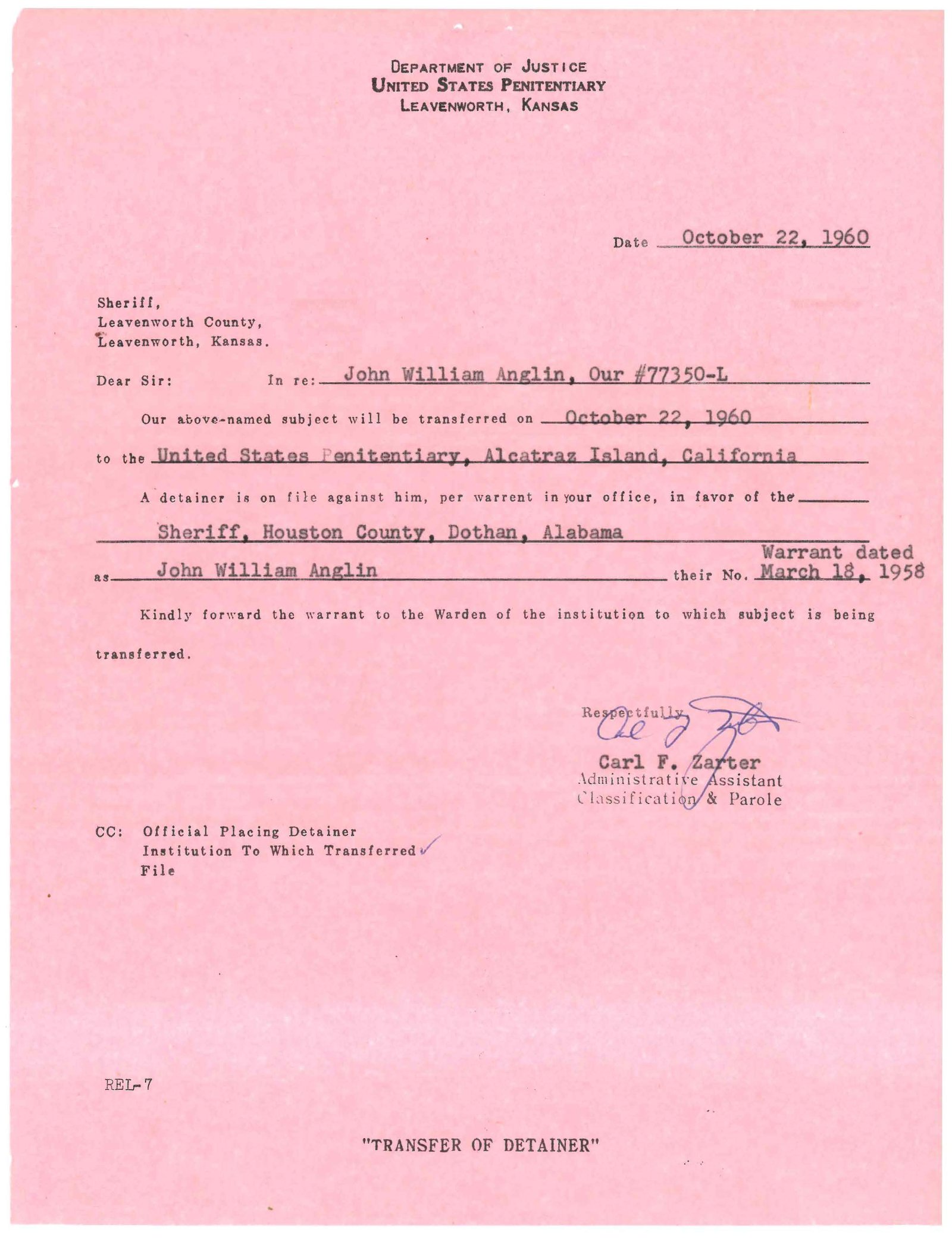 finding-aidJohn Anglin's Alcatraz inmate case file, No. 1476 (National Archives catalog entry)Catalog entry for the Alcatraz case file of register no. 1476, with 465 digitized pages. The description gives receipt on 24 October 1960 and an end date of 11 June 1962, the date of the escape; the catalog remark reads presumed dead.finding-aidHarvey Bailey's Alcatraz inmate case file, No. 139 (National Archives catalog entry)Catalog entry for the Alcatraz case file of register no. 139, about 2,000 pages, not digitized. The description gives receipt from Leavenworth on 4 September 1934 and transfer back on 8 September 1946.finding-aidArthur Barker's Alcatraz inmate case file, No. 268 (National Archives catalog entry)Catalog entry for the Alcatraz case file of register no. 268, about 300 pages, not digitized. The description gives receipt from Leavenworth on 26 October 1935 and "DEATH" as the destination on 13 January 1939.
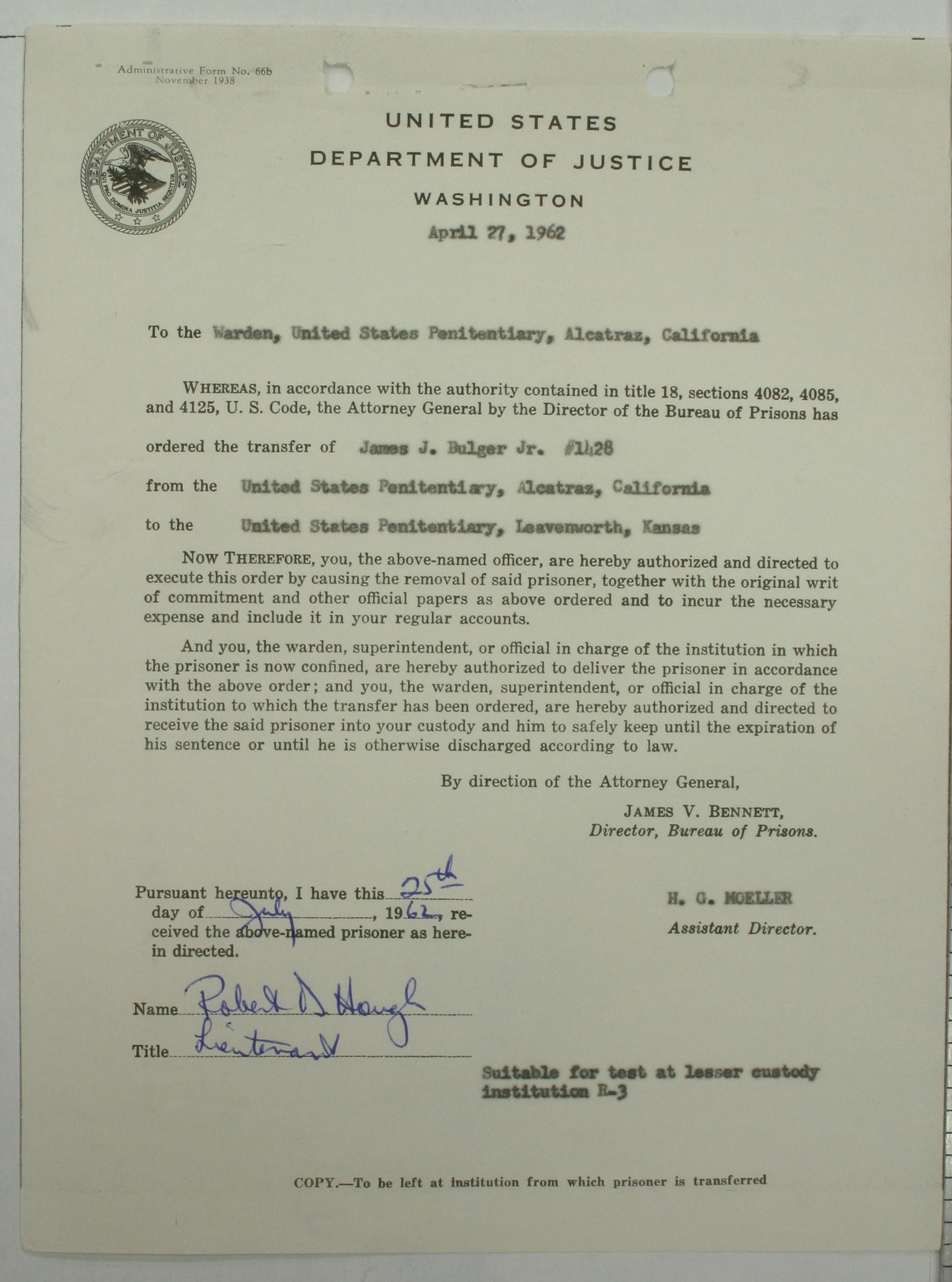 finding-aidJames Bulger's Alcatraz inmate case file, No. 1428 (National Archives catalog entry)Catalog entry for the Alcatraz case file of register no. 1428, with 580 digitized pages. The description gives receipt from Atlanta on 13 November 1959 and transfer to Leavenworth on 25 July 1962.finding-aidCapone's Alcatraz inmate case file, No. 85 (National Archives catalog entry)Catalog entry for Capone's comprehensive Alcatraz inmate case file, 2,688 pages, not yet online. The description gives receipt from Atlanta on 22 August 1934, transfer on 4 January 1939, and death on 25 January 1947 at Miami Beach.finding-aidPaul John Carbo's Alcatraz inmate case file, No. 1568 (National Archives catalog entry)Catalog entry for the Alcatraz case file of register no. 1568, about 1,000 pages, not digitized. The description gives receipt on 24 May 1962 by direct commitment and a transfer on 6 February 1963 whose destination differs from the notebook page's handwritten header.finding-aidMeyer Harris Cohen's Alcatraz inmate case file, No. 1518 (National Archives catalog entry)Catalog entry for the Alcatraz case file of register no. 1518, about 7,000 pages, not digitized. The description gives receipt on 28 July 1961 by direct commitment and release on appeal bond on 17 October 1961.finding-aidRoy Gardner's Alcatraz inmate case file, No. 110 (National Archives catalog entry)Catalog entry for the Alcatraz case file of register no. 110, about 1,500 pages, not digitized. The description gives receipt from Leavenworth on 4 September 1934 and transfer back on 8 August 1936.finding-aidAlvin Karpavicz's Alcatraz inmate case file, No. 325 (National Archives catalog entry)Catalog entry for the Alcatraz case file of register no. 325, about 1,800 pages, not digitized. The description gives receipt from Leavenworth on 6 August 1936 and transfer back on 24 February 1958.
 finding-aidGeorge Kelly's Alcatraz inmate case file, No. 117 (National Archives catalog entry)Catalog entry for the Alcatraz case file of register no. 117, with 1,410 digitized pages. The description gives receipt from Leavenworth on 4 September 1934 and transfer back on 29 May 1951.finding-aidRobert Stroud's Alcatraz inmate case file, No. 594 (National Archives catalog entry)Catalog entry for the Alcatraz case file of register no. 594, about 16,500 pages, not digitized. The description gives receipt from Leavenworth on 19 December 1942 and a 1959 transfer whose destination conflicts with the Bureau of Prisons' account.case-fileWilliam H. Webster, Thomas F. Ryan Lecture, Georgetown University Law Center, October 13, 1982FBI Director Webster's lecture "The Informant, Electronic Surveillance, and the Undercover Agent," in a White House Counsel folder at the Reagan Library. Without naming him, he describes the agent who "assumed his role six years ago. In his undercover role, he was known as 'Donnie Brasco.'"
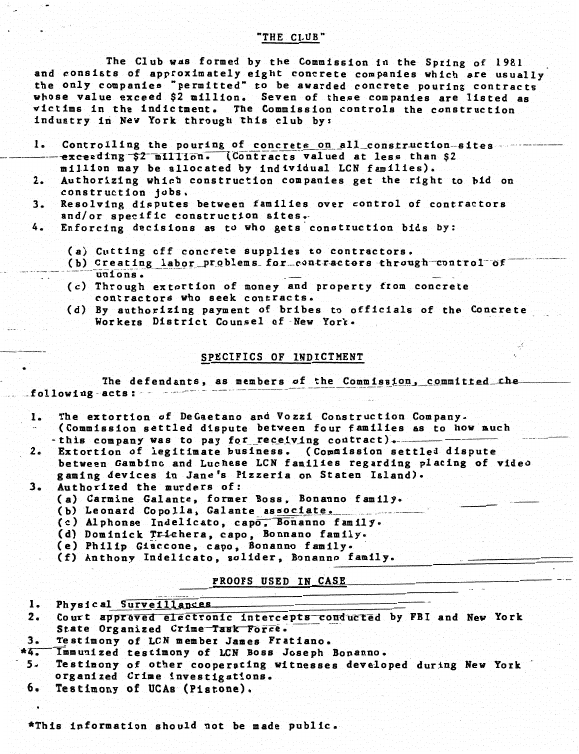 case-fileFBI announcement and briefing outline, "LCN Commission Indictment," February 26, 1985The FBI's announcement of the Commission indictment, forwarded to John Roberts at the White House, lists "Philip Rastelli, Boss, Bonnano Family." Its briefing outline says the Commission "authorized the murders of" Galante, Coppola, Alphonse Indelicato, Trinchera, Giaccone and "Anthony Indelicato, solider," and lists "Testimony of UCAs (Pistone)."
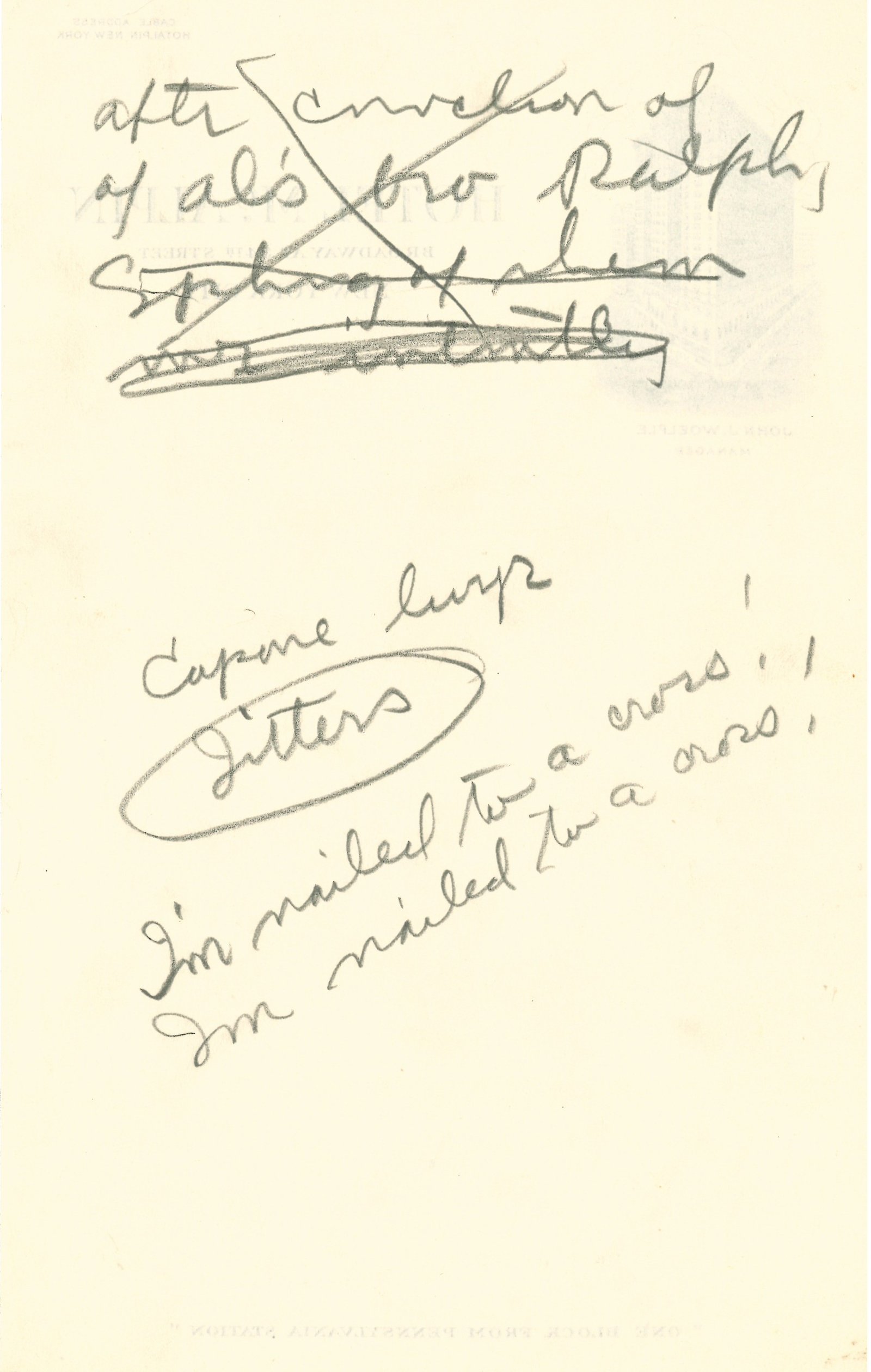 case-fileGeorge E. Q. Johnson's handwritten notes (8 October 1931)Handwritten notes dated 8 October 1931 that the catalog says U.S. Attorney George E. Q. Johnson made during the Capone income-tax prosecution.
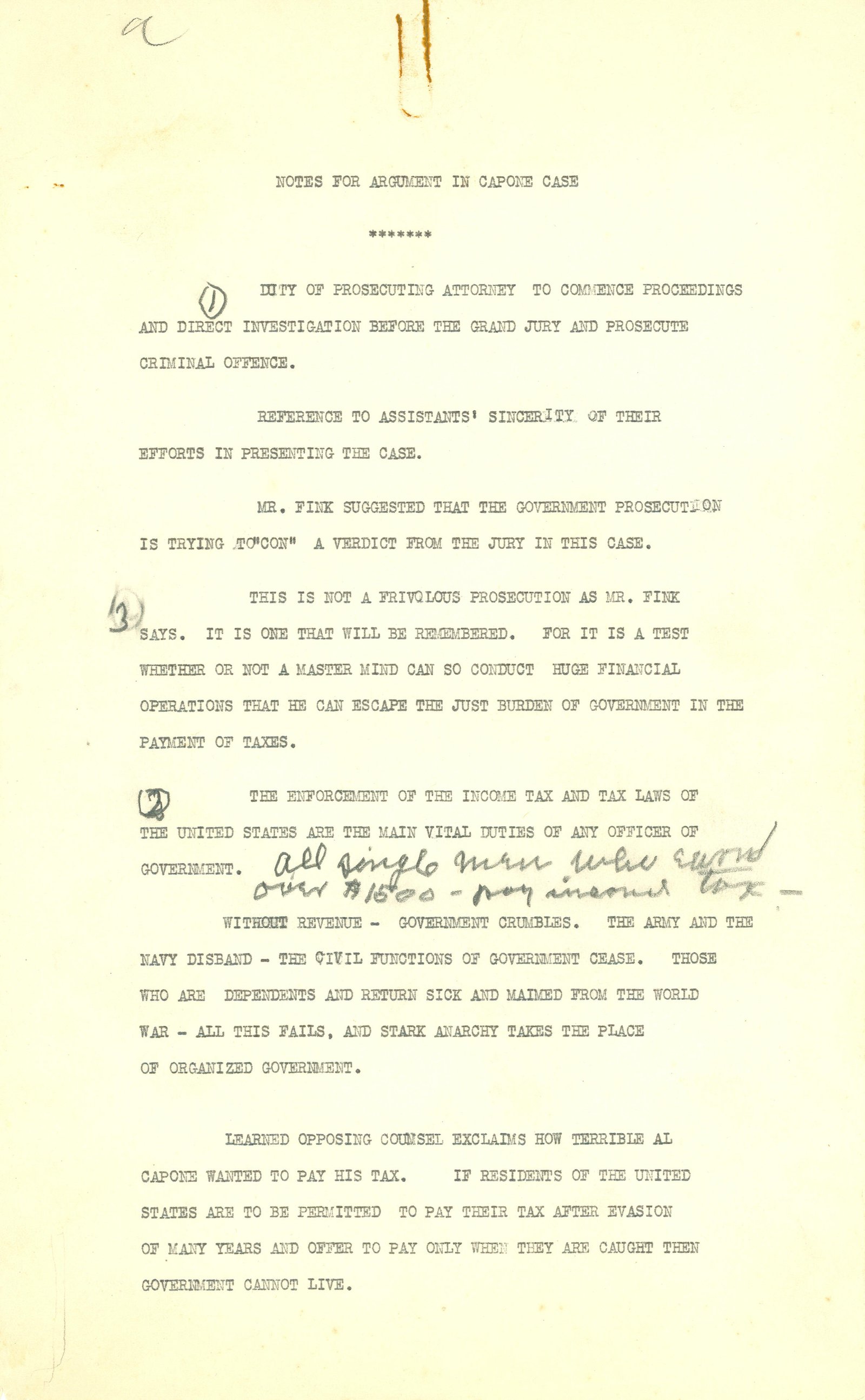 case-fileNotes for Argument in Capone Case (October 1931)Typed notes for the government's argument in the Capone income-tax trial, October 1931, which the catalog attributes to George E. Q. Johnson.
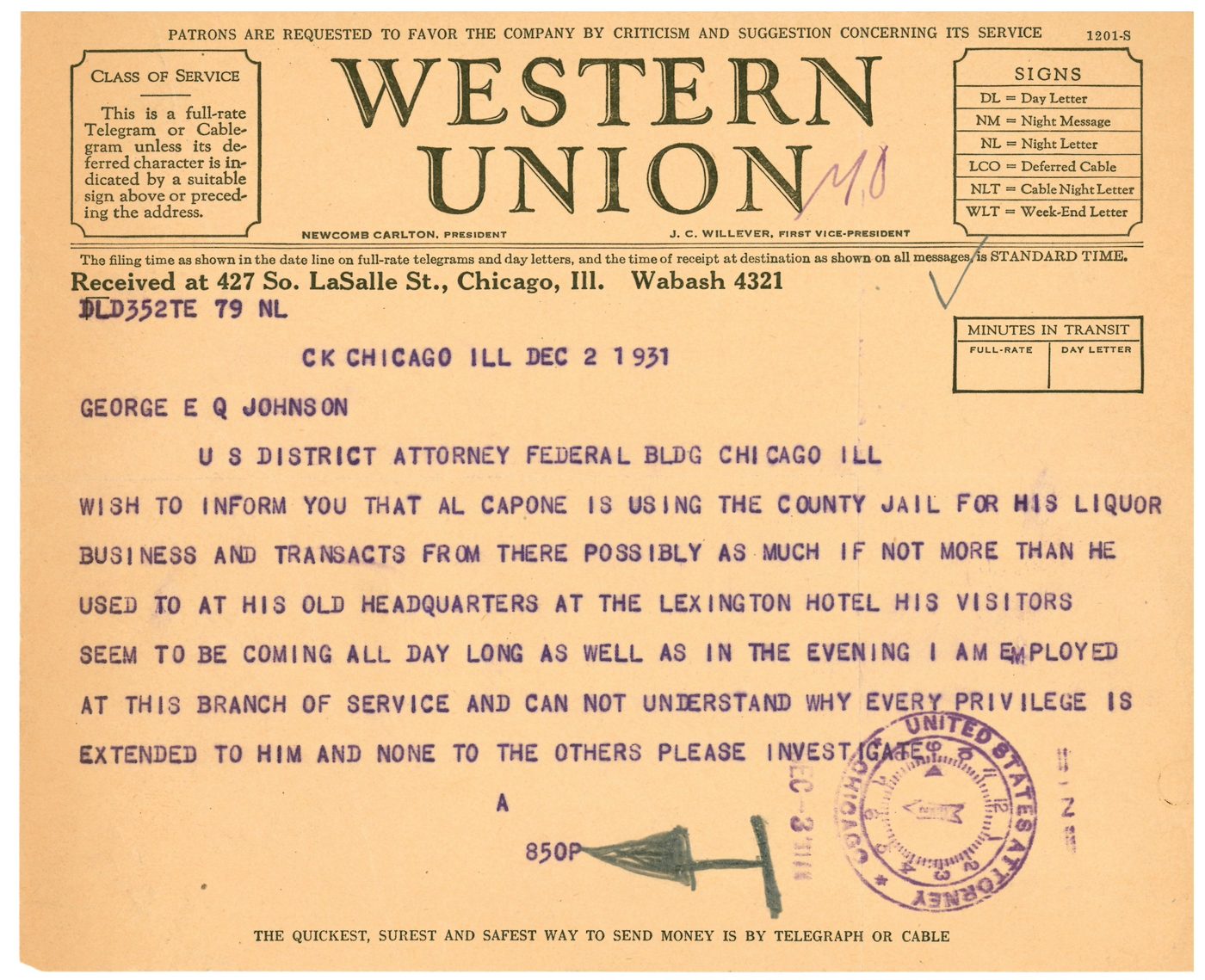 case-fileTelegram to U.S. Attorney Johnson about Capone in the Cook County Jail (2 December 1931)Western Union telegram of 2 December 1931 to George E. Q. Johnson reporting that Al Capone was running his liquor business from the county jail, and asking for an investigation.
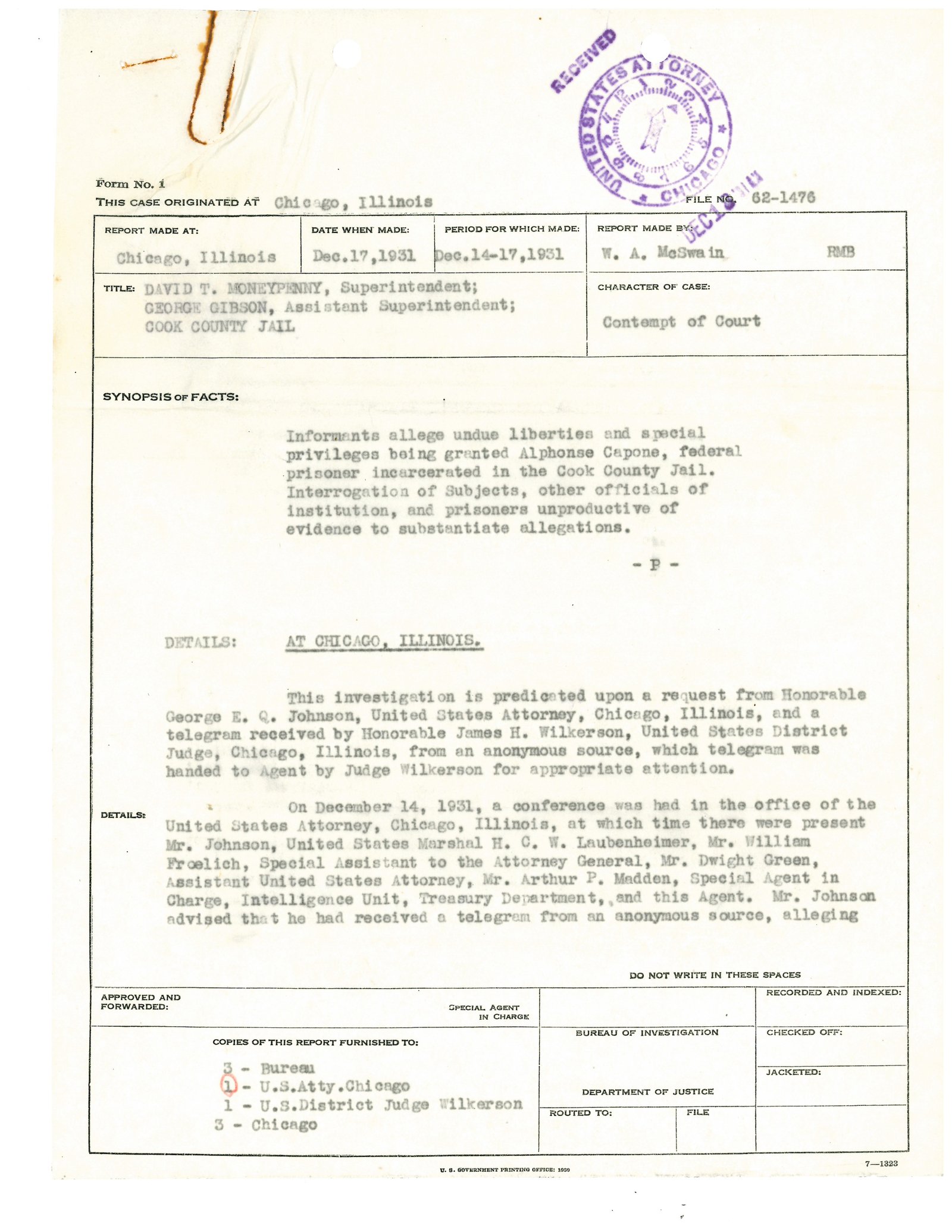 case-fileContempt of court investigation of the Cook County Jail superintendents (December 1931)Records of a December 1931 contempt-of-court investigation of Cook County Jail superintendent David T. Moneypenny and assistant superintendent George Gibson, filed in the U.S. Attorney's Capone prosecution file.
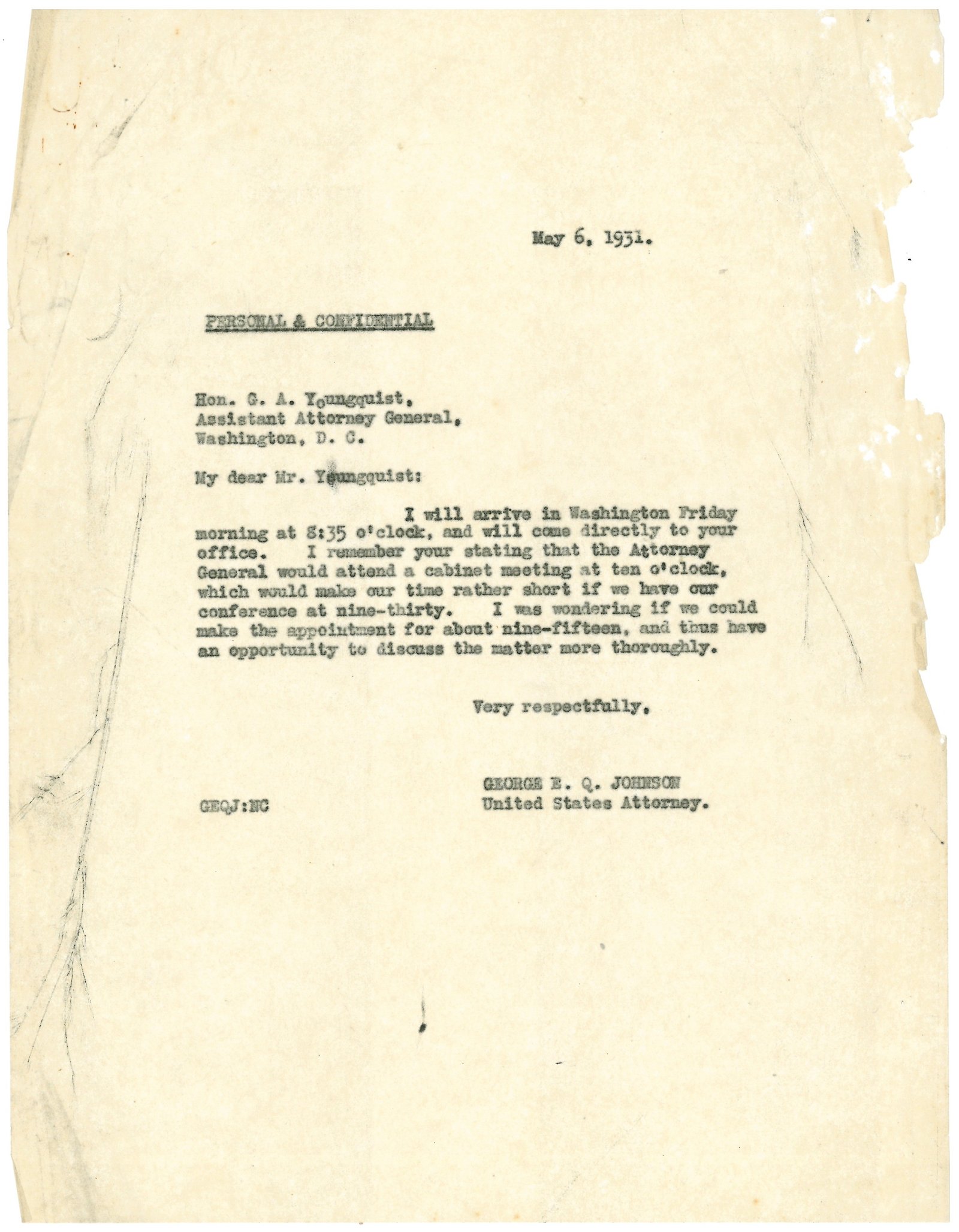 case-fileLetter from George E. Q. Johnson to G. A. Youngquist (6 May 1931)Carbon of a 'Personal & Confidential' letter from U.S. Attorney George E. Q. Johnson to Assistant Attorney General G. A. Youngquist asking to move their meeting earlier.
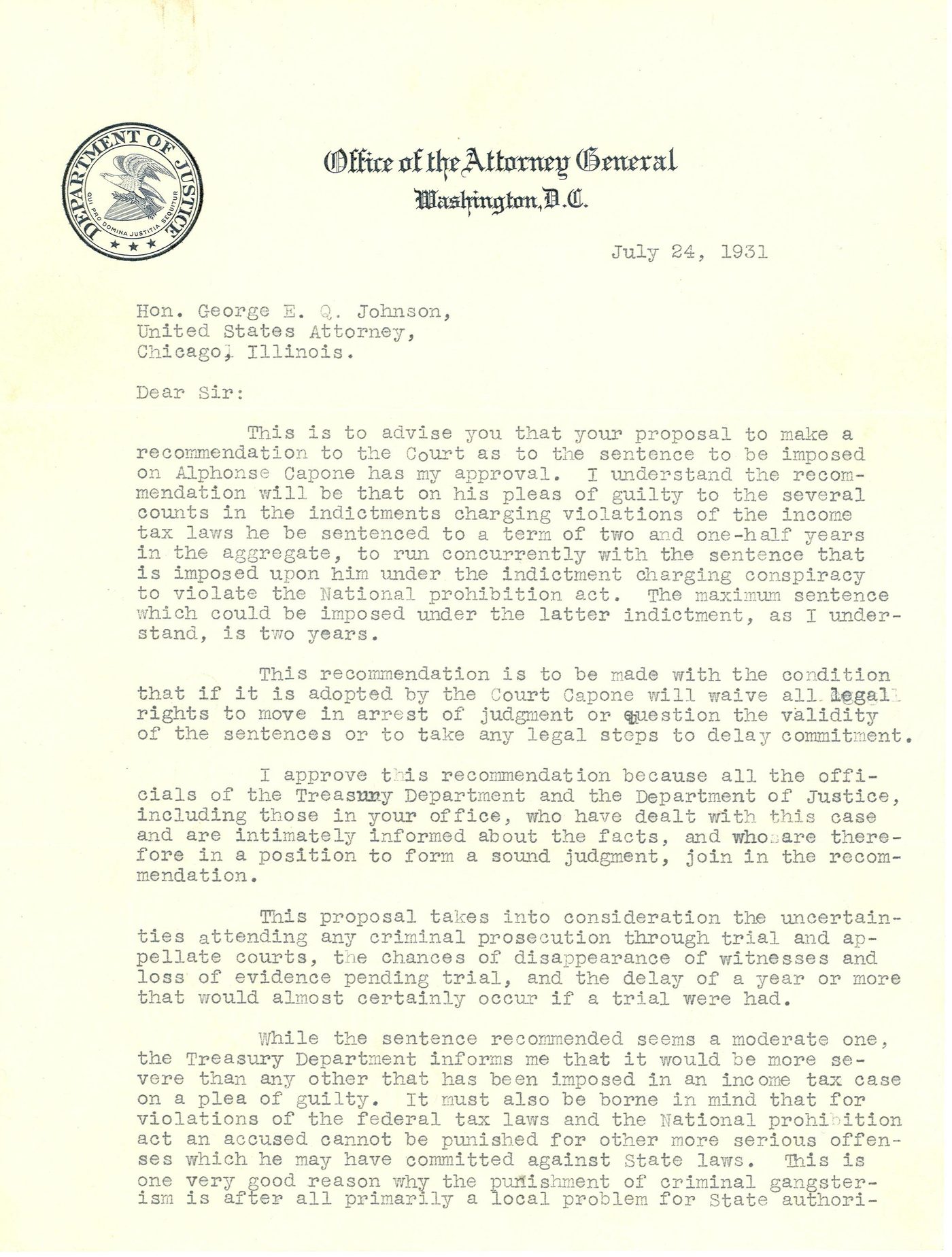 case-fileLetter from Attorney General William D. Mitchell to George E. Q. Johnson (24 July 1931)The Attorney General approves the Chicago U.S. Attorney's proposal to recommend a sentence of two and one-half years if Capone pleaded guilty to the income-tax counts.
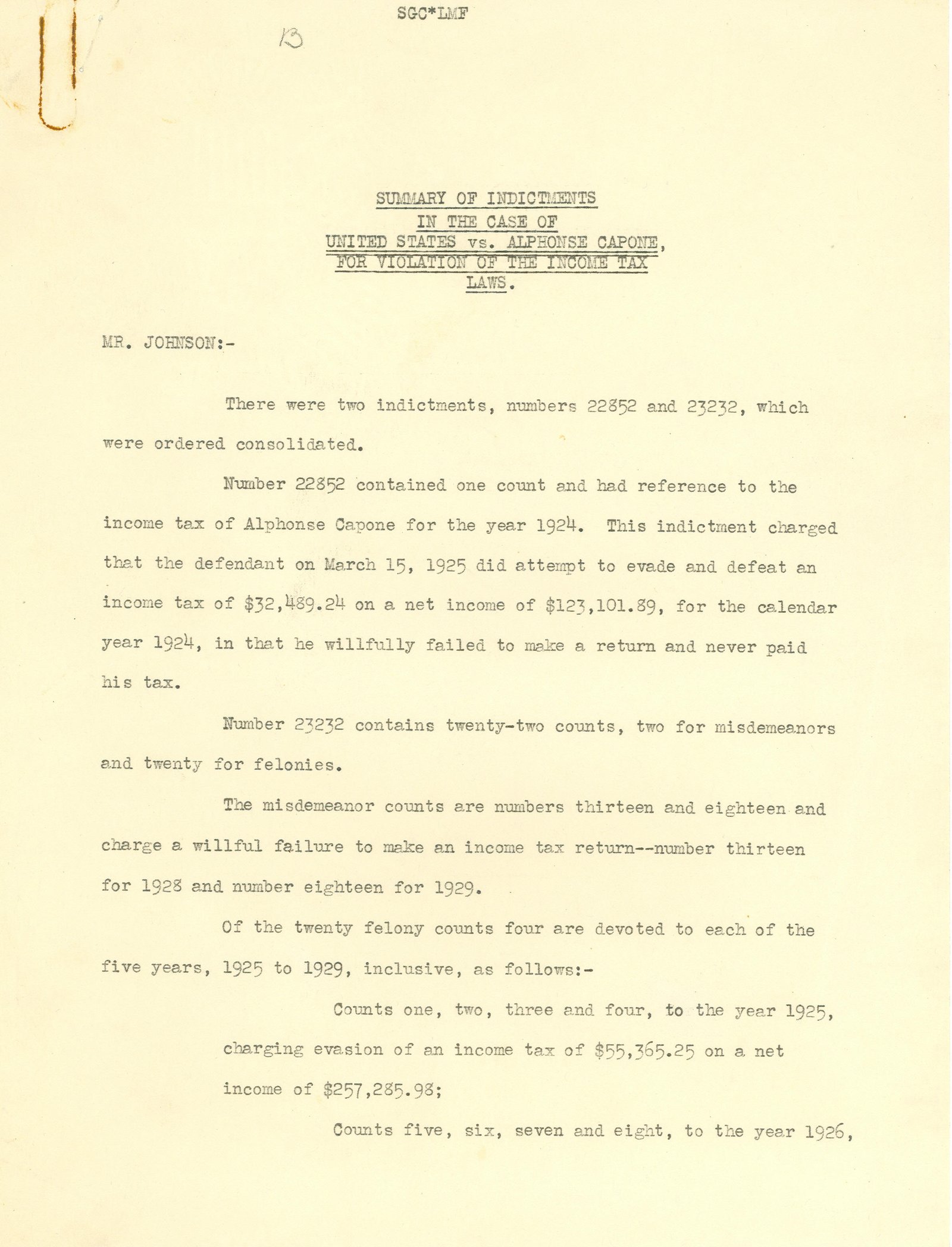 case-fileSummary of Indictments in United States v. Alphonse Capone (1931)Typed memorandum to 'Mr. Johnson' summarizing Capone's two income-tax indictments, No. 22852 (one count, 1924) and No. 23232 (twenty-two counts, 1925–1929).
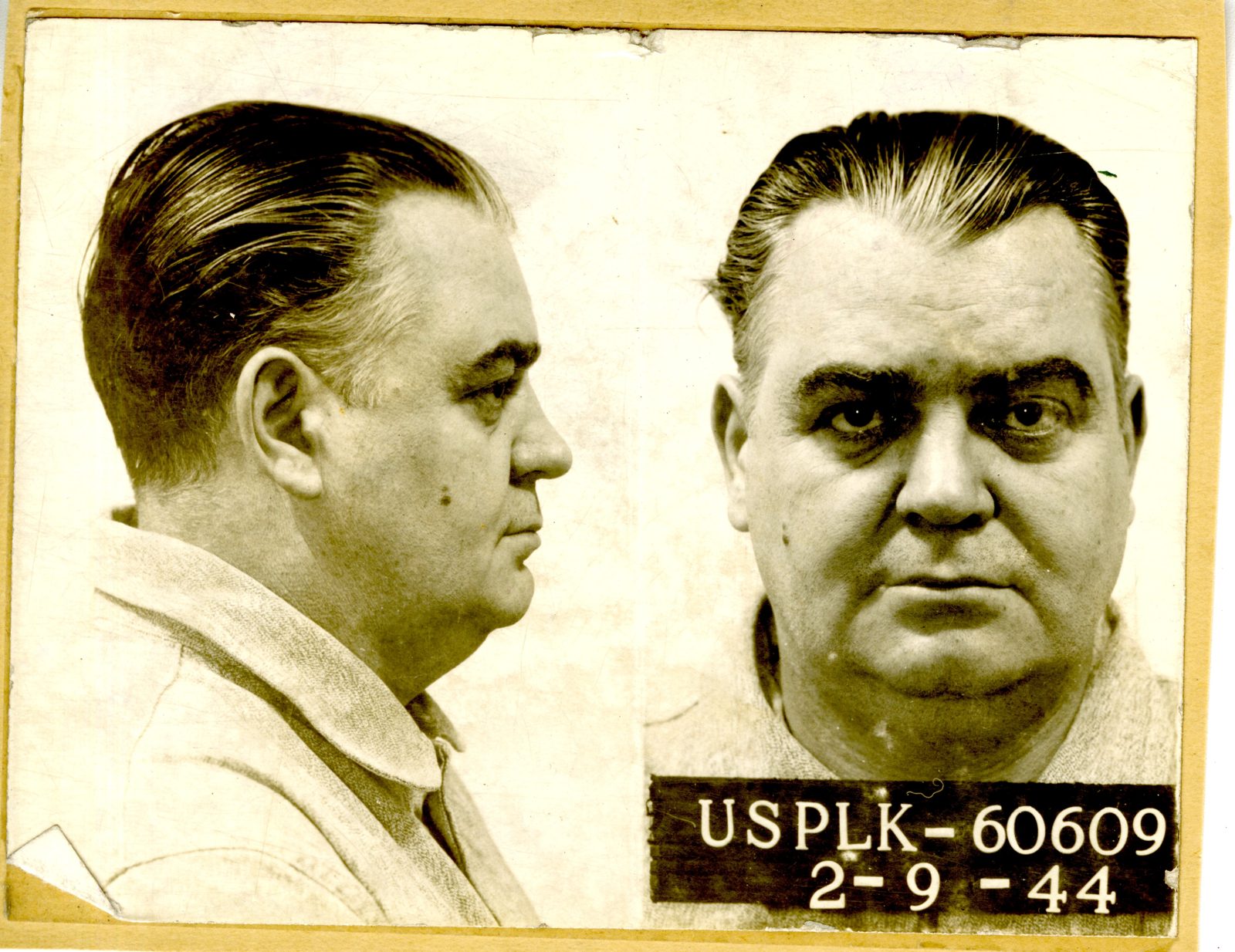 photographNick Circella, Leavenworth inmate 60609, 1944 (National Archives)Front and profile mug shot from the Leavenworth inmate file of Nick Circella, inmate 60609, with a placard dated 2-9-44. A copy is stored here.
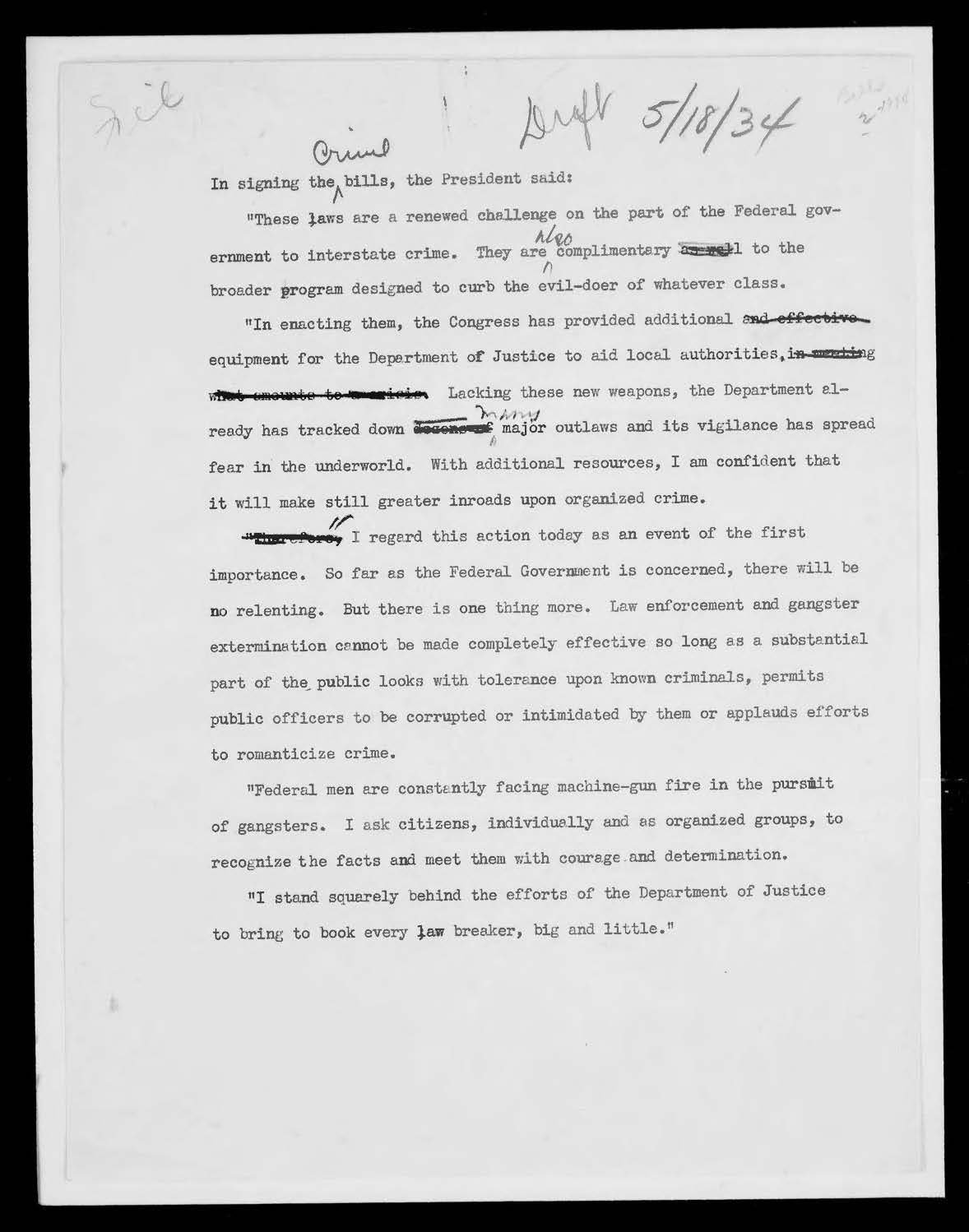 case-fileStatement by President Roosevelt on signing the crime bills, 18 May 1934 (Franklin D. Roosevelt Library)The President's statement on signing the May 1934 federal crime bills, which he calls "a renewed challenge on the part of the Federal government to interstate crime." The marked-up draft includes the line "Federal men are constantly facing machine-gun fire in the pursuit of gangsters."finding-aidUnited States v. Howard T. Winter et al., criminal case file 79-CR-00042-MA (D. Mass.)National Archives description of the District of Massachusetts case file in the horse-race fixing prosecution: a 52-count indictment against 21 defendants, with trial transcripts and papers on the First Circuit appeal.
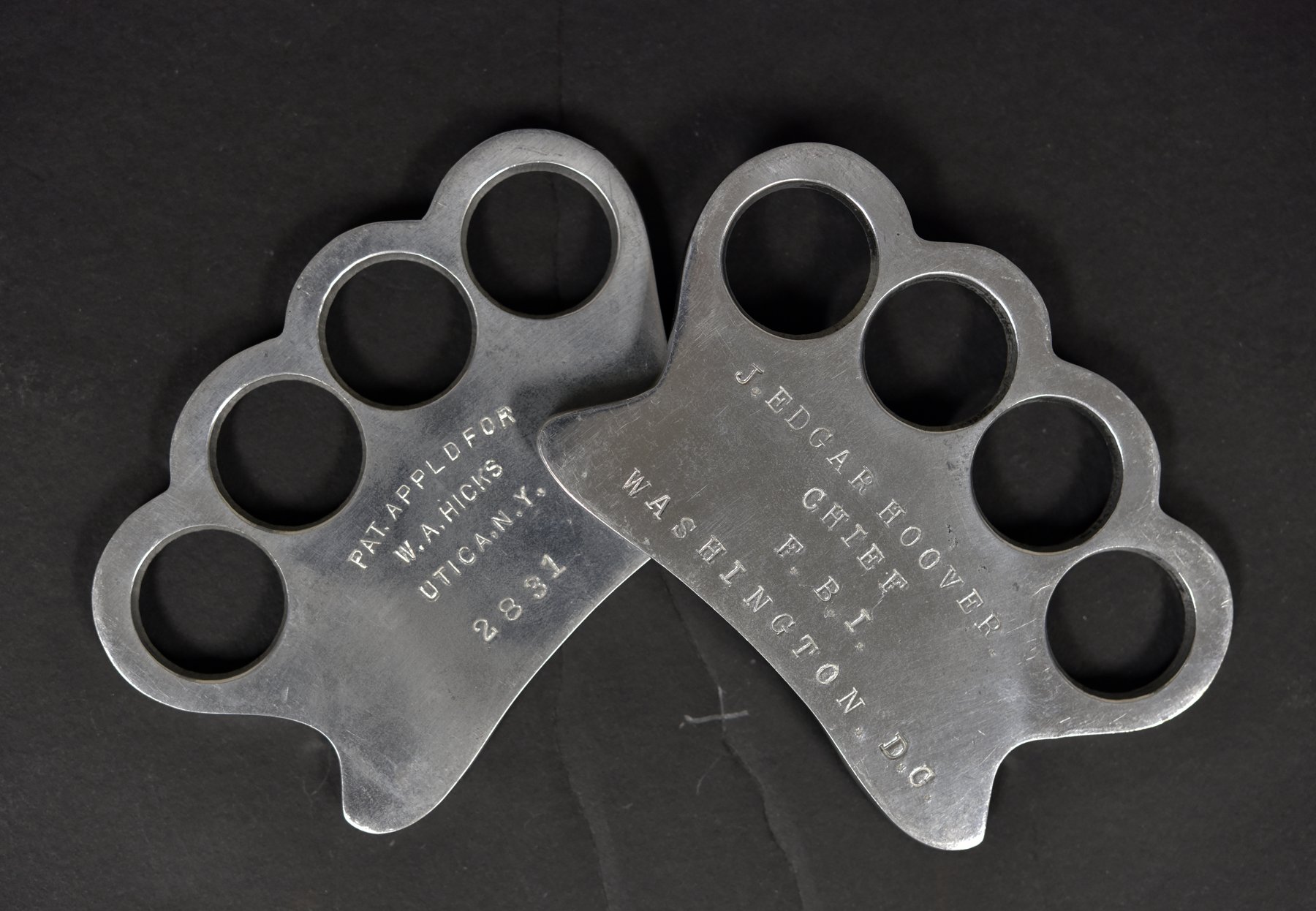 photographBrass knuckles from J. Edgar Hoover's photograph files (FBI)An FBI photograph of two metal knuckle-dusters on black cloth, one stamped with a maker's patent mark and the other engraved "J. Edgar Hoover, Chief F.B.I., Washington D.C." The catalog gives no date or case.
 case-fileSecret Service daily reports, New York District, 13 April 1903: the watch on Morrello at Stanton Street and Elizabeth Street (T915 roll 109, pages 85-89)Operatives' reports for 13 April 1903, the day before the barrel was found: agents followed 'Morrello' to La Duca's butcher shop at 16 Stanton Street and to Elizabeth Street, where he met 'Cascioferro' and other men.
 case-fileSecret Service daily reports, New York District, 14-17 April 1903: the body identified, the arrests, and a telegram about a letter to New Orleans (T915 roll 109, pages 103-111)Secret Service reports received on 17 April 1903: an operative's identification of the body at the Morgue as a man seen 'with Morrello et al.' the day before, the arrests of 15 April, a telegram to Chief Wilkie about a letter that 'indicated that murder was to be done', and the list of suspects.
 case-fileSecret Service daily report, New York District, about 8-9 April 1903: search warrants and the watch on Morrello and Lupo (T915 roll 109, pages 47-49)Typed pages of the U.S. Secret Service New York District daily report from the week before the barrel killing: an application for search warrants for premises including those of 'Giuseppe Morrello' and 'Ignazio Lupo', and operatives' surveillance in a counterfeiting inquiry.
 case-fileSecret Service daily report, New York District, 15 November 1909: search warrants on 'Morrello et al.' with the Italian Squad (T915 roll 116, pages 162-173)The New York District's report of the day Secret Service agents, helped by ten members of the New York police Italian Squad, executed search warrants against 'Morrello et al.' in a counterfeiting case. An agent wrote that he was 'satisfied' Morrello held 'very damaging "Black Hand" letters'; that is the agent's belief, not a finding.
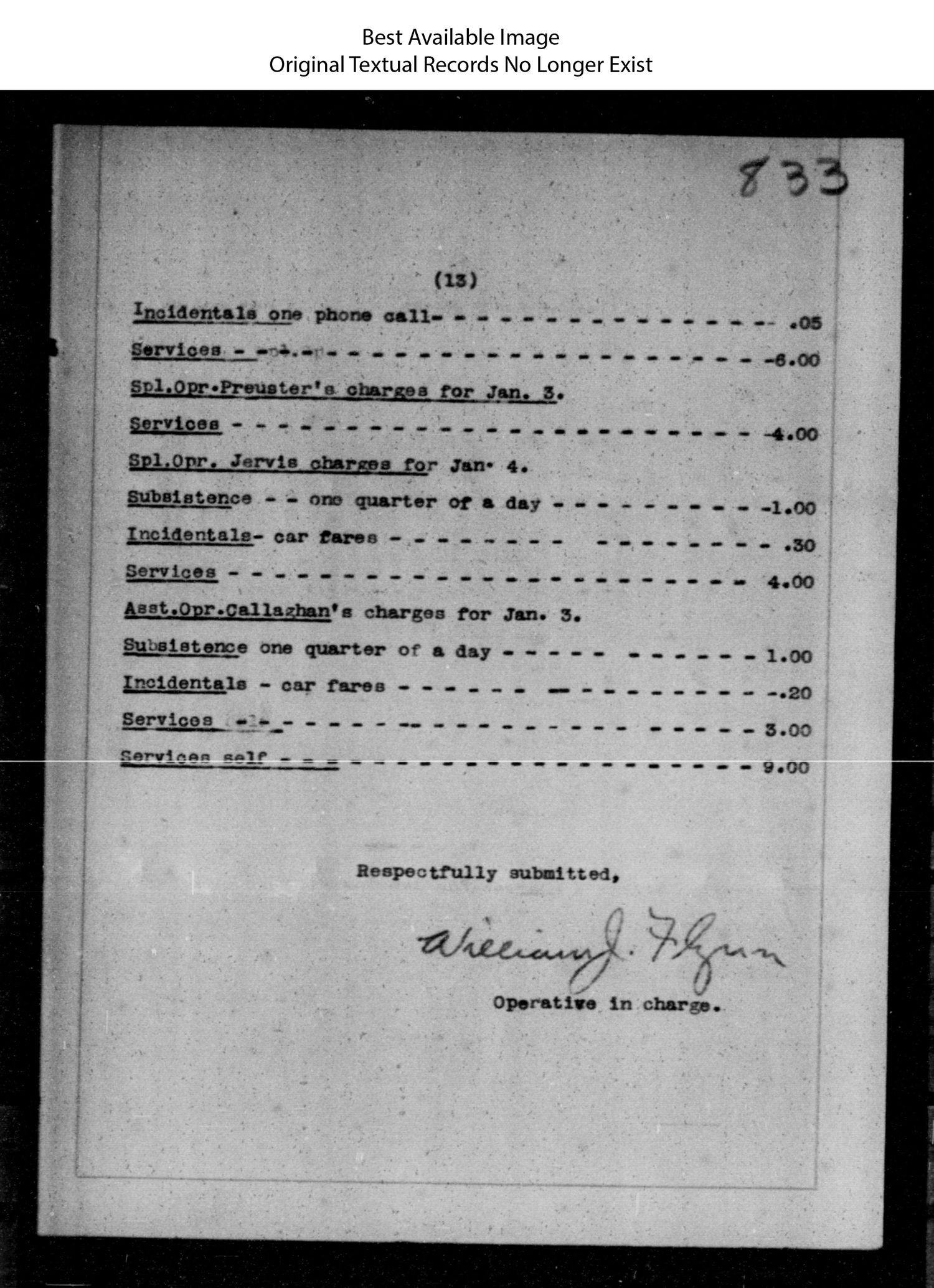 case-fileSecret Service daily report, New York District, early January 1910: the watch on Callicchio and the arrest of Comito (T915 roll 116, pages 831-833)Pages of the New York District daily report for about 3-6 January 1910, three weeks before the counterfeiting trial: agents on watch for Callicchio, the arrest of Comito, and a list of charges, signed by William J. Flynn as 'Operative in charge'.
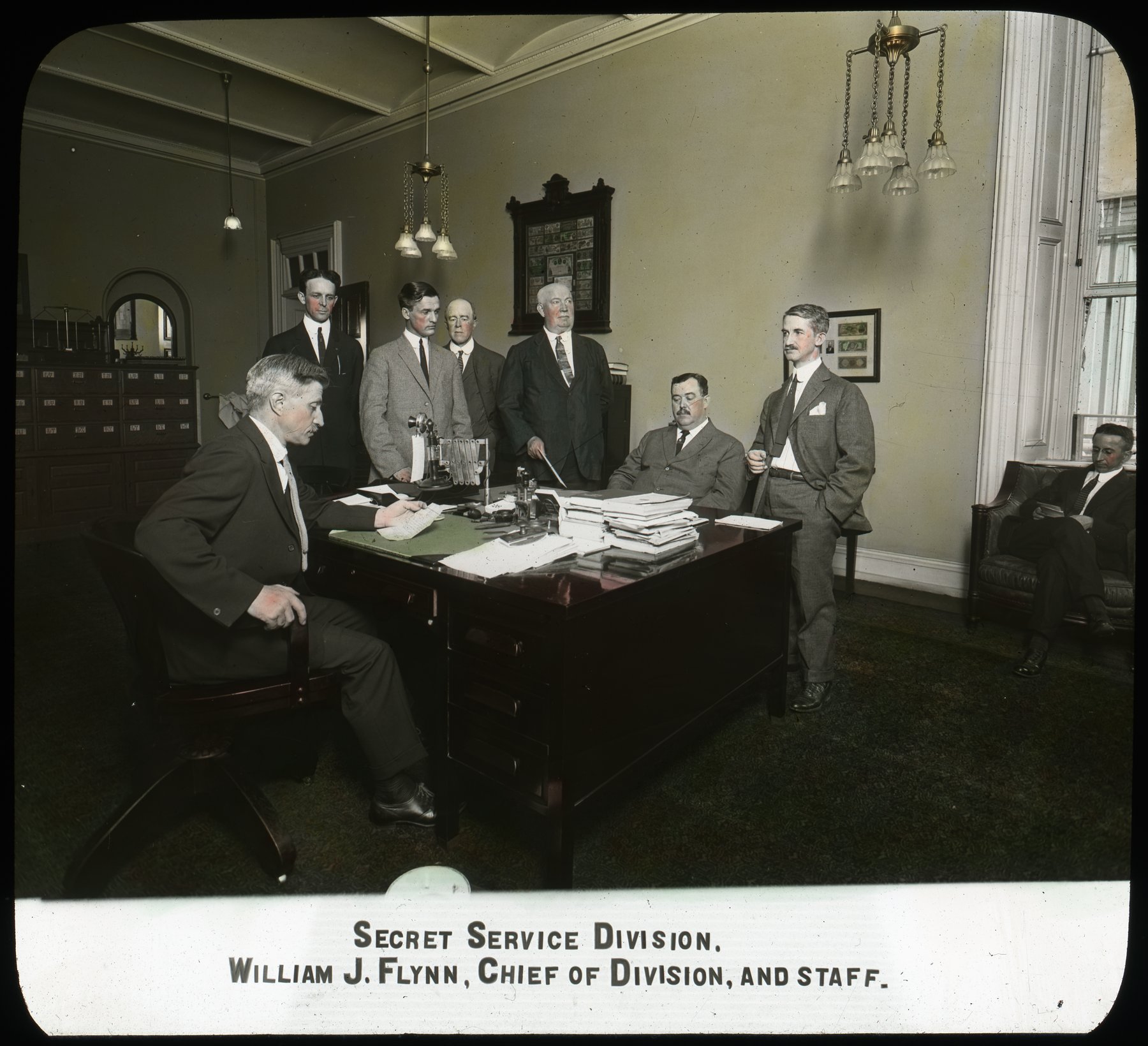 photographInternal Revenue Bureau chemical laboratory, testing whiskies (Treasury lantern slide, about 1915)A hand-coloured Treasury lantern slide captioned "Internal Revenue Bureau, Chemical Laboratory, Testing Whiskies": a man beside a long rack of glass distilling apparatus and labelled whiskey bottles. The catalog serves this slide's scan under a neighbouring record.
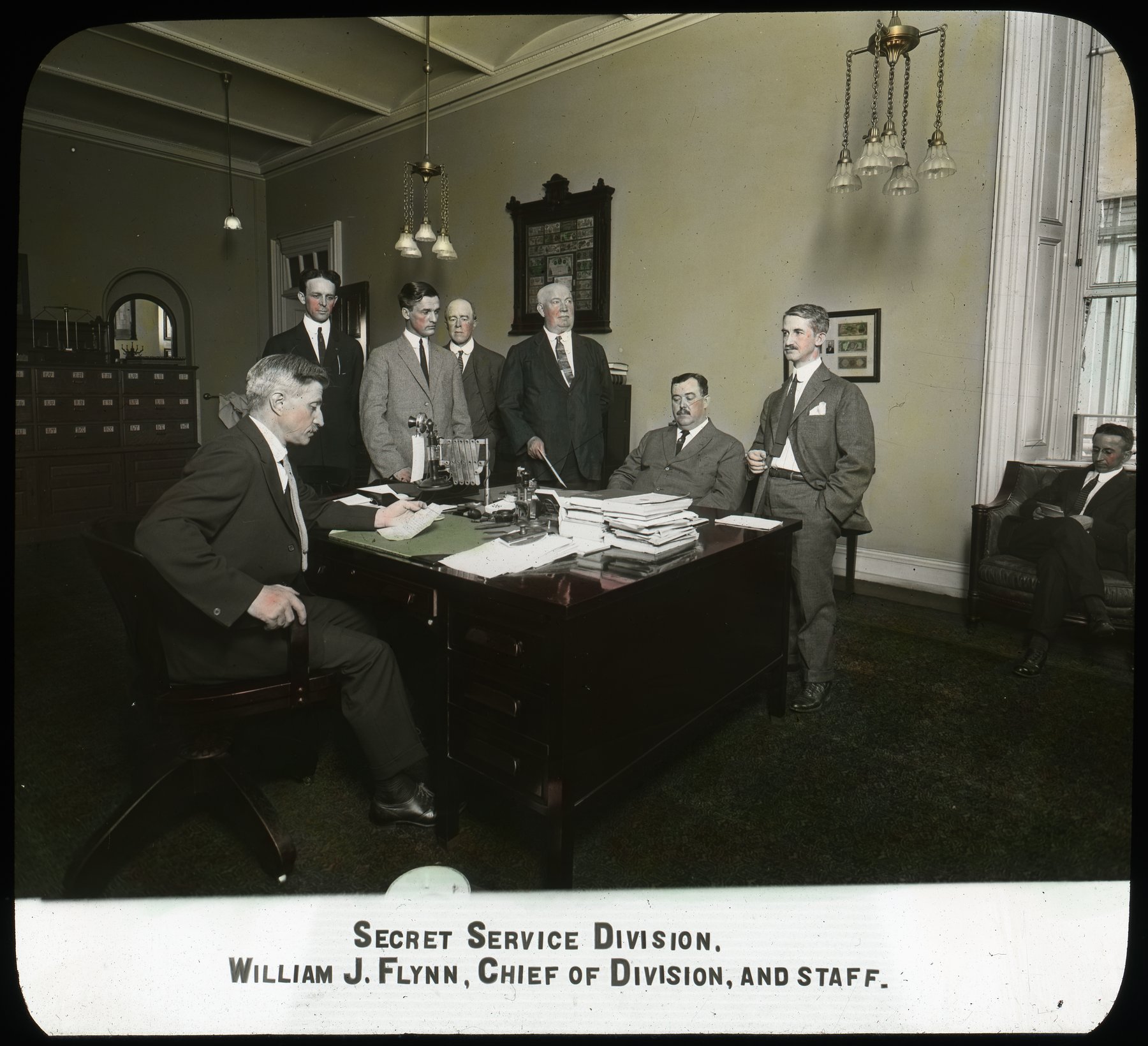 photographSecret Service Division: William J. Flynn, Chief of Division, and staff (Treasury lantern slide, about 1915)A hand-coloured Treasury lantern slide captioned "Secret Service Division, William J. Flynn, Chief of Division, and Staff": nine men in an office around a desk. The slide does not say which man is Flynn.
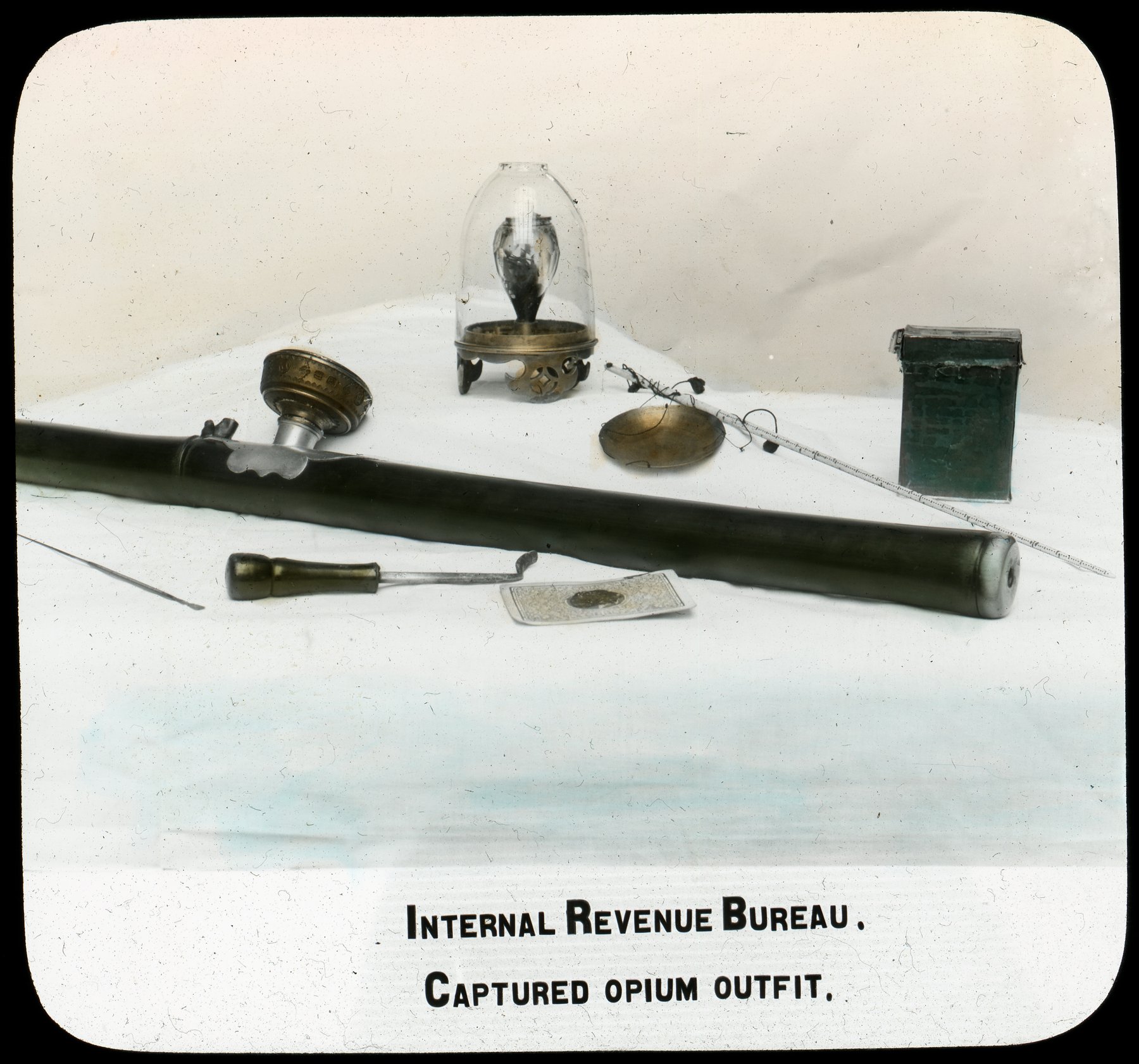 photographInternal Revenue Bureau: captured opium outfit (Treasury lantern slide, about 1915)A hand-coloured Treasury lantern slide captioned "Internal Revenue Bureau. Captured Opium Outfit": a long opium pipe, a lamp, a small scale, tools and a tin box laid out on a table.
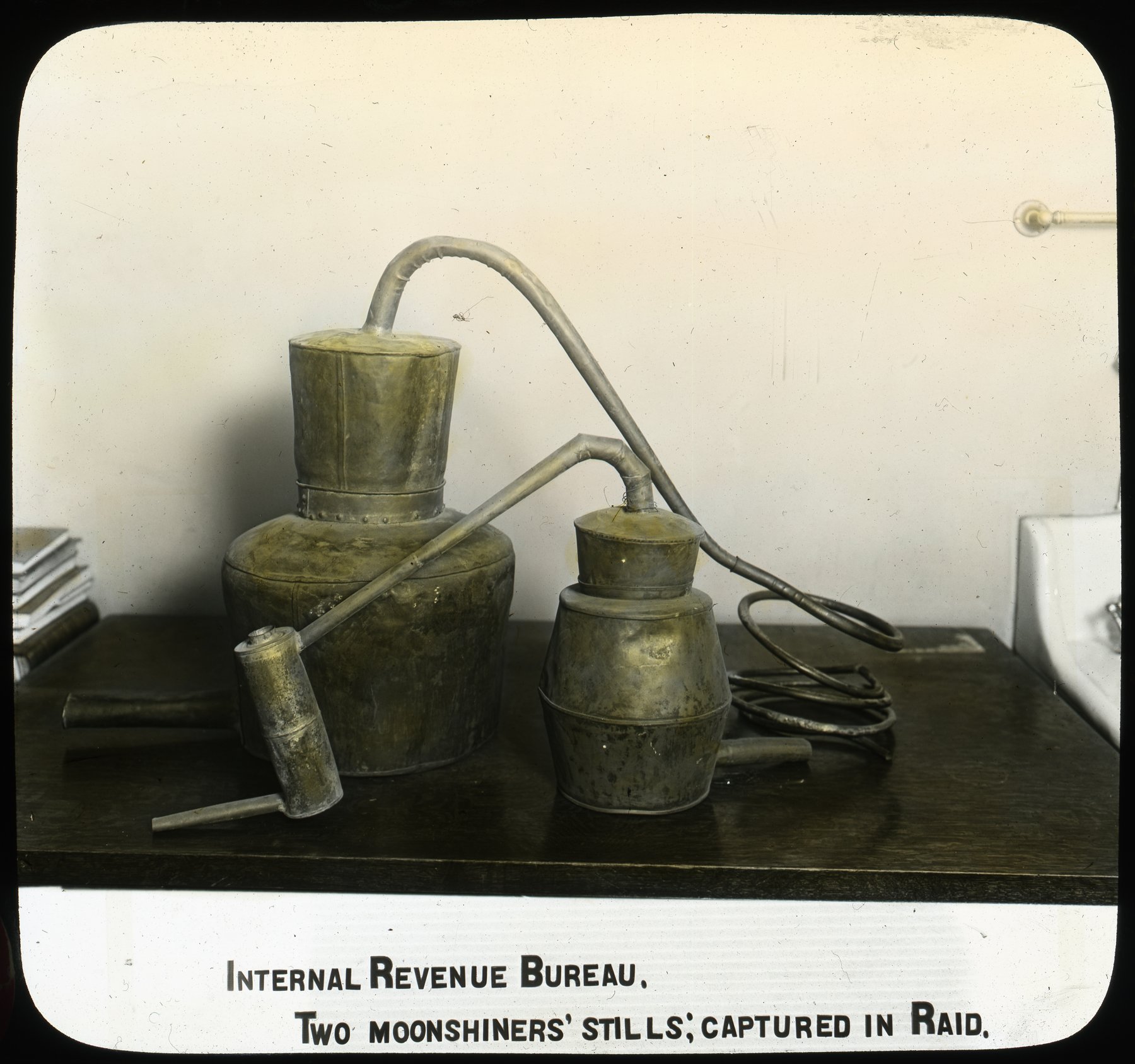 photographInternal Revenue Bureau: two moonshiners' stills captured in a raid (Treasury lantern slide, about 1915)A hand-coloured Treasury lantern slide captioned "Internal Revenue Bureau. Two Moonshiners' Stills; Captured in Raid": two small metal pot stills with coiled tubing on a table.
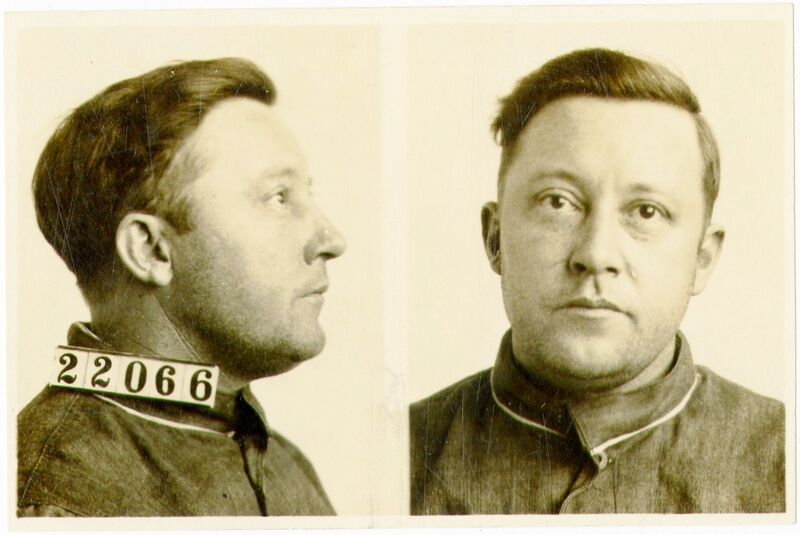 photographLeavenworth identification photograph, No. 22066: William P. ColbeckFront and profile Bureau of Prisons photograph numbered 22066, with "WILLIAM P. COLBECK 22066" written on the back, from the Leavenworth inmate case file of William P. Colbeck, one of the men convicted in the 1924 Staunton mail-robbery case. A copy is stored here.
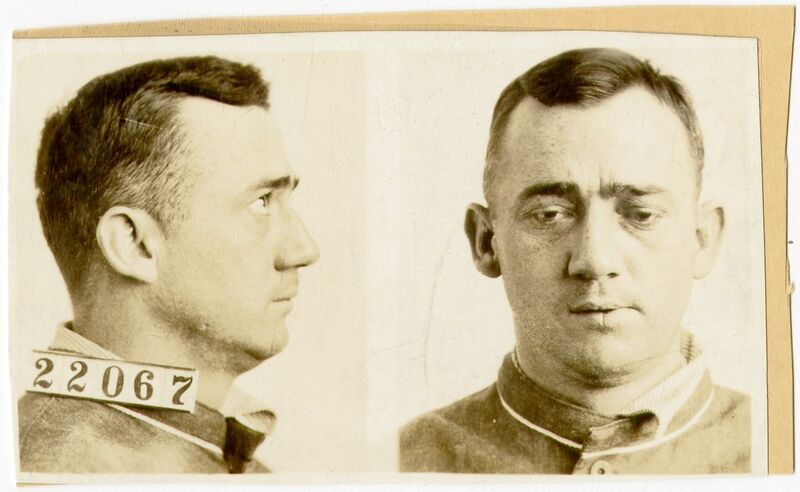 photographLeavenworth identification photograph, No. 22067: Oliver DaughertyFront and profile Bureau of Prisons photograph numbered 22067, with "22067 Oliver Daugherty" written on the back, from the Leavenworth inmate case file of Oliver Daugherty, one of the men convicted in the 1924 Staunton mail-robbery case. A copy is stored here.
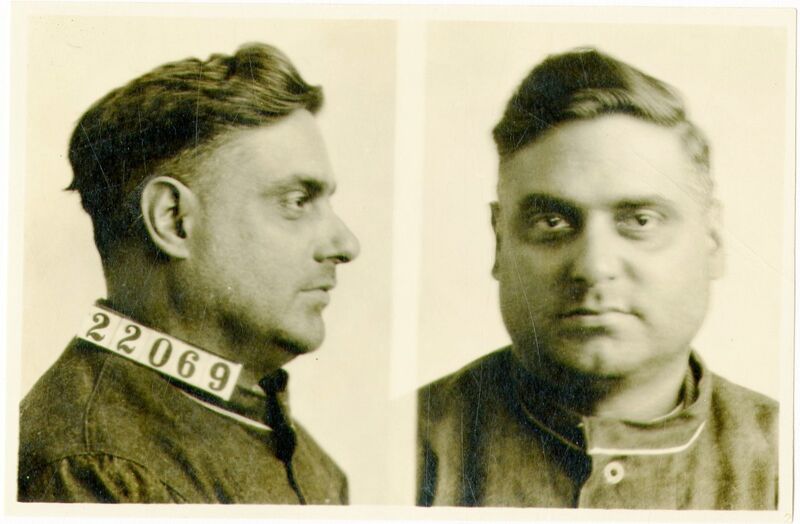 photographLeavenworth identification photograph, No. 22069: Gustav B. DietmeyerFront and profile Bureau of Prisons photograph numbered 22069, with "GUSTAV B. DIETMEYER 22069" written on the back, from the Leavenworth inmate case file of Gustav B. Dietmeyer, one of the men convicted in the 1924 Staunton mail-robbery case. A copy is stored here.
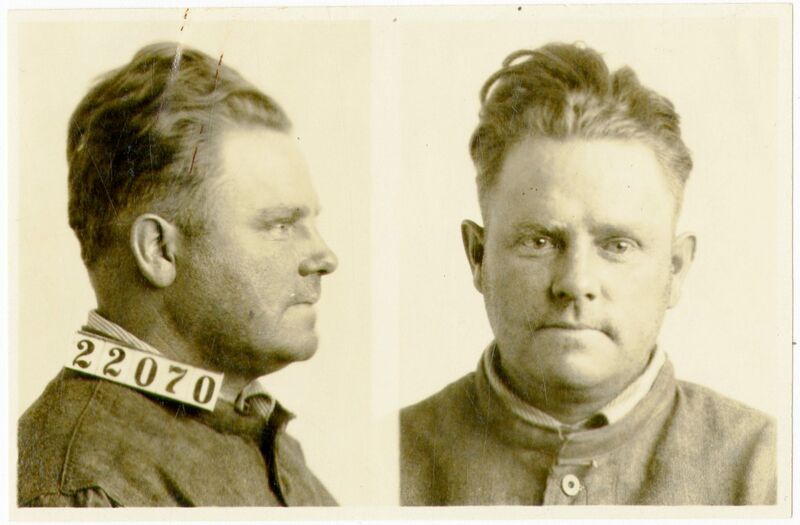 photographLeavenworth identification photograph, No. 22070: Frank HackethalFront and profile Bureau of Prisons photograph numbered 22070, with "FRANK HECKETHAL 22070" written on the back, from the Leavenworth inmate case file of Frank Hackethal, one of the men convicted in the 1924 Staunton mail-robbery case. A copy is stored here.
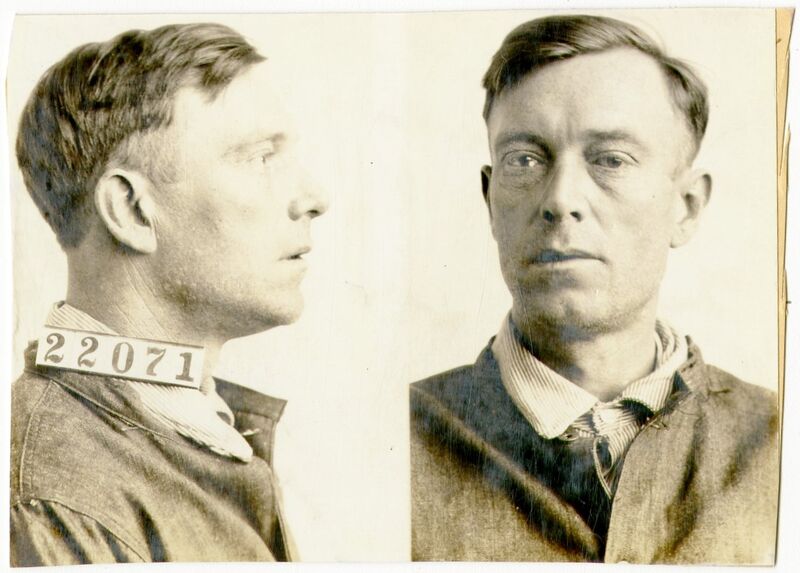 photographLeavenworth identification photograph, No. 22071: Charles LanhamFront and profile Bureau of Prisons photograph numbered 22071, with "22071 Charles Lanham" written on the back, from the Leavenworth inmate case file of Charles Lanham, one of the men convicted in the 1924 Staunton mail-robbery case. A copy is stored here.
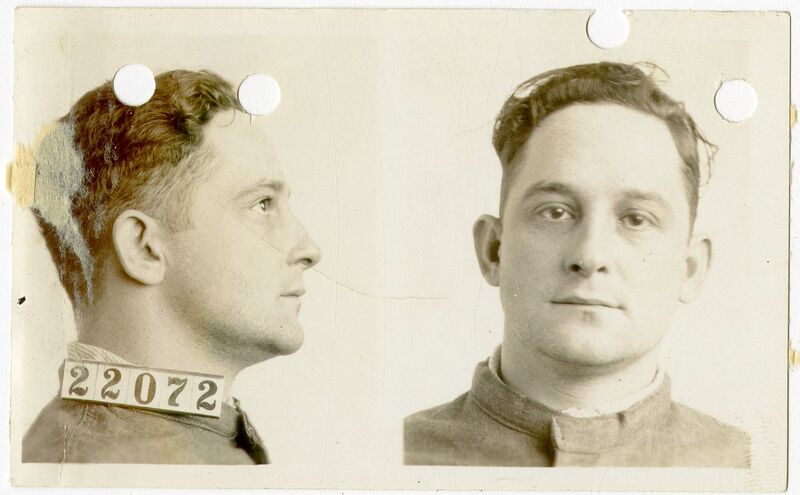 photographLeavenworth identification photograph, No. 22072: Stephen RyanFront and profile Bureau of Prisons photograph numbered 22072, with "22072 Stephen Ryan" written on the back, from the Leavenworth inmate case file of Stephen Ryan, one of the men convicted in the 1924 Staunton mail-robbery case. A copy is stored here.case-fileAttorney General Francis Biddle to President Roosevelt, 10 April 1945, on Joseph Schenck and the Bioff and Browne prosecutionsRecommending against a pardon for Joseph Schenck, the Attorney General writes that after Bioff and Browne were convicted "they testified for the Government against a group of Chicago racketeers," that Judge Knox modified their sentences, and that "they were recently released."
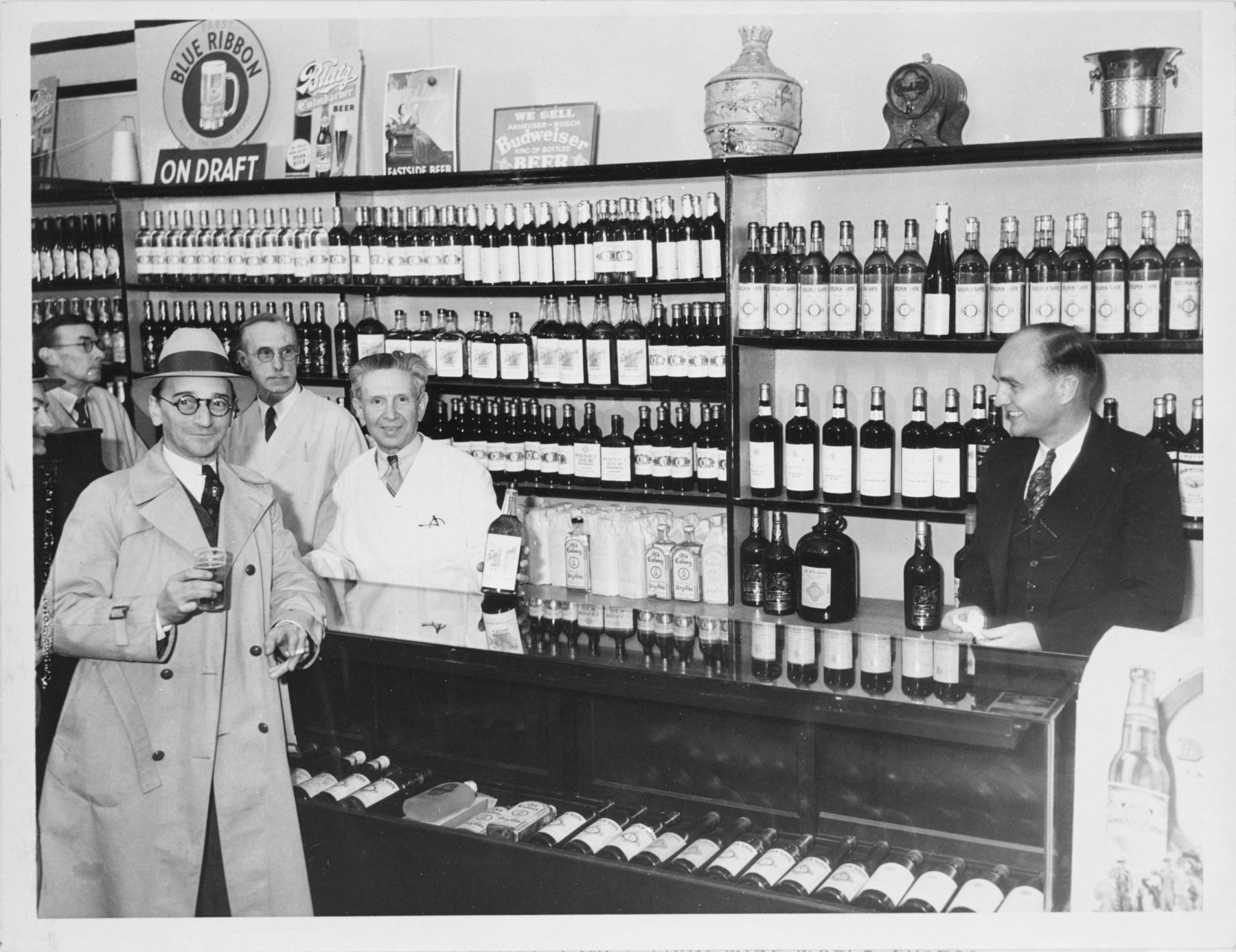 photograph"A Well Stocked Los Angeles Store Awaits Repeal" (7 December 1933 caption)A New York Times Paris Bureau photograph of a Los Angeles liquor counter. The original caption says the dealer was ready when ratification of the repeal amendment "flashed over the wires," and that his stock ran out soon after the doors opened.
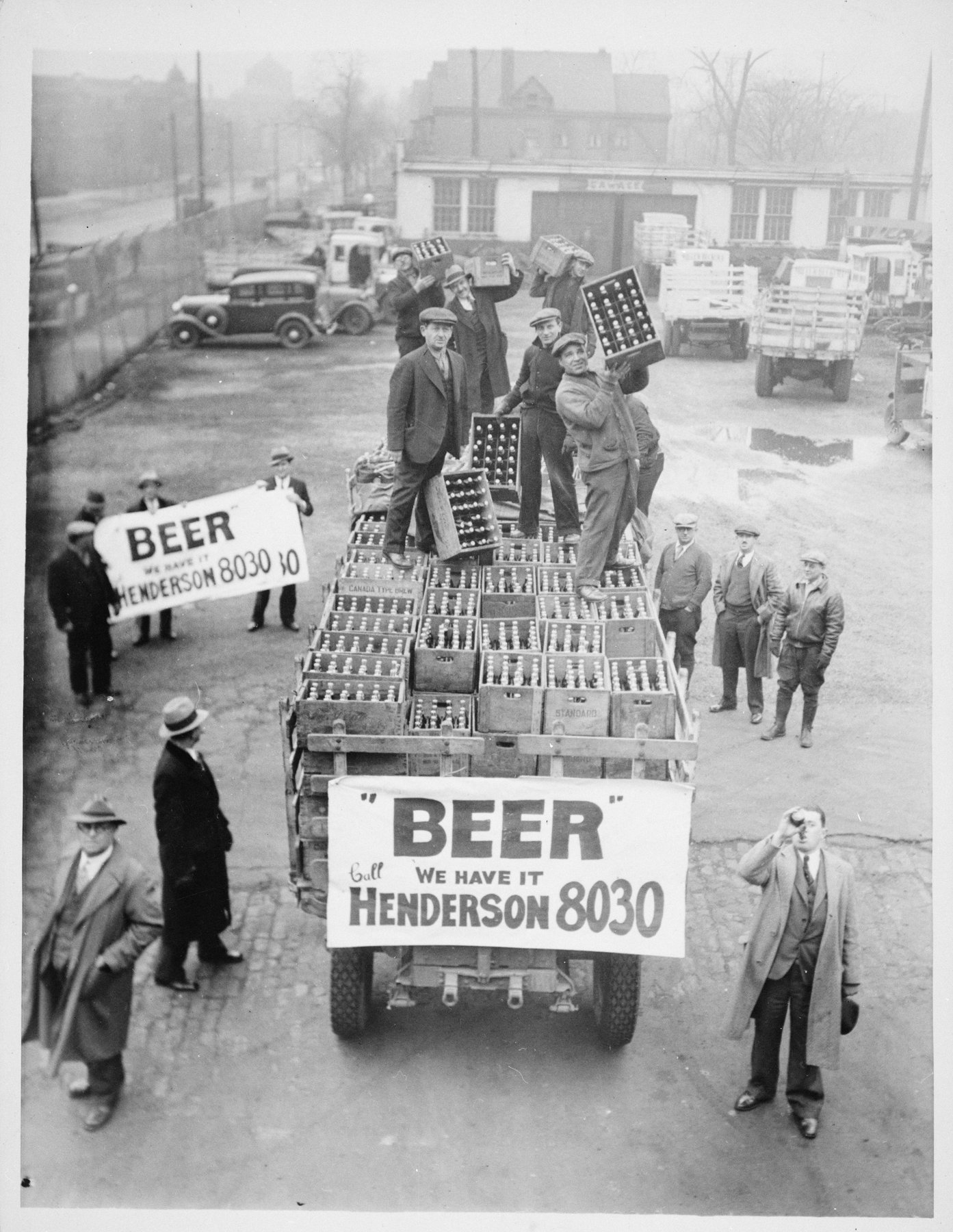 photographCleveland gets its beer from outside sources (9 April 1933)A New York Times Paris Bureau photograph of men unloading crates of bottled beer from a truck. The catalog title says that because local brewers would have none of their own brew aged before 1 May, Cleveland had to get its beer from outside sources.
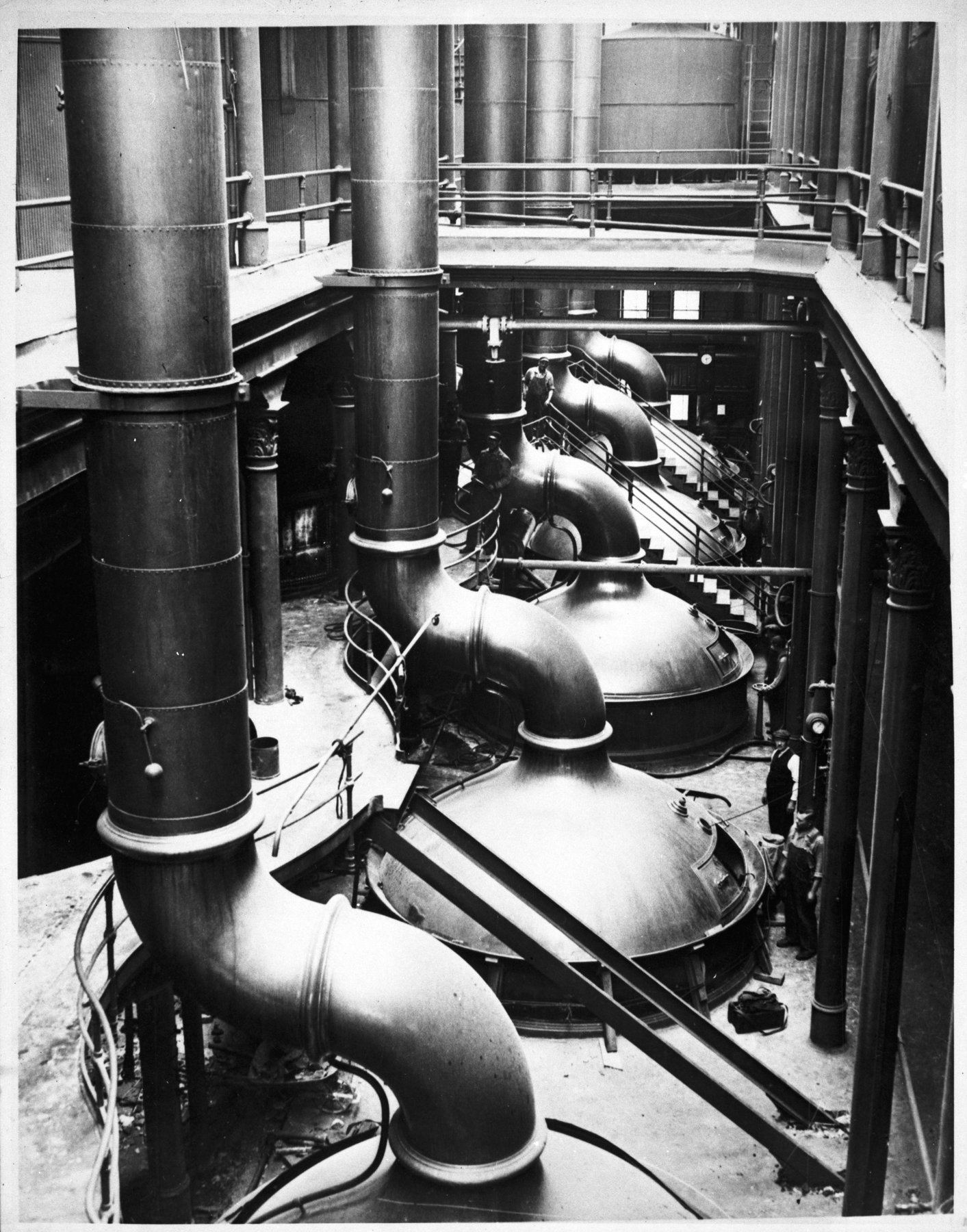 photographA Milwaukee brewery readies for the end of Prohibition (catalog date 1930)A New York Times Paris Bureau photograph of a brewhouse with a row of large domed kettles. The catalog title says a Milwaukee brewery had improved its facilities to get ready for the end of Prohibition.
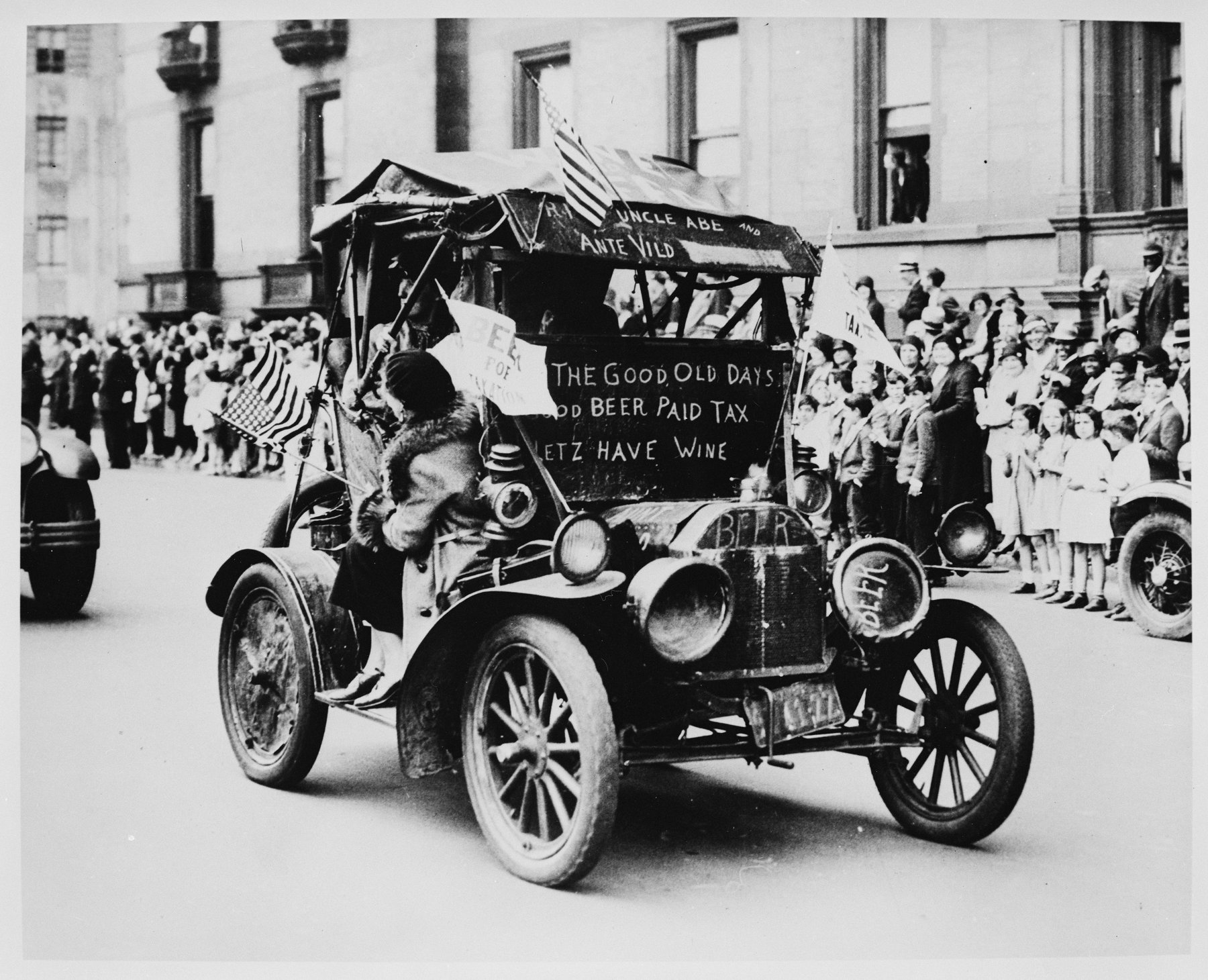 photographAn automobile decked out with signs for repeal of the Eighteenth Amendment (May 1932)A New York Times Paris Bureau photograph of an open car hung with flags and banners for repeal, driving past a crowd. The catalog dates it 1 May 1932.
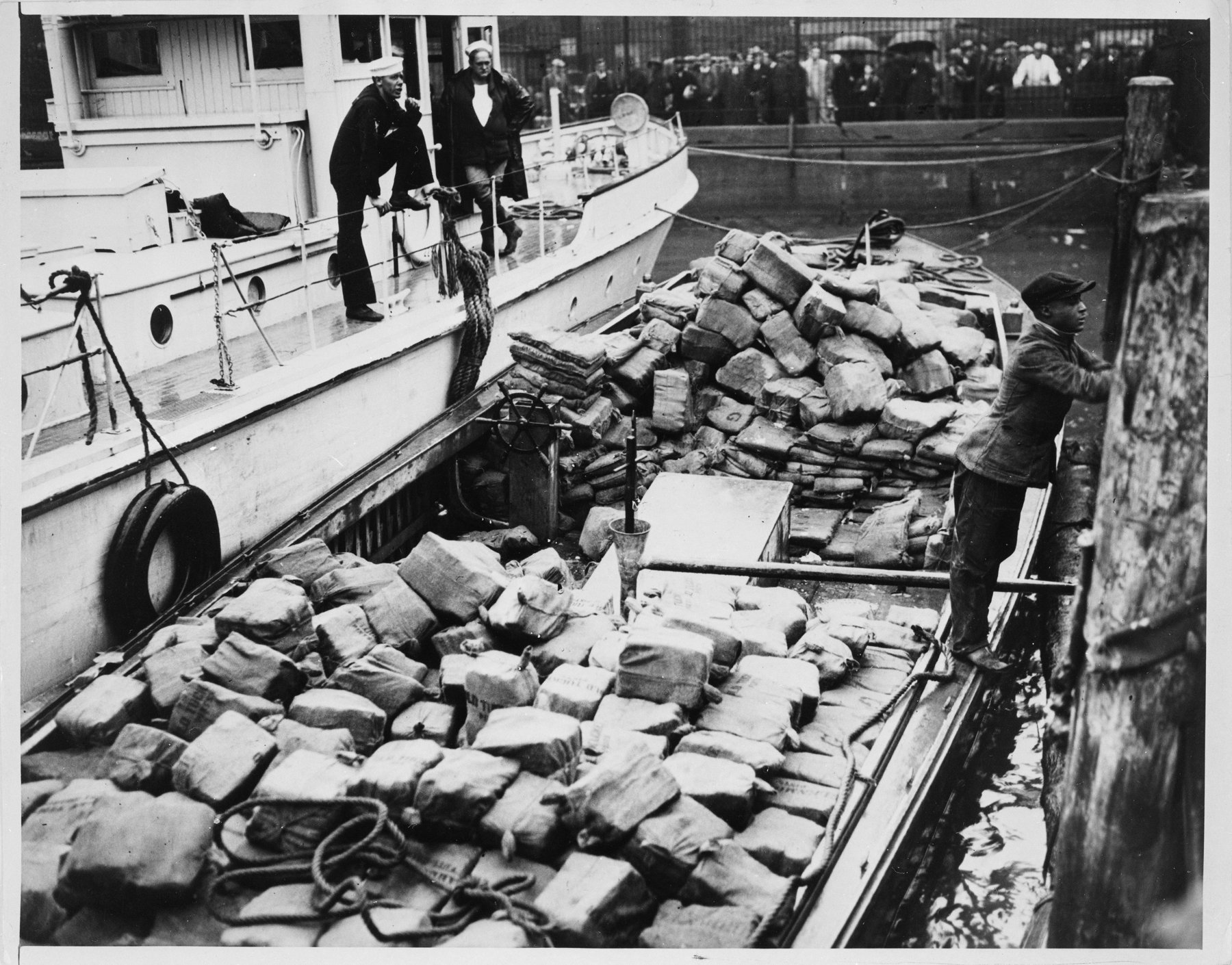 photographCoast Guardsmen examine a haul of whiskey in New York HarborA New York Times Paris Bureau photograph that the National Archives titles "Coast Guardsmen Examine a Haul of Whiskey in New York Harbor": sailors on a vessel alongside an open boat heaped with sacked bundles. No date is given.
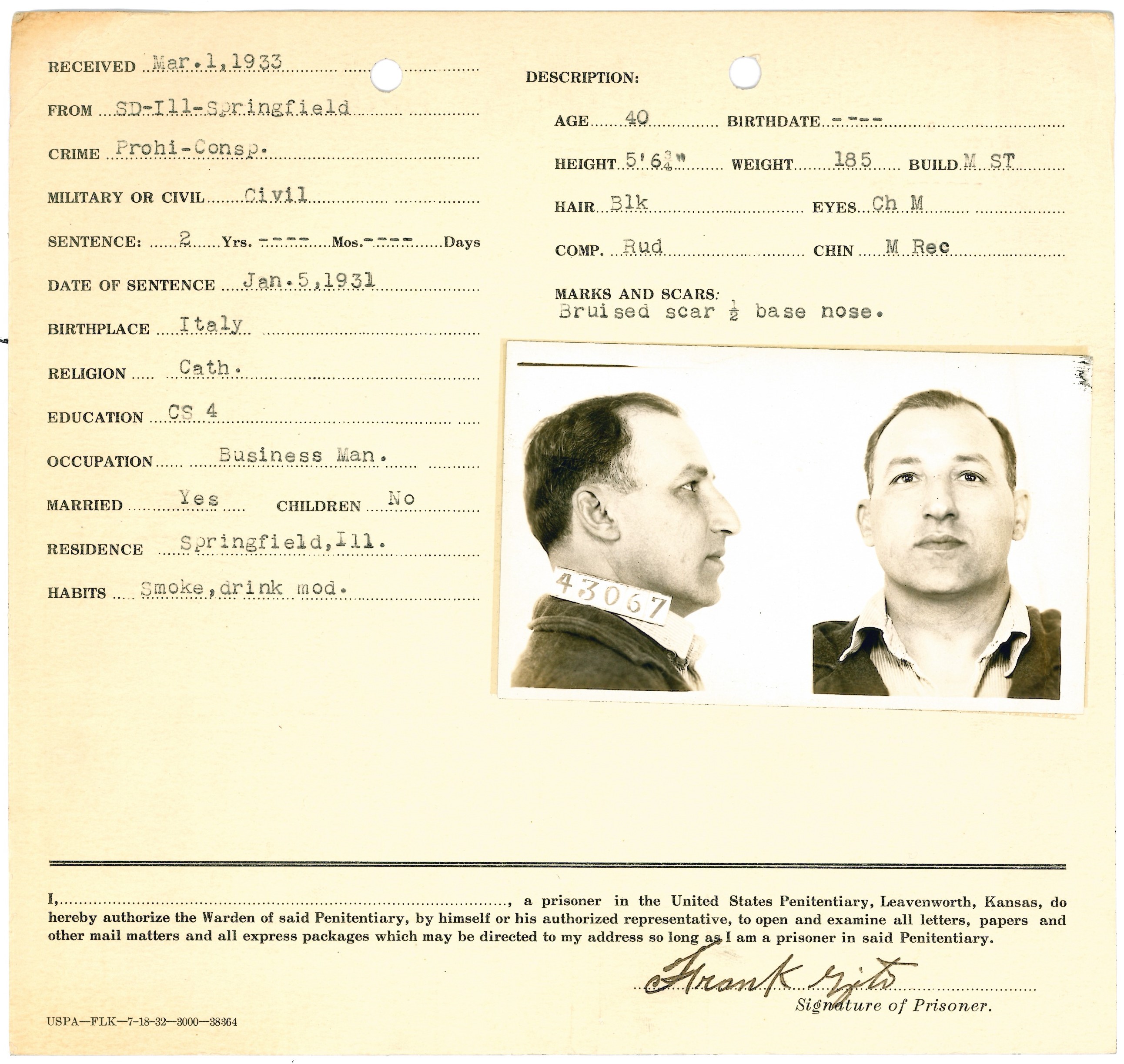 photographLeavenworth record card for Frank Zito, No. 43067, 1933 (National Archives)Leavenworth record card for Frank Zito, No. 43067, with front and profile photographs, recording his receipt on 1 March 1933 under a two-year Prohibition conspiracy sentence. A copy is stored here.finding-aidBureau of Prisons Notorious Offender Files, 1920–2010: Capone, boxes 32–33National Archives series of Bureau of Prisons files on notorious inmates. The container list places Capone's file, under register numbers 85-AZ, 397-CAL and 9243-NE, in boxes 32 and 33. Access is fully restricted.
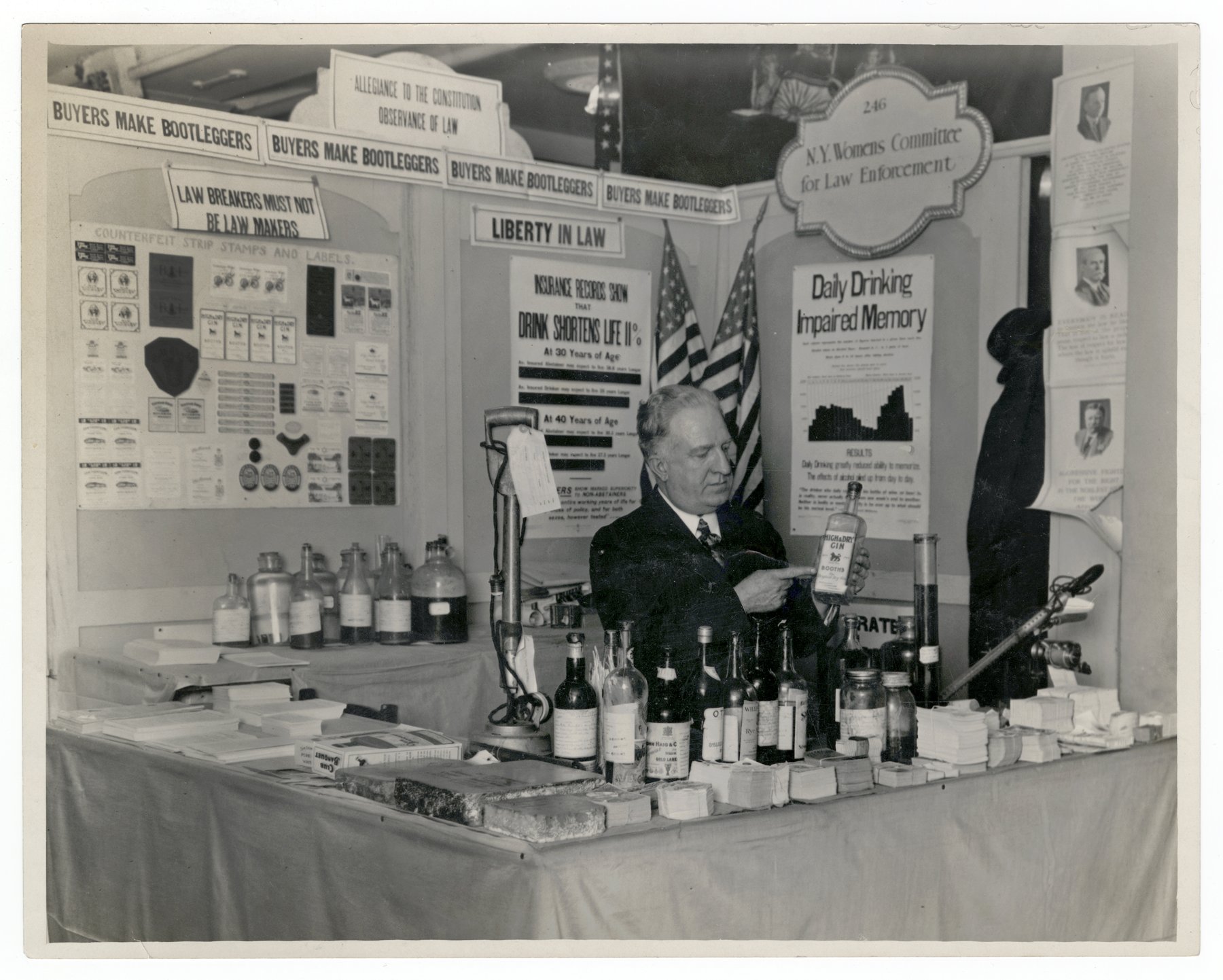 photographPro-Prohibition booth at Parents' Exposition Week, Grand Central Palace (23 February 1929)A photograph in the Internal Revenue Service's general records of a pro-Prohibition booth in New York: signs reading "Buyers Make Bootleggers" and "Law Breakers Must Not Be Law Makers," a board of counterfeit strip stamps and labels, and a man holding a bottle of gin.
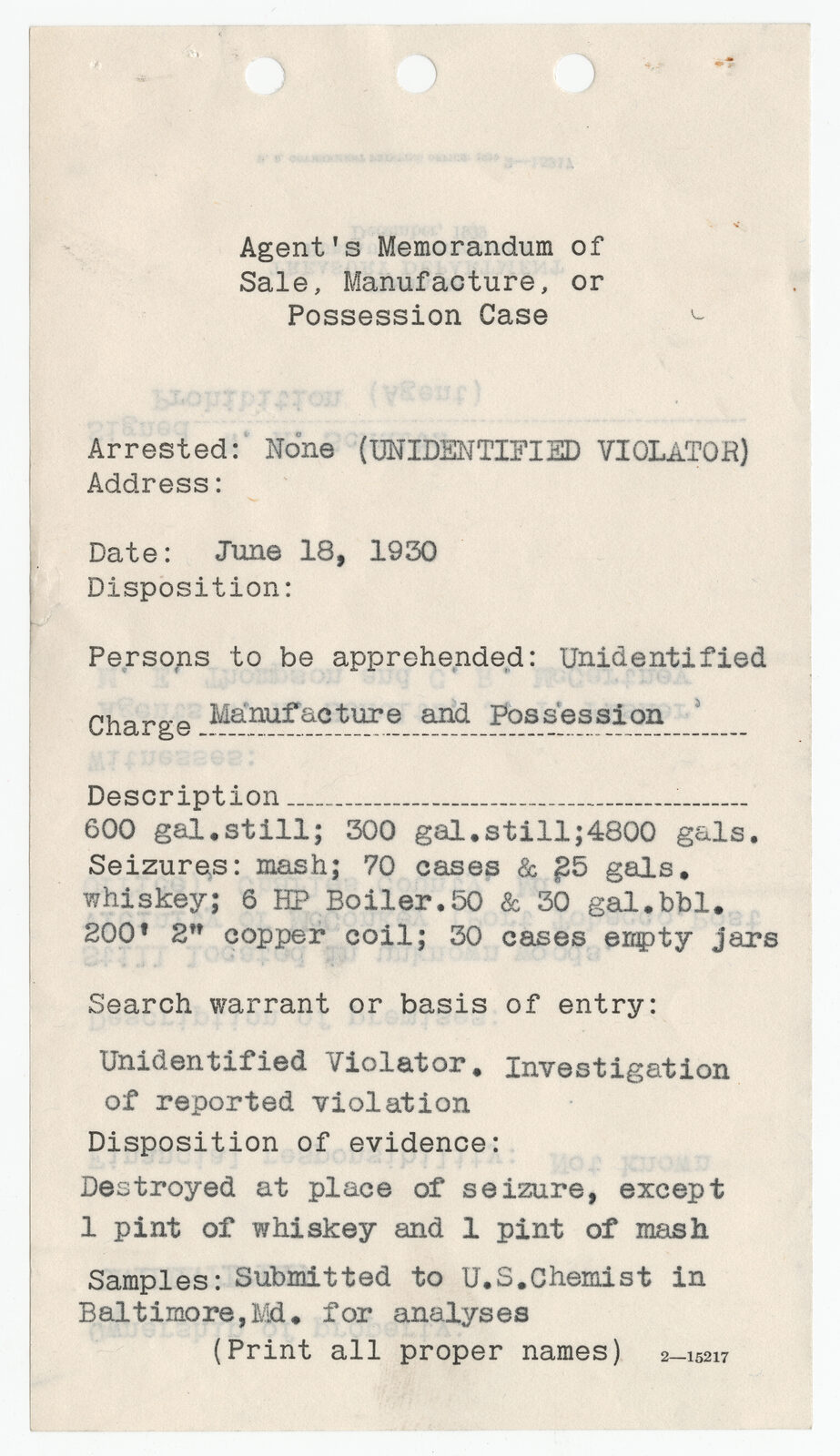 case-fileBureau of Prohibition agent's memorandum of a manufacture and possession case (18 June 1930)National Archives printed Bureau of Prohibition form, filled in by typewriter, summarizing a case for manufacture and possession against an unidentified violator, listing a seized 600-gallon still and 4,800 gallons of mash.
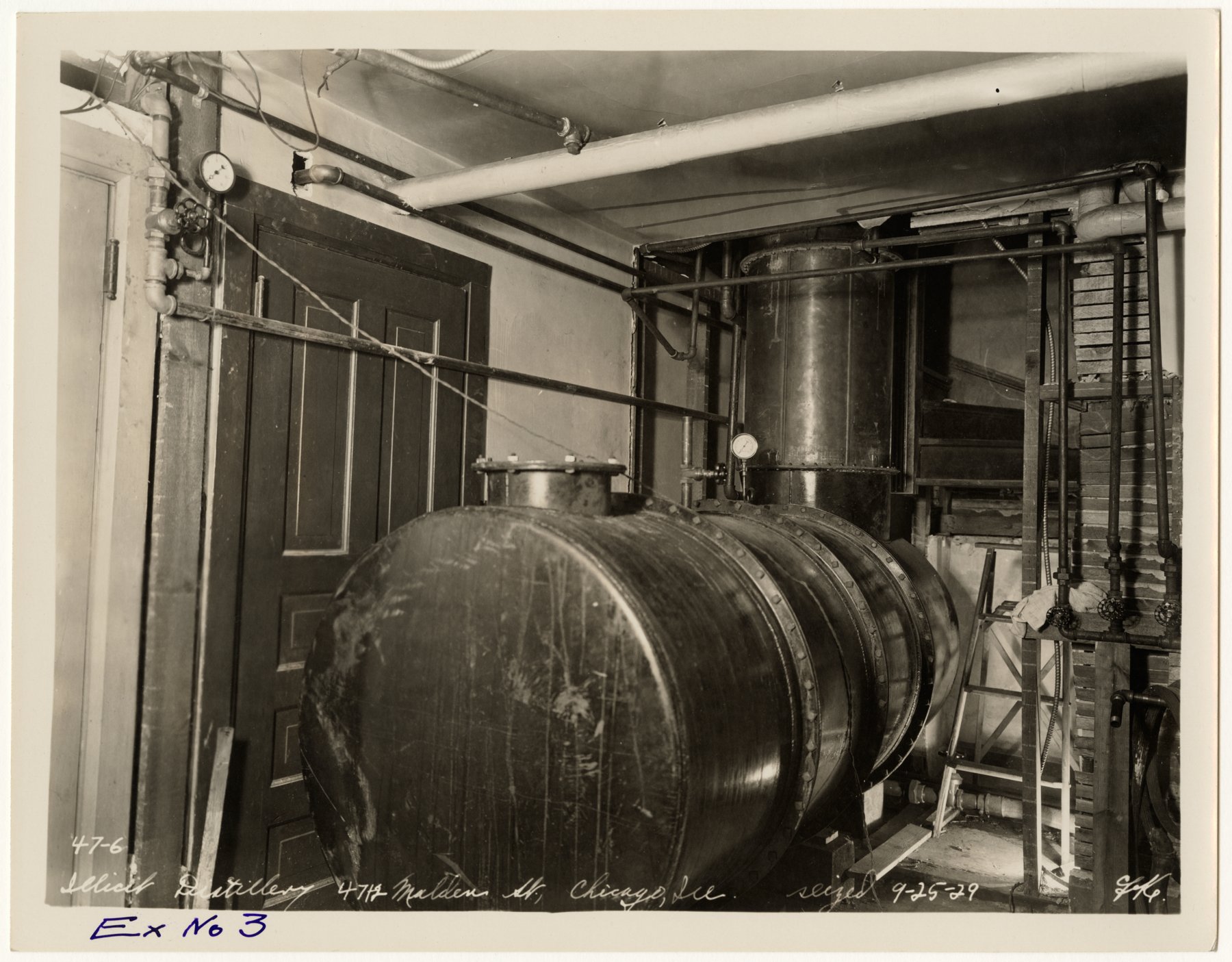 photographExhibit Number 3: illicit distillery, Chicago, seized 25 September 1929 (Wickersham Commission records)A photograph in the Wickersham Commission's Prohibition committee records, marked "Ex No 3," of a riveted tank and column still in a basement room; the handwritten caption gives a Chicago street address and the seizure date 25 September 1929.
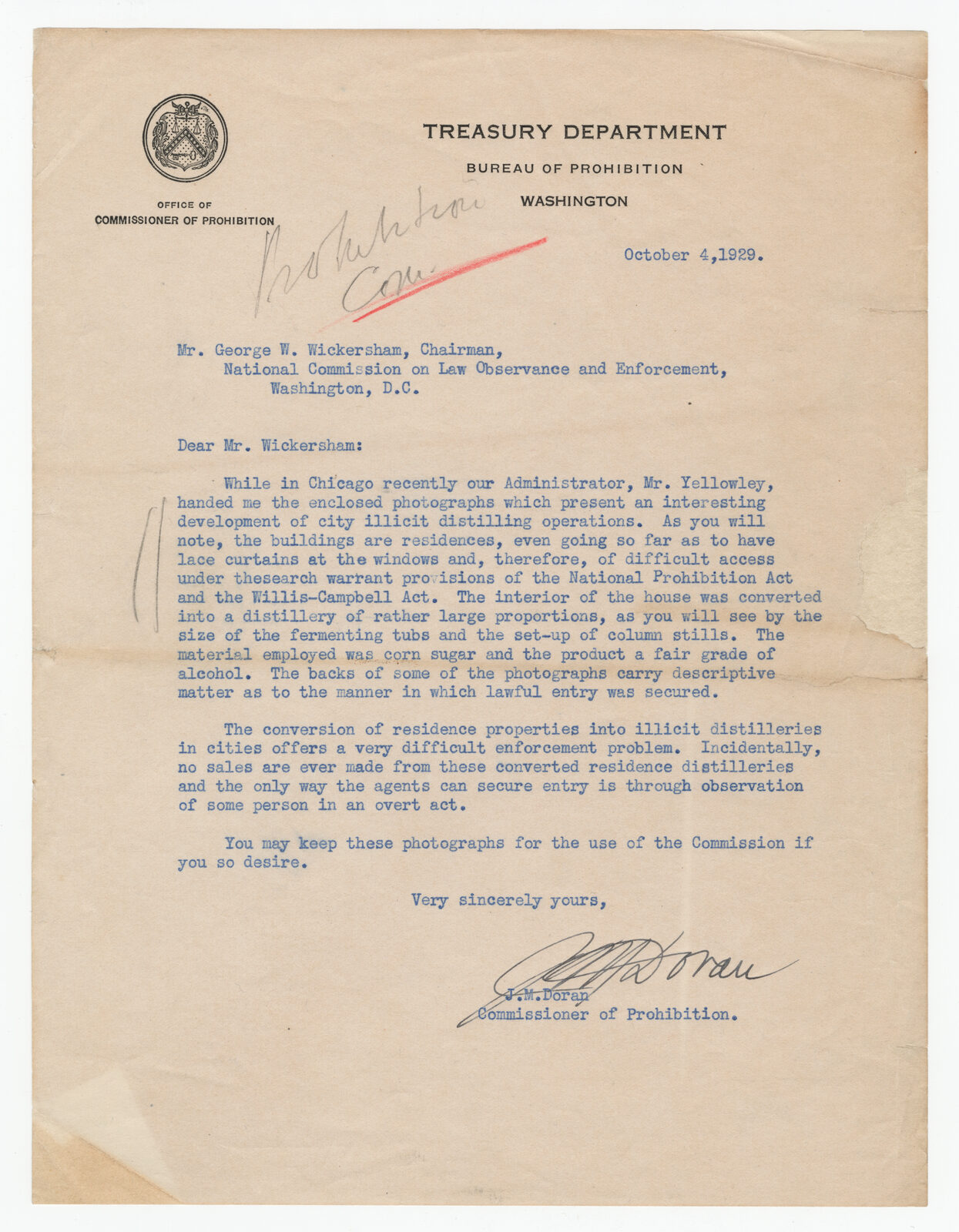 case-fileCommissioner of Prohibition Doran to the Wickersham Commission on a Chicago residence converted to a distillery (4 October 1929)National Archives letter from J. M. Doran, Commissioner of Prohibition, to George W. Wickersham, chairman of the National Commission on Law Observation and Enforcement, describing enclosed photographs of a Chicago residence converted into a large illicit distillery.
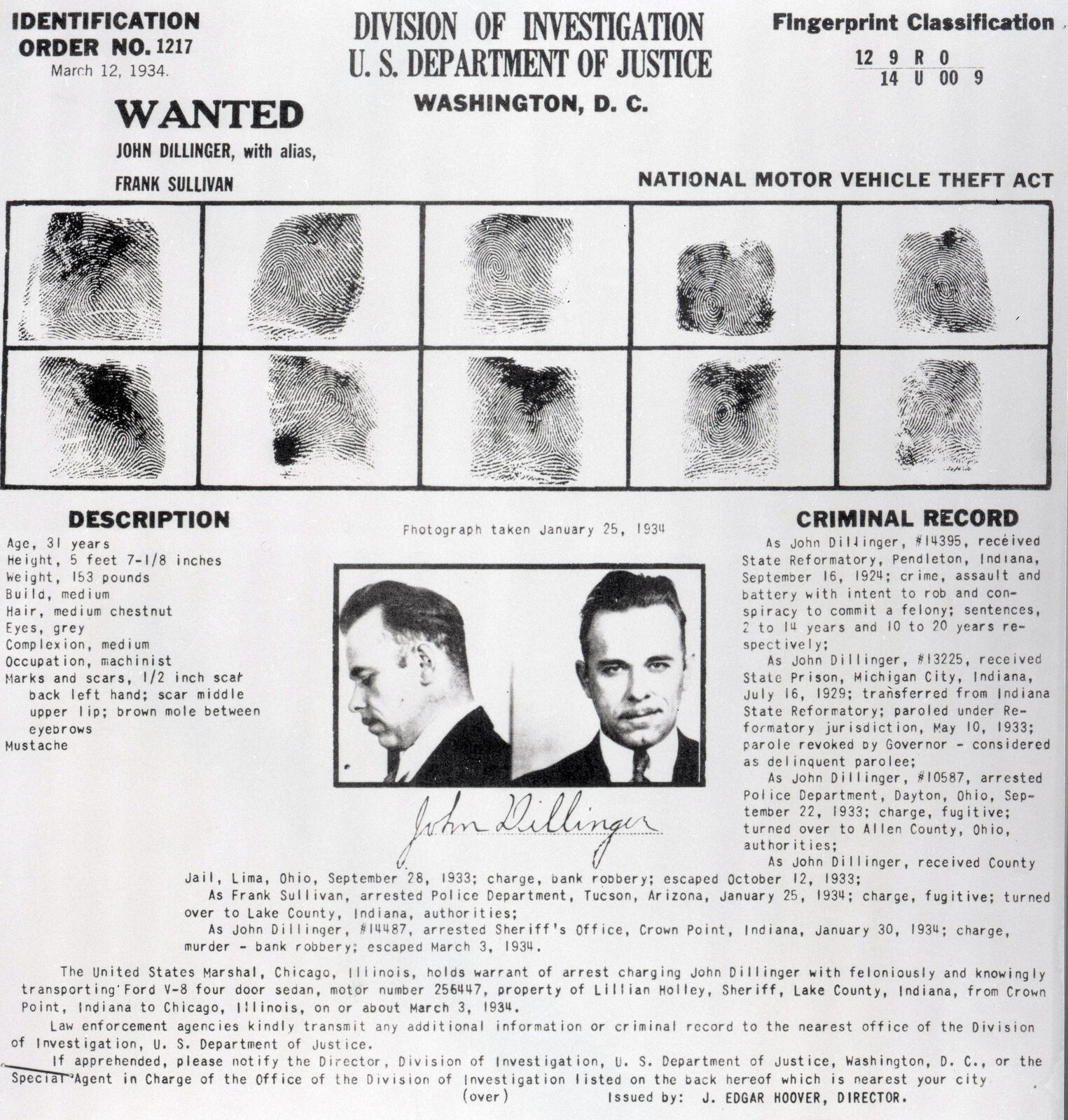 case-fileIdentification Order No. 1217, John Dillinger (National Archives copy, 60-NP-319)The National Archives' copy of the Division of Investigation's 12 March 1934 wanted notice for John Dillinger, catalogued as a photograph in the Department of Justice's records. A copy is stored here.
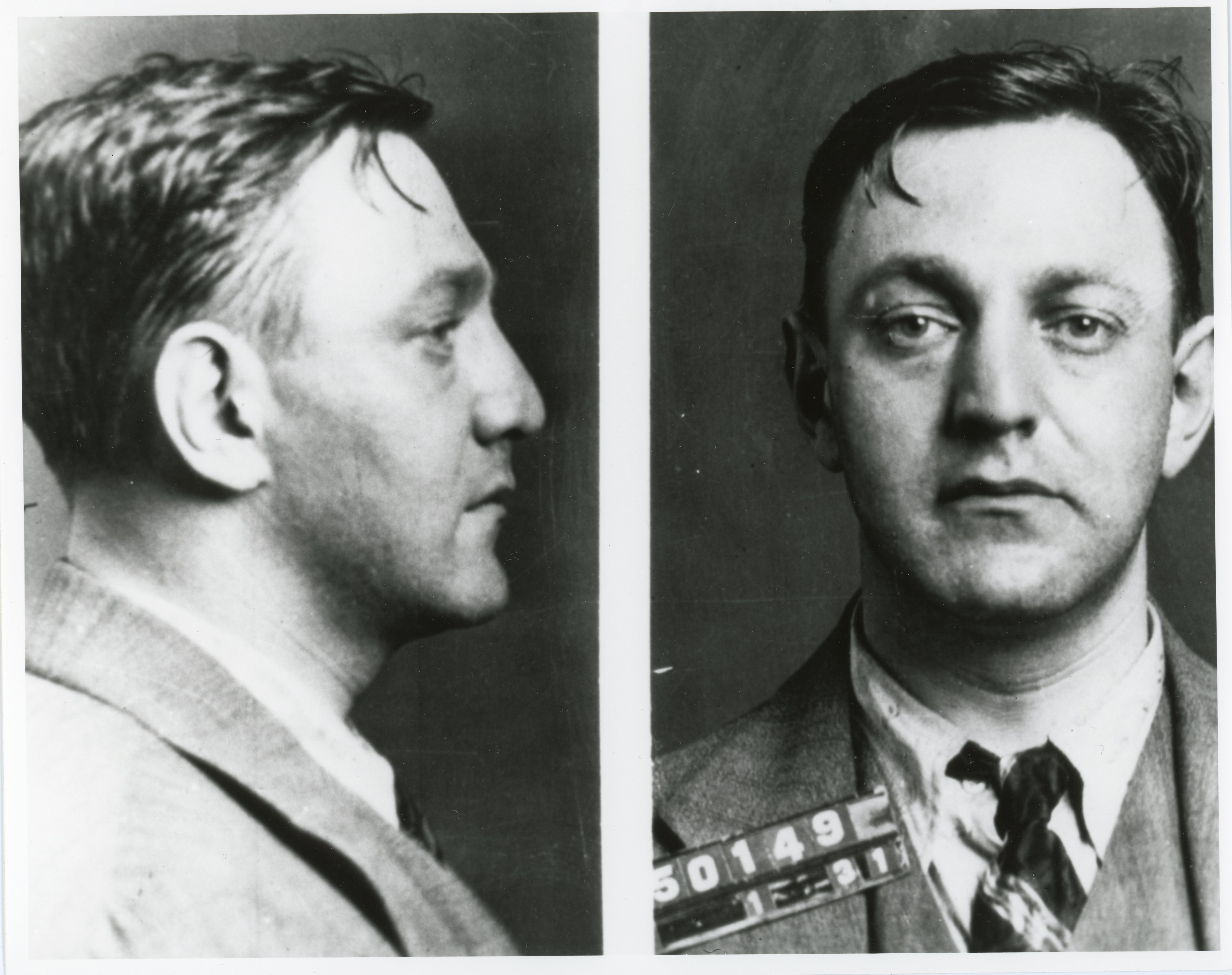 photographDutch Schultz mug shot (National Archives, 65-CC-37-3)Undated front and profile mug shot of Dutch Schultz, also known as Arthur Simon Flegenheimer, held by the National Archives in the FBI's criminal-case photograph series. A copy is stored here.
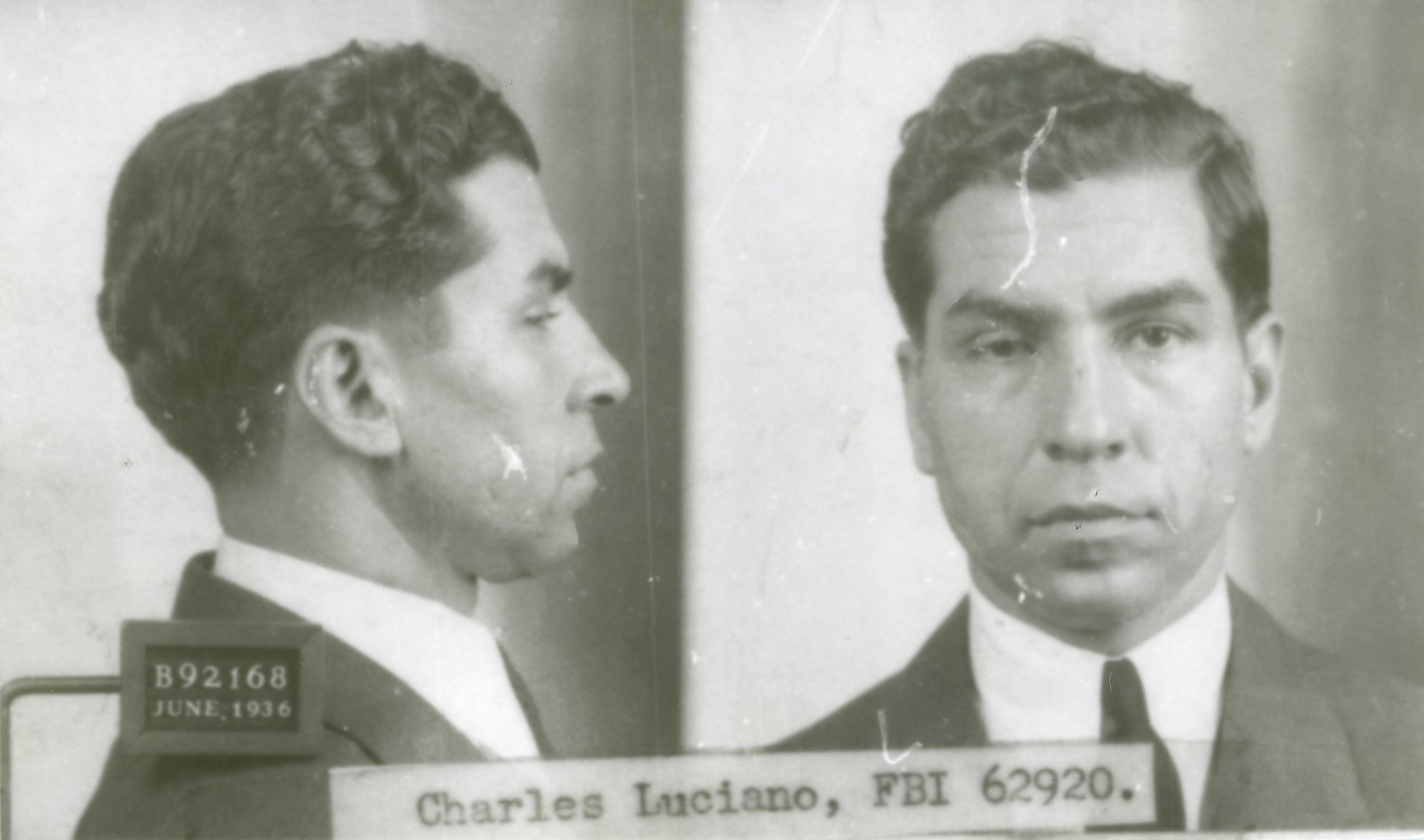 photographCharles Luciano mug shot, June 1936 (National Archives, 65-CC-37-9)Front and profile mug shot of Charles Luciano with a placard reading "B92168 JUNE 1936", held by the National Archives in the FBI's criminal-case photograph series. A copy is stored here.
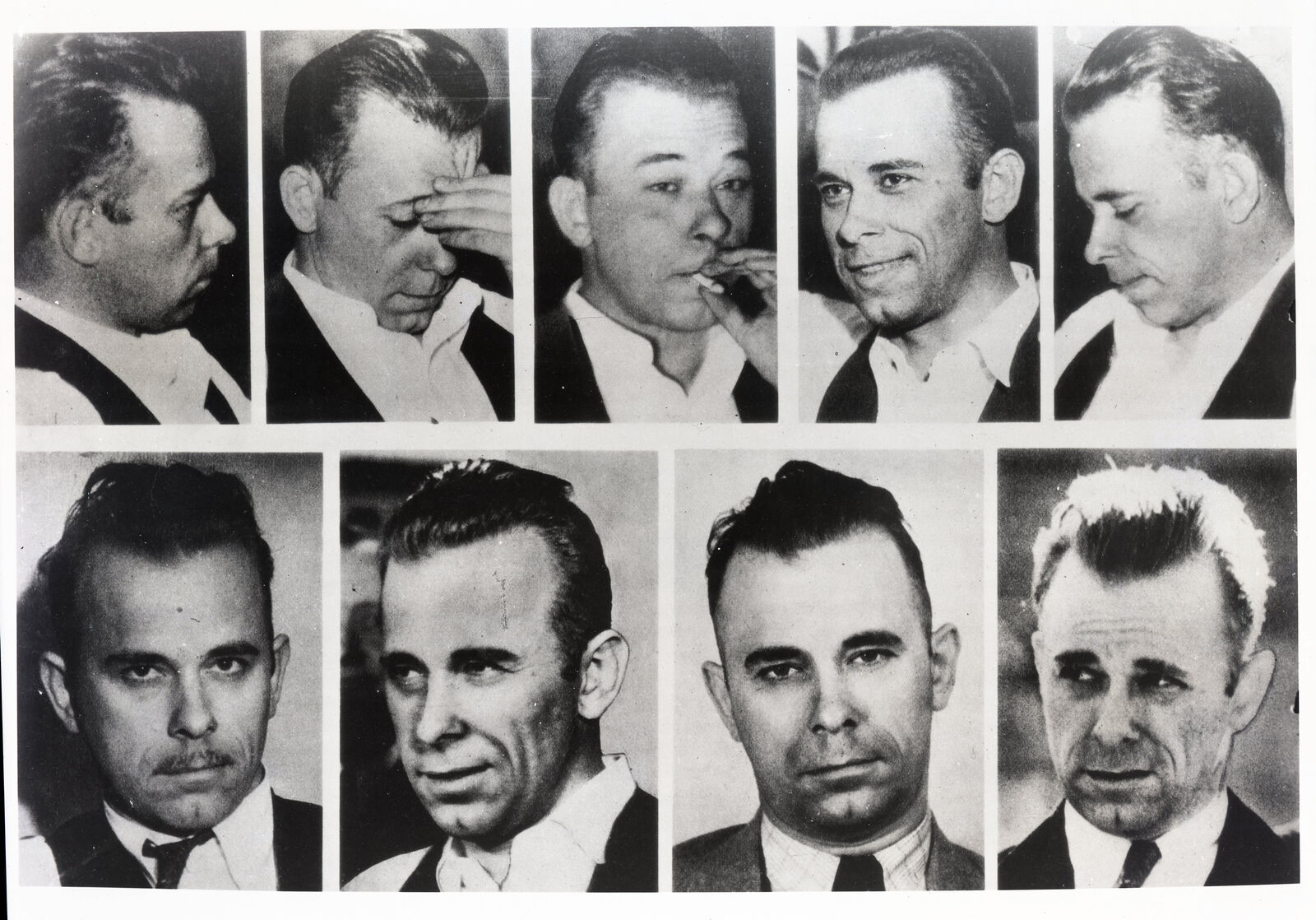 photograph"Various Views of John Dillinger": FBI composite of nine photographsAn undated FBI photographic composite of nine views of John Dillinger's face, held by the National Archives in the FBI's records. A copy is stored here.
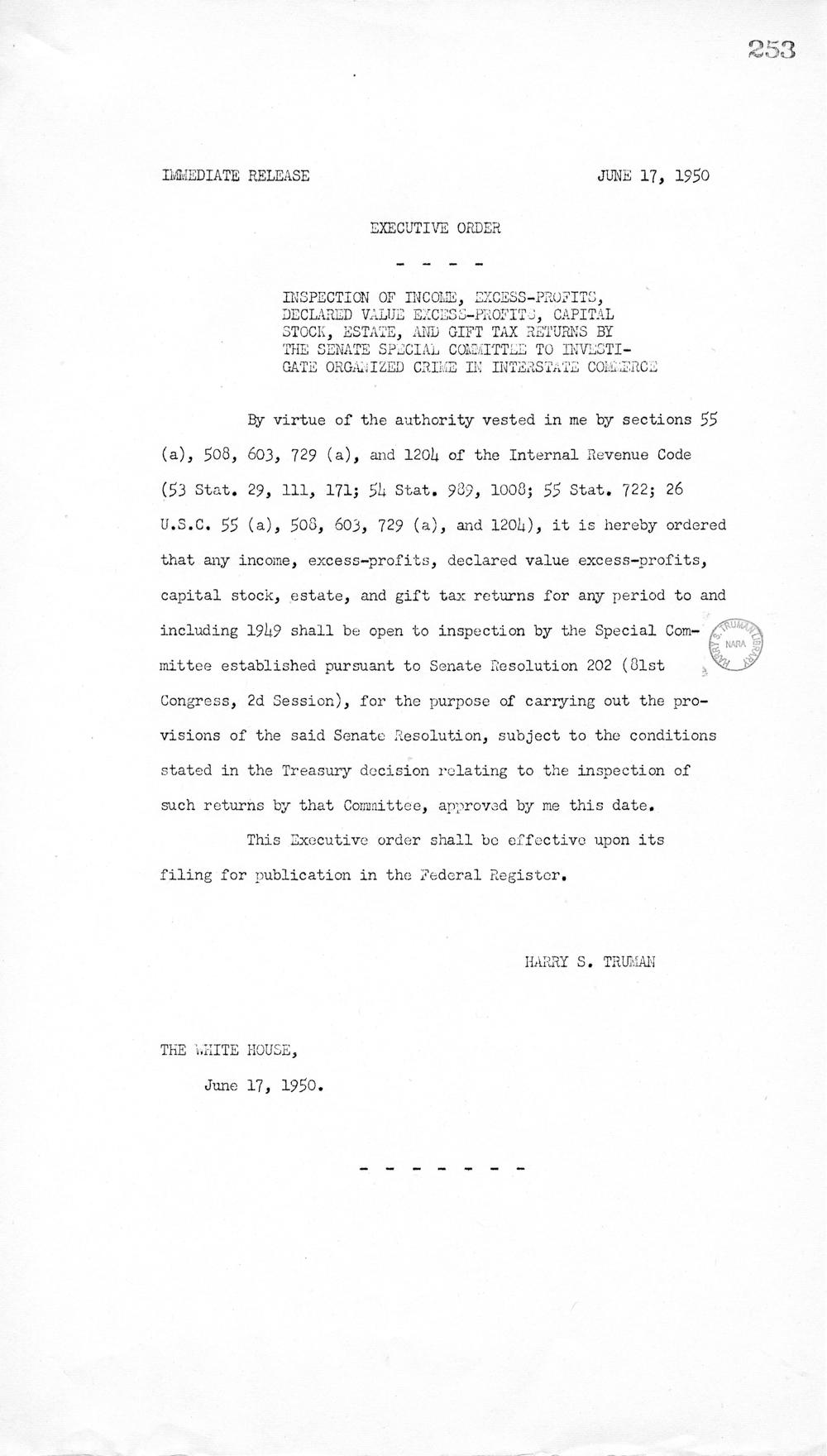 case-fileWhite House release of Executive Order 10132: tax returns open to the Kefauver Committee (1950)One-page White House release of June 17, 1950, printing President Truman's executive order opening tax returns through 1949 to the special committee created by Senate Resolution 202.
 case-file"Firearms and the Crime Problem," address by Attorney General Homer Cummings, Baltimore, 5 October 1937Attorney General Cummings explains that his 1934 bill was patterned upon the Harrison Narcotic Act, that without pistols the act became "a federal machine gun act," and reports registrations of 9,316 submachine guns, 11,520 machine guns and machine rifles, 16,456 miscellaneous weapons and 769 silencers in three years.
 case-file"Firearms Control," radio interview with Attorney General Homer Cummings by Rex Collier, 25 April 1938Prepared Department of Justice release of a broadcast interview in which Cummings argues for extending the 1934 act to pistols and revolvers and says the Department's files hold "long lists of weapons seized from criminals."
 case-fileAttorney General J. Howard McGrath, address to the Attorney General's Conference on Law Enforcement Problems (15 February 1950)McGrath told the conference that "the mobsters of the 1930's have not been entirely eliminated" and that gambling as a private business "cannot operate on its present gigantic scale without corrupting what it touches."
 case-fileAttorney General J. Howard McGrath, address on the gambling-device act and the wire service, Highland Park, Illinois (10 August 1951)Prepared for the first annual meeting of the National Association of County and Prosecuting Attorneys: McGrath reported 126 registered manufacturers and dealers under the gambling-device law and called the wire service "the lifeblood of nationwide, illegal bookmaking activities."
 case-fileAttorney General Robert F. Kennedy, statement to House Judiciary Subcommittee No. 5 on the organized-crime bills (17 May 1961)Kennedy's statement in support of the bills that became the Travel Act and the Wire Act: the wire bill "would prohibit the use of wire communication facilities for the transmission of certain gambling information in interstate and foreign commerce."
 case-fileStatement by Attorney General Robert F. Kennedy to the Permanent Subcommittee on Investigations, September 25, 1963The Justice Department's 24-page typescript of Kennedy's prepared statement for the opening day of the 1963 hearings, held by the National Archives with the Attorney General's speeches.case-fileStatement of Attorney General William French Smith to the President's Commission on Organized Crime, New York, 23 October 1984 (National Archives)The Attorney General's prepared statement to the President's Commission on Organized Crime, linking organized crime's "international phase" to drug trafficking and reporting 41 indictments in a heroin ring after an arrest in Spain that April.
 case-fileTranscript excerpt: opening statement and testimony of Anthony Ciulla, fourth day of trial, May 8, 1979 (United States v. Winter)The cover of a digitized trial transcript in United States v. Howard Winter et al.: the Government's opening statement and the testimony of Anthony Ciulla on the fourth day of the jury trial, May 8, 1979.
 case-fileTranscript: fifth day of trial, May 9, 1979 (United States v. Winter)The cover of the digitized transcript of the fifth day of the jury trial in United States v. Howard T. Winter et al., Courtroom No. 4, Boston, May 9, 1979.
 case-fileTranscript: thirtieth day of trial, June 21, 1979 (United States v. Winter)The cover of the digitized transcript of the thirtieth day of the jury trial in United States v. Howard T. Winter et al., Courtroom No. 3, Boston, June 21, 1979.
 case-fileTranscript: Judge Mazzone's charge to the jury, July 6, 1979 (United States v. Winter)The cover of the digitized transcript of the judge's charge to the jury in United States v. Howard T. Winter et al., Courtroom No. 3, Post Office & Courthouse, Boston, July 6, 1979.
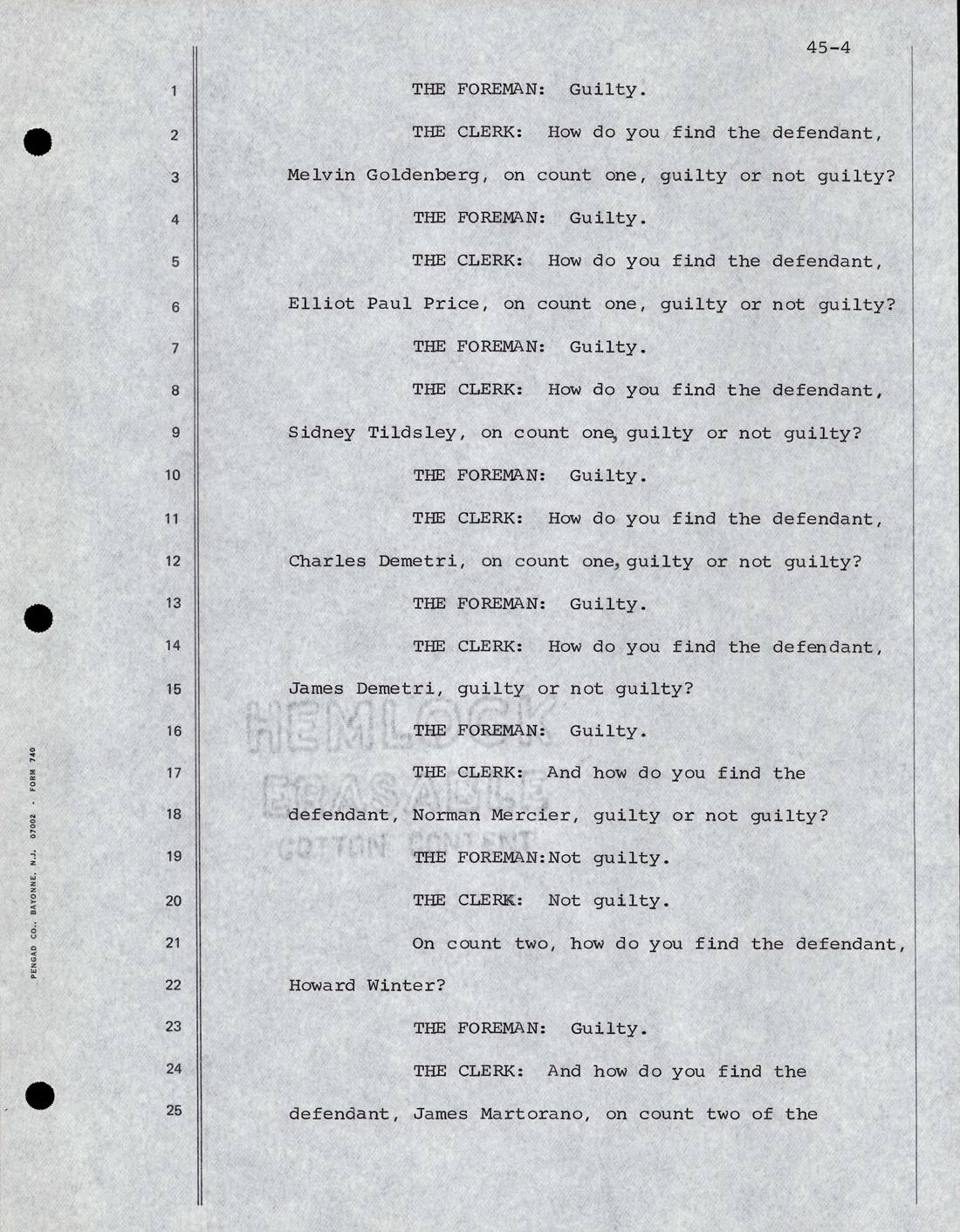 case-fileTranscript: the verdict, 4:30 p.m., July 11, 1979 (United States v. Winter)The digitized transcript of the taking of the jury's verdict in United States v. Howard T. Winter et al. The page shown records the foreman's answers on count one for six defendants and the first answer on count two, "Guilty" for Howard Winter.
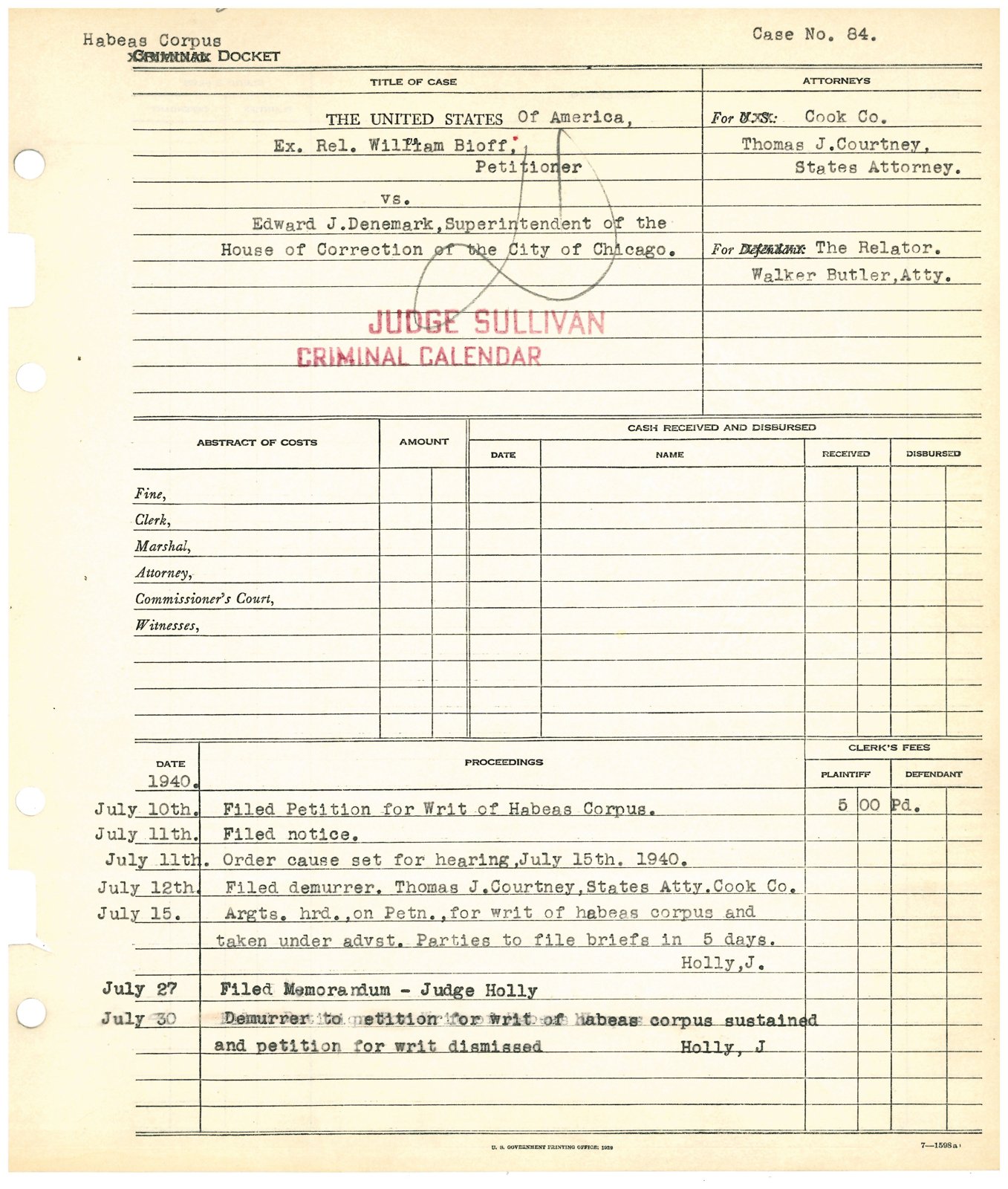 case-fileHabeas corpus docket, Case No. 84: United States ex rel. William Bioff v. Edward J. Denemark (N.D. Ill., 1940)Docket sheet from the Chicago federal court's habeas corpus dockets. Bioff petitioned on 10 July 1940 against the superintendent of the City of Chicago House of Correction; the petition was dismissed on 30 July 1940.finding-aidU.S. v. Arthur Flegenheimer, alias "Dutch Schultz" (National Archives file unit)National Archives catalog entry for the case file of the United States Attorney for the Southern District of New York on Arthur Flegenheimer, held in Boxes 64 to 75 at the National Archives at Kansas City. Two items in it are digitized: the 1934 identification order and the Treasury broadside.
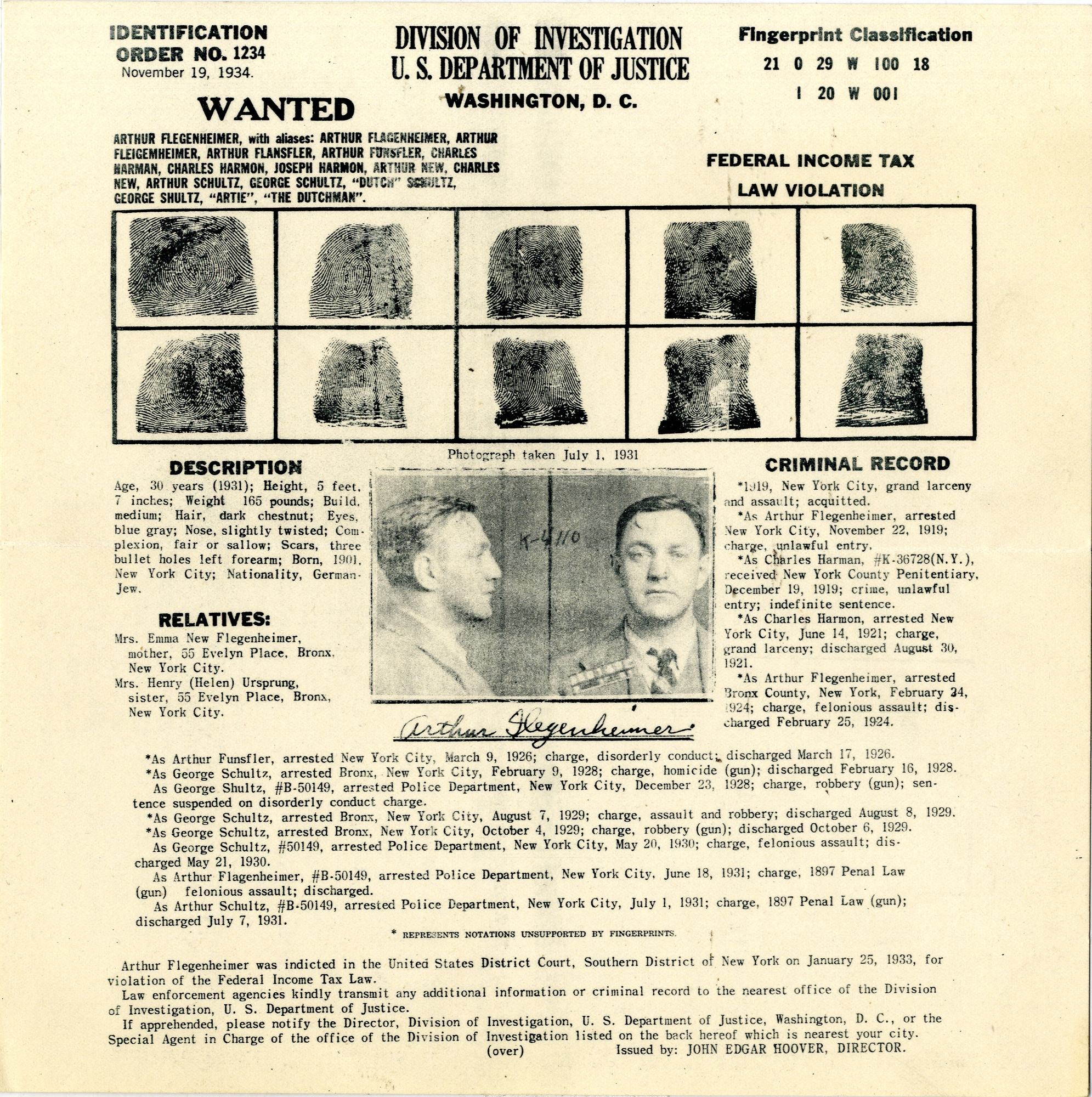 case-fileIdentification Order No. 1234: Arthur Flegenheimer, "Federal Income Tax Law Violation" (19 November 1934)Division of Investigation wanted notice for Arthur Flegenheimer, with aliases including "Dutch" Schultz, indicted in the Southern District of New York on 25 January 1933 for violating the federal income tax law. A copy is stored here.
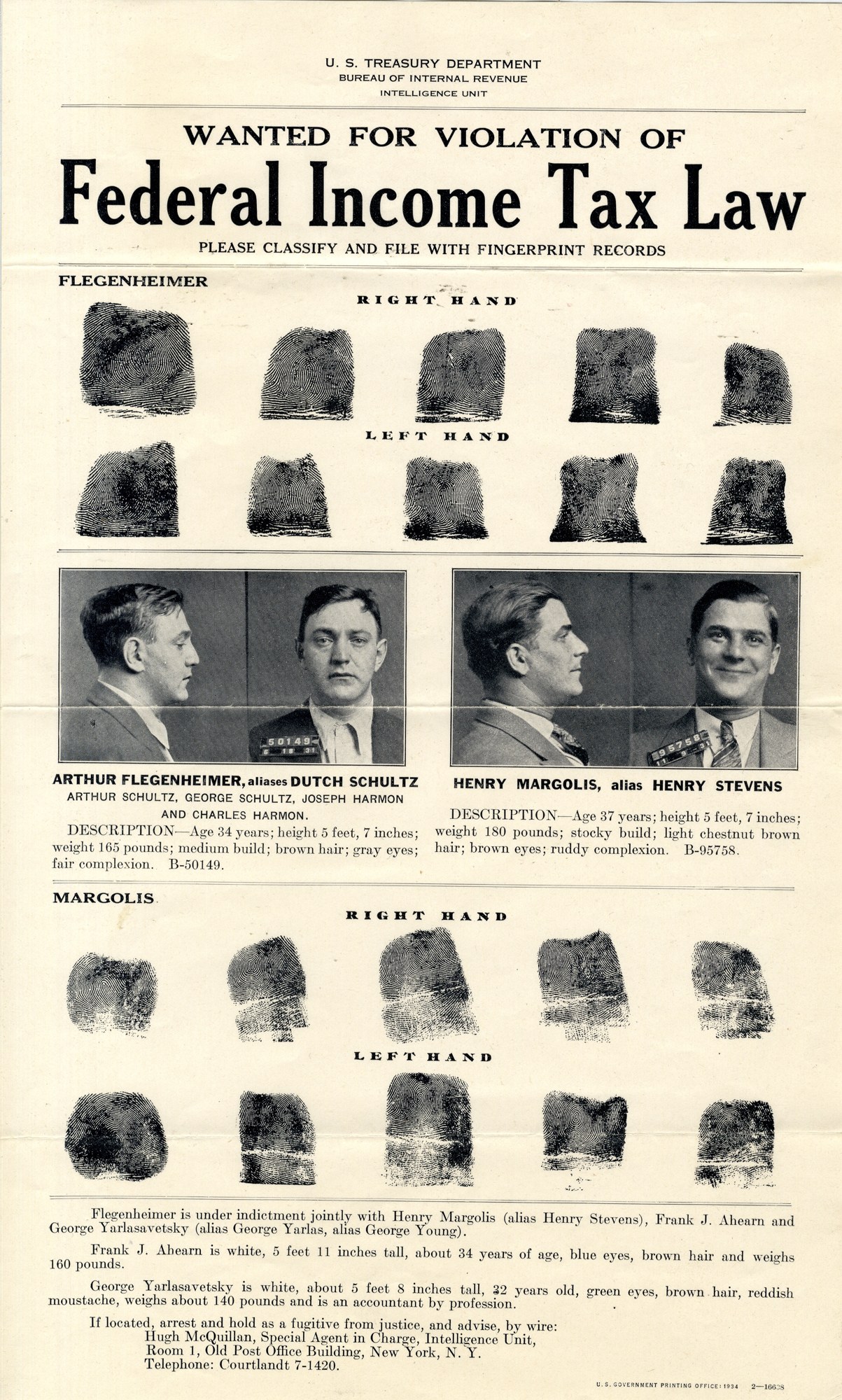 case-file"Wanted for Violation of Federal Income Tax Law": Treasury broadside for Arthur Flegenheimer and Henry Margolis (1934)A 1934 Treasury Department, Bureau of Internal Revenue, Intelligence Unit broadside with fingerprints and booking photographs of Arthur Flegenheimer ("Dutch Schultz") and Henry Margolis. A copy is stored here.
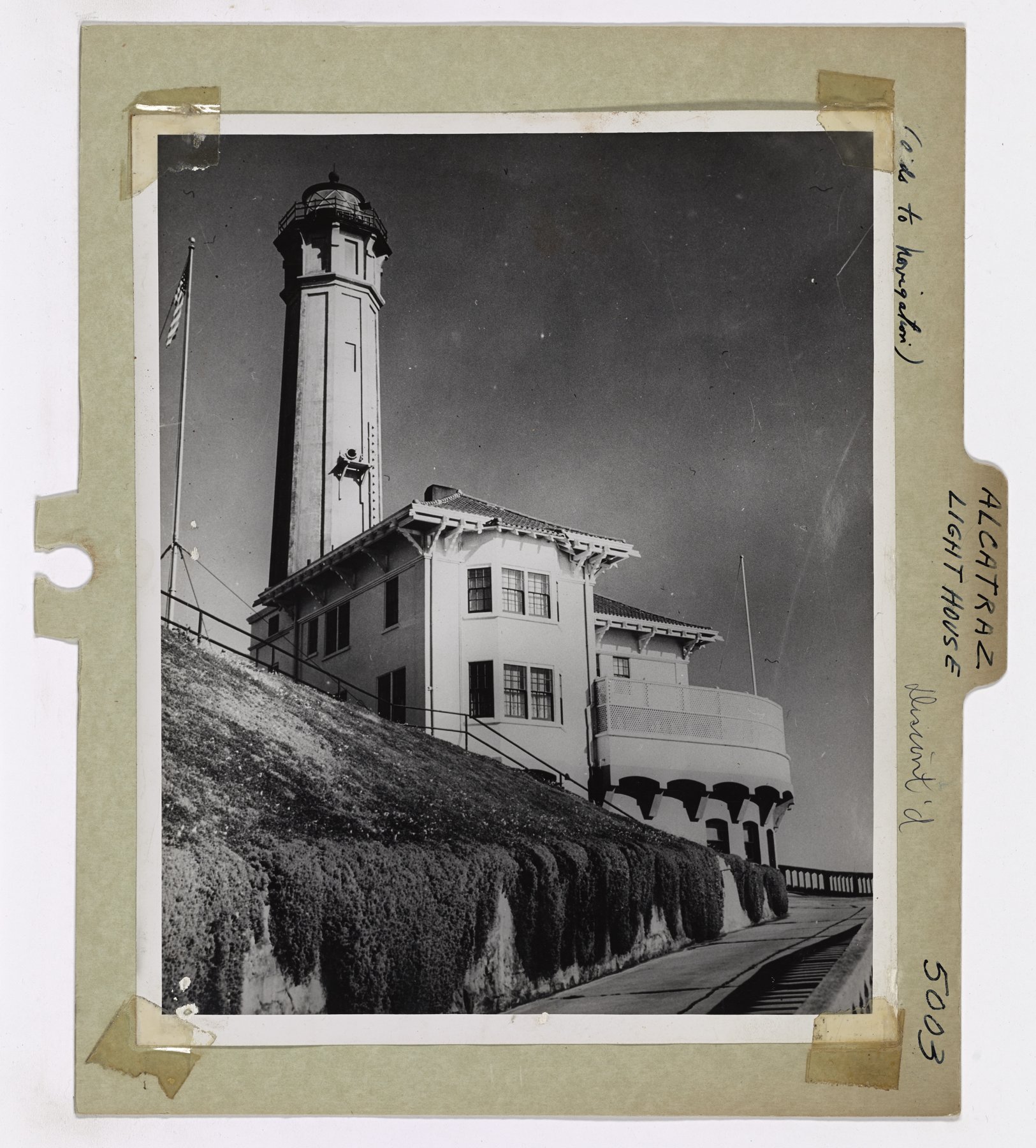 photographAlcatraz Lighthouse, 12th Coast Guard District (9 December 1946)A Coast Guard photograph, dated 9 December 1946 in the catalog, of the Alcatraz lighthouse tower and keeper's house on the island that then held the federal penitentiary.
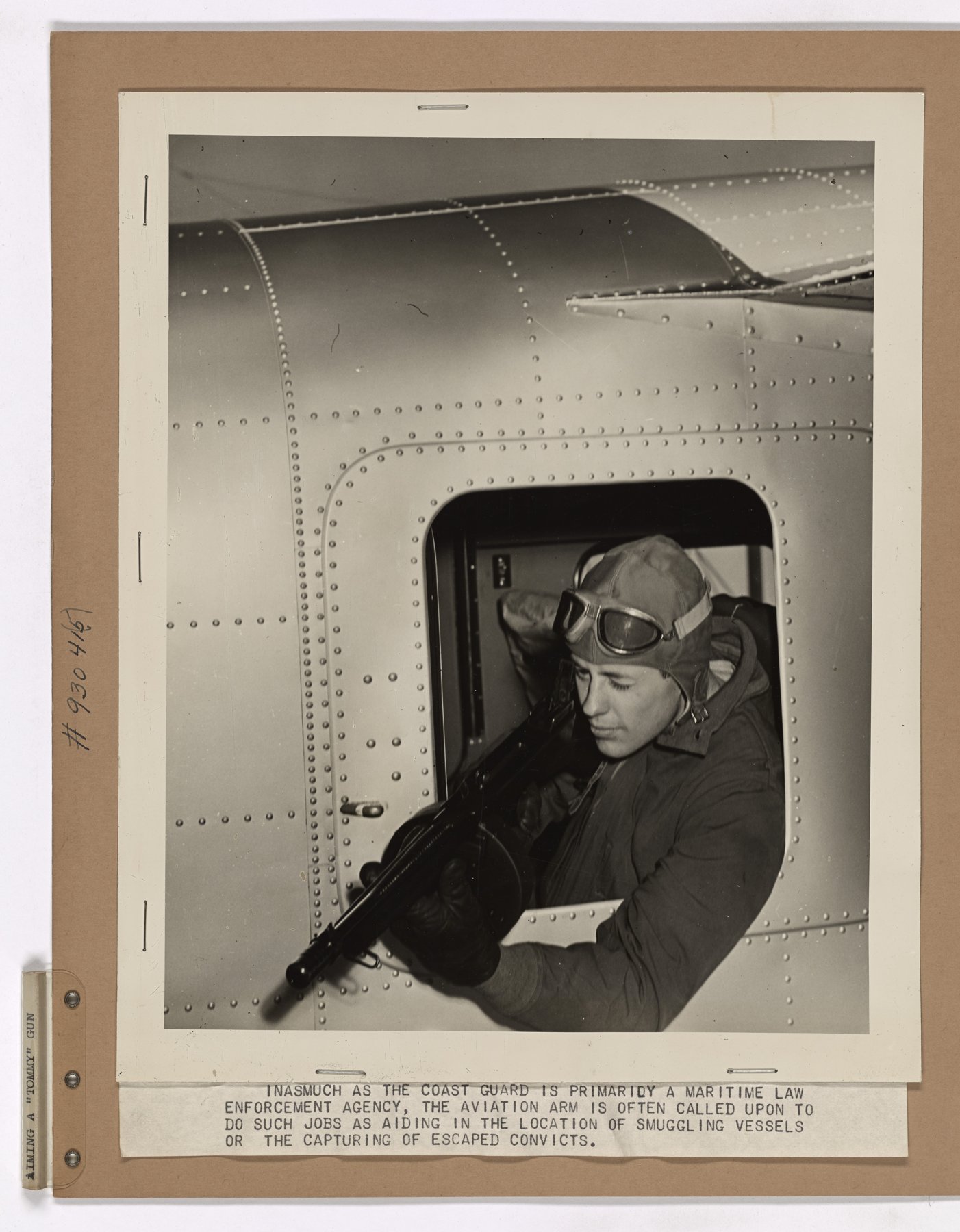 photographAiming a "Tommy" gun from a Coast Guard aircraft (30 September 1941)A Coast Guard aviation photograph of 30 September 1941: a man in a flying helmet aims a drum-fed submachine gun from an aircraft window. The caption says the aviation arm helps locate smuggling vessels and capture escaped convicts.
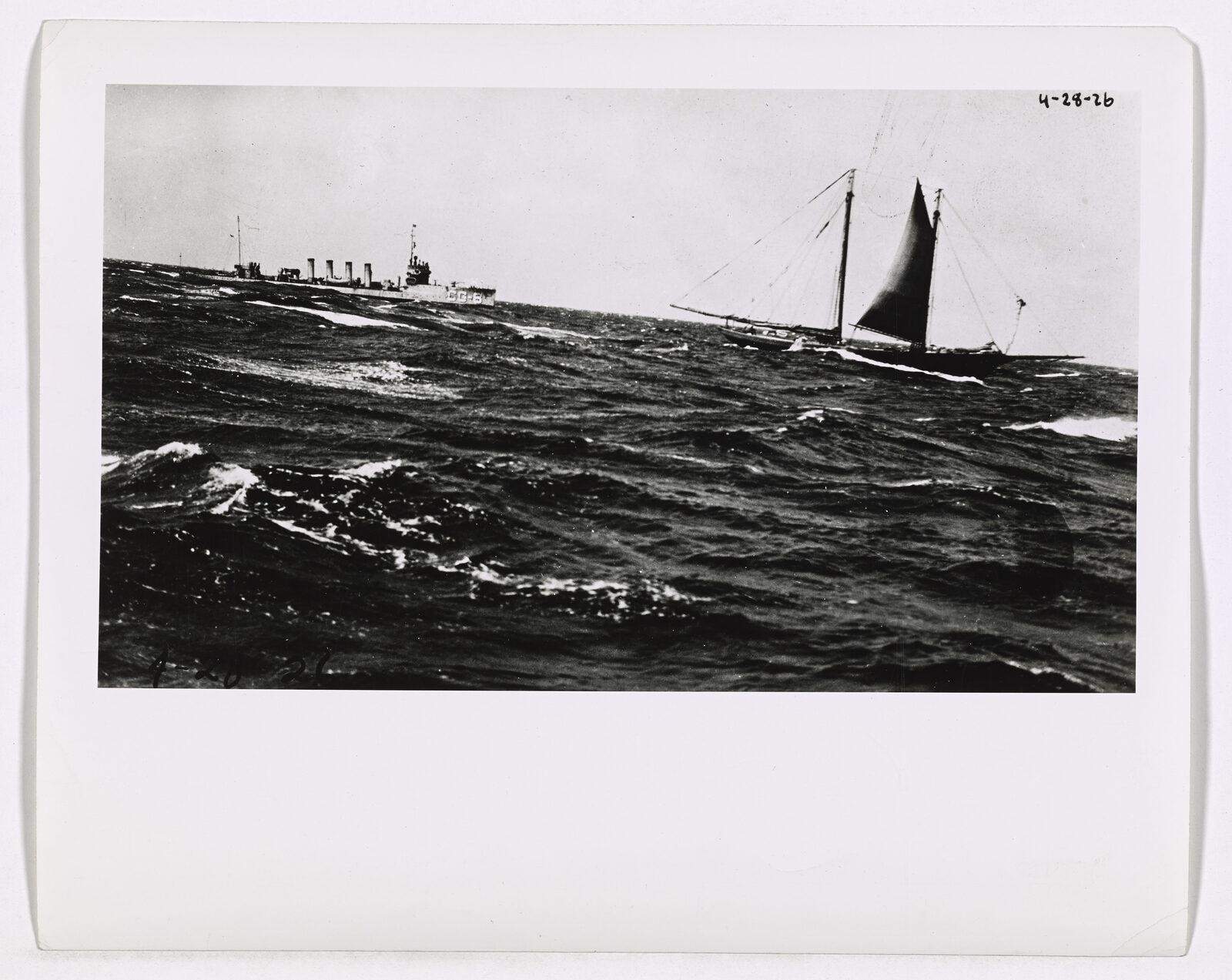 photographCoast Guard destroyer AMMEN (CG-8) picketing a rum-runner off New Jersey (28 April 1926)National Archives Coast Guard photograph: per the catalog's original caption, the Coast Guard destroyer AMMEN (CG-8), a 742-ton oil burner with four stacks, picketing a rum-runner off the New Jersey coast outside the 12-mile limit.
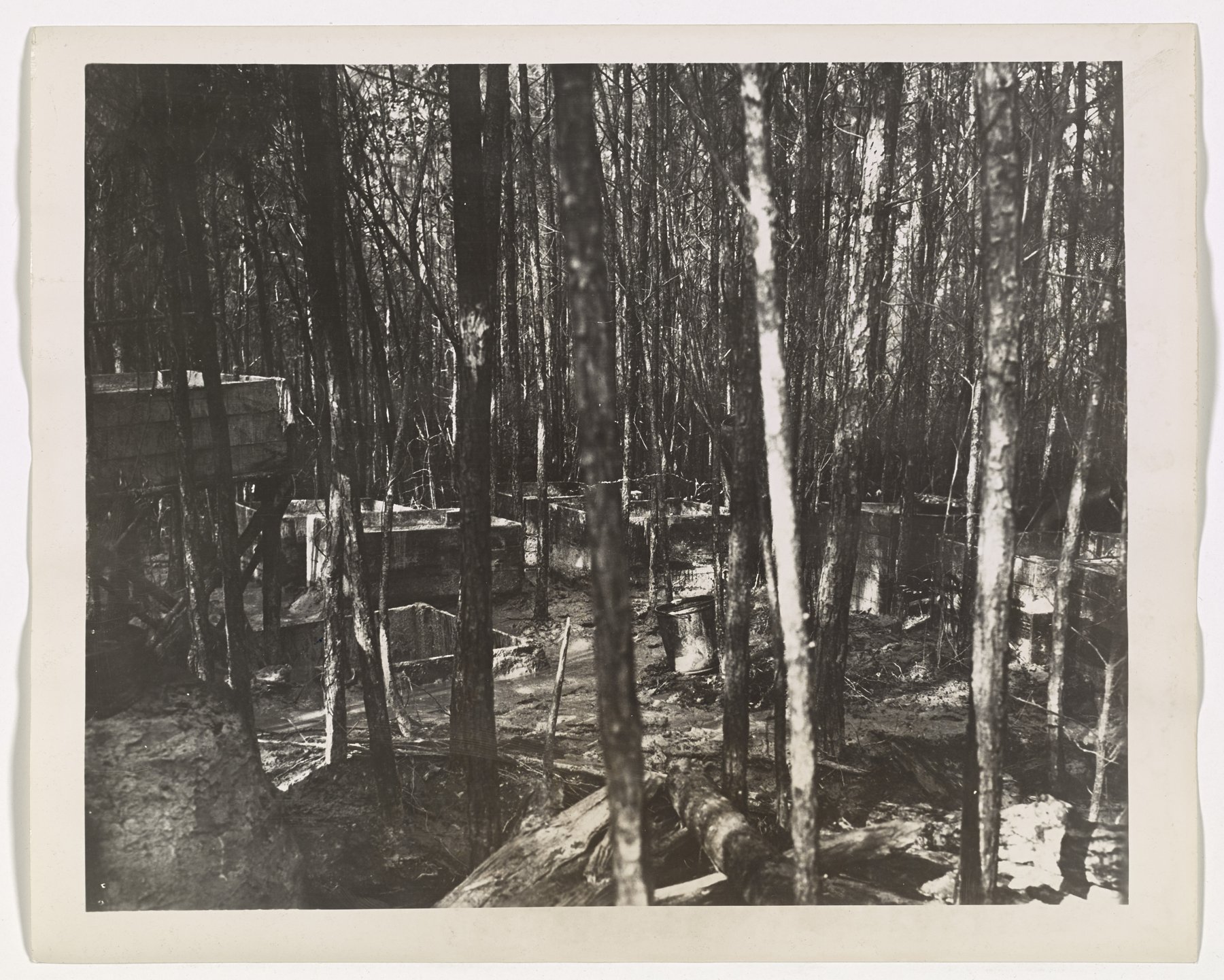 photographIllicit still found by the Coast Guard and Alcohol Tax Unit, Craven County, North Carolina (30 November 1948)A Coast Guard photograph of 30 November 1948: wooden fermenting boxes and barrels among thin trees. The catalog says the Coast Guard and the Alcohol Tax Unit located the distillery in Craven County, North Carolina.
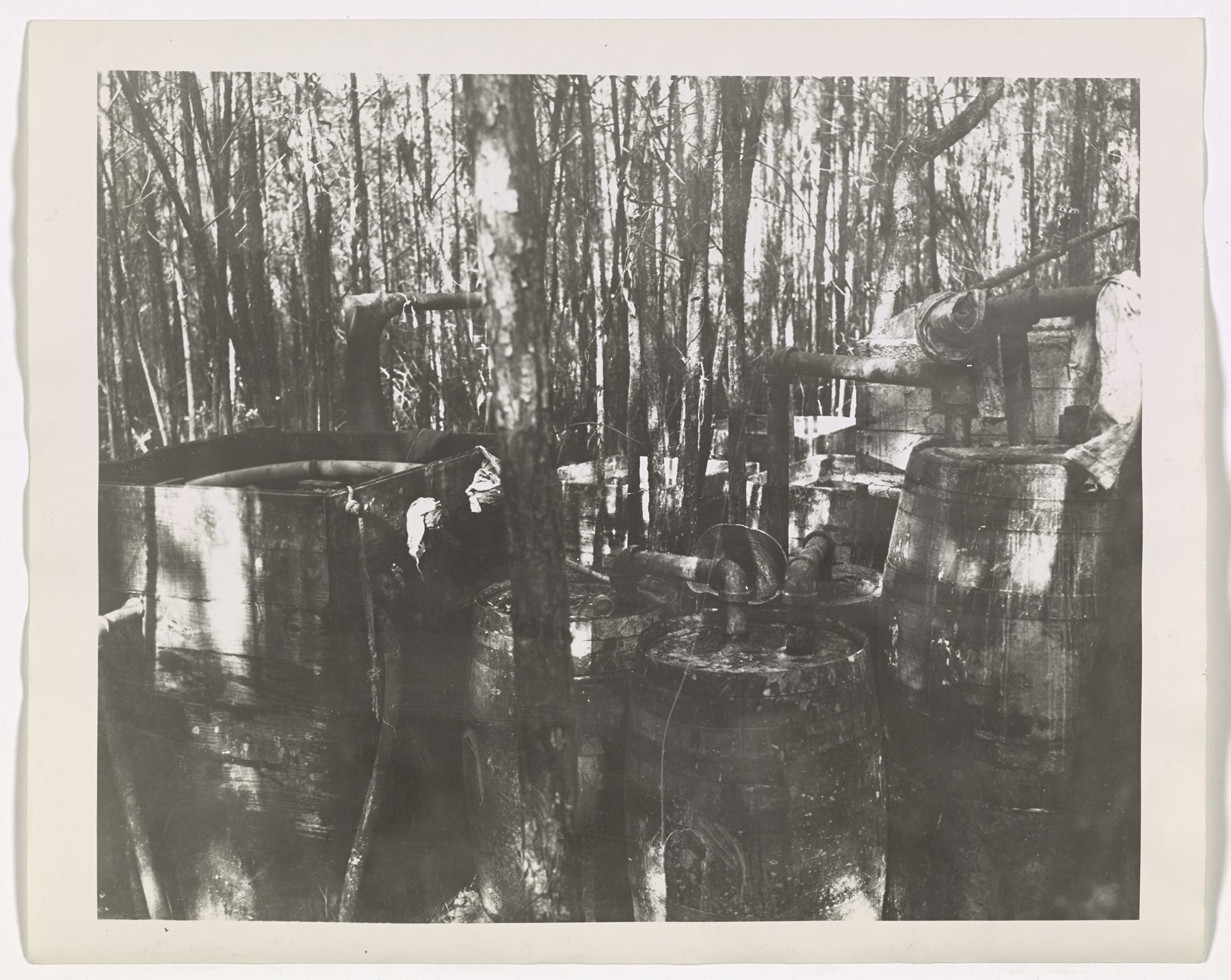 photographIllicit still, Craven County, North Carolina: barrels and piping (30 November 1948)A second Coast Guard photograph of the Craven County still of November 1948: barrels and a box vat joined by metal pipes among trees. The catalog credits the find to the Coast Guard and the Alcohol Tax Unit.
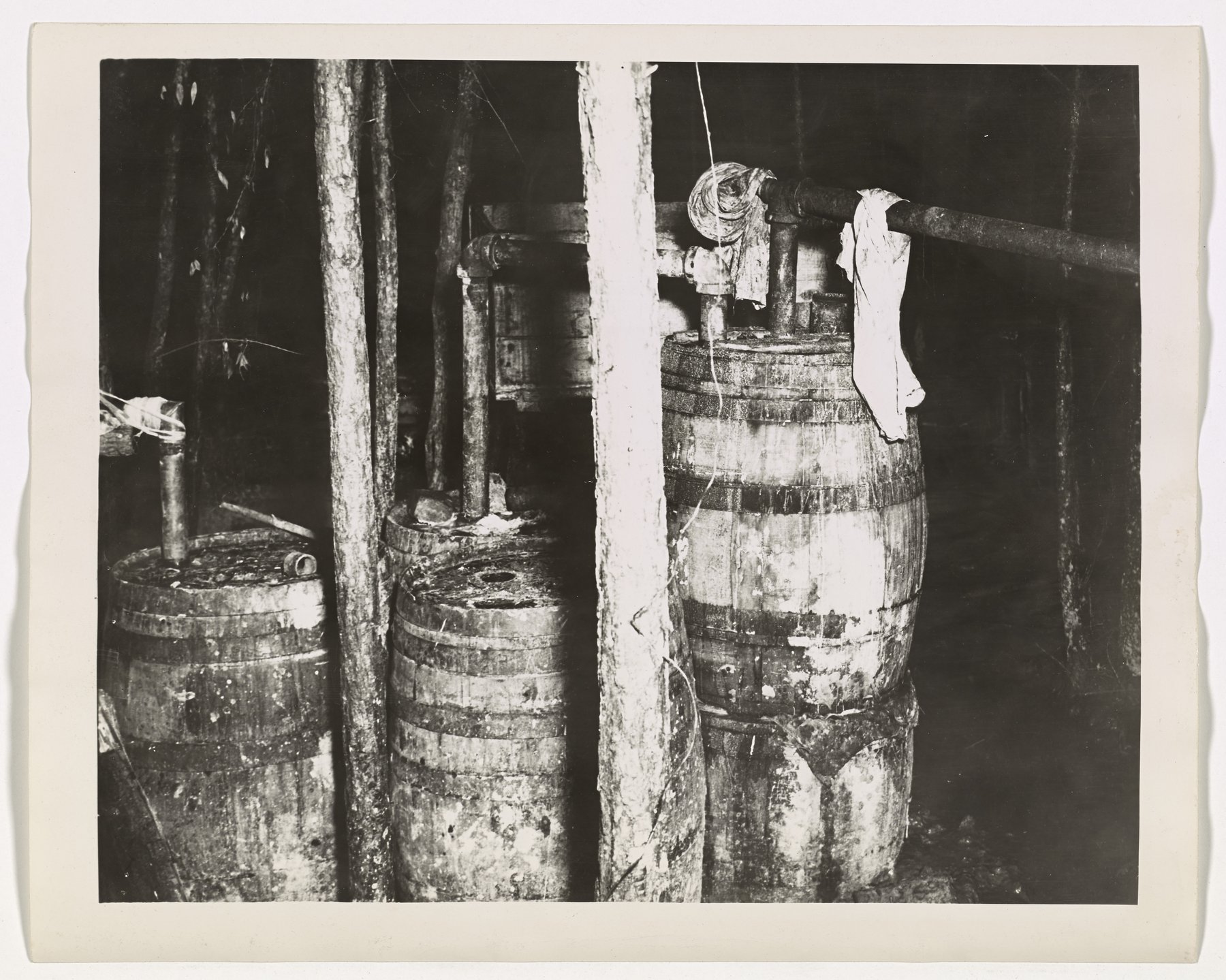 photographIllicit still, Craven County, North Carolina: barrels under a pipe (30 November 1948)A third Coast Guard frame of the Craven County still of November 1948: stained barrels joined by pipes under a horizontal pipe hung with a cloth, among tree trunks at night or in deep shade.
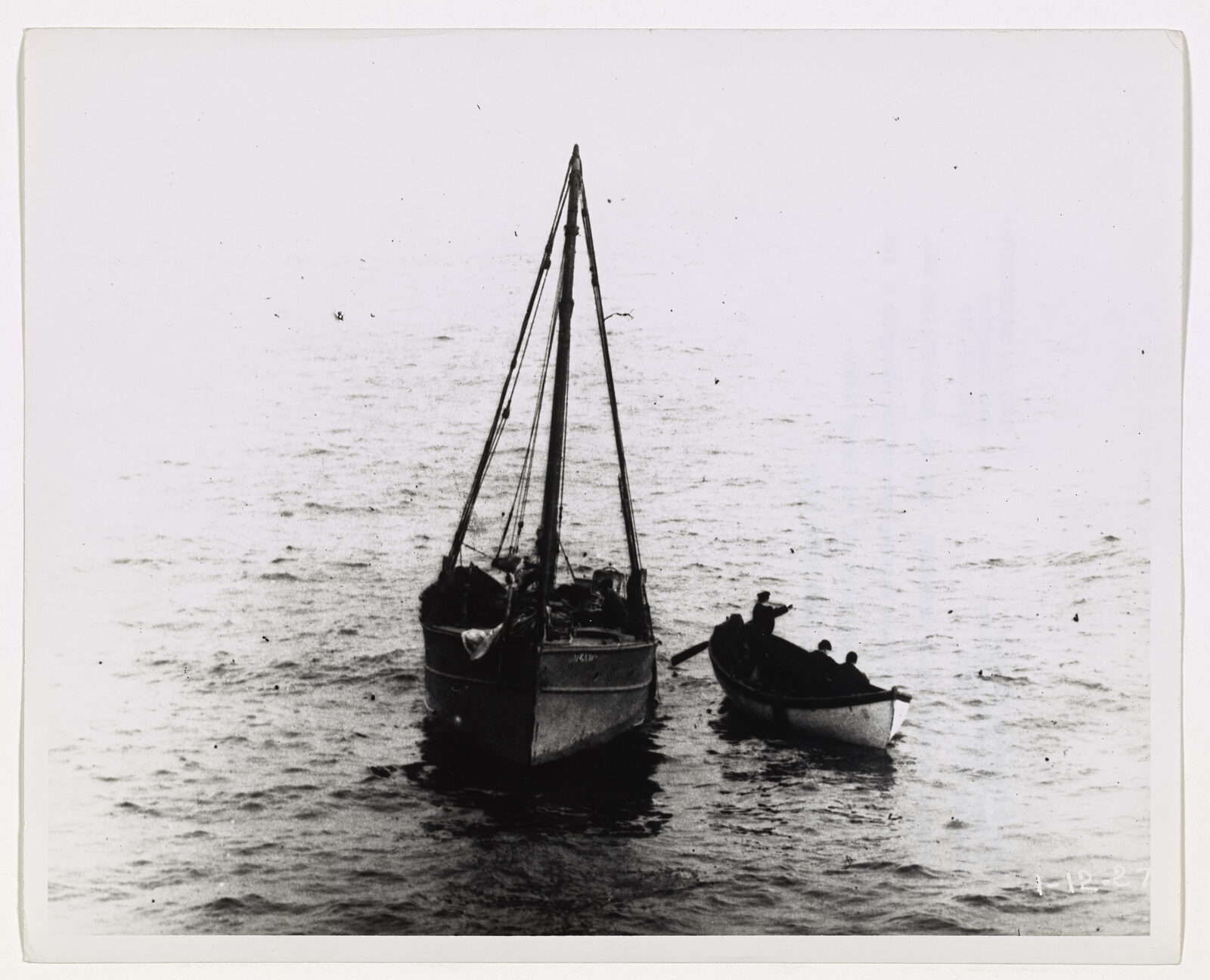 photographCoast Guard vessel inspecting a rum-running vessel off New Jersey (12 January 1927)National Archives Coast Guard photograph titled "Rum-runners": per the catalog, a Coast Guard vessel inspecting a rum-running vessel off the coast of New Jersey. A two-masted vessel with a small boat of men alongside is shown.
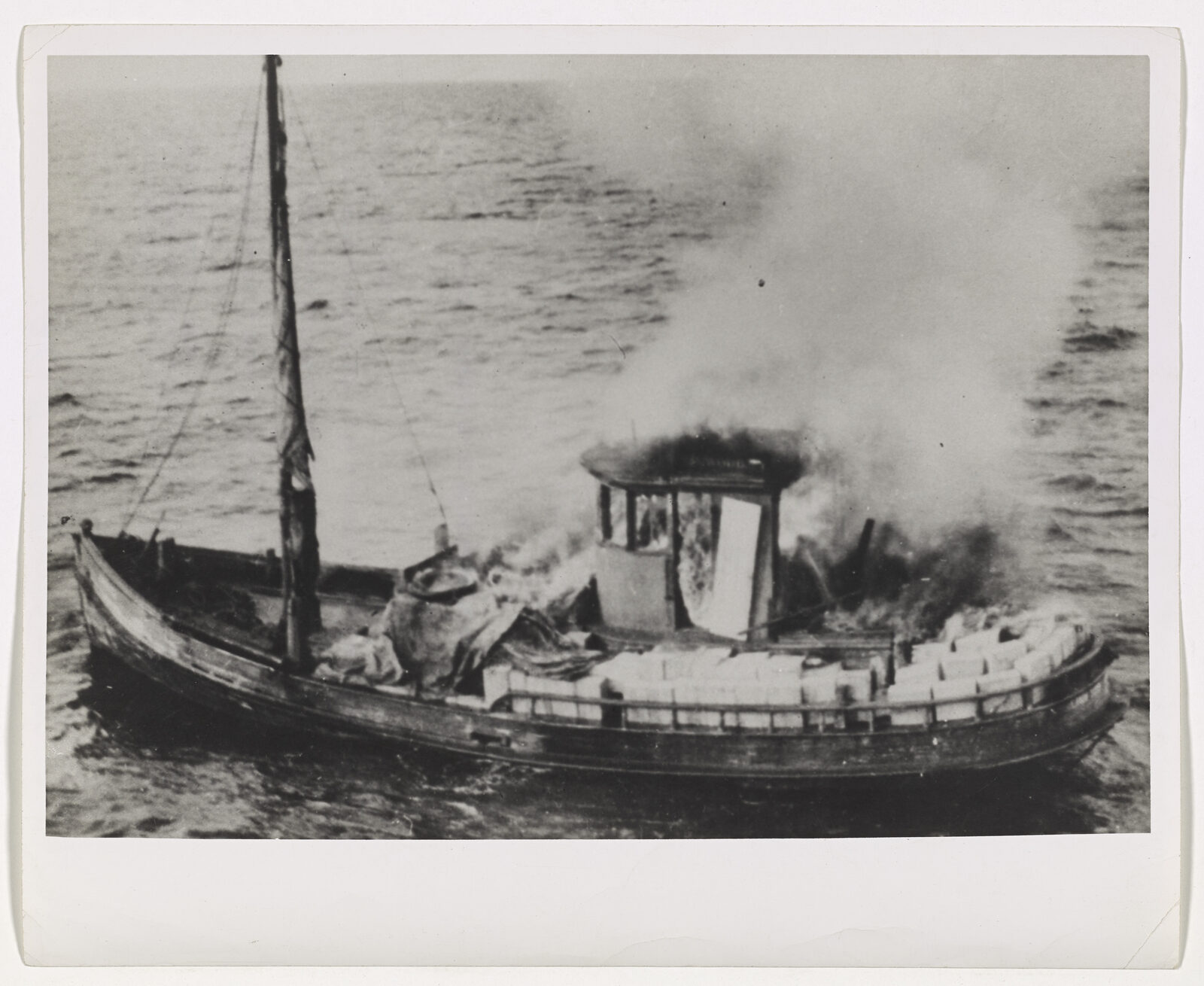 photographRum-running vessel LINWOOD set afire by her crew (4 May 1923)National Archives Coast Guard photograph: per the catalog, the rum-running vessel LINWOOD set afire by her crew to destroy evidence during pursuit by a Coast Guard vessel.
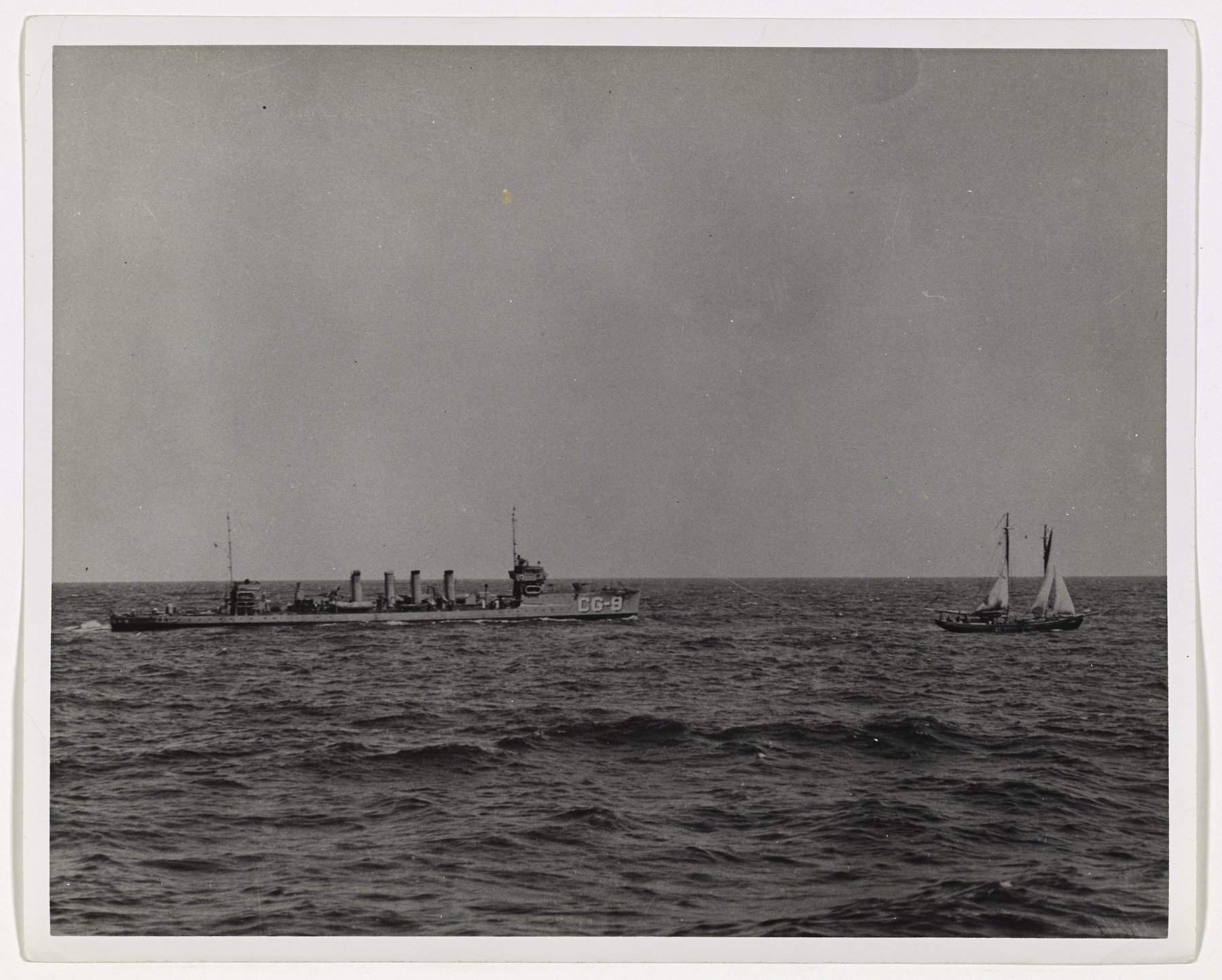 photographCoast Guard destroyer BEALE chasing a rum-running vesselA National Archives Coast Guard photograph of the destroyer BEALE. The catalog says it shows the vessel chasing a rum-running vessel in the North Atlantic. No crew or captured vessel is named.
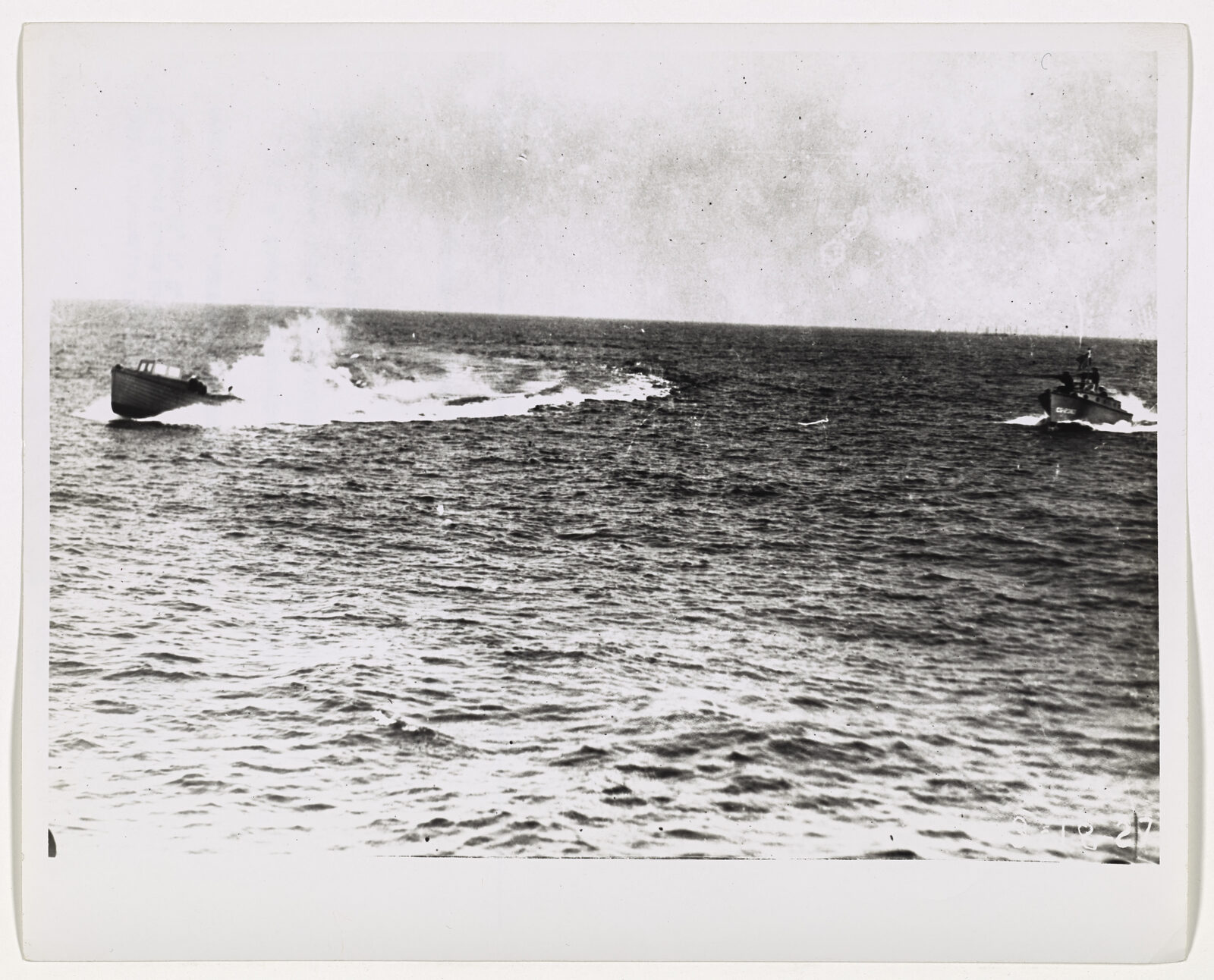 photographCoast Guard picketboat firing on a rum-running vessel, Atlantic coast (18 March 1927)National Archives Coast Guard photograph, per the catalog a Coast Guard picketboat firing upon a rum-running vessel off the Atlantic coast. The catalog names no vessels or people.
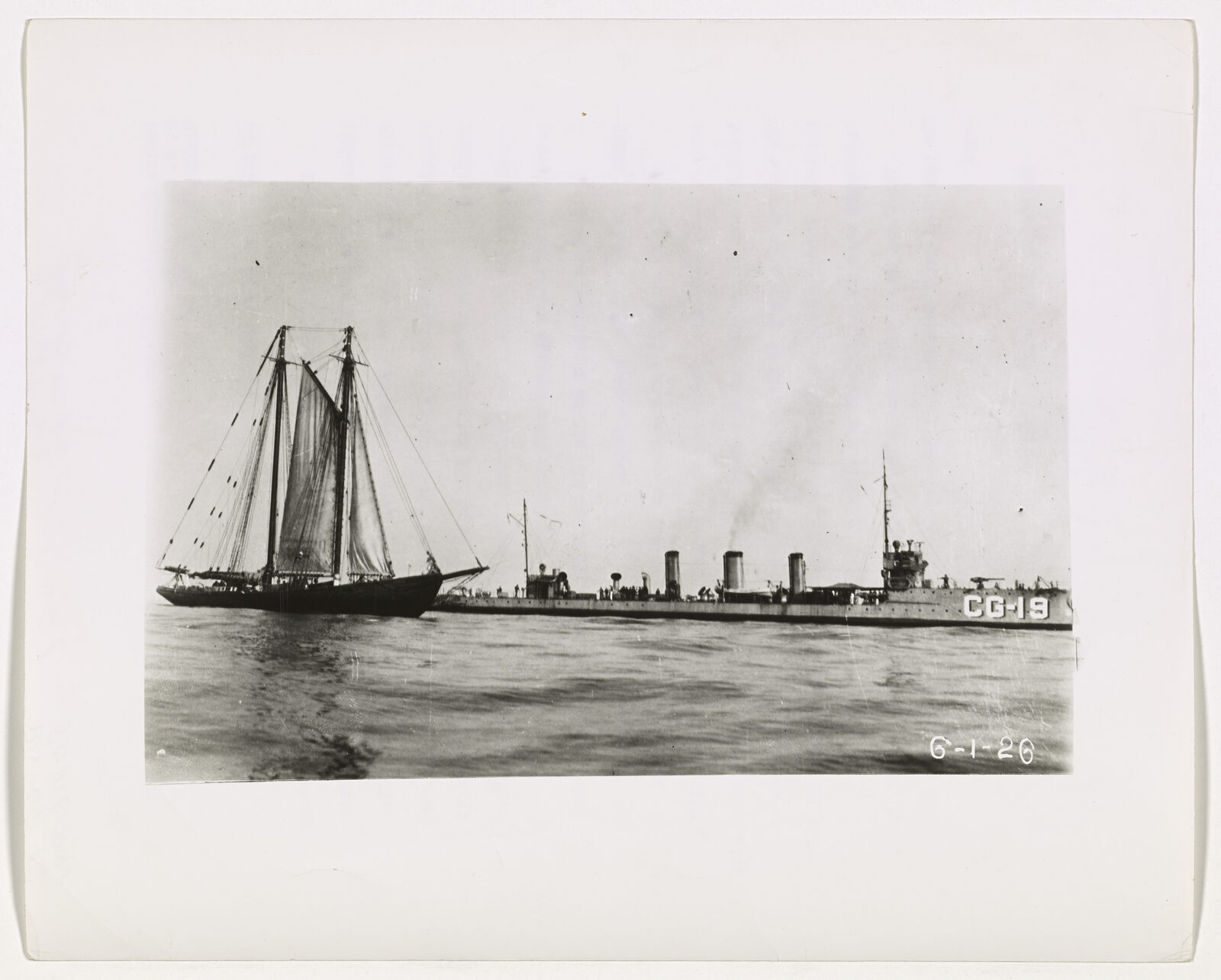 photographCoast Guard destroyer TERRY pursues the French rum-runner MISTINGUETT (1 June 1926)National Archives Coast Guard photograph: per the catalog, the Coast Guard destroyer TERRY pursuing the French rum-running vessel MISTINGUETT. No location or people are given.
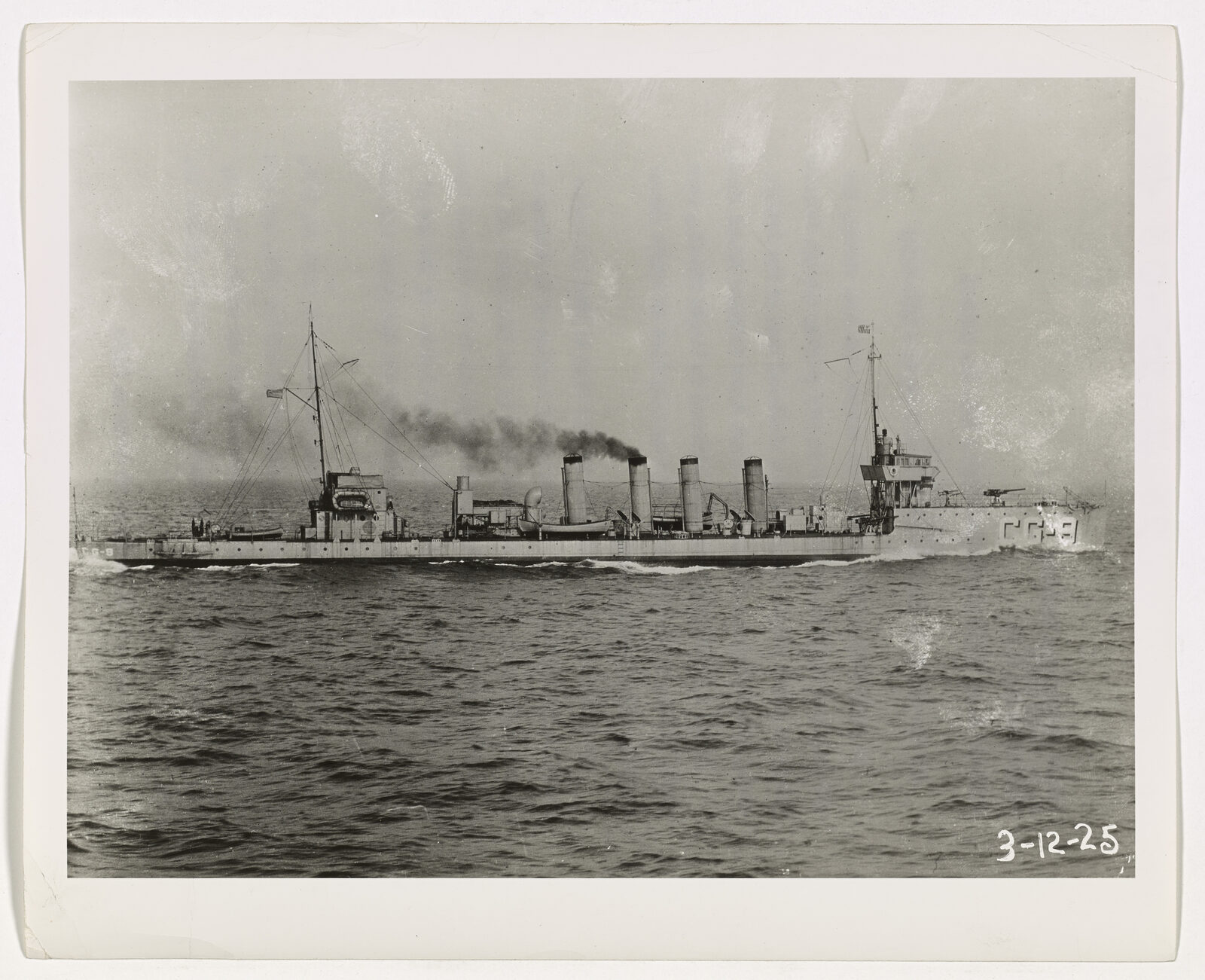 photographCoast Guard destroyer BEALE on patrol for rum-running vessels (12 March 1925)National Archives Coast Guard photograph: per the catalog, the Coast Guard destroyer BEALE on patrol searching for rum-running vessels in the Atlantic. The record names the vessel only.
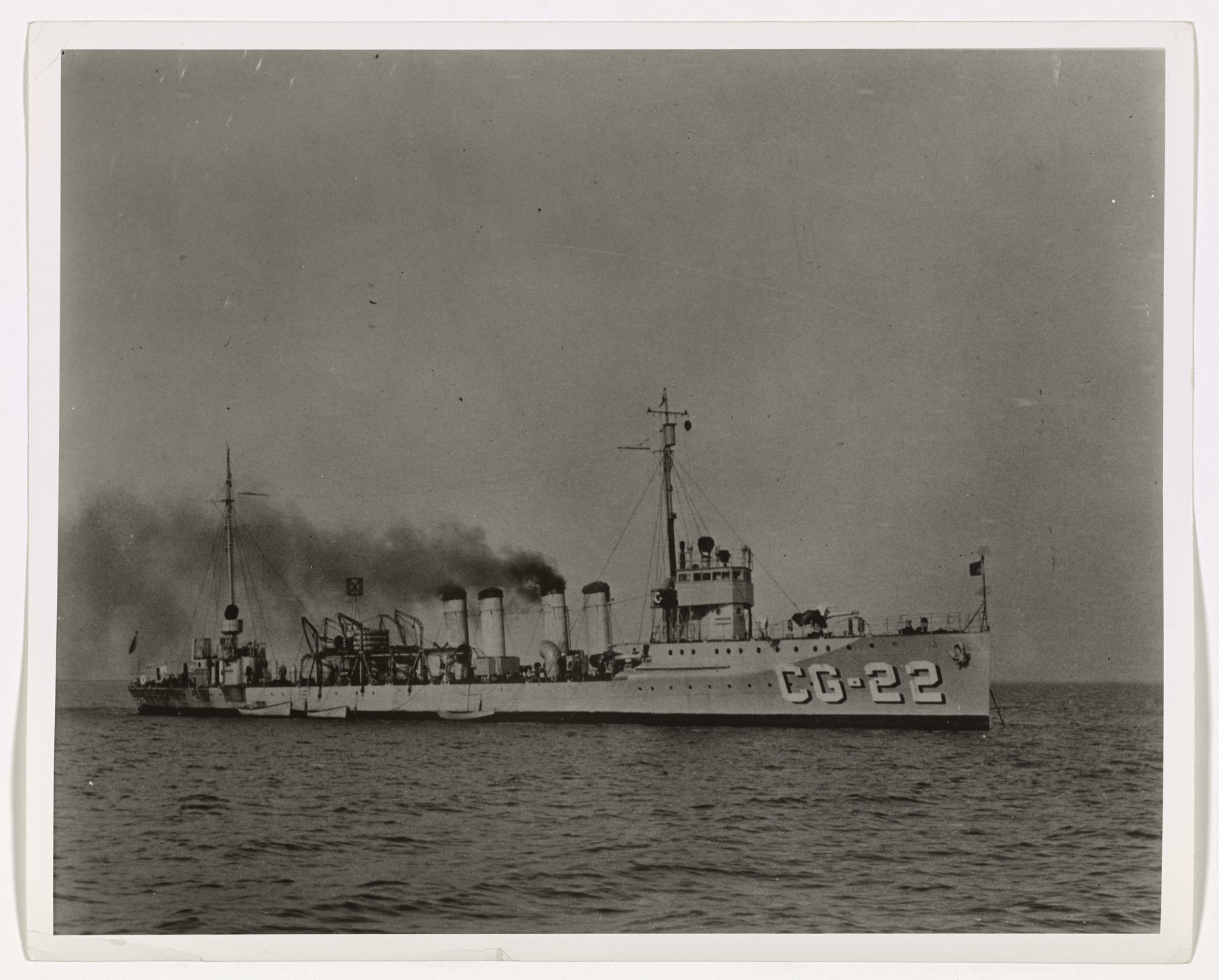 photographCoast Guard destroyer SHAW on patrol for rum-running vesselsA National Archives Coast Guard photograph of the destroyer SHAW. The catalog says it shows the vessel on patrol searching for rum-running vessels. No crew or captured vessel is named.
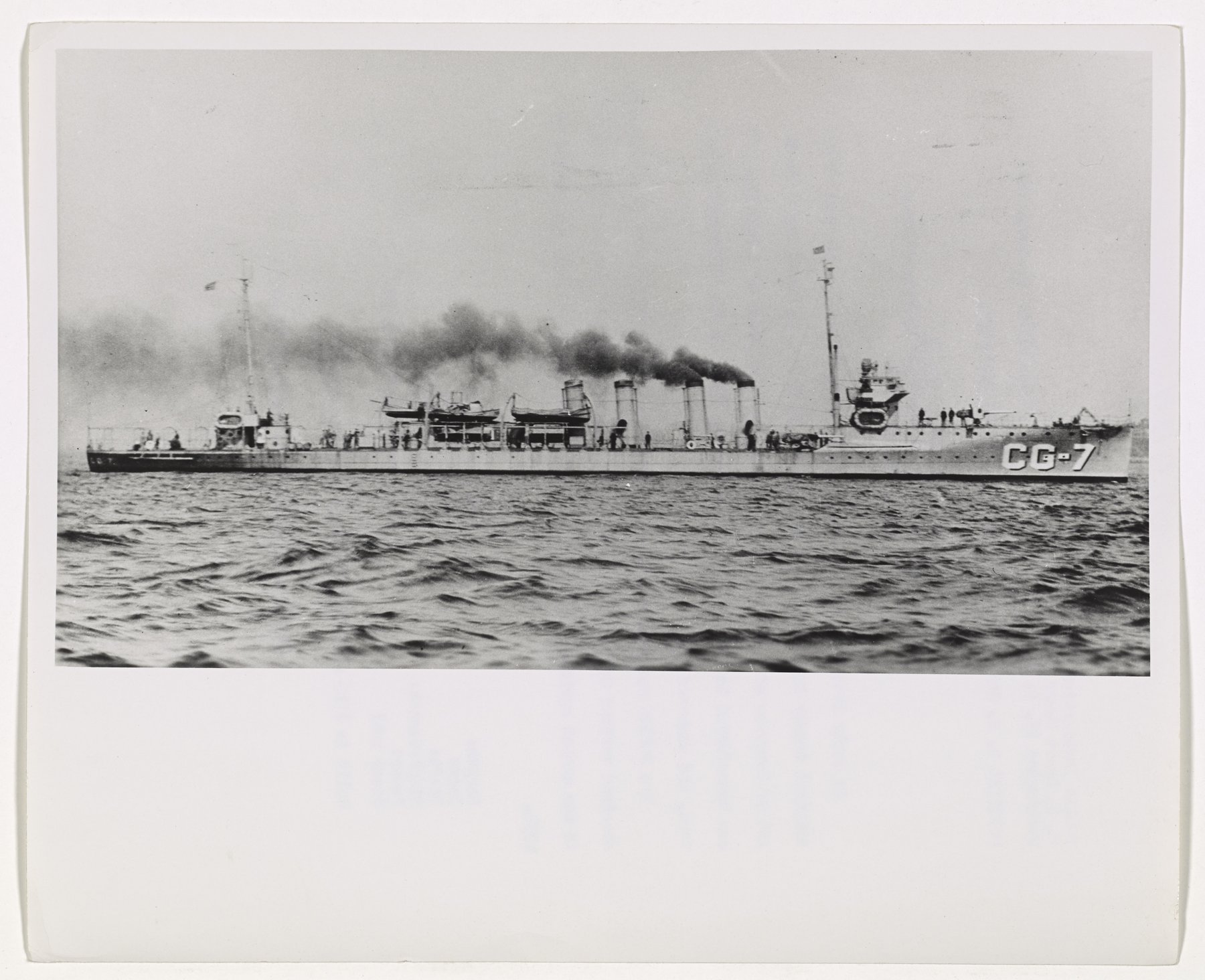 photographCoast Guard destroyer PORTER on patrol for rum-running vesselsA National Archives Coast Guard photograph of the destroyer PORTER. The catalog says it shows the vessel on patrol searching for rum-running vessels. No crew or captured vessel is named.
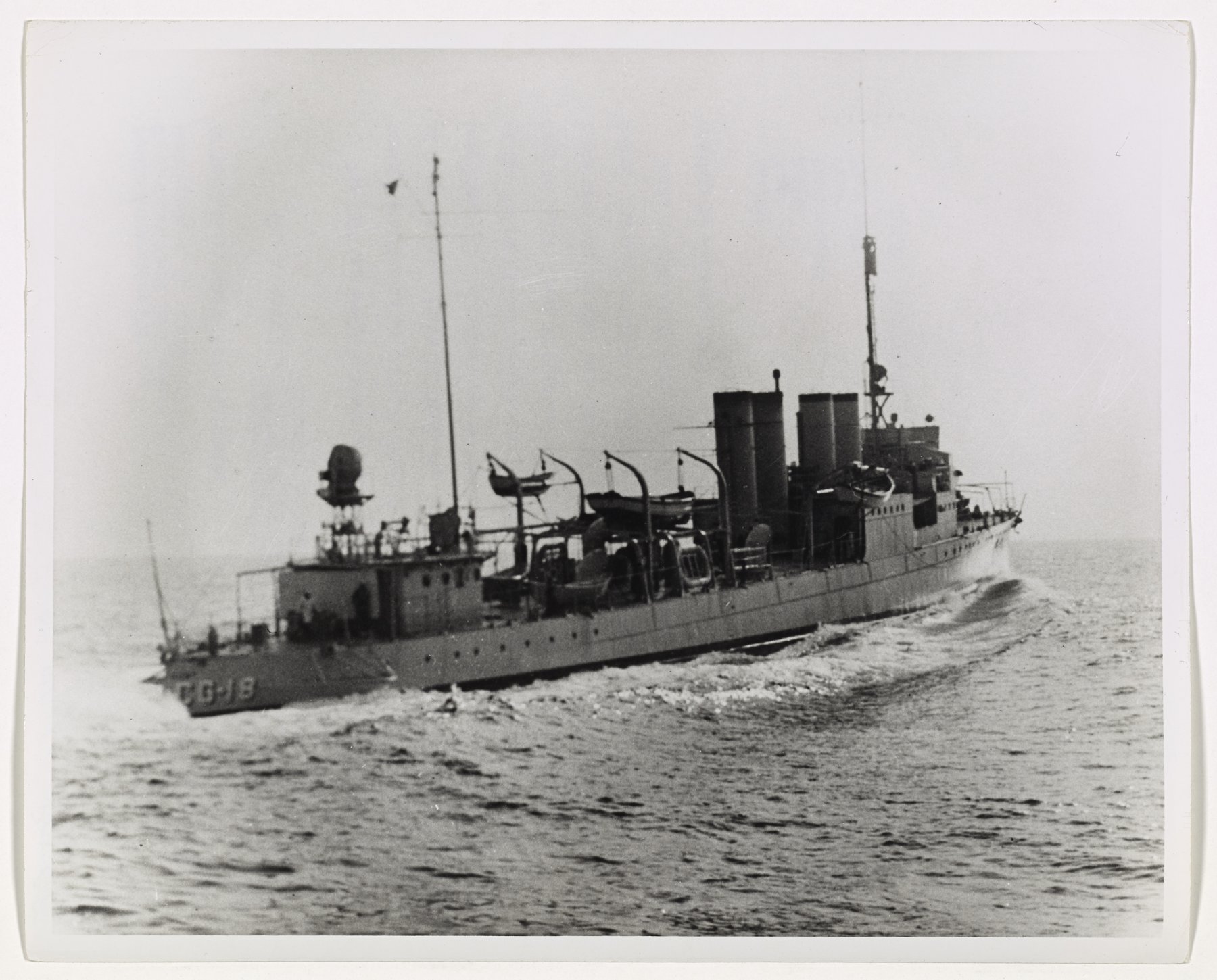 photographCoast Guard destroyer HUNT on patrol for rum-running vesselsA National Archives Coast Guard photograph of the destroyer HUNT. The catalog says it shows the vessel on patrol searching for rum-running vessels. No crew or captured vessel is named.
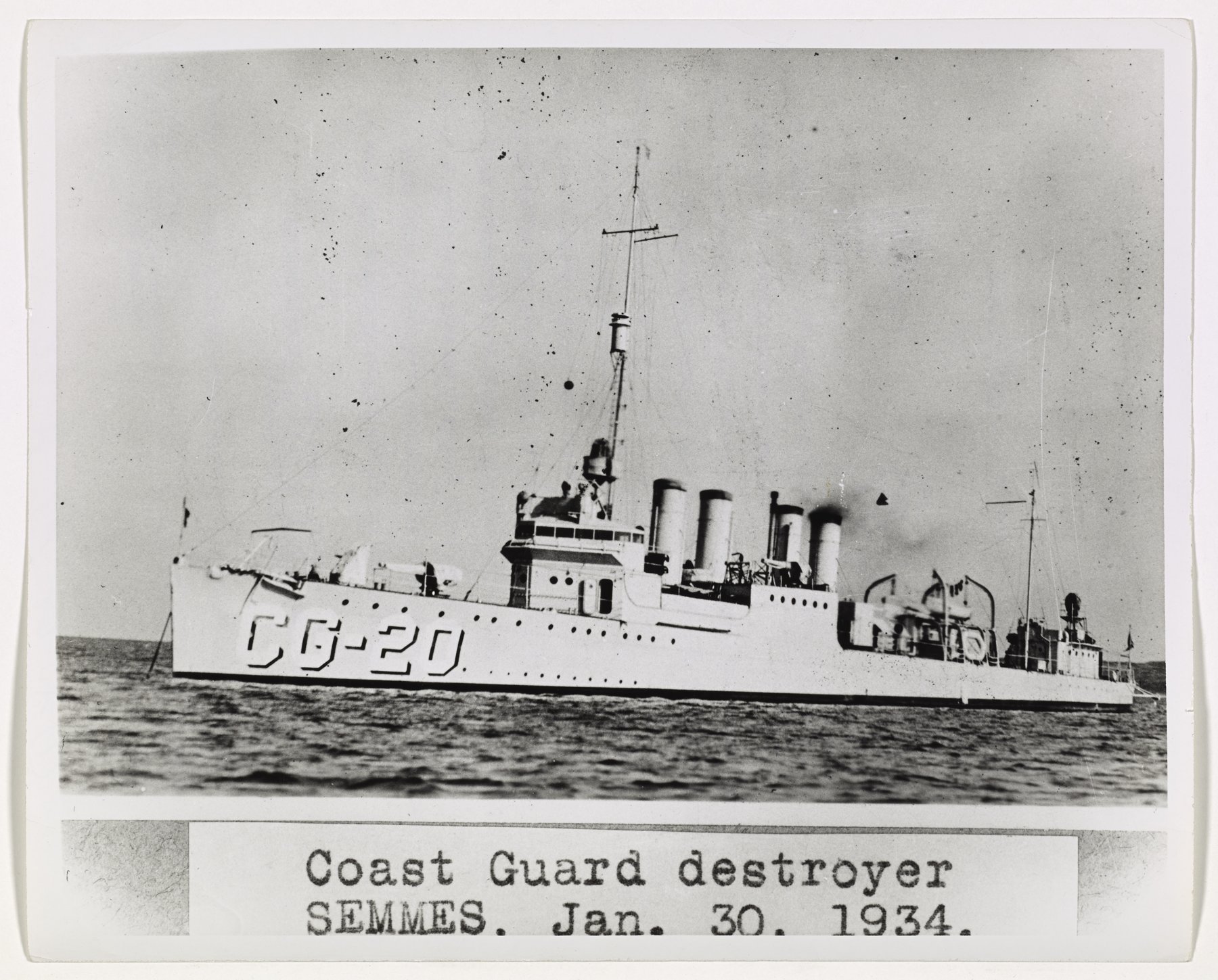 photographCoast Guard destroyer SEMMES on patrol for rum-running vesselsA National Archives Coast Guard photograph of the destroyer SEMMES. The catalog says it shows the vessel on patrol searching for rum-running vessels. No crew or captured vessel is named.
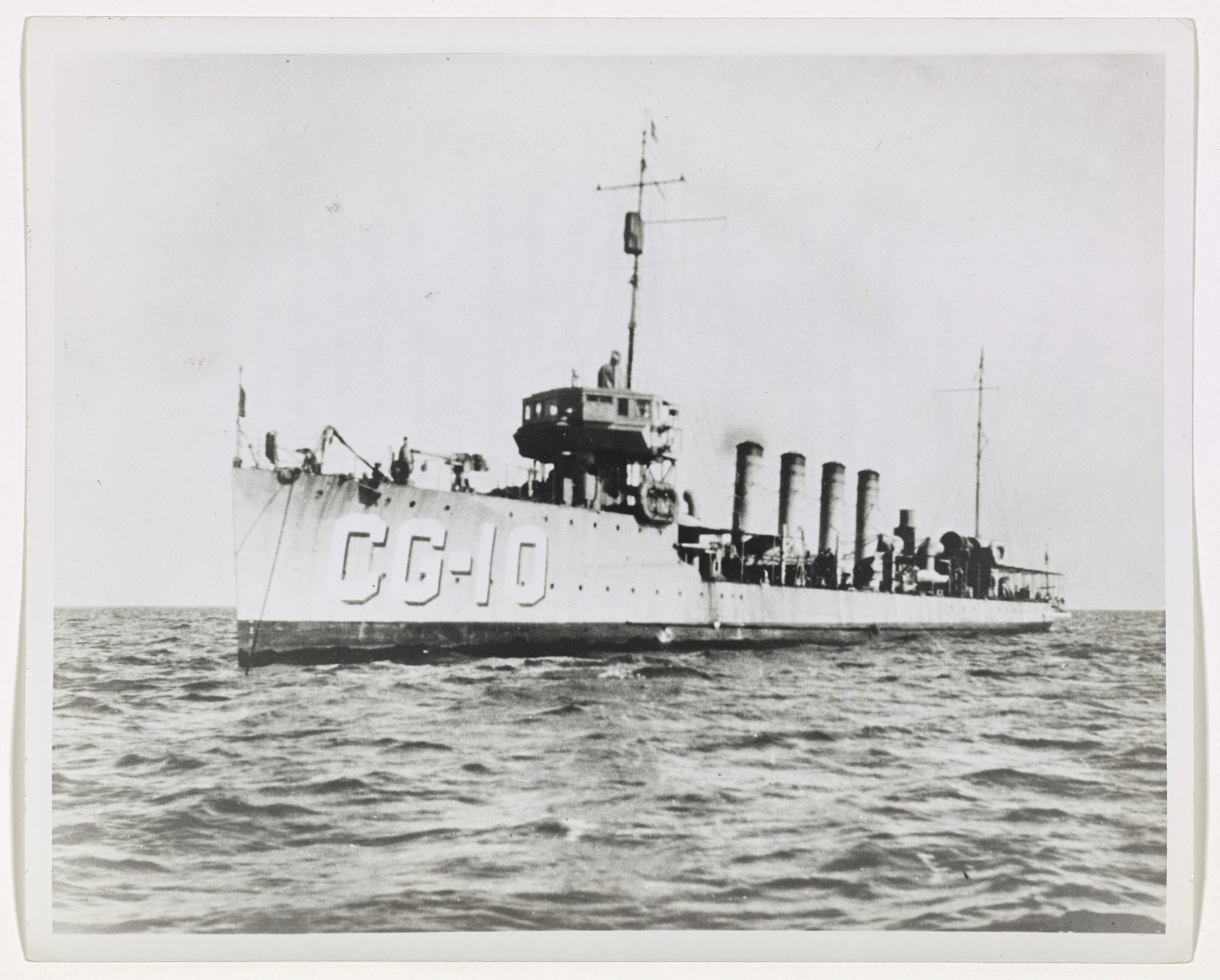 photographCoast Guard destroyer BURROWS on patrol for rum-running vesselsA National Archives Coast Guard photograph of the destroyer BURROWS. The catalog says it shows the vessel on patrol searching for rum-running vessels. No crew or captured vessel is named.
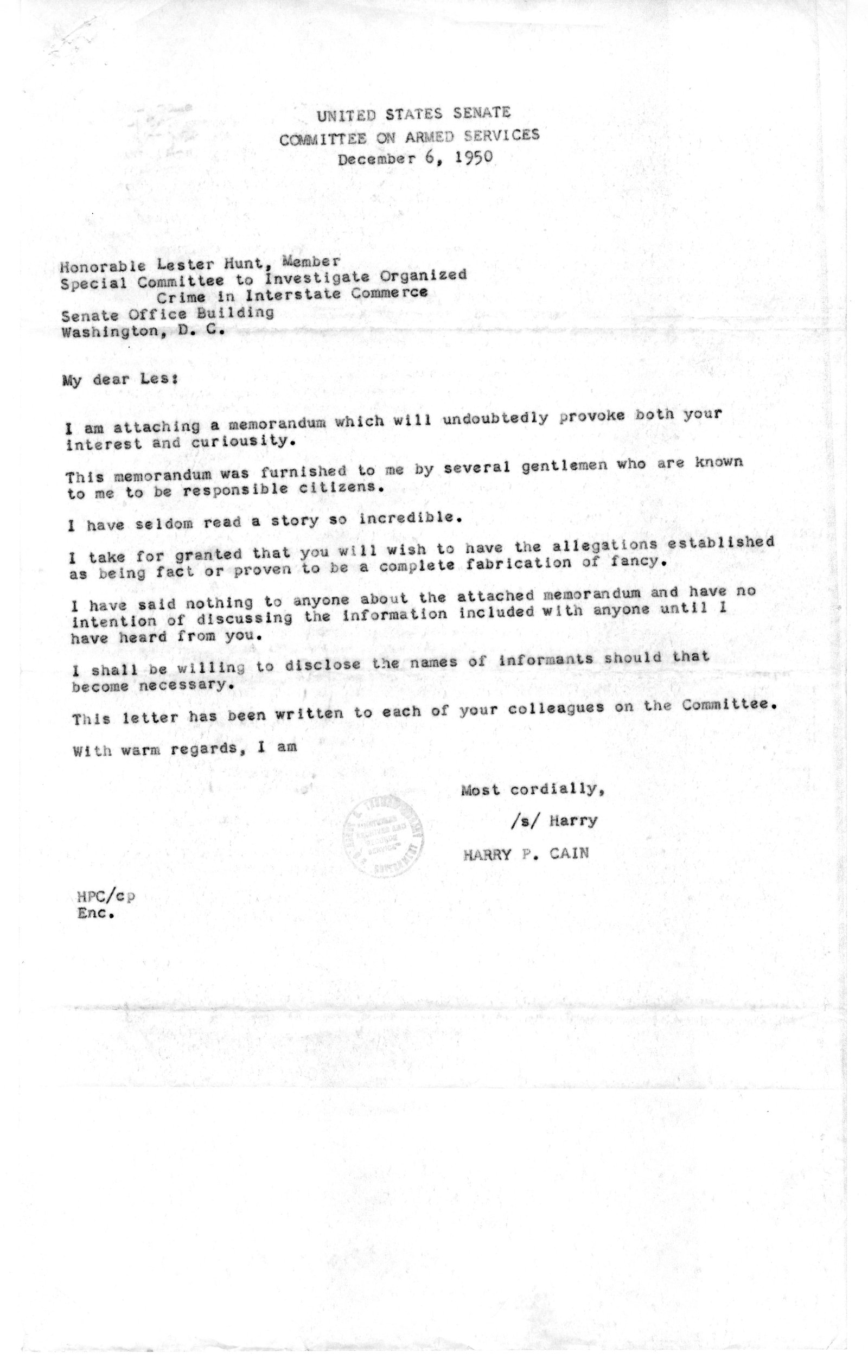 case-fileLetter from Senator Harry P. Cain to Senator Lester Hunt (1950)Letter of December 6, 1950 from Senator Harry P. Cain to Lester Hunt, a member of the Kefauver Committee, forwarding an attached memorandum; the National Archives item has four page images, of which only the covering letter was read.
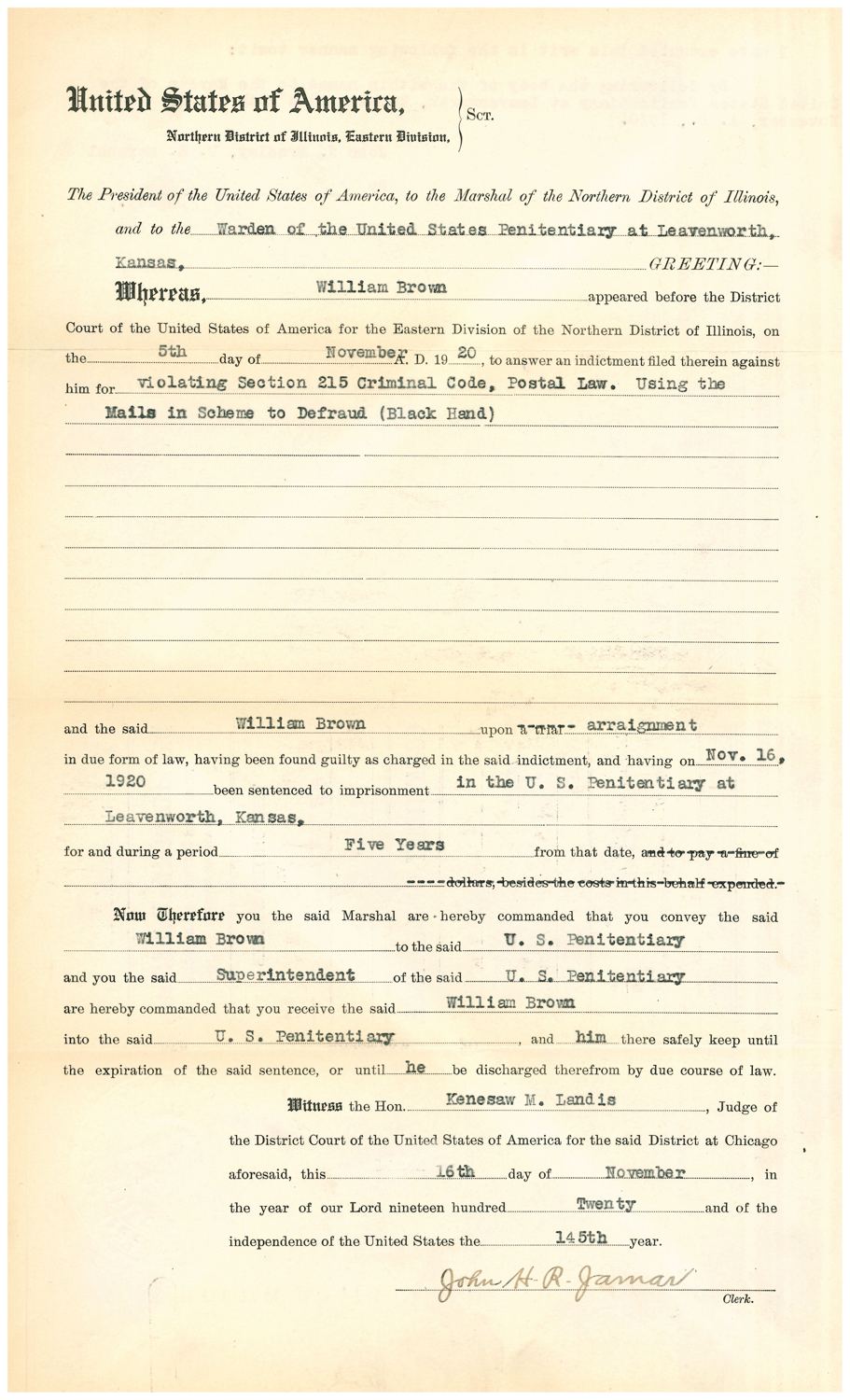 case-fileCommitment of William Brown to Leavenworth, 16 November 1920: 'Using the Mails in Scheme to Defraud (Black Hand)'Printed writ of commitment witnessed by Judge Kenesaw M. Landis and signed by the clerk: William Brown, found guilty on an indictment for 'Using the Mails in Scheme to Defraud (Black Hand)', was sentenced on 16 November 1920 to five years at Leavenworth.case-fileThe United States vs. William Brown: 'Black Hand' mail case, Chicago, 1920 (case file)National Archives case file from the federal court at Chicago: the catalog note says William Brown was accused of mailing letters threatening to kill a woman unless she paid $500, and was found guilty and sentenced to five years at Leavenworth. The court's commitment form labels the offence '(Black Hand)'.
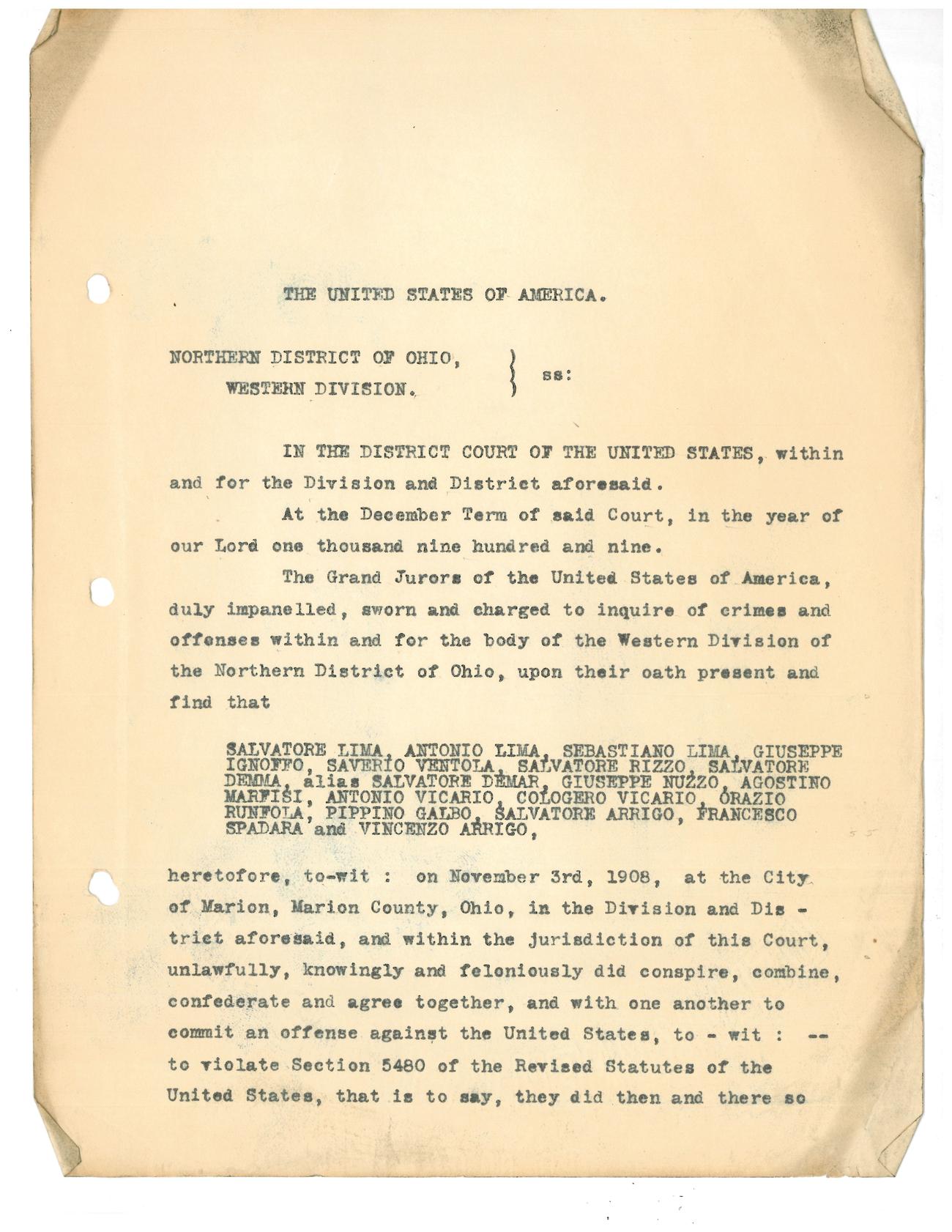 case-fileIndictment, United States v. Salvatore Lima et al., first page of text (Northern District of Ohio, December Term 1909)Typed first page of the federal grand-jury indictment naming sixteen defendants and charging that on 3 November 1908, at Marion, Ohio, they conspired to violate section 5480 of the Revised Statutes, the mail-fraud statute.
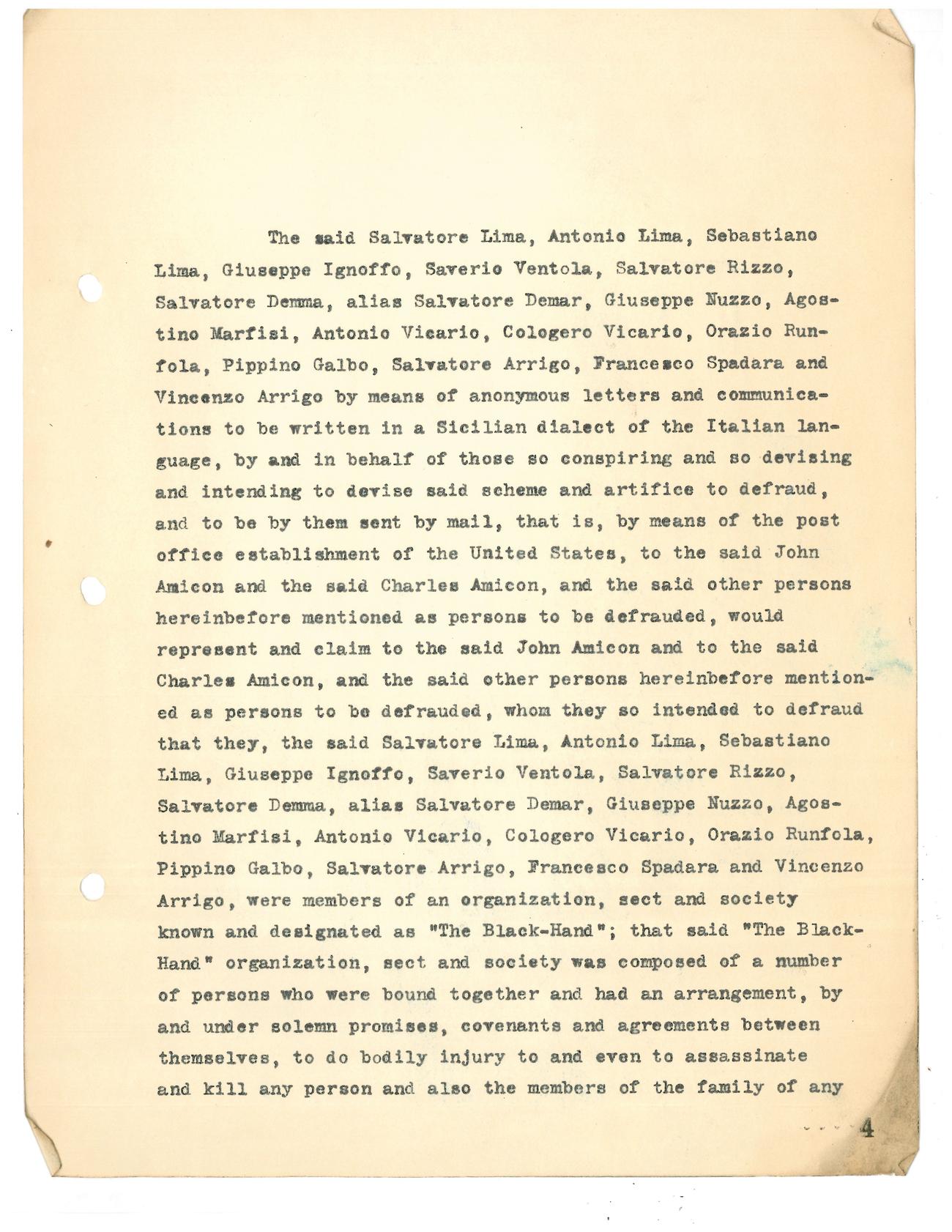 case-fileIndictment, United States v. Salvatore Lima et al.: the 'Black-Hand' averment (file page 5)A page of the 1909 Marion, Ohio, indictment charging that the defendants were members of an organisation 'known and designated as "The Black-Hand"' and would send anonymous letters 'written in a Sicilian dialect of the Italian language' demanding money under threat. The government's charge, quoted as the record's words.case-fileUnited States v. Salvatore Lima et al.: the Marion, Ohio, Black Hand indictment, December 1909 (case file)National Archives case file for the federal indictment of sixteen men in the Northern District of Ohio, filed 11 December 1909, charging a conspiracy begun at Marion, Ohio, to use the mails to defraud by threatening letters as members of an organisation the indictment calls 'The Black-Hand'.case-fileUnited States v. Salvatore Lima et al.: trial file with the verdict of 29 January 1910Companion National Archives file to the Marion, Ohio, Black Hand indictment: the catalog note says it holds the indictment, the threatening letters in Italian with translations, other filings, and the verdict of 29 January 1910 finding the defendants guilty.
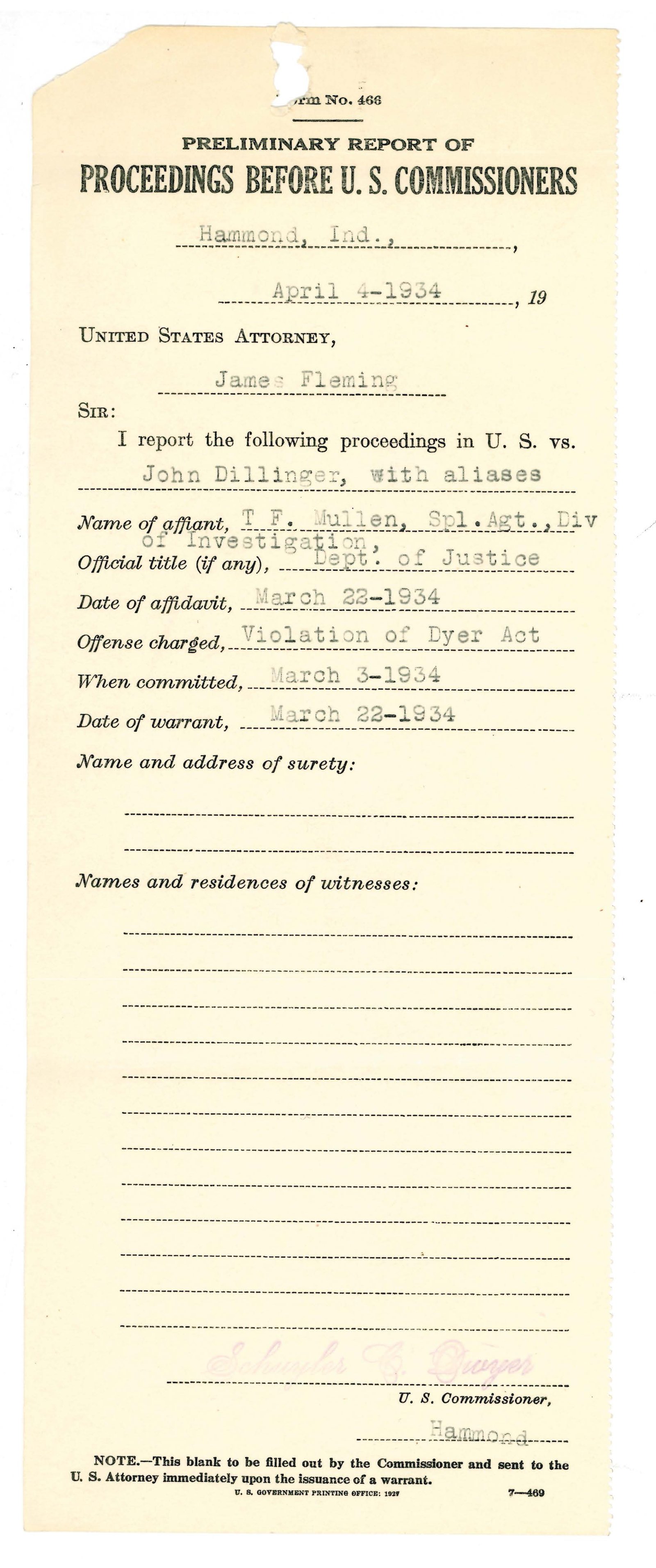 case-fileJohn Herbert Dillinger case file, U.S. Attorney, Northern District of Indiana (National Archives at Chicago)Catalog entry for the U.S. Attorney's file that, per NARA's description, documents Dillinger's 3 March 1934 escape from the Crown Point, Indiana, jail, which NARA says he made with a fake handgun carved from wood. 167 digitized pages.
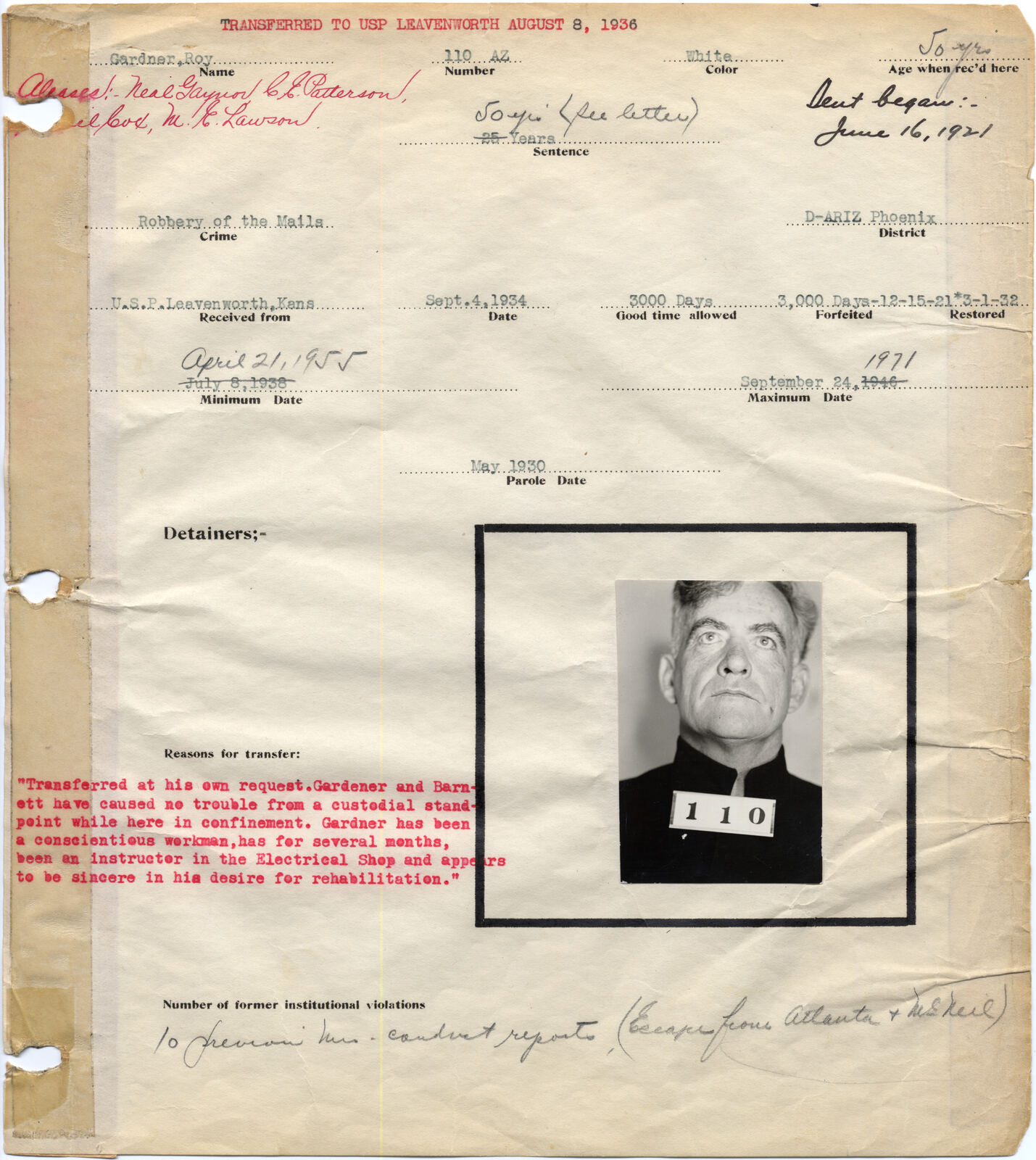 photographAlcatraz warden's notebook page for Roy Gardner, No. 110Bureau of Prisons notebook page with the identification photograph of Roy Gardner, No. 110 AZ, received at Alcatraz from Leavenworth on 4 September 1934 for robbery of the mails (District of Arizona); a red header records his transfer to Leavenworth on 8 August 1936. A copy is stored here.
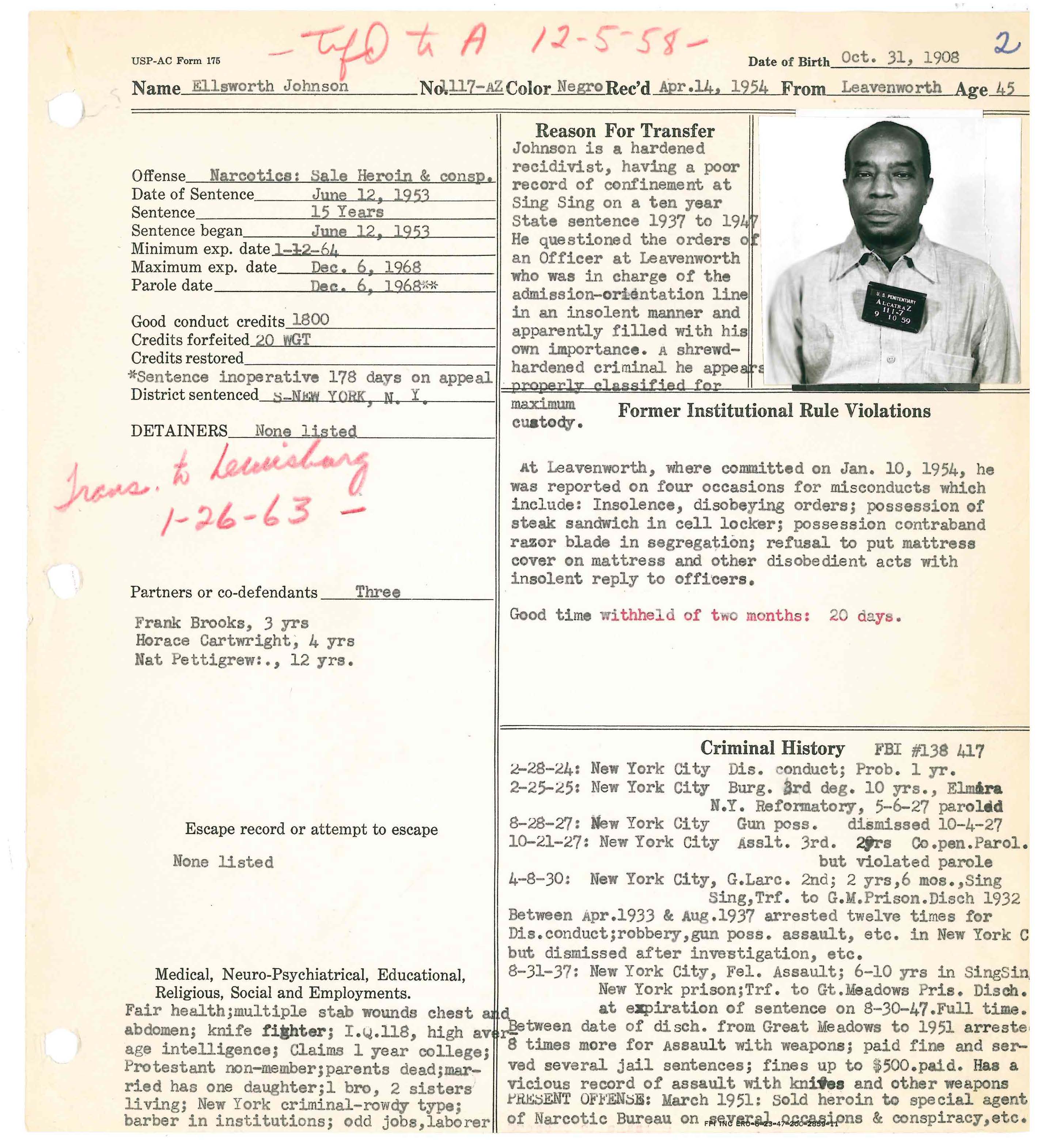 photographAlcatraz warden's notebook page for Ellsworth Raymond "Bumpy" Johnson, No. 1117Bureau of Prisons notebook page with the identification photograph of Ellsworth Johnson, received at Alcatraz from Leavenworth on 14 April 1954 under a 15-year narcotics sentence from the Southern District of New York. A copy is stored here.
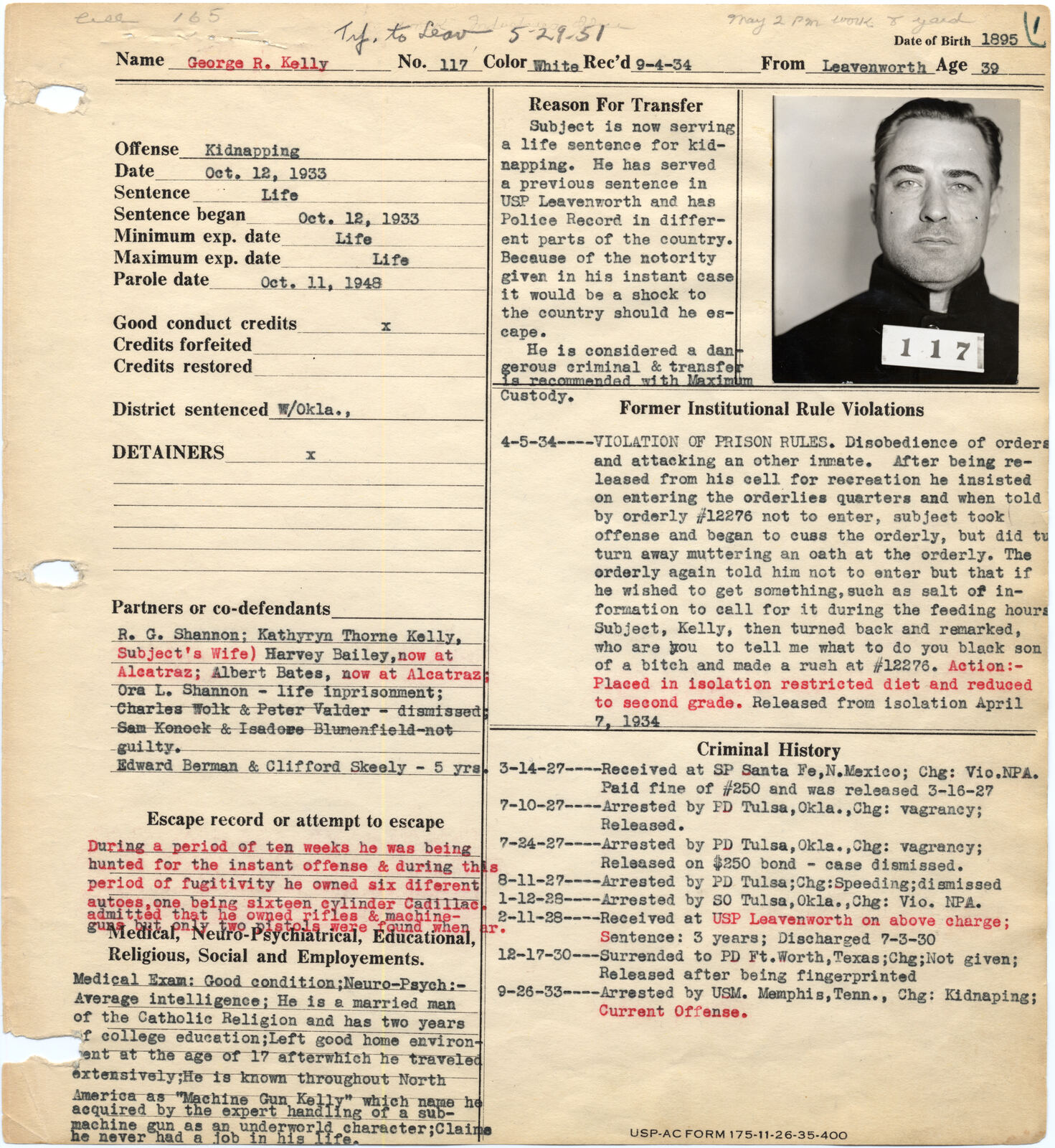 photographAlcatraz warden's notebook page for George R. Kelly, No. 117Bureau of Prisons notebook page with the identification photograph of George R. Kelly, No. 117, received at Alcatraz from Leavenworth on 4 September 1934 under a life sentence for kidnapping from the Western District of Oklahoma. A copy is stored here.
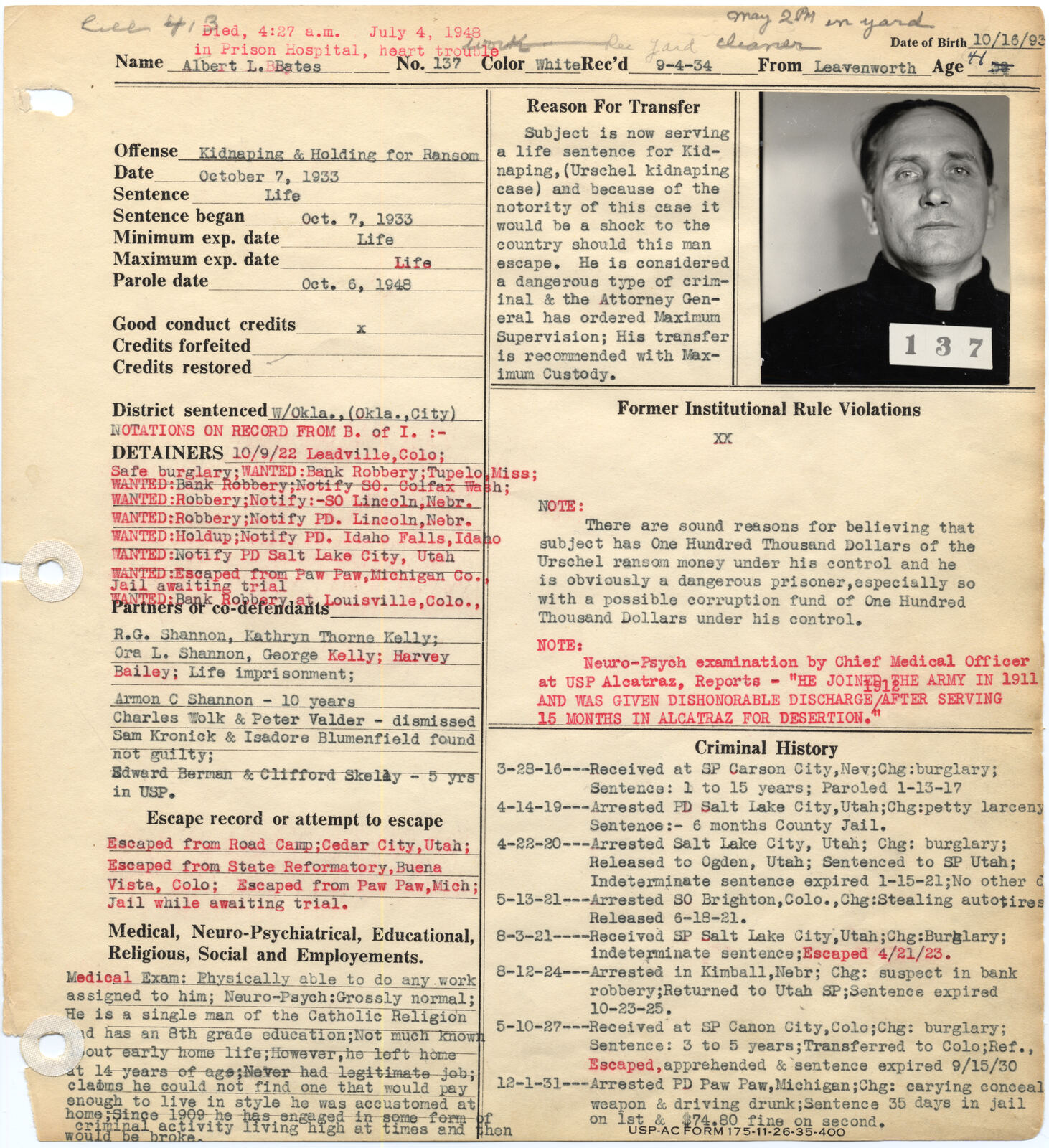 photographAlcatraz warden's notebook page for Albert L. Bates, No. 137Bureau of Prisons notebook page with the identification photograph of Albert L. Bates, No. 137, received at Alcatraz from Leavenworth on 4 September 1934 under a life sentence for kidnapping and holding for ransom; a red header records his death in the prison hospital on 4 July 1948. A copy is stored here.
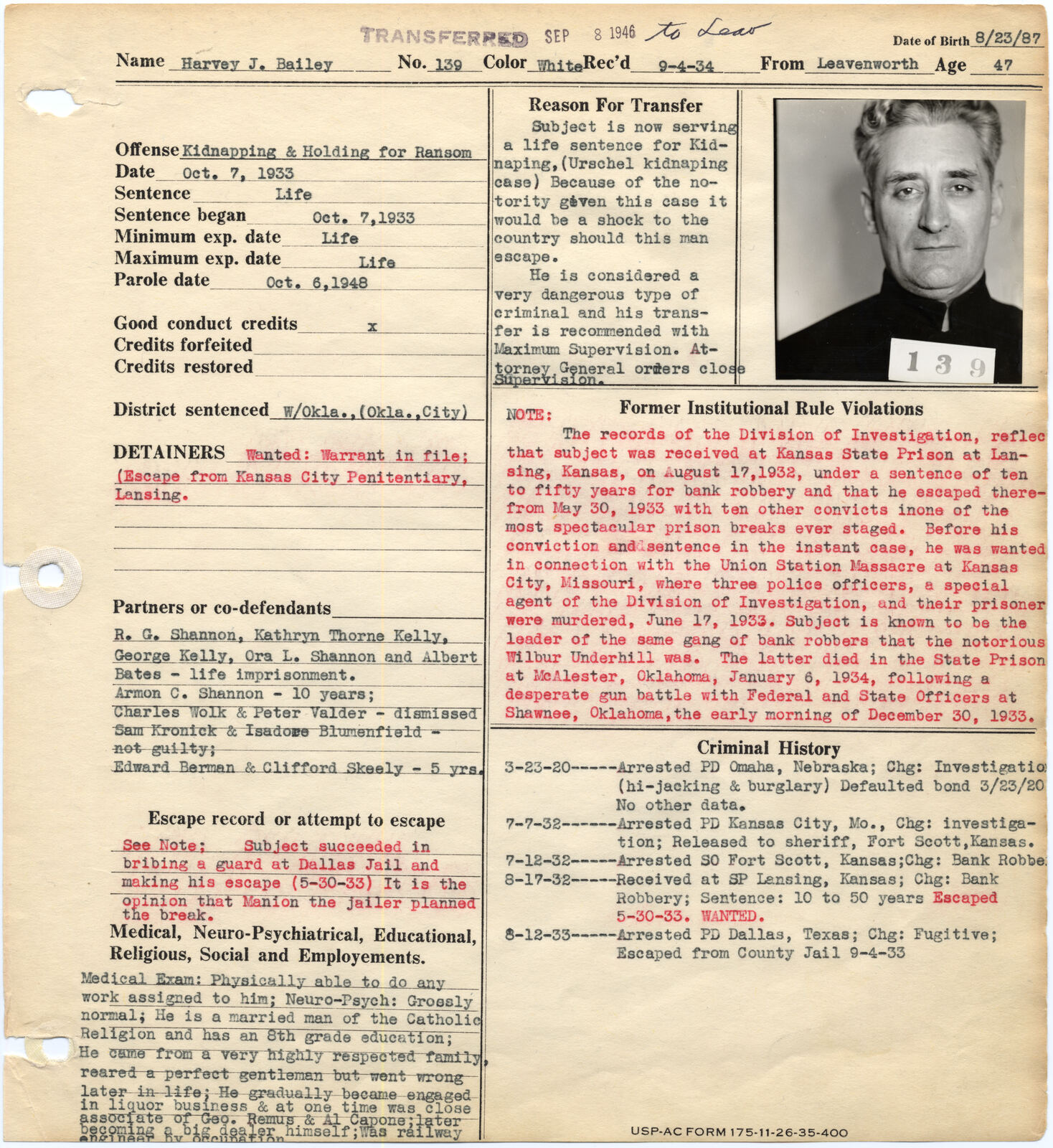 photographAlcatraz warden's notebook page for Harvey J. Bailey, No. 139Bureau of Prisons notebook page with the identification photograph of Harvey J. Bailey, No. 139, received at Alcatraz from Leavenworth on 4 September 1934 under a life sentence for kidnapping and holding for ransom; stamped transferred to Leavenworth on 8 September 1946. A copy is stored here.
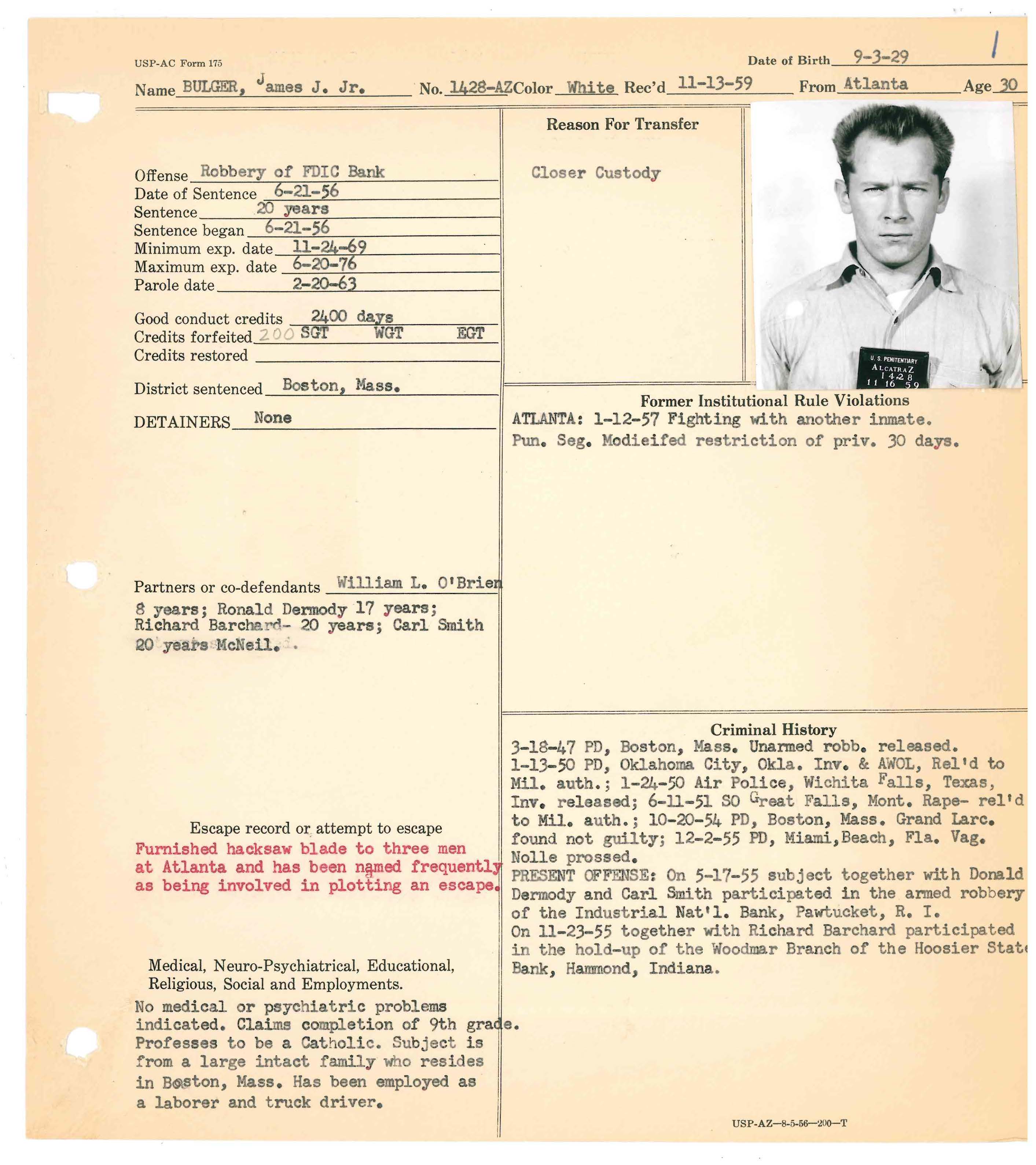 photographAlcatraz warden's notebook page for James J. Bulger, Jr., No. 1428Bureau of Prisons notebook page with the identification photograph of James J. Bulger, Jr., received at Alcatraz from Atlanta on 13 November 1959 under a 20-year sentence for robbery of an FDIC bank. A copy is stored here.
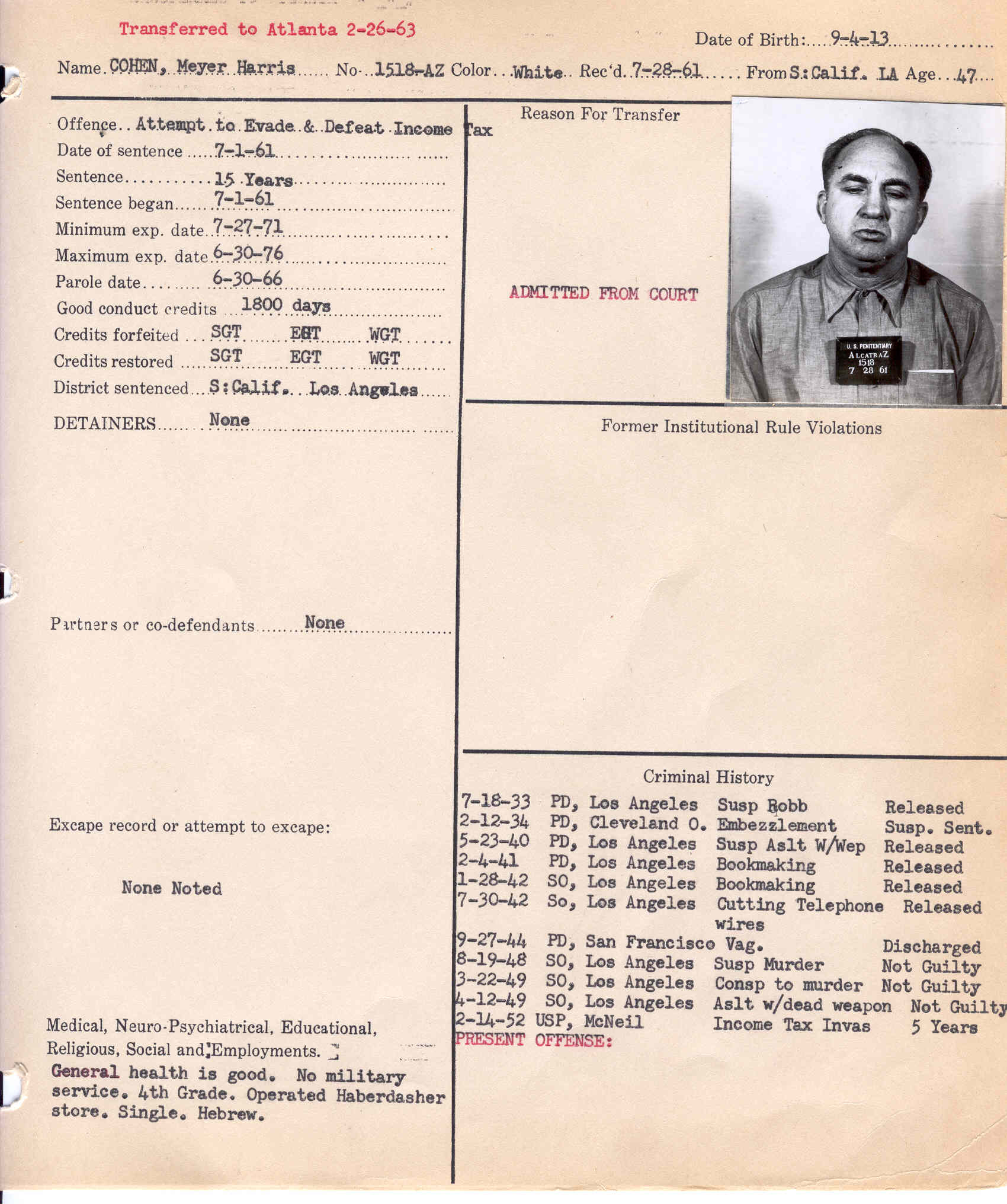 photographAlcatraz warden's notebook page for Meyer Harris "Mickey" Cohen, No. 1518Bureau of Prisons notebook page with the identification photograph of Meyer Harris Cohen, received at Alcatraz on 28 July 1961 under a 15-year income-tax sentence from the Southern District of California. A copy is stored here.
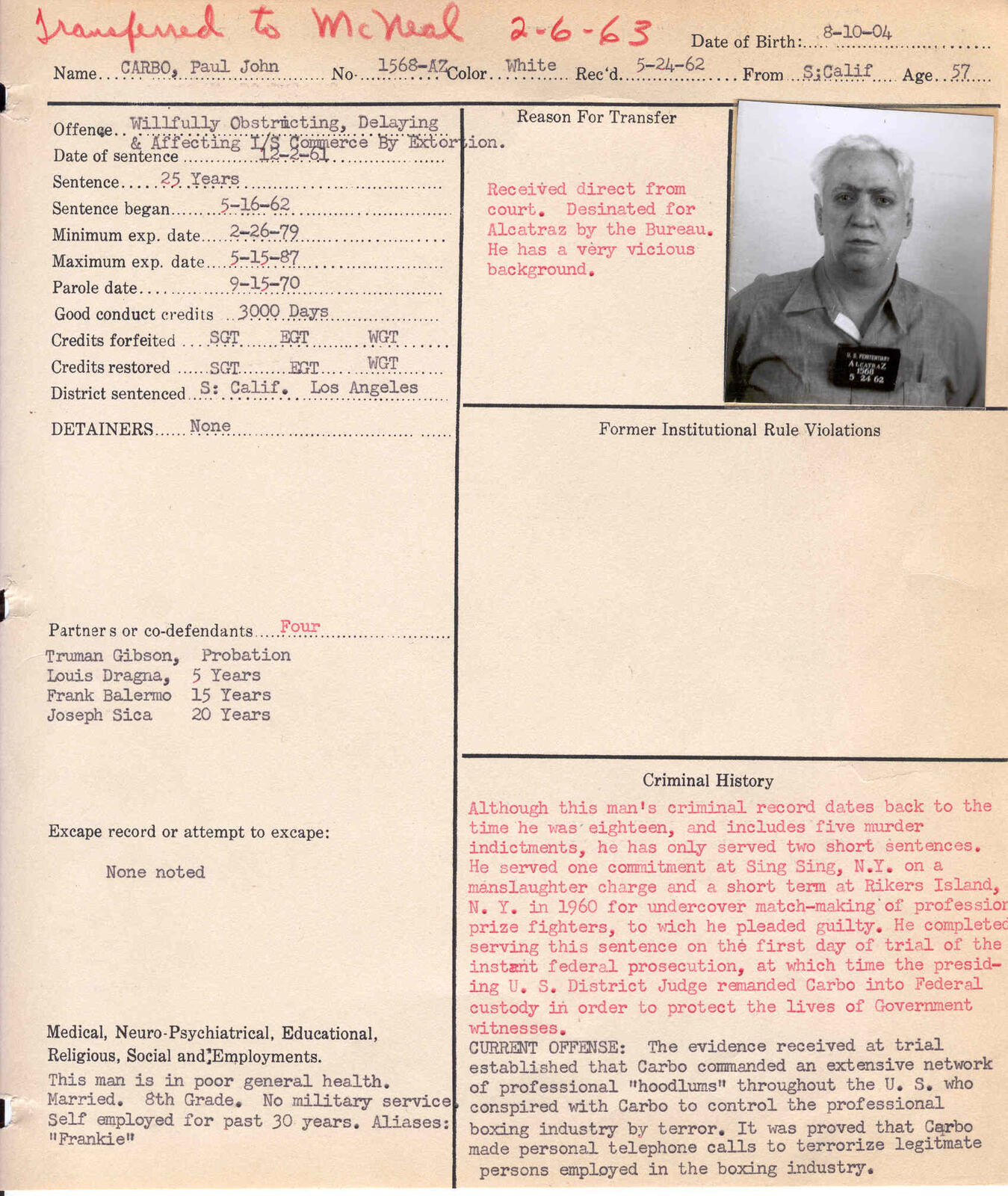 photographAlcatraz warden's notebook page for Paul John Carbo, No. 1568Bureau of Prisons notebook page with the identification photograph of Paul John Carbo, No. 1568-AZ, received at Alcatraz from the Southern District of California on 24 May 1962 under a 25-year sentence for obstructing interstate commerce by extortion; a red header gives a transfer on 2-6-63. A copy is stored here.
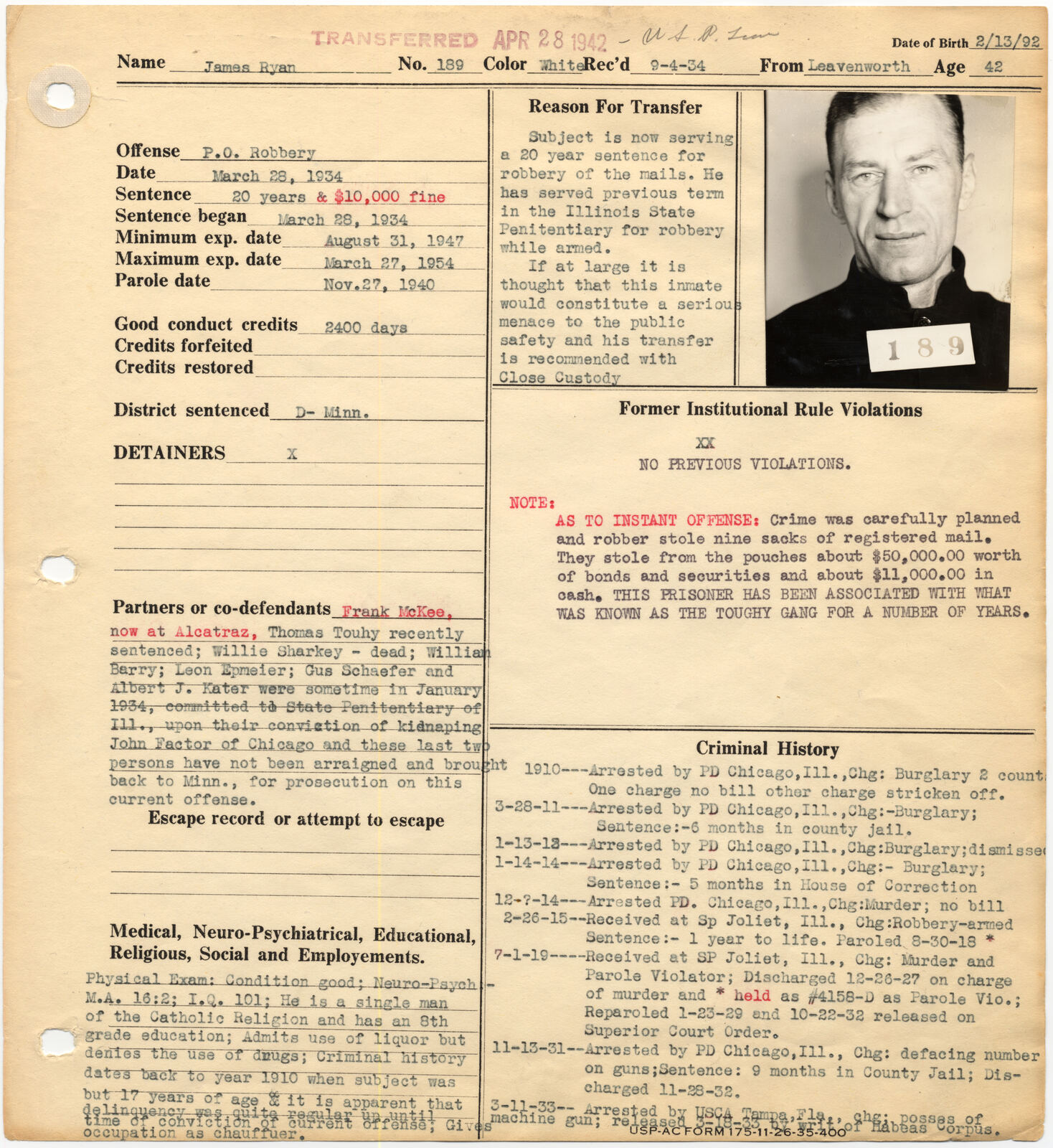 photographAlcatraz warden's notebook page for James Ryan, No. 189Bureau of Prisons notebook page with the identification photograph of James Ryan, No. 189, received at Alcatraz from Leavenworth on 4 September 1934 under a 20-year sentence and $10,000 fine for post-office (mail) robbery (District of Minnesota); stamped transferred to Leavenworth on 28 April 1942. A copy is stored here.
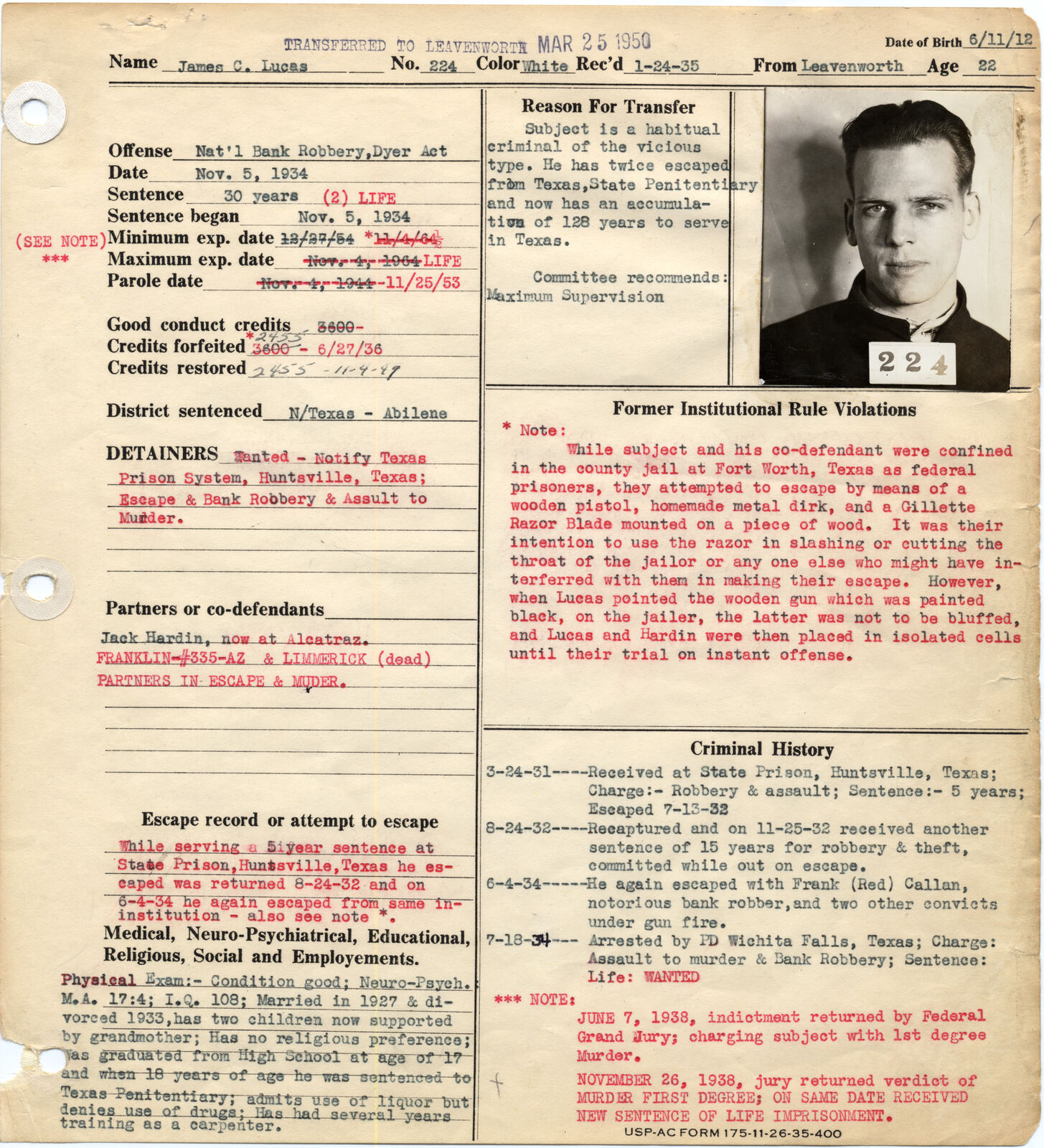 photographAlcatraz warden's notebook page for James C. Lucas, No. 224Bureau of Prisons notebook page with the identification photograph of James C. Lucas, No. 224, received at Alcatraz from Leavenworth on 24 January 1935 under a sentence for national bank robbery and the Dyer Act (Northern District of Texas); a note records a 1938 federal first-degree murder verdict and life sentence. A copy is stored here.
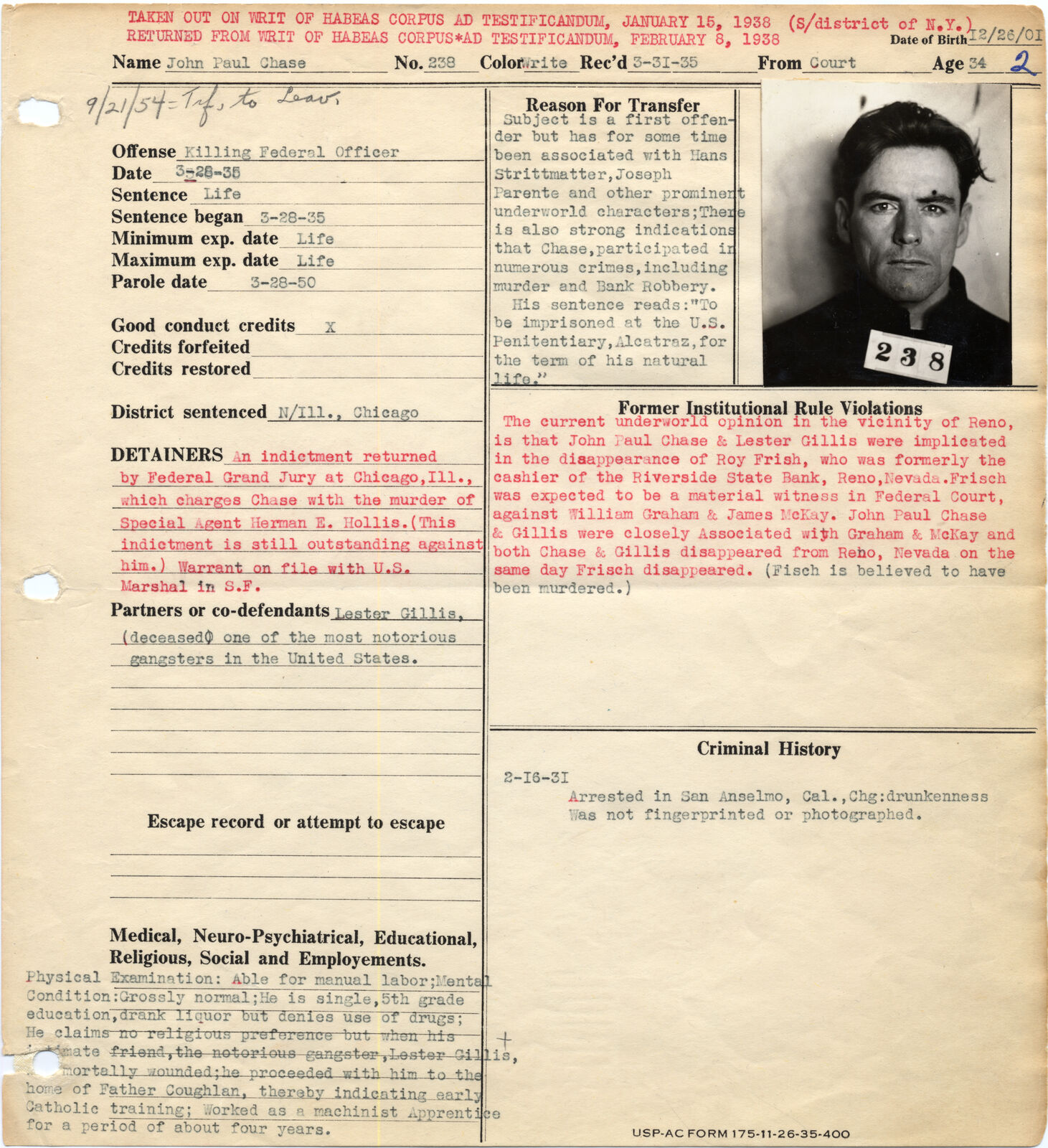 photographAlcatraz warden's notebook page for John Paul Chase, No. 238Bureau of Prisons notebook page with the identification photograph of John Paul Chase, received at Alcatraz on 31 March 1935 by direct commitment from the court at Chicago for "Killing Federal Officer," life sentence. A copy is stored here.
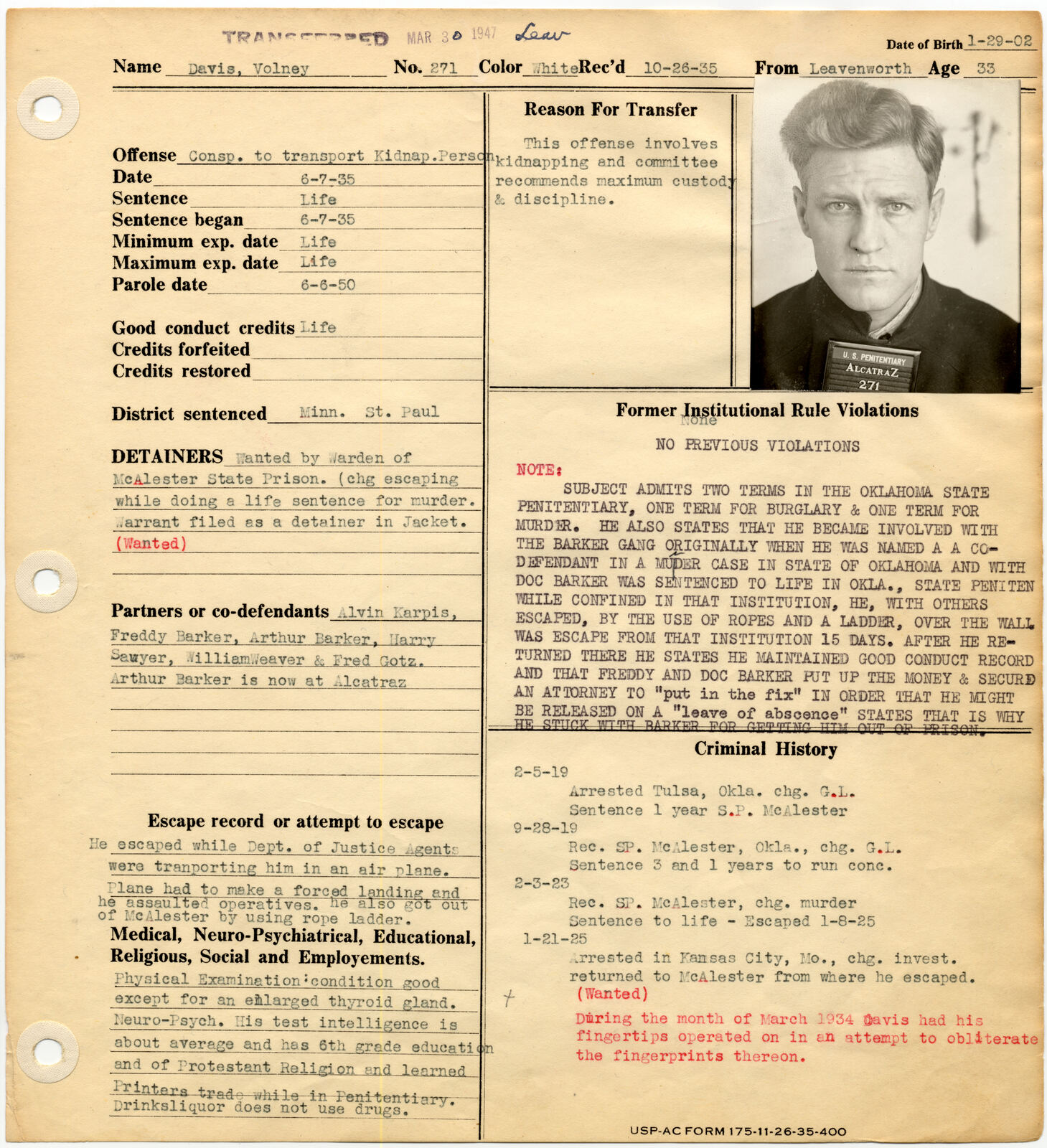 photographAlcatraz warden's notebook page for Volney Davis, No. 271Bureau of Prisons notebook page with the identification photograph of Volney Davis, No. 271, received at Alcatraz from Leavenworth on 26 October 1935 under a life sentence for conspiracy to transport a kidnapped person (Minnesota, St. Paul); stamped transferred to Leavenworth on 30 March 1947. A copy is stored here.
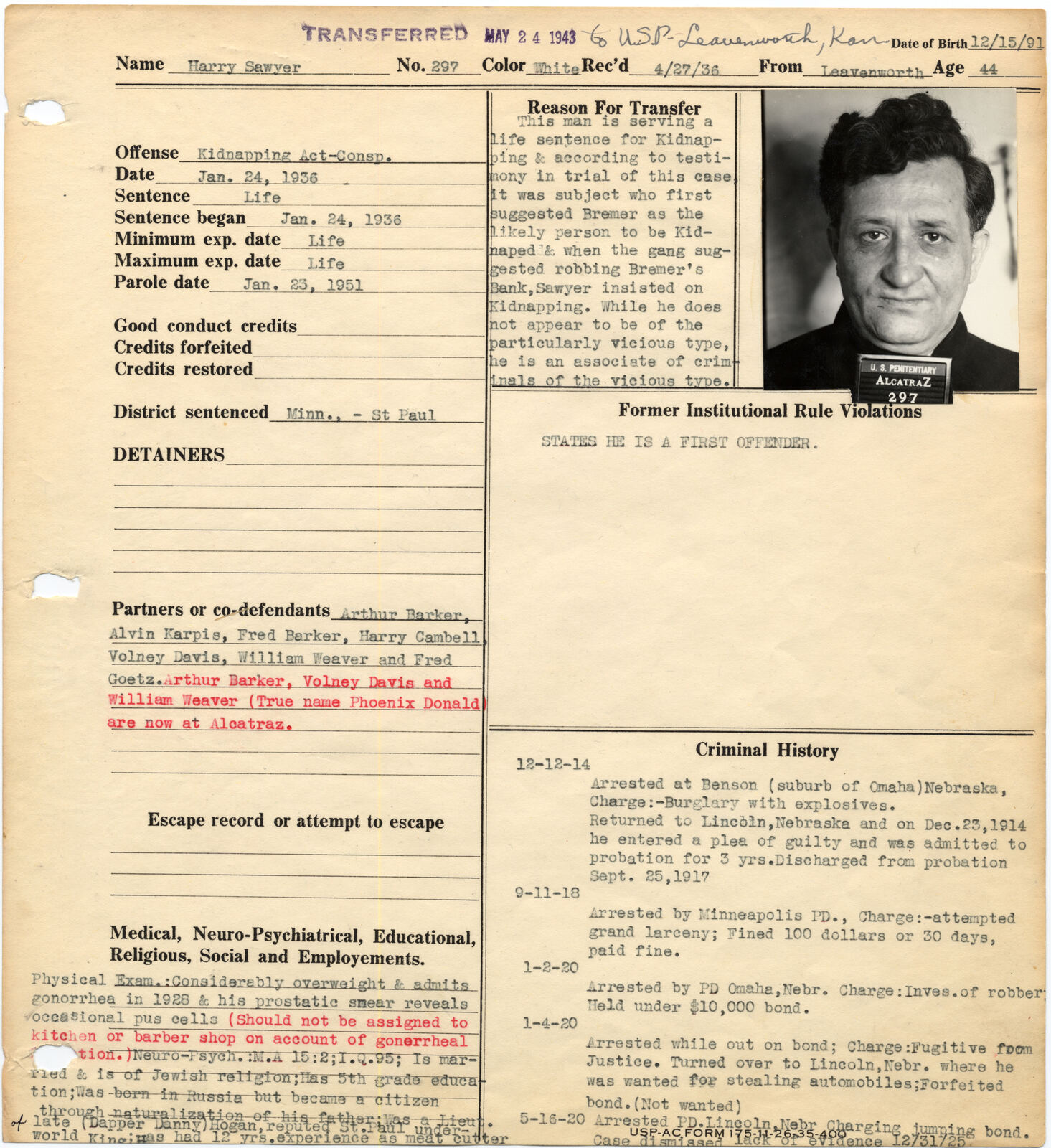 photographAlcatraz warden's notebook page for Harry Sawyer, No. 297Bureau of Prisons notebook page with the identification photograph of Harry Sawyer, No. 297, received at Alcatraz from Leavenworth on 27 April 1936 under a life sentence for conspiracy under the Kidnapping Act (Minnesota, St. Paul); stamped transferred to Leavenworth on 24 May 1943. A copy is stored here.
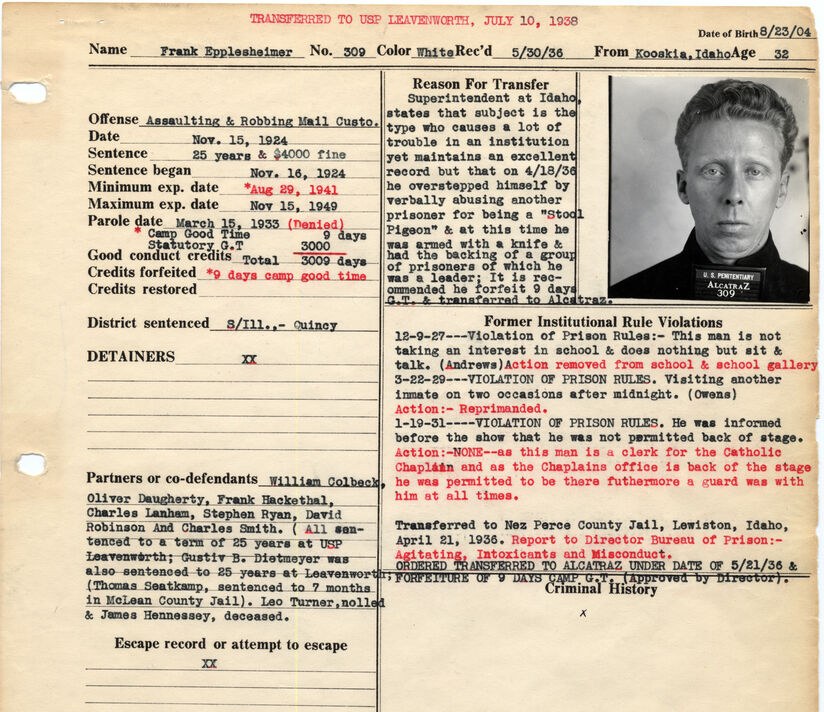 photographAlcatraz warden's notebook page for Frank Epplesheimer, No. 309Bureau of Prisons notebook page for a defendant in the Staunton mail-robbery case, received at Alcatraz on 30 May 1936 and transferred back to Leavenworth on 10 July 1938. Its codefendants box names the other men convicted with him and gives the place of sentence as Quincy, Illinois. A copy is stored here.
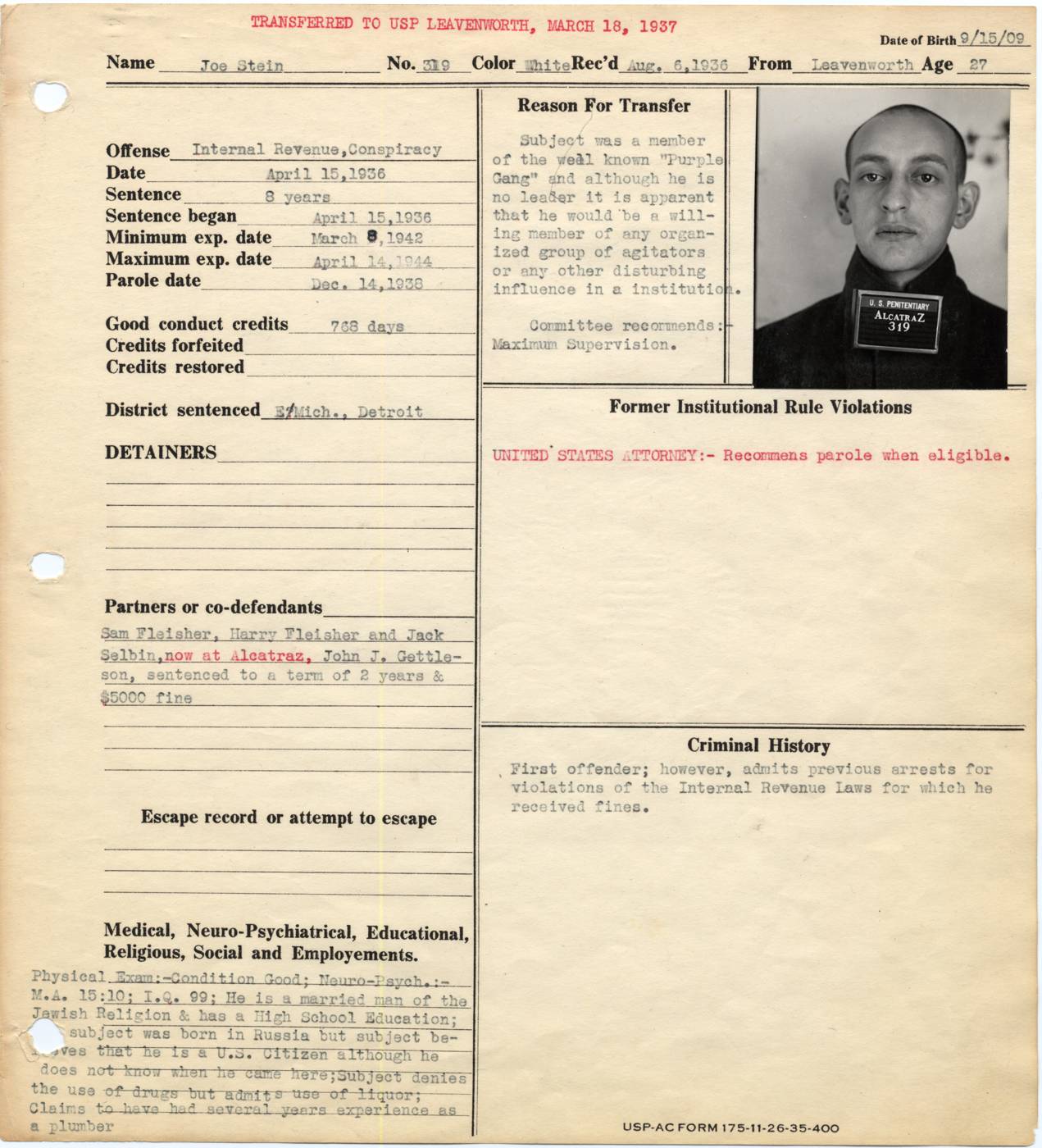 photographAlcatraz warden's notebook page for Joe Stein, No. 319Bureau of Prisons notebook page with the identification photograph of Joe Stein, No. 319, received at Alcatraz on 6 August 1936 on the Fleisher internal revenue conspiracy case from Detroit; transferred to Leavenworth 18 March 1937. A copy is stored here.
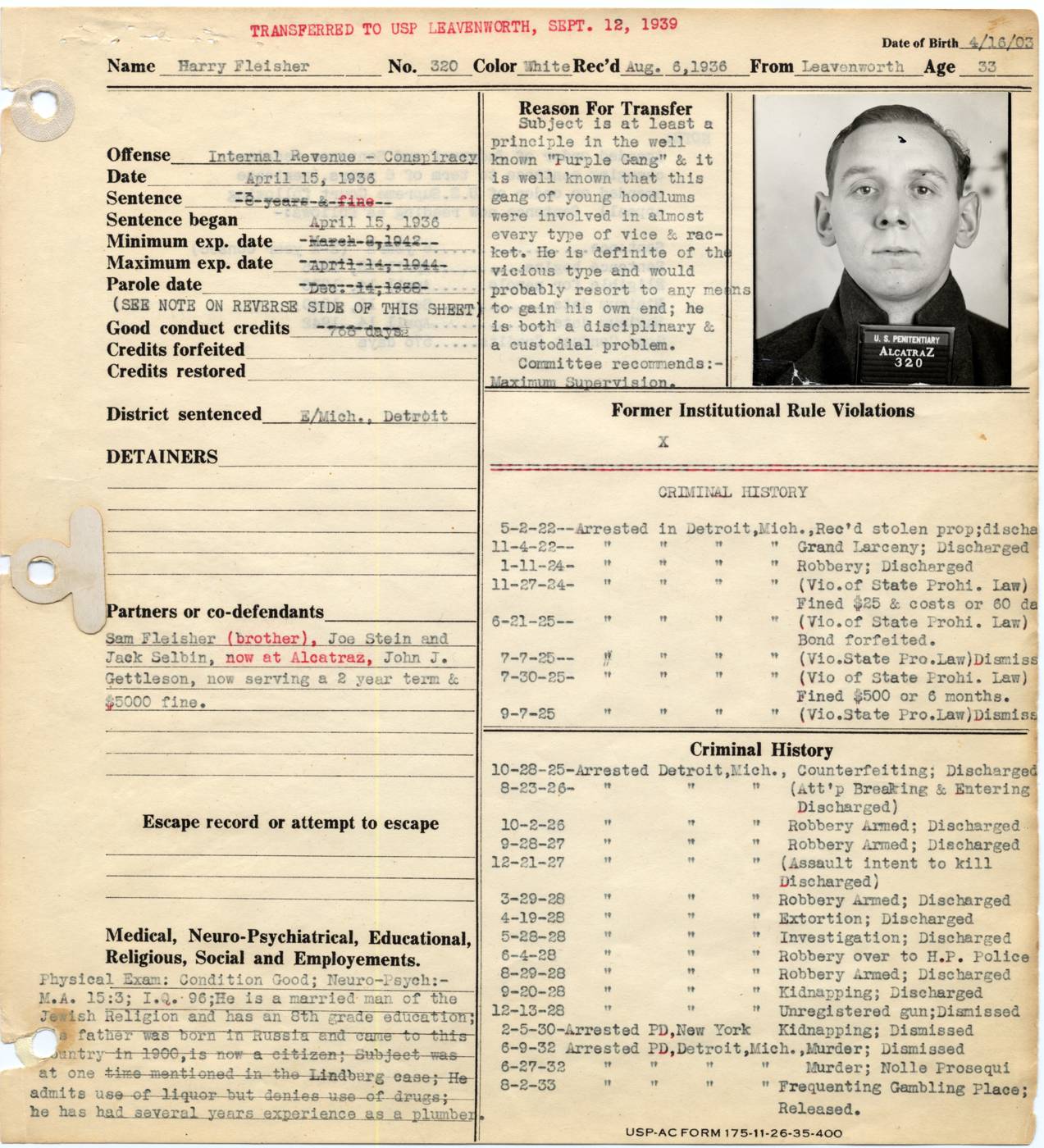 photographAlcatraz warden's notebook page for Harry Fleisher, No. 320Bureau of Prisons notebook page with the identification photograph of Harry Fleisher, No. 320, received at Alcatraz from Leavenworth on 6 August 1936 on an internal revenue conspiracy conviction from Detroit; co-defendants Sam Fleisher, Joe Stein and Jack Selbin. A copy is stored here.
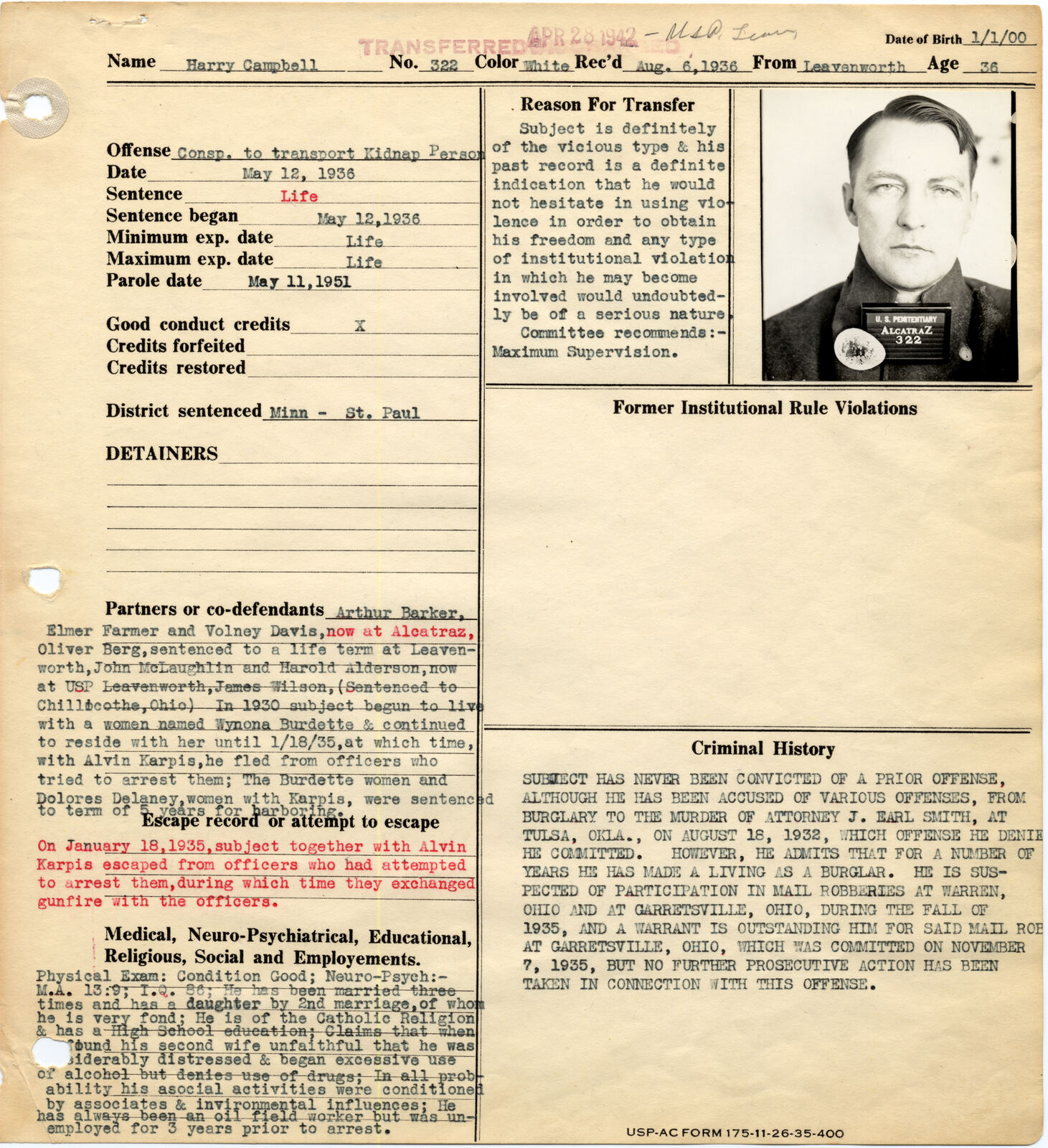 photographAlcatraz warden's notebook page for Harry Campbell, No. 322Bureau of Prisons notebook page with the identification photograph of Harry Campbell, No. 322, received at Alcatraz from Leavenworth on 6 August 1936 under a life sentence for conspiracy to transport a kidnapped person (Minnesota, St. Paul); stamped transferred to Leavenworth on 28 April 1942. A copy is stored here.
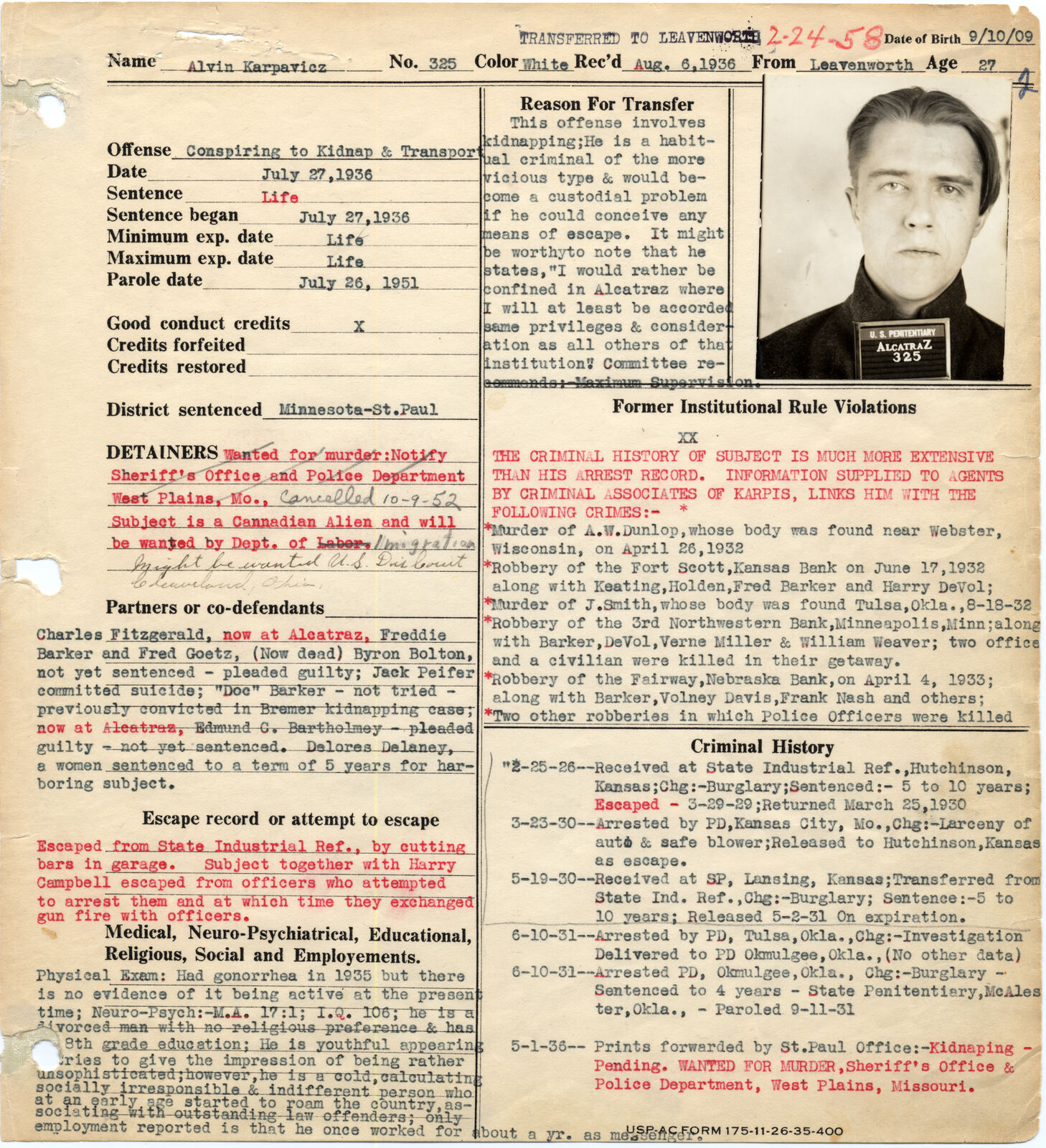 photographAlcatraz warden's notebook page for Alvin Karpavicz, No. 325Bureau of Prisons notebook page with the identification photograph of Alvin Karpavicz, No. 325, received at Alcatraz from Leavenworth on 6 August 1936 under a life sentence for conspiring to kidnap and transport (Minnesota, St. Paul); stamped transferred to Leavenworth on 2-24-58. A copy is stored here.
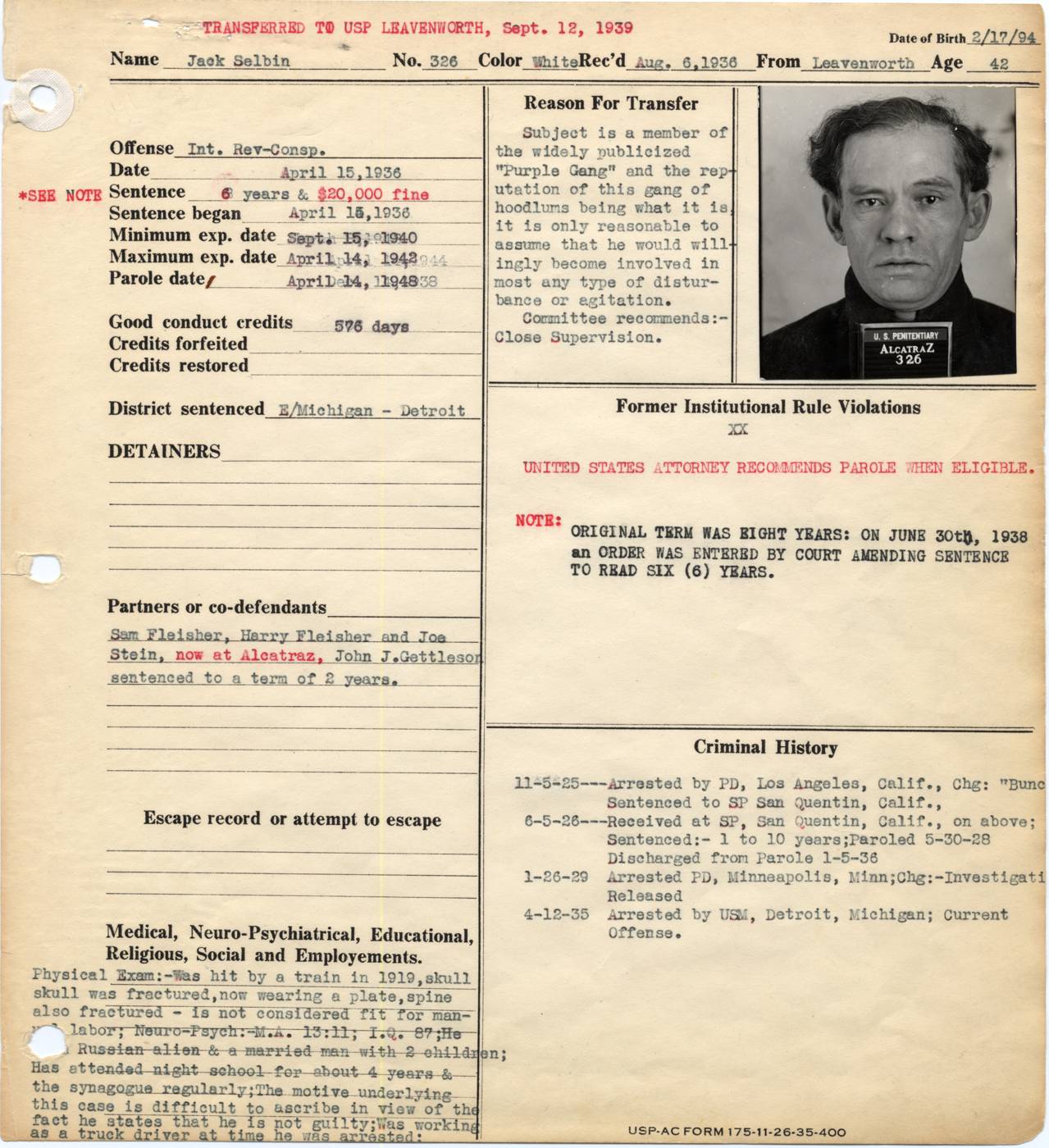 photographAlcatraz warden's notebook page for Jack Selbin, No. 326Bureau of Prisons notebook page with the identification photograph of Jack Selbin, No. 326, received at Alcatraz on 6 August 1936 on the Fleisher internal revenue conspiracy case from Detroit; his eight-year term was amended by the court to six years in June 1938. A copy is stored here.
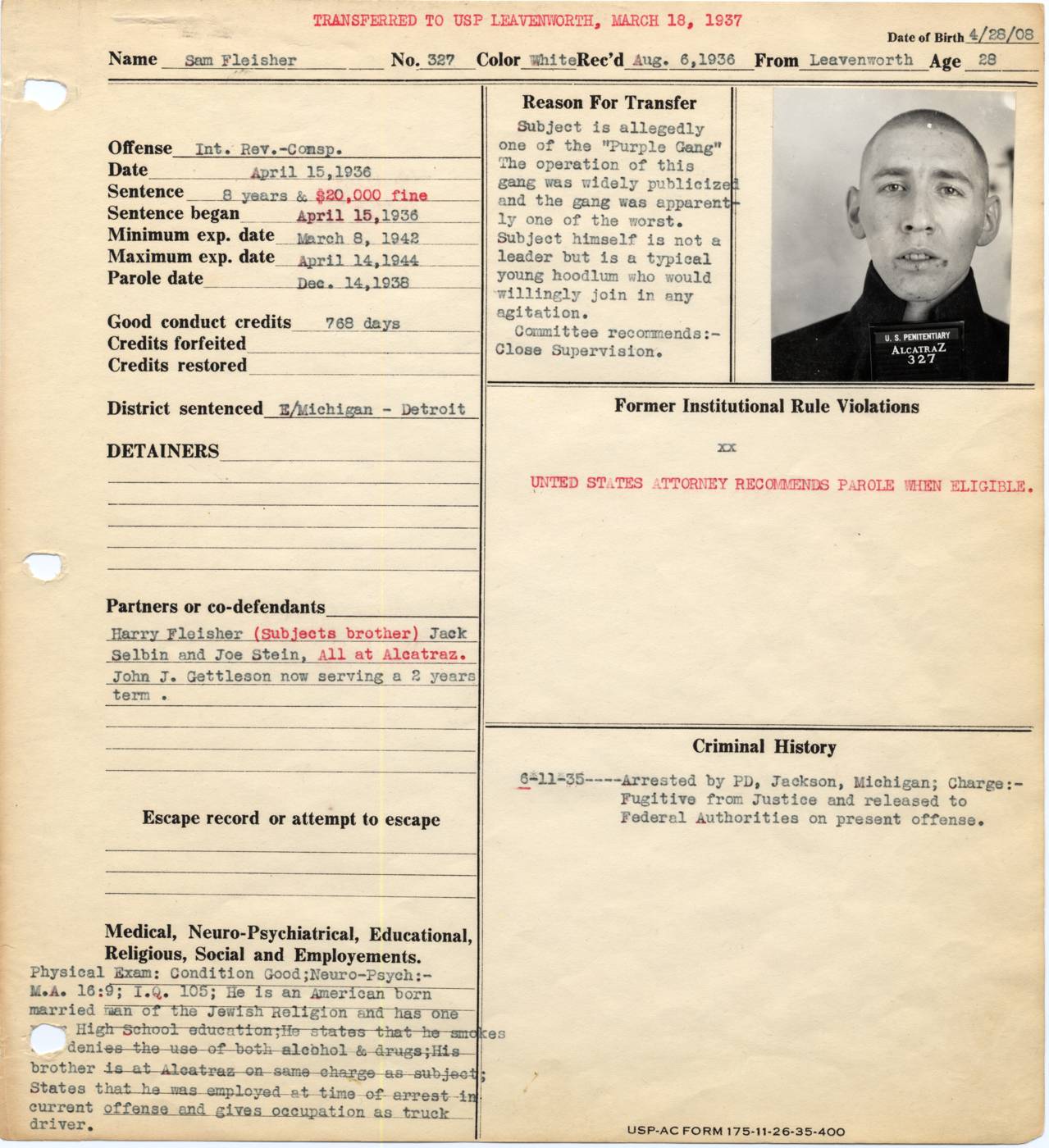 photographAlcatraz warden's notebook page for Sam Fleisher, No. 327Bureau of Prisons notebook page with the identification photograph of Sam Fleisher, No. 327, received at Alcatraz on 6 August 1936 on the same Detroit internal revenue conspiracy case as his brother Harry; transferred to Leavenworth 18 March 1937. A copy is stored here.
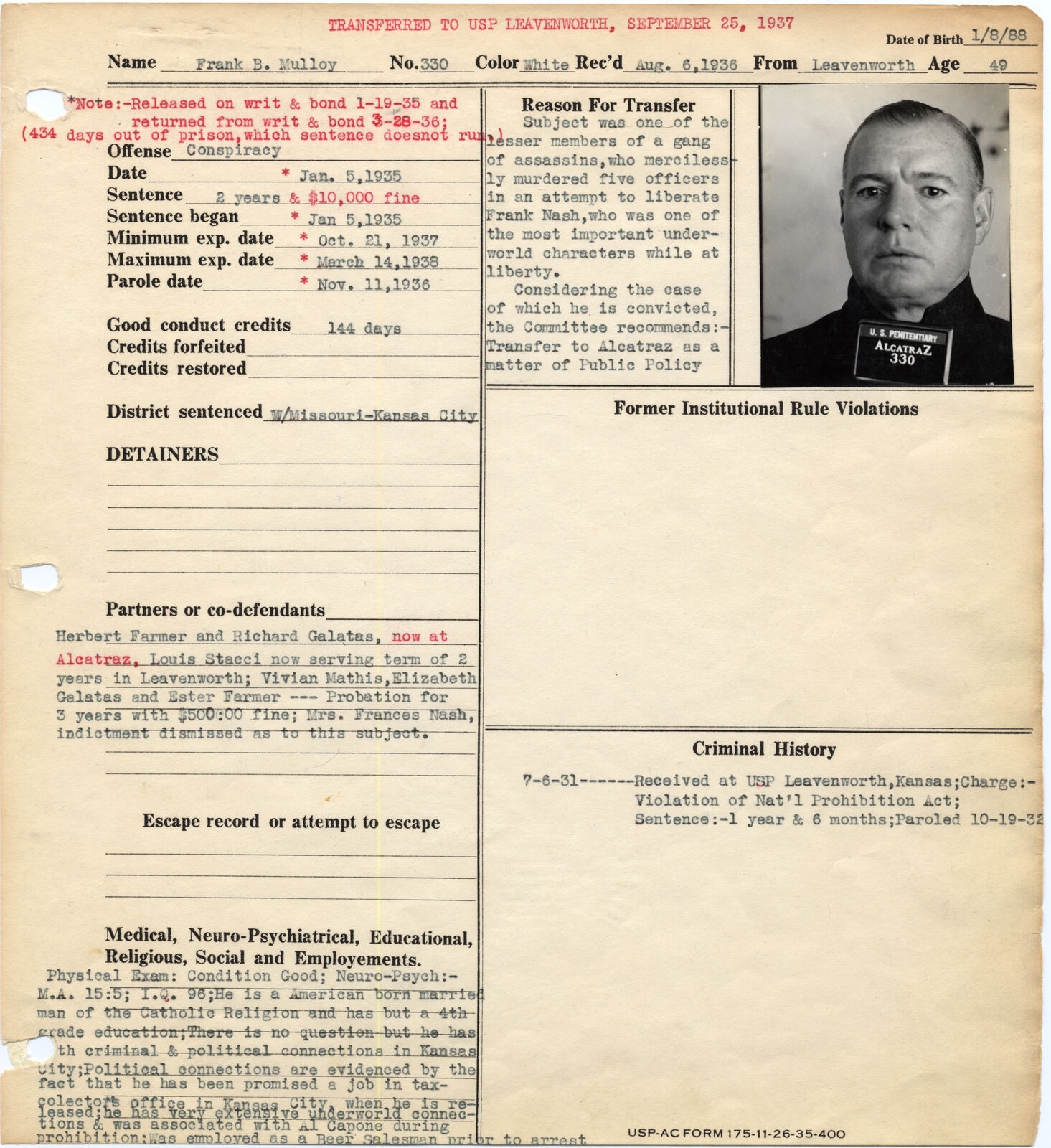 photographAlcatraz warden's notebook page for Frank B. Mulloy, No. 330Bureau of Prisons notebook page with the identification photograph of Frank B. Mulloy, No. 330, received at Alcatraz from Leavenworth on 6 August 1936 under a two-year sentence and $10,000 fine for conspiracy (Western District of Missouri, Kansas City); a red header records transfer to Leavenworth on 25 September 1937. A copy is stored here.
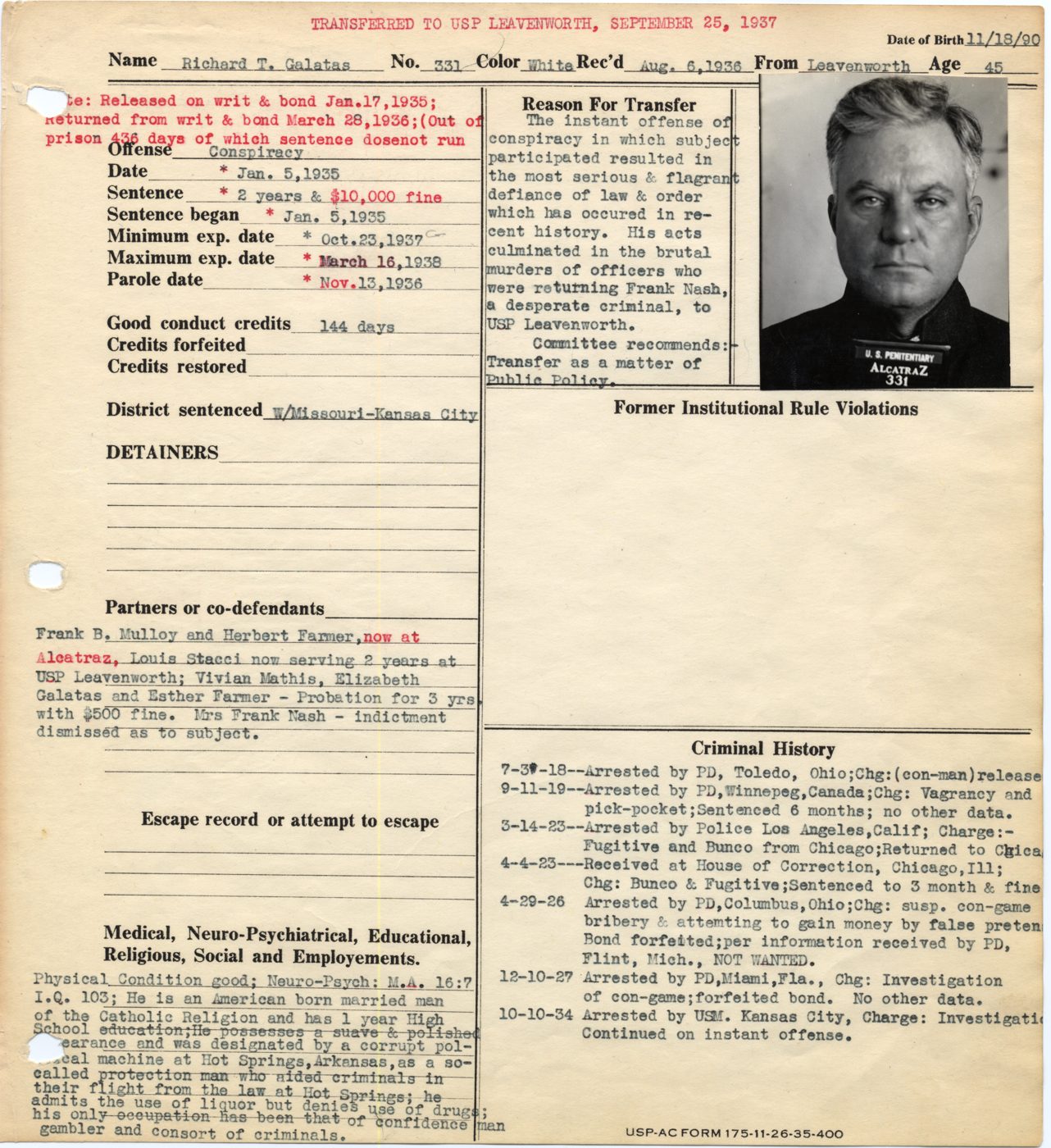 case-fileAlcatraz Warden's Notebook page: Richard Tallman Galatas, No. 331A Bureau of Prisons notebook page for Alcatraz inmate 331: conspiracy, two years and a $10,000 fine from W.D. Missouri, received 6 August 1936 from Leavenworth and transferred back 25 September 1937, with a 'Reason For Transfer' that refers to the murder of officers returning Frank Nash.
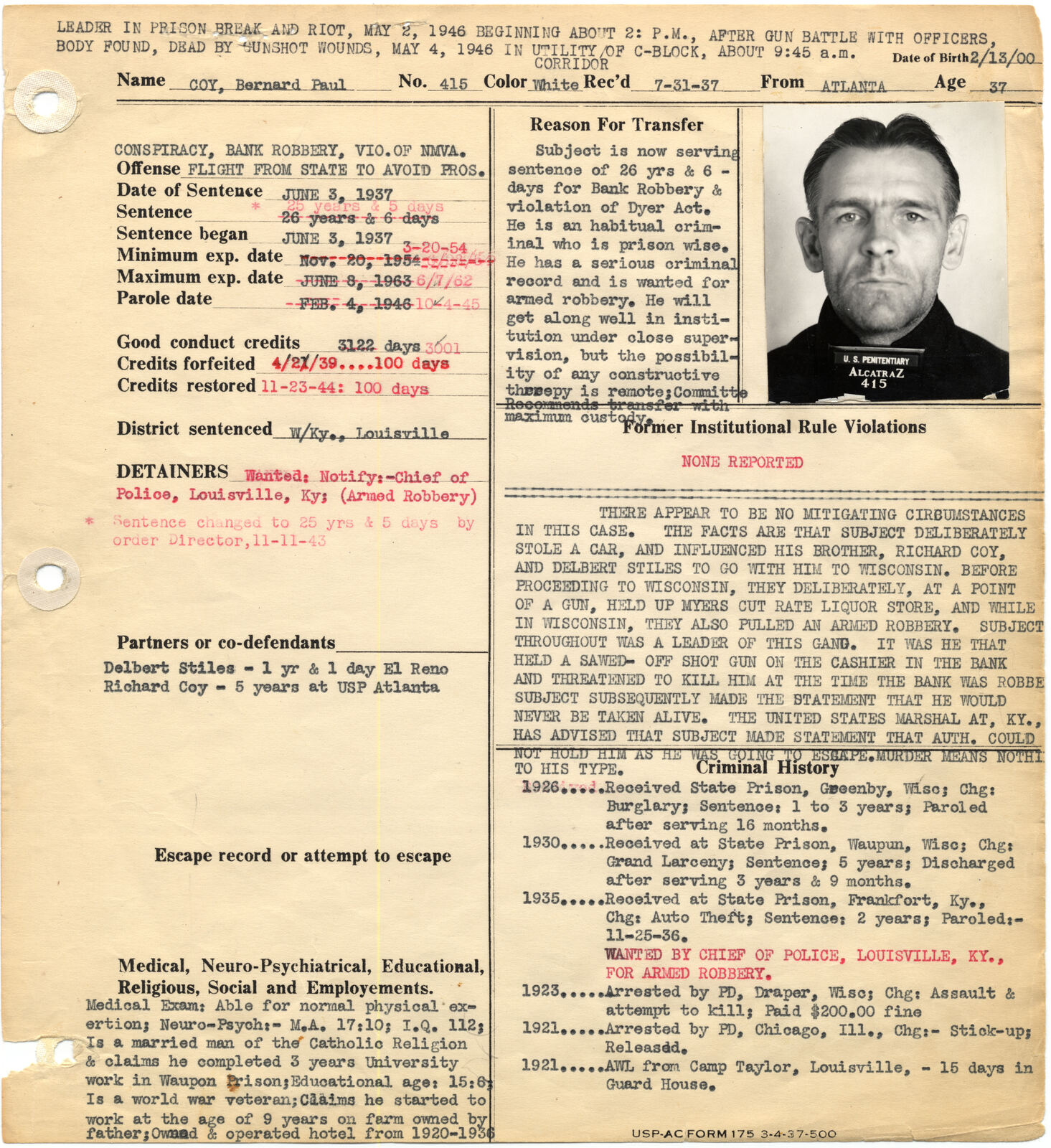 photographAlcatraz warden's notebook page for Bernard Paul Coy, No. 415Bureau of Prisons notebook page with the identification photograph of Bernard Paul Coy, No. 415, received at Alcatraz from Atlanta on 31 July 1937 under a sentence for conspiracy, bank robbery and related counts (Western District of Kentucky); a typed header records the 2 to 4 May 1946 prison break and that his body was found on 4 May. A copy is stored here.
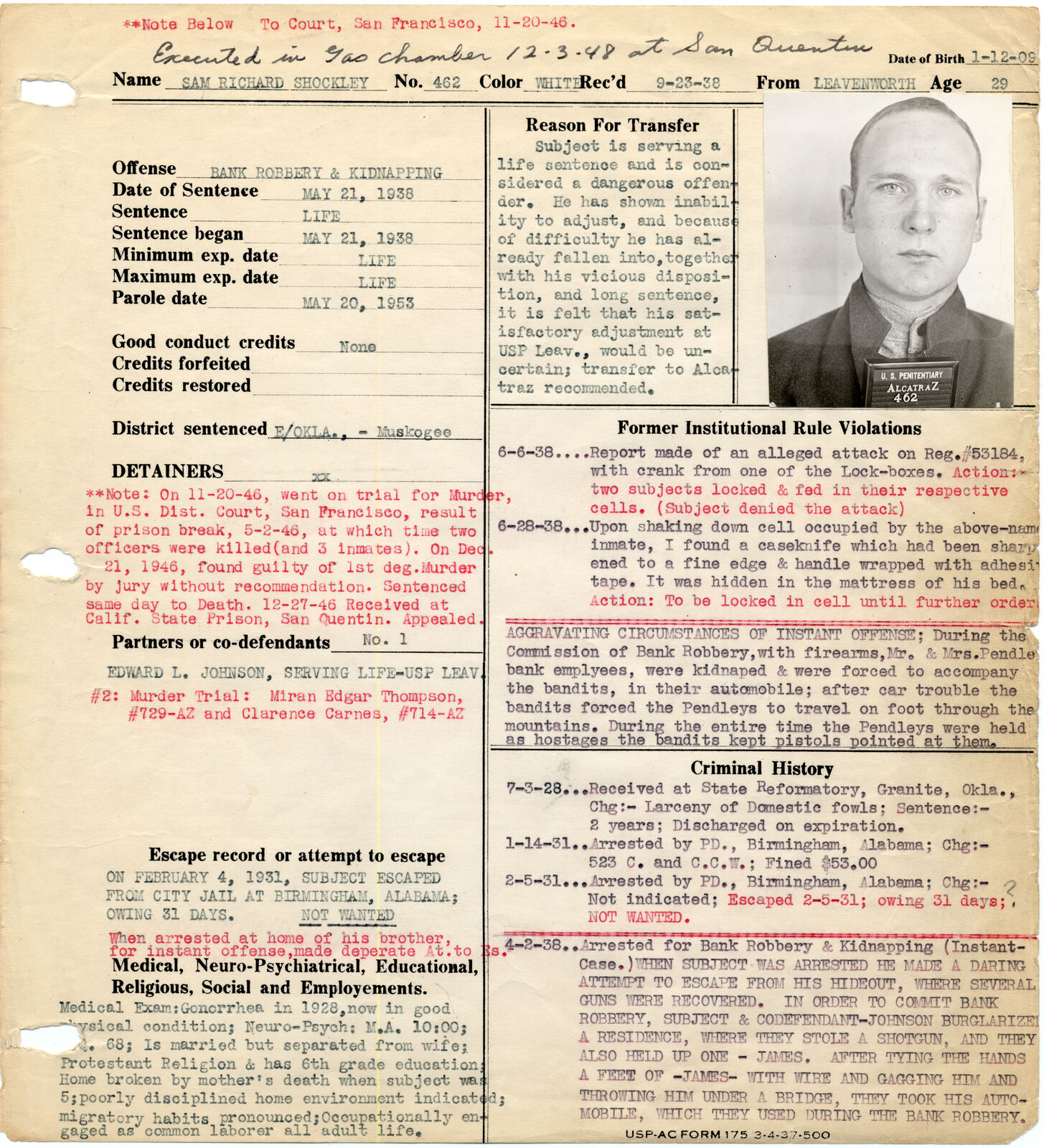 photographAlcatraz warden's notebook page for Sam Richard Shockley, No. 462Bureau of Prisons notebook page with the identification photograph of Sam Richard Shockley, No. 462, received at Alcatraz from Leavenworth on 23 September 1938 under a life sentence for bank robbery and kidnapping (Eastern District of Oklahoma); a handwritten header records execution in the San Quentin gas chamber on 12-3-48. A copy is stored here.
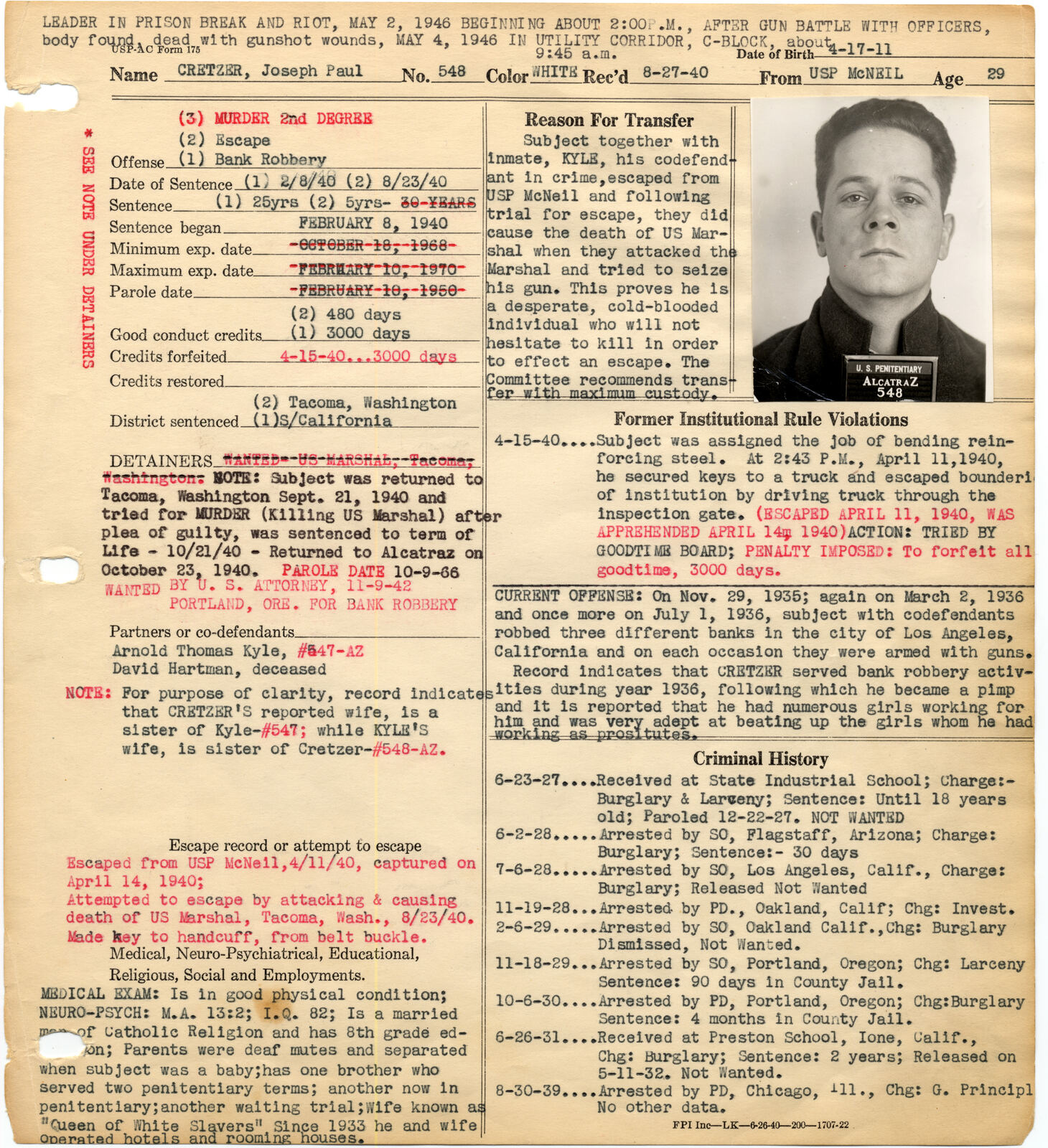 photographAlcatraz warden's notebook page for Joseph Paul Cretzer, No. 548Bureau of Prisons notebook page with the identification photograph of Joseph Paul Cretzer, No. 548, received at Alcatraz from USP McNeil on 27 August 1940 under sentences for bank robbery, escape and second-degree murder; a typed header records the 2 to 4 May 1946 prison break and that his body was found on 4 May. A copy is stored here.
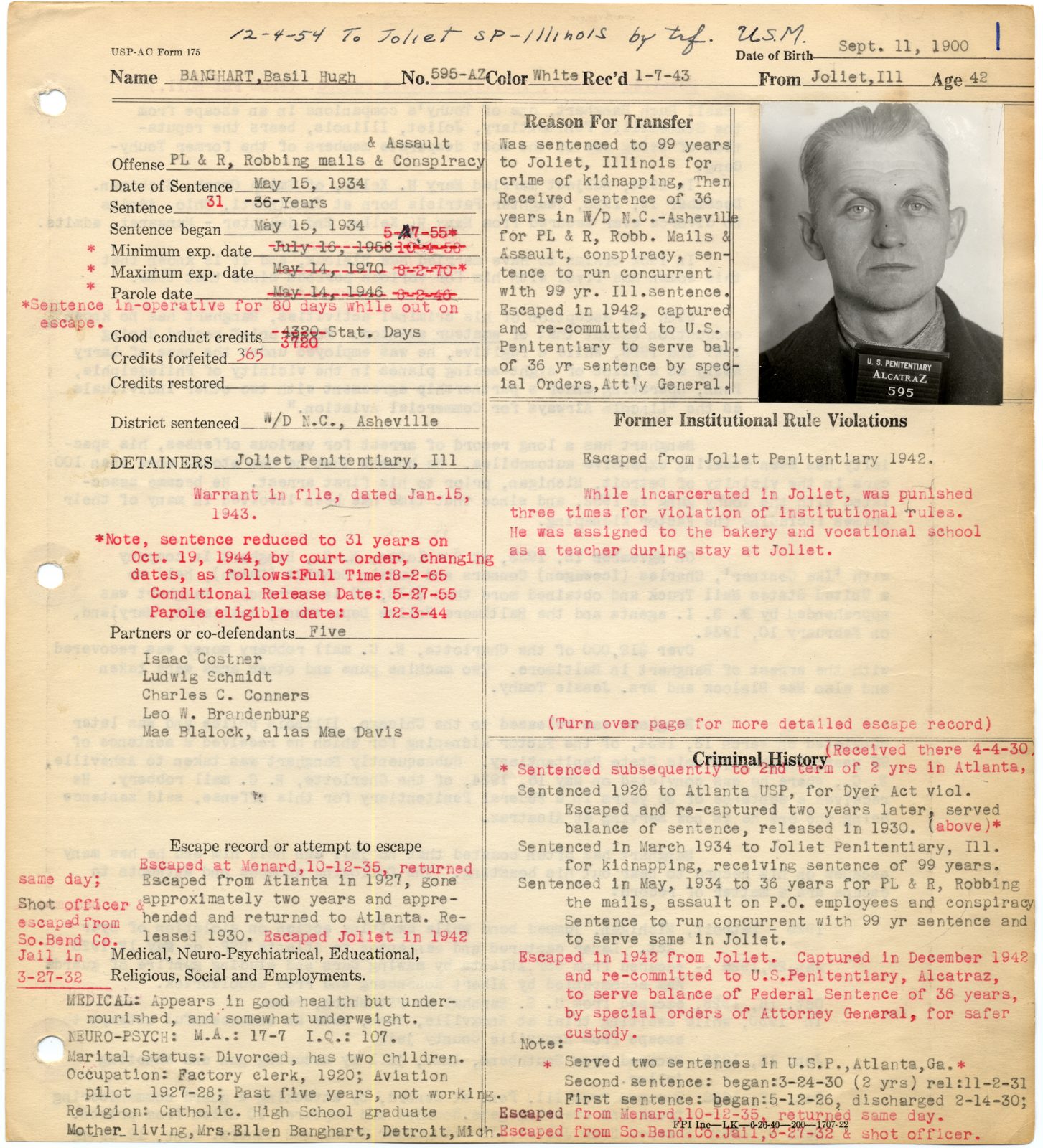 photographAlcatraz warden's notebook page for Basil Hugh Banghart, No. 595Bureau of Prisons notebook page with the identification photograph of Basil Hugh Banghart, received at Alcatraz from Joliet, Illinois, on 7 January 1943. A copy is stored here.
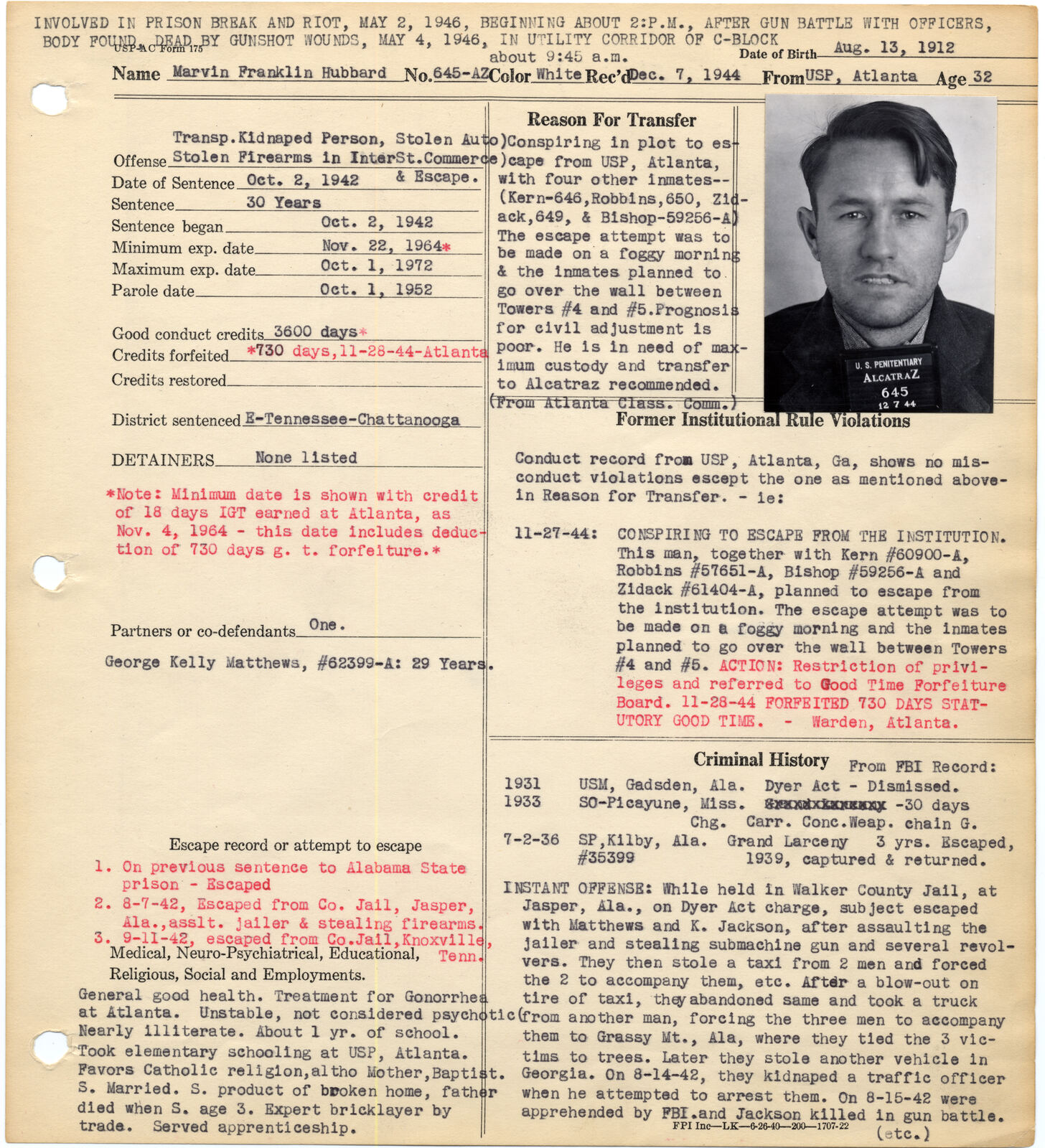 photographAlcatraz warden's notebook page for Marvin Franklin Hubbard, No. 645Bureau of Prisons notebook page with the identification photograph of Marvin Franklin Hubbard, No. 645-AZ, received at Alcatraz from USP Atlanta on 7 December 1944 under a 30-year sentence (Eastern District of Tennessee, Chattanooga); a typed header records the 2 to 4 May 1946 prison break and that his body was found on 4 May. A copy is stored here.
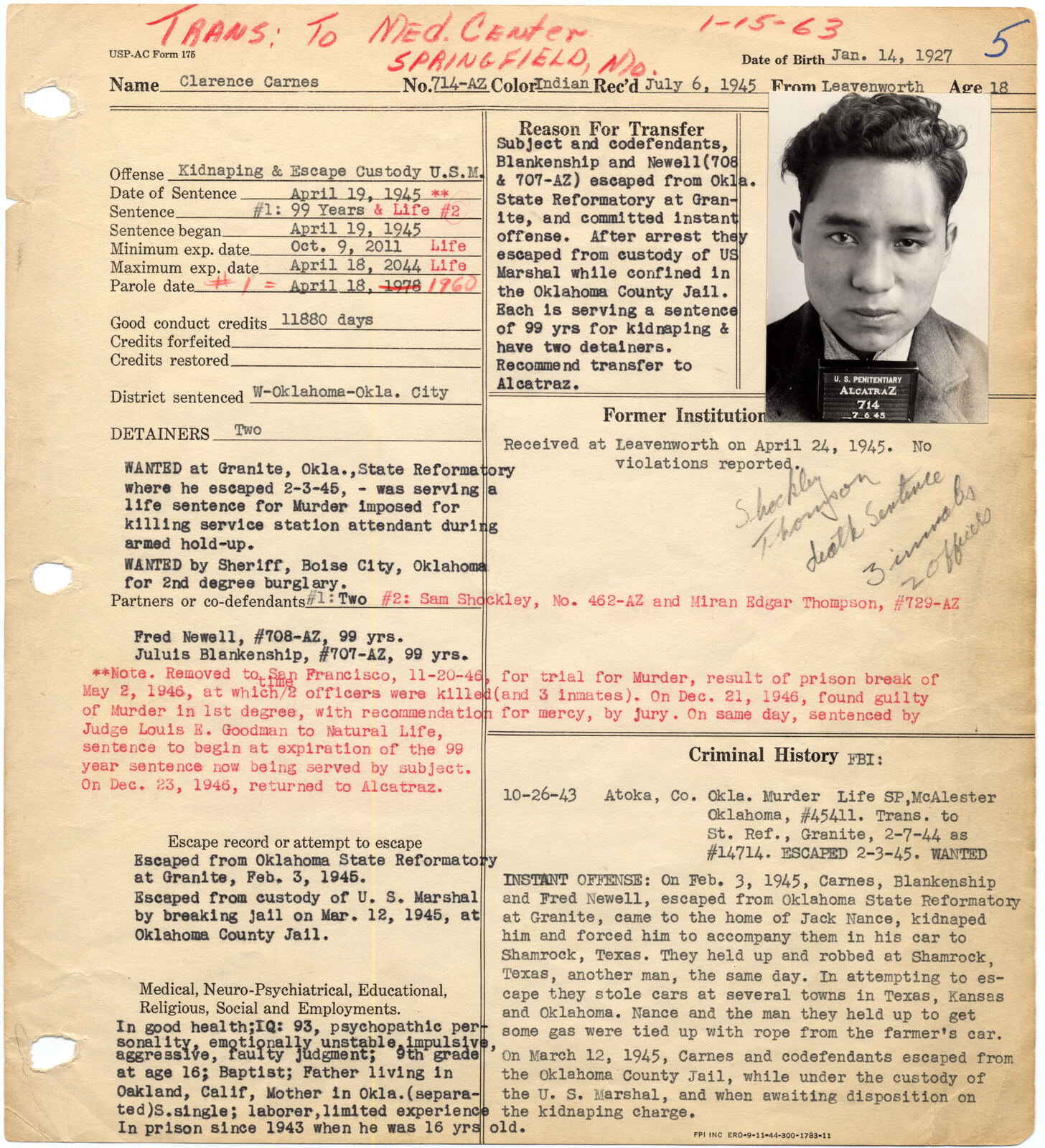 photographAlcatraz warden's notebook page for Clarence Carnes, No. 714Bureau of Prisons notebook page with the identification photograph of Clarence Carnes, No. 714-AZ, received at Alcatraz from Leavenworth on 6 July 1945 under sentences for kidnapping and escape from the custody of a U.S. marshal (Western District of Oklahoma); a red header gives a transfer to the Medical Center at Springfield, Missouri, on 1-15-63. A copy is stored here.
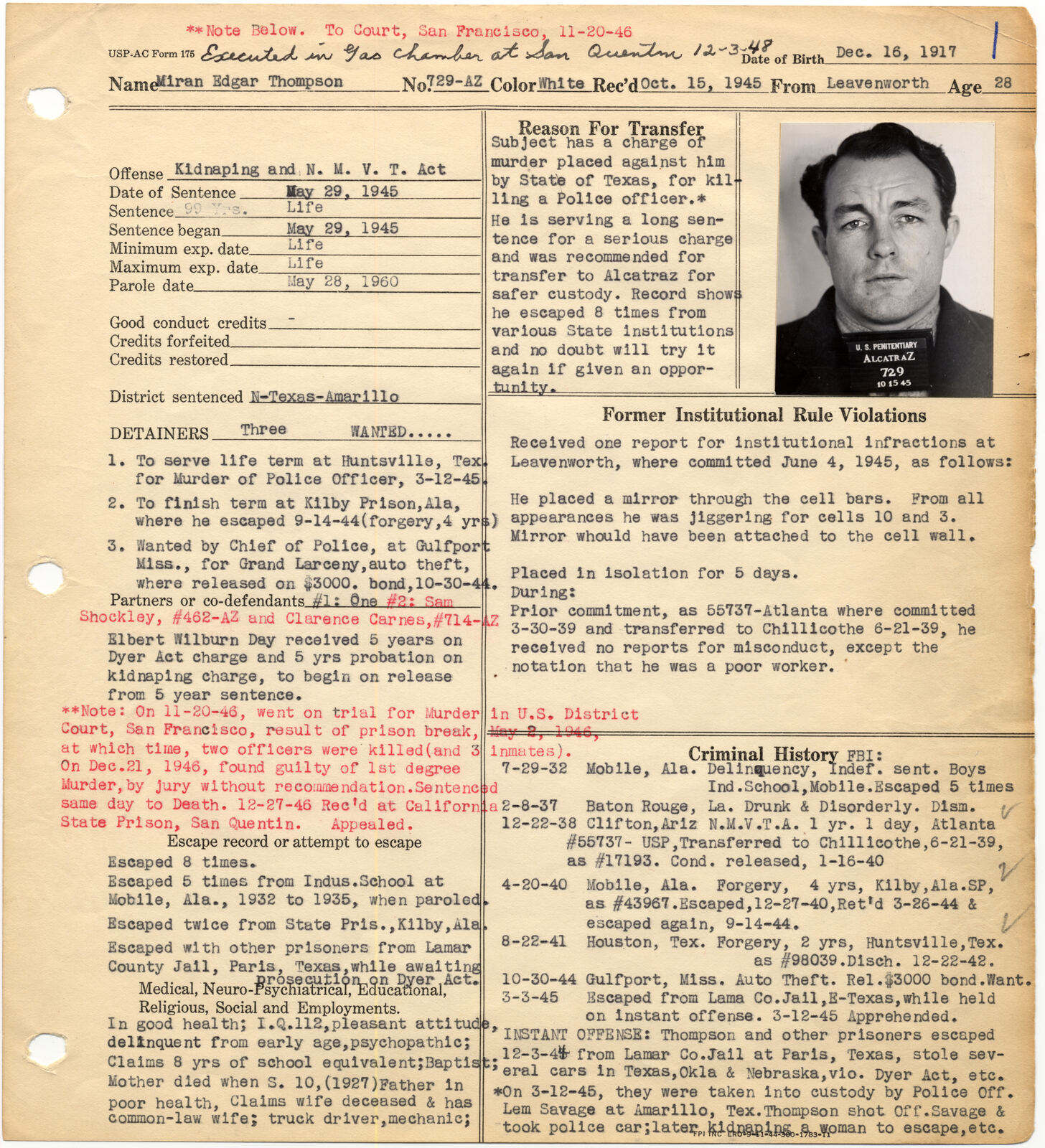 photographAlcatraz warden's notebook page for Miran Edgar Thompson, No. 729Bureau of Prisons notebook page with the identification photograph of Miran Edgar Thompson, No. 729-AZ, received at Alcatraz from Leavenworth on 15 October 1945 under a life sentence for kidnapping and violation of the National Motor Vehicle Theft Act (Northern District of Texas, Amarillo); a handwritten header records execution in the San Quentin gas chamber on 12-3-48. A copy is stored here.
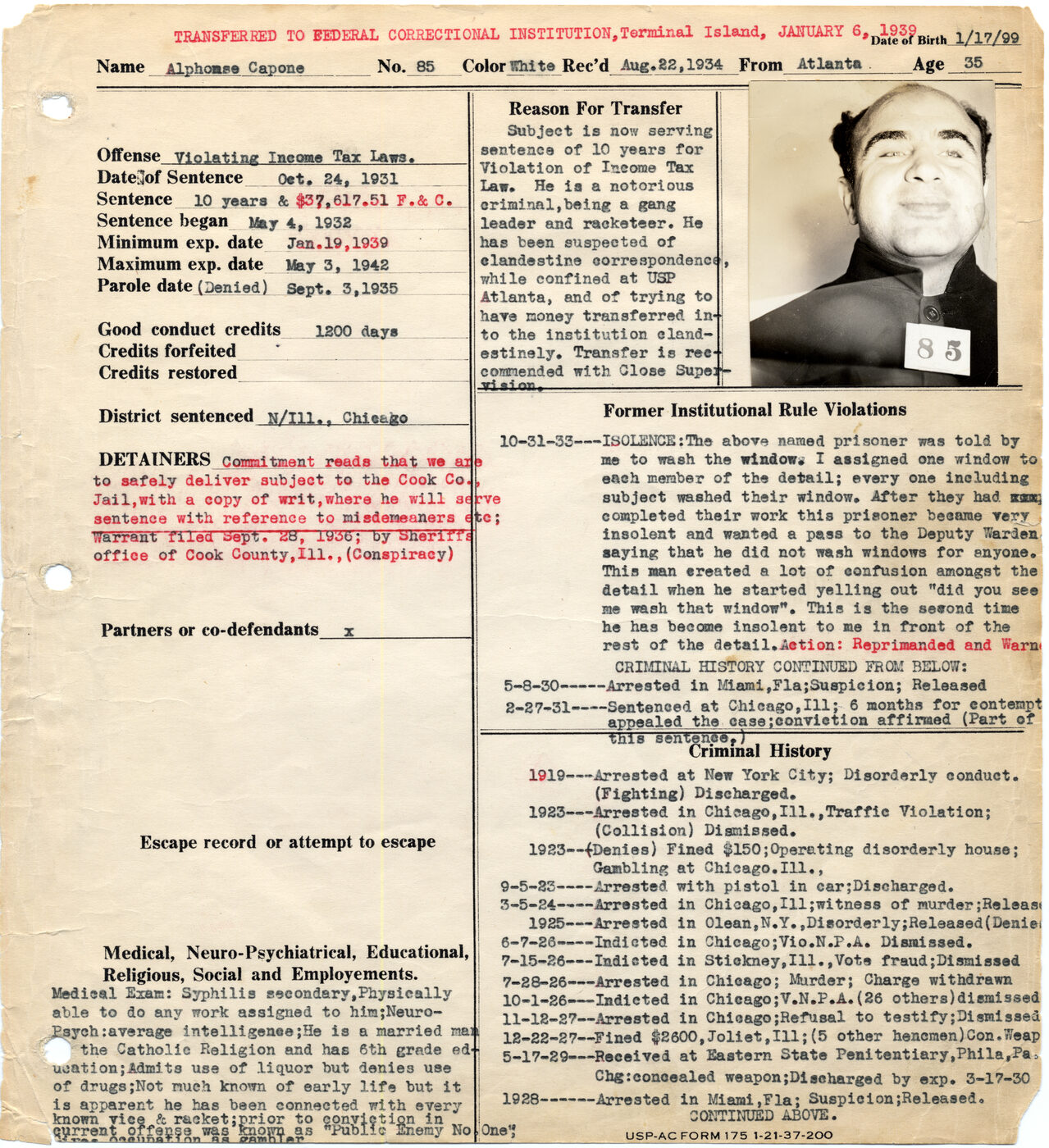 photographAlcatraz warden's notebook page for Alphonse Capone, No. 85Bureau of Prisons form with Capone's Alcatraz identification photograph, holding a card numbered 85. It records his receipt from Atlanta on Aug. 22, 1934, his tax sentence, parole denied in 1935, and his transfer to Terminal Island in January 1939.
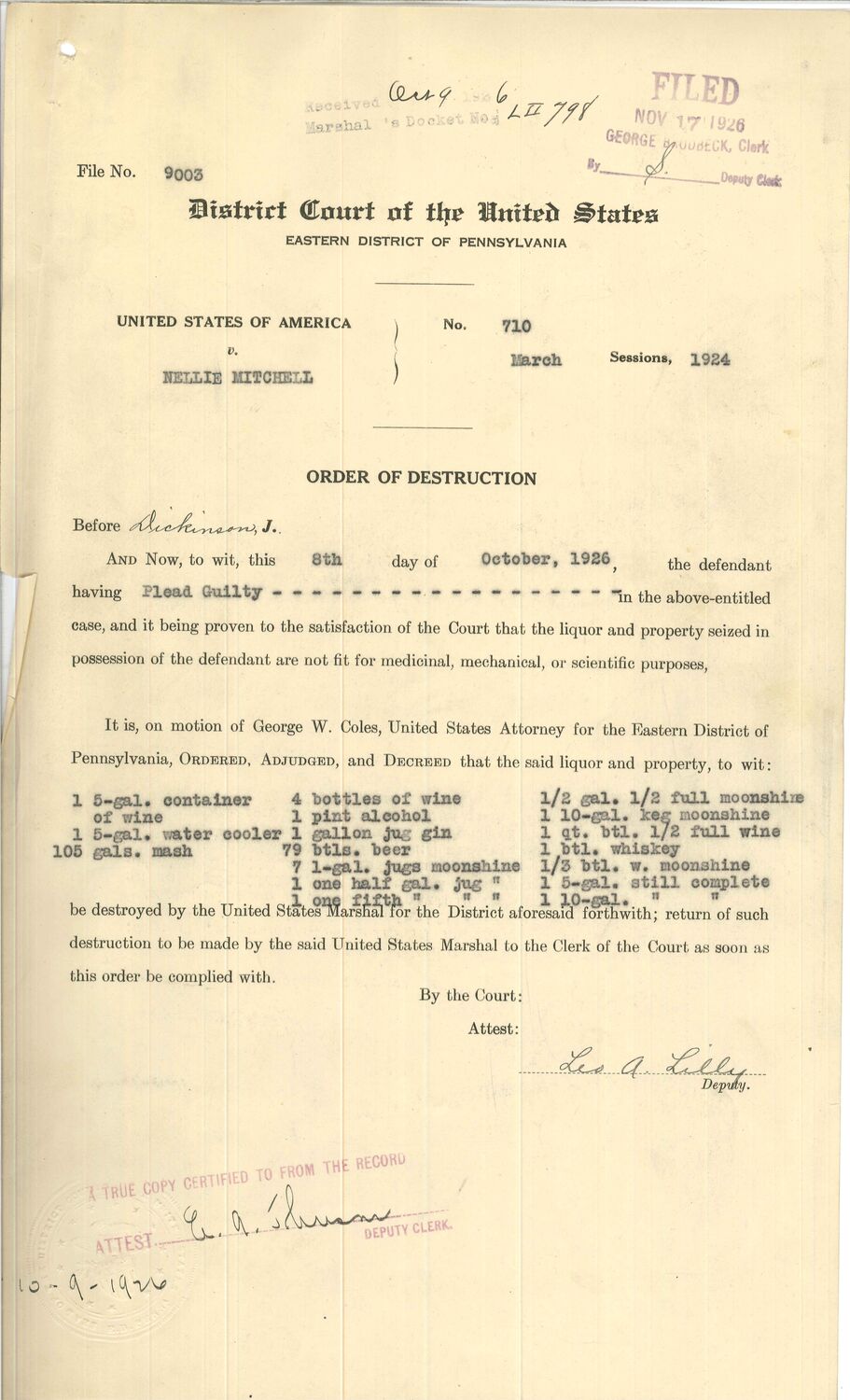 case-fileOrder of Destruction, E.D. Pennsylvania, No. 710 March Sessions 1924 (8 October 1926)National Archives district-court order directing the U.S. Marshal to destroy liquor and property seized from a defendant who had pleaded guilty, because it was not fit for medicinal, mechanical or scientific purposes.
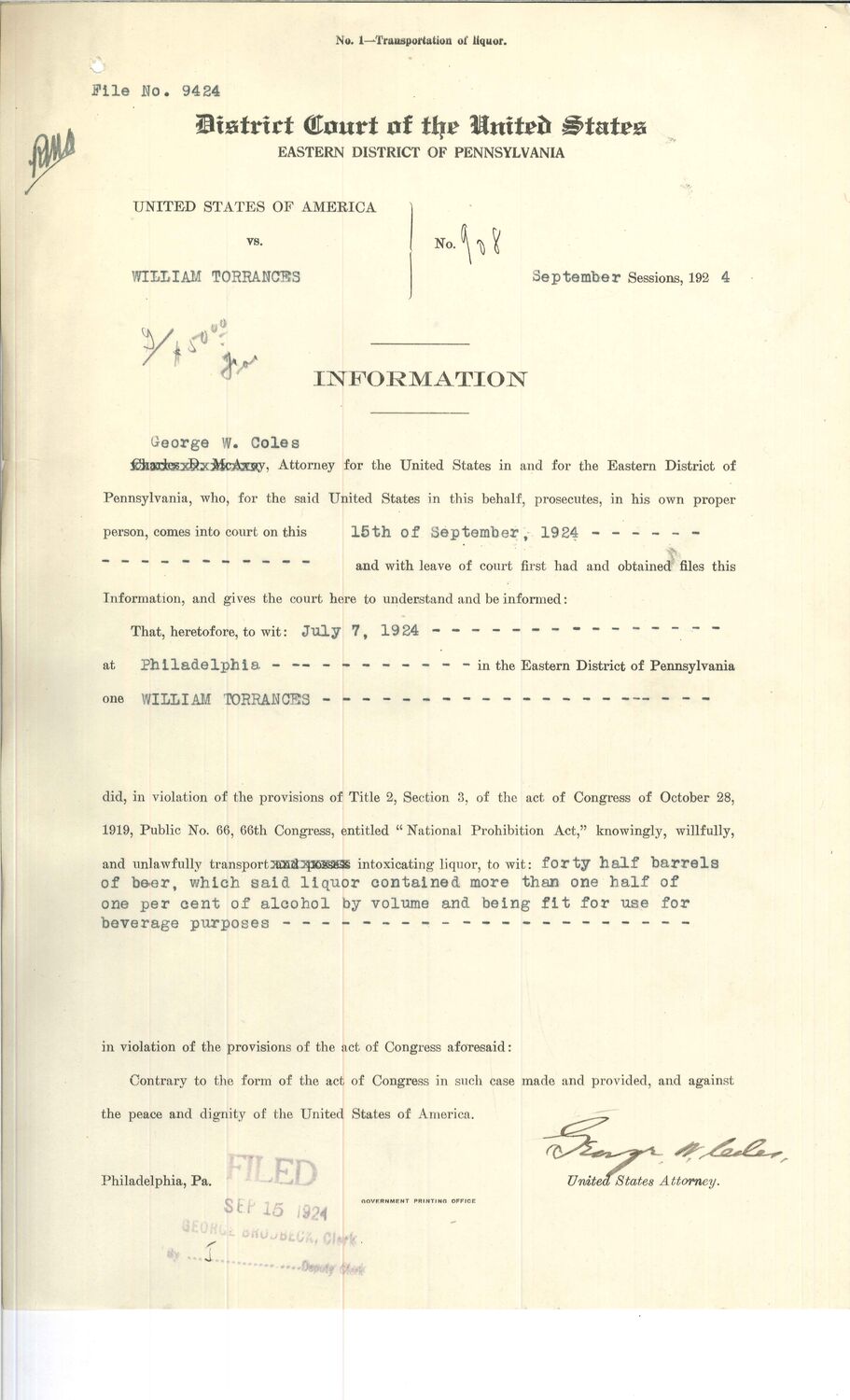 case-fileInformation, E.D. Pennsylvania, No. 908 September Sessions 1924 (15 September 1924)National Archives district-court information filed by the U.S. Attorney charging that on 7 July 1924, at Philadelphia, a defendant transported forty half barrels of beer above one-half of one percent alcohol, in violation of the National Prohibition Act.
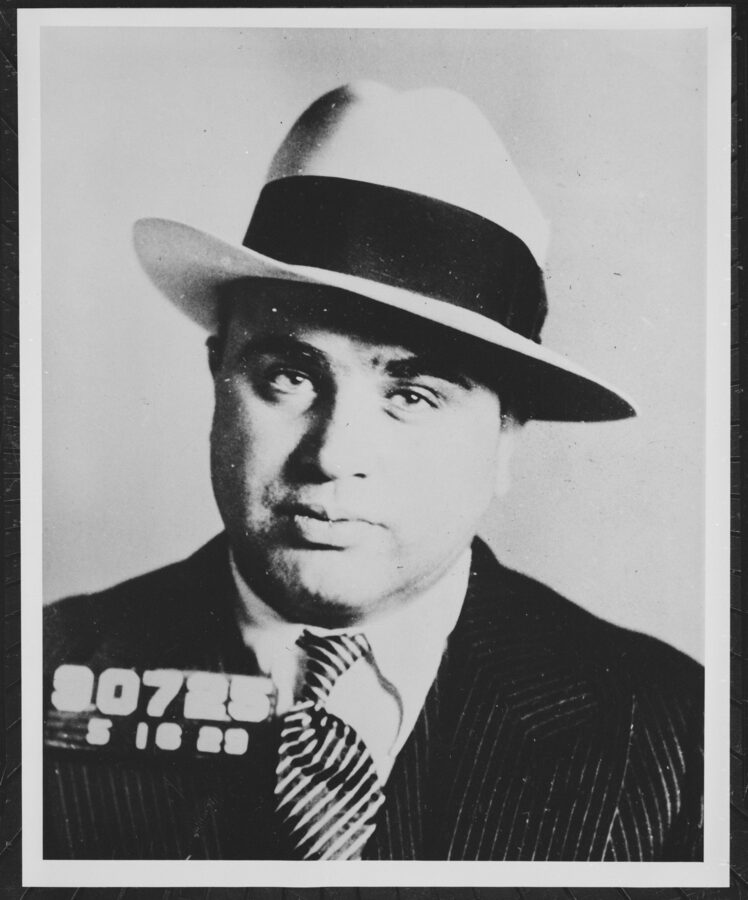 photographMug Shot of Al Capone (National Archives, 306-NT-163820c)Police photograph of Capone in a light fedora and striped tie, with a placard numbered 90725 and dated in May '29, from the New York Times Paris Bureau photo file at the National Archives. A copy is stored here.
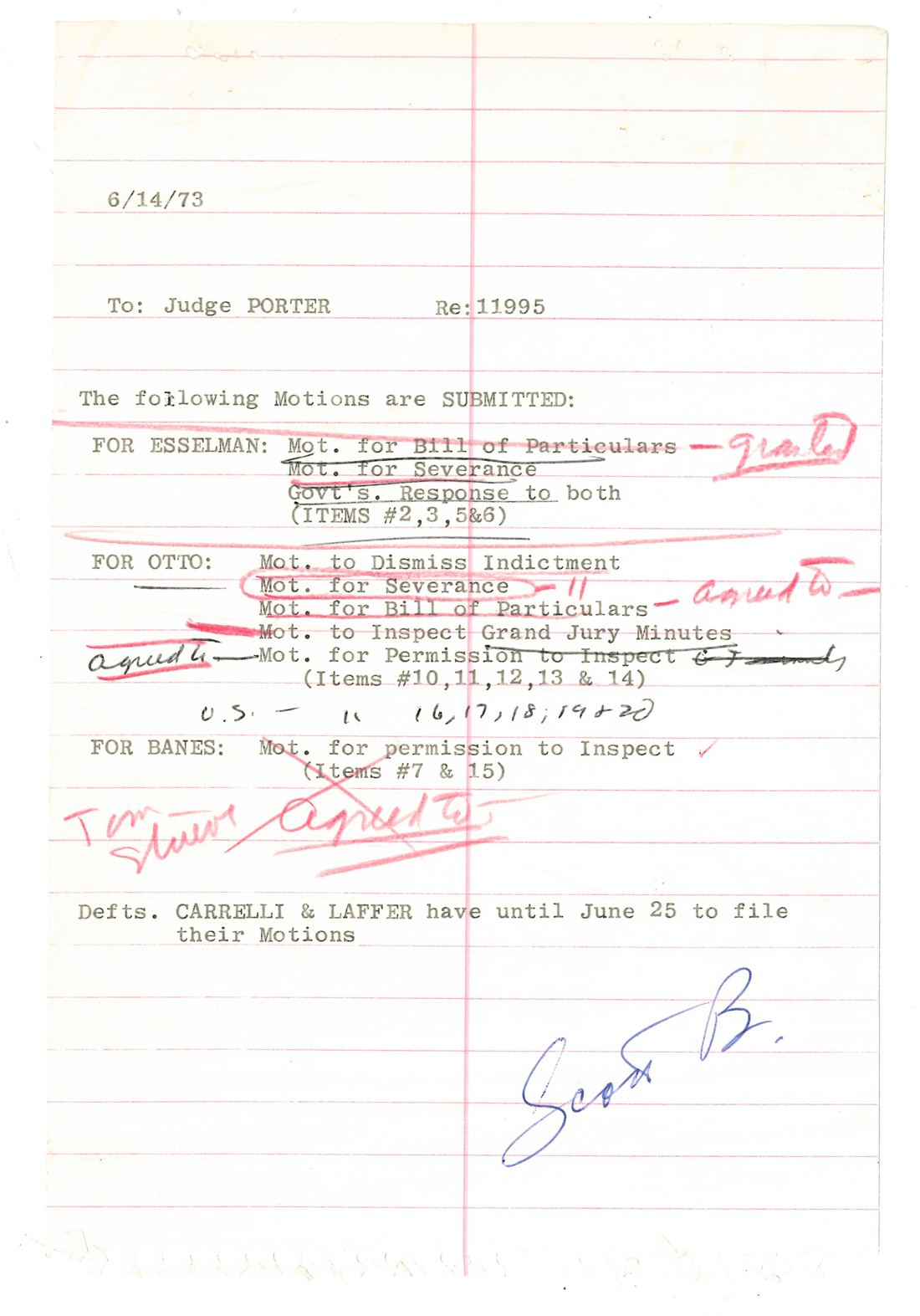 case-fileUnited States v. Carrelli et al., criminal case file, Southern District of Ohio at Cincinnati (1973-1974)A 290-image National Archives case file of a federal gambling prosecution of five defendants at Cincinnati; its first page is a typed note of 14 June 1973 to Judge Porter listing the motions pending in case 11995.
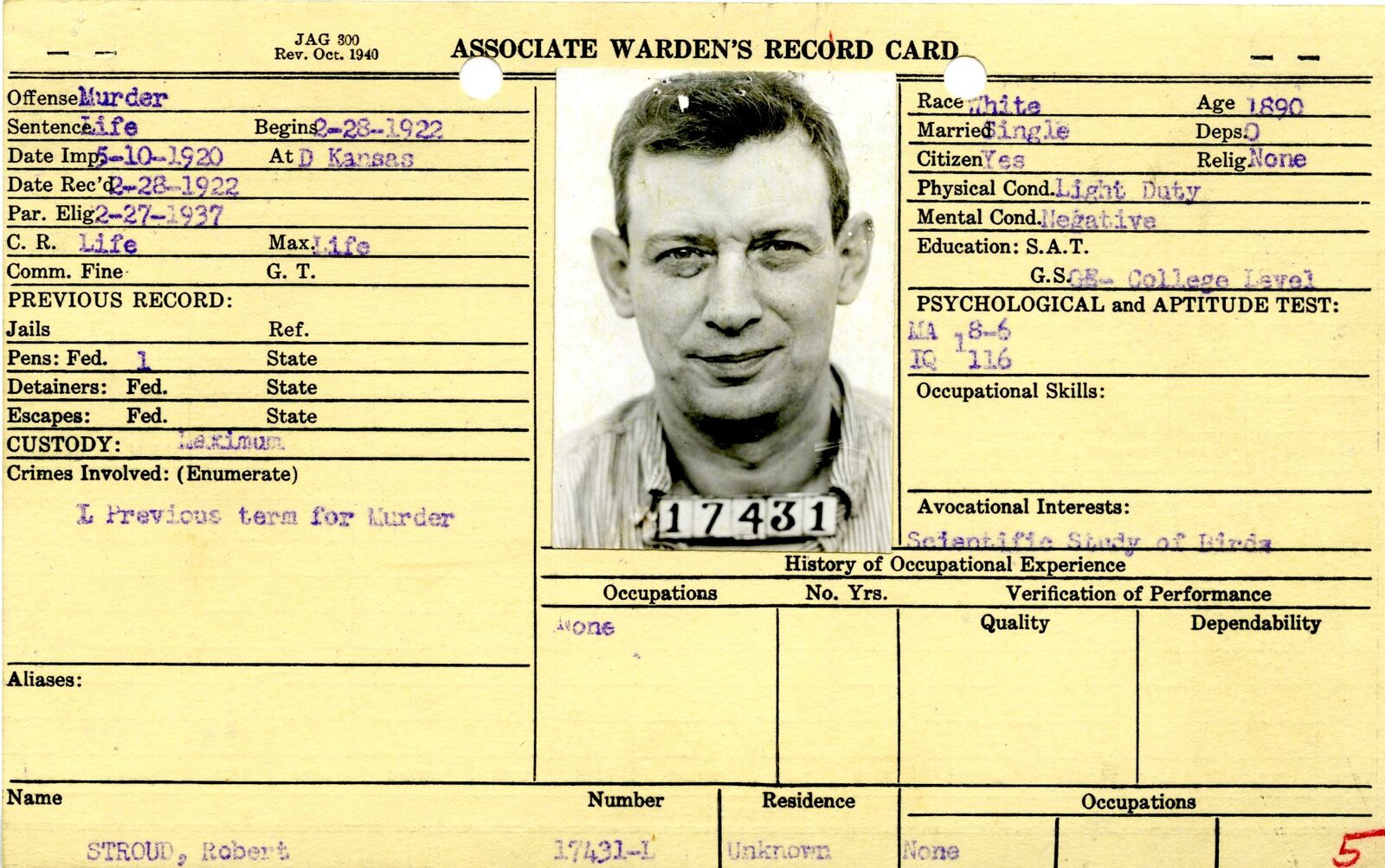 case-fileRobert Stroud, Leavenworth inmate file, No. 17431-L (National Archives)Leavenworth inmate file of Robert F. Stroud, 97 digitized pages. Page 2, stored here, is an Associate Warden's Record Card giving offense murder, a life sentence imposed 10 May 1920, and receipt on 28 February 1922.case-fileU.S. v. Volney Davis (D. Minn.)Federal criminal case file at the National Archives for Volney Davis, who pleaded guilty to conspiracy in the Bremer kidnaping. 1,906 digitized pages.
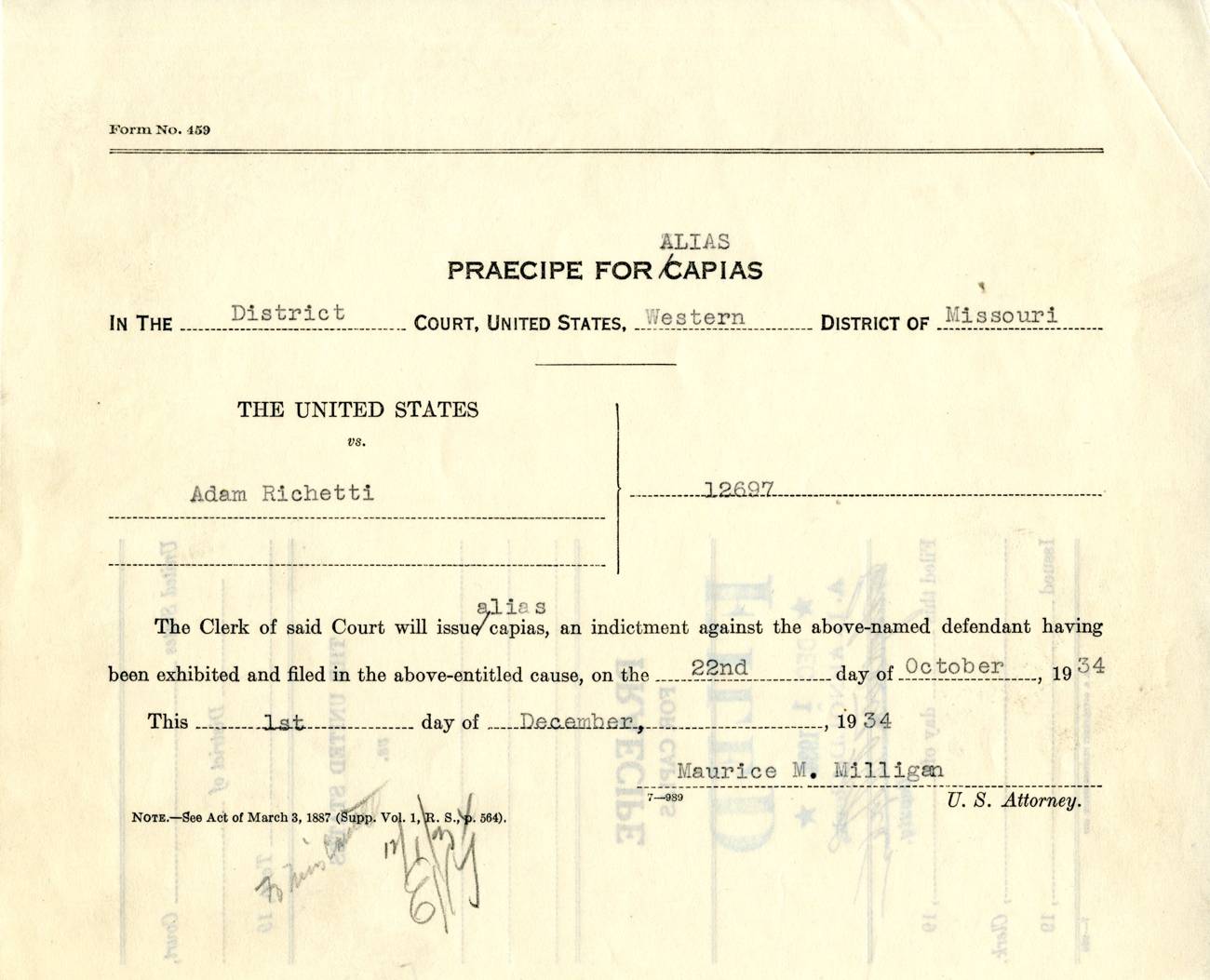 case-fileUnited States v. Adam Richetti and Charles Floyd (W.D. Mo.), criminal case file SS99: praecipe for alias capias, No. 12697A 16-page National Archives case file whose first page is a praecipe for alias capias in 'The United States vs. Adam Richetti,' number 12697, reciting an indictment exhibited and filed on 22 October 1934, dated 1 December 1934 and signed by U.S. Attorney Maurice M. Milligan.
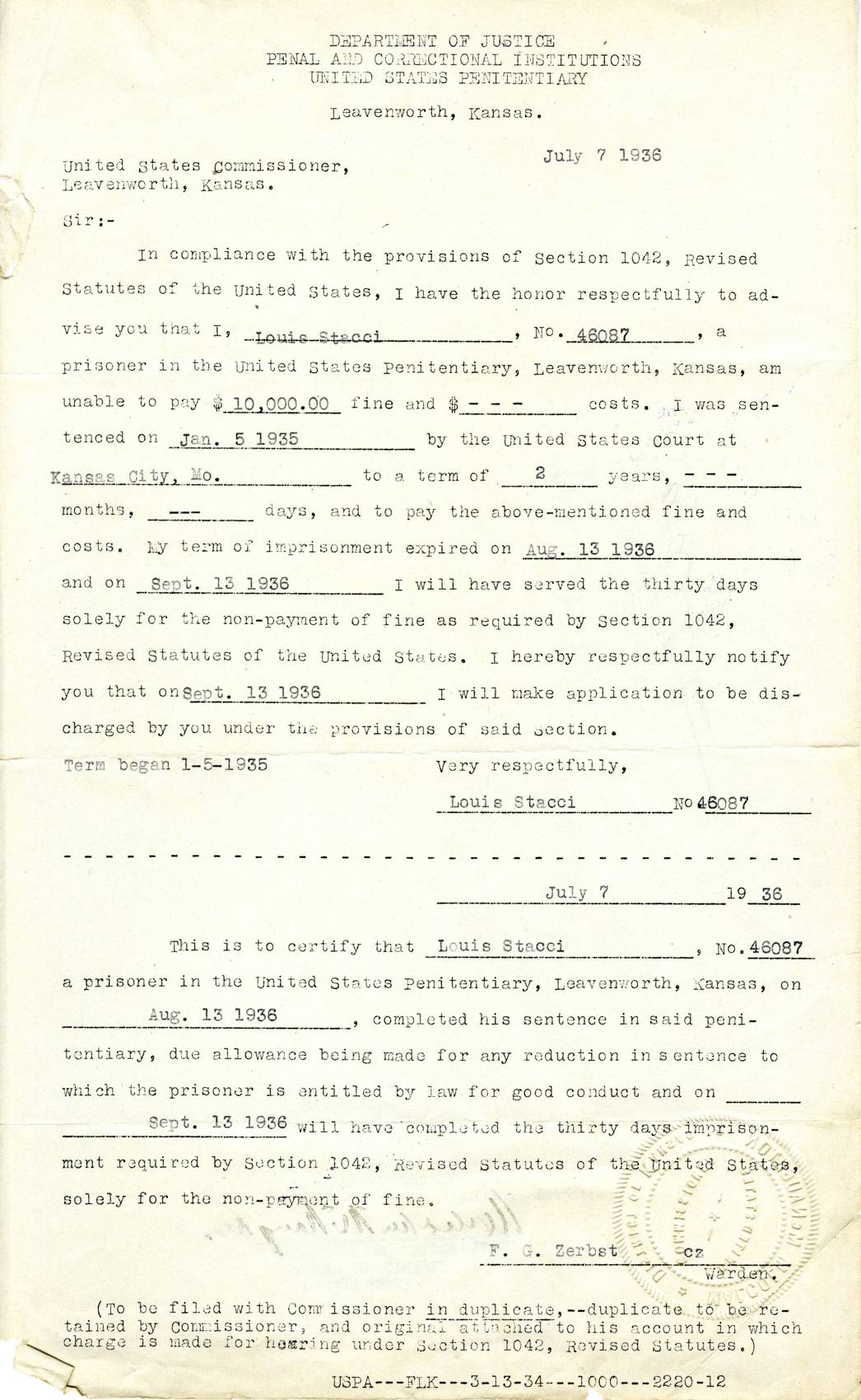 case-fileUnited States v. Richard Tallman Galatas, et al. (W.D. Mo.), criminal case file SS100The National Archives file of the conspiracy case against Galatas and co-defendants runs 593 digitized pages; the first scan is a Leavenworth form of 7 July 1936 in which prisoner Louis Stacci states he was sentenced on 5 January 1935 to two years and a $10,000 fine.
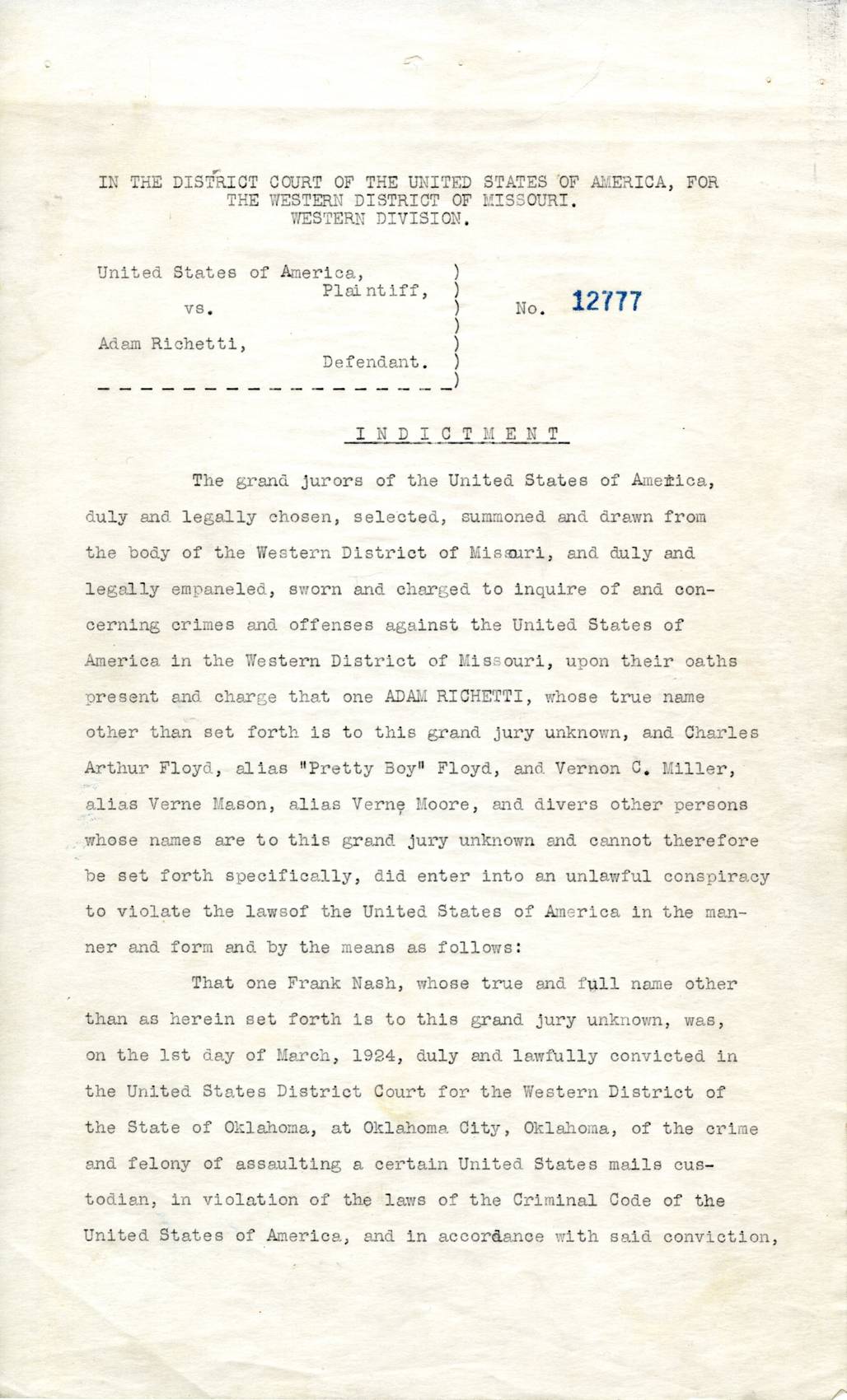 case-fileUnited States v. Adam Richetti (W.D. Mo.), criminal case file SS101: indictment No. 12777The first page of the 29-page W.D. Mo. case file is an indictment charging Adam Richetti, Charles Arthur Floyd alias 'Pretty Boy' Floyd, and Vernon C. Miller alias Verne Mason alias Verne Moore with conspiring to violate federal law concerning the custody of Frank Nash, an escaped Leavenworth prisoner.
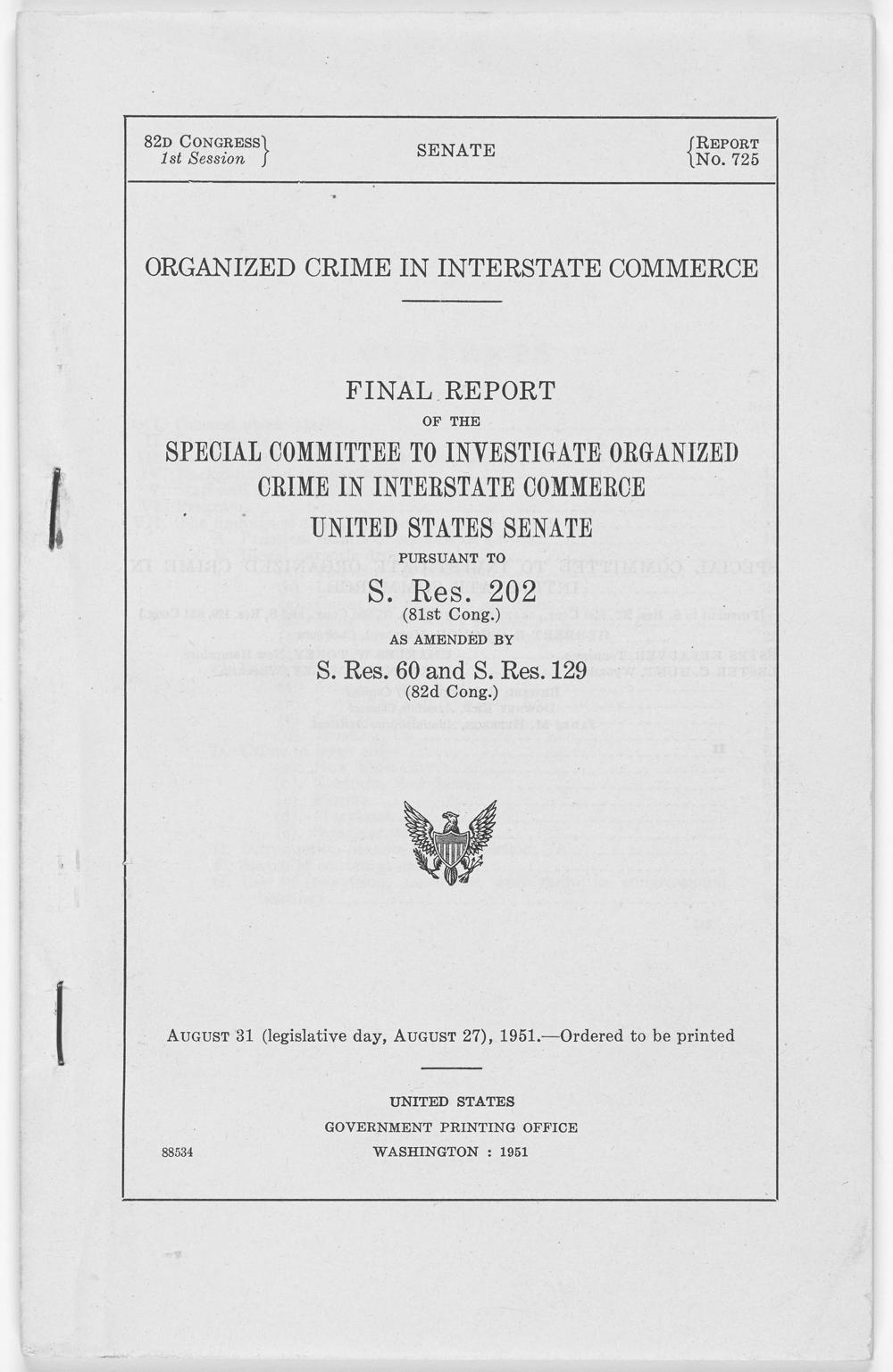 hearingFinal Report of the Kefauver Committee (S. Rept. 82-725, 1951)Digitized National Archives copy of Senate Report No. 725, 82d Congress, the Final Report of the Special Committee to Investigate Organized Crime in Interstate Commerce, ordered printed August 31, 1951.
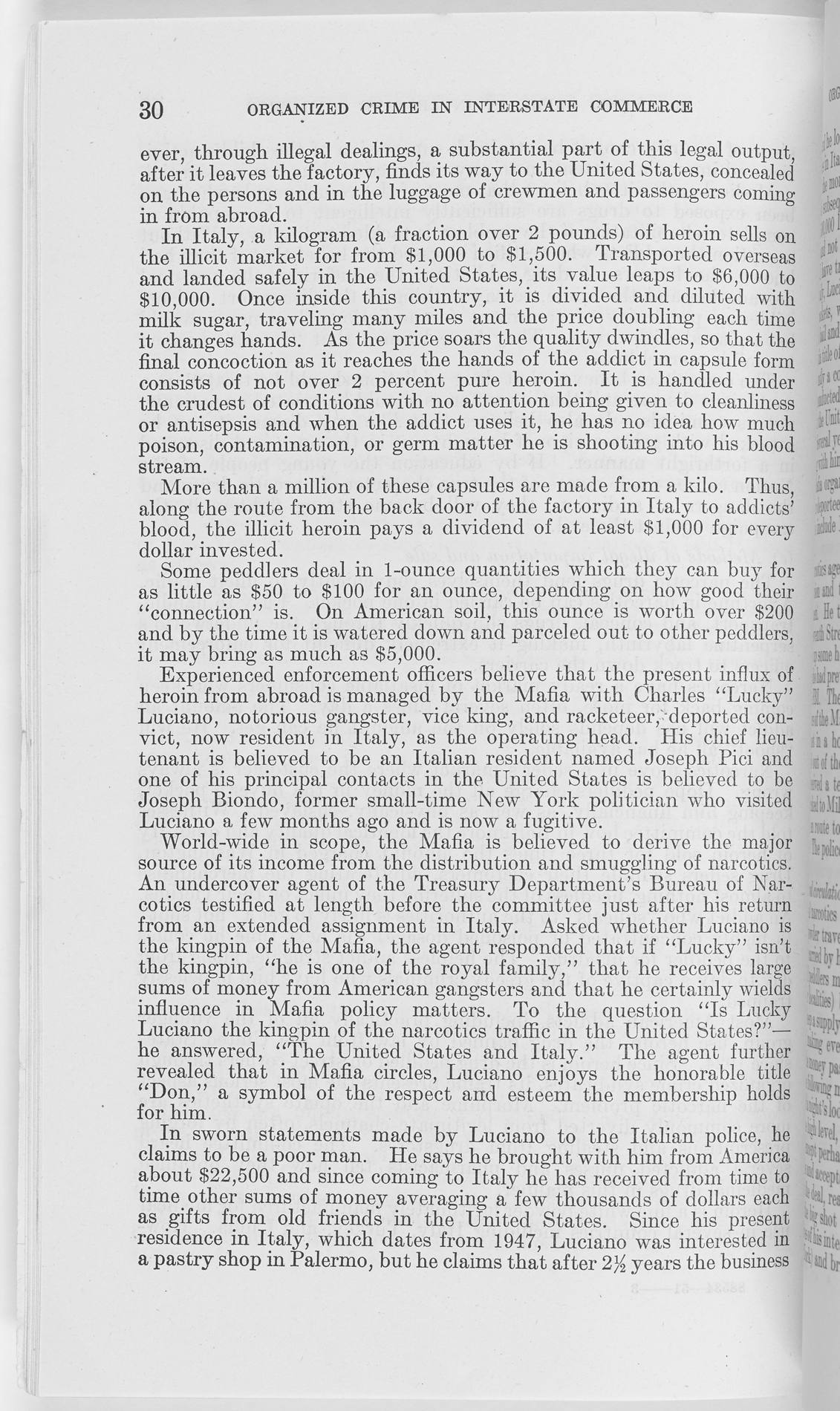 hearingKefauver Committee Final Report (S. Rept. 82-725, 1951), p. 30: Luciano's 'present residence in Italy, which dates from 1947'Page 30 of the committee's Final Report, in its narcotics section, reports enforcement officers' belief that Luciano was the 'operating head' of the heroin influx and summarizes his sworn statements to the Italian police, noting that his residence in Italy 'dates from 1947.'
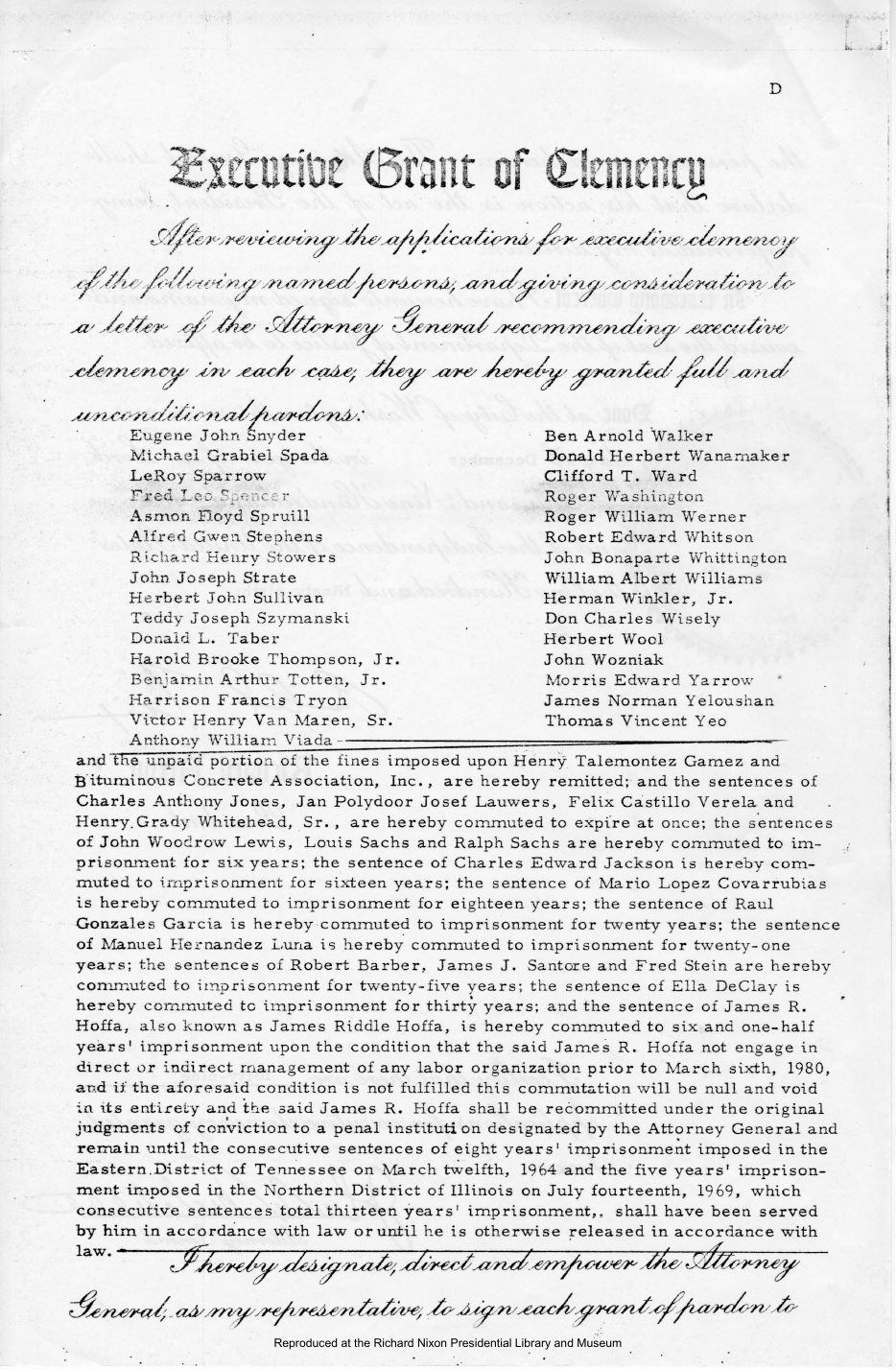 case-fileExecutive Grant of Clemency commuting James R. Hoffa's sentence, 23 December 1971 (National Archives)President Nixon's Executive Grant of Clemency of 23 December 1971, filed in a Nixon White House staff folder, commuted James R. Hoffa's sentence to six and one-half years on condition that he not manage any labor organization before 6 March 1980.case-fileThe United States of America v. John Dillinger (federal case file, Hammond, Indiana, 1934)Eleven-page federal case file from Hammond, Indiana with the arrest warrant, indictment and praecipe for capias charging John Dillinger with the auto theft at Crown Point. The case was dismissed after his death.
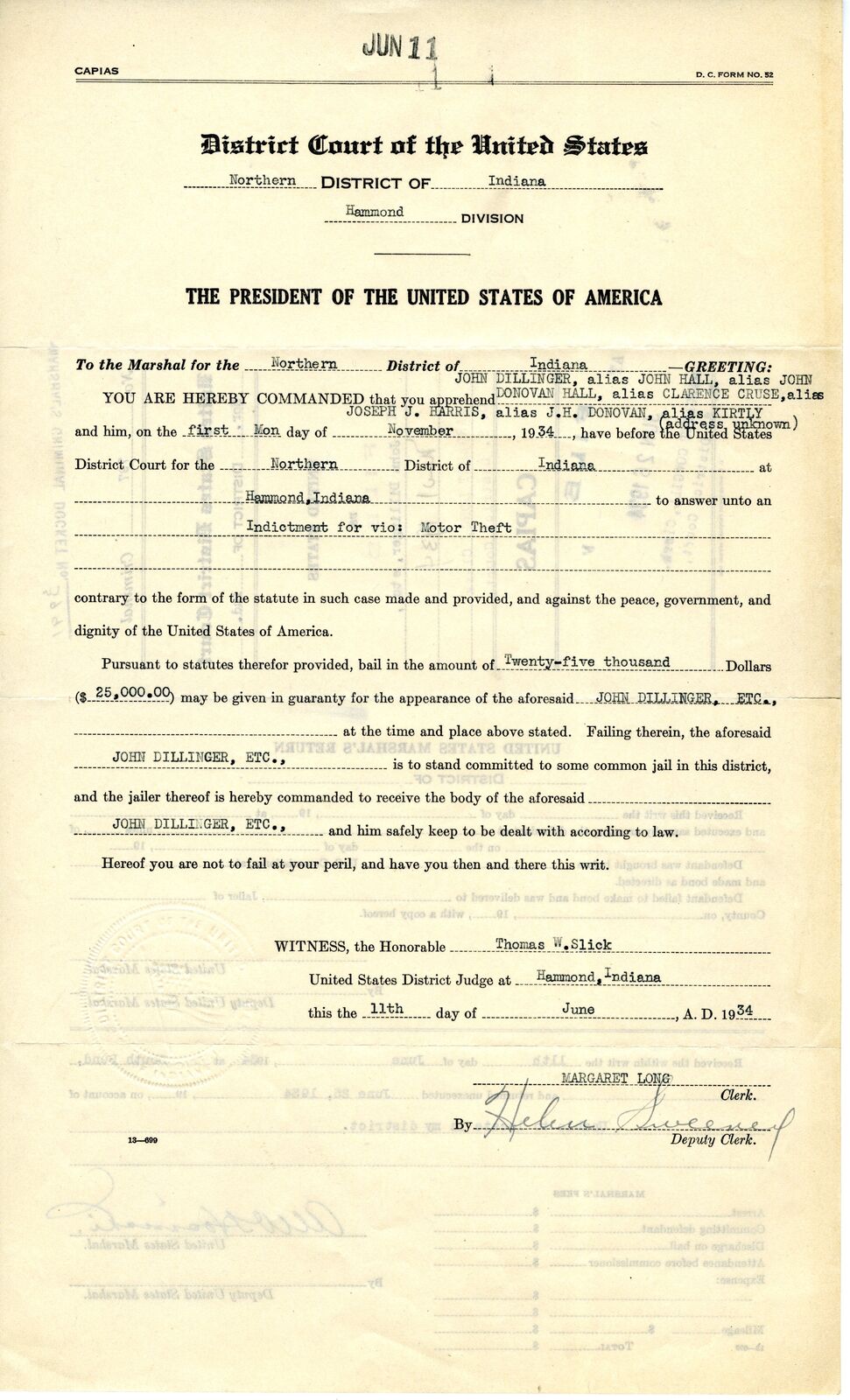 case-fileOrder to arrest John Dillinger, U.S. District Court at Hammond, Indiana (11 June 1934)Capias issued by the federal court at Hammond on 11 June 1934 commanding the marshal to bring John Dillinger, with six aliases, to answer an indictment for motor theft, bail $25,000. The National Archives notes it was never served. A copy is stored here.
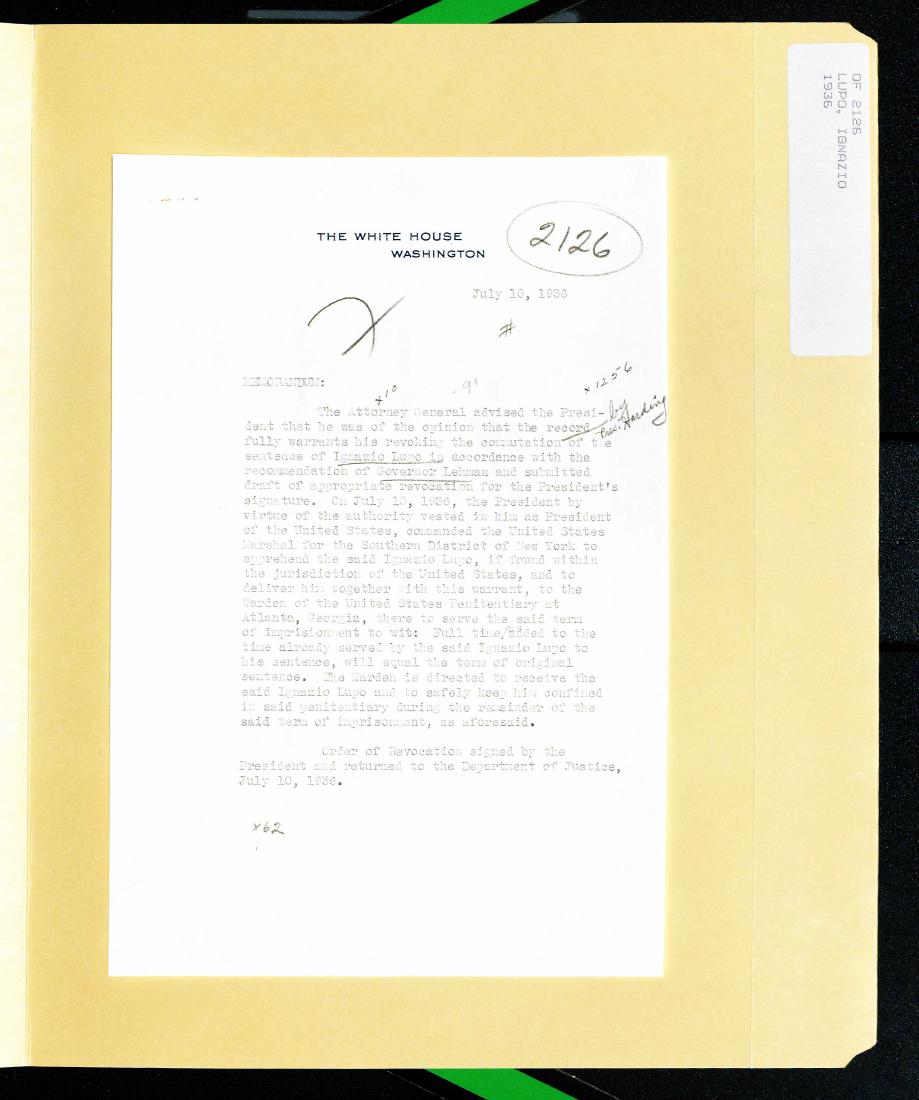 case-filePresident's Official File 2126: Lupo, Ignazio, 1936 (Franklin D. Roosevelt Library)A three-image file from the Roosevelt White House: a memorandum of 10 July 1936 recording that the President, on the Attorney General's advice and Governor Lehman's recommendation, revoked the commutation of Ignazio Lupo's sentence and ordered him returned to Atlanta, and a telegram telling the Governor.
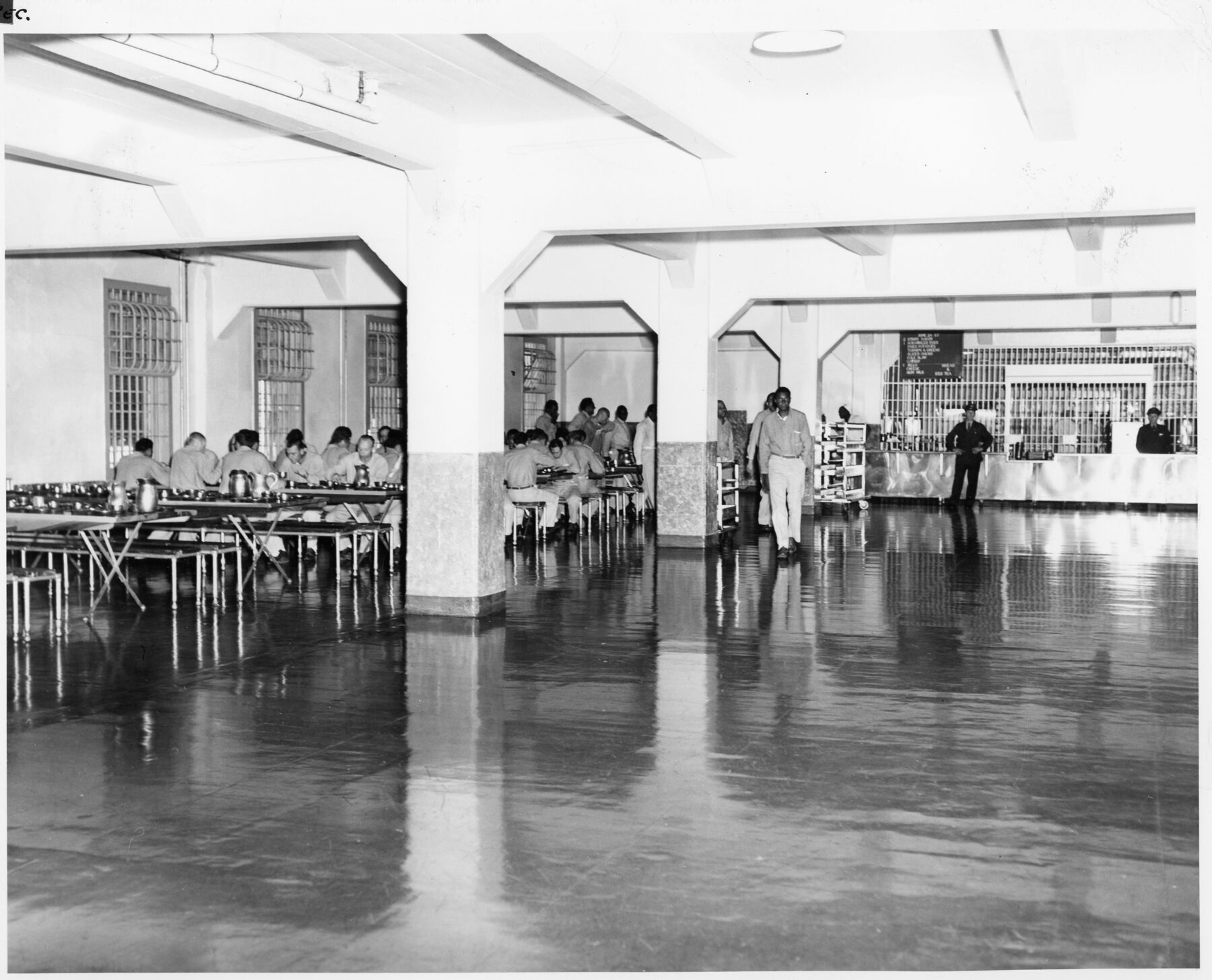 photographAlcatraz dining room, 24 June 1957: "Following noon meal, inmates are checked back into cellhouse" (National Archives)Bureau of Prisons photograph of the Alcatraz main dining room on 24 June 1957. The catalog's caption reads that inmates are checked back into the cellhouse after the noon meal.
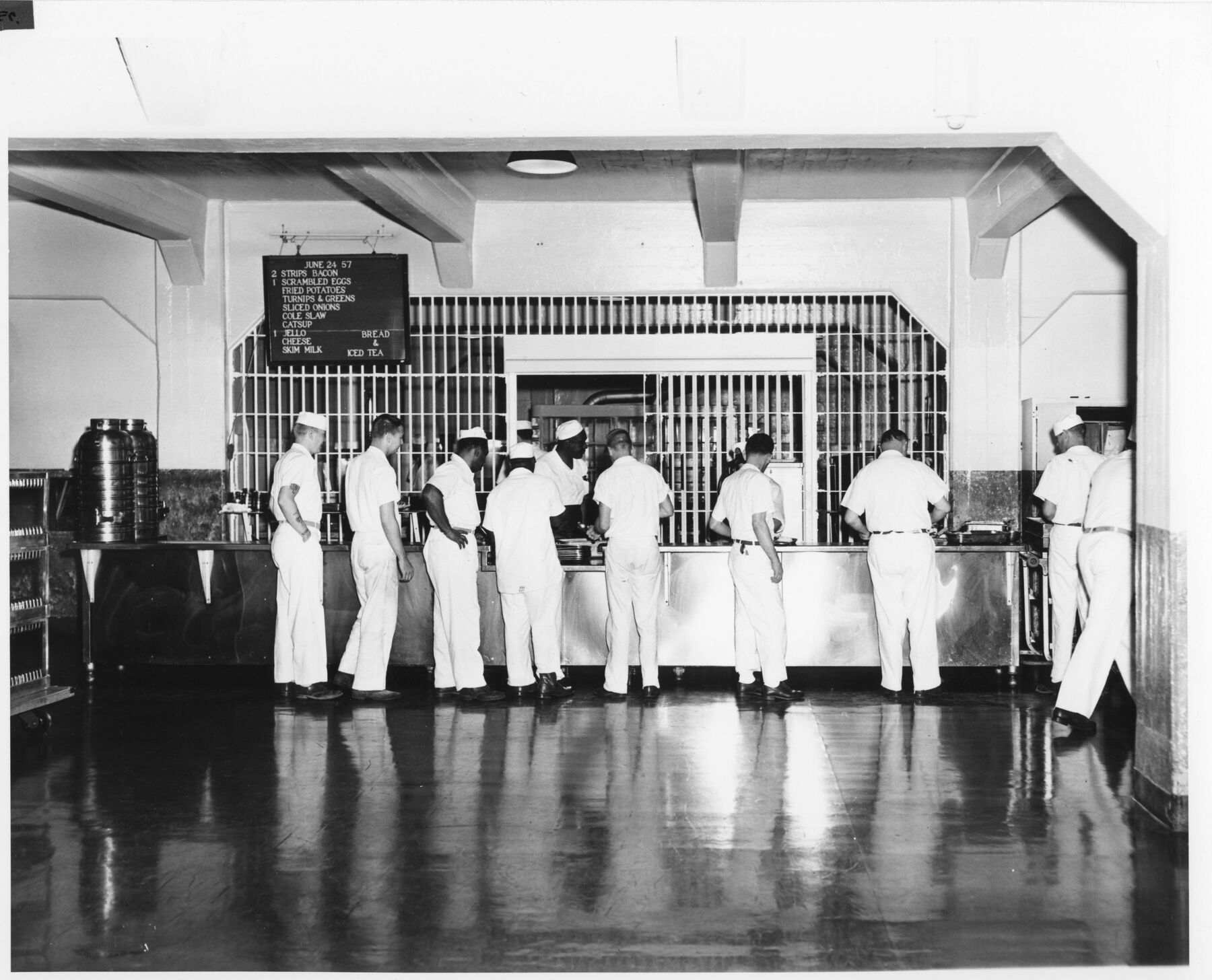 photographAlcatraz serving counter, 24 June 1957: "After count is secure, culinary employees can eat" (National Archives)Bureau of Prisons photograph at Alcatraz dated 24 June 1957 of men in white uniforms at a serving counter. The catalog's caption reads that culinary employees can eat after the count is secure.
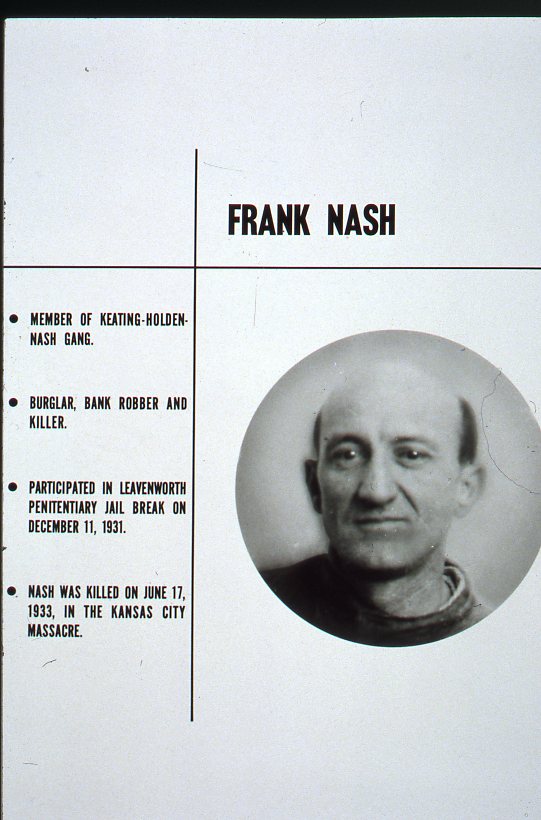 photographFrank Nash (FBI photograph, 75th Anniversary series, National Archives)An FBI display photograph of Frank Nash with the Bureau's caption: member of the Keating-Holden-Nash gang, a 'burglar, bank robber and killer,' participant in the Leavenworth break of 11 December 1931, killed on 17 June 1933 in the Kansas City Massacre.case-fileBureau of Internal Revenue Intelligence Unit memorandum for the Secretary, 30 October 1939, naming "the William Bioff case" (Morgenthau Diaries, Book 220)A Treasury memorandum stating that Joseph M. Schenck was "the dominating figure" in three tax cases, "his own individual case, the William Bioff case and the so-called Twentieth Century-Fox reorganization case," referred to the Justice Department in mid-1939 for criminal prosecution.case-fileTreasury General Counsel's summary report for October 1942: "William Bioff" (Morgenthau Diaries, Book 594)The Treasury legal staff's monthly report, sent to Secretary Morgenthau on 8 December 1942, states that Bioff "is presently serving a ten-year sentence as a result of his conviction last year on charges of extortion from moving picture producers."
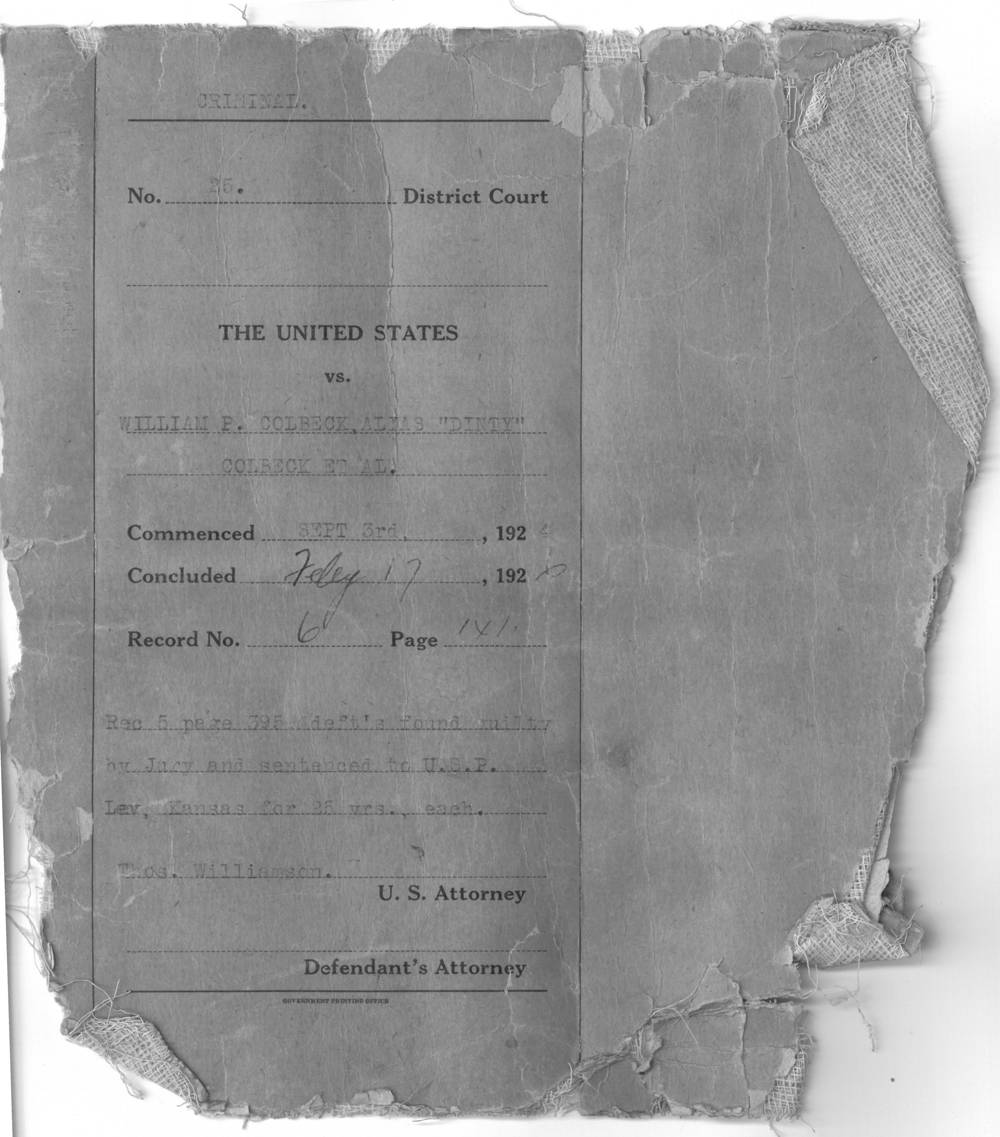 finding-aidUnited States v. William P. "Dinty" Colbeck et al., criminal case file No. 25 (S.D. Ill.)National Archives description of the Southern District of Illinois case file on the 26 May 1923 robbery of mail custodians at Staunton, Illinois. The archivist's note says the defendants "were members of a gang called Egan's Rats" led by William P. "Dinty" Colbeck.
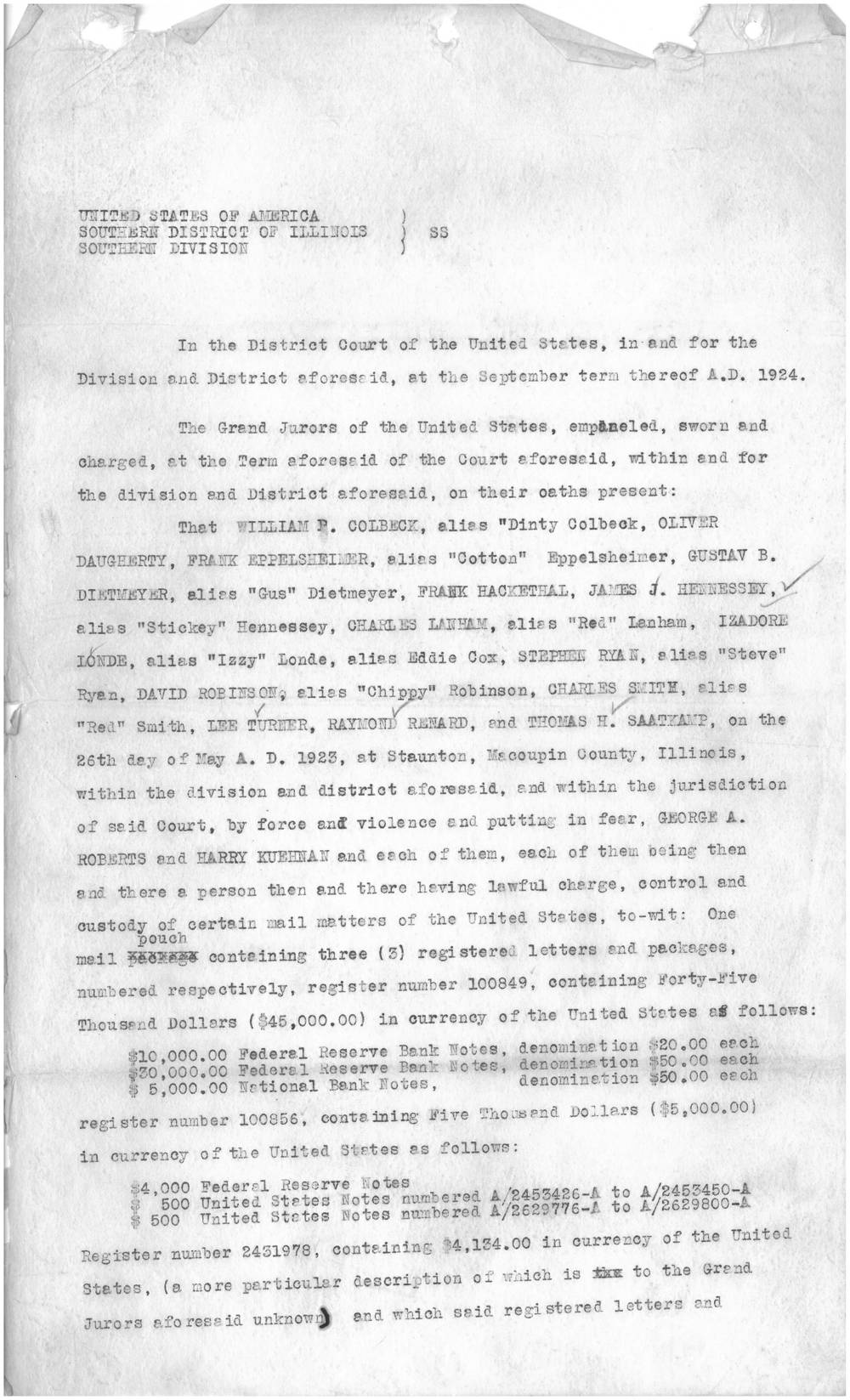 case-fileIndictment and court papers, United States v. William P. Colbeck et al. (S.D. Ill., September term 1924)The digitized court papers of the Colbeck case. The indictment charges fourteen men, several under nicknames, with robbing two custodians of a mail pouch at Staunton, Macoupin County, Illinois, on 26 May 1923; the registered packages held $45,000, $5,000 and $4,134.
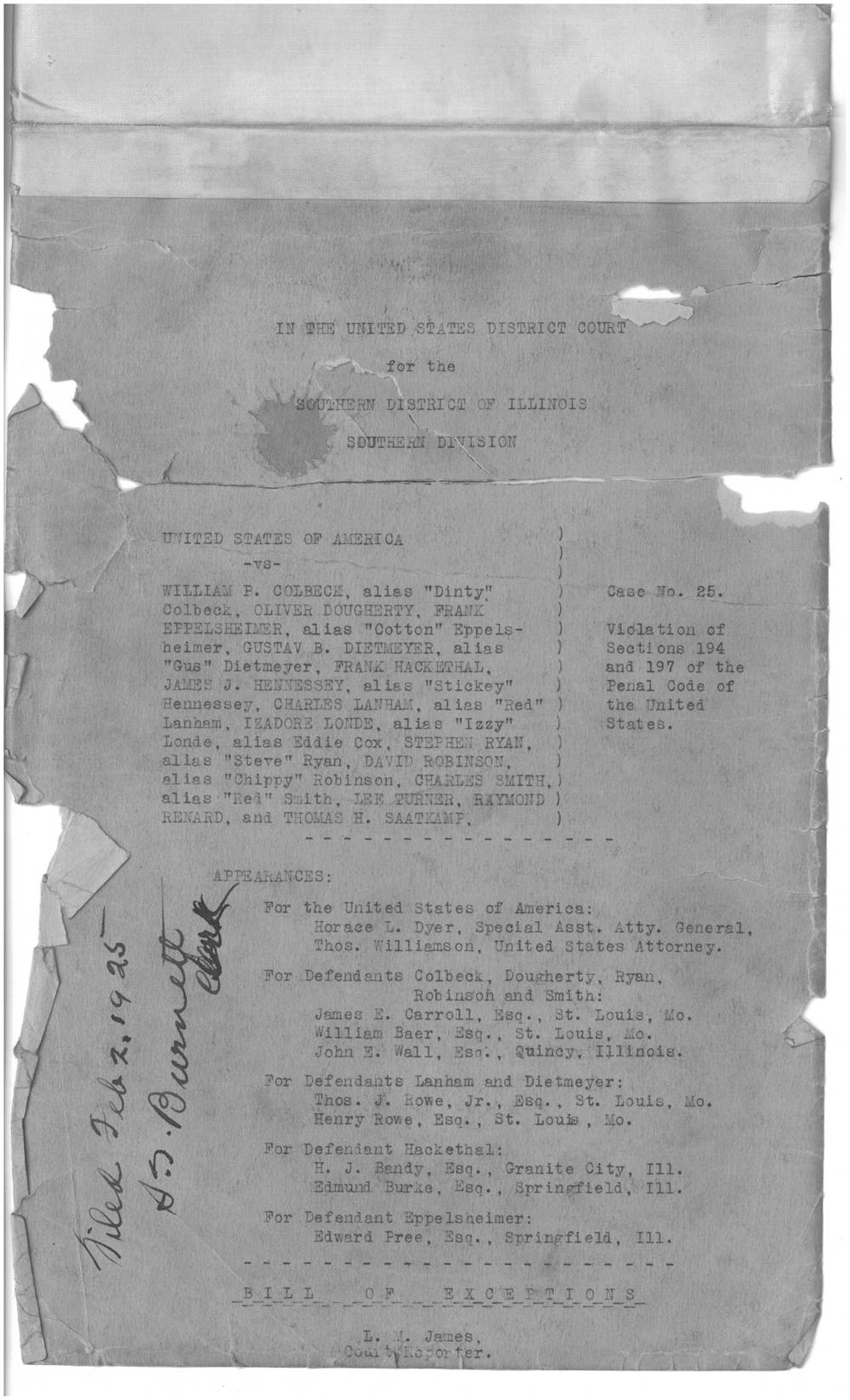 case-fileBill of exceptions and trial testimony, United States v. William P. Colbeck et al. (S.D. Ill., filed 2 February 1925)The digitized trial transcript in the Colbeck mail-robbery case, filed as a bill of exceptions on 2 February 1925. The title page lists the defendants and their counsel; the index lists the first witnesses, among them the two mail custodians named in the indictment.finding-aidWarden's Notebook Pages, U.S. Penitentiary, Alcatraz (National Archives series)National Archives series description for the Alcatraz warden's notebook pages: 1,576 item-level records, one per register number, each with a summary form and an identification photograph. The series note lists five pages whose originals are not extant.
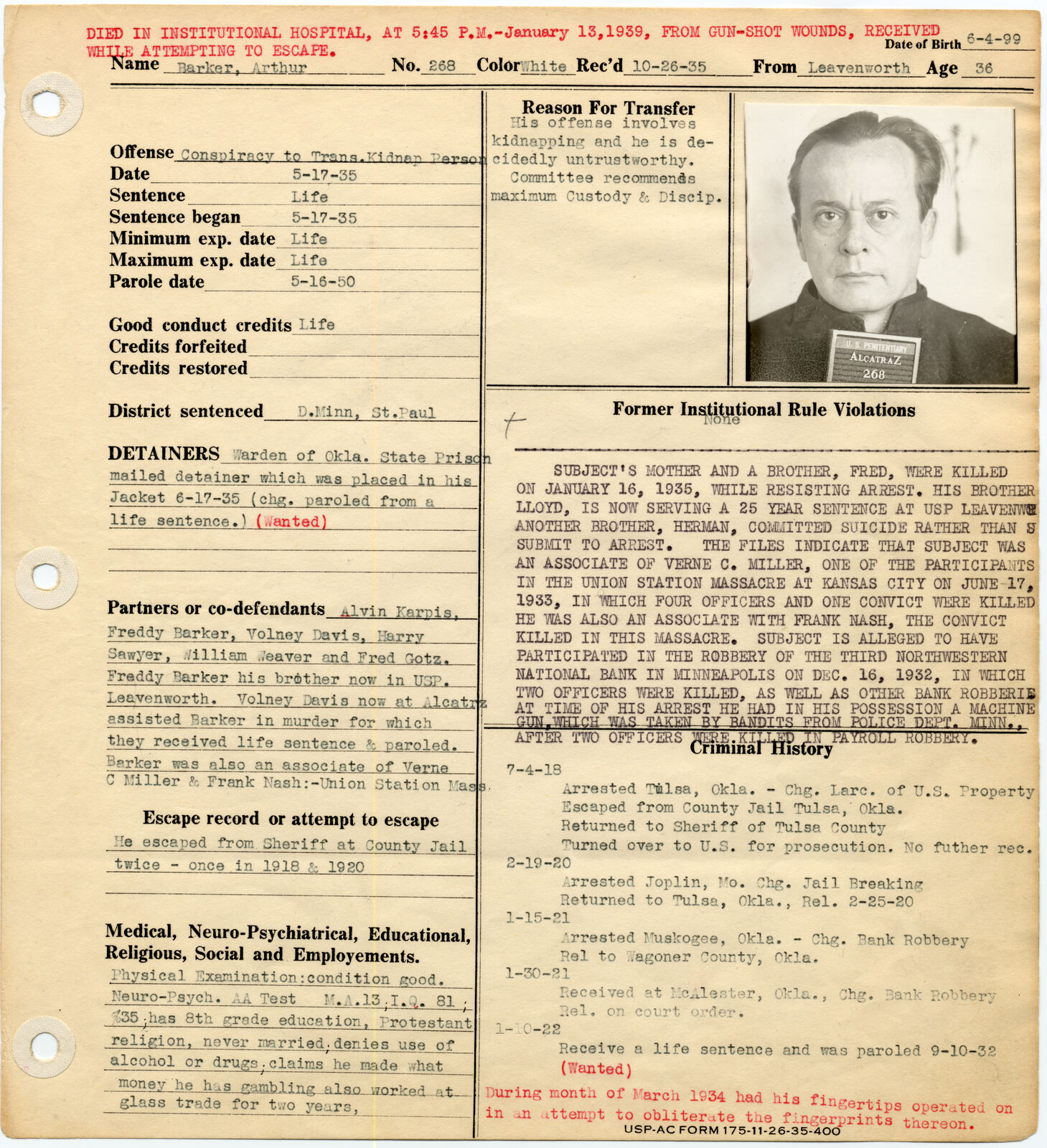 photographAlcatraz warden's notebook page for Arthur "Doc" Barker, No. 268Bureau of Prisons notebook page with the identification photograph of Arthur Barker, No. 268, received at Alcatraz from Leavenworth on 26 October 1935 under a life sentence from the District of Minnesota. A red header records his death in the institutional hospital on 13 January 1939. A copy is stored here.
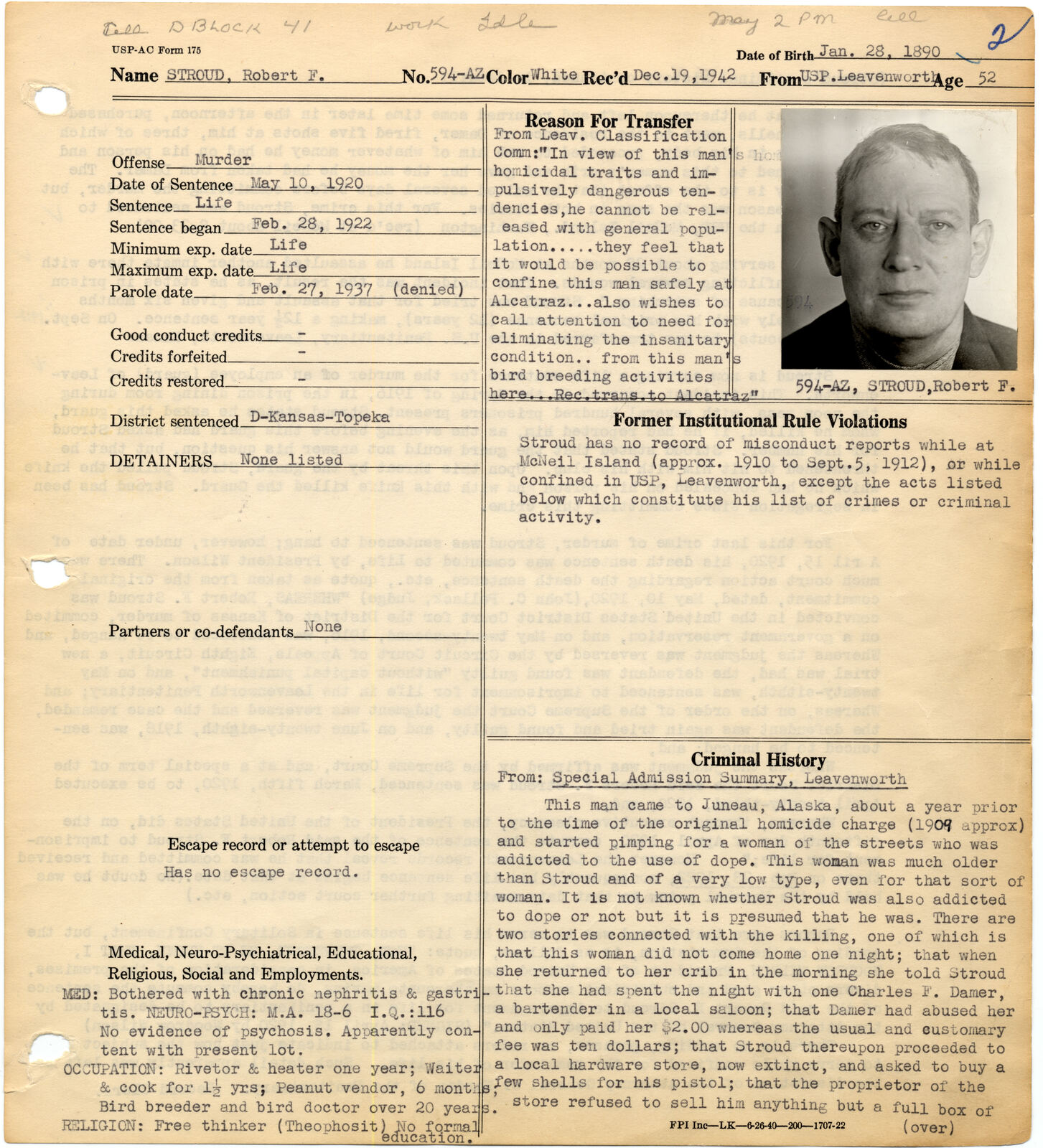 photographAlcatraz warden's notebook page for Robert F. Stroud, No. 594Bureau of Prisons notebook page with the identification photograph of Robert F. Stroud, No. 594-AZ, received at Alcatraz from Leavenworth on 19 December 1942 under a life sentence for murder (District of Kansas). The catalog title adds "aka The Birdman of Alcatraz." A copy is stored here.
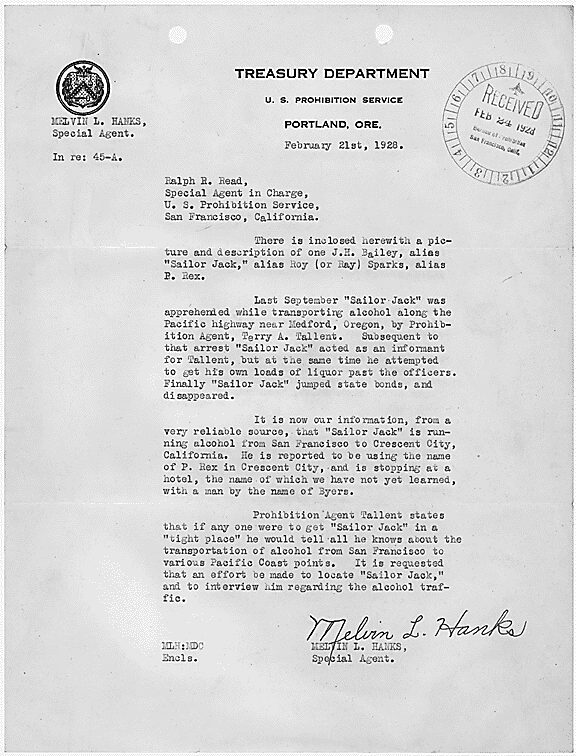 case-fileBureau of Prohibition letter on transporting liquor from California to Washington (21 February 1928)National Archives Bureau of Prohibition letter from the file on a conspiracy to transport liquor from California to Washington during Prohibition, as the catalog describes it. The catalog's single digital page is stored.
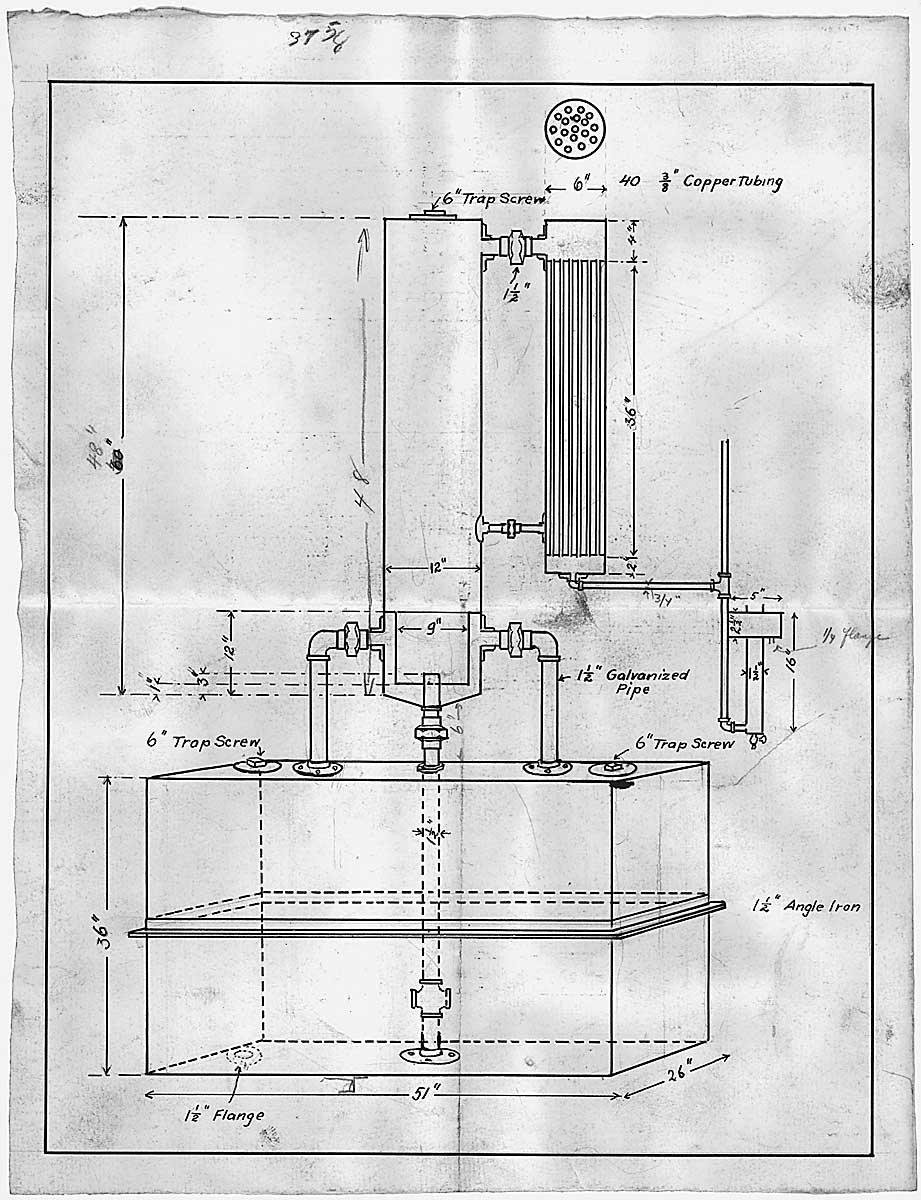 photographDrawing of a still, from a Prohibition investigative case file (Seattle)A dimensioned drawing of a still from a Prohibition-era Treasury case file at the National Archives at Seattle: a rectangular tank, a twelve-inch column and a condenser of copper tubing. The catalog calls the case typical of alcohol-manufacture investigations.
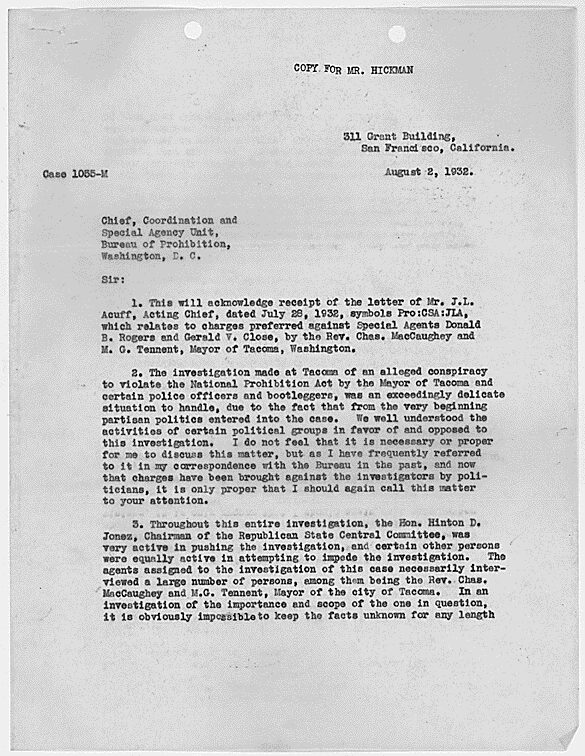 case-fileBureau of Prohibition letter on charges against agents investigating the Tacoma case (2 August 1932)National Archives Bureau of Prohibition case-file letter from the San Francisco office to Washington about charges brought against two special agents by a clergyman and the mayor of Tacoma. It reports one side of a dispute.
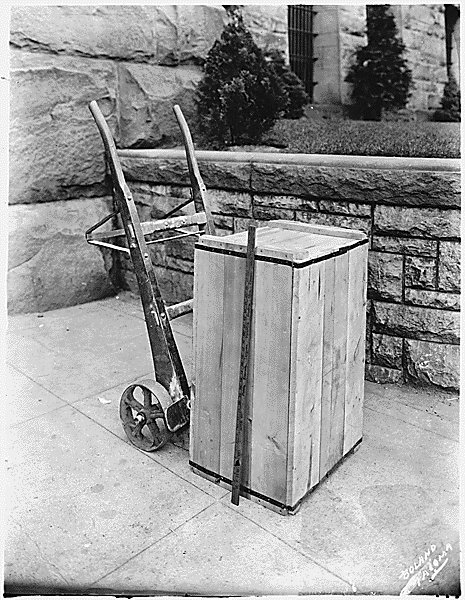 photographPhotograph of a container in which alcohol was shipped from Cleveland to Tacoma (16 April 1932)A photograph from the Treasury's Tacoma alcohol seizure investigation file: a strapped wooden crate beside a hand truck, with a measuring stick leaning on it. The catalog says alcohol was shipped in it from Cleveland, Ohio, to Tacoma, Washington.
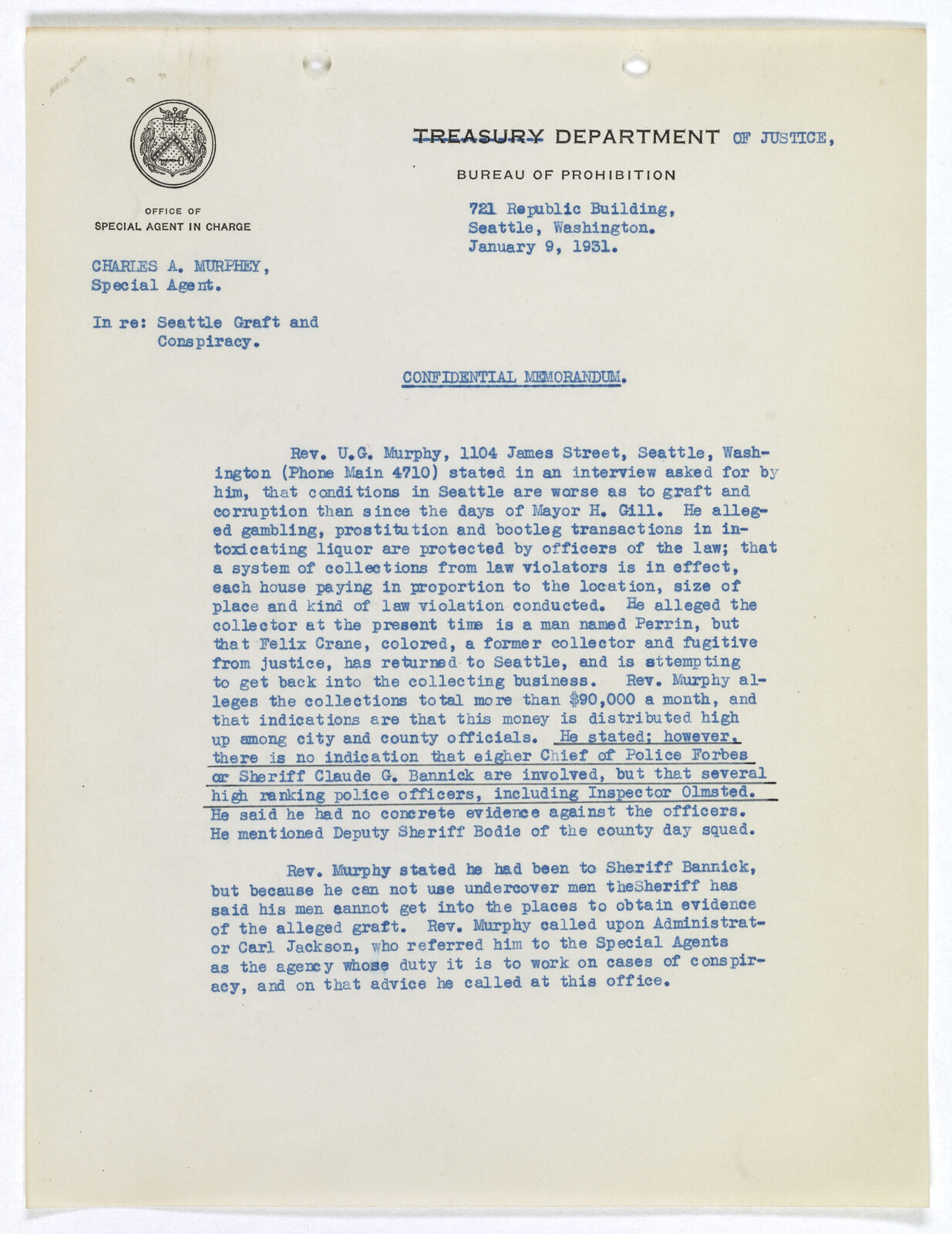 case-fileBureau of Prohibition memorandum recording a minister's allegations about Seattle (9 January 1931)National Archives confidential Bureau of Prohibition memorandum from a Seattle special agent recording a minister's allegations of graft and protected bootlegging, gambling and prostitution. The memorandum says the minister had no concrete evidence against the officers he named.
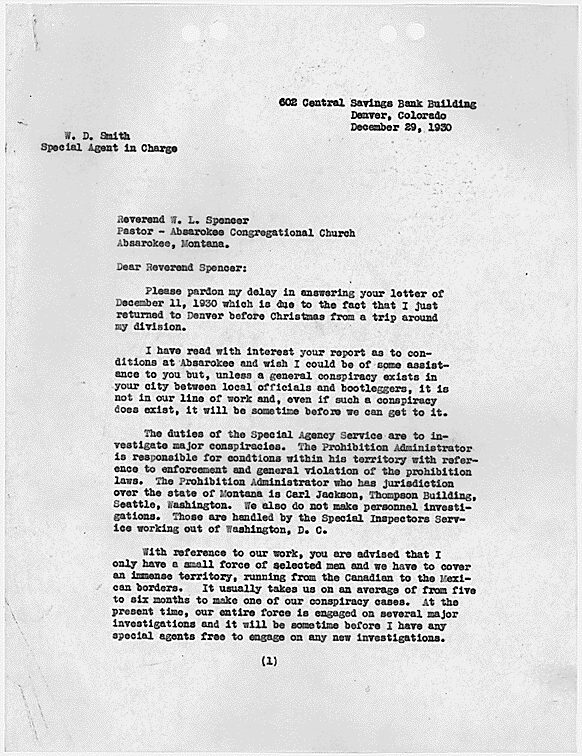 case-fileBureau of Prohibition reply to a Montana pastor about conditions in Absarokee (29 December 1930)National Archives Bureau of Prohibition letter from a Special Agent in Charge in Denver answering a Montana pastor's report on liquor-law conditions in Absarokee, with the Bureau's account of how enforcement was divided.
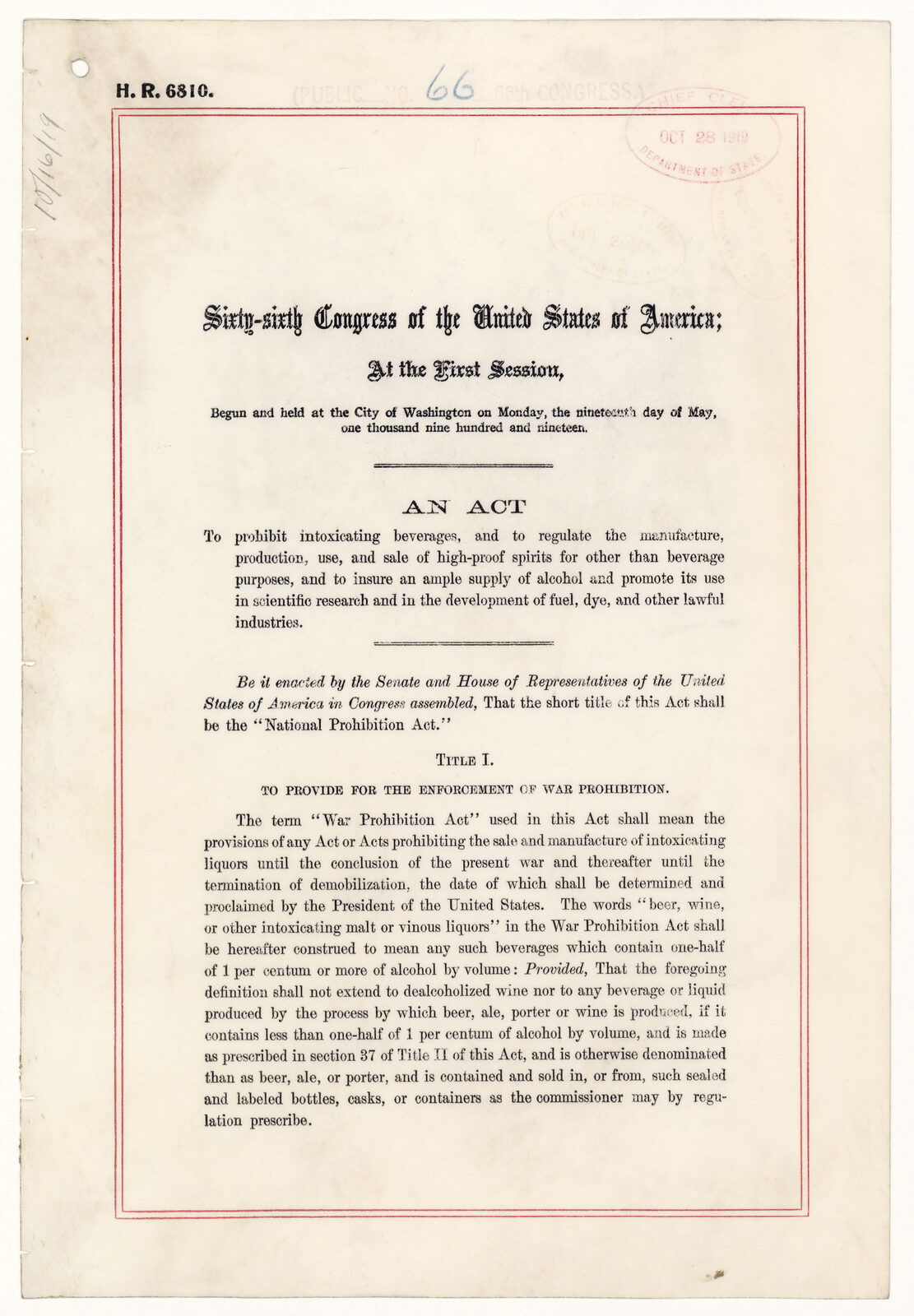 case-fileEnrolled National Prohibition Act (Volstead Act), 28 October 1919National Archives enrolled copy, first page, of H.R. 6810, the National Prohibition Act, with the title "An Act to prohibit intoxicating beverages" and a Department of State stamp dated 28 October 1919.case-fileThe United States of America vs. Jack Gebardi, alias Jack McGurn, alias Jim Vincent D'Oro, and Louise Rolfe (Mann Act case, Chicago)Federal criminal case file at Chicago against Jack Gebardi, alias "Machinegun" Jack McGurn, and Louise Rolfe for violating the Mann Act by travelling from Chicago to Miami. Both were found guilty by the court without a jury. 232 digitized pages.
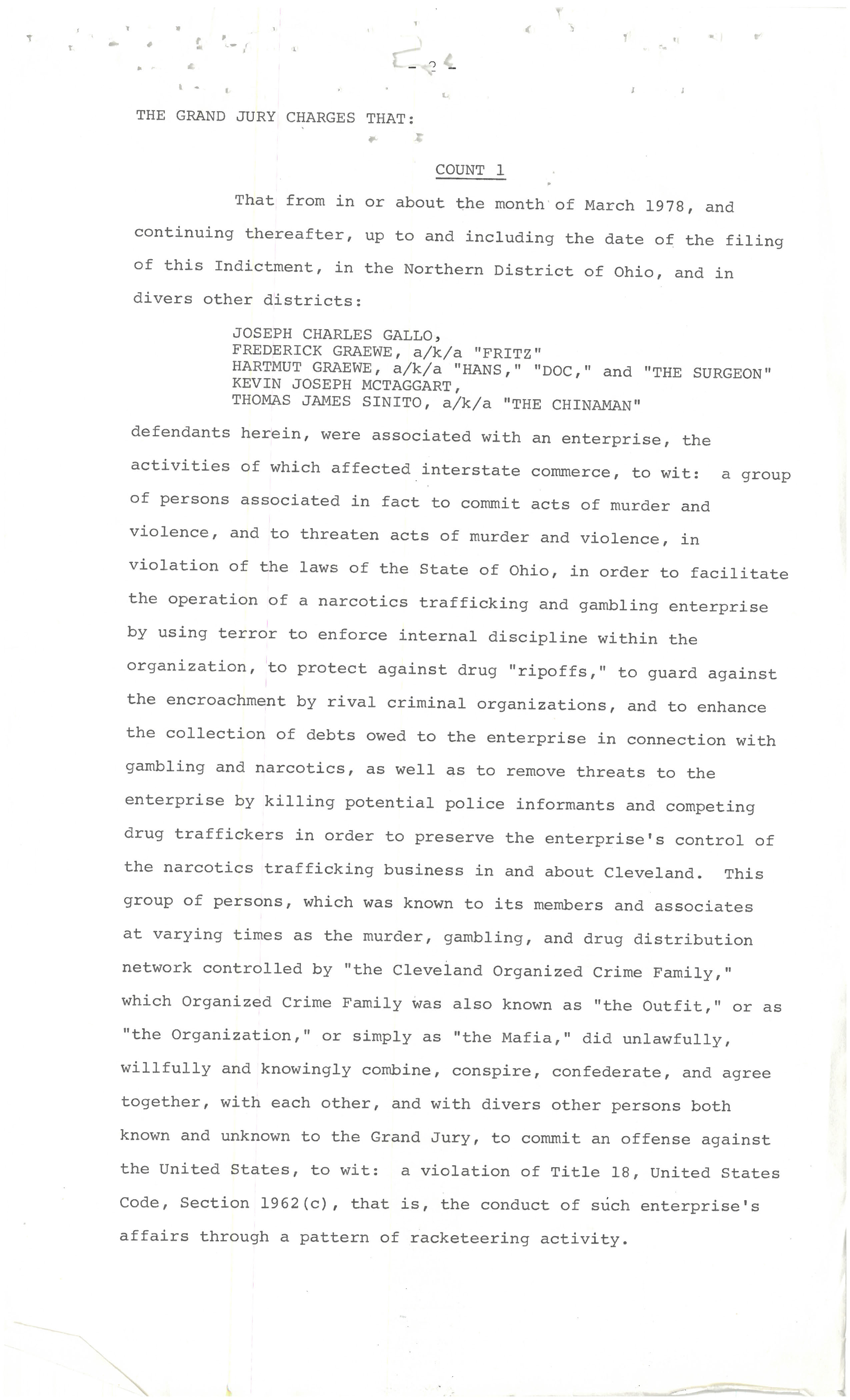 case-fileUnited States v. Gallo et al., criminal case CR82-119, N.D. Ohio (case file, National Archives)The National Archives file unit for the Cleveland federal case against Joseph Charles Gallo, Frederick and Hartmut Graewe, Angelo A. Lonardo, Kevin Joseph McTaggart and Thomas James Sinito: a superseding indictment and sixteen digitized volumes of trial transcript, 1982-1983.
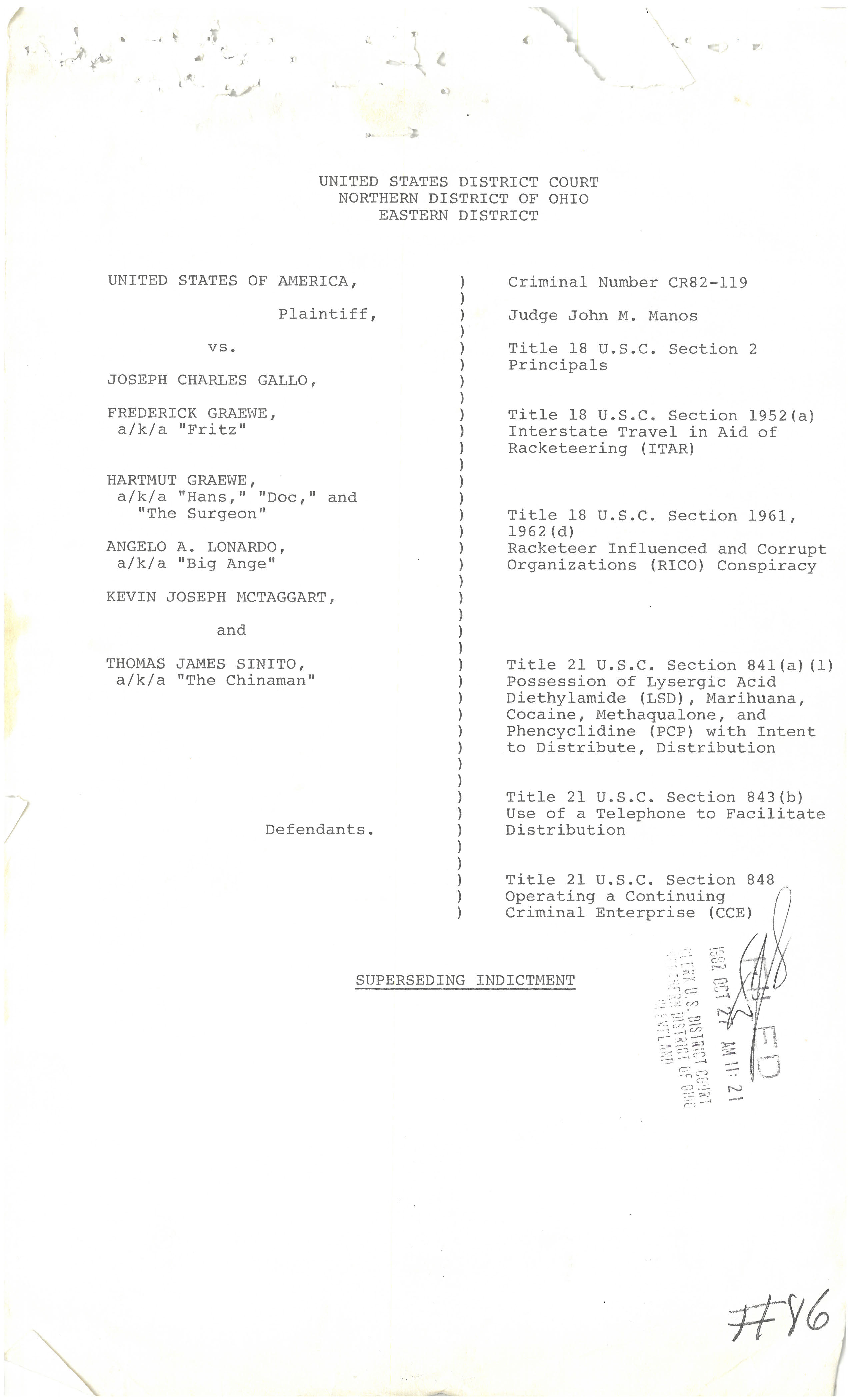 case-fileSuperseding indictment, United States v. Gallo et al., CR82-119, N.D. Ohio (filed 27 October 1982)The 84-page superseding indictment in the Cleveland case before Judge John M. Manos, charging RICO conspiracy, Travel Act, narcotics and continuing-criminal-enterprise counts; Count 1 alleges an enterprise 'controlled by the Cleveland Organized Crime Family'.
 case-fileTranscript of trial proceedings, Volume 1, United States v. Gallo et al., CR82-119 (November 1982)Volume 1 (pages 1-242) of the sixteen-volume transcript of the Cleveland jury trial of Gallo, the Graewes, Lonardo and McTaggart before Judge John M. Manos, which began on 5 November 1982.
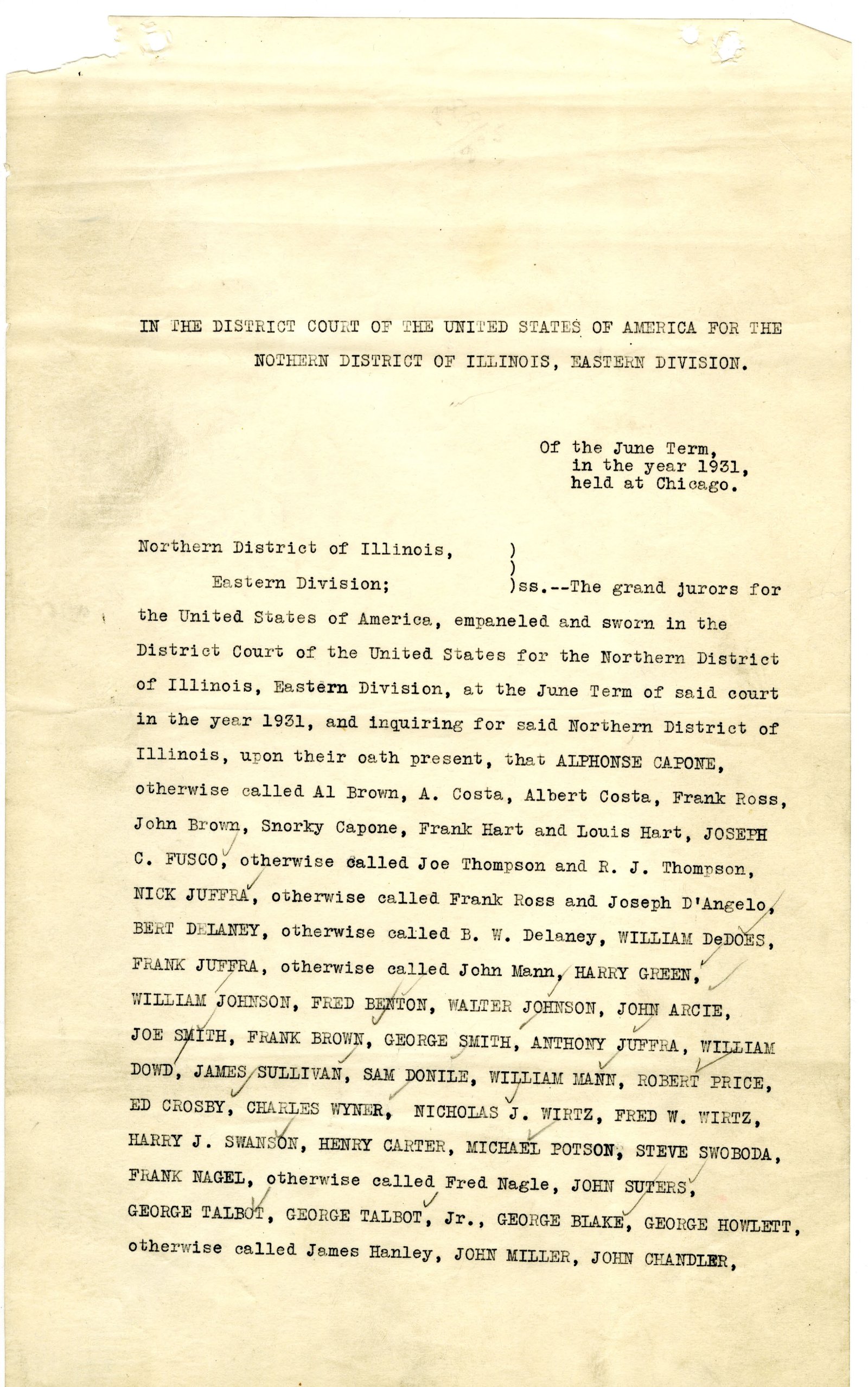 finding-aidThe United States of America vs. Alphonse Capone et al.: Prohibition case 23256 (1931–1934)Criminal case file 23256 for the June 1931 Prohibition indictment of Alphonse Capone and many co-defendants, charged, the catalog says, with unlawfully possessing intoxicating alcohol.
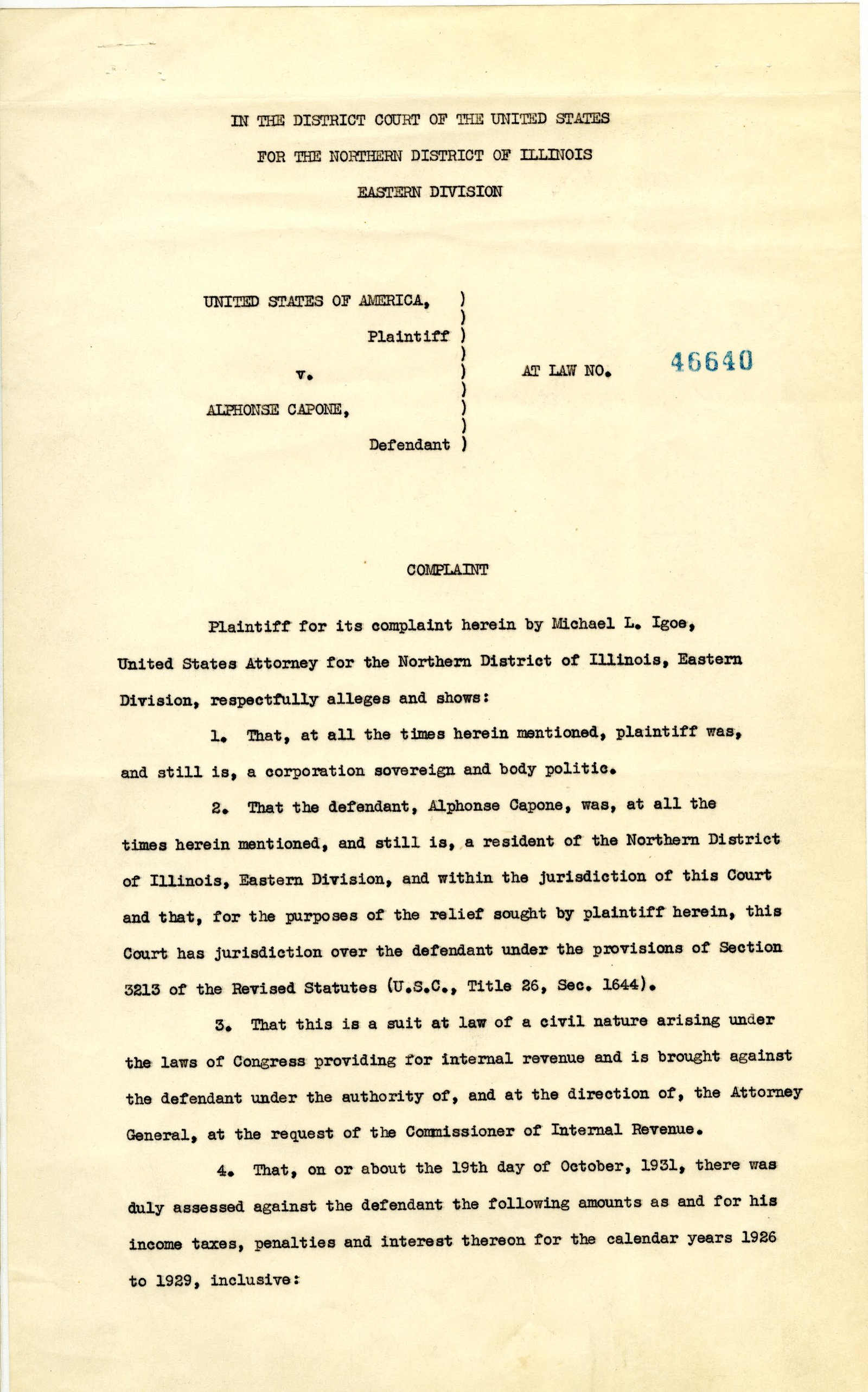 finding-aidThe United States of America vs. Alphonse Capone: law case 46640 (1937–1941)Law (civil-side) case file 46640 in the U.S. District Court at Chicago, which the catalog says concerns Capone 'charged with tax evasion'. Contents not read for this archive.
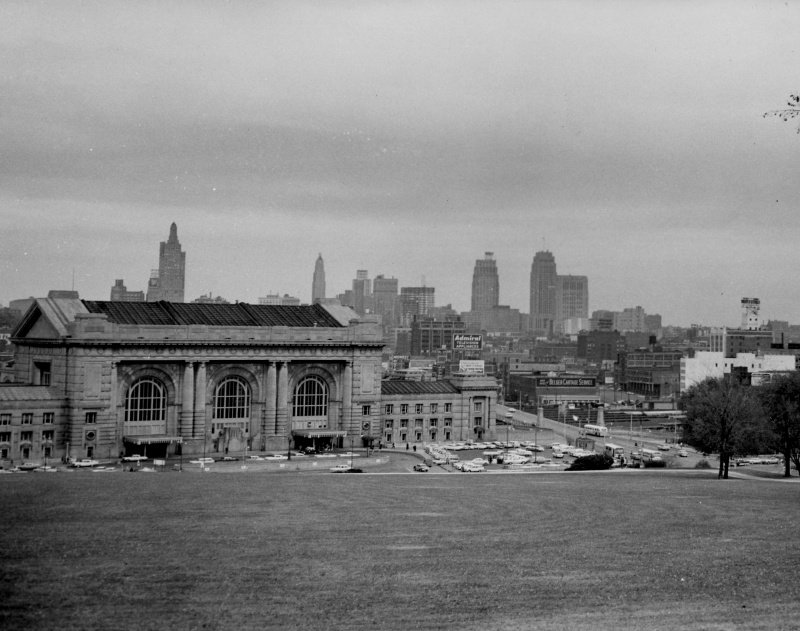 photographUnion Station, Kansas City, Missouri (11 November 1961, Truman Library)An Army Hometown News Center photograph of Union Station in Kansas City, Missouri, dated 11 November 1961, from the Truman Library. It shows the building, not the events of 17 June 1933.
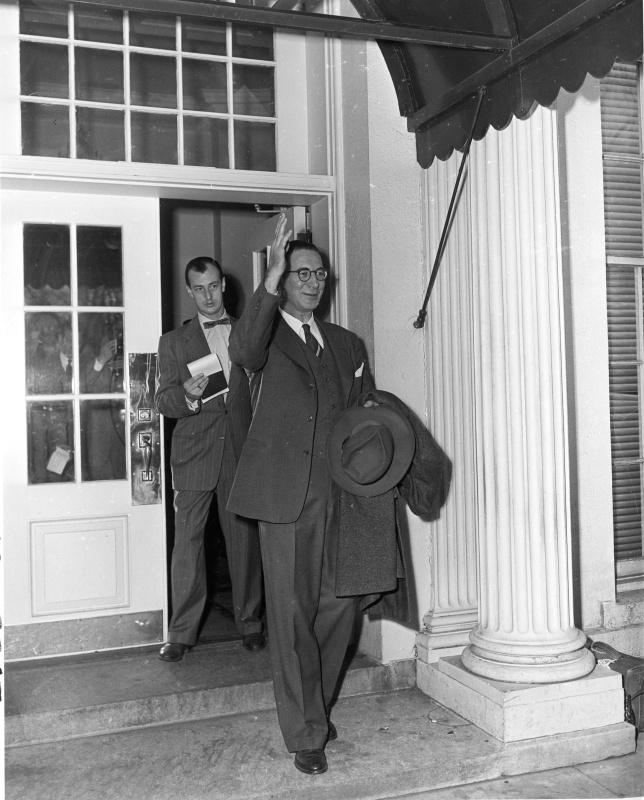 photographSenator Estes Kefauver leaving the White House, January 15, 1952 (Truman Library)Abbie Rowe photograph of Senator Estes Kefauver leaving the White House on January 15, 1952, after meeting President Truman. It postdates the committee and does not show the hearings.
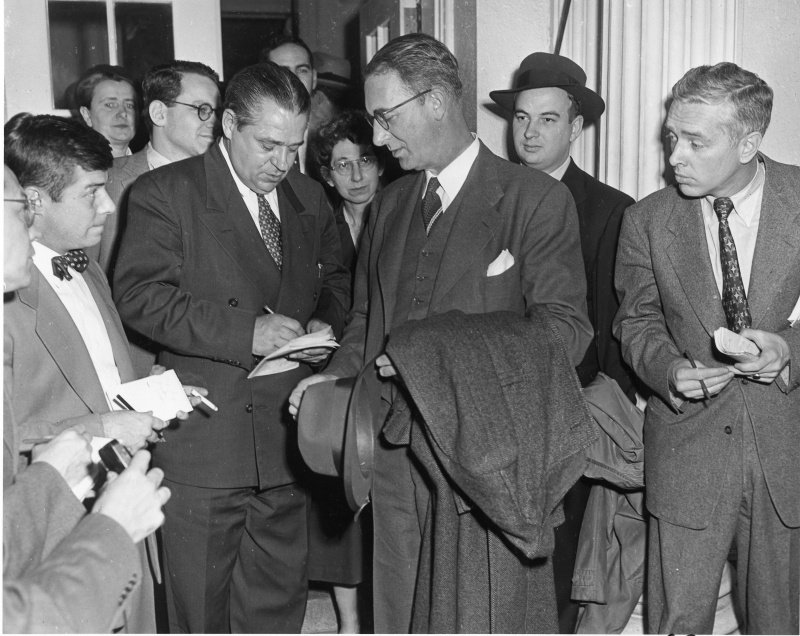 photographSenator Estes Kefauver with the press at the White House, January 15, 1952 (Kefauver Speaks with Press, Truman Library)Abbie Rowe photograph of 15 January 1952: per the catalog, Senator Estes Kefauver speaks with reporters after meeting President Truman. It postdates the crime committee and does not show the hearings.
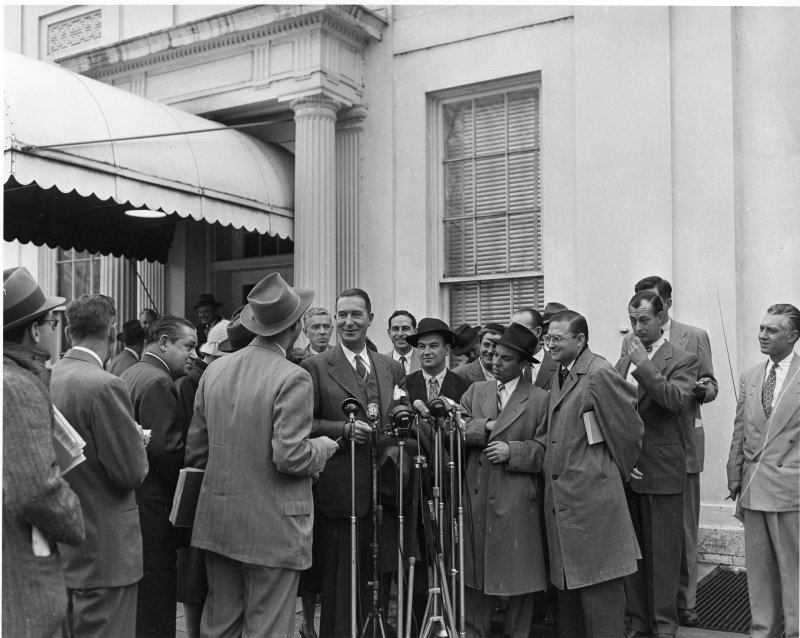 photographSenator Estes Kefauver with the press at the White House, January 15, 1952 (Kefauver Addresses Media, Truman Library)Abbie Rowe photograph of 15 January 1952: per the catalog, Senator Estes Kefauver at microphones addresses reporters after meeting President Truman. It postdates the crime committee and does not show the hearings.
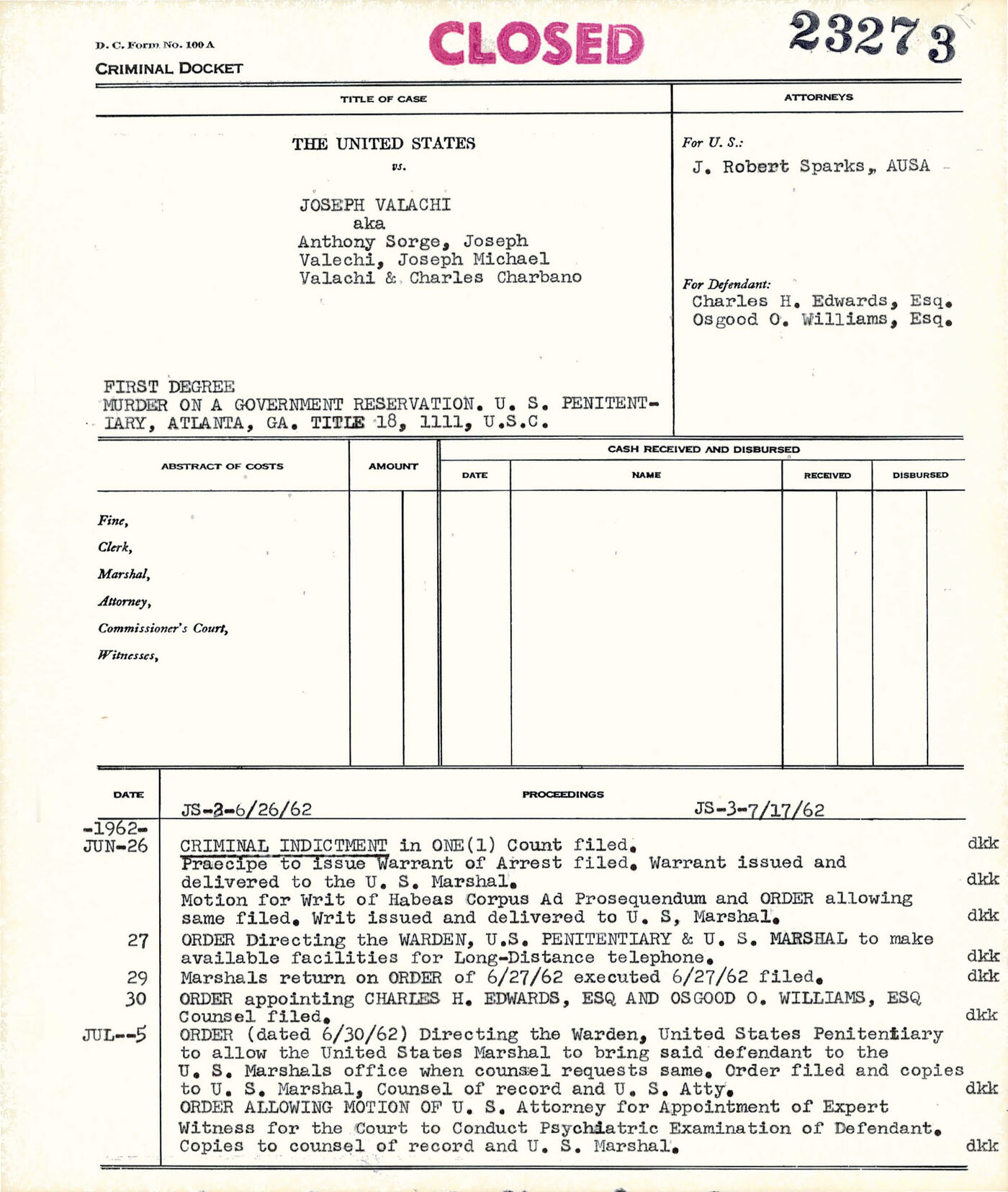 case-fileCriminal docket No. 23273: The United States vs. Joseph Valachi (Atlanta, 1962)The federal criminal docket for the June 1962 killing at the U.S. Penitentiary, Atlanta. It records the indictment of June 26, 1962, and Valachi's plea of guilty to second-degree murder on July 17, 1962.
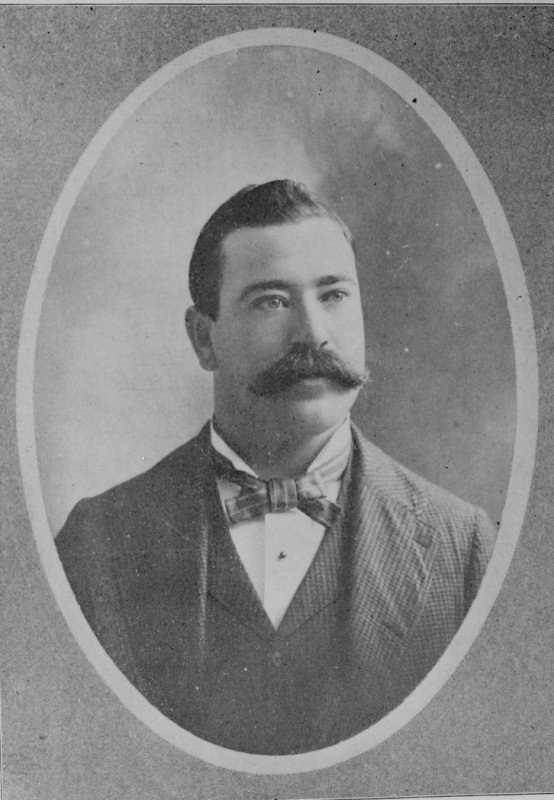 photographThomas J. Pendergast, portrait from "Independence As It Is" (catalog date ca. 1900, Truman Library)An oval book portrait of a young man that the Truman Library catalog identifies as Thomas J. Pendergast; the catalog says it comes from the book "Independence As It Is" and dates it about 1900.
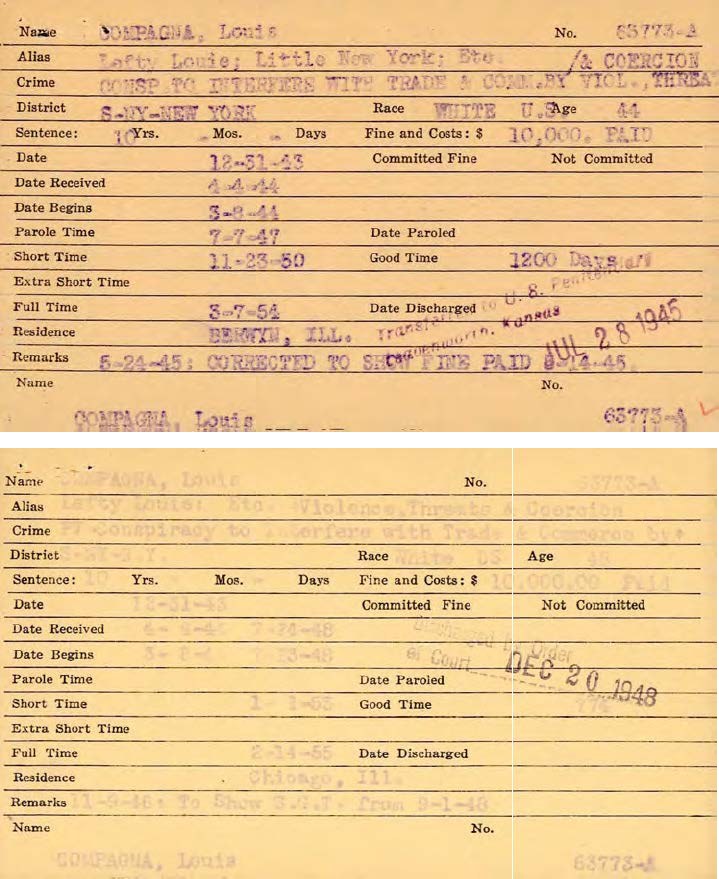 case-fileAtlanta penitentiary index cards: Compagna, Louis, No. 63773-A (1944–1948)Two prisoner index cards from the U.S. Penitentiary, Atlanta: conspiracy to interfere with trade and commerce by violence, threats and coercion, Southern District of New York, ten years from 31 December 1943, transferred to Leavenworth on 28 July 1945, received again in July 1948, and stamped "Discharged by Order of Court DEC 20 1948."
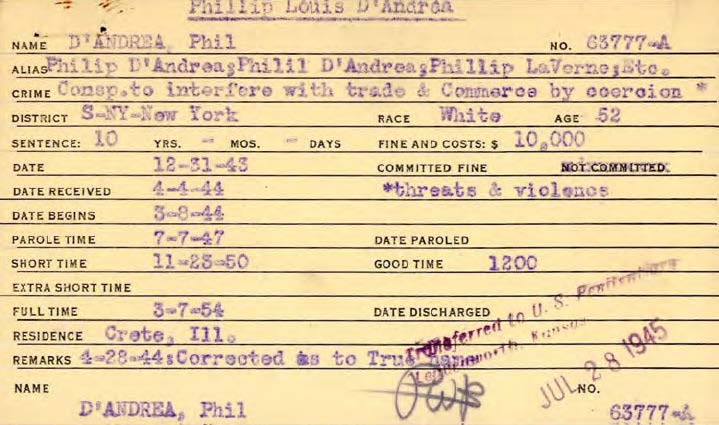 case-fileAtlanta penitentiary index card: D'Andrea, Phil, No. 63777-A (1944–1945)Prisoner index card from the U.S. Penitentiary, Atlanta, for "Phillip Louis D'Andrea": conspiracy to interfere with trade and commerce by coercion, threats and violence, Southern District of New York, ten years from 31 December 1943, residence Crete, Ill., transferred to Leavenworth on 28 July 1945.
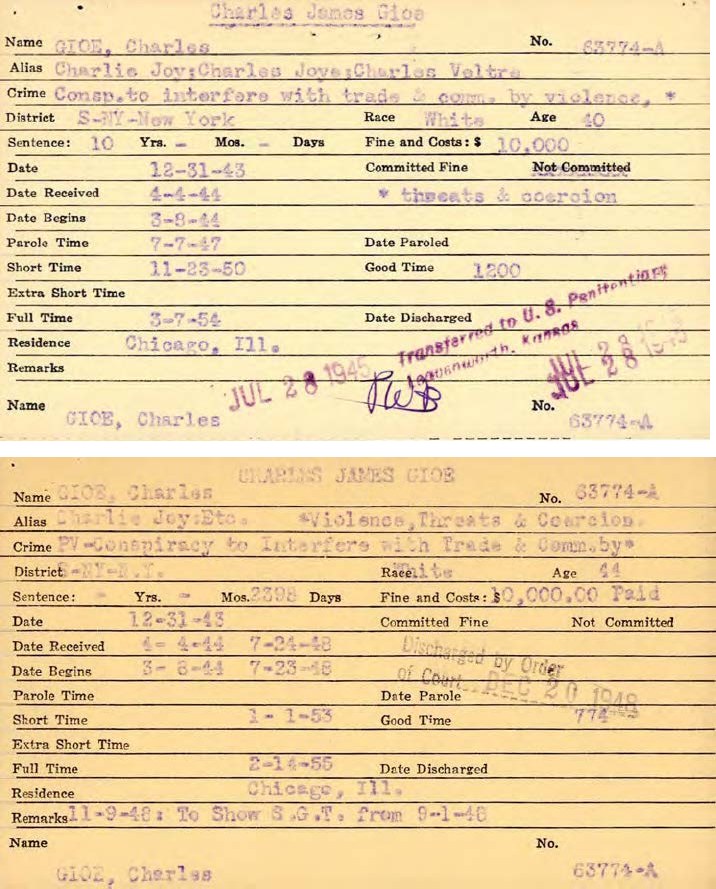 case-fileAtlanta penitentiary index cards: Gioe, Charles, No. 63774-A (1944–1948)Two prisoner index cards from the U.S. Penitentiary, Atlanta, for "Charles James Gioe," aliases Charlie Joy, Charles Joye and Charles Veltre: ten years from 31 December 1943, transferred to Leavenworth on 28 July 1945, received again in July 1948, and stamped "Discharged by Order of Court DEC 20 1948."
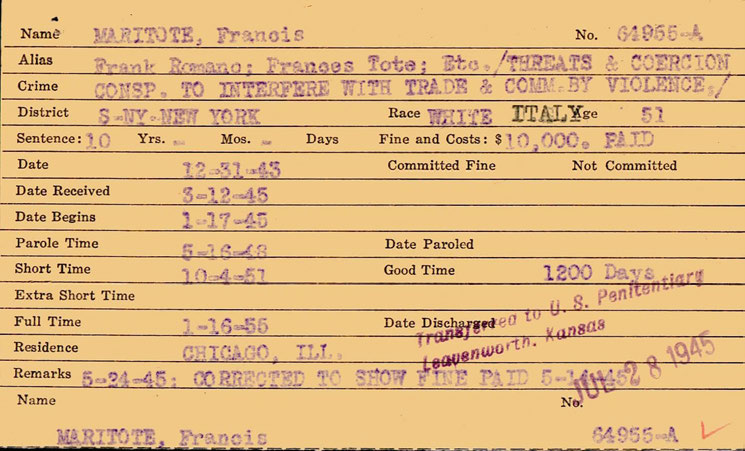 case-fileAtlanta penitentiary index card: Maritote, Francis, No. 64955-A (1945)Prisoner index card from the U.S. Penitentiary, Atlanta: aliases Frank Romano and Frances Tote, conspiracy to interfere with trade and commerce by violence, threats and coercion, ten years from 31 December 1943, received 12 March 1945 and transferred to Leavenworth on 28 July 1945.
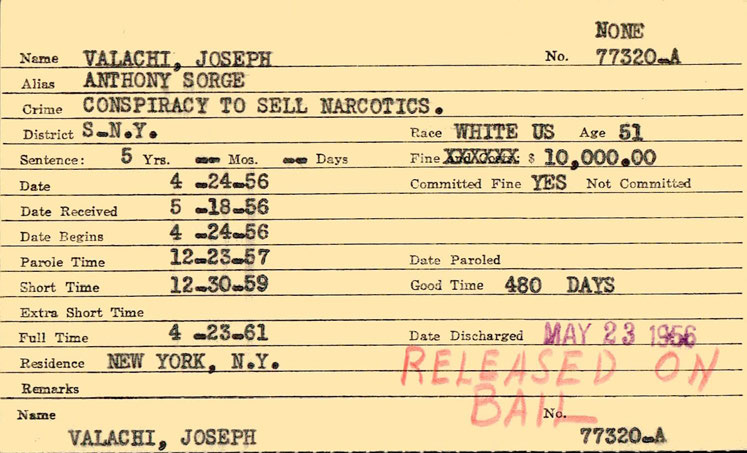 case-fileAtlanta penitentiary index card: Valachi, Joseph, No. 77320-A (1956)Prisoner index card from the U.S. Penitentiary, Atlanta: conspiracy to sell narcotics, Southern District of New York, five years and a $10,000 fine, received May 18, 1956, and stamped "Released on bail."
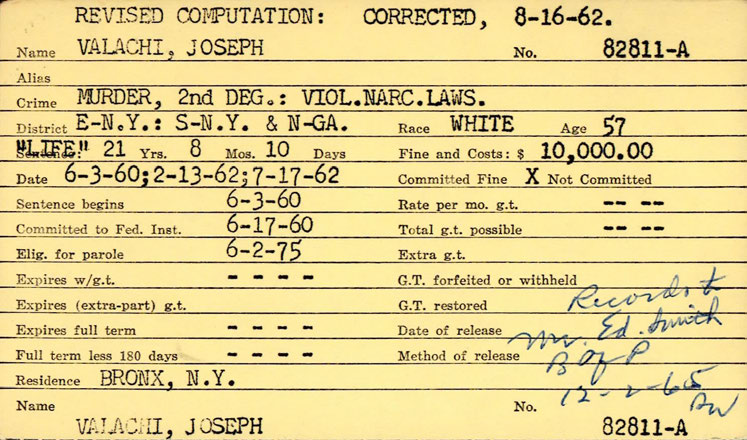 case-fileAtlanta penitentiary index card: Valachi, Joseph, No. 82811-A (revised computation, 1962)Prisoner index card headed "Revised computation: corrected, 8-16-62": murder in the second degree and narcotics violations, sentence "Life" and 21 years, 8 months, 10 days.
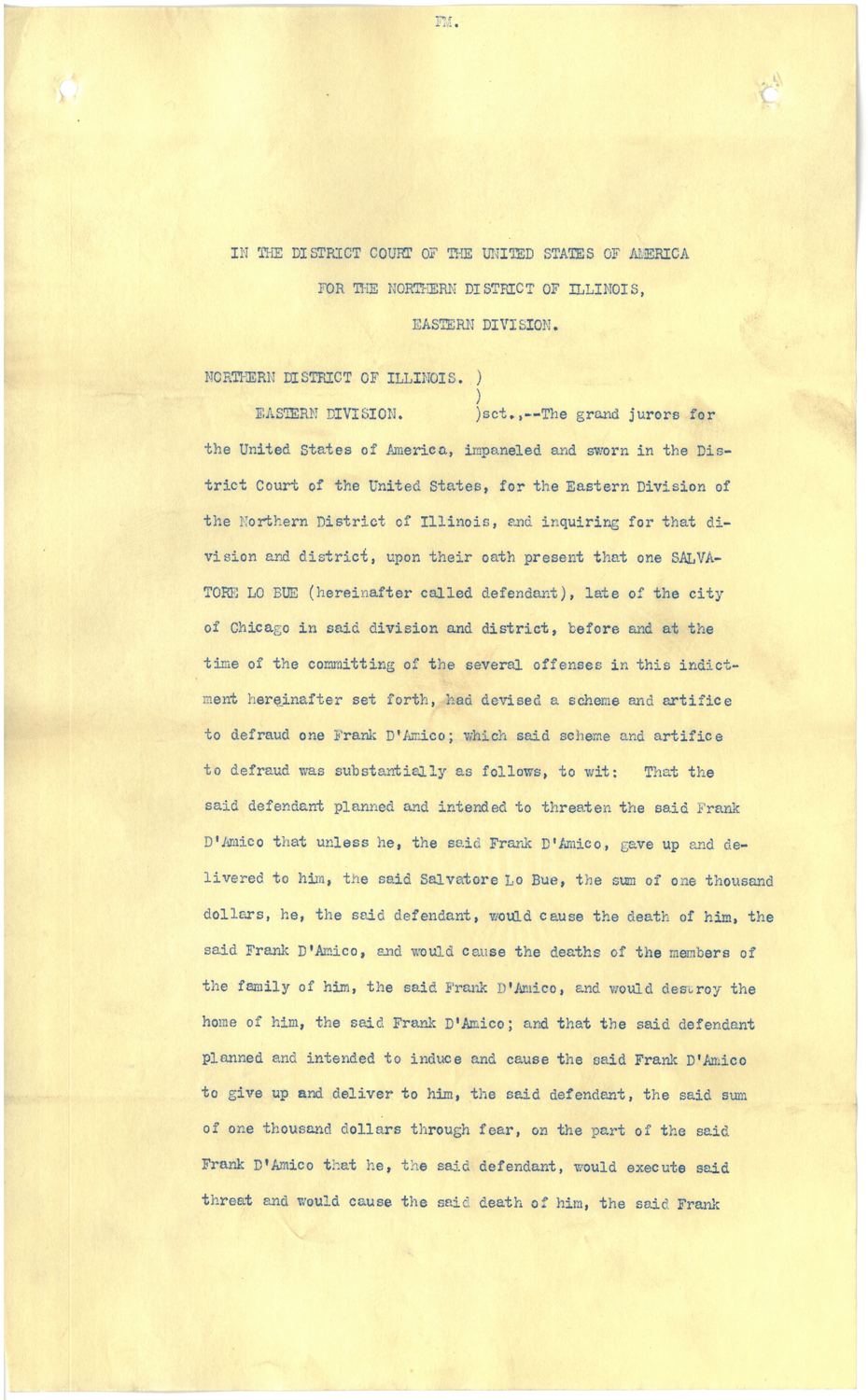 case-fileIndictment, United States v. Salvatore Lo Bue, first page (Northern District of Illinois, 1915)Typed first page of the federal indictment charging that Salvatore Lo Bue devised a scheme to defraud Frank D'Amico by threatening to kill him and his family and destroy his home unless he paid one thousand dollars.
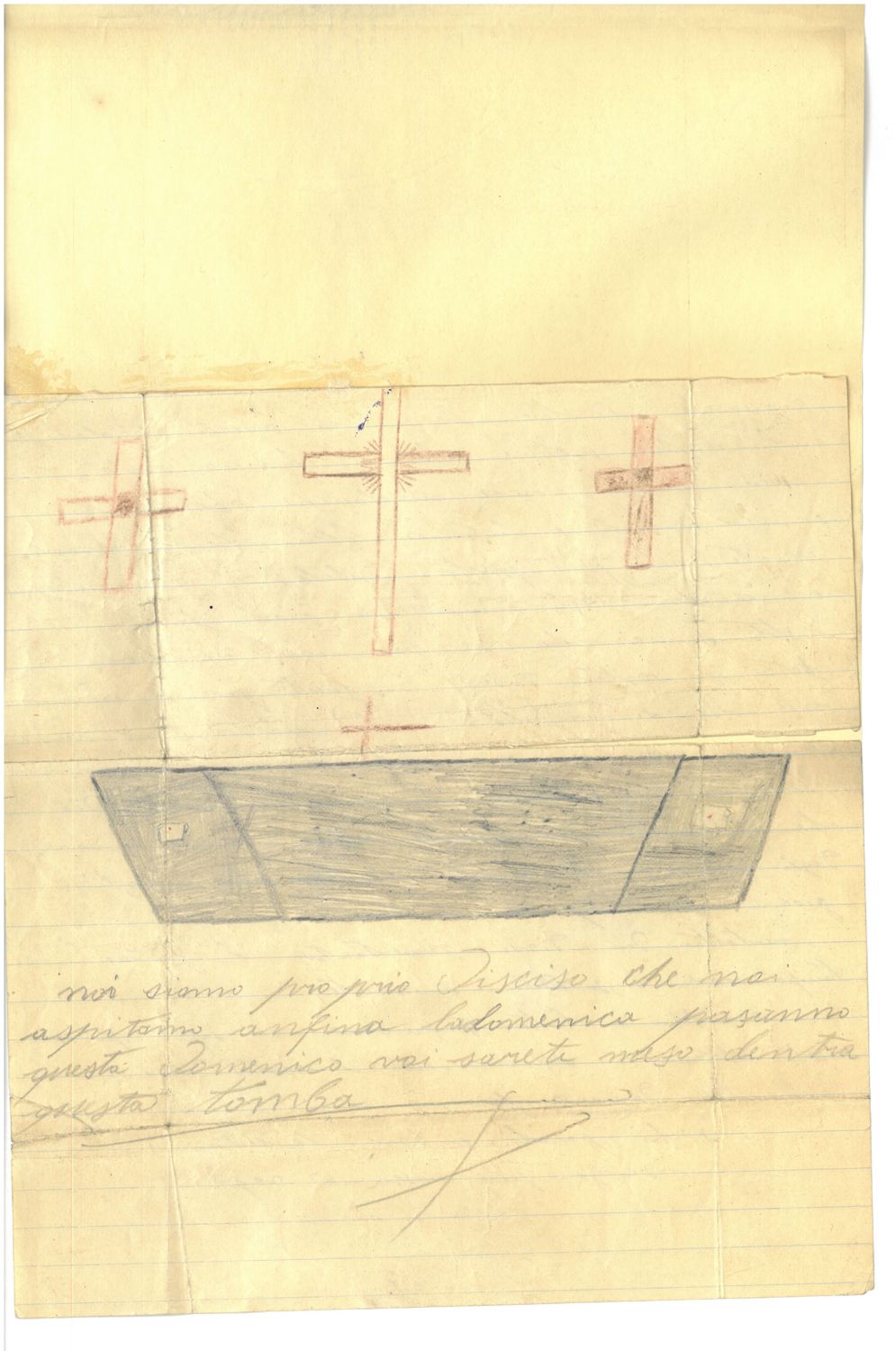 case-fileThreatening letter with drawn crosses and a coffin, exhibit in United States v. Salvatore Lo Bue (file page 30)A folded sheet from the Lo Bue case file with four crosses drawn in red and brown pencil above a shaded coffin, and three lines of handwritten Italian ending 'questa tomba' (this tomb).
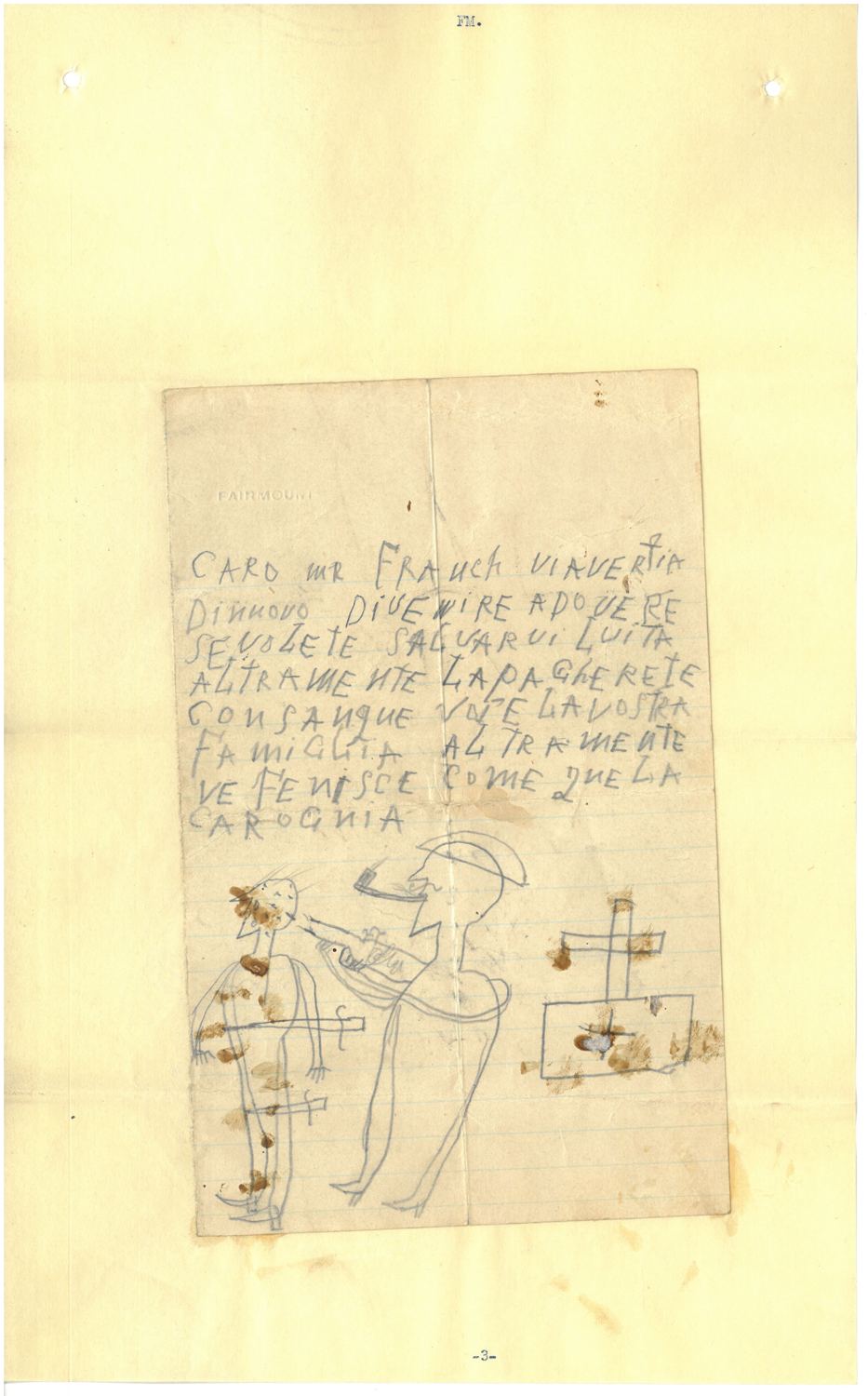 case-fileThreatening letter with pencil drawings, exhibit in United States v. Salvatore Lo Bue (file page 23)A handwritten Italian letter on lined paper, beginning 'Caro Mr Franch', with pencil drawings of one figure attacking another and of a cross over a tomb, and brown stains that the catalog says may be human blood.
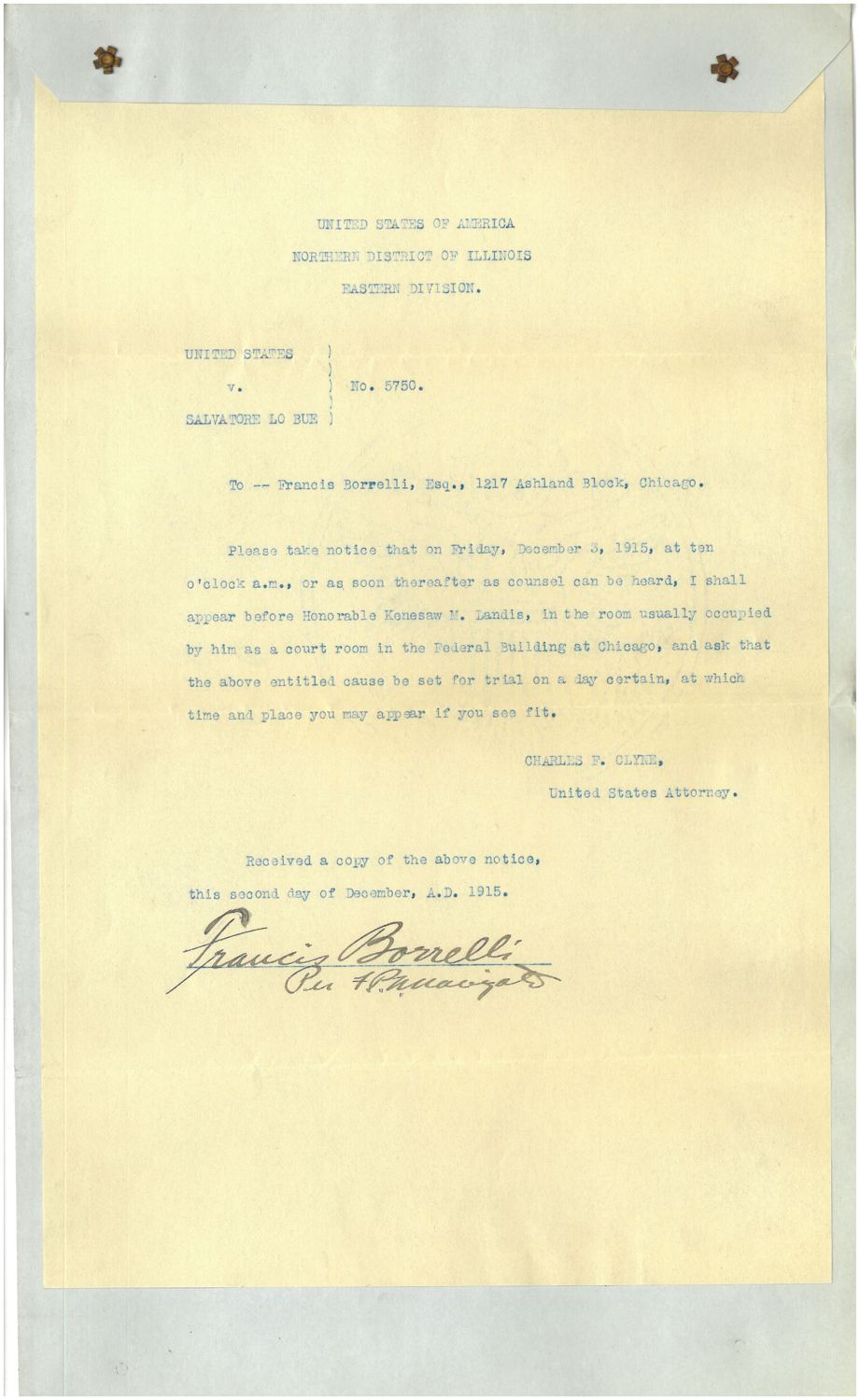 case-fileThe United States vs. Salvatore Lo Bue: threatening-letter case, Chicago, 1915 (case file)National Archives case file from the federal court at Chicago: the catalog note says Lo Bue was accused of mailing letters demanding $1,000 from Frank D'Amico on pain of death to a family member and the destruction of his house; the file holds letters with drawings of an attack and of a tomb.
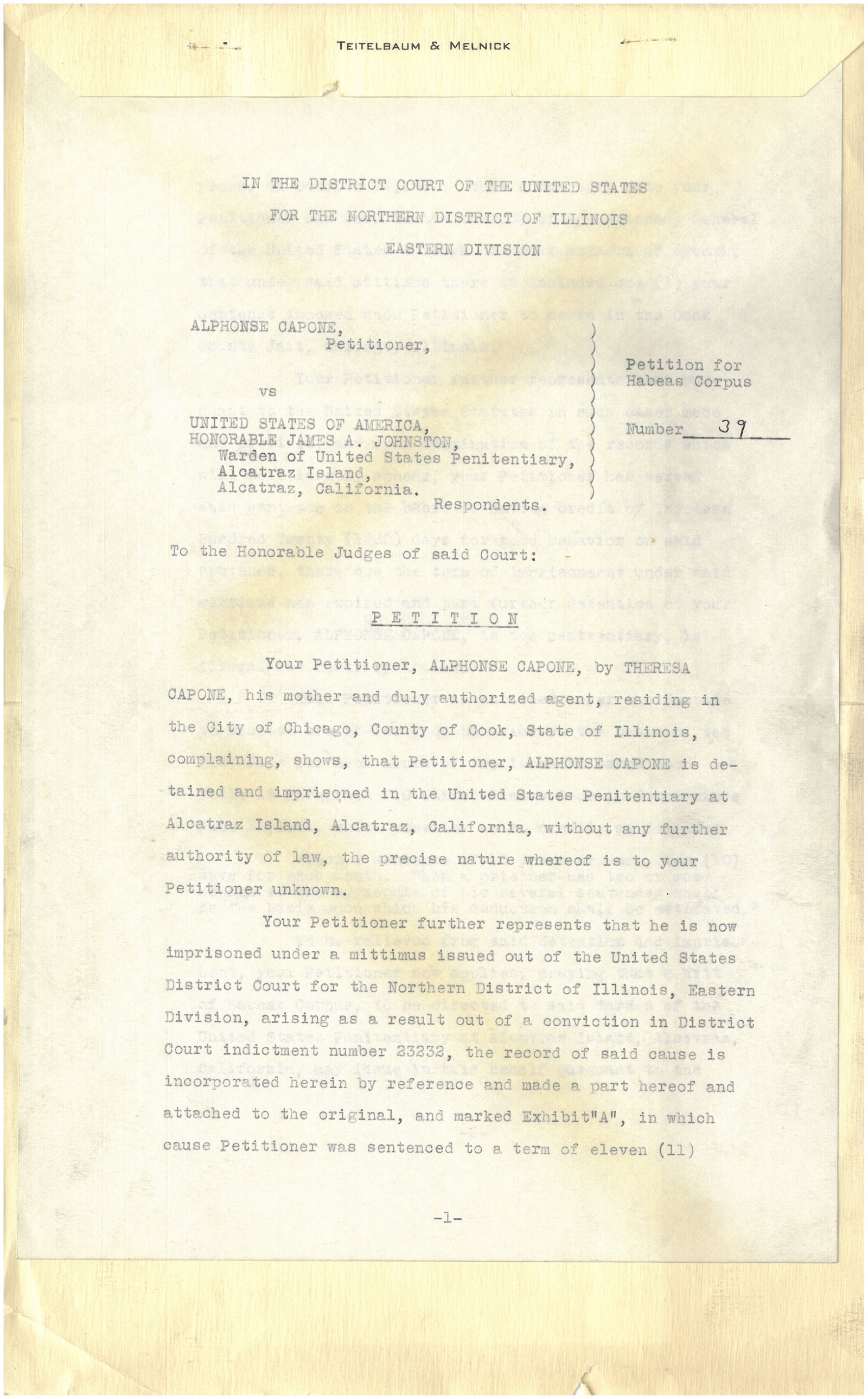 finding-aidAlphonse Capone vs. The United States of America and Warden James A. Johnston: habeas case 39 (1938)Habeas corpus case file of April 1938 in the U.S. District Court at Chicago. The catalog says Capone's mother, Theresa Capone, petitioned against the United States and the Alcatraz warden for his release.case-fileThe United States of America vs. Louis Piquette (No. 28821)Federal criminal case file at Chicago in which Dillinger's attorney Louis Piquette was convicted of harboring. The appeal went to the Seventh Circuit as No. 5550.
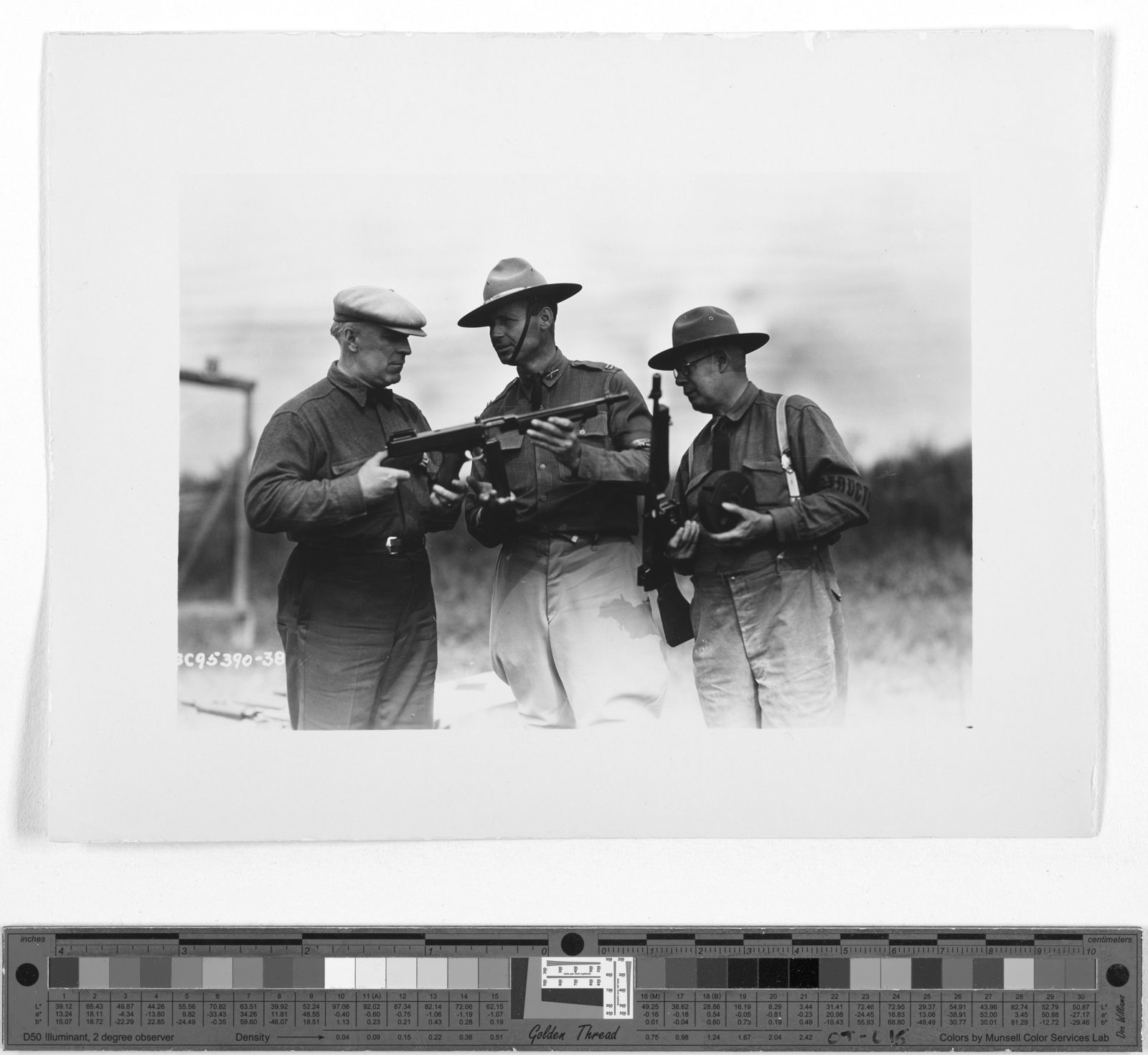 photographArmy captain explaining the mechanism of a Thompson submachine gun to a Hartford police captain, Camp Perry, Ohio, 1930 (National Archives)U.S. Army Signal Corps photograph from the 1930 National Rifle Matches at Camp Perry, Ohio. The original caption describes the Thompson submachine gun as "a favorite of Chicago gunmen." Two Thompsons are visible, and the man on the right holds a drum magazine.
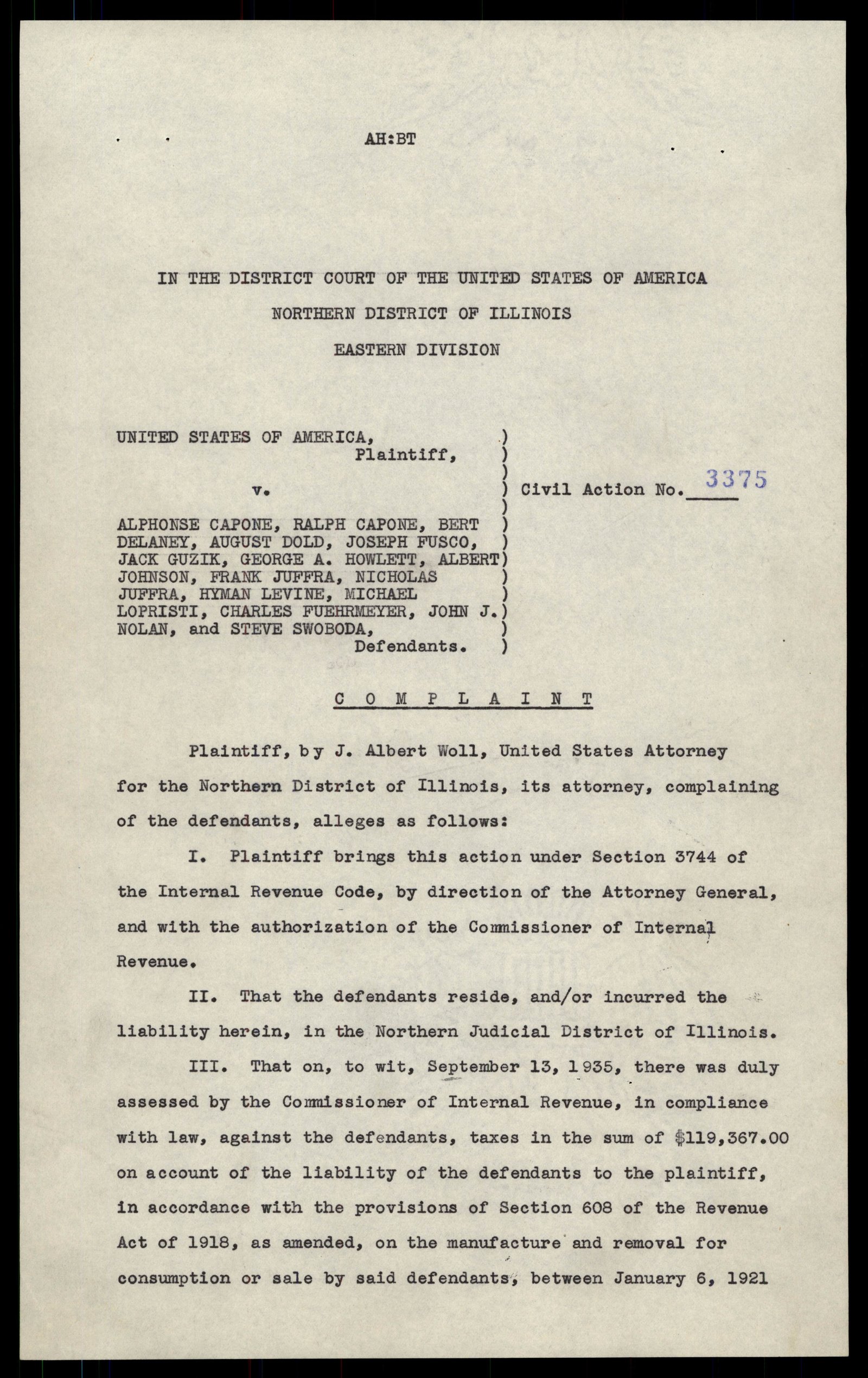 finding-aidUnited States v. Alphonse Capone, Ralph Capone, et al.: civil case 3375 (1941–1944)Civil case file 3375 in the U.S. District Court at Chicago, brought by the United States against Al Capone and others for unpaid taxes, according to the catalog.case-fileThe United States of America vs. Louis Piquette, Wilhelm Loeser, Harold Bernard Cassidy, and Arthur W. O'Leary (No. 28341)Federal criminal case file at Chicago against Dillinger's attorney Louis Piquette and others. The National Archives says Piquette and his investigator arranged surgery to alter the appearance of Dillinger and Homer Van Meter.case-fileThe United States of America vs. John Paul Chase (No. 28680): the Barrington killings, 1934Federal criminal case at Chicago over the killing of Inspector Samuel P. Cowley and Special Agent Herman E. Hollis at Barrington, Illinois on 27 November 1934. The National Archives says Chase was convicted under the Act of 18 May 1934.case-file"Crime - Hoffa Disappearance": Philip Buchen Files, Gerald R. Ford Presidential Library (National Archives)A Ford White House counsel's folder on the Hoffa disappearance. It holds a November 1975 Senate resolution to create a select committee that would study, among other matters, "the disappearance of James R. Hoffa," and a Labor Department letter of 2 December 1975.finding-aidKefauver Committee files: Records relating to gangs, mobs and syndicates (National Archives file unit 45640411)National Archives finding-aid entry for a file unit of the Kefauver Committee's own records in Record Group 46: records relating to gangs, mobs and syndicates. The catalog shows no digitized pages.finding-aidKefauver Committee files: Homicide lists (National Archives file unit 45640425)National Archives finding-aid entry for a file unit of the Kefauver Committee's own records in Record Group 46: homicide lists. The catalog shows no digitized pages.finding-aidKefauver Committee files: Press releases (National Archives file unit 45640433)National Archives finding-aid entry for a file unit of the Kefauver Committee's own records in Record Group 46: press releases. The catalog shows no digitized pages.finding-aidKefauver Committee files: Subpoena files (National Archives file unit 45640441)National Archives finding-aid entry for a file unit of the Kefauver Committee's own records in Record Group 46: subpoena files. The catalog shows no digitized pages.finding-aidKefauver Committee files: Executive session hearings and committee meetings (National Archives file unit 45640443)National Archives finding-aid entry for a file unit of the Kefauver Committee's own records in Record Group 46: executive session hearings and committee meetings. The catalog shows no digitized pages.finding-aidKefauver Committee files: Public hearing records (National Archives file unit 45640444)National Archives finding-aid entry for a file unit of the Kefauver Committee's own records in Record Group 46: public hearing records. The catalog shows no digitized pages.finding-aidKefauver Committee files: Digests of hearings (National Archives file unit 45640445)National Archives finding-aid entry for a file unit of the Kefauver Committee's own records in Record Group 46: digests of hearings. The catalog shows no digitized pages.case-fileThe United States of America vs. Anna Hamilton Campbell Steve, Charles Campbell, John Hamilton, and Pat Cherrington (harboring, 1934)Federal criminal case file on the harboring of John Dillinger at Sault Ste. Marie, Michigan in 1934. Forty digitized pages.case-fileUnited States of America vs. John Herbert Dillinger, et al. (Little Bohemia Lodge, Wisconsin, 1934)Federal criminal case charging Dillinger and others with concealing the fugitive Thomas Carroll and resisting Division of Investigation agents at the Little Bohemia Lodge, Manitowish Waters, Wisconsin, on 22 April 1934.case-fileUnited States of America vs. John Hamilton, et al. (Little Bohemia Lodge, Wisconsin, 1934)Companion federal case to the Little Bohemia prosecution, charging John Hamilton and others with concealing John Dillinger and resisting Division of Investigation agents on 22 April 1934.
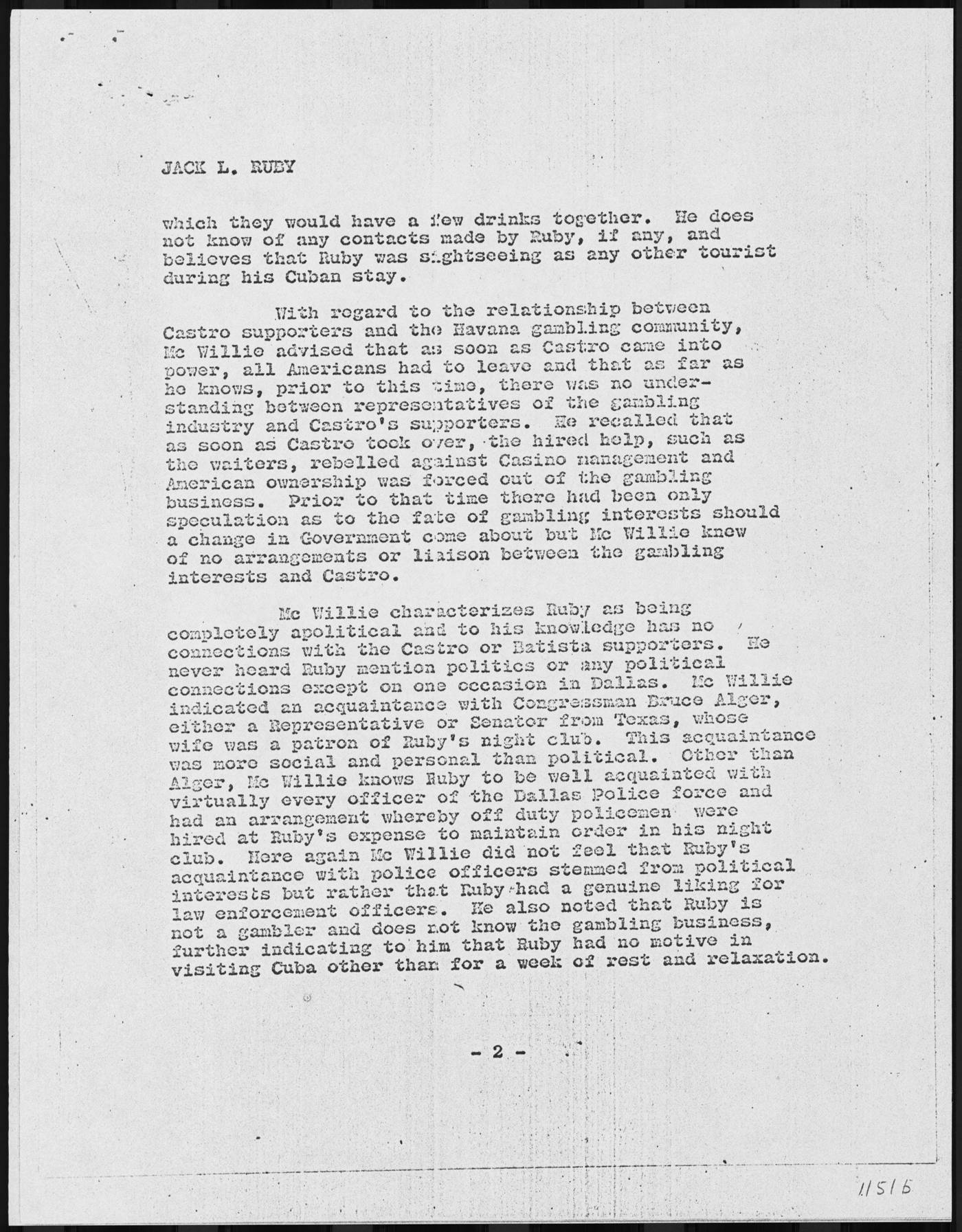 case-fileWarren Commission Exhibit 1697: FBI report of the interview of Lewis J. McWillie on the Tropicana and Capri casinos in Havana (11 June 1964)An FBI Las Vegas report printed as Commission Exhibit 1697 records that McWillie went to Cuba in September 1958, managed the Tropicana Casino until May 1960, was a pit boss at the Capri Hotel-Casino until 2 January 1961, and said that when Castro took over 'American ownership was forced out of the gambling business.'
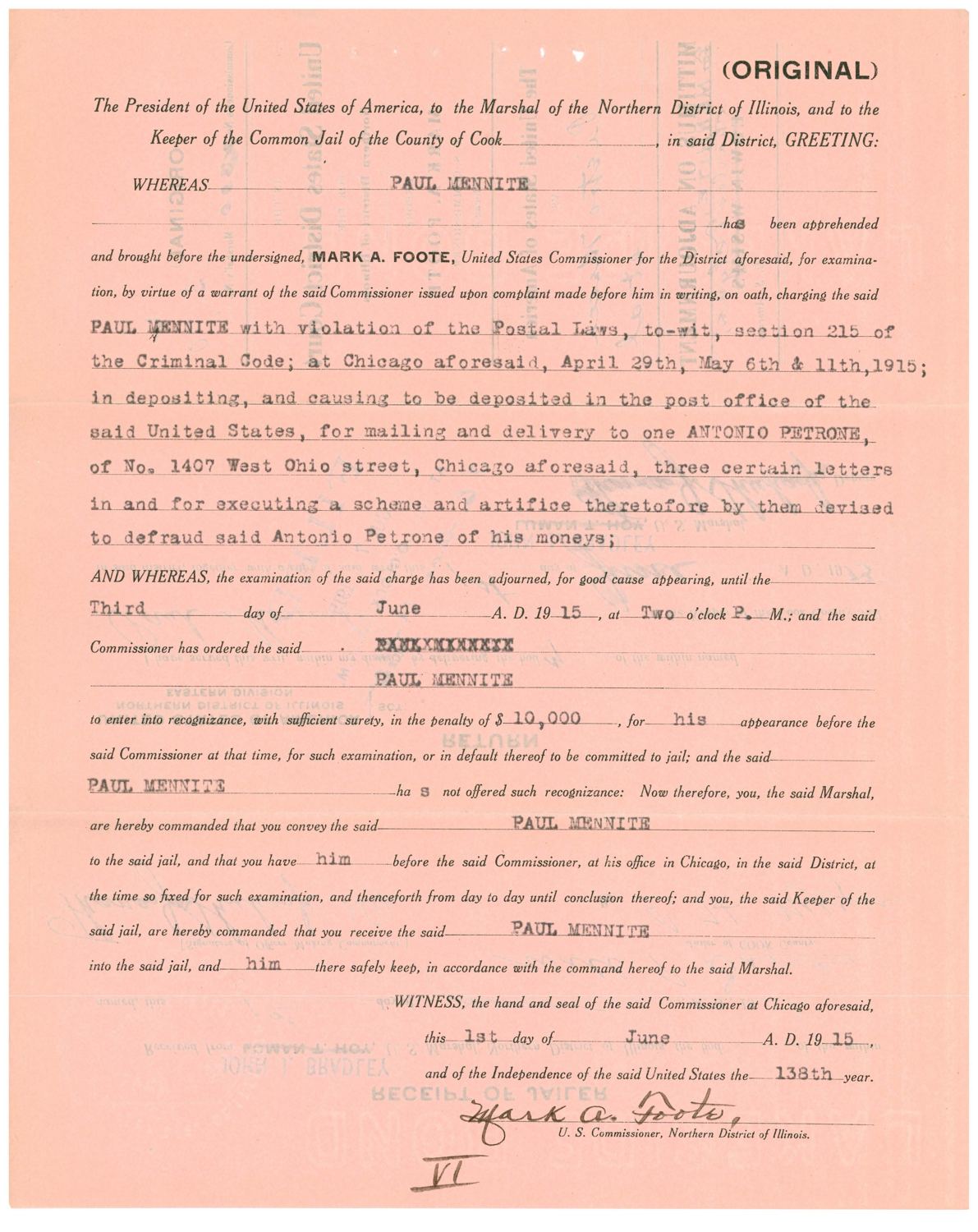 case-fileCommitment of Paul Mennite by U.S. Commissioner Mark A. Foote, Chicago, 1 June 1915Printed commitment form from the Mecca and Mennite case file: U.S. Commissioner Mark A. Foote commits Paul Mennite to the Cook County jail in default of a $10,000 recognizance, on a complaint that he mailed three letters in a scheme to defraud Antonio Petrone.case-fileThe United States vs. Pietro Mecca and Paul Mennite: threatening-letter case, Chicago, 1915 (case file)National Archives case file from the federal court at Chicago: the catalog note says Mecca and Mennite were accused of mailing letters threatening to kill a man and his family and to bomb his home unless he paid $300; both were sentenced to five years at Leavenworth.
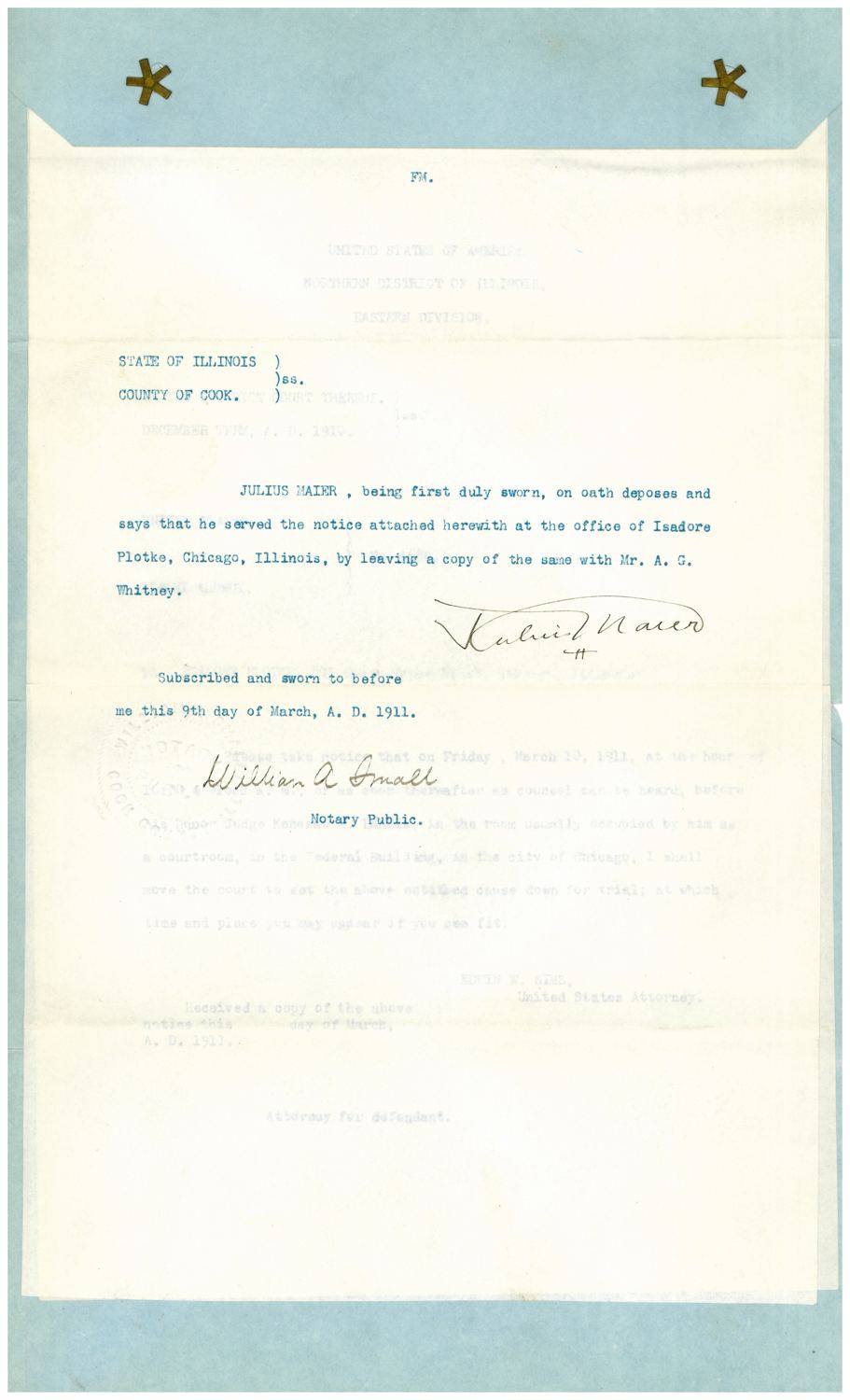 case-fileU.S. vs. Gianni Alongi: threatening-letter case, Chicago, 1911 (case file)National Archives case file from the federal court at Chicago: the catalog note says Gianni Alongi was accused in February 1911 of mailing three letters demanding $500 under threat of murder, in which he claimed to be a member of the Black Hand, and was found guilty and sentenced to five years and a $1,000 fine.
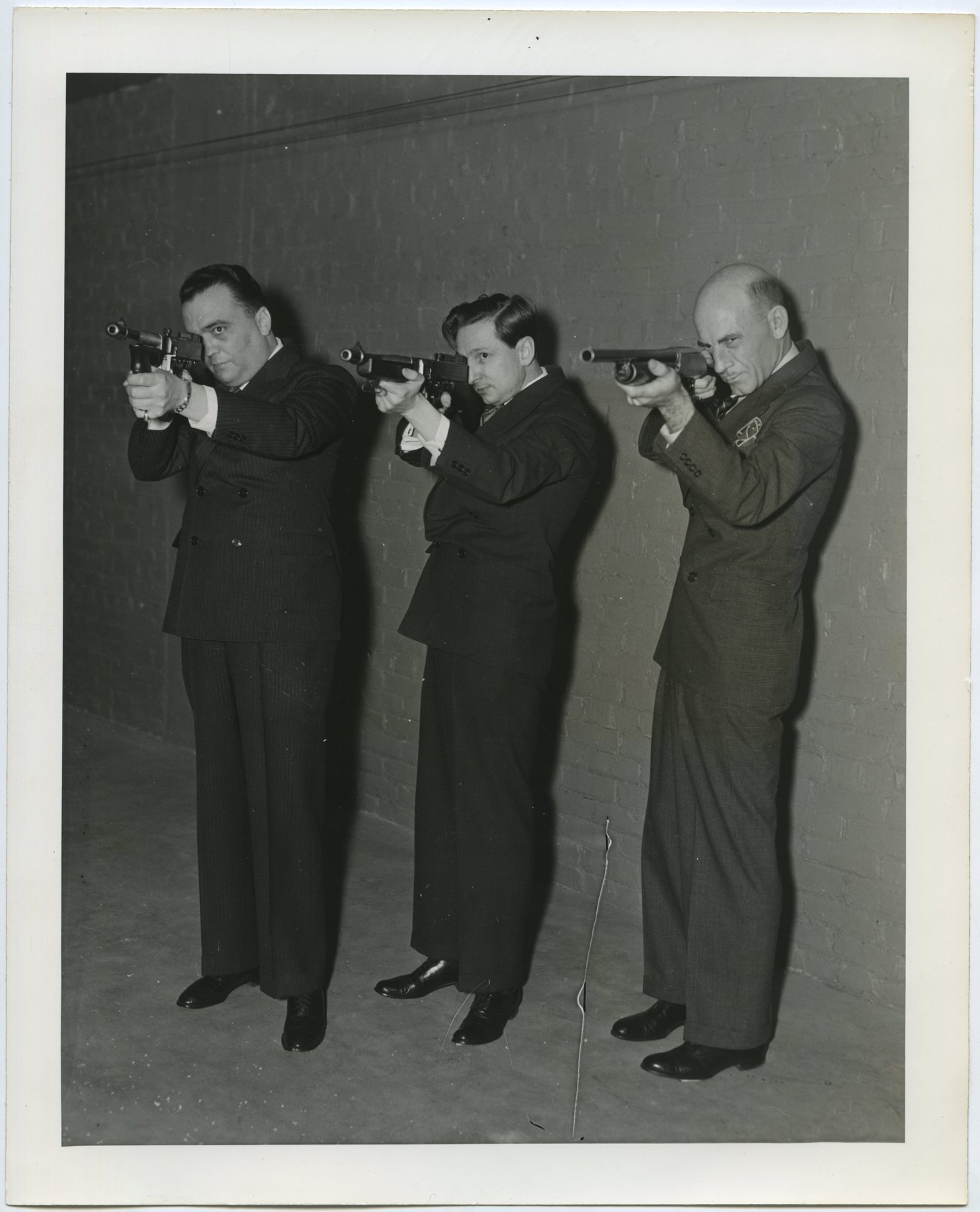 photographJ. Edgar Hoover, Sumner Blossom and Courtney Ryley Cooper aiming guns (11 December 1935, 65-H-125-2)An FBI photograph of 11 December 1935 with the original caption naming, left to right, Director J. Edgar Hoover, Sumner Blossom, editor of The American Magazine, and the author Courtney Ryley Cooper, each aiming a gun.
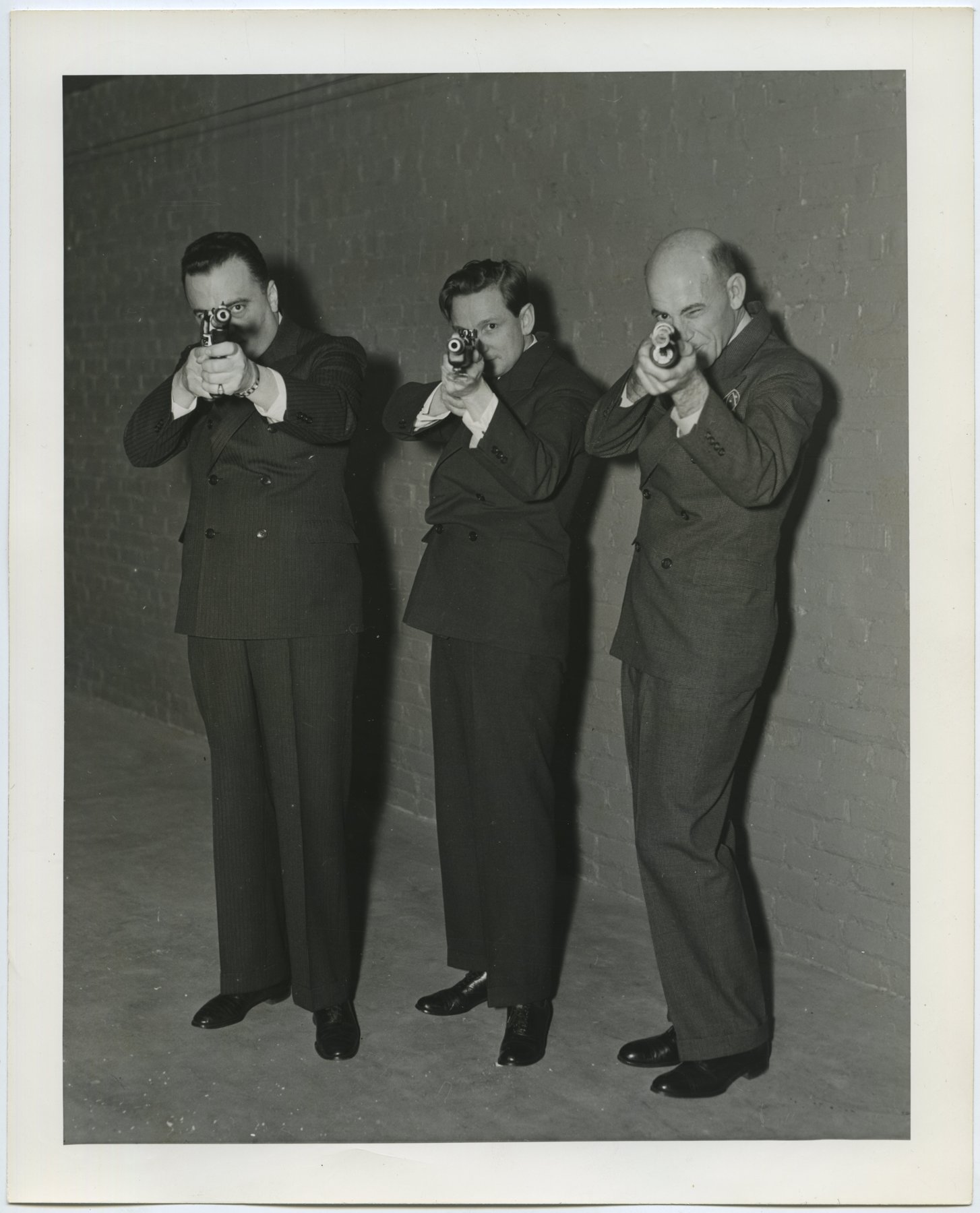 photographJ. Edgar Hoover, Sumner Blossom and Courtney Ryley Cooper aiming guns (11 December 1935, 65-H-125-3)An FBI photograph of 11 December 1935 with the original caption naming, left to right, Director J. Edgar Hoover, Sumner Blossom, editor of The American Magazine, and the author Courtney Ryley Cooper, each aiming a gun.
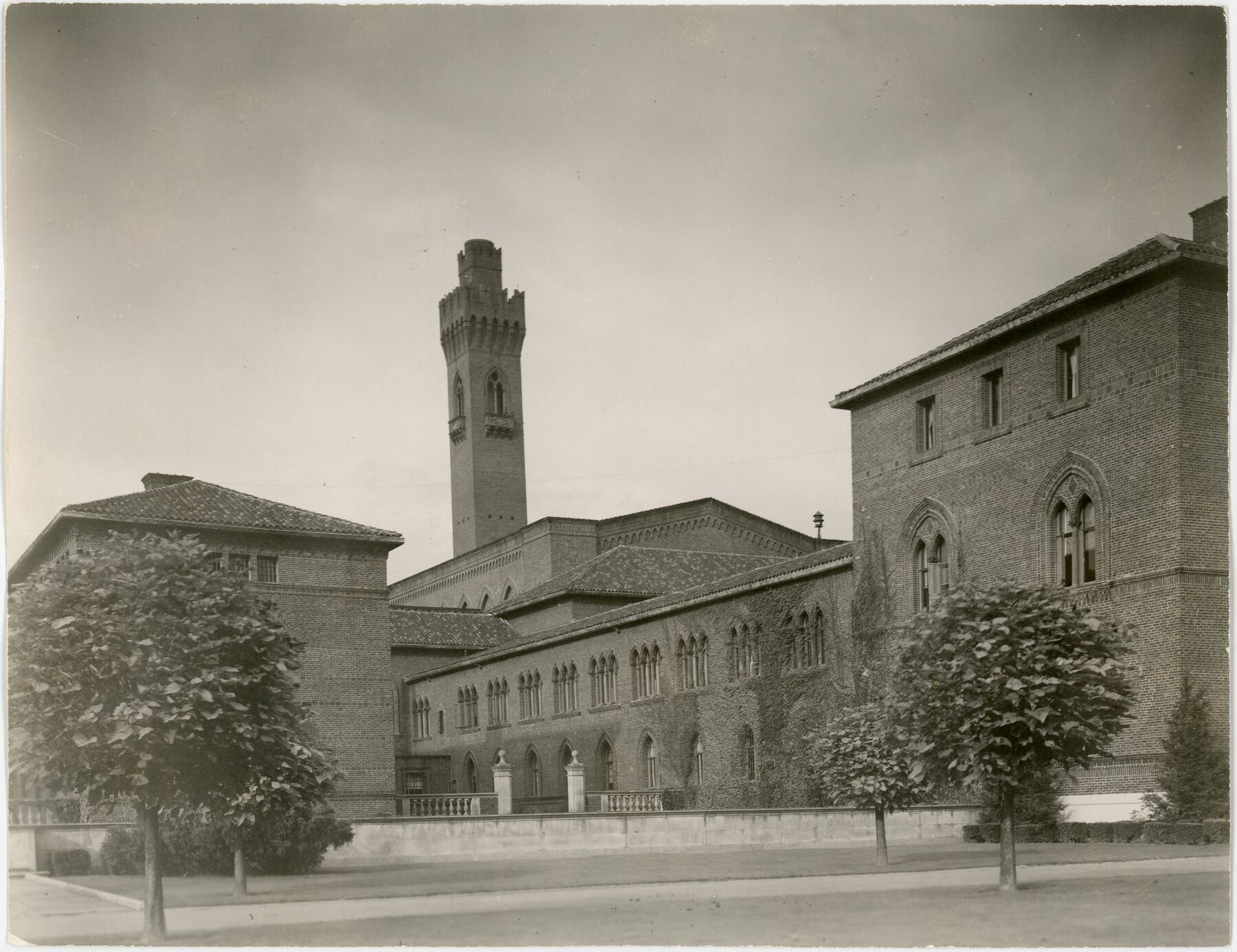 photographExterior of Lewisburg Penitentiary, 9 October 1947 (National Archives)Bureau of Prisons photograph dated 9 October 1947 of the exterior of the United States Penitentiary at Lewisburg, Pennsylvania: a brick building with a tall tower. The catalog's caption reads "Lewisburg Letter."
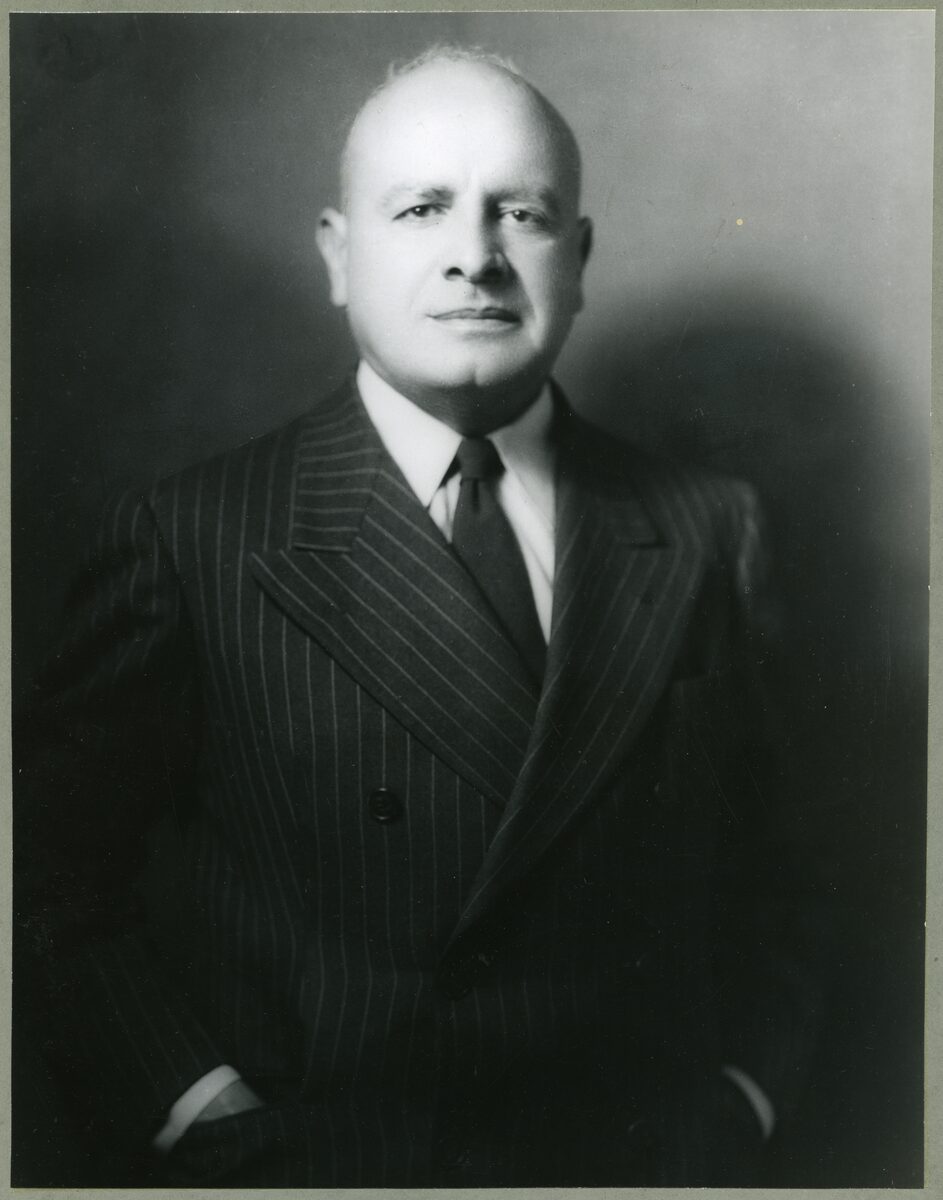 photographPortrait of Harry Jacob Anslinger, U.S. Commissioner of Narcotics (National Archives, 306-PSA-55-11680)Formal studio portrait of Harry J. Anslinger, captioned by the National Archives as U.S. Commissioner of Narcotics, with the source given as the Bureau of Narcotics. Undated. A copy is stored here.finding-aidAlbum of Views of the Penitentiaries at Atlanta, Georgia and Fort Leavenworth, Kansas (National Archives series)National Archives series of 41 mounted photographs from Department of Justice records, ca. 1900 to ca. 1925, of the Atlanta and Leavenworth penitentiaries. Nine are filed here.
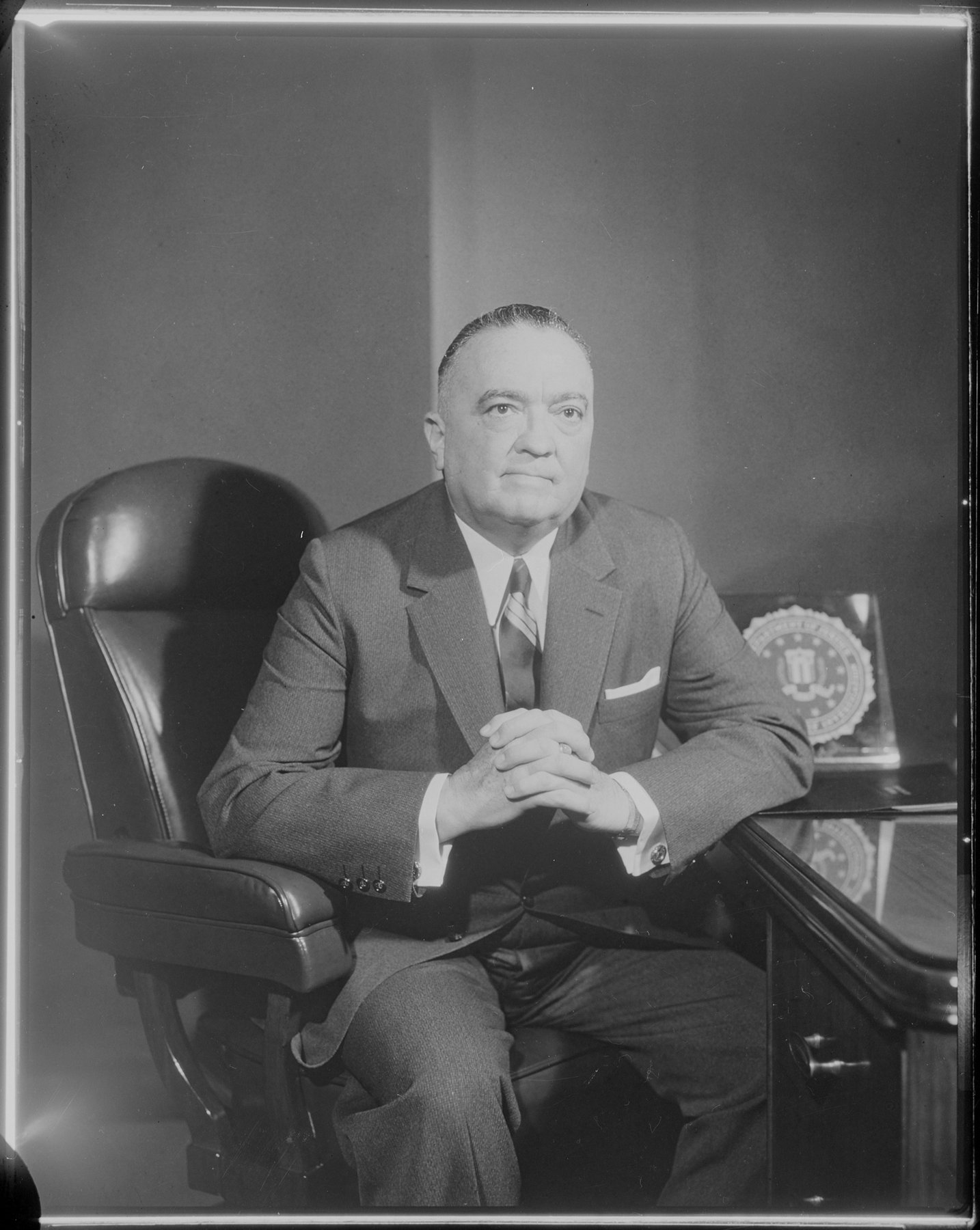 photographPortrait of FBI Director J. Edgar Hoover (catalog date 1953)A studio portrait of J. Edgar Hoover seated at a desk with an FBI seal plaque, from the FBI's photographs of personnel and activities during his tenure. The catalog notes there is no original caption.finding-aidPhotographs Illustrating the Facilities and Activities of the Bureau of Prisons (National Archives series)National Archives series of photographs of federal prisons and camps, mostly from about 1930: buildings, living conditions, dining, recreation and custody procedures. Three items from it are filed here.
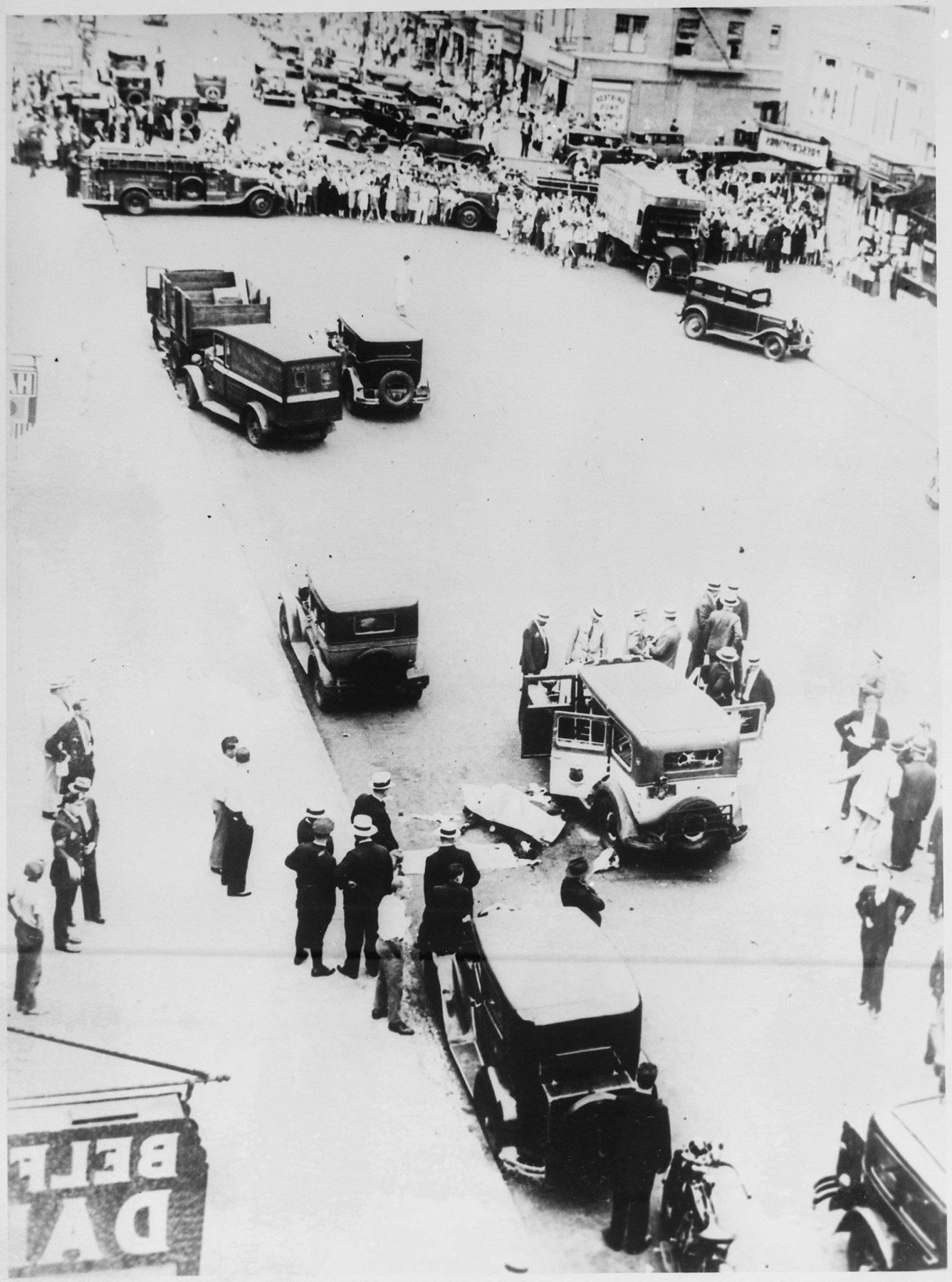 photographBullet-riddled taxi after a gun battle with police in a New York City street (1931)A 1931 New York Times Paris Bureau photograph that the National Archives titles "Bullet-riddled taxi and the bodies of two gangsters in a New York City street after a gun battle with police." The catalog names no one and gives no street.
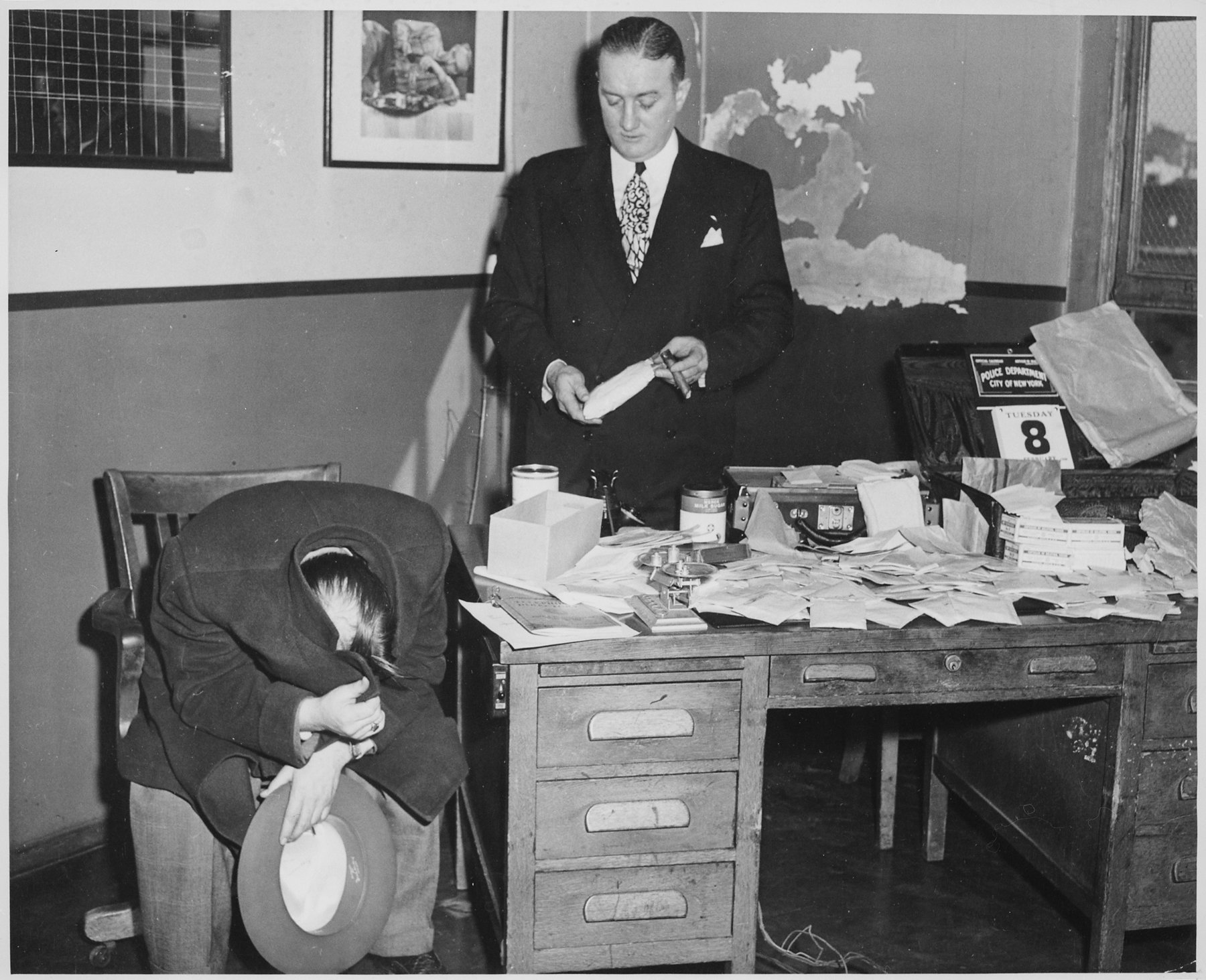 photographJoseph Basile under arrest in a $25 million narcotics seizure, New York (February 1949)A February 1949 New York Times Paris Bureau photograph: per the catalog, Joseph Basile, hiding his face with his coat, under arrest in connection with a narcotics seizure, with Chief of Detectives William T. Whalen standing near him.
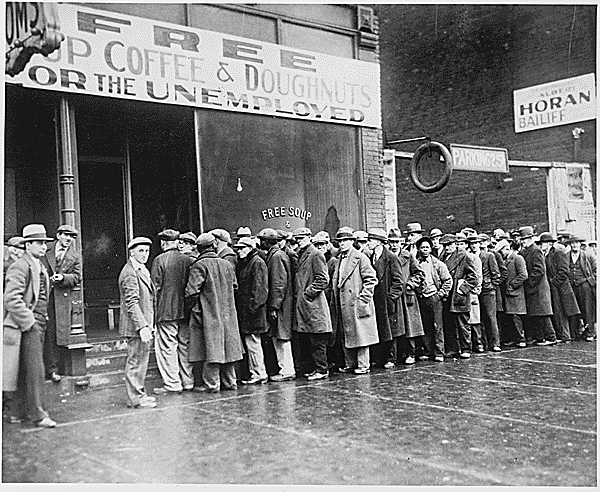 photographUnemployed men queued outside a Chicago soup kitchen attributed to Capone (February 1931)National Archives photograph, February 1931, of men in a line outside a Chicago storefront signed "Free Soup, Coffee and Doughnuts for the Unemployed." The catalog title attributes the soup kitchen to Al Capone; he is not in the picture.
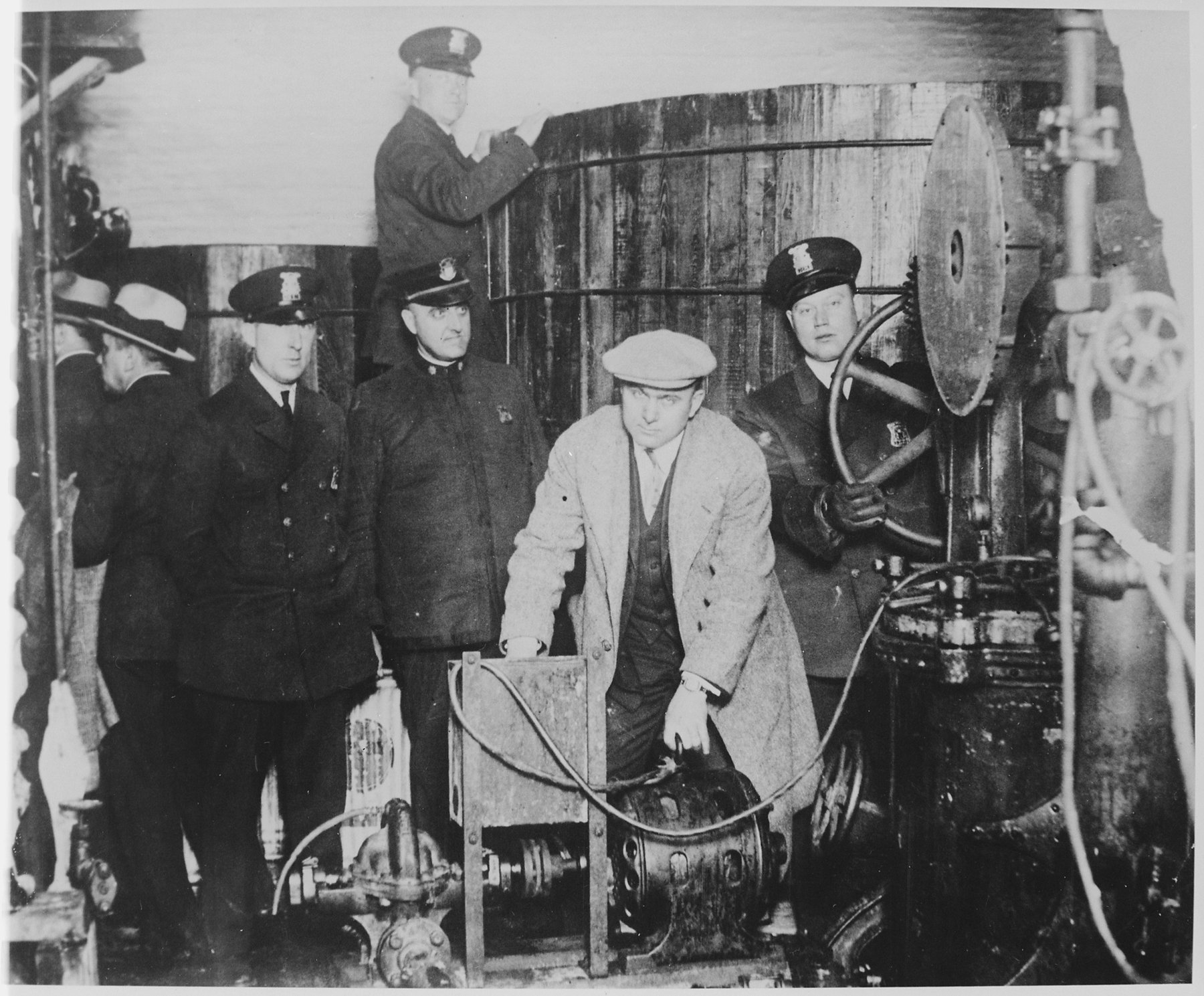 photographDetroit police inspecting equipment found in a clandestine underground brewery (Prohibition era)A New York Times Paris Bureau photograph that the National Archives titles "Detroit police inspecting equipment found in a clandestine underground brewery during the prohibition era." The catalog gives no date or address.
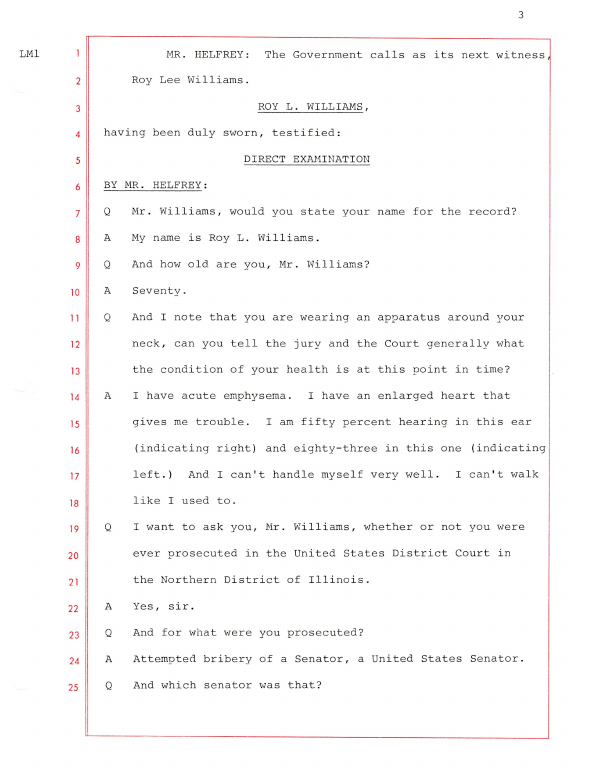 case-fileTrial transcript, United States v. DeLuna et al., Volume 22 (30 October 1985)A 56-page excerpt of the trial transcript in United States of America v. Carl Angelo DeLuna, et al., No. 83-00124-01/15-CR-W-8 (W.D. Mo.), held by the National Archives at Kansas City: the testimony of Roy L. Williams on October 30, 1985.
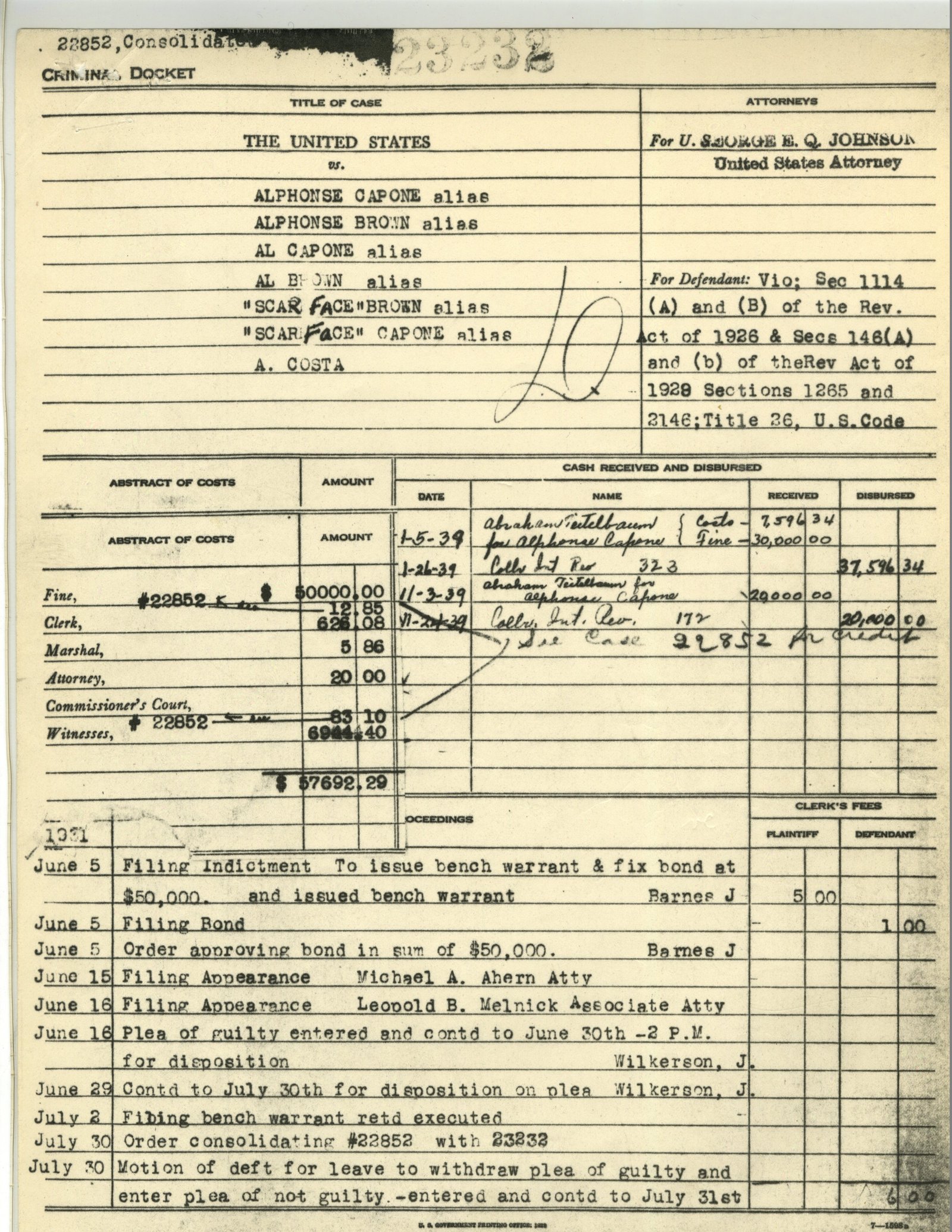 finding-aidDocket for Case Number 23232 (to 1942)The court's docket sheets for criminal case 23232, the indictment on which Capone was convicted. The last entry is dated 1 April 1942.
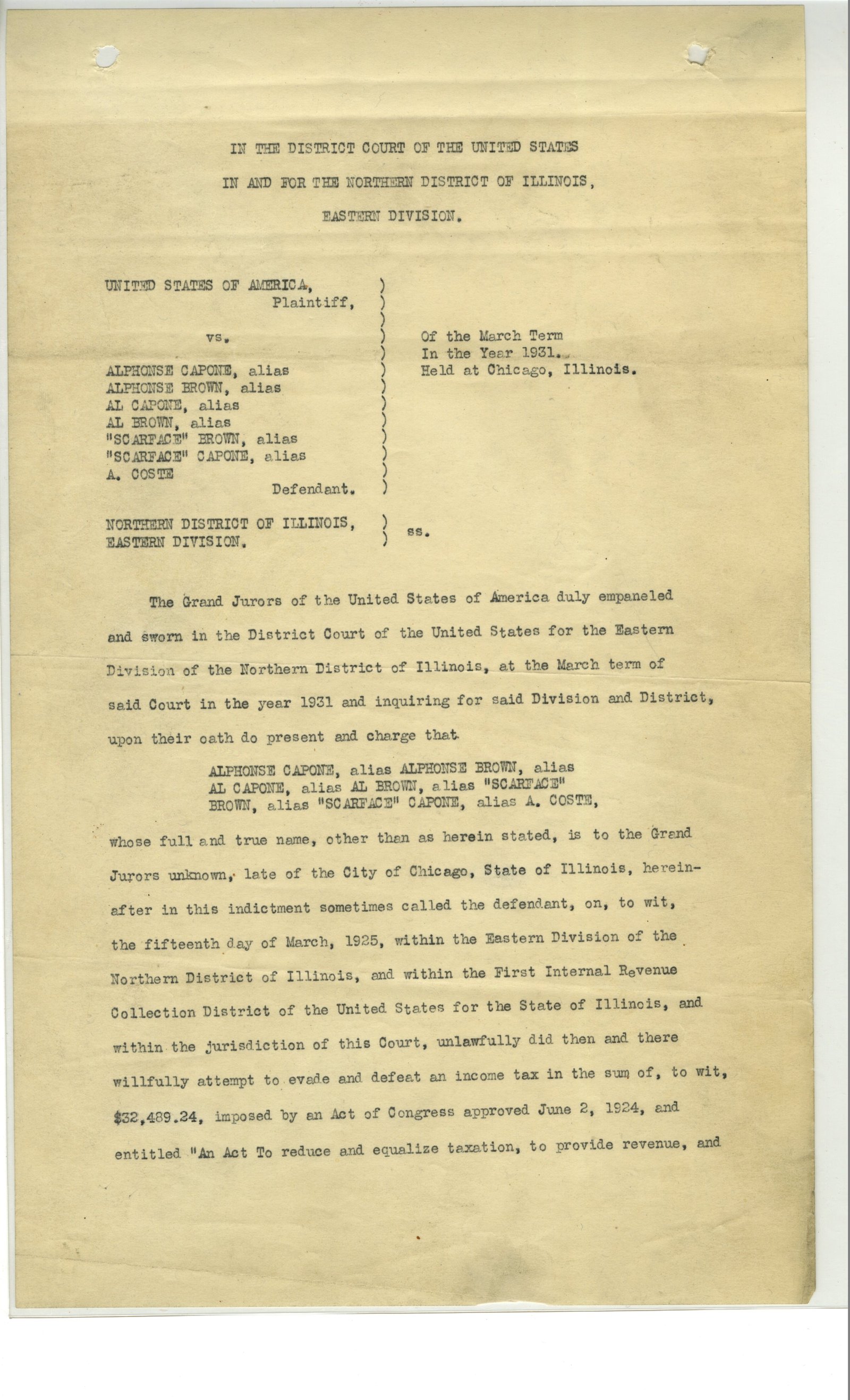 case-fileIndictment in Case Number 22852 (March 1931)The first income-tax indictment against Alphonse Capone, returned by a federal grand jury at Chicago in the March Term 1931. Its one count concerns tax for 1924. The jury acquitted him on it.
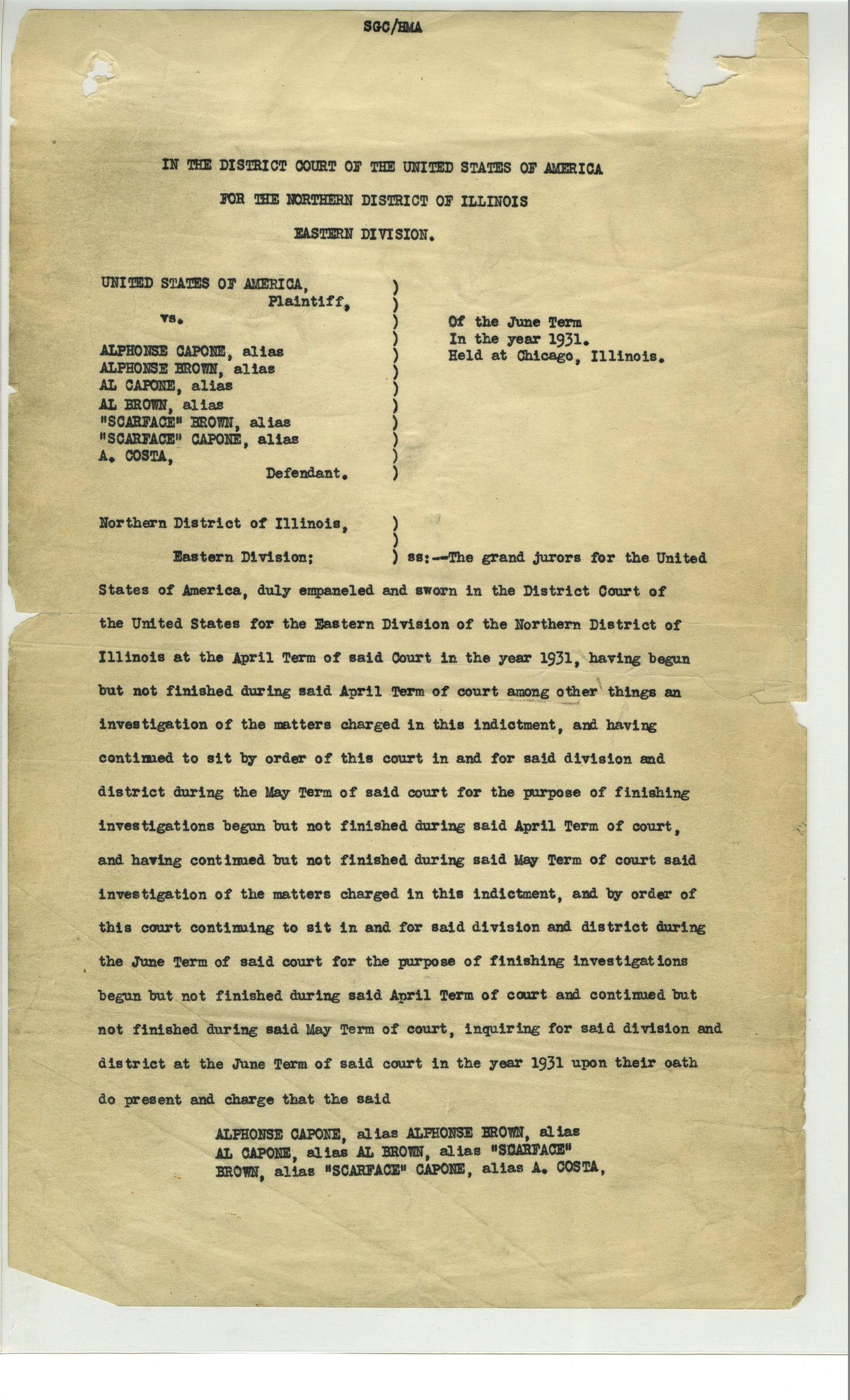 case-fileIndictment in Case Number 23232 (June 1931)The twenty-two-count income-tax indictment returned against Alphonse Capone on 5 June 1931. He was convicted on counts 1, 5, 9, 13 and 18.
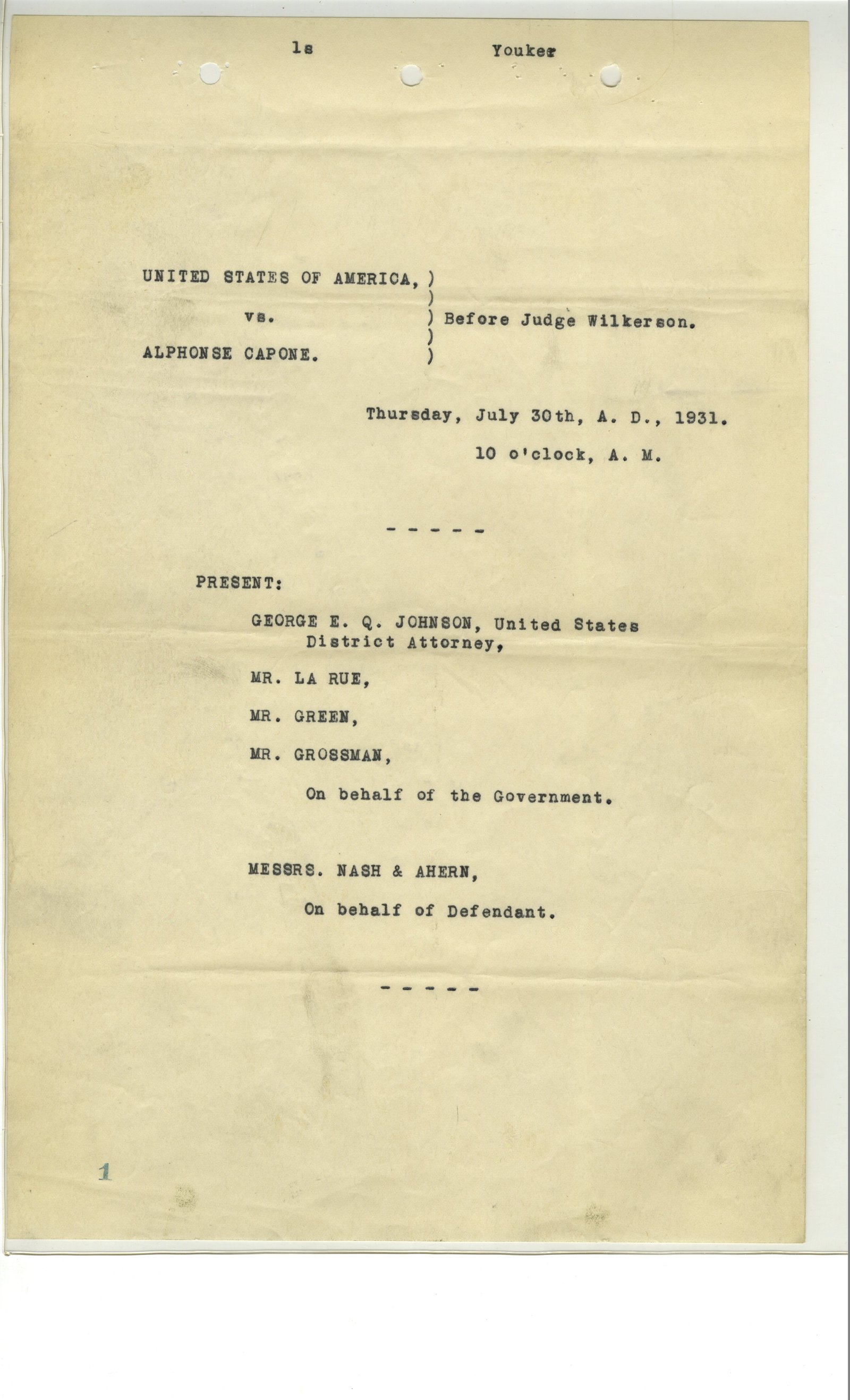 case-fileOrder consolidating Nos. 22852 and 23232 (30 July 1931)Court order of 30 July 1931 consolidating Capone's two income-tax indictments for trial. The catalog title prints the second number as 23832.
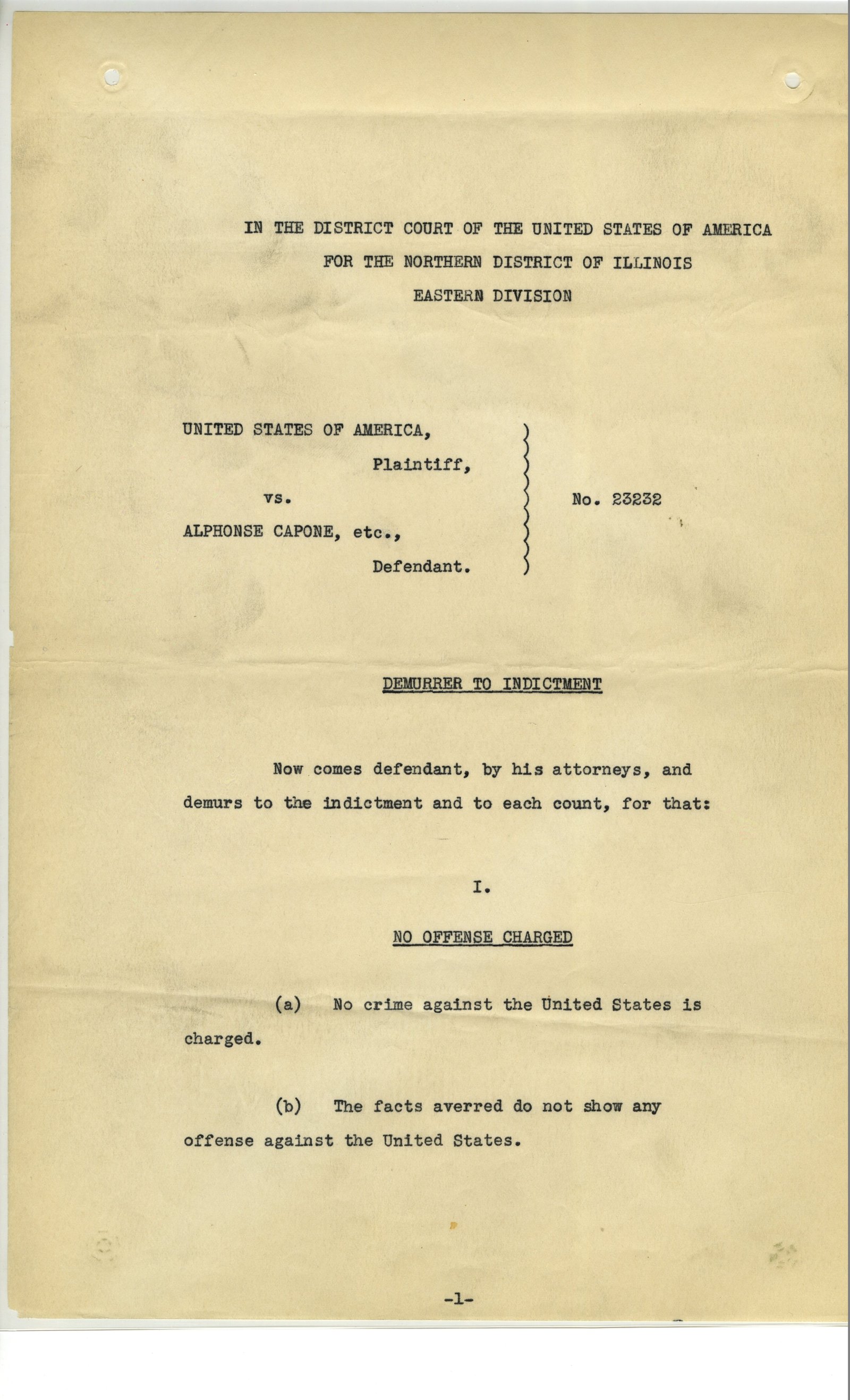 case-fileDemurrer to Indictment in Case 23232 (29 September 1931)Defense demurrer of 29 September 1931 challenging the sufficiency of indictment 23232. The court overruled it, and the Seventh Circuit upheld that ruling.
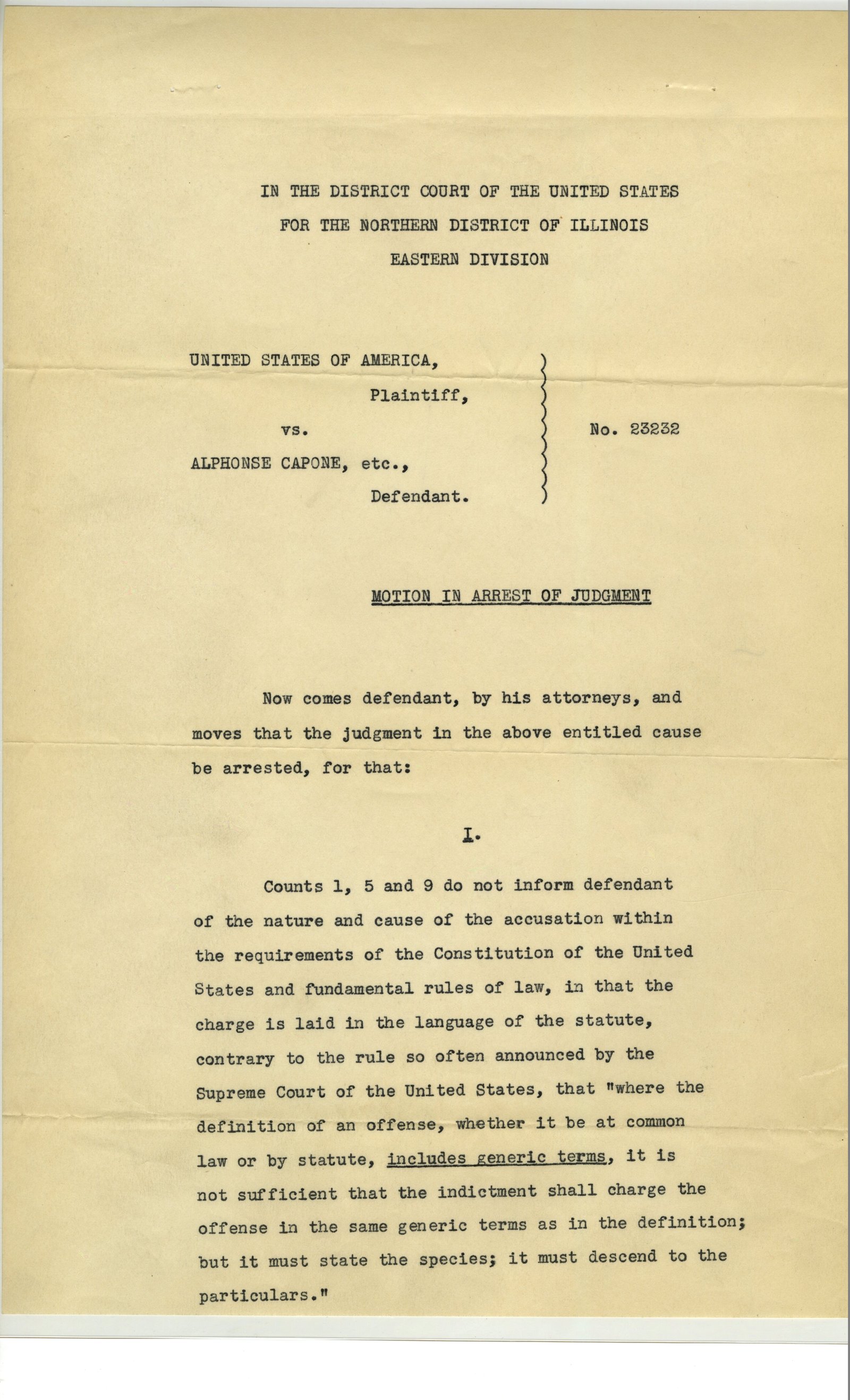 case-fileMotion in Arrest of Judgment (23 October 1931)Defense motion in arrest of judgment filed after the verdict in the Capone tax case. The court heard argument and overruled it on 24 October 1931.
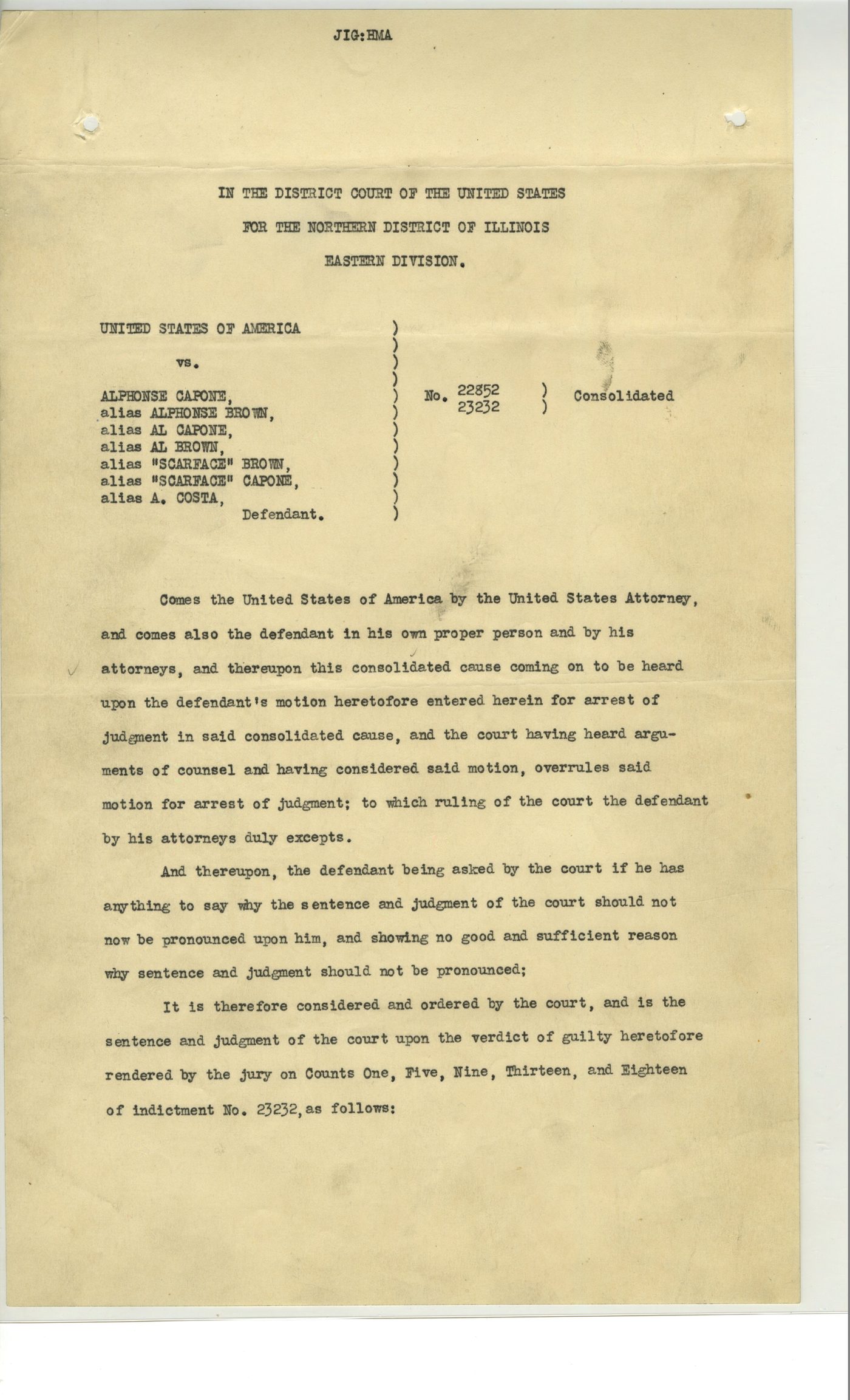 case-fileJudgment and sentence, United States v. Alphonse Capone (24 October 1931)Judgment of 24 October 1931 on counts One, Five, Nine, Thirteen and Eighteen of indictment 23232: imprisonment totaling eleven years and fines totaling $50,000, with costs of prosecution.
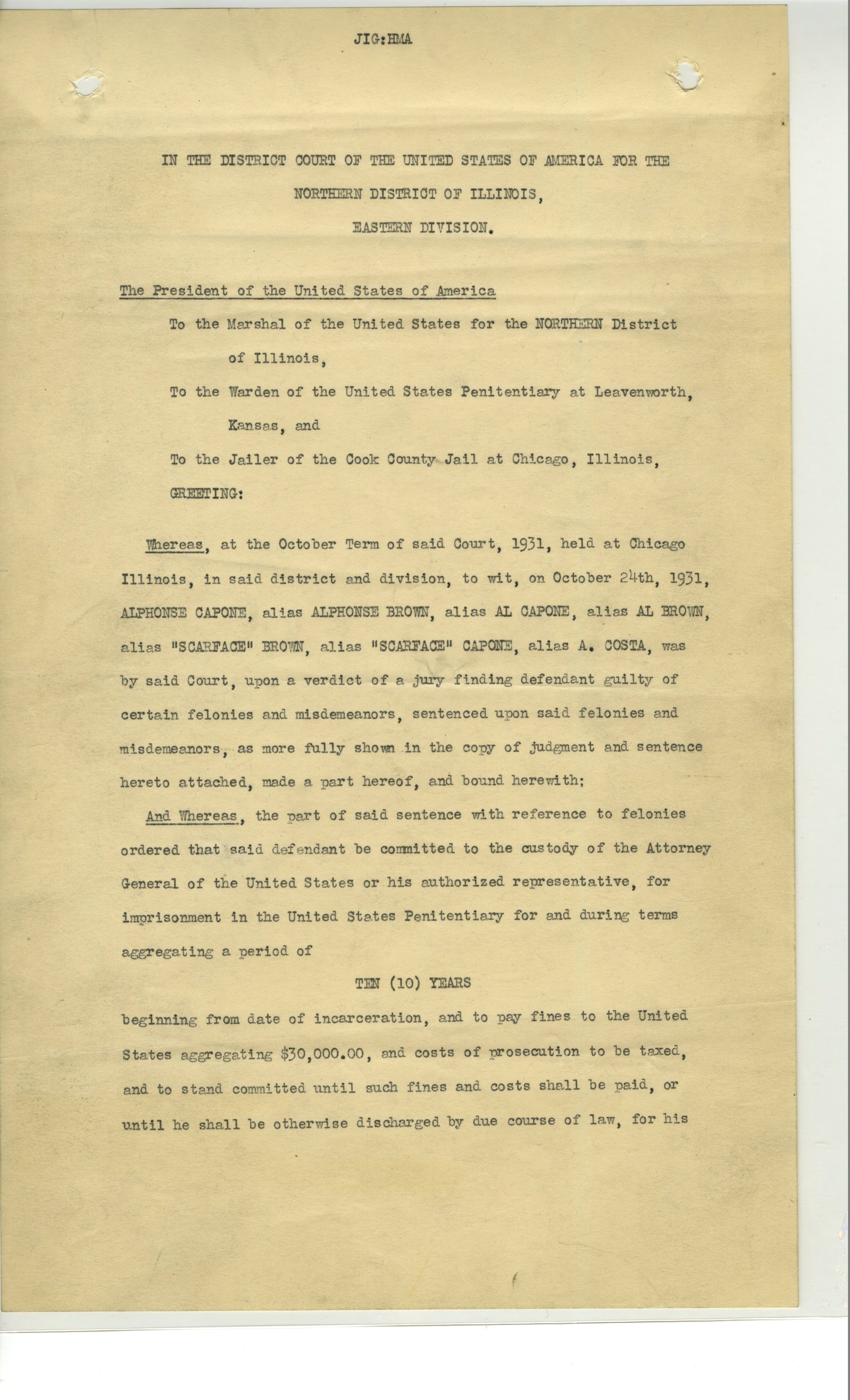 case-fileCommitment to the Cook County Jail and the Leavenworth penitentiary (24 October 1931)Commitment writ of 24 October 1931 for Alphonse Capone, addressed to the U.S. Marshal, the warden at Leavenworth and the Cook County jailer, covering the felony terms of ten years and $30,000 in fines.
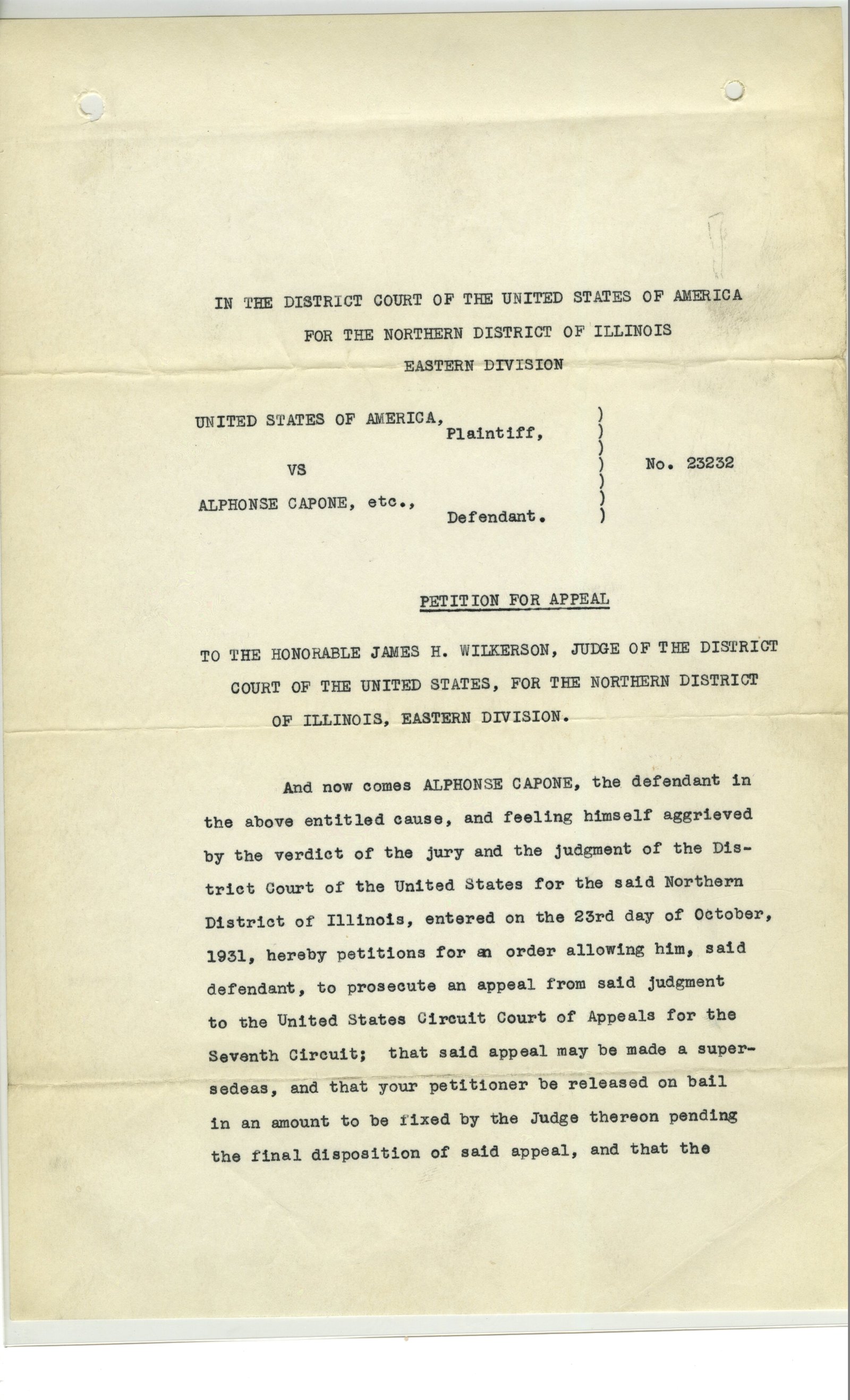 case-filePetition for Appeal filed by Ahern and Fink (24 October 1931)Petition for appeal to the Circuit Court of Appeals, filed by Capone's counsel Ahern and Fink on the day of sentencing.
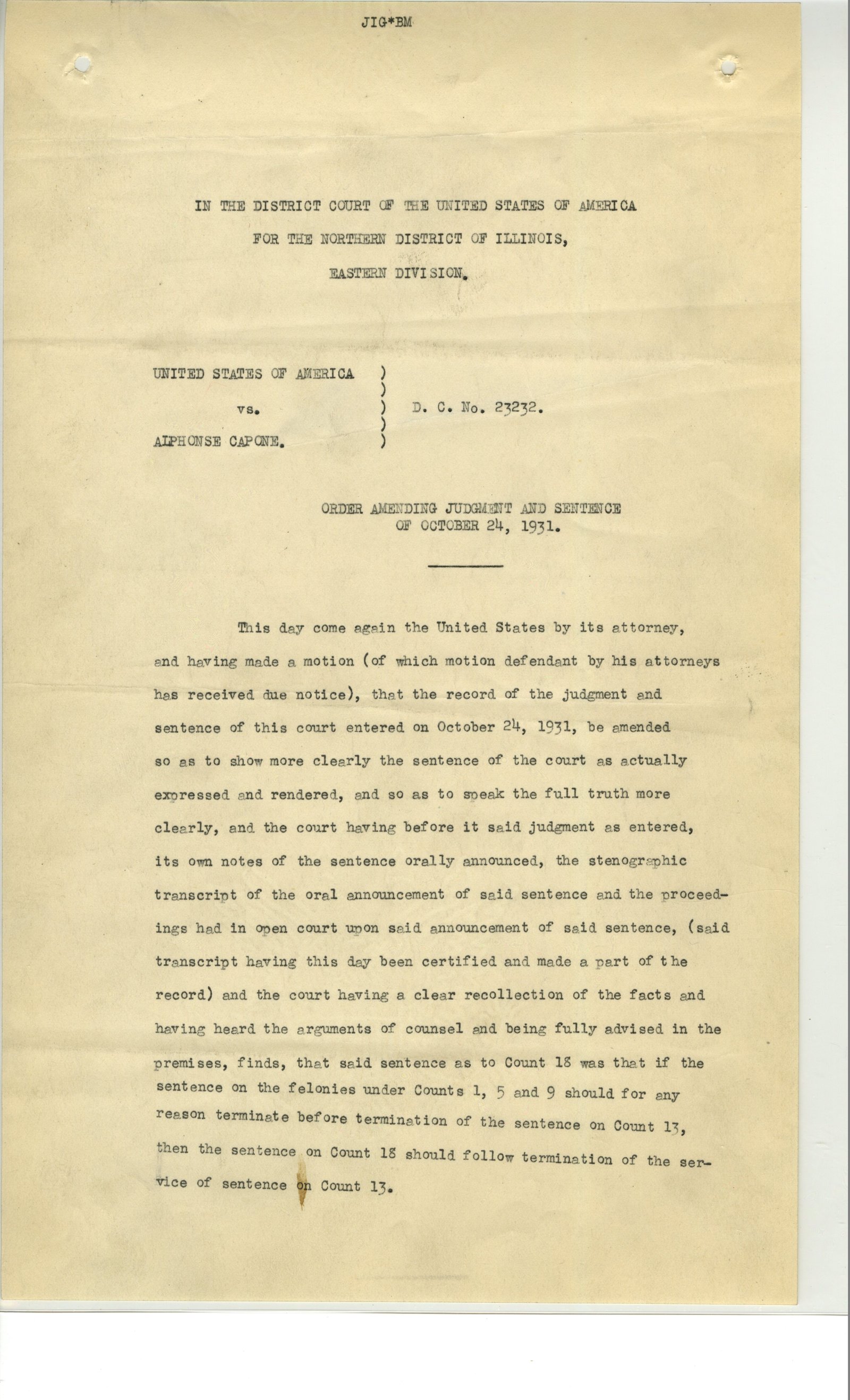 case-fileOrder Amending Judgment and Sentence of October 24, 1931 (9 November 1931)Order of 9 November 1931 in D.C. No. 23232 restating the sentence on the misdemeanor counts so that the record matches the sentence announced from the bench.
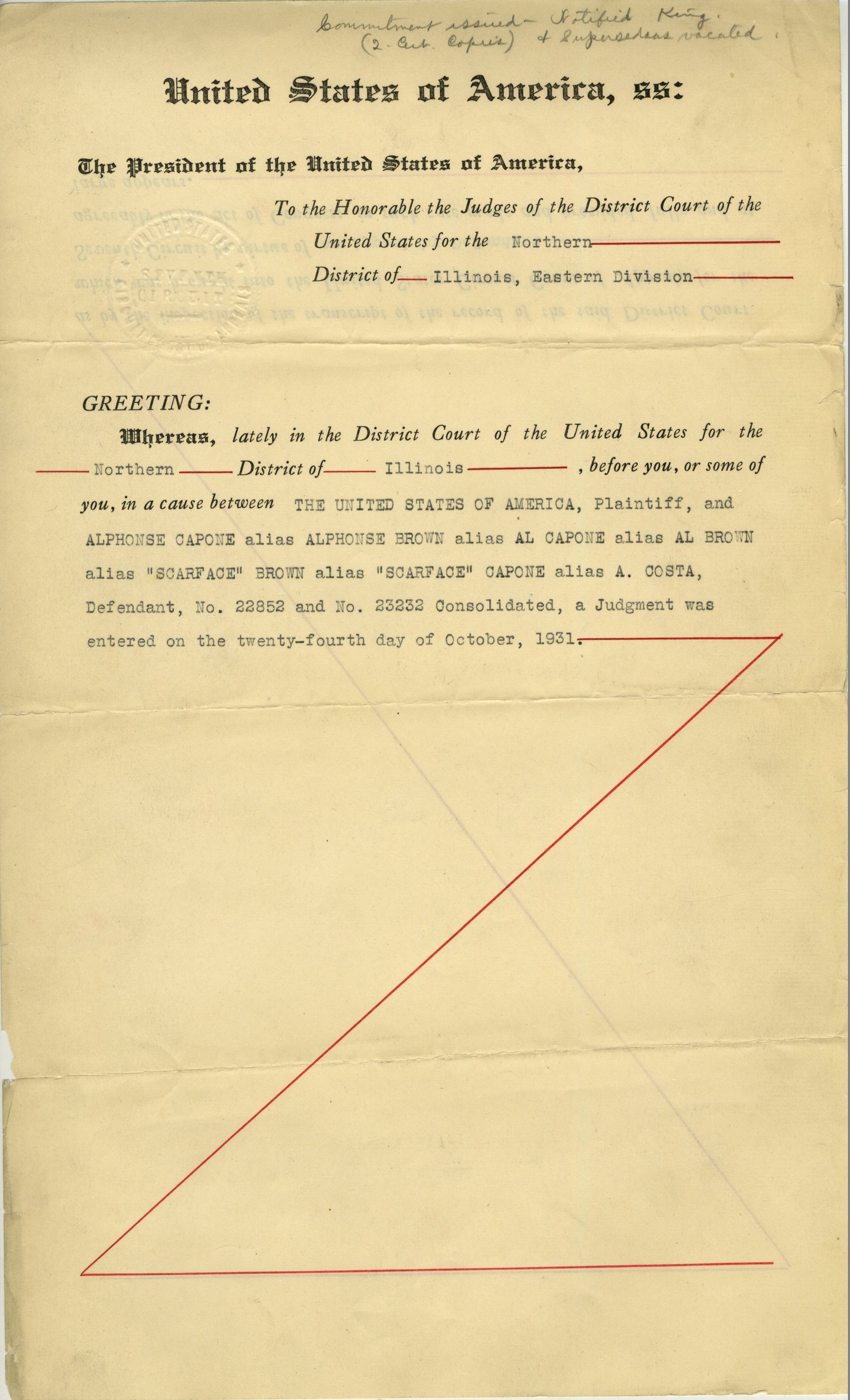 case-fileMandate of the Circuit Court of Appeals (3 May 1932)Mandate of the Seventh Circuit returning the Capone tax case, Nos. 22852 and 23232, to the District Court at Chicago after the appeal was decided.
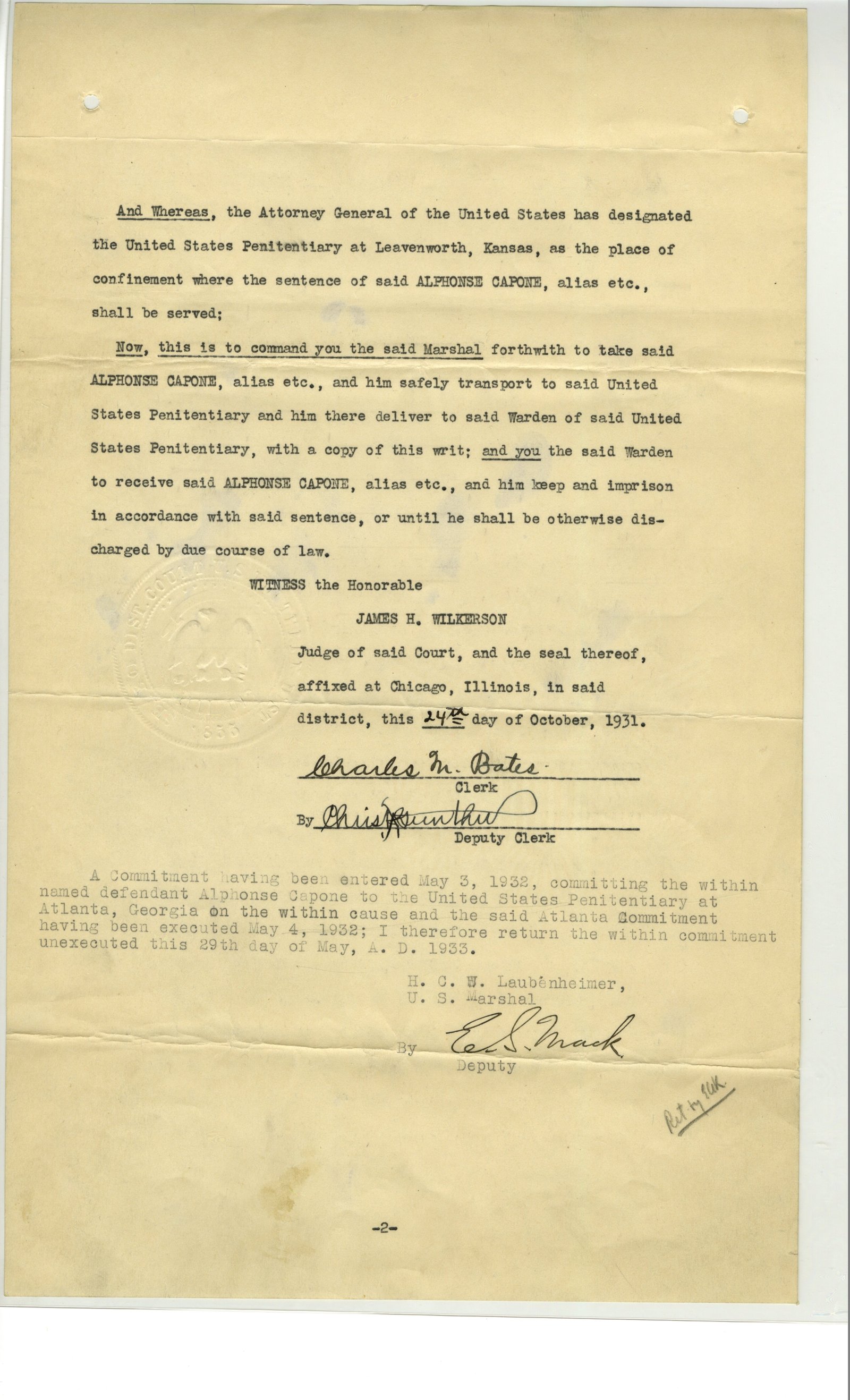 case-fileCommitment to the Atlanta penitentiary in lieu of Leavenworth (3 June 1933)Commitment paper of 3 June 1933 directing Capone's confinement at the U.S. Penitentiary at Atlanta, Georgia, in place of Leavenworth.
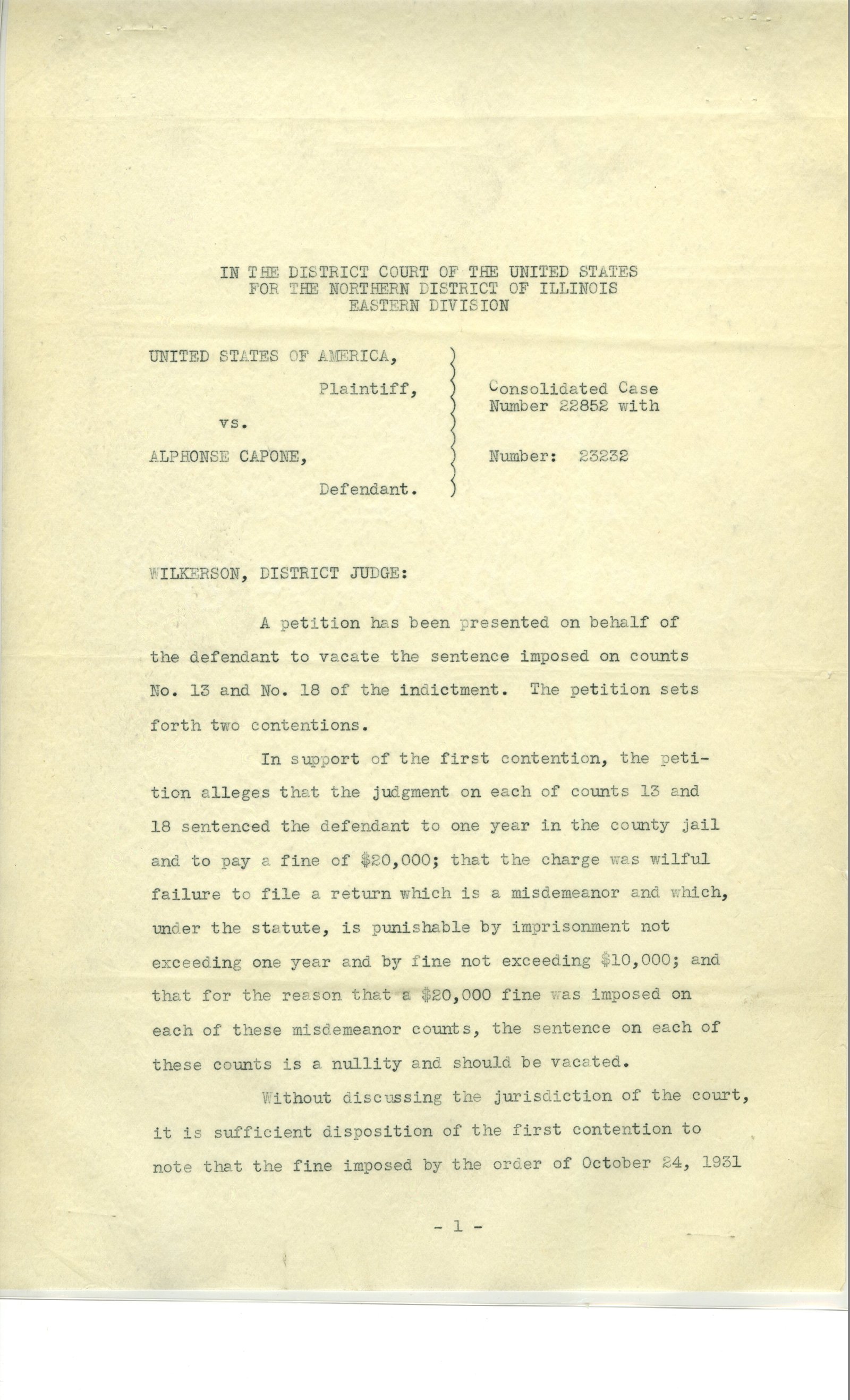 case-fileMemorandum denying petition to vacate misdemeanor sentences (12 August 1937)District Court memorandum of 12 August 1937 denying Capone's petition to vacate the county-jail sentences on counts 13 and 18. The Seventh Circuit dismissed the appeal.
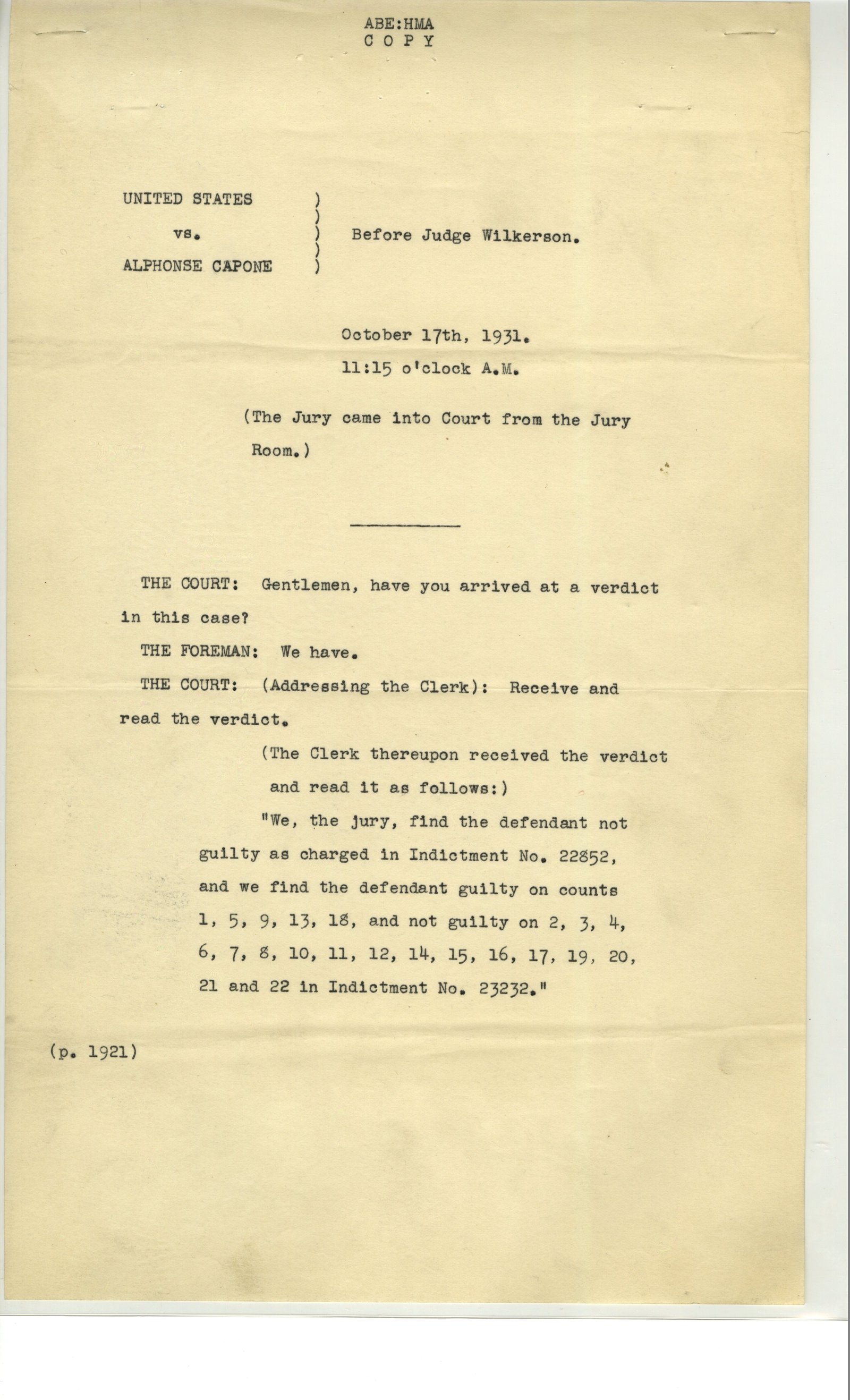 case-filePartial transcript of evidence before Judge Wilkerson, 17 October 1931 (filed 1937)Partial transcript of proceedings before Judge James H. Wilkerson on 17 October 1931, the day of the verdict, filed in 1937 during the dispute over the jail sentences.finding-aidInmate Case Files, U.S. Penitentiary, Leavenworth (National Archives series)National Archives series description of 26,283 Leavenworth inmate case file units, 1895 to 1957, held at the National Archives at Kansas City. Only a sampled subset is digitized.case-fileUnited States vs. Roger Touhy (Selective Service case, Chicago)Federal criminal case file at Chicago against Roger Touhy for failing to register for the draft under the Selective Training and Service Act of 1940. Nine digitized pages.
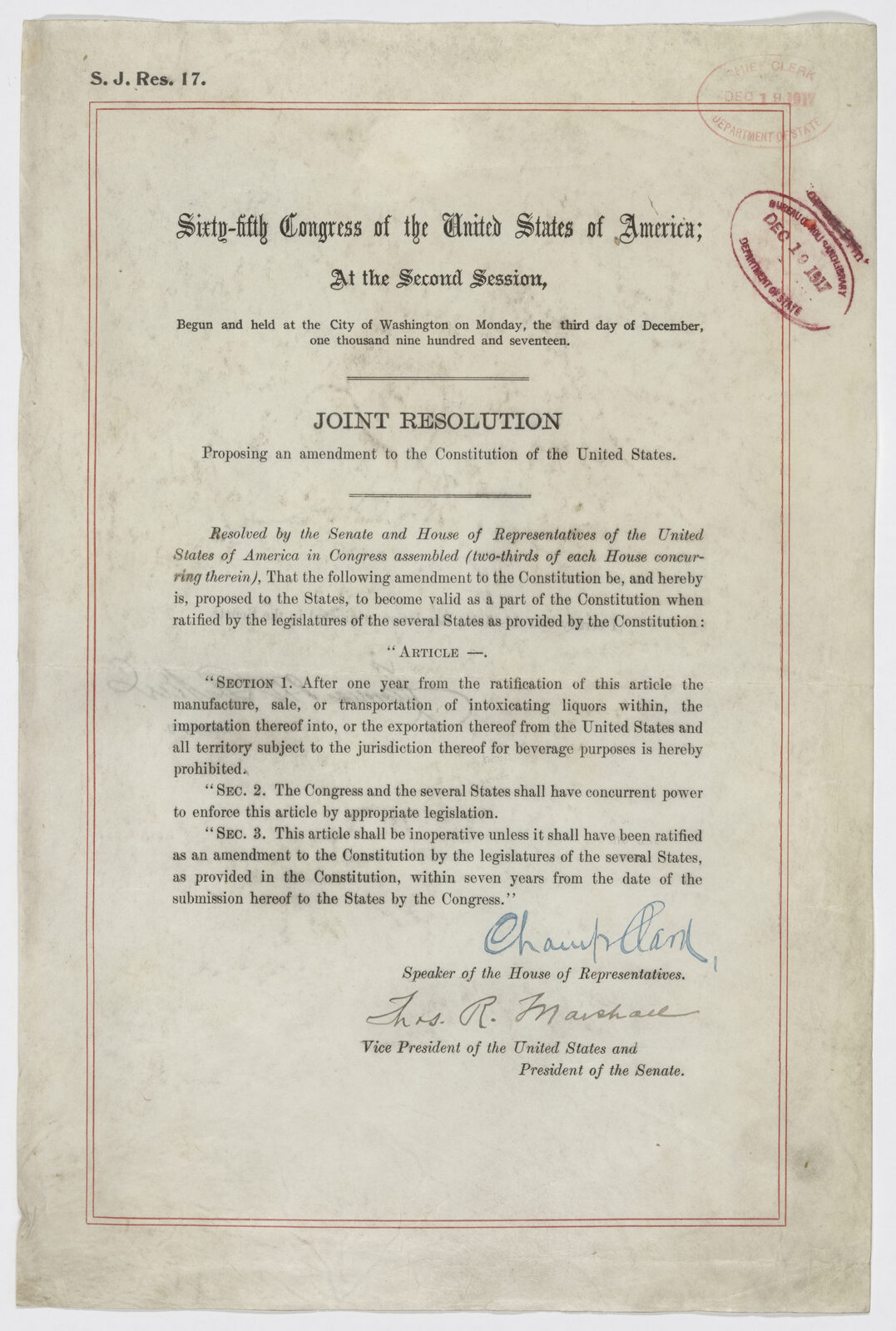 case-fileJoint Resolution proposing the Eighteenth Amendment (S.J. Res. 17, 1917)National Archives enrolled copy of S.J. Res. 17, 65th Congress, proposing the Eighteenth Amendment, with Department of State stamps dated 19 December 1917.
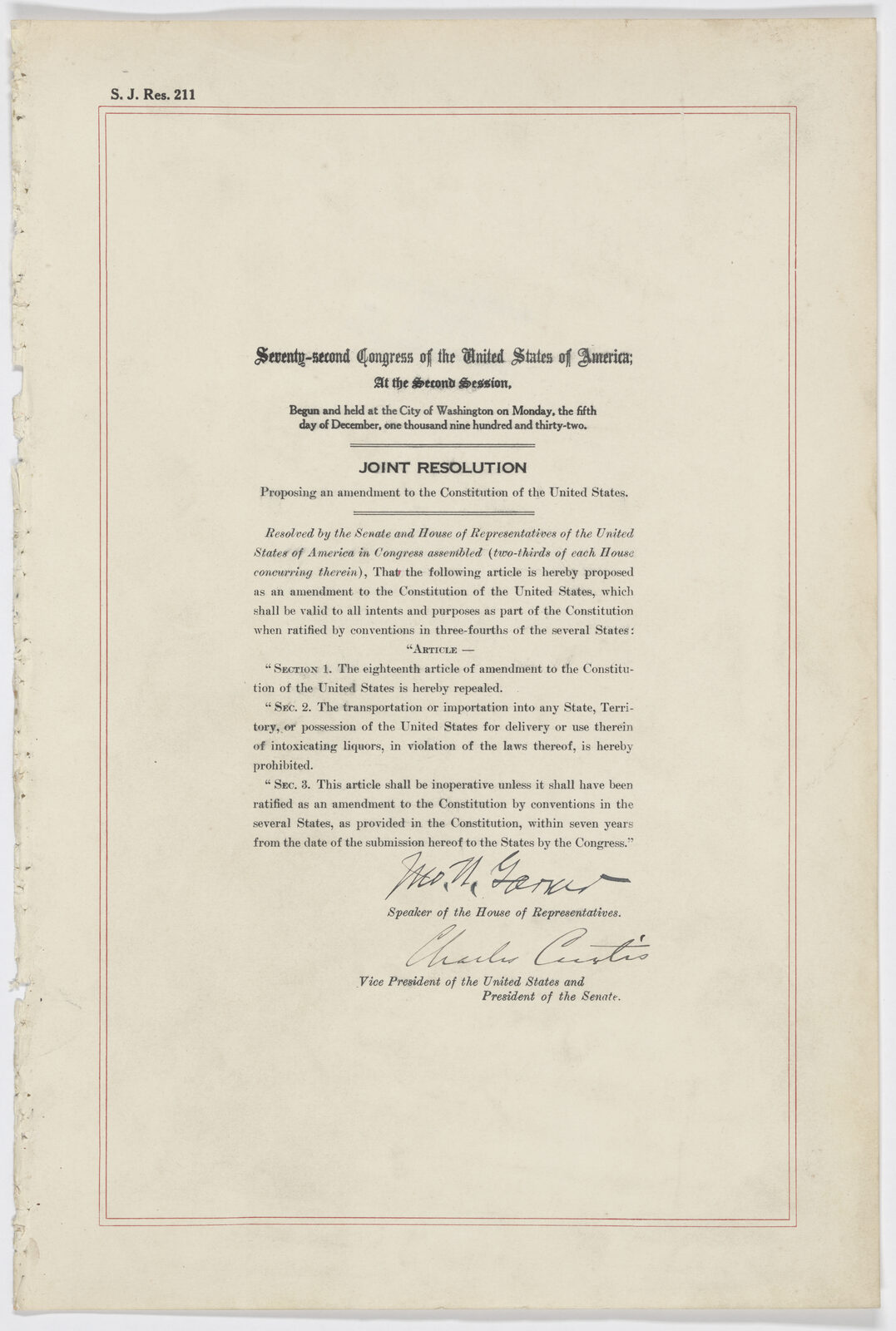 case-fileJoint Resolution proposing the Twenty-first Amendment (S.J. Res. 211, 1933)National Archives enrolled copy of S.J. Res. 211, 72d Congress, proposing the amendment that repeals the Eighteenth. Section 1 repeals the eighteenth article of amendment.
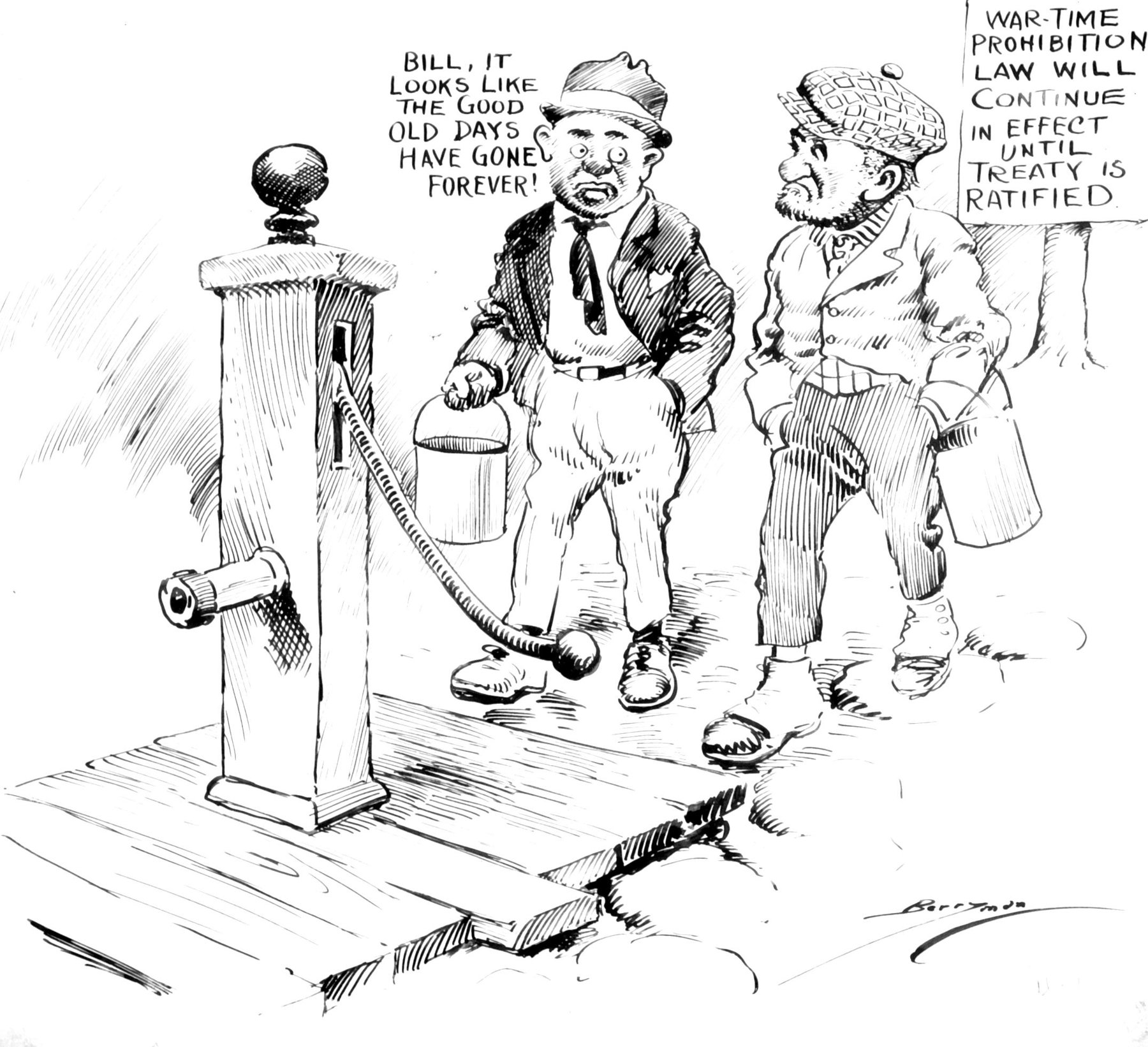 photographClifford Berryman cartoon, "Desire for Something Stronger" (5 October 1919)A Clifford Berryman drawing of 5 October 1919 in the Senate's Berryman collection at the National Archives: two men with pails at a water pump under a sign on wartime prohibition. One says, "Bill, it looks like the good old days have gone forever!"
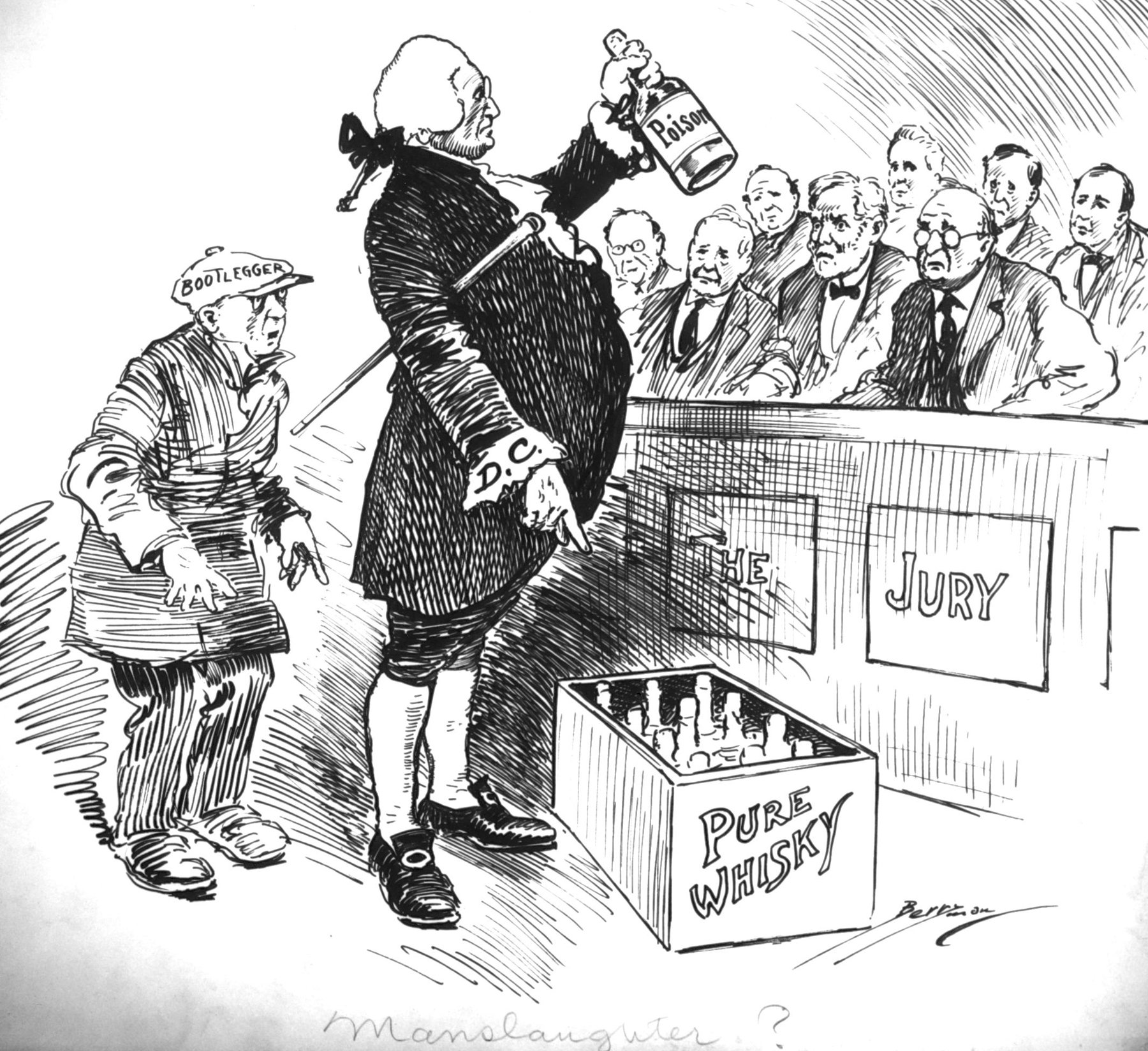 photographClifford Berryman cartoon, "Manslaughter?" (8 March 1922)A Berryman drawing of 8 March 1922: his character Mr. D.C., as prosecutor, holds up a bottle marked "Poison" before a jury and points to a crate marked "Pure Whisky" while a bootlegger watches.
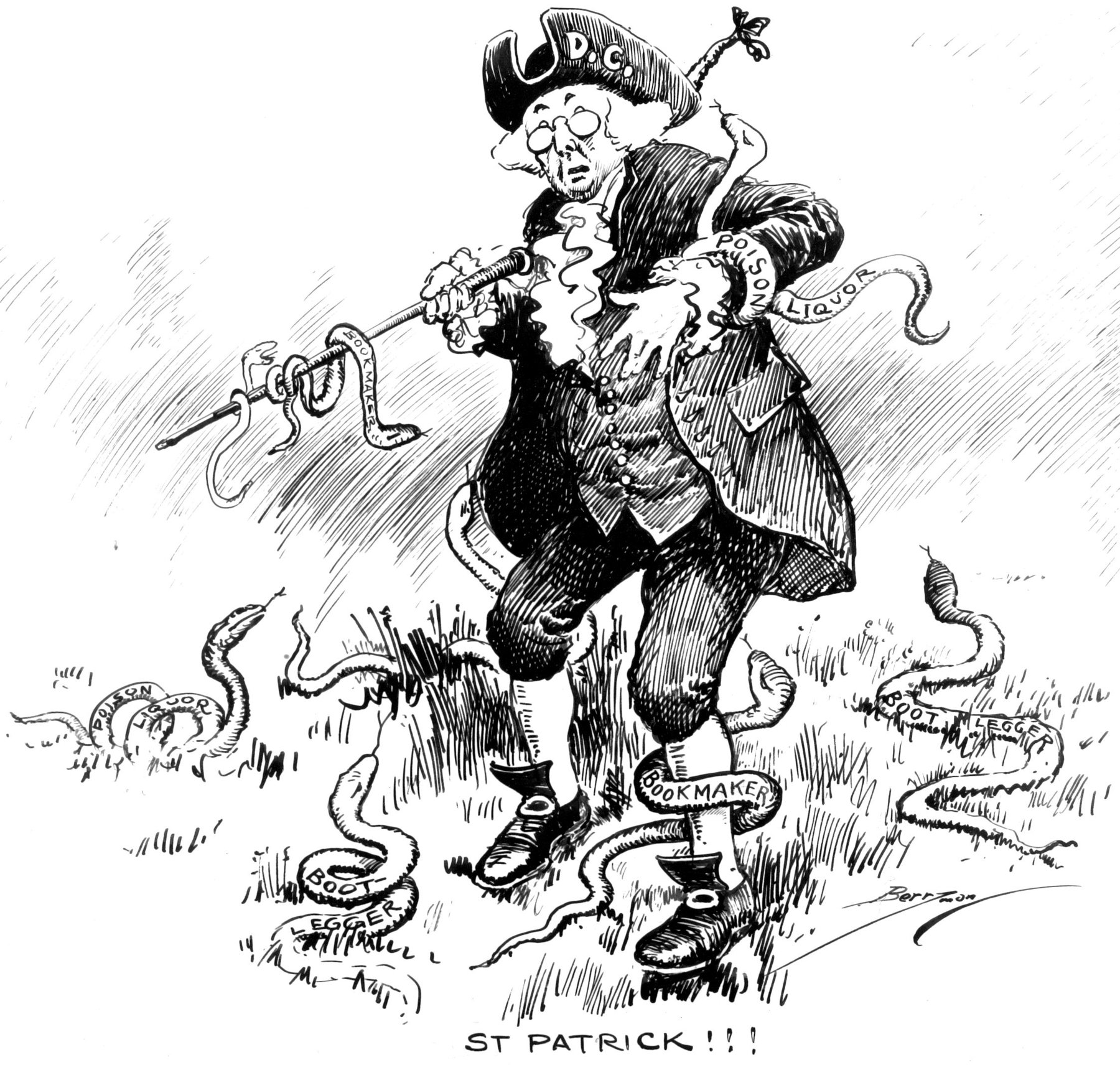 photographClifford Berryman cartoon, "St. Patrick!!" (17 March 1922)A Berryman drawing for St. Patrick's Day 1922: Mr. D.C. recoils from snakes labelled "Poison Liquor," "Bootlegger" and "Bookmaker." The National Archives note reads it as the District's Prohibition-era troubles.
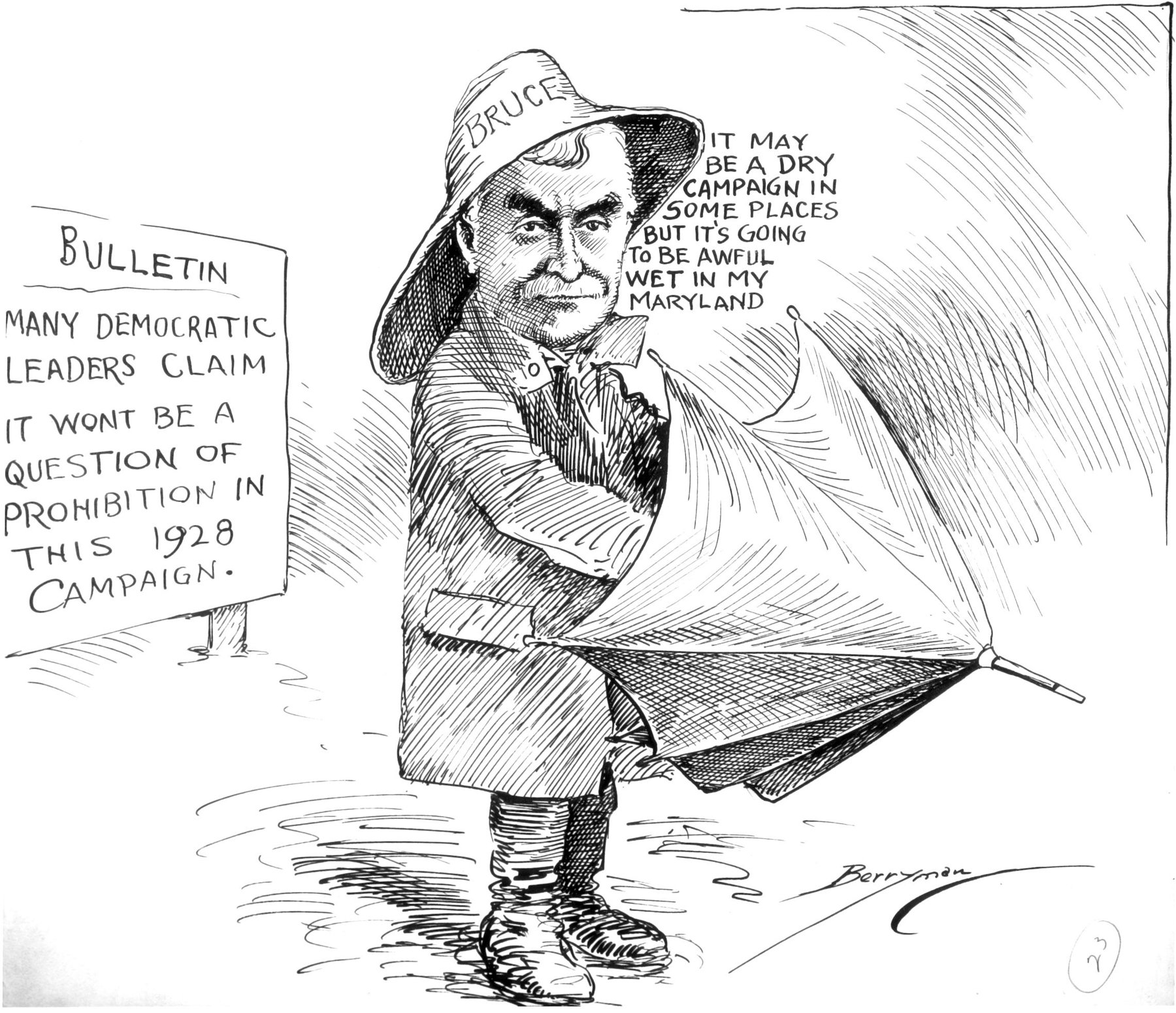 photographClifford Berryman cartoon on Senator William Bruce and a "wet" Maryland (3 April 1928)An untitled Berryman drawing of 3 April 1928: Senator William Bruce of Maryland in rain gear under a bulletin that Democratic leaders say Prohibition will not be a question in the 1928 campaign.
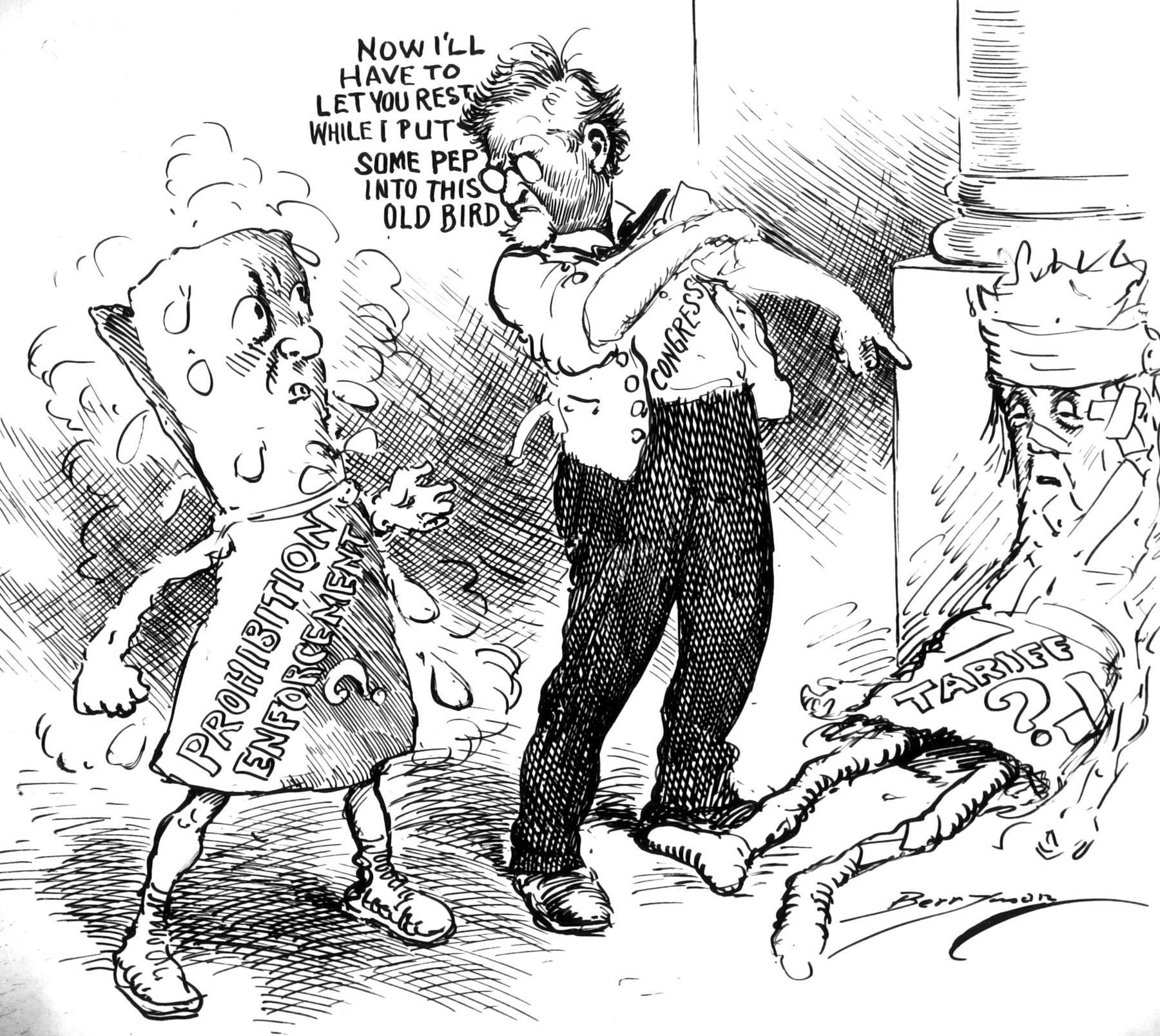 photographClifford Berryman cartoon on Congress, the tariff and Prohibition enforcement (6 January 1930)An untitled Berryman drawing of 6 January 1930: Congress tends a battered "Tariff" while a sweating figure labelled "Prohibition Enforcement?" waits its turn.
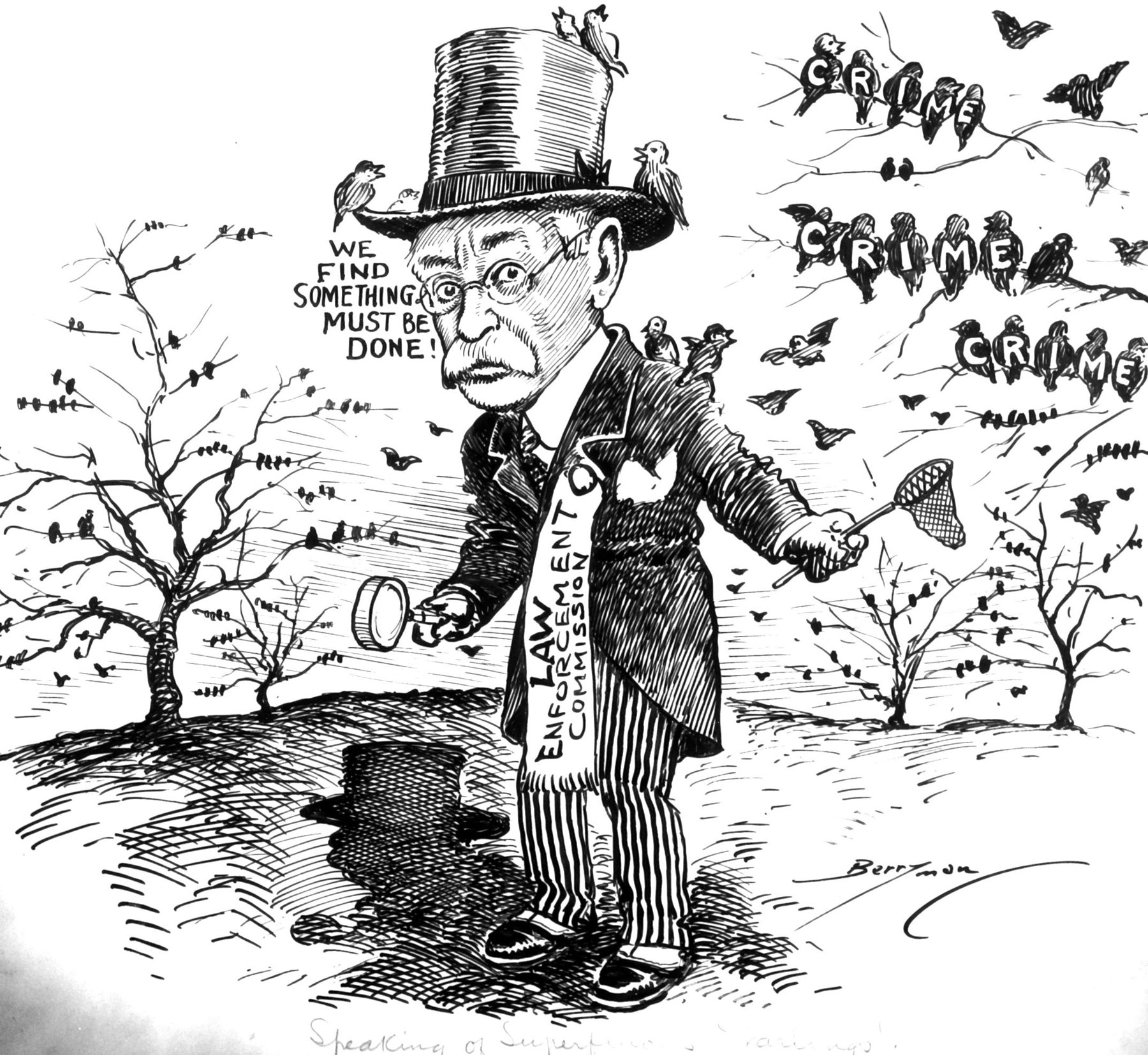 photographClifford Berryman cartoon, "Speaking of Superfluous Starlings" (10 January 1930)A Berryman drawing of 10 January 1930 on the federal law enforcement commission: an old man with a butterfly net and a sash marked "Law Enforcement Commission" says "We find something must be done!" under trees full of birds spelling "Crime."
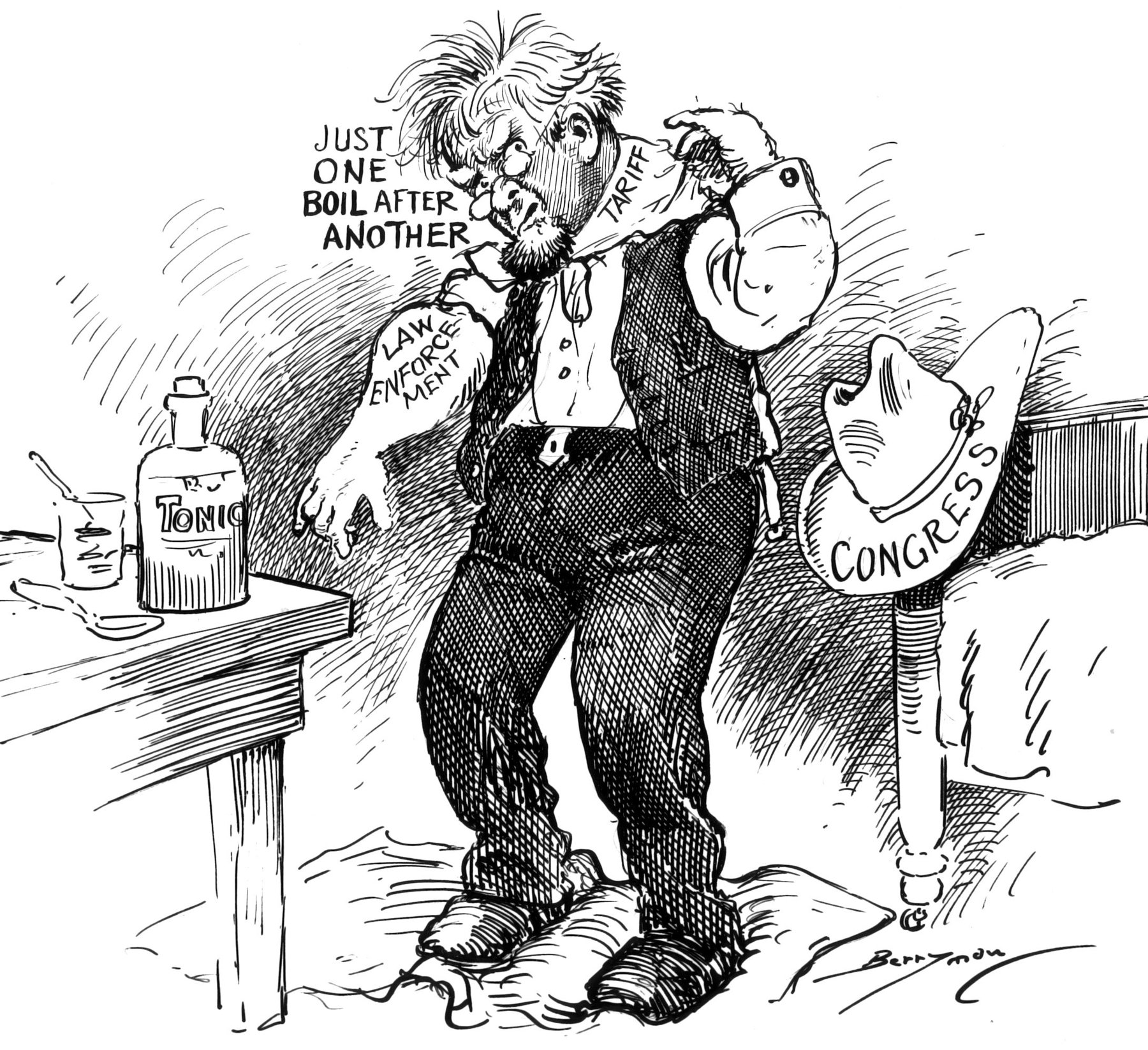 photographClifford Berryman cartoon, "Just One Boil After Another" (13 January 1930)An untitled Berryman drawing of 13 January 1930: a weary figure for Congress, a "Tariff" on his neck and "Law Enforcement" on his arm, reaches for a tonic. The National Archives ties it to President Hoover's requests for better federal enforcement.photographClifford Berryman cartoon: a racketeer and a gangster read about "Wall Street Bears" (30 April 1932)An untitled Berryman drawing of 30 April 1932: two men in hats labelled "Racketeer" and "Gangster" read of the "workings of Wall Street bears" and say, "Them guys makes us look like pikers." No copy is stored.photographClifford Berryman cartoon on Capone and Judge James Wilkerson (4 May 1932)An untitled Clifford Berryman drawing of 4 May 1932 in the Senate's Berryman collection at the National Archives. NARA's note ties it to Capone's departure for the Atlanta penitentiary and Judge James Wilkerson's pending Seventh Circuit nomination.photographClifford Berryman cartoon, "Postmaster General Brown's Prize Package" (7 June 1932)A Berryman drawing of 7 June 1932: the Postmaster General carries the Republican Prohibition plank toward the Chicago convention while "Miss Democracy" looks on. No copy is stored.photographClifford Berryman cartoon, "Oh So Tempting" (10 June 1932)A Berryman drawing of 10 June 1932 on the 1932 party platforms: the Republican elephant on a "water wagon" eyes the Democratic donkey in a "wet trough." No copy is stored.photographClifford Berryman cartoon: Uncle Sam takes down the old "Public Enemies No. 1" (22 February 1942)An untitled Berryman drawing of 22 February 1942: Uncle Sam has the old portraits labelled Dillinger, "Pretty Boy" Floyd, Arthur Barker, Alvin Karpis and "Baby Face" Nelson taken down in favor of wartime loose talkers. No copy is stored.finding-aidIndex to Prisoners, U.S. Penitentiary, Atlanta (National Archives series)National Archives series of index cards for Atlanta penitentiary inmates, 1902 to 1973, arranged in 263 alphabetical file units. The digitized unit where Capone's card would fall was paged without finding it.finding-aidComprehensive Case Files of Former Inmates, U.S. Penitentiary, Alcatraz (National Archives series)National Archives series description of the extant Alcatraz case files on about 1,550 men. Only a few file units are digitized. The series' own inclusive dates are an accession span; the bulk dates of the Alcatraz records are 1934 to 1963.
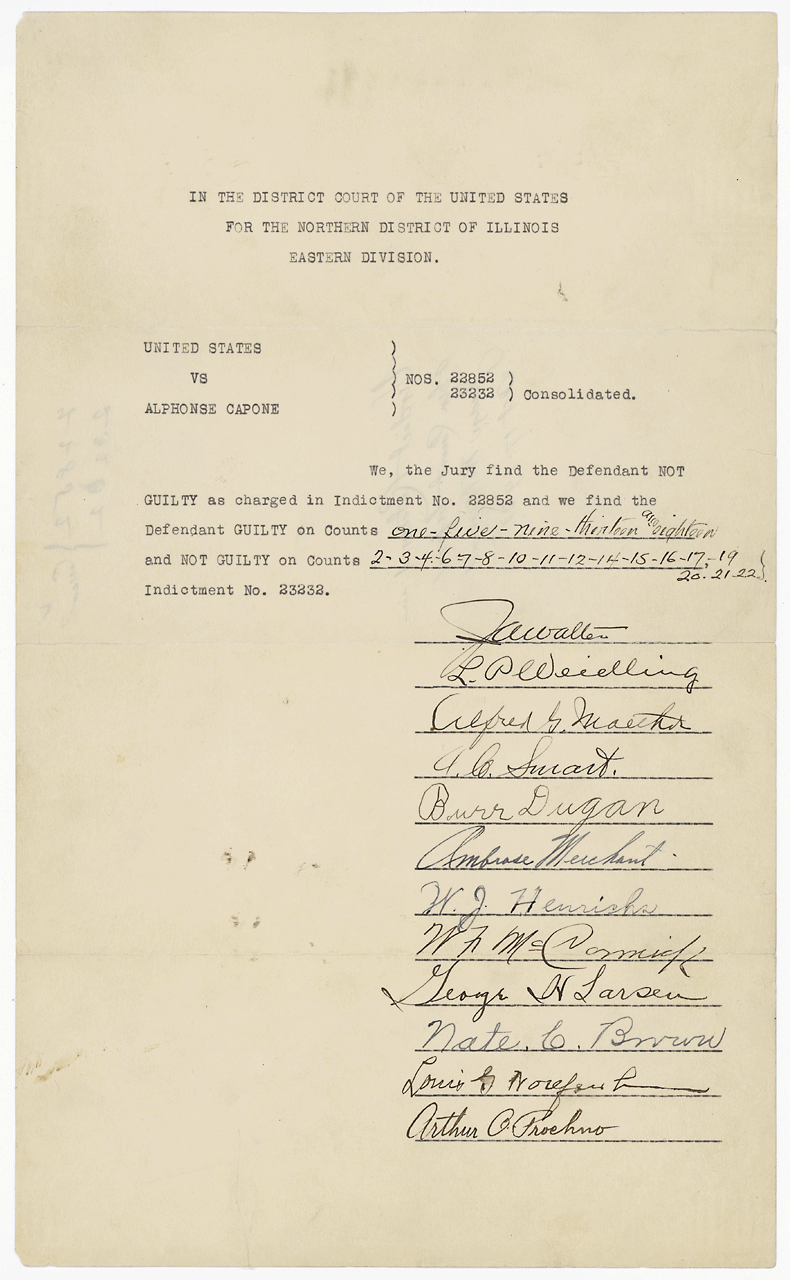 case-fileJury verdict, United States v. Alphonse Capone (17 October 1931)The signed jury verdict: not guilty on indictment 22852, guilty on counts one, five, nine, thirteen and eighteen of indictment 23232, returned before Judge Wilkerson on 17 October 1931.
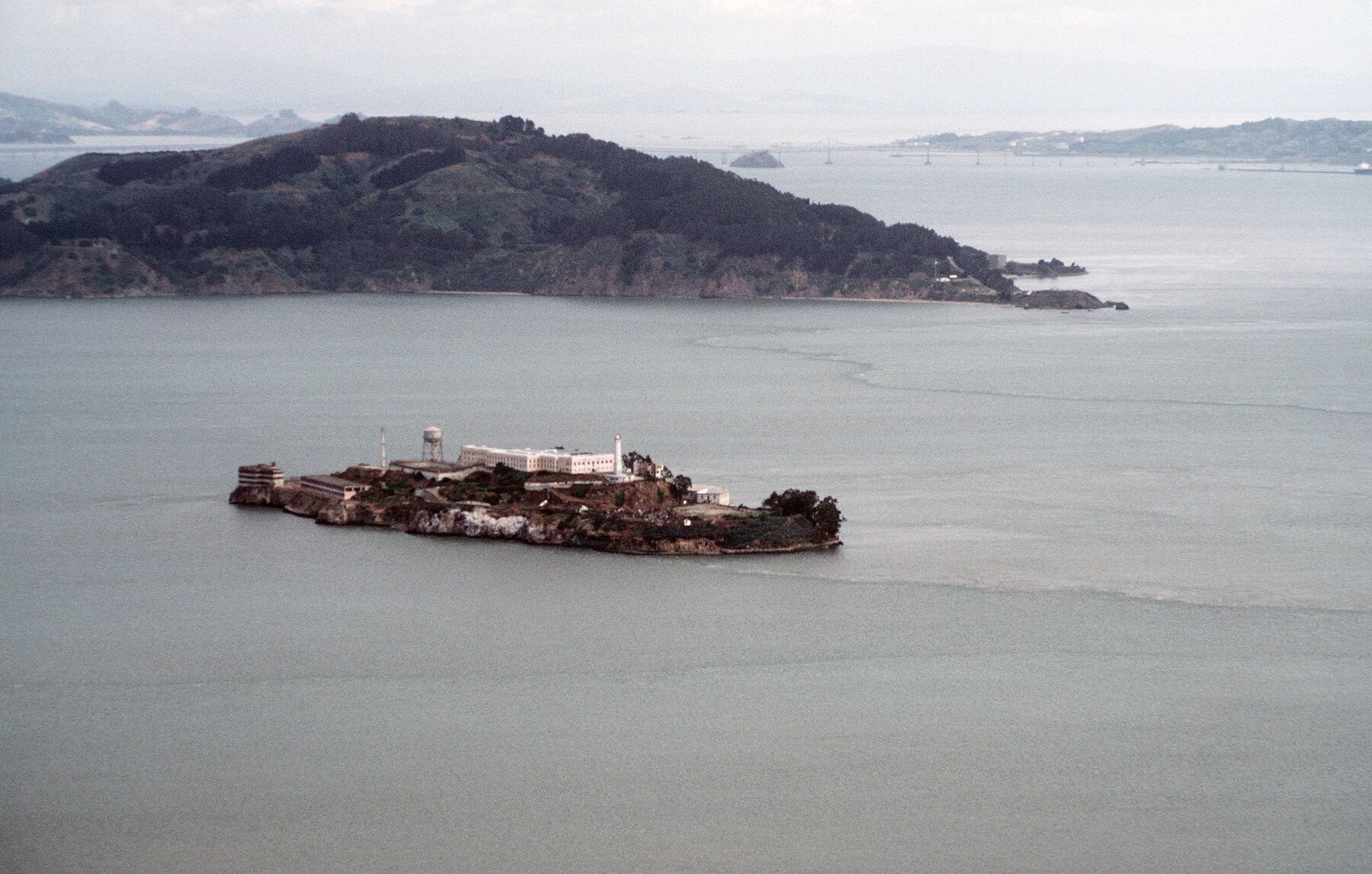 photographAn aerial view of Alcatraz Island, 8 May 1986 (National Archives)Military aerial photograph of Alcatraz Island dated 8 May 1986, taken more than twenty years after the penitentiary closed. It is filed as a view of the island, not of the prison years.finding-aidHouse Select Committee on Assassinations: immunity orders, Thomas through Trafficante (NARA file unit 641695970)A National Archives file unit of immunity orders and orders compelling testimony before the House Select Committee on Assassinations, alphabetically from Thomas, Carl through Trafficante, with 158 digital scans. The title shows an order concerning Trafficante is in it; the scans were not opened.finding-aidRecords Relating to the Prosecution of Alphonse Capone (U.S. Attorney, Chicago)The U.S. Attorney's file at Chicago on the 1931 income-tax prosecution of Alphonse Capone: correspondence with Washington, notes, reports and drafts. Seven items are digitized.
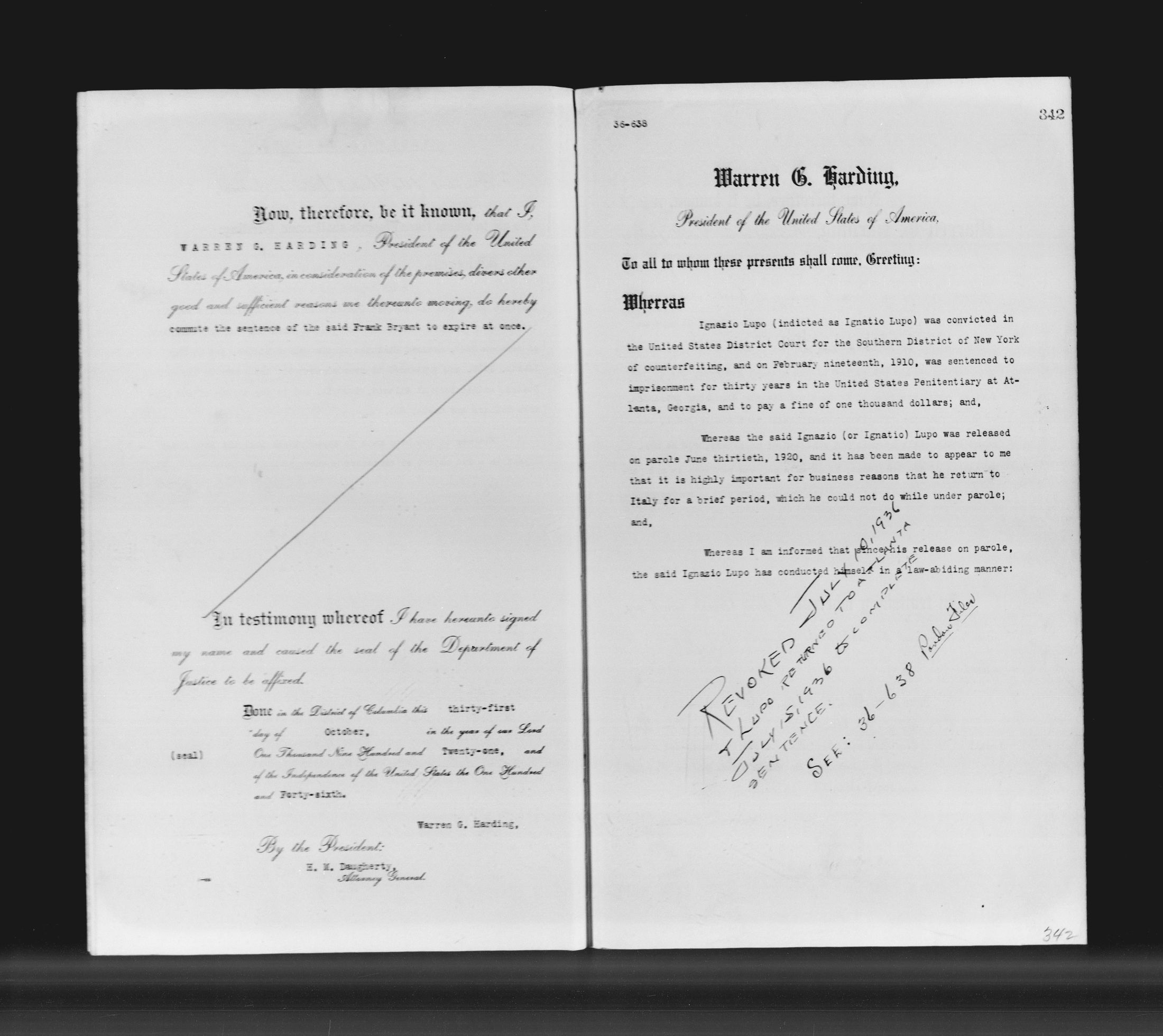 case-filePardon warrant 36-638: conditional commutation of the sentence of Ignazio Lupo, 1921, with the 1936 revocation notePrinted warrant signed by President Warren G. Harding commuting Ignazio Lupo's thirty-year counterfeiting sentence on condition that he be law-abiding, so that he could go to Italy; a handwritten note records the revocation of 10 July 1936 and his return to Atlanta.case-fileAssassination Records Review Board file "Exner, Roselli, Giancana, Logs" (National Archives), file page 1: fax of 17 June 1997A 240-page file unit in the records of the Assassination Records Review Board. Its first page is a 1997 fax to the Board's T. Jeremy Gunn asking about the FBI's withholding of "see" references on Judith Exner "prior to her deposition." The other pages have not been read.
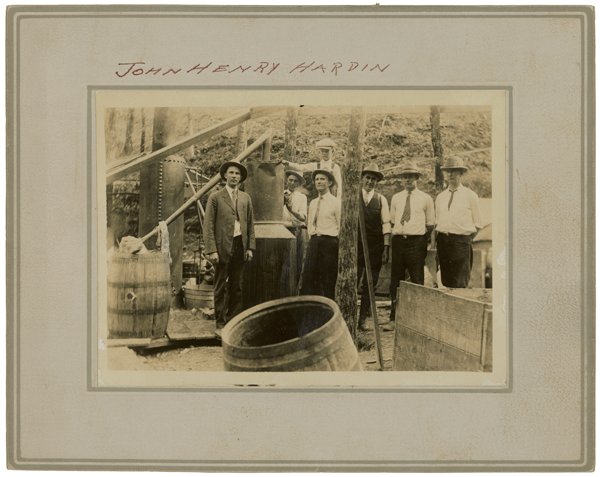 photographPhotograph of a still, from the case file United States v. John Henry Hardin (federal court, northern Georgia)A mounted photograph from a Prohibition-era federal criminal case file at the National Archives at Atlanta: seven men in hats beside a still in the woods. The catalog says the case arose from an indictment for possessing equipment used to make "spirituous liquors."finding-aid10478: United States v. Albert Bates, et al. (Western District of Oklahoma): the Urschel kidnaping fileNational Archives file unit for the federal prosecution of the Urschel kidnaping at Oklahoma City. The defendants included George R. "Machine Gun" Kelly and Kathryn Thorne Kelly. The filings are catalogued as separate items.
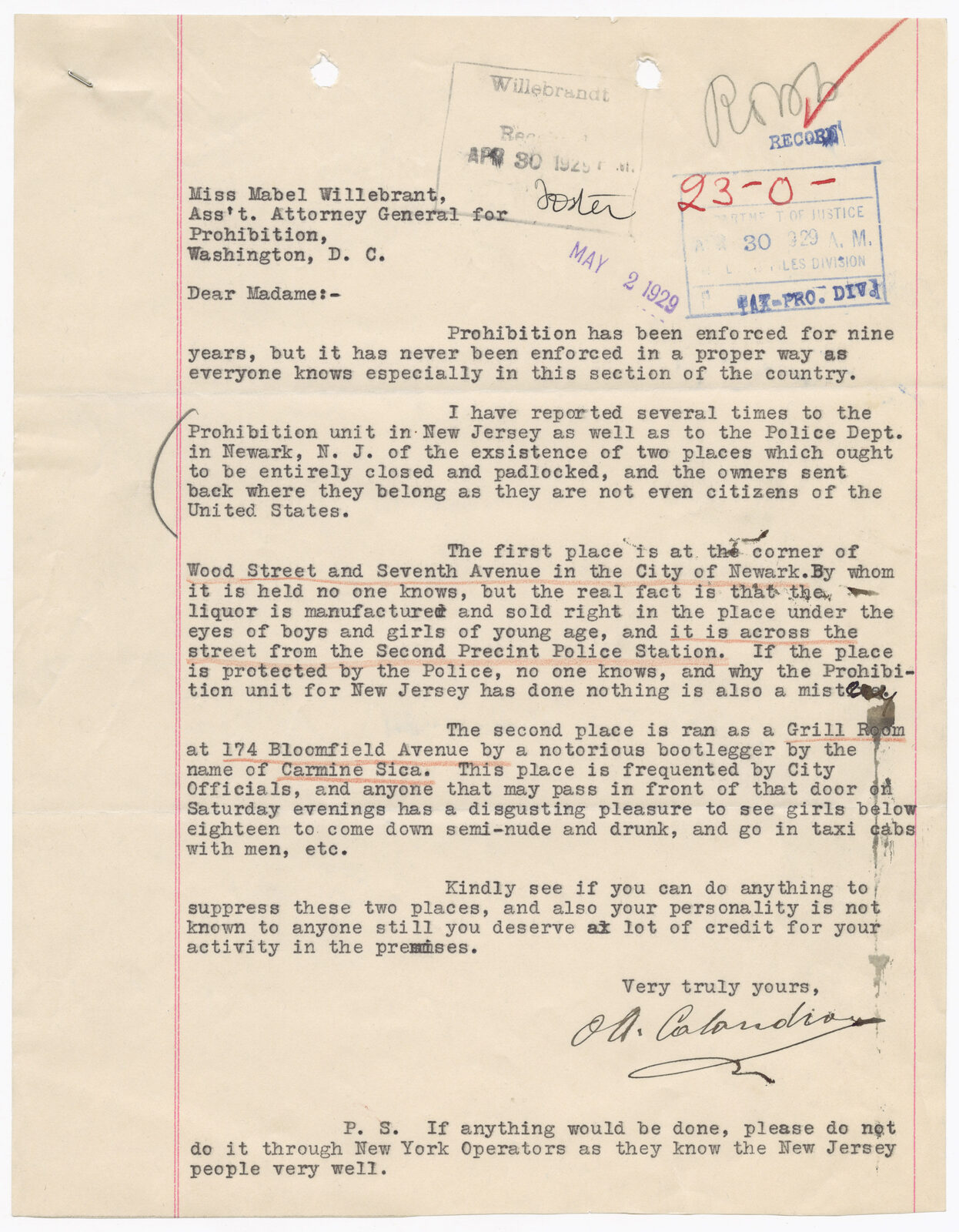 case-filePrivate citizen's letter to Assistant Attorney General Willebrandt about two New Jersey establishments (April 1929)National Archives Justice Department file: a typed letter, stamped received 30 April 1929, saying Prohibition has not been properly enforced and asking Mabel Willebrandt to act against two named places in New Jersey. The names are not repeated here.
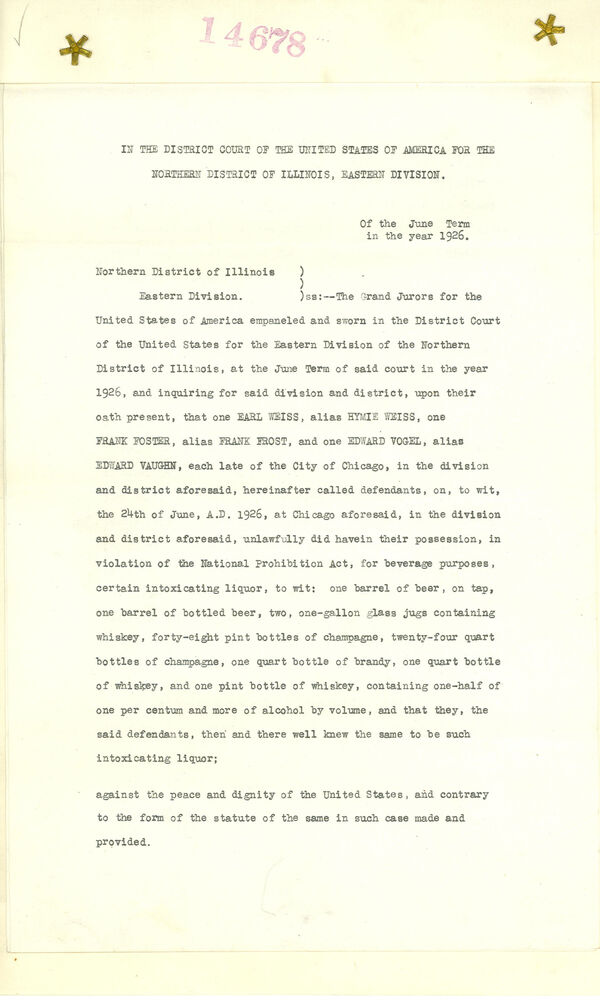 case-fileIndictment of Earl Weiss, alias Hymie Weiss, Frank Foster and Edward Vogel (N.D. Ill., filed June 29, 1926)A federal grand jury indictment charging Earl Weiss, alias Hymie Weiss, and two others with possessing and transporting liquor in Chicago on June 24, 1926, in violation of the National Prohibition Act, and with conspiracy. The charging page lists a barrel of beer on tap, champagne, whiskey and brandy.case-file8250: United States v. Mary Pitts, alias Mary O'Dare, et al. (harboring Clyde Barrow and Bonnie Parker)Federal criminal case file from the Northern District of Texas in which the defendants were charged with conspiring to harbor and conceal Clyde Barrow and Bonnie Parker. 131 digitized pages; undated in the catalog.case-file8008: United States v. Raymond Hamilton, et al. (theft of weapons from a Texas National Guard armory)Federal criminal case file from the Northern District of Texas against Raymond Hamilton, Clyde C. Barrow, Bonnie Parker, Henry Methvin, Joe Palmer and Hilton Bybee, accused of stealing weapons from a Texas National Guard armory.case-fileUnited States of America v. Alvin Karpavicz, alias Alvin Karpis; Arthur Barker, alias "Doc" Barker; Byron Bolton; John P. Peifer; Charles J. Fitzgerald; Elmer Farmer; and Edmund C. Bartholmey (D. Minn., No. 6258)Federal criminal case file at St. Paul against Karpis, Arthur Barker and five others named in the catalog title. 122 digitized pages; the catalog gives no description of the charge.
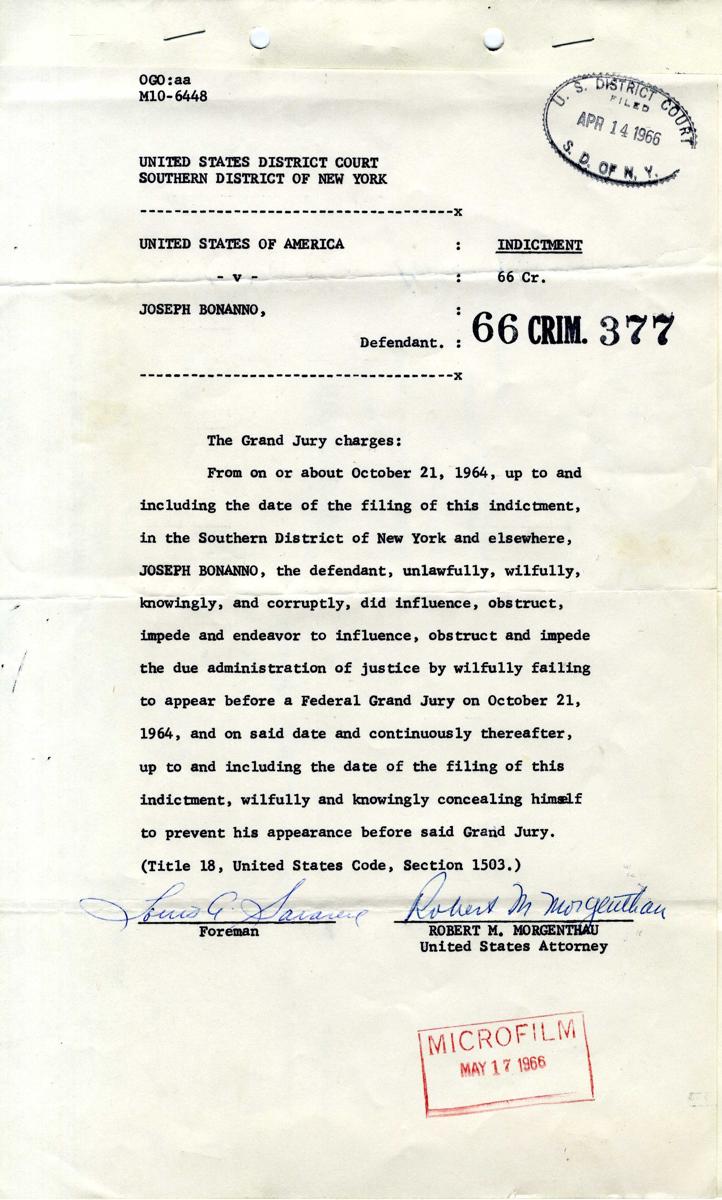 case-fileUnited States v. Joseph Bonanno, S.D.N.Y. criminal case file 66 Cr. 377The case file of the 1966 Southern District of New York prosecution of Joseph Bonanno. The indictment, filed April 14, 1966, charges that from about October 21, 1964 he obstructed justice "by wilfully failing to appear before a Federal Grand Jury" and by "wilfully and knowingly concealing himself to prevent his appearance."case-fileIndictment in United States v. Albert Bates, et al., Urschel kidnaping (23 August 1933)Ten-page federal indictment of 23 August 1933 against Albert L. Bates, George R. Kelly, Kathryn Thorne Kelly, Harvey J. Bailey, the Shannons and others for the conspiracy to kidnap Charles F. Urschel.case-fileInstructions to the jury in United States v. Albert Bates, et al. (30 September 1933)The court's forty-page charge to the jury in the first Urschel kidnaping trial at Oklahoma City, dated 30 September 1933.case-fileCommitment of Harvey J. Bailey (12 October 1933)The court's commitment of Harvey J. Bailey, with the aliases J. J. Brennan, John Brown and R. G. McDonald, after his conviction in the Urschel kidnaping case, dated 12 October 1933.case-fileCommitment of George R. Kelly (16 October 1933)The court's commitment of George R. "Machine Gun" Kelly to custody after his life sentence in the Urschel kidnaping case, dated 16 October 1933.case-fileCommitment of Kathryn Thorne Kelly (20 October 1933)The court's commitment of Kathryn Thorne Kelly, alias Catherine Kelly, after her life sentence for conspiracy in the Urschel kidnaping, dated 20 October 1933.case-filePetition for appeal by George R. Kelly (11 November 1933)George R. Kelly's petition for appeal from his conviction in United States v. Albert L. Bates, et al., dated 11 November 1933.case-fileAgreed statement of facts, United States v. Harvey J. Bailey (28 May 1934)Eighteen-page agreed statement of facts of 28 May 1934, prepared for Harvey J. Bailey's appeal from his conviction in the Urschel kidnaping case.case-fileTranscript of testimony, United States v. George R. Kelly and Kathryn Kelly (October 1933)The 564-page transcript of the October 1933 federal trial of George R. Kelly and Kathryn Kelly at Oklahoma City for the Urschel kidnaping.
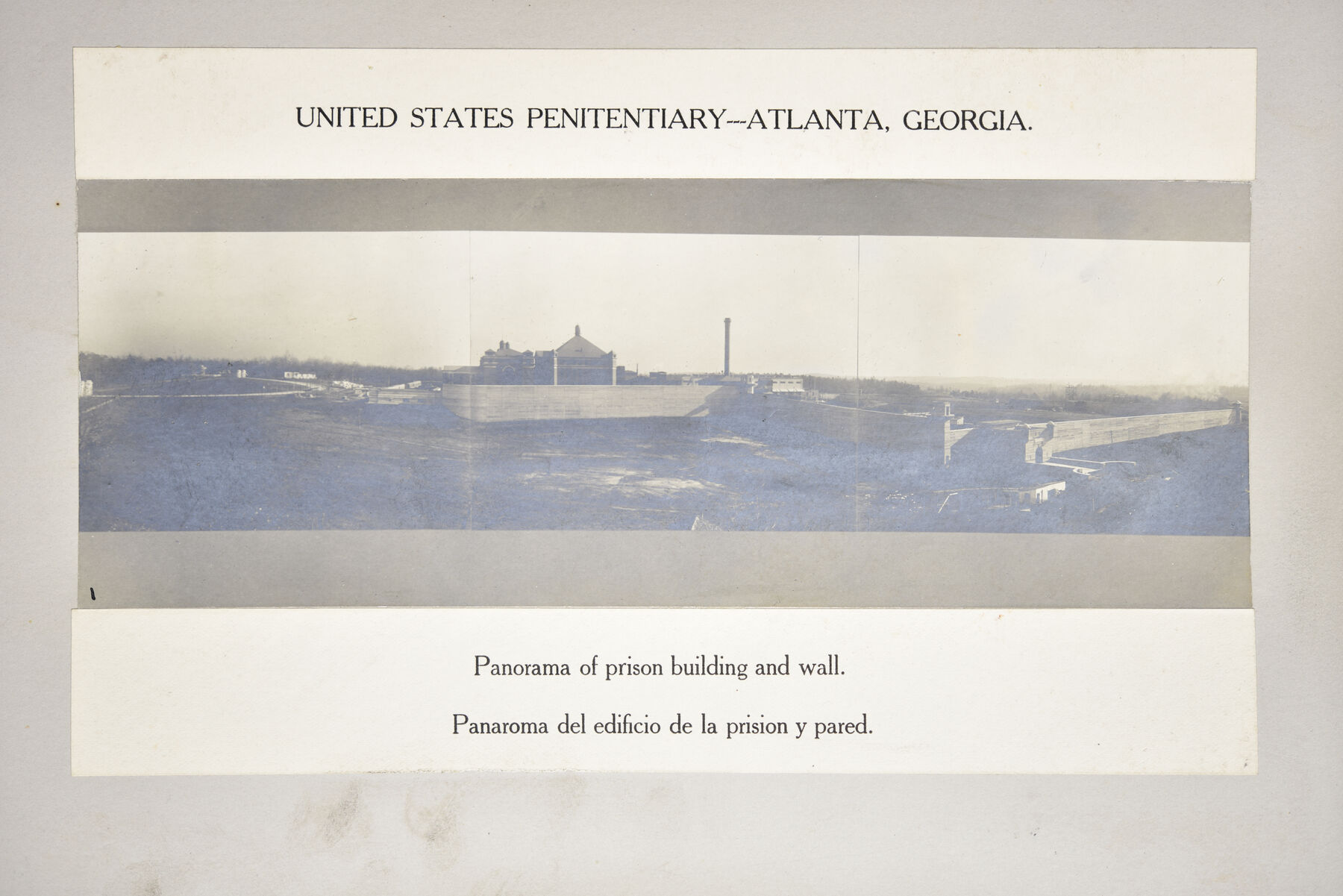 photographUnited States Penitentiary, Atlanta, Georgia: Panorama of Prison Building and Wall (Department of Justice album)A mounted panorama strip from the Department of Justice album showing the Atlanta prison building and wall, ca. 1900 to ca. 1925.
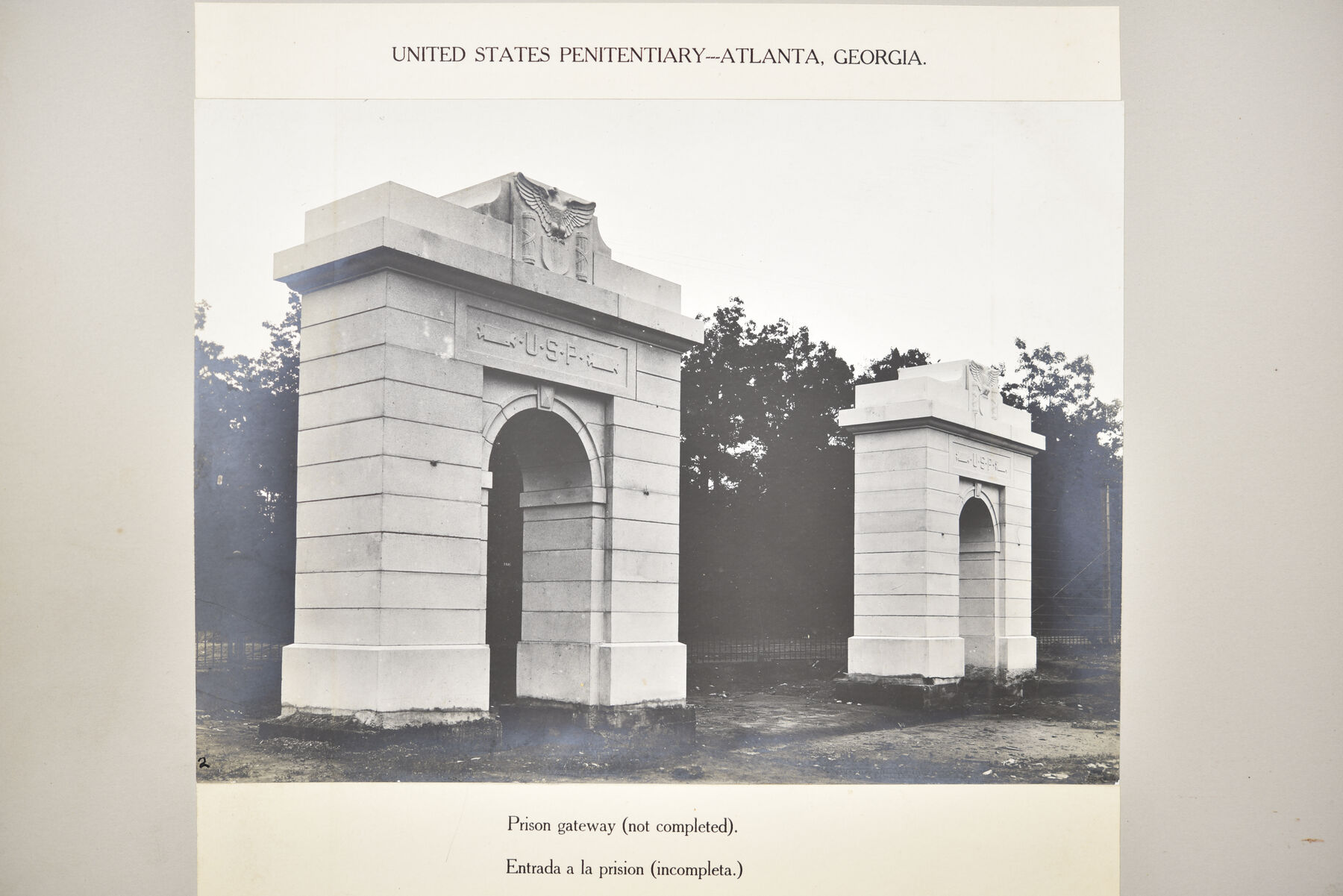 photographUnited States Penitentiary, Atlanta, Georgia: Prison Gateway (not completed) (Department of Justice album)A mounted photograph from the Department of Justice album of the Atlanta prison gateway, captioned not completed, ca. 1900 to ca. 1925: a stone arch lettered USP.
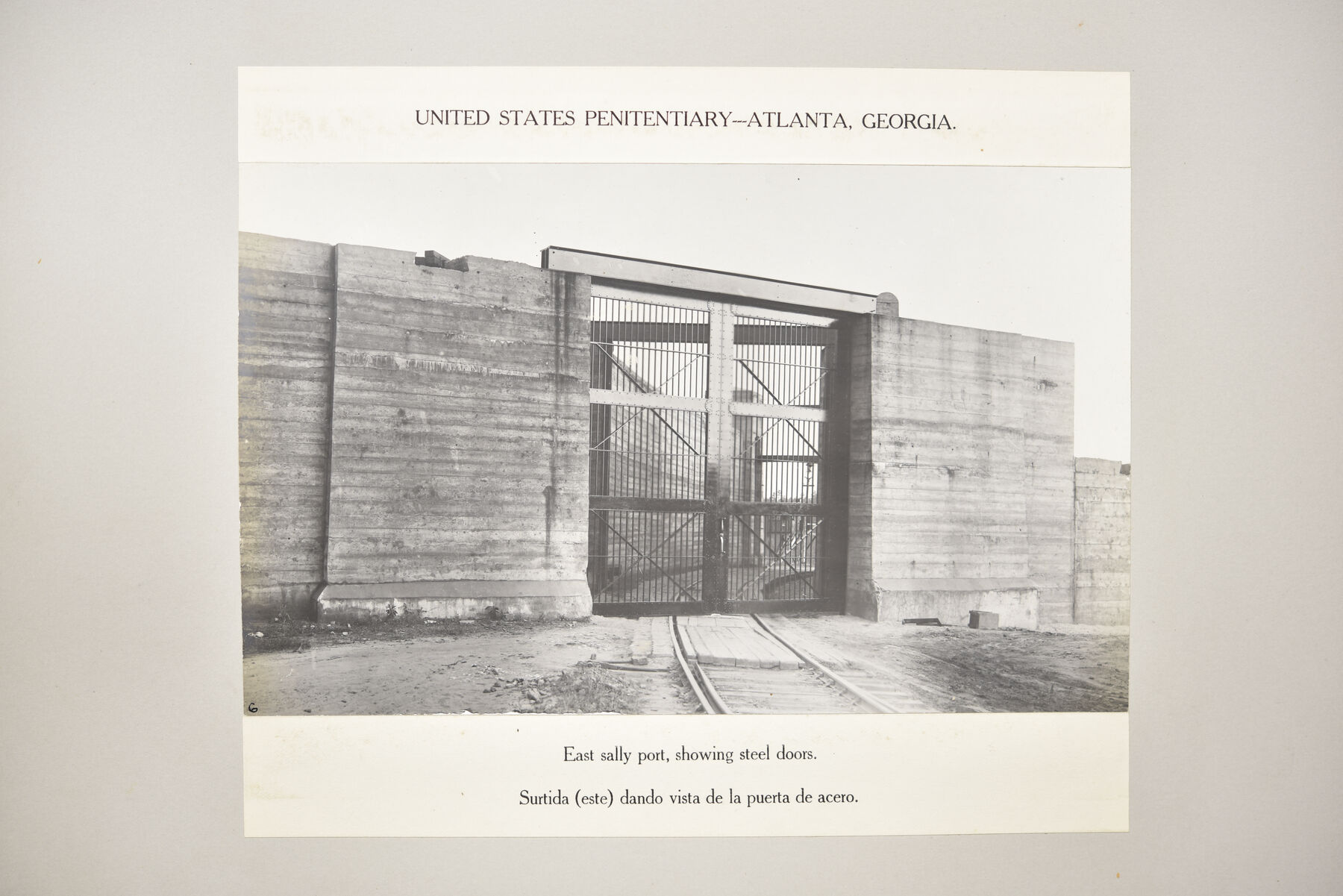 photographUnited States Penitentiary, Atlanta, Georgia: East Sally Port, Showing Steel Doors (Department of Justice album)A mounted photograph from the Department of Justice album of the east sally port at Atlanta, ca. 1900 to ca. 1925, with its steel doors and a rail track in the foreground.
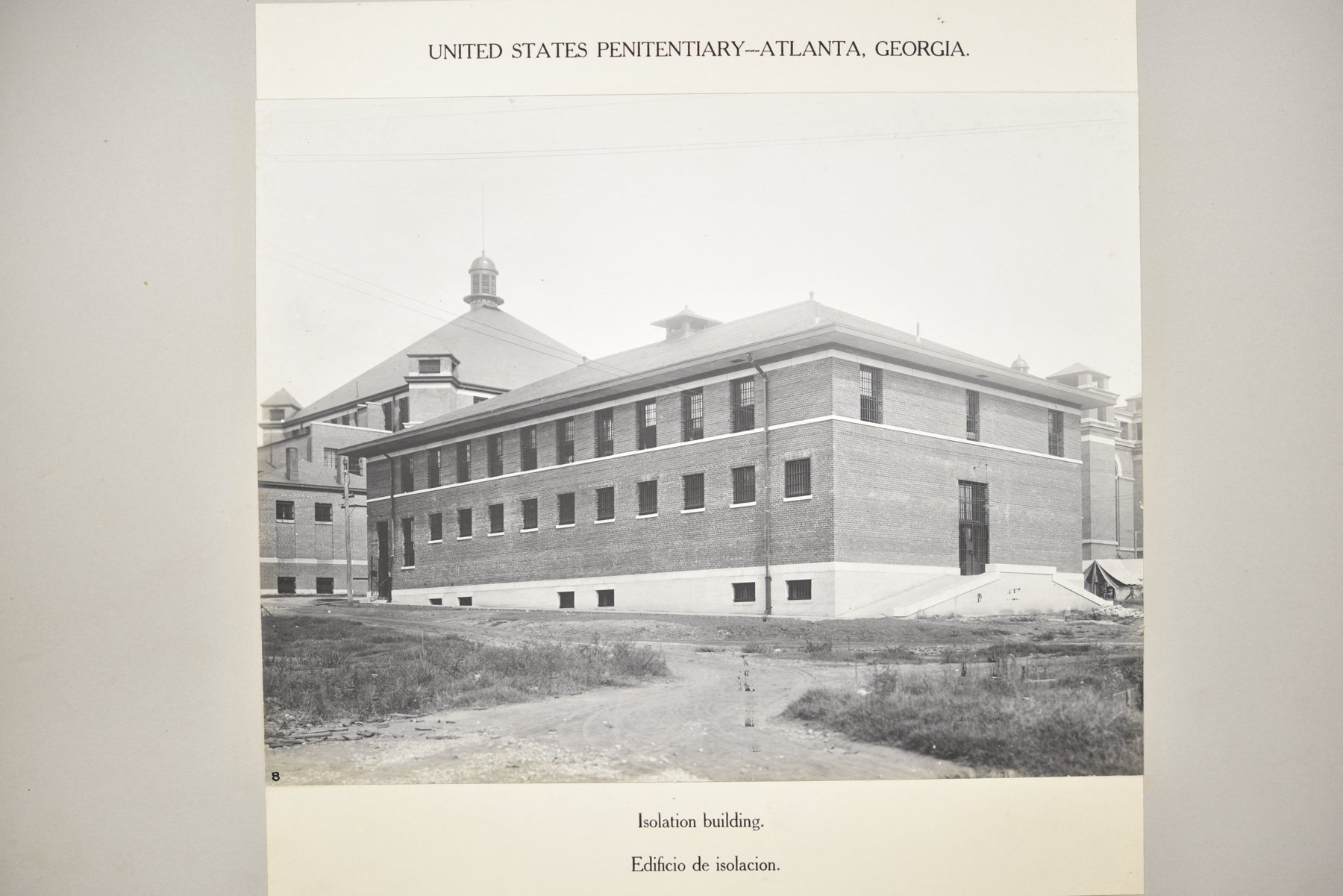 photographUnited States Penitentiary, Atlanta, Georgia: Isolation Building (Department of Justice album)Plate 8 of the Department of Justice album of the Atlanta and Leavenworth penitentiaries, ca. 1900 to ca. 1925, captioned "Isolation building." The photograph shows a two-storey brick building with barred windows on bare ground, with the domed cell house behind it.
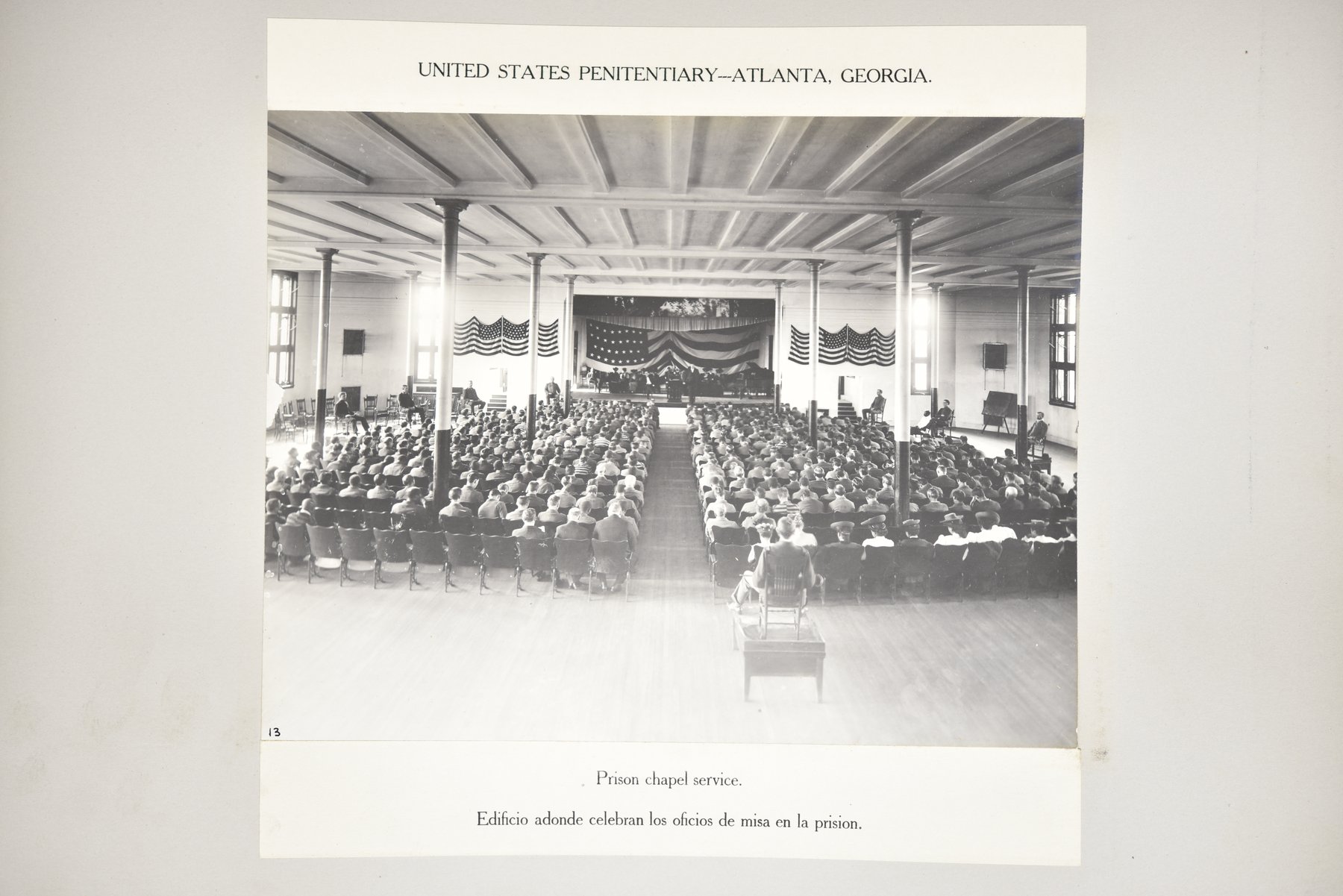 photographUnited States Penitentiary, Atlanta, Georgia: Prison Chapel Service (Department of Justice album)Plate 13 of the Department of Justice album of the Atlanta and Leavenworth penitentiaries, ca. 1900 to ca. 1925, captioned "Prison chapel service." The photograph shows a large hall with columns, flags draped across the far wall above a stage, and rows of seated men facing the stage, with a few men seated at the sides and a chair on a low platform in the aisle.
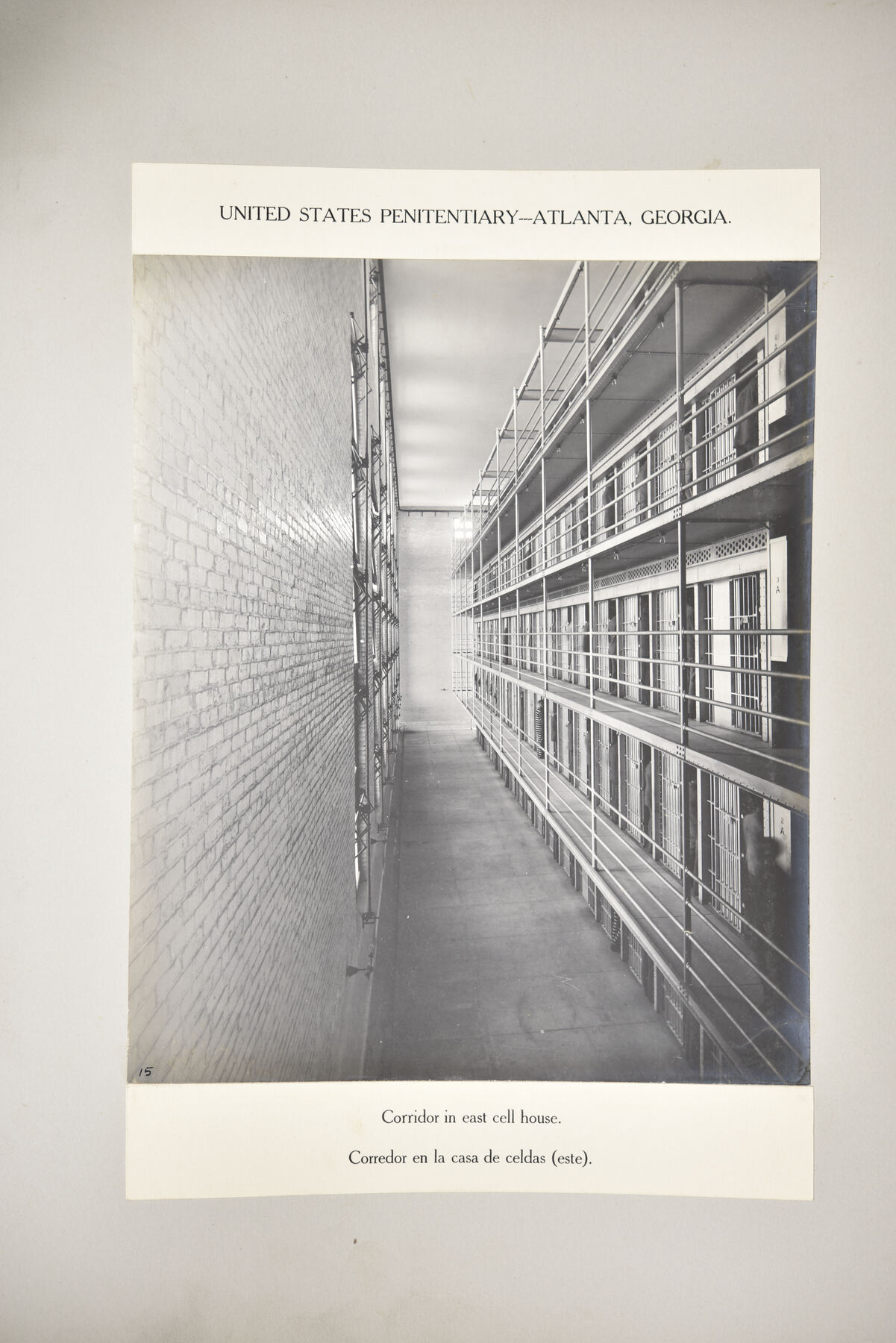 photographUnited States Penitentiary, Atlanta, Georgia: Corridor in East Cell House (Department of Justice album)A mounted photograph from the Department of Justice album of a corridor in the east cell house at Atlanta, ca. 1900 to ca. 1925: tiers of cells along a long brick-walled corridor.
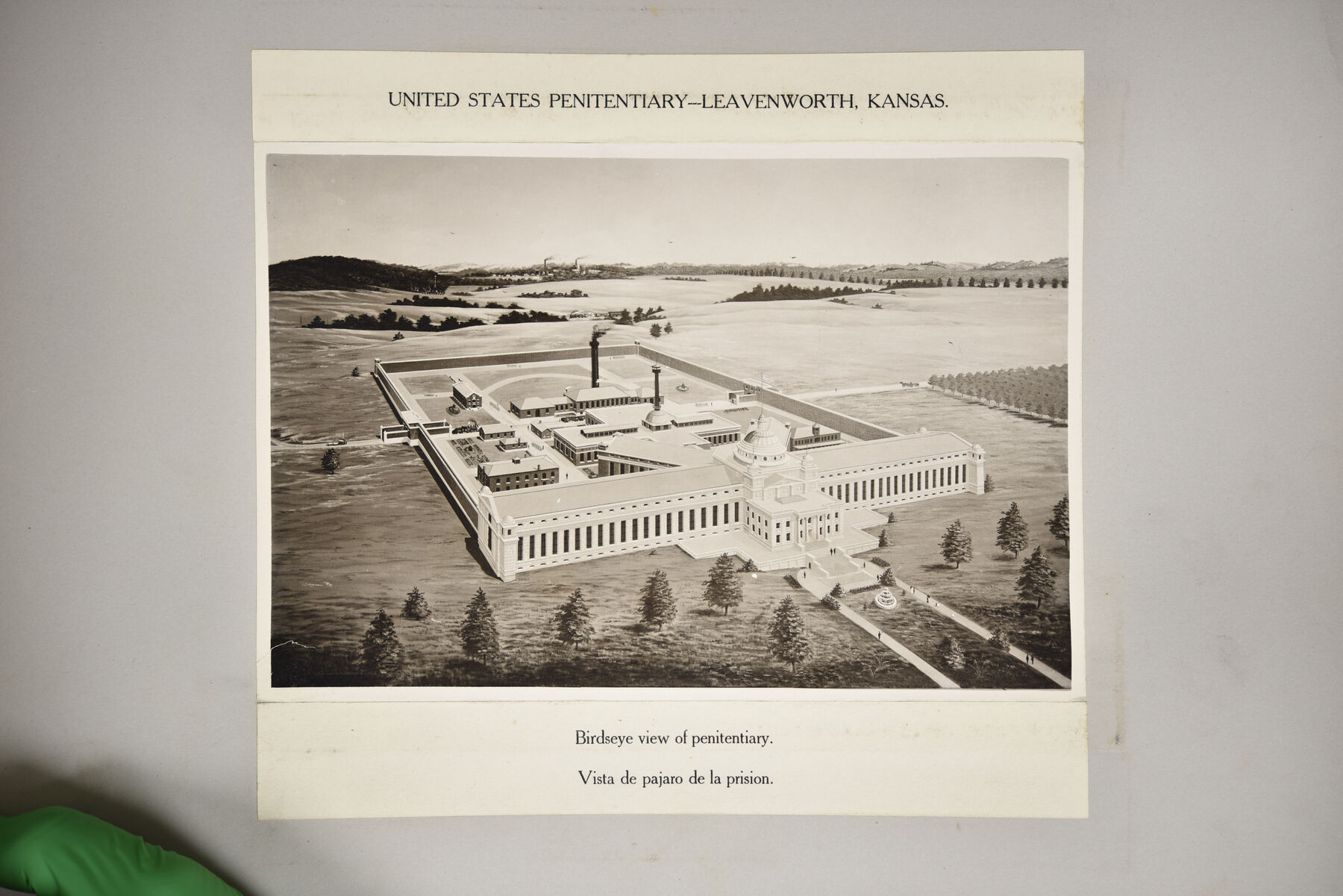 photographUnited States Penitentiary, Leavenworth, Kansas: Birdseye View of Penitentiary (Department of Justice album)A mounted bird's-eye view of the Leavenworth penitentiary complex from the Department of Justice album, ca. 1900 to ca. 1925. The scan shows an illustration of the buildings and grounds, not an aerial photograph.
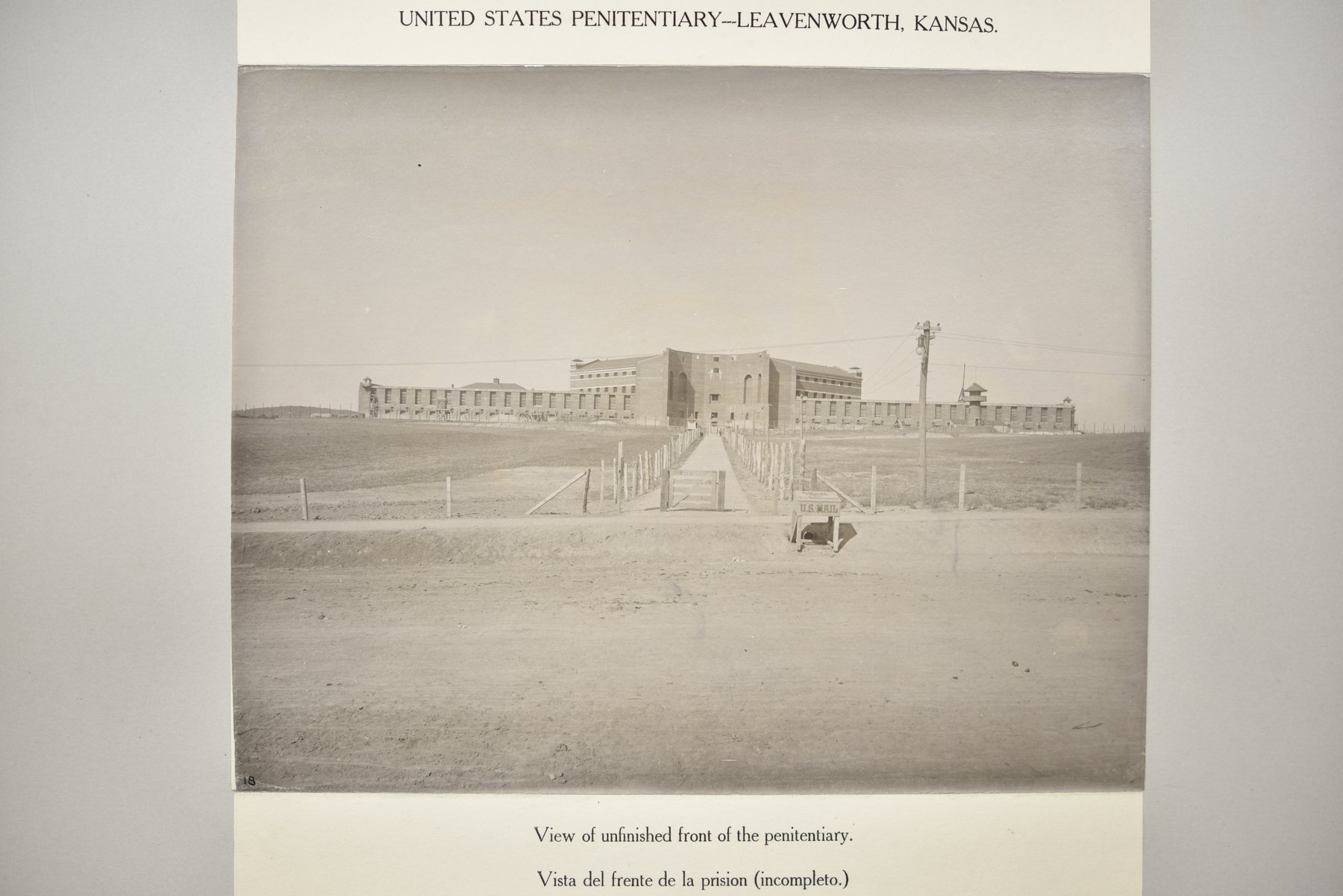 photographUnited States Penitentiary, Leavenworth, Kansas: View of Unfinished Front of the Penitentiary (Department of Justice album)Plate 18 of the Department of Justice album of the Atlanta and Leavenworth penitentiaries, ca. 1900 to ca. 1925, captioned "View of unfinished front of the penitentiary." The photograph looks down a fenced walk across open ground to the long front of the penitentiary, with a taller central block, a guard tower at the right, a telegraph pole and a small sign by a dirt road in the foreground.
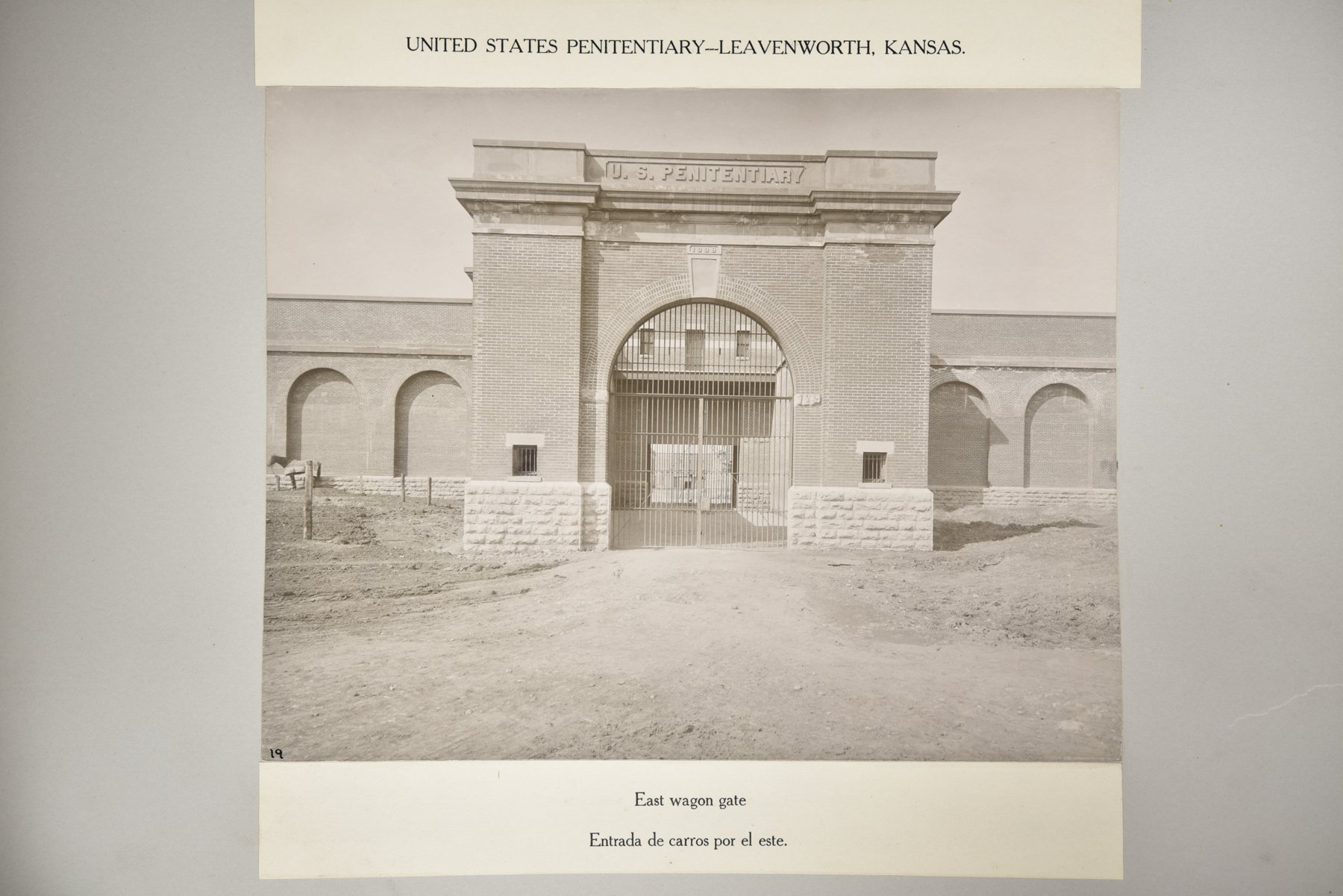 photographUnited States Penitentiary, Leavenworth, Kansas: East Wagon Gate (Department of Justice album)Plate 19 of the Department of Justice album of the Atlanta and Leavenworth penitentiaries, ca. 1900 to ca. 1925, captioned "East wagon gate." The photograph shows an arched brick gateway inscribed "U.
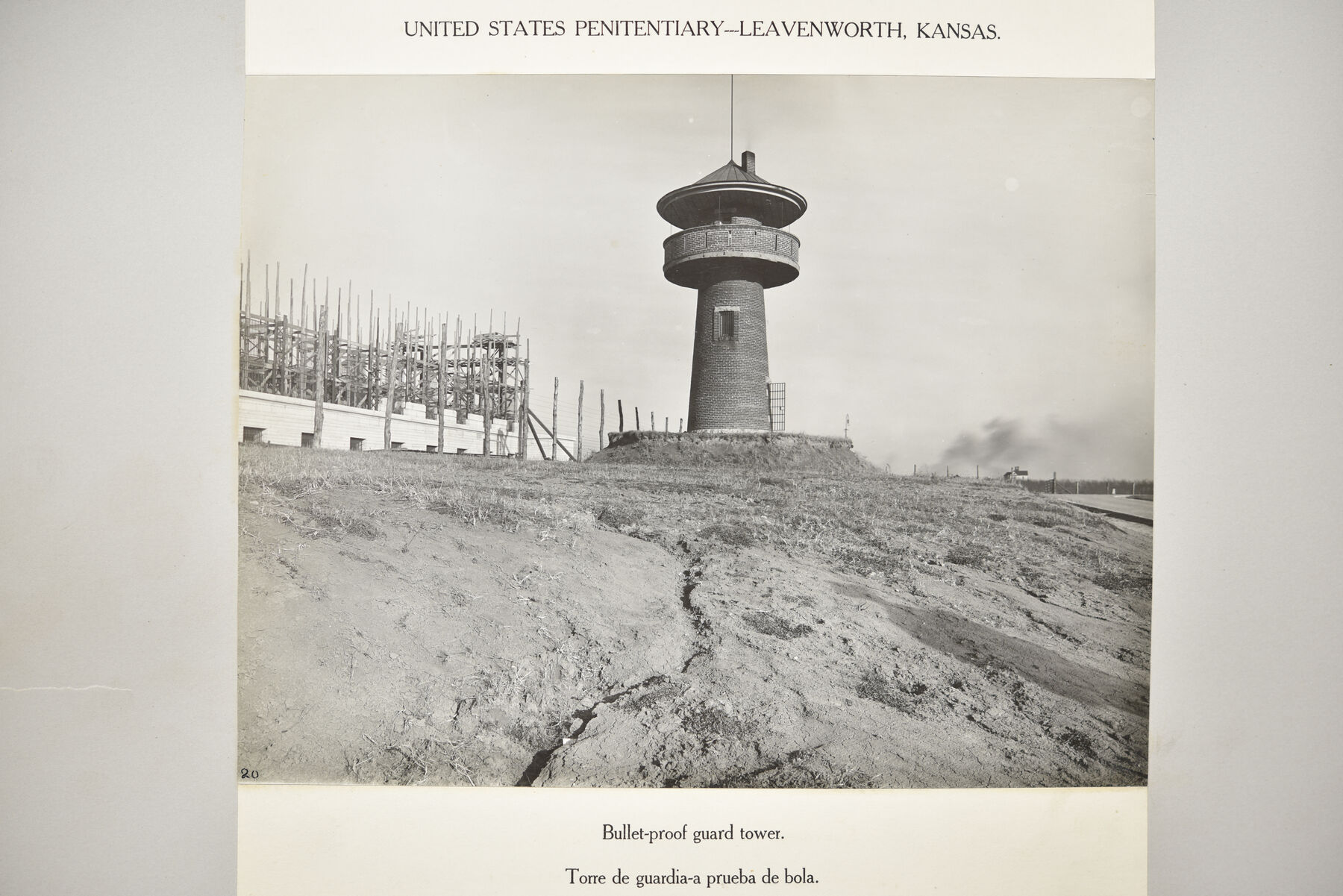 photographUnited States Penitentiary, Leavenworth, Kansas: Bullet-proof Guard Tower (Department of Justice album)A mounted photograph from the Department of Justice album of a guard tower at Leavenworth, ca. 1900 to ca. 1925, with wall construction visible behind it.
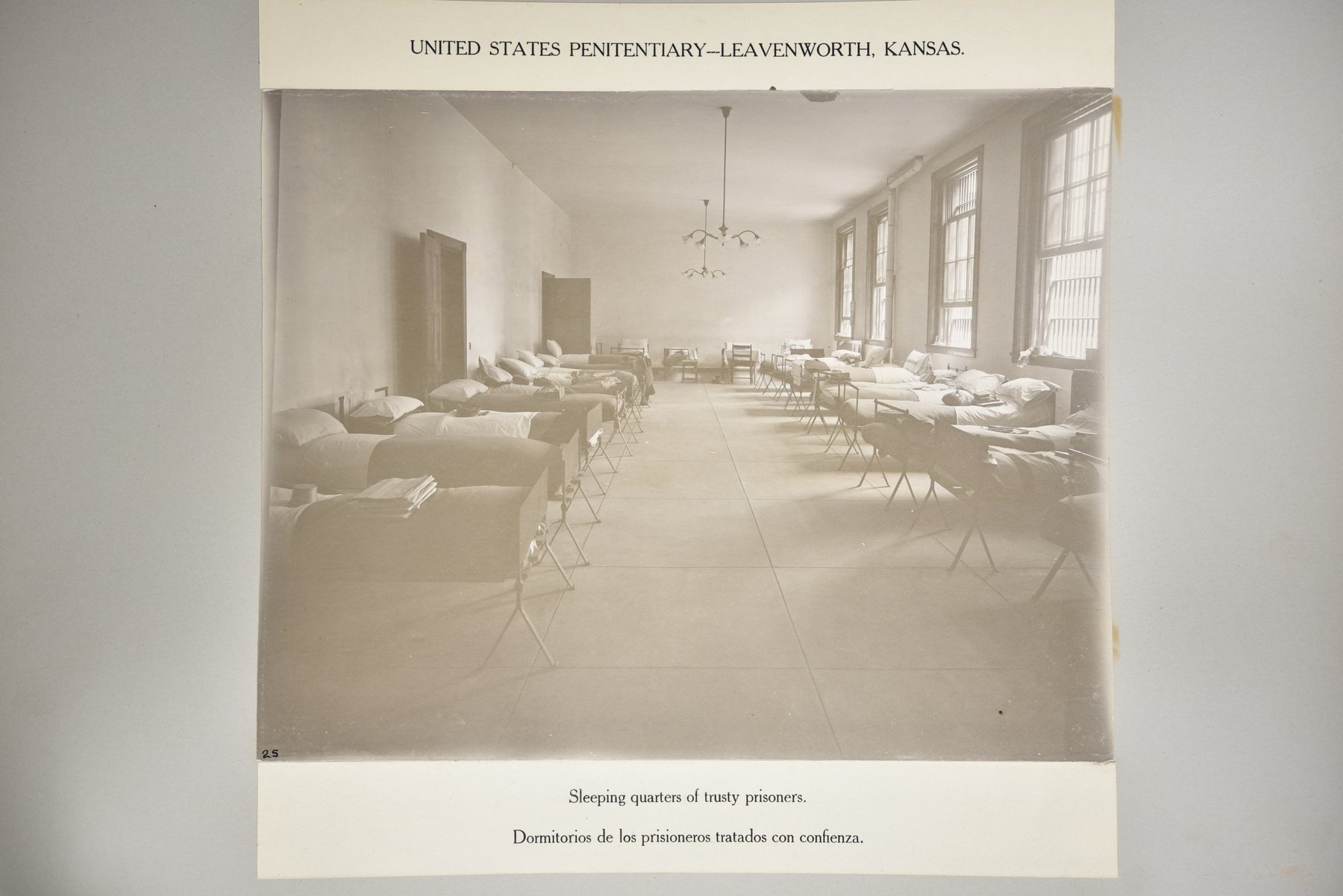 photographUnited States Penitentiary, Leavenworth, Kansas: Sleeping Quarters of Trusty Prisoners (Department of Justice album)Plate 25 of the Department of Justice album of the Atlanta and Leavenworth penitentiaries, ca. 1900 to ca. 1925, captioned "Sleeping quarters of trusty prisoners." The photograph shows a long, high room with tall windows on the right, rows of made iron cots along both walls, and hanging lamps; no one is in the room.
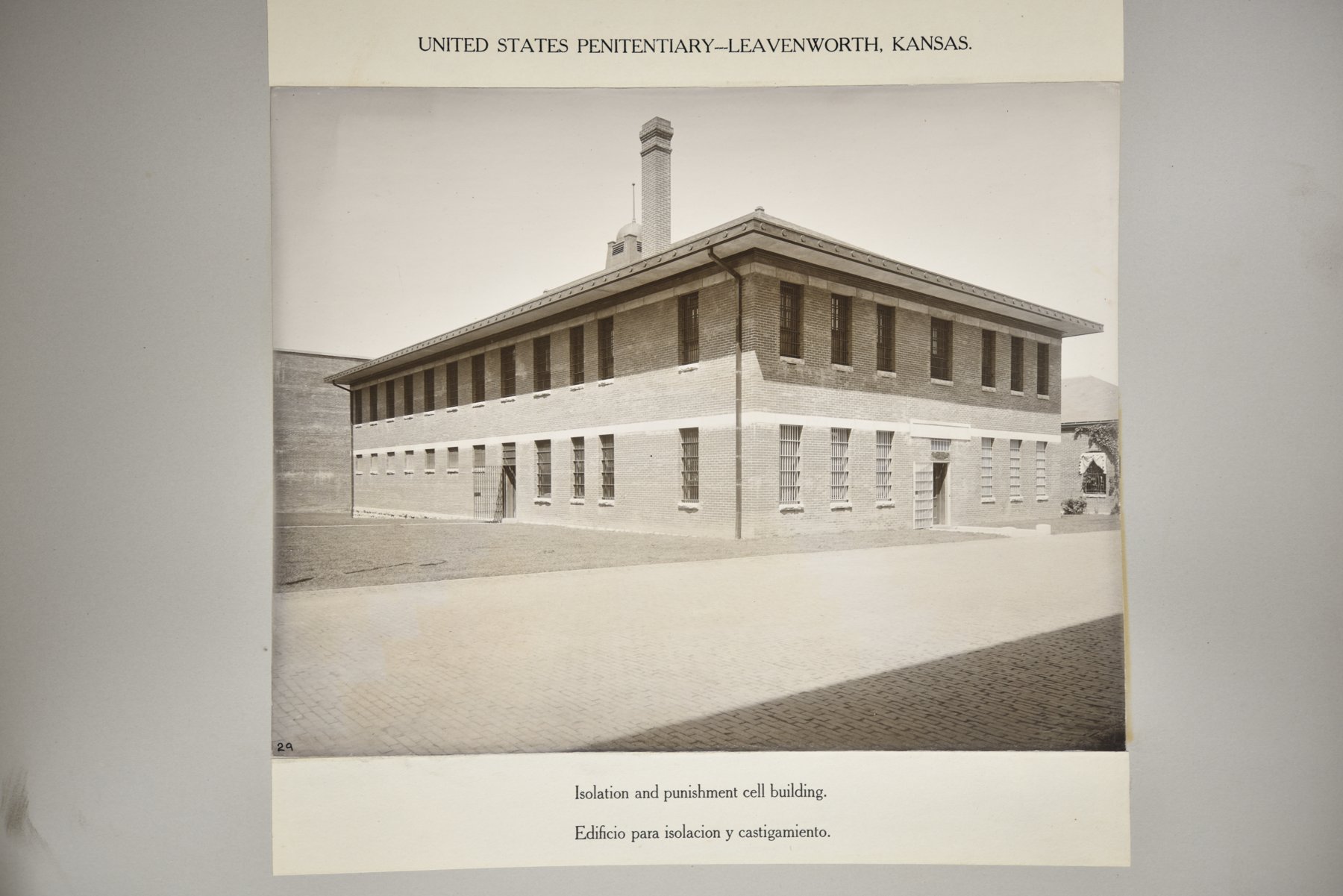 photographUnited States Penitentiary, Leavenworth, Kansas: Isolation and Punishment Cell Building (Department of Justice album)Plate 29 of the Department of Justice album of the Atlanta and Leavenworth penitentiaries, ca. 1900 to ca. 1925, captioned "Isolation and punishment cell building." The photograph shows a two-storey brick building with barred windows, a hipped roof and a chimney, over brick paving.
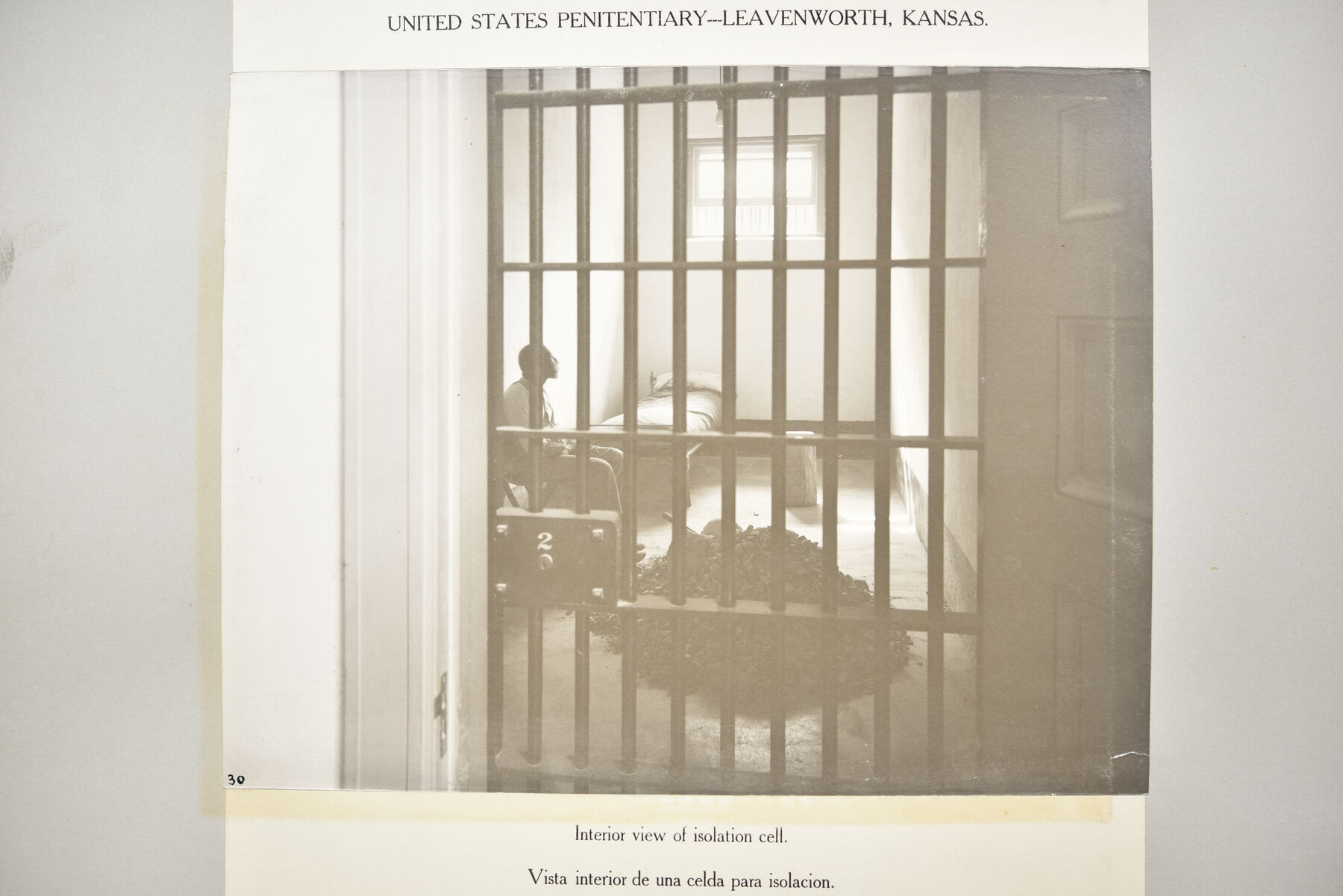 photographUnited States Penitentiary, Leavenworth, Kansas: Interior View of Isolation Cell (Department of Justice album)A mounted photograph from the Department of Justice album titled as an interior view of an isolation cell at Leavenworth, ca. 1900 to ca. 1925, seen through the bars.
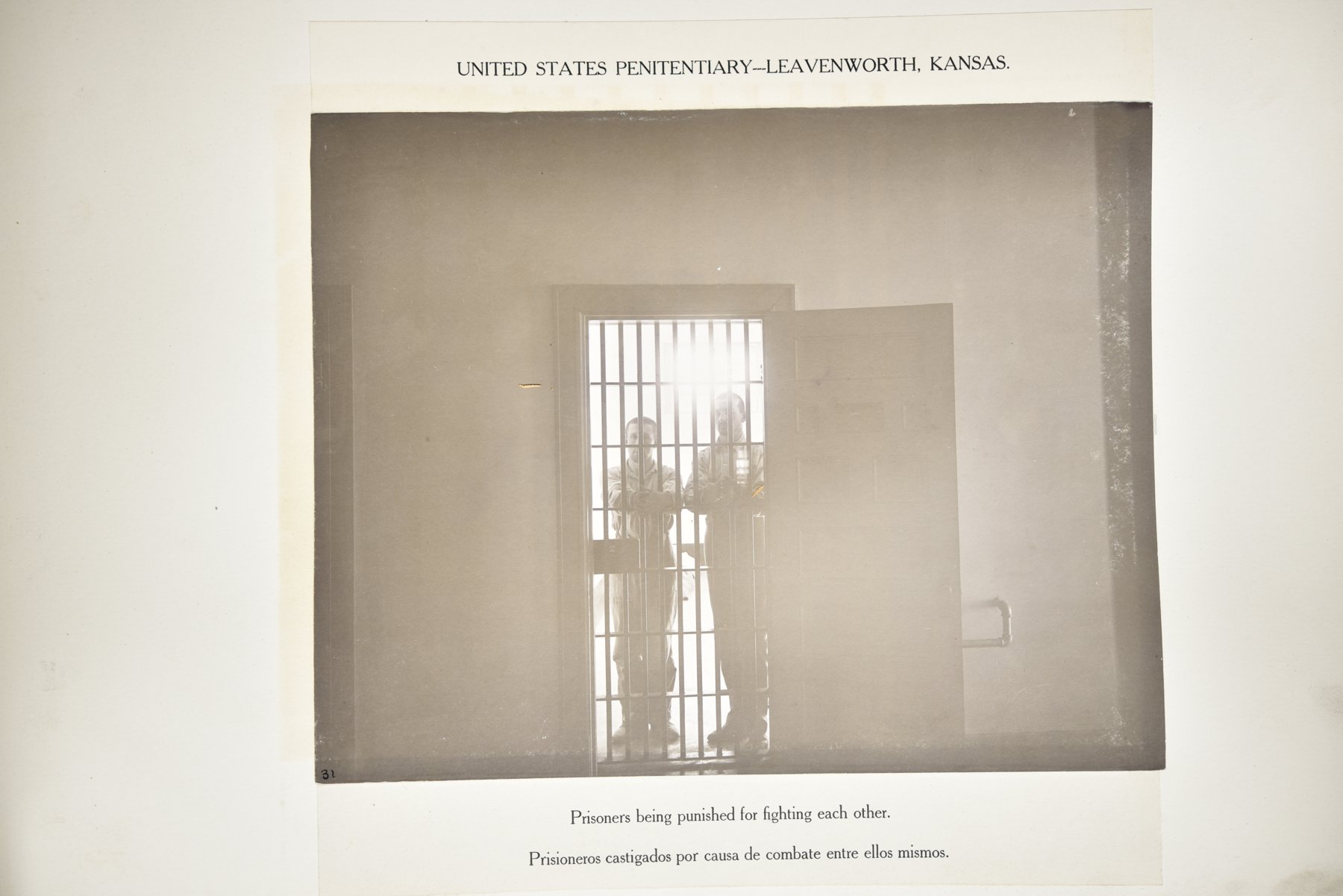 photographUnited States Penitentiary, Leavenworth, Kansas: Prisoners Being Punished for Fighting Each Other (Department of Justice album)Plate 31 of the Department of Justice album of the Atlanta and Leavenworth penitentiaries, ca. 1900 to ca. 1925, captioned "Prisoners being punished for fighting each other." The photograph shows two men in light uniforms standing behind a barred cell door, backlit, with the door open outward.
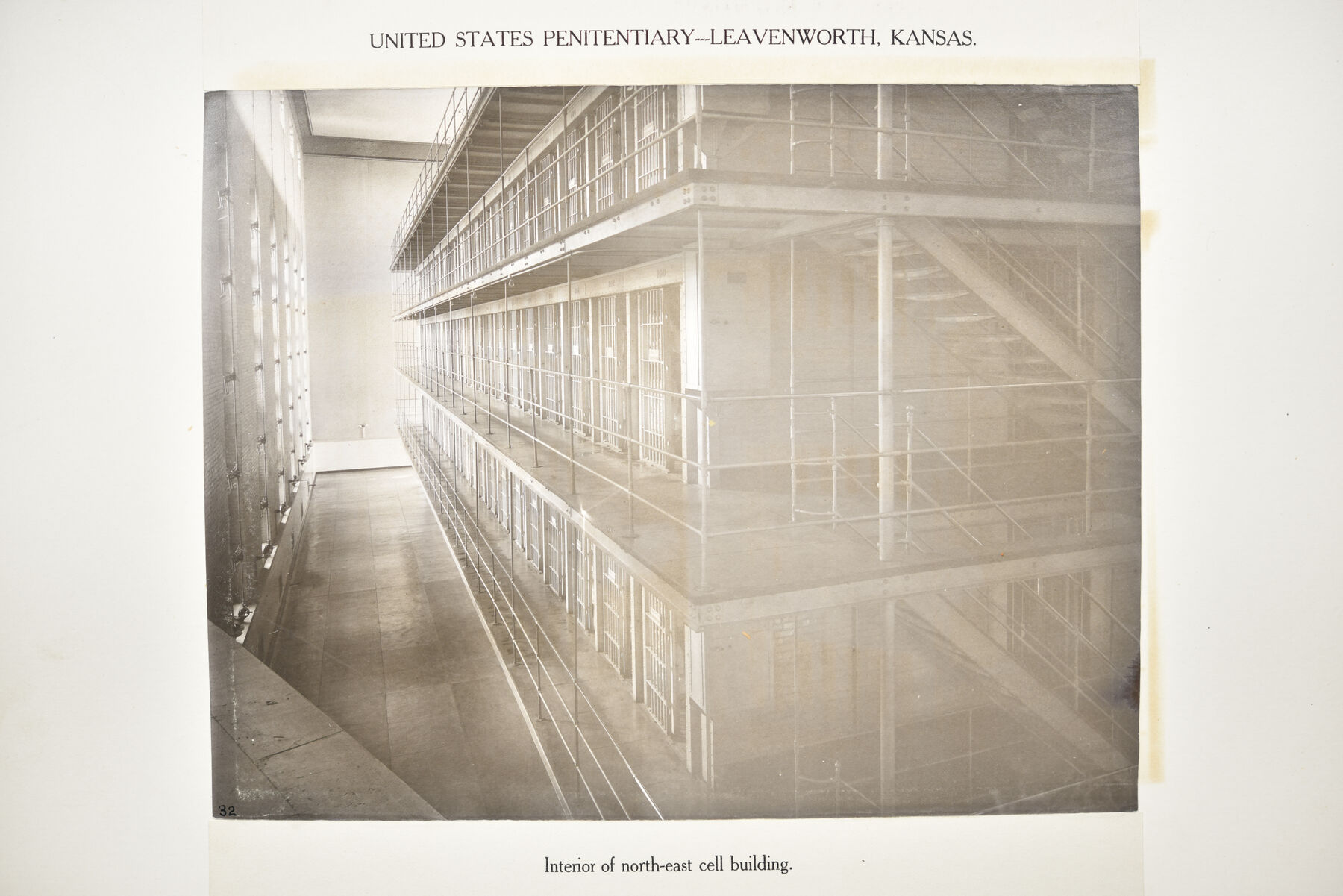 photographUnited States Penitentiary, Leavenworth, Kansas: Interior of North-east Cell Building (Department of Justice album)A mounted photograph from the Department of Justice album showing the interior of the northeast cell building at Leavenworth, ca. 1900 to ca. 1925: tiers of cells along a long hall.
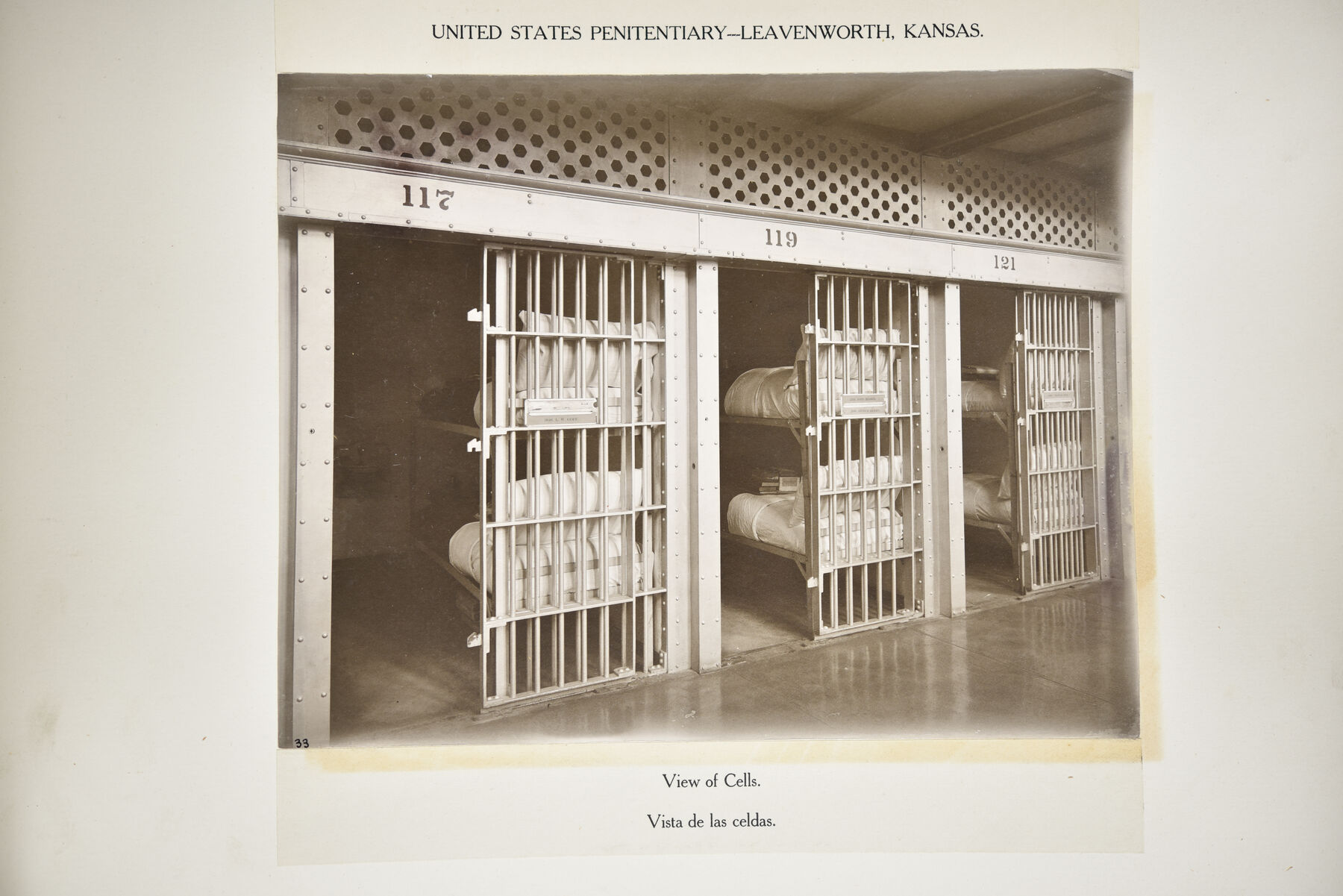 photographUnited States Penitentiary, Leavenworth, Kansas: View of Cells (Department of Justice album)A mounted photograph from the Department of Justice album showing cells at Leavenworth, ca. 1900 to ca. 1925: open cell doors with numbered cells and folded bedding.
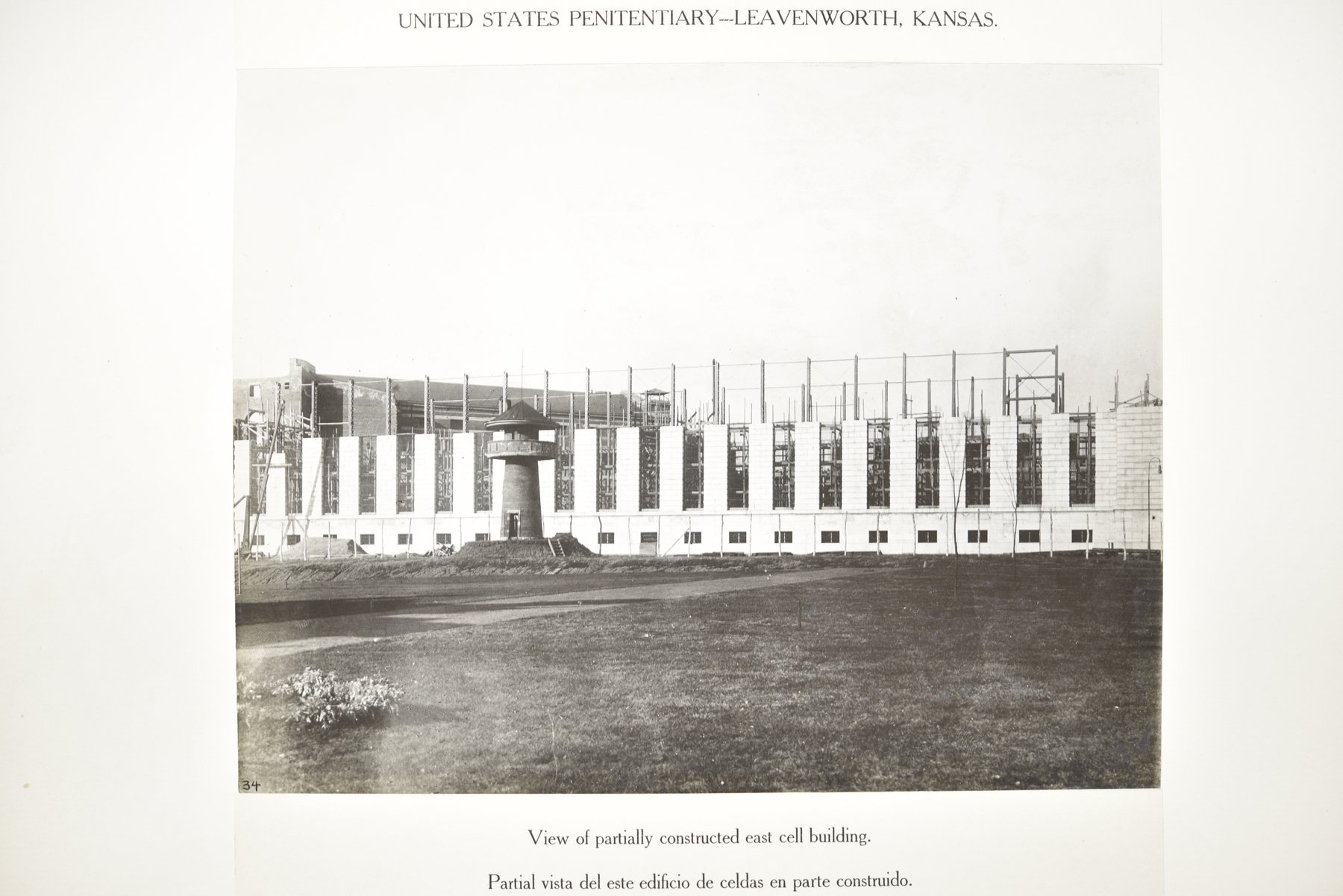 photographUnited States Penitentiary, Leavenworth, Kansas: View of Partially Constructed East Cell Building (Department of Justice album)Plate 34 of the Department of Justice album of the Atlanta and Leavenworth penitentiaries, ca. 1900 to ca. 1925, captioned "View of partially constructed east cell building." The photograph shows a long building with stone piers and open steel framing above, a round guard tower with a conical roof in front of it, and a lawn and shrub in the foreground.
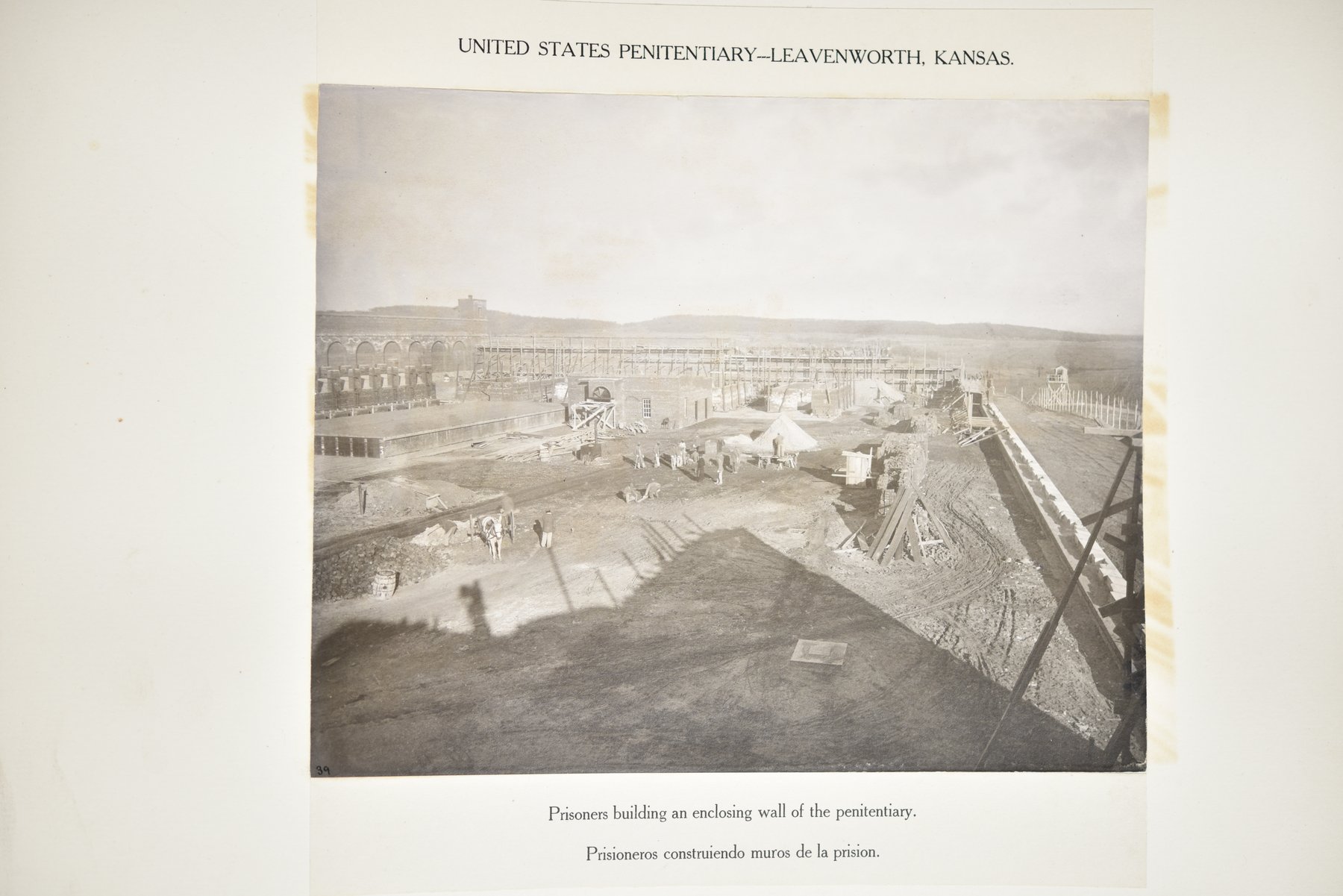 photographUnited States Penitentiary, Leavenworth, Kansas: Prisoners Building an Enclosing Wall of the Penitentiary (Department of Justice album)Plate 39 of the Department of Justice album of the Atlanta and Leavenworth penitentiaries, ca. 1900 to ca. 1925, captioned "Prisoners building an enclosing wall of the penitentiary." The photograph is a high view over a construction site: a long wall under scaffolding, cell blocks with arched openings at the left, piles of sand and stone, and small figures of men working with carts and a horse.
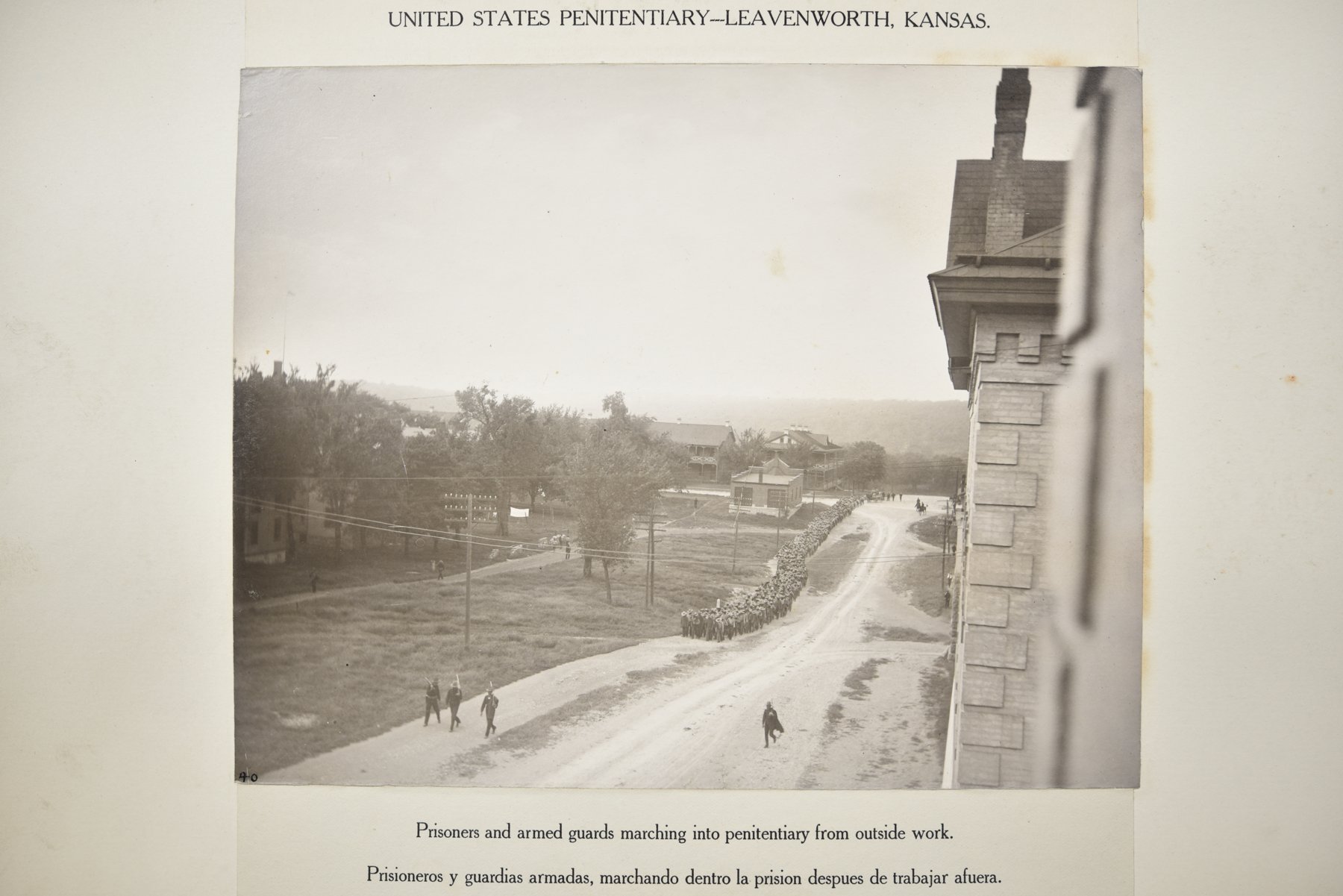 photographUnited States Penitentiary, Leavenworth, Kansas: Prisoners and Armed Guards Marching into Penitentiary from Outside Work (Department of Justice album)Plate 40 of the Department of Justice album of the Atlanta and Leavenworth penitentiaries, ca. 1900 to ca. 1925, captioned "Prisoners and armed guards marching into penitentiary from outside work." The photograph is an elevated view from a stone building down a dirt road: a long column of prisoners marches toward the building, with figures along the road and in the field, and trees and houses beyond.finding-aidNational Archives list of former Alcatraz inmates: Capone, register 85The National Archives at San Francisco lists Alphonse Capone, called Scarface on the list, among former inmates of the U.S. Penitentiary, Alcatraz, register number 85.finding-aidNational Archives numerical list of former Alcatraz inmates, register numbers 1 to 1576The National Archives at San Francisco's numerical index of former Alcatraz inmates: register numbers 1 through 1576, each with a name. It prints no dates of confinement and no cell.
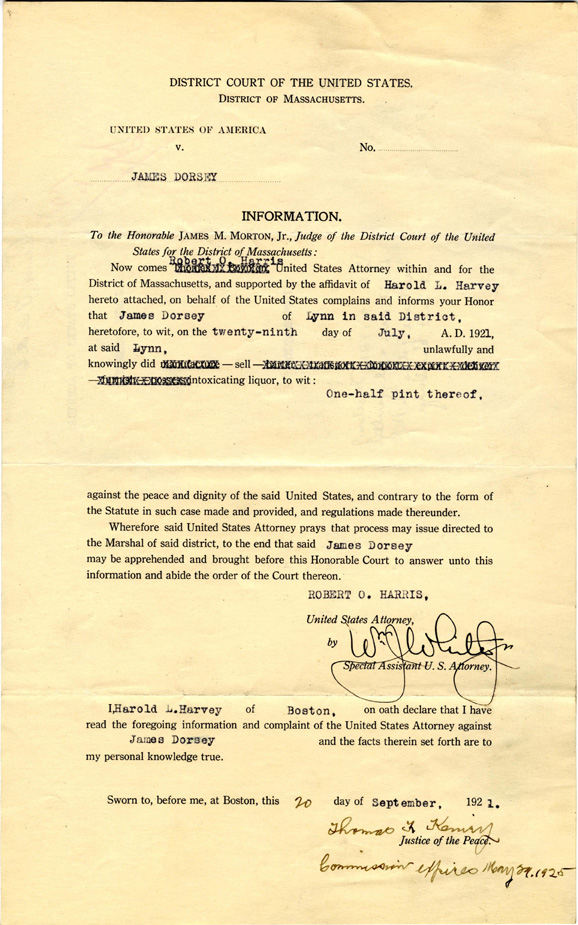 case-fileIndictment of James Dorsey, U.S. District Court for Massachusetts, Case #3226 (July 1921)National Archives at Boston featured document: the July 1921 indictment of James Dorsey of Lynn, Massachusetts, for knowingly selling one-half pint of intoxicating liquor. The page says he pleaded guilty and uses the case to show the range of Prohibition prosecutions.finding-aidNational Archives lesson, "The Volstead Act" (Educator Resources)National Archives teaching lesson pairing the Eighteenth Amendment, the Volstead Act, a Bureau of Prohibition letter on transporting liquor from California to Washington, the proclamation of repeal and the Twenty-first Amendment resolution. A finding aid to records filed here.agency-historyPrologue article, "Spirited Republic: Alcohol's Evolving Role in U.S. History" (Winter 2014)Prologue article by National Archives senior curator Bruce Bustard introducing the exhibition "Spirited Republic: Alcohol in American History", and pointing to National Archives records on Prohibition.agency-history"The Man Who Tried to Kill Al Capone" (National Park Service, Alcatraz Island)National Park Service article on Alcatraz inmate James "Tex" Lucas. It states that on June 23, 1936 Lucas attacked Capone in the shower room and that Capone suffered a minor chest wound and superficial cuts to his hands.agency-history"Baseball on the Rock" (National Park Service, Alcatraz Island)National Park Service page on inmate recreation at Alcatraz: two hours of yard time each Saturday and Sunday, softball rather than baseball, eight teams in 1938, and cell radio jacks installed on 4 October 1955. It names Volney Davis as a pitcher.photographU.S. Submachine Gun Thompson Model 1921 .45ACP, SN 11867 (Springfield Armory NHS, SPAR 1546)NPS museum catalog record for a Colt-made Model 1921 Thompson, which the catalog says was manufactured between 1 and 4 April 1922 and transferred to the museum on 27 April 1960. The catalog photograph is not stored here.photographU.S. Submachine Gun Thompson Model 1928 .45ACP, SN 13159 (Springfield Armory NHS, SPAR 18)NPS museum catalog record for a Colt-made Thompson marked "U.S. NAVY MODEL OF 1928/13159," with a 20-round box magazine and Cutts compensator, made about 1928 and donated by Savage Arms Co. in 1979. The catalog photograph is not stored here.photographU.S. Rifle Model 1918 Browning Automatic .30, SN 12701 (Springfield Armory NHS, SPAR 3565)NPS museum catalog record for a Colt-made Model 1918 Browning Automatic Rifle, described as the "First production Model 1918 Browning Automatic Rifle off the Colt production line." It illustrates the rifle type traced from National Guard armories to the Barrow gang in 1933.finding-aidU.S. Rifle Model 1925 Monitor Browning Automatic .30 (Springfield Armory NHS, SPAR 7213)NPS museum catalog record for a Colt "Monitor" (R80), which the catalog calls a "Commercial variant of the M1918 (R80) intended for police use and prison guard use. Introduced in 1933, it was made only for a few years." Text-only record.agency-history"U.S. Penitentiary Alcatraz: Federal Prison 1934-1963" (National Park Service, Alcatraz Island)National Park Service summary of the penitentiary years: the product of Attorney General Homer Cummings and Bureau Director Sanford Bates, with James A. Johnston as warden for fourteen years and a "concentration model" that later served as a blueprint for the high-security prison at Marion, Illinois.
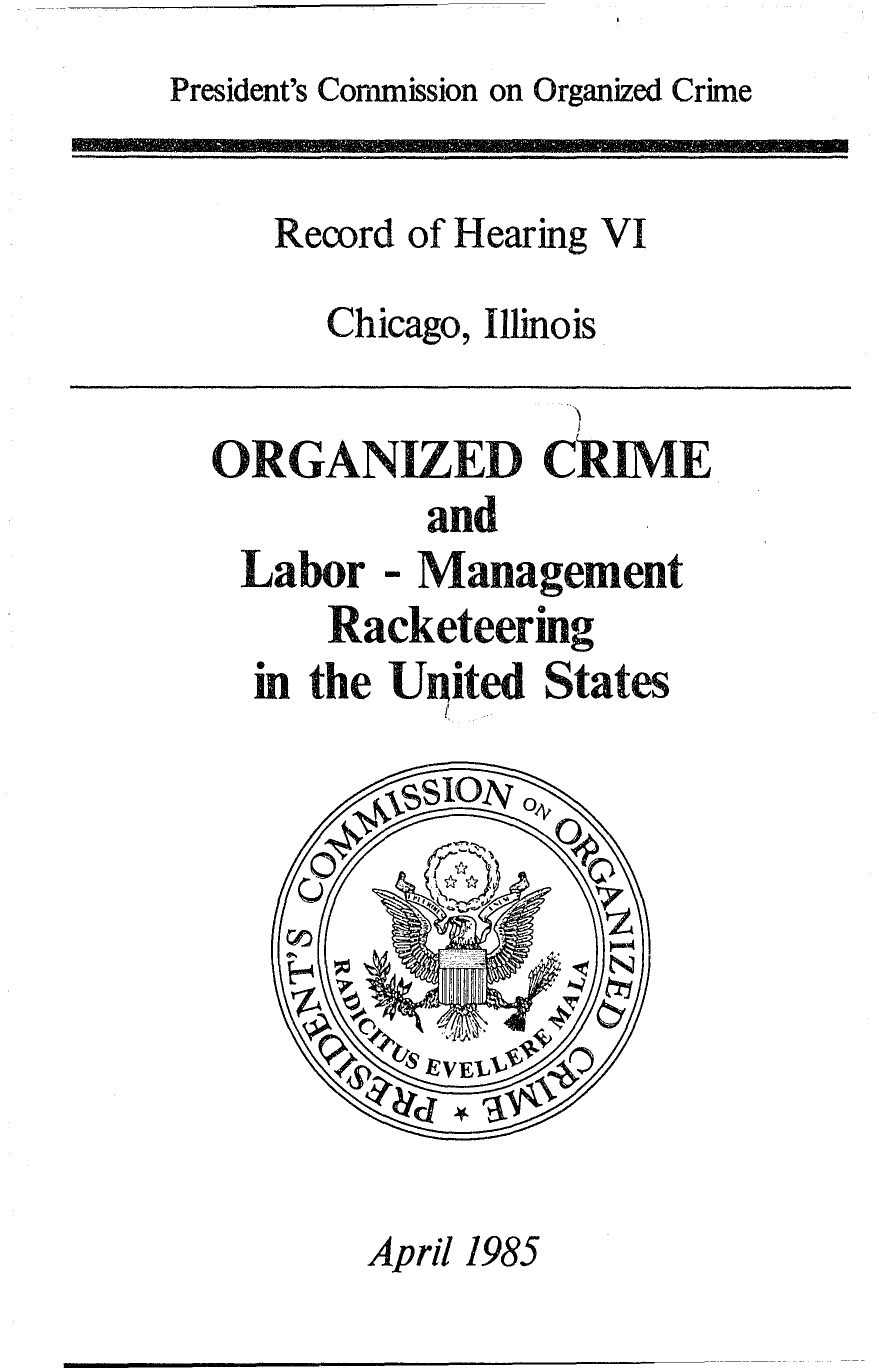 hearingPresident's Commission on Organized Crime, Record of Hearing VI: Organized Crime and Labor-Management Racketeering (Chicago, April 1985)Transcript of the Commission's Chicago hearing of 22 to 24 April 1985. Teamsters general president Jackie Presser appeared under subpoena; asked his occupation, he answered, "I am the general president of the International Brotherhood of Teamsters."hearingPresident's Commission on Organized Crime, The Edge (1986): Atlantic City and Local 54The Atlantic City section of the President's Commission on Organized Crime's 1986 report on organized crime, business and labor unions, on the struggle for control of hotel workers' Local 54 after the casinos opened.
 hearingPresident's Commission on Organized Crime, The Edge (1986): the Teamsters and longshoremen sectionsThe Commission's 1986 report on organized crime, business and labor unions. Its Teamsters section, "The Most Controlled Union," reviews five IBT presidents from 1952 to 1985 and quotes Roy L. Williams: "Every big [Teamster] local union ... had some connection with organized crime."hearingPresident's Commission on Organized Crime, America's Habit: Drug Abuse, Drug Trafficking, and Organized Crime (March 1986)The 1986 report of the President's Commission on Organized Crime on drugs and organized crime, with a section on "La Cosa Nostra and the French Connection" and a case study of the "Pizza Connection." Read from a microfiche scan.case-filePhotographs, Descriptions and Records of Persons Charged with Violation of the Postal Laws, volume 1 (Post Office Department, 1916)Volume 1 of the 1916 Post Office album includes scattered black-hand letter cases, among them a Philadelphia sentence of 1914 in a scheme the entry says targeted wealthy Armenians, showing the term used for mail extortion outside Italian communities.case-filePhotographs, Descriptions and Records of Persons Charged with Violation of the Postal Laws, volume 2 (Post Office Department, 1916)A 1916 Government Printing Office album for post-office inspectors. Its fraud section tags 23 entries '[BLACK HAND.]', recording federal sentences for mailing black-hand letters at Chicago, St. Louis, Cincinnati, Marion and Toledo, Trenton, Salt Lake City, Pittsburgh and Clarksdale between 1910 and 1915.case-filePost Office album (1916), volume 2: Chicago black-hand letter sentences, 1912 to 1915Entries in the 1916 Post Office album record federal sentences at Chicago for mailing black-hand letters: two men in January 1912, one in February 1914, and Paul Mennite and Pietro Mecca on 16 August 1915, each to five years at Leavenworth.case-filePost Office album (1916), volume 2: the Marion, Ohio, black-hand letter conspiracy, sentences of 29 January 1910 at ToledoEntries in the 1916 Post Office album record sentences passed at Toledo on 29 January 1910, from two to ten years, for 'conspiring, with others, to obtain $10,000 by means of black-hand letter mailed at Marion, Ohio, June 7, 1909'.case-filePost Office album (1916), volume 2: black-hand letters from Wehrum, Pa., sentences of 8 May 1914 at PittsburghThree entries in the 1916 Post Office album record that three men were sentenced at Pittsburgh on 8 May 1914 to five years each in the Eastern Penitentiary at Philadelphia for mailing black-hand letters at Wehrum, Pa., in March 1914.case-filePost Office album (1916), volume 2: St. Louis black-hand letter sentences of 3 July 1912Three entries in the 1916 Post Office album record sentences passed at St. Louis on 3 July 1912, of eighteen months, two years and five years at Leavenworth, for mailing black-hand letters at St. Louis in January and February 1912.hearingHearing, October 15, 1963: Boston Police testimony on the Boston half of Exhibit 53Boston Police Commissioner Edmund L. McNamara and Deputy Superintendent John T. Howland walked the Senate subcommittee through the Boston half of the Exhibit 53 chart, while saying they were not cognizant that the men were members of the Mafia or Cosa Nostra.hearingSenate narcotics hearings, 15 October 1963: Chief Brown on 'Louis Santos of Havana, Cuba' at Apalachin, and Sergeant de la Llana's statement (pp. 525-526)Tampa police chief Neil G. Brown said the 'Louis Santos of Havana, Cuba' apprehended at Apalachin in November 1957 was positively identified as Santo Trafficante, Jr., and gave the police account of his stay with Albert Anastasia as 'B. Hill'; a statement by Sgt. Jack de la Llana says a visitor to Trafficante had worked as a 'pit boss' in casinos in Las Vegas and Havana.hearingSenate narcotics hearings, 10 October 1963: Detroit's Vincent Piersante on deported men in Cuba 'during the tail end of the Batista regime' (p. 449)Detroit police inspector Vincent W. Piersante testified that Joseph Catalanotti, deported in September 1957, 'later turned up in Cuba during the tail end of the Batista regime' with two other deported men, that no Batista connection could be established, and that 'Cuba was a haven for these deported criminals.'hearingSenate narcotics hearings, 25 September 1963: Inspector Shanley's example of $200,000 sewn into a coat and carried to Cuba (p. 75)Describing a 'money mover,' New York police inspector John J. Shanley told the Senate subcommittee that a man going to Cuba carried $200,000 sewn into the lining of his coat and delivered it 'to somebody in Cuba that we feel was very high in the syndicate.' He said it was about five years earlier and that the police did not know who received it.hearingHearing, October 15, 1963: Rhode Island State Police testimony on Raymond L. PatriarcaColonel Walter E. Stone, superintendent of the Rhode Island State Police, read a statement on Raymond L. Patriarca to the Senate subcommittee, entered the Rhode Island half of the Exhibit 53 chart, and the record notes Patriarca's 1959 appearance before the McClellan committee.hearingSenate narcotics hearings, 9 October 1963: Valachi's half point in the Capri casino, Havana, and his account of the casinos' end (pp. 391-392)Joseph Valachi testified that casino interests were sold as 'points' at about $5,000 each, that he had 'a half point with a friend' in the casino at the Capri 'just about when Castro started making trouble,' and that when Castro raised the rent 'they all went out of Havana.'hearingSenate narcotics hearings, 27 September 1963: Valachi on Vito Genovese's gambling interests 'like Las Vegas and Havana, Cuba, when it was there' (p. 116)Asked by Senator Javits how Vito Genovese made his money, Joseph Valachi named an Italian lottery, slot machines, and 'lots of interests in gambling like Las Vegas and Havana, Cuba, when it was there.'hearingSenate narcotics hearings, 1 October 1963: Valachi, 'Anywhere where Meyer Lansky is, Vito Genovese is,' and 'I knew in Havana' (p. 159)Asked about Genovese's establishment in Las Vegas, Joseph Valachi said 'Anywhere where Meyer Lansky is, Vito Genovese is,' that he knew the places in Havana but not in Las Vegas 'since they went out of Havana,' and that Lansky and Genovese 'do everything together.'hearingValachi hearing, October 2, 1963: Valachi questioned on Raymond PatriarcaJoseph Valachi told the Senate Permanent Subcommittee on Investigations that he met Raymond Patriarca through horse racing in New England and that Patriarca was introduced to him as a member of the Cosa Nostra. Testimony, not a finding.hearingValachi hearing, October 8, 1963: Valachi on Patriarca and the Boston bossesJoseph Valachi testified that he met Raymond Patriarca around 1939 or 1940, that Patriarca was a member, and that he heard in prison that Patriarca had become the boss in Boston after Joe Bruno and Phil Buccola. Testimony, not a finding.hearingValachi hearing, October 9, 1963: "the Raymond family"Asked by Senator McIntyre about the Boston area, Joseph Valachi named Phil Buccola as the boss he had met, said he met Patriarca "as a soldier," and said he understood Patriarca was the boss now: "That is what I heard." Testimony, not a finding.hearingTestimony of Harry J. Anslinger, 28–29 July 1964 (Organized Crime and Illicit Traffic in Narcotics, Part 3)The former Commissioner of Narcotics, by then the U.S. representative on the United Nations Commission on Narcotic Drugs, testifies mainly on the international control treaties. His prepared statement says addiction is concentrated in large cities "where organized criminals have made it available."hearingBureau of Narcotics background sheets on French traffickers: nightclubs and casinos in Havana (Senate narcotics hearings, pp. 954-955, 958)Background sheets printed with the Bureau of Narcotics' France exhibit say Jean Baptiste Croce 'Owns two nightclubs in Havana, Cuba,' that Albert Bistoni was 'Believed to have interests in the Eve, Cupidon, and Pigalle night clubs, Havana, Cuba,' and that Paul Mondoloni frequented 'gambling casinos in Havana.'hearingExhibit 3 background sheets: Richard Boiardo's residence and gambling in Havana; Joseph Catalanotto 'deported to Italy again 1959 from Cuba' (Senate narcotics hearings, pp. 1015 and 1019)Two Bureau of Narcotics background sheets printed in 1964: one says Richard Boiardo of Newark 'Has residences in Newark, N.J., and Havana, Cuba' and was 'active in gambling activities in Havana, Cuba'; the other says Joseph Catalanotto was deported in 1957, returned, and was 'deported to Italy again 1959 from Cuba.'hearingExhibit 3, east coast narcotic traffic: the 1954-58 Genovese heroin conspiracy 'via Cuba' (Senate narcotics hearings, pp. 923 and 1117)The Bureau of Narcotics history printed as Exhibit 3 says the principal conspiracy case it concluded in 1958, against Vito Genovese and others, 'began in 1954 and involved the smuggling of large amounts of heroin into the United States via Cuba.'hearing'International Illicit Narcotic Cases 1951 to July 1963' by Commissioner Henry L. Giordano: the Havana cases of 1956-57 (Senate narcotics hearings, pp. 789-804)A Bureau of Narcotics summary printed in the 1964 hearing record reports that an undercover agent went to Havana in December 1956 and, 'Working in cooperation with the Cuban police,' bought cocaine from Jose Flaifel Moubarak on 4 February 1957, and that the Herran Olozaga defendants were arrested in Havana by Cuban police on 24 December 1956.hearingTestimony of Commissioner Henry L. Giordano, Bureau of Narcotics, 28 July 1964 (Organized Crime and Illicit Traffic in Narcotics, Part 3)The Commissioner of Narcotics tells the Senate subcommittee that since 1956 the Bureau has "developed 20 major conspiracy cases resulting in the conviction of 206 important gangsters," naming Vito Genovese, John Ormento, Carmine Galante and Joseph Valachi, and presents the Valachi-hearing family charts marked for Bureau convictions.hearingTestimony of Martin Pera, Bureau of Narcotics, and Exhibit 2A on the French heroin traffic, 30 July 1964 (Organized Crime and Illicit Traffic in Narcotics, Part 4)A Bureau of Narcotics witness describes heroin made by Corsican groups in France who "have a strong affinity with the Mafia element in Sicily," and the Bureau's exhibit states that "Since the early 1950's France has been the center for the laboratory operations which produce heroin from morphine base."hearingStatement of John E. Storer, California Bureau of Narcotic Enforcement, July 1964 (Organized Crime and Illicit Traffic in Narcotics, Part 3)The chief of California's state narcotics bureau tells the Senate subcommittee that heroin and marihuana in California come from Mexico and that "It is not a Mafia, Cosa Nostra-type operation in California."
 hearingLabor Management Racketeering: hearings of the Senate Permanent Subcommittee on Investigations (24 and 25 April 1978)Senate hearings chaired by Senator Sam Nunn on the Justice Department's organized crime strike forces and the Labor Department's part in labor-racketeering cases, with the Acting Deputy Attorney General, the Secretary of Labor and strike-force attorneys.hearingSenate Permanent Subcommittee on Investigations, Central States Pension Fund hearings (1980)Hearings of the Senate Permanent Subcommittee on Investigations, August 25-26 and September 29-30, 1980, on the Labor Department's investigation of the Teamsters Central States Pension Fund, including a staff summary of FBI affidavits on Kansas City and hidden interests in Las Vegas casinos.hearingOrganized Crime and Use of Violence, Senate hearings, Part 2 (May 2 and 5, 1980)Part 2 of the 1980 Senate Permanent Subcommittee on Investigations hearings on organized-crime violence. A Cleveland case summary printed in the record says four admitted "hit men" cooperated with federal authorities after the 1976-77 bombings, naming James "Jimmy the Weasel" Fratianno and Raymond Ferritto.hearingSenate Report 97-177: Oversight Inquiry of the Labor Department's Investigation of the Teamsters Central States Pension Fund (1981)The Permanent Subcommittee on Investigations' 1981 report, including its account of notes seized from a Kansas City home in February 1979 that the staff concluded set out how proceeds of a Las Vegas skimming operation were divided.
 hearingWaterfront Corruption: hearings of the Senate Permanent Subcommittee on Investigations (February 1981)The printed record of six days of Senate hearings in February 1981 on corruption on the Atlantic and Gulf Coast waterfronts. Witnesses included FBI Director William H. Webster and ILA president Thomas W. Gleason.
 hearingWaterfront Corruption: Senate Report 98-369 (March 1984)The Permanent Subcommittee on Investigations' report on its 1981 waterfront hearings. It describes the FBI's UNIRAC investigation, begun in 1975, records ILA president Thomas W. Gleason's denial that the union was dominated by organized crime, and recommends changes to federal labor law.
 hearingHotel Employees and Restaurant Employees International Union: Senate Report 98-595 (August 1984)The Permanent Subcommittee on Investigations' report on its 1981 to 1984 inquiry into the hotel and restaurant workers' union, with sections on Atlantic City Local 54, Las Vegas Local 226 and union benefit plans.hearingOrganized Crime: 25 Years After Valachi (S. Hrg. 100-906, 1988)Hearings of the Senate Permanent Subcommittee on Investigations, April 1988, in which FBI officials compared the 1963 Valachi charts with the Bureau's 1987 charts of the families. FBI testimony about its own intelligence, not court findings.hearingOrganized Crime: 25 Years After Valachi (1988): FBI and U.S. Attorney testimony on the Philadelphia familyPassages of the April 1988 Senate hearings in which FBI Deputy Assistant Director Anthony Daniels traced the Philadelphia LCN family from Salvatore Sabella to Nicodemo Scarfo, and U.S. Attorney Edward S. G. Dennis, Jr. described the killings after Angelo Bruno's death. Testimony, not findings.hearingSenate subcommittee hearing, 1988: testimony of FBI Special Agent in Charge Joseph E. Griffin, ClevelandJoseph E. Griffin, head of the FBI's Cleveland office, described two task-force RICO cases, 'Buzzmark' and 'Gangmurs', and walked the subcommittee through the Cleveland conflict of the 1970s between James Licavoli's faction and Danny Greene and John Nardi.hearingSenate subcommittee hearing, 1988: prepared statement of Angelo LonardoThe written statement Angelo Lonardo filed with the Senate subcommittee in April 1988, printed from page 529: his initiation at the Statler Hotel in Cleveland, the people he says were present, the family's ties to New York, Chicago, Las Vegas and Youngstown, and a chronology of Cleveland-area violence.hearingSenate subcommittee hearing, 1988: testimony of Angelo LonardoOn 15 April 1988 Angelo Lonardo, testifying behind a screen under a court immunity order, told the Senate Permanent Subcommittee on Investigations that he was 'the former underboss of the Cleveland organized crime family' and described its leaders, its Las Vegas casino income and its dealings with New York and Chicago.hearingTestimony of Attorney General Robert F. Kennedy, September 25, 1963Kennedy opened the 1963 hearings. His prepared statement says that Joseph Valachi was "an insider" who had "broken the underworld's code of silence," and that "Cosa Nostra is run by a commission."court-opinionCarroll v. United States, 267 U.S. 132 (1925)The Supreme Court holds, 2 March 1925, that a federal prohibition agent may search an automobile without a warrant when he has probable cause to believe it contains contraband liquor, but may not stop cars at random.court-opinionJames Everard's Breweries v. Day, 265 U.S. 545 (1924)The Supreme Court upheld, 9 June 1924, the Supplemental Prohibition Act's ban on physicians prescribing malt liquor as medicine. The printed counsel line lists Mrs. Mabel Walker Willebrandt on the government's brief.court-opinionLambert v. Yellowley, 272 U.S. 581 (1926)The Supreme Court upheld, 29 November 1926, the National Prohibition Act's limit on how much spirituous liquor a physician could prescribe. Assistant Attorney General Willebrandt heads the counsel line for the appellees.court-opinionOlmstead v. United States, 277 U.S. 438 (1928)The Supreme Court holds, 4 June 1928, that federal prohibition officers' wiretapping of telephone lines without entering the defendants' premises was not a search or seizure under the Fourth Amendment, so the intercepted conversations were admissible.court-opinionSteele v. United States No. 2, 267 U.S. 505 (1925)The Supreme Court held, 13 April 1925, that a general prohibition agent could be authorized to receive and serve a search warrant. The counsel line lists "Assistant Attorney General Willebrandt" on the brief for the United States.court-opinionUnited States v. Lanza, 260 U.S. 377 (1922)The Supreme Court holds, 11 December 1922, in an opinion by Chief Justice Taft, that the same act violating prohibition laws can be punished by both a state and the United States, so a state prosecution does not bar a federal one.court-opinionUnited States v. One Ford Coupe Automobile, 272 U.S. 321 (1926)The Supreme Court holds, 22 November 1926, that the National Prohibition Act did not displace Revised Statutes section 3450, so an automobile used to conceal tax-unpaid illicit liquor could be forfeited under that section.court-opinionUnited States v. Sullivan, 274 U.S. 259 (1927)The Supreme Court holds, 16 May 1927, in an opinion by Justice Holmes, that gains from an unlawful liquor business are taxable income and that the Fifth Amendment did not excuse the defendant from filing a return at all.agency-historySenate Historical Office: the Kefauver Committee, Notable Senate InvestigationsThe U.S. Senate Historical Office's account of the Special Committee on Organized Crime in Interstate Commerce: its resolution, chairmen and members, funding, extension, and television audience. A secondary account written by the Senate.hearingExhibit No. 38: affidavit of Vincent Cafaro (S. Hrg. 100-906, pp. 866 ff.)Cafaro's signed statement to the subcommittee staff, printed as Exhibit 38. It covers his meeting Anthony Salerno after a narcotics arrest at 17, his work in Salerno's numbers office from about 1958, his 1986 indictment, five months wearing a wire, and his withdrawal from cooperation in October 1987.hearingTestimony of Vincent Cafaro (29 April 1988)Vincent "Fish" Cafaro, under federal indictment and testifying without immunity, told the Senate subcommittee he became a "made" member of the Genovese family in 1974, described its hierarchy, its rules on killings, his West Harlem numbers business and the concrete "2 percent club," and said Vincent Gigante's public behavior was a guise.hearingTestimony of FBI supervisor James Kossler on the GENUS project, 1988 (S. Hrg. 100-906, pp. 190-191)James Kossler of the FBI's New York division tells the Senate subcommittee that in 1981 the office chose to attack "the hierarchy and the infrastructure of the Bonanno LCN family." "This project was called the Genus Project."hearingJoseph D. Pistone, answers to the subcommittee, April 22, 1988 (S. Hrg. 100-906, pp. 207-217)Pistone's answers to Senators Nunn and Roth after his opening statement, testifying behind a screen. He describes the 1979-1981 struggle "within the Bonanno family," the contract he was given to find Bruno Indelicato, and the end of the operation, "I think it was July 27."hearingTestimony of Joseph D. Pistone, former FBI Special Agent (22 April 1988)The retired FBI agent who worked undercover as "Donnie Brasco" testified from behind a screen that his undercover work began in September 1976, that he infiltrated the Colombo and then the Bonanno families, and that his testimony in over 10 trials resulted in more than 200 indictments and over 100 convictions.hearingS. Hrg. 100-906: opening of the 1988 hearings on Joseph Valachi's 1963 testimony (11 April 1988)Senator Sam Nunn opened "Organized Crime: 25 Years After Valachi" by recalling Valachi's 1963 testimony before the same subcommittee, with the 1963 charts hung in the hearing room. An FBI witness called Valachi the first member informant the Bureau developed.
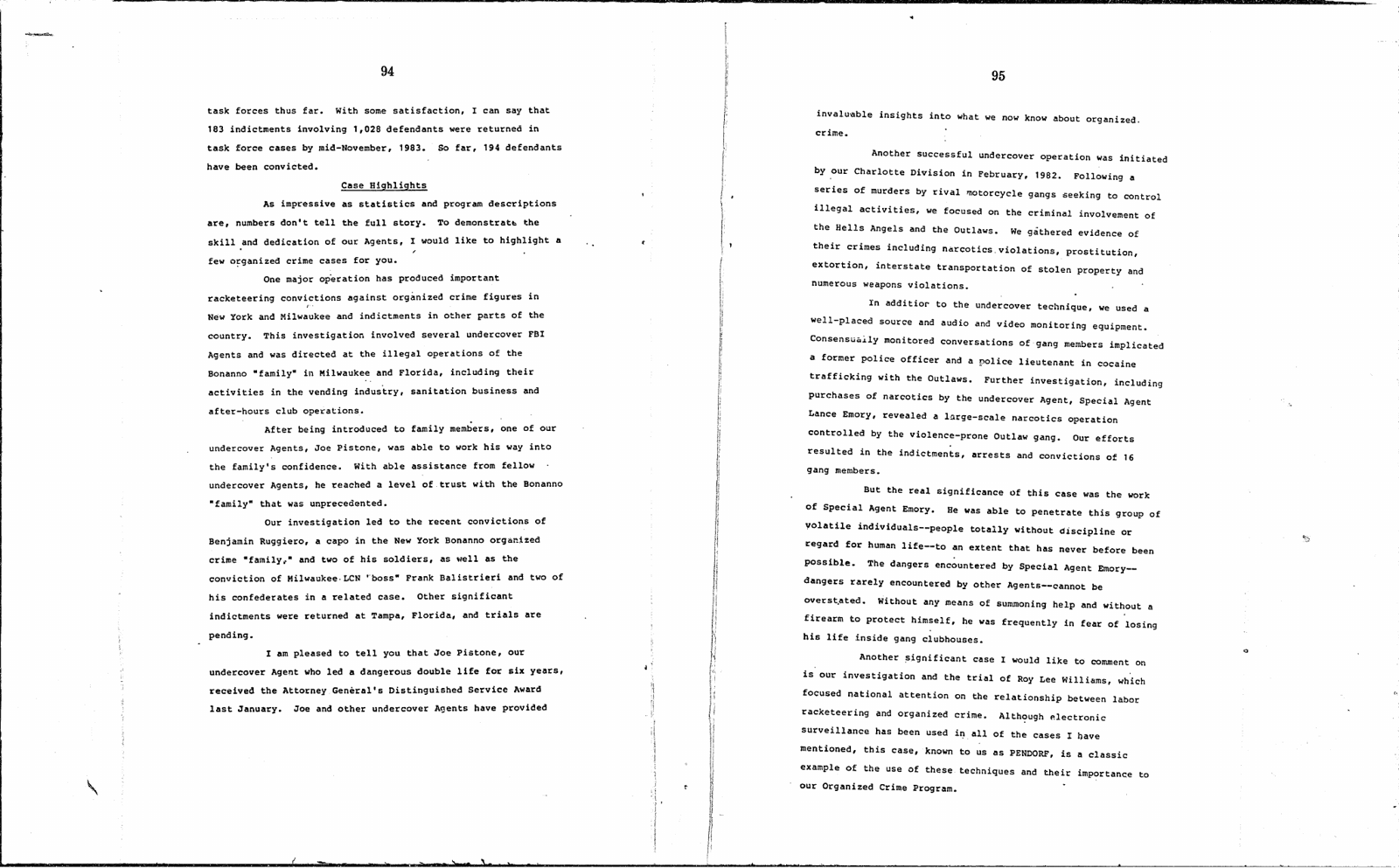 hearingStatement of FBI Director William H. Webster, November 29, 1983 (S. Hrg. 98-914, pp. 94-95)FBI Director Webster's statement to the President's Commission on Organized Crime, reprinted in a 1984 Senate hearing. He says undercover agent Joe Pistone "was able to work his way into the family's confidence" and that the investigation led to the convictions of "Benjamin Ruggiero, a capo in the New York Bonanno organized crime 'family,'" and two of his soldiers.finding-aidThompson Model 1928 Submachine Gun (Smithsonian, National Museum of American History 1986.0698.02)Smithsonian Open Access catalog record, CC0, for a Thompson Model 1928 submachine gun, serial number 11768, credit line "U.S. Postal Service." No image is published with the record.finding-aidModel 1921 Thompson Submachine Gun, Colt (Smithsonian, National Museum of American History AF.69053MA)Smithsonian Open Access catalog record, CC0, for a Model 1921 Thompson submachine gun made by Colt's Patent Firearms Manufacturing Company, serial number 5075, date made ca. 1922 or ca. 1926. No image is published with the record.
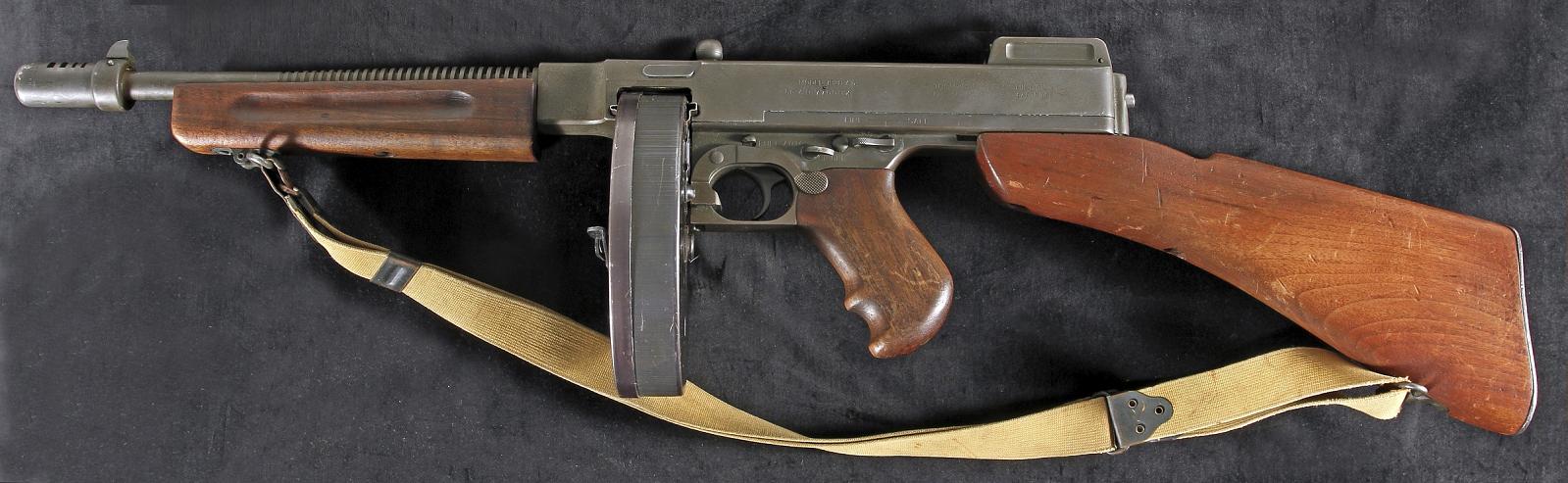 photographThompson submachine gun, 1920s (Smithsonian, National Postal Museum 2013.2011.158)Smithsonian Open Access record and CC0 image of a Thompson submachine gun with canvas strap, transferred to the National Postal Museum from the United States Postal Inspection Service. The museum says Postal Inspectors were the first law enforcement agency to use it against criminals.hearingOrganized Crime in America, Senate Judiciary Committee hearings, Part 1 (1983)Part 1 of the 1983 Senate Judiciary Committee hearings, opening with the Attorney General and FBI Director William H. Webster. Webster called Jimmy Fratianno "an LCN member" and a government witness in the witness protection program; a note for the record reports Angelo A. Lonardo's 1983 conviction.case-fileMoney Laundering Control Act of 1986: Subtitle H of Title I of Public Law 99-570, 100 Stat. 3207-18, adding 18 U.S.C. 1956Subtitle H of the 1986 drug act, "the 'Money Laundering Control Act of 1986'", added 18 U.S.C. 1956, which made it a crime to conduct a financial transaction with the proceeds of specified unlawful activity to promote that activity, conceal the proceeds, or avoid a reporting requirement.
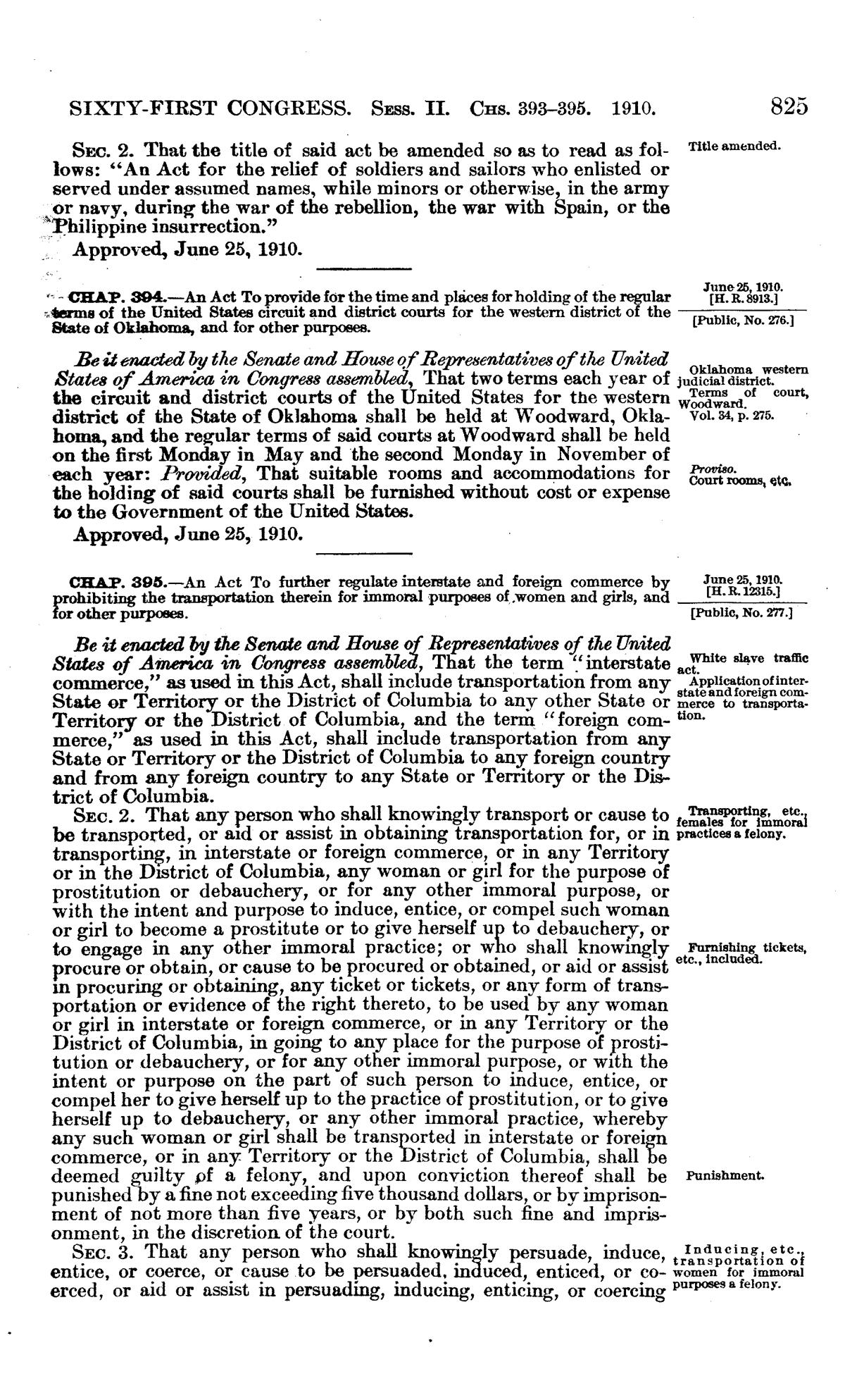 case-fileMann Act: 36 Stat. 825 (Chapter 395, Public, No. 277), 25 June 1910Chapter 395 of the 61st Congress, "An Act To further regulate interstate and foreign commerce by prohibiting the transportation therein for immoral purposes of women and girls". Section 2 made that transportation a felony punishable by a fine of up to $5,000, up to five years in prison, or both.
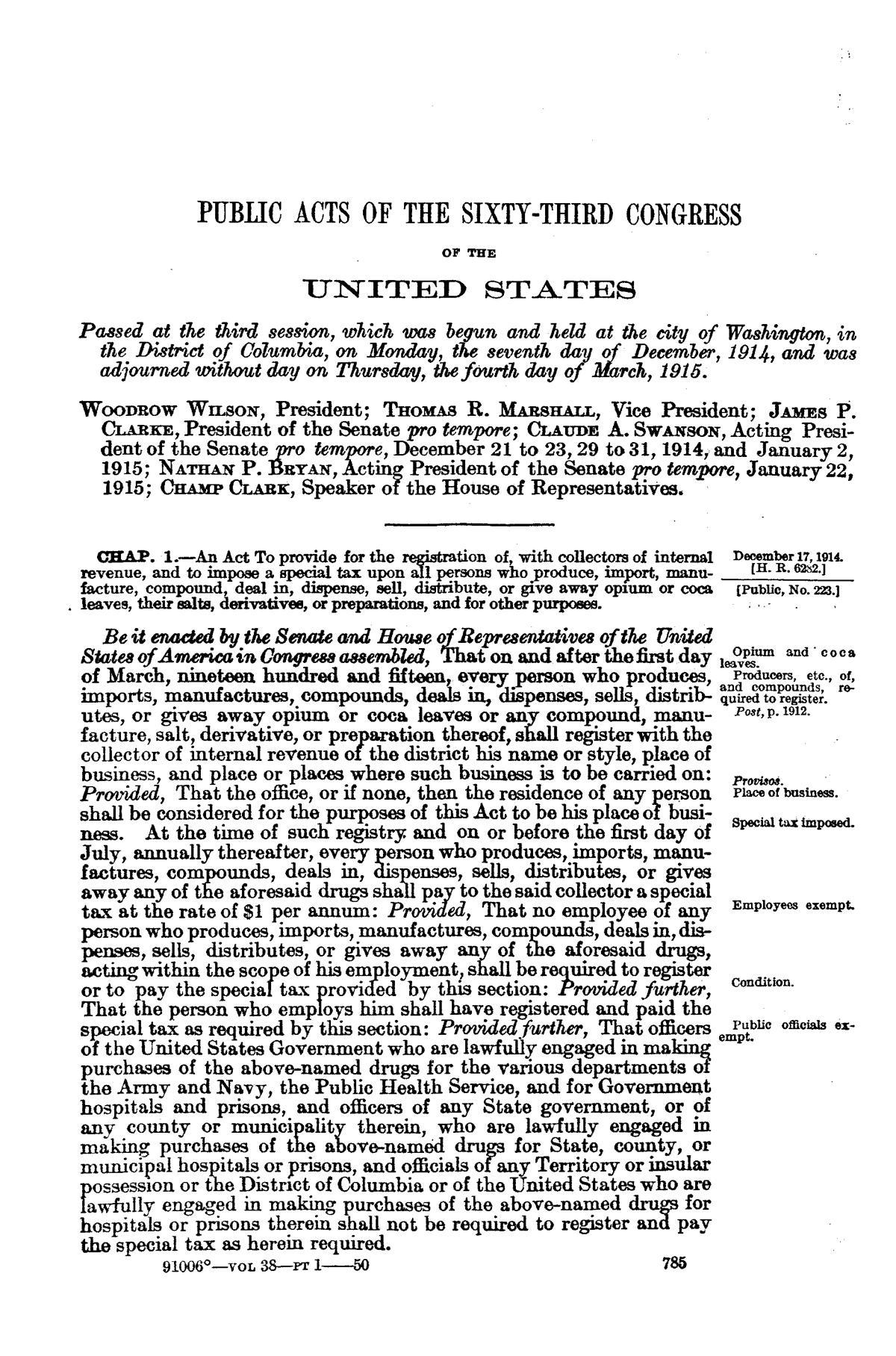 case-fileHarrison Narcotics Act: 38 Stat. 785 (Chapter 1, Public, No. 223), 17 December 1914The 1914 Act requiring every person who produced, imported, dealt in, dispensed or gave away opium or coca leaves or their derivatives to register with the collector of internal revenue and pay a special tax. Only the Act's first page was read.
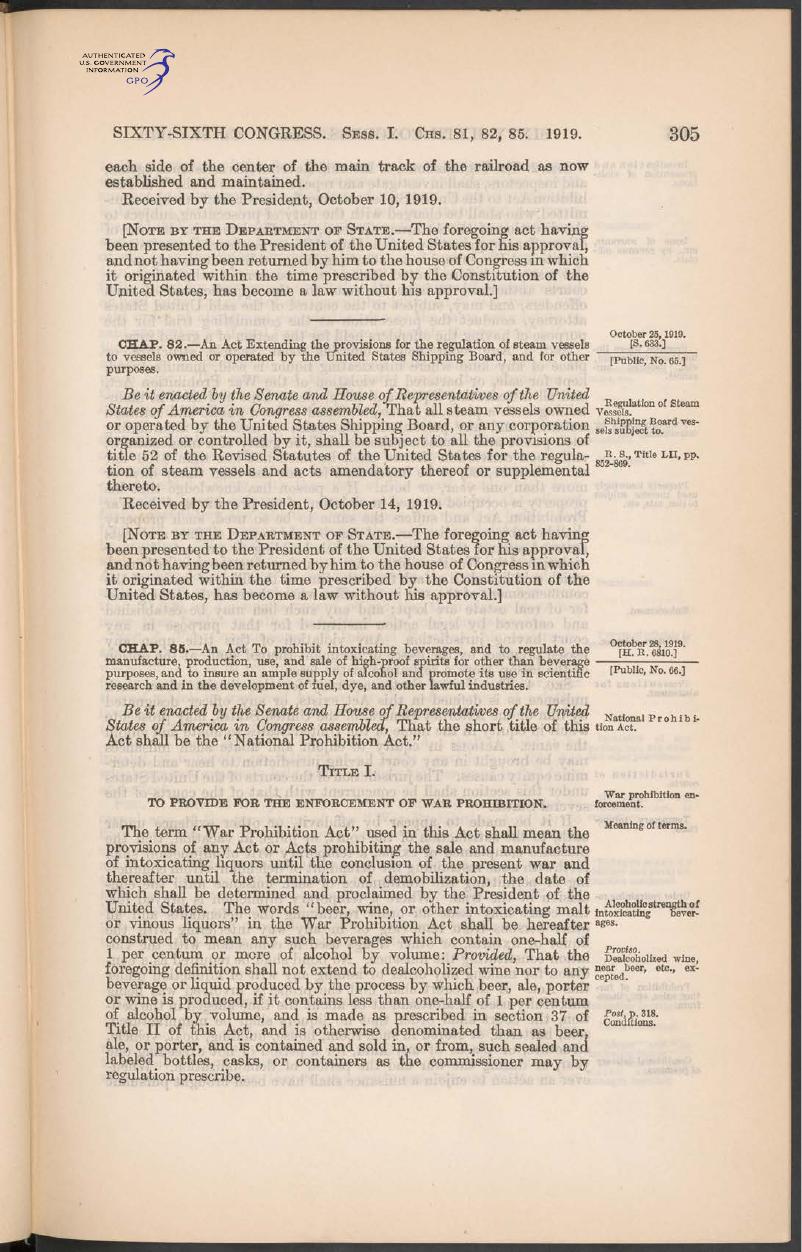 case-fileNational Prohibition Act, 41 Stat. 305 (Chapter 85, 28 October 1919)Page 305 of volume 41 of the Statutes at Large, printing the opening of Chapter 85 (H.R. 6810, Public No. 66), "An Act to prohibit intoxicating beverages", with its short title "National Prohibition Act" and the Title I definition of intoxicating beverages.
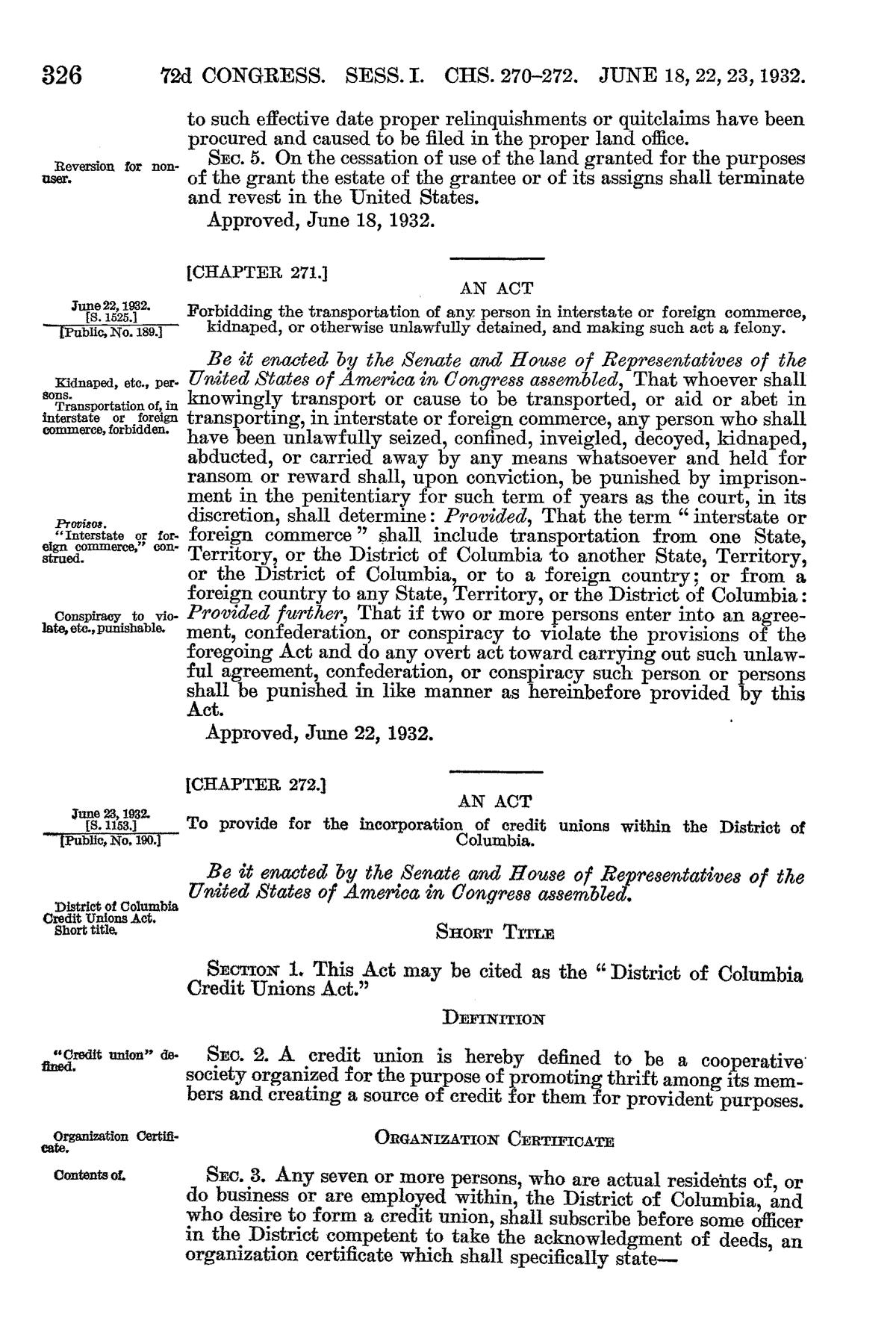 case-fileFederal Kidnapping Act: 47 Stat. 326 (Chapter 271, Public, No. 189), 22 June 1932The 1932 Act "Forbidding the transportation of any person in interstate or foreign commerce, kidnaped, or otherwise unlawfully detained, and making such act a felony." Congress amended it on May 18, 1934.
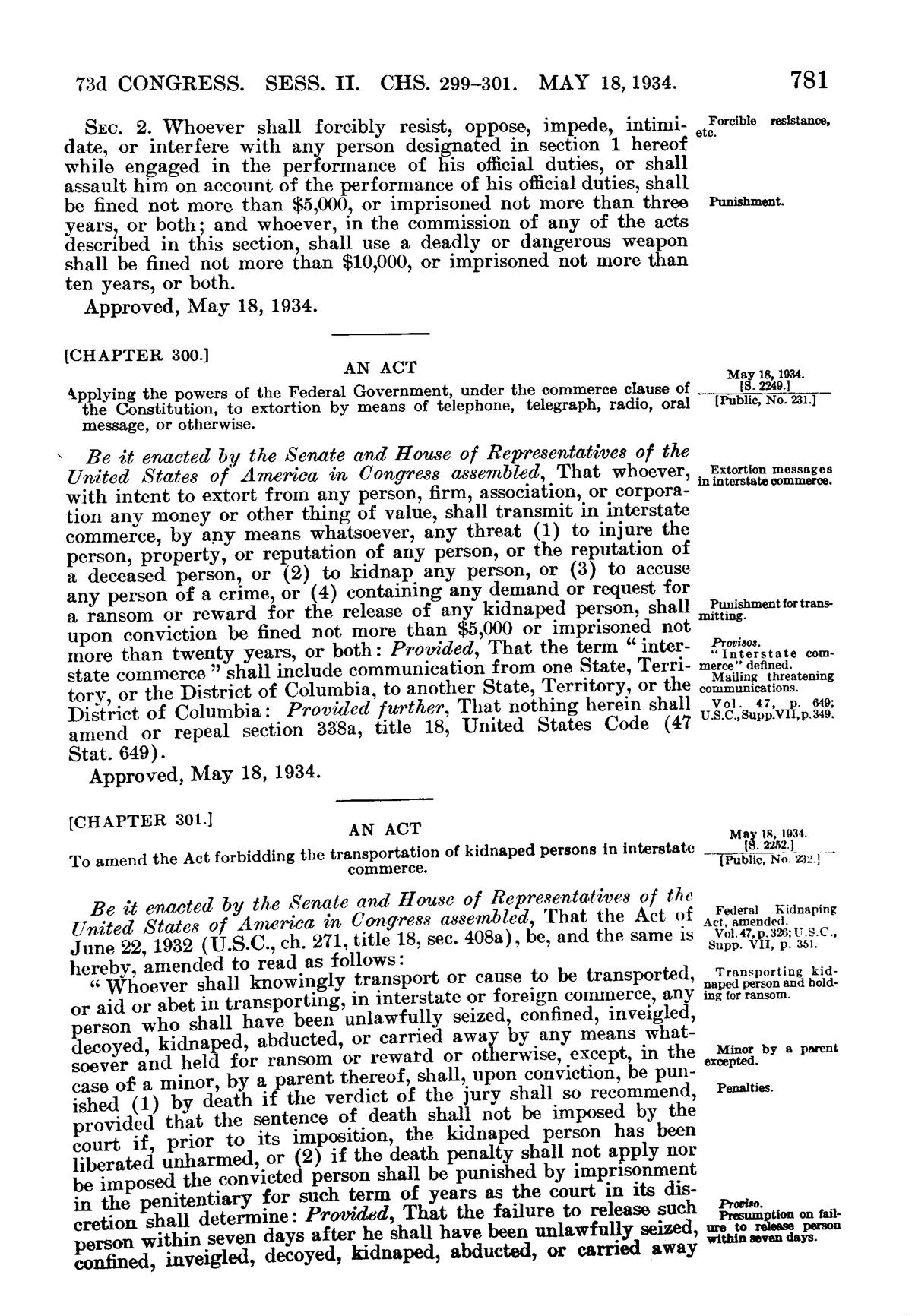 case-fileKidnapping Act amendment: 48 Stat. 781-782 (Chapter 301, Public, No. 232), 18 May 1934One of the May 1934 crime bills. It amended the 1932 kidnapping Act to allow a death sentence on the jury's recommendation, unless the victim was liberated unharmed, and made failure to release a victim within seven days a presumption of interstate transport.
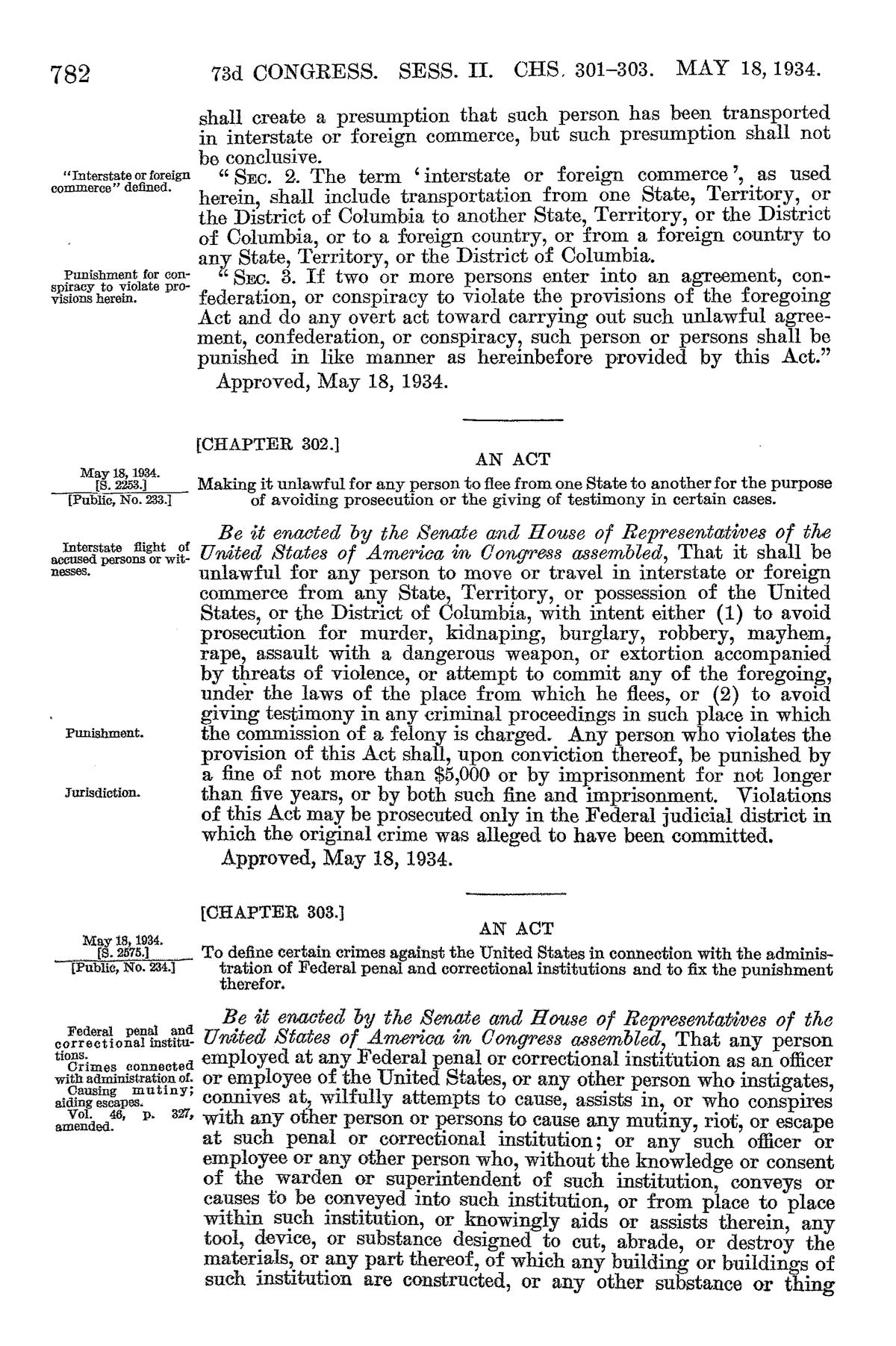 case-fileFugitive Felon Act: 48 Stat. 782 (Chapter 302, Public, No. 233), 18 May 1934One of the May 1934 crime bills: "An Act Making it unlawful for any person to flee from one State to another for the purpose of avoiding prosecution or the giving of testimony in certain cases."
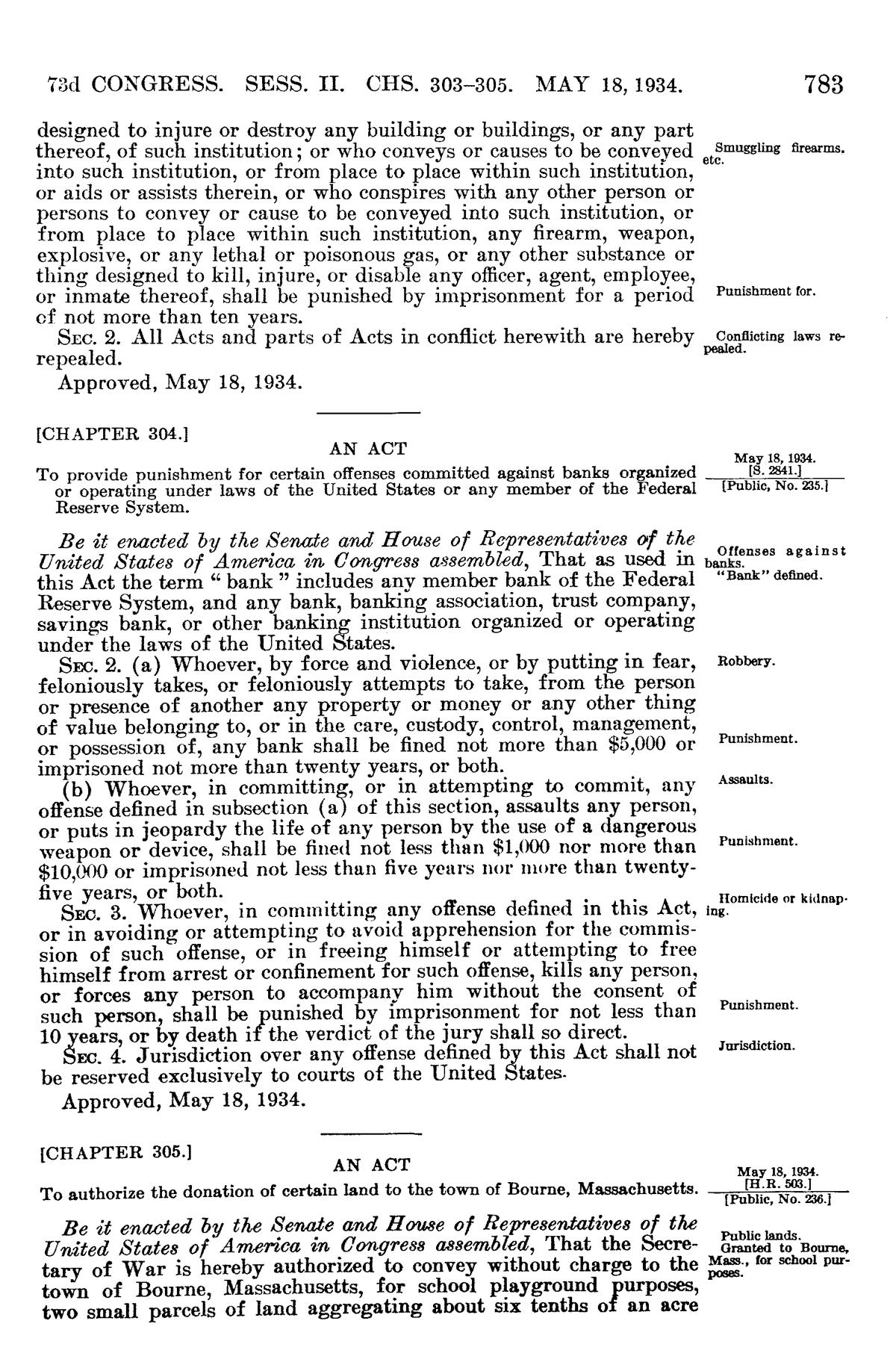 case-fileBank Robbery Act: 48 Stat. 783 (Chapter 304, Public, No. 235), 18 May 1934One of the May 1934 crime bills: "An Act To provide punishment for certain offenses committed against banks organized or operating under laws of the United States or any member of the Federal Reserve System."
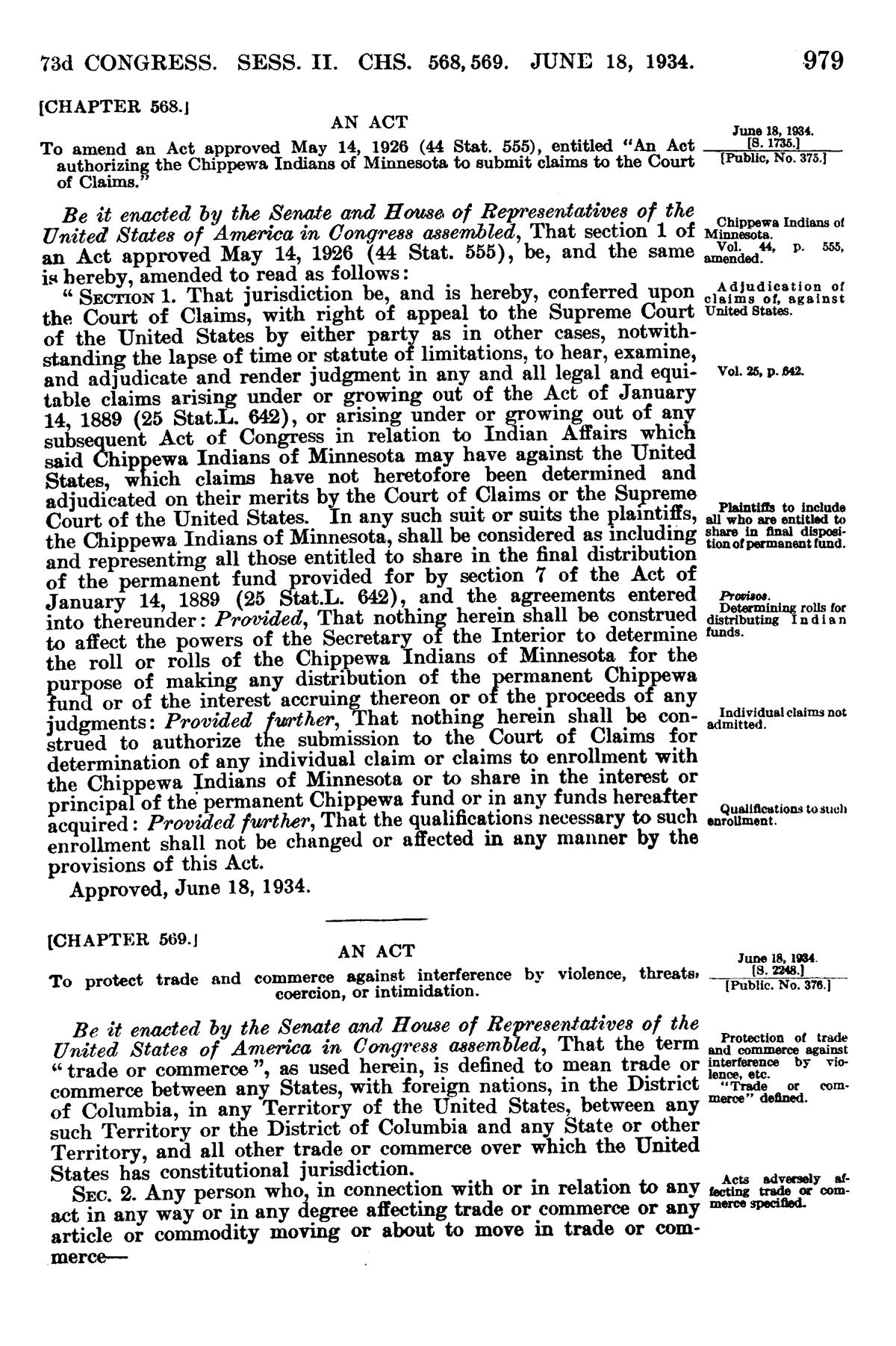 case-fileAnti-Racketeering Act of 1934: 48 Stat. 979-980 (Chapter 569, Public, No. 376), 18 June 1934"An Act To protect trade and commerce against interference by violence, threats, coercion, or intimidation", which made it a felony to obtain money or property in connection with trade or commerce by force, violence or coercion. The Hobbs Act of 1946 rewrote it.
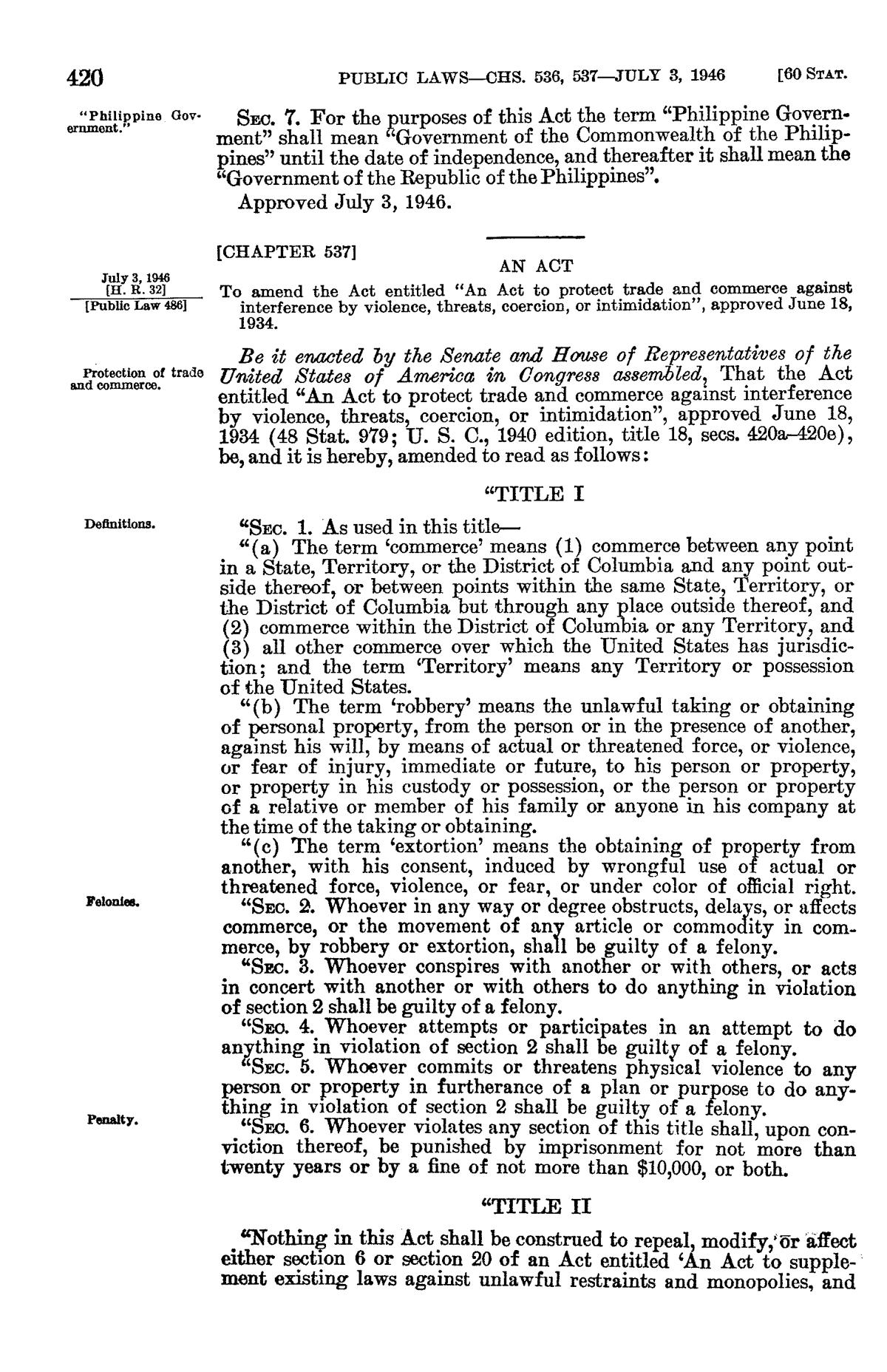 case-fileHobbs Act: 60 Stat. 420 (Chapter 537, Public Law 486), 3 July 1946The 1946 Act that rewrote the 1934 Anti-Racketeering Act: "Whoever in any way or degree obstructs, delays, or affects commerce, or the movement of any article or commodity in commerce, by robbery or extortion, shall be guilty of a felony."
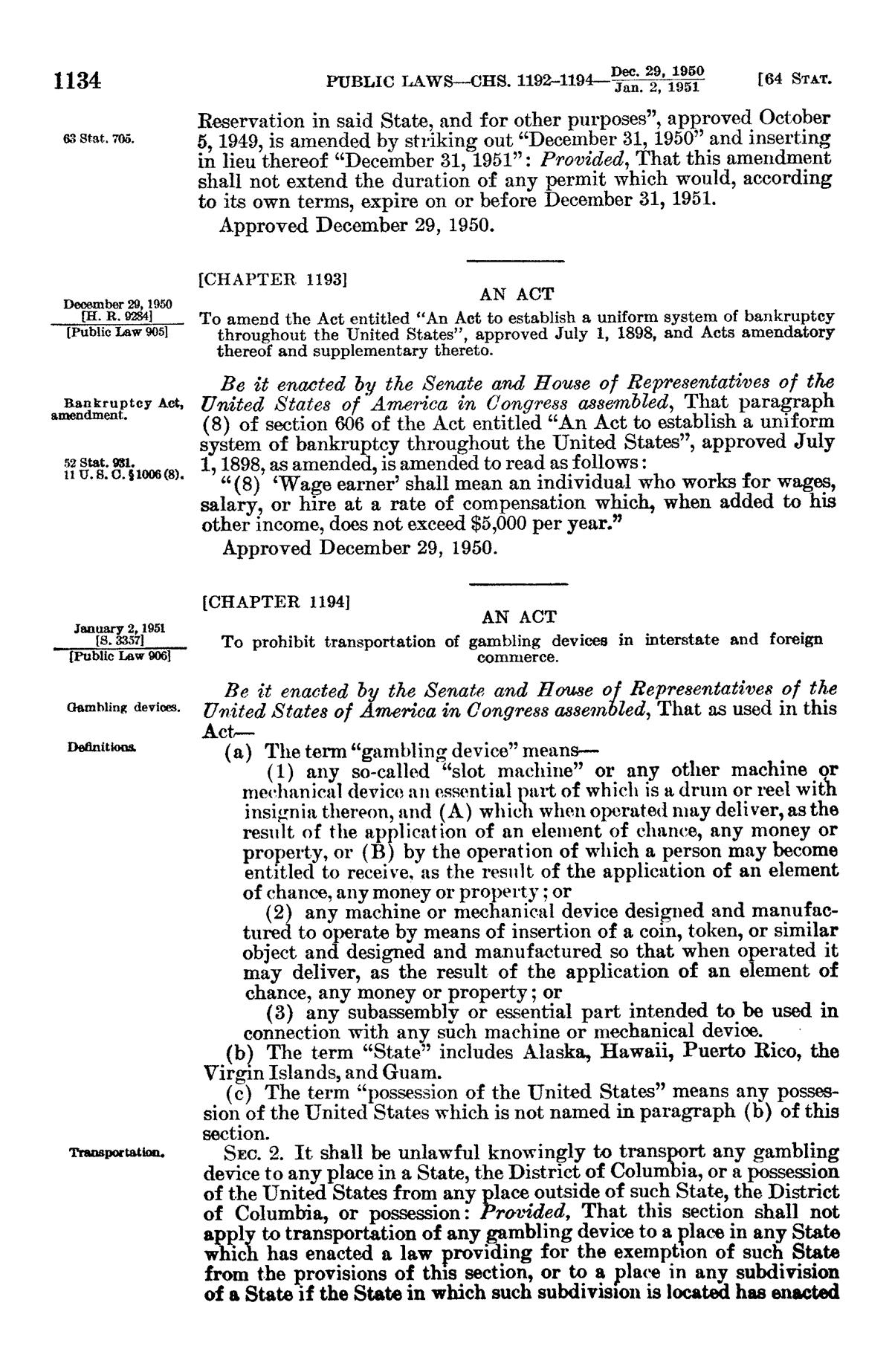 case-fileJohnson Act (gambling devices): 64 Stat. 1134-1135 (Chapter 1194, Public Law 906), 2 January 1951"An Act To prohibit transportation of gambling devices in interstate and foreign commerce." It barred knowingly shipping slot machines and similar devices into a State unless that State had exempted itself by law, and required makers and dealers to register with the Attorney General.case-fileWagering taxes: Revenue Act of 1951, Part VII, sec. 471 (Public Law 183), 65 Stat. 529Part VII of the Revenue Act of 1951 added a chapter of wagering taxes: a 10 percent excise tax on wagers, including "the numbers game, policy, and similar types of wagering", and a $50 special tax with registration for those in the business. The Supreme Court limited its criminal enforcement in 1968.
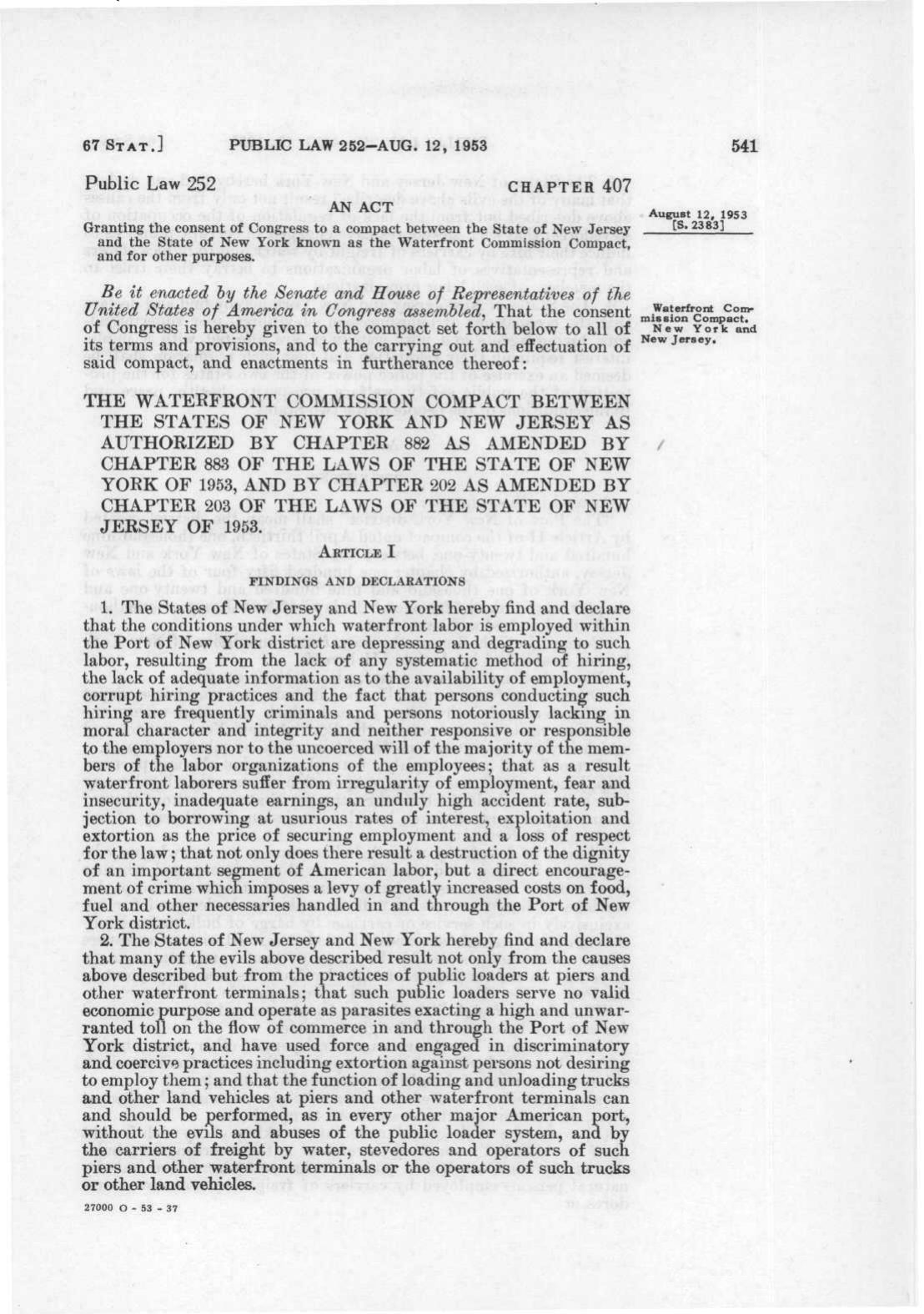 case-fileWaterfront Commission Compact: 67 Stat. 541 (Public Law 252, Chapter 407), 12 August 1953The 1953 Act of Congress consenting to the New York-New Jersey Waterfront Commission Compact. In the compact's findings the two states declare that hiring on the Port of New York waterfront was marked by "corrupt hiring practices" by persons who "are frequently criminals."case-fileWire Act: 75 Stat. 491 (Public Law 87-216), 13 September 1961, adding 18 U.S.C. 1084The 1961 Act adding 18 U.S.C. 1084, which made it a crime for a person in the business of betting or wagering knowingly to use a wire communication facility to transmit bets, wagers or wagering information across state or national lines.case-fileTravel Act: 75 Stat. 498-499 (Public Law 87-228), 13 September 1961, adding 18 U.S.C. 1952The 1961 Act "to prohibit travel or transportation in commerce in aid of racketeering enterprises", adding 18 U.S.C. 1952 for interstate travel or use of interstate facilities to carry on gambling, untaxed liquor, narcotics, prostitution, extortion or bribery businesses.case-fileOmnibus Crime Control and Safe Streets Act of 1968, Title III: Wiretapping and Electronic Surveillance (Public Law 90-351), 82 Stat. 211Title III of the 1968 Act added chapter 119 to title 18: it prohibited private interception of wire and oral communications and set up court-ordered interception for listed offenses. Its findings state: "Organized criminals make extensive use of wire and oral communications in their criminal activities."case-fileBank Secrecy Act: 84 Stat. 1114 (Public Law 91-508), 26 October 1970, Title I (Financial Recordkeeping) and Title II (Currency and Foreign Transactions Reporting Act)The 1970 Act requiring insured banks and other financial institutions to keep records and authorizing the Treasury to require reports that "have a high degree of usefulness in criminal, tax, or regulatory investigations or proceedings." FinCEN calls it and its amendments the Bank Secrecy Act.case-fileContinuing Criminal Enterprise: Comprehensive Drug Abuse Prevention and Control Act of 1970, Title II, sec. 408 (Public Law 91-513), 84 Stat. 1265-1266Section 408 of the Controlled Substances Act of 1970 set a sentence of ten years to life, a fine of up to $100,000 and forfeiture for a person who organizes, supervises or manages five or more others in a continuing series of drug felonies and obtains substantial income from it.case-fileOrganized Crime Control Act of 1970: 84 Stat. 922-962 (Public Law 91-452), 15 October 1970"An Act Relating to the control of organized crime in the United States", with titles on special grand juries, witness immunity, recalcitrant witnesses, protected housing for government witnesses, syndicated gambling, racketeer influenced and corrupt organizations (RICO), dangerous special offenders and explosives.case-fileOrganized Crime Control Act of 1970, Title V: Protected Facilities for Housing Government Witnesses, 84 Stat. 933-934Title V of the 1970 Act authorized the Attorney General to provide for the security of government witnesses and their families in proceedings against persons alleged to have participated in organized criminal activity. The U.S. Marshals Service dates its Witness Security Program to this authority.case-fileOrganized Crime Control Act of 1970, Title VIII, Part C: Illegal Gambling Business (18 U.S.C. 1955), 84 Stat. 937Section 803 of the 1970 Act added 18 U.S.C. 1955, which made it a federal crime to conduct, finance, manage, supervise, direct or own an illegal gambling business of five or more persons operating more than thirty days or grossing $2,000 in a day.case-fileOrganized Crime Control Act of 1970, Title IX: Racketeer Influenced and Corrupt Organizations (18 U.S.C. 1961-1968), 84 Stat. 941-948Title IX of the 1970 Act, the RICO statute: it made it unlawful to conduct an enterprise's affairs through a "pattern of racketeering activity", defined the predicate offenses, and provided prison terms, fines and forfeiture. Section 904 directs that it "be liberally construed to effectuate its remedial purposes."case-fileComprehensive Crime Control Act of 1984 (Title II of Public Law 98-473), with Chapter III, the Comprehensive Forfeiture Act of 1984, 98 Stat. 1976, 2040Title II of the 1984 continuing-appropriations resolution, which may be cited as the Comprehensive Crime Control Act of 1984. Its Chapter III rewrote RICO's forfeiture section to reach property constituting or derived from racketeering proceeds.
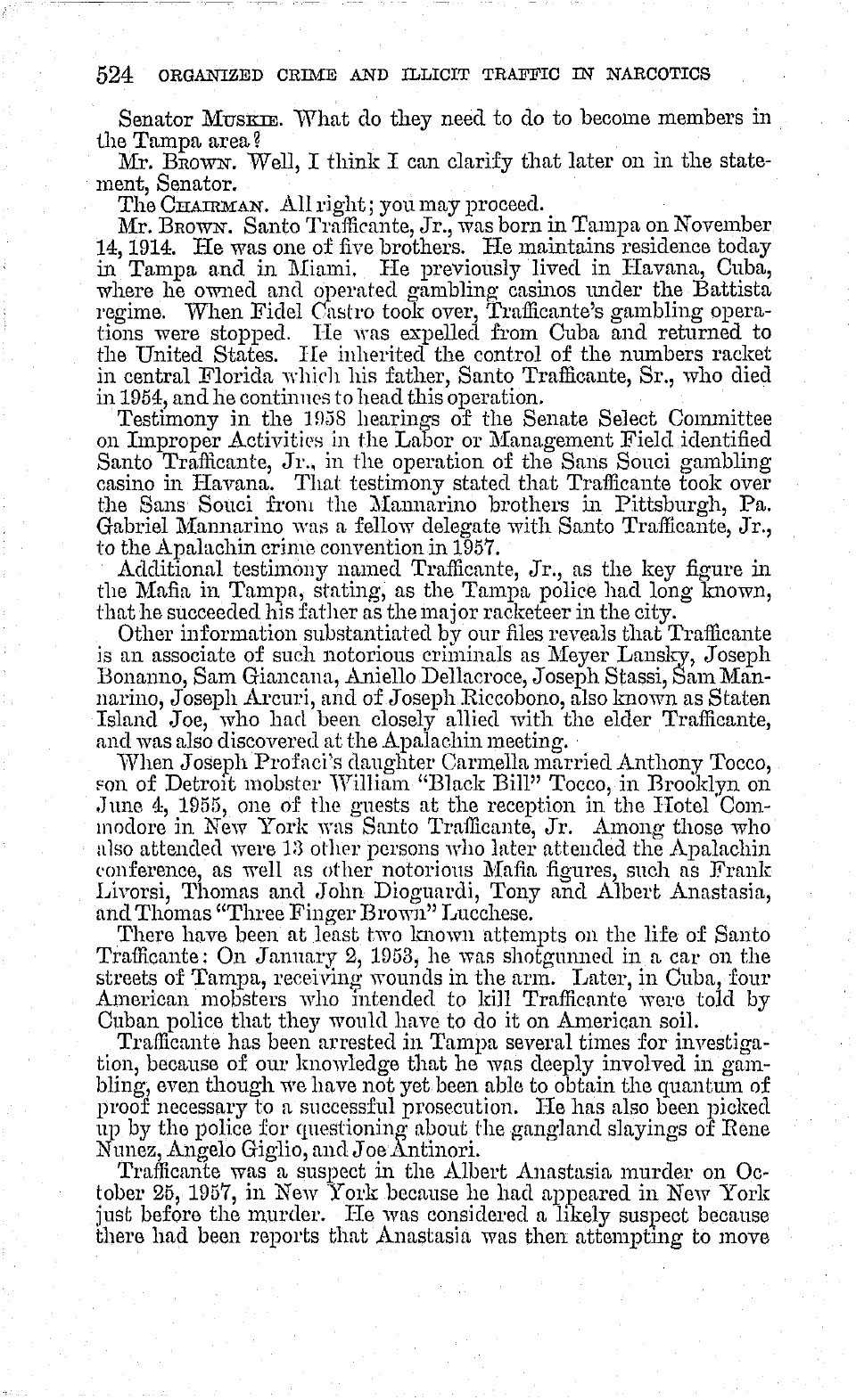 hearingTestimony of Tampa Police Chief Neil G. Brown, October 15, 1963 (opening pages)Tampa's police chief introduced the Tampa chart (Exhibit 45) and said he believed it "completely accurate in showing that Santo Trafficante is the boss of this criminal group." His statement says 1958 Senate testimony had Trafficante taking over Havana's Sans Souci casino from "the Mannarino brothers in Pittsburgh, Pa."court-opinionUnited States v. Salerno, 868 F.2d 524 (2d Cir. 1989)Second Circuit opinion on the appeal from the Southern District of New York trial of Anthony Salerno and seven other defendants, decided January 31, 1989.press-releaseU.S. Attorney, E.D.N.Y.: release on the superseding indictment of Vincent Basciano (June 27, 2005)The U.S. Attorney announces new charges against "Bonanno family acting boss Vincent Basciano," including a conspiracy to murder a Bonanno captain and the solicitation of the murder of a federal prosecutor. The release calls Joseph Massino "the incarcerated official boss of the Bonanno family."press-releaseU.S. Attorney, E.D. New York: Director's Awards release (October 28, 2005)A U.S. Attorney's release on Justice Department awards to Eastern District prosecutors and FBI agents. It states that in July 2004, after a twelve-week trial, a jury convicted Bonanno family boss Joseph Massino of racketeering, including seven murders or murder conspiracies.press-releaseU.S. Attorney, E.D.N.Y.: release on Bonanno family convictions (July 12, 2006)Release on the convictions of Bonanno family soldiers, in which U.S. Attorney Roslynn R. Mauskopf said more than seventy Bonanno members and associates had been prosecuted, among them "Bonanno family boss Joseph Massino" and the men who led the family after him.press-releaseU.S. Attorney, E.D.N.Y.: release on the indictment of Nicholas Santora, Anthony Rabito and 17 others (February 6, 2007)The U.S. Attorney announces a superseding indictment of nineteen Bonanno members and associates, including "Bonanno family acting underboss Nicholas Santora and Bonanno family acting consigliere Anthony Rabito." Both men had been defendants in the 1982 Brasco trial.press-releaseU.S. Attorney, E.D.N.Y.: release on four Bonanno guilty pleas, among them Anthony Indelicato's (August 6, 2008)Four Bonanno members plead guilty before Judge Garaufis. The release says Anthony Indelicato, "also known as 'Bruno,'" and another man "admitted to their involvement in the 2001 murder of Frank Santoro," which it says Vincent Basciano ordered.press-releaseU.S. Attorney, E.D.N.Y.: release on a Bonanno family indictment (October 7, 2009)Release on a 33-count Bonanno family indictment, stating that since March 2002 four Bonanno bosses or acting bosses had been convicted. The new charges are allegations.press-releaseU.S. Attorney, E.D.N.Y.: release on the La Cosa Nostra indictments (January 20, 2011)The Eastern District of New York's release on the same day's indictments, giving the Brooklyn cases against members and associates of the Colombo, Gambino and other families. The charges are allegations.press-releaseU.S. Attorney, E.D.N.Y.: "38 Defendants in Historic Colombo Family Case Plead Guilty" (November 9, 2012)Release reporting guilty pleas by 38 defendants in the Colombo family case that came out of the January 2011 indictments.press-releaseLeadership, Members and Associates of the Philadelphia La Cosa Nostra Family Charged (U.S. Attorney, Eastern District of Pennsylvania, 2011)Press release of May 23, 2011 announcing a 50-count superseding indictment of 13 people charged with racketeering conspiracy and related crimes as members and associates of the Philadelphia LCN family. Charges are allegations.press-releaseTwo Members of the Philadelphia La Cosa Nostra Family Charged in Second Superseding Indictment (U.S. Attorney, Eastern District of Pennsylvania, 2012)Press release of April 26, 2012 announcing a second superseding indictment against 14 defendants in the Philadelphia LCN case, adding two North Jersey men and a charge of theft from a Teamsters benefit fund. Charges are allegations.press-releaseMembers of the Philadelphia La Cosa Nostra Family Found Guilty of Racketeering and Other Charges (U.S. Attorney, Eastern District of Pennsylvania, 2013)Press release of January 3, 2013: after the trial of the 2011 to 2012 Philadelphia LCN indictment, the jury convicted three defendants of racketeering conspiracy and one of related counts, acquitted on others, and hung on several counts.press-releaseFederal Jury Convicts James "Whitey" Bulger (U.S. Attorney, District of Massachusetts, 2013)Press release of August 12, 2013: after a two-month trial a federal jury in Boston convicted James J. Bulger of racketeering conspiracy and racketeering acts, and found that he played a role in eleven murders.press-releaseBulger Sentenced to Two Life Terms (U.S. Attorney, District of Massachusetts, 2013)Press release of November 14, 2013: Judge Denise J. Casper sentenced James J. Bulger in Boston to two consecutive life terms plus five years and $19.5 million in restitution.press-releaseGreig Sentenced to 8 Years in Federal Prison (U.S. Attorney, District of Massachusetts, 2012)Press release of June 12, 2012: Catherine E. Greig, who pleaded guilty to conspiracy to harbor a fugitive and identity-fraud counts, was sentenced to eight years for harboring James J. Bulger.press-releaseFormer LCN Boss Arrested in Connection with the Murder of a Federal Witness (U.S. Attorney, District of Massachusetts, 2016)Press release of August 10, 2016: Francis P. Salemme, 82, was arrested in Connecticut and charged with murder of a witness. The charge was an allegation; the release states his earlier racketeering and obstruction convictions.press-releaseFormer Mafia Boss and Associate Convicted of 1993 Murder (U.S. Attorney, District of Massachusetts, 2018)Press release of June 22, 2018: a federal jury convicted Francis P. Salemme and Paul M. Weadick of one count of murder of a federal witness in the 1993 killing of Steven A. DiSarro.press-releaseU.S. Attorney, N.D. Illinois: deputy marshal charged with disclosing information about protected witness Nicholas Calabrese (January 11, 2007)A U.S. Attorney's release on a complaint against a deputy U.S. marshal. Citing the FBI's affidavit, it says Nicholas Calabrese admitted being a "made" member of the Chicago Outfit, agreed in 2002 to cooperate, and entered the Witness Security Program in August 2002 on an application describing his ability to testify about 16 murders in which he participated and 22 others.press-releaseU.S. Attorney, N.D. Illinois: Family Secrets indictment release (April 25, 2005)Press release of the U.S. Attorney for the Northern District of Illinois announcing a 14-defendant racketeering indictment that named the "Chicago Outfit" as the RICO enterprise and charged 18 murders and one attempted murder between 1970 and 1986.press-releaseFormer Mafia Boss and Associate Sentenced to Life in Prison for 1993 Murder (U.S. Attorney, District of Rhode Island, 2018)Press release of September 13, 2018: Judge Allison D. Burroughs sentenced Francis P. Salemme and Paul M. Weadick to life in prison in federal court in Boston for the 1993 murder of Steven A. DiSarro.press-releaseManhattan U.S. Attorney announces a proposed settlement to replace the Teamsters Consent Decree (14 January 2015)Press release 15-010 of the U.S. Attorney's Office for the Southern District of New York: a proposed agreement to replace the Teamsters Consent Decree, "in place since March 1989," keeping its injunction and election reforms and phasing out the Independent Review Board over five years.press-releaseU.S. Attorney's Office, Western District of Pennsylvania: leadership-team release of April 16, 2018A Justice Department release naming the Pittsburgh U.S. Attorney's senior staff. Its biography of the First Assistant lists among his notable cases "the successful eight-week trial of the Pittsburgh La Cosa Nostra organized crime family on RICO charges." It gives no date, defendants or docket for that trial.agency-historyCoast Guard Historian's article on catching rum-runners during Prohibition (19 November 2021)Article by Coast Guard Atlantic Area historian William H. Thiesen, "The Long Blue Line: Catching the rumrunners," on the Coast Guard's Prohibition mission, "Rum Row", the 1924 fleet expansion and the 320 cutters and destroyers at the end of Prohibition.agency-historyCoast Guard Historian's bibliography on Prohibition and the "Rum War"The Coast Guard Historian's Office bibliography of articles, books and theses on Prohibition and the "Rum War", including Malcolm F. Willoughby's "Rum War at Sea" (GPO, 1964) and Eric S. Ensign's 1998 thesis. A list of publications only.agency-history'Black Hand Gang', U.S. Postal Inspection Service history page (cite and link only)The U.S. Postal Inspection Service's modern history page on Black Hand letters, describing the 1909 Ohio case it calls the 'Society of the Banana' and the 1915 Chicago case of Mennite and Mecca. The page carries a copyright notice; it is cited and linked, not reproduced.hearingValachi's account of the June 1962 killing at the Atlanta penitentiary (testimony, September 27, 1963)Valachi testified that he struck a man in the Atlanta penitentiary yard with an iron pipe, believing him to be someone sent to kill him, and was then shown he had hit the wrong man.
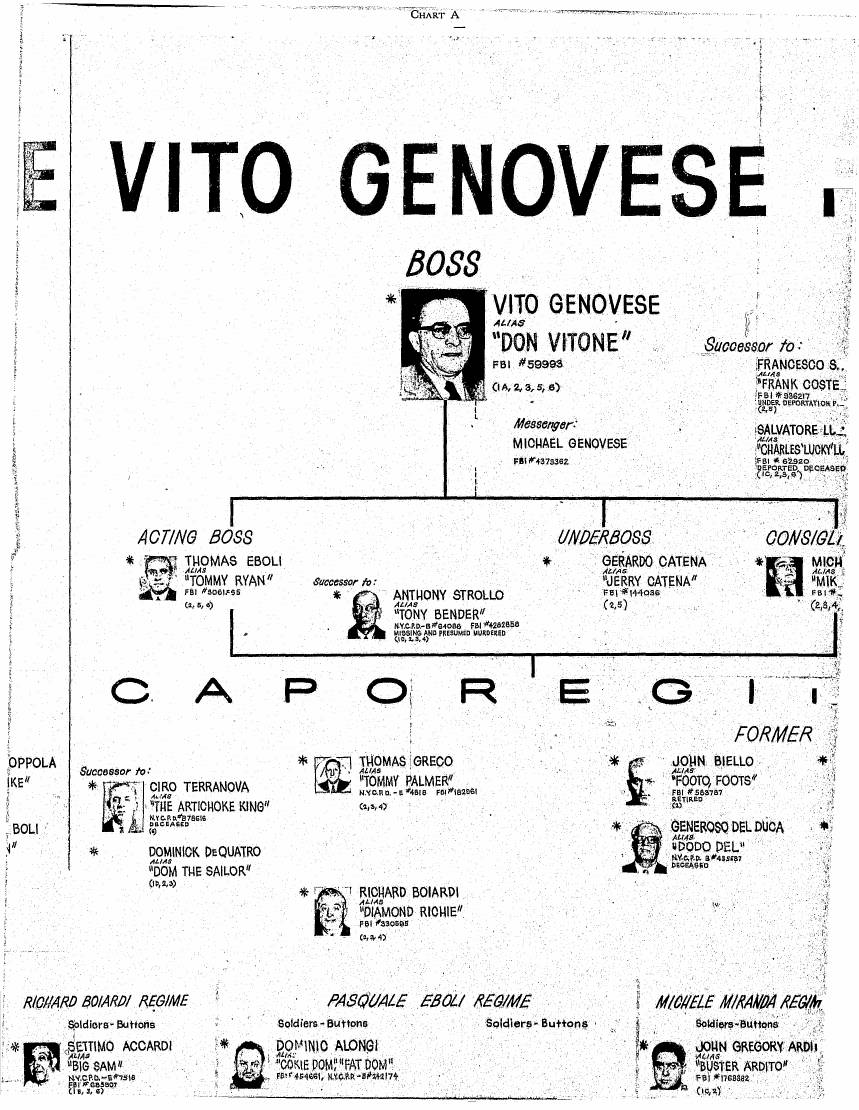 hearingChart A: "The Vito Genovese Family"New York police fold-out chart presented on October 8, 1963, with photographs, FBI or police numbers and an activity code. A star marks names "identified by Joseph Valachi."
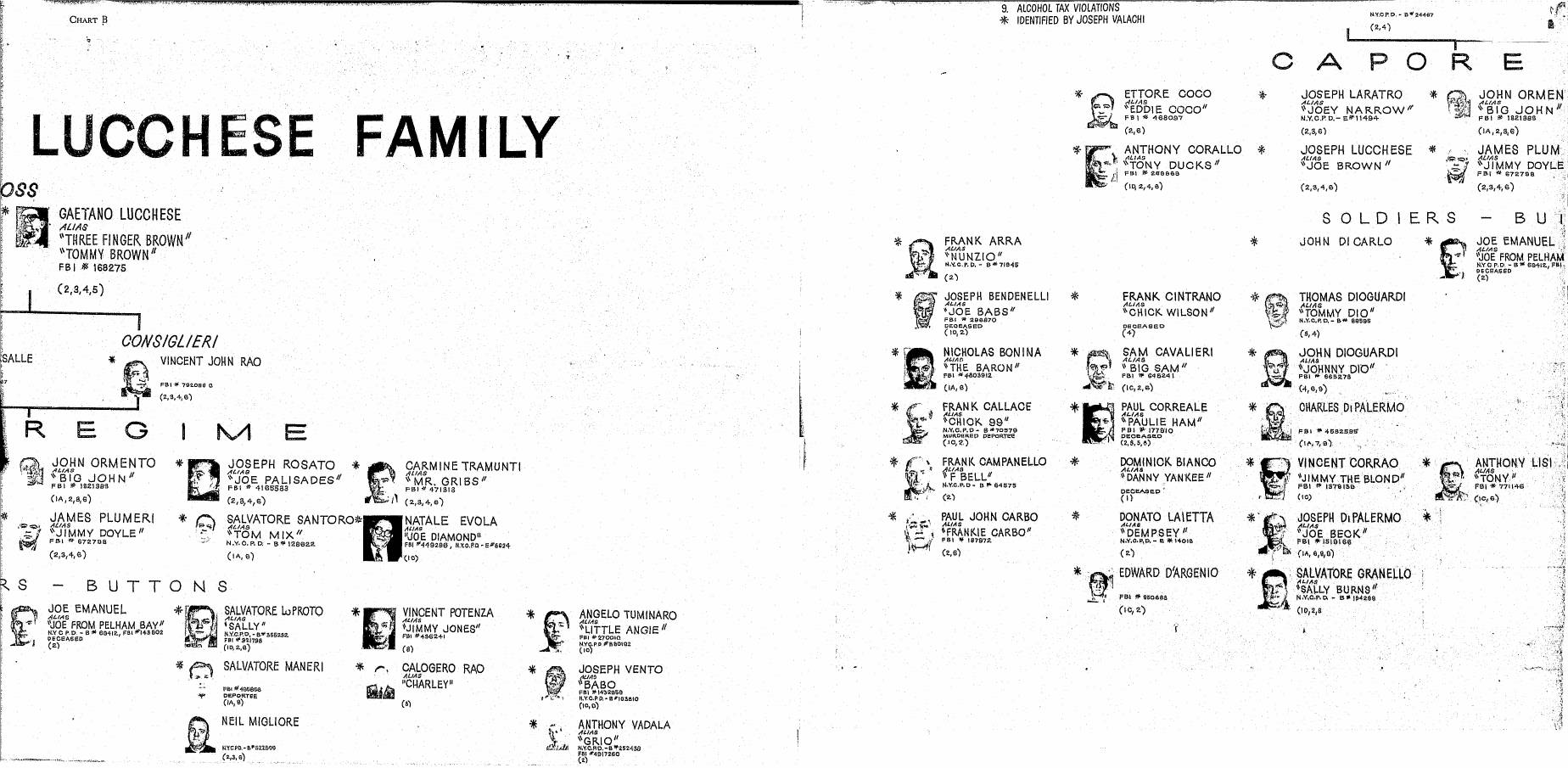 hearingChart B: "The Gaetano Lucchese Family"New York police fold-out chart presented on October 8, 1963: boss, underboss, consiglieri, caporegime and soldiers, with photographs and the activity code. McClellan counted 53 names.
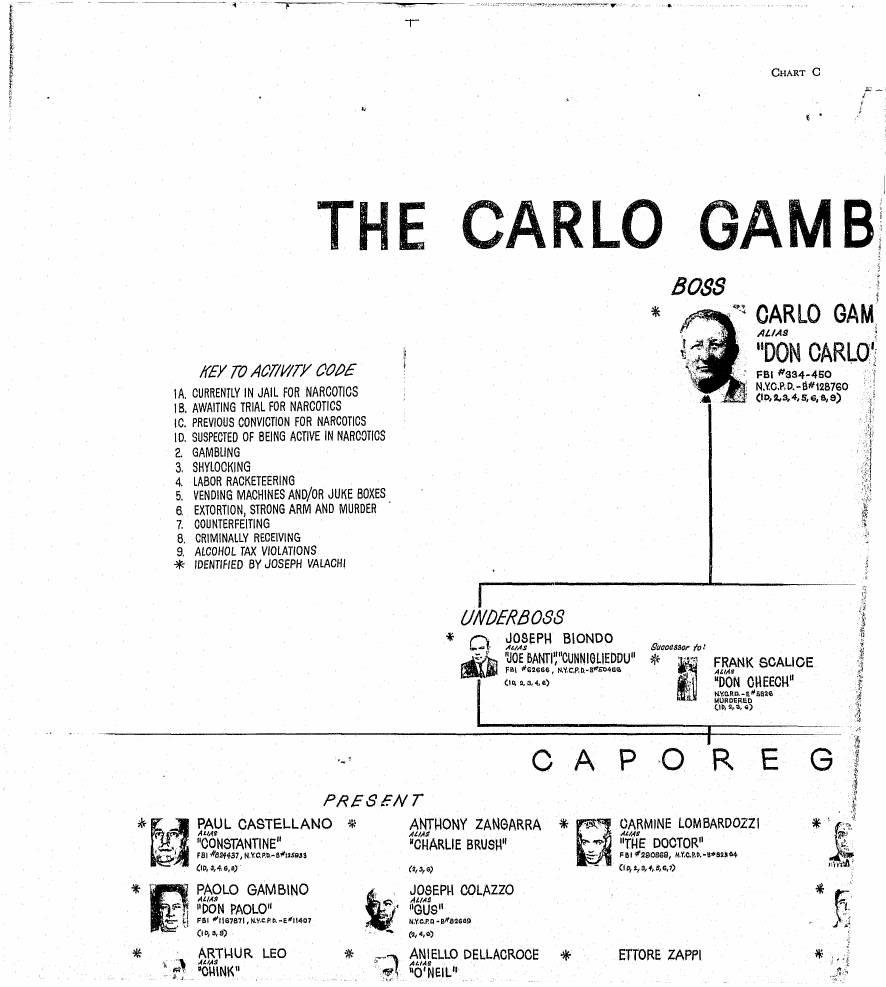 hearingChart C: "The Carlo Gambino Family"New York police fold-out chart presented on October 8, 1963: boss, underboss, consigliere and caporegime, with photographs and the activity code. It is bound out of order in the printed volume.
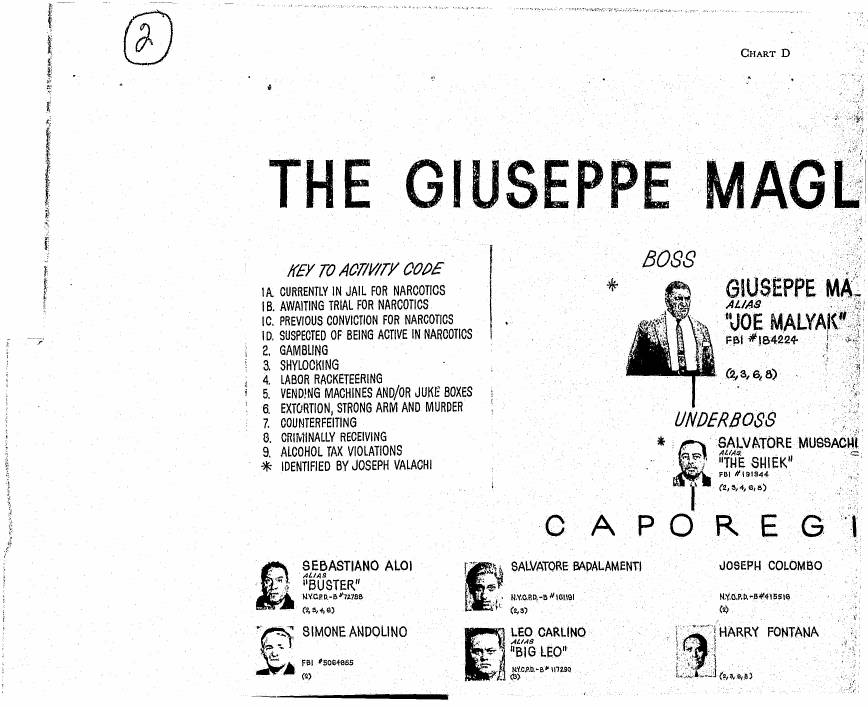 hearingChart D: "The Giuseppe Magliocco Family"New York police fold-out chart presented on October 8, 1963, of what counsel called "originally ... the Profaci family": boss, underboss, caporegime and soldiers. No consigliere box is printed.
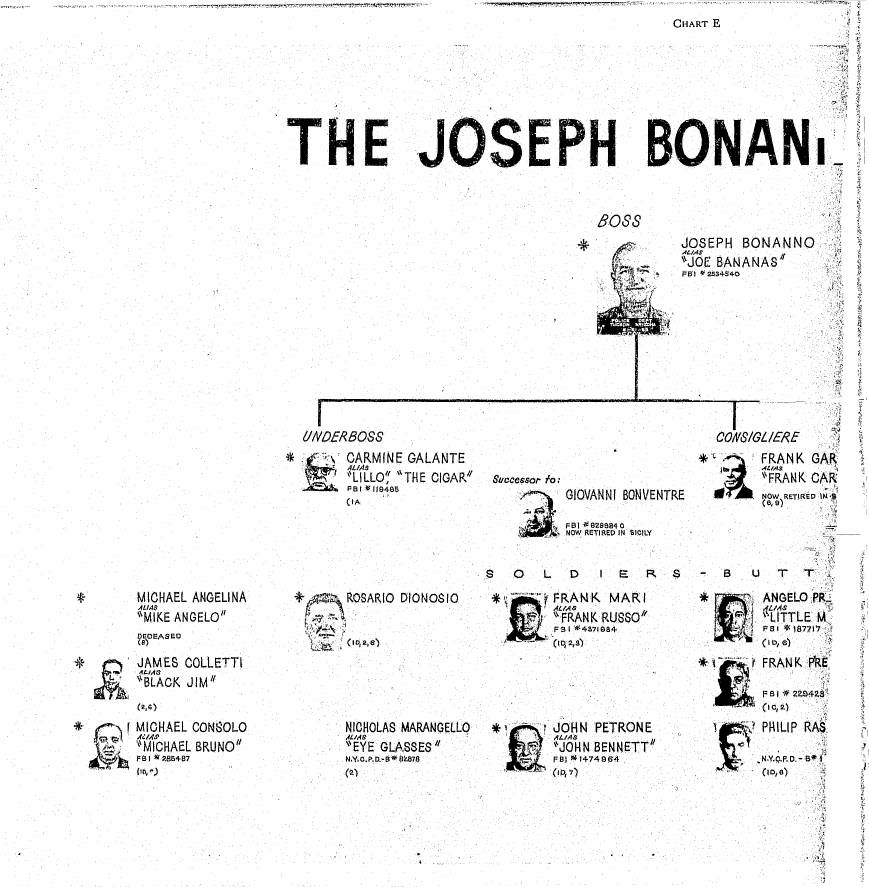 hearingChart E: "The Joseph Bonanno Family"New York police fold-out chart presented on October 8, 1963. McClellan stated that it carried 21 names, 17 of them identified by Valachi.
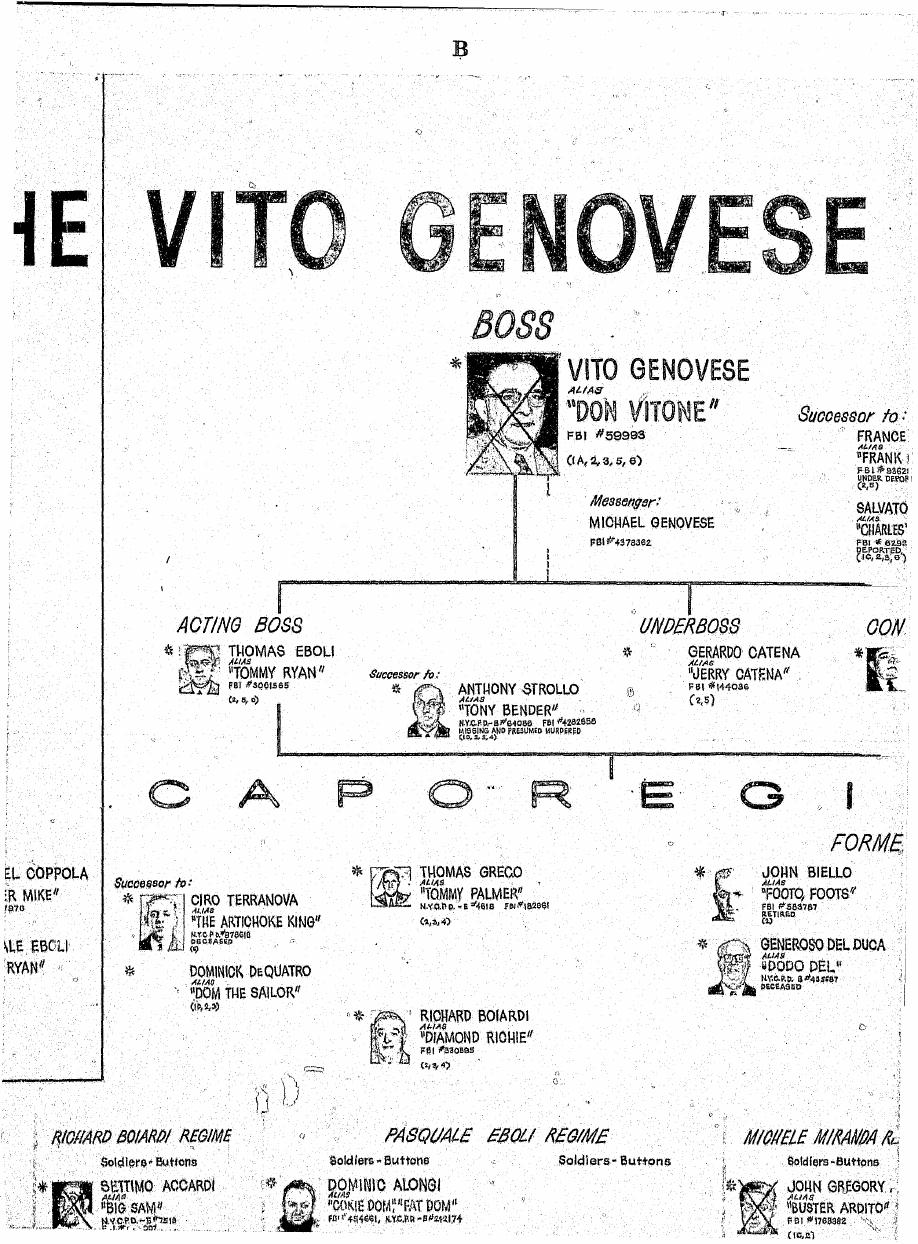 hearingThe five New York family charts, re-marked for Bureau of Narcotics convictions (Part 3)The Genovese, Gambino, Magliocco, Bonanno and Lucchese charts, reprinted in 1964 with an "X" for members convicted in Bureau of Narcotics cases. One segment is stored here.
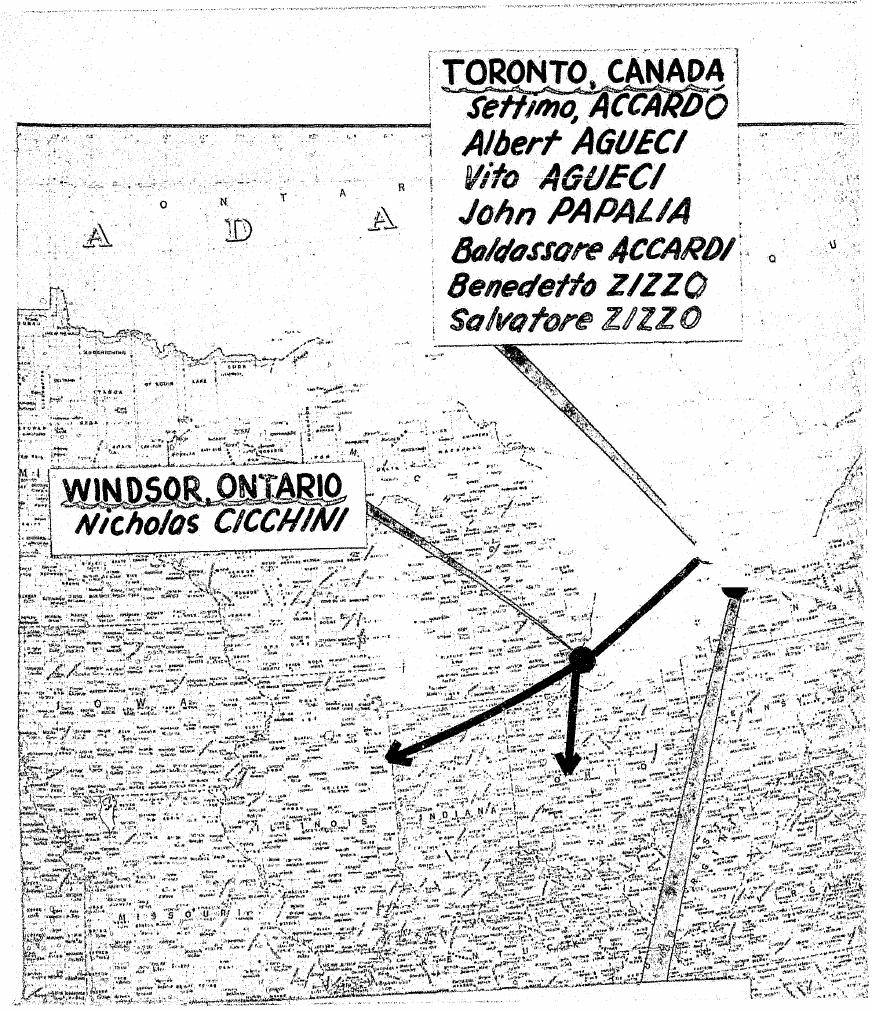 hearingBureau of Narcotics case charts: "Albert and Vito Agueci case" and "Carmine Galante-Mancino case" (Part 4)Two fold-out Bureau of Narcotics case charts of 1964, printed with Exhibit No. 3 on interstate traffic from New York City. One segment is stored here.
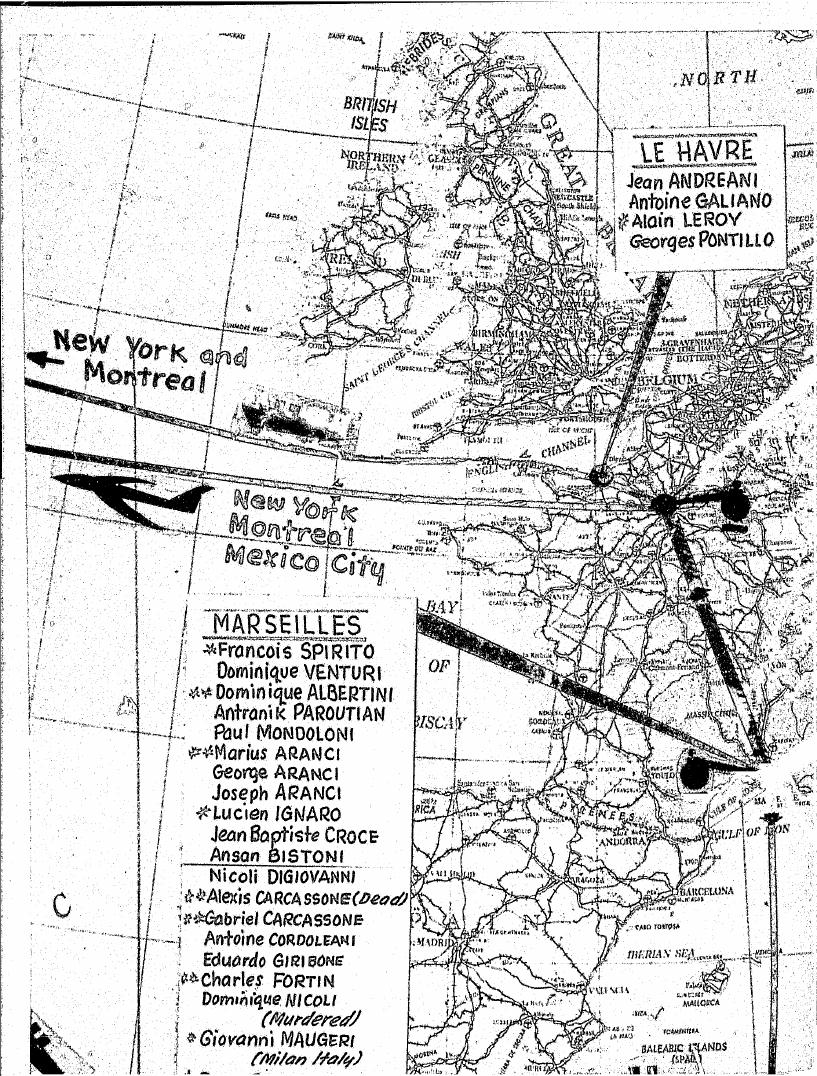 hearingBureau of Narcotics route charts: Europe and Asia, and distribution in the United States (Part 4)Two fold-out Bureau of Narcotics charts of 1964: narcotics routes in Europe and Asia, and distribution in the United States, each with names of persons. One segment is stored here.
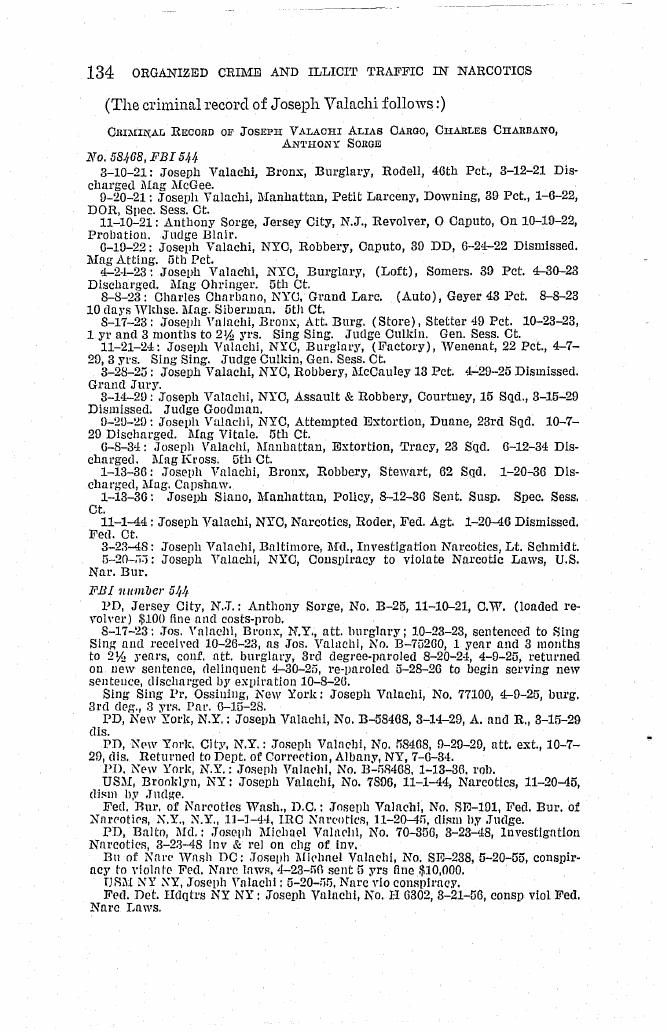 hearingCriminal record of Joseph Valachi, as printed in the 1963 hearing recordThe police and FBI identification record of Valachi, read into the record by Sergeant Ralph Salerno: arrests from 1921, Sing Sing sentences in the 1920s, federal narcotics cases from 1944, and Atlanta penitentiary entries.hearingValachi's executive-session testimony of October 29, 1963, released July 28, 1964Closed-session testimony on narcotics, made public in 1964. Valachi described one heroin deal in 1952 and going to Anthony Strollo, "Tony Bender," for money.
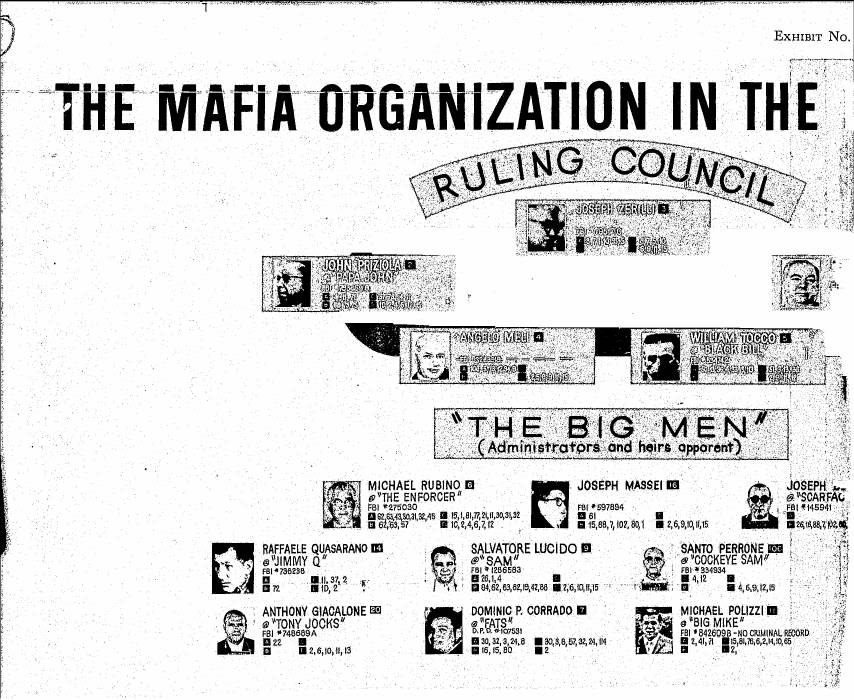 hearingExhibit No. 18: "The Mafia Organization in the Detroit Area"Detroit Police Department fold-out chart presented on October 10, 1963: a "Ruling Council," "The Big Men," and lower tiers, with photographs, a relationship legend and a criminal-activity code.
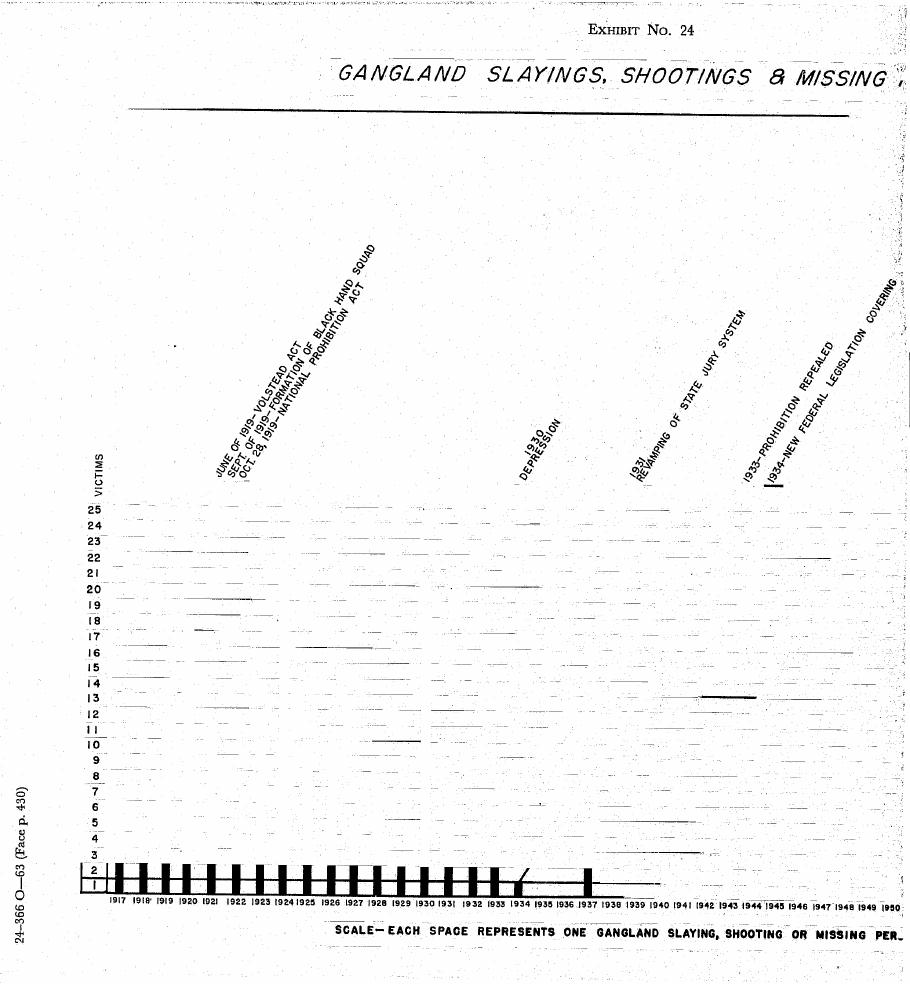 hearingExhibit No. 24: Detroit chart of gangland slayings, shootings and missing personsDetroit Police Department chart of gangland slayings, shootings and missing persons by year, entered on October 10, 1963. The first segment is stored here.
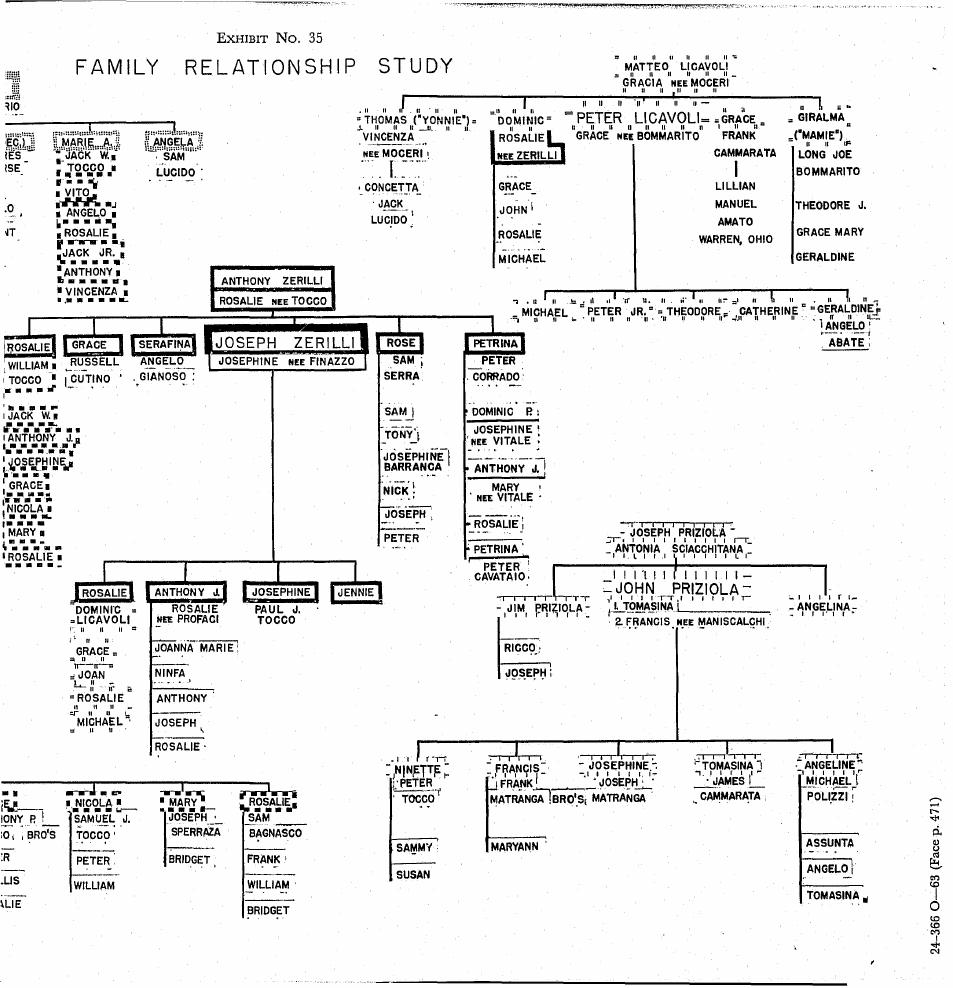 hearingExhibit No. 35: "Family Relationship Study" (Detroit)Detroit police fold-out chart of intermarriage among the families named in the Detroit testimony, entered on October 11, 1963. The second segment is stored here.
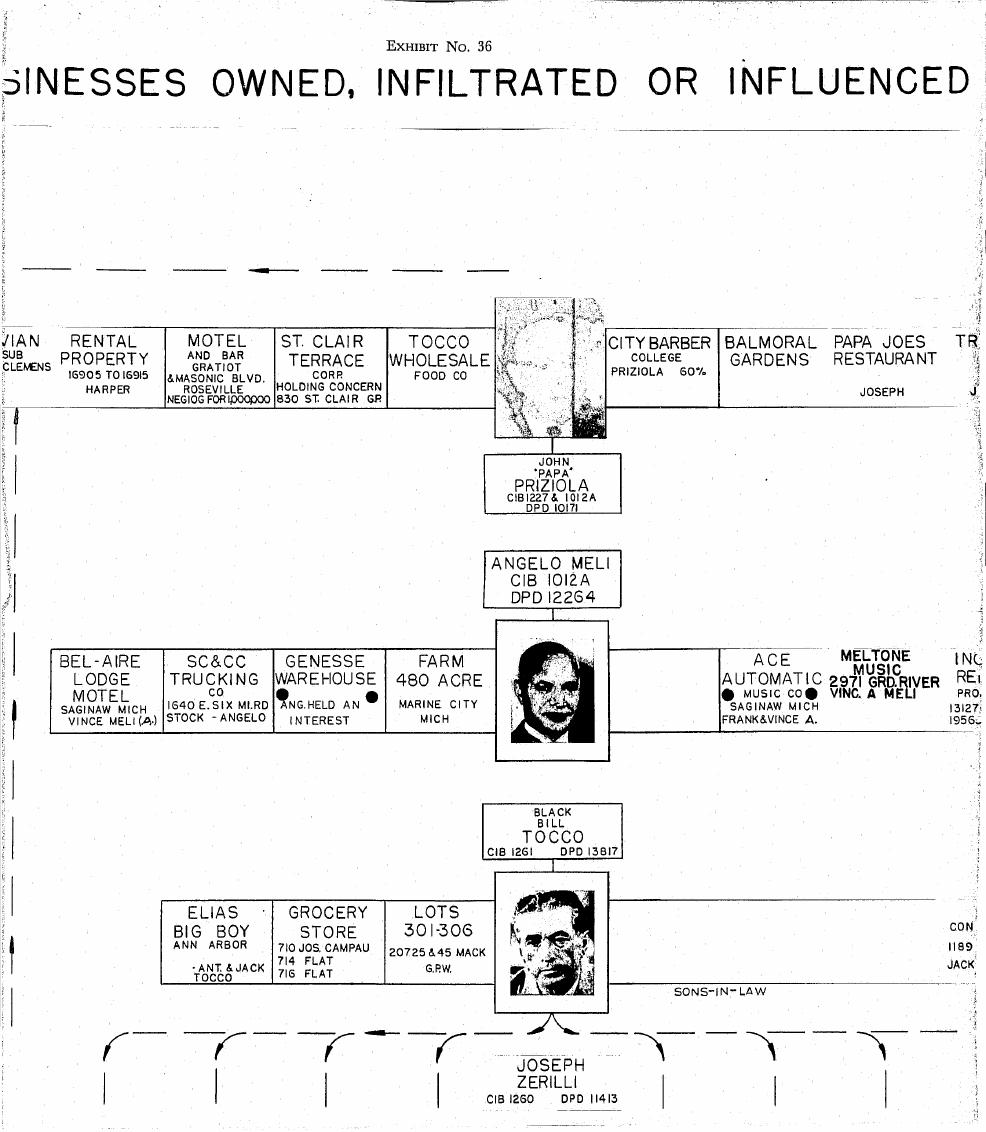 hearingExhibit No. 36: "Some Legitimate Businesses Owned, Infiltrated or Influenced by the Mafia" (Detroit)Detroit police fold-out chart linking named men to businesses, entered on October 11, 1963. One segment is stored here. No address on it is mapped.
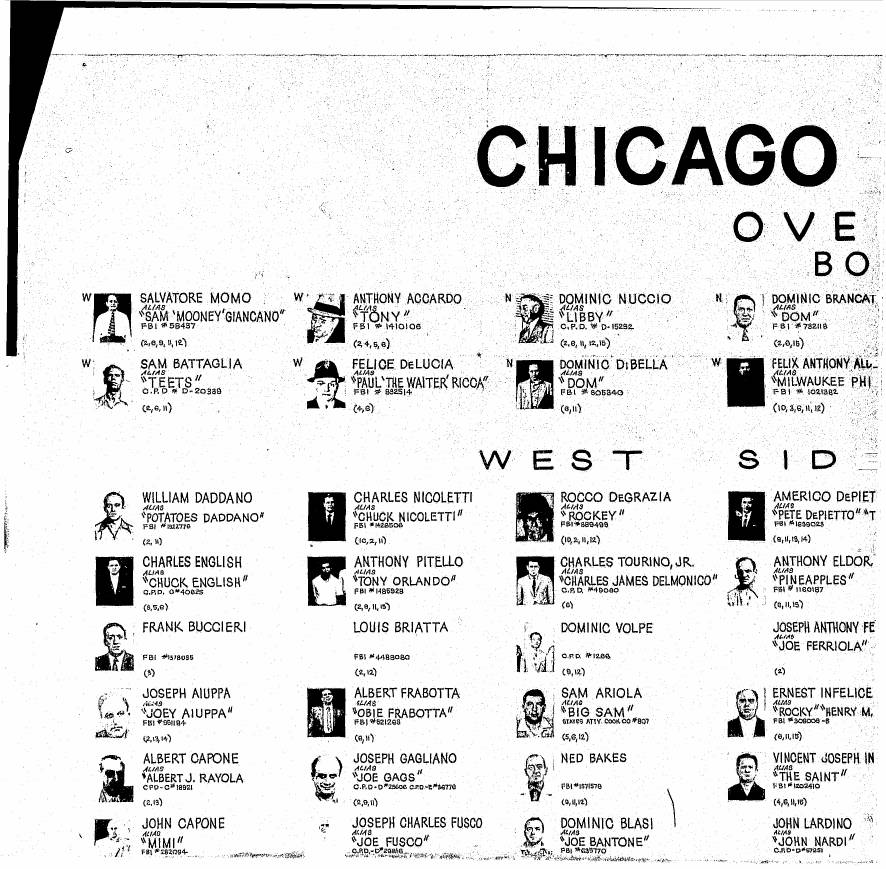 hearingExhibit No. 39: "Chicago-Italian Organization, Overall Chicago Area Bosses and Lieutenants"Chicago Police Department fold-out chart presented on October 11, 1963, with photographs, grouped as overall bosses and lieutenants and then by district.
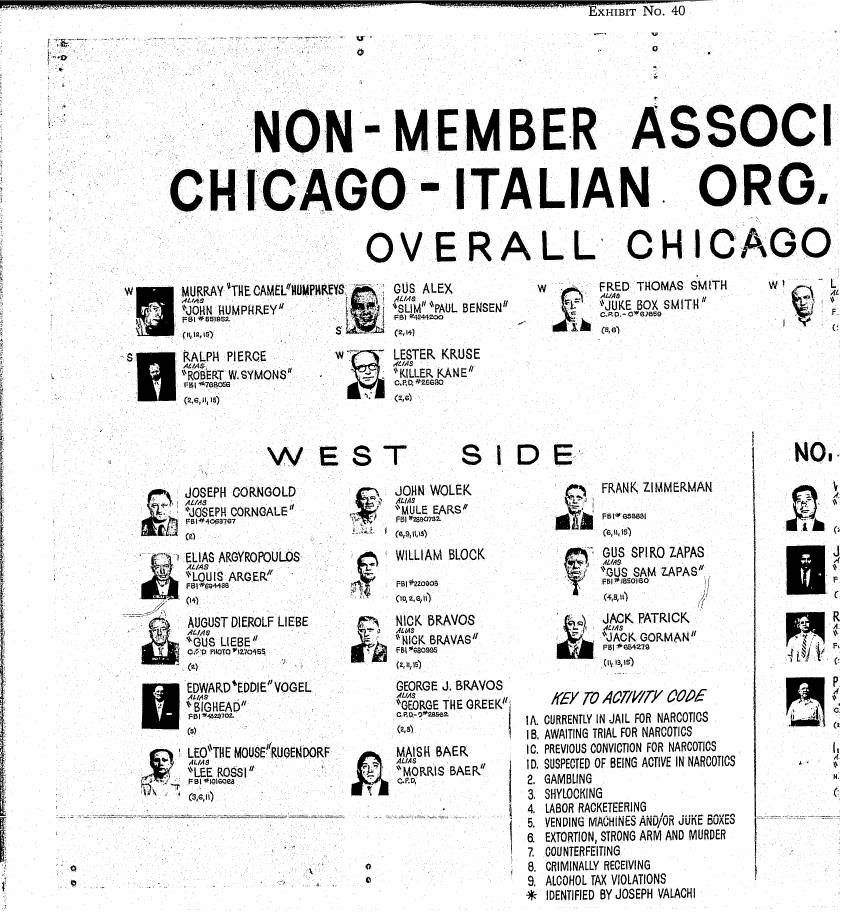 hearingExhibit No. 40: "Non-Member Associates" of the Chicago-Italian organizationA Chicago police fold-out chart of associates whom it labels non-members, entered after Exhibit 39 on October 11, 1963.
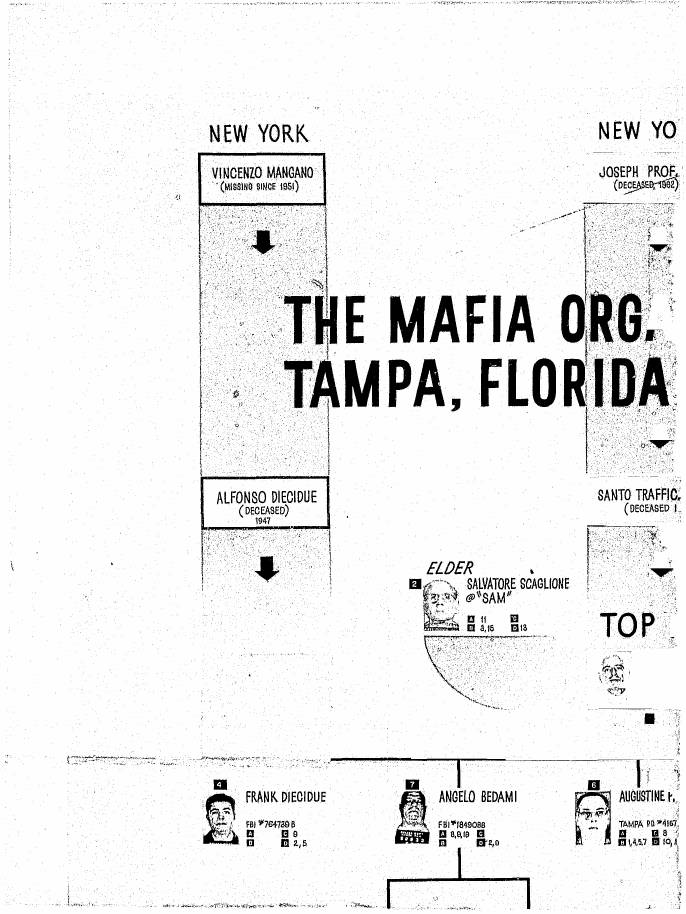 hearingExhibit No. 45: "The Mafia Organization in the Tampa, Florida Area"Tampa fold-out chart entered on October 15, 1963: New York links, Tampa predecessors, an "elder," a "top man" and numbered members. The "Top Man" box is illegible in the scan.
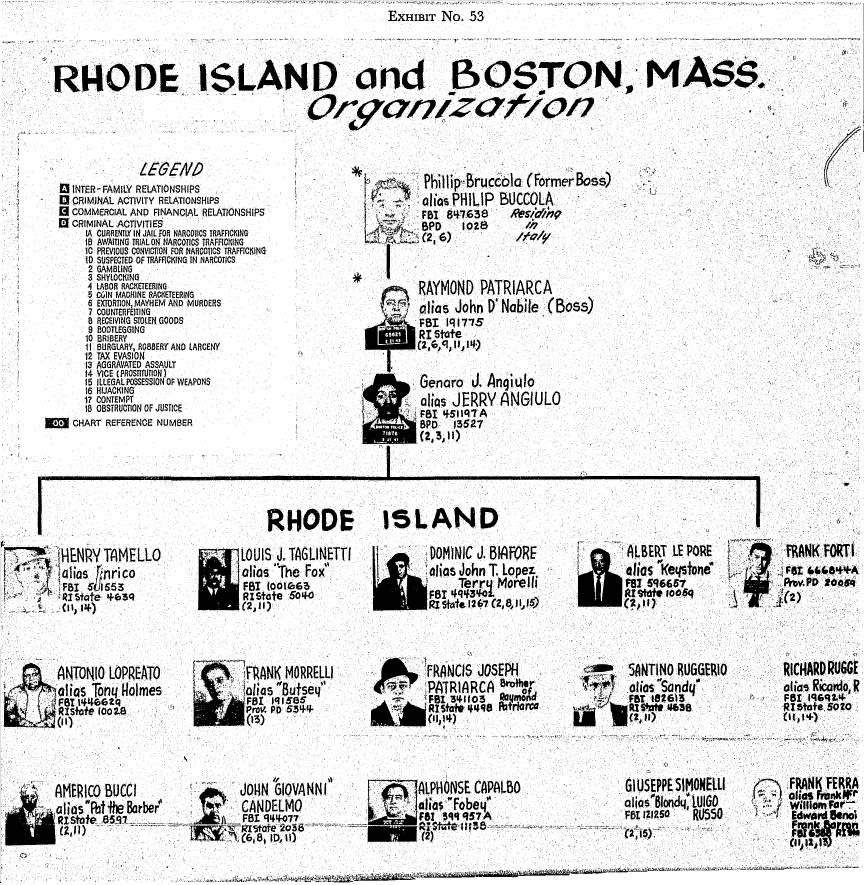 hearingExhibit No. 53: "Rhode Island and Boston, Mass. Organization"Fold-out chart entered on October 15, 1963, with a "former boss" residing in Italy, a man labelled "Boss," and Rhode Island and Boston members below.
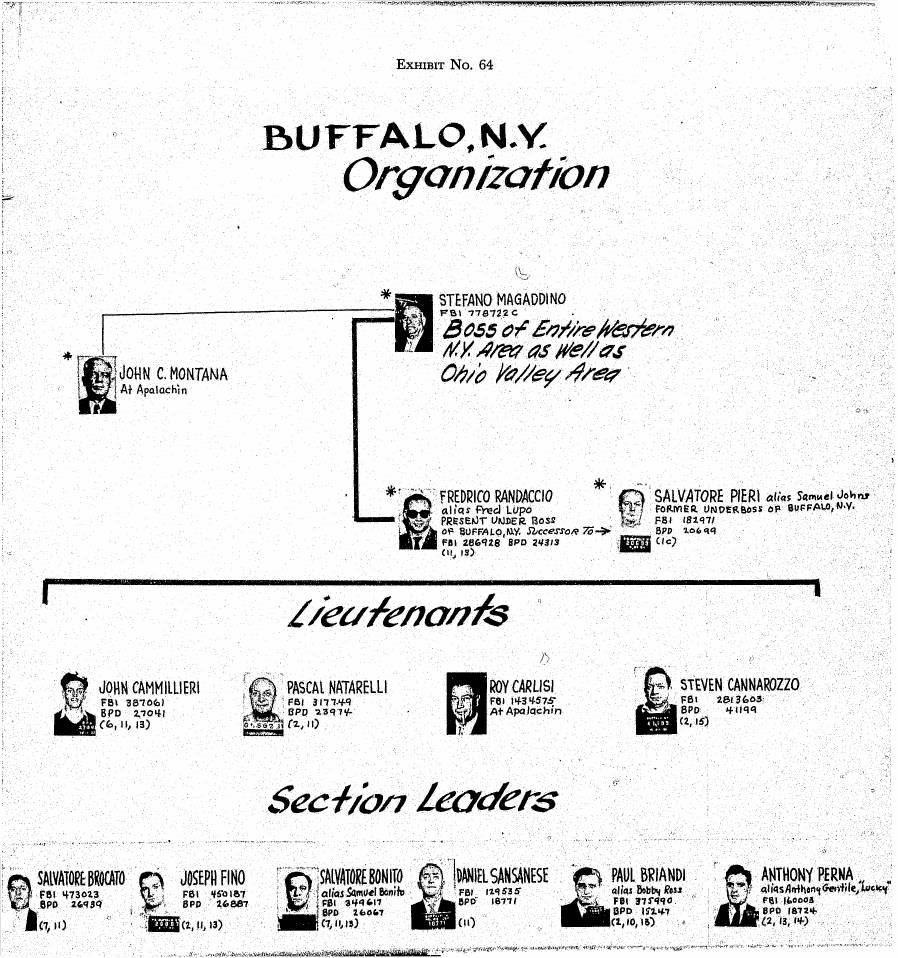 hearingExhibit No. 64: "Buffalo, N.Y. Organization"Buffalo police fold-out chart entered on October 16, 1963, with a boss of "Entire Western N.Y. Area," an underboss, lieutenants and section leaders.
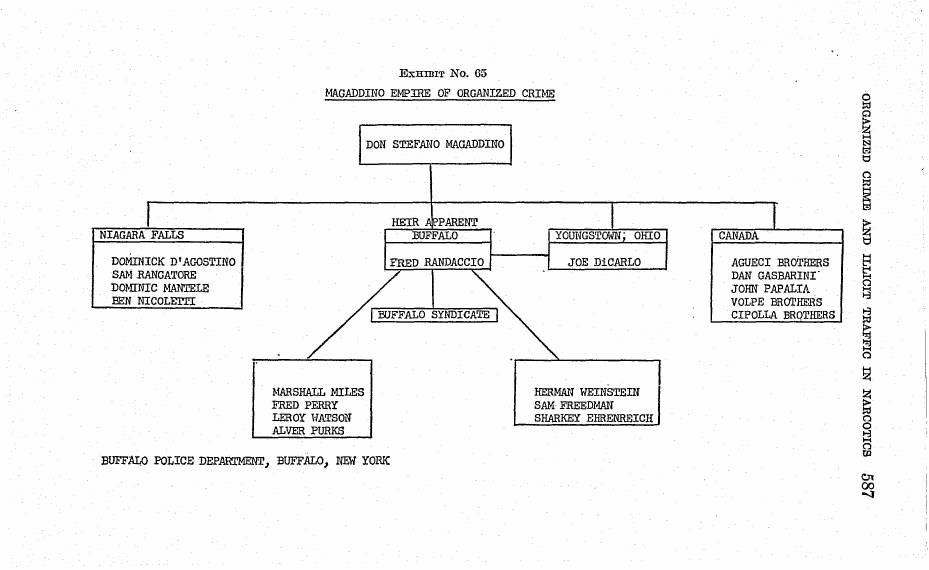 hearingExhibit No. 65: "Magaddino Empire of Organized Crime" (Buffalo Police Department)A typed box chart by the Buffalo Police Department, printed at page 587 of Part 2, linking Niagara Falls, Buffalo, Youngstown and Canada under one name.
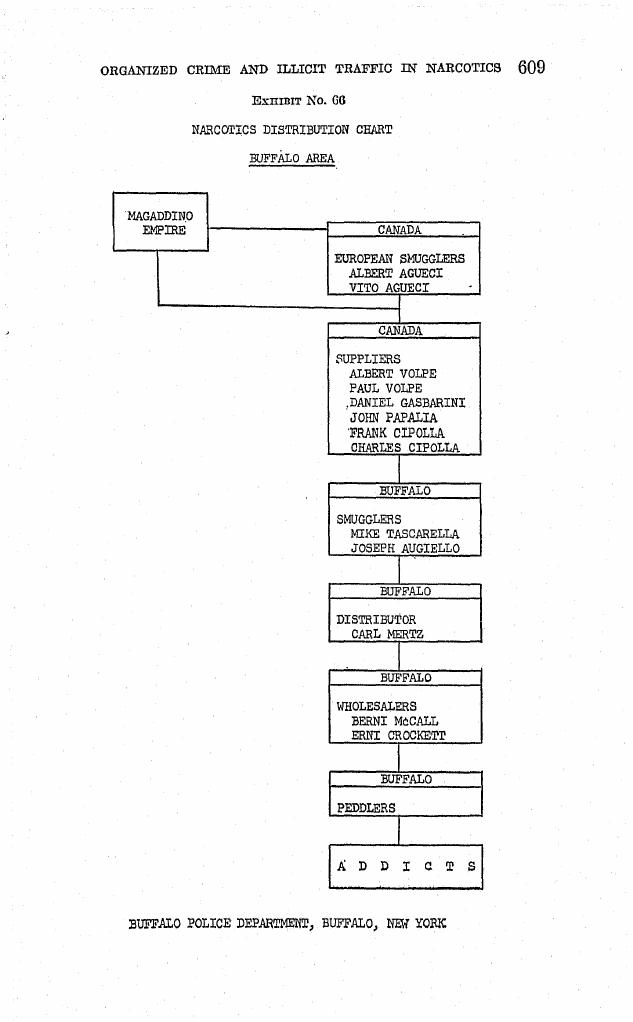 hearingExhibit No. 66: "Narcotics Distribution Chart, Buffalo Area"A printed flow chart of one heroin source into Buffalo, entered on October 16, 1963. The printed page is stored here.
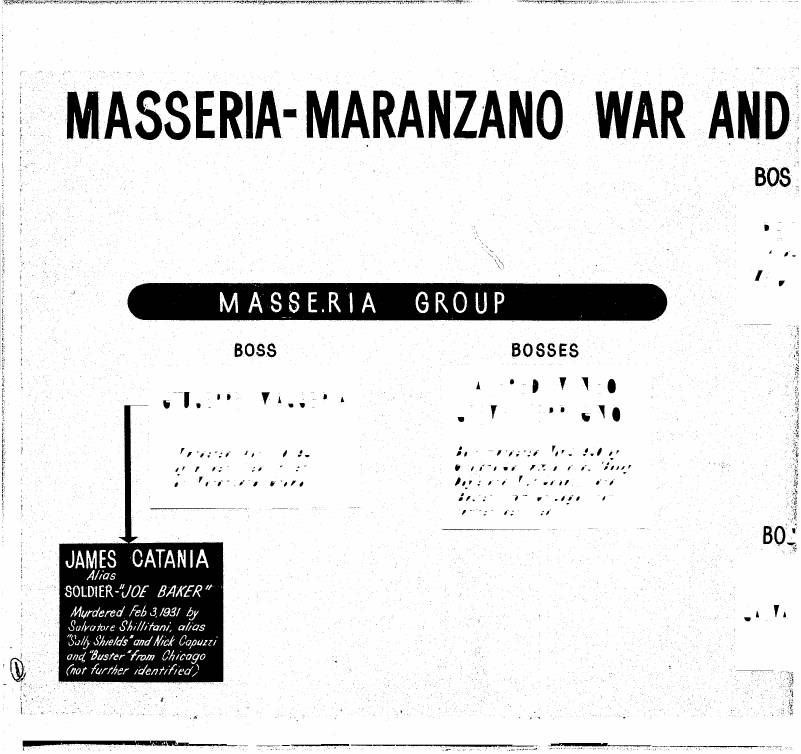 hearingExhibit No. 8: "Masseria-Maranzano War and Evolution of Gang Control—1930 to Present"Staff fold-out chart presented on October 1, 1963: the 1930 to 1931 war in three key-coded groups and the lines of succession drawn from it to five 1963 bosses. Several name boxes are illegible in the scan.hearingHearing of October 2, 1963: Valachi's testimony and police recordsValachi continued his account of the 1930 to 1931 gang war. Police witnesses from Hartford and New York testified to records the subcommittee set beside his statements.hearingHearing of October 8, 1963: the five New York family charts presentedNew York police Deputy Chief Inspector John J. Shanley presented Charts A to E, and Valachi answered questions about the men on them. McClellan directed that the charts be printed "exactly as they appear."hearingHearing of October 9, 1963: final day of Part 1The last day of Valachi's public testimony, with further New York police and staff witnesses. The chairman stated a chart total of 338 persons, 289 of them identified by Valachi.
 hearingOrganized Crime and Illicit Traffic in Narcotics: Index to Hearings (1965)The printed name index to the five parts of the 1963 and 1964 hearings, published by the Government Printing Office in 1965.
 hearingOrganized Crime and Illicit Traffic in Narcotics, Part 1 (September 25 to October 9, 1963)The first printed volume of the 1963 Senate hearings: Attorney General Robert F. Kennedy's opening testimony, Joseph Valachi's public testimony, New York police witnesses, Exhibit 8 and Charts A to E.
 hearingOrganized Crime and Illicit Traffic in Narcotics, Part 2 (October 10 to 16, 1963)The second printed volume: police testimony and organization charts for Detroit, Chicago, Tampa, Rhode Island and Boston, and Buffalo, entered as Exhibits 17 to 69.
 hearingOrganized Crime and Illicit Traffic in Narcotics, Part 3 (October 29, 1963; July 28 to 30, 1964)The third printed volume: the released portion of Valachi's October 29, 1963 executive-session testimony, and Bureau of Narcotics testimony with the New York family charts re-marked for narcotics convictions.hearingNarcotics hearings, Part 3, printed page 774: the Bureau of Narcotics entry for Joseph Bruno of ChicagoIn its list of traffickers arrested since 1951, the Bureau of Narcotics says Joseph Bruno of Chicago, sentenced in June 1958 to eight years on a federal narcotics charge, had for many years distributed bootleg alcohol and narcotics to large-scale sellers on Chicago's South Side.hearingNarcotics hearings, Part 3, printed pages 786-787: the Bureau of Narcotics entry for Fiore Siano of New YorkThe Bureau of Narcotics list describes Fiore Siano, sentenced to eight years on a narcotics charge, as a main source of supply for Black traffickers in Harlem and an associate of the men it says controlled the rackets there. The opening sentence is paraphrased because the OCR is garbled.hearingNarcotics hearings, Part 3, printed page 788: the Bureau of Narcotics entry for Joseph Valachi and John FreemanThe Bureau of Narcotics entry for Joseph Valachi says that in the 1930s he supplied heroin to John Freeman, whom the Bureau calls one of the most active interstate heroin traffickers, and that in 1960 Valachi was sentenced to fifteen years in a case involving Freeman's son. The Freeman sentence is paraphrased because the OCR is garbled.
 hearingOrganized Crime and Illicit Traffic in Narcotics, Part 4 (July 30, 1964)The fourth printed volume: the afternoon session of July 30, 1964, with Bureau of Narcotics testimony on heroin routes and fold-out route and case charts.hearingNarcotics hearings, Part 4, printed pages 931-932: Belk and the Bureau's exhibit on Chicago's supply from New YorkMr. Belk of the Bureau of Narcotics' New York office, formerly in Chicago, said Chicago's narcotics came "Primarily" from New York City, and the Bureau's Exhibit 4 described Italian organizations and independent Black organizations, both with New York sources, supplying Chicago.hearingNarcotics hearings, Part 4, printed page 918: the Bureau of Narcotics history of the New York trafficA Bureau of Narcotics exhibit says that most of the New York heroin traffic outside the Italian syndicates was handled by Jewish racketeers and several Puerto Rican, Cuban and Black traffickers with their own foreign sources, and restates Valachi's naming of five New York organizations.hearingNarcotics hearings, Part 4, printed page 924: the 1959 John Freeman heroin caseThe Bureau of Narcotics account of a 1959 case says John Freeman, Sr., a New York flower-shop operator, supplied large quantities of heroin to west Harlem, the South Side of Chicago, Detroit and Los Angeles, with Joseph Valachi as his principal source, and that Valachi and Freeman were each sentenced to twenty years.hearingNarcotics hearings, Part 4, printed page 913: Bureau witness Ward on who controlled heroin in New YorkMr. Ward of the Bureau of Narcotics told the subcommittee on 30 July 1964 that about 95 percent of the heroin in the New York area was controlled by five organizations, and that the balance was in the hands of Jewish racketeers, Black traffickers with contacts among seamen, or Puerto Ricans.hearingNarcotics hearings, Part 4, printed page 915: Ward on traffickers travelling between New York, Washington and BaltimoreAsked about Washington, the Bureau of Narcotics witness Ward said that Baltimore and Washington depended on New York, and that the major traffickers there, whom he described as Black, travelled to New York for heroin or were supplied by New York traffickers who travelled to them.
 hearingOrganized Crime and Illicit Traffic in Narcotics, Part 5 (August 4 and 5, 1964)The fifth printed volume: testimony on narcotic addiction, treatment and rehabilitation, with a three-part fold-out map of the worldwide illicit narcotics traffic.
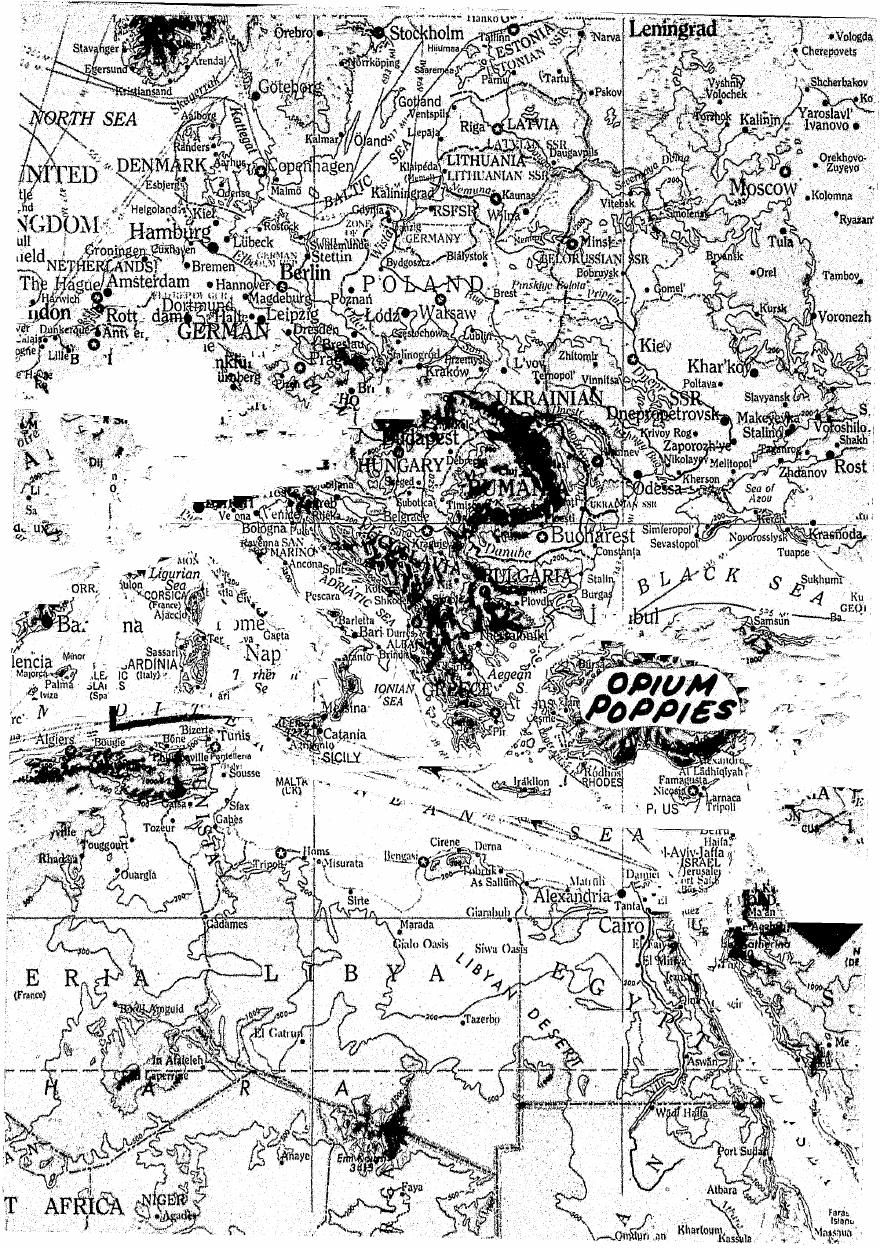 hearingMap: "The flow of worldwide traffic in illicit narcotics" (Part 5)A three-part fold-out world map of opium, morphine and heroin routes, facing page 1330 of Part 5. One segment is stored here.
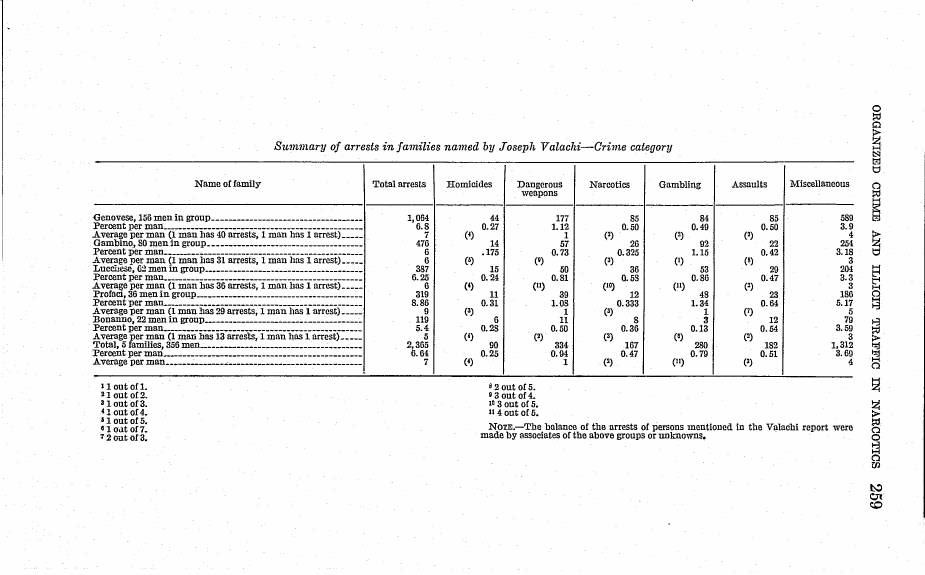 hearingTable: "Summary of arrests in families named by Joseph Valachi—Crime category"A printed table at page 259 of Part 1 counting arrests by crime category for the men on the five New York family charts. The scan is small, and this page does not transcribe its figures.hearingTestimony of Joseph Valachi, September 27, 1963Valachi's first public day before the Senate subcommittee. He gave his birth date and sentences, said he joined "Cosa Nostra" in 1930, and set out its ranks.hearingTestimony of Joseph Valachi, October 1, 1963: the initiation ceremonyValachi described the ceremony at which he said he was made a member, with Salvatore Maranzano speaking. The same day, staff presented Exhibit 8, the Masseria-Maranzano war chart.case-fileSAC Phoenix airtel to the FBI Director, March 22, 1979: summary of Joseph Bonanno's handwritten notes seized at Tucson, which include his account of the "Castellammarese War"An FBI airtel forwarding hundreds of handwritten notes found in Joseph Bonanno's house during a federal search in 1979. The agent judged them drafts of a memoir and reported that Bonanno "writes at great length concerning the Castellammarese War." Filed as a record of seized evidence; nothing in the notes is used here as a fact.case-fileNew York teletype on the FBI interview of Salvatore Vincent ("Bill") Bonanno, Tucson, December 31, 1964: "Organization of Joseph Bonanno" and the death of MaranzanoAn urgent FBI teletype reporting agents' interview of Bill Bonanno after his father's reported abduction in October 1964. On its fifth page the son said his father had been "the boss" since about 1930 or 1931; when agents put to him the date of the death of Salvatore Maranzano, "who was boss prior to Joseph Bonanno's taking over," he said it "must have been around that time." His statement as the FBI recorded it.case-fileFBI identification record of Thomas Lucchese, furnished April 3, 1956: a New York homicide arrest of September 1930, dismissed February 26, 1931An FBI New York report (file NY 92-305) in the Lucchese file reproduces the Identification Division's record of April 3, 1956. Among its entries is a New York police arrest of "Thomas Luckese" in September 1930 on a homicide charge, disposition "dismissed," February 26, 1931. Read from the viewer's OCR.case-fileFBI memorandum of October 2, 1974, "The Last Testament of Lucky Luciano": the Bureau's statement that Luciano created the Commission "in 1931"An FBI headquarters memorandum judged a 1974 book presented as Luciano's memoirs to be "a complete fraud." Among the errors it lists, it says Bureau information indicates Luciano dropped an old title "when he created the concept of the La Cosa Nostra ruling Commission in 1931." The Bureau's 1974 summary, not a record of a 1931 event.case-fileLegal Attache, Rome, to the FBI Director, December 7, 1965: a confidential source on Charles Luciano, including the Masseria and Maranzano killings as the source recounted themA letter in Part 02 of the FBI's Luciano file reports a December 1965 interview of a source who had known Luciano in Italy. The source said Luciano "and VITO GENOVESE engineered the murder of JOE MASSERIA and later of SALVATORE MARANZANO." The Legal Attache called the source's knowledge "very limited, general in nature." What the Bureau was told, not a finding.
hearingTestimony of Buffalo Police Lt. Michael Amico on Stefano Magaddino and John C. Montana, October 16, 1963The head of Buffalo's Criminal Intelligence Bureau introduced the "Magaddino Empire of Organized Crime" chart (Exhibit 65), read a statement calling Stefano Magaddino the "titular head" of syndicated crime in the Buffalo-Niagara Falls and Toronto areas, and said police had found no arrest of John C. Montana before Apalachin.hearingStatement of Buffalo Police Commissioner William H. Schneider, October 16, 1963Buffalo's police commissioner told the Senate subcommittee that the "so-called syndicate" was not responsible for all crime in Buffalo, that police had not been able to secure evidence of a criminal conspiracy that could be presented in court, and that the Buffalo chart, Exhibit 64, was accurate to the best of the department's knowledge.hearingStatement of Deputy Superintendent Joseph Morris, Chicago Police Department, October 11, 1963A Chicago police history of the syndicate placed in the 1963 hearing record. It states that Paul Ricca led after Frank Nitti's 1943 suicide, and that Tony Accardo "became the syndicate boss in 1943."hearingChurch Committee report, p. 308: Senator Baker's additional views on the underworld and Havana gamblingIn his additional views Senator Howard H. Baker, Jr. writes that the evidence 'strongly suggests' the underworld wanted Castro gone because his actions barred its control of the Havana gambling enterprises. It is a Senator's reading, not the committee's finding.hearingChurch Committee, Final Report, Book I (S. Rept. 94-755, 1976): the Bureau of Narcotics in the CIA's drug testingPassages of the Church Committee's Book I stating that undercover officers of the Bureau of Narcotics, acting for the CIA, gave LSD to unwitting subjects, some of them "informers or members of suspect criminal elements," and that "There is some question as to the Commissioner of Narcotics' knowledge about the project."hearingChurch Committee report, p. 97: a Miami meeting in the week of 25 September 1960The report says that, per the Inspector General, the CIA's Support Chief, Maheu and Rosselli met in Miami with Giancana and Trafficante in the week of 25 September 1960; the committee says it cannot place the events precisely.hearingChurch Committee report (S. Rep. 94-465, 1975), pp. 74-75: a 'gambling syndicate operating in Cuba' and the casinos' closing, reopening and final closingThe committee records that in August 1960 the CIA sought underworld figures 'with gambling syndicate contacts' to kill Castro, and states in a footnote that the casinos Castro closed 'were reopened for use by foreign tourists in late February 1959, and remained open until late September 1961.'hearingChurch Committee report, pp. 129-130: "a close friend of President Kennedy"The Church Committee's 1975 interim report says a close friend of President Kennedy, who had frequent contact with him from late 1960 to mid-1962, was also a close friend of John Rosselli and Sam Giancana, and that Hoover sent memoranda about it in February 1962. The report does not name the friend.hearingChurch Committee, Alleged Assassination Plots Involving Foreign Leaders, S. Rep. No. 94-465 (1975)Interim report of the Senate Select Committee to Study Governmental Operations with Respect to Intelligence Activities, November 20, 1975. It identifies the man called "Sam Gold" in the CIA's Castro operation as Sam Giancana and records his murder on June 20, 1975.hearingChurch Committee report, pp. 77 and 80-82: Trafficante, Miami and CubaPassages of Senate Report 94-465 that identify Santos Trafficante as 'the Cosa Nostra chieftain in Cuba' and record Rosselli's account of a Miami meeting at the Fountainebleau Hotel, which Maheu denied.hearingCongressional Record, House, 10 November 1941: Representative Bennett lists Browne and Bioff as "convicted this month"A House floor speech for a union-reporting bill, used here for one point only: on 10 November 1941 a member of Congress stated that George E. Browne and Bioff "were convicted this month." No court record of the 1941 verdict was opened.hearingCongressional Record, House, 28 November 1947: Representative Hoffman, "The Parole of Four Capone Gangsters"The chairman of the House Committee on Expenditures in the Executive Departments reports on his subcommittee's inquiry into the August 1947 paroles: hearings in Chicago on 25 and 26 September 1947 (508 pages of transcript) and in Washington on 7 October, paroles granted "just 37 days" after eligibility, a tax compromise, and the Atlanta warden's 1945 letter against the transfer.hearingCongressional Record, Senate, 18 August 1949: Representative Busbey's additional views to House Report No. 2441 on the "Capone gang paroles"During debate on Tom C. Clark's nomination to the Supreme Court, Senator Ferguson had printed Representative Fred E. Busbey's additional views from the Seventeenth Intermediate Report of the House Expenditures Committee. Busbey lists what the subcommittee examined, including the dismissal of a mail-fraud indictment and the reduction of tax liens on two of the men.court-opinionAiuppa v. United States, 393 F.2d 597 (10th Cir. 1968)Tenth Circuit opinion of April 25, 1968 affirming Joseph Aiuppa's jury conviction for unlawful possession and transportation of migratory birds.court-opinionAlderman v. United States, 394 U.S. 165 (1969)Supreme Court decision of March 10, 1969 on government electronic surveillance, granting rehearing in the Denver threats case after the petitioners learned that Felix Alderisio's Chicago place of business had been monitored.court-opinionBailey v. United States, 74 F.2d 451 (10th Cir. 1934)The Tenth Circuit's affirmance of Harvey J. Bailey's conviction and life sentence for conspiracy under the federal kidnaping act of 22 June 1932 in the Urschel case.court-opinionBalistrieri v. United States, 394 U.S. 985 (1969) (certiorari denied; Fortas, J., dissenting)The Supreme Court's order of April 21, 1969 denying review of Frank Peter Balistrieri's tax conviction, with a dissent by Justice Fortas, joined by Justice Douglas, listing the eavesdropping and searches the petitioner claimed and the government did not deny.court-opinionBalistrieri v. United States, 395 U.S. 710 (1969) (per curiam)The Supreme Court's per curiam of June 16, 1969 granting rehearing, vacating its earlier denial of certiorari and the Seventh Circuit's judgment in Frank Peter Balistrieri's tax case, and remanding in light of Alderman v. United States and Giordano v. United States.court-opinionBerger v. New York, 388 U.S. 41 (1967)Supreme Court decision of June 12, 1967 holding New York's permissive eavesdrop statute "too broad in its sweep" and so in violation of the Fourth and Fourteenth Amendments, reversing a conviction for conspiracy to bribe the Chairman of the State Liquor Authority.court-opinionCalicchio v. United States, 189 F. 305 (2d Cir. 1911)Second Circuit opinion of 19 June 1911 affirming the 1910 counterfeiting convictions of Giuseppe Calicchio, Giuseppe Morello, Ignatzio Lupo and five others. It holds a question about Morello's 1903 arrest in the 'Barrel Murder' improper but cured, and says: 'The arrest of Morelio for the murder proved nothing.'court-opinionCapone v. Aderhold, Warden, 2 F. Supp. 280 (N.D. Ga. 1933)The federal court at Atlanta dismisses Capone's habeas corpus petition, which argued that his felony sentences were void under the three-year statute of limitations. Decided 25 January 1933.court-opinionCapone v. United States, 56 F.2d 927 (7th Cir. 1932)The Seventh Circuit affirms Alphonse Capone's 1931 conviction on three felony counts of attempted income-tax evasion and two misdemeanor counts of failing to file returns. Decided 27 February 1932.court-opinionCerasani v. Sony Corp., 991 F. Supp. 343 (S.D.N.Y. 1998)Judge Denny Chin dismisses a libel suit over the 1997 film "Donnie Brasco." In doing so the court sets out the federal record of the 1982 trial, stating that "In 1976, FBI Agent Joseph D. Pistone assumed the identity of Donnie Brasco ... and infiltrated the Bonanno Crime Family."court-opinionColbeck v. United States, 10 F.2d 401 (7th Cir. 1925): the Staunton mail-robbery appealSeventh Circuit opinion of 8 December 1925 affirming the convictions and 25-year sentences of William P. Colbeck and eight codefendants for robbing persons in charge of the mails. It upholds the use of a convict's testimony and the instructions on alibi and reasonable doubt.court-opinionCompagna v. Hiatt, 100 F. Supp. 74 (N.D. Ga. 1951)On remand, Judge Underwood held on 18 September 1951 that the revocations of Campagna's and Gioe's paroles were "arbitrary and total nullities" and discharged both "as reinstated parolees." The findings describe the 13 August 1947 release from Leavenworth and the flight from Kansas City to Chicago.court-opinionCompagna v. Hiatt, 340 U.S. 880 (1950)The Supreme Court's per curiam of 13 November 1950: "The judgment is affirmed by an equally divided Court. Mr. Justice Clark took no part in the consideration or decision of this case."court-opinionCompagna v. Hiatt, 82 F. Supp. 295 (N.D. Ga. 1948)Judge Underwood's findings of 4 December 1948 on the habeas petitions of Louis Campagna (spelled Compagna) and Charles Gioe at the Atlanta penitentiary: sentenced 31 December 1943, paroled 13 August 1947, retaken 23 July 1948. The court held the warrants void; reconsideration was denied 20 December 1948.court-opinionCompagna v. United States, 324 U.S. 867 (1945): certiorari deniedThe Supreme Court's order of 2 April 1945 denying the petitions for certiorari in the motion-picture extortion case. "Reported below: 146 F. 2d 524."court-opinionCostello v. Immigration and Naturalization Service, 376 U.S. 120 (1964)Supreme Court decision of February 17, 1964 holding that Frank Costello could not be deported under the two-crimes provision for convictions entered while he was a naturalized citizen.court-opinionCostello v. United States, 350 U.S. 359 (1956)Supreme Court decision of March 5, 1956 affirming Frank Costello's income-tax conviction and holding that an indictment resting only on hearsay before the grand jury is valid.court-opinionCostello v. United States, 365 U.S. 265 (1961)Supreme Court decision of February 20, 1961 affirming the revocation of Frank Costello's 1925 naturalization because he had concealed that his occupation was bootlegging.court-opinionUnited States ex rel. De Lucia v. O'Donovan, 107 F. Supp. 347 (N.D. Ill. 1952)Judge Igoe's ruling of 21 August 1952 on Paul De Lucia's second habeas petition, after a new parole-violator warrant of 22 November 1950. The court found "no substantial or legal evidence to justify the charge of parole violation" and discharged him "as a reinstated parolee."court-opinionUnited States ex rel. De Lucia v. O'Donovan, 178 F.2d 876 (7th Cir. 1949)The Seventh Circuit affirmed Paul De Lucia's discharge on 8 December 1949. It dates the congressional hearings on the paroles from 25 September 1947 to 7 June 1948, and holds it "arbitrary and capricious" to issue a parole warrant without any information of a violation.court-opinionUnited States ex rel. De Lucia v. O'Donovan, 82 F. Supp. 435 (N.D. Ill. 1948)Judge Igoe's ruling of 10 November 1948 in Paul De Lucia's habeas corpus case, overruling the government's demurrer. It records the four parolees' petition of 16 June 1948, the congressional inquiry into their paroles, and the parole-violator warrant of 15 June 1948.court-opinionDe Veau v. Braisted, 363 U.S. 144 (1960)The Supreme Court upheld § 8 of the New York Waterfront Commission Act of 1953, which barred a waterfront union from collecting dues while an officer convicted of a felony remained in office.case-fileUnited States v. Basciano, No. 1:05-cr-00060 (E.D.N.Y.), docket entries for the penalty verdict, judgment and mandateOn June 1, 2011 the penalty-phase jury in Vincent Basciano's capital case returned "A SENTENCE OF LIFEIMPRISONMENT WITHOUT THE POSSIBILITY OF RELEASE" (as the docket runs the words together). Judgment followed in July 2011; the Second Circuit's mandate of April 22, 2016 affirms it.case-fileUnited States v. Basciano, No. 1:05-cr-00060 (E.D.N.Y.), docket entries for the 2011 trialMinute entries for Vincent Basciano's 2011 capital trial. Joseph Massino was called as a witness on five days in April 2011, and on May 16, 2011 the "Jury renders a guilty verdict on all three counts."case-fileUnited States v. Massino, No. 1:03-cr-00929 (E.D.N.Y.), judgment as to Joseph Massino (July 7, 2005)Docket of the second Bonanno racketeering case before Judge Nicholas G. Garaufis. The judgment ordered on July 7, 2005 imposes life imprisonment on Joseph Massino in his first case and a consecutive life term on "Count Nine (9) of the superseding indictment CR 03-929 (S-3)."court-opinionDonahue v. United States, 634 F.3d 615 (1st Cir. 2011)First Circuit opinion of February 10, 2011 reversing Federal Tort Claims Act judgments for the families of two men killed on Bulger's orders, on the ground that the suits were untimely, while calling the FBI's conduct reprehensible.court-opinionFlamingo Resort, Inc. v. United States, 485 F. Supp. 926 (D. Nev. 1980)District of Nevada opinion of February 26, 1980 in a tax refund suit by Flamingo Resort, Inc., the owner and operator of the Flamingo in 1967, describing the casino's practice of credit play. It concerns tax accounting, not organized crime.court-opinionGalatas v. United States, 80 F.2d 15 (8th Cir. 1935)The Eighth Circuit's affirmance of the conspiracy convictions of Richard Tallman Galatas, Herbert Farmer, Louis Stacci and Frank B. Mulloy, arising from the plan to free Frank Nash. It sets out Nash's escape, his capture at Hot Springs, and the walk through Union Station.court-opinionGenovese v. United States, 378 F.2d 748 (2d Cir. 1967)Second Circuit opinion of May 26, 1967 affirming the denial of Vito Genovese's 1965 motion to vacate his narcotics-conspiracy conviction. It sets out the history of the case: indictment in July 1958, conviction by a jury in April 1959.court-opinionGiancana v. Johnson, 335 F.2d 366 (7th Cir. 1964)Seventh Circuit opinion of June 30, 1964 vacating an injunction that had restricted FBI surveillance of Sam Giancana, for want of district-court jurisdiction.court-opinionGordon v. Commissioner, T.C. Memo. 1993-10 (U.S. Tax Court 1993)Tax Court memorandum opinion of January 11, 1993 about a finder's fee in Argent Corporation's acquisition of Recrion Corporation, with the court's findings that Recrion owned the Stardust and Fremont hotel-casinos and that Argent succeeded to them.court-opinionGrosso v. United States, 390 U.S. 62 (1968)Supreme Court decision of January 29, 1968, companion to Marchetti, holding that a claim of the Fifth Amendment privilege precludes a criminal conviction for failing to pay the federal excise tax on wagers.court-opinionGuzik v. United States, 54 F.2d 618 (7th Cir. 1931)Seventh Circuit opinion of December 10, 1931 affirming Guzik's conviction for willfully attempting to evade income tax for 1927 through 1929.court-opinionHamilton v. Western Union Telegraph Co., 34 F. Supp. 928 (N.D. Ohio 1940)District court decision of 9 May 1940 dissolving an injunction that had kept Western Union's leased wires running to a Youngstown race-news distributor; the affidavits it recites describe the end of the Annenberg wire organizations in Chicago.court-opinionHiatt v. Compagna, 178 F.2d 42 (5th Cir. 1949)The Fifth Circuit reversed the Atlanta court on 10 November 1949 and remanded Campagna and Gioe to the warden's custody. It records that after the 1947 paroles "Unfavorable newspaper publicity followed" and a congressional investigation; Judge Waller dissented.court-opinionH.J. Inc. v. Northwestern Bell Telephone Co., 492 U.S. 229 (1989)Supreme Court decision of June 26, 1989 holding that a RICO "pattern" requires related predicate acts that amount to or pose a threat of continued criminal activity, and that the pattern element is not limited to organized crime.court-opinionHoffa v. Saxbe, 378 F. Supp. 1221 (D.D.C. 1974)The district court rejected James R. Hoffa's suit against the condition in his 1971 commutation, which barred him from managing a labor organization until 6 March 1980. The opinion recites his entry into Lewisburg penitentiary on 7 March 1967 and his release on 23 December 1971.court-opinionHoffa v. United States, 385 U.S. 293 (1966)The Supreme Court upheld the 1964 jury-tampering convictions of James Hoffa and three others, holding that the Government's use of Edward Partin, who reported Hoffa's statements during the 1962 Nashville trial, did not violate the Fourth, Fifth or Sixth Amendments.court-opinionHornstein v. Paramount Pictures, Inc., 292 N.Y. 468 (1944)The New York Court of Appeals affirmed judgment for Paramount's officers and directors in a stockholders' suit over money paid "to labor union officials," holding that payments "coerced by threats" of a strike were not a crime under the Penal Law. Counsel's points name the payees as Bioff and Browne.court-opinionIn re Basciano, 542 F.3d 950 (2d Cir. 2008)The Second Circuit denies Vincent Basciano's petition to have Judge Garaufis recused from his capital case. Its background states that Basciano was indicted on August 14, 2003, was found guilty after trials in 2006 and 2007, and "On March 31, 2008, he was sentenced to life imprisonment."court-opinionIn re D.I. Operating Co., 240 F. Supp. 672 (D. Nev. 1965)District of Nevada opinion of March 18, 1965 holding the company that operated the Desert Inn casino, and its secretary Allard Roen, in civil contempt for not producing casino credit records under a 1961 Internal Revenue summons.court-opinionIn re Grand Jury Investigation of Sam Giancana, 352 F.2d 921 (7th Cir. 1965)Seventh Circuit opinion of October 8, 1965 affirming the June 1965 orders that held Sam Giancana in contempt for refusing to answer grand jury questions after an order to testify.court-opinionIn re President's Commission on Organized Crime Subpoena of Nicodemo Scarfo, 783 F.2d 370 (3d Cir. 1986)Third Circuit opinion of February 14, 1986 reinstating the President's Commission on Organized Crime's 1985 subpoena to Nicodemo Scarfo and holding that federal judges' service on the Commission did not violate the separation of powers.court-opinionKatz v. United States, 389 U.S. 347 (1967)Supreme Court decision of December 18, 1967 holding that FBI recording of a gambler's calls from a public telephone booth was a search and seizure under the Fourth Amendment, and that the trespass doctrine of Olmstead was no longer controlling.court-opinionKelly v. Illinois Bell Telephone Co., 325 F.2d 148 (7th Cir. 1963)Seventh Circuit decision of 6 December 1963 affirming an injunction that kept Illinois Bell and Western Union from cutting off the Illinois Sports News under the Wire Act's section 1084(d), on stipulated facts that its wires carried racing news for publications sold to the public.court-opinionKelly v. United States, 76 F.2d 847 (10th Cir. 1935)The Tenth Circuit's affirmance of Kathryn Thorne Kelly's conviction and life sentence for conspiracy to kidnap and hold Charles F. Urschel for ransom. It rejects her claim that she acted under her husband's coercion.court-opinionKolod v. United States, 371 F.2d 983 (10th Cir. 1967)Tenth Circuit opinion of February 3, 1967 affirming the convictions of Ruby Kolod, Willie Israel Alderman, and Felix Alderisio for conspiring to transmit threats in interstate commerce.court-opinionLaska v. United States, 82 F.2d 672 (10th Cir. 1936)The Tenth Circuit's affirmance of the conviction of Denver attorney Ben B. Laska for joining the Urschel conspiracy by helping conceal and pass ransom money. Its summary of the kidnaping is the clearest the court gave.court-opinionLewis v. United States, 348 U.S. 419 (1955)Supreme Court decision of 14 March 1955 holding that United States v. Kahriger controlled a challenge to the federal wagering occupational tax brought in the District of Columbia.court-opinionLimone v. United States, 497 F. Supp. 2d 143 (D. Mass. 2007)Judge Gertner's findings of July 26, 2007, after a bench trial, that the 1968 convictions for the 1965 Deegan murder rested on Joseph Barboza's perjured testimony and that the FBI was liable under the Federal Tort Claims Act.court-opinionLimone v. United States, 579 F.3d 79 (1st Cir. 2009)First Circuit opinion of August 27, 2009 affirming Federal Tort Claims Act liability and damages of over $100 million in the suits arising from the 1968 Deegan murder convictions.court-opinionHotel and Restaurant Employees and Bartenders International Union Local 54 v. Danziger, 709 F.2d 815 (3d Cir. 1983)Third Circuit opinion of June 6, 1983 on Local 54's challenge to the New Jersey Casino Control Act provisions on union officials, which describes the union's size in the Atlantic City casino hotels.court-opinionHotel and Restaurant Employees and Bartenders International Union Local 54 v. Read, 832 F.2d 263 (3d Cir. 1987)Third Circuit opinion of November 2, 1987 upholding New Jersey Casino Control Act provisions; it recounts the Commission's 1982 order removing two union officials for their association with Nicodemo Scarfo.court-opinionLupo v. Zerbst, Warden, 92 F.2d 362 (5th Cir. 1937)Fifth Circuit opinion of 19 October 1937 affirming the denial of Ignazio Lupo's habeas corpus petition after the President revoked his conditional commutation in 1936 and he was returned to the Atlanta penitentiary.court-opinionMakley v. State, 197 N.E. 339, 49 Ohio App. 359 (Ohio Ct. App. 1934)Ohio Court of Appeals opinion affirming Charles Makley's conviction for killing Allen County Sheriff Jess L. Sarber at the Lima jail on 12 October 1933, when Dillinger was freed.court-opinionMarcello v. Bonds, 349 U.S. 302 (1955)Justice Clark's opinion upholding the order to deport Carlos Marcello, 'a native of Tunis, Africa,' under the 1952 immigration act on the basis of his 1938 Marihuana Tax Act conviction, and rejecting his Administrative Procedure Act claim. Justices Black and Douglas dissented.court-opinionMarcello v. Kennedy, 312 F.2d 874 (D.C. Cir. 1962)The D.C. Circuit's opinion on Marcello's suit over his removal to Guatemala on 4 April 1961; it recites that he had re-entered the United States by June 1961 when a criminal prosecution had begun, and directs dismissal of the complaint.court-opinionMarchetti v. United States, 390 U.S. 39 (1968)Supreme Court decision of January 29, 1968 holding that a proper claim of the Fifth Amendment privilege is a complete defense to prosecution for failing to register and pay the federal occupational tax on wagering.court-opinionMarshall v. Sawyer, 365 F.2d 105 (9th Cir. 1966)Ninth Circuit opinion of August 10, 1966 affirming judgment against John Marshall, who sued Nevada officials and the Desert Inn's operator after being excluded from casinos as one of eleven men in the 1960 "black book," with a footnote giving his birth name as Marchello Caifano.court-opinionMartin v. United States, 389 F.2d 895 (5th Cir. 1968)Fifth Circuit decision of 25 January 1968 upholding the Wire Act, 18 U.S.C. § 1084, as applied to wagers telephoned from Houston to Las Vegas.court-opinionMcBride v. Western Union Tel. Co., 171 F.2d 1 (9th Cir. 1948)Ninth Circuit decision of 1 December 1948 holding that Western Union was justified, under its tariff, in refusing to restore race-track news service to the operator of Continental Press after California officers notified it that the drops were used for bookmaking.court-opinionMcBride v. Western Union Telegraph Co., 78 F. Supp. 446 (S.D. Cal. 1948)District court opinion of 28 June 1948 in a suit by Edward J. McBride, "doing business as Continental Press Service," to restore Western Union's Morse wire after the company cut it off on notice from California officers; the court restored its temporary order pending appeal.court-opinionMcDonald v. United States, 89 F.2d 128 (8th Cir. 1937)The Eighth Circuit's affirmance of the conviction of Cassius McDonald for conspiracy in the Bremer kidnaping, based on his exchange of some $92,000 of marked ransom money at Miami and Havana in September 1934. Sentence fifteen years.court-opinionMcIntyre v. United States, 367 F.3d 38 (1st Cir. 2004)First Circuit opinion of May 10, 2004 in two Federal Tort Claims Act suits against the United States arising from the FBI's handling of informants Bulger and Flemmi. It turned on when the claims accrued.court-opinionMethvin v. State, 60 P.2d 1062, 60 Okla. Crim. 1 (Okla. Crim. App. 1936)Oklahoma Court of Criminal Appeals opinion in Henry Methvin's appeal from his conviction for the 6 April 1934 killing of Cal Campbell at Commerce, Ottawa County, "while acting conjointly with Clyde Barrow and Bonnie Parker." Conviction affirmed; death sentence modified to life.court-opinionNardone v. United States, 302 U.S. 379 (1937)Supreme Court decision of December 20, 1937 holding that section 605 of the Communications Act of 1934 barred federal agents from testifying to the contents of telephone messages they had intercepted by wiretap, and reversing an alcohol-smuggling conviction.court-opinionNitto v. Commissioner, 13 T.C. 858 (1949)The Tax Court held on 30 November 1949 that the government had "established convincingly" Frank Nitto's "association with Bioff and Browne in their scheme of procuring substantial sums of money from various members of the motion picture industry," that he failed to report his share, and that fraud penalties applied.court-opinionOrena v. United States, 956 F. Supp. 1071 (E.D.N.Y. 1997)Judge Weinstein denied motions to vacate Colombo family convictions over the government's nondisclosure of Gregory Scarpa Sr.'s role as an FBI informant. The opinion finds he began giving the Bureau information in 1980, was classified "Top Echelon," and was closed on March 3, 1992 and reopened on April 8, 1992. It also summarizes Salvatore Gravano's trial testimony.court-opinionPalmer v. State, 81 S.W.2d 76, 128 Tex. Crim. 293 (Tex. Crim. App. 1934; on the merits 1935)Texas Court of Criminal Appeals opinion in Joe Palmer's appeal from his conviction for killing a guard during the 16 January 1934 break from the Eastham State Farm. The testimony it recites says Clyde Barrow, Bonnie Parker and others brought weapons to the farm.court-opinionPatriarca v. United States, 402 F.2d 314 (1st Cir. 1968)First Circuit opinion of October 14, 1968 affirming Raymond Patriarca's conviction for conspiring to travel and use the telephone in interstate commerce with intent to commit murder to further an unlawful gambling enterprise. It does not mention Las Vegas.court-opinionPendergast v. United States, 317 U.S. 412 (1943)The Supreme Court reverses the contempt convictions of Pendergast, O'Malley and McCormack on limitations grounds; its statement of facts describes Pendergast as 'a "political boss"' and the $750,000 'fee' agreed to influence the settlement of the 1930 insurance rate suits.court-opinionPeople v. Becker, 210 N.Y. 274 (1914): conviction for the Rosenthal murder reversedNew York Court of Appeals opinion of 24 February 1914 reversing police lieutenant Charles Becker's conviction for the 1912 killing of the gambler Herman Rosenthal and ordering a new trial. Filed as context for New York in 1912, not as a Black Hand record.court-opinionPeople v. Buchalter, 289 N.Y. 181 (1942)The New York Court of Appeals affirmed the murder convictions of Louis Buchalter, Emanuel Weiss and Louis Capone. In passing, the opinion refers to "one Abe Reles (now dead)."court-opinionPeople v. Goldstein, 285 N.Y. 376 (1941)The New York Court of Appeals affirmed the murder convictions of Martin Goldstein and Harry Strauss. It called the testimony of Abraham Reles, "concededly an accomplice," an important factor in the People's case and reviewed the charge on corroboration of accomplice testimony.court-opinionPeople v. Hines, 284 N.Y. 93 (1940)New York Court of Appeals opinion of 8 October 1940 affirming James J. Hines's conviction for conspiracy to conduct the lotteries known as the "numbers game" and "policy." It states that in 1931 "the notorious Dutch Schultz" and associates formed a combination to control policy enterprises. It does not mention Harlem or any Black policy operator.court-opinionPeople v. Lucas, 106 Misc. 2d 672 (N.Y. Sup. Ct. 1980)New York Supreme Court decision of 4 December 1980 on a motion by Frank Lucas, indicted for the 1974 killing of George Ford, to dismiss on the ground that the prosecution used testimony derived from his immunized cooperation. The motion as to two witnesses' testimony was denied. The court's statement of facts summarizes his federal narcotics cases.court-opinionPeople v. Luciano, 277 N.Y. 348 (1938)New York Court of Appeals decision of April 12, 1938 affirming the 1936 compulsory-prostitution convictions of Charles Luciano and five co-defendants. A state prosecution, not a federal case.court-opinionPeople v. Neumann, 148 Ill. App. 3d 362 (1986)The Illinois Appellate Court affirmed a murder conviction for a 1979 Chicago robbery-killing. It records that Frank Cullotta, imprisoned in Nevada, made an agreement with the FBI in April 1982 for witness protection and limits on his sentences, and later testified for the State under a grant of immunity.court-opinionPiquett v. United States, 81 F.2d 75 (7th Cir. 1936)The Seventh Circuit's opinion on the appeal of Louis Piquett, Dillinger's attorney, from his conviction for conspiring to harbor Homer Van Meter. The court notes he had earlier been tried and acquitted on the charge concerning Dillinger. Judgment affirmed.court-opinionCapone v. United States, 51 F.2d 609 (7th Cir. 1931): the appeal of Ralph J. CaponeThe Seventh Circuit's July 1931 decision in the income-tax appeal of Ralph J. Capone. It reverses one count and affirms the rest. It is not a ruling in Alphonse Capone's case.court-opinionRatner v. Paramount Pictures, Inc., 6 F.R.D. 618 (S.D.N.Y. 1942)A federal stockholders' suit to make Paramount's officers and directors account for "corporate funds allegedly paid by them to one Willie Bioff, to induce him not to cause a strike" was dismissed on 7 August 1942, the state-court judgment in the Hornstein actions being res judicata.court-opinionRewis v. United States, 401 U.S. 808 (1971)Supreme Court decision of 5 April 1971 holding that the Travel Act did not reach the operators of a numbers game in Yulee, Florida merely because some of their customers crossed from Georgia to bet.court-opinionRosenthal v. State of Nevada, 514 F. Supp. 907 (D. Nev. 1981)District of Nevada order of May 6, 1981 dismissing Frank Rosenthal's civil-rights suit against Nevada gaming regulators, with the court's account of his position at the Argent Corporation, his licensing denials and his work at the Stardust.court-opinionRussel v. International Alliance of Theatrical Stage Employees, 66 Cal. App. 2d 691 (1944)A California Court of Appeal opinion on a tax consultant's fee claim against the stagehands' union. It records that in July 1938 "George E. Browne, international president of appellant Alliance, accompanied by his personal representative, William Bioff" engaged him because the Treasury was investigating local unions.court-opinionRussello v. United States, 464 U.S. 16 (1983)Supreme Court decision of November 1, 1983 holding that the "interests" subject to forfeiture under the 1970 text of RICO's section 1963(a)(1) include profits and proceeds of racketeering, not only interests in an enterprise.court-opinionSacco v. Pataki, 114 F. Supp. 2d 264 (S.D.N.Y. 2000): hiring at the Javits CenterThe court granted summary judgment against former Javits Convention Center workers who said state officials' public statements about corruption at the center deprived them of a liberty interest. The opinion records that the state operating corporation took over hiring on 30 June 1995.court-opinionSagansky v. United States, 358 F.2d 195 (1st Cir. 1966)First Circuit decision of 25 March 1966 holding that a bookmaker who takes a bet over an interstate telephone call can "use" a wire facility under the Wire Act, but ordering new trials on the entrapment instructions.court-opinionSalinas v. United States, 522 U.S. 52 (1997)Supreme Court decision of December 2, 1997 holding that a defendant may be convicted of RICO conspiracy under 18 U.S.C. 1962(d) without himself committing or agreeing to commit the two predicate acts a substantive violation requires.court-opinionSawyer v. United States, 89 F.2d 139 (8th Cir. 1937)Companion case to McDonald: the Eighth Circuit's affirmance of the conviction of Harry Sawyer, charged as one of the original conspirators in the kidnaping, transport and detention of Edward George Bremer.court-opinionSedima, S.P.R.L. v. Imrex Co., 473 U.S. 479 (1985)Supreme Court decision of July 1, 1985 holding that a private civil RICO plaintiff need not show a prior criminal conviction or a separate "racketeering injury"; "RICO is to be read broadly."court-opinionShannon v. Artuz, 984 F. Supp. 807 (S.D.N.Y. 1997): habeas petition from a state murder convictionJudge Whitman Knapp's opinion of November 24, 1997 denying Kenneth Shannon's federal habeas petition against his 1989 state conviction for helping Billie Bokun in the 1985 shooting of Michael Holly.court-opinionShannon v. United States, 76 F.2d 490 (10th Cir. 1935)The Tenth Circuit's affirmance of the convictions of R. G. Shannon and Ora L. Shannon in the Urschel kidnaping. It recites how Urschel was held at the Shannon property and rejects the defense of coercion.court-opinionSouthern Bell Tel. & Tel. Co. v. Nineteen Hundred One Collins Corp., 83 So. 2d 865 (Fla. 1955)Florida Supreme Court decision of 2 November 1955 upholding the state's "anti-bookie law" on telephone and wire service, and its hotel-licence companion statute, in a case over the telephones of the Shore Club Hotel, Miami Beach.court-opinionStardust, Inc. v. Securities and Exchange Commission, 225 F.2d 255 (9th Cir. 1955)Ninth Circuit opinion of July 29, 1955 on a petition by Stardust, Inc. and Anthony Cornero Stralla to set aside an SEC order investigating stock sales from June 1954. The opinion does not place the company in Las Vegas.court-opinionState ex rel. Napolitano v. Gravano, 204 Ariz. 106 (Ct. App. 2002)The Arizona Court of Appeals upheld forfeiture of Salvatore Gravano's royalties from the book "Underboss." The opinion records his 1991 federal RICO plea, his cooperation, his five-year sentence and placement in the federal witness protection program, and his February 24, 2000 arrest in Maricopa County.court-opinionState v. Richetti, 119 S.W.2d 330, 342 Mo. 1015 (Mo. 1938)Missouri Supreme Court opinion affirming Adam Richetti's conviction and death sentence for killing Kansas City police officer Frank Hermanson in what the court calls the "Union Station Massacre" of 17 June 1933.court-opinionTaglianetti v. United States, 394 U.S. 316 (1969)Supreme Court per curiam decision of March 24, 1969 holding that a defendant overheard by unlawful FBI surveillance in Providence was entitled to his own recorded conversations and nothing more.court-opinionTelephone News System, Inc. v. Illinois Bell Telephone Co., 220 F. Supp. 621 (N.D. Ill. 1963)Three-judge district court decision of 14 August 1963 rejecting constitutional challenges to the Wire Act's cut-off provision, 18 U.S.C. § 1084(d), as applied to a Chicago telephone service that played recorded horse-racing information to callers.court-opinionTelephone News System, Inc. v. Illinois Bell Telephone Co., 376 U.S. 782 (1964)One-line per curiam order of 6 April 1964 affirming the three-judge court's decision that upheld the Wire Act's cut-off provision as applied to a Chicago racing-information telephone service.court-opinionTime, Inc. v. McLaney, 406 F.2d 565 (5th Cir. 1969): Life's 1967 article on 'Havana gamblers' in the Bahamas, and the press reports the reporter relied onThe Fifth Circuit directed summary judgment for the publisher of Life in a libel suit by Mike McLaney, holding that the record showed no actual malice. The opinion quotes 1958-59 newspaper reports on Meyer Lansky and Havana gambling as material the reporter had before him; those quotations are not findings of the court.court-opinionTropicales, S. A. v. Drinkhouse, 15 Misc. 2d 425, 183 N.Y.S.2d 679 (N.Y. Sup. Ct. 1959): a Havana casino's check enforced in New YorkA New York trial judge allowed a casino licensed by the Government of Cuba to collect a $12,000 check written for gambling credit in Havana in February 1956, holding that because the transaction took place in Cuba, 'The laws of Cuba prevail and not the laws of New York.'court-opinionUnited States ex rel. Buchalter v. Lowenthal, 108 F.2d 863 (2d Cir. 1940)Per curiam Second Circuit opinion of January 1940 denying Louis Buchalter a stay: after his federal guilty plea and fourteen-year sentence, the Attorney General consented to his trial in the New York Court of General Sessions, and the court called his appeal "wholly without merit."court-opinionUnited States v. Accardo, 298 F.2d 133 (7th Cir. 1962)Seventh Circuit opinion of January 5, 1962 reversing Anthony Joseph Accardo's 1960 conviction for false statements on income tax returns and remanding for a new trial.court-opinionUnited States v. Agueci, 310 F.2d 817 (2d Cir. 1962)Second Circuit opinion of November 8, 1962 affirming the narcotics convictions of ten defendants, Joseph Valachi among them, on a 1961 indictment charging a conspiracy to bring heroin from Italy hidden in trunks and valises collected at Pier 84 in Manhattan.court-opinionUnited States v. Alderisio, 424 F.2d 20 (10th Cir. 1970)Tenth Circuit opinion of March 31, 1970 on remand from Alderman v. United States, otherwise affirming Felix Antonio Alderisio's 1965 Denver conviction.court-opinionUnited States v. Alfano, 838 F.2d 158 (6th Cir. 1988)Sixth Circuit opinion of January 29, 1988 reversing an order that suppressed wiretap evidence in a Detroit-area prosecution, part of an investigation of alleged heroin and cocaine importation from Italy. It describes Gaetano Badalamenti as a man "whom evidence shows to be the leader of an international drug smuggling conspiracy."court-opinionUnited States v. Alo, 439 F.2d 751 (2d Cir. 1971)Second Circuit opinion of February 19, 1971 affirming Vincent Alo's conviction for obstructing an SEC investigation of the ownership of Tel-A-Sign, Inc. stock. It says nothing about Las Vegas.court-opinionUnited States v. Ambrose, 668 F.3d 943 (7th Cir. 2012)Seventh Circuit opinion of February 16, 2012 in the case of a Deputy U.S. Marshal convicted of disclosing witness-security information about a cooperating witness in the Family Secrets investigation.court-opinionUnited States v. Amuso, 21 F.3d 1251 (2d Cir. 1994)Second Circuit opinion of April 20, 1994 affirming Vittorio Amuso's racketeering and murder-related convictions. It states the indictment's allegation that he was boss of the "Luchese" family and summarizes the testimony of two former captains.court-opinionUnited States v. Angiulo, 847 F.2d 956 (1st Cir. 1988)First Circuit opinion of May 24, 1988 affirming the convictions of Jason Angiulo, John Cincotti and William Kazonis in a trial built on the FBI's 1981 surveillance at 98 Prince Street and 51 North Margin Street in Boston.court-opinionUnited States v. Angiulo, 897 F.2d 1169 (1st Cir. 1990)First Circuit opinion of March 5, 1990 affirming the RICO convictions of Gennaro, Donato and Francesco Angiulo and Samuel Granito after an eight-month trial, with an account of the Patriarca Family's Boston operations taken from the 1981 surveillance.court-opinionUnited States v. Aviles, 274 F.2d 179 (2d Cir. 1960)Second Circuit opinion of January 12, 1960 affirming most of the 1959 narcotics-conspiracy convictions of Vito Genovese, Vincent Gigante and others. It finds Genovese one of the conspiracy's "principal directing heads."court-opinionUnited States v. Balistrieri, 403 F.2d 472 (7th Cir. 1968)Seventh Circuit opinion of November 7, 1968 affirming Frank Peter Balistrieri's conviction for income-tax evasion for 1959 and 1960, after the government disclosed admittedly illegal FBI eavesdropping and the trial court found its evidence free of taint.court-opinionUnited States v. Balistrieri, 606 F.2d 216 (7th Cir. 1979)Seventh Circuit opinion of October 2, 1979 on Frank Peter Balistrieri's coram nobis motion to vacate his 1967 tax conviction, based on newly disclosed FBI surveillance of a Milwaukee restaurant in 1964. The court held that both civil and criminal rules may guide such motions and affirmed.court-opinionUnited States v. Balistrieri, 778 F.2d 1226 (7th Cir. 1985)Seventh Circuit opinion of November 20, 1985 affirming the extortion convictions of Frank, John and Joseph Balistrieri from an FBI sting in Milwaukee, in which an agent ran the Best Vending Company and was introduced to Frank Balistrieri through Benjamin Ruggiero, whom FBI agent Joseph Pistone ("Donnie Brasco") knew in New York.court-opinionUnited States v. Balistrieri, 779 F.2d 1191 (7th Cir. 1985)Seventh Circuit opinion of November 12, 1985 affirming Frank Balistrieri's Milwaukee sports-gambling convictions, with the court's account of his attempts to disqualify the trial judge. It records no Las Vegas events.court-opinionUnited States v. Barnes, 604 F.2d 121 (2d Cir. 1979)Second Circuit opinion of 23 April 1979 affirming the 1978 narcotics convictions of Leroy Barnes, "a/k/a 'Nicky'," and ten co-defendants, including Barnes's conviction for a continuing criminal enterprise. Its statement of facts describes a DEA investigation begun in November 1976 into "drug traffic in Harlem and the South Bronx."court-opinionUnited States v. Basciano, 599 F.3d 184 (2d Cir. 2010)Second Circuit opinion of March 23, 2010 on Vincent Basciano's double-jeopardy challenge to successive Bonanno family prosecutions. It calls Joseph Massino "the then-incarcerated official boss" and refers to Basciano's January 2004 assumption of the role of acting boss.court-opinionUnited States v. Basciano, 763 F. Supp. 2d 303 (E.D.N.Y. 2011)Judge Nicholas G. Garaufis rules on Vincent Basciano's pretrial motions in the capital case over the killing of Randolph Pizzolo. The opinion quotes the court's earlier finding that "Joseph Massino, the then-head of the Bonanno crime family, agreed to become a government informant and taped conversations in prison that he had with Basciano."court-opinionUnited States v. Battaglia, 394 F.2d 304 (7th Cir. 1968)Seventh Circuit opinion of January 9, 1968 affirming Hobbs Act extortion-conspiracy convictions of Salvatore Battaglia and Dave Evans, with a dissent by Judge Swygert.court-opinionUnited States v. Bellomo, 176 F.3d 580 (2d Cir. 1999)Second Circuit opinion of April 30, 1999 on the appeals of James Ida and Nicholas Frustaci from a Southern District of New York RICO trial charging the Genovese Family as the enterprise. It places one of the bookmaking operations at 171 Mulberry Street.court-opinionUnited States v. Bentvena, 319 F.2d 916 (2d Cir. 1963)Second Circuit opinion of June 13, 1963 on the retrial of a 1960 indictment charging a conspiracy to bring narcotics from Canada to New York. In its summary of the government's evidence, Carmine Galante is the operation's "chief executive"; his conviction is affirmed.court-opinionUnited States v. Bioff, 40 F. Supp. 497 (S.D.N.Y. 1941)District Judge Rifkind's ruling of 5 September 1941 overruling George E. Browne's demurrer and plea in abatement against the Anti-Racketeering Act indictment in the Bioff case.court-opinionUnited States v. Bokun, 73 F.3d 8 (2d Cir. 1995): the sentence of a Westies defendantSecond Circuit opinion of December 27, 1995 reversing a reduction of William Bokun's sentence under 28 U.S.C. § 2255 and reinstating his thirty-five-year term. Its background summarizes the Westies prosecution and the sentences imposed in 1988.court-opinionUnited States v. Bonanno, 180 F. Supp. 71 (S.D.N.Y. 1960)Judge Irving R. Kaufman's opinion of January 12, 1960 explaining his denial of the Apalachin defendants' motions to suppress evidence from the roadblock of November 14, 1957, with his account of the stops near Joseph Barbara's estate and the questioning at the Vestal station.court-opinionUnited States v. Bonanno Organized Crime Family of La Cosa Nostra, 683 F. Supp. 1411 (E.D.N.Y. 1988)Ruling of March 24, 1988 on motions to dismiss the government's civil RICO suit against the Bonanno family, its alleged officers and Teamsters Local 814. It summarizes what the amended complaint alleged about each defendant's position.court-opinionUnited States v. Bonanno Organized Crime Family of La Cosa Nostra, 879 F.2d 20 (2d Cir. 1989)Second Circuit opinion of June 23, 1989 holding that the United States may not sue for treble damages under civil RICO, in the government's suit against the Bonanno family.court-opinionUnited States v. Brooklier, 685 F.2d 1208 (9th Cir. 1982)The Ninth Circuit affirmed RICO convictions of Los Angeles defendants. It describes Aladena "Jimmy the Weasel" Fratianno, "an FBI informant," testifying to the internal organization of La Cosa Nostra, holds his accomplice testimony sufficient on the Sturman extortion charge, and upholds admission of his plea agreement.court-opinionUnited States v. Buchalter, 88 F.2d 625 (2d Cir. 1937)Second Circuit opinion of March 8, 1937 on the appeal of Louis Buchalter and Jacob Shapiro from their Sherman Act convictions in the rabbit-skin (Protective Fur Dressers) case: reversed as to Buchalter for want of substantial evidence, affirmed as to Shapiro.court-opinionUnited States v. Bufalino, 285 F.2d 408 (2d Cir. 1960)Second Circuit opinion reversing the convictions of Russell Bufalino and nineteen others for obstructing justice and perjury after the 14 November 1957 gathering at Apalachin, New York. The court says the government offered no evidence of the meeting's purpose.court-opinionUnited States v. Bulger, 816 F.3d 137 (1st Cir. 2016)First Circuit opinion of March 4, 2016 affirming James J. Bulger's racketeering conviction and life sentences after a three-month trial, and rejecting his claim that a prosecutor had given him immunity.court-opinionUnited States v. Burke, 700 F.2d 70 (2d Cir. 1983)The Second Circuit affirmed convictions in the Boston College point-shaving case. The court says the government's case "consisted principally of the testimony of Henry Hill" and three other witnesses, that Hill had been "thoroughly impeached," and that a redacted version of his immunity agreement was read to the jury.court-opinionUnited States v. Calabrese, 490 F.3d 575 (7th Cir. 2007)Seventh Circuit opinion of June 12, 2007 affirming the denial of double-jeopardy motions by Frank J. Calabrese, Sr. and James Marcello to dismiss the 2005 indictment that named the Chicago Outfit as the RICO enterprise.court-opinionUnited States v. Calandra, 414 U.S. 338 (1974)Supreme Court decision of January 8, 1974 holding that a grand jury witness may not refuse to answer questions on the ground that they rest on evidence from an unlawful search. The case began with a December 1970 federal search of John Calandra's Royal Machine & Tool Co. in Cleveland.court-opinionUnited States v. Capone, 93 F.2d 840 (7th Cir. 1937)The Seventh Circuit dismisses Capone's appeal from the refusal to vacate his 1931 county-jail sentences on counts 13 and 18. Decided 20 December 1937.court-opinionUnited States v. District Council of New York City and Vicinity of the United Brotherhood of Carpenters and Joiners of America, 778 F. Supp. 738 (S.D.N.Y. 1991)Judge Charles S. Haight, Jr. denied motions to dismiss the Government's civil RICO suit against the New York carpenters' District Council, which alleged control of the Council by members of the Genovese family through bribery and extortion.court-opinionUnited States v. Casamento, 887 F.2d 1141 (2d Cir. 1989)Second Circuit opinion of October 11, 1989 on the appeals of fifteen defendants convicted in what the court calls "The Pizza Connection Case": Indictment SS 84 Cr. 236, thirty-five defendants, tried from September 30, 1985 to March 2, 1987.court-opinionUnited States v. Castellano, 610 F. Supp. 1359 (S.D.N.Y. 1985)Judge Sofaer's pretrial ruling of June 6, 1985 in the 78-count indictment of Paul Castellano and others, which charged a "crew" engaged in car theft, murder and other crimes as a RICO enterprise.court-opinionUnited States v. Cerone, 452 F.2d 274 (7th Cir. 1971)Seventh Circuit opinion of September 15, 1971 affirming Travel Act gambling-conspiracy convictions of John P. (Jack) Cerone, Sr., Joseph Ferriola, and others.court-opinionUnited States v. Cerone, 830 F.2d 938 (8th Cir. 1987)Eighth Circuit opinion of October 8, 1987 affirming the Kansas City convictions of Aiuppa, Cerone, Lombardo, LaPietra, and Rockman for skimming the Stardust and Fremont casinos in Las Vegas.court-opinionUnited States v. Cintolo, 818 F.2d 980 (1st Cir. 1987)First Circuit opinion of May 1, 1987 affirming a Boston defense lawyer's conviction for conspiracy to obstruct justice. The case grew out of the FBI's 1981 court-authorized surveillance of an apartment at 98 Prince Street in Boston's North End.court-opinionUnited States v. Civella, 648 F.2d 1167 (8th Cir. 1981)Eighth Circuit opinion of May 13, 1981 affirming the convictions of Nicholas Civella, Peter Tamburello and John Tortora for conspiring to bribe the warden of a federal correctional center to transfer Civella's nephew.court-opinionUnited States v. Civella (Carmen J.), 666 F.2d 1122 (8th Cir. 1981)A tax appeal by Carmen J. Civella, president and principal owner of CMS, Inc., which owned a nightclub; his conviction for willful failure to file a corporate return is affirmed. The opinion records an Assistant U.S. Attorney identifying him as 'the son of Carl Civella and the cousin of Nicholas Civella.'court-opinionUnited States v. Cole, 463 F.2d 163 (2d Cir. 1972)Second Circuit opinion of June 6, 1972 in a tax case against an advertising agency and its officers, stating that illegal FBI eavesdropping in 1961-62 began as part of an investigation of Joseph Stacher, "believed to hold a high position in organized crime and to own undisclosed interests in Las Vegas gambling establishments."court-opinionUnited States v. Compagna, 146 F.2d 524 (2d Cir. 1944)Second Circuit opinion of December 20, 1944 affirming the convictions of Compagna and six others for a conspiracy to extort money from motion-picture producers and exhibitors, 1935 to 1940.court-opinionUnited States v. Connolly, 341 F.3d 16 (1st Cir. 2003)First Circuit opinion of August 14, 2003 affirming former FBI agent John J. Connolly, Jr.'s convictions for racketeering, obstruction and a false statement, and his 121-month sentence.court-opinionUnited States v. Connolly, 504 F.3d 206 (1st Cir. 2007)First Circuit opinion of October 16, 2007 affirming the denial of former FBI agent John J. Connolly, Jr.'s motion for a new trial on newly discovered evidence.court-opinionUnited States v. Coonan, 826 F.2d 1180 (2d Cir. 1987): pretrial detention of James CoonanSecond Circuit opinion of August 19, 1987 affirming an order that James Coonan be held without bail before trial, on findings of a risk of flight and a risk of harm to government witnesses.court-opinionUnited States v. Coonan, 839 F.2d 886 (2d Cir. 1988): mandamus petition during the Westies trialSecond Circuit opinion of February 11, 1988 giving its reasons for denying the Government's mandamus petition against Judge Knapp's proposed jury charge. It describes the indictment, filed September 17, 1987, against ten defendants alleged to be members of "the Westies."court-opinionUnited States v. Coonan, 938 F.2d 1553 (2d Cir. 1991): the appeal of Kevin KellySecond Circuit opinion of July 16, 1991 affirming Kevin Kelly's racketeering and related convictions. Its background recites the trial evidence about the "Westies," a group the court places in the Hell's Kitchen section of Manhattan.court-opinionUnited States v. Corallo, 413 F.2d 1306 (2d Cir. 1969)Second Circuit opinion of July 8, 1969 affirming the convictions of Antonio Corallo and others for a conspiracy to arrange a kickback on the Jerome Park Reservoir cleaning contract awarded by New York City's Water Commissioner.court-opinionUnited States v. Corrado, 227 F.3d 528 (6th Cir. 2000)Sixth Circuit opinion of August 24, 2000 in the appeals of Paul Corrado, Nove Tocco and Vito William Giacalone, three codefendants convicted of RICO conspiracy 'as alleged members of the Detroit Mafia'; it vacated two convictions pending a hearing on jury tampering and affirmed the denial of Giacalone's motion to dismiss.court-opinionUnited States v. Corrado, 227 F.3d 543 (6th Cir. 2000)Sixth Circuit opinion of September 27, 2000 on the government's appeal from a forfeiture judgment of nothing against five Detroit RICO defendants; it directed forfeiture of $1,234,700 each against Jack Tocco and Vito Giacalone, jointly and severally.court-opinionUnited States v. Corrado, 304 F.3d 593 (6th Cir. 2002)Sixth Circuit opinion of September 10, 2002 affirming the reinstatement of Paul and Anthony Corrado's convictions after the jury-tampering hearing, affirming Paul Corrado's sentence and vacating Anthony Corrado's.court-opinionUnited States v. Costello, 198 F.2d 200 (2d Cir. 1952)Second Circuit opinion of July 3, 1952 on Frank Costello's conviction for contempt of the Senate crime committee. It reversed several counts and affirmed the counts based on his leaving the March 1951 hearings.court-opinionUnited States v. Costello, 221 F.2d 668 (2d Cir. 1955)Second Circuit opinion of April 5, 1955 affirming Frank Costello's conviction for attempting to evade income taxes for 1947, 1948 and 1949, proved on a net-worth theory.court-opinionUnited States v. De Lucia, 256 F.2d 487 (7th Cir. 1958)Seventh Circuit opinion of June 18, 1958 affirming the decree that revoked Paul De Lucia's 1928 naturalization.court-opinionUnited States v. DeLuca, 137 F.3d 24 (1st Cir. 1998)First Circuit opinion of February 27, 1998 affirming the convictions of Robert P. DeLuca, Sr. and Gerard T. Ouimette for extortionate collection of credit in Rhode Island in 1994 and 1995. Its main issue was spectator screening at the trial.court-opinionUnited States v. DeLuna, 763 F.2d 897 (8th Cir. 1985)Eighth Circuit opinion of May 10, 1985 affirming the Western District of Missouri convictions of Carl DeLuna, Carl Civella, and three others for skimming money from the Tropicana Hotel and Country Club in Las Vegas and carrying it to Kansas City.court-opinionUnited States v. DiSalvo, 34 F.3d 1204 (3d Cir. 1994)Third Circuit opinion of August 31, 1994 on the RICO and extortionate-collection convictions of Anthony DiSalvo and the lawyer Robert F. Simone, with an account of the Scarfo organization drawn from recorded conversations.court-opinionUnited States v. Dorfman, 470 F.2d 246 (2d Cir. 1972)Second Circuit opinion of November 29, 1972 affirming Allen Dorfman's conviction for conspiring to accept a bribe to influence a pension plan, over a 1967 Central States Pension Fund loan to Neisco.court-opinionUnited States v. Dorfman, 690 F.2d 1217 (7th Cir. 1982)Seventh Circuit opinion of September 2, 1982 on appeals over wiretap evidence in the prosecution of Allen Dorfman and others for conspiring to bribe a United States senator, describing a fourteen-month FBI interception that produced more than 2,000 reels of recordings.court-opinionUnited States v. Eufrasio, 935 F.2d 553 (3d Cir. 1991)Third Circuit opinion of May 15, 1991 affirming the RICO, attempted-extortion and gambling convictions of three men tried before an anonymous jury, and describing the Scarfo "Family" as a Philadelphia and New Jersey subdivision of La Cosa Nostra.court-opinionUnited States v. Ferrara, 771 F. Supp. 1266 (D. Mass. 1991)District court memorandum of April 15, 1991 refusing to suppress the FBI's recording of the October 29, 1989 induction ceremony at 34 Guild Street, Medford, Massachusetts, which the court calls apparently the first such interception anywhere.court-opinionUnited States v. Five Gambling Devices, 346 U.S. 441 (1953)Supreme Court decision of 7 December 1953 affirming the dismissal of two dealer indictments and a forfeiture libel under the gambling-device act of 2 January 1951, because the Act lacked the explicitness to sustain the Government's pleadings.court-opinionUnited States v. Flemmi, 225 F.3d 78 (1st Cir. 2000)First Circuit opinion of September 11, 2000 reversing the district court's suppression order and holding that FBI agents acting on their own cannot confer use immunity on an informant.court-opinionUnited States v. Forman, 180 F.3d 766 (6th Cir. 1999)Sixth Circuit opinion of June 21, 1999 on Theodore Forman's interlocutory appeal from the denial of his motion to dismiss a new charge of converting government records; it recounts the 1,200-page IRS report from the Detroit investigation of Vito Giacalone, 'a reputed leader of the Detroit mafia', and affirms.court-opinionUnited States v. Forman, 71 F.3d 1214 (6th Cir. 1995)Sixth Circuit opinion of December 21, 1995 reversing the criminal-contempt conviction of Theodore Forman, a Justice Department tax attorney who copied a confidential report from the investigation of Vito Giacalone. The court notes that Giacalone 'has been publicly identified as a reputed leader of the Detroit mafia'.court-opinionUnited States v. Gaggi, 632 F. Supp. 1019 (S.D.N.Y. 1986)District Judge Kevin Thomas Duffy's March 10, 1986 opinion explaining why he denied mistrial motions after Paul Castellano, a defendant in the trial before him, was shot and killed with Thomas Bilotti outside Sparks Steak House on December 16, 1985.court-opinionUnited States v. Galante, 298 F.2d 72 (2d Cir. 1962)Second Circuit opinion of January 8, 1962 on the criminal-contempt sentences imposed on Carmine Galante and Anthony Mirra for their conduct during a narcotics-conspiracy trial that ended in a mistrial. Galante's appeal was dismissed as moot.court-opinionUnited States v. Gallo, 763 F.2d 1504 (6th Cir. 1985)Sixth Circuit opinion of May 29, 1985 on the Cleveland RICO, continuing-criminal-enterprise and Travel Act convictions of Joseph Gallo, Frederick and Hartmut Graewe, Kevin McTaggart and Angelo Lonardo. It affirmed all but one count and describes Lonardo as 'one of the leading directors and investors' in the enterprise.court-opinionUnited States v. Joseph Giacalone, 541 F.2d 508 (6th Cir. 1976)Sixth Circuit opinion of August 18, 1976 reversing an order that had returned a car seized under a search warrant in the FBI's investigation of James R. Hoffa's disappearance. The opinion prints the agent's affidavit: Hoffa said he was going to the Machus Red Fox restaurant to meet Anthony Giacalone and Anthony Provenzano on 30 July 1975.court-opinionUnited States v. Gigante, 166 F.3d 75 (2d Cir. 1999)Second Circuit opinion of January 22, 1999 affirming Vincent Gigante's convictions. It names the cooperating witnesses who testified against him.court-opinionUnited States v. Gigante, 39 F.3d 42 (2d Cir. 1994)Second Circuit opinion of October 24, 1994 affirming the extortion convictions and sentences of Venero Mangano, Benedetto Aloi and Dennis DeLucia in the window-replacement case.court-opinionUnited States v. Gigante, 925 F. Supp. 967 (E.D.N.Y. 1996)District Judge Nickerson's findings of May 15, 1996 on whether Vincent Gigante was feigning mental illness. It names the Triangle Social Club at 225 Sullivan Street as the club Gigante returned to at night.court-opinionUnited States v. Gigante, 982 F. Supp. 140 (E.D.N.Y. 1997)Judge Weinstein's sentencing memorandum of October 29, 1997 after Vincent Gigante's conviction. It states that the evidence showed beyond a reasonable doubt that he had been boss of the Genovese family since at least 1985.court-opinionUnited States v. Gotti, 771 F. Supp. 535 (E.D.N.Y. 1991)Judge Glasser's pretrial ruling of July 19, 1991 denying motions to suppress the recordings made under court orders at the Ravenite Social Club, 247 Mulberry Street, and related locations.court-opinionUnited States v. Hoffa, 349 F.2d 20 (6th Cir. 1965)The Sixth Circuit affirmed the Chattanooga convictions of James R. Hoffa and three others for endeavoring to influence jurors in the 1962 Test Fleet trial. Hoffa was sentenced to four years and a $5,000 fine on each of two counts, consecutively.court-opinionUnited States v. Hoffa, 367 F.2d 698 (7th Cir. 1966)The Seventh Circuit affirmed the convictions of James R. Hoffa and six others for mail and wire fraud and conspiracy to defraud the Teamsters Central States, Southeast and Southwest Areas Pension Fund.court-opinionUnited States v. International Brotherhood of Teamsters, 12 F.3d 360 (2d Cir. 1993): appointment to the Independent Review BoardThe Second Circuit affirmed the order appointing William H. Webster as the third member of the Independent Review Board created under the Teamsters Consent Decree.court-opinionUnited States v. International Brotherhood of Teamsters, 708 F. Supp. 1388 (S.D.N.Y. 1989)Judge David N. Edelstein denied the union's motions to dismiss the Government's 1988 civil RICO complaint against the Teamsters, its General Executive Board, "the Commission of La Cosa Nostra" and 26 alleged members of La Cosa Nostra, and granted default judgments against some defendants.court-opinionUnited States v. International Brotherhood of Teamsters, 725 F. Supp. 162 (S.D.N.Y. 1989): Application III of the Independent AdministratorOne of the first opinions implementing the 14 March 1989 Teamsters Consent Decree. The court upheld the court-appointed Independent Administrator's authority to hold disciplinary hearings on charges against two union officers.court-opinionUnited States v. International Brotherhood of Teamsters, 745 F. Supp. 908 (S.D.N.Y. 1990): Application XII (Senese, Talerico and Cozzo)The court upheld the Independent Administrator's decision of 12 July 1990 imposing lifetime suspensions from the Teamsters on three Chicago union officials, on charges that included knowingly associating with members of La Cosa Nostra.court-opinionUnited States v. International Brotherhood of Teamsters, 905 F.2d 610 (2d Cir. 1990)The Second Circuit affirmed orders sustaining the Independent Administrator's disciplinary authority under the Teamsters Consent Decree, and rejected the argument that a General Executive Board resolution bound the Administrator.court-opinionUnited States v. International Brotherhood of Teamsters, 931 F.2d 177 (2d Cir. 1991): the Election Rules decisionThe Second Circuit largely affirmed the order approving the court-appointed Election Officer's rules for the 1991 Teamsters election under the Consent Decree, modifying the rules on aid to candidates from non-members.court-opinionUnited States v. International Brotherhood of Teamsters, 941 F.2d 1292 (2d Cir. 1991): Senese and Talerico appealThe Second Circuit affirmed the orders upholding union disciplinary sanctions on Dominic Senese and Joseph Talerico, imposed "by reason of, among other things, their association with organized crime."court-opinionUnited States v. Indelicato, 865 F.2d 1370 (2d Cir. 1989) (en banc)The en banc Second Circuit holds that Anthony Indelicato's part in three murders committed in a single transaction could form a RICO pattern. Its account of the evidence begins: "In 1979, the boss of the Bonanno family was Carmine Galante."court-opinionUnited States v. Infelise, 835 F. Supp. 1466 (N.D. Ill. 1993)District court sentencing opinion of July 15, 1993 in the Ferriola Street Crew racketeering case, discussing Rocco Infelise's role before and after Joseph Ferriola's death in 1989.court-opinionUnited States v. Kahriger, 345 U.S. 22 (1953)Supreme Court decision of 9 March 1953 upholding the occupational tax and registration requirement that the Revenue Act of 1951 placed on persons in the business of accepting wagers.court-opinionUnited States v. Kathryn Thorne Kelly and Ora L. Shannon, 269 F.2d 448 (10th Cir. 1959)The government's appeal from a 1958 district court order vacating the 1933 convictions and life sentences of Kathryn Thorne Kelly and her mother Ora L. Shannon, after the government declined to produce FBI files. The Tenth Circuit reversed and remanded.court-opinionUnited States v. Meyer Lansky, 496 F.2d 1063 (5th Cir. 1974)The Fifth Circuit reverses a criminal contempt conviction arising from a 1971 Miami federal grand jury subpoena served on Lansky in Israel in an investigation of concealed Flamingo Hotel casino income in 1960-1967.court-opinionUnited States v. Licavoli, 725 F.2d 1040 (6th Cir. 1984)Sixth Circuit opinion of January 9, 1984 affirming the RICO convictions of James T. Licavoli and five others. Its statement of the facts the evidence established, viewed in the government's favor, describes the 1976-1977 effort to kill Danny Greene and the car bomb of 6 October 1977.court-opinionUnited States v. Licavoli, Cisternino and Carabbia, 799 F.2d 752 (6th Cir. 1986): order after James Licavoli's deathUnpublished Sixth Circuit order of July 31, 1986. Because James T. Licavoli died while his appeal was pending, the court vacates its earlier dismissal of his appeal and remands for the indictment against him to be dismissed.court-opinionUnited States v. Local 359, United Seafood Workers, 55 F.3d 64 (2d Cir. 1995): the Fulton Fish Market AdministratorAppeals arising from the 1988 Fulton Fish Market consent judgment. The Second Circuit affirmed the extensions of the court-appointed Administrator's term and fines he imposed on owners of unloading crews.court-opinionUnited States v. Local 359, United Seafood Workers, 705 F. Supp. 894 (S.D.N.Y. 1989): the Fulton Fish MarketFindings after trial in the Government's 1987 civil RICO suit over the Fulton Fish Market. The court recorded the 1988 default judgment against the defendant named in the caption as the "Genovese Organized Crime Family of La Cosa Nostra," and dismissed the claims against the union and its two remaining officers.court-opinionUnited States v. Local 560, International Brotherhood of Teamsters, 780 F.2d 267 (3d Cir. 1985)The Third Circuit affirmed the civil RICO judgment that found Teamsters Local 560 a "captive labor organization," removed its executive board and imposed a trusteeship until free elections could be held.court-opinionUnited States v. Locascio, 6 F.3d 924 (2d Cir. 1993)Second Circuit opinion of October 8, 1993 affirming the Eastern District of New York convictions of John Gotti and Frank Locascio. It says the main evidence was conversations recorded at 247 Mulberry Street, in and above the Ravenite Social Club.court-opinionUnited States v. Magaddino, 496 F.2d 455 (2d Cir. 1974)Second Circuit opinion of May 2, 1974 affirming the dismissal of a 1968 Western District of New York gambling indictment against Stefano Magaddino and others, after the government conceded illegal FBI bugging in the Buffalo area from 1961 to 1965 and declined to disclose an informant.court-opinionUnited States v. Marcello, 508 F. Supp. 586 (E.D. La. 1981) (Brilab pretrial rulings)Pretrial rulings in the Brilab prosecution of Carlos Marcello, Charles E. Roemer II, I. Irving Davidson, Vincent Marinello and Aubrey Young: motions to dismiss deferred until trial, other substantive motions denied, and rulings on suppression of recorded conversations and on disclosure of an informer.court-opinionUnited States v. Marcello, 537 F. Supp. 1364 (E.D. La. 1982) (Brilab post-trial opinion)Judge Sear's opinion denying post-trial motions after an eighteen-week trial in which Carlos Marcello and Charles E. Roemer II were found guilty of the Count One RICO conspiracy and acquitted of the other counts, and their co-defendants were acquitted of all charges.court-opinionUnited States v. Martorano, 663 F.2d 1113 (1st Cir. 1981): new-trial motions in the race-fixing caseFirst Circuit opinion of October 30, 1981 affirming the denial of new-trial motions by Howard T. Winter, James Martorano and four codefendants, based on FBI reports and grand jury testimony of the Government's chief witness, Anthony Ciulla, that had not been disclosed before trial.court-opinionUnited States v. Massino, 546 F.3d 123 (2d Cir. 2008)Second Circuit opinion of October 10, 2008 on the appeal of Bonanno defendant Patrick DeFilippo, filed under the Massino caption. It is not a ruling on Joseph Massino's own conviction.court-opinionUnited States v. Massino, 784 F.2d 153 (2d Cir. 1986)On the government's appeal, the Second Circuit reverses the suppression of 1982 wiretap tapes in the S.D.N.Y. RICO case against Joseph Massino and Salvatore Vitale, finding the government's reason for a fifteen-day sealing delay satisfactory. "They were indicted on October 4, 1984."court-opinionUnited States v. Merlino, 310 F.3d 137 (3d Cir. 2002)Third Circuit opinion of November 8, 2002 holding that "Not Proven" answers on a special verdict sheet in an earlier Philadelphia RICO trial did not bar a New Jersey murder-in-aid-of-racketeering prosecution.court-opinionUnited States v. Merlino, 349 F.3d 144 (3d Cir. 2003)Third Circuit opinion of November 12, 2003 on the appeals of seven defendants convicted in 2001 on an indictment naming the Philadelphia La Cosa Nostra family as the RICO enterprise; the jury had found the murder racketeering acts not proven.court-opinionUnited States v. Molasky, 118 F.2d 128 (7th Cir. 1941)Seventh Circuit decision of 26 February 1941 reversing the tax-evasion convictions of William Molasky, the two James Ragens and the two Kruses in the Consensus Publishing Co. case, on an indictment of 22 August 1939 that had also named Moses L. Annenberg.court-opinionUnited States v. Napolitano, 552 F. Supp. 465 (S.D.N.Y. 1982)Judge Robert W. Sweet's pretrial rulings of January to July 1982 in the RICO case against Dominick Napolitano, Benjamin Ruggiero and others, charged as members or associates of "the Bonanno Family of La Cosa Nostra." The opinion records that "Ruggiero had been told that an FBI agent, Donnie Brasco, had infiltrated his activities."court-opinionUnited States v. One Ford V-8 Sedan, 7 F. Supp. 705 (W.D. Mich. 1934)Federal forfeiture opinion over a car claimed by John Hamilton's sister at Sault Ste. Marie. It recites that Dillinger escaped from the Lake County Jail at Crown Point on 3 March 1934 in a Ford sedan stolen from the sheriff.court-opinionUnited States v. Orena, 145 F.3d 551 (2d Cir. 1998)The Second Circuit reversed a grant of new trials to three Colombo family defendants that had been based on undisclosed statements by Gregory Scarpa Sr. to the FBI. It recounts trial testimony that a truce broke down in November 1991 when members of the Orena faction attempted to kill Scarpa.court-opinionUnited States v. Panaro, 241 F.3d 1104 (9th Cir. 2001)Ninth Circuit opinion of February 28, 2001 affirming convictions tied to the extortion and killing of Herbert Blitzstein in Las Vegas in January 1997, with the court's summary of trial testimony about him.court-opinionUnited States v. Patriarca, 776 F. Supp. 593 (D. Mass. 1991)District court ruling of June 21, 1991 that the Government had not shown that Raymond J. Patriarca, charged under RICO with Travel Act predicates, should stay detained before trial; release conditions were set.court-opinionUnited States v. Patriarca, 948 F.2d 789 (1st Cir. 1991)First Circuit opinion of October 28, 1991 on the bail appeal of Raymond J. Patriarca, the son, summarizing the Government's position that he assumed leadership of the Patriarca Family after the death of his father in July 1984.court-opinionUnited States v. Pendergast; United States v. O'Malley, 28 F. Supp. 601 (W.D. Mo. 1939)Judge Otis's memorandum on the income-tax prosecutions of Thomas J. Pendergast and Robert Emmet O'Malley, describing '1908 Main Street' as 'synonymous with power' and printing the sentences imposed on Pendergast on 22 May 1939.court-opinionUnited States v. Pendergast (contempt; motions to abate and quash), 35 F. Supp. 593 (W.D. Mo. 1940)A three-judge court's ruling on motions to abate and quash an information of 13 July 1940 charging Pendergast, Robert Emmett O'Malley and A. L. McCormack with contempt arising from the insurance-rate settlement decree; the objections are overruled.court-opinionUnited States v. Pendergast (contempt judgment), 39 F. Supp. 189 (W.D. Mo. 1941)The three-judge court adjudges Pendergast, O'Malley and McCormack in contempt over the insurance-rate settlement; the Supreme Court later records two years' imprisonment for Pendergast and O'Malley and two years' probation for McCormack.court-opinionUnited States v. Persico, 164 F.3d 796 (2d Cir. 1999)The Second Circuit affirmed convictions of Theodore Persico and others in the Colombo family war case. Under "The Scarpa disclosure," it records that after trial "the Government acknowledged that for many years Scarpa had been an informant for the FBI" and that Scarpa had lied about or misrepresented his involvement in some murders.court-opinionUnited States v. Persico, 621 F. Supp. 842 (S.D.N.Y. 1985)Judge Keenan's pretrial ruling of October 2, 1985 in the Colombo family RICO case, denying motions for severance and transfer. It gives the Commission case's district docket as "United States v. Salerno, S 85 Cr. 139 (RO)."court-opinionUnited States v. Persico, 646 F. Supp. 752 (S.D.N.Y. 1986)Judge Keenan's ruling on sufficiency challenges after the 1986 Colombo family racketeering trial. On one defendant's loansharking count, the court says the jury was justified in rejecting his argument that "Arlyne Brickman, Frank Ancona and FBI surveillance agent Ronald Andachter should not be believed."court-opinionUnited States v. Persico, 832 F.2d 705 (2d Cir. 1987)Second Circuit opinion of October 27, 1987 affirming the RICO convictions of Carmine Persico and other Colombo family defendants tried in the Southern District of New York. It sets out the government's description of the family's structure.court-opinionUnited States v. Polizzi, 500 F.2d 856 (9th Cir. 1974)Ninth Circuit opinion of April 30, 1974 (modified July 18, 1974) affirming convictions for acquiring hidden interests in Vegas Frontier, Inc., which operated the Frontier Hotel in Las Vegas, in 1966 and 1967.court-opinionUnited States v. Presser, 844 F.2d 1275 (6th Cir. 1988)On a Government appeal in the prosecution of Teamsters president Jackie Presser and two others, the Sixth Circuit vacated a pretrial order to disclose "any and all impeachment evidence." The opinion recites the 1986 indictment over "ghost" employees at Local 507.court-opinionUnited States v. Provenzano, 334 F.2d 678 (3d Cir. 1964)The Third Circuit affirmed Anthony Provenzano's Hobbs Act conviction. He was indicted in 1960, as an officer of Teamsters Local 560, for extorting $17,100 from Dorn's Transportation Company between 1952 and 1959.court-opinionUnited States v. Provenzano, 620 F.2d 985 (3d Cir. 1980)The Third Circuit affirmed the RICO and RICO-conspiracy convictions of Anthony Provenzano, Thomas Andretta and Stephen Andretta in a scheme to extort "labor peace" payments from Interocean Services, an in-house trucker for Seatrain Lines.court-opinionUnited States v. Pungitore, 910 F.2d 1084 (3d Cir. 1990)Third Circuit opinion of August 1, 1990 affirming the RICO convictions of Nicodemo Scarfo and thirteen co-defendants from the 1988 Philadelphia trial, with the court's account of the family's succession from Angelo Bruno to Philip Testa to Scarfo.court-opinionUnited States v. Ragen, 314 U.S. 513 (1942)Supreme Court decision of 5 January 1942 reinstating the tax-evasion convictions of James Ragen, Sr. and Arnold and Lester Kruse in the Consensus Publishing Co. case, and describing Moses Annenberg as "the dominant figure" in several horse-race betting enterprises.court-opinionUnited States v. Rastelli, 870 F.2d 822 (2d Cir. 1989)Second Circuit opinion of March 16, 1989 affirming the convictions of Philip Rastelli, Joseph Massino and others for racketeering in the New York moving industry through Teamsters Local 814.court-opinionUnited States v. Riccobene, 709 F.2d 214 (3d Cir. 1983)Third Circuit opinion of May 20, 1983 on a RICO prosecution, built largely on FBI wiretaps at three Philadelphia locations from 1972 to 1978, of an enterprise the court says Angelo Bruno headed, with Philip Testa as underboss.court-opinionUnited States v. Roemer and Marcello, 703 F.2d 805 (5th Cir. 1983)A per curiam opinion affirming the convictions of Charles E. Roemer II and Carlos Marcello for conspiring to violate the RICO statute (Brilab), adopting the trial court's reasoning, decided 11 April 1983.court-opinionUnited States v. Ruggiero, 726 F.2d 913 (2d Cir. 1984)The Second Circuit reviewed Bonanno family RICO convictions arising from FBI agent Joseph Pistone's undercover work as "Donnie Brasco." It recounts statements made to Pistone, including Dominick Napolitano's after the May 1981 murders of three captains, and upholds their admission.court-opinionUnited States v. Ruggiero, 754 F.2d 927 (11th Cir. 1985)The Eleventh Circuit rejects Benjamin Ruggiero's and John Cerasani's double-jeopardy challenge to a 1983 Florida RICO indictment. It summarizes the 1982 New York case, in which Ruggiero was convicted of RICO conspiracy and sentenced to fifteen years, and says "Ruggiero was a member of the 'crew' captained by Napolitano."court-opinionUnited States v. Salemme, 91 F. Supp. 2d 141 (D. Mass. 1999)Judge Wolf's memorandum of September 15, 1999 setting out, after long hearings, the FBI's relationship with informants Stephen Flemmi and James Bulger, the 1981 bugging of 98 Prince Street and the 1989 Medford recording. Reversed in part in 2000.court-opinionUnited States v. Salemme, 978 F. Supp. 343 (D. Mass. 1997)Judge Wolf's memorandum of May 22, 1997, unsealed in part in June 1997, granting hearings on motions to suppress three sets of electronic surveillance, including the 1989 Medford recording, and ordering discovery on whether certain men were Government informants.court-opinionUnited States v. Salerno, 108 F.3d 730 (7th Cir. 1997)Seventh Circuit opinion of March 4, 1997 affirming Robert Salerno's conviction; it describes the Ferriola Street Crew as a unit of the Chicago Outfit led by Joseph Ferriola from 1979 to 1989.court-opinionUnited States v. Salerno, 481 U.S. 739 (1987)Supreme Court decision of May 26, 1987 upholding pretrial detention on the ground of dangerousness under the Bail Reform Act of 1984, in the case of Anthony Salerno and Vincent Cafaro.court-opinionUnited States v. Salerno, 631 F. Supp. 1364 (S.D.N.Y. 1986)District Judge Walker's April 2, 1986 order detaining Anthony Salerno and Vincent Cafaro before trial on a Genovese Family racketeering indictment. It names the two Manhattan social clubs where the government's recordings were made, the Palma Boys Social Club and the club at 2244 First Avenue.court-opinionUnited States v. Salerno, 794 F.2d 64 (2d Cir. 1986)Second Circuit opinion of July 3, 1986 holding the preventive-detention provision of the Bail Reform Act unconstitutional as applied to Anthony Salerno and Vincent Cafaro. The Supreme Court reversed it the next year.court-opinionUnited States v. Salerno, 937 F.2d 797 (2d Cir. 1991)Second Circuit opinion of June 28, 1991 on the 1987-88 Genovese family RICO trial, in which John Tronolone and Milton Rockman of Cleveland were co-defendants; the 'Teamster Case' ended in verdicts of not guilty for Salerno, Tronolone and Rockman.court-opinionUnited States v. Scarfo, 685 F.2d 842 (3d Cir. 1982)Third Circuit opinion of July 22, 1982 affirming Nicodemo Scarfo's federal conviction for possessing a firearm as a convicted felon, after a December 1979 search of his Atlantic City residence in a state murder investigation.court-opinionUnited States v. Scarfo, 711 F. Supp. 1315 (E.D. Pa. 1989)District court memorandum of April 20, 1989 on post-trial motions after the 1988 RICO trial of Nicodemo Scarfo and sixteen co-defendants, tried before an anonymous, sequestered jury in Philadelphia.court-opinionUnited States v. Scarfo, 850 F.2d 1015 (3d Cir. 1988)Third Circuit opinion of June 29, 1988 affirming Nicodemo Scarfo's Hobbs Act conspiracy and extortion conviction in the $1 million demand on the developer of the Penn's Landing project, and upholding the anonymous jury.court-opinionUnited States v. Schiro, 679 F.3d 521 (7th Cir. 2012)Seventh Circuit opinion of May 1, 2012 on the appeals of the five defendants convicted at the 2007 Family Secrets trial: Calabrese, Marcello, Lombardo, Schiro, and Doyle.court-opinionUnited States v. Scotto, 641 F.2d 47 (2d Cir. 1980)The Second Circuit affirmed the convictions of Anthony M. Scotto, president of ILA Local 1814 in Brooklyn, and Anthony Anastasio on forty-three counts, including RICO counts, for cash payments from waterfront businesses in 1975 to 1979.court-opinionUnited States v. Sinito, 723 F.2d 1250 (6th Cir. 1983)Sixth Circuit opinion of December 23, 1983 rejecting Thomas Sinito's double-jeopardy challenge to the 1982 Cleveland RICO indictment, which alleged an enterprise known as the 'Cleveland Organized Crime Family'.court-opinionUnited States v. Spilotro, 680 F.2d 612 (9th Cir. 1982)Ninth Circuit opinion of June 29, 1982 remanding for a full evidentiary hearing on a pretrial RICO restraining order over Gold Rush, Ltd., a Las Vegas jewelry store.court-opinionUnited States v. Spilotro, 786 F.2d 808 (8th Cir. 1986)Eighth Circuit opinion of February 24, 1986 on pretrial release conditions for Anthony Spilotro, Joseph Aiuppa, and John Cerone in the Kansas City casino-skimming prosecution.court-opinionUnited States v. Spilotro, 800 F.2d 959 (9th Cir. 1986)Ninth Circuit opinion of September 26, 1986 affirming suppression of evidence seized in 1978 searches, including at the Gold Rush jewelry store, because the warrants were too general, and recounting the FBI's 1977-1978 investigation of Anthony Spilotro and others.court-opinionUnited States v. Taglianetti, 274 F. Supp. 220 (D.R.I. 1967)District court opinion of October 4, 1967 on the FBI's 1962 to 1965 microphone, installed by trespass, at 168 Atwells Avenue, Providence, and whether it tainted a tax-evasion conviction.court-opinionUnited States v. Thomas, 759 F.2d 659 (8th Cir. 1985)Eighth Circuit opinion of April 11, 1985 holding that the 1983 Argent Corporation indictment did not charge the same offense as the earlier Tropicana case, with the court's account of FBI surveillance aimed at hidden interests in Las Vegas casinos.court-opinionUnited States v. Tocco, 200 F.3d 401 (6th Cir. 2000)Sixth Circuit opinion of January 5, 2000 affirming Jack W. Tocco's convictions on two RICO conspiracy counts and a Hobbs Act conspiracy count from the 1996 Detroit indictment, and vacating his sentence of twelve months and one day.court-opinionUnited States v. Tocco, 306 F.3d 279 (6th Cir. 2002)Sixth Circuit opinion of September 6, 2002 on the cross-appeals from Jack Tocco's May 2000 resentencing to thirty-four months; the court again vacated the sentence and remanded.court-opinionUnited States v. Santo Trafficante, Jr., 328 F.2d 117 (5th Cir. 1964)The Fifth Circuit reverses and orders the disqualification of a former IRS attorney from representing the Trafficantes in the government's 1962 suit to foreclose federal tax liens. It states that the suit was filed on 11 January 1962; the court finds no intentional wrongdoing.court-opinionUnited States v. Turkette, 452 U.S. 576 (1981)Supreme Court decision of June 17, 1981 holding that the RICO term "enterprise" covers both legitimate and illegitimate enterprises, so a wholly criminal association in fact can be a RICO enterprise.court-opinionUnited States v. Wexler, 6 F. Supp. 258 (S.D.N.Y. 1933)District Court opinion of July 17, 1933 denying a defendant named Wexler a bill of particulars before his income-tax trial, set for August 7, 1933. Thomas E. Dewey is listed of counsel for the United States.court-opinionUnited States v. Wexler, 79 F.2d 526 (2d Cir. 1935)Second Circuit opinion of November 4, 1935 affirming a defendant named Wexler's conviction on four income-tax counts for 1930 and 1931, in a case built on the sales of the Eureka Brewery at Paterson, New Jersey. The opinion gives no first name and no alias.court-opinionUnited States v. Williams, 737 F.2d 594 (7th Cir. 1984)Seventh Circuit opinion of June 8, 1984 affirming the convictions of Teamsters president Roy Williams, Joseph Lombardo, and others for conspiring to bribe a United States Senator.court-opinionUnited States v. Winter, 663 F.2d 1120 (1st Cir. 1981)First Circuit opinion of October 30, 1981 on a 42-count RICO prosecution of a horse-race-fixing enterprise that bribed jockeys at East Coast tracks from 1973 to 1975. Four convictions were affirmed and two reversed.court-opinionUnited States v. Zannino, 895 F.2d 1 (1st Cir. 1990)First Circuit opinion of January 10, 1990 affirming Ilario Zannino's convictions on two gambling counts and one extortionate-credit count, and his 30-year sentence, from the 1981 North End surveillance case.court-opinionUnited States v. Zizzo, 120 F.3d 1338 (7th Cir. 1997)Seventh Circuit opinion of July 29, 1997 in the Carlisi Street Crew gambling and loansharking case; it vacates Samuel Carlisi's conviction because he died while the appeals were pending and affirms the others.court-opinionVolney Davis v. United States, 226 F.2d 834 (8th Cir. 1955)The Eighth Circuit's opinion on Volney Davis's motion under 28 U.S.C. § 2255 attacking the life sentence imposed on 7 June 1935 after his guilty plea to conspiring to kidnap Edward George Bremer. The order denying relief was affirmed.court-opinionWestheimer v. Collector of Internal Revenue, 12 F. Supp. 20 (S.D.N.Y. 1935)District Court opinion of 1935 dismissing a petition over a tax levy on a bank account: it states that an income-tax assessment of $79,000 was entered "against one Flegenheimer, alias Dutch Schultz," and that the Collector levied on an account in another person's name on December 24, 1934.hearingReports of the Immigration Commission, volume 36: Immigration and Crime (Senate Document 750, 1911)The Dillingham Commission's 1911 statistical study of immigration and crime. It reports that blackmail and extortion, though few in number, form a larger share of the recorded crimes of Italians than of any other group in four of its five sets of data, and that most gainful offences were committed more by Americans than by immigrants. Its nationality categories are the commission's, flagged.case-fileJustice Department report: Cleveland strike force sentencings of 7 April 1983An Organized Crime and Racketeering Section report of 18 April 1983 that Judge John M. Manos sentenced five Cleveland defendants after a twelve-week jury trial, among them Angelo 'Big Ange' Lonardo, 'underboss of the Cleveland LCN', to life without parole plus 103 years.press-releaseJustice Department release: 91 La Cosa Nostra defendants charged in four districts (January 20, 2011)Office of Public Affairs release announcing indictments in four federal districts against members and associates of seven La Cosa Nostra families, including all five New York families. The charges are allegations.press-releaseAdmitted New England La Cosa Nostra Leader Sentenced to 108 Months in Federal Prison (Justice Department, 2012)Press release of June 13, 2012: Edward Lato of Providence, described as an admitted capo regime in the New England La Cosa Nostra, was sentenced to 108 months for racketeering extortion conspiracies.press-releaseFormer New England Organized Crime Leader and Associate Sentenced for Racketeering and Extortion Activities (Justice Department, 2012)Press release of May 11, 2012: Luigi Manocchio, described as an admitted former boss and underboss of the New England La Cosa Nostra, was sentenced to 66 months for a racketeering and extortion conspiracy against Rhode Island businesses.case-fileJustice Department summary of 'additional successes against organized crime', with the Cleveland convictions (June 1983)A Justice Department summary sent under a cover note of 8 June 1983 lists the April 1983 Cleveland sentencings and says that James 'Jack White' Licavoli, 'the alleged Godfather of the Cleveland LCN', 'was convicted in the summer of 1982 for a 1977 car bomb murder'.agency-historyFBI history essay, "The FBI and the American Gangster, 1924-1938"FBI history essay on the Bureau's reform under J. Edgar Hoover and the rise of organized gangs under Prohibition, including the FBI's estimate of 1,300 gangs in Chicago by the mid-1920s.photographJohn Dillinger's death mask (FBI artifact)Plaster death mask of John Dillinger held by the FBI. The FBI says Harold May of the Reliance Dental Manufacturing Co. made it at the Cook County Morgue about twelve hours after Dillinger's death on 22 July 1934. A copy of the FBI's photograph is stored here.photographFingerprint kit, 1930s (FBI artifact)FBI photograph of a leather fingerprint kit the Bureau dates to the 1930s, with a magnifier, brushes, vials of powder and chemicals, a probe, a pad of paper and a drop-down metal plate for spreading ink.photographPretty Boy Floyd's death mask (FBI artifact)Mask of Charles Arthur Floyd's face made after his death on 22 October 1934, held by the FBI, with the Bureau's short account of the Kansas City shooting and of Floyd's death in Ohio. A copy of the FBI's photograph is stored here.photographNotebook of Russell Gibson, Barker-Karpis gang, with a bullet hole (FBI artifact)FBI photograph of a notebook that belonged to Russell Gibson, recovered after he was fatally wounded confronting agents in Chicago on 8 January 1935. The FBI says it "bears a distinctive bullet hole."photograph"How to Take Fingerprints," Bureau of Investigation booklet, 1932 (FBI artifact)FBI photograph of the 1932 Government Printing Office booklet "How to Take Fingerprints," issued by the Bureau of Investigation for local peace officers. Hoover's foreword calls it "the fourth issue of this pamphlet."photographBody armor recovered after the Barrington, Illinois, shootout of 27 November 1934 (FBI artifact)FBI photograph of body armor the Bureau says was recovered on 27 November 1934 after a shootout in Barrington, Illinois, in which Special Agent Herman Edward Hollis and Lester Gillis ("Baby Face" Nelson) were killed.photographBrick from the Palace Chop House, Newark, New Jersey, 23 October 1935 (FBI artifact)FBI photograph of a brick salvaged from the Palace Chop House in Newark, where Arthur Flegenheimer, known as Dutch Schultz, and four associates were shot on the night of 23 October 1935.photographDuty weapon of Special Agent Edwin C. Shanahan, killed 11 October 1925 (FBI artifact)FBI photograph of the revolver of Special Agent Edwin C. Shanahan, framed with a plaque, which the FBI says is displayed at its Chicago Field Office. Shanahan was the first special agent killed in the line of duty.photographBarker hideout in Florida, with an inset of weapons recovered by agents (FBI, January 1935)Composite image on the FBI's Barker/Karpis case page: the Florida house where the FBI says Fred and Kate Barker were killed on 16 January 1935, with an inset of weapons recovered afterward. The weapons are not itemized. No copy is stored here.photographClyde Barrow with William D. Jones (photograph published by the FBI)Snapshot of two men in suits against a rock face, captioned on the FBI's Bonnie and Clyde page "Clyde Barrow (left) with William D. Jones, one of the Barrow gang." A copy is stored here.photographBasil Banghart, Alcatraz booking photograph (FBI)Alcatraz booking photograph of Basil Hugh Banghart, published by the FBI, which describes him as a member of the Roger Touhy gang. A copy is stored here.photographBonnie Parker and Clyde Barrow posed with a shotgun (photograph published by the FBI)Snapshot published by the FBI under the title "Bonnie and Clyde Horse Around With a Gun": a woman holds a shotgun toward a man in a hat. The FBI identifies them as Bonnie Parker and Clyde Barrow. A copy is stored here.photographBonnie Parker beside a car with a 1933 Texas plate (photograph published by the FBI)Snapshot of Bonnie Parker standing against the front of a car with a 1933 Texas license plate, published on the FBI's Bonnie and Clyde page with the caption "Bonnie Parker was listed as 5'5" and 100 pounds." A copy is stored here.agency-historyFBI history article, "The Bureau and the Great Experiment" (24 January 2020)FBI history article on the Bureau of Investigation's role in Prohibition: support for the Treasury's Bureau of Internal Revenue, a 1922 Savannah conspiracy case, and a 1927 move of enforcement to the Department of Justice, as the article states it.photographAl Capone arrest record dated 4 May 1932 (FBI)Arrest record published by the FBI as "Al Capone Arrest Record, 1932" and captioned as dated May 4, 1932, the day the Alcatraz warden's notebook gives as the start of his tax sentence.photographAl Capone's fingerprint card (FBI)Fingerprint card published by the FBI as "Al Capone's Fingerprint Card." The FBI gives no date for the card.photographAl Capone mug shot, 1934 (side)Profile identification photograph published by the FBI as "Al Capone Mug Shot 1934 (Side)" and captioned as taken at Alcatraz circa 1934. A copy is stored here.photographAl Capone mug shot captioned 16 May 1929 (FBI)Police identification photograph of Al Capone in a fedora with a numbered placard, published by the FBI and captioned "Mug shot of Al Capone on May 16, 1929." The date conflicts with other federal captions.photographAl Capone mug shot, 1934 (front)Front identification photograph published by the FBI as Al Capone's 1934 mug shot. A copy is stored with this archive.photographAl Capone mug shot, 1939 (FBI)Photograph published by the FBI as "Al Capone Mug Shot 1939." The year comes only from the entry title; the FBI does not say which institution took it.press-releaseFBI Detroit marks the 50th anniversary of Jimmy Hoffa's disappearance (31 July 2025)FBI Detroit press release of 31 July 2025: "The Hoffa investigation remains active." It names no suspect.photographArthur "Doc" Barker at Alcatraz: identification photograph (FBI)Head-and-shoulders identification photograph of Arthur "Doc" Barker holding a U.S. Penitentiary placard, published by the FBI with the caption that it shows him at Alcatraz. A copy is stored here.photographGaetano Badalamenti arrest photograph, 1984 (U.S. Marshals, via FBI)1984 U.S. Marshals Service arrest photograph of Gaetano Badalamenti, a defendant in the Pizza Connection case, as published by the FBI. A copy is stored here.agency-historyAl Capone (FBI history page)The FBI's history essay on Capone. It states that he was released on November 16, 1939, and that he lived on Palm Island until his death due to a stroke and pneumonia on January 25, 1947.agency-historyAnd Justice for All, 1954-1971 (FBI history page)A chapter of the FBI's institutional history. It says that in 1963, "thanks in part to the FBI," Valachi became the first major Mafia turncoat to testify in public before a Senate subcommittee.agency-historyBarker/Karpis Gang: FBI history pageThe FBI's history essay on the Barker/Karpis gang: the 1933 Hamm kidnaping and the silver nitrate fingerprint method, the January 1934 Bremer kidnaping, the 16 January 1935 shooting at the Lake Weir cottage in Florida, and the 1 May 1936 arrest of Alvin Karpis in New Orleans.agency-historyBonnie and Clyde: FBI history pageThe FBI's history essay on Clyde Champion Barrow and Bonnie Parker: the stolen-car evidence that gave the Bureau jurisdiction, the 20 May 1933 federal warrant, the January 1934 Eastham prison farm break, and the ambush near Sailes, Louisiana on 23 May 1934.agency-historyFBI history: the Cleveland DivisionThe FBI's own history of its Cleveland field office mentions the 'Top Hoodlum' program and describes 'Operation Busmark', which it credits with the convictions of Angelo Lonardo, Joseph Gallo, Frederick Graewe and Kevin MacTaggart and with Lonardo's later cooperation.agency-historyFBI history, "Crime and Corruption Across America, 1972-1988"The FBI's institutional history of 1972 to 1988 names "the courageous work of undercover agents like Joe Pistone—who almost became a 'made' Mafia member while gathering invaluable intelligence as 'Donnie Brasco' for nearly six years."agency-historyFBI history: the Detroit DivisionThe FBI's own history of its Detroit field office mentions the Prohibition-era 'Purple Gang', the 1966 Canadian arrests of Anthony Joseph Giacalone and Dominic Peter Corrado, the 1975 gambling sentences of Anthony Giardano, Anthony Zerilli and Michael Pollizzi, and the 1996 GAMTAX indictment of 17 members of 'the Detroit mob'.agency-historyFBI history: weapons found at the Lincoln Court Apartments, St. Paul (Dillinger case, March 1934)The FBI's Dillinger history states what agents found at the Lincoln Court Apartments in St. Paul: a Thompson submachine gun with the stock removed, two automatic rifles, a .38 caliber Colt automatic with twenty-shot magazine clips, and two bulletproof vests.agency-historyFur Dressers Case (FBI history page)The FBI's own account of its 1932 to 1939 antitrust investigation of the Protective Fur Dressers Corporation and the Fur Dressers Factor Corporation, in which Louis Buchalter and Jacob Shapiro were named defendants, through Buchalter's surrender on August 24, 1939.agency-historyFBI history: "Joe Pistone, Undercover Agent"FBI history page on Special Agent Joseph Pistone's undercover work as "Donnie Brasco" from 1976. It says the Bonanno crew learned on July 26, 1981 that Brasco was an FBI agent and that the operation "ultimately led to more than 100 federal convictions."agency-historyFBI history: "John Gotti"FBI history page on John Gotti: the December 16, 1985 killing of Paul Castellano and Thomas Bilotti, Gotti's 1990 arrest, his April 2, 1992 conviction on 13 counts, and his death in prison in June 2002.agency-historyKansas City Massacre and "Pretty Boy" Floyd (FBI history page)The FBI's history essay on the June 17, 1933 shooting in front of Union Station, Kansas City, Missouri, in which four officers and their prisoner Frank Nash were killed. It places the car directly in front of the station's east entrance.agency-historyLa Cosa Nostra (FBI history page)The FBI's history essay on the Genovese family. It says that Valachi survived three attempts on his life in prison and testified before the Senate subcommittee on September 27, 1963.agency-historyLester Gillis ("Baby Face" Nelson): FBI history pageThe FBI's history essay on Lester M. Gillis, known as George "Baby Face" Nelson: the killing of Special Agent W. Carter Baum near Little Bohemia Lodge in April 1934, the November 1934 gun battle at Barrington, Illinois, and the prosecution of John Paul Chase.agency-historyGeorge "Machine Gun" Kelly: FBI history pageThe FBI's history essay on the 22 July 1933 kidnaping of Charles F. Urschel at Oklahoma City, the ransom of $200,000, the identification of the Shannon farm near Paradise, Texas, the arrest of George and Kathryn Kelly at Memphis, and the prosecutions that followed.agency-historyFBI New York field office history: Massino as a cooperatorThe FBI's history of its New York field office says that since 9/11 the office has convicted the leadership of all five families "twice over," and that "Bonanno family boss Joe Massino became the highest-ranking mobster ever to become an FBI cooperator."agency-historyFBI history: "Pizza Connection"The FBI's history page on the Pizza Connection case: the April 8, 1984 arrests in Madrid, the next day's arrests by six FBI offices, and a trial that ended in a verdict on March 2, 1987. An agency essay, not a court record.agency-historyFBI Tampa field office history: Operation COLDWATERThe FBI's history of its Tampa division says that in the late 1970s it began an undercover operation called COLDWATER, in which "New York FBI undercover agent Joe Pistone participated," and set up an undercover social club called King's Court.case-fileIdentification Order No. 1194: Charles Arthur Floyd (22 June 1933)Bureau of Investigation wanted notice for Charles Arthur Floyd, aliases Frank Mitchell and "Pretty Boy Smith," issued five days after the Kansas City Union Station shooting. Fingerprints, photographs, description and criminal record. A copy is stored here.case-fileIdentification Order No. 1203: George R. Kelly, "Kidnaping" (14 August 1933)Division of Investigation wanted notice for George R. Kelly, aliases George Kelly and R. G. Shannon, wanted for the kidnaping of Charles F. Urschel at Oklahoma City on 22 July 1933. A copy is stored here.case-fileIdentification Order No. 1217: John Dillinger (12 March 1934), stamped "Cancelled"Division of Investigation wanted notice for John Dillinger, alias Frank Sullivan, under the National Motor Vehicle Theft Act, issued nine days after the Crown Point jail escape. The FBI's copy is stamped CANCELLED. A copy is stored here.case-fileIdentification Order No. 1223: Lester M. Gillis, "Murder" (25 April 1934)Division of Investigation wanted notice for Lester M. Gillis, with the aliases George Nelson and Baby Face Nelson, wanted for the murder of Special Agent W. Carter Baum near Rhinelander, Wisconsin. A copy is stored here.case-fileIdentification Order No. 1227: Bonnie Parker and Clyde Champion Barrow (21 May 1934)Division of Investigation wanted notice for Bonnie Parker and Clyde Champion Barrow under the National Motor Vehicle Theft Act, dated two days before both were killed near Sailes, Louisiana. A copy is stored here.photographJacob Shapiro mug shot (FBI)Mug shot of Jacob Shapiro published on the FBI's Fur Dressers Case page, captioned with his May 5, 1944 sentence of 15 years to life. The FBI serves the image; no copy is stored here.photographJoe Pistone, undercover agent (FBI)FBI photograph of Special Agent Joe Pistone, captioned "Undercover agent Joe Pistone, aka Donnie Brasco." Published on the FBI's history page on his undercover work.photographCriminal profile graphic: John Gotti (FBI)FBI "criminal profile" graphic for John Gotti, with a photograph and a short FBI-written summary of his case. A copy is stored here.photographJohn Gotti on a New York street, 1980s (FBI surveillance photograph)FBI surveillance photograph of John Gotti walking down a street in New York City in the 1980s. A copy is stored here.photographThe FBI's blackboard plan for the arrest of Alvin Karpis, New Orleans (1936)Photograph of a chalkboard sketch of the New Orleans block where Alvin Karpis was arrested on 1 May 1936, with Canal Street, Jefferson Davis Parkway, the apartment buildings and agents' positions. A copy is stored here.photographGeorge Kelly, Leavenworth prisoner No. 29362: profile and front photographs (FBI)Profile and front identification photographs of George Kelly holding placard No. 29362, the U.S. Penitentiary, Leavenworth number recorded for his 1928 commitment. Published by the FBI. A copy is stored here.photographLouis "Lepke" Buchalter mug shots (FBI)Mug shots of Louis "Lepke" Buchalter published on the FBI's Fur Dressers Case page, captioned with his 1939 surrender and his execution on March 4, 1944. The FBI serves the image; no copy is stored here.photographJoe Pistone with Dominick "Sonny Black" Napolitano, 1970s (FBI)FBI photograph of Special Agent Joe Pistone seated with Dominick Napolitano during the 1970s undercover investigation. An unidentified woman is also in the frame. A copy is stored here.photographRoger Touhy mug shot and criminal record (FBI)Mug shot of Roger Touhy with part of his criminal record, published by the FBI on its Touhy history page. The FBI serves the image; no copy is stored here.agency-historyFBI story, "Using Intel to Stop the Mob, Part 3" (March 13, 2008)The FBI's dated 2008 story on Joe Pistone. It says that on July 26, 1981 Dominick "Sonny Black" Napolitano and his associates learned that "Donnie Brasco" was an FBI agent, and that the operation "ultimately led to more than 100 federal convictions."agency-historyFBI story: "The Chicago Mafia: Down but Not Out" (2011)FBI news story of June 27, 2011 on the Chicago Outfit after the Family Secrets case, opening with the indictment of a former prison chaplain who carried messages for Frank Calabrese, Sr.agency-historyFBI story: "Family Secrets: Of the Murderous Kind" (2007)FBI news story of October 1, 2007 on Operation Family Secrets, the Chicago Outfit case in which five defendants were found guilty on September 10, 2007.photographAnthony Dominic Liberatore, Ten Most Wanted Fugitive #362 (FBI)Photograph from the FBI's Ten Most Wanted historical pictures. The caption says he was arrested in Eastlake, Ohio, on April 1, 1979, in a house "considered 'safe' by organized crime in the area."photographCarmine John Persico, Ten Most Wanted Fugitive #390 (FBI)Photograph from the FBI's Ten Most Wanted historical pictures, captioned: "Due to an FBI investigation, Persico was arrested in Wantagh, New York, by FBI agents on February 15, 1985."photographJames "Whitey" Bulger, Ten Most Wanted Fugitive #458 (FBI)Paired photographs from the FBI's Ten Most Wanted historical pictures: one labelled "Photograph Taken in 1994" and a retouched copy, over the name James J. Bulger.photographRoger Touhy, Edward Darlak, and Basil Banghart (FBI)FBI image of Roger Touhy, Edward Darlak and Basil Banghart, captioned with their capture on December 29, 1942. A copy is stored here.case-fileFBI Vault file on Alphonse CaponeThe FBI Vault's release of the Bureau file on Alphonse Gabriel Capone, in 36 parts, with the Bureau's own summary of the investigation.case-fileFBI Vault: Albert Anastasia, Part 01 (file 62-98011)A 21-page part of 1951–1953 serials, including a memorandum stating that Anastasia was born in Calabria, Italy, and had been reported as a racketeer on the New York waterfront. Nothing in it concerns his 1957 killing.case-fileMemorandum Eddy to Evans, 12 June 1962: Frank Lee Morris, John William Anglin and Clarence Anglin, escaped federal prisoners (FBI Vault)An FBI memorandum of 12 June 1962 recording that at 7:28 p.m. no trace of Morris and the Anglin brothers had been found at the prison, on the island, on the mainland or in the water; an addendum says the Coast Guard found a paddle in the bay.case-fileFBI Vault file on Anthony AccardoThe FBI Vault's release of the Bureau file on Anthony Accardo, in two parts, including a 1946 informant report, a 1959 Chicago memorandum relaying a source's account of the Chicago syndicate's hierarchy, and early-1970s teletypes on its leadership.case-fileFBI Vault file on Anthony GiacaloneThe FBI Vault's four-part release of the Detroit anti-racketeering file on Anthony Joseph Giacalone (Detroit file 92-228, Bureau file 92-3077), running from the opening report of January 1958 to interviews after James R. Hoffa's disappearance in July 1975.case-fileFBI Vault: Anthony Salerno, Part 01Part 01 of the FBI's Anthony Salerno file, covering 1956–1966 according to the Vault. The viewer's text layer for this part is almost empty, so nothing is taken from it here.case-fileFBI Vault file on Anthony SpilotroThe FBI Vault's release of the Bureau file on Anthony Spilotro, in two parts, including a 1993 Chicago airtel on the June 1986 murders of Anthony and Michael Spilotro.case-fileFBI Director's airtel of July 1961 listing hoodlums selected under the Criminal Intelligence ProgramAn FBI Director's airtel of July 1961, filed in the Vault's Balistrieri file, selecting ten more "hoodlums" for "concentrated all-out investigative attention," listed by city: among them Raymond L. S. Patriarca at Boston, Morris Barney Dalitz at Las Vegas, Meyer Lansky at Miami and Gerardo V. Catena at Newark.case-fileFBI Milwaukee report of 1974 to 1975 on a source's statement about Frank Balistrieri and the Stardust and Fremont loanFBI Milwaukee reports of 1974 and 1975, filed in the Vault's Balistrieri file, recording a source's statement of September 30, 1974 that Frank Balistrieri was a frequent visitor to Las Vegas, apparently to oversee a Teamsters loan made to the Stardust and Fremont hotels.case-fileFBI Milwaukee report of June 20, 1958 on Frank Peter BalistrieriA Milwaukee field-office report filed in the Vault's Balistrieri file. Its synopsis says he "continues to operate the Roosevelt Hotel" and other Milwaukee night spots, and that an informant called him the "top man" in the city's "Italian-American element."case-fileFBI Milwaukee airtel of January 6, 1965 on Frank Peter Balistrieri's tax indictmentAn airtel from the Milwaukee Special Agent in Charge to the FBI Director reporting that Frank Peter Balistrieri, "boss of the Milwaukee family of La Cosa Nostra" in the Bureau's words, was indicted that day by a federal grand jury on tax charges.case-fileLetter from SAC F. J. Blake, Dallas, to the Director, 29 August 1933: Browning automatic rifles recovered from the Barrow gangDallas Special Agent in Charge F. J. Blake reports that four Browning automatic rifles recovered from members of the Barrow gang had in part been traced to Government armories, and suggests the Division ask the War Department to protect armories.case-fileLetter from J. Edgar Hoover to SAC Dallas, 8 September 1933: no Division recommendation to the War Department on armory theftsDirector Hoover answers the Dallas letter of 29 August, restating its suggestion that, since the Barrow brothers were armed with Browning automatic rifles stolen from National Guard units, the War Department be asked to protect armories, and says it would be inappropriate for the Division itself to make that recommendation.case-fileBureau report on the raid near Dexter, Iowa, 24 July 1933 (Vault, Bonnie and Clyde Part 02, pages 59 to 62)Kansas City office report in the FBI Vault's Bonnie and Clyde file: the gang's camp in woods near Dexter, Iowa, the attack "shortly after daybreak on Monday July 24, 1933," "Marvin Barrow died from his wound," and Blanche Barrow's account of the Joplin shooting. A copy of report page 9 is stored here.case-fileBureau of Investigation report, 1 September 1933: Ordnance Division traces Colt .45 pistols and Browning automatic rifles taken from the Barrow gangForm No. 1 report by Dwight Brantley, Washington, D.C., listing by serial number the Colt .45 pistols and Browning automatic rifles the War Department says were stolen from Illinois and Oklahoma National Guard units.case-fileFBI Vault, Operation Donnie Brasco, Part 01, viewer p. 361 (October 6, 1981)An FBI accomplishment report of October 6, 1981 (GENUS-SHORTCAKE, RICO-MURDER) recording the arrest of Benjamin "Lefty" Ruggiero on August 29, 1981 on an S.D.N.Y. complaint. It says the warrant for Dominick "Sonny Black" Napolitano was still outstanding and that Napolitano was "missing and believed dead."case-fileFBI Vault, Operation Donnie Brasco, Part 01, viewer pp. 11-15 (July-August 1980)Brooklyn-Queens teletypes on the undercover agent's body recorder. Page 12 says the agent would meet "Domonick 'Sonny Black' Napolitiano acting boss Bonanno (LCN) family"; page 15, in a later teletype, calls him "acting underboss." The two pages disagree, and both are shown here.case-fileFBI Vault, Operation Donnie Brasco, Part 01, viewer pp. 133-136 (May-June 1981)New York teletypes of May and June 1981. The first reports a source's information that Alphonse Indelicato, Philip Giaccone and Dominic Trinchera were killed on or about May 5, 1981, and that Anthony "Bruno" Indelicato was hiding with a contract on his life. The second records the surveillance of Ruggiero's flight to Montreal.case-fileFBI Vault, Operation Donnie Brasco, Part 01, viewer pp. 148-154 (June 1981): the GENUS casesA two-section New York teletype of June 1981: "The GENUS code name encompasses several major cases targeted against various factions of the Bonanno LCN family." It lists the undercover operation, the Catalano investigation and the file opened on the May 1981 murders.case-fileFBI Vault, Operation Donnie Brasco, Part 01, viewer pp. 288-293 (1984-1986): James EpiscopiaFBI reports on James Episcopia, a defendant in the 1982 case. They record his conviction on December 12, 1983 for methaqualone conspiracy and distribution, a sentence in November 1984, and a five-year sentence imposed by Judge Robert W. Sweet on November 17, 1986.case-fileFBI Vault, Operation Donnie Brasco, Part 01, viewer pp. 325-327 (August 1981)A New York teletype reporting the FBI's interview of Benjamin Ruggiero on August 4, 1981. It says he "confirmed his association with UCA for the past six or seven years" and declined to call the FBI.case-fileFBI Vault, Operation Donnie Brasco, Part 01, viewer pp. 401-531 (1974-1976): Napolitano and a stolen trailerAn earlier FBI file at the end of the Brasco release, on the March 1974 theft of a trailer of Lord & Taylor merchandise from Carlstadt, New Jersey. It records that Dominick Napolitano pleaded guilty in the E.D.N.Y. on April 19, 1976 and was sentenced on June 18, 1976 to three years, consecutive to a four-year New York State term.case-fileFBI Vault, Operation Donnie Brasco, Part 01, viewer pp. 97-98 (June 1, 1981)A Brooklyn-Queens teletype of June 1, 1981: "the Bonanno LCN family is presently undergoing a power struggle that has resulted in the deaths of three family capos," Sonny Red Indelicato, Phillip Giaccone and Dominick Trinchera. It says Benjamin Ruggiero would travel to Canada.case-file"The Kidnaping of Edward George Bremer, St. Paul, Minnesota": FBI investigation summary, I.C. #7-576 (19 November 1936)A 126-page Bureau narrative of the Bremer kidnaping case: Kate Barker's background, the death of Herman Barker in 1927, the 16 January 1935 shooting at the Lake Weir cottage, and Karpis's arrest at Apartment 1, 3343 Canal Street, New Orleans on 1 May 1936. A copy of page 1 is stored here.case-fileFBI summary of the Bremer kidnaping (19 November 1936), page 1: the Bureau's account of Arizona "Kate" BarkerThe opening page of the FBI's 1936 narrative history of the Karpis-Barker gang. It identifies the mother of the Barker brothers as "Arizona Barker, commonly known as Kate Barker," born near Ash Grove, Missouri, and married there in 1892 to George E. Barker.case-fileFBI summary of the Bremer kidnaping, page 10: the Bureau's history of Edna MurrayThe page of the FBI's 1936 Karpis-Barker narrative that begins its history of Edna Murray, whom it says was born at Marion, Kansas, on May 26, 1898 and was an early associate of Volney Davis.case-fileFBI summary of the Bremer kidnaping, page 16: Dolores Delaney with Alvin KarpisThe page of the FBI's 1936 Karpis-Barker narrative recording that about December 2, 1933 the gang left Reno, naming "Alvin Karpis and his moll, Dolores Delaney, sister-in-law of Pat Riley, a Dillinger mobster," who went on to Chicago.case-fileFBI summary of the Bremer kidnaping, report page 39: the 16 January 1935 raid at Lake Weir, FloridaThe Bureau's 1936 account of the raid on a cottage at Lake Weir, Florida, at about 5:30 a.m. on 16 January 1935, in which Fred Barker and Kate Barker were killed. It says "Kate Barker battled until death" and lists the weapons and money found in the house.case-fileFBI Vault, Angelo Annaloro (Angelo Bruno), Part 01: Philadelphia teletypes on the March 1980 killingPart 01 of the FBI's five-part file titled "Angelo Annaloro (Angelo Bruno)": Philadelphia teletypes from March 22, 1980 captioned "GANGMURS ANGELO BRUNO" on the shooting of March 21, 1980, and later reports. Read from the viewer's OCR.finding-aidFBI Vault file on Benjamin "Bugsy" Siegel (32 parts)Finding aid to the FBI Vault's 32-part file on Benjamin "Bugsy" Siegel: the 1946 Flamingo inquiry, the Bureau's crime survey, and the 1947 killing, with each part's address and a one-line description.case-fileFBI Vault, James (Whitey) Bulger, Part 01: Boston reports, 1974 to 1978First part of the FBI's released Bulger file: Boston airtels and reports of 1974 and 1975 on an extortionate-credit inquiry naming Bulger among suspected loansharks, and 1976 to 1978 reports on a race-fixing investigation. Read in part from the OCR.case-fileFBI Vault, James (Whitey) Bulger, Part 02: Boston Division reports, 1974 to 1975The second part of the FBI's Bulger file: Boston field office reports, transmittals of recorded telephone calls and arrest papers, most captioned with the federal extortionate-credit and racketeering statutes. Most names are redacted, and only the Vault OCR has been read.case-fileFBI Vault, James (Whitey) Bulger, Part 05: Boston memorandum of June 23, 1995 on the January 1995 indictmentPart 05 of the FBI's Bulger file is mostly withheld. Its readable pages include a June 23, 1995 Boston communication summarizing the indictment's allegation that the "Winter Hill Gang" and the "PATRIARCA LCN Family" conspired to control organized crime in Boston.case-fileChicago report on tribute collected from juice-grape buyers (22 September 1930)A Bureau of Investigation report from Chicago records complaints that racketeers taxed every railcar of juice grapes sold at Chicago tracks: in 1929 for a gangster said to represent the Aiello-Moran gang, and in 1930, according to a witness, for a collector appointed by 'the Al Capone gang'.case-fileSenate committee letter asking the Bureau for its record on Al Capone (20 June 1928)The earliest dated item in the FBI's Capone file: a letter on United States Senate Committee on Commerce letterhead asking J. Edgar Hoover for a résumé of any record on 'Al Capone — recently known as the Chicago Gangster', then living at Miami or Miami Beach.case-fileBirmingham letter opening the Atlanta contraband inquiry (16 June 1933)The first serial of Bufile 62-28933: the Bureau's Birmingham office forwards copies of a letter said to have been written by Capone in the Atlanta penitentiary and asks for instructions, opening the 1933–36 contraband inquiry.case-fileBirmingham report on the manuscript 'The Biography of Al Capone's Life in the Atlanta Penitentiary' (March 1936)After about three months' work at the Atlanta penitentiary, a Bureau agent reviewed a typed manuscript about Capone's prison life and found its specific accusations few and indefinite; the Birmingham office saw nothing in it to advance the contraband case.case-filePress clippings on the August 1934 transfer from Atlanta to Alcatraz, filed in the FBI Capone filePart 06 of the Vault file is a run of wire-service and newspaper clippings, mostly of 20–24 August 1934, on the guarded rail transfer of Capone and other Atlanta prisoners to Alcatraz. They are listed here as a pointer and are not reproduced.case-fileChicago Crime Commission request for Bureau records on twenty-eight Chicago gangsters (1930)Letters from the Chicago Crime Commission, filed in the FBI's Capone file under Bufile 32-15941, sending the Bureau a list of twenty-eight Chicago gangsters headed by Al Capone, and the Commission's replies after the Bureau said it needed fingerprints or police numbers.case-fileChicago memorandum listing members of former and present Chicago gangs (July 1936)A Chicago FBI memorandum for the file records a list of members of Chicago gangs by territory, 'Capone Gang (South Side)' first, obtained on 22 July 1936 from the Cook County coroner's firearms expert, with the dead marked by an asterisk.case-fileFBI Laboratory memorandum matching the Capone 'Biography' typescript to the 'F. Barrett' letters (1 June 1936)The FBI Laboratory finds that the 244-page typed 'Biography of Al Capone's Life in Atlanta Penitentiary' and two 1935 letters signed 'F. Barrett' offering it to a magazine were typed on the same Royal typewriter with Elite type.case-fileFBI report on the 23 June 1936 assault on Capone at Alcatraz (serial 62-39128-45)A San Francisco FBI report states that inmate James C. Lucas stabbed Capone in the back with a blade of barber shears at Alcatraz on 23 June 1936, that the wound was superficial, and that the U.S. Attorney declined prosecution as a prison administrative matter.case-fileLos Angeles letter of 26 October 1939 on an agent's interview of Capone at Terminal IslandThe FBI's Los Angeles Special Agent in Charge reports an hour-long interview of Capone at Terminal Island on 25 October 1939. The agent wrote that Capone was in high spirits but kept losing the thread, which he took as a sign that Capone's mind did not function normally.case-fileSan Francisco letter: reports that Capone is paralyzed are false; transfer to Terminal Island (17 January 1939)The FBI's San Francisco office reports from a confidential source that newspaper stories of Capone being paralyzed were false, and that on his transfer from Alcatraz to Terminal Island he was in very good spirits.case-fileChicago letter on possible consequences of Capone's release (6 December 1939)Asked to watch for any attempt on the lives of Al or Ralph Capone, the FBI's Chicago office relays a reporter's view that the syndicate had moved from gunmen to 'muscle' methods and that no concerted comeback was likely without Capone's own leadership.case-fileFBI record of a call reporting Capone's release at Lewisburg (16 November 1939)A telephone-call record in the Director's office: a United Press reporter says the Justice Department has just announced that Capone was released that morning at Lewisburg, Pennsylvania, to his relatives.case-fileHoover reply stating that Capone died on 25 January 1947 at Palm Island, Miami (15 January 1964)A Bureau form reply to a Memphis writer gives Capone's tax sentence of 24 October 1931, a release from Terminal Island dated 19 January 1939, and his death on 25 January 1947 at Palm Island, Miami. A file note gives the sources for the death.case-fileFBI reply on the 'Capone Gang' with a list of alleged members furnished in 1936 (26 August 1983)The FBI's Office of Congressional and Public Affairs answers a Pennsylvania legislative research analyst with summaries, photographs and a list of alleged members of the 'Capone gang' 'per information furnished in 1936', noting that the gang's activities were mostly outside federal jurisdiction.case-fileClyde Tolson's reply to James A. Farley about Capone's car and President Roosevelt (25 July 1968)FBI Associate Director Clyde Tolson tells James A. Farley that the FBI has no information on whether President Franklin D. Roosevelt used Al Capone's car, since Capone's tax conviction was outside its jurisdiction, and suggests the Secret Service.case-fileJacksonville report on Dr. Phillips's affidavit and Capone's whereabouts (23 March 1929)A Bureau of Investigation report from Jacksonville quotes the Miami doctor's affidavit that Capone had been confined to bed with broncho-pneumonia, and reports witnesses who placed him at the Hialeah race track in the same weeks.case-fileDirector's memorandum to Mrs. Willebrandt opening the Capone contempt inquiry (21 March 1929)The Bureau of Investigation's Director tells Assistant Attorney General Mabel Walker Willebrandt that he has ordered a discreet, quick inquiry into whether Al Capone and Dr. Kenneth Phillips could be held in contempt over a Miami doctor's affidavit.case-fileChicago letter reporting the 27 March 1929 contempt citation and $5,000 bondThe Bureau's Chicago Special Agent in Charge reports that on 27 March 1929 a contempt citation was had against Capone before a federal judge in Chicago, and that Capone was arraigned the same day and gave a $5,000 bond.case-fileTyped copies of the Miami affidavits in the Capone contempt inquiry (March 1929)A numbered set of Dade County affidavits gathered for the 1929 contempt inquiry, including Dr. Samuel D. Light's statement that he treated Capone in early January 1929 and a statement that Capone was questioned for two hours on 14 February 1929.case-fileFBI Vault, Al Capone, Part 24: Chicago letter of March 1930 on Capone's release at PhiladelphiaA Bureau of Investigation Chicago letter to the Director, captioned for Capone's contempt case, reporting that he was released from jail at Philadelphia on March 17, 1930 after serving a sentence for carrying concealed weapons. Read from the OCR.case-fileBureau of Prisons Director Bates sends a clipping on Capone to the Bureau (28 February 1931)A one-paragraph memorandum from Sanford Bates, Director of the Bureau of Prisons, passing on a newspaper clipping about Capone and asking whether a small local paper meant it as a joke.case-fileChicago letter: Capone sentenced to six months for contempt (27 February 1931)The Bureau's Chicago office reports to the Director that Judge James H. Wilkerson sentenced Capone to six months in the Cook County jail for contempt of court on 27 February 1931, and that Chicago police had arrested him on a vagrancy charge two days earlier.case-fileTranscript of Judge Wilkerson's finding in United States v. Capone, contempt (27 February 1931)The court reporter's transcript of Judge James H. Wilkerson's oral opinion finding Capone in contempt over the 1929 doctor's affidavit, with the sentence of six months in the Cook County jail and the colloquy on appeal and bond.case-fileChicago letters on Florida witnesses in the contempt case, written during the tax trial (October 1931)Two letters from the Bureau's Chicago Special Agent in Charge, of 6 and 19 October 1931, checking whether the U.S. Attorney had used Florida witnesses the Bureau never interviewed; they were written while Capone was on trial for income-tax offenses.case-fileChicago report on alleged privileges for Capone in the Cook County Jail (17 December 1931)A Bureau of Investigation report on an anonymous charge that Capone was running his business from the Cook County Jail while held for the U.S. Marshal after his tax conviction; jail officials denied it and the U.S. Attorney judged further inquiry unwarranted.case-fileWarden Aderhold's letter on a newspaper reproduction of Capone's fingerprints (January 1933)The warden of the Atlanta penitentiary tells the Bureau of Prisons that a New York Journal reproduction of Capone's photographs and fingerprints did not come from the prison's copy, and that Capone had asked him for protection against the use of his prison record.case-fileBirmingham letter on the postponed Capone habeas corpus hearing (21 October 1932)The Bureau's Birmingham Special Agent in Charge reports that the hearing on Capone's petition for a writ of habeas corpus at Atlanta was postponed to 11 November 1932 and that the U.S. Attorney at Chicago asked for no Bureau action.case-fileLetter to Hoover on a rumored Capone escape from Alcatraz, and Hoover's reply (September–October 1935)A Knoxville correspondent, prompted by a 'Dick Tracy' newspaper cartoon, wrote that some people in his town thought Capone might be staging a prison break from Alcatraz; Hoover thanked him for his interest.case-fileDirector's memorandum on Capone's transfer to Alcatraz (21 August 1934)Hoover records calls with a Justice Department official and Inspector Clegg in San Francisco after the Attorney General was quoted as saying Capone was not being sent to Alcatraz; the memorandum states that Capone was on the prison train due the next morning.case-fileTamm memorandum on Drew Pearson's inquiry about Capone's anticipated death (25 January 1947)Edward A. Tamm tells Hoover that columnist Drew Pearson telephoned for 'color' about the anticipated death of Al Capone, and that he gave Pearson the Bureau's write-up of the 1929–31 contempt case.case-fileFBI Vault, Al Capone, Part 31: memorandum of January 6, 1933 on the Philadelphia arrest and commitment datesBureau memorandum of January 6, 1933, written while compiling an "Interesting Case" write-up on Capone, noting that the Identification Division recorded him received at the Philadelphia County Prison, Holmesburg, in May 1929 and that the Philadelphia office checked conflicting dates.case-fileFBI Vault: Carlo Gambino, Part 01Part 01 of 14 of the FBI's Carlo Gambino file: serials from 1958 and about 1970, many partly withheld. The OCR is poor, and nothing is taken from it here.case-fileFBI Vault: Carlos Marcello, Part 01 of 03 (1955 to 1989)The first part of the FBI's released file on Carlos Marcello: a 1955 headquarters memo on Marcello v. Bonds, 1956-57 hoodlum-coverage memoranda from New Orleans, April-June 1961 memoranda on his removal to Guatemala and surrender in New Orleans, and 1989 reports from Rochester, Minnesota on his release.case-fileFBI Vault: Carlos Marcello, Part 02 of 03 (1966 to 1978)The second part of the FBI's released Marcello file (326 viewer pages): a New Orleans airtel of 3 October 1966 before a 7 October 1966 hearing, a report of 10 January 1967 captioned 'Assaulting a Federal Officer,' and later racketeering-investigation material including subpoenaed bank records.case-fileFBI Vault: Carmine Galante, Part 01 (file 92-3025)Top Hoodlum Program serials from 1956–1958, including a New York memorandum of January 24, 1958 giving Galante's birth name and a birth date of February 21, 1910.case-fileFBI Vault: Carmine John Persico, Jr., Part 01Serials from the 1970s to 1985, including FBI teletypes reporting what sources said about Persico, and a 1985 teletype listing the defendants in the February 25, 1985 Commission indictment with the titles the Bureau gave them.case-fileFBI Vault: Charles (Lucky) Luciano / Salvatore Lucania, Part 01Part 01 of the FBI's Luciano file: 1935 memoranda, a wartime report with his 1936 state sentence, and a 1946 group on his parole on condition of deportation, his move to Ellis Island, and his departure from Bush Terminal, Brooklyn.case-fileFBI Vault: Charles (Lucky) Luciano / Salvatore Lucania, Part 03 (Final)Final part of the FBI's Luciano file, 100 pages: a second copy of the August 1935 memorandum and the February and March 1946 correspondence on his deportation, opening with Fiorello La Guardia's letter of February 14, 1946 to the Attorney General and the Bureau's inquiry into the Ellis Island visit.case-fileFBI Vault: Christopher Furnari (Final)Mainly 1984 New York Division serials on the STAR investigations of La Cosa Nostra control of construction, including a January 3, 1984 memorandum that names "GENOVESE family boss SALERNO" and describes an investigation of "the 'commission' as a criminal enterprise."case-fileFBI Las Vegas surveillance logs on the Upper Crust Pizzaria and My Place (June to July 1980)FBI Las Vegas FD-302 surveillance logs of June and July 1980 on the My Place lounge and the Upper Crust Pizzaria at Pioneer Plaza, filed in a case captioned as a RICO murder matter, with entries recording Frank Cullotta and Anthony Spilotro.case-fileFBI Vault file on Daniel J. Greene, president of ILA Local 1317, Cleveland (1964-1966)The FBI Vault's 74-page file on Daniel J. Greene, president of Local 1317 of the International Longshoremen's Association in Cleveland: a 1964 union-funds inquiry, his indictment on 13 November 1964, and a July 1966 memorandum on his sentence.case-fileBureau account of the agents' positions at the Biograph Theatre, 22 July 1934 (Vault, Dillinger Part 01, page 29)Page 2 of a typed Bureau account in the FBI Vault's Dillinger file: Purvis and Brown near "the Biograph Theatre, 2433 Lincoln Avenue, Chicago," Dillinger seen entering at 8:50 p.m., and where each agent was posted. A copy is stored here.case-fileJohn Dillinger, Part 02 (FBI Vault): Bureau memoranda of 1934 and the memorandum of 10 August 1935 on the shootingSecond part of the FBI Vault's Dillinger file, 44 viewer pages of Bureau memoranda from July and August 1934, ending with a memorandum dated 10 August 1935 on the facts of the 22 July 1934 shooting.case-fileMemorandum for file by Special Agent C. B. Winstead, 25 July 1934: the weapons at the Biograph TheatreTwo-page memorandum by Special Agent C. B. Winstead on the events outside the Biograph Theatre, Chicago, on 22 July 1934. It records the weapons involved: the "Division .45 Automatic" Winstead carried and a ".380 calibre Colt Automatic" that Winstead says Purvis told him he had taken.case-fileMemorandum for the Director (Tamm), 13 January 1939: five prisoners missing from Alcatraz are located on the island (FBI Vault)An FBI memorandum of 8:00 a.m. on 13 January 1939 reporting a call from Mr. Pieper that five prisoners missing from Alcatraz were found on the beach; a 9:15 addendum names Arthur Barker among them and says he and one other were wounded.case-fileFBI Vault, Operation Donnie Brasco, Part 01 (1980-1982)Part 01 of the FBI Vault's "Operation Donnie Brasco" file: heavily redacted teletypes among the Brooklyn, Tampa, Milwaukee and headquarters offices. A teletype says the investigation "was instituted in March, 1980, based on information furnished by the Milwaukee Division" and the Tampa Division.case-fileFBI Vault: Arthur Flegenheimer (Dutch Schultz), Part 01First of five parts of the FBI's file 23-2130 on Arthur Flegenheimer. The scans are poor; the clearest page is a July 1935 letter to J. Edgar Hoover about the jury at Flegenheimer's trial "now being held at Malone, N.Y." That page is stored here.case-fileCharles "Pretty Boy" Floyd Summary (FBI Vault, Part 01, Final)A 17-page FBI summary file on Charles Arthur Floyd: a cover, a letter to the Director setting out his criminal record from a 1925 highway-robbery arrest, and a later "case write-up" on the Kansas City Massacre. A copy of the cover is stored here.case-fileFBI Vault file on Frank NittiThe FBI Vault's release of the Bureau file on Frank Nitti, one part of 121 scanned pages, including a Bureau of Investigation Chicago letter that lists him as Frank R. Nitto and reports his March 14, 1930 tax indictment.case-fileFBI memorandum of 29 November 1957: INS refers to Carlo Gambino as a participant in the Apalachin gatheringOne-page FBI memorandum reporting that the Immigration and Naturalization Service referred to Carlo Gambino as one of those who took part in the recent Apalachin gathering and planned to arrest him on a deportation warrant on 2 December 1957.case-fileFBI New York report page (NY 92-657) quoting the New York Daily Mirror of 15 November 1957 on ApalachinPage of an FBI New York field-office report on Carlo Gambino. It relays a 15 November 1957 New York Daily Mirror article saying 62 men were "grabbed" at Apalachin on 14 November and that Gambino was present. The report's date is not on the page.case-fileFBI teletype page: request to interview Carlo Gambino in Miami about the Apalachin meetingSecond page of an FBI message from the New York office asking Bureau permission for the Miami office to interview Gambino, at an Assistant U.S. Attorney's request, about his attendance at the Apalachin meeting. Undated on this page.case-fileFBI New York report (NY 92-657): John T. Cusack's 9 January 1958 testimony on the Apalachin meetingReport pages quoting testimony of John T. Cusack, District Supervisor of the U.S. Bureau of Narcotics, before a New York State legislative committee at Albany on 9 January 1958 that the Bureau became interested in Apalachin because at least three major narcotics violators were reported present.case-fileFBI Newark report, 12 December 1958: Genovese "was in attendance at the Apalachin, New York, meeting"First page of an FBI Newark field-office report (investigative period 29 September to 3 December 1958) in the Genovese anti-racketeering case. Its administrative note says Genovese was in attendance at the Apalachin meeting.case-fileFBI letter, Director to SAC Newark, January 1958: Genovese's presence at Apalachin and the anti-racketeering investigationFBI Director's letter to the Newark office about its anti-racketeering investigation of Vito Genovese. It says his presence at Apalachin "undoubtedly contributed immeasurably to the publicity this meeting received" and lists investigative steps.case-fileFBI airtel, 16 June 1959: Genovese before the New York State Commission of Investigation on the Apalachin meetingFBI airtel summarizing Genovese's 16 June 1959 appearance under subpoena before the New York State Commission of Investigation, which granted him immunity and questioned him about Apalachin, with the FBI's account of how he said he came to go.case-fileFBI Detroit report on Anthony Joseph Giacalone, anti-racketeering (18 January 1958)The opening report of the Detroit office's file 92-228 gives Giacalone's Detroit police number and birth date, records one conviction (bribery of a police officer, 1955), and characterizes him as active in Pete Corrado gambling interests and a 'comer' in the Detroit underworld.case-fileFBI Detroit teletype: Giacalone seen at the Hillcrest Country Club, Mt. Clemens (19 July 1962)An urgent teletype from the Detroit office reports that Anthony Joseph Giacalone was observed 'yesterday' at the Hillcrest Country Club, Mt. Clemens, Michigan, with a redacted person and 'William Quote Black Bill Unquote Tocco, local hoodlums'.case-fileFBI Detroit report page summarizing Commissioner George Edwards's McClellan testimony (October 1963)A page of a Detroit report in the Giacalone file summarizes a Detroit Free Press article of 11 October 1963: Police Commissioner George Edwards had told the McClellan subcommittee that the Detroit area was controlled by a five-man 'council' whose members were called 'dons'.case-fileLester Joseph Gillis (Baby Face Nelson), Part 01 (FBI Vault)First of three parts of the FBI Vault's file on Lester Gillis. Page 1 is a 23 August 1934 memorandum from J. Edgar Hoover transmitting a bank robbery modus operandi report on the Peoples Savings Bank, Grand Haven, Michigan. A copy of that page is stored here.case-fileFBI Records: The Vault, "Gregory Scarpa, Sr. Part 01" (Top Echelon informant memoranda, 1961-1963)New York Division memoranda to the FBI Director under the heading "Top Echelon Criminal Informant Program." A memorandum of March 20, 1962 gives "Date designated informant 3/20/62" and describes Gregory Scarpa as a member of the Joseph Profaci group in Brooklyn.case-fileFBI memorandum to Mr. Rosen, August 1954, citing the "Louis Campagna, et al; Bribery, Parole Matter" case, Bufile 58-2000 (Vault, Jake Guzik)A headquarters memorandum on Jake Guzik quotes the Chicago office's June 1954 intelligence report on what was learned "During the investigation of Chicago file 58-194 entitled, 'Louis Campagna, was., et al; Bribery, Parole Matter, Falsely Claiming Citizenship, Perjury,' Bufile 58-2000." It shows the parole case still open in 1953–54.case-fileFBI Records: The Vault, "Henry Hill Part 01" (1970 Tampa extortion case)The released FBI file on Henry Hill. Most of the pages read are 1970 teletypes, memoranda and FD-302s in an interstate racketeering and extortionate-credit case in which a federal grand jury at Tampa indicted Hill on November 18, 1970; he was arraigned in the Eastern District of New York the next day.case-fileHerman Barker (Death of), FBI file 26-9961, Part 01 (Final) (FBI Vault)The FBI Vault's file titled "Herman Barker (Death of)," file 26-9961, section 1, serials 1 to 120: Bureau correspondence of 1926 and 1927, much of it from the Oklahoma City office. A copy of the cover sheet is stored here.case-fileFBI Vault: Jimmy Hoffa, Part 01The first of the FBI Vault parts on the Hoffa disappearance: 168 pages, largely newspaper clippings gathered after 30 July 1975, with the FBI's press release of 3 August 1975 announcing that it was taking jurisdiction under the federal extortion statutes.case-fileFBI Vault: Jimmy Hoffa, Part 02The second Vault part on the Hoffa disappearance, 183 pages: Detroit agents' transcriptions of broadcast interviews about the case from November 1976, then teletypes and press clippings on the investigation into the 1980s.case-fileFBI Vault file on Jake GuzikThe FBI Vault's release of the Bureau file on Jake Guzik, 114 scanned pages, including a 1944 teletype, a memorandum on his aliases and career, and a 1956 report relaying newspaper accounts of his death.case-fileFBI Vault file on James LicavoliThe FBI Vault's release of the Bureau's file on James Licavoli, also called Jack White, beginning with June 1959 Detroit and Cleveland airtels and 1961 Cleveland anti-racketeering reports. Only the first 400 pages of Part 01 have been read.case-fileFBI Vault: John Joseph Gotti, Jr, Part 01The earliest serials in the FBI's Gotti file: a 1964 report on a Selective Service Act delinquency, stating that he was born in the Bronx, and his identification record.case-fileFBI Vault file on John ScalishThe FBI Vault's release of the Cleveland office file 92-167 on John T. Scalish, opened after the Bureau was told he had been at the November 1957 Apalachin meeting. Its background section collects informant reports from 1944 to 1957 about Scalish, the Desert Inn and the Cleveland 'syndicate'.case-fileFBI Vault file on John TorrioThe FBI Vault's release of the Bureau file on John Torrio, one part of 236 scanned pages, including a 1946 extortion case in which he was the victim and a 1947 background memorandum.case-fileFBI Vault: Joseph Adonis, Part 01First of seven parts of the FBI's Joseph Adonis file: April to June 1943 New York reports and Army letters on an alleged kickback racket among workers at the Brooklyn Army Base, with a New York report captioned "Joseph Adonis, with aliases Joe Adonis and Joseph Doto." Poor scans, read by OCR.case-fileFBI Vault: Joseph Adonis, Part 02Second part of the FBI's Joseph Adonis file: a New York report of November 2, 1944 on a kickback, fraud and bribery case at the U.S. Army Base, 58th Street and First Avenue, Brooklyn, naming "Joseph Adonis, with aliases: Joe Adonis, Joseph Doto" among its subjects, and later items to 1964.case-fileFBI Vault: Joseph Bonanno, Part 01Part 01 of the FBI's Joseph Bonanno file, largely 1979 Phoenix Division material on a RICO investigation and an application for electronic surveillance in Arizona. The deleted-page sheet lists 111 pages withheld.case-fileFBI Vault: Joseph Colombo, Part 01 (Final)Mostly 1970–71 serials: applications for electronic surveillance describing a Brooklyn numbers operation "under control of La Cosa Nostra boss Joseph Colombo," the April 2, 1971 arrest of Colombo on federal gambling charges, and memoranda on the Italian-American Civil Rights League.case-fileFBI Vault: "Joseph Valachi Part 01"A 108-page FBI release from the New York field office file on Valachi, from a 1959 memo opening a "top hoodlum" case to 1962 papers on the Atlanta killing and his interviews.finding-aidKansas City Massacre, FBI file 62-28915 (FBI Vault, 93 parts)The FBI Vault's file on the 17 June 1933 shooting at Union Station, Kansas City, file 62-28915, released in 93 parts. Section 1's cover names the subject as Charles "Pretty Boy" Floyd, Kansas City Massacre. A copy of that cover is stored here.case-fileFBI Vault: Kansas City Massacre, file 62-28915, Part 01 (Section 1), June 1933The first section of the FBI's Kansas City Massacre file (97 viewer pages): telegrams, letters and memoranda of 17-19 June 1933, including a memorandum of Agent in Charge Vetterli's telephone report of the Union Station shooting.case-fileFBI Vault: Kansas City Massacre, Part 02 (June 1933)The second part (130 viewer pages) of the FBI's Kansas City Massacre file: a 20 June 1933 memorandum on identification orders that names Pretty Boy Floyd among the subjects, a 22 June memorandum on latent fingerprints resembling those of Frank Nash, and condolence correspondence.case-fileLetter from Acting SAC M. C. Spear, Kansas City, 27 June 1933, asking for a slug and shell for ballistic comparisonKansas City asks Oklahoma City for a slug and shell reportedly fired from the gun of "Pretty Boy" Floyd in a bank robbery, "so that they might be compared by the ballistic expert, here, with shells and slugs on hand here."case-fileLetter from R. H. Colvin, Oklahoma City, to J. Edgar Hoover, 25 June 1933, asking for a submachine gun, rifles and pistolsEight days after the Kansas City Union Station shootings, the Oklahoma City agent in charge writes that agents have "only the small light pistols furnished by the Bureau" and asks for a Thompson submachine gun, rifles, .45 Colt automatics and ammunition.case-fileLetter from J. Edgar Hoover to R. H. Colvin, 27 June 1933: steps being taken to equip field offices with firearmsThe Director replies to the Oklahoma City request of 25 June: "steps are being taken to properly equip all field offices with appropriate fire arms." The letter also declines a proposed private reward fund.case-fileMachine Gun Kelly, Part 01 (FBI Vault): the first Urschel kidnaping papers, July 1933First part of the FBI Vault's Machine Gun Kelly file, 7-115: memoranda for the Director and the Attorney General of 24 to 29 July 1933 on the Urschel kidnaping. A copy of the release cover is stored here.case-fileFBI 'Top Hoodlum Coverage' summary on Meyer Lansky: Havana gambling and the Tropicana Night Club (14 September 1955)An FBI intelligence summary says information from the Bureau representative in Cuba was that Meyer and Jake Lansky were trying to set up a gambling operation in Havana, and that agents saw Meyer Lansky with Dino Cellini, credit manager at the Tropicana Night Club's gambling concession. Part is redacted.case-fileFBI Miami report on Meyer Lansky: Hollywood, Florida winters and the 1950 Broward County indictment (19 July 1957)An FBI Miami field-office report says Lansky usually wintered in rented homes at Hollywood, Florida, visited Havana often, and was one of twenty-two indicted by a Broward County grand jury on 24 August 1950 'due to his connection with' three gambling clubs.case-fileJustice Department release on the petition to cancel Meyer Lansky's naturalization (19 December 1952)A Justice Department press release of December 19, 1952, filed in the FBI Vault's Lansky file, announcing a petition to cancel Meyer Lansky's naturalization and stating that he allegedly has gambling interests in Hollywood, Miami, Council Bluffs, Iowa, and Las Vegas.case-fileFBI memorandum, F. L. Price to Mr. Rosen, 3 February 1958, and New York report on Meyer Lansky: 'now spending most of time in Havana, Cuba, where he has interests in gambling enterprises'A headquarters memorandum on the Lansky Anti-Racketeering case states that he is 'now spending most of time in Havana, Cuba, where he has interests in gambling enterprises' of variable extent, and that he has been connected with race track and gambling casino operations in Havana 'since at least 1938.' A New York report lists his Havana hangouts.case-fileFBI Legal Attache, Havana, letter and New York report, February-April 1958: the Cuban government 'by order of President Fulgencio Batista' bars Meyer Lansky's returnThe Legal Attache in Havana reported that Havana newspapers of 22 February 1958 'published the fact that the Cuban Government by order of President Fulgencio Batista had officially prohibited the return to Cuba of MEYER LANSKY effective February 21, 1958,' and that the Minister of the Interior confirmed it.case-fileFBI Miami airtel to the Director on Meyer Lansky, February 1961: 'prior to the revolution in Cuba, LANSKY was active in legalized gambling in Cuba'Reviewing all Lansky material in its files, the Miami office reported that past investigation 'has never established concrete evidence' that he directly violated a federal statute within the FBI's primary jurisdiction, and that 'prior to the revolution in Cuba, LANSKY was active in legalized gambling in Cuba,' returning to the United States after Castro took power.case-fileFBI Miami report on the 1971 Flamingo skimming indictment of Meyer Lansky and others (1973)Pages of an FBI Miami report of 1973 stating that Meyer Lansky, Morris Lansburgh and Sam Cohen were indicted by a Miami federal grand jury on March 25, 1971 on a charge of conspiracy to skim profits from the Flamingo Hotel Casino in Las Vegas during 1960 to 1967.case-fileFBI Vault: Louis (Lepke) Buchalter, Part 01First of four parts of the FBI's Buchalter file: a New York field report of August 1935 on the fur dressers antitrust case, a 1937 letter from the United States Attorney, the November 1937 report that names Shapiro and Buchalter as fugitives, and 1955 and 1956 Bureau summaries.case-fileFBI Vault: Louis (Lepke) Buchalter, Part 02Second part of the FBI's Buchalter file, 1937 to 1939: a New York report on his background and finances, 1939 report pages, the Bureau memorandum of July 5, 1939 on the fugitive hunt, and a Los Angeles report on a search made in August 1939.case-fileFBI Vault: Louis (Lepke) Buchalter, Part 03Third part of the FBI's Buchalter file: the Bureau's narrative "The Furdress Case" ending with his surrender on August 24, 1939, Los Angeles report pages from 1939, a 1956 memorandum, a 1966 Portland memorandum, and pasted newspaper clippings. Page 16 is stored here.case-fileFBI Vault: Louis (Lepke) Buchalter, Part 04 (Final)Final part of the FBI's Buchalter file, Sub A Section 13: mostly newspaper clippings from August 1939 that the Bureau collected on the New York racketeering grand jury, the combined reward and the search, with later clippings on Shapiro.case-fileFBI memorandum on the Buchalter and Shapiro fugitive investigation (July 5, 1939)A Bureau memorandum of July 5, 1939, in Part 02 of the Buchalter file, setting out the 1936 sentences in the fur dressers case, Buchalter's failure to appear on July 6, 1937, and the rewards offered for him from 1937 to 1939.case-file"The Furdress Case": the FBI's narrative of the Shapiro and Buchalter surrenders (1939)An undated Bureau narrative, file 60-1501-4266, in Part 03 of the Buchalter file: Shapiro's surrender on April 14, 1938, the 1939 negotiations through Walter Winchell, and Buchalter's surrender to the Director at 10:17 on August 24, 1939. The first page is stored here.case-fileLegal Attache, Havana, to the Director, 11 October 1946: Treasury report that Luciano had left Italy, and a negative check in CubaThe FBI's Legal Attache at the embassy in Havana reports that the Treasury representative, Joseph A. Fortier, had word that Luciano 'has reportedly disappeared from Italy and is believed to have secured passage to Mexico on a freighter,' and that Fortier's check for him in Cuba was negative. It is the earliest Cuba document in the file.case-fileFBI memorandum, A. Rosen to E. A. Tamm, 10 February 1947: Luciano found in Havana, 'allegedly backing gambling at the local race track and National Casino'A headquarters memorandum reports that Luciano has been identified in Havana, where 'he is allegedly backing gambling at the local race track and National Casino,' that he 'reportedly secured a Cuban visa through Dr. Indalecio Pertierra, Cuban Congressman,' and that the Cuban Secret Police were questioning him that day.case-fileFBI report of Special Agent Leo J. Fox, Havana, 12 February 1947: Luciano's entry into Cuba, the Pertierra visa, and the gambling at the Gran Casino Nacional and Oriental ParkThe Havana office's first full report states that Luciano arrived at Camaguey by airplane on 29 October 1946 as Salvatore Lucania, that his visa was backed by a Cuban senator's letter, that Congressman Indalecio Pertierra 'reportedly controls the gambling at the Jockey Club at Oriental Park and at the Gran Casino Nacional,' and that Luciano frequented both.case-fileFBI memorandum, A. Rosen to E. A. Tamm, 14 February 1947: who helped Luciano enter Cuba, and his reported gambling associates in HavanaSummarizing the Legal Attache's radiograms, headquarters records that Luciano had help from Congressman Pertierra and Senator Manuel Capestany, that he 'is managing gambling concessions at the Jockey Club and National Casino for Pertierra,' and that he was associated with Charles Simms, Conrad Immerman, Victor Vesta and Meyer Lansky.case-fileLegal Attache James P. McMahon, Havana, to the Director, 25 February 1947, with a headquarters memorandum of 3 March: how FBI agents identified Luciano at Oriental ParkWritten 'In view of the widespread publicity,' the Legal Attache's letter says informants reported Luciano at the Oriental Park race track in late January 1947, 'using an assumed name,' and that on 8 February a contact pointed him out to McMahon, who recognized him from Bureau photographs; Agent Leo J. Fox arrived with two Cuban Secret Police officers and confirmed the identification.case-fileFBI radiogram from Havana, 25 February 1947: the Narcotics Bureau's decision 'cutting off Cuban supply of narcotics until subject expelled,' and Luciano's arrestA decoded radiogram reports that the United States Narcotic Bureau's decision 'cutting off Cuban supply of narcotics until subject expelled from Cuba rated headlines practically all local newspapers,' that Luciano was arrested and confined at the Cuban immigration center, and that 'THIS OFFICE HAS NO CONCRETE INFORMATION THAT SUBJECT ENGAGING IN ILLEGAL NARCOTIC TRAFFIC HERE.'case-fileFBI memorandum, J. Ryan to Mr. Rosen, 18 March 1947: Luciano, interviewed at the Cuban Immigration Center, names 'Major Gurfeil' and Commander HaffendenHeadquarters records that the Treasury representative in Havana interviewed Luciano at the Cuban Immigration Center, where Luciano said a former prosecutor helped arrange his parole; on reinterview the representative recalled the name as 'Major Gurfeil,' believed to be Murray I. Gurfein, and said Luciano named Commander Haffenden of Naval Intelligence.case-fileFBI report of Special Agent Leo J. Fox, Havana, 22 March 1947: Luciano's arrest and deportation, and the visits by Lansky, Siegel and CostelloThe closing report on Luciano in Cuba: arrested in Havana on 22 February 1947 and deported to Italy on 20 March 1947; 'No evidence developed indicating LUCIANO engaged in narcotic trafficking or other illegal activities in Cuba'; and 'LUCIANO admitted that MEYER LANSKY, BENJAMIN SIEGEL and FRANK COSTELLO had visited him in Cuba,' with Lansky's three Hotel Nacional registrations.case-fileLegal Attache, Havana, to the Director, 20 November 1952: no trace of Luciano in Havana; Lansky's reported share of the Montmartre and bid for Oriental ParkAnswering a report that Luciano had flown from Havana to Philadelphia, the Havana office found nothing in airline lists. It relayed informants' reports that Meyer Lansky had bought a share of the Montmartre night club from Pertierra and was trying to secure the Oriental Park concession, with 'his brother JAKE LANSKY' in Havana 'looking after his interests.'case-fileLegal Attache, Havana, to the Director, 19 January 1953: no sign of Luciano in Havana; the Sans Souci's gambling concession 'held by American gambling interests'The Havana office reports a Christmas card from Luciano postmarked Naples and an INS inquiry that found no indication he had been in Havana recently. The INS officer had spoken with a man employed at the Sans Souci night club, 'the gambling concession for which is held by American gambling interests.'case-fileFBI New York teletypes on Luciano's custody and departure (February 25 to 27, 1946)Urgent teletypes from the FBI's New York office to the Director, February 1946: Luciano's 1936 conviction, Governor Dewey's grant of parole on January 3, 1946 on condition of release to immigration custody, his removal to Ellis Island, and the immigration service's account of his boarding the SS Laura Keene on February 8, 1946.case-fileFBI memorandum on "Charles Luciana, with aliases" (August 28, 1935)A copy of a Bureau memorandum of August 28, 1935, at the start of the FBI's Luciano file: what the Bureau's files held on him, a reporter's July 1935 account of contacts in which Luciano was said to offer help finding the fugitive Karpis, and his arrest record from 1921 to 1931.case-fileFBI Vault: "Mafia" monograph, Part 01Part 01 of the FBI's internal monograph on the Mafia, opening with the Sicilian background of the word and the organization. The text layer is heavily garbled and the date comes from the Vault listing.case-fileFBI "Mafia" monograph, Part 01: visits to Sicily "viewed with interest" before the Apalachin meetingSummary page of an FBI monograph on the Mafia saying that the visits of Giuseppe Bonanno and Carmine Galante to Palermo shortly before the 14 November 1957 Apalachin gathering "are viewed with interest." The monograph is undated in the pages examined.case-fileFBI "Mafia" monograph, Part 03: "The largest meeting of Mafiosi known to date," Apalachin, "at least 61"Summary page of an FBI monograph on the Mafia stating that the largest meeting known to date occurred at Apalachin in November 1957 with "at least 61" in attendance, and that the first important conference was in Cleveland in 1928. The monograph is undated in the pages examined.case-fileFBI "Mafia" monograph, Part 04: the 1928 Cleveland meeting and the 1957 Apalachin meeting comparedPage of an FBI monograph whose first legible line names Joseph Magliocco among those present at the 1957 Apalachin meeting (the sentence begins on the preceding page) and which begins a list of "parallels" with the 1928 Cleveland meeting. The monograph is undated in the pages examined.case-fileFBI "Mafia" monograph, Part 04: reported earlier meetings and the October 1956 traffic stop near Barbara's homePage of an FBI monograph listing reported closed meetings in the 1950s and stating that in October 1956 a New York State trooper stopped a car with New Jersey plates for speeding near Joseph Barbara's home, the driver being identified as Carmine Galante.case-fileFBI Vault: Meyer Lansky, Part 01Serials from the early 1950s, including a Justice Department release of December 19, 1952 announcing that Attorney General McGranery had directed a petition to cancel Lansky's naturalization.case-fileFBI Vault, George (Bugs) Moran, Part 01: Bureau of Investigation memorandum of July 19, 1932The first part of the FBI's Moran file. Its legible core is a two-page memorandum reporting that on June 12, 1932 two men approached agents near Antioch, Illinois, one of them drawing a gun, and that agents later identified the two from Chicago police photographs as George "Bugs" Moran and a second man whose name is redacted.case-fileFBI Vault, George (Bugs) Moran, Part 02: memorandum for the Attorney General, January 8, 1946A two-page memorandum over J. Edgar Hoover's name telling the Attorney General that a resident of Owensboro, Kentucky named as the leader of a group of bank burglars had been "definitely identified as George "Bugs" Moran," and asking authority for a technical surveillance of his residence.case-fileFBI Vault, George (Bugs) Moran, Part 03 (Final): teletype, routing slips and newspaper clippings, 1950sThe last part of the FBI's Moran file: a largely illegible teletype, Bureau routing slips, and clipped newspaper articles from the 1950s. The clippings are not quoted or reproduced here.case-fileFBI Vault file on Murray HumphreysThe FBI Vault's release of the Bureau file on Murray Humphreys, in 25 parts. Part 01 opens with a Bureau summary of his record and activities.case-fileFBI Vault: Paul Castellano, Part 01Serials mainly from 1956–1962, with later items: a 1962 report relaying an informant who named Carlo Gambino a "boss" and Castellano a "caporegima," and a 1985 teletype on Thomas Eboli's position and his killing in 1972.case-fileFBI Vault: Charles Arthur (Pretty Boy) Floyd, Part 01 (Final)The Vault's single part for Floyd (17 viewer pages): a placard-style page with his photograph and a caption, a criminal-record summary, and a 29 May 1940 memorandum transmitting an 'Interesting Case Write-Up concerning the Kansas City Massacre Case.'case-fileDetroit Bureau of Investigation letter on the deaths of Abe Axler and Eddie Fletcher (28 November 1933)Special Agent in Charge Wm. Larson at Detroit sends the Director Detroit Times clippings on 'the murder of two alleged members of the Detroit Purple Gang, Abe Axler and Eddie Fletcher', with their Detroit police numbers.case-fileMiami office memorandum 'Detroit Purple Gang' (April 1948)An FBI office memorandum from the Special Agent in Charge at Miami to the Identification Division lists seven men, with aliases and police numbers, said 'according to information received by the Miami Office' to be 'presently members of the notorious DETROIT PURPLE GANG'.case-fileDetroit Bureau of Investigation letter sending Purple Gang photographs to New York (25 March 1932)A three-page Bureau of Investigation letter from Detroit, written during the Lindbergh kidnapping inquiry, lists thirteen Detroit police photographs and states that all the men pictured except Joe Tocco 'are known to be ring leaders of the Purple Gang'.case-fileNew York Bureau of Investigation letter on the Purple Gang pictures in the Lindbergh inquiry (1 June 1932)Letter of E. J. Connelley, Special Agent in Charge at New York, enclosing for the Director 'a collective picture of the various members of the so-called Purple Gang in Detroit' and suggesting the pictures go to the New Jersey State Police.case-fileDetroit Special Agent in Charge's letter on organized crime conditions in Detroit (17 June 1939)John S. Bugas, Special Agent in Charge at Detroit, answers a Bureau request for current organized crime conditions. Under 'Gangs in Detroit' he calls Abe Bernstein 'the original head of the Purple Gang' and names his brothers Joe, Izzie and Raymond.case-fileFBI Vault file on the Purple Gang (aka Sugar House Gang)The FBI Vault's four-part release of Bureau file 62-HQ-29632 on the Detroit Purple Gang: 1932 to 1959 letters and memoranda from the Detroit, New York and Miami offices, mixed with newspaper clippings the Bureau pasted into the file.case-fileFBI memorandum of 16 September 1947 on Louis Campagna (Vault, John Roselli Part 01)One of the personal-history memoranda the FBI prepared in September 1947, after the paroles. It lists Campagna's aliases and says he and others were found guilty in New York on 22 December 1943 of violating the Anti-Racketeering Statute, and were sentenced on 31 December 1943.case-fileFBI memorandum of September 1947 on Phillip D'Andrea (Vault, John Roselli Part 01)The FBI's September 1947 personal-history memorandum on Phillip D'Andrea, prepared with the others on the paroled men. Its last page records his 1931 arrest by the U.S. Marshal at Chicago for contempt of court, "during the trial of Al Capone with a revolver concealed on his person."case-fileFBI memorandum of 16 September 1947 on Paul De Lucia (Vault, John Roselli Part 01)The FBI's September 1947 personal-history memorandum on Paul De Lucia, whose aliases include Paul Villa, Paul Viola and "Paul, the Waiter." It cites immigration files for his 1920 entry and 1928 naturalization at Chicago, and relays newspaper, police and informant reports that are claims, not findings.case-fileFBI memorandum of 16 September 1947 on Charles Gioe (Vault, John Roselli Part 01)The FBI's September 1947 personal-history memorandum on Charles Gioe. It says he "was found guilty on jury trial for violation of the anti-racketeering statute" in New York "on December 23, 1943," a day later than the date in the companion memoranda, and was sentenced on 31 December 1943.case-fileFBI Atlanta report (file Atlanta 58-62), autumn 1947: Warden Sanford on the prisoners and their 1945 transfer to Leavenworth (Vault, John Roselli Part 02)The Atlanta office's report for the 1947 parole inquiry. Warden Sanford said he made no parole recommendations, recalled an inmate informant's report that three of the men "had stated they had $10,000 to arrange their transfer", and said the transfer to Leavenworth was "done by bus on July 28, 1945."case-fileFBI Chicago reports (file 58-194), September 1947: interviews of truck-company salesmen who wrote letters for D'Andrea's parole (Vault, John Roselli Part 03)The four-page Part 03 holds Chicago interview reports of about 26 September 1947. Sales officials of the Mack Truck Company and the International Harvester Company said they had written letters urging Phillip D'Andrea's parole after dealings over trucks, and said no money, threats or pressure were used.case-fileFBI Kansas City report (file KC 58-75), 1947: how the 13 August 1947 Leavenworth releases were arranged (Vault, John Roselli Part 06)A Kansas City report on Leavenworth parole procedure, written for the 1947 parole inquiry. It records that, with three releases to be approved by the Chicago probation office, the warden had the Chicago probation officer telephoned "in order to try to meet the release date of August 13, 1947."case-fileFBI Las Vegas airtel on Frank Rosenthal's position at the Argent Corporation (27 January 1975)An FBI Las Vegas airtel of January 27, 1975 stating that Frank Rosenthal was made Executive Consultant to the Chairman of the Board of the Argent Corporation on October 22, 1974 and oversaw the casino operations of the Hacienda, Stardust and Fremont hotels.case-fileFBI Las Vegas teletype on the explosion of Frank Rosenthal's car (14 October 1982)An FBI Las Vegas teletype of October 14, 1982 on the attempted murder of Frank Rosenthal on October 4, 1982, describing a bomb that exploded in his car and calling him a close associate of Anthony Spilotro.case-fileFBI Vault, Francis Salemme, Part 01: Boston surveillance reports, 1989 to 1994First part of the FBI's released file on Francis P. Salemme: 100 pages of Boston Division FD-302 reports, most of them 1989 physical surveillance, with later reports that appear to date from 1993 and 1994. Heavily redacted; read from the viewer's OCR.case-fileFBI Vault, Francis Salemme, Part 02 (Final): surveillance reports, February to August 1989Second and final part of the FBI's released Salemme file: 96 pages, nearly all FD-302 physical-surveillance reports of 1989 from a Boston file. Read from the viewer's OCR.case-fileFBI Vault: Salvatore Maranzano (Final), with a 1931 Bureau of Investigation reportAn 18-page FBI file whose main serial is a Bureau of Investigation report made at New York on 10/9/31 about immigration papers found in the office suite at 230 Park Avenue where Maranzano was killed.case-fileFBI Vault, Nicodemo Scarfo, Part 01: Newark RICO case file, 1981 to 1985First part of the FBI's released Scarfo file, 252 pages, mostly 1981: a memorandum recommending a new RICO case, Newark teletypes on his firearms conviction, Atlantic City surveillance reports, and 1985 intercept logs. Read from the viewer's OCR.case-fileFBI Vault, Nicodemo Scarfo, Part 02 (Final): Newark RICO case file, 1981 to 1982Second and final part of the FBI's released Scarfo file, 323 pages: a December 1981 Justice Department memorandum on closed-circuit television authority, Newark airtels, and 1982 surveillance logs of Atlantic City and shore towns. Read from the viewer's OCR.case-fileFBI memorandum for the Director: "Dutch Schultz inquiries" (November 14, 1935)A one-page memorandum of November 14, 1935, signed by E. A. Tamm, telling the New York office that inquiries into leads in the Schultz matter "should be held in abeyance" until a named agent could take charge. The page is stored here.case-fileFBI memorandum for the Director: "Dutch" Schultz (October 25, 1935)A one-page memorandum of October 25, 1935, signed by E. A. Tamm, recording the New York Special Agent in Charge's theory about the shooting of Dutch Schultz. It is the Bureau's record of an opinion, and it names no suspect. The page is stored here.case-fileFBI memorandum: information on "the murder of Dutch Schultz in Newark" (April 25, 1940)A heavily redacted memorandum of April 25, 1940 from G. F. Bickley to E. A. Tamm recording a caller's information about the Newark killing of Dutch Schultz, and stating that "primarily the Bureau was not investigating this case." The page is stored here.case-fileFBI memorandum on a "stop order" against Siegel over the Flamingo Hotel (8 August 1946)An FBI office memorandum of August 8, 1946 recording the Los Angeles Division's report that the Civilian Production Administration had issued a "stop order" against Benjamin Siegel and his associates over construction of the Flamingo Hotel at Las Vegas.case-fileFBI memorandum on the Civilian Production Administration hearing over the Flamingo Hotel (20 August 1946)An FBI office memorandum of August 20, 1946 reporting that a hearing was held at San Francisco on August 13 on the Civilian Production Administration "stop order" over construction of the Flamingo Hotel, and that the hearing officer decided in favor of the respondents.case-fileFBI memorandum on pulling the technical surveillances at Las Vegas (23 August 1946)An FBI office memorandum of August 23, 1946 recording that all "technicals" in the Siegel case at Las Vegas were pulled on the evening of August 22 after trouble on the long-distance line at the Las Vegas Club.case-fileFBI Los Angeles report with informant accounts of Siegel, Sedway and Greenbaum (1946)Pages of an FBI Los Angeles report (file L.A. 62-2837) recording informant statements about Benjamin Siegel and the Las Vegas race-wire service in 1946. The statements are informant allegations recorded by the Bureau, not findings.case-fileFBI memorandum on a Justice Department request about the Flamingo Hotel (15 October 1946)An FBI office memorandum of October 15, 1946 recording a call from the Justice Department's Criminal Division: Civilian Production Administration officials were weighing civil or criminal action against the Flamingo Hotel and asked for any information the FBI held.case-fileFBI memorandum recommending reinstallation of a technical surveillance on Siegel and Virginia Hill (18 November 1946)An FBI office memorandum from A. Rosen to E. A. Tamm reporting that Benjamin Siegel and Virginia Hill were establishing permanent residence at the Last Frontier Hotel, Las Vegas, and recommending that "the technical on Siegel and Virginia Hill be reinstalled."case-fileFBI summary memorandum finding no evidence of violations within the Bureau's jurisdiction (14 January 1947)An FBI office memorandum of January 14, 1947 stating that the Siegel investigation had failed to disclose violations of federal laws within the Bureau's primary jurisdiction and recommending that the investigation be discontinued, with a concurrence of January 16 from Edw. A. Tamm.case-fileFBI memorandum summarizing the articles of incorporation of the Nevada Project Corporation (9 August 1946)An FBI office memorandum of August 9, 1946 summarizing a certified copy of the articles of incorporation of the Nevada Project Corporation, "owners of the Flamingo Hotel," filed with the Nevada Secretary of State on July 26, 1946.case-fileFBI Los Angeles surveillance memo on Siegel and Virginia Hill, 10-11 September 1946 (12 September 1946)A Los Angeles field-office memo to the Special Agent in Charge logging a physical surveillance of Benjamin Siegel, Virginia Hill and others on September 10 and 11, 1946, around Wilshire Boulevard and Beverly Drive.case-fileFBI memorandum on Virginia Hill's age and background after Siegel's death (23 June 1947)A one-page FBI memorandum to Mr. Rosen written three days after Benjamin Siegel was shot. It says Virginia Hill "is 29 years of age," cites an affidavit filed with the New York State Liquor Authority in which she gave her birth as Bessemer, Alabama, August 25, 1917, and calls her Siegel's "paramour."case-fileFBI Los Angeles letter to the Director on the killing of Benjamin Siegel (1 July 1947)A Los Angeles Division airmail letter of July 1, 1947 to the FBI Director summarizing what the office had learned about the shooting of Benjamin Siegel on June 20, 1947 at 810 North Linden Drive, Beverly Hills, with the press theories of motive.case-fileFBI Los Angeles reports of 1963 on Joseph Stacher and the Sands HotelFBI Los Angeles reports of 1963 on Joseph Stacher (Los Angeles file 92-386), including the Las Vegas Office's statement that the owner of record of 6.87 percent of the Sands Hotel "now appears to be a front for Joseph Stacher and the Gerardo Catena group."case-fileFBI Vault: Thomas Lucchese, Part 01Part 01 of the FBI's Lucchese file, 1946–1962. The deleted-page sheet lists 240 pages withheld. The readable serials concern 1940s and 1950s investigations; nothing is taken from them here.case-fileFBI Vault, Joseph Todaro, Part 01: Buffalo RICO file 183A-763 (1981-1982)Part 01 of the FBI Vault's "Joseph Todaro" file: a Buffalo field-office RICO investigation file with surveillance logs of Joseph Todaro, Sr., from September and October 1981 and a January 1982 memorandum on "OC figures" in the vending-machine business.case-fileFBI Miami memorandum on Santos Trafficante, Jr.: Top Hoodlum Coverage (30 September 1953)A Miami office memorandum to the Director transmits a background memorandum on Santos Trafficante, Jr., with birth data for him and his father and informant and newspaper allegations that the family headed an 'Italian Syndicate' in Tampa.case-fileFBI Miami memorandum on Santo Trafficante, Jr., 30 September 1955: frequent trips to Havana, the Sans Souci and the Sevilla BiltmoreA semi-annual 'Top Hoodlum' memorandum states that 'In recent months SANTO TRAFFICANTE, JR. has been making frequent trips to Havana, Cuba, where he is closely associated with NORMAN ROTHMAN,' and that in Cuba he 'hangs out around the Sans Souci Night Club outside of Havana, and at the Sevilla Biltmore Hotel.'case-fileFBI Miami memorandum on Santo Trafficante, Jr., 28 September 1956: 'Subject still active in gambling casino at the Sans Souci Hotel outside of Havana, Cuba'The next semi-annual memorandum reports under criminal activities that the subject is 'still active in gambling casino at the Sans Souci Hotel outside of Havana, Cuba,' and that a Miami informant said the same on 3 August 1956.case-fileFBI Miami memorandum on Santo Trafficante, Jr.: the federal gambling-tax case and Havana's Sans Souci casino (29 March 1957)A supplementary FBI memorandum on Miami-division 'top hoodlums' reports the Trafficante brothers' gambling-tax charge and new trials, and that the Legal Attache at Havana advised on 20 December 1956 that the Sans Souci Night Club and casino was operated by Trafficante.case-fileFBI summary on Santo Trafficante, Jr., and the Miami airtel of 29 July 1957 giving its sources: 'owns and operates the Sans Souci Night Club and Casino in Havana'A mid-1957 Top Hoodlum summary states that in December 1956 'information was developed that subject' owns and operates the Sans Souci Night Club and Casino in Havana; Miami's reply to headquarters names the sources for that line as information of 3 August 1956 and the Legal Attache in Havana on 20 December 1956.case-fileFBI Miami file 92-88, November 1967: a source's report on Trafficante and the Tropicana Casino in HavanaA paragraph in the Miami field-office file relays a November 1967 Newark Office communication in which a confidential source says Trafficante had 'a large interest in the Tropicana Casino' in Havana and was considered one of the 'big bosses' there. The source is redacted.case-fileFBI memorandum, J. H. Gale to Mr. DeLoach: Santo Trafficante, Jr., called 'boss' of La Cosa Nostra in Florida (21 March 1968)A headquarters memorandum on a source's information about political arrangements said to have been offered for permission to operate gambling in Florida counties describes Santo Trafficante, Jr. as 'boss' of La Cosa Nostra in Florida and records that a Departmental Attorney was seeking a federal grand jury.case-fileFBI Correlation Summary on Santo Trafficante, Jr. (searched 4 March 1971): the January 1959 exodus, the Sans Souci's closing, and detention at TiscorniaThe 1959 entries of the same digest: the Legal Attache reported on 15 January 1959 'an exodus of gamblers and top hoodlums from Havana,' with Trafficante among those who stayed to see if they could 'deal' with the new government; on 21 May that the Sans Souci had closed 'because of financial problems'; and later that Trafficante was confined at the immigration detention house 'Tiscornia.'case-fileFBI Correlation Summary on Santo Trafficante, Jr. (main file 92-2781, searched 4 March 1971): Havana entries for 1955-1958A 1971 headquarters digest of Bureau references, marked 'NOT SUITABLE FOR DISSEMINATION,' records Legal Attache and informant reports placing Trafficante at the Sevilla Biltmore, the Sans Souci, the Hotel Nacional, the Capri and the Havana-Riviera, nearly all with 'reportedly,' 'allegedly' or 'appeared.'case-fileFBI Vault, Dominick Trinchera file, viewer p. 123 (March 9, 1982)A Newark memorandum recommending that the Trinchera file be closed: "NY investigation reveals subject Trinchera was murdered along with Alphonse 'Sonny Red' Indelicato and Phil 'Lucky' Giacone on 5/5/81." It doubts the two missing bodies will ever be recovered.case-fileFBI Vault, Dominick Trinchera file, viewer p. 126 (June 26, 1980)An FBI report of a surveillance on June 26, 1980 at Grand and Elizabeth Streets, Manhattan. Agents saw Joseph "J.B." Indelicato talking with Dominick "Big Trin" Trinchera; the two then entered "Indelicato's Social Club on Elizabeth Street between Grand and Hester (exact address unknown)."case-fileFBI Vault, Dominick Trinchera file, viewer pp. 102-103 (February 27, 1981)A Brooklyn-Queens memorandum headed "Bonanno LCN Family" reporting a confidential source's account of a meeting on February 23, 1981. It lists those present with an FBI label for each, among them Philip Giaccone and Dominick Trinchera as "Capo."case-fileFBI Vault, Dominick Trinchera file, viewer pp. 3-6 (February 1981)A Newark memorandum of February 11, 1981 authorizing a preliminary racketeering-enterprise investigation of Dominick Trinchera, citing "Trinchera's position as Capo, Bonanno Family," and a background memorandum in which New York sources report he "has been made the Bronx, NY Bonanno Family Captain."case-fileFBI Vault: Vito Genovese, Part 01Part 01 of the FBI's Genovese file, mostly 1957–1959 serials from the Top Hoodlum period. The deleted-page sheet lists 119 pages withheld. The OCR is fragmentary.photographFBI wanted poster for Jacob Shapiro and Louis Buchalter, 8 November 1937FBI wanted poster for Jacob Shapiro and Louis Buchalter dated November 8, 1937, carrying their photographs. A copy is stored here.photographJames "Whitey" Bulger (FBI)FBI image of James "Whitey" Bulger from the FBI's Boston field-office history, captioned with his arrest on June 22, 2011 in Santa Monica, California. A copy is stored here.agency-historyFBI, "Italian Organized Crime – Overview" (archived www2.fbi.gov page)An older FBI web overview, still served on the www2.fbi.gov archive host. It says the murder of "faction leader Joseph Masseria brought an end to the gang warfare," that Maranzano, "the first leader of La Cosa Nostra, was murdered within six months," and that Luciano "set up the 'Commission.'" An agency narrative, not a record of the events.case-fileRoosevelt's message to Congress on the Volstead Act (13 March 1933)Franklin D. Roosevelt Library one-page confidential message to Congress recommending immediate modification of the Volstead Act to legalize beer and other beverages of a permissible alcoholic content and to raise revenue through taxes.case-fileProclamation No. 2065, repeal of the Eighteenth Amendment (draft text, 5 December 1933)Franklin D. Roosevelt Library typescript draft of Proclamation 2065 (Speech File 668), headed "Date of Repeal of the Eighteenth Amendment", reciting the joint resolution proposing the amendment and its Section 1.case-fileMr. Blaine to Governor Nicholls, telegram, 21 October 1890 (FRUS 1891, Document 602)Secretary of State Blaine relays to the Louisiana governor the Italian minister's report that the New Orleans mayor had caused the arrest of innocent persons and issued proclamations tending to excite the Italian colony, and that the great body of Italians wanted the law to 'punish the murderers of the chief of police.'case-fileList of those who were registered as voters, Supervisor of Registration, Parish of Orleans, 15-16 December 1890 (FRUS 1891, Document 613)A certified abstract of voter-registration records for ten of the Italians charged in the Hennessy case, plus a separate certificate for Salvador Coscenso, sent to Washington by the U.S. Attorney. It gives each man's registration number, precinct and, where stated, naturalization or declaration of intention.case-fileList of those whose status is unknown, U.S. Attorney William Grant, New Orleans, 17 December 1890 (FRUS 1891, Document 614)U.S. Attorney William Grant's list of nine Italian-born men 'in custody, charged with the murder of Chief D. C. Hennessy' who do not appear from any record to have been naturalized, with their ages; the companion to the registered-voters list.case-fileConsul Corte to Baron Fava, telegram, New Orleans, 14 March 1891 (FRUS 1891, Document 615)A short telegram, in translation, from the Italian consul at New Orleans to the Italian minister at Washington on the day of the killings: a mob led by members of the 'committee of fifty' took the jail and killed eleven prisoners, three of them Italians and the others naturalized.case-fileMr. Blaine to Governor Nicholls, telegram, 15 March 1891 (FRUS 1891, Document 619)Secretary of State Blaine's telegram to the Louisiana governor the day after the killings: three or more of the victims were subjects of the King of Italy, the treaty guarantees their protection, and the President regrets that a question for the courts was transferred 'to the passionate judgment of a mob.'case-fileGovernor Nicholls to Mr. Blaine, telegram, New Orleans, 16 March 1891 (FRUS 1891, Document 623)Governor Nicholls's reply to Blaine's telegram of 15 March: everything is now quiet, he anticipates no further trouble, and 'the recent action was directed against particular individuals; their race or nationality was not a factor in the disturbance.'case-fileCorrespondence in relation to the killing of prisoners in New Orleans, 14 March 1891 (FRUS 1891, Documents 602-662)The chapter heading and document list for the State Department's printed correspondence with Italy about the Hennessy case and the 14 March 1891 killings, from Secretary of State Blaine's telegram of 21 October 1890 through the March 1891 exchanges.case-filePresident Harrison's annual message, 9 December 1891 (paragraphs on the March 1891 New Orleans killings)The President's message to Congress, printed at the head of the 1891 Foreign Relations volume, calls the March lynching at New Orleans of eleven men of Italian nativity 'a most deplorable and discreditable incident' and says the federal government had no power under existing law to intervene.case-fileComprehensive Drug Abuse Prevention and Control Act of 1970, Pub. L. 91-513, 84 Stat. 1236The Act of October 27, 1970 whose Title II is the Controlled Substances Act. Section 408 defines a "continuing criminal enterprise": a series of felony violations undertaken with five or more others whom the offender organizes, supervises or manages, and from which he obtains substantial income.case-fileEighteenth Amendment to the Constitution (Prohibition), as printed in H. Doc. 110-50The text of the Eighteenth Amendment, which prohibited the manufacture, sale or transportation of intoxicating liquors for beverage purposes, with the House Document's note that ratification was completed on January 16, 1919. It was repealed by the Twenty-first Amendment.case-fileTwenty-first Amendment to the Constitution (repeal of Prohibition), as printed in H. Doc. 110-50The text of the Twenty-first Amendment, which repealed the Eighteenth and barred importing liquor into a State in violation of its laws, with the House Document's note that it was declared ratified on December 5, 1933.case-fileH. Rept. 81-3111, Transportation of Gambling Devices: conference report on S. 3357 (19 September 1950)The House-Senate conference report on the bill that became the Johnson Act of 2 January 1951: the Senate accepted all eight House amendments, among them a narrower definition of "gambling device" and a way for a State to exempt itself.case-fileNarcotic Control Act of 1956, Public Law 728, ch. 629, 70 Stat. 567, approved 18 July 1956The statute that set mandatory prison terms for narcotics sales and conspiracies, from five to twenty years for a first sale offense, and gave Bureau of Narcotics agents added enforcement authority.case-fileNational Firearms Act, ch. 757, 48 Stat. 1236 (Public, No. 474, 73d Congress), approved 26 June 1934The statute "to provide for the taxation of manufacturers, importers, and dealers in certain firearms and machine guns." It defines "firearm" and "machine gun," sets occupational taxes of $500, $200 and $300, and a transfer tax of $200 for each firearm.case-fileReorganization Plan No. 1 of 1968, 82 Stat. 1367The President's plan, effective April 8, 1968, that moved the functions of the Treasury Department's Bureau of Narcotics to the Attorney General, created the Bureau of Narcotics and Dangerous Drugs in the Department of Justice, and abolished the Bureau of Narcotics and the office of Commissioner of Narcotics.case-fileAct of 18 June 1934, ch. 595, 48 Stat. 1008: Division of Investigation agents empowered to make arrests and carry firearmsThe June 1934 act empowering the Director, agents and inspectors of the Division of Investigation to serve warrants, make seizures, make arrests without warrant for federal felonies in stated circumstances, and "carry firearms."case-fileAct of 18 May 1934, ch. 299, 48 Stat. 780: punishment for killing or assaulting federal officersThe first of the May 1934 federal crime laws: "An Act to provide punishment for killing or assaulting Federal officers." The National Archives ties John Paul Chase's conviction for the killing at Barrington to this act.case-file48 Stat. 781: Acts of 18 May 1934 on extortion threats (ch. 300) and amending the federal kidnaping act (ch. 301)Statutes at Large page 781: the end of chapter 299, chapter 300 making it a federal crime to send ransom or extortion threats in interstate commerce, and the start of chapter 301 amending the Act of 22 June 1932 on interstate kidnaping.case-fileAct of 18 May 1934, ch. 304, 48 Stat. 783: the federal bank robbery actThe May 1934 act making robbery of a national bank or a Federal Reserve member bank a federal crime, with higher penalties for assault, use of a dangerous weapon, and killing or kidnaping in the course of the robbery.hearingInvestigation of Racketeering in the Detroit Area: House joint subcommittee report (1954)Report of two House special subcommittees on their June 1953 hearings in Detroit. It found that Teamsters Local 985 used picketing and threats to build a monopoly in jukebox and vending locations, and that James R. Hoffa refused three questions.hearingDEA/FBI Reorganization: Hearing before the House Select Committee on Narcotics Abuse and Control, 30 March 1982House hearing on the 1982 decision giving the FBI concurrent jurisdiction over drug offenses. The FBI Director and the DEA's Acting Administrator testify that the FBI will focus on drug cases involving "traditional organized crime."hearingEverything Secret Degenerates: The FBI's Use of Murderers as Informants, H. Rept. 108-414, vol. 1 (2004)Report of the House Committee on Government Reform on the FBI's use of Joseph Barboza, the Flemmi brothers and James Bulger as informants in Boston, with a long chronology. It quotes a 1967 Justice Department memorandum on the microphone at Raymond Patriarca's Providence office.hearingHouse Select Committee on Assassinations report (1979), pp. 151-152: Lewis McWillie and the Tropicana casino in HavanaThe committee reports that Jack Ruby's friend Lewis McWillie worked in Havana casinos from 1958 to 1960, names the Tropicana as 'the casino for which he worked,' and says his files indicate ties to Meyer Lansky and Santos Trafficante.hearingHouse Select Committee on Assassinations report (1979), p. 114: organized crime and 'the old Havana territory'The committee found that organized crime 'probably was active in attempts to assassinate Castro, independent of any activity it engaged in with the CIA,' and that by 1962-63 Soviet influence 'had rendered the prospect of regaining the old Havana territory less likely.'hearingHouse Select Committee on Assassinations report (1979), pp. 172-175: the committee's findings on Santos TrafficanteThe committee calls Santos Trafficante 'the La Cosa Nostra leader in Florida' and finds he had 'the motive, means, and opportunity' to assassinate President Kennedy, but concludes it is unlikely he plotted to do so.hearingHouse Select Committee on Assassinations report (1979), pp. 153-154: Trafficante detained at Trescornia, Cuba, June to August 1959The committee states that Trafficante and others controlling gambling interests in Cuba were detained on 6 June 1959 and held at Trescornia; Cuban documents show his release on 18 August 1959. He said in testimony he did not remember Jack Ruby visiting him there.case-fileRevenue agents' report in re Alphonse Capone, 7244 Prairie Avenue (8 July 1931)Confidential report of Internal Revenue Agents Hodgins, Westrich and Clagett to the Agent in Charge at Chicago, setting out the basis for the tax determined against Capone, with income and tax worksheets.case-fileSpecial Agent Frank J. Wilson's summary report on Alphonse Capone, SI-7085-F (21 December 1933)Sixty-page report by Special Agent Frank J. Wilson to the Chief of the Intelligence Unit on case SI-7085-F, the evasion of income taxes by Alphonse Capone for 1924–1929, from referral to sentence.case-fileLetter from Special Agent Frank J. Wilson to Chief Irey (27 March 1931)Status letter from Special Agent Frank J. Wilson at Chicago to the Chief of the Intelligence Unit reporting that 'the Capone investigation is going steadily ahead.'case-fileLetter from Special Agent Frank J. Wilson to the Chief, Intelligence Unit (8 April 1931)One-page report from Special Agent Frank J. Wilson on the agents' new Chicago office and a conference with the First Assistant U.S. Attorney about a possible conspiracy indictment.case-fileIntelligence Unit narrative, 1919–1936: excerpt on Al CaponeSeven-page excerpt from the Bureau of Internal Revenue Intelligence Unit's narrative history of 1919 to 1936, covering the Capone income-tax case and its aftermath.agency-historyIRS: Historical Documents relating to Alphonse (Al) Capone, ChicagoThe Internal Revenue Service's Freedom of Information Act page publishing five documents from the Intelligence Unit's investigation of Alphonse Capone, released because he never filed a tax return.agency-historyIRS Congressional Update: 100th anniversary of IRS Criminal Investigation (2019)A short IRS item saying the Intelligence Unit was created in 1919 to combat corruption in the U.S. tax system, that Elmer Irey chaired it from 1919 to 1946, and that tax violations brought down figures including Al Capone.hearingSenate Report 121: proceedings against Pete Licavoli (1951)Senate Report No. 121, 82d Congress, 1st Session, on the Kefauver Committee's contempt proceedings against Pete Licavoli, who refused to answer questions. The report accompanies S. Res. 79 and annexes excerpts of the hearing record.hearingSenate Report 122: proceedings against Russell Trilck (1951)Senate Report No. 122, 82d Congress, 1st Session, on the Kefauver Committee's contempt proceedings against Russell Trilck, who failed to appear. The report accompanies S. Res. 80.hearingSenate Report 123: proceedings against John J. Fogarty (1951)Senate Report No. 123, 82d Congress, 1st Session, on the Kefauver Committee's contempt proceedings against John J. Fogarty, who refused to answer questions and to produce records. The report accompanies S. Res. 81 and annexes excerpts of the hearing record.hearingSenate Report 125: proceedings against Anthony Marcello (1951)Senate Report No. 125, 82d Congress, 1st Session, on the Kefauver Committee's contempt proceedings against Anthony Marcello, who refused to answer questions and to produce records. The report accompanies S. Res. 83 and annexes excerpts of the hearing record.hearingSenate Report 126: proceedings against Mike Rubino (1951)Senate Report No. 126, 82d Congress, 1st Session, on the Kefauver Committee's contempt proceedings against Mike Rubino, who refused to answer questions. The report accompanies S. Res. 84 and annexes excerpts of the hearing record.hearingSenate Report 127: proceedings against Joseph A. Porretto (1951)Senate Report No. 127, 82d Congress, 1st Session, on the Kefauver Committee's contempt proceedings against Joseph A. Porretto, who refused to answer questions. The report accompanies S. Res. 85 and annexes excerpts of the hearing record.hearingSenate Report 198: proceedings against Jacob Guzik (1951)Senate Report No. 198, 82d Congress, 1st Session, on the Kefauver Committee's contempt proceedings against Jacob Guzik, who refused to answer questions. The report accompanies S. Res. 109 and annexes excerpts of the hearing record.hearingSenate Report 200: proceedings against Frank Erickson (1951)Senate Report No. 200, 82d Congress, 1st Session, on the Kefauver Committee's contempt proceedings against Frank Erickson, who refused to answer questions. The report accompanies S. Res. 111 and annexes excerpts of the hearing record.hearingSenate Report 201: proceedings against Joseph Doto, alias Joe Adonis (1951)Senate Report No. 201, 82d Congress, 1st Session, on the Kefauver Committee's contempt proceedings against Joseph Doto, alias Joe Adonis, who refused to answer questions. The report accompanies S. Res. 112 and annexes excerpts of the hearing record.hearingSenate Report 202: proceedings against Stanley Cohen (1951)Senate Report No. 202, 82d Congress, 1st Session, on the Kefauver Committee's contempt proceedings against Stanley Cohen, who refused to answer questions and to produce books and records. The report accompanies S. Res. 113 and annexes excerpts of the hearing record.hearingSenate Report 203: proceedings against John Doyle (1951)Senate Report No. 203, 82d Congress, 1st Session, on the Kefauver Committee's contempt proceedings against John Doyle, who refused to answer questions. The report accompanies S. Res. 114 and annexes excerpts of the hearing record.hearingSenate Report 204: proceedings against George L. Bowers (1951)Senate Report No. 204, 82d Congress, 1st Session, on the Kefauver Committee's contempt proceedings against George L. Bowers, who refused to answer questions. The report accompanies S. Res. 115 and annexes excerpts of the hearing record.hearingSenate Report 205: proceedings against William G. O'Brien (1951)Senate Report No. 205, 82d Congress, 1st Session, on the Kefauver Committee's contempt proceedings against William G. O'Brien, who refused to answer questions. The report accompanies S. Res. 116 and annexes excerpts of the hearing record.hearingSenate Report 206: proceedings against Ralph J. O'Hara (1951)Senate Report No. 206, 82d Congress, 1st Session, on the Kefauver Committee's contempt proceedings against Ralph J. O'Hara, who refused to answer questions. The report accompanies S. Res. 117 and annexes excerpts of the hearing record.hearingSenate Report 207: proceedings against John Croft (1951)Senate Report No. 207, 82d Congress, 1st Session, on the Kefauver Committee's contempt proceedings against John Croft, who refused to answer questions. The report accompanies S. Res. 118 and annexes excerpts of the hearing record.hearingSenate Report 208: proceedings against Morris Kleinman (1951)Senate Report No. 208, 82d Congress, 1st Session, on the Kefauver Committee's contempt proceedings against Morris Kleinman, who refused to answer questions. The report accompanies S. Res. 119 and annexes excerpts of the hearing record.hearingSenate Report 209: proceedings against Louis Rothkopf (1951)Senate Report No. 209, 82d Congress, 1st Session, on the Kefauver Committee's contempt proceedings against Louis Rothkopf, who refused to answer questions. The report accompanies S. Res. 120 and annexes excerpts of the hearing record.hearingSenate Report 25: proceedings against Joseph Doto, alias Joe Adonis (1951)Senate Report No. 25, 82d Congress, 1st Session, on the Kefauver Committee's contempt proceedings against Joseph Doto, alias Joe Adonis, who refused to answer questions. The report accompanies S. Res. 43 and annexes excerpts of the hearing record.hearingSenate Report 26: proceedings against Anthony J. Accardo (1951)Senate Report No. 26, 82d Congress, 1st Session, on the Kefauver Committee's contempt proceedings against Anthony J. Accardo, who refused to answer questions. The report accompanies S. Res. 44 and annexes excerpts of the hearing record.hearingSenate Report 27: proceedings against James Lynch (1951)Senate Report No. 27, 82d Congress, 1st Session, on the Kefauver Committee's contempt proceedings against James Lynch, who refused to answer questions. The report accompanies S. Res. 45 and annexes excerpts of the hearing record.hearingSenate Report 28: proceedings against Arthur Longano (1951)Senate Report No. 28, 82d Congress, 1st Session, on the Kefauver Committee's contempt proceedings against Arthur Longano, who refused to answer questions. The report accompanies S. Res. 46 and annexes excerpts of the hearing record.hearingSenate Report 29: proceedings against Salvatore Moretti (1951)Senate Report No. 29, 82d Congress, 1st Session, on the Kefauver Committee's contempt proceedings against Salvatore Moretti, who refused to answer questions. The report accompanies S. Res. 47 and annexes excerpts of the hearing record.hearingSenate Report 30: proceedings against Walter M. Pechart (1951)Senate Report No. 30, 82d Congress, 1st Session, on the Kefauver Committee's contempt proceedings against Walter M. Pechart, who refused to answer questions. The report accompanies S. Res. 48 and annexes excerpts of the hearing record.hearingSenate Report 31: proceedings against Pat Manno (alias Patrick J. Manning) (1951)Senate Report No. 31, 82d Congress, 1st Session, on the Kefauver Committee's contempt proceedings against Pat Manno (alias Patrick J. Manning), who refused to answer questions. The report accompanies S. Res. 49 and annexes excerpts of the hearing record.hearingSenate Report 32: proceedings against Jack Dragna (1951)Senate Report No. 32, 82d Congress, 1st Session, on the Kefauver Committee's contempt proceedings against Jack Dragna, who refused to answer questions. The report accompanies S. Res. 50 and annexes excerpts of the hearing record.hearingSenate Report 472: proceedings against George S. May (1951)Senate Report No. 472, 82d Congress, 1st Session, on the Kefauver Committee's contempt proceedings against George S. May, who refused to answer questions. The report accompanies S. Res. 159 and annexes excerpts of the hearing record.hearingSenate Report 473: proceedings against Rocco Fischetti (1951)Senate Report No. 473, 82d Congress, 1st Session, on the Kefauver Committee's contempt proceedings against Rocco Fischetti, who refused to answer questions. The report accompanies S. Res. 160 and annexes excerpts of the hearing record.hearingSenate Report 474: proceedings against Murray L. Humphreys (1951)Senate Report No. 474, 82d Congress, 1st Session, on the Kefauver Committee's contempt proceedings against Murray L. Humphreys, who refused to answer questions. The report accompanies S. Res. 161 and annexes excerpts of the hearing record.hearingSenate Report 562: proceedings against Martin Accardo (1951)Senate Report No. 562, 82d Congress, 1st Session, on the Kefauver Committee's contempt proceedings against Martin Accardo, who refused to answer questions. The report accompanies S. Res. 180 and annexes excerpts of the hearing record.hearingSenate Report 563: proceedings against Julius Fink (1951)Senate Report No. 563, 82d Congress, 1st Session, on the Kefauver Committee's contempt proceedings against Julius Fink, who refused to answer questions. The report accompanies S. Res. 181 and annexes excerpts of the hearing record.hearingSenate Report 564: proceedings against Abraham Minker (1951)Senate Report No. 564, 82d Congress, 1st Session, on the Kefauver Committee's contempt proceedings against Abraham Minker, who refused to answer questions. The report accompanies S. Res. 182 and annexes excerpts of the hearing record.hearingSenate Report 565: proceedings against Isadore Minker (1951)Senate Report No. 565, 82d Congress, 1st Session, on the Kefauver Committee's contempt proceedings against Isadore Minker, who refused to answer questions. The report accompanies S. Res. 183 and annexes excerpts of the hearing record.hearingSenate Report 566: proceedings against Alex Fudeman (1951)Senate Report No. 566, 82d Congress, 1st Session, on the Kefauver Committee's contempt proceedings against Alex Fudeman, who refused to answer questions. The report accompanies S. Res. 184 and annexes excerpts of the hearing record.hearingSenate Report 777: proceedings against Herman Orman (1951)Senate Report No. 777, 82d Congress, 1st Session, on the Kefauver Committee's contempt proceedings against Herman Orman, who refused to answer questions. The report accompanies S. Res. 211 and annexes excerpts of the hearing record.hearingSenate Report 778: proceedings against Patrick Joseph Size (1951)Senate Report No. 778, 82d Congress, 1st Session, on the Kefauver Committee's contempt proceedings against Patrick Joseph Size, who refused to answer questions. The report accompanies S. Res. 212 and annexes excerpts of the hearing record.hearingSenate Report 779: proceedings against Joseph C. Baldassari (1951)Senate Report No. 779, 82d Congress, 1st Session, on the Kefauver Committee's contempt proceedings against Joseph C. Baldassari, who refused to answer questions and to produce records. The report accompanies S. Res. 213 and annexes excerpts of the hearing record.hearingSenate Report 780: proceedings against Joseph Scalleat (1951)Senate Report No. 780, 82d Congress, 1st Session, on the Kefauver Committee's contempt proceedings against Joseph Scalleat, who refused to answer questions and to produce records. The report accompanies S. Res. 214 and annexes excerpts of the hearing record.hearingSenate Report 84: proceedings against Joseph Aiuppa alias Anton Palunas alias Joey O'Brien (1951)Senate Report No. 84, 82d Congress, 1st Session, on the Kefauver Committee's contempt proceedings against Joseph Aiuppa alias Anton Palunas alias Joey O'Brien, who refused to answer questions. The report accompanies S. Res. 66 and annexes excerpts of the hearing record.hearingSenate Report 85: proceedings against Joseph DeCarlo alias "The Wolf" alias DiCarlo (1951)Senate Report No. 85, 82d Congress, 1st Session, on the Kefauver Committee's contempt proceedings against Joseph DeCarlo alias "The Wolf" alias DiCarlo, who refused to answer questions. The report accompanies S. Res. 67 and annexes excerpts of the hearing record.hearingSenate Report 86: proceedings against James Licavoli alias Jack White (1951)Senate Report No. 86, 82d Congress, 1st Session, on the Kefauver Committee's contempt proceedings against James Licavoli alias Jack White, who refused to answer questions. The report accompanies S. Res. 68 and annexes excerpts of the hearing record.hearingSenate Report 87: proceedings against Peter Tremont (1951)Senate Report No. 87, 82d Congress, 1st Session, on the Kefauver Committee's contempt proceedings against Peter Tremont, who refused to answer questions. The report accompanies S. Res. 69 and annexes excerpts of the hearing record.hearingSenate Report 88: proceedings against David N. Kessel (1951)Senate Report No. 88, 82d Congress, 1st Session, on the Kefauver Committee's contempt proceedings against David N. Kessel, who refused to answer questions. The report accompanies S. Res. 70 and annexes excerpts of the hearing record.hearingSenate Report 199: proceedings against Frank Costello (1951)Senate Report No. 199, 82d Congress, ordering printed the Special Committee's contempt proceedings against Frank Costello after the 1951 New York hearings.hearingKefauver Committee hearings: index to Parts 1–12 (1951)Library of Congress Legislative Reference Service name and subject index to Parts 1 through 12 of the printed Kefauver Committee hearings.hearingSenate Report 124: proceedings against Phil Kastel (1951)Senate Report No. 124, 82d Congress, on the Kefauver Committee's contempt proceedings against Phil Kastel after its New Orleans hearings of January 25 and 26, 1951. The subpoena called for the records of the Beverly Club in Jefferson Parish, where it was served.hearingSenate Report 120: proceedings against Carlos Marcello (1951)Senate Report No. 120, 82d Congress, on the Kefauver Committee's contempt proceedings against Carlos Marcello, who refused to answer questions at its New Orleans hearing of January 25, 1951. The hearing transcript excerpt is printed as Annex I.hearingKefauver Part 1: testimony of Abe Allenberg, Miami Beach, identifying a photograph of Meyer Lansky (27 May 1950)A Miami Beach hotel operator is shown a photograph and answers 'That is Meyer Lansky' (Exhibit No. 51); he says he understood Lansky's interest was in the Colonial Inn or gambling places in Broward County. Pp. 97-98 of a testimony running pp. 89-125.hearingKefauver Part 1: testimony of Walter Clark, sheriff of Broward County, on the Lansky clubs (27 May and 15 July 1950)Senator Kefauver asks the Broward County sheriff about Jake Lansky and the Colonial Inn and Greenacres; Clark says Lansky did not get in touch with him and that he did not know of Lansky's record or partners. Pp. 128-132 and 452-455.hearingKefauver Part 1: testimony of Ben and Seymour Eisen, Hollywood, Florida, and Exhibits 7 and 8 (26 May 1950)Two accountants who worked on the books of the Club Boheme and the Greenacres Casino in Broward County produce tax returns and ledgers; counsel reads the partners' names from a 1948 return and a folder of Jake Lansky's returns is received as Exhibit 8. Pp. 4-26.hearingKefauver Part 1: testimony of Richard Ervin, Attorney General of Florida, on the 1949 wire-service law (Miami, 13 July 1950), pp. 177-189Florida's Attorney General described the 1949 law "that banned wire service to bookmakers," the cancellation of 140 Western Union drops in south Florida, and the bookmakers' switch to long-distance telephone.hearingKefauver Part 1, Exhibit 108: "Gambling, Broward County" chartA chart furnished by Daniel P. Sullivan of the Crime Commission of Greater Miami and received on July 13, 1950, linking the Colonial Inn, Club Greenacres and Club Boheme to named men and to Dade and Palm Beach county clubs and hotels.hearingKefauver Part 1, Exhibit 109: "Wire Service" sketch mapA sketch map furnished by Daniel P. Sullivan on July 13, 1950, placing "The Farm," the Gulfstream race track, the Colonial Inn, Club Greenacres and Club Boheme along U.S. Highway 1, with wire and "voice broadcast" lines into Dade County.hearingKefauver Part 1, Exhibit 110: "Hotel Operation" chart (Wofford, Grand and Sands hotels)A chart furnished by Daniel P. Sullivan on July 13, 1950, listing names under the Wofford, Grand and Sands hotels in Miami Beach as operators, "associates & clientele," Erickson agents and "gambling games."hearingKefauver Part 1, Exhibit 121: Miami Beach city license of the S. & G. Investment Co., 1947-1948A photostat of a 1947-48 City of Miami Beach license issued to the S. & G. Investment Co. for "investments," put in the record by City Councilman Melvin J. Richard on July 13, 1950.hearingKefauver Part 1, Exhibit 124: S. & G. Investment license application card, 1947-48A photostat of the card attached to the S. & G. Investment Co.'s 1947-48 Miami Beach license application, put in the record by Councilman Melvin J. Richard on July 13, 1950.hearingKefauver Part 1: testimony of Harry Russell, Miami Beach, on Chicago acquaintances and a question about Al Capone's home (22 September 1950)Counsel asks a Miami Beach resident whether he was ever in the homes of Tony Accardo, Charles Fischetti, Al Polizzi, Jack Guzik or 'Al Capone's home in Miami Beach'; he invokes the Fifth Amendment on most and says he did not know or meet Capone. Printed p. 681.hearingKefauver Part 1: testimony of Daniel P. Sullivan, Crime Commission of Greater Miami, on Broward County gambling (13 July 1950)The operating director of the Crime Commission of Greater Miami presents charts on gambling in Dade and Broward counties and Miami Beach hotels, placing the Colonial Inn, Club Greenacres and Club Boheme and naming the 'S. & G. Syndicate' as a bookmaking group. Pp. 152-174.hearingKefauver Part 10: testimony of William J. Moore, Nevada Tax Commission, on the race wire in Las Vegas (15 November 1950), pp. 2-12A member of the Nevada Tax Commission described the hearings behind Nevada's 1949 race-wire law, answered "I think so; yes" when asked whether the service came from Continental Press, and said Connie Hurley had been "the owner of the service" in Las Vegas.hearingKefauver Part 10: testimony of Mrs. Lucille W. Randolph, city clerk of Gardena, California (27 February 1951)Gardena's city clerk, appointed in 1942, produced under subpoena the city's ordinances, resolutions, minute books and license registers on licensed draw-poker clubs, and a sealed confidential file kept under city ordinance No. 241. Pp. 749-750, 759-762.hearingKefauver Part 11: Owney Madden in the testimony of Harry Stromberg and Frank Wiener (1950–1951)Pennsylvania hearings in which Harry Stromberg, indexed as alias Nig Rosen, said he saw Owney Madden at Hot Springs ("He lives there") but "never went to see" him, and a former state athletic commissioner said men including Madden pressed him to reinstate a boxer he had suspended about 1929 or 1930.hearingKefauver Part 14: testimony of Mrs. Lois Higgins, director, Crime Prevention Bureau, Chicago (26 June 1951)A Chicago policewoman of almost 14 years and director of the city's Crime Prevention Bureau presented figures on narcotics arrests in Chicago (738 in 1948, 2,230 in 1949, 4,437 in 1950) and described a specialized narcotics court created in April 1951. From p. 281.hearingKefauver Part 18, Exhibit B: photographs of a horse bookie parlor, 3203 Boardwalk, Atlantic CityTwo photographs, an interior with bicycles and a shop front on the Atlantic City boardwalk, printed in the appendix of Part 18 and described in the contents as "Photographs of horse bookie parlor, 3203 Boardwalk, Atlantic City, N. J."hearingKefauver Part 19: Western Union racing-wire drops in Reading and the "Treasury balance" wire (1951)At the committee's 1951 Pennsylvania hearings a Western Union letter identifying "two racing-wire drops or tickers in Reading" was read into the record, and Western Union's Washington superintendent described the daily wire of the Treasury balance to subscribers in eastern cities.hearingKefauver Part 1-A: testimony of M. C. Beasley, Tampa chief of police (29 December 1950)Counsel questions the police chief about police files on unsolved Tampa killings of 1936-1939 and on the attempts on the life of Charles Wall; pp. 80-89, with the main passages at pp. 84-85. Exhibit 7 holds the records he brought.hearingKefauver Part 1-A: Sheriff Hugh Culbreath, questioning on the Tampa syndicate and his written answer on Dugan (17 February 1951)Counsel puts a list of names to the Hillsborough County sheriff as a Tampa syndicate; he answers that he knows of them, took no contributions from them, and that they do not come into his office. His written answer denies the reprimand Dugan described. Pp. 376-377, 382.hearingKefauver Part 1-A: testimony of Jesse Henry Dugan, Jr., former Hillsborough County deputy sheriff (30 December 1950)A former deputy who resigned in 1948 says, secondhand, that a fellow deputy was reprimanded by the sheriff for arresting a Trafficante. He answers 'Nothing' when asked what he knows of the Mafia. Pp. 253-259.hearingKefauver Part 1-A, Exhibit 2: chart, "Organized Gambling in Tampa"A staff chart printed at page 482 of Part 1-A, headed "Organized Gambling in Tampa", listing killings and attempted killings in Tampa from 1931 to 1950 with the arrest or conviction noted against each; received in evidence at the Tampa hearing on December 29, 1950.hearingKefauver Part 1-A, Exhibit 3: chart, "Enforcement of Gambling Laws, City and County"A staff bar chart printed at page 483 of Part 1-A, "Enforcement of Gambling Laws, City and County, Jan. 1 to Sept. 1, 1950": 96 arrests, 45 forfeited bonds, 43 discharged, 6 fined, 2 pending, none jailed.hearingKefauver Part 1-A, Exhibit 4: map, "Interstate Links of Mafia Crime with Tampa"A staff map printed at page 483 of Part 1-A, "Interstate Links of Mafia Crime with Tampa", drawing lines labelled narcotics, gambling, gunmen and murder between Tampa and Los Angeles, Kansas City, Chicago, Cleveland, New York, New Orleans, Miami and Havana.hearingKefauver Part 1-A: testimony of J. Rex Farrior, Hillsborough County state's attorney, on Charles Wall (22 February 1951)Committee counsel asks the state's attorney about the unsolved shootings at Charles Wall; Farrior says officers found no clue and gives his own characterization of Wall as 'self-confessed and public recorded head and brains of the underworld.' Pp. 413-415.hearingKefauver Part 1-A: Senator Hunt's opening statement at Tampa (29 December 1950)The opening statement of the one-member subcommittee at Tampa, pp. 49-51, giving the committee's reasons for coming to the city, including a reference to the telephone numbers of Santo Trafficante, Sr. found among Jack Dragna's effects.hearingKefauver Part 1-A: testimony of Tony Licata, Tampa (29 December 1950)A Tampa restaurant owner describes becoming a partner in a bolita operation in 1947. Counsel goes through a list of bolita bankers (Exhibit 11); asked about the two Trafficantes, Licata answers 'I don't know, father and son, I guess.' Pp. 150-164.hearingKefauver Part 1-A: testimony of Lt. Charles A. Marvin, former Tampa police officer (29 December 1950)A former Tampa patrolman repeats street talk that Santo Trafficante, Jr. would head the gambling syndicate and that Santo Trafficante, Sr. had 'supposedly or allegedly' been head of the Mafia in Tampa for twenty years. By his own account the statements are rumor. Pp. 137-150.hearingKefauver Part 1-A: testimony of Oscar Perez, Miami (30 December 1950)Jimmy Velasco's former chauffeur agrees with counsel's list of sections of the Tampa syndicate, including 'The Trafficantes in another section,' and repeats what Velasco told him, adding that he cannot vouch for it. Pp. 242-253, syndicate passage at pp. 243-244.hearingKefauver Part 1-A: testimony of Oswald C. Tracey on John Torrio's Florida real estate (29 December 1950)A St. Petersburg broker testifies that he bought a Pass-a-Grille water lot for John Torrio in 1944 and sold it for him to Hugh L. Culbreath and wife in 1945; counsel shows a deed dated 8 October 1945 (Exhibit 8). Pp. 89-95.hearingKefauver Part 1-A: testimony of Charles M. Wall, Tampa (29 December 1950)Wall, accompanied by attorney Pat Whitaker, describes his gambling background and says he left gambling in Hillsborough County in late 1939 or 1940; counsel calls him an elder statesman of Tampa gambling. Printed pages 60-71.hearingKefauver Part 2: Commissioner Anslinger on Ignazio Antinori's narcotics trips to Havana (28 June 1950, p. 91)The Commissioner of Narcotics told the committee that Ignazio Antinori of Tampa 'went to Habana, Cuba, frequently to obtain narcotics for middle western associates,' was killed in Tampa in 1940, and that the Bureau arrested his two sons and others in 1942.hearingKefauver Part 2: testimony of Wayne Coy, FCC chairman, on Continental Press and leased wires (20 June 1950), pp. 4-31The chairman of the Federal Communications Commission told the committee that "the principal disseminator of racing information used by illegal bookmakers is the Continental Press Service," described its leased Western Union circuits, and read the carriers' tariff clauses into the record.hearingKefauver Part 2, Exhibit 13: Bureau of Prisons chart, "Percentage of Repeaters," fiscal year 1949A Bureau of Prisons bar chart of the share of first offenders and repeaters among federal prisoners committed for more than a year in fiscal 1949, by offense, put in the record by Director James V. Bennett.hearingKefauver Part 2, Exhibit 15: Bureau of Prisons graph of prisoners in state and federal prisons, 1939-1948A Bureau of Prisons line graph of prisoners present at year end and prisoners received from court in state and federal prisons and reformatories, 1939 to 1948, filed by Director James V. Bennett.hearingKefauver Part 2: Virgil W. Peterson's statements naming Owney Madden (1950)Three passages in the Chicago Crime Commission director's statement to the Kefauver Committee in which Owney Madden is named: among Frank Costello's associates of the 1920s and early 1930s, in a list of Costello's associations, and as someone Gaetano Ricci was "understood" to have telephoned in Hot Springs, Arkansas.hearingS. Rept. 81-1752 on Continental Press, as quoted in Kefauver Part 2, pp. 9-10 (1950)FCC chairman Wayne Coy read pages 15 and 16 of the Senate Commerce Committee's report on S. 3358 into the Kefauver record: it calls Continental the successor to the Annenberg wire service and finds that it has "a near monopoly in the transmission of racing news."hearingKefauver Part 4: testimony of Thomas B. Bash, former Jackson County sheriff (29 September 1950)The former sheriff lists the cases that confronted him, including 'the Union Station massacre,' and says juries and witnesses were intimidated; Senator Kefauver places an FBI report on Charles Gargotta (1919 to 1947; 39 charges in Missouri) in the record as Exhibit 12. Pp. 147-152.hearingKefauver Part 4: testimony of Hampton Smith Chambers, Kansas City police commissioner, on meetings with Charles Binaggio (28 September 1950)A former police commissioner describes his dismissal by the governor in May 1950 'shortly after the slaying of Binaggio and Gargotta' and two meetings with Binaggio in 1949, at one of which Binaggio raised a gambling house on Southwest Boulevard and a representative for police matters. Pp. 39-62.hearingKefauver Part 4, Exhibit 10: committee chart "The Mafia"A fan-shaped committee chart headed "The Mafia," with "Murder" and "Narcotics" segments, city names around its edge, and lists of "alleged members" and unsolved murders, received on September 28, 1950.hearingKefauver Part 4, Exhibit 11: committee chart of "legitimate" producers of raw opium and smuggling routesA committee flow chart running from Turkey, Persia and India through French and Italian ports and Cuba to boxes labelled Mafia in New York, Tampa, New Orleans, St. Louis and Kansas City and on to "addict customers," received on September 28, 1950.hearingKefauver Part 4, Exhibit 20: Kansas City Police Department list of unsolved murders, 1 January 1940 to 25 September 1950A printed police list (appendix pp. 417-418) of unsolved Kansas City killings, including Louis Cuccia on 30 January 1946 near 1501 Truman Road in company with Nick Civella, and Charles Binaggio and Charles Gargotta, 'found shot to death in political club at 718 Truman Road,' dated April 5, 1950.hearingKefauver Part 4, Exhibit 9: committee chart of operations in and near Kansas CityA committee chart, "Kansas City Missouri Hearings - 1950," with a wheel labelled Binaggio at its centre and spokes to policy, dice, bookmakers, the wire service, night clubs and liquor businesses, received on September 28, 1950.hearingKefauver Part 4: testimony of Claude A. Follmer, narcotics agent, on an alleged Kansas City 'Mafia society' (28 September 1950)A Treasury narcotics agent says at p. 91 that John Lazia 'was the leader or czar of the underworld for a number of years prior to his assassination,' and at p. 92 lists unsolved murders 'attributed to the Mafia by persons engaged in law-enforcement work.' Pp. 81-100.hearingKefauver Part 4: testimony of Anthony Gizzo (28 September 1950), pp. 108-139: Lazia and a North Side clubIn answer to counsel's questions, Gizzo says at p. 112 that the Glendale Sales Co. soda business 'was started by Lazia' and agrees Lazia was 'pretty well known as king in the gambling world here back in the 1920's and 1930's'; at p. 119 he says 'Lazia ran the club.'hearingKefauver Part 4A, Exhibit 50: "Gangland Murders in St. Louis and East St. Louis Areas"A committee exhibit (printed pp. 812-819) summarizing St. Louis gang history. It says the "Egan Rats" and the "Hoganites" fought for the rackets of north St. Louis in the early 1920s, that "the top echelon of the Egan gang" was later imprisoned for mail robbery, and that William P. (Dinty) Colbeck was shot dead in his car on 17 February 1943.hearingKefauver Part 4-A: testimony of Henry McKissick (20 July 1950), p. 355: the Fifteenth Street Club addressAsked for the street of the Fifteenth Street Club, McKissick answers '716 and 718 East Fifteenth Street. It is now known as Truman Road,' which connects the '718 Truman Road' political club in the police list to that address. Pp. 353-372.hearingKefauver Part 4-A: testimony of William Molasky on the Pioneer News Service and the Annenberg shares (30 September 1950), pp. 652-672A St. Louis witness testified that in 1932 a half-interest in a St. Louis race-news distributor was bought by "Annenberg, myself, Kruse, and Ragen," and that in 1940 Annenberg gave him his shares for $1.hearingKefauver Part 4-A: testimony of H. E. Vermillion, Western Union, on money orders to C. J. Rich & Co. (30 September 1950), pp. 614-630Western Union's St. Louis-area superintendent described how bettors in distant cities wired money to C. J. Rich & Co. in East St. Louis, whose manager collected the money orders up to three times a day.hearingKefauver Part 5: questions about Owney Madden to Louis Campagna and Daniel Serritella (1950–1951)Two short exchanges in the Illinois hearings. Asked whether he knew Owney Madden, Louis Campagna said "I know of him" and that he may have met him on the golf course at Hot Springs; Daniel Serritella said he did not know him.hearingKefauver Part 5: testimony of Mrs. Charlotte Campagna, Berwyn, Illinois (17 October 1950)Questioned in Chicago about who raised money to settle a federal tax claim against her husband, Louis Campagna, while he was in Leavenworth, Mrs. Campagna declined to answer, standing on her constitutional rights. Pp. 515-517.hearingKefauver Part 5: further testimony of Mrs. Charlotte Campagna (18 October 1950)Recalled the next morning, Mrs. Campagna said she had decided she did not need counsel and would cooperate, and that she did not know who had paid money toward her husband's tax settlement: "Up to this day I don't know who did it." Pp. 645-651.hearingKefauver Part 5: testimony of Edward J. McBride, owner of Continental Press (7 October 1950), pp. 437-447A 26-year-old law student testified "I own the Continental Press Service," that his uncle Tom Kelly ran it as general manager, and that he had bought it in stages from the Ragens.hearingKefauver Part 5, Exhibit 23: "Organization Chart - Chicago Police Department"A fold-out organization chart of the Chicago Police Department, from the commissioner through staff and field services to the districts, furnished by Commissioner Prendergast on October 5, 1950.hearingKefauver Part 5, Exhibit 40: staff summary of evidence on Continental Press, with Annex A ownership dates (December 1950)A committee staff memorandum, printed at pp. 1386-1390 of the Part 5 appendix, on how Continental was formed after Annenberg left the wire business in 1939, its distributors, the 1946-47 contest with Trans-America, and a dated list of its changes of ownership.hearingKefauver Part 5, Exhibit 41-A: Continental Press wire service and its distributors, May 1950A fold-out committee chart with Continental Press at the top and its distributors below, from Boston to Las Vegas, each with a count of subscribers, offered by chief counsel Rudolph Halley on December 18, 1950.hearingKefauver Part 5, Exhibit 42: Trans-American wire service, March 1947A committee chart dated March 1947 with Trans-American Wire Service and Chicago at its hub and lines to Kansas City, East St. Louis, Las Vegas, New Orleans, Miami, Columbus, Camden and California, offered on December 18, 1950.hearingKefauver Part 5, Exhibit 43: chronology of the wire service since 1945 (December 1950)A committee table, printed at pp. 1391-1394 of the Part 5 appendix, tracking Continental, Trans-America, Midwest, Illinois Sports News and the Chicago scratch sheets from July 1945 to June 1950.hearingKefauver Part 5, Exhibit 43: chronology of the wire service, July 1945 to January 1946A committee chronology in four columns, wire service, date, important events and scratch sheets, tracing the contest between Continental and a "Mob" wire from July 1945 to January 1946, offered on December 18, 1950.hearingKefauver Part 5, Exhibit 49: memorandum on the wire service in Las Vegas (11 December 1950)A memorandum by the committee's chief investigator summarizing 1948 Nevada Tax Commission testimony about race-book wire service at the Golden Nugget and the Frontier Club, including a Chicago meeting at which a Continental contact named Connie Hurley as its Las Vegas representative.hearingKefauver Part 5, Exhibit 62: chart of the policy wheels in Chicago, 1945-1950A circular committee chart of Chicago policy wheels, with "Policy Wheel $150,000,000 Five Year Play" at its centre and the names of wheels and operators around it, offered by associate counsel H. G. Robinson on December 19, 1950.hearingKefauver Part 5, Exhibit 63: Dallas police photograph of Pat Manno, Paul Jones and Jack KnappA Dallas Department of Public Safety photograph of three men walking away from the camera, captioned as Pat Manno, alias Manning, Paul Jones and Jack Knapp leaving the residence of Sheriff Steve Guthrie, identified by Lieutenant Butler on December 19, 1950.hearingKefauver Part 5, Exhibit 68: chart "showing leadership of Capone syndicate and muscling into S. & G. in Florida"A committee chart with Capone and Nitti crossed out above "Accardo - Ricca," and arrows through Transamerican, R & H, O'Brien, Russell and Crosby to a box marked "S & G," offered by Rudolph Halley during Anthony J. Accardo's testimony on January 5, 1951.hearingKefauver Part 5, Exhibit 69: photostats of two S. & G. Service checks payable to Tony AccardoPhotostats of two $5,000 checks from the S. & G. Service, dated February 2 and February 9, 1950, and their endorsements, put to Anthony J. Accardo on January 5, 1951.hearingKefauver Part 5, Exhibits 41, 41-A, 42 and 44: wire-service charts and the witnesses the committee could not serve (December 1950)Counsel offered a map of Continental's telegraph lines, charts of the Continental and Trans-America networks, and a list of wire-service witnesses the committee had been unable to serve, among them the head of a Miami wire service.hearingKefauver Part 5: testimony of George Kelly on the Illinois Sports News scratch sheet (19 December 1950), pp. 1068-1095The owner of a Chicago scratch sheet testified that he bought Illinois Sports News in January 1947 and had earlier worked for James Ragen, "doing business as Continental Press."hearingKefauver Part 5: testimony of U.S. Attorney Otto Kerner, Jr., on the parole grand jury (5 October 1950)In executive session at Chicago, the U.S. Attorney for the Northern District of Illinois described the grand jury that heard Campagna, Gioe, De Lucia and D'Andrea on "the manner of obtaining their paroles," and Accardo's visits to Leavenworth under the name Joseph Bulger. Printed pp. 182-196.hearingKefauver Part 5: Exhibit 35, statement on slot machines and a horse book at the Seven Gables, Morris, Illinois (17 October 1950)A statement taken by an Illinois assistant attorney general after a State police raid and put to the tavern's licensee at the Chicago hearing: "We take in about $1,200 per month from seven slot machines," and the horse book "grossed in 1949 $200,000."hearingKefauver Part 5: testimony of Thomas F. Kelly, general manager of Continental Press (18 October 1950), pp. 691-699Continental's general manager told the committee how he worked for James Ragen and Moses Annenberg's news bureaus, how in 1939 Annenberg "was going to give up the news business," and how Arthur McBride took the business over with most of Annenberg's staff.hearingKefauver Part 5: wigwag testimony and Exhibits 51-52 on relaying race results from outside Garden State Park (18 December 1950)A track-crew employee of a Baltimore news service testified that his job was "To get the race results out of the race track" by signalling from a tavern roof across from the Camden, N.J., track; a staff report describes a surveillance there on 2 November 1950.hearingKefauver Part 6, Exhibit 37: wire chart of Continental Press service to Ohio and Kentucky distributorsA committee wire chart printed sideways, from Continental Press through Empire Service Co. of Cleveland to distributors including Periodical Distributors of Newport, Ky., with Morse circuits, miles and drops, received on January 17, 1951.hearingKefauver Part 6, Exhibit 54: photograph of the two buildings of the Jungle InnA photograph, printed sideways, of the two buildings that made up the Jungle Inn, identified by Anthony A. Rutkowski of the Ohio Department of Liquor Control on January 18, 1951.hearingKefauver Part 6, Exhibit 55: "Gambling Room at Jungle Inn"An interior photograph of rows of long tables in a large room, captioned "Gambling Room at Jungle Inn," identified by Anthony A. Rutkowski on January 18, 1951.hearingKefauver Part 6, Exhibit 56: "Interior of Gun Turret at Jungle Inn"A photograph of the inside of a small room with a chair, a slot in the wall and boxes on the floor, captioned "Interior of Gun Turret at Jungle Inn," identified by Anthony A. Rutkowski on January 18, 1951.hearingKefauver Part 6, Exhibit 58: "Jungle Inn Interior, Showing Gun Turret"A photograph of the inside of the Jungle Inn showing the gun turret from within the building, identified by Anthony A. Rutkowski on January 18, 1951.hearingKefauver Part 6, Exhibit 61: Youngstown police chart, "District Operations of the Licavoli Gang and Associates"A chart by Edward J. Allen, chief of police of Youngstown, Ohio, dated January 1951, setting out names under a "nominal leader," a Cleveland area and four districts, received with his testimony on January 18, 1951.hearingKefauver Part 7: testimony of Frank C. Bals on the custody and death of Abe Reles (14 February 1951)A retired New York police official who supervised the Murder, Inc. witnesses testified that Abe Reles began to talk in about 1940, that his information led to other witnesses, and gave his account of Reles's fall from a window of the Half Moon Hotel. Pp. 584-590; the Reles passage is on p. 587.hearingKefauver Part 7: further testimony of Frank C. Bals on the police detail guarding Abe Reles (15 March 1951)Recalled in New York, Bals said the detail guarding Reles came directly under him, that he was not present when Reles fell, that Reles was "one of the chief witnesses" in the Murder, Inc. case, and that he refused a request for records about the death and retired. Pp. 1112-1113.hearingKefauver Part 7: Gerald Catena on a trip to Havana with Willie Moretti and a dinner with Luciano (14 February 1951, pp. 650-652, 659)Catena testified that he went to Havana with Willie Moretti 'about 3 years ago,' had dinner with Luciano one night downstairs at the hotel he named as the 'Nationale,' that a man he called 'Vince,' Mangano, was there, and that Meyer Lansky was not.hearingKefauver Part 7: Frank Costello on the Louisiana Mint Co. and slot machines (New York, 13 March 1951), pp. 915-927Asked what the Louisiana Mint Co. was, Costello answered "It was a mint machine, known as a slot machine," and agreed with counsel that Governor Huey Long had asked him to go into the slot-machine business in New Orleans.hearingKefauver Part 7: Joe Adonis declines to answer questions about Luciano in Havana and the Jockey Club (12 December 1950, pp. 291-292, 302)Counsel asked Joseph Doto, called Joe Adonis, whether he ever saw Luciano in Havana, what they talked about, and whether he had a gambling business at the Jockey Club in Havana. He declined each time on the ground that the answer might tend to incriminate him.hearingKefauver Part 7: testimony of Virginia Hill Hauser (15 March 1951)Sworn testimony in New York of Mrs. Virginia Hill Hauser of Spokane, Washington. She gave her birth year as 1916, said Joe Epstein had held her money for years, said her spending came from gifts from Mexican friends she would not name, and said Benjamin Siegel gave her money and paid the down payment on a house in Florida. Pp. 1144-1170.hearingKefauver Part 7: Meyer Lansky on Havana, the race track, the 'Nationale' casino and Luciano (14 February 1951, pp. 609-614)In a New York executive session Lansky told the committee he was in business in Havana from 'the late years of 1937' with 'the race track, and a casino, Nationale,' that the operation stopped when the war broke out, and that his meetings with Luciano in Havana were 'Purely social.'hearingKefauver Part 7: Willie Moretti on visiting Luciano in Cuba with Vincent Mangano and Gerry Catena (13 December 1950, p. 338)Asked where he had seen Luciano in the last five years, William Moretti answered 'Cuba,' said he went there to see him with 'Vincent Mangano and Gerry Catena' and stayed 'About 5 or 6 days,' and said he gave Luciano no money.hearingKefauver Part 7: Henry Silver and John W. Barker on working at the Jockey Club in Havana (11 October 1950, pp. 42-43, 54-55)Two gambling-house employees from New Jersey told the committee about earlier work at the Jockey Club in Havana: Silver about 1939, after hearing 'that there were Americans running it,' and Barker around 1933, when he was in charge of the roulette wheels.hearingKefauver Part 8: testimony of Mrs. John J. (Viola) Grosch, New Orleans (26 January 1951)The former wife of the Orleans Parish criminal sheriff testified that she bought a locked box at his direction, kept it in the attic of their house, and that when she left there was $150,000 in it. Pp. 247-258.hearingKefauver Part 8: testimony of J. E. Regan, Western Union, on Continental Press terminals in New Orleans (25 January 1951), pp. 67-77Western Union's New Orleans representative testified that "there are three terminal points for Continental Press in the New Orleans area," one near the Fair Grounds that worked only during the race meet, and that the Daily Sports News's leased circuits were signed for by the Fogartys.hearingKefauver Committee hearings, Part 1: Florida (1950)Printed hearings of the Senate Special Committee to Investigate Organized Crime in Interstate Commerce, Part 1, Florida: sessions in Miami and Washington, May to September 1950.hearingKefauver Committee, testimony of Morris Dalitz and Samuel Tucker (28 February 1951)Testimony taken at the Federal Building, Los Angeles, on February 28, 1951 (Part 10, pp. 907-935): Morris Dalitz's account of the Desert Inn's ownership, a crime commission summary read to him, and Samuel Tucker's description of how the Cleveland group came into the project.hearingKefauver Committee, Las Vegas session (15 November 1950)The printed record of the Special Committee's Las Vegas session of November 15, 1950 (Part 10, pp. 1-104): testimony on the race-wire service, the Flamingo Hotel's ownership, the Desert Inn and Benjamin Siegel, by Nevada officials, Louis Wiener, Wilbur Clark and Moe Sedway.hearingKefauver Committee hearings, Part 10: Nevada-California (1950–1951)Printed hearings of the Senate Special Committee to Investigate Organized Crime in Interstate Commerce, Part 10, Nevada-California: sessions in Las Vegas, Los Angeles, San Francisco, and Washington, November 1950 to March 1951.hearingKefauver Committee hearings, Part 11: Pennsylvania (1950–1951)Printed hearings of the Senate Special Committee to Investigate Organized Crime in Interstate Commerce, Part 11, Pennsylvania: sessions in Philadelphia and Washington, October 1950 to February 1951.hearingTestimony of Harry J. Anslinger, Commissioner of Narcotics, 27 March 1951 (Kefauver Committee, Part 12, pp. 662–668)The Commissioner of Narcotics tells the Kefauver Committee that heroin traffic "is all interstate because it must originate abroad," that about 200 of a list of 800 hoodlums he gave the committee have narcotic records, and that his Bureau has 200 men.hearingKefauver Committee hearings, Part 12: Treasury, Justice, and miscellaneous witnesses (1950–1951)Printed hearings of the Senate Special Committee to Investigate Organized Crime in Interstate Commerce, Part 12, Treasury, Justice, and miscellaneous witnesses: sessions in Washington, July 1950 to March 1951.hearingKefauver Committee hearings, Part 13: Miscellaneous witnesses (1951)Printed hearings of the Senate Special Committee to Investigate Organized Crime in Interstate Commerce, Part 13, Miscellaneous witnesses: sessions in Washington, May to August 1951.hearingKefauver Committee hearings, Part 14: Narcotics (1951)Printed hearings of the Senate Special Committee to Investigate Organized Crime in Interstate Commerce, Part 14, Narcotics: sessions in Jessup, Lexington, and Washington, May to June 1951.hearingTestimony of Charles Siragusa, Bureau of Narcotics agent, 27 June 1951 (Kefauver Committee, Part 14, pp. 343–357)A Federal Bureau of Narcotics agent tells the Kefauver Committee of his spring 1951 work with the Italian police on Lucky Luciano and a heroin arrest at the Rome airport, and answers "Yes, sir" when asked whether narcotics distribution and smuggling is "the principal source of income of the Mafia."hearingKefauver Committee hearings, Part 15: Kentucky (1951)Printed hearings of the Senate Special Committee to Investigate Organized Crime in Interstate Commerce, Part 15, Kentucky: sessions in Washington, June to July 1951.hearingKefauver Committee hearings, Part 16: Florida (1951)Printed hearings of the Senate Special Committee to Investigate Organized Crime in Interstate Commerce, Part 16, Florida: sessions in Miami, June 1951.hearingKefauver Committee hearings, Part 17: Maryland and District of Columbia (1951)Printed hearings of the Senate Special Committee to Investigate Organized Crime in Interstate Commerce, Part 17, Maryland and District of Columbia: sessions in Washington, July to August 1951.hearingKefauver Committee hearings, Part 18: New York and New Jersey (1951)Printed hearings of the Senate Special Committee to Investigate Organized Crime in Interstate Commerce, Part 18, New York and New Jersey: sessions in Atlantic City, Newark, and Washington, July to August 1951.hearingKefauver Committee hearings, Part 19: Pennsylvania (1951)Printed hearings of the Senate Special Committee to Investigate Organized Crime in Interstate Commerce, Part 19, Pennsylvania: sessions in Washington, June to August 1951.hearingKefauver Committee hearings, Part 1A: Florida (1950–1951)Printed hearings of the Senate Special Committee to Investigate Organized Crime in Interstate Commerce, Part 1A, Florida: sessions in Washington and Tampa, November 1950 to February 1951.hearingKefauver Committee hearings, Part 2: Federal agencies and other witnesses (1950)Printed hearings of the Senate Special Committee to Investigate Organized Crime in Interstate Commerce, Part 2, Federal agencies and other witnesses: sessions in Washington, June to August 1950.hearingKefauver Committee hearings, Part 3: Black market operations (1950)Printed hearings of the Senate Special Committee to Investigate Organized Crime in Interstate Commerce, Part 3, Black market operations: sessions in Washington, August 1950.hearingKefauver Committee hearings, Part 4: Missouri (1950)Printed hearings of the Senate Special Committee to Investigate Organized Crime in Interstate Commerce, Part 4, Missouri: sessions in Washington and Kansas City, July to September 1950.hearingKefauver Committee hearings, Part 4A: Missouri (1950–1951)Printed hearings of the Senate Special Committee to Investigate Organized Crime in Interstate Commerce, Part 4A, Missouri: sessions in Washington, St. Louis, and Kansas City, June 1950 to February 1951.hearingKefauver Committee, Chicago: testimony of Lt. George Butler of the Dallas police (evening of 19 December 1950)A Dallas detective lieutenant read the committee his notes of 1946 conversations with a man who claimed to represent a syndicate. Among the man's claims was that "the Jones boys," policy operators in Chicago, had paid $200,000 for "the snatch." The line is third-hand hearsay.hearingKefauver Committee, Chicago: testimony of Edward P. Jones (evening of 19 December 1950)Edward P. Jones, living in Mexico City, told the committee he shared in the profits of the Maine-Idaho Club policy wheel, agreed that he had been convicted of an income-tax violation on income from the wheel, and described being kidnapped near Forty-third Street and South Parkway and held blindfolded for almost a week.hearingKefauver Committee, Part 5, Exhibits 60 to 62: the Jones brothers' and Idaho-Maine Club's earnings and the Chicago policy-wheel chartAppendix exhibits printed at pages 1407 to 1409 of Part 5: a staff table of the gross and net earnings of the Jones Bros. and the Idaho and Maine Club from 1939 to June 1950, taken from records Theodore Roe furnished; a further table; and the staff chart of Chicago policy wheels, 1945 to 1950.hearingKefauver Committee hearings, Part 5: Illinois (1950–1951)Printed hearings of the Senate Special Committee to Investigate Organized Crime in Interstate Commerce, Part 5, Illinois: testimony taken from September 1950 to January 1951, including Paul DeLucia, Louis Campagna, Anthony J. Accardo, and Joseph Aiuppa.hearingKefauver Committee, Chicago: testimony of Theodore Roe (18 October 1950)Theodore Roe told the committee in Chicago that his business was "Operating a policy wheel," that he had been a partner for about ten years with the Jones brothers, then living in Mexico, and that he had started working for them about twenty-two or twenty-three years earlier.hearingKefauver Committee, Chicago: Theodore Roe's second testimony (evening of 19 December 1950)Recalled in December, Roe named his partners in the Maine-Idaho-Ohio policy wheel, said the earlier owners were the Jones brothers Edward, McKissick and George, and described the kidnapping of Edward Jones, which he dated to 1946, and a ransom of $100,000 paid by George Jones.hearingKefauver Committee, Cleveland: testimony of Youngstown Police Chief Edward J. Allen (January 1951)Youngstown's police chief, Edward J. Allen, described a 1945-1948 bookmaking racket in his city, linked it to Detroit, St. Louis and Cleveland figures including Pete and James Licavoli, and introduced a chart he had drawn for the committee (exhibit 61).hearingKefauver Committee, Cleveland: testimony of Anthony Milano (19 January 1951)Anthony Milano told the committee that his brother Frank Milano was living in Mexico, that he had served about fifty-four months at Leavenworth on a counterfeiting conviction of 1911-1912, and that he ran the Brotherhood Loan Co. and the Mayfield Importing Co.; asked about the Mafia he said, 'I don't know what Mafia mean.'hearingKefauver Committee exhibit 61: Youngstown police chief's chart of the 'Licavoli gang and associates' (January 1951)A chart drawn by Youngstown Police Chief Edward J. Allen for the committee and printed as exhibit 61, headed 'District Operations of the Licavoli Gang and Associates (aka Purple Gang)', with Peter Licavoli as 'Nominal Leader' above a Cleveland box and four regional boxes.hearingKefauver Committee exhibits 31 and 32: records of Louis Rothkopf and Morris Kleinman (January 1951)Two record summaries placed in evidence during Alvin Sutton's testimony and printed on page 455: exhibit 31 for Louis Rothkopf, 'also known as Lou Rhody, John Zarumba', with a 1937 internal revenue case; exhibit 32 for Morris Kleinman, with a 1933 income tax evasion sentence.hearingKefauver Committee, Cleveland: testimony of accountant Alvin E. Giesey (January 1951)Cleveland accountant Alvin E. Giesey, whose firm prepared returns for Morris Kleinman, Moe Dalitz, Louis Rothkopf, Sam Tucker and others, testified about their joint holdings, including two-thirds of 10,000 shares of the Detroit Steel Corp.hearingKefauver Committee, Cleveland: testimony of James Licavoli (19 January 1951)James Licavoli told the committee he had been arrested 'many times', had 'copped a plea on extortion' in Toledo with a one-to-five-year term and a 1946 parole, and that Pete and Thomas Licavoli were his first cousins; he refused to answer questions about his business.hearingKefauver Committee, Cleveland: testimony of Governor Frank J. Lausche (January 1951)Ohio Governor Frank J. Lausche described the gambling clubs 'run by Cleveland men' that moved out of Cuyahoga County, among them the Mounds Club, Pettibone Club, Jungle Inn and Colony Club, and the state action he took to close them.hearingKefauver Committee, Cleveland: testimony of Max Marmorstein (January 1951)Cleveland real estate operator Max Marmorstein appeared to answer testimony given at the committee's Miami hearing about his office in the Ninth-Chester Building, and said he had lent Thomas McGinty $25,000 in 1949 for a hotel McGinty said he was building in Las Vegas.hearingKefauver Committee, Cleveland: testimony of Arthur B. McBride (January 1951)Arthur B. McBride appeared voluntarily with Washington counsel, at the committee's request, on the books and records of the Continental Press wire service; his counsel stated that he had never been engaged in any illegal business.hearingKefauver Committee, Cleveland: testimony of Thomas J. McGinty (January 1951)Thomas J. McGinty told the committee he had served six months for conspiracy under the National Prohibition Act, had been a partner in the Mounds Club, and was a partner in the Desert Inn at Las Vegas with Wilbur Clark, Moe Dalitz, Morris Kleinman and Sam Tucker.hearingKefauver Committee hearings, Part 6: Ohio-Kentucky (1951)Printed hearings of the Senate Special Committee to Investigate Organized Crime in Interstate Commerce, Part 6, Ohio-Kentucky: sessions in Cleveland and Washington, January to February 1951.hearingKefauver Committee: testimony of Alfred Polizzi (January and February 1951)Alfred Polizzi of Coral Gables, Florida, told the committee he ran a construction firm and had left Cleveland in 1945, declined to testify about earlier years, and denied the accusations that he belonged to the Mafia or the 'Mayfield Road gang'.hearingKefauver Committee, Cleveland: testimony of Public Safety Director Alvin G. Sutton (January 1951)Cleveland's Director of Public Safety, Alvin G. Sutton, gave the committee his account of the city's Prohibition bootleggers, naming Morris Kleinman, Lou Rothkopf, Moe Dalitz, Sam Tucker and Maxie Diamond, their move into gambling in Kentucky and Las Vegas, and the later numbers rackets.hearingKefauver Committee, New York: testimony of Chief Magistrate John M. Murtagh on the 1944 'black book' (March 1951)John M. Murtagh, Chief Magistrate of New York City and former Commissioner of Investigation, told the committee of a raid on "a little grocery store in Harlem" where a policy operator kept books, and said his later analysis of the seized book showed payments to 111 police officers, though no officer went to jail.hearingKefauver Committee hearings, Part 7: New York-New Jersey (1950–1951)Printed hearings of the Senate Special Committee to Investigate Organized Crime in Interstate Commerce, Part 7, New York-New Jersey: sessions in Washington and New York, July 1950 to March 1951.hearingKefauver Committee hearings, Part 8: Louisiana (1951)Printed hearings of the Senate Special Committee to Investigate Organized Crime in Interstate Commerce, Part 8, Louisiana: sessions in New Orleans and Washington, January to February 1951.hearingKefauver Committee, Detroit: testimony of Angelo Meli (9 February 1951)Angelo Meli told the committee he lived on rents and a farm and had been in the jukebox business until 1943; asked whether a police record read to him was correct, he answered 'It must be.'hearingKefauver Committee hearings, Part 9: Michigan (1951)Printed hearings of the Senate Special Committee to Investigate Organized Crime in Interstate Commerce, Part 9, Michigan: sessions in Detroit and Washington, February 1951.hearingKefauver Committee, Detroit: testimony of Peter Licavoli (8 February 1951)Peter Licavoli, born in St. Louis, declined on self-incrimination grounds to state his occupation or answer about a Detroit police record read into the hearing, and identified Sam Zerilli as his brother-in-law.hearingKefauver Committee, Detroit: Carl Renda and the 1949 dance program (8 February 1951)Questioned about the program of a November 1949 dance he presided over, Carl Renda told committee counsel that Tony Zerilli is related to Joe Zerilli, that he believed Jack Tocco is a son of 'Black Bill' Tocco, and that he did not know who Tony and Bill 'Giacolone' were.hearingKefauver Committee, Detroit: testimony of William Tocco (9 February 1951)William Tocco, with his attorney Walter Schweikart, testified at Detroit about his family, his businesses and the State Products Co., named 'Joe Zerrilli' among its partners, and answered 'Yes' when asked whether he had been a bootlegger during Prohibition.hearingSenate Report 1167: return of property held by the crime committee (1952)Senate Report No. 1167, 82d Congress, 2d Session, from the Committee on Interstate and Foreign Commerce, recommending that documents the dissolved Kefauver Committee had borrowed or subpoenaed be returned to their owners.hearingSenate Report 83: warrants for witnesses the committee could not serve (1951)Senate Report No. 83, 82d Congress, in which the Kefauver Committee said it could not serve subpoenas on seventeen named witnesses and asked the Senate to direct the Sergeant at Arms to take them into custody.photographLongshoremen loading cargo at the Port Authority Piers, Furman Street, Brooklyn, 1967 (Library of Congress)World Journal Tribune photograph by Matthew Black in the NYWT&S collection of longshoremen loading cargo onto a ship at the Port Authority Piers on Furman Street, Brooklyn, 1967. A copy is stored here.photographLongshoremen's shapeup at Pier 92, North River at 52nd Street, 1948 (Library of Congress)New York World-Telegram and the Sun staff photograph by Al Ravenna: a crowd of longshoremen at Pier 92 for the shapeup. The record names no one. A copy is stored here.photographLincoln C. Andrews, Emery C. Ruckner and John Philip Hill outside the Capitol (1932)Library of Congress National Photo Company photograph of three men before testifying to a Senate Judiciary subcommittee at the start of the fight to amend the Volstead law. The date, 1932, carries a question mark.photographEntrance to the federal penitentiary, Atlanta, 1910 (Bain News Service, Library of Congress)Bain News Service photograph dated 1910 of the entrance to the federal penitentiary at Atlanta, a walled gatehouse with corner turrets. Reproduction number LC-USZ62-75939.photographHarry Jacob Anslinger at his desk, 1 July 1930 (Library of Congress)Half-length photograph of Harry J. Anslinger seated behind a desk, dated by the Library of Congress to 1 July 1930 from caption-card data. A copy is stored here.photographWayne Bidwell Wheeler, portrait (5 January 1920)Library of Congress biographical-file portrait of Wayne Bidwell Wheeler, described as an attorney and general counsel for the Anti-Saloon League. A press note on the verso says he was expected to assist "Uncle Sam's agents".photographFuneral of "Monk" Eastman: coffin passing a guard of honor, December 1920 (Library of Congress)Underwood & Underwood photograph in the NYWT&S collection of soldiers carrying the coffin of "Monk" Eastman past an honor guard and onlookers, December 1920. A copy is stored here.photographFuneral procession of "Monk" Eastman, December 1920 (Library of Congress)Underwood & Underwood photograph of the December 1920 funeral procession of "Monk" Eastman: soldiers carrying the coffin behind a horse-drawn hearse. The Library notes heavy retouching. A copy is stored here.photographFour-inch cannon of the Seneca and four Coast Guardsmen (7 March 1924)Library of Congress photograph of four Coast Guardsmen beside a four-inch cannon. The Library's title calls it the cannon of the "rum runner SENECA", although other items in the series identify the Seneca as a Coast Guard cutter.photographCoast Guard cutter Seneca with a captured rum-runner in tow (1924)Library of Congress photograph from the stern of the Coast Guard cutter Seneca during a 1924 chase and capture of a rum-runner, showing the captured vessel in tow. One of a series of Seneca photographs.photographCoast Guard cutter Seneca with a captured rum runner in tow, 1924 (Library of Congress)Library of Congress photograph from a series on the Coast Guard cutter Seneca chasing and capturing a rum runner in 1924: view from the stern with the captured boat in tow. A copy is stored here.photographCoast Guard cutter Seneca: armed men aiming at a rum runner, 1924 (Library of Congress)Library of Congress photograph from the 1924 Coast Guard cutter Seneca series: armed Coast Guard men aiming at the rum runner. A copy is stored here.photographLt. L.W. Perkins fires at a fleeing boat from the Coast Guard cutter Seneca (1924)Library of Congress photograph from the series on the Coast Guard cutter Seneca chasing and capturing a rum-runner in 1924. The caption card identifies Lt. L.W. Perkins firing at a fleeing boat.photographCoast Guard cutter Seneca: cases on the deck of a captured boat, 1924 (Library of Congress)Library of Congress photograph from the 1924 Coast Guard cutter Seneca series: view from the cutter of cases on the deck of the captured boat. A copy is stored here.photographProhibition agents examining barrels on a boat captured by the Seneca (1924 or 1925)Library of Congress photograph from the Seneca series showing prohibition agents examining barrels on a captured boat. The title says 1924; the Library dates the print c1925.photographCoast Guard cutter Seneca: Prohibition agents examining barrels, 1924-1925 (Library of Congress)Library of Congress photograph from the Coast Guard cutter Seneca series: Prohibition agents examining barrels on the boat. The Library dates the item 1925. A copy is stored here.photographProhibition agents among cases of Scotch whiskey in a ship's hold (1924 or 1925)Library of Congress photograph from the Seneca series showing prohibition agents among stacked cases of Scotch whiskey in the hold of a captured ship, according to the caption card.photographElizabeth Thompson of Chicago and a "Repeal the 18th Amendment" tire cover (16 December 1930)Library of Congress Underwood & Underwood photograph of Elizabeth Thompson of Chicago with a tire cover reading "Repeal the 18th Amendment". The caption calls her one of the first members of The Crusaders, an organization formed to overthrow prohibition.photographLt. Joseph Petrosino in police uniform (Library of Congress)Head-and-shoulders portrait of Joseph Petrosino in New York City police uniform, from the New York World-Telegram & Sun collection. The Library's record dates the item 13 March 1909, the day after he was shot in Palermo. A copy is stored here.photographTomasso Petto escorted by Detective Joseph Petrosino, 1903 (Library of Congress)Photograph from the New York World-Telegram & Sun collection showing Detective Lt. Joseph Petrosino, Inspector Carey and Inspector McCafferty escorting Tomasso Petto, dated 1903. A copy is stored here.photographMabel Willebrandt, half-length portrait (1920-1940)Library of Congress biographical-file photograph of Mabel Willebrandt seated in her law office, reading at a desk covered with papers and books. The Library's title is devised and the date spans 1920-1940.photographOld Eastern State Penitentiary, Philadelphia (Highsmith, Library of Congress)Color photograph of the gatehouse of Eastern State Penitentiary in Philadelphia by Carol M. Highsmith, dated by the Library of Congress between 1980 and 2006. A modern view of the building, not a period image.photographAerial view of Alcatraz Island, San Francisco, California (Highsmith, Library of Congress)Color aerial photograph of Alcatraz Island in San Francisco Bay with the Marin shoreline behind it, dated by the Library of Congress between 1980 and 2006. Used as a view of the island only.photographEastern State Penitentiary, Philadelphia (Highsmith, Library of Congress)Color photograph of the front of Eastern State Penitentiary in Philadelphia by Carol M. Highsmith, dated by the Library of Congress between 1980 and 2006. A modern view of the building where 1929 and 1930 newspapers place Al Capone.photographRobert F. Kennedy testifying, 25 September 1963 (Library of Congress)U.S. News & World Report photograph by Warren K. Leffler of Attorney General Robert F. Kennedy at the witness table on the first day of the 1963 Senate hearings on crime. A copy is stored here.photographBarrels of beer emptied into the Schuylkill River, Philadelphia (1924)Library of Congress photograph captioned "Putting a kick in the staid old Schuylkill", showing barrels of beer emptied into the Schuylkill River. The man with the axe is identified only as probably the U.S. Marshal, with an alternate identification.photographJohn Taliaferro Thompson, portrait, 1915 (Library of Congress)Phillips Studio portrait photograph of John Taliaferro Thompson, whom the Library's title identifies as an Army officer, founder of the Auto-Ordnance Corporation and inventor of the Thompson submachine gun.photographPetrosino's coffin arriving at his widow's home, 9 April 1909 (Bain News Service)Bain News Service photograph captioned on the negative "Petrosino's remains arriving at his widow's home Apr. 9/09": police officers lift the coffin from a hearse in a New York street. A copy is stored here.photographFuneral cortege of Petrosino, 9 April 1909 (Bain News Service)Bain News Service photograph captioned on the negative "Arrival Petrosino's remains": a horse-drawn hearse followed by a column of police officers passes a large stone building. A copy is stored here.photographLieut. Petrosino (Bain News Service, undated)Undated Bain News Service portrait captioned "Lieut. Petrosino": Joseph Petrosino seated indoors in a bowler hat and overcoat. A copy is stored here.photographTaking Becker to Sing Sing, 30 October 1912 (Library of Congress)Bain News Service photograph captioned "Taking Becker to Sing Sing": former police lieutenant Charles Becker, convicted of the murder of Herman Rosenthal, on his way to prison. A copy is stored here.photographGunmen going to Sing Sing, 26 November 1912 (Library of Congress)Bain News Service photograph dated 26 November 1912 of the men convicted of killing Herman Rosenthal on their way to Sing Sing. The title names none of them. A copy is stored here.photograph"Lefty Louie" and "Gyp the Blood" with their captors, 1912 (Library of Congress)Bain News Service photograph captioned "'Lefty Louie', 'Gyp the Blood', & their captors", from the Herman Rosenthal murder case. A copy is stored here.photographGunmen arriving at Sing Sing, Whitey Lewis, 1912 (Library of Congress)Bain News Service photograph captioned "Gunmen arriving at Sing Sing, Whitey Lewis": a crowd scene from the Herman Rosenthal murder case, dated November 1912. A copy is stored here.photographSing Sing prison, Bain News Service, about 1910 (Library of Congress)Bain News Service photograph of Sing Sing prison at Ossining, New York, issued between about 1910 and 1915. The record names no case. A copy is stored here.photographMrs Cirofici carried to the funeral car, April 1914 (Library of Congress)Bain News Service photograph from the April 1914 funeral of Frank "Dago Frank" Cirofici, who was executed at Sing Sing on 13 April 1914. A copy is stored here.photographFloral display at Dago Frank's funeral, April 1914 (Library of Congress)Bain News Service photograph of a floral display at the April 1914 funeral of Frank "Dago Frank" Cirofici, executed at Sing Sing for the Rosenthal murder. A copy is stored here.photographPolice machine gun, New York City police parade, 11 May 1918 (Library of Congress)Bain News Service glass negative of a police officer riding a motorcycle with a mounted machine gun in a New York City police parade on 11 May 1918, a record of police armament before the Prohibition era.photographThree men at a table of papers, identified from a Library summary as federal prohibition agents (1919-1920)Library of Congress Bain News Service photograph of three men seated at a table of papers. The caption gives only surnames; the identifications come from the Library's summary citing Flickr Commons.photographPortrait labeled "R.S. [i.e. A.] Haynes" (about 1920-1925)Library of Congress Bain News Service portrait labeled "R.S. [i.e. A.] Haynes". The Library's summary, citing Flickr Commons, identifies him as Roy Asa Haynes, in charge of Prohibition enforcement.photographUnloading the boat M.M. Gardner (about 1920-1925)Library of Congress Bain News Service negative titled "Unloading M.M. GARDNER". The Library's summary, taken from Flickr Commons, says the boat was caught with bootleg alcohol and a large amount of gold off New York City.photographThe Tombs, New York, about 1905 (Library of Congress)Detroit Publishing Company photograph of the Tombs, the Manhattan detention building, with Centre Street at right. The record names no case or person. A copy is stored here.photograph[Union Station and loading dock, Kansas City, Missouri] (Detroit Publishing Company, between 1910 and 1930)A glass-negative photograph of Kansas City's Union Station and its loading dock, with an American Railway Express truck, made between 1910 and 1930. A period view of the building, not of the 1933 shooting.photograph[Union Station, Kansas City, Mo.] (Detroit Publishing Company, between 1910 and 1930)A glass-negative photograph of Kansas City's Union Station made between 1910 and 1930; the catalog notes it is a photograph of a photographic print.photograph[Union Station, Kansas City, Mo.] (Detroit Publishing Company, between 1910 and 1930), second viewA second glass-negative view of Kansas City's Union Station made between 1910 and 1930.photographAndrew J. Volstead of Minnesota, portrait (1921-1922)Library of Congress National Photo Company portrait labeled "Andrew J. Volstead, Minn.", the Minnesota congressman whose name is attached to the National Prohibition Act.photograph"Utilization of confiscated bootleg paraphernalia," National Photo Company (Library of Congress)National Photo Company negative of a man beside jars, boxes and sacks of corn sugar in a storeroom. The title and the 1918-1928 date are unverified data from the negative. A copy is stored here.photographTreasury Internal Revenue chemist G.F. Beyer (14 January 1920)Library of Congress National Photo Company photograph of G.F. Beyer, an Internal Revenue chemist at the Treasury, with caption-list notes on two enforcement cases from the same period.photographWreck of a Stutz car "with bootleggers" (29 July 1924)Library of Congress National Photo Company photograph of a wrecked Stutz automobile with several people standing around it. The description of the occupants as bootleggers rests on the title alone.photographPolice raid on gamblers den, E Street between 12th and 13th, Washington (31 January 1925)National Photo Company glass-negative photograph of a crowd around a police patrol wagon at a raid on a gambling place on E Street, Washington, D.C., 31 January 1925.photograph"Hooch Hound" sniffs a flask on a Potomac pier (23 February 1922)Library of Congress National Photo Company photograph of a dog described as a "Hooch Hound", trained to detect liquor, sniffing a flask in the back pocket of a man fishing on a Potomac pier.photographModel of a rum-runner chaser at the Navy Yard, Washington (29 December 1924)Library of Congress National Photo Company photograph, taken in what appears to be a test tank, of a small model boat that the title calls a model of a rum-runner chaser at the Navy Yard.photographPresident Roosevelt signs the beer bill with members of Congress (22 March 1933)Library of Congress Harris & Ewing photograph of President Franklin D. Roosevelt at his desk in the Cabinet Room signing the 1933 beer bill, with members of Congress and a committee clerk standing around him.photographCanadian and U.S. narcotics officials meet on marihuana control, Washington, 24 March 1937 or 1938 (Library of Congress)Harris & Ewing photograph of Col. C.H.L. Sharman, Chief of Canadian Narcotic Control, Harry Anslinger, U.S. Commissioner of Narcotics, and Assistant Secretary of the Treasury Stephen B. Gibbons, at a meeting on cooperation in marihuana control. A copy is stored here.photographHerbert R. O'Conor, December 1938 (Library of Congress, Harris & Ewing)Harris & Ewing photograph of Herbert R. O'Conor, then Governor-elect of Maryland, at the White House on December 29, 1938, eleven years before the Kefauver Committee. It does not show the hearings.photographSenator Alexander Wiley, 1939 (Library of Congress, Harris & Ewing)Harris & Ewing photograph of Senator Alexander Wiley, April 29, 1939, eleven years before the Kefauver Committee. It does not show the hearings.photographSenator Charles W. Tobey, 1939 (Library of Congress, Harris & Ewing)Harris & Ewing photograph of Senator Charles W. Tobey, May 25, 1939, eleven years before the Kefauver Committee. It does not show the hearings.photographJohn W. McDonald, narcotic agent, August 1936 (Library of Congress)Harris & Ewing photograph captioned with the name of a federal narcotic agent, John W. McDonald, standing beside a stack of trunks and suitcases. A copy is stored here.photographBureau of Prohibition insignia plate for stopping suspected automobiles (25 August 1930)Library of Congress Harris & Ewing photograph, captioned "Stop when you see this sign", of the insignia plate the Bureau of Prohibition adopted for agents stopping suspected automobiles.photographWomen's Organization for National Prohibition Reform, group of four women (1931)Library of Congress Harris & Ewing photograph of four seated women in sashes, titled as a group of the Women's Organization for National Prohibition Reform. The record gives no names.photographBishop James Cannon, Jr., at the Capitol as the Women's National Committee for Law Enforcement gathers (18 April 1932)Library of Congress Harris & Ewing photograph of Bishop James Cannon, Jr., at the Capitol as thousands of members of the Women's National Committee for Law Enforcement gathered to demand that prohibition be continued.photographCook County Committee at the wet and dry hearing, Capitol, 8 April (about 1926) (Library of Congress)Harris & Ewing photograph of ten men holding a "Cook County Committee" placard, identified in the caption as Chicago wets at the Prohibition hearing at the Capitol on 8 April. A copy is stored here.photographProhibition Bureau test still in the Treasury laboratory, Harris & Ewing (about 1927)Harris & Ewing photograph of G.F. Beyer, chief chemist of the Prohibition Unit, with a small copper still set up in the laboratory atop the Treasury building. A copy is stored here.photographProhibition Bureau laboratory still atop the Treasury building (1927 or 1928)Library of Congress Harris & Ewing photograph captioned "Uncle Sam has turned distiller": the Prohibition Bureau's miniature copper still in a Treasury laboratory, used to test formulae for a non-poisonous alcohol denaturant.photographG.A. Youngquist sworn in to succeed Mabel Walker Willebrandt (22 November 1929)Library of Congress Harris & Ewing photograph captioned "Succeeds Miss Willebrandt": G.A. Youngquist sworn in as Assistant Attorney General, with Attorney General William D. Mitchell.photograph"German police dog used to trace bootleggers," Harris & Ewing, 1923 (Library of Congress)Harris & Ewing photograph of a person in an overcoat in an open field with a German police dog jumping up beside them. The title is unverified caption data. A copy is stored here.photographDemonstrator of bullet-proof vest, 1923 (Library of Congress)Harris & Ewing glass-negative photograph, dated [1923], of a man in a vest standing while a uniformed police officer aims a pistol at him, with other officers and civilians watching. A demonstration of body armor.photographWhiskey cases stacked on a beach, possibly Bimini, BahamasLibrary of Congress panoramic photograph of hundreds of cases of whiskey stacked on a beach. The Library gives the place as "possibly Bimini, Bahamas" and the date as "probably during prohibition".photographThe Tombs and Law Courts, New York, 1909 (Library of Congress)Stereograph of the Tombs and the Law Courts building in New York, copyright 1908 and issued 1909. The record names no case. A copy is stored here.photographMcClellan Committee hearing room, 26 February 1957, wide view (Library of Congress)U.S. News & World Report photograph by Warren K. Leffler of a crowded Senate hearing room, 26 February 1957, logged "McClellan Committee investigating Teamsters Union." A copy is stored here.photographMcClellan Committee hearing room, 26 February 1957, view across the table (Library of Congress)U.S. News & World Report photograph by Warren K. Leffler looking across a committee table toward a packed hearing room with press lights and cameras, 26 February 1957. A copy is stored here.photographSenator John F. Kennedy at a McClellan Committee session on the Teamsters, 26 February 1957 (Library of Congress)Warren K. Leffler's U.S. News & World Report photograph from a session of the committee investigating the Teamsters, dated 26 February 1957 in the log book. The Library's summary says it shows Senator John F. Kennedy as a member of the committee.photographJames R. Hoffa at the witness table of the Senate rackets committee, 20 August 1957 (Library of Congress)Warren K. Leffler's U.S. News & World Report photograph of James R. Hoffa testifying before the McClellan Committee, dated 20 August 1957 in the log book. A copy is stored here.photographThe .45 caliber Thompson submachine gun at Fort Knox, June 1942 (Library of Congress, Office of War Information)Alfred T. Palmer photograph for the Office of War Information, June 1942, of the .45 caliber Thompson submachine gun at Fort Knox. Military context, eight years after the National Firearms Act; kept as a reference image of the weapon type.photographCouple playing slot machine, Raceland, Louisiana (1938)Farm Security Administration photograph by Russell Lee of two people at a slot machine in a barroom at Raceland, Lafourche Parish, Louisiana, in the autumn of 1938.photographPeople watching slot machine being played, Pilottown, Louisiana (1938)Farm Security Administration photograph by Russell Lee of onlookers around a slot machine at Pilottown, Plaquemines Parish, Louisiana, September 1938.photographSlot machine players, Las Vegas, Nevada (1940)Farm Security Administration photograph by Arthur Rothstein of people at a bank of slot machines in a Las Vegas club, March 1940.photographGirl playing slot machine in decorated barroom, Raceland, Louisiana (1938)Farm Security Administration photograph by Russell Lee, captioned as a girl playing a slot machine in a decorated barroom at Raceland, Louisiana, September 1938.photographBookie figuring out bets for Kentucky Derby, Warrenton, Virginia (1941)Farm Security Administration photograph by Marion Post Wolcott, captioned as a bookie figuring out bets for the Kentucky Derby at Warrenton, Fauquier County, Virginia, May 1941.photographThe Tombs and the Bridge of Sighs, stereograph, 1907 (Library of Congress)Standard Scenic Company stereograph of the Tombs and the Bridge of Sighs on Franklin Street at Centre Street, copyright 1907. The record names no case. A copy is stored here.photographAerial view of the New York County Courthouse and the Foley Square Courthouse, June 1954 (Library of Congress)Angelo Rizzuto photograph in the Anthony Angel Collection: an aerial view of the New York County Courthouse and the Foley Square Courthouse, June 1954. The record names no case. A copy is stored here.photographSenate Rackets Committee hearing on jukeboxes, 10 February 1959 (Library of Congress)U.S. News & World Report photograph by Marion S. Trikosko of senators of the Senate Rackets Committee and counsel Robert F. Kennedy at a hearing on organized crime and jukeboxes, 10 February 1959. A copy is stored here.photograph"Fulton Fish Market, Brooklyn Bridge": two men on a pier, Toni Frissell, October 1954 (frame 02790)Toni Frissell color photograph, titled by the Library "Fulton Fish Market, Brooklyn Bridge," that shows two men seated on a pier with a suspension bridge behind them. No market activity is visible. A copy is stored here.photograph"Fulton Fish Market, Brooklyn Bridge": two men on a pier, Toni Frissell, October 1954 (frame 02794)A second Toni Frissell color frame titled by the Library "Fulton Fish Market, Brooklyn Bridge," showing two men seated on a pier with the bridge behind them. No market activity is visible. A copy is stored here.photographJimmy Hoffa speaking to reporters after a congressional hearing, 1 February 1963 (Library of Congress)Marion S. Trikosko's U.S. News & World Report photograph of Teamster president Jimmy Hoffa at a bank of microphones, interviewed by reporters after testifying at a congressional hearing on 1 February 1963. A copy is stored here.photographJoseph Valachi testifying, 27 September 1963 (Library of Congress)U.S. News & World Report photograph by Warren K. Leffler of Joseph Valachi testifying before the Senate Permanent Subcommittee on Investigations (McClellan Committee) on 27 September 1963. A copy is stored here.photographJoseph Valachi testifying beside a chart, 1 October 1963 (Library of Congress)U.S. News & World Report photograph by Thomas J. O'Halloran of Joseph Valachi testifying before the Senate subcommittee on 1 October 1963 while a man points to a chart. A copy is stored here.photographJoseph Valachi testifying, 8 October 1963 (Library of Congress)U.S. News & World Report photograph by Marion S. Trikosko of Joseph Valachi testifying before the Senate Permanent Subcommittee on Investigations on 8 October 1963, with organizational charts hanging in the room. A copy is stored here.photographRobert Kennedy briefing the press for the McClellan Committee, 20 January 1958 (Library of Congress)U.S. News & World Report photograph by Warren K. Leffler of Robert Kennedy, chief counsel to the Senate McClellan Committee, briefing the press on graft in the Operating Engineers Union, 20 January 1958. A copy is stored here.photographJimmy Hoffa before the McClellan Committee, right hand raised, 24 January 1961 (Library of Congress)U.S. News & World Report photograph by John T. Bledsoe of Teamster President James "Jimmy" Hoffa standing with his right hand raised before the Senate Select Committee on Improper Activities in Labor and Management, 24 January 1961. A copy is stored here.photographJimmy Hoffa testifying before the McClellan Committee, 24 January 1961 (Library of Congress)U.S. News & World Report photograph by John T. Bledsoe of Teamster President James "Jimmy" Hoffa testifying before the Senate Select Committee on Improper Activities in Labor and Management, 24 January 1961. A copy is stored here.photographJames R. Hoffa holding a stack of papers before the Select Committee, 24 January 1961 (Library of Congress)U.S. News & World Report photograph by John T. Bledsoe of Teamsters president James R. Hoffa holding a stack of papers while appearing before the Select Committee, 24 January 1961. A copy is stored here.photographTwo men with a small still, one holding up a bottle of liquorLibrary of Congress National Photo Company photograph of two men outdoors with a small still, one holding up a bottle. The record gives no caption, place or date beyond a 1921-1932 range.photographZion City, Illinois, destroys 80,000 pint bottles of beerLibrary of Congress National Photo Company photograph of the mayor of Zion City, Illinois, pouring out two bottles in what the title calls the destruction of 80,000 pint bottles of beer. Dated between 1921 and 1932.photographCases of whiskey confiscated by the Internal Revenue BureauLibrary of Congress National Photo Company photograph of stacked cases of whiskey that the title says were confiscated by the Internal Revenue Bureau. Dated by the Library between 1921 and 1932.photographMoonshine still confiscated by the Internal Revenue Bureau, photographed at the Treasury Department (Library of Congress)National Photo Company photograph of a still recently confiscated by the Internal Revenue Bureau, photographed at the Treasury Department in Washington, with a man standing beside it. Prohibition-era evidence, not a weapon.photographMoonshine still confiscated by the Internal Revenue Bureau, shown at the Treasury DepartmentLibrary of Congress National Photo Company photograph of a confiscated moonshine still displayed at the Treasury Department in Washington, with a man looking at the contents of a glass.photographBarrels of liquor in a building (Library of Congress: "confiscated(?)")Library of Congress National Photo Company photograph of barrels of liquor in a building. The Library's title marks "confiscated" as uncertain, and the record gives no place or date beyond 1921-1932.photographBootleggers' wrecked car after a chase by Capitol police, Washington (21 January 1922)Library of Congress National Photo Company photograph of a wrecked automobile and bystanders after a chase through Washington streets. The title says the bootleggers "come to grief at the hands of the Capitol police".photographPolice raid a gambler's den: book makers taken from the E Street address (1925)A Library of Congress print of the January 1925 National Photo Company view of a police raid on E Street, Washington, captioned "Several loads of book makers were taken from the E. St. address by the police."photograph749 cases of beer destroyed in the District of Columbia (20 November 1923)Library of Congress National Photo Company photograph of nine men smashing bottles at a dump. The caption says 749 cases of beer (18,000 bottles) received from Philadelphia were destroyed that day.photographModification League presents a petition of more than 5,000,000 names to Congress (15 April 1932)Library of Congress Underwood & Underwood photograph of members of the Congressional Districts Modification League with a petition urging modification of the National Prohibition Law, and members of Congress who received it.photographThe Largest Still in Captivity, Washington, 11 November 1922 (Library of Congress)National Photo Company photograph of a still and bottles of liquor, with four men named in the summary, described as the largest still ever taken in the national capital.photograph"The Largest still in captivity", Washington, D.C. (11 November 1922)Library of Congress National Photo Company photograph captioned "The Largest still in captivity", showing four named men with the largest still taken in the national capital, as the record states.photographProhibition officers raiding a lunch room at 922 Pennsylvania Avenue, Washington (25 April 1923)Library of Congress National Photo Company photograph of prohibition officers handling barrels on the sidewalk in front of a lunch room at 922 Pennsylvania Avenue, Washington, D.C., dated from the printed caption strip.photographProhibition officers raiding a lunch room at 922 Pennsylvania Avenue, Washington, 25 April 1923 (Library of Congress)Library of Congress print of Prohibition officers raiding the lunch room at 922 Pennsylvania Avenue, Washington, D.C., on 25 April 1923. The street number is in the title. A copy is stored here.photographPresident Coolidge at his desk with Mabel Willebrandt and a congressman (7 June 1924)Library of Congress National Photo Company photograph of President Calvin Coolidge at a desk with a pen, Mabel Willebrandt and a congressman standing behind him. The record does not say what was being signed.photographLouis "Lepke" Buchalter handcuffed to a guard, 1939 (Library of Congress)World-Telegram & Sun staff photograph by Al Aumuller of Louis "Lepke" Buchalter handcuffed to a guard and getting into a van, dated 1939. A copy is stored here.photographLincoln C. Andrews and Roy C. Haynes outside the House of Representatives (1925-1927)Library of Congress National Photo Company photograph of Assistant Secretary of the Treasury Lincoln C. Andrews and Commissioner of Prohibition Roy C. Haynes outside the House. The title says they testified before the Ways and Means Committee.photographIzzy Einstein and Moe Smith sharing a toast in a New York bar (1935)Library of Congress World-Telegram staff photograph of Izzy Einstein and Moe Smith sharing a toast in a New York bar, dated 1935, after repeal. The record does not describe their careers.photographSing Sing old cell block and guard tower, 1938 (Library of Congress)New York World-Telegram and the Sun staff photograph by C. M. Stieglitz of Sing Sing prison, with a guard tower and the old cell block. The caption refers to Richard Whitney. A copy is stored here.photographMeyer Lansky, 1958 (Library of Congress)New York World-Telegram & Sun staff photograph by Al Ravenna of Meyer Lansky, half-length and facing front, dated 1958 by the Library of Congress. A copy is stored here.photographMeyer Lansky booked for vagrancy at the 54th Street station, 1958 (Library of Congress)World-Telegram & Sun staff photograph by Orlando Fernandez of Meyer Lansky at the 54th Street police station in New York City, captioned as his booking for vagrancy. A copy is stored here.photographFrank Costello testifying before the Kefauver Committee, 1951 (Library of Congress)New York World-Telegram & Sun staff photograph by Al Aumuller of Frank Costello seated behind a microphone while testifying before the Kefauver Committee. A copy is stored here.photographMeyer Lansky led by a detective for booking, 1958 (Library of Congress)World-Telegram & Sun staff photograph by Orlando Fernandez of Meyer Lansky being led by a detective for booking on a vagrancy charge at the 54th Street police station. A copy is stored here.photographNarcotics agents with over 400 lbs. of marijuana, 1963 (Library of Congress)New York World-Telegram & Sun staff photograph by Ed Ford of three narcotics agents named in the caption, with packages of marijuana in open suitcases. A copy is stored here.photographMen leaving a prisoners' van at the U.S. Court House, Foley Square, 1952 (Library of Congress)New York World-Telegram and the Sun staff photograph by Fred Palumbo of men caught in raids by federal agents leaving a prisoners' van at the Foley Square U.S. Court House. A copy is stored here.photographCrowded New York bar before midnight, 30 June 1919Library of Congress photograph of a crowded bar in New York City moments before midnight on 30 June 1919, when wartime prohibition took effect, according to the Library of Congress title.photographDeputy Police Commissioner Leach watches liquor poured into a sewer, New York (about 1921)Library of Congress photograph of New York City Deputy Police Commissioner John A. Leach watching agents pour liquor into a sewer after a raid. The Library's date, 1921, carries a question mark.photographDeputy Police Commissioner Leach watching liquor poured into a sewer, about 1921 (Library of Congress)New York World-Telegram and the Sun print of agents pouring liquor from a barrel into a street sewer while Deputy Police Commissioner John A. Leach looks on, after a Prohibition raid. A copy is stored here.photographVincent Gigante, 1957 (Library of Congress)World-Telegram & Sun staff photograph by Phil Stanziola of Vincent Gigante, seated and facing front, filed by the newspaper's library under a "Shooting Case" heading. A copy is stored here.photographVito Genovese, 1959 (Library of Congress)World-Telegram & Sun staff photograph by Phil Stanziola of Vito Genovese, half-length and standing, filed by the newspaper's library under a "Crime Probe" heading. A copy is stored here.photographJoseph Profaci at a crime commission hearing, 1959 (Library of Congress)World-Telegram photograph by Walter Albertin titled "Joseph Profaci at Crime Comm. hearing": a head-and-shoulders portrait dated 1959. A copy is stored here.photographVincent Coll leaving homicide court, 1931 (Library of Congress)World-Telegram staff photograph of Vincent Coll leaving homicide court surrounded by police officers, dated 1931. A copy is stored here.photographAlcatraz Cell House, HABS photograph no. 21: Broadway (Library of Congress)HABS photograph no. 21 of the Alcatraz Cell House, 1986: the aisle called "Broadway" between Cell Blocks C and B, looking south. The Library of Congress marks it with no known restrictions on images made by the U.S. Government.photographAlcatraz Cell House, HABS photograph no. 23: typical cell in Cell Block C (Library of Congress)HABS photograph no. 23 of the Alcatraz Cell House, 1986: a typical cell in Cell Block C. The Library of Congress marks it with no known restrictions on images made by the U.S. Government.photographAlcatraz Cell House, HABS photograph no. 26: Cell Block D, isolation cells (Library of Congress)HABS photograph no. 26 of the Alcatraz Cell House, 1986: the isolation cells of Cell Block D. The Library of Congress marks it with no known restrictions on images made by the U.S. Government.finding-aidAlcatraz, Cell House, Alcatraz Island: Historic American Buildings Survey record HABS CA-1792-A (Library of Congress)The Library of Congress record for the HABS documentation of the Alcatraz Cell House: 29 photographs, 5 color transparencies, one measured drawing and 3 caption pages. It prints the island's latitude and longitude.photographUnited States Post Office and Court House, Las Vegas (HABS NV-39)Historic American Buildings Survey documentation of the Las Vegas federal post office and courthouse, whose courtroom the National Register file names as the site of the Kefauver Committee's hearing of November 15, 1950.hearingHearing of October 1, 1963, pp. 156–157: Valachi joins Gagliano's group and names "the Castellamarese war"Valachi testified that he was persuaded to join a group headed by Tom Gagliano that meant to "fight some big shots," and, asked about the war between Masseria and Maranzano, called it "what we call the Castellamarese war." Testimony, not a finding.hearingHearing of October 1, 1963, pp. 163–165: the killing of Tom Reina, the "undeclared war" and Joseph PinzoloStaff counsel LaVern Duffy named the death of Tom Reina as the first significant date of the 1930–31 war, and Valachi explained why the war was at first "undeclared" and what he was told of the killing of Joseph Pinzolo. Counsel's statements and testimony, not findings.hearingHearing of October 1, 1963, pp. 166–168: "All the Castellemarese were sentenced to death"; the Morello and Pinzolo killings as Valachi told themValachi testified that Masseria had condemned "all the Castellemarese" to death, that Peter Morello was killed "by the Maranzano group," and that the Maranzano and Gagliano sides then joined forces. Counsel put the dates of August 15 and September 9, 1930 from police records. Testimony, much of it hearsay.hearingHearing of October 1, 1963, pp. 168–174: the watch on Steve Ferrigno's apartment at Pelham Parkway and the killing of Ferrigno and Alfred MineoValachi described renting an apartment across from Steve Ferrigno's on Pelham Parkway in the Bronx, seeing Masseria at the building, and the shooting of Ferrigno and Mineo, which he said happened while he was away. He gave the place as "750 Pelham Parkway." Testimony, not a finding.hearingHearing of October 1, 1963, pp. 174–179: Sgt. Ralph Salerno reads the police records of the 1930 killings of Reina, Morello, Pinzolo, Ferrigno and MineoA New York police sergeant read into the record the department's entries on five killings of 1930, with the time and street of each: Reina at 1522 Sheridan Avenue, Morello at 362 East 116th Street, Pinzolo in the Brokaw Building, and Ferrigno and Mineo on Pelham Parkway. Every case was still open in 1963.hearingHearing of October 1, 1963, pp. 188–192: the "contract" on Joseph Catania ("Joe Baker") and the police record of his killing on February 3, 1931Valachi testified that Maranzano would not make peace until Joe Baker was killed, and described the watch from an apartment in the Bronx. Sgt. Ralph Salerno read the police record: Joseph Catania, alias Joe Baker, 29, shot six times 15 feet west of 647 Crescent Avenue on February 3, 1931, died in Fordham Hospital.hearingHearing of October 1, 1963, pp. 193–195: how the war was paid for, and Exhibit No. 10, a Chicago police entry on the killing of Joseph Aiello, October 23, 1930Valachi testified that Tom Gagliano spent $140,000 on the war and that $5,000 a week came from Buffalo and $5,000 a week from Joe Aiello in Chicago. Exhibit No. 10, a photostat of a Chicago police entry, records that Aiello was killed by machine-gun fire in front of 205 N. Kolmar Ave. on October 23, 1930.hearingHearing of October 1, 1963, pp. 198–199: Masseria's offer of peace, Maranzano's refusal, and the men Valachi said "set him up"Valachi testified that Masseria "offered himself to be a plain soldier" and that Maranzano refused, that Maranzano's side had grown to about 600, and that Masseria's own men set him up at a Coney Island restaurant. Testimony from hearsay; Valachi was not there.hearingHearing of October 2, 1963, pp. 207–209: Senator Mundt asks how long the "undeclared" and "declared" war lastedQuestioned by Senator Karl Mundt, Valachi said the undeclared war lasted "a couple of months" and the declared war "about 8 months, 8 or 9 months," and that members spoke of having been "away 14 months." His own figures, which he said he never checked.hearingHearing of October 2, 1963, pp. 210–213: Valachi's account of the killing of Joseph Masseria, and the police record of April 15, 1931 at 2715 West 15th Street, Coney IslandValachi testified from hearsay that Masseria's own men took him to a Coney Island restaurant and killed him. Sgt. Ralph Salerno read the police record: at 3:30 p.m. on April 15, 1931, "Giuseppi Massaria, alias Joe the Boss," was shot in the back and head in a restaurant at 2715 West 15th Street by unknown persons who escaped.hearingHearing of October 2, 1963, pp. 214–218: the "score" of the war, Maranzano's meeting on Washington Avenue ("the boss of all bosses, which is myself"), and the banquetValachi testified that the score was "we lost 1 and they lost from 40 to 60," described a meeting of 400 to 500 people in a hall on Washington Avenue in the Bronx where Maranzano declared himself "the boss of all bosses," named the bosses he recalled being designated there, and described a five-night banquet he understood raised $115,000. Testimony, not findings.hearingHearing of October 2, 1963, pp. 220–224: "We have to go to the mattress again," Maranzano's list, and the "Park Avenue Murder" headlineValachi testified that shortly before his death Maranzano told him "We have to go to the mattress again," gave him a list of names, and was to meet Genovese and Luciano at his office the next afternoon; Valachi was told by phone not to come, and learned of the killing from a newspaper headline, "Park Avenue Murder." Uncorroborated testimony.hearingHearing of October 2, 1963, pp. 227–233: Valachi's account of the killing of Salvatore Maranzano, and the police records of September 10, 1931 (Maranzano at 230 Park Avenue; James Le Pore at 2400 Arthur Avenue)Sgt. Ralph Salerno read the police record: at 3:50 p.m. on September 10, 1931, Salvatore Maranzano was shot and stabbed to death in the office of the Eagle Building Corp., rooms 925 and 926, 230 Park Avenue at 46th Street, by "four unknown men posing as police officers." The same day at 5:45 p.m. James Le Pore was shot dead at 2400 Arthur Avenue in the Bronx. Valachi gave a hearsay account of the killing.hearingHearing of October 2, 1963, pp. 236–239: the "boss of bosses" abolished, the Chicago meeting, and the membership "books" closed in about 1931Valachi testified that after Maranzano's death Luciano took over as boss, that the "boss of bosses" system "was abolished" and a group of six consiglieri was set up, that Luciano and Genovese had to justify the killing before the bosses at a meeting in Chicago, and that "the books were closed in about 1931." One witness's account, not a finding.hearingHearing of October 9, 1963, pp. 332–333: New Jersey Assistant Attorney General John J. Bergin on the bodies of Samuel Monaco and Louis Russo, found September 13, 1931John J. Bergin testified from New Jersey records that Samuel Monaco was reported missing on September 10, 1931, and that on September 13 his body and that of Louis Russo were found in Newark Bay, one ashore at Bayonne and the other at Kearny, their heads crushed and throats cut. Monaco's car was found on 46th Street in New York.hearingSenate Resolution 74 (85th Congress), as stated at the first McClellan Committee hearing, Part 1 (1957)The chairman's opening statement in Part 1 of the hearings of the Select Committee on Improper Activities in the Labor or Management Field: "Senate Resolution 74, 85th Congress, agreed to January 30, 1957, established this select committee."hearingMcClellan Committee hearings, Part 10: the New York series opens (31 July to 6 August 1957)The volume that opens the committee's hearings on New York locals. The chairman's opening statement says the evidence will show that "hoodlums and racketeers came into the labor picture with the aid and assistance of certain high level union officials."hearingMcClellan Committee hearings, Part 13: James R. Hoffa's first testimony (20 to 23 August 1957)The hearing at which James R. Hoffa first testified before the select committee. Sworn on 20 August 1957, he identified himself as "a business representative and a vice president of the International Brotherhood of Teamsters."hearingMcClellan Committee staff list: "Individuals at Apalachin and Names of Some of Their Contacts and Associates" (1958)An alphabetical staff memorandum printed in Part 32 (pp. 12194-12201) giving a residence and a summary of arrests, businesses and associations for each Apalachin attendee and some contacts. The chairman admitted it "for guidance and information only" and said "It is not evidence."hearingTestimony of Sgt. Edgar D. Crosswell, N.Y. State Police, on the Apalachin raid (McClellan Committee, Part 32, pp. 12213-12216)The New York State Police sergeant who led the stop at Joseph Barbara's property describes arriving at 12:40, men running, the roadblock, and the number picked up: "Sixty-two, but that included two characters of Barbara's, so there were 60."hearingTestimony of Capt. James E. Hamilton, Los Angeles Police Department, before the McClellan Committee (Part 32)The commander of the Los Angeles police intelligence division described stopping Frank DeSimone's car in 1956 and finding "John S. LaRocca, of Pittsburgh, Pa." as a passenger, and said police knew who LaRocca was only from newspaper clippings.hearingTestimony of James V. La Duca before the McClellan Committee, 1958 (Part 32)James V. La Duca of Lewiston, N.Y., declined on Fifth Amendment grounds to answer whether he attended the Apalachin meeting, while Robert F. Kennedy read the staff's information on his work for John C. Montana's taxi company, the Maggadino Funeral Home and Local 66 of the Hotel and Restaurant Employees.hearingMcClellan Committee hearings, Part 32: "Mafia" (30 June-3 July 1958)Printed hearings of the Senate Select Committee on Improper Activities in the Labor or Management Field, Part 32, headed "Mafia." The chairman's opening statement starts with the gathering at Joseph Barbara's home at Apalachin; the first witness is Sgt. Edgar D. Crosswell.hearingMcClellan Committee: investigator George H. Martin on the Detroit intermarriage chart (1 July 1958)In the committee's 'Mafia' hearings, investigator George H. Martin explained a chart of intermarriages to chief counsel Robert F. Kennedy and named Detroit men he said were 'interrelated through various marriages'; the committee's printed list of Apalachin contacts adds Detroit entries.hearingTestimony of John C. Montana before the McClellan Committee, 1958 (Part 32)The president of Buffalo's Van Dyke Taxicab Co. testified under oath about his birth, his businesses and his trip of November 14, 1957, saying he drove with Anthony Maggadino, "an uncle through marriage to my nephew," and stopped at Joseph Barbara's for help with his car.hearingTestimony of committee investigators Sherman Willse and George H. Martin on the Apalachin attendees (Part 32, p. 12260)McClellan Committee investigators described their chart of the Apalachin attendees' activities (Exhibit 5), named five men added to the original list of 58, among them "John LaRocca, Pittsburgh," and said LaRocca was in business in Pittsburgh with Gabriel Mannarino and Michael James Genovese.hearingMcClellan Committee: Vincent H. Meli on the Detroit linen and overall supply business (1 August 1958)In hearings on the linen and overall supply industry in the Detroit area, Vincent H. Meli testified about financing his Star Coverall Supply Co. with loans from his father-in-law Sam Perrone and from Anthony Tocco, and said Lafayette Motors had been owned by Jack Tocco.hearingMcClellan Committee hearings, Part 36: Hoffa recalled as general president (5 to 12 August 1958)The committee resumed its inquiry into the Teamsters under James R. Hoffa, by then general president. The chairman's opening statement recalls the interim report's finding that Hoffa had "alined himself with certain underworld characters."hearingMcClellan Committee: Robert P. Scott on Harry Fletcher and the 'Purple Gang' (August 1958)In the Hoffa and Teamsters hearings, witness Robert P. Scott said Jimmy Hoffa asked him to seek a retrial for Harry Fletcher, whom the newspapers 'wrote up' as head of the Purple Gang; asked whether the men sentenced were Purple Gang members, Scott answered, 'They were supposed to be.'hearingMcClellan Committee hearings, Part 37: Allen Dorfman and the subpoenaed records (5 November 1957)Allen Dorfman appeared under subpoena with counsel Stanford Clinton. Chief counsel Robert Kennedy and the committee's accountant described three months of difficulty obtaining the records of Dorfman's companies; Dorfman said the staff had reviewed them in his office for eleven weeks.hearingMcClellan Committee hearings, Part 43: Allen Dorfman and the Central Conference of Teamsters insurance (27 January 1959)Allen Dorfman, describing himself as in the insurance business, declined under the Fifth Amendment to say when he began it. Robert Kennedy said the hearing concerned how Dorfman "came to be the broker for the Central Conference of Teamsters Welfare and Pension Fund."hearingMcClellan Committee hearings, Part 48: coin-operated machines in the New Orleans area (23 March to 15 April 1959)The committee's study of the coin-machine business around New Orleans, "particularly with reference to operations in Jefferson Parish." The chairman said key racket figures controlled locations "through threats, coercion, and in some cases through alliances with corrupt public officials, as we expect the evidence to show."hearingMcClellan Committee hearings, Part 5: Dave Beck testifies (26 and 27 March 1957)The select committee's hearing at which Teamsters president Dave Beck, sworn, challenged the committee's jurisdiction and declined to answer questions about union money, saying a truthful answer "might tend to incriminate me."hearingMcClellan Committee hearings, Part 53 (June 1959)Printed hearings of the Senate Select Committee on Improper Activities in the Labor or Management Field, Part 53, June 1959, including Sam Giancana's appearance on June 9, 1959 and staff testimony about him and Anthony Accardo.hearingMcClellan Committee: Pierre Salinger on Anthony Zerilli, Jack Tocco and the Detroit laundry and overall industry (June 1959)While John LaRocca of Pittsburgh declined to answer, committee investigator Pierre Salinger said the committee had found 'hoodlum-dominated companies' in the Detroit laundry and overall industry, named Anthony Zerilli and Jack Tocco, and called them owners of the Melrose Linen Co. and the Hazel Park Racetrack.hearingMcClellan Committee hearings, Part 55: Anthony Provenzano declines to answer (July 1959)Printed hearings of 1, 6, 7, 8 and 9 July 1959. On 6 July Anthony Provenzano, with counsel, declined to state his occupation or to answer Robert Kennedy's questions about Teamsters offices and payments, saying his answer "might tend to incriminate me."hearingInterim Report of the McClellan Committee, S. Rept. 85-1417 (March 1958)The select committee's report on its first year, ordered printed 24 March 1958. It finds that Dave Beck "took, not borrowed, more than $370,000 in union funds" and that James R. Hoffa "repeatedly betrayed the members of his own union."hearingFinal Report of the McClellan Committee, Part 3, S. Rept. 86-1139 (March 1960): the criminal syndicate, and HoffaPart 3 of the committee's final report, ordered printed 28 March 1960. It finds that "underworld infiltration of business and labor is a national problem" and restates its findings on James R. Hoffa, adding that it had found him "faithless to the members of his own union."hearingFinal Report of the McClellan Committee, Part 4, S. Rept. 86-1139 (March 1960): the coin-operated machine industryPart 4 of the committee's final report, ordered printed 31 March 1960, on jukeboxes, pinball and vending machines. It opens: "Alarming examples of criminal domination of legitimate business achieved by using corrupt unions keynoted the committee's extensive hearings."finding-aidThe United States of America v. Alphonse Capone: criminal case file, Nos. 22852 and 23232National Archives file unit for the 1931 federal income-tax prosecution of Alphonse Capone in the U.S. District Court at Chicago, case numbers 22852 and 23232. The catalog lists 226 item-level descriptions under it.finding-aidClarence Anglin's Alcatraz inmate case file, No. 1485 (National Archives catalog entry)Catalog entry for the Alcatraz case file of register no. 1485, with 525 digitized pages. The description gives receipt on 16 January 1961 and an end date of 11 June 1962, the date of the escape; the catalog remark reads presumed dead.finding-aidJohn Anglin's Alcatraz inmate case file, No. 1476 (National Archives catalog entry)Catalog entry for the Alcatraz case file of register no. 1476, with 465 digitized pages. The description gives receipt on 24 October 1960 and an end date of 11 June 1962, the date of the escape; the catalog remark reads presumed dead.finding-aidHarvey Bailey's Alcatraz inmate case file, No. 139 (National Archives catalog entry)Catalog entry for the Alcatraz case file of register no. 139, about 2,000 pages, not digitized. The description gives receipt from Leavenworth on 4 September 1934 and transfer back on 8 September 1946.finding-aidArthur Barker's Alcatraz inmate case file, No. 268 (National Archives catalog entry)Catalog entry for the Alcatraz case file of register no. 268, about 300 pages, not digitized. The description gives receipt from Leavenworth on 26 October 1935 and "DEATH" as the destination on 13 January 1939.finding-aidJames Bulger's Alcatraz inmate case file, No. 1428 (National Archives catalog entry)Catalog entry for the Alcatraz case file of register no. 1428, with 580 digitized pages. The description gives receipt from Atlanta on 13 November 1959 and transfer to Leavenworth on 25 July 1962.finding-aidCapone's Alcatraz inmate case file, No. 85 (National Archives catalog entry)Catalog entry for Capone's comprehensive Alcatraz inmate case file, 2,688 pages, not yet online. The description gives receipt from Atlanta on 22 August 1934, transfer on 4 January 1939, and death on 25 January 1947 at Miami Beach.finding-aidPaul John Carbo's Alcatraz inmate case file, No. 1568 (National Archives catalog entry)Catalog entry for the Alcatraz case file of register no. 1568, about 1,000 pages, not digitized. The description gives receipt on 24 May 1962 by direct commitment and a transfer on 6 February 1963 whose destination differs from the notebook page's handwritten header.finding-aidMeyer Harris Cohen's Alcatraz inmate case file, No. 1518 (National Archives catalog entry)Catalog entry for the Alcatraz case file of register no. 1518, about 7,000 pages, not digitized. The description gives receipt on 28 July 1961 by direct commitment and release on appeal bond on 17 October 1961.finding-aidRoy Gardner's Alcatraz inmate case file, No. 110 (National Archives catalog entry)Catalog entry for the Alcatraz case file of register no. 110, about 1,500 pages, not digitized. The description gives receipt from Leavenworth on 4 September 1934 and transfer back on 8 August 1936.finding-aidAlvin Karpavicz's Alcatraz inmate case file, No. 325 (National Archives catalog entry)Catalog entry for the Alcatraz case file of register no. 325, about 1,800 pages, not digitized. The description gives receipt from Leavenworth on 6 August 1936 and transfer back on 24 February 1958.finding-aidGeorge Kelly's Alcatraz inmate case file, No. 117 (National Archives catalog entry)Catalog entry for the Alcatraz case file of register no. 117, with 1,410 digitized pages. The description gives receipt from Leavenworth on 4 September 1934 and transfer back on 29 May 1951.finding-aidRobert Stroud's Alcatraz inmate case file, No. 594 (National Archives catalog entry)Catalog entry for the Alcatraz case file of register no. 594, about 16,500 pages, not digitized. The description gives receipt from Leavenworth on 19 December 1942 and a 1959 transfer whose destination conflicts with the Bureau of Prisons' account.case-fileWilliam H. Webster, Thomas F. Ryan Lecture, Georgetown University Law Center, October 13, 1982FBI Director Webster's lecture "The Informant, Electronic Surveillance, and the Undercover Agent," in a White House Counsel folder at the Reagan Library. Without naming him, he describes the agent who "assumed his role six years ago. In his undercover role, he was known as 'Donnie Brasco.'"case-fileFBI announcement and briefing outline, "LCN Commission Indictment," February 26, 1985The FBI's announcement of the Commission indictment, forwarded to John Roberts at the White House, lists "Philip Rastelli, Boss, Bonnano Family." Its briefing outline says the Commission "authorized the murders of" Galante, Coppola, Alphonse Indelicato, Trinchera, Giaccone and "Anthony Indelicato, solider," and lists "Testimony of UCAs (Pistone)."case-fileGeorge E. Q. Johnson's handwritten notes (8 October 1931)Handwritten notes dated 8 October 1931 that the catalog says U.S. Attorney George E. Q. Johnson made during the Capone income-tax prosecution.case-fileNotes for Argument in Capone Case (October 1931)Typed notes for the government's argument in the Capone income-tax trial, October 1931, which the catalog attributes to George E. Q. Johnson.case-fileTelegram to U.S. Attorney Johnson about Capone in the Cook County Jail (2 December 1931)Western Union telegram of 2 December 1931 to George E. Q. Johnson reporting that Al Capone was running his liquor business from the county jail, and asking for an investigation.case-fileContempt of court investigation of the Cook County Jail superintendents (December 1931)Records of a December 1931 contempt-of-court investigation of Cook County Jail superintendent David T. Moneypenny and assistant superintendent George Gibson, filed in the U.S. Attorney's Capone prosecution file.case-fileLetter from George E. Q. Johnson to G. A. Youngquist (6 May 1931)Carbon of a 'Personal & Confidential' letter from U.S. Attorney George E. Q. Johnson to Assistant Attorney General G. A. Youngquist asking to move their meeting earlier.case-fileLetter from Attorney General William D. Mitchell to George E. Q. Johnson (24 July 1931)The Attorney General approves the Chicago U.S. Attorney's proposal to recommend a sentence of two and one-half years if Capone pleaded guilty to the income-tax counts.case-fileSummary of Indictments in United States v. Alphonse Capone (1931)Typed memorandum to 'Mr. Johnson' summarizing Capone's two income-tax indictments, No. 22852 (one count, 1924) and No. 23232 (twenty-two counts, 1925–1929).photographNick Circella, Leavenworth inmate 60609, 1944 (National Archives)Front and profile mug shot from the Leavenworth inmate file of Nick Circella, inmate 60609, with a placard dated 2-9-44. A copy is stored here.case-fileStatement by President Roosevelt on signing the crime bills, 18 May 1934 (Franklin D. Roosevelt Library)The President's statement on signing the May 1934 federal crime bills, which he calls "a renewed challenge on the part of the Federal government to interstate crime." The marked-up draft includes the line "Federal men are constantly facing machine-gun fire in the pursuit of gangsters."finding-aidUnited States v. Howard T. Winter et al., criminal case file 79-CR-00042-MA (D. Mass.)National Archives description of the District of Massachusetts case file in the horse-race fixing prosecution: a 52-count indictment against 21 defendants, with trial transcripts and papers on the First Circuit appeal.photographBrass knuckles from J. Edgar Hoover's photograph files (FBI)An FBI photograph of two metal knuckle-dusters on black cloth, one stamped with a maker's patent mark and the other engraved "J. Edgar Hoover, Chief F.B.I., Washington D.C." The catalog gives no date or case.case-fileSecret Service daily reports, New York District, 13 April 1903: the watch on Morrello at Stanton Street and Elizabeth Street (T915 roll 109, pages 85-89)Operatives' reports for 13 April 1903, the day before the barrel was found: agents followed 'Morrello' to La Duca's butcher shop at 16 Stanton Street and to Elizabeth Street, where he met 'Cascioferro' and other men.case-fileSecret Service daily reports, New York District, 14-17 April 1903: the body identified, the arrests, and a telegram about a letter to New Orleans (T915 roll 109, pages 103-111)Secret Service reports received on 17 April 1903: an operative's identification of the body at the Morgue as a man seen 'with Morrello et al.' the day before, the arrests of 15 April, a telegram to Chief Wilkie about a letter that 'indicated that murder was to be done', and the list of suspects.case-fileSecret Service daily report, New York District, about 8-9 April 1903: search warrants and the watch on Morrello and Lupo (T915 roll 109, pages 47-49)Typed pages of the U.S. Secret Service New York District daily report from the week before the barrel killing: an application for search warrants for premises including those of 'Giuseppe Morrello' and 'Ignazio Lupo', and operatives' surveillance in a counterfeiting inquiry.case-fileSecret Service daily report, New York District, 15 November 1909: search warrants on 'Morrello et al.' with the Italian Squad (T915 roll 116, pages 162-173)The New York District's report of the day Secret Service agents, helped by ten members of the New York police Italian Squad, executed search warrants against 'Morrello et al.' in a counterfeiting case. An agent wrote that he was 'satisfied' Morrello held 'very damaging "Black Hand" letters'; that is the agent's belief, not a finding.case-fileSecret Service daily report, New York District, early January 1910: the watch on Callicchio and the arrest of Comito (T915 roll 116, pages 831-833)Pages of the New York District daily report for about 3-6 January 1910, three weeks before the counterfeiting trial: agents on watch for Callicchio, the arrest of Comito, and a list of charges, signed by William J. Flynn as 'Operative in charge'.photographInternal Revenue Bureau chemical laboratory, testing whiskies (Treasury lantern slide, about 1915)A hand-coloured Treasury lantern slide captioned "Internal Revenue Bureau, Chemical Laboratory, Testing Whiskies": a man beside a long rack of glass distilling apparatus and labelled whiskey bottles. The catalog serves this slide's scan under a neighbouring record.photographSecret Service Division: William J. Flynn, Chief of Division, and staff (Treasury lantern slide, about 1915)A hand-coloured Treasury lantern slide captioned "Secret Service Division, William J. Flynn, Chief of Division, and Staff": nine men in an office around a desk. The slide does not say which man is Flynn.photographInternal Revenue Bureau: captured opium outfit (Treasury lantern slide, about 1915)A hand-coloured Treasury lantern slide captioned "Internal Revenue Bureau. Captured Opium Outfit": a long opium pipe, a lamp, a small scale, tools and a tin box laid out on a table.photographInternal Revenue Bureau: two moonshiners' stills captured in a raid (Treasury lantern slide, about 1915)A hand-coloured Treasury lantern slide captioned "Internal Revenue Bureau. Two Moonshiners' Stills; Captured in Raid": two small metal pot stills with coiled tubing on a table.photographLeavenworth identification photograph, No. 22066: William P. ColbeckFront and profile Bureau of Prisons photograph numbered 22066, with "WILLIAM P. COLBECK 22066" written on the back, from the Leavenworth inmate case file of William P. Colbeck, one of the men convicted in the 1924 Staunton mail-robbery case. A copy is stored here.photographLeavenworth identification photograph, No. 22067: Oliver DaughertyFront and profile Bureau of Prisons photograph numbered 22067, with "22067 Oliver Daugherty" written on the back, from the Leavenworth inmate case file of Oliver Daugherty, one of the men convicted in the 1924 Staunton mail-robbery case. A copy is stored here.photographLeavenworth identification photograph, No. 22069: Gustav B. DietmeyerFront and profile Bureau of Prisons photograph numbered 22069, with "GUSTAV B. DIETMEYER 22069" written on the back, from the Leavenworth inmate case file of Gustav B. Dietmeyer, one of the men convicted in the 1924 Staunton mail-robbery case. A copy is stored here.photographLeavenworth identification photograph, No. 22070: Frank HackethalFront and profile Bureau of Prisons photograph numbered 22070, with "FRANK HECKETHAL 22070" written on the back, from the Leavenworth inmate case file of Frank Hackethal, one of the men convicted in the 1924 Staunton mail-robbery case. A copy is stored here.photographLeavenworth identification photograph, No. 22071: Charles LanhamFront and profile Bureau of Prisons photograph numbered 22071, with "22071 Charles Lanham" written on the back, from the Leavenworth inmate case file of Charles Lanham, one of the men convicted in the 1924 Staunton mail-robbery case. A copy is stored here.photographLeavenworth identification photograph, No. 22072: Stephen RyanFront and profile Bureau of Prisons photograph numbered 22072, with "22072 Stephen Ryan" written on the back, from the Leavenworth inmate case file of Stephen Ryan, one of the men convicted in the 1924 Staunton mail-robbery case. A copy is stored here.case-fileAttorney General Francis Biddle to President Roosevelt, 10 April 1945, on Joseph Schenck and the Bioff and Browne prosecutionsRecommending against a pardon for Joseph Schenck, the Attorney General writes that after Bioff and Browne were convicted "they testified for the Government against a group of Chicago racketeers," that Judge Knox modified their sentences, and that "they were recently released."photograph"A Well Stocked Los Angeles Store Awaits Repeal" (7 December 1933 caption)A New York Times Paris Bureau photograph of a Los Angeles liquor counter. The original caption says the dealer was ready when ratification of the repeal amendment "flashed over the wires," and that his stock ran out soon after the doors opened.photographCleveland gets its beer from outside sources (9 April 1933)A New York Times Paris Bureau photograph of men unloading crates of bottled beer from a truck. The catalog title says that because local brewers would have none of their own brew aged before 1 May, Cleveland had to get its beer from outside sources.photographA Milwaukee brewery readies for the end of Prohibition (catalog date 1930)A New York Times Paris Bureau photograph of a brewhouse with a row of large domed kettles. The catalog title says a Milwaukee brewery had improved its facilities to get ready for the end of Prohibition.photographAn automobile decked out with signs for repeal of the Eighteenth Amendment (May 1932)A New York Times Paris Bureau photograph of an open car hung with flags and banners for repeal, driving past a crowd. The catalog dates it 1 May 1932.photographCoast Guardsmen examine a haul of whiskey in New York HarborA New York Times Paris Bureau photograph that the National Archives titles "Coast Guardsmen Examine a Haul of Whiskey in New York Harbor": sailors on a vessel alongside an open boat heaped with sacked bundles. No date is given.photographLeavenworth record card for Frank Zito, No. 43067, 1933 (National Archives)Leavenworth record card for Frank Zito, No. 43067, with front and profile photographs, recording his receipt on 1 March 1933 under a two-year Prohibition conspiracy sentence. A copy is stored here.finding-aidBureau of Prisons Notorious Offender Files, 1920–2010: Capone, boxes 32–33National Archives series of Bureau of Prisons files on notorious inmates. The container list places Capone's file, under register numbers 85-AZ, 397-CAL and 9243-NE, in boxes 32 and 33. Access is fully restricted.photographPro-Prohibition booth at Parents' Exposition Week, Grand Central Palace (23 February 1929)A photograph in the Internal Revenue Service's general records of a pro-Prohibition booth in New York: signs reading "Buyers Make Bootleggers" and "Law Breakers Must Not Be Law Makers," a board of counterfeit strip stamps and labels, and a man holding a bottle of gin.case-fileBureau of Prohibition agent's memorandum of a manufacture and possession case (18 June 1930)National Archives printed Bureau of Prohibition form, filled in by typewriter, summarizing a case for manufacture and possession against an unidentified violator, listing a seized 600-gallon still and 4,800 gallons of mash.photographExhibit Number 3: illicit distillery, Chicago, seized 25 September 1929 (Wickersham Commission records)A photograph in the Wickersham Commission's Prohibition committee records, marked "Ex No 3," of a riveted tank and column still in a basement room; the handwritten caption gives a Chicago street address and the seizure date 25 September 1929.case-fileCommissioner of Prohibition Doran to the Wickersham Commission on a Chicago residence converted to a distillery (4 October 1929)National Archives letter from J. M. Doran, Commissioner of Prohibition, to George W. Wickersham, chairman of the National Commission on Law Observation and Enforcement, describing enclosed photographs of a Chicago residence converted into a large illicit distillery.case-fileIdentification Order No. 1217, John Dillinger (National Archives copy, 60-NP-319)The National Archives' copy of the Division of Investigation's 12 March 1934 wanted notice for John Dillinger, catalogued as a photograph in the Department of Justice's records. A copy is stored here.photographDutch Schultz mug shot (National Archives, 65-CC-37-3)Undated front and profile mug shot of Dutch Schultz, also known as Arthur Simon Flegenheimer, held by the National Archives in the FBI's criminal-case photograph series. A copy is stored here.photographCharles Luciano mug shot, June 1936 (National Archives, 65-CC-37-9)Front and profile mug shot of Charles Luciano with a placard reading "B92168 JUNE 1936", held by the National Archives in the FBI's criminal-case photograph series. A copy is stored here.photograph"Various Views of John Dillinger": FBI composite of nine photographsAn undated FBI photographic composite of nine views of John Dillinger's face, held by the National Archives in the FBI's records. A copy is stored here.case-fileWhite House release of Executive Order 10132: tax returns open to the Kefauver Committee (1950)One-page White House release of June 17, 1950, printing President Truman's executive order opening tax returns through 1949 to the special committee created by Senate Resolution 202.case-file"Firearms and the Crime Problem," address by Attorney General Homer Cummings, Baltimore, 5 October 1937Attorney General Cummings explains that his 1934 bill was patterned upon the Harrison Narcotic Act, that without pistols the act became "a federal machine gun act," and reports registrations of 9,316 submachine guns, 11,520 machine guns and machine rifles, 16,456 miscellaneous weapons and 769 silencers in three years.case-file"Firearms Control," radio interview with Attorney General Homer Cummings by Rex Collier, 25 April 1938Prepared Department of Justice release of a broadcast interview in which Cummings argues for extending the 1934 act to pistols and revolvers and says the Department's files hold "long lists of weapons seized from criminals."case-fileAttorney General J. Howard McGrath, address to the Attorney General's Conference on Law Enforcement Problems (15 February 1950)McGrath told the conference that "the mobsters of the 1930's have not been entirely eliminated" and that gambling as a private business "cannot operate on its present gigantic scale without corrupting what it touches."case-fileAttorney General J. Howard McGrath, address on the gambling-device act and the wire service, Highland Park, Illinois (10 August 1951)Prepared for the first annual meeting of the National Association of County and Prosecuting Attorneys: McGrath reported 126 registered manufacturers and dealers under the gambling-device law and called the wire service "the lifeblood of nationwide, illegal bookmaking activities."case-fileAttorney General Robert F. Kennedy, statement to House Judiciary Subcommittee No. 5 on the organized-crime bills (17 May 1961)Kennedy's statement in support of the bills that became the Travel Act and the Wire Act: the wire bill "would prohibit the use of wire communication facilities for the transmission of certain gambling information in interstate and foreign commerce."case-fileStatement by Attorney General Robert F. Kennedy to the Permanent Subcommittee on Investigations, September 25, 1963The Justice Department's 24-page typescript of Kennedy's prepared statement for the opening day of the 1963 hearings, held by the National Archives with the Attorney General's speeches.case-fileStatement of Attorney General William French Smith to the President's Commission on Organized Crime, New York, 23 October 1984 (National Archives)The Attorney General's prepared statement to the President's Commission on Organized Crime, linking organized crime's "international phase" to drug trafficking and reporting 41 indictments in a heroin ring after an arrest in Spain that April.case-fileTranscript excerpt: opening statement and testimony of Anthony Ciulla, fourth day of trial, May 8, 1979 (United States v. Winter)The cover of a digitized trial transcript in United States v. Howard Winter et al.: the Government's opening statement and the testimony of Anthony Ciulla on the fourth day of the jury trial, May 8, 1979.case-fileTranscript: fifth day of trial, May 9, 1979 (United States v. Winter)The cover of the digitized transcript of the fifth day of the jury trial in United States v. Howard T. Winter et al., Courtroom No. 4, Boston, May 9, 1979.case-fileTranscript: thirtieth day of trial, June 21, 1979 (United States v. Winter)The cover of the digitized transcript of the thirtieth day of the jury trial in United States v. Howard T. Winter et al., Courtroom No. 3, Boston, June 21, 1979.case-fileTranscript: Judge Mazzone's charge to the jury, July 6, 1979 (United States v. Winter)The cover of the digitized transcript of the judge's charge to the jury in United States v. Howard T. Winter et al., Courtroom No. 3, Post Office & Courthouse, Boston, July 6, 1979.case-fileTranscript: the verdict, 4:30 p.m., July 11, 1979 (United States v. Winter)The digitized transcript of the taking of the jury's verdict in United States v. Howard T. Winter et al. The page shown records the foreman's answers on count one for six defendants and the first answer on count two, "Guilty" for Howard Winter.case-fileHabeas corpus docket, Case No. 84: United States ex rel. William Bioff v. Edward J. Denemark (N.D. Ill., 1940)Docket sheet from the Chicago federal court's habeas corpus dockets. Bioff petitioned on 10 July 1940 against the superintendent of the City of Chicago House of Correction; the petition was dismissed on 30 July 1940.finding-aidU.S. v. Arthur Flegenheimer, alias "Dutch Schultz" (National Archives file unit)National Archives catalog entry for the case file of the United States Attorney for the Southern District of New York on Arthur Flegenheimer, held in Boxes 64 to 75 at the National Archives at Kansas City. Two items in it are digitized: the 1934 identification order and the Treasury broadside.case-fileIdentification Order No. 1234: Arthur Flegenheimer, "Federal Income Tax Law Violation" (19 November 1934)Division of Investigation wanted notice for Arthur Flegenheimer, with aliases including "Dutch" Schultz, indicted in the Southern District of New York on 25 January 1933 for violating the federal income tax law. A copy is stored here.case-file"Wanted for Violation of Federal Income Tax Law": Treasury broadside for Arthur Flegenheimer and Henry Margolis (1934)A 1934 Treasury Department, Bureau of Internal Revenue, Intelligence Unit broadside with fingerprints and booking photographs of Arthur Flegenheimer ("Dutch Schultz") and Henry Margolis. A copy is stored here.photographAlcatraz Lighthouse, 12th Coast Guard District (9 December 1946)A Coast Guard photograph, dated 9 December 1946 in the catalog, of the Alcatraz lighthouse tower and keeper's house on the island that then held the federal penitentiary.photographAiming a "Tommy" gun from a Coast Guard aircraft (30 September 1941)A Coast Guard aviation photograph of 30 September 1941: a man in a flying helmet aims a drum-fed submachine gun from an aircraft window. The caption says the aviation arm helps locate smuggling vessels and capture escaped convicts.photographCoast Guard destroyer AMMEN (CG-8) picketing a rum-runner off New Jersey (28 April 1926)National Archives Coast Guard photograph: per the catalog's original caption, the Coast Guard destroyer AMMEN (CG-8), a 742-ton oil burner with four stacks, picketing a rum-runner off the New Jersey coast outside the 12-mile limit.photographIllicit still found by the Coast Guard and Alcohol Tax Unit, Craven County, North Carolina (30 November 1948)A Coast Guard photograph of 30 November 1948: wooden fermenting boxes and barrels among thin trees. The catalog says the Coast Guard and the Alcohol Tax Unit located the distillery in Craven County, North Carolina.photographIllicit still, Craven County, North Carolina: barrels and piping (30 November 1948)A second Coast Guard photograph of the Craven County still of November 1948: barrels and a box vat joined by metal pipes among trees. The catalog credits the find to the Coast Guard and the Alcohol Tax Unit.photographIllicit still, Craven County, North Carolina: barrels under a pipe (30 November 1948)A third Coast Guard frame of the Craven County still of November 1948: stained barrels joined by pipes under a horizontal pipe hung with a cloth, among tree trunks at night or in deep shade.photographCoast Guard vessel inspecting a rum-running vessel off New Jersey (12 January 1927)National Archives Coast Guard photograph titled "Rum-runners": per the catalog, a Coast Guard vessel inspecting a rum-running vessel off the coast of New Jersey. A two-masted vessel with a small boat of men alongside is shown.photographRum-running vessel LINWOOD set afire by her crew (4 May 1923)National Archives Coast Guard photograph: per the catalog, the rum-running vessel LINWOOD set afire by her crew to destroy evidence during pursuit by a Coast Guard vessel.photographCoast Guard destroyer BEALE chasing a rum-running vesselA National Archives Coast Guard photograph of the destroyer BEALE. The catalog says it shows the vessel chasing a rum-running vessel in the North Atlantic. No crew or captured vessel is named.photographCoast Guard picketboat firing on a rum-running vessel, Atlantic coast (18 March 1927)National Archives Coast Guard photograph, per the catalog a Coast Guard picketboat firing upon a rum-running vessel off the Atlantic coast. The catalog names no vessels or people.photographCoast Guard destroyer TERRY pursues the French rum-runner MISTINGUETT (1 June 1926)National Archives Coast Guard photograph: per the catalog, the Coast Guard destroyer TERRY pursuing the French rum-running vessel MISTINGUETT. No location or people are given.photographCoast Guard destroyer BEALE on patrol for rum-running vessels (12 March 1925)National Archives Coast Guard photograph: per the catalog, the Coast Guard destroyer BEALE on patrol searching for rum-running vessels in the Atlantic. The record names the vessel only.photographCoast Guard destroyer SHAW on patrol for rum-running vesselsA National Archives Coast Guard photograph of the destroyer SHAW. The catalog says it shows the vessel on patrol searching for rum-running vessels. No crew or captured vessel is named.photographCoast Guard destroyer PORTER on patrol for rum-running vesselsA National Archives Coast Guard photograph of the destroyer PORTER. The catalog says it shows the vessel on patrol searching for rum-running vessels. No crew or captured vessel is named.photographCoast Guard destroyer HUNT on patrol for rum-running vesselsA National Archives Coast Guard photograph of the destroyer HUNT. The catalog says it shows the vessel on patrol searching for rum-running vessels. No crew or captured vessel is named.photographCoast Guard destroyer SEMMES on patrol for rum-running vesselsA National Archives Coast Guard photograph of the destroyer SEMMES. The catalog says it shows the vessel on patrol searching for rum-running vessels. No crew or captured vessel is named.photographCoast Guard destroyer BURROWS on patrol for rum-running vesselsA National Archives Coast Guard photograph of the destroyer BURROWS. The catalog says it shows the vessel on patrol searching for rum-running vessels. No crew or captured vessel is named.case-fileLetter from Senator Harry P. Cain to Senator Lester Hunt (1950)Letter of December 6, 1950 from Senator Harry P. Cain to Lester Hunt, a member of the Kefauver Committee, forwarding an attached memorandum; the National Archives item has four page images, of which only the covering letter was read.case-fileCommitment of William Brown to Leavenworth, 16 November 1920: 'Using the Mails in Scheme to Defraud (Black Hand)'Printed writ of commitment witnessed by Judge Kenesaw M. Landis and signed by the clerk: William Brown, found guilty on an indictment for 'Using the Mails in Scheme to Defraud (Black Hand)', was sentenced on 16 November 1920 to five years at Leavenworth.case-fileThe United States vs. William Brown: 'Black Hand' mail case, Chicago, 1920 (case file)National Archives case file from the federal court at Chicago: the catalog note says William Brown was accused of mailing letters threatening to kill a woman unless she paid $500, and was found guilty and sentenced to five years at Leavenworth. The court's commitment form labels the offence '(Black Hand)'.case-fileIndictment, United States v. Salvatore Lima et al., first page of text (Northern District of Ohio, December Term 1909)Typed first page of the federal grand-jury indictment naming sixteen defendants and charging that on 3 November 1908, at Marion, Ohio, they conspired to violate section 5480 of the Revised Statutes, the mail-fraud statute.case-fileIndictment, United States v. Salvatore Lima et al.: the 'Black-Hand' averment (file page 5)A page of the 1909 Marion, Ohio, indictment charging that the defendants were members of an organisation 'known and designated as "The Black-Hand"' and would send anonymous letters 'written in a Sicilian dialect of the Italian language' demanding money under threat. The government's charge, quoted as the record's words.case-fileUnited States v. Salvatore Lima et al.: the Marion, Ohio, Black Hand indictment, December 1909 (case file)National Archives case file for the federal indictment of sixteen men in the Northern District of Ohio, filed 11 December 1909, charging a conspiracy begun at Marion, Ohio, to use the mails to defraud by threatening letters as members of an organisation the indictment calls 'The Black-Hand'.case-fileUnited States v. Salvatore Lima et al.: trial file with the verdict of 29 January 1910Companion National Archives file to the Marion, Ohio, Black Hand indictment: the catalog note says it holds the indictment, the threatening letters in Italian with translations, other filings, and the verdict of 29 January 1910 finding the defendants guilty.case-fileJohn Herbert Dillinger case file, U.S. Attorney, Northern District of Indiana (National Archives at Chicago)Catalog entry for the U.S. Attorney's file that, per NARA's description, documents Dillinger's 3 March 1934 escape from the Crown Point, Indiana, jail, which NARA says he made with a fake handgun carved from wood. 167 digitized pages.photographAlcatraz warden's notebook page for Roy Gardner, No. 110Bureau of Prisons notebook page with the identification photograph of Roy Gardner, No. 110 AZ, received at Alcatraz from Leavenworth on 4 September 1934 for robbery of the mails (District of Arizona); a red header records his transfer to Leavenworth on 8 August 1936. A copy is stored here.photographAlcatraz warden's notebook page for Ellsworth Raymond "Bumpy" Johnson, No. 1117Bureau of Prisons notebook page with the identification photograph of Ellsworth Johnson, received at Alcatraz from Leavenworth on 14 April 1954 under a 15-year narcotics sentence from the Southern District of New York. A copy is stored here.photographAlcatraz warden's notebook page for George R. Kelly, No. 117Bureau of Prisons notebook page with the identification photograph of George R. Kelly, No. 117, received at Alcatraz from Leavenworth on 4 September 1934 under a life sentence for kidnapping from the Western District of Oklahoma. A copy is stored here.photographAlcatraz warden's notebook page for Albert L. Bates, No. 137Bureau of Prisons notebook page with the identification photograph of Albert L. Bates, No. 137, received at Alcatraz from Leavenworth on 4 September 1934 under a life sentence for kidnapping and holding for ransom; a red header records his death in the prison hospital on 4 July 1948. A copy is stored here.photographAlcatraz warden's notebook page for Harvey J. Bailey, No. 139Bureau of Prisons notebook page with the identification photograph of Harvey J. Bailey, No. 139, received at Alcatraz from Leavenworth on 4 September 1934 under a life sentence for kidnapping and holding for ransom; stamped transferred to Leavenworth on 8 September 1946. A copy is stored here.photographAlcatraz warden's notebook page for James J. Bulger, Jr., No. 1428Bureau of Prisons notebook page with the identification photograph of James J. Bulger, Jr., received at Alcatraz from Atlanta on 13 November 1959 under a 20-year sentence for robbery of an FDIC bank. A copy is stored here.photographAlcatraz warden's notebook page for Meyer Harris "Mickey" Cohen, No. 1518Bureau of Prisons notebook page with the identification photograph of Meyer Harris Cohen, received at Alcatraz on 28 July 1961 under a 15-year income-tax sentence from the Southern District of California. A copy is stored here.photographAlcatraz warden's notebook page for Paul John Carbo, No. 1568Bureau of Prisons notebook page with the identification photograph of Paul John Carbo, No. 1568-AZ, received at Alcatraz from the Southern District of California on 24 May 1962 under a 25-year sentence for obstructing interstate commerce by extortion; a red header gives a transfer on 2-6-63. A copy is stored here.photographAlcatraz warden's notebook page for James Ryan, No. 189Bureau of Prisons notebook page with the identification photograph of James Ryan, No. 189, received at Alcatraz from Leavenworth on 4 September 1934 under a 20-year sentence and $10,000 fine for post-office (mail) robbery (District of Minnesota); stamped transferred to Leavenworth on 28 April 1942. A copy is stored here.photographAlcatraz warden's notebook page for James C. Lucas, No. 224Bureau of Prisons notebook page with the identification photograph of James C. Lucas, No. 224, received at Alcatraz from Leavenworth on 24 January 1935 under a sentence for national bank robbery and the Dyer Act (Northern District of Texas); a note records a 1938 federal first-degree murder verdict and life sentence. A copy is stored here.photographAlcatraz warden's notebook page for John Paul Chase, No. 238Bureau of Prisons notebook page with the identification photograph of John Paul Chase, received at Alcatraz on 31 March 1935 by direct commitment from the court at Chicago for "Killing Federal Officer," life sentence. A copy is stored here.photographAlcatraz warden's notebook page for Volney Davis, No. 271Bureau of Prisons notebook page with the identification photograph of Volney Davis, No. 271, received at Alcatraz from Leavenworth on 26 October 1935 under a life sentence for conspiracy to transport a kidnapped person (Minnesota, St. Paul); stamped transferred to Leavenworth on 30 March 1947. A copy is stored here.photographAlcatraz warden's notebook page for Harry Sawyer, No. 297Bureau of Prisons notebook page with the identification photograph of Harry Sawyer, No. 297, received at Alcatraz from Leavenworth on 27 April 1936 under a life sentence for conspiracy under the Kidnapping Act (Minnesota, St. Paul); stamped transferred to Leavenworth on 24 May 1943. A copy is stored here.photographAlcatraz warden's notebook page for Frank Epplesheimer, No. 309Bureau of Prisons notebook page for a defendant in the Staunton mail-robbery case, received at Alcatraz on 30 May 1936 and transferred back to Leavenworth on 10 July 1938. Its codefendants box names the other men convicted with him and gives the place of sentence as Quincy, Illinois. A copy is stored here.photographAlcatraz warden's notebook page for Joe Stein, No. 319Bureau of Prisons notebook page with the identification photograph of Joe Stein, No. 319, received at Alcatraz on 6 August 1936 on the Fleisher internal revenue conspiracy case from Detroit; transferred to Leavenworth 18 March 1937. A copy is stored here.photographAlcatraz warden's notebook page for Harry Fleisher, No. 320Bureau of Prisons notebook page with the identification photograph of Harry Fleisher, No. 320, received at Alcatraz from Leavenworth on 6 August 1936 on an internal revenue conspiracy conviction from Detroit; co-defendants Sam Fleisher, Joe Stein and Jack Selbin. A copy is stored here.photographAlcatraz warden's notebook page for Harry Campbell, No. 322Bureau of Prisons notebook page with the identification photograph of Harry Campbell, No. 322, received at Alcatraz from Leavenworth on 6 August 1936 under a life sentence for conspiracy to transport a kidnapped person (Minnesota, St. Paul); stamped transferred to Leavenworth on 28 April 1942. A copy is stored here.photographAlcatraz warden's notebook page for Alvin Karpavicz, No. 325Bureau of Prisons notebook page with the identification photograph of Alvin Karpavicz, No. 325, received at Alcatraz from Leavenworth on 6 August 1936 under a life sentence for conspiring to kidnap and transport (Minnesota, St. Paul); stamped transferred to Leavenworth on 2-24-58. A copy is stored here.photographAlcatraz warden's notebook page for Jack Selbin, No. 326Bureau of Prisons notebook page with the identification photograph of Jack Selbin, No. 326, received at Alcatraz on 6 August 1936 on the Fleisher internal revenue conspiracy case from Detroit; his eight-year term was amended by the court to six years in June 1938. A copy is stored here.photographAlcatraz warden's notebook page for Sam Fleisher, No. 327Bureau of Prisons notebook page with the identification photograph of Sam Fleisher, No. 327, received at Alcatraz on 6 August 1936 on the same Detroit internal revenue conspiracy case as his brother Harry; transferred to Leavenworth 18 March 1937. A copy is stored here.photographAlcatraz warden's notebook page for Frank B. Mulloy, No. 330Bureau of Prisons notebook page with the identification photograph of Frank B. Mulloy, No. 330, received at Alcatraz from Leavenworth on 6 August 1936 under a two-year sentence and $10,000 fine for conspiracy (Western District of Missouri, Kansas City); a red header records transfer to Leavenworth on 25 September 1937. A copy is stored here.case-fileAlcatraz Warden's Notebook page: Richard Tallman Galatas, No. 331A Bureau of Prisons notebook page for Alcatraz inmate 331: conspiracy, two years and a $10,000 fine from W.D. Missouri, received 6 August 1936 from Leavenworth and transferred back 25 September 1937, with a 'Reason For Transfer' that refers to the murder of officers returning Frank Nash.photographAlcatraz warden's notebook page for Bernard Paul Coy, No. 415Bureau of Prisons notebook page with the identification photograph of Bernard Paul Coy, No. 415, received at Alcatraz from Atlanta on 31 July 1937 under a sentence for conspiracy, bank robbery and related counts (Western District of Kentucky); a typed header records the 2 to 4 May 1946 prison break and that his body was found on 4 May. A copy is stored here.photographAlcatraz warden's notebook page for Sam Richard Shockley, No. 462Bureau of Prisons notebook page with the identification photograph of Sam Richard Shockley, No. 462, received at Alcatraz from Leavenworth on 23 September 1938 under a life sentence for bank robbery and kidnapping (Eastern District of Oklahoma); a handwritten header records execution in the San Quentin gas chamber on 12-3-48. A copy is stored here.photographAlcatraz warden's notebook page for Joseph Paul Cretzer, No. 548Bureau of Prisons notebook page with the identification photograph of Joseph Paul Cretzer, No. 548, received at Alcatraz from USP McNeil on 27 August 1940 under sentences for bank robbery, escape and second-degree murder; a typed header records the 2 to 4 May 1946 prison break and that his body was found on 4 May. A copy is stored here.photographAlcatraz warden's notebook page for Basil Hugh Banghart, No. 595Bureau of Prisons notebook page with the identification photograph of Basil Hugh Banghart, received at Alcatraz from Joliet, Illinois, on 7 January 1943. A copy is stored here.photographAlcatraz warden's notebook page for Marvin Franklin Hubbard, No. 645Bureau of Prisons notebook page with the identification photograph of Marvin Franklin Hubbard, No. 645-AZ, received at Alcatraz from USP Atlanta on 7 December 1944 under a 30-year sentence (Eastern District of Tennessee, Chattanooga); a typed header records the 2 to 4 May 1946 prison break and that his body was found on 4 May. A copy is stored here.photographAlcatraz warden's notebook page for Clarence Carnes, No. 714Bureau of Prisons notebook page with the identification photograph of Clarence Carnes, No. 714-AZ, received at Alcatraz from Leavenworth on 6 July 1945 under sentences for kidnapping and escape from the custody of a U.S. marshal (Western District of Oklahoma); a red header gives a transfer to the Medical Center at Springfield, Missouri, on 1-15-63. A copy is stored here.photographAlcatraz warden's notebook page for Miran Edgar Thompson, No. 729Bureau of Prisons notebook page with the identification photograph of Miran Edgar Thompson, No. 729-AZ, received at Alcatraz from Leavenworth on 15 October 1945 under a life sentence for kidnapping and violation of the National Motor Vehicle Theft Act (Northern District of Texas, Amarillo); a handwritten header records execution in the San Quentin gas chamber on 12-3-48. A copy is stored here.photographAlcatraz warden's notebook page for Alphonse Capone, No. 85Bureau of Prisons form with Capone's Alcatraz identification photograph, holding a card numbered 85. It records his receipt from Atlanta on Aug. 22, 1934, his tax sentence, parole denied in 1935, and his transfer to Terminal Island in January 1939.case-fileOrder of Destruction, E.D. Pennsylvania, No. 710 March Sessions 1924 (8 October 1926)National Archives district-court order directing the U.S. Marshal to destroy liquor and property seized from a defendant who had pleaded guilty, because it was not fit for medicinal, mechanical or scientific purposes.case-fileInformation, E.D. Pennsylvania, No. 908 September Sessions 1924 (15 September 1924)National Archives district-court information filed by the U.S. Attorney charging that on 7 July 1924, at Philadelphia, a defendant transported forty half barrels of beer above one-half of one percent alcohol, in violation of the National Prohibition Act.photographMug Shot of Al Capone (National Archives, 306-NT-163820c)Police photograph of Capone in a light fedora and striped tie, with a placard numbered 90725 and dated in May '29, from the New York Times Paris Bureau photo file at the National Archives. A copy is stored here.case-fileUnited States v. Carrelli et al., criminal case file, Southern District of Ohio at Cincinnati (1973-1974)A 290-image National Archives case file of a federal gambling prosecution of five defendants at Cincinnati; its first page is a typed note of 14 June 1973 to Judge Porter listing the motions pending in case 11995.case-fileRobert Stroud, Leavenworth inmate file, No. 17431-L (National Archives)Leavenworth inmate file of Robert F. Stroud, 97 digitized pages. Page 2, stored here, is an Associate Warden's Record Card giving offense murder, a life sentence imposed 10 May 1920, and receipt on 28 February 1922.case-fileU.S. v. Volney Davis (D. Minn.)Federal criminal case file at the National Archives for Volney Davis, who pleaded guilty to conspiracy in the Bremer kidnaping. 1,906 digitized pages.case-fileUnited States v. Adam Richetti and Charles Floyd (W.D. Mo.), criminal case file SS99: praecipe for alias capias, No. 12697A 16-page National Archives case file whose first page is a praecipe for alias capias in 'The United States vs. Adam Richetti,' number 12697, reciting an indictment exhibited and filed on 22 October 1934, dated 1 December 1934 and signed by U.S. Attorney Maurice M. Milligan.case-fileUnited States v. Richard Tallman Galatas, et al. (W.D. Mo.), criminal case file SS100The National Archives file of the conspiracy case against Galatas and co-defendants runs 593 digitized pages; the first scan is a Leavenworth form of 7 July 1936 in which prisoner Louis Stacci states he was sentenced on 5 January 1935 to two years and a $10,000 fine.case-fileUnited States v. Adam Richetti (W.D. Mo.), criminal case file SS101: indictment No. 12777The first page of the 29-page W.D. Mo. case file is an indictment charging Adam Richetti, Charles Arthur Floyd alias 'Pretty Boy' Floyd, and Vernon C. Miller alias Verne Mason alias Verne Moore with conspiring to violate federal law concerning the custody of Frank Nash, an escaped Leavenworth prisoner.hearingFinal Report of the Kefauver Committee (S. Rept. 82-725, 1951)Digitized National Archives copy of Senate Report No. 725, 82d Congress, the Final Report of the Special Committee to Investigate Organized Crime in Interstate Commerce, ordered printed August 31, 1951.hearingKefauver Committee Final Report (S. Rept. 82-725, 1951), p. 30: Luciano's 'present residence in Italy, which dates from 1947'Page 30 of the committee's Final Report, in its narcotics section, reports enforcement officers' belief that Luciano was the 'operating head' of the heroin influx and summarizes his sworn statements to the Italian police, noting that his residence in Italy 'dates from 1947.'case-fileExecutive Grant of Clemency commuting James R. Hoffa's sentence, 23 December 1971 (National Archives)President Nixon's Executive Grant of Clemency of 23 December 1971, filed in a Nixon White House staff folder, commuted James R. Hoffa's sentence to six and one-half years on condition that he not manage any labor organization before 6 March 1980.case-fileThe United States of America v. John Dillinger (federal case file, Hammond, Indiana, 1934)Eleven-page federal case file from Hammond, Indiana with the arrest warrant, indictment and praecipe for capias charging John Dillinger with the auto theft at Crown Point. The case was dismissed after his death.case-fileOrder to arrest John Dillinger, U.S. District Court at Hammond, Indiana (11 June 1934)Capias issued by the federal court at Hammond on 11 June 1934 commanding the marshal to bring John Dillinger, with six aliases, to answer an indictment for motor theft, bail $25,000. The National Archives notes it was never served. A copy is stored here.case-filePresident's Official File 2126: Lupo, Ignazio, 1936 (Franklin D. Roosevelt Library)A three-image file from the Roosevelt White House: a memorandum of 10 July 1936 recording that the President, on the Attorney General's advice and Governor Lehman's recommendation, revoked the commutation of Ignazio Lupo's sentence and ordered him returned to Atlanta, and a telegram telling the Governor.photographAlcatraz dining room, 24 June 1957: "Following noon meal, inmates are checked back into cellhouse" (National Archives)Bureau of Prisons photograph of the Alcatraz main dining room on 24 June 1957. The catalog's caption reads that inmates are checked back into the cellhouse after the noon meal.photographAlcatraz serving counter, 24 June 1957: "After count is secure, culinary employees can eat" (National Archives)Bureau of Prisons photograph at Alcatraz dated 24 June 1957 of men in white uniforms at a serving counter. The catalog's caption reads that culinary employees can eat after the count is secure.photographFrank Nash (FBI photograph, 75th Anniversary series, National Archives)An FBI display photograph of Frank Nash with the Bureau's caption: member of the Keating-Holden-Nash gang, a 'burglar, bank robber and killer,' participant in the Leavenworth break of 11 December 1931, killed on 17 June 1933 in the Kansas City Massacre.case-fileBureau of Internal Revenue Intelligence Unit memorandum for the Secretary, 30 October 1939, naming "the William Bioff case" (Morgenthau Diaries, Book 220)A Treasury memorandum stating that Joseph M. Schenck was "the dominating figure" in three tax cases, "his own individual case, the William Bioff case and the so-called Twentieth Century-Fox reorganization case," referred to the Justice Department in mid-1939 for criminal prosecution.case-fileTreasury General Counsel's summary report for October 1942: "William Bioff" (Morgenthau Diaries, Book 594)The Treasury legal staff's monthly report, sent to Secretary Morgenthau on 8 December 1942, states that Bioff "is presently serving a ten-year sentence as a result of his conviction last year on charges of extortion from moving picture producers."finding-aidUnited States v. William P. "Dinty" Colbeck et al., criminal case file No. 25 (S.D. Ill.)National Archives description of the Southern District of Illinois case file on the 26 May 1923 robbery of mail custodians at Staunton, Illinois. The archivist's note says the defendants "were members of a gang called Egan's Rats" led by William P. "Dinty" Colbeck.case-fileIndictment and court papers, United States v. William P. Colbeck et al. (S.D. Ill., September term 1924)The digitized court papers of the Colbeck case. The indictment charges fourteen men, several under nicknames, with robbing two custodians of a mail pouch at Staunton, Macoupin County, Illinois, on 26 May 1923; the registered packages held $45,000, $5,000 and $4,134.case-fileBill of exceptions and trial testimony, United States v. William P. Colbeck et al. (S.D. Ill., filed 2 February 1925)The digitized trial transcript in the Colbeck mail-robbery case, filed as a bill of exceptions on 2 February 1925. The title page lists the defendants and their counsel; the index lists the first witnesses, among them the two mail custodians named in the indictment.finding-aidWarden's Notebook Pages, U.S. Penitentiary, Alcatraz (National Archives series)National Archives series description for the Alcatraz warden's notebook pages: 1,576 item-level records, one per register number, each with a summary form and an identification photograph. The series note lists five pages whose originals are not extant.photographAlcatraz warden's notebook page for Arthur "Doc" Barker, No. 268Bureau of Prisons notebook page with the identification photograph of Arthur Barker, No. 268, received at Alcatraz from Leavenworth on 26 October 1935 under a life sentence from the District of Minnesota. A red header records his death in the institutional hospital on 13 January 1939. A copy is stored here.photographAlcatraz warden's notebook page for Robert F. Stroud, No. 594Bureau of Prisons notebook page with the identification photograph of Robert F. Stroud, No. 594-AZ, received at Alcatraz from Leavenworth on 19 December 1942 under a life sentence for murder (District of Kansas). The catalog title adds "aka The Birdman of Alcatraz." A copy is stored here.case-fileBureau of Prohibition letter on transporting liquor from California to Washington (21 February 1928)National Archives Bureau of Prohibition letter from the file on a conspiracy to transport liquor from California to Washington during Prohibition, as the catalog describes it. The catalog's single digital page is stored.photographDrawing of a still, from a Prohibition investigative case file (Seattle)A dimensioned drawing of a still from a Prohibition-era Treasury case file at the National Archives at Seattle: a rectangular tank, a twelve-inch column and a condenser of copper tubing. The catalog calls the case typical of alcohol-manufacture investigations.case-fileBureau of Prohibition letter on charges against agents investigating the Tacoma case (2 August 1932)National Archives Bureau of Prohibition case-file letter from the San Francisco office to Washington about charges brought against two special agents by a clergyman and the mayor of Tacoma. It reports one side of a dispute.photographPhotograph of a container in which alcohol was shipped from Cleveland to Tacoma (16 April 1932)A photograph from the Treasury's Tacoma alcohol seizure investigation file: a strapped wooden crate beside a hand truck, with a measuring stick leaning on it. The catalog says alcohol was shipped in it from Cleveland, Ohio, to Tacoma, Washington.case-fileBureau of Prohibition memorandum recording a minister's allegations about Seattle (9 January 1931)National Archives confidential Bureau of Prohibition memorandum from a Seattle special agent recording a minister's allegations of graft and protected bootlegging, gambling and prostitution. The memorandum says the minister had no concrete evidence against the officers he named.case-fileBureau of Prohibition reply to a Montana pastor about conditions in Absarokee (29 December 1930)National Archives Bureau of Prohibition letter from a Special Agent in Charge in Denver answering a Montana pastor's report on liquor-law conditions in Absarokee, with the Bureau's account of how enforcement was divided.case-fileEnrolled National Prohibition Act (Volstead Act), 28 October 1919National Archives enrolled copy, first page, of H.R. 6810, the National Prohibition Act, with the title "An Act to prohibit intoxicating beverages" and a Department of State stamp dated 28 October 1919.case-fileThe United States of America vs. Jack Gebardi, alias Jack McGurn, alias Jim Vincent D'Oro, and Louise Rolfe (Mann Act case, Chicago)Federal criminal case file at Chicago against Jack Gebardi, alias "Machinegun" Jack McGurn, and Louise Rolfe for violating the Mann Act by travelling from Chicago to Miami. Both were found guilty by the court without a jury. 232 digitized pages.case-fileUnited States v. Gallo et al., criminal case CR82-119, N.D. Ohio (case file, National Archives)The National Archives file unit for the Cleveland federal case against Joseph Charles Gallo, Frederick and Hartmut Graewe, Angelo A. Lonardo, Kevin Joseph McTaggart and Thomas James Sinito: a superseding indictment and sixteen digitized volumes of trial transcript, 1982-1983.case-fileSuperseding indictment, United States v. Gallo et al., CR82-119, N.D. Ohio (filed 27 October 1982)The 84-page superseding indictment in the Cleveland case before Judge John M. Manos, charging RICO conspiracy, Travel Act, narcotics and continuing-criminal-enterprise counts; Count 1 alleges an enterprise 'controlled by the Cleveland Organized Crime Family'.case-fileTranscript of trial proceedings, Volume 1, United States v. Gallo et al., CR82-119 (November 1982)Volume 1 (pages 1-242) of the sixteen-volume transcript of the Cleveland jury trial of Gallo, the Graewes, Lonardo and McTaggart before Judge John M. Manos, which began on 5 November 1982.finding-aidThe United States of America vs. Alphonse Capone et al.: Prohibition case 23256 (1931–1934)Criminal case file 23256 for the June 1931 Prohibition indictment of Alphonse Capone and many co-defendants, charged, the catalog says, with unlawfully possessing intoxicating alcohol.finding-aidThe United States of America vs. Alphonse Capone: law case 46640 (1937–1941)Law (civil-side) case file 46640 in the U.S. District Court at Chicago, which the catalog says concerns Capone 'charged with tax evasion'. Contents not read for this archive.photographUnion Station, Kansas City, Missouri (11 November 1961, Truman Library)An Army Hometown News Center photograph of Union Station in Kansas City, Missouri, dated 11 November 1961, from the Truman Library. It shows the building, not the events of 17 June 1933.photographSenator Estes Kefauver leaving the White House, January 15, 1952 (Truman Library)Abbie Rowe photograph of Senator Estes Kefauver leaving the White House on January 15, 1952, after meeting President Truman. It postdates the committee and does not show the hearings.photographSenator Estes Kefauver with the press at the White House, January 15, 1952 (Kefauver Speaks with Press, Truman Library)Abbie Rowe photograph of 15 January 1952: per the catalog, Senator Estes Kefauver speaks with reporters after meeting President Truman. It postdates the crime committee and does not show the hearings.photographSenator Estes Kefauver with the press at the White House, January 15, 1952 (Kefauver Addresses Media, Truman Library)Abbie Rowe photograph of 15 January 1952: per the catalog, Senator Estes Kefauver at microphones addresses reporters after meeting President Truman. It postdates the crime committee and does not show the hearings.case-fileCriminal docket No. 23273: The United States vs. Joseph Valachi (Atlanta, 1962)The federal criminal docket for the June 1962 killing at the U.S. Penitentiary, Atlanta. It records the indictment of June 26, 1962, and Valachi's plea of guilty to second-degree murder on July 17, 1962.photographThomas J. Pendergast, portrait from "Independence As It Is" (catalog date ca. 1900, Truman Library)An oval book portrait of a young man that the Truman Library catalog identifies as Thomas J. Pendergast; the catalog says it comes from the book "Independence As It Is" and dates it about 1900.case-fileAtlanta penitentiary index cards: Compagna, Louis, No. 63773-A (1944–1948)Two prisoner index cards from the U.S. Penitentiary, Atlanta: conspiracy to interfere with trade and commerce by violence, threats and coercion, Southern District of New York, ten years from 31 December 1943, transferred to Leavenworth on 28 July 1945, received again in July 1948, and stamped "Discharged by Order of Court DEC 20 1948."case-fileAtlanta penitentiary index card: D'Andrea, Phil, No. 63777-A (1944–1945)Prisoner index card from the U.S. Penitentiary, Atlanta, for "Phillip Louis D'Andrea": conspiracy to interfere with trade and commerce by coercion, threats and violence, Southern District of New York, ten years from 31 December 1943, residence Crete, Ill., transferred to Leavenworth on 28 July 1945.case-fileAtlanta penitentiary index cards: Gioe, Charles, No. 63774-A (1944–1948)Two prisoner index cards from the U.S. Penitentiary, Atlanta, for "Charles James Gioe," aliases Charlie Joy, Charles Joye and Charles Veltre: ten years from 31 December 1943, transferred to Leavenworth on 28 July 1945, received again in July 1948, and stamped "Discharged by Order of Court DEC 20 1948."case-fileAtlanta penitentiary index card: Maritote, Francis, No. 64955-A (1945)Prisoner index card from the U.S. Penitentiary, Atlanta: aliases Frank Romano and Frances Tote, conspiracy to interfere with trade and commerce by violence, threats and coercion, ten years from 31 December 1943, received 12 March 1945 and transferred to Leavenworth on 28 July 1945.case-fileAtlanta penitentiary index card: Valachi, Joseph, No. 77320-A (1956)Prisoner index card from the U.S. Penitentiary, Atlanta: conspiracy to sell narcotics, Southern District of New York, five years and a $10,000 fine, received May 18, 1956, and stamped "Released on bail."case-fileAtlanta penitentiary index card: Valachi, Joseph, No. 82811-A (revised computation, 1962)Prisoner index card headed "Revised computation: corrected, 8-16-62": murder in the second degree and narcotics violations, sentence "Life" and 21 years, 8 months, 10 days.case-fileIndictment, United States v. Salvatore Lo Bue, first page (Northern District of Illinois, 1915)Typed first page of the federal indictment charging that Salvatore Lo Bue devised a scheme to defraud Frank D'Amico by threatening to kill him and his family and destroy his home unless he paid one thousand dollars.case-fileThreatening letter with drawn crosses and a coffin, exhibit in United States v. Salvatore Lo Bue (file page 30)A folded sheet from the Lo Bue case file with four crosses drawn in red and brown pencil above a shaded coffin, and three lines of handwritten Italian ending 'questa tomba' (this tomb).case-fileThreatening letter with pencil drawings, exhibit in United States v. Salvatore Lo Bue (file page 23)A handwritten Italian letter on lined paper, beginning 'Caro Mr Franch', with pencil drawings of one figure attacking another and of a cross over a tomb, and brown stains that the catalog says may be human blood.case-fileThe United States vs. Salvatore Lo Bue: threatening-letter case, Chicago, 1915 (case file)National Archives case file from the federal court at Chicago: the catalog note says Lo Bue was accused of mailing letters demanding $1,000 from Frank D'Amico on pain of death to a family member and the destruction of his house; the file holds letters with drawings of an attack and of a tomb.finding-aidAlphonse Capone vs. The United States of America and Warden James A. Johnston: habeas case 39 (1938)Habeas corpus case file of April 1938 in the U.S. District Court at Chicago. The catalog says Capone's mother, Theresa Capone, petitioned against the United States and the Alcatraz warden for his release.case-fileThe United States of America vs. Louis Piquette (No. 28821)Federal criminal case file at Chicago in which Dillinger's attorney Louis Piquette was convicted of harboring. The appeal went to the Seventh Circuit as No. 5550.photographArmy captain explaining the mechanism of a Thompson submachine gun to a Hartford police captain, Camp Perry, Ohio, 1930 (National Archives)U.S. Army Signal Corps photograph from the 1930 National Rifle Matches at Camp Perry, Ohio. The original caption describes the Thompson submachine gun as "a favorite of Chicago gunmen." Two Thompsons are visible, and the man on the right holds a drum magazine.finding-aidUnited States v. Alphonse Capone, Ralph Capone, et al.: civil case 3375 (1941–1944)Civil case file 3375 in the U.S. District Court at Chicago, brought by the United States against Al Capone and others for unpaid taxes, according to the catalog.case-fileThe United States of America vs. Louis Piquette, Wilhelm Loeser, Harold Bernard Cassidy, and Arthur W. O'Leary (No. 28341)Federal criminal case file at Chicago against Dillinger's attorney Louis Piquette and others. The National Archives says Piquette and his investigator arranged surgery to alter the appearance of Dillinger and Homer Van Meter.case-fileThe United States of America vs. John Paul Chase (No. 28680): the Barrington killings, 1934Federal criminal case at Chicago over the killing of Inspector Samuel P. Cowley and Special Agent Herman E. Hollis at Barrington, Illinois on 27 November 1934. The National Archives says Chase was convicted under the Act of 18 May 1934.case-file"Crime - Hoffa Disappearance": Philip Buchen Files, Gerald R. Ford Presidential Library (National Archives)A Ford White House counsel's folder on the Hoffa disappearance. It holds a November 1975 Senate resolution to create a select committee that would study, among other matters, "the disappearance of James R. Hoffa," and a Labor Department letter of 2 December 1975.finding-aidKefauver Committee files: Records relating to gangs, mobs and syndicates (National Archives file unit 45640411)National Archives finding-aid entry for a file unit of the Kefauver Committee's own records in Record Group 46: records relating to gangs, mobs and syndicates. The catalog shows no digitized pages.finding-aidKefauver Committee files: Homicide lists (National Archives file unit 45640425)National Archives finding-aid entry for a file unit of the Kefauver Committee's own records in Record Group 46: homicide lists. The catalog shows no digitized pages.finding-aidKefauver Committee files: Press releases (National Archives file unit 45640433)National Archives finding-aid entry for a file unit of the Kefauver Committee's own records in Record Group 46: press releases. The catalog shows no digitized pages.finding-aidKefauver Committee files: Subpoena files (National Archives file unit 45640441)National Archives finding-aid entry for a file unit of the Kefauver Committee's own records in Record Group 46: subpoena files. The catalog shows no digitized pages.finding-aidKefauver Committee files: Executive session hearings and committee meetings (National Archives file unit 45640443)National Archives finding-aid entry for a file unit of the Kefauver Committee's own records in Record Group 46: executive session hearings and committee meetings. The catalog shows no digitized pages.finding-aidKefauver Committee files: Public hearing records (National Archives file unit 45640444)National Archives finding-aid entry for a file unit of the Kefauver Committee's own records in Record Group 46: public hearing records. The catalog shows no digitized pages.finding-aidKefauver Committee files: Digests of hearings (National Archives file unit 45640445)National Archives finding-aid entry for a file unit of the Kefauver Committee's own records in Record Group 46: digests of hearings. The catalog shows no digitized pages.case-fileThe United States of America vs. Anna Hamilton Campbell Steve, Charles Campbell, John Hamilton, and Pat Cherrington (harboring, 1934)Federal criminal case file on the harboring of John Dillinger at Sault Ste. Marie, Michigan in 1934. Forty digitized pages.case-fileUnited States of America vs. John Herbert Dillinger, et al. (Little Bohemia Lodge, Wisconsin, 1934)Federal criminal case charging Dillinger and others with concealing the fugitive Thomas Carroll and resisting Division of Investigation agents at the Little Bohemia Lodge, Manitowish Waters, Wisconsin, on 22 April 1934.case-fileUnited States of America vs. John Hamilton, et al. (Little Bohemia Lodge, Wisconsin, 1934)Companion federal case to the Little Bohemia prosecution, charging John Hamilton and others with concealing John Dillinger and resisting Division of Investigation agents on 22 April 1934.case-fileWarren Commission Exhibit 1697: FBI report of the interview of Lewis J. McWillie on the Tropicana and Capri casinos in Havana (11 June 1964)An FBI Las Vegas report printed as Commission Exhibit 1697 records that McWillie went to Cuba in September 1958, managed the Tropicana Casino until May 1960, was a pit boss at the Capri Hotel-Casino until 2 January 1961, and said that when Castro took over 'American ownership was forced out of the gambling business.'case-fileCommitment of Paul Mennite by U.S. Commissioner Mark A. Foote, Chicago, 1 June 1915Printed commitment form from the Mecca and Mennite case file: U.S. Commissioner Mark A. Foote commits Paul Mennite to the Cook County jail in default of a $10,000 recognizance, on a complaint that he mailed three letters in a scheme to defraud Antonio Petrone.case-fileThe United States vs. Pietro Mecca and Paul Mennite: threatening-letter case, Chicago, 1915 (case file)National Archives case file from the federal court at Chicago: the catalog note says Mecca and Mennite were accused of mailing letters threatening to kill a man and his family and to bomb his home unless he paid $300; both were sentenced to five years at Leavenworth.case-fileU.S. vs. Gianni Alongi: threatening-letter case, Chicago, 1911 (case file)National Archives case file from the federal court at Chicago: the catalog note says Gianni Alongi was accused in February 1911 of mailing three letters demanding $500 under threat of murder, in which he claimed to be a member of the Black Hand, and was found guilty and sentenced to five years and a $1,000 fine.photographJ. Edgar Hoover, Sumner Blossom and Courtney Ryley Cooper aiming guns (11 December 1935, 65-H-125-2)An FBI photograph of 11 December 1935 with the original caption naming, left to right, Director J. Edgar Hoover, Sumner Blossom, editor of The American Magazine, and the author Courtney Ryley Cooper, each aiming a gun.photographJ. Edgar Hoover, Sumner Blossom and Courtney Ryley Cooper aiming guns (11 December 1935, 65-H-125-3)An FBI photograph of 11 December 1935 with the original caption naming, left to right, Director J. Edgar Hoover, Sumner Blossom, editor of The American Magazine, and the author Courtney Ryley Cooper, each aiming a gun.photographExterior of Lewisburg Penitentiary, 9 October 1947 (National Archives)Bureau of Prisons photograph dated 9 October 1947 of the exterior of the United States Penitentiary at Lewisburg, Pennsylvania: a brick building with a tall tower. The catalog's caption reads "Lewisburg Letter."photographPortrait of Harry Jacob Anslinger, U.S. Commissioner of Narcotics (National Archives, 306-PSA-55-11680)Formal studio portrait of Harry J. Anslinger, captioned by the National Archives as U.S. Commissioner of Narcotics, with the source given as the Bureau of Narcotics. Undated. A copy is stored here.finding-aidAlbum of Views of the Penitentiaries at Atlanta, Georgia and Fort Leavenworth, Kansas (National Archives series)National Archives series of 41 mounted photographs from Department of Justice records, ca. 1900 to ca. 1925, of the Atlanta and Leavenworth penitentiaries. Nine are filed here.photographPortrait of FBI Director J. Edgar Hoover (catalog date 1953)A studio portrait of J. Edgar Hoover seated at a desk with an FBI seal plaque, from the FBI's photographs of personnel and activities during his tenure. The catalog notes there is no original caption.finding-aidPhotographs Illustrating the Facilities and Activities of the Bureau of Prisons (National Archives series)National Archives series of photographs of federal prisons and camps, mostly from about 1930: buildings, living conditions, dining, recreation and custody procedures. Three items from it are filed here.photographBullet-riddled taxi after a gun battle with police in a New York City street (1931)A 1931 New York Times Paris Bureau photograph that the National Archives titles "Bullet-riddled taxi and the bodies of two gangsters in a New York City street after a gun battle with police." The catalog names no one and gives no street.photographJoseph Basile under arrest in a $25 million narcotics seizure, New York (February 1949)A February 1949 New York Times Paris Bureau photograph: per the catalog, Joseph Basile, hiding his face with his coat, under arrest in connection with a narcotics seizure, with Chief of Detectives William T. Whalen standing near him.photographUnemployed men queued outside a Chicago soup kitchen attributed to Capone (February 1931)National Archives photograph, February 1931, of men in a line outside a Chicago storefront signed "Free Soup, Coffee and Doughnuts for the Unemployed." The catalog title attributes the soup kitchen to Al Capone; he is not in the picture.photographDetroit police inspecting equipment found in a clandestine underground brewery (Prohibition era)A New York Times Paris Bureau photograph that the National Archives titles "Detroit police inspecting equipment found in a clandestine underground brewery during the prohibition era." The catalog gives no date or address.case-fileTrial transcript, United States v. DeLuna et al., Volume 22 (30 October 1985)A 56-page excerpt of the trial transcript in United States of America v. Carl Angelo DeLuna, et al., No. 83-00124-01/15-CR-W-8 (W.D. Mo.), held by the National Archives at Kansas City: the testimony of Roy L. Williams on October 30, 1985.finding-aidDocket for Case Number 23232 (to 1942)The court's docket sheets for criminal case 23232, the indictment on which Capone was convicted. The last entry is dated 1 April 1942.case-fileIndictment in Case Number 22852 (March 1931)The first income-tax indictment against Alphonse Capone, returned by a federal grand jury at Chicago in the March Term 1931. Its one count concerns tax for 1924. The jury acquitted him on it.case-fileIndictment in Case Number 23232 (June 1931)The twenty-two-count income-tax indictment returned against Alphonse Capone on 5 June 1931. He was convicted on counts 1, 5, 9, 13 and 18.case-fileOrder consolidating Nos. 22852 and 23232 (30 July 1931)Court order of 30 July 1931 consolidating Capone's two income-tax indictments for trial. The catalog title prints the second number as 23832.case-fileDemurrer to Indictment in Case 23232 (29 September 1931)Defense demurrer of 29 September 1931 challenging the sufficiency of indictment 23232. The court overruled it, and the Seventh Circuit upheld that ruling.case-fileMotion in Arrest of Judgment (23 October 1931)Defense motion in arrest of judgment filed after the verdict in the Capone tax case. The court heard argument and overruled it on 24 October 1931.case-fileJudgment and sentence, United States v. Alphonse Capone (24 October 1931)Judgment of 24 October 1931 on counts One, Five, Nine, Thirteen and Eighteen of indictment 23232: imprisonment totaling eleven years and fines totaling $50,000, with costs of prosecution.case-fileCommitment to the Cook County Jail and the Leavenworth penitentiary (24 October 1931)Commitment writ of 24 October 1931 for Alphonse Capone, addressed to the U.S. Marshal, the warden at Leavenworth and the Cook County jailer, covering the felony terms of ten years and $30,000 in fines.case-filePetition for Appeal filed by Ahern and Fink (24 October 1931)Petition for appeal to the Circuit Court of Appeals, filed by Capone's counsel Ahern and Fink on the day of sentencing.case-fileOrder Amending Judgment and Sentence of October 24, 1931 (9 November 1931)Order of 9 November 1931 in D.C. No. 23232 restating the sentence on the misdemeanor counts so that the record matches the sentence announced from the bench.case-fileMandate of the Circuit Court of Appeals (3 May 1932)Mandate of the Seventh Circuit returning the Capone tax case, Nos. 22852 and 23232, to the District Court at Chicago after the appeal was decided.case-fileCommitment to the Atlanta penitentiary in lieu of Leavenworth (3 June 1933)Commitment paper of 3 June 1933 directing Capone's confinement at the U.S. Penitentiary at Atlanta, Georgia, in place of Leavenworth.case-fileMemorandum denying petition to vacate misdemeanor sentences (12 August 1937)District Court memorandum of 12 August 1937 denying Capone's petition to vacate the county-jail sentences on counts 13 and 18. The Seventh Circuit dismissed the appeal.case-filePartial transcript of evidence before Judge Wilkerson, 17 October 1931 (filed 1937)Partial transcript of proceedings before Judge James H. Wilkerson on 17 October 1931, the day of the verdict, filed in 1937 during the dispute over the jail sentences.finding-aidInmate Case Files, U.S. Penitentiary, Leavenworth (National Archives series)National Archives series description of 26,283 Leavenworth inmate case file units, 1895 to 1957, held at the National Archives at Kansas City. Only a sampled subset is digitized.case-fileUnited States vs. Roger Touhy (Selective Service case, Chicago)Federal criminal case file at Chicago against Roger Touhy for failing to register for the draft under the Selective Training and Service Act of 1940. Nine digitized pages.case-fileJoint Resolution proposing the Eighteenth Amendment (S.J. Res. 17, 1917)National Archives enrolled copy of S.J. Res. 17, 65th Congress, proposing the Eighteenth Amendment, with Department of State stamps dated 19 December 1917.case-fileJoint Resolution proposing the Twenty-first Amendment (S.J. Res. 211, 1933)National Archives enrolled copy of S.J. Res. 211, 72d Congress, proposing the amendment that repeals the Eighteenth. Section 1 repeals the eighteenth article of amendment.photographClifford Berryman cartoon, "Desire for Something Stronger" (5 October 1919)A Clifford Berryman drawing of 5 October 1919 in the Senate's Berryman collection at the National Archives: two men with pails at a water pump under a sign on wartime prohibition. One says, "Bill, it looks like the good old days have gone forever!"photographClifford Berryman cartoon, "Manslaughter?" (8 March 1922)A Berryman drawing of 8 March 1922: his character Mr. D.C., as prosecutor, holds up a bottle marked "Poison" before a jury and points to a crate marked "Pure Whisky" while a bootlegger watches.photographClifford Berryman cartoon, "St. Patrick!!" (17 March 1922)A Berryman drawing for St. Patrick's Day 1922: Mr. D.C. recoils from snakes labelled "Poison Liquor," "Bootlegger" and "Bookmaker." The National Archives note reads it as the District's Prohibition-era troubles.photographClifford Berryman cartoon on Senator William Bruce and a "wet" Maryland (3 April 1928)An untitled Berryman drawing of 3 April 1928: Senator William Bruce of Maryland in rain gear under a bulletin that Democratic leaders say Prohibition will not be a question in the 1928 campaign.photographClifford Berryman cartoon on Congress, the tariff and Prohibition enforcement (6 January 1930)An untitled Berryman drawing of 6 January 1930: Congress tends a battered "Tariff" while a sweating figure labelled "Prohibition Enforcement?" waits its turn.photographClifford Berryman cartoon, "Speaking of Superfluous Starlings" (10 January 1930)A Berryman drawing of 10 January 1930 on the federal law enforcement commission: an old man with a butterfly net and a sash marked "Law Enforcement Commission" says "We find something must be done!" under trees full of birds spelling "Crime."photographClifford Berryman cartoon, "Just One Boil After Another" (13 January 1930)An untitled Berryman drawing of 13 January 1930: a weary figure for Congress, a "Tariff" on his neck and "Law Enforcement" on his arm, reaches for a tonic. The National Archives ties it to President Hoover's requests for better federal enforcement.photographClifford Berryman cartoon: a racketeer and a gangster read about "Wall Street Bears" (30 April 1932)An untitled Berryman drawing of 30 April 1932: two men in hats labelled "Racketeer" and "Gangster" read of the "workings of Wall Street bears" and say, "Them guys makes us look like pikers." No copy is stored.photographClifford Berryman cartoon on Capone and Judge James Wilkerson (4 May 1932)An untitled Clifford Berryman drawing of 4 May 1932 in the Senate's Berryman collection at the National Archives. NARA's note ties it to Capone's departure for the Atlanta penitentiary and Judge James Wilkerson's pending Seventh Circuit nomination.photographClifford Berryman cartoon, "Postmaster General Brown's Prize Package" (7 June 1932)A Berryman drawing of 7 June 1932: the Postmaster General carries the Republican Prohibition plank toward the Chicago convention while "Miss Democracy" looks on. No copy is stored.photographClifford Berryman cartoon, "Oh So Tempting" (10 June 1932)A Berryman drawing of 10 June 1932 on the 1932 party platforms: the Republican elephant on a "water wagon" eyes the Democratic donkey in a "wet trough." No copy is stored.photographClifford Berryman cartoon: Uncle Sam takes down the old "Public Enemies No. 1" (22 February 1942)An untitled Berryman drawing of 22 February 1942: Uncle Sam has the old portraits labelled Dillinger, "Pretty Boy" Floyd, Arthur Barker, Alvin Karpis and "Baby Face" Nelson taken down in favor of wartime loose talkers. No copy is stored.finding-aidIndex to Prisoners, U.S. Penitentiary, Atlanta (National Archives series)National Archives series of index cards for Atlanta penitentiary inmates, 1902 to 1973, arranged in 263 alphabetical file units. The digitized unit where Capone's card would fall was paged without finding it.finding-aidComprehensive Case Files of Former Inmates, U.S. Penitentiary, Alcatraz (National Archives series)National Archives series description of the extant Alcatraz case files on about 1,550 men. Only a few file units are digitized. The series' own inclusive dates are an accession span; the bulk dates of the Alcatraz records are 1934 to 1963.case-fileJury verdict, United States v. Alphonse Capone (17 October 1931)The signed jury verdict: not guilty on indictment 22852, guilty on counts one, five, nine, thirteen and eighteen of indictment 23232, returned before Judge Wilkerson on 17 October 1931.photographAn aerial view of Alcatraz Island, 8 May 1986 (National Archives)Military aerial photograph of Alcatraz Island dated 8 May 1986, taken more than twenty years after the penitentiary closed. It is filed as a view of the island, not of the prison years.finding-aidHouse Select Committee on Assassinations: immunity orders, Thomas through Trafficante (NARA file unit 641695970)A National Archives file unit of immunity orders and orders compelling testimony before the House Select Committee on Assassinations, alphabetically from Thomas, Carl through Trafficante, with 158 digital scans. The title shows an order concerning Trafficante is in it; the scans were not opened.finding-aidRecords Relating to the Prosecution of Alphonse Capone (U.S. Attorney, Chicago)The U.S. Attorney's file at Chicago on the 1931 income-tax prosecution of Alphonse Capone: correspondence with Washington, notes, reports and drafts. Seven items are digitized.case-filePardon warrant 36-638: conditional commutation of the sentence of Ignazio Lupo, 1921, with the 1936 revocation notePrinted warrant signed by President Warren G. Harding commuting Ignazio Lupo's thirty-year counterfeiting sentence on condition that he be law-abiding, so that he could go to Italy; a handwritten note records the revocation of 10 July 1936 and his return to Atlanta.case-fileAssassination Records Review Board file "Exner, Roselli, Giancana, Logs" (National Archives), file page 1: fax of 17 June 1997A 240-page file unit in the records of the Assassination Records Review Board. Its first page is a 1997 fax to the Board's T. Jeremy Gunn asking about the FBI's withholding of "see" references on Judith Exner "prior to her deposition." The other pages have not been read.photographPhotograph of a still, from the case file United States v. John Henry Hardin (federal court, northern Georgia)A mounted photograph from a Prohibition-era federal criminal case file at the National Archives at Atlanta: seven men in hats beside a still in the woods. The catalog says the case arose from an indictment for possessing equipment used to make "spirituous liquors."finding-aid10478: United States v. Albert Bates, et al. (Western District of Oklahoma): the Urschel kidnaping fileNational Archives file unit for the federal prosecution of the Urschel kidnaping at Oklahoma City. The defendants included George R. "Machine Gun" Kelly and Kathryn Thorne Kelly. The filings are catalogued as separate items.case-filePrivate citizen's letter to Assistant Attorney General Willebrandt about two New Jersey establishments (April 1929)National Archives Justice Department file: a typed letter, stamped received 30 April 1929, saying Prohibition has not been properly enforced and asking Mabel Willebrandt to act against two named places in New Jersey. The names are not repeated here.case-fileIndictment of Earl Weiss, alias Hymie Weiss, Frank Foster and Edward Vogel (N.D. Ill., filed June 29, 1926)A federal grand jury indictment charging Earl Weiss, alias Hymie Weiss, and two others with possessing and transporting liquor in Chicago on June 24, 1926, in violation of the National Prohibition Act, and with conspiracy. The charging page lists a barrel of beer on tap, champagne, whiskey and brandy.case-file8250: United States v. Mary Pitts, alias Mary O'Dare, et al. (harboring Clyde Barrow and Bonnie Parker)Federal criminal case file from the Northern District of Texas in which the defendants were charged with conspiring to harbor and conceal Clyde Barrow and Bonnie Parker. 131 digitized pages; undated in the catalog.case-file8008: United States v. Raymond Hamilton, et al. (theft of weapons from a Texas National Guard armory)Federal criminal case file from the Northern District of Texas against Raymond Hamilton, Clyde C. Barrow, Bonnie Parker, Henry Methvin, Joe Palmer and Hilton Bybee, accused of stealing weapons from a Texas National Guard armory.case-fileUnited States of America v. Alvin Karpavicz, alias Alvin Karpis; Arthur Barker, alias "Doc" Barker; Byron Bolton; John P. Peifer; Charles J. Fitzgerald; Elmer Farmer; and Edmund C. Bartholmey (D. Minn., No. 6258)Federal criminal case file at St. Paul against Karpis, Arthur Barker and five others named in the catalog title. 122 digitized pages; the catalog gives no description of the charge.case-fileUnited States v. Joseph Bonanno, S.D.N.Y. criminal case file 66 Cr. 377The case file of the 1966 Southern District of New York prosecution of Joseph Bonanno. The indictment, filed April 14, 1966, charges that from about October 21, 1964 he obstructed justice "by wilfully failing to appear before a Federal Grand Jury" and by "wilfully and knowingly concealing himself to prevent his appearance."case-fileIndictment in United States v. Albert Bates, et al., Urschel kidnaping (23 August 1933)Ten-page federal indictment of 23 August 1933 against Albert L. Bates, George R. Kelly, Kathryn Thorne Kelly, Harvey J. Bailey, the Shannons and others for the conspiracy to kidnap Charles F. Urschel.case-fileInstructions to the jury in United States v. Albert Bates, et al. (30 September 1933)The court's forty-page charge to the jury in the first Urschel kidnaping trial at Oklahoma City, dated 30 September 1933.case-fileCommitment of Harvey J. Bailey (12 October 1933)The court's commitment of Harvey J. Bailey, with the aliases J. J. Brennan, John Brown and R. G. McDonald, after his conviction in the Urschel kidnaping case, dated 12 October 1933.case-fileCommitment of George R. Kelly (16 October 1933)The court's commitment of George R. "Machine Gun" Kelly to custody after his life sentence in the Urschel kidnaping case, dated 16 October 1933.case-fileCommitment of Kathryn Thorne Kelly (20 October 1933)The court's commitment of Kathryn Thorne Kelly, alias Catherine Kelly, after her life sentence for conspiracy in the Urschel kidnaping, dated 20 October 1933.case-filePetition for appeal by George R. Kelly (11 November 1933)George R. Kelly's petition for appeal from his conviction in United States v. Albert L. Bates, et al., dated 11 November 1933.case-fileAgreed statement of facts, United States v. Harvey J. Bailey (28 May 1934)Eighteen-page agreed statement of facts of 28 May 1934, prepared for Harvey J. Bailey's appeal from his conviction in the Urschel kidnaping case.case-fileTranscript of testimony, United States v. George R. Kelly and Kathryn Kelly (October 1933)The 564-page transcript of the October 1933 federal trial of George R. Kelly and Kathryn Kelly at Oklahoma City for the Urschel kidnaping.photographUnited States Penitentiary, Atlanta, Georgia: Panorama of Prison Building and Wall (Department of Justice album)A mounted panorama strip from the Department of Justice album showing the Atlanta prison building and wall, ca. 1900 to ca. 1925.photographUnited States Penitentiary, Atlanta, Georgia: Prison Gateway (not completed) (Department of Justice album)A mounted photograph from the Department of Justice album of the Atlanta prison gateway, captioned not completed, ca. 1900 to ca. 1925: a stone arch lettered USP.photographUnited States Penitentiary, Atlanta, Georgia: East Sally Port, Showing Steel Doors (Department of Justice album)A mounted photograph from the Department of Justice album of the east sally port at Atlanta, ca. 1900 to ca. 1925, with its steel doors and a rail track in the foreground.photographUnited States Penitentiary, Atlanta, Georgia: Isolation Building (Department of Justice album)Plate 8 of the Department of Justice album of the Atlanta and Leavenworth penitentiaries, ca. 1900 to ca. 1925, captioned "Isolation building." The photograph shows a two-storey brick building with barred windows on bare ground, with the domed cell house behind it.photographUnited States Penitentiary, Atlanta, Georgia: Prison Chapel Service (Department of Justice album)Plate 13 of the Department of Justice album of the Atlanta and Leavenworth penitentiaries, ca. 1900 to ca. 1925, captioned "Prison chapel service." The photograph shows a large hall with columns, flags draped across the far wall above a stage, and rows of seated men facing the stage, with a few men seated at the sides and a chair on a low platform in the aisle.photographUnited States Penitentiary, Atlanta, Georgia: Corridor in East Cell House (Department of Justice album)A mounted photograph from the Department of Justice album of a corridor in the east cell house at Atlanta, ca. 1900 to ca. 1925: tiers of cells along a long brick-walled corridor.photographUnited States Penitentiary, Leavenworth, Kansas: Birdseye View of Penitentiary (Department of Justice album)A mounted bird's-eye view of the Leavenworth penitentiary complex from the Department of Justice album, ca. 1900 to ca. 1925. The scan shows an illustration of the buildings and grounds, not an aerial photograph.photographUnited States Penitentiary, Leavenworth, Kansas: View of Unfinished Front of the Penitentiary (Department of Justice album)Plate 18 of the Department of Justice album of the Atlanta and Leavenworth penitentiaries, ca. 1900 to ca. 1925, captioned "View of unfinished front of the penitentiary." The photograph looks down a fenced walk across open ground to the long front of the penitentiary, with a taller central block, a guard tower at the right, a telegraph pole and a small sign by a dirt road in the foreground.photographUnited States Penitentiary, Leavenworth, Kansas: East Wagon Gate (Department of Justice album)Plate 19 of the Department of Justice album of the Atlanta and Leavenworth penitentiaries, ca. 1900 to ca. 1925, captioned "East wagon gate." The photograph shows an arched brick gateway inscribed "U.photographUnited States Penitentiary, Leavenworth, Kansas: Bullet-proof Guard Tower (Department of Justice album)A mounted photograph from the Department of Justice album of a guard tower at Leavenworth, ca. 1900 to ca. 1925, with wall construction visible behind it.photographUnited States Penitentiary, Leavenworth, Kansas: Sleeping Quarters of Trusty Prisoners (Department of Justice album)Plate 25 of the Department of Justice album of the Atlanta and Leavenworth penitentiaries, ca. 1900 to ca. 1925, captioned "Sleeping quarters of trusty prisoners." The photograph shows a long, high room with tall windows on the right, rows of made iron cots along both walls, and hanging lamps; no one is in the room.photographUnited States Penitentiary, Leavenworth, Kansas: Isolation and Punishment Cell Building (Department of Justice album)Plate 29 of the Department of Justice album of the Atlanta and Leavenworth penitentiaries, ca. 1900 to ca. 1925, captioned "Isolation and punishment cell building." The photograph shows a two-storey brick building with barred windows, a hipped roof and a chimney, over brick paving.photographUnited States Penitentiary, Leavenworth, Kansas: Interior View of Isolation Cell (Department of Justice album)A mounted photograph from the Department of Justice album titled as an interior view of an isolation cell at Leavenworth, ca. 1900 to ca. 1925, seen through the bars.photographUnited States Penitentiary, Leavenworth, Kansas: Prisoners Being Punished for Fighting Each Other (Department of Justice album)Plate 31 of the Department of Justice album of the Atlanta and Leavenworth penitentiaries, ca. 1900 to ca. 1925, captioned "Prisoners being punished for fighting each other." The photograph shows two men in light uniforms standing behind a barred cell door, backlit, with the door open outward.photographUnited States Penitentiary, Leavenworth, Kansas: Interior of North-east Cell Building (Department of Justice album)A mounted photograph from the Department of Justice album showing the interior of the northeast cell building at Leavenworth, ca. 1900 to ca. 1925: tiers of cells along a long hall.photographUnited States Penitentiary, Leavenworth, Kansas: View of Cells (Department of Justice album)A mounted photograph from the Department of Justice album showing cells at Leavenworth, ca. 1900 to ca. 1925: open cell doors with numbered cells and folded bedding.photographUnited States Penitentiary, Leavenworth, Kansas: View of Partially Constructed East Cell Building (Department of Justice album)Plate 34 of the Department of Justice album of the Atlanta and Leavenworth penitentiaries, ca. 1900 to ca. 1925, captioned "View of partially constructed east cell building." The photograph shows a long building with stone piers and open steel framing above, a round guard tower with a conical roof in front of it, and a lawn and shrub in the foreground.photographUnited States Penitentiary, Leavenworth, Kansas: Prisoners Building an Enclosing Wall of the Penitentiary (Department of Justice album)Plate 39 of the Department of Justice album of the Atlanta and Leavenworth penitentiaries, ca. 1900 to ca. 1925, captioned "Prisoners building an enclosing wall of the penitentiary." The photograph is a high view over a construction site: a long wall under scaffolding, cell blocks with arched openings at the left, piles of sand and stone, and small figures of men working with carts and a horse.photographUnited States Penitentiary, Leavenworth, Kansas: Prisoners and Armed Guards Marching into Penitentiary from Outside Work (Department of Justice album)Plate 40 of the Department of Justice album of the Atlanta and Leavenworth penitentiaries, ca. 1900 to ca. 1925, captioned "Prisoners and armed guards marching into penitentiary from outside work." The photograph is an elevated view from a stone building down a dirt road: a long column of prisoners marches toward the building, with figures along the road and in the field, and trees and houses beyond.finding-aidNational Archives list of former Alcatraz inmates: Capone, register 85The National Archives at San Francisco lists Alphonse Capone, called Scarface on the list, among former inmates of the U.S. Penitentiary, Alcatraz, register number 85.finding-aidNational Archives numerical list of former Alcatraz inmates, register numbers 1 to 1576The National Archives at San Francisco's numerical index of former Alcatraz inmates: register numbers 1 through 1576, each with a name. It prints no dates of confinement and no cell.case-fileIndictment of James Dorsey, U.S. District Court for Massachusetts, Case #3226 (July 1921)National Archives at Boston featured document: the July 1921 indictment of James Dorsey of Lynn, Massachusetts, for knowingly selling one-half pint of intoxicating liquor. The page says he pleaded guilty and uses the case to show the range of Prohibition prosecutions.finding-aidNational Archives lesson, "The Volstead Act" (Educator Resources)National Archives teaching lesson pairing the Eighteenth Amendment, the Volstead Act, a Bureau of Prohibition letter on transporting liquor from California to Washington, the proclamation of repeal and the Twenty-first Amendment resolution. A finding aid to records filed here.agency-historyPrologue article, "Spirited Republic: Alcohol's Evolving Role in U.S. History" (Winter 2014)Prologue article by National Archives senior curator Bruce Bustard introducing the exhibition "Spirited Republic: Alcohol in American History", and pointing to National Archives records on Prohibition.agency-history"The Man Who Tried to Kill Al Capone" (National Park Service, Alcatraz Island)National Park Service article on Alcatraz inmate James "Tex" Lucas. It states that on June 23, 1936 Lucas attacked Capone in the shower room and that Capone suffered a minor chest wound and superficial cuts to his hands.agency-history"Baseball on the Rock" (National Park Service, Alcatraz Island)National Park Service page on inmate recreation at Alcatraz: two hours of yard time each Saturday and Sunday, softball rather than baseball, eight teams in 1938, and cell radio jacks installed on 4 October 1955. It names Volney Davis as a pitcher.photographU.S. Submachine Gun Thompson Model 1921 .45ACP, SN 11867 (Springfield Armory NHS, SPAR 1546)NPS museum catalog record for a Colt-made Model 1921 Thompson, which the catalog says was manufactured between 1 and 4 April 1922 and transferred to the museum on 27 April 1960. The catalog photograph is not stored here.photographU.S. Submachine Gun Thompson Model 1928 .45ACP, SN 13159 (Springfield Armory NHS, SPAR 18)NPS museum catalog record for a Colt-made Thompson marked "U.S. NAVY MODEL OF 1928/13159," with a 20-round box magazine and Cutts compensator, made about 1928 and donated by Savage Arms Co. in 1979. The catalog photograph is not stored here.photographU.S. Rifle Model 1918 Browning Automatic .30, SN 12701 (Springfield Armory NHS, SPAR 3565)NPS museum catalog record for a Colt-made Model 1918 Browning Automatic Rifle, described as the "First production Model 1918 Browning Automatic Rifle off the Colt production line." It illustrates the rifle type traced from National Guard armories to the Barrow gang in 1933.finding-aidU.S. Rifle Model 1925 Monitor Browning Automatic .30 (Springfield Armory NHS, SPAR 7213)NPS museum catalog record for a Colt "Monitor" (R80), which the catalog calls a "Commercial variant of the M1918 (R80) intended for police use and prison guard use. Introduced in 1933, it was made only for a few years." Text-only record.agency-history"U.S. Penitentiary Alcatraz: Federal Prison 1934-1963" (National Park Service, Alcatraz Island)National Park Service summary of the penitentiary years: the product of Attorney General Homer Cummings and Bureau Director Sanford Bates, with James A. Johnston as warden for fourteen years and a "concentration model" that later served as a blueprint for the high-security prison at Marion, Illinois.hearingPresident's Commission on Organized Crime, Record of Hearing VI: Organized Crime and Labor-Management Racketeering (Chicago, April 1985)Transcript of the Commission's Chicago hearing of 22 to 24 April 1985. Teamsters general president Jackie Presser appeared under subpoena; asked his occupation, he answered, "I am the general president of the International Brotherhood of Teamsters."hearingPresident's Commission on Organized Crime, The Edge (1986): Atlantic City and Local 54The Atlantic City section of the President's Commission on Organized Crime's 1986 report on organized crime, business and labor unions, on the struggle for control of hotel workers' Local 54 after the casinos opened.hearingPresident's Commission on Organized Crime, The Edge (1986): the Teamsters and longshoremen sectionsThe Commission's 1986 report on organized crime, business and labor unions. Its Teamsters section, "The Most Controlled Union," reviews five IBT presidents from 1952 to 1985 and quotes Roy L. Williams: "Every big [Teamster] local union ... had some connection with organized crime."hearingPresident's Commission on Organized Crime, America's Habit: Drug Abuse, Drug Trafficking, and Organized Crime (March 1986)The 1986 report of the President's Commission on Organized Crime on drugs and organized crime, with a section on "La Cosa Nostra and the French Connection" and a case study of the "Pizza Connection." Read from a microfiche scan.case-filePhotographs, Descriptions and Records of Persons Charged with Violation of the Postal Laws, volume 1 (Post Office Department, 1916)Volume 1 of the 1916 Post Office album includes scattered black-hand letter cases, among them a Philadelphia sentence of 1914 in a scheme the entry says targeted wealthy Armenians, showing the term used for mail extortion outside Italian communities.case-filePhotographs, Descriptions and Records of Persons Charged with Violation of the Postal Laws, volume 2 (Post Office Department, 1916)A 1916 Government Printing Office album for post-office inspectors. Its fraud section tags 23 entries '[BLACK HAND.]', recording federal sentences for mailing black-hand letters at Chicago, St. Louis, Cincinnati, Marion and Toledo, Trenton, Salt Lake City, Pittsburgh and Clarksdale between 1910 and 1915.case-filePost Office album (1916), volume 2: Chicago black-hand letter sentences, 1912 to 1915Entries in the 1916 Post Office album record federal sentences at Chicago for mailing black-hand letters: two men in January 1912, one in February 1914, and Paul Mennite and Pietro Mecca on 16 August 1915, each to five years at Leavenworth.case-filePost Office album (1916), volume 2: the Marion, Ohio, black-hand letter conspiracy, sentences of 29 January 1910 at ToledoEntries in the 1916 Post Office album record sentences passed at Toledo on 29 January 1910, from two to ten years, for 'conspiring, with others, to obtain $10,000 by means of black-hand letter mailed at Marion, Ohio, June 7, 1909'.case-filePost Office album (1916), volume 2: black-hand letters from Wehrum, Pa., sentences of 8 May 1914 at PittsburghThree entries in the 1916 Post Office album record that three men were sentenced at Pittsburgh on 8 May 1914 to five years each in the Eastern Penitentiary at Philadelphia for mailing black-hand letters at Wehrum, Pa., in March 1914.case-filePost Office album (1916), volume 2: St. Louis black-hand letter sentences of 3 July 1912Three entries in the 1916 Post Office album record sentences passed at St. Louis on 3 July 1912, of eighteen months, two years and five years at Leavenworth, for mailing black-hand letters at St. Louis in January and February 1912.hearingHearing, October 15, 1963: Boston Police testimony on the Boston half of Exhibit 53Boston Police Commissioner Edmund L. McNamara and Deputy Superintendent John T. Howland walked the Senate subcommittee through the Boston half of the Exhibit 53 chart, while saying they were not cognizant that the men were members of the Mafia or Cosa Nostra.hearingSenate narcotics hearings, 15 October 1963: Chief Brown on 'Louis Santos of Havana, Cuba' at Apalachin, and Sergeant de la Llana's statement (pp. 525-526)Tampa police chief Neil G. Brown said the 'Louis Santos of Havana, Cuba' apprehended at Apalachin in November 1957 was positively identified as Santo Trafficante, Jr., and gave the police account of his stay with Albert Anastasia as 'B. Hill'; a statement by Sgt. Jack de la Llana says a visitor to Trafficante had worked as a 'pit boss' in casinos in Las Vegas and Havana.hearingSenate narcotics hearings, 10 October 1963: Detroit's Vincent Piersante on deported men in Cuba 'during the tail end of the Batista regime' (p. 449)Detroit police inspector Vincent W. Piersante testified that Joseph Catalanotti, deported in September 1957, 'later turned up in Cuba during the tail end of the Batista regime' with two other deported men, that no Batista connection could be established, and that 'Cuba was a haven for these deported criminals.'hearingSenate narcotics hearings, 25 September 1963: Inspector Shanley's example of $200,000 sewn into a coat and carried to Cuba (p. 75)Describing a 'money mover,' New York police inspector John J. Shanley told the Senate subcommittee that a man going to Cuba carried $200,000 sewn into the lining of his coat and delivered it 'to somebody in Cuba that we feel was very high in the syndicate.' He said it was about five years earlier and that the police did not know who received it.hearingHearing, October 15, 1963: Rhode Island State Police testimony on Raymond L. PatriarcaColonel Walter E. Stone, superintendent of the Rhode Island State Police, read a statement on Raymond L. Patriarca to the Senate subcommittee, entered the Rhode Island half of the Exhibit 53 chart, and the record notes Patriarca's 1959 appearance before the McClellan committee.hearingSenate narcotics hearings, 9 October 1963: Valachi's half point in the Capri casino, Havana, and his account of the casinos' end (pp. 391-392)Joseph Valachi testified that casino interests were sold as 'points' at about $5,000 each, that he had 'a half point with a friend' in the casino at the Capri 'just about when Castro started making trouble,' and that when Castro raised the rent 'they all went out of Havana.'hearingSenate narcotics hearings, 27 September 1963: Valachi on Vito Genovese's gambling interests 'like Las Vegas and Havana, Cuba, when it was there' (p. 116)Asked by Senator Javits how Vito Genovese made his money, Joseph Valachi named an Italian lottery, slot machines, and 'lots of interests in gambling like Las Vegas and Havana, Cuba, when it was there.'hearingSenate narcotics hearings, 1 October 1963: Valachi, 'Anywhere where Meyer Lansky is, Vito Genovese is,' and 'I knew in Havana' (p. 159)Asked about Genovese's establishment in Las Vegas, Joseph Valachi said 'Anywhere where Meyer Lansky is, Vito Genovese is,' that he knew the places in Havana but not in Las Vegas 'since they went out of Havana,' and that Lansky and Genovese 'do everything together.'hearingValachi hearing, October 2, 1963: Valachi questioned on Raymond PatriarcaJoseph Valachi told the Senate Permanent Subcommittee on Investigations that he met Raymond Patriarca through horse racing in New England and that Patriarca was introduced to him as a member of the Cosa Nostra. Testimony, not a finding.hearingValachi hearing, October 8, 1963: Valachi on Patriarca and the Boston bossesJoseph Valachi testified that he met Raymond Patriarca around 1939 or 1940, that Patriarca was a member, and that he heard in prison that Patriarca had become the boss in Boston after Joe Bruno and Phil Buccola. Testimony, not a finding.hearingValachi hearing, October 9, 1963: "the Raymond family"Asked by Senator McIntyre about the Boston area, Joseph Valachi named Phil Buccola as the boss he had met, said he met Patriarca "as a soldier," and said he understood Patriarca was the boss now: "That is what I heard." Testimony, not a finding.hearingTestimony of Harry J. Anslinger, 28–29 July 1964 (Organized Crime and Illicit Traffic in Narcotics, Part 3)The former Commissioner of Narcotics, by then the U.S. representative on the United Nations Commission on Narcotic Drugs, testifies mainly on the international control treaties. His prepared statement says addiction is concentrated in large cities "where organized criminals have made it available."hearingBureau of Narcotics background sheets on French traffickers: nightclubs and casinos in Havana (Senate narcotics hearings, pp. 954-955, 958)Background sheets printed with the Bureau of Narcotics' France exhibit say Jean Baptiste Croce 'Owns two nightclubs in Havana, Cuba,' that Albert Bistoni was 'Believed to have interests in the Eve, Cupidon, and Pigalle night clubs, Havana, Cuba,' and that Paul Mondoloni frequented 'gambling casinos in Havana.'hearingExhibit 3 background sheets: Richard Boiardo's residence and gambling in Havana; Joseph Catalanotto 'deported to Italy again 1959 from Cuba' (Senate narcotics hearings, pp. 1015 and 1019)Two Bureau of Narcotics background sheets printed in 1964: one says Richard Boiardo of Newark 'Has residences in Newark, N.J., and Havana, Cuba' and was 'active in gambling activities in Havana, Cuba'; the other says Joseph Catalanotto was deported in 1957, returned, and was 'deported to Italy again 1959 from Cuba.'hearingExhibit 3, east coast narcotic traffic: the 1954-58 Genovese heroin conspiracy 'via Cuba' (Senate narcotics hearings, pp. 923 and 1117)The Bureau of Narcotics history printed as Exhibit 3 says the principal conspiracy case it concluded in 1958, against Vito Genovese and others, 'began in 1954 and involved the smuggling of large amounts of heroin into the United States via Cuba.'hearing'International Illicit Narcotic Cases 1951 to July 1963' by Commissioner Henry L. Giordano: the Havana cases of 1956-57 (Senate narcotics hearings, pp. 789-804)A Bureau of Narcotics summary printed in the 1964 hearing record reports that an undercover agent went to Havana in December 1956 and, 'Working in cooperation with the Cuban police,' bought cocaine from Jose Flaifel Moubarak on 4 February 1957, and that the Herran Olozaga defendants were arrested in Havana by Cuban police on 24 December 1956.hearingTestimony of Commissioner Henry L. Giordano, Bureau of Narcotics, 28 July 1964 (Organized Crime and Illicit Traffic in Narcotics, Part 3)The Commissioner of Narcotics tells the Senate subcommittee that since 1956 the Bureau has "developed 20 major conspiracy cases resulting in the conviction of 206 important gangsters," naming Vito Genovese, John Ormento, Carmine Galante and Joseph Valachi, and presents the Valachi-hearing family charts marked for Bureau convictions.hearingTestimony of Martin Pera, Bureau of Narcotics, and Exhibit 2A on the French heroin traffic, 30 July 1964 (Organized Crime and Illicit Traffic in Narcotics, Part 4)A Bureau of Narcotics witness describes heroin made by Corsican groups in France who "have a strong affinity with the Mafia element in Sicily," and the Bureau's exhibit states that "Since the early 1950's France has been the center for the laboratory operations which produce heroin from morphine base."hearingStatement of John E. Storer, California Bureau of Narcotic Enforcement, July 1964 (Organized Crime and Illicit Traffic in Narcotics, Part 3)The chief of California's state narcotics bureau tells the Senate subcommittee that heroin and marihuana in California come from Mexico and that "It is not a Mafia, Cosa Nostra-type operation in California."hearingLabor Management Racketeering: hearings of the Senate Permanent Subcommittee on Investigations (24 and 25 April 1978)Senate hearings chaired by Senator Sam Nunn on the Justice Department's organized crime strike forces and the Labor Department's part in labor-racketeering cases, with the Acting Deputy Attorney General, the Secretary of Labor and strike-force attorneys.hearingSenate Permanent Subcommittee on Investigations, Central States Pension Fund hearings (1980)Hearings of the Senate Permanent Subcommittee on Investigations, August 25-26 and September 29-30, 1980, on the Labor Department's investigation of the Teamsters Central States Pension Fund, including a staff summary of FBI affidavits on Kansas City and hidden interests in Las Vegas casinos.hearingOrganized Crime and Use of Violence, Senate hearings, Part 2 (May 2 and 5, 1980)Part 2 of the 1980 Senate Permanent Subcommittee on Investigations hearings on organized-crime violence. A Cleveland case summary printed in the record says four admitted "hit men" cooperated with federal authorities after the 1976-77 bombings, naming James "Jimmy the Weasel" Fratianno and Raymond Ferritto.hearingSenate Report 97-177: Oversight Inquiry of the Labor Department's Investigation of the Teamsters Central States Pension Fund (1981)The Permanent Subcommittee on Investigations' 1981 report, including its account of notes seized from a Kansas City home in February 1979 that the staff concluded set out how proceeds of a Las Vegas skimming operation were divided.hearingWaterfront Corruption: hearings of the Senate Permanent Subcommittee on Investigations (February 1981)The printed record of six days of Senate hearings in February 1981 on corruption on the Atlantic and Gulf Coast waterfronts. Witnesses included FBI Director William H. Webster and ILA president Thomas W. Gleason.hearingWaterfront Corruption: Senate Report 98-369 (March 1984)The Permanent Subcommittee on Investigations' report on its 1981 waterfront hearings. It describes the FBI's UNIRAC investigation, begun in 1975, records ILA president Thomas W. Gleason's denial that the union was dominated by organized crime, and recommends changes to federal labor law.hearingHotel Employees and Restaurant Employees International Union: Senate Report 98-595 (August 1984)The Permanent Subcommittee on Investigations' report on its 1981 to 1984 inquiry into the hotel and restaurant workers' union, with sections on Atlantic City Local 54, Las Vegas Local 226 and union benefit plans.hearingOrganized Crime: 25 Years After Valachi (S. Hrg. 100-906, 1988)Hearings of the Senate Permanent Subcommittee on Investigations, April 1988, in which FBI officials compared the 1963 Valachi charts with the Bureau's 1987 charts of the families. FBI testimony about its own intelligence, not court findings.hearingOrganized Crime: 25 Years After Valachi (1988): FBI and U.S. Attorney testimony on the Philadelphia familyPassages of the April 1988 Senate hearings in which FBI Deputy Assistant Director Anthony Daniels traced the Philadelphia LCN family from Salvatore Sabella to Nicodemo Scarfo, and U.S. Attorney Edward S. G. Dennis, Jr. described the killings after Angelo Bruno's death. Testimony, not findings.hearingSenate subcommittee hearing, 1988: testimony of FBI Special Agent in Charge Joseph E. Griffin, ClevelandJoseph E. Griffin, head of the FBI's Cleveland office, described two task-force RICO cases, 'Buzzmark' and 'Gangmurs', and walked the subcommittee through the Cleveland conflict of the 1970s between James Licavoli's faction and Danny Greene and John Nardi.hearingSenate subcommittee hearing, 1988: prepared statement of Angelo LonardoThe written statement Angelo Lonardo filed with the Senate subcommittee in April 1988, printed from page 529: his initiation at the Statler Hotel in Cleveland, the people he says were present, the family's ties to New York, Chicago, Las Vegas and Youngstown, and a chronology of Cleveland-area violence.hearingSenate subcommittee hearing, 1988: testimony of Angelo LonardoOn 15 April 1988 Angelo Lonardo, testifying behind a screen under a court immunity order, told the Senate Permanent Subcommittee on Investigations that he was 'the former underboss of the Cleveland organized crime family' and described its leaders, its Las Vegas casino income and its dealings with New York and Chicago.hearingTestimony of Attorney General Robert F. Kennedy, September 25, 1963Kennedy opened the 1963 hearings. His prepared statement says that Joseph Valachi was "an insider" who had "broken the underworld's code of silence," and that "Cosa Nostra is run by a commission."court-opinionCarroll v. United States, 267 U.S. 132 (1925)The Supreme Court holds, 2 March 1925, that a federal prohibition agent may search an automobile without a warrant when he has probable cause to believe it contains contraband liquor, but may not stop cars at random.court-opinionJames Everard's Breweries v. Day, 265 U.S. 545 (1924)The Supreme Court upheld, 9 June 1924, the Supplemental Prohibition Act's ban on physicians prescribing malt liquor as medicine. The printed counsel line lists Mrs. Mabel Walker Willebrandt on the government's brief.court-opinionLambert v. Yellowley, 272 U.S. 581 (1926)The Supreme Court upheld, 29 November 1926, the National Prohibition Act's limit on how much spirituous liquor a physician could prescribe. Assistant Attorney General Willebrandt heads the counsel line for the appellees.court-opinionOlmstead v. United States, 277 U.S. 438 (1928)The Supreme Court holds, 4 June 1928, that federal prohibition officers' wiretapping of telephone lines without entering the defendants' premises was not a search or seizure under the Fourth Amendment, so the intercepted conversations were admissible.court-opinionSteele v. United States No. 2, 267 U.S. 505 (1925)The Supreme Court held, 13 April 1925, that a general prohibition agent could be authorized to receive and serve a search warrant. The counsel line lists "Assistant Attorney General Willebrandt" on the brief for the United States.court-opinionUnited States v. Lanza, 260 U.S. 377 (1922)The Supreme Court holds, 11 December 1922, in an opinion by Chief Justice Taft, that the same act violating prohibition laws can be punished by both a state and the United States, so a state prosecution does not bar a federal one.court-opinionUnited States v. One Ford Coupe Automobile, 272 U.S. 321 (1926)The Supreme Court holds, 22 November 1926, that the National Prohibition Act did not displace Revised Statutes section 3450, so an automobile used to conceal tax-unpaid illicit liquor could be forfeited under that section.court-opinionUnited States v. Sullivan, 274 U.S. 259 (1927)The Supreme Court holds, 16 May 1927, in an opinion by Justice Holmes, that gains from an unlawful liquor business are taxable income and that the Fifth Amendment did not excuse the defendant from filing a return at all.agency-historySenate Historical Office: the Kefauver Committee, Notable Senate InvestigationsThe U.S. Senate Historical Office's account of the Special Committee on Organized Crime in Interstate Commerce: its resolution, chairmen and members, funding, extension, and television audience. A secondary account written by the Senate.hearingExhibit No. 38: affidavit of Vincent Cafaro (S. Hrg. 100-906, pp. 866 ff.)Cafaro's signed statement to the subcommittee staff, printed as Exhibit 38. It covers his meeting Anthony Salerno after a narcotics arrest at 17, his work in Salerno's numbers office from about 1958, his 1986 indictment, five months wearing a wire, and his withdrawal from cooperation in October 1987.hearingTestimony of Vincent Cafaro (29 April 1988)Vincent "Fish" Cafaro, under federal indictment and testifying without immunity, told the Senate subcommittee he became a "made" member of the Genovese family in 1974, described its hierarchy, its rules on killings, his West Harlem numbers business and the concrete "2 percent club," and said Vincent Gigante's public behavior was a guise.hearingTestimony of FBI supervisor James Kossler on the GENUS project, 1988 (S. Hrg. 100-906, pp. 190-191)James Kossler of the FBI's New York division tells the Senate subcommittee that in 1981 the office chose to attack "the hierarchy and the infrastructure of the Bonanno LCN family." "This project was called the Genus Project."hearingJoseph D. Pistone, answers to the subcommittee, April 22, 1988 (S. Hrg. 100-906, pp. 207-217)Pistone's answers to Senators Nunn and Roth after his opening statement, testifying behind a screen. He describes the 1979-1981 struggle "within the Bonanno family," the contract he was given to find Bruno Indelicato, and the end of the operation, "I think it was July 27."hearingTestimony of Joseph D. Pistone, former FBI Special Agent (22 April 1988)The retired FBI agent who worked undercover as "Donnie Brasco" testified from behind a screen that his undercover work began in September 1976, that he infiltrated the Colombo and then the Bonanno families, and that his testimony in over 10 trials resulted in more than 200 indictments and over 100 convictions.hearingS. Hrg. 100-906: opening of the 1988 hearings on Joseph Valachi's 1963 testimony (11 April 1988)Senator Sam Nunn opened "Organized Crime: 25 Years After Valachi" by recalling Valachi's 1963 testimony before the same subcommittee, with the 1963 charts hung in the hearing room. An FBI witness called Valachi the first member informant the Bureau developed.hearingStatement of FBI Director William H. Webster, November 29, 1983 (S. Hrg. 98-914, pp. 94-95)FBI Director Webster's statement to the President's Commission on Organized Crime, reprinted in a 1984 Senate hearing. He says undercover agent Joe Pistone "was able to work his way into the family's confidence" and that the investigation led to the convictions of "Benjamin Ruggiero, a capo in the New York Bonanno organized crime 'family,'" and two of his soldiers.finding-aidThompson Model 1928 Submachine Gun (Smithsonian, National Museum of American History 1986.0698.02)Smithsonian Open Access catalog record, CC0, for a Thompson Model 1928 submachine gun, serial number 11768, credit line "U.S. Postal Service." No image is published with the record.finding-aidModel 1921 Thompson Submachine Gun, Colt (Smithsonian, National Museum of American History AF.69053MA)Smithsonian Open Access catalog record, CC0, for a Model 1921 Thompson submachine gun made by Colt's Patent Firearms Manufacturing Company, serial number 5075, date made ca. 1922 or ca. 1926. No image is published with the record.photographThompson submachine gun, 1920s (Smithsonian, National Postal Museum 2013.2011.158)Smithsonian Open Access record and CC0 image of a Thompson submachine gun with canvas strap, transferred to the National Postal Museum from the United States Postal Inspection Service. The museum says Postal Inspectors were the first law enforcement agency to use it against criminals.hearingOrganized Crime in America, Senate Judiciary Committee hearings, Part 1 (1983)Part 1 of the 1983 Senate Judiciary Committee hearings, opening with the Attorney General and FBI Director William H. Webster. Webster called Jimmy Fratianno "an LCN member" and a government witness in the witness protection program; a note for the record reports Angelo A. Lonardo's 1983 conviction.case-fileMoney Laundering Control Act of 1986: Subtitle H of Title I of Public Law 99-570, 100 Stat. 3207-18, adding 18 U.S.C. 1956Subtitle H of the 1986 drug act, "the 'Money Laundering Control Act of 1986'", added 18 U.S.C. 1956, which made it a crime to conduct a financial transaction with the proceeds of specified unlawful activity to promote that activity, conceal the proceeds, or avoid a reporting requirement.case-fileMann Act: 36 Stat. 825 (Chapter 395, Public, No. 277), 25 June 1910Chapter 395 of the 61st Congress, "An Act To further regulate interstate and foreign commerce by prohibiting the transportation therein for immoral purposes of women and girls". Section 2 made that transportation a felony punishable by a fine of up to $5,000, up to five years in prison, or both.case-fileHarrison Narcotics Act: 38 Stat. 785 (Chapter 1, Public, No. 223), 17 December 1914The 1914 Act requiring every person who produced, imported, dealt in, dispensed or gave away opium or coca leaves or their derivatives to register with the collector of internal revenue and pay a special tax. Only the Act's first page was read.case-fileNational Prohibition Act, 41 Stat. 305 (Chapter 85, 28 October 1919)Page 305 of volume 41 of the Statutes at Large, printing the opening of Chapter 85 (H.R. 6810, Public No. 66), "An Act to prohibit intoxicating beverages", with its short title "National Prohibition Act" and the Title I definition of intoxicating beverages.case-fileFederal Kidnapping Act: 47 Stat. 326 (Chapter 271, Public, No. 189), 22 June 1932The 1932 Act "Forbidding the transportation of any person in interstate or foreign commerce, kidnaped, or otherwise unlawfully detained, and making such act a felony." Congress amended it on May 18, 1934.case-fileKidnapping Act amendment: 48 Stat. 781-782 (Chapter 301, Public, No. 232), 18 May 1934One of the May 1934 crime bills. It amended the 1932 kidnapping Act to allow a death sentence on the jury's recommendation, unless the victim was liberated unharmed, and made failure to release a victim within seven days a presumption of interstate transport.case-fileFugitive Felon Act: 48 Stat. 782 (Chapter 302, Public, No. 233), 18 May 1934One of the May 1934 crime bills: "An Act Making it unlawful for any person to flee from one State to another for the purpose of avoiding prosecution or the giving of testimony in certain cases."case-fileBank Robbery Act: 48 Stat. 783 (Chapter 304, Public, No. 235), 18 May 1934One of the May 1934 crime bills: "An Act To provide punishment for certain offenses committed against banks organized or operating under laws of the United States or any member of the Federal Reserve System."case-fileAnti-Racketeering Act of 1934: 48 Stat. 979-980 (Chapter 569, Public, No. 376), 18 June 1934"An Act To protect trade and commerce against interference by violence, threats, coercion, or intimidation", which made it a felony to obtain money or property in connection with trade or commerce by force, violence or coercion. The Hobbs Act of 1946 rewrote it.case-fileHobbs Act: 60 Stat. 420 (Chapter 537, Public Law 486), 3 July 1946The 1946 Act that rewrote the 1934 Anti-Racketeering Act: "Whoever in any way or degree obstructs, delays, or affects commerce, or the movement of any article or commodity in commerce, by robbery or extortion, shall be guilty of a felony."case-fileJohnson Act (gambling devices): 64 Stat. 1134-1135 (Chapter 1194, Public Law 906), 2 January 1951"An Act To prohibit transportation of gambling devices in interstate and foreign commerce." It barred knowingly shipping slot machines and similar devices into a State unless that State had exempted itself by law, and required makers and dealers to register with the Attorney General.case-fileWagering taxes: Revenue Act of 1951, Part VII, sec. 471 (Public Law 183), 65 Stat. 529Part VII of the Revenue Act of 1951 added a chapter of wagering taxes: a 10 percent excise tax on wagers, including "the numbers game, policy, and similar types of wagering", and a $50 special tax with registration for those in the business. The Supreme Court limited its criminal enforcement in 1968.case-fileWaterfront Commission Compact: 67 Stat. 541 (Public Law 252, Chapter 407), 12 August 1953The 1953 Act of Congress consenting to the New York-New Jersey Waterfront Commission Compact. In the compact's findings the two states declare that hiring on the Port of New York waterfront was marked by "corrupt hiring practices" by persons who "are frequently criminals."case-fileWire Act: 75 Stat. 491 (Public Law 87-216), 13 September 1961, adding 18 U.S.C. 1084The 1961 Act adding 18 U.S.C. 1084, which made it a crime for a person in the business of betting or wagering knowingly to use a wire communication facility to transmit bets, wagers or wagering information across state or national lines.case-fileTravel Act: 75 Stat. 498-499 (Public Law 87-228), 13 September 1961, adding 18 U.S.C. 1952The 1961 Act "to prohibit travel or transportation in commerce in aid of racketeering enterprises", adding 18 U.S.C. 1952 for interstate travel or use of interstate facilities to carry on gambling, untaxed liquor, narcotics, prostitution, extortion or bribery businesses.case-fileOmnibus Crime Control and Safe Streets Act of 1968, Title III: Wiretapping and Electronic Surveillance (Public Law 90-351), 82 Stat. 211Title III of the 1968 Act added chapter 119 to title 18: it prohibited private interception of wire and oral communications and set up court-ordered interception for listed offenses. Its findings state: "Organized criminals make extensive use of wire and oral communications in their criminal activities."case-fileBank Secrecy Act: 84 Stat. 1114 (Public Law 91-508), 26 October 1970, Title I (Financial Recordkeeping) and Title II (Currency and Foreign Transactions Reporting Act)The 1970 Act requiring insured banks and other financial institutions to keep records and authorizing the Treasury to require reports that "have a high degree of usefulness in criminal, tax, or regulatory investigations or proceedings." FinCEN calls it and its amendments the Bank Secrecy Act.case-fileContinuing Criminal Enterprise: Comprehensive Drug Abuse Prevention and Control Act of 1970, Title II, sec. 408 (Public Law 91-513), 84 Stat. 1265-1266Section 408 of the Controlled Substances Act of 1970 set a sentence of ten years to life, a fine of up to $100,000 and forfeiture for a person who organizes, supervises or manages five or more others in a continuing series of drug felonies and obtains substantial income from it.case-fileOrganized Crime Control Act of 1970: 84 Stat. 922-962 (Public Law 91-452), 15 October 1970"An Act Relating to the control of organized crime in the United States", with titles on special grand juries, witness immunity, recalcitrant witnesses, protected housing for government witnesses, syndicated gambling, racketeer influenced and corrupt organizations (RICO), dangerous special offenders and explosives.case-fileOrganized Crime Control Act of 1970, Title V: Protected Facilities for Housing Government Witnesses, 84 Stat. 933-934Title V of the 1970 Act authorized the Attorney General to provide for the security of government witnesses and their families in proceedings against persons alleged to have participated in organized criminal activity. The U.S. Marshals Service dates its Witness Security Program to this authority.case-fileOrganized Crime Control Act of 1970, Title VIII, Part C: Illegal Gambling Business (18 U.S.C. 1955), 84 Stat. 937Section 803 of the 1970 Act added 18 U.S.C. 1955, which made it a federal crime to conduct, finance, manage, supervise, direct or own an illegal gambling business of five or more persons operating more than thirty days or grossing $2,000 in a day.case-fileOrganized Crime Control Act of 1970, Title IX: Racketeer Influenced and Corrupt Organizations (18 U.S.C. 1961-1968), 84 Stat. 941-948Title IX of the 1970 Act, the RICO statute: it made it unlawful to conduct an enterprise's affairs through a "pattern of racketeering activity", defined the predicate offenses, and provided prison terms, fines and forfeiture. Section 904 directs that it "be liberally construed to effectuate its remedial purposes."case-fileComprehensive Crime Control Act of 1984 (Title II of Public Law 98-473), with Chapter III, the Comprehensive Forfeiture Act of 1984, 98 Stat. 1976, 2040Title II of the 1984 continuing-appropriations resolution, which may be cited as the Comprehensive Crime Control Act of 1984. Its Chapter III rewrote RICO's forfeiture section to reach property constituting or derived from racketeering proceeds.hearingTestimony of Tampa Police Chief Neil G. Brown, October 15, 1963 (opening pages)Tampa's police chief introduced the Tampa chart (Exhibit 45) and said he believed it "completely accurate in showing that Santo Trafficante is the boss of this criminal group." His statement says 1958 Senate testimony had Trafficante taking over Havana's Sans Souci casino from "the Mannarino brothers in Pittsburgh, Pa."court-opinionUnited States v. Salerno, 868 F.2d 524 (2d Cir. 1989)Second Circuit opinion on the appeal from the Southern District of New York trial of Anthony Salerno and seven other defendants, decided January 31, 1989.press-releaseU.S. Attorney, E.D.N.Y.: release on the superseding indictment of Vincent Basciano (June 27, 2005)The U.S. Attorney announces new charges against "Bonanno family acting boss Vincent Basciano," including a conspiracy to murder a Bonanno captain and the solicitation of the murder of a federal prosecutor. The release calls Joseph Massino "the incarcerated official boss of the Bonanno family."press-releaseU.S. Attorney, E.D. New York: Director's Awards release (October 28, 2005)A U.S. Attorney's release on Justice Department awards to Eastern District prosecutors and FBI agents. It states that in July 2004, after a twelve-week trial, a jury convicted Bonanno family boss Joseph Massino of racketeering, including seven murders or murder conspiracies.press-releaseU.S. Attorney, E.D.N.Y.: release on Bonanno family convictions (July 12, 2006)Release on the convictions of Bonanno family soldiers, in which U.S. Attorney Roslynn R. Mauskopf said more than seventy Bonanno members and associates had been prosecuted, among them "Bonanno family boss Joseph Massino" and the men who led the family after him.press-releaseU.S. Attorney, E.D.N.Y.: release on the indictment of Nicholas Santora, Anthony Rabito and 17 others (February 6, 2007)The U.S. Attorney announces a superseding indictment of nineteen Bonanno members and associates, including "Bonanno family acting underboss Nicholas Santora and Bonanno family acting consigliere Anthony Rabito." Both men had been defendants in the 1982 Brasco trial.press-releaseU.S. Attorney, E.D.N.Y.: release on four Bonanno guilty pleas, among them Anthony Indelicato's (August 6, 2008)Four Bonanno members plead guilty before Judge Garaufis. The release says Anthony Indelicato, "also known as 'Bruno,'" and another man "admitted to their involvement in the 2001 murder of Frank Santoro," which it says Vincent Basciano ordered.press-releaseU.S. Attorney, E.D.N.Y.: release on a Bonanno family indictment (October 7, 2009)Release on a 33-count Bonanno family indictment, stating that since March 2002 four Bonanno bosses or acting bosses had been convicted. The new charges are allegations.press-releaseU.S. Attorney, E.D.N.Y.: release on the La Cosa Nostra indictments (January 20, 2011)The Eastern District of New York's release on the same day's indictments, giving the Brooklyn cases against members and associates of the Colombo, Gambino and other families. The charges are allegations.press-releaseU.S. Attorney, E.D.N.Y.: "38 Defendants in Historic Colombo Family Case Plead Guilty" (November 9, 2012)Release reporting guilty pleas by 38 defendants in the Colombo family case that came out of the January 2011 indictments.press-releaseLeadership, Members and Associates of the Philadelphia La Cosa Nostra Family Charged (U.S. Attorney, Eastern District of Pennsylvania, 2011)Press release of May 23, 2011 announcing a 50-count superseding indictment of 13 people charged with racketeering conspiracy and related crimes as members and associates of the Philadelphia LCN family. Charges are allegations.press-releaseTwo Members of the Philadelphia La Cosa Nostra Family Charged in Second Superseding Indictment (U.S. Attorney, Eastern District of Pennsylvania, 2012)Press release of April 26, 2012 announcing a second superseding indictment against 14 defendants in the Philadelphia LCN case, adding two North Jersey men and a charge of theft from a Teamsters benefit fund. Charges are allegations.press-releaseMembers of the Philadelphia La Cosa Nostra Family Found Guilty of Racketeering and Other Charges (U.S. Attorney, Eastern District of Pennsylvania, 2013)Press release of January 3, 2013: after the trial of the 2011 to 2012 Philadelphia LCN indictment, the jury convicted three defendants of racketeering conspiracy and one of related counts, acquitted on others, and hung on several counts.press-releaseFederal Jury Convicts James "Whitey" Bulger (U.S. Attorney, District of Massachusetts, 2013)Press release of August 12, 2013: after a two-month trial a federal jury in Boston convicted James J. Bulger of racketeering conspiracy and racketeering acts, and found that he played a role in eleven murders.press-releaseBulger Sentenced to Two Life Terms (U.S. Attorney, District of Massachusetts, 2013)Press release of November 14, 2013: Judge Denise J. Casper sentenced James J. Bulger in Boston to two consecutive life terms plus five years and $19.5 million in restitution.press-releaseGreig Sentenced to 8 Years in Federal Prison (U.S. Attorney, District of Massachusetts, 2012)Press release of June 12, 2012: Catherine E. Greig, who pleaded guilty to conspiracy to harbor a fugitive and identity-fraud counts, was sentenced to eight years for harboring James J. Bulger.press-releaseFormer LCN Boss Arrested in Connection with the Murder of a Federal Witness (U.S. Attorney, District of Massachusetts, 2016)Press release of August 10, 2016: Francis P. Salemme, 82, was arrested in Connecticut and charged with murder of a witness. The charge was an allegation; the release states his earlier racketeering and obstruction convictions.press-releaseFormer Mafia Boss and Associate Convicted of 1993 Murder (U.S. Attorney, District of Massachusetts, 2018)Press release of June 22, 2018: a federal jury convicted Francis P. Salemme and Paul M. Weadick of one count of murder of a federal witness in the 1993 killing of Steven A. DiSarro.press-releaseU.S. Attorney, N.D. Illinois: deputy marshal charged with disclosing information about protected witness Nicholas Calabrese (January 11, 2007)A U.S. Attorney's release on a complaint against a deputy U.S. marshal. Citing the FBI's affidavit, it says Nicholas Calabrese admitted being a "made" member of the Chicago Outfit, agreed in 2002 to cooperate, and entered the Witness Security Program in August 2002 on an application describing his ability to testify about 16 murders in which he participated and 22 others.press-releaseU.S. Attorney, N.D. Illinois: Family Secrets indictment release (April 25, 2005)Press release of the U.S. Attorney for the Northern District of Illinois announcing a 14-defendant racketeering indictment that named the "Chicago Outfit" as the RICO enterprise and charged 18 murders and one attempted murder between 1970 and 1986.press-releaseFormer Mafia Boss and Associate Sentenced to Life in Prison for 1993 Murder (U.S. Attorney, District of Rhode Island, 2018)Press release of September 13, 2018: Judge Allison D. Burroughs sentenced Francis P. Salemme and Paul M. Weadick to life in prison in federal court in Boston for the 1993 murder of Steven A. DiSarro.press-releaseManhattan U.S. Attorney announces a proposed settlement to replace the Teamsters Consent Decree (14 January 2015)Press release 15-010 of the U.S. Attorney's Office for the Southern District of New York: a proposed agreement to replace the Teamsters Consent Decree, "in place since March 1989," keeping its injunction and election reforms and phasing out the Independent Review Board over five years.press-releaseU.S. Attorney's Office, Western District of Pennsylvania: leadership-team release of April 16, 2018A Justice Department release naming the Pittsburgh U.S. Attorney's senior staff. Its biography of the First Assistant lists among his notable cases "the successful eight-week trial of the Pittsburgh La Cosa Nostra organized crime family on RICO charges." It gives no date, defendants or docket for that trial.agency-historyCoast Guard Historian's article on catching rum-runners during Prohibition (19 November 2021)Article by Coast Guard Atlantic Area historian William H. Thiesen, "The Long Blue Line: Catching the rumrunners," on the Coast Guard's Prohibition mission, "Rum Row", the 1924 fleet expansion and the 320 cutters and destroyers at the end of Prohibition.agency-historyCoast Guard Historian's bibliography on Prohibition and the "Rum War"The Coast Guard Historian's Office bibliography of articles, books and theses on Prohibition and the "Rum War", including Malcolm F. Willoughby's "Rum War at Sea" (GPO, 1964) and Eric S. Ensign's 1998 thesis. A list of publications only.agency-history'Black Hand Gang', U.S. Postal Inspection Service history page (cite and link only)The U.S. Postal Inspection Service's modern history page on Black Hand letters, describing the 1909 Ohio case it calls the 'Society of the Banana' and the 1915 Chicago case of Mennite and Mecca. The page carries a copyright notice; it is cited and linked, not reproduced.hearingValachi's account of the June 1962 killing at the Atlanta penitentiary (testimony, September 27, 1963)Valachi testified that he struck a man in the Atlanta penitentiary yard with an iron pipe, believing him to be someone sent to kill him, and was then shown he had hit the wrong man.hearingChart A: "The Vito Genovese Family"New York police fold-out chart presented on October 8, 1963, with photographs, FBI or police numbers and an activity code. A star marks names "identified by Joseph Valachi."hearingChart B: "The Gaetano Lucchese Family"New York police fold-out chart presented on October 8, 1963: boss, underboss, consiglieri, caporegime and soldiers, with photographs and the activity code. McClellan counted 53 names.hearingChart C: "The Carlo Gambino Family"New York police fold-out chart presented on October 8, 1963: boss, underboss, consigliere and caporegime, with photographs and the activity code. It is bound out of order in the printed volume.hearingChart D: "The Giuseppe Magliocco Family"New York police fold-out chart presented on October 8, 1963, of what counsel called "originally ... the Profaci family": boss, underboss, caporegime and soldiers. No consigliere box is printed.hearingChart E: "The Joseph Bonanno Family"New York police fold-out chart presented on October 8, 1963. McClellan stated that it carried 21 names, 17 of them identified by Valachi.hearingThe five New York family charts, re-marked for Bureau of Narcotics convictions (Part 3)The Genovese, Gambino, Magliocco, Bonanno and Lucchese charts, reprinted in 1964 with an "X" for members convicted in Bureau of Narcotics cases. One segment is stored here.hearingBureau of Narcotics case charts: "Albert and Vito Agueci case" and "Carmine Galante-Mancino case" (Part 4)Two fold-out Bureau of Narcotics case charts of 1964, printed with Exhibit No. 3 on interstate traffic from New York City. One segment is stored here.hearingBureau of Narcotics route charts: Europe and Asia, and distribution in the United States (Part 4)Two fold-out Bureau of Narcotics charts of 1964: narcotics routes in Europe and Asia, and distribution in the United States, each with names of persons. One segment is stored here.hearingCriminal record of Joseph Valachi, as printed in the 1963 hearing recordThe police and FBI identification record of Valachi, read into the record by Sergeant Ralph Salerno: arrests from 1921, Sing Sing sentences in the 1920s, federal narcotics cases from 1944, and Atlanta penitentiary entries.hearingValachi's executive-session testimony of October 29, 1963, released July 28, 1964Closed-session testimony on narcotics, made public in 1964. Valachi described one heroin deal in 1952 and going to Anthony Strollo, "Tony Bender," for money.hearingExhibit No. 18: "The Mafia Organization in the Detroit Area"Detroit Police Department fold-out chart presented on October 10, 1963: a "Ruling Council," "The Big Men," and lower tiers, with photographs, a relationship legend and a criminal-activity code.hearingExhibit No. 24: Detroit chart of gangland slayings, shootings and missing personsDetroit Police Department chart of gangland slayings, shootings and missing persons by year, entered on October 10, 1963. The first segment is stored here.hearingExhibit No. 35: "Family Relationship Study" (Detroit)Detroit police fold-out chart of intermarriage among the families named in the Detroit testimony, entered on October 11, 1963. The second segment is stored here.hearingExhibit No. 36: "Some Legitimate Businesses Owned, Infiltrated or Influenced by the Mafia" (Detroit)Detroit police fold-out chart linking named men to businesses, entered on October 11, 1963. One segment is stored here. No address on it is mapped.hearingExhibit No. 39: "Chicago-Italian Organization, Overall Chicago Area Bosses and Lieutenants"Chicago Police Department fold-out chart presented on October 11, 1963, with photographs, grouped as overall bosses and lieutenants and then by district.hearingExhibit No. 40: "Non-Member Associates" of the Chicago-Italian organizationA Chicago police fold-out chart of associates whom it labels non-members, entered after Exhibit 39 on October 11, 1963.hearingExhibit No. 45: "The Mafia Organization in the Tampa, Florida Area"Tampa fold-out chart entered on October 15, 1963: New York links, Tampa predecessors, an "elder," a "top man" and numbered members. The "Top Man" box is illegible in the scan.hearingExhibit No. 53: "Rhode Island and Boston, Mass. Organization"Fold-out chart entered on October 15, 1963, with a "former boss" residing in Italy, a man labelled "Boss," and Rhode Island and Boston members below.hearingExhibit No. 64: "Buffalo, N.Y. Organization"Buffalo police fold-out chart entered on October 16, 1963, with a boss of "Entire Western N.Y. Area," an underboss, lieutenants and section leaders.hearingExhibit No. 65: "Magaddino Empire of Organized Crime" (Buffalo Police Department)A typed box chart by the Buffalo Police Department, printed at page 587 of Part 2, linking Niagara Falls, Buffalo, Youngstown and Canada under one name.hearingExhibit No. 66: "Narcotics Distribution Chart, Buffalo Area"A printed flow chart of one heroin source into Buffalo, entered on October 16, 1963. The printed page is stored here.hearingExhibit No. 8: "Masseria-Maranzano War and Evolution of Gang Control—1930 to Present"Staff fold-out chart presented on October 1, 1963: the 1930 to 1931 war in three key-coded groups and the lines of succession drawn from it to five 1963 bosses. Several name boxes are illegible in the scan.hearingHearing of October 2, 1963: Valachi's testimony and police recordsValachi continued his account of the 1930 to 1931 gang war. Police witnesses from Hartford and New York testified to records the subcommittee set beside his statements.hearingHearing of October 8, 1963: the five New York family charts presentedNew York police Deputy Chief Inspector John J. Shanley presented Charts A to E, and Valachi answered questions about the men on them. McClellan directed that the charts be printed "exactly as they appear."hearingHearing of October 9, 1963: final day of Part 1The last day of Valachi's public testimony, with further New York police and staff witnesses. The chairman stated a chart total of 338 persons, 289 of them identified by Valachi.hearingOrganized Crime and Illicit Traffic in Narcotics: Index to Hearings (1965)The printed name index to the five parts of the 1963 and 1964 hearings, published by the Government Printing Office in 1965.hearingOrganized Crime and Illicit Traffic in Narcotics, Part 1 (September 25 to October 9, 1963)The first printed volume of the 1963 Senate hearings: Attorney General Robert F. Kennedy's opening testimony, Joseph Valachi's public testimony, New York police witnesses, Exhibit 8 and Charts A to E.hearingOrganized Crime and Illicit Traffic in Narcotics, Part 2 (October 10 to 16, 1963)The second printed volume: police testimony and organization charts for Detroit, Chicago, Tampa, Rhode Island and Boston, and Buffalo, entered as Exhibits 17 to 69.hearingOrganized Crime and Illicit Traffic in Narcotics, Part 3 (October 29, 1963; July 28 to 30, 1964)The third printed volume: the released portion of Valachi's October 29, 1963 executive-session testimony, and Bureau of Narcotics testimony with the New York family charts re-marked for narcotics convictions.hearingNarcotics hearings, Part 3, printed page 774: the Bureau of Narcotics entry for Joseph Bruno of ChicagoIn its list of traffickers arrested since 1951, the Bureau of Narcotics says Joseph Bruno of Chicago, sentenced in June 1958 to eight years on a federal narcotics charge, had for many years distributed bootleg alcohol and narcotics to large-scale sellers on Chicago's South Side.hearingNarcotics hearings, Part 3, printed pages 786-787: the Bureau of Narcotics entry for Fiore Siano of New YorkThe Bureau of Narcotics list describes Fiore Siano, sentenced to eight years on a narcotics charge, as a main source of supply for Black traffickers in Harlem and an associate of the men it says controlled the rackets there. The opening sentence is paraphrased because the OCR is garbled.hearingNarcotics hearings, Part 3, printed page 788: the Bureau of Narcotics entry for Joseph Valachi and John FreemanThe Bureau of Narcotics entry for Joseph Valachi says that in the 1930s he supplied heroin to John Freeman, whom the Bureau calls one of the most active interstate heroin traffickers, and that in 1960 Valachi was sentenced to fifteen years in a case involving Freeman's son. The Freeman sentence is paraphrased because the OCR is garbled.hearingOrganized Crime and Illicit Traffic in Narcotics, Part 4 (July 30, 1964)The fourth printed volume: the afternoon session of July 30, 1964, with Bureau of Narcotics testimony on heroin routes and fold-out route and case charts.hearingNarcotics hearings, Part 4, printed pages 931-932: Belk and the Bureau's exhibit on Chicago's supply from New YorkMr. Belk of the Bureau of Narcotics' New York office, formerly in Chicago, said Chicago's narcotics came "Primarily" from New York City, and the Bureau's Exhibit 4 described Italian organizations and independent Black organizations, both with New York sources, supplying Chicago.hearingNarcotics hearings, Part 4, printed page 918: the Bureau of Narcotics history of the New York trafficA Bureau of Narcotics exhibit says that most of the New York heroin traffic outside the Italian syndicates was handled by Jewish racketeers and several Puerto Rican, Cuban and Black traffickers with their own foreign sources, and restates Valachi's naming of five New York organizations.hearingNarcotics hearings, Part 4, printed page 924: the 1959 John Freeman heroin caseThe Bureau of Narcotics account of a 1959 case says John Freeman, Sr., a New York flower-shop operator, supplied large quantities of heroin to west Harlem, the South Side of Chicago, Detroit and Los Angeles, with Joseph Valachi as his principal source, and that Valachi and Freeman were each sentenced to twenty years.hearingNarcotics hearings, Part 4, printed page 913: Bureau witness Ward on who controlled heroin in New YorkMr. Ward of the Bureau of Narcotics told the subcommittee on 30 July 1964 that about 95 percent of the heroin in the New York area was controlled by five organizations, and that the balance was in the hands of Jewish racketeers, Black traffickers with contacts among seamen, or Puerto Ricans.hearingNarcotics hearings, Part 4, printed page 915: Ward on traffickers travelling between New York, Washington and BaltimoreAsked about Washington, the Bureau of Narcotics witness Ward said that Baltimore and Washington depended on New York, and that the major traffickers there, whom he described as Black, travelled to New York for heroin or were supplied by New York traffickers who travelled to them.hearingOrganized Crime and Illicit Traffic in Narcotics, Part 5 (August 4 and 5, 1964)The fifth printed volume: testimony on narcotic addiction, treatment and rehabilitation, with a three-part fold-out map of the worldwide illicit narcotics traffic.hearingMap: "The flow of worldwide traffic in illicit narcotics" (Part 5)A three-part fold-out world map of opium, morphine and heroin routes, facing page 1330 of Part 5. One segment is stored here.hearingTable: "Summary of arrests in families named by Joseph Valachi—Crime category"A printed table at page 259 of Part 1 counting arrests by crime category for the men on the five New York family charts. The scan is small, and this page does not transcribe its figures.hearingTestimony of Joseph Valachi, September 27, 1963Valachi's first public day before the Senate subcommittee. He gave his birth date and sentences, said he joined "Cosa Nostra" in 1930, and set out its ranks.hearingTestimony of Joseph Valachi, October 1, 1963: the initiation ceremonyValachi described the ceremony at which he said he was made a member, with Salvatore Maranzano speaking. The same day, staff presented Exhibit 8, the Masseria-Maranzano war chart.case-fileSAC Phoenix airtel to the FBI Director, March 22, 1979: summary of Joseph Bonanno's handwritten notes seized at Tucson, which include his account of the "Castellammarese War"An FBI airtel forwarding hundreds of handwritten notes found in Joseph Bonanno's house during a federal search in 1979. The agent judged them drafts of a memoir and reported that Bonanno "writes at great length concerning the Castellammarese War." Filed as a record of seized evidence; nothing in the notes is used here as a fact.case-fileNew York teletype on the FBI interview of Salvatore Vincent ("Bill") Bonanno, Tucson, December 31, 1964: "Organization of Joseph Bonanno" and the death of MaranzanoAn urgent FBI teletype reporting agents' interview of Bill Bonanno after his father's reported abduction in October 1964. On its fifth page the son said his father had been "the boss" since about 1930 or 1931; when agents put to him the date of the death of Salvatore Maranzano, "who was boss prior to Joseph Bonanno's taking over," he said it "must have been around that time." His statement as the FBI recorded it.case-fileFBI identification record of Thomas Lucchese, furnished April 3, 1956: a New York homicide arrest of September 1930, dismissed February 26, 1931An FBI New York report (file NY 92-305) in the Lucchese file reproduces the Identification Division's record of April 3, 1956. Among its entries is a New York police arrest of "Thomas Luckese" in September 1930 on a homicide charge, disposition "dismissed," February 26, 1931. Read from the viewer's OCR.case-fileFBI memorandum of October 2, 1974, "The Last Testament of Lucky Luciano": the Bureau's statement that Luciano created the Commission "in 1931"An FBI headquarters memorandum judged a 1974 book presented as Luciano's memoirs to be "a complete fraud." Among the errors it lists, it says Bureau information indicates Luciano dropped an old title "when he created the concept of the La Cosa Nostra ruling Commission in 1931." The Bureau's 1974 summary, not a record of a 1931 event.case-fileLegal Attache, Rome, to the FBI Director, December 7, 1965: a confidential source on Charles Luciano, including the Masseria and Maranzano killings as the source recounted themA letter in Part 02 of the FBI's Luciano file reports a December 1965 interview of a source who had known Luciano in Italy. The source said Luciano "and VITO GENOVESE engineered the murder of JOE MASSERIA and later of SALVATORE MARANZANO." The Legal Attache called the source's knowledge "very limited, general in nature." What the Bureau was told, not a finding.