Record
Hearing
1950-10-11
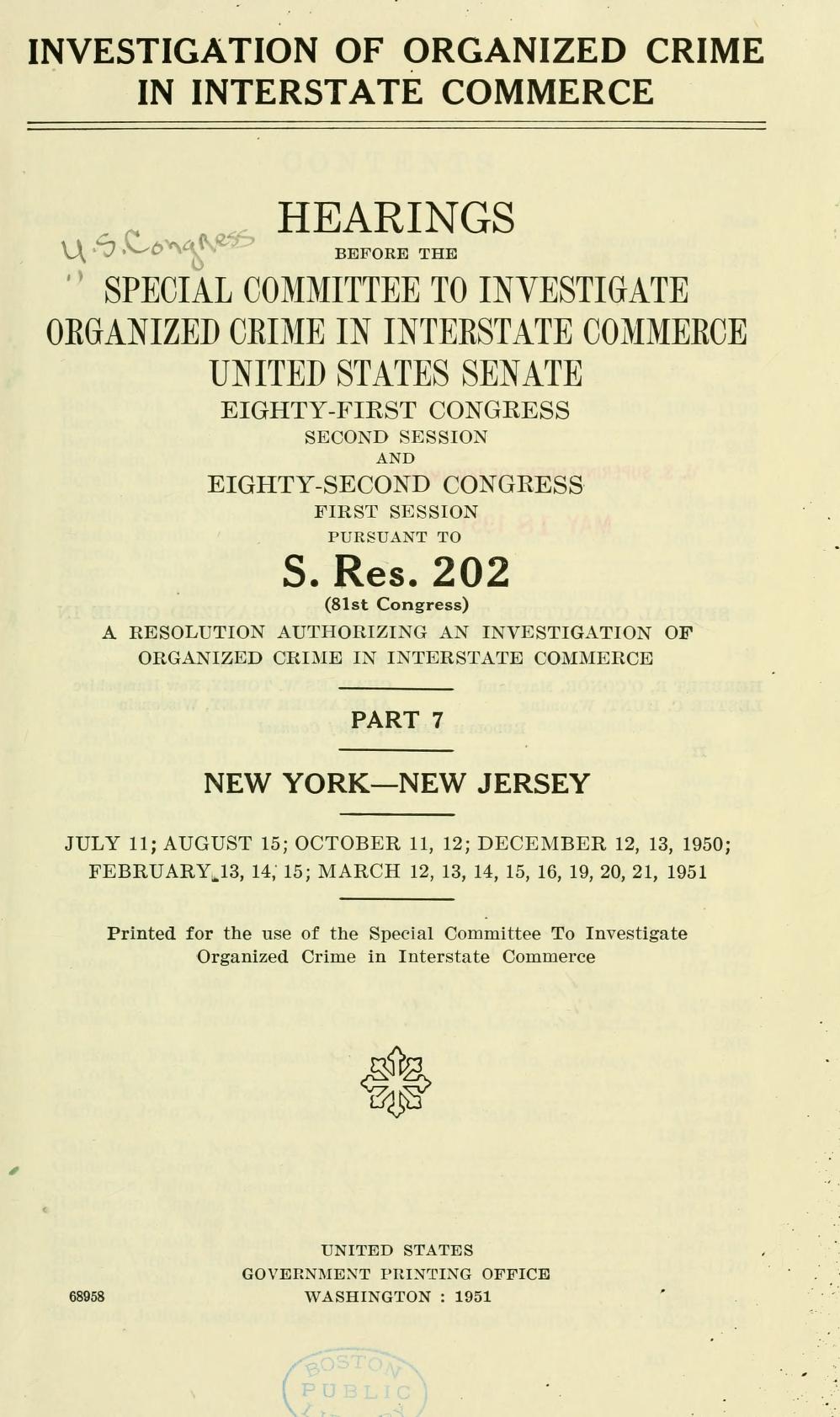
Internet Archive, scan of the printed hearings, Part 7: New York-New Jersey
Kefauver Part 7: Henry Silver and John W. Barker on working at the Jockey Club in Havana (11 October 1950, pp. 42-43, 54-55)
Two gambling-house employees from New Jersey told the committee about earlier work at the Jockey Club in Havana: Silver about 1939, after hearing 'that there were Americans running it,' and Barker around 1933, when he was in charge of the roulette wheels.
- Date
- 1950-10-11
- Kind
- hearing
- Retrieved
- 2026-10-12
- Rights
- A work of the United States Congress, printed by the Government Printing Office. Public domain in the United States. 17 U.S.C. § 105.
Both witnesses testified on Wednesday, 11 October 1950, in Part 7. The printed heading names the first “Henry Silver”; counsel later calls him “Charles Silver,” and this page keeps the heading’s form. Silver said he went to Cuba in “1938 or 1939” and, asked how he got his job at the Jockey Club in Havana, answered: “I heard about the place being opened, and that there were Americans running it, so I just went over and tried to get work.” He said he did “clerical work in the bookmaking department and in the gambling room too, at times,” and agreed that John Barker and Joe Goldie were “executives” there (pp. 42-43).
John W. Barker said he had worked in gambling houses since “about 60 years ago,” starting in Omaha. Asked whether he worked at the Jockey Club in Havana around 1933, he said: “In 1933? Yes, I think we were there in 1933.” Asked whether he was in charge of the wheels, he answered: “In Habana, yes,” and agreed they were roulette wheels. He said he met a Philadelphia operator named Keolker in Havana before both went to the old Riviera on the Palisades in New Jersey (pp. 54-55).
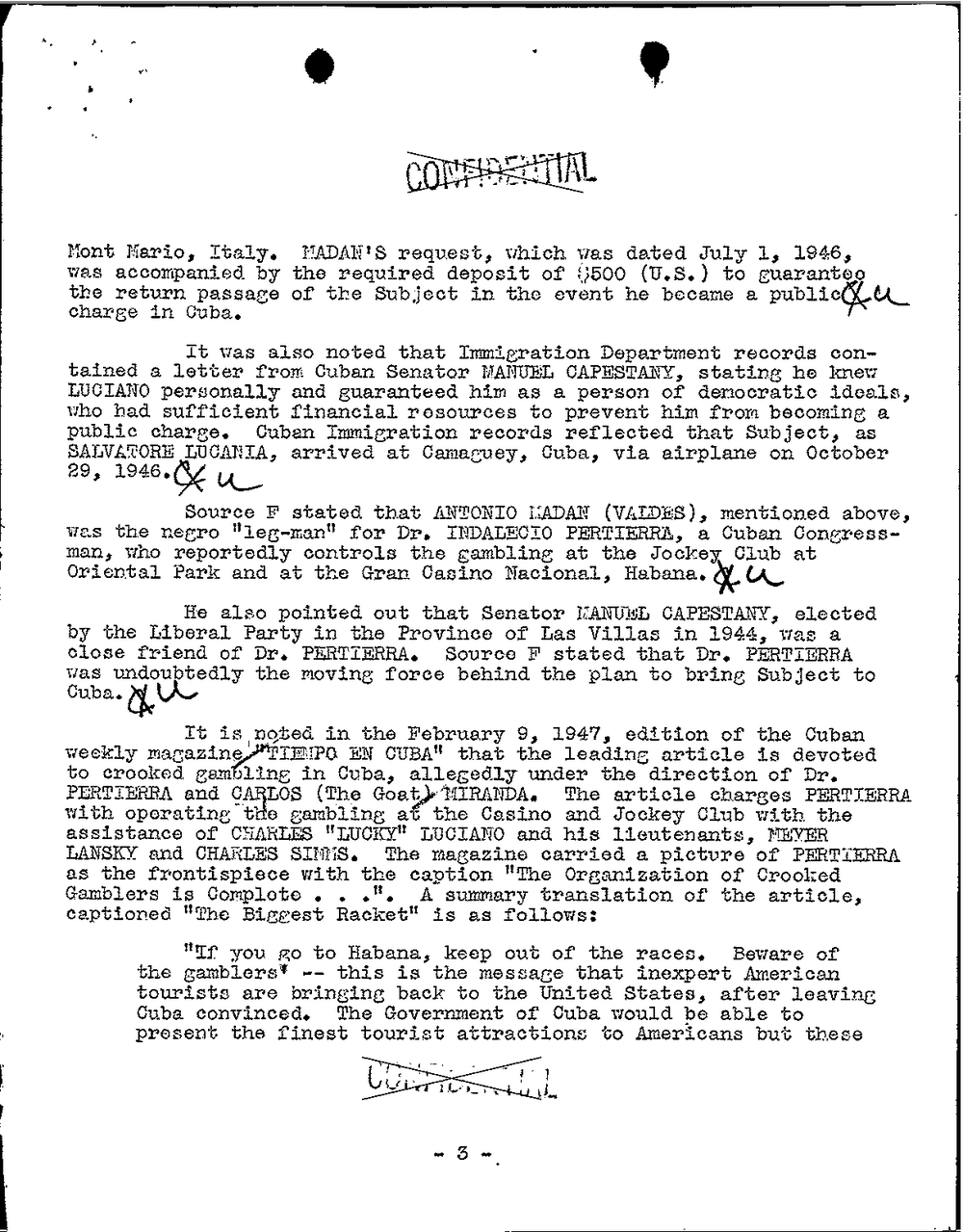
The Jockey Club is the club at the Oriental Park race track, as the FBI’s 1947 reports describe it. These are employees’ answers about their own work; they are not findings about who ran the club.