This section holds federal records that name Las Vegas casinos. Each statement below comes from the record linked beside it. Many of the records report allegations, informant statements and the Government’s theory of a case, and the text says which.
The Flamingo and the 1940s
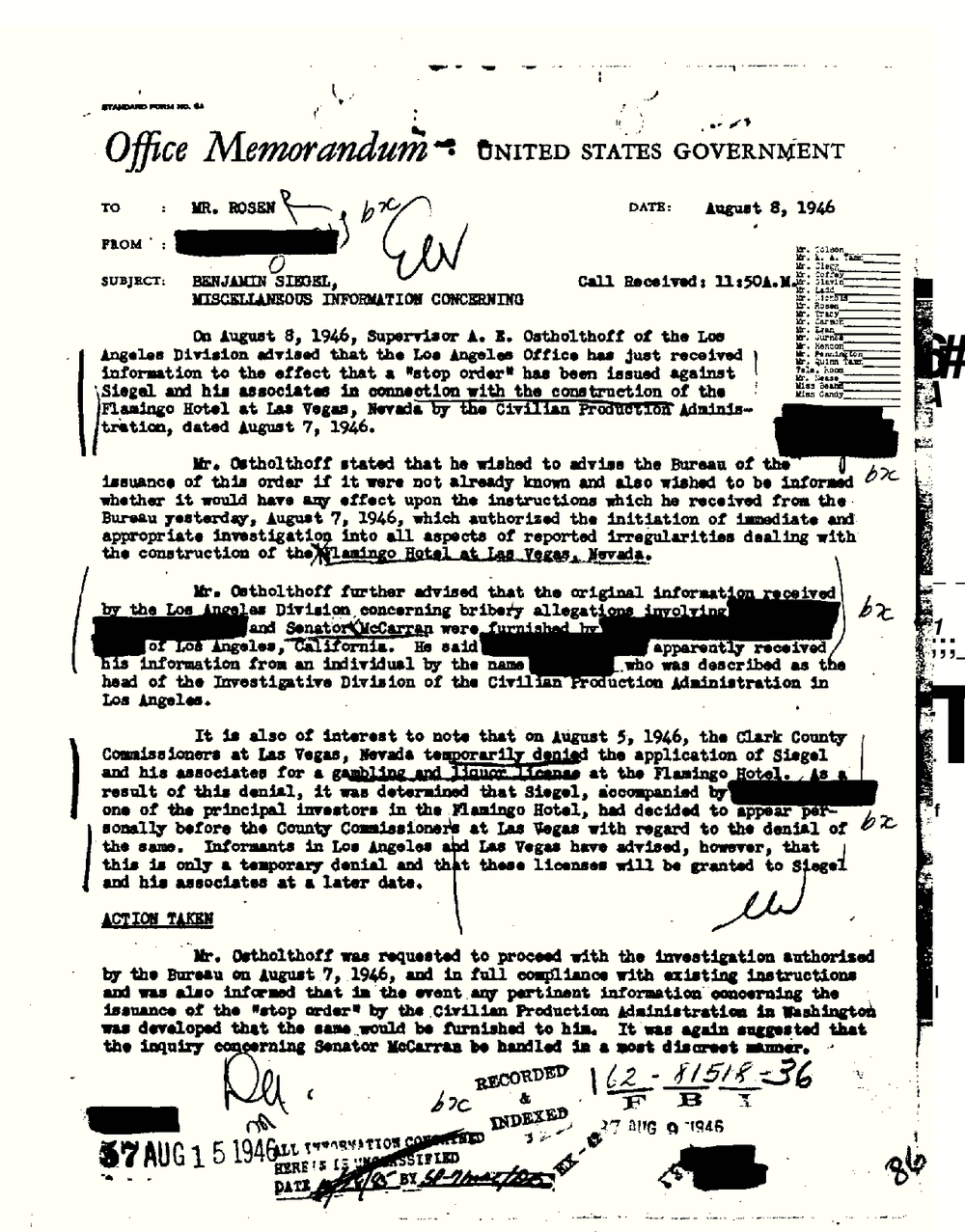
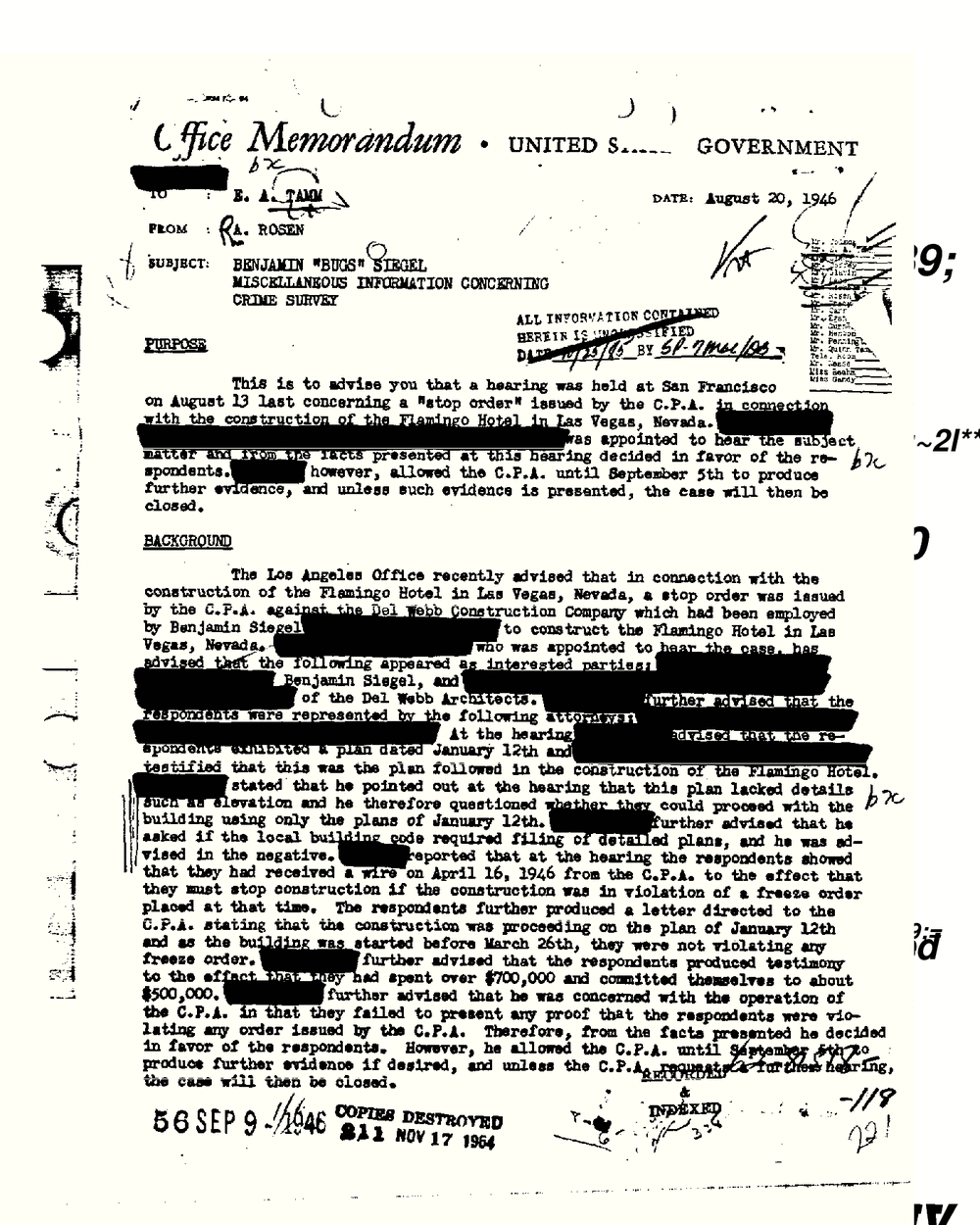
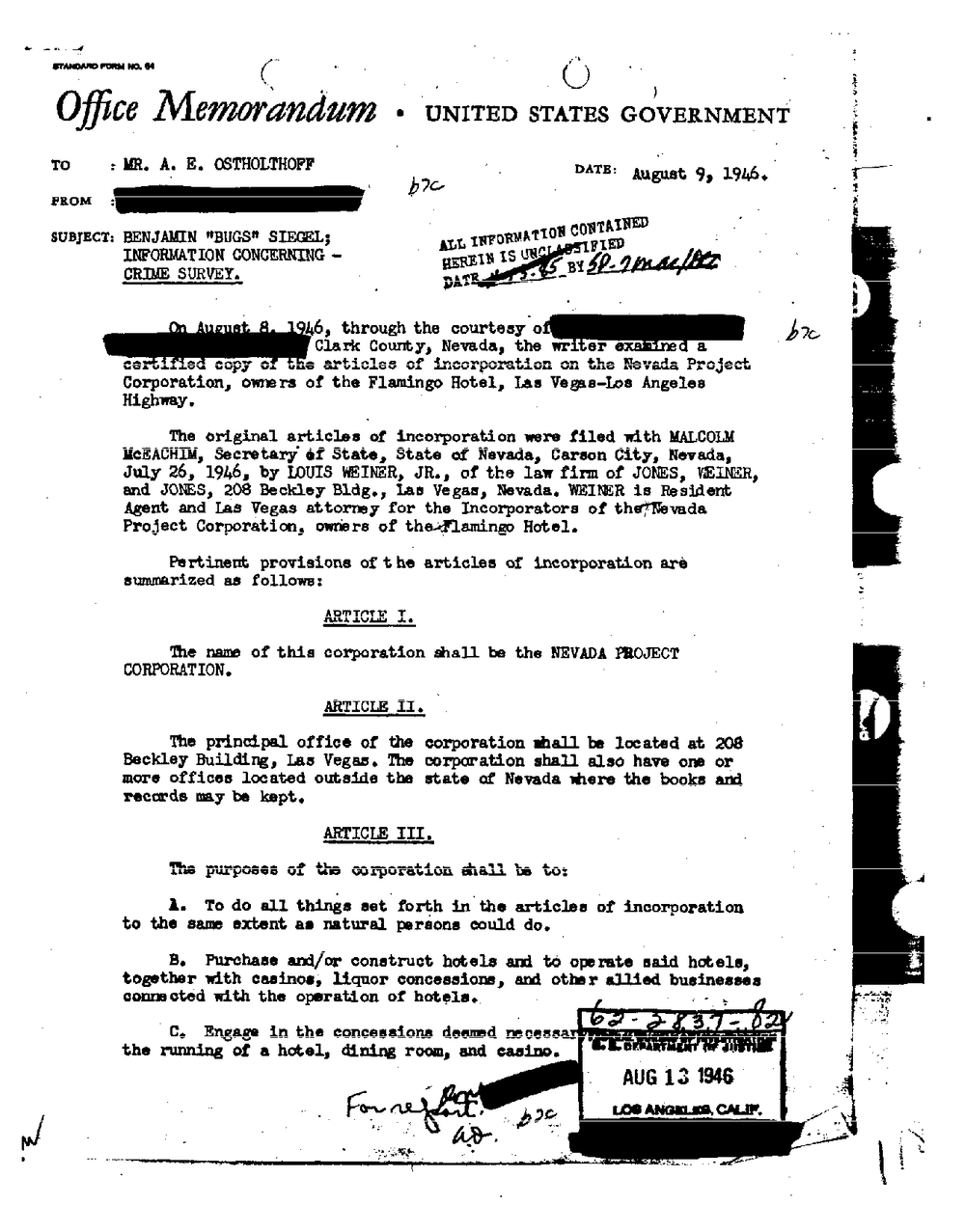
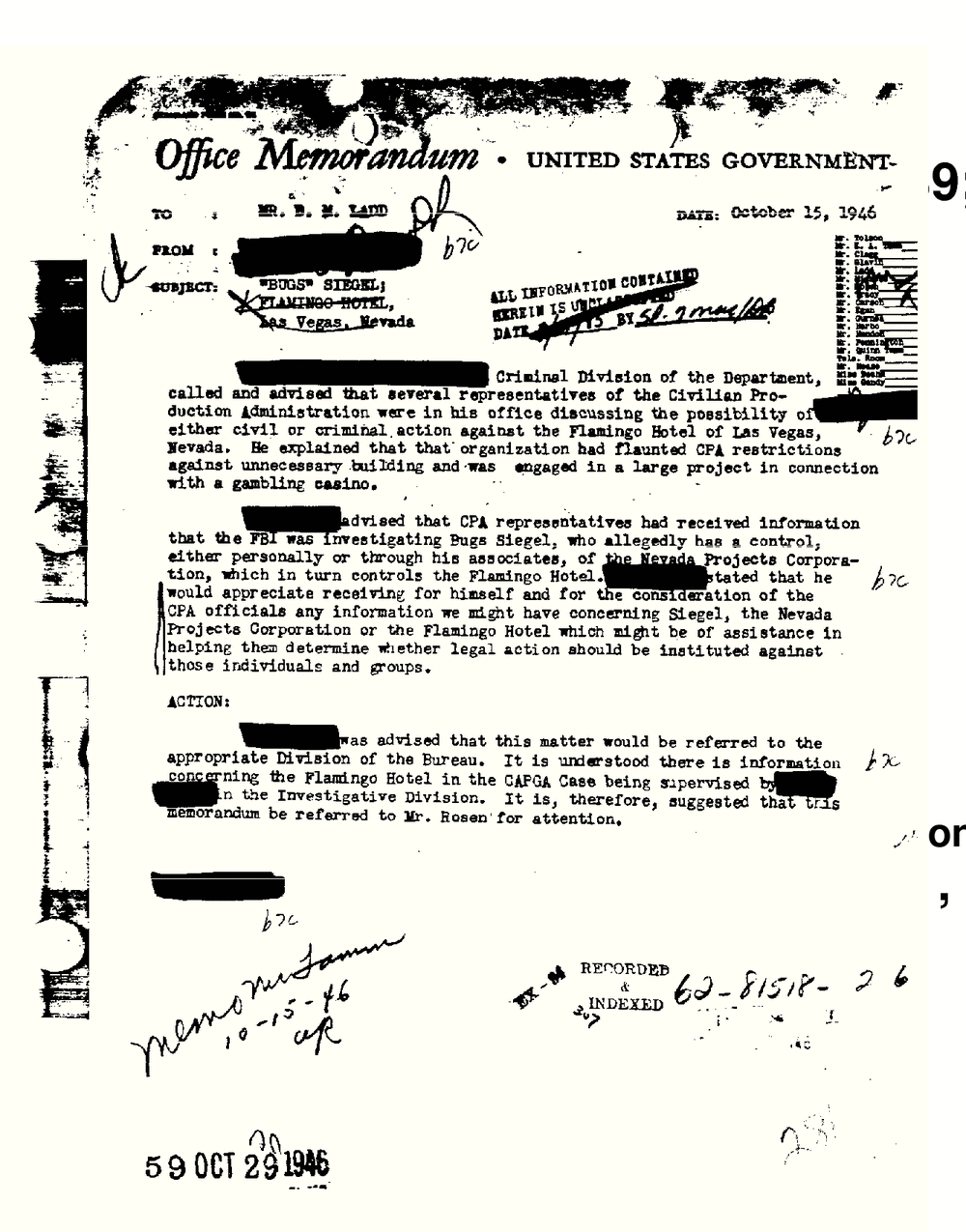
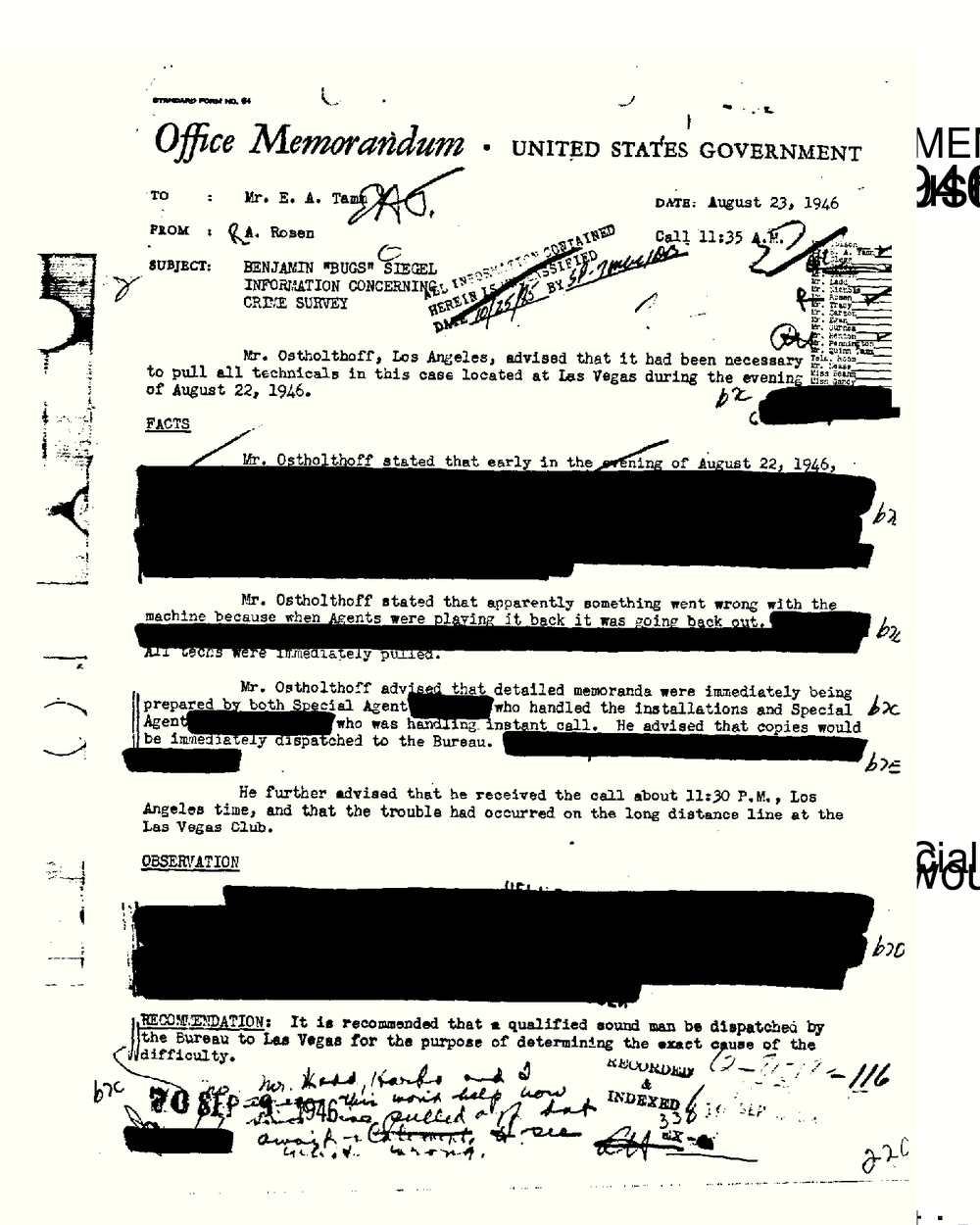
The FBI Vault’s file on Benjamin Siegel runs to 32 parts, listed in a finding aid. An FBI memorandum of August 8, 1946 records that the Civilian Production Administration had issued a “stop order” against Siegel and his associates over construction of the Flamingo Hotel, and that the Clark County Commissioners had temporarily denied the hotel’s gambling and liquor license on August 5. A memorandum of August 20 reports a hearing at San Francisco at which the hearing officer “decided in favor of the respondents.” An August 9 memorandum summarizes the articles of the Nevada Project Corporation, “owners of the Flamingo Hotel,” signed by Siegel, Moe Sedway and three others, and a Justice Department request of October 15 records that CPA officials were weighing civil or criminal action against the hotel.
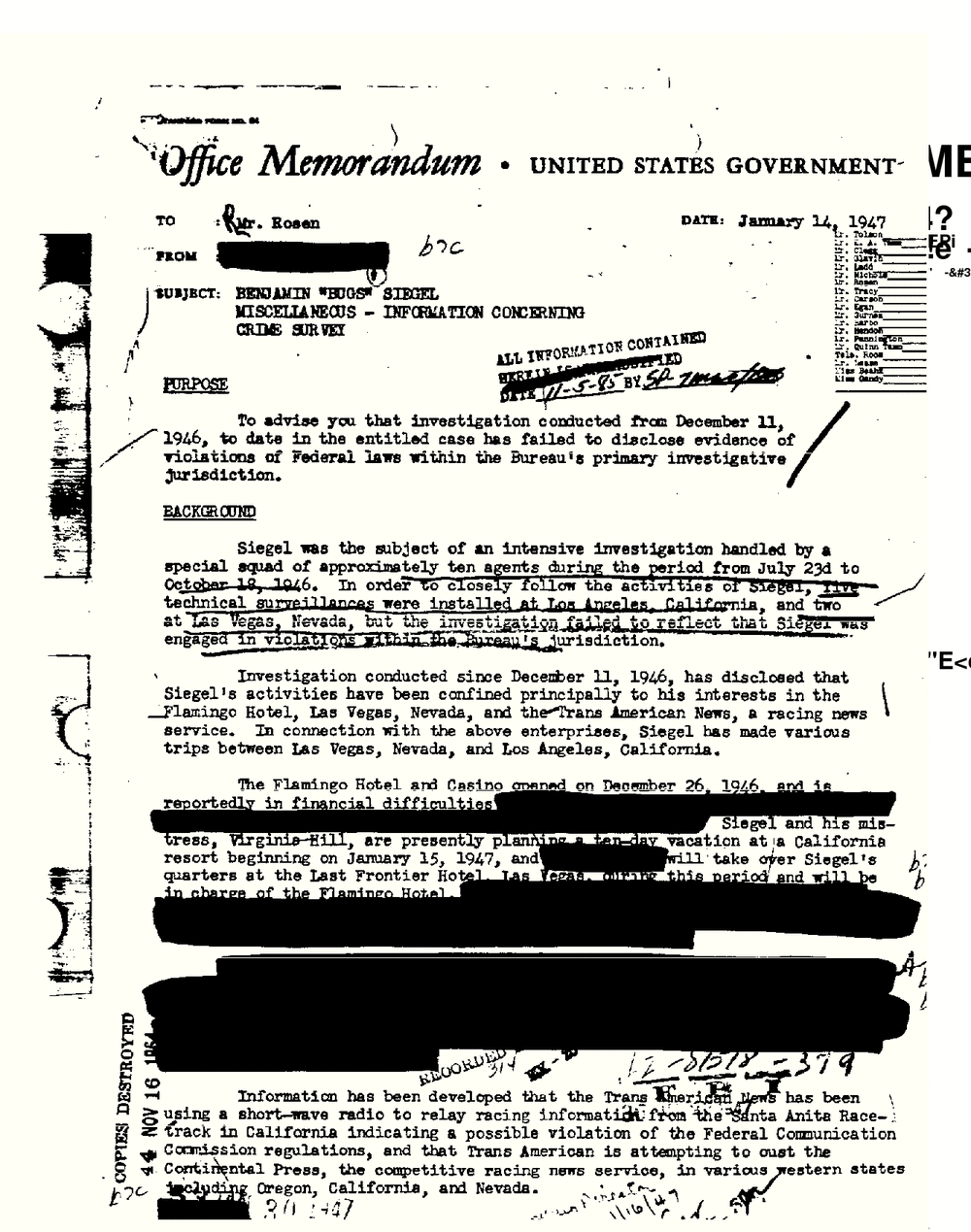
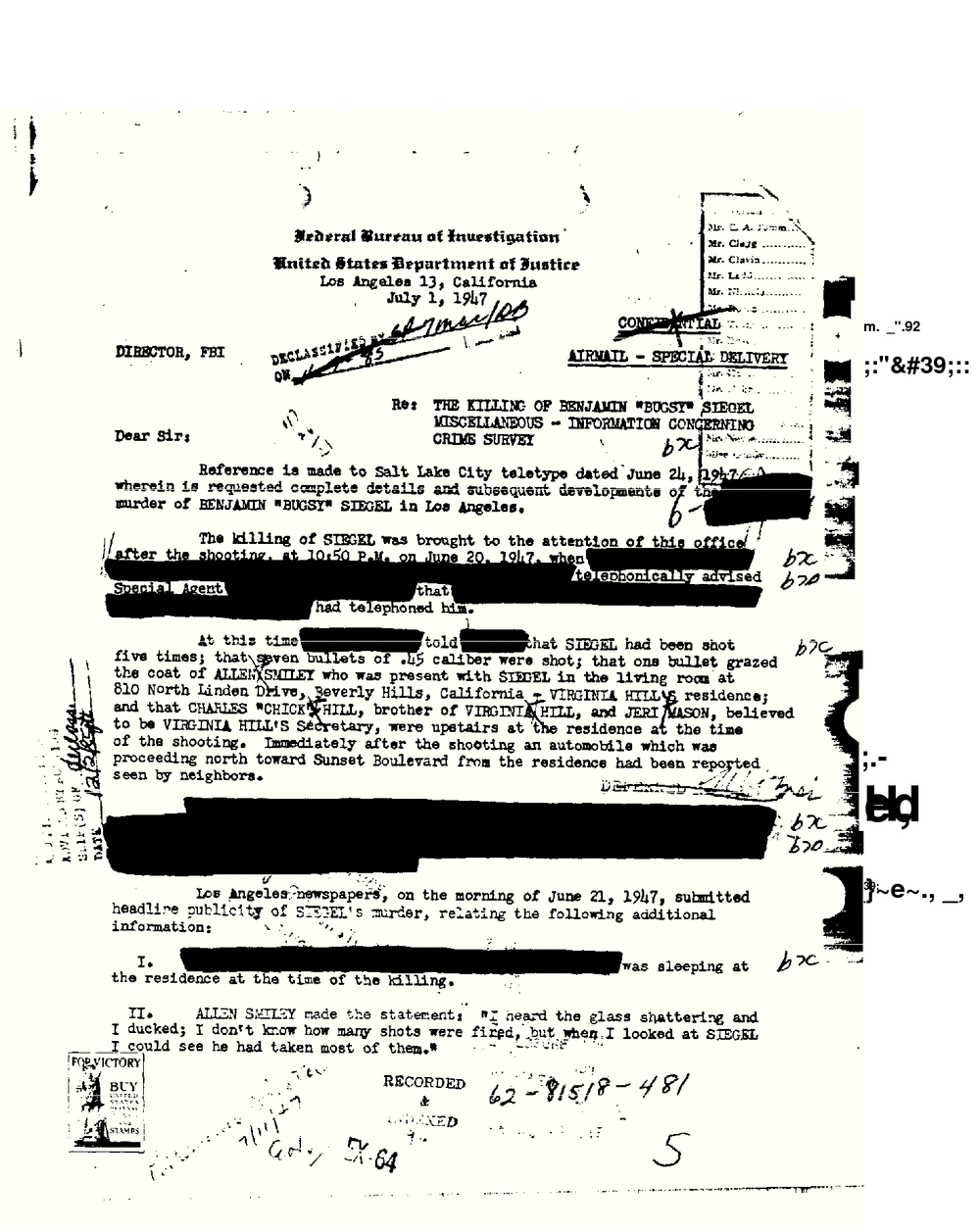
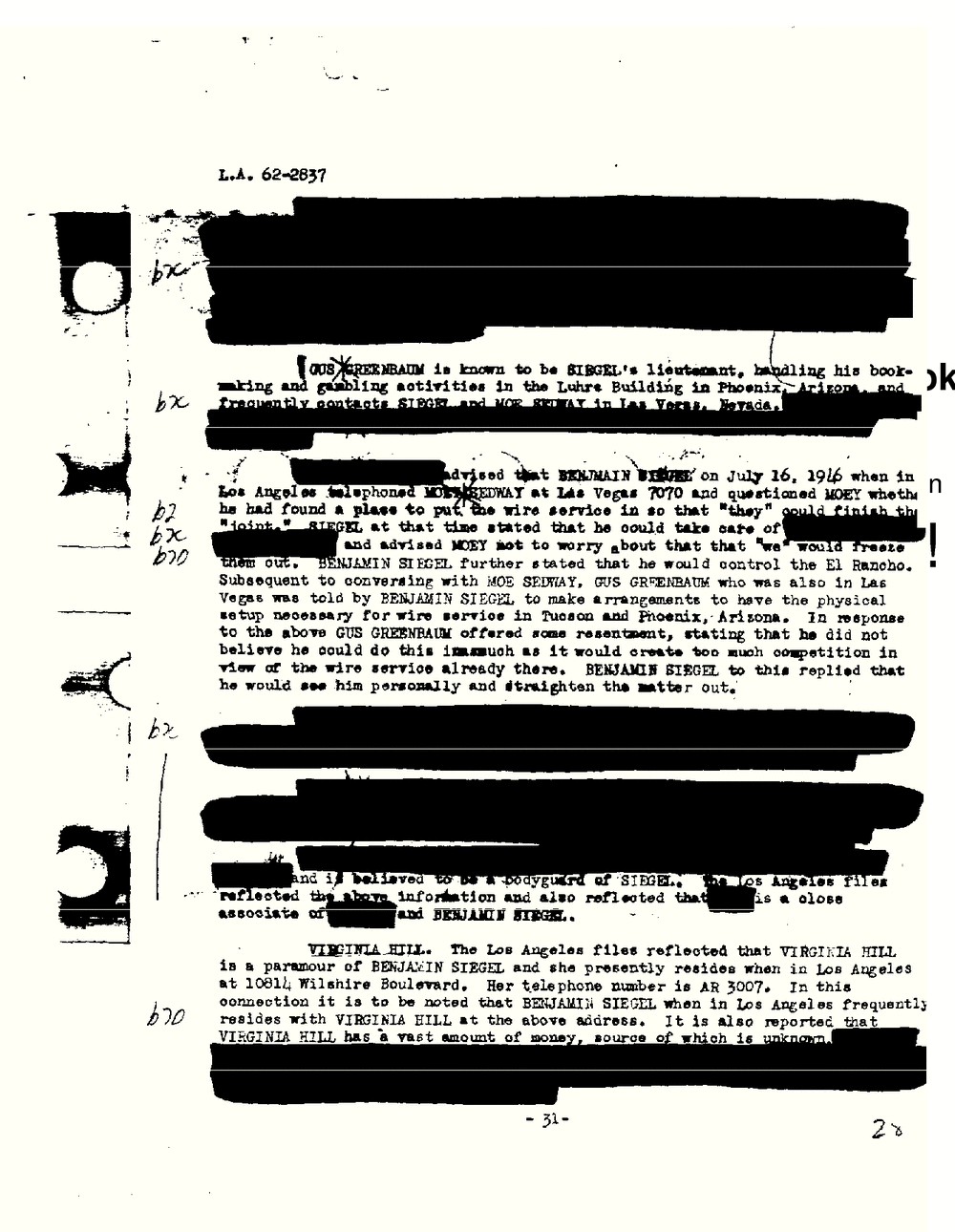
The Bureau’s own conclusion is in a summary memorandum of January 14, 1947: its investigation “has failed to disclose evidence of violations of Federal laws within the Bureau’s primary investigative jurisdiction,” and it recommended discontinuing the work. A Los Angeles letter of July 1, 1947 summarizes the shooting of Siegel on June 20, 1947 at Beverly Hills and lists press theories of motive, which are not findings. Informant statements in the file, such as those in a Los Angeles report about the race wire and Sedway and Greenbaum, are the Bureau’s record of what informants said.
The Kefauver session
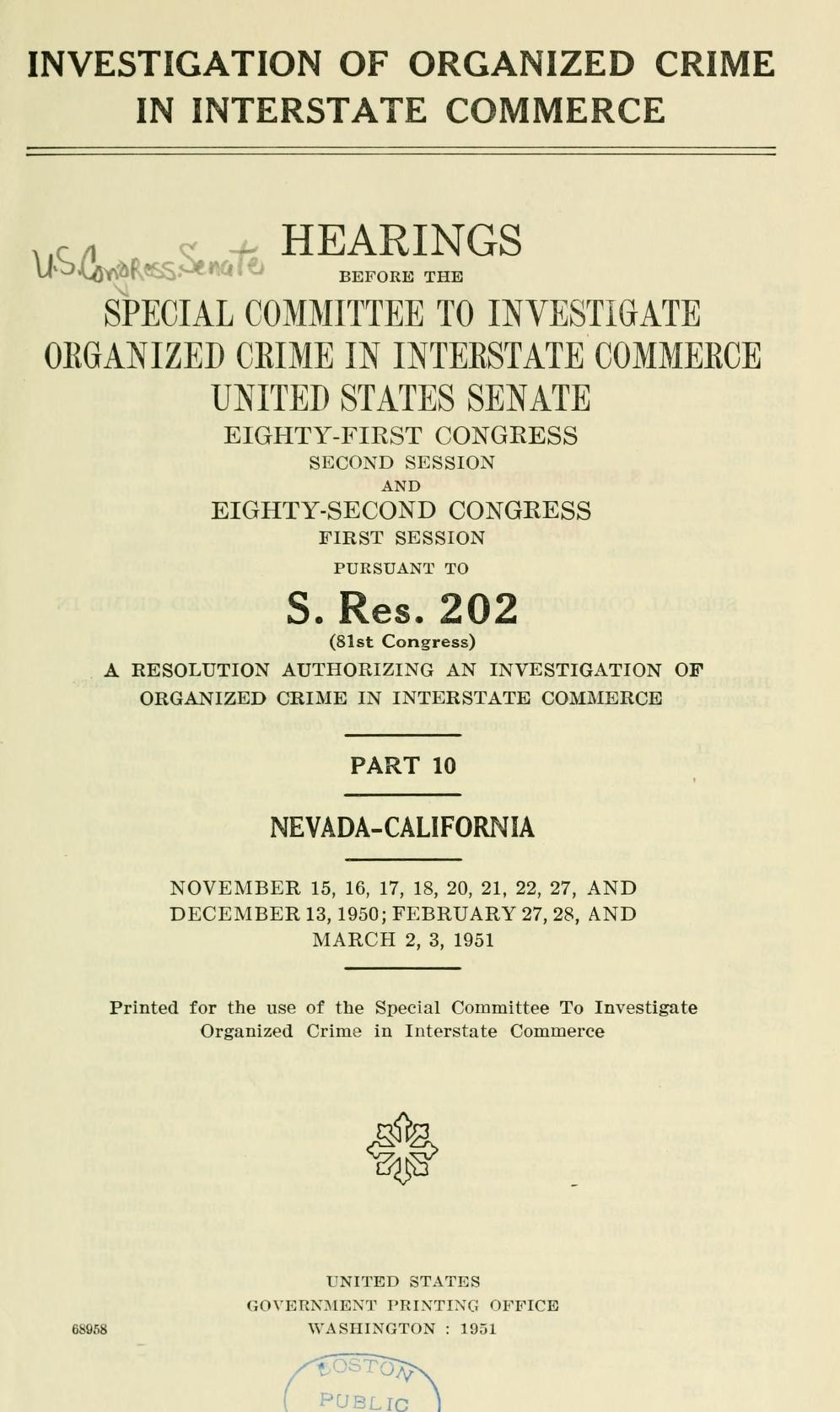
The Senate Special Committee to Investigate Organized Crime in Interstate Commerce held a session in Las Vegas on November 15, 1950, printed in Part 10 of its hearings. The Las Vegas session includes Nevada Tax Commission member William J. Moore on the race wire, Louis Wiener on the Flamingo’s ownership, Wilbur Clark on the Desert Inn, and testimony of Moe Sedway, who said he was vice president of the Flamingo. Morris Dalitz testified in Los Angeles on February 28, 1951 that he held 13 percent of the Desert Inn (testimony). The Costello contempt report filed elsewhere on this site comes from the committee’s New York hearings and is not this volume.
The skim
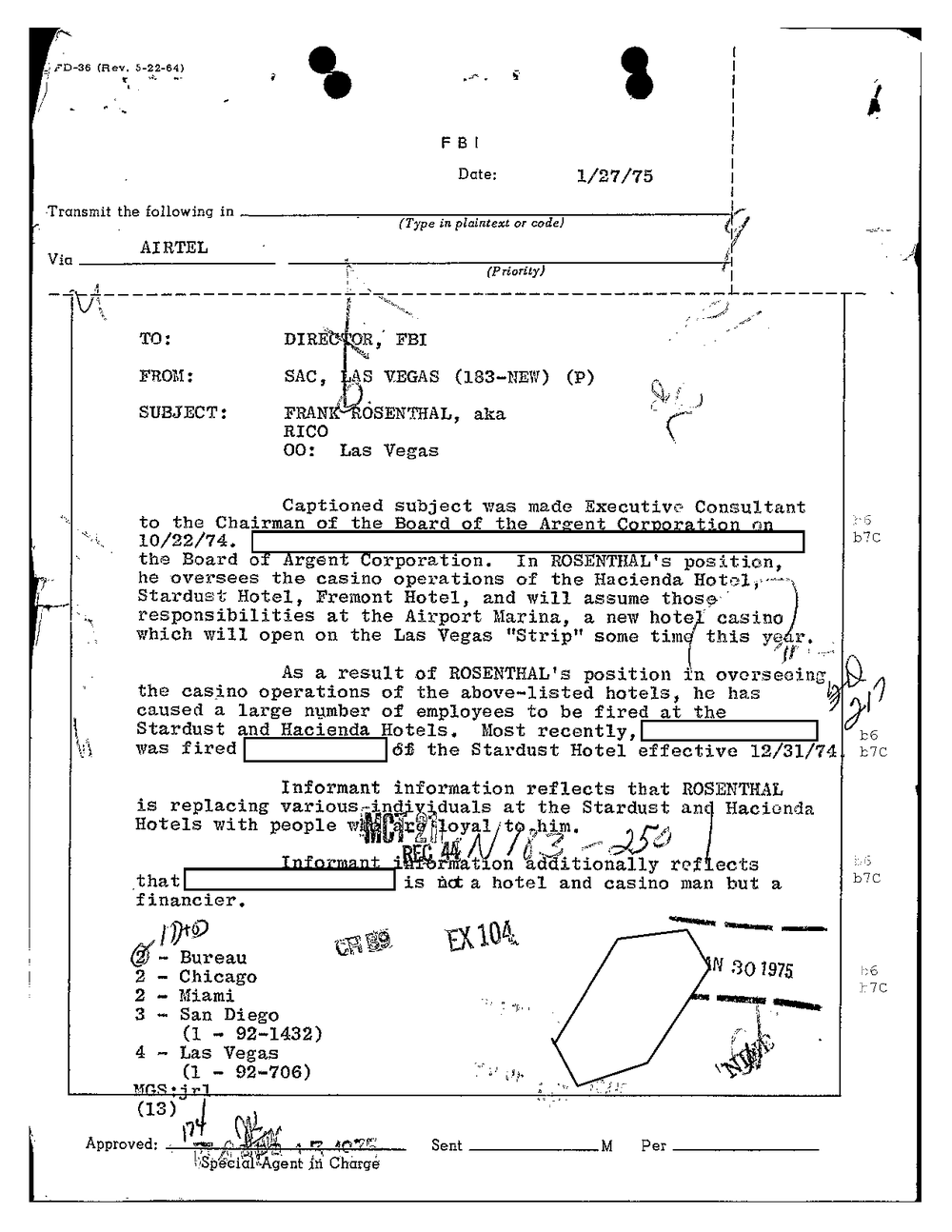
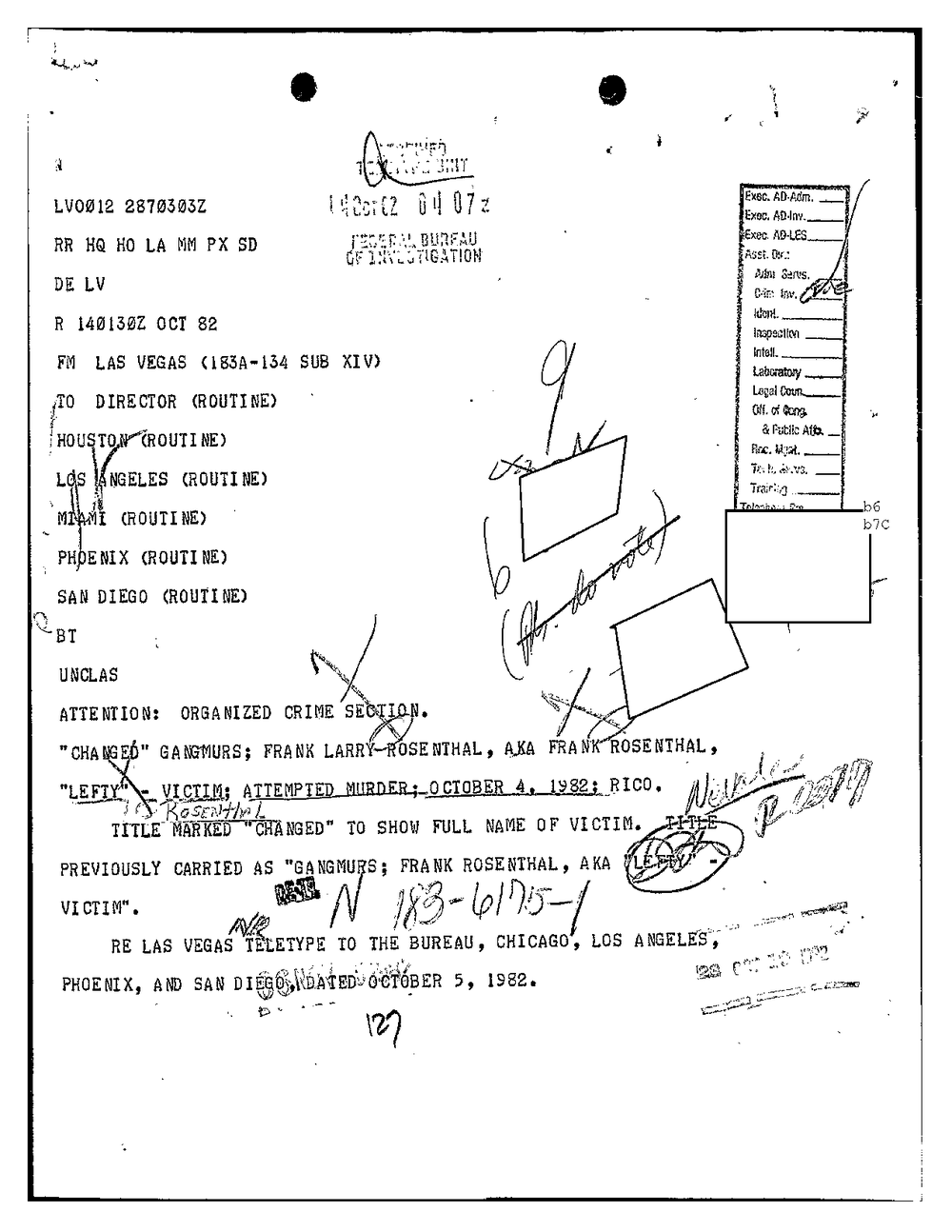
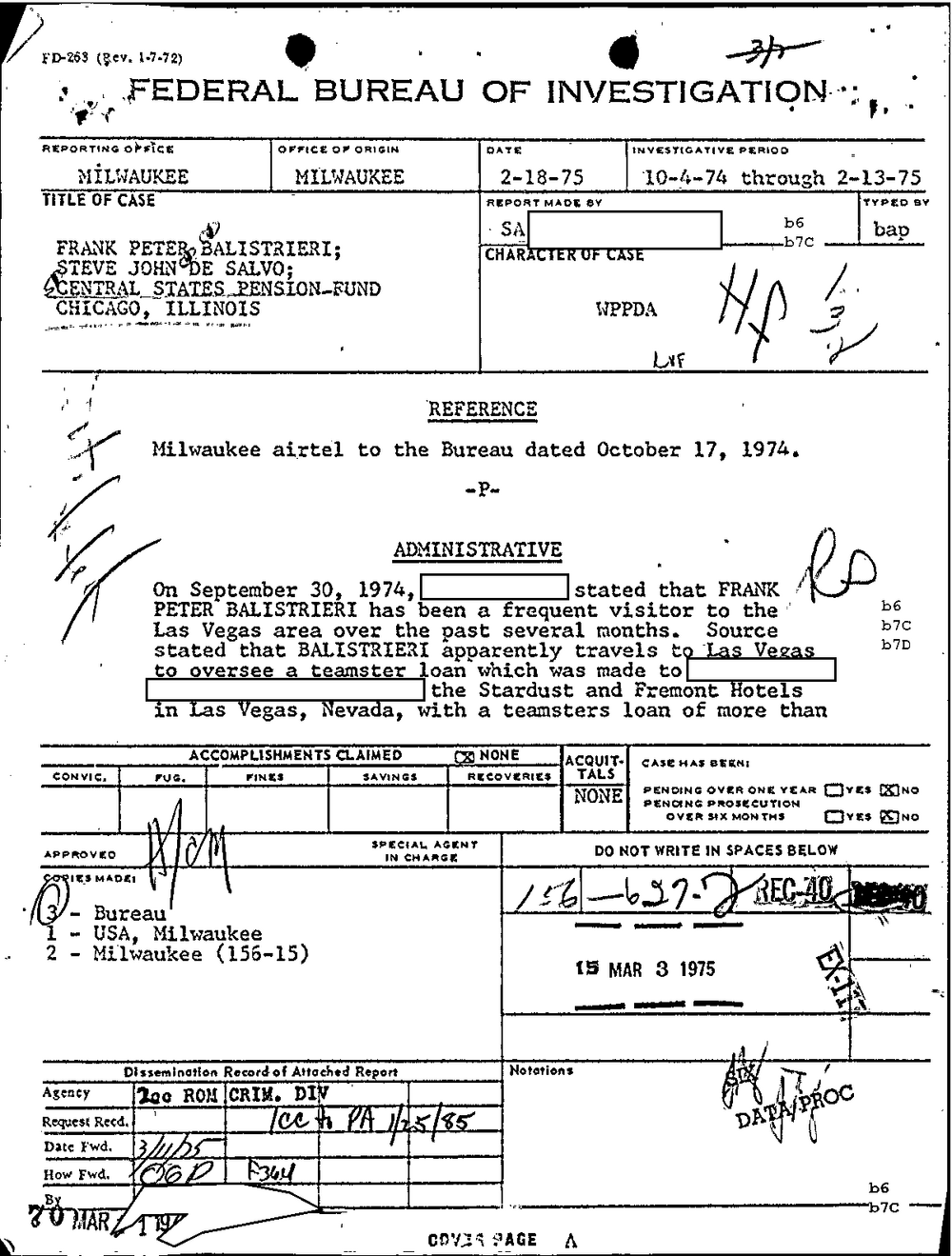
In United States v. DeLuna (8th Cir. 1985), the court states that the government charged a conspiracy “to gain control over the casino operations at the Tropicana Hotel and Country Club in Las Vegas, Nevada, in order to ‘skim’ money from the casino,” and recounts evidence that skimmed cash was carried to Kansas City and partly passed on to Joseph Aiuppa and Jack Cerone in Chicago (DeLuna). A second indictment concerned the Argent Corporation, which “owned four casinos,” as the court notes in United States v. Thomas. The Tax Court’s findings on Argent’s ownership of the Stardust and Fremont and an FBI airtel of January 1975 on Frank Rosenthal’s position at Argent supply the corporate background.
United States v. Cerone (8th Cir. 1987) affirmed the convictions of Aiuppa, Cerone and others on an indictment charging hidden interests in the Stardust and Fremont, owned by Allen R. Glick’s Argent Corporation and financed by the Teamsters Central States pension fund. The 1986 bail opinion quotes the government’s allegation that Aiuppa and others “used their influence with certain trustees” of the fund to obtain the loan. The Eighth Circuit’s summary of the Government’s theory also names Frank Balistrieri, Nick Civella, Carl DeLuna and Rosenthal. See Cerone and Spilotro, 1986.
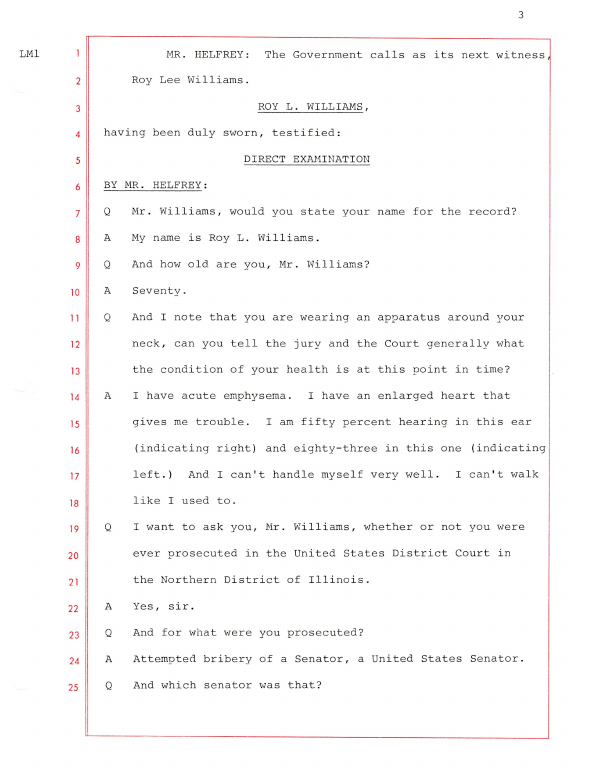
The Senate’s Permanent Subcommittee on Investigations took up the pension fund in 1980 hearings and a 1981 report. A staff summary of FBI affidavits there described Civella’s control of a fund loan as the key to an interest in the Tropicana, and the staff concluded that notes seized in a Kansas City home set out the division of proceeds of a Las Vegas skim. Those are staff statements about affidavits, not court findings. The National Archives holds an excerpt of the Argent trial transcript. Allen Dorfman’s role at the fund is described in the 1972 and 1982 opinions.
Spilotro
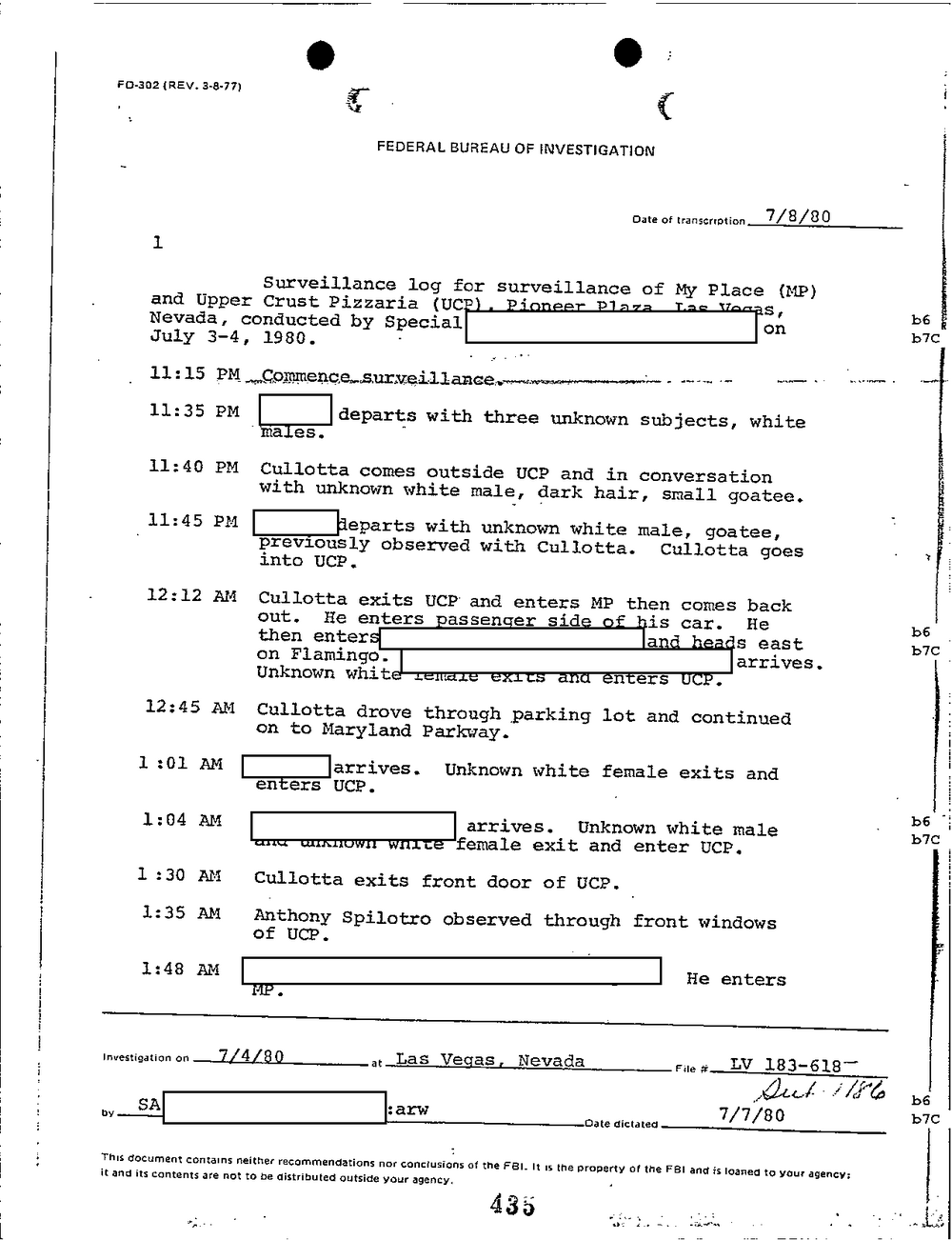
The government alleged that Anthony Spilotro and others “acted as the Las Vegas representatives” of the Chicago co-conspirators in the Argent case. His case was severed, and the Eighth Circuit records that he died after the trial. The Ninth Circuit’s account of a 1977 and 1978 FBI investigation of the Gold Rush, Ltd. jewelry store is in 800 F.2d 959, and a July 1981 indictment over the store is the subject of 680 F.2d 612. FBI Las Vegas surveillance logs of 1980 record him at a pizzeria with Frank Cullotta, and the Vault file on Spilotro holds a 1993 airtel on his 1986 murder.
People
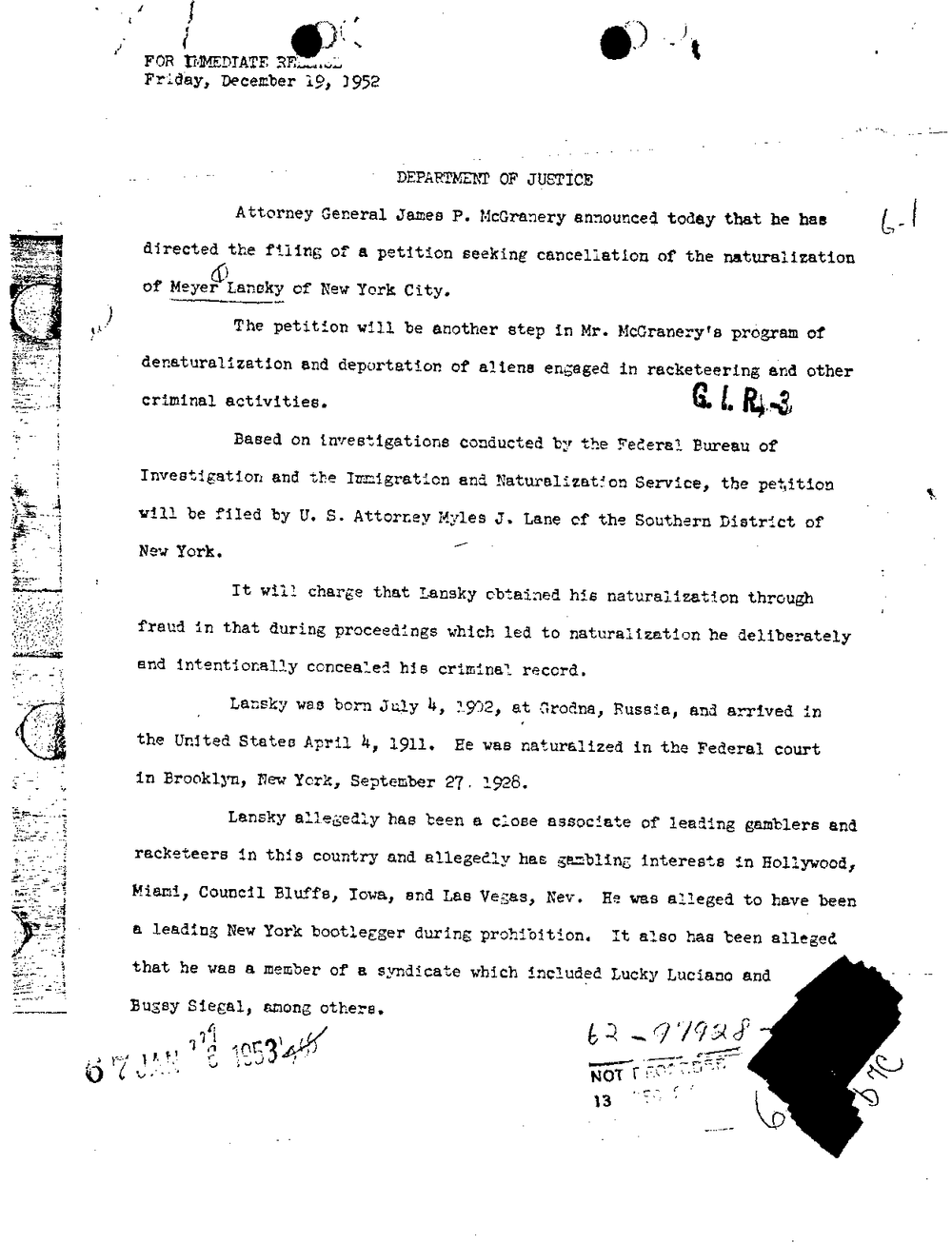
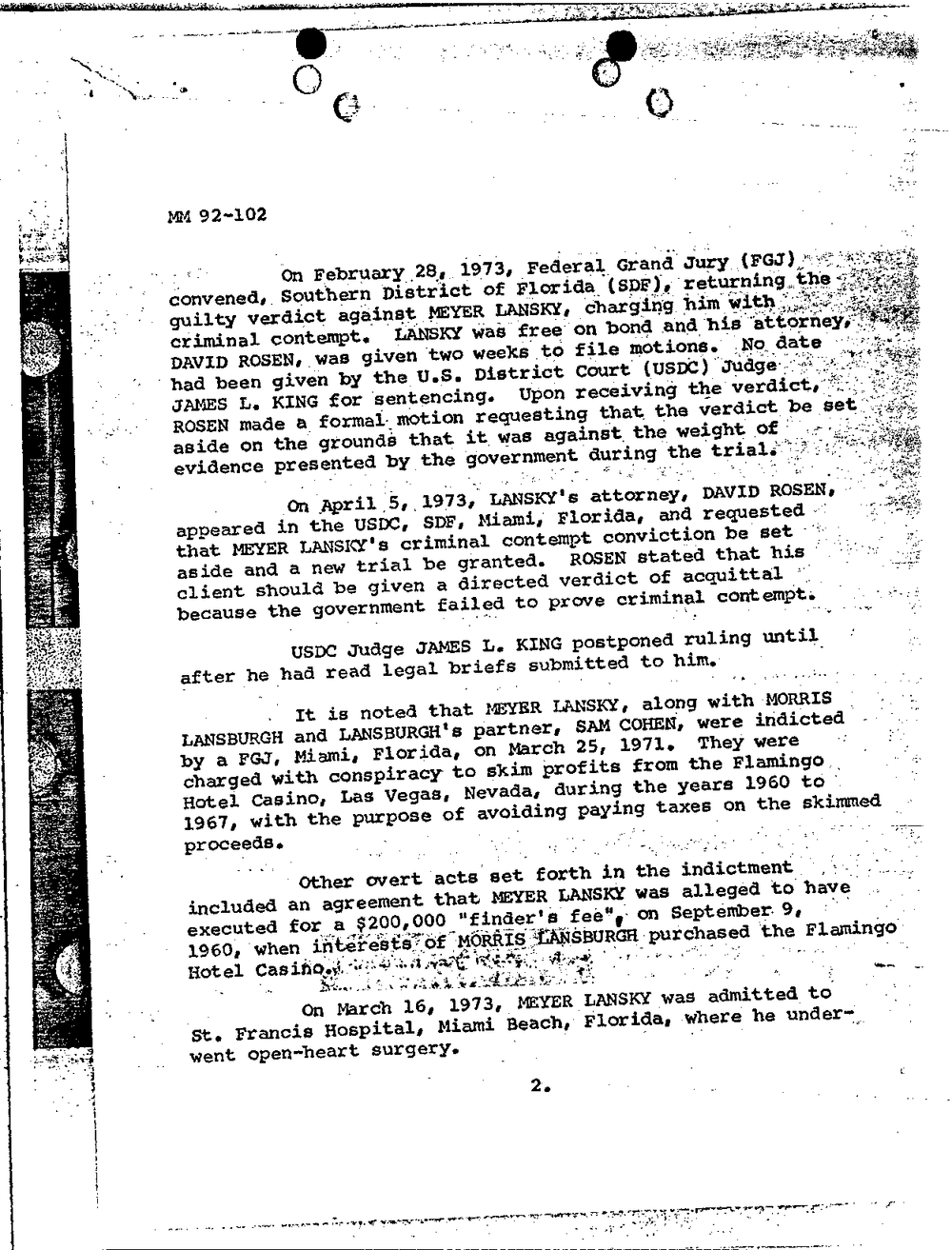
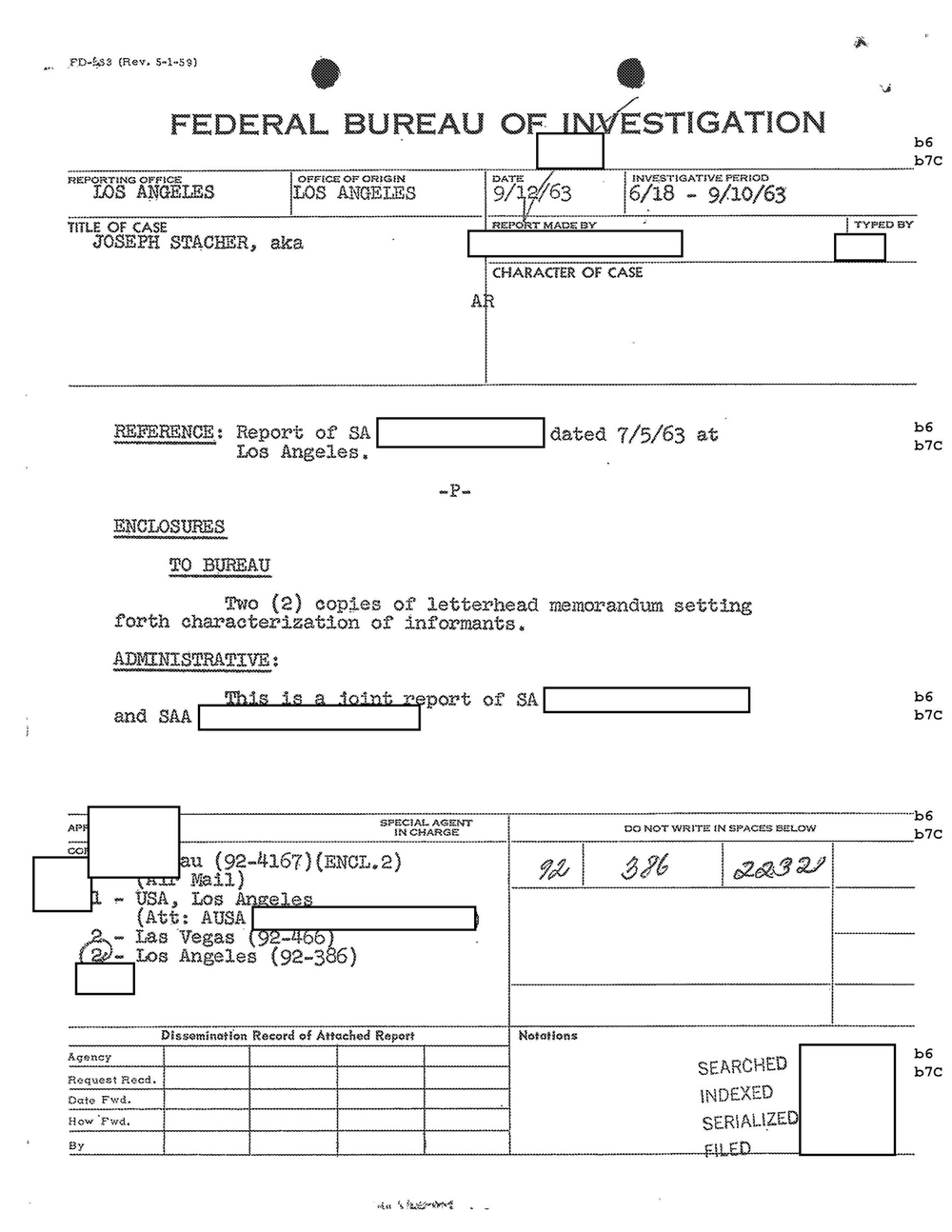
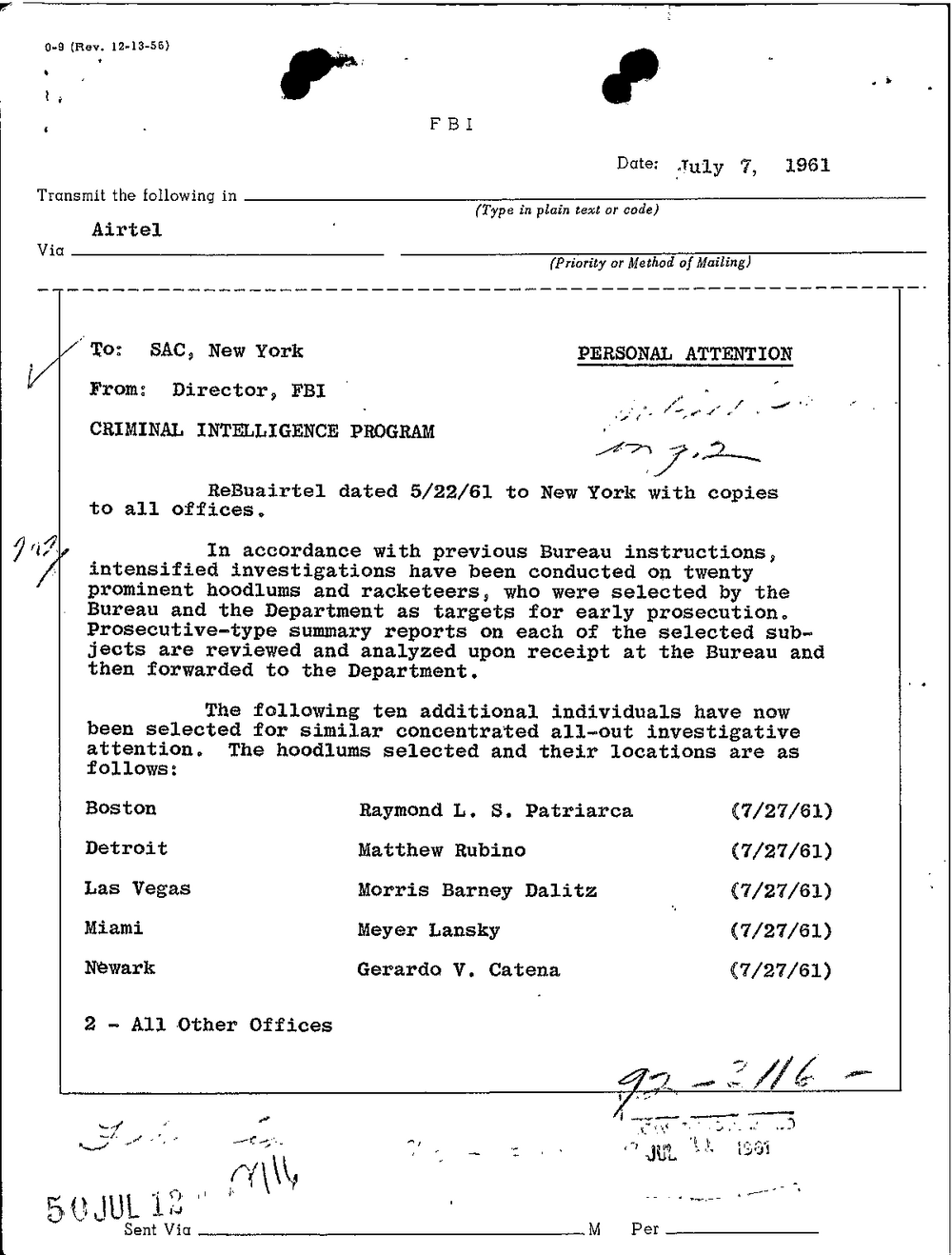
Pages for people named in these records state a family or role only where a federal statement is quoted and labelled by kind: Siegel, Dalitz, Sedway, Greenbaum, Lansky, Stacher, Alo, Cornero, Zerilli, Caifano, Rosenthal, Dorfman, Agosto, Balistrieri, Civella, DeLuna, Cullotta, Blitzstein, Patriarca and Panarella. Spilotro, Aiuppa and Cerone are described on their own pages. A Library of Congress photograph of Lansky is filed, and no public-domain photograph of Siegel was found.
The Kefauver Committee’s Exhibit 49 memorandum on race-book wire service at the Golden Nugget and the Frontier Club is filed on the Gambling and the wire page.
Not filed yet
An Associated Press dispatch in the Washington Evening Star of 16 November 1950 (page 27, Library of Congress OCR text) reports that the Kefauver Committee returned “from a one-day session in Las Vegas.” That page is a post-1930 issue and is not filed as a clipping. Not yet filed from the records opened for this section: the Siegel Vault parts that are largely illegible or clippings, Meyer Lansky Vault Part 20, the Senate’s April 1980 organized-crime hearings that the 1980 hearing refers to, and the exhibits to Part 10 of the Kefauver hearings.