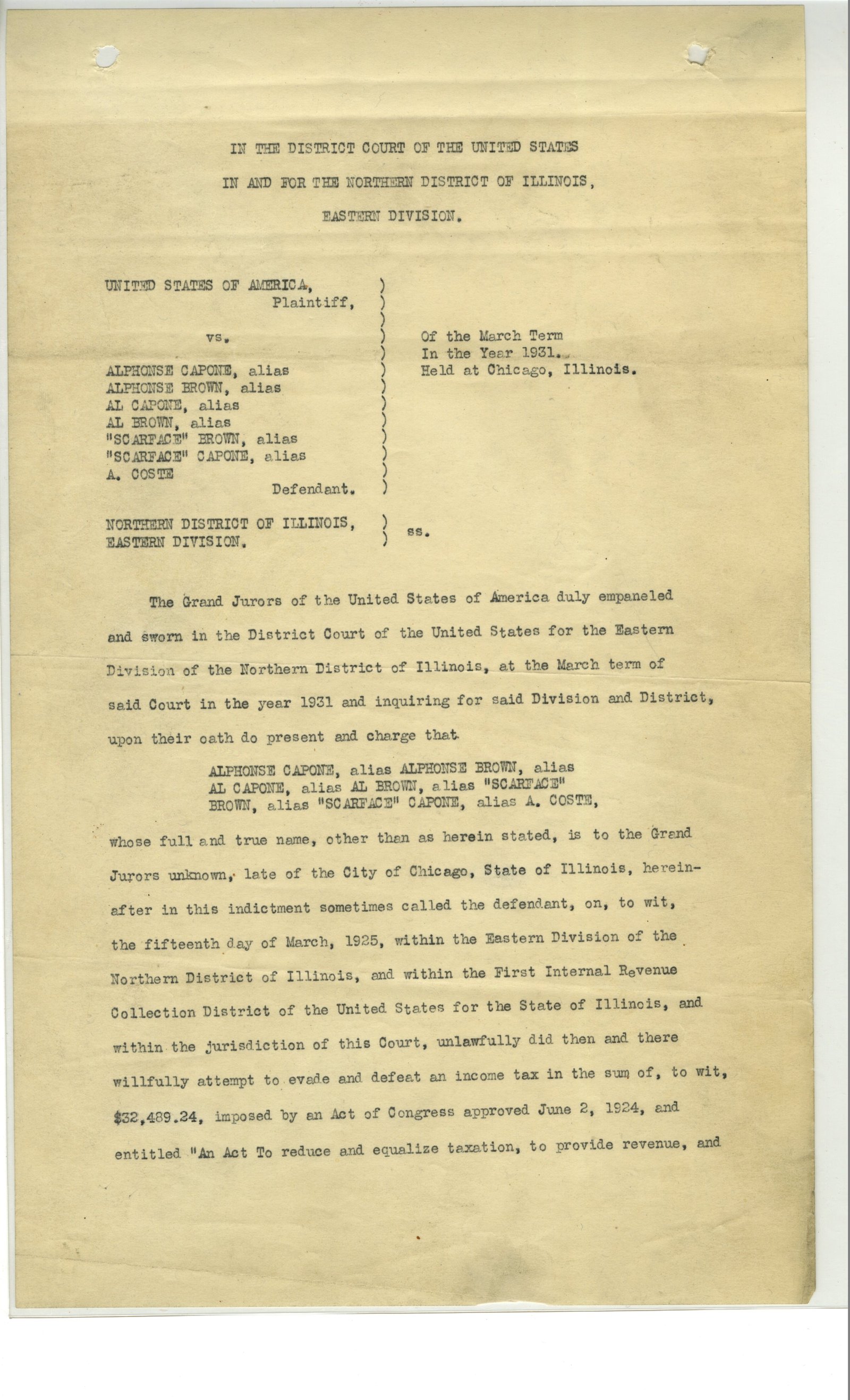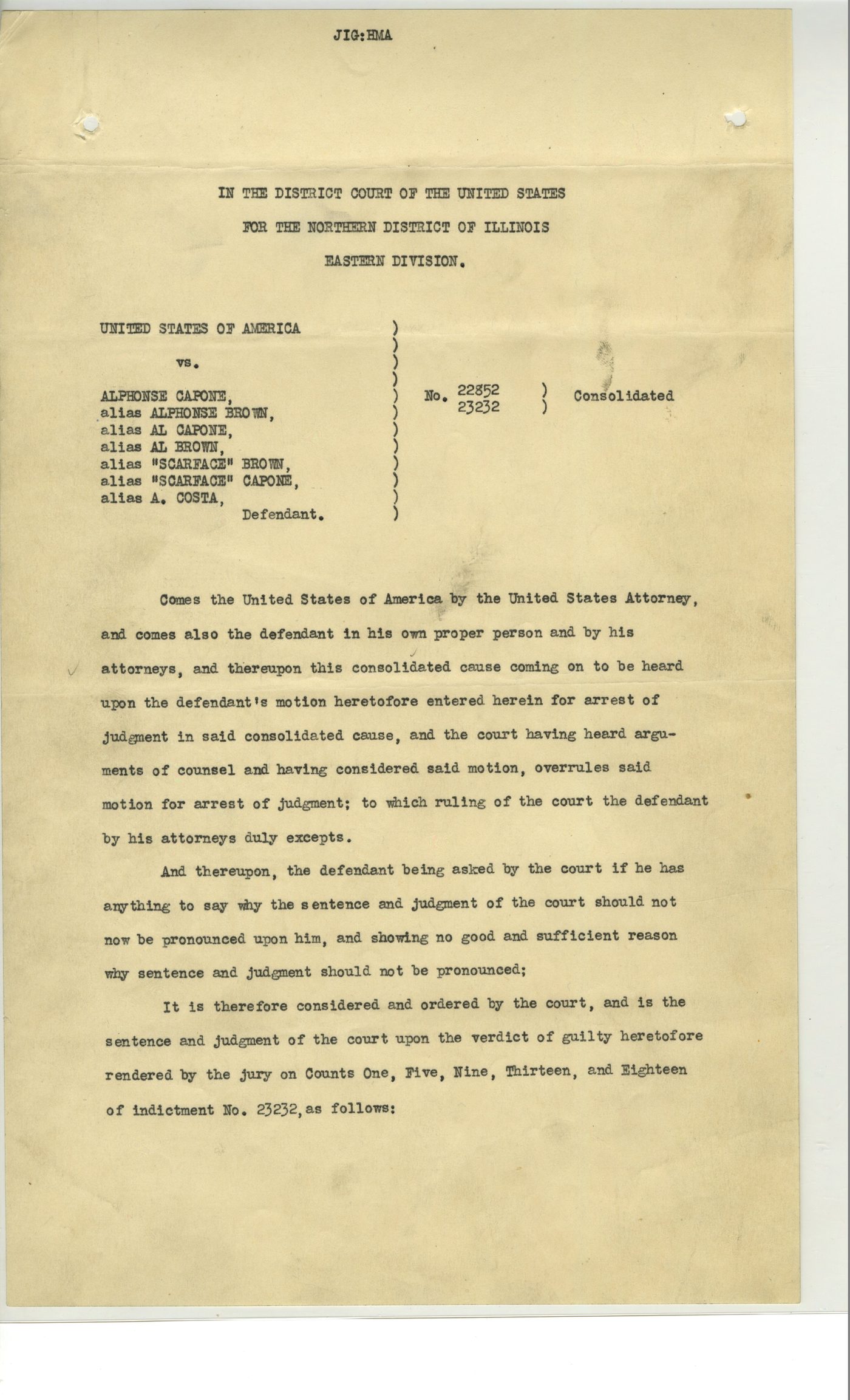
This section follows Capone through the records, not through the legend. The FBI Vault file of 36 parts, the criminal case file of the Northern District of Illinois at the National Archives at Chicago, the Bureau of Internal Revenue’s Intelligence Unit reports, the Bureau of Prisons’ Alcatraz notebook page, and newspaper pages from Chronicling America are each filed as their own record. The FBI’s history essay is cited as a federal narrative where no other record speaks, and is named as such. Where the records disagree on a date, the spokes give each date with its source.
The spokes
- Rise, 1899–1930: Brooklyn, Torrio and Colosimo as the FBI essay and a 1947 Bureau memorandum tell it, the wire pages of 1926 and 1928, the 1929 Philadelphia gun case, and the 1930 public-enemies list.
- Prohibition, 1929–1931: the 1929 contempt case the Bureau later called its first Capone conviction, the 1930 juice-grape report, the concurrent tax cases against Guzik and Nitto, and the 1931 Prohibition indictment file.
- Saint Valentine’s Day, 1929: the killings at the S. M. C. Cartage Company garage from the newspapers of 1929, the inquest as reported, and Calvin Goddard’s ballistics testimony.
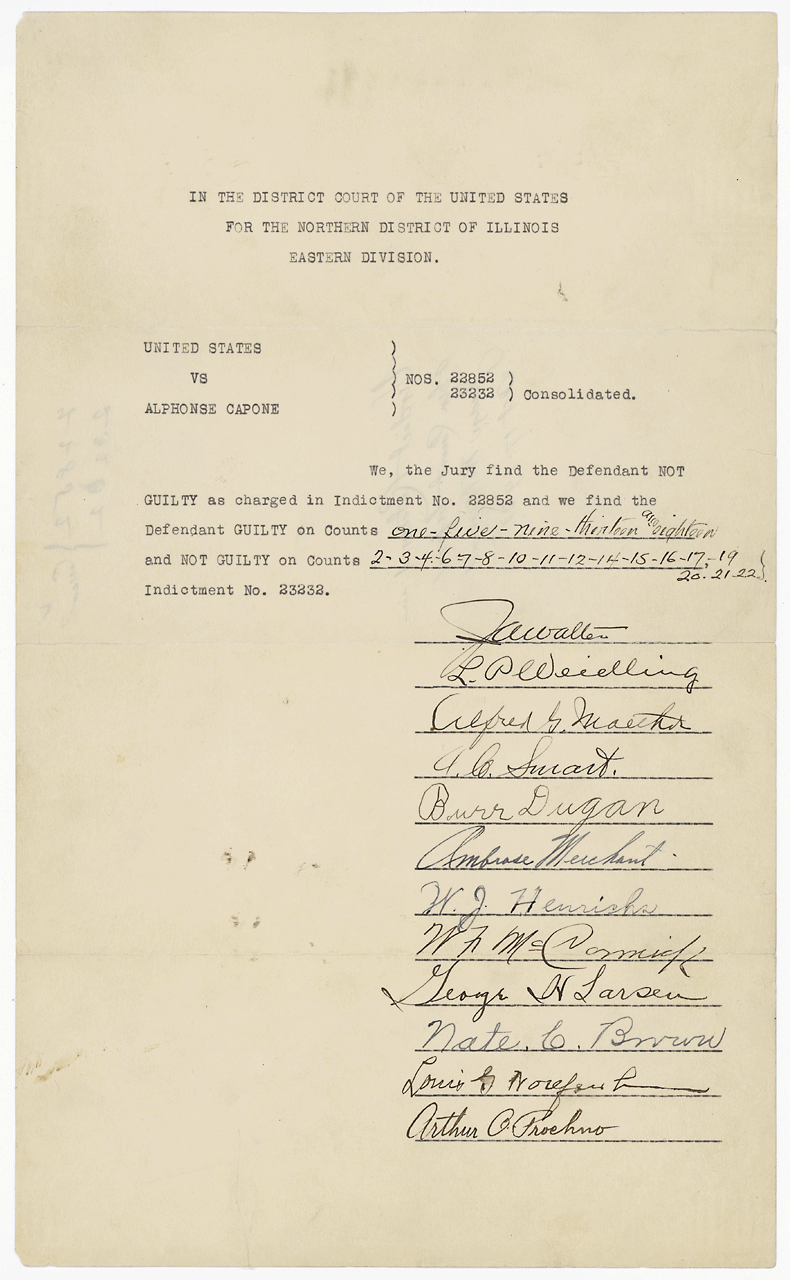
- Tax trial, 1931: the indictments, the withdrawn plea, the verdict of 17 October and the judgment of 24 October 1931, the appeal, and Special Agent Frank J. Wilson’s investigation.
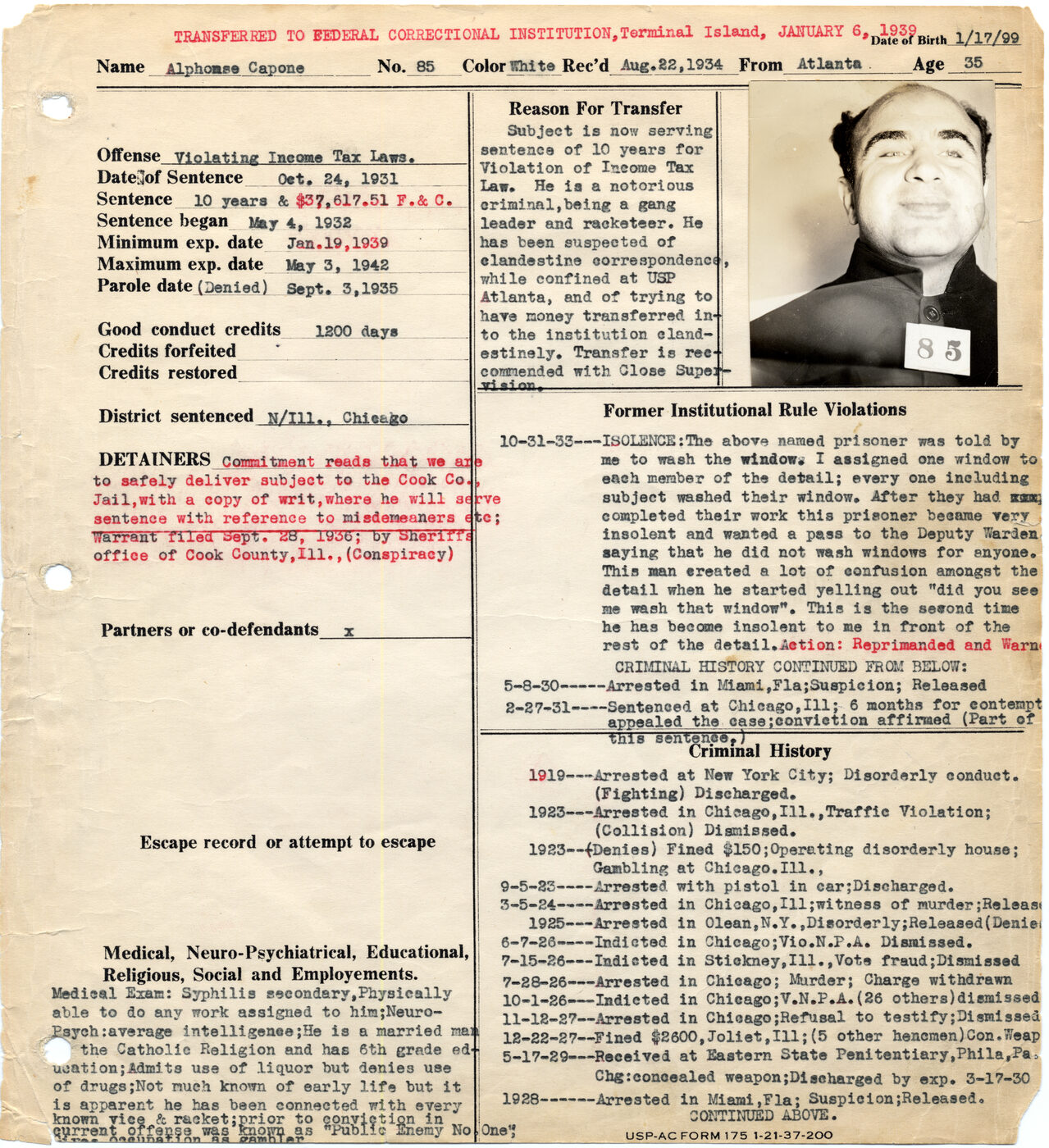
- Atlanta and Alcatraz, 1932–1939: the Atlanta commitment and habeas case, the warden’s notebook page for No. 85, the 1936 stabbing report, and the conflicting records of his transfer and release.
- Death, 1947: the FBI history page’s statement of his death on 25 January 1947, the National Archives catalog entry, the Bureau’s later file notes, and seven January 1947 newspaper pages.
Headline records
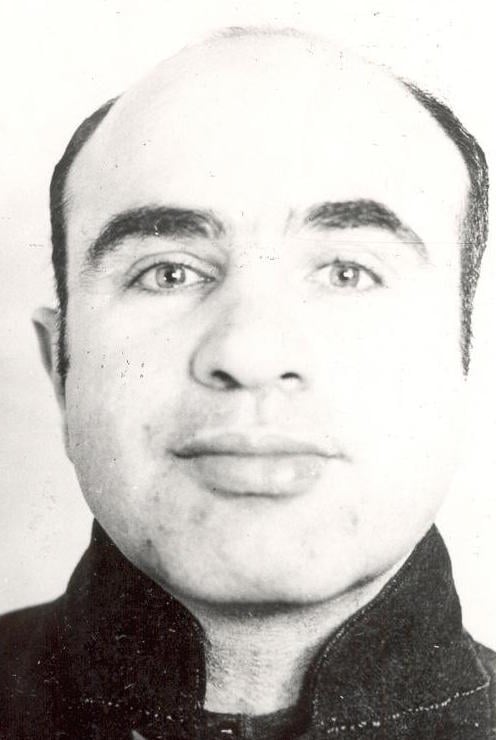
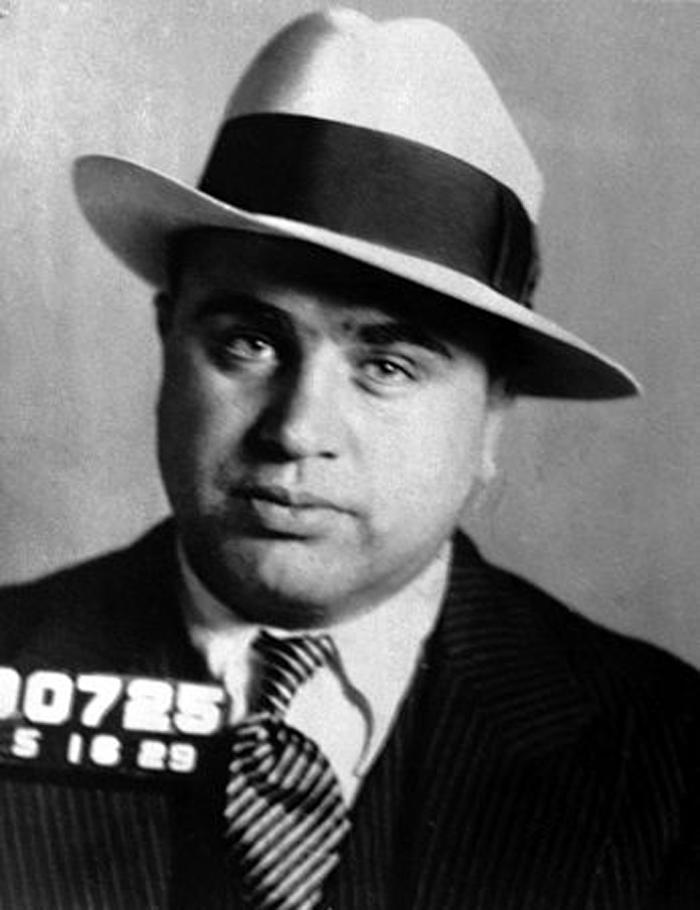
The cards below are the records the section leans on most: the Vault file, the FBI’s 1934 mug shot, the Alcatraz notebook page, the verdict and the judgment of October 1931, the Evening Star of 14 February 1929, the FBI history page, and Wilson’s summary report. The person page is Alphonse Capone. The Chicago Outfit family page and the Chicago region are separate sections, and nothing here fills a seat on the Outfit chart.
- Al CaponeAtlanta and Alcatraz, 1932–1939Federal custody from the Atlanta commitment to the release of November 1939: the Alcatraz warden's notebook page for No. 85 (received 22 August 1934, parole denied 3 September 1935, Terminal Island January 1939), the Bureau's transfer memo, the 1936 stabbing report, the habeas and vacate petitions, and the conflicting release records.
- Al CaponeDeath, 1947The FBI's history page states that Capone died on Palm Island of a stroke and pneumonia on 25 January 1947; the National Archives catalog gives 01/25/1947 at Miami Beach. The Bureau's 1947 and 1964 file entries and seven newspaper pages of January 1947 are filed beside them.
- Al CaponeProhibition, 1929–1931The federal record of the dry years as it touches Capone: the 1929 contempt case, which the Bureau later called its first Capone conviction, a 1930 Bureau report on juice-grape tribute, the concurrent tax cases against Guzik, Nitto and others, the 1931 Prohibition indictment file, and the Attorney General's reference to the conspiracy charge.
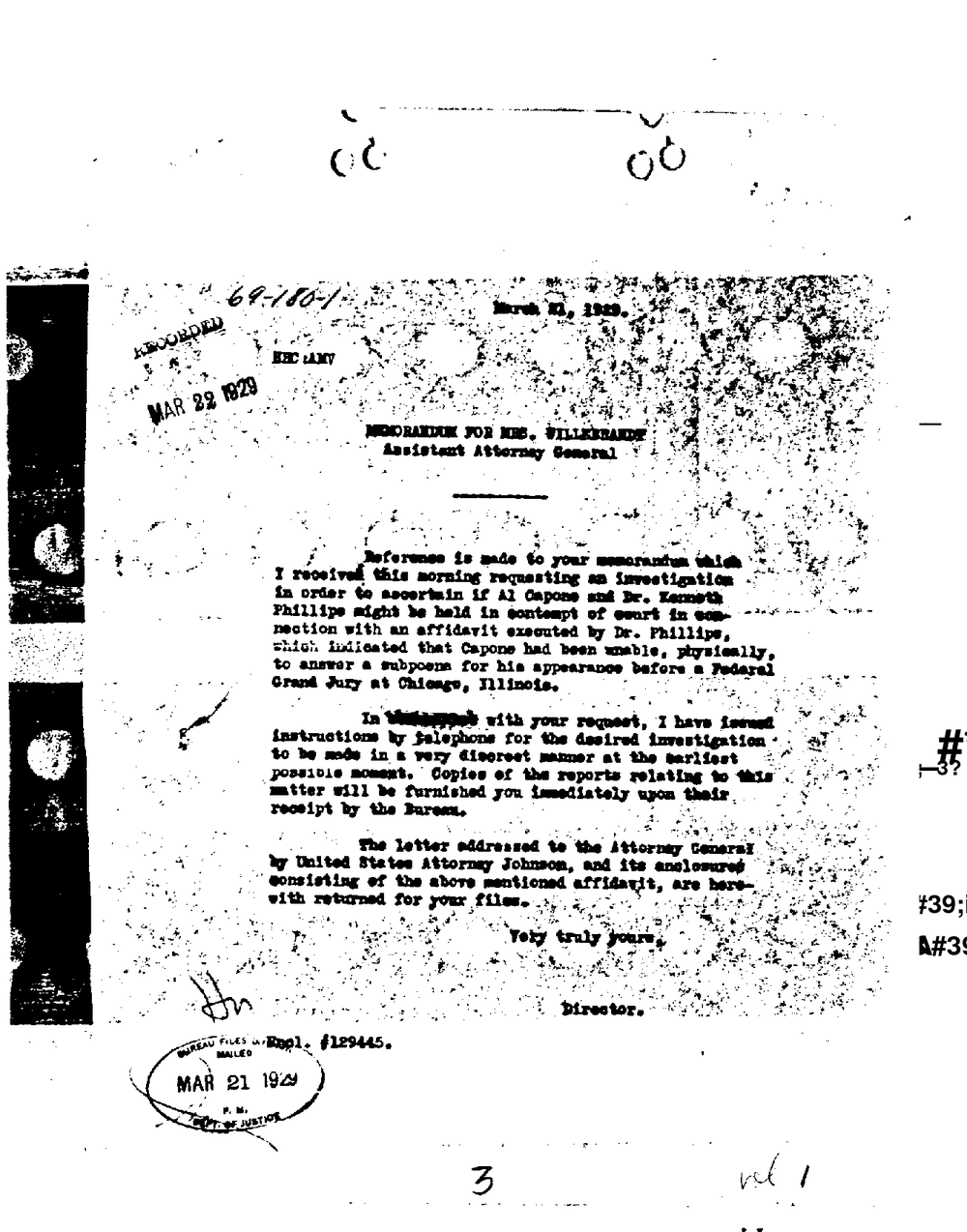
- Al CaponeRise, 1899–1930Capone's years before the tax case, as the filed records give them: the FBI's history essay and the 1947 Torrio memorandum on Colosimo, Torrio and the move to Chicago, wire pages of 1926 and 1928, the 1929 Philadelphia gun case, the 1930 public-enemies list, and the gang rosters the Bureau kept.
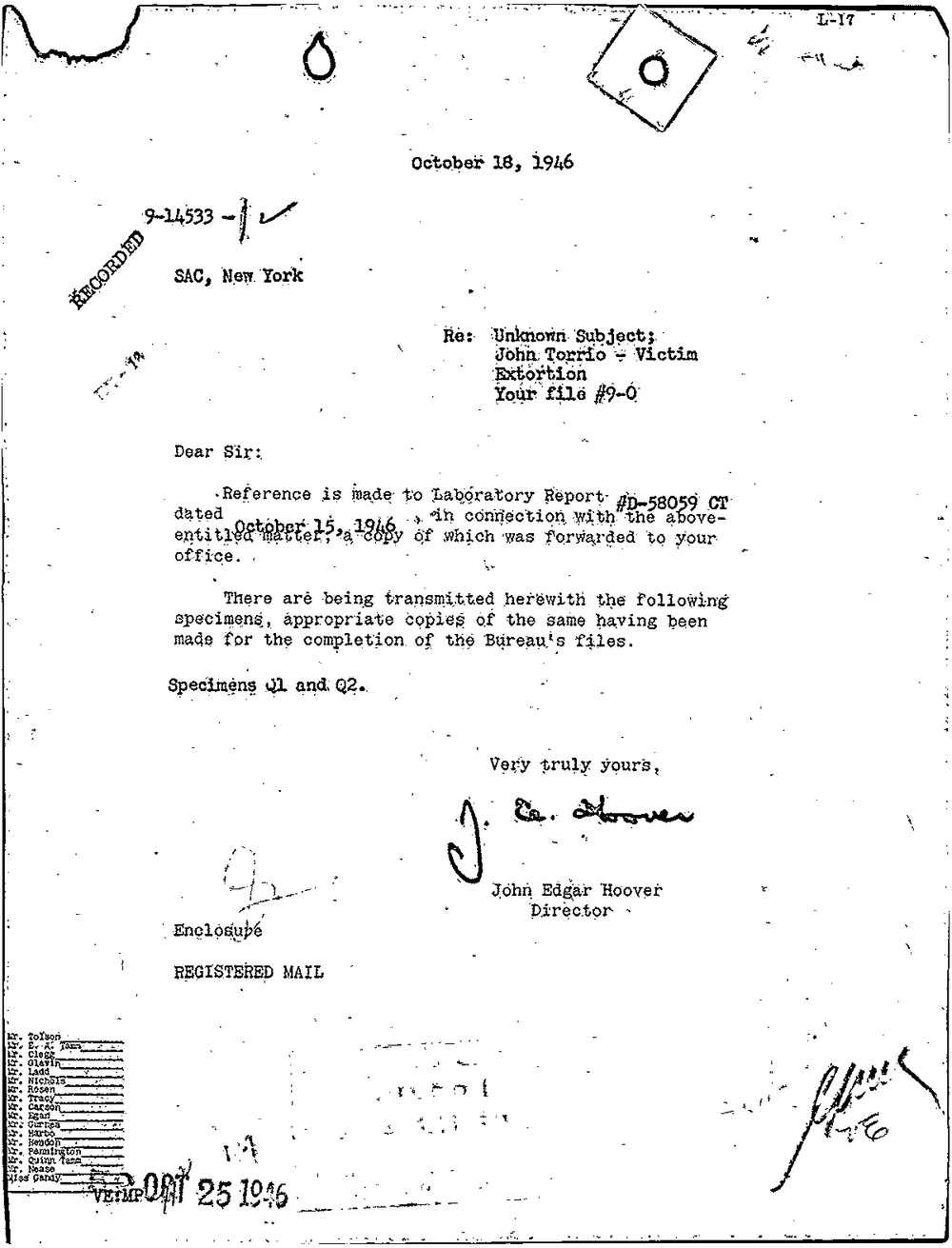
- Al CaponeSaint Valentine's Day, 1929The 14 February 1929 killings at the S. M. C. Cartage Company garage, 2122 North Clark Street, Chicago, from the newspapers of 1929, the coroner's inquest as reported, Calvin Goddard's ballistics testimony, and the federal records that touch it.
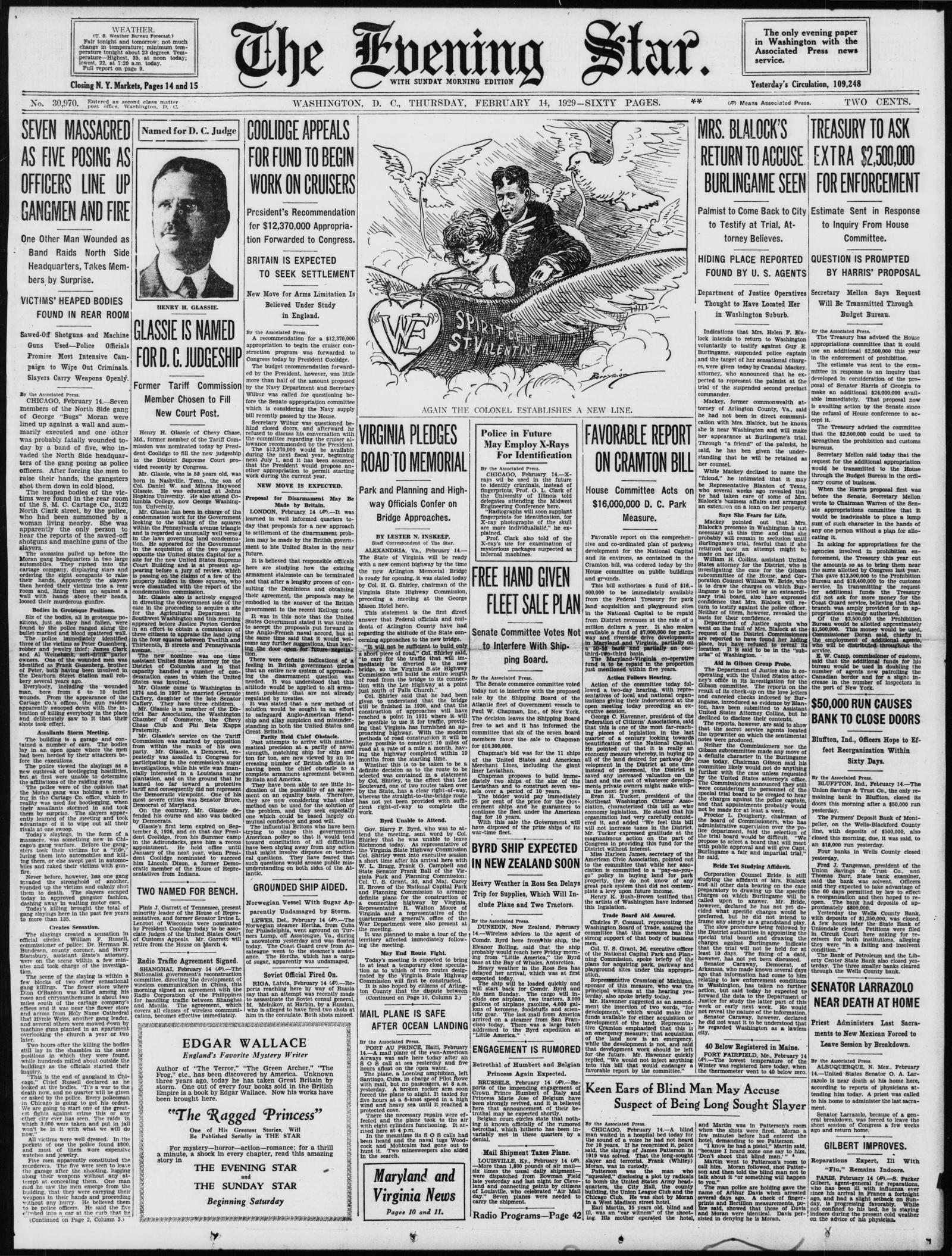
- Al CaponeTax trial, 1931United States v. Alphonse Capone, Nos. 22852 and 23232, Northern District of Illinois: the indictments, the withdrawn plea, the 17 October 1931 verdict, the 24 October judgment, the appeal, and the Treasury investigation behind them, each from the record.