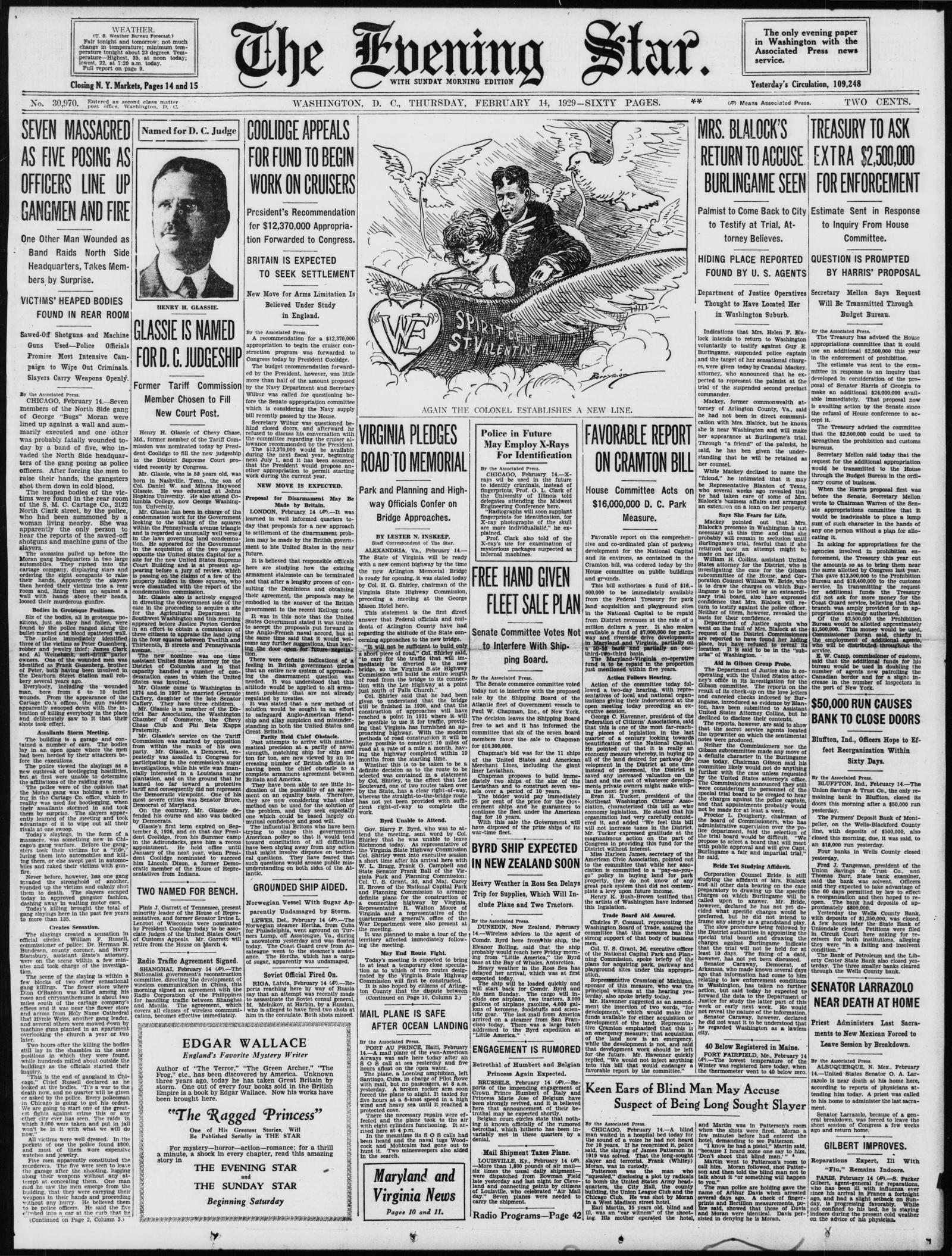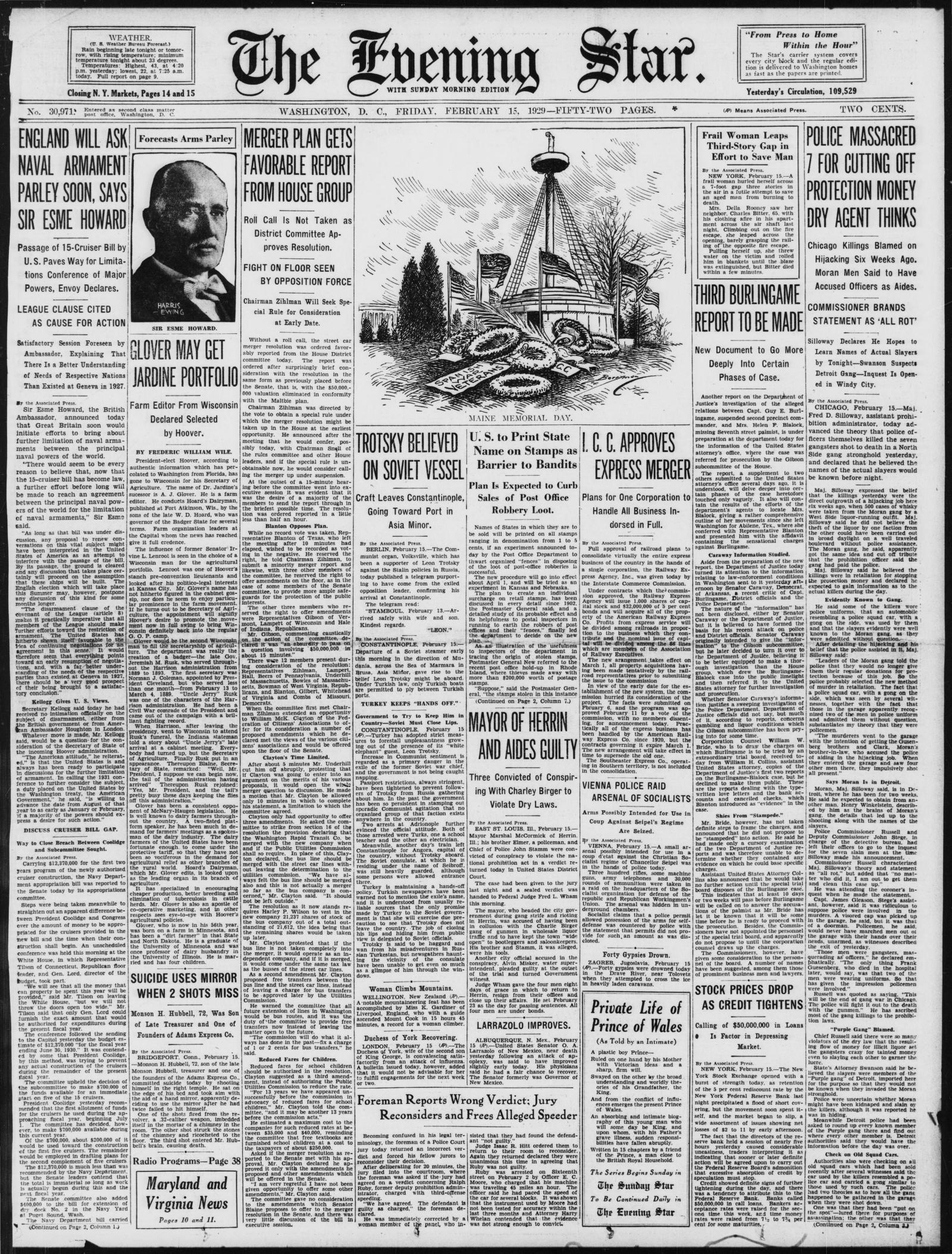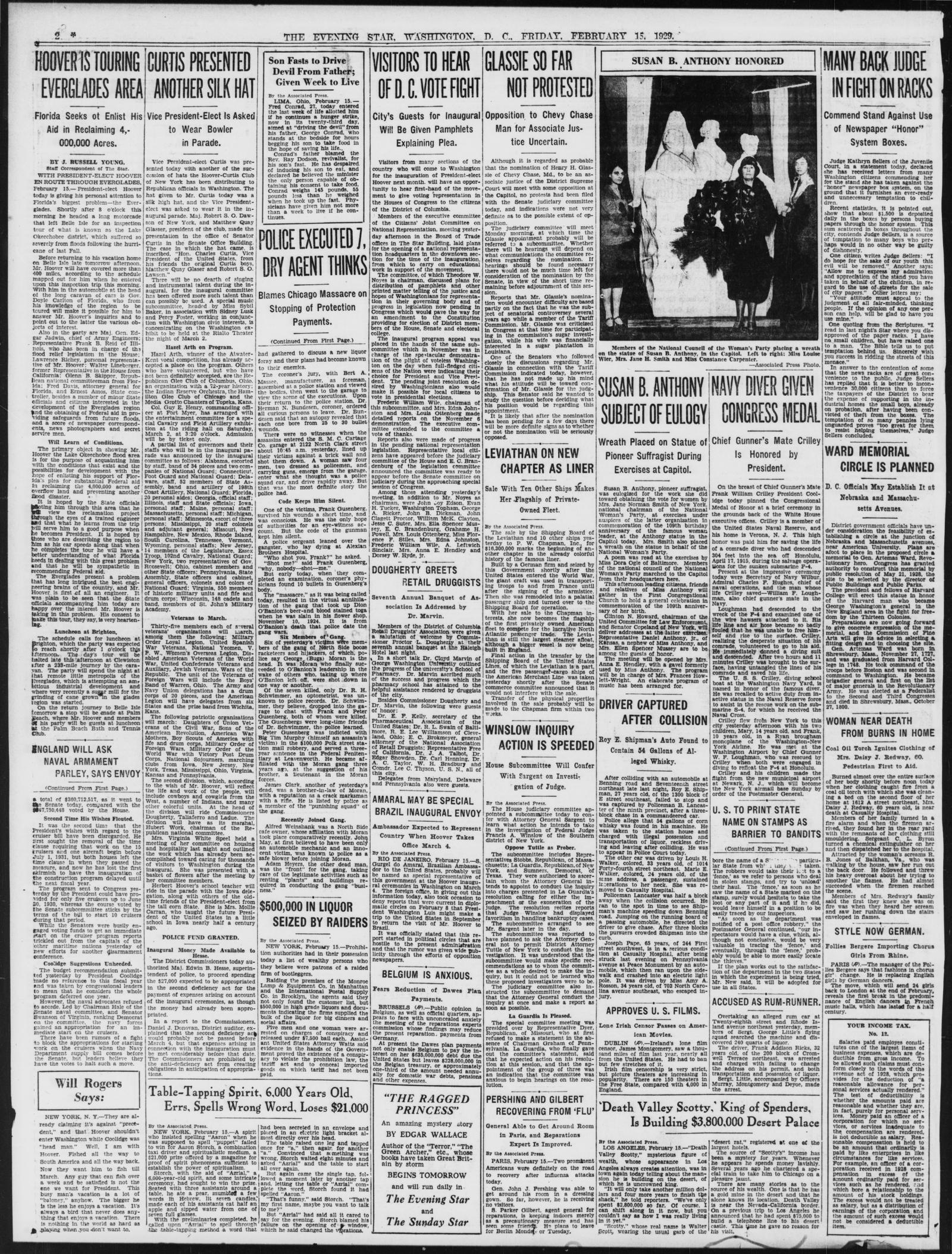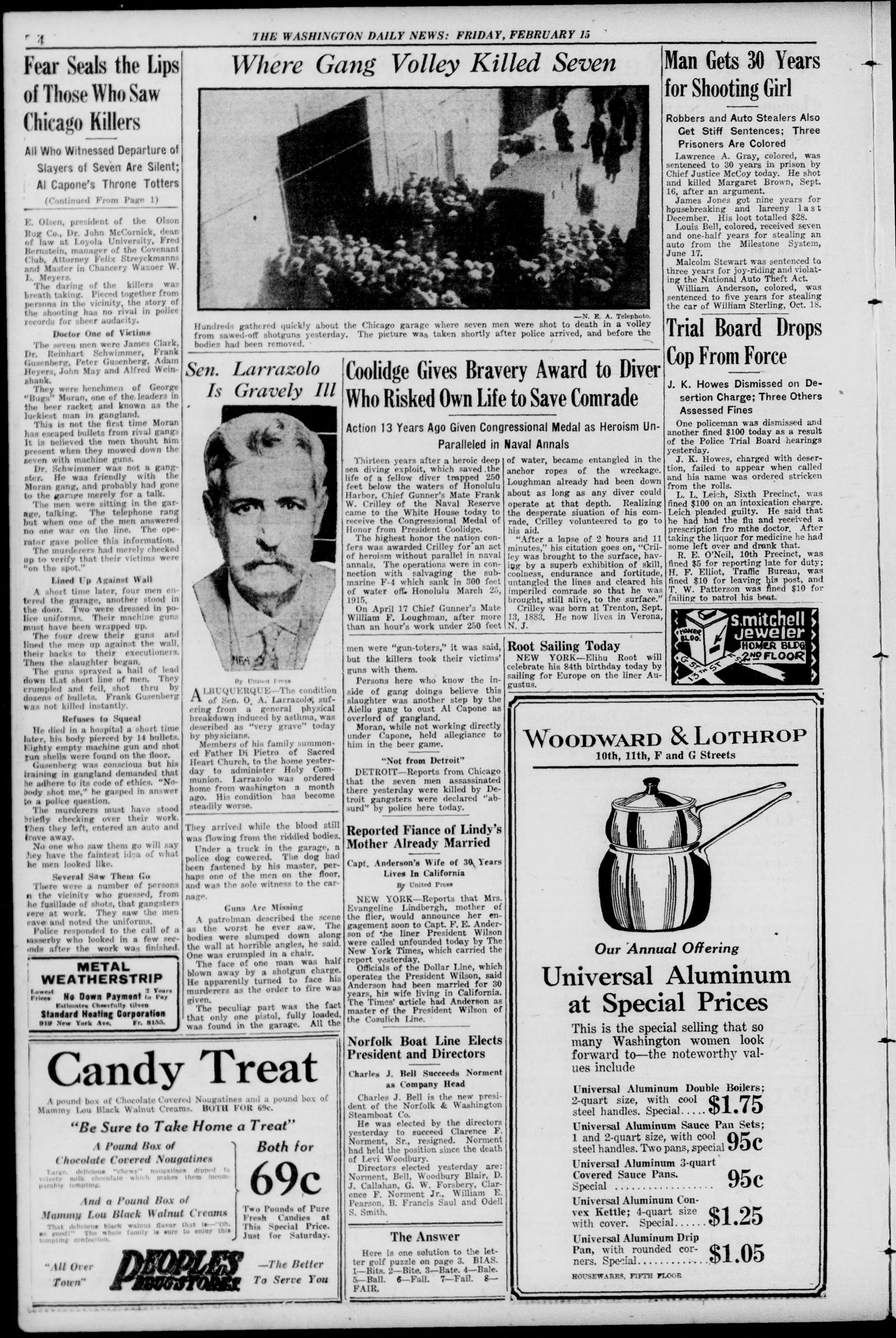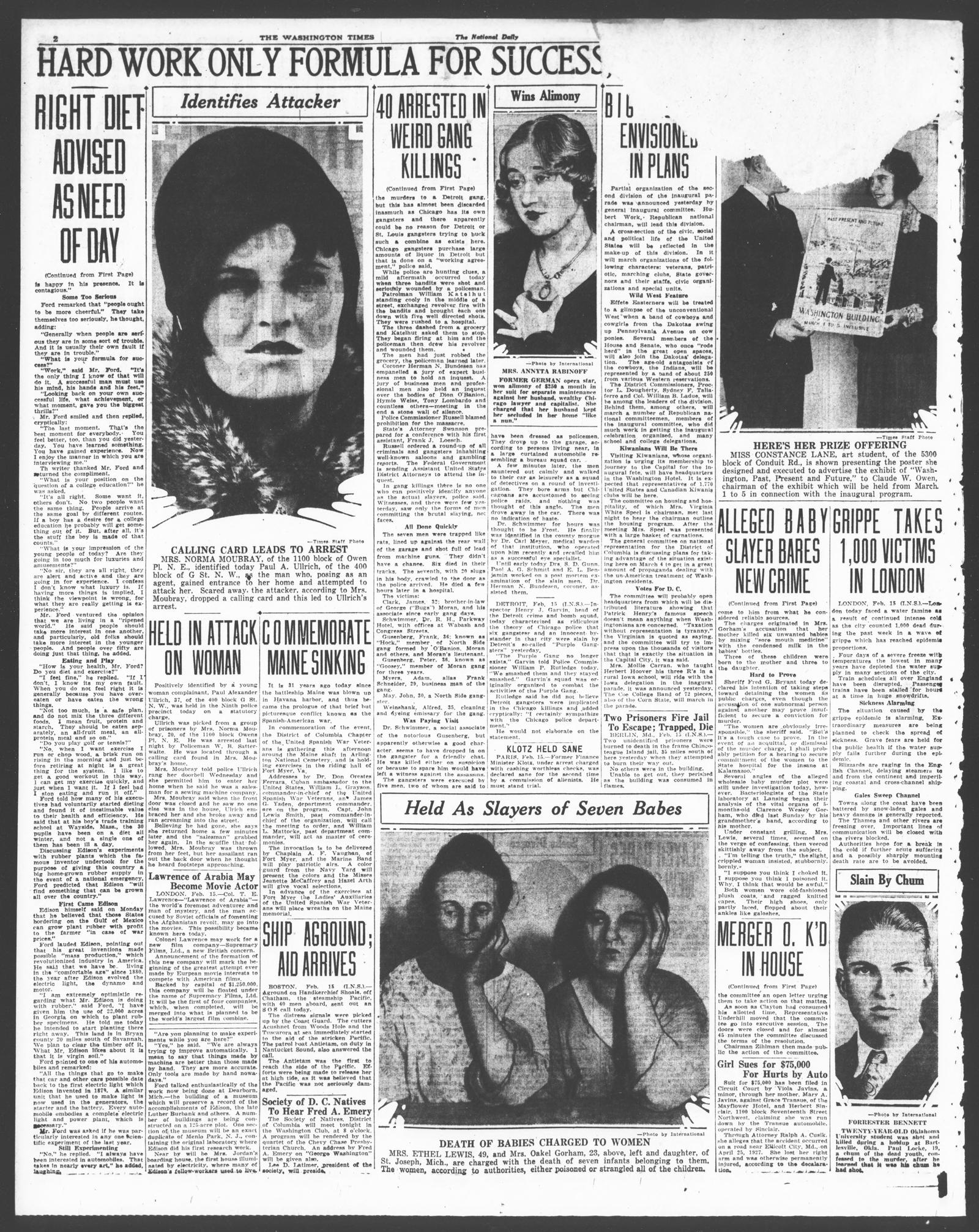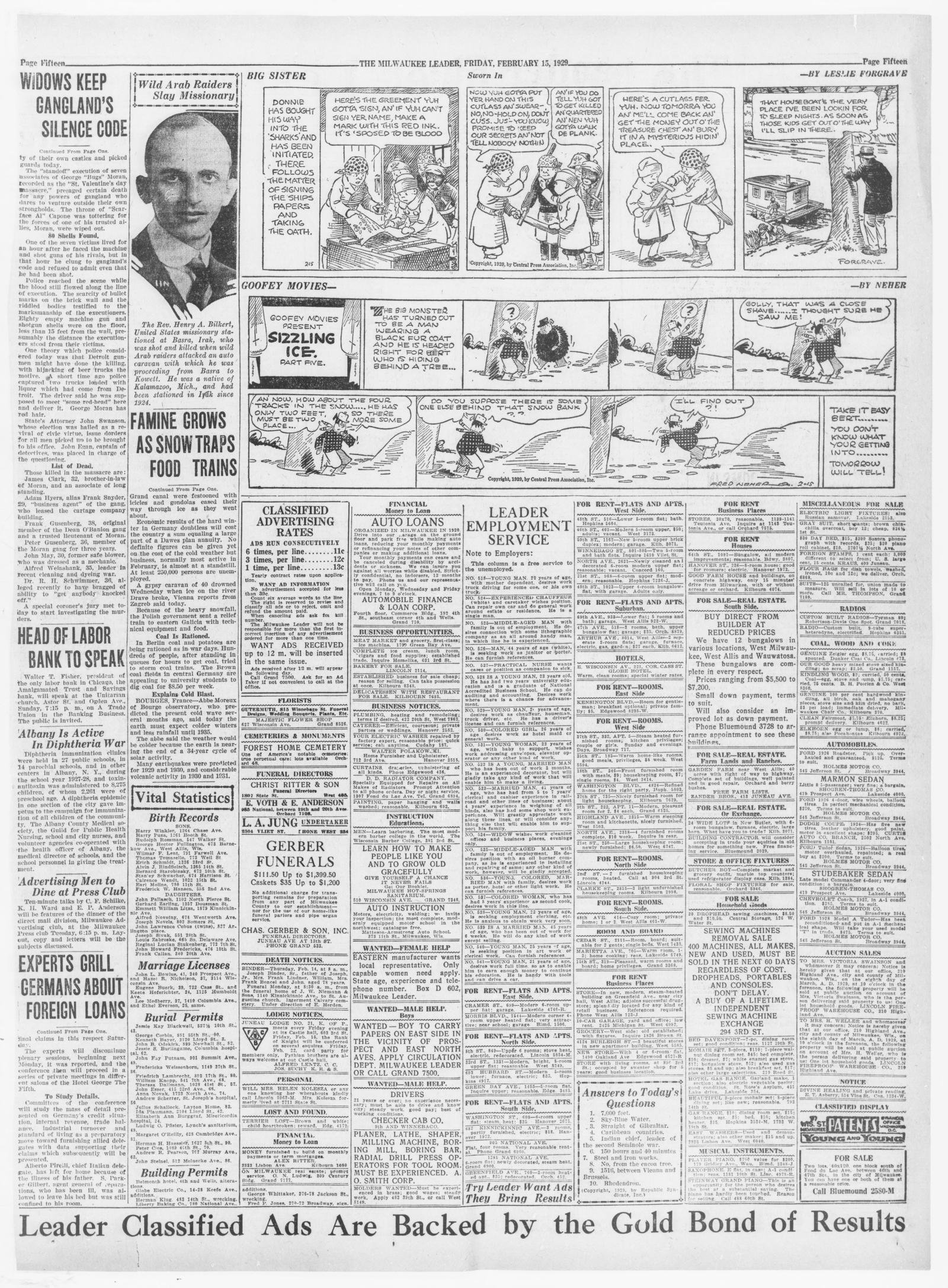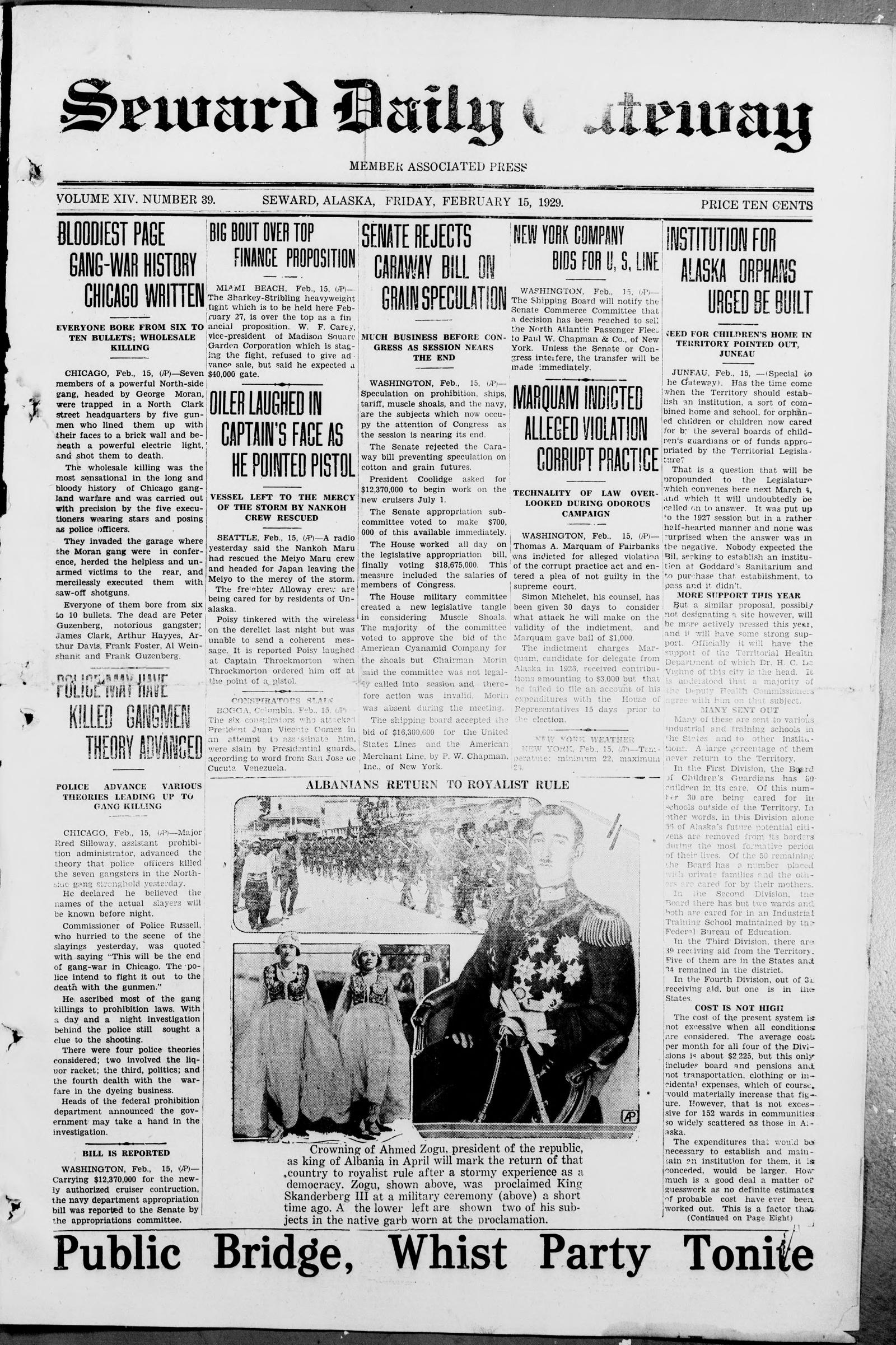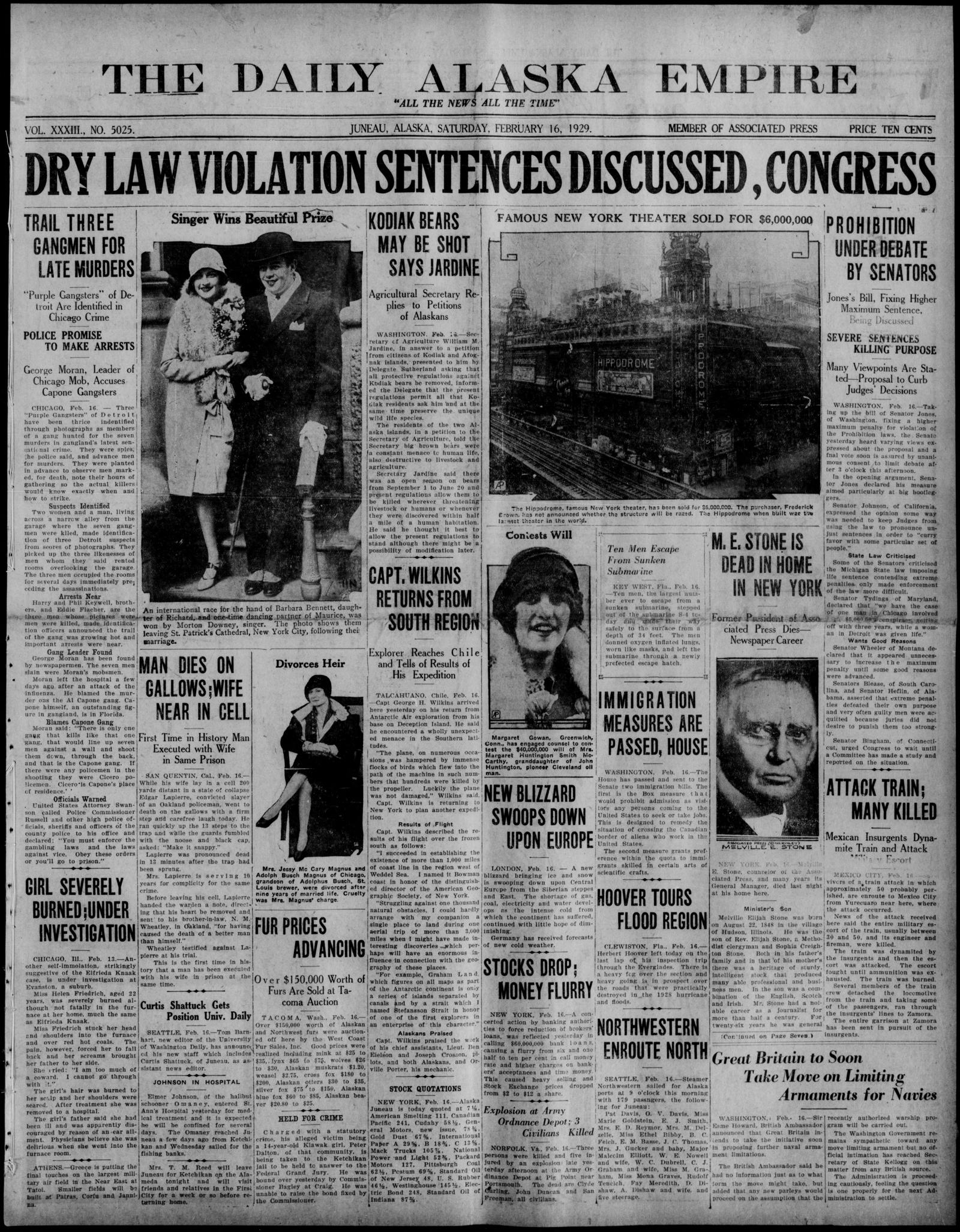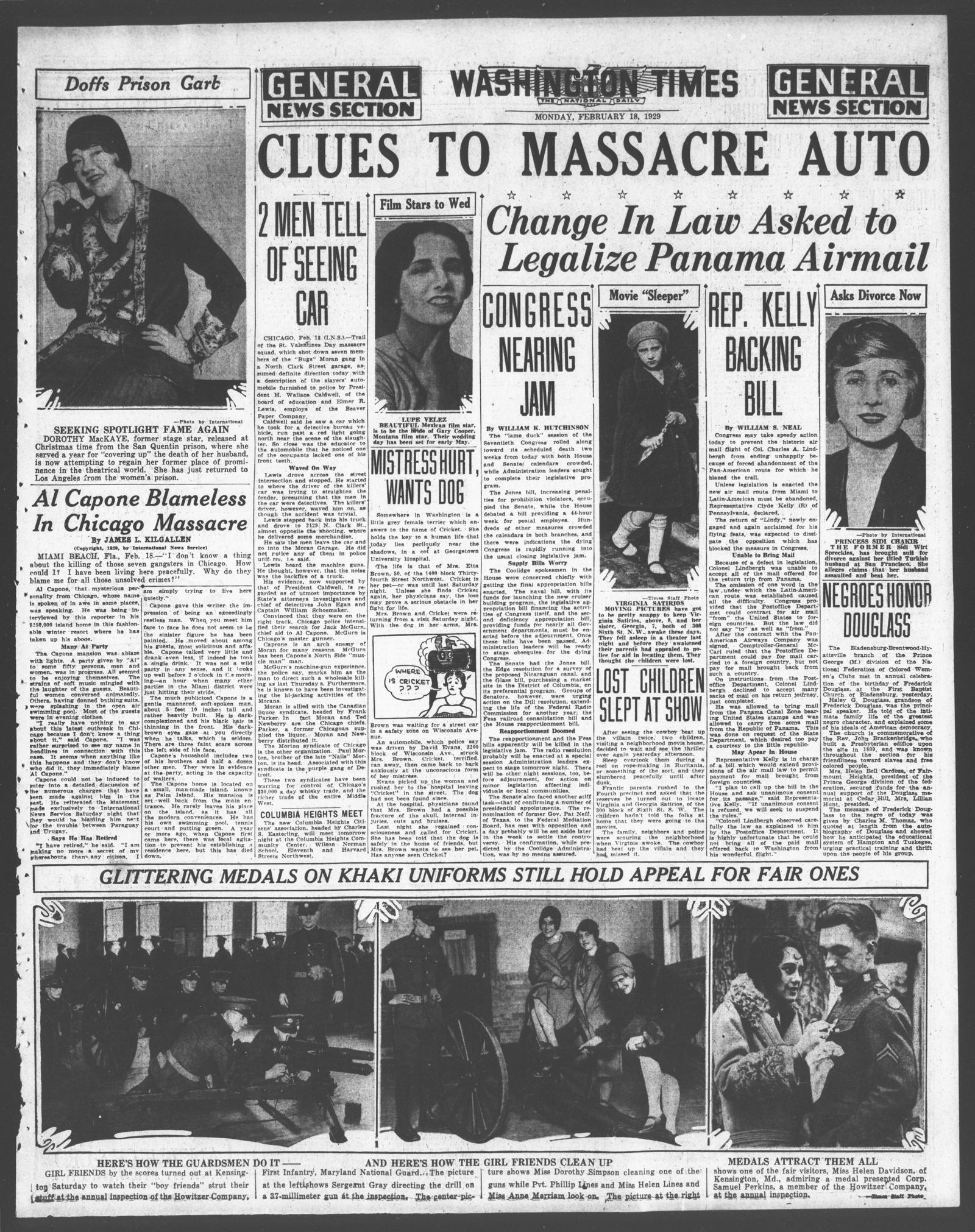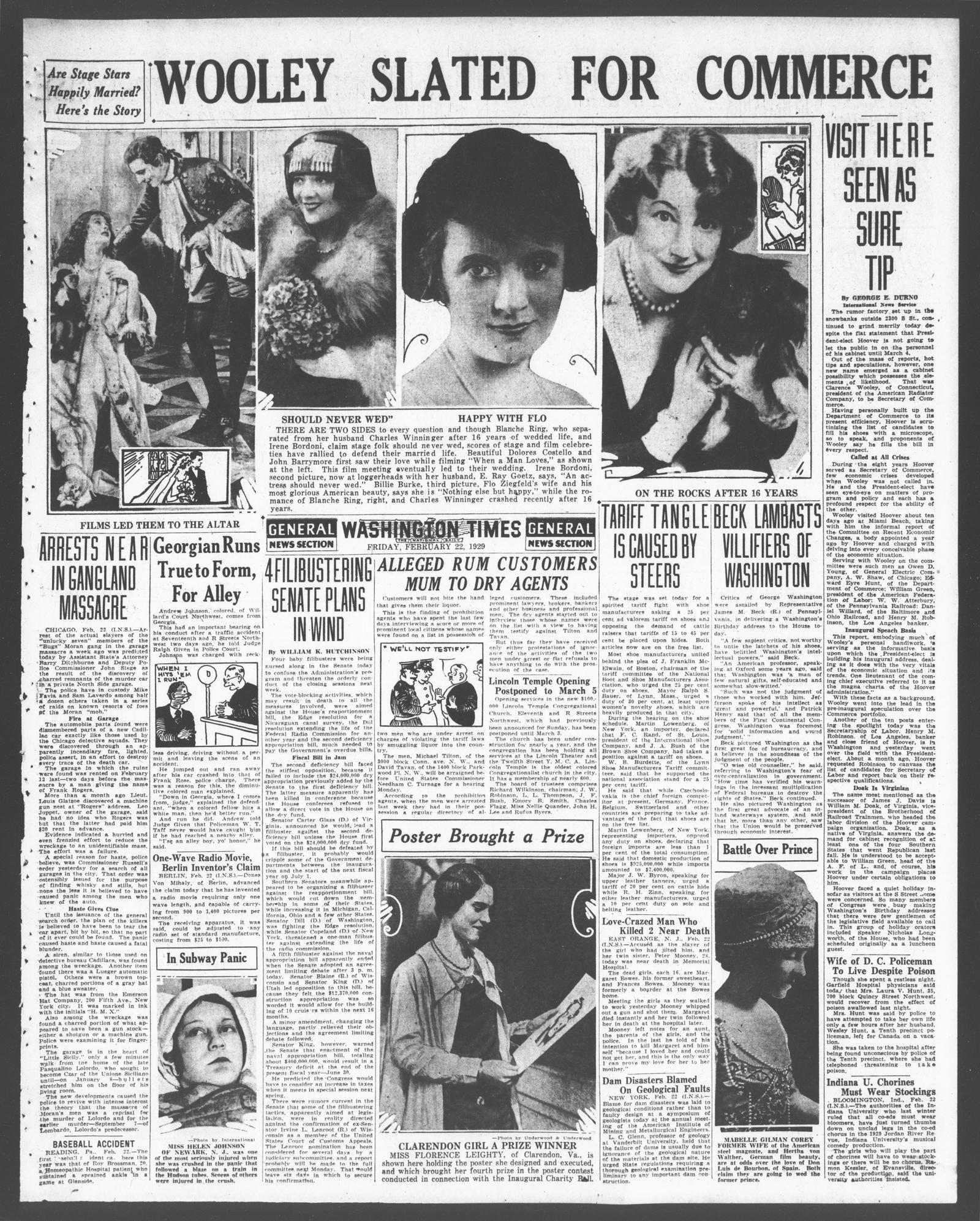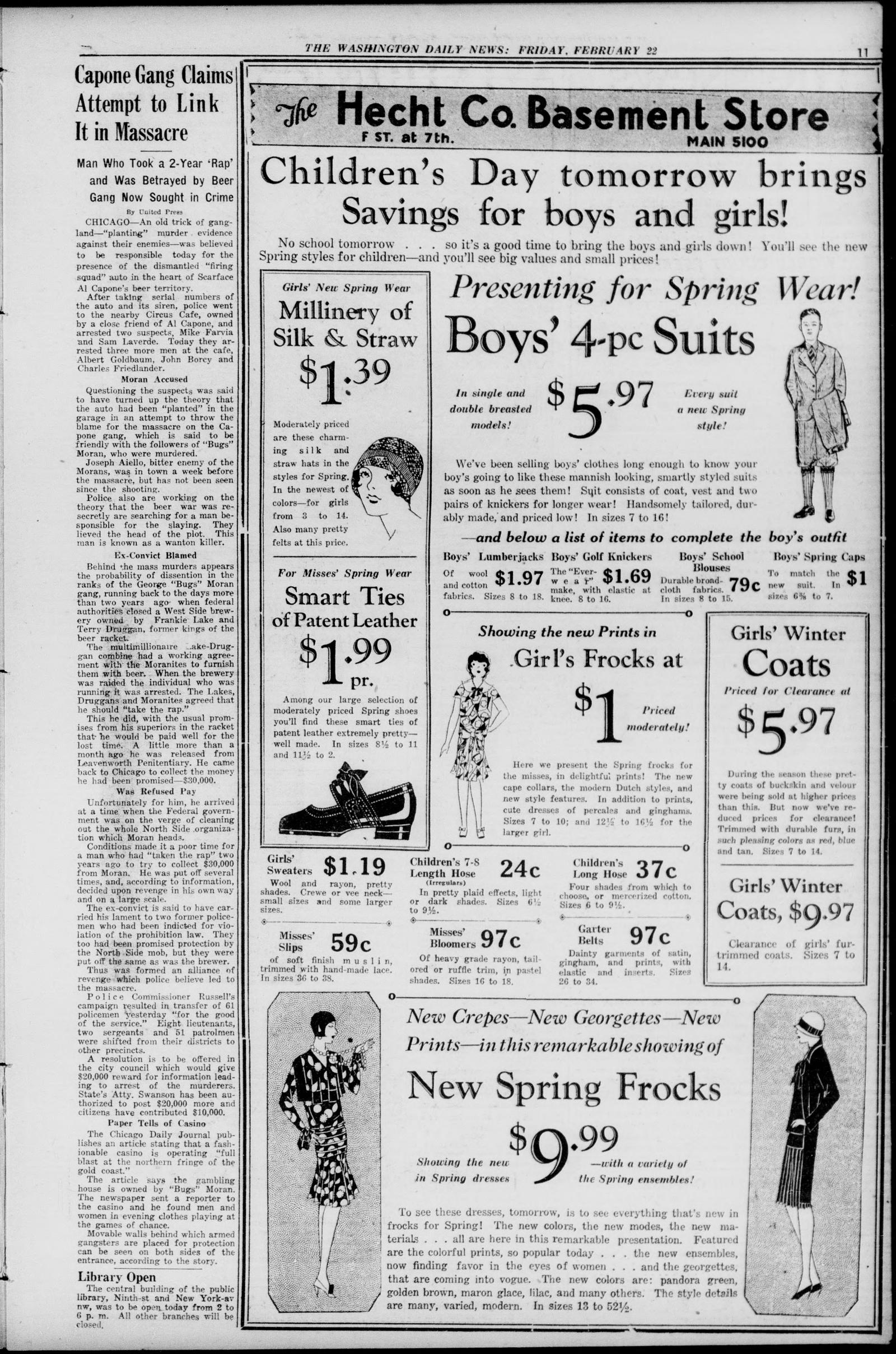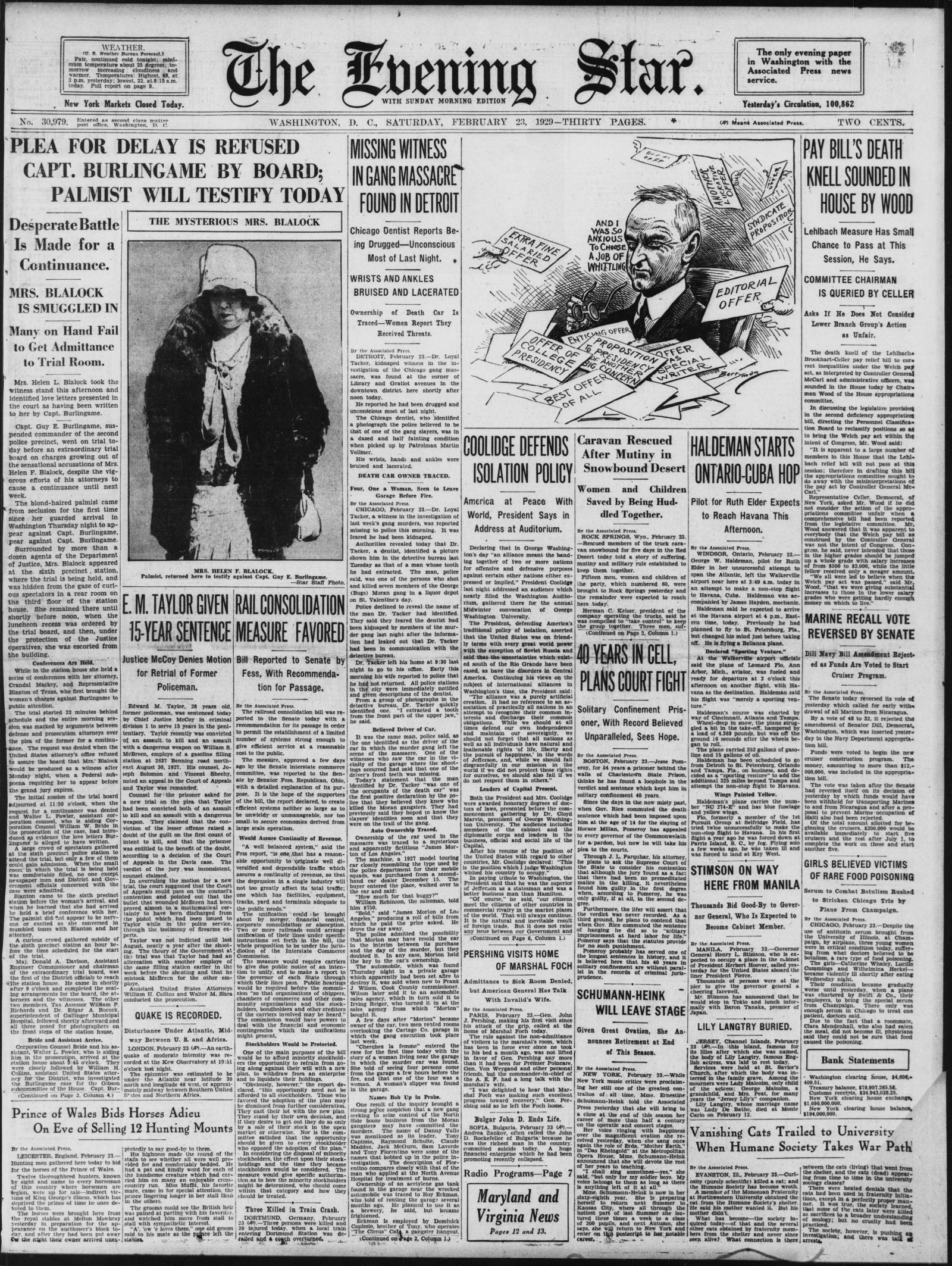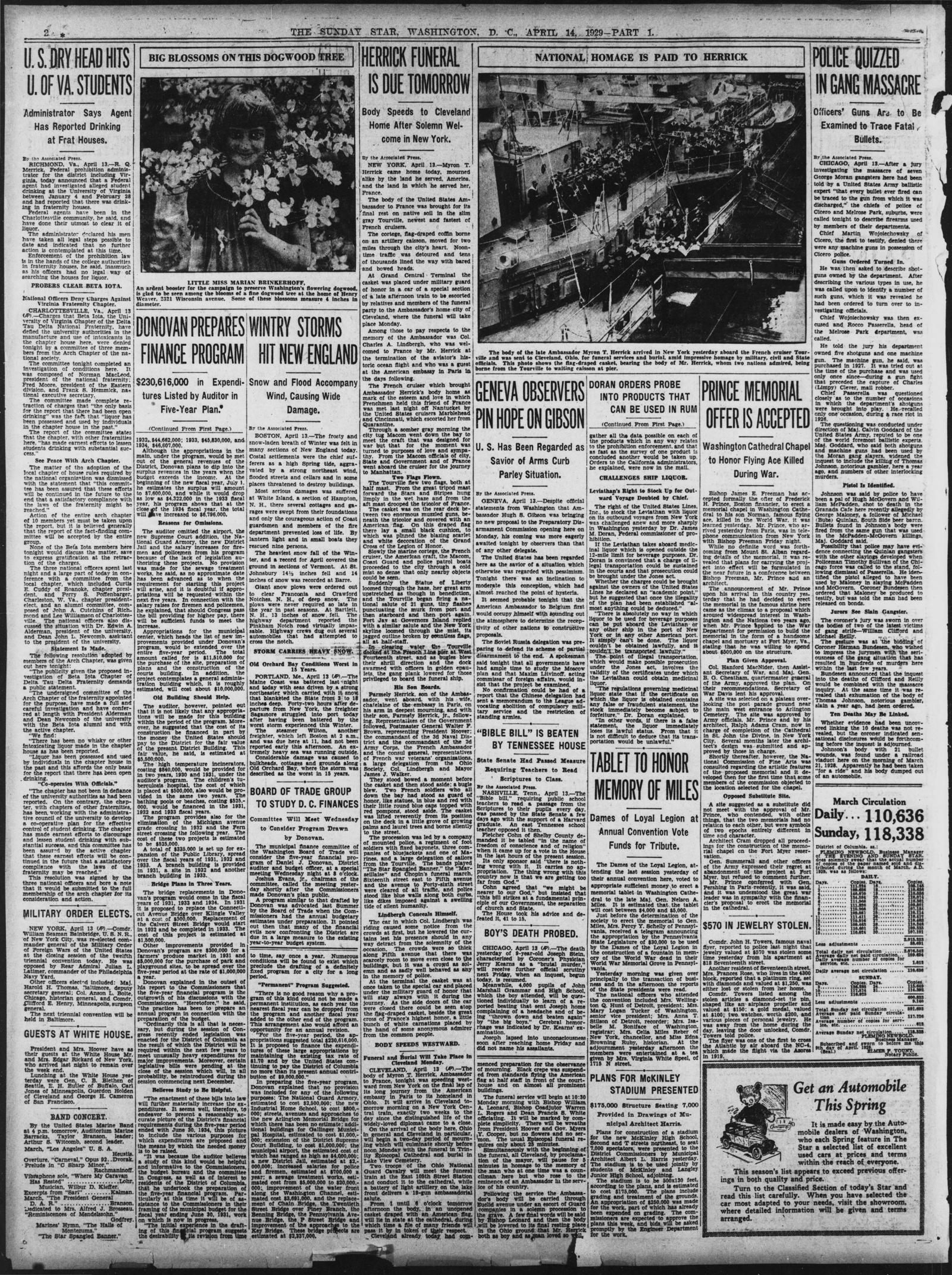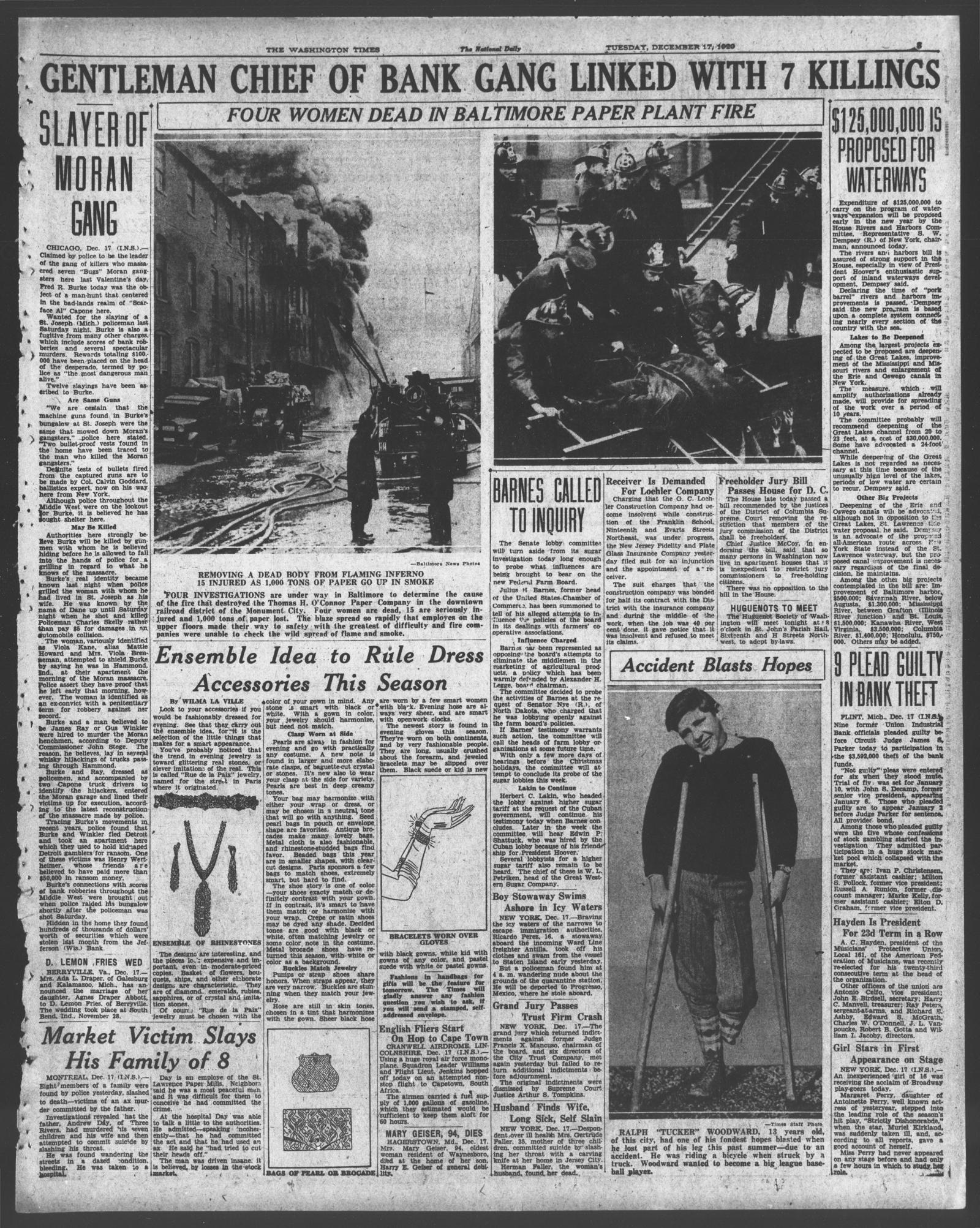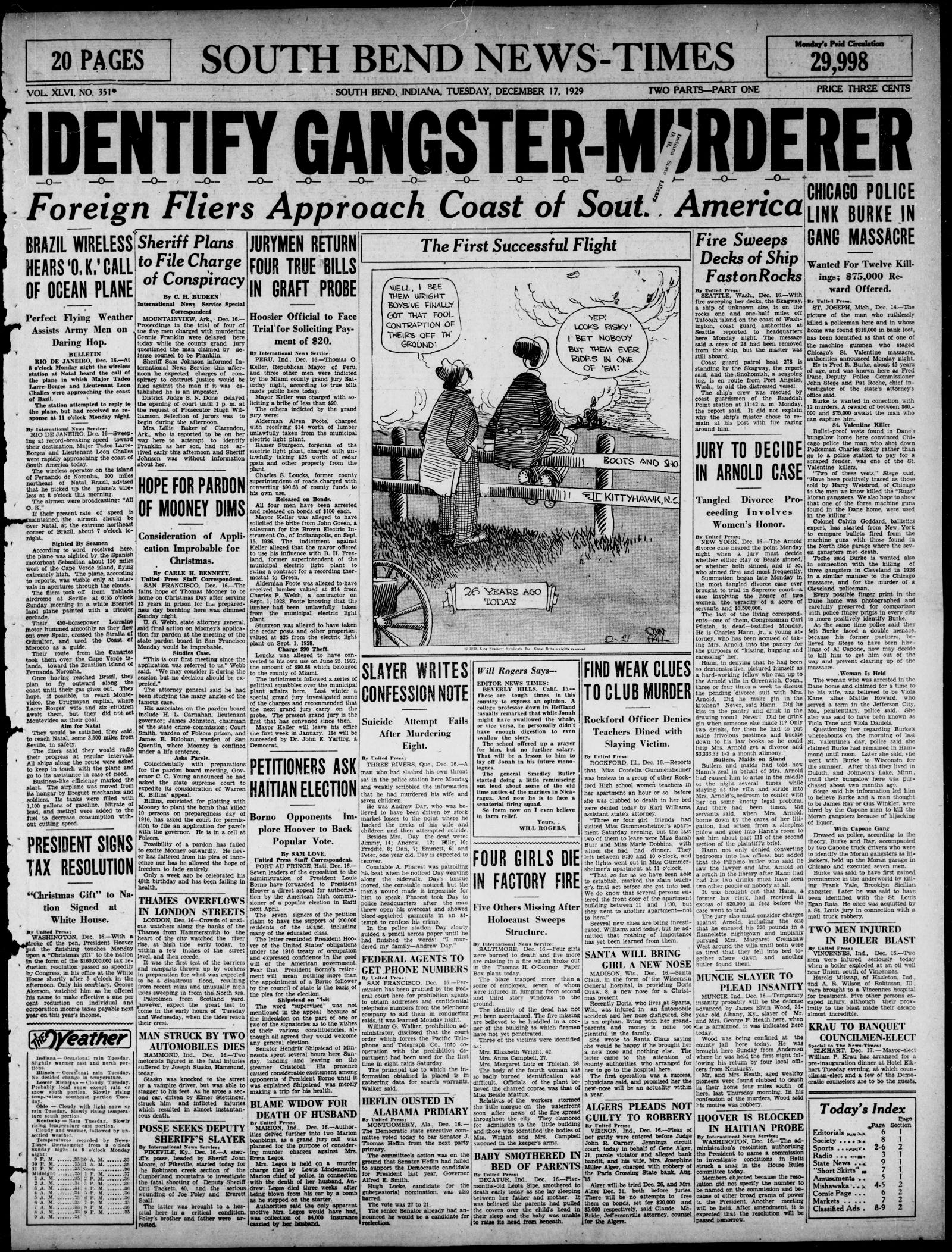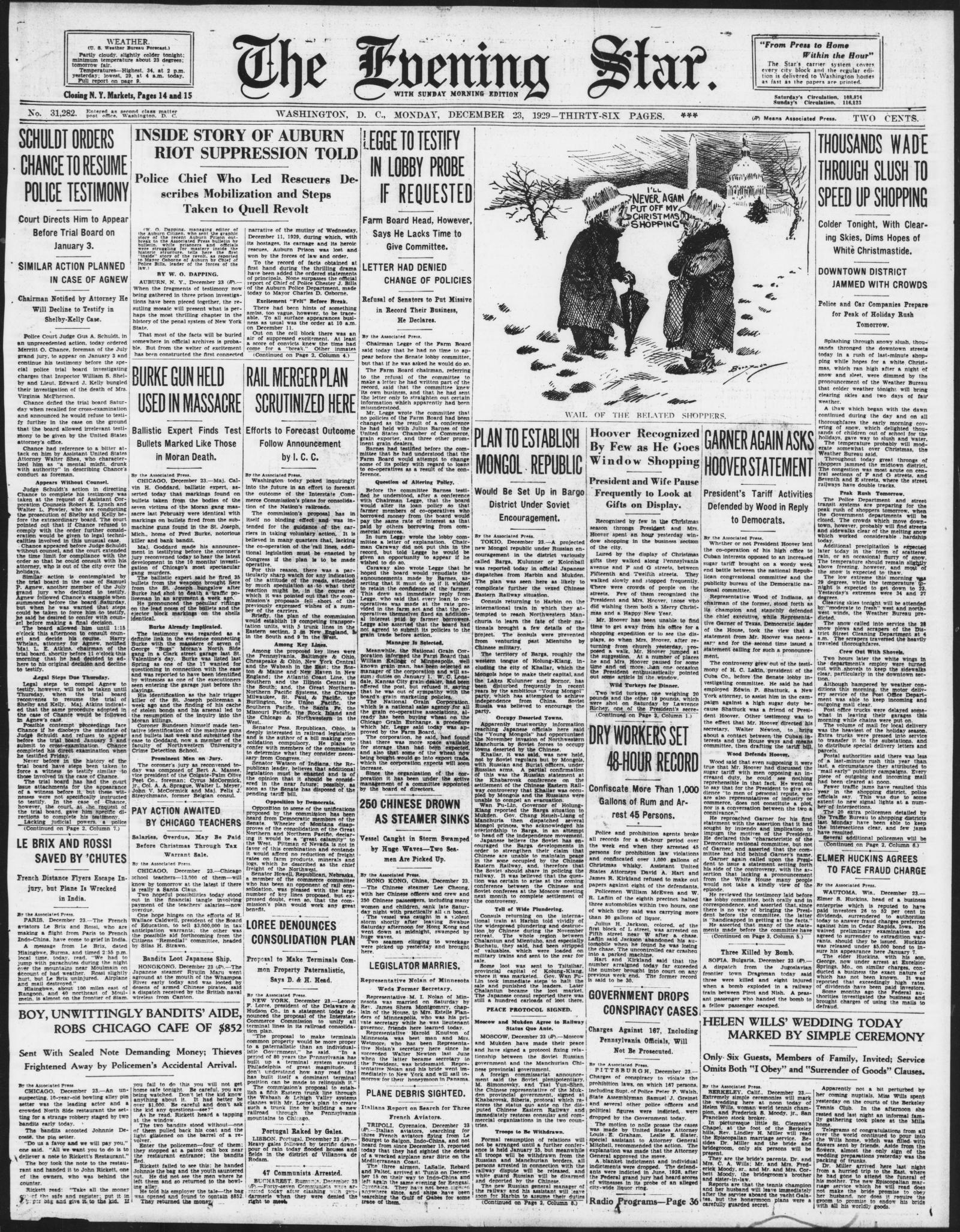
On the afternoon of 14 February 1929 the Washington Evening Star printed the Associated Press account from Chicago: seven men of the North Side group of George “Bugs” Moran had been lined up against a wall and shot by five men who entered the garage posing as police officers. The bodies were found “in the rear room of the S. M. C. Cartage Co., 2122 North Clark street.” That page is the record this archive uses for the address. The next day’s pages carry the names of the dead as the papers printed them, the coroner’s first findings, and the statement of Police Commissioner William F. Russell.
What the 1929 pages report
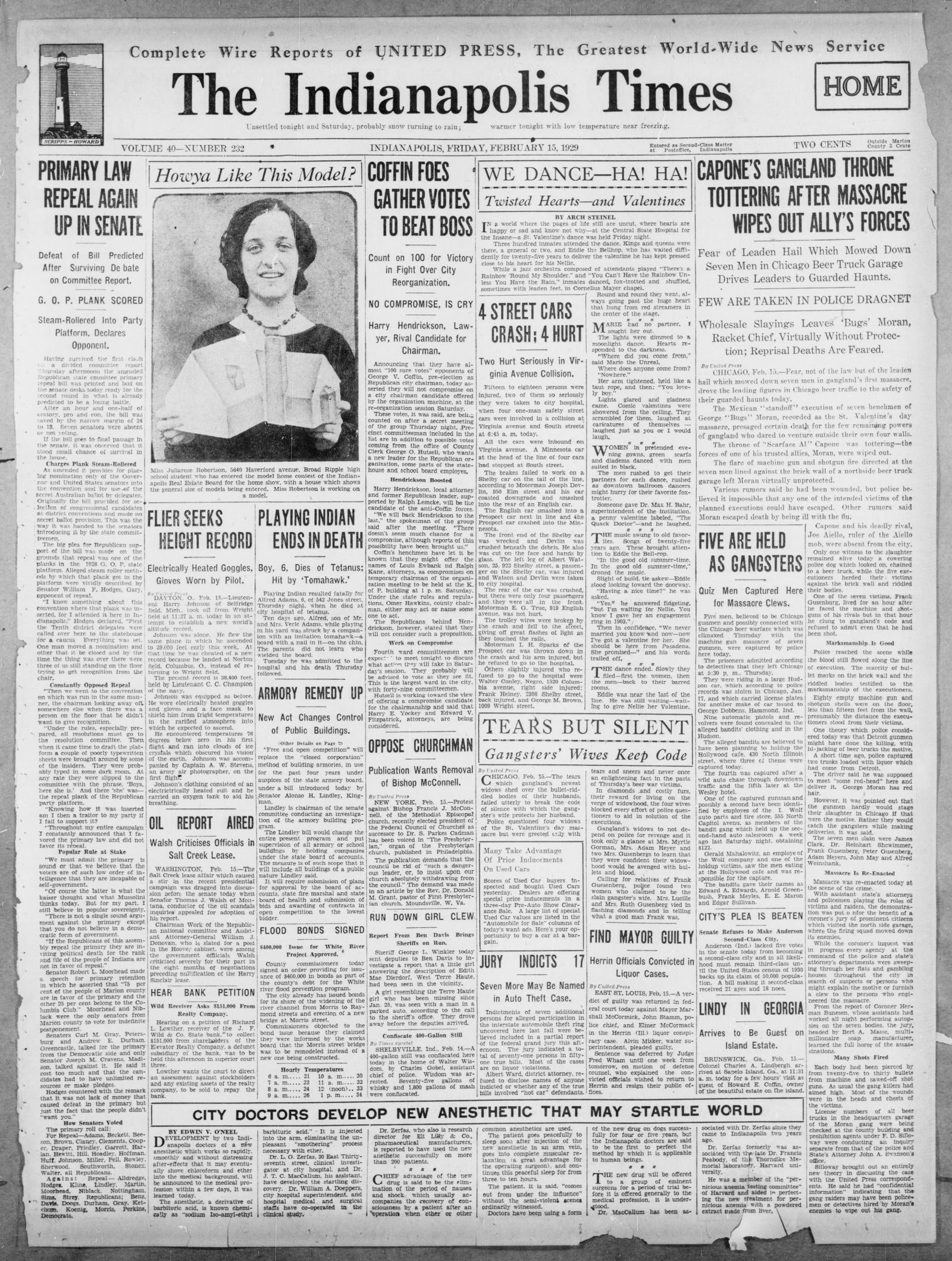
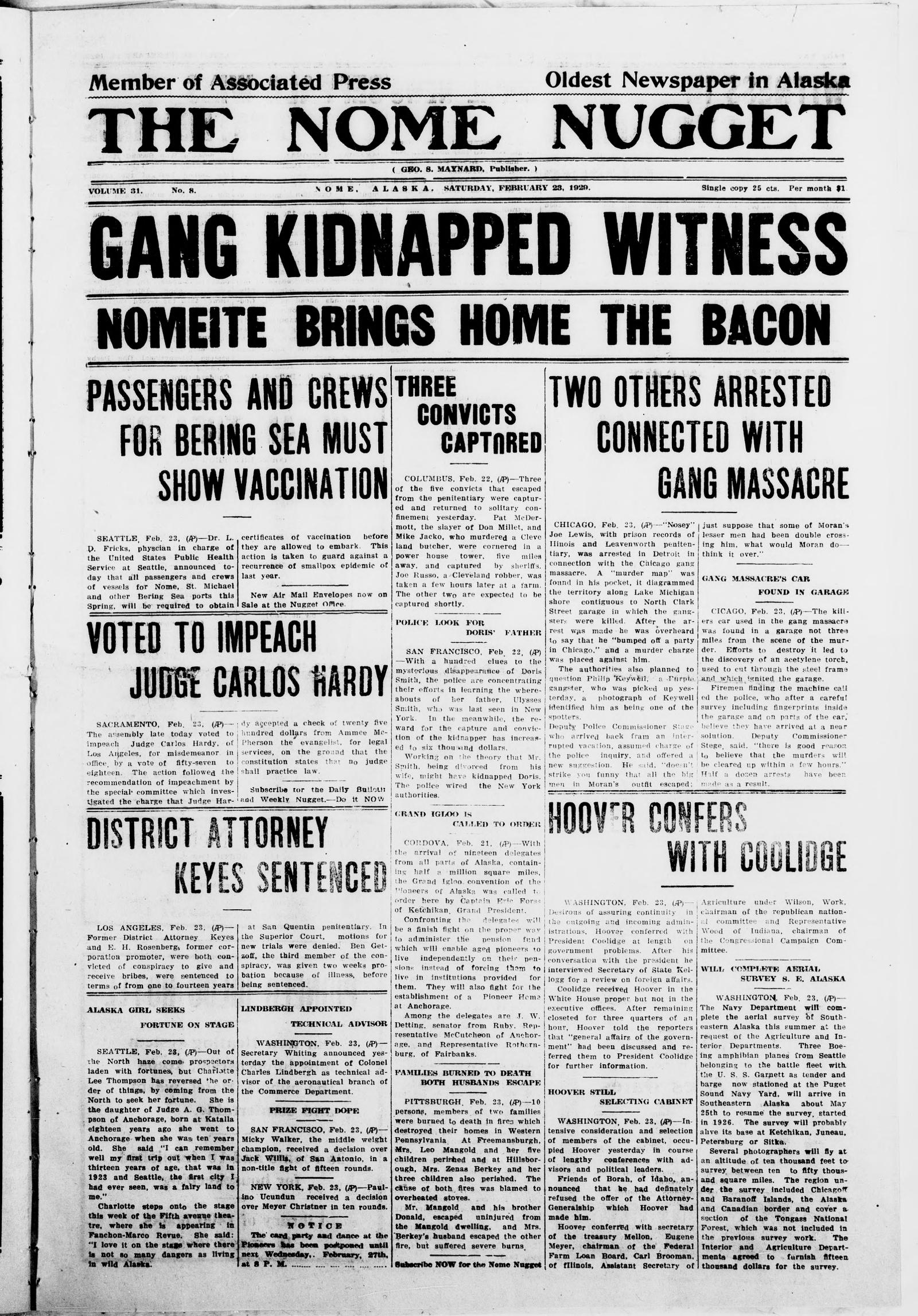
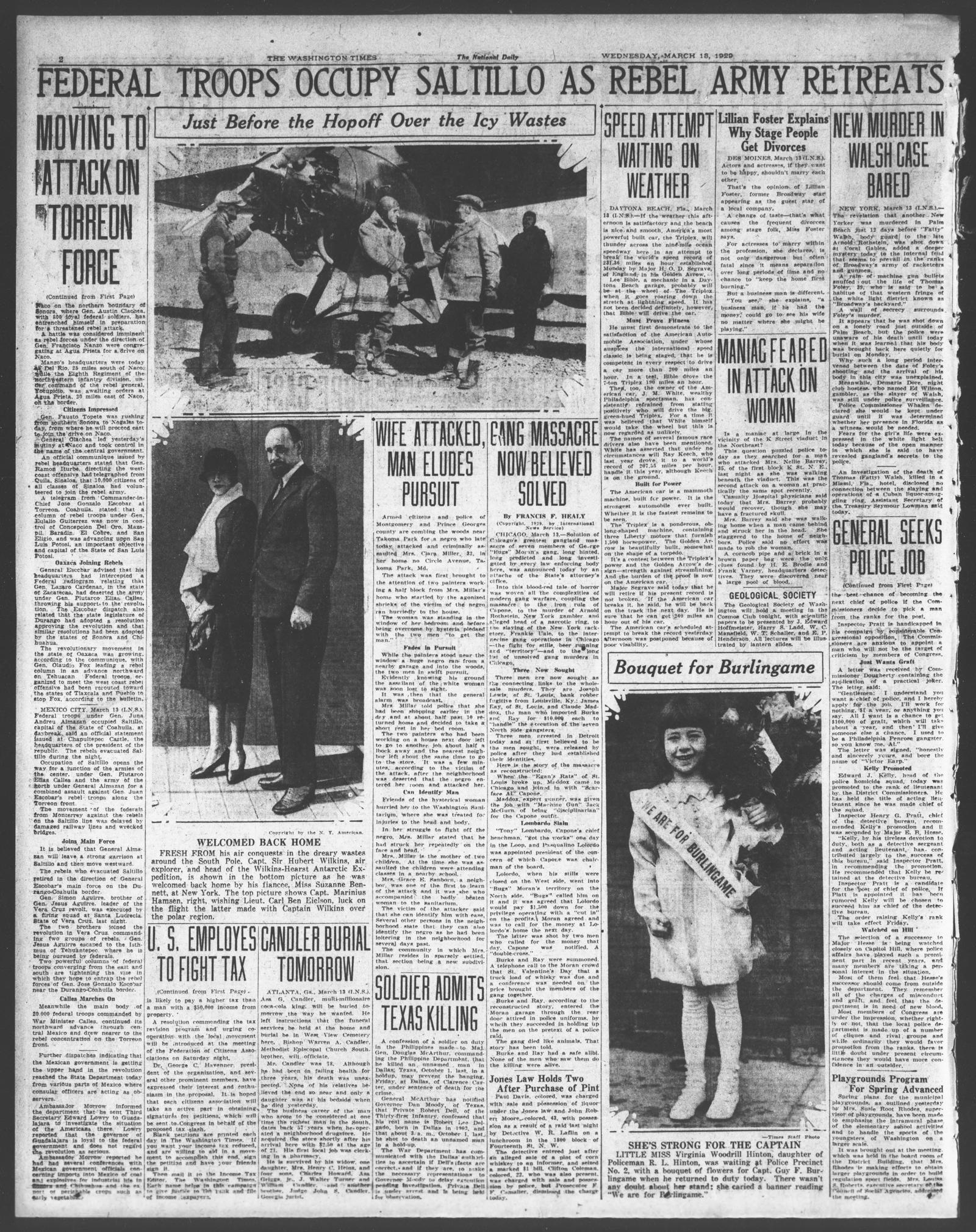
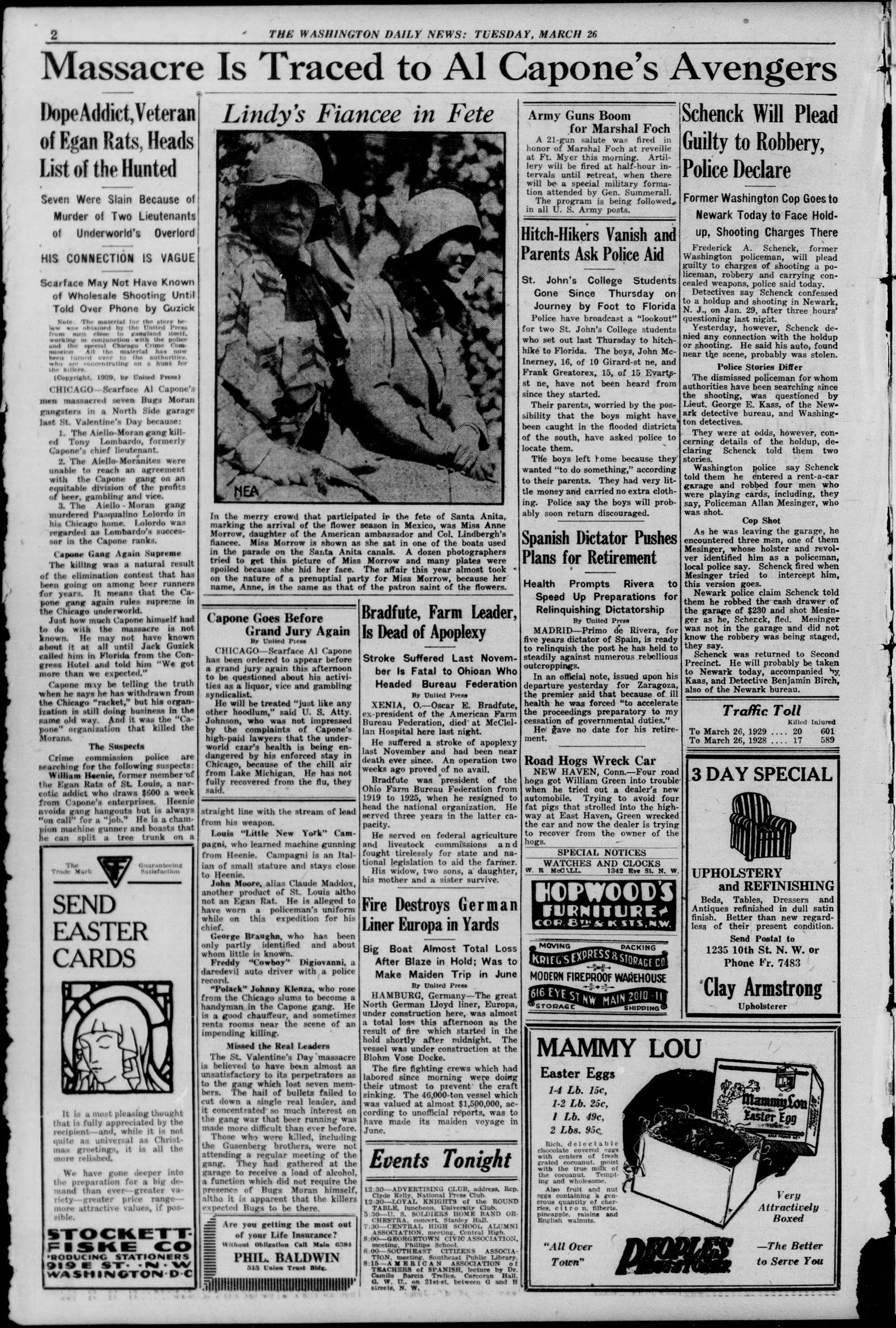
The clippings filed here are same-day and follow-up pages from the Evening Star, the Washington Times, the Washington Daily News, the Indianapolis Times, the Milwaukee Leader and three Alaska papers, all published in 1929 and therefore public domain. They report the arrests of the first days, Capone’s denial from Miami Beach on 18 February, the burned car found in “Little Sicily” on 22 February, and the coroner’s inquest through March and April. On 14 April the Sunday Star reports Major Calvin Goddard directing questions at the inquest about the guns of the Cicero and Melrose Park police departments.
The Burke guns and the ballistics testimony
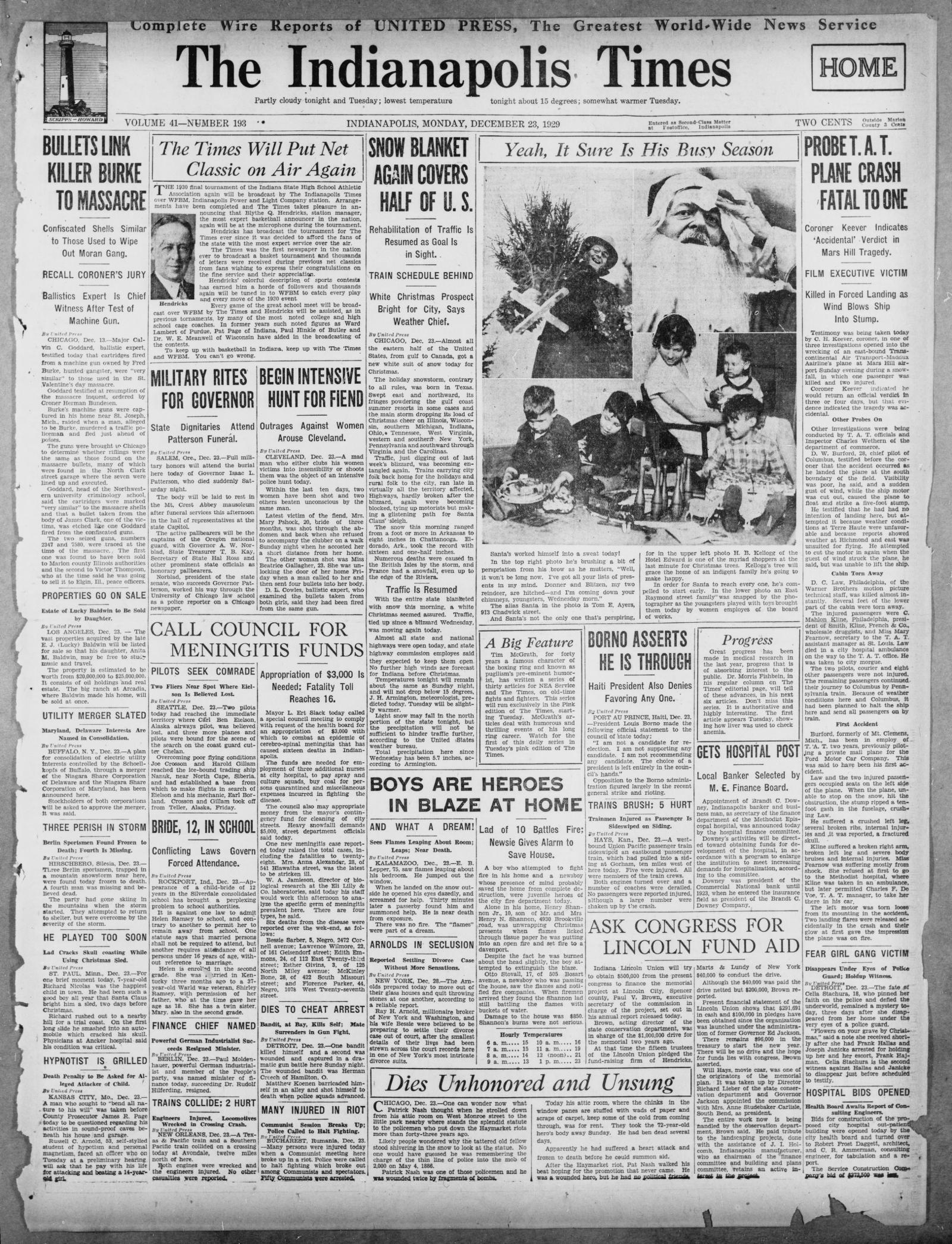
In December 1929 the Washington Times and the South Bend News-Times connect Fred Burke, the killing of St. Joseph, Michigan policeman Charles Skelly, and the guns found in Burke’s bungalow. On 23 December the Evening Star, from the Associated Press, and the Indianapolis Times, from the United Press, report Goddard’s testimony at the reconvened inquest that test bullets from Burke’s guns matched bullets taken from the victims. The two wire services differ in their words: one says the bullets were “identical,” the other “very similar.” Both pages are filed; the difference is left as the papers printed it.
What the federal records add
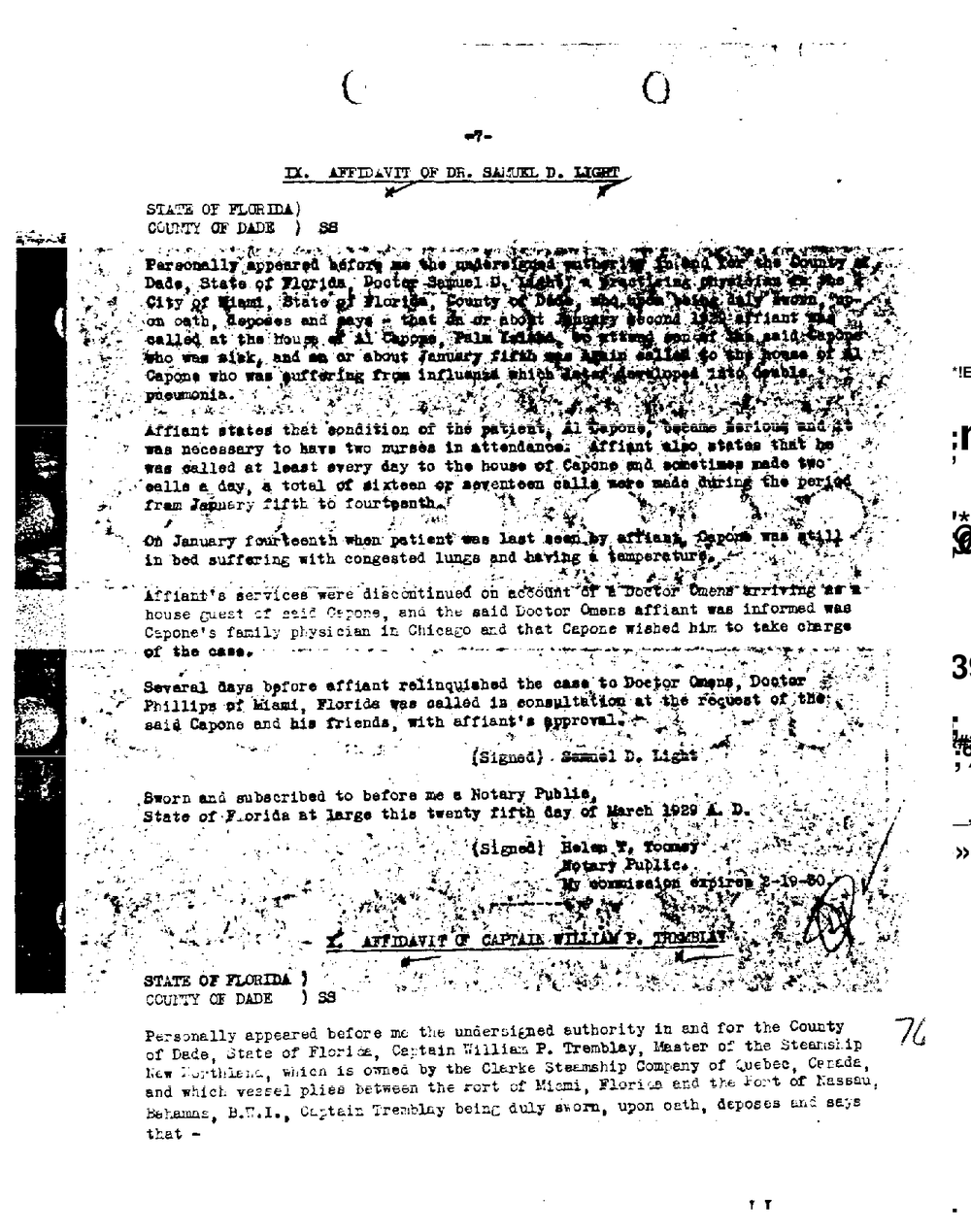
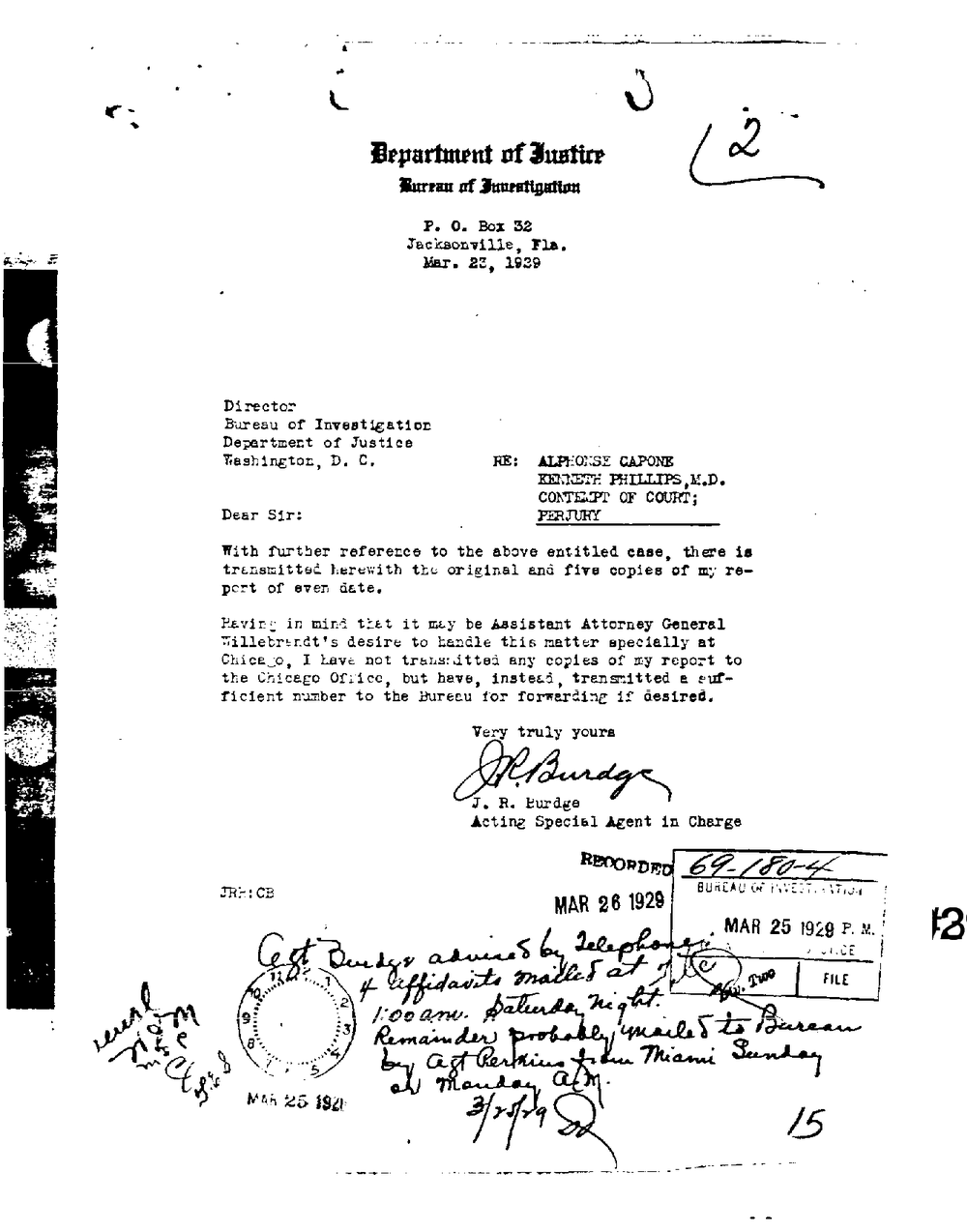
The FBI Vault file on Capone holds, in its 1929 contempt case, affidavits gathered in Miami in March 1929. One of them says Capone was questioned in Florida on 14 February 1929. The Bureau’s own history essay says the killings were “generally ascribed to the Capone mob” and that Capone was in Florida; that essay is a secondary federal narrative, quoted here as the Bureau’s later narrative, not as evidence.
What is not here
No coroner’s inquest transcript, verdict, or Chicago Police Department record from 1929 was found online. Goddard’s own 1930 article in the American Journal of Police Science is public domain by date, but the only full-text copy found sits behind a paywall. The Berrien County, Michigan material on the Burke guns is not online in a form this archive could open. These gaps are listed in the research notes. The page does not describe the shooting beyond what the cited pages print. This spoke is indexed on the editor’s decision of 12 October 2026 although no inquest or police record is filed.