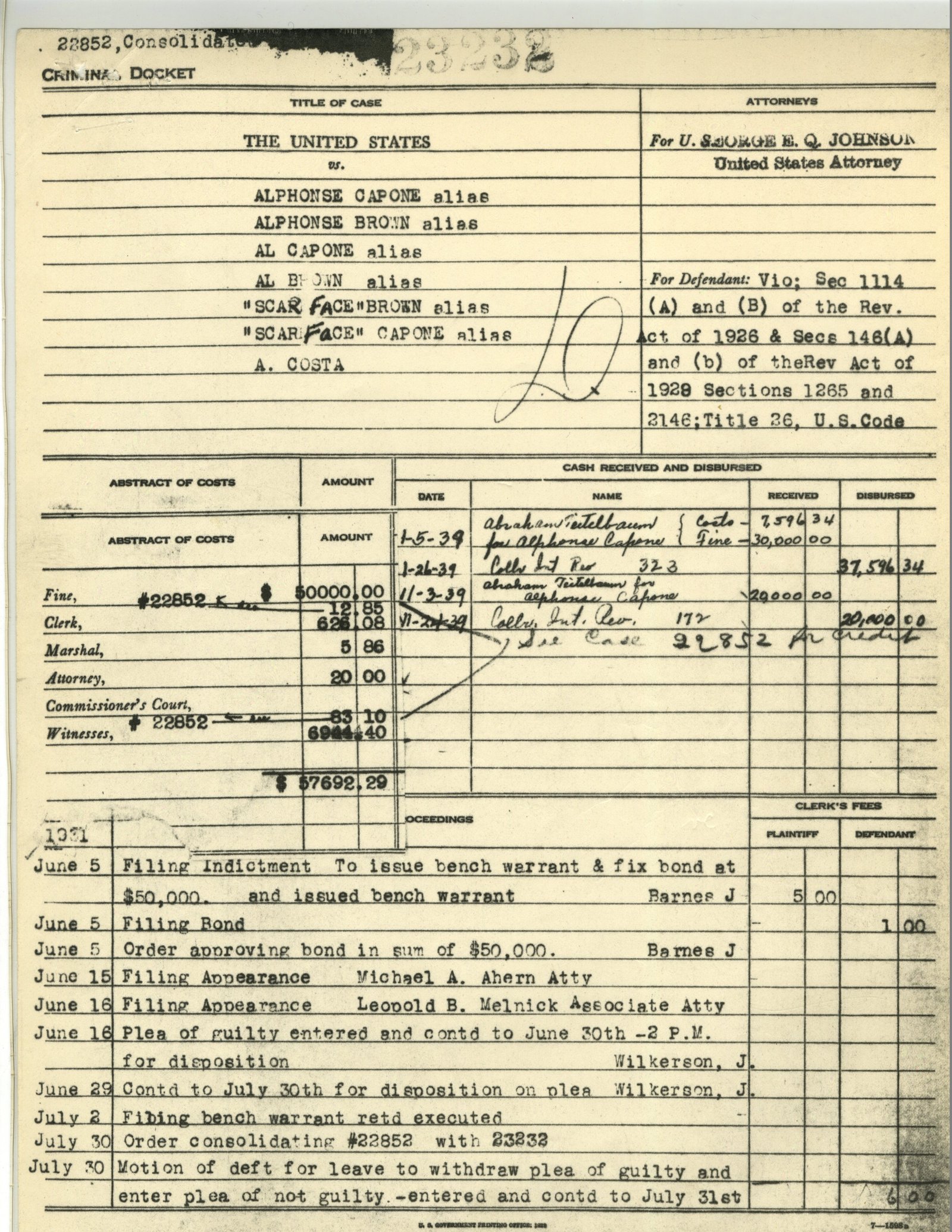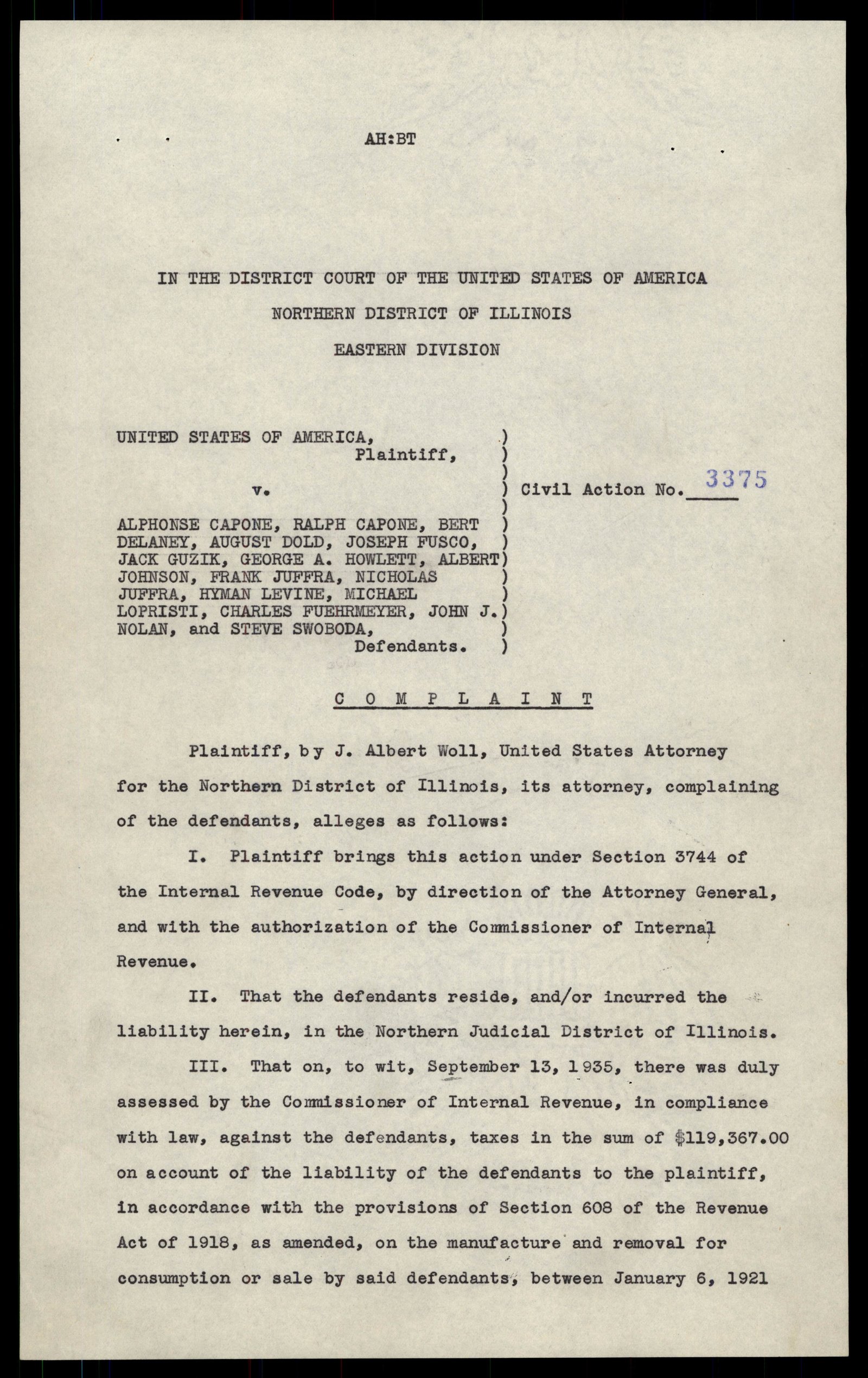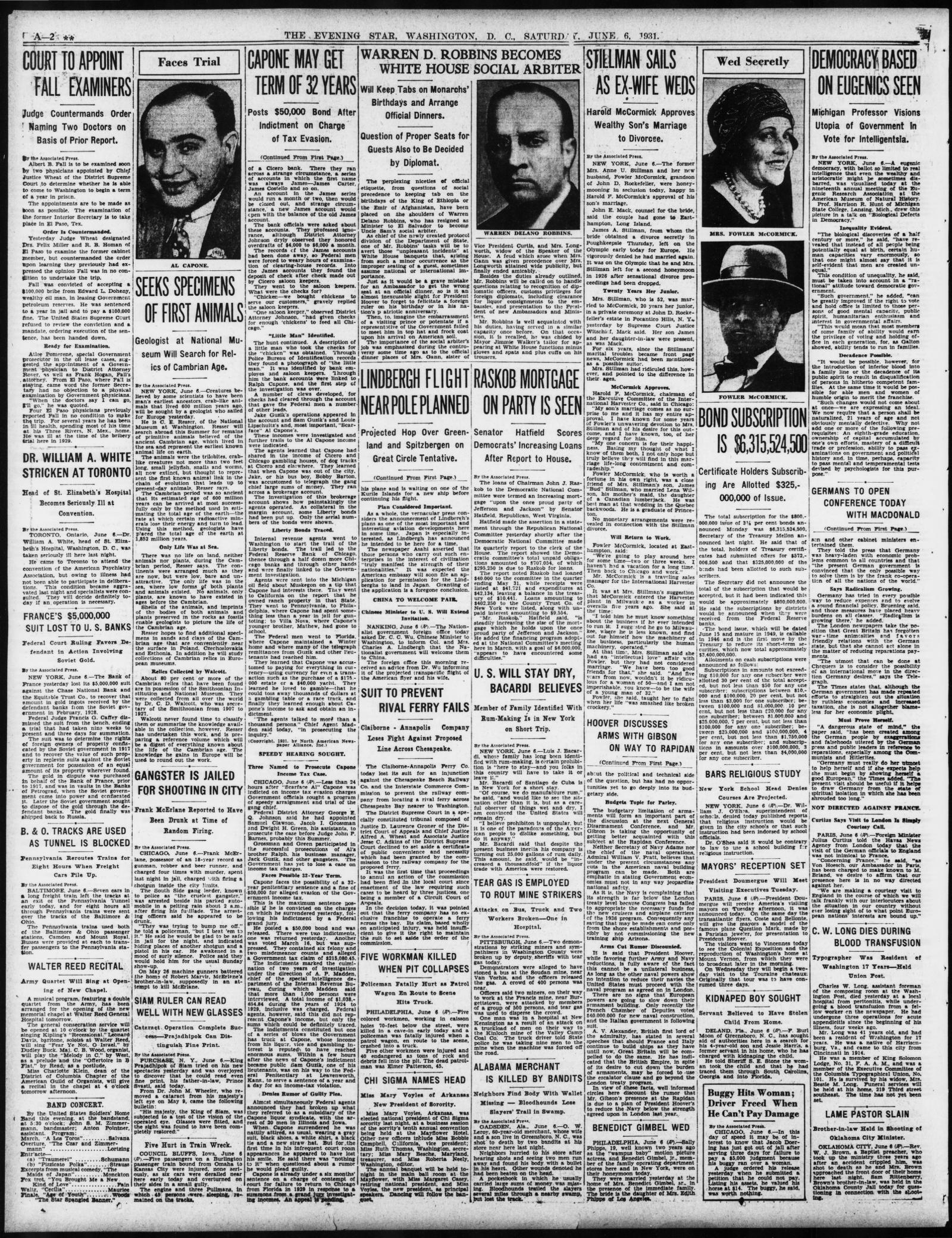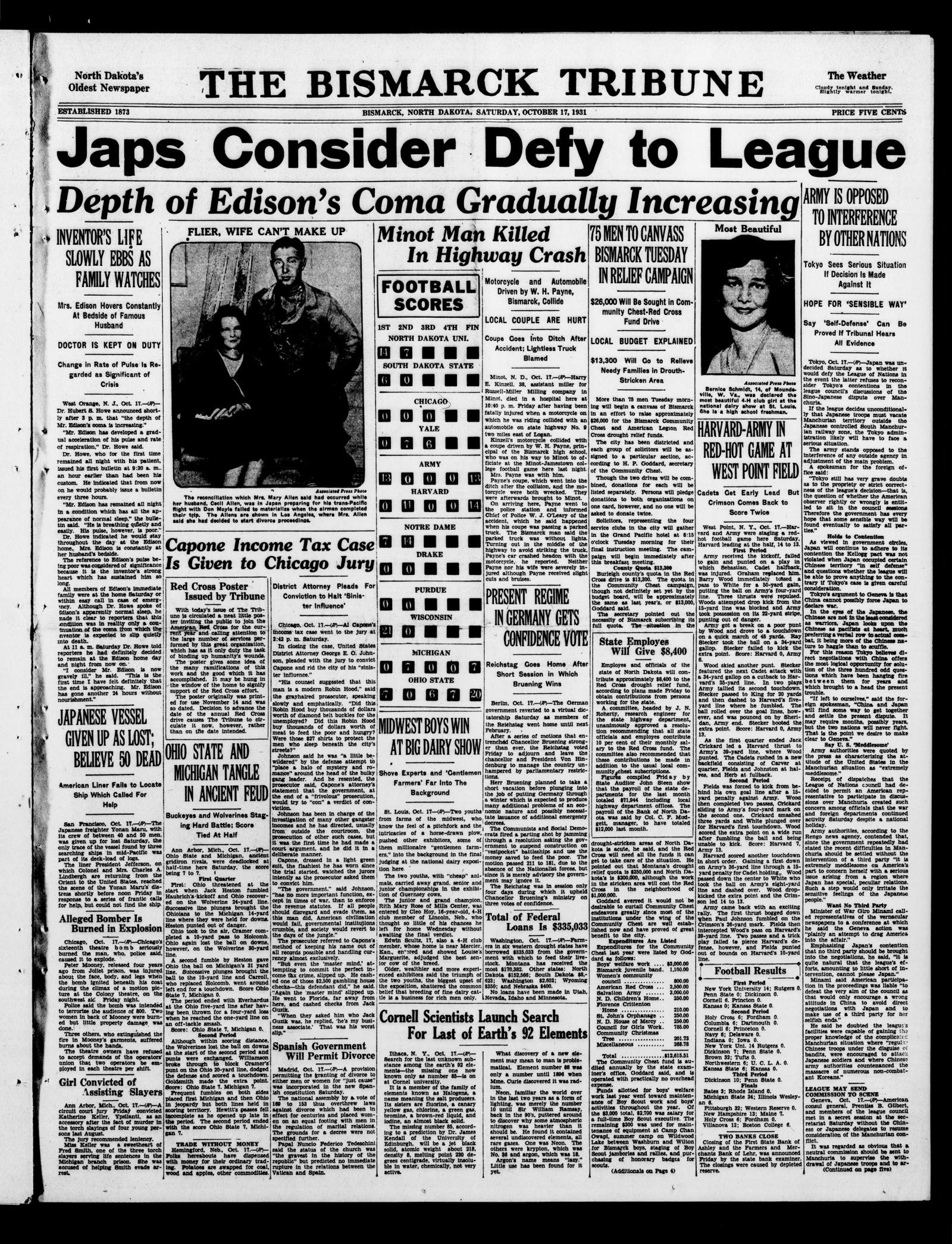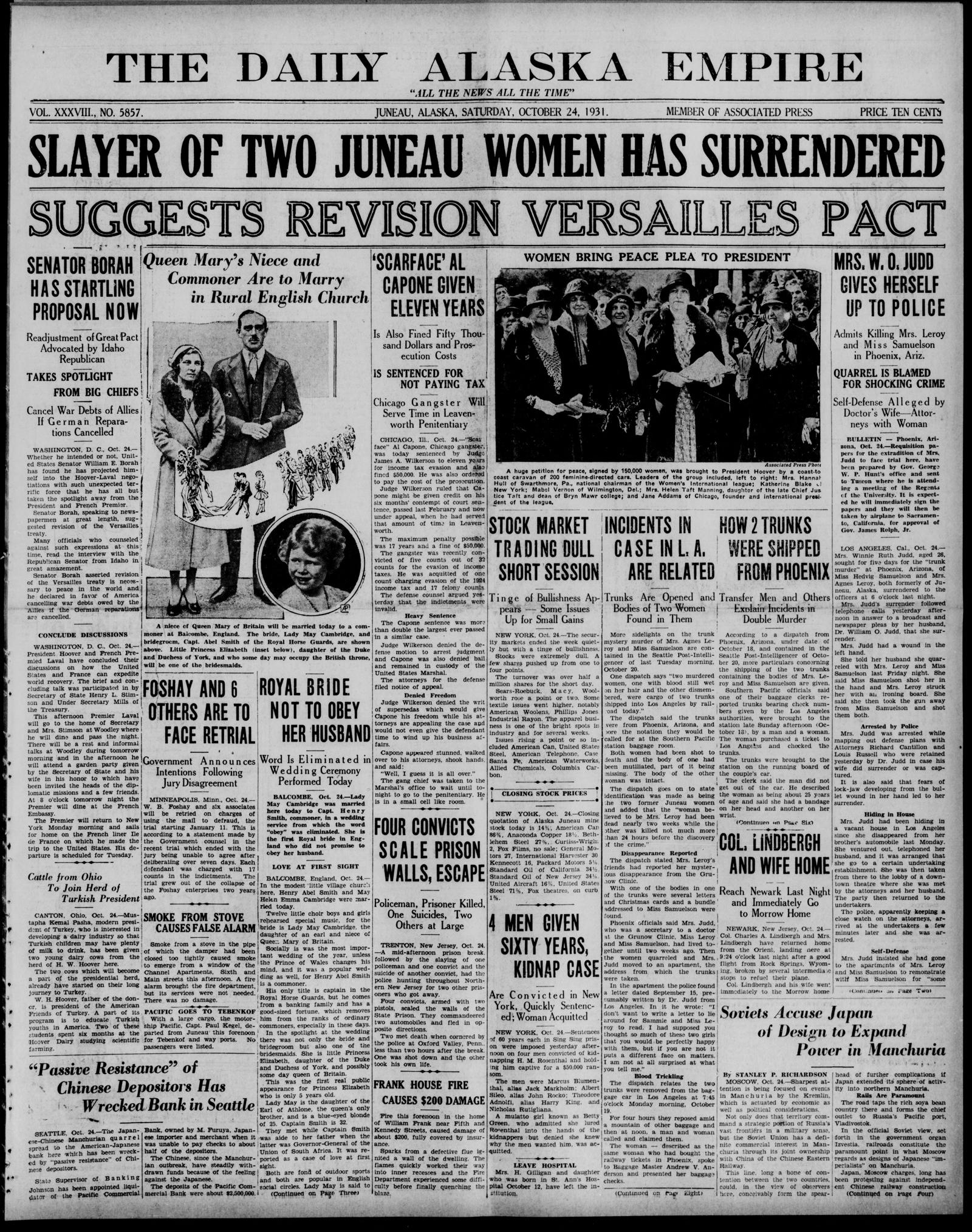
The case is on the record in three places: the criminal case file of the United States District Court for the Northern District of Illinois, held by the National Archives at Chicago as file unit 1105475; the United States Attorney’s prosecution file, National Archives identifier 6427838; and the Bureau of Internal Revenue’s Intelligence Unit documents released by the Internal Revenue Service. The Seventh Circuit’s opinion affirming the conviction, Capone v. United States, 56 F.2d 927, is the court’s own account of the proceedings. Each record below is one page.
The indictments
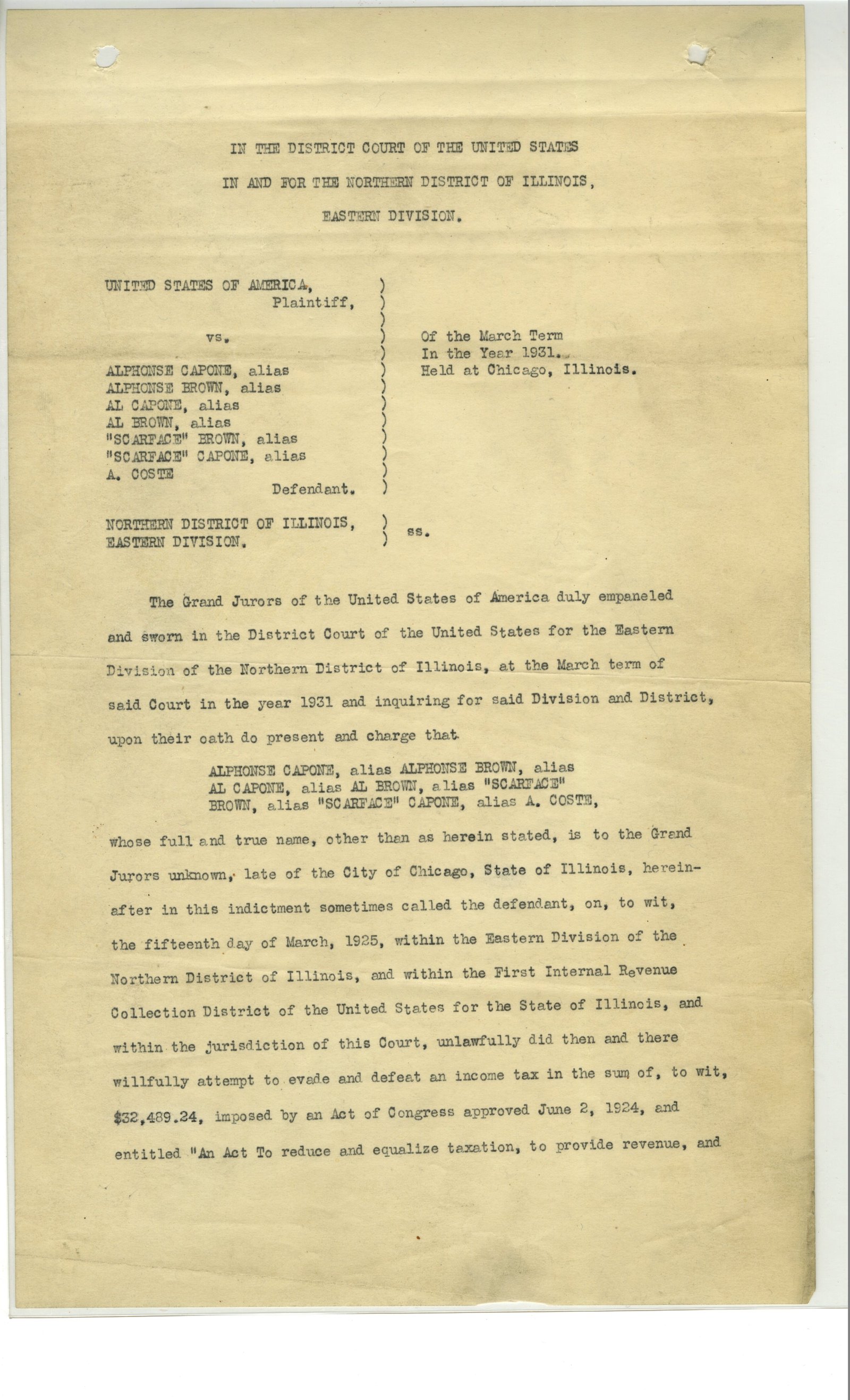
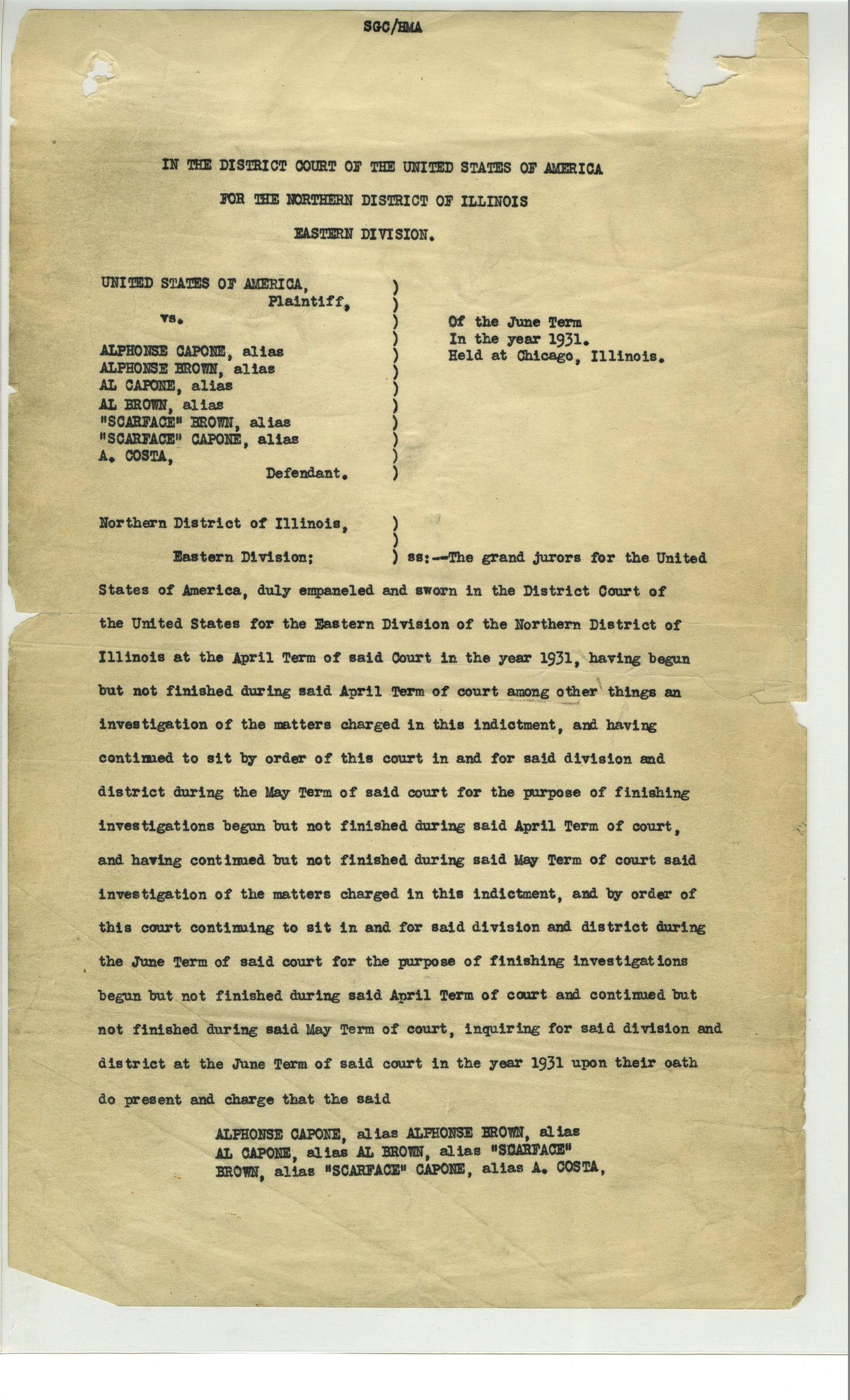
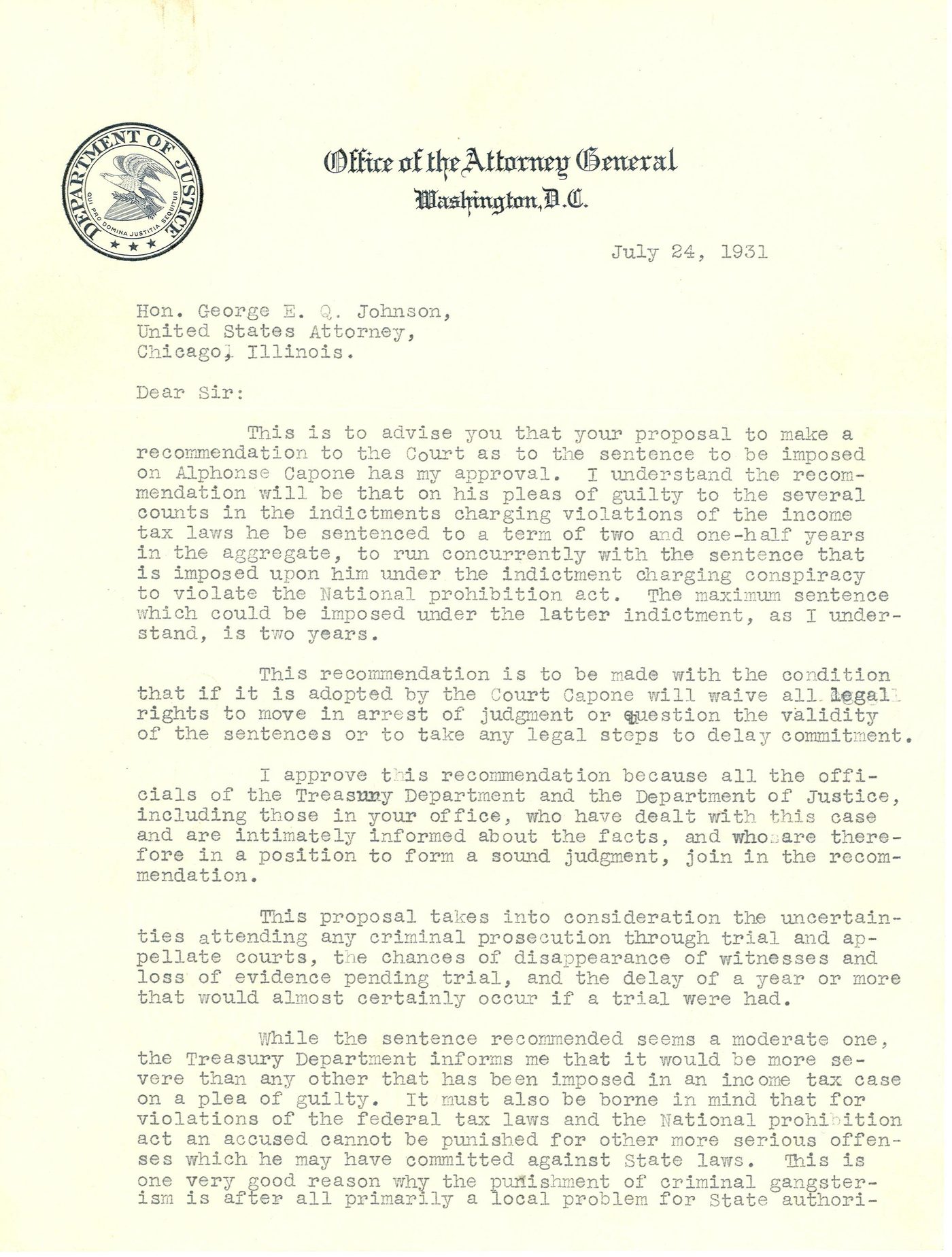
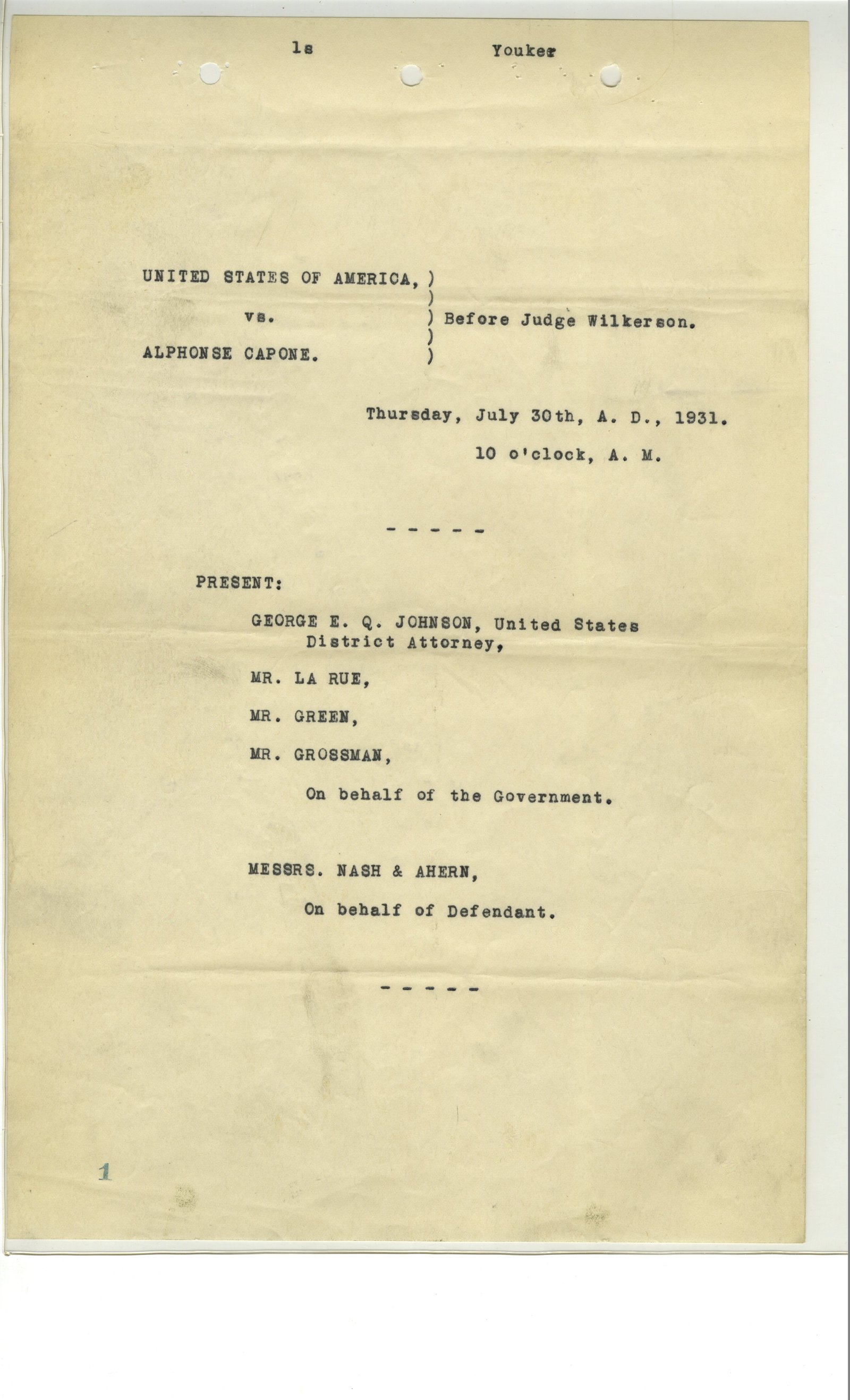
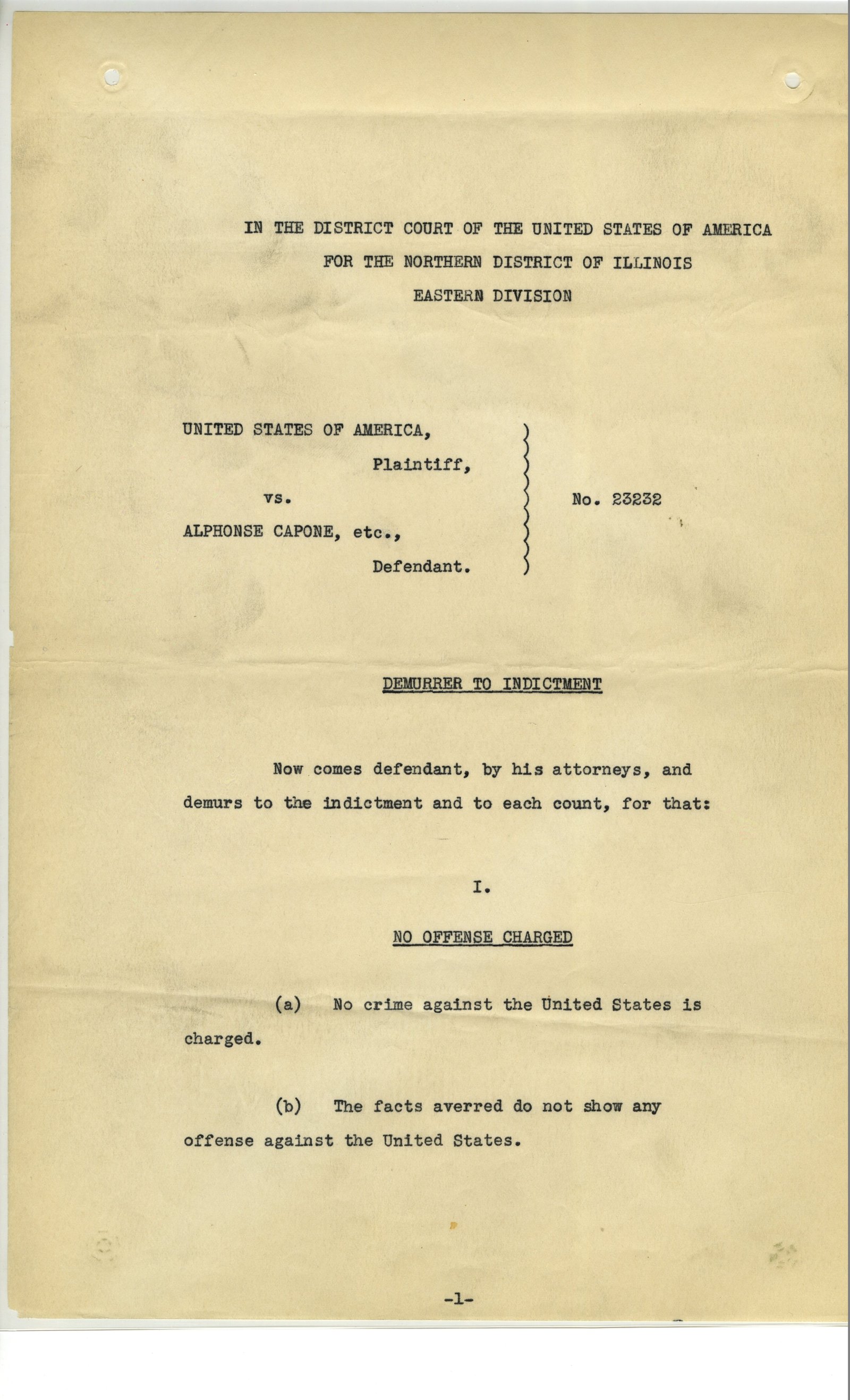
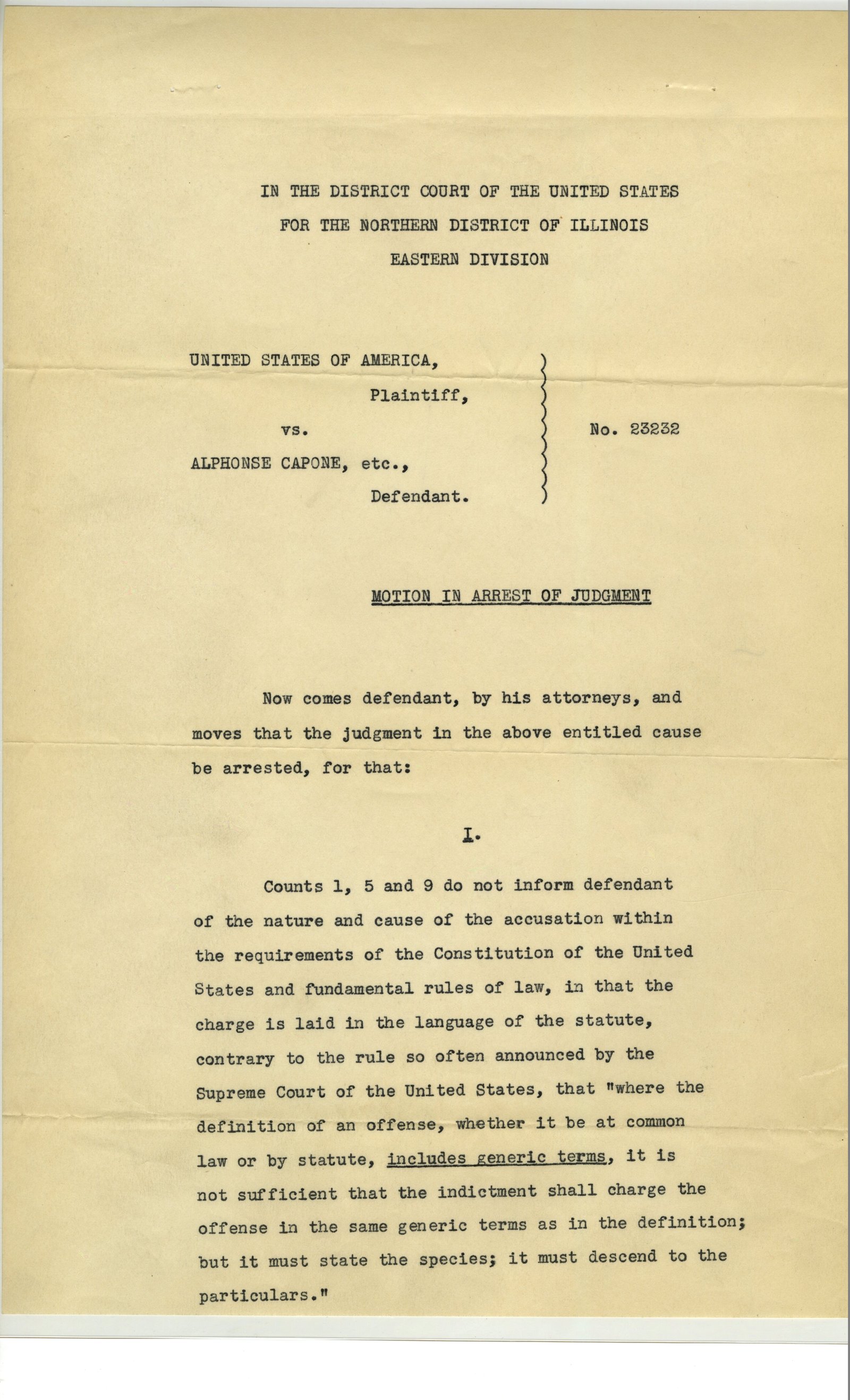
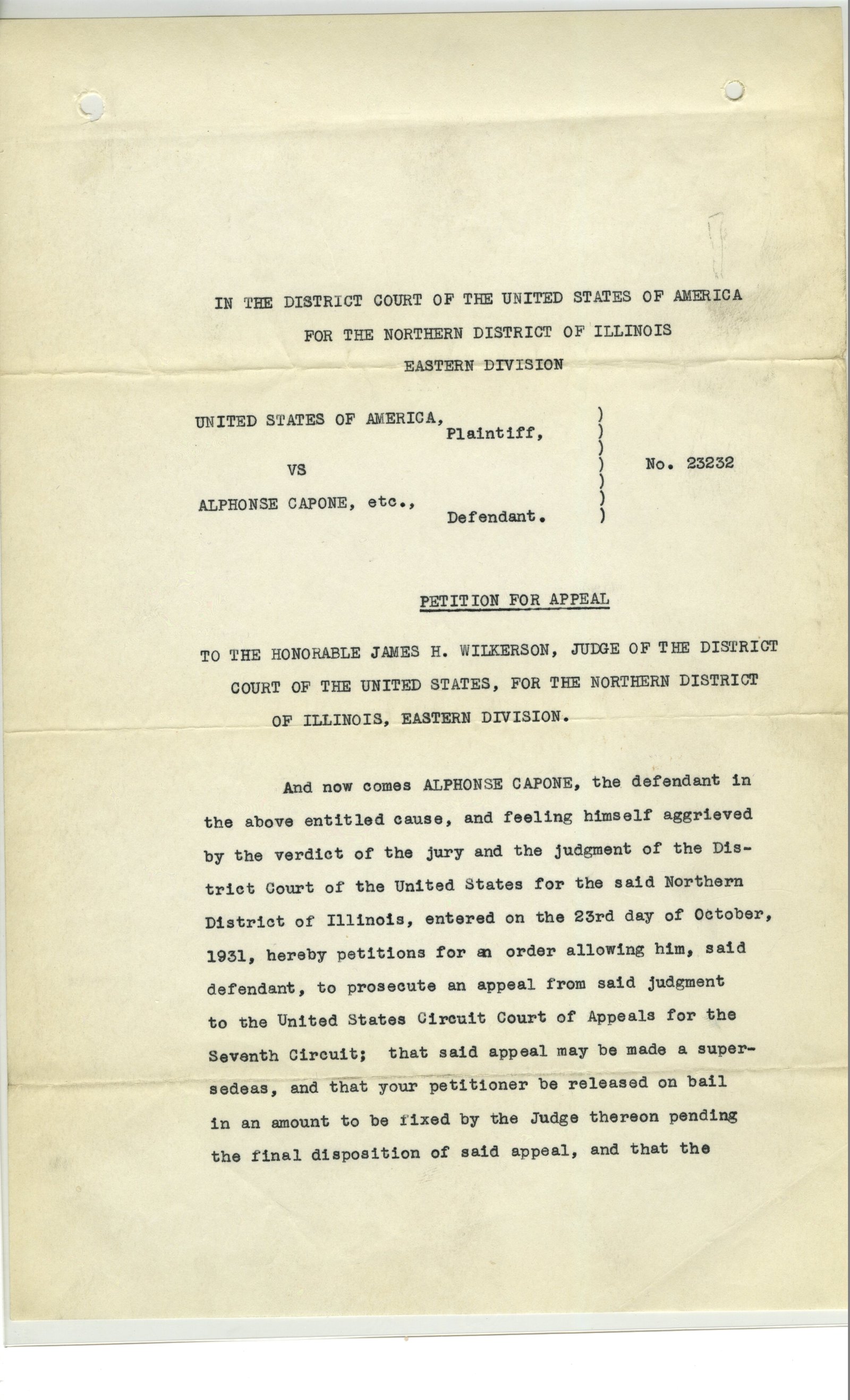
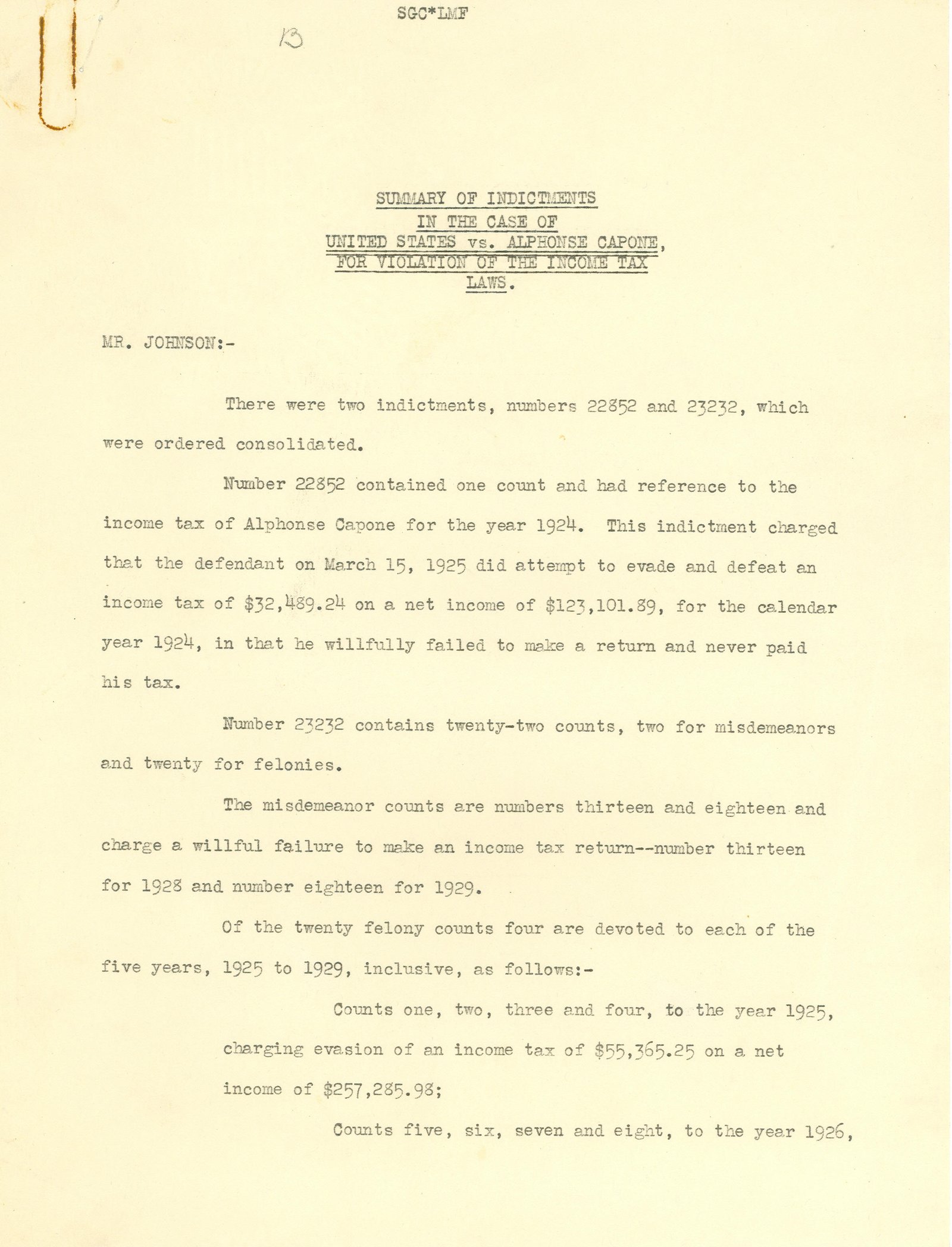
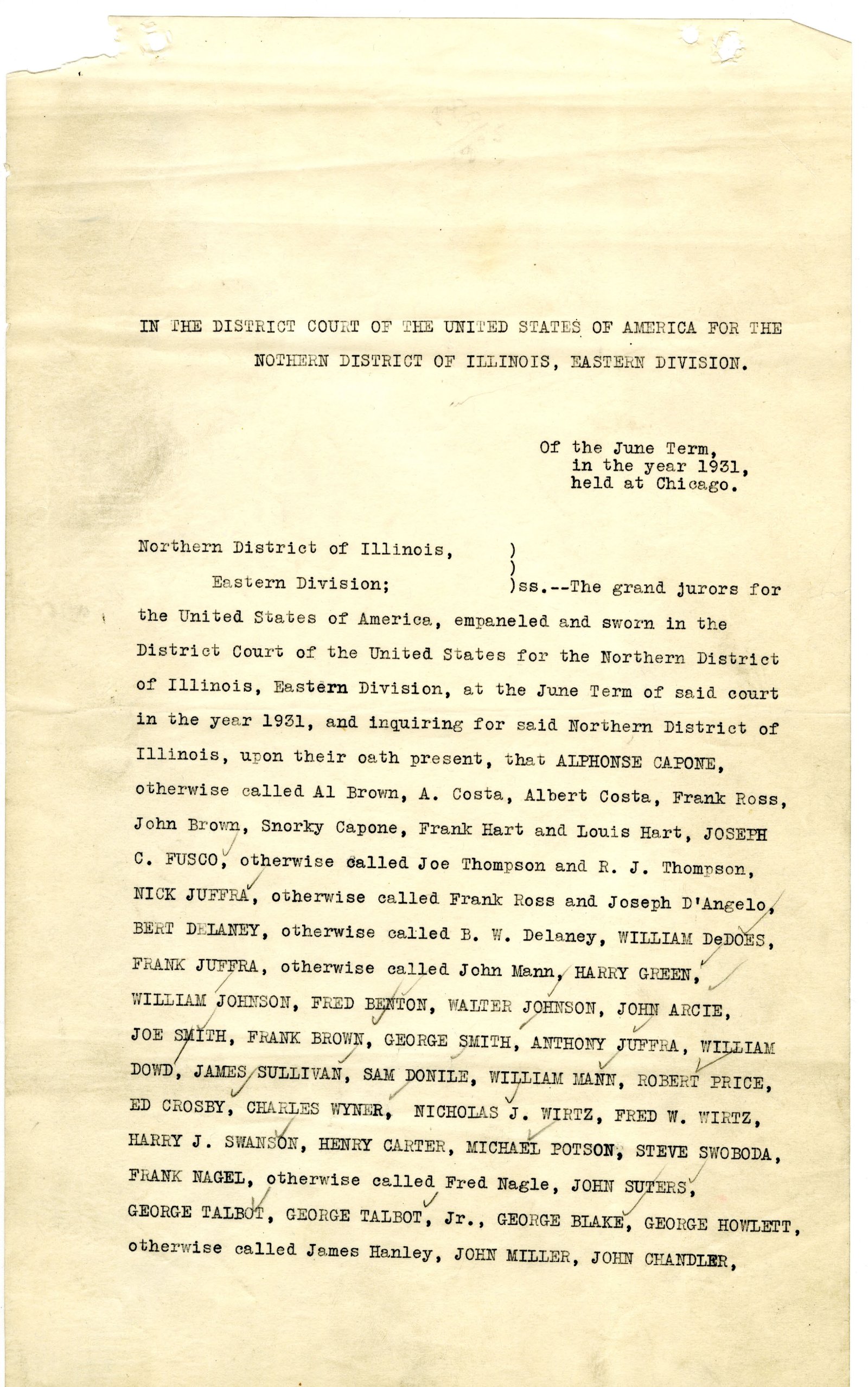
A one-count indictment, No. 22852, was returned on 13 March 1931 for the year 1924. A twenty-two-count indictment, No. 23232, followed on 5 June 1931, charging attempted evasion of income tax for 1925 through 1929 and failure to file returns. The court consolidated the two on 30 July 1931. The Attorney General’s letter of 24 July 1931 to United States Attorney George E. Q. Johnson approves a recommendation of two and one-half years on pleas of guilty, on condition that Capone waive his rights to challenge the sentence. The Seventh Circuit records that the plea of 16 June was withdrawn on 30 July. The demurrer to the second indictment was overruled on 29 September.
Verdict and sentence
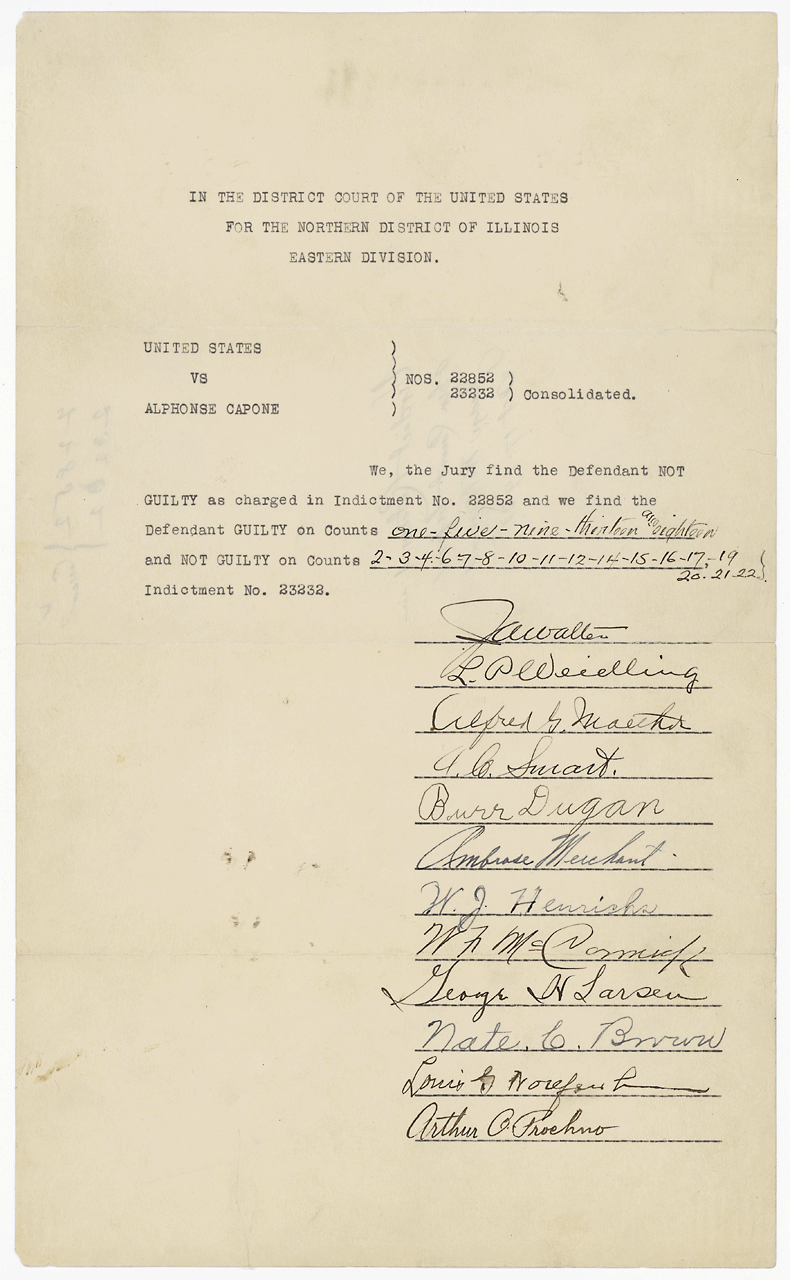
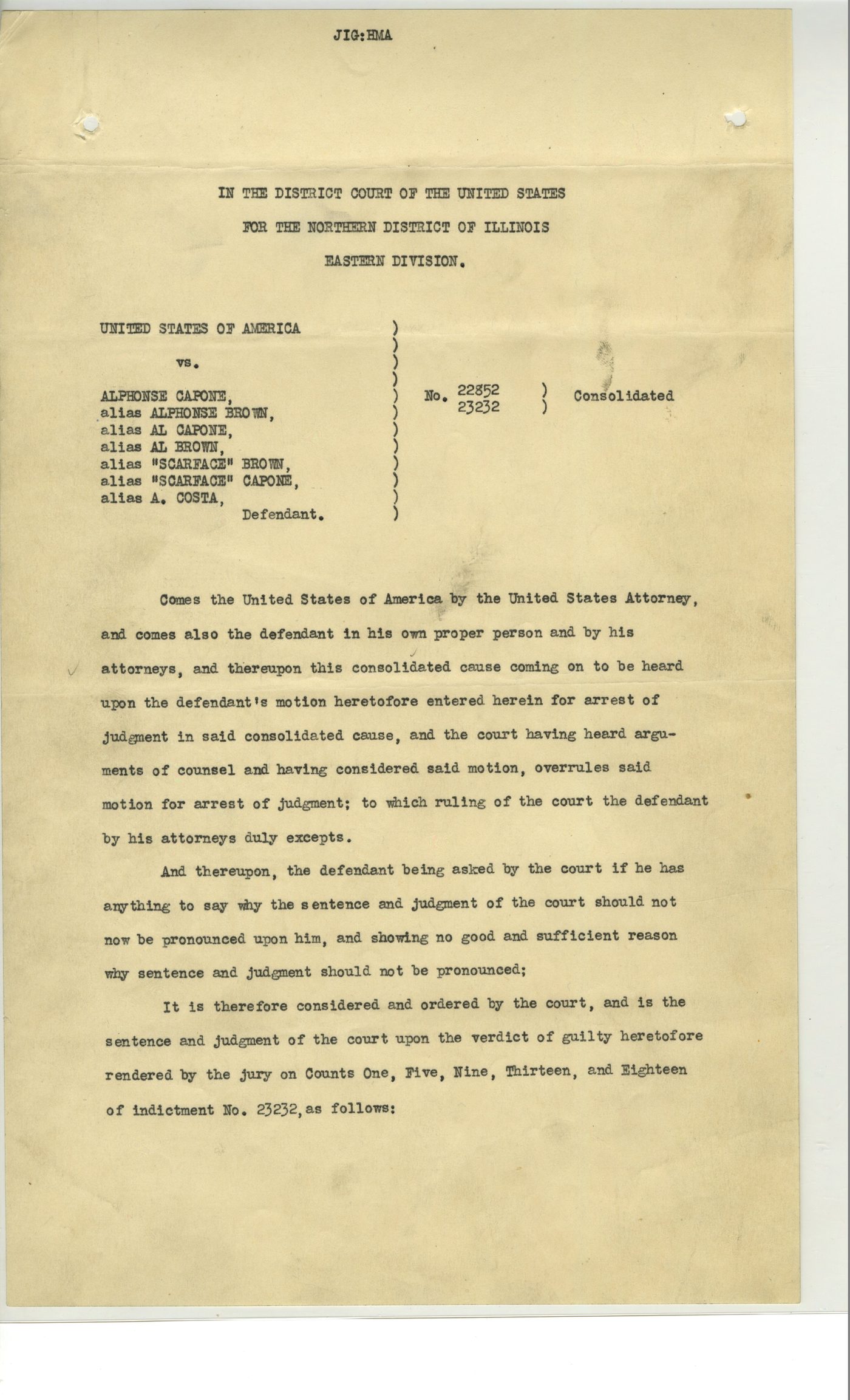
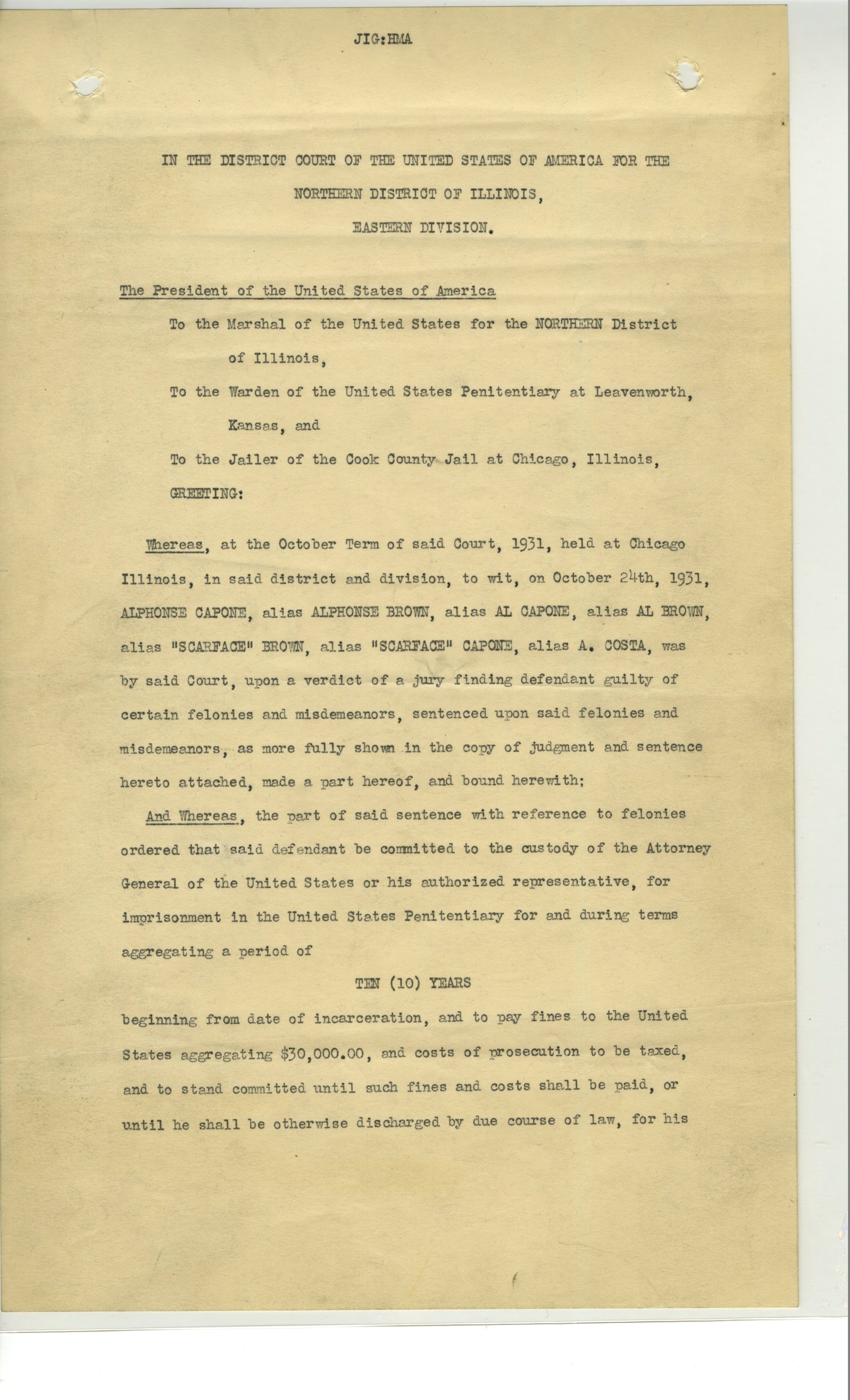
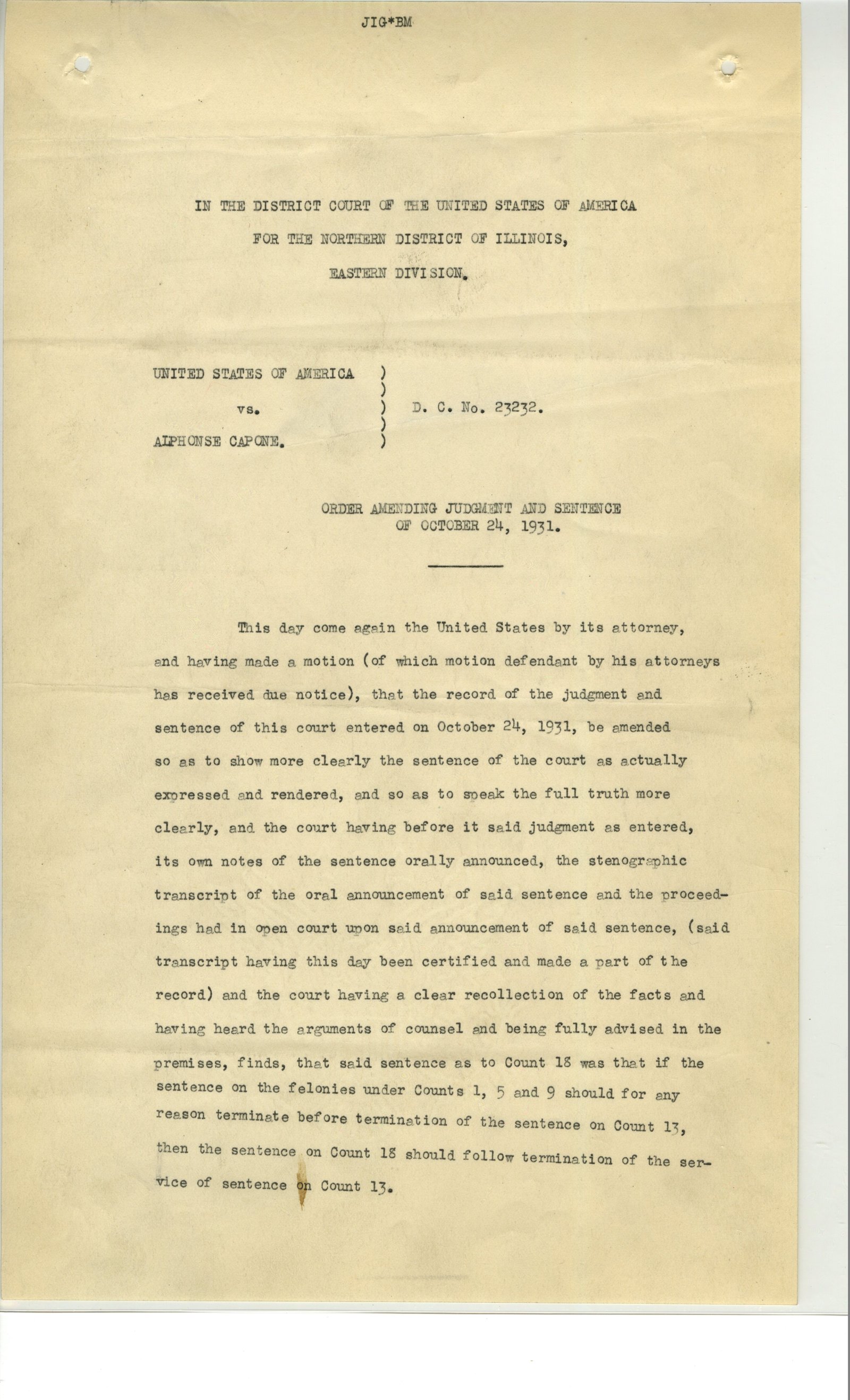
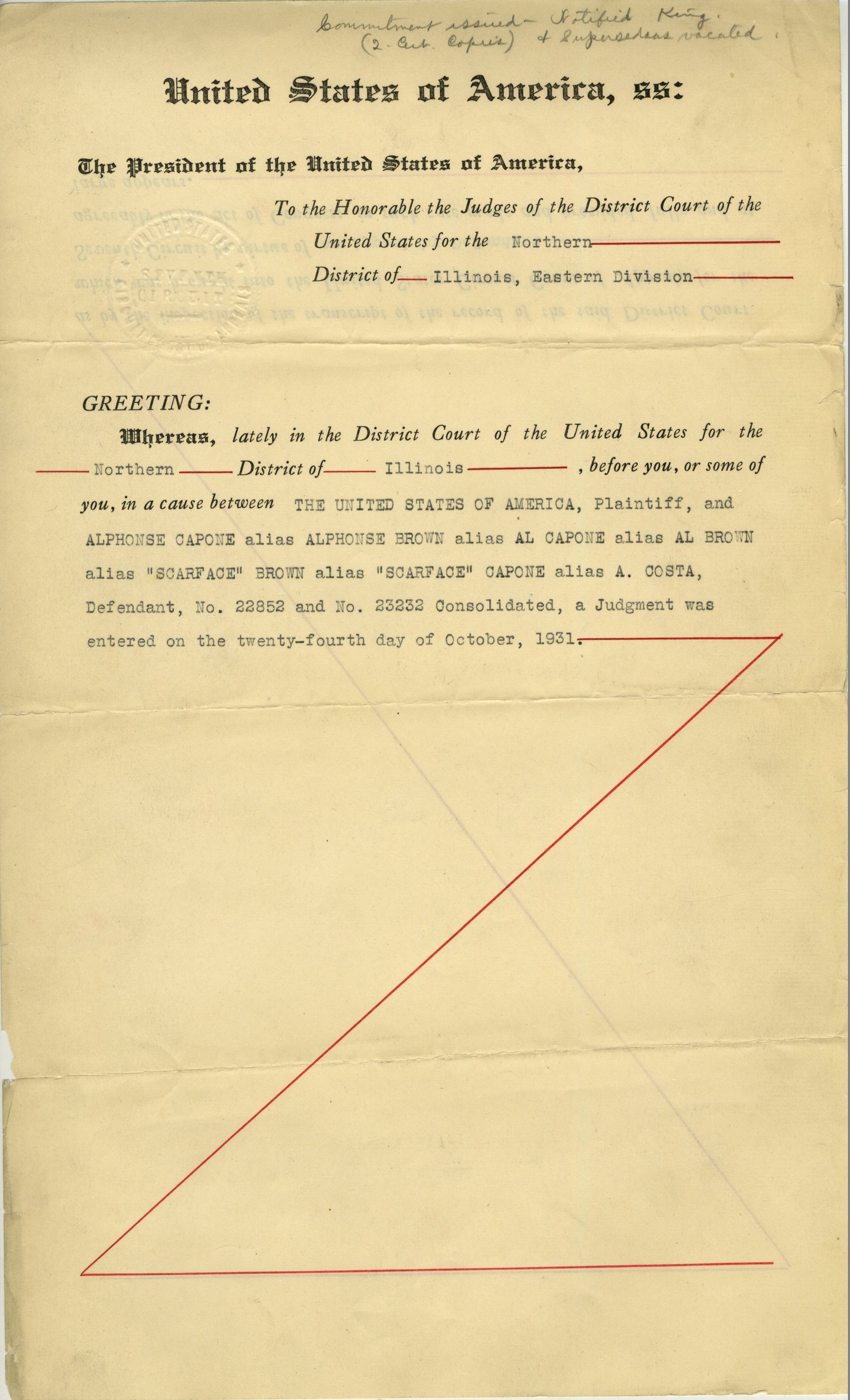
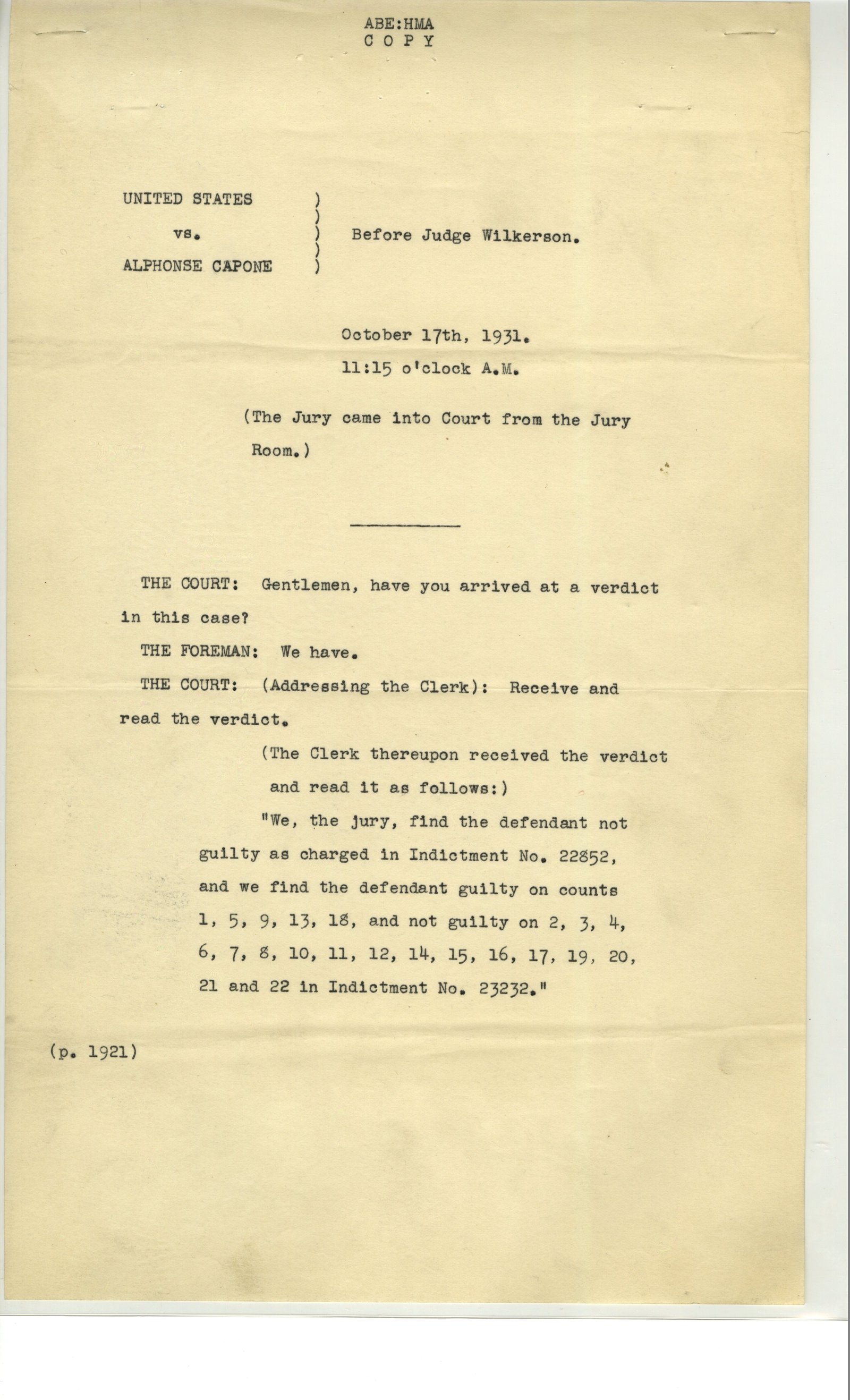
The verdict form returned before Judge James H. Wilkerson on 17 October 1931 finds the defendant not guilty on indictment 22852 and guilty on counts one, five, nine, thirteen and eighteen of indictment 23232, not guilty on the rest. The judgment of 24 October 1931 imposes five years and a $10,000 fine on each of the three felony counts and one year in the county jail and a $10,000 fine on each of the two misdemeanor counts, eleven years and $50,000 in all, plus costs. The commitment of the same day sends him to Leavenworth on the felony counts; the 1933 commitment that replaced it names Atlanta. The court amended the wording of the judgment on 9 November. The mandate of the Circuit Court of Appeals came down on 3 May 1932.
The Treasury investigation
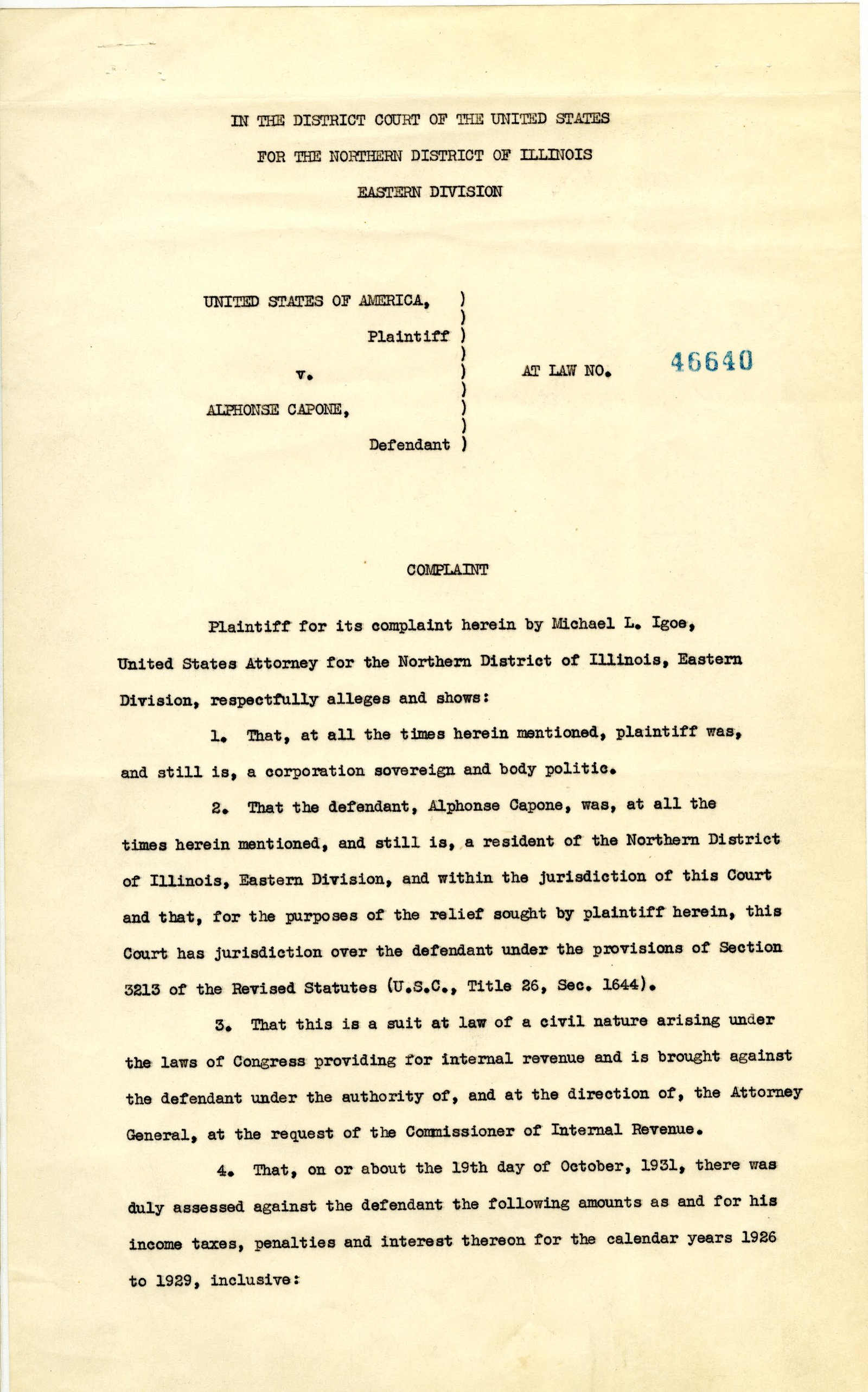
Special Agent Frank J. Wilson’s summary report of 21 December 1933, case SI-7085-F, is the Intelligence Unit’s own account of the investigation, from its referral to Wilson on 19 May 1930 through the trial. Its heading places Capone at the Lexington Hotel, 2300 Michigan Boulevard. Two letters from Wilson to Chief Elmer Irey in March and April 1931 and the revenue agents’ report of 8 July 1931 sit beside it. The IRS page that releases these files is cited as the source, not as a history.
Around the trial
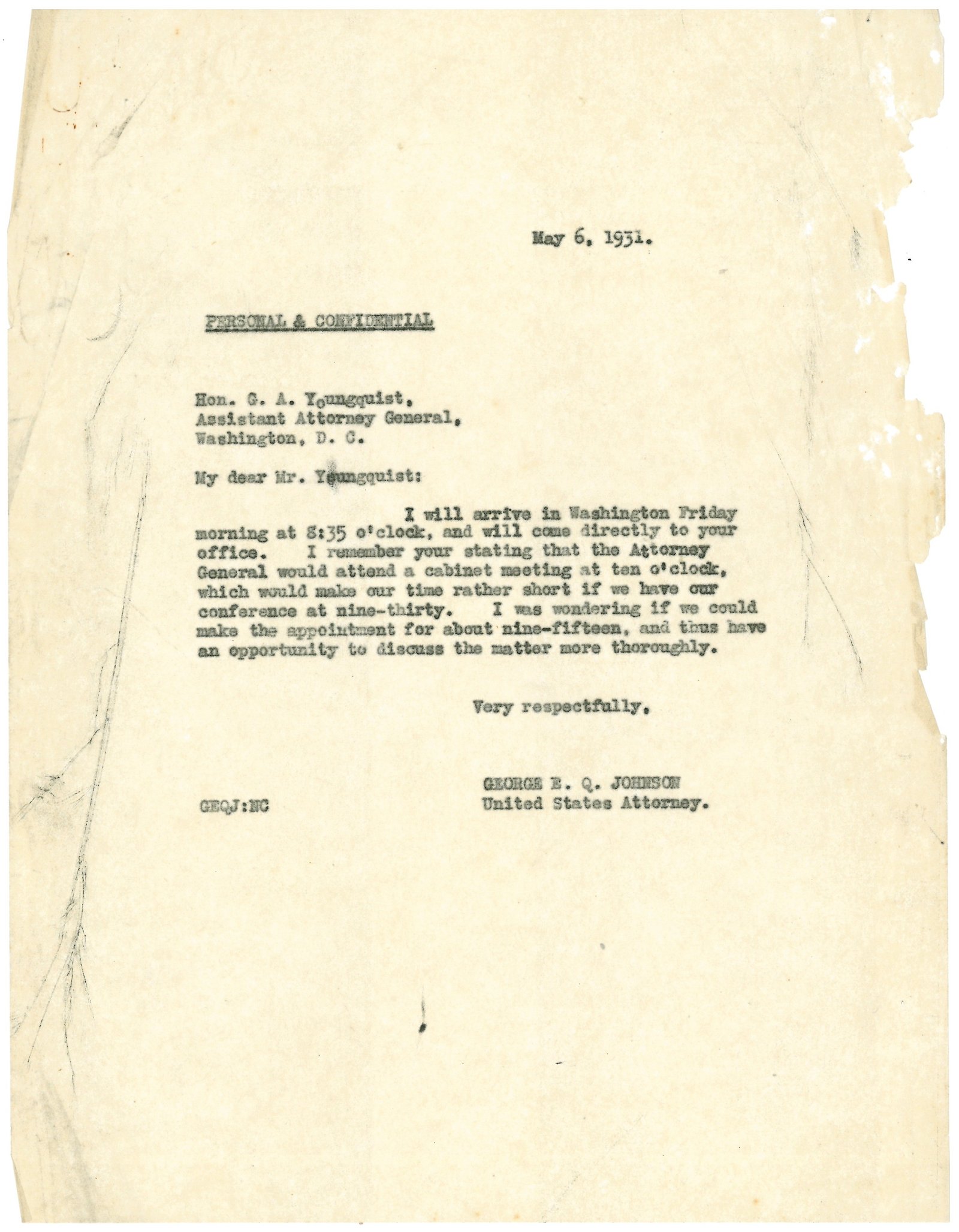
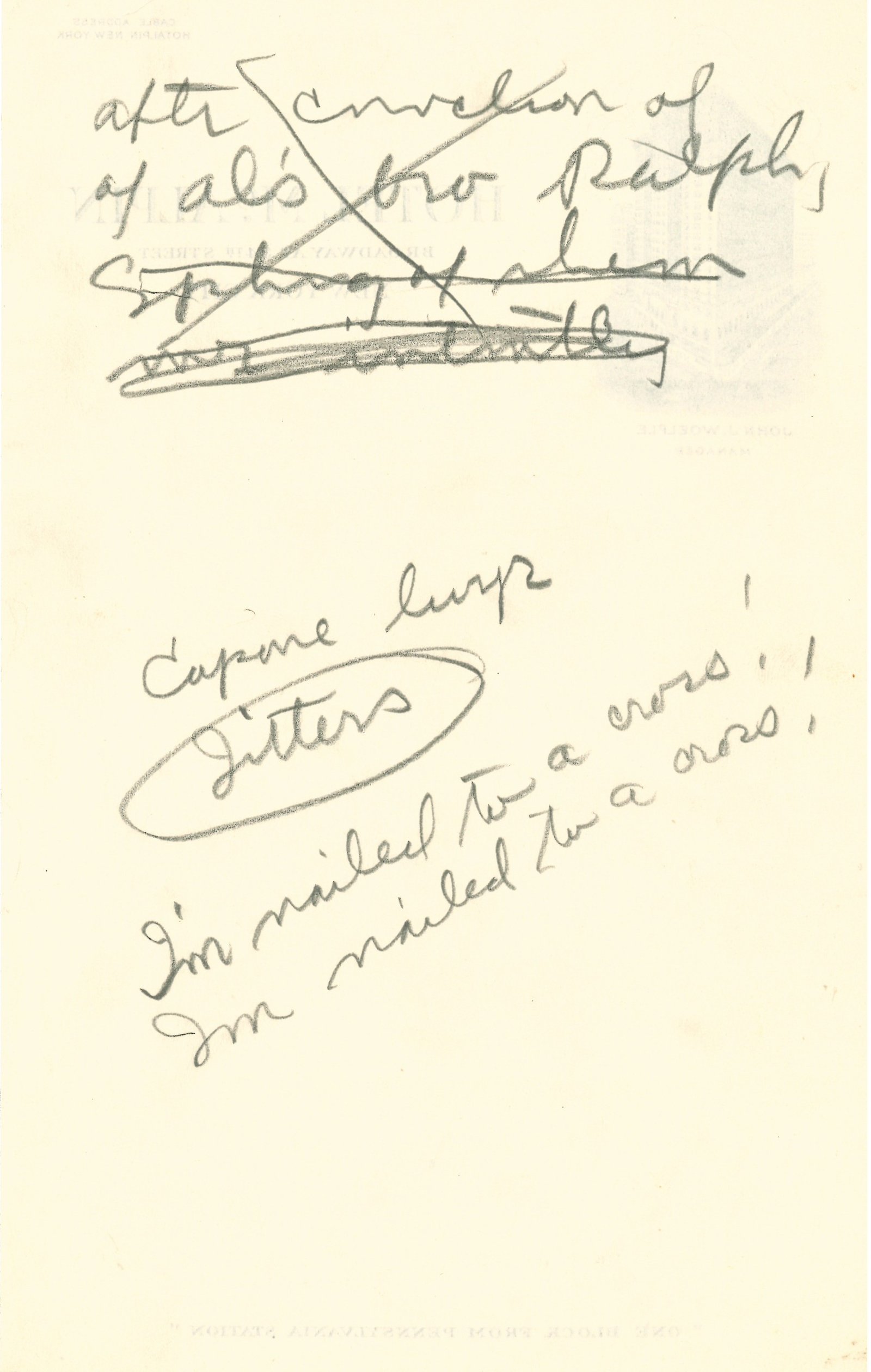
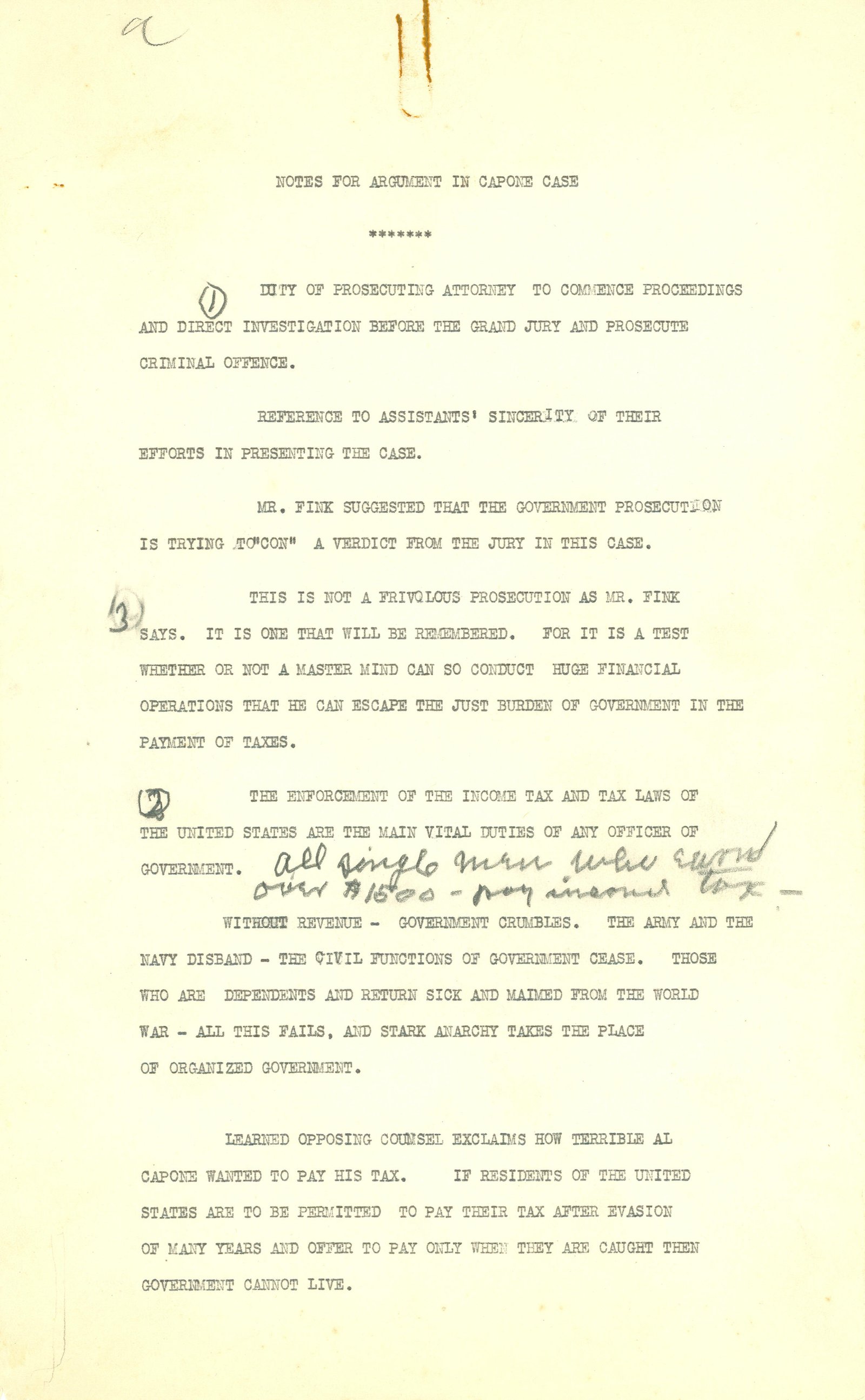
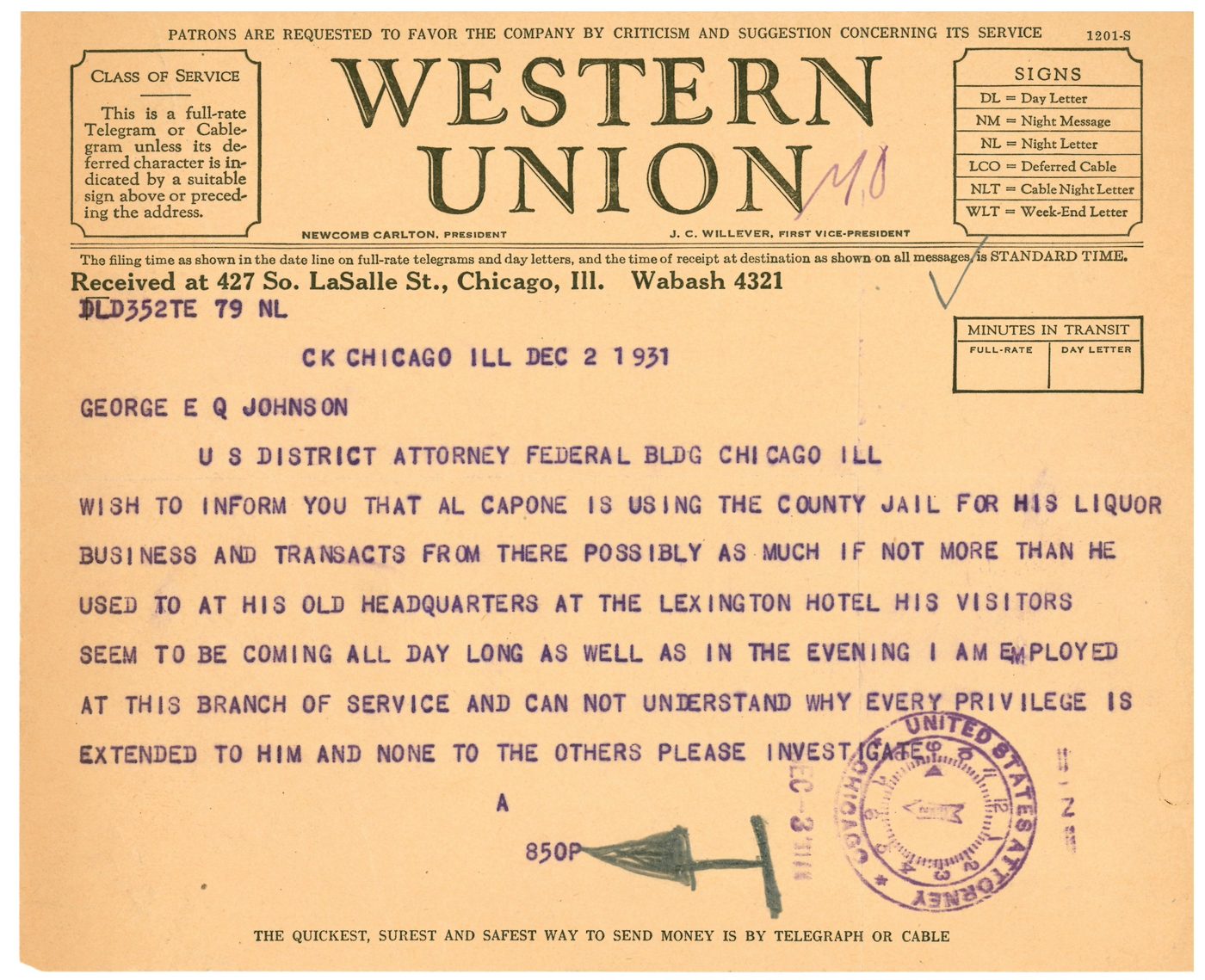
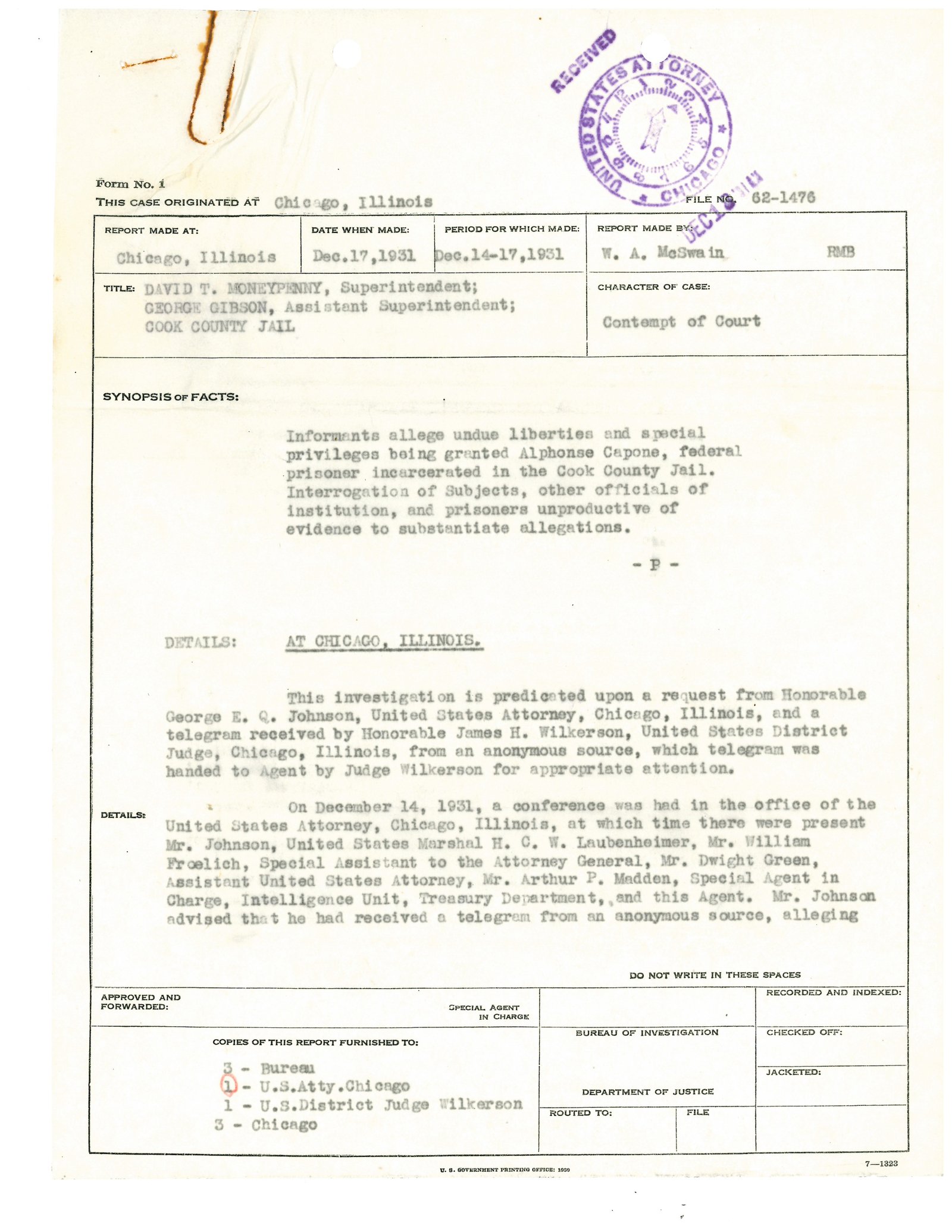
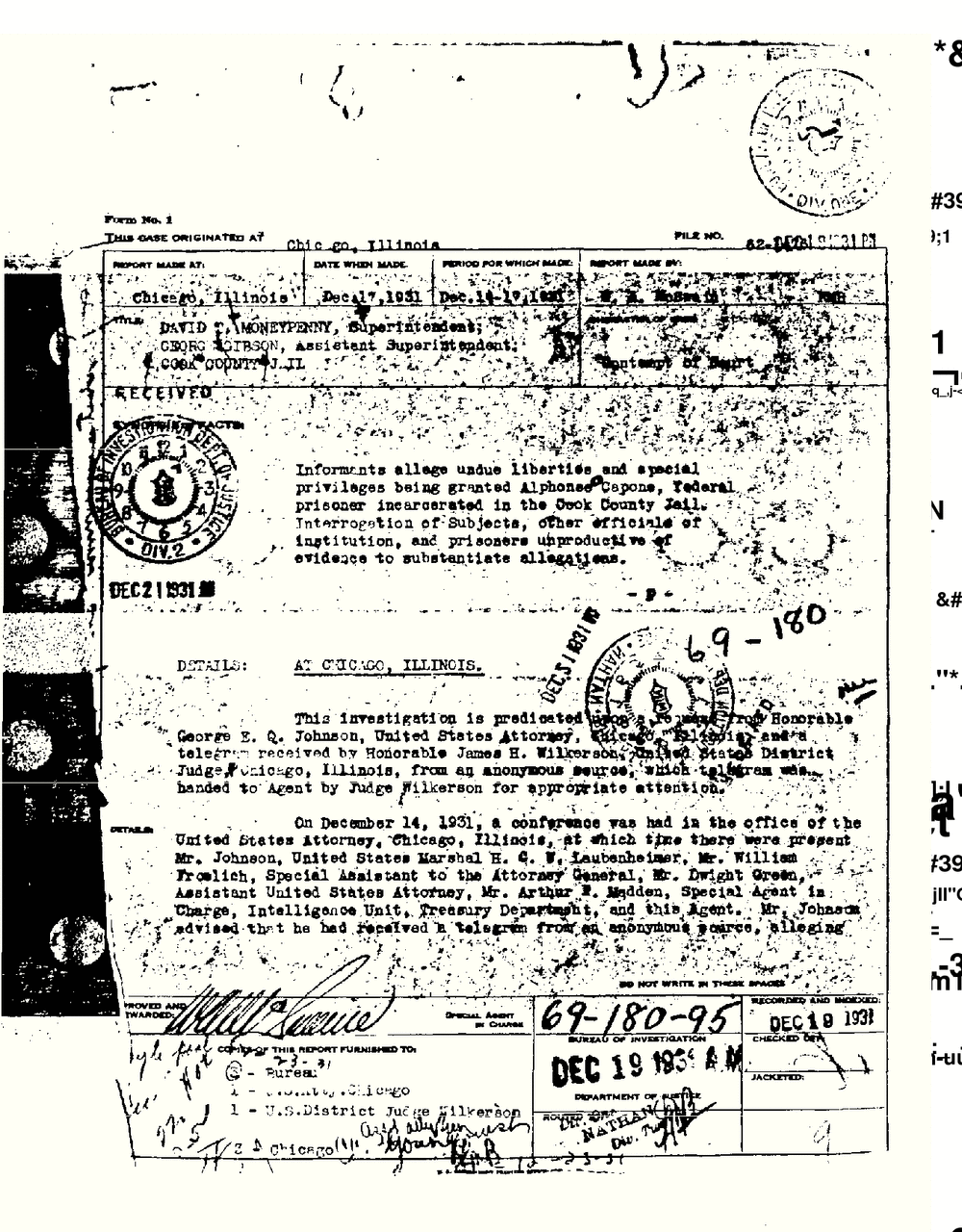
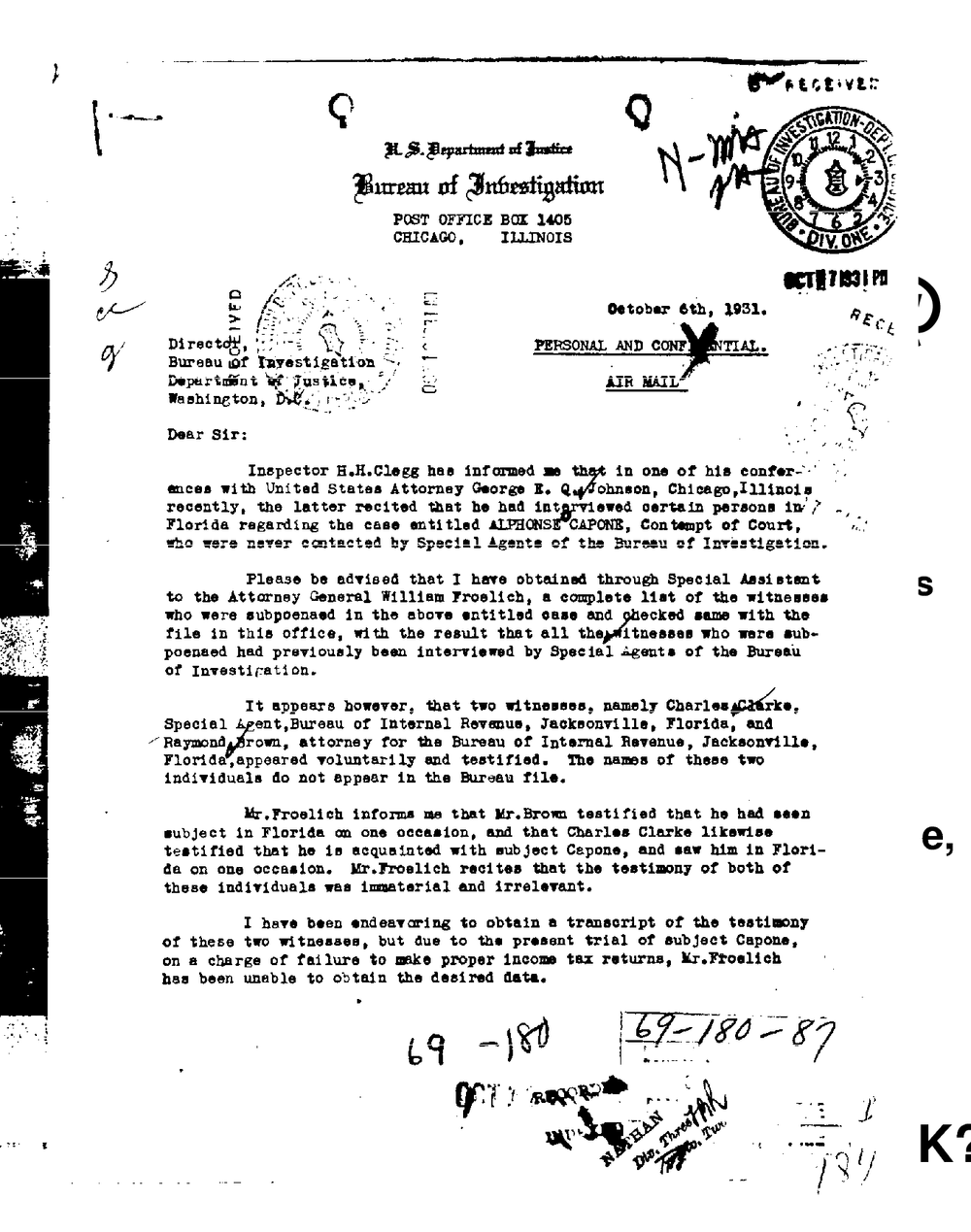
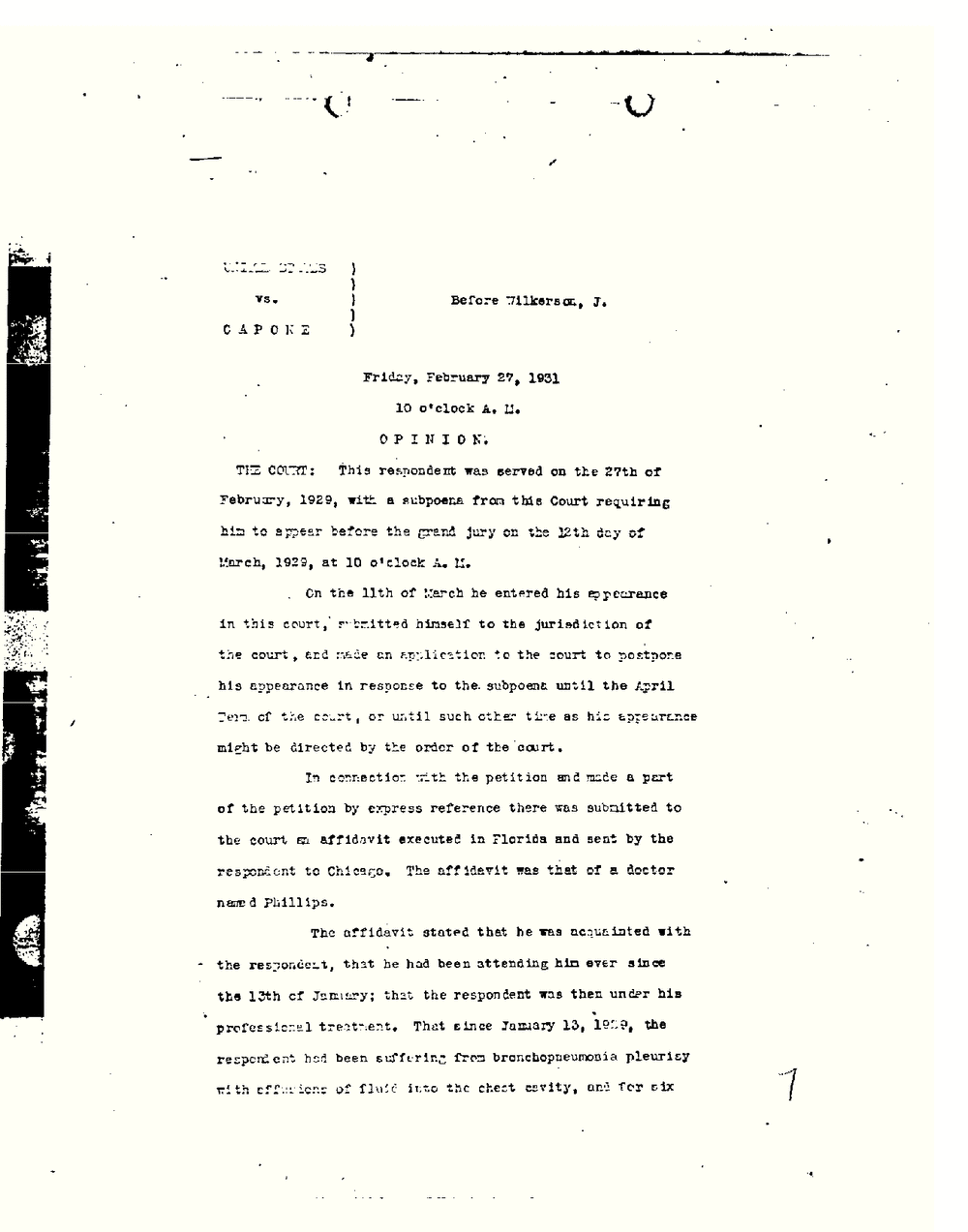
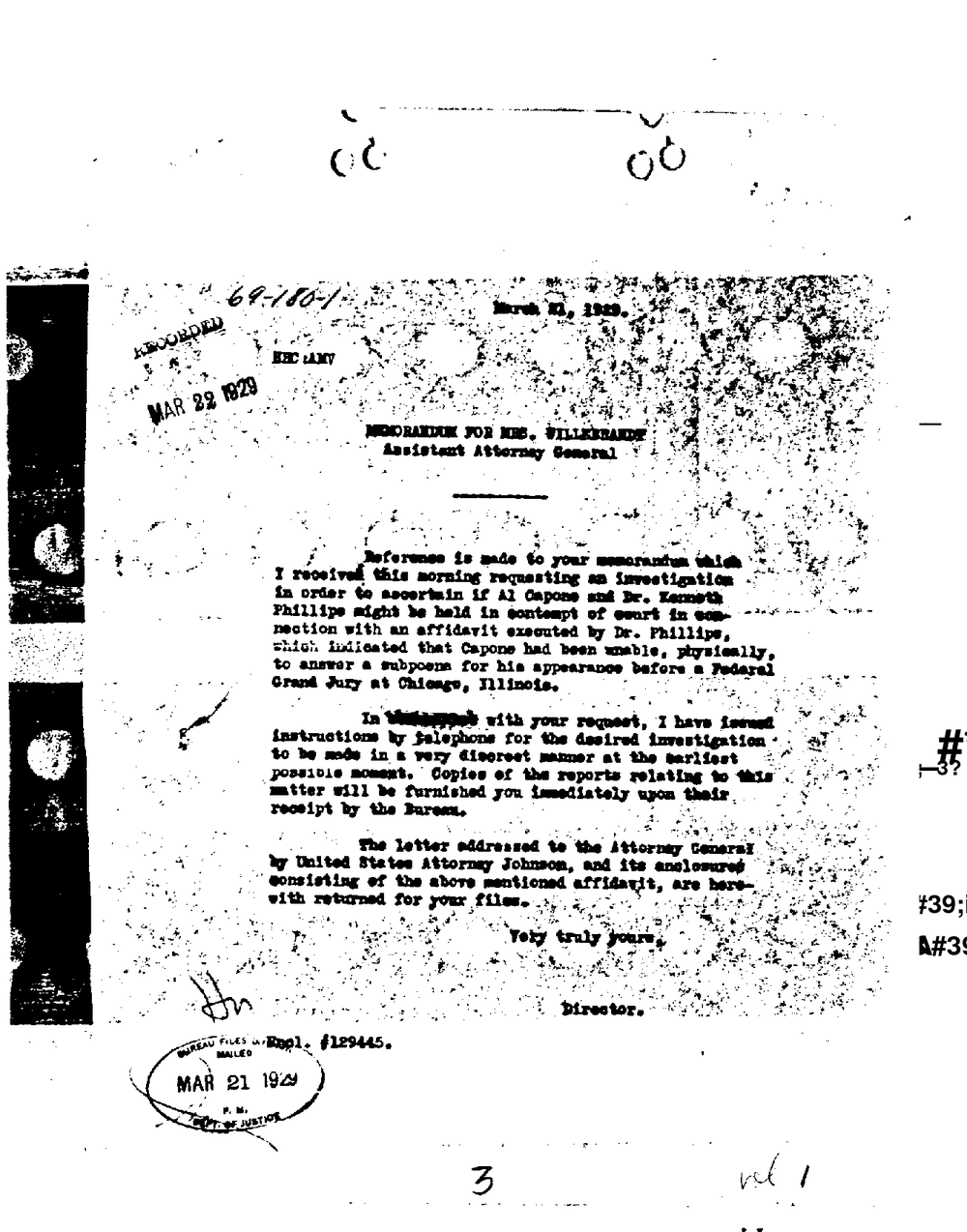
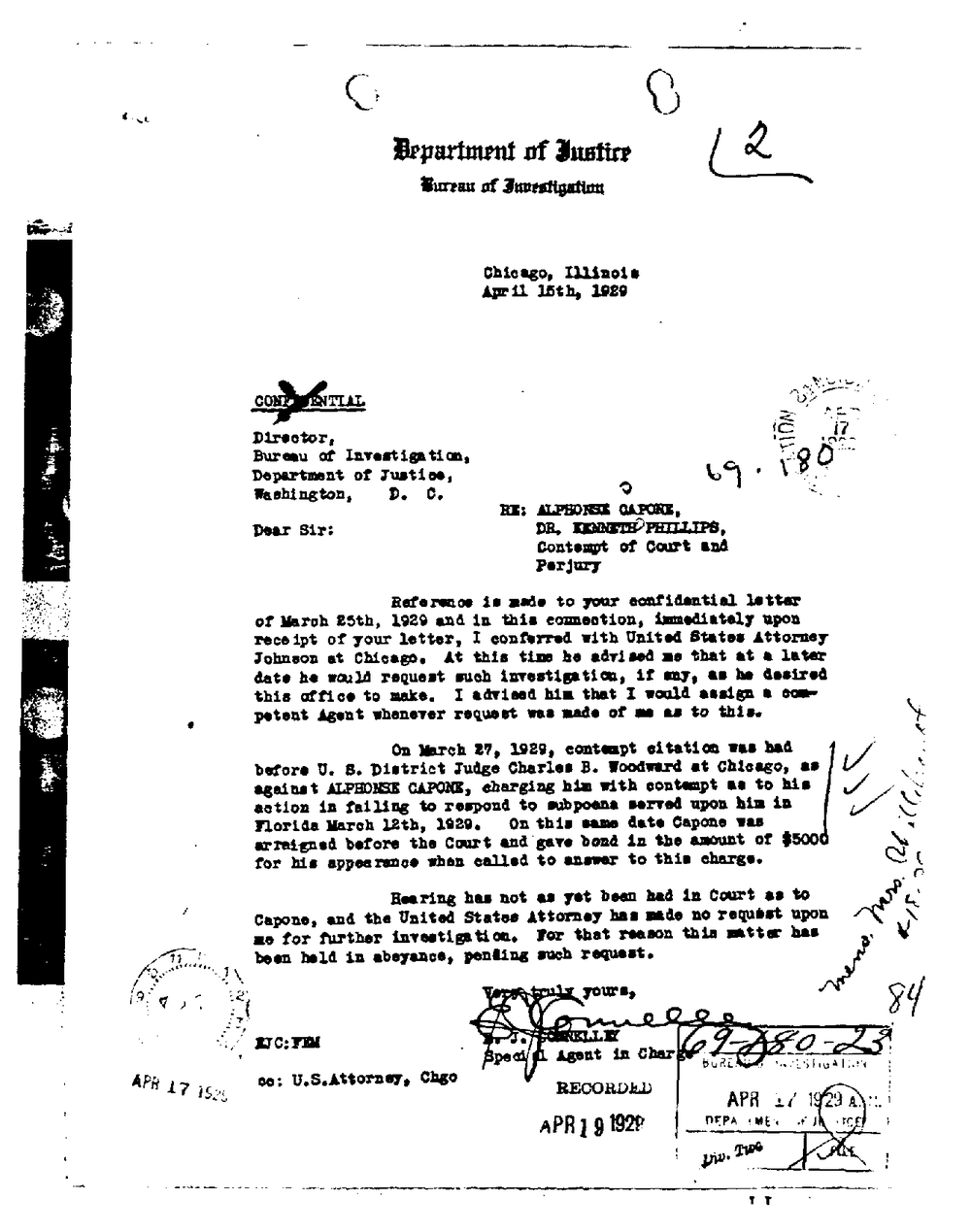
The United States Attorney’s file holds Johnson’s letter to Assistant Attorney General Youngquist of 6 May 1931, his notes for argument, a summary of the counts, and a Western Union telegram of 2 December 1931 about Capone’s treatment in the Cook County Jail, which the FBI then investigated; the Bureau’s report of 17 December 1931 is in the Vault file. Two FBI letters of October 1931 concern Florida witnesses during the trial. Ralph Capone’s separate appeal, 51 F.2d 609, is filed here because it shares the caption Capone v. United States; it is not his. The 1929 contempt matter before the same court, which ended in a six-month sentence on 27 February 1931, is linked at the end.
Three newspaper pages from 1931 report the indictment, the case going to the jury, and the sentence. They are wire copy and are filed as a record of the coverage, not as the source of any fact above; one prints the judge’s middle initial wrong.