The FBI Vault’s own summary of its Capone file says the Bureau of Investigation joined the Bureau of Prohibition and other agencies in the investigation. No Bureau of Prohibition record is filed in this archive. What is filed is the Bureau of Investigation’s side, the Treasury’s account of the parallel tax cases, and the court and prosecution papers that name a Prohibition charge. Each is summarized below from its own page.
The 1929 contempt case
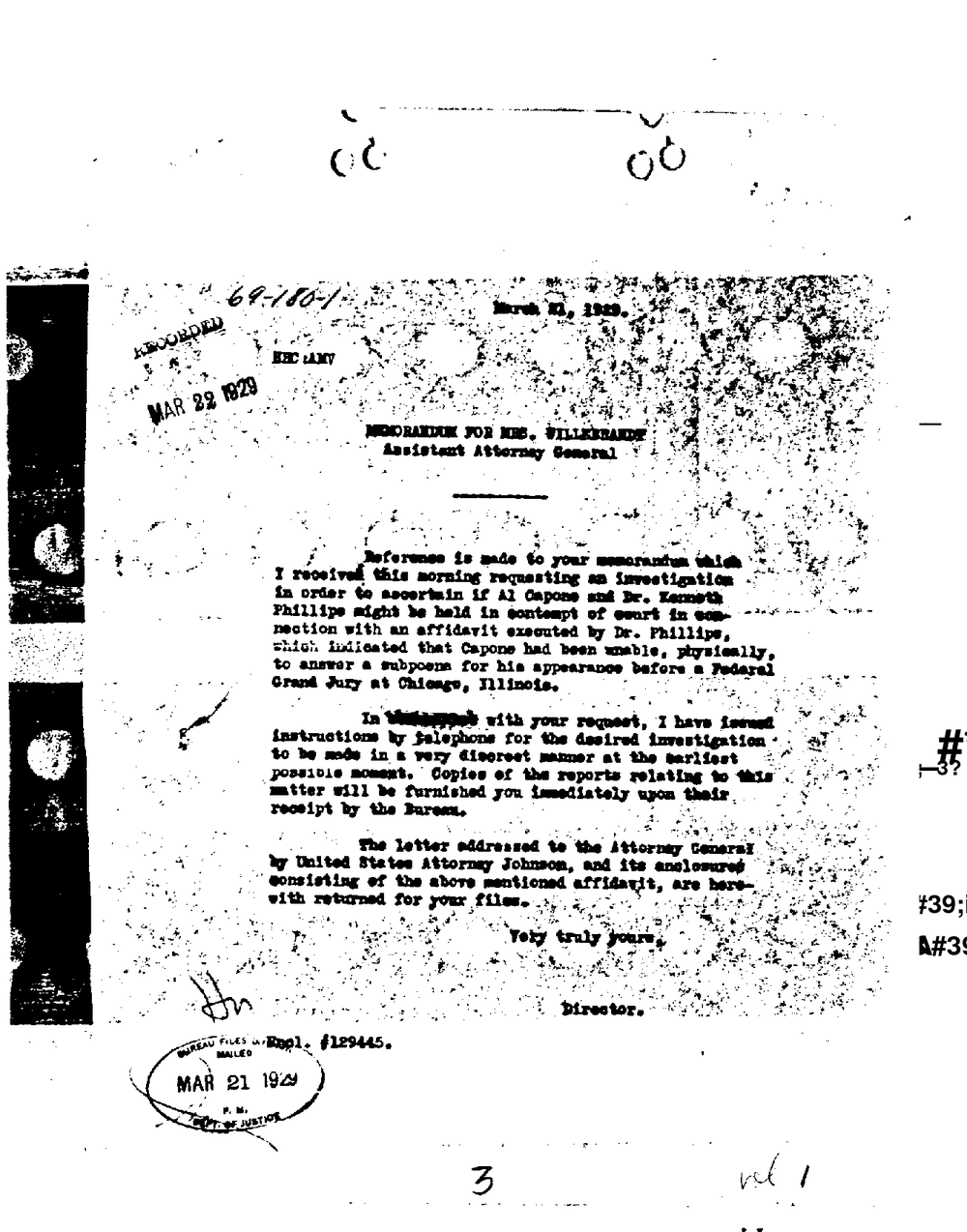
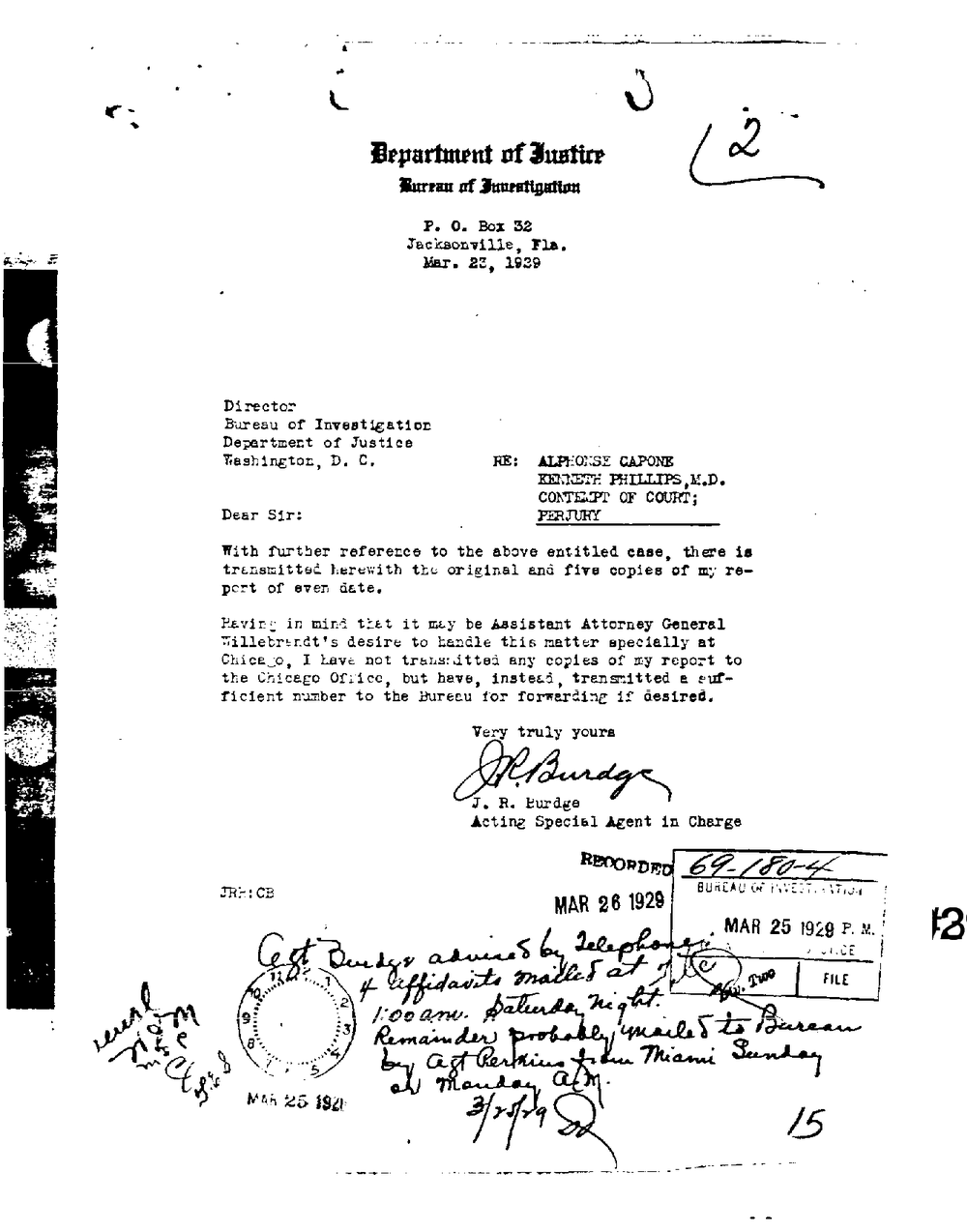
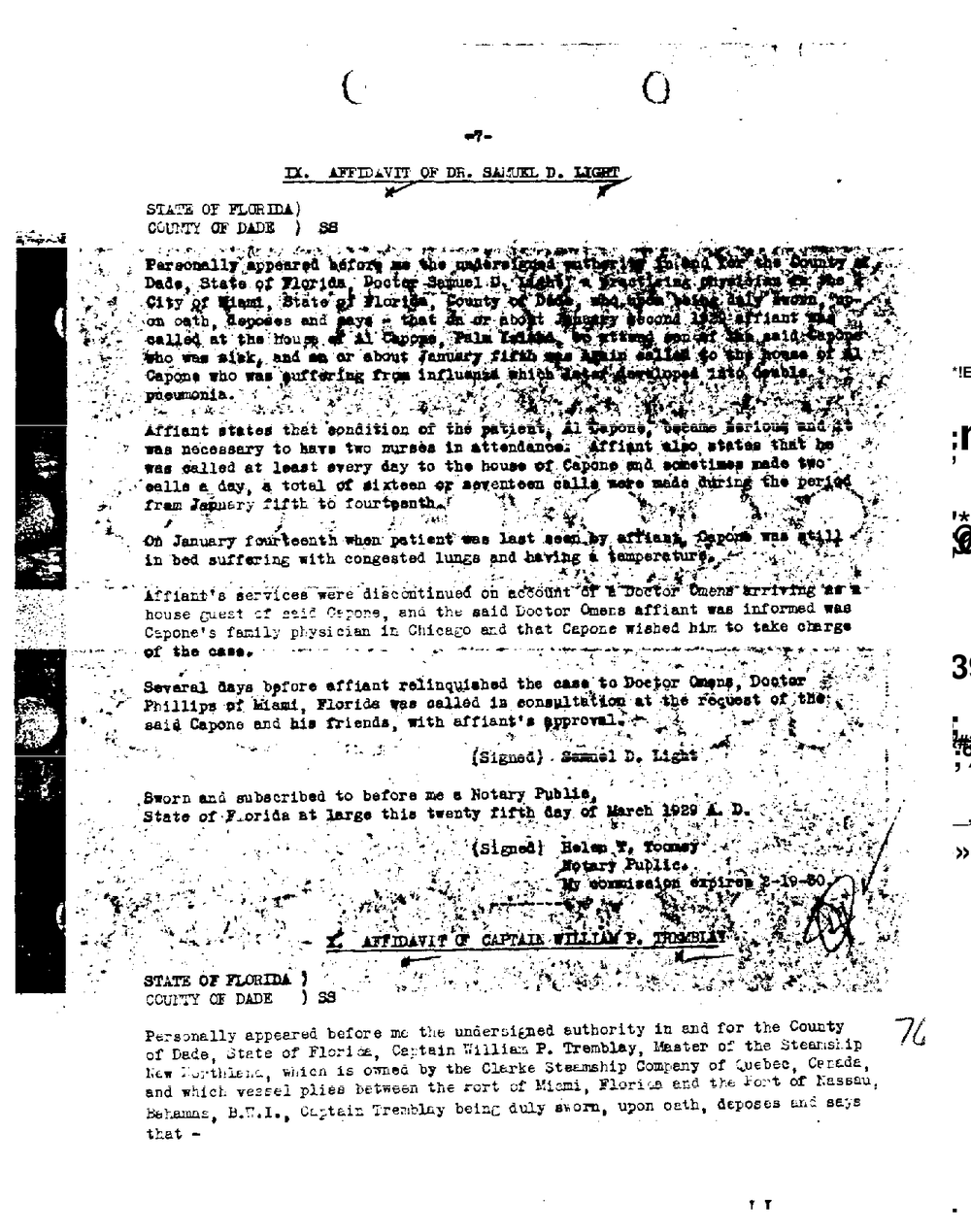
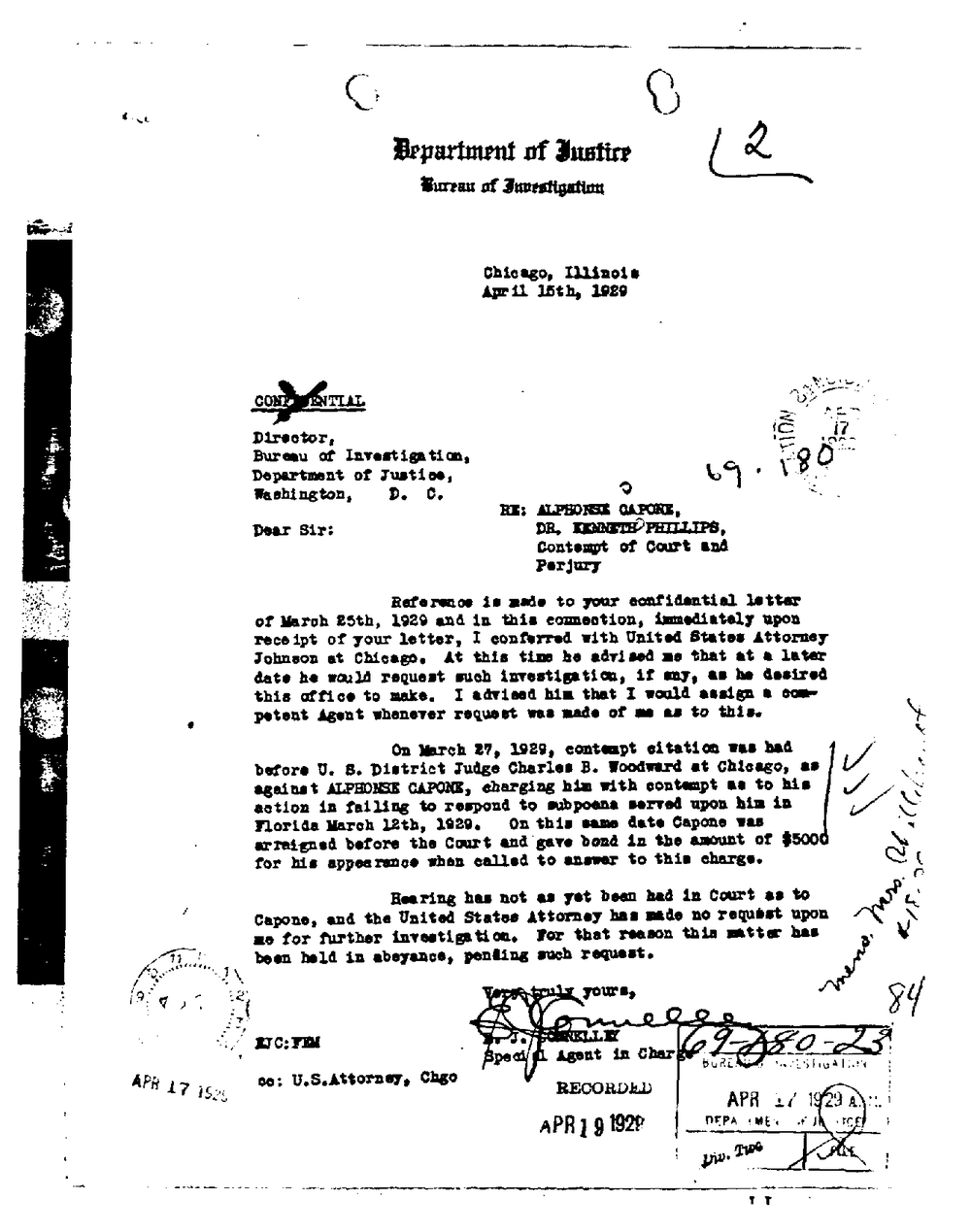
The first Bureau of Investigation case against Capone in the filed records was not a liquor case. On 21 March 1929 the Director told Assistant Attorney General Mabel Walker Willebrandt that he had ordered a discreet, quick inquiry into whether Capone and Dr. Kenneth Phillips could be held in contempt over the doctor’s affidavit that Capone had been too ill to answer a subpoena to a federal grand jury at Chicago (memorandum). The Jacksonville office’s report of 23 March set the affidavit against witnesses who said they saw him at the Hialeah race track in the same weeks, and affidavits sworn in Dade County in March 1929 were gathered for the inquiry. The Chicago office reported that a contempt citation was had on 27 March 1929 and that Capone gave a $5,000 bond (letter of 15 April 1929).
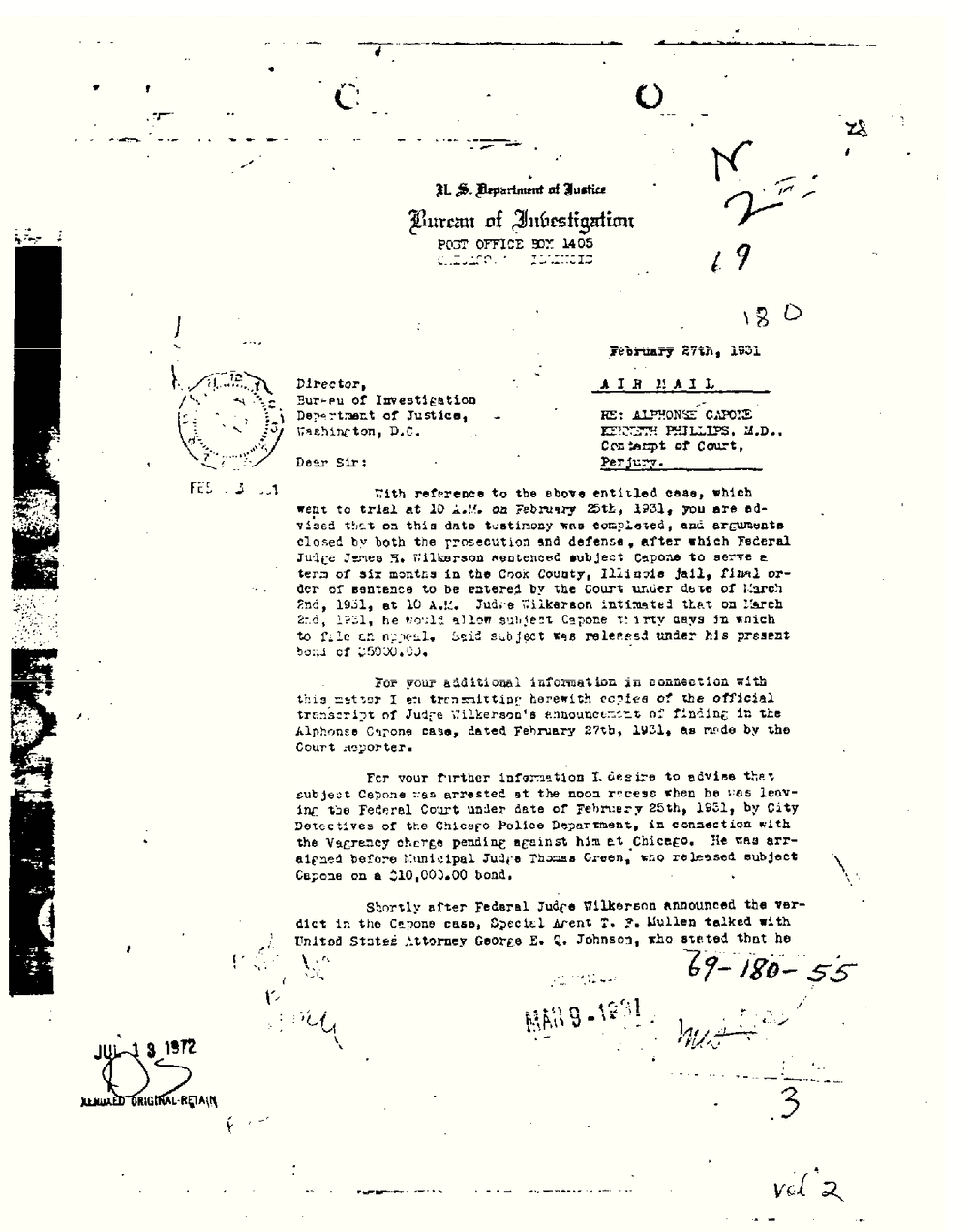
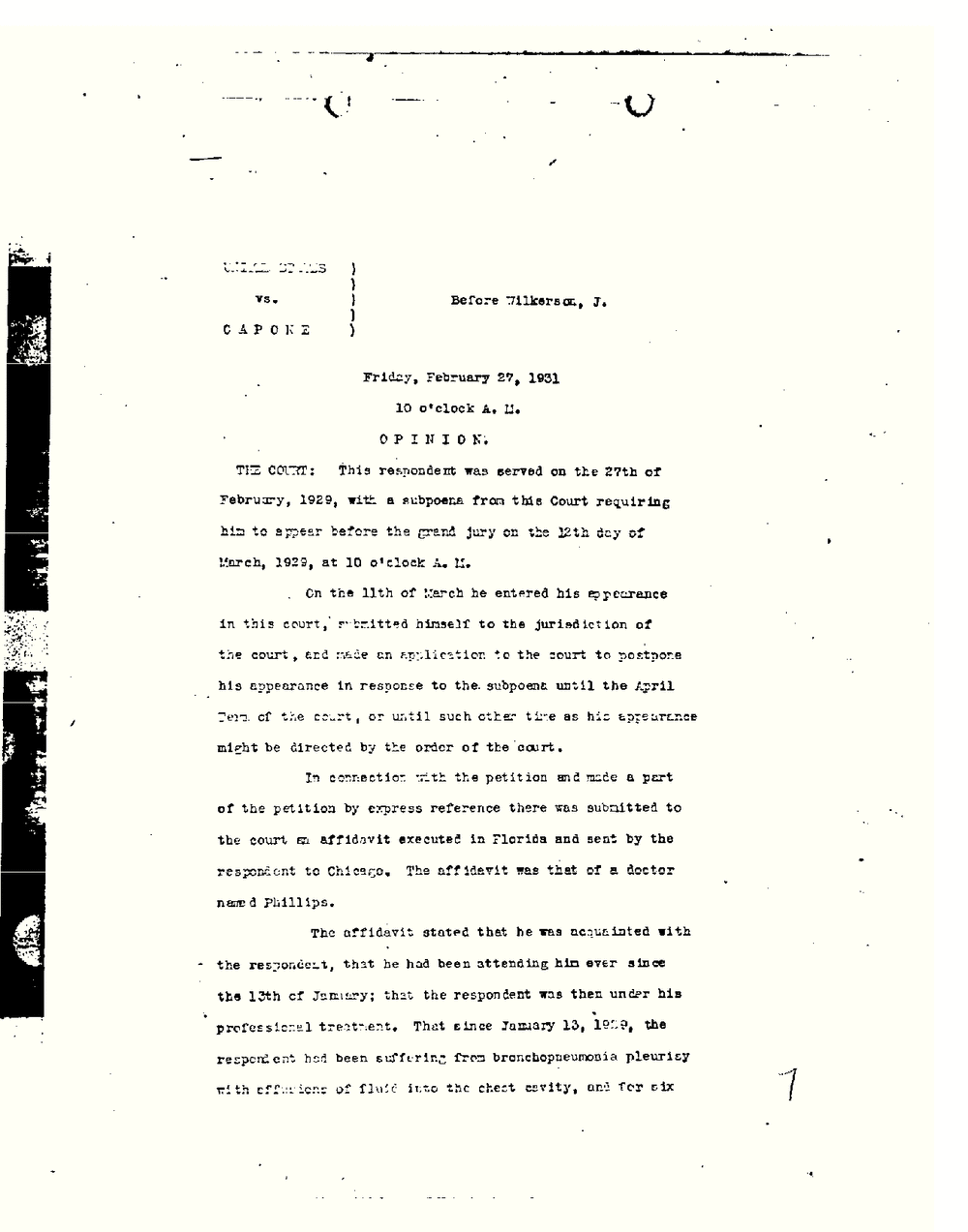
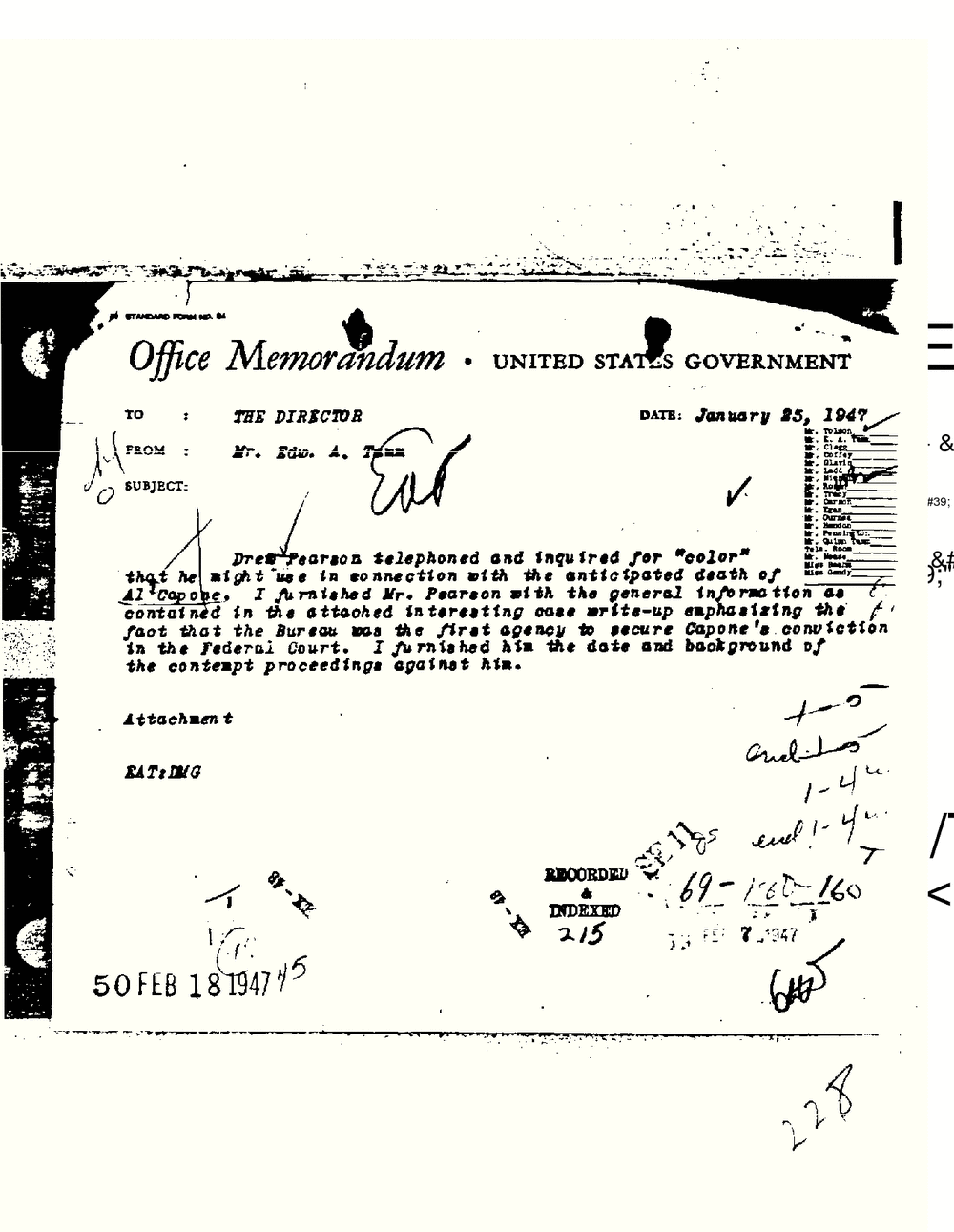
The case was tried before Judge James H. Wilkerson from 25 to 27 February 1931. The court reporter’s transcript of the judge’s finding holds that the statement that the respondent had been out of bed only ten days was false, finds him guilty of contempt, and commits him to the Cook County jail for six months. The Chicago office reported the sentence the same day, and his arrest by city detectives on a vagrancy charge two days before (letter of 27 February 1931). The dates of the subpoena differ between the 1929 letter and the 1931 finding; each page gives its own. In 1947 Edward A. Tamm told Hoover he had given a columnist the Bureau’s write-up of the case, “emphasizing the fact that the Bureau was the first agency to secure Capone’s conviction in the Federal Court” (memorandum of 25 January 1947). That is the Bureau’s description of its own record.
Grapes and soup, 1930–1931
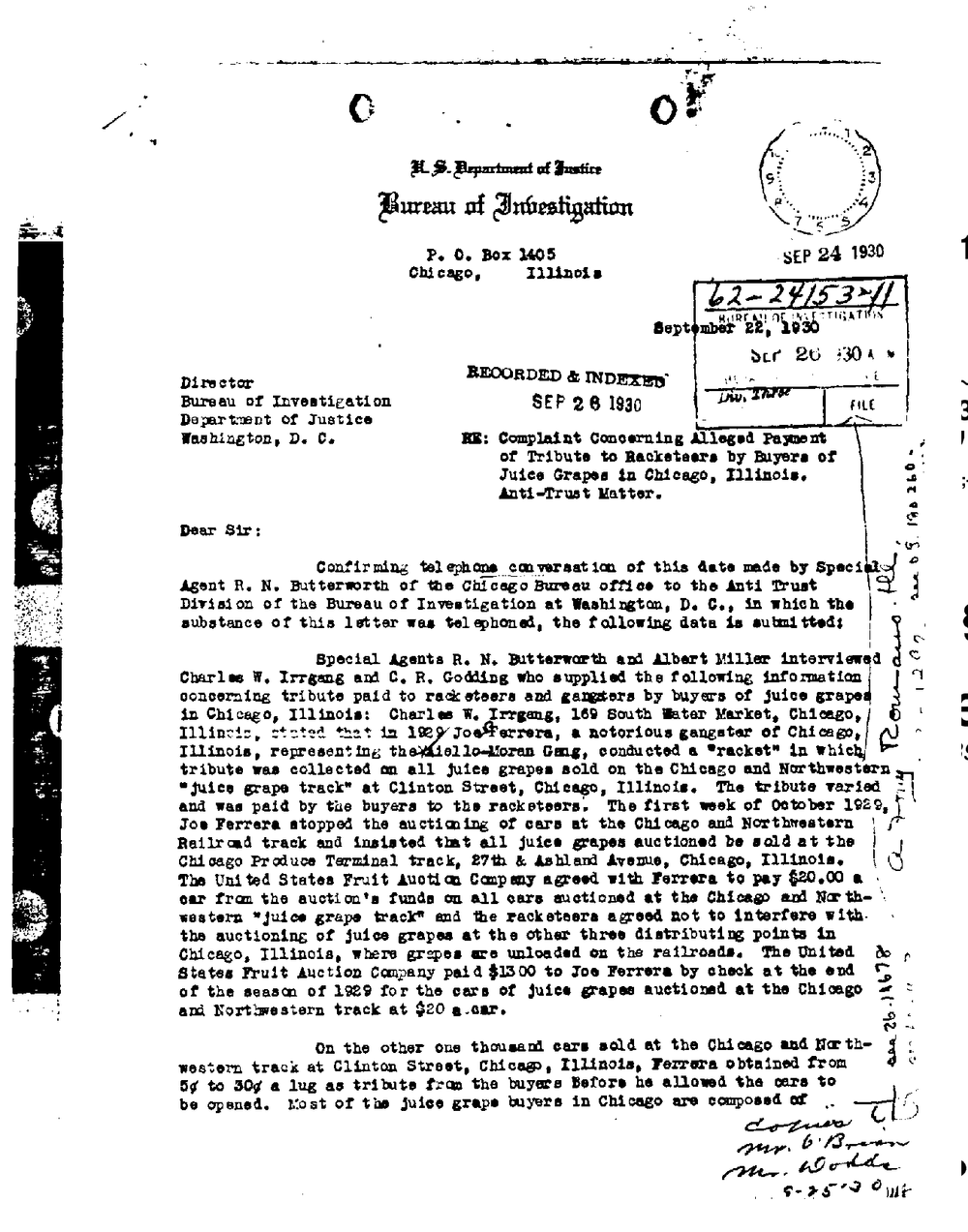
A Bureau report from Chicago of 22 September 1930, filed as an anti-trust matter, records complaints that racketeers collected tribute on every car of juice grapes sold at the Chicago tracks: in 1929 for a man said to represent the Aiello-Moran gang, and in 1930, according to a broker, for a collector “the Al Capone gang had appointed.” Those attributions are witnesses’ statements as the agents recorded them. Capone himself was not the subject of the inquiry.
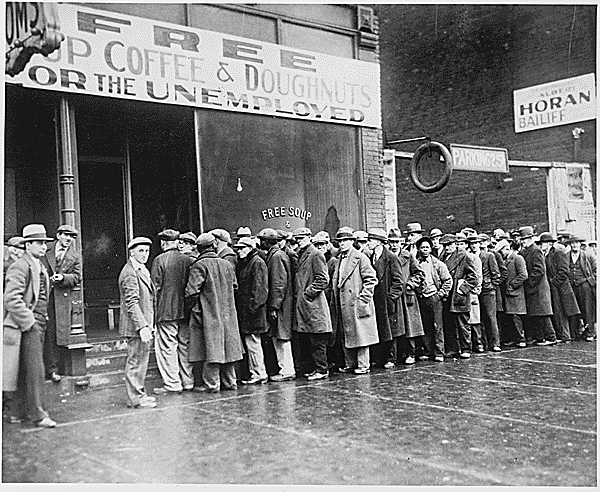
A National Archives photograph dated February 1931 shows unemployed men queued outside a Chicago storefront signed “Free Soup, Coffee and Doughnuts for the Unemployed” (NAID 541927). The catalog title says the kitchen was opened by Capone. He is not in the picture, and the attribution is the catalog’s.
The concurrent tax cases
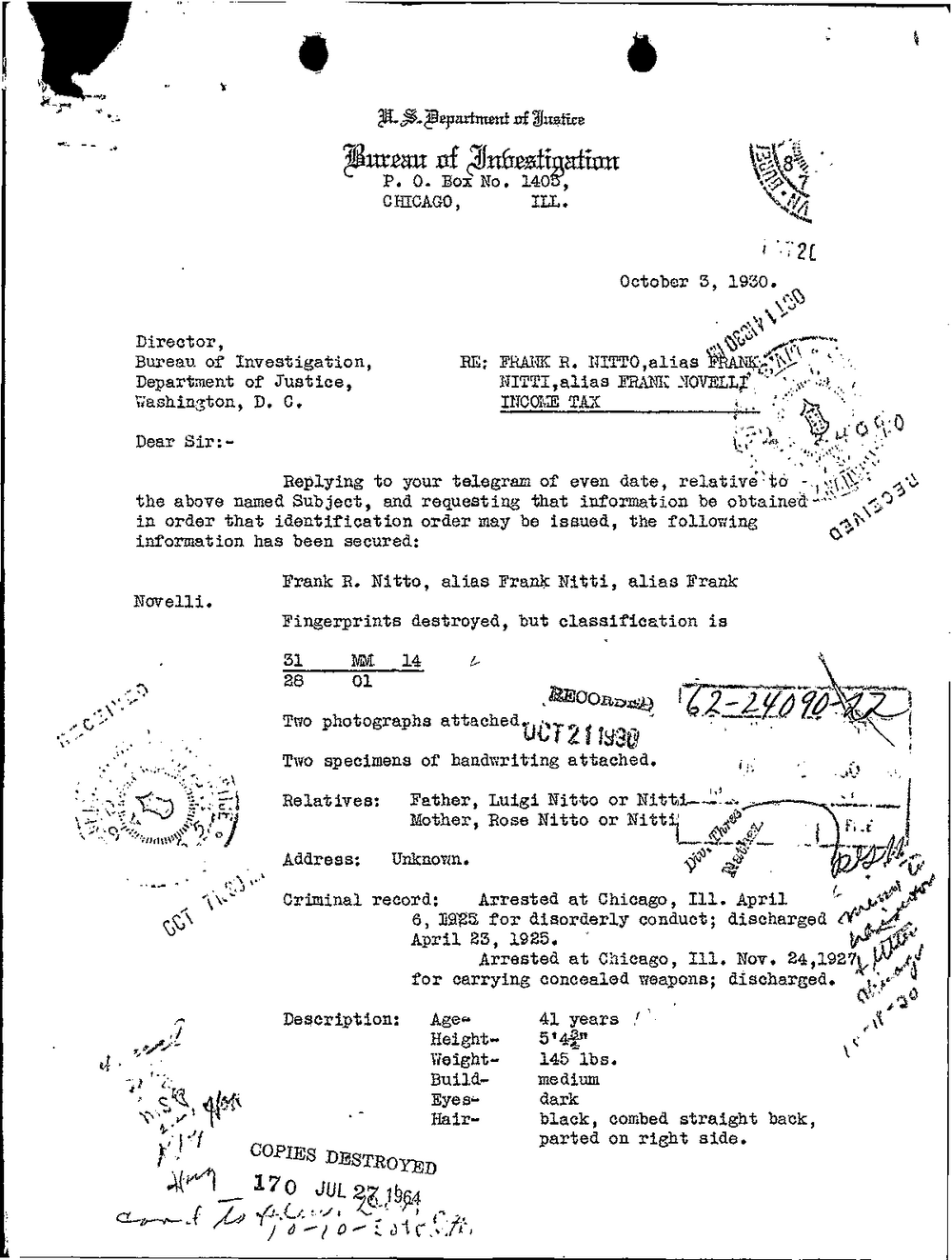
Special Agent Frank J. Wilson’s summary report of 21 December 1933 describes concurrent cases that ended in the conviction or guilty pleas of Jack Guzik, Sam Guzik, Frank Nitto, T. J. Druggan and Frank A. Lake. Separate records on file speak to two of them. A Bureau of Investigation letter in the Frank Nitti Vault file says Frank R. Nitto was indicted by the federal grand jury at Chicago on 14 March 1930 for evading income tax for 1925. An FBI memorandum in the Jake Guzik Vault file says Guzik was sentenced on 8 April 1930 for violating the income tax laws, and the Seventh Circuit affirmed his conviction for 1927 through 1929 on 10 December 1931 (Guzik v. United States, 54 F.2d 618). No record of the Druggan and Lake cases is filed here beyond Wilson’s sentence; their names also appear, as far as the OCR can be read, on the Chicago Crime Commission’s 1930 list in the Vault file. Capone’s own tax case is on the tax trial spoke.
The Prohibition indictment
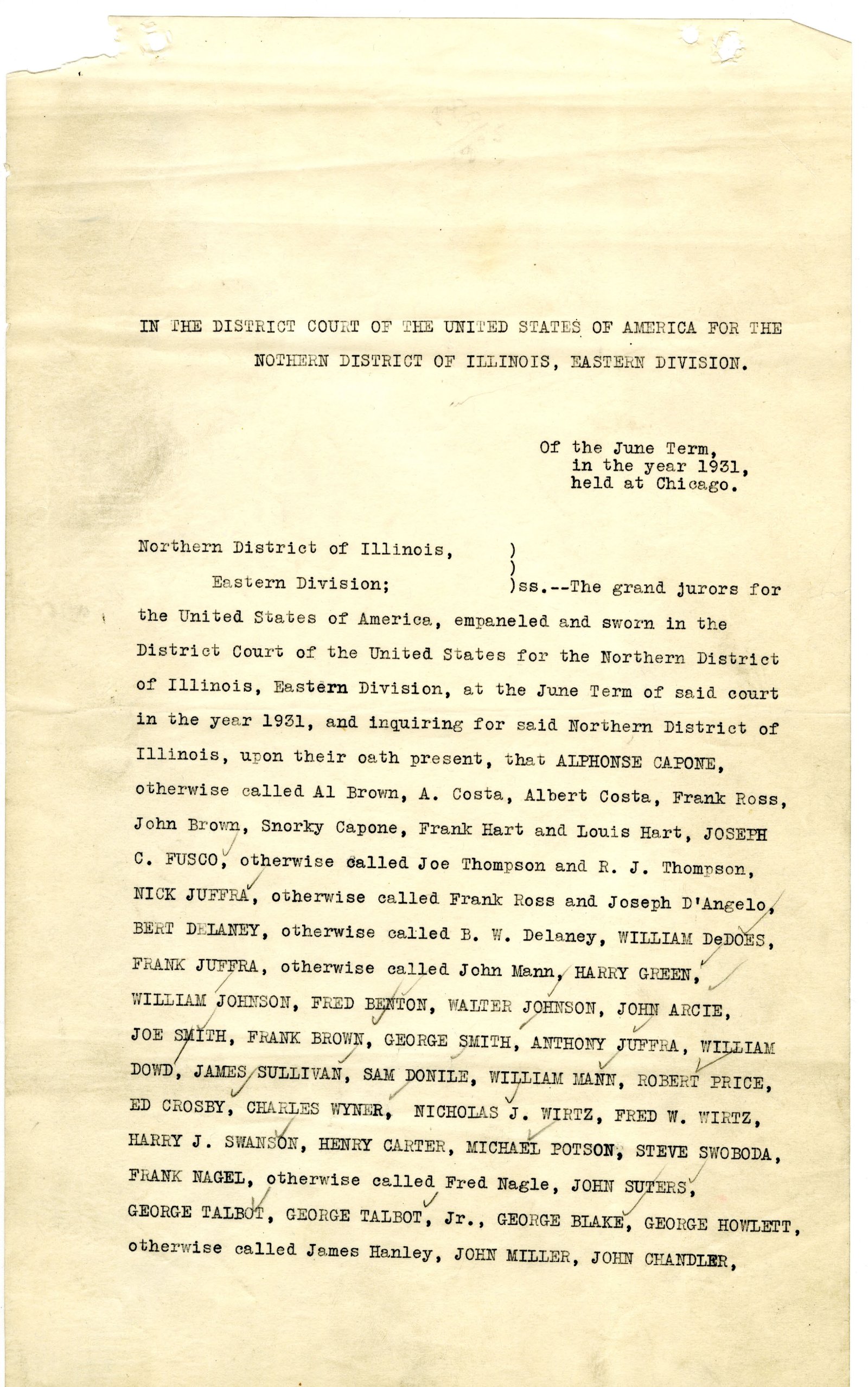
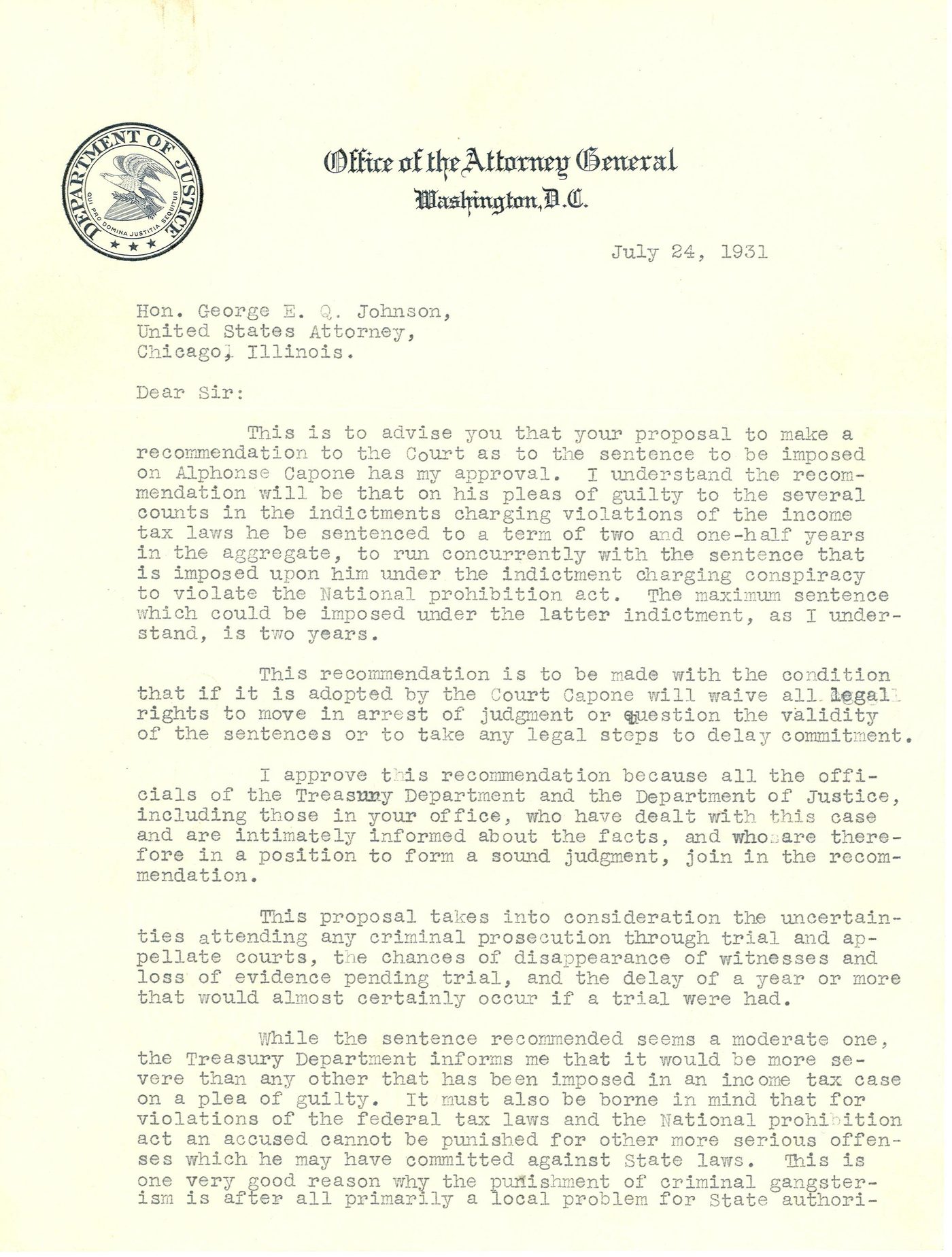
The National Archives at Chicago holds criminal case file 23256, The United States of America vs. Alphonse Capone et al., for a June 1931 indictment of Capone and about seventy co-defendants, charged, the catalog says, with unlawfully possessing intoxicating alcohol. Its pages have not been read for this archive. The Attorney General’s letter of 24 July 1931 approving a plea bargain in the tax case says the tax sentence was to run concurrently with the sentence imposed “under the indictment charging conspiracy to violate the National prohibition act.” The letter gives no case number, and this archive has not matched that reference to file 23256.
What is not here
No Bureau of Prohibition report, no trial record or disposition of the Prohibition indictment, and no record of a liquor seizure involving Capone is filed in this archive. The outcome of case 23256 is not stated because its pages have not been read.