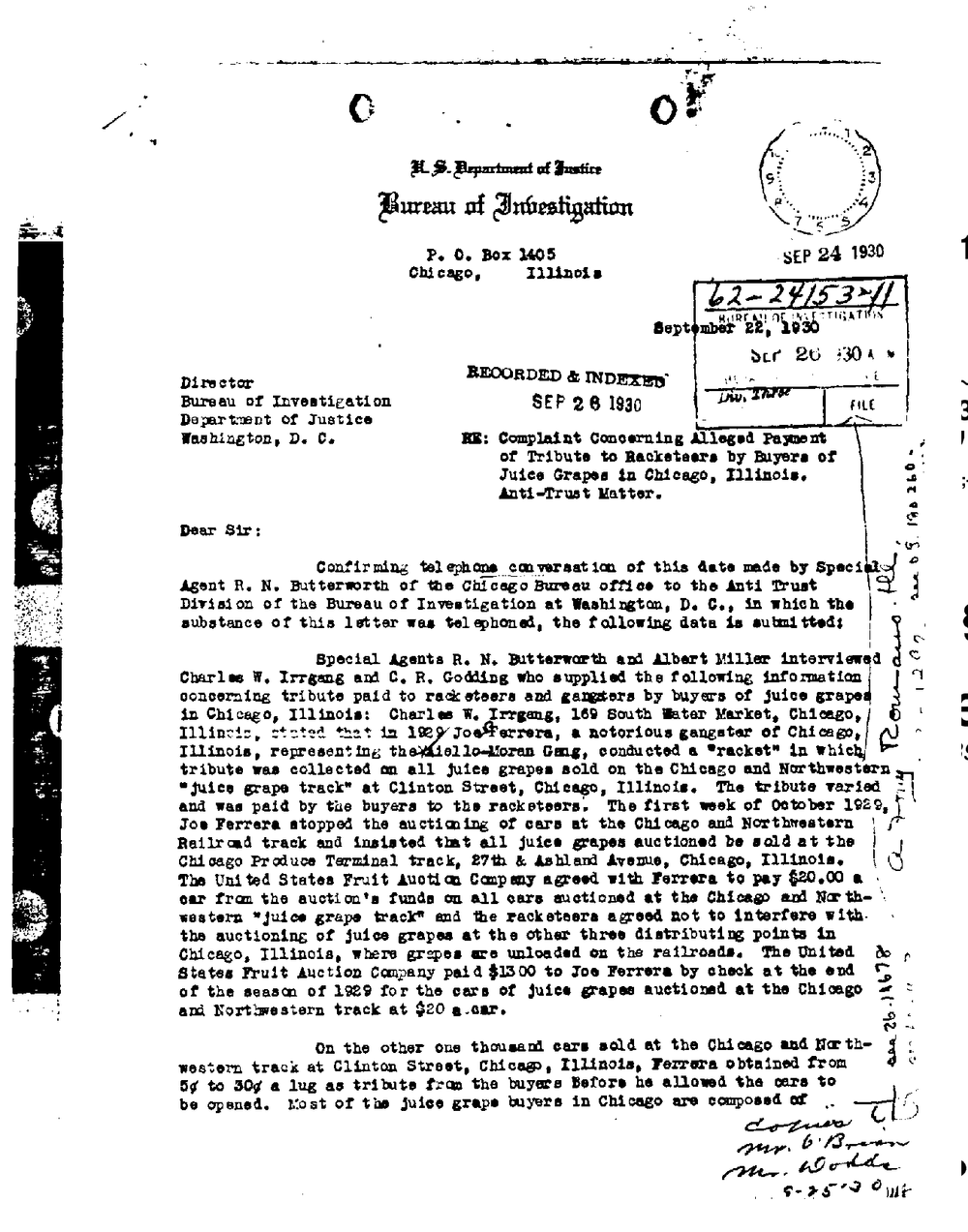
Chicago report on tribute collected from juice-grape buyers (22 September 1930)
A Bureau of Investigation report from Chicago records complaints that racketeers taxed every railcar of juice grapes sold at Chicago tracks: in 1929 for a gangster said to represent the Aiello-Moran gang, and in 1930, according to a witness, for a collector appointed by 'the Al Capone gang'.
- Date
- 1930-09-22
- Kind
- case-file
- Source
- FBI Records: The Vault
- Retrieved
- 2026-10-12
- Rights
- A record of the Federal Bureau of Investigation released under FOIA. A work of the United States government, public domain under 17 U.S.C. § 105.
Part 01 of the FBI Vault’s Capone file, scans 21 to 25. A letter-report on U.S. Department of Justice, Bureau of Investigation letterhead, P. O. Box 1405, Chicago, dated September 22, 1930, from the Acting Special Agent in Charge to the Director, captioned “Complaint Concerning Alleged Payment of Tribute to Racketeers by Buyers of Juice Grapes in Chicago, Illinois. Anti-Trust Matter.” It is stamped 62-24153-11 and recorded on 26 September 1930. It confirms a telephone report made that day by Special Agent R. N. Butterworth to the Bureau’s Anti-Trust Division.
Special Agents Butterworth and Albert Miller interviewed two officers of the United States Fruit Auction Company. According to the first page, read from the image stored here, one of them stated “that in 1929 Joe Ferrera, a notorious gangster of Chicago, Illinois, representing the Aiello-Moran Gang, conducted a ‘racket’ in which tribute was collected on all juice grapes sold on the Chicago and Northwestern ‘juice grape track’ at Clinton Street.” The auction company agreed to pay Ferrera $20.00 a car from the auction’s funds and paid him $1,300 by check at the end of the 1929 season. Ferrera also took 5 to 30 cents a lug from buyers before he let the cars be opened.
On scans 22 and 23, read from OCR, the report says Ferrera was killed in 1929. It recounts threats by armed men at the grape tracks in September 1930 and a broker’s remark that “the Al Capone gang had appointed Manny Schreiber to collect tribute in connection with the juice grape racket this year”, as Ferrera had done the year before. The OCR spells the name both Schrieber and Schreiber. The report gives 1929 unloadings in Chicago as five thousand cars of juice grapes. Scans 24 and 25 describe the ownership of the auction companies. The attributions to the Aiello-Moran and Capone gangs are statements by witnesses as the agents recorded them, not findings. Capone himself was not the subject of the inquiry.