No birth, immigration, school or Chicago police record from these years is filed in this archive. The early part of this spoke rests on two federal narratives, each named where it is used: the FBI’s history essay Al Capone, a later Bureau account, and a memorandum of 19 April 1947 in the FBI Vault file on John Torrio, which repeats a Chicago Office crime survey of 1944 and a police allegation. Neither is a finding of fact. From 1926 on, the spoke adds newspaper pages of the time and the Bureau’s own files.
Brooklyn, Torrio and Colosimo
The FBI history essay says Capone was “Born of an immigrant family in Brooklyn, New York in January 1899” and quit school after the sixth grade; the National Archives catalog entry for his Alcatraz notebook page gives 01/17/1899 and Brooklyn. The essay says he joined a New York street gang of which “Johnny Torrio was the street gang leader,” and that “About 1920, at Torrio’s invitation, Capone joined Torrio in Chicago where he had become an influential lieutenant in the Colosimo mob.” The criminal history typed on the Alcatraz notebook page begins with a 1919 arrest in New York City.
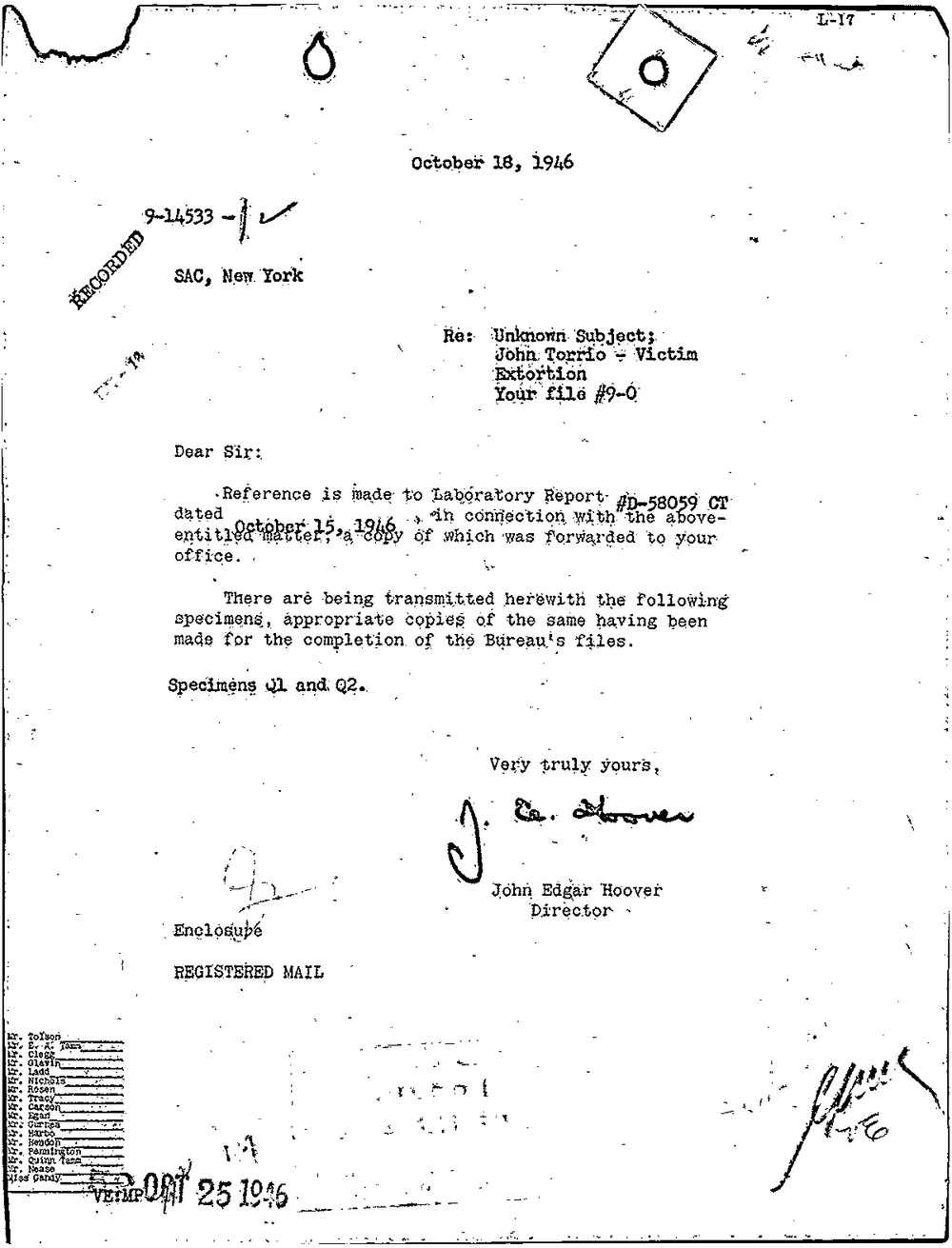
The 1947 memorandum in the Torrio file says Jim Colosimo “imported Johnny Torrio from New York to be his bodyguard and right-hand man,” that “Colosimo was murdered on May 11, 1920, and it is alleged by the Chicago Police that this killing was planned by Johnny Torrio,” and that Torrio then brought “a New York hoodlum named Alfonse Capone” to Chicago. It says Torrio was arrested in January 1925 in a raid on the Sieben Brewery. The history essay states: “In 1925, Capone became boss when Torrio, seriously wounded in an assassination attempt, surrendered control and retired to Brooklyn.” That sentence is the Bureau essay’s; no court record filed here says it. See the person pages for John Torrio and Jim Colosimo.
1926 and 1928 in the wire copy
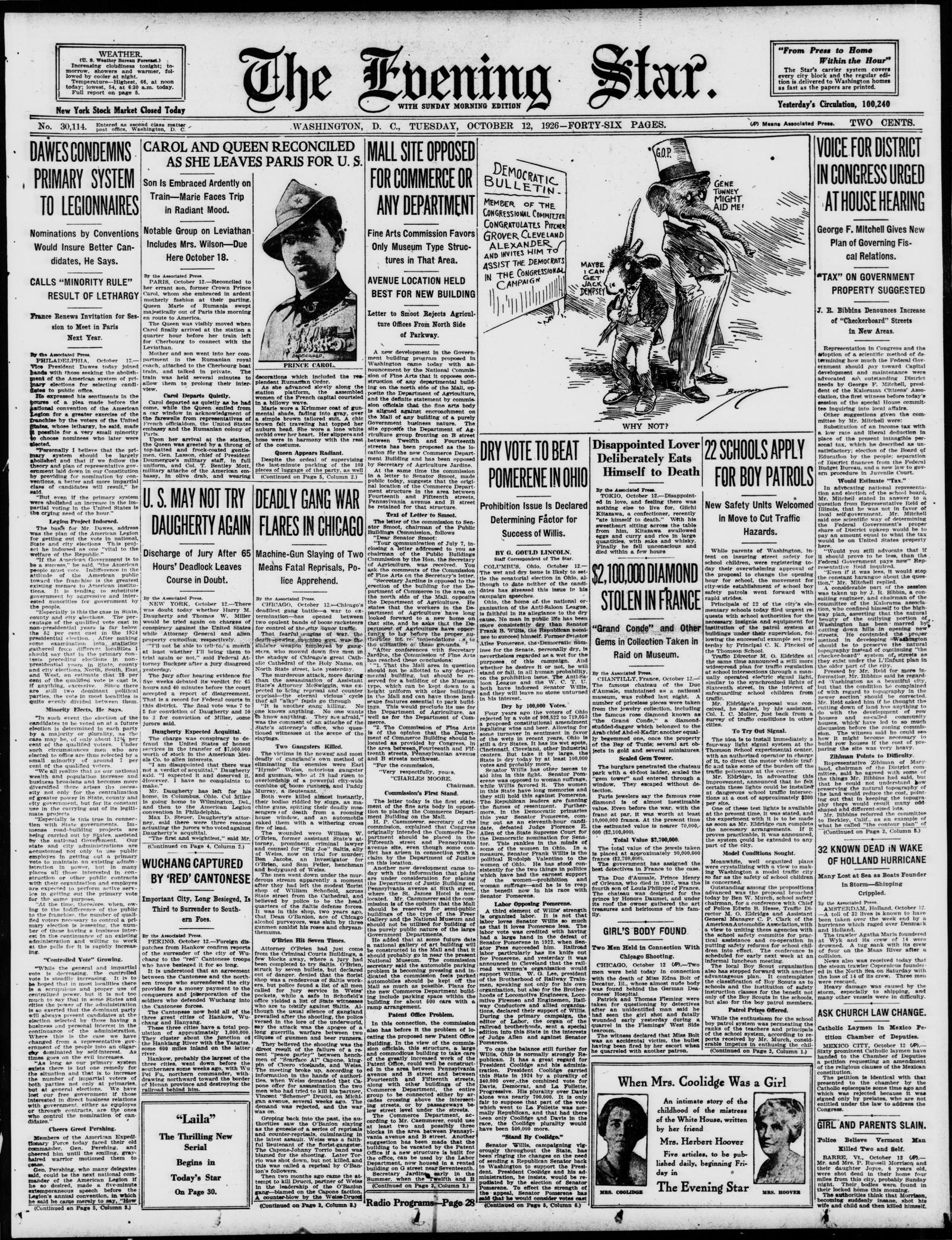
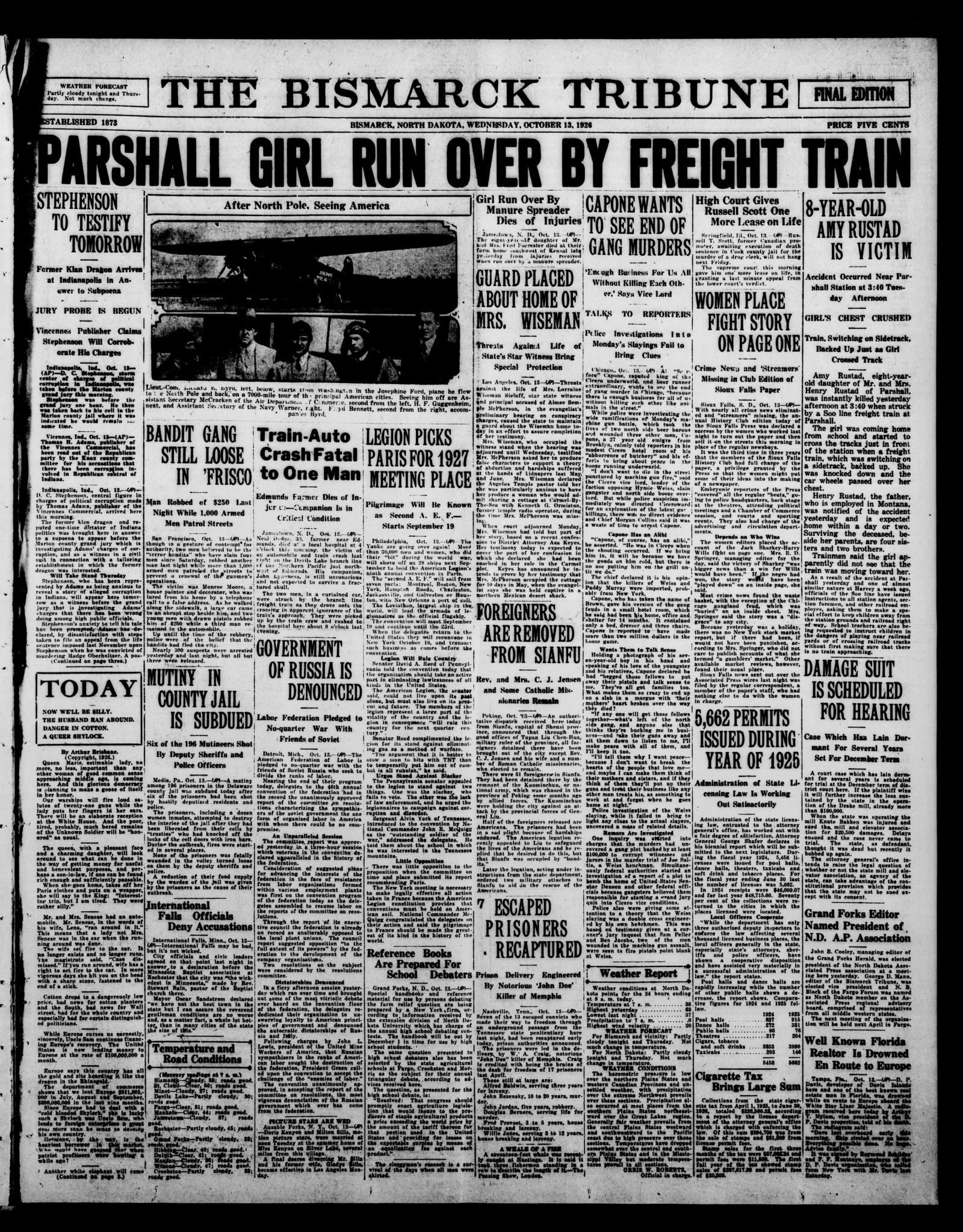
On 12 October 1926 the Evening Star printed the Associated Press report of the machine-gun shooting near Holy Name Cathedral in which Earl “Hymie” Weiss and Paddy Murray were killed; it names no one as responsible. The next day the Bismarck Tribune carried Capone’s own words to reporters in a Cicero hotel room, that he wanted an end to the killings, and the report that police suspicion turned toward Cicero but “there was no direct evidence.” Capone’s statements are quoted as his.
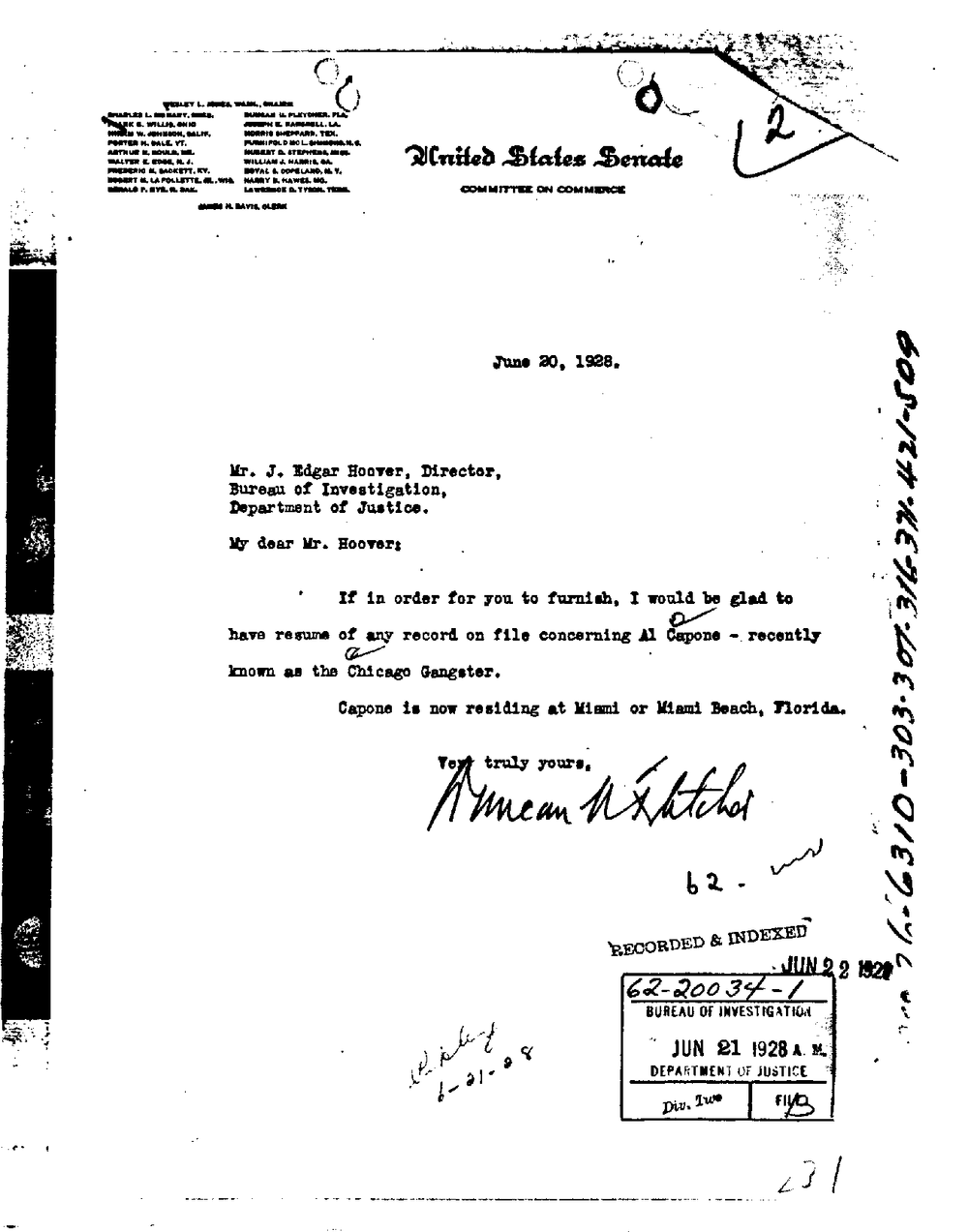
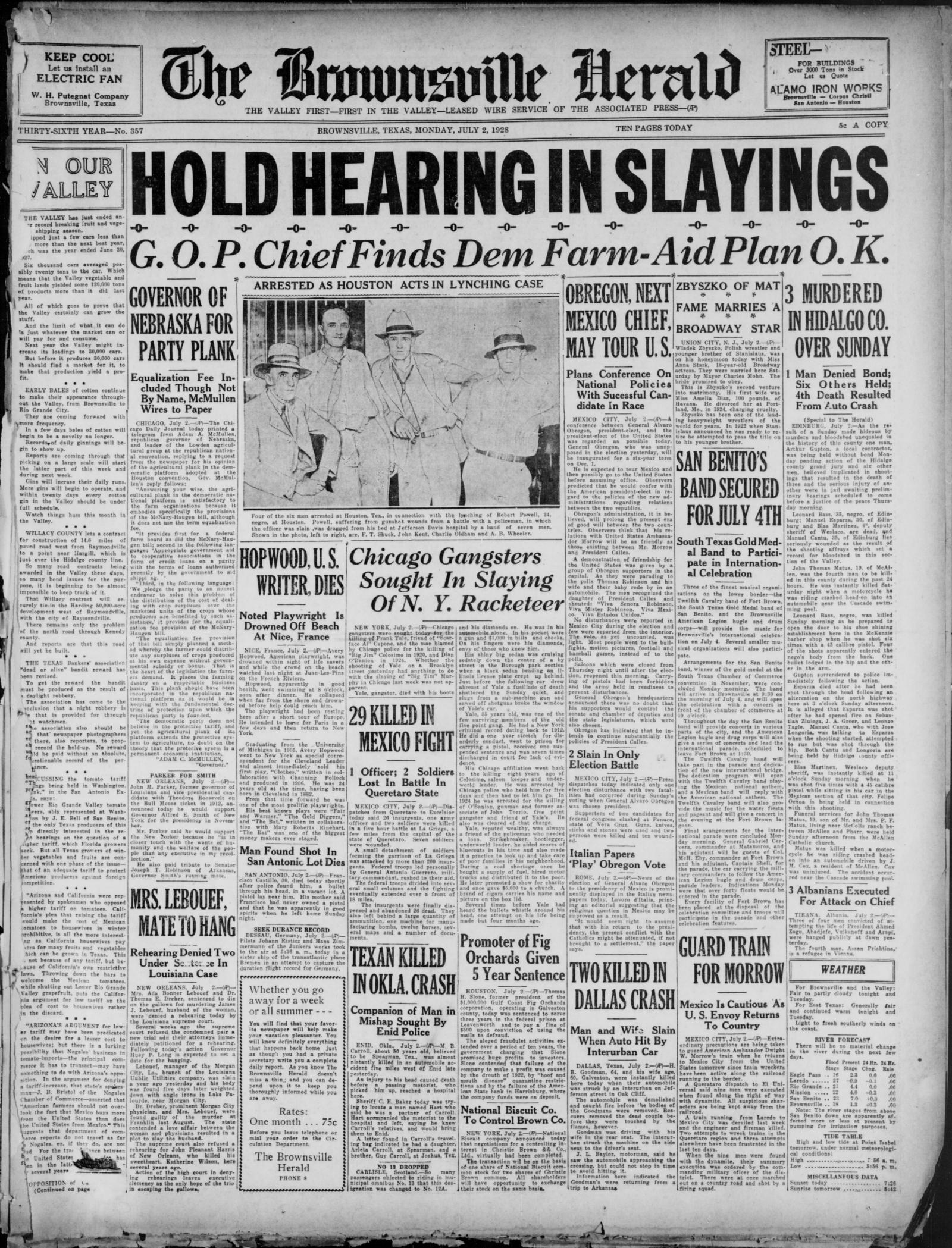
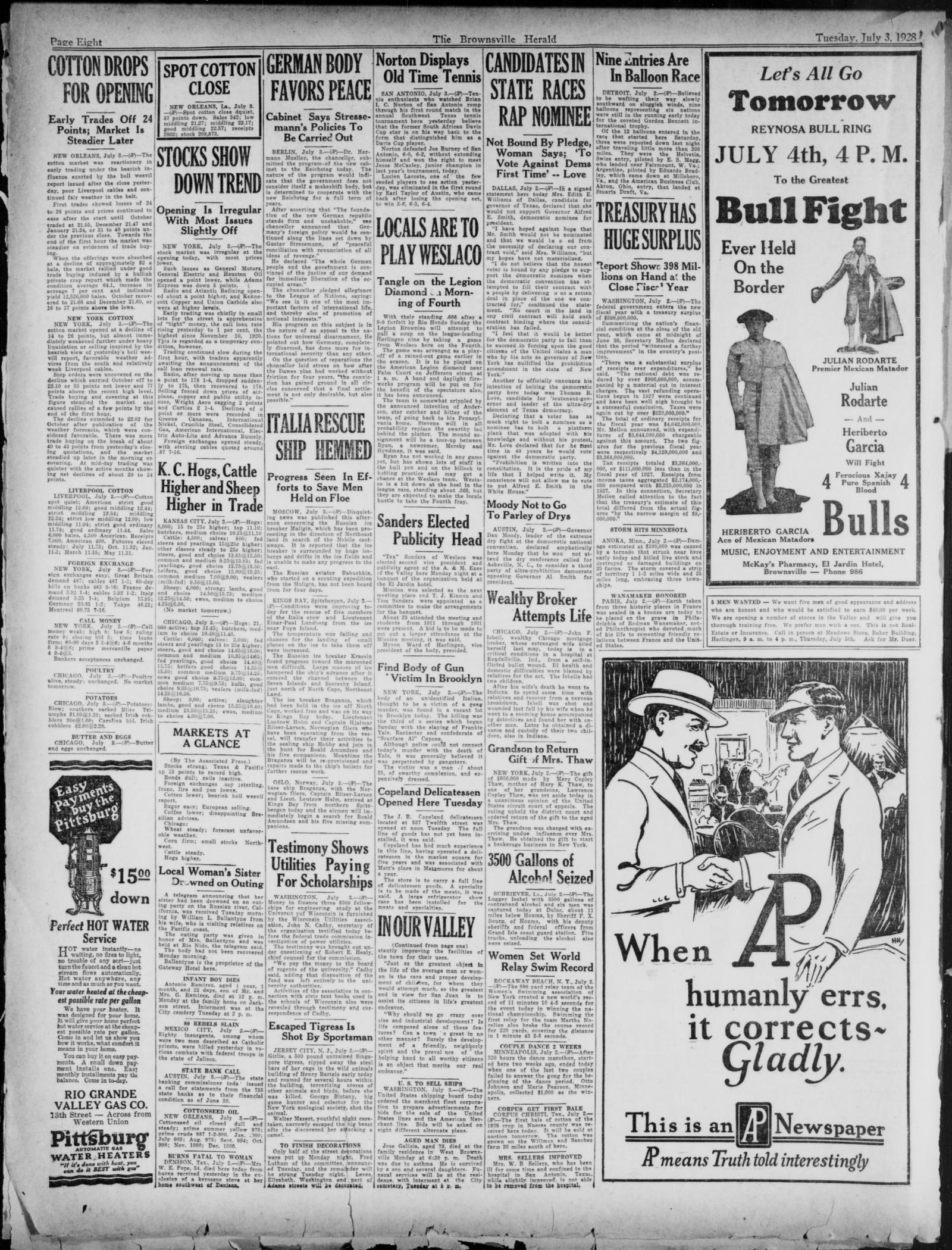
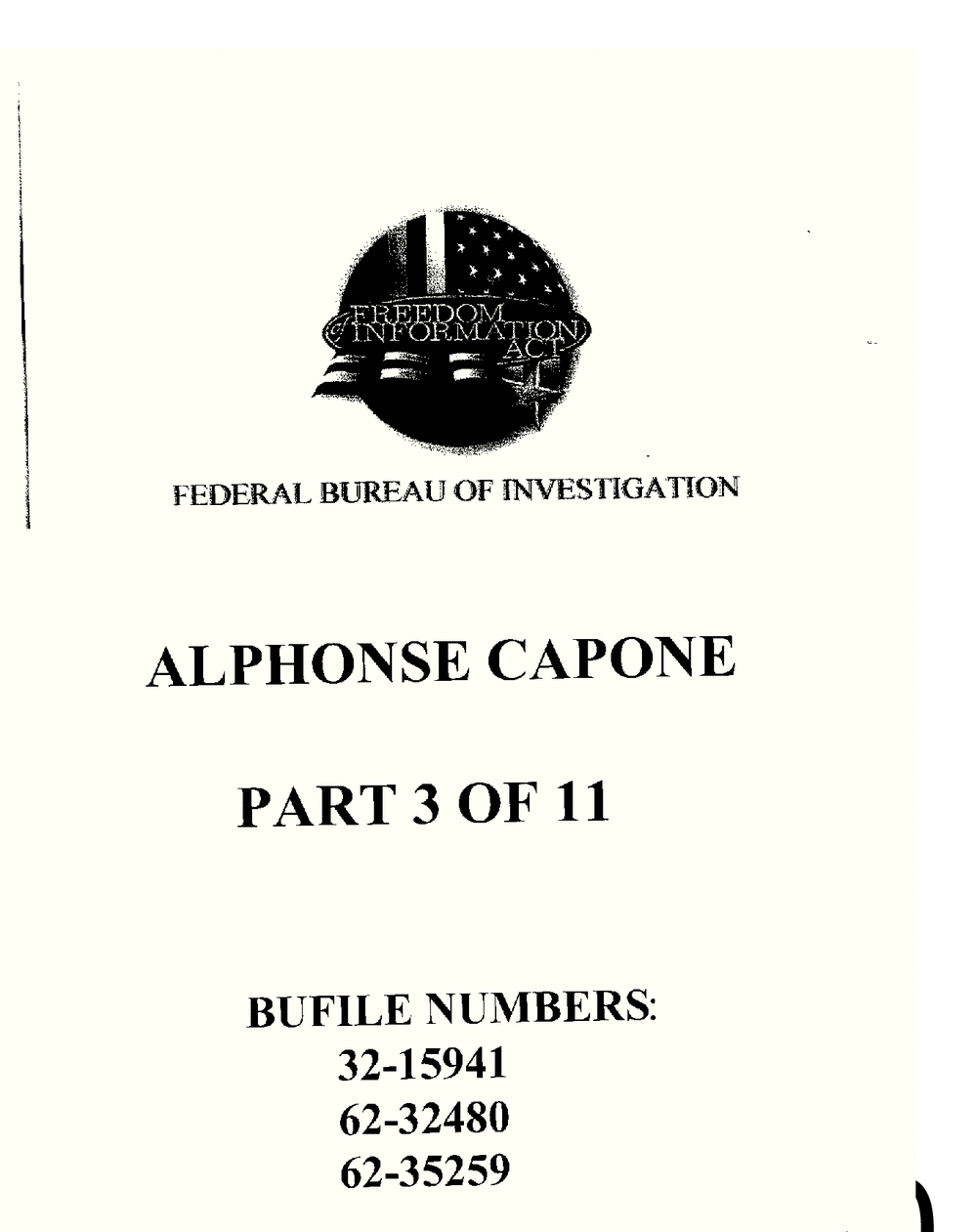
On 20 June 1928 a letter on United States Senate Committee on Commerce letterhead asked J. Edgar Hoover for a résumé of any Bureau record on “Al Capone – recently known as the Chicago Gangster,” then living at Miami or Miami Beach. It is the first serial of the Bureau’s Capone file. In early July 1928 the Brownsville Herald carried two short wire items on the killing of Frank Yale in Brooklyn, calling him a friend and “confederate” of Capone; the attributions of blame in them are the papers’, and this archive takes none from them.
Philadelphia, 1929–1930
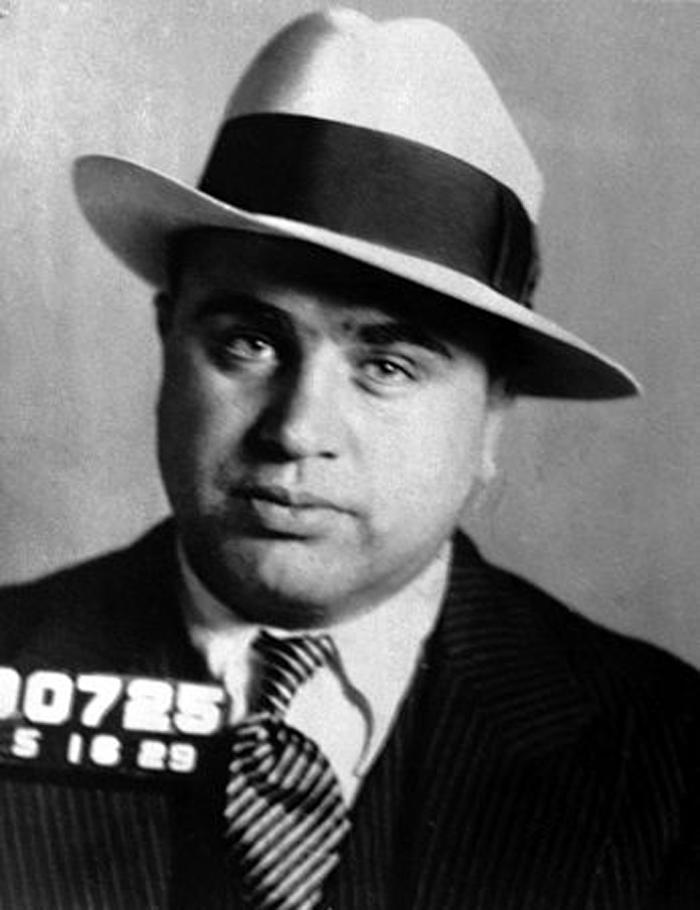
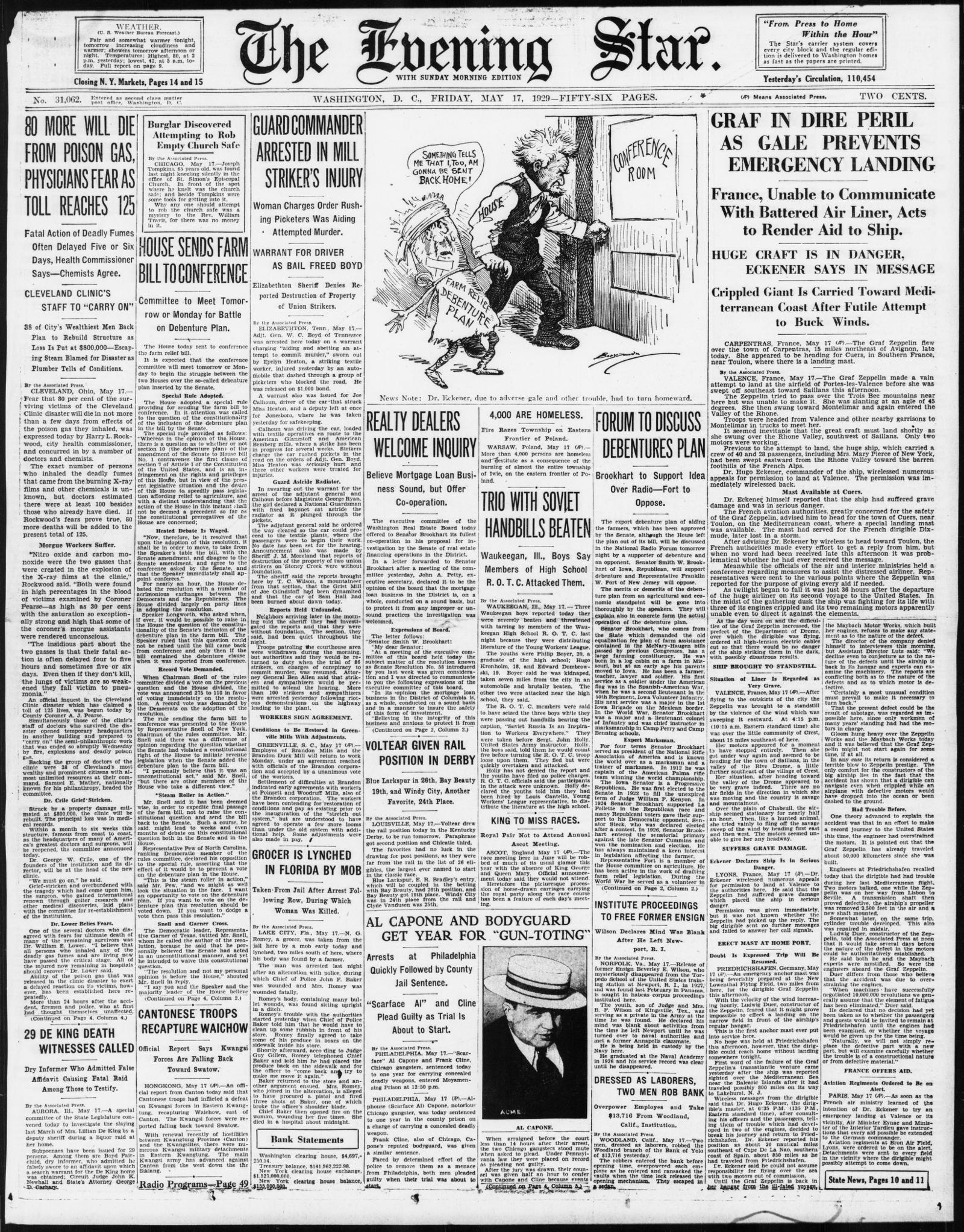
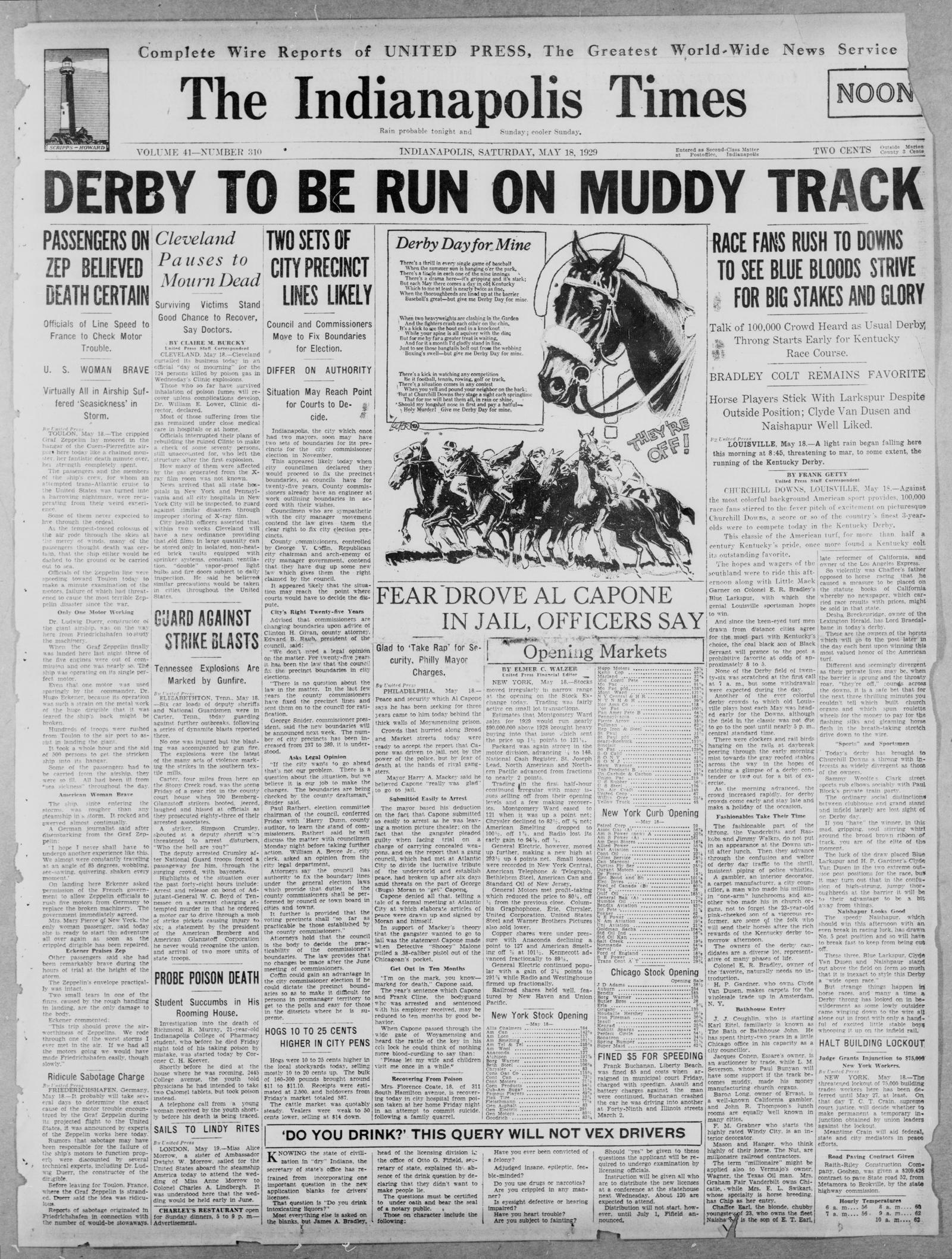
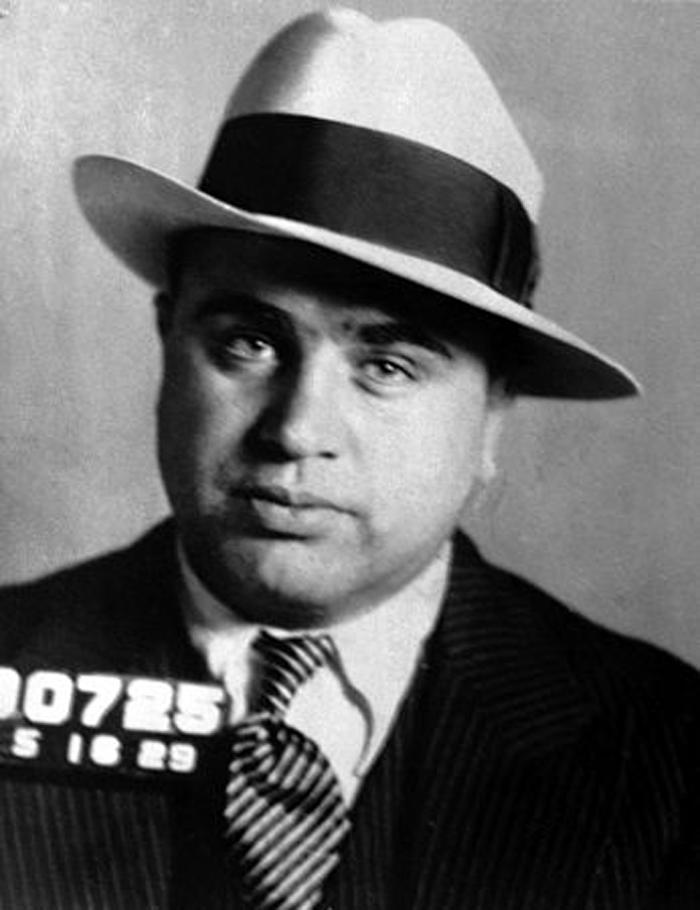
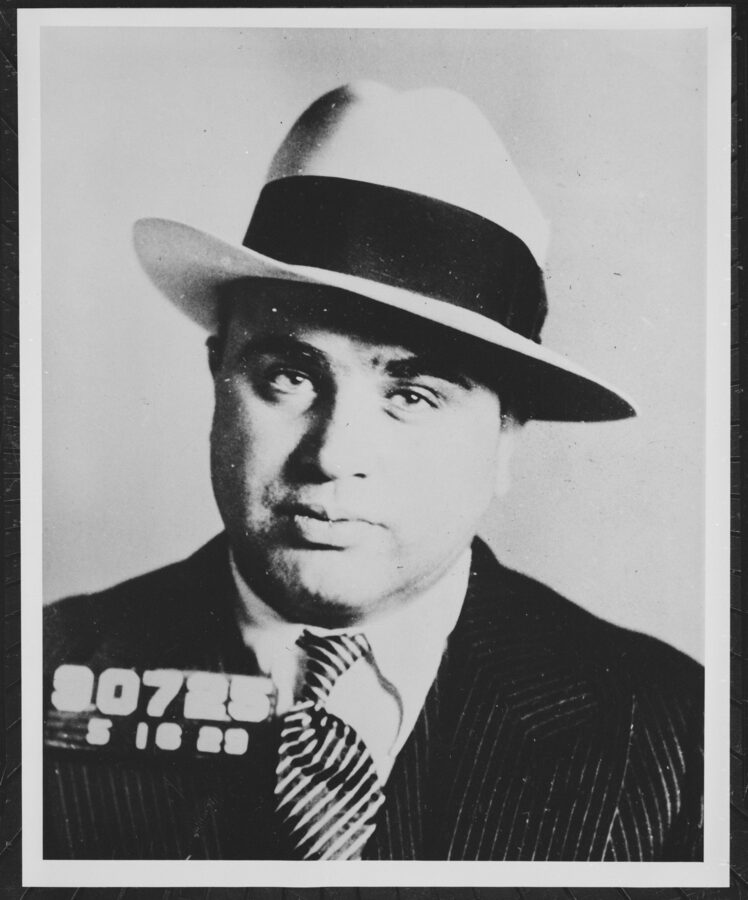
The FBI history essay says Capone was arrested in Philadelphia on 17 May 1929 for carrying concealed deadly weapons. The Evening Star of that day reports that he and Frank Cline pleaded guilty as their trial was about to start, were sentenced to one year, and entered Moyamensing Prison. The Indianapolis Times of 18 May reports the arrest as he left a motion picture theater and the mayor’s opinion of his motives, printed as opinion. The police photograph with placard 90725 is held by the National Archives (NAID 24520406, stored here) and published by the FBI captioned 16 May 1929 (FBI image); the placard can be read as 5-16 or 5-18, and a 1997 National Archives exhibit captions the print 1930. The records do not settle the date.
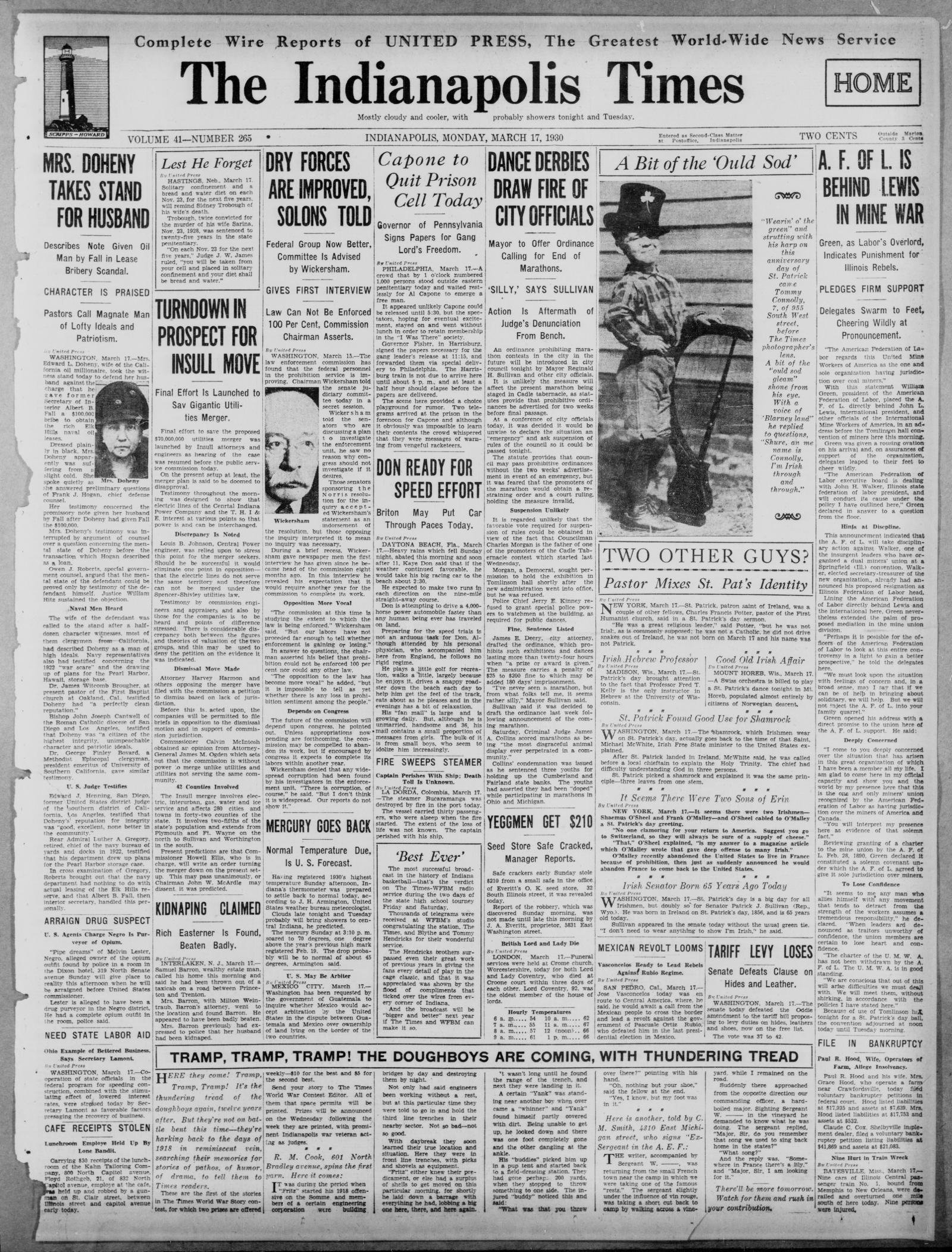
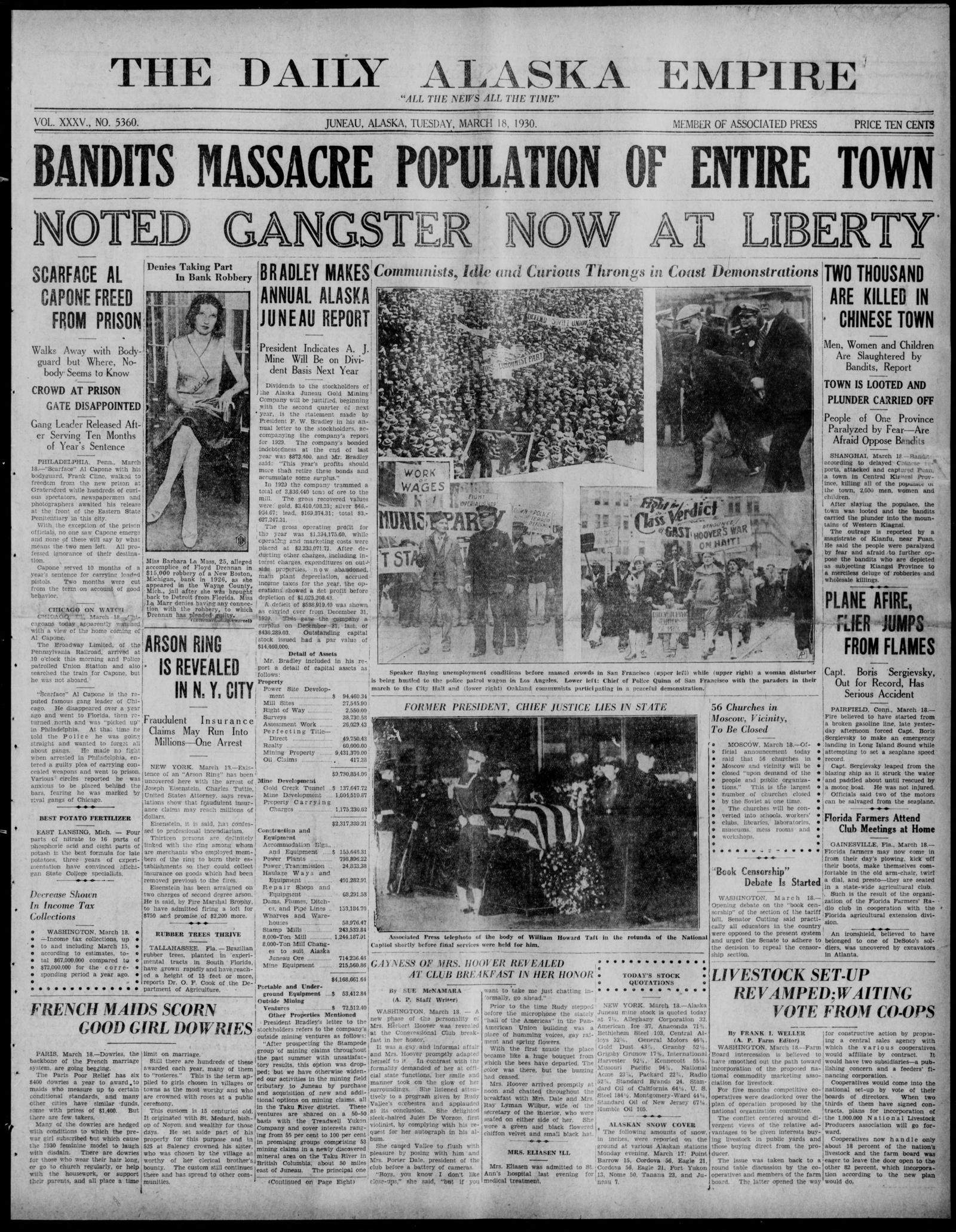
The notebook page’s criminal history reads “5-17-29—Received at Eastern State Penitentiary, Phila, Pa. Chg: concealed weapon; Discharged by exp. 3-17-30.” A Bureau letter of 1933 in the Vault file says the Bureau’s fingerprint card came from Eastern State Penitentiary when he was committed there on 8 August 1929 (Aderhold letter). On 17 March 1930 the Indianapolis Times reported a crowd waiting outside Eastern Penitentiary for his release; the next day’s report in the Daily Alaska Empire says he and Cline left from “the new prison at Gratersford” after ten months of the year’s sentence. Each date is given as its record prints it.
The public-enemies list, 1930
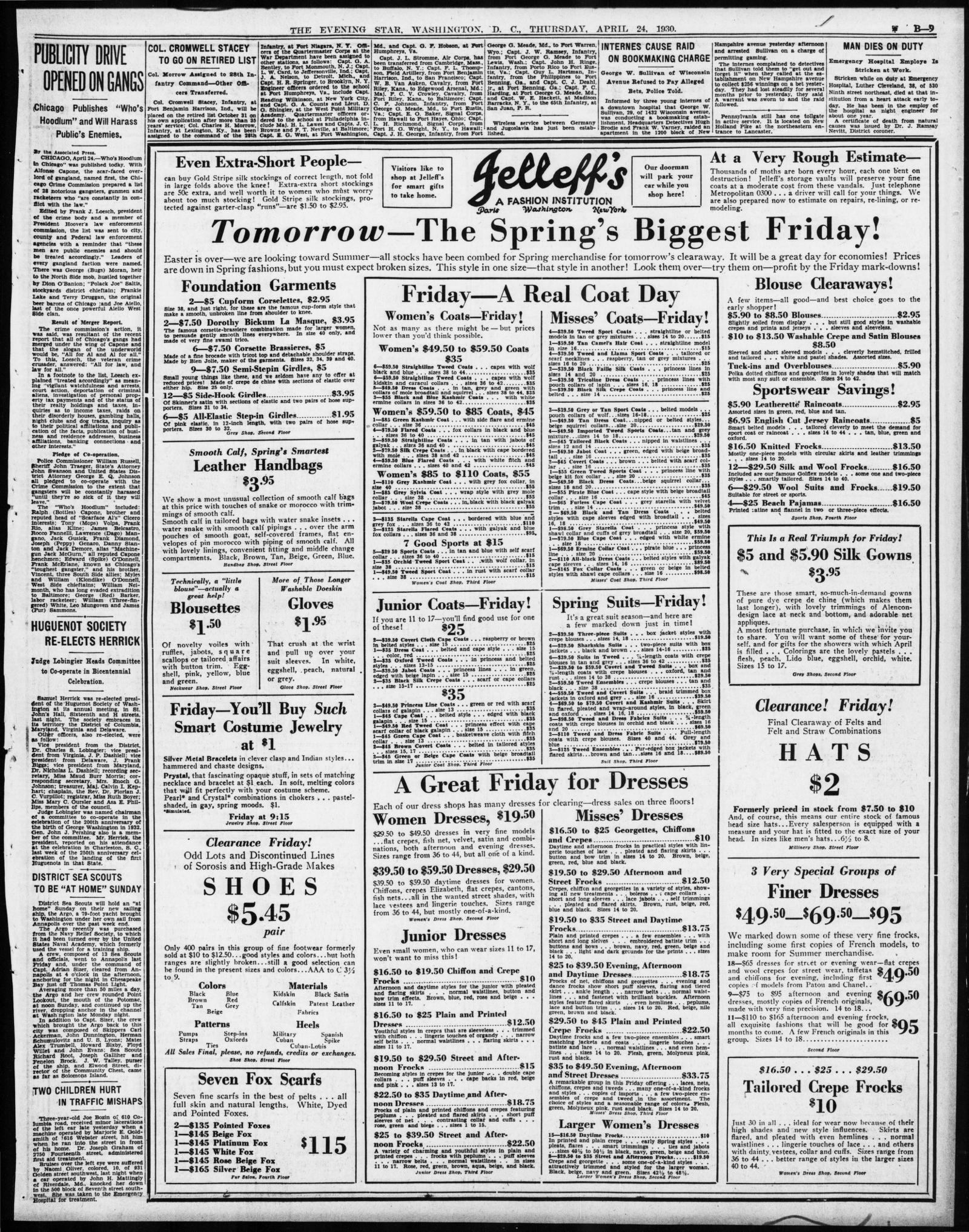
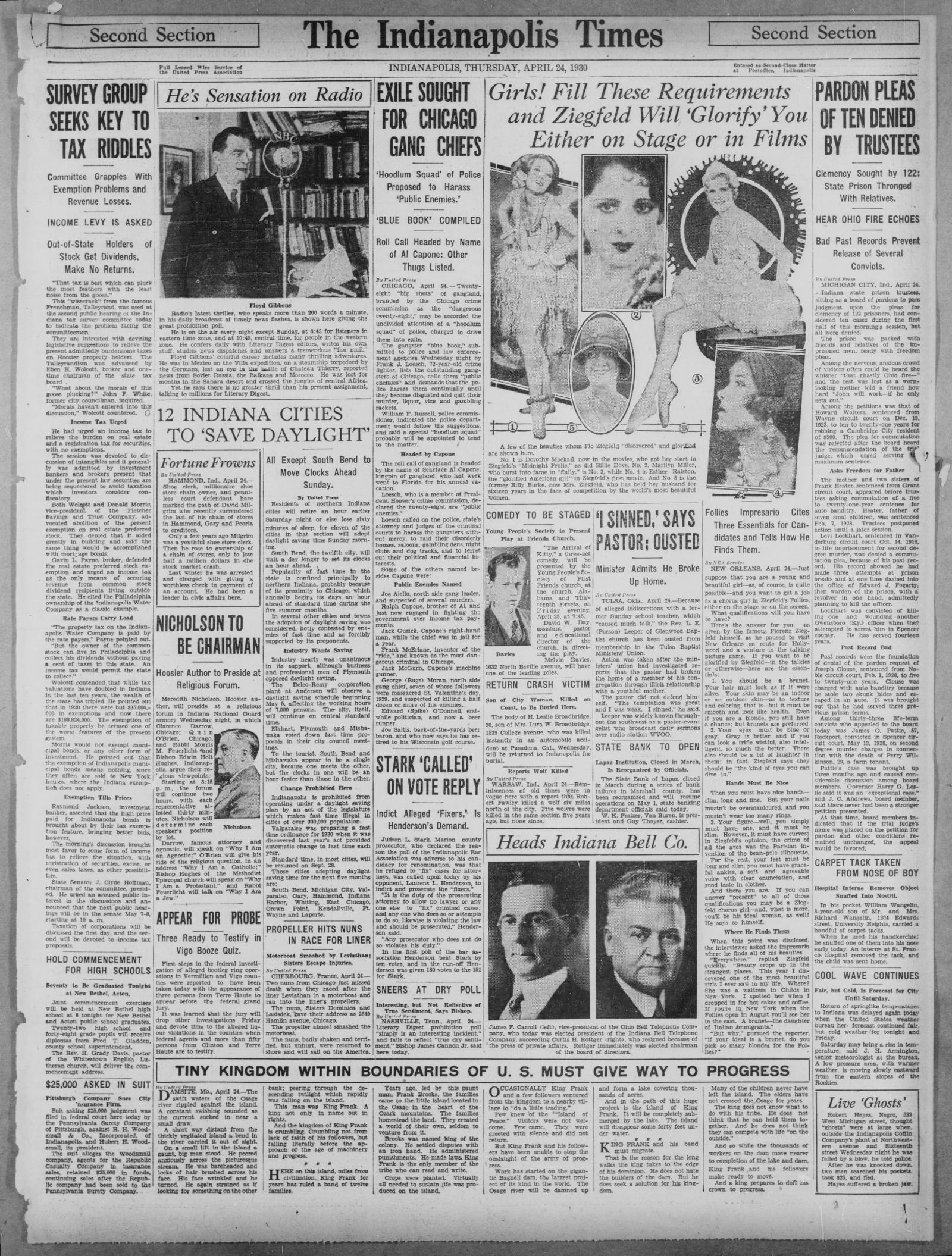
On 24 April 1930 the Evening Star and the Indianapolis Times reported that the Chicago Crime Commission, through its president Frank J. Loesch, had sent police a list of twenty-eight men it called public enemies, with Capone’s name first. Letters from the Commission in the Bureau’s general file on Chicago gangsters, reproduced in Part 07 of the Vault file, send the Bureau a list of “twenty-eight gangsters” and, after the Bureau said it needed fingerprints or police numbers, the Chicago identification numbers. The list was the Commission’s designation, not a court’s.
The Bureau’s gang rosters
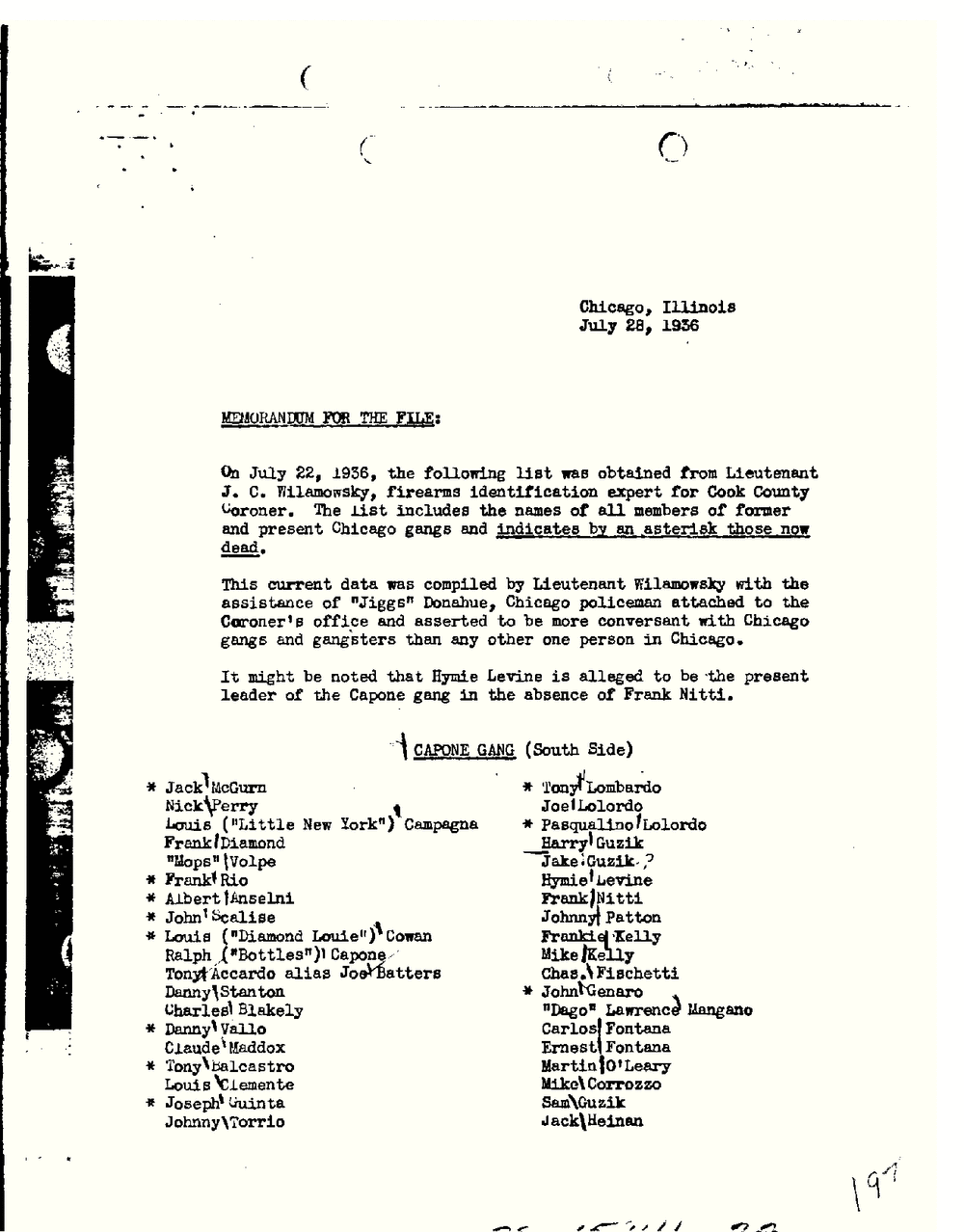
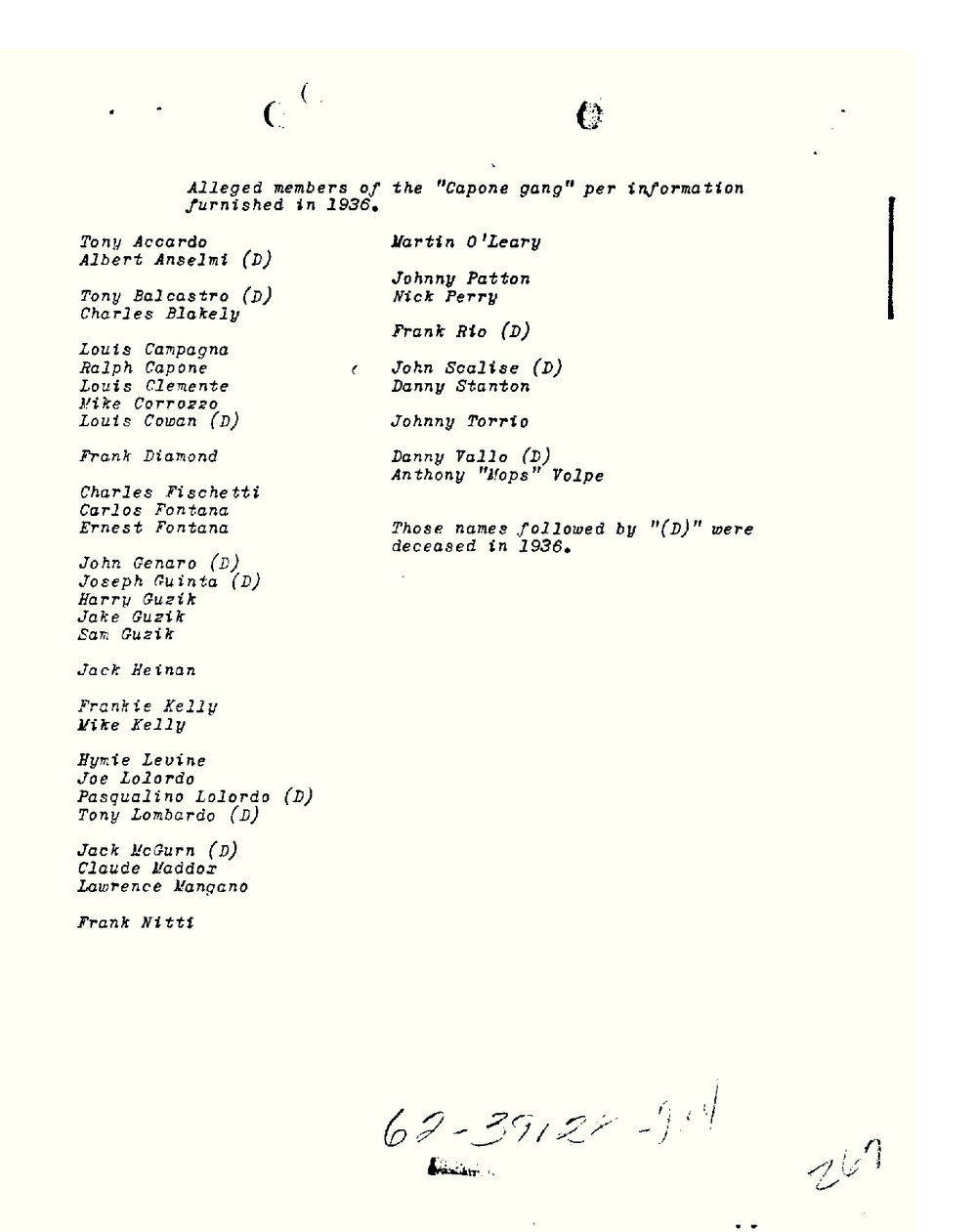
A Chicago FBI memorandum of 28 July 1936 records a list of members of Chicago gangs obtained from the Cook County coroner’s firearms expert, headed “Capone Gang (South Side),” with thirty-eight names and the dead marked. In 1983 the FBI sent the same thirty-eight names to an inquirer as “Alleged members of the ‘Capone gang’ per information furnished in 1936,” saying that the gang’s activities were for the most part outside federal jurisdiction (reply of 26 August 1983). Both are attributions by local officials as the Bureau relayed them. They are not copied onto the Chicago Outfit chart.
What is not here
No court record of the Colosimo, Weiss or Yale killings, no Chicago police record of Capone, and no Philadelphia court or prison record beyond the lines quoted above is filed in this archive. The account of 1920 to 1925 rests on the FBI essay and the 1947 memorandum, and this page goes no further than they do.