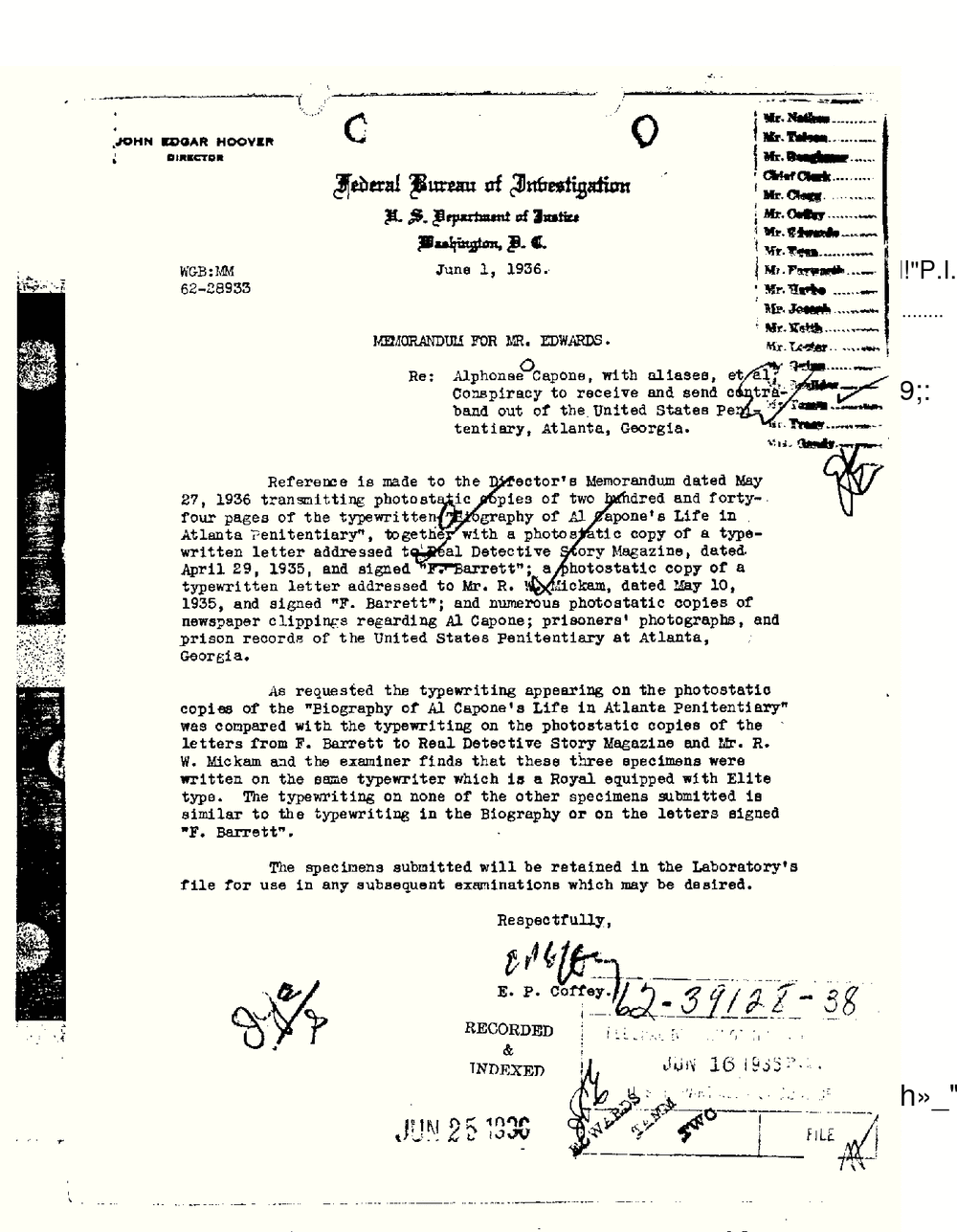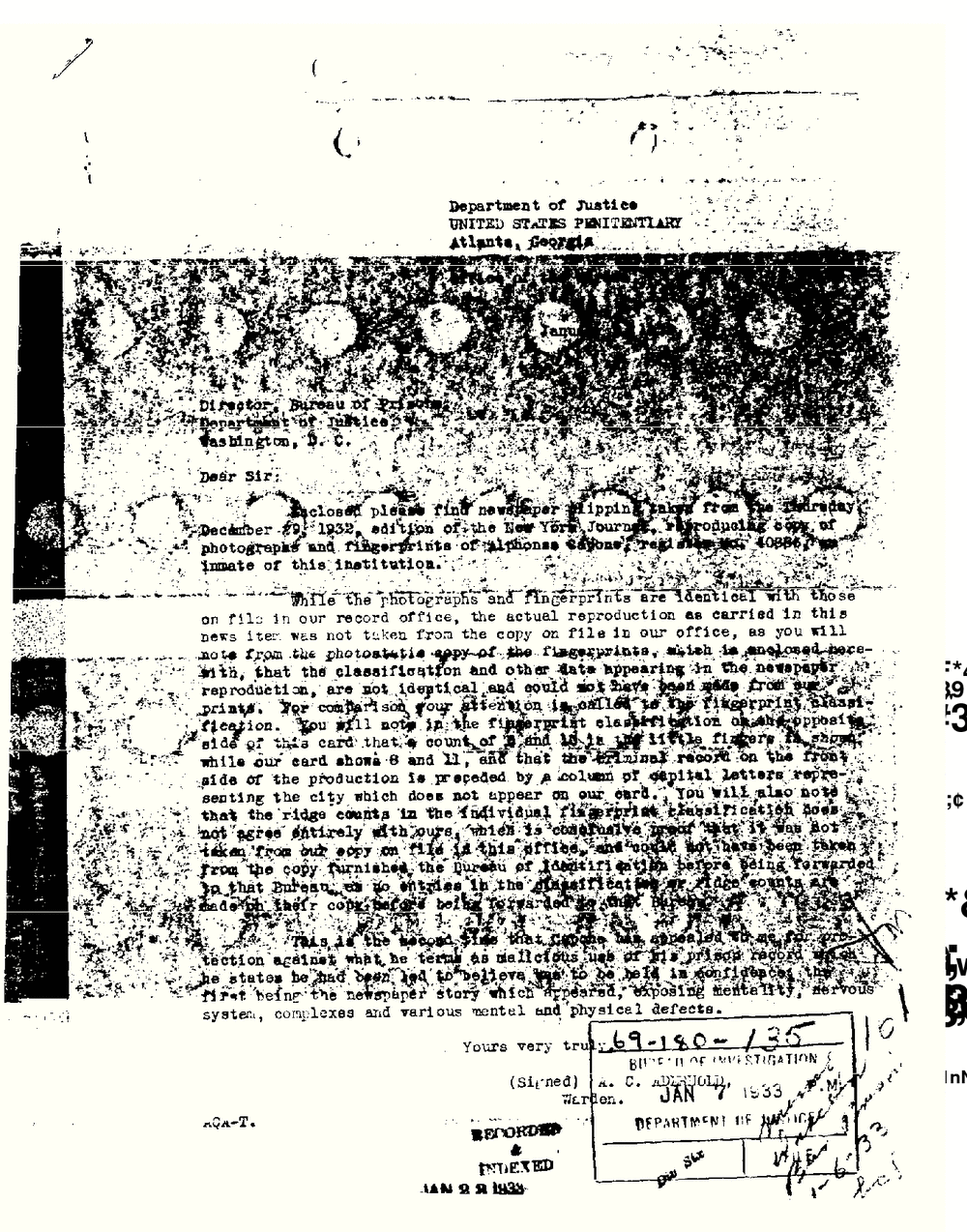
Warden Aderhold's letter on a newspaper reproduction of Capone's fingerprints (January 1933)
The warden of the Atlanta penitentiary tells the Bureau of Prisons that a New York Journal reproduction of Capone's photographs and fingerprints did not come from the prison's copy, and that Capone had asked him for protection against the use of his prison record.
- Date
- 1933-01
- Kind
- case-file
- Source
- FBI Records: The Vault
- Retrieved
- 2026-10-12
- Rights
- A record of the Federal Bureau of Investigation released under FOIA. A work of the United States government, public domain under 17 U.S.C. § 105. Newspaper text reproduced inside the file is described, not reproduced.
Part 30 of the FBI Vault’s Capone file, scan 81, with the Bureau’s reply on scans 79 and 80. The letter is a typed copy, on the heading “Department of Justice, United States Penitentiary, Atlanta, Georgia”, addressed to the Director of the Bureau of Prisons and signed “(Signed) A. C. Aderhold, Warden.” Its date line is obscured on the scan except for the month, January; the Bureau of Investigation’s stamp reads 69-180-135, 7 January 1933.
Aderhold encloses a clipping “taken from the Thursday, December 29, 1932, edition of the New York Journal, reproducing copy of photographs and fingerprints of Alphonse Capone, register No. 40886, an inmate of this institution.” He writes that while the photographs and fingerprints are identical with those on file in the prison’s record office, the reproduction was not taken from the prison’s copy, because the classification, the ridge counts and other data differ from the prison card. He ends: “This is the second time that Capone has appealed to me for protection against what he terms as malicious use of his prison record”, the first being a newspaper story about his mentality, nervous system and physical and mental defects.
In the reply on scans 79 and 80 (also serial 69-180-135; day not legible), the Director of the Bureau of Investigation tells the Director of the Bureau of Prisons that the fingerprints in the newspaper exhibit came from the Bureau’s original card received from the Eastern State Penitentiary at Philadelphia when Capone was committed there on August 8, 1929, that the photograph came from the Atlanta card, and that the difference in ridge counting is of the kind normally seen between two fingerprint bureaus. That summary follows the research index, which checked the page image. The New York Journal page is described, not reproduced. The warden’s letter was read from the page image stored here.