Birmingham report on the manuscript 'The Biography of Al Capone's Life in the Atlanta Penitentiary' (March 1936)
After about three months' work at the Atlanta penitentiary, a Bureau agent reviewed a typed manuscript about Capone's prison life and found its specific accusations few and indefinite; the Birmingham office saw nothing in it to advance the contraband case.
- Date
- 1936-03
- Kind
- case-file
- Source
- FBI Records: The Vault
- Retrieved
- 2026-10-12
- Rights
- A record of the Federal Bureau of Investigation released under FOIA. A work of the United States government, public domain under 17 U.S.C. § 105.
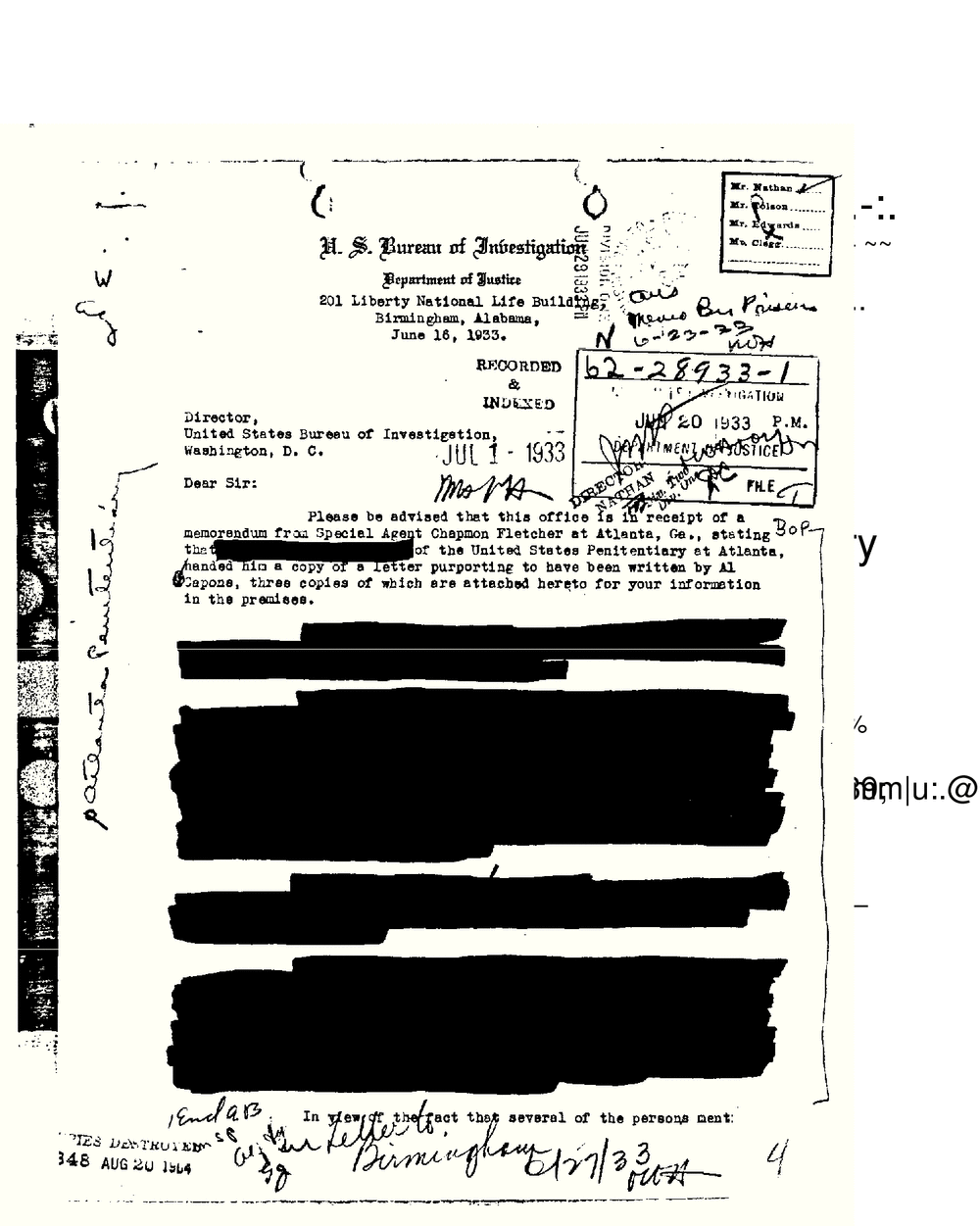
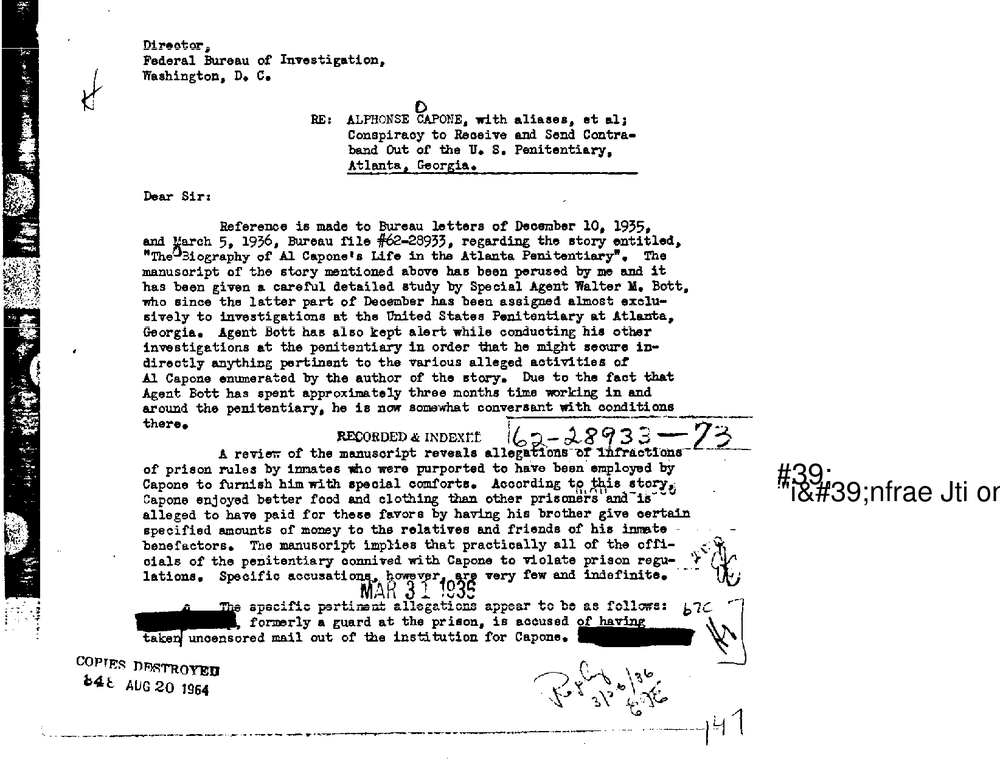
Part 05 of the FBI Vault’s Capone file, scans 65 to 70 and 76. Scans 65 to 67 are Bureau letters of December 1935 and January 1936 directing the Birmingham and Chicago offices to examine a photostat of a manuscript about Capone’s life in prison. Scans 68 to 70 are Birmingham’s reply to the Director, captioned “Alphonse Capone, with aliases, et al; Conspiracy to Receive and Send Contraband Out of the U. S. Penitentiary, Atlanta, Georgia” and stamped 62-28933-73, with a “Recorded and Indexed” date of March 31. The letter refers to “Bureau letters of December 10, 1935, and March 5, 1936”; the OCR of the letterhead reads 501 Henley Building and a date of March 19, and the year is not legible, so this archive dates it to March 1936 from those references.
The writer reports that the manuscript, “The Biography of Al Capone’s Life in the Atlanta Penitentiary”, has been studied by Special Agent Walter M. Bott, who had been assigned almost exclusively to investigations at the penitentiary since late December and “has spent approximately three months time working in and around the penitentiary.” The manuscript alleges that inmates broke prison rules to give Capone special comforts, that he had better food and clothing, and that he paid for these favors by having his brother give money to his benefactors’ relatives and friends; it implies that practically all the penitentiary’s officials connived with him. “Specific accusations, however, are very few and indefinite.” On scans 69 and 70, as far as the OCR can be read, the writer reviews the three specific allegations, including a story about a tennis ball returned over the prison wall said to contain narcotics, calls that story ridiculous, and gives his opinion that “there is nothing in the manuscript which would aid the Bureau”, suggesting it might be handed to the warden.
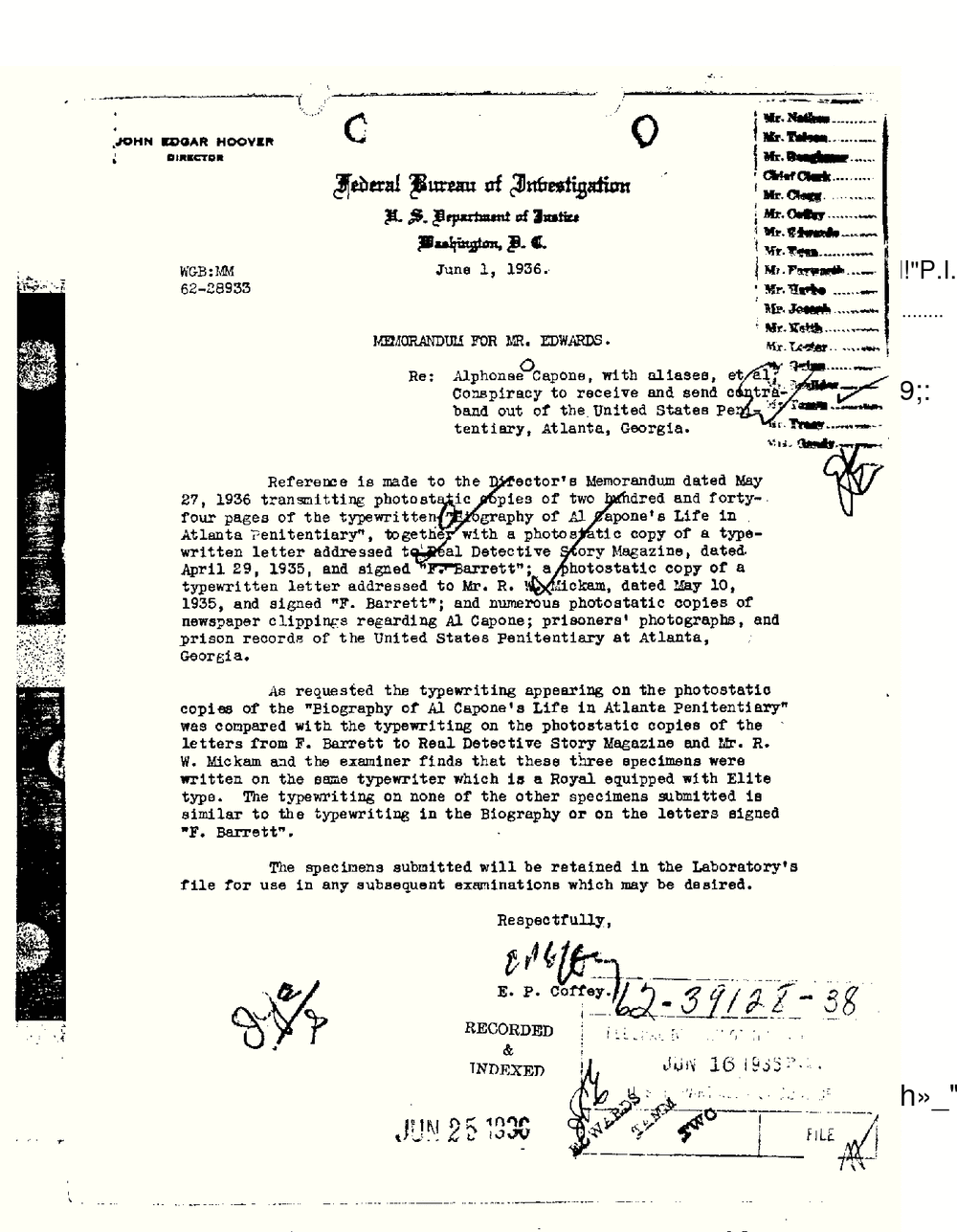
Scan 76 is the FBI Laboratory’s examination form for the same case. As far as its OCR can be read, it lists photostatic copies of “two hundred and forty four pages” of the typewritten biography, letters to Real Detective Story Magazine, clippings and prison records. The research record for this part gave the count as 204; the laboratory memorandum of 1 June 1936 (Part 16) also says two hundred and forty-four. The manuscript itself, photostatted in Parts 13 to 16, is an anonymous, dramatized narrative whose claims the Bureau did not substantiate; it is not reproduced or summarized here as fact. The first page of the Birmingham letter was read from the image stored here.