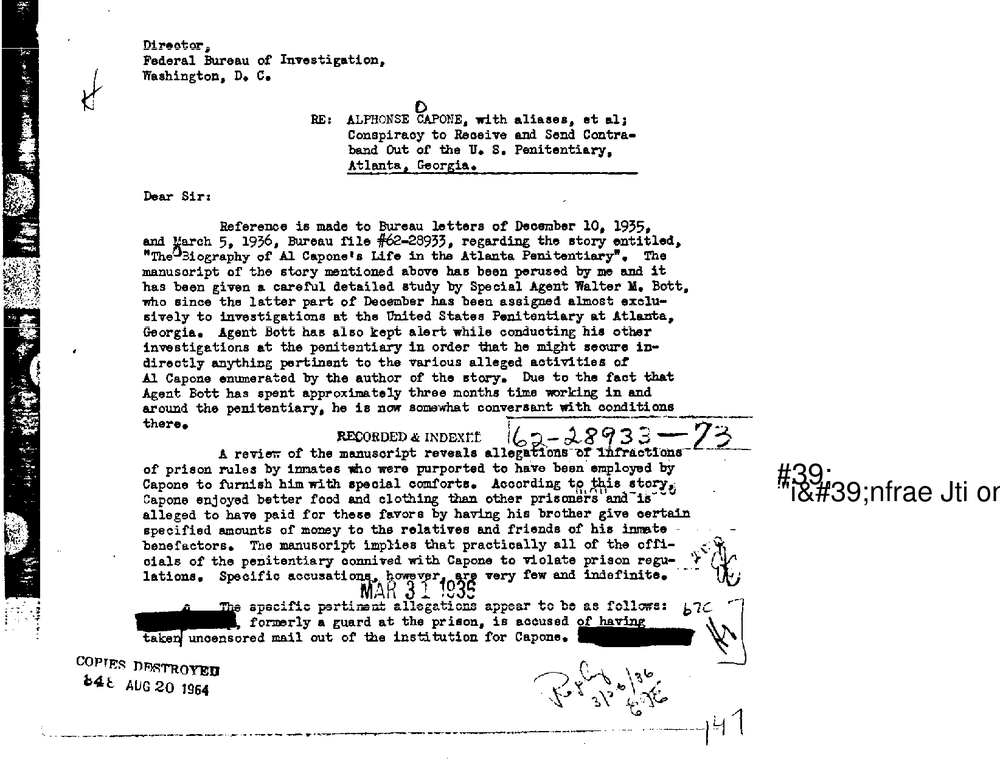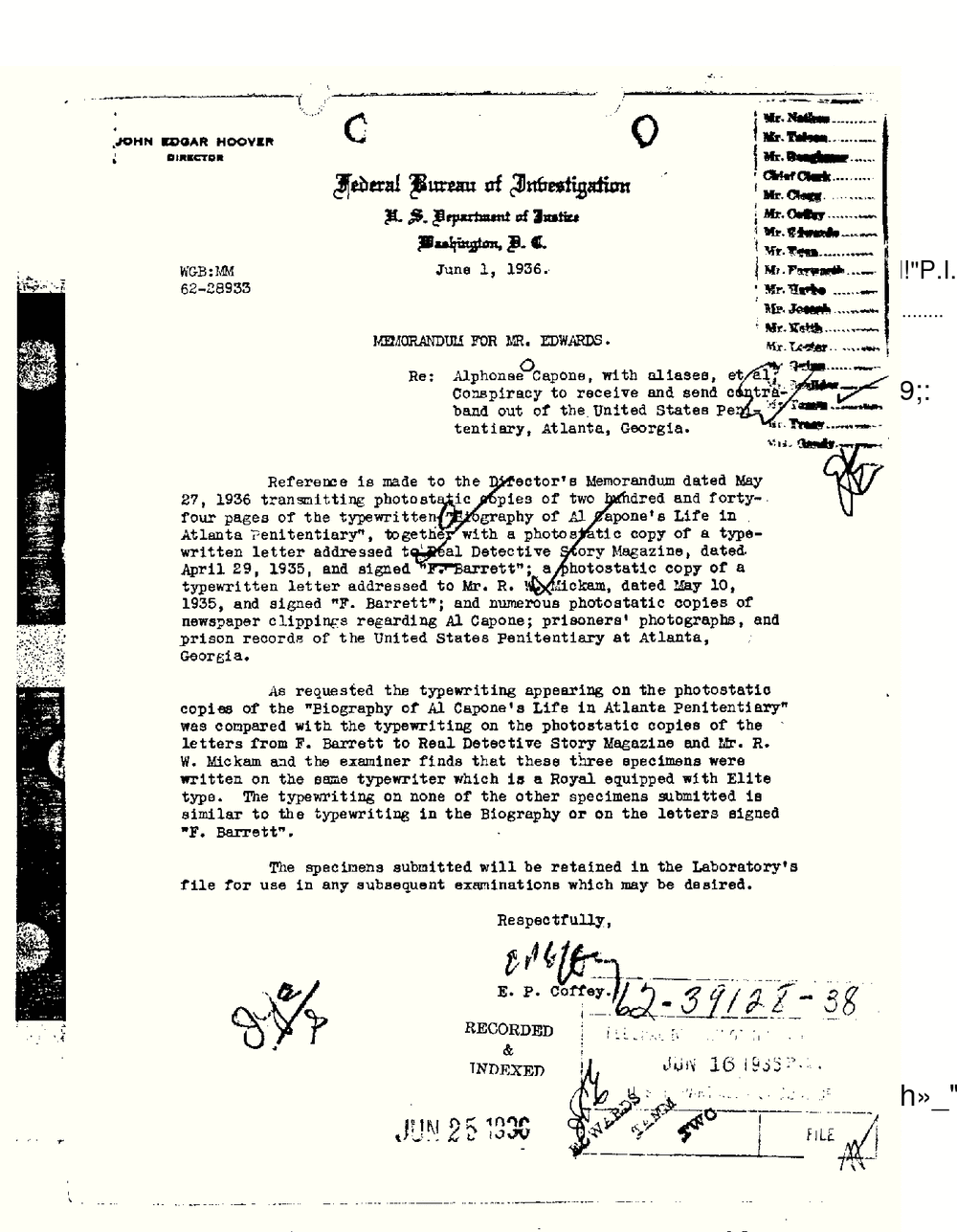
FBI Laboratory memorandum matching the Capone 'Biography' typescript to the 'F. Barrett' letters (1 June 1936)
The FBI Laboratory finds that the 244-page typed 'Biography of Al Capone's Life in Atlanta Penitentiary' and two 1935 letters signed 'F. Barrett' offering it to a magazine were typed on the same Royal typewriter with Elite type.
- Date
- 1936-06-01
- Kind
- case-file
- Source
- FBI Records: The Vault
- Retrieved
- 2026-10-12
- Rights
- A record of the Federal Bureau of Investigation released under FOIA. A work of the United States government, public domain under 17 U.S.C. § 105.
Part 16 of the FBI Vault’s Capone file, scan 57. A memorandum on Federal Bureau of Investigation letterhead, Washington, dated June 1, 1936, headed “Memorandum for Mr. Edwards” and signed by E. P. Coffey of the Technical Laboratory. Its reference line is “Alphonse Capone, with aliases, et al; Conspiracy to receive and send contraband out of the United States Penitentiary, Atlanta, Georgia.” The laboratory file number typed at upper left is 62-28933; the serial stamped on the page is 62-39128-38.
The memorandum refers to the Director’s memorandum of May 27, 1936, “transmitting photostatic copies of two hundred and forty-four pages of the typewritten ‘Biography of Al Capone’s Life in Atlanta Penitentiary’”, together with photostats of a letter to Real Detective Story Magazine dated April 29, 1935 and a letter to Mr. R. W. Mickam dated May 10, 1935, both signed “F. Barrett”, and photostats of clippings, prisoners’ photographs and prison records. It reports that the typewriting of the Biography was compared with the two letters, “and the examiner finds that these three specimens were written on the same typewriter which is a Royal equipped with Elite type. The typewriting on none of the other specimens submitted is similar to the typewriting in the Biography or on the letters signed ‘F. Barrett’.” The specimens were kept in the laboratory’s file.
The research index for Part 17 records that in November 1936 the Washington Field Office reported that the laboratory had matched the Barrett letters to a typewriter used by a former Atlanta inmate who would not admit authorship, and asked to close the case. The full text above was read from the page image stored here. The manuscript’s own claims are not treated as fact on this page.