John Torrio
The FBI's Capone history essay says Torrio led the gang after Colosimo's death and handed control to Capone in 1925. His FBI Vault file holds a 1947 background memorandum and a 1946 extortion case.
- Aliases
- Johnny Torrio, John Torrence
- Rights
- Biography on this page is limited to what the cited federal records state.
On the record
- Before 1920 — The FBI history essay "Al Capone" says the young Capone joined a New York street gang: "Johnny Torrio was the street gang leader and among the other members was Lucky Luciano."
- About 1920 — The same essay: "About 1920, at Torrio's invitation, Capone joined Torrio in Chicago where he had become an influential lieutenant in the Colosimo mob."
- 1920 — The essay states: "Torrio soon succeeded to full leadership of the gang with the violent demise of Big Jim Colosimo, and Capone gained experience and expertise as his strong right arm." An FBI memorandum of April 19, 1947 in the Torrio file records the Chicago Police allegation that Torrio planned Colosimo's killing of May 11, 1920.
- January 1925 — The 1947 FBI memorandum says Torrio was arrested by the Chicago Police Department in January 1925 in a raid on the Sieben Brewery.
- 1925 — The FBI history essay: "In 1925, Capone became boss when Torrio, seriously wounded in an assassination attempt, surrendered control and retired to Brooklyn."
- 1939 — The 1947 FBI memorandum: "In 1939 Torrio was sentenced to a term of two and one-half years in a Federal penitentiary for Income Tax evasion and placed on probation for ten years."
- 1946 — An FBI memorandum on an extortion case in his file states: "The victim, John Torrio, is a former henchman of Al Capone." It says he received a letter demanding $10,000 under threat of death.
The alias “John Torrence” is from an inquiry reply quoted on page 123 of the Vault file: “John Torrence or John Torrio, as he is sometimes known.” “Johnny Torrio” is the spelling of the FBI history essay and the 1947 memorandum.
The role field is left empty. The FBI history essay’s statement is quoted in the events. The essay is a later Bureau narrative, not a contemporary record. The opened pages give no legible birth date (a 1946 teletype’s birth line is garbled in the OCR) and no death date, so neither is stated.
Records
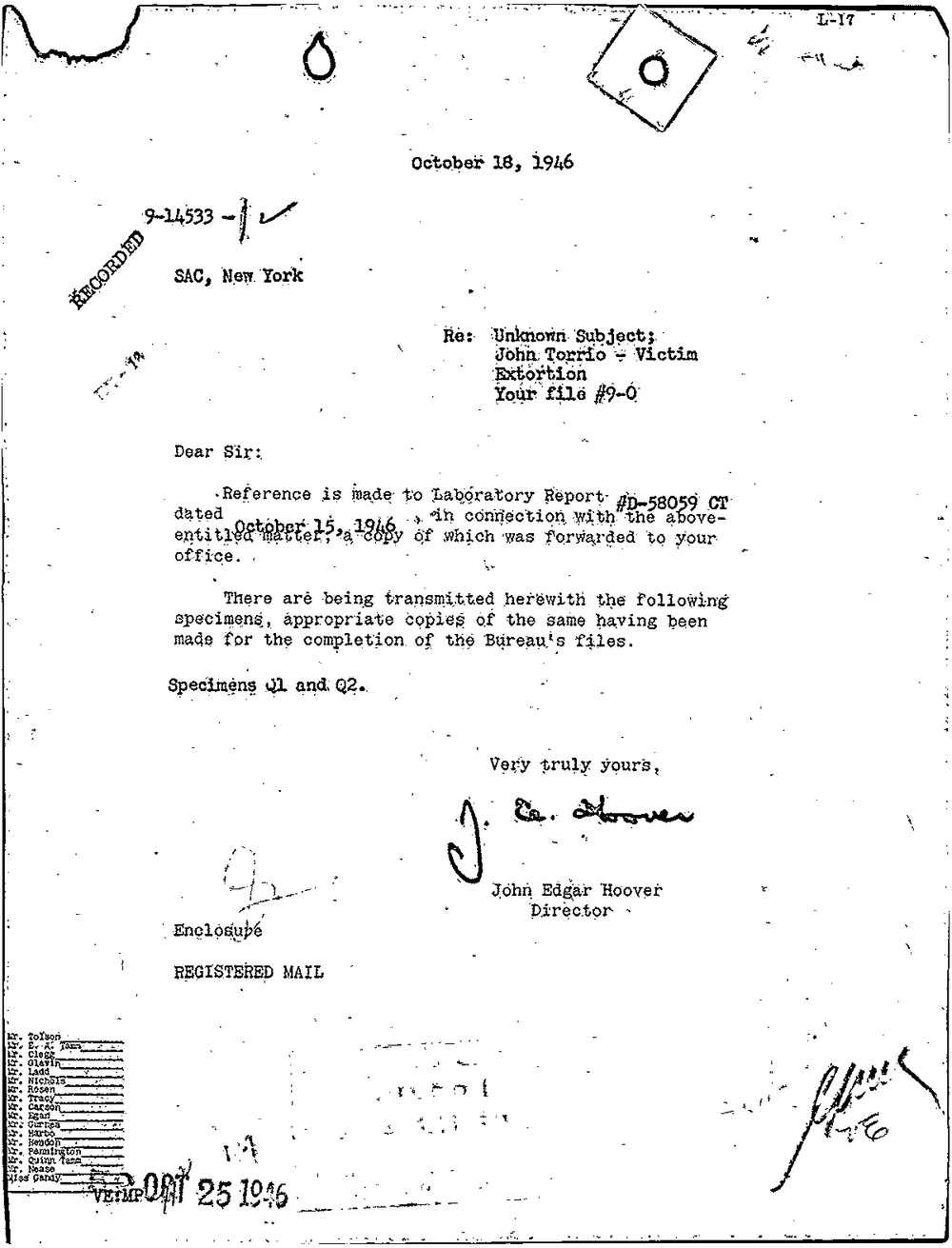 itemFBI Vault file on John TorrioThe FBI Vault's release of the Bureau file on John Torrio, one part of 236 scanned pages, including a 1946 extortion case in which he was the victim and a 1947 background memorandum.
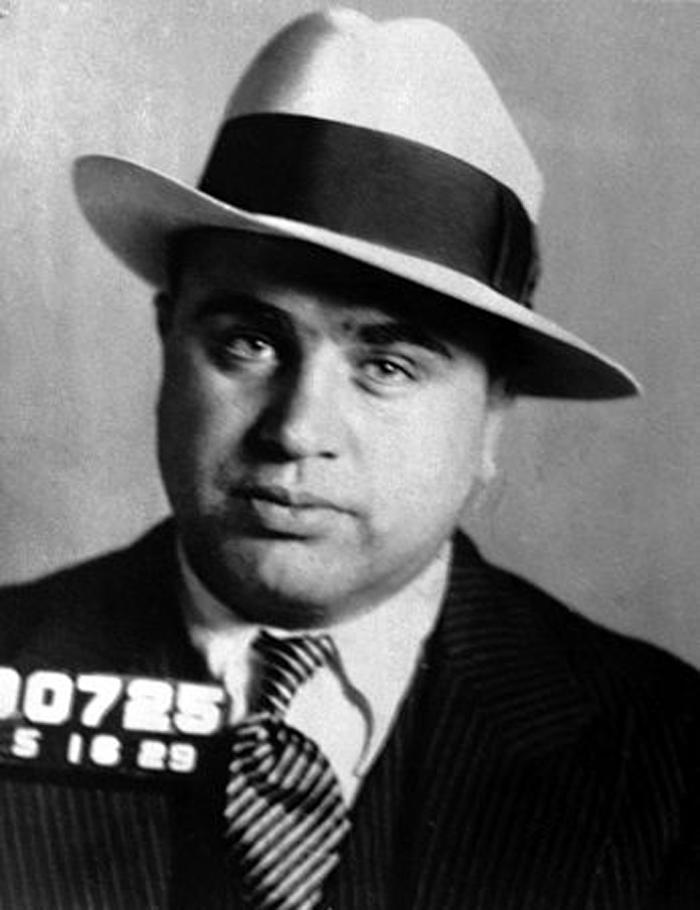 itemAl Capone (FBI history page)The FBI's history essay on Capone. It states that he was released on November 16, 1939, and that he lived on Palm Island until his death due to a stroke and pneumonia on January 25, 1947.