Waterfront Commission Compact: 67 Stat. 541 (Public Law 252, Chapter 407), 12 August 1953
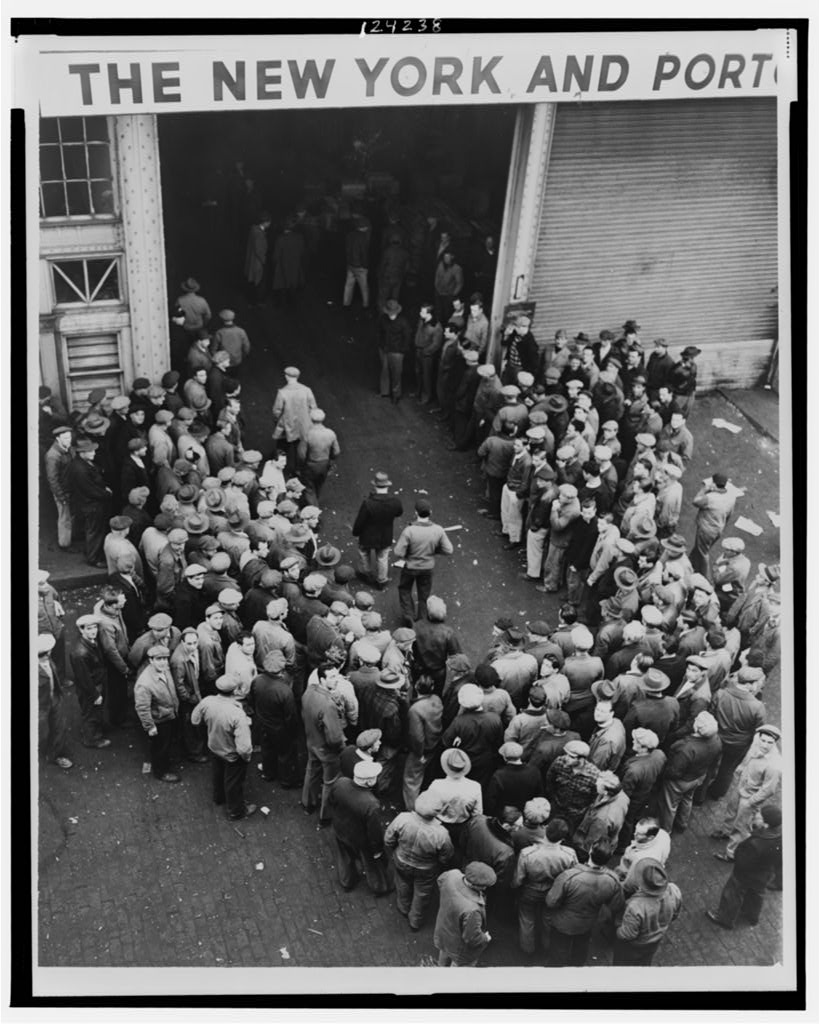
The 1953 Act of Congress consenting to the New York-New Jersey Waterfront Commission Compact. In the compact's findings the two states declare that hiring on the Port of New York waterfront was marked by "corrupt hiring practices" by persons who "are frequently criminals."
- Date
- 1953-08-12
- Kind
- case-file
- Retrieved
- 2026-10-12
- Docket
- 67 Stat. 541 (83d Cong., 1st sess., ch. 407; S. 2383; Public Law 252)
- Rights
- An Act of Congress, a federal work in the public domain under 17 U.S.C. § 105. The text and the page image stored here are from the govinfo PDF of the Statutes at Large.
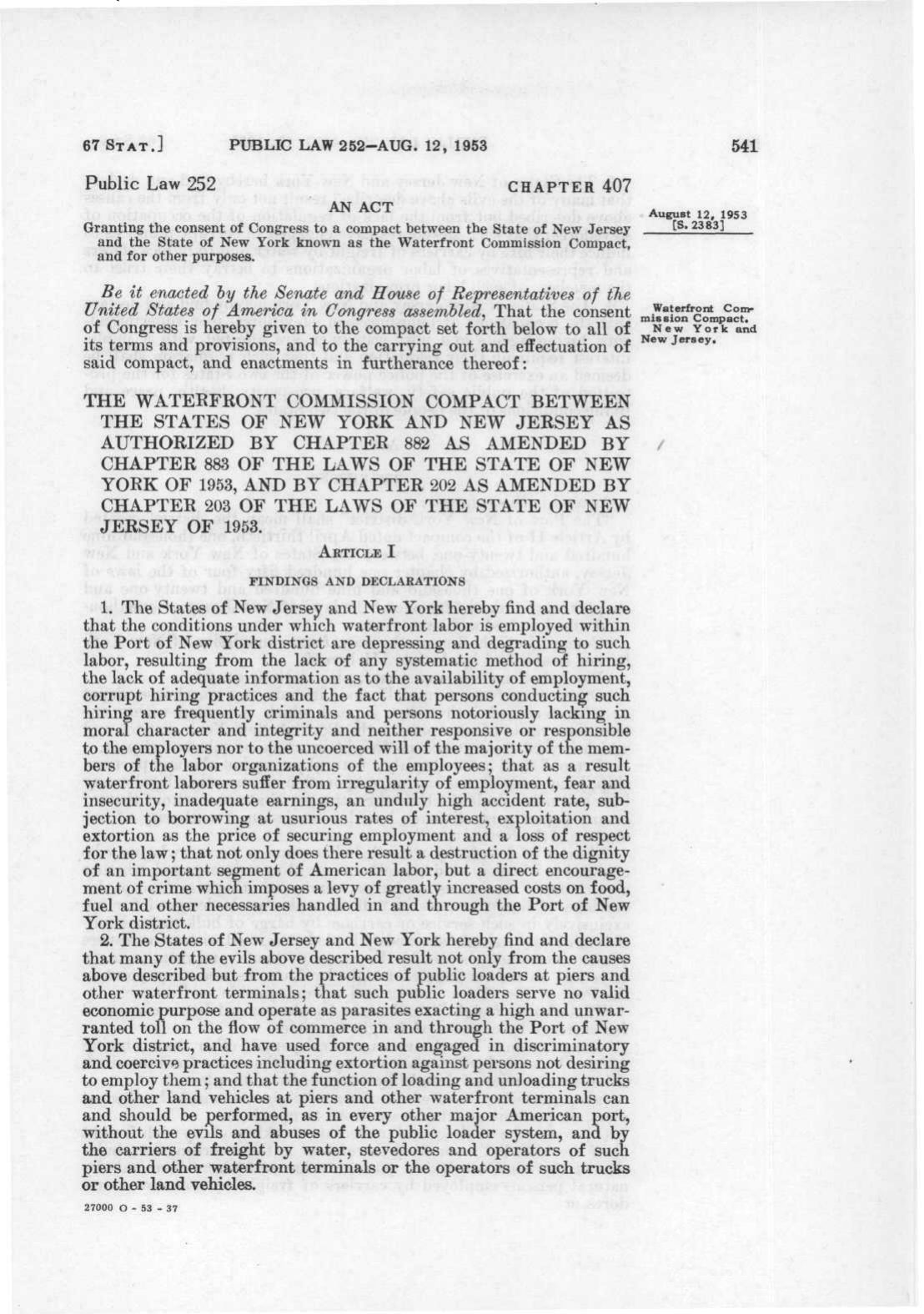
Page 541 of volume 67 prints Public Law 252, Chapter 407, with the margin “August 12, 1953 [S. 2383]”: “An Act Granting the consent of Congress to a compact between the State of New Jersey and the State of New York known as the Waterfront Commission Compact, and for other purposes.” The compact follows in full, as authorized by the laws of both states of 1953.
Article I, “Findings and Declarations,” begins: “The States of New Jersey and New York hereby find and declare that the conditions under which waterfront labor is employed within the Port of New York district are depressing and degrading to such labor, resulting from the lack of any systematic method of hiring, the lack of adequate information as to the availability of employment, corrupt hiring practices and the fact that persons conducting such hiring are frequently criminals.” It says that as a result waterfront laborers suffer, among other things, “exploitation and extortion as the price of securing employment.” The second finding says public loaders at the piers “operate as parasites exacting a high and unwarranted toll on the flow of commerce.”
These are the two states’ legislative findings, given the consent of Congress. The 1953 Senate hearings that came before the compact were not found in an open scan and are not filed. The Supreme Court upheld a related section of the New York act in De Veau v. Braisted.