Record
Court opinion
1925-12-08
CourtListener (Free Law Project), text of the opinion
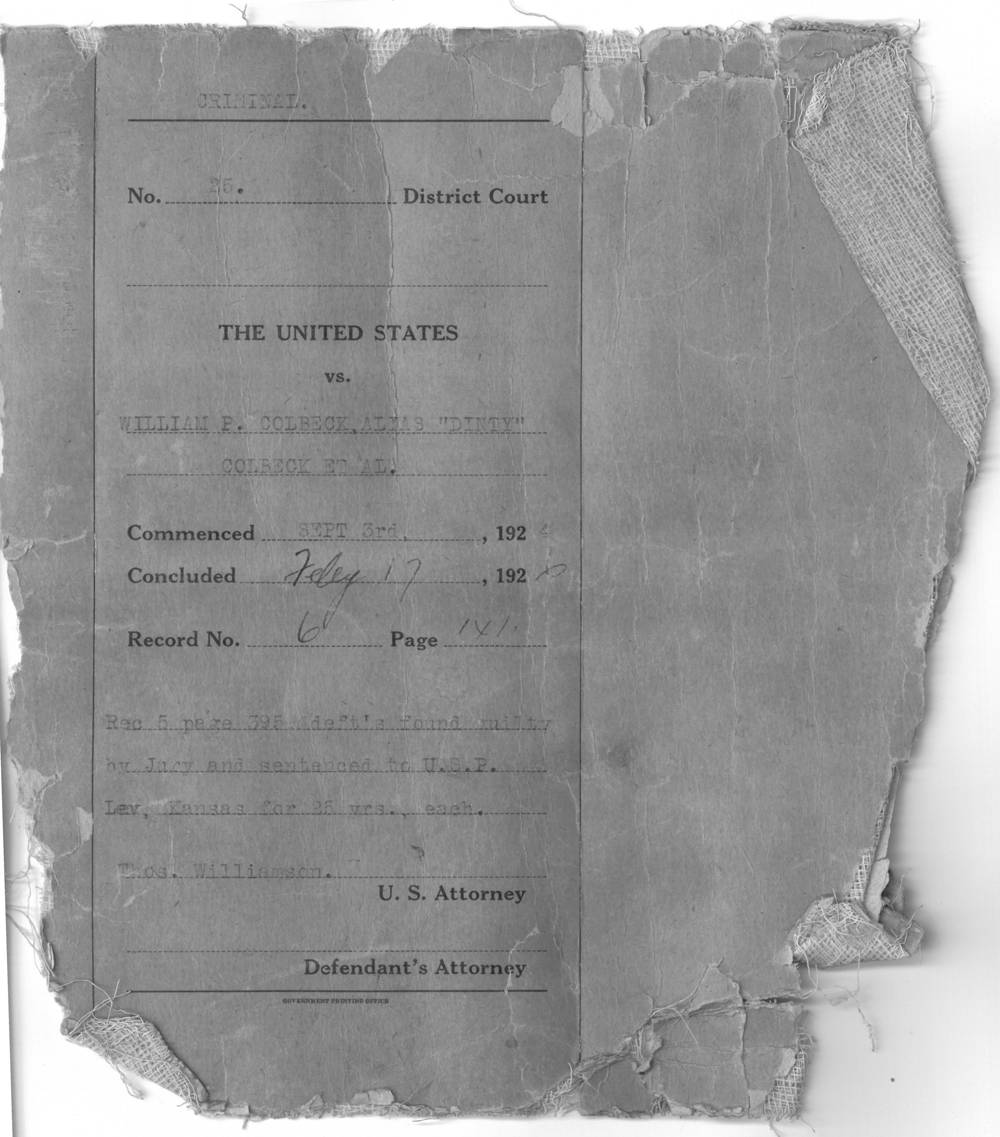
Colbeck v. United States, 10 F.2d 401 (7th Cir. 1925): the Staunton mail-robbery appeal
Seventh Circuit opinion of 8 December 1925 affirming the convictions and 25-year sentences of William P. Colbeck and eight codefendants for robbing persons in charge of the mails. It upholds the use of a convict's testimony and the instructions on alibi and reasonable doubt.
- Date
- 1925-12-08
- Kind
- court-opinion
- Retrieved
- 2026-10-12
- Docket
- Nos. 3558, 3560, 3562, 3618 (7th Cir.); 10 F.2d 401
- Rights
- Opinion of a United States court. Works of the federal judiciary are in the public domain in the United States (17 U.S.C. § 105). The text was read on CourtListener, which is only the host; CourtListener notes that its text comes from a scan and may have typos.
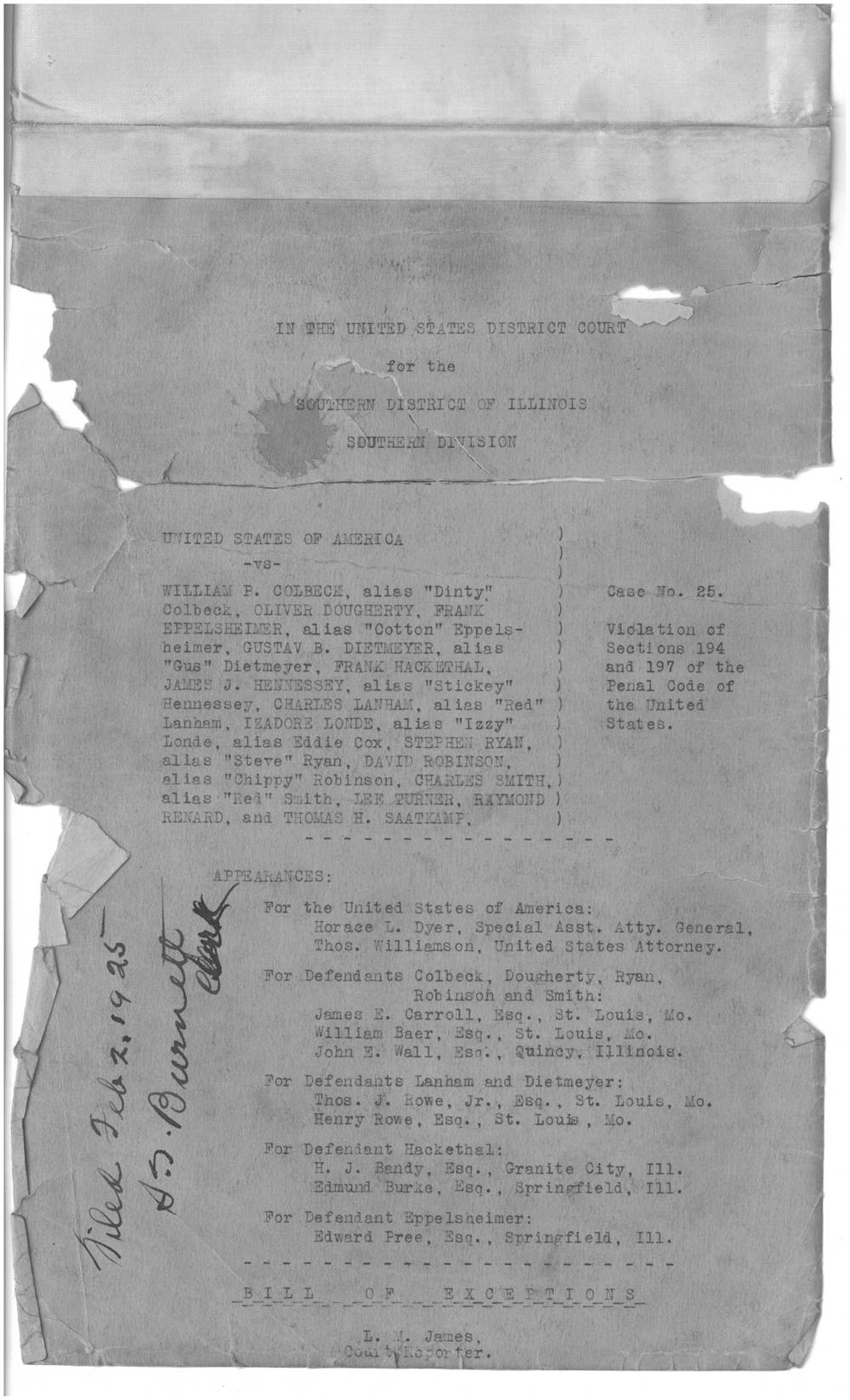
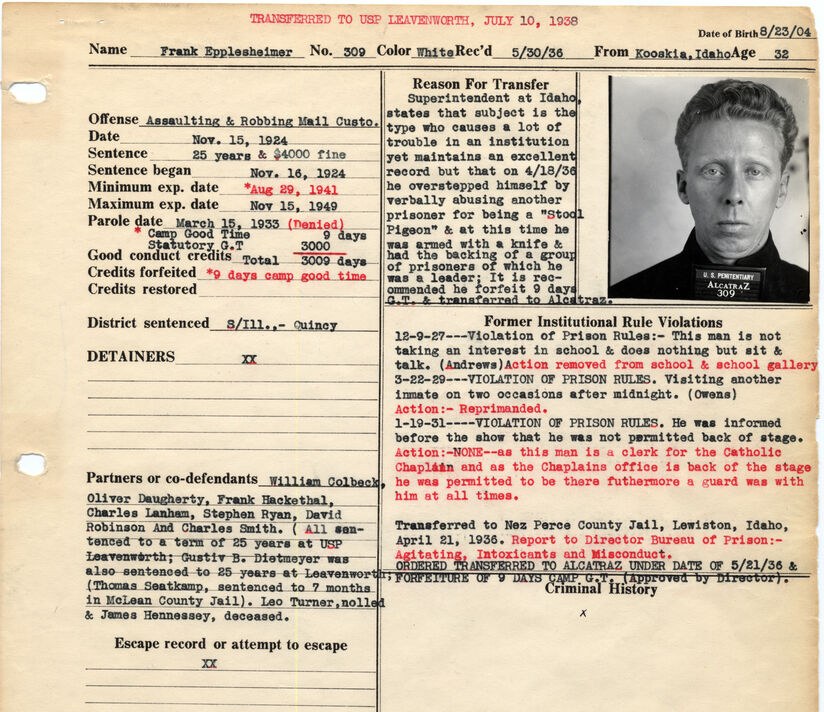
United States Circuit Court of Appeals for the Seventh Circuit, decided 8 December 1925, rehearing denied 13 January 1926, opinion by Circuit Judge Anderson for a panel with Judges Alschuler and Page. The plaintiffs in error were Colbeck, Daugherty, Robinson, Smith, Ryan, Lanham, Hackethal, Eppelsheimer and Dietmeyer. A note records that Hackethal’s petition for certiorari was denied.
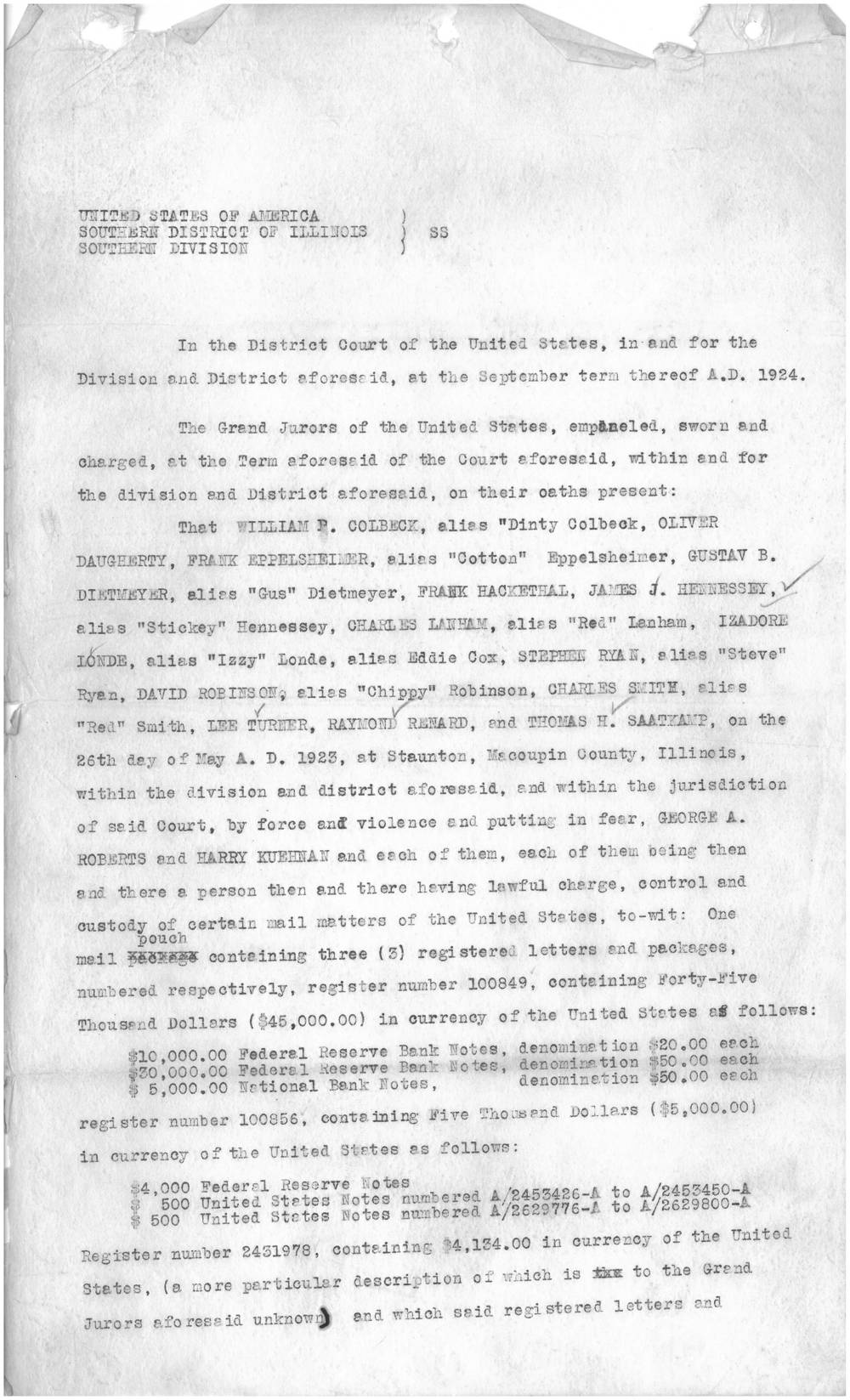
The court states the case: the defendants “were charged in the court below with the violation of sections 194 and 197 of the Criminal Code” in a four-count indictment, returned on 3 September 1924, for robbing persons having lawful charge of the mails, doing so with deadly weapons, and receiving and possessing the stolen mail. “Plaintiff in error Dietmeyer was found guilty on counts 1 and 2, and the other eight plaintiffs in error were found guilty on all counts. Each was sentenced to the penitentiary for 25 years.” The trial began on 10 November 1924.
The court rejects four grounds of appeal. Motions to quash, based on the claim that the indictment rested on a convict’s evidence, were within the trial court’s discretion, and “The old common-law rule of the incompetency of felons as witnesses is no longer in force in the courts of the United States.” The alibi evidence “went only to the time of the actual robbery” and did not answer the evidence that some defendants helped prepare it, since accessories before the fact are principals. On the Government witness Renard, the court writes that he “was an admitted convict. He was brought from prison to testify. He admitted his guilt in the instant case and testified to his participation in it,” and that refusing a further question to the impeaching witnesses did no substantial injury. The instruction on reasonable doubt was sound. Of Dietmeyer, it says the evidence “showed a design and plan to rob the mail coming into Staunton when the circumstances warranted,” first on April 14 and then on May 26. “There is no substantial error in the record, and the judgment is affirmed.”
The opinion does not use the name “Egan’s Rats,” does not call any defendant a leader, and does not describe the robbery beyond what is quoted here. Those words come from the National Archives description and the 1924 press. The appeal was to the Seventh Circuit, from the Southern District of Illinois.