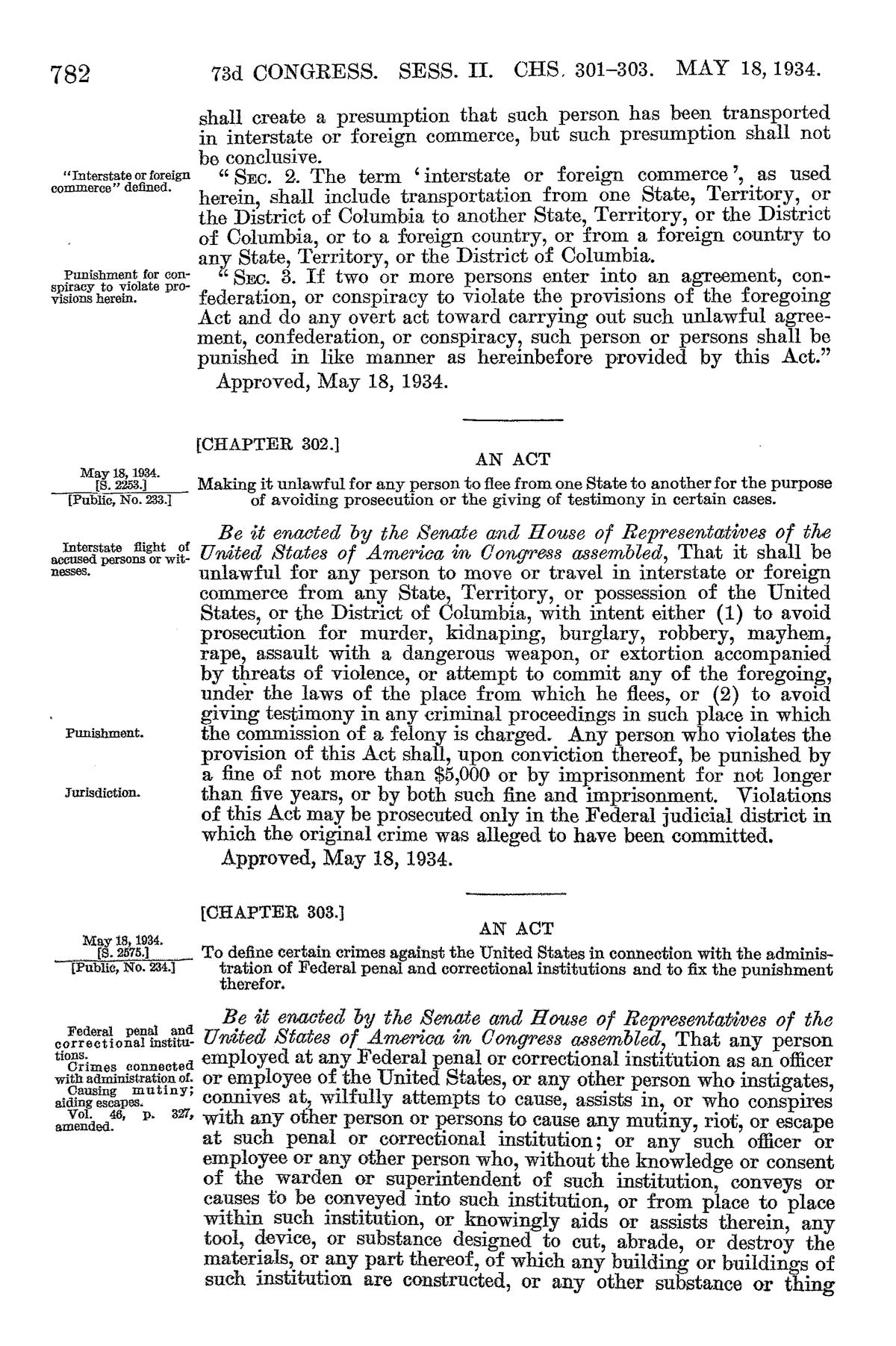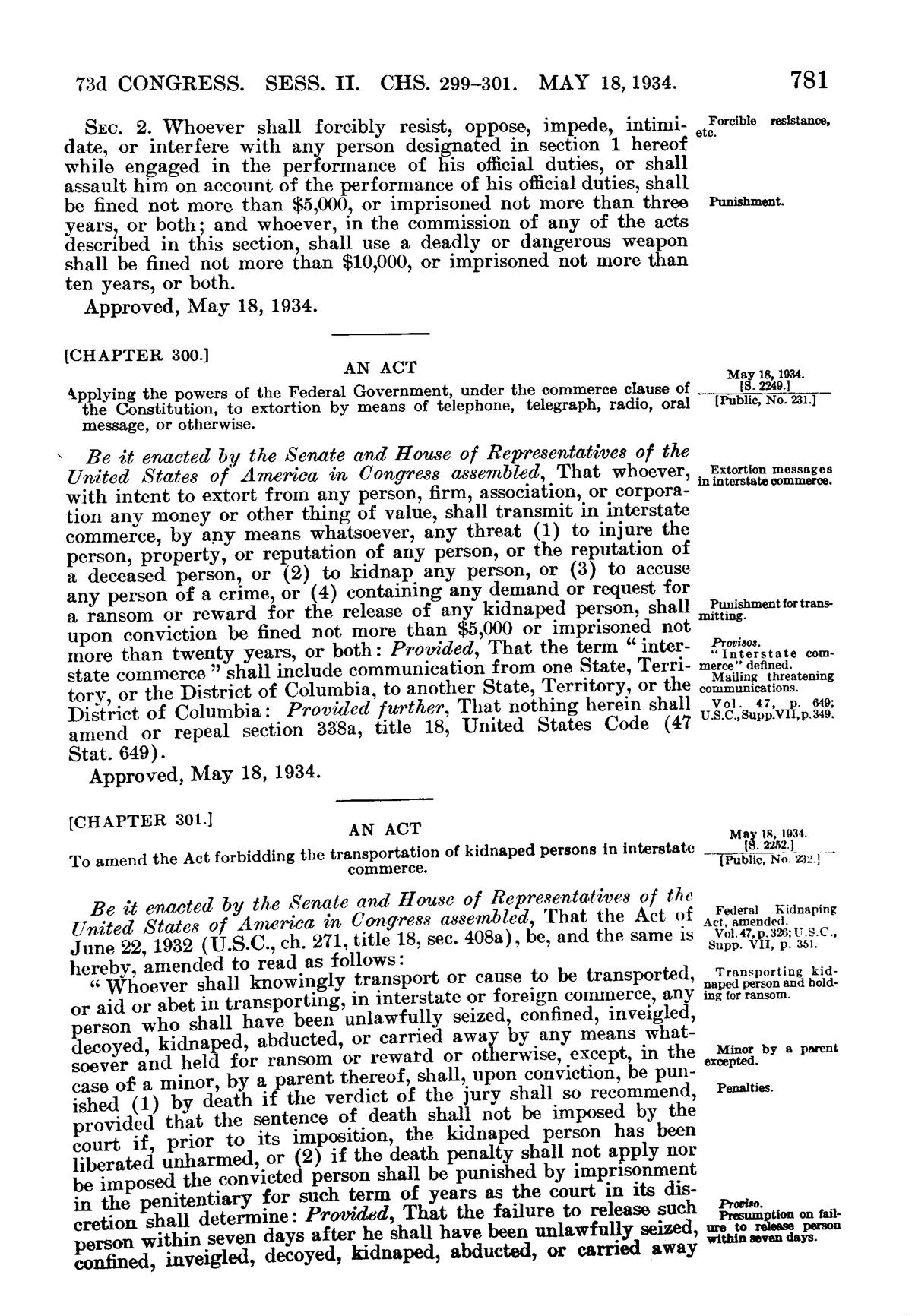
Kidnapping Act amendment: 48 Stat. 781-782 (Chapter 301, Public, No. 232), 18 May 1934
One of the May 1934 crime bills. It amended the 1932 kidnapping Act to allow a death sentence on the jury's recommendation, unless the victim was liberated unharmed, and made failure to release a victim within seven days a presumption of interstate transport.
- Date
- 1934-05-18
- Kind
- case-file
- Retrieved
- 2026-10-12
- Docket
- 48 Stat. 781-782 (73d Cong., 2d Sess., ch. 301; S. 2252; Public No. 232)
- Rights
- An Act of Congress, a federal work in the public domain under 17 U.S.C. § 105. The text was read from the Library of Congress's digitised United States Statutes at Large; the page image stored here is the Library of Congress scan of that page.
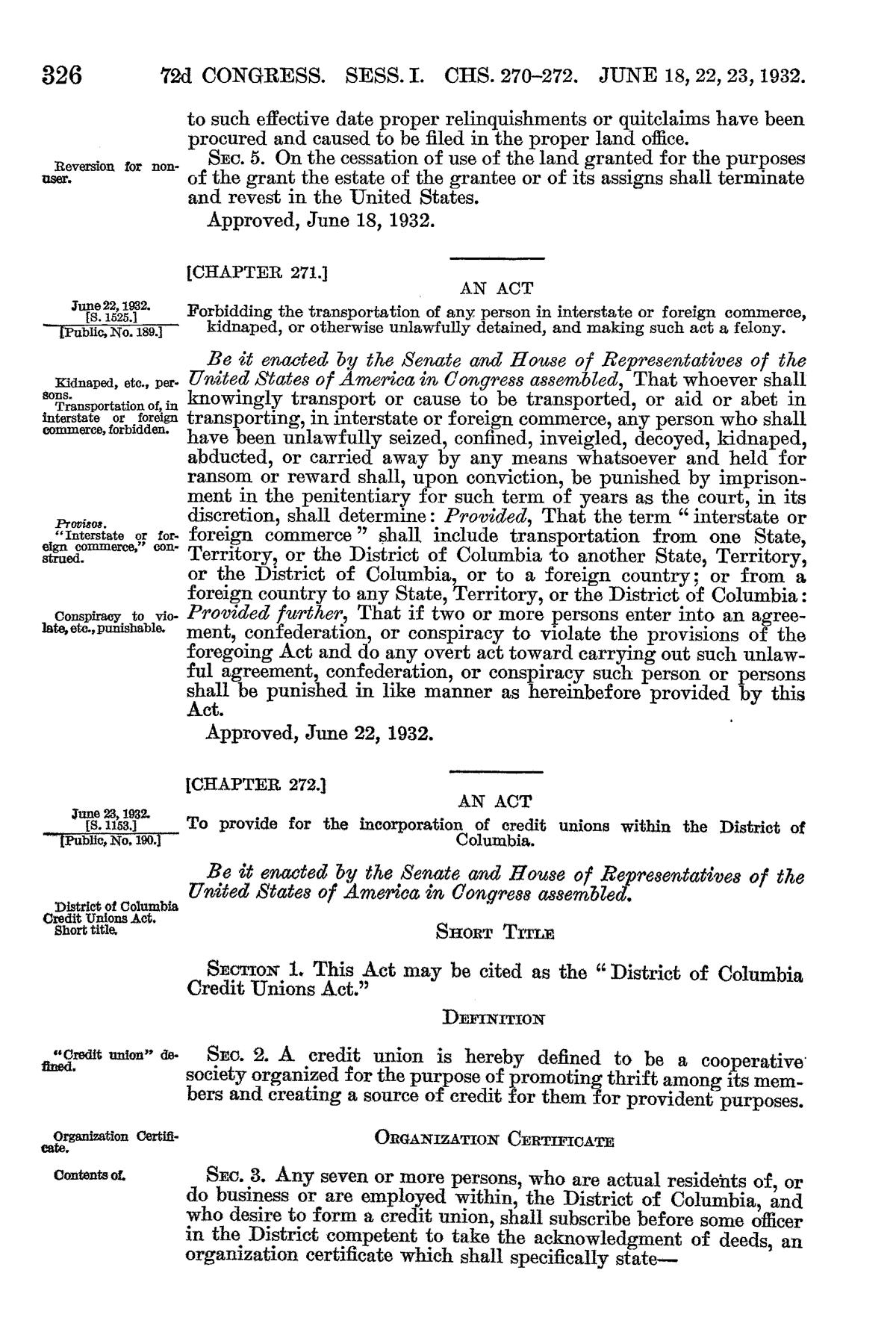
Chapter 301, approved May 18, 1934 (margin “[S. 2252.] [Public, No. 232.]”), begins on page 781 and ends on page 782 of volume 48. It amends the Act of June 22, 1932, filed separately, which forbade the interstate transportation of kidnaped persons.
As amended, transporting in interstate or foreign commerce a person seized and held for ransom or reward or otherwise (except a minor held by a parent) is punishable “(1) by death if the verdict of the jury shall so recommend, […] provided that the sentence of death shall not be imposed by the court if, prior to its imposition, the kidnaped person has been liberated unharmed” (48 Stat. 781), or otherwise by imprisonment for a term of years. Failure to release the person within seven days after the seizure creates a presumption, which is not conclusive, that the person was transported in interstate or foreign commerce. A conspiracy with an overt act is punishable in like manner.
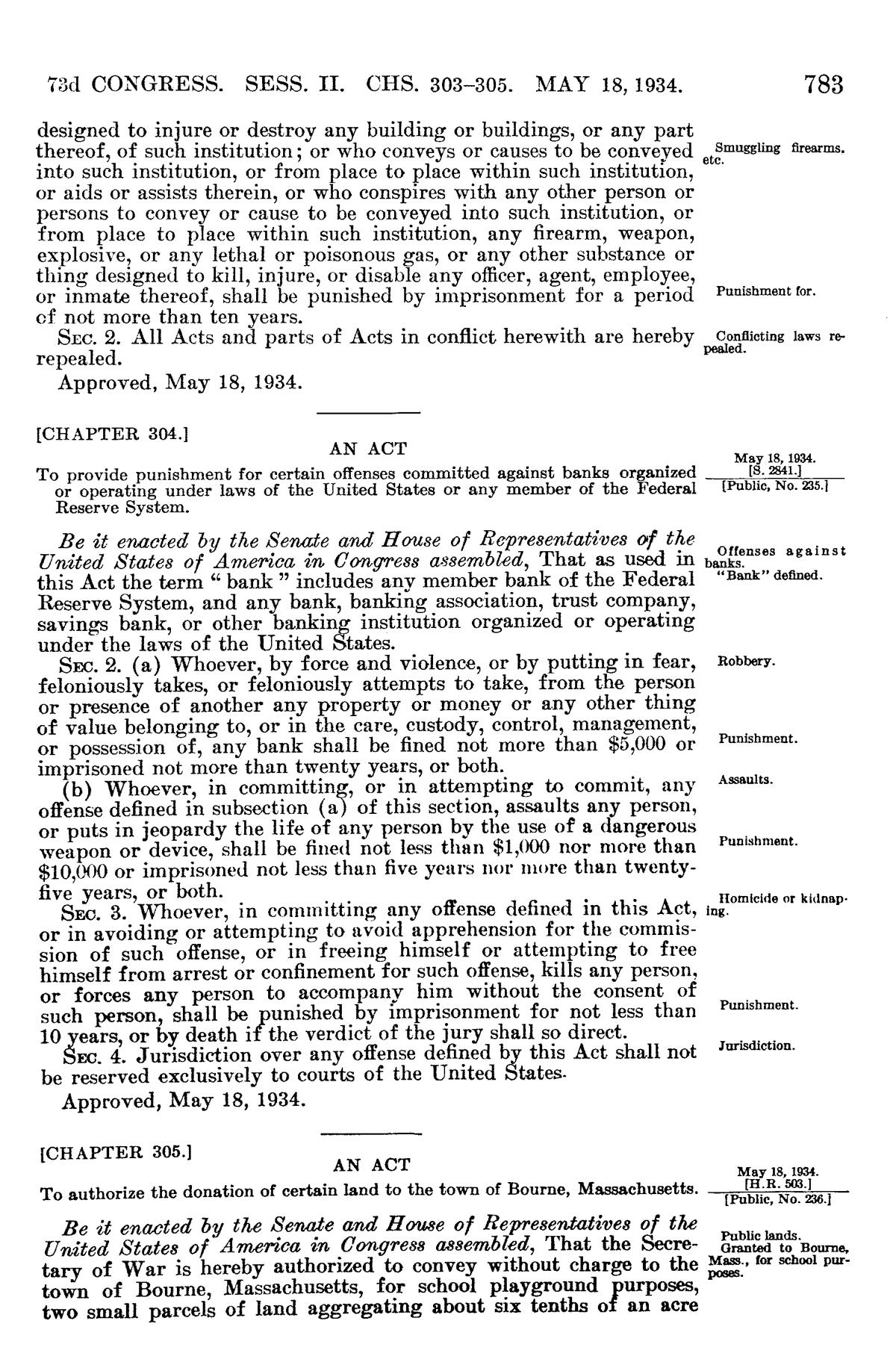
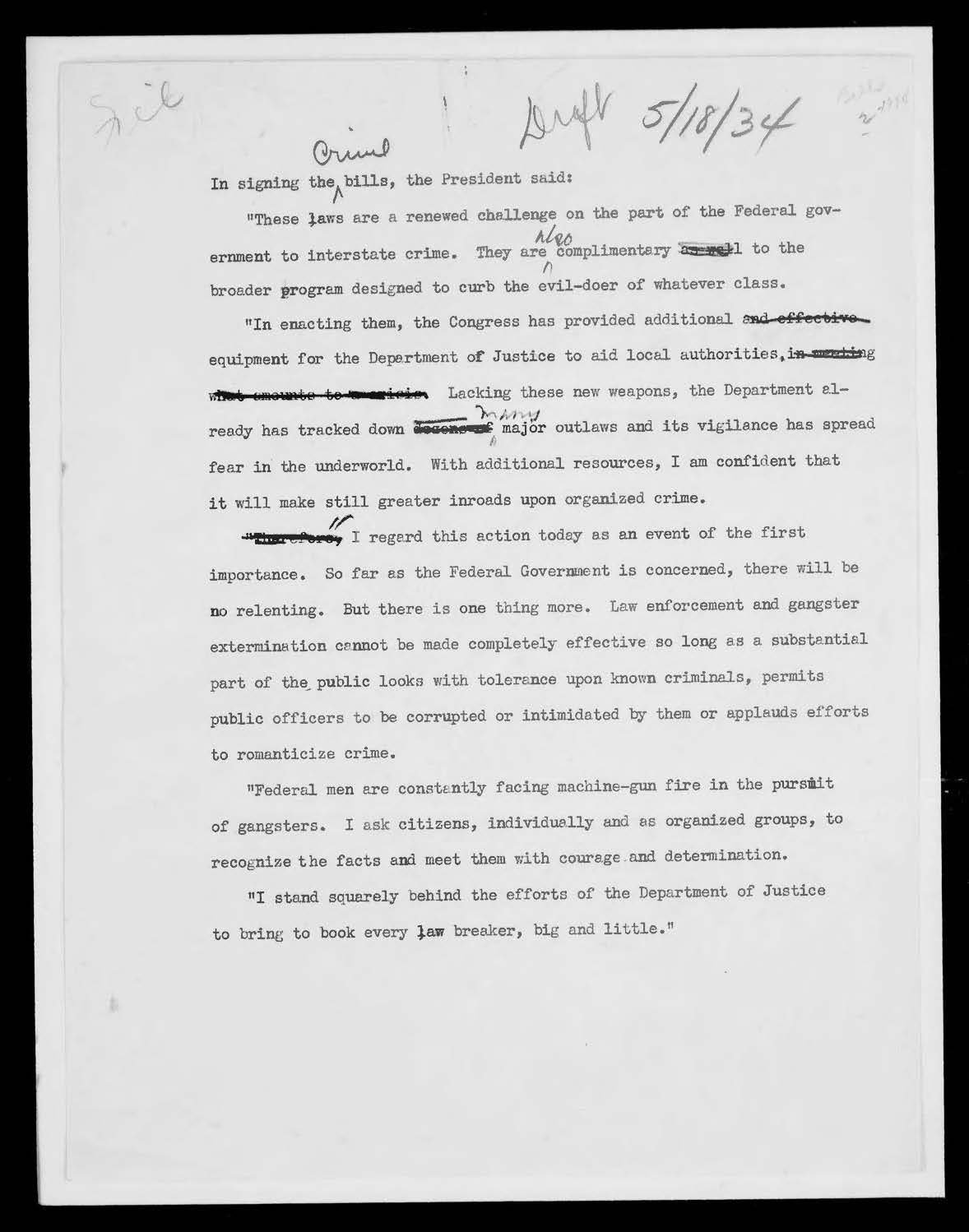
Page 781 also prints Chapter 299 (forcible resistance to designated federal officers) and Chapter 300 (extortion by interstate telephone, telegraph, radio or other message); neither is described further here. The FBI’s history timeline speaks of the 1934 bills together and does not name this Act: “Congress enacted a series of anti-crime legislation over the months of May and June 1934 in response to crimes like the June 1933 Kansas City Massacre, where gangsters killed Agent Raymond Caffrey, Jr. and other law enforcement officials.” The President’s statement on signing the crime bills on May 18, 1934 is filed separately.