Federal Kidnapping Act: 47 Stat. 326 (Chapter 271, Public, No. 189), 22 June 1932
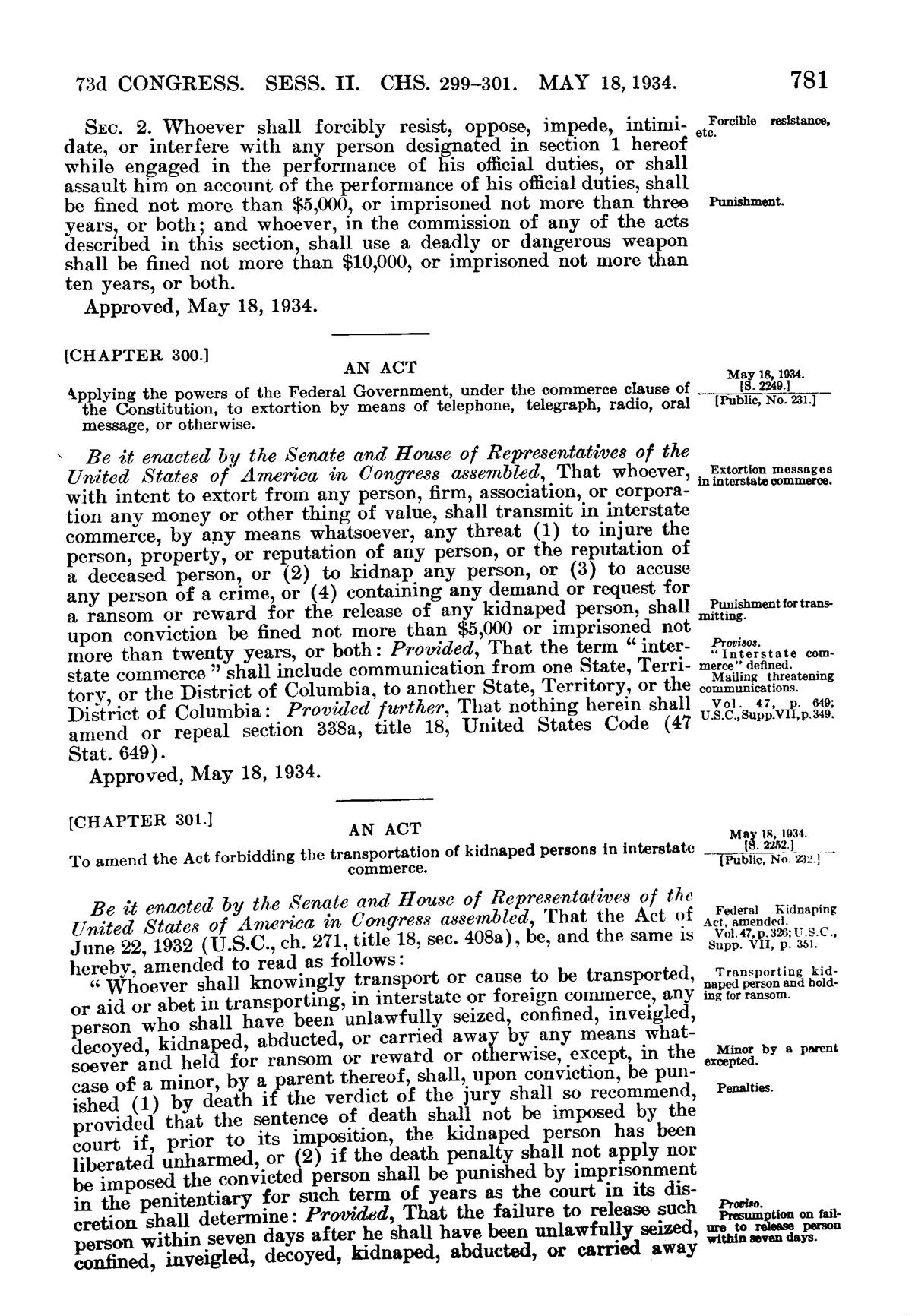
The 1932 Act "Forbidding the transportation of any person in interstate or foreign commerce, kidnaped, or otherwise unlawfully detained, and making such act a felony." Congress amended it on May 18, 1934.
- Date
- 1932-06-22
- Kind
- case-file
- Retrieved
- 2026-10-12
- Docket
- 47 Stat. 326 (72d Cong., 1st Sess., ch. 271; S. 1525; Public No. 189)
- Rights
- An Act of Congress, a federal work in the public domain under 17 U.S.C. § 105. The text was read from the Library of Congress's digitised United States Statutes at Large; the page image stored here is the Library of Congress scan of that page.
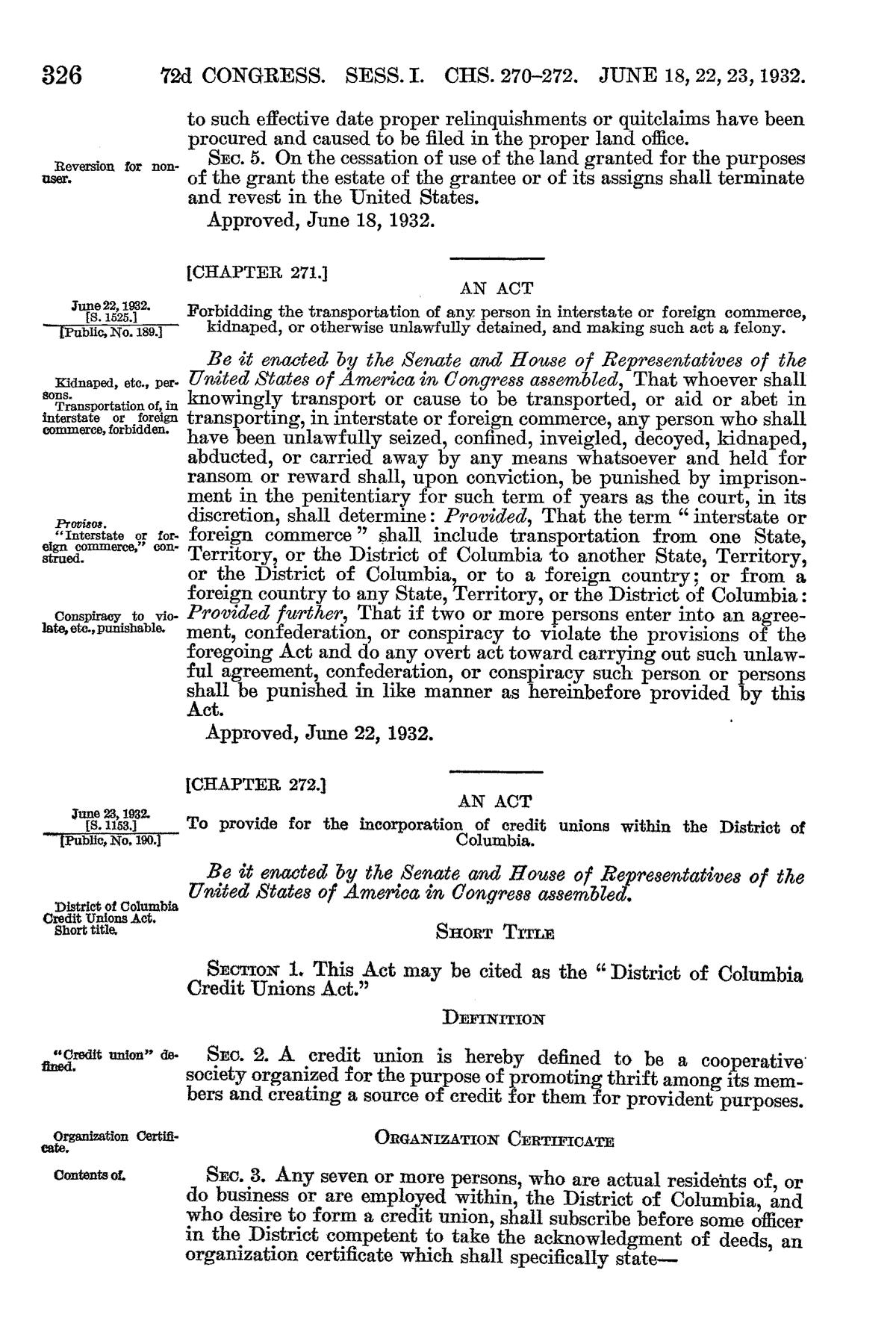
Page 326 of volume 47 of the Statutes at Large prints Chapter 271, with the margin “June 22, 1932. [S. 1525.] [Public, No. 189.]”: “An Act Forbidding the transportation of any person in interstate or foreign commerce, kidnaped, or otherwise unlawfully detained, and making such act a felony.”
The Act punishes “whoever shall knowingly transport or cause to be transported, or aid or abet in transporting, in interstate or foreign commerce, any person who shall have been unlawfully seized, confined, inveigled, decoyed, kidnaped, abducted, or carried away by any means whatsoever and held for ransom or reward” (47 Stat. 326) with imprisonment in the penitentiary for such term of years as the court determines. A conspiracy with an overt act is punishable in like manner.
The FBI’s history timeline says: “In response to the Lindbergh kidnapping case and other high profile kidnappings, Congress passed the Federal Kidnapping Act. The act gave the Bureau authority to investigate kidnappings that were perpetrated across state borders.” The popular name “Lindbergh Law” is not printed on the page. The Act was amended on May 18, 1934; that amendment is filed separately.