Record
Court opinion
1940-10-08
CourtListener (Free Law Project), text of the opinion
People v. Hines, 284 N.Y. 93 (1940)
New York Court of Appeals opinion of 8 October 1940 affirming James J. Hines's conviction for conspiracy to conduct the lotteries known as the "numbers game" and "policy." It states that in 1931 "the notorious Dutch Schultz" and associates formed a combination to control policy enterprises. It does not mention Harlem or any Black policy operator.
- Date
- 1940-10-08
- Kind
- court-opinion
- Retrieved
- 2026-10-12
- Rights
- Opinion of the New York Court of Appeals, a state court. Judicial opinions are not subject to copyright (the government-edicts doctrine). The text was read on CourtListener.
Court of Appeals of New York, argued 3 June 1940, decided 8 October 1940; opinion by Judge Finch. Thomas E. Dewey, District Attorney, appeared for the People. The appellant, James J. Hines, had been found guilty after a trial in General Sessions on all thirteen counts of the indictment. The first count “charged a conspiracy to contrive, propose and conduct lotteries known as the “numbers game” and “policy,”” and the other twelve charged separate substantive crimes under the Penal Law.
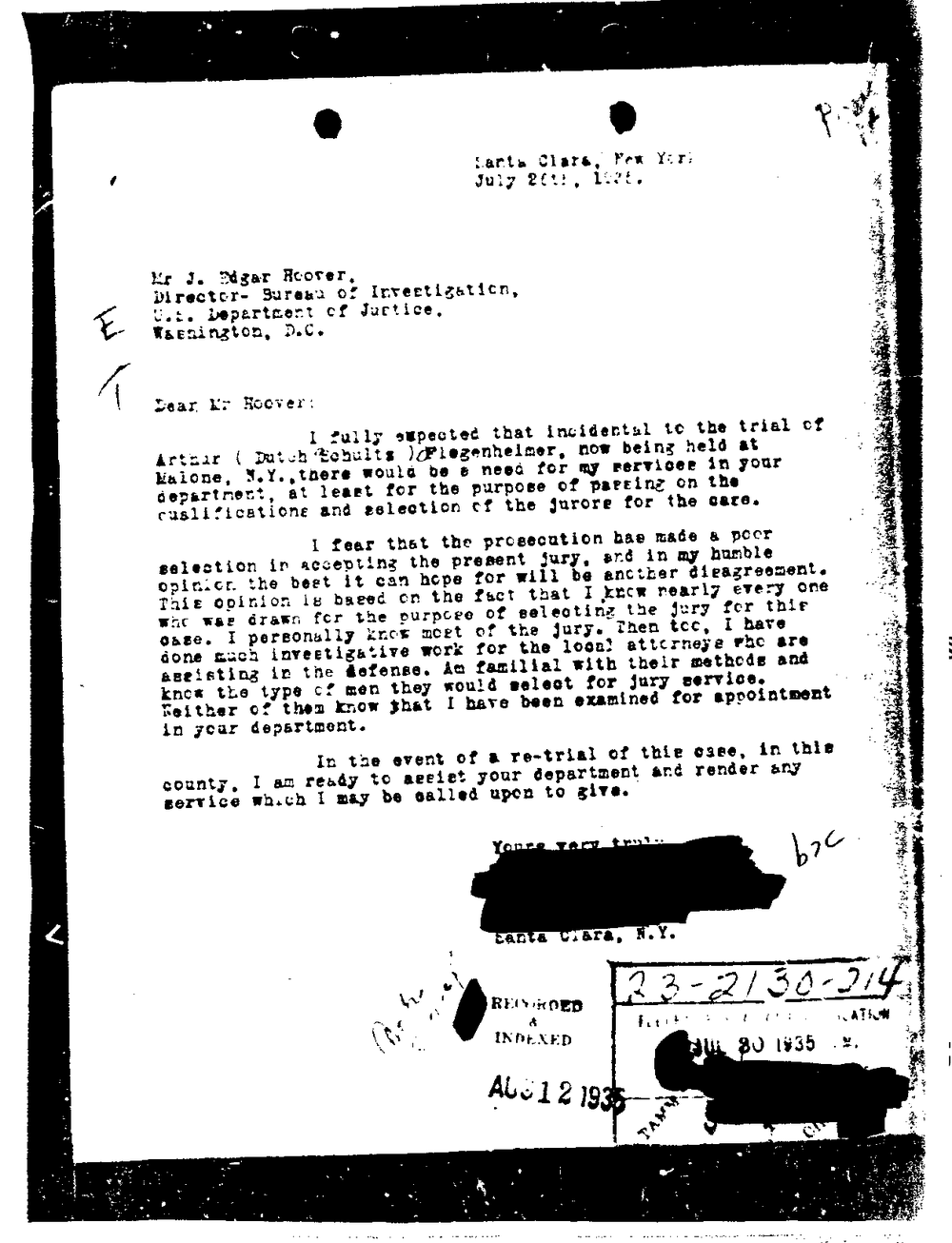
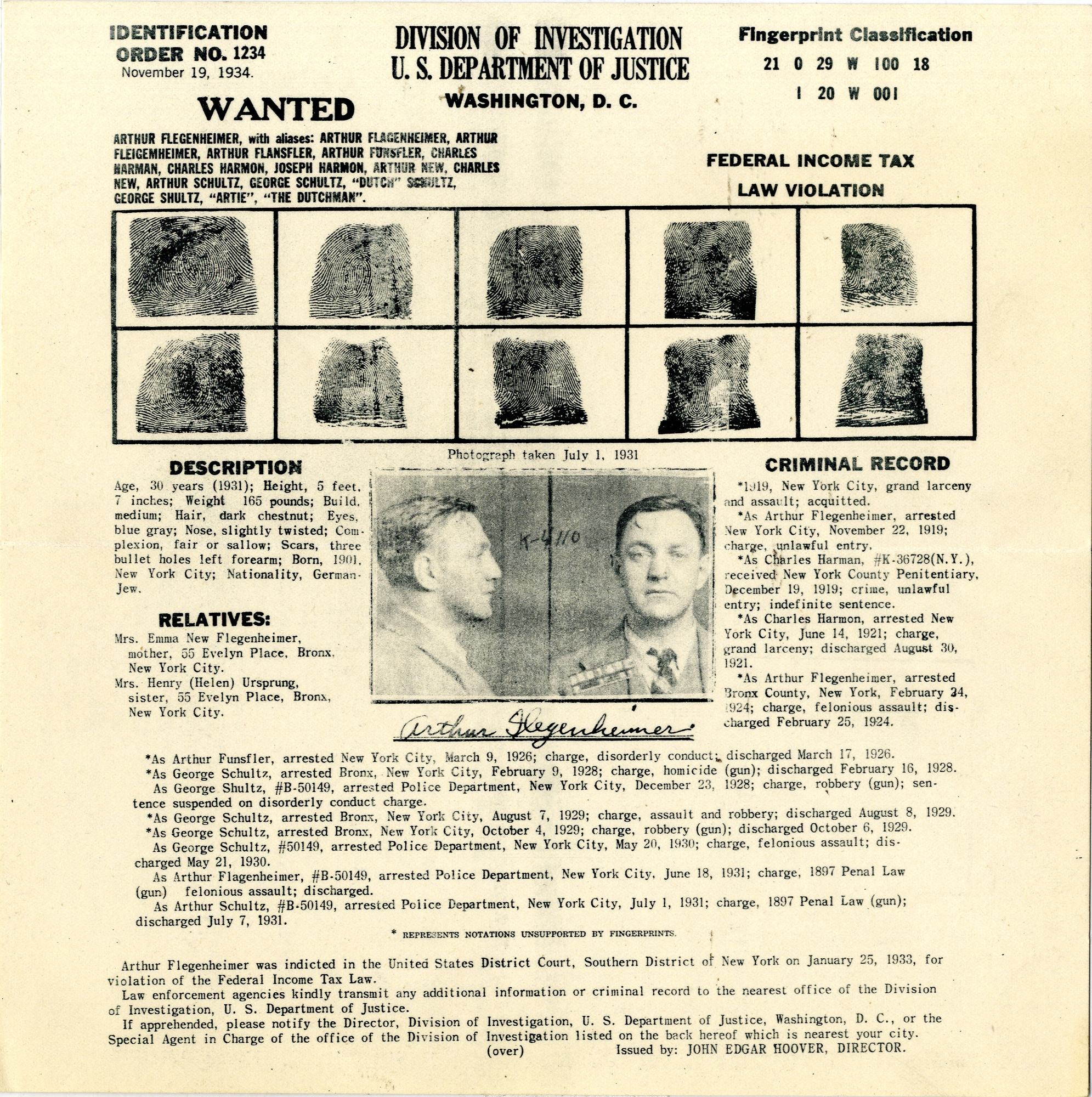
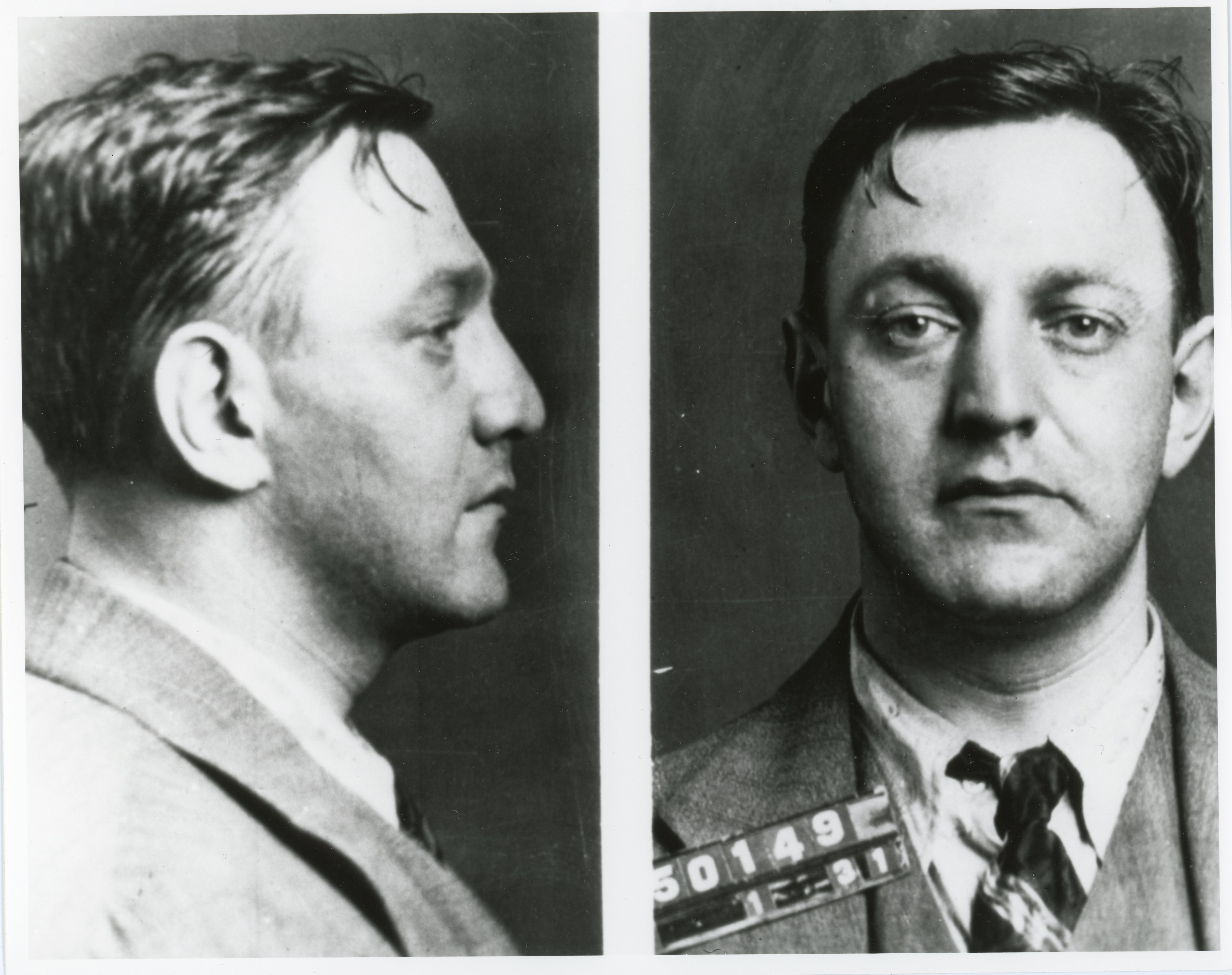
The court summarizes the facts the jury could find: “Briefly, in 1931, the notorious Dutch Schultz with a group of associates formed a combination to gain control of and operate various policy enterprises. By 1932 this combination had consolidated these enterprises into a business which operated a daily drawing, except Saturdays and Sundays.” It says that “when the daily net intake had grown to $45,000 by the fall of 1932,” the combination “paid an individual $10,000 a week to manipulate the odds on the last race” on which pay-offs were based. Hines, the court says, “was taken in” to furnish protection from arrest and immunity from conviction, “and was paid $500 to $1,000 a week over the period from 1932 to about October, 1936.” The court also held that policy is a lottery under the Penal Law, and affirmed the judgment of conviction.
The opinion names no neighborhood. It does not mention Harlem, and it names no Black policy banker or operator; how Schultz’s combination related to the Harlem bankers is not stated in any record filed here. The Harlem link in this section comes from the 1930 newspaper pages and is the newspapers’ (Harlem numbers). The opinion states the facts as the record allowed the jury to find them on appeal; it is a state court’s holding, not a federal finding. The federal records of Schultz are on his person page.