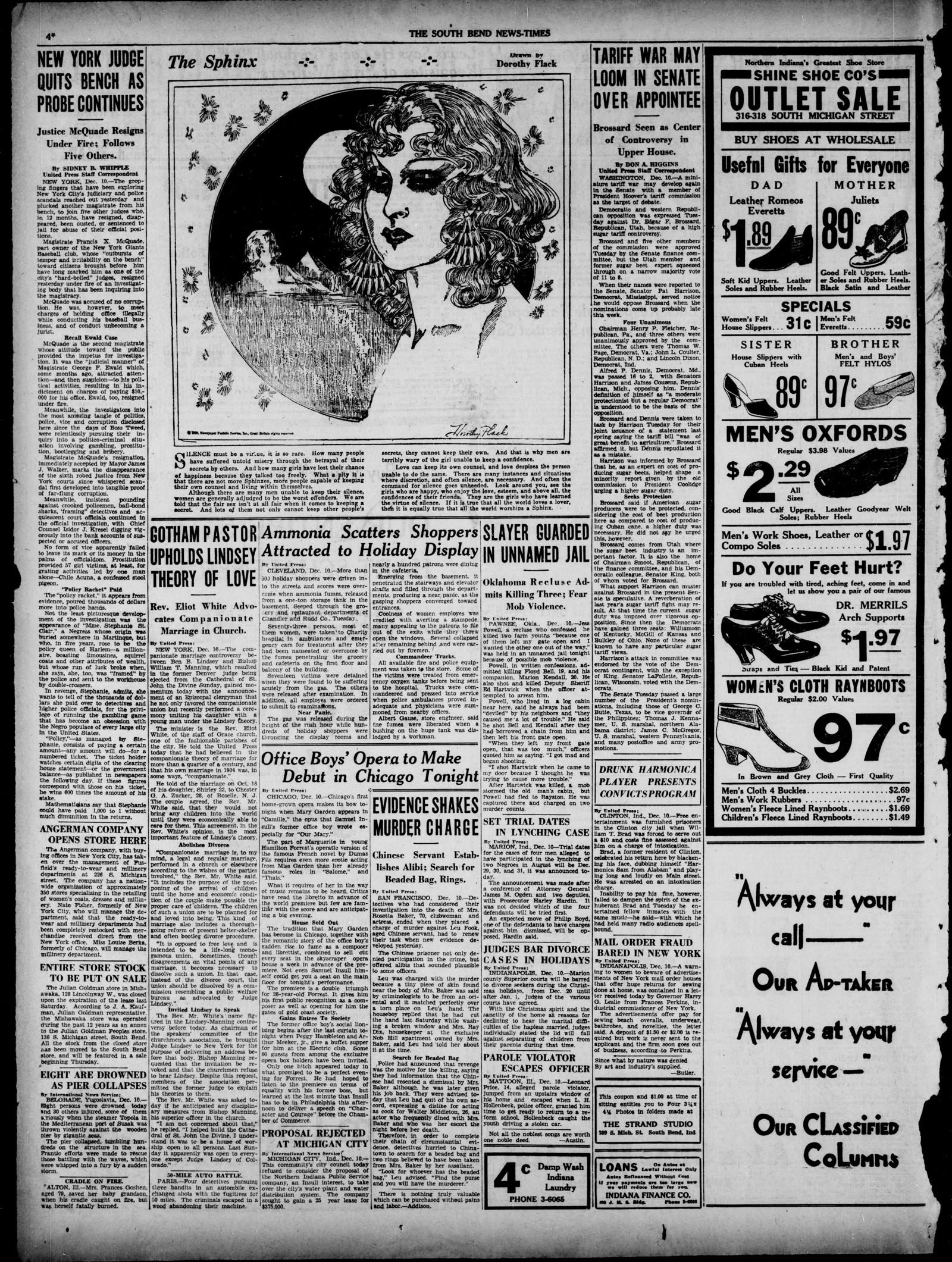
The numbers game, also called policy, was an illegal daily lottery. The records describe it in their own ways: a 1930 United Press dispatch says a player bought “a numbered ticket” and won “600 times the amount of his stake” if it matched “certain digits of the clearing house statement” printed in the next day’s papers (South Bend News-Times); the 1940 Hines opinion speaks of pay-offs based on “pari-mutuel figures”; and the Chicago wheel Theodore Roe ran in 1950 drew twelve of seventy-eight numbers. These pages gather the public records filed so far about the game in Harlem and in Chicago’s South Side, and about the people the records name. They are uneven. Before 1931 the only records are newspaper pages, most of them from the Black press, and they report claims, rumours and wire copy. From 1940 there are court opinions and congressional hearings, which state what a court found or what a witness swore.
Each record’s page labels what it is. A newspaper’s description of a person is the newspaper’s. A witness’s estimate is an estimate. A name on a list is not a finding. No record here states a rank in any family, and no one on these pages is placed on a family chart. The period’s words for Black Americans appear only inside quotations from the records, and each page says whose words they are.
The Holstein kidnapping, September 1928
Casper Holstein was reported kidnapped in Harlem on the night of Thursday, 20 September 1928, and released early on Monday, 24 September. Nine newspaper pages are filed.
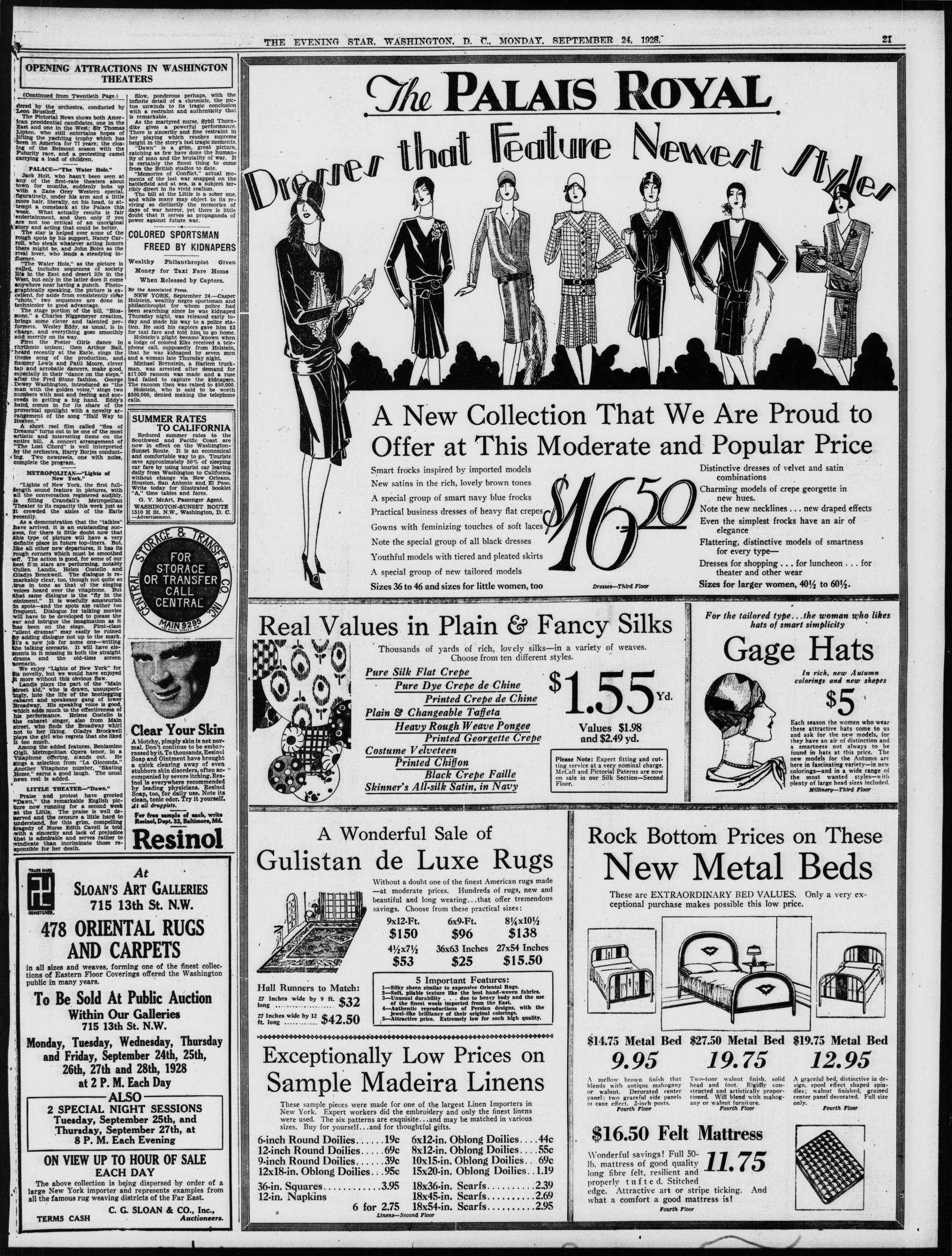
- The wire report. The Associated Press dispatch of 24 September, as the Evening Star printed it, says he was released with $3 for taxi fare, that a man named Michael Bernstein had been arrested after a ransom demand, and that the demand rose to $50,000.
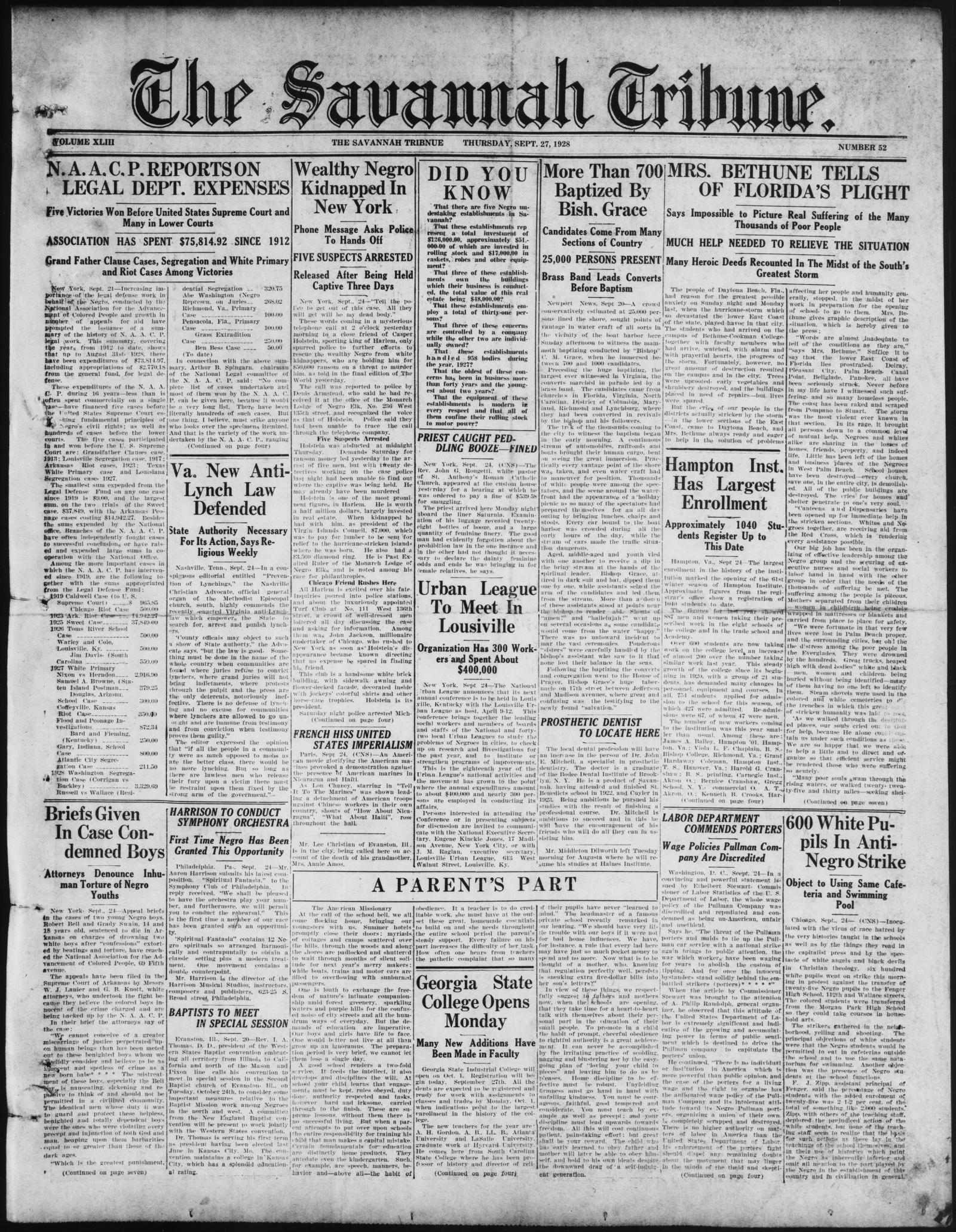
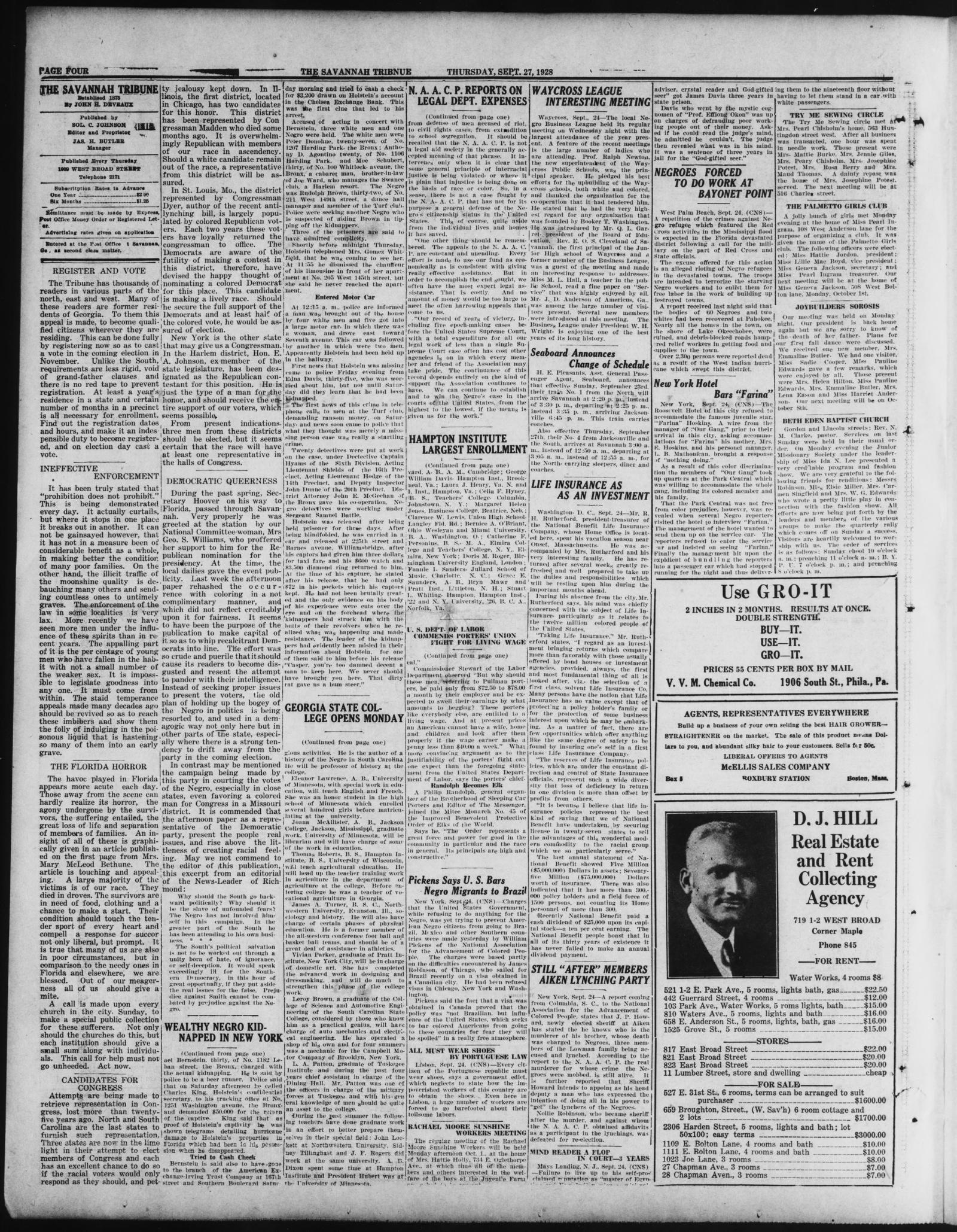
- The New York World’s account, reprinted in the Savannah Tribune of 27 September, with its continuation on page 4: five arrests, twenty detectives, a $3,200 check, and his release in Williamsbridge, the Bronx.
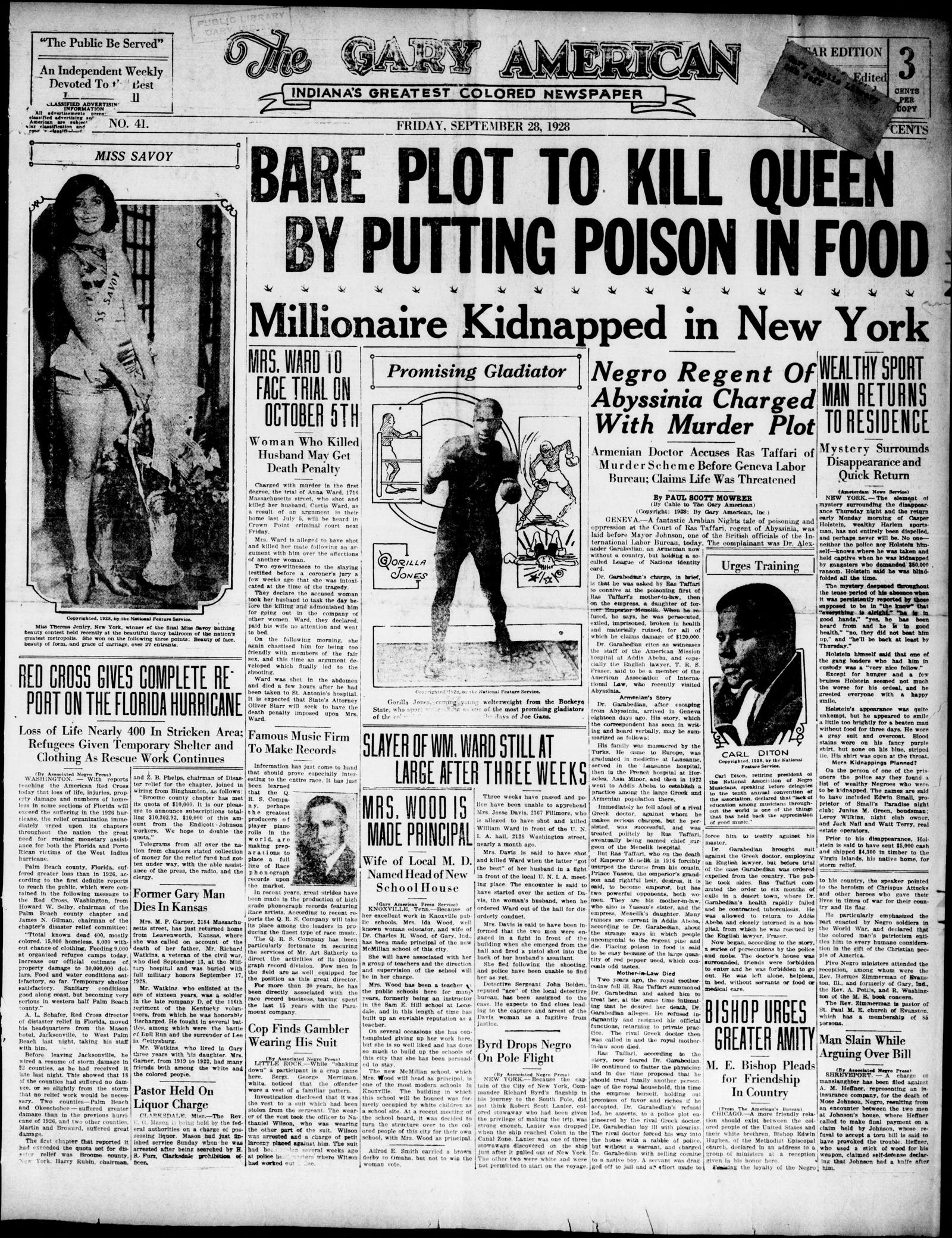
- His return. The Gary American of 28 September (Amsterdam News Service) says no one knew where he was held, and calls the Virgin Islands “his native home.”
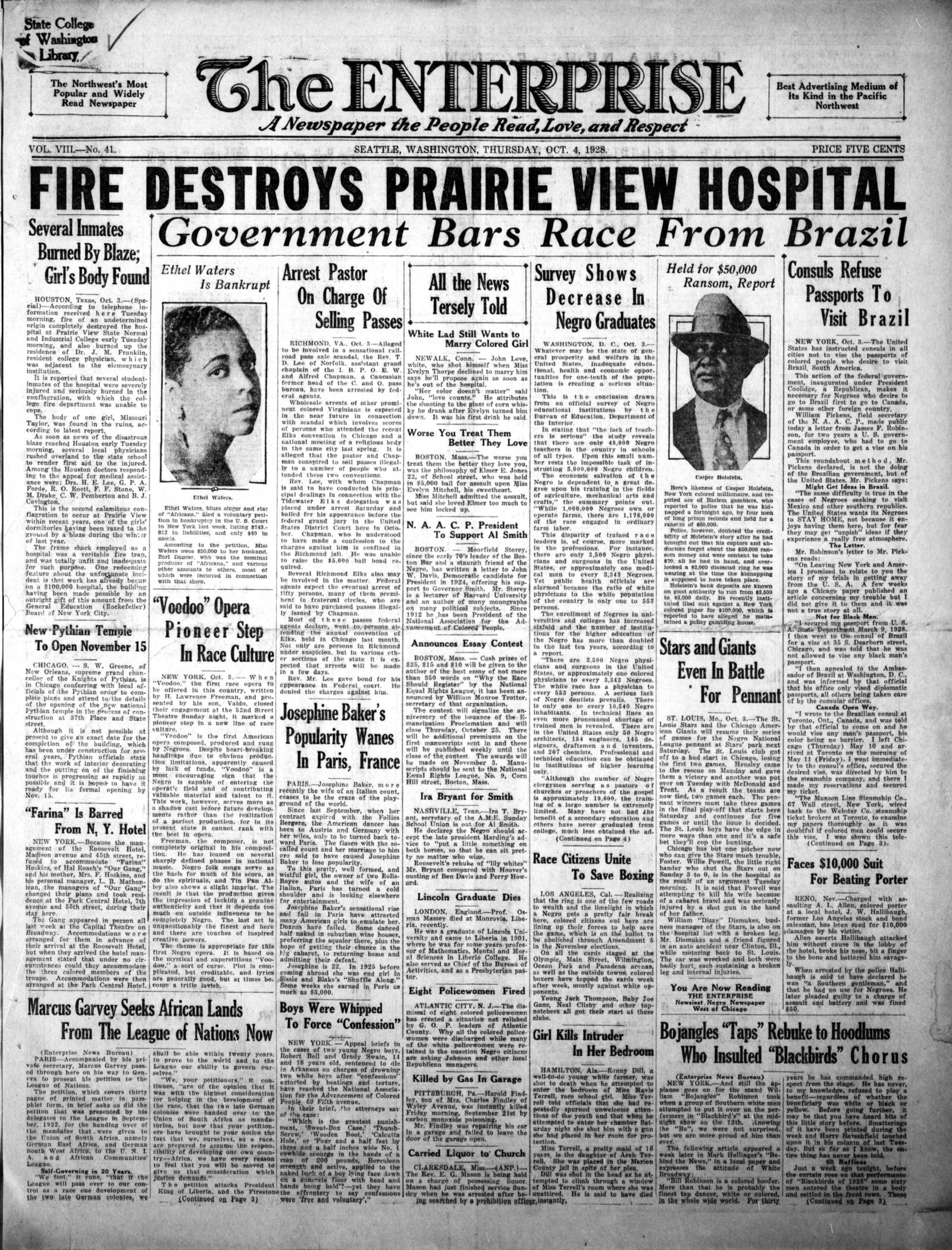
- The police doubts. The Enterprise of Seattle printed his photograph on 4 October, called him a “reputed ace of Harlem gamblers,” and reported a libel suit over a claim that he kept a policy house.
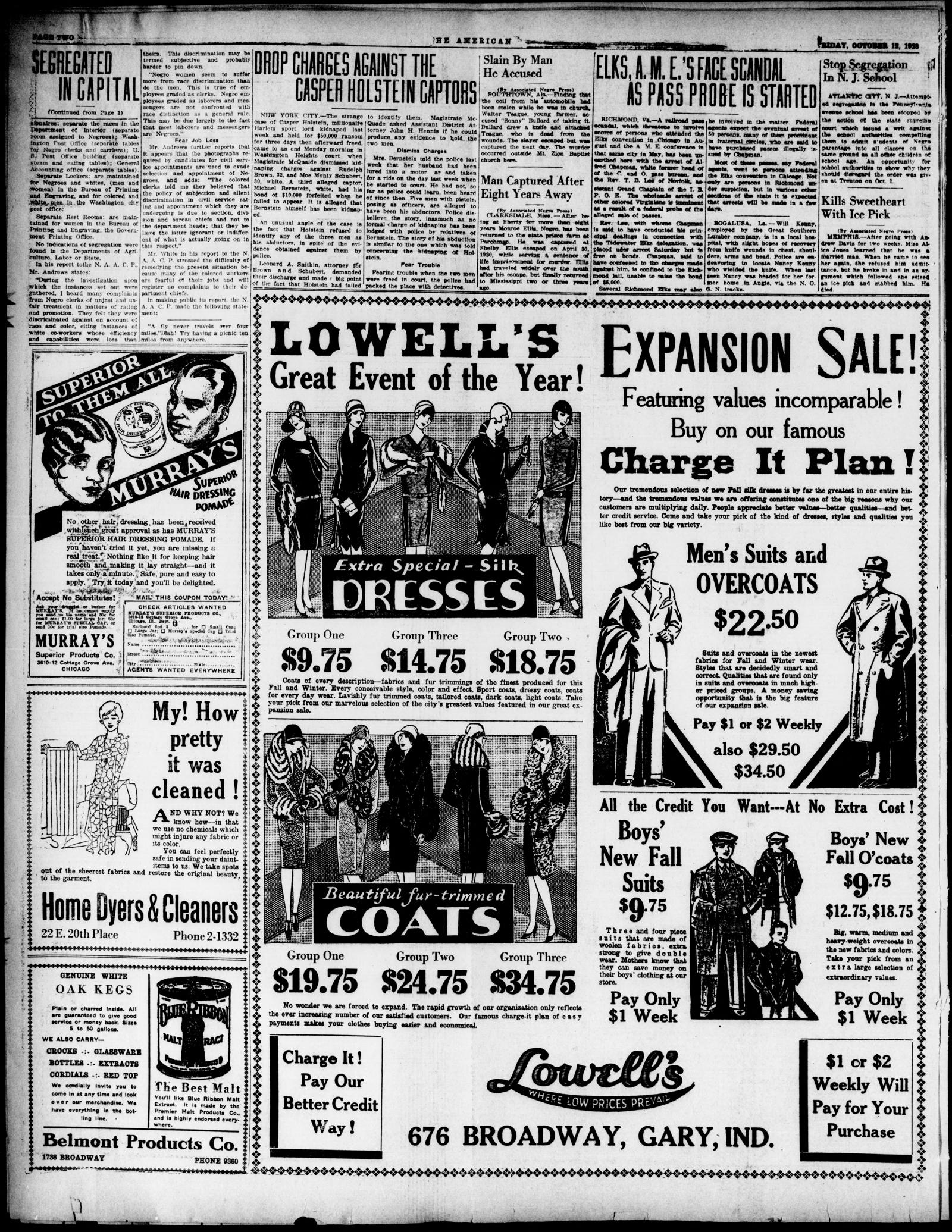
- The charges dropped. The Gary American of 12 October reports that Holstein would not identify the men in court, that two were discharged, and that Bernstein’s bond was forfeited.
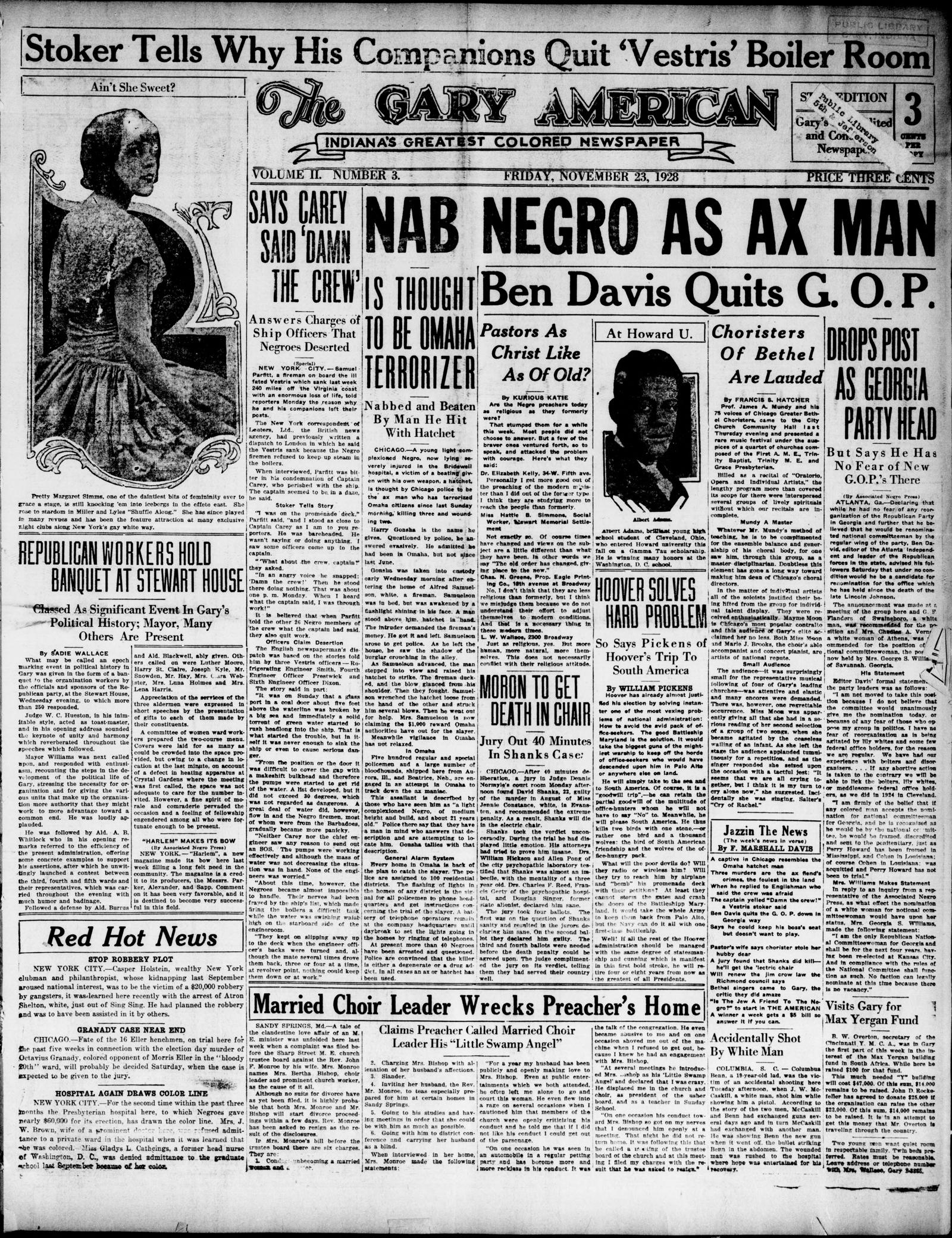
- A robbery plot, reported in The Gary American of 23 November.
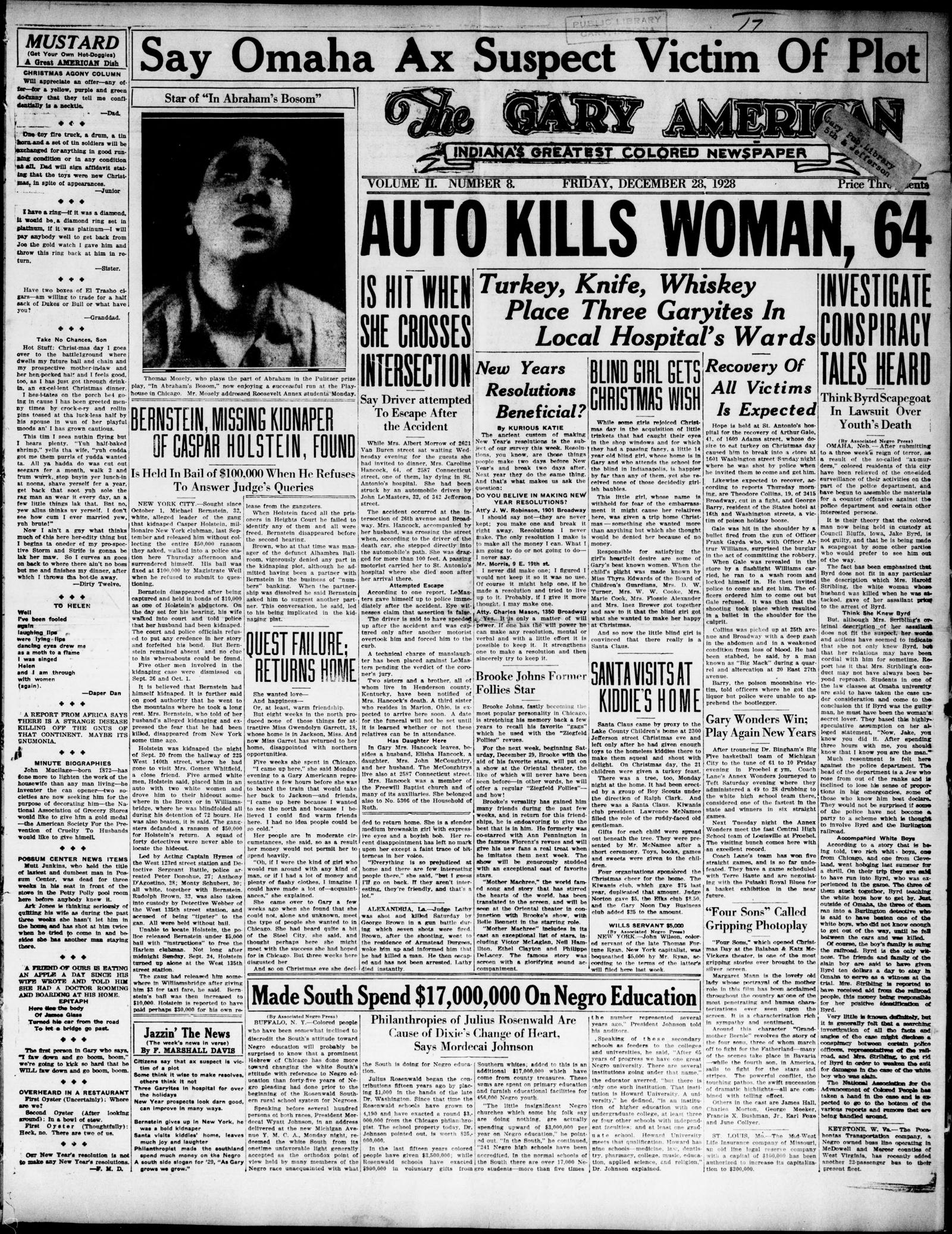
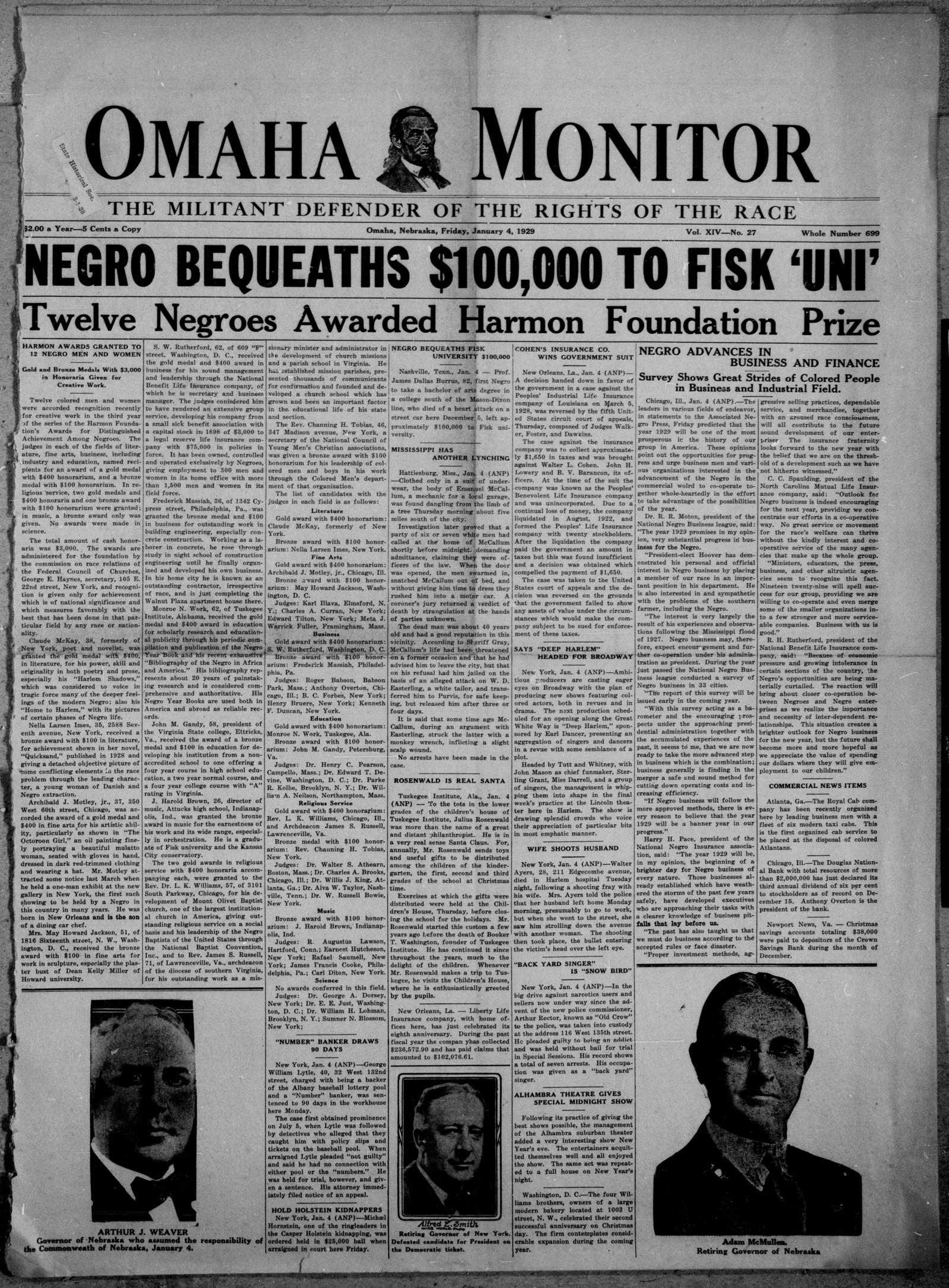
- Bernstein’s surrender, reported in The Gary American of 28 December and, in two sentences, by the ANP in the Omaha Monitor of 4 January 1929.
The papers do not agree, and this archive does not choose between them:
- Names. The Associated Press and the Gary American print Bernstein; the ANP prints “Hornstein.” One arrested man is “Agontino” in the Savannah Tribune’s OCR and “D’Agostino” in the Gary American.
- Kidnappers. “Seven men and a woman” (Associated Press); four men bringing a man out of the house to a car with a woman in it (Savannah Tribune); “Five armed white men” with “two white women” (Gary American, December); “four men of long prison records” (Seattle).
- Ransom. A first demand of $17,000 raised to $50,000 (Associated Press); $50,000 (the others). The Gary American says he “is reported to have paid perhaps $30,000.”
- Address. Outside “No. 265 West 145th street” (Savannah Tribune, page 4); “the hallway of 225 West 140th street” (Gary American, December).
- Bail. $10,000 bond forfeited (Gary American, October); $5,000 raised to $10,000, then $100,000 on his surrender (Gary American, December); $25,000 at an arraignment (ANP, January 1929).
The Seattle paper’s report of a libel suit over a claim that Holstein “maintained a policy gambling house” is the paper’s report of what another paper “is reported to have alleged.” It is recorded as reported and not adopted. No court record of the kidnapping case has been opened, and nothing filed here shows that anyone was convicted.
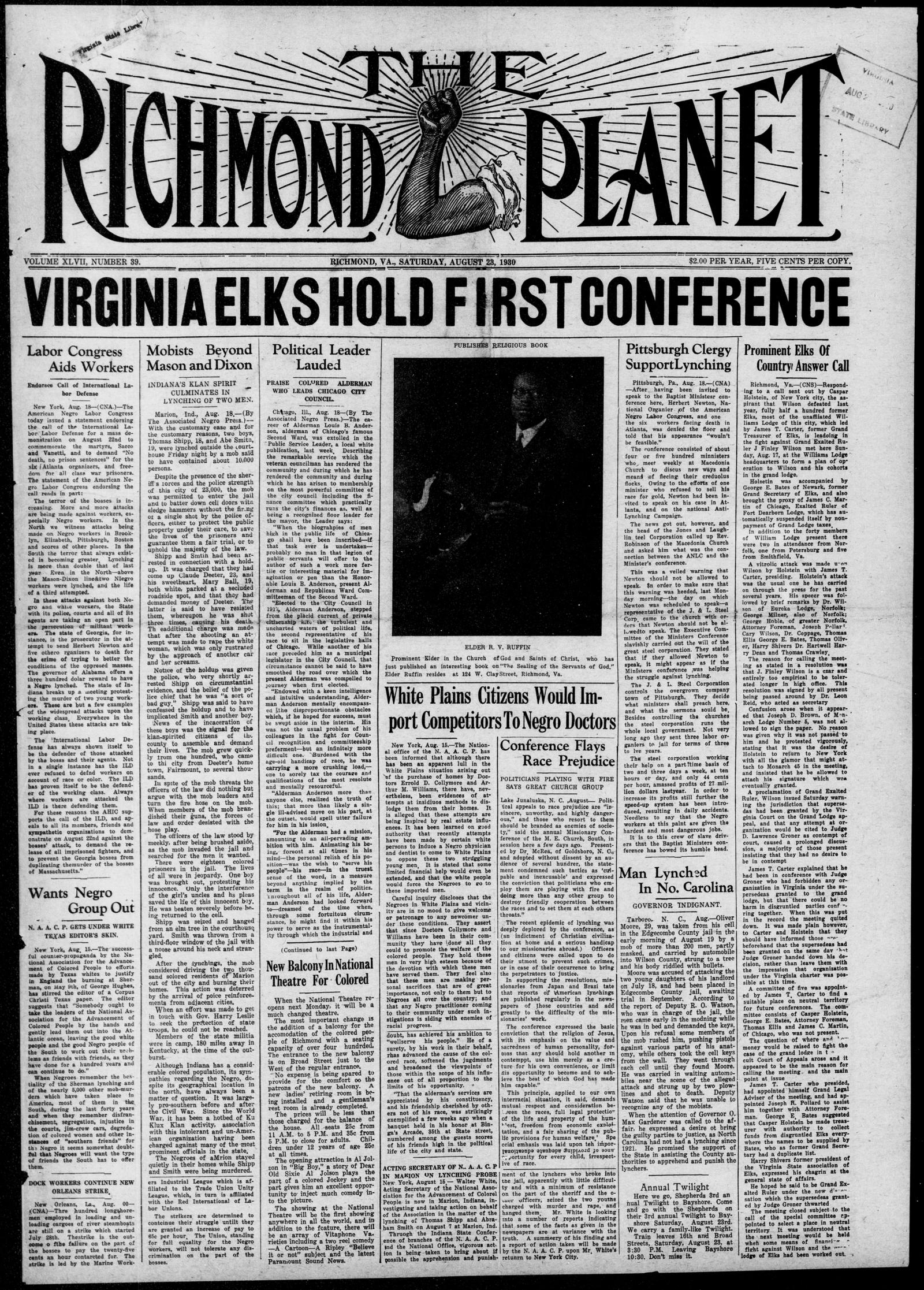
A tenth page shows Holstein’s public life two years later: in August 1930 the Richmond Planet reported that dissident Elks met in answer to his call. His person page collects these records.
Stephanie St. Clair, December 1930
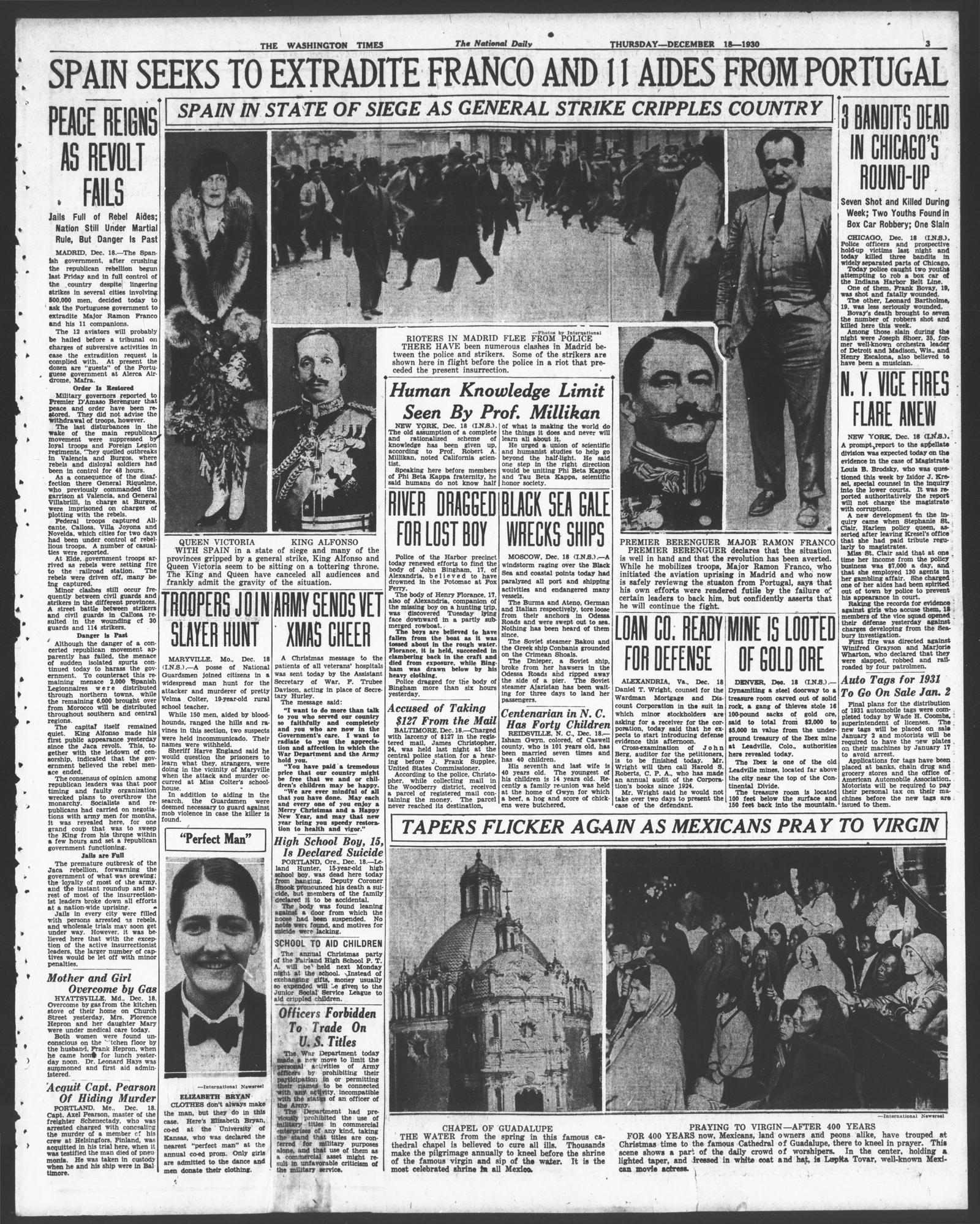
Two wire dispatches report her appearance at the New York inquiry into the magistrates’ courts. A United Press story in the South Bend News-Times of 11 December calls her “the policy queen of Harlem” and reports her saying she had been “framed” by the police and sent to the workhouse. An International News Service item in the Washington Times of 18 December says she “asserted after leaving Kresel’s office that she had paid tribute regularly to magistrates,” and gives figures for her income and agents that are hers as reported. Both are newspaper reports of her statements; the labels and figures are the papers’. See her page.
A 1930 opinion piece
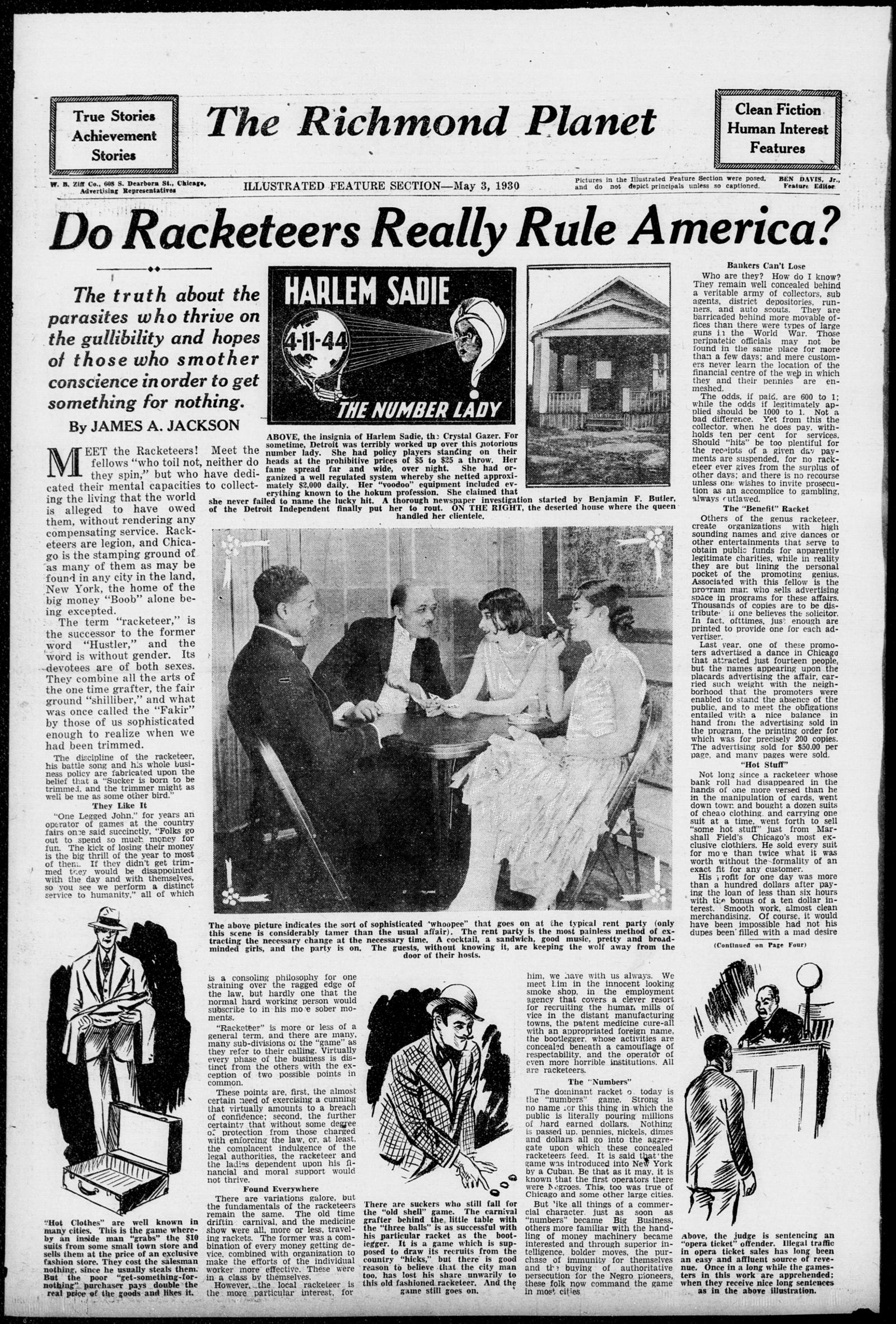
The Richmond Planet’s illustrated feature section of 3 May 1930 carried “Do Racketeers Really Rule America?” by James A. Jackson, which calls the numbers “the dominant racket of today,” says “it is said” the game came to New York with “a Cuban,” that its first operators there and in Chicago were Black, and that others took it over once it “became Big Business.” It is filed as period opinion, with its pictures posed as the page says, and not as a source of fact.
Dutch Schultz’s policy combination: People v. Hines
The first court record is the New York Court of Appeals’ 1940 opinion affirming the conviction of James J. Hines (284 N.Y. 93). The court states that “in 1931, the notorious Dutch Schultz with a group of associates formed a combination to gain control of and operate various policy enterprises,” that by the fall of 1932 the daily net intake had reached $45,000, and that Hines was paid to obtain protection from arrest. It is a state opinion, filed because judicial opinions are not under copyright. It does not mention Harlem or any Black policy operator. No record filed here states how the Schultz combination related to the Harlem bankers of the 1920s; that link is made only in later accounts this archive has not sourced. Schultz’s federal records are on his page and in the New York, 1930s section.
Chicago policy: the Kefauver Committee, 1950
The Kefauver Committee’s Illinois volume (Part 5) holds the sworn testimony of the men who ran the Jones brothers’ policy wheel.
- Theodore Roe, 18 October 1950. He said his business was “Operating a policy wheel,” that he had been a partner with the Jones brothers for about ten years, and that he had worked for them since the later 1920s (testimony).
- Roe, 19 December 1950. He named the partners in the Maine-Idaho-Ohio wheel and described the kidnapping of Edward Jones, which he dated to 1946, and a ransom of $100,000 (testimony).
- Edward P. Jones, 19 December 1950. Living in Mexico City, he said he shared in the wheel’s profits, agreed that he had been convicted of an income-tax violation on its income, and described the kidnapping without giving a sum (testimony).
- Exhibits 60 to 62. A staff table of earnings from 1939 to June 1950 “obtained from the records furnished by Theodore Roe,” a second table, and the staff chart of the Chicago policy wheels with an estimated $150,000,000 five-year play. The chart and the second table are described only as the testimony describes them (exhibits).
- Lt. George Butler of Dallas, the same evening. Reading his notes of what another man told him in 1946, he said the man claimed that “the Jones boys” had “paid $200,000 for the snatch.” This is hearsay at two removes, and the figure conflicts with Roe’s sworn $100,000 (testimony).
Person pages: Theodore Roe and Edward P. Jones. The city itself is on the Chicago page.
New York policy: the 1944 black book
In March 1951 John M. Murtagh, Chief Magistrate of New York City, told the committee of a raid on “a little grocery store in Harlem” where a policy operator kept books recording payments to police, and said his analysis of the book “showed payments to 111 police officers,” though by his own account he “couldn’t prove it by the sworn testimony of any witness” and no officer went to jail (Part 7).
Narcotics: the 1964 Senate hearings
The Senate subcommittee’s narcotics hearings that followed Joseph Valachi’s testimony (Valachi, 1963) include Bureau of Narcotics statements about Harlem and about Black traffickers. Seven passages are filed as pinpoints. Two are paraphrased because the scan’s text layer is garbled at the key line: the Siano entry and the Valachi entry’s sentence on John Freeman. The other five are quoted.
- Part 3, page 774: Joseph Bruno of Chicago and supply to the South Side (entry).
- Part 3, pages 786-787: Fiore Siano, described as a source of supply for traffickers in Harlem; paraphrased (entry).
- Part 3, page 788: Joseph Valachi and John Freeman; the Freeman sentence is paraphrased (entry).
- Part 4, page 913: Ward’s estimate that five organizations controlled 95 percent of New York heroin (testimony).
- Part 4, page 915: Ward on traffickers travelling between New York, Washington and Baltimore (testimony).
- Part 4, page 918: the Bureau’s history of the New York traffic (exhibit).
- Part 4, page 924: the 1959 Freeman case and its supply to “the west Harlem section” (case account).
- Part 4, pages 931-932: Belk on Chicago’s supply from New York (testimony and exhibit).
These are an agency’s descriptions to a Senate subcommittee, not court findings, and the racial categories in them are the Bureau’s. The hearing gives Valachi’s sentence in the Freeman case as fifteen years on one page and twenty on another.
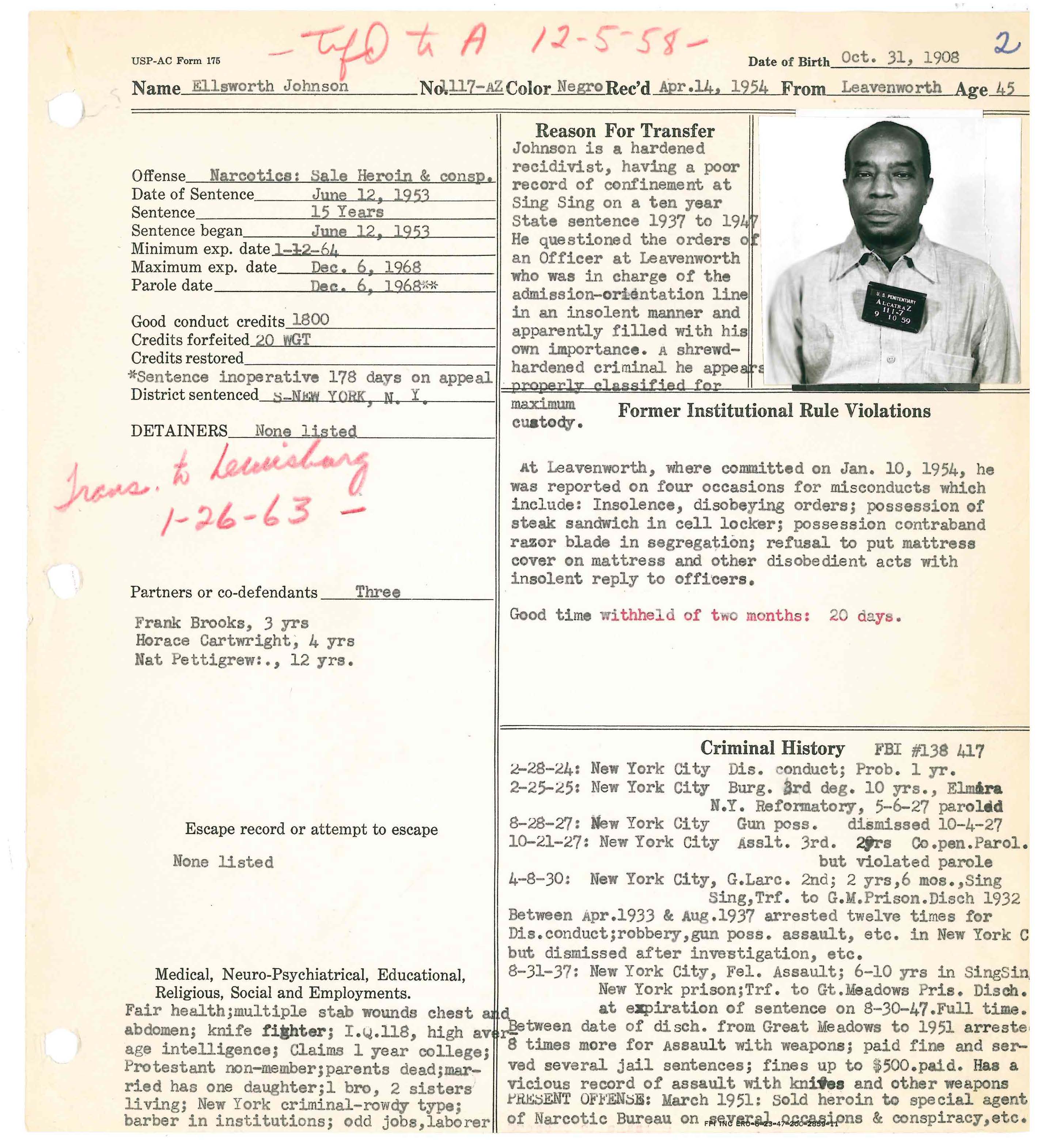
Ellsworth “Bumpy” Johnson’s only record here is the Alcatraz warden’s notebook page for register no. 1117, which records a 1953 narcotics sentence from the Southern District of New York (notebook page; person page). It says nothing about Harlem or the numbers game, and no other record of him has been found.
Later court records
Two later opinions concern heroin in Harlem and upper Manhattan. People named in them are treated as possibly living: these pages state only what the courts wrote, and no biography is filed.
- United States v. Barnes, 604 F.2d 121 (2d Cir. 1979) affirmed the 1978 convictions of Leroy Barnes and others, including Barnes’s conviction for a continuing criminal enterprise; its facts describe a DEA investigation into “drug traffic in Harlem and the South Bronx” (opinion).
- People v. Lucas, 106 Misc. 2d 672 (N.Y. Sup. Ct. 1980), a pretrial ruling in the murder case against Frank Lucas, summarizes his federal narcotics cases as the court read the record (opinion).
People
Person pages filed with this section: Casper Holstein, Stephanie St. Clair, Theodore Roe and Edward P. Jones. Each is limited to its cited records, and none states a family, a rank or a date of birth or death. Dutch Schultz and Ellsworth Johnson have pages filed elsewhere. No page is filed for Leroy Barnes, Frank Lucas or John Freeman.
Not filed yet
- Any court record of the 1928 Holstein kidnapping case, or of Holstein after 1930.
- Stephanie St. Clair’s arrests, the workhouse sentence she spoke of in 1930, and her later newspaper campaign. Pages after 1930 are held back until their rights are checked.
- Newspaper pages from 1930 or earlier on the Chicago policy wheels, the Jones brothers or Theodore Roe; and the Jones brothers’ federal tax case, which the testimony mentions.
- Bumpy Johnson’s federal narcotics case, and any court record for Frank Matthews.
- A federal or state record connecting the Schultz combination to the Harlem policy bankers.
- Library of Congress photographs: none could be checked for a “No known restrictions” mark.