New York’s organized-crime record from 1928 to the mid-1940s is mostly a federal tax and antitrust record, with the killings left to the state. Federal prosecutors in the Southern District of New York indicted Arthur Flegenheimer (Dutch Schultz) for income-tax violations in 1933 and convicted a beer seller named Wexler in the same years; the Justice Department’s Division of Investigation, later the FBI, built antitrust cases against the fur rackets and spent two years hunting Louis Buchalter. The killings of Rothstein in 1928, Schultz in 1935 and others were New York and New Jersey cases, and the FBI’s own files say so.
This page gathers the records filed for that period. Each record’s page quotes what the source says and labels it: a court’s holding, a charge, an FBI memorandum’s opinion, a witness’s statement quoted by the FBI, or a newspaper’s report. A name in a record is not a finding, and no page here assigns anyone to a family or a rank.
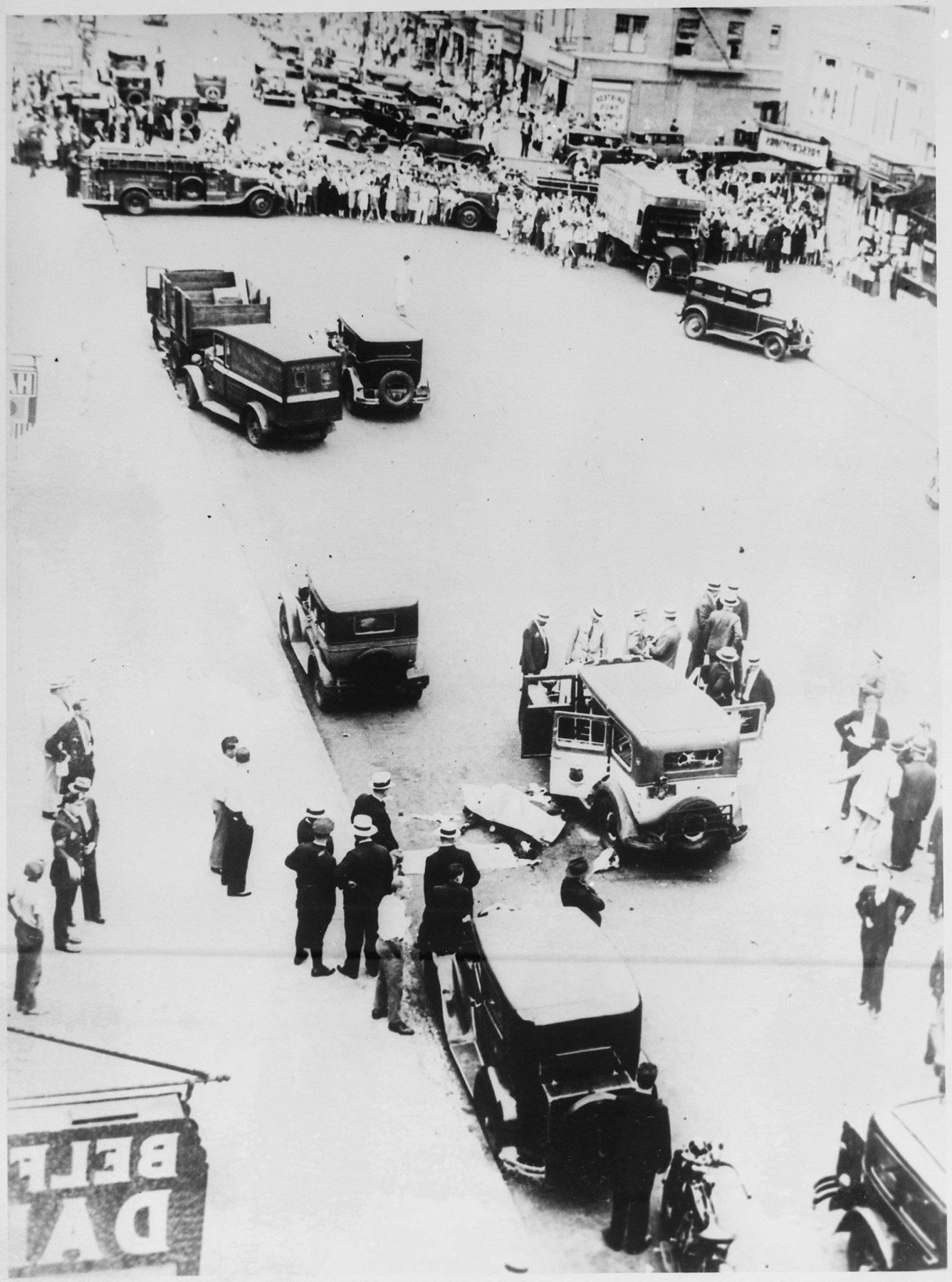
One photograph is filed without a case: a 1931 New York Times Paris Bureau negative that the National Archives titles “Bullet-riddled taxi and the bodies of two gangsters in a New York City street after a gun battle with police” (photograph). The catalog names no one and gives no street or date beyond the year, and this archive adds none.
New York before 1931: newspaper pages
The archive holds no federal record of these events. Only newspaper pages dated 1930 or earlier are filed, as records of what the wire services reported at the time.
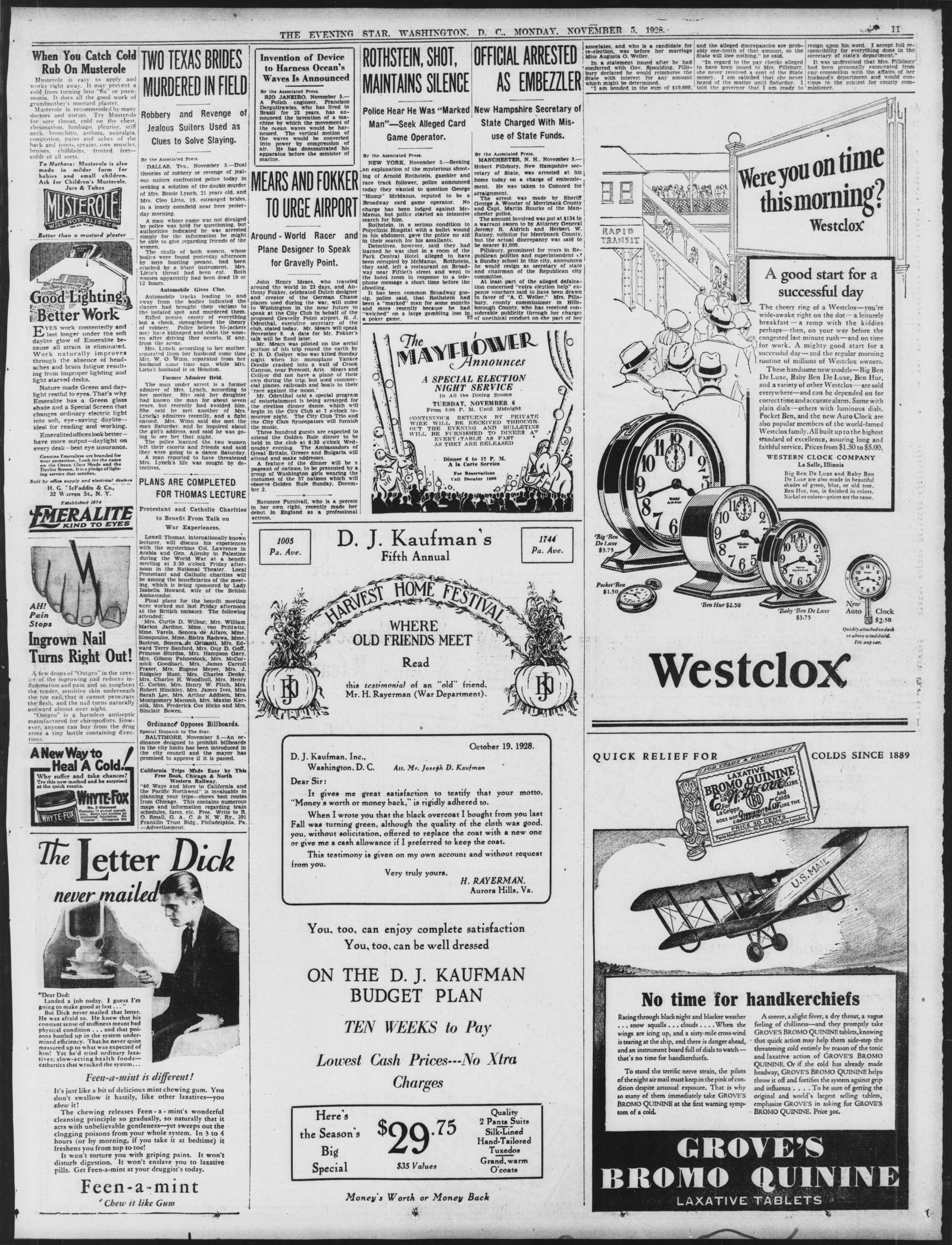
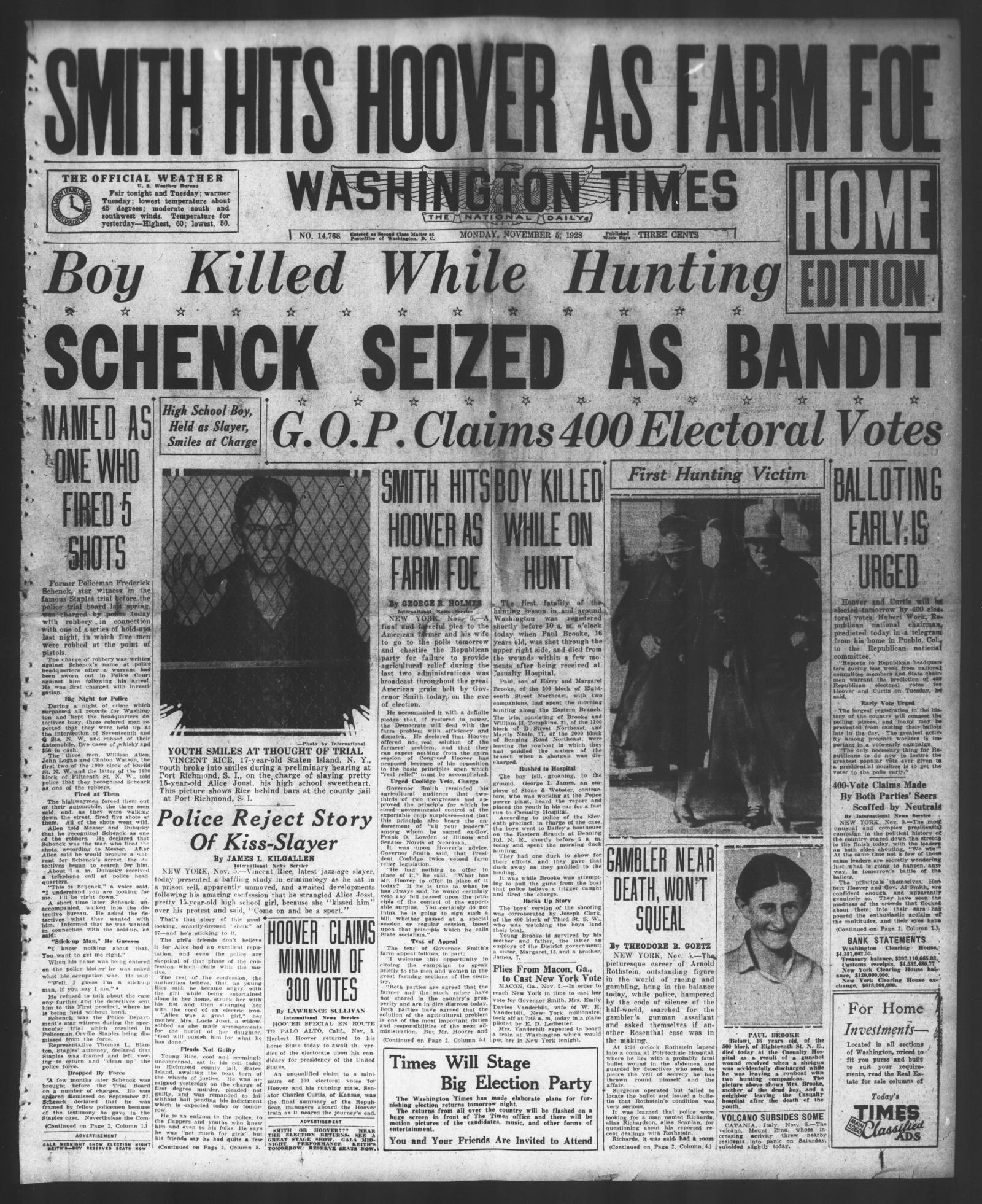
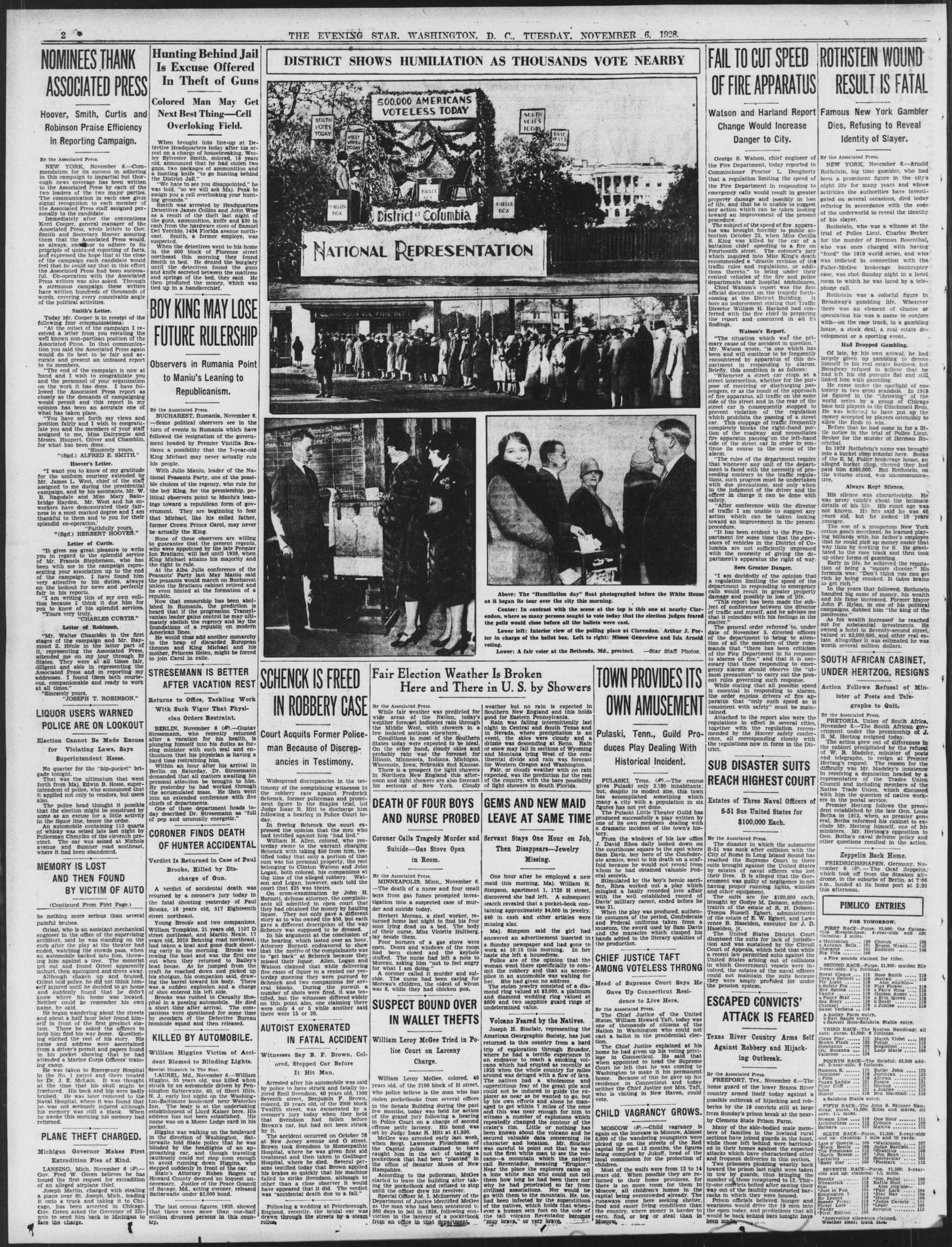
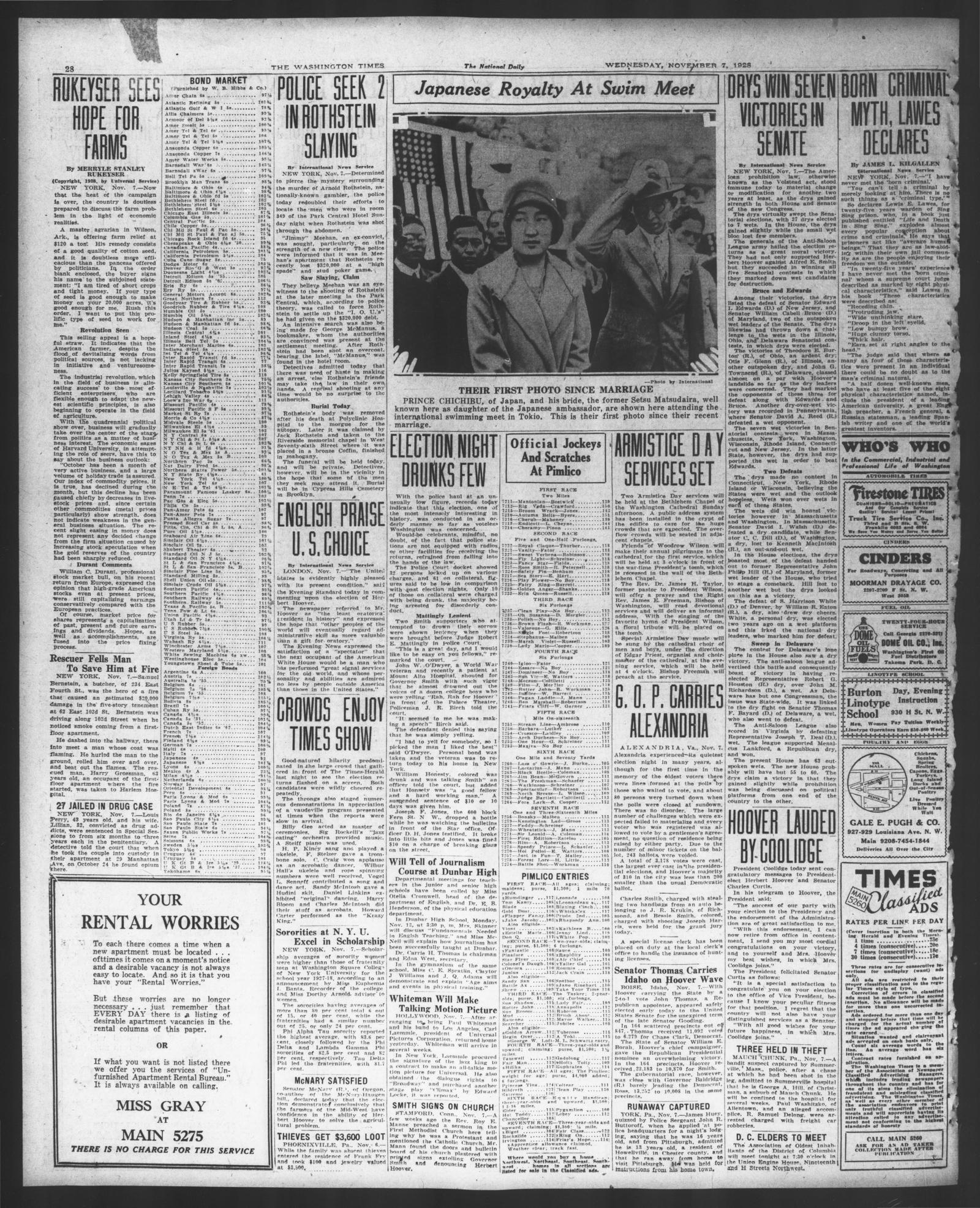
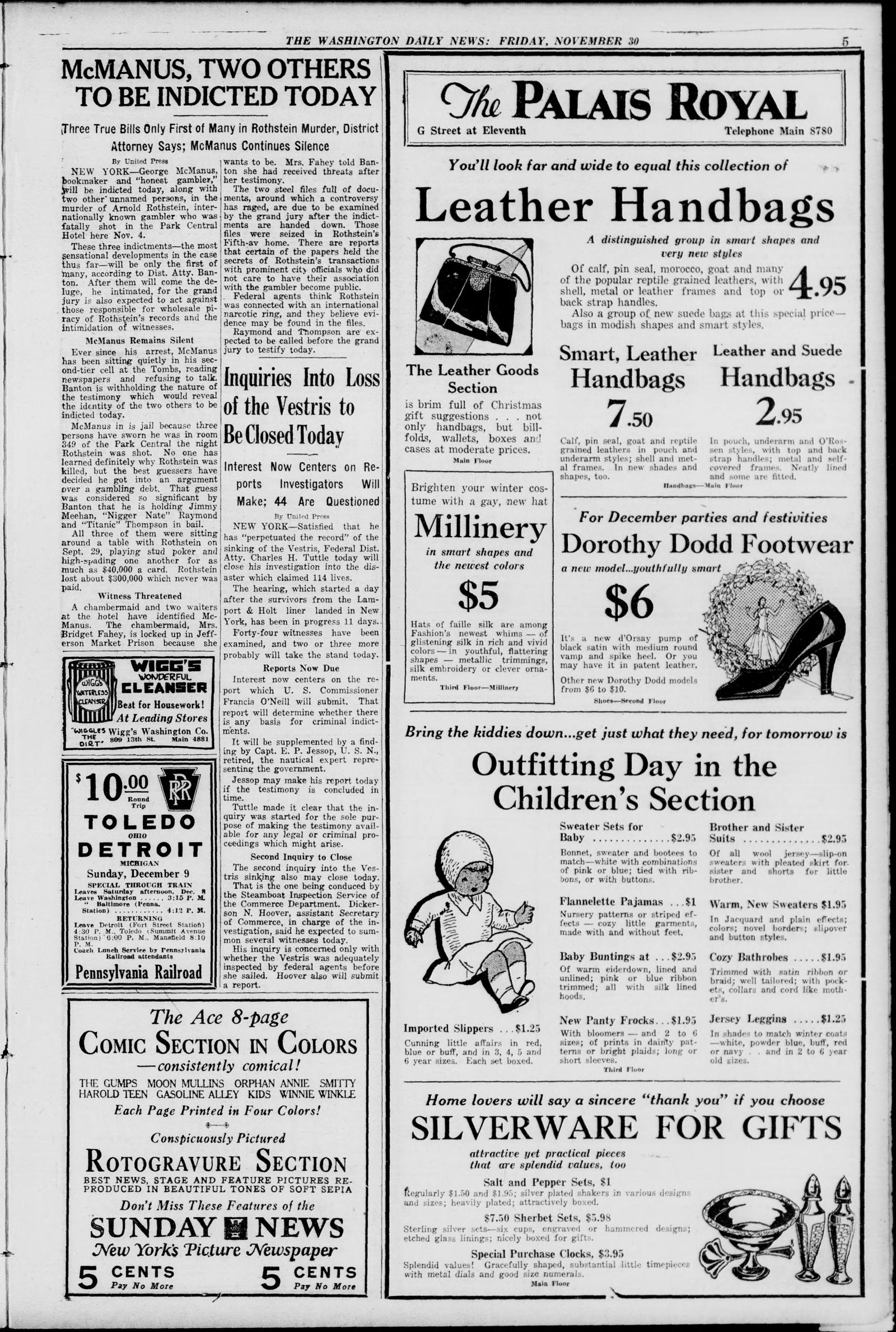
- Arnold Rothstein, November 1928. The day after he was shot, the Associated Press reported that he lay in Polyclinic Hospital and would not help police, and that detectives placed the shooting in a room of the Park Central Hotel (Evening Star, 5 November; Washington Times, 5 November). He died on 6 November without naming anyone (Evening Star, 6 November). Police sought the men who had been in room 349 (Washington Times, 7 November), and a prosecutor said indictments were expected (Washington Daily News, 30 November).
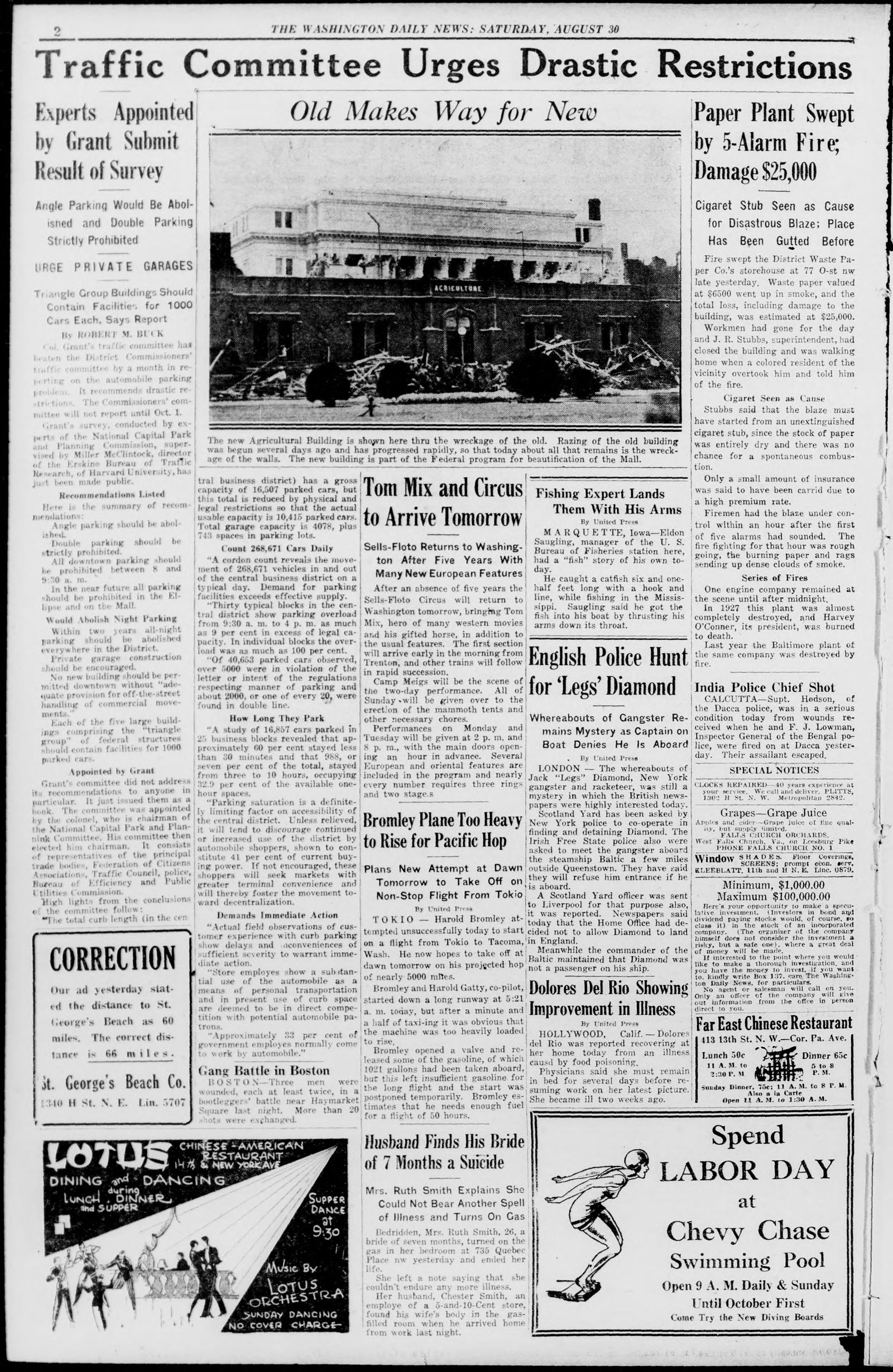
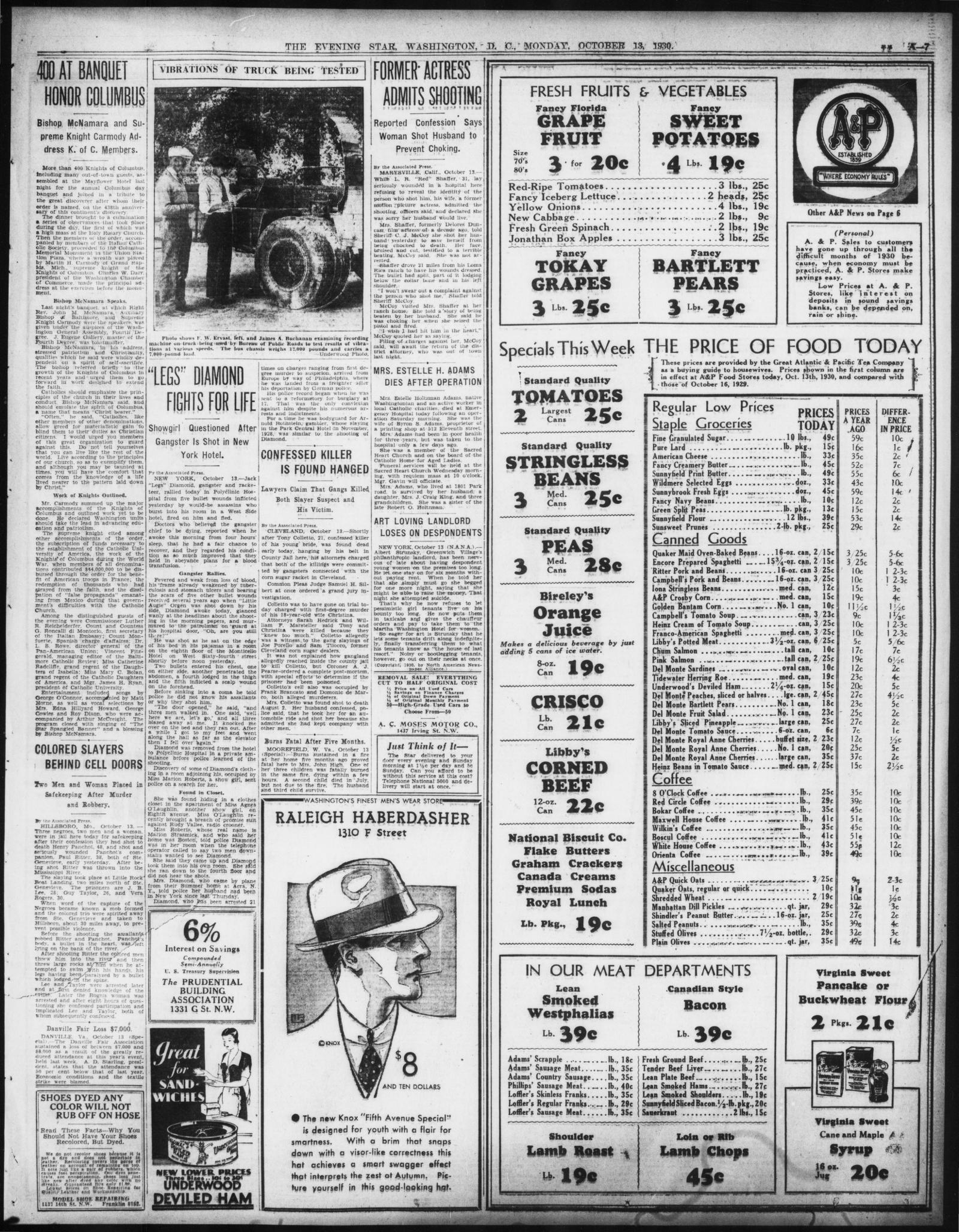
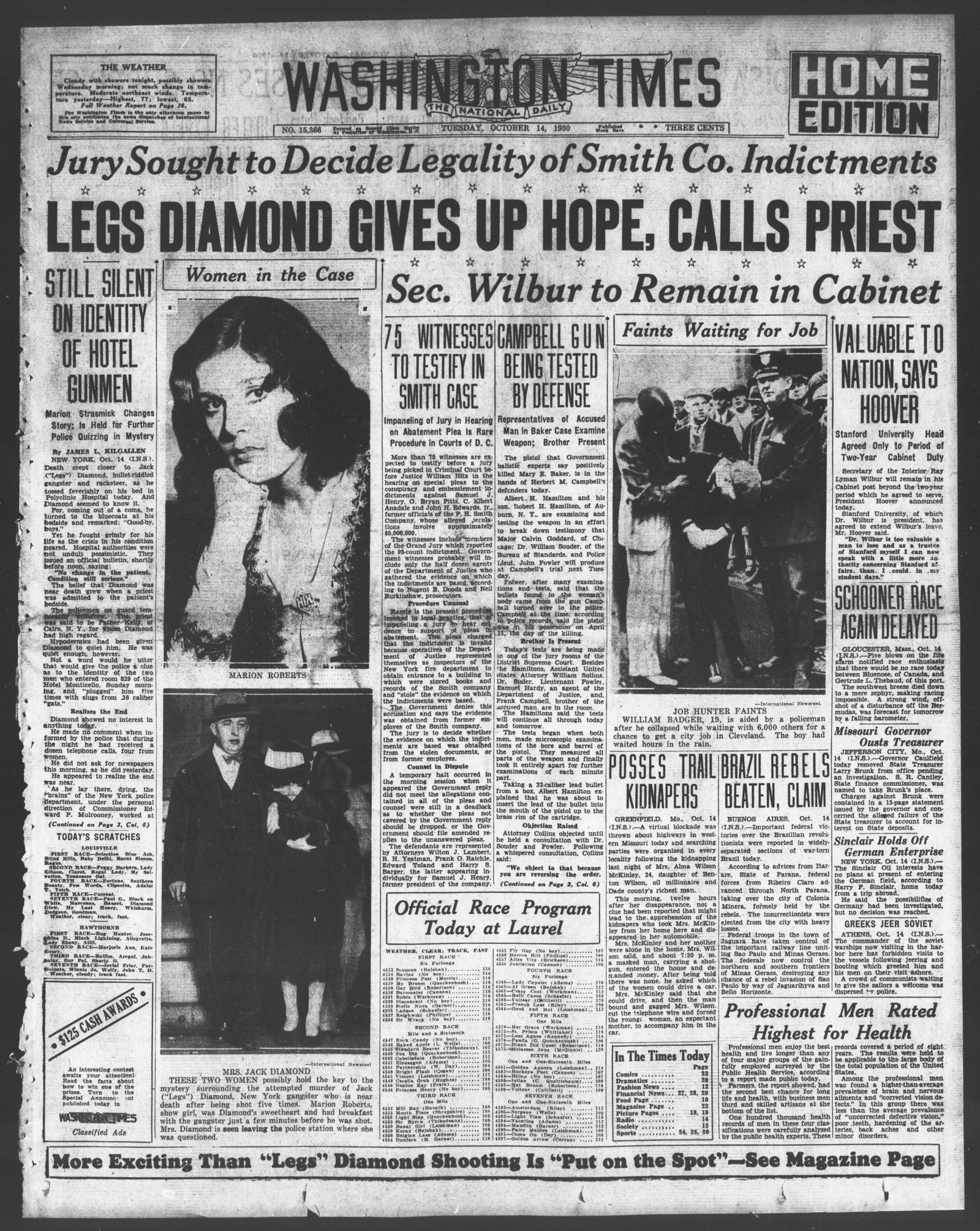
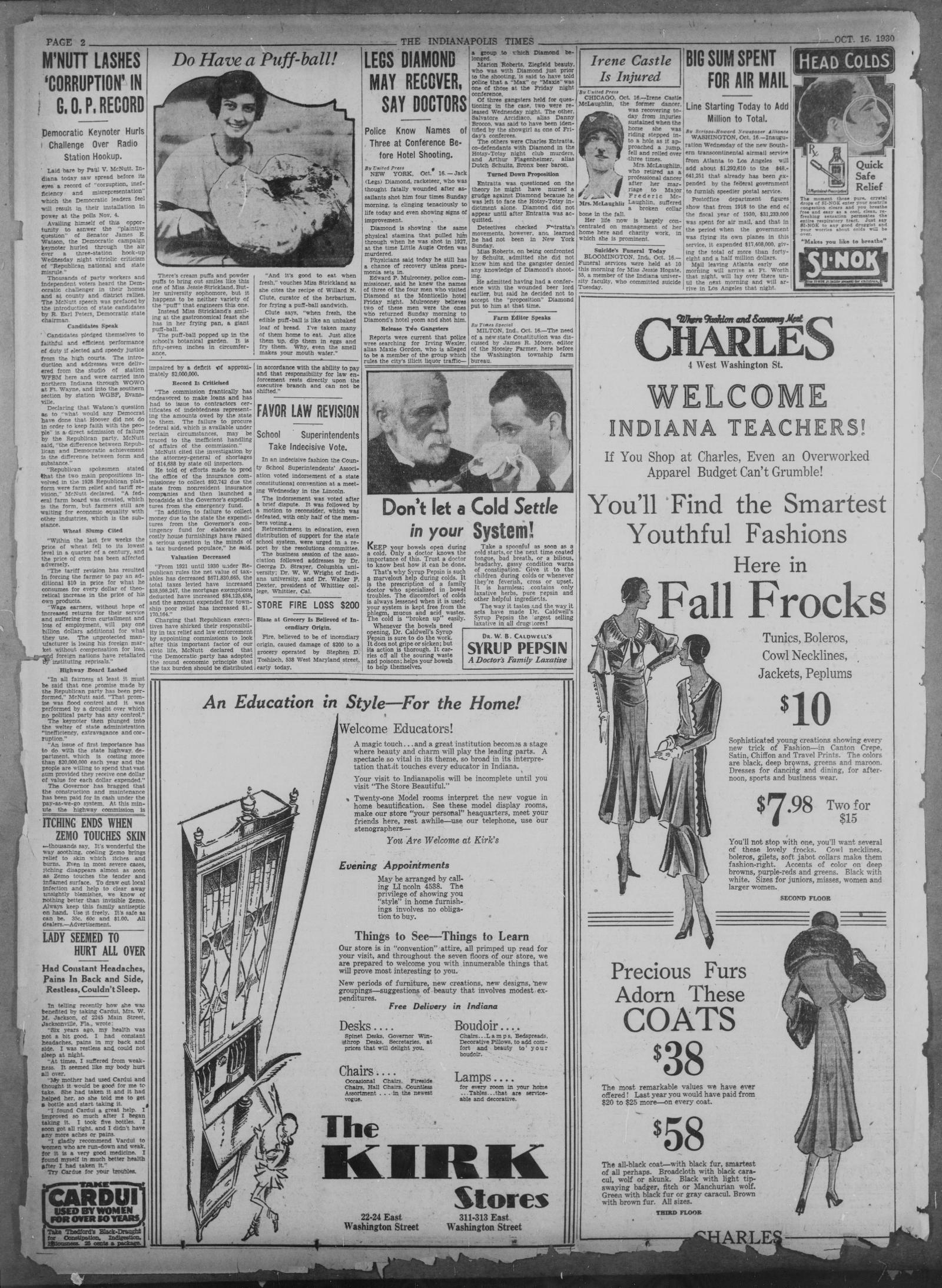
- Jack “Legs” Diamond, 1930. In August the Irish Free State ordered that he not be landed from the liner Baltic (Washington Times, 29 August; Washington Daily News, 30 August). On 12 October he was shot five times in room 829 of the Hotel Monticello on West Sixty-fourth Street and would not tell police who shot him (Evening Star, 13 October; Washington Times, 14 October). A United Press story of 16 October reported police searching for “Irving Wexler, alias Maxie Gordon,” and named “Arthur Flagenheimer, alias Dutch Schultz” among men held for questioning (Indianapolis Times).
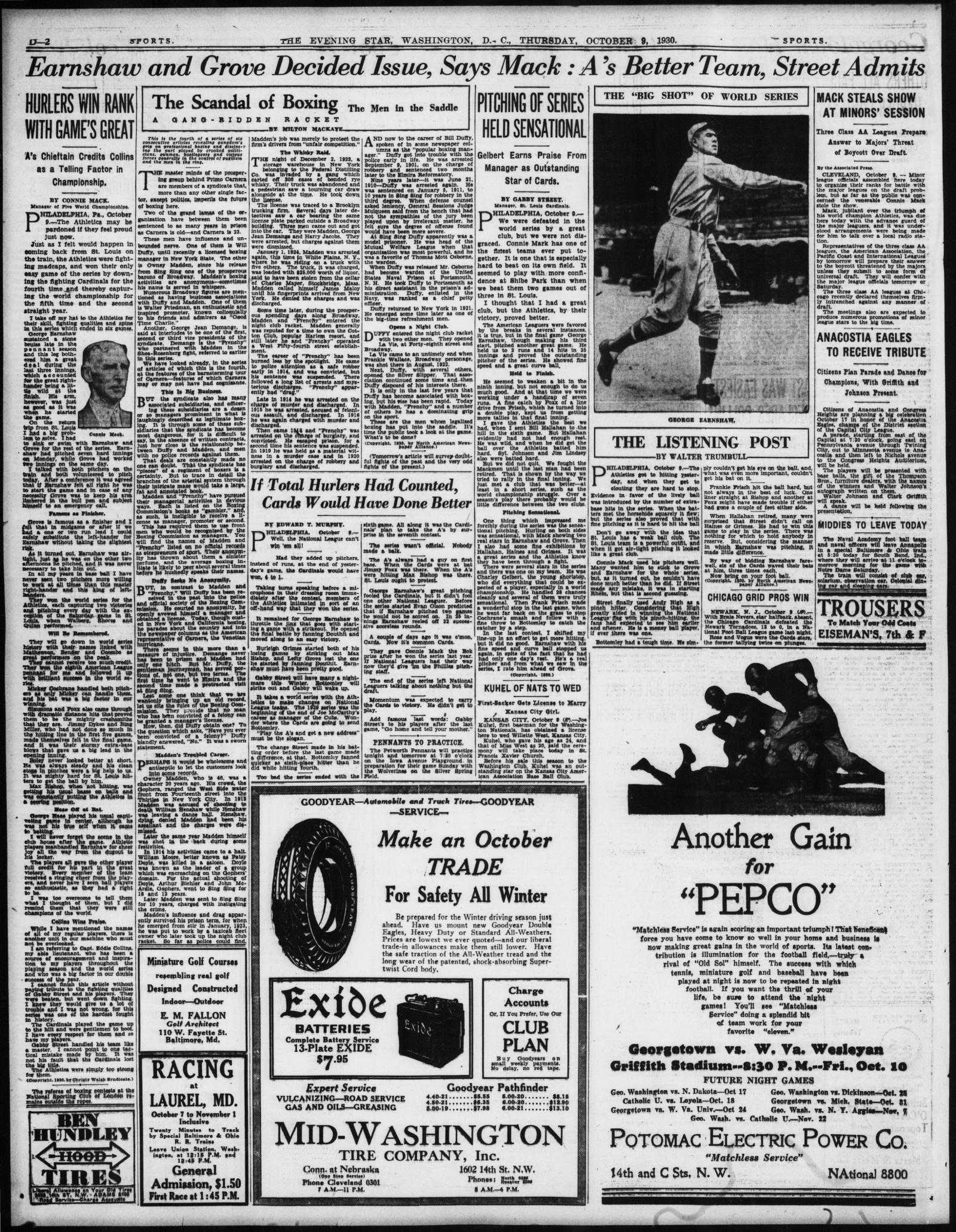
- Owney Madden, 1930. A syndicated series on boxing named him as one of the men behind Primo Carnera’s management (Evening Star, 9 October). These are a journalist’s allegations.
The Seabury and Dewey investigations
No record of the Seabury investigation of the New York City magistrates’ courts and city government (1930 to 1932) is filed. Thomas E. Dewey appears in the filed records first as a federal lawyer: in July 1933 he is listed “of counsel” for United States Attorney George Z. Medalie in the income-tax case against a defendant named Wexler, whose trial was set for 7 August 1933 (6 F. Supp. 258). The Second Circuit affirmed that conviction in November 1935 on four counts for 1930 and 1931, tied to the Eureka Brewery at Paterson, New Jersey, with a ten-year sentence (79 F.2d 526). Neither opinion gives the defendant’s first name or the name Waxey Gordon, and this archive does not make that identification.
Dewey’s later work as special prosecutor and New York County district attorney is a state record that has not been filed, except the Hines case: the Court of Appeals opinion in People v. Hines, 284 N.Y. 93 is filed in the Harlem numbers section.
People v. Luciano
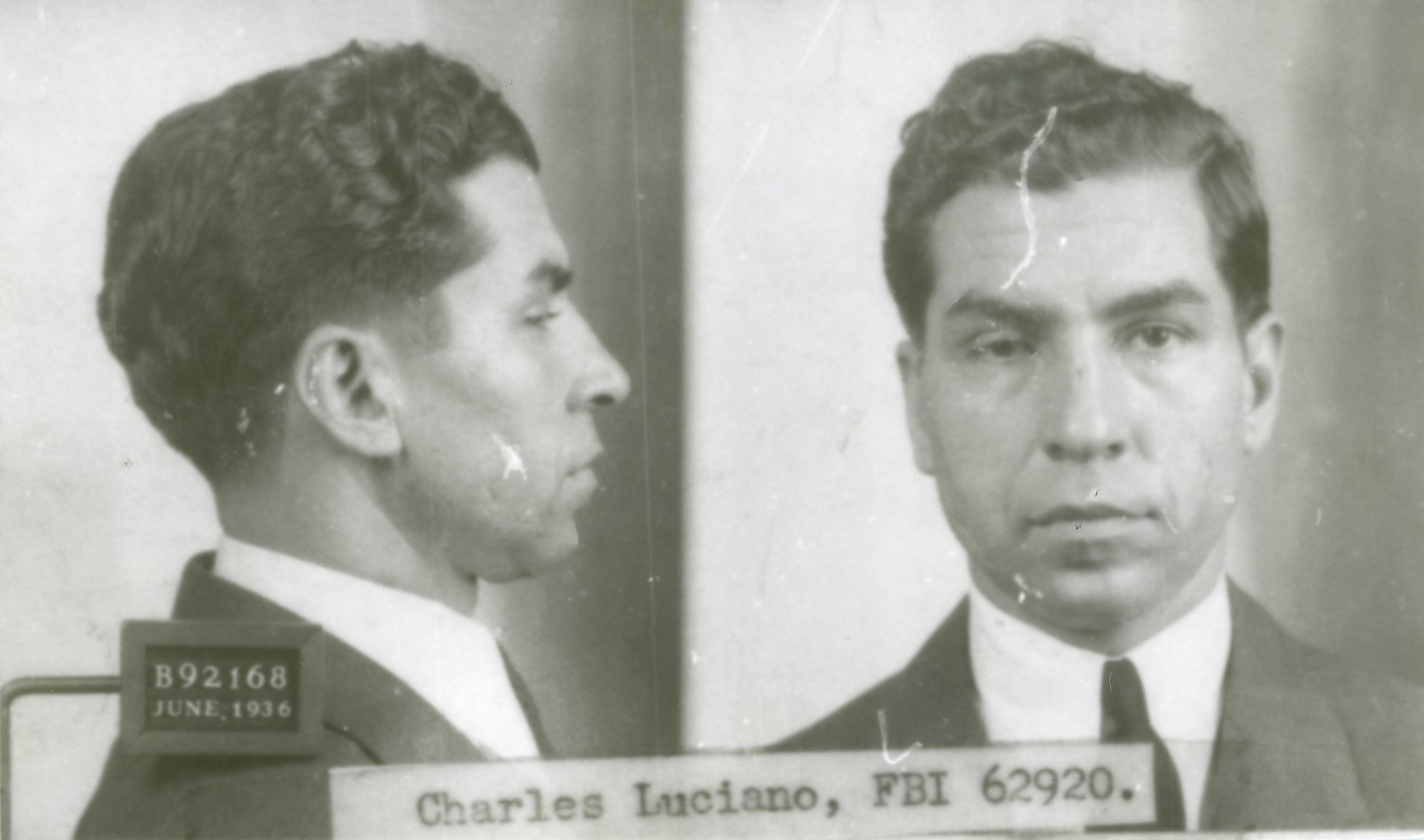
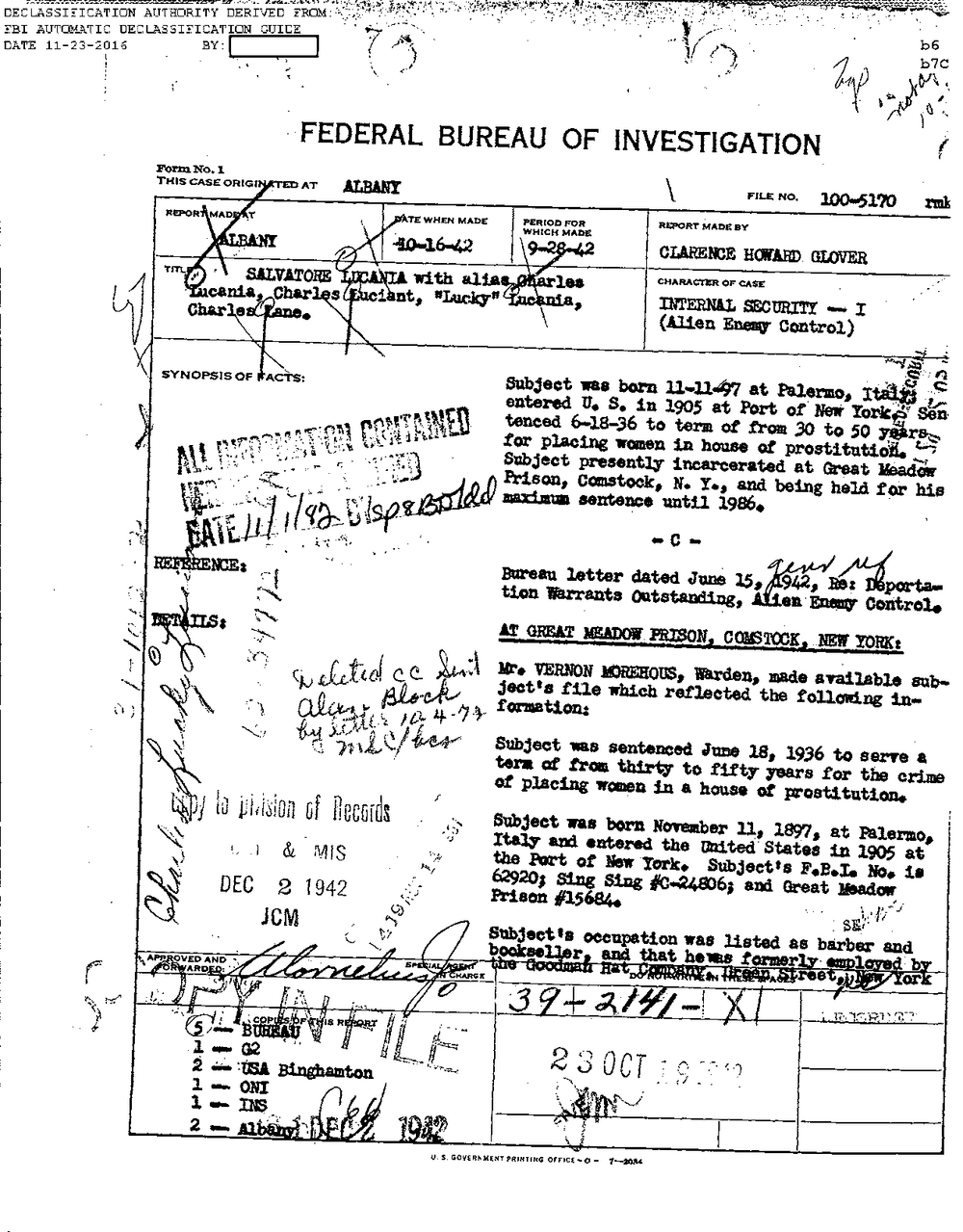
The 1936 conviction of Charles Luciano was a New York State prosecution, not a federal one. His National Archives mug shot carries a placard dated June 1936 (65-CC-37-9). The New York Court of Appeals’ 1938 opinion affirming the conviction, People v. Luciano, 277 N.Y. 348, and a page for Part 01 of his FBI file are being filed with the Five Families section and will appear among the records above once that section is merged.
The federal record of Luciano in the 1930s begins with a Bureau memorandum of 28 August 1935, which records a reporter’s account of contacts in July 1935 in which Luciano was said to offer help finding the fugitive Karpis (memorandum). The record of his release and deportation is a set of FBI New York teletypes of 25 to 27 February 1946. They say that Governor Dewey “GRANTED PAROLE JAN THREE, FORTYSIX” on condition of release to immigration custody, that Luciano was held on Ellis Island, where his attorney and Frank Costello visited him, and that he was put aboard the freighter SS Laura Keene at a Brooklyn pier on 8 February 1946 (teletypes). The final part of the FBI file holds Fiorello La Guardia’s letter of February 1946 that prompted the Bureau’s inquiry (Part 03).
Dutch Schultz
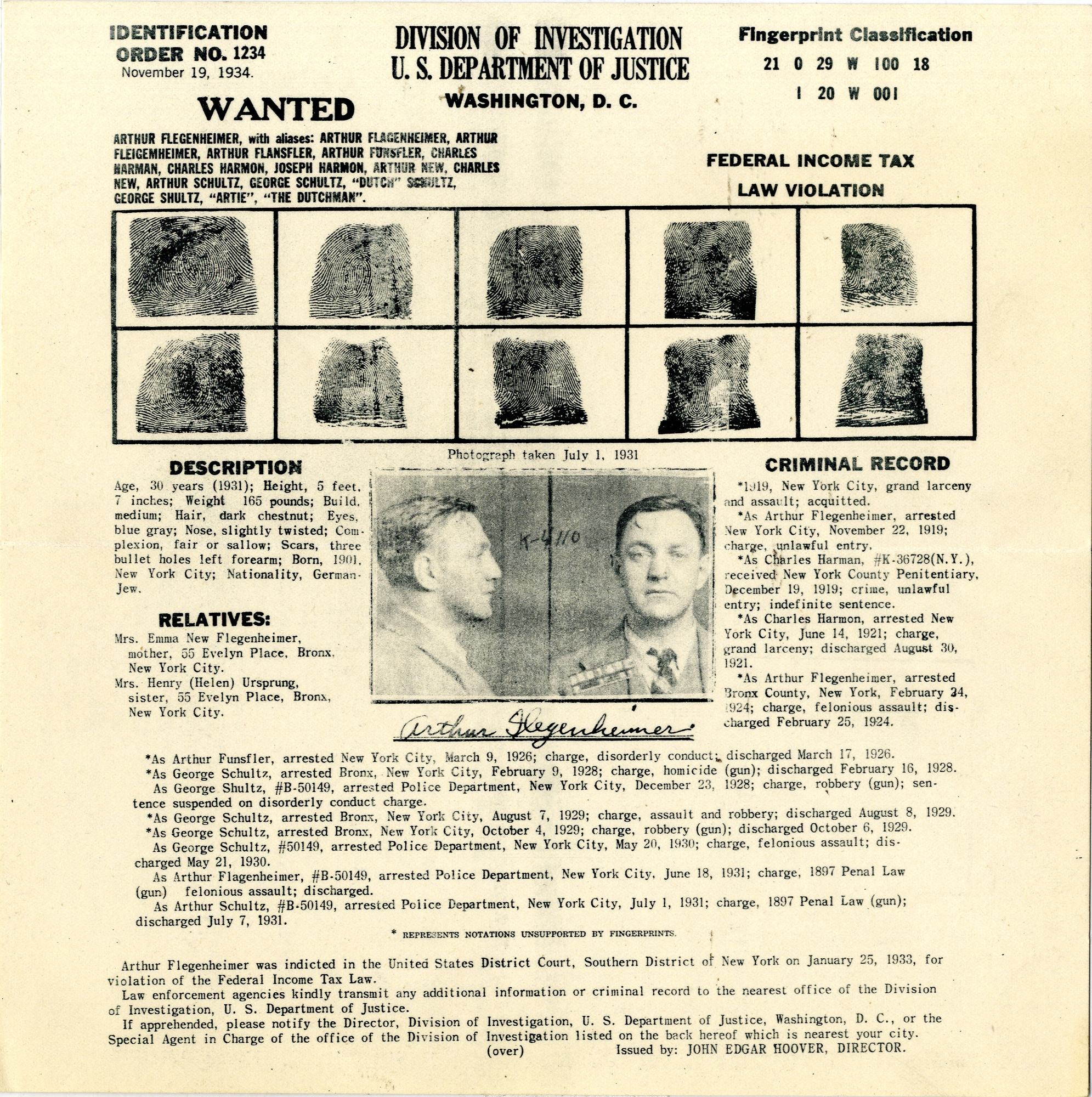
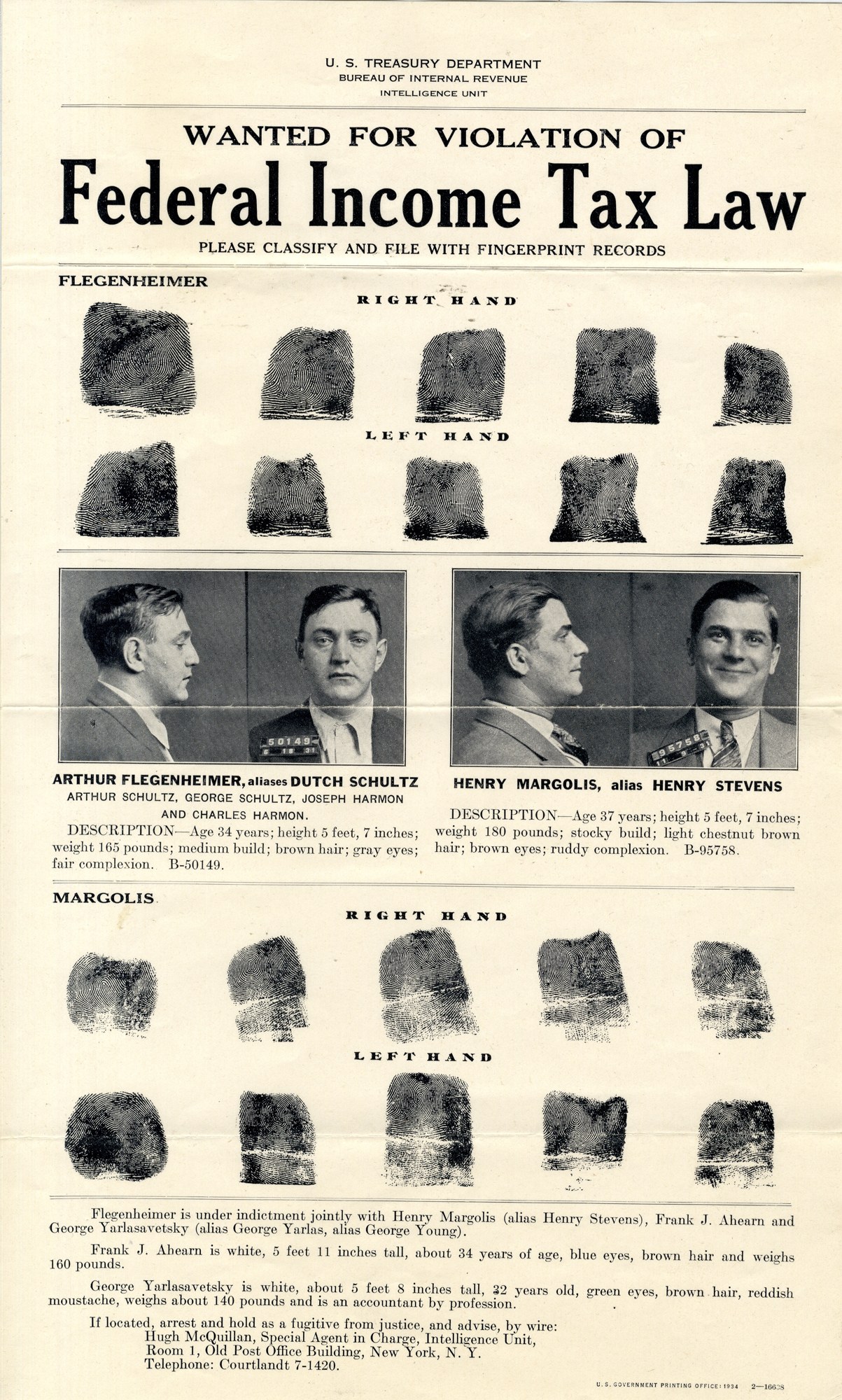
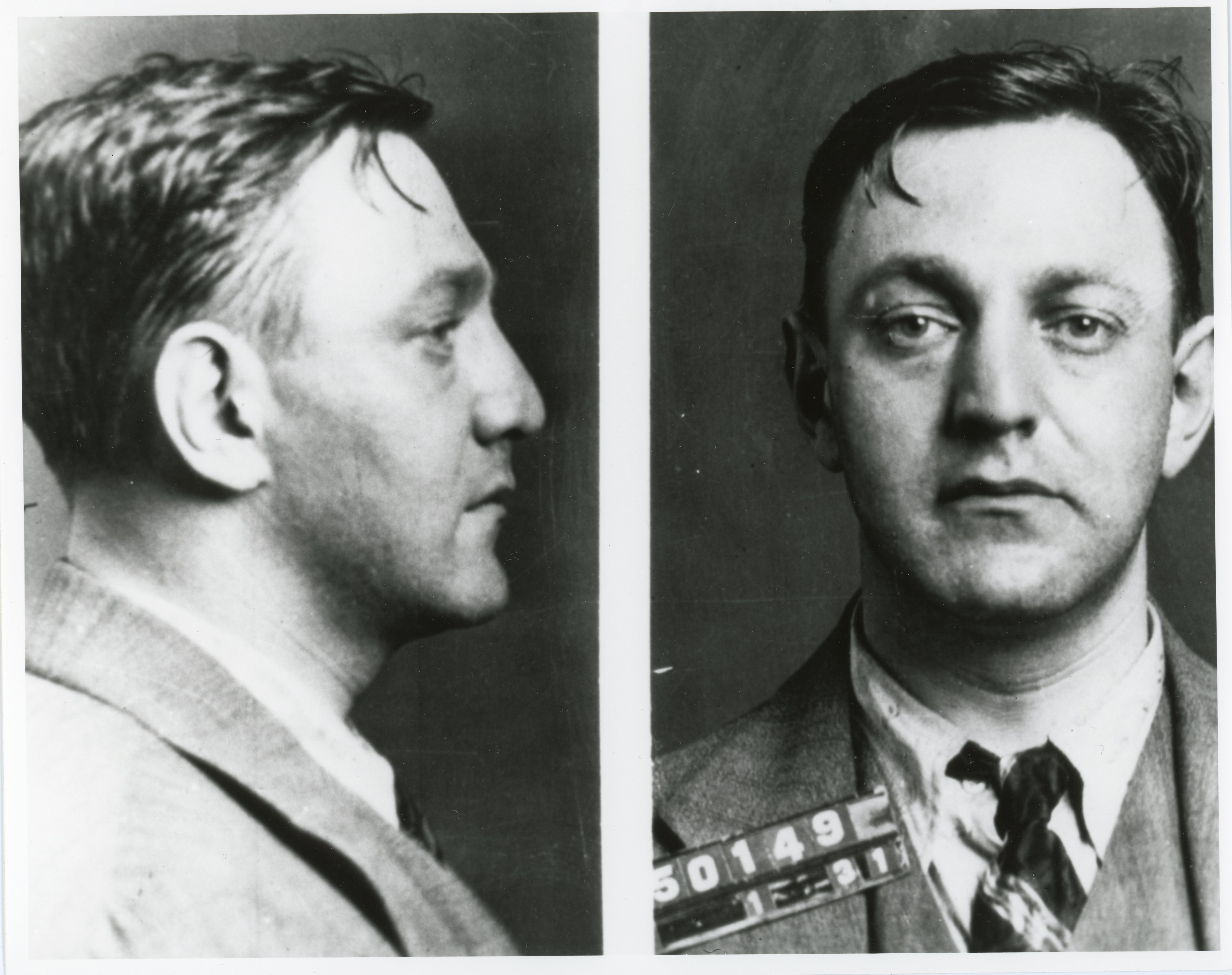
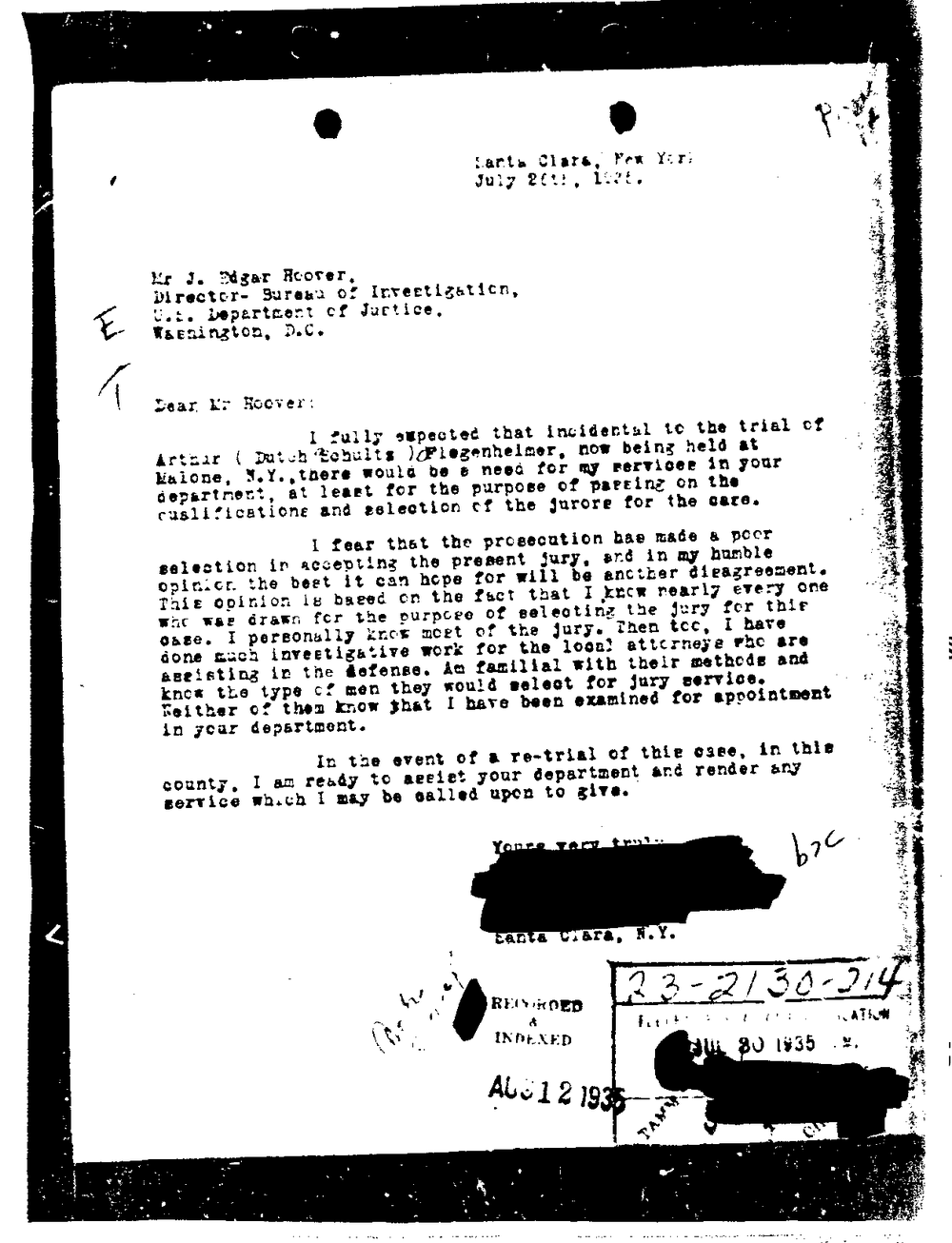
The federal case against Arthur Flegenheimer was an income-tax case. The Division of Investigation’s identification order of 19 November 1934 states that he was indicted in the Southern District of New York on 25 January 1933 for violation of the federal income tax law. A Treasury Intelligence Unit broadside of 1934 says he was under a joint indictment with three others. The United States Attorney’s case file is at the National Archives at Kansas City, with only those two items digitized. A district court opinion records a $79,000 income-tax assessment and a levy of December 1934 (Westheimer v. Collector). A July 1935 letter in the FBI’s file refers to his trial “now being held at Malone, N.Y.” (Vault Part 01). No reported opinion from the criminal tax trials has been found.
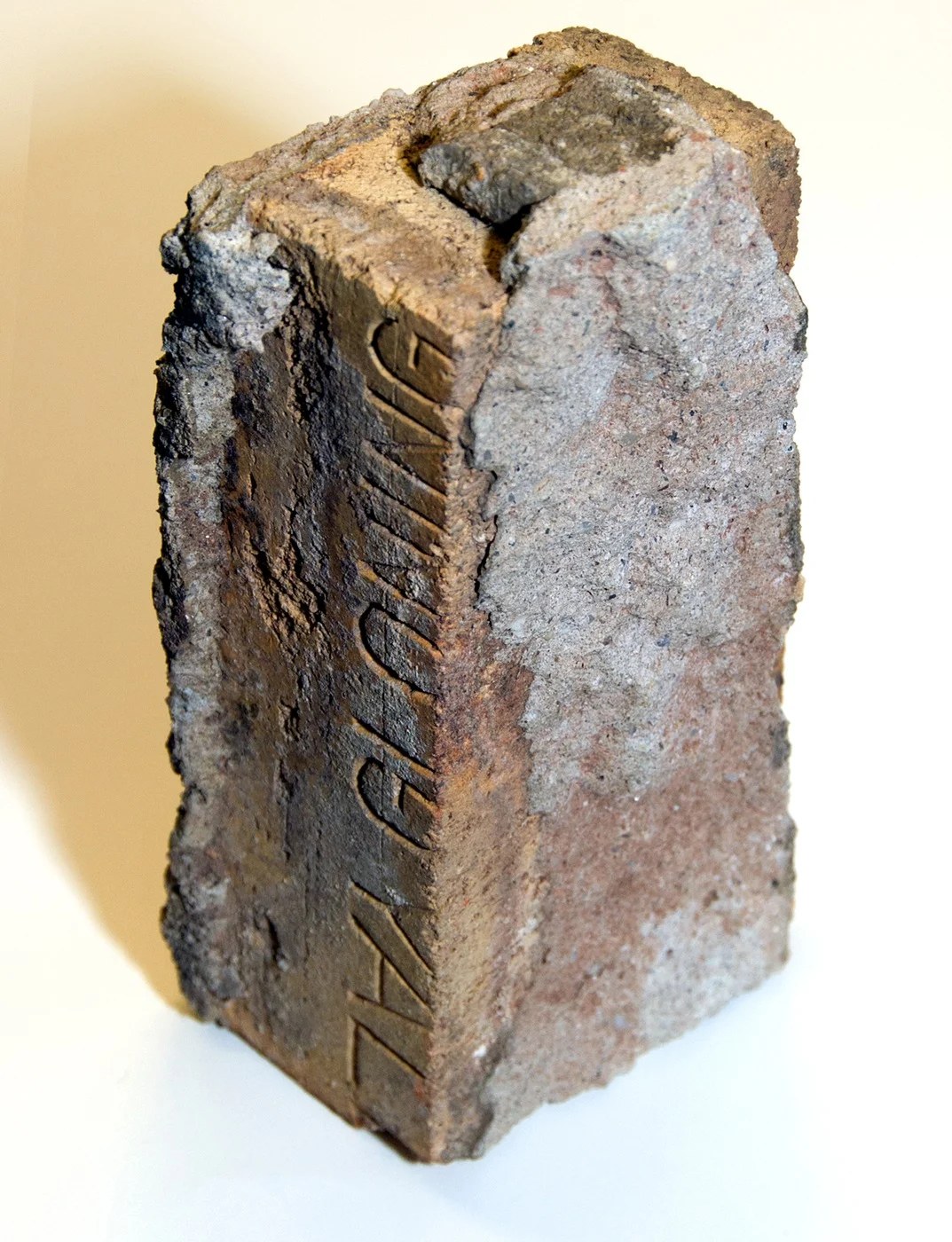
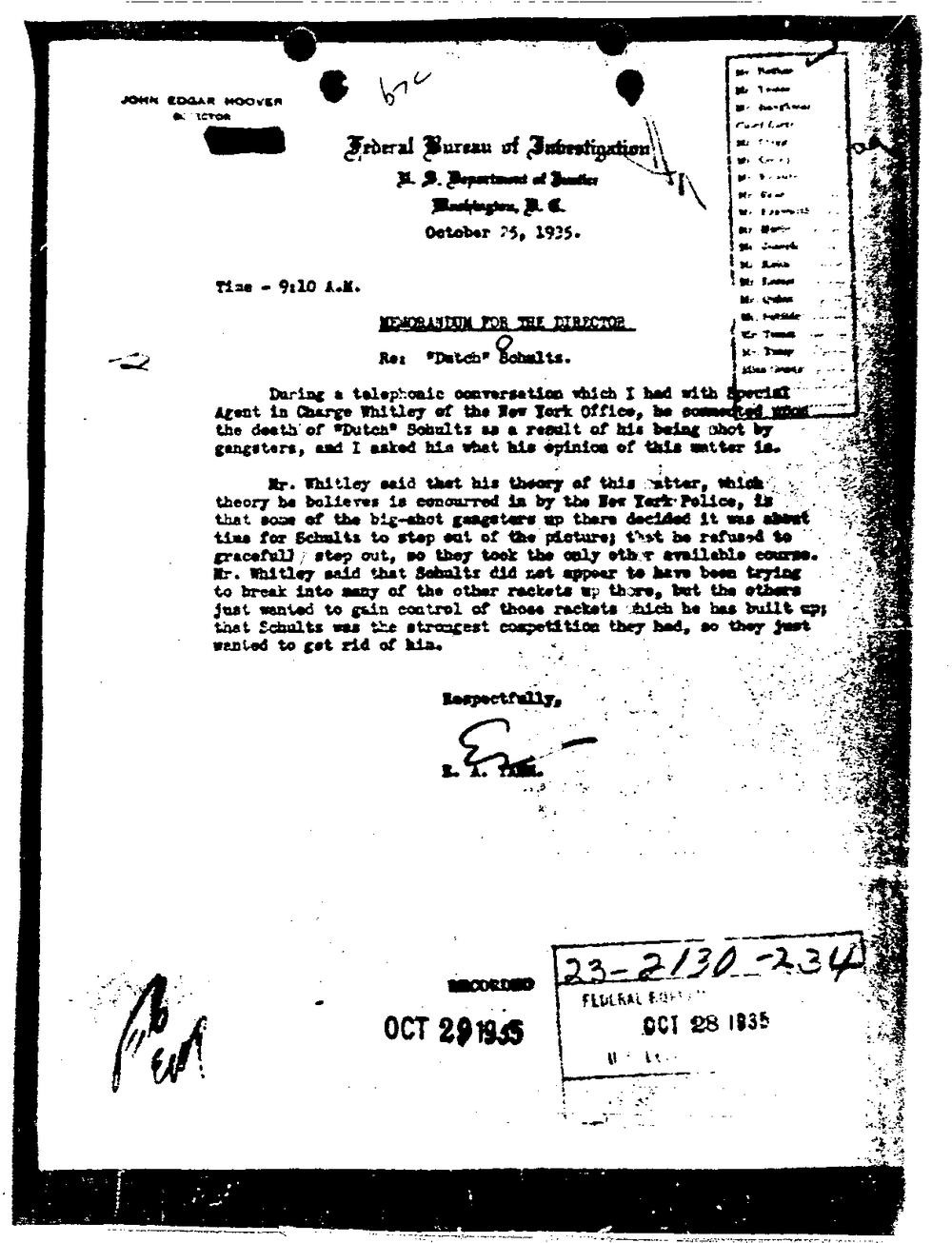
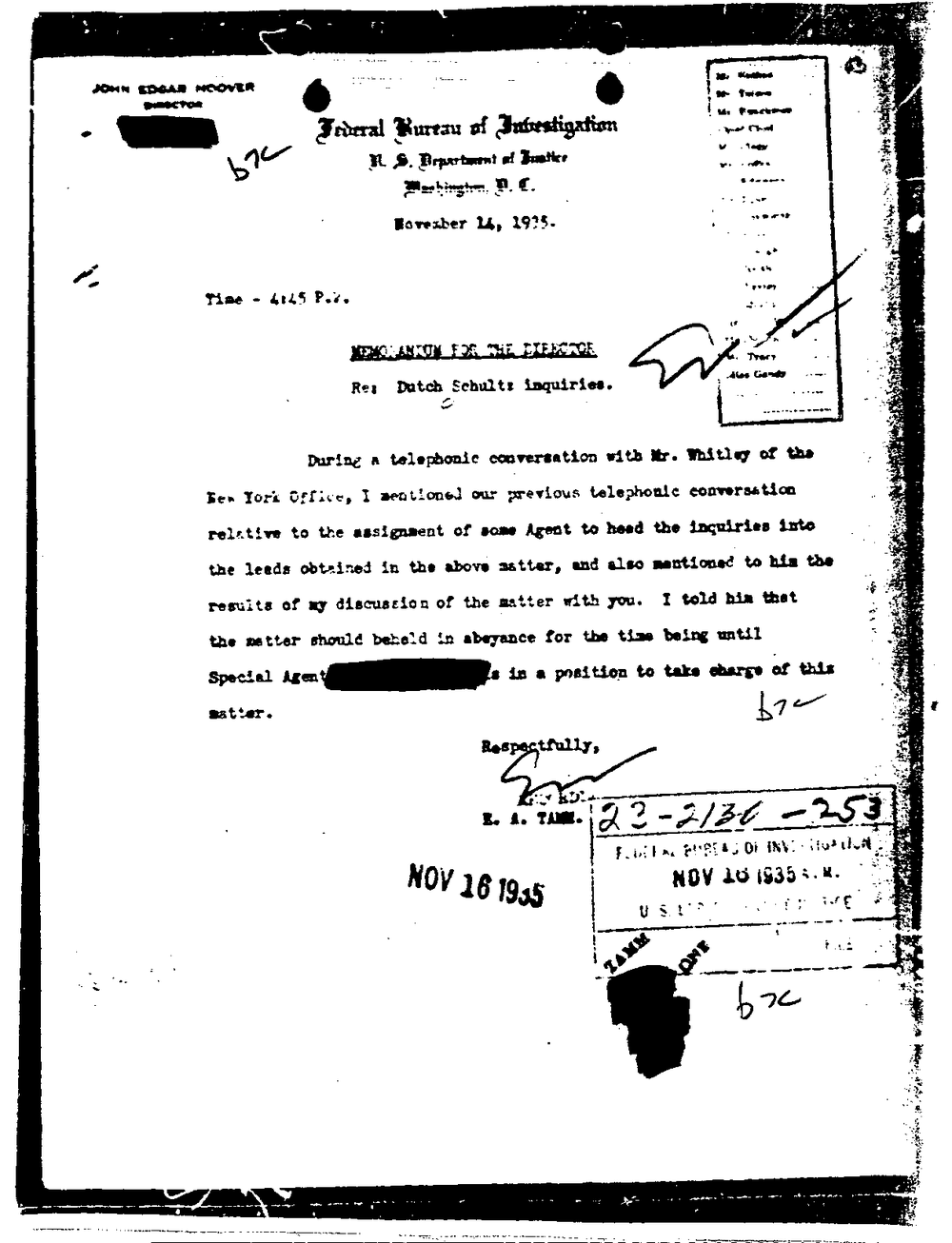
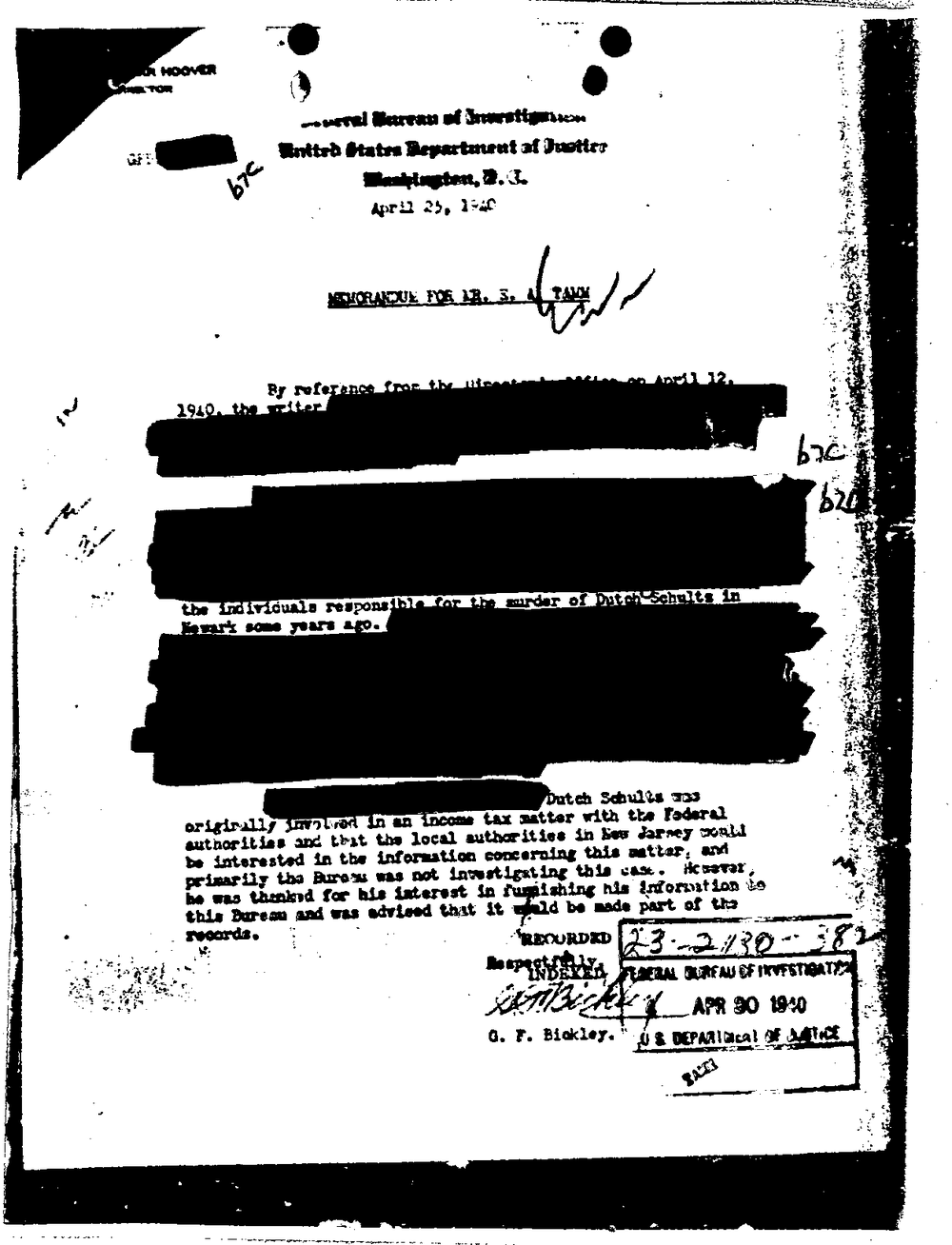
The FBI states that Schultz and four associates were shot at the Palace Chop House in Newark on the night of 23 October 1935 and that he died the next day (FBI artifact). Two days after the shooting, a Bureau memorandum recorded the New York office’s theory of why he was killed, without naming anyone (25 October 1935). In November inquiries into leads were put “in abeyance” (14 November 1935). In April 1940 the Bureau wrote that “primarily the Bureau was not investigating this case” (25 April 1940). The killing was a New Jersey case, and no state record of it is filed.
Lepke and the rackets
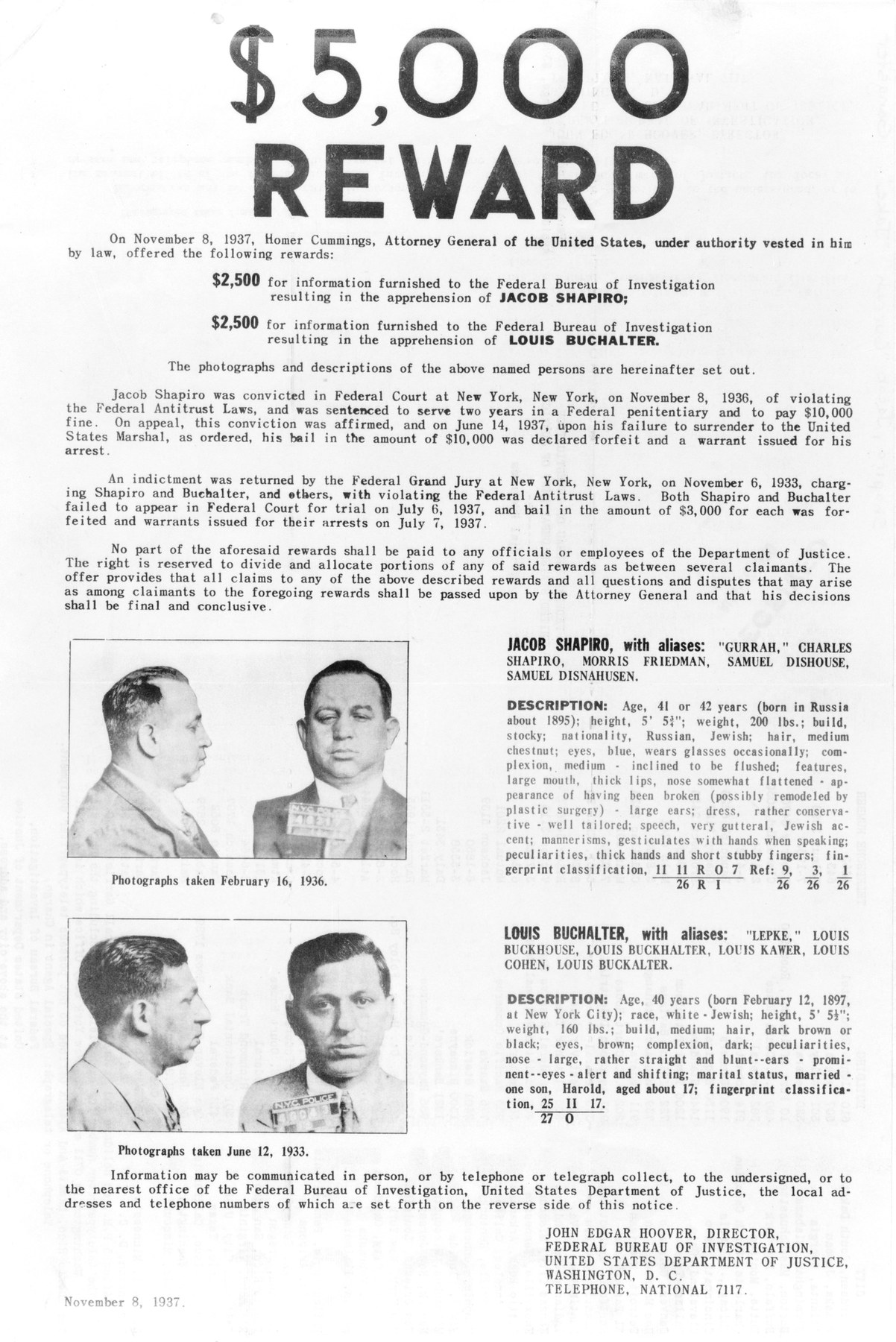
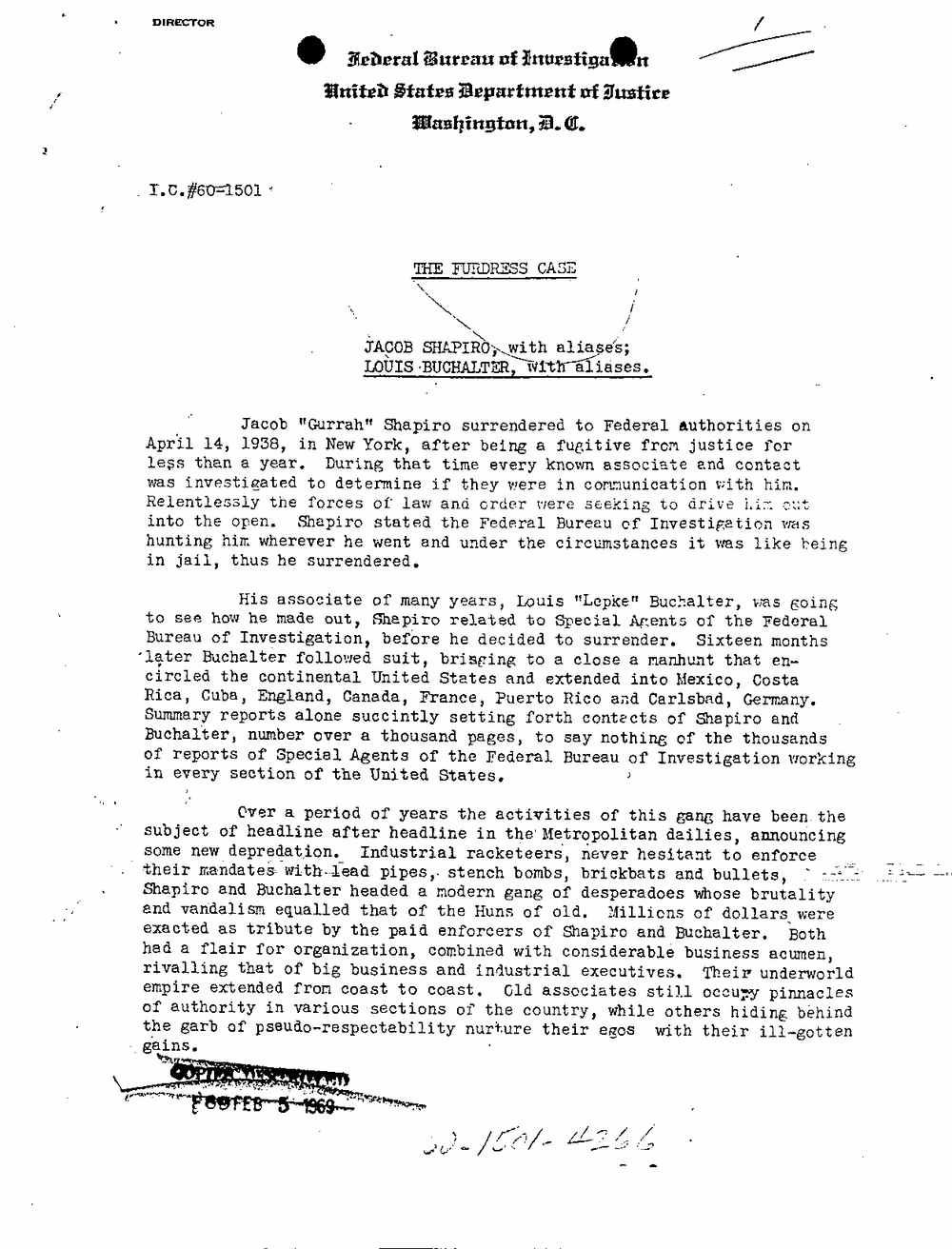
The FBI’s Fur Dressers Case page is the Bureau’s account of its antitrust investigation of two fur-dressing combinations formed in 1932, in which Louis “Lepke” Buchalter and Jacob “Gurrah” Shapiro were indicted on 6 November 1933. Both were convicted in November 1936. On appeal the Second Circuit reversed Buchalter’s conviction for want of substantial evidence and affirmed Shapiro’s (88 F.2d 625). Both failed to appear in July 1937. The Bureau’s memorandum of 5 July 1939 lists the rewards offered, and the FBI’s wanted poster of 8 November 1937 carries both men’s photographs.
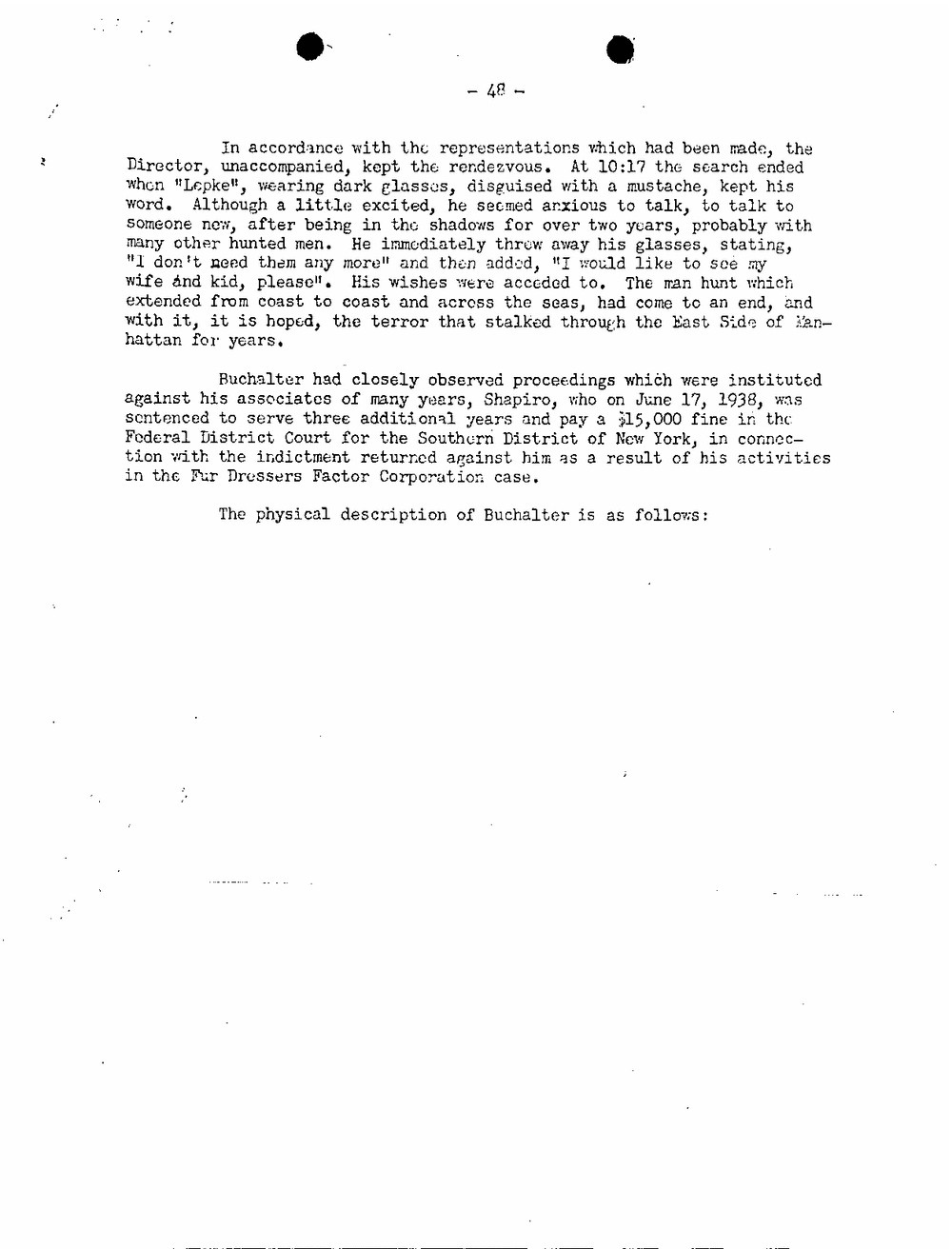
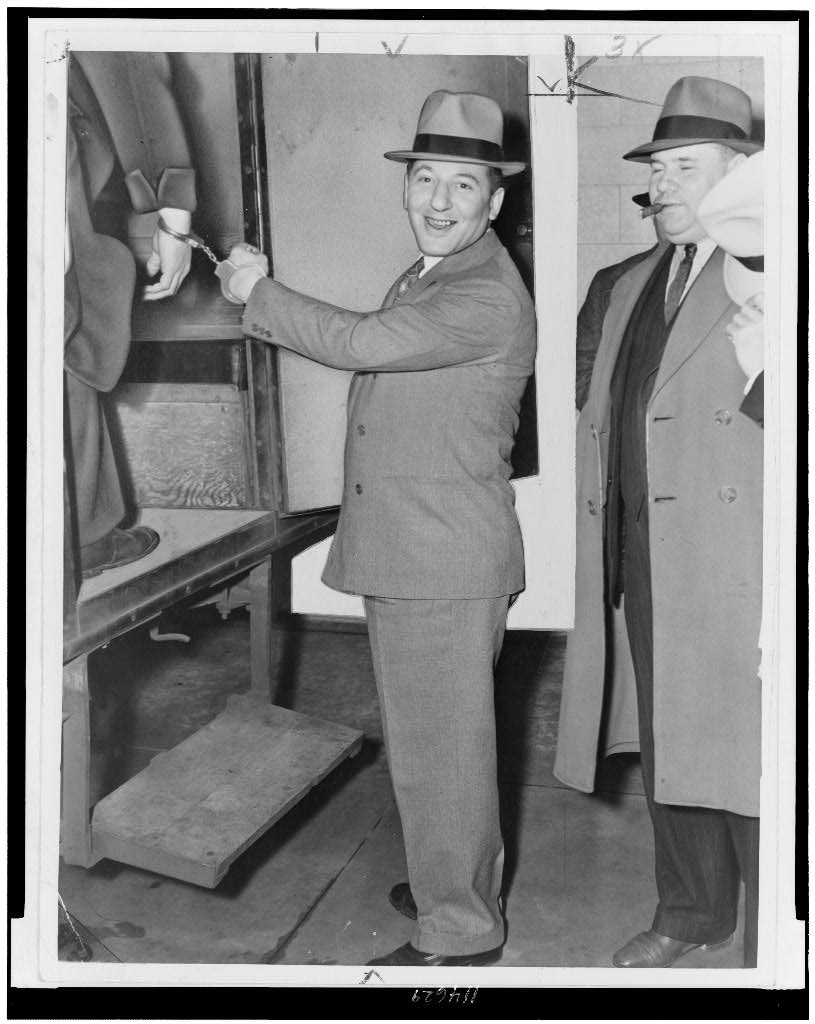
Shapiro surrendered on 14 April 1938. The Bureau’s narrative “The Furdress Case” describes Buchalter’s surrender to J. Edgar Hoover at 10:17 on 24 August 1939, arranged through Walter Winchell. Buchalter then pleaded guilty to a federal indictment and was sentenced to fourteen years, and with the Attorney General’s consent he was produced for trial in the New York Court of General Sessions (108 F.2d 863). The FBI says he was convicted of murder by the state and executed at Sing Sing on 4 March 1944. The state record is not filed. The Bureau’s file is in four parts (Part 01, Part 02, Part 03, Part 04). The photographs are the FBI’s mug shots of Buchalter and of Shapiro, and a 1939 World-Telegram photograph of Buchalter handcuffed to a guard.
The FBI’s Joseph Adonis file opens with a 1943 and 1944 inquiry into an alleged kickback racket at the U.S. Army Base in Brooklyn, in which he is named among the subjects; nothing read states a charge against him (Part 01, Part 02). His sworn testimony of 1950, in which he gave his name as Joseph Doto, is in the Kefauver contempt reports (S. Rept. 25, S. Rept. 201).
People
Person pages filed with this section: Arthur Flegenheimer (Dutch Schultz), Louis “Lepke” Buchalter, Jacob “Gurrah” Shapiro, Joseph Doto (Joe Adonis), Arnold Rothstein, Jack “Legs” Diamond, Owney Madden and Thomas E. Dewey, the last as a lawyer in the records. Each page is limited to its cited records, and none states a family or a rank. Charles Luciano and Frank Costello have pages in the Five Families section.
Not filed yet
- The Seabury investigation and Dewey’s state prosecutions as special prosecutor and district attorney: no record has been opened, except the Hines case, where People v. Hines, 284 N.Y. 93 is filed.
- Buchalter’s federal narcotics case and the state murder trials of Buchalter and Shapiro: no court record has been found.
- The Schultz criminal tax trials of 1934 and 1935: no reported opinion has been found, and most of the National Archives case file is not digitized. FBI Vault Parts 02 and 04 of the Schultz file are mostly illegible and are not filed.
- A federal record tying the defendant Wexler to the name Waxey Gordon, and any Gordon file: none found.
- Murder, Inc. and Abe Reles: the FBI files mention them only in second-hand summaries, and no federal record of them has been opened.
- Newspaper pages from 1931 onward on Masseria, Maranzano, Schultz, Buchalter and Diamond: held back until their rights are checked. The Castellammarese War of 1930 and 1931 is being researched separately.
- Luciano’s deportation order and the state papers on his parole: not found.