Record
Court opinion
1940-01-09
CourtListener (Free Law Project), text of the opinion
United States ex rel. Buchalter v. Lowenthal, 108 F.2d 863 (2d Cir. 1940)
Per curiam Second Circuit opinion of January 1940 denying Louis Buchalter a stay: after his federal guilty plea and fourteen-year sentence, the Attorney General consented to his trial in the New York Court of General Sessions, and the court called his appeal "wholly without merit."
- Date
- 1940-01-09
- Kind
- court-opinion
- Retrieved
- 2026-10-12
- Rights
- Opinion of a United States court. Works of the federal judiciary are in the public domain in the United States (17 U.S.C. § 105; judicial opinions are not subject to copyright). The text was read on CourtListener.
Circuit Court of Appeals, Second Circuit, per curiam. CourtListener dates the opinion January 9, 1940; the text as read prints no docket number. Fred D. Kaplan appeared for the motion; John T. Cahill and Stanley H. Fuld opposed it.
The court states: “The relator pleaded guilty to an indictment in the District Court for the Southern District of New York and was sentenced to fourteen years imprisonment, with a cumulative suspended sentence of ten years.” He was remitted to the marshal, and “the District Attorney of New York County procured consent from the Attorney General of the United States that he might be brought to trial before the Court of General Sessions of New York County upon an indictment already pending in that court.” Produced before that court, he “stood mute.” He then sought a writ of habeas corpus, offering to prove that he could not have a fair trial in the state court “owing to the hostility of the local press and of public opinion.” The district judge dismissed the writ.
The Second Circuit held: “The appeal is wholly without merit.” The Attorney General’s consent protected federal custody, not the prisoner, and “The state court is as much charged with obedience to the Constitution as any other.” The order reads: “Stay denied.”
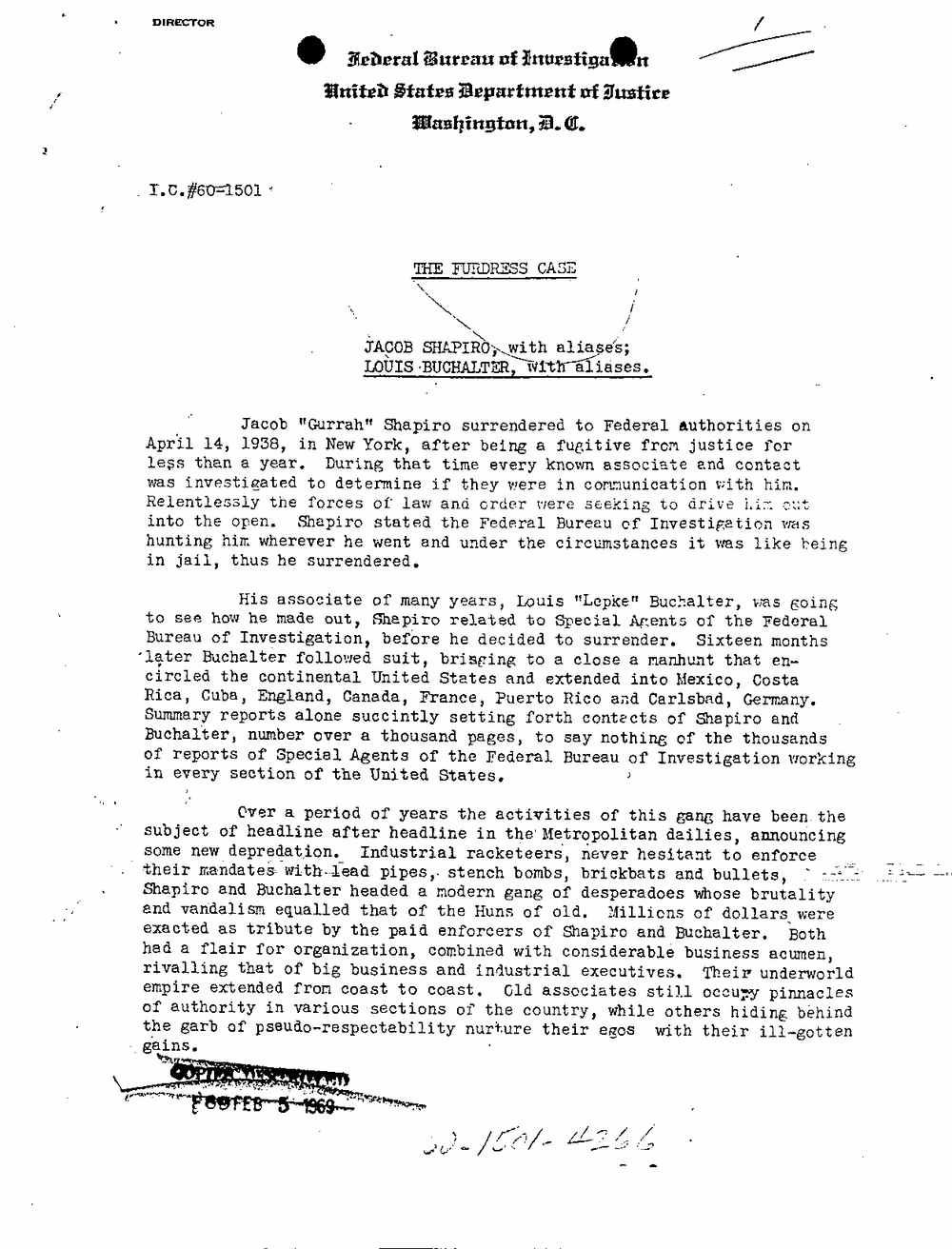
The opinion does not name the federal offense to which he pleaded guilty or the state charge. The FBI’s history page says that after his surrender he was sentenced “on antitrust and narcotics charges” and was later convicted of murder by the state (Fur Dressers Case). No reported opinion in the federal narcotics case has been found.