"The Furdress Case": the FBI's narrative of the Shapiro and Buchalter surrenders (1939)
An undated Bureau narrative, file 60-1501-4266, in Part 03 of the Buchalter file: Shapiro's surrender on April 14, 1938, the 1939 negotiations through Walter Winchell, and Buchalter's surrender to the Director at 10:17 on August 24, 1939. The first page is stored here.
- Date
- undated
- Kind
- case-file
- Source
- FBI Records: The Vault
- Retrieved
- 2026-10-12
- Rights
- A record of the Federal Bureau of Investigation released under FOIA. A work of the United States government, public domain under 17 U.S.C. § 105. The stored page is the Vault's scan of page 6 of Part 03.
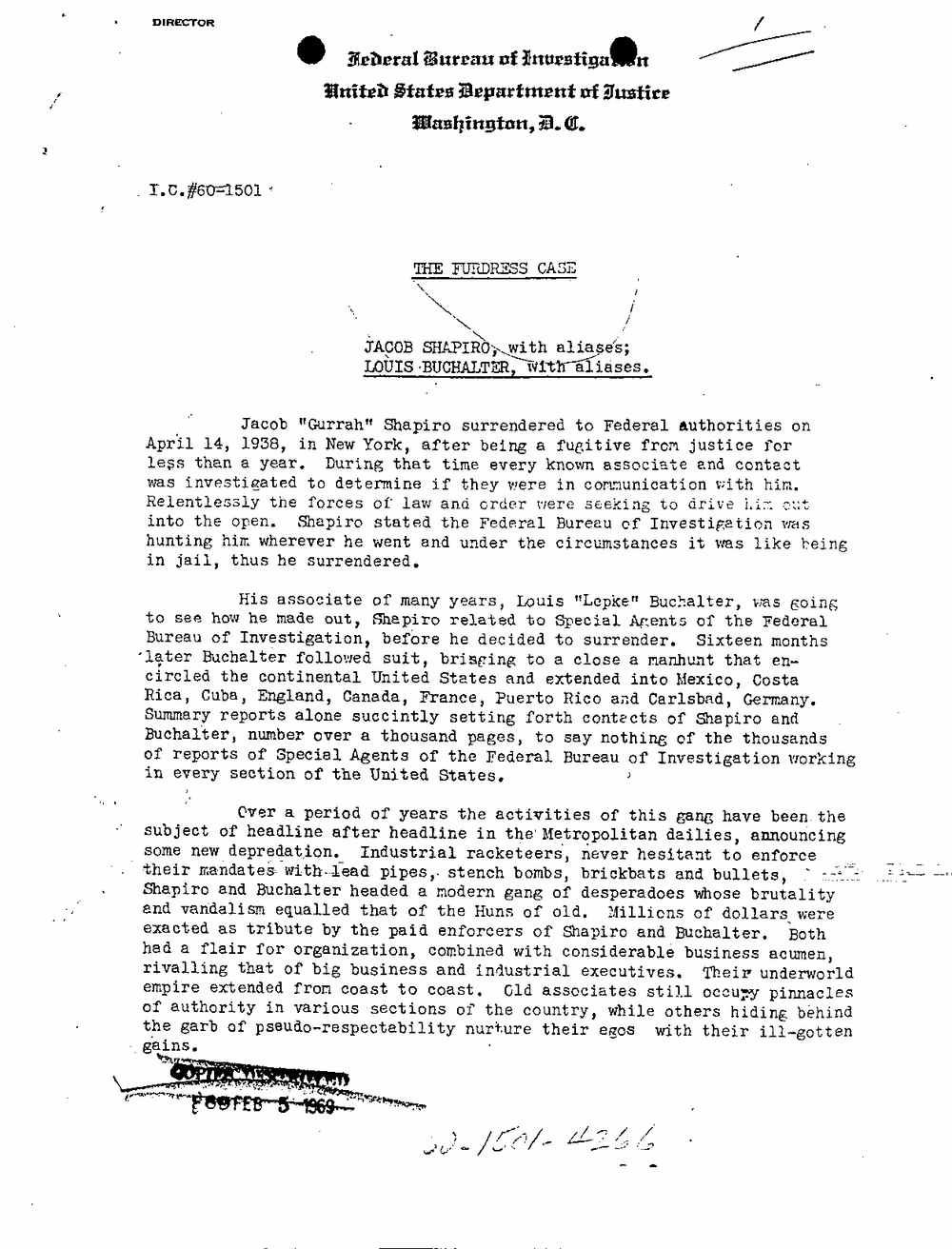
Pages 6 to 17 of Part 03 of the Vault’s Buchalter file are a typed narrative on Federal Bureau of Investigation letterhead headed “I.C. #60-1501,” “THE FURDRESS CASE,” “JACOB SHAPIRO, with aliases; LOUIS BUCHALTER, with aliases.” The serial 60-1501-4266 is written at the foot of the first page, and a stamp there reads, as far as it can be made out, “COPIES DESTROYED FEB 5 1969.” The narrative is undated. It describes events through August 24, 1939, so it was written after that day. The pages from page 11 on carry report page numbers (-43-, -45-, -48-), so it was taken from a longer report. Pages 6, 11, 13 and 16 were read from the page images; the rest from the OCR.
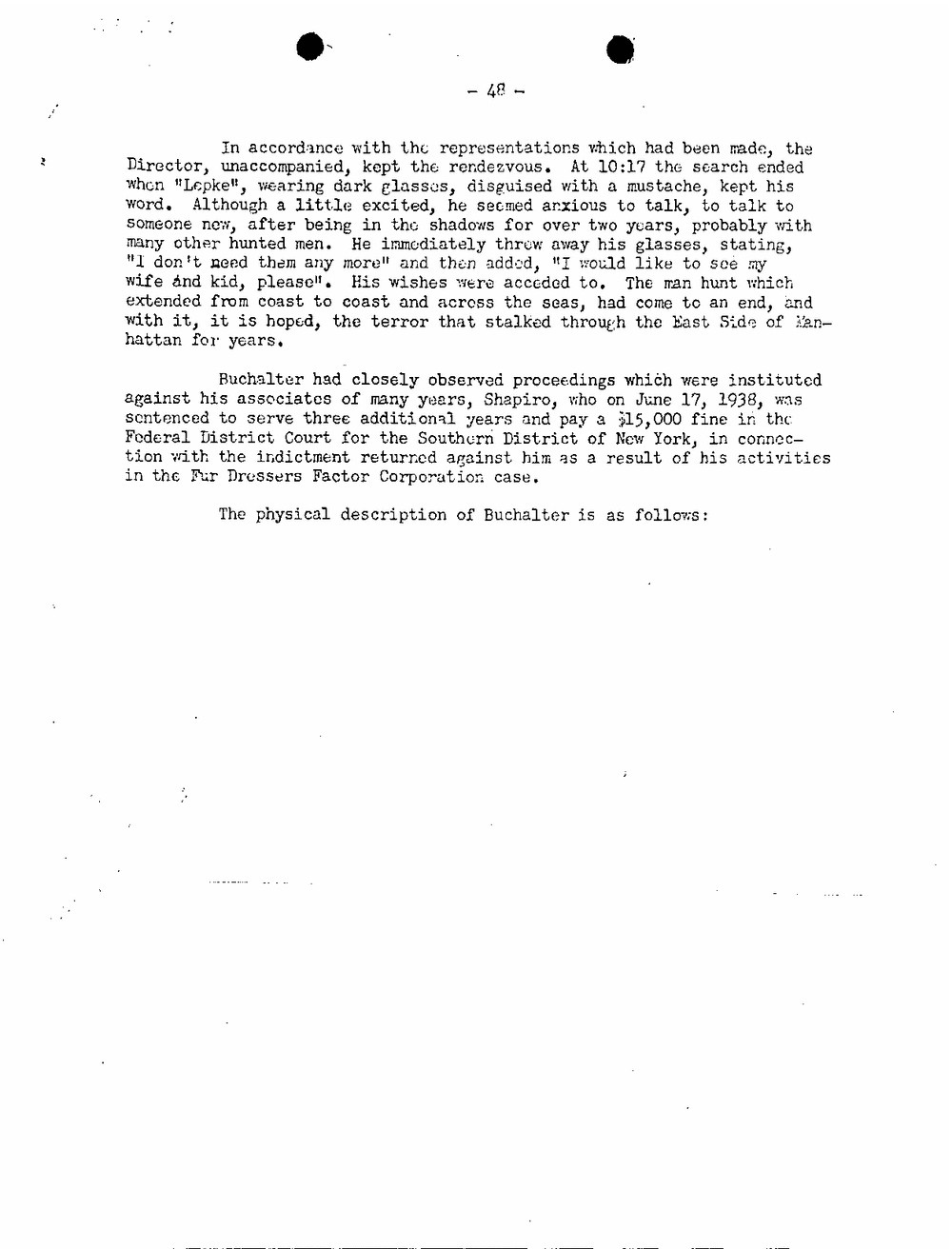
It opens: “Jacob “Gurrah” Shapiro surrendered to Federal authorities on April 14, 1938, in New York, after being a fugitive from justice for less than a year.” Buchalter, it says, “followed suit” sixteen months later. As read from the OCR of the page before, its account of the surrender is that after a broadcast in which Walter Winchell, with the Director’s authority, said publicly that Buchalter’s civil rights would be respected if he surrendered, negotiations began by telephone; the Director issued an ultimatum that Buchalter must surrender by 4 p.m. on August 24, 1939; and Winchell was sent to a drugstore at 19th Street and Eighth Avenue, where a man told him to have Hoover at 28th Street on Fifth Avenue between 10:10 and 10:20. The OCR of that page is jumbled, so it is paraphrased here. Page 16 reads: “In accordance with the representations which had been made, the Director, unaccompanied, kept the rendezvous. At 10:17 the search ended when “Lepke”, wearing dark glasses, disguised with a mustache, kept his word.” It quotes him asking to see “my wife and kid.”
The narrative also recounts the Bureau’s view of New York gang conflict in 1933. Page 11 says “early in 1933 Zwillman became affiliated with Luciano, Buchalter and Shapiro and it was said Waxey Gordon imported out-of-town killers to carry on the war,” and lists two killings in June 1933. Page 13 calls Verne Miller a man “who did many jobs for his gang in the early part of 1933, by way of exterminating members of the Waxey Gordon gang.” These are the Bureau’s statements, some of them reports of what “was said,” and not findings of any court. The narrative says nothing about Buchalter’s later transfer to New York State custody; that is in United States ex rel. Buchalter v. Lowenthal.