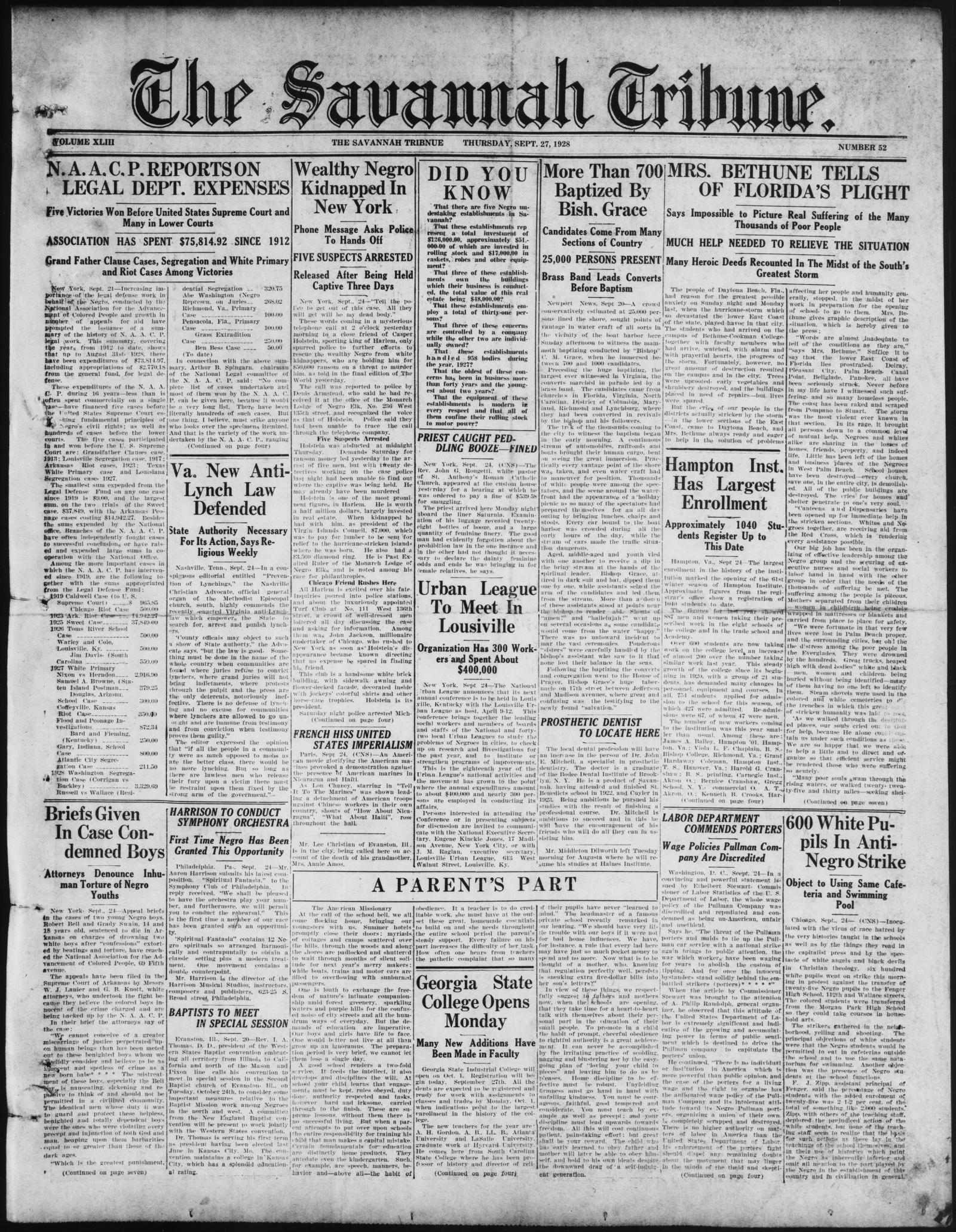
The Savannah Tribune, 27 September 1928, page 1: the Casper Holstein kidnapping, reprinted from the New York World
Wealthy Negro Kidnapped In New York
- Paper
- The Savannah Tribune (Savannah, Ga.)
- Date
- 1928-09-27
- Page
- Page 1
- Headline
- Wealthy Negro Kidnapped In New York
- Rights
- A United States newspaper published in 1930 or earlier. Public domain in the United States. The Library of Congress serves the page from Chronicling America.
The Savannah Tribune, a Georgia weekly, printed this story in the second column of its front page on Thursday, 27 September 1928, under the headline “Wealthy Negro Kidnapped In New York” and the decks “Phone Message Asks Police To Hands Off,” “Five Suspects Arrested” and “Released After Being Held Captive Three Days.” The headline’s wording is the paper’s. The text is datelined “New York, Sept. 24” and says it repeats what was “told in the final edition of The World yesterday.”
It reports that a telephone call to a friend of Casper Holstein, whom it calls “sporting king of Harlem,” said: “Tell the police to get out of this case. All they will get will be my dead body.” It says Holstein “was abducted at midnight Thursday,” that demands for ransom on Saturday led to the arrest of five men, and that twenty detectives were working on the case. The paper calls him “one of the most prominent figures in Harlem,” says he is “worth a half million dollars, largely invested in real estate,” and names him as president of the Virgin Islands Council and of the Turf Club. The story continues on page 4.
The decks were written after his release, but the body was written while he was still held. The figures for his wealth are the paper’s. The story’s opening lines are partly corrupted in the Library’s OCR, and the quotations here follow the stored scan. Other papers give different names, sums and addresses for the same events; the Harlem numbers page sets them side by side.