Hearing of October 1, 1963, pp. 163–165: the killing of Tom Reina, the "undeclared war" and Joseph Pinzolo
Staff counsel LaVern Duffy named the death of Tom Reina as the first significant date of the 1930–31 war, and Valachi explained why the war was at first "undeclared" and what he was told of the killing of Joseph Pinzolo. Counsel's statements and testimony, not findings.
- Date
- 1963-10-01
- Kind
- hearing
- Retrieved
- 2026-10-12
- Rights
- A work of the United States Senate, printed by the Government Printing Office. Public domain in the United States. 17 U.S.C. § 105. The NCJRS cover sheet records reproduction permission as "Public Domain / U.S. Senate."
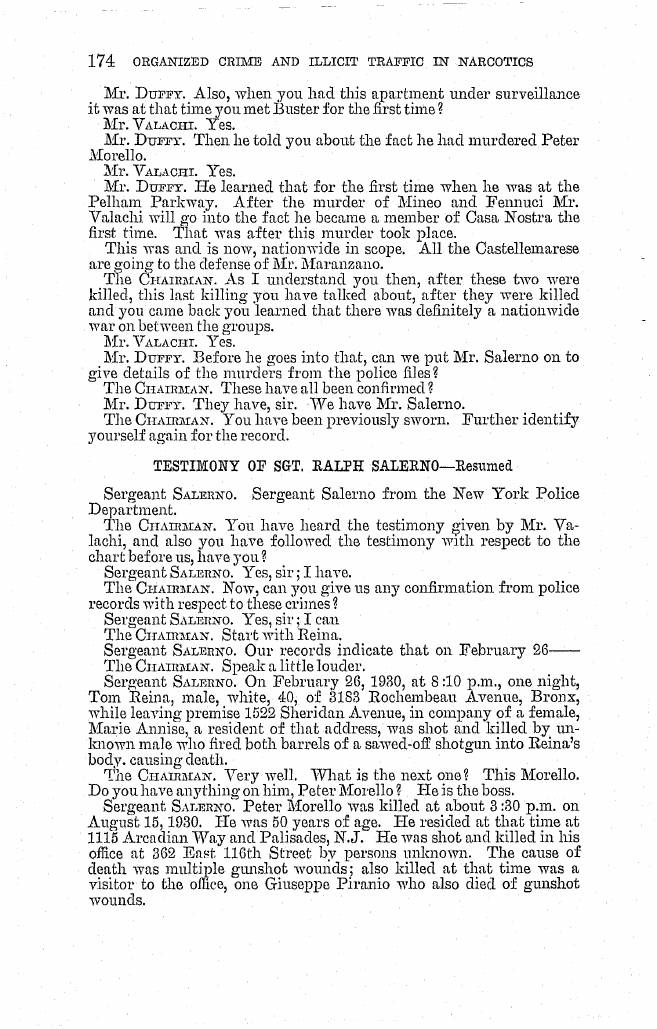
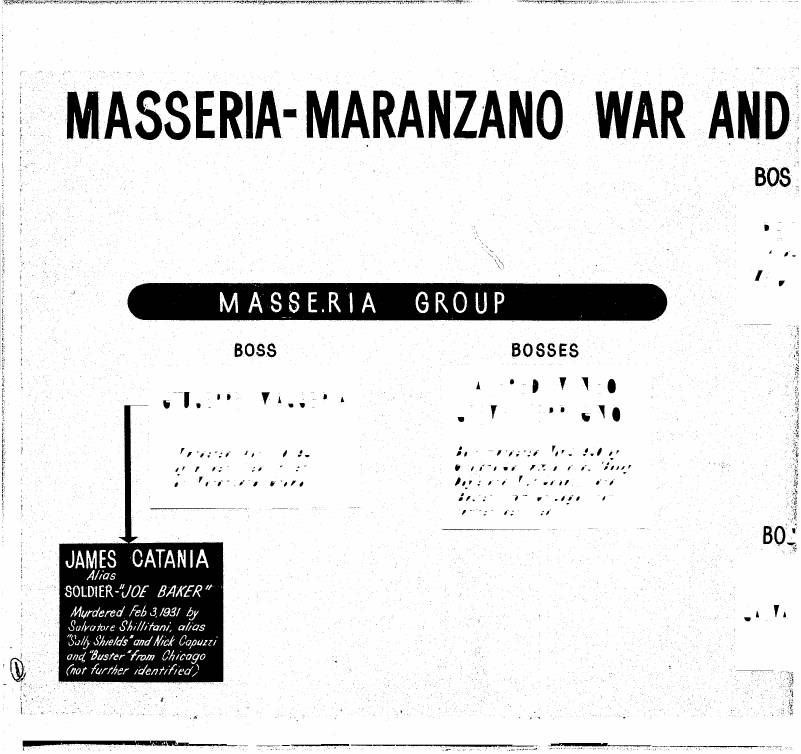
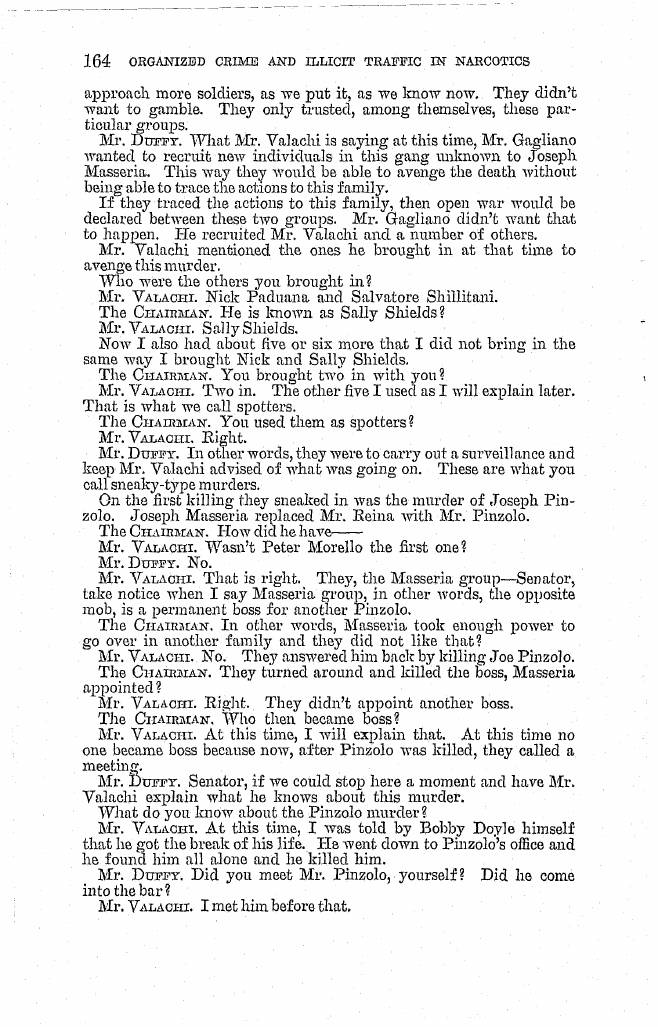
Printed pages 163 to 165 of Part 1 (NCJRS PDF pages 178 to 180), October 1, 1963. Staff counsel LaVern J. Duffy, reading from the staff chart filed as Exhibit 8, told the chairman: “The first significant date on the chart is the death of Tom Reina. He was the boss of this gang.” He said Reina was murdered “by a member of the Masseria group,” and that “Tom Gagliano, the underboss of this family, wanted to avenge the death of Reina, who was unjustly murdered.”
A printing error. The printed page has Duffy date Reina’s killing “February 26, 1960.” The New York police record read into the same hearing at printed page 174 gives February 26, 1930 (pp. 174–179), and the war Duffy was describing began in 1930. This archive uses the police record’s date.
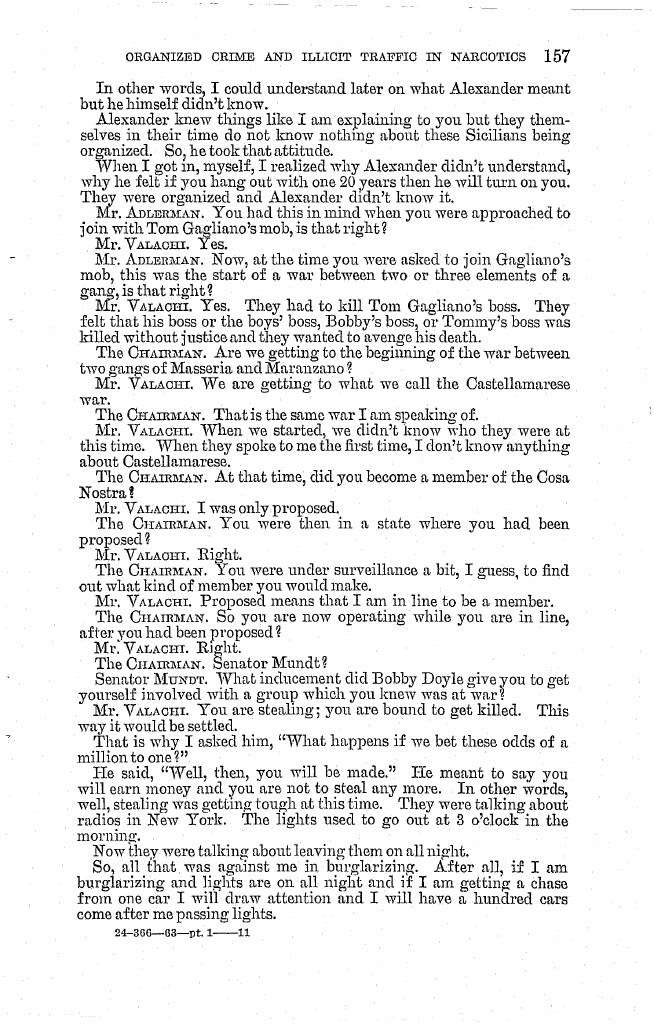
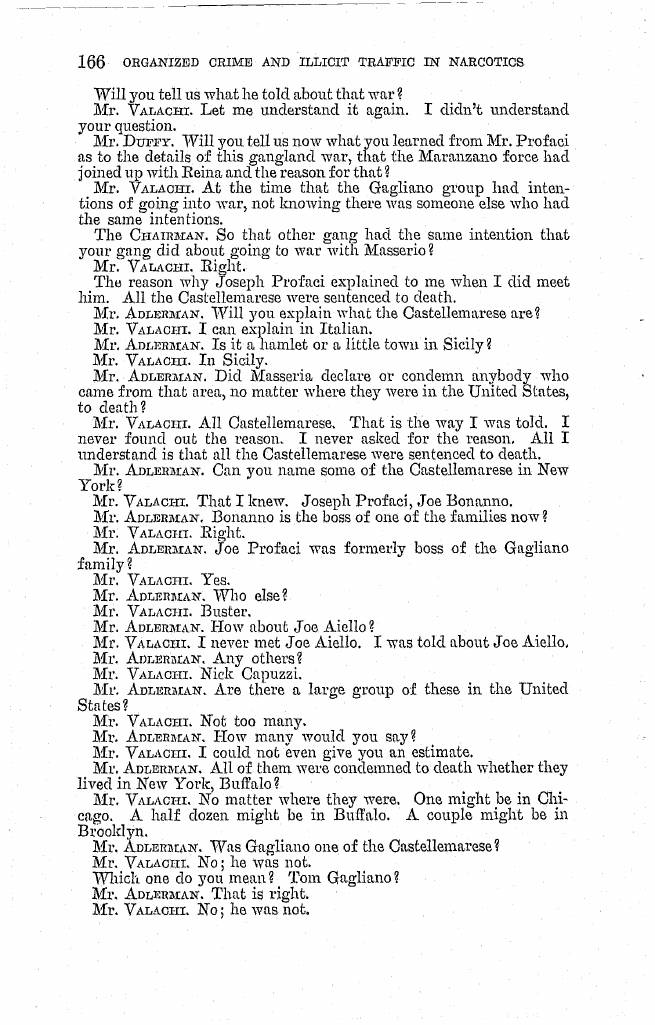
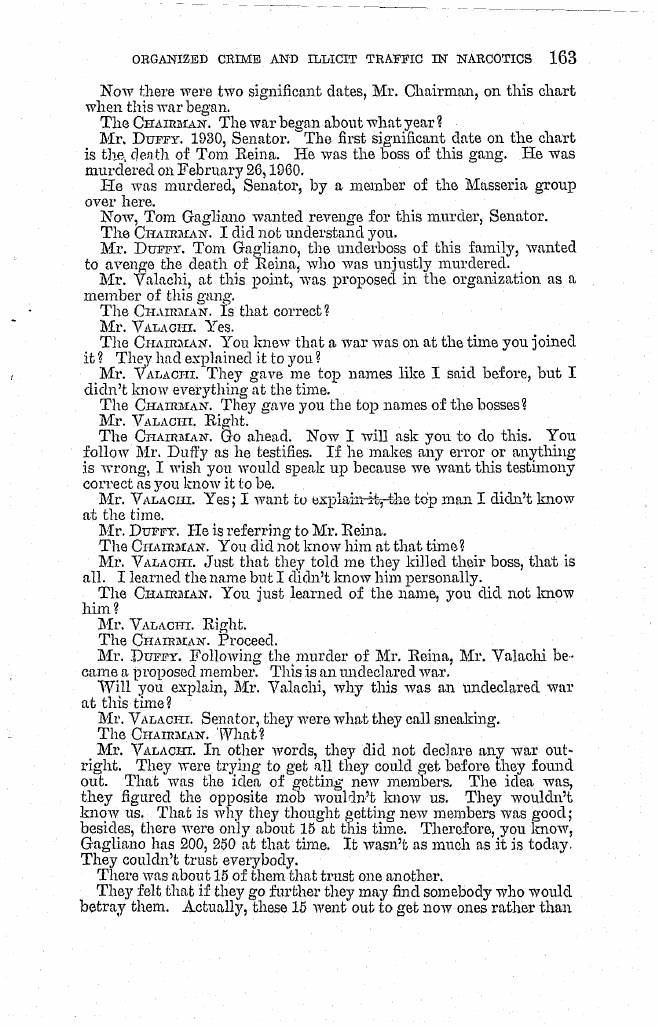
Asked why the war was at first undeclared, Valachi said: “Senator, they were what they call sneaking. … In other words, they did not declare any war outright.” Duffy said Gagliano recruited men “unknown to Joseph Masseria,” so that the killing could not be traced to his group. Valachi said he did not know Reina: “Just that they told me they killed their boss, that is all.” He named two men he brought in, and said Gagliano had “200, 250” men, of whom “about 15” trusted one another.
Duffy said “Joseph Masseria replaced Mr. Reina with Mr. Pinzolo.” Valachi interrupted, “Wasn’t Peter Morello the first one?”, and Duffy answered “No.” Valachi testified that Bobby Doyle told him “that he got the break of his life. He went down to Pinzolo’s office and he found him all alone and he killed him.” That is what Valachi said he was told; no one was charged on it in this record. These are counsel’s statements and a witness’s sworn answers, not findings.
Page images: printed p. 163 (stored above) and printed p. 164.