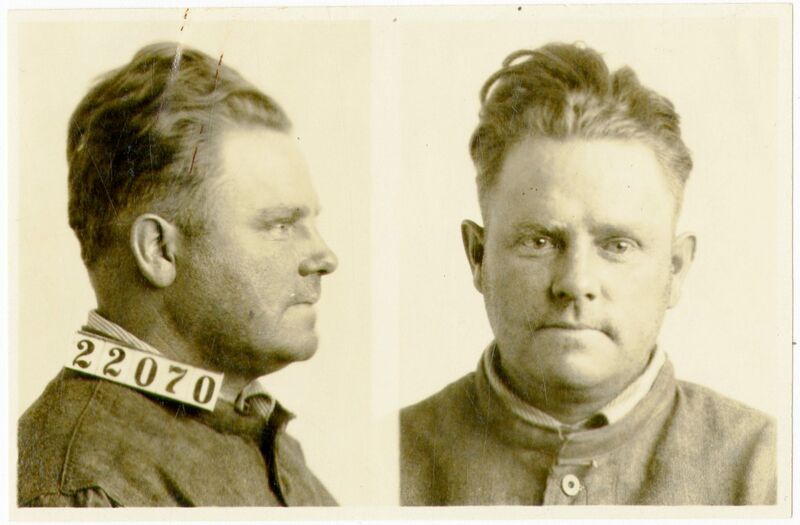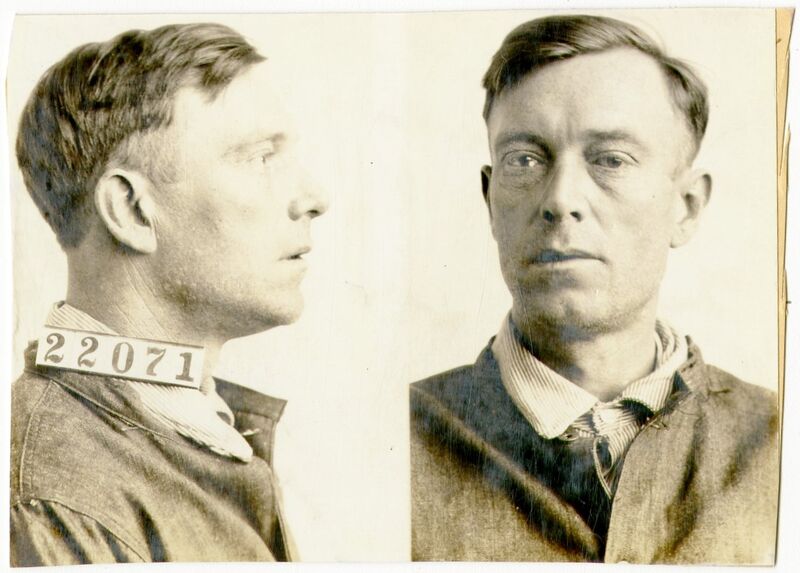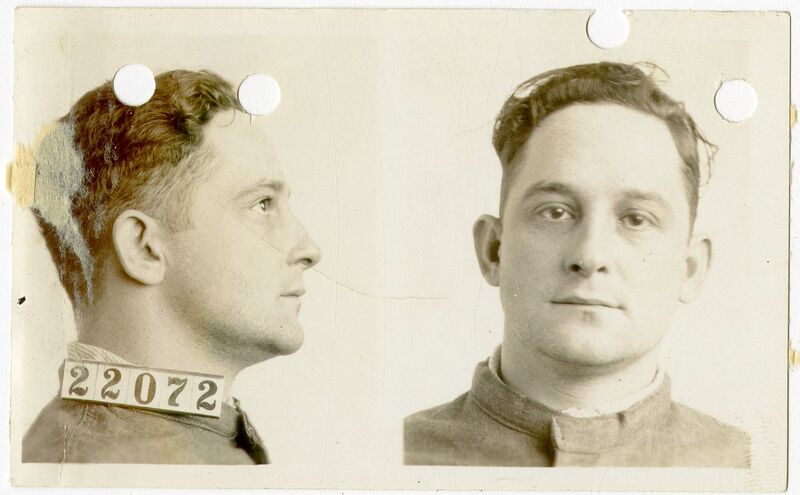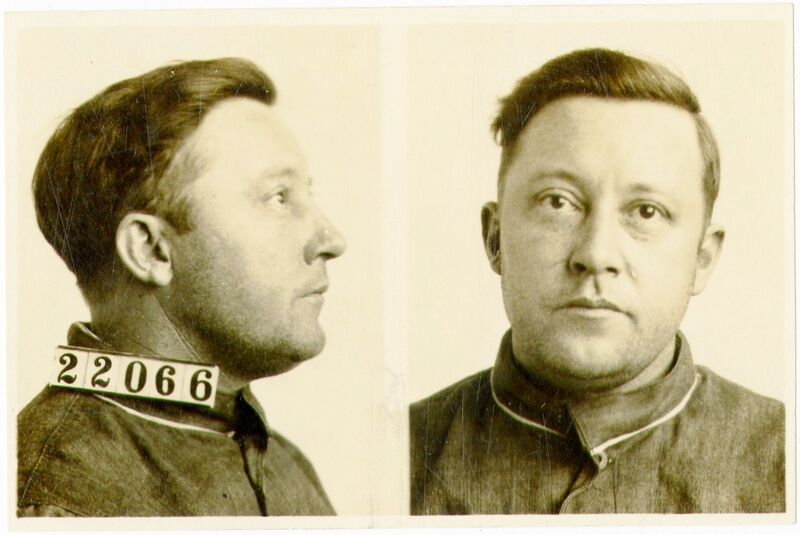
Leavenworth identification photograph, No. 22066: William P. Colbeck
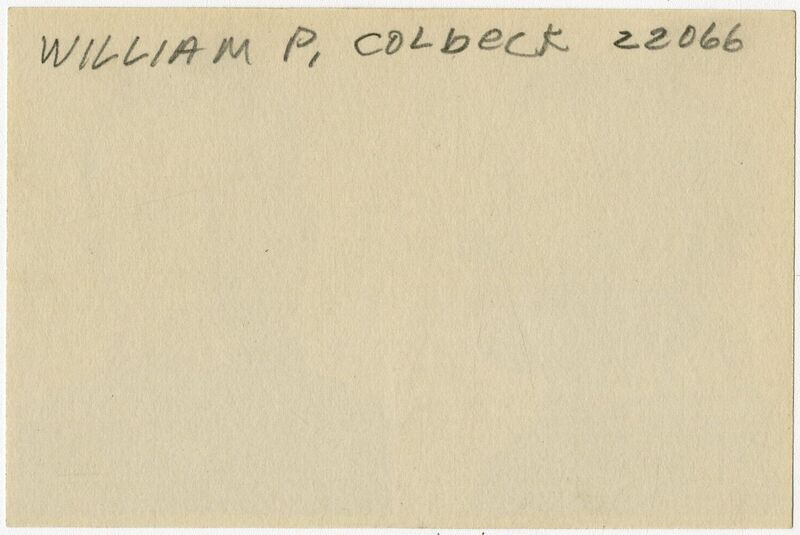
Front and profile Bureau of Prisons photograph numbered 22066, with "WILLIAM P. COLBECK 22066" written on the back, from the Leavenworth inmate case file of William P. Colbeck, one of the men convicted in the 1924 Staunton mail-robbery case. A copy is stored here.
- Date
- undated
- Kind
- photograph
- Retrieved
- 2026-10-12
- NAID
- 164583999
- Rights
- A Bureau of Prisons record, public domain under 17 U.S.C. § 105. Leavenworth Inmate Case Files, Records of the Bureau of Prisons (Record Group 129), National Archives at Kansas City. The National Archives catalog marks the item "Use Restriction: Unrestricted." The copies stored here are 800-pixel downsamples of the front and the back of the print.
The National Archives catalogs this print as “Photograph of William P. Colbeck (aka Dinty Colbeck)” (NAID 164583999), an item in the Leavenworth inmate case file of William P. Colbeck (file unit NAID 161379916). It is a single identification print with two views, profile at left and full face at right; the number 22066 is on a placard in the profile view. The back of the print, stored here, carries a handwritten line reading “WILLIAM P. COLBECK 22066.” The catalog does not date the photograph.
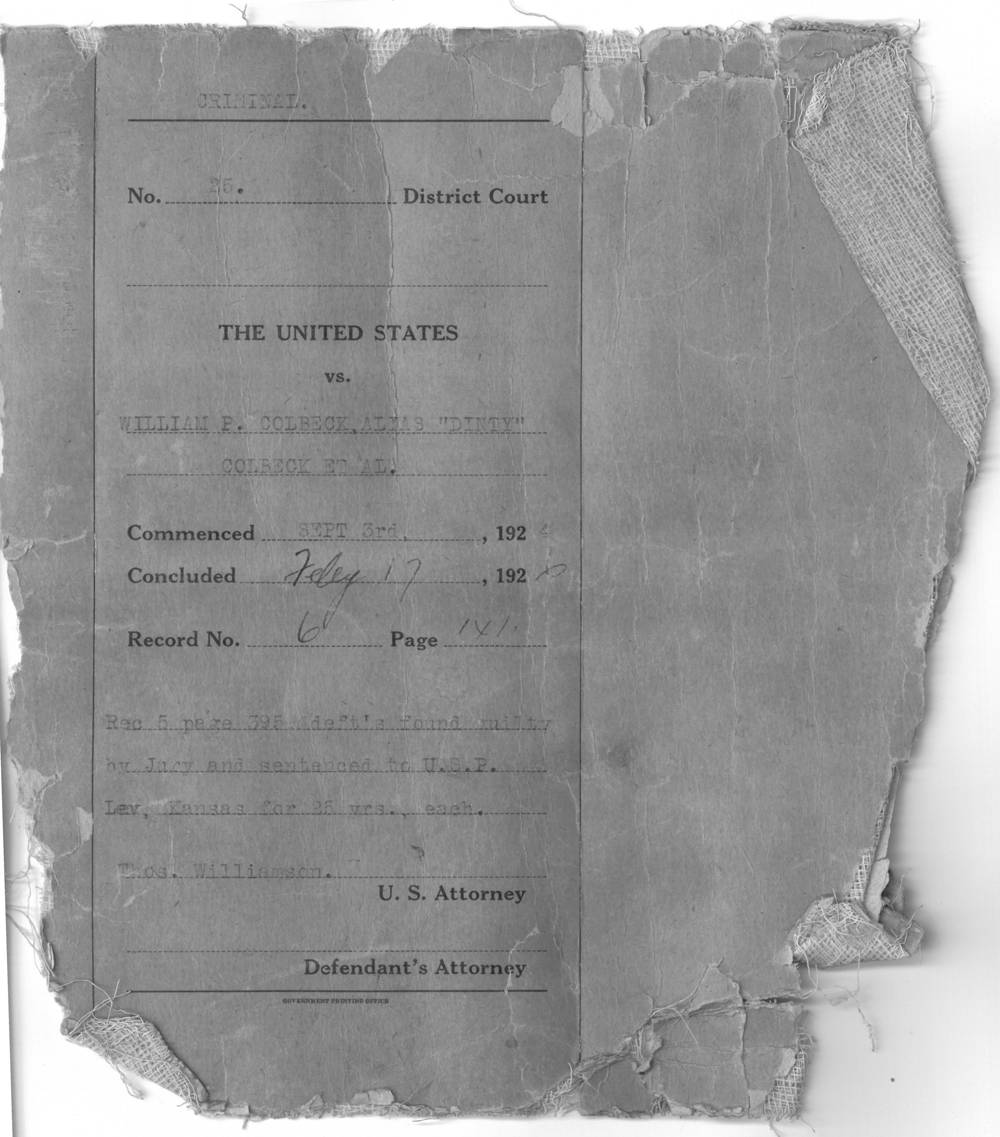
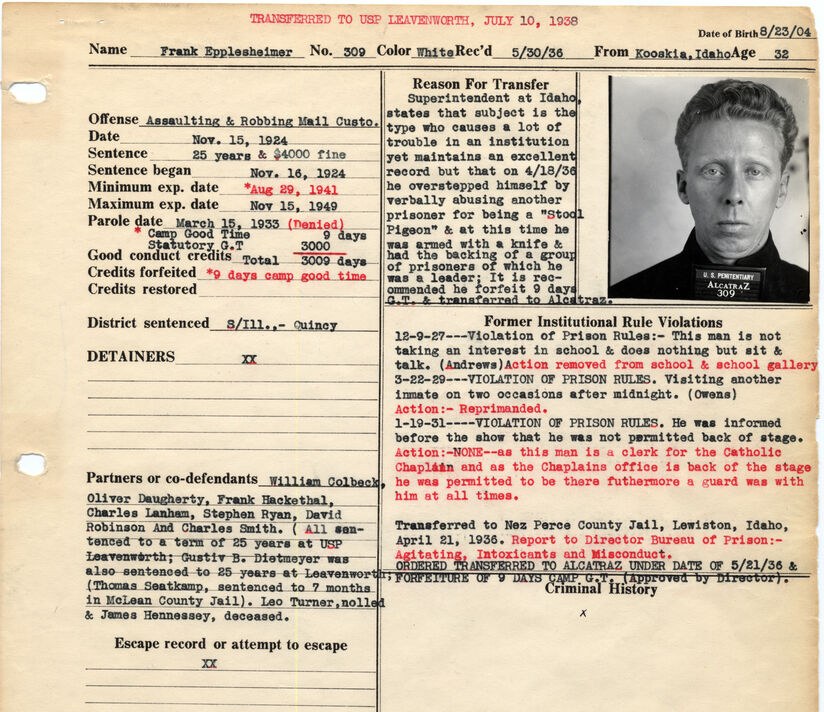
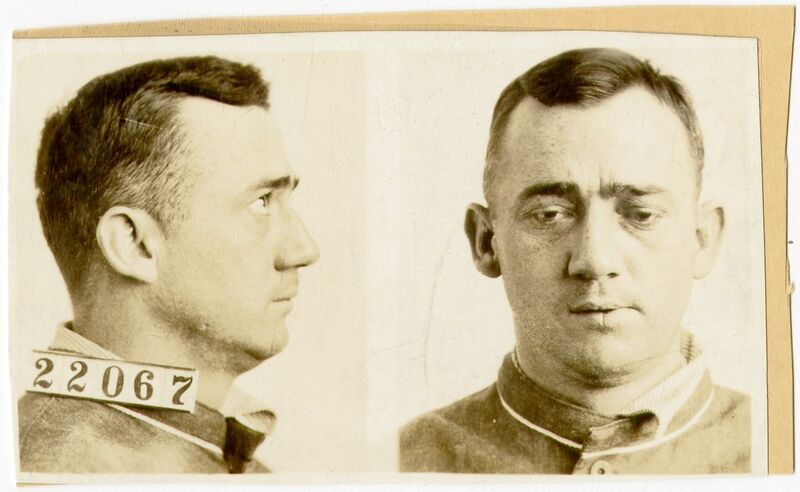
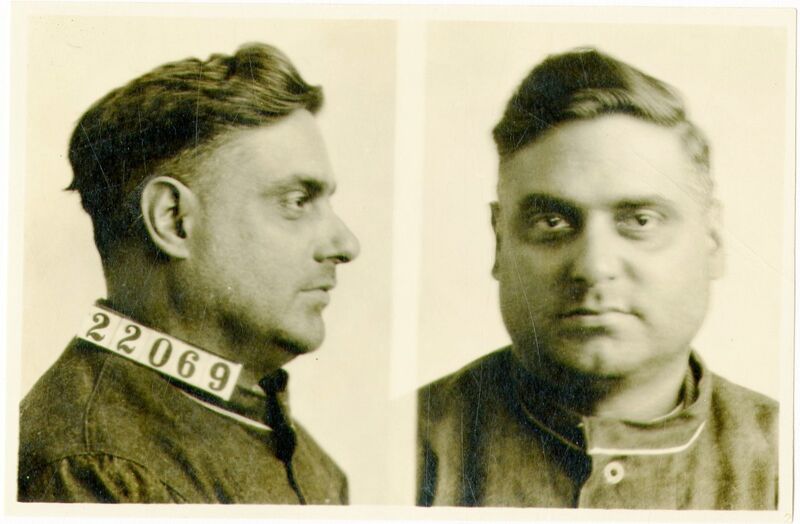
The catalog does not say who this man was beyond his name, or that he was a defendant in any particular case. This archive matches him to the Staunton mail-robbery case on three grounds, and only these: the name on the back of the print is the name of a defendant in the indictment and the Seventh Circuit’s opinion; the photographs of six of those defendants carry the consecutive numbers 22066 to 22072 (22068 has not been found); and the Alcatraz card of a seventh defendant lists these men as his codefendants, all sentenced to 25 years at Leavenworth. The indictment lists him first, as “WILLIAM P. COLBECK, alias “Dinty” Colbeck.”
The photograph records a prisoner’s identity at the penitentiary. It says nothing about the man’s part in the robbery, and this page adds nothing to it. “Egan’s Rats,” the name the National Archives and the 1924 press gave the group, does not appear on the print.