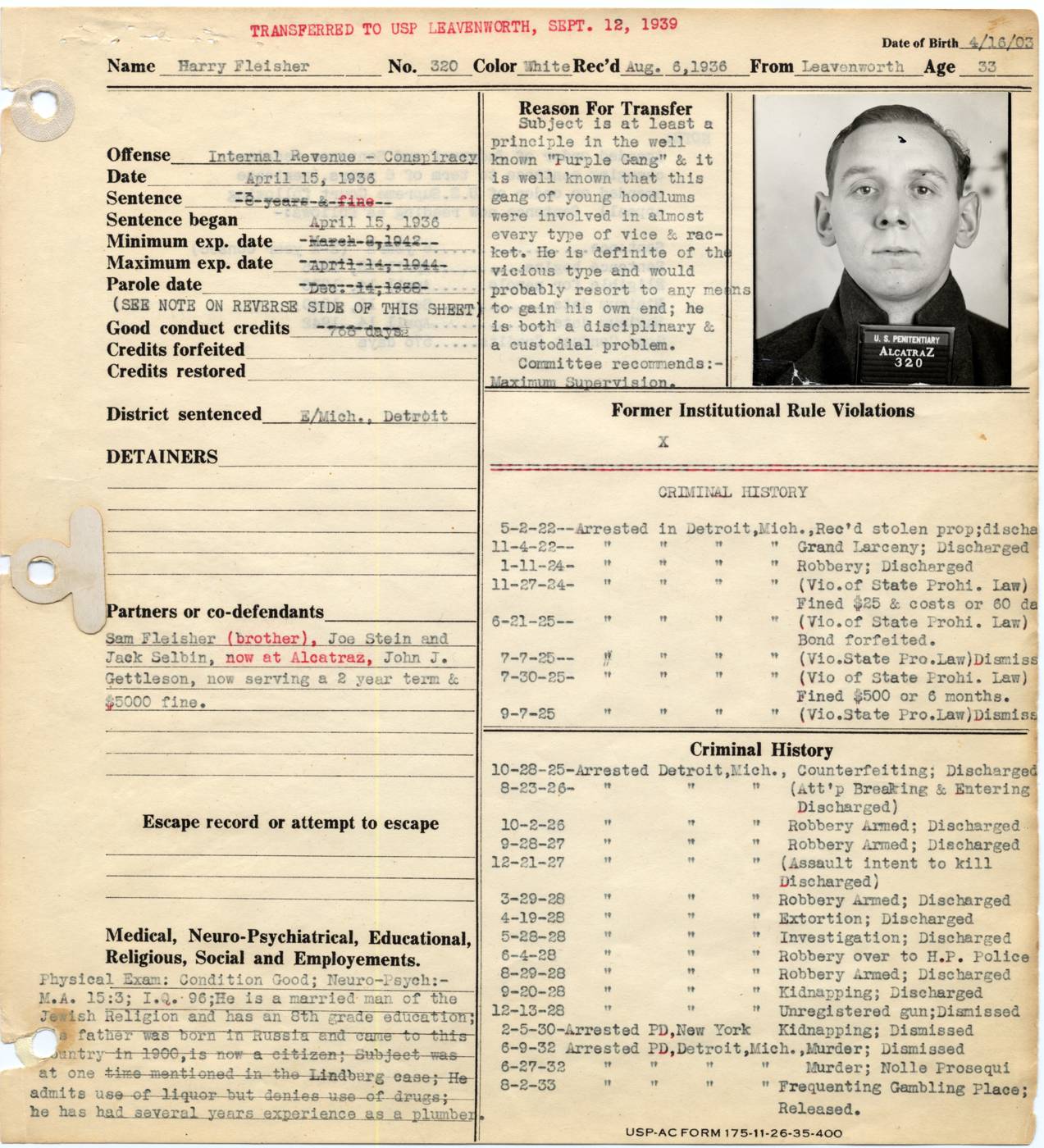
Alcatraz warden's notebook page for Harry Fleisher, No. 320
Bureau of Prisons notebook page with the identification photograph of Harry Fleisher, No. 320, received at Alcatraz from Leavenworth on 6 August 1936 on an internal revenue conspiracy conviction from Detroit; co-defendants Sam Fleisher, Joe Stein and Jack Selbin. A copy is stored here.
- Date
- 1936-08-06
- Kind
- photograph
- Retrieved
- 2026-10-12
- NAID
- 236735209
- Rights
- A Bureau of Prisons record, public domain under 17 U.S.C. § 105. Series "Warden's Notebook Pages" (NAID 296686), Records of the Bureau of Prisons (Record Group 129), National Archives at San Francisco. The National Archives catalog marks the item's access and use "Unrestricted." The copy stored here is reduced to 1400 pixels from the catalog's digital image.
The National Archives catalog titles this page “HARRY FLEISHER - Alcatraz Number 320 - Warden’s Notebook.” It is a Bureau of Prisons form with an identification photograph at the upper right; the placard reads “U. S. Penitentiary Alcatraz 320.”
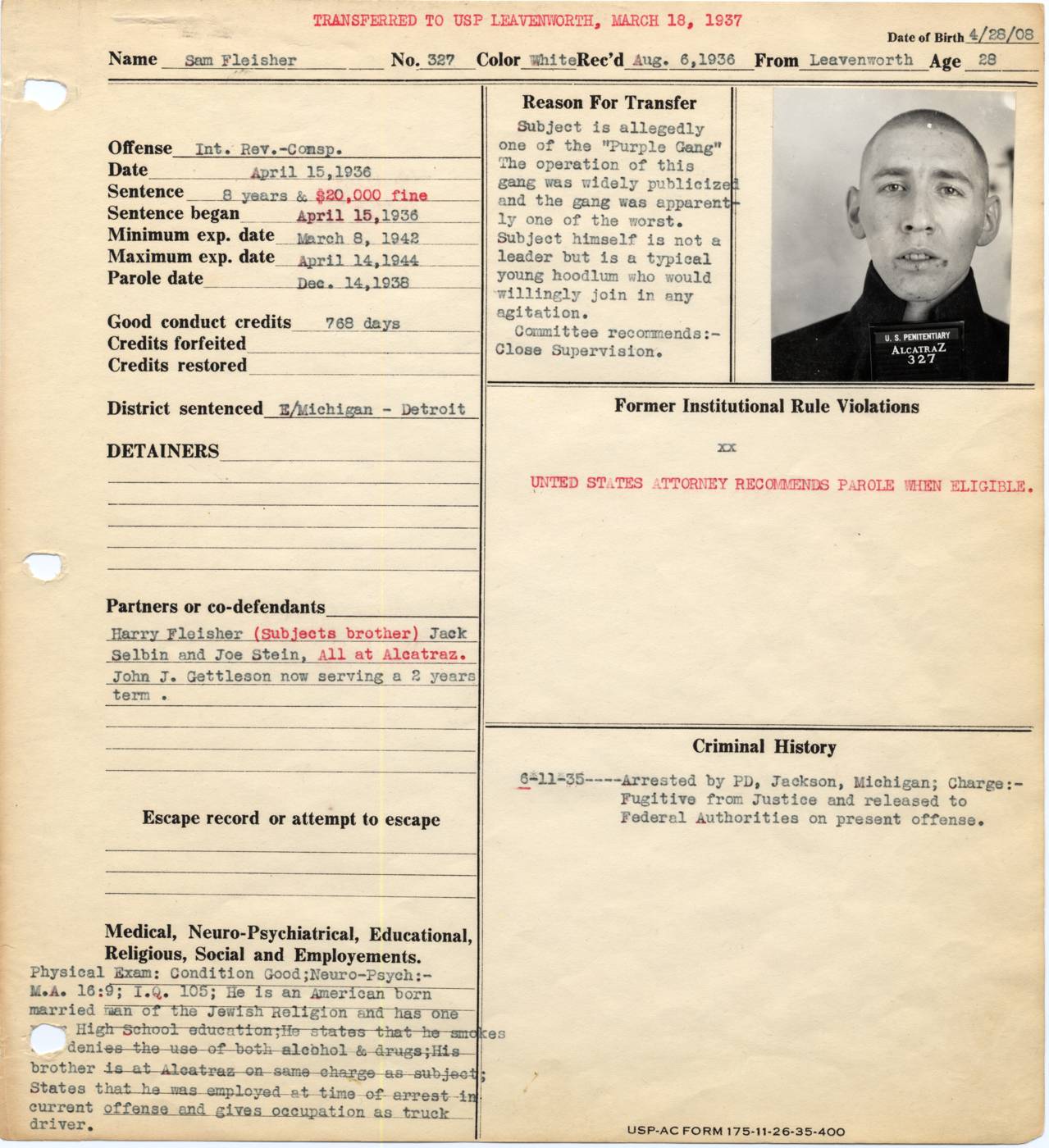
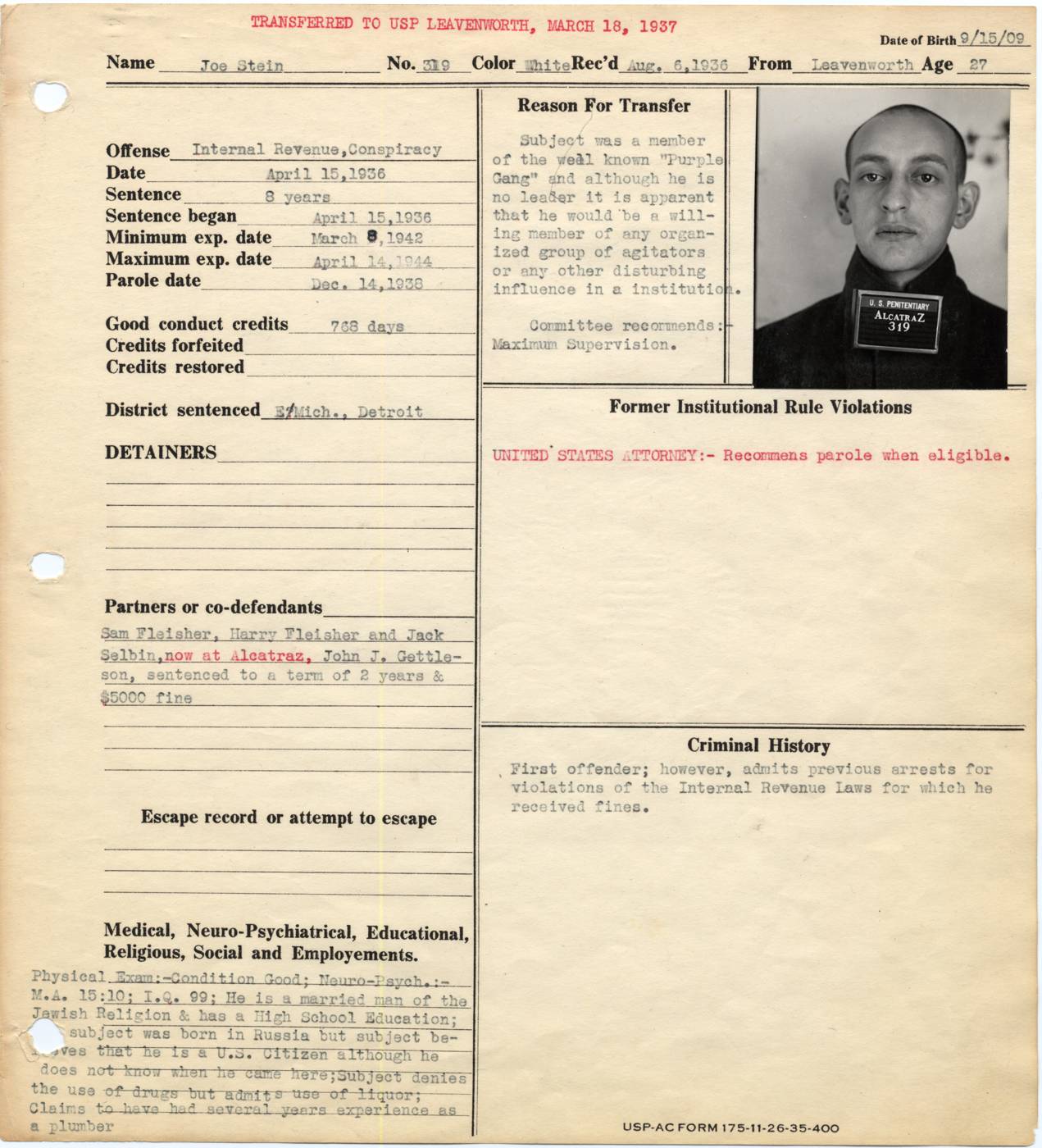
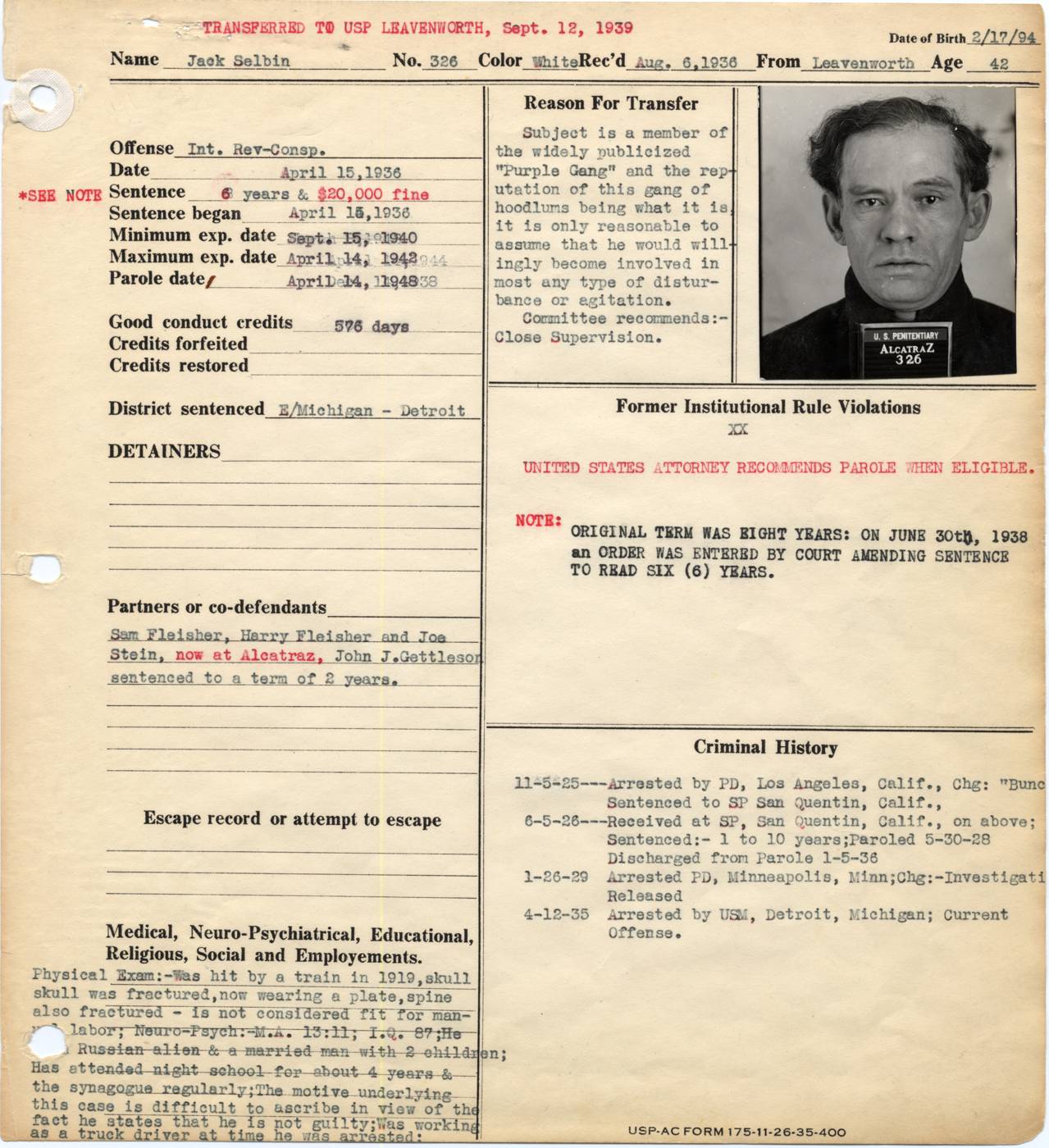
As typed: name Harry Fleisher, No. 320, received Aug. 6, 1936 from Leavenworth, age 33, date of birth 4/16/03. Offense “Internal Revenue - Conspiracy,” dated April 15, 1936; district sentenced “E/Mich., Detroit.” The sentence and expiration lines are struck through. Under “Partners or co-defendants” the page lists “Sam Fleisher (brother), Joe Stein and Jack Selbin, now at Alcatraz, John J. Gettleson, now serving a 2 year term & $5000 fine.” A stamp at the top reads “Transferred to USP Leavenworth, Sept. 12, 1939.”
The “Reason for Transfer” box, which is the classification committee’s opinion, begins: “Subject is at least a principle in the well known ‘Purple Gang’ & it is well known that this gang of young hoodlums were involved in almost every type of vice & racket.” The committee recommended “Maximum Supervision.” The criminal history column lists arrests in Detroit from 1922 to 1933, nearly all ending “Discharged,” “Dismissed” or “Nolle Prosequi”; they are arrests, not convictions. The medical and personal notes on the lower left are not repeated here.