Record
Hearing
1963-10-11
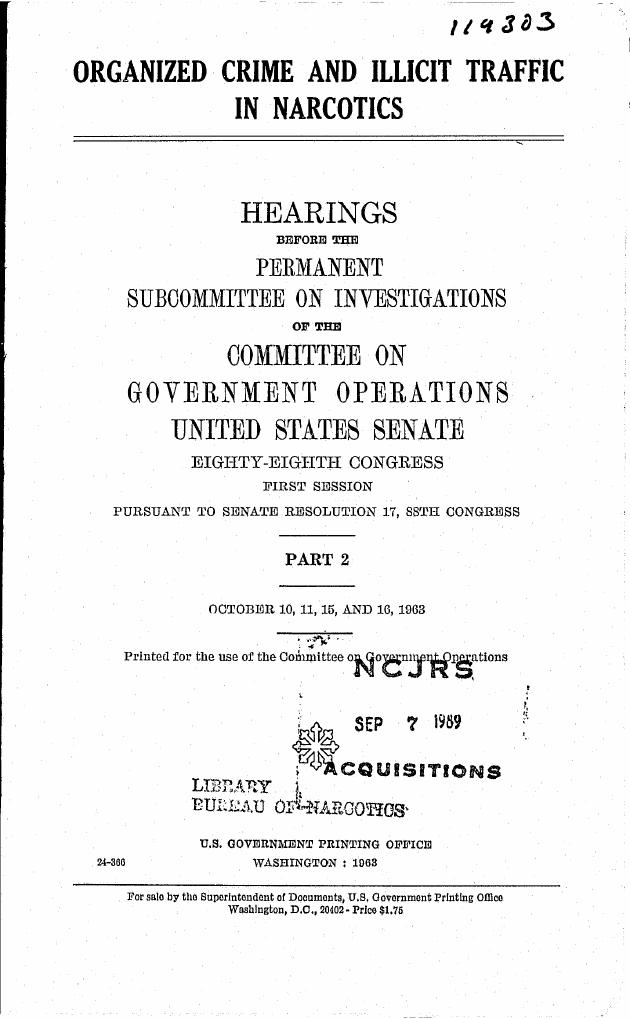
National Criminal Justice Reference Service, scan of the printed hearings (NCJ 119303)
Statement of Deputy Superintendent Joseph Morris, Chicago Police Department, October 11, 1963
A Chicago police history of the syndicate placed in the 1963 hearing record. It states that Paul Ricca led after Frank Nitti's 1943 suicide, and that Tony Accardo "became the syndicate boss in 1943."
- Date
- 1963-10-11
- Kind
- hearing
- Retrieved
- 2026-10-12
- Docket
- Organized Crime and Illicit Traffic in Narcotics: Hearings before the Permanent Subcommittee on Investigations of the Committee on Government Operations, United States Senate, 88th Cong., pursuant to S. Res. 17, 88th Cong., Part 2
- Rights
- A work of the United States Senate, printed by the Government Printing Office. Public domain in the United States. 17 U.S.C. § 105. The NCJRS cover sheet records reproduction permission as "Public Domain / U.S. Senate."
Deputy Superintendent Joseph Morris of the Chicago Police Department could not attend the hearing of October 11, 1963. Chief counsel O’Donnell placed his prepared statement in the record instead. It is printed at pages 500 to 507 of Part 2, which are NCJRS PDF pages 552 to 558.
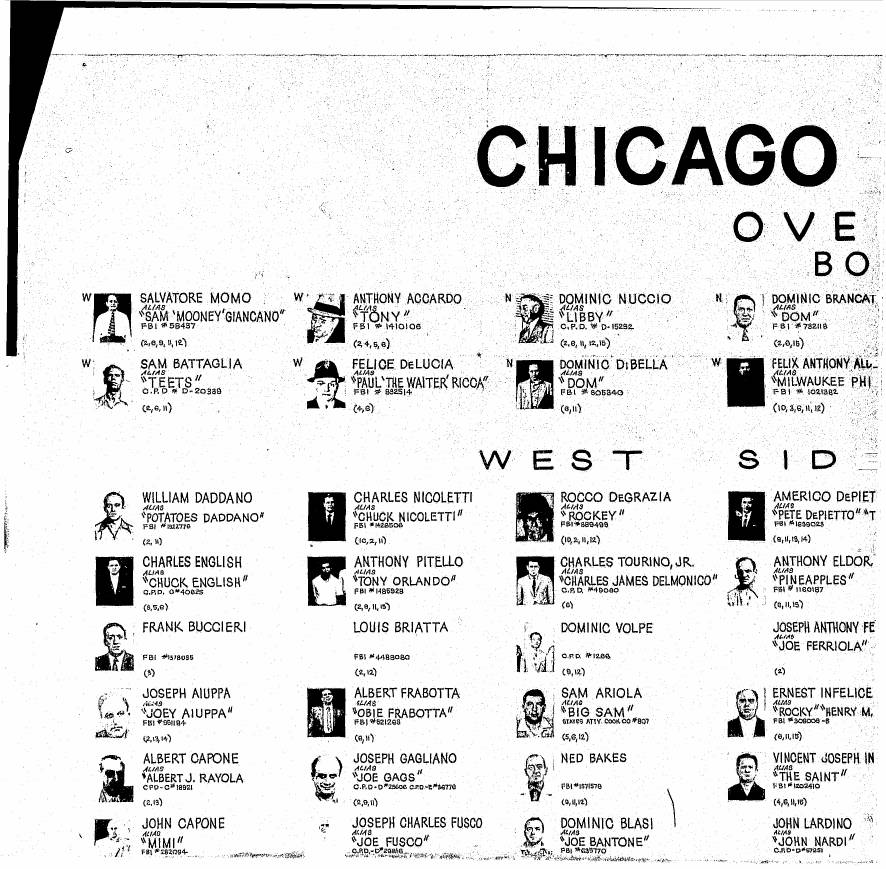
The statement is a police history of the Chicago syndicate. It says that “Frank Nitti committed suicide in 1943 after he was indicted with other prominent Capone gangsters” for extorting money from the motion picture industry. It says that “Ricca took over the leadership of the Chicago syndicate until he went to prison. Tony Accardo, alias Joe Batters, then assumed leadership.” It goes on: “Tony Accardo, who became the syndicate boss in 1943, came up through the ranks of the outfit.” It also says that Accardo “is supposed to have stepped aside” and that Sam “Mooney” Giancana replaced him.
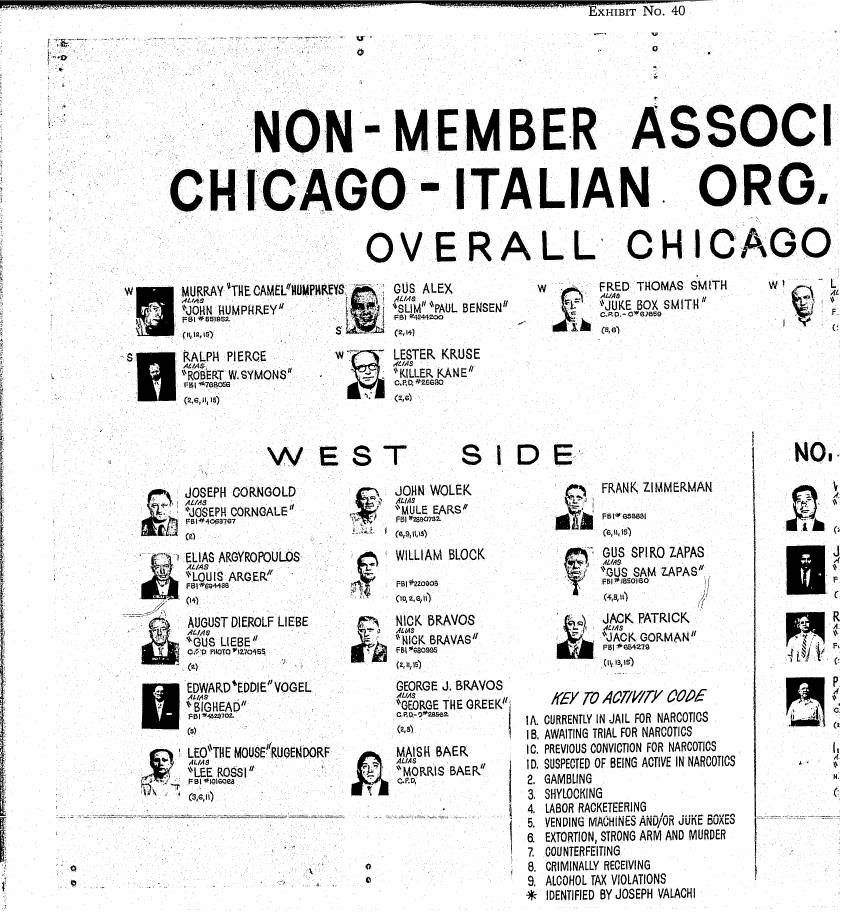
This is a police department’s statement, read into a Senate record. It is not a court finding, and its “supposed to have” is its own hedge. On printed page 513, Chicago police witness William L. Duffy confirmed that the Accardo and Giancana of the statement are the men on Exhibit 39. This page does not carry the home addresses that the record prints for some of the men.