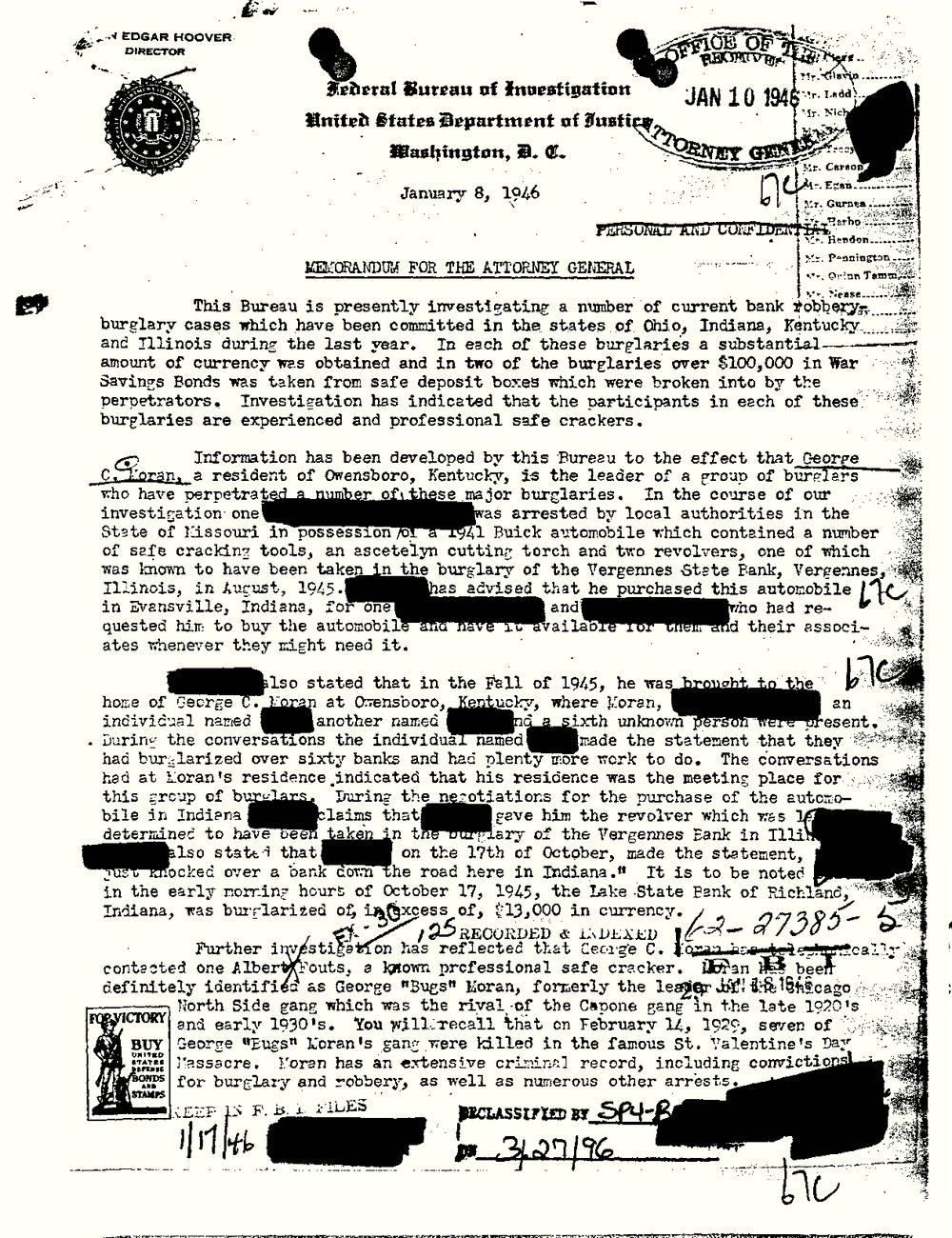
FBI Vault, George (Bugs) Moran, Part 02: memorandum for the Attorney General, January 8, 1946
A two-page memorandum over J. Edgar Hoover's name telling the Attorney General that a resident of Owensboro, Kentucky named as the leader of a group of bank burglars had been "definitely identified as George "Bugs" Moran," and asking authority for a technical surveillance of his residence.
- Date
- 1946-01-08
- Kind
- case-file
- Source
- FBI Records: The Vault
- Retrieved
- 2026-10-12
- Rights
- A record of the Federal Bureau of Investigation released under FOIA through the Vault. A work of the United States government, public domain under 17 U.S.C. § 105. The page image shown was saved from the Vault viewer on 12 October 2026 and is stored here.
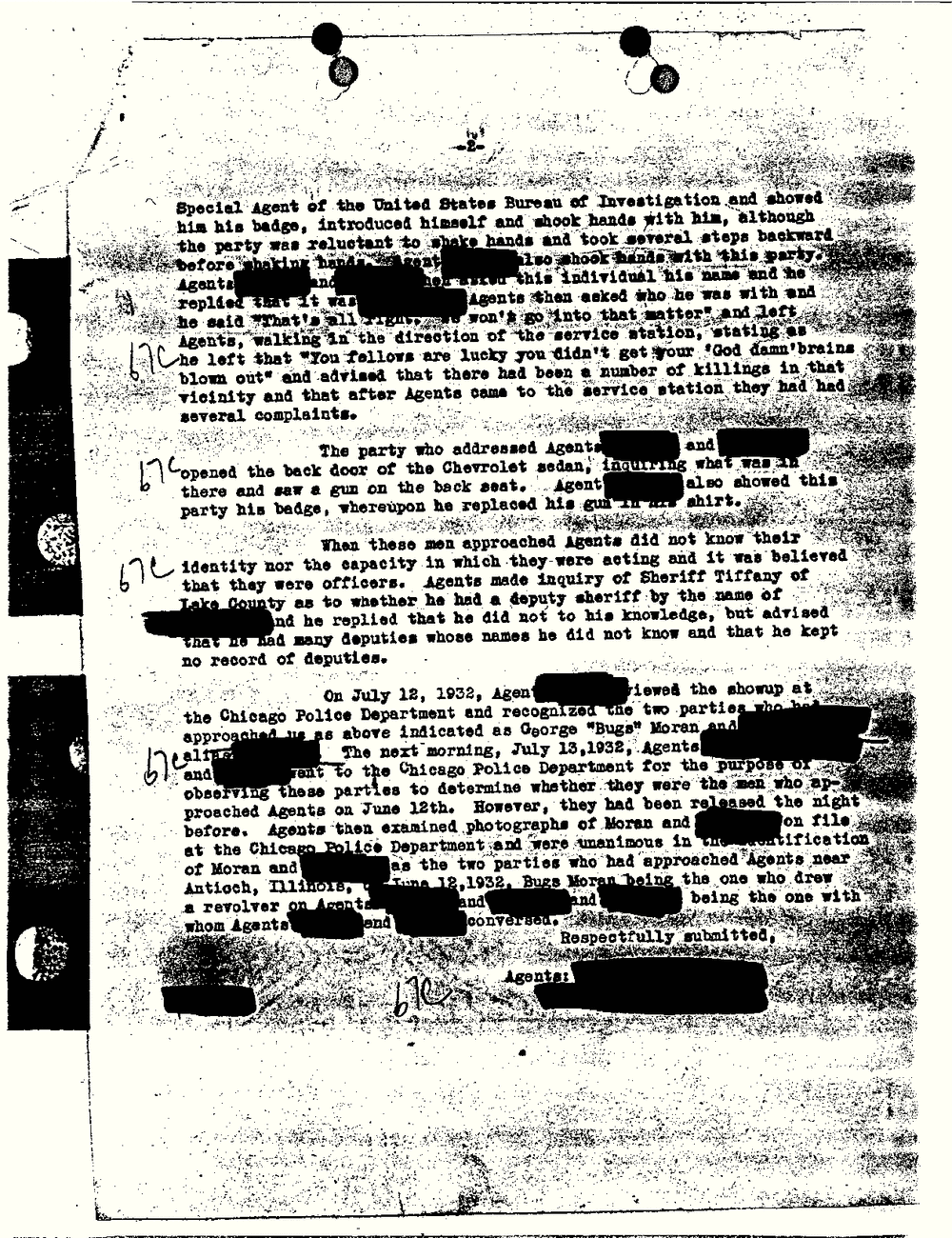
Part 02 of the FBI Vault’s Moran file. Most of its pages are dark, high-contrast scans with little legible text; its first scan is an envelope scanned upside down. Scans 12 and 13 are a typed memorandum on Federal Bureau of Investigation letterhead, dated January 8, 1946, marked “Personal and Confidential,” headed “Memorandum for the Attorney General” and signed “John Edgar Hoover, Director.” A stamp shows it received in the Office of the Attorney General on January 10, 1946. Both pages were read on the images; the quotations below are from the images.
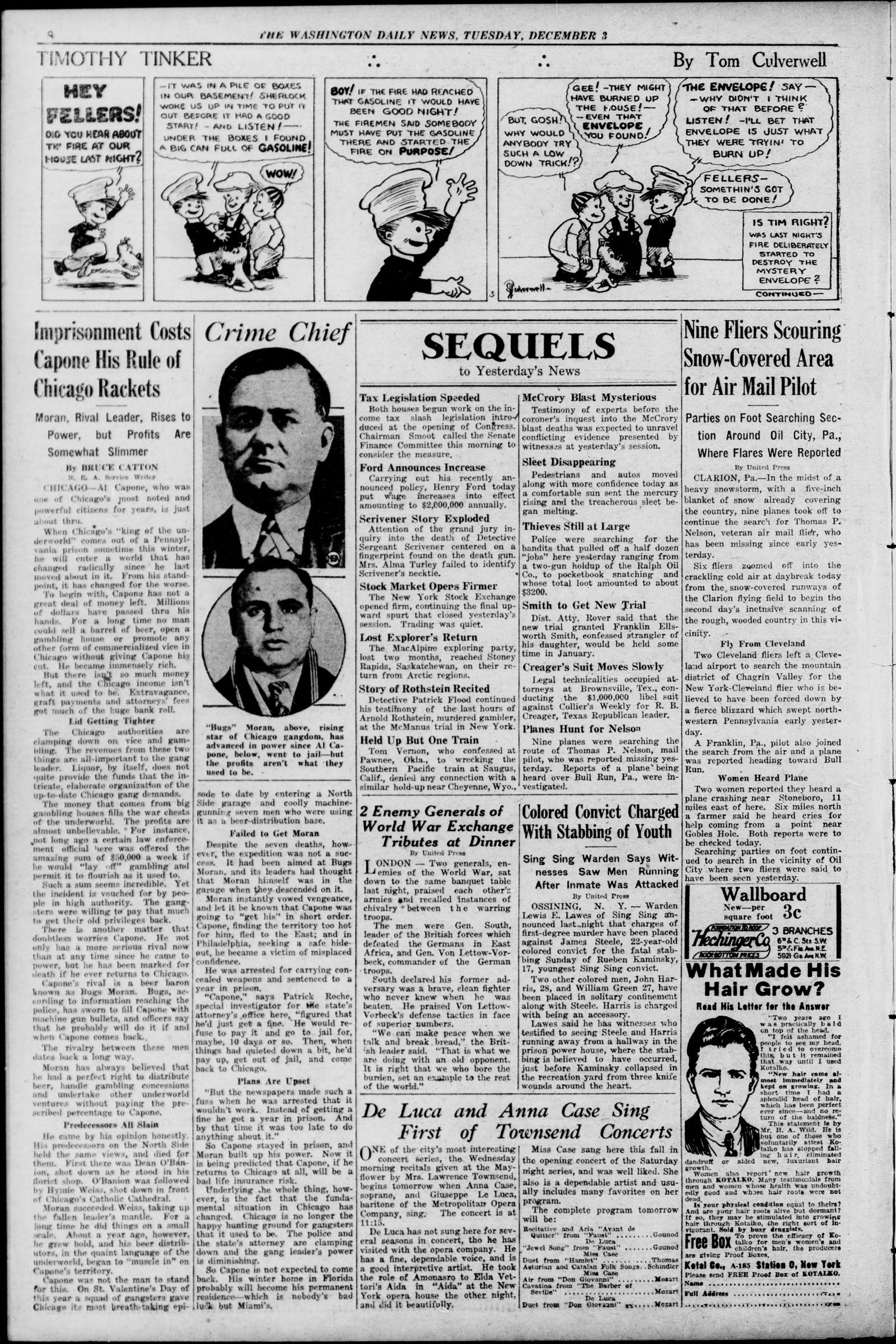
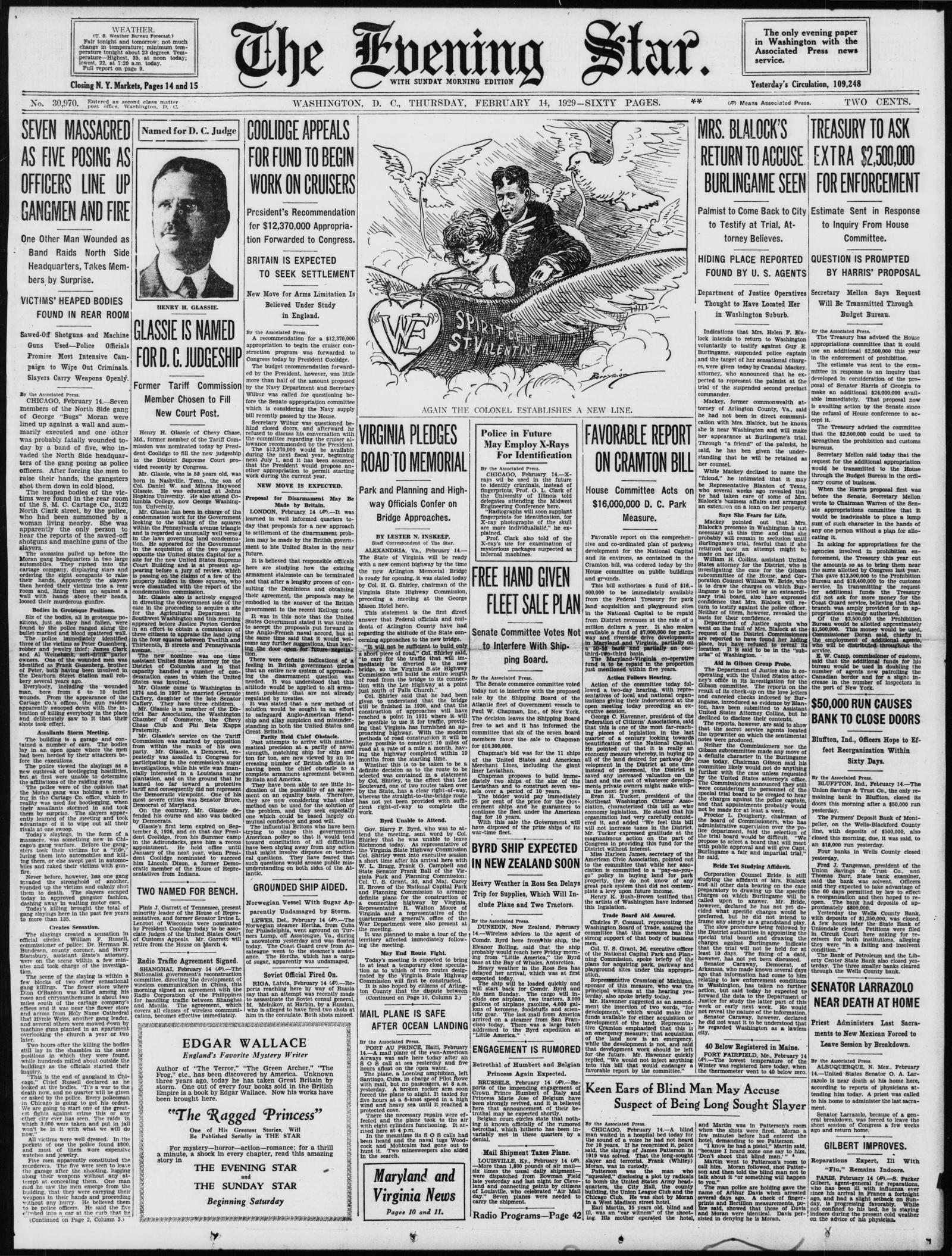
The memorandum says the Bureau “is presently investigating a number of current bank robbery-burglary cases which have been committed in the states of Ohio, Indiana, Kentucky and Illinois during the last year,” and that “Information has been developed by this Bureau to the effect that George C. Moran, a resident of Owensboro, Kentucky, is the leader of a group of burglars who have perpetrated a number of these major burglaries.” It describes an informant’s account of meetings at Moran’s home, names two bank burglaries of 1945 in Illinois and Indiana, and continues: Moran “has been definitely identified as George “Bugs” Moran, formerly the lea[der of] the Chicago North Side gang which was the rival of the Capone gang in the late 1920’s and early 1930’s.” (A received stamp covers part of the word “leader of.”) It adds: “You will recall that on February 14, 1929, seven of George “Bugs” Moran’s gang were killed in the famous St. Valentine’s Day Massacre,” and that Moran “has an extensive criminal record, including convictions for burglary and robbery, as well as numerous other arrests.”
The second page asks that “authority is requested for the placing of a technical surveillance on the residence of George C. Moran.” That page prints the street address and telephone number of the house. This archive does not reproduce that page or repeat the address. Names of informants and other people are blacked out in the release; one private person named in the memorandum is not named here.
The memorandum states the Bureau’s information and its request in January 1946. It is not a charge or a finding, and the pages read do not say whether the Attorney General granted the request. Whether Moran was later charged with any of these burglaries is not shown in the pages read for this archive.