Record
Hearing
1963-10-08
National Criminal Justice Reference Service, scan of the printed hearings (NCJ 119303)
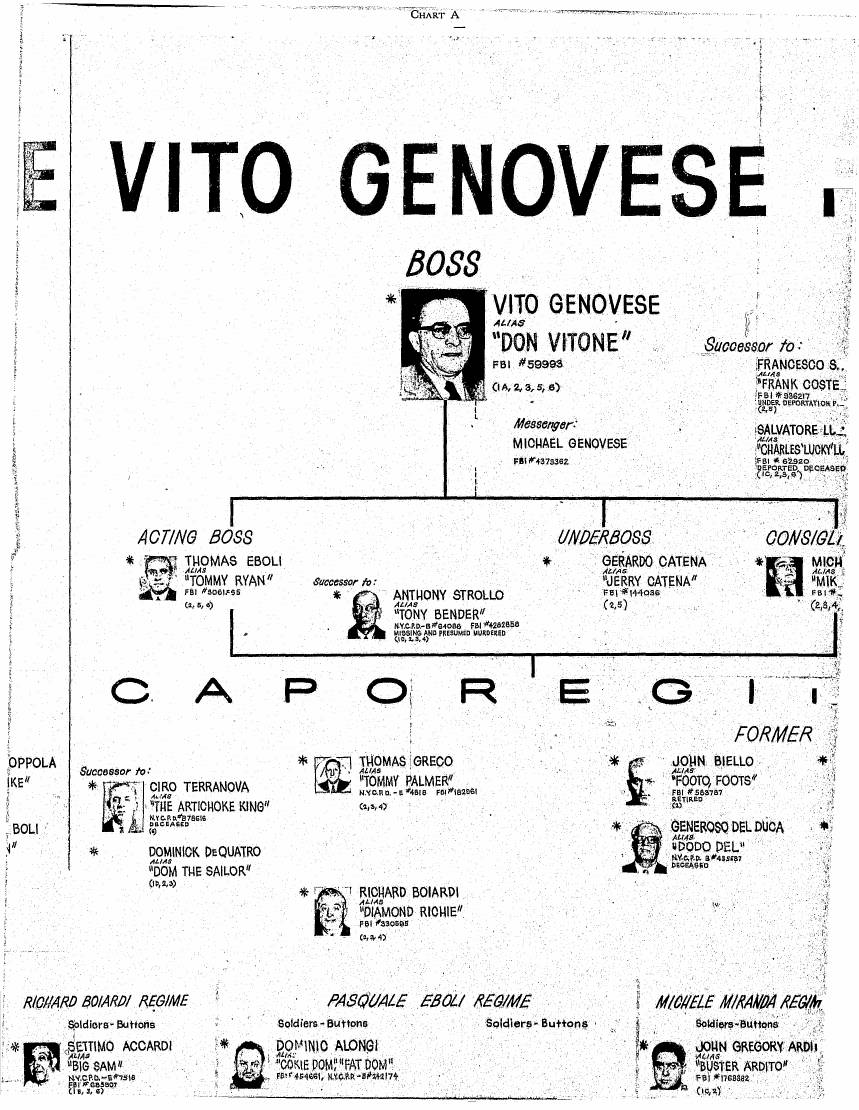
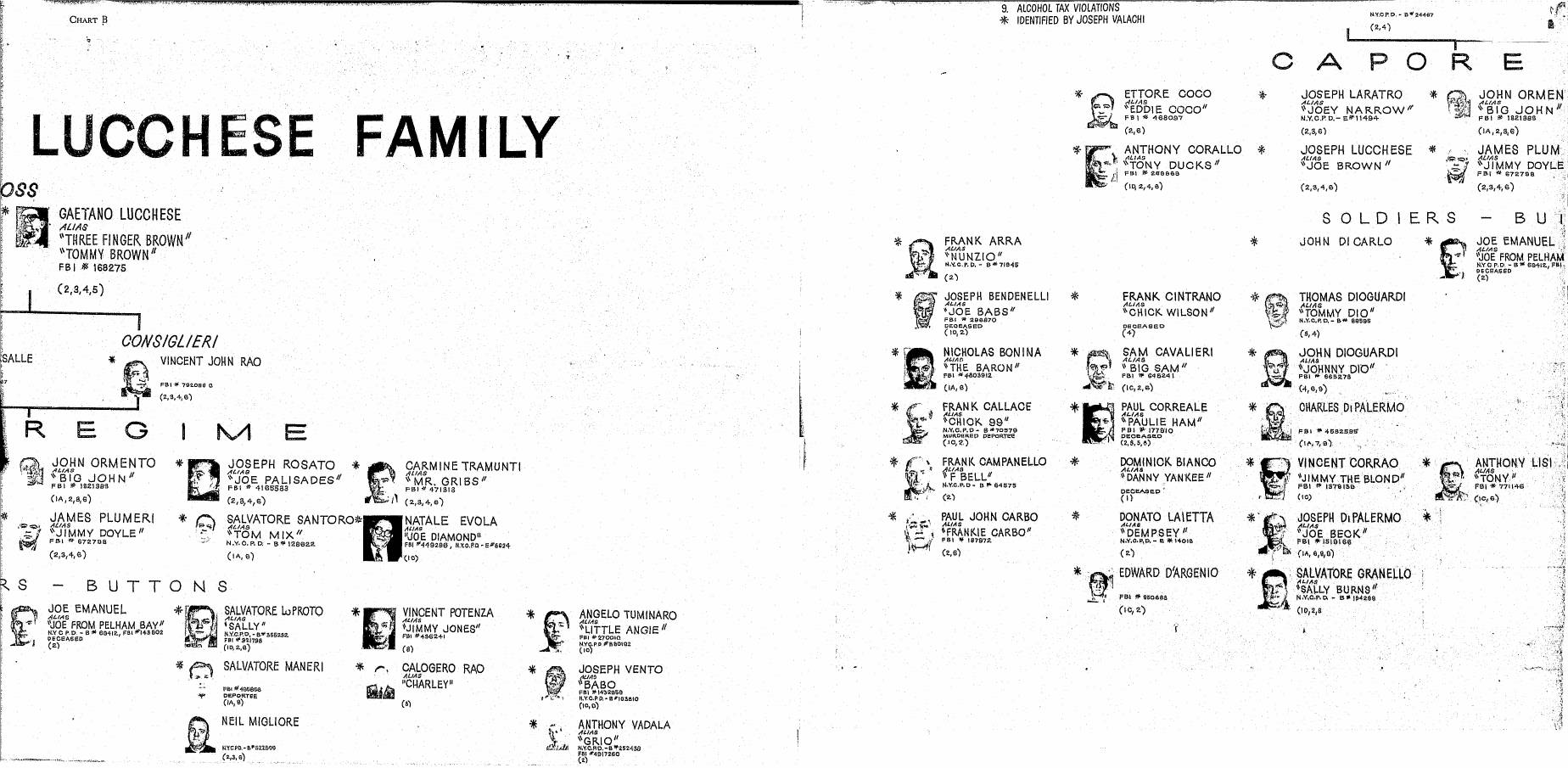
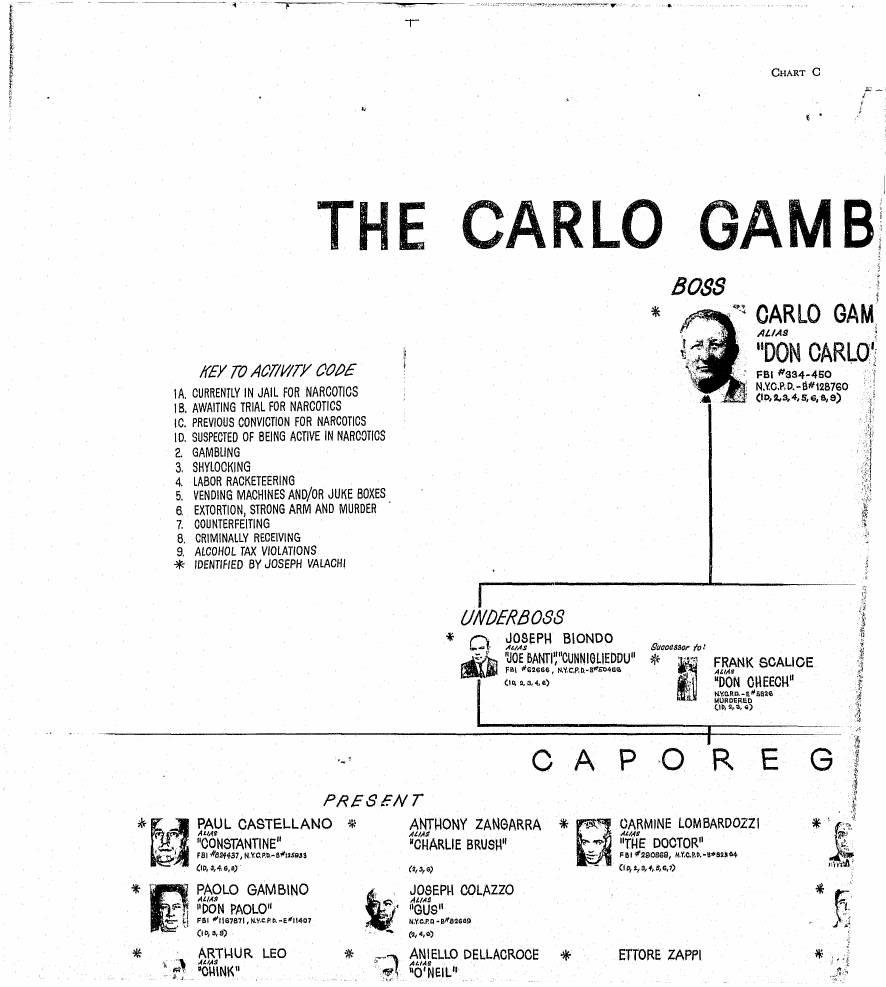
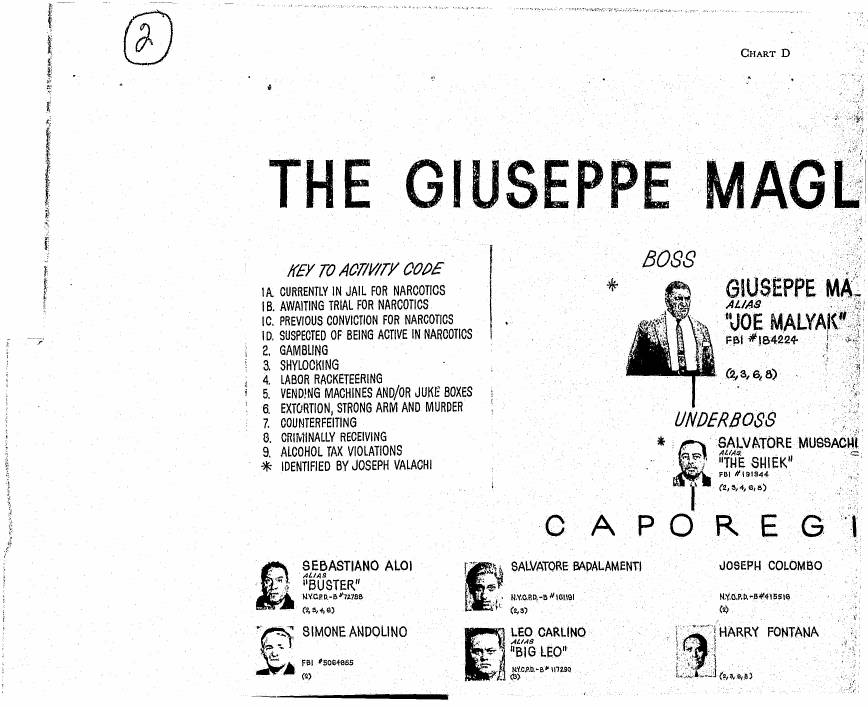
Hearing of October 8, 1963: the five New York family charts presented
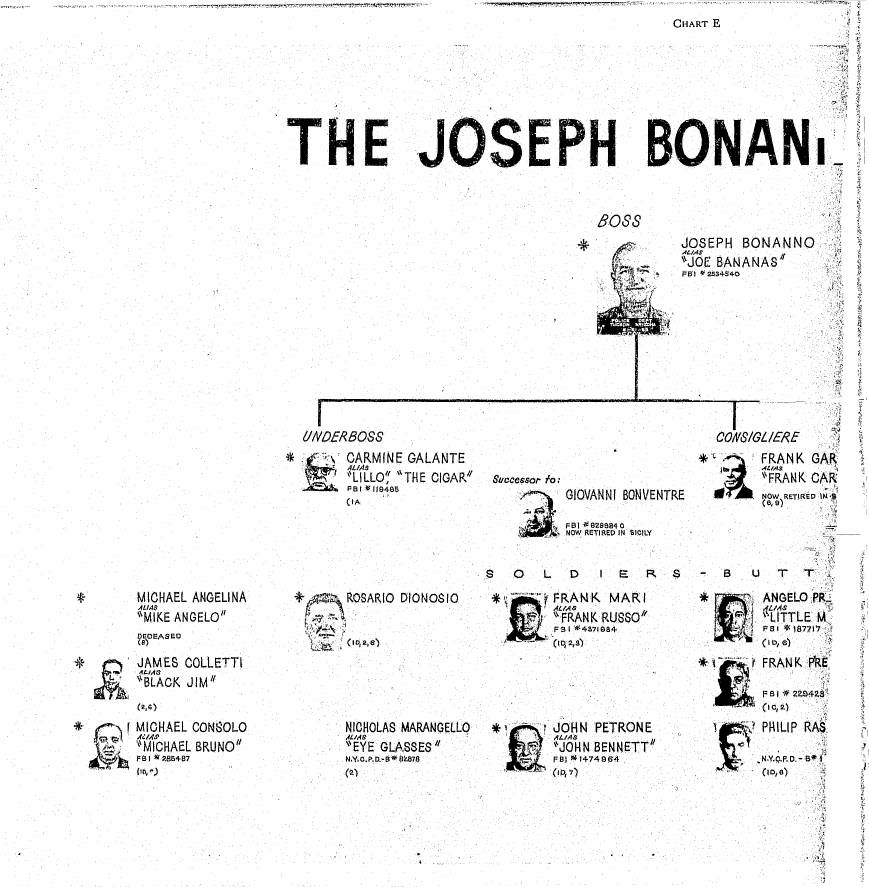
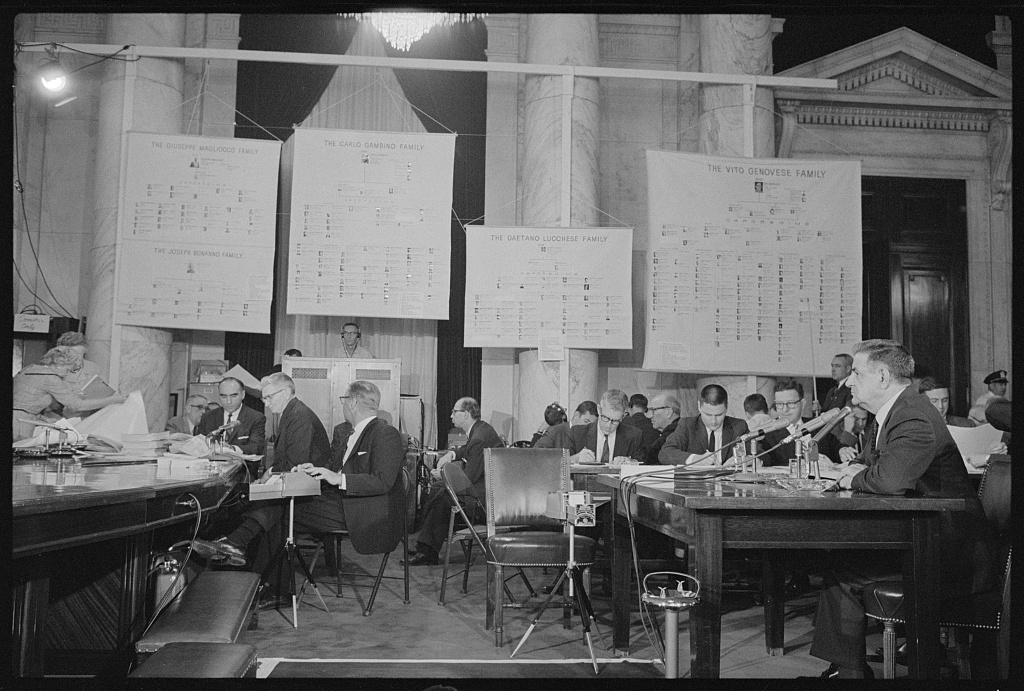
New York police Deputy Chief Inspector John J. Shanley presented Charts A to E, and Valachi answered questions about the men on them. McClellan directed that the charts be printed "exactly as they appear."
- Date
- 1963-10-08
- Kind
- hearing
- Retrieved
- 2026-10-12
- Docket
- Organized Crime and Illicit Traffic in Narcotics: Hearings before the Permanent Subcommittee on Investigations of the Committee on Government Operations, United States Senate, 88th Cong., 1st sess., pursuant to S. Res. 17, 88th Cong., Part 1
- Rights
- A work of the United States Senate, printed by the Government Printing Office. Public domain in the United States. 17 U.S.C. § 105. The NCJRS cover sheet records reproduction permission as "Public Domain / U.S. Senate."
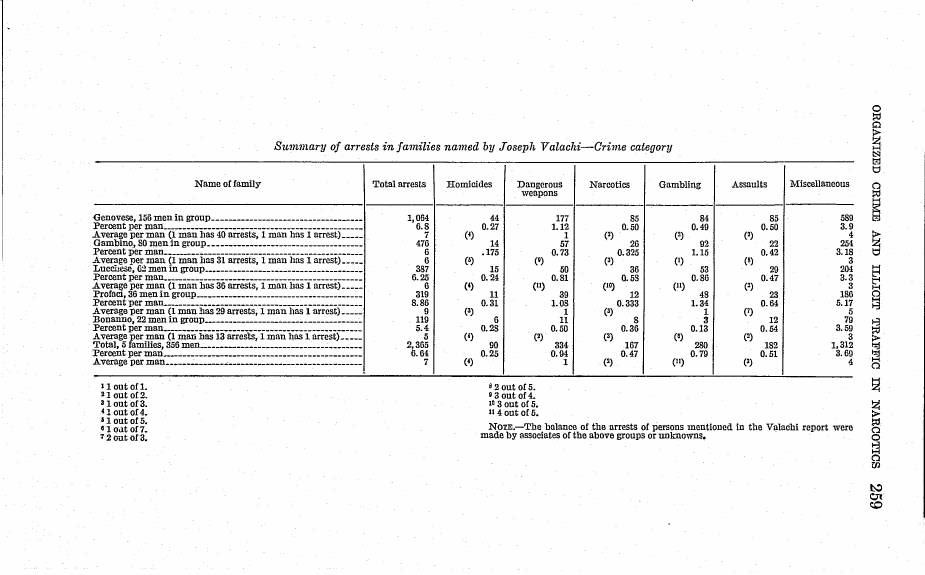
On October 8, 1963, Deputy Chief Inspector John J. Shanley of the New York Police Department presented five charts. They cover the Genovese, Lucchese, Gambino, Magliocco and Bonanno families. The proceedings are at printed pages 245 to 318 of Part 1, which are NCJRS PDF pages 258 to 345. Shanley said that “these charts were prepared on the basis of information that we obtained from the committee, and information that we had in our own files, and information that we got from the Federal Bureau of Narcotics” (printed page 248, NCJRS PDF page 261).
Chairman McClellan marked them Charts A to E. He directed that “the photographs, of course, cannot be printed in the official record,” but that the charts be printed “exactly as they appear presented to the committee.” As printed, the charts do carry the photographs. Shanley testified to 1,064 arrests among the men on the Genovese chart, and Senator Mundt counted 142 people on it. McClellan stated that Chart E carried 21 names, of whom Valachi had identified 17. Asked whether he knew other members who were not on the charts, and whether he knew some of them by aliases, Valachi answered: “Most of them by aliases.” The chairman then put it that he “did not undertake to name” men he knew only by alias (printed page 273).
The charts are filed here as their own records. They are exhibits. Their labels are the police department’s, prepared with the committee, and are not findings.