Record
Court opinion
1974-05-02
CourtListener (Free Law Project), text of the opinion
United States v. Magaddino, 496 F.2d 455 (2d Cir. 1974)
Second Circuit opinion of May 2, 1974 affirming the dismissal of a 1968 Western District of New York gambling indictment against Stefano Magaddino and others, after the government conceded illegal FBI bugging in the Buffalo area from 1961 to 1965 and declined to disclose an informant.
- Date
- 1974-05-02
- Kind
- court-opinion
- Retrieved
- 2026-10-12
- Docket
- No. 536, Docket 73-1933
- Rights
- Opinion of a United States court. Works of the federal judiciary are in the public domain in the United States (17 U.S.C. § 105). The text was read on CourtListener.
United States Court of Appeals, Second Circuit, argued January 9, 1974, decided May 2, 1974. Judge Lumbard wrote for the panel (Danaher, Lumbard and Timbers). The government was the appellant.
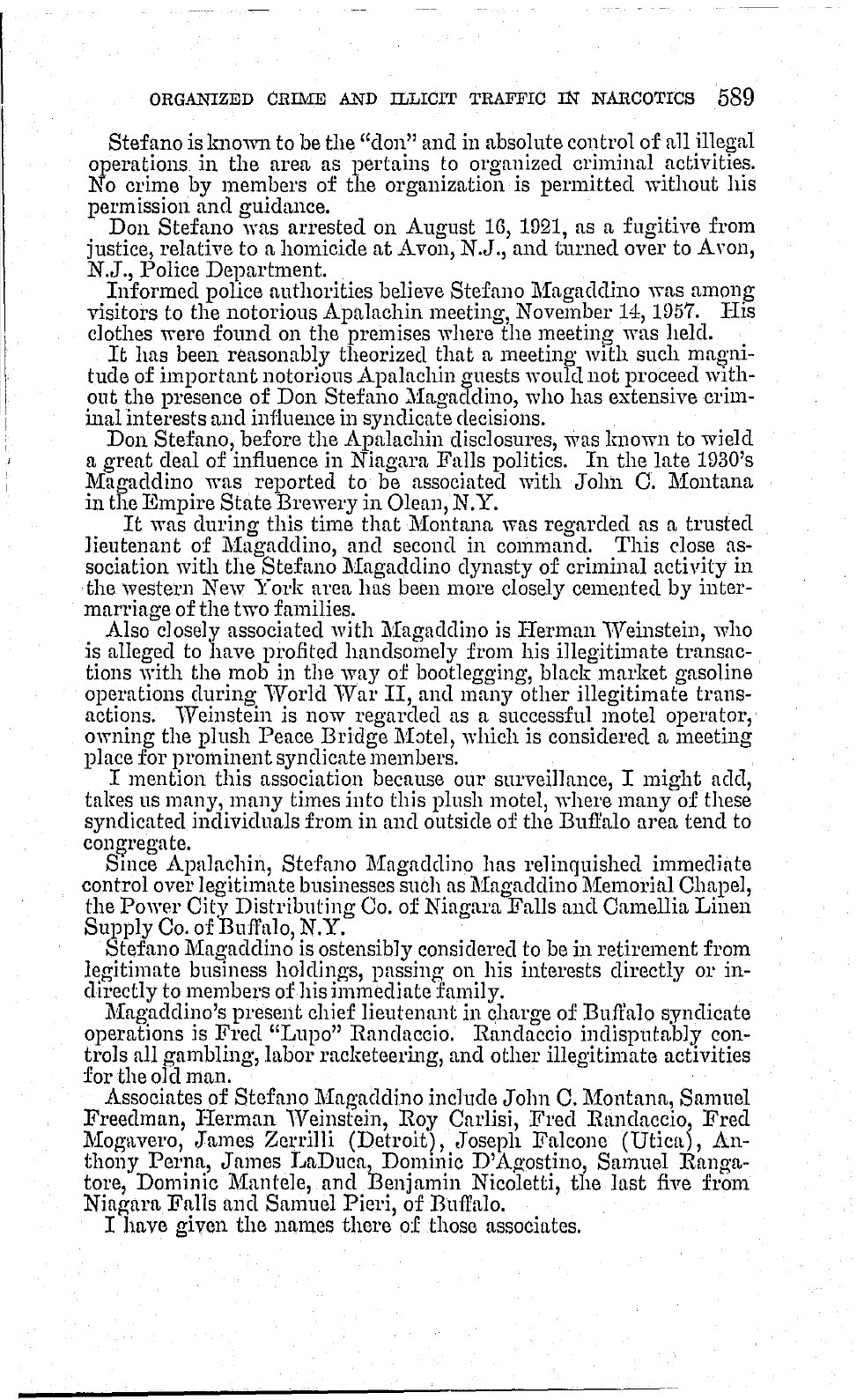
The opinion opens: “On December 4, 1968, Stefano Magaddino, Peter Magaddino, Benjamin Nicoletti, Sr., Benjamin Nicoletti, Jr., Gino Monaco, Sam Puglese, Louis Tavano, Augustine Rizzo, Patsy Passero, and Michael Farella, since deceased, were indicted in the Western District of New York for use of facilities in interstate commerce to promote gambling and conspiracy to do the same in violation of 18 U.S.C. §§ 1952 and 371.” The district court ordered the government to disclose the FBI’s records of illegal electronic surveillance and the identity of a confidential informant named in the affidavits for twenty-two search warrants of November 1968. The United States Attorney declined, and the court dismissed the indictment on June 12, 1973.
The court records that “beginning in April 1961, the F.B.I. placed bugs at several locations in the Buffalo area, including the Magaddino Memorial Chapel in Niagara Falls, the Capitol Coffee Shop, also located in Niagara Falls, and the Camelia Linen Supply Company in Buffalo.” It adds: “According to the government, the purpose of this electronic surveillance was to gather intelligence on a feud between the Magaddino and Bonanno familes over control of certain illegal activities in Canada and the Western United States. The surveillance, which the government conceded to be illegal, continued until sometime in 1965.” The opinion describes how the Bureau’s Buffalo office filed what it overheard, and says the agent who wrote the 1968 warrant affidavit “outlined the structure of the Magaddino gambling empire, which he claimed at the suppression hearing he had learned solely from his informant.”
The court affirmed the dismissal “as to all defendants except Passero and Rizzo,” who had not shown that their own conversations were overheard. This is a ruling on suppression and disclosure. It is not a finding that any defendant committed the charged offenses, and the “feud” between “families” is the government’s description of its purpose, as the court reports it. The opinion prints no street address for the surveilled places.