Record
Case file
1982-10-13
National Archives Catalog, Ronald Reagan Presidential Library (John Roberts' subject files)
William H. Webster, Thomas F. Ryan Lecture, Georgetown University Law Center, October 13, 1982
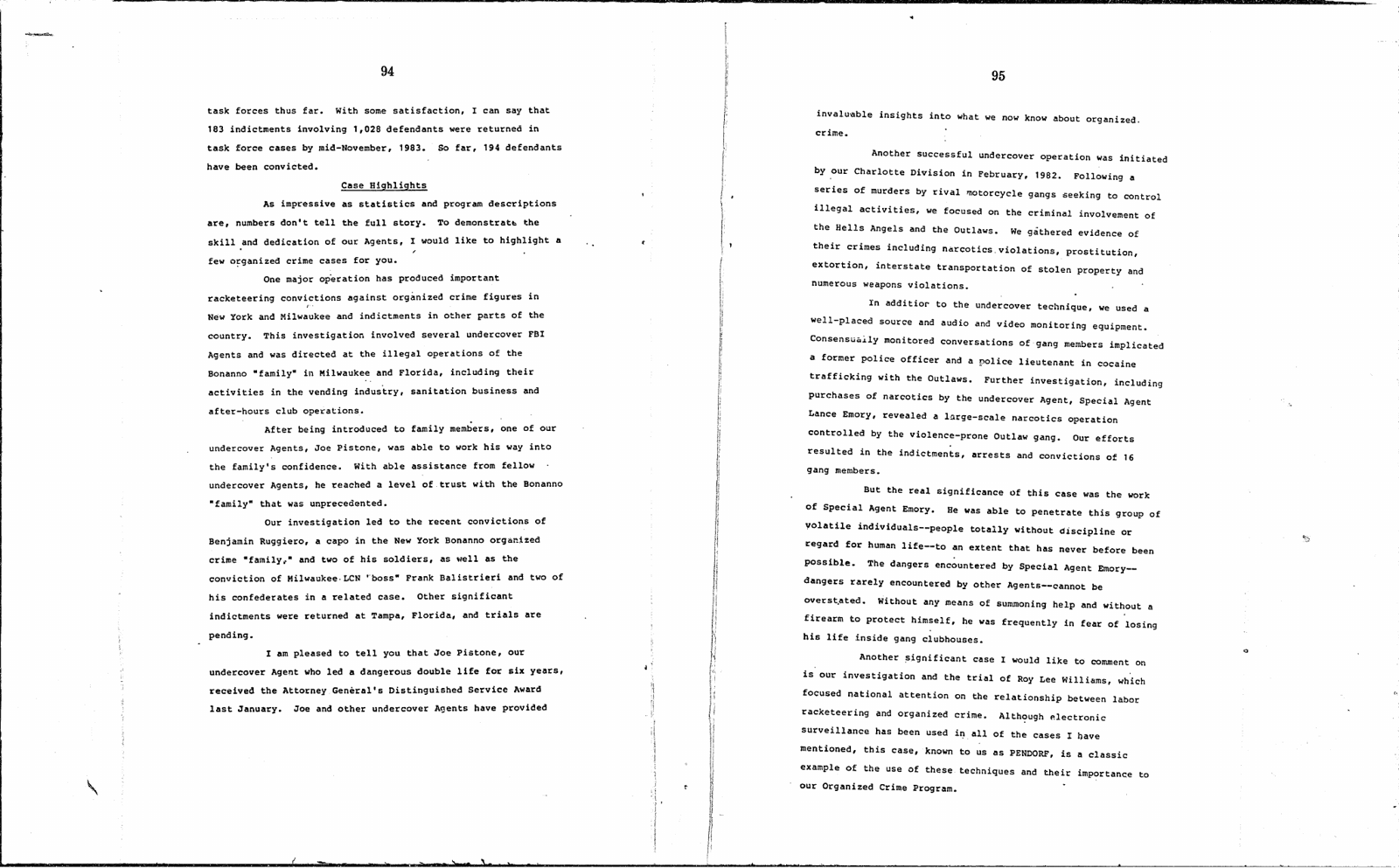
FBI Director Webster's lecture "The Informant, Electronic Surveillance, and the Undercover Agent," in a White House Counsel folder at the Reagan Library. Without naming him, he describes the agent who "assumed his role six years ago. In his undercover role, he was known as 'Donnie Brasco.'"
- Date
- 1982-10-13
- Kind
- case-file
- Retrieved
- 2026-10-12
- NAID
- 118567890
- Rights
- The FBI Director's official remarks, issued by the Federal Bureau of Investigation, a work of the United States government. Public domain under 17 U.S.C. § 105. The National Archives catalog marks the folder's use as unrestricted.
An FBI copy of Director William H. Webster’s Thomas F. Ryan Lecture at Georgetown University Law Center, “The Informant, Electronic Surveillance, and the Undercover Agent: Serving the Ends of Justice,” October 13, 1982. It is filed in the Reagan Library folder “[Correspondence - Miscellaneous (02/08/1983-02/28/1983)]” of the Office of Counsel to the President, John Roberts’ subject files (NAID 118567890), at PDF pages 44 to 65. The catalog marks the folder’s access as partly restricted, because some documents were withdrawn, and its use as unrestricted.
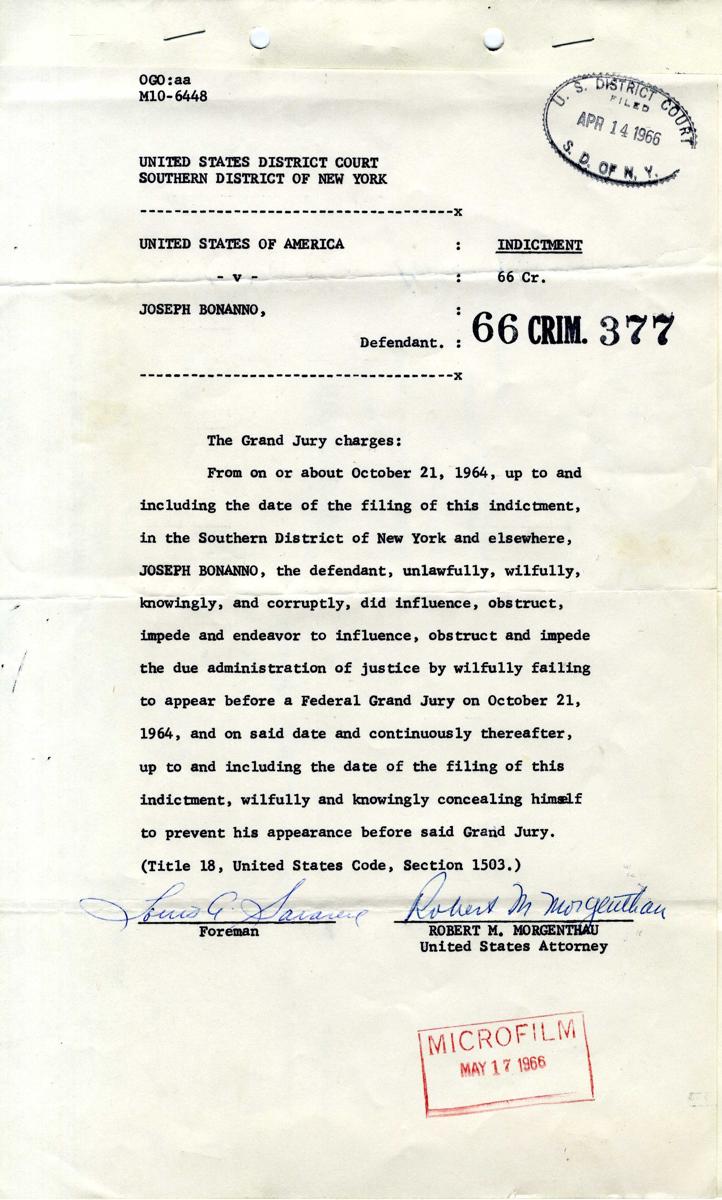
On informants, Webster says that in 1981 “Joe Bonanno, Sr., the former ‘boss’ of the New York-based Bonanno family, was sentenced to five years in prison following his conviction on charges of conspiracy to obstruct justice,” and credits “a man named Lou Peters, a California Cadillac dealer,” with the evidence. That is the Director’s account in a lecture.
On undercover agents (printed pages 19 to 21 of the speech), he describes “a very important recent operation that produced racketeering convictions against important organized crime figures in New York and many indictments in other parts of the country. It involved eight FBI undercover Agents,” among them “one Agent who worked in New York and assumed his role six years ago. In his undercover role, he was known as ‘Donnie Brasco.’” A second agent was placed “in a southern city as the operator of a nightclub,” and Brasco “let his criminal friends in New York know he had an associate who had a nightclub with a gambling operation in another city.” In time “there was talk of making him a member.”
After the operation ended, “we heard that threats were being made against him. So, as an unusual precaution, we contacted the heads of the families that were involved. We simply advised them that we were aware of the threats and would prosecute anyone attempting to harm or intimidate one of our Agents.” The lecture does not name Pistone or any family member.