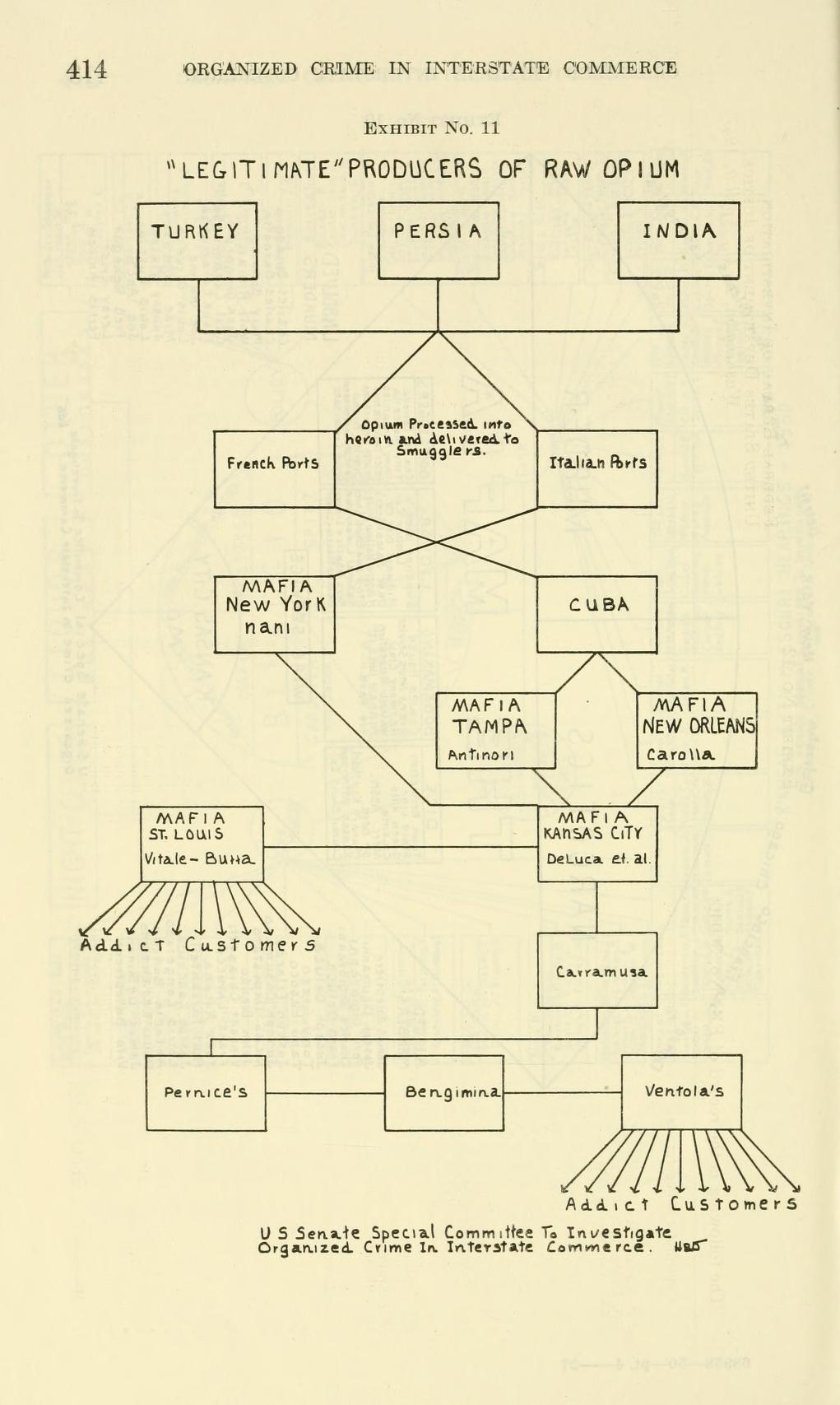
Kefauver Part 4, Exhibit 11: committee chart of "legitimate" producers of raw opium and smuggling routes
A committee flow chart running from Turkey, Persia and India through French and Italian ports and Cuba to boxes labelled Mafia in New York, Tampa, New Orleans, St. Louis and Kansas City and on to "addict customers," received on September 28, 1950.
- Date
- 1950-09-28
- Kind
- hearing
- Retrieved
- 2026-10-12
- Docket
- Investigation of Organized Crime in Interstate Commerce, Hearings before the Special Committee, 81st Cong., Part 4: Missouri
- Rights
- A work of the United States Congress, printed by the Government Printing Office. Public domain in the United States. 17 U.S.C. § 105. The scan is of a GPO printing; Internet Archive marks it not in copyright.
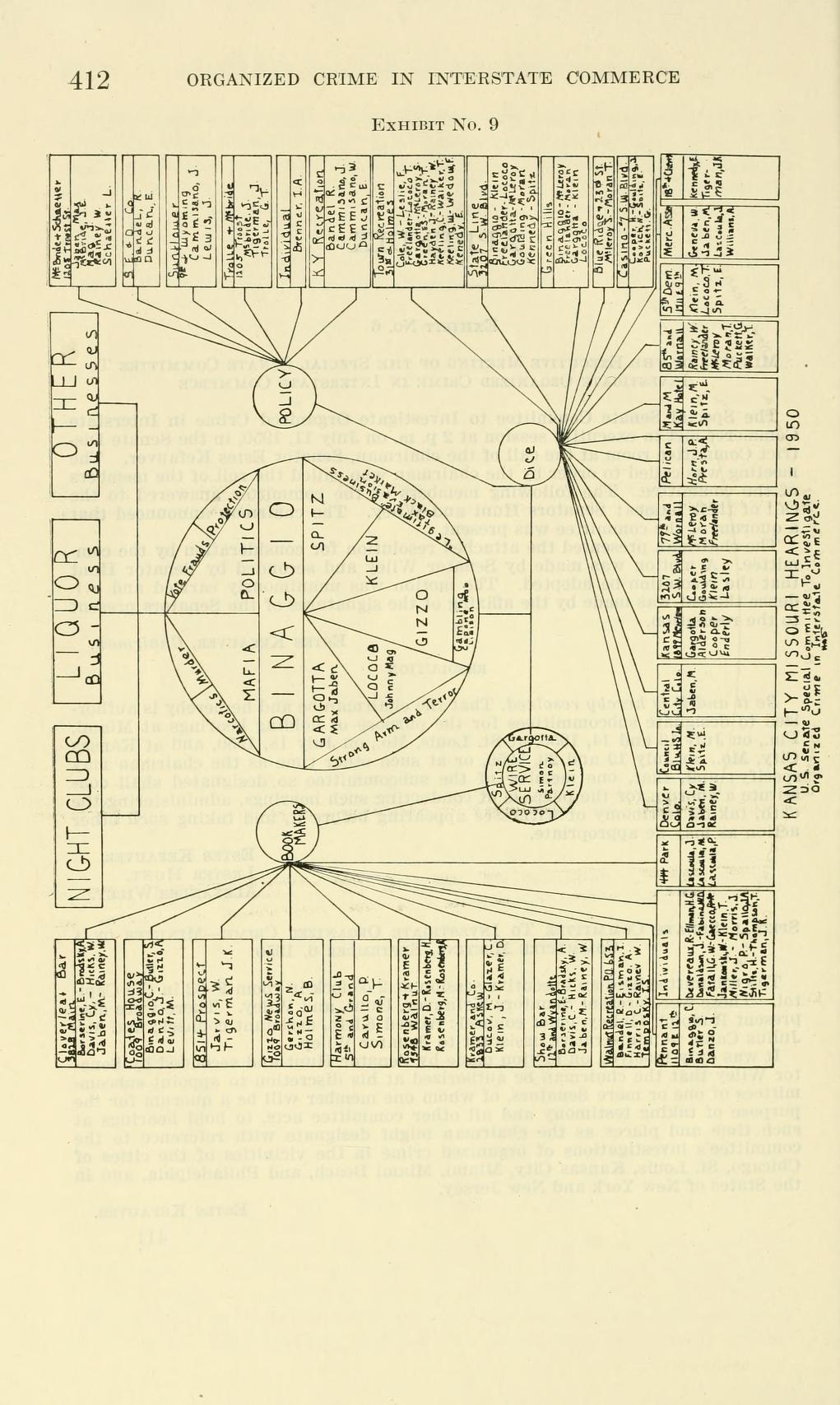
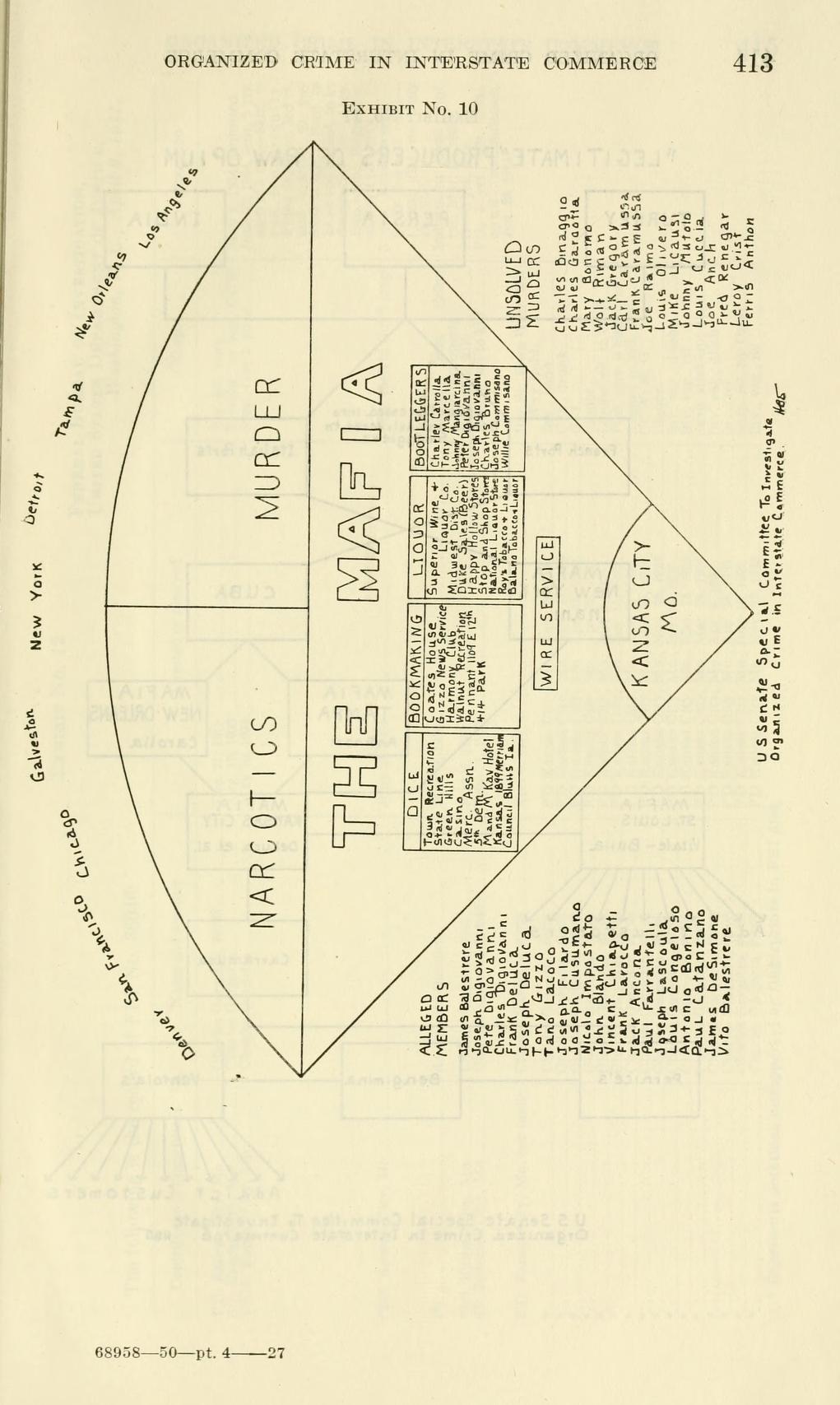
Exhibit No. 11 is printed at page 414 of Part 4. Chief counsel Rudolph Halley offered three charts “for identification” during the testimony of narcotics agent Claude A. Follmer on September 28, 1950, and the chairman received them as exhibits 9, 10 and 11 (printed page 88). The contents describe it as a “Chart used by the committee showing ‘legitimate’ producers of raw opium.” It carries the committee’s credit line.
The chart is headed “‘Legitimate’ producers of raw opium.” Boxes for Turkey, Persia and India lead to a box reading “Opium processed into heroin and delivered to smugglers,” then to French ports and Italian ports, and on to boxes for New York, Cuba, Tampa, New Orleans, St. Louis and Kansas City, each labelled Mafia and each with a surname. Lower boxes lead to lines marked “addict customers.” Asked about the chart, Follmer named Turkey, Persia and India as where raw opium was “produced legitimately” (printed page 88).
This is a hearing exhibit. The names, ranks and relationships printed on it are the labels of a 1950 committee staff chart. They are not findings of the committee or of a court, and this archive does not copy any of them onto a family page or a person page.