Record
Hearing
1963-10-09
National Criminal Justice Reference Service, scan of the printed hearings (NCJ 119303)
Senate narcotics hearings, 9 October 1963: Valachi's half point in the Capri casino, Havana, and his account of the casinos' end (pp. 391-392)
Joseph Valachi testified that casino interests were sold as 'points' at about $5,000 each, that he had 'a half point with a friend' in the casino at the Capri 'just about when Castro started making trouble,' and that when Castro raised the rent 'they all went out of Havana.'
- Date
- 1963-10-09
- Kind
- hearing
- Retrieved
- 2026-10-12
- Rights
- A work of the United States Senate, printed by the Government Printing Office. Public domain in the United States. 17 U.S.C. § 105.
Printed pages 391 and 392 of Part 1 (NCJRS PDF pages 418 and 419), from the last day of Valachi’s public testimony, 9 October 1963; the day as a whole is filed separately. Asked by Senator Javits about Las Vegas, Valachi said he heard only “general talk” and explained the shares: “they sell 100 points at $5,000 a point,” and a point is “1 percent.” He added: “I know the hotels like in Havana but not in Las Vegas.”
Asked whether he bought any points, he said: “Well, I had a half point with a friend.” Asked in what, he answered “Capri,” and then: “The Capri, just about when Castro started making trouble.” He said he received three payments, “275, 300, and 275.” (The text layer reads “Oapri” and “Oastro”; the subcommittee’s printed index lists “Capri Casino, Havana, Cuba … 392.”)
He then gave his account of the end: “I can tell you what happened when Castro took over. They were paying $25,000 a year rent. The deal was that what Castro wanted to give them was he raised it to $50,000 and 50 percent of the business. They told him to take a walk and they all went out of Havana.” Asked whether he lost money, he said: “I didn’t lose. I had sold out.”
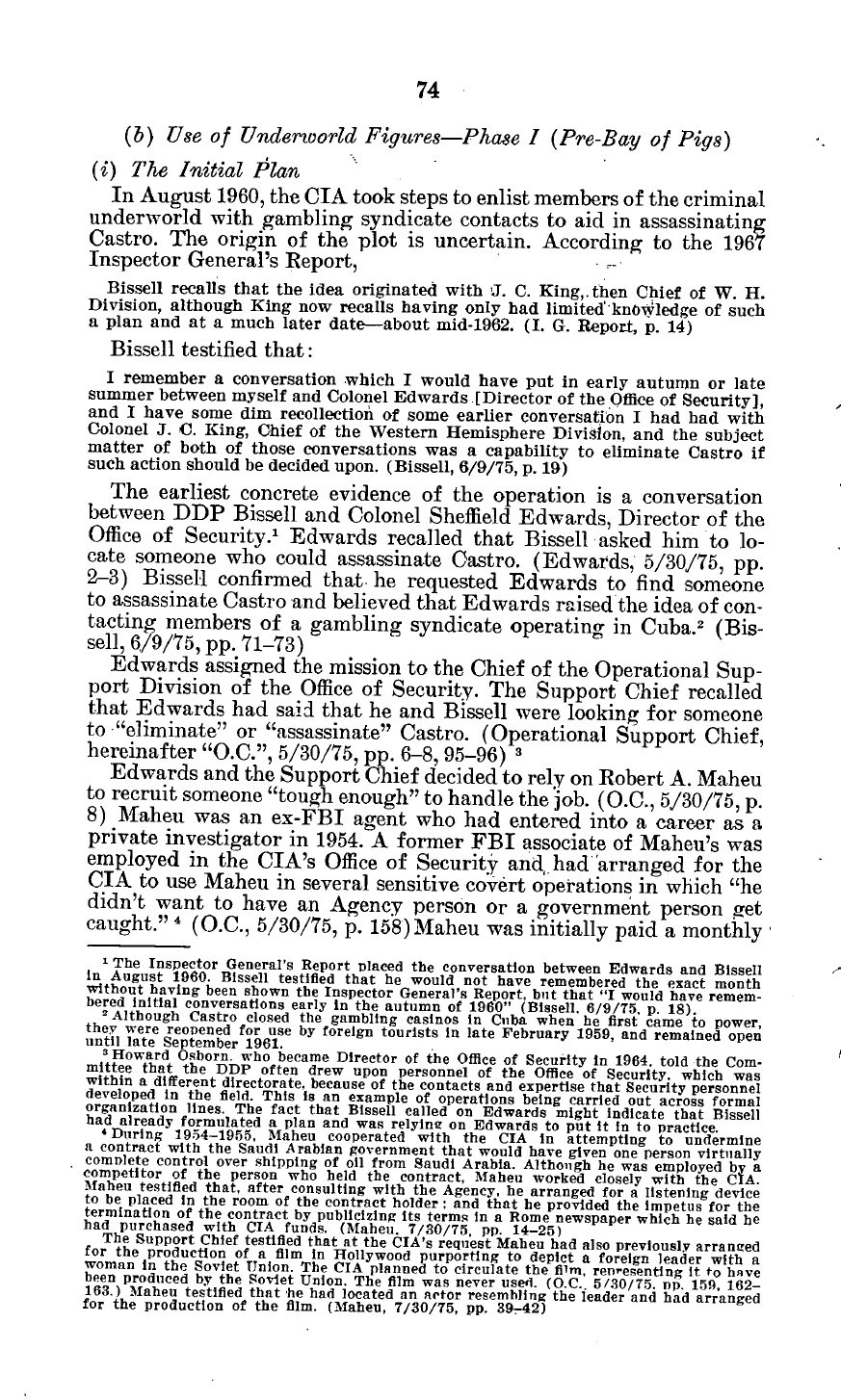
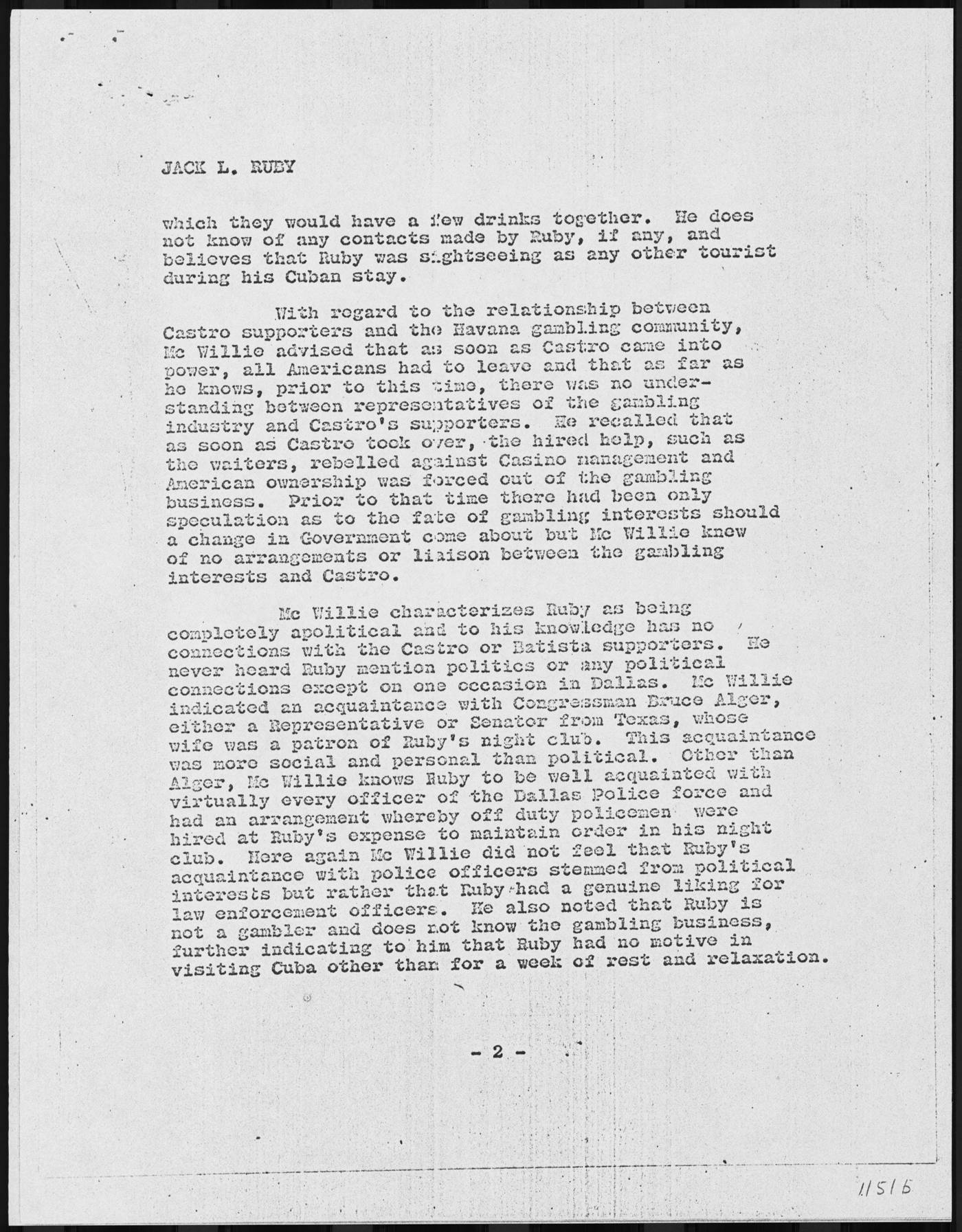
This is a cooperating witness’s account of what he heard, without names or dates for the rent demand. It is one of three accounts of the casinos’ end filed here. The Church Committee states that the casinos were closed, reopened for tourists in late February 1959 and stayed open until late September 1961 (pp. 74-75), and Lewis McWillie told the FBI that the casino help rebelled and “American ownership was forced out” (Commission Exhibit 1697). This archive does not merge them.