FBI Los Angeles report, 1968-1969: John Roselli convicted as an unregistered alien and in the Friars Club case (Vault Roselli Part 08)
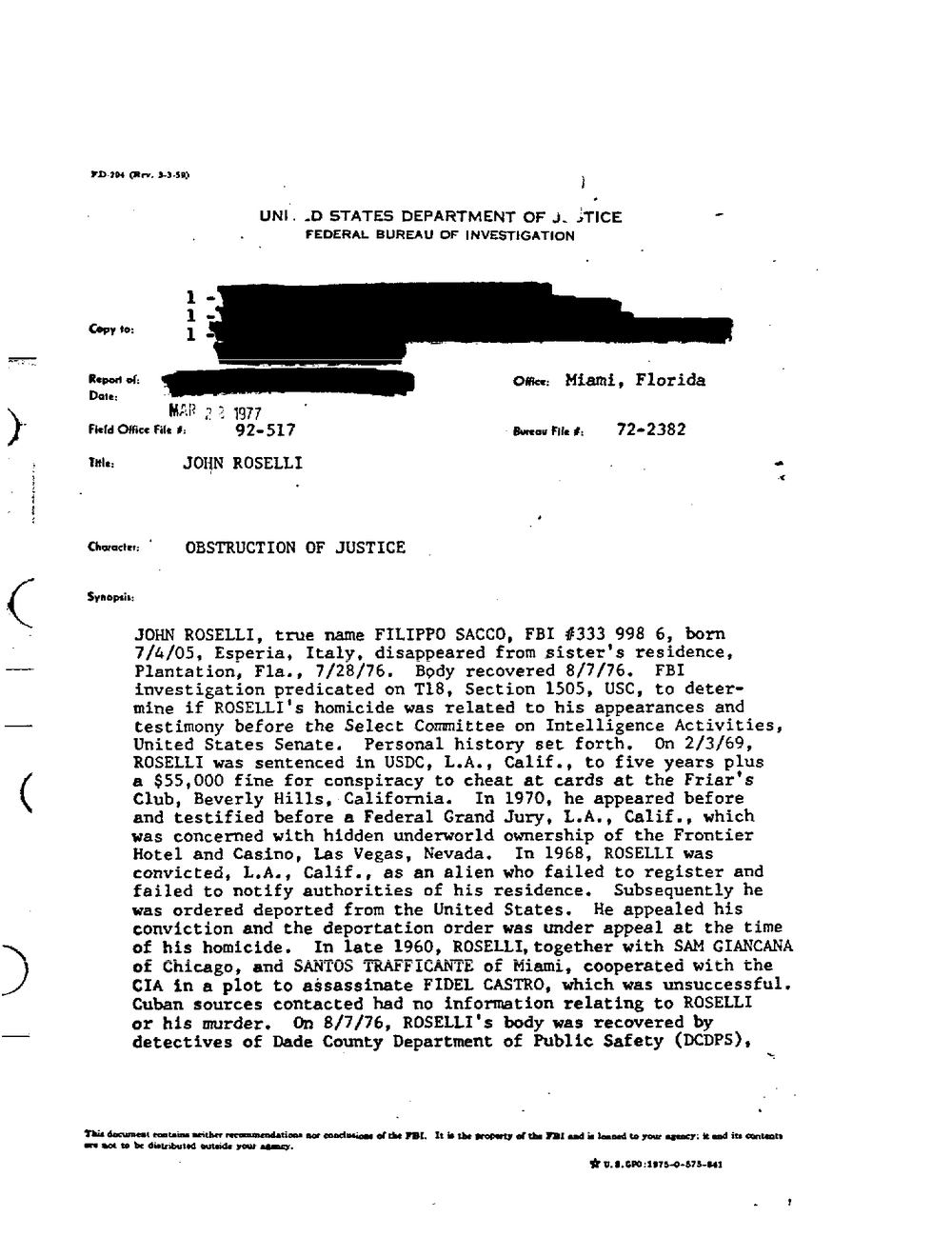
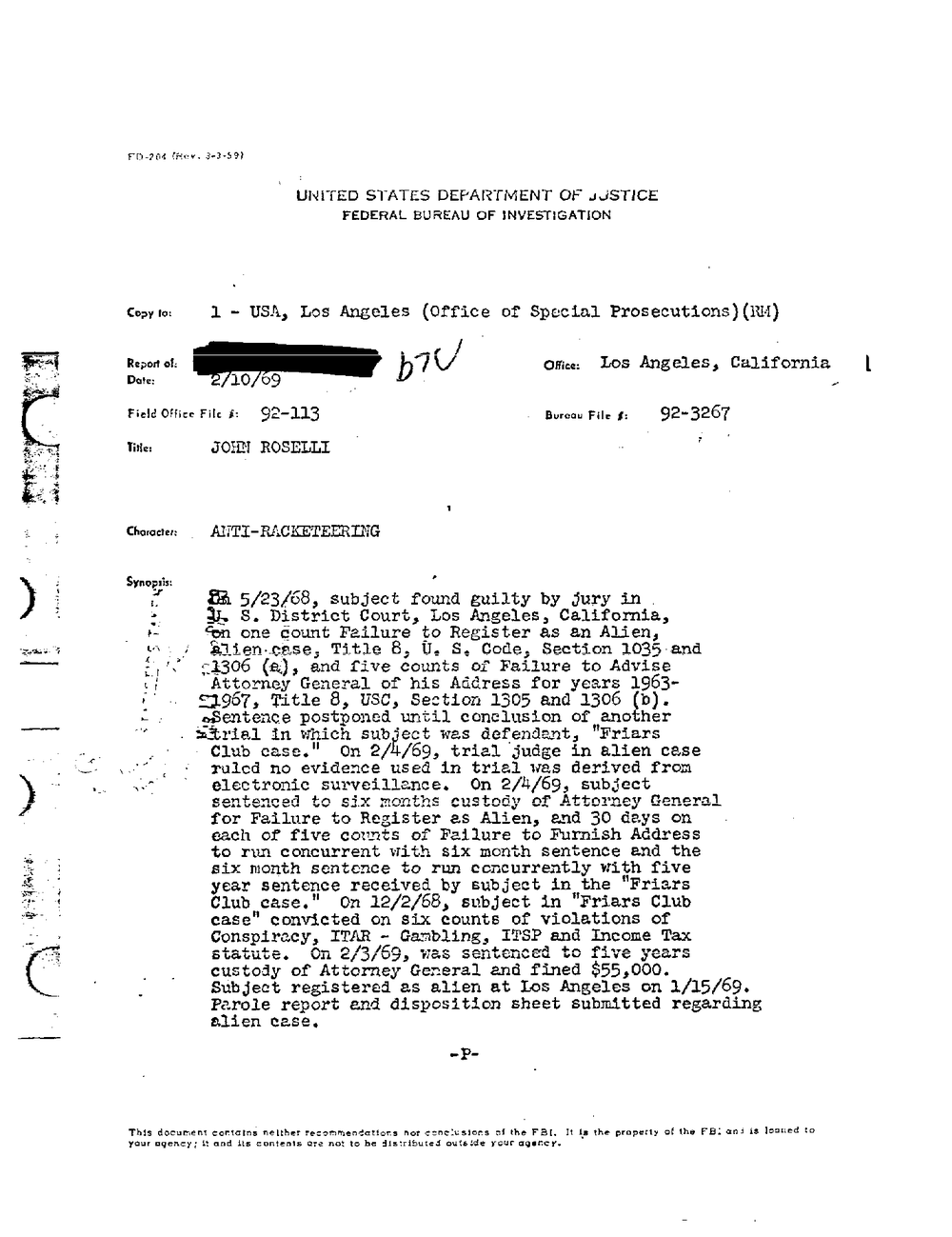
A Los Angeles report records Roselli's May 23, 1968 conviction for failing to register as an alien, after FBI evidence that he was born in Italy as Filippo Sacco, his December 2, 1968 conviction in the Friars Club case, and his February 1969 sentences.
- Date
- 1968-05-23/1969-02-04
- Kind
- case-file
- Retrieved
- 2026-10-12
- Docket
- Los Angeles file 92-113; Bureau file 92-3267
- Rights
- A record of the Federal Bureau of Investigation released under FOIA through the FBI Vault. A work of the United States government, public domain under 17 U.S.C. § 105.
A teletype to the Director and a Los Angeles report dated 2/10/69 (Los Angeles file 92-113, Bureau file 92-3267). They record that on May 23, 1968 a jury in the Central District of California found John Roselli guilty of failing to register as an alien and, on five counts, of failing to furnish his address to the Attorney General in January of each year from 1963 to 1967.
They say the FBI’s investigation developed evidence that he was born in Italy as Filippo Sacco, which he admitted at trial while contending he had derivative citizenship through his mother’s marriage, a marriage the Government showed to be invalid. On December 2, 1968, after a long trial, he was convicted in the “Friars Club case” of conspiracy, interstate travel in aid of racketeering, interstate transportation of stolen property and income-tax counts. He was sentenced on February 3, 1969 to five years and a $55,000 fine in that case, and on February 4, 1969 to six months in the alien case, to run concurrently. The judge ruled after a hearing that no evidence in the alien case came from electronic surveillance.
Page 137 also describes Roselli in the FBI’s 1968 words as “Sam Giancana’s lieutenant.” That is the Bureau’s characterization, not a finding, and it is not adopted here. The Ninth Circuit’s opinion on the Friars Club convictions is United States v. Roselli (1970). This archive read the page through the Vault viewer’s OCR text layer. The scans are poor; names, dates and figures can be garbled, and many names are redacted under FOIA exemptions (b6, b7C, b7D).