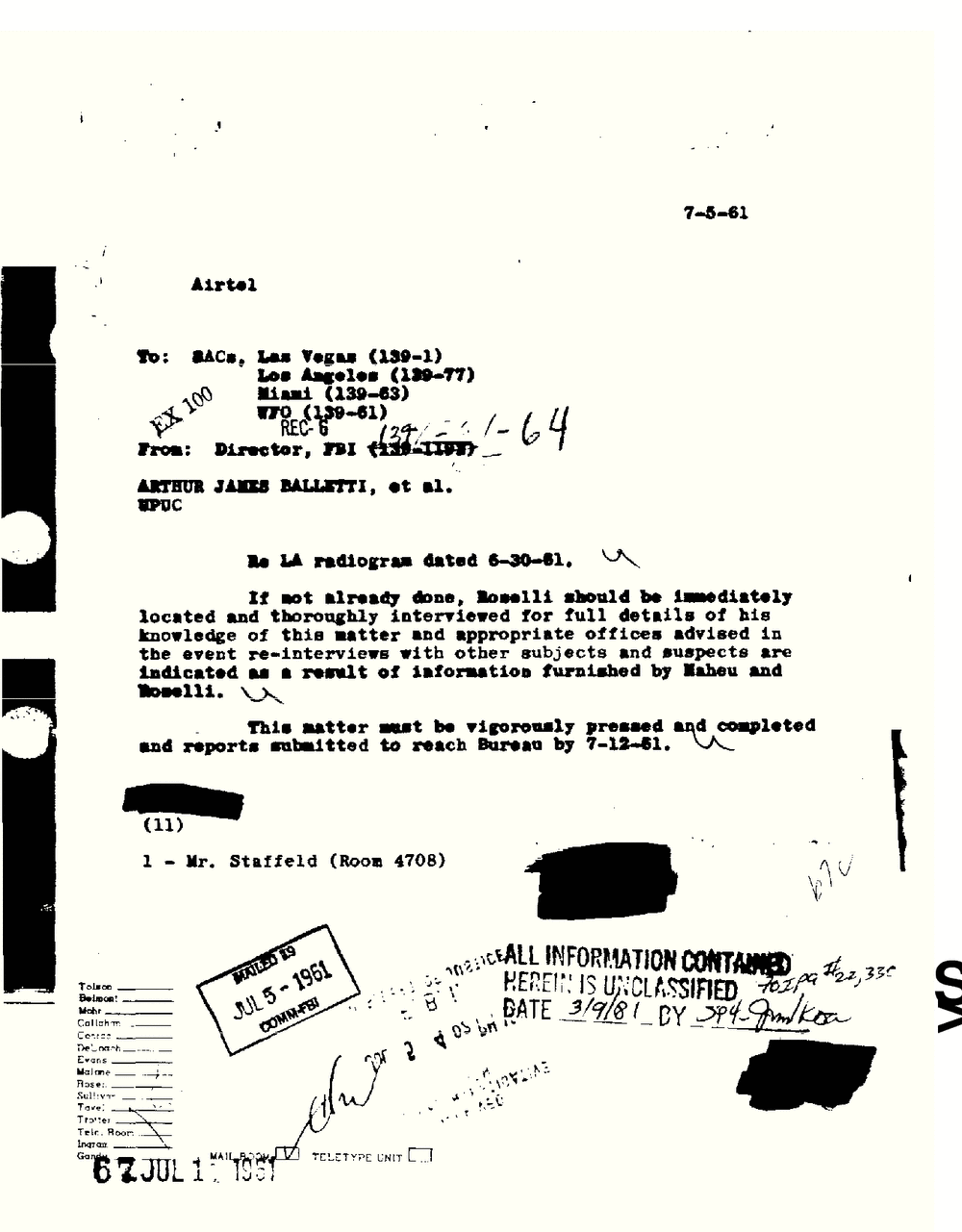
FBI teletypes and airtels, June-July 1961: the Balletti wiretap case and Robert Maheu's account of reaching Giancana through Roselli (Vault Roselli Part 12)
In the case 'Arthur James Balletti, et al', FBI teletypes report that Robert Maheu, located on June 29, 1961, named John Roselli as his route to Sam Giancana, and that on re-interview he said his work had been for a Central Intelligence Agency assignment.
- Date
- 1961-06/1961-07
- Kind
- case-file
- Source
- FBI Records: The Vault, John (Handsome Johnny) Roselli Part 12 (Final), pp. 2, 33-34, 36, 38-40, 44
- Retrieved
- 2026-10-12
- Docket
- Bureau case 'Arthur James Balletti, et al' (Las Vegas); Chicago 39-105 listed for copies
- Rights
- A record of the Federal Bureau of Investigation released under FOIA through the FBI Vault. A work of the United States government, public domain under 17 U.S.C. § 105.
The final part of the Roselli file (110 viewer pages). Pages 33 to 44 are FBI teletypes, memoranda and an airtel in the case “Arthur James Balletti, et al,” an interception-of-communications case opened in Las Vegas.
A 1961 teletype reports that Robert Maheu was located and interviewed on June 29 and identified John Roselli as the man through whom he made his original contact with Sam Giancana. A Bureau memorandum of the same period says the investigation was being pressed to learn the full part played by Maheu, Giancana and Roselli, who it says were under investigation by the Chicago and Los Angeles offices as top hoodlums, and a Bureau airtel of 7-5-61 (p. 36) orders that Roselli be located and thoroughly interviewed. A Los Angeles airtel of 7/11/61 records Maheu’s re-interview: he said that in October 1960 he asked a Miami private investigator to arrange surveillance of a performer’s room at the Riviera Hotel in Las Vegas, that he discussed it with Roselli but it was not done at the request or for the benefit of Roselli or Giancana, and that he took full responsibility. A report of his 7/13/61 interview (p. 44) says he would not answer questions without counsel and that his work had been in connection with a Central Intelligence Agency assignment.
A later memorandum at the front of the part (p. 2), with no legible year, reports that information on Roselli was given to Assistant Attorney General Richard Thornburgh, who said it appeared to be a missing-persons case rather than a federal violation. The surveillance target is not named here. The OCR of pages 33, 34 and 44 is badly garbled, and only legible statements are summarized. This archive read the page through the Vault viewer’s OCR text layer. The scans are poor; names, dates and figures can be garbled, and many names are redacted under FOIA exemptions (b6, b7C, b7D).