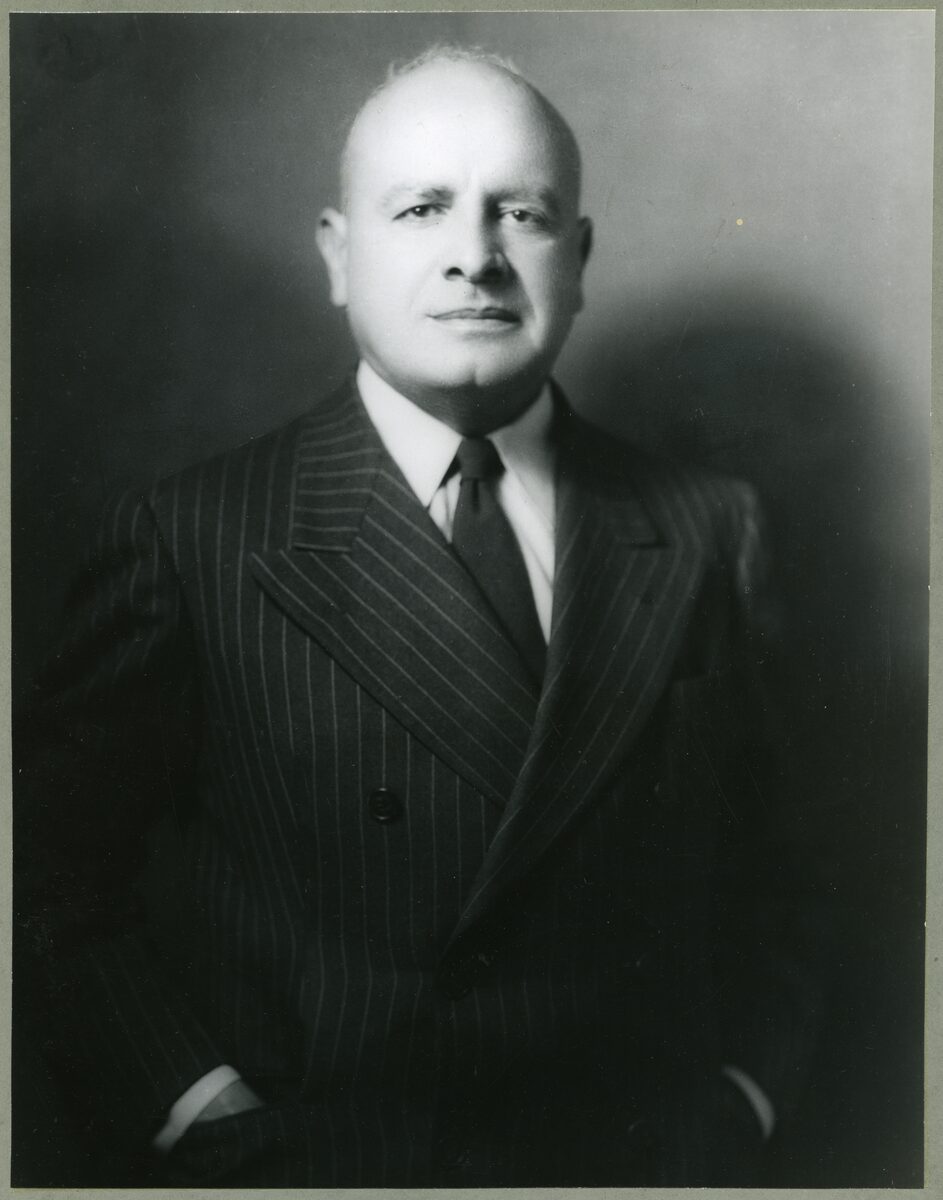
Harry J. Anslinger
U.S. Commissioner of Narcotics, in the National Archives' caption of his Bureau of Narcotics portrait. He testified to the Kefauver Committee in 1951 and, as a former commissioner, to the Senate narcotics hearings of 1964.
- Role
- U.S. Commissioner of Narcotics (National Archives catalog caption, source: Bureau of Narcotics); "Federal Commissioner of Narcotics" for "Thirty-two years" (his own testimony, 1964)
- Rights
- Biography on this page is limited to what the cited federal records state. The portrait is a Bureau of Narcotics photograph held by the National Archives, public domain under 17 U.S.C. § 105.
On the record
- 1930-07-01 — The Library of Congress dates an Underwood & Underwood photograph of him seated at his desk to 1 July 1930, from unverified caption-card data.
- 1937 or 1938 — A Harris & Ewing photograph at the Library of Congress captions him "U.S. Commissioner of Narcotics" at a meeting on marihuana control with Canada's narcotic control chief and Assistant Secretary of the Treasury Stephen B. Gibbons; the record gives the date as 24 March, with the year as both 1937 and 1938.
- 1951-03-27 — Before the Kefauver Committee (Part 12, pp. 662–668), headed "Commissioner, Bureau of Narcotics, Treasury Department," he testified: "Of a list of 800 hoodlums I furnished your committee, about 200 have narcotic records."
- 1964-07-28 — Before the Senate Permanent Subcommittee on Investigations (Part 3, p. 679) he identified himself as the U.S. representative on the United Nations Commission on Narcotic Drugs and said he had served as "Federal Commissioner of Narcotics" for "Thirty-two years."
- 1968 — Reorganization Plan No. 1 of 1968 (82 Stat. 1367), Section 4: "The Bureau of Narcotics in the Department of the Treasury, including the office of Commissioner of Narcotics (21 U.S.C. 161), is hereby abolished."
- 1976 — The Church Committee's Book I says of the Bureau of Narcotics' part in the CIA's LSD testing: "There is some question as to the Commissioner of Narcotics' knowledge about the project." The passage does not name him.
The records filed here do not give the years in which he took or left the office, or his dates of birth and death; the only span is his own “Thirty-two years” in 1964. His 1964 testimony is mainly about international treaties, and the research pass found no mention of the Mafia in it. The Bureau’s own account of the Mafia in the 1964 hearings is given by Commissioner Henry L. Giordano and by Martin Pera, and it is not attributed to Anslinger here.
Records
itemPortrait of Harry Jacob Anslinger, U.S. Commissioner of Narcotics (National Archives, 306-PSA-55-11680)Formal studio portrait of Harry J. Anslinger, captioned by the National Archives as U.S. Commissioner of Narcotics, with the source given as the Bureau of Narcotics. Undated. A copy is stored here.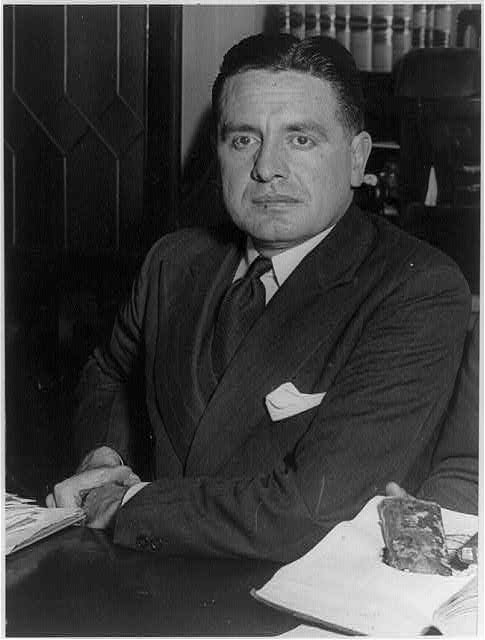 itemHarry Jacob Anslinger at his desk, 1 July 1930 (Library of Congress)Half-length photograph of Harry J. Anslinger seated behind a desk, dated by the Library of Congress to 1 July 1930 from caption-card data. A copy is stored here.
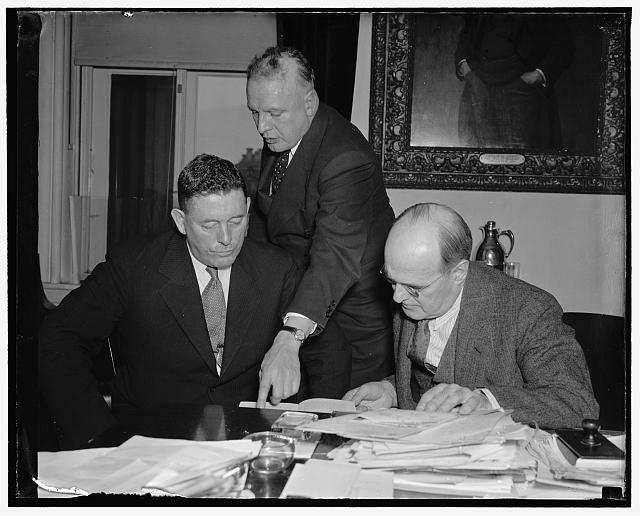 itemCanadian and U.S. narcotics officials meet on marihuana control, Washington, 24 March 1937 or 1938 (Library of Congress)Harris & Ewing photograph of Col. C.H.L. Sharman, Chief of Canadian Narcotic Control, Harry Anslinger, U.S. Commissioner of Narcotics, and Assistant Secretary of the Treasury Stephen B. Gibbons, at a meeting on cooperation in marihuana control. A copy is stored here.itemTestimony of Harry J. Anslinger, Commissioner of Narcotics, 27 March 1951 (Kefauver Committee, Part 12, pp. 662–668)The Commissioner of Narcotics tells the Kefauver Committee that heroin traffic "is all interstate because it must originate abroad," that about 200 of a list of 800 hoodlums he gave the committee have narcotic records, and that his Bureau has 200 men.itemTestimony of Harry J. Anslinger, 28–29 July 1964 (Organized Crime and Illicit Traffic in Narcotics, Part 3)The former Commissioner of Narcotics, by then the U.S. representative on the United Nations Commission on Narcotic Drugs, testifies mainly on the international control treaties. His prepared statement says addiction is concentrated in large cities "where organized criminals have made it available."itemReorganization Plan No. 1 of 1968, 82 Stat. 1367The President's plan, effective April 8, 1968, that moved the functions of the Treasury Department's Bureau of Narcotics to the Attorney General, created the Bureau of Narcotics and Dangerous Drugs in the Department of Justice, and abolished the Bureau of Narcotics and the office of Commissioner of Narcotics.itemChurch Committee, Final Report, Book I (S. Rept. 94-755, 1976): the Bureau of Narcotics in the CIA's drug testingPassages of the Church Committee's Book I stating that undercover officers of the Bureau of Narcotics, acting for the CIA, gave LSD to unwitting subjects, some of them "informers or members of suspect criminal elements," and that "There is some question as to the Commissioner of Narcotics' knowledge about the project."