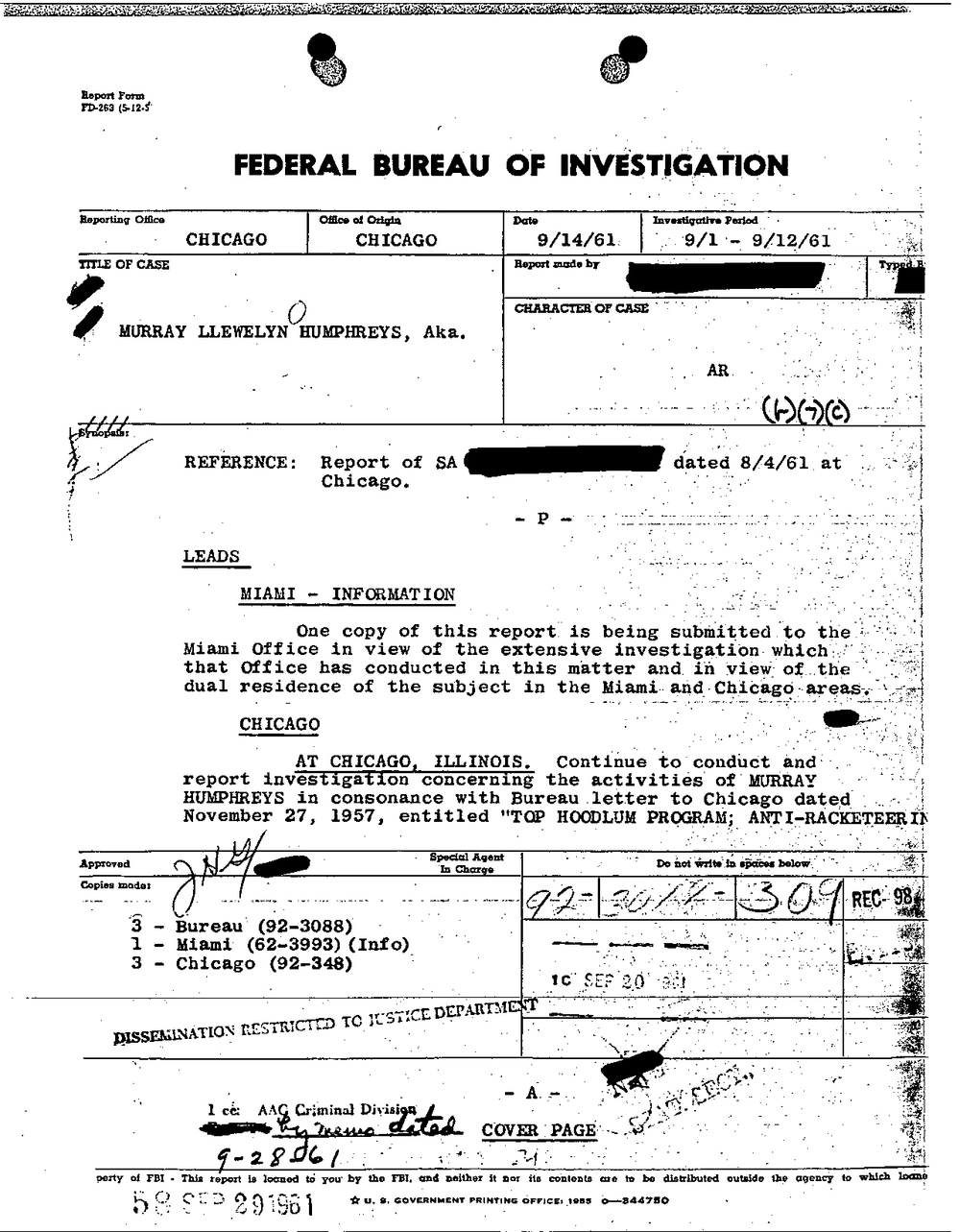
FBI Chicago report, September 14, 1961: inquiry whether jurors in Accardo's 1960 tax trial were approached (Vault Humphreys Part 12)
The report investigates whether Humphreys or anyone for him approached a juror in Anthony Accardo's 1960 income-tax trial. An informant said Humphreys masterminded the defense strategy and obtained the jury list, but the synopsis says no approach was ever made.
- Date
- 1961-09-14
- Kind
- case-file
- Retrieved
- 2026-10-12
- Docket
- Chicago file 92-348
- Rights
- A record of the Federal Bureau of Investigation released under FOIA through the FBI Vault. A work of the United States government, public domain under 17 U.S.C. § 105.
A Chicago report dated 9/14/61, covering September 1 to 12, 1961. It investigates whether Humphreys, or anyone acting for him, approached a juror in the trial of Anthony Accardo, tried in the Northern District of Illinois from September to November 1960 on income-tax charges.
An informant said that in the fall of 1960 Humphreys was “directing and master-minding” the defense strategy and obtained the list of the jury panel, and that associates, Frank Ferraro in particular, looked into the jurors’ backgrounds, but that the informant never learned of any actual approach. The synopsis says no such approach was ever made, that the jurors, with an exception the OCR cuts off, denied being approached, and that Accardo took the position that such tactics would only cause more trouble for him.
These are informant statements relayed by the FBI. The sentence about the one juror exception is cut off and is not characterized. Accardo’s conviction in that trial was reversed in United States v. Accardo (7th Cir. 1962). This archive read the page through the Vault viewer’s OCR text layer. The scans are poor; names, dates and figures can be garbled, and many names are redacted under FOIA exemptions (b6, b7C, b7D).