Antonio Magaddino
Of Niagara Falls. John C. Montana testified that he drove to the Apalachin area on November 14, 1957 with "Anthony Maggadino," and the Second Circuit lists Antonio Magaddino among four men apprehended in the fields near Joseph Barbara's house that day.
- Aliases
- Anthony Maggadino, Antonio Maggadino, Anthony Magaddino
- Rights
- Biography on this page is limited to what the cited federal records state.
On the record
- 14 November 1957 — United States v. Bufalino, 285 F.2d 408 (2d Cir. 1960): "Four of these men were apprehended in the fields-- John Montana, Antonio Magaddino, Joseph Bonanno and Giovanni Bonventre." The same opinion lists Anthony Magaddino among four defendants who were fugitives (n.1). Court opinion.
- 1958 — The McClellan Committee staff list records "Maggadino, Antonio (Niagara Falls): At Apalachin meeting. Vice president of Maggadino Funeral Home," with a record "(all in Italy)" (Part 32, p. 12198). Committee staff memorandum, which the chairman said "is not evidence."
- 1958 — John C. Montana testified that he drove toward New York on November 14, 1957 with "Anthony Maggadino," whom he called "an uncle through marriage to my nephew," and said he did not know of the record in Italy that Robert F. Kennedy read to him (Part 32, p. 12299). Testimony; the record is counsel's reading of committee information.
- 1958 — Kennedy, questioning James V. La Duca, described the Maggadino Funeral Home as "operated and run by Mr. Antonio Maggadino, who also attended the meeting at Apalachin" (Part 32, p. 12273). Counsel's statement; La Duca declined to answer.
- 16 October 1963 — Buffalo police Lt. Michael Amico said Montana had testified that he went to Apalachin with Antonio Magaddino, "an uncle of Montana's nephew through marriage" (Senate hearings 1963, Part 2, p. 592). Police testimony.
This page is limited to federal records. Whether the “Anthony Magaddino” of the Bufalino opinion’s footnote, the “Antonio Maggadino” of the 1958 staff list and the “Anthony Maggadino” of Montana’s testimony are the same man is this archive’s reading of the near-identical names and the shared Apalachin context; no single record says so. The 1958 staff list calls Steve Maggadino his brother. No record opened here states a role for him in any organization, and the Italian record read into the 1958 hearing is counsel’s account, not evidence of the facts listed.
Records
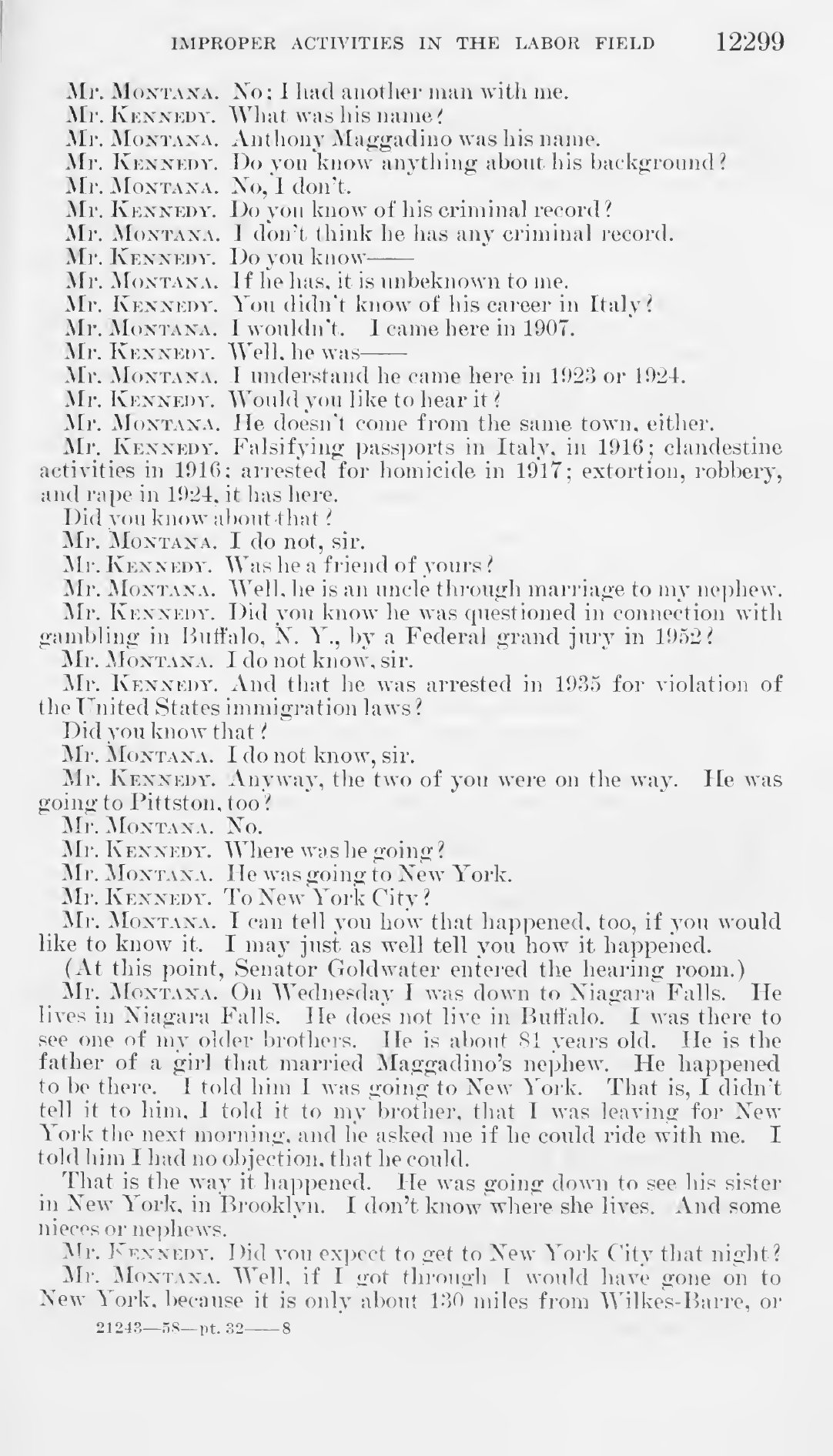 itemTestimony of John C. Montana before the McClellan Committee, 1958 (Part 32)The president of Buffalo's Van Dyke Taxicab Co. testified under oath about his birth, his businesses and his trip of November 14, 1957, saying he drove with Anthony Maggadino, "an uncle through marriage to my nephew," and stopped at Joseph Barbara's for help with his car.
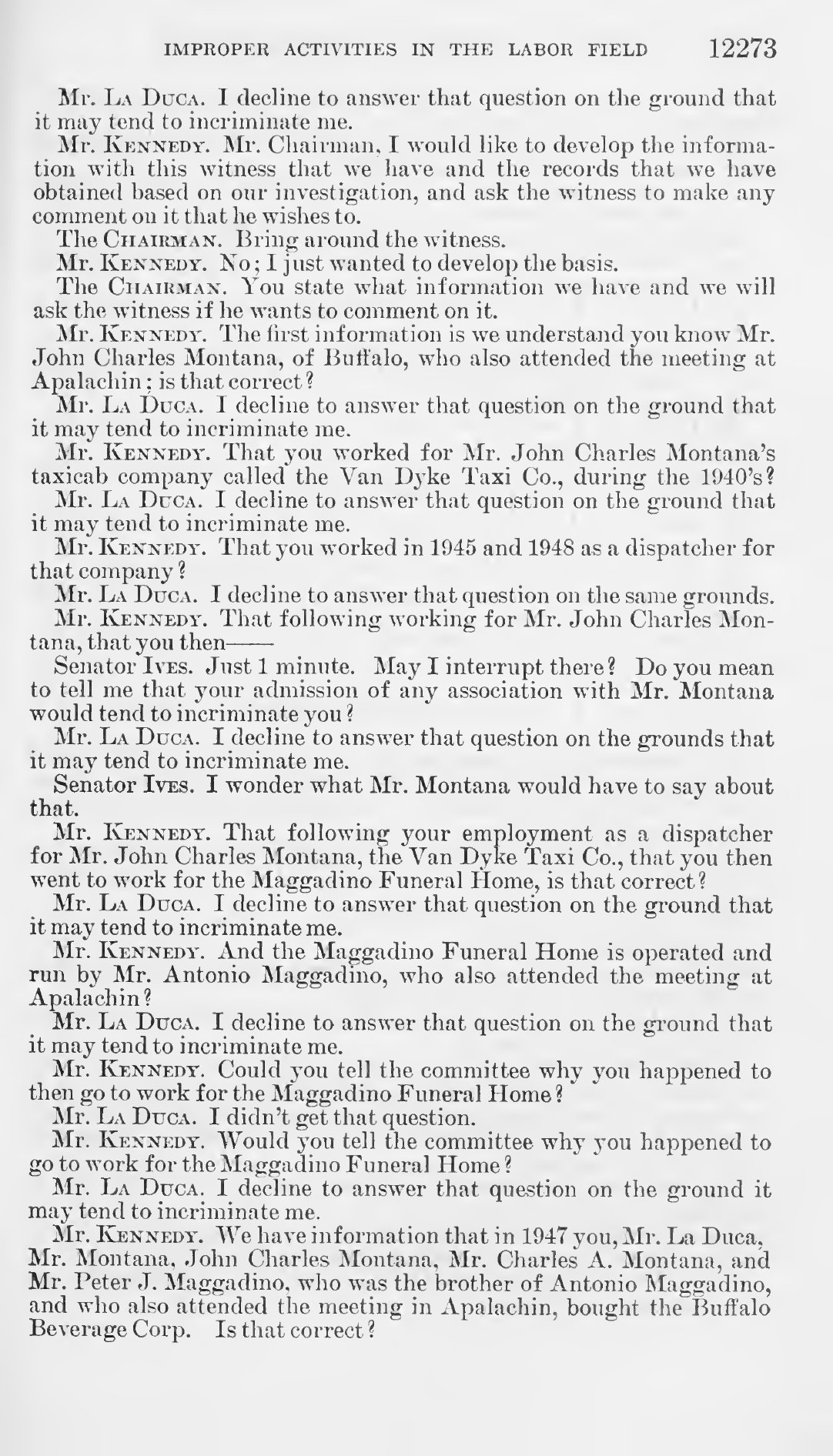 itemTestimony of James V. La Duca before the McClellan Committee, 1958 (Part 32)James V. La Duca of Lewiston, N.Y., declined on Fifth Amendment grounds to answer whether he attended the Apalachin meeting, while Robert F. Kennedy read the staff's information on his work for John C. Montana's taxi company, the Maggadino Funeral Home and Local 66 of the Hotel and Restaurant Employees.
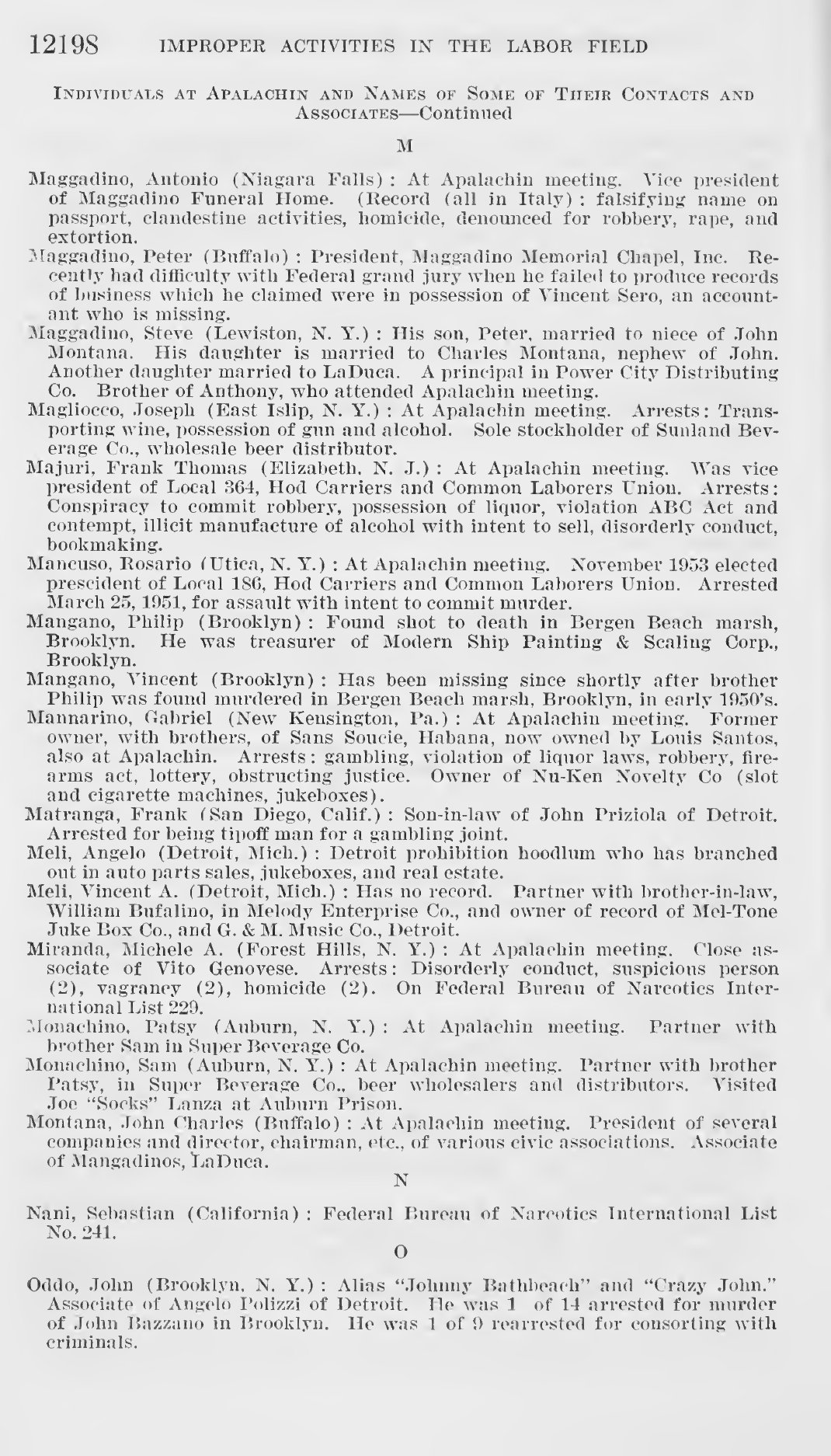 itemMcClellan Committee staff list: "Individuals at Apalachin and Names of Some of Their Contacts and Associates" (1958)An alphabetical staff memorandum printed in Part 32 (pp. 12194-12201) giving a residence and a summary of arrests, businesses and associations for each Apalachin attendee and some contacts. The chairman admitted it "for guidance and information only" and said "It is not evidence."
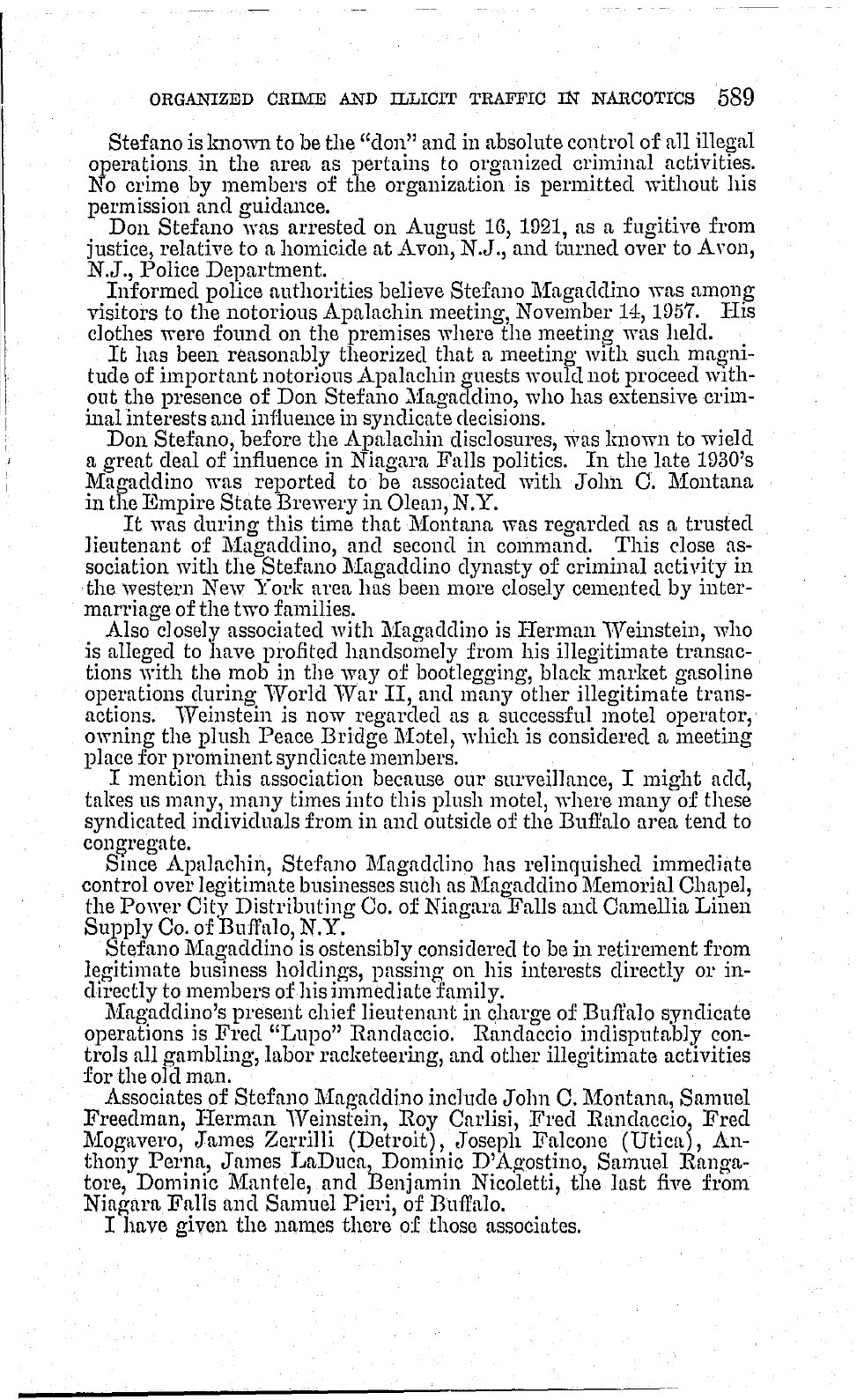 itemTestimony of Buffalo Police Lt. Michael Amico on Stefano Magaddino and John C. Montana, October 16, 1963The head of Buffalo's Criminal Intelligence Bureau introduced the "Magaddino Empire of Organized Crime" chart (Exhibit 65), read a statement calling Stefano Magaddino the "titular head" of syndicated crime in the Buffalo-Niagara Falls and Toronto areas, and said police had found no arrest of John C. Montana before Apalachin.itemUnited States v. Bufalino, 285 F.2d 408 (2d Cir. 1960)Second Circuit opinion reversing the convictions of Russell Bufalino and nineteen others for obstructing justice and perjury after the 14 November 1957 gathering at Apalachin, New York. The court says the government offered no evidence of the meeting's purpose.