Raymond Renard
Charged in the 1924 indictment over the 1923 Staunton, Illinois mail robbery, he testified for the Government. The Seventh Circuit called him "an admitted convict" who "admitted his guilt in the instant case"; the National Archives description says he made a deal for clemency.
- Aliases
- Ray Renard (National Archives description)
- Rights
- Biography on this page is limited to what the cited federal court records, Bureau of Prisons records and National Archives descriptions state; they are works of the United States government, public domain under 17 U.S.C. § 105. Newspaper statements, from pages of 1930 or earlier, are labelled as such.
On the record
- 1923-05-26 — Indictment, September term 1924 (S.D. Ill., Case No. 25): "RAYMOND RENARD" is among the fourteen men charged with the robbery at Staunton. A charge.
- 1924-11 — Colbeck v. United States (1925): "Renard was an admitted convict. He was brought from prison to testify. He admitted his guilt in the instant case and testified to his participation in it." Witnesses called by the defence said his reputation for truthfulness was bad.
- undated — National Archives description of the case file: Renard, "serving time in federal prison in Atlanta, decided to turn on the gang and make a deal for clemency." The file includes an application for a writ of habeas corpus for Renard. The archivist's summary.
Renard’s testimony is in the digitized transcript but has not been read for this archive; nothing on this page summarizes it. He is not among the defendants whose appeal the Seventh Circuit decided, and the Alcatraz card’s list of codefendants does not name him. No role is recorded.
Records
itemColbeck v. United States, 10 F.2d 401 (7th Cir. 1925): the Staunton mail-robbery appealSeventh Circuit opinion of 8 December 1925 affirming the convictions and 25-year sentences of William P. Colbeck and eight codefendants for robbing persons in charge of the mails. It upholds the use of a convict's testimony and the instructions on alibi and reasonable doubt.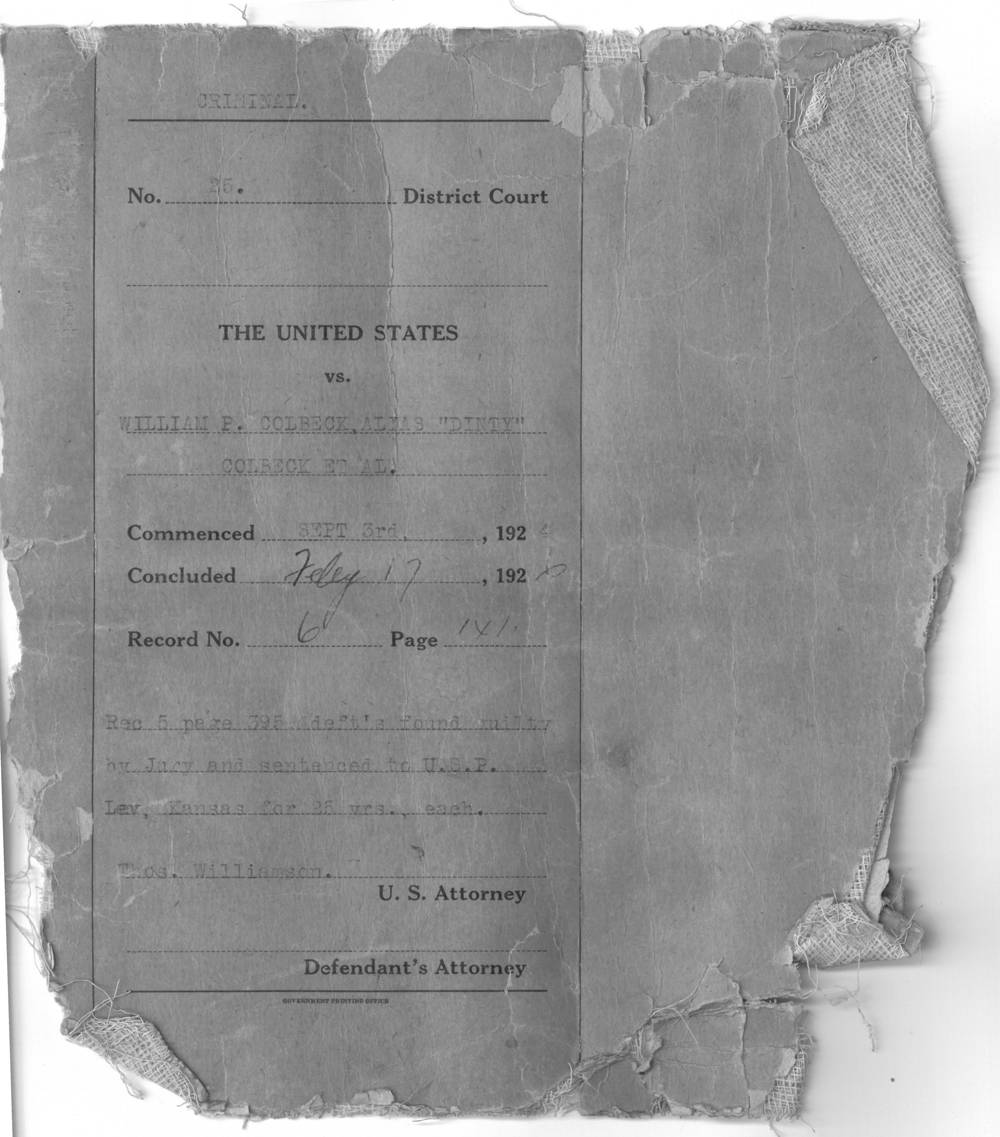 itemUnited States v. William P. "Dinty" Colbeck et al., criminal case file No. 25 (S.D. Ill.)National Archives description of the Southern District of Illinois case file on the 26 May 1923 robbery of mail custodians at Staunton, Illinois. The archivist's note says the defendants "were members of a gang called Egan's Rats" led by William P. "Dinty" Colbeck.
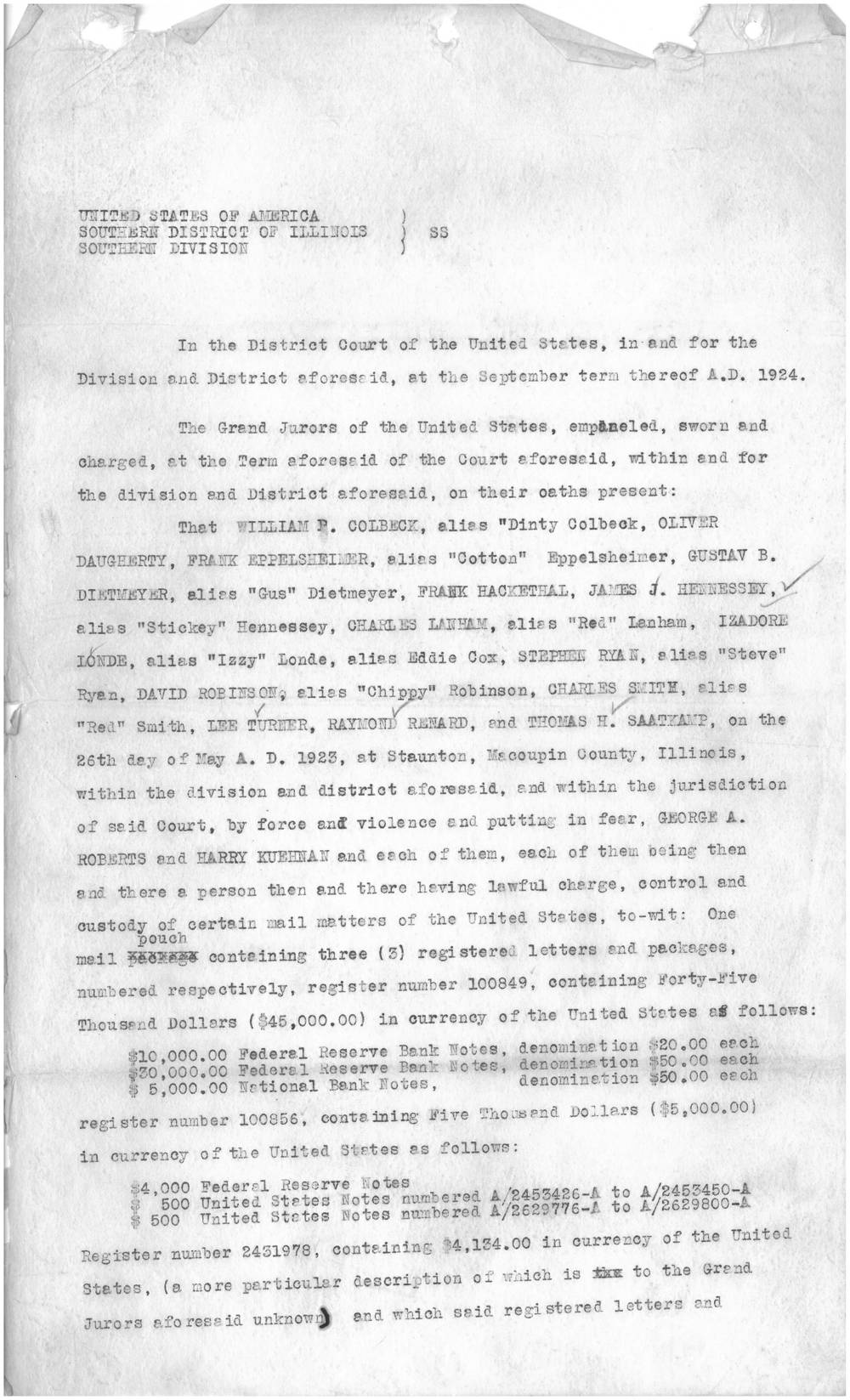 itemIndictment and court papers, United States v. William P. Colbeck et al. (S.D. Ill., September term 1924)The digitized court papers of the Colbeck case. The indictment charges fourteen men, several under nicknames, with robbing two custodians of a mail pouch at Staunton, Macoupin County, Illinois, on 26 May 1923; the registered packages held $45,000, $5,000 and $4,134.
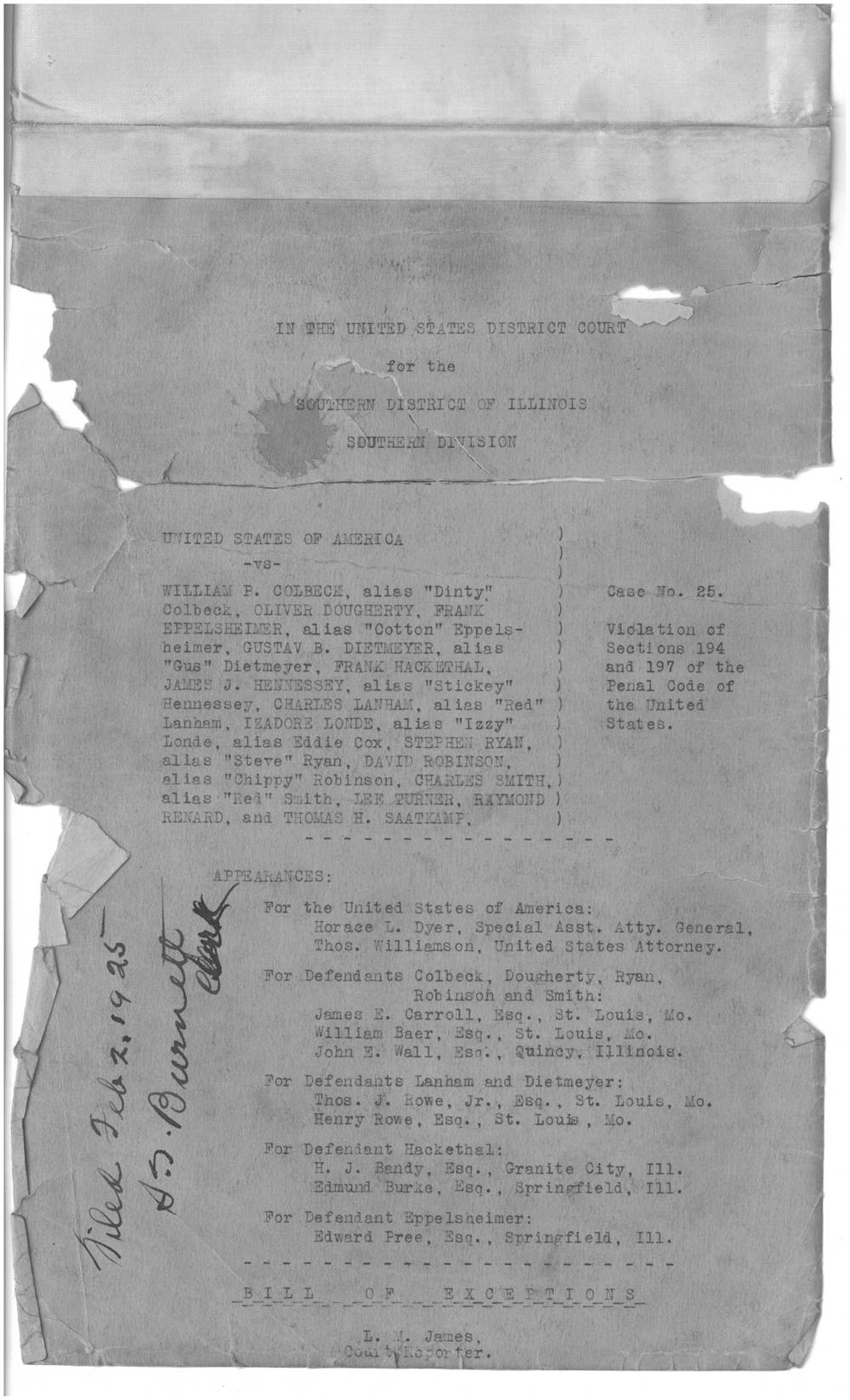 itemBill of exceptions and trial testimony, United States v. William P. Colbeck et al. (S.D. Ill., filed 2 February 1925)The digitized trial transcript in the Colbeck mail-robbery case, filed as a bill of exceptions on 2 February 1925. The title page lists the defendants and their counsel; the index lists the first witnesses, among them the two mail custodians named in the indictment.
itemUnited States v. William P. "Dinty" Colbeck et al., criminal case file No. 25 (S.D. Ill.)National Archives description of the Southern District of Illinois case file on the 26 May 1923 robbery of mail custodians at Staunton, Illinois. The archivist's note says the defendants "were members of a gang called Egan's Rats" led by William P. "Dinty" Colbeck.itemIndictment and court papers, United States v. William P. Colbeck et al. (S.D. Ill., September term 1924)The digitized court papers of the Colbeck case. The indictment charges fourteen men, several under nicknames, with robbing two custodians of a mail pouch at Staunton, Macoupin County, Illinois, on 26 May 1923; the registered packages held $45,000, $5,000 and $4,134.itemBill of exceptions and trial testimony, United States v. William P. Colbeck et al. (S.D. Ill., filed 2 February 1925)The digitized trial transcript in the Colbeck mail-robbery case, filed as a bill of exceptions on 2 February 1925. The title page lists the defendants and their counsel; the index lists the first witnesses, among them the two mail custodians named in the indictment.