Empty seats. A name is added only with a citation on this page.
- BossNot filled
- UnderbossNot filled
- ConsigliereNot filled
Key to statement kinds (defined in the text below)Court findingWhat the government established, as a court summarizes itCourt opinion, in passingChargeTestimonyCommittee staffChart exhibit
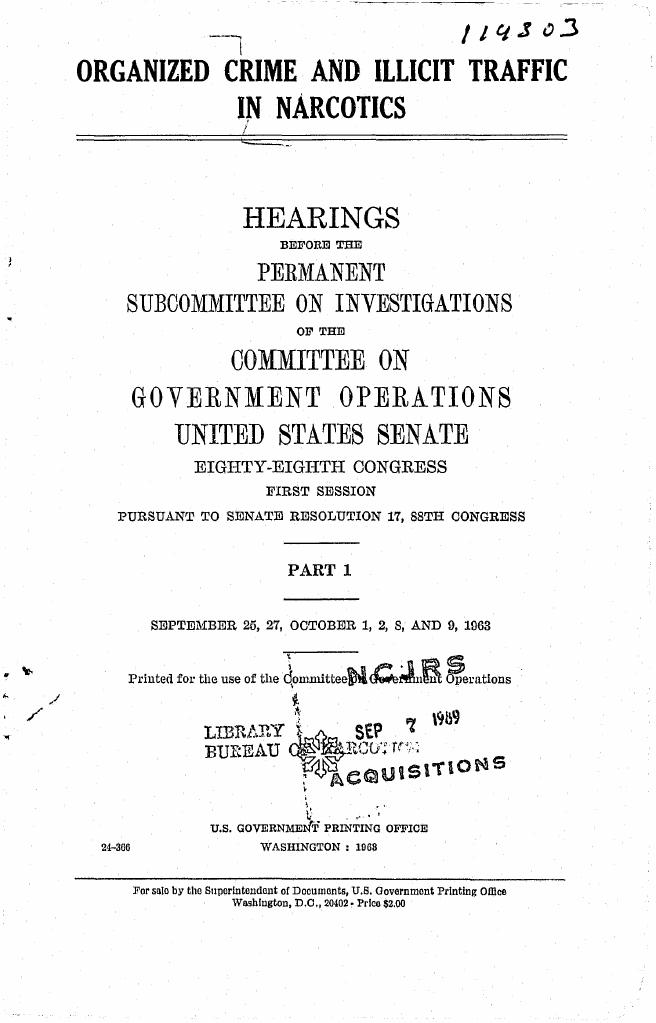
This page is a hub for the family the 1963 Senate record names for Gaetano Lucchese, and for the men earlier and later records place in its line. The chart above stays empty: no record filed here is a cited, separate decision to place a name in a seat. Each person page below quotes the strongest statement a record makes about that person, and those statements are of different kinds.
- Court finding. A federal court’s own finding of fact, after hearing evidence. The strongest kind here.
- What the government established, as a court summarizes it. An appeals court stating what the prosecution proved at trial. The court affirmed on that record, but the sentence describes the government’s proof.
- Court opinion, in passing. A court describing a witness, a victim or the case before it, rather than deciding who held a rank.
- Charge. An indictment, civil complaint or detention proffer, as a court summarized it. An allegation, not a finding.
- Testimony. Sworn testimony as printed: Joseph Valachi and NYPD Deputy Chief Inspector John Shanley in 1963, FBI officials in 1988, and trial witnesses as a court summarized them. A witness’s “yes” to counsel’s question counts as testimony; the question alone does not. Quotations from the 1963 hearings correct obvious errors in the scan’s text layer; the person pages note each correction.
- Committee staff. LaVern Duffy of the Senate subcommittee staff describing the staff’s own chart in 1963.
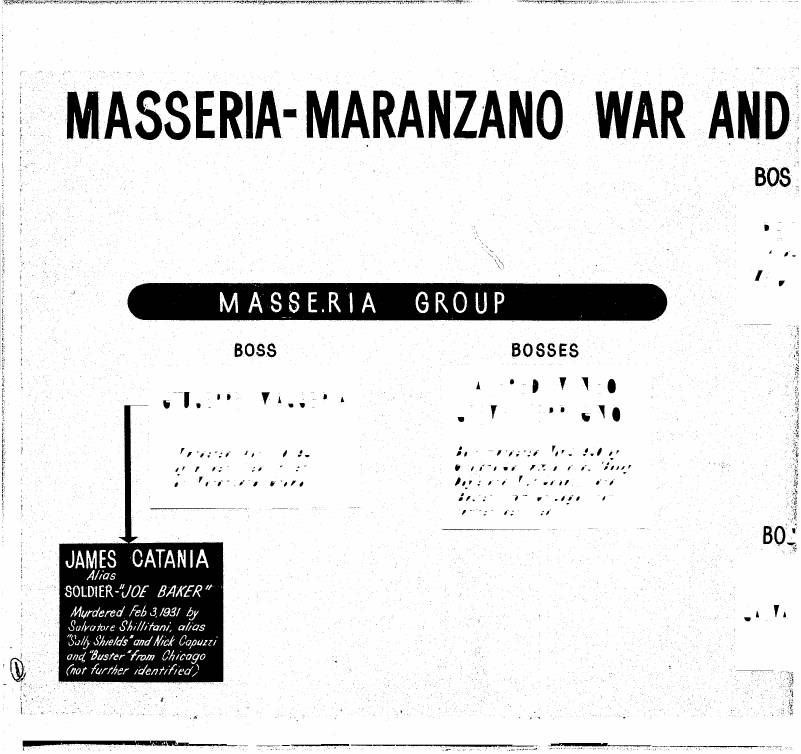
- Chart exhibit. A name printed on the 1963 subcommittee’s Exhibit 8 or Charts A to E. A chart entry is the committee’s or the police department’s summary; it never fills a role or a seat here.
The person pages
The order is roughly that of the records’ dates. It is not a succession chart.
- Tom Reina: “He was the boss of this gang.” Committee staff, describing its chart (1963); not used for a role. The staff chart draws the line from Reina’s gang to Lucchese; that is a chart exhibit.
- Gaetano Gagliano: “Tom Gagliano, the underboss of this family, wanted to avenge the death of Reina,” and later “boss of this gang.” Committee staff, describing its chart (1963); not used for a role.
- Gaetano Lucchese: “Tom Lucchese is the boss; is that right?” Valachi agreed. Testimony (1963). Shanley named him when asked who is the boss of this family. Testimony (NYPD, 1963).
- Stefano LaSalle: “And his underboss is Steve LaSalle?” “Yes, sir.” Testimony (Valachi, 1963). The police witness said “we have very little information on him.”
- Antonio Corallo: “Corallo was boss of the Lucchese family.” What the government established, as the Second Circuit summarizes it (1989).
- Salvatore Santoro: Corallo’s family, “which Santoro served as ‘underboss.’” What the government established (1989).
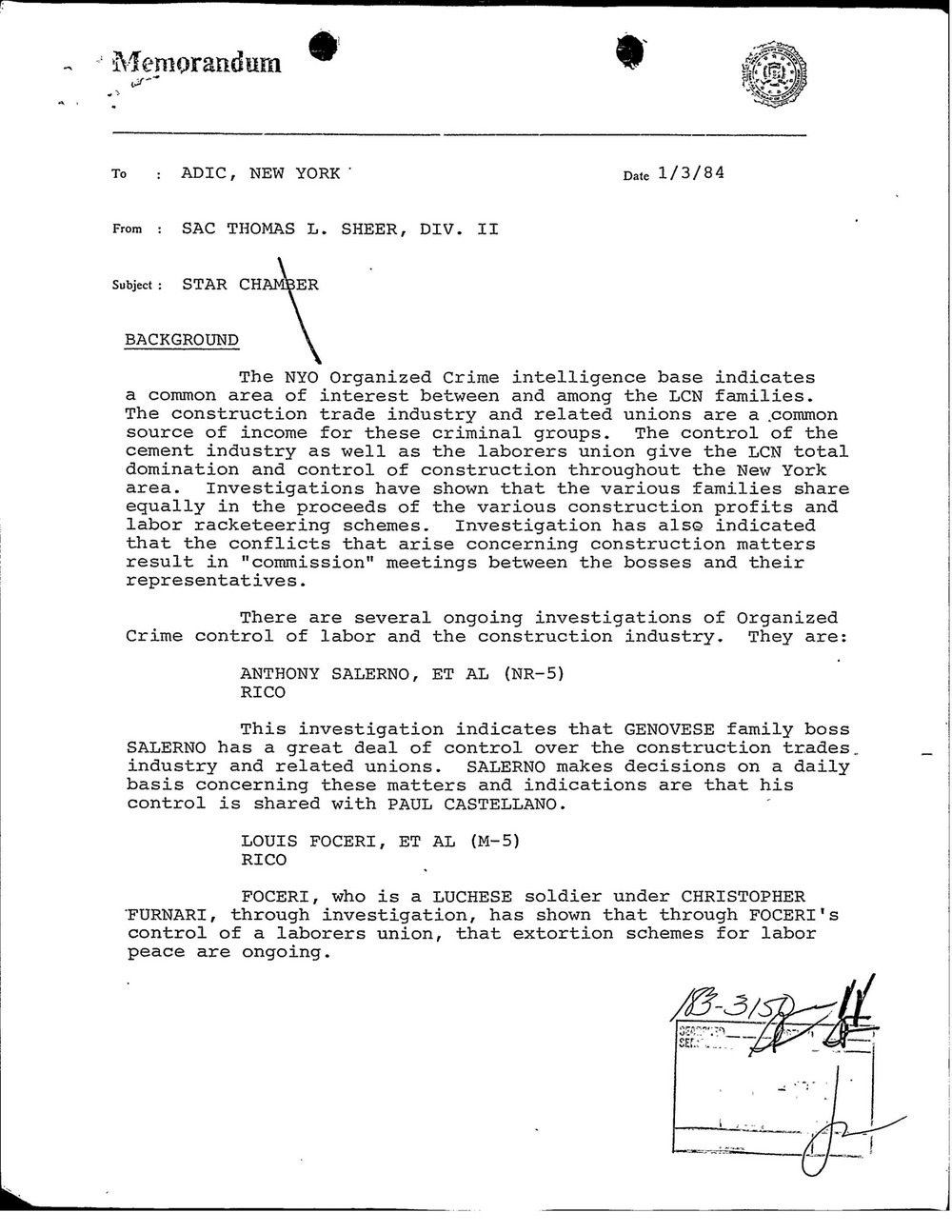
- Christopher Furnari: “Furnari as ‘consigliere.’” What the government established (1989).
- Vittorio Amuso: “Amuso and Casso (the Boss and Underboss of the Lucchese Family).” Court finding (1996), in Gigante’s case. The 1994 appeal records that the indictment charged him as boss. Charge.
- Anthony Casso: the same 1996 sentence, as underboss. Court finding.
- Alphonse D’Arco: “once the acting boss of the Lucchese” family. Court opinion, describing a witness (1999); the 1994 appeal calls him a “former Luchese family captain.”
What the chart still waits for
The seats are Boss, Underboss and Consigliere. The statements above that put those titles on named men for this family come from the 1963 testimony (Lucchese as boss, LaSalle as underboss), the Commission appeal’s account of what the government established (Corallo, Santoro and Furnari in all three seats for the late 1970s to 1985), and a district court’s finding in 1996 (Amuso and Casso). The staff chart’s entries for Reina and Gagliano are not counted. None of the rest is yet a separate, cited decision on this page; the Salerno opinion’s account stays on its own page. No record opened says who led the family between Lucchese and Corallo. A name goes into a seat only by a separate, cited decision.
The Five Families section’s other pages are Genovese, Gambino, Colombo, Bonanno and the Commission.