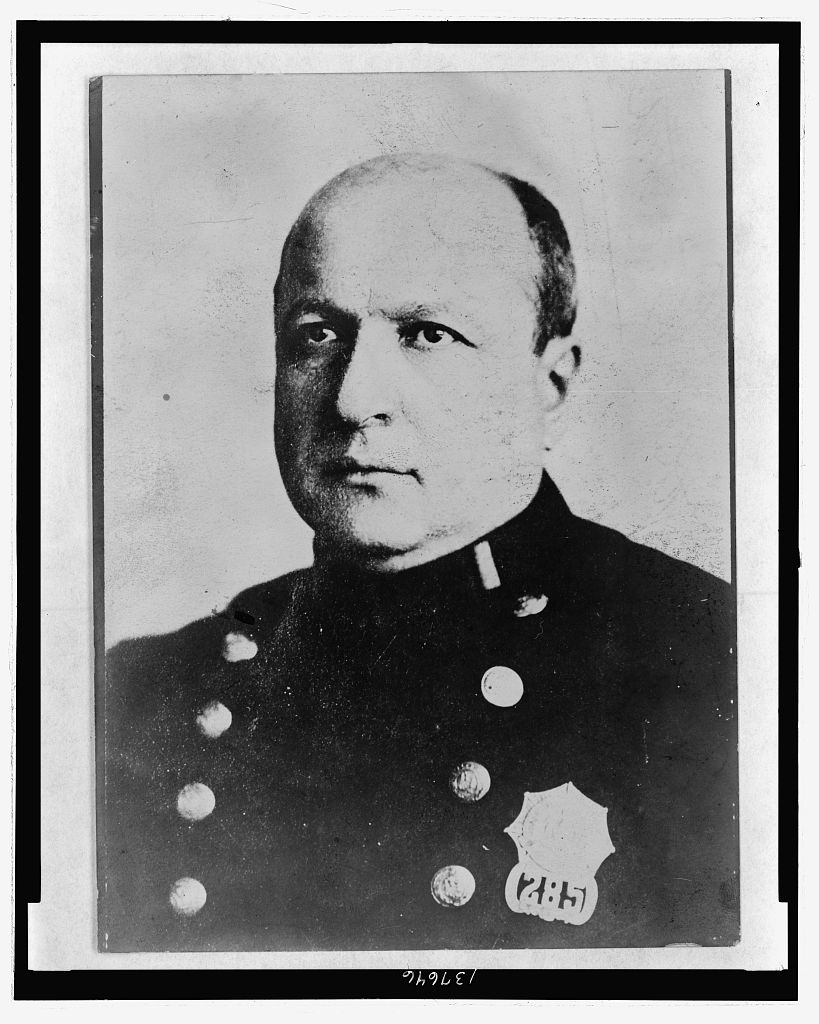
Joseph Petrosino
New York police detective in the 1903 barrel-murder inquiry, shot dead in Palermo on 12 March 1909. The records here are newspaper pages of 1903 to 1912, Library of Congress photographs, and a question quoted in a 1911 federal appeal; who killed him is not established in any of them.
- Born
- 1860
- Died
- 1909-03-12
- Aliases
- Joe Petrosino (Library of Congress subject heading), Petrosiino (Library of Congress titles), Petrosini (a question quoted in 189 F. 305), Petrisino (The Day Book, 3 September 1912)
- Rights
- Biography on this page is limited to what the cited records state.
On the record
- 1903 — A Library of Congress photograph from the World-Telegram & Sun collection, dated 1903 by the Library, shows him with Inspectors Carey and McCafferty escorting Tomasso Petto; the Library's devised title calls him "Detective Lt."
- 16 April 1903 — The New-York Tribune names "Detective Sergeant Petrosino, the Italian sergeant" among the officers who, with Secret Service men, had kept the group arrested on 15 April under watch. The Sun of the same day reports his view that the barrel killing was the work of counterfeiters he had shadowed, and that he was not prepared to say it was a branch of the Mafia. Newspaper reports.
- 21 April 1903 — The New-York Tribune and the Sun report that he showed a photograph of the barrel victim to a counterfeiter in Sing Sing, Joseph Deprimo, who recognised his brother-in-law; the Sun says he had obtained the names of counterfeiters from Secret Service Chief Flynn. Newspaper reports.
- 12 March 1909 — A wire report datelined Palermo, 13 March, printed in the Bismarck Daily Tribune, says "Lieutenant Joseph Petrosino, head of the Italian squad at the New York police headquarters, was shot to death at 9 o'clock last evening" in Marina square, and that "The identity of the assassins has not been disclosed."
- 9 April 1909 — Bain News Service negatives captioned "Petrosino's remains arriving at his widow's home Apr. 9/09" and "Arrival Petrosino's remains" (Library of Congress).
- 20 February 1910 — The New-York Tribune reports a belief among detectives and Secret Service agents, based on a convicted man's remark to a government witness, that Morello, Lupo and their associates were responsible for his killing. Flagged as unproven press speculation; no record filed here supports or tests it.
- 19 June 1911 — Calicchio v. United States, 189 F. 305, quotes a defence cross-examination question about "Lieut. Petrosini of the New York police force" and a dock at Hoboken, which the court treated as harmless. A lawyer's question, not a finding.
The records filed here spell the name Petrosino, Petrosini, Petrosiino and Petrisino. The birth year 1860 comes only from the Library of Congress subject heading “Petrosino, Joe,–1860-1909”; no record filed here gives his date or place of birth. The date of death is that of the wire report of 13 March 1909, which places the shooting at about nine o’clock the previous evening.
Role. The newspapers call him a detective sergeant in 1903 and a lieutenant, head of the Italian squad, in 1909, and the Library’s devised titles call him “Detective Lt.” No federal record filed here states his rank or post, so the role field is left empty and the press descriptions are given above with their sources.
Who killed him is not established in any record filed here. The Tribune’s suggestion of February 1910 is filed only as flagged speculation, and the Second Circuit’s opinion in the Morello and Lupo appeal does not address his death. The 1912 Day Book items mention him only in passing.
Records
itemLt. Joseph Petrosino in police uniform (Library of Congress)Head-and-shoulders portrait of Joseph Petrosino in New York City police uniform, from the New York World-Telegram & Sun collection. The Library's record dates the item 13 March 1909, the day after he was shot in Palermo. A copy is stored here.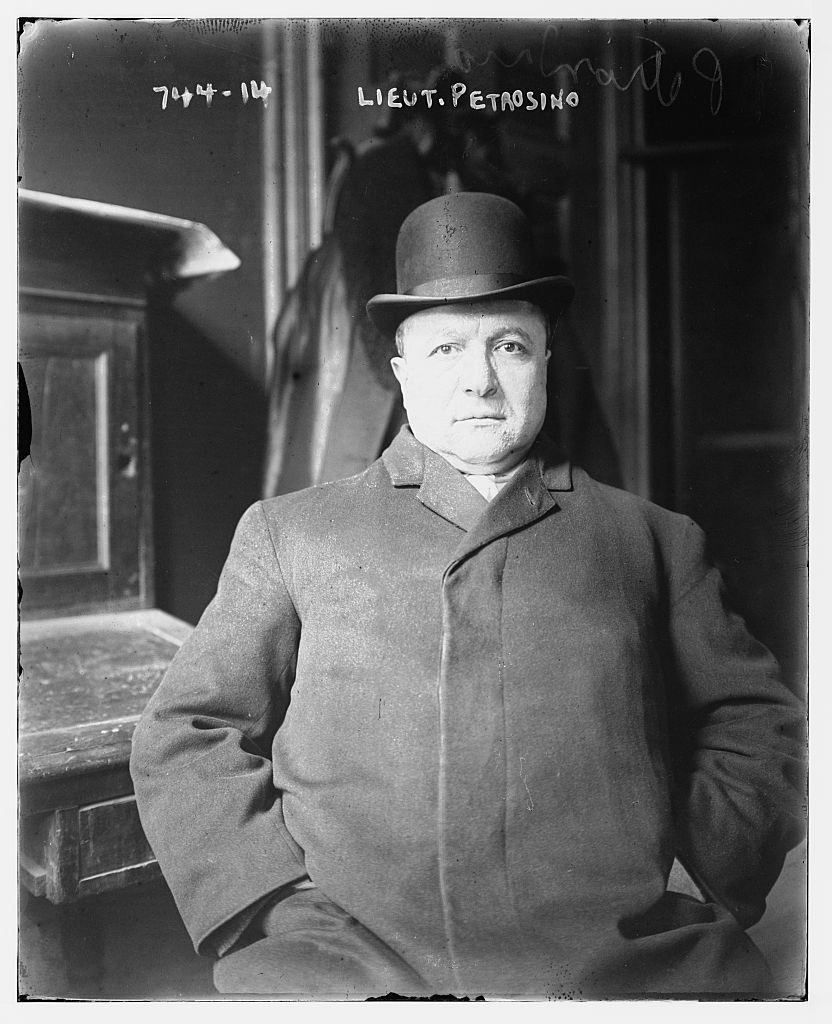 itemLieut. Petrosino (Bain News Service, undated)Undated Bain News Service portrait captioned "Lieut. Petrosino": Joseph Petrosino seated indoors in a bowler hat and overcoat. A copy is stored here.
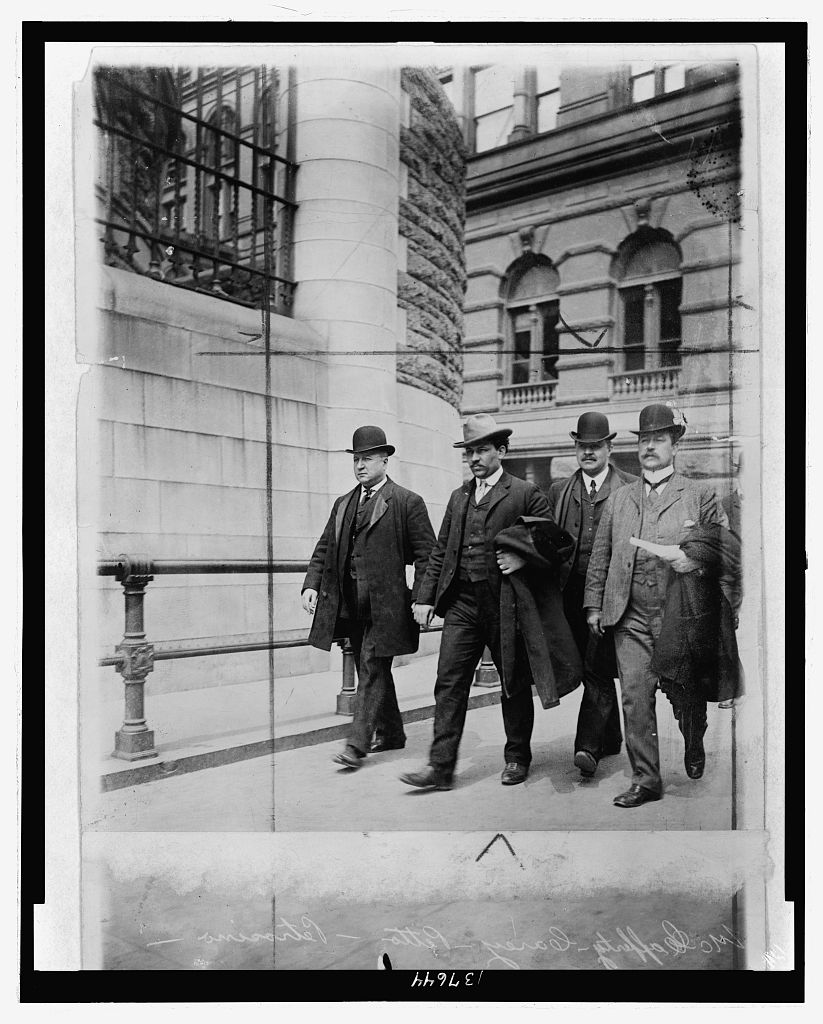 itemTomasso Petto escorted by Detective Joseph Petrosino, 1903 (Library of Congress)Photograph from the New York World-Telegram & Sun collection showing Detective Lt. Joseph Petrosino, Inspector Carey and Inspector McCafferty escorting Tomasso Petto, dated 1903. A copy is stored here.clippingNew-York Tribune, 16 April 1903, page 1: eight arrested in the barrel caseThe New-York Tribune front page of 16 April 1903 reports the arrest of eight men by police and Secret Service agents on suspicion of counterfeiting and of the killing of the man found in a barrel two days earlier, and names Giuseppe Morello among them.clippingThe Sun (New York), 16 April 1903, page 2: how Morello and Petto were arrestedPage 2 of the Sun of 16 April 1903 carries a long account of the barrel-murder inquiry, crediting Secret Service Chief Flynn, Inspector McClusky and Detective Sergeant Petrosino, and describing the arrest of Morello and Petto at the Bowery and Delancey Street.clippingNew-York Tribune, 21 April 1903, page 1: barrel victim identified as a Buffalo manThe New-York Tribune front page of 21 April 1903 reports that the man found in the barrel was identified as a 48-year-old stone mason from Buffalo, after Detective Petrosino showed his photograph to the dead man's brother-in-law in Sing Sing.
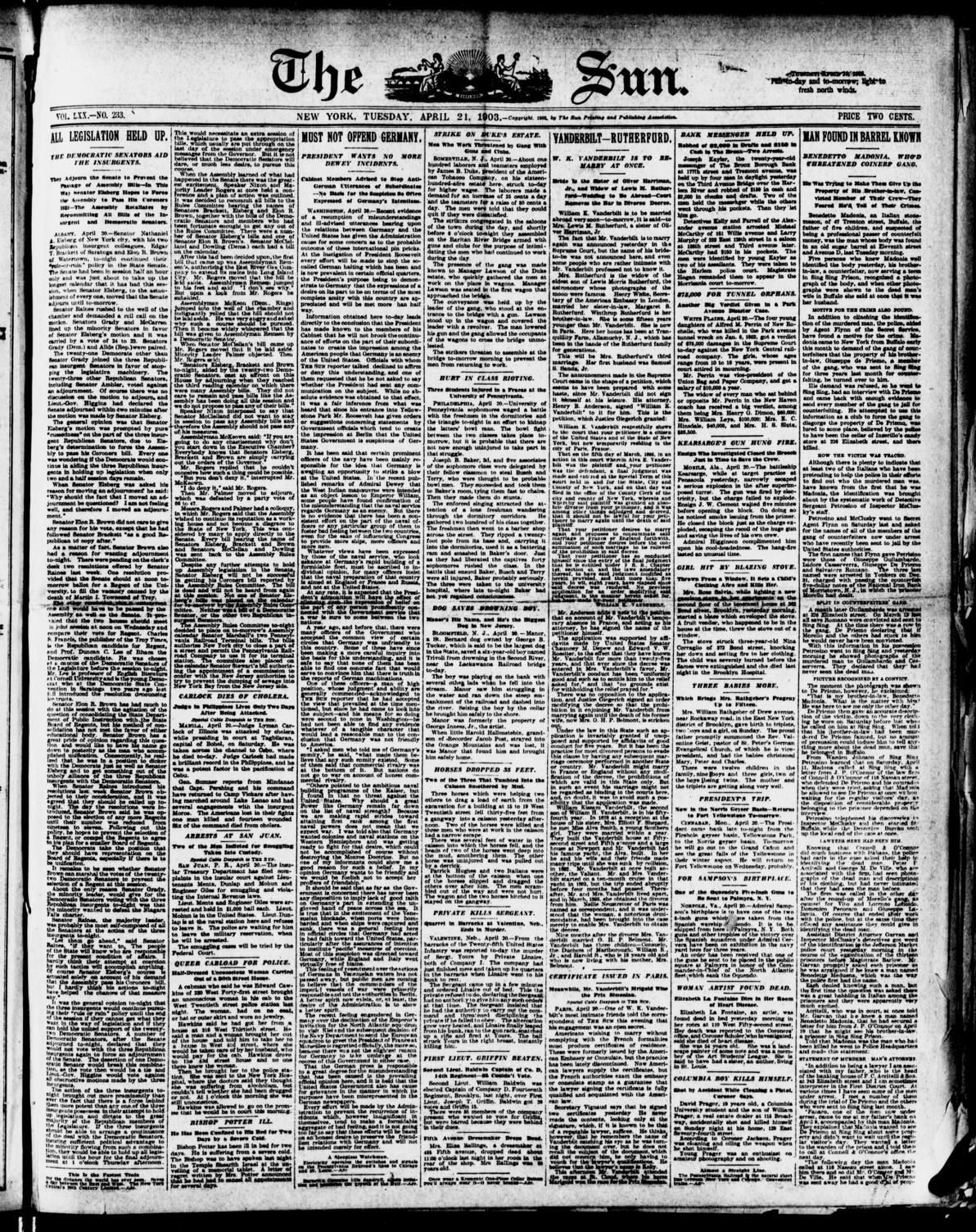 clippingThe Sun (New York), 21 April 1903, page 1: man found in barrel knownThe Sun's front page of 21 April 1903 identifies the man found in the barrel as Benedetto Madonia, a stone mason of Buffalo, and credits Detective Sergeant Petrosino and Inspector McClusky's staff with the identification. A scan is stored here.
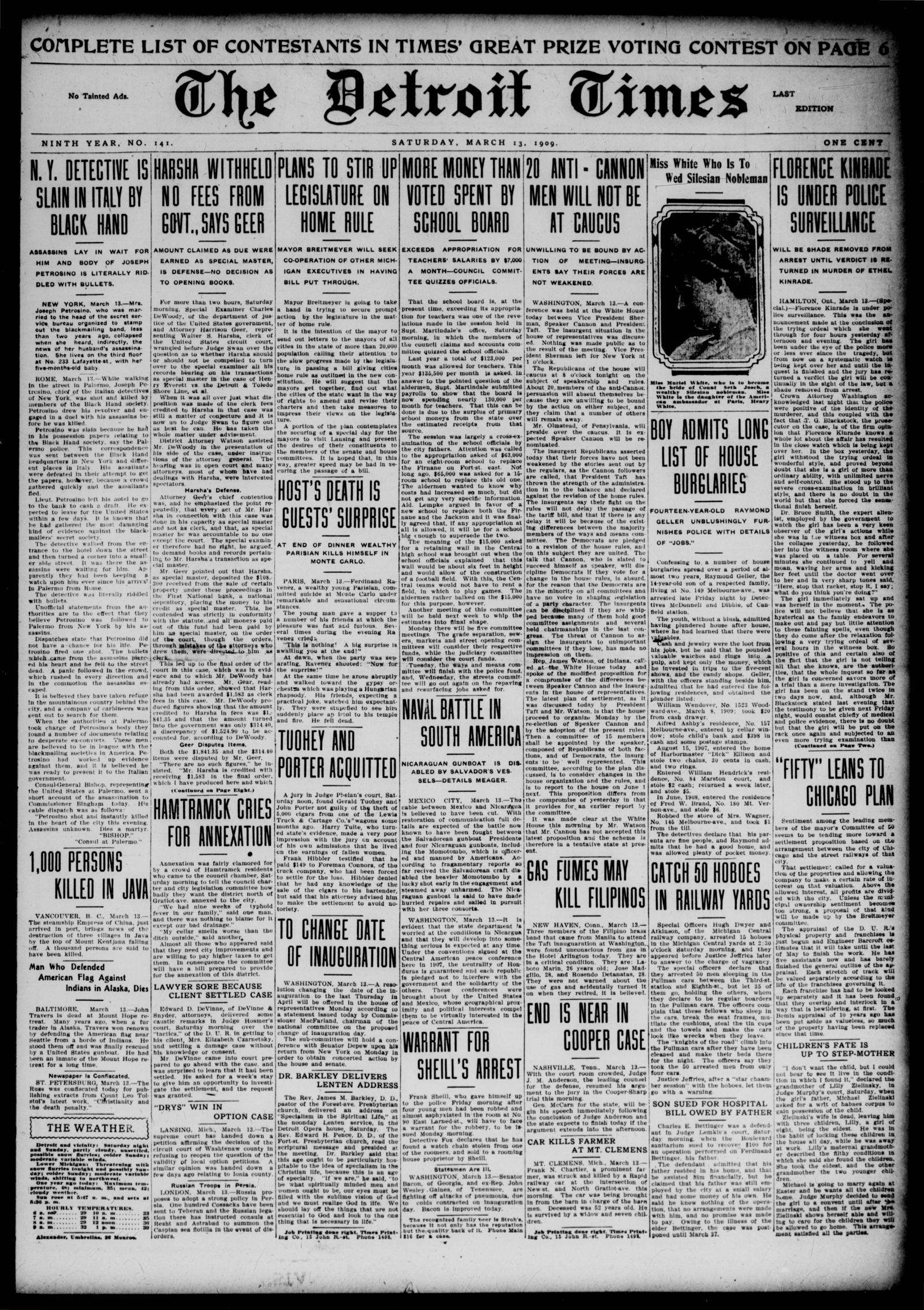 clippingDetroit Times, 13 March 1909, page 1: N.Y. detective slain in ItalyThe Detroit Times front page of 13 March 1909 reports the shooting of New York detective Joseph Petrosino in Palermo, and prints the U.S. consul-general's cable saying the assassins were unknown.
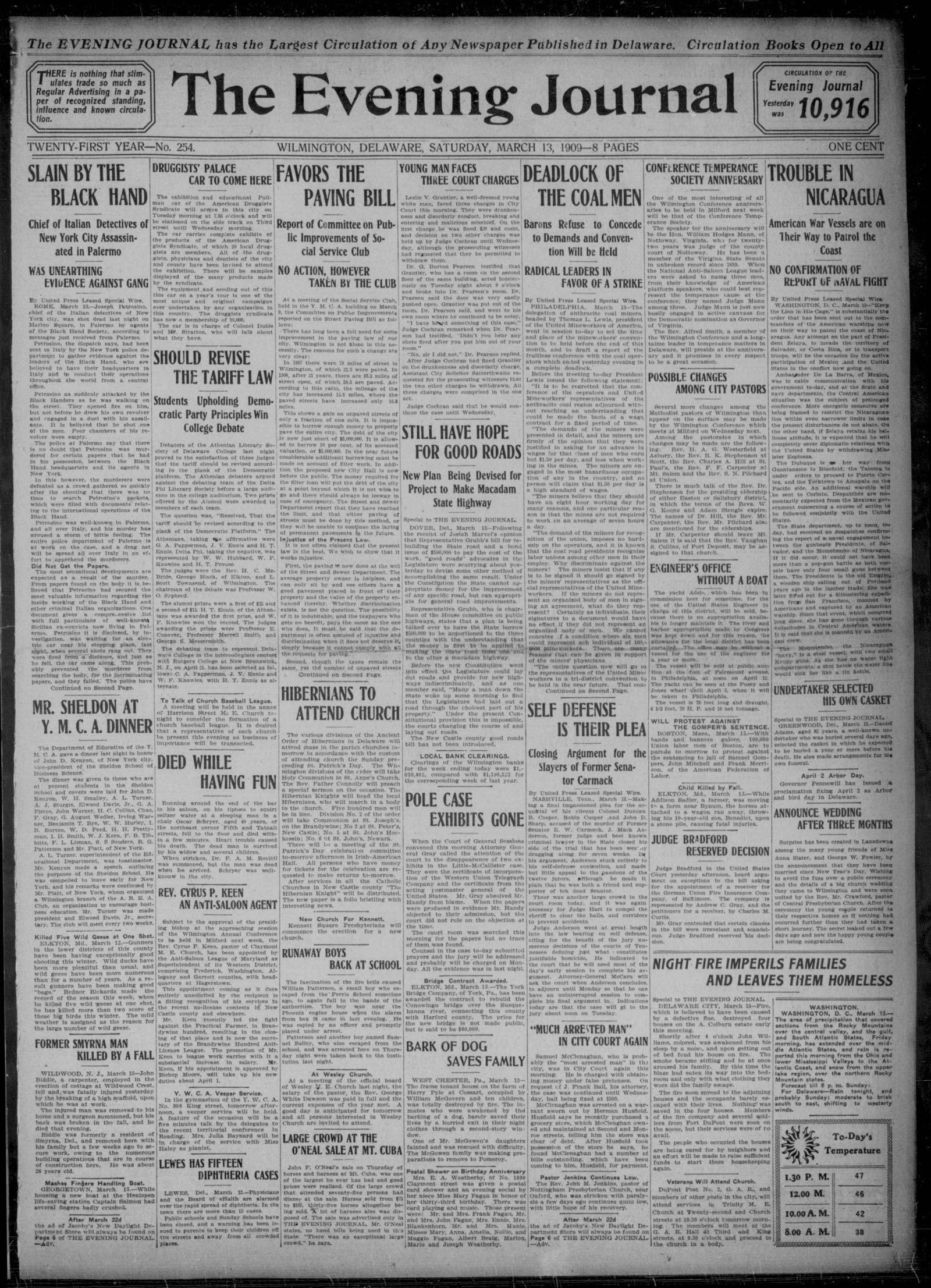 clippingWilmington Evening Journal, 13 March 1909, page 1: Slain by the Black Hand: Petrosino killed in PalermoThe Wilmington Evening Journal front page of 13 March 1909 carries a United Press dispatch from Rome reporting that New York police detective Joseph Petrosino was shot dead in Palermo.clippingBismarck Daily Tribune, 14 March 1909, page 1: Petrosino shot in PalermoThe Bismarck Daily Tribune front page of 14 March 1909 carries a wire report from Palermo that Lieutenant Joseph Petrosino of the New York police was shot dead in Marina square the previous evening, and that the identity of the assassins was not known.
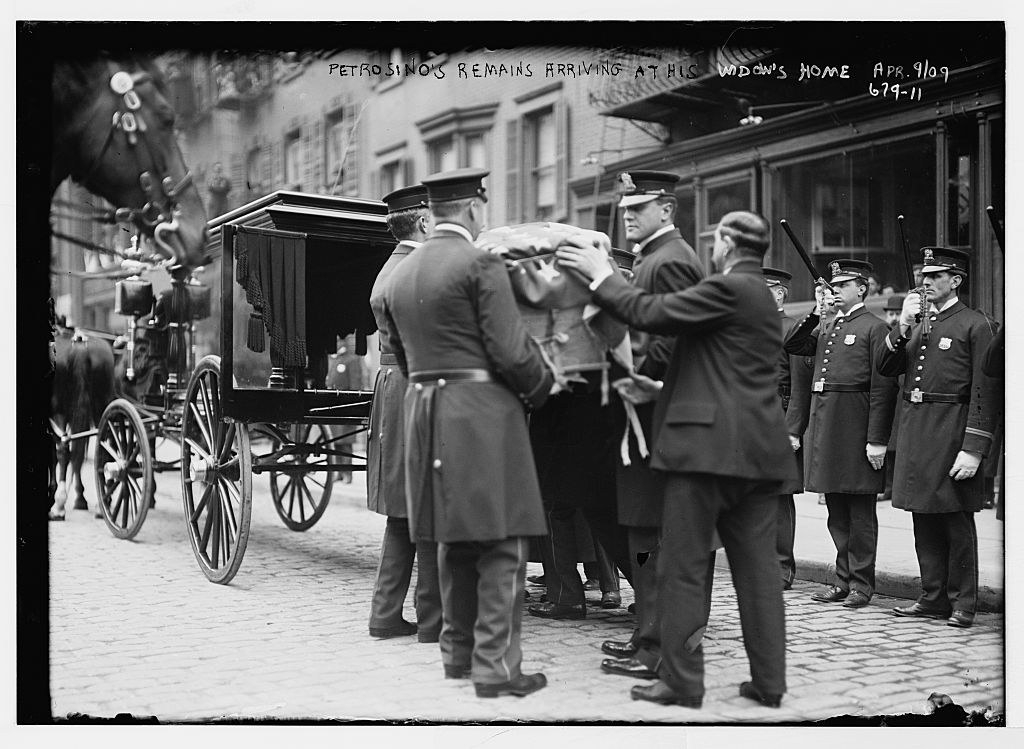 itemPetrosino's coffin arriving at his widow's home, 9 April 1909 (Bain News Service)Bain News Service photograph captioned on the negative "Petrosino's remains arriving at his widow's home Apr. 9/09": police officers lift the coffin from a hearse in a New York street. A copy is stored here.
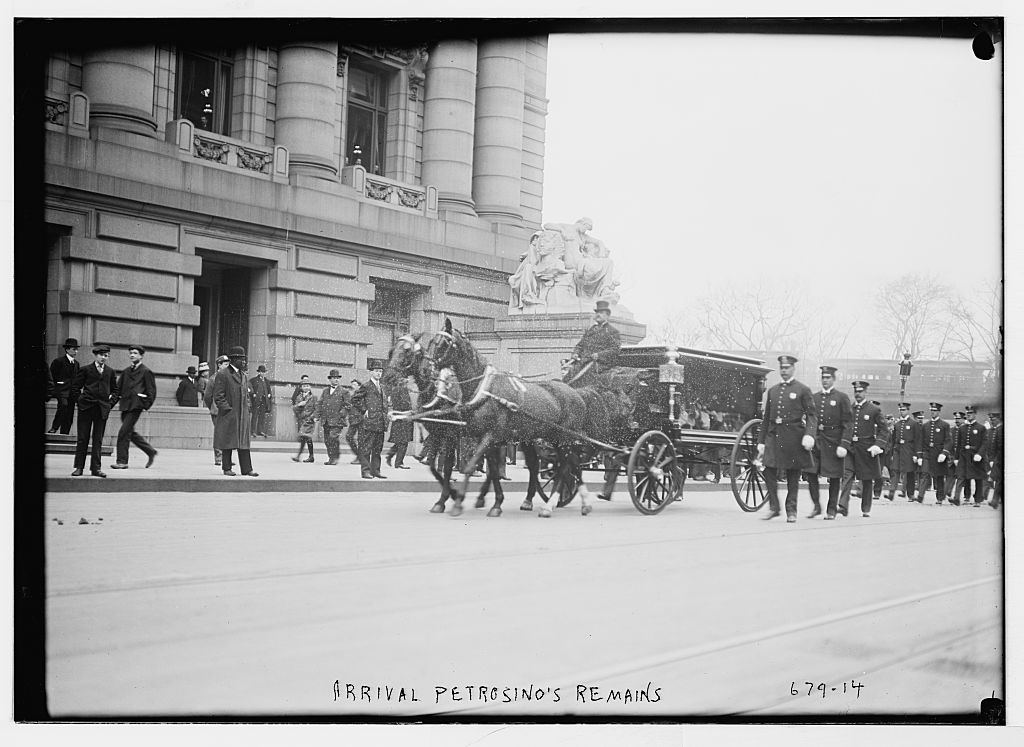 itemFuneral cortege of Petrosino, 9 April 1909 (Bain News Service)Bain News Service photograph captioned on the negative "Arrival Petrosino's remains": a horse-drawn hearse followed by a column of police officers passes a large stone building. A copy is stored here.clippingNew-York Tribune, 20 February 1910, page 3: sentencing story continued, with press speculationPage 3 of the New-York Tribune of 20 February 1910 continues the counterfeiting sentencing story under portraits captioned 'Italians sentenced for counterfeiting', and repeats detectives' unproven suspicions about the barrel killing and the Petrosino killing. Flagged as speculation.itemCalicchio v. United States, 189 F. 305 (2d Cir. 1911)Second Circuit opinion of 19 June 1911 affirming the 1910 counterfeiting convictions of Giuseppe Calicchio, Giuseppe Morello, Ignatzio Lupo and five others. It holds a question about Morello's 1903 arrest in the 'Barrel Murder' improper but cured, and says: 'The arrest of Morelio for the murder proved nothing.'clippingThe Day Book (Chicago), 3 September 1912, page 29: Black Hand letters to the Rockefeller householdA wire item in the Day Book of 3 September 1912, datelined Tarrytown, says John D. Rockefeller's secretaries had received Black Hand letters and that armed guards were posted at Pocantico Hills. The paper's own correspondent disputed the story eight days later.