The Provenzano brothers (Giovanni, Pietro and Joseph Provenzano)
Named in March 1891 newspaper pages as one side of a New Orleans stevedoring rivalry with the Matrangas; Giovanni and Pietro Provenzano were held in the Parish Prison on a wounding charge, and Joseph Provenzano is named in a later report. The accounts are the papers' and prisoners' statements, not court findings.
- Rights
- Biography on this page is limited to what the cited federal records state.
On the record
- 18 October 1890 — The Times (Richmond) said it was the Provenzano faction's purpose to bring Chief Hennessy as an important witness in their case against the Matranga faction. The dispatch's assertion.
- 14 March 1891 — The Evening World said the Provenzanos were "arrested and convicted but obtained a new trial" and that the police held that Hennessy was killed through fear of the evidence he would give against the Matrangas at the Provenzanos' new trial. The paper's account.
- 15 March 1891 — The Indianapolis Journal reported, on the authority of an interview attributed to William A. Pinkerton, that stevedore work had been done by a firm called the "Provenzano Brothers," that a rival firm built up by "Toney Matranga" took it over, and that after an ambush of Matranga's men three Provenzano brothers were arrested, tried and sentenced to prison, with the case reversed on appeal. Under the heading "The Provenzani tell of the Mafia," it named Giovanni and Pietro Provenzano among six men held in the Parish Prison since May on a charge of wounding while lying in wait, and quoted Pietro Provenzano as saying Hennessy was killed because he was going to expose the Matrangas. A reporter's account of prisoners' statements.
- 18 March 1891 — The Indianapolis Journal reported that Joseph Provenzano called on Archbishop Janssens about a priest's accusation linking him to the Mafia, and that the priest wrote a letter exonerating him. A newspaper report.
The Indianapolis Journal’s names are OCR readings and appear as “Provenzani” and similar in places. Another family member quoted as “George” is not otherwise identified. The opened pages do not say how Joseph Provenzano is related to Giovanni and Pietro, so the page groups the names as the papers do and no more. No role or family is entered. The papers’ accounts of a secret society are press assertion and statements a reporter printed from prisoners, not court findings.
Records
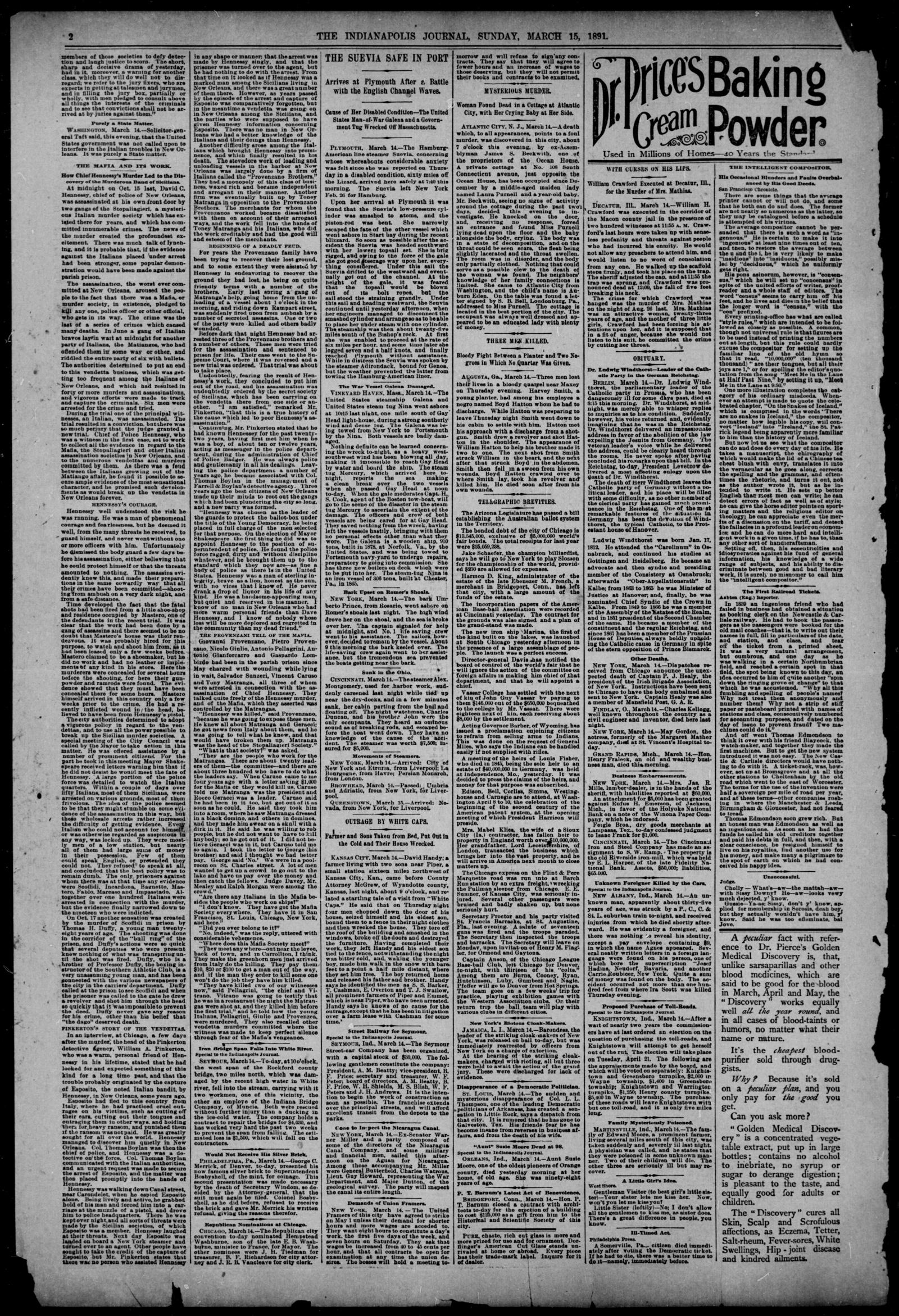 clippingThe Indianapolis Journal, 15 March 1891, page 2: The Mafia and Its Work (background, a Pinkerton interview, and statements of the Provenzanos)An inside page with a background article on the Hennessy killing, a note that Solicitor-General Taft called the Italian trouble 'purely a State matter,' an interview attributed to William A. Pinkerton on the stevedore dispute, and statements by Giovanni and Pietro Provenzano held in the Parish Prison.
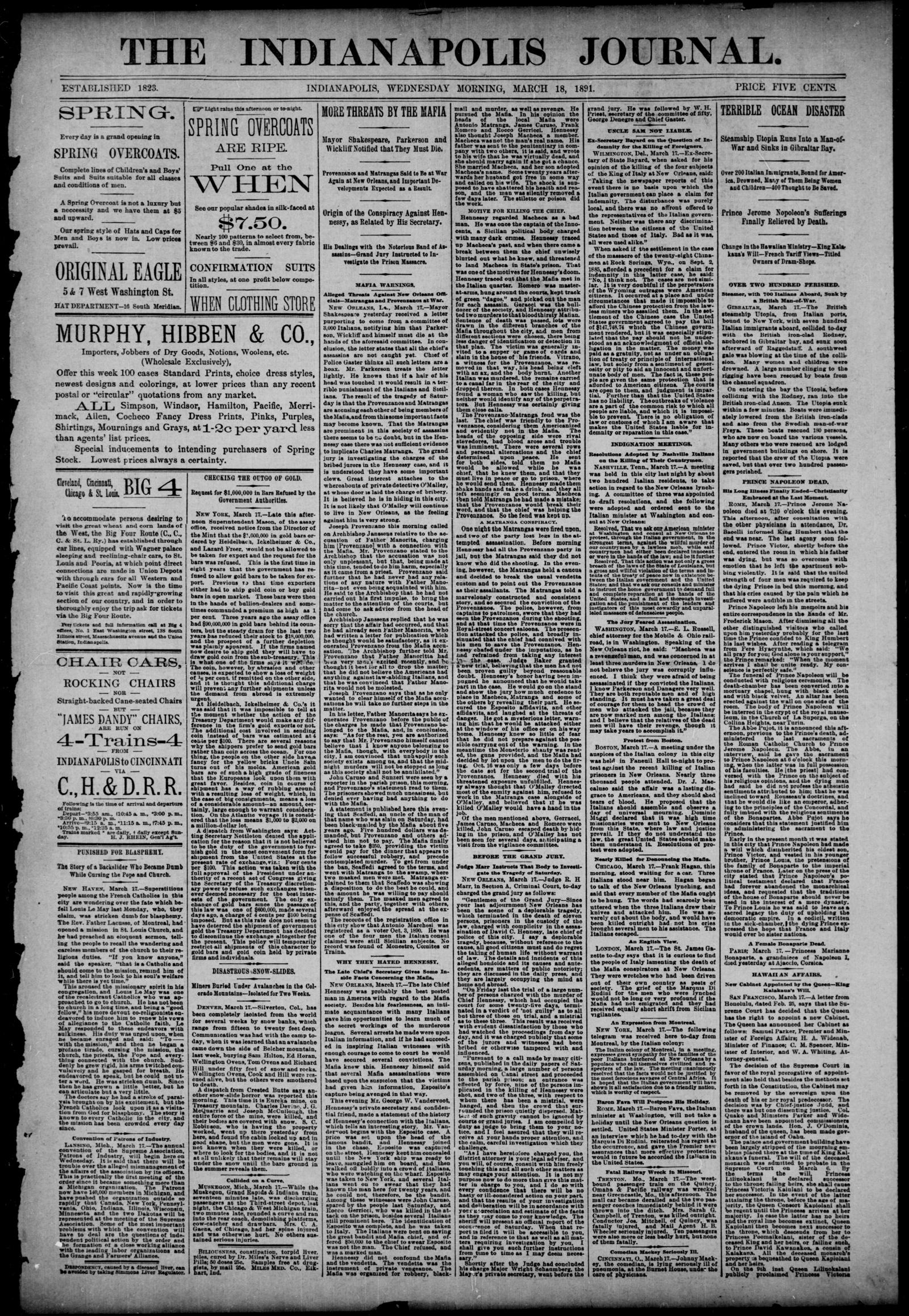 clippingThe Indianapolis Journal, 18 March 1891, page 1: More Threats by the Mafia (Provenzanos and Matrangas said to be at war again)A dispatch of 17 March reports an alleged threatening letter to the Mayor and Parkerson, that the Provenzanos and Matrangas were accusing each other of Mafia membership, and that 'in the Hennessy case there was not sufficient evidence to implicate Charles Matranga.'
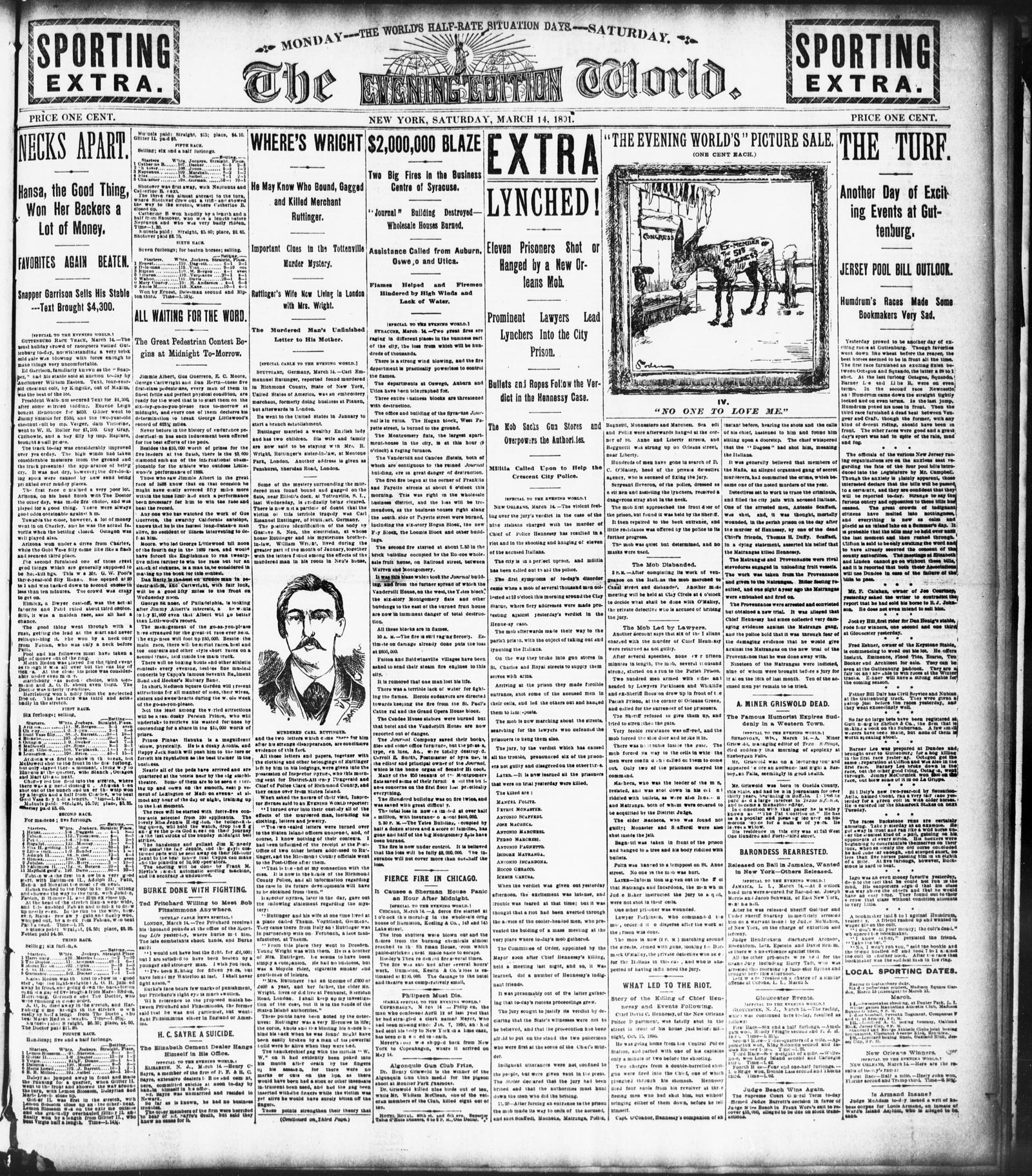 clippingThe Evening World (New York), 14 March 1891, Sporting Extra, page 1: Lynched! Eleven Prisoners Shot or Hanged by a New Orleans MobA later edition's front page lists the dead, says two prisoners listed first were later reported not to have been shot in their cells, names the leaders the paper identified, and gives a background section on the Matranga and Provenzano stevedore rivalry and the earlier trial.
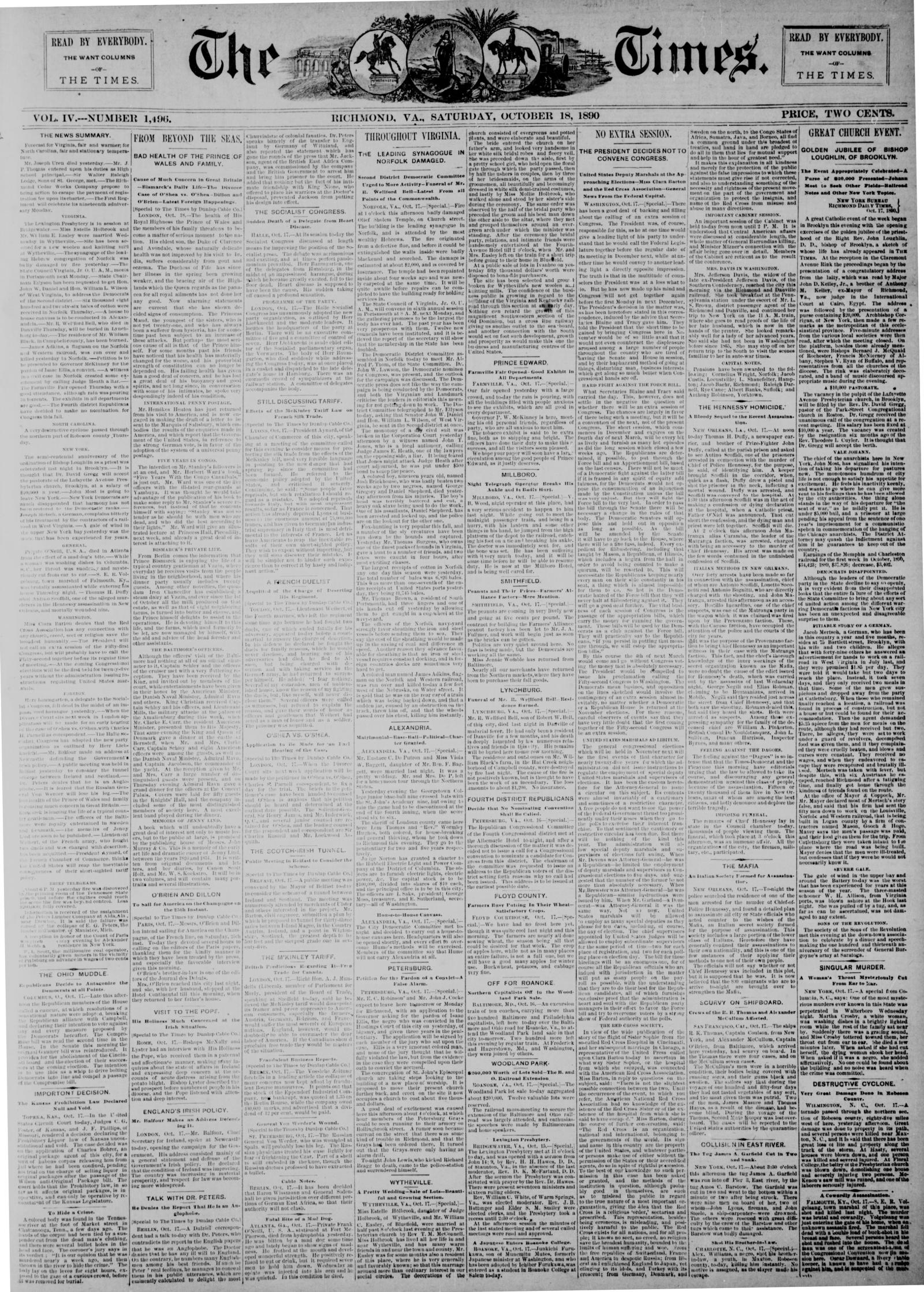 clippingThe Times (Richmond), 18 October 1890, page 1: The Hennessy Homicide. A Bloody Sequel to the Recent AssassinationDispatches of 17 October: a newspaper carrier shot prisoner Antonio Scaffidi in the Parish Prison; 'John Matranga alias Caramba, the leader of the Matranga faction' was arrested as an accessory; the paper describes the Provenzano and Matranga factions; the chief lay in state and was buried.