On 14 November 1957 New York State Police Sergeant Edgar Croswell (spelled “Crosswell” in the congressional transcript), another state trooper and two agents of the Treasury’s Alcohol and Tobacco Tax Unit drove to the home of Joseph Barbara, Sr., at Apalachin, in rural Tioga County, New York. The Second Circuit says they arrived at 12:40 P.M. at an estate of 130 acres on a dead-end dirt road, set up what amounted to a roadblock half a mile away, and stopped and questioned the men who left, some of them on foot through the fields. The pages on this hub are the sources this archive has opened. They are a court’s opinion, one witness’s sworn account, and pages the FBI wrote afterward.
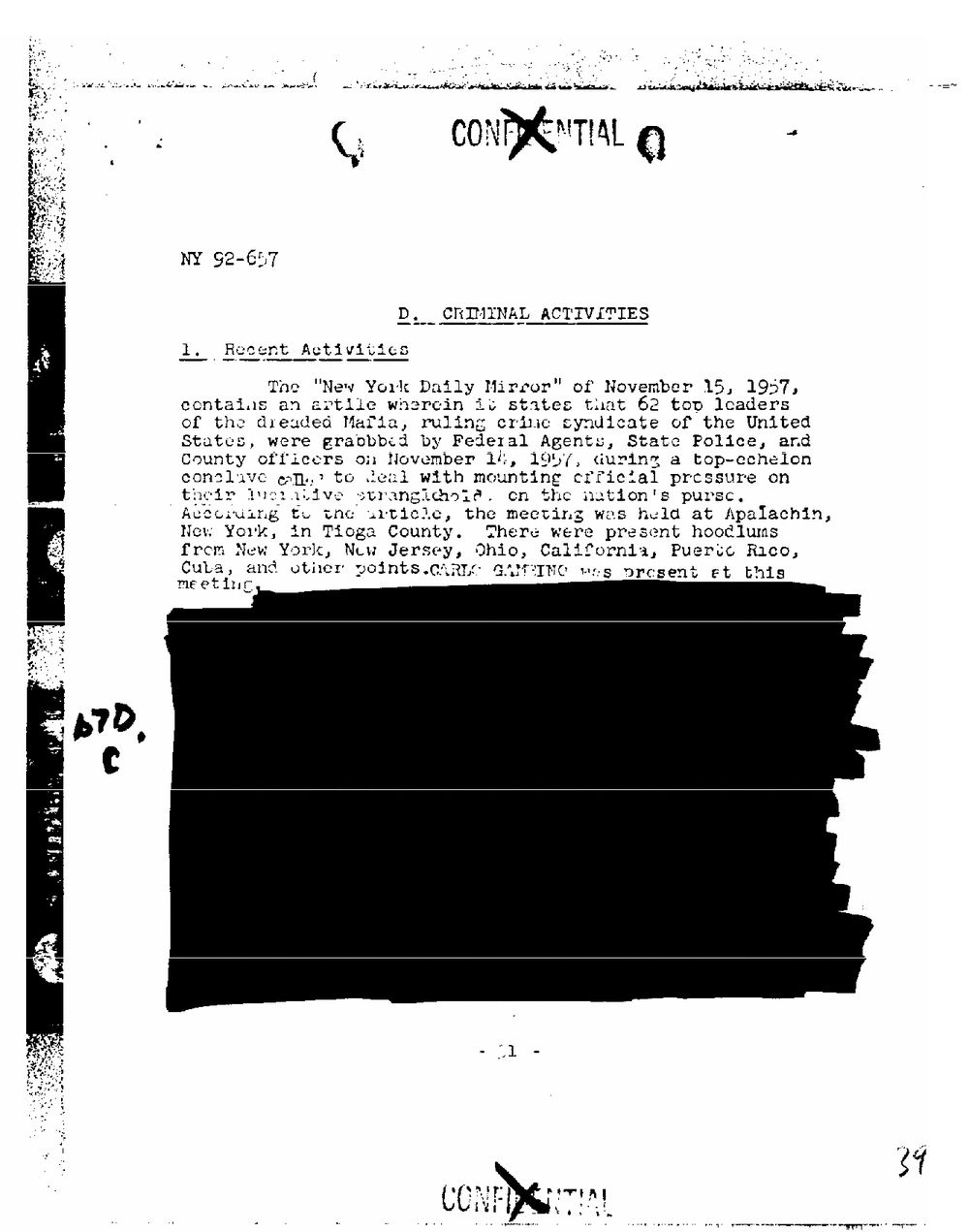
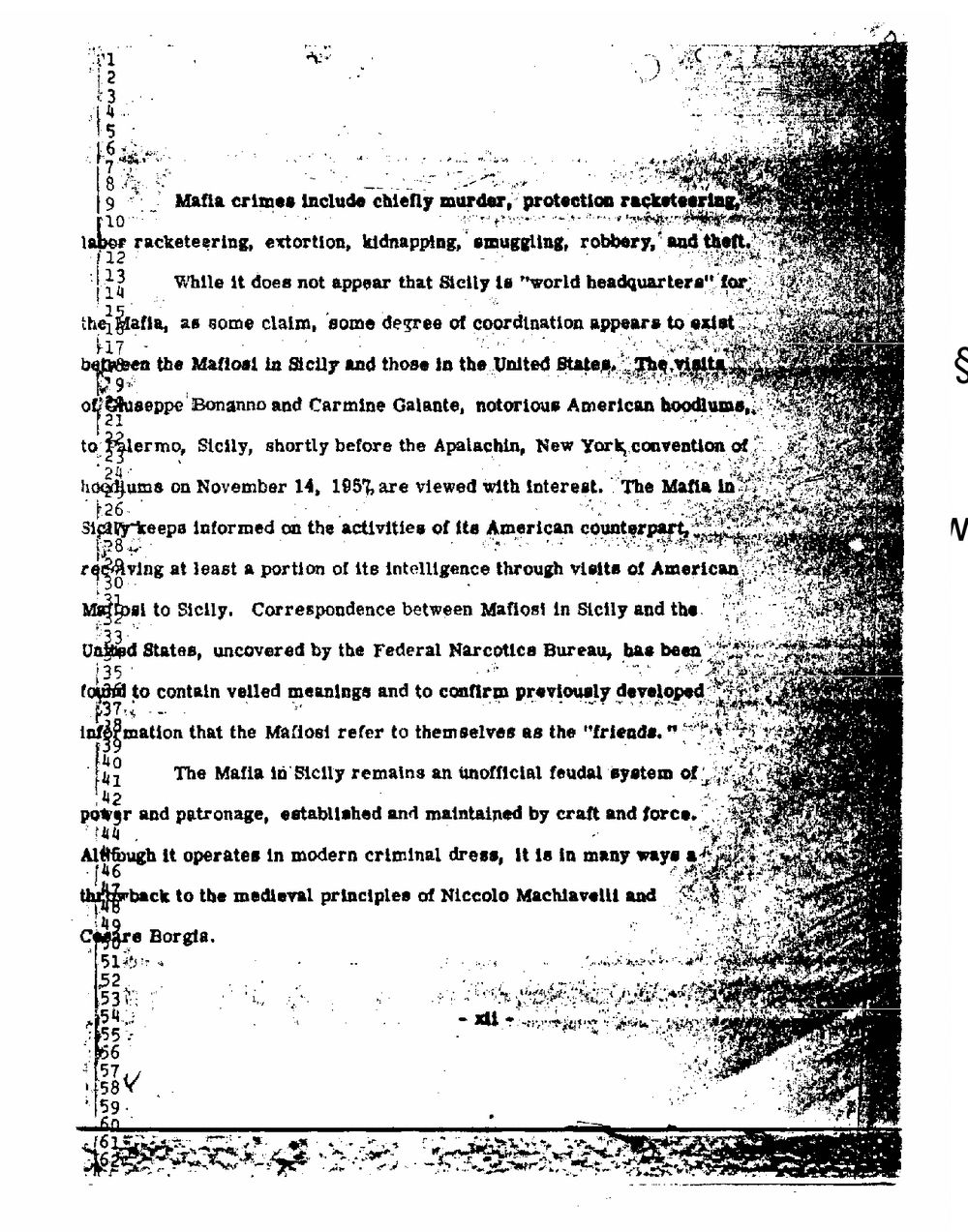
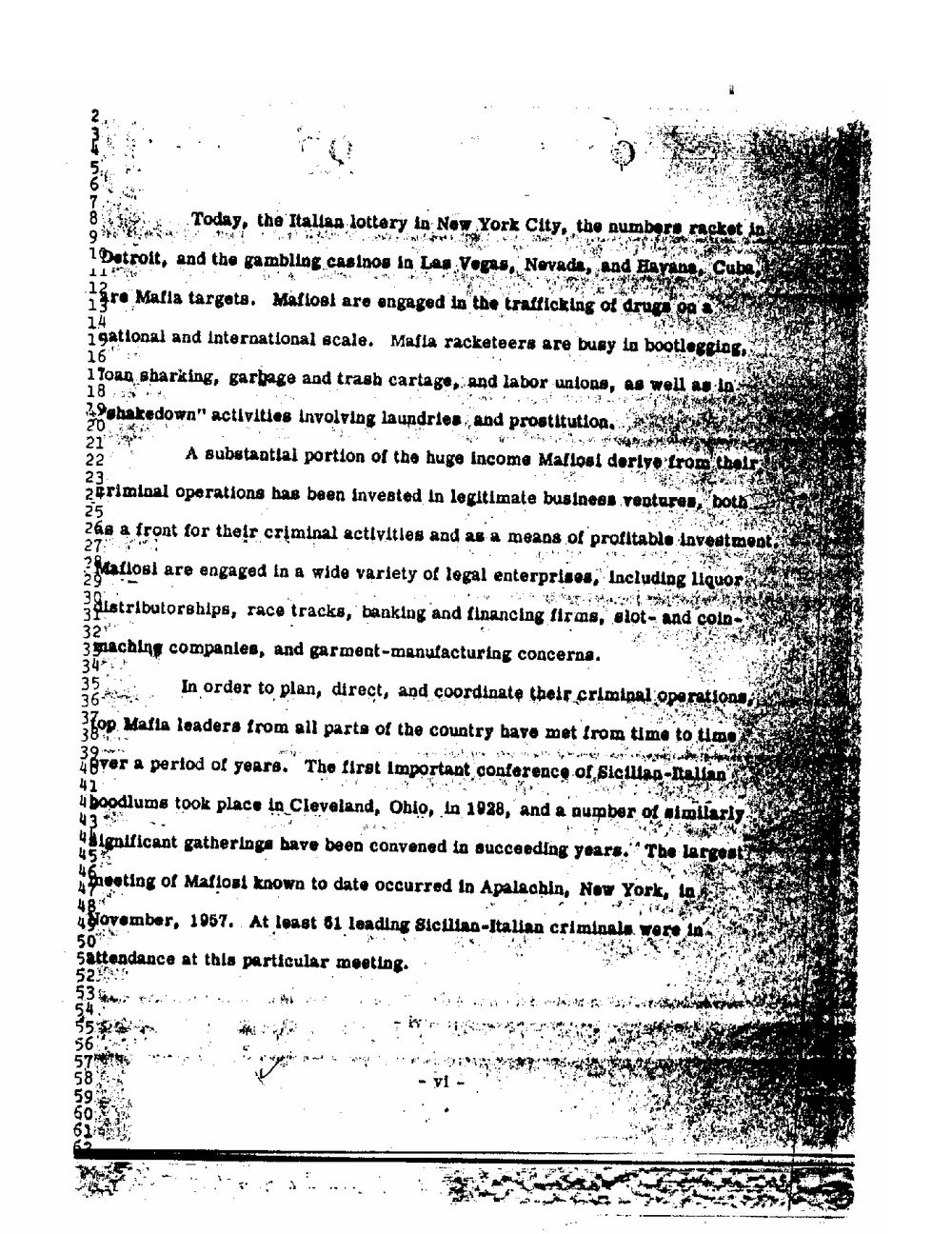
How many. The sources give different figures and this archive does not reconcile them. The Second Circuit says “58 men were stopped and asked to identify themselves,” and speaks of a gathering attended by the twenty defendants “and at least 39 others.” Sergeant Crosswell told the McClellan Committee: “Sixty-two, but that included two characters of Barbara’s, so there were 60.” The FBI’s Mafia monograph says “At least 61 leading Sicilian-Italian criminals were in attendance.” An FBI report quotes the New York Daily Mirror of 15 November 1957 for 62; that is a newspaper’s number relayed by the FBI, on a page of the Gambino file.
What the court found. The opinion concerns twenty men convicted of conspiring to obstruct justice and commit perjury in grand-jury testimony about the gathering. The court states: “The indictment did not allege what the November 14, 1957 gathering at Apalachin was about, and the government stated at the beginning of the trial that it could present no evidence of its purpose. There is nothing in the record of the trial to show that any violation of federal or state law took place or was planned at the gathering” (285 F.2d at 411). The court reversed the convictions. It also wrote that “many of Barbara’s visitors are bad people” and that “it is surely a matter of public concern that more is not known of their activities.” The opinion’s roster of who was stopped where is a list of names; it assigns no family, rank or role to anyone, and neither does this archive.
The trial judge’s own account of the stops is United States v. Bonanno, 180 F. Supp. 71 (S.D.N.Y. 1960), which explains his denial of the motions to suppress the evidence from the roadblock and states: “About twenty-five out of the approximately sixty persons questioned had criminal records.”
What the committee said. The chairman of the Select Committee opened the Part 32 hearings in 1958 by saying the committee would start with “the criminal group which held a meeting at the home of Joseph Mario Barbara, Sr.” He described the syndicate as national in scope. A staff list of “Individuals at Apalachin and Names of Some of Their Contacts and Associates” was printed in the volume as information only and “not accepted as proof”; this archive does not reproduce it.
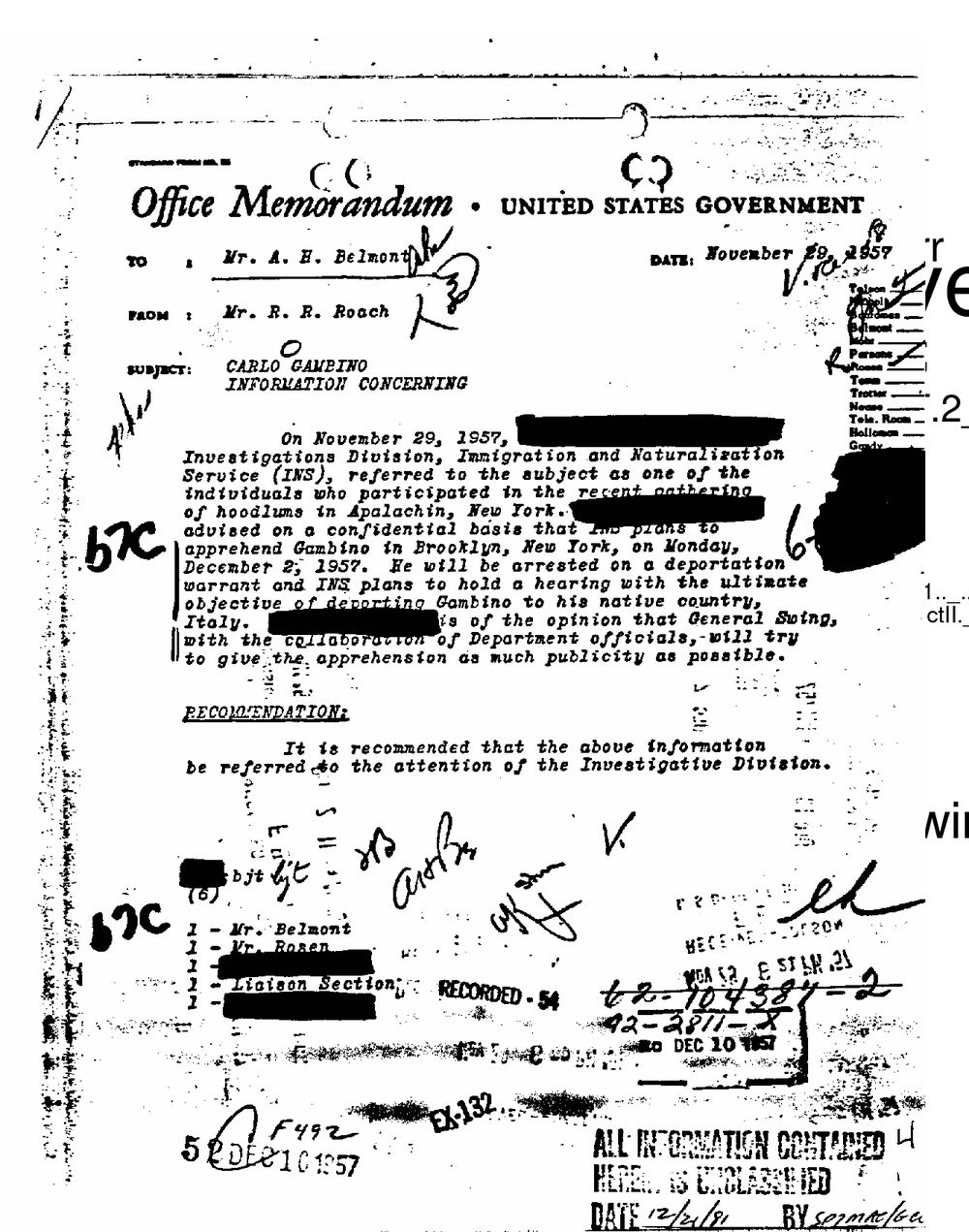
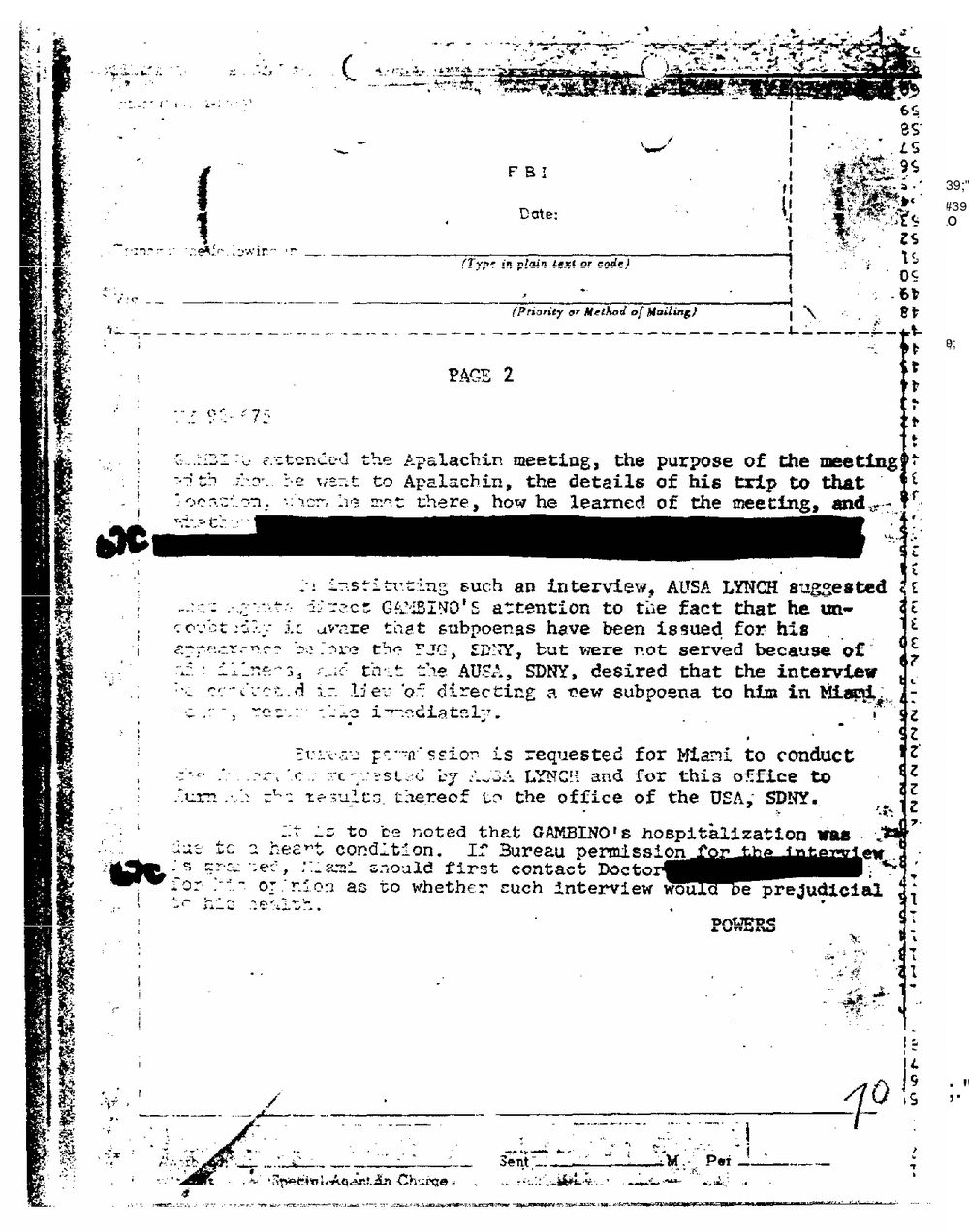
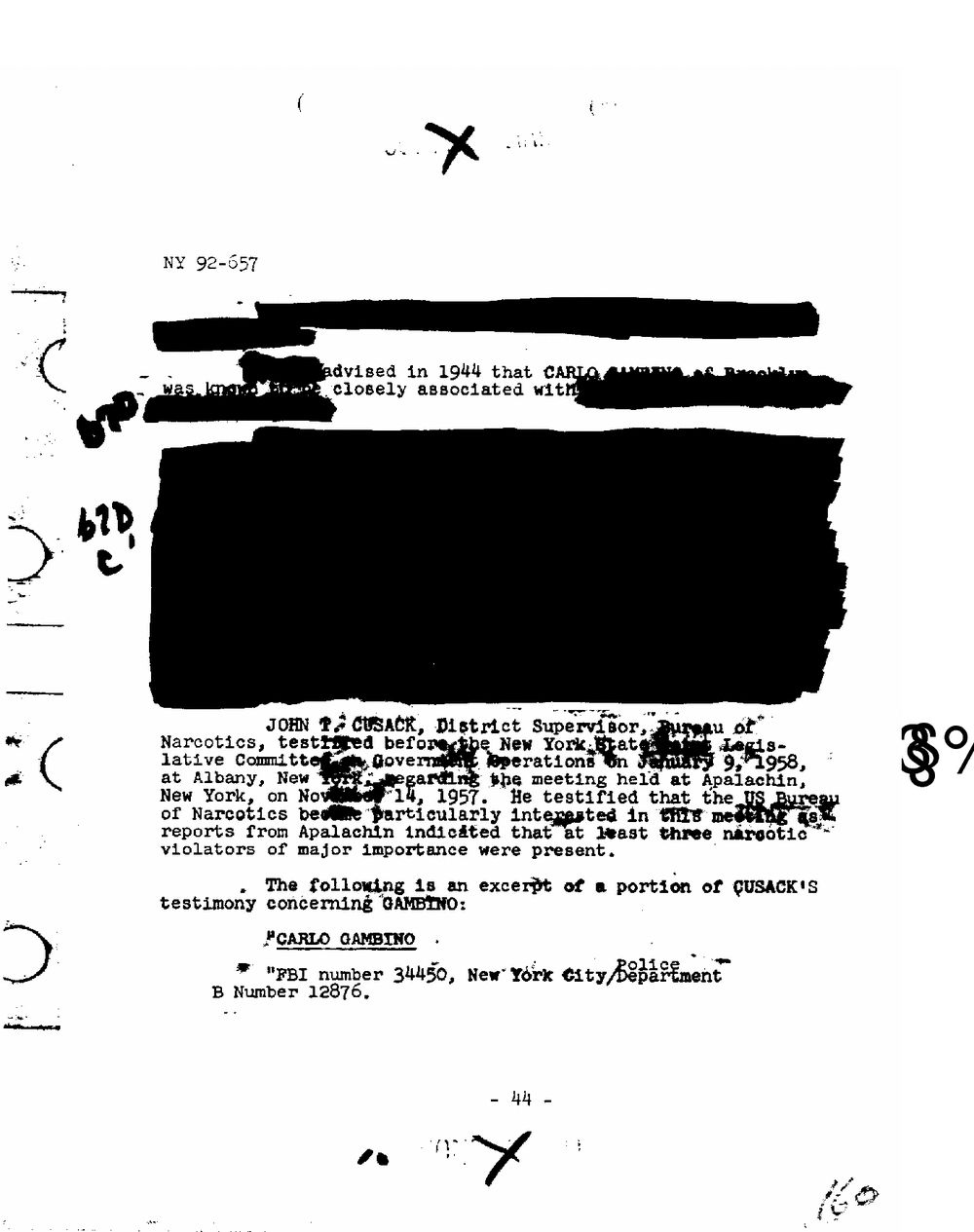
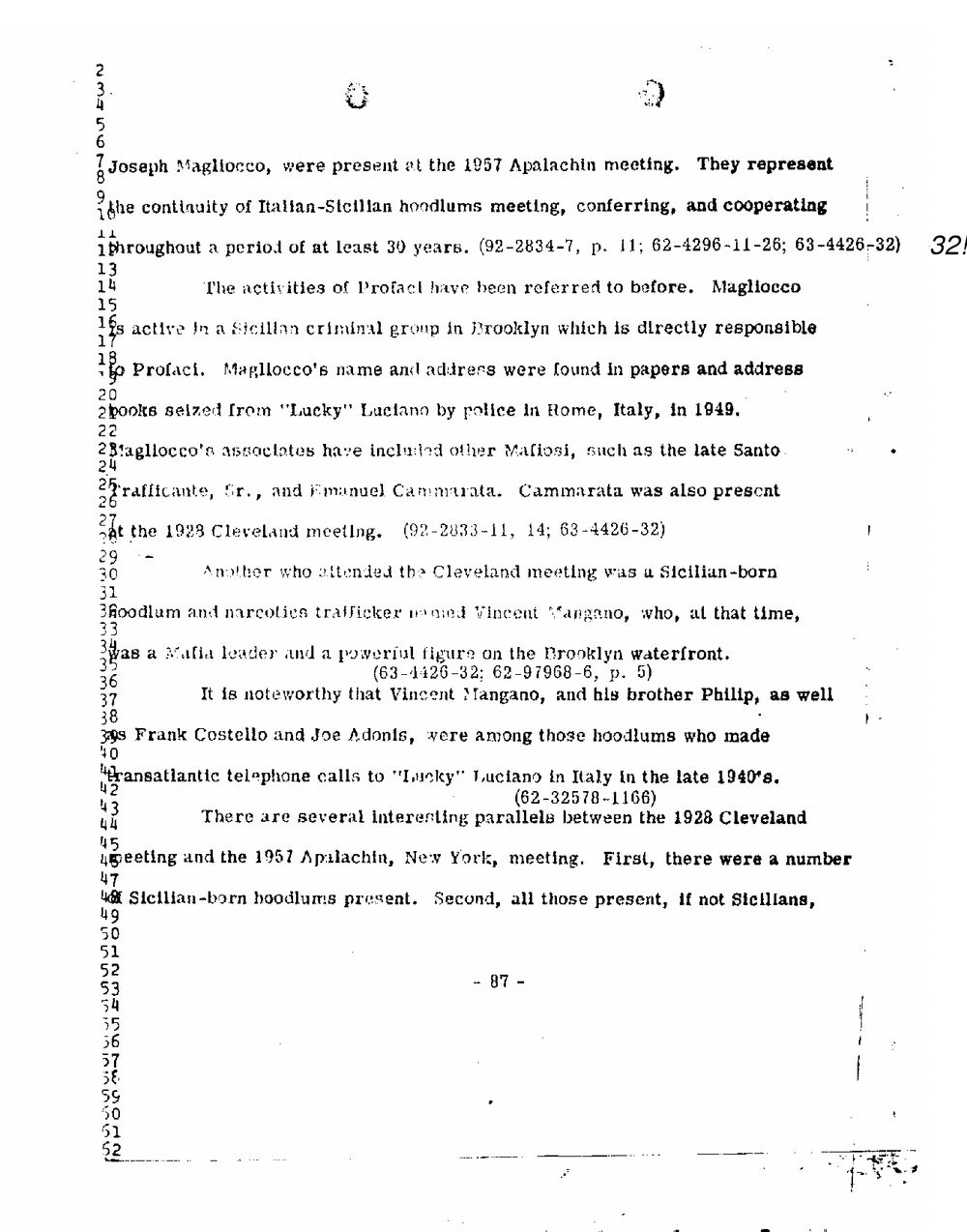
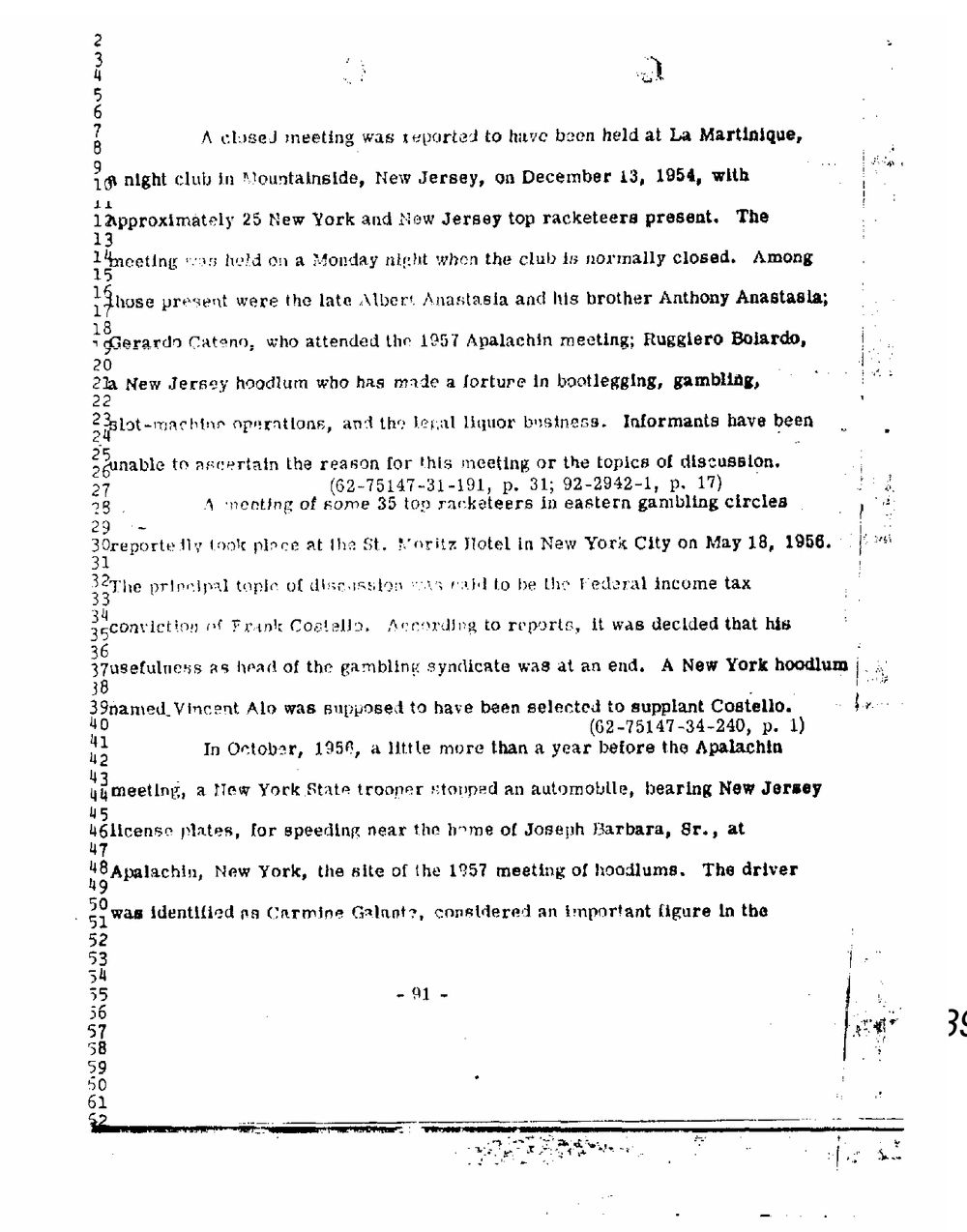
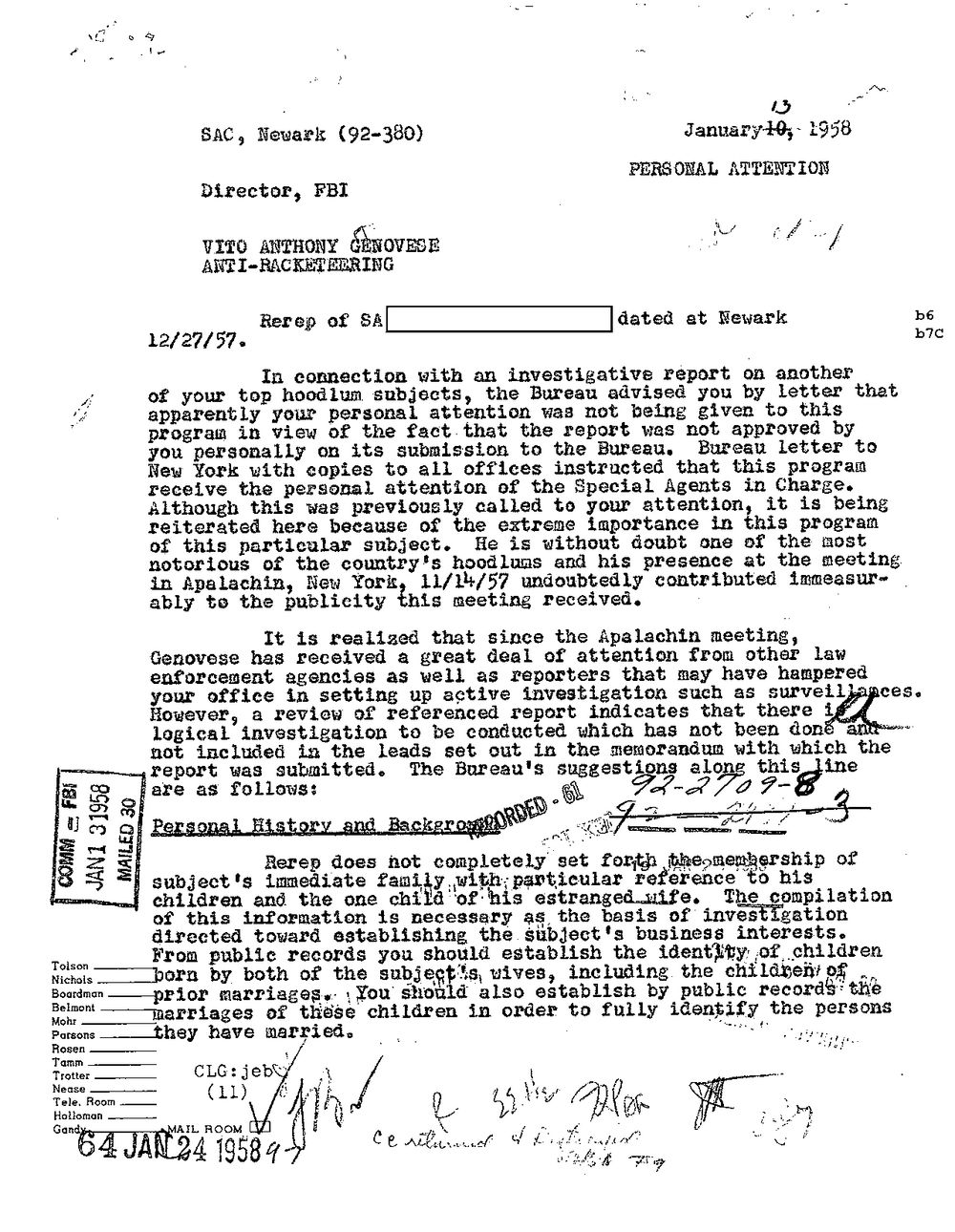
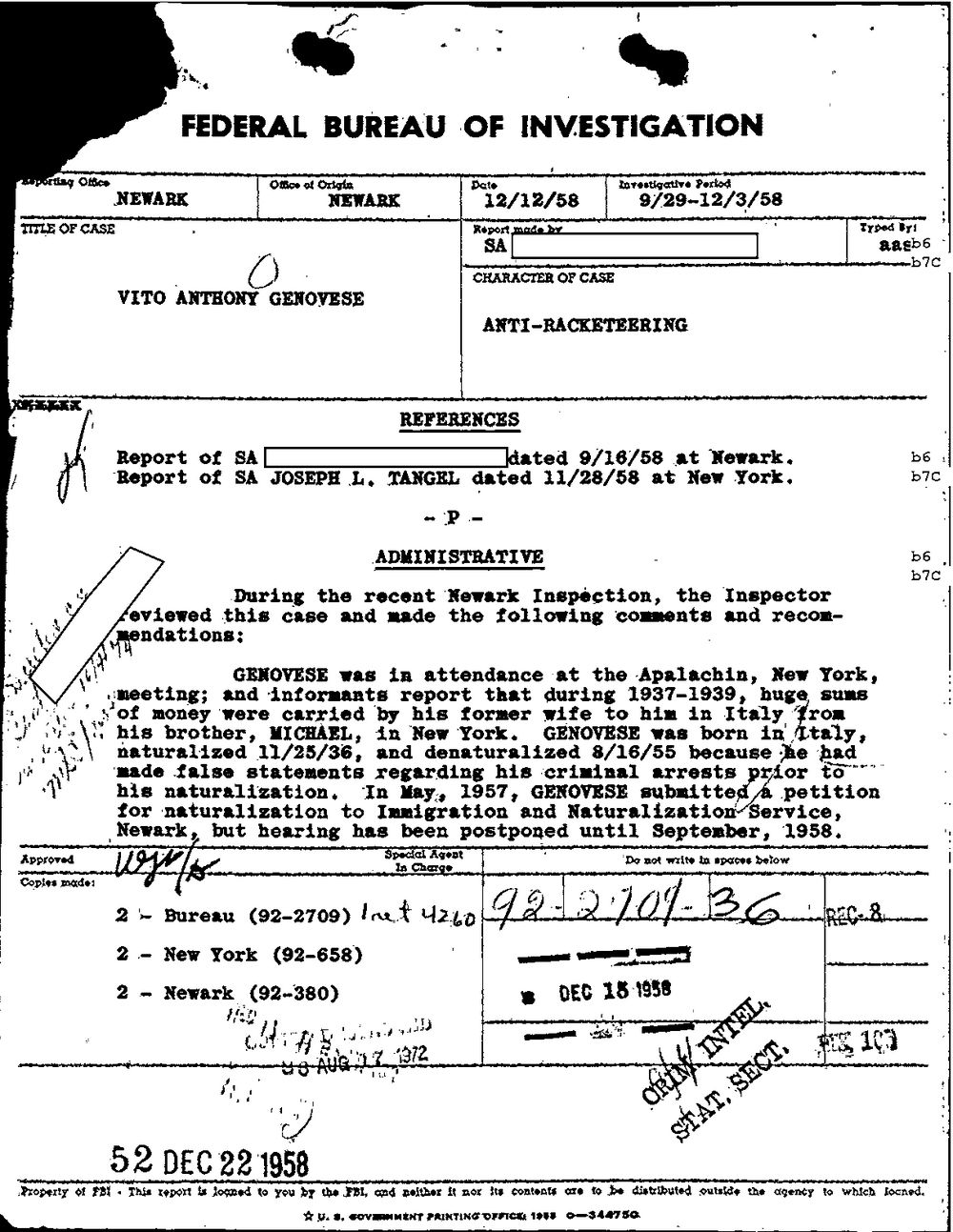
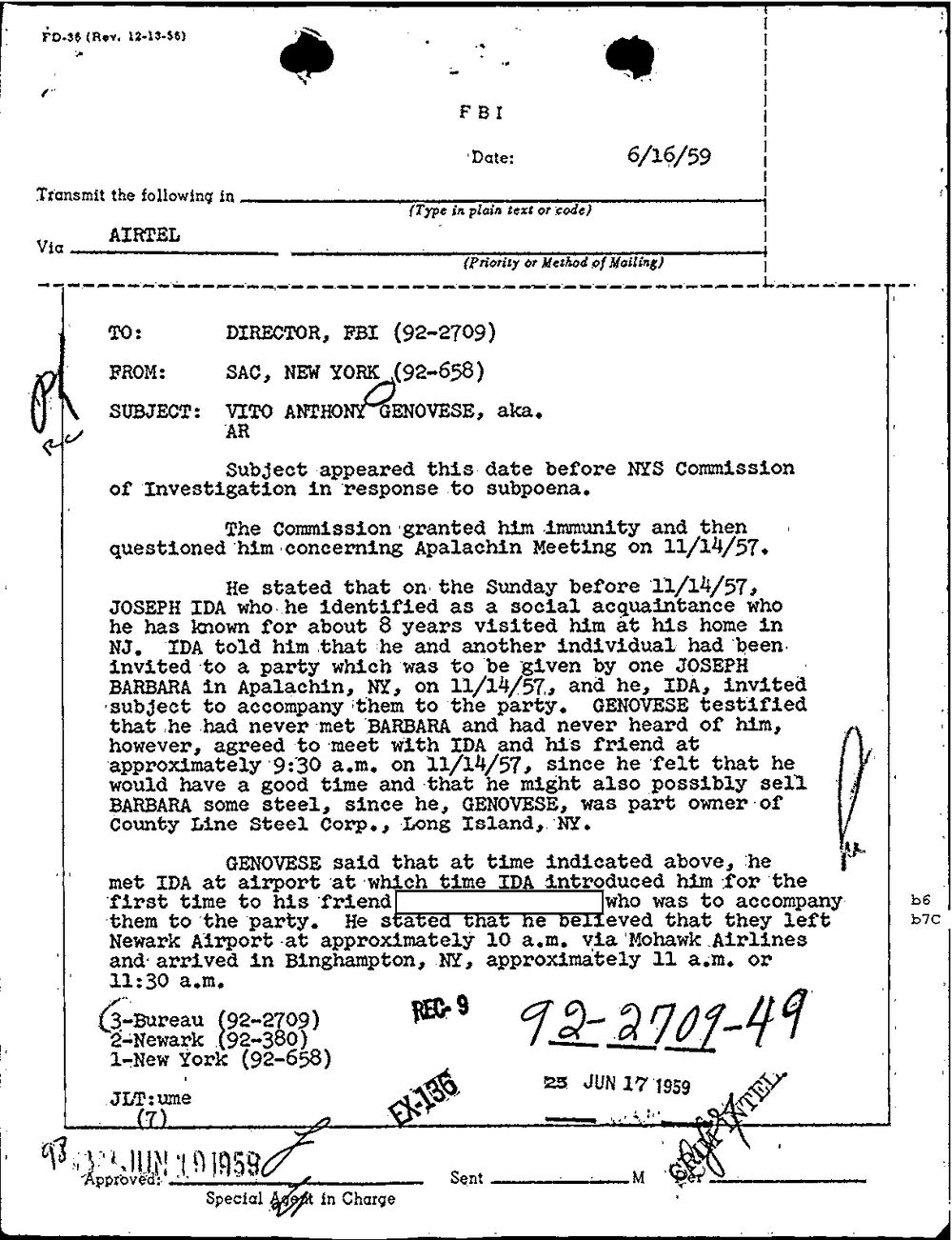
What the FBI recorded. The eleven Vault pages are the Bureau’s own papers and are not findings. They record the Immigration and Naturalization Service naming Carlo Gambino as a participant and planning a deportation arrest, a federal grand jury’s interest in his attendance, a Bureau of Narcotics supervisor’s January 1958 testimony to a state committee, and Vito Genovese’s June 1959 account, as summarized by the FBI, of how he came to travel there. The monograph pages call the meeting the “largest meeting of Mafiosi known to date,” compare it with a 1928 Cleveland meeting, and report earlier meetings and an October 1956 traffic stop near Barbara’s home. The FBI’s wording (“hoodlums,” “notorious”) is quoted and not adopted. Several pages are undated, partly redacted or damaged, and each record page says what could not be read.
Map pins for Barbara’s estate and for the Vestal barracks, where many of the men were taken, can be placed only at town level: neither the opinion nor the hearing prints a street address. No federal photograph of the raid or of the estate has been found for this archive.