Record
Court opinion
1942-06-30
CourtListener (Free Law Project), text of the opinion
United States v. Johnson, 129 F.2d 954 (3d Cir. 1942)
The Third Circuit affirms the income-tax conviction of an Atlantic County political leader named only as Johnson, reciting evidence that Atlantic City numbers banks paid him $825 a week in early 1935 and a pooled syndicate $1,200 a week from July 1935.
- Date
- 1942-06-30
- Kind
- court-opinion
- Retrieved
- 2026-10-12
- Docket
- No. 7795
- Rights
- Opinion of a United States court. Works of the federal judiciary are in the public domain in the United States. The text was read on CourtListener.
Circuit Court of Appeals, Third Circuit, No. 7795, argued November 21, 1941 and decided June 30, 1942, before Judges Biggs, Jones and Goodrich. Judge Biggs wrote the opinion; Judge Goodrich concurred and Judge Jones dissented.
The appellant was indicted on three counts of wilfully evading income tax for 1935, 1936 and 1937 under section 145(b) of the Revenue Act of 1936. “He was acquitted under the first count, was found guilty and was sentenced on each of the two remaining counts.” Counts two and three each charged that he omitted $62,400 “received from backers of numbers games.” The court describes him this way: “The appellant was a political leader in Atlantic County, New Jersey, residing in Atlantic City. He testified that he had occupied the position of county treasurer for many years but had devoted his time to politics.”
The court’s account of the evidence: seven numbers banks in Atlantic City “paid protection money to the appellant at the rate of $825 a week for approximately the first six months of 1935.” After a numbers war between Ralph Weloff, James Towhey and Martin Michael, “sometimes known as Jack Southern,” the backers formed a single syndicate about July 1935. “This syndicate paid Johnson $1,200 a week,” through at least the first ten months of 1937. Johnson testified that the money was not for protection “but in order to enable him to maintain his personal political machine,” and that he reported only what remained after political expenses. The appeal turned on his exclusion from the courtroom during a colloquy, cross-examination about his 1938 income, and comment on his claim of privilege; the court rejected each claim.
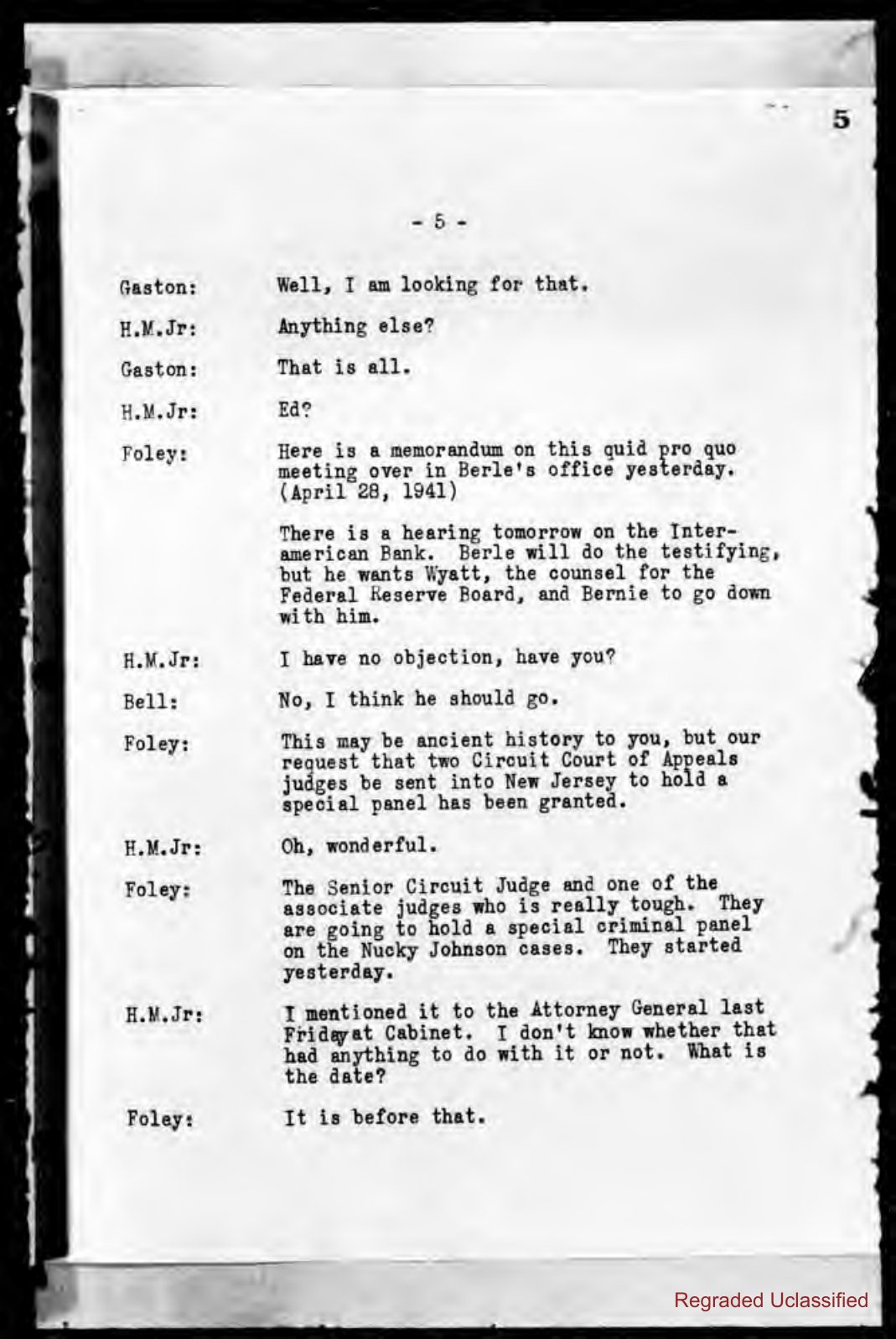
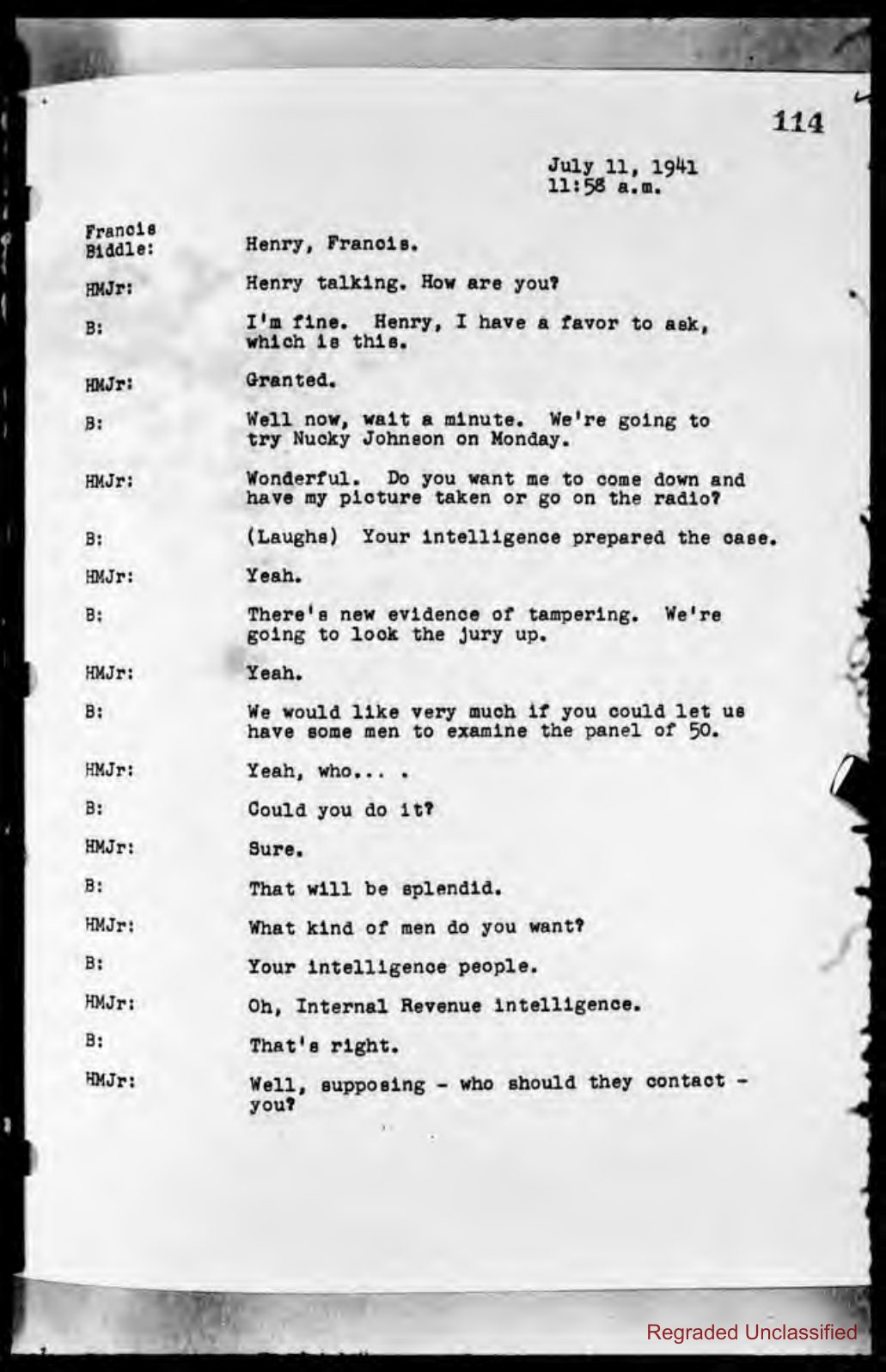
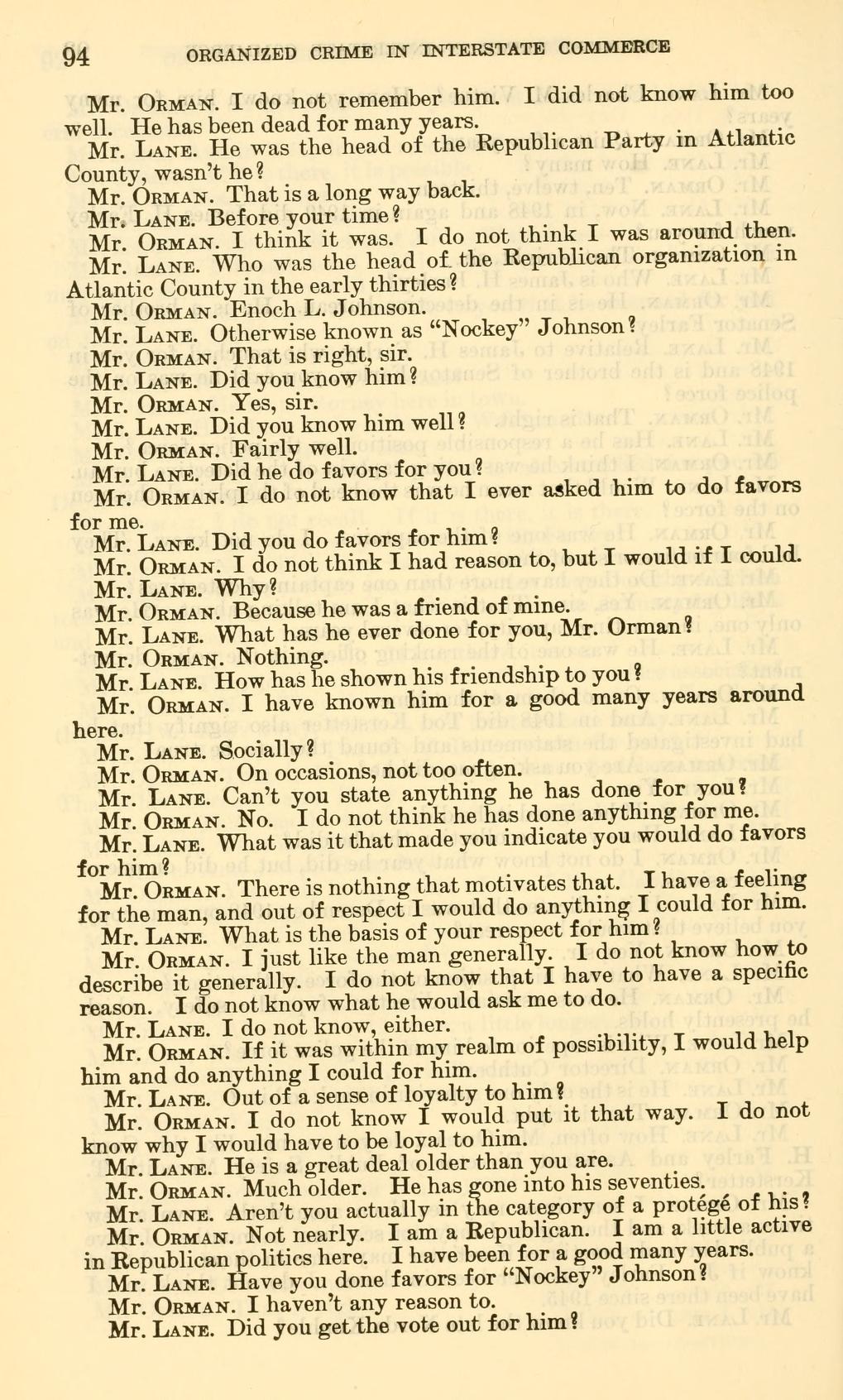
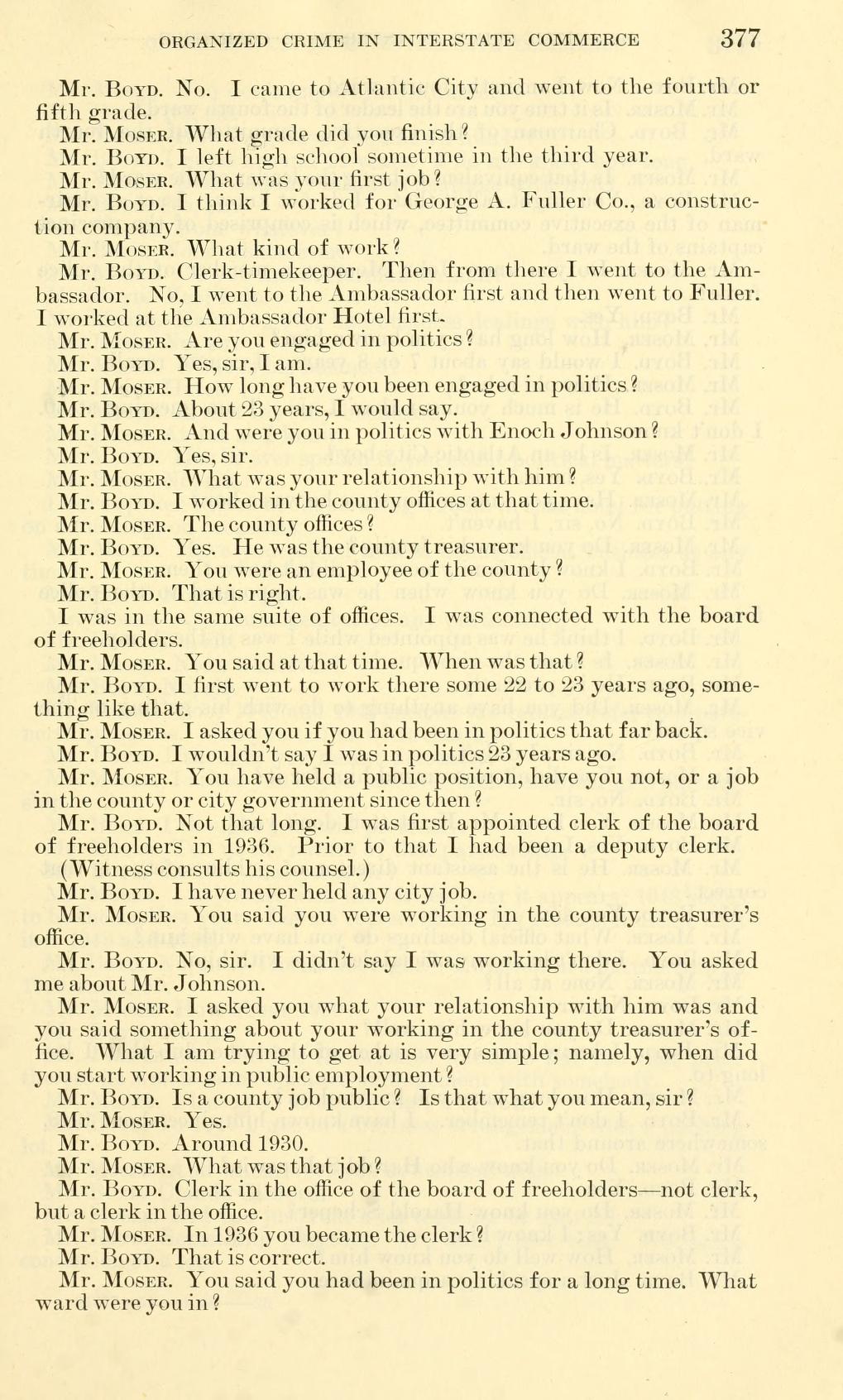
The opinion prints only the surname Johnson and gives no first name, age or address. This archive identifies the appellant with Enoch L. Johnson on the strength of other records, not this one: Kefauver Committee testimony that Enoch L. Johnson headed the Atlantic County Republican organization and had been county treasurer (Orman; Boyd), and Treasury conference transcripts of 1941 about “the Nucky Johnson cases” before a special panel that included Judge Biggs (Morgenthau Diaries, vol. 393). The Supreme Court affirmed in 1943 (318 U.S. 189). The sentence is not stated in the opinion.