Charles Matranga
Named in 1890-91 records on the Hennessy case: a State Department registration abstract lists him; the 14 March 1891 verdict acquitted him; and the 1891 papers describe a Matranga faction in a stevedoring rivalry, claims that are the papers' and not court findings.
- Born
- 1857 (birth year in a registration abstract)
- Aliases
- Tony Matranga / Toney Matranga (as the Indianapolis Journal of 15 March 1891 calls him), John Matranga, alias 'Caramba' (as The Times of Richmond, 18 October 1890, names the leader of the Matranga faction)
- Rights
- Biography on this page is limited to what the cited federal records state.
On the record
- 15 December 1890 — A certified Orleans Parish registration abstract lists "Charles Matranga, registered No. 599, Fifth precinct, Third ward, October 27, 1872 ... Citizen by virtue of father's naturalization. Born in Italy in year 1857" (FRUS 1891, Document 613).
- 18 October 1890 — The Times (Richmond) reported that "John Matranga alias Caramba, the leader of the Matranga faction" was arrested on 17 October as an accessory to the murder of Chief Hennessy. The dispatch's assertion.
- 14 March 1891 — The Sun's dispatch of 13 March reported not-guilty verdicts as to six defendants, including Matranga, with the jury disagreeing as to three. The Sun of 15 March said his life "was saved" when a mob leader intervened because the court had declared him not guilty; The Evening World of 14 March first listed him among the dead and then said Matranga and Incardona "were not shot in their cells."
- 14 March 1891 — The Evening World's Sporting Extra described the Matrangas and the Provenzanos as rival stevedores, said work was taken from the Provenzanos and given to the Matrangas, and said the Matrangas were ambushed one night. The paper's account.
- 18 March 1891 — The Indianapolis Journal reported that "in the Hennessy case there was not sufficient evidence to implicate Charles Matranga." A newspaper report.
The 1951 hearing volume names other Matranga family members; no opened record connects them to him. The papers also call him Tony or Toney Matranga, and The Times of Richmond calls the faction’s leader “John Matranga alias Caramba.” The opened pages do not say whether these are the same man, so the spellings are recorded as printed.
No role is entered. The papers’ statements about a “faction” and a “Mafia” are quoted as their claims; the jury acquitted him, and The Indianapolis Journal of 18 March 1891 reported that “in the Hennessy case there was not sufficient evidence to implicate Charles Matranga.”
Records
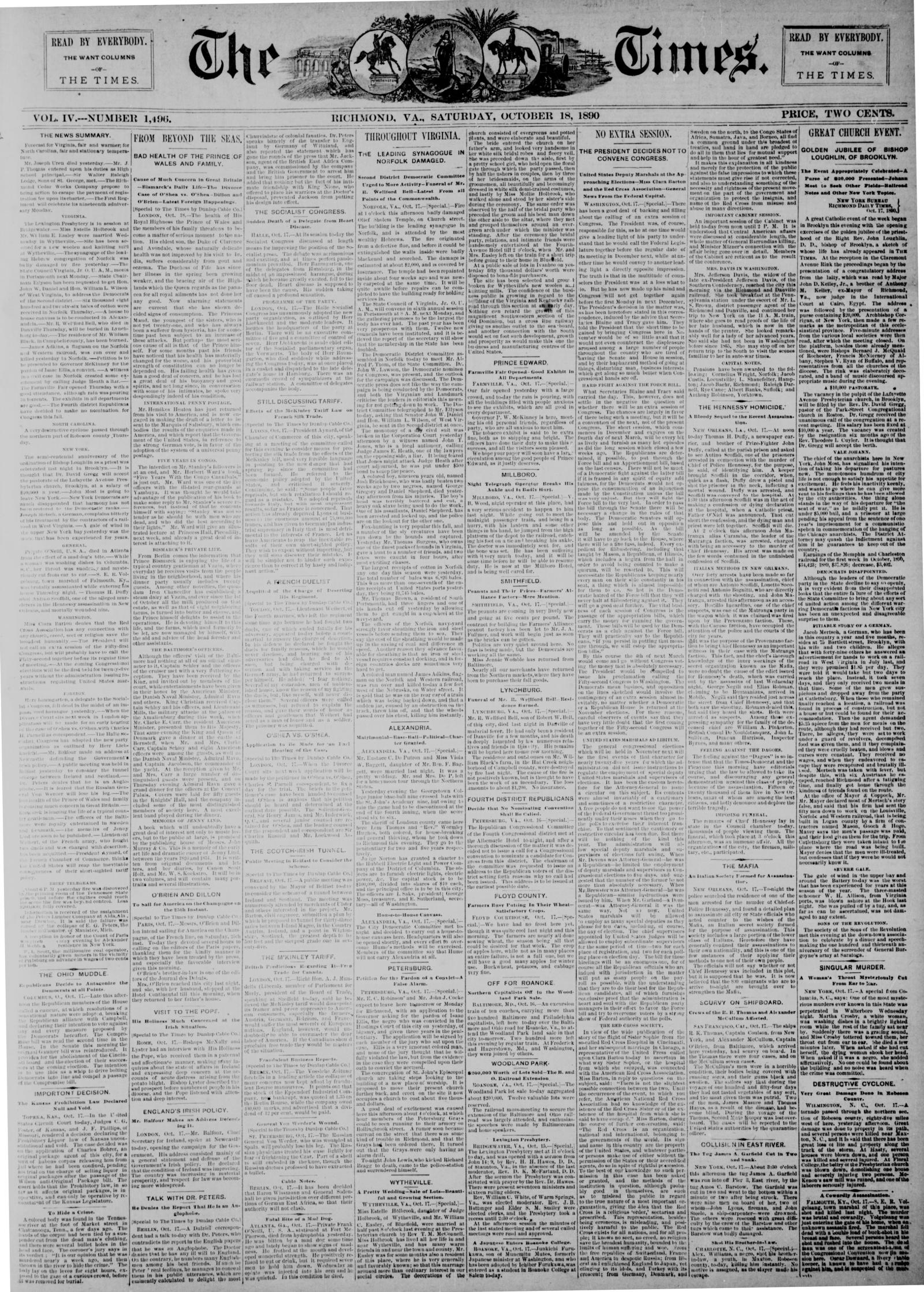 clippingThe Times (Richmond), 18 October 1890, page 1: The Hennessy Homicide. A Bloody Sequel to the Recent AssassinationDispatches of 17 October: a newspaper carrier shot prisoner Antonio Scaffidi in the Parish Prison; 'John Matranga alias Caramba, the leader of the Matranga faction' was arrested as an accessory; the paper describes the Provenzano and Matranga factions; the chief lay in state and was buried.
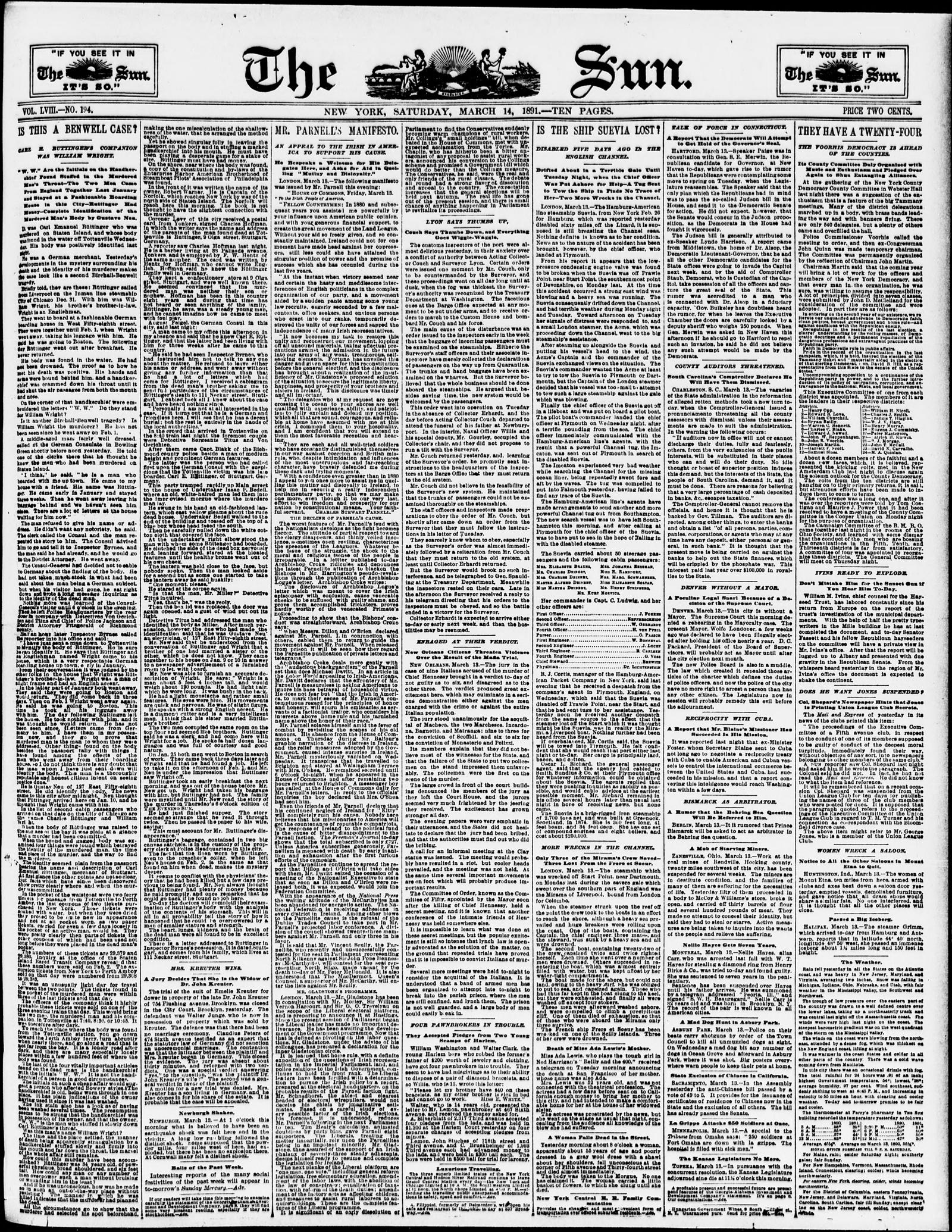 clippingThe Sun (New York), 14 March 1891, page 1: Enraged at Their VerdictA dispatch of 13 March reports the jury's verdict in the case of nine Italians accused of killing Chief Hennessy: not guilty as to six, no agreement as to three, with the crowd denouncing the jury and secret meetings at which lynching was 'openly advocated.'
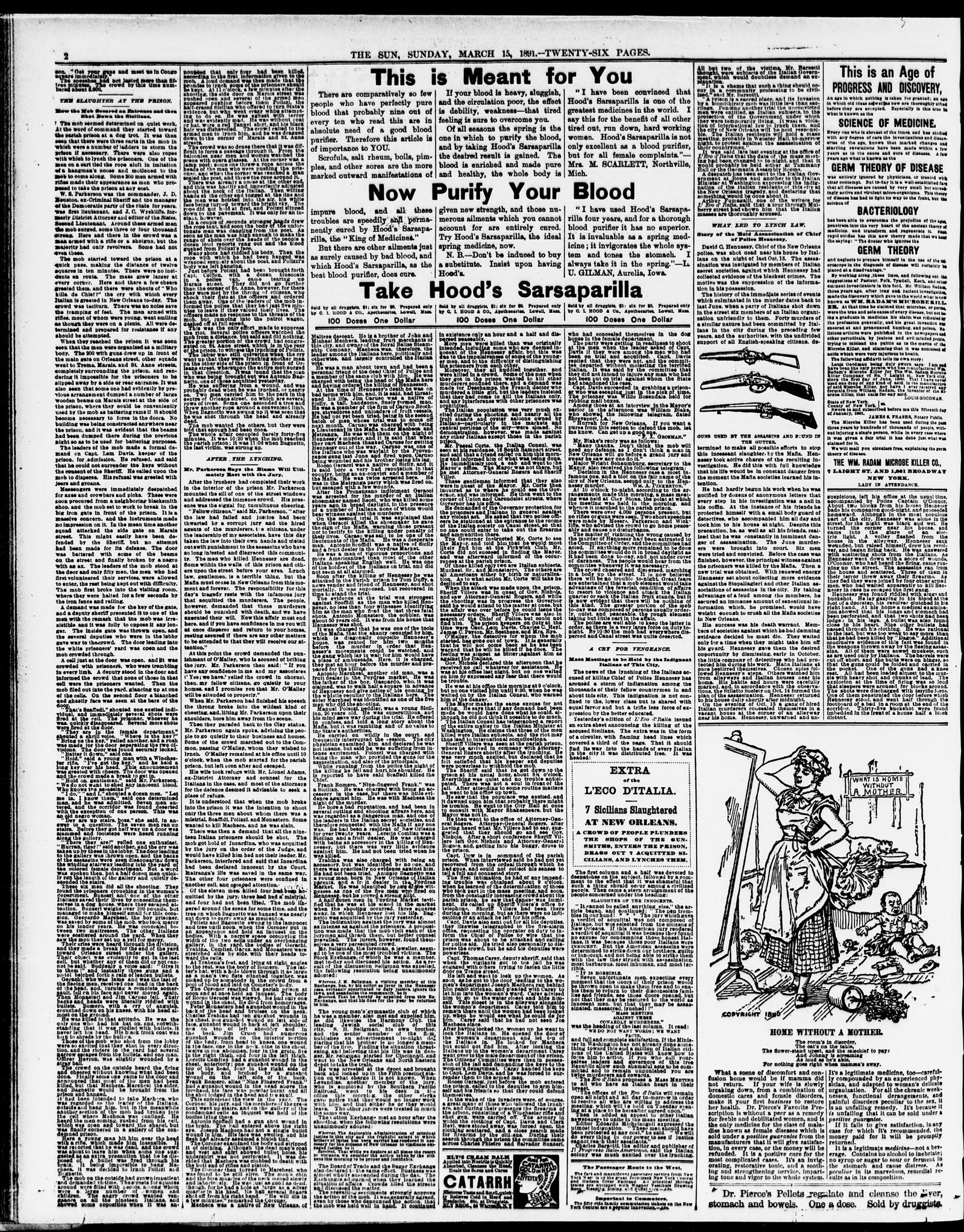 clippingThe Sun (New York), 15 March 1891, page 2: The slaughter at the prisonPage 2 of the New York Sun of 15 March 1891, continuing its report from New Orleans of the armed mob that broke into the Parish Prison and shot prisoners held in the Hennessy case.
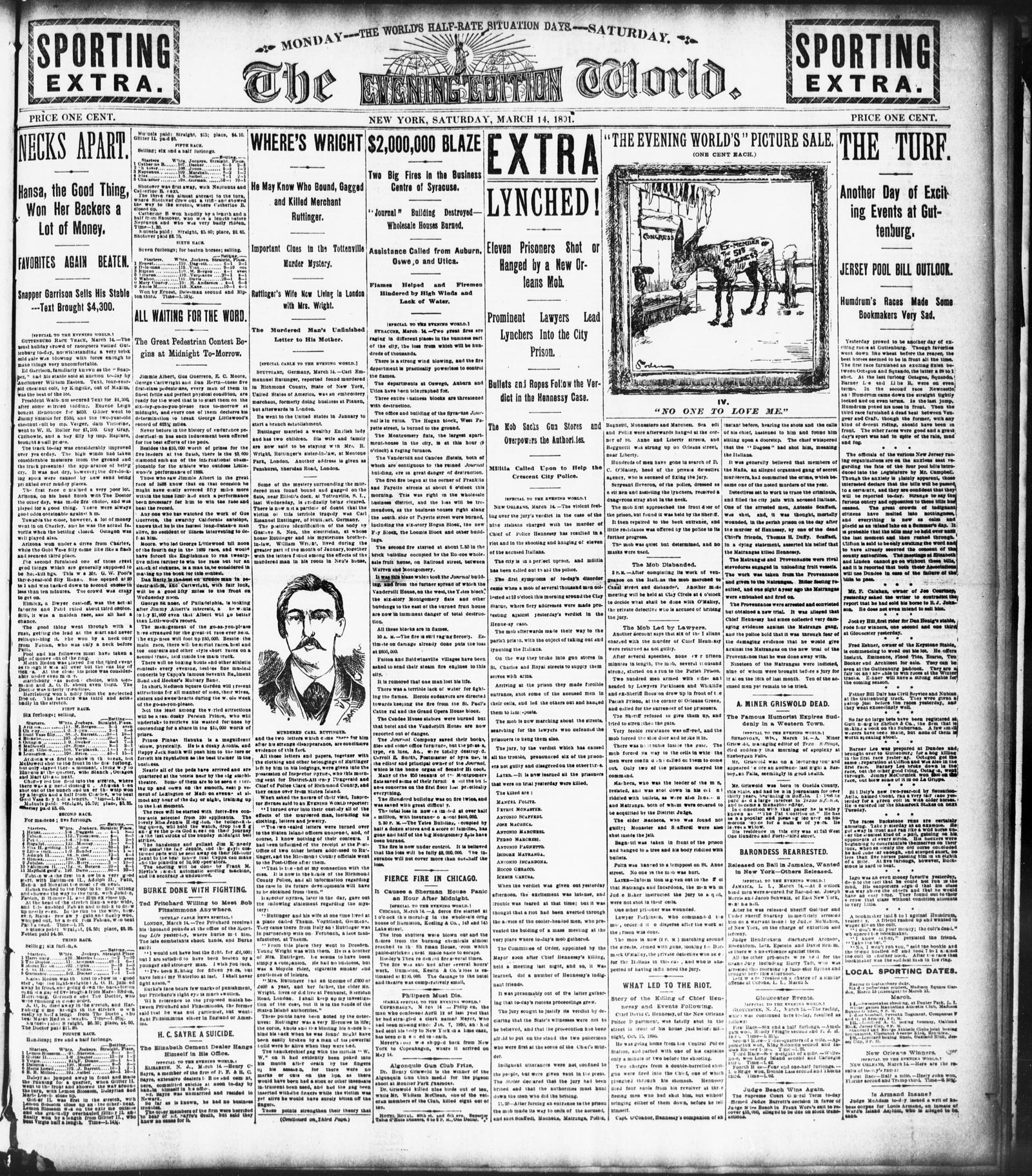 clippingThe Evening World (New York), 14 March 1891, Sporting Extra, page 1: Lynched! Eleven Prisoners Shot or Hanged by a New Orleans MobA later edition's front page lists the dead, says two prisoners listed first were later reported not to have been shot in their cells, names the leaders the paper identified, and gives a background section on the Matranga and Provenzano stevedore rivalry and the earlier trial.
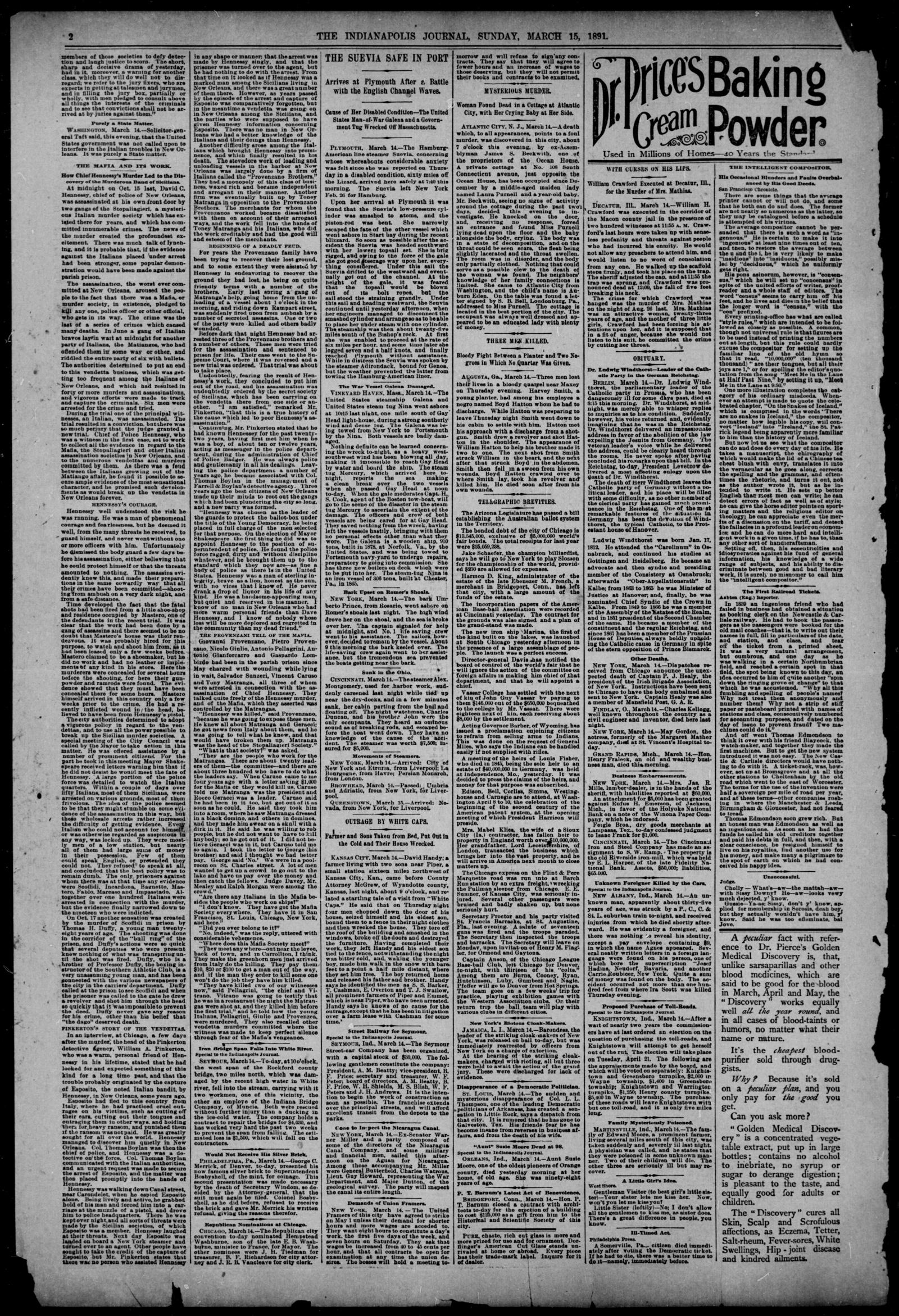 clippingThe Indianapolis Journal, 15 March 1891, page 2: The Mafia and Its Work (background, a Pinkerton interview, and statements of the Provenzanos)An inside page with a background article on the Hennessy killing, a note that Solicitor-General Taft called the Italian trouble 'purely a State matter,' an interview attributed to William A. Pinkerton on the stevedore dispute, and statements by Giovanni and Pietro Provenzano held in the Parish Prison.
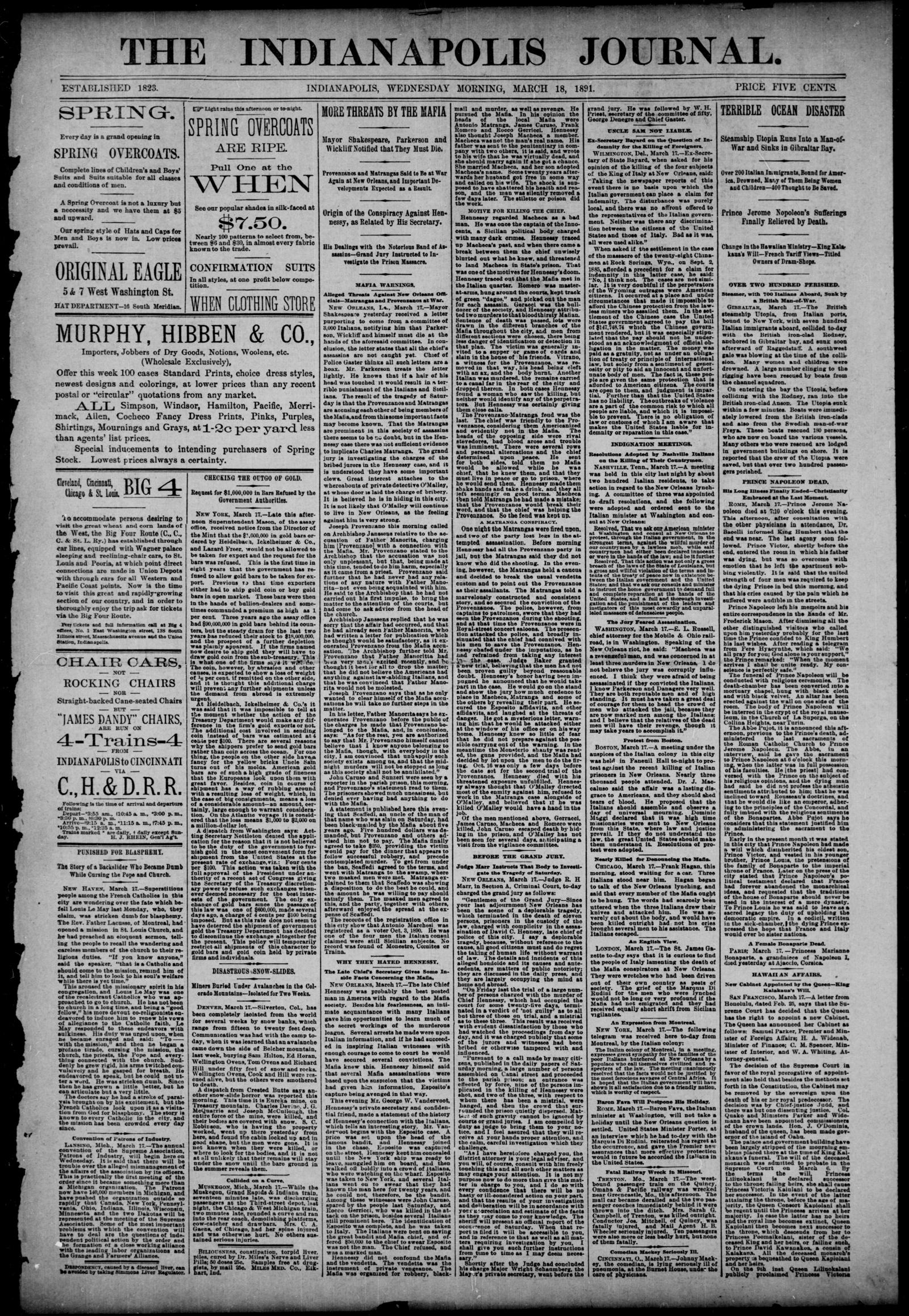 clippingThe Indianapolis Journal, 18 March 1891, page 1: More Threats by the Mafia (Provenzanos and Matrangas said to be at war again)A dispatch of 17 March reports an alleged threatening letter to the Mayor and Parkerson, that the Provenzanos and Matrangas were accusing each other of Mafia membership, and that 'in the Hennessy case there was not sufficient evidence to implicate Charles Matranga.'