Frank R. Nitto
A Bureau of Investigation letter in his FBI Vault file lists him as Frank R. Nitto, alias Frank Nitti, a member of the Al Capone Gang, indicted for income tax evasion on March 14, 1930.
- Aliases
- Frank Nitti, Frank Novelli
- Family
- Al Capone Gang, in the words of a Bureau of Investigation letter in his file
- Role
- Member, according to the same letter
- Rights
- Biography on this page is limited to what the cited federal records state.
On the record
- 14 March 1930 — A Bureau of Investigation Chicago letter (Vault, Frank Nitti Part 01, pp. 45–46) states that "Frank Nitto was indicted by the Federal Grand Jury at Chicago, Illinois on March 14, 1930" for evading income tax of $97,699.25 on net income of $426,261.99 for 1925.
- c. 1930 — The same letter, dated October 3 with the year illegible, lists him as "Frank R. Nitto, alias Frank Nitti, alias Frank Novelli," liquor dealer, and states: "Frank Nitto is a member of the Al Capone Gang of Chicago, Illinois."
- 1930s — The FBI history essay "Al Capone" says "Jake 'Greasy Thumb' Guzik, Frank Nitti, and other mobsters were subjects of tax evasion charges."
- 1935–1940 — United States v. Compagna, 146 F.2d 524 (2d Cir. 1944), recounting the testimony of Bioff in the Hollywood extortion case, says that when Bioff complained of a payment to Nitti, "Nitti had told him to let it pass."
- 30 November 1949 — Nitto v. Commissioner, 13 T.C. 858 (1949), a Tax Court case against his estate, holds: "Respondent has established convincingly, we believe, decedent's association with Bioff and Browne in their scheme of procuring substantial sums of money from various members of the motion picture industry," that he failed to report what he received in each year at issue, and that fraud penalties applied. The court calls him "decedent" without giving a date of death.
- 5 January 1951 — Kefauver Committee counsel Rudolph Halley stated at the Illinois hearings (Part 5, p. 1320) that "Frank Nitti was found dead, apparently a suicide, with a gun in his hands."
The heading uses the spelling of the Bureau letter, the main record on this page. “Frank Nitti” is the spelling of the FBI history essay and of the Second Circuit.
Halley also said that “after the death of Al Capone, Frank Nitti assumed the mantle of the so-called Capone gang.” That is counsel’s summary, not testimony, and Capone was alive until 1947, so the sentence cannot be read literally. This page does not use it as a role. No opened record gives his birth or death date; the 1949 Tax Court opinion refers to his estate but does not date his death. The Hollywood extortion records are gathered in the Hollywood extortion case.
Records
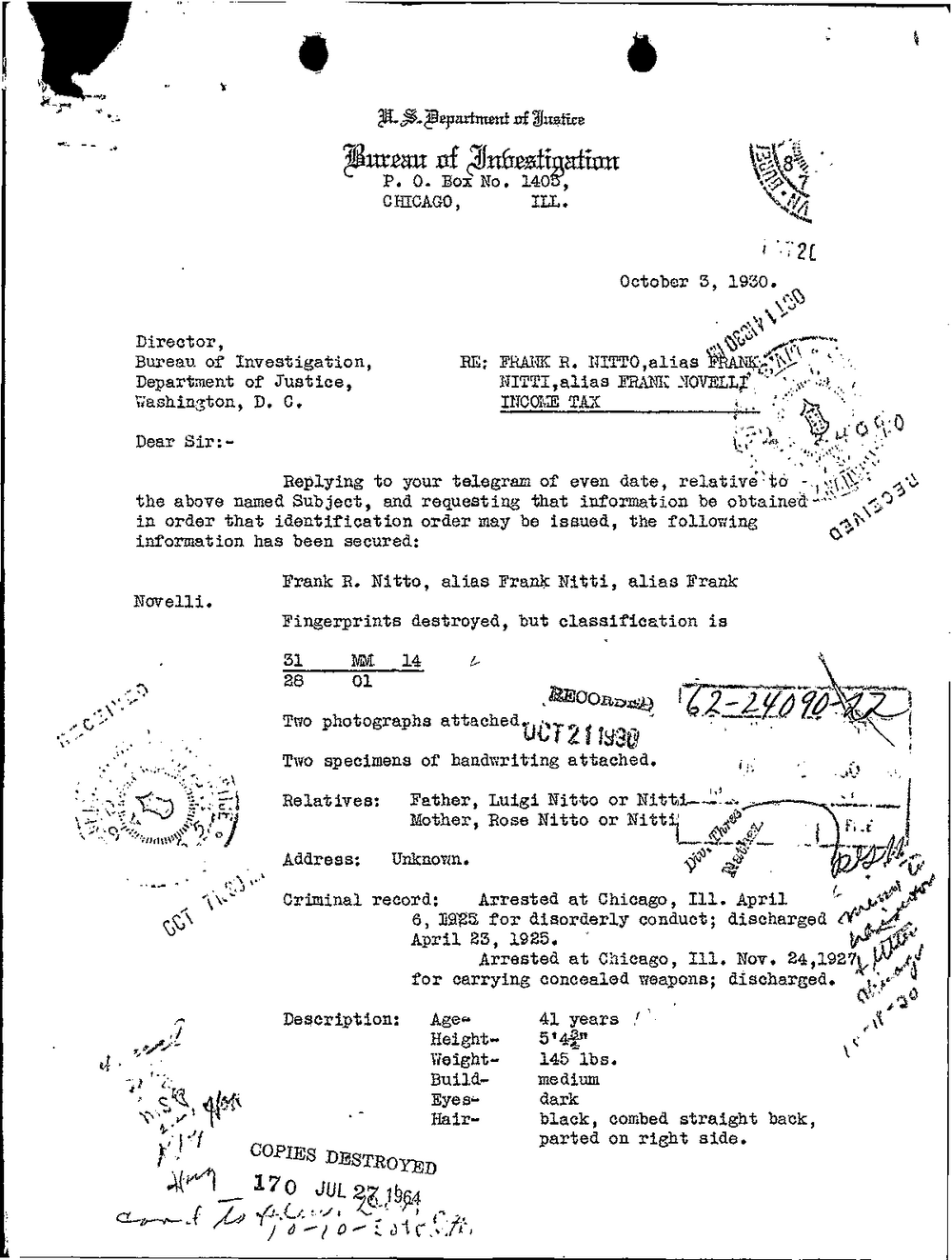 itemFBI Vault file on Frank NittiThe FBI Vault's release of the Bureau file on Frank Nitti, one part of 121 scanned pages, including a Bureau of Investigation Chicago letter that lists him as Frank R. Nitto and reports his March 14, 1930 tax indictment.itemUnited States v. Compagna, 146 F.2d 524 (2d Cir. 1944)Second Circuit opinion of December 20, 1944 affirming the convictions of Compagna and six others for a conspiracy to extort money from motion-picture producers and exhibitors, 1935 to 1940.
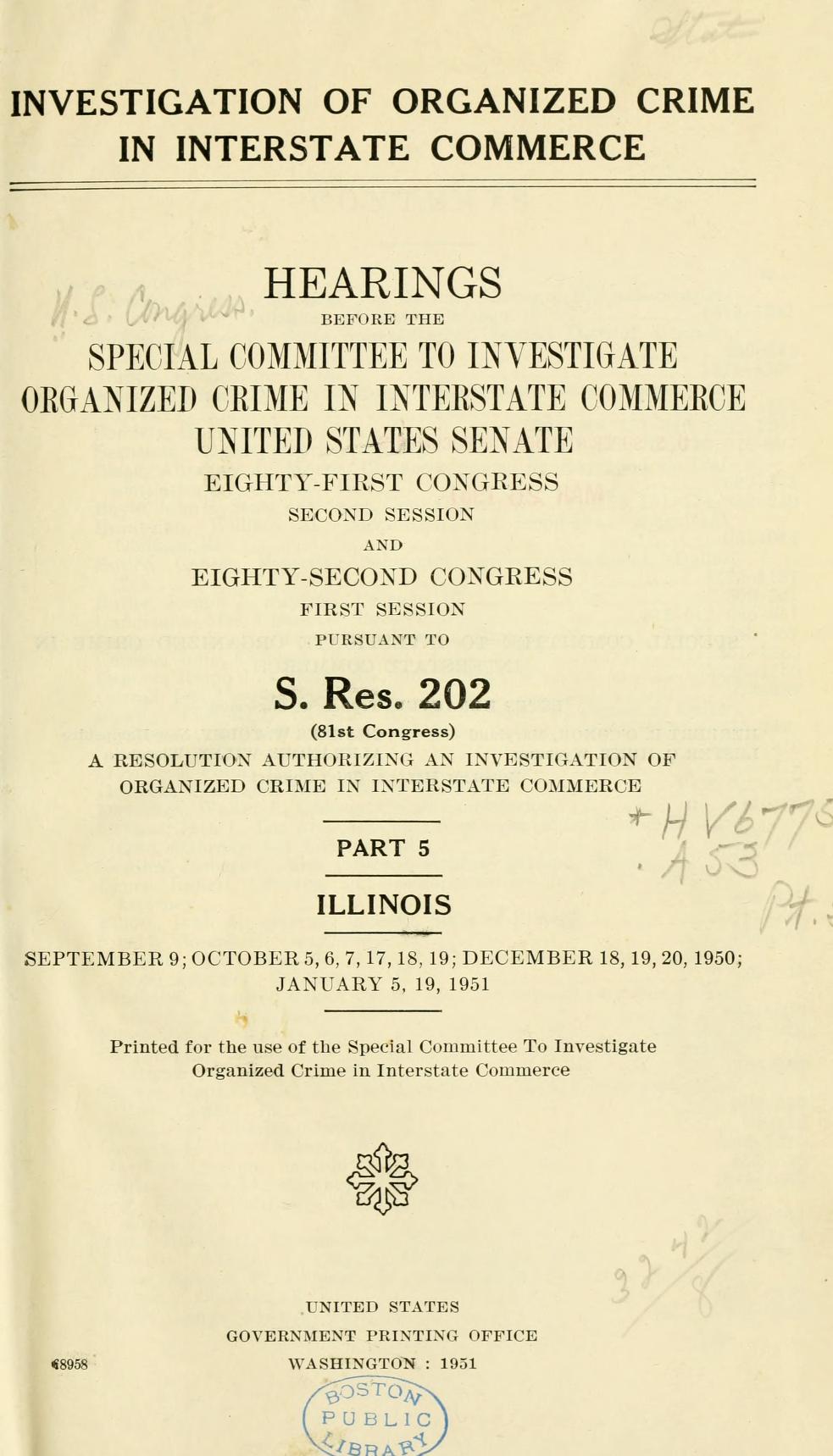 itemKefauver Committee hearings, Part 5: Illinois (1950–1951)Printed hearings of the Senate Special Committee to Investigate Organized Crime in Interstate Commerce, Part 5, Illinois: testimony taken from September 1950 to January 1951, including Paul DeLucia, Louis Campagna, Anthony J. Accardo, and Joseph Aiuppa.
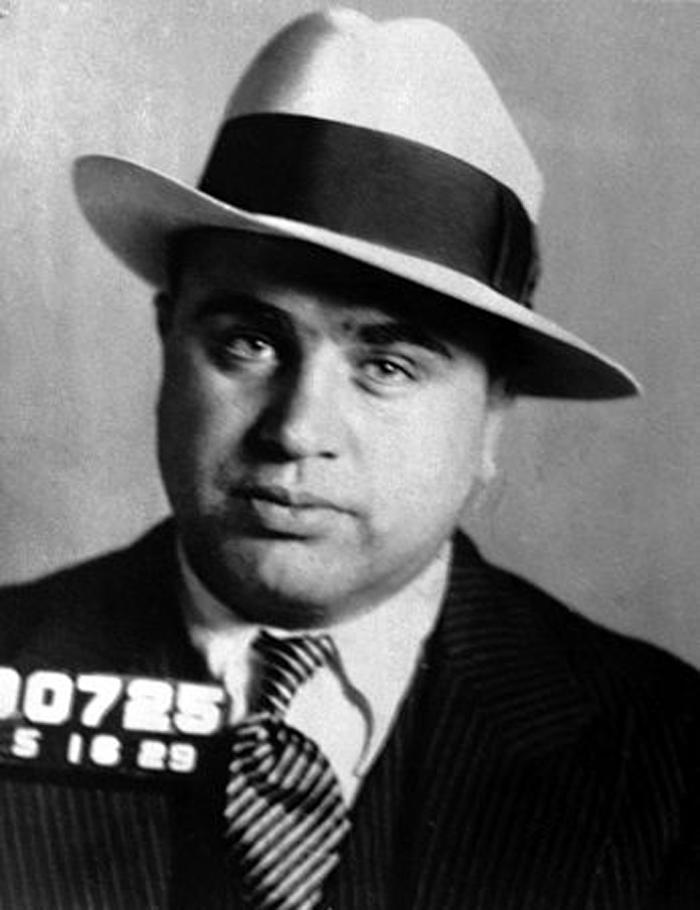 itemAl Capone (FBI history page)The FBI's history essay on Capone. It states that he was released on November 16, 1939, and that he lived on Palm Island until his death due to a stroke and pneumonia on January 25, 1947.itemNitto v. Commissioner, 13 T.C. 858 (1949)The Tax Court held on 30 November 1949 that the government had "established convincingly" Frank Nitto's "association with Bioff and Browne in their scheme of procuring substantial sums of money from various members of the motion picture industry," that he failed to report his share, and that fraud penalties applied.
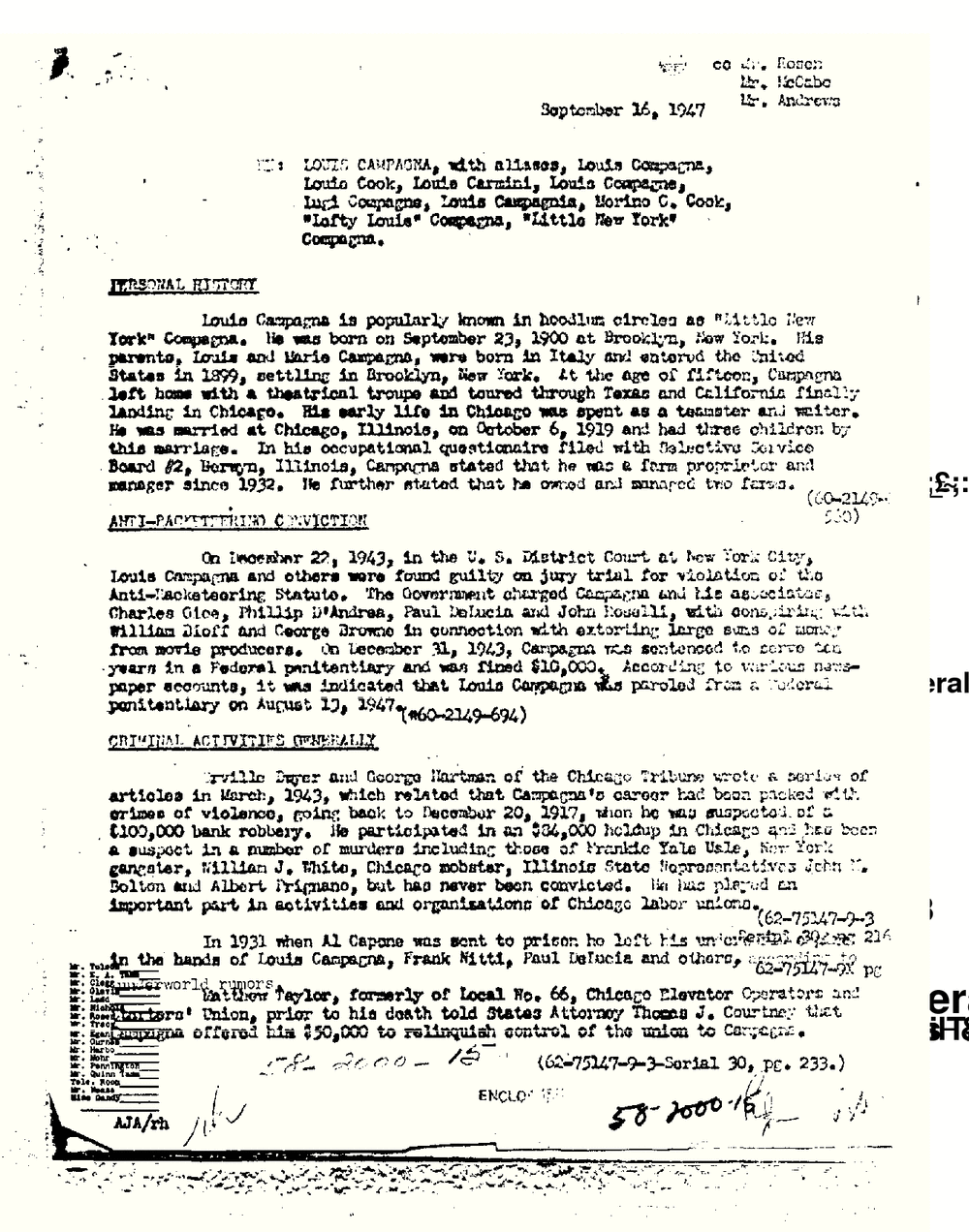 itemFBI memorandum of 16 September 1947 on Louis Campagna (Vault, John Roselli Part 01)One of the personal-history memoranda the FBI prepared in September 1947, after the paroles. It lists Campagna's aliases and says he and others were found guilty in New York on 22 December 1943 of violating the Anti-Racketeering Statute, and were sentenced on 31 December 1943.