Empty seats. They stay empty until a citation on this page supports a name, and a name is then added only by a separate, cited decision.
- BossNot filled
- UnderbossNot filled
- ConsigliereNot filled
Key to statement kinds (defined in the text below)Court opinionSworn testimonyPolice testimonyCommittee staffFBI fileNewspaper, 1921
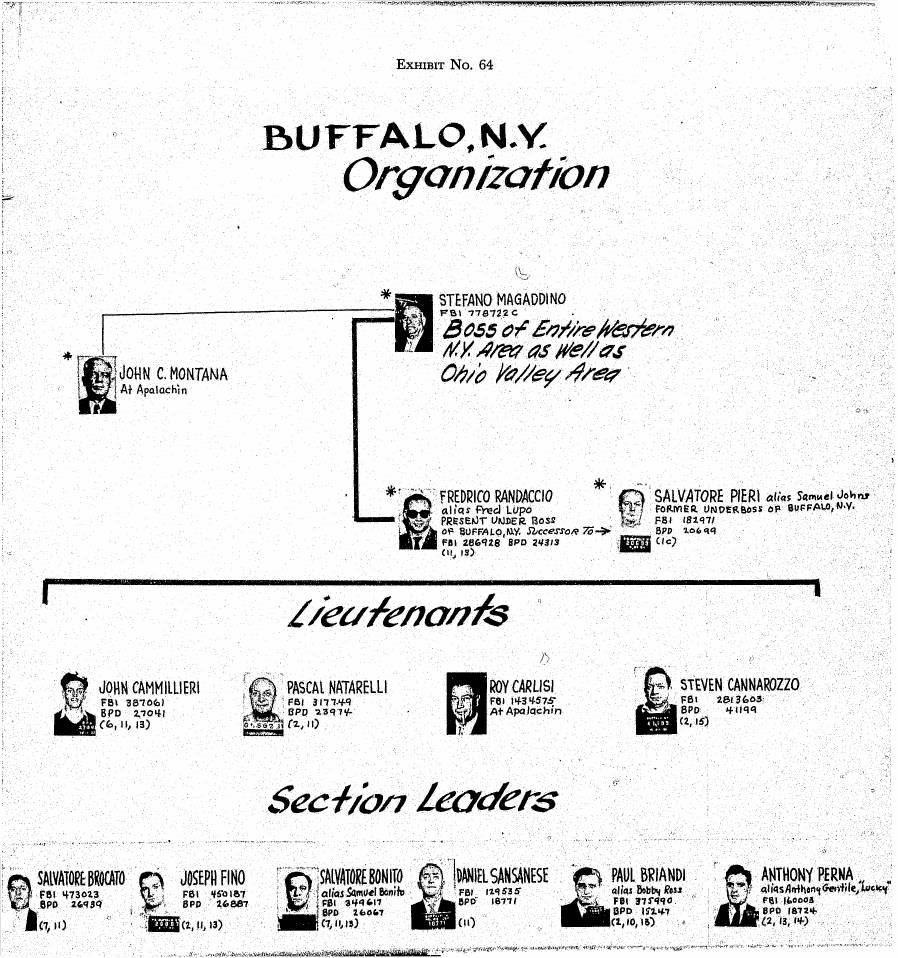
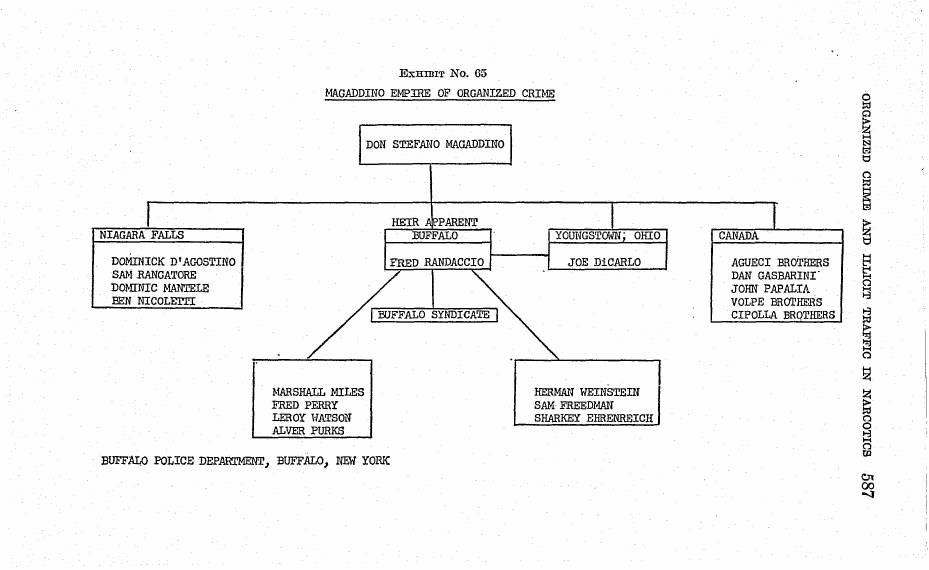
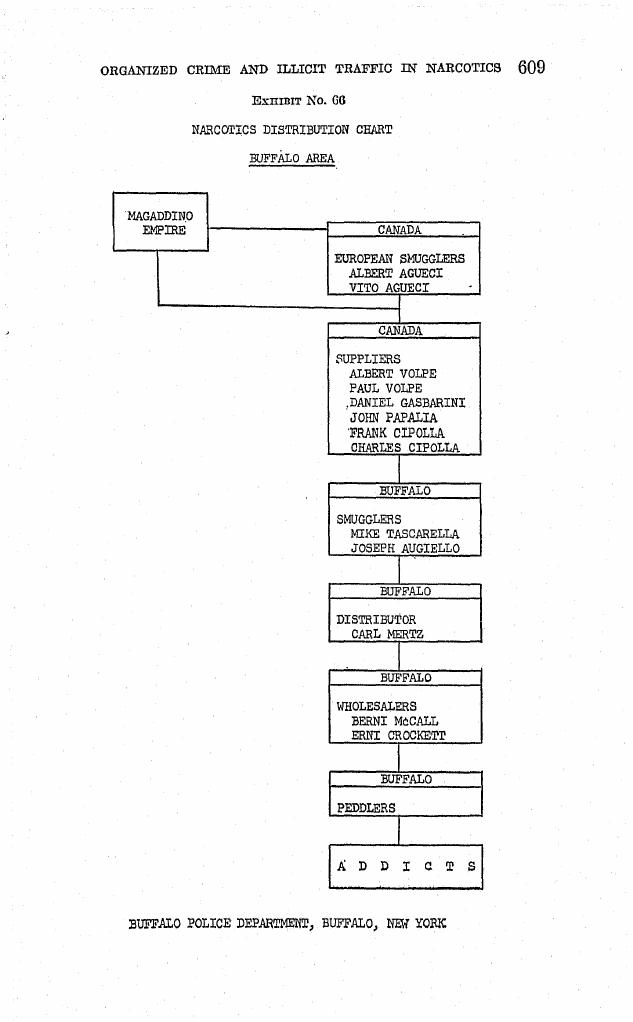
This page is a hub for the organization that Joseph Valachi, testifying in 1963, called “another family in Buffalo,” and that Buffalo police the same month called the “Magaddino empire.” The chart above stays empty. What the records hold is a set of statements about named people, and they are not of one kind.
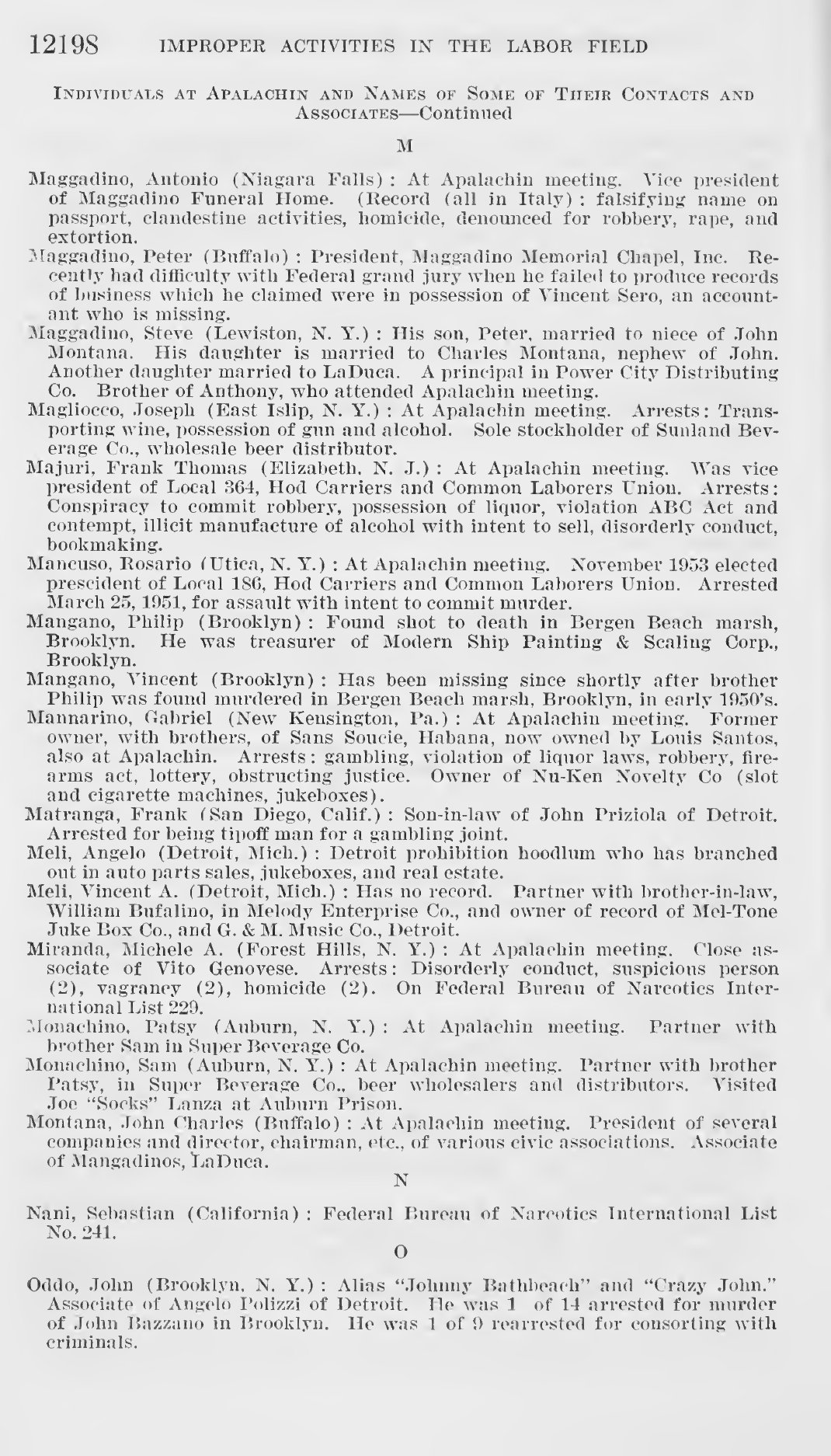
- Court opinion. A federal court’s own statement. Here: a 1974 ruling on illegal surveillance, which names Stefano Magaddino and reports the government’s stated purpose without making a finding about it, and the Second Circuit’s 1960 Apalachin opinion, which lists the men stopped at the roadblock.
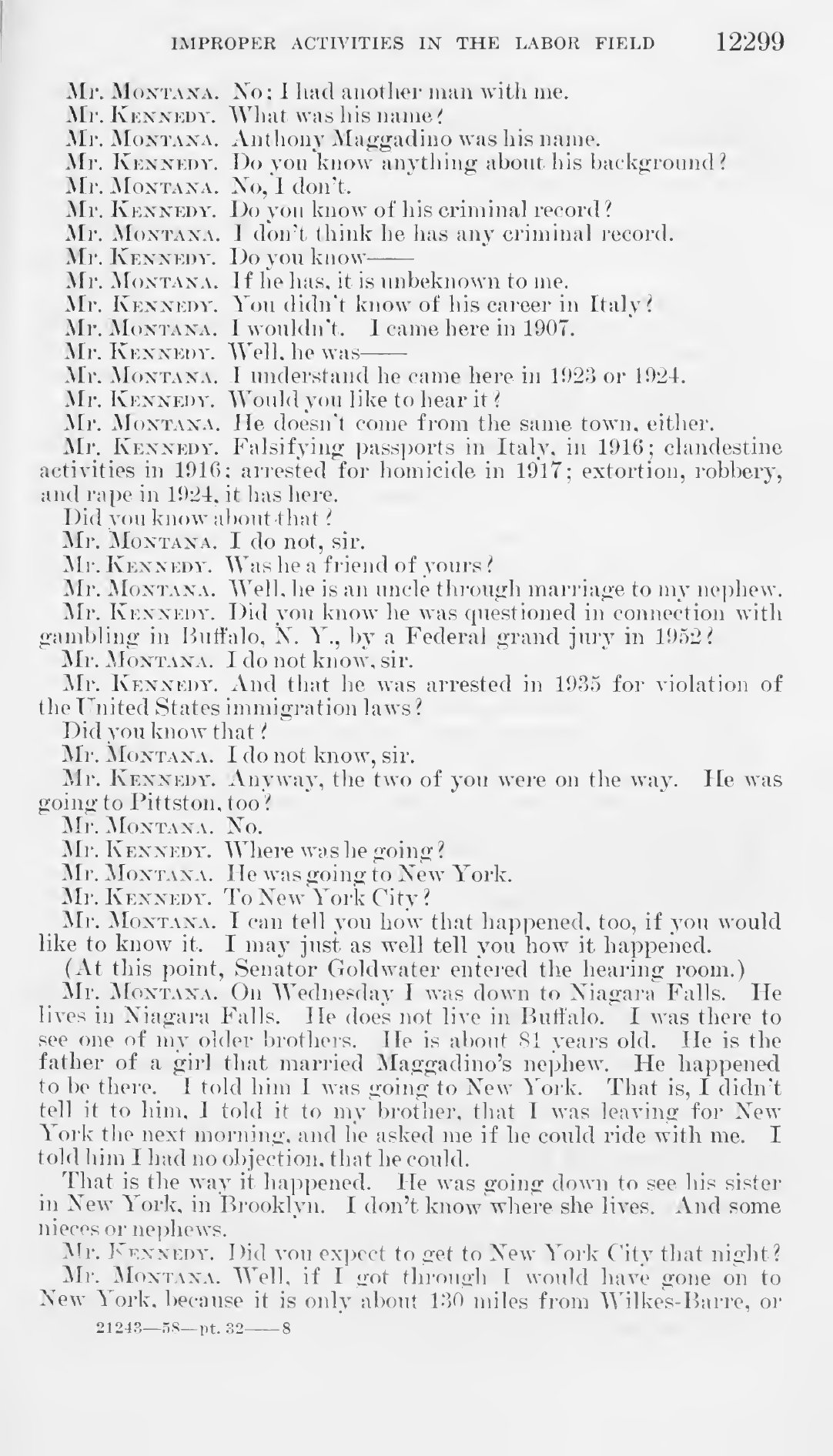
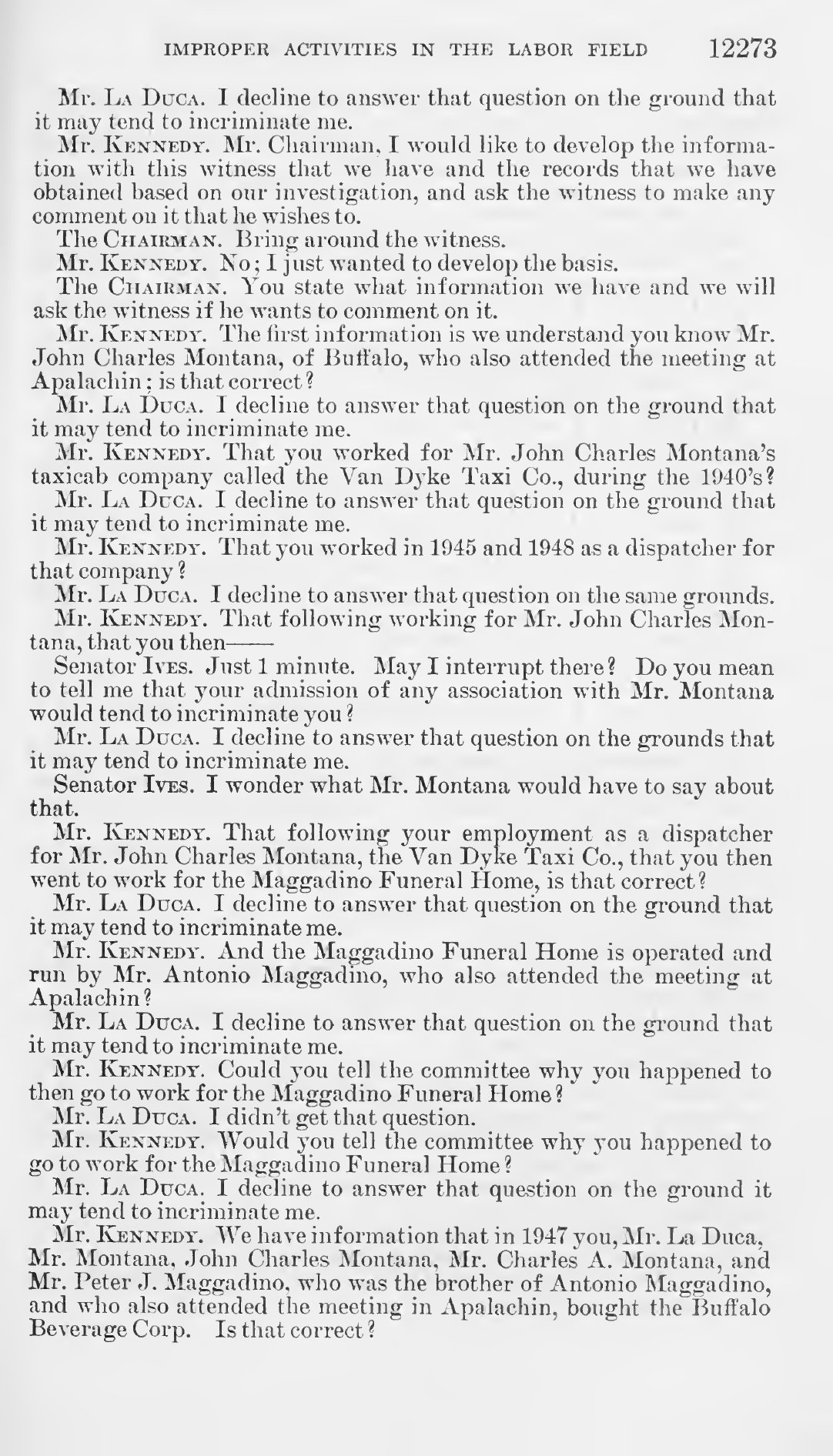
- Sworn testimony. Joseph Valachi before the Senate Permanent Subcommittee on Investigations in 1963, and witnesses before the McClellan Committee in 1958. A witness’s account, not a finding.
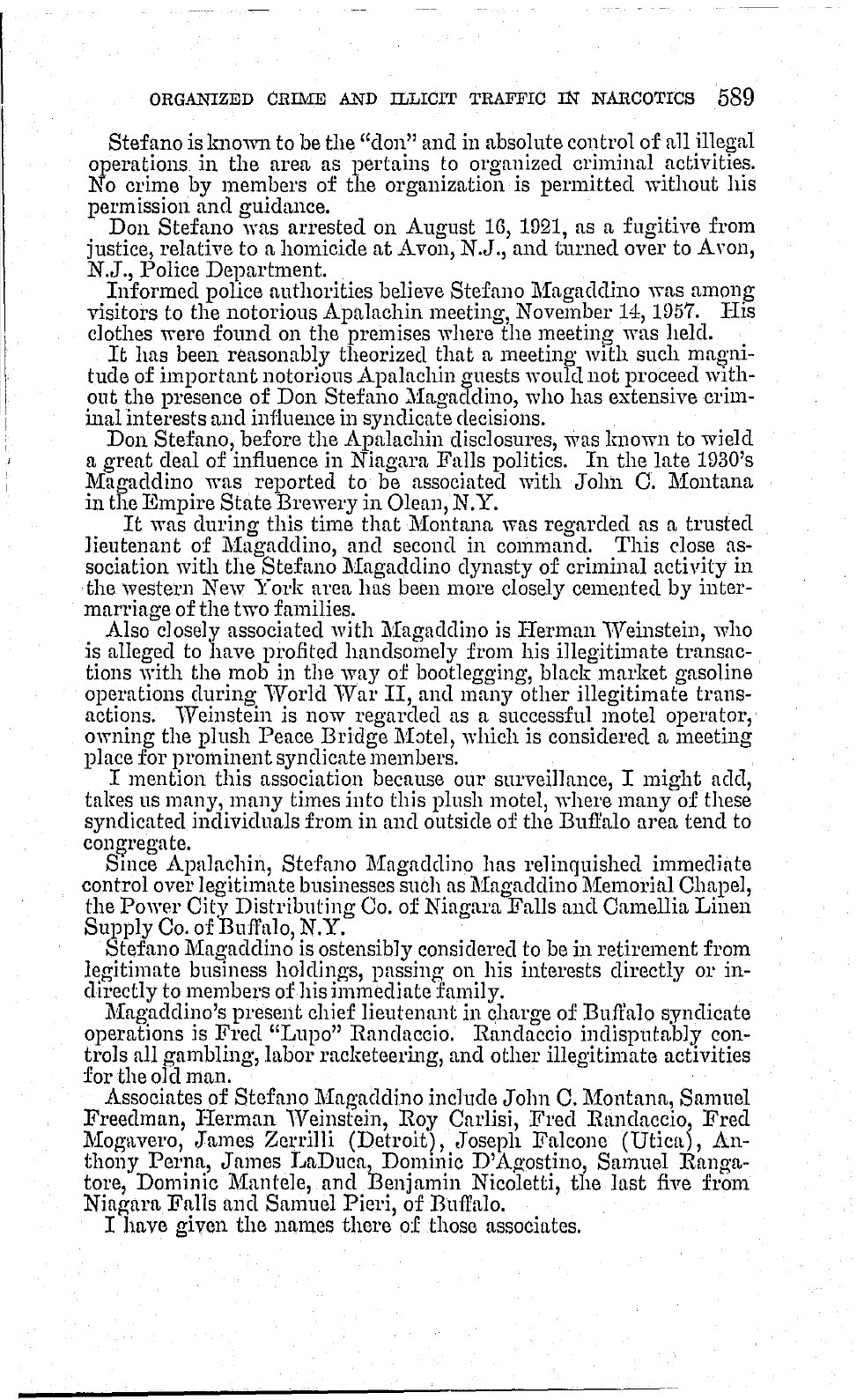
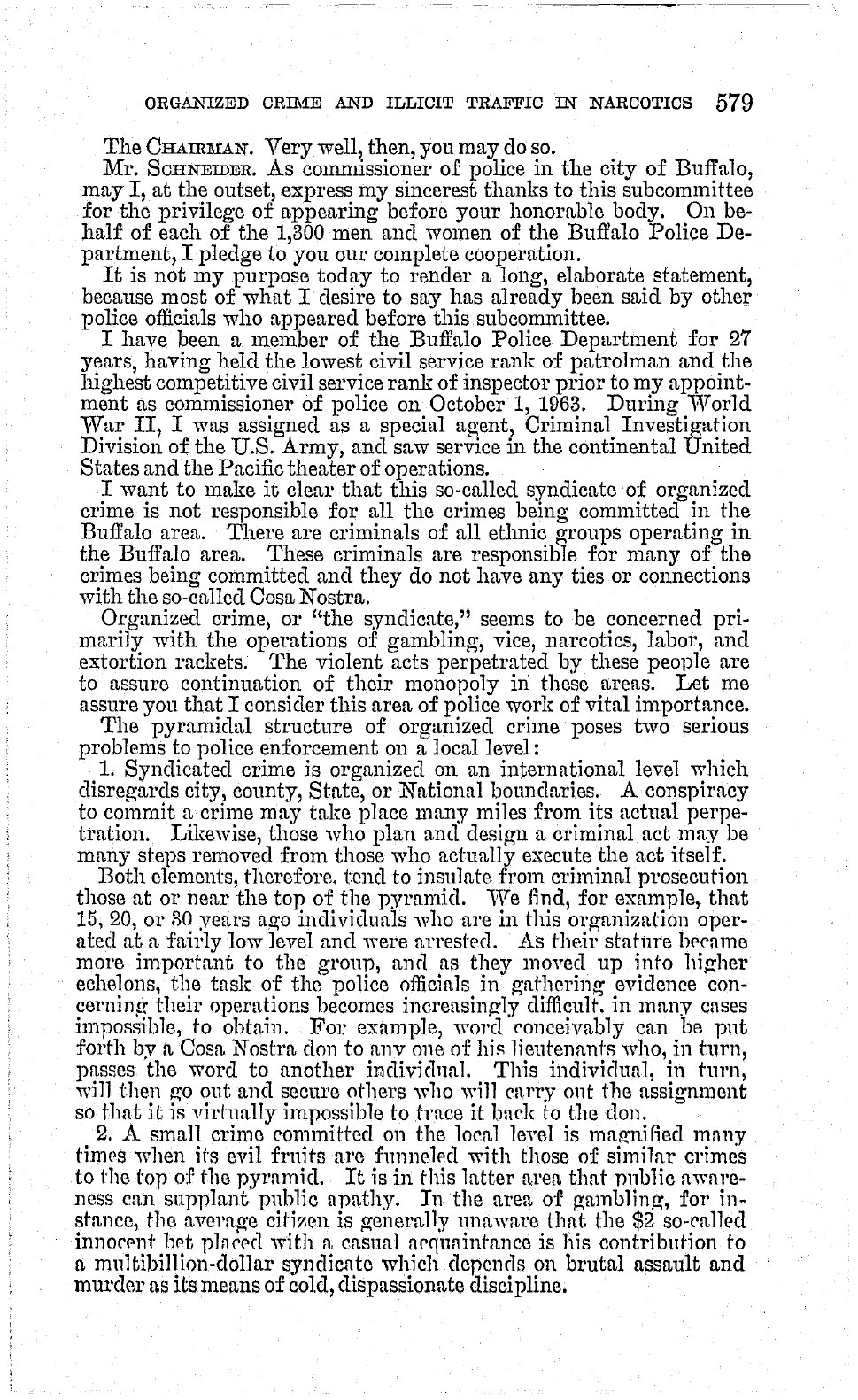
- Police testimony. Buffalo’s police commissioner and the head of its intelligence bureau in 1963, introducing their own charts. Much of it is stated as what police “believe.”
- Committee staff. The McClellan Committee’s 1958 staff list, which the chairman said “is not evidence,” and counsel’s questions read from staff information.
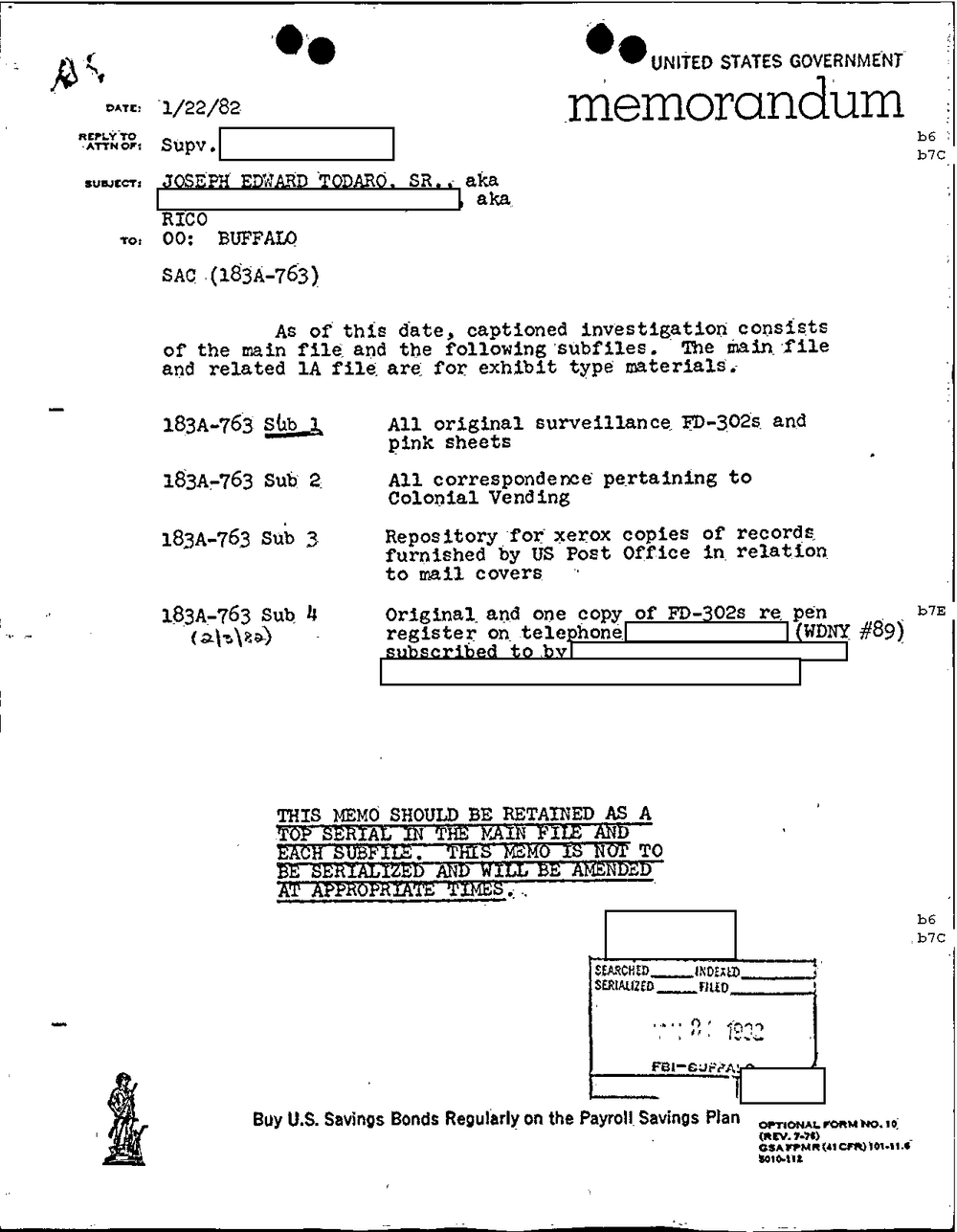
- FBI file. A 1982 Buffalo field-office memorandum describing “OC figures.”
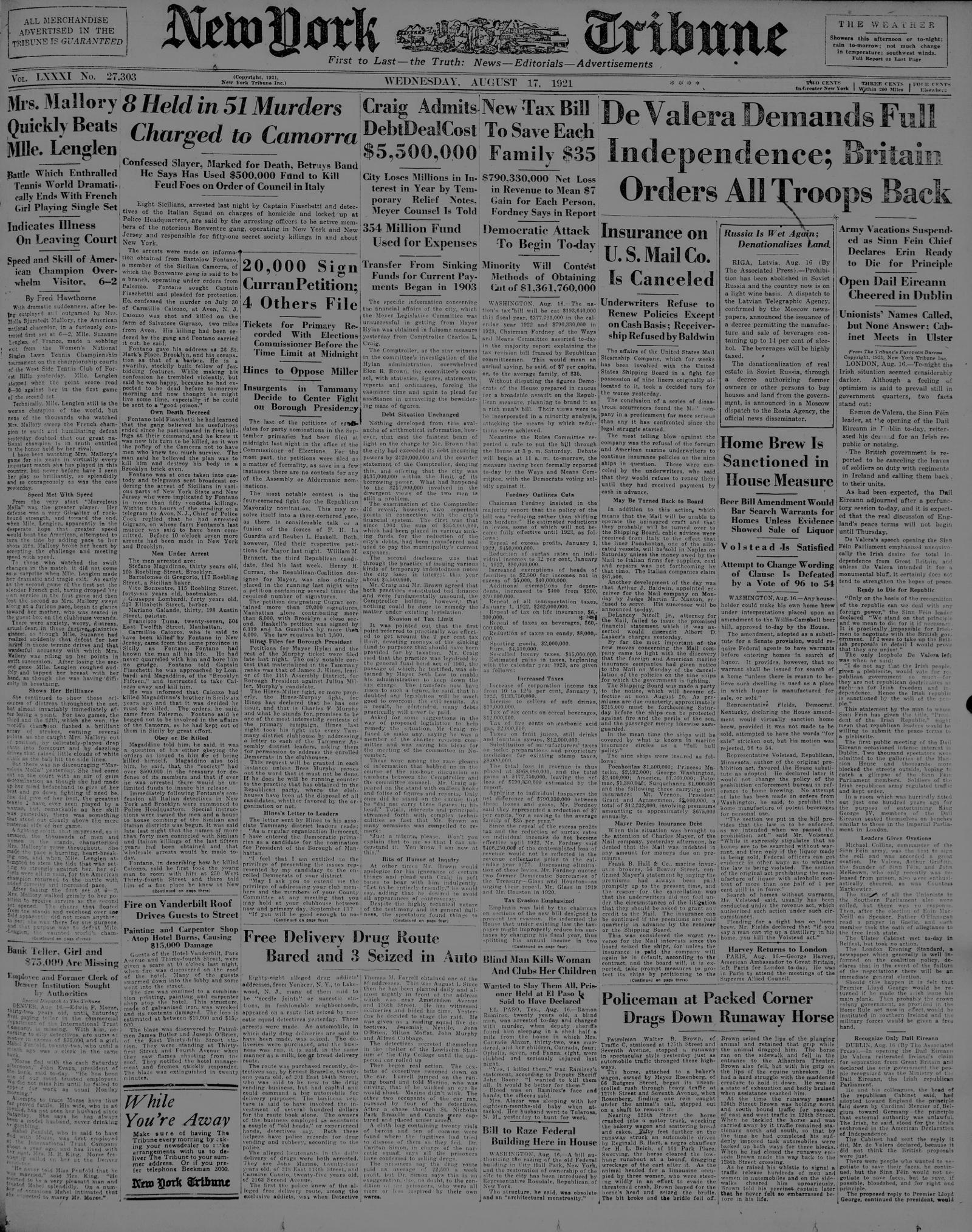
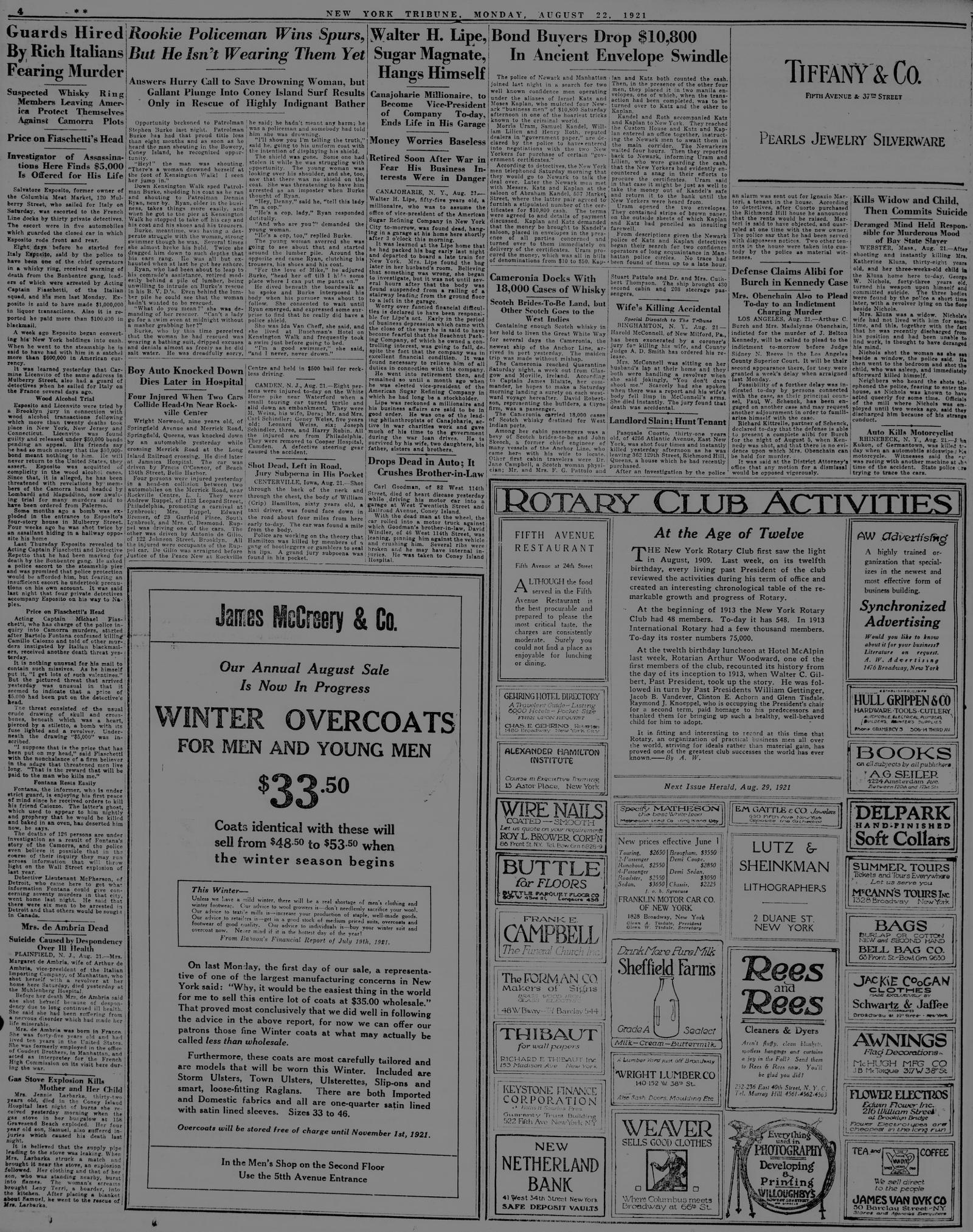
- Newspaper, 1921. Two New York Tribune pages reporting an informant’s confession and police claims.
The person pages
- Stefano Magaddino: asked whether he was “the boss of Buffalo,” Valachi answered “He still is.” Testimony (8 October 1963). Buffalo police Lt. Michael Amico called him the “titular head of syndicated organized crime in the Buffalo-Niagara Falls and Toronto areas.” Police testimony. The Second Circuit (1974) affirmed the dismissal of the 1968 gambling indictment against him and reports the government’s description of a “feud between the Magaddino and Bonanno familes.” Court opinion, reporting the government’s statement.
- Antonio Magaddino: John C. Montana testified that he drove toward New York on November 14, 1957 with “Anthony Maggadino,” whom he called “an uncle through marriage to my nephew.” Testimony. The 1958 staff list calls him vice president of the Maggadino Funeral Home. Committee staff. No record states a role.
- John C. Montana: Valachi testified that “Montana originally was a lieutenant under him.” Testimony. Lt. Amico said police found no arrest of Montana before Apalachin and that he had since separated from the group. Police testimony. His Apalachin conviction was reversed. Court opinion.
- James V. La Duca: declined under the Fifth Amendment to say whether he attended Apalachin (testimony, 1958). Lt. Amico called him Magaddino’s son-in-law (police testimony). No record states a role.
The FBI’s 1982 file on Joseph Todaro, Sr., is filed as a record. It calls the Todaros “OC figures,” which is the Bureau’s characterization; no court record on them has been opened, and no person page is made from a single FBI file.
What the chart still waits for
The seats are Boss, Underboss and Consigliere. The statements above that put a seat title on a named man are Valachi’s sworn “He still is” for Stefano Magaddino as boss and Lt. Amico’s police testimony calling Fred Randaccio “so-called underboss and in charge of the Buffalo area.” Both are testimony before a Senate subcommittee, and neither is a court finding; Randaccio has no person page here because only one record filed so far speaks of him. Valachi’s “lieutenant” for Montana is not a seat on this chart. The Buffalo police charts of 1963 print titles beside names; they are chart labels and are not used. No record on file names a consigliere. A name goes into a seat only by a separate, cited decision on this page.