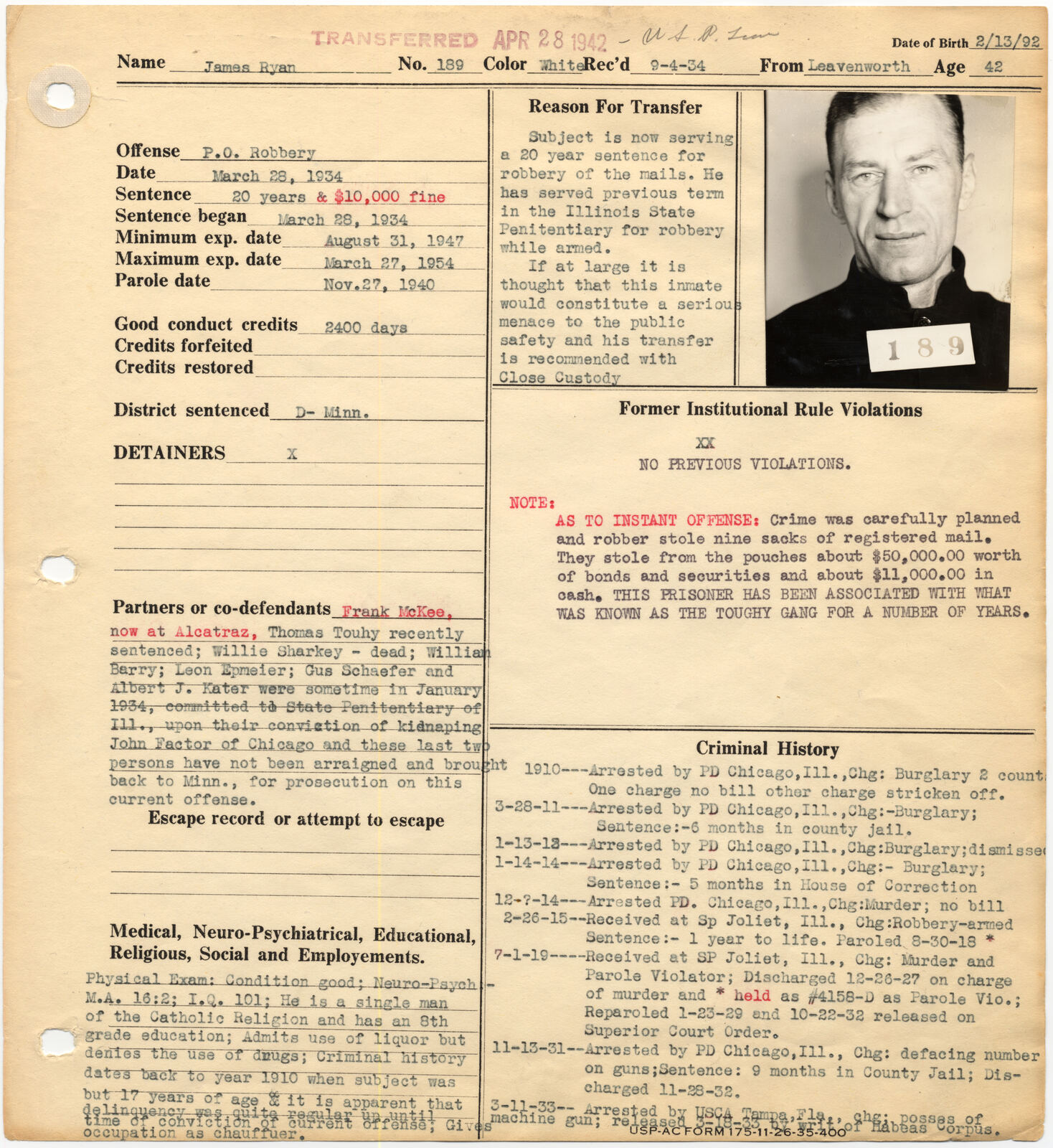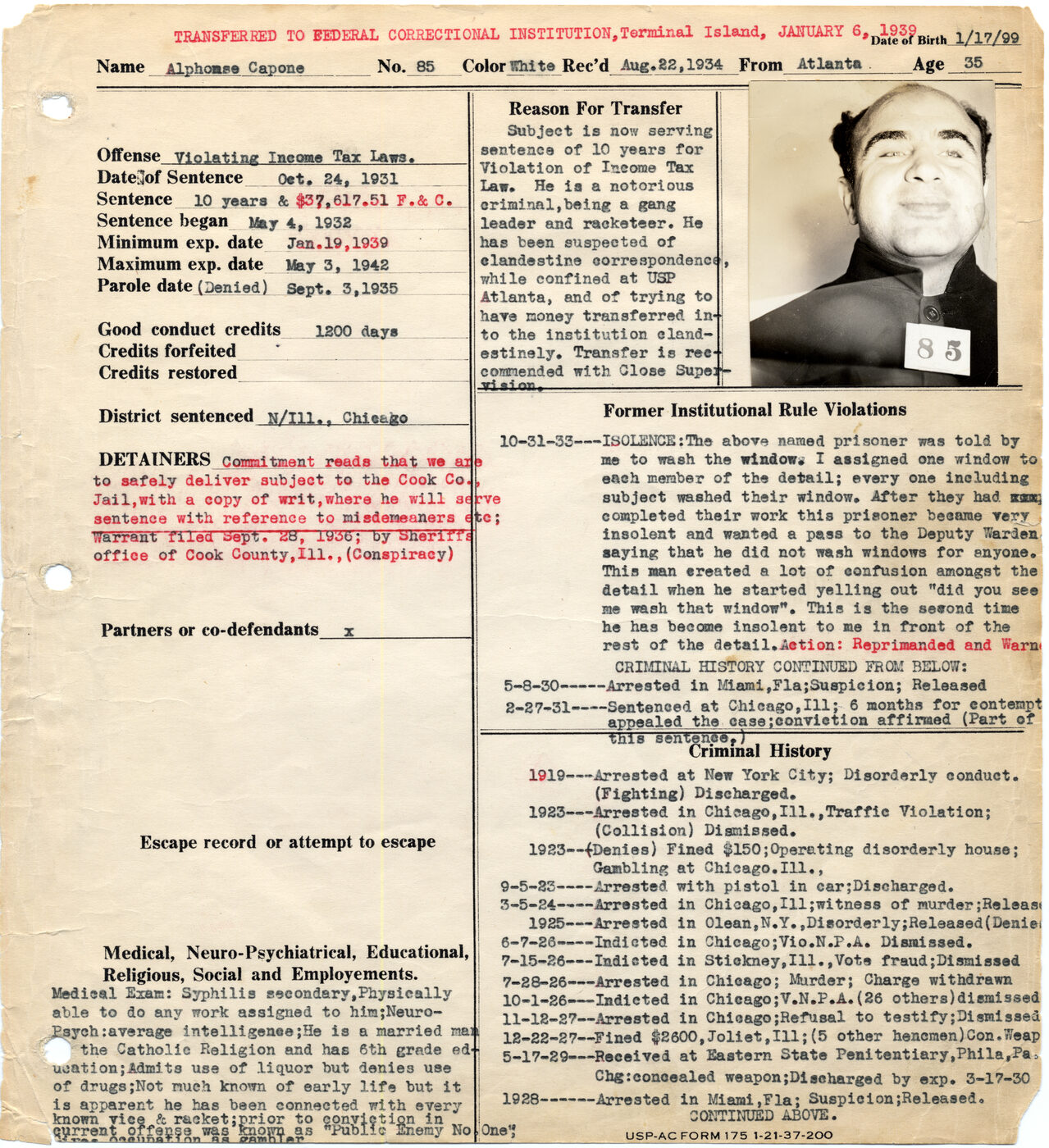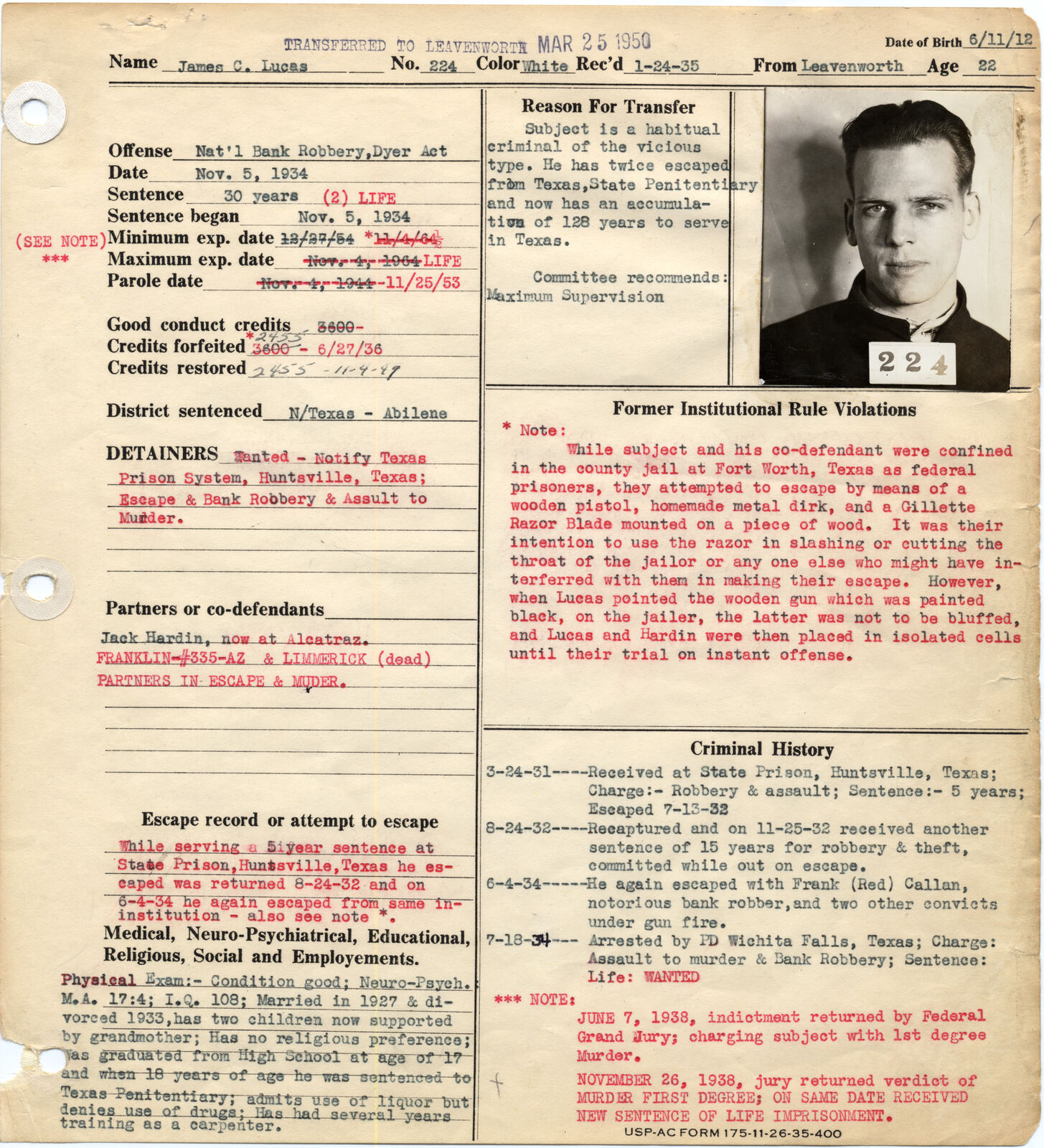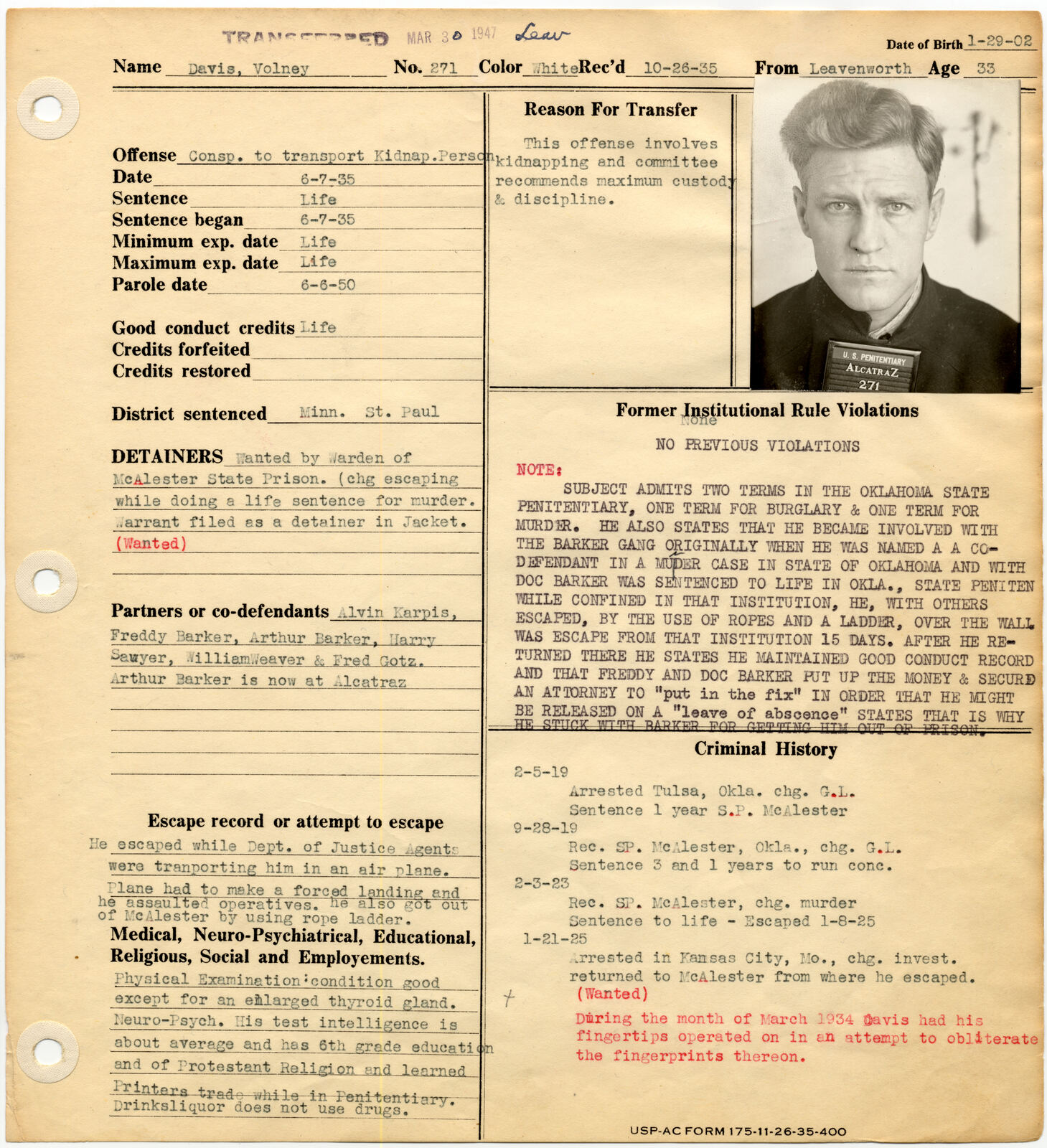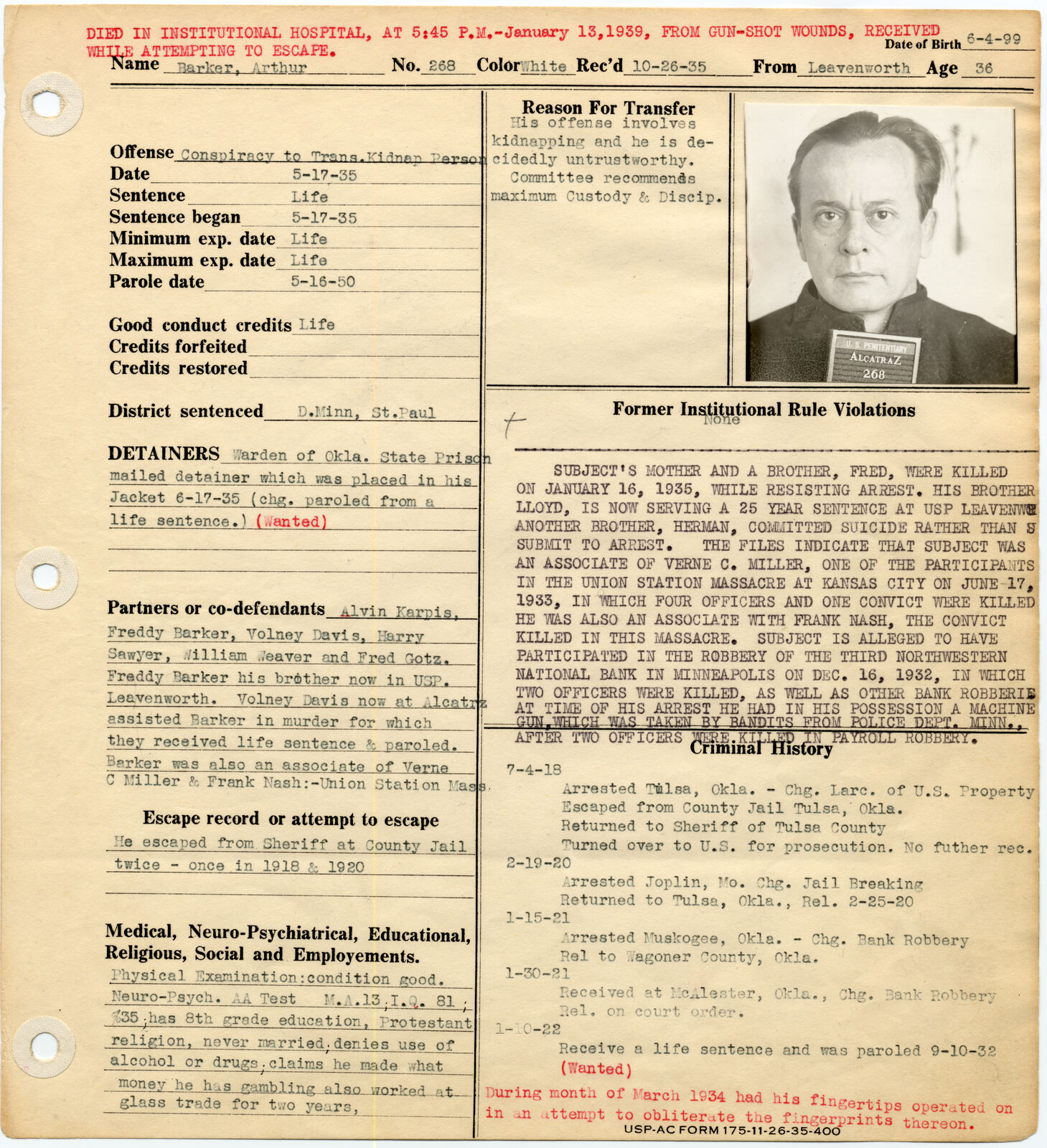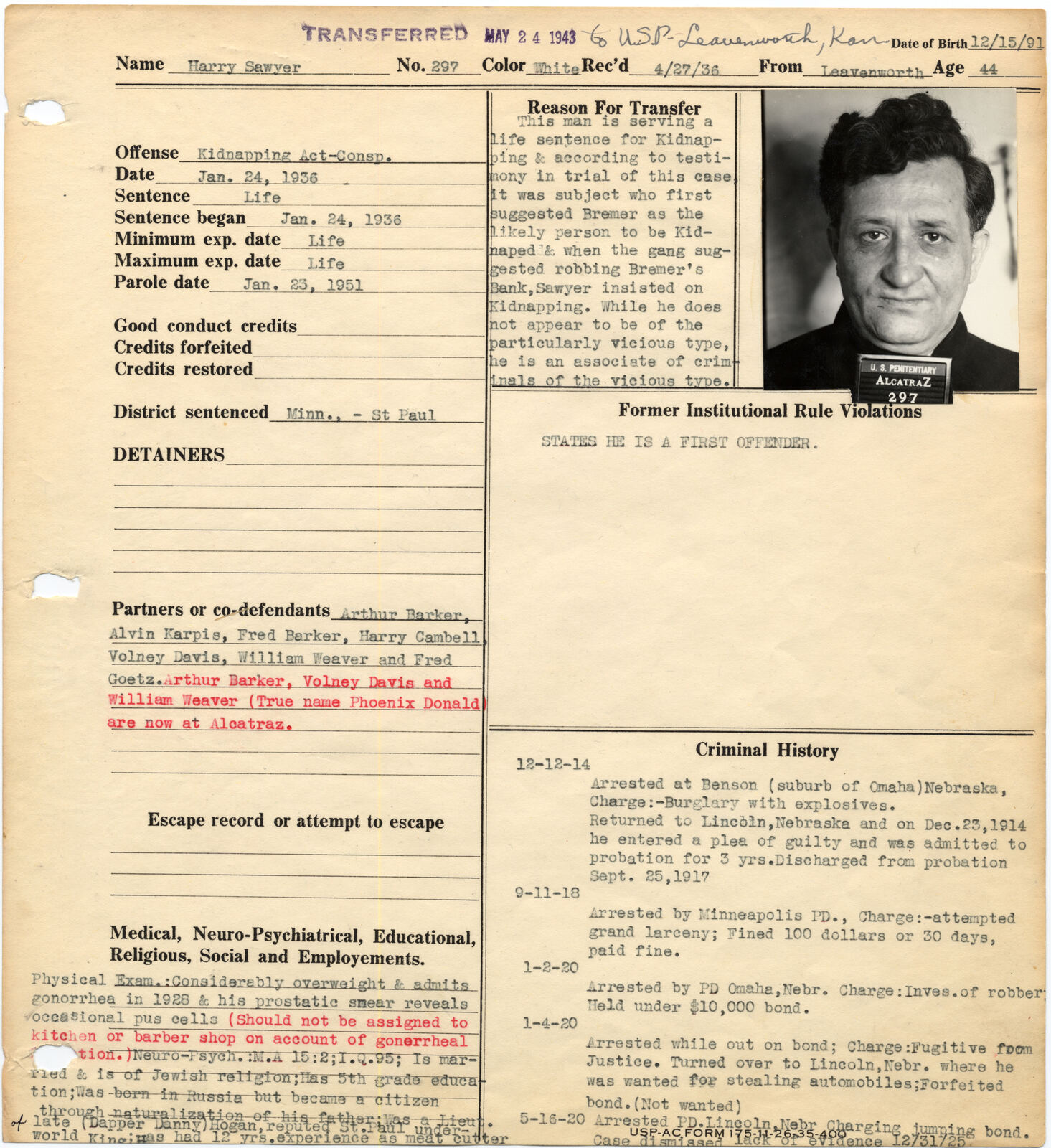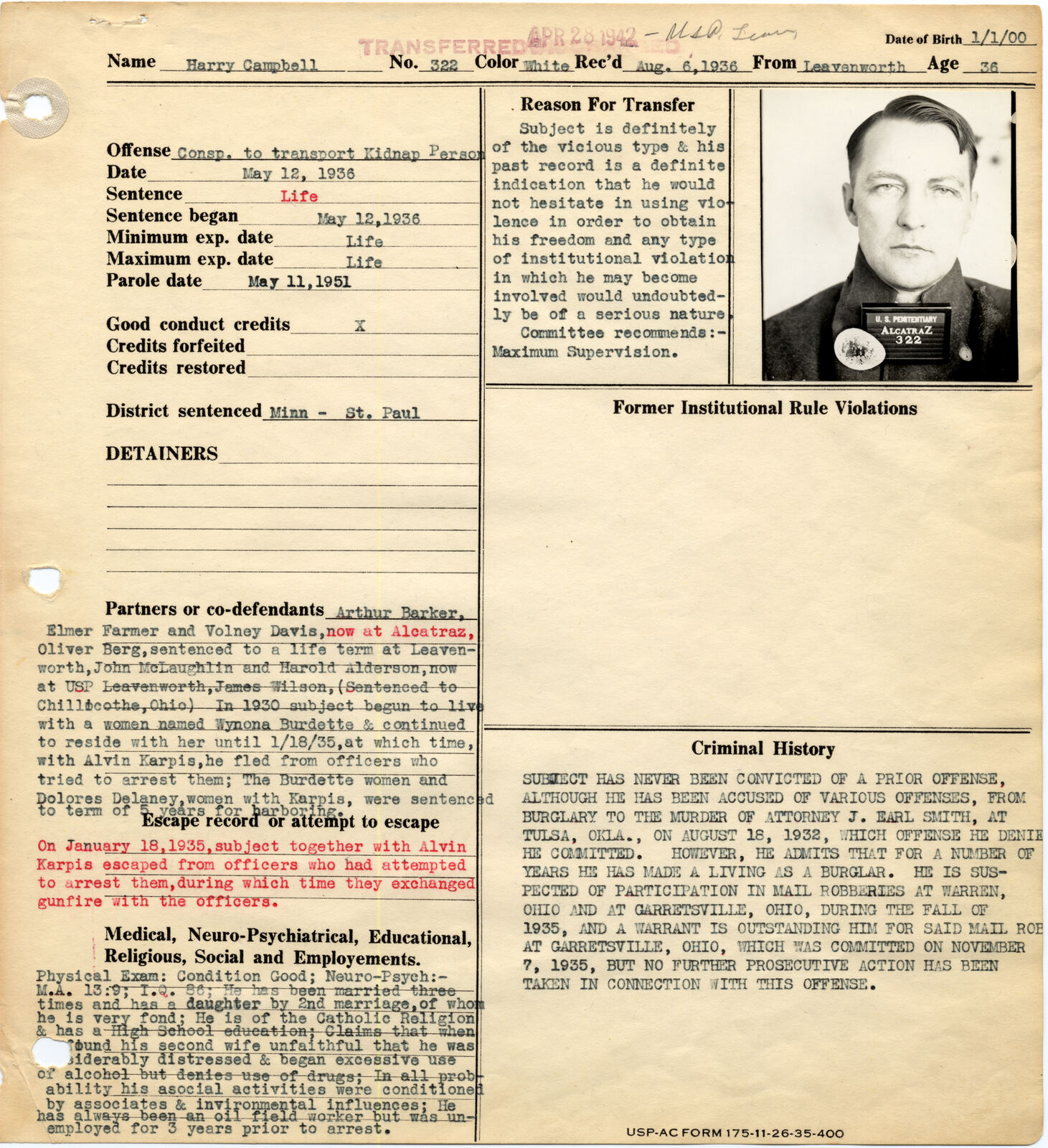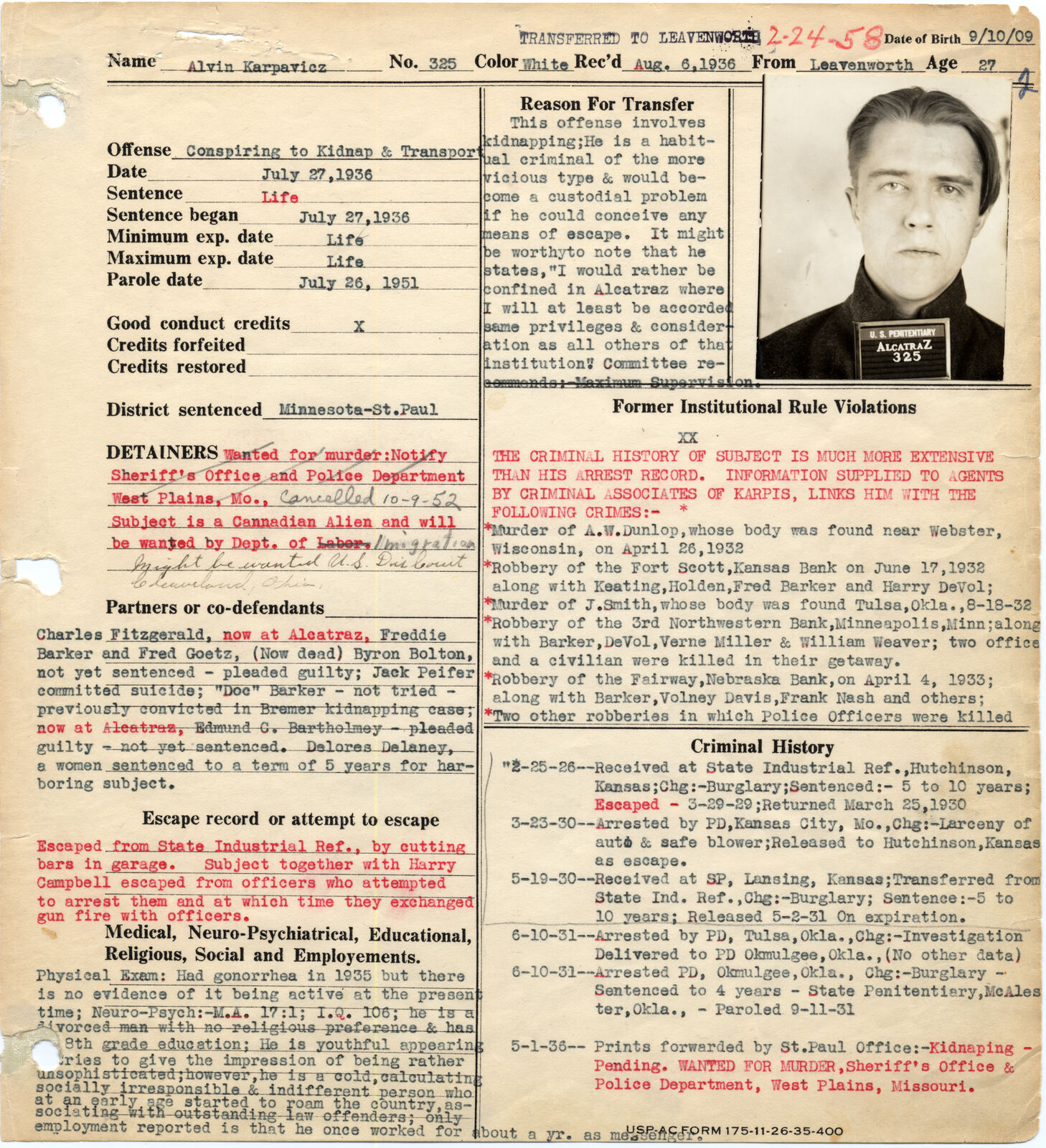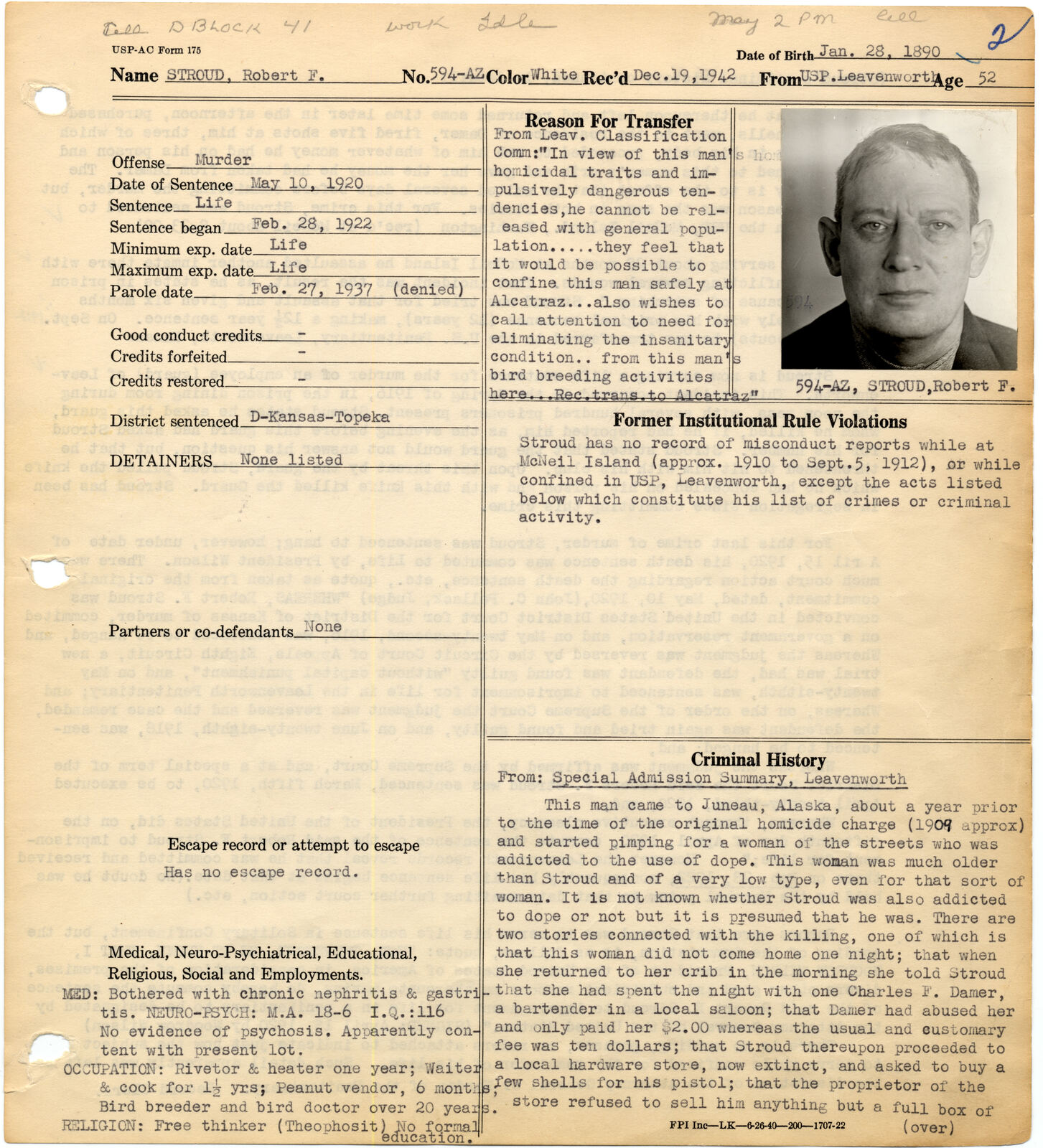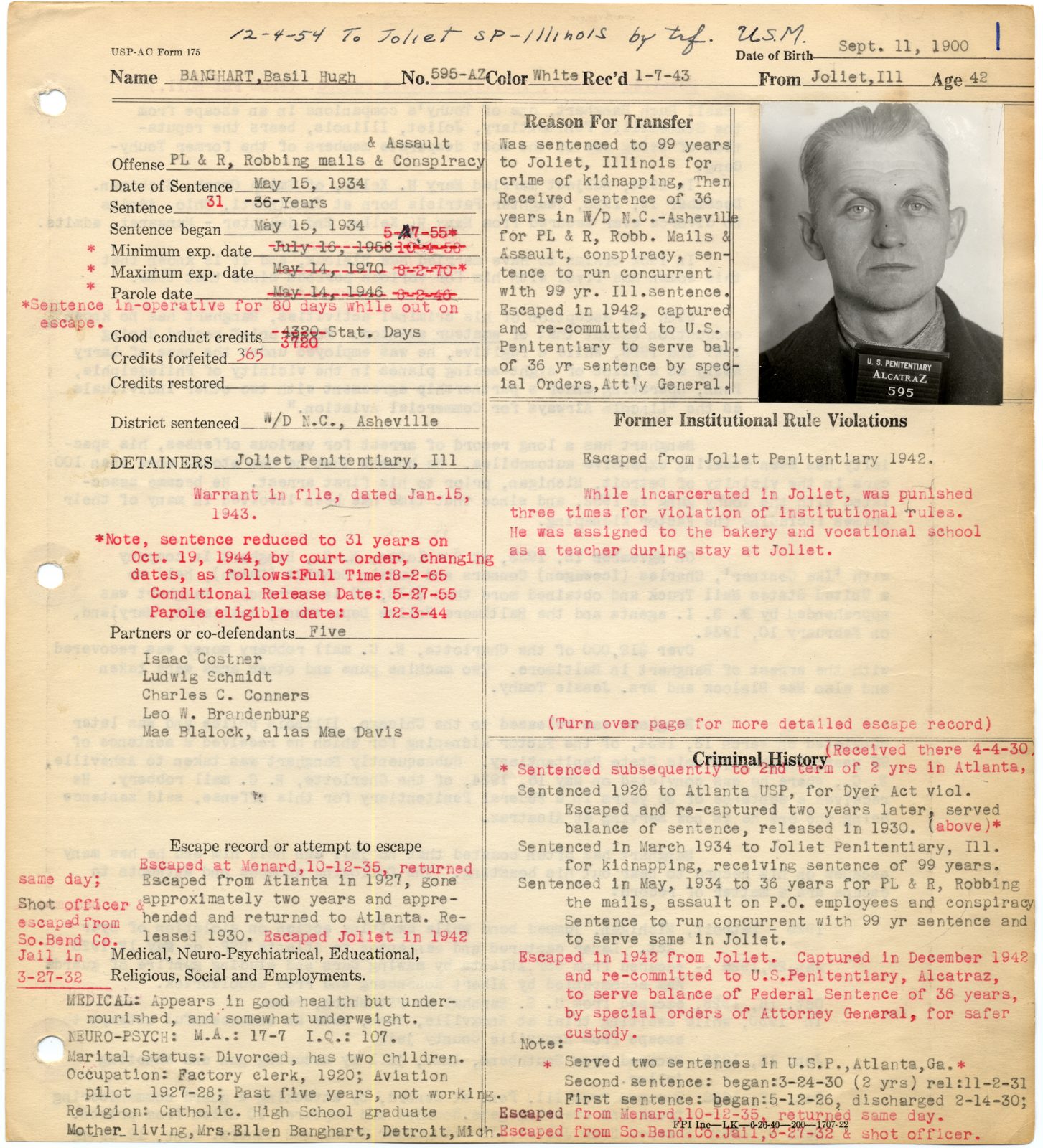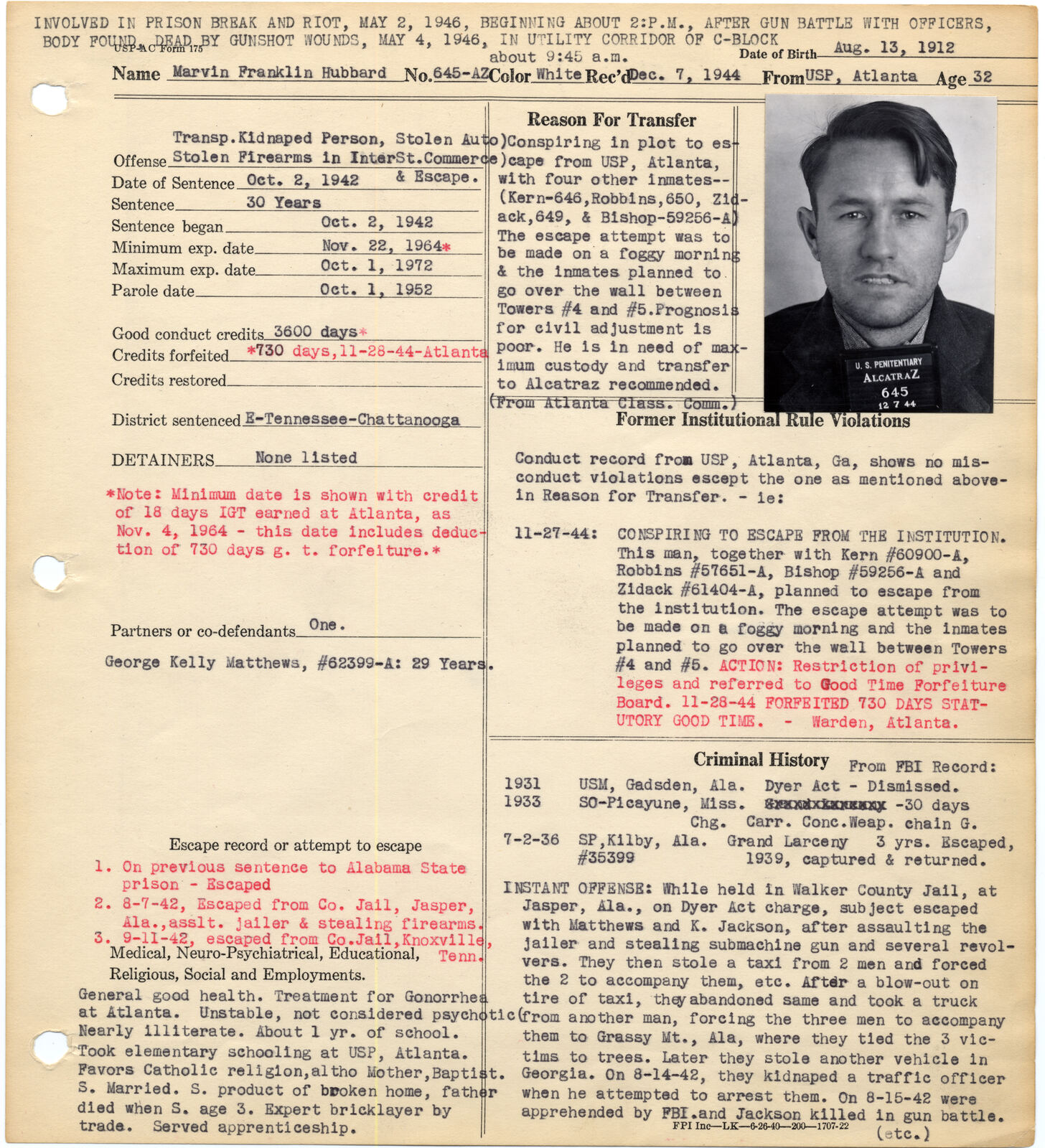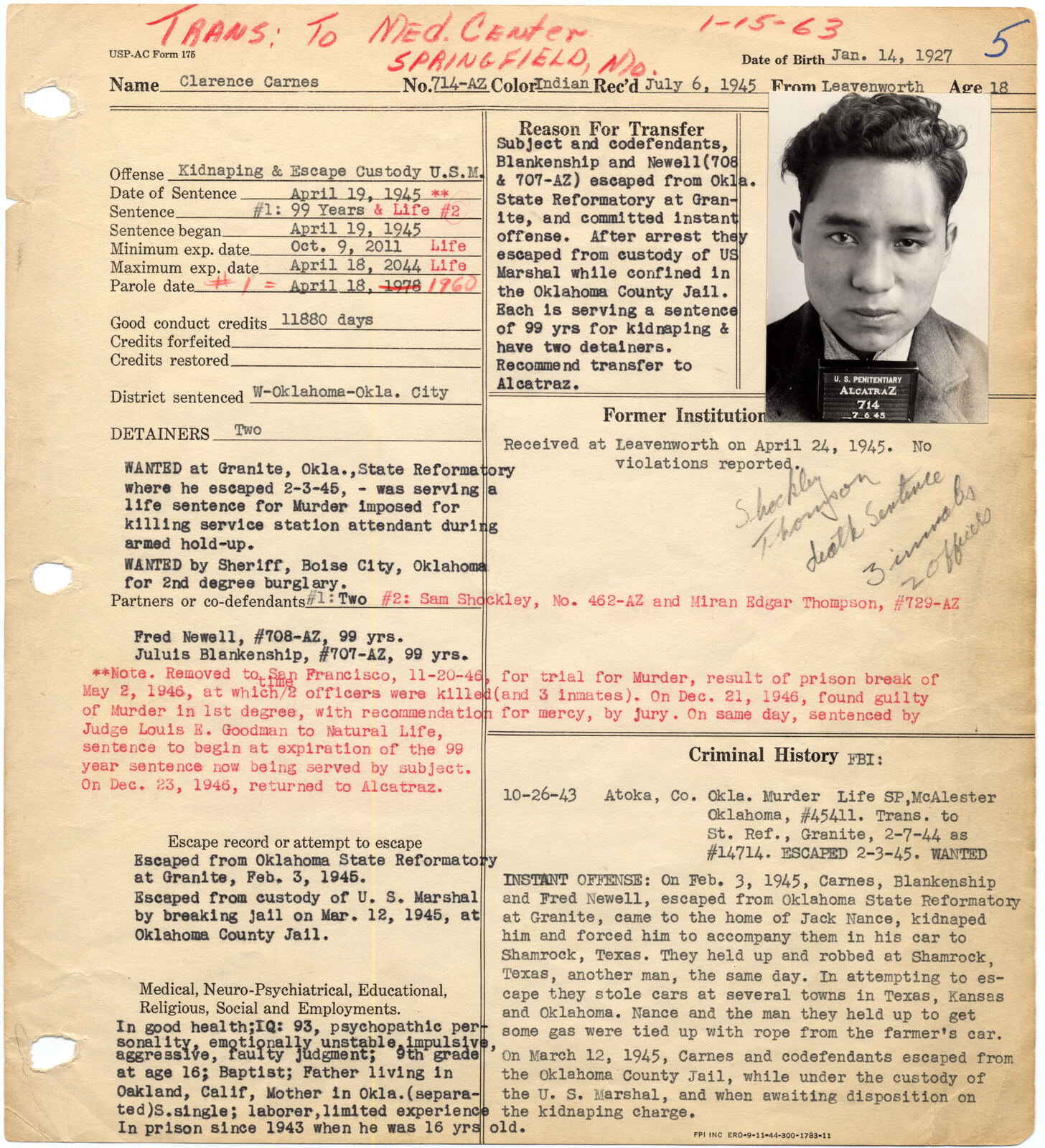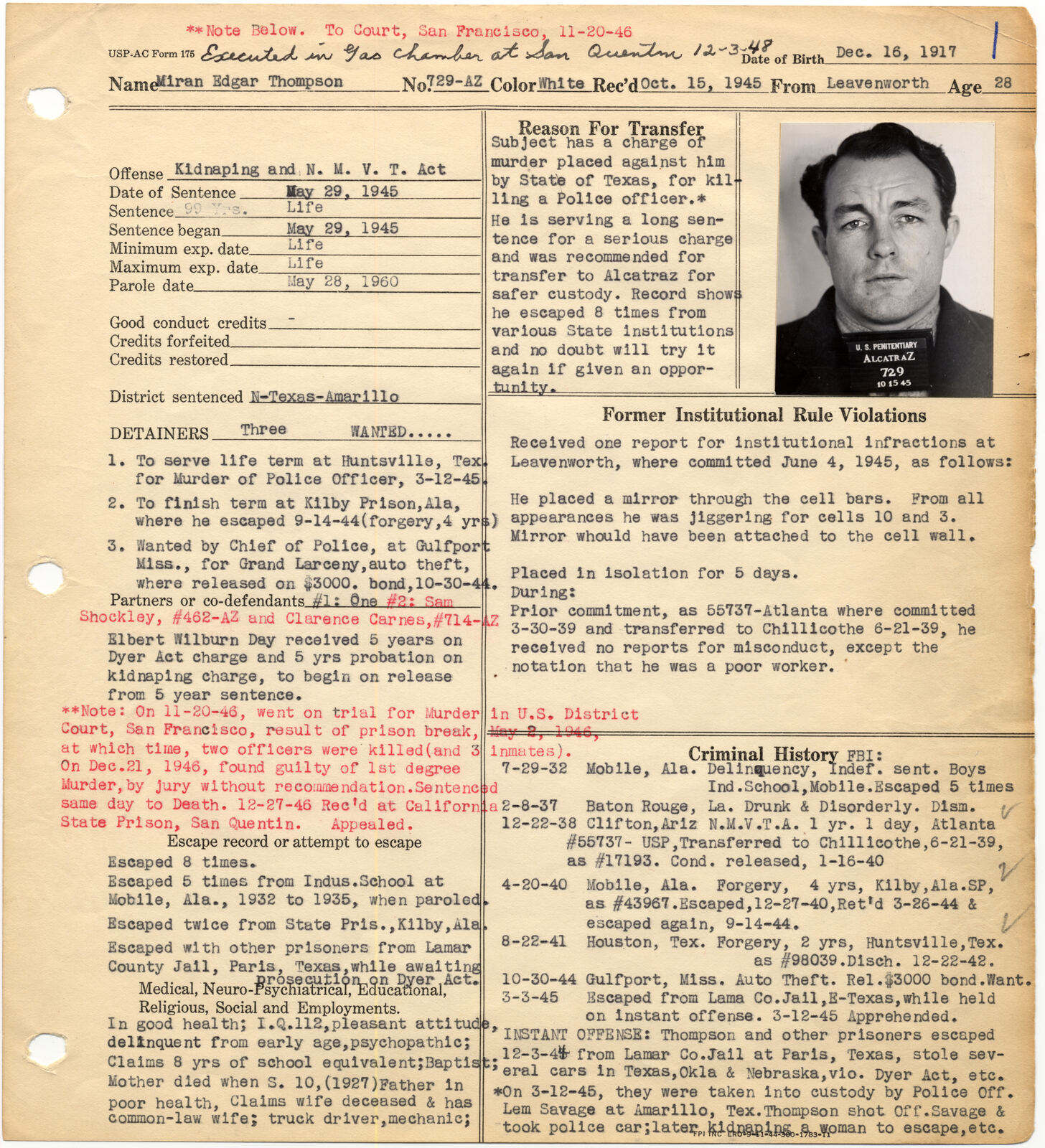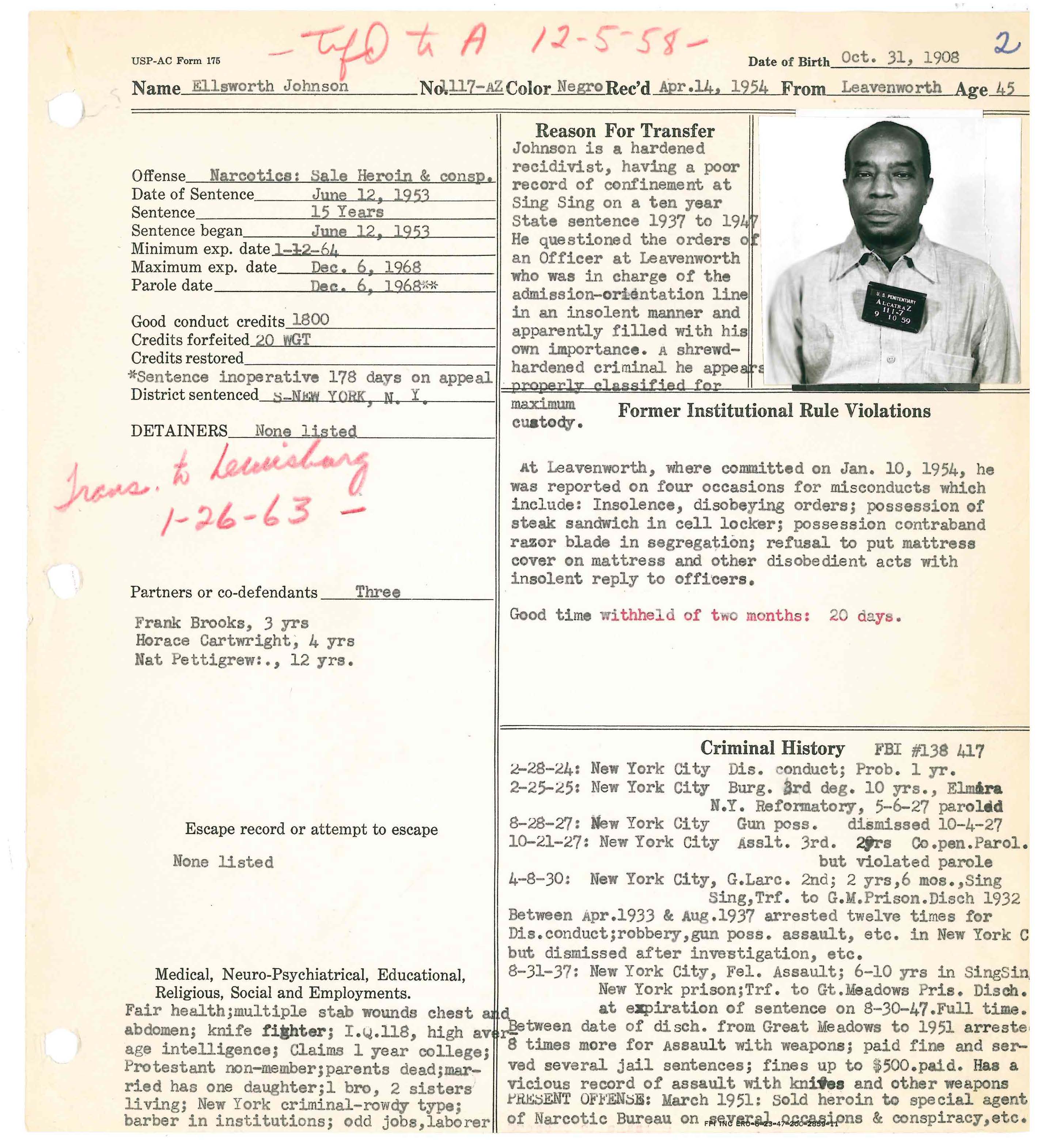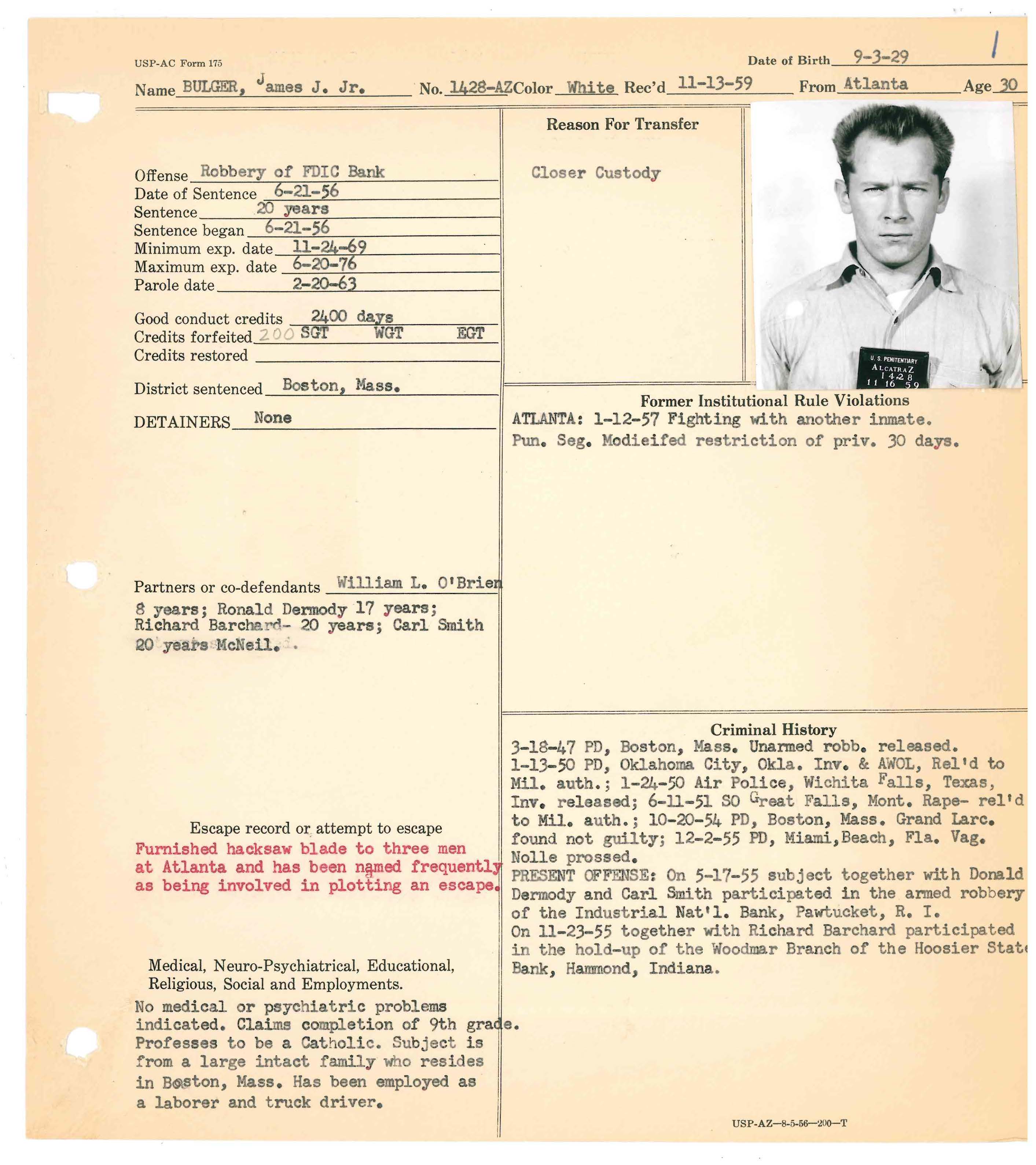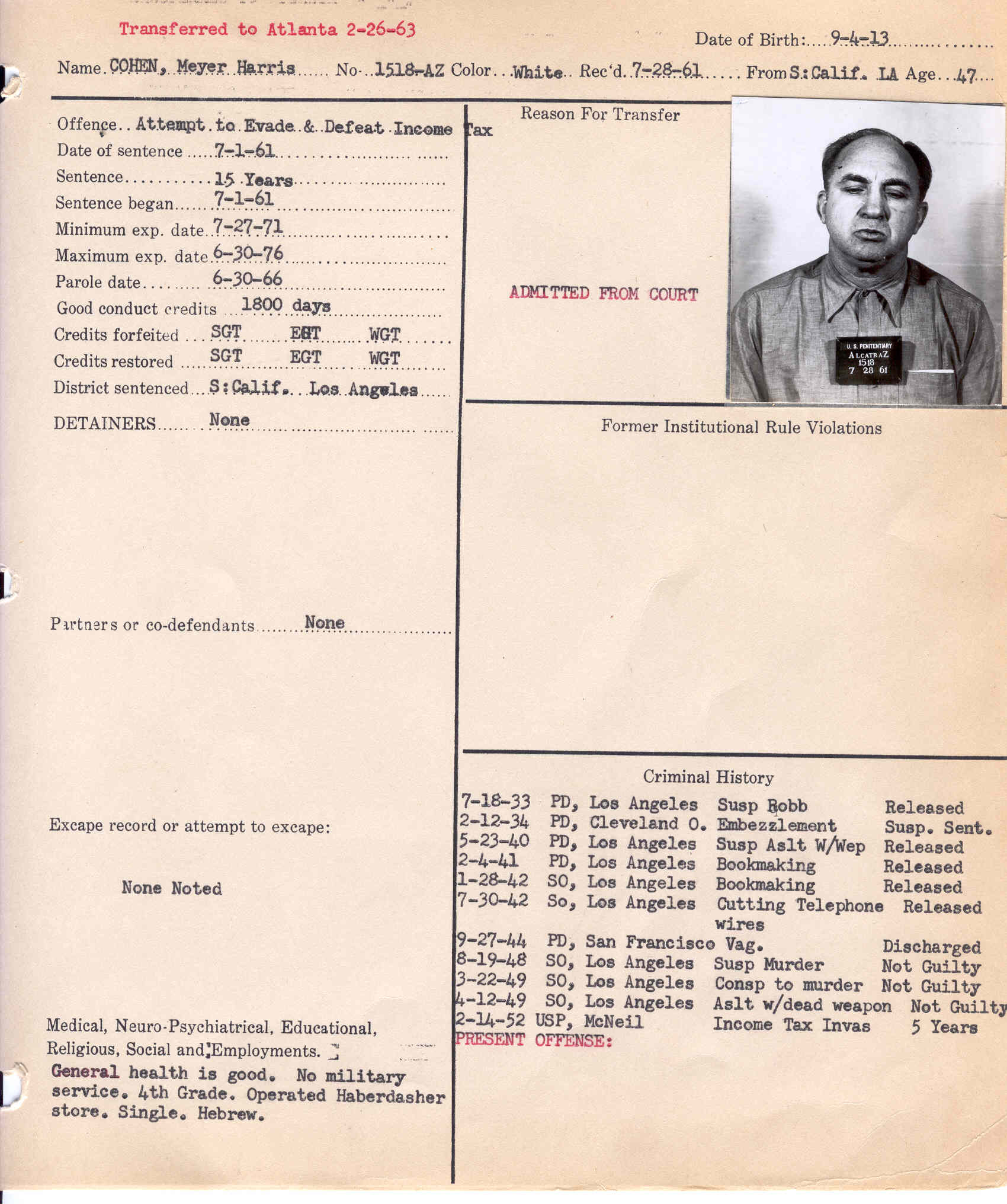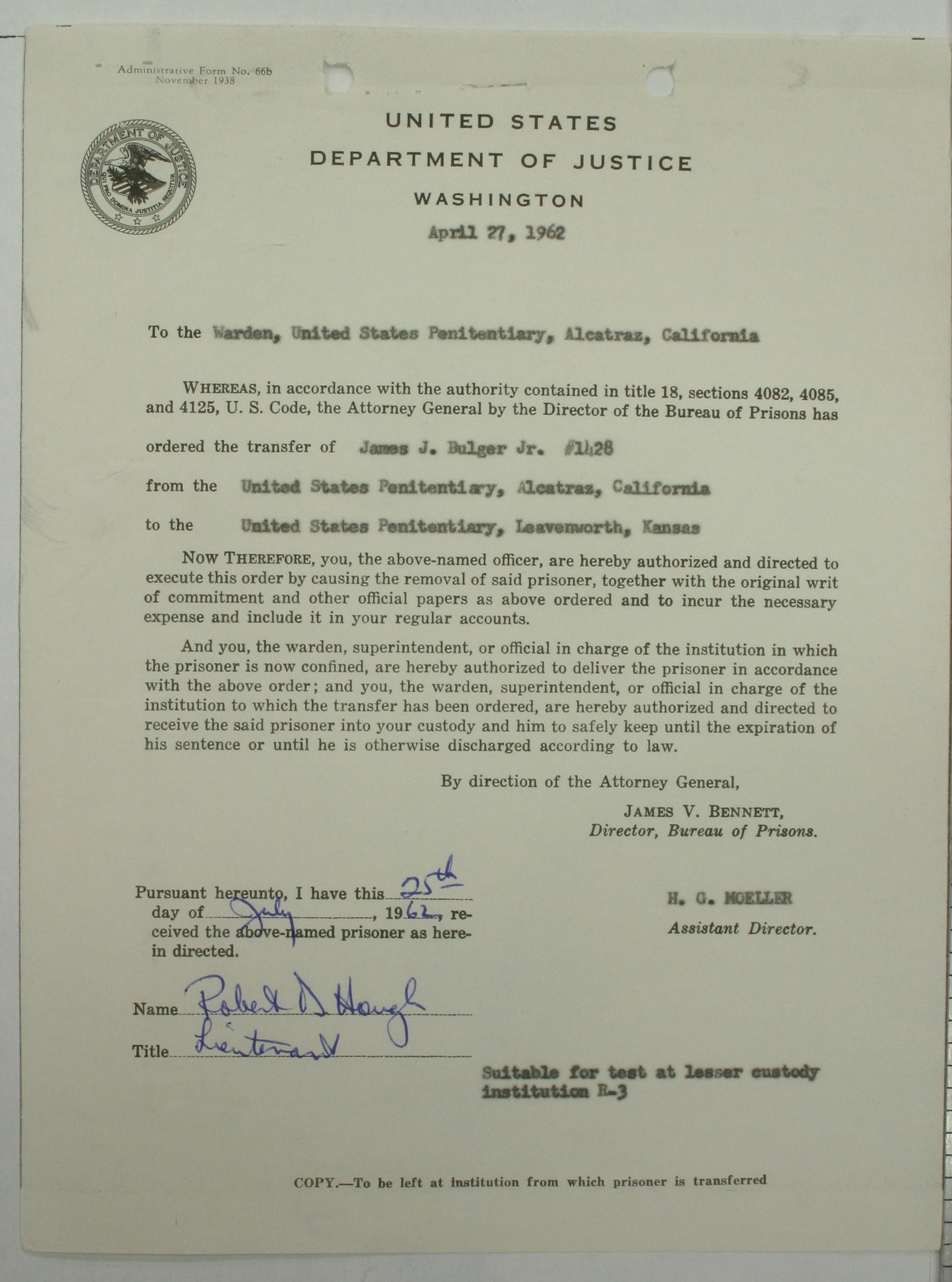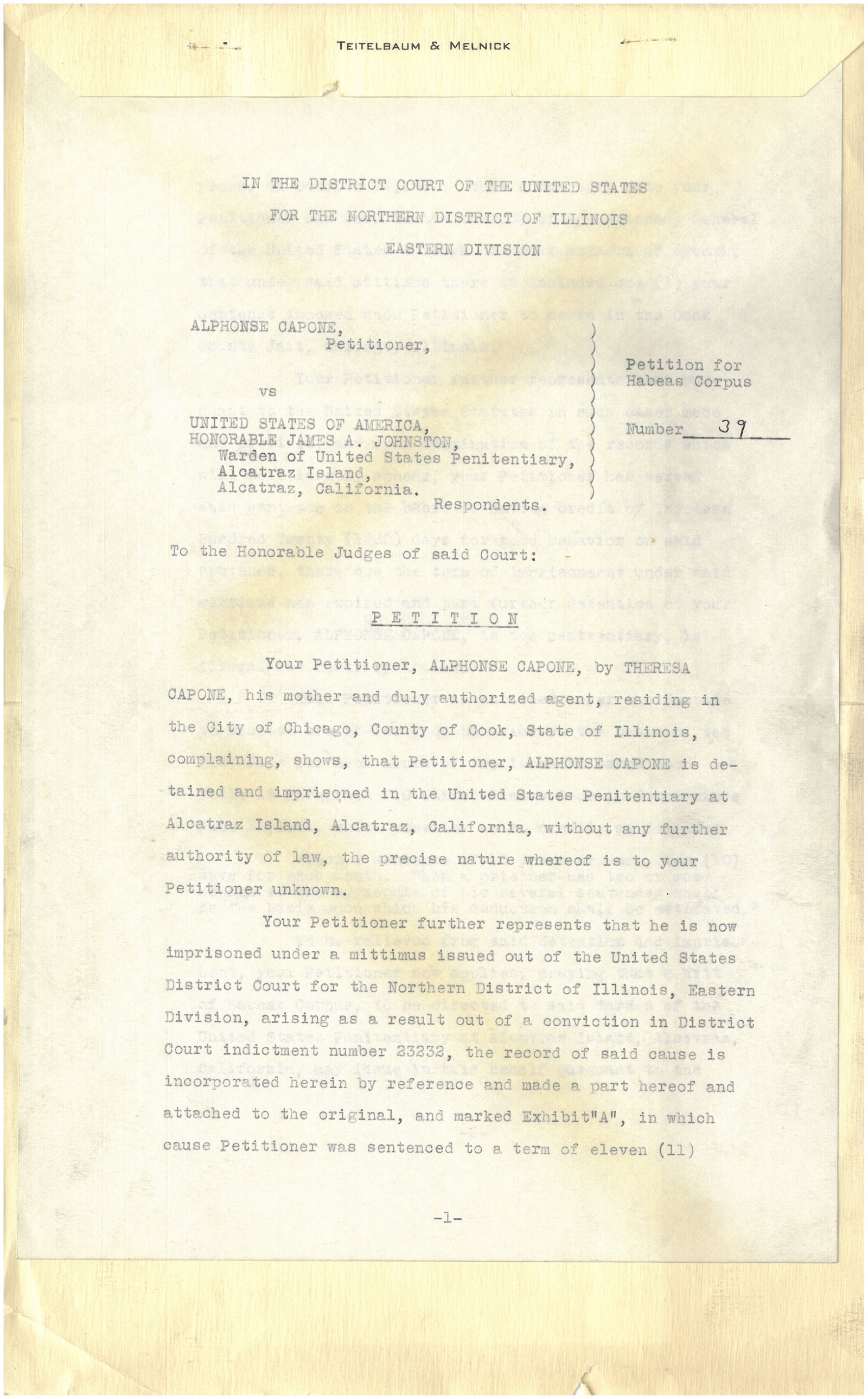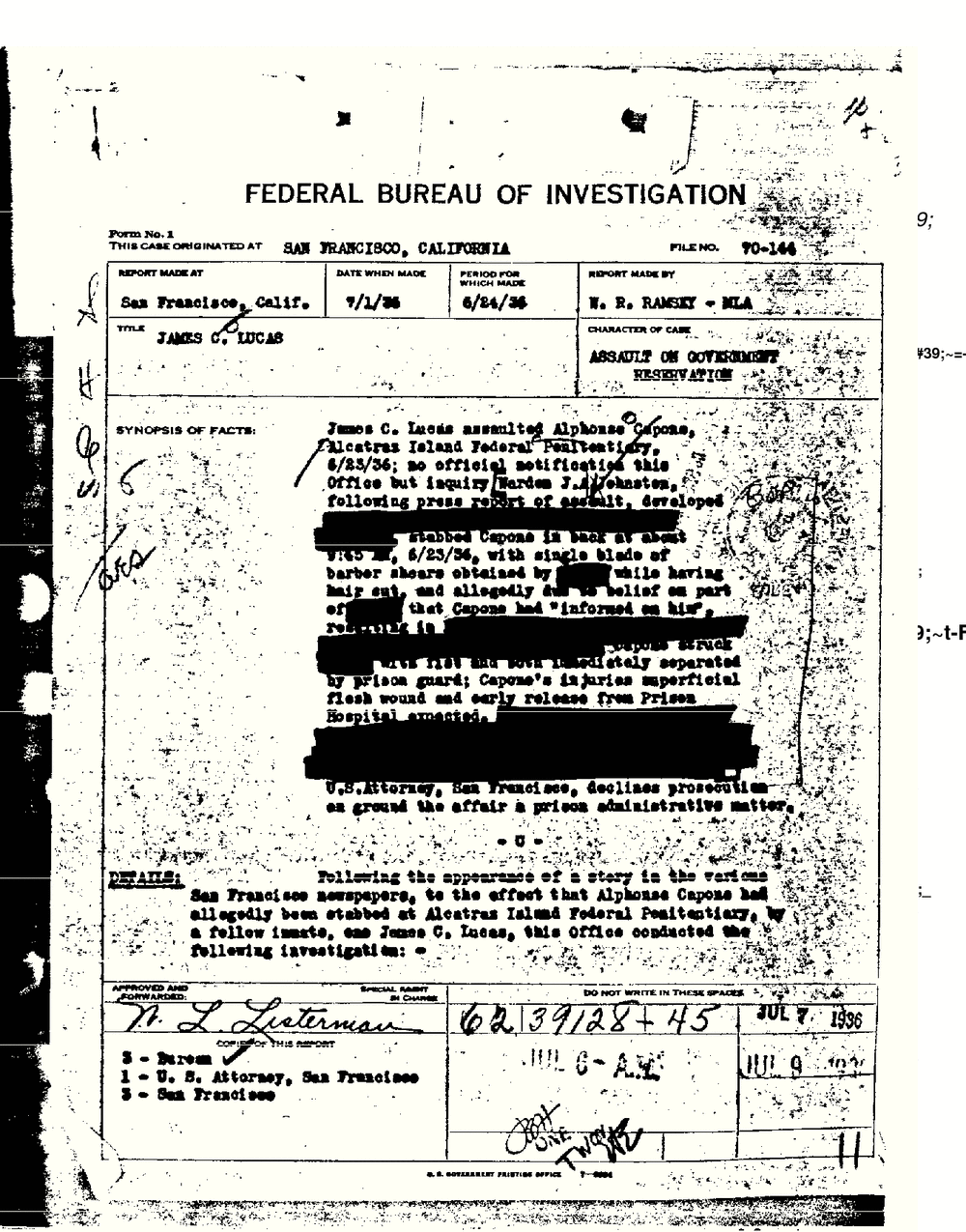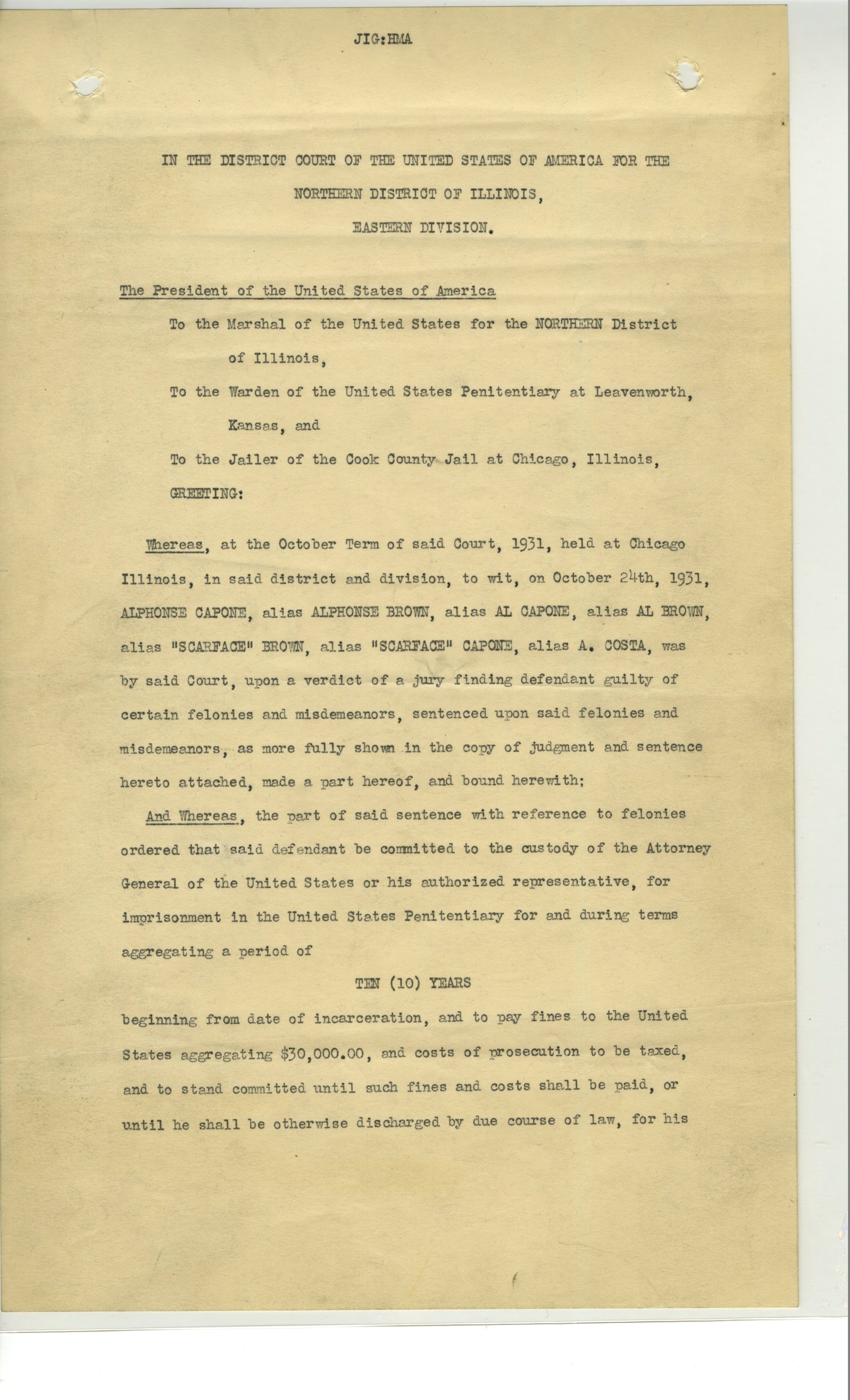
The federal prisons that held men whose records run through this archive, from the Bureau of Prisons’ and the National Archives’ own papers. Most pages are warden’s notebook photographs and descriptions of case files. A page gives the entries a form prints, labels the catalog’s description separately, and sets conflicts between the two side by side. The “Reason for Transfer” box on a notebook page is staff opinion and is never used as a finding. A person who is only named in a record has no page here, and no page says that a man belonged to a group unless a record quoted on it says so.
Alcatraz
The Bureau of Prisons opened the U.S. Penitentiary, Alcatraz, in 1934 as its first maximum security prison and closed it on 21 March 1963 (BOP history, timeline). The National Park Service calls it a “concentration model” that later served as a blueprint for the high-security federal prison at Marion, Illinois (NPS). The National Archives at San Francisco lists 1,576 register numbers (by name, by number) and holds a one-page warden’s notebook form with a photograph for most of them (series) and a bulk case file (series).
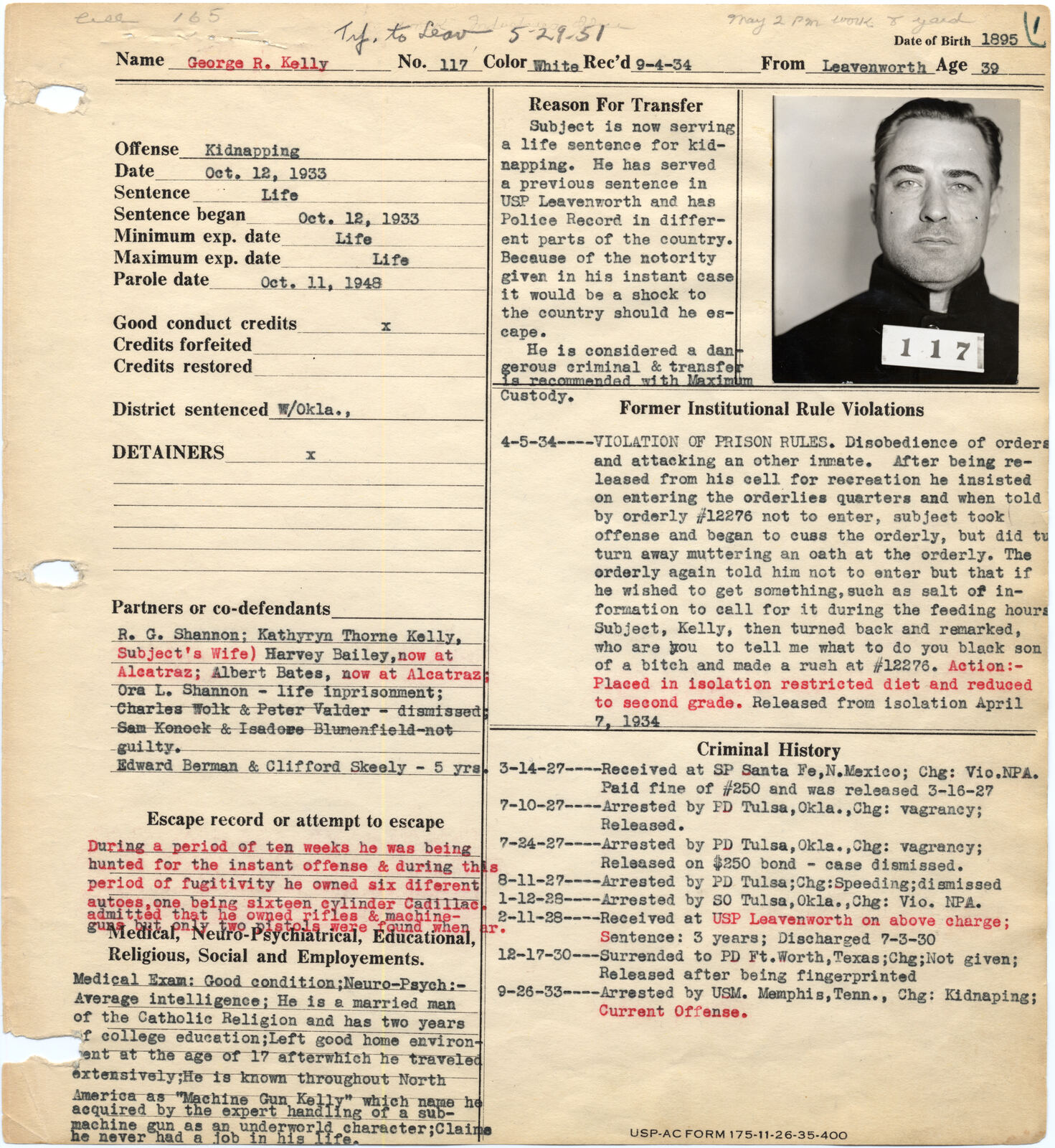
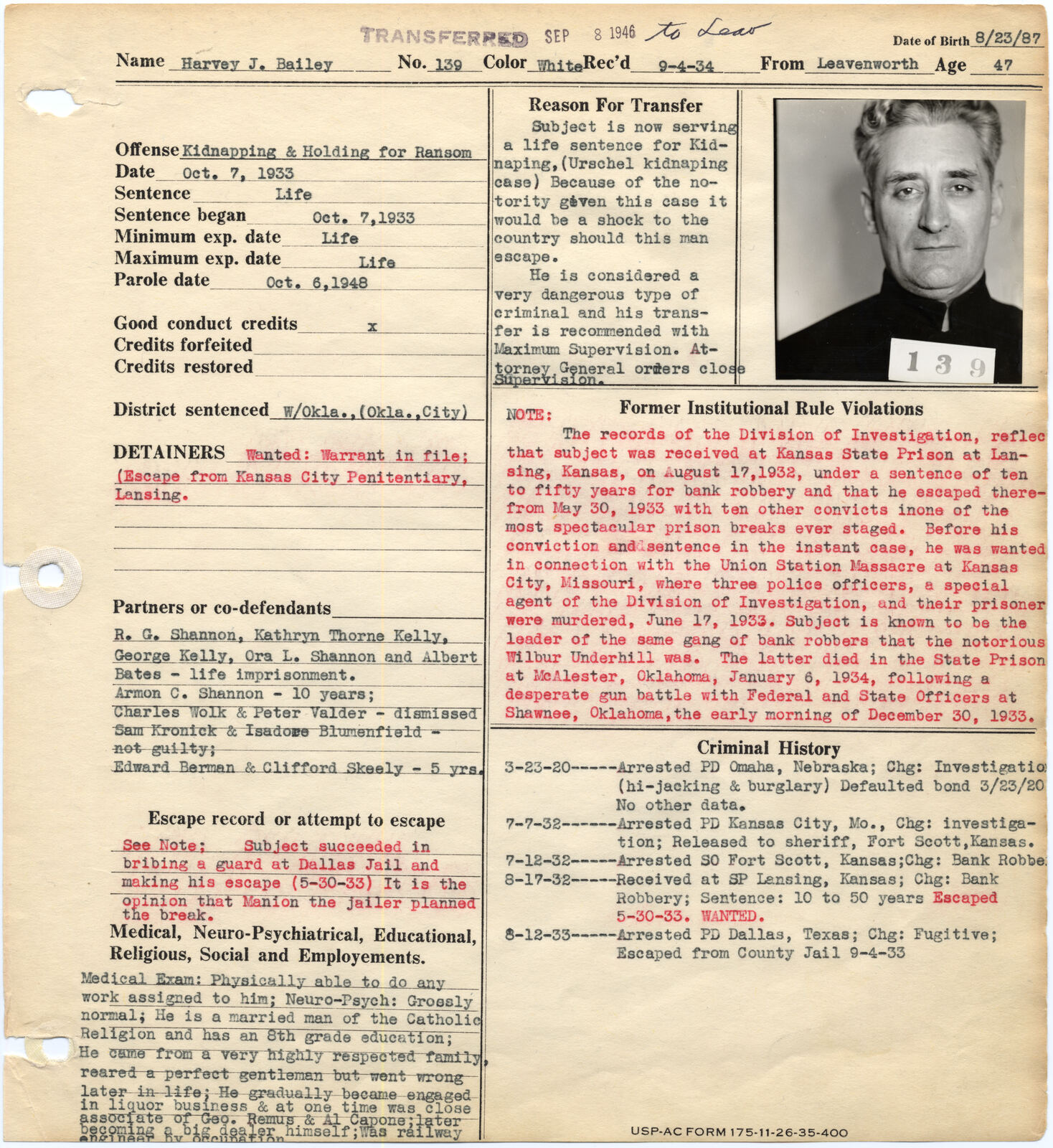
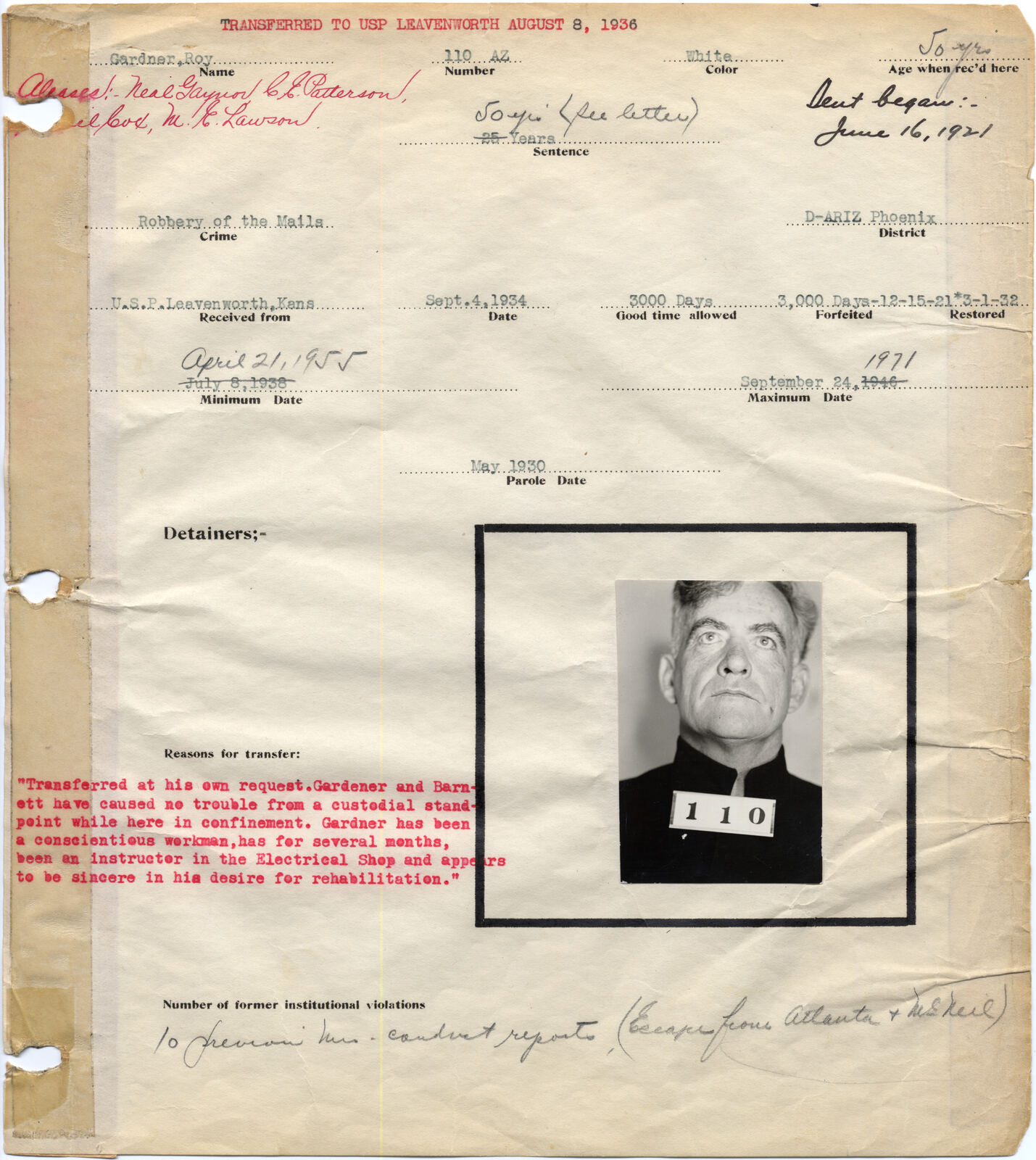
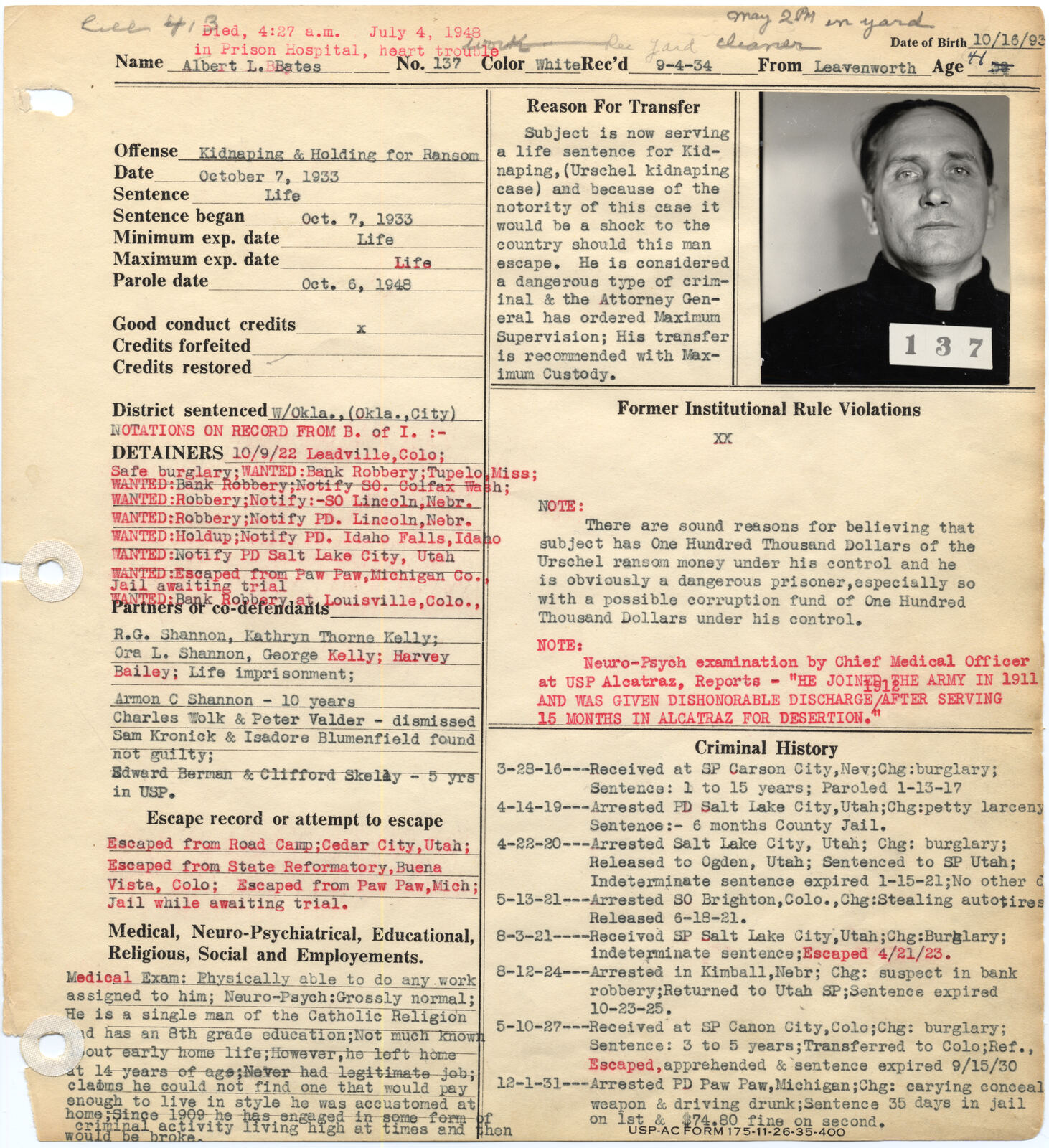
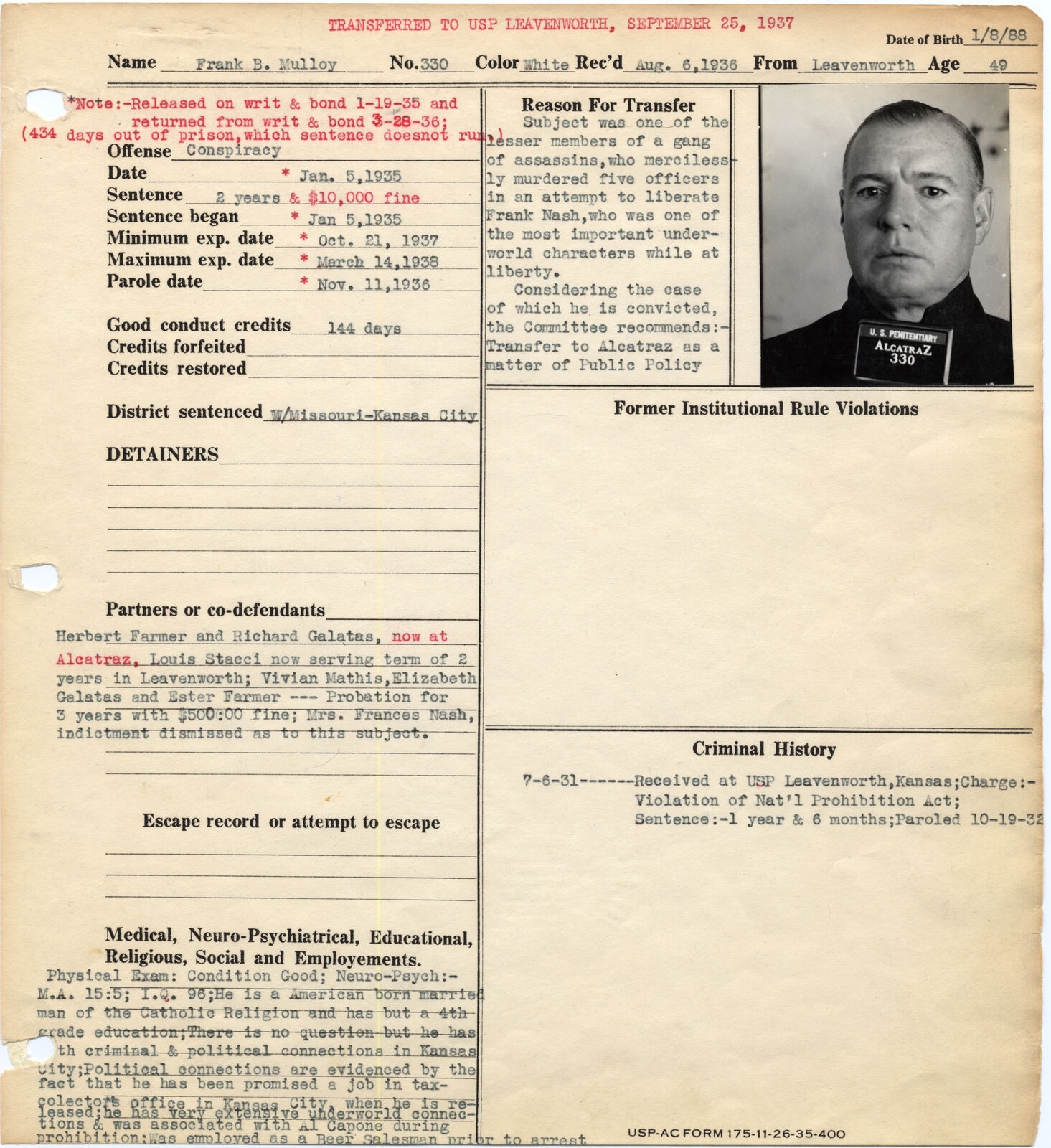
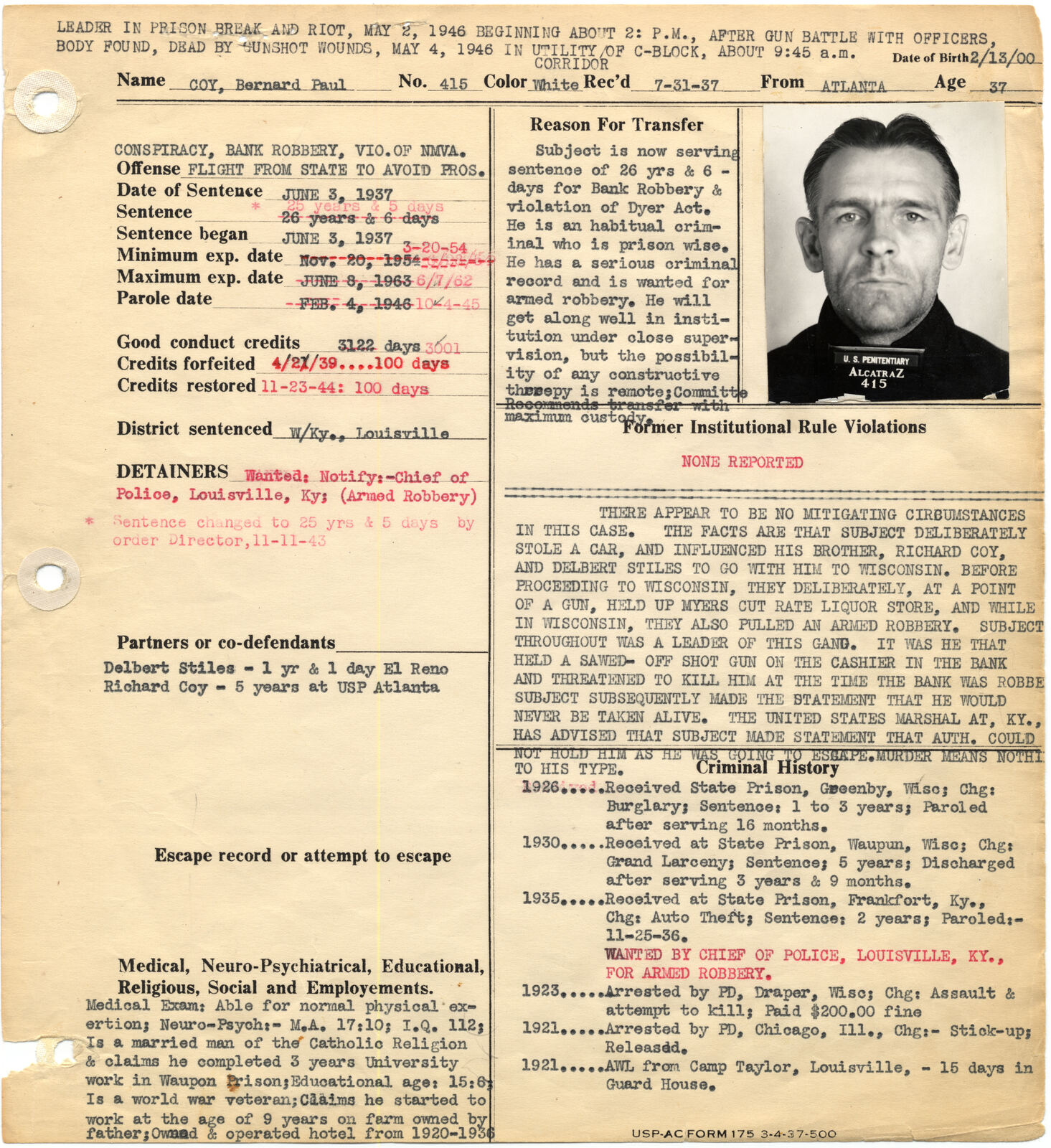
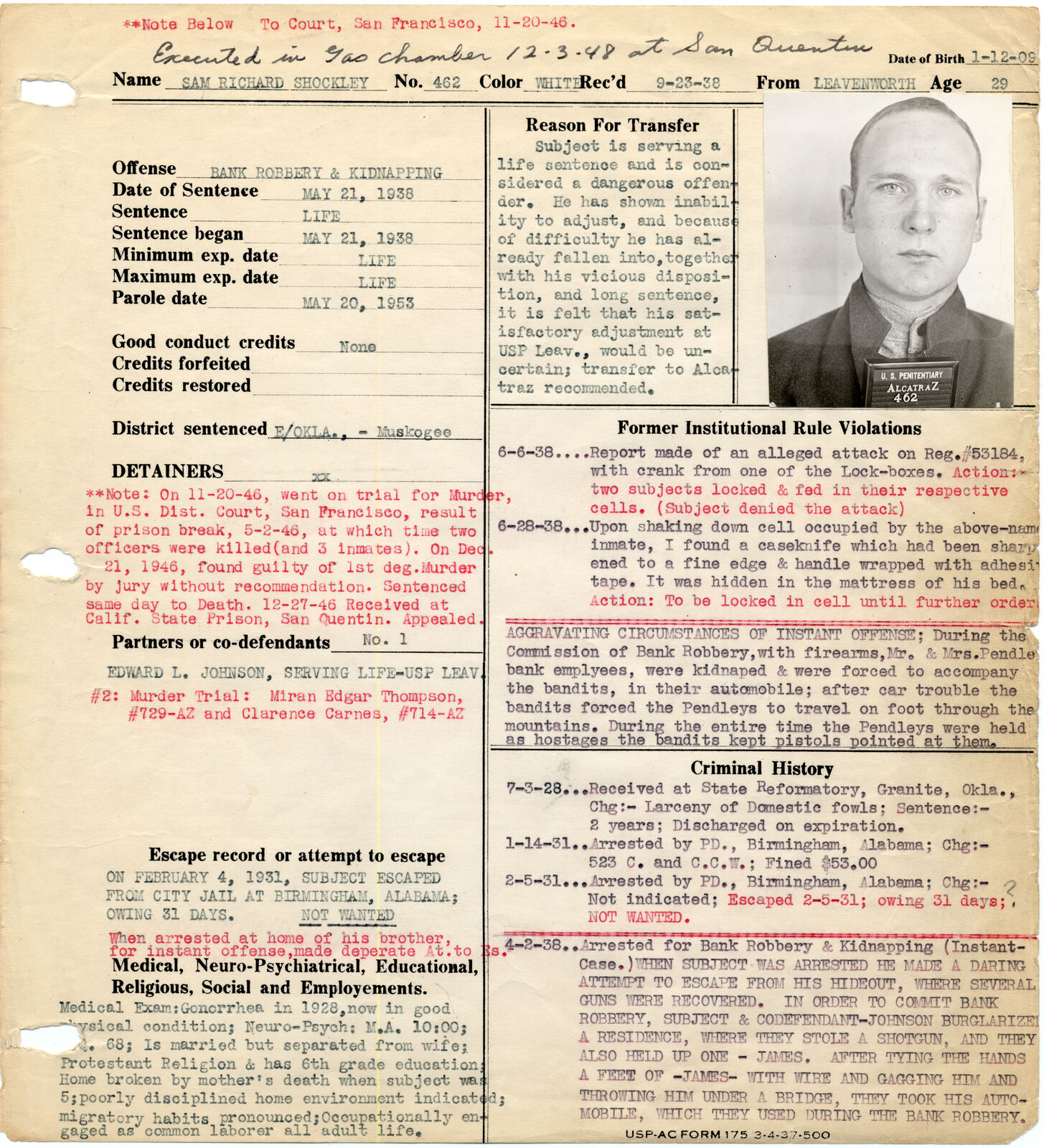
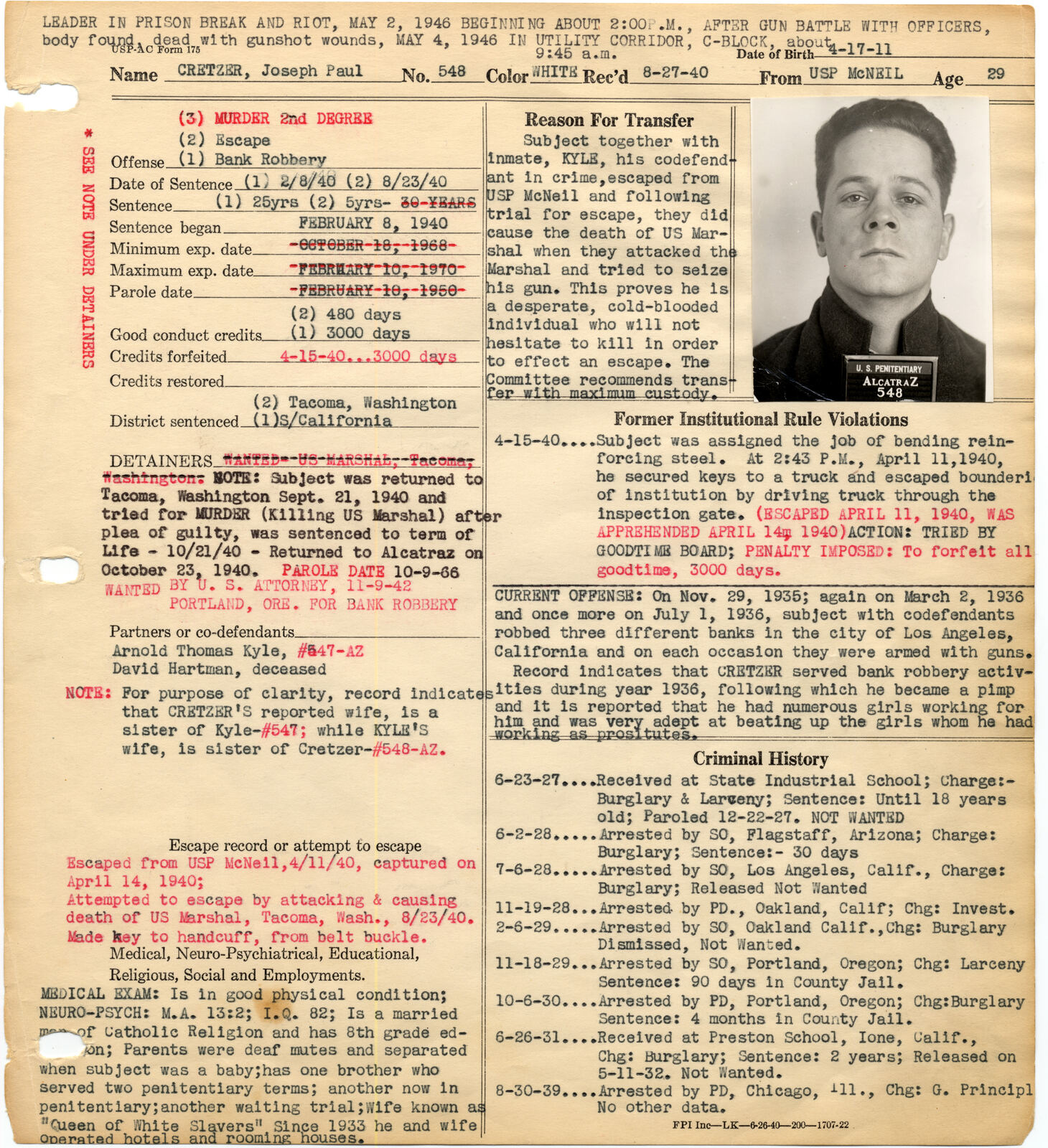
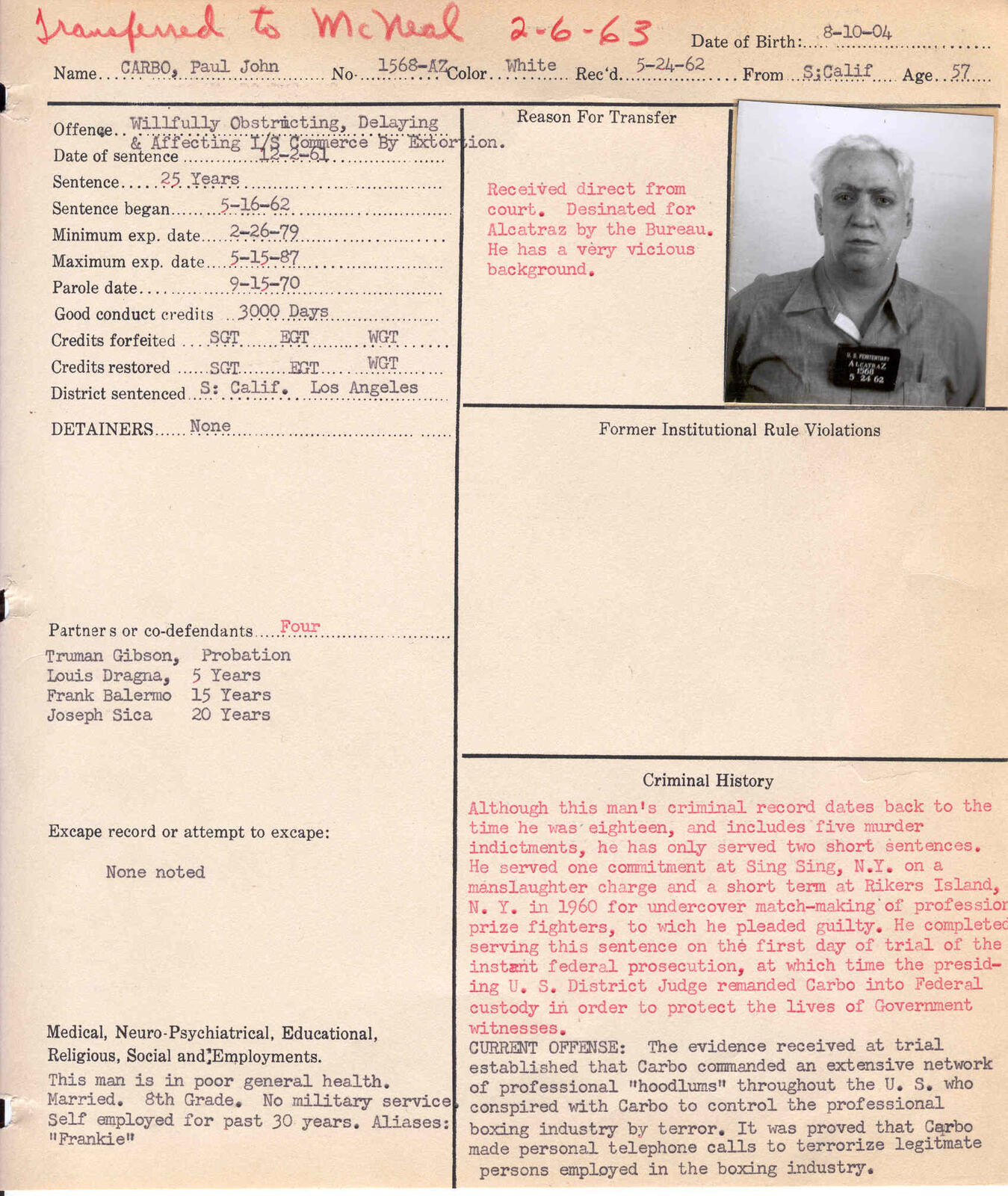
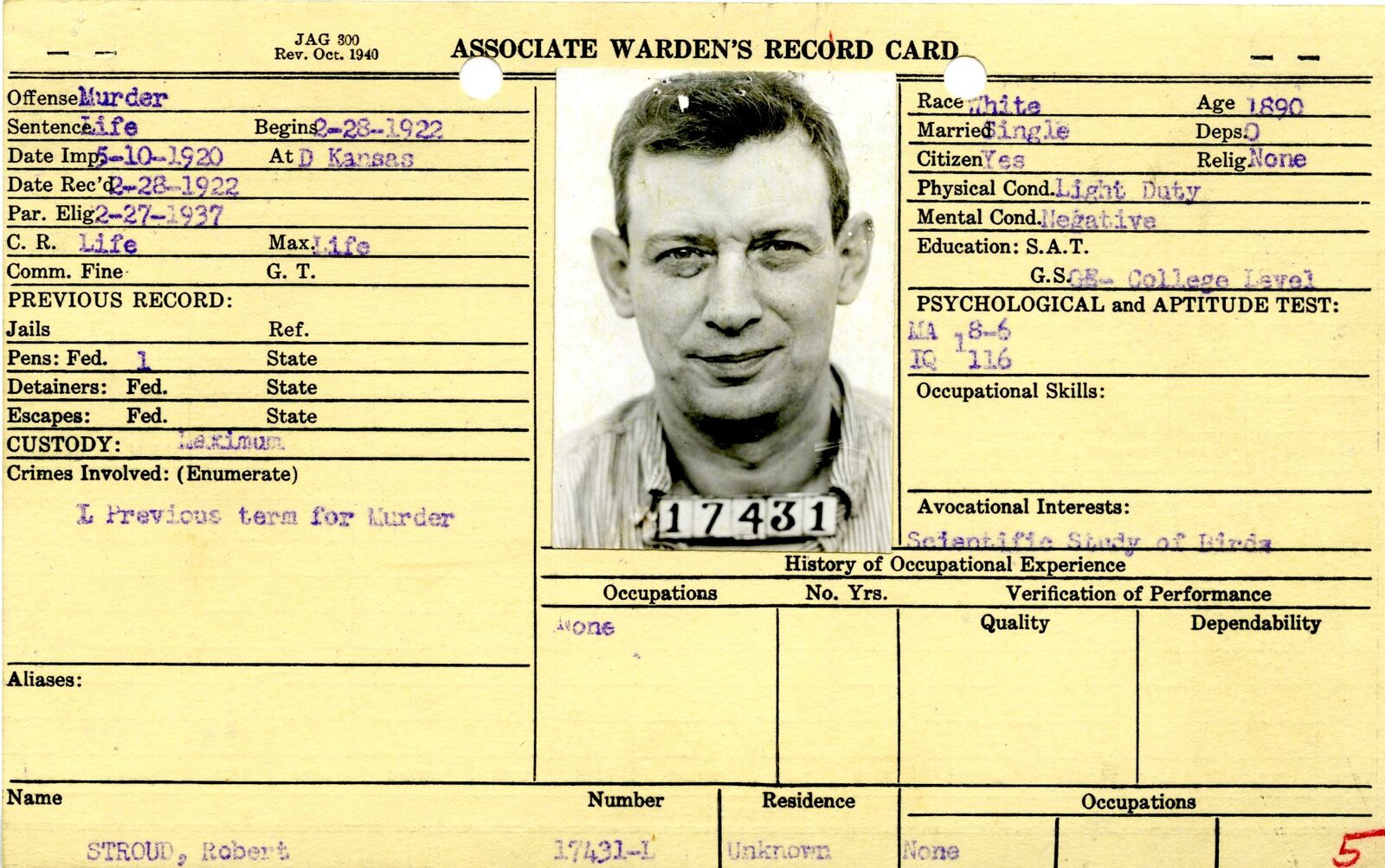
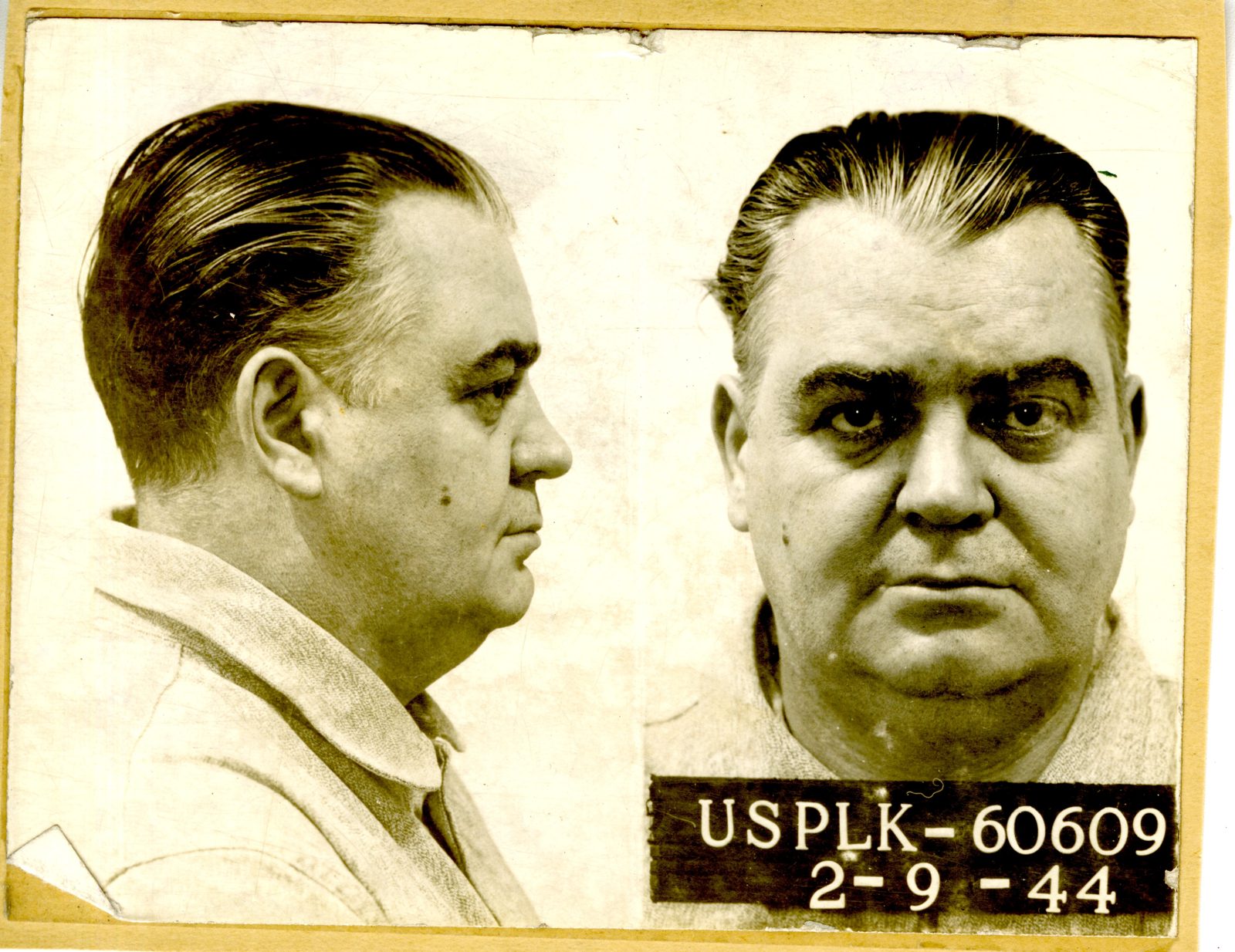
Notebook pages filed here, in the order of their receipt: Kelly, Bailey, Gardner, Bates, Ryan, Capone, Lucas, Davis, Doc Barker, Sawyer, Campbell, Karpavicz (Karpis), Mulloy, Coy, Shockley, Cretzer, Stroud, Banghart, Hubbard, Carnes, Thompson, Johnson, Bulger, Cohen and Carbo. Each has a person page where a record is filed for the man: Kelly, Bailey, Doc Barker, Karpis, Gardner, Stroud, Johnson, Cohen, Carbo, Davis, Sawyer, Campbell, Lucas, Ryan, Mulloy, Bates, Coy, Cretzer, Hubbard, Shockley, Thompson and Carnes. Capone’s own record is on the notebook page and in the catalog entry for his case file.
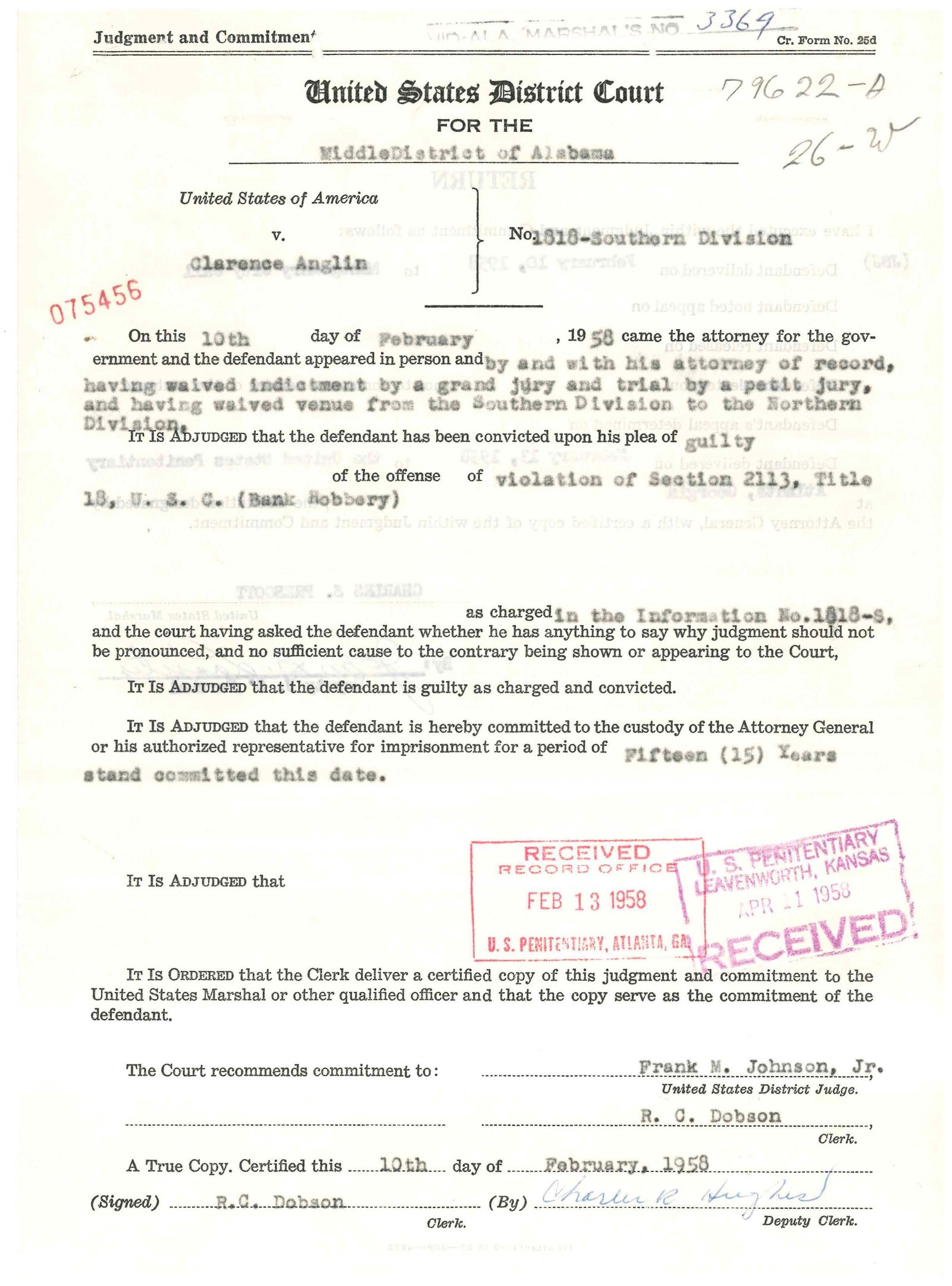
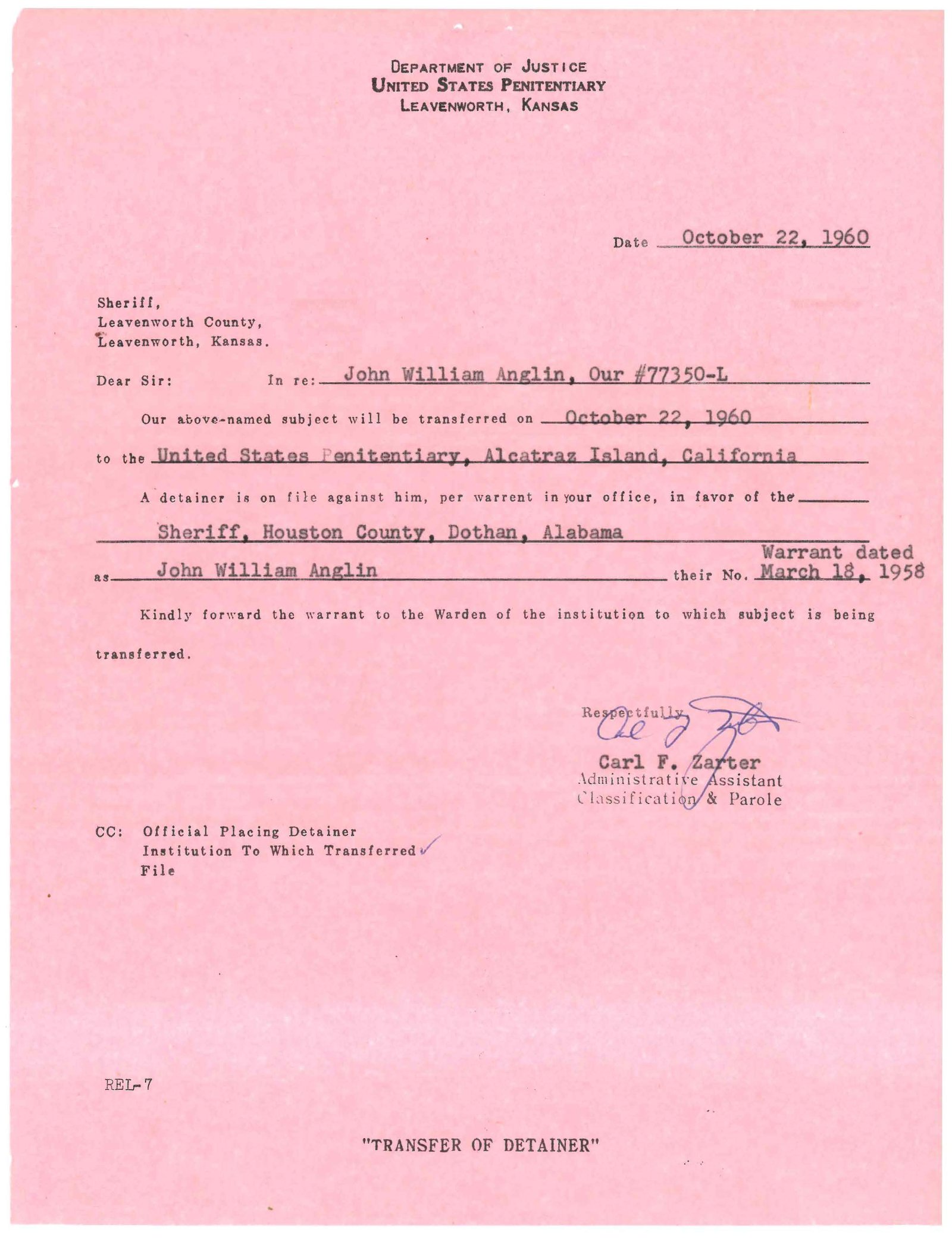
Case-file entries in the catalog: Kelly (1,410 digitized pages), Bailey, Gardner, Doc Barker, Karpis, Stroud, Cohen, Carbo, Bulger, and the two Anglin files (Clarence, John).
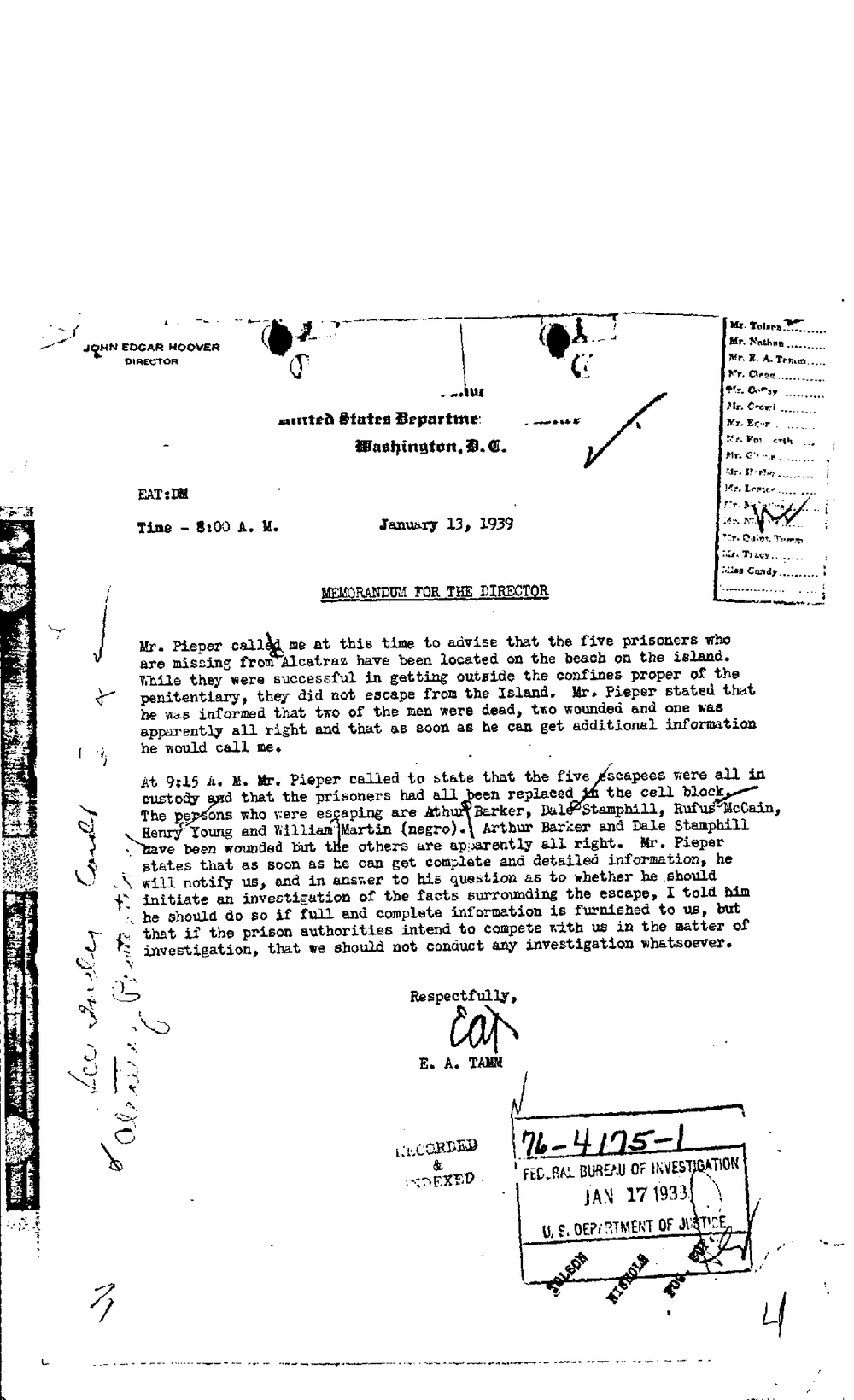
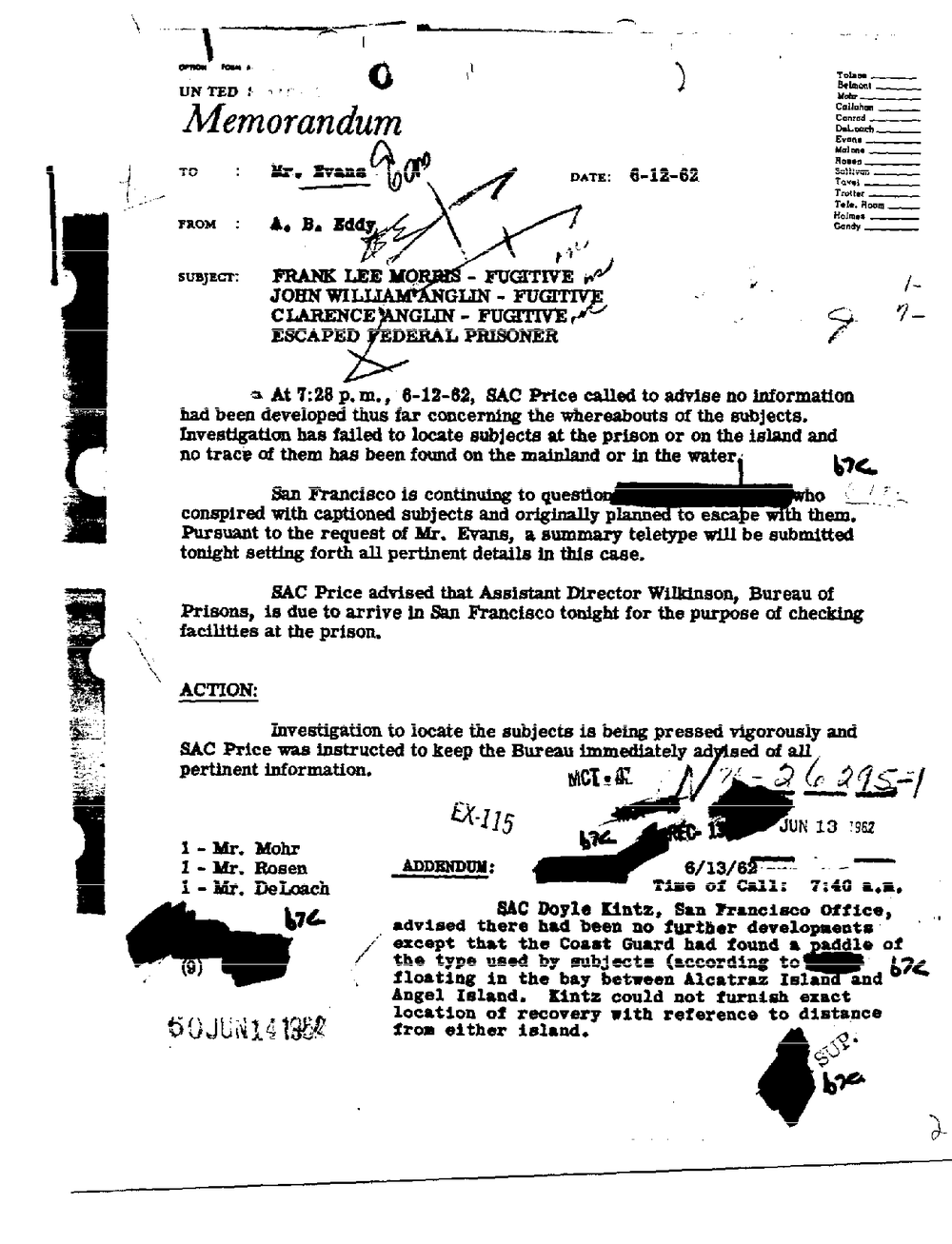
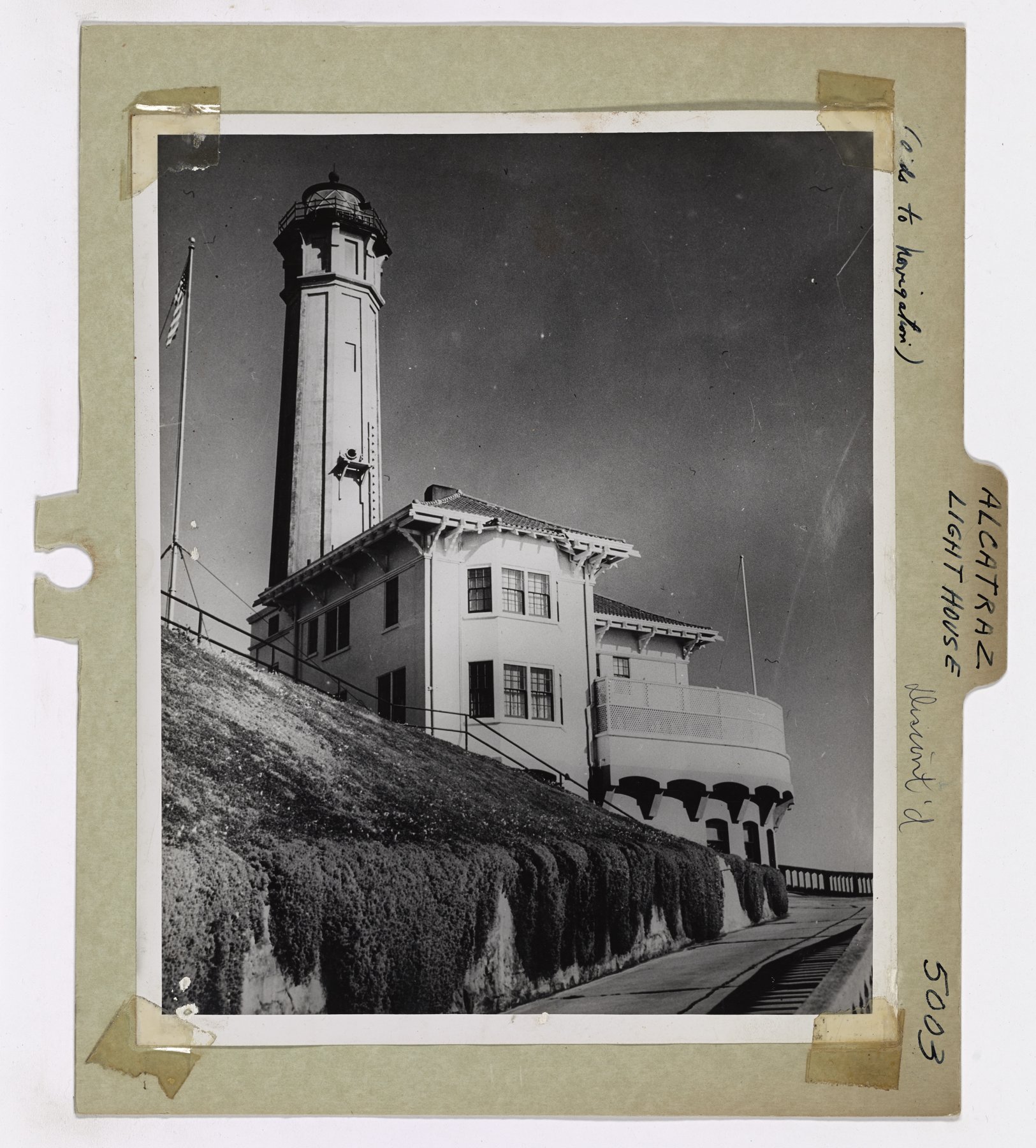
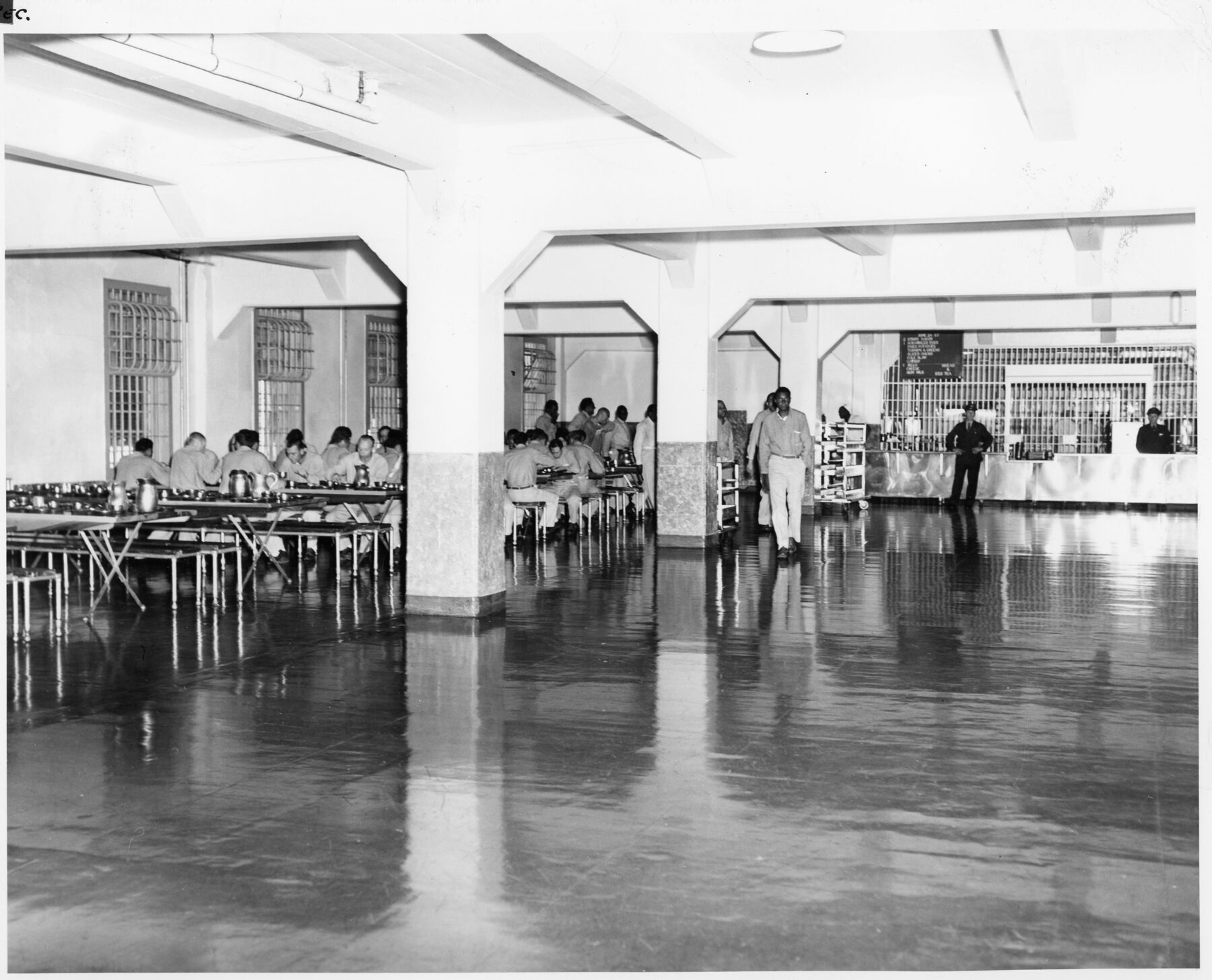
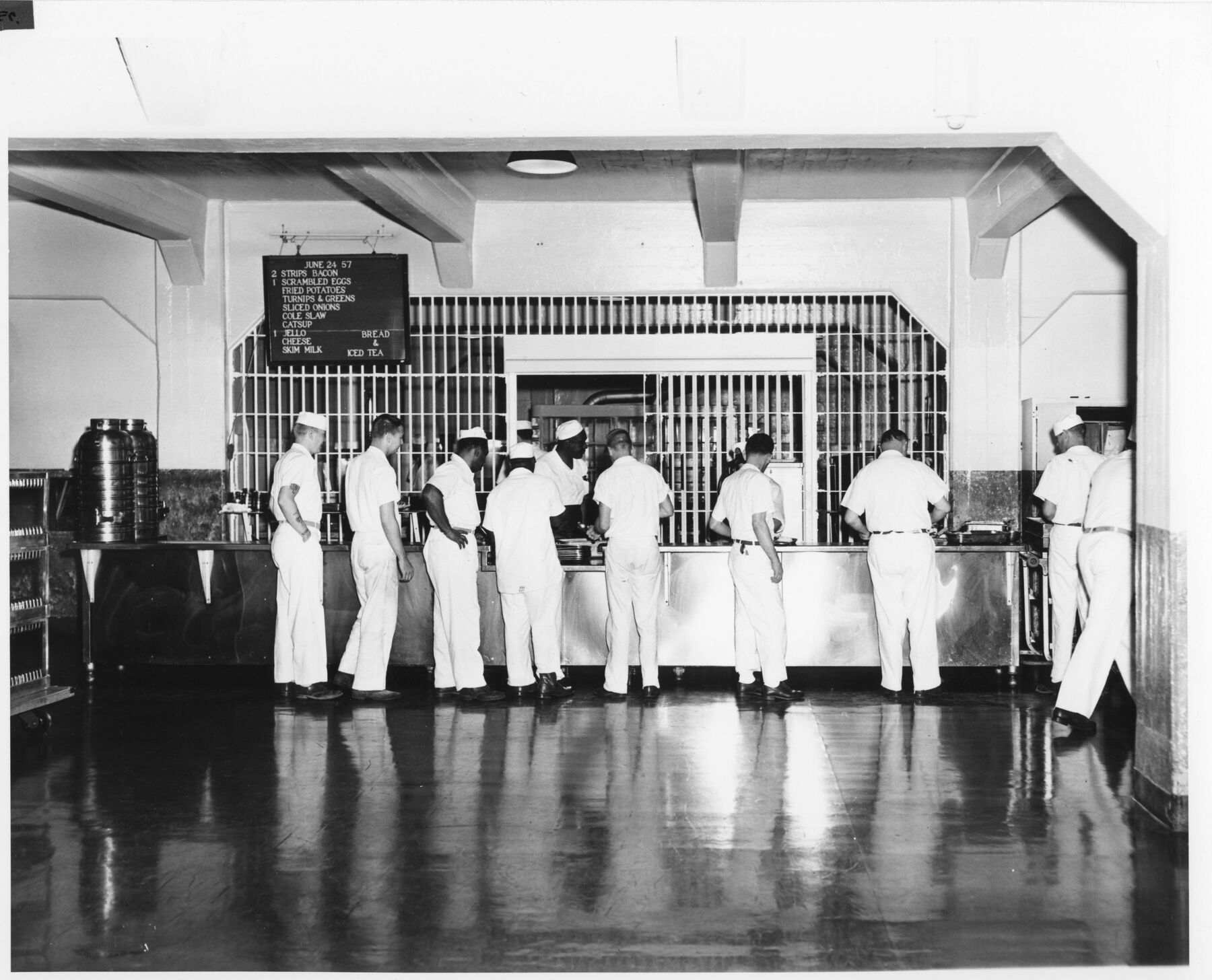
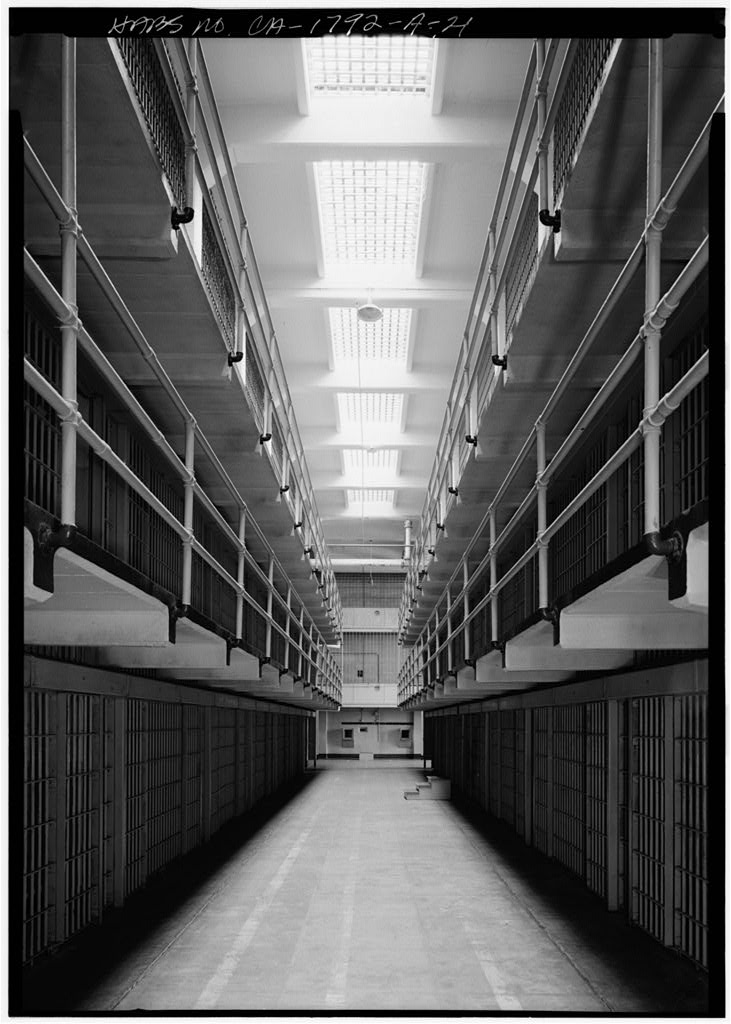
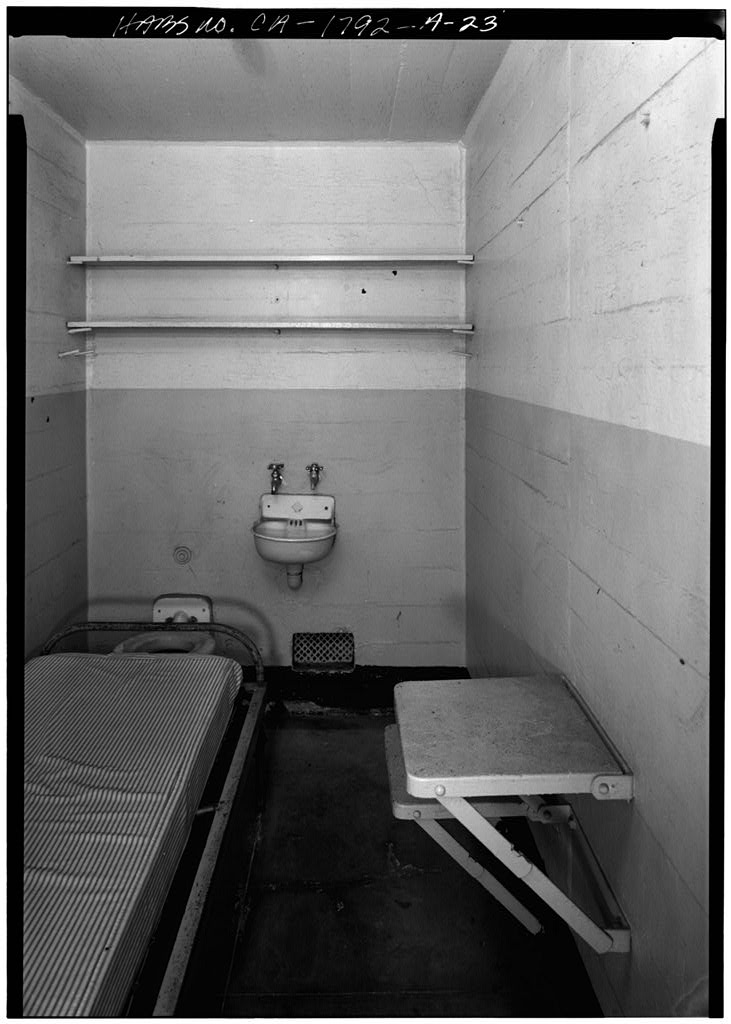
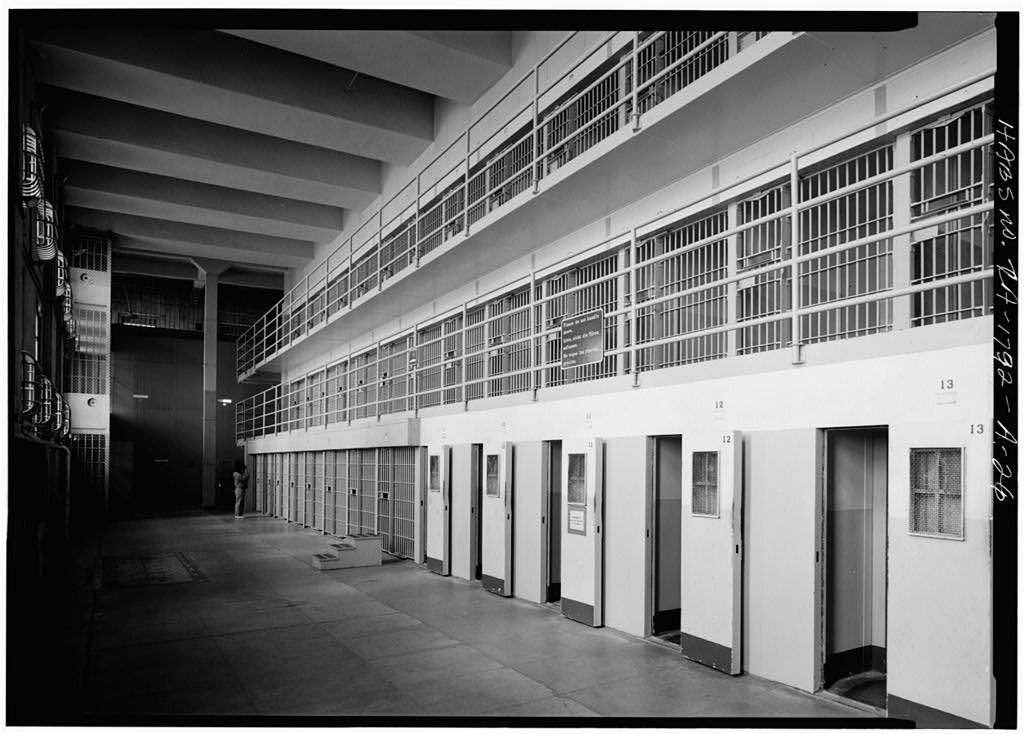
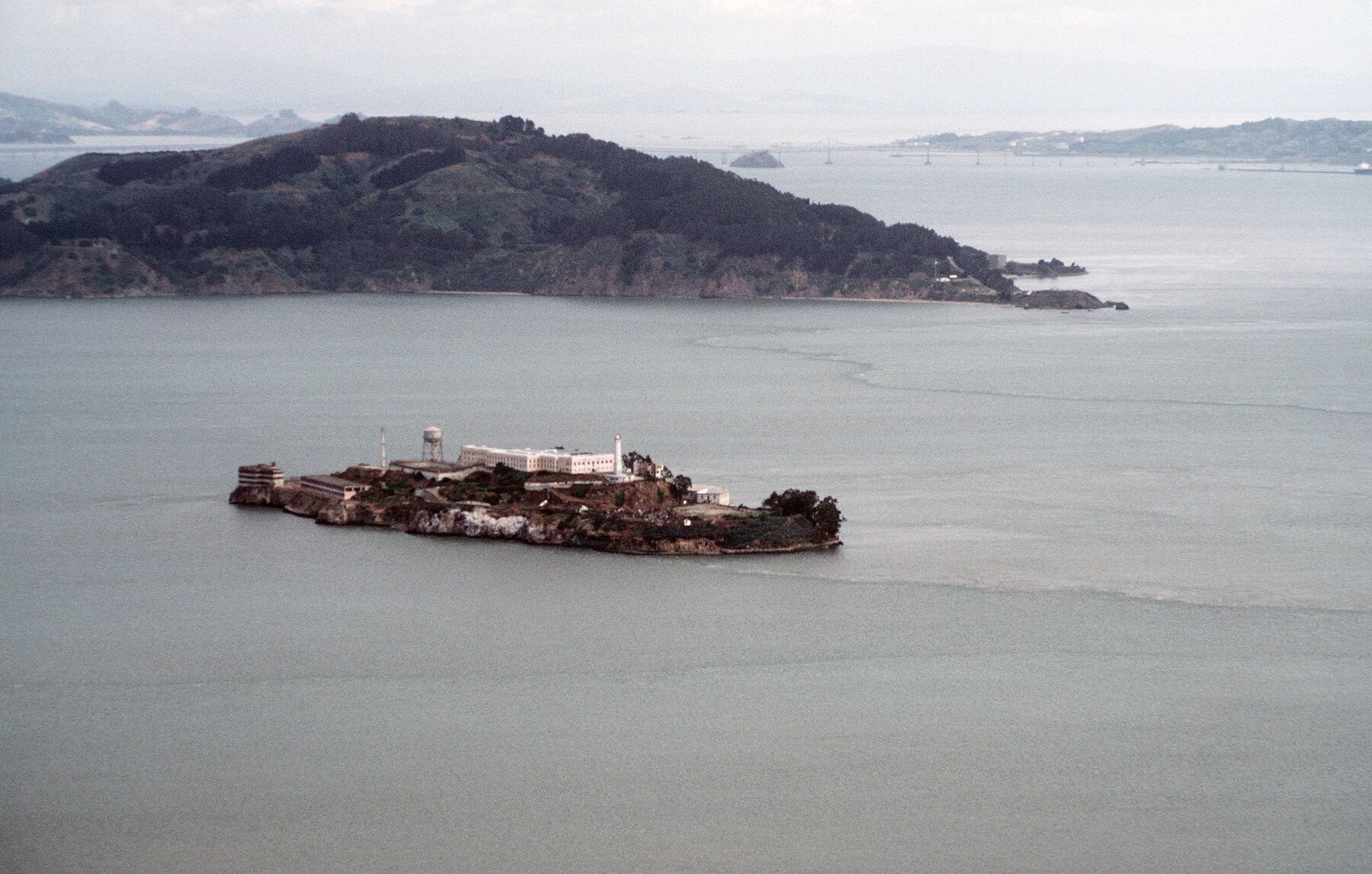
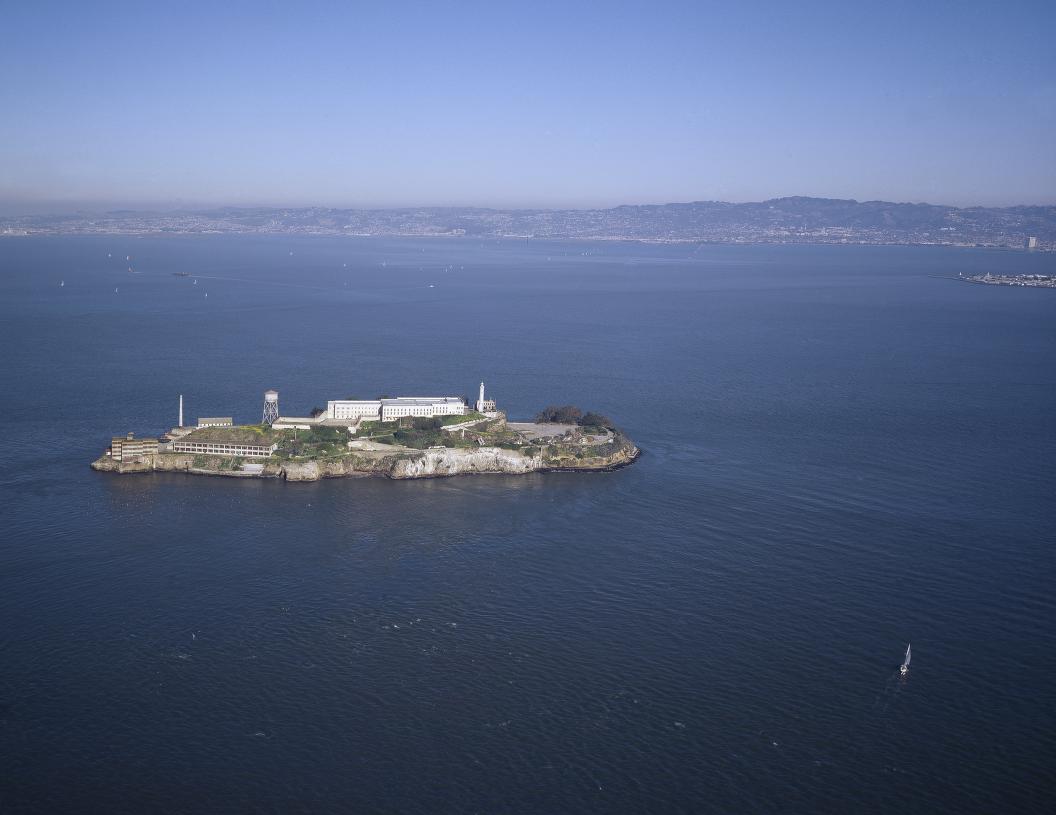
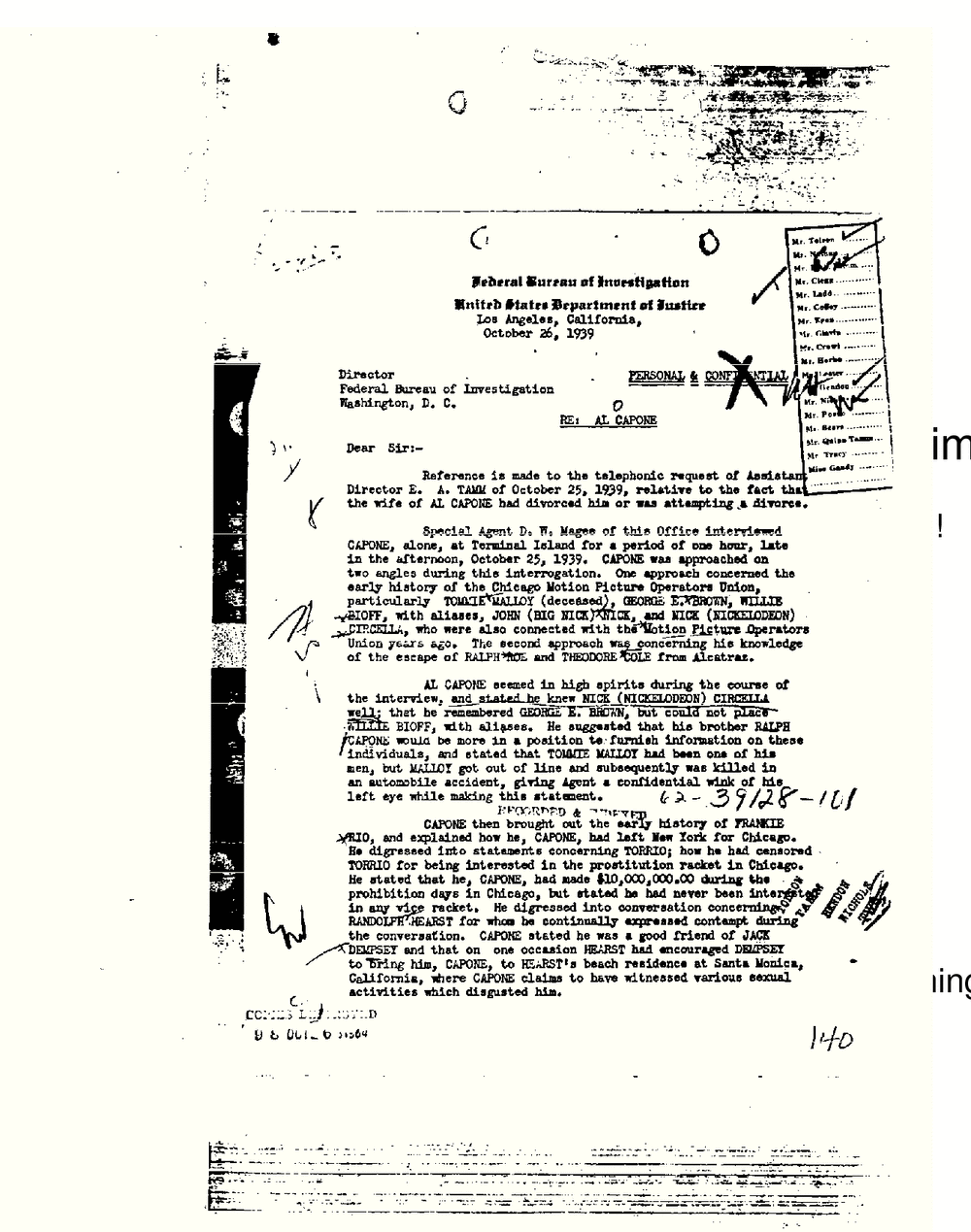
Incidents, from the Bureau of Prisons’ account and the records of the men: the January 1939 escape attempt (FBI memorandum; Barker’s page); the May 1946 “Battle of Alcatraz” (Coy, Cretzer, Hubbard, Shockley, Thompson, Carnes); the 1936 attack on Capone (NPS, FBI report); and the June 1962 disappearance of three prisoners (FBI memorandum). Daily life: the dining room and serving counter in 1957, and softball. The building: three Historic American Buildings Survey photographs (Broadway, a typical cell, the D Block isolation cells) and their parent record, and two aerial views (1986, Highsmith). A Coast Guard photograph dated 9 December 1946 shows the island’s lighthouse.
Leavenworth
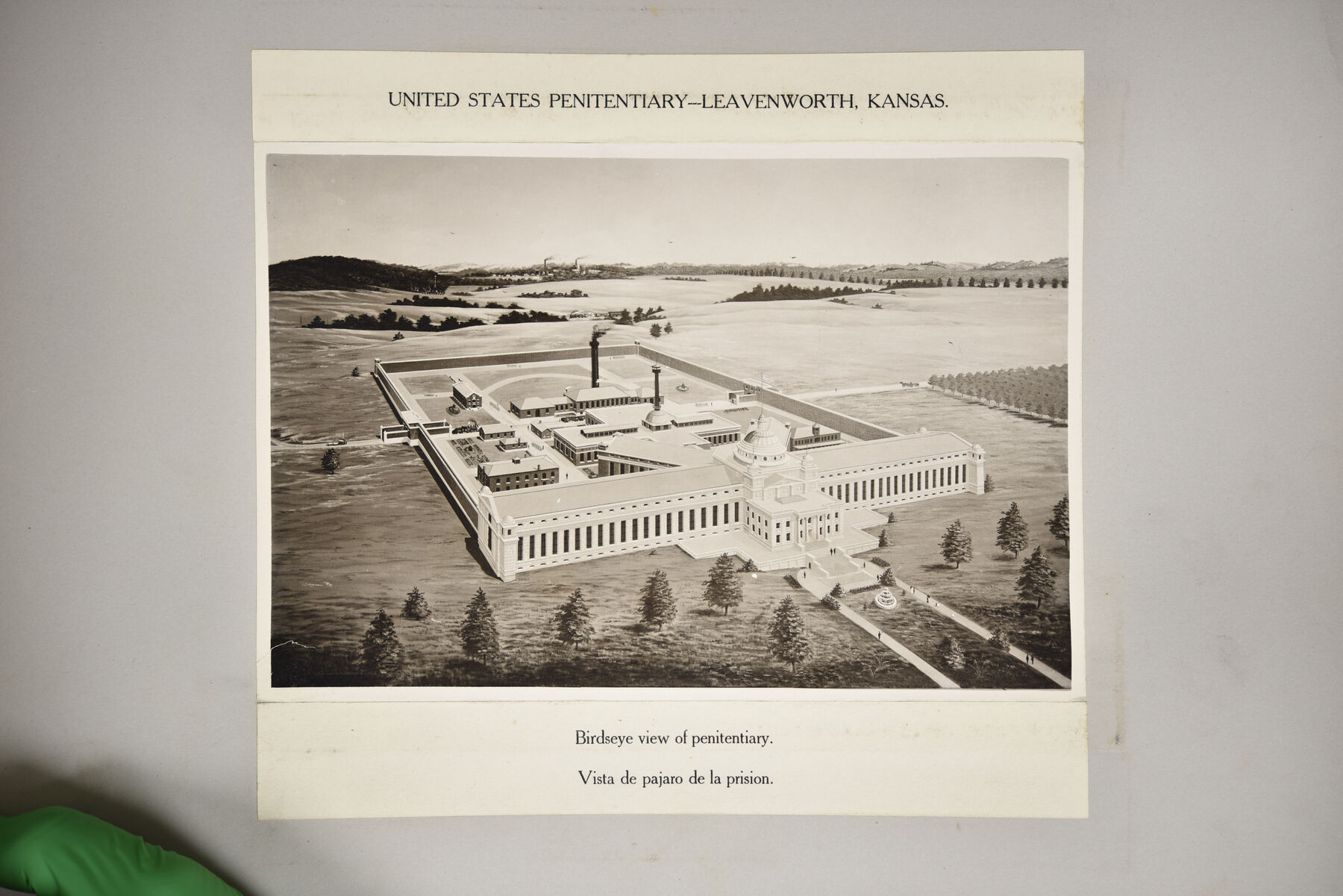
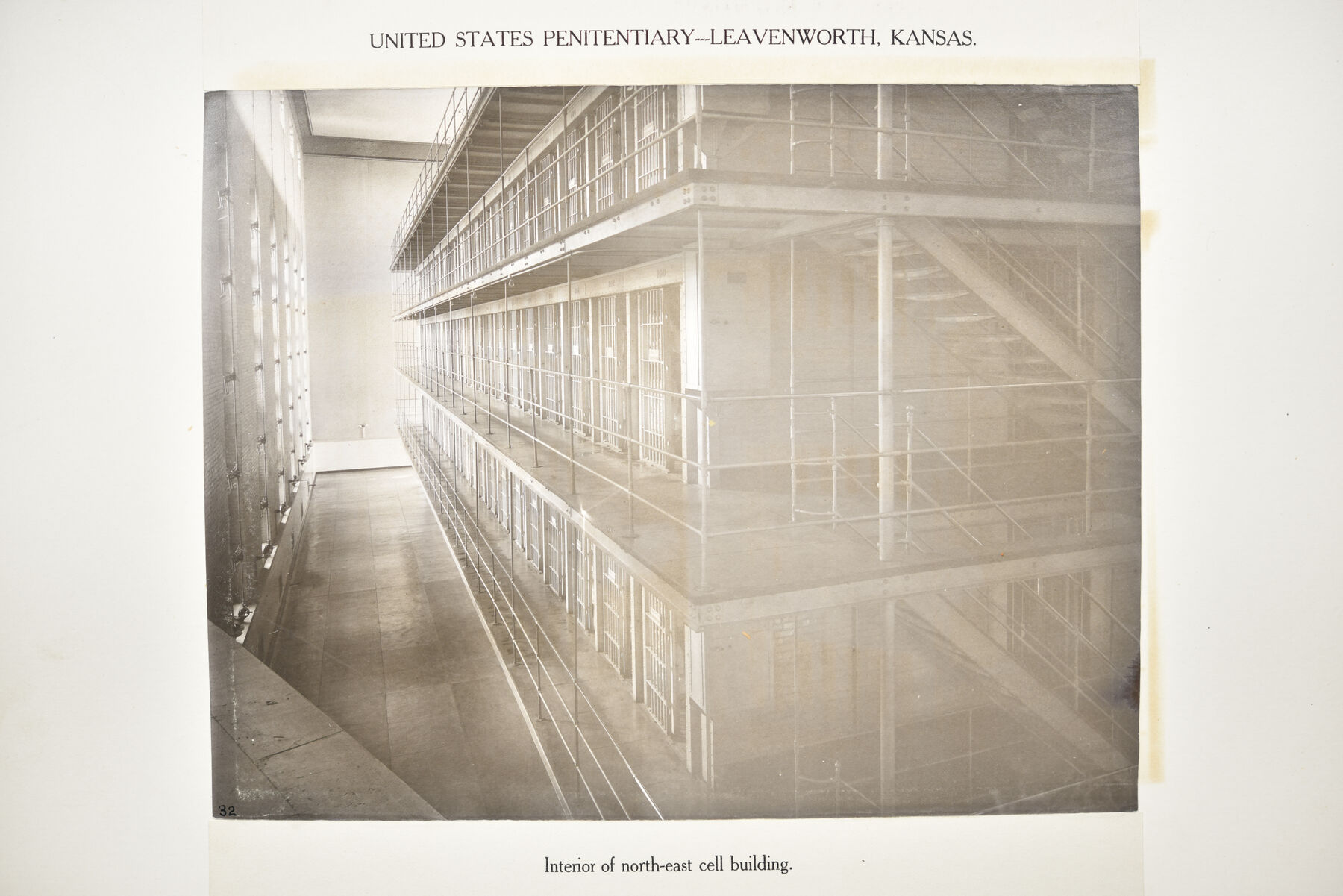
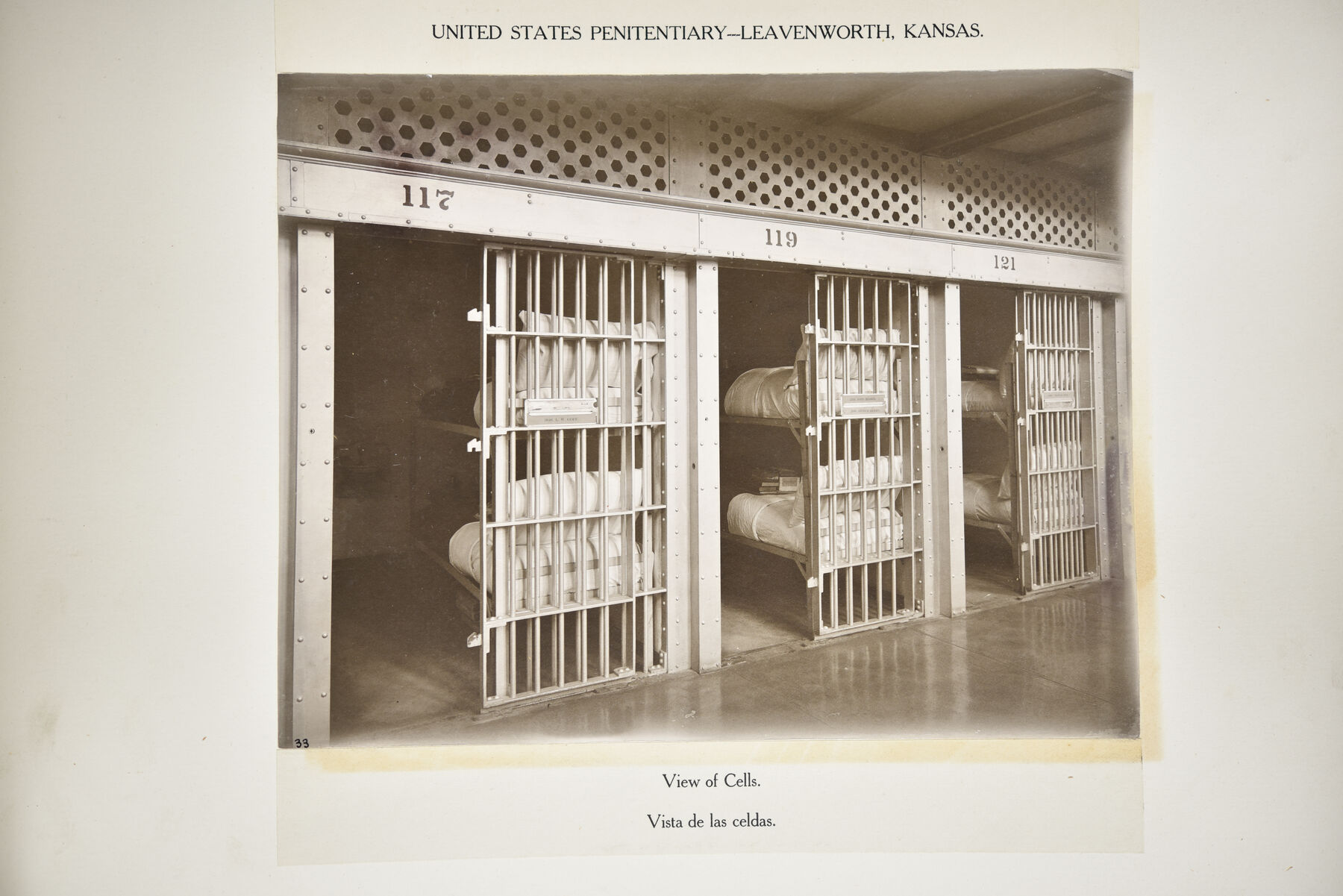
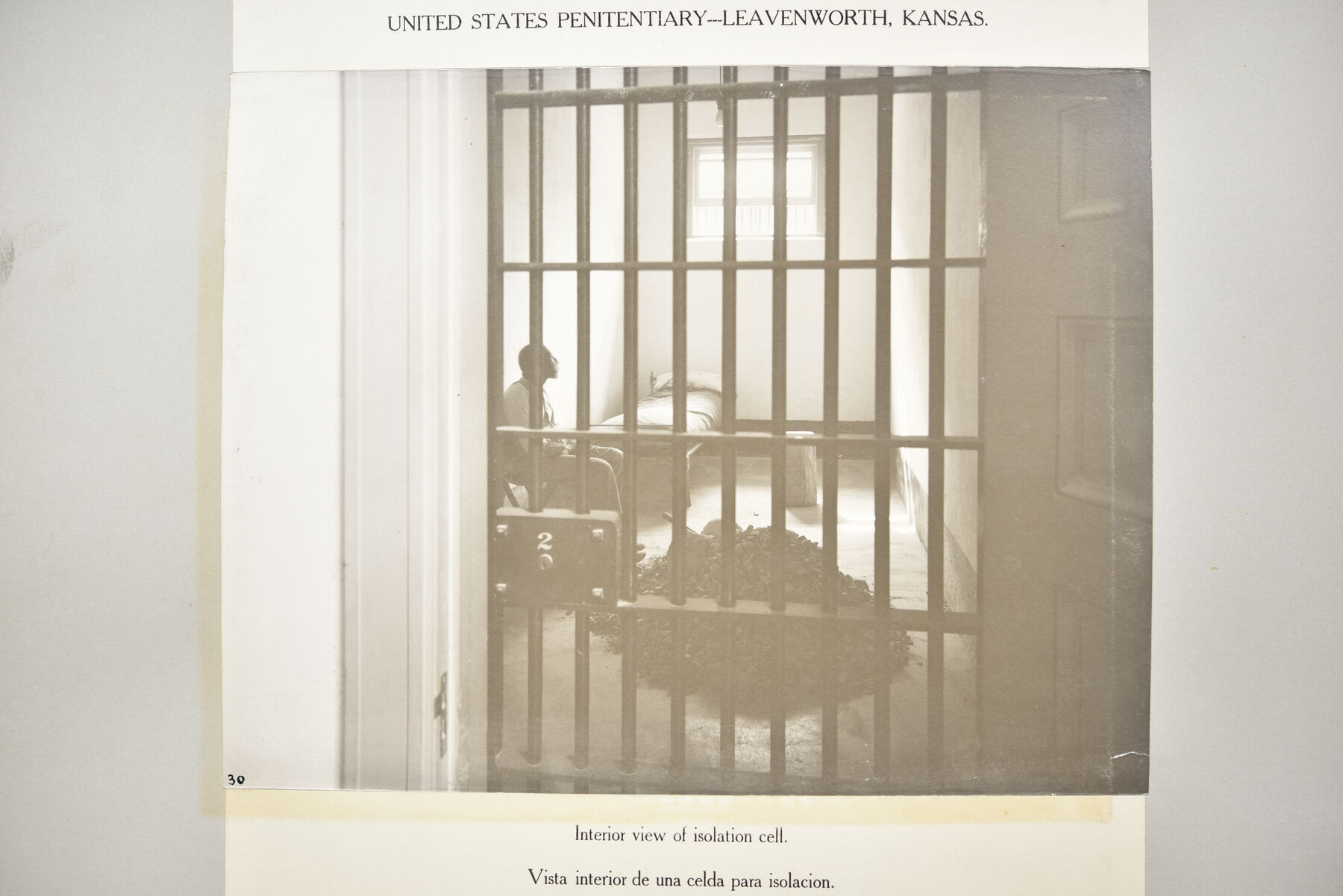
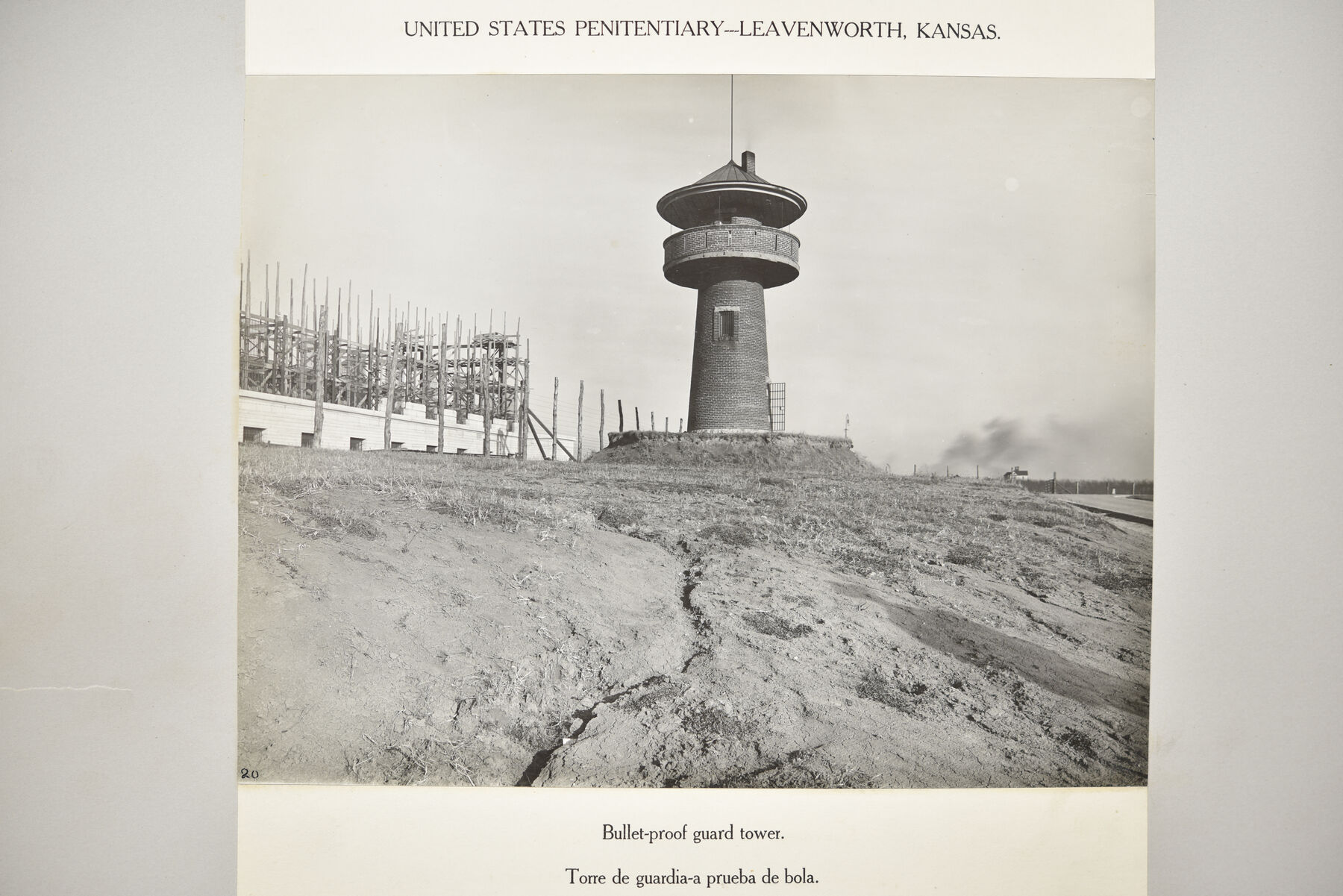
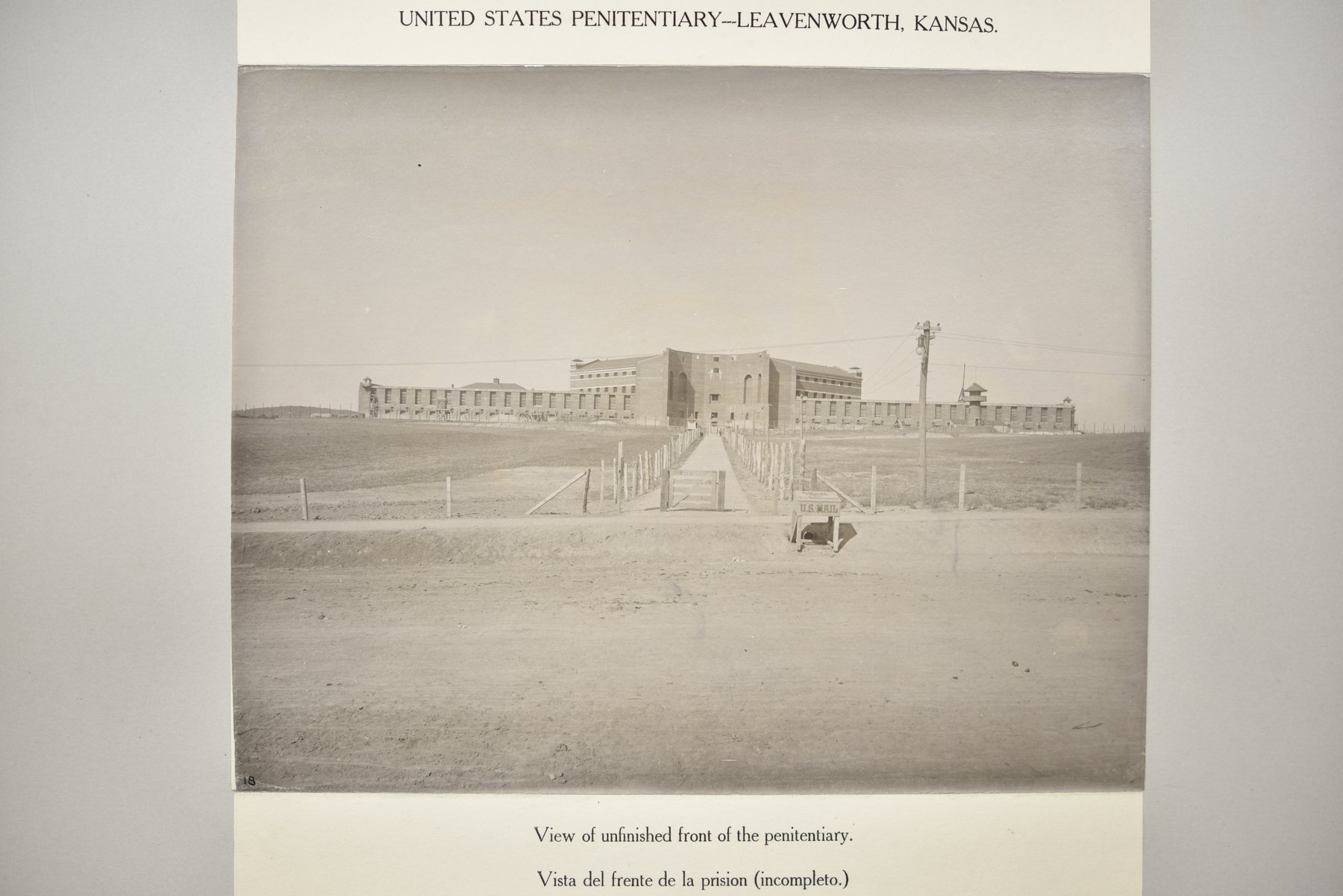
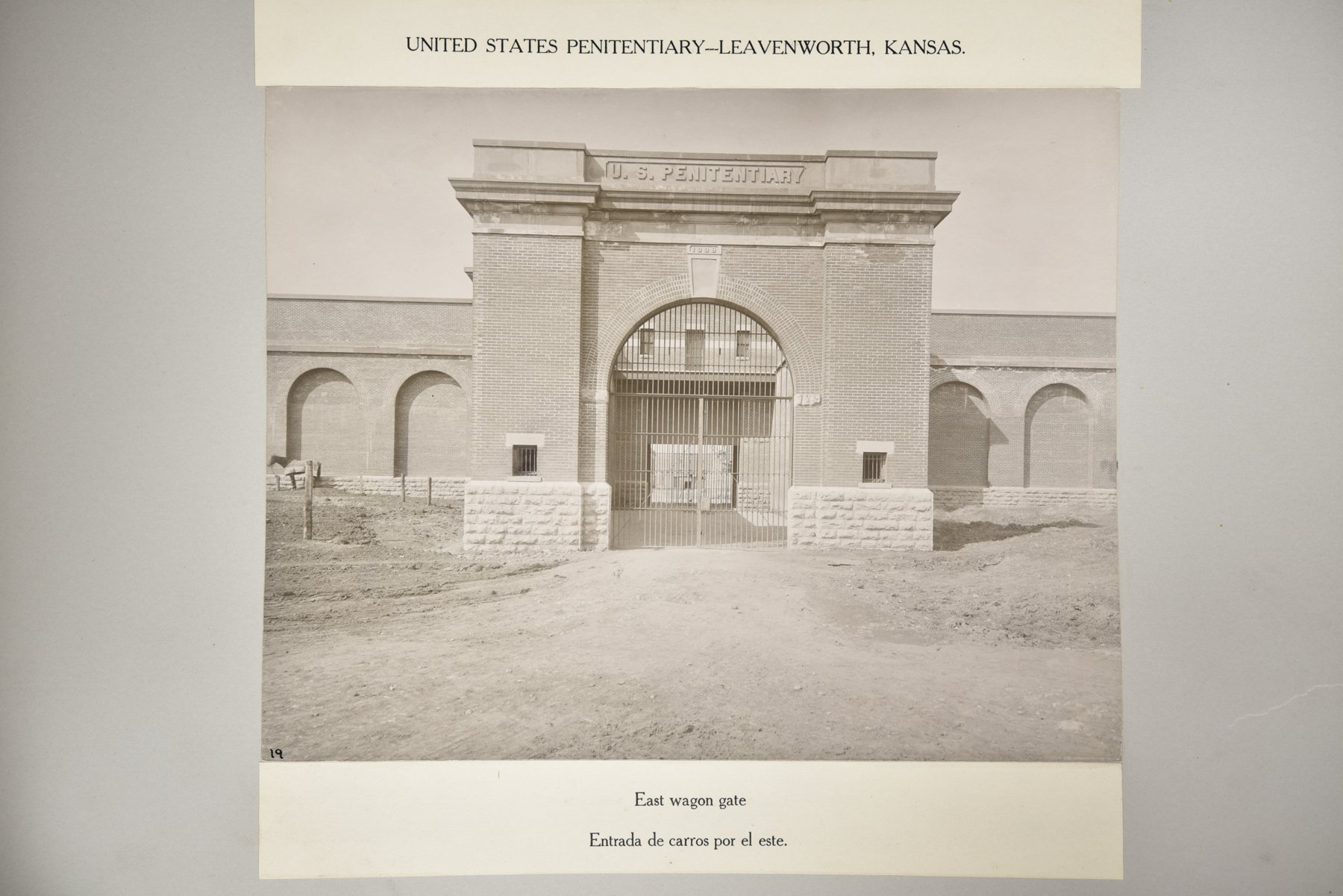
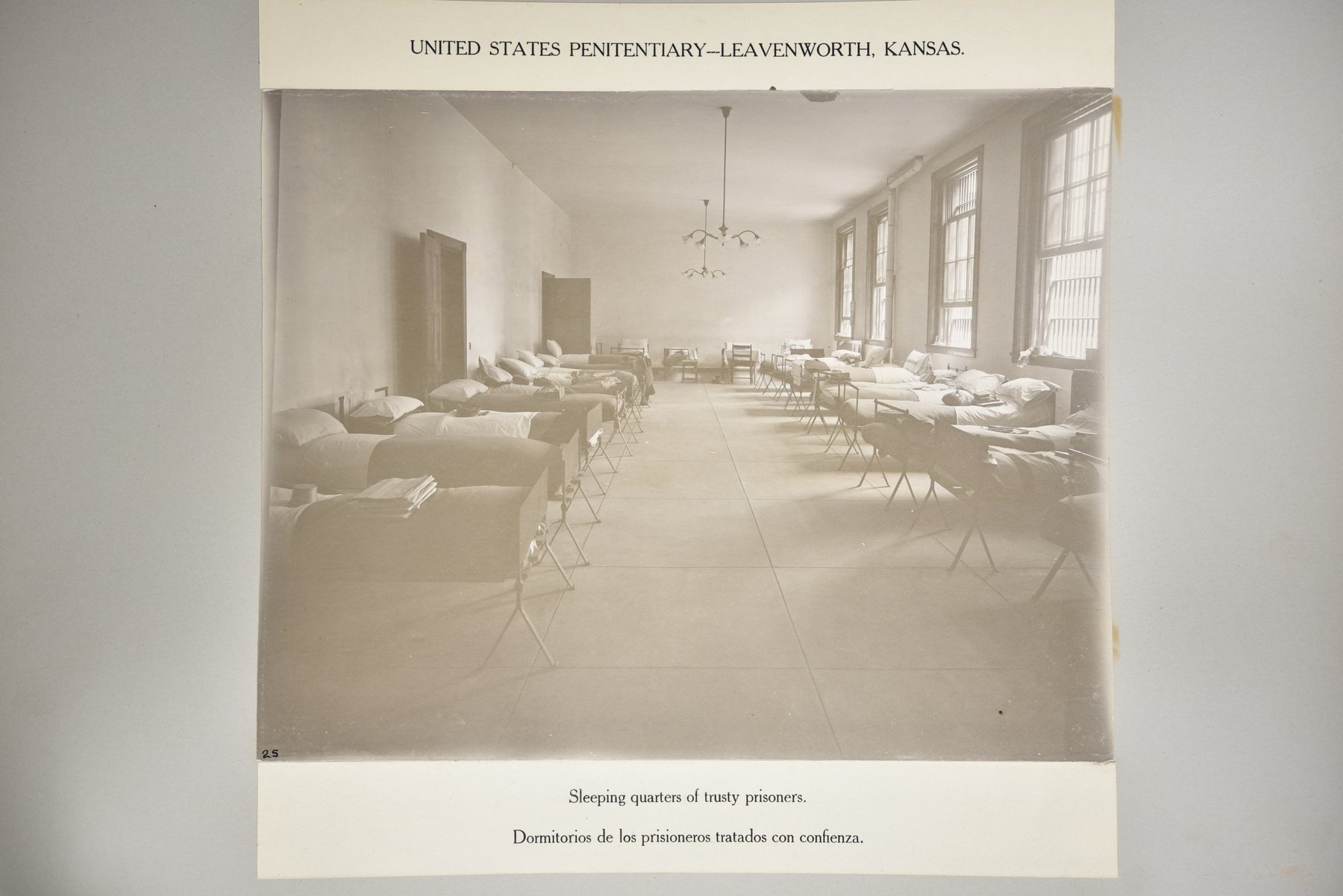
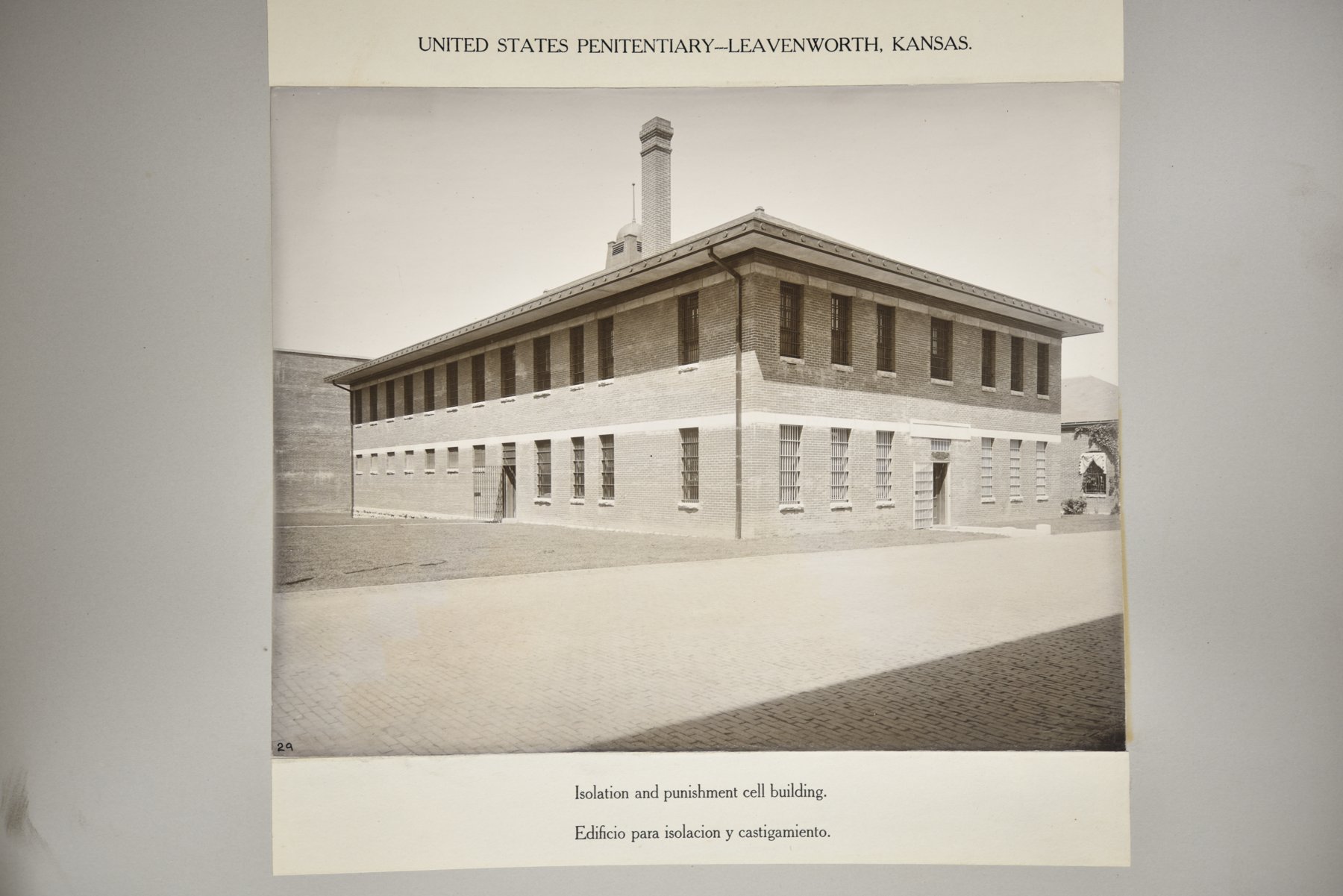
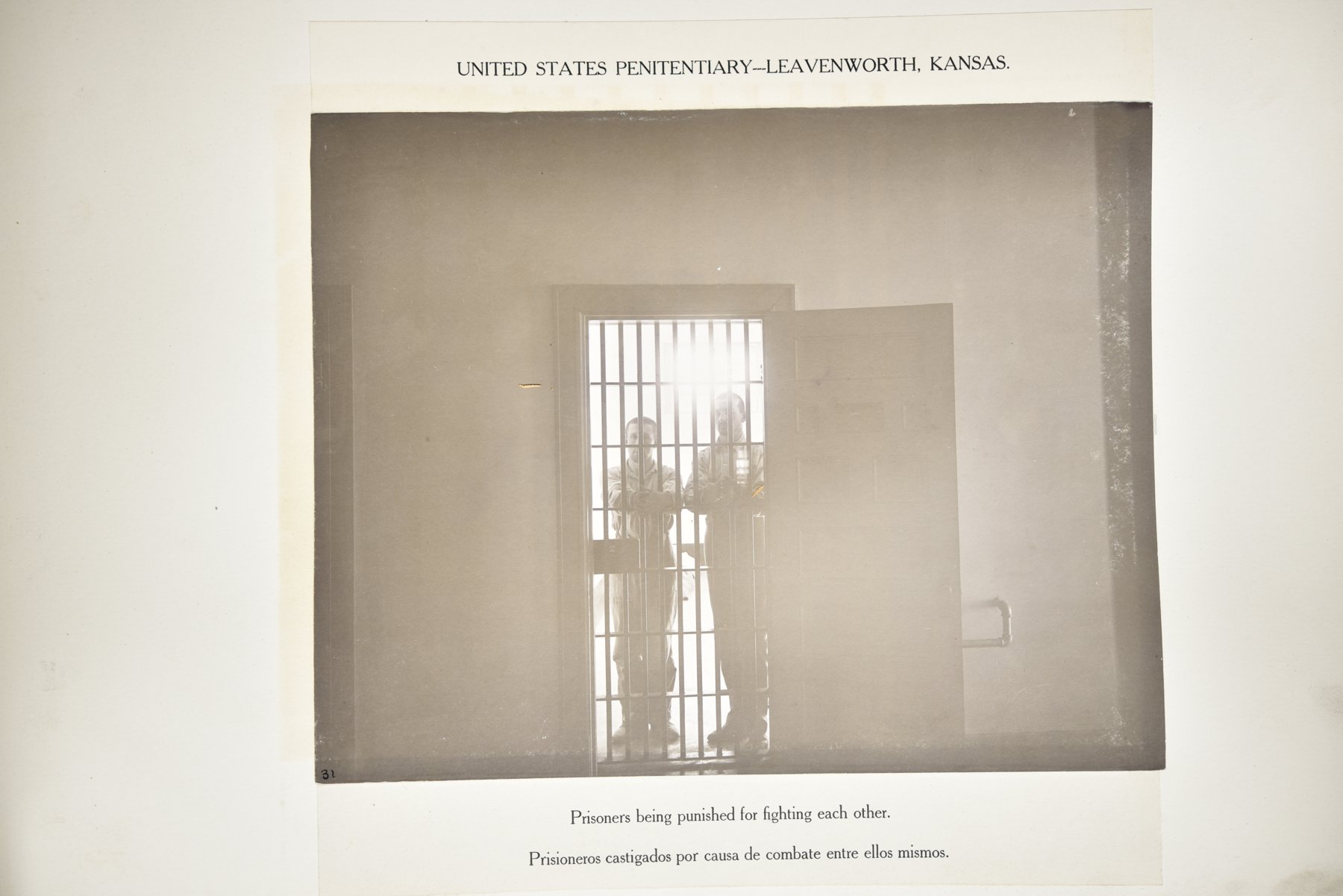
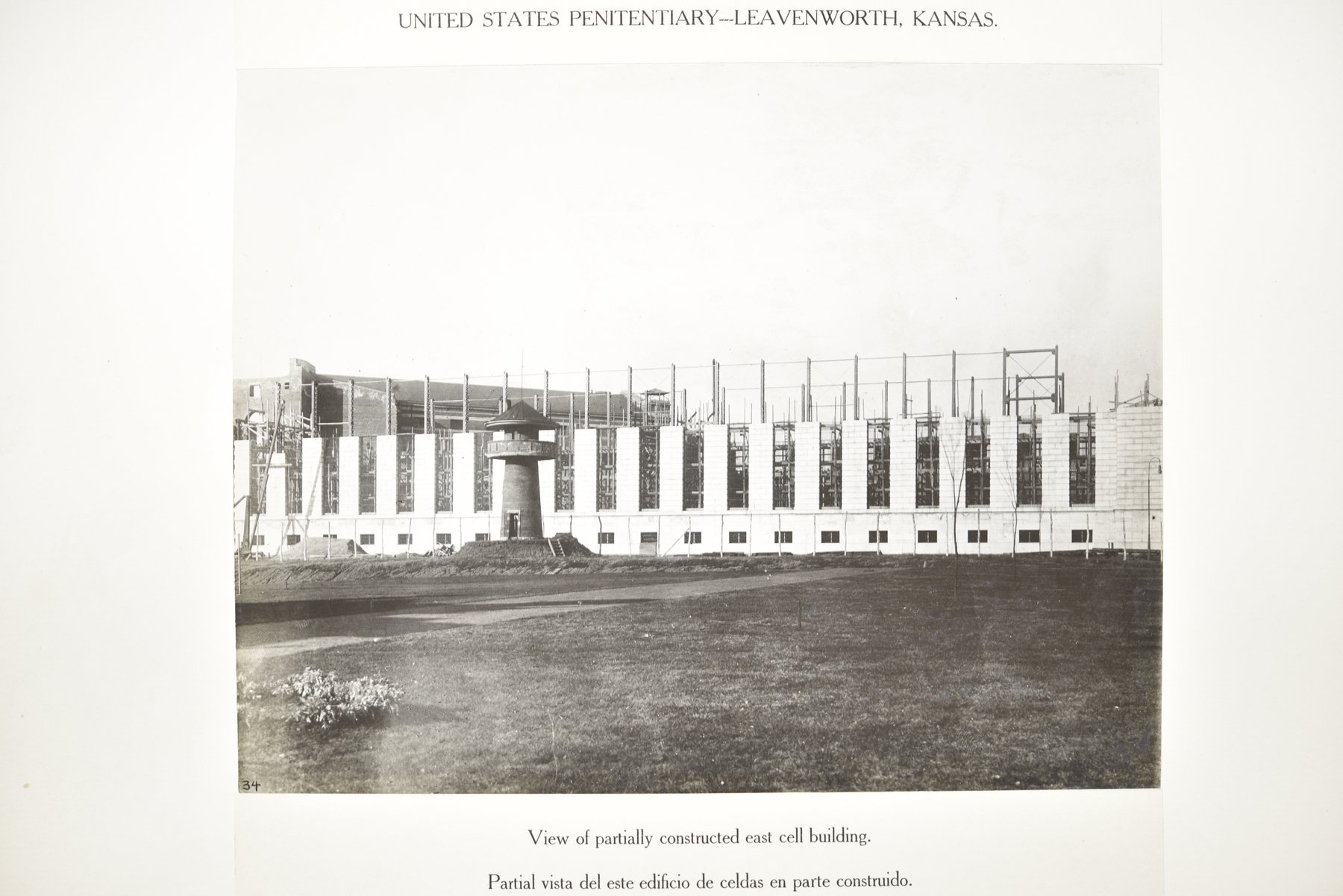
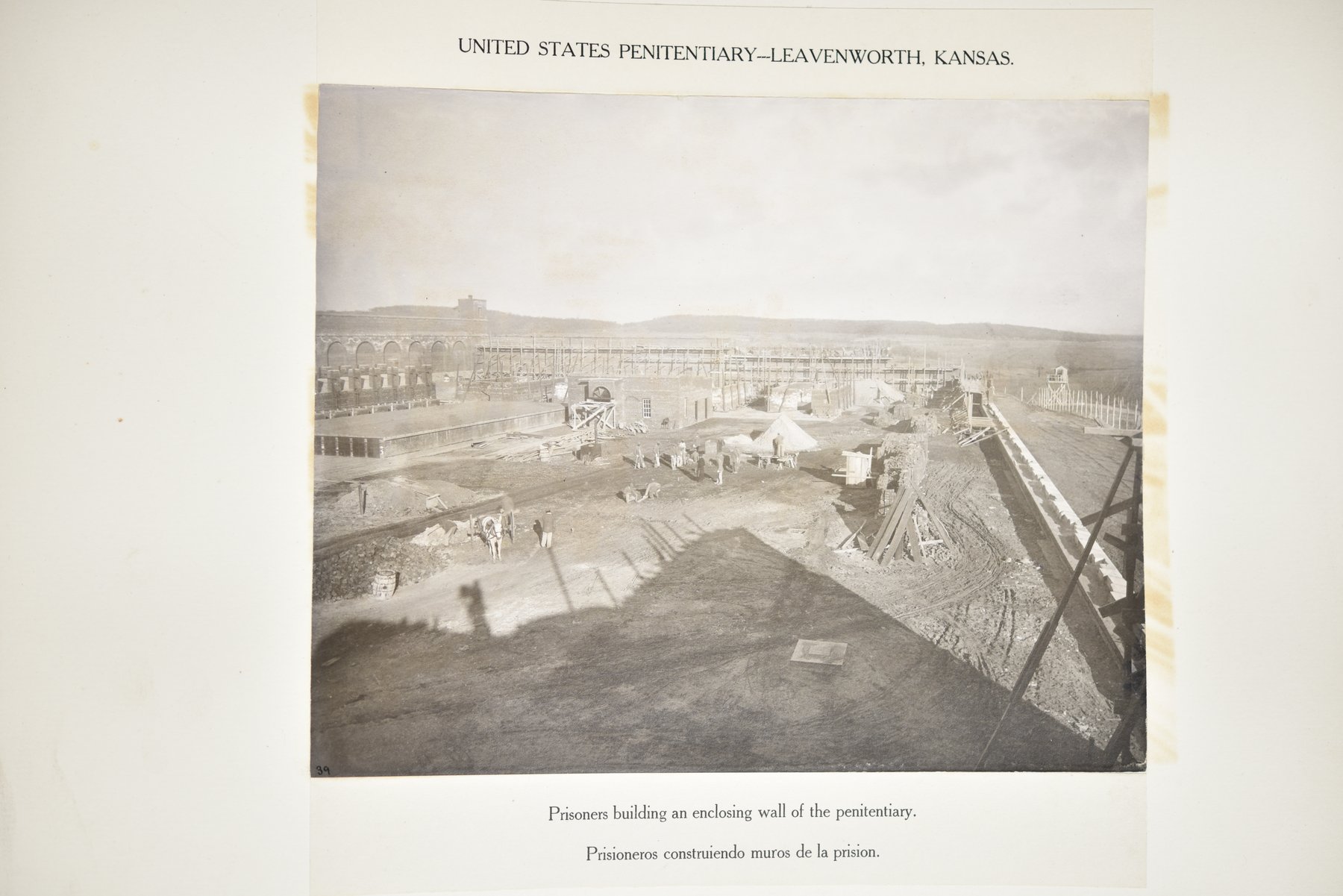
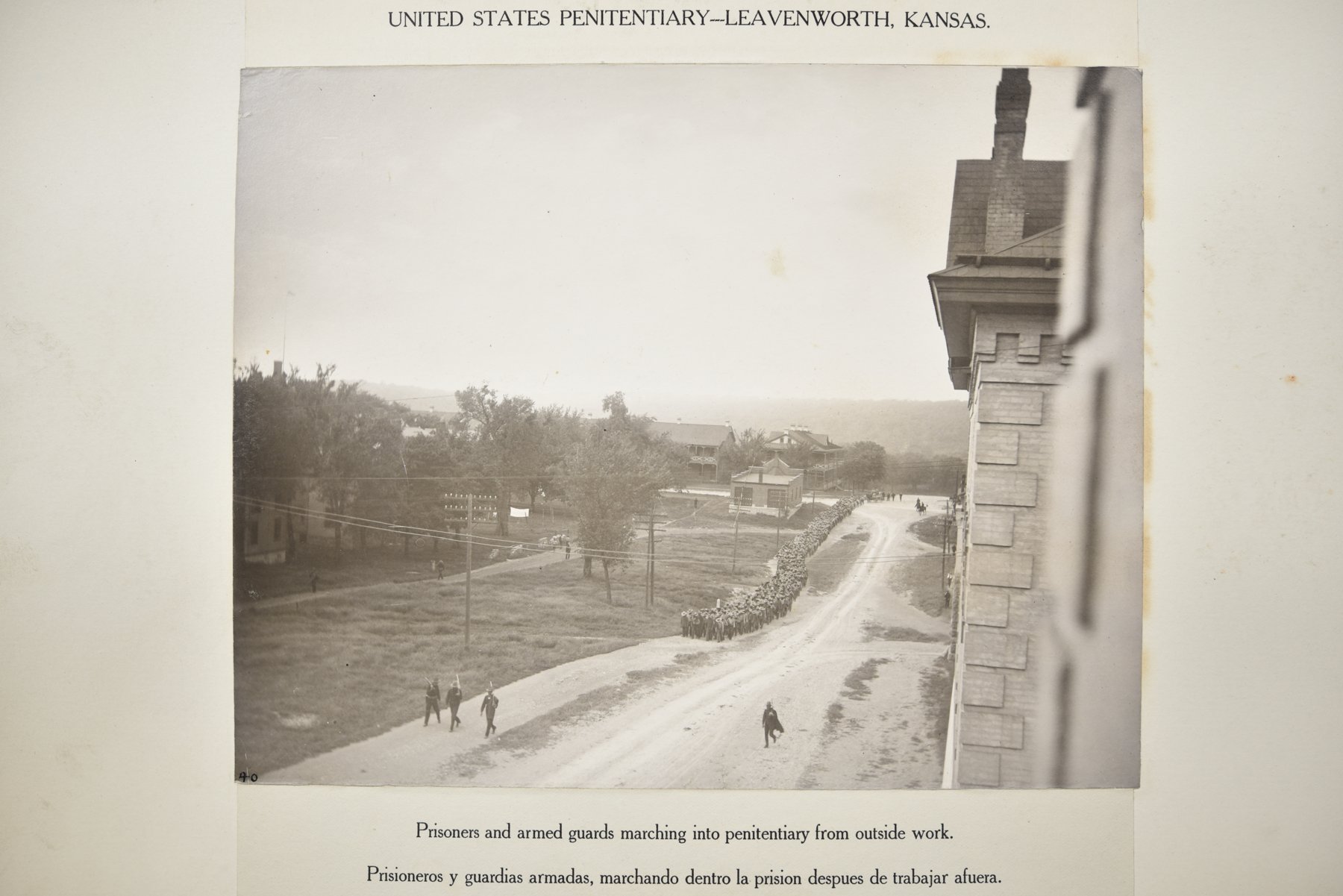
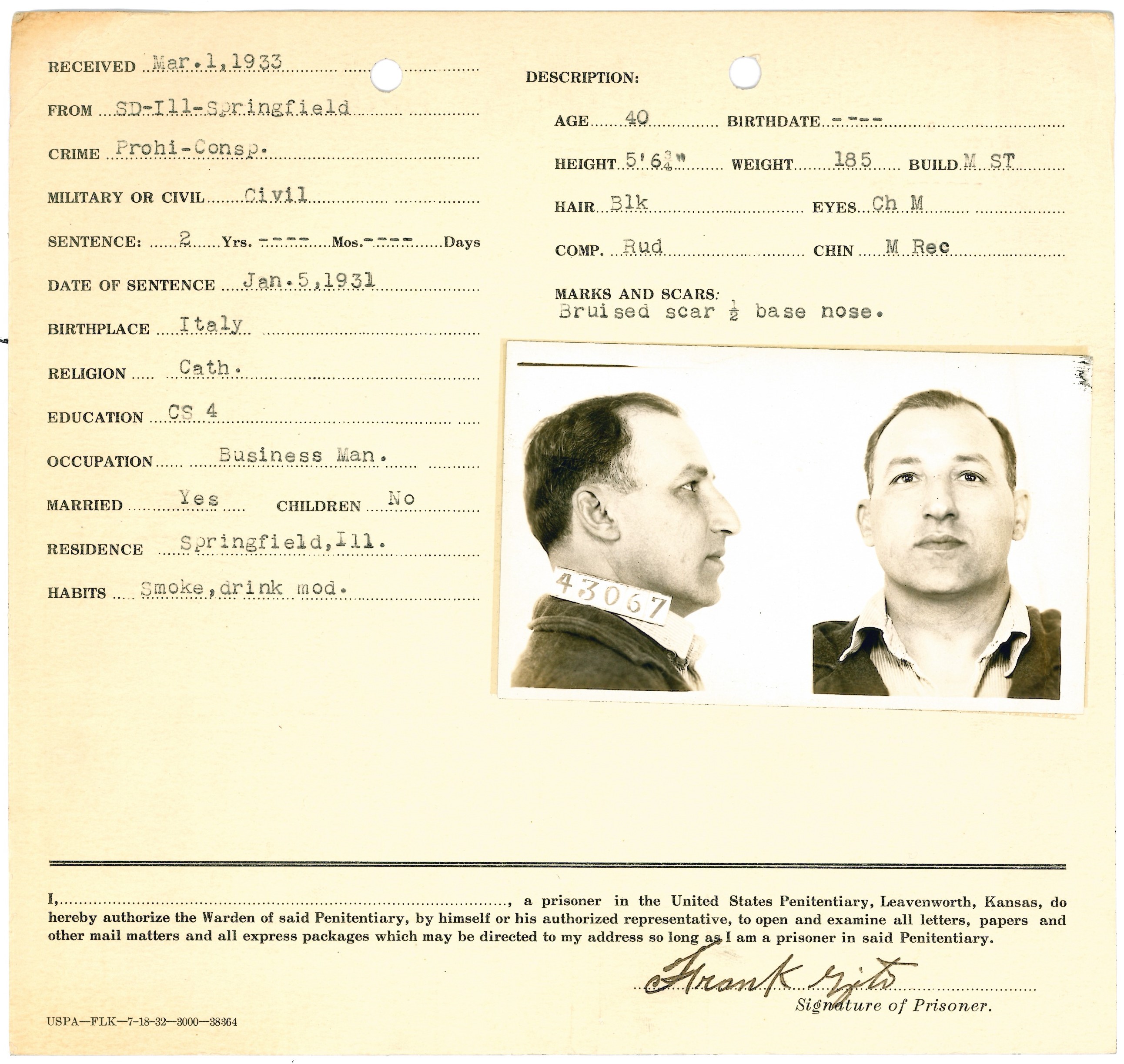
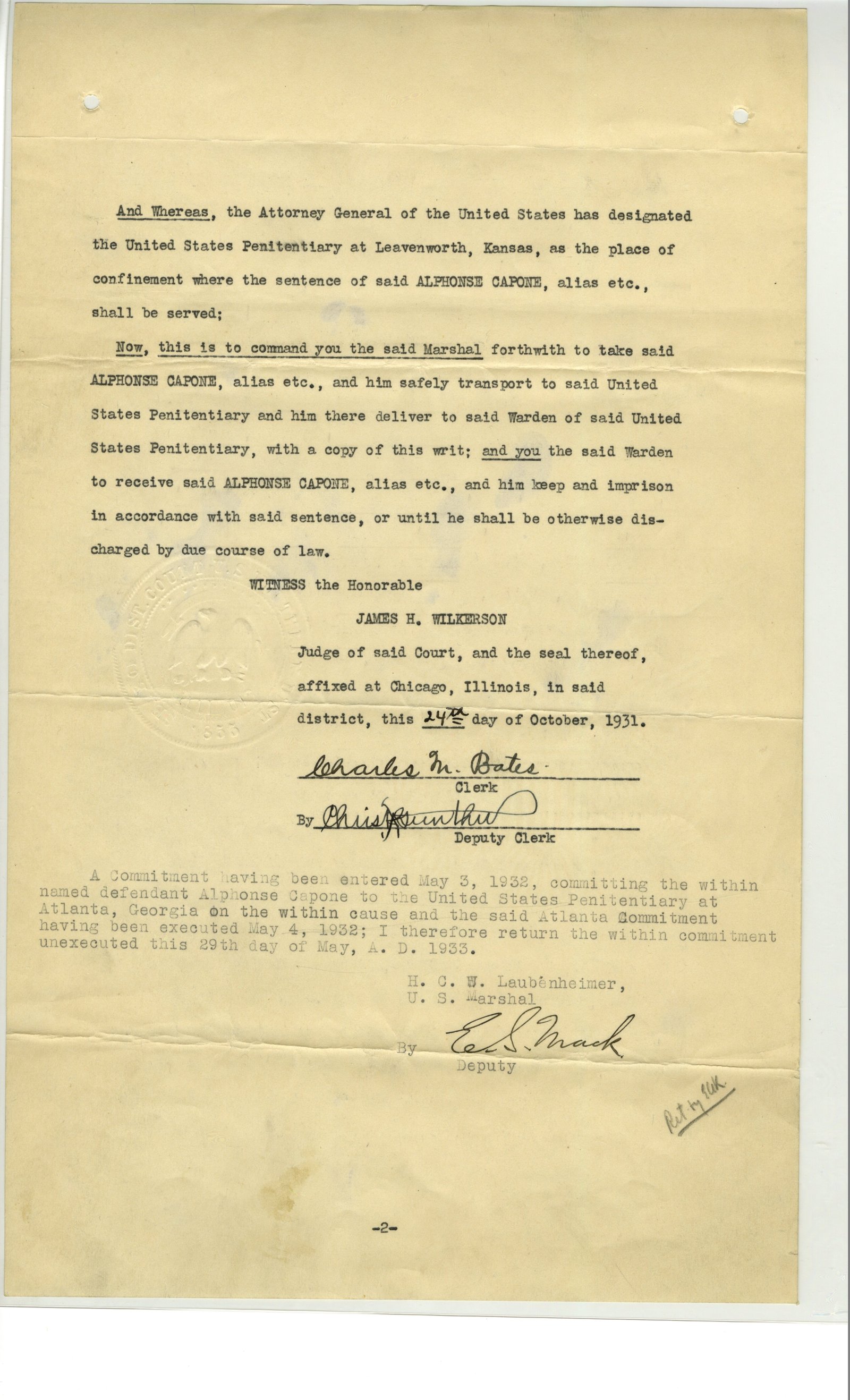
The Three Prisons Act of 1891 authorized USP Leavenworth, USP Atlanta and USP McNeil Island, according to the Bureau of Prisons (history). The National Archives at Kansas City holds 26,283 Leavenworth inmate case files (series); only a sample is digitized. Filed here: Robert Stroud’s file, the record cards for Frank Zito and Nick Circella, and Capone’s commitment papers. Five mounted Department of Justice photographs, ca. 1900 to ca. 1925, show the complex (an illustration), the northeast cell building, a view of cells, an isolation cell and a guard tower. Eight more plates from the same album show the unfinished front, the east wagon gate, the sleeping quarters of trusty prisoners, the isolation and punishment cell building, two men in a cell captioned as prisoners being punished for fighting, the east cell building under construction, prisoners building an enclosing wall and prisoners and armed guards marching in from outside work. Many of the men above were received at Alcatraz from Leavenworth and sent back to it.
Atlanta
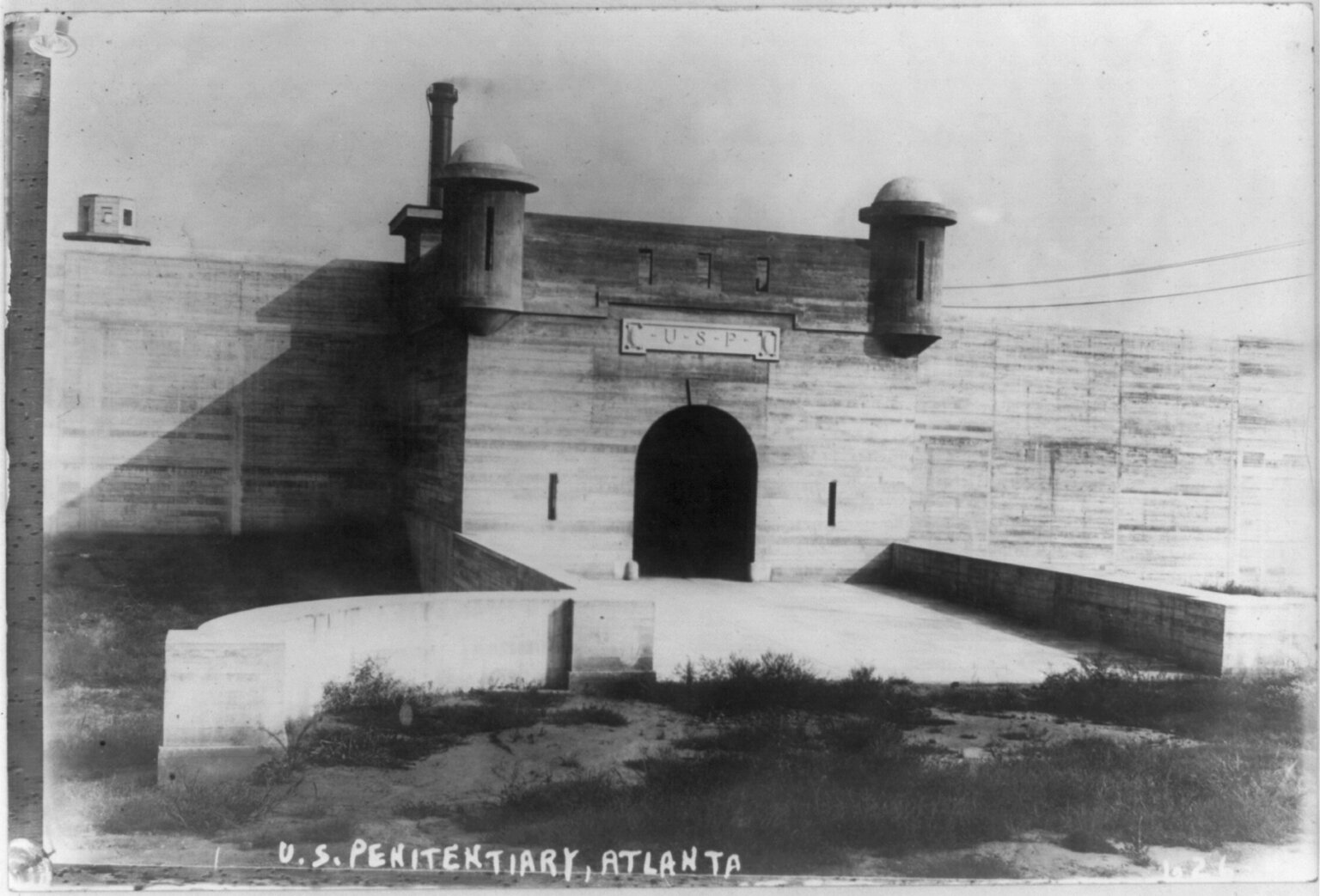
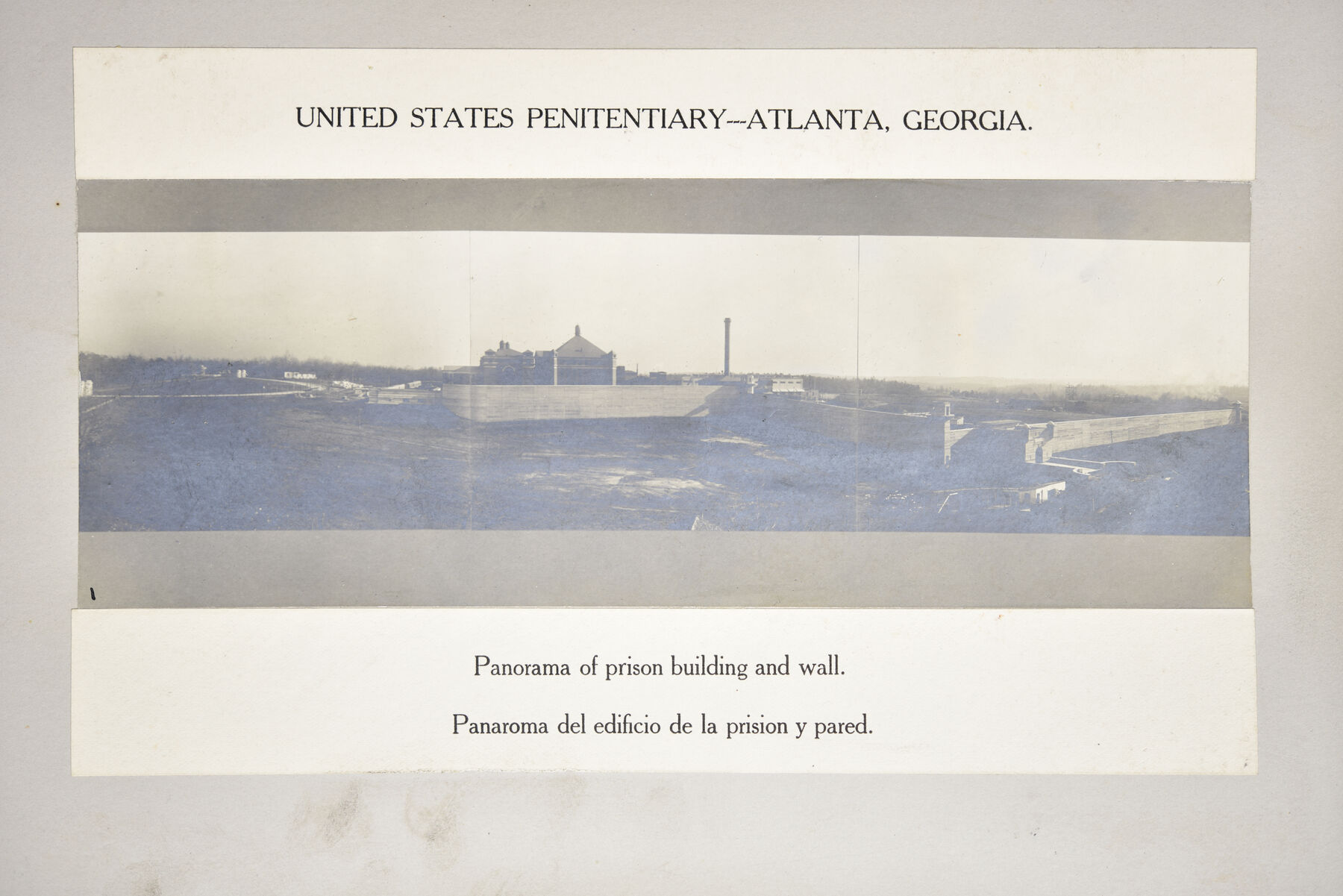
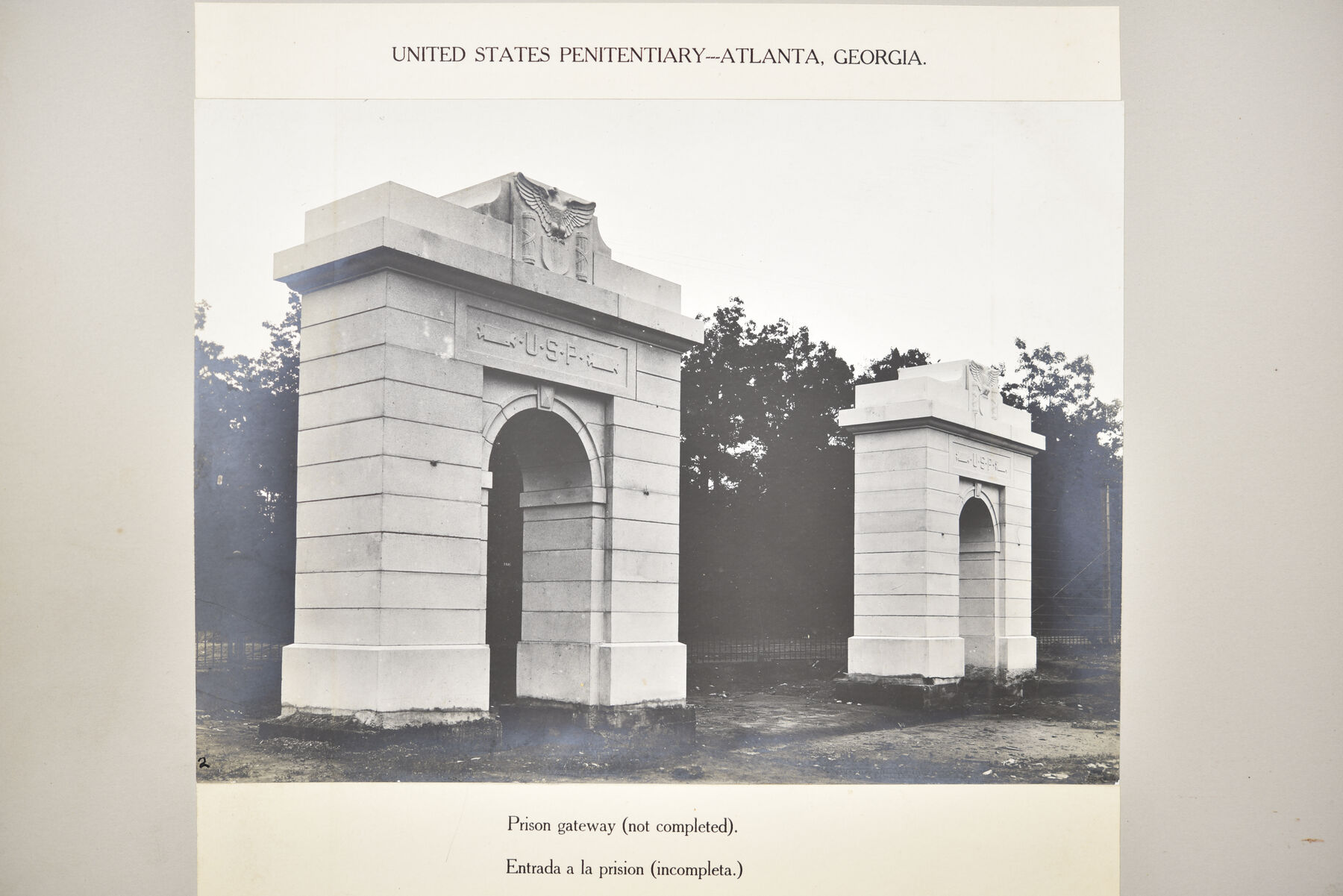
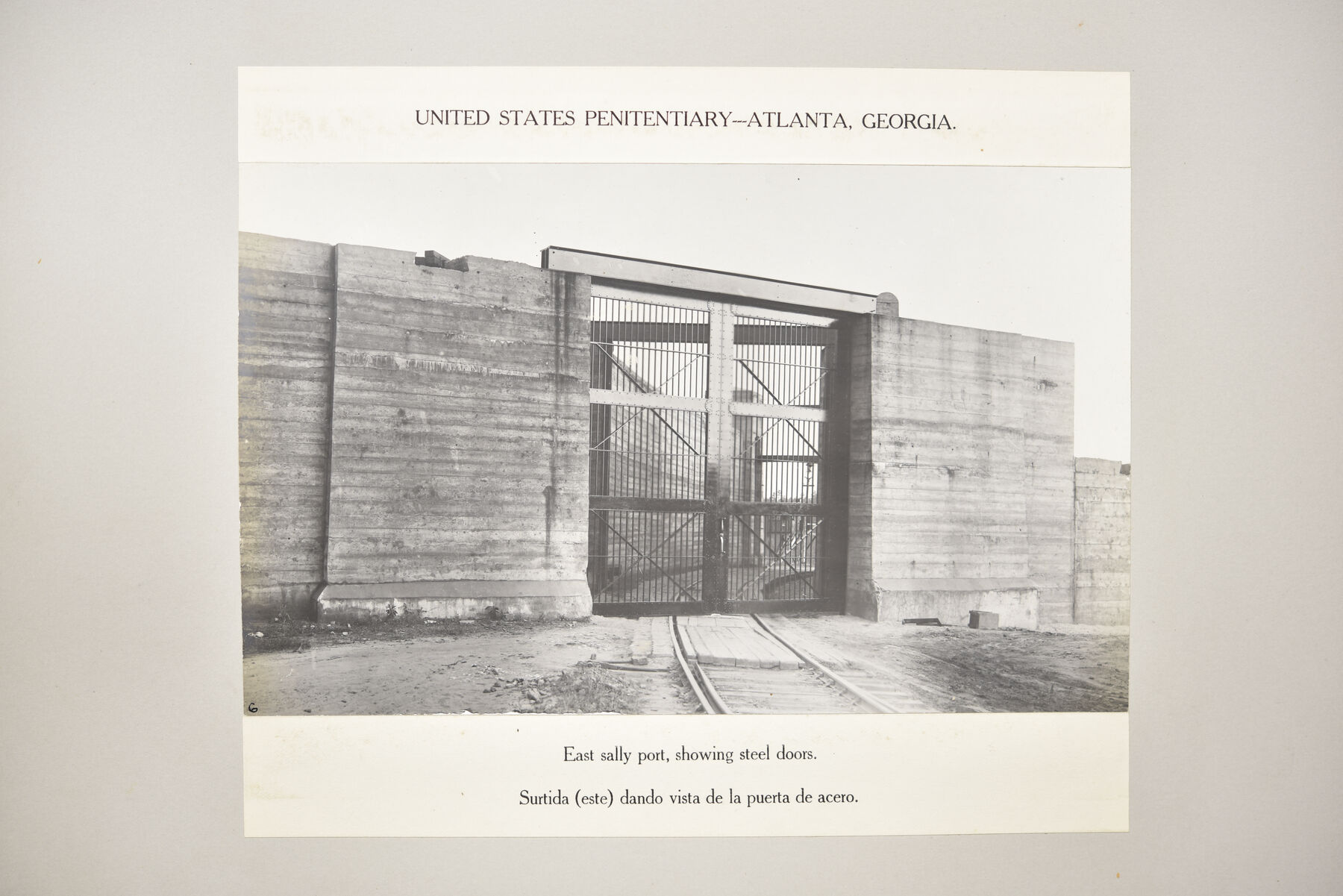
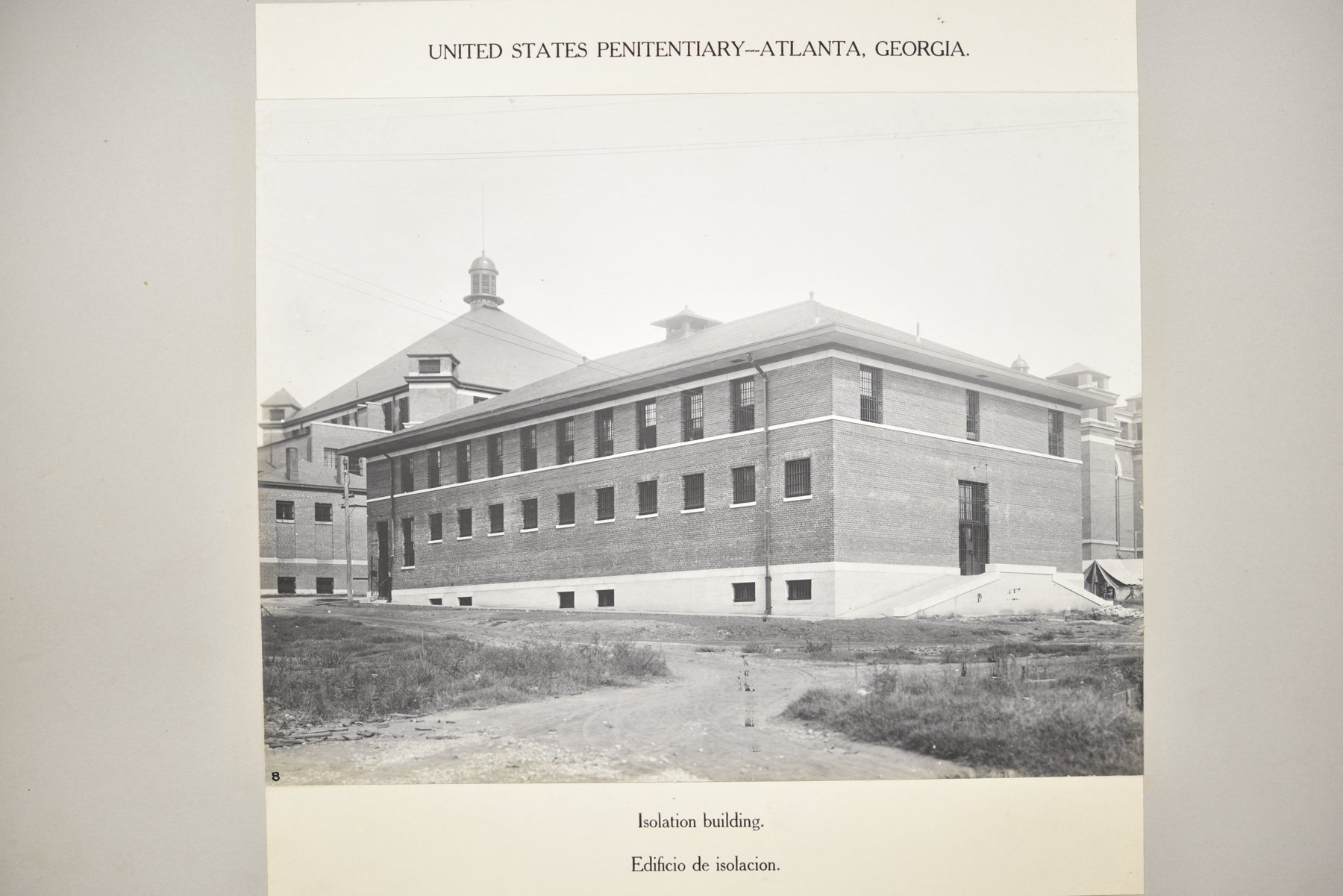
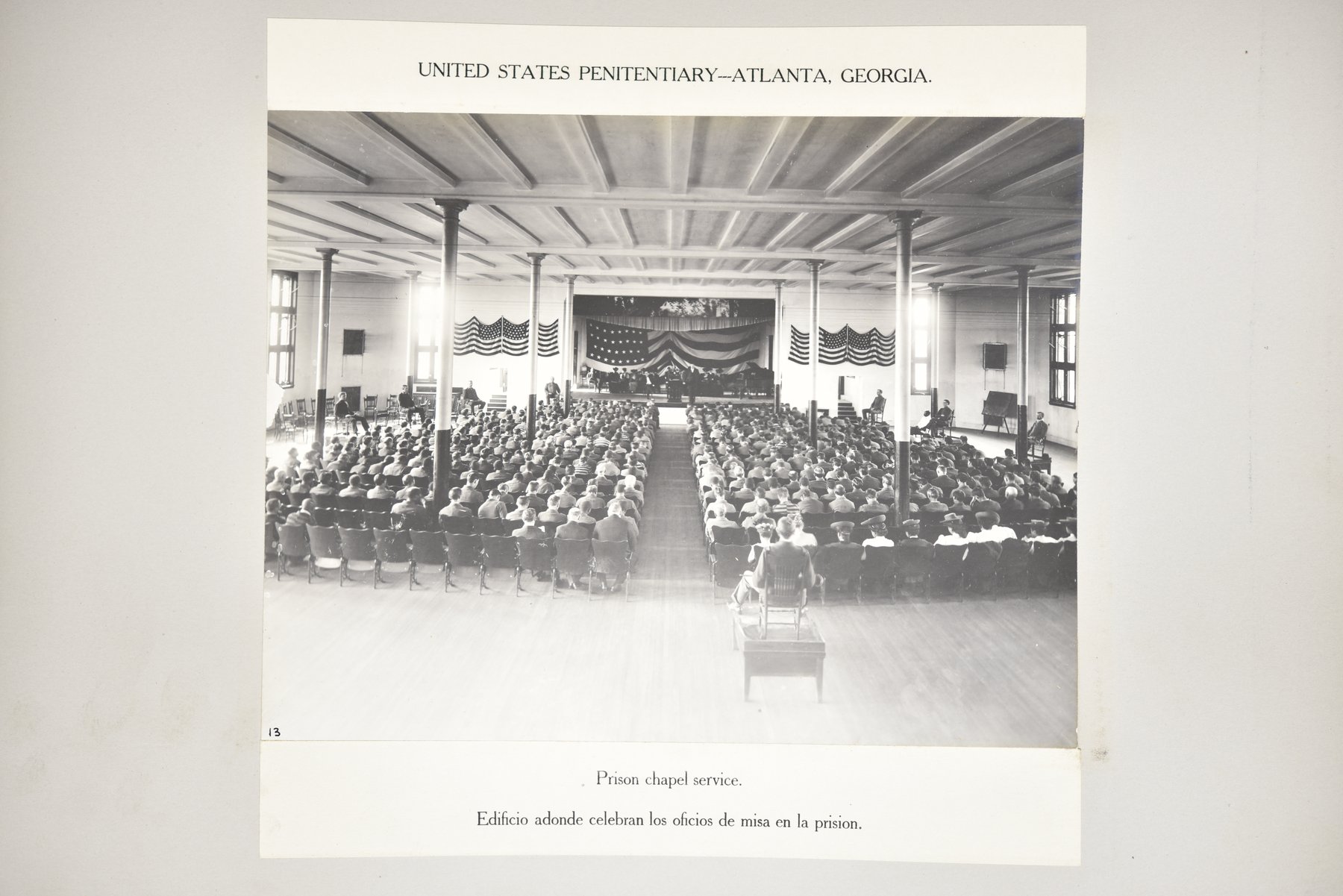
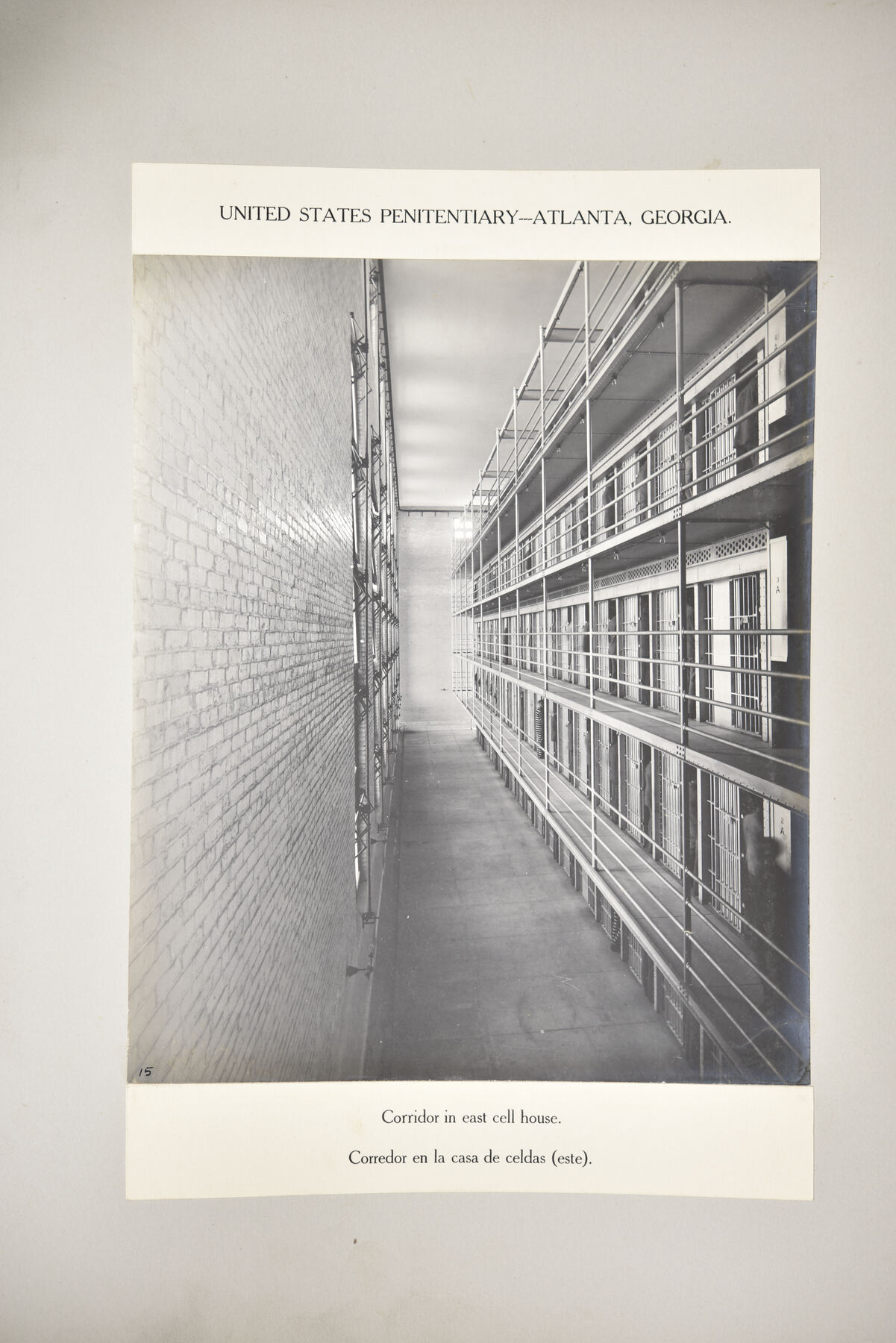
The Atlanta penitentiary was one of the three authorized in 1891. Filed here: the Department of Justice album’s panorama, gateway, east sally port, isolation building, prison chapel service and east cell house corridor; a Bain News Service photograph of the entrance in 1910; Capone’s 1933 commitment; and the National Archives’ index-card series, in which Capone’s card was not found in the digitized unit searched. Atlanta is the origin or destination on several notebook pages: Capone, Coy, Hubbard, Johnson, Cohen and Bulger.
Lewisburg and Terminal Island
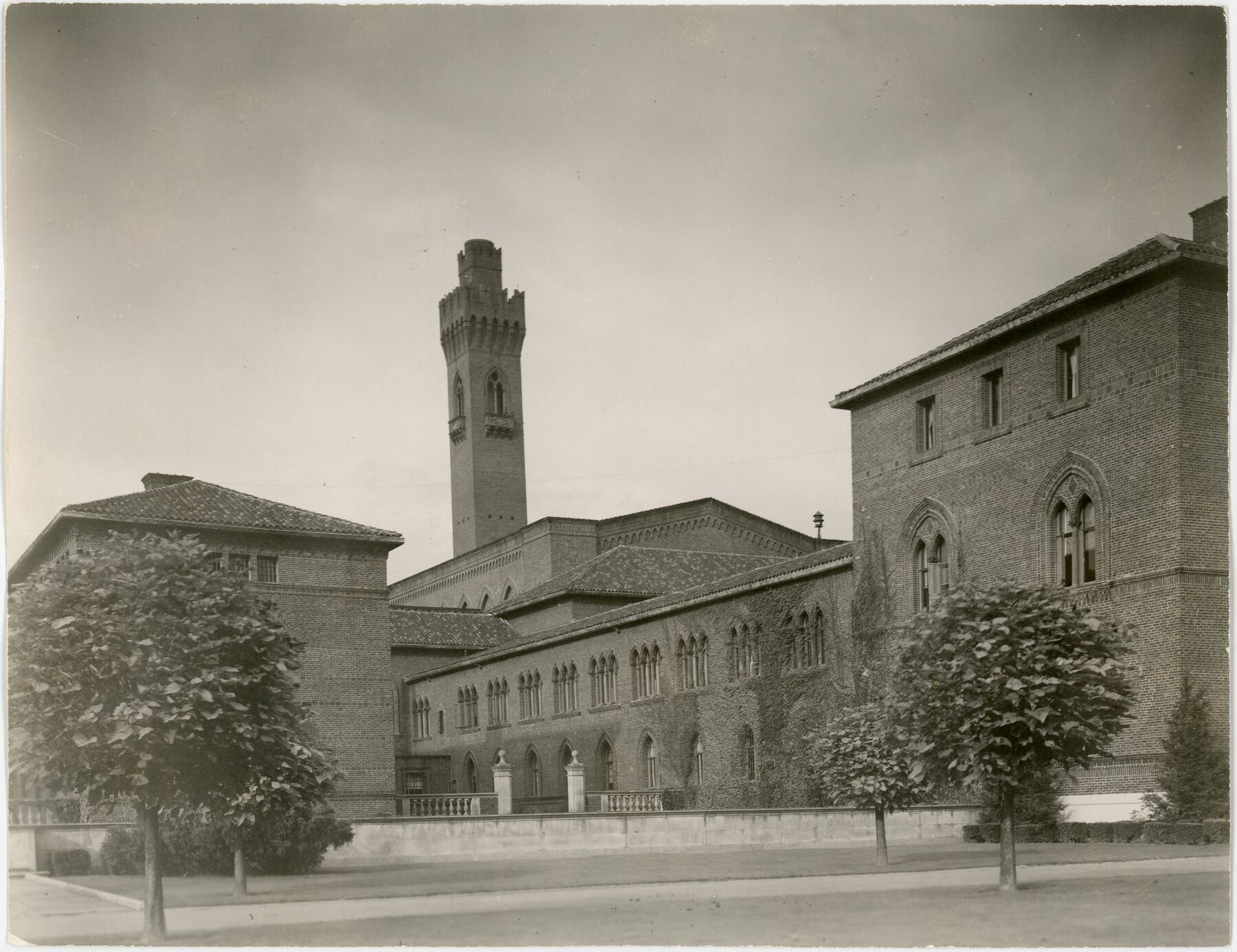
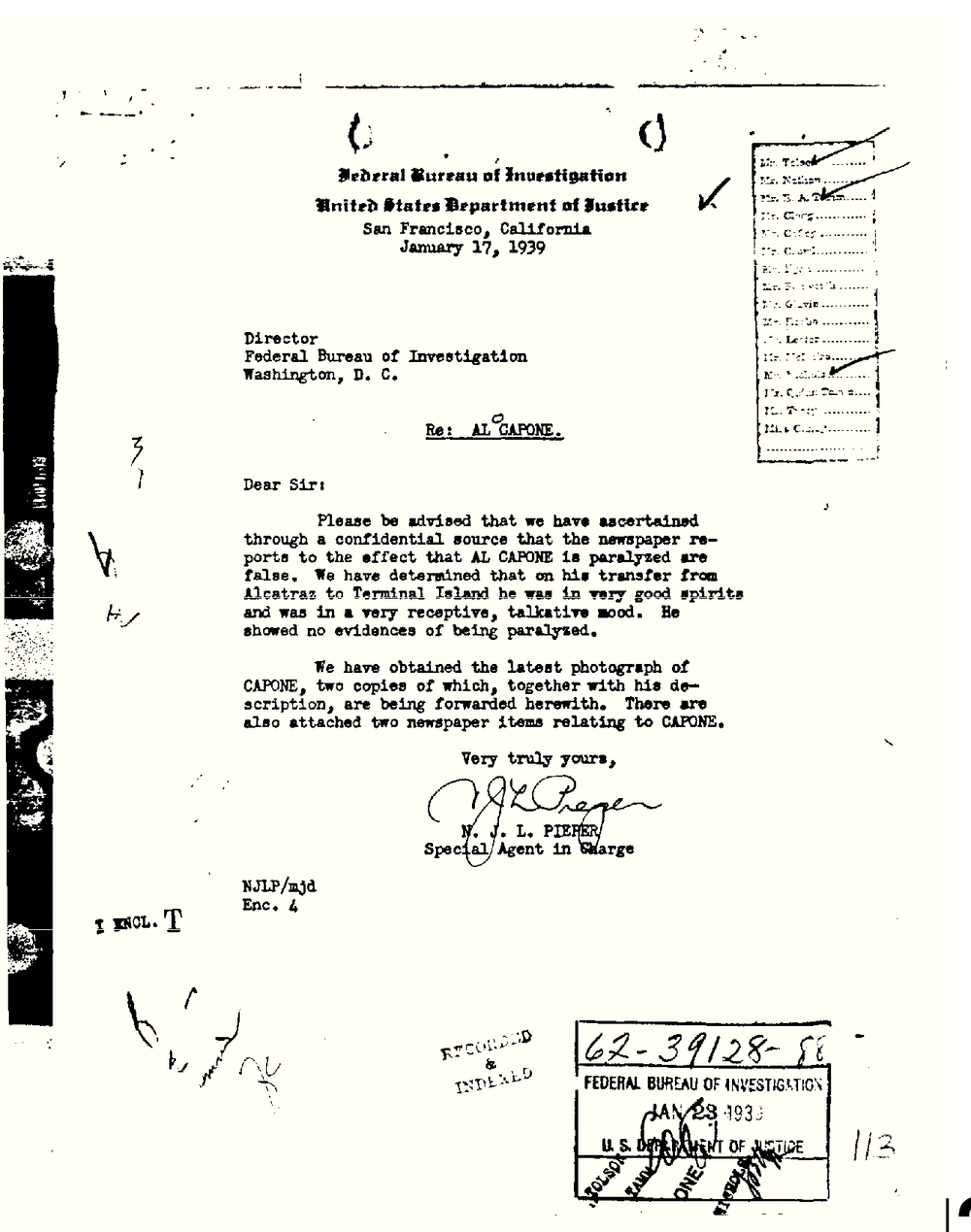
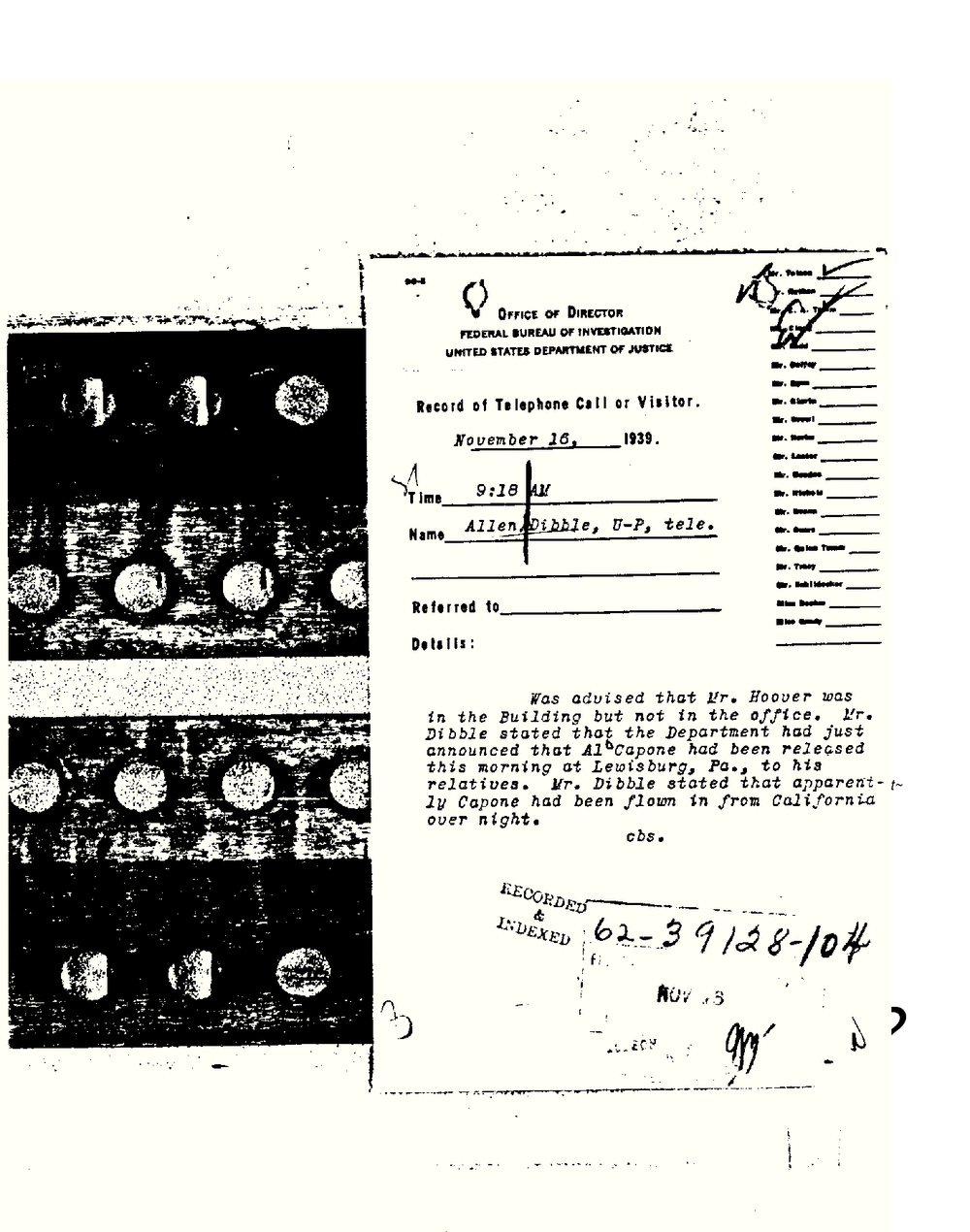
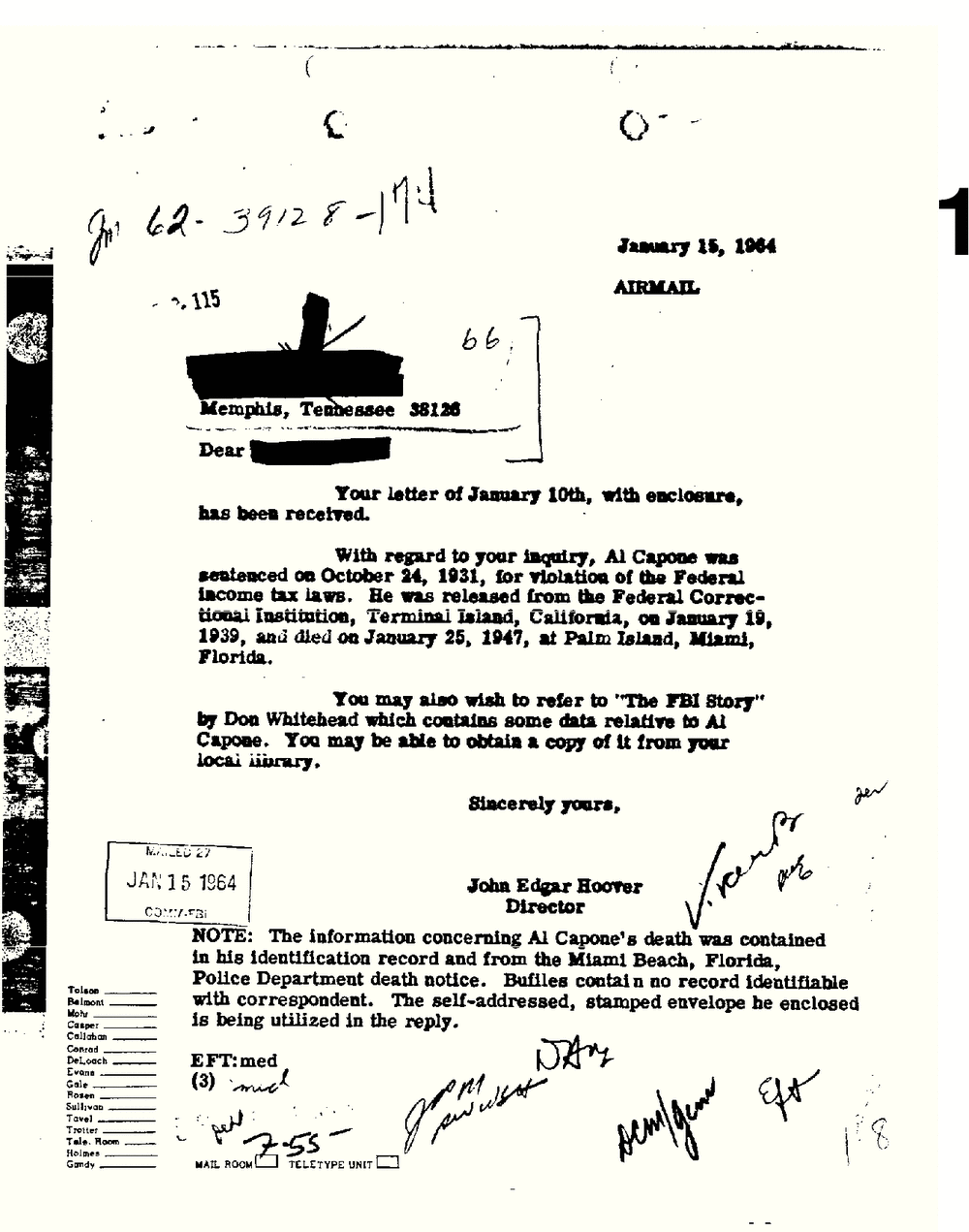
The Bureau of Prisons says USP Lewisburg opened in 1932 as the first penitentiary the Bureau built (timeline). The one Lewisburg photograph is the exterior in 1947; Johnson’s notebook page records his transfer there in 1963, and an FBI record notes a call about Capone’s release at Lewisburg in 1939. For the Federal Correctional Institution at Terminal Island, California, the archive has only FBI papers about Capone: a letter of January 1939, an interview letter and Hoover’s 1964 reply, which gives a release date there. The Bureau has no history page for Terminal Island or Lewisburg that was found. No record opened gives the opening date of USP Marion; the two records that mention it are the NPS page and the Carbo notebook page, whose destination for 6 February 1963 differs from the catalog’s.
Records
The Bureau’s history pages are the overview and the timeline, with the Alcatraz page filed earlier. The National Archives’ photograph series are the Bureau of Prisons photographs and the Department of Justice album.