This section files the federal records on narcotics and organized crime that this archive has opened: court opinions, congressional testimony, statutes, agency statements and photographs. A court opinion’s account of the evidence is the court’s; testimony is a witness’s; a chart is an exhibit. Each record’s page says which it is, and quotes it. A name in these records is not placed on any family chart here.
The Bureau of Narcotics
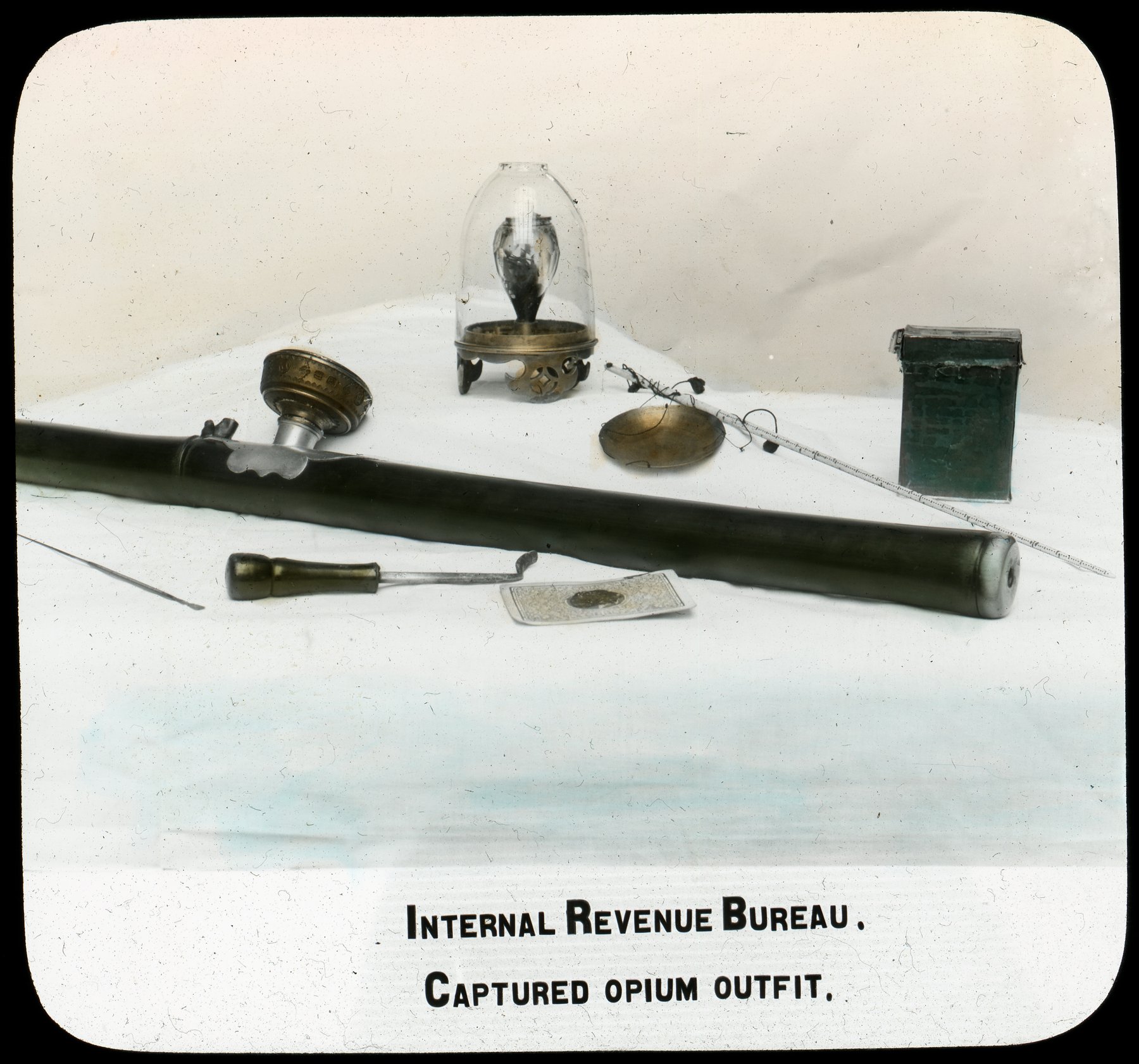
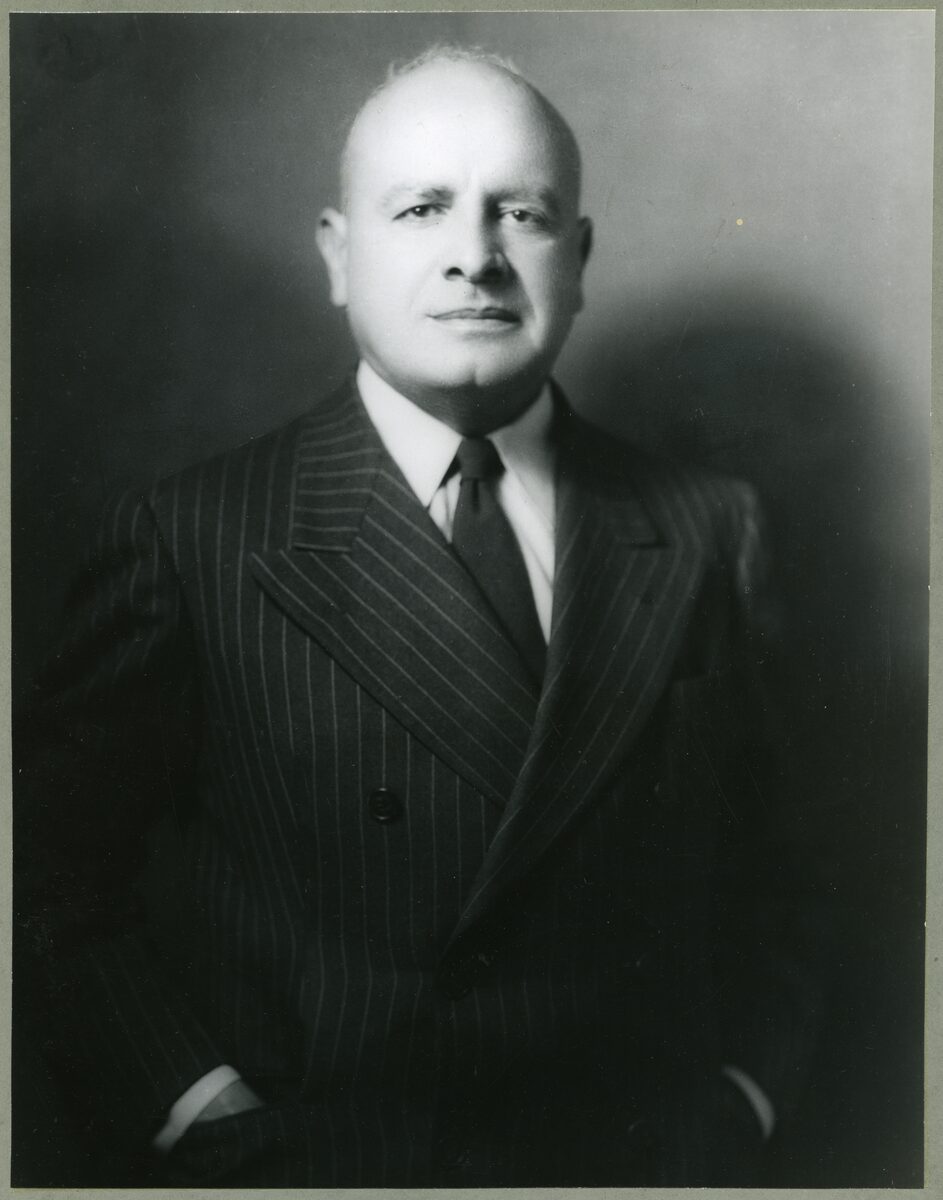
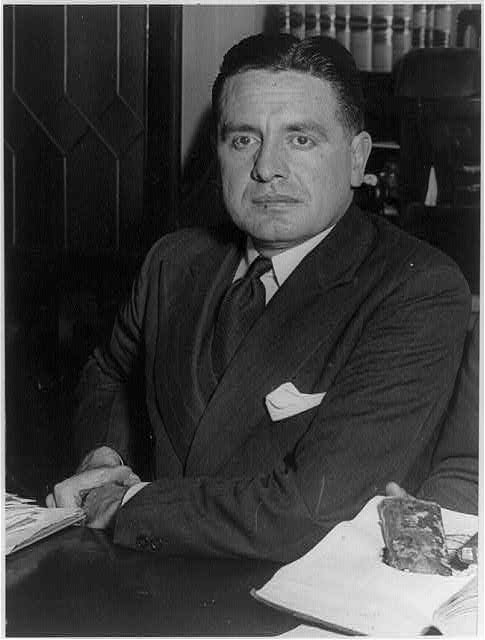
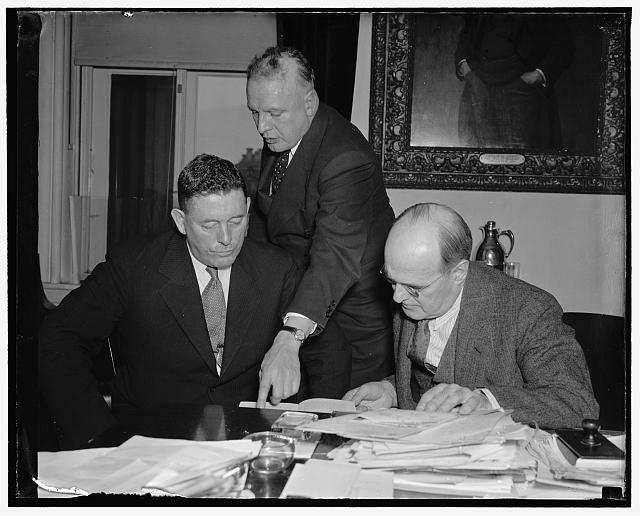
The Treasury Department’s Bureau of Narcotics is represented here by its commissioner and its agents. The National Archives holds a portrait that it captions “Harry Jacob Anslinger, U.S. Commissioner of Narcotics,” with the Bureau as its source; the Library of Congress holds a 1930 photograph of him at his desk and a 1937 or 1938 photograph of a meeting with Canada’s narcotic control chief on marihuana control. A 1936 Harris & Ewing portrait shows John W. McDonald, captioned only as a narcotic agent. Earlier than any of these, a Treasury lantern slide of about 1915, captioned “Internal Revenue Bureau. Captured Opium Outfit,” shows a pipe, lamp, scale and tools laid out on a table; it names no case.
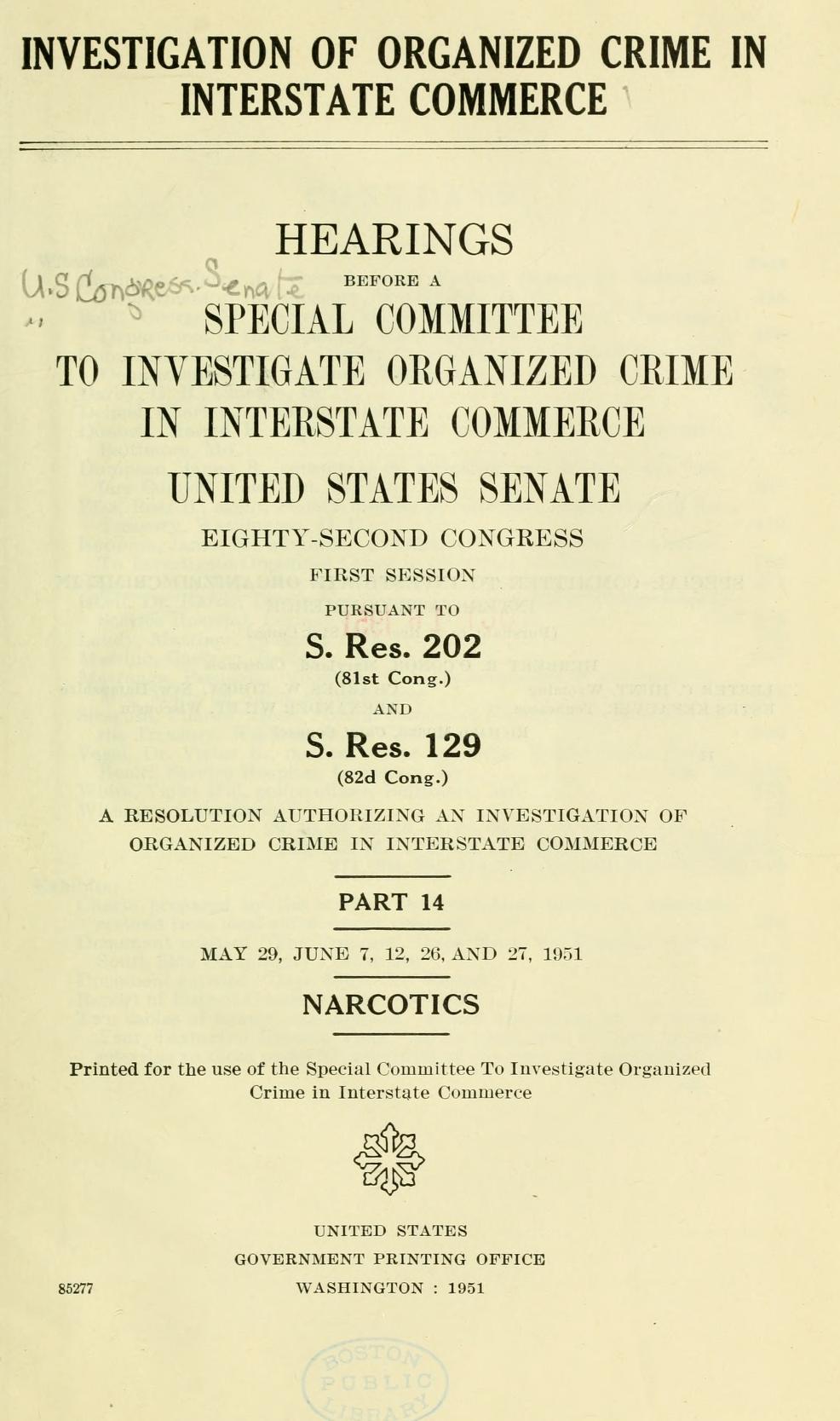
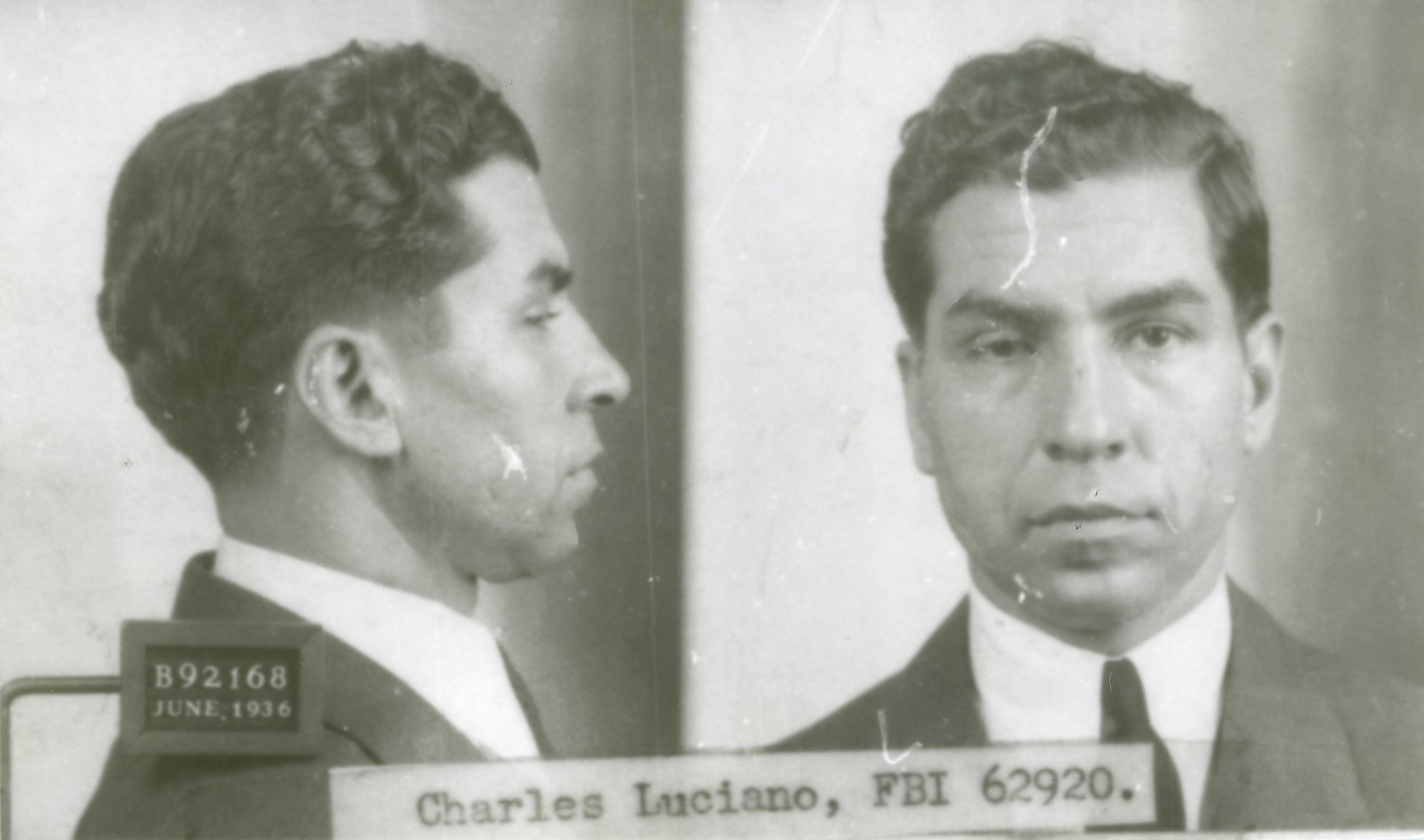
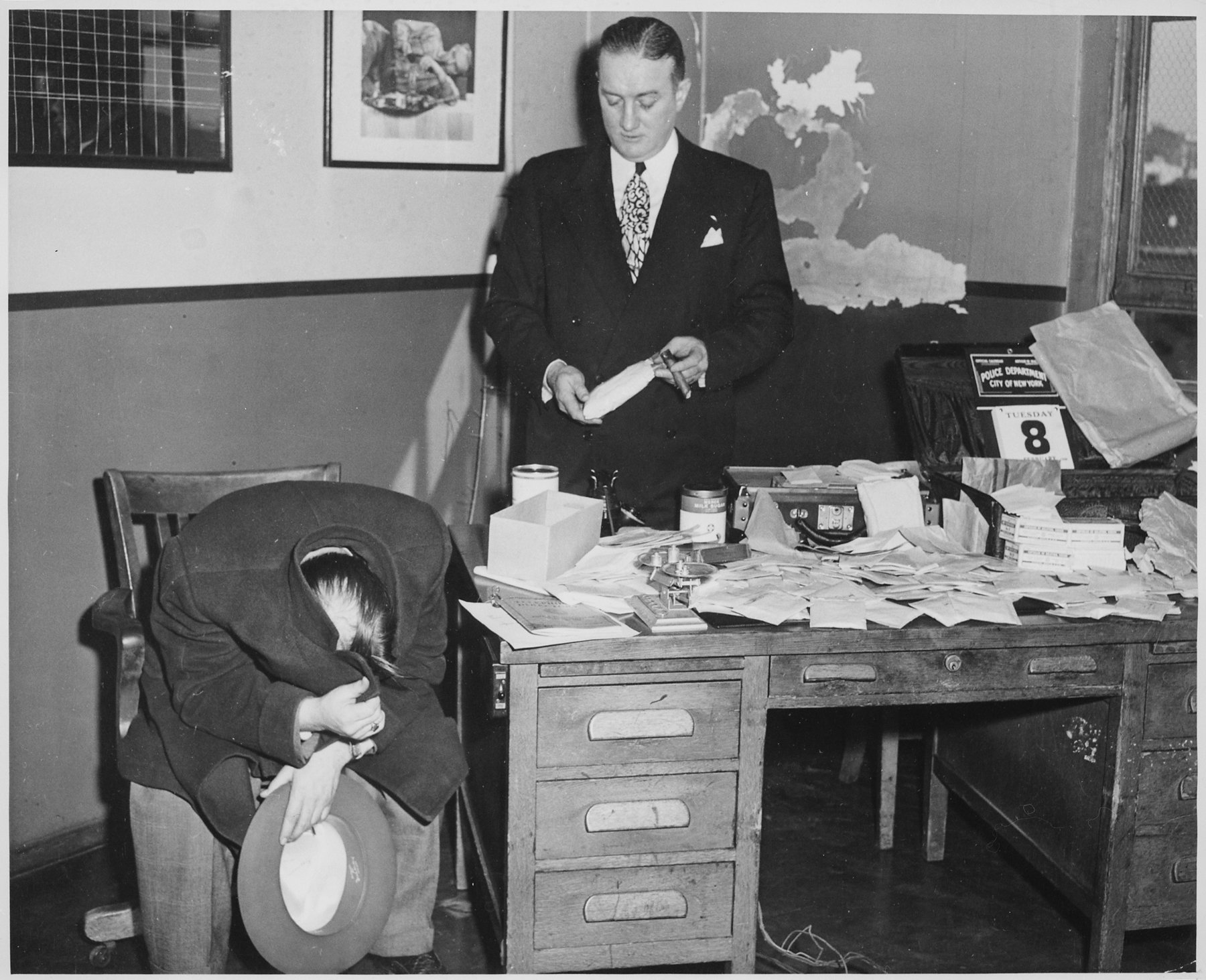
Anslinger told the Kefauver Committee on 27 March 1951 that heroin traffic “is all interstate because it must originate abroad,” that “Of a list of 800 hoodlums I furnished your committee, about 200 have narcotic records,” and that the Bureau had 200 men (his testimony). The committee’s narcotics volume prints the testimony of agent Charles Siragusa, who described his work with the Italian police on Lucky Luciano and answered “Yes, sir” when asked whether narcotics distribution and smuggling is “the principal source of income of the Mafia.” That is an agent’s testimony, not a finding. Luciano’s 1936 mug shot is filed elsewhere in the archive. A February 1949 New York Times Paris Bureau photograph at the National Archives shows a man the catalog names as Joseph Basile under arrest, hiding his face with his coat, beside what the catalog calls part of a $25 million narcotics seizure; it records an arrest and states no charge.
The 1950s cases
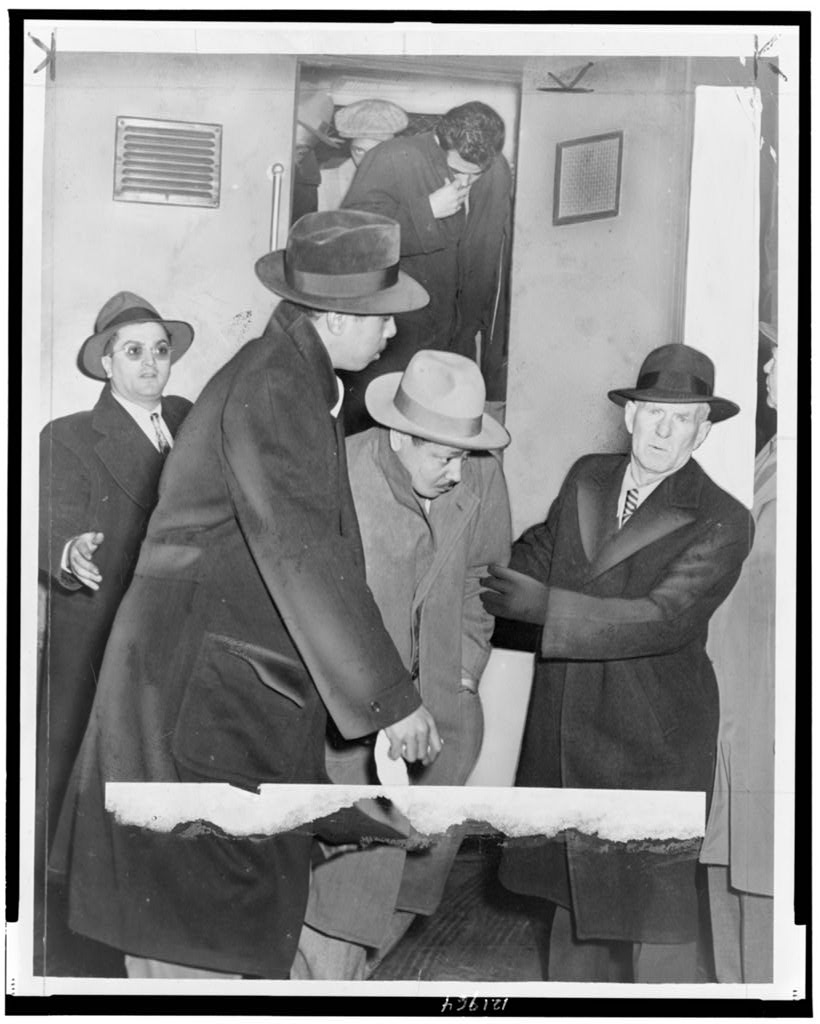
The Narcotic Control Act of 1956 set mandatory prison terms of five to twenty years for a first narcotics sale, applied the same penalties to conspiracies, and gave the Bureau’s agents added authority. The federal conspiracy trials that followed were held in the Southern District of New York; a 1952 newspaper photograph shows men taken in federal raids leaving a prisoners’ van at the Foley Square courthouse, though its caption names neither the raids nor the men.
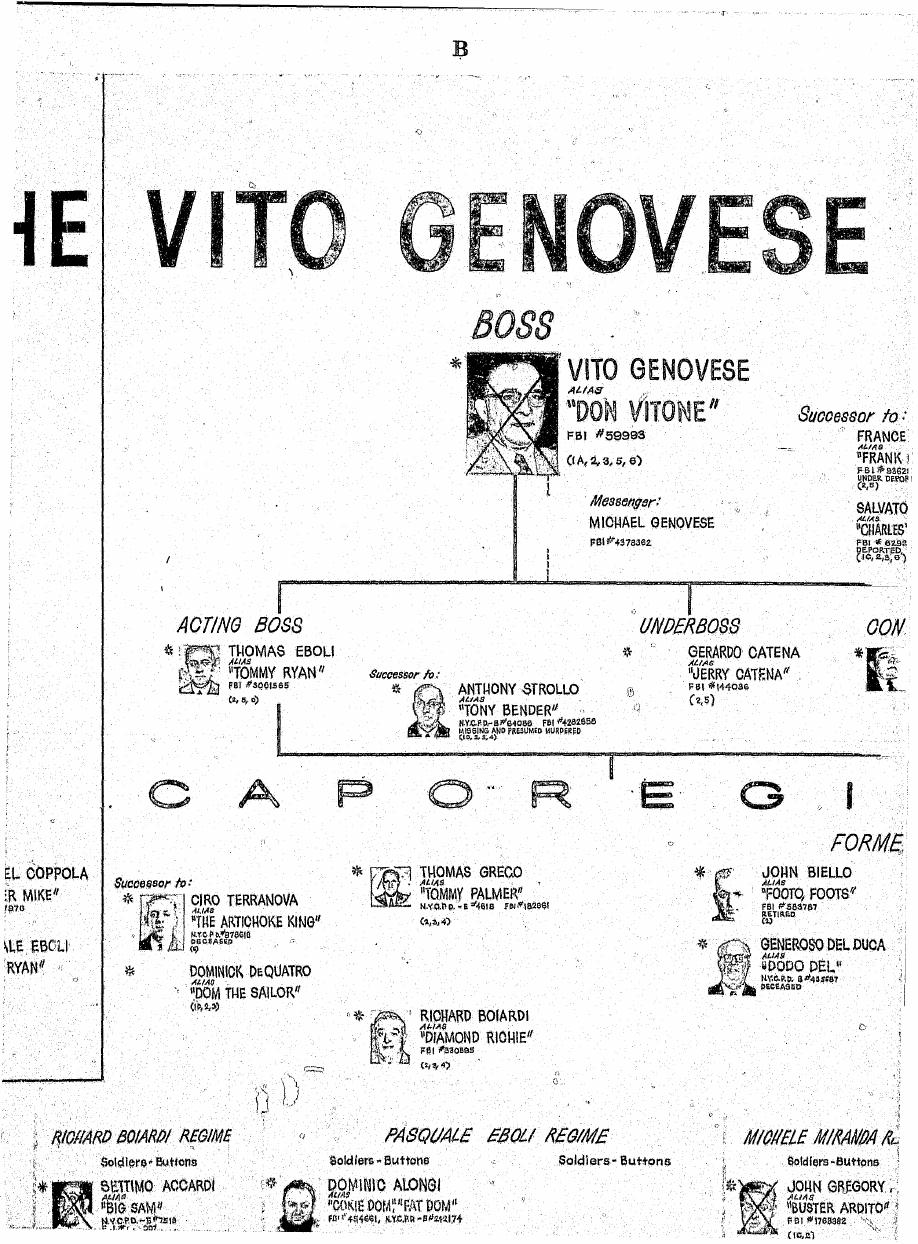
Genovese. Vito Genovese was indicted in July 1958, tried with sixteen other defendants, and convicted by a jury in April 1959; the indictment named thirty-seven defendants in all. The Second Circuit affirmed in United States v. Aviles (1960), finding “ample proof of Genovese’s participation in the conspiracy as one of its principal directing heads” while stating that there was no proof he “ever himself handled narcotics or received any money.” The principal witness was the courier Nelson Silva Cantellops, whose account of deliveries from a “plant” at 36 East 4th Street and trips to Las Vegas, Miami, Key West, Chicago and Cleveland the court summarizes at length. Genovese received fifteen years. A 1965 motion to vacate the judgment was denied, and the denial was affirmed in 1967. The FBI’s own Genovese file covers these years.
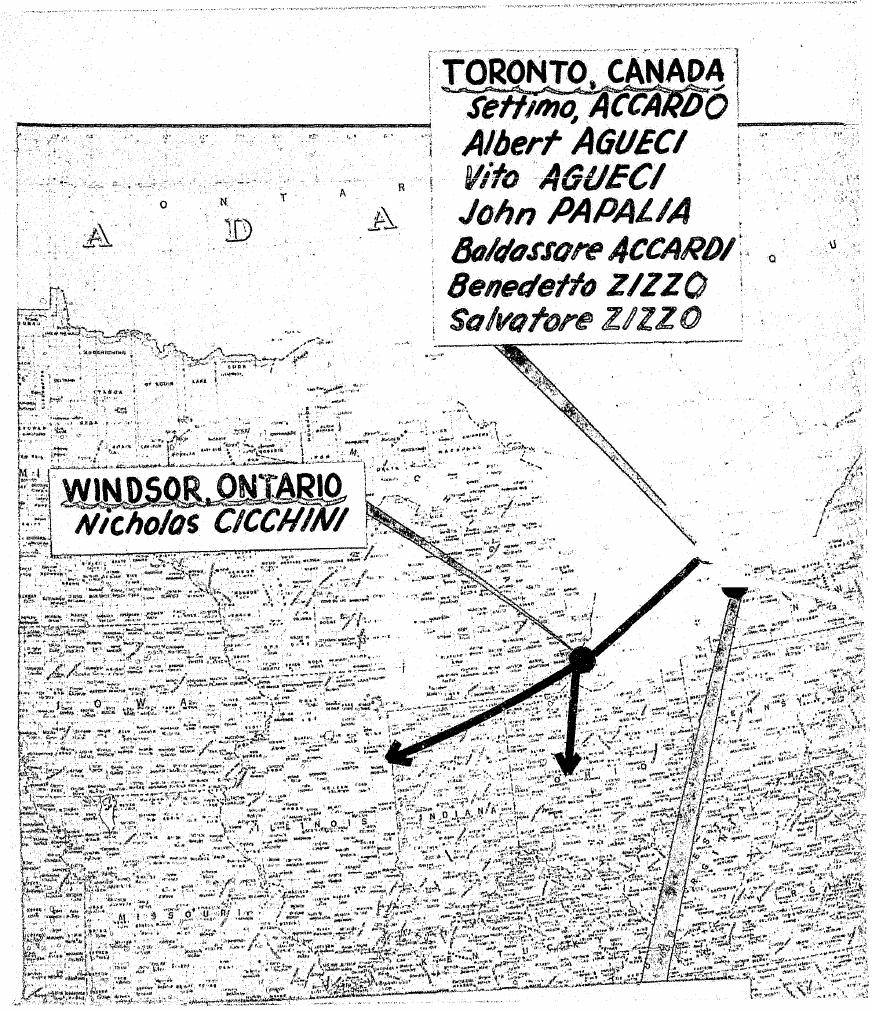
Galante. A 1960 indictment of twenty-nine defendants charged a conspiracy to bring narcotics from Canada to New York. Its first trial ended in a mistrial after six months, and the court held Carmine Galante and Anthony Mirra in contempt. At the retrial Galante was convicted and sentenced to twenty years; the Second Circuit’s opinion in United States v. Bentvena (1963) summarizes the government’s evidence that “Overall responsibility for the continuing operation rested in its ‘chief executive’, the appellant Carmine Galante.”
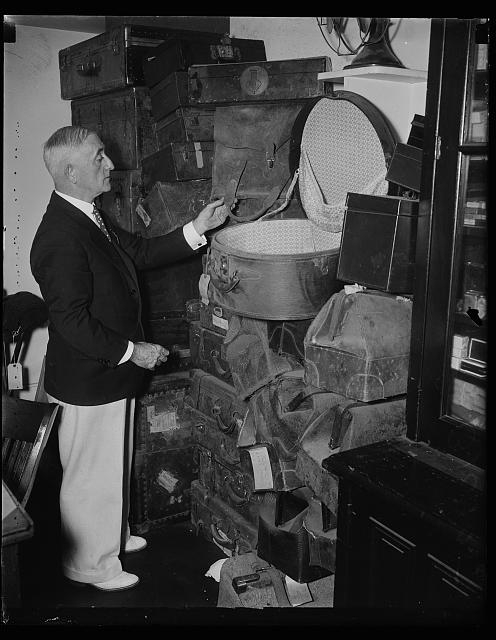
Agueci and Valachi. A 1961 indictment charged a conspiracy from 1958 to 1961 to bring heroin from Italy in trunks and valises that immigrants unwittingly carried to Pier 84 in Manhattan. The Second Circuit affirmed all ten convictions in United States v. Agueci (1962); Joseph Valachi was convicted on the conspiracy count and sentenced to twenty years.
The 1963–64 hearings
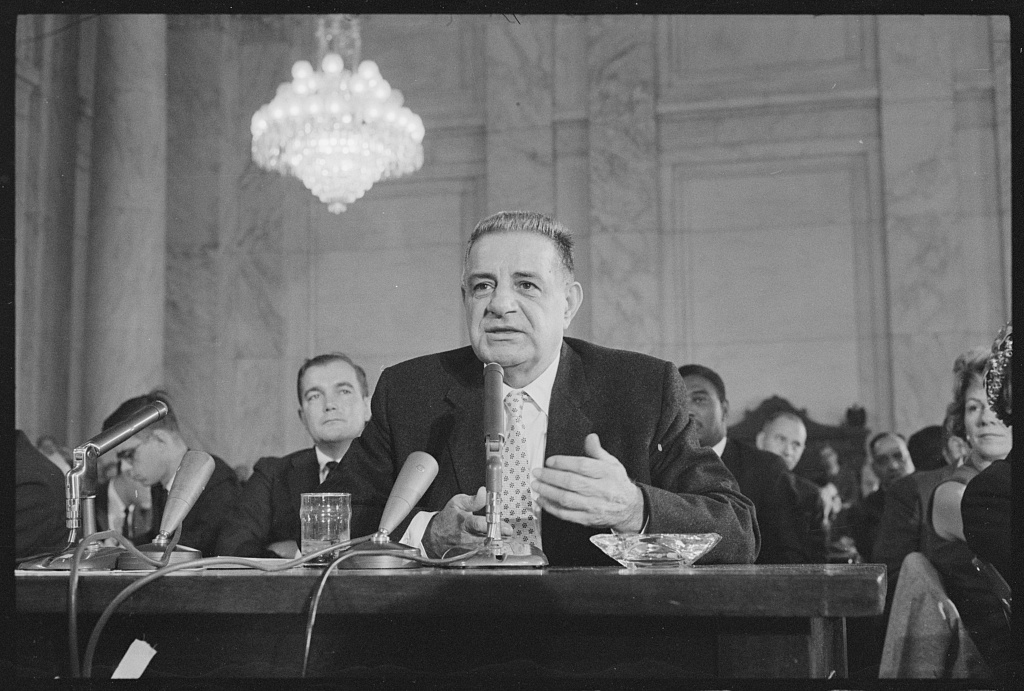
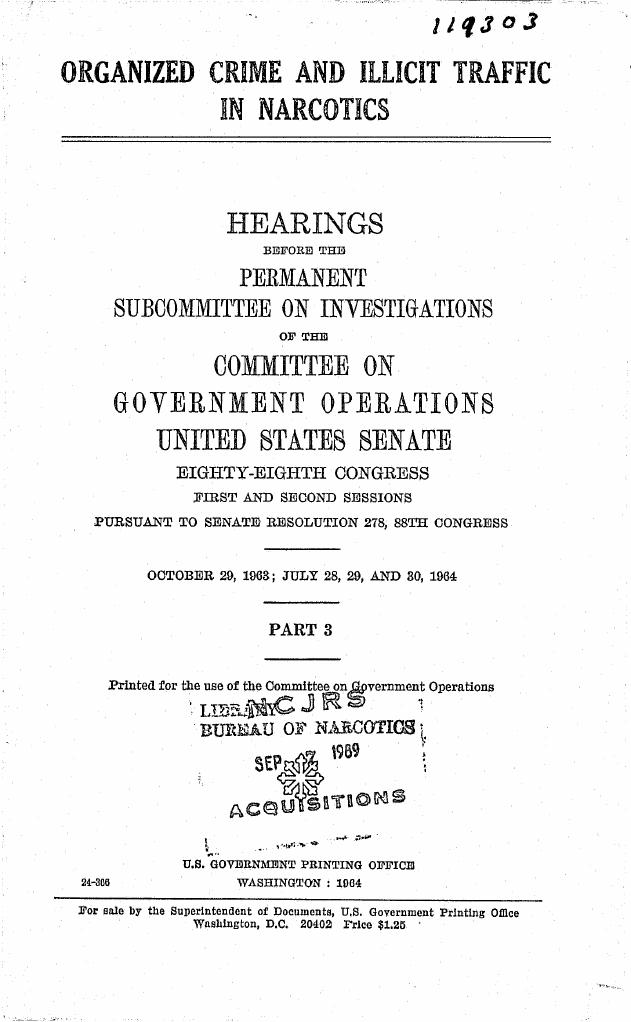
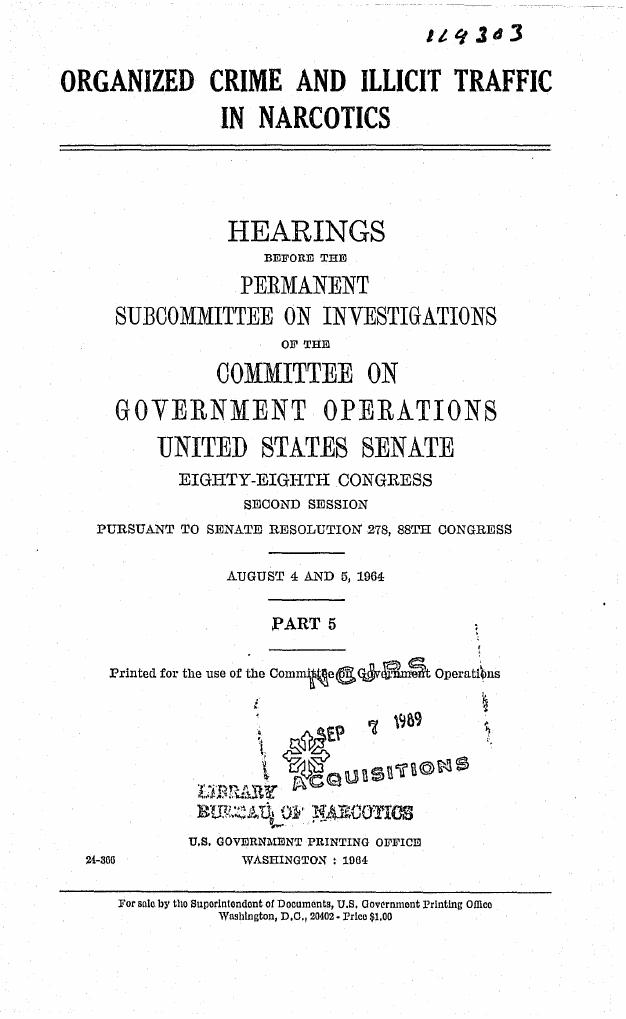
The Senate Permanent Subcommittee on Investigations titled its hearings “Organized Crime and Illicit Traffic in Narcotics.” On 9 October 1963 Valachi testified that Frank Costello had laid down a rule in 1948, “No narcotics. You are in serious trouble if you were arrested for narcotics,” that after 1957 all the families were notified of the same rule, and that it was widely broken because of the money. His closed-session testimony on a 1952 heroin deal was released in July 1964 with a staff summary.
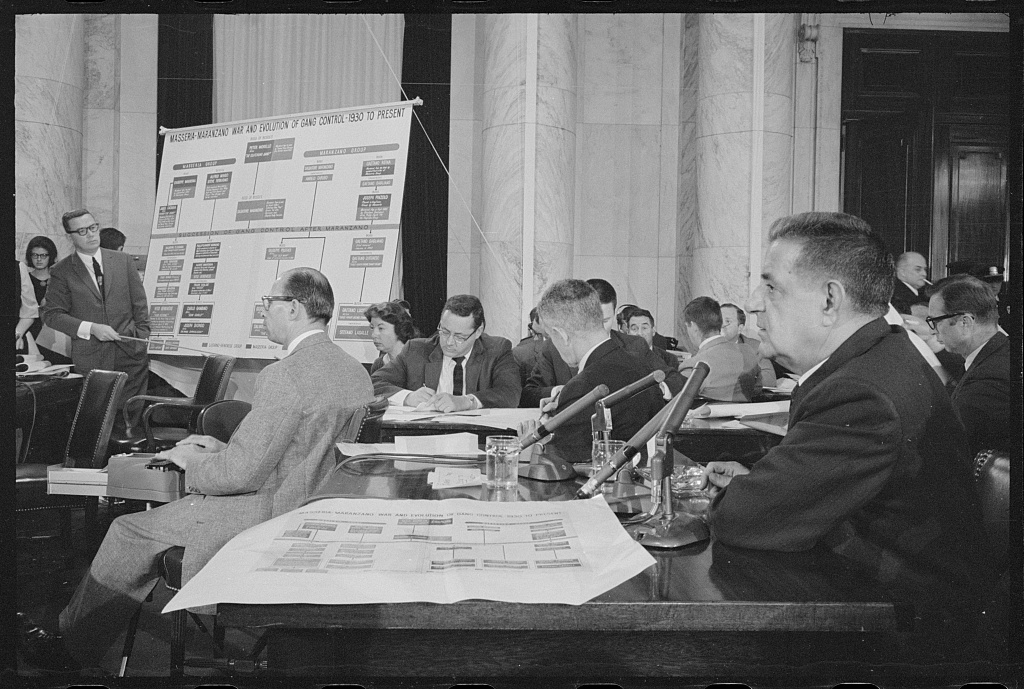
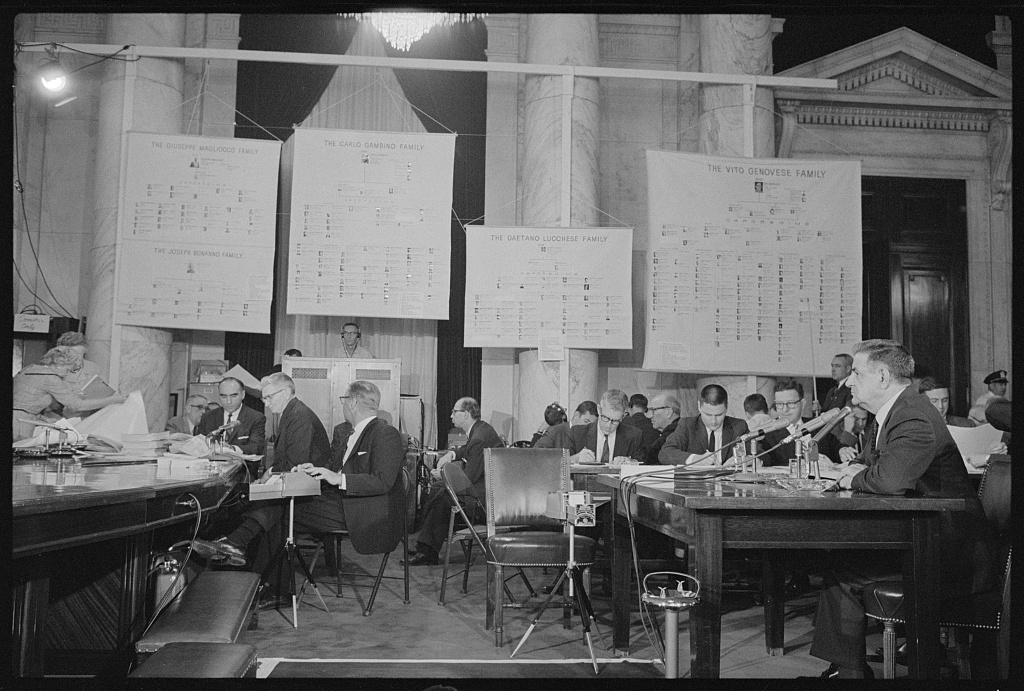
Part 3 carries the testimony of Commissioner Henry L. Giordano, who said the Bureau had, “since 1956, developed 20 major conspiracy cases resulting in the conviction of 206 important gangsters,” and presented the hearing’s family charts marked for Bureau convictions. The same volume holds former Commissioner Anslinger’s testimony, mostly on international treaties, and the statement of California’s state narcotics chief, John E. Storer, who said: “It is not a Mafia, Cosa Nostra-type operation in California.”
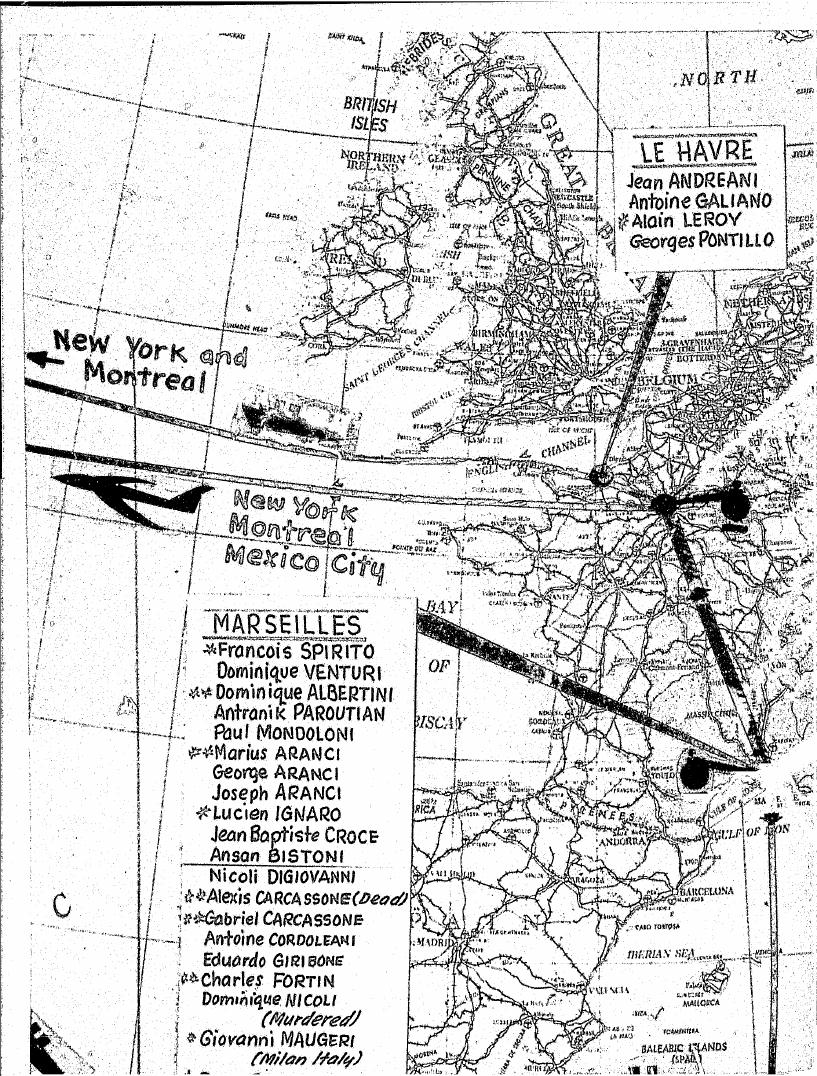
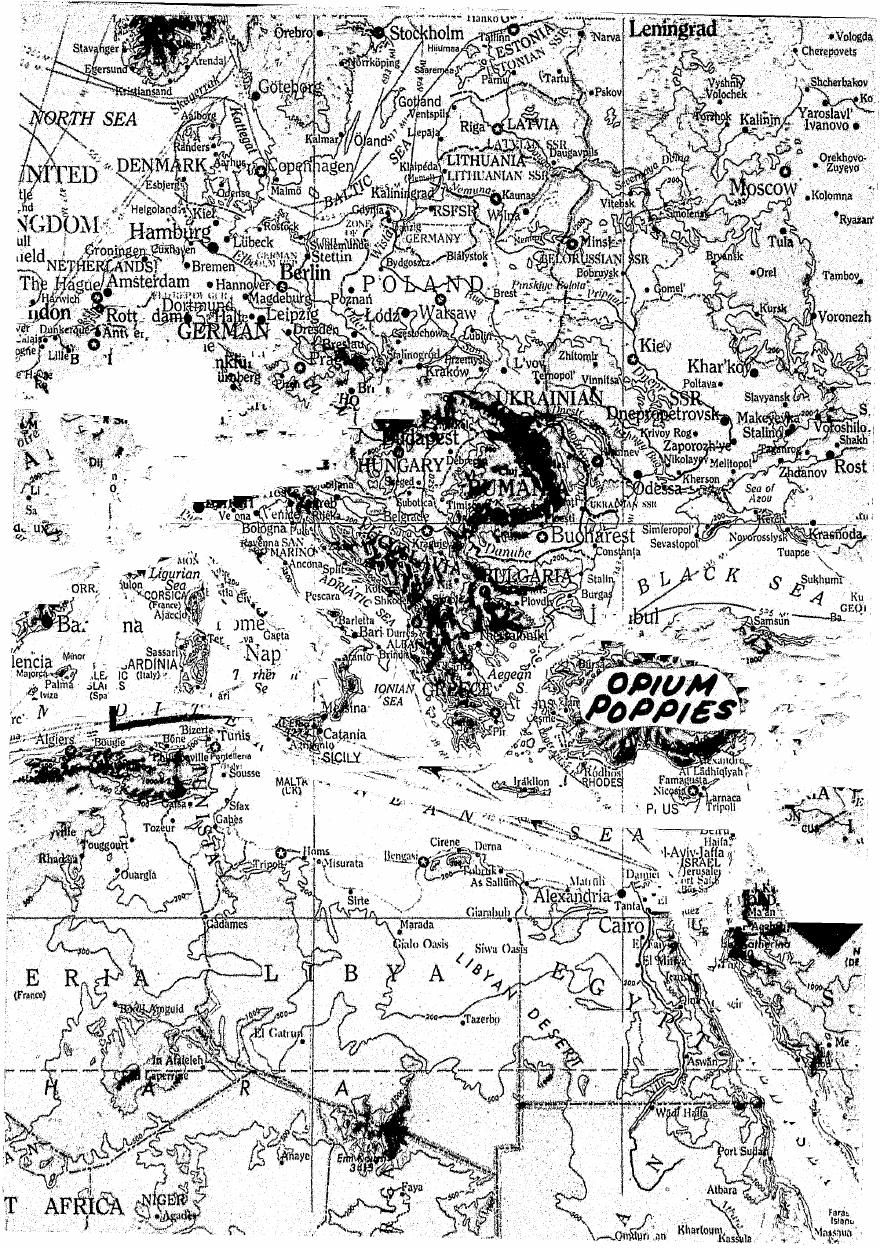
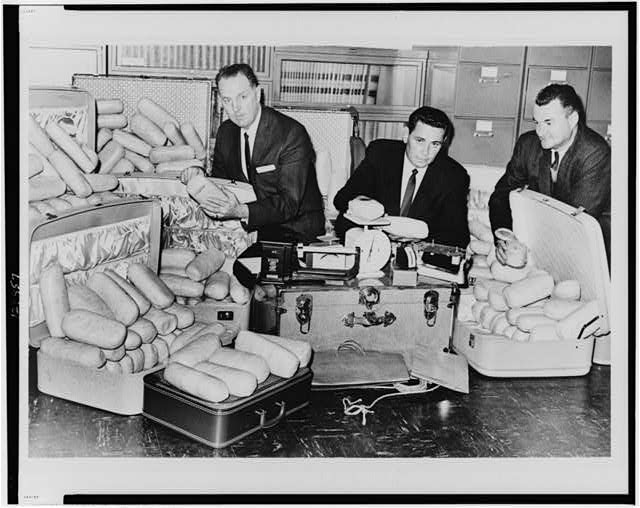
In Part 4 the Bureau’s Martin Pera described the Corsican groups producing heroin in France, who “have a strong affinity with the Mafia element in Sicily,” and the Bureau’s exhibit stated that “Since the early 1950’s France has been the center for the laboratory operations which produce heroin from morphine base.” The volume prints the Bureau’s route charts and its Agueci and Galante case charts; Part 5 adds a world map of the traffic. A 1963 newspaper photograph shows three narcotics agents with a seizure of marijuana, without naming the case.
Later records
Reorganization Plan No. 1 of 1968 abolished “The Bureau of Narcotics in the Department of the Treasury, including the office of Commissioner of Narcotics,” and created the Bureau of Narcotics and Dangerous Drugs in the Department of Justice. The Act of 27 October 1970, whose Title II is the Controlled Substances Act, defined the “continuing criminal enterprise.” In 1976 the Church Committee reported that officers of the Bureau of Narcotics had given LSD to unwitting subjects for the CIA; its only reference to organized crime is the phrase “suspect criminal elements.”
In 1982 the FBI was given concurrent jurisdiction over drug offenses, and its Director told a House committee that the FBI would concentrate on “drug investigations involving traditional organized crime.” On 23 October 1984 the Attorney General told the President’s Commission on Organized Crime that “the distance between New York and Palermo is no greater than that between New York and Chicago.”
The case that “came to be known popularly as ‘The Pizza Connection Case’” was tried in New York from 30 September 1985 to 2 March 1987. The Second Circuit’s opinion in United States v. Casamento (1989) sets out the indictment and the verdicts, and states the government’s theory as allegations. The Sixth Circuit’s Alfano opinion concerns a wiretap in a Detroit-area branch of the investigation. The FBI’s history page and the President’s Commission’s 1986 report, America’s Habit, tell the story with different counts; this archive follows the court. The Commission’s report also gives an account of the “French Connection” years, with its own estimate that La Cosa Nostra controlled 95 percent of the heroin entering New York City.
People
Pages for figures with more than one record here: Harry J. Anslinger, Charles Siragusa, Charles “Lucky” Luciano, Vito Genovese, John Ormento, Carmine Galante and Gaetano Badalamenti. Each page keeps to its records, and the role field, where it is set, quotes a court or an official and says which. Joseph Valachi’s page belongs to the Valachi hearings section.
Not filed yet
- The Bureau of Narcotics’ own annual reports, “Traffic in Opium and Other Dangerous Drugs,” for the United States; only Philippine editions were found online.
- The Drug Enforcement Administration’s history chapters on the French Connection, the founding of the DEA in 1973 and the Pizza Connection; the chapter PDFs refused every request.
- Federal court records of the French Connection seizures. The 1962 prosecutions that the name usually refers to appear to have been state cases, and no federal opinion or indictment was found.
- The Pizza Connection indictment, trial transcript and district-court rulings; only the appeals, the FBI page and the 1986 report are filed.
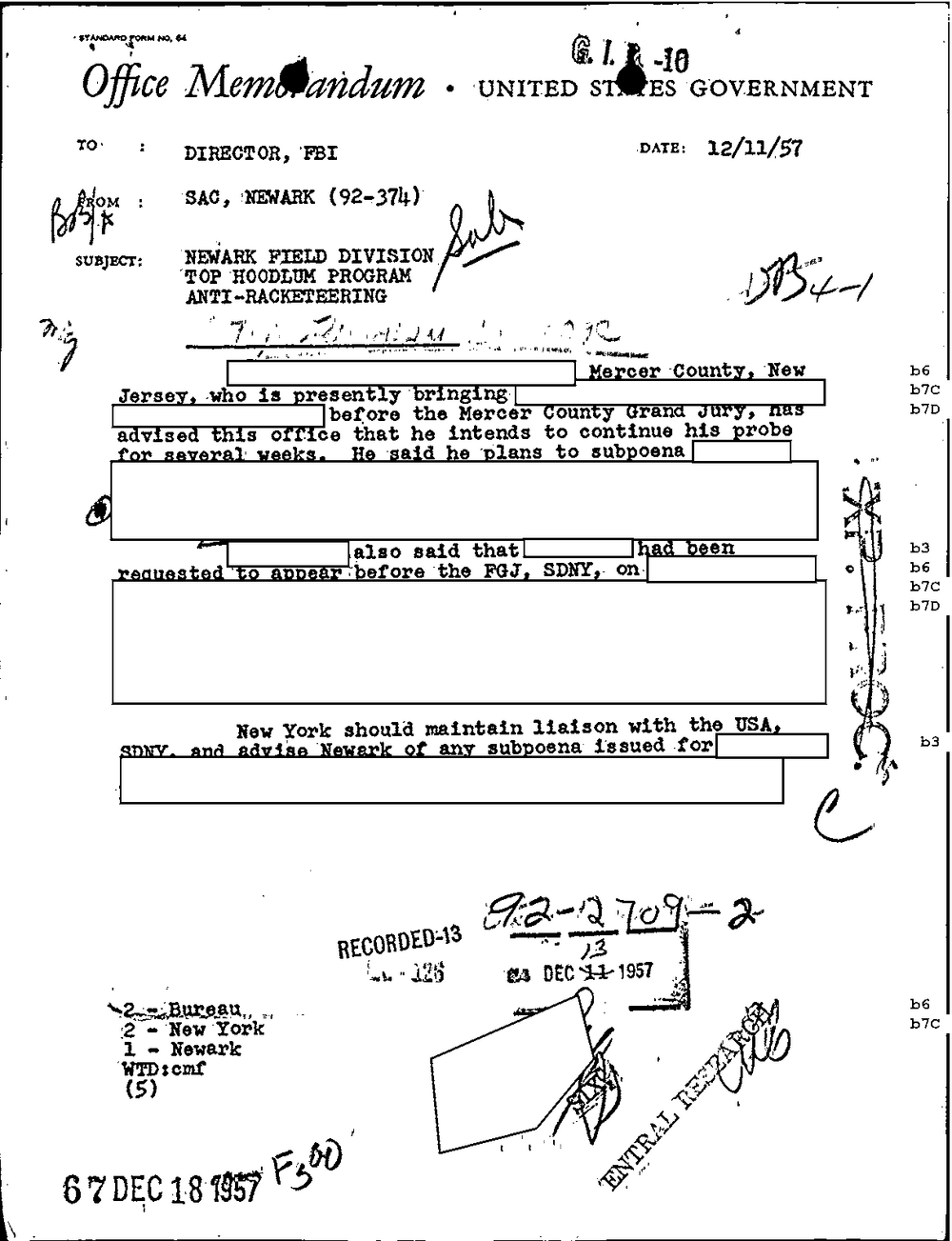
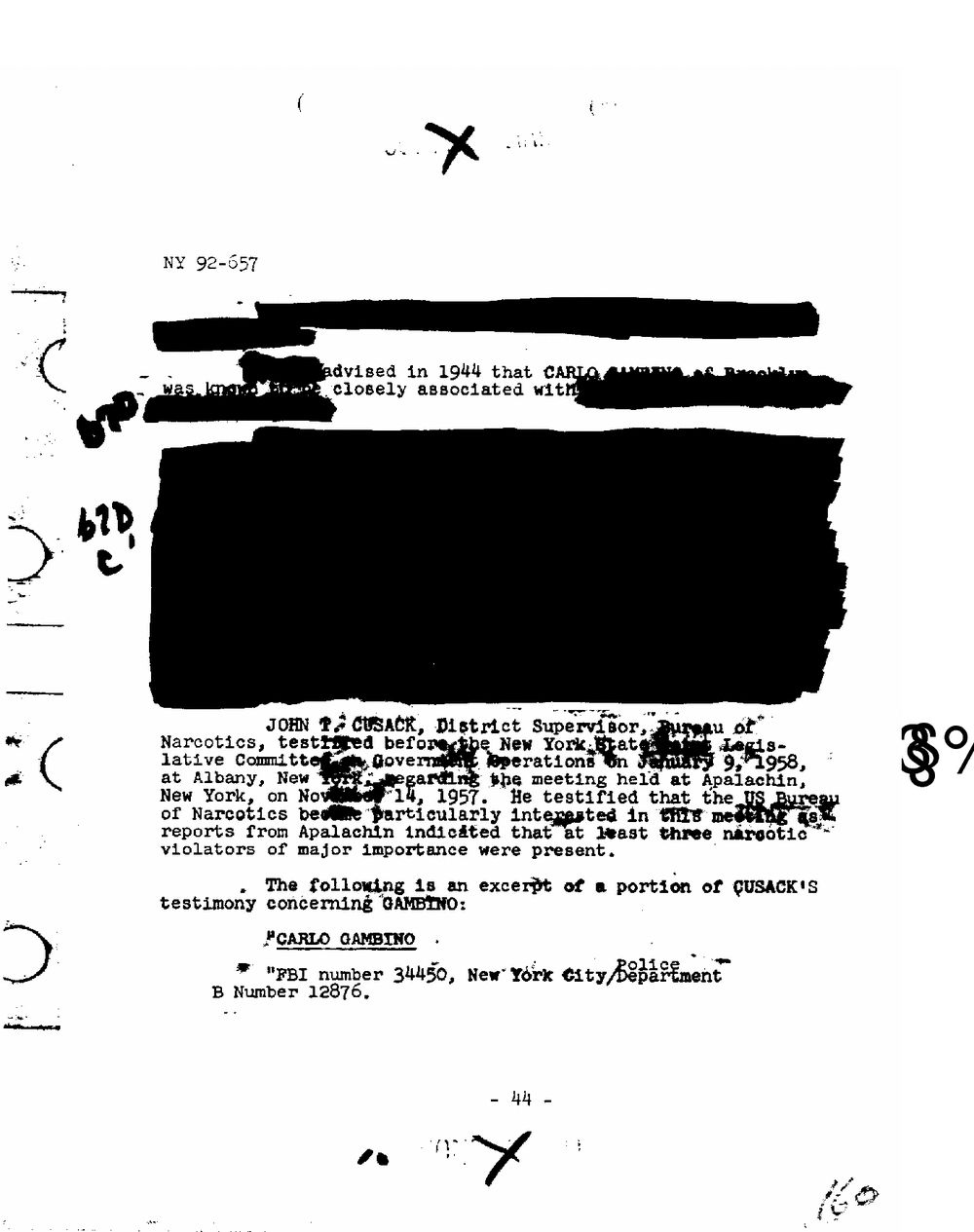
- The narcotics pages of the FBI’s Genovese file on his 1958 arrest by Bureau of Narcotics agents, read so far only through poor OCR; the Vault refused page images on 12 October 2026.
- The Kefauver Committee’s report on narcotics, the 1955–56 Daniel subcommittee hearings, and the narcotics section of the 1967 President’s Commission task force report.
- The appendix lists of the Bureau’s international and national cases printed in the 1964 hearings at page 772.
- Eight New York World-Telegram & Sun photographs of Anslinger and of 1930s Treasury seizures, marked “Publication may be restricted,” and a Truman Library file of Anslinger papers marked “Restricted - Possibly.”